article
A-7E Corsair II VA-37 “Bulls” – Gulf War Desert Camouflage Modeling Guide
Recreating a Rare Transitional Scheme from 1989–1990
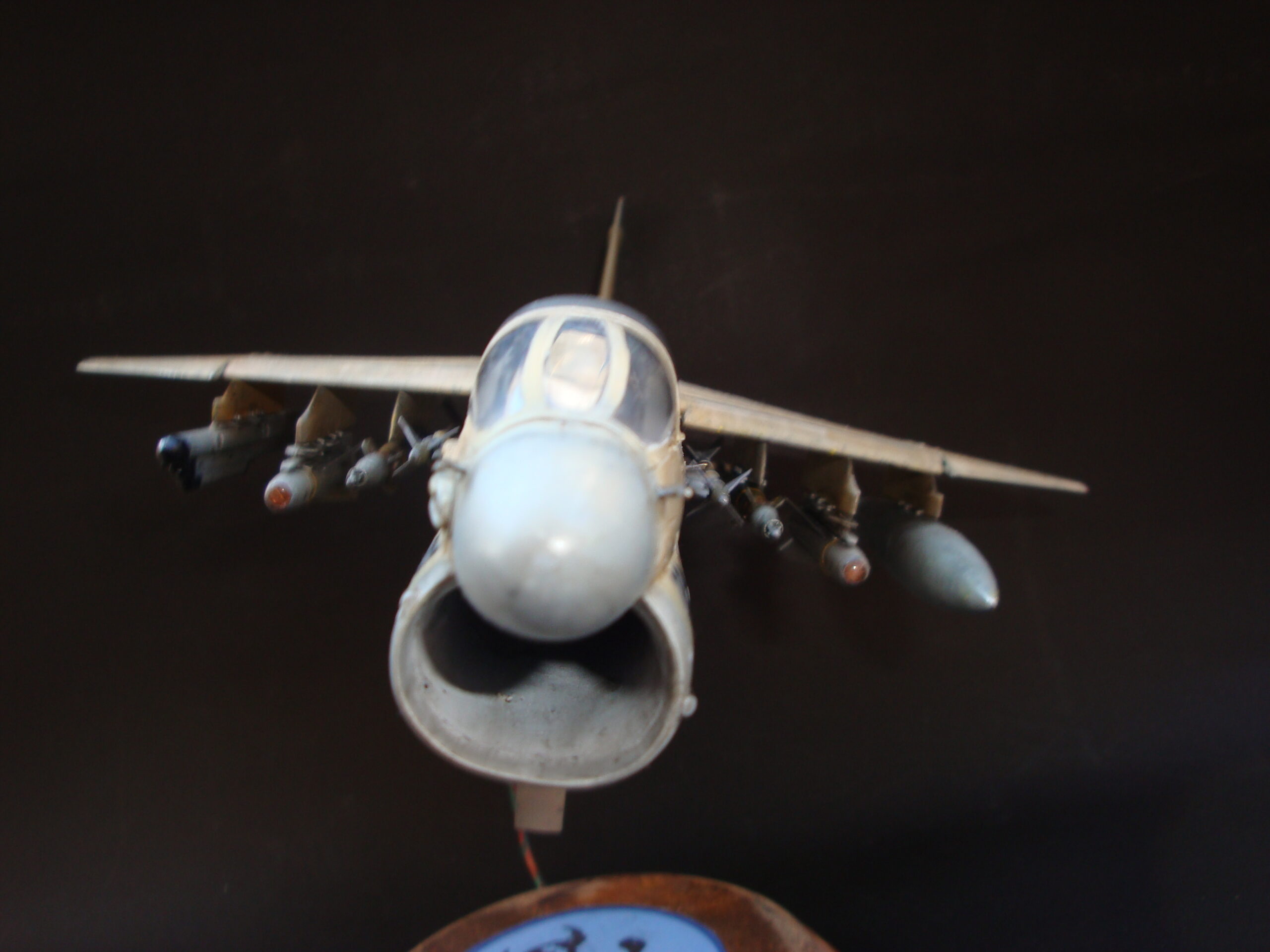
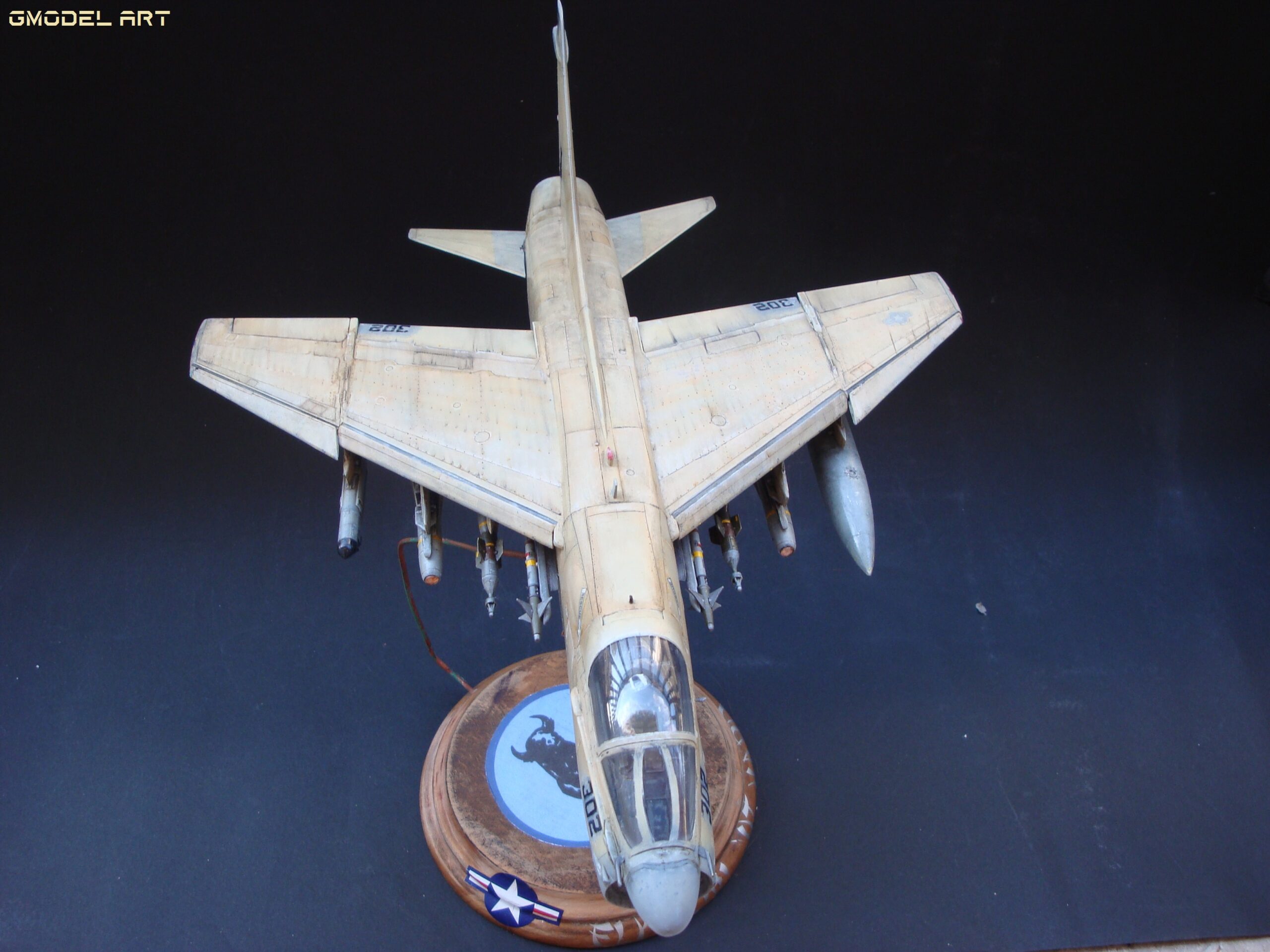
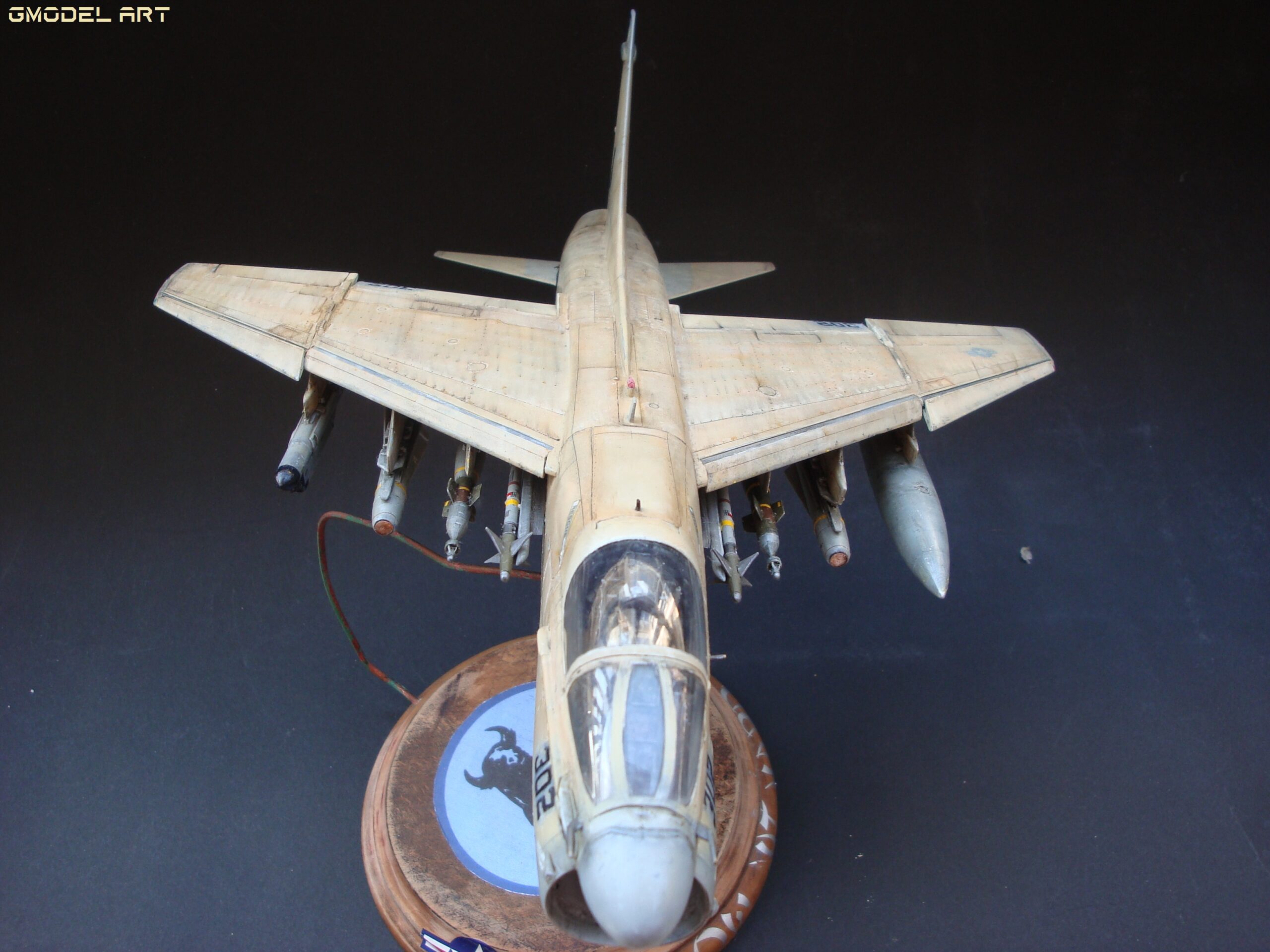
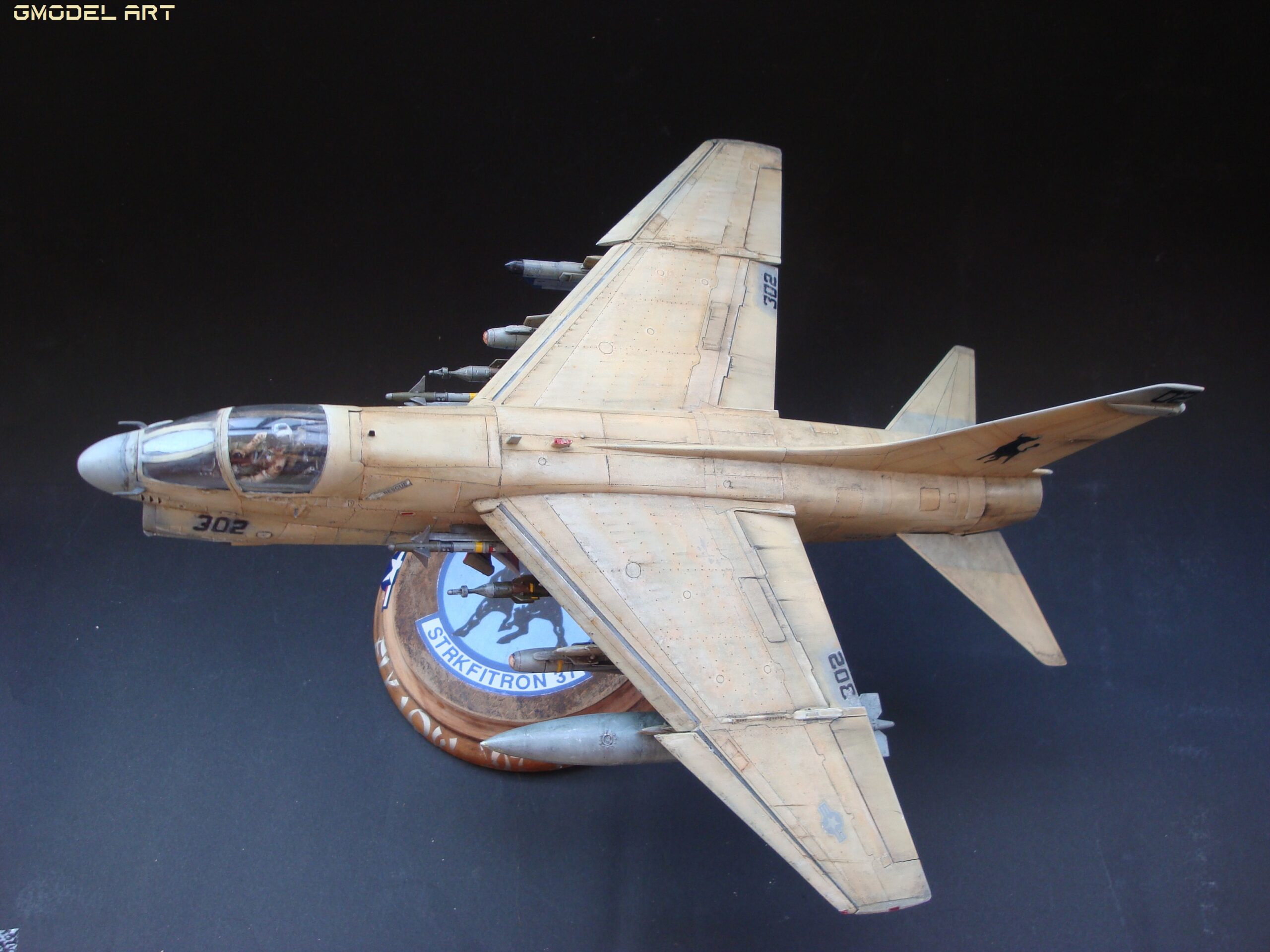
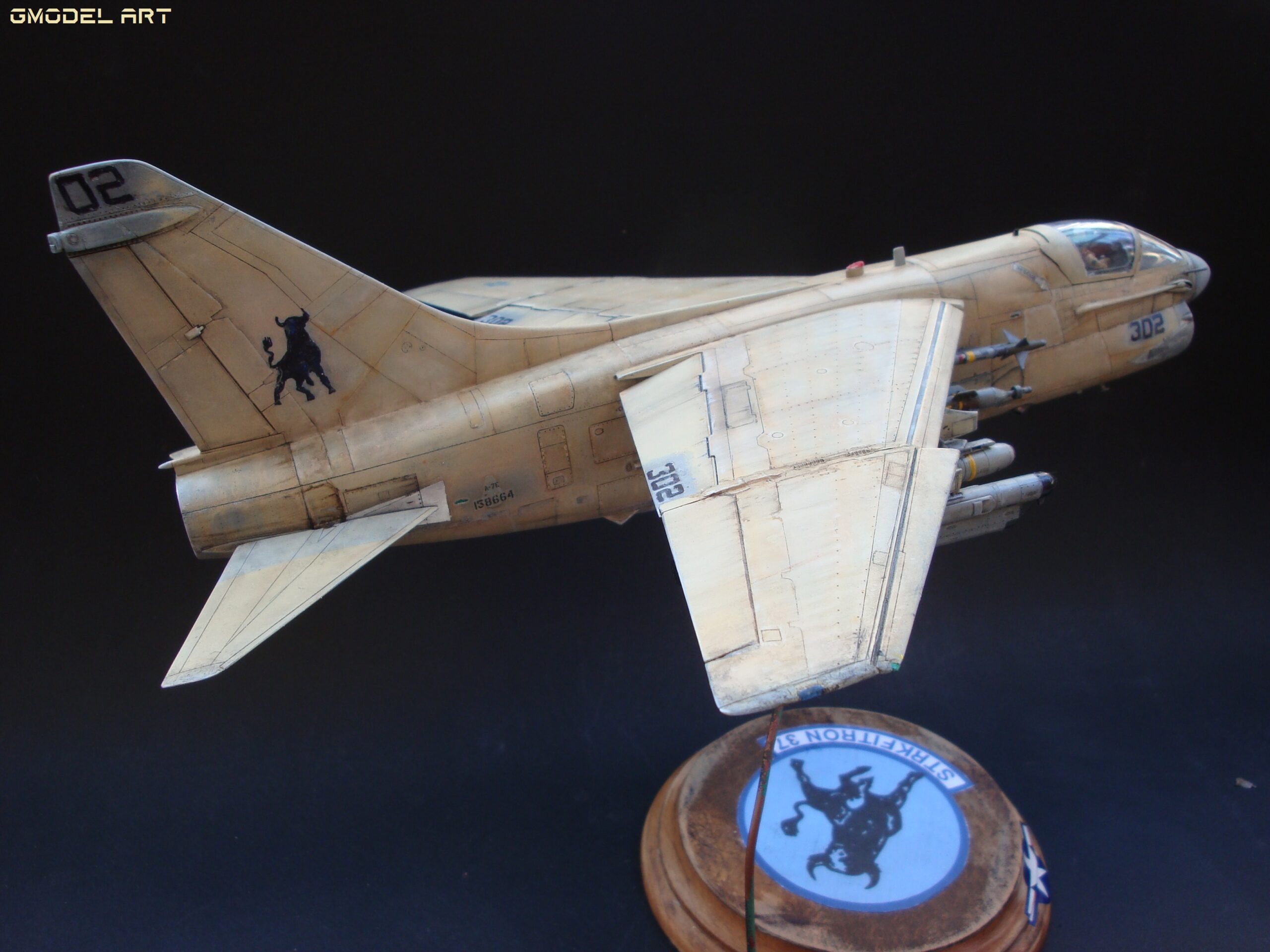
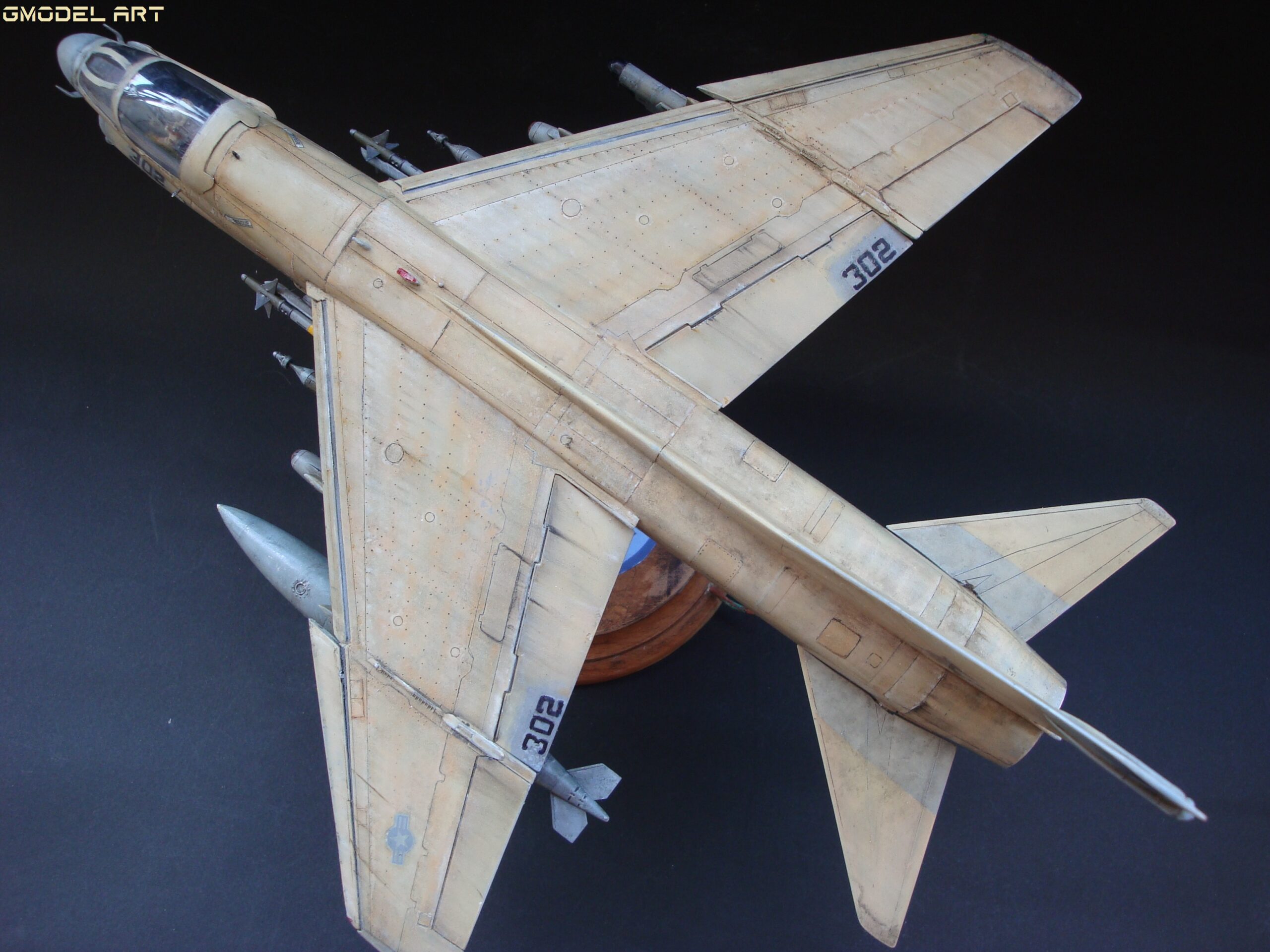
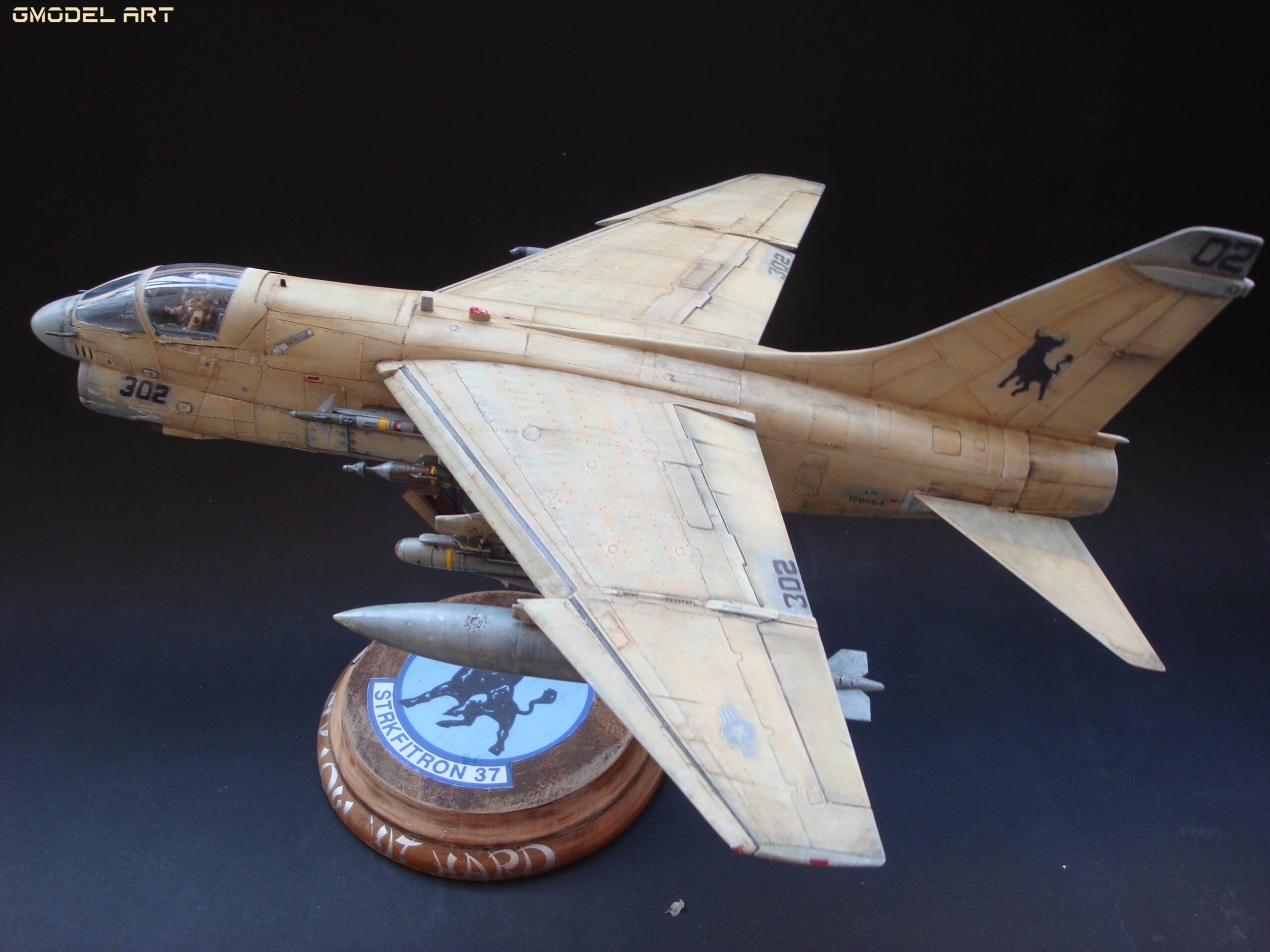
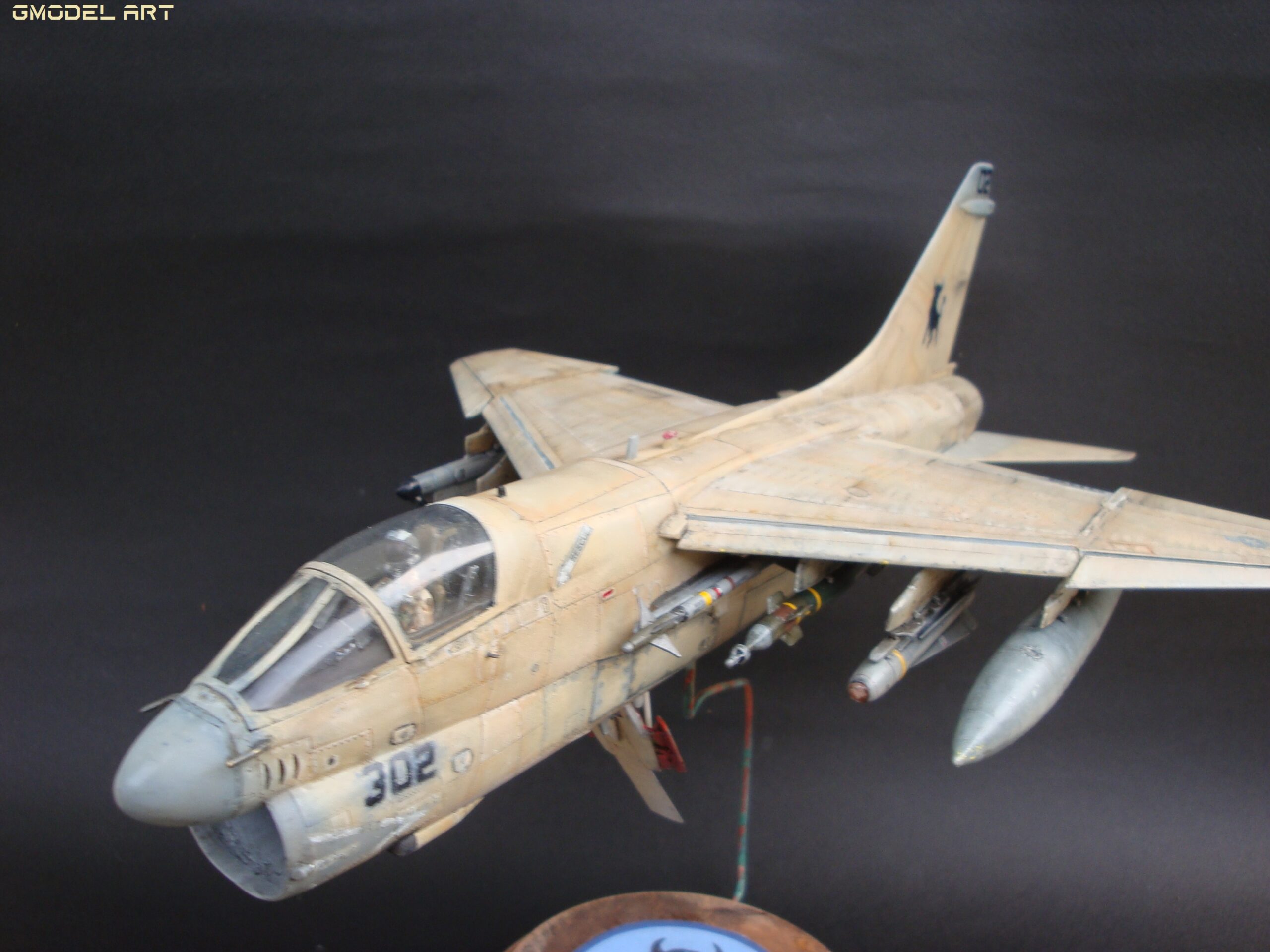
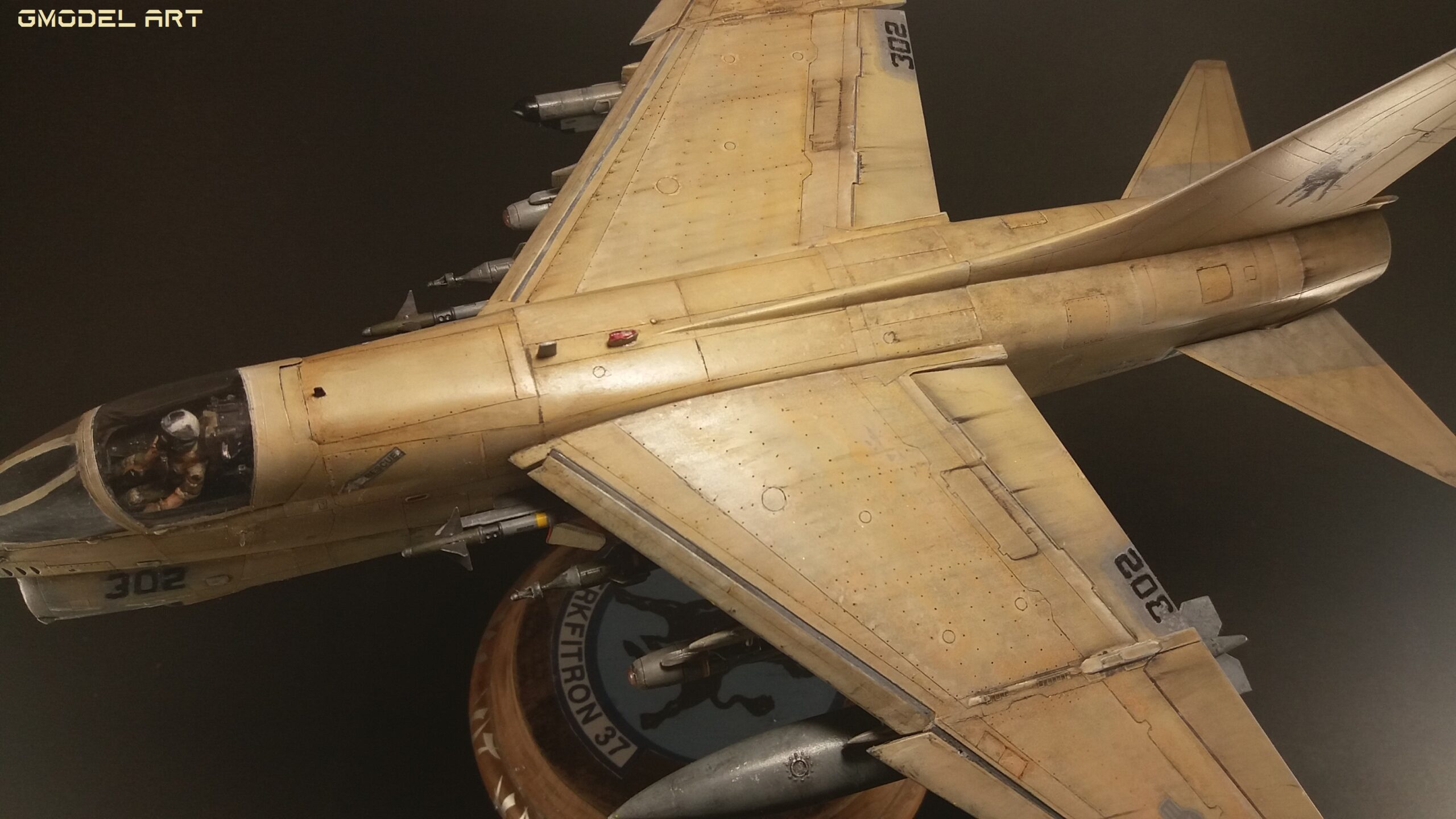
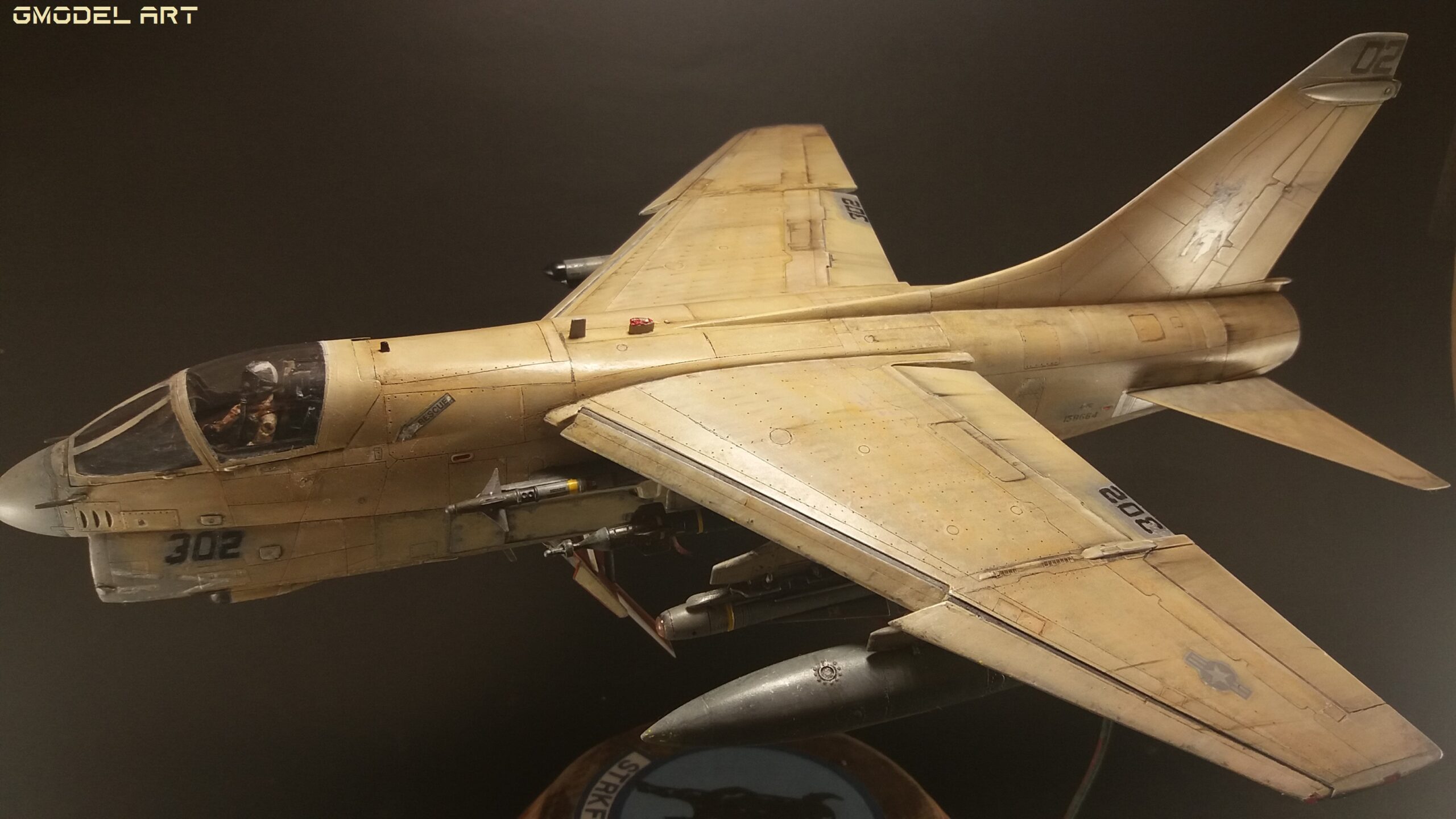
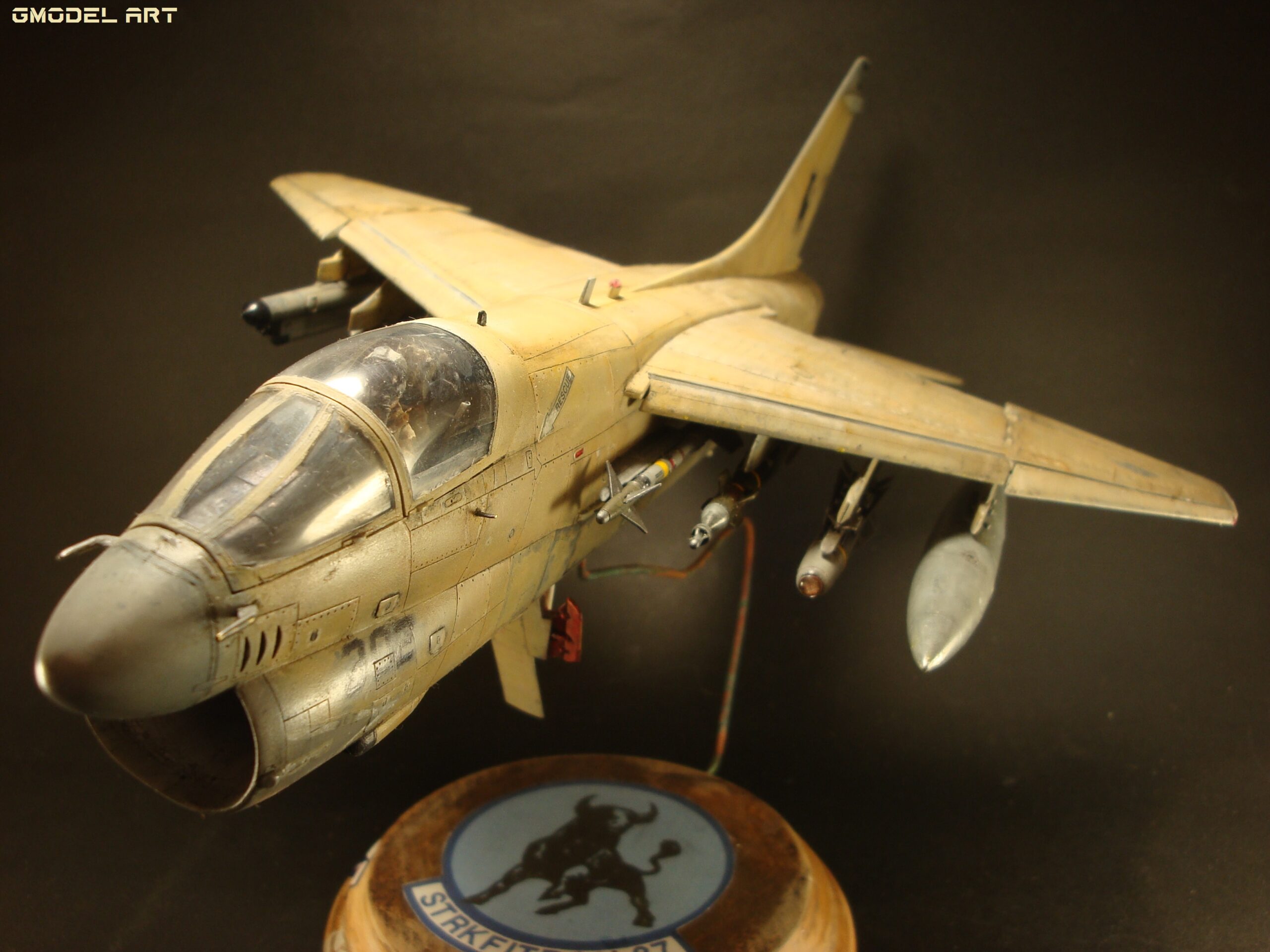
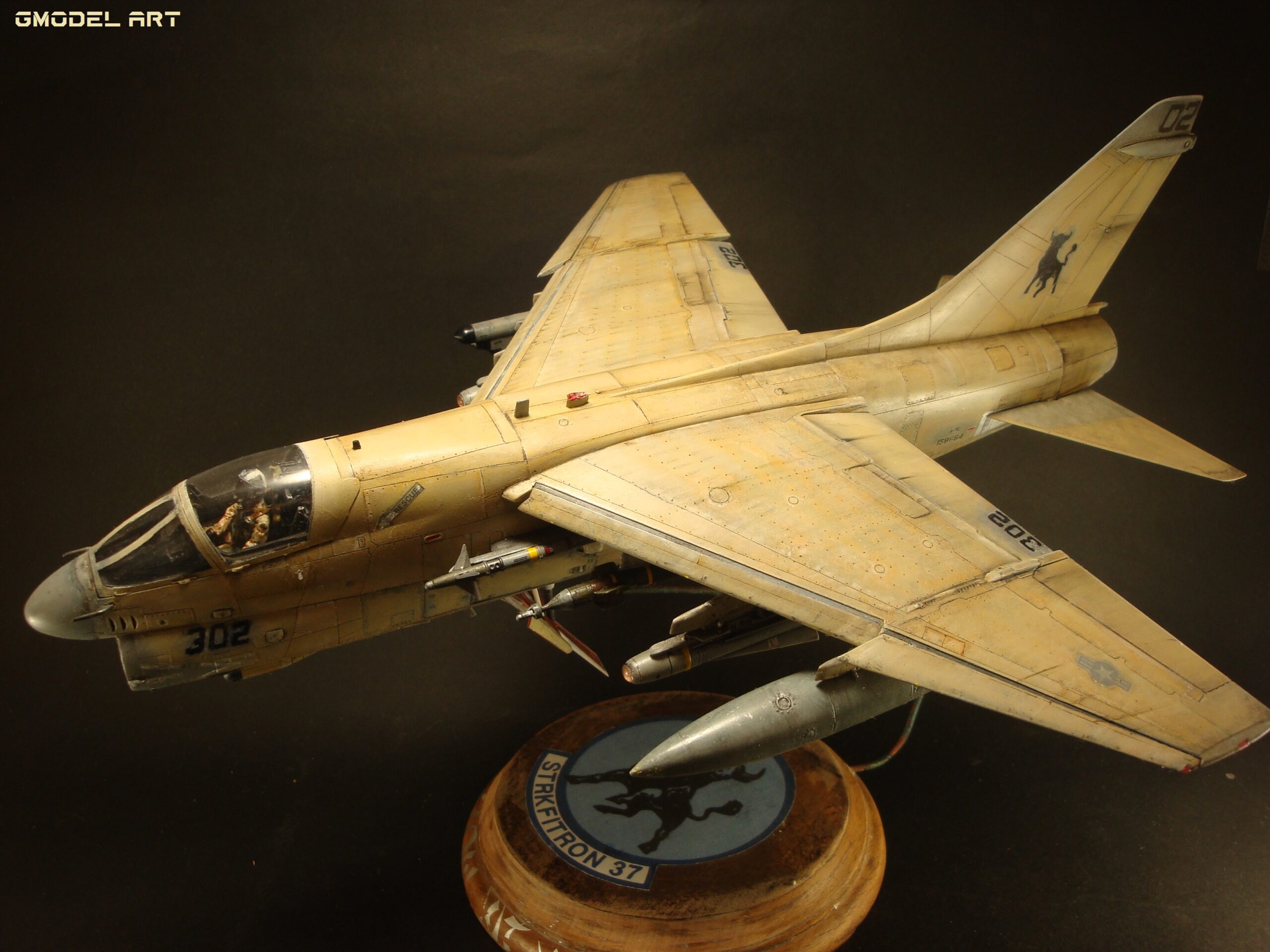
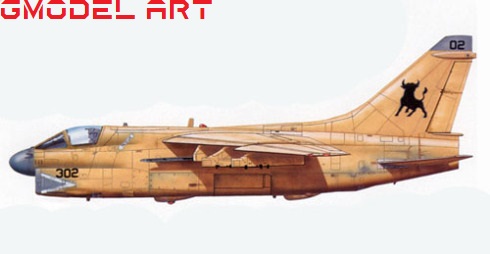
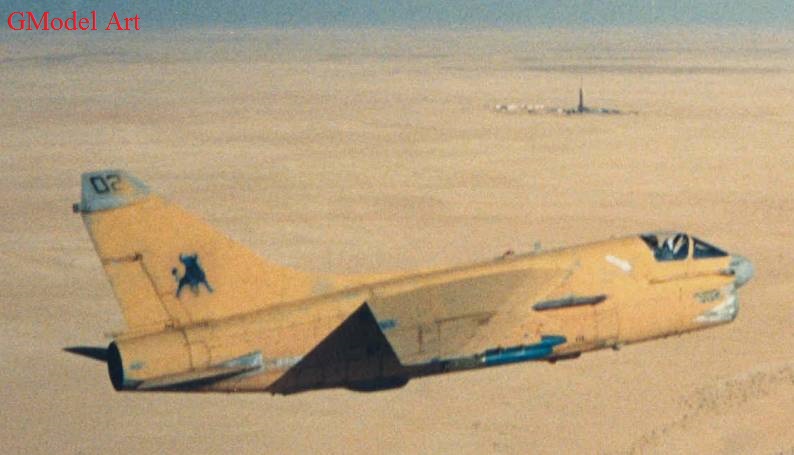
The first time I encountered this specific Vought A-7E Corsair II was through the book A-7E Corsair II in Action 1120. That moment planted a long-term goal: to recreate one of the rare desert-painted VA-37 aircraft from the early Gulf War transition period.
This was not a standard camouflage scheme.
There are no confirmed pattern drawings.
No clear photographic references.
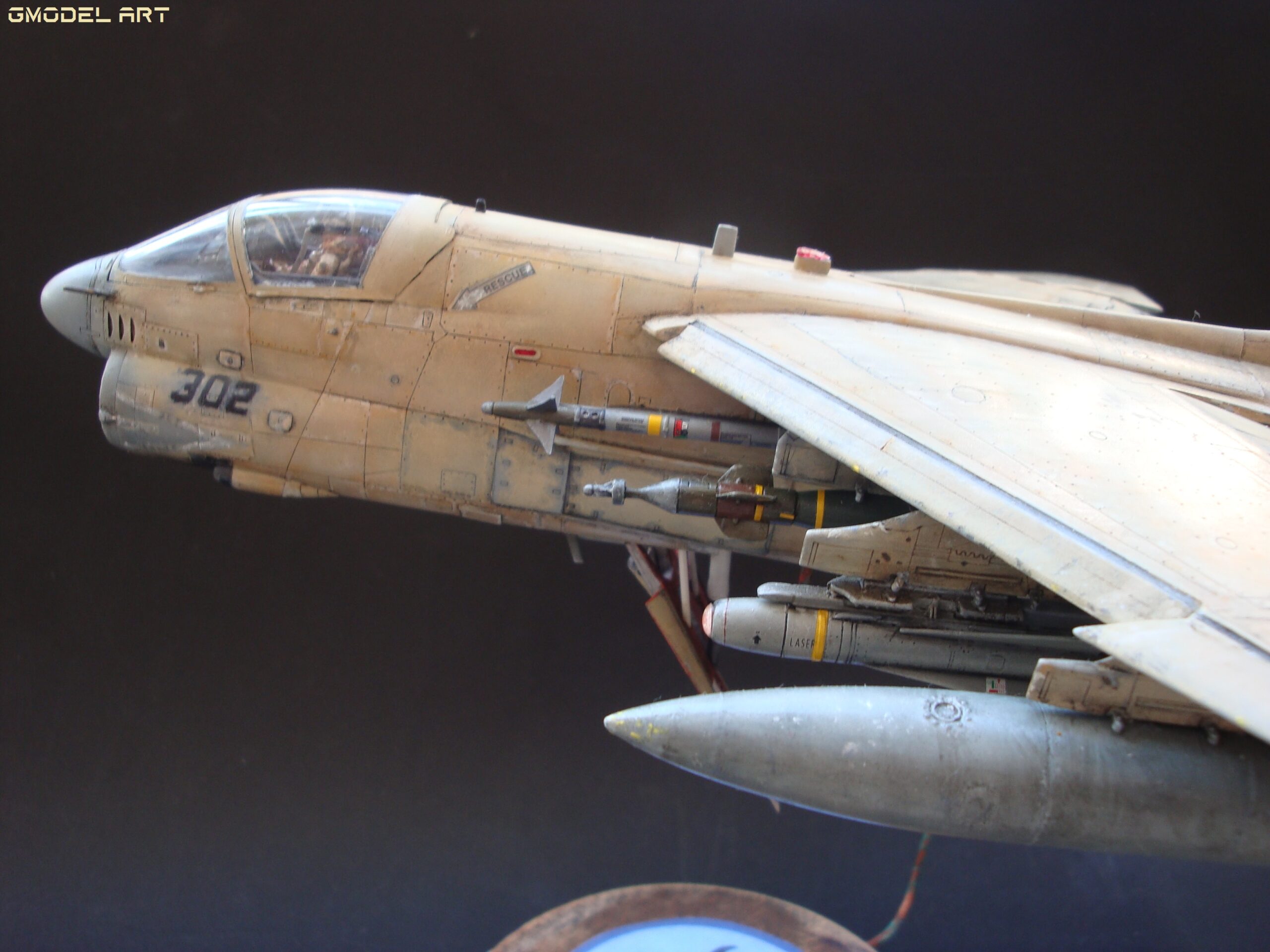
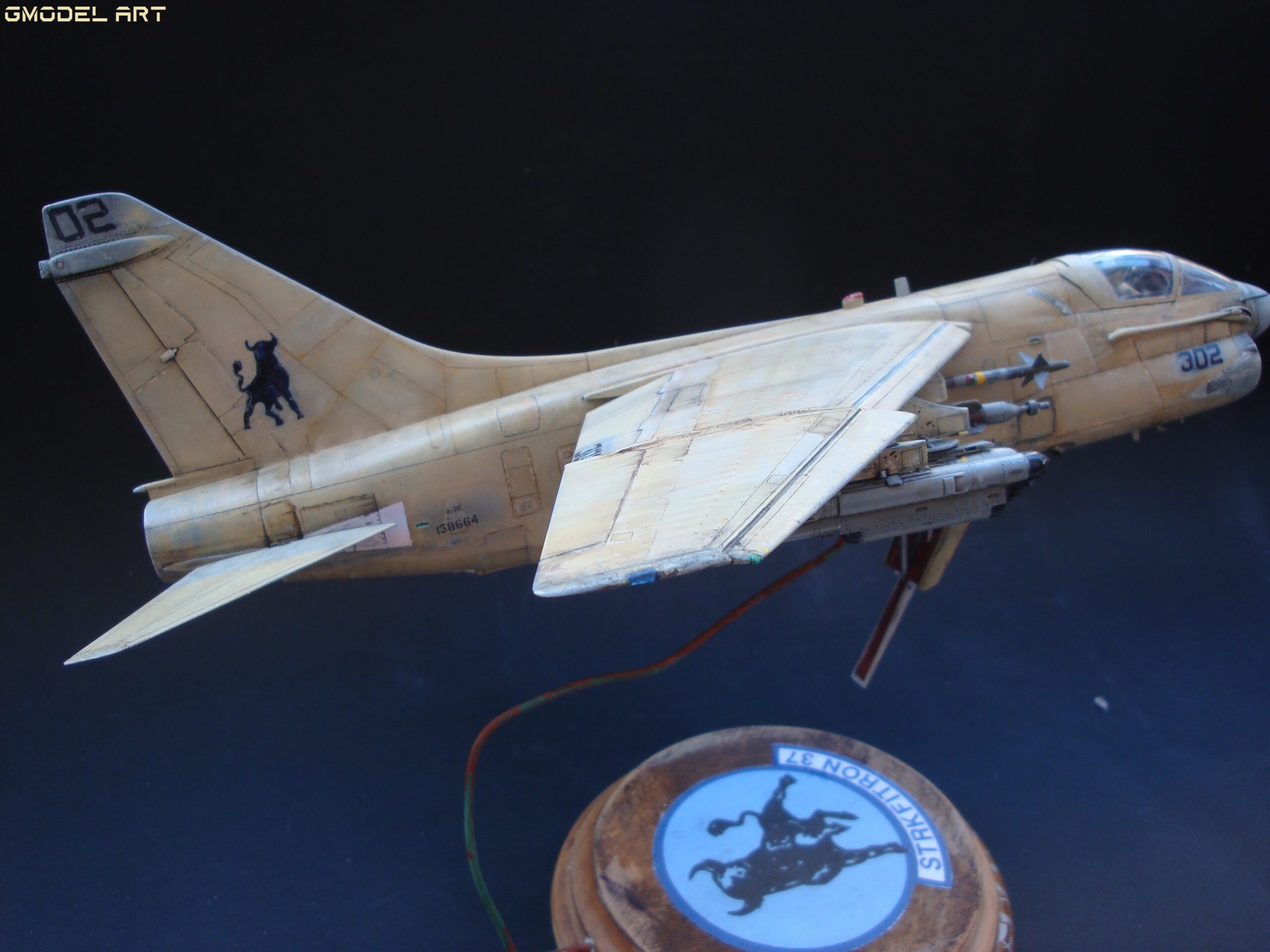
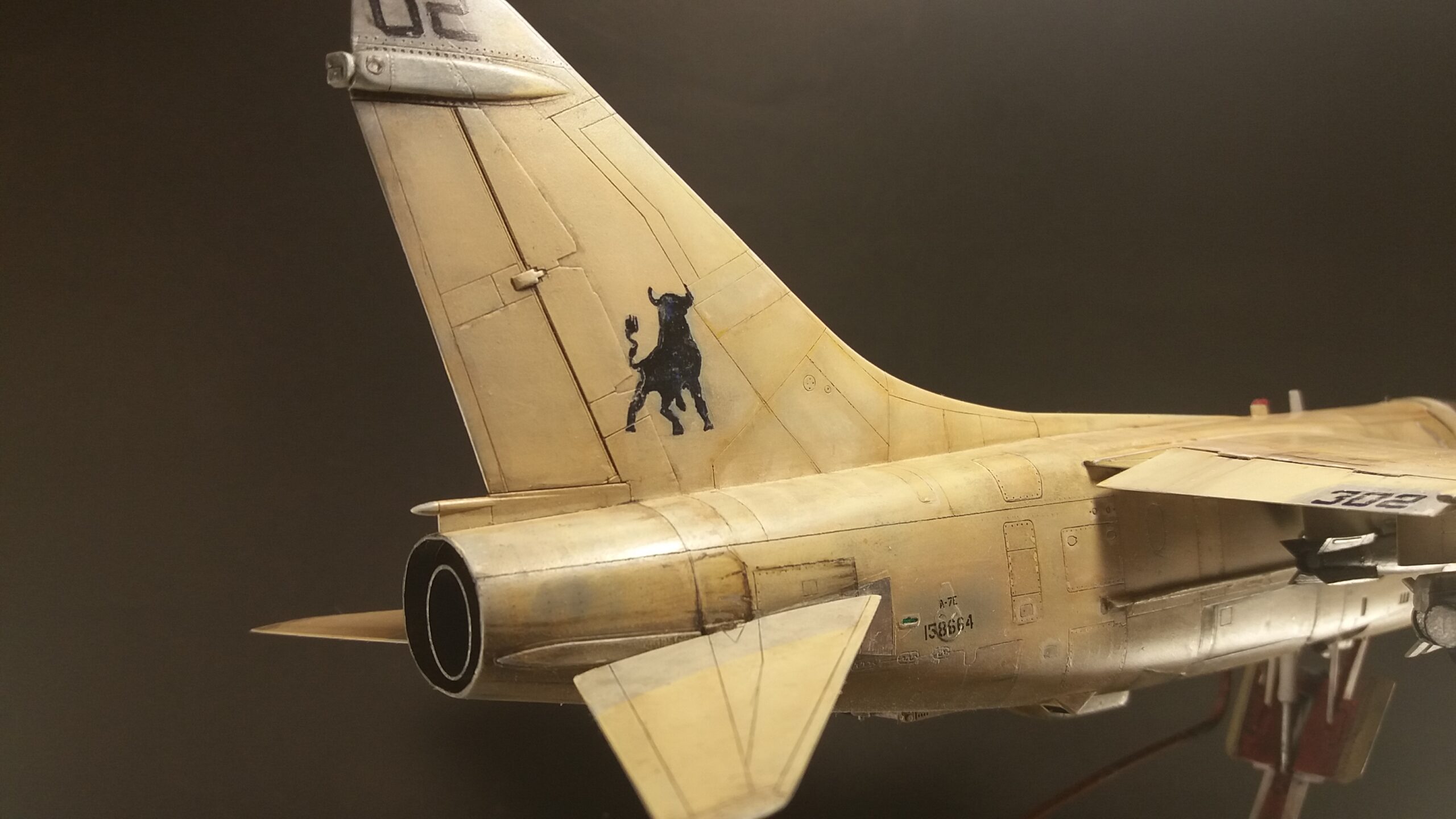
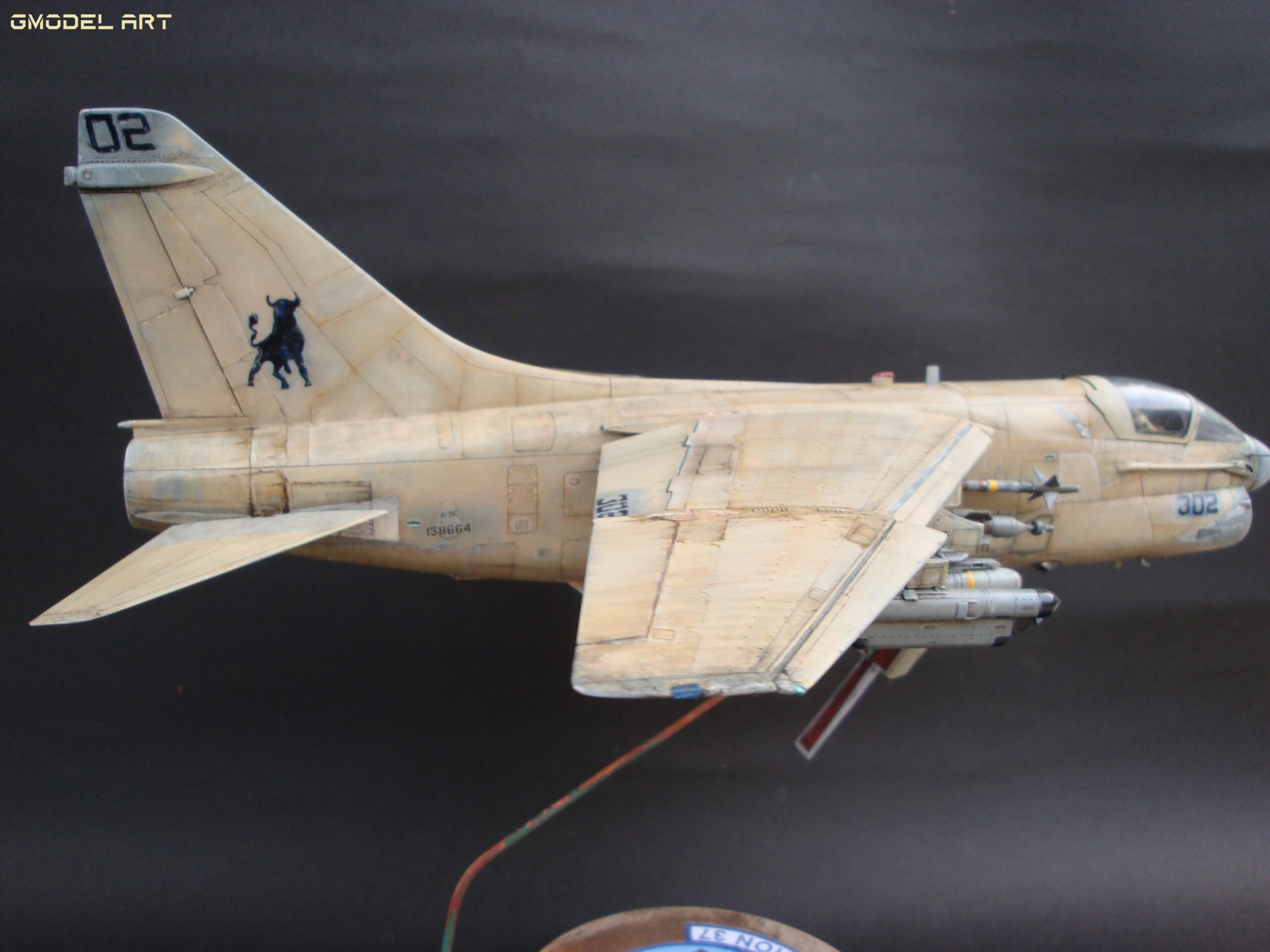
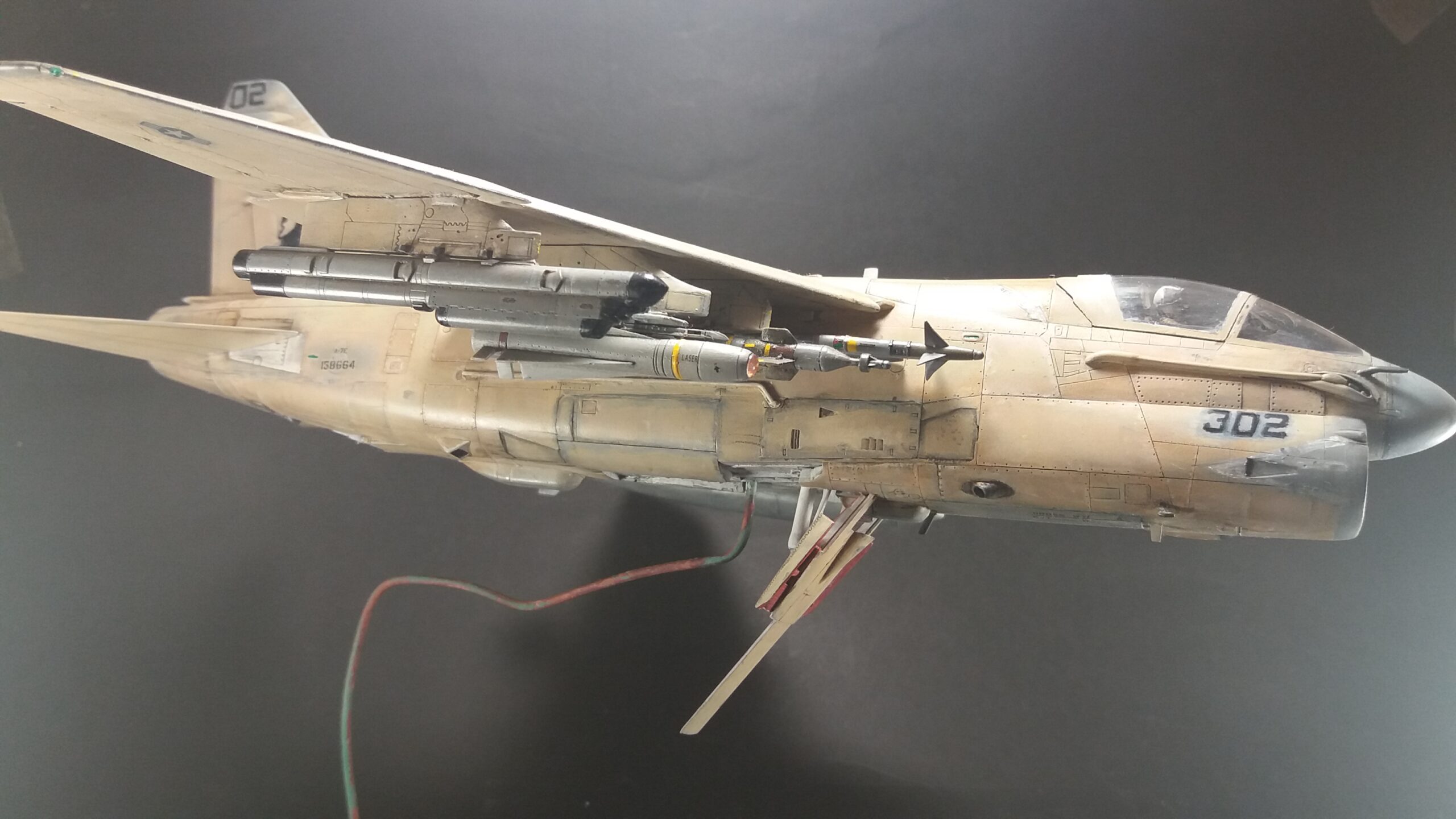
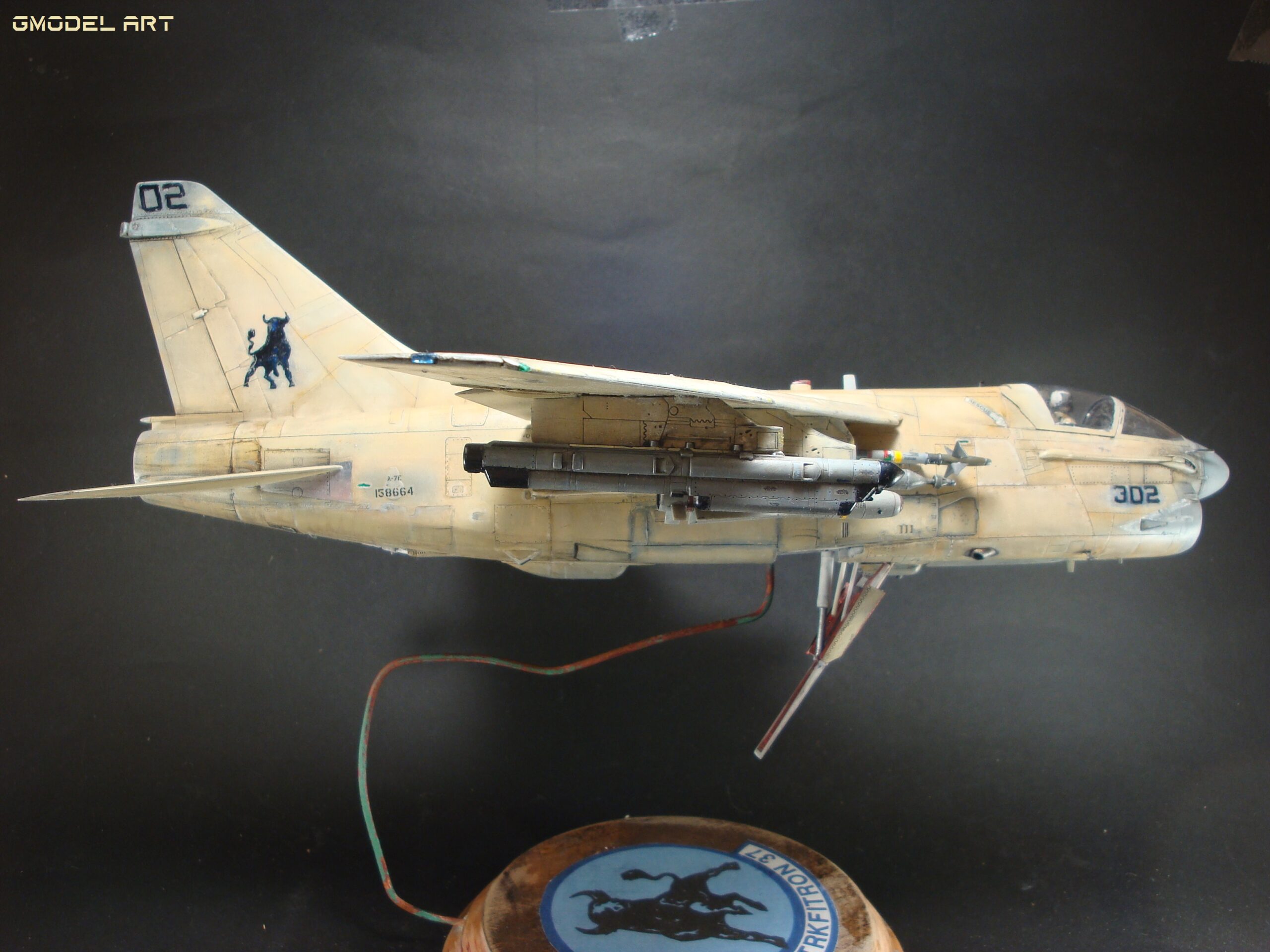
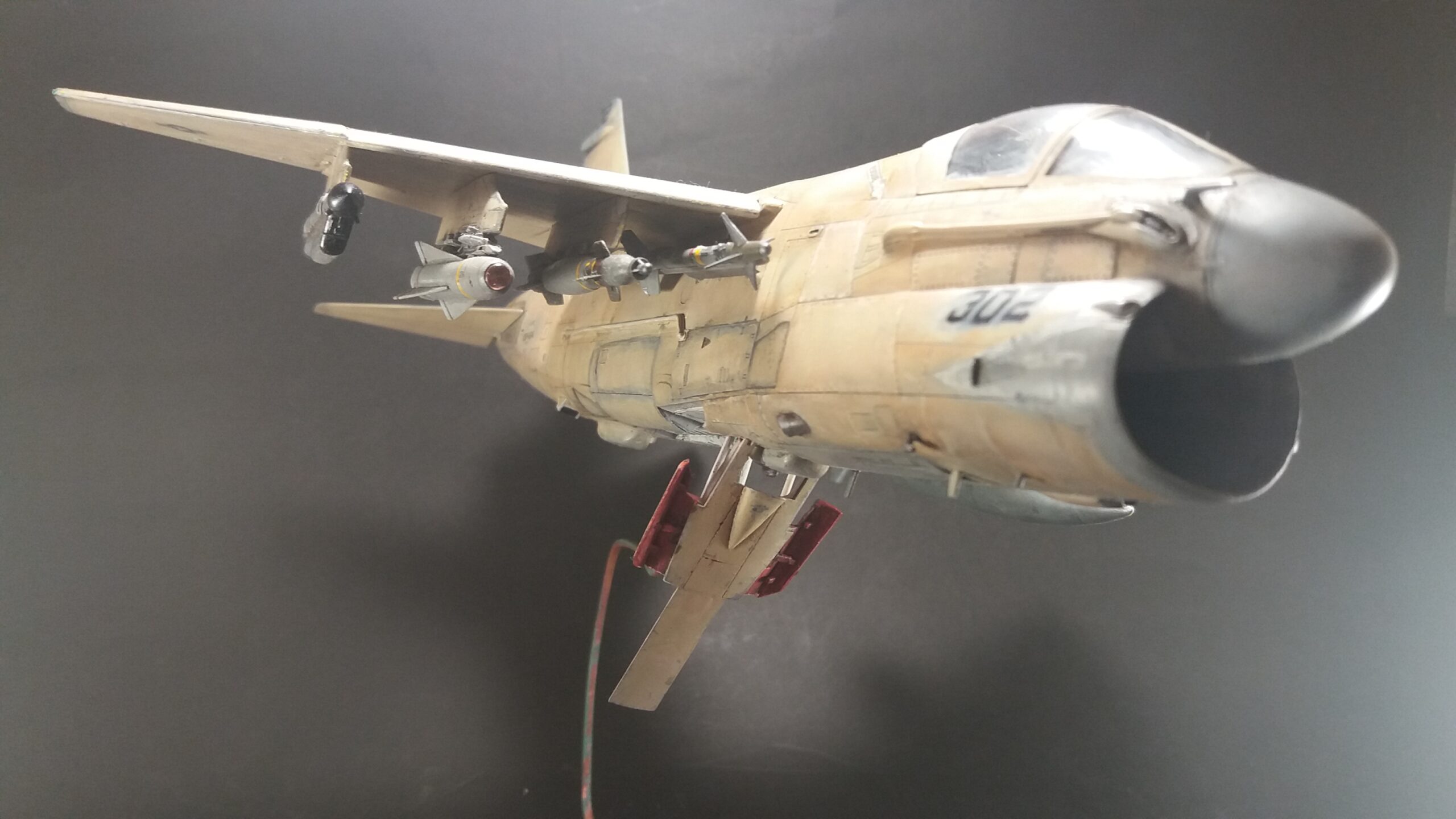
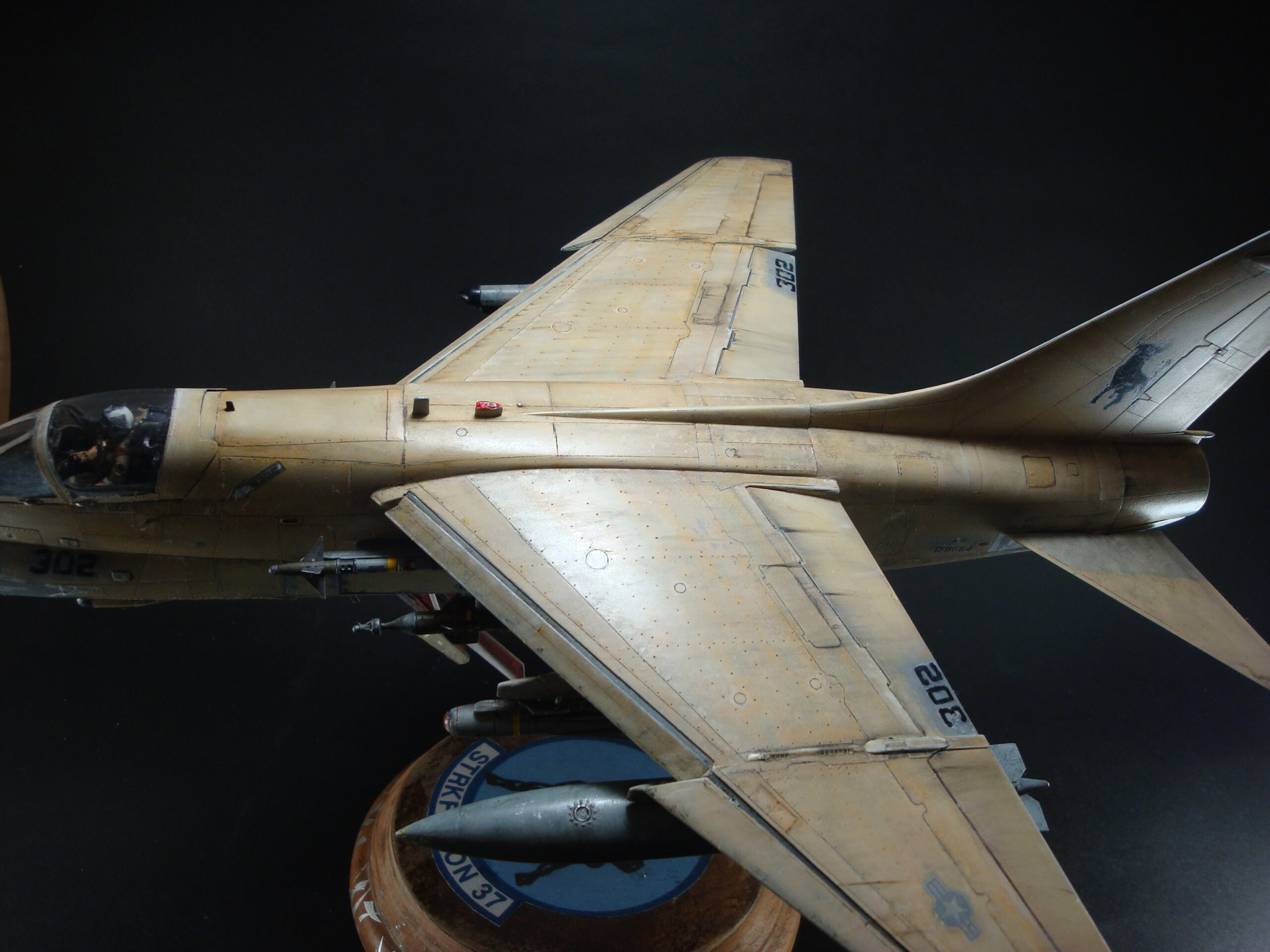
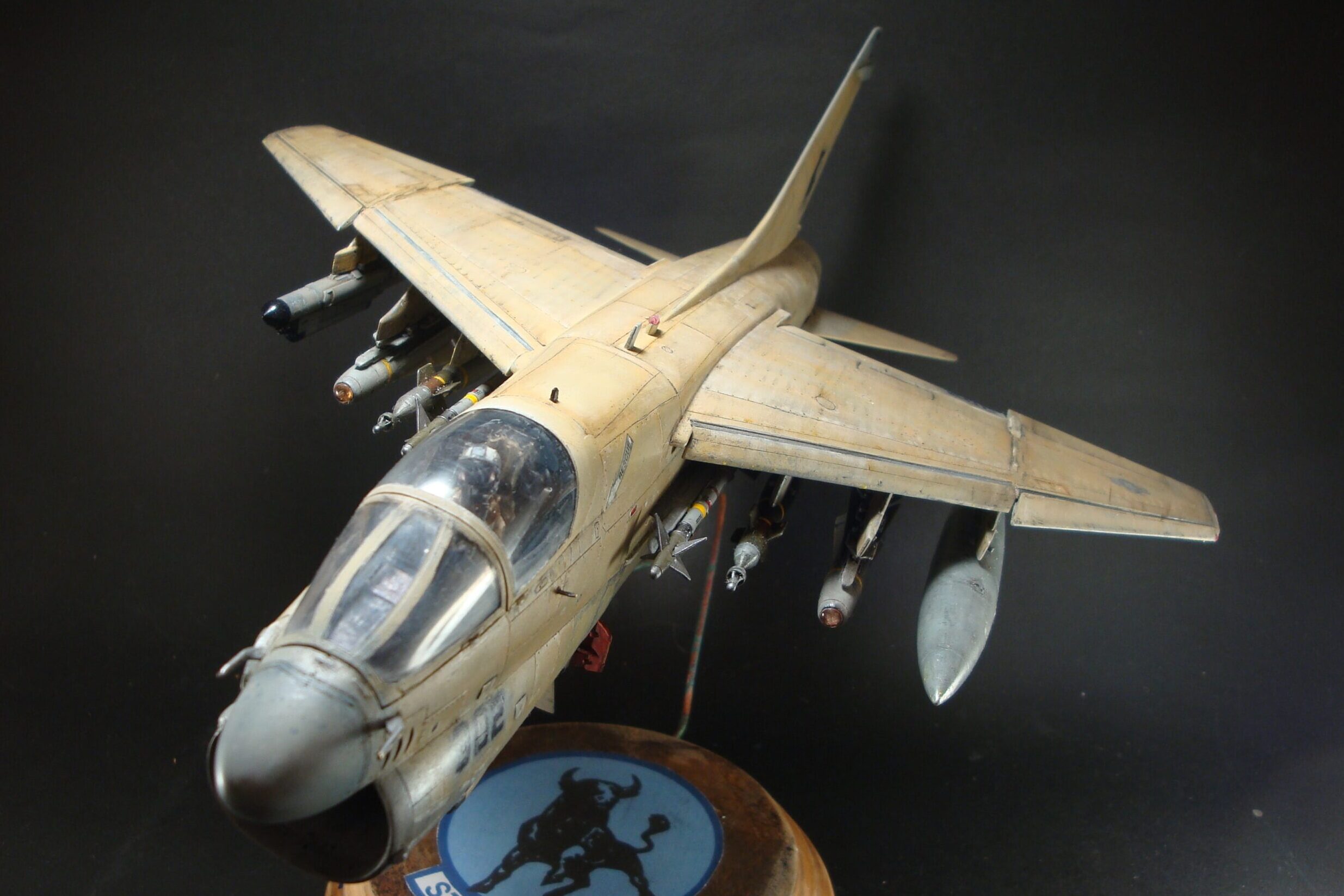
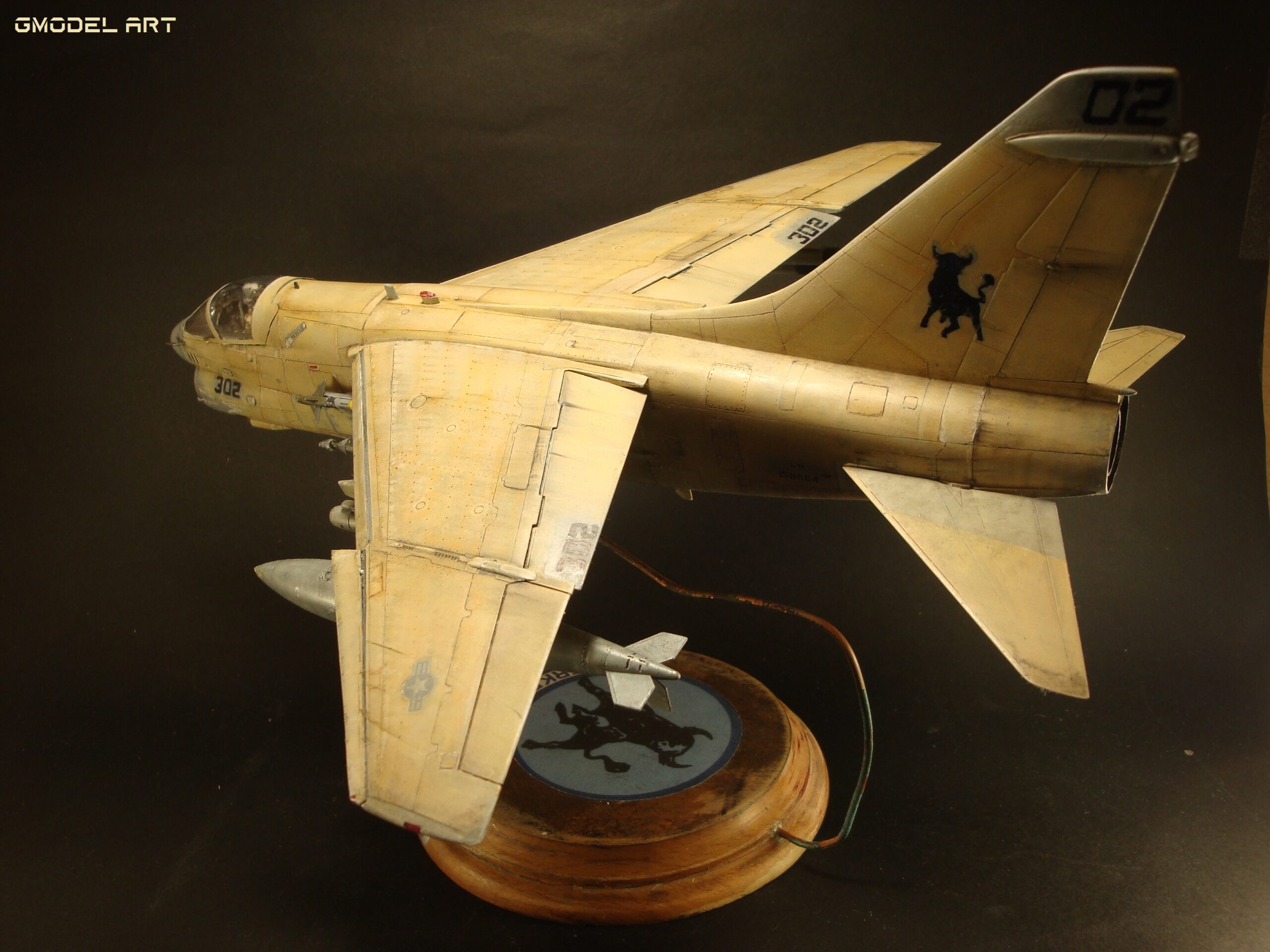
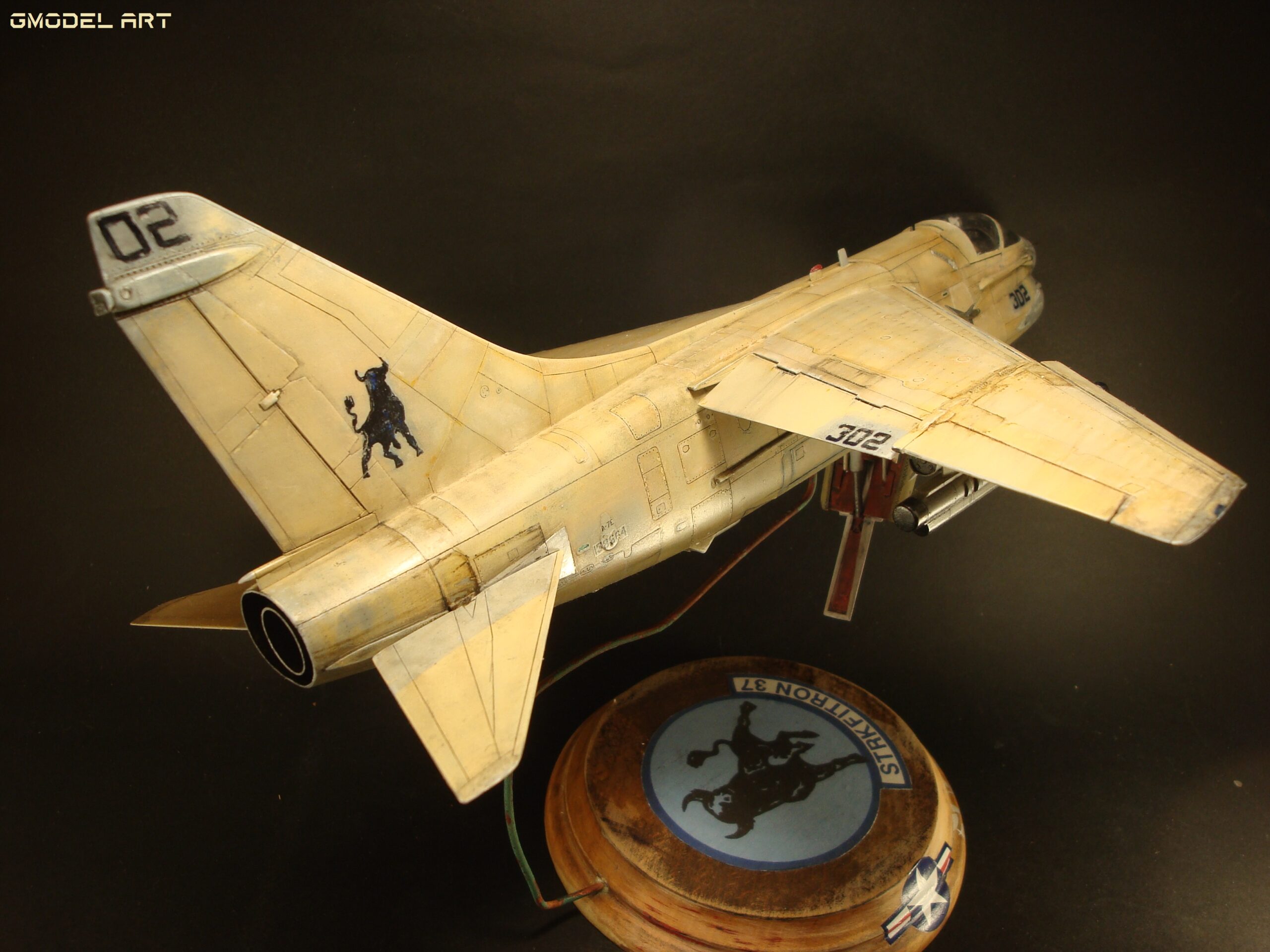
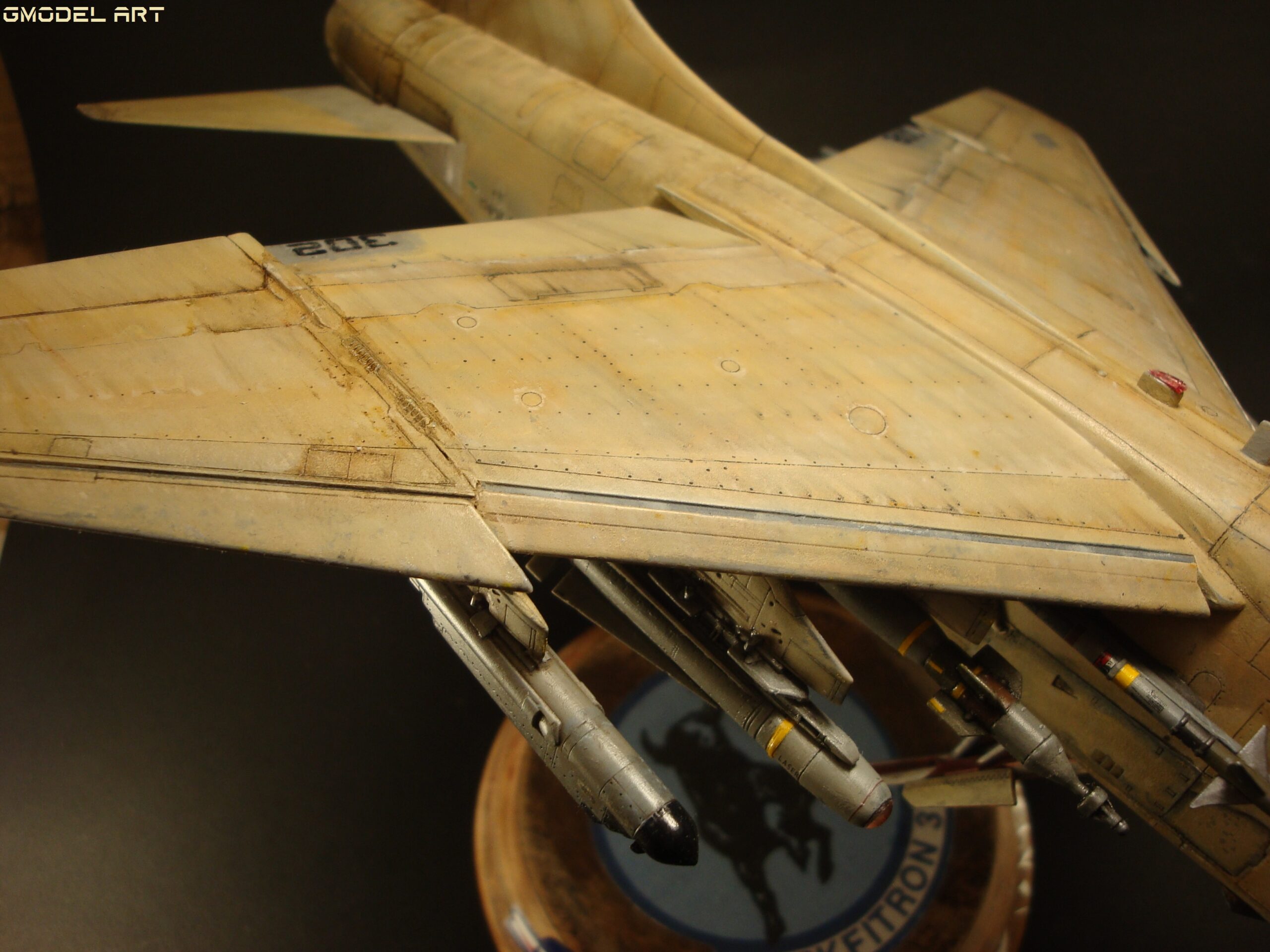
During the buildup to Operation Desert Shield, selected aircraft from VA-37 received field-applied desert overspray directly over the Tactical Gray finish.
That meant one thing for modeling:
Controlled improvisation.
Model Configuration
No aftermarket upgrades used
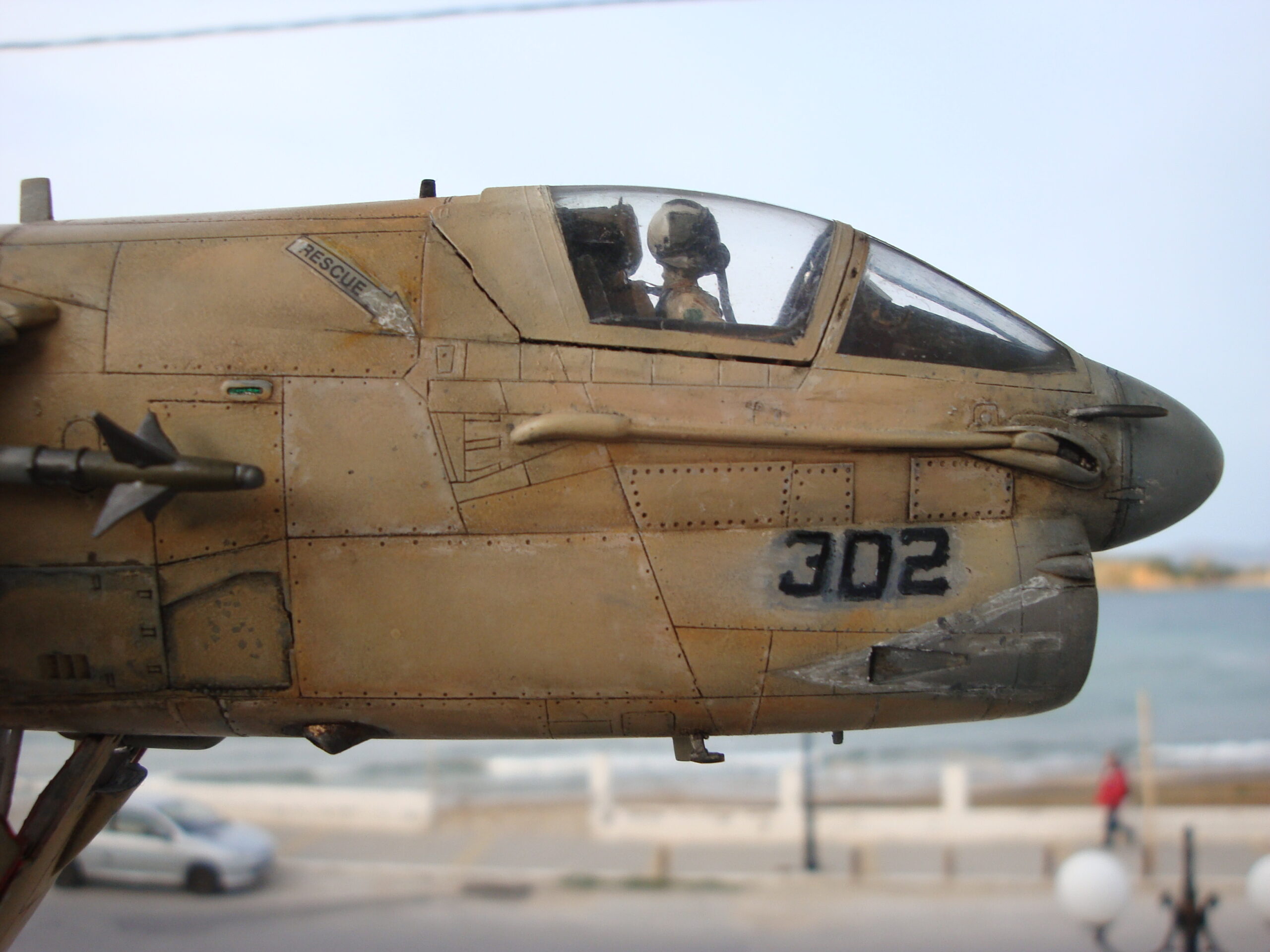
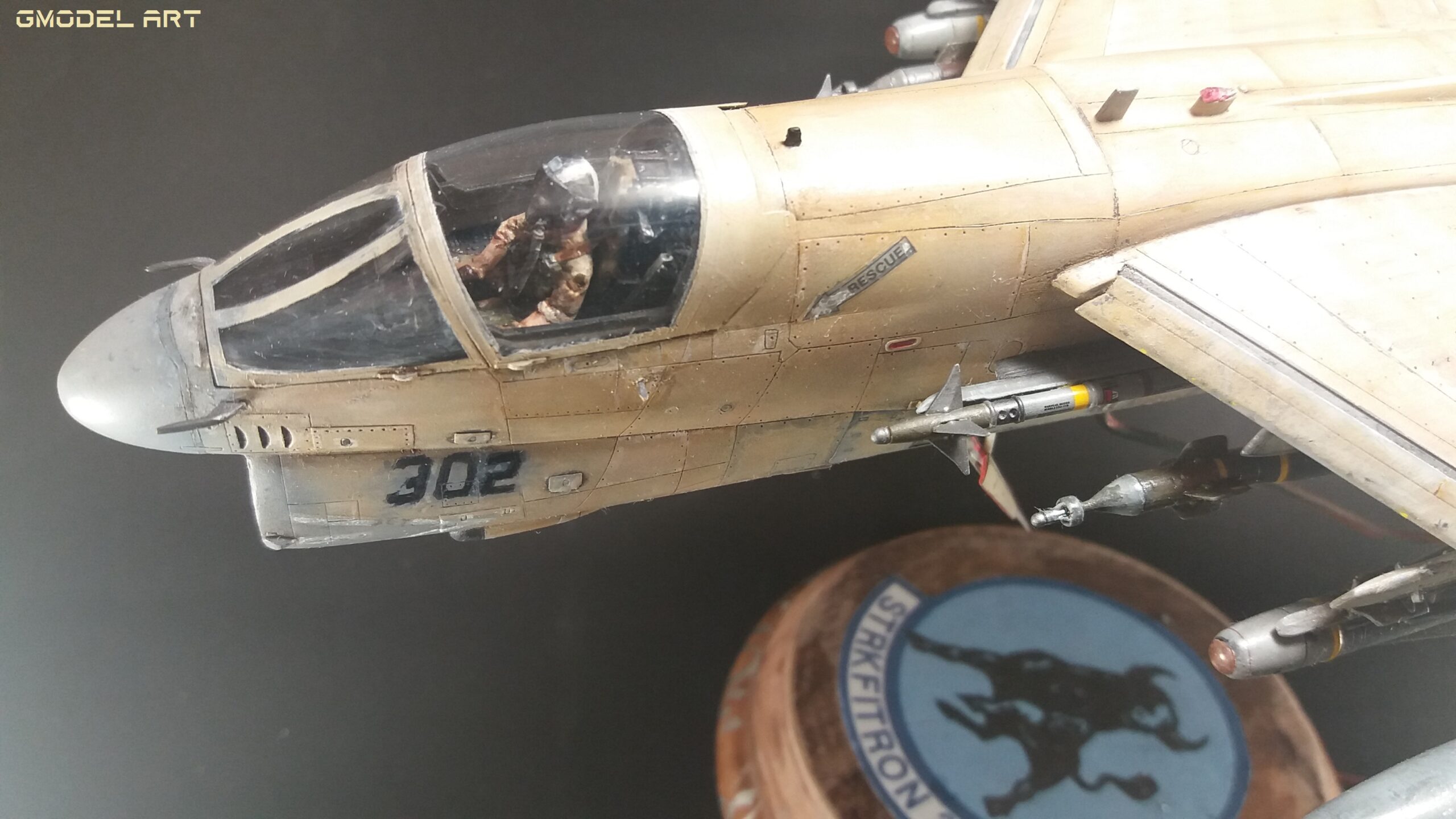
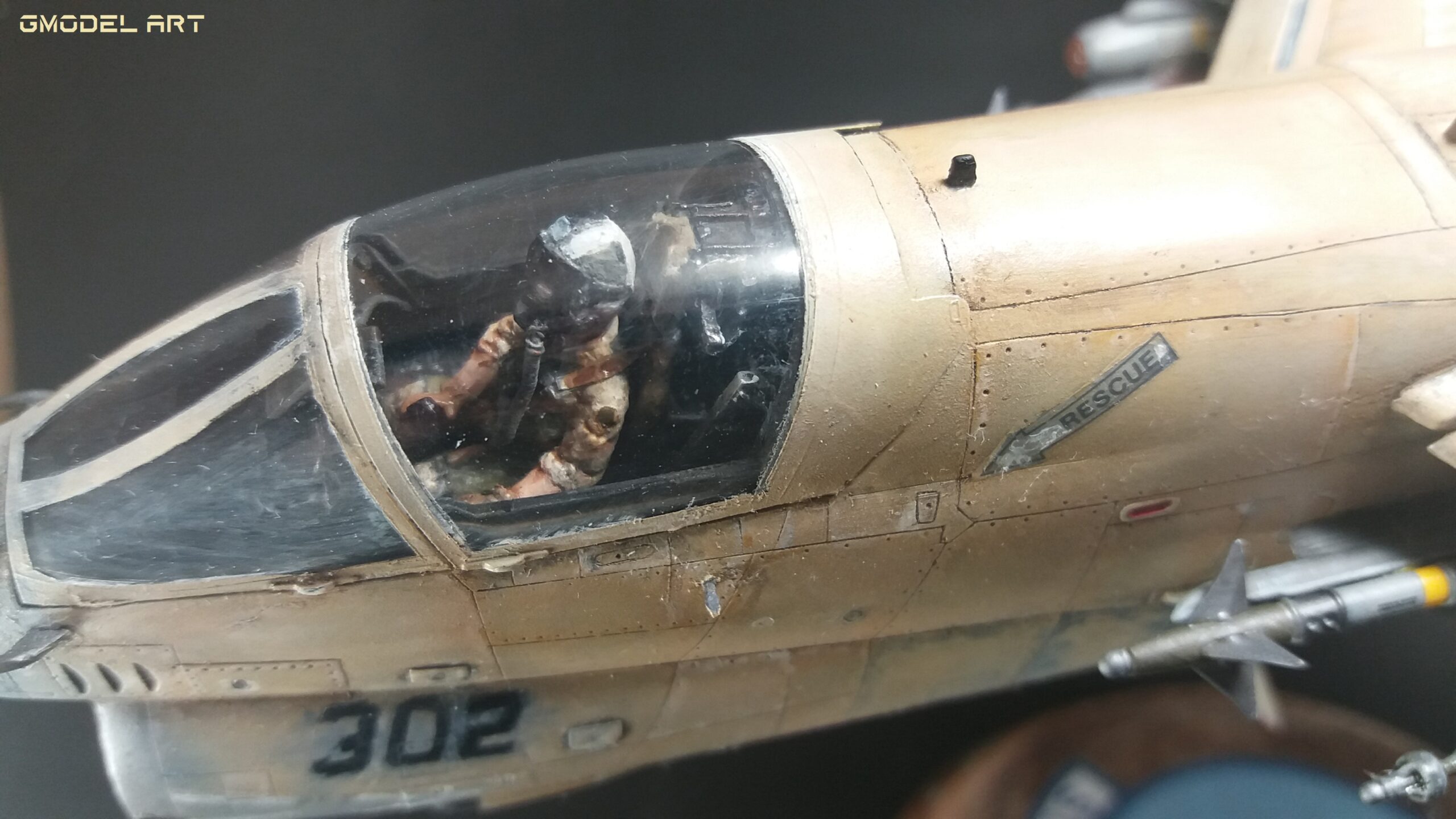
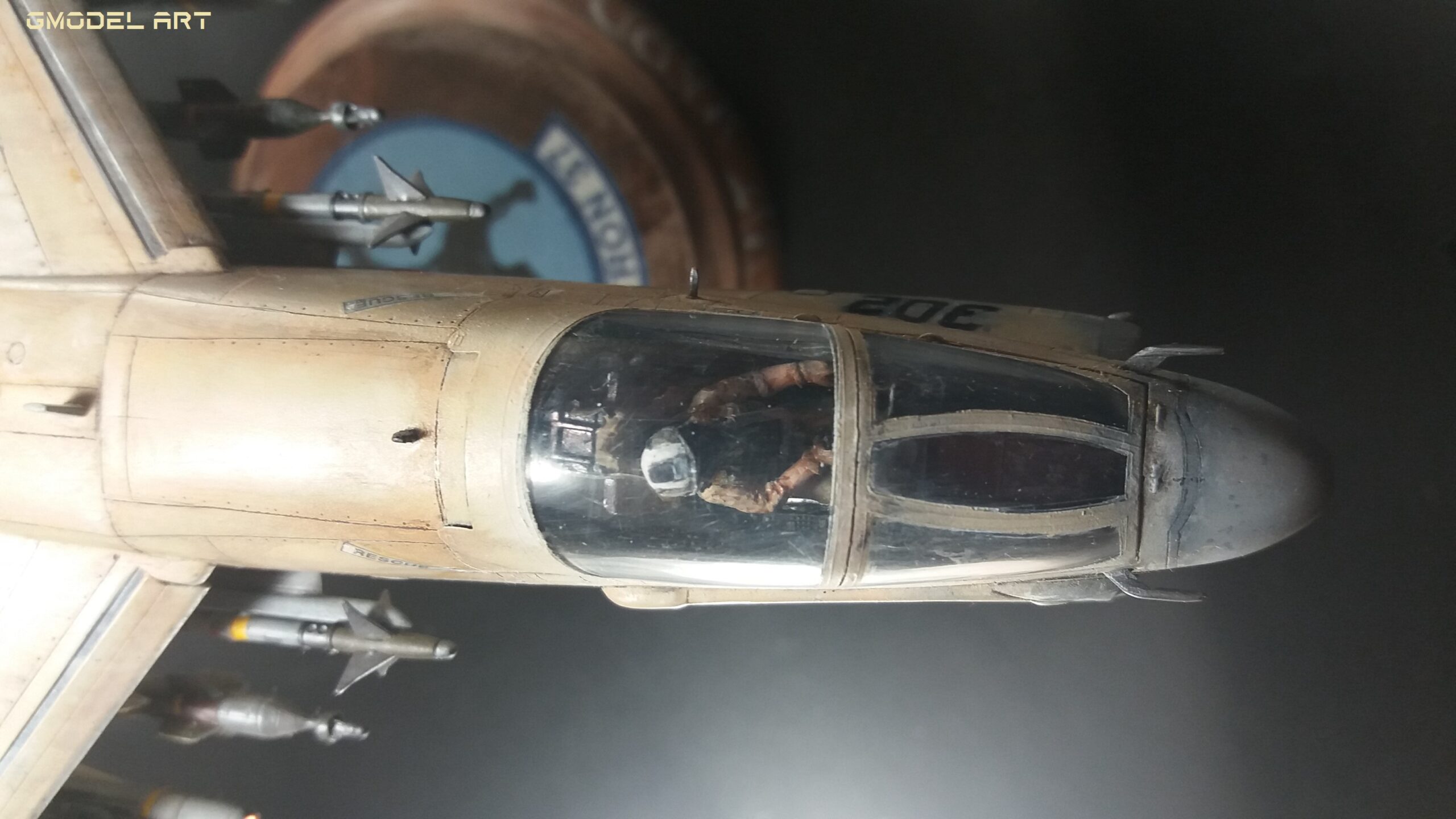
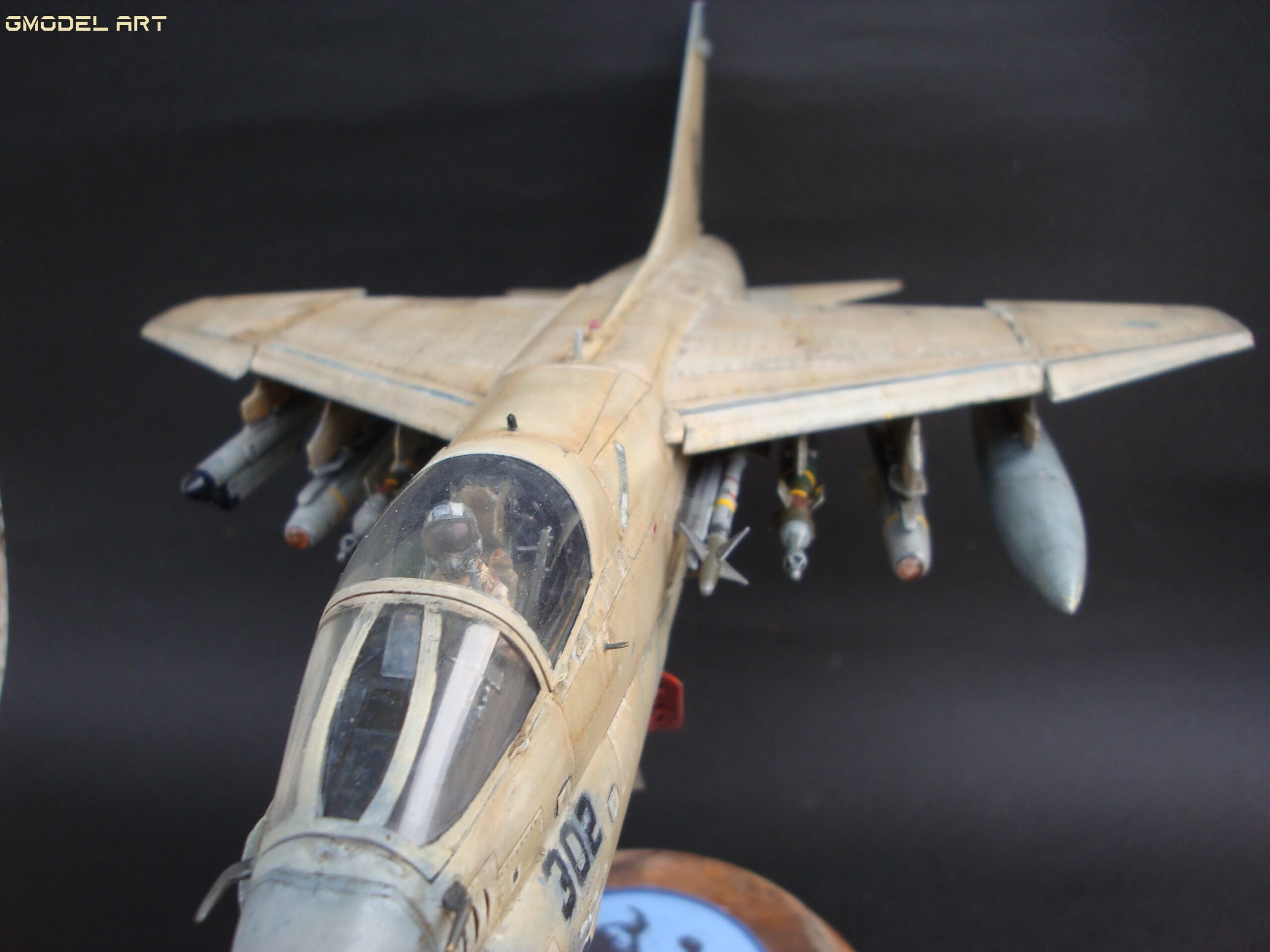
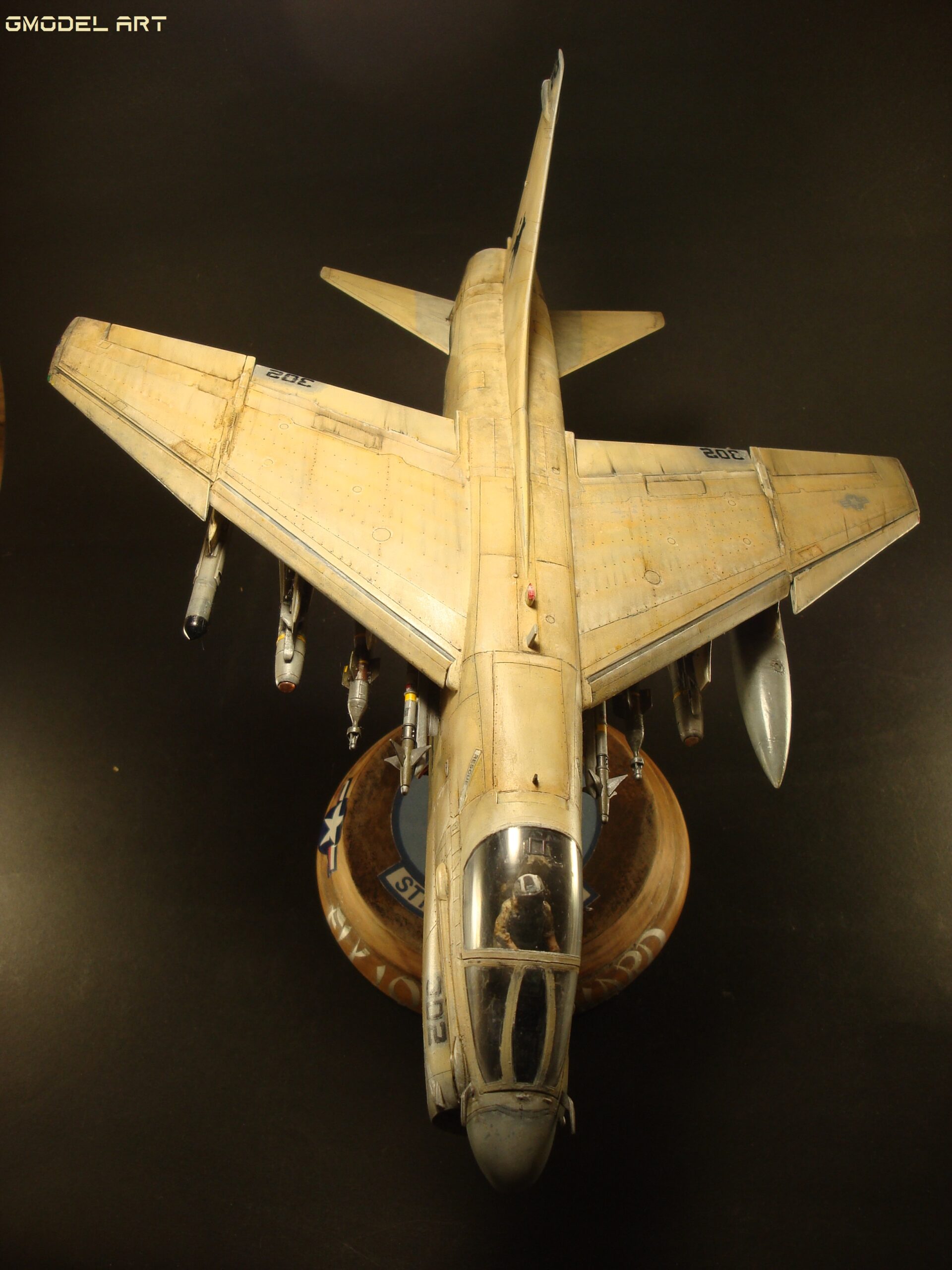
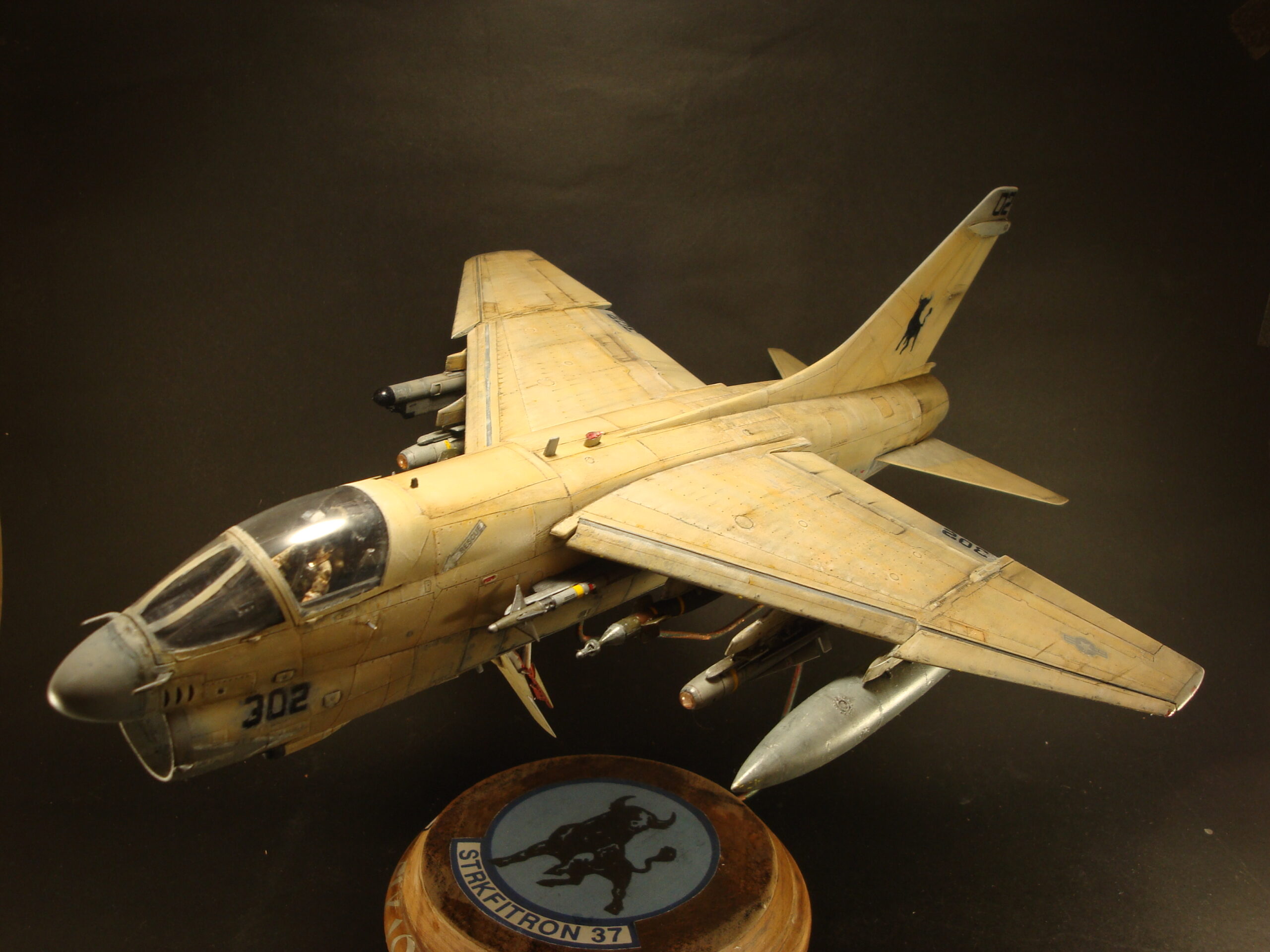
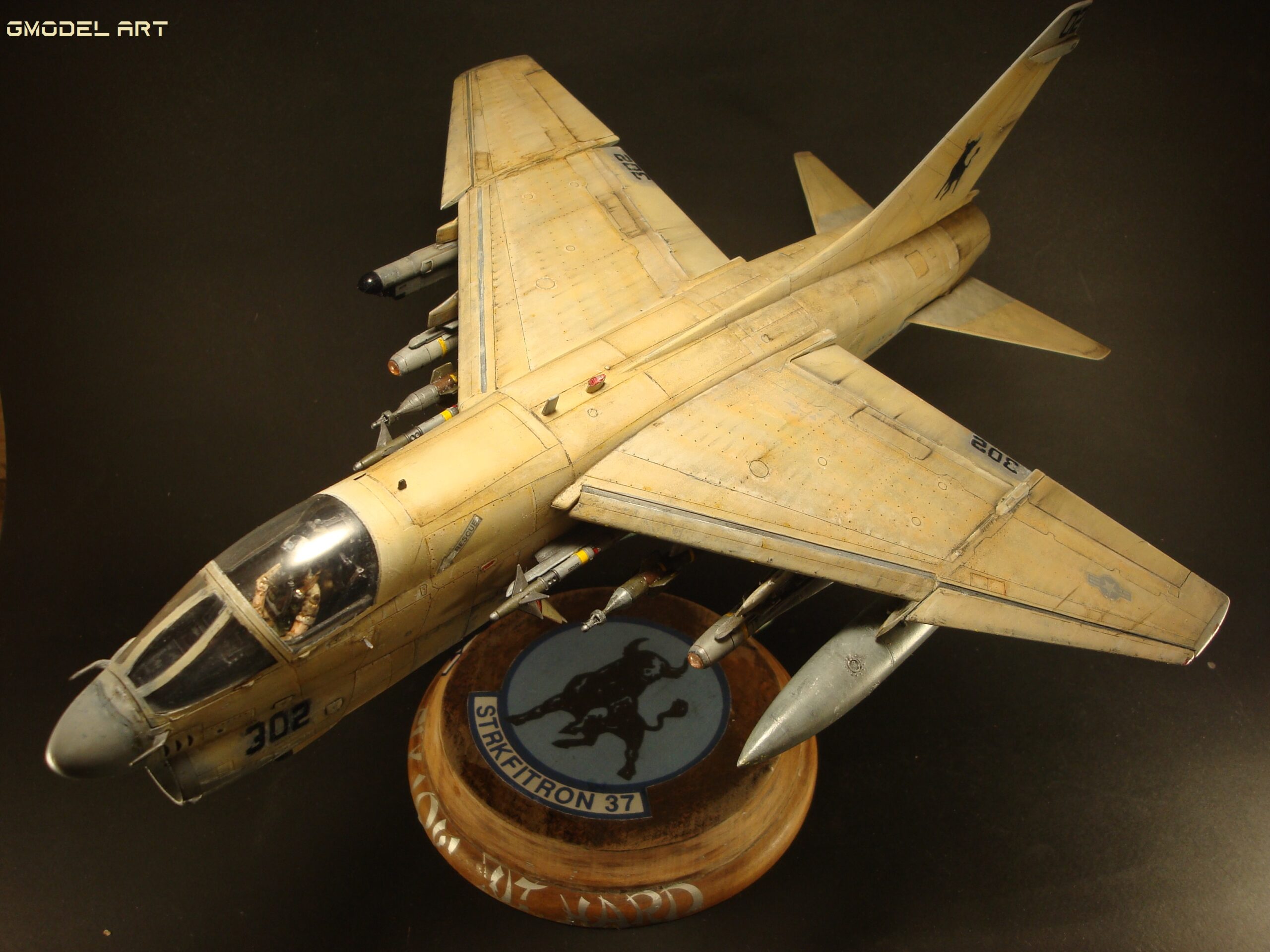
Pilot sourced from a Tamiya F-16 kit
Ejection seat modified to SJU-4 configuration (AV-8B style)
The objective was not a museum restoration — but an operational carrier-based aircraft ready for deployment.
Painting Process – Technical Breakdown
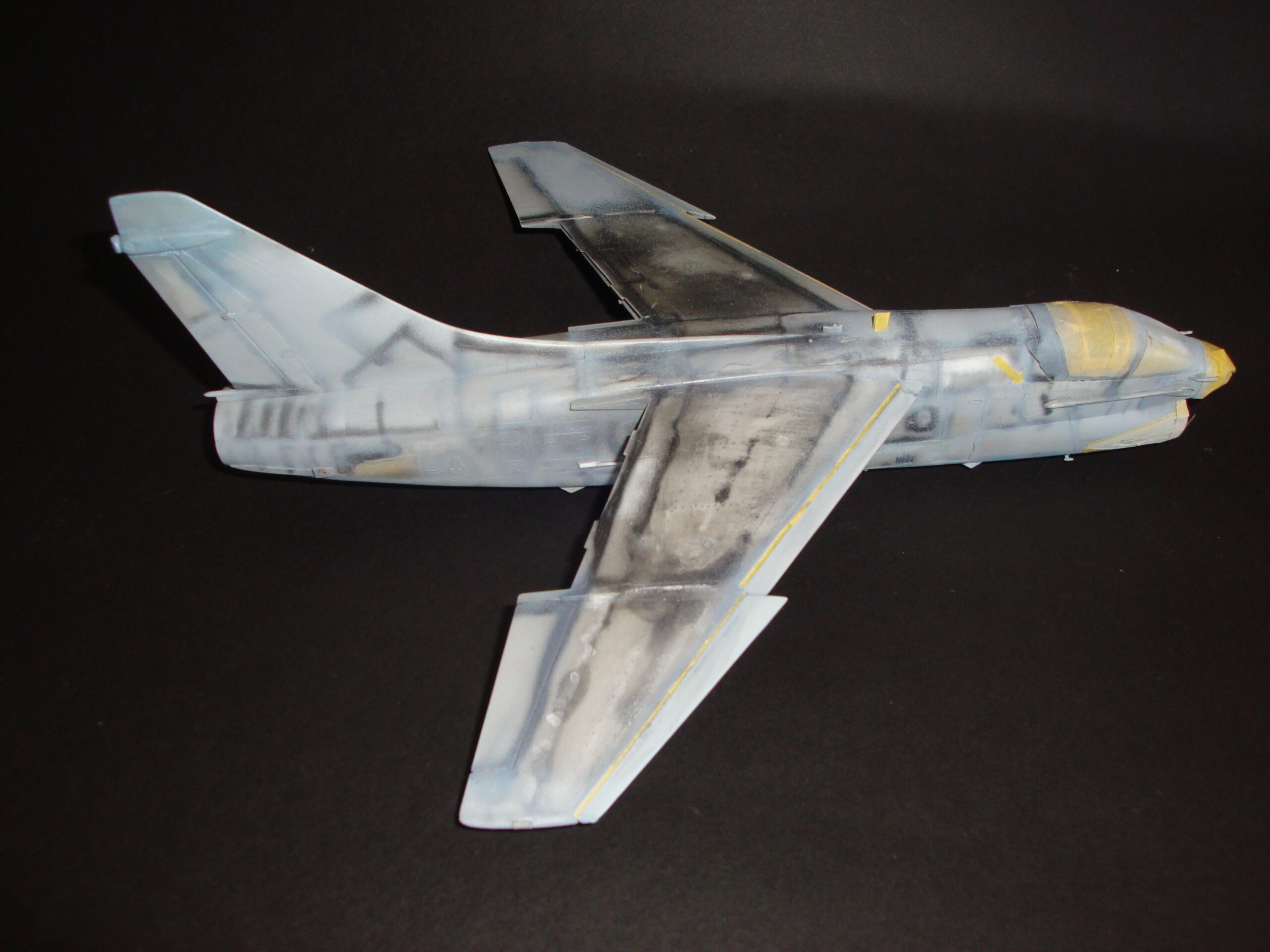
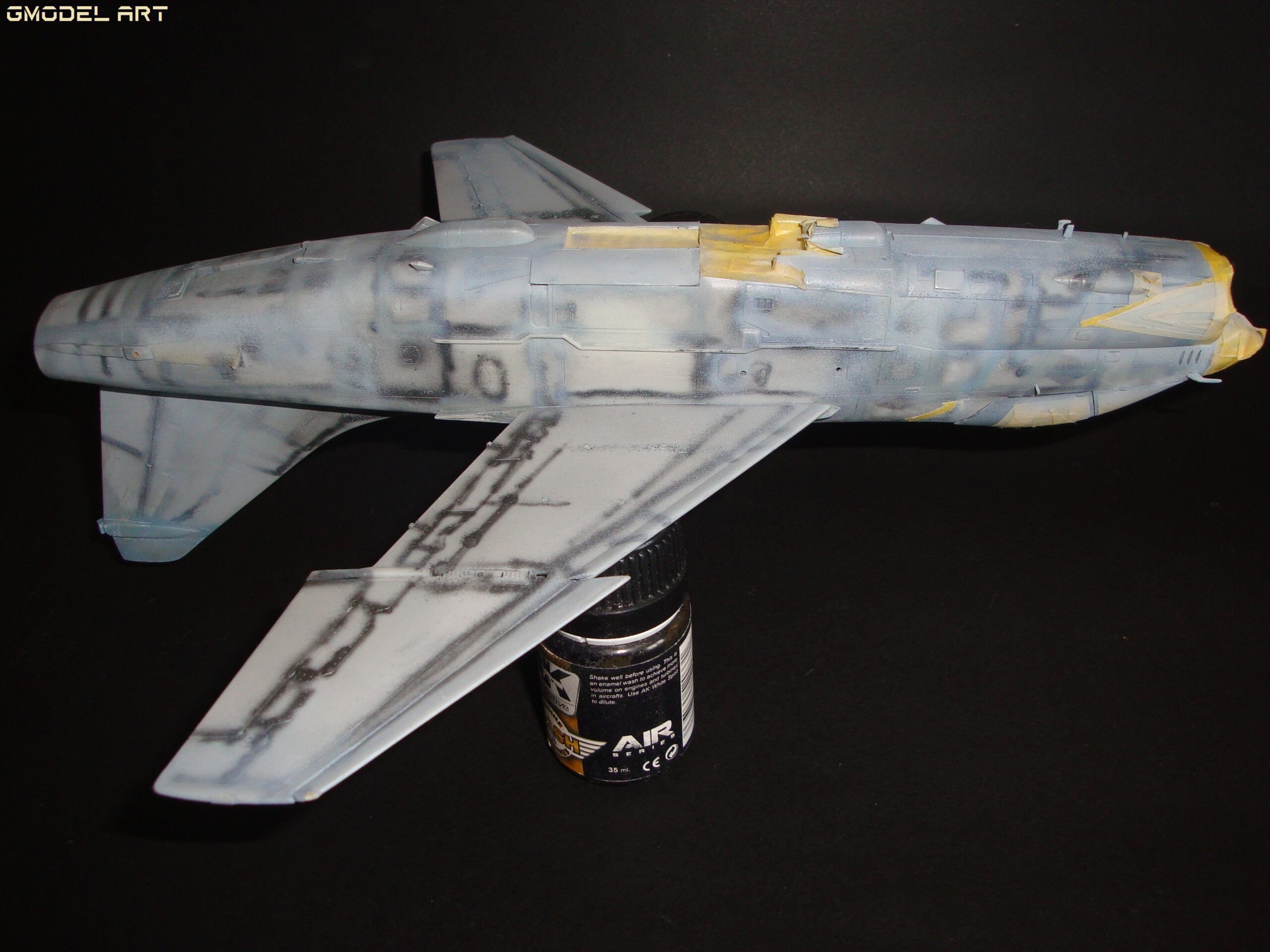
Step 1: Priming & Tactical Gray Base
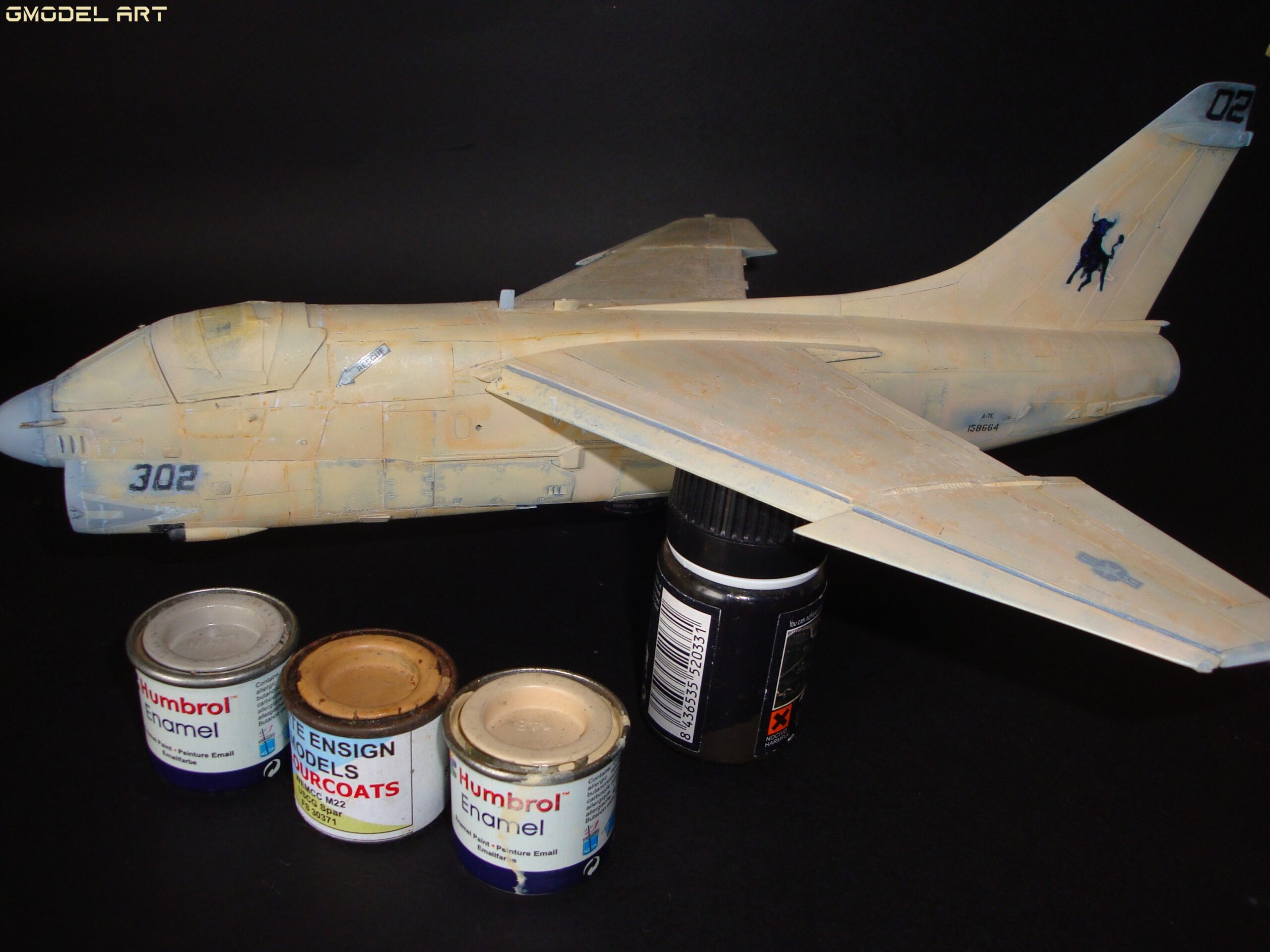
Vallejo Surface Primer USN Gray
Full black pre-shading of panel lines
Base coat:
FS 36320 Dark Ghost Gray (radome & antennas)
Sealed with matte varnish before desert application.
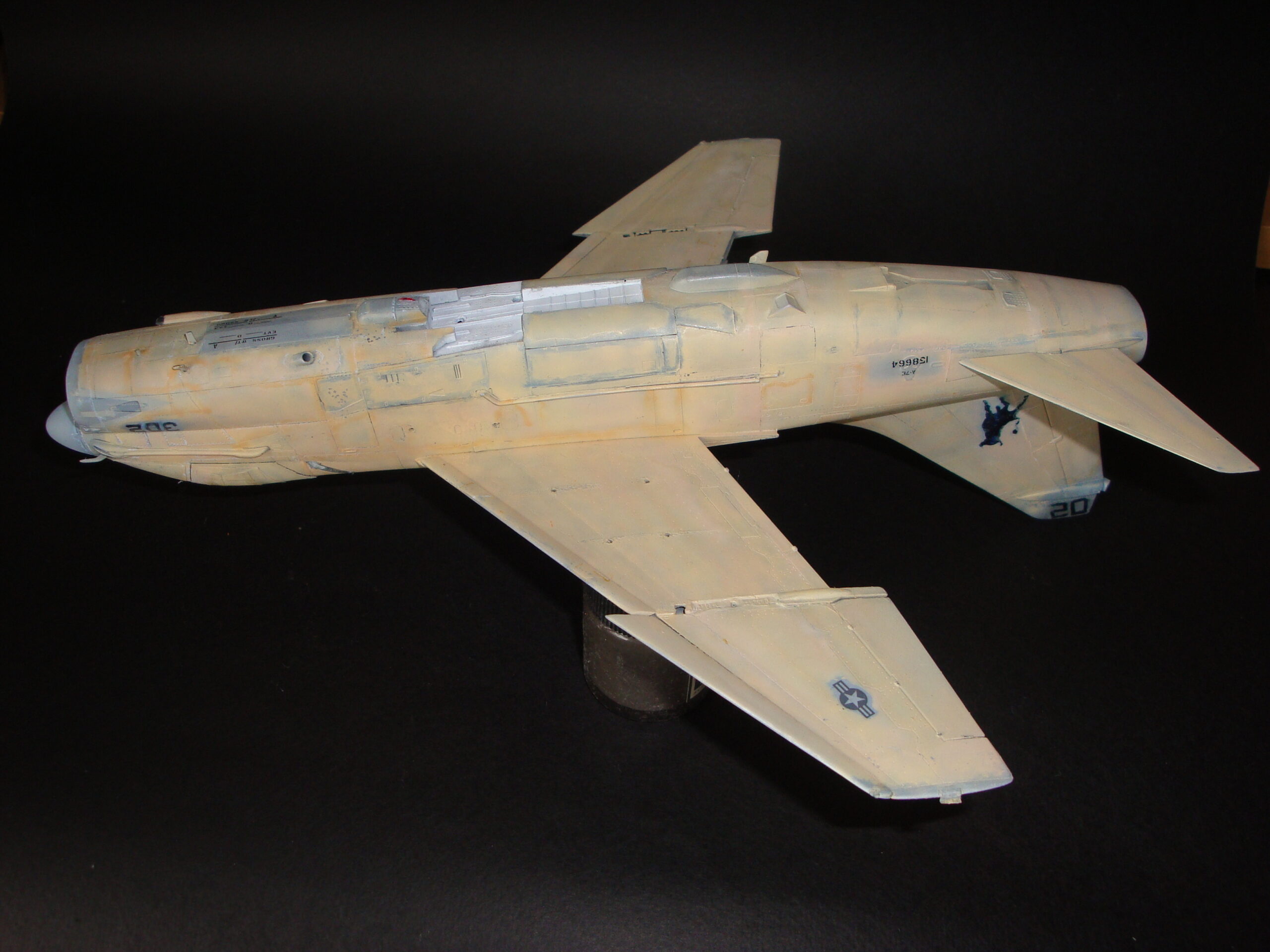
Step 2: Desert Overspray & FS Color Analysis
Reference for light sand is FS 31667 Flat Tan
However, no commercially available model paint accurately matches it.
After multiple test mixes, the final blend was:
Humbrol 148
Small amount of red
Two parts white
Thinned approximately 50/50
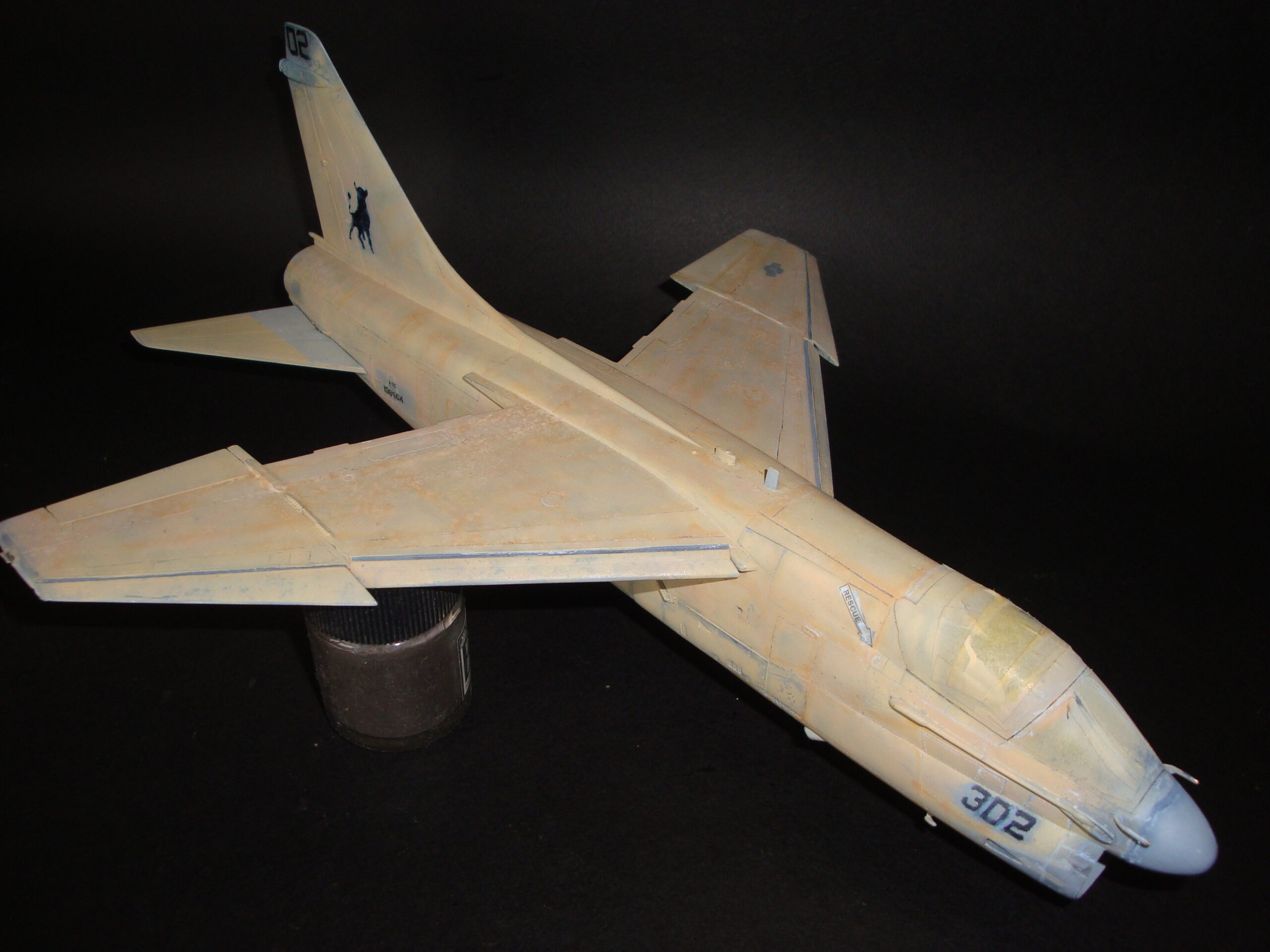
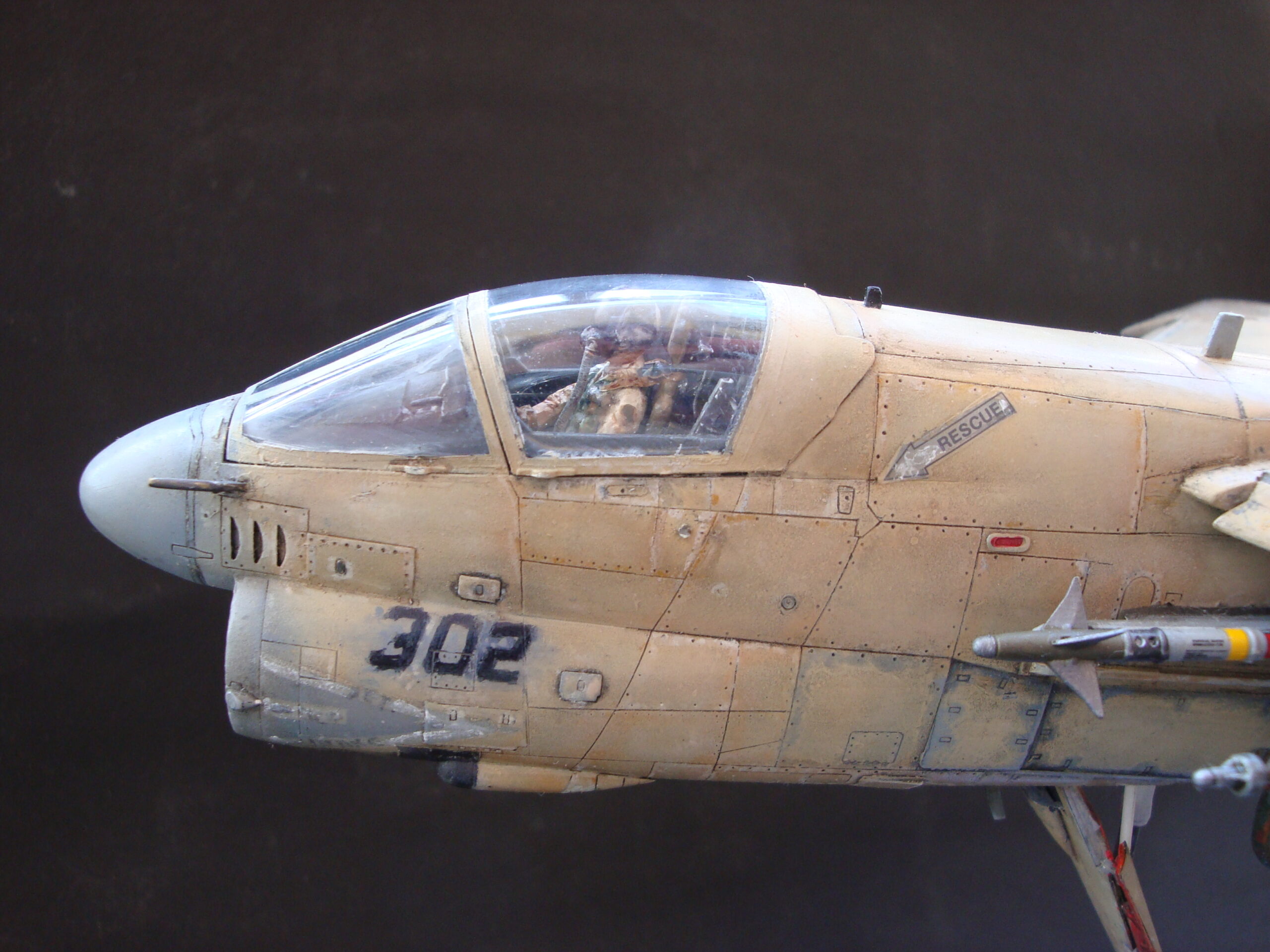
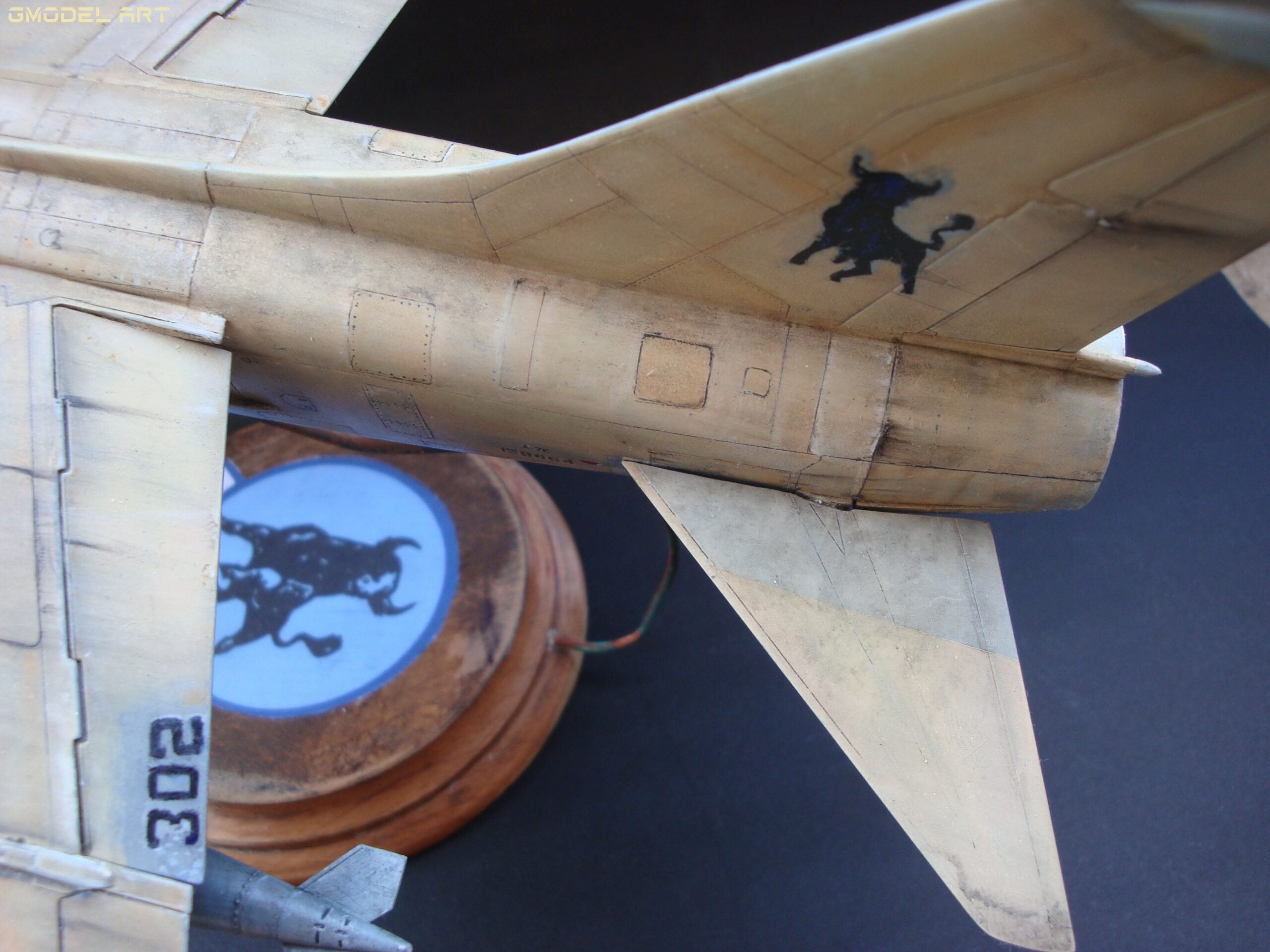
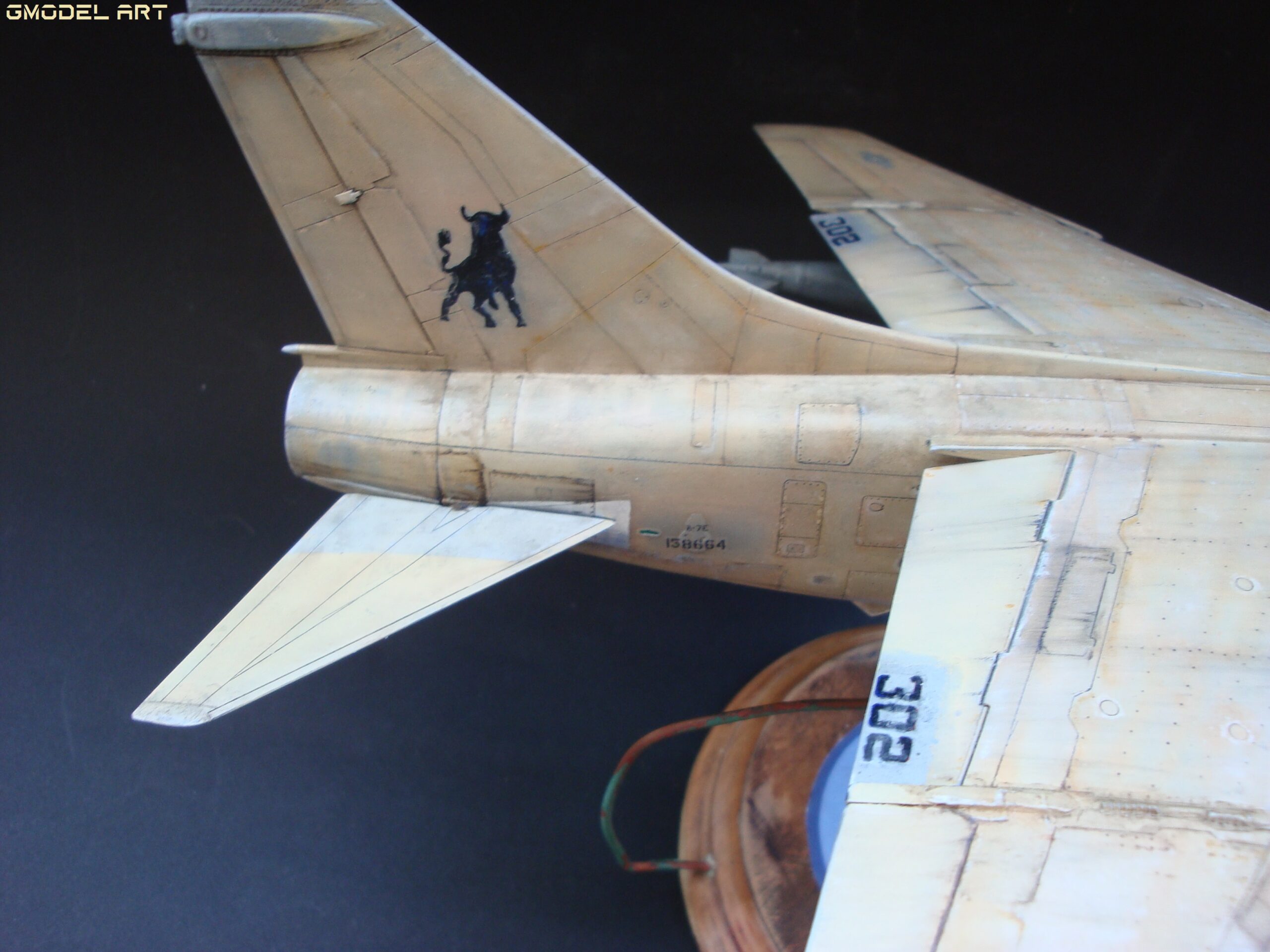
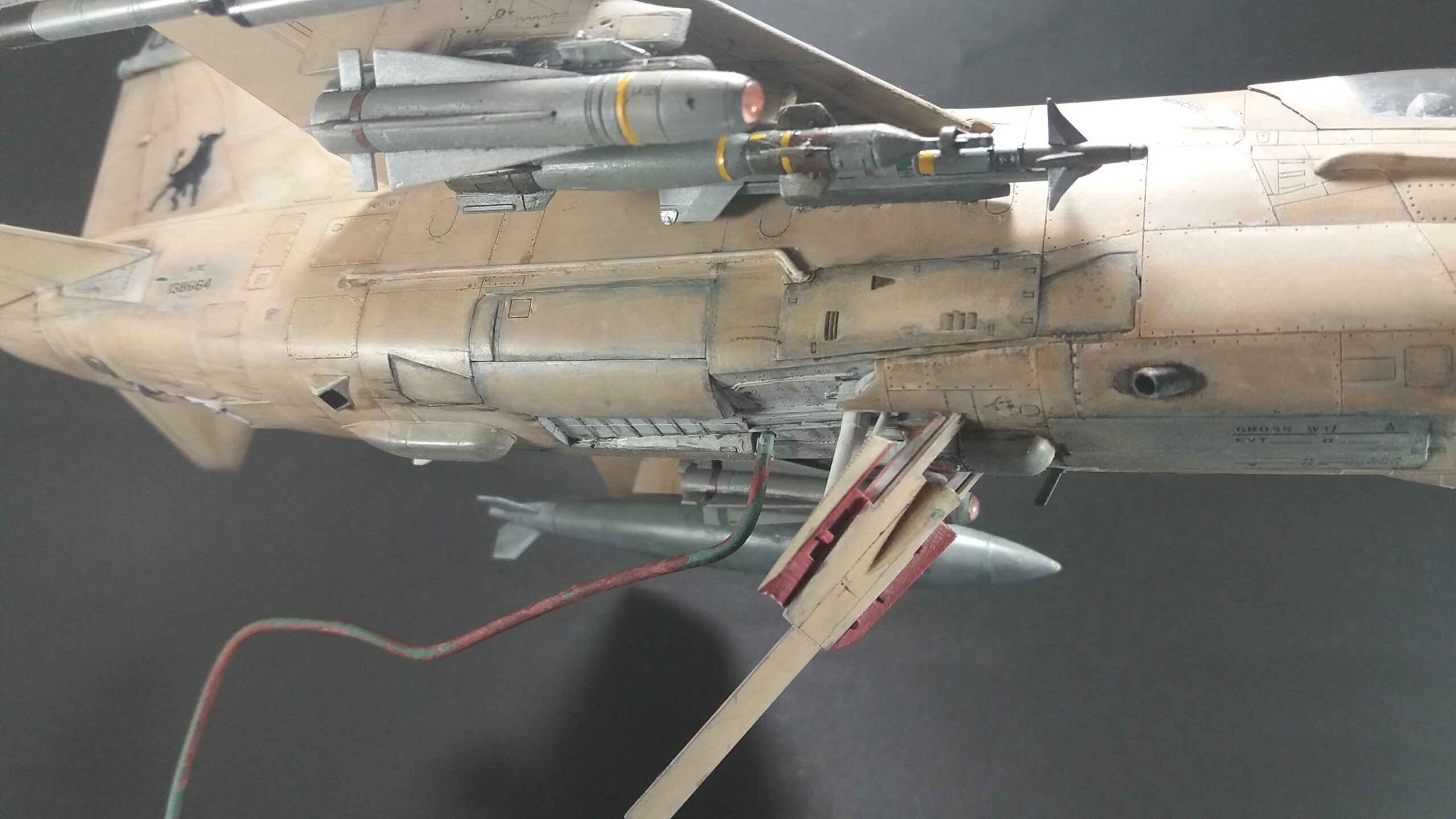
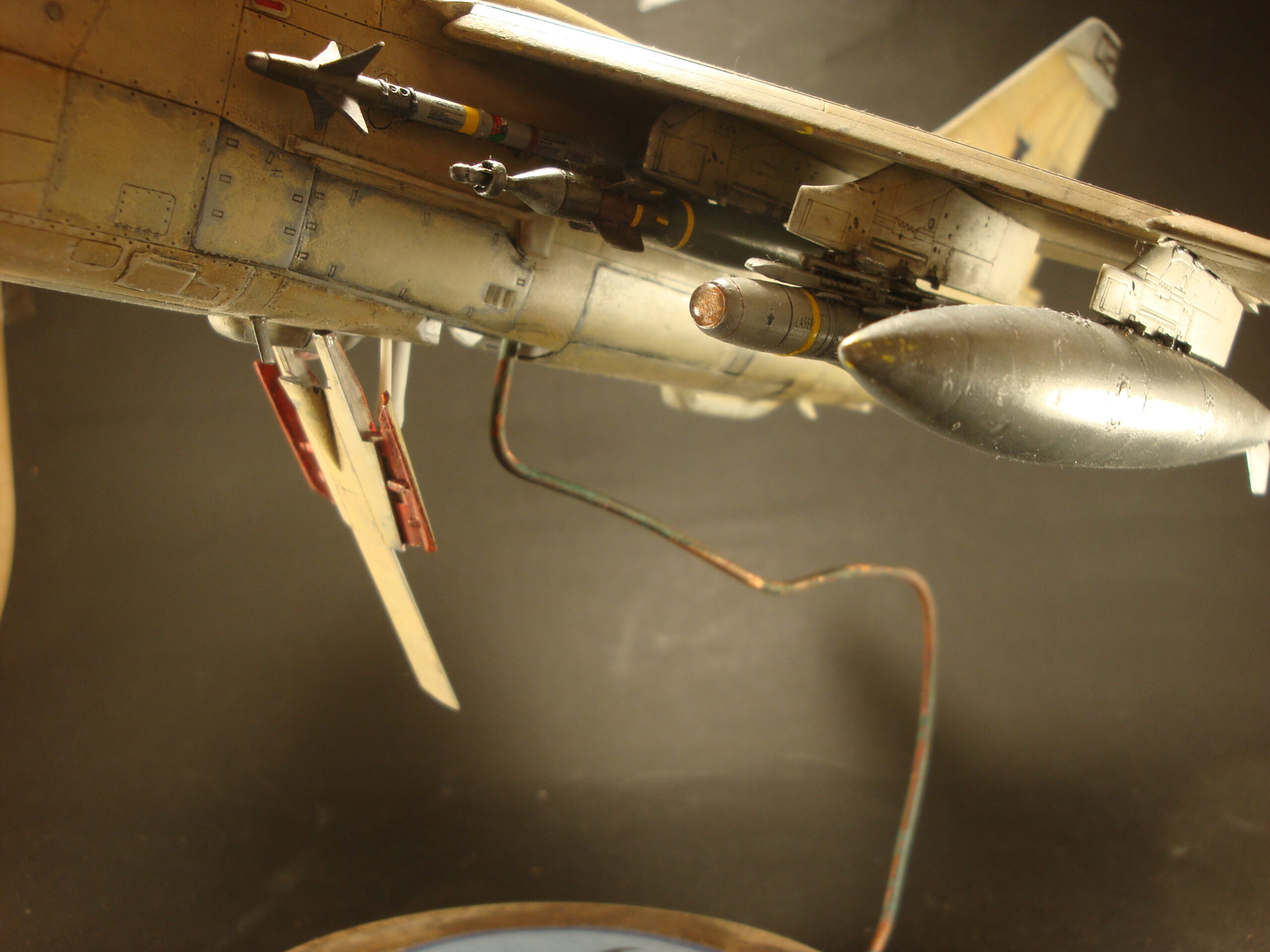
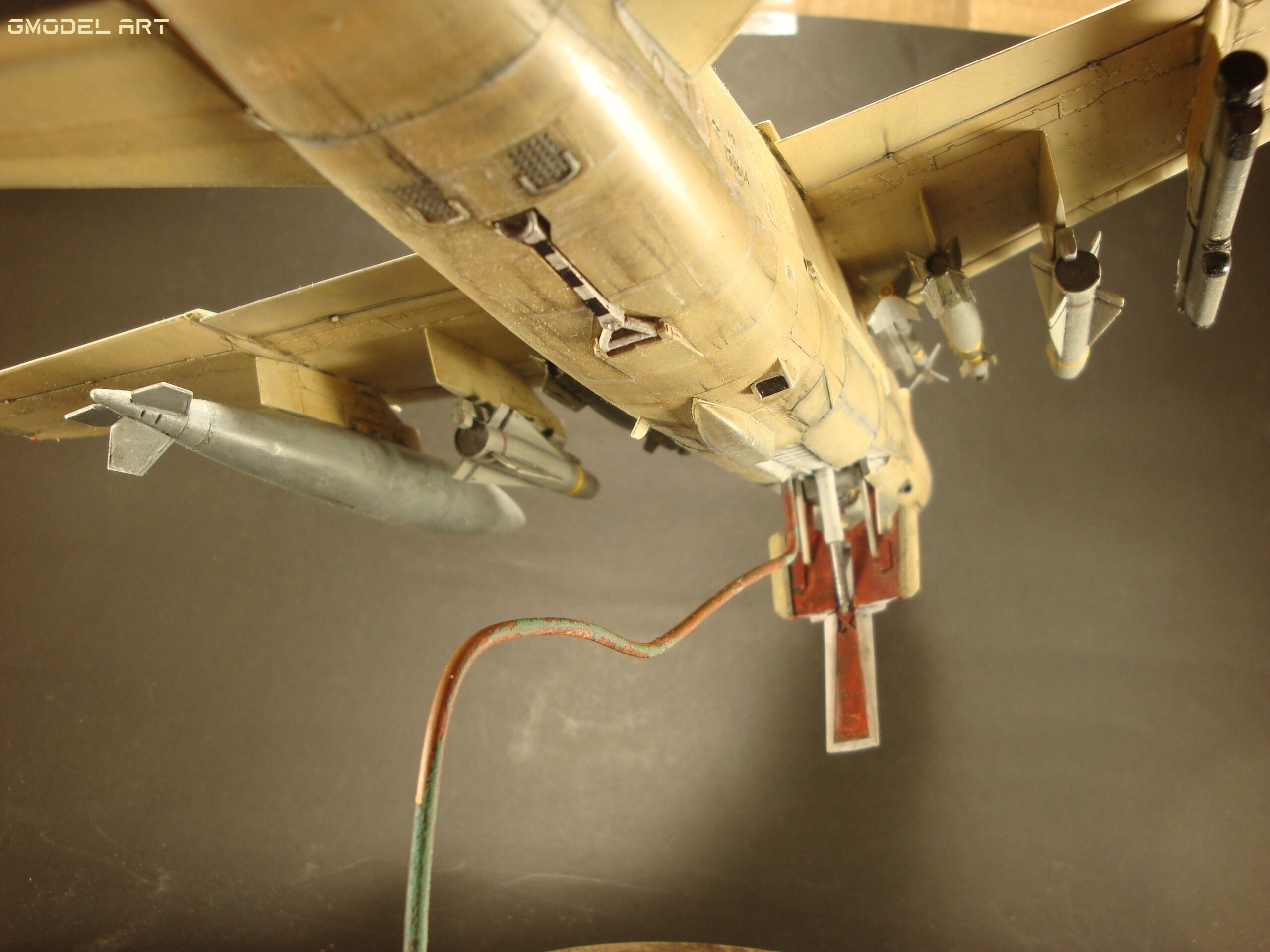
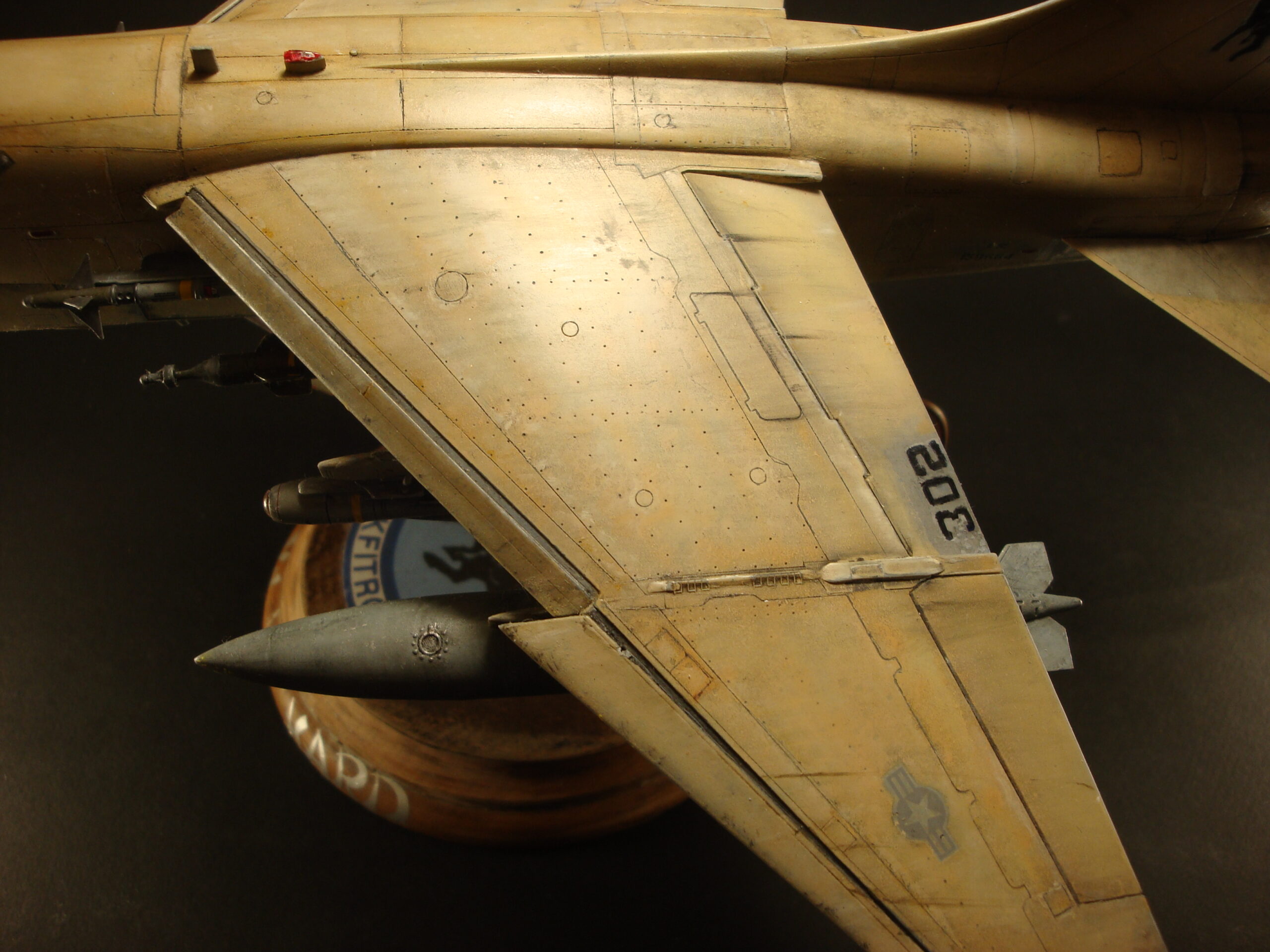
Applied with a wider nozzle in a soft “rain effect” to allow the underlying grays to subtly show through.
This technique creates:
✔ Uneven field application
✔ Natural tonal variation
✔ Authentic operational appearance
Step 3: Markings Without Decals
No dedicated decals exist for this specific aircraft.
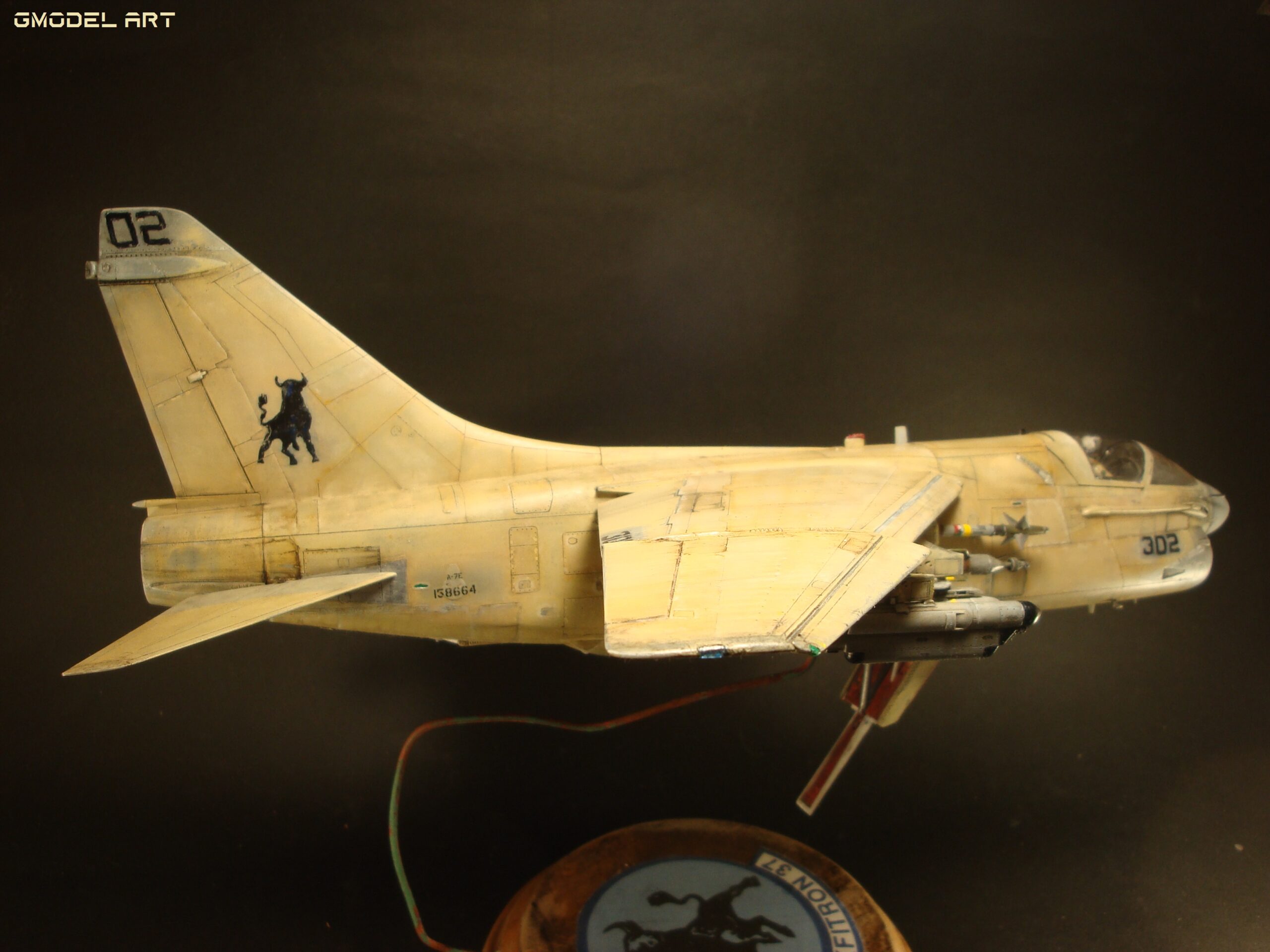
“Bull” insignia and number 302 were hand-applied using a 0.5mm CD marker
Panel tonal adjustments with Humbrol 121 (matte)
Humbrol 121 provides a subtle pinkish tone — ideal for sun-faded desert simulation.
Step 4: Salt Weathering Technique
Salt was applied to simulate:
Paint wear
Sand abrasion
Surface oxidation
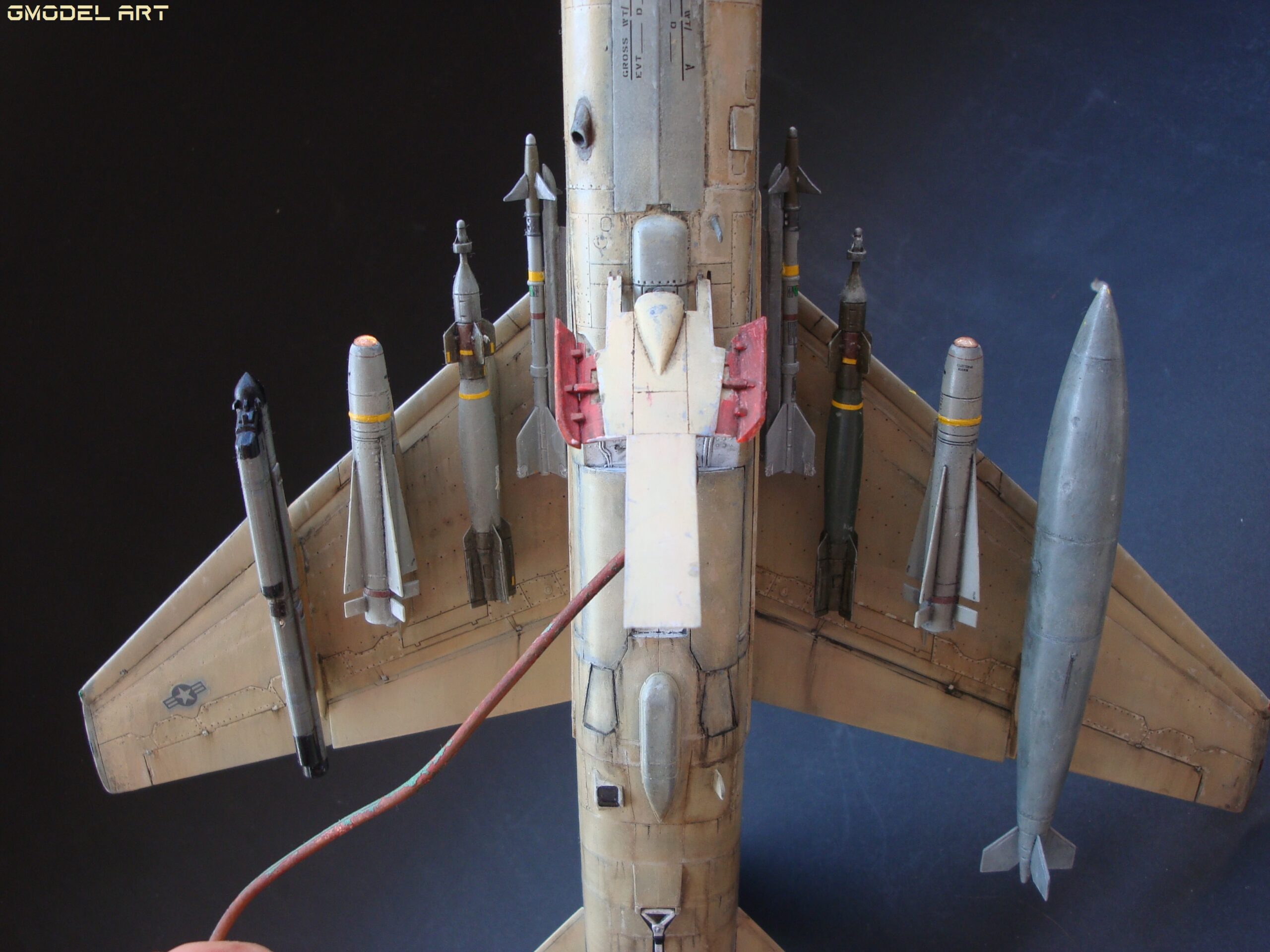
After rinsing, light rubbing with tissue selectively revealed underlying tones.
The goal: desert exposure, not theatrical chipping.
Step 5: Oil Highlights & Panel Variation
mix:
White oil paint
Humbrol 121
With a fine brush, subtle highlights were added to:
Access panels
Fuselage caps
Wing roots
Selected rivet lines
This created restrained contrast consistent with real operational aircraft.
Step 6: Final Sealing & Operational Weathering
Final matte varnish sealed the paint layers.
Then came:
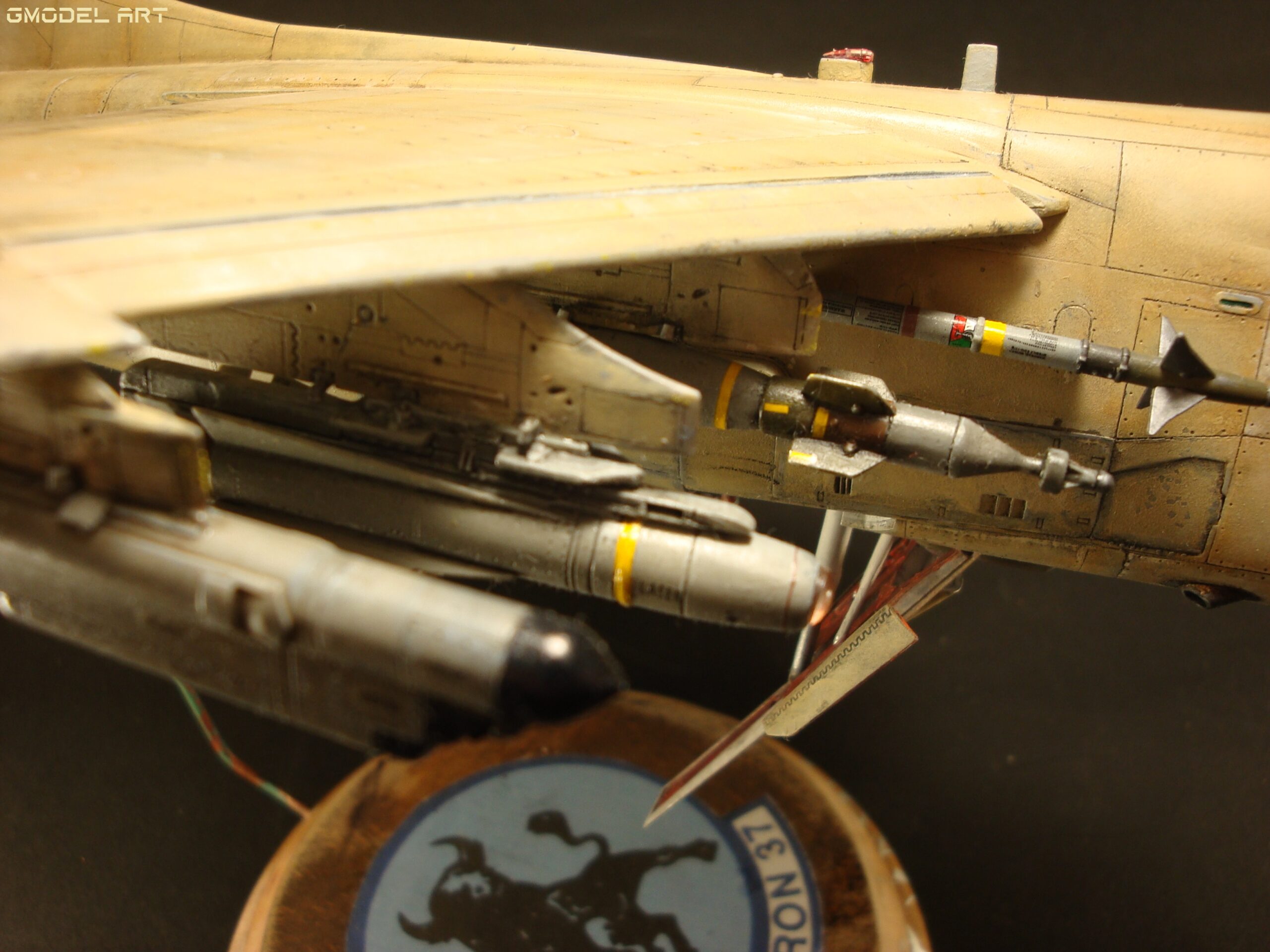
Exhaust staining
Hydraulic fluid streaks
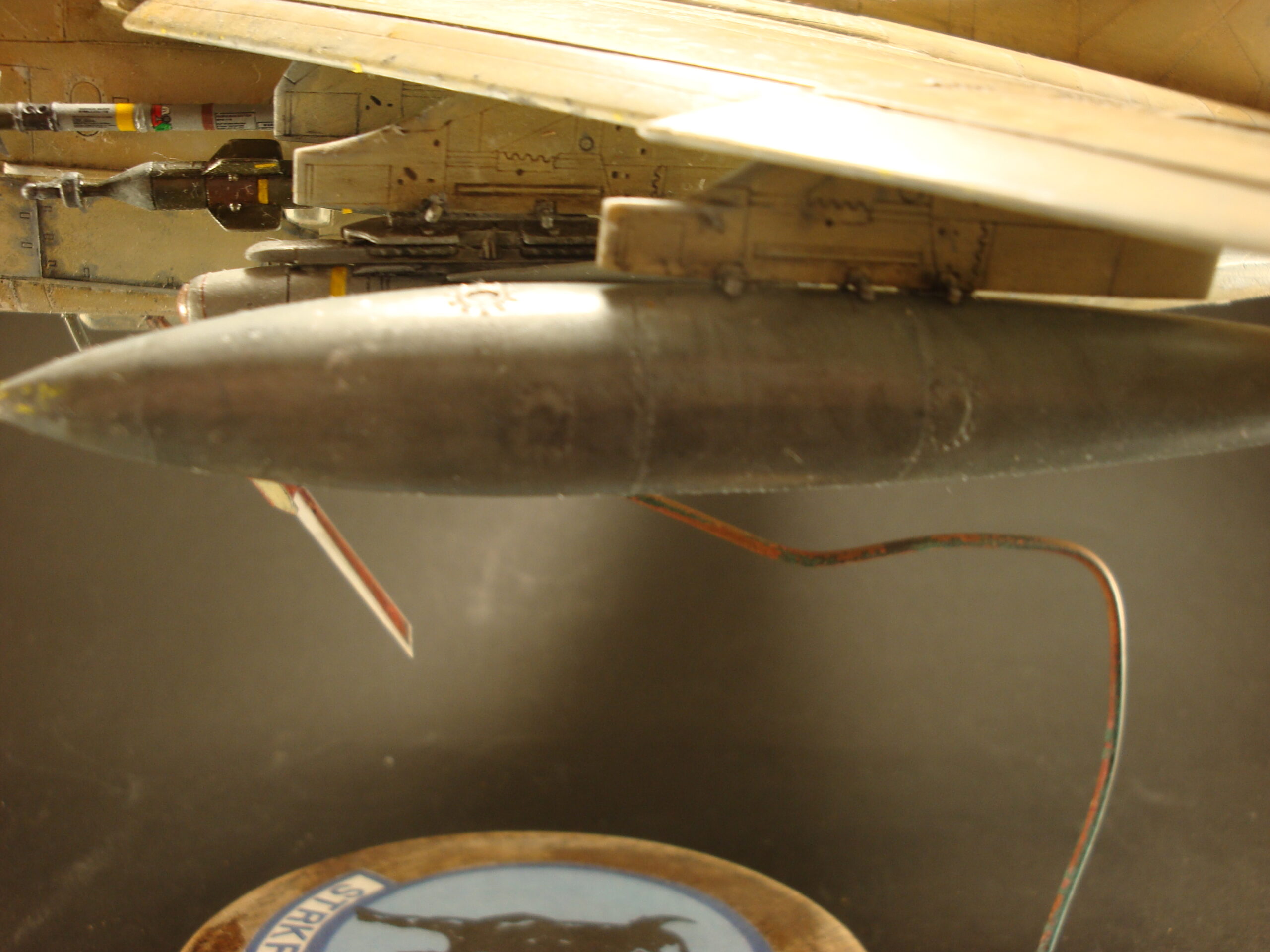
Carrier deck wear
The A-7E was a working aircraft.
It should never look pristine.
Historical Context
The desert-painted A-7E represents a transitional moment in U.S. Naval Aviation.
From Vietnam combat operations to Mediterranean crisis response, and finally into the Gulf War buildup — the A-7E closed its career as one of the most reliable carrier-based attack aircraft of its era.
It was not the fastest.
Not the most glamorous.
But it was precise, durable, and brutally effective.
And that is exactly what this model attempts to represent.
Why This Scheme Matters
Field-applied camouflage tells a deeper story:
Urgency
Adaptation
Operational transition
Imperfection here is not a flaw.
It is historically accurate.
A-7E Corsair II ‘’Desert Storm’’