article
Messerschmitt Bf 109E-7 of Jagdgeschwader 27 During the Balkan Campaign and the Battle of Crete
How the Luftwaffe’s Mediterranean Fighters Transitioned from European Camouflage to Desert Warfare
The spring of 1941 marked one of the most dramatic operational transitions in the history of the Messerschmitt Bf 109E-7. During the Axis invasion of Yugoslavia and Greece, Luftwaffe fighter units rapidly moved south from Central Europe into the Balkans, operating from improvised airfields under increasingly harsh Mediterranean conditions. Only weeks later, many of the same aircraft and pilots participated in the Battle of Crete before continuing toward the deserts of North Africa. This short but critical period created some of the most visually distinctive and historically fascinating Bf 109 camouflage combinations of the Second World War.
Among the most important units operating the Bf 109 in the region was Jagdgeschwader 27. Initially equipped with European-camouflaged Emil variants, the Geschwader would later become legendary in North Africa, particularly through the exploits of ace pilot Hans-Joachim Marseille. However, during the Balkan operations and the invasion of Crete, JG 27 aircraft still retained much of their European appearance, creating a unique transitional camouflage phase rarely explored in detail.
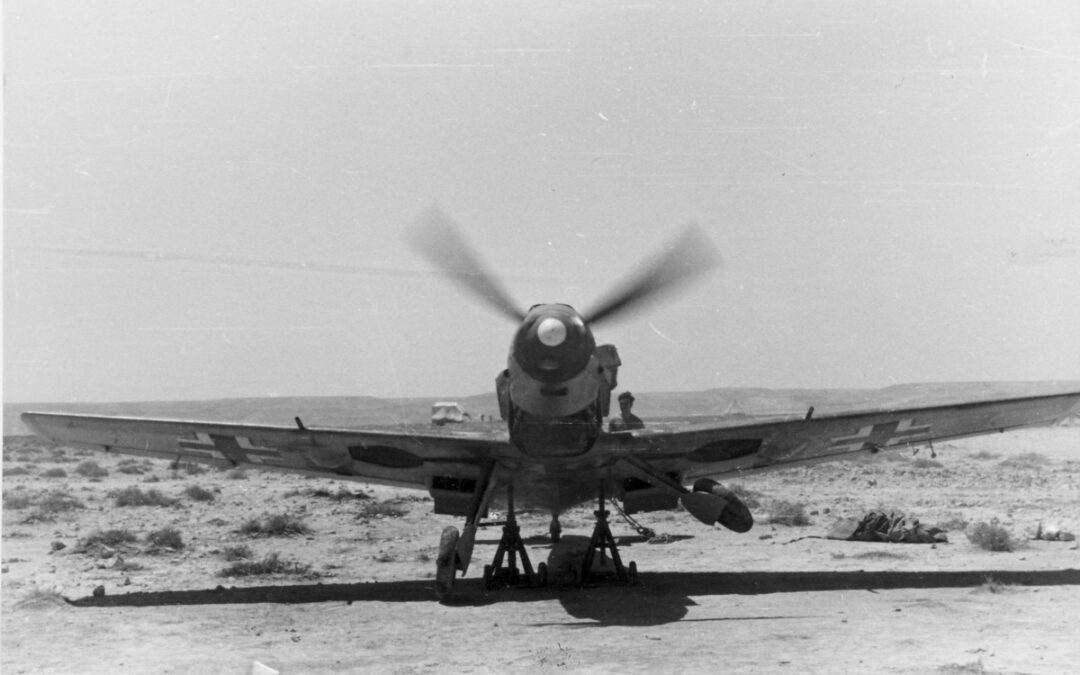
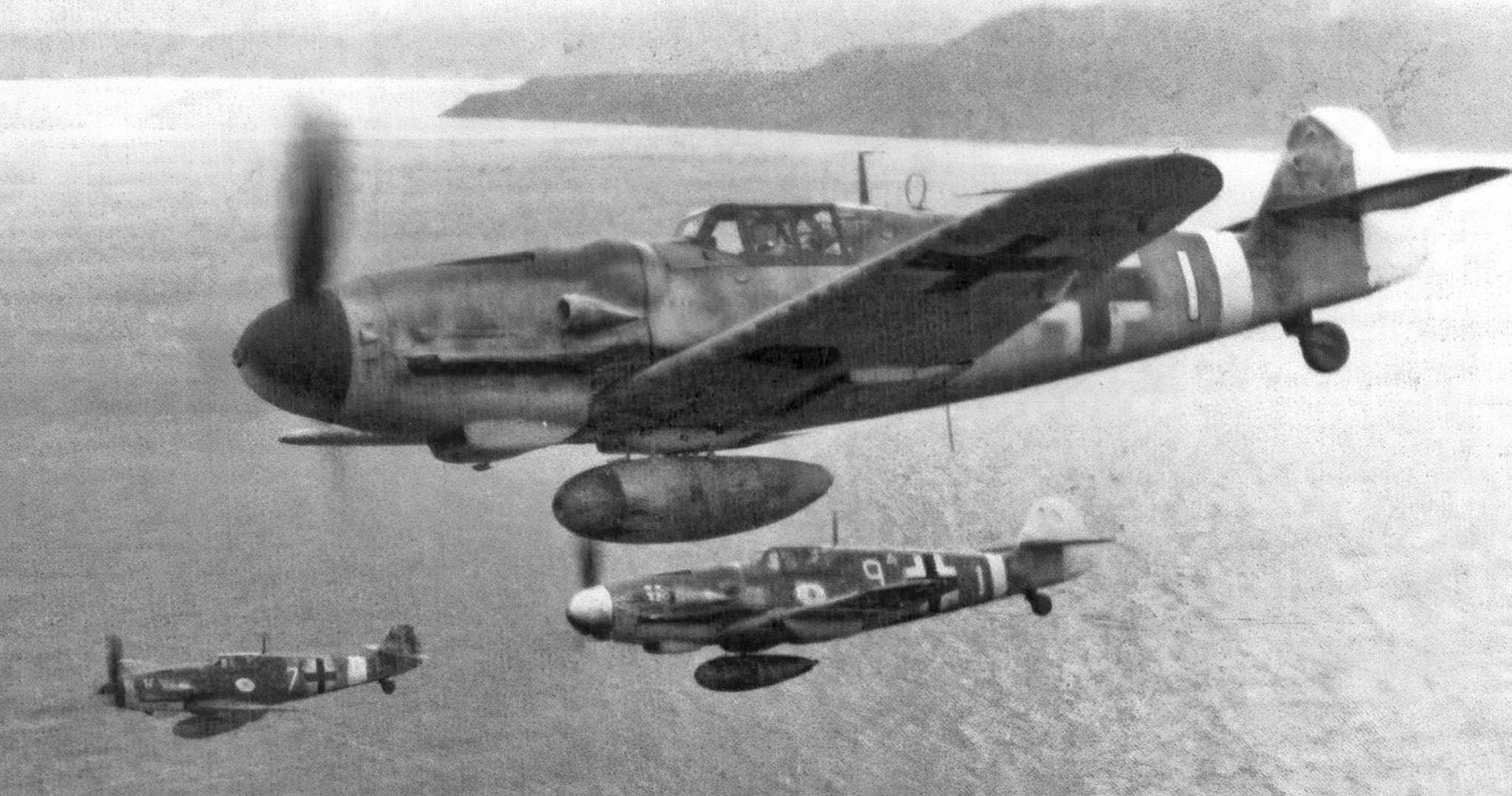
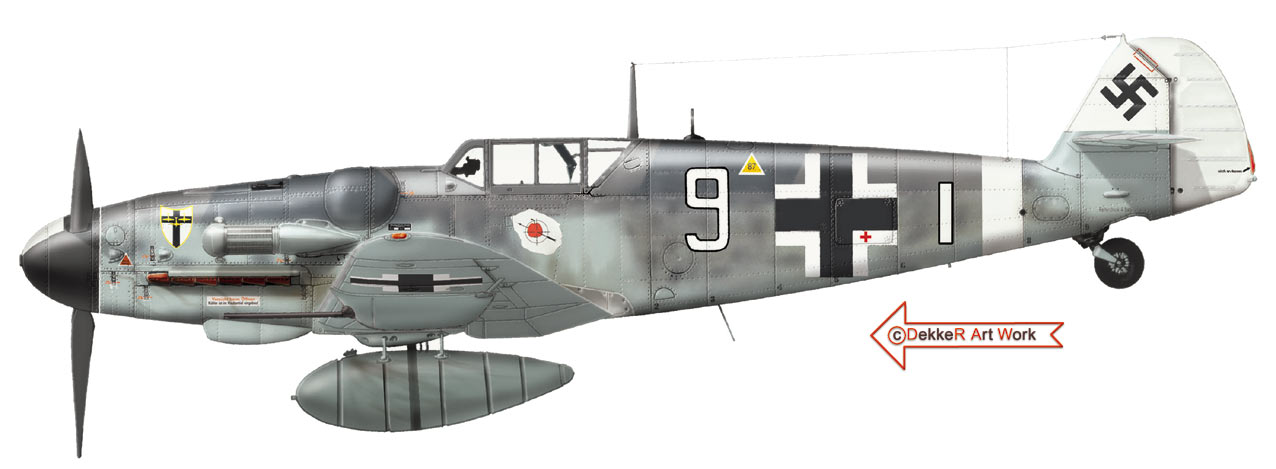
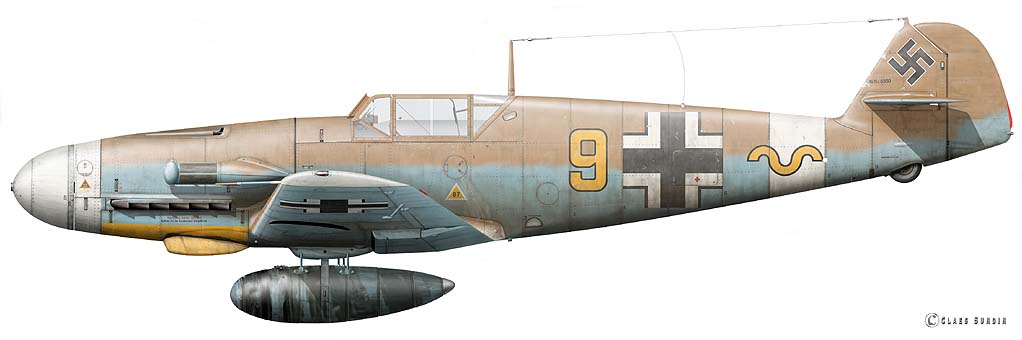
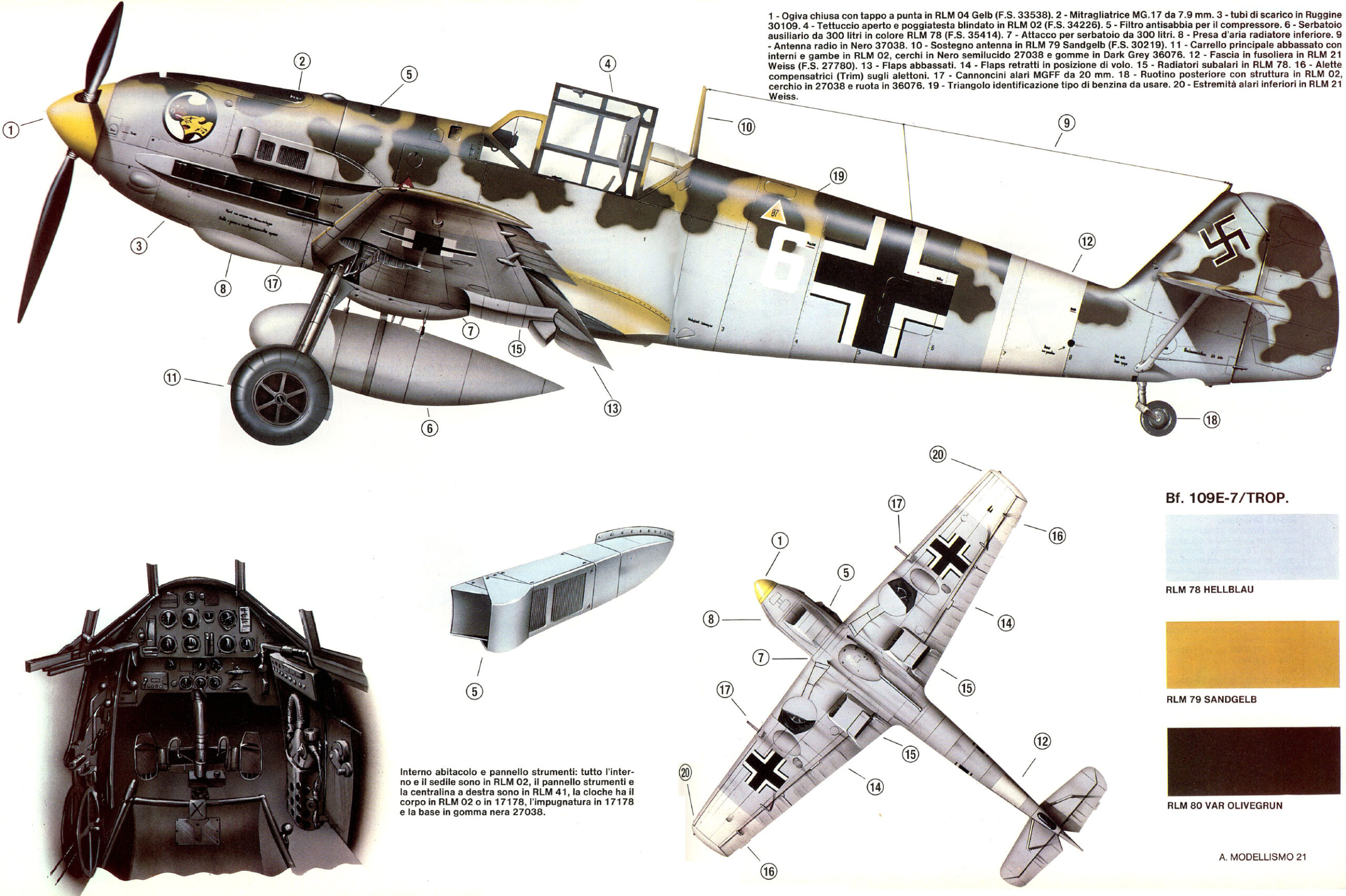
The Messerschmitt Bf 109E-7 represented the final and most versatile evolution of the Emil series. Unlike earlier Bf 109E variants, the E-7 introduced a centerline rack capable of carrying either a drop tank or bombs, dramatically extending operational range during escort missions over the Aegean Sea and Crete. This capability became especially important as Luftwaffe aircraft operated from mainland Greek airfields while supporting airborne and naval operations across the eastern Mediterranean.
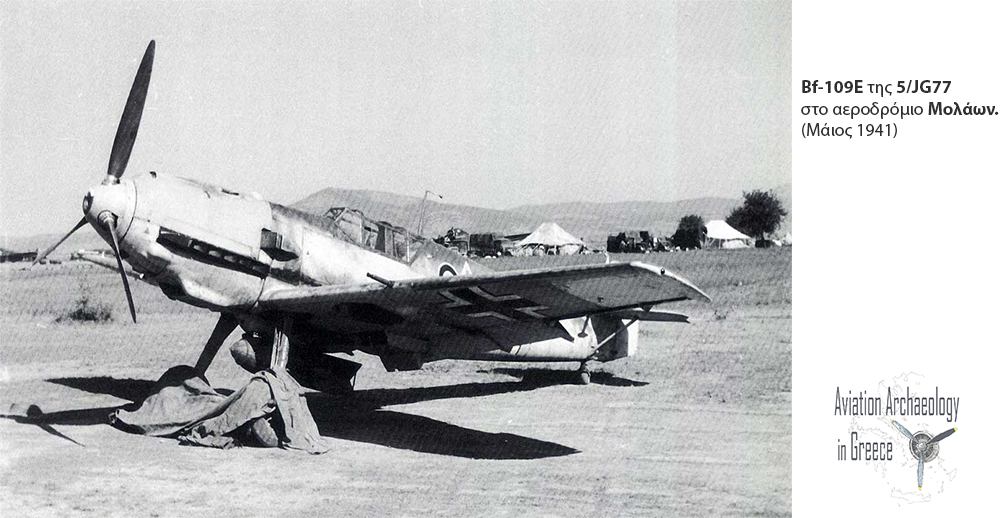
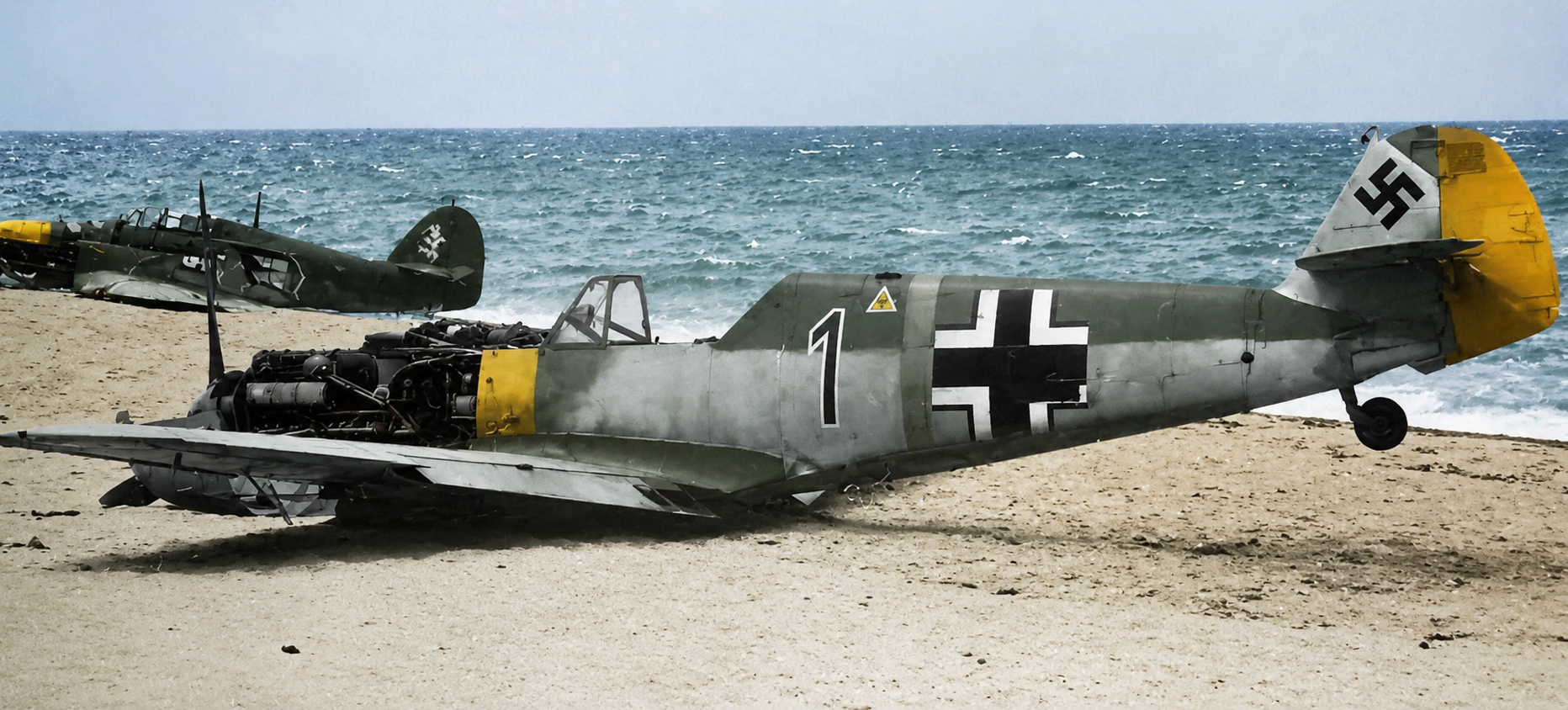
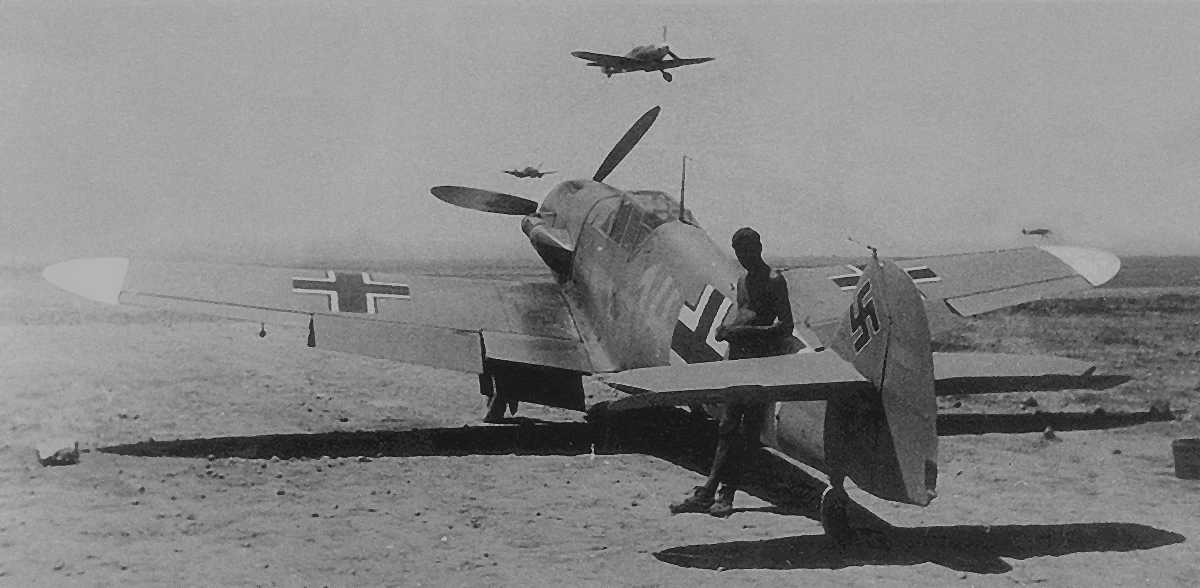
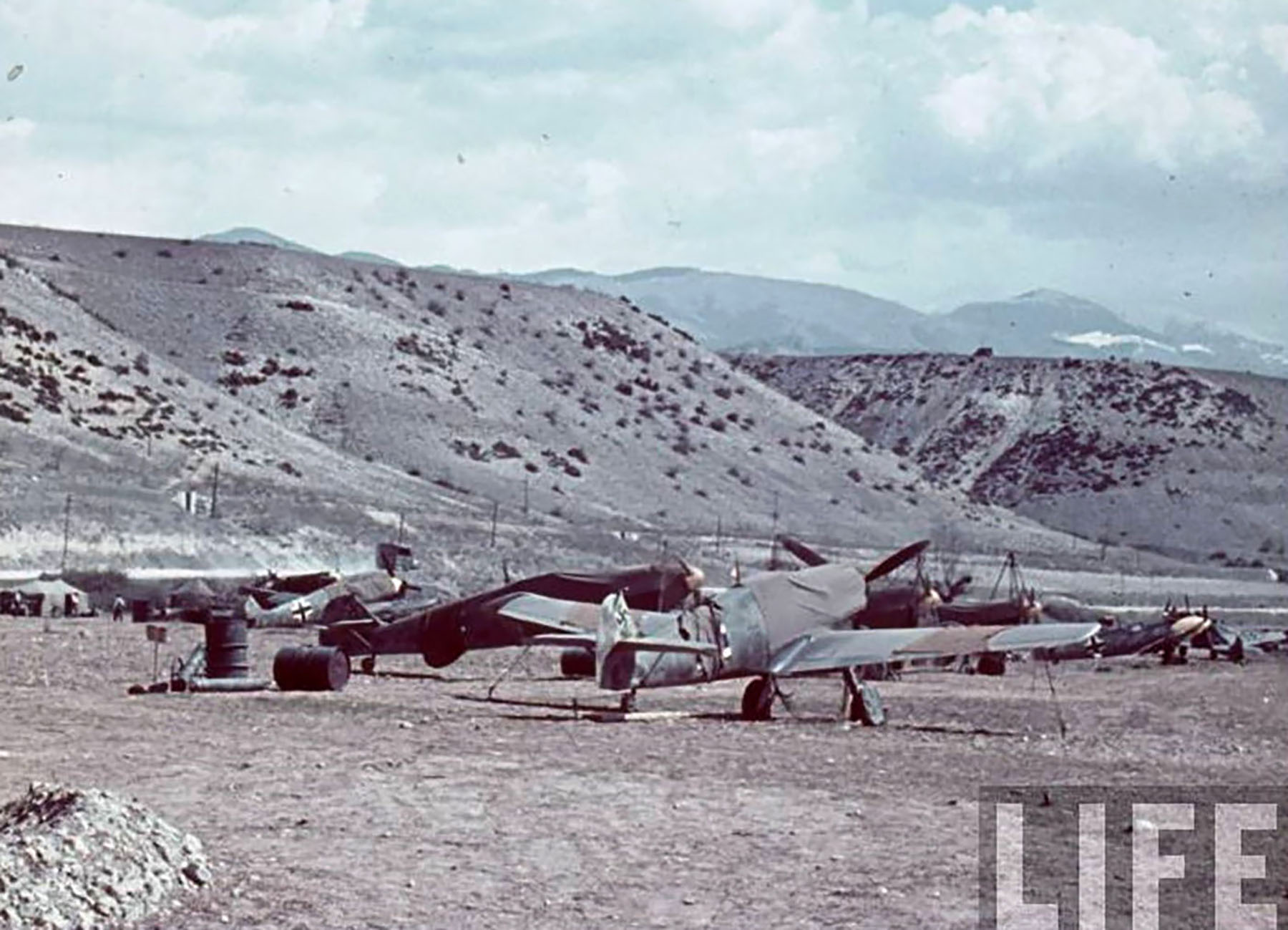
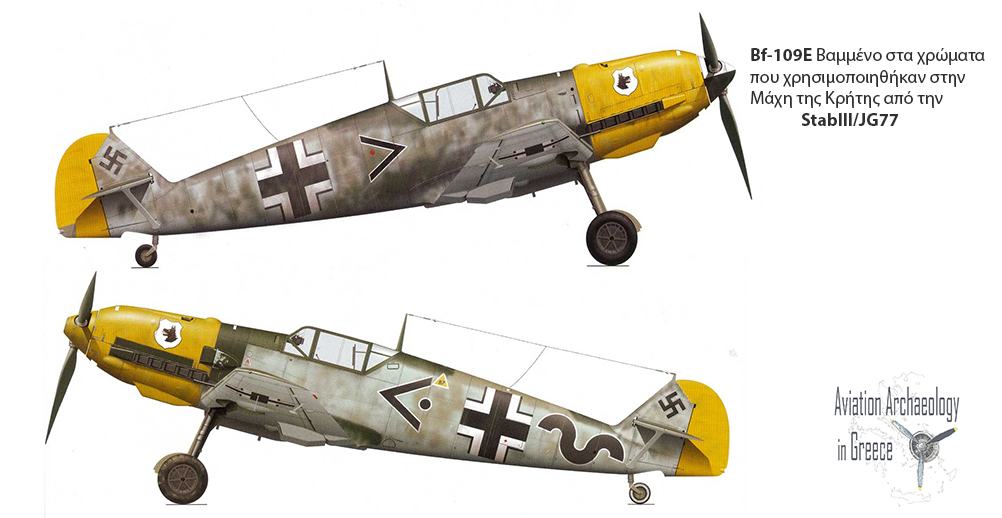
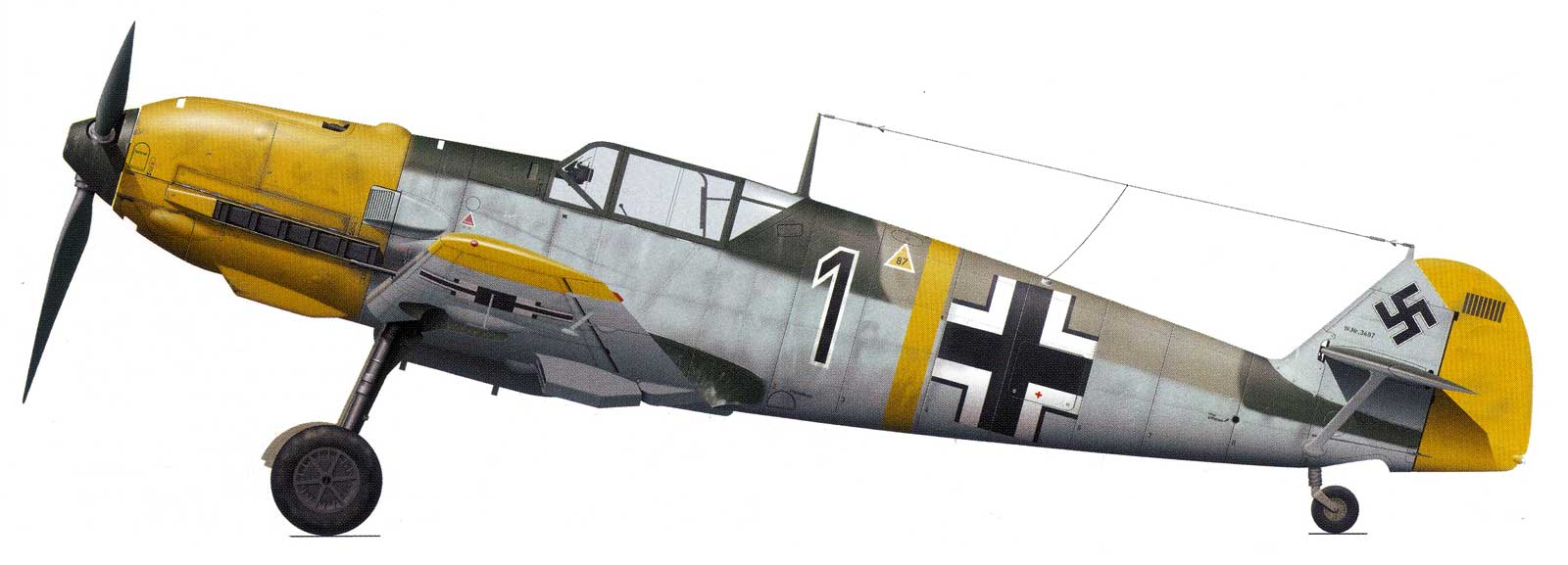
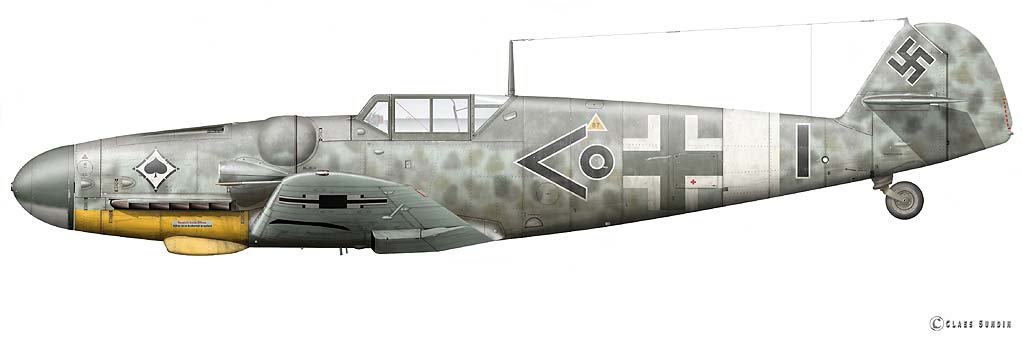
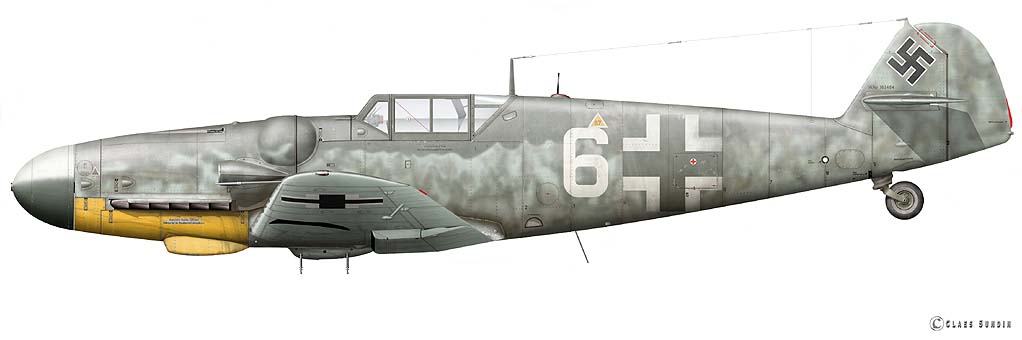
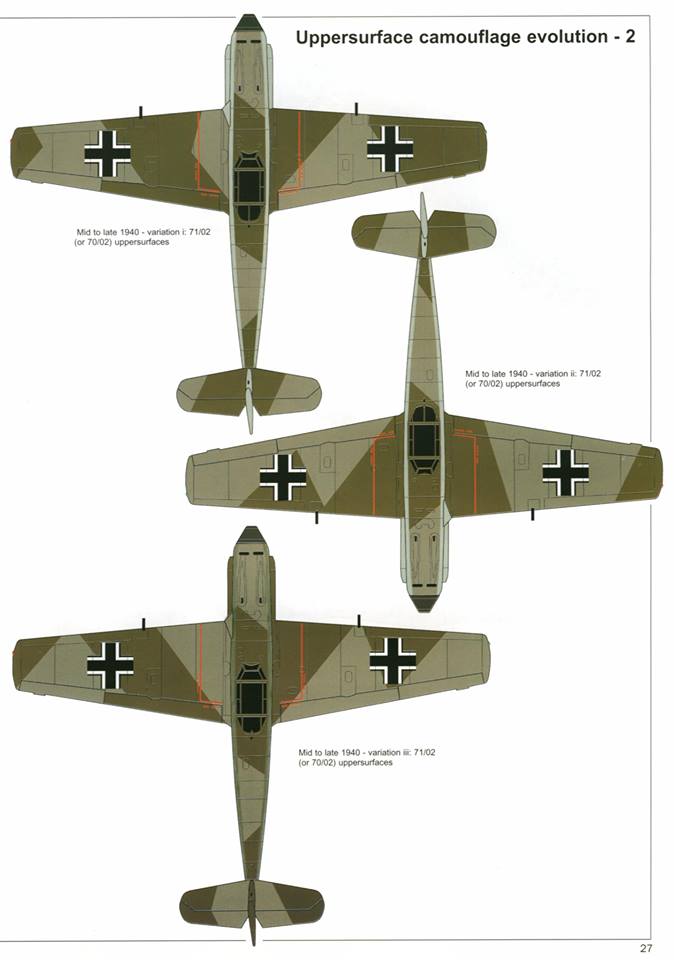
Factory-applied camouflage on most Bf 109E-7 fighters assigned to the Balkans during early 1941 typically consisted of RLM 71 Dunkelgrün and RLM 02 Grau over RLM 65 Hellblau undersurfaces. The angular splinter camouflage remained clearly visible across the wings and stabilizers, while the fuselage sides often displayed soft mottling patterns sprayed directly in the field. Although these aircraft had originally been intended for operations over continental Europe, the rapidly changing combat environment of southern Europe began altering their appearance almost immediately.
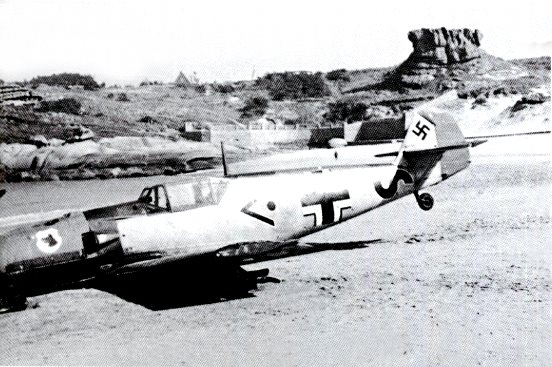
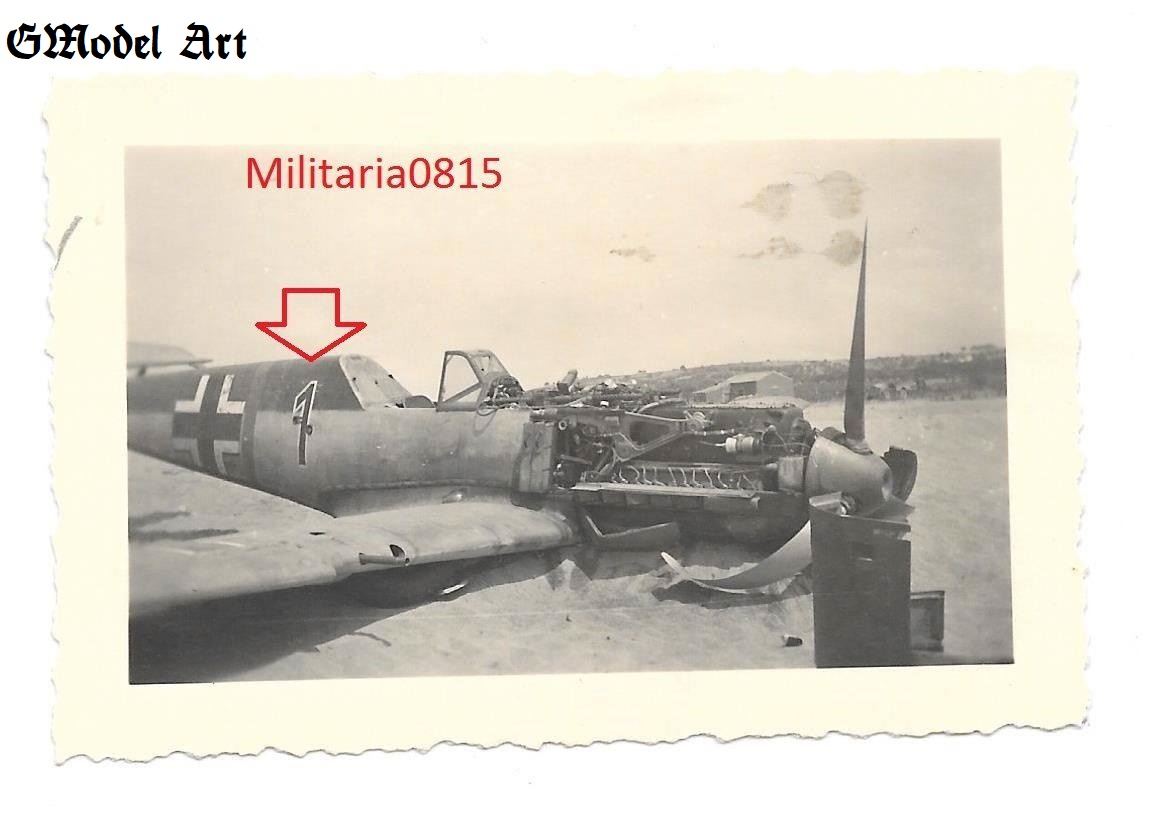
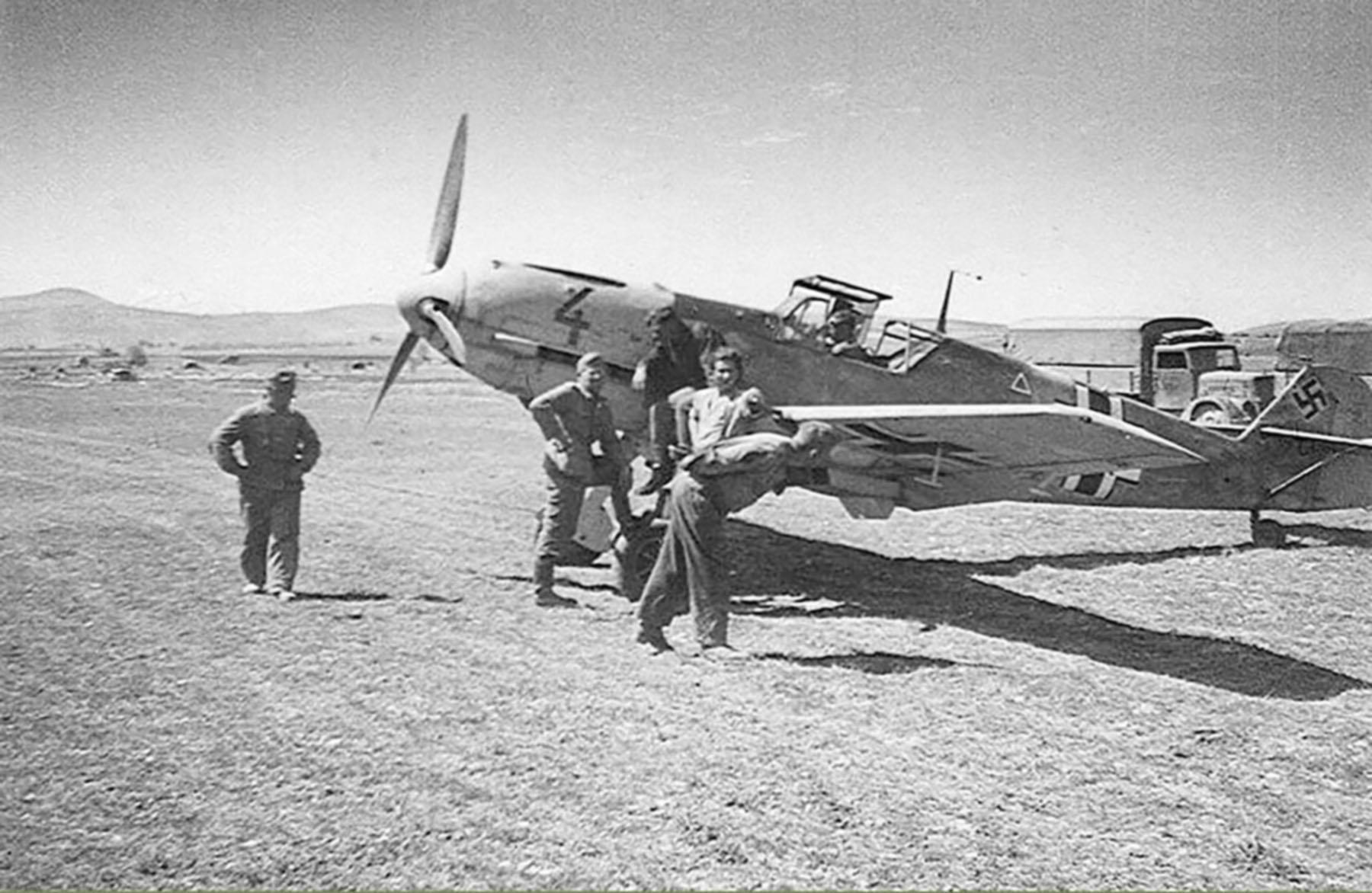
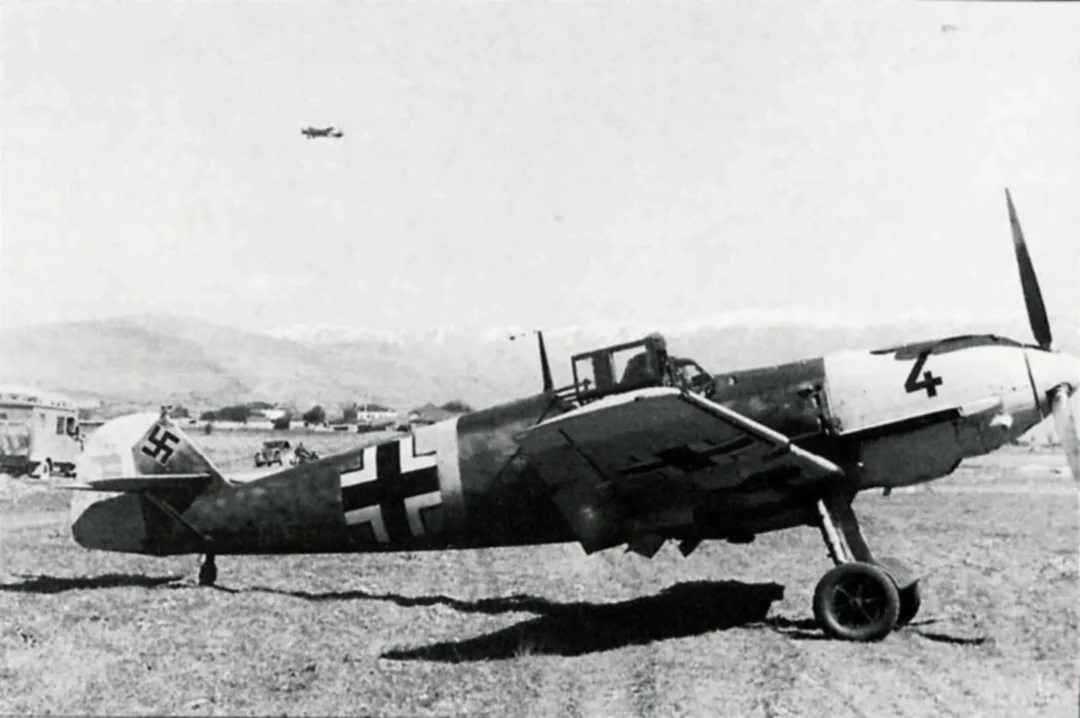
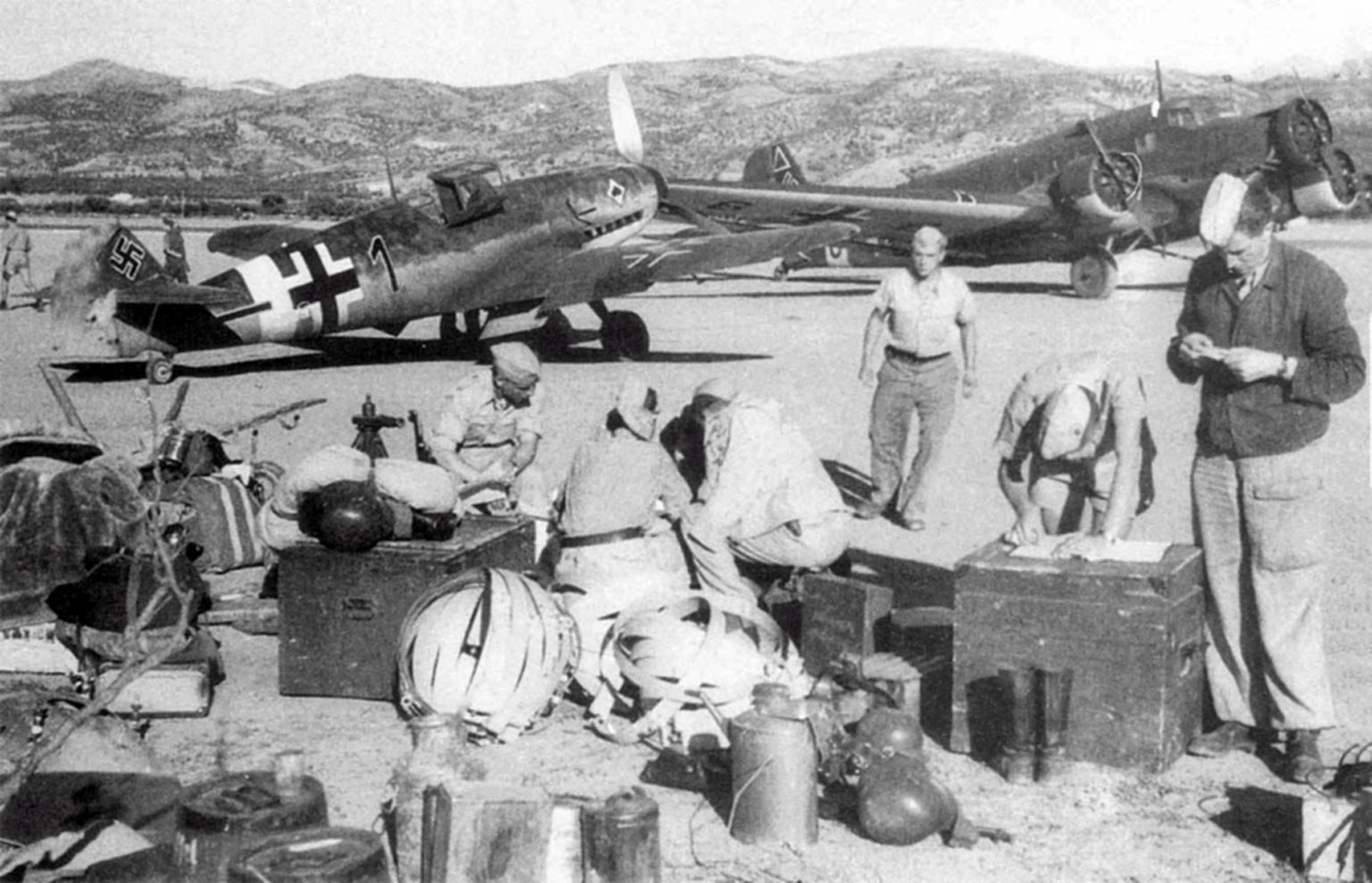
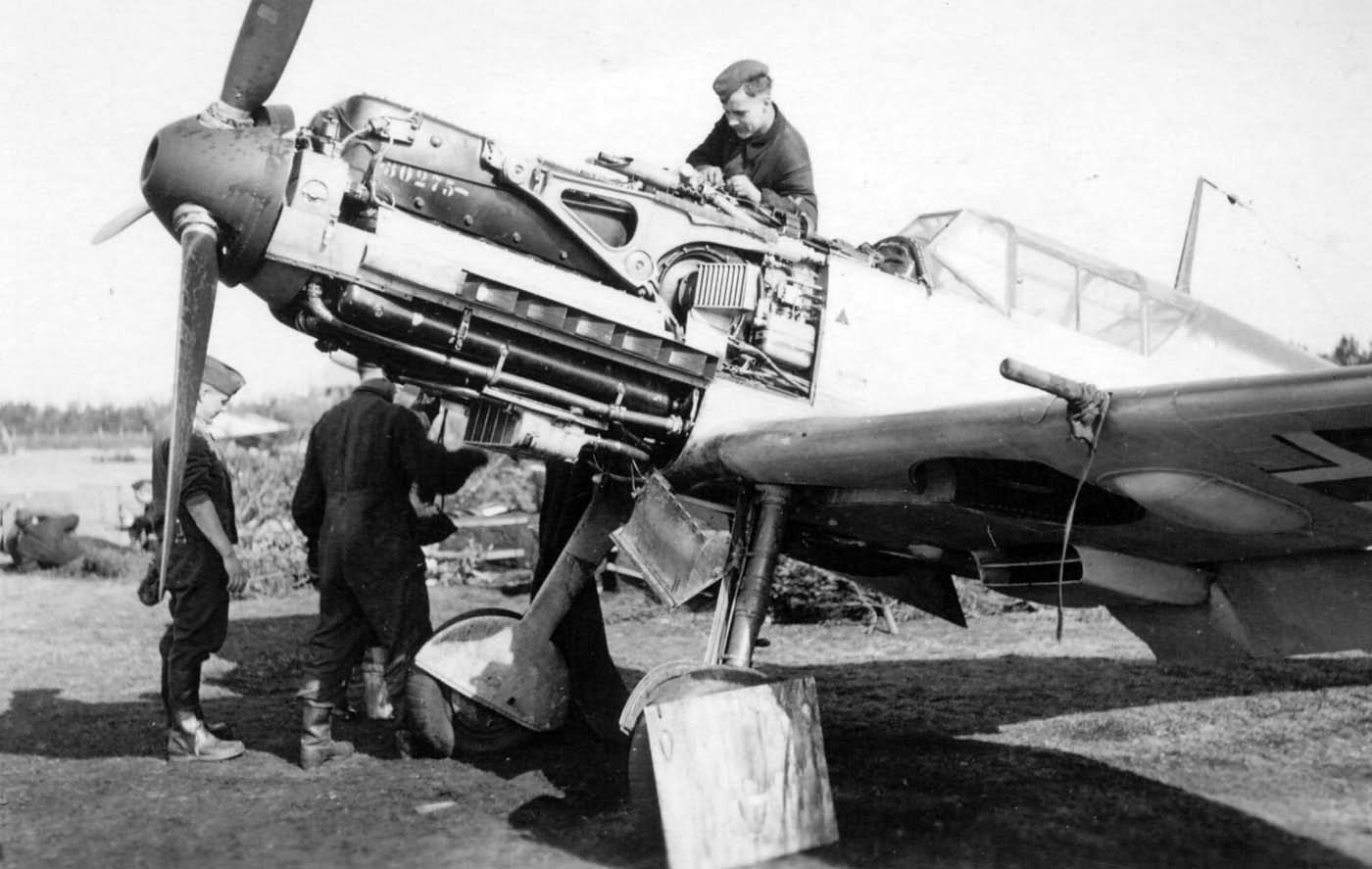
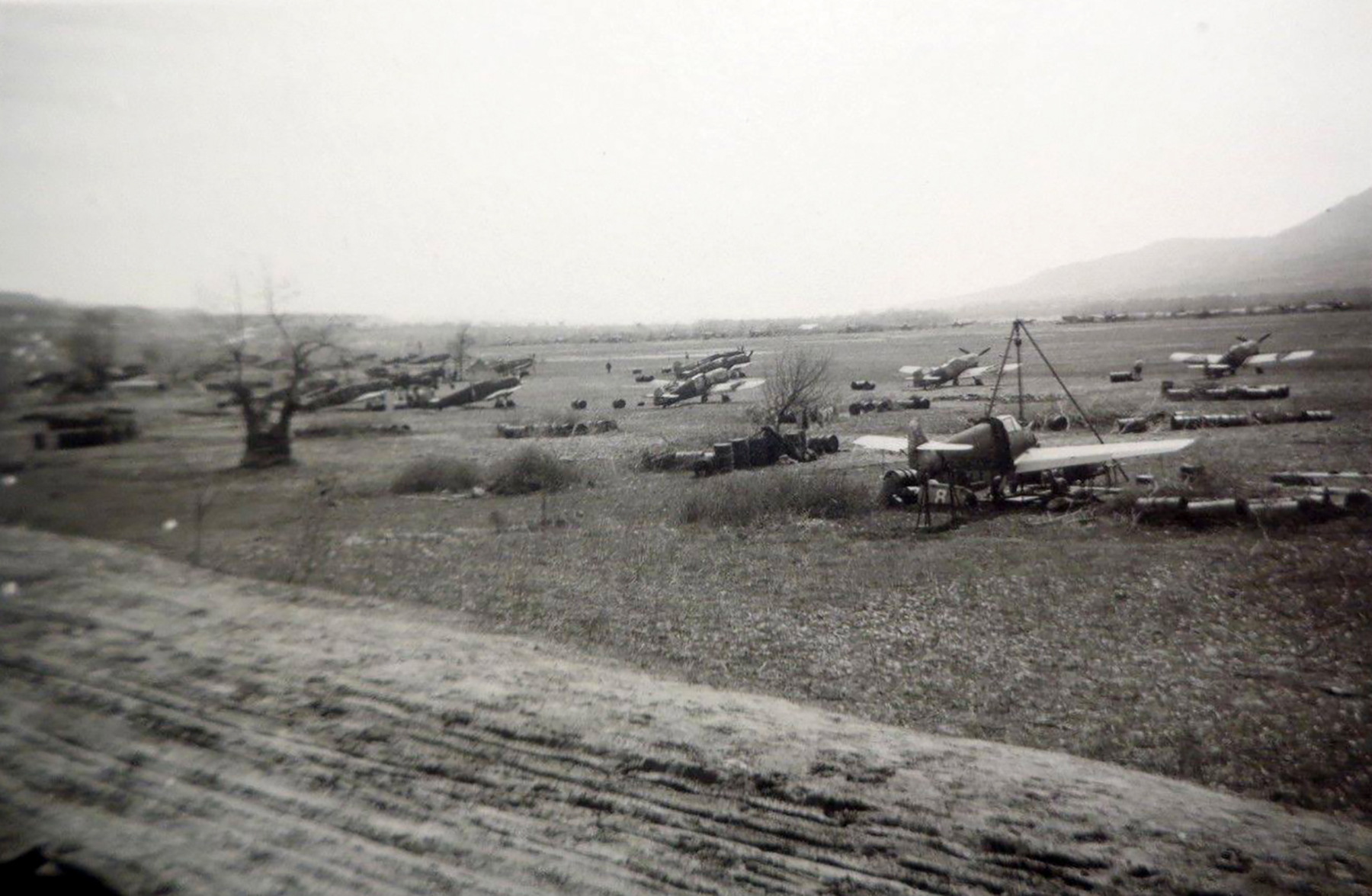
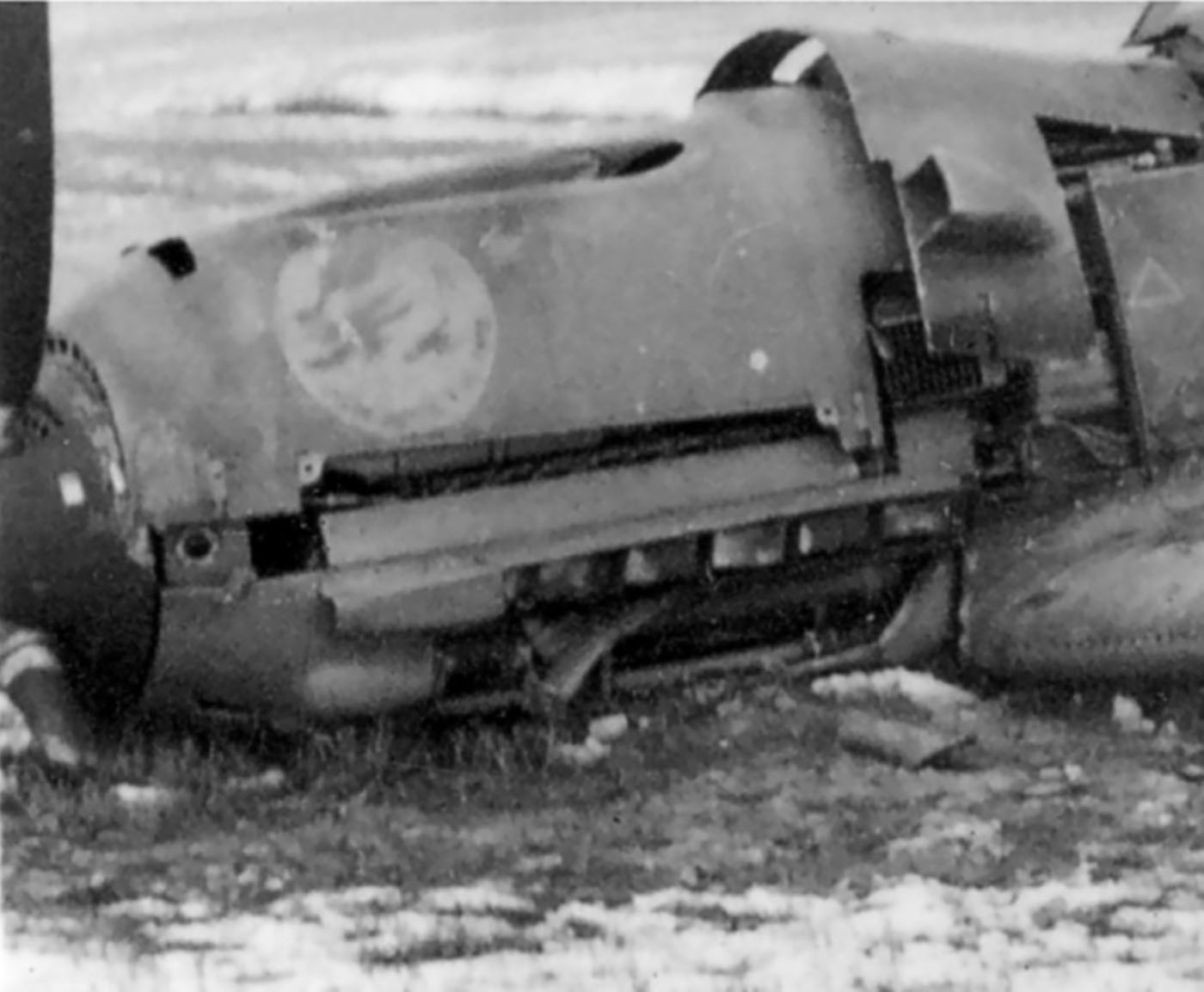
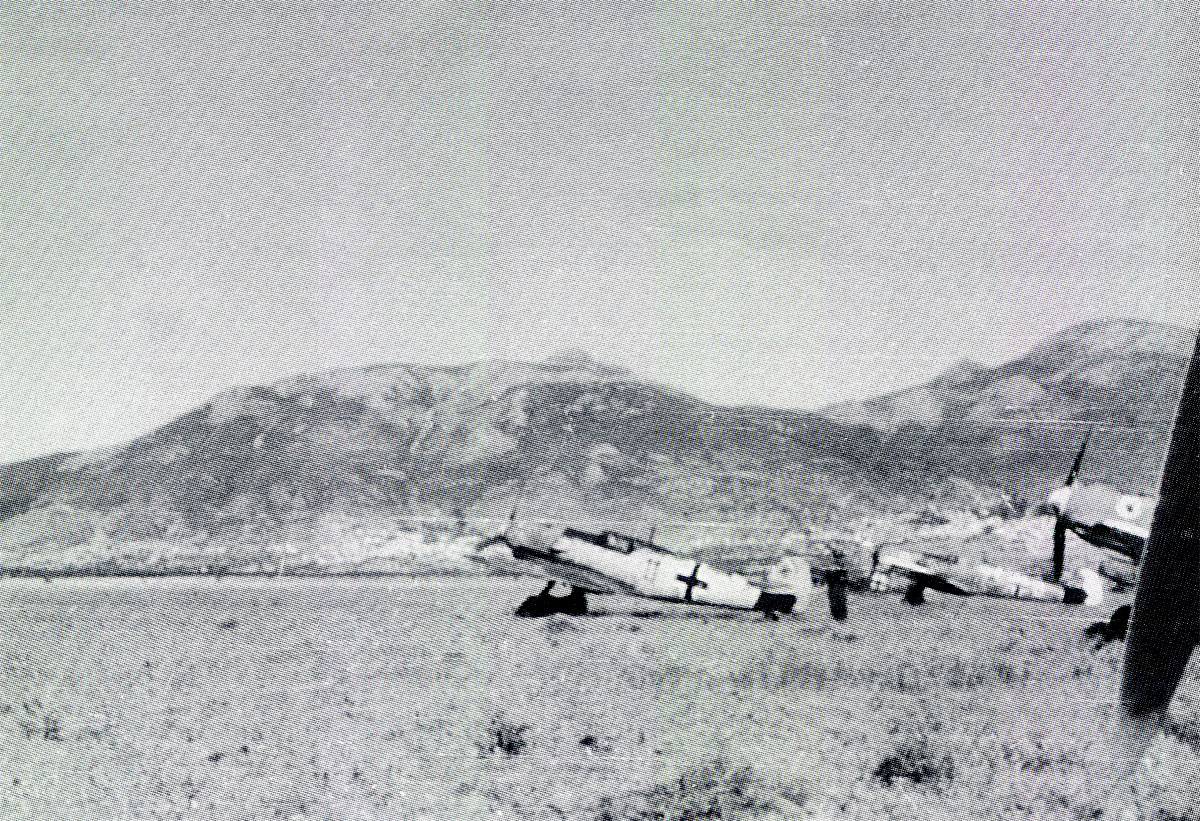
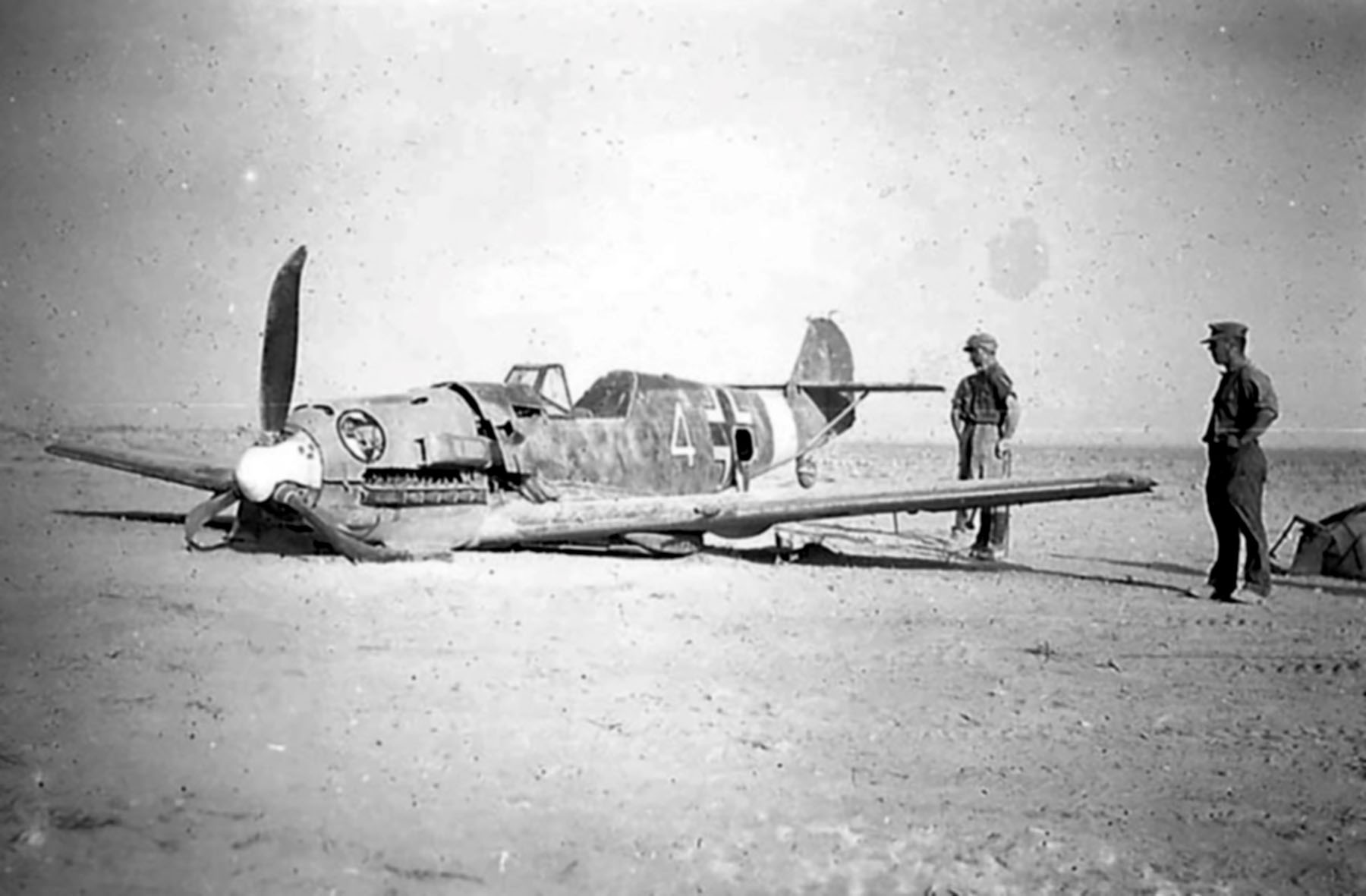
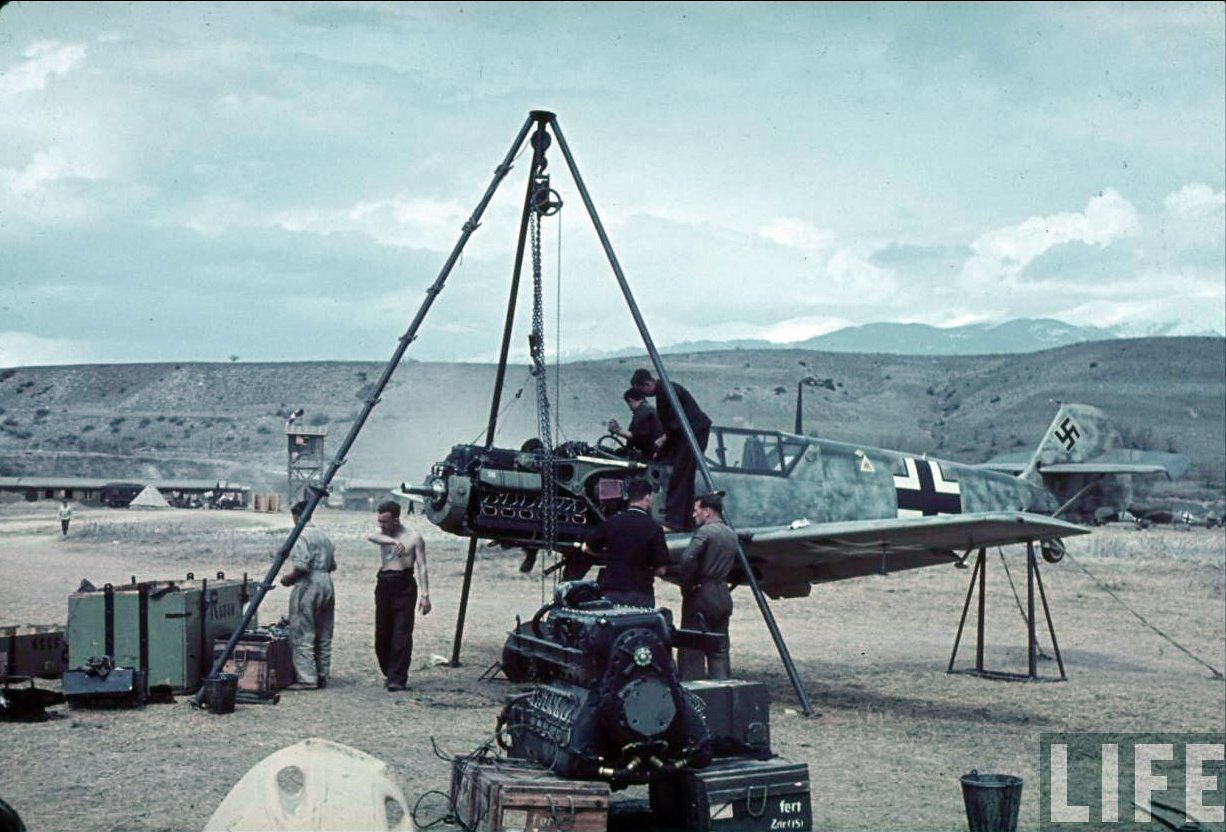
Operations over Greece exposed Luftwaffe ground crews and pilots to intense sunlight, rough forward airstrips, airborne dust, and constant maintenance challenges. Aircraft parked in primitive airfields around Athens, Larissa, and later Crete quickly developed heavy fading and visible wear. Engine cowling panels showed chipped paint around maintenance fasteners, while wing root areas became polished from constant pilot movement. Exhaust staining along the fuselage sides became especially pronounced due to the Daimler-Benz DB 601 engine’s operating characteristics.
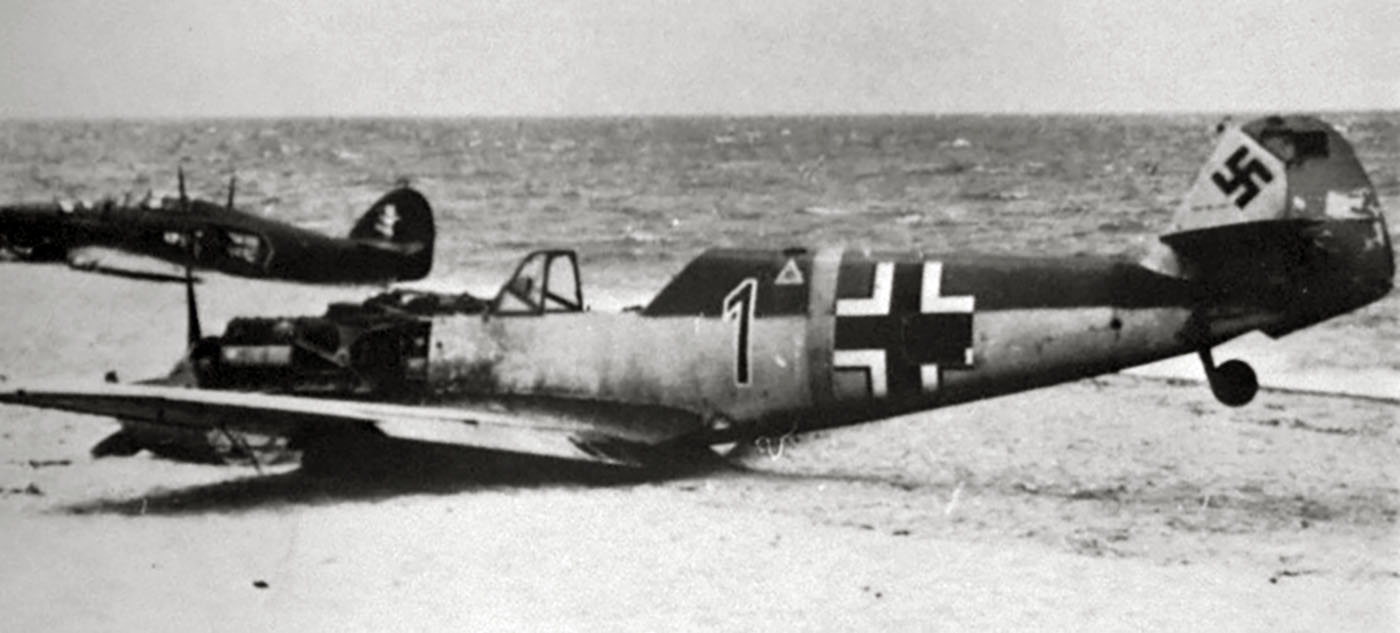
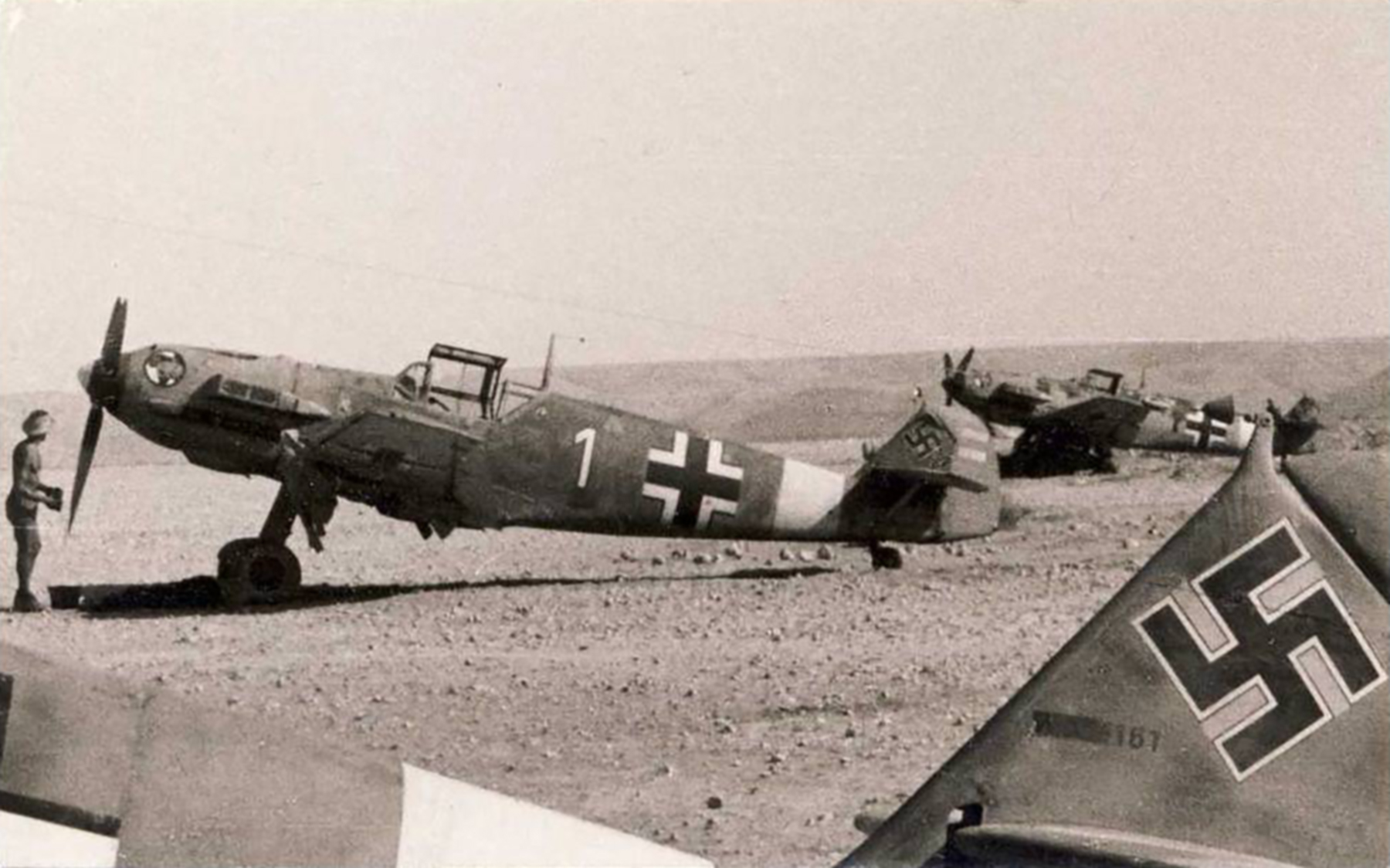
One of the most recognizable features of Balkan-based Bf 109E-7 fighters was the increasing use of yellow tactical recognition markings. Yellow engine cowlings, rudders, and sometimes wing tips were applied to reduce the risk of friendly fire incidents during fast-moving Luftwaffe operations involving multiple Axis air units. These markings became especially important during the chaotic days of the invasion of Crete, where German aircraft operated continuously over crowded combat zones filled with transport aircraft, dive bombers, and Allied defenders.
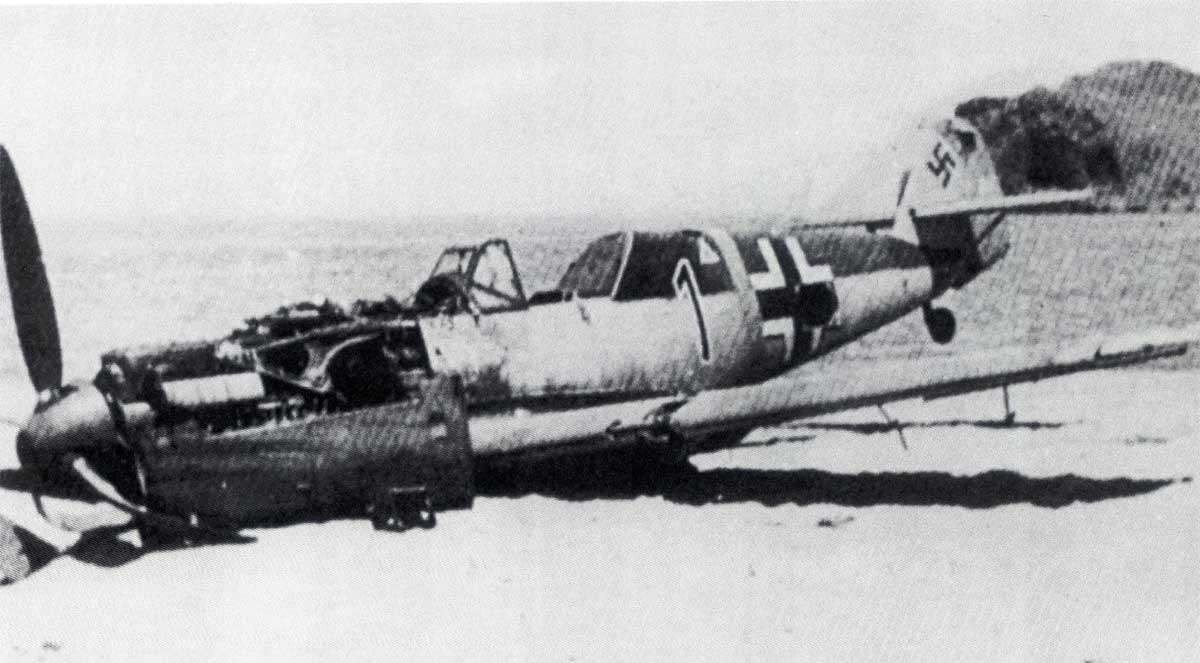
The Battle of Crete itself represented a turning point in Luftwaffe camouflage evolution. Although most Messerschmitt Bf 109E-7 aircraft still wore standard European camouflage, the Mediterranean environment began producing visual effects later associated with North African operations. Dust accumulation around landing gear areas, faded upper surfaces, temporary repairs, and uneven repainting became increasingly common. Some aircraft even received field-applied overspray in lighter tones intended to reduce contrast against the dry terrain and coastal landscapes of the eastern Mediterranean.
As the campaign progressed, many Luftwaffe fighter units transitioned toward North Africa. This movement did not occur overnight, and many Bf 109 aircraft arrived in Libya still wearing their Balkan camouflage patterns. Ground crews then modified the aircraft in the field using locally available paints and improvised spray equipment. This created highly irregular camouflage combinations featuring partial desert overspray on top of older European splinter schemes. These transitional aircraft are among the most historically interesting Bf 109 subjects for researchers and scale modelers today.
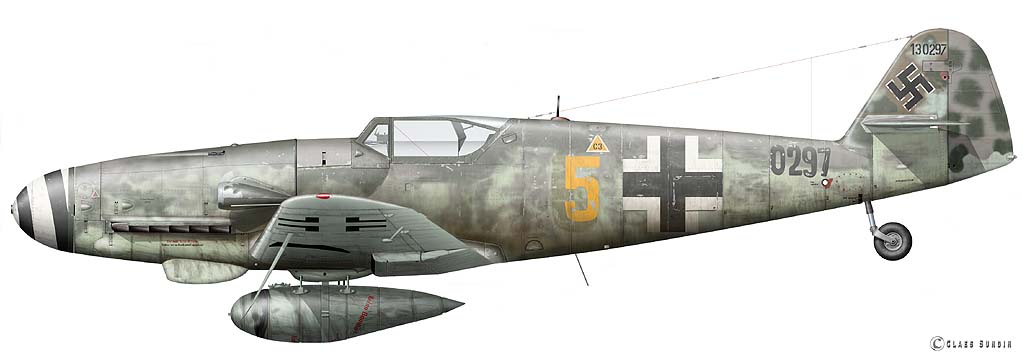
The arrival of the Afrika Korps accelerated the development of specialized tropical camouflage and equipment. Later fighters such as the Messerschmitt Bf 109F-4/Trop introduced sand filters, improved aerodynamics, and new camouflage colors including RLM 78 Hellblau and RLM 79 Sandgelb. However, the transitional period linking Greece, Crete, and North Africa remains especially valuable because it demonstrates how operational necessity often evolved faster than official Luftwaffe camouflage regulations.
Several famous Luftwaffe aces gained valuable combat experience during these Mediterranean operations. Hans-Joachim Marseille, later immortalized as the “Star of Africa,” began refining the aggressive combat techniques that would eventually make him one of the highest-scoring fighter pilots in history. Marseille’s later desert-painted Bf 109F fighters became iconic symbols of Luftwaffe air warfare in North Africa, but the foundations of his combat career were built during this earlier Mediterranean phase.
Another important figure connected to the Luftwaffe’s southern campaigns was Werner Mölders, whose tactical innovations heavily influenced German fighter doctrine during the Balkan and Mediterranean campaigns. Although more closely associated with earlier Luftwaffe victories in Western Europe, Mölders’ combat formations and operational methods shaped the fighter tactics used over Greece and Crete.
For historians and scale modelers alike, the Messerschmitt Bf 109E-7 of JG 27 during the Balkan Campaign offers a remarkable combination of operational history and visual complexity. These aircraft stood at the crossroads between European and desert warfare, carrying the scars of rapid deployment across multiple combat theaters. Their faded splinter camouflage, tactical yellow markings, field modifications, and weather-beaten appearance perfectly capture the Luftwaffe’s transition from the green landscapes of Europe to the harsh deserts of North Africa.
WWII Luftwaffe Paint Reference Table – Messerschmitt Bf 109E-7 Balkan Campaign
| Area | RLM Color | FS Approximation | Description |
|---|---|---|---|
| Upper Surfaces | RLM 71 Dunkelgrün | FS 34079 | Dark green splinter camouflage |
| Upper Surfaces | RLM 02 Grau | FS 34201 | Grey-green disruptive camouflage |
| Undersurfaces | RLM 65 Hellblau | FS 35414 | Light blue lower surfaces |
| Recognition Markings | RLM 04 Gelb | FS 33538 | Yellow tactical markings |
| Propeller Blades | RLM 70 Schwarzgrün | FS 34052 | Black-green propeller finish |
| Cockpit Interior | RLM 66 Schwarzgrau | FS 36081 | Dark cockpit grey |
Recommended Modeling Paint Equivalents
| RLM Color | Tamiya | AK Interactive | Vallejo | Mr. Hobby |
|---|---|---|---|---|
| RLM 71 Dunkelgrün | XF-62 + XF-49 Mix | AK RC287 | 71.015 | H64 |
| RLM 02 Grau | XF-22 | AK RC261 | 71.044 | H70 |
| RLM 65 Hellblau | XF-23 | AK RC244 | 71.255 | H67 |
| RLM 04 Gelb | XF-3 | AK RC007 | 71.078 | H413 |
| RLM 70 Schwarzgrün | XF-27 | AK RC284 | 71.021 | H65 |
| RLM 66 Schwarzgrau | XF-63 | AK RC262 | 71.055 | H416 |
Weathering Notes for Scale Modelers
A historically accurate Messerschmitt Bf 109E-7 operating over Greece and Crete should display moderate but noticeable operational wear. Paint fading on the upper surfaces was common due to strong Mediterranean sunlight. Dust accumulation appeared around wheel wells, landing gear struts, and lower fuselage areas. Exhaust staining extended heavily along the fuselage sides, especially on aircraft operating from primitive airfields. Chipping was concentrated around engine panels, wing roots, and maintenance access points rather than uniformly across the aircraft.
Aircraft participating in both the Balkan Campaign and the Battle of Crete often showed uneven weathering because of rapid deployment and limited maintenance facilities. This created visually striking aircraft with a mixture of factory camouflage and improvised field repairs.
FAQ
Which Messerschmitt Bf 109 version fought during the invasion of Greece?
The most common variants were the Messerschmitt Bf 109E-4 and Messerschmitt Bf 109E-7 operated primarily by Jagdgeschwader 27 and Jagdgeschwader 77.
Did Balkan Campaign Bf 109 fighters already use desert camouflage?
No. Most aircraft still wore European RLM 71 and RLM 02 splinter camouflage during operations over Greece and Crete. Desert camouflage appeared later as units transitioned into North Africa.
Why did Luftwaffe fighters have yellow markings?
Yellow tactical markings were used for quick identification and to reduce friendly fire incidents during large-scale Axis operations.
What made the Messerschmitt Bf 109E-7 important?
The E-7 introduced a centerline rack for drop tanks or bombs, greatly increasing operational flexibility during Mediterranean operations.
Bf 109 E-7 Messerschmitt Trop By: Gary Wickham