article
RAF Desert Pink Camouflage in Iraq (1991–2003): Gulf War Aircraft, Colors & Operational Reality
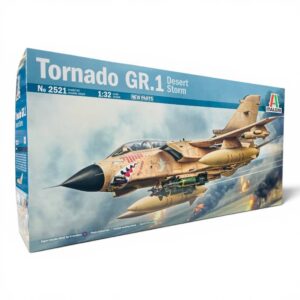
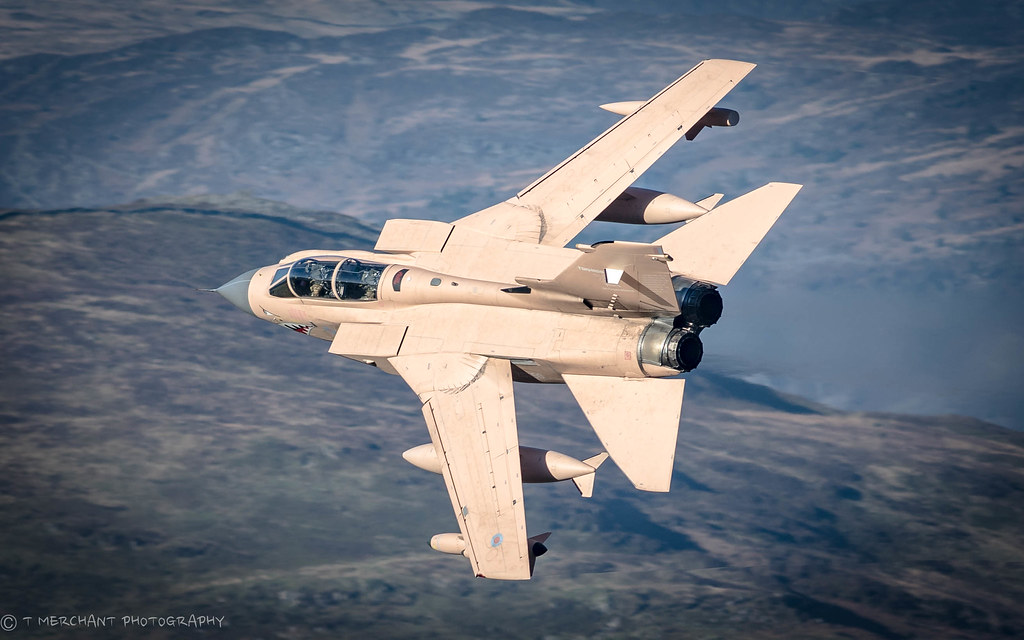
The introduction of the Desert Pink camouflage by the Royal Air Force during the build-up to the 1991 Gulf War marked one of the most distinctive and unconventional paint schemes ever applied to modern combat aircraft. Developed specifically for Operation Granby, this temporary, washable coating was designed to adapt low-level strike aircraft to the harsh desert environment of Iraq and Kuwait.
Unlike standard RAF camouflage finishes, Desert Pink was not part of any official British Standard palette. It was a purpose-built, alkaline-removable paint applied over existing schemes, intended for short-term operational use. When freshly sprayed, it displayed a noticeable pinkish hue over a sand base. However, under the extreme heat and ultraviolet exposure of the Middle East, the color rapidly degraded into a lighter, faded tan, often within days of deployment.
By the time combat operations began on January 15, 1991, many RAF aircraft already exhibited significant fading, patchiness, and wear. This effect intensified as the conflict progressed. The temporary nature of the paint led to heavy chipping, uneven coverage, and frequent touch-ups. Combined with the widespread application of nose art by RAF crews, each aircraft developed a highly individual and weathered appearance—something that has since become a defining characteristic for both historians and scale modelers.
What made Desert Pink even more striking was its contrast to coalition counterparts. While the United States Air Force largely retained its standard grey camouflage schemes, RAF aircraft stood out dramatically against the desert landscape. This visual distinction has contributed significantly to the enduring popularity of Gulf War RAF subjects within the modeling community.
The aircraft primarily painted in Desert Pink were those operating at low altitude and directly over hostile territory. These included strike and reconnaissance platforms such as the Tornado GR.1, SEPECAT Jaguar, and Blackburn Buccaneer. In contrast, air defense variants like the Tornado F.3 retained their standard camouflage, as they operated at higher altitudes and behind the front lines.
Following the end of the Gulf War, Desert Pink was officially discontinued. However, a similar tone was later standardized as Desert Sand BS 380 in 1996, primarily for ground vehicles rather than aircraft. By the time of the 2003 Iraq War (Operation Telic), RAF aircraft no longer employed desert-specific camouflage schemes.
Instead, a new temporary finish known as ARTF Grey (Alkaline Removable Temporary Finish) had already been introduced shortly after the Gulf War. This color, generally considered closest to Camouflage Grey BS 626, was first used operationally during Operation Warden in Northern Iraq in 1991. It later appeared on aircraft deployed during Operation Telic, offering a more neutral and versatile low-visibility finish compared to Desert Pink.
ARTF Grey lacked the dramatic visual character of its predecessor but reflected a shift in operational doctrine, emphasizing multi-role flexibility and reduced visual signature rather than environment-specific camouflage.
RAF Aircraft Using Desert Pink Camouflage (Gulf War 1991)
- Panavia Tornado GR.1 / GR.1A
- SEPECAT Jaguar GR.1 / GR.1A / GR.3
- Blackburn Buccaneer S.2B
RAF Aircraft Using ARTF Grey (Post-1991 / Iraq Operations)
- Panavia Tornado GR.4
- SEPECAT Jaguar GR.3
- Harrier GR.7
- English Electric Canberra PR.9
| Desert Pink | ARTF Grey | |
| Schemes | ||
| Granby | Overall | |
| Telic | Overall | |
| Color matches | ||
| Gunze Aqueous | – | H334 |
| Gunze Mr. Color | – | C334 |
| Humbrol | 250 | 167 |
| Model Master | – | – |
| Revell | – | – |
| Tamiya | – | – |
| Vallejo Model Air | 71.400 | – |
| Vallejo Model Color | – | – |
| AKAN | 70041 | – |
| AK Interactive | – | – |
| AK Real Color | – | RC299 |
| AMMO by Mig | – | A.MIG-207** |
| Colourcoats | ACRN16 | ACRN08 |
| Hataka | (HTK-_068) | HTK-_142 |
| Lifecolor | – | UA 097 |
| Mission Models | – | – |
| Mr. Paint | MRP-185 | – |
| Xtracolor | X032 | X017 |
| Xtracrylix | XA1032 | XA1017 |
RAF North Africa Desert camouflage paint scheme. (1941–1945)