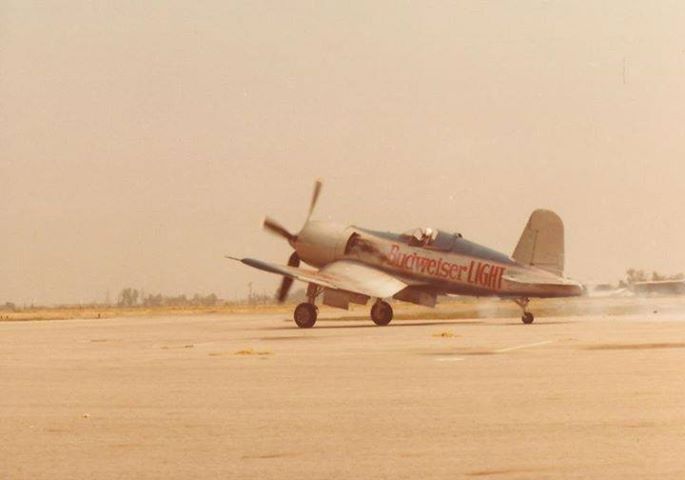
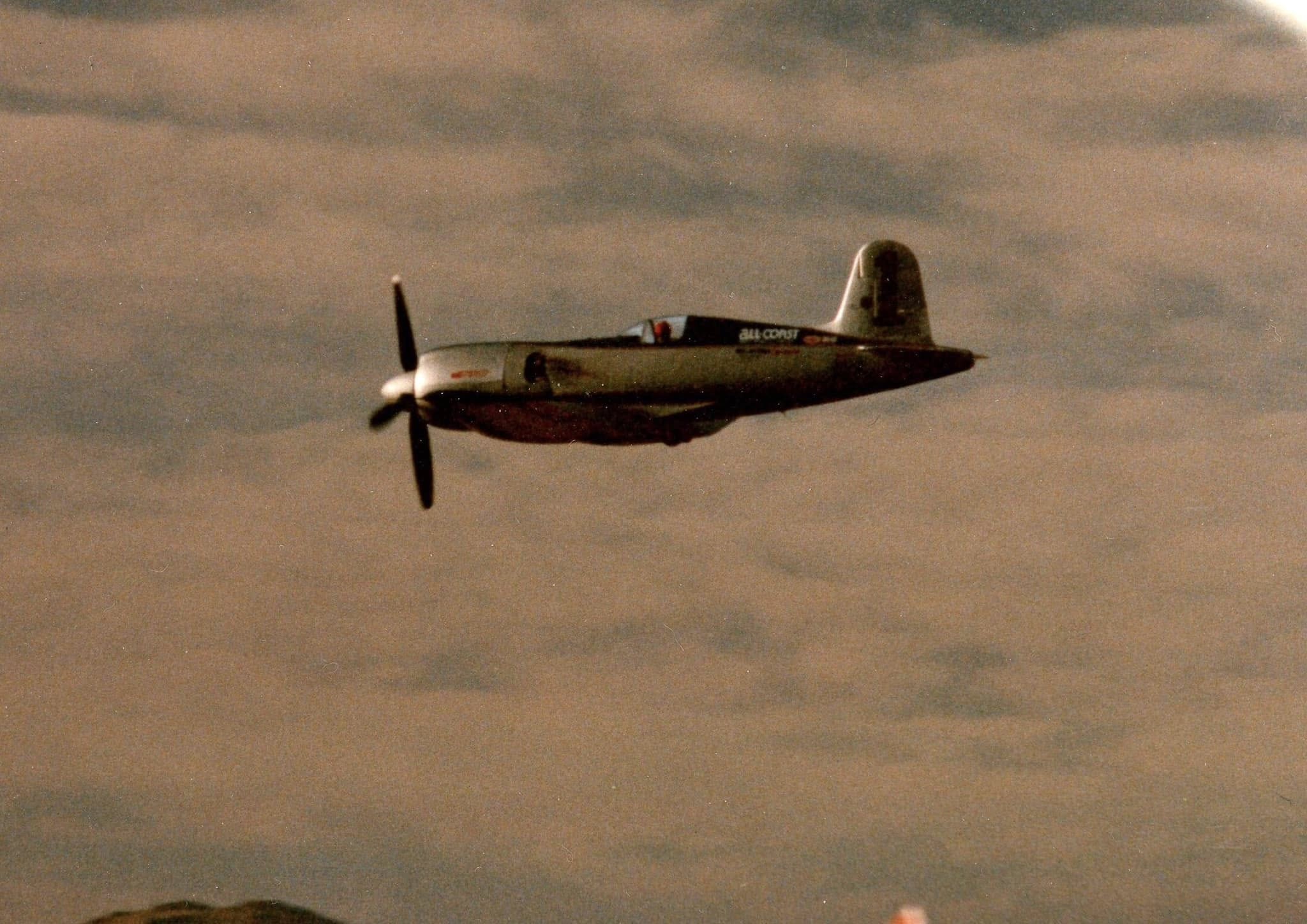
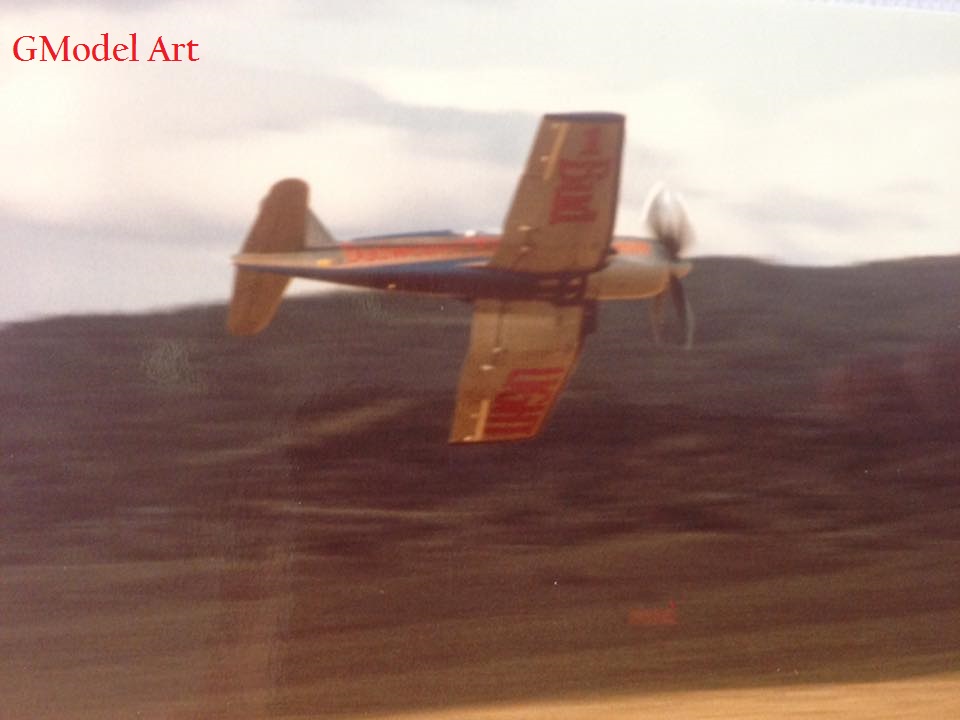
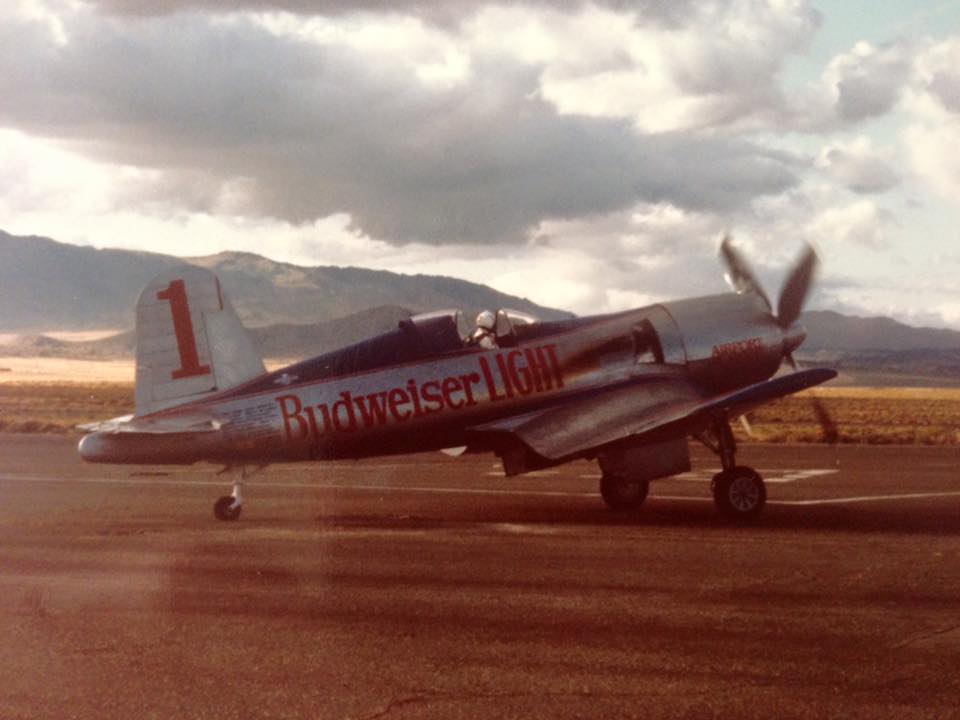
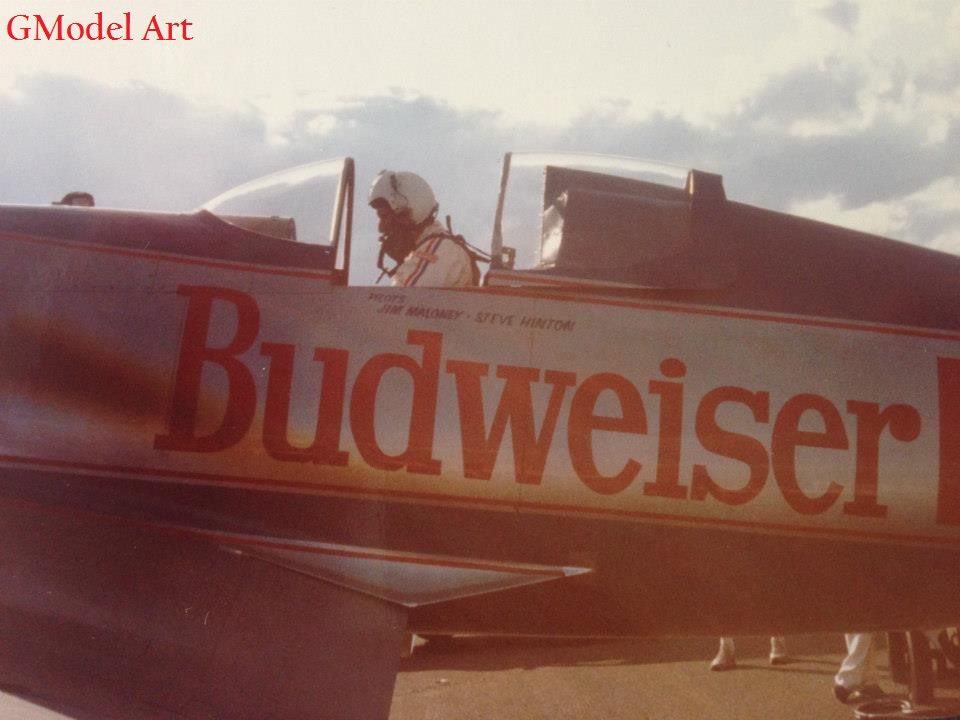
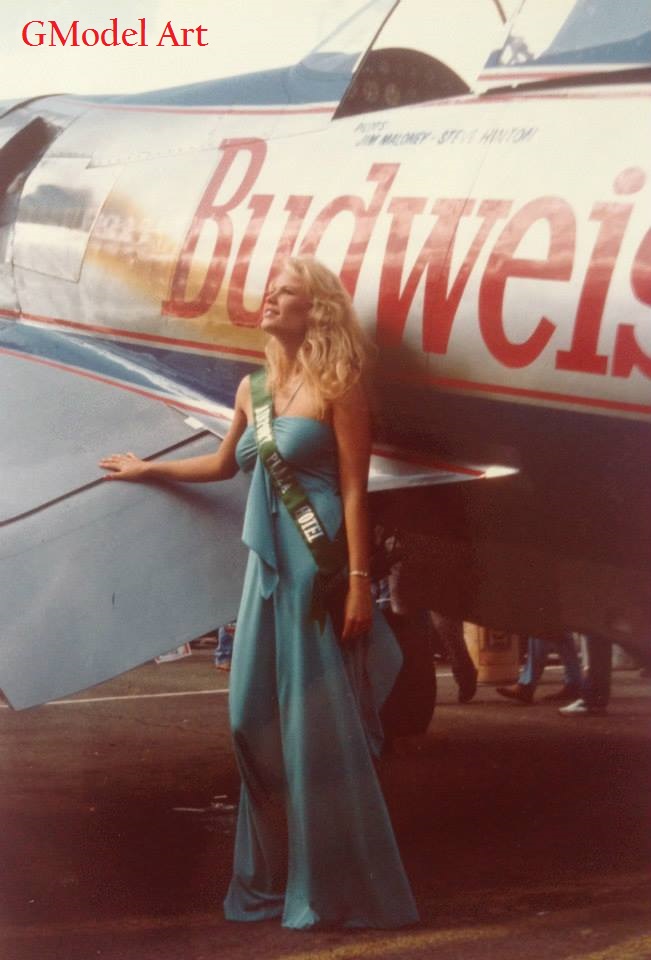
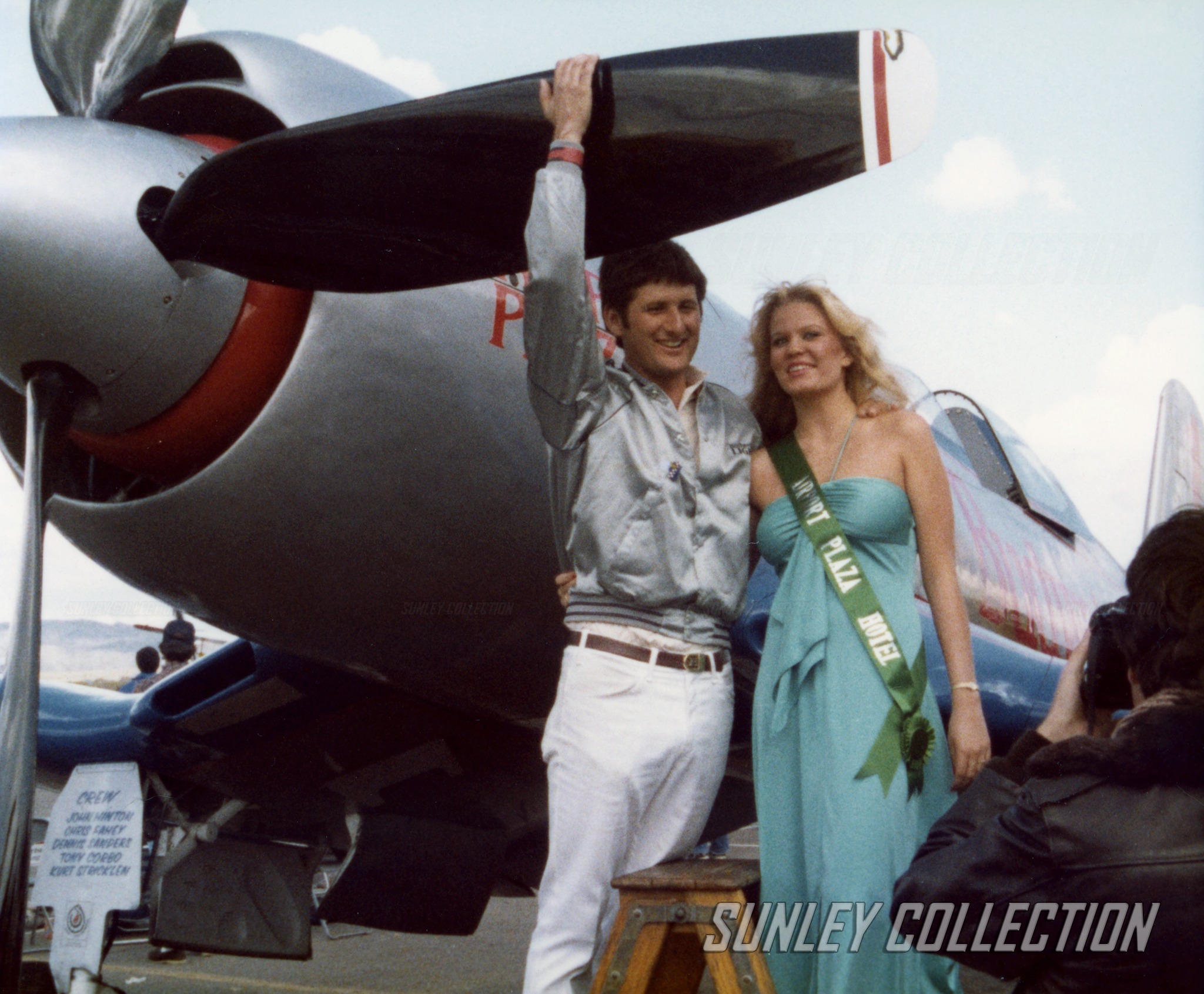
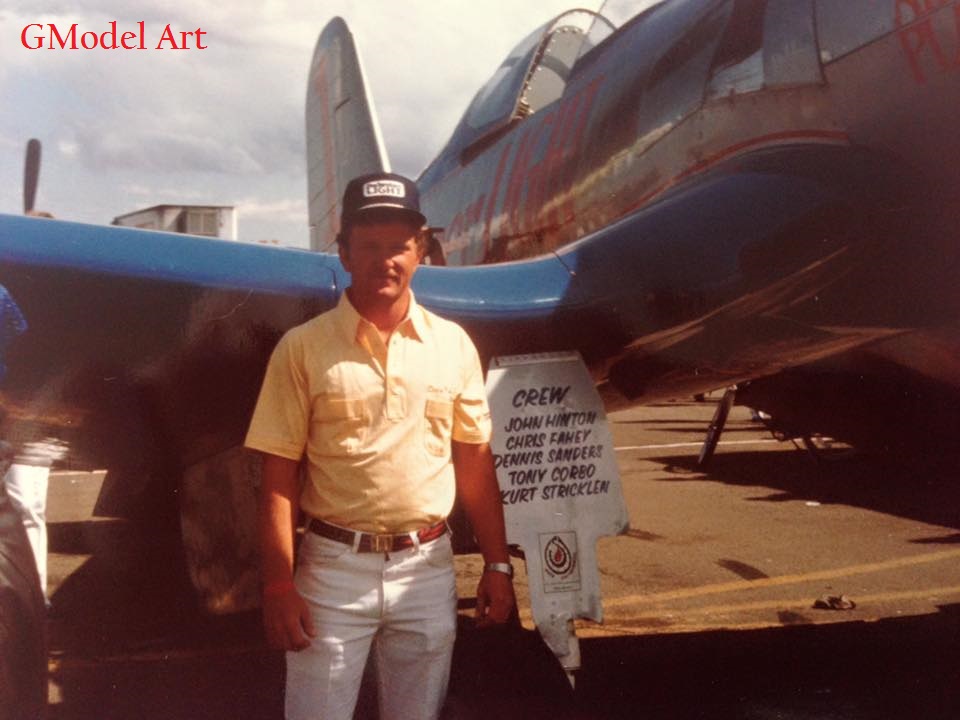
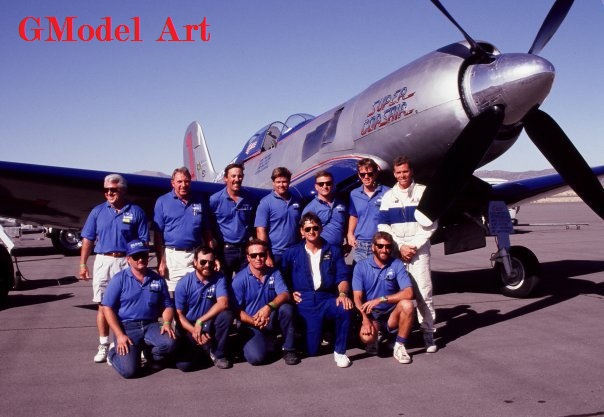
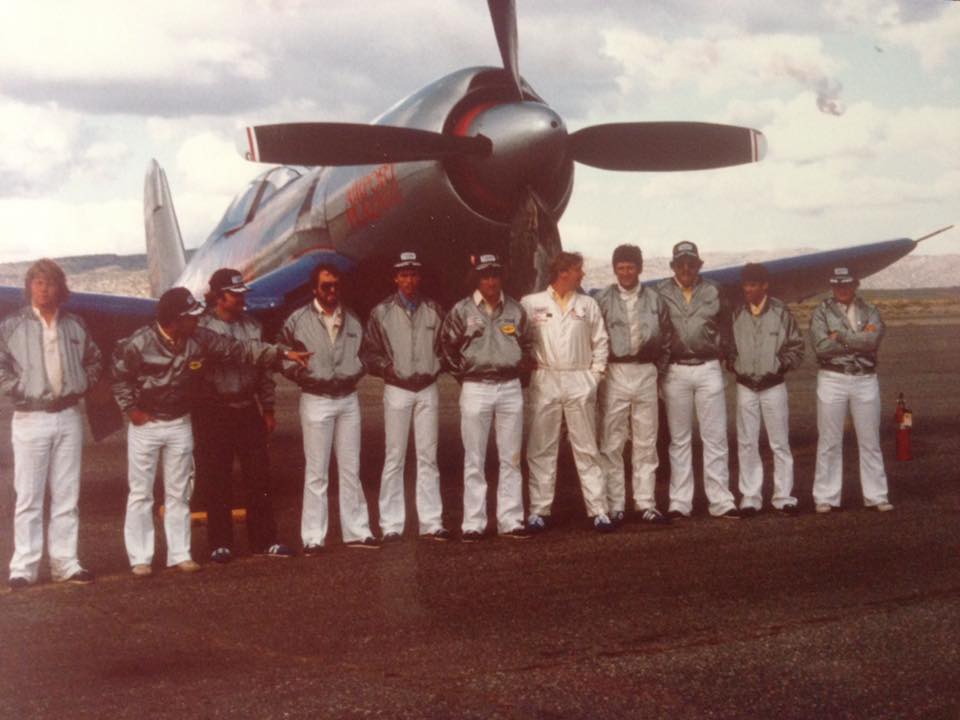
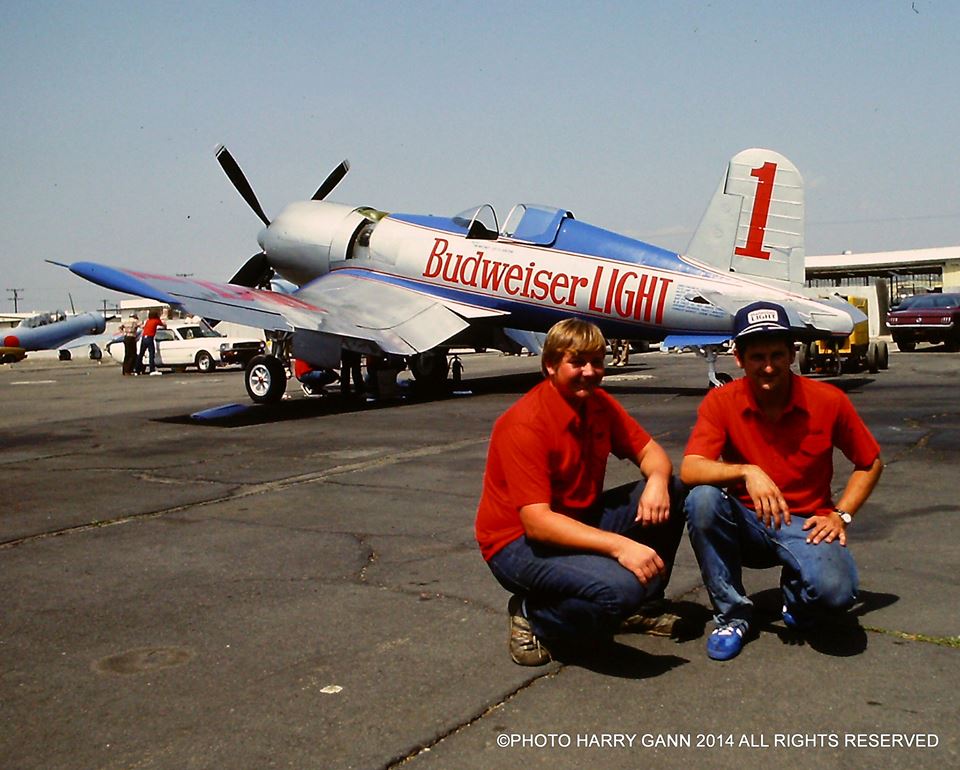
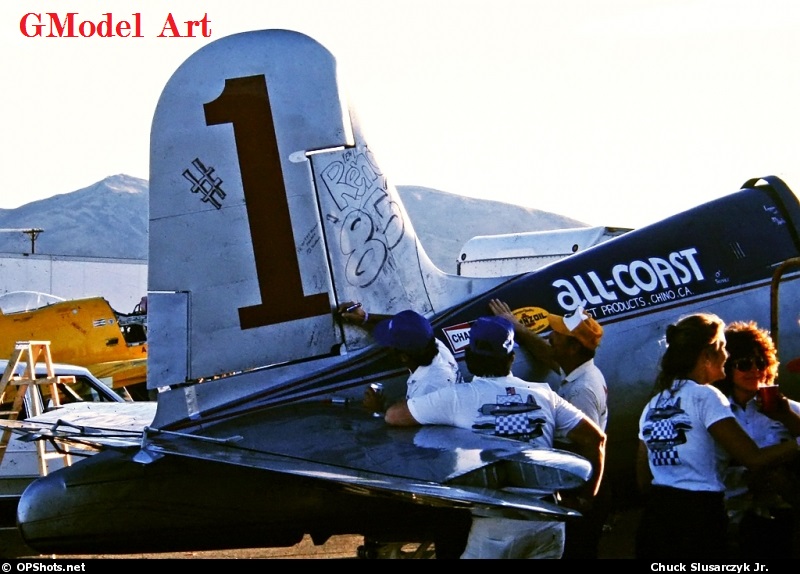
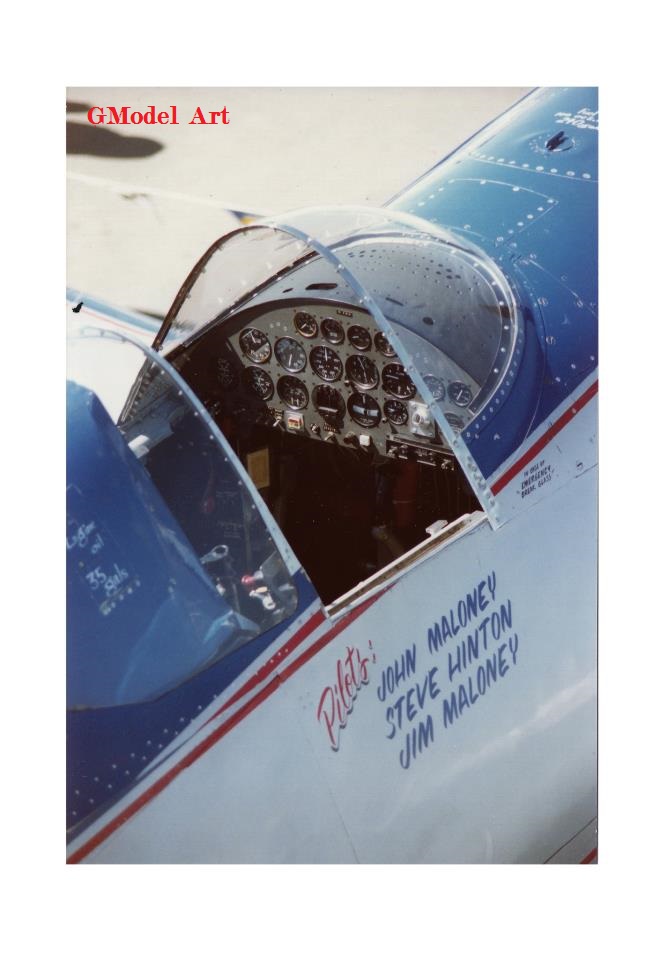
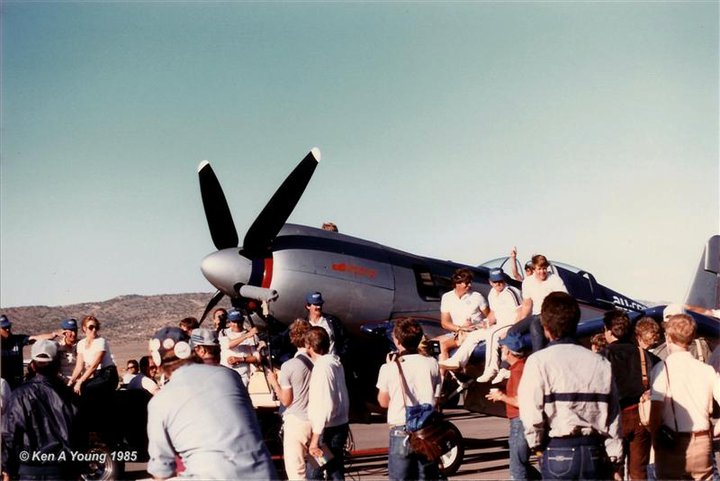
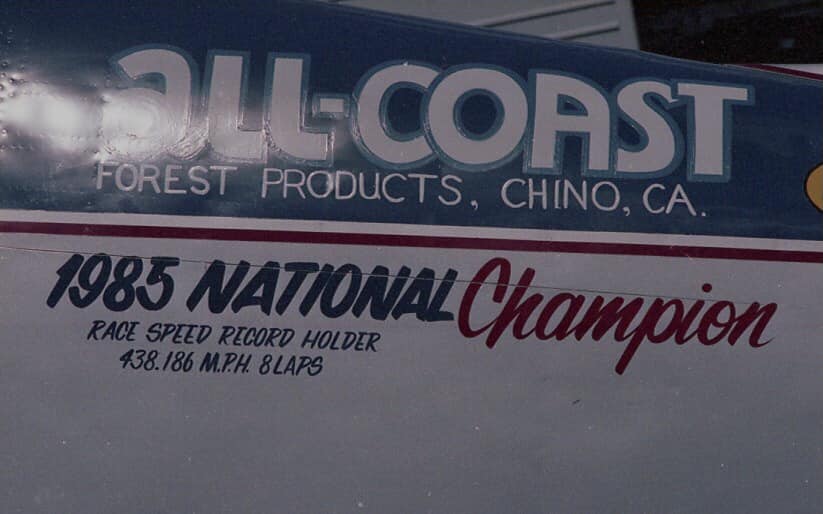
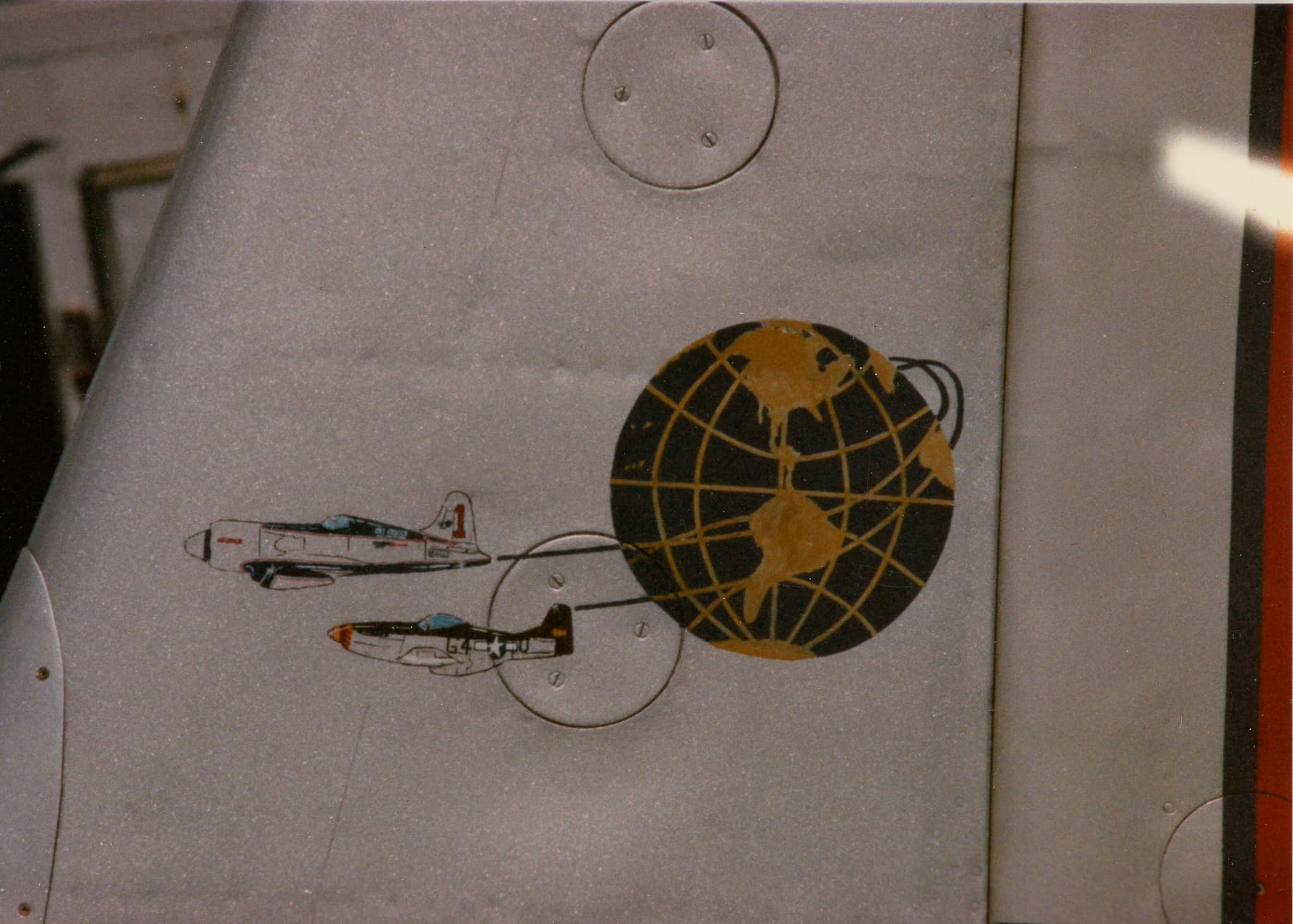
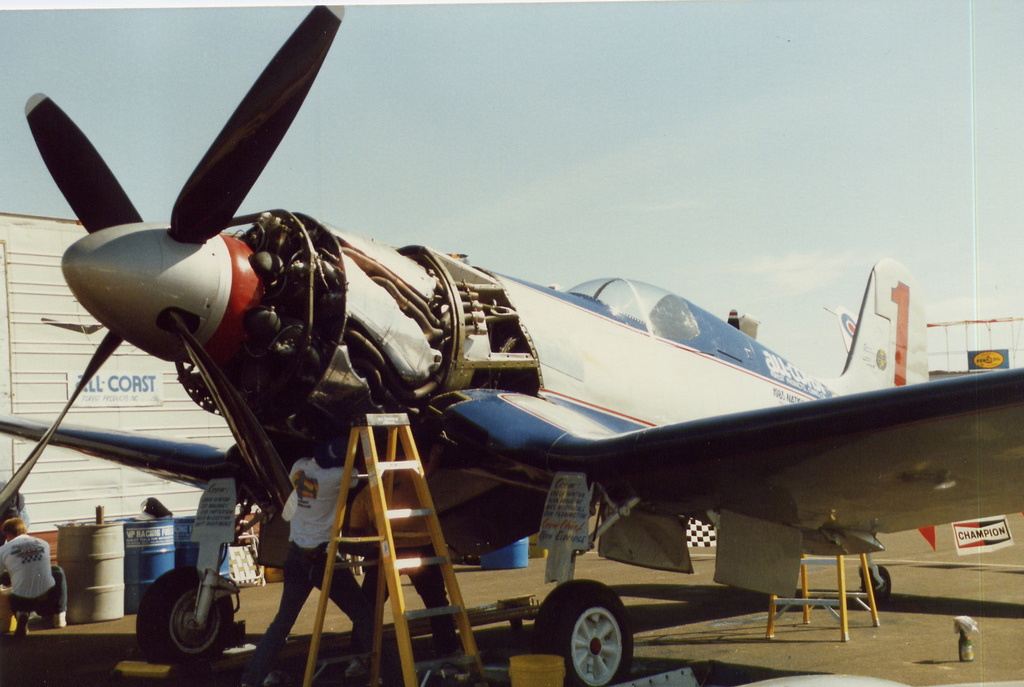
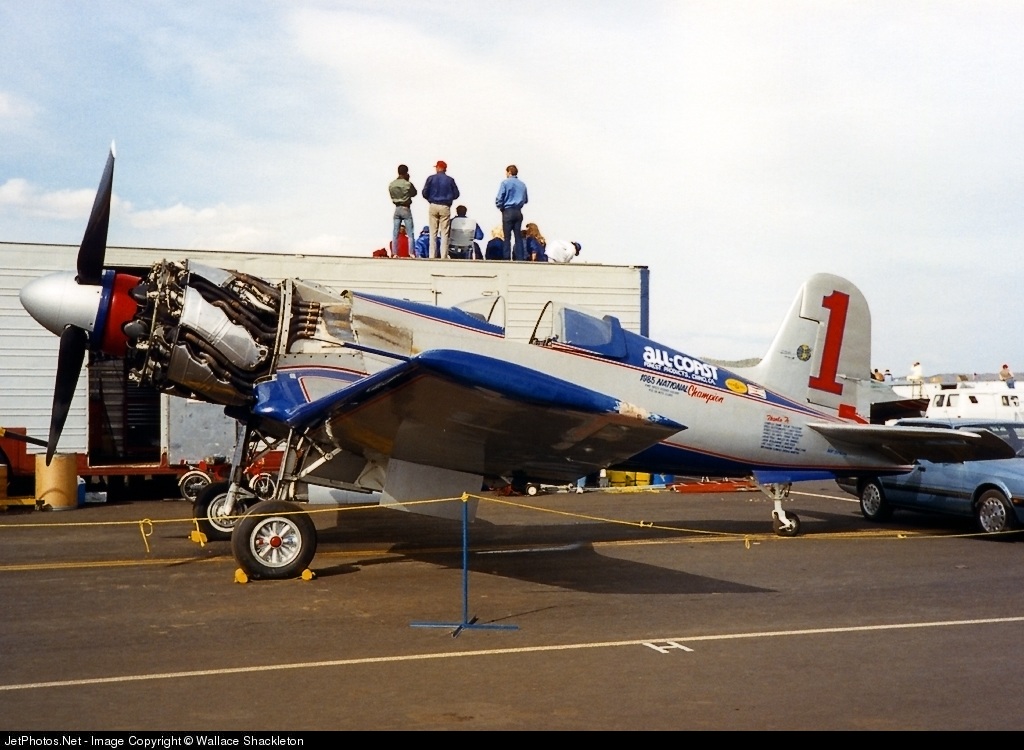
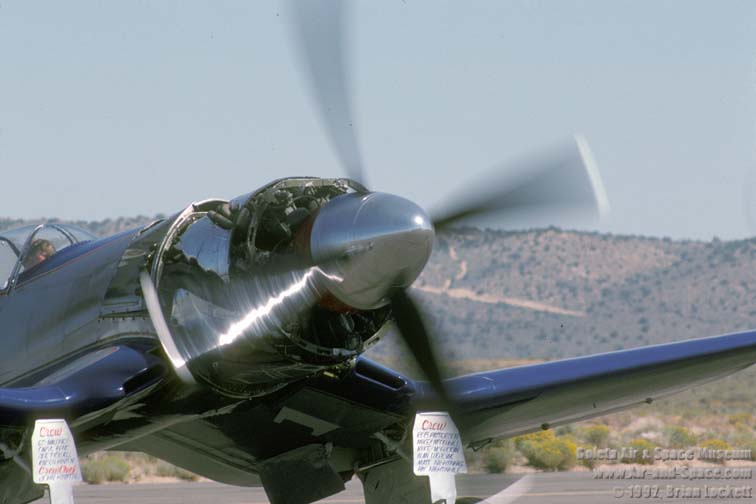
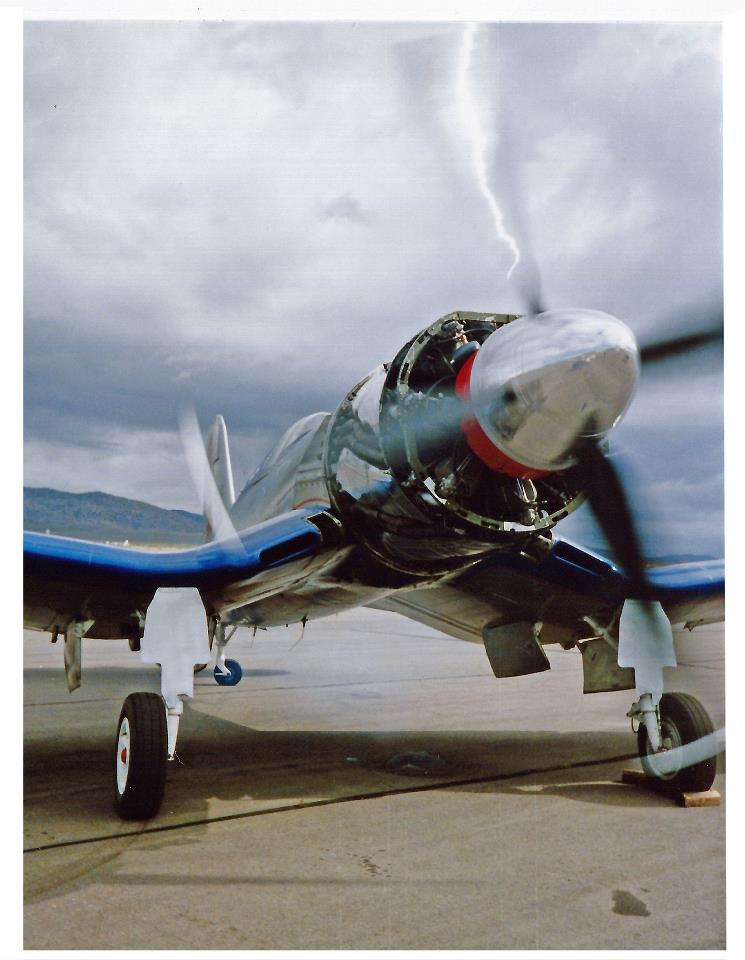
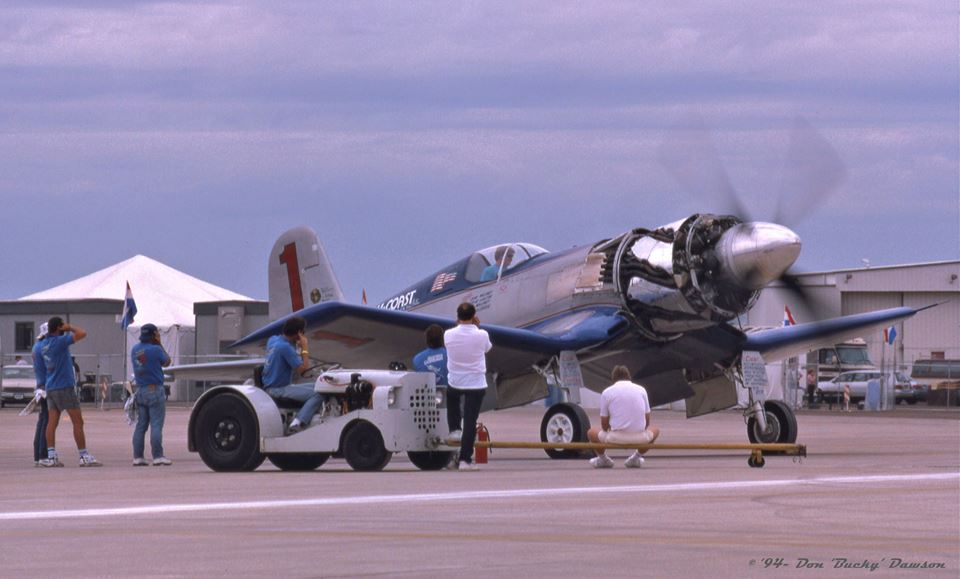
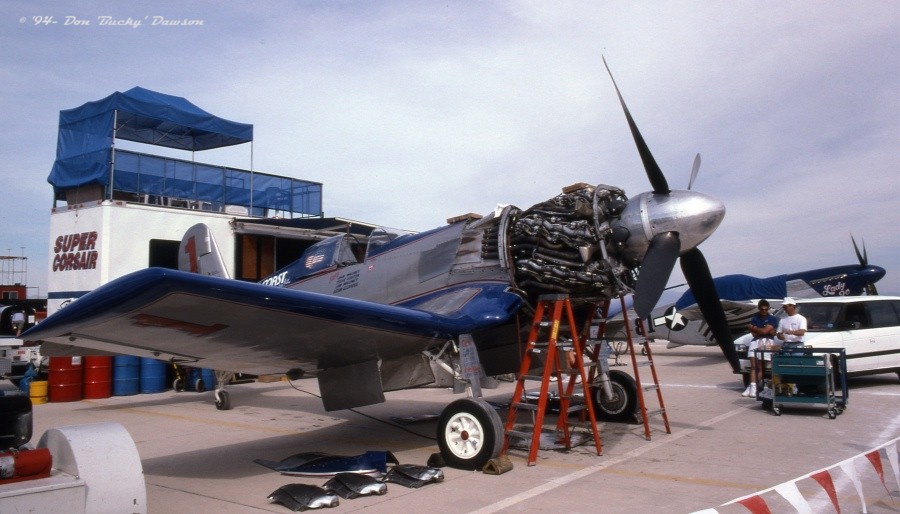
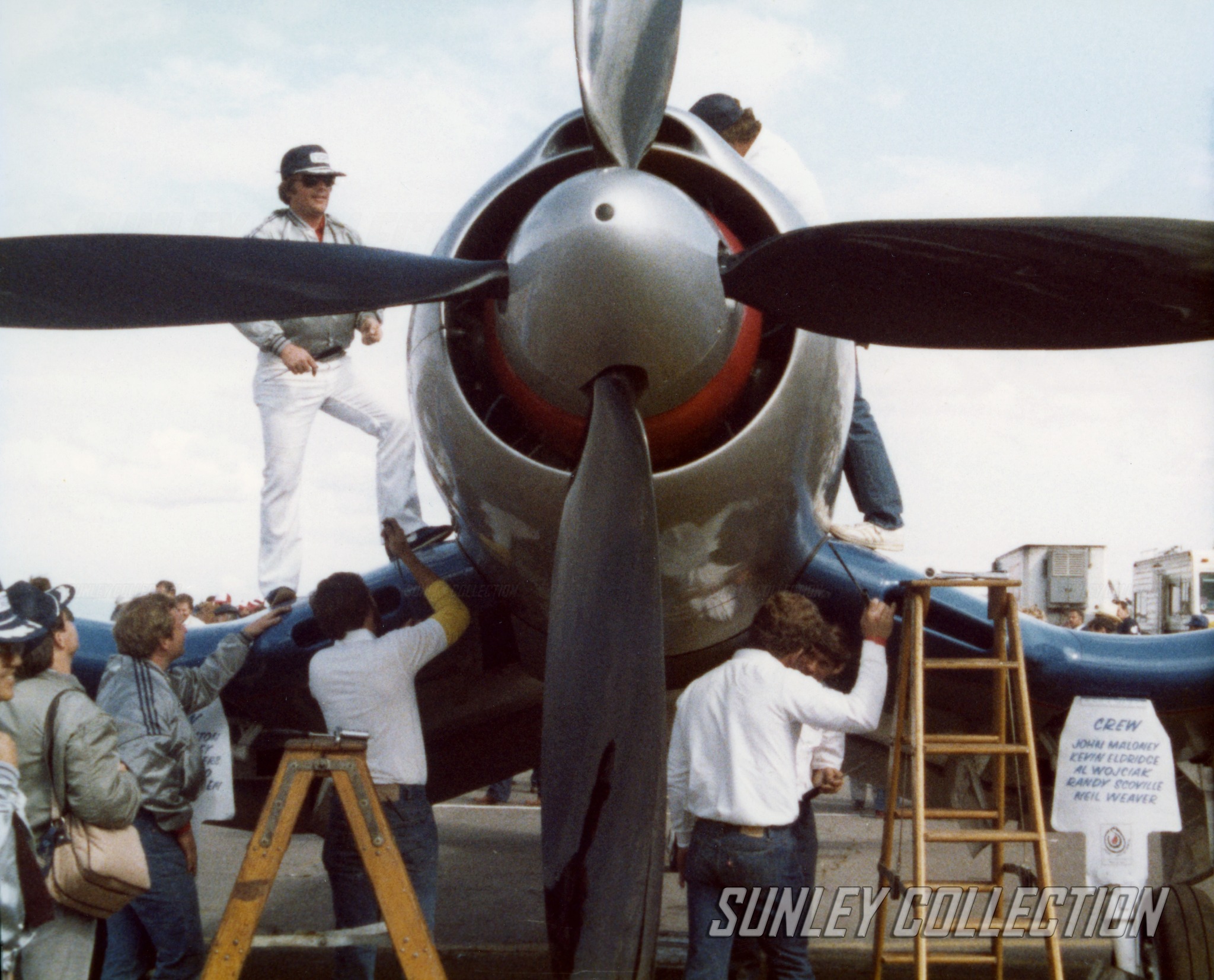
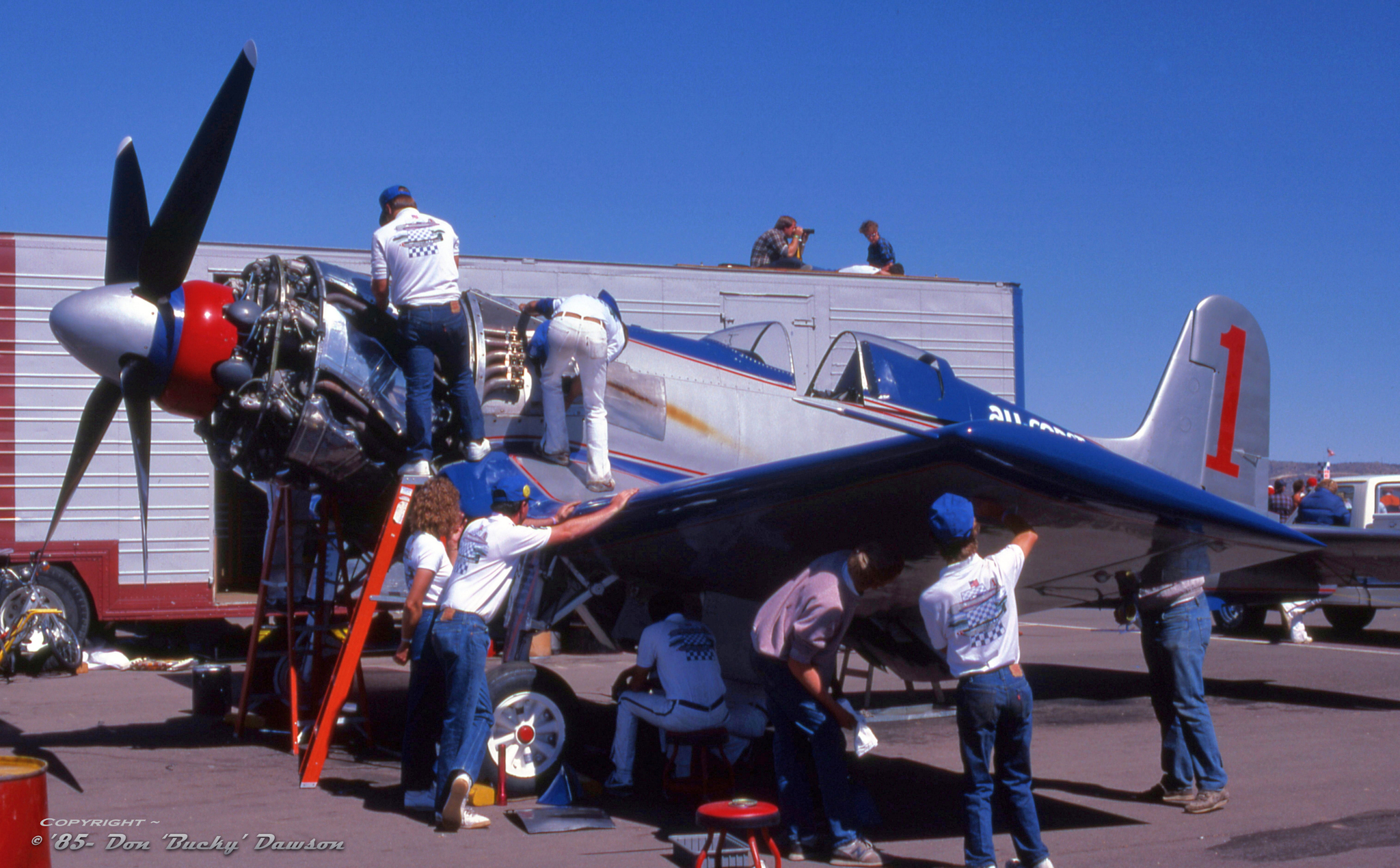
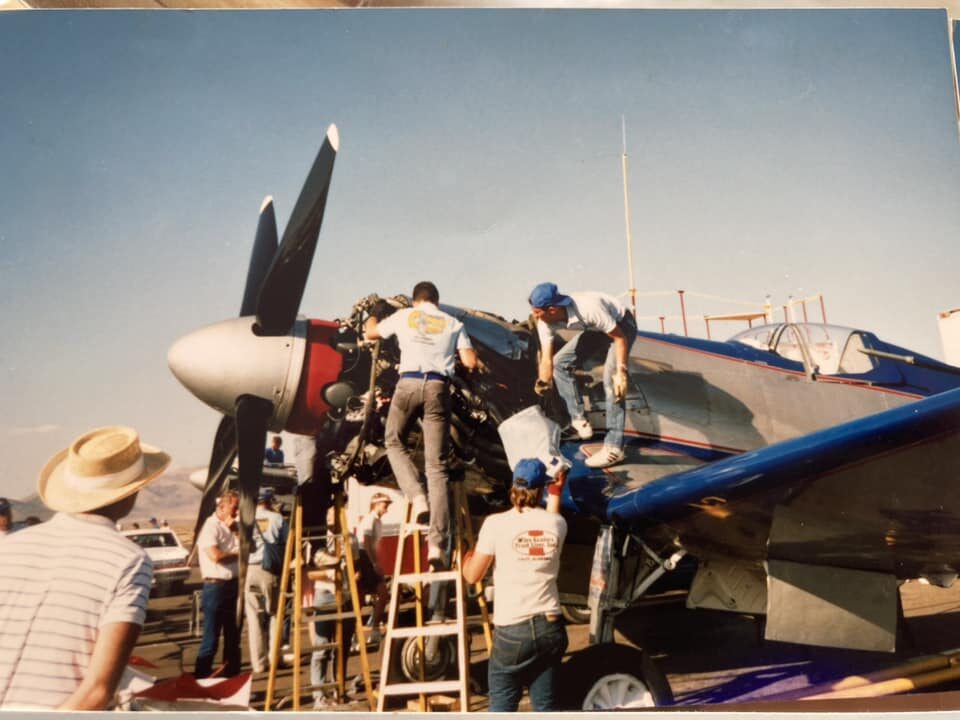
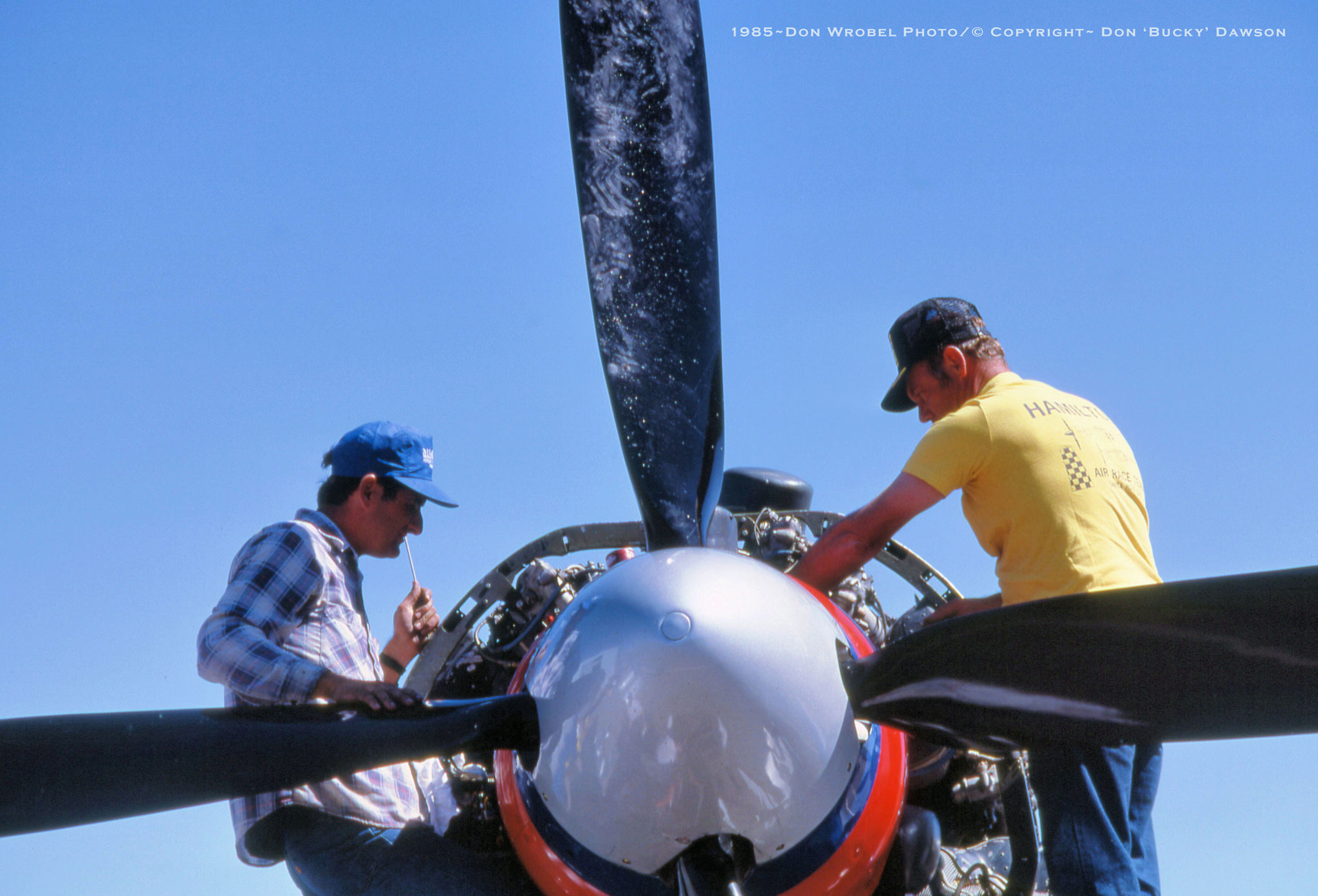
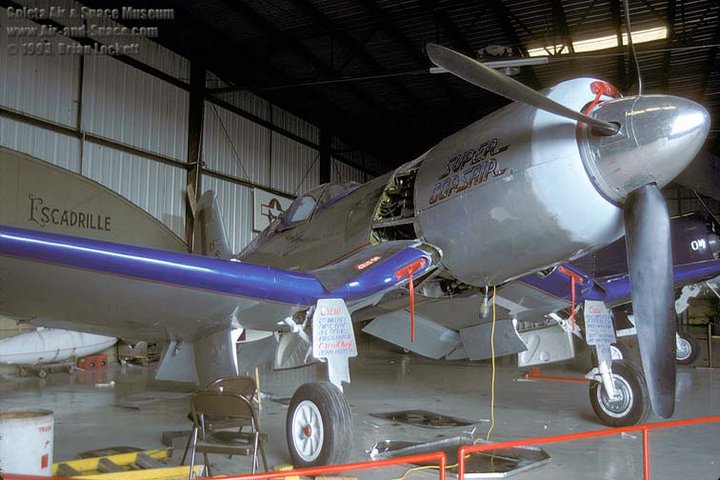
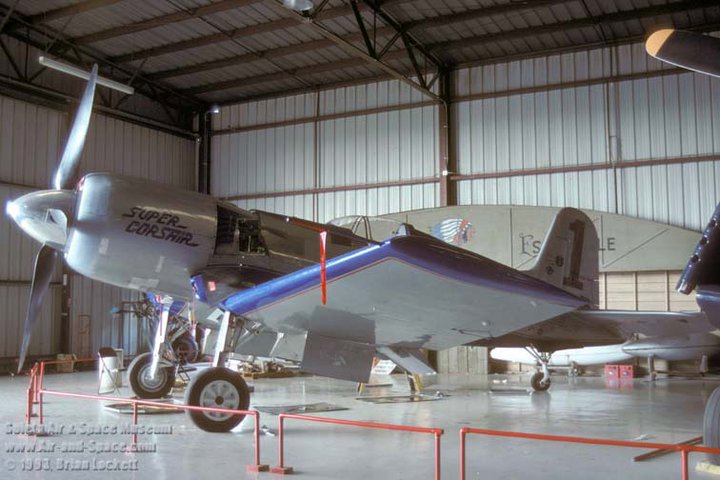
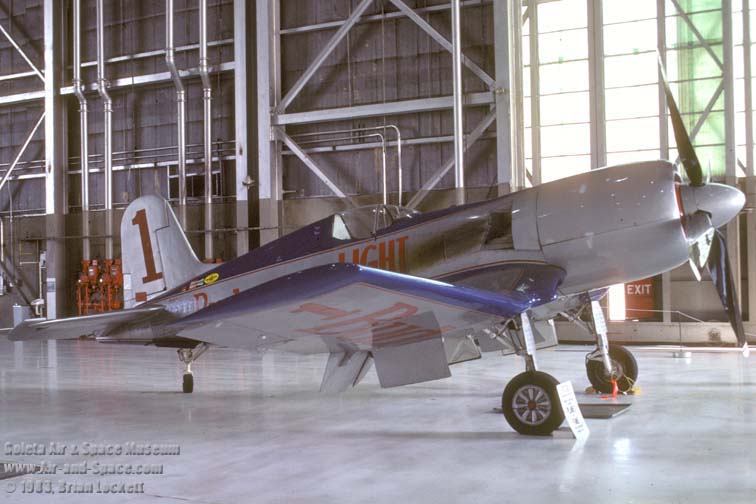
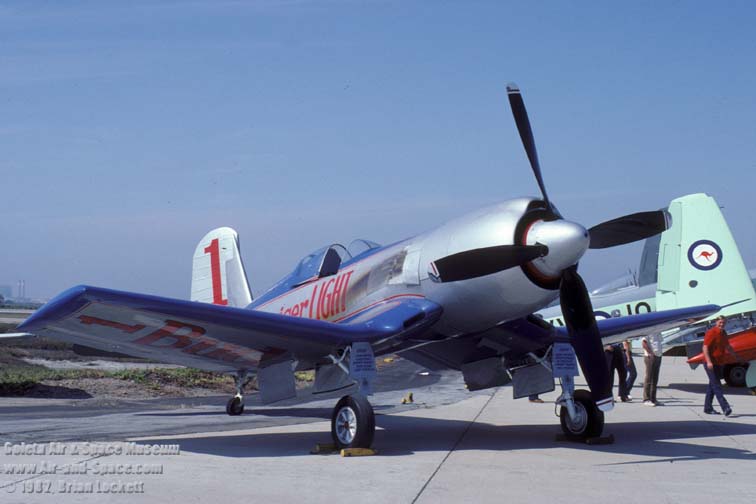
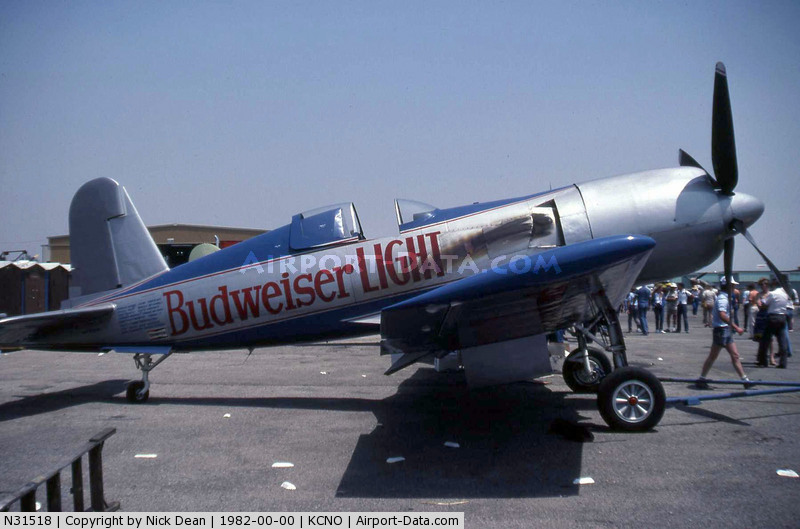
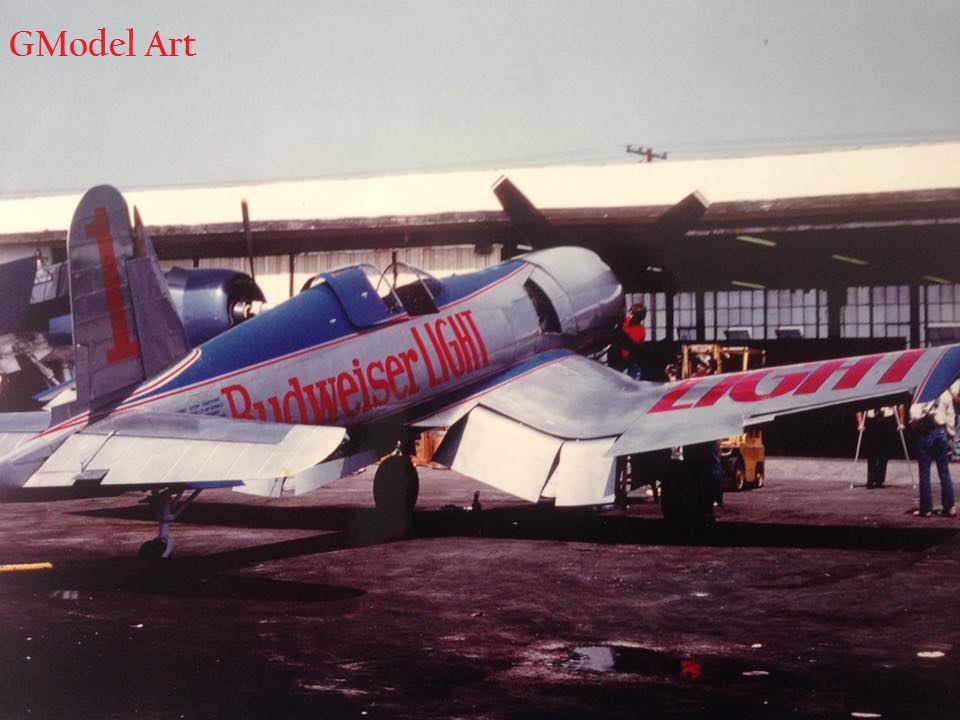
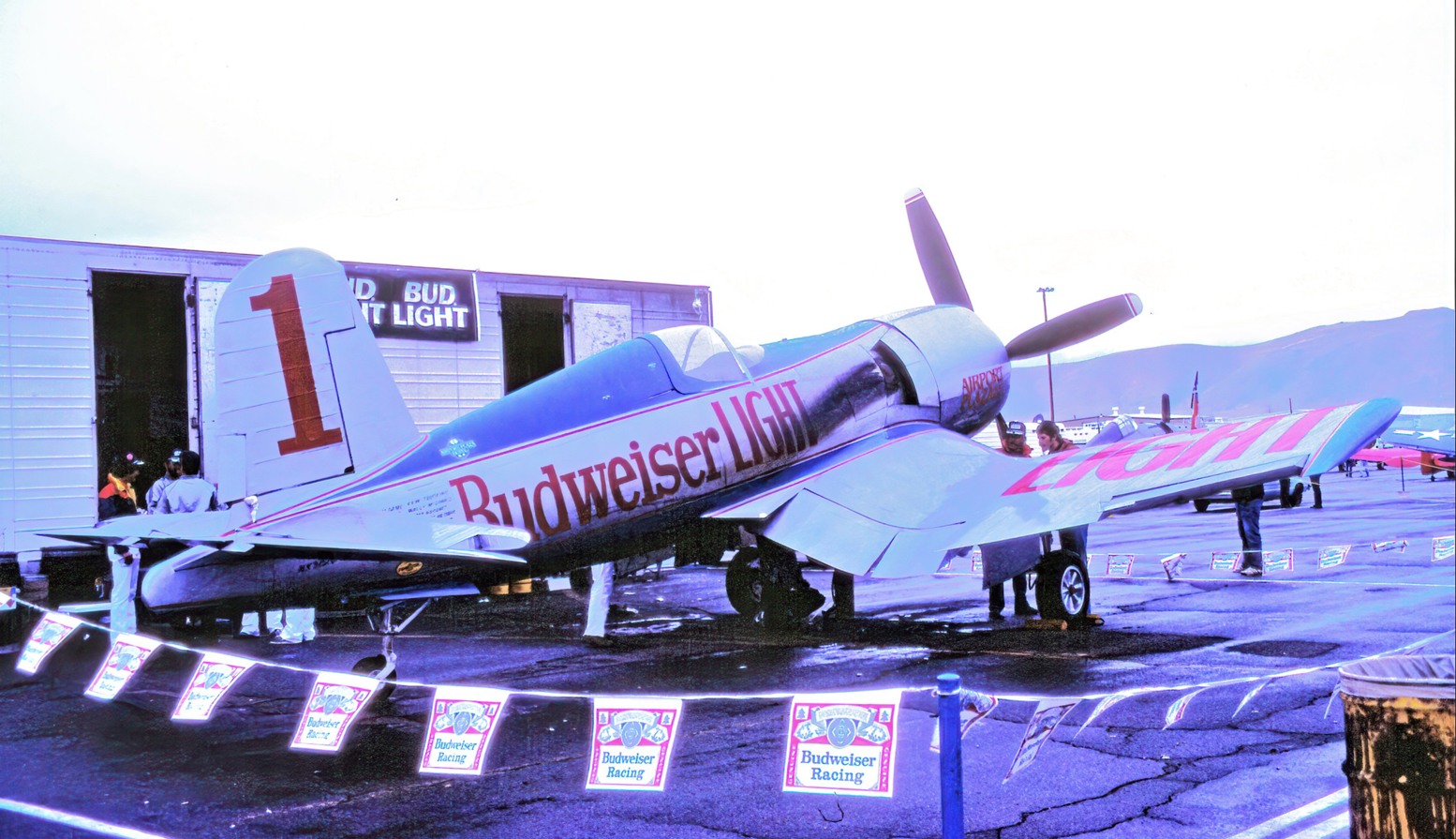
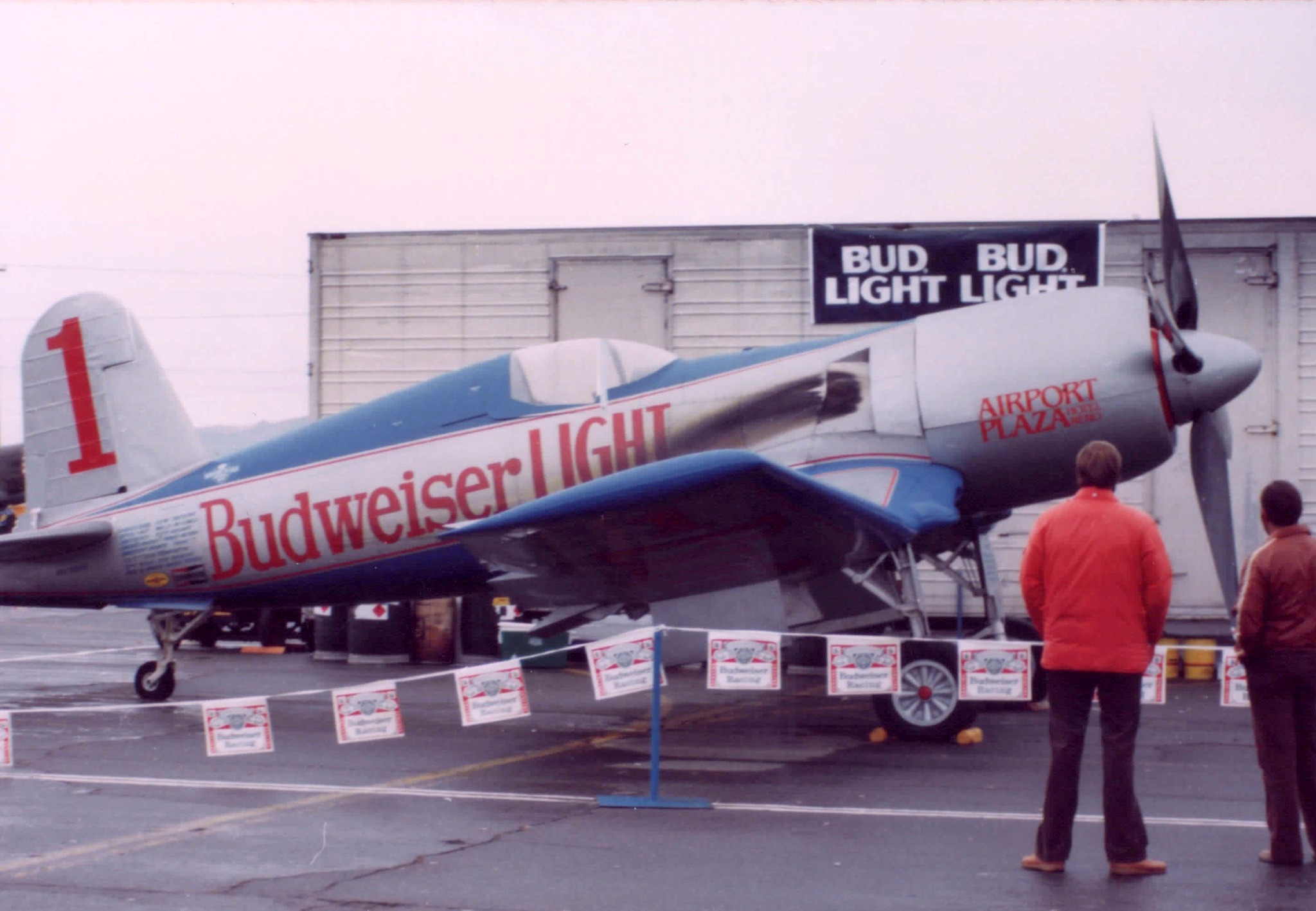
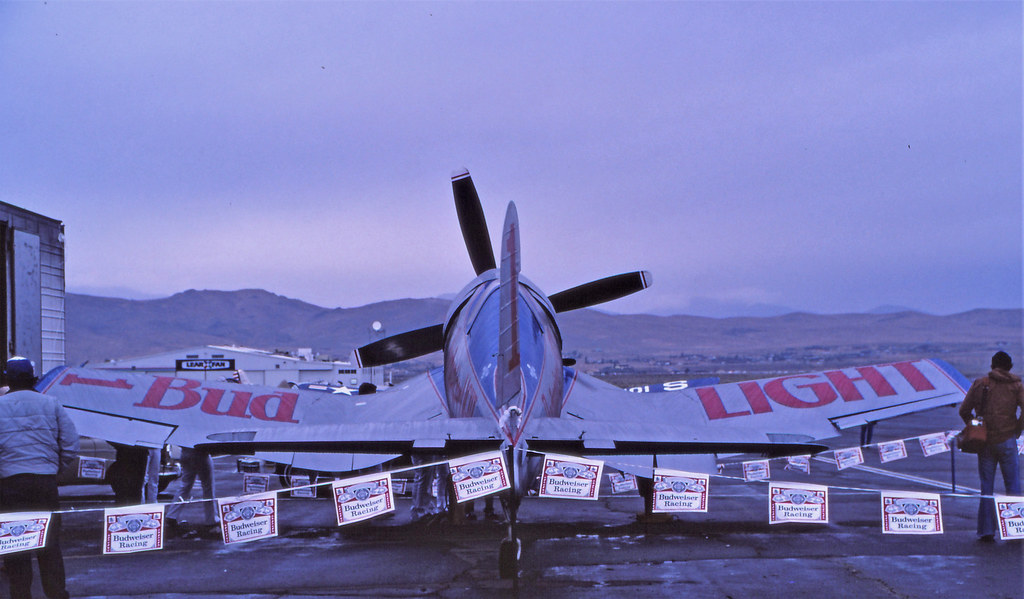
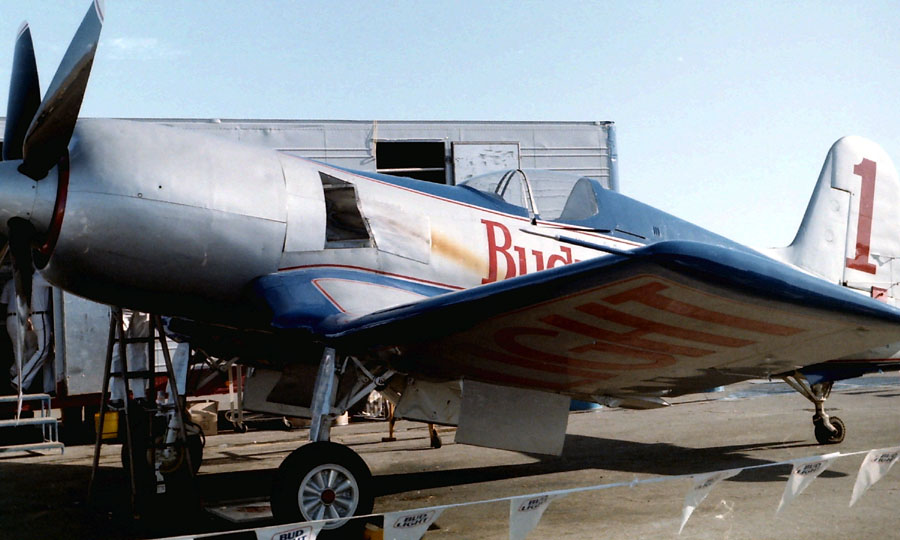
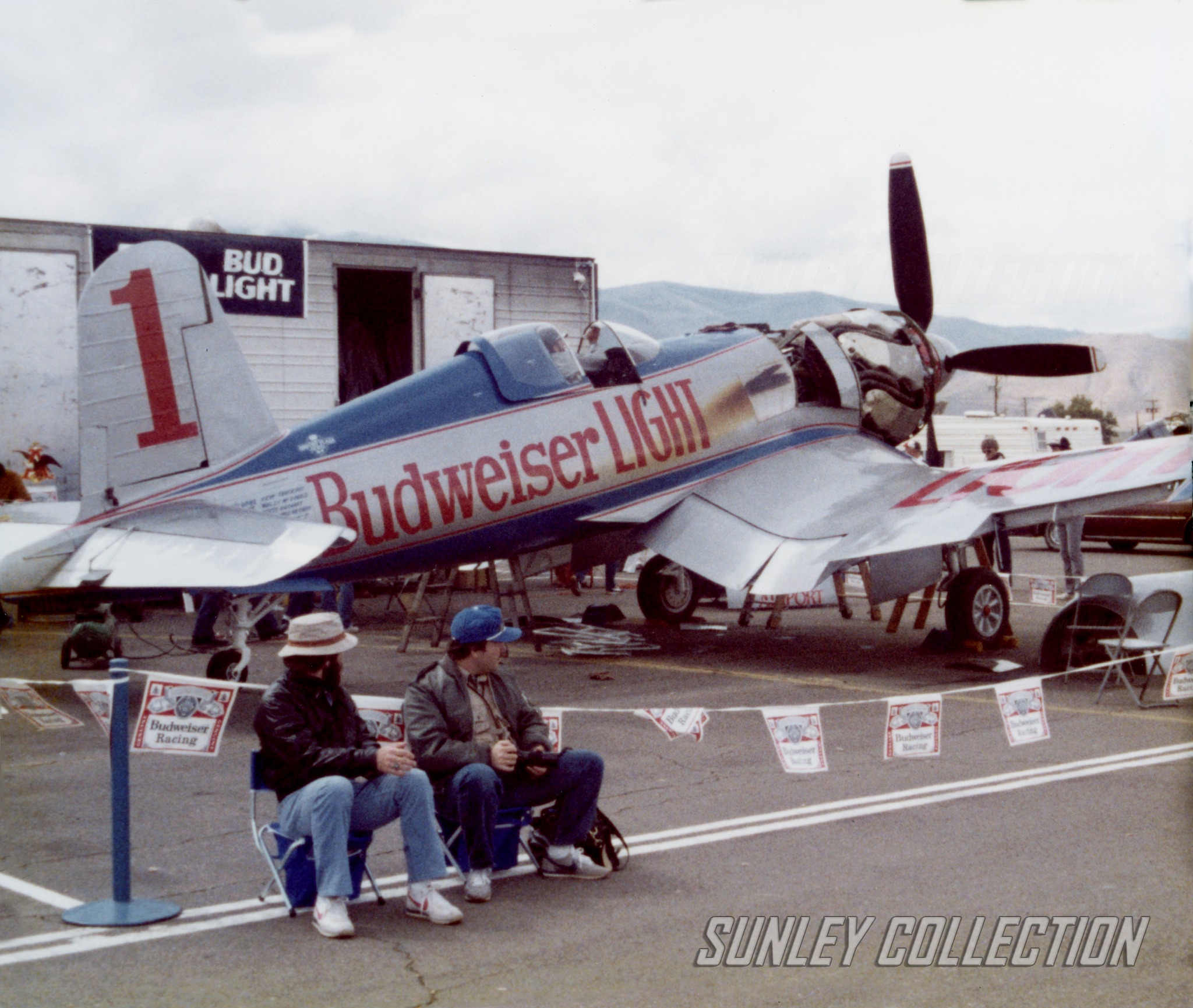
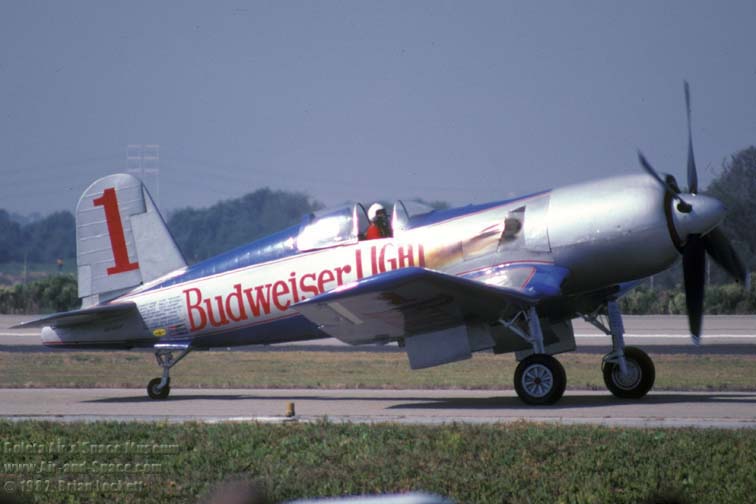
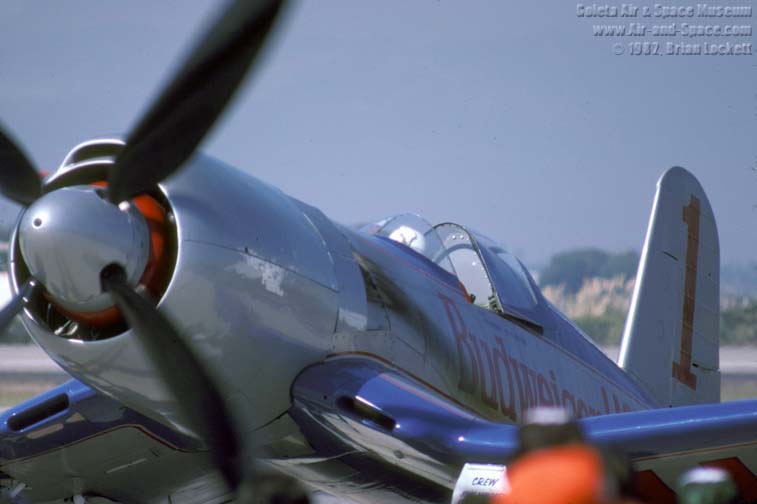
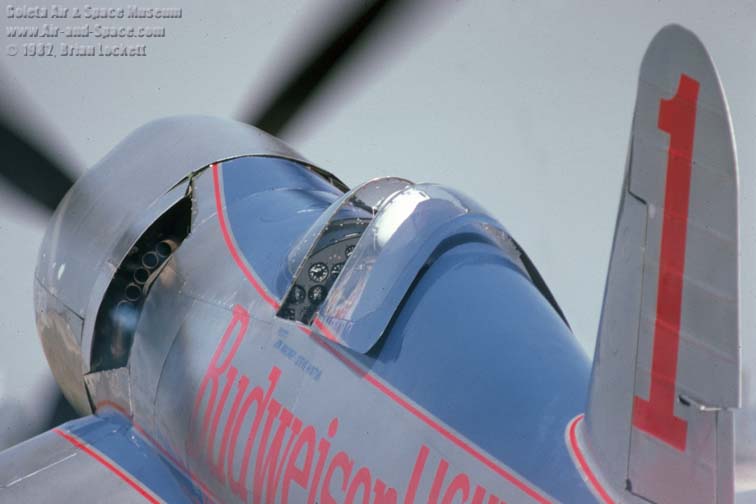
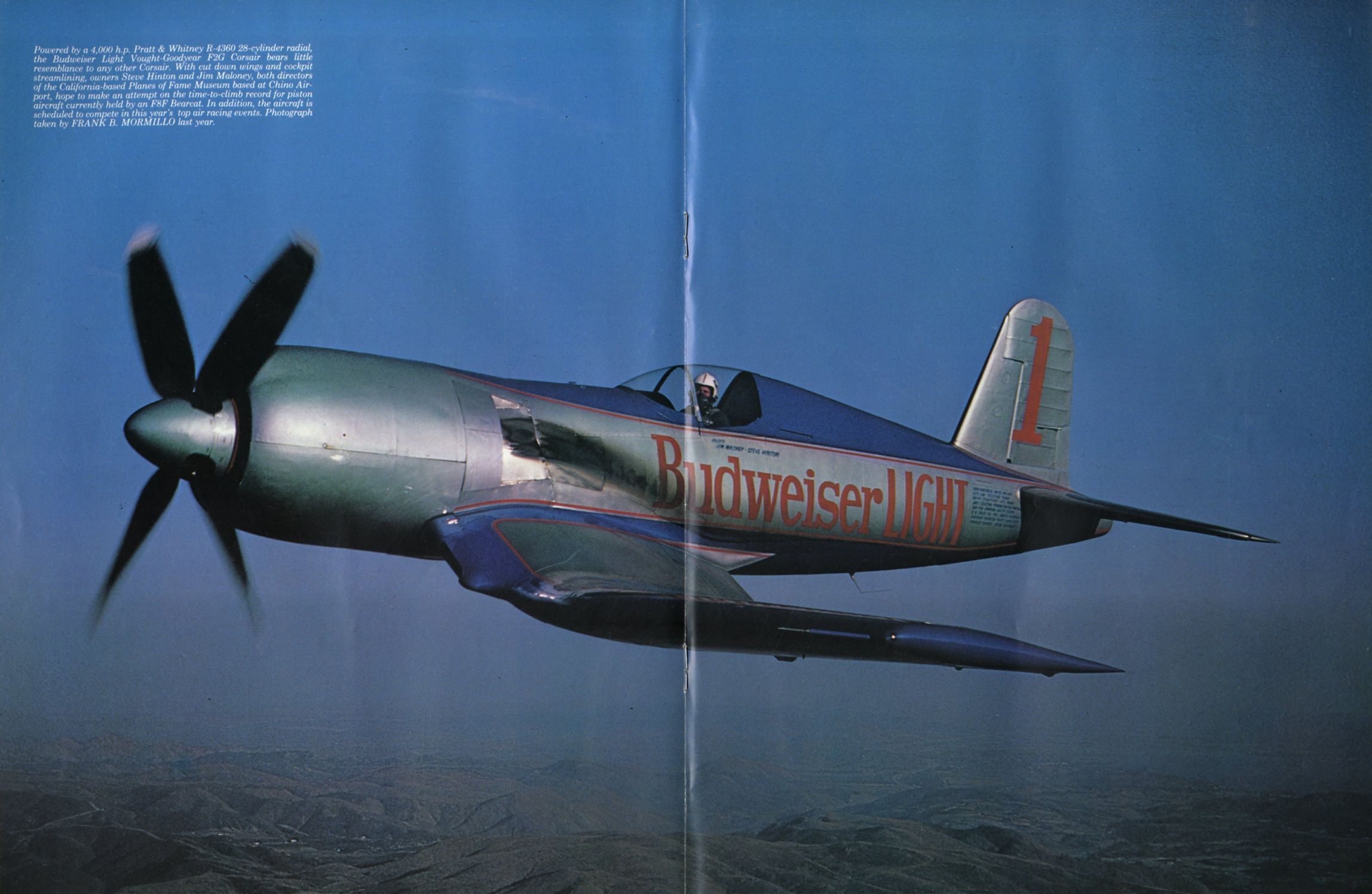
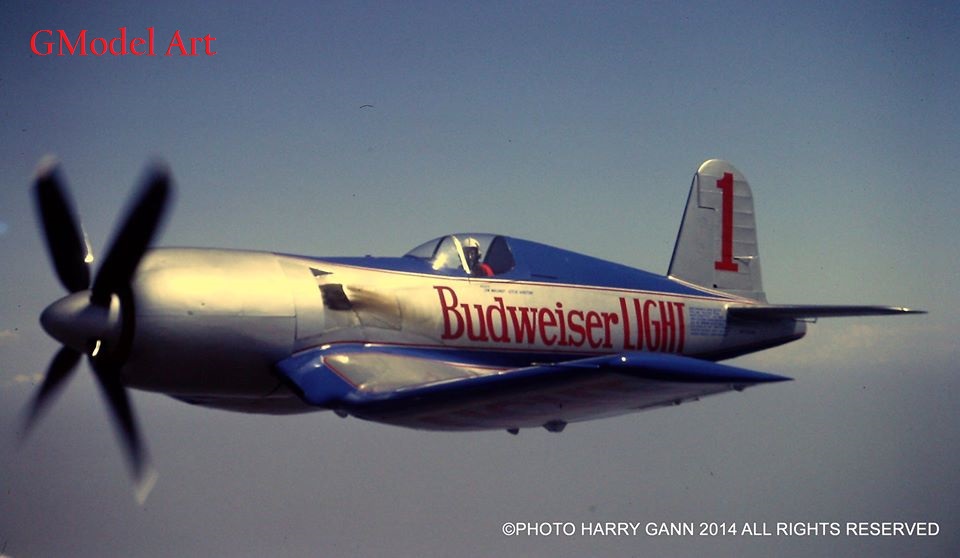
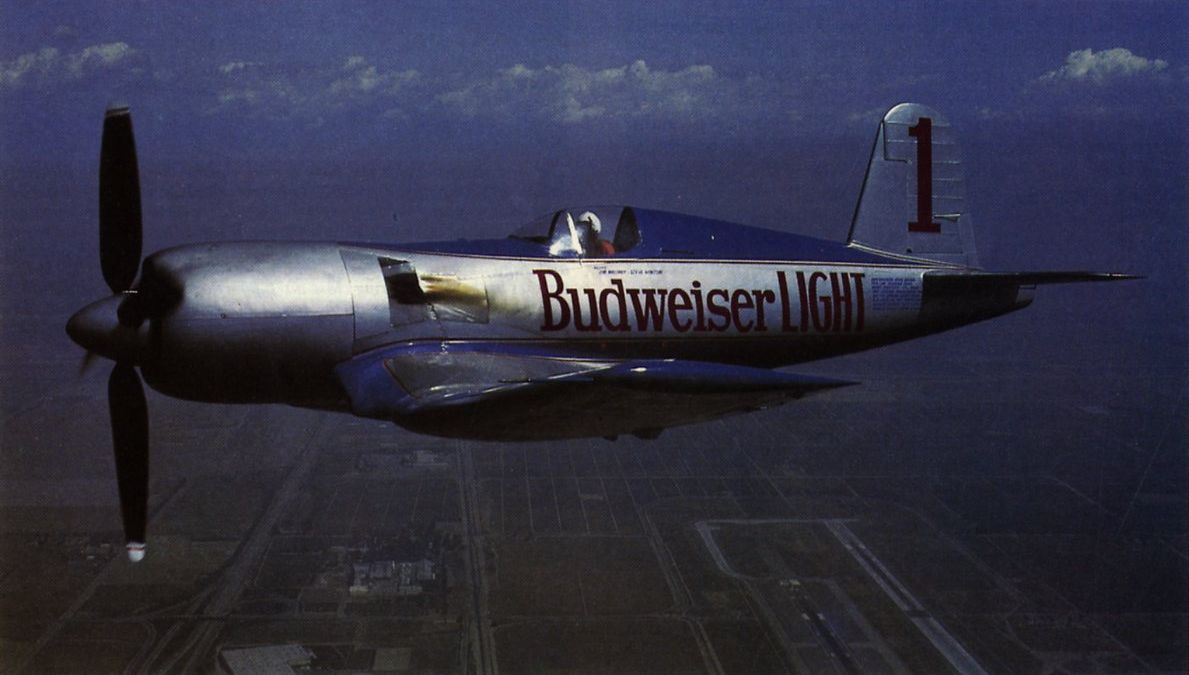
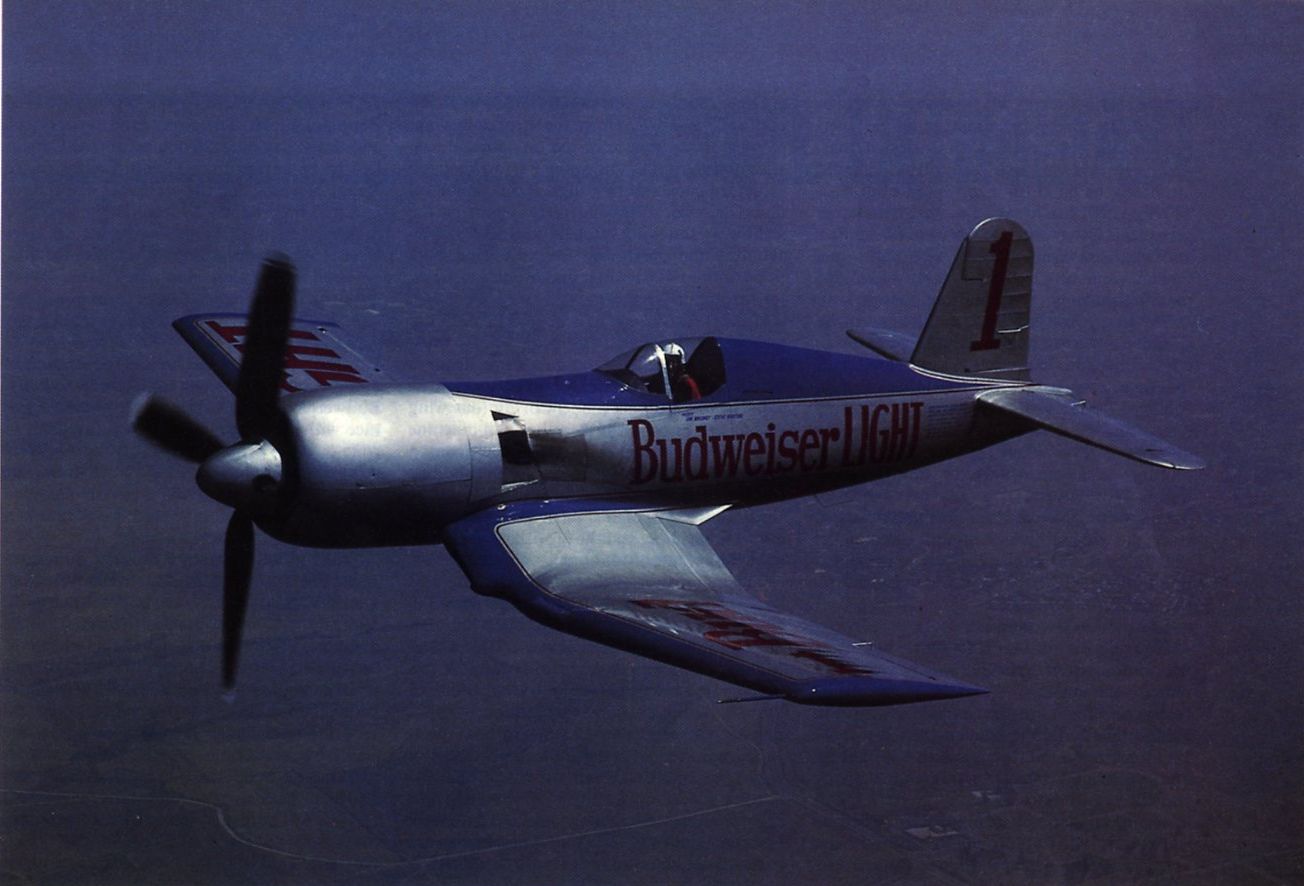
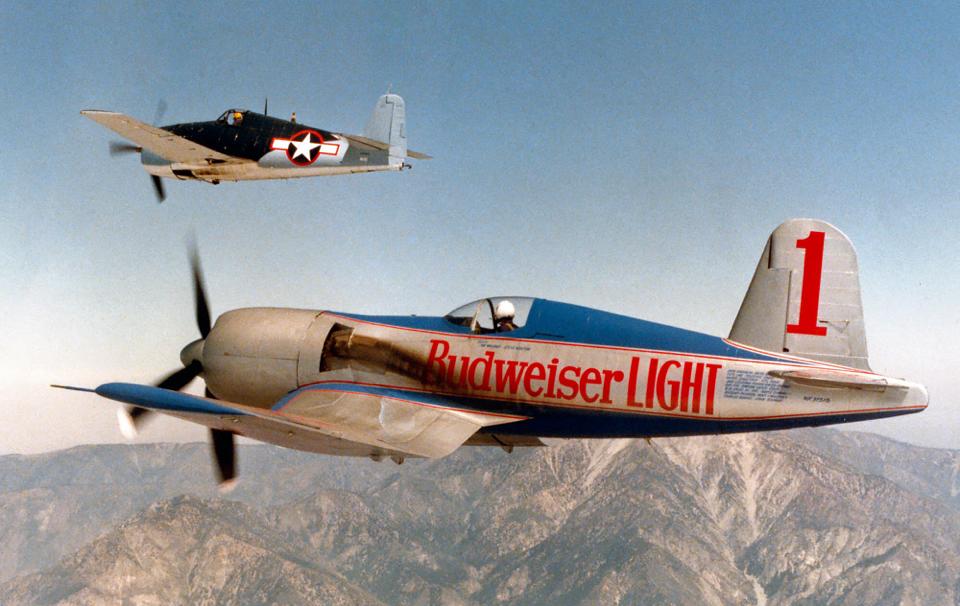
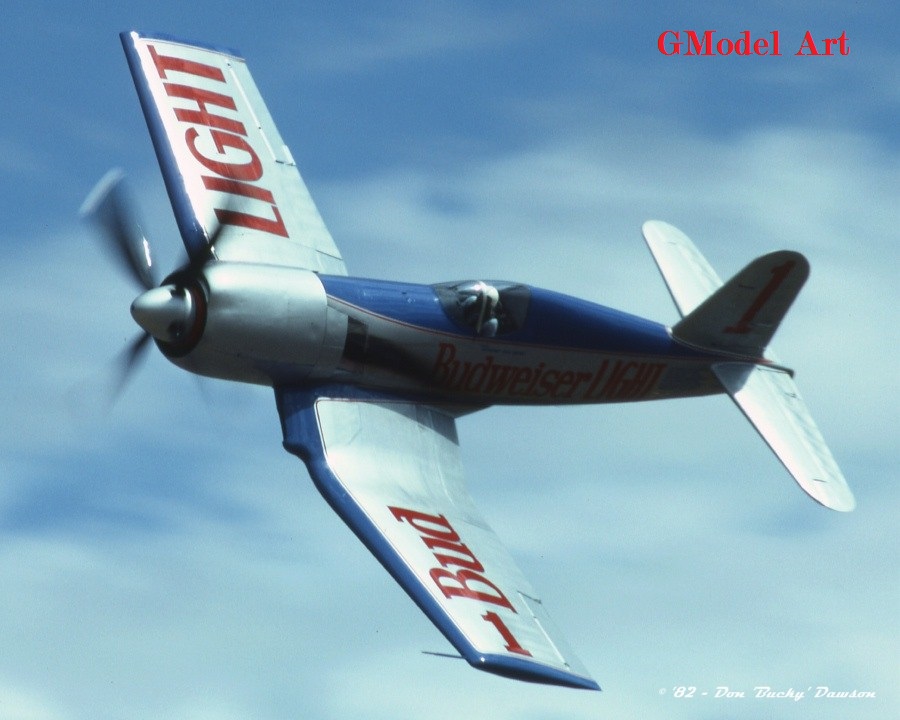
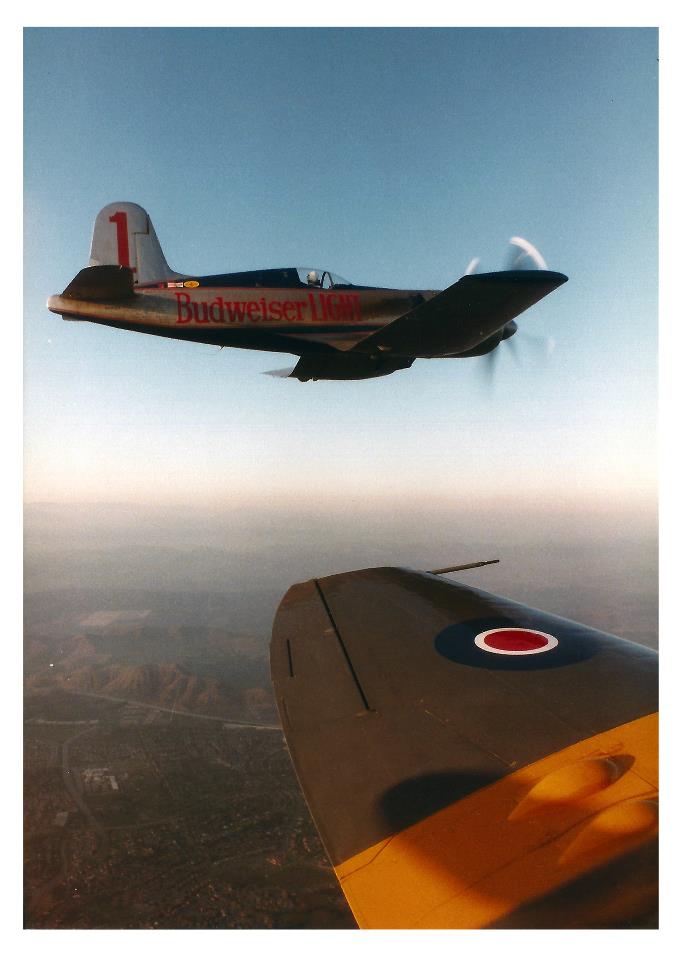
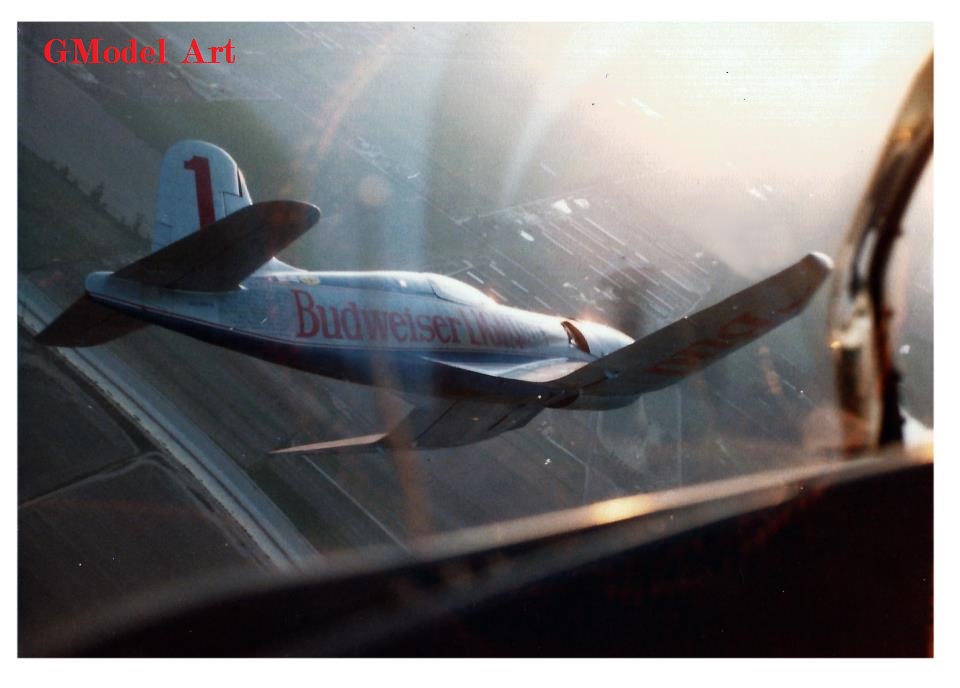
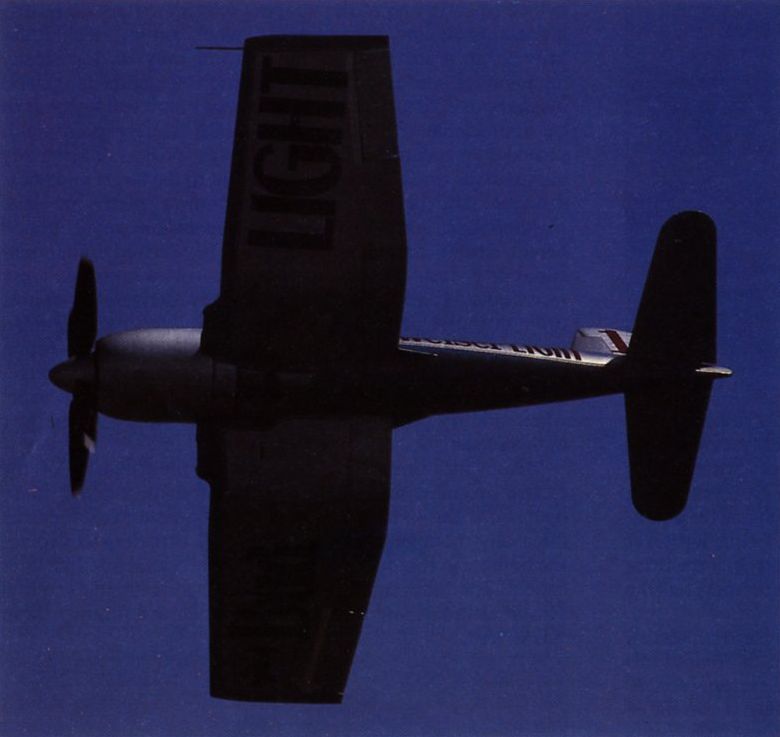
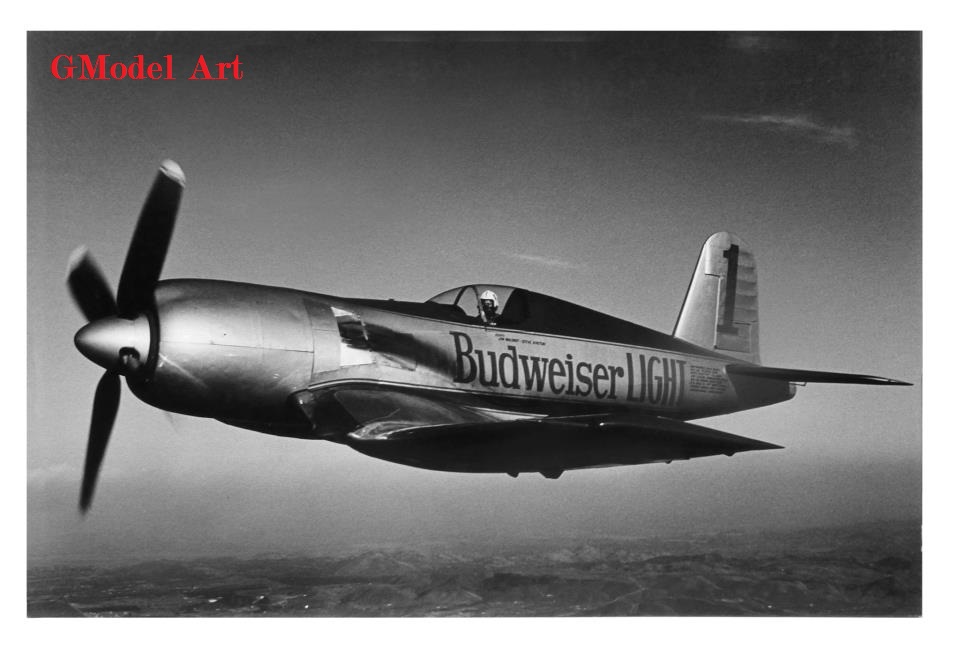
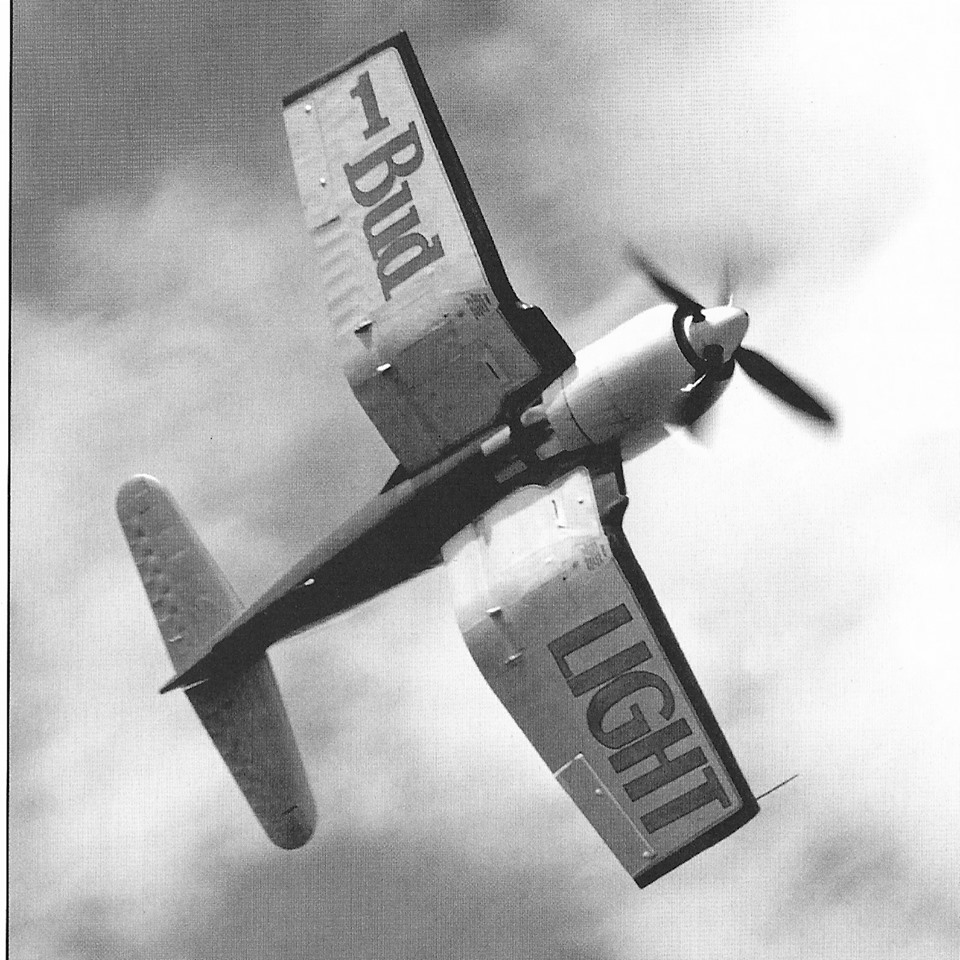
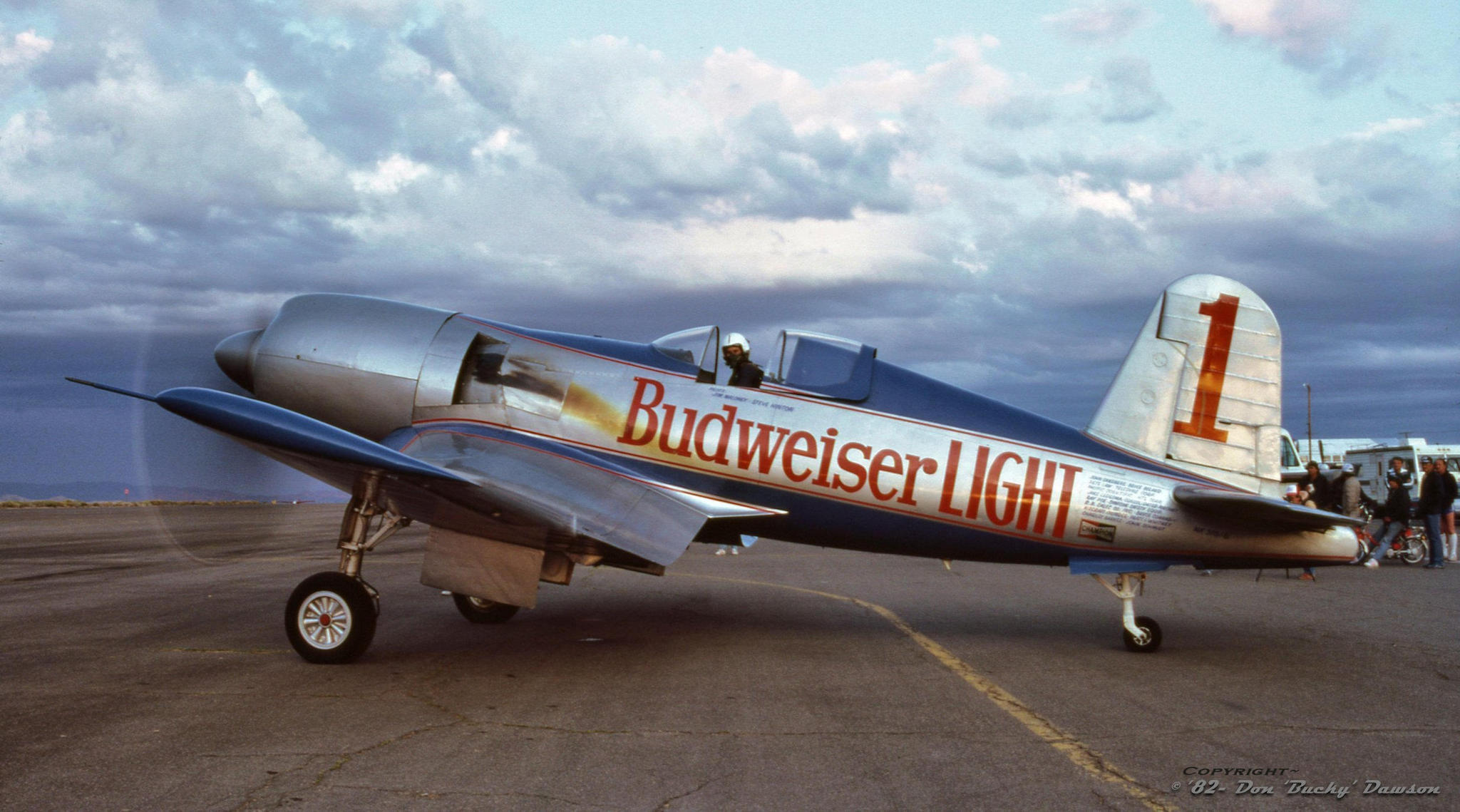
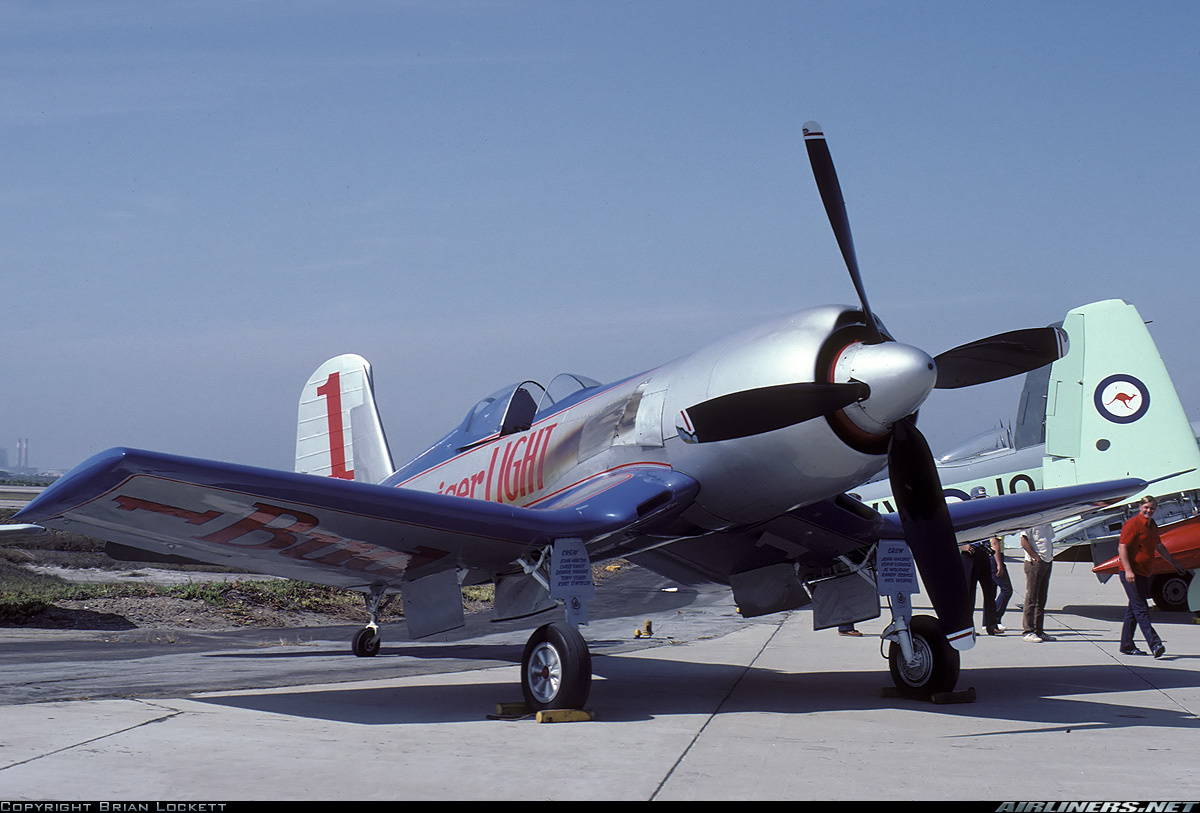
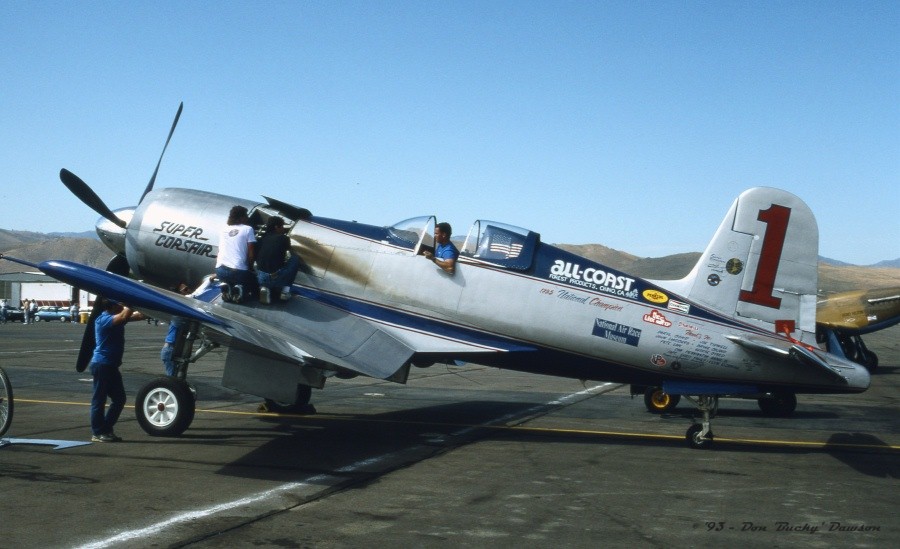
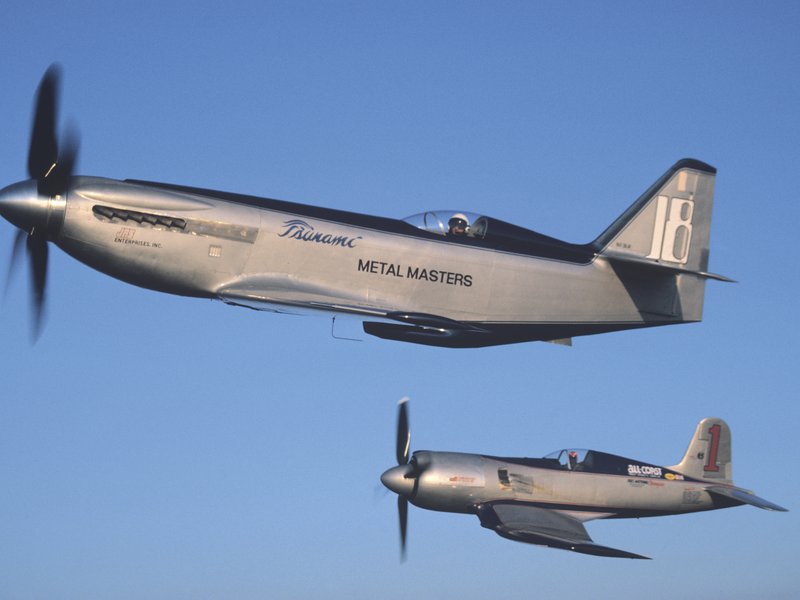
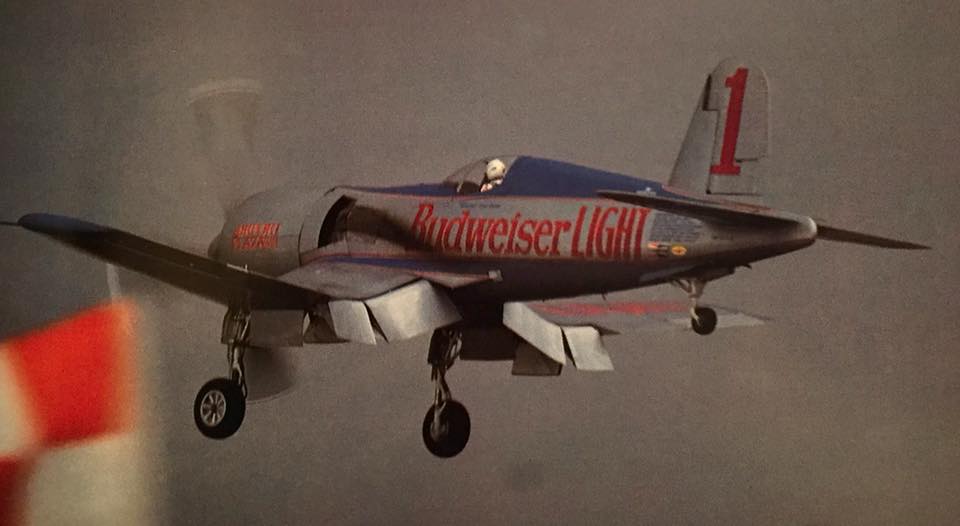
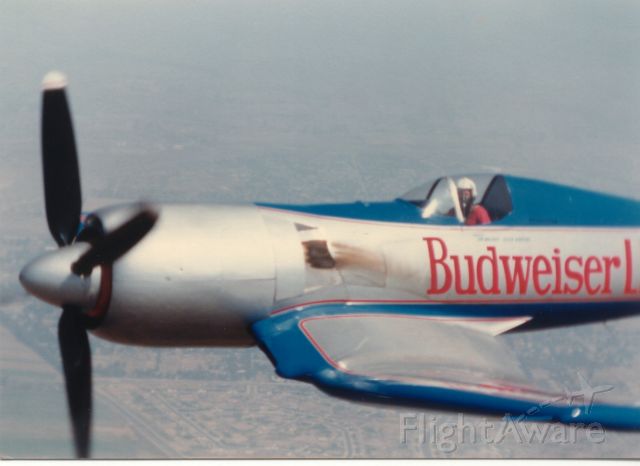
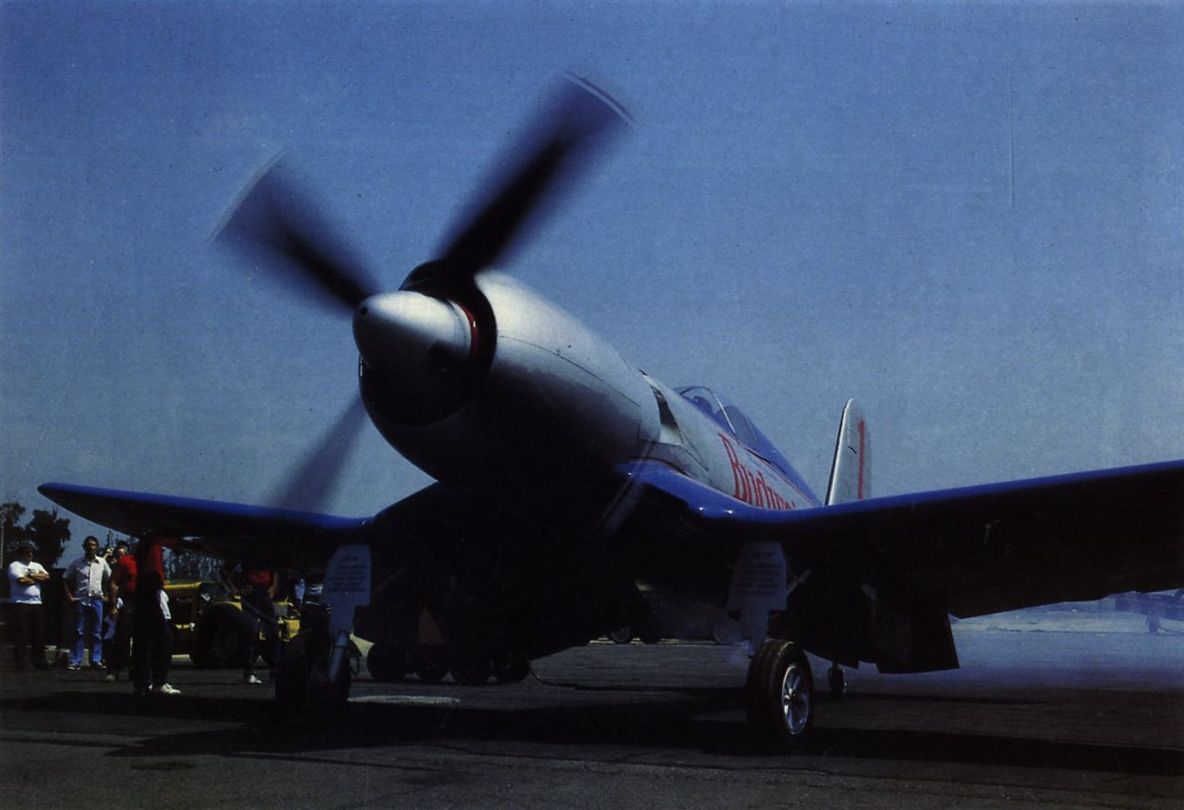
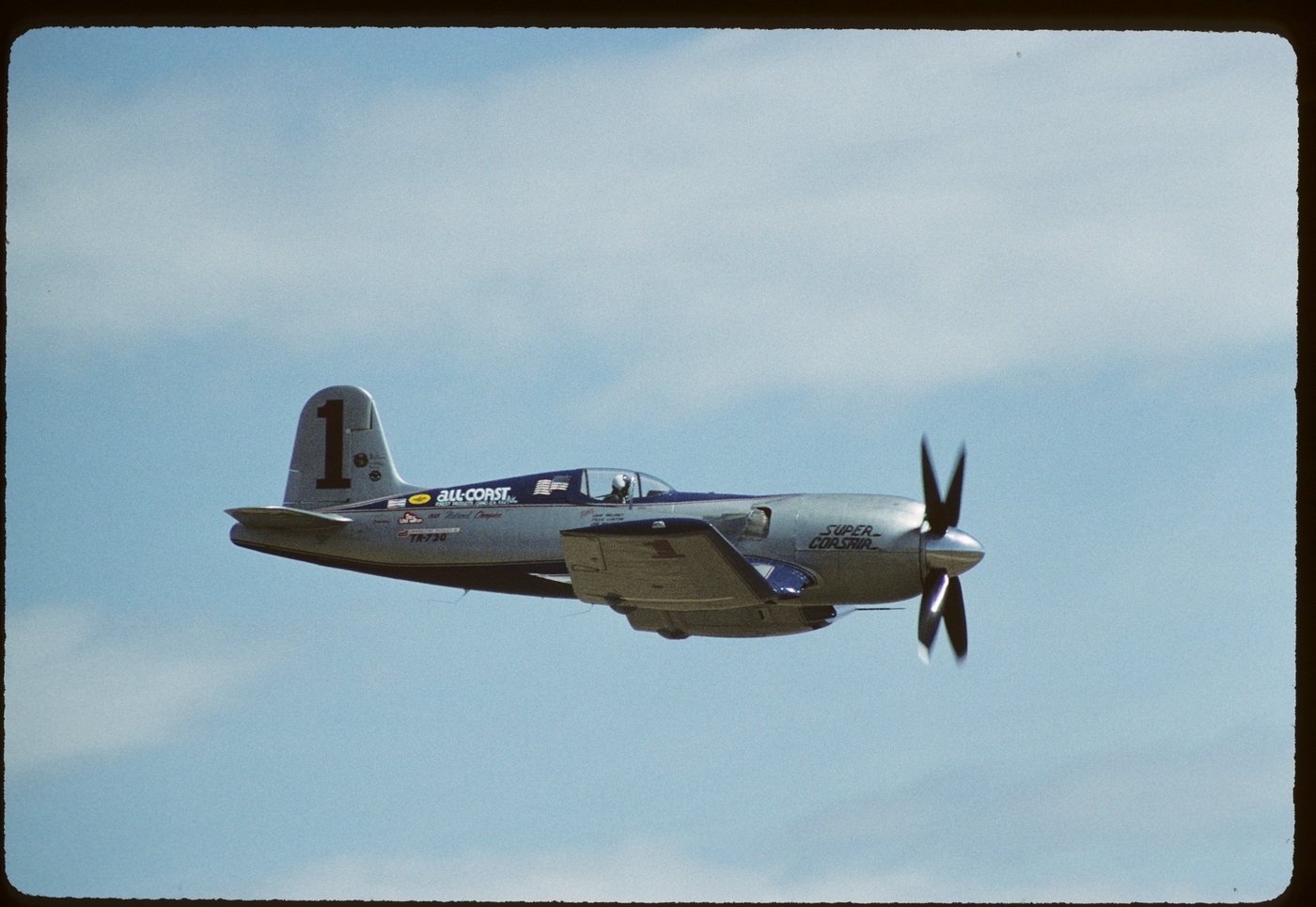
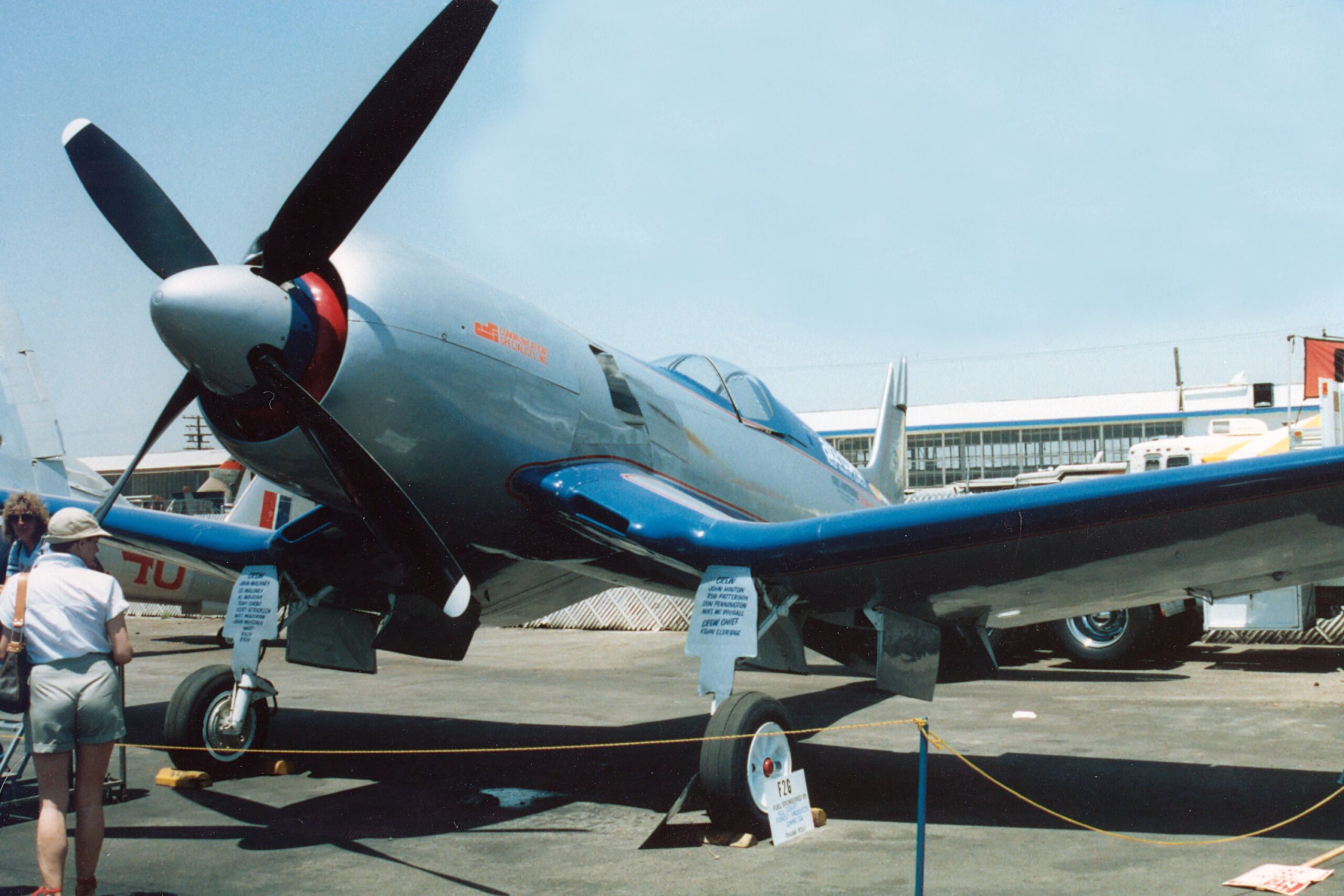
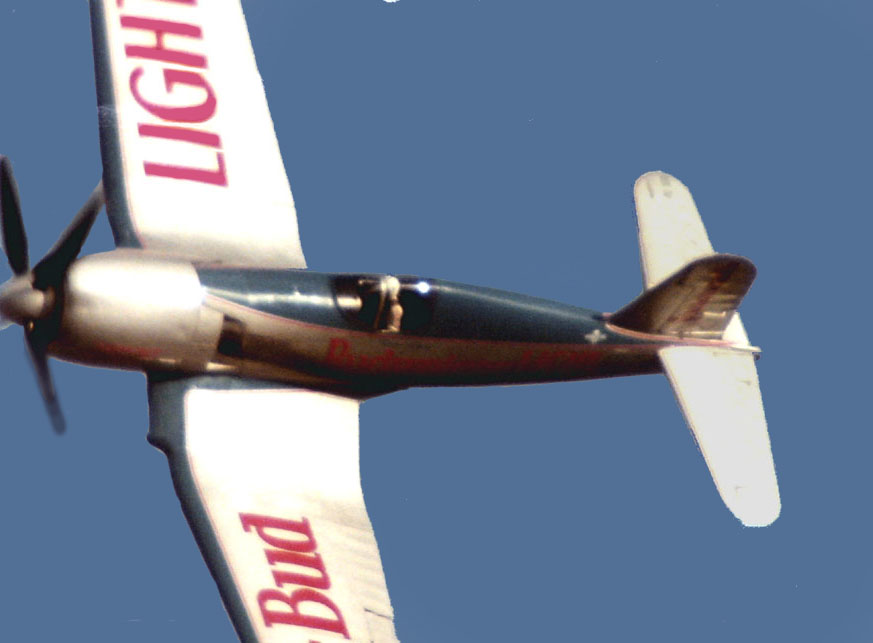
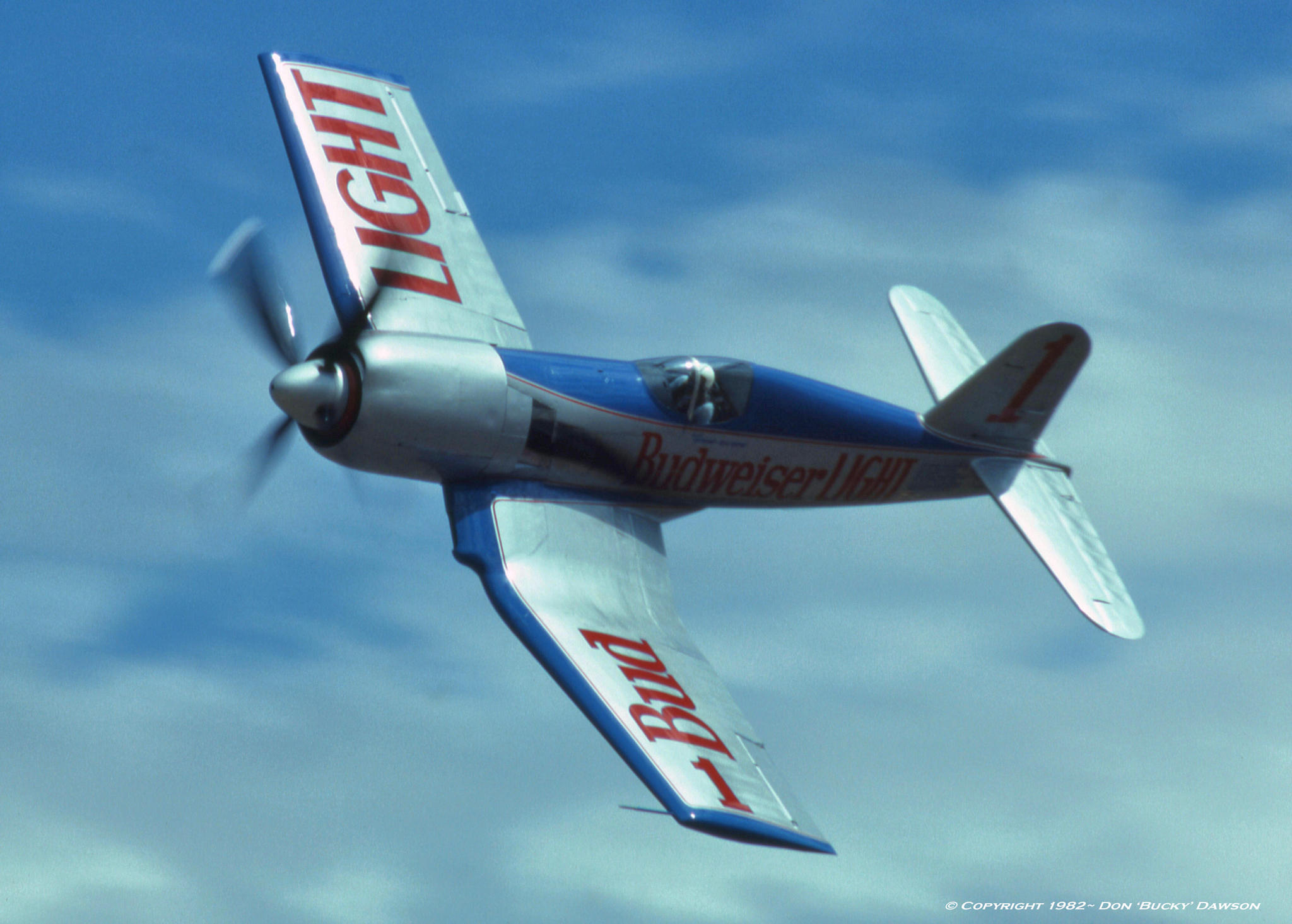
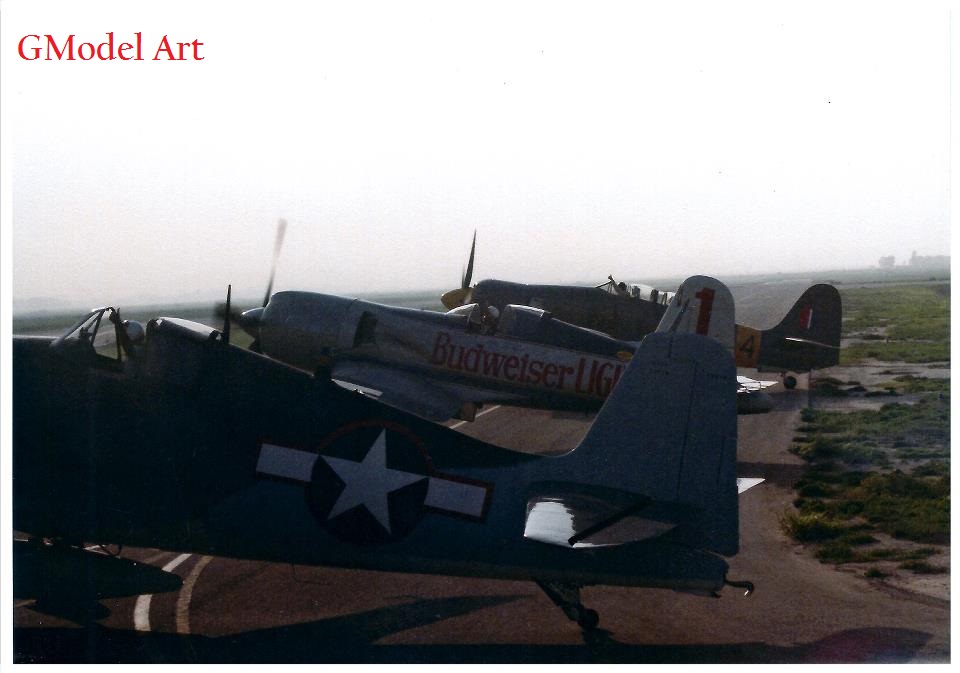
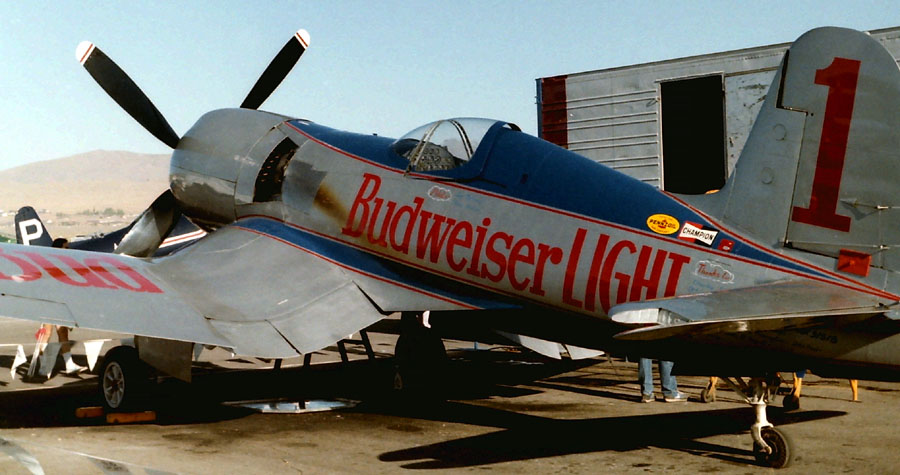
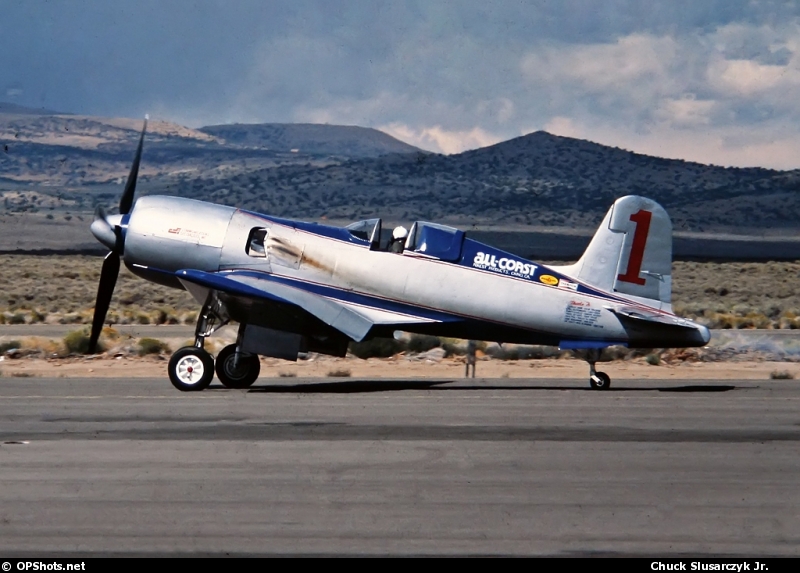
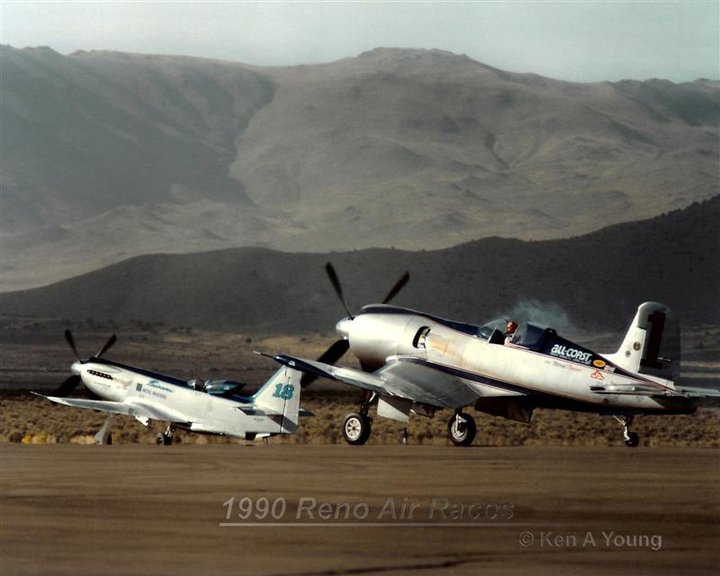
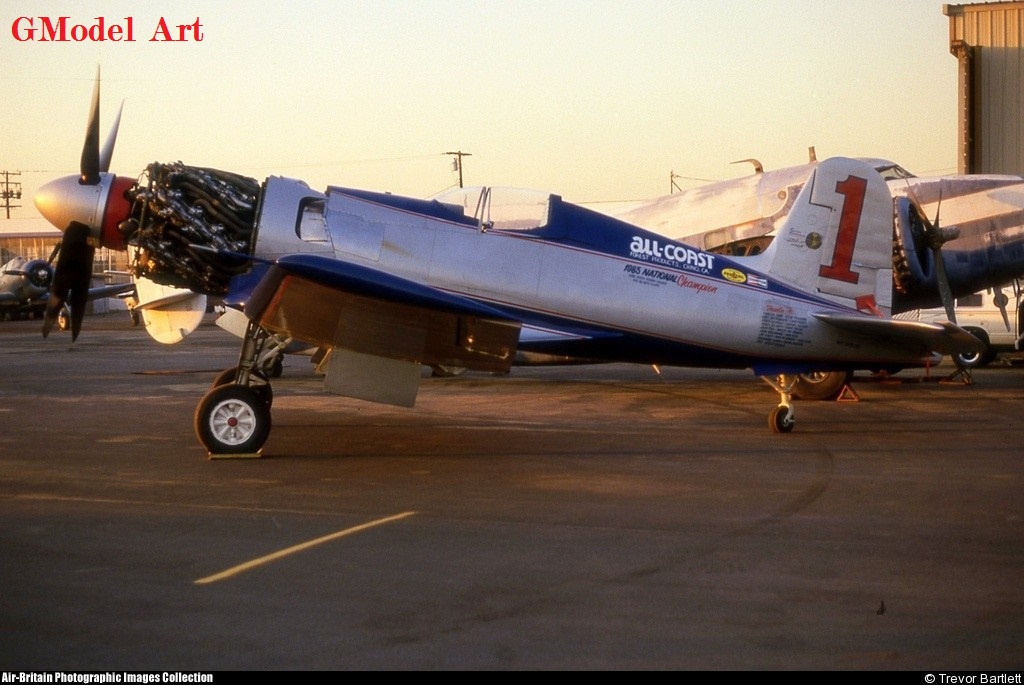
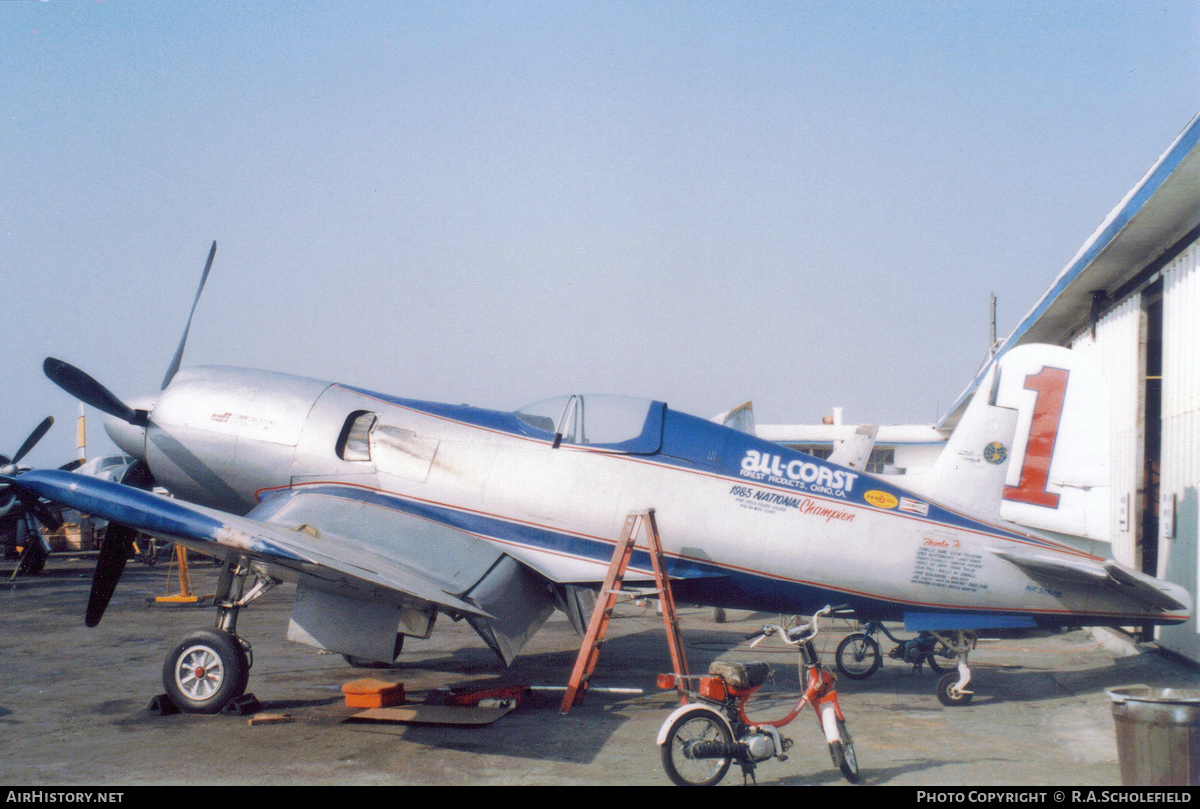
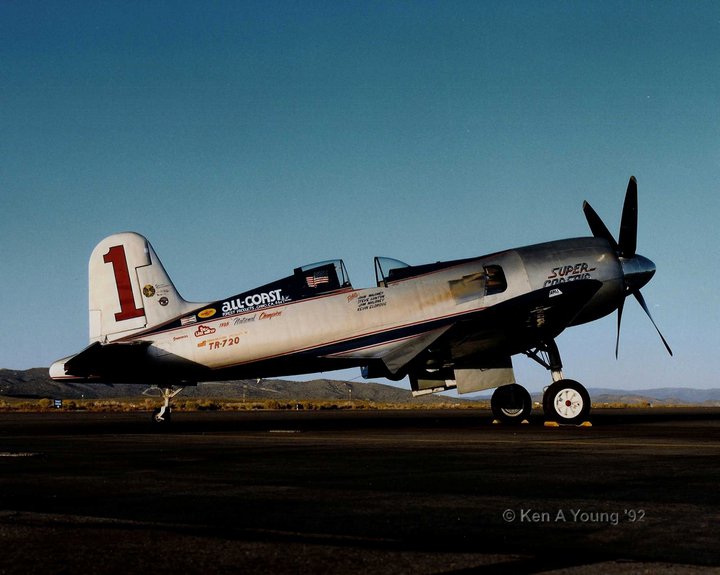
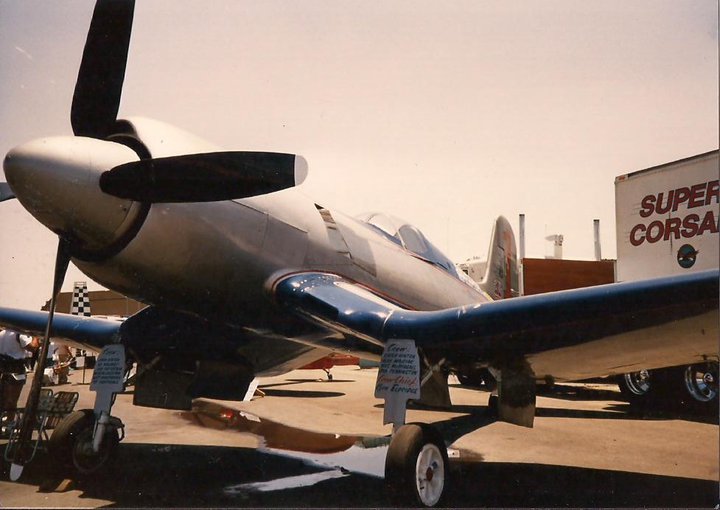
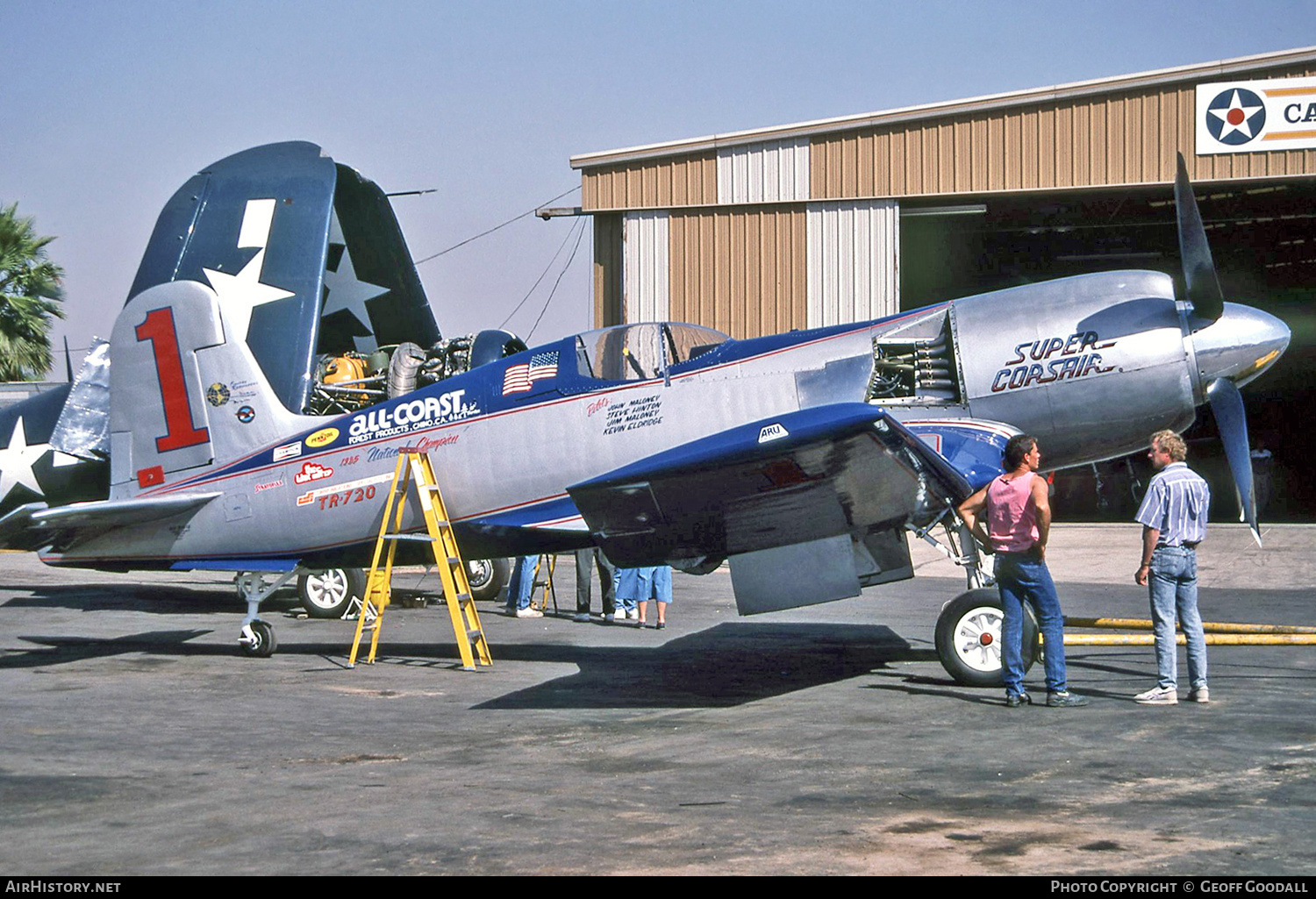
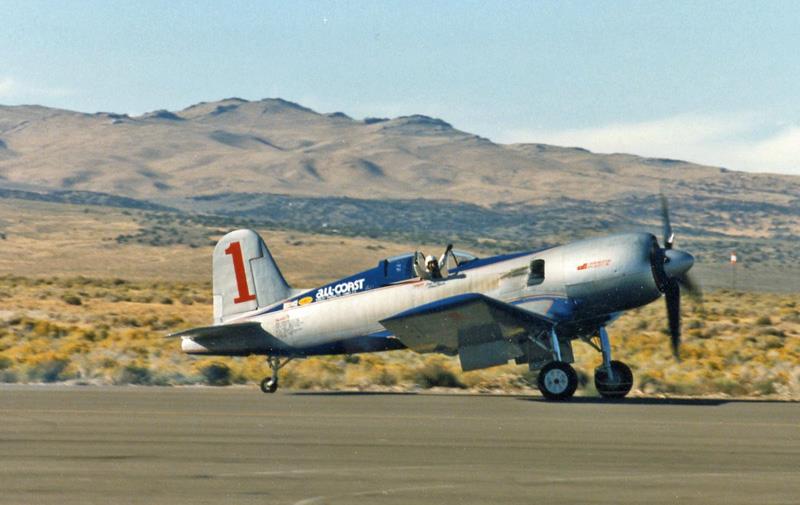
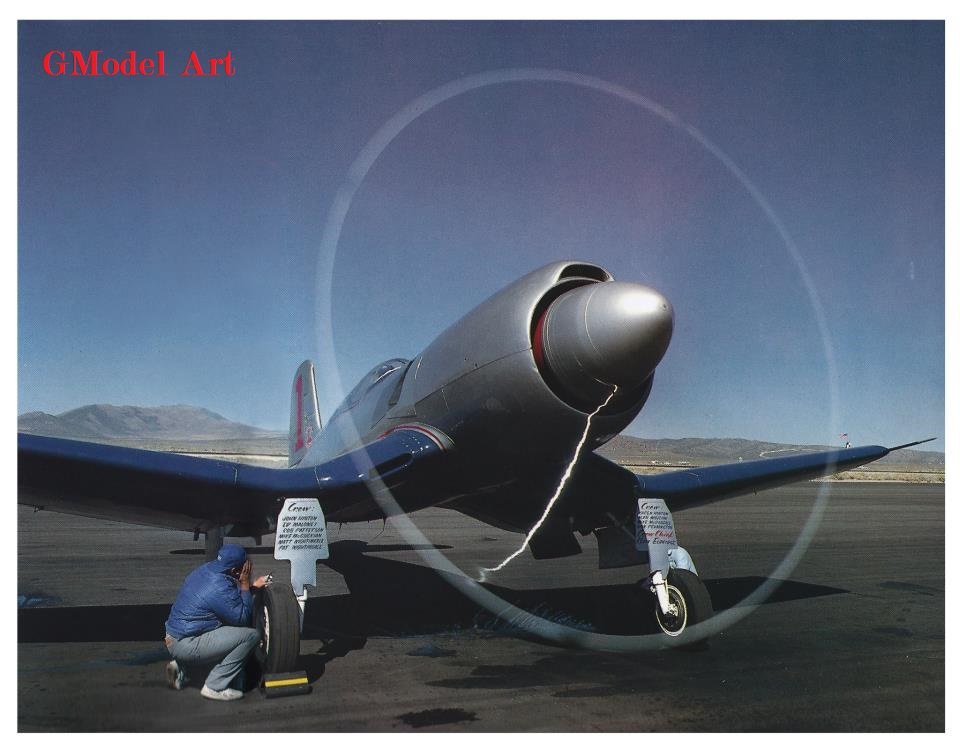
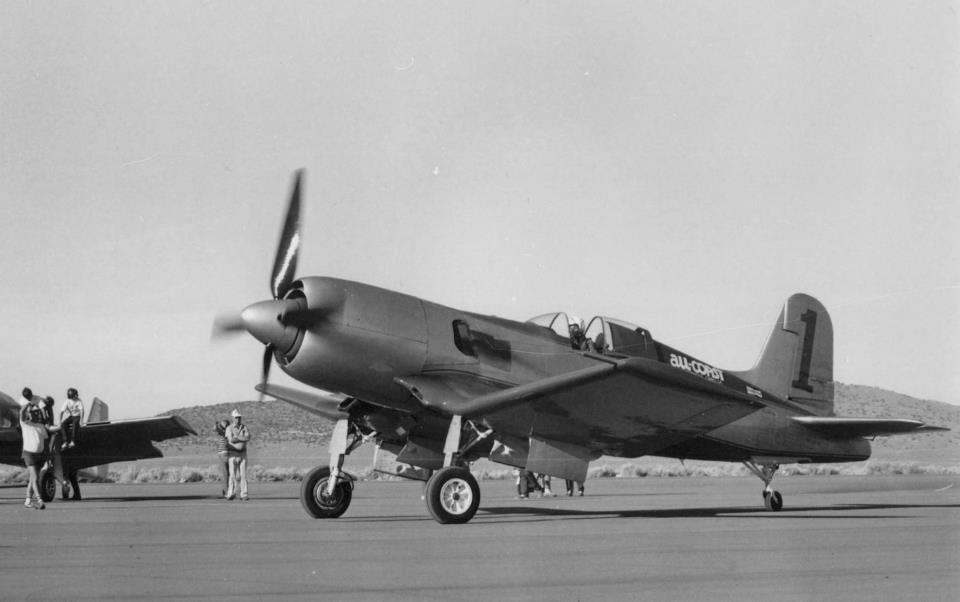
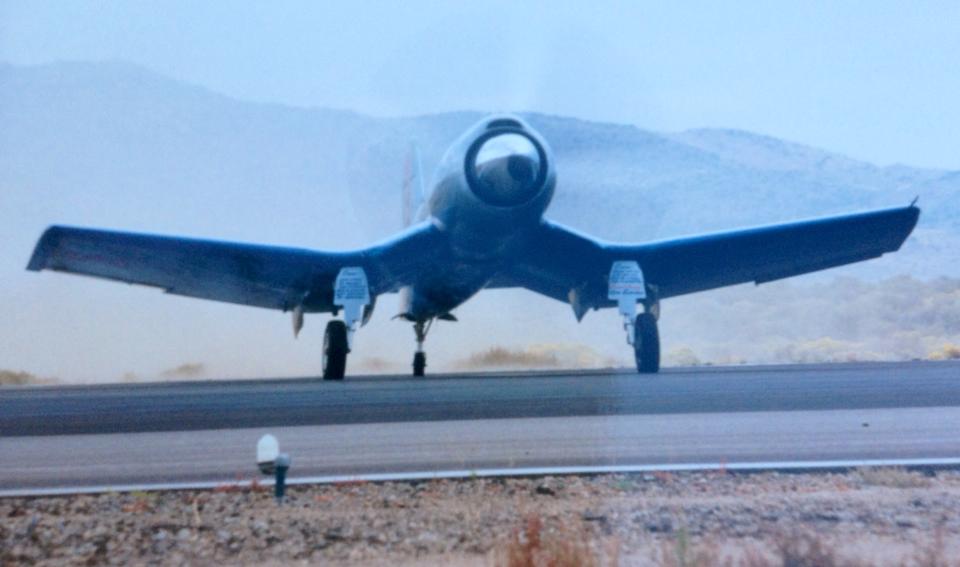
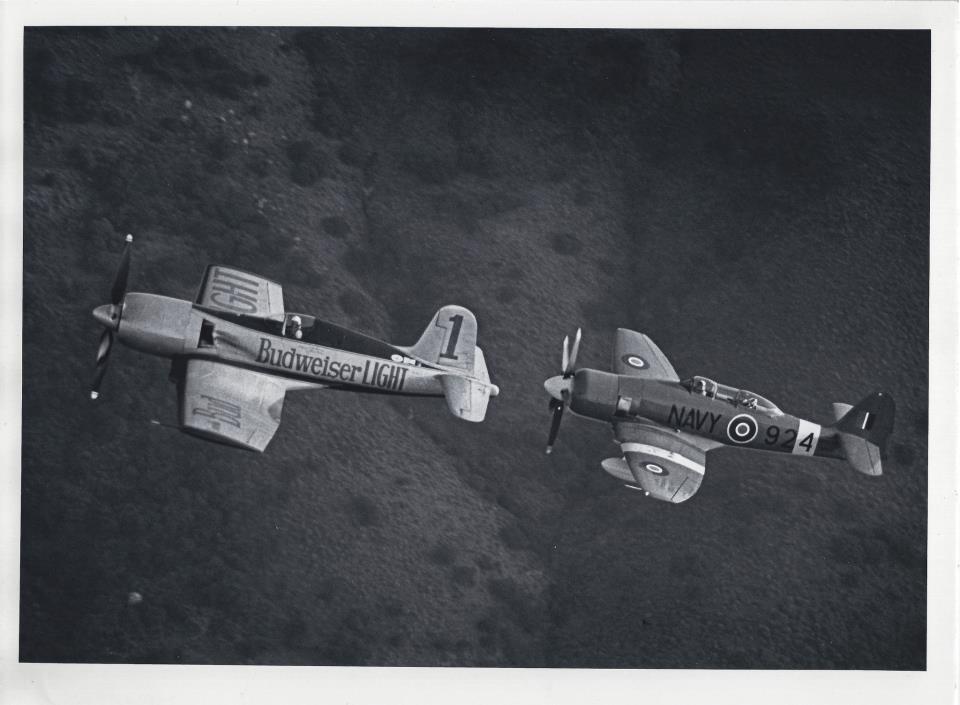
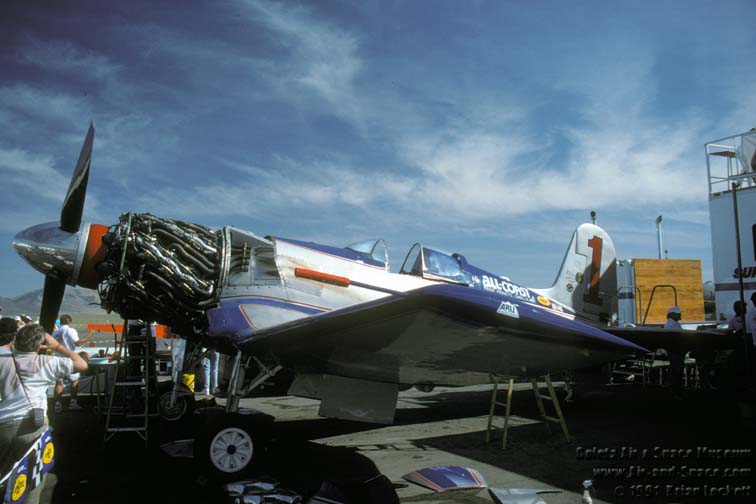
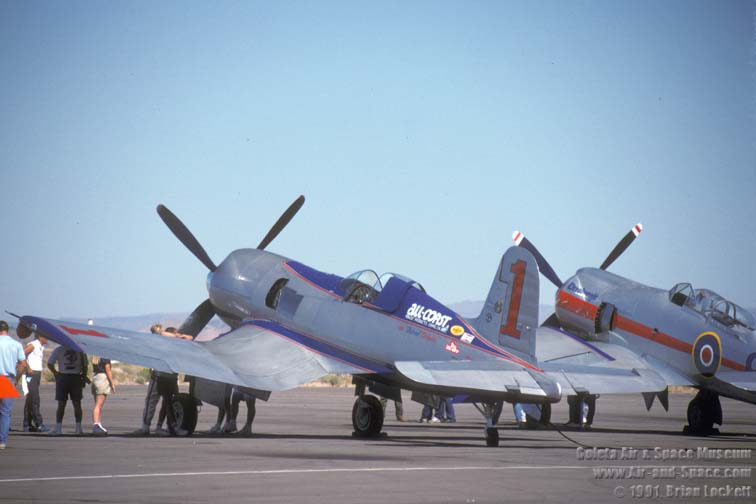
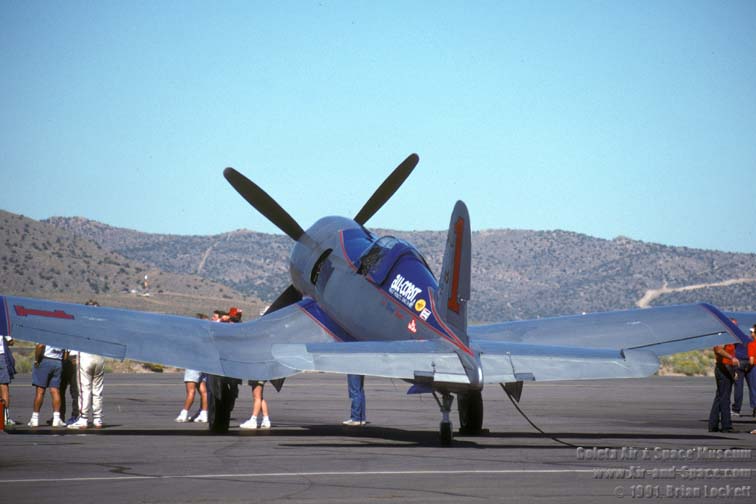
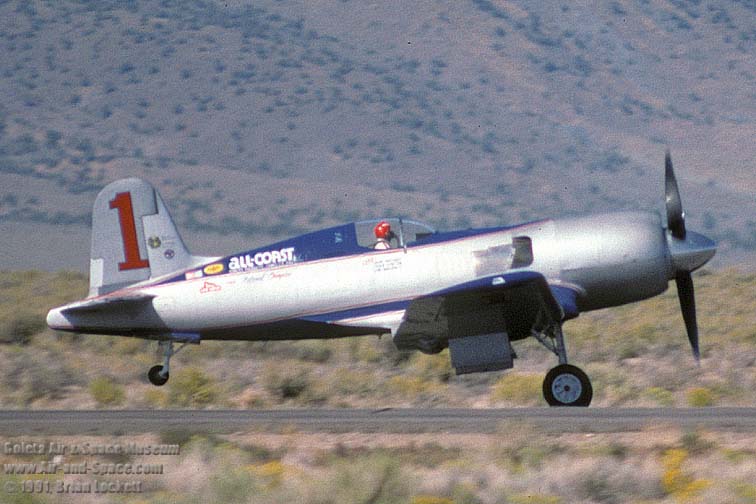
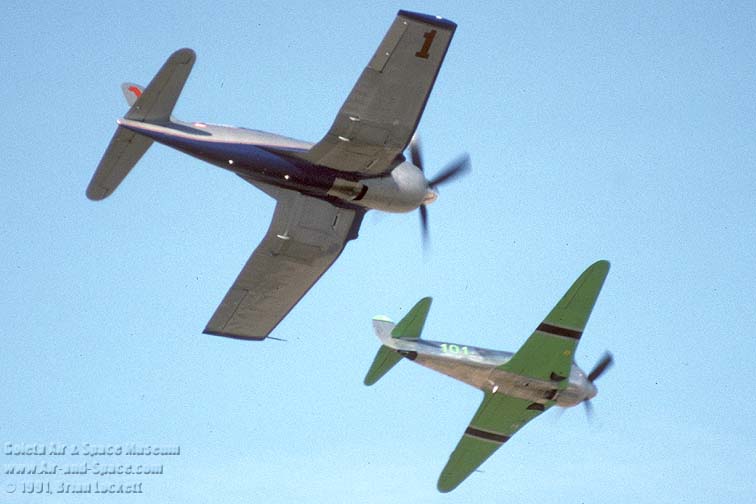
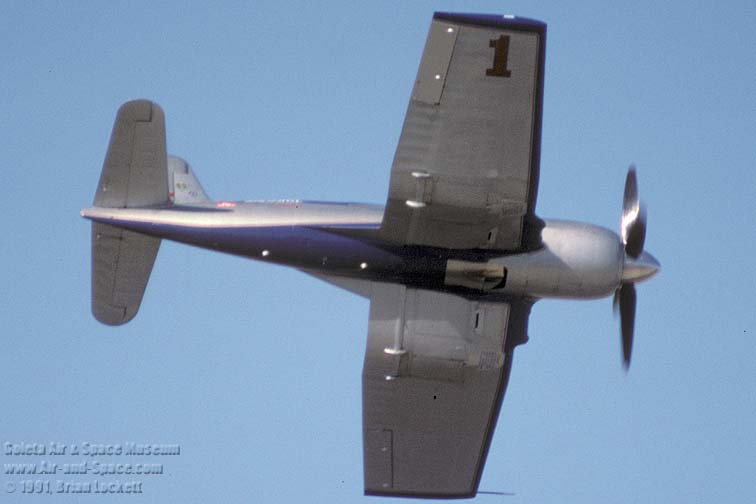
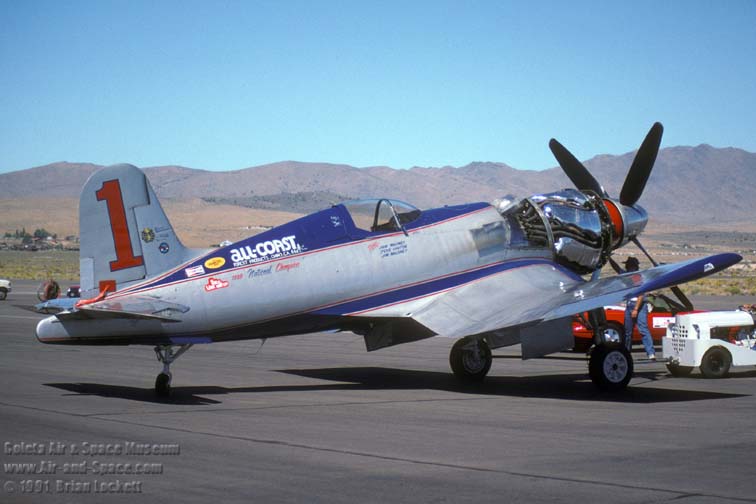
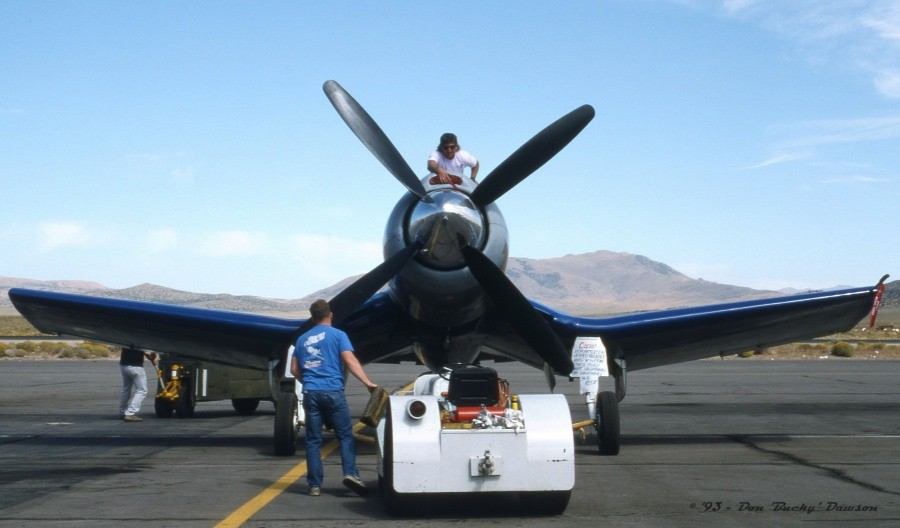
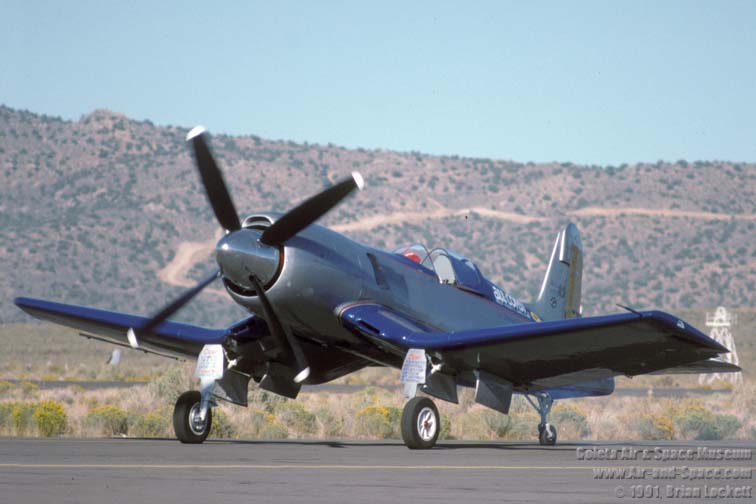
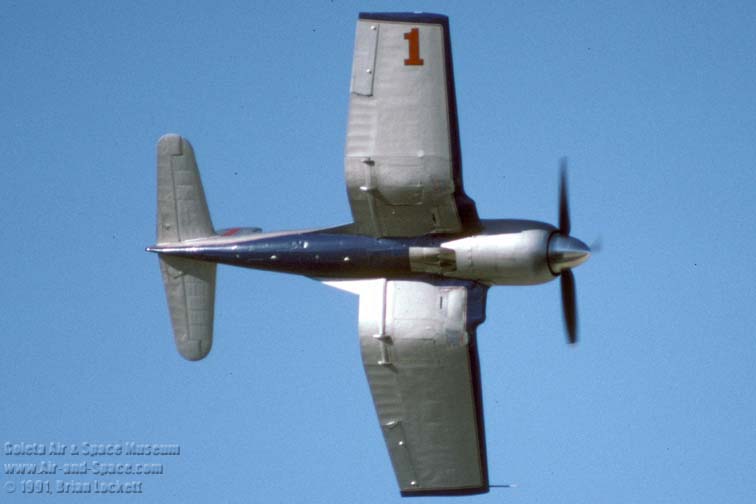
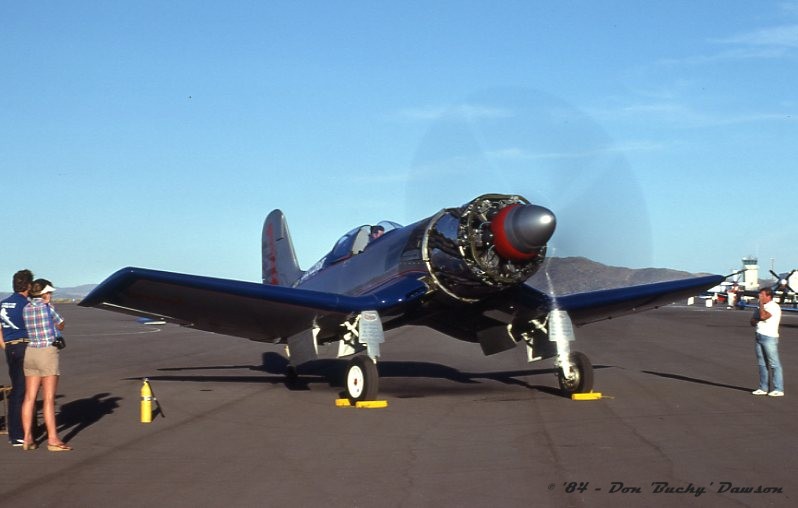
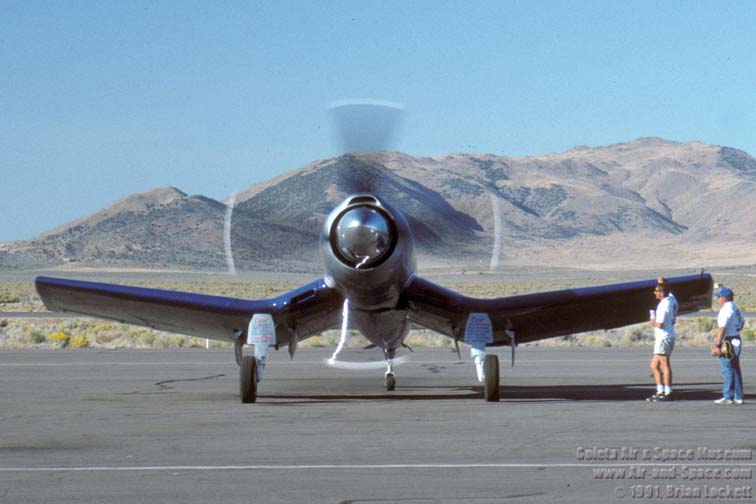
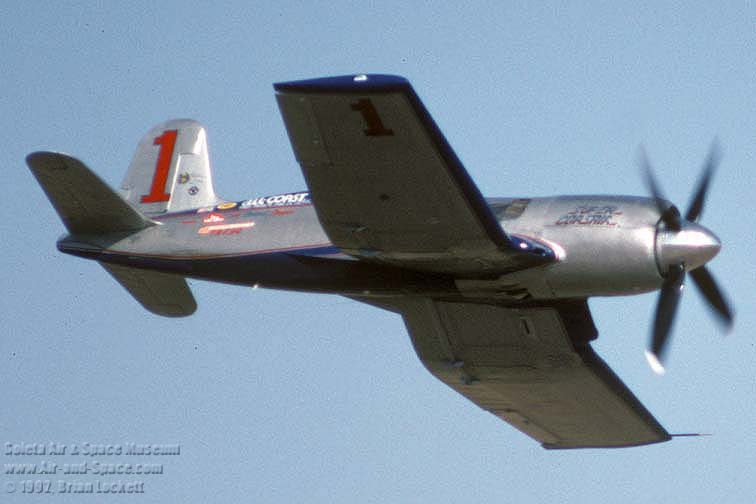
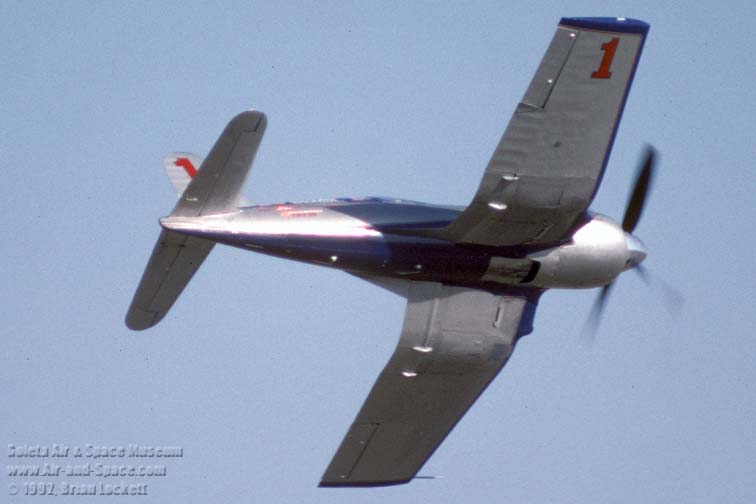
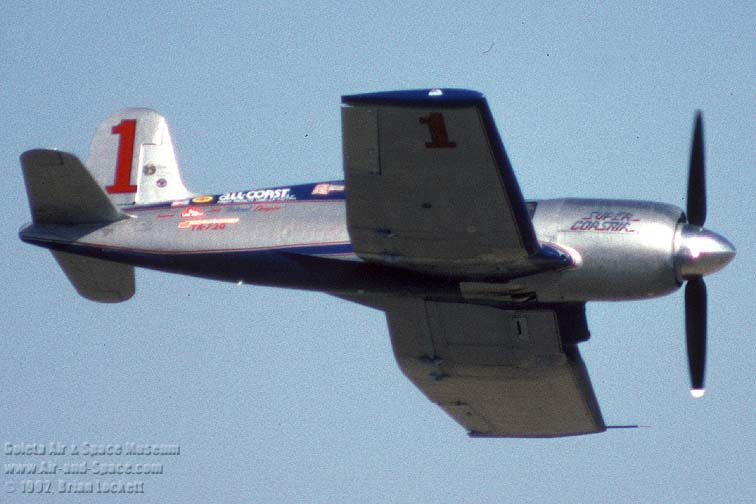
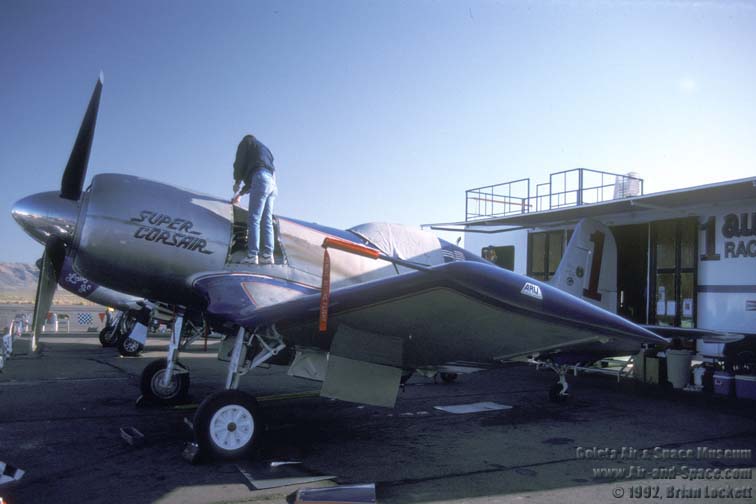
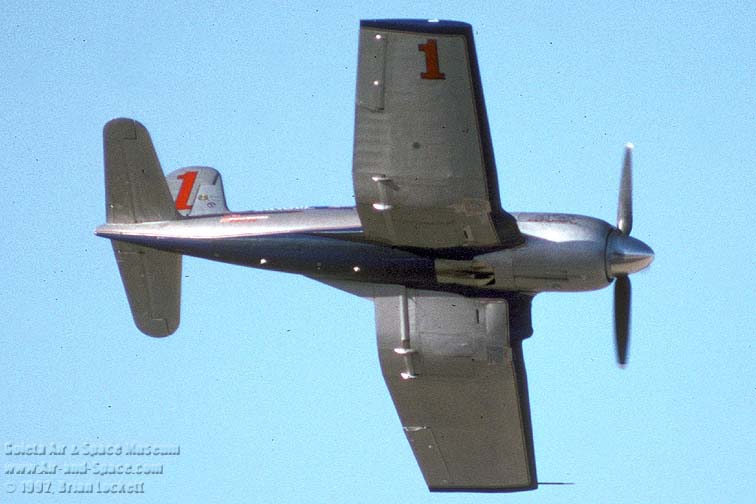
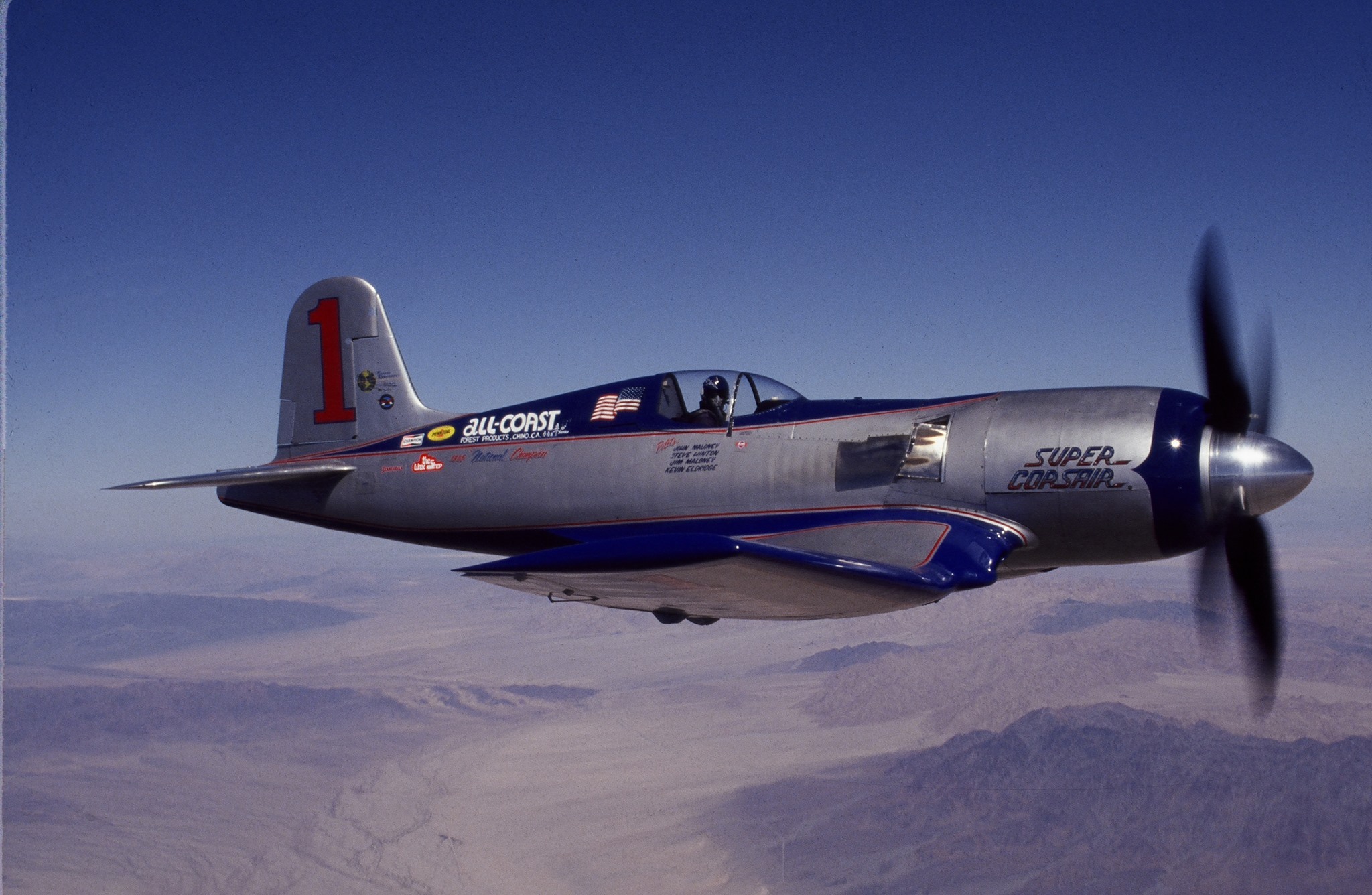
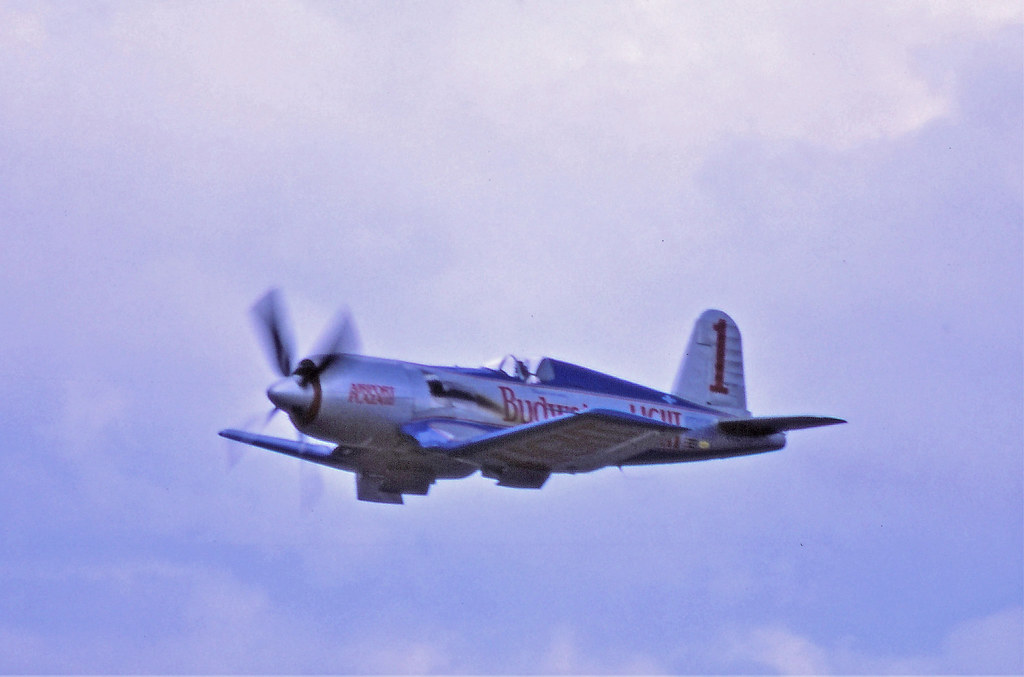
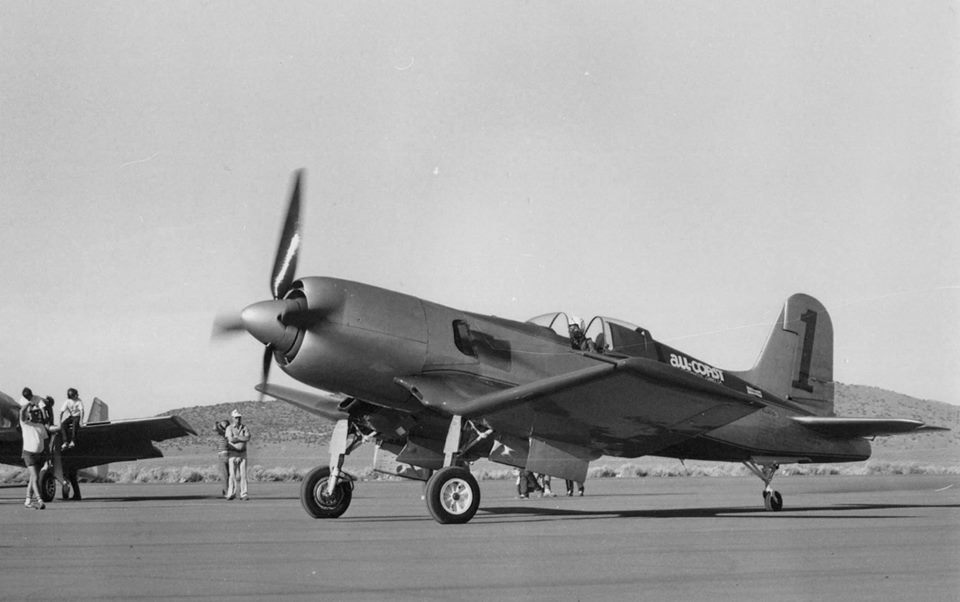
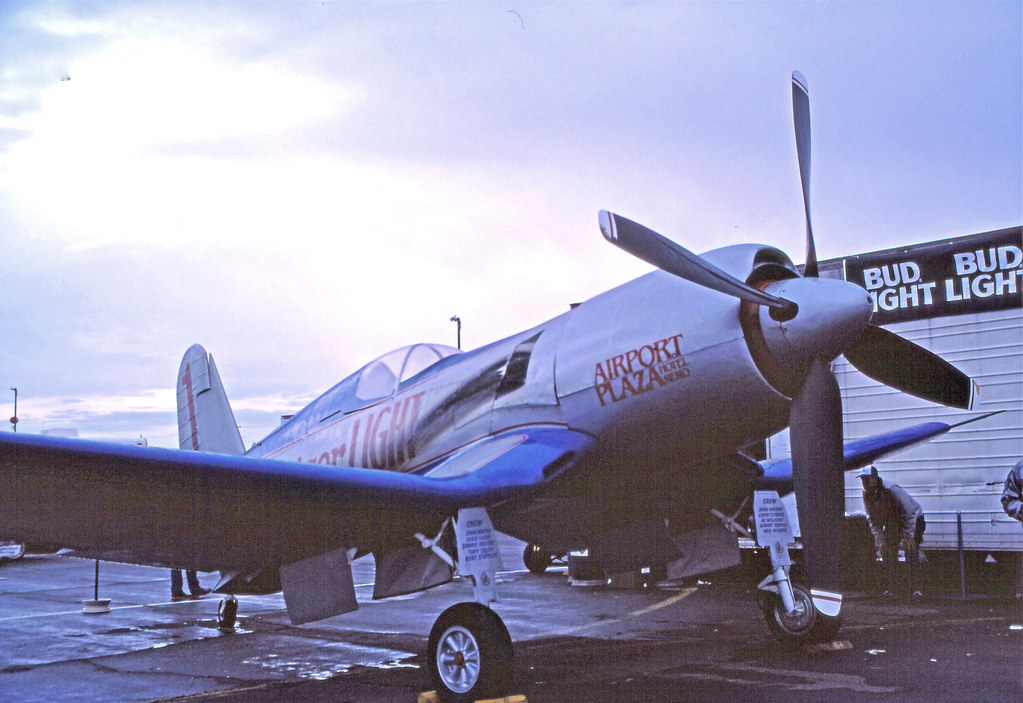
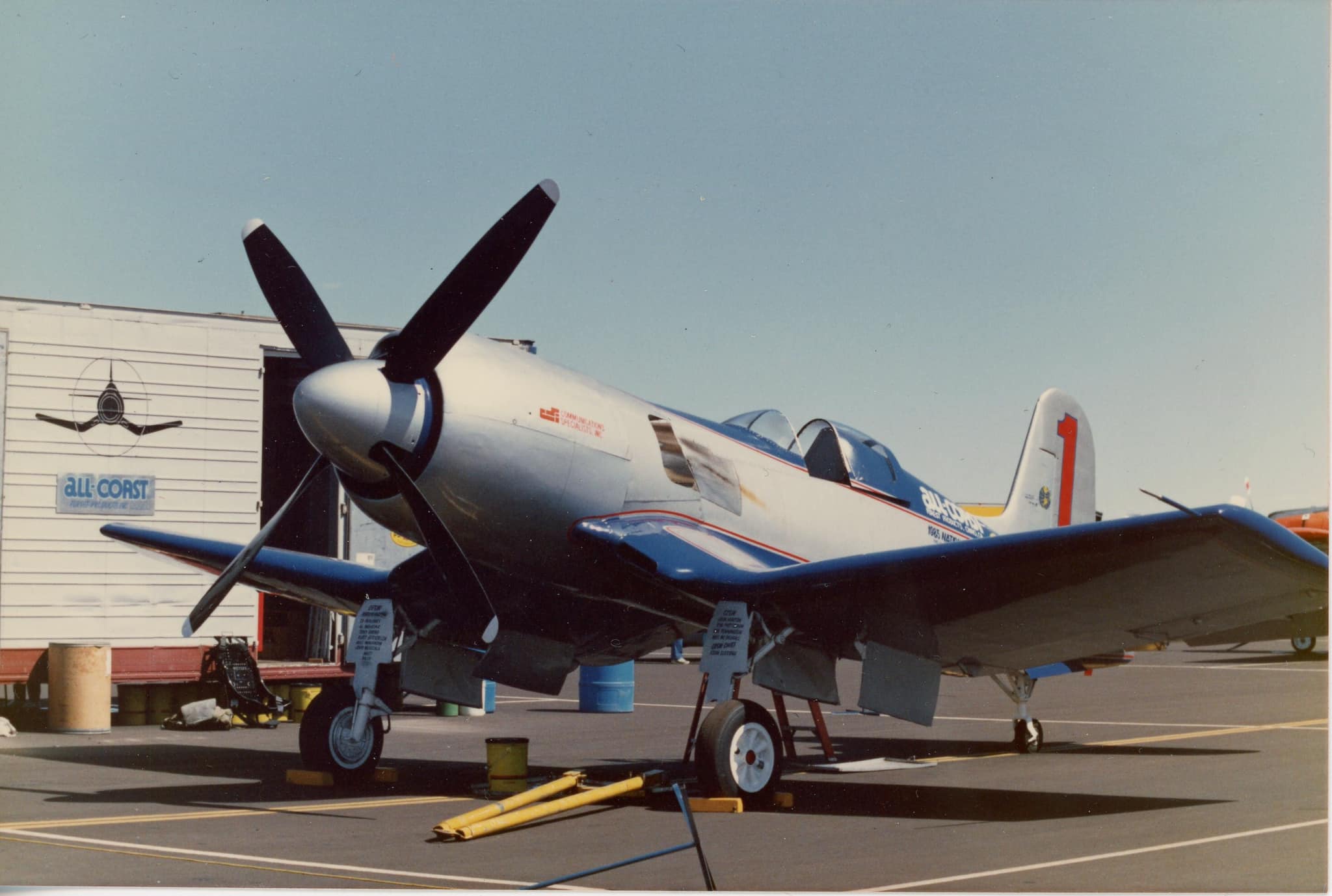
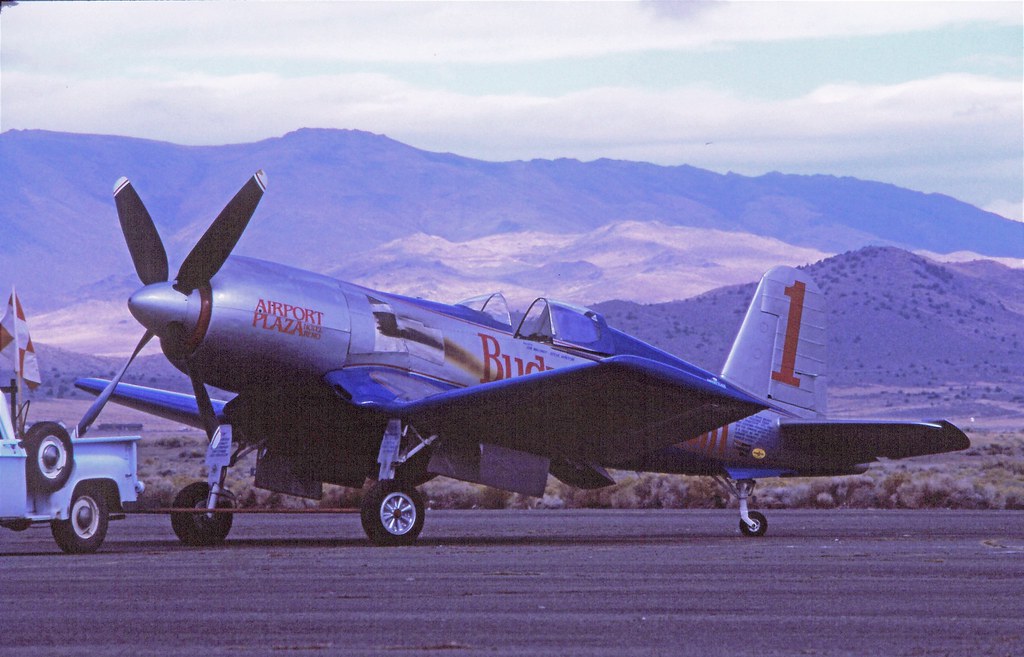
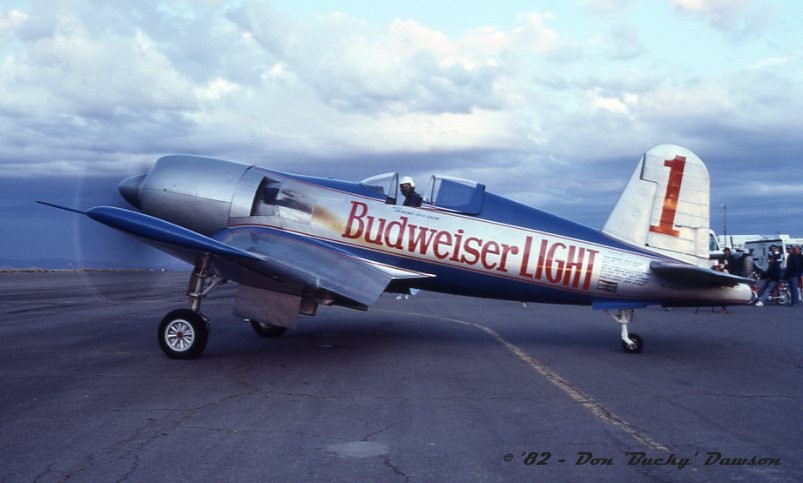
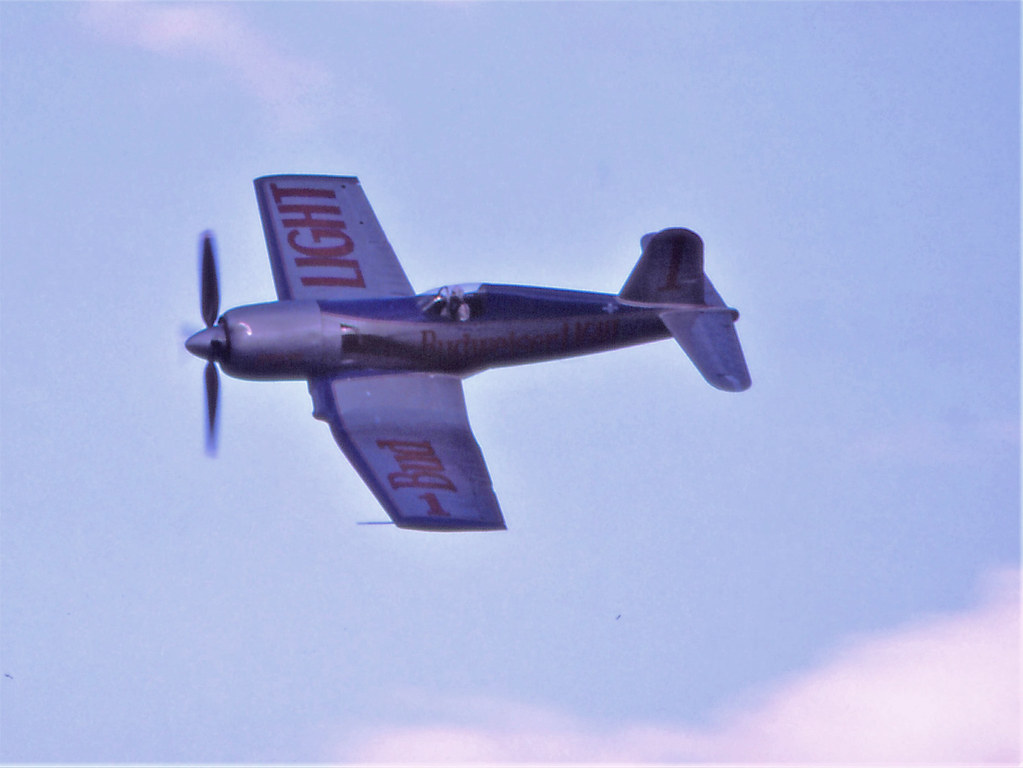
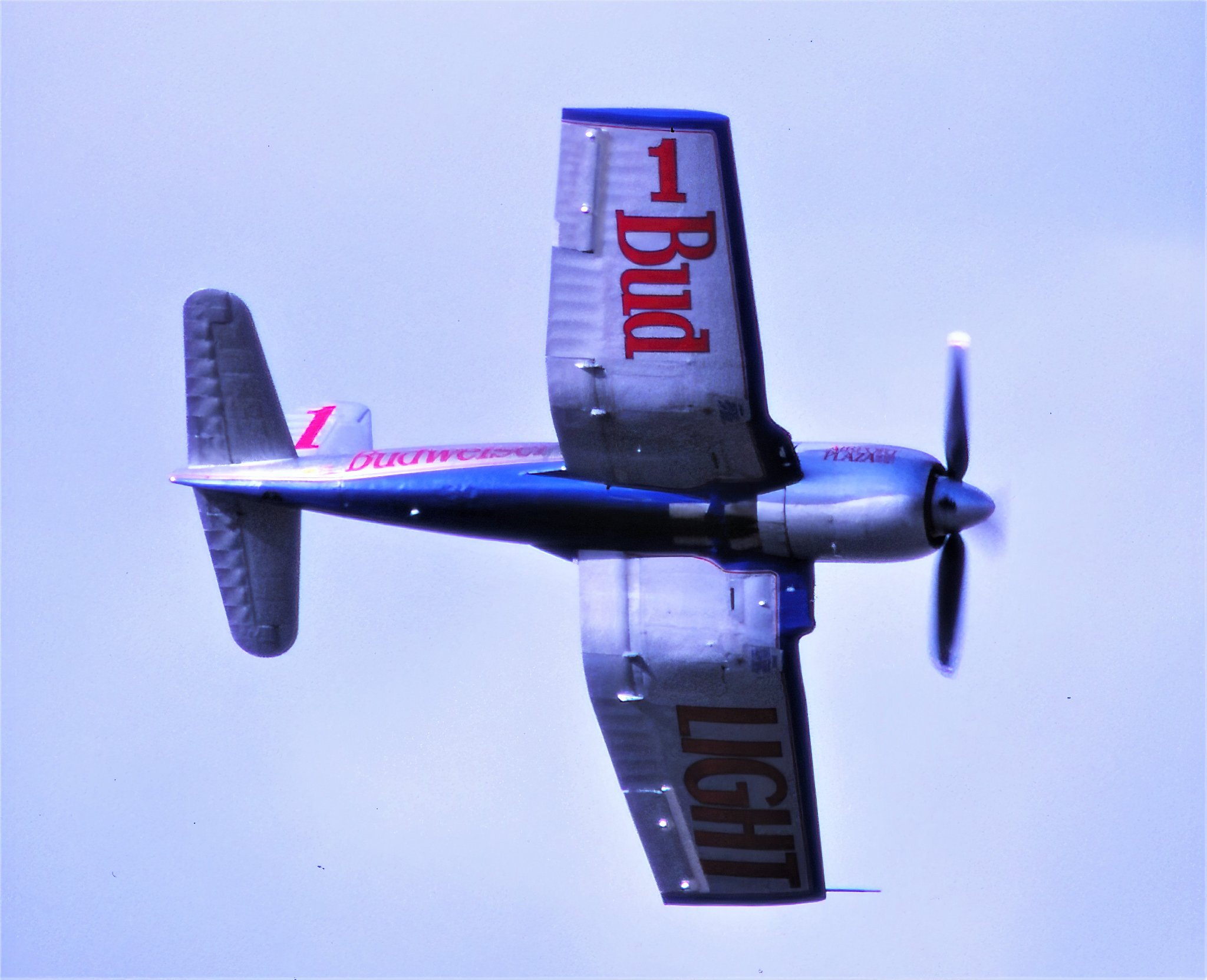
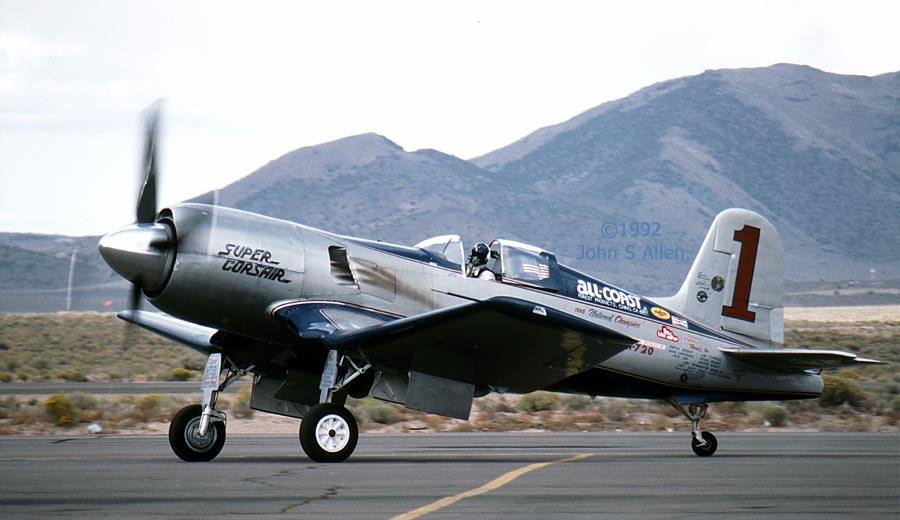
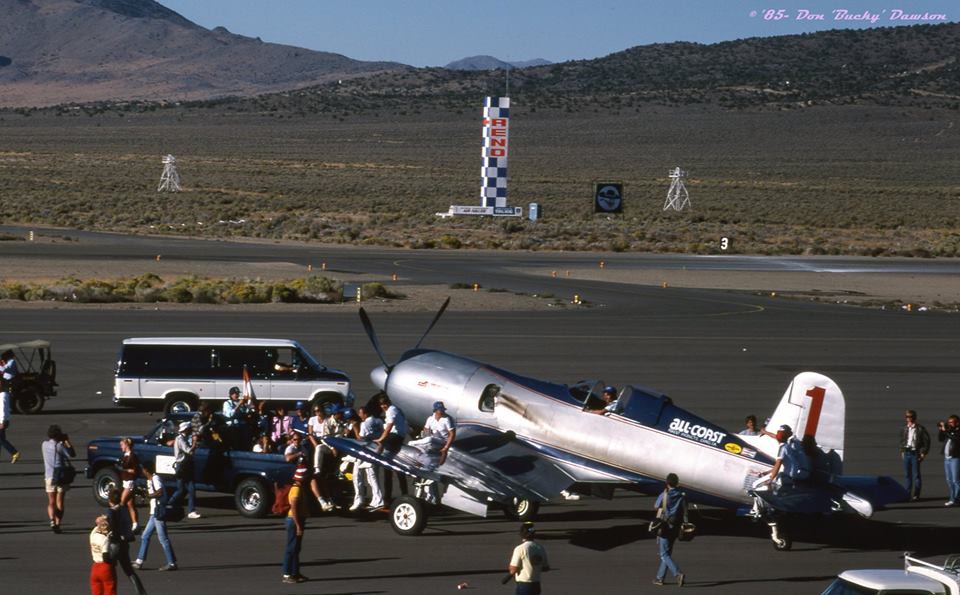
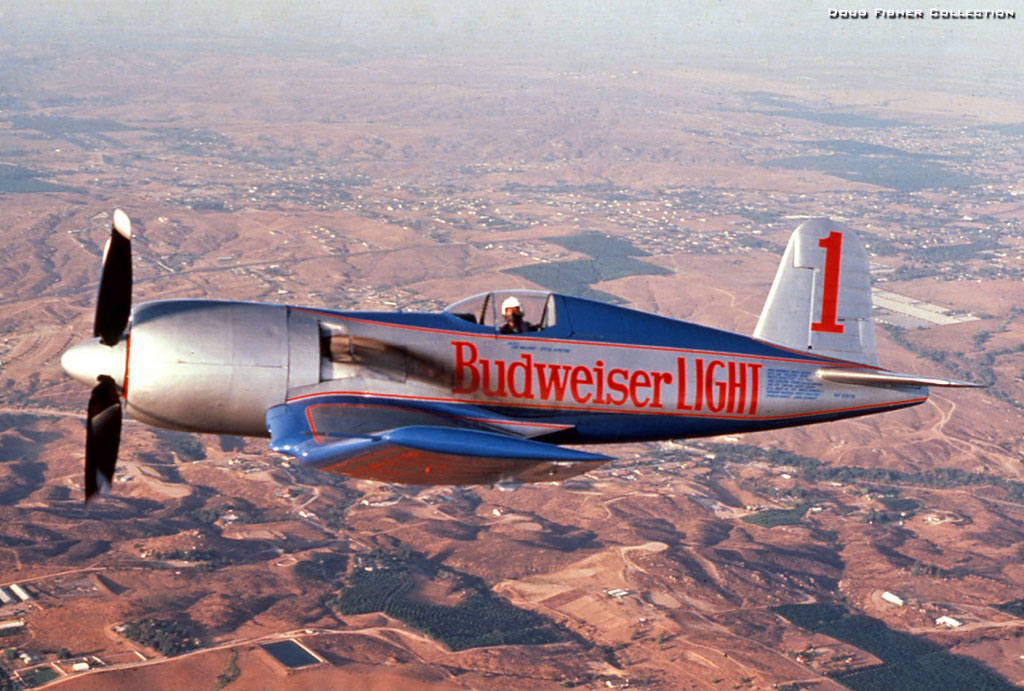
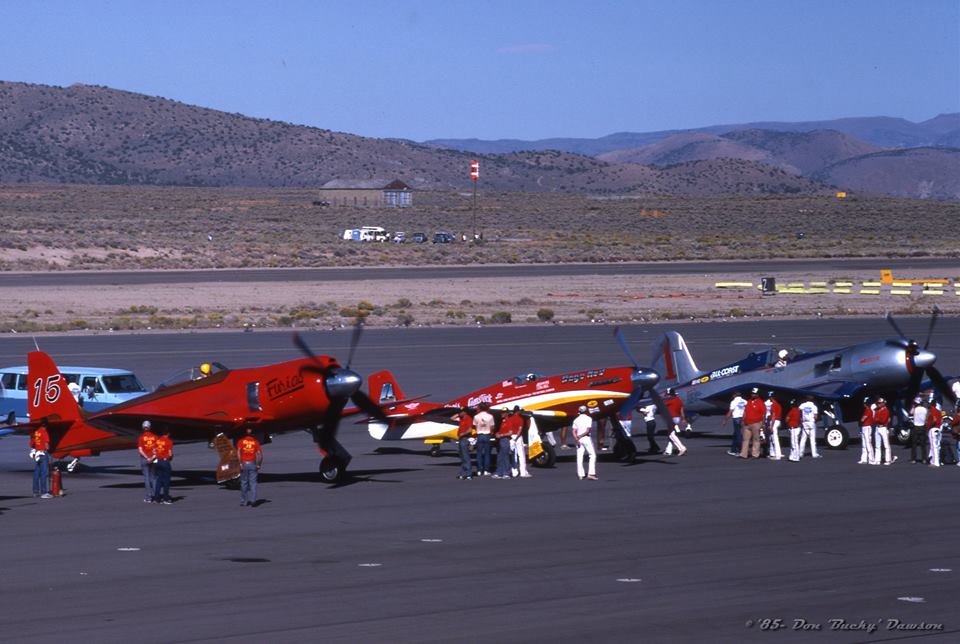
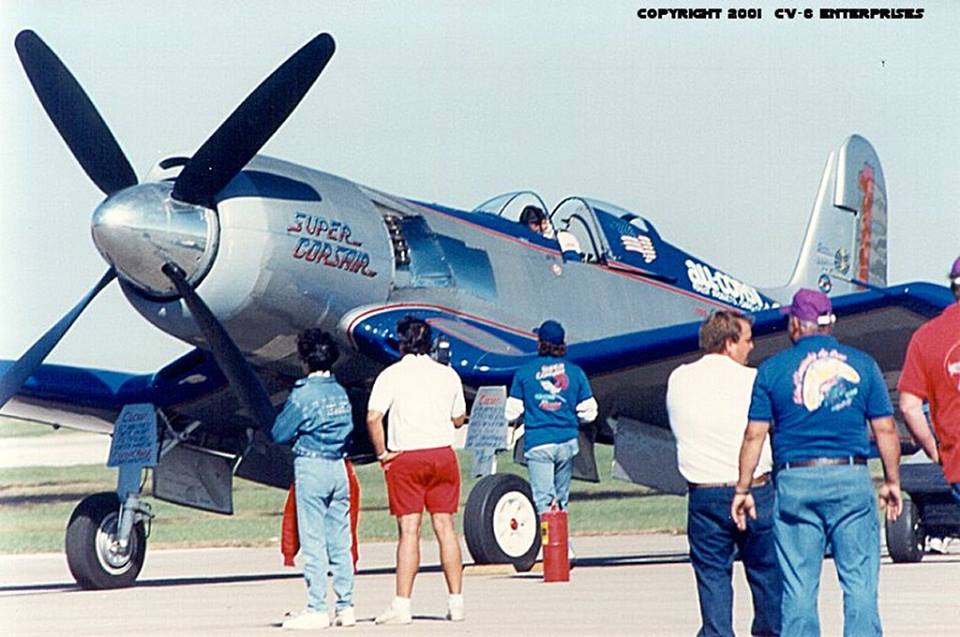
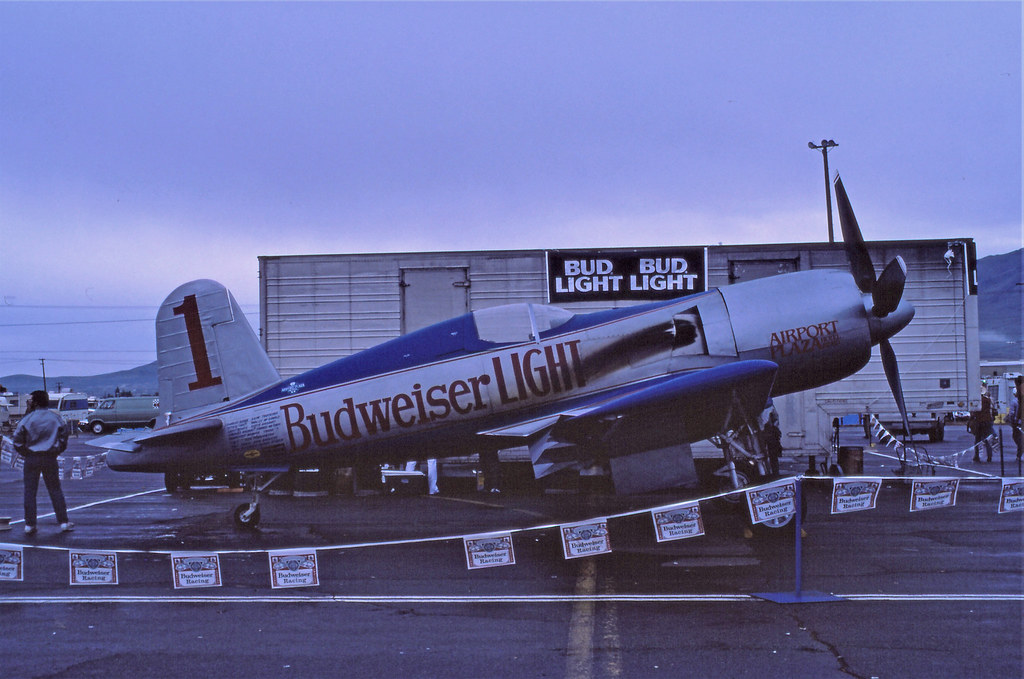
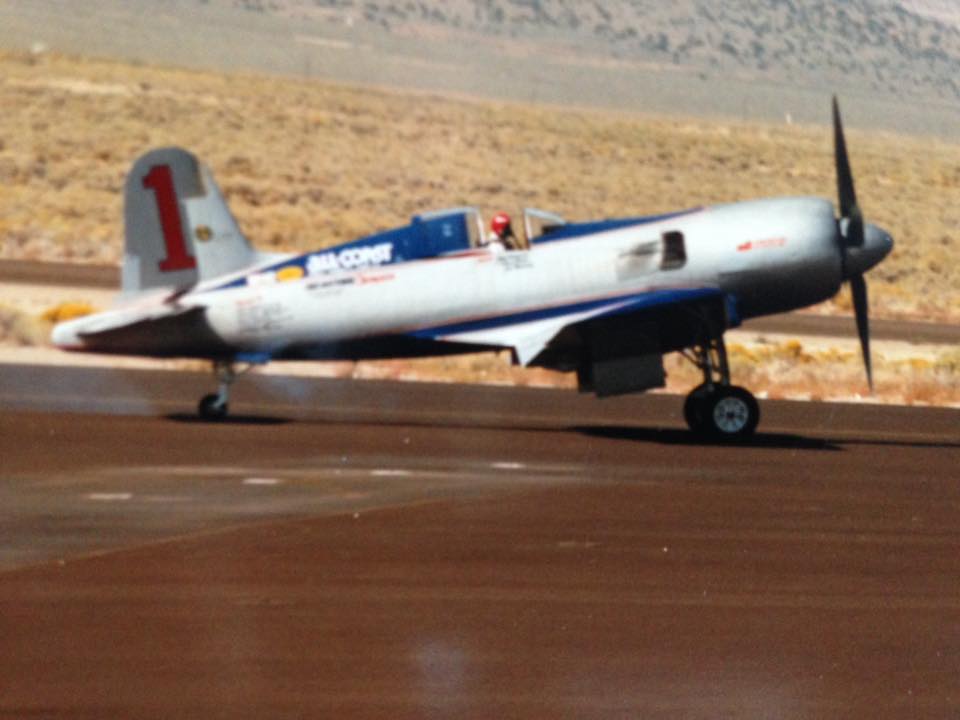
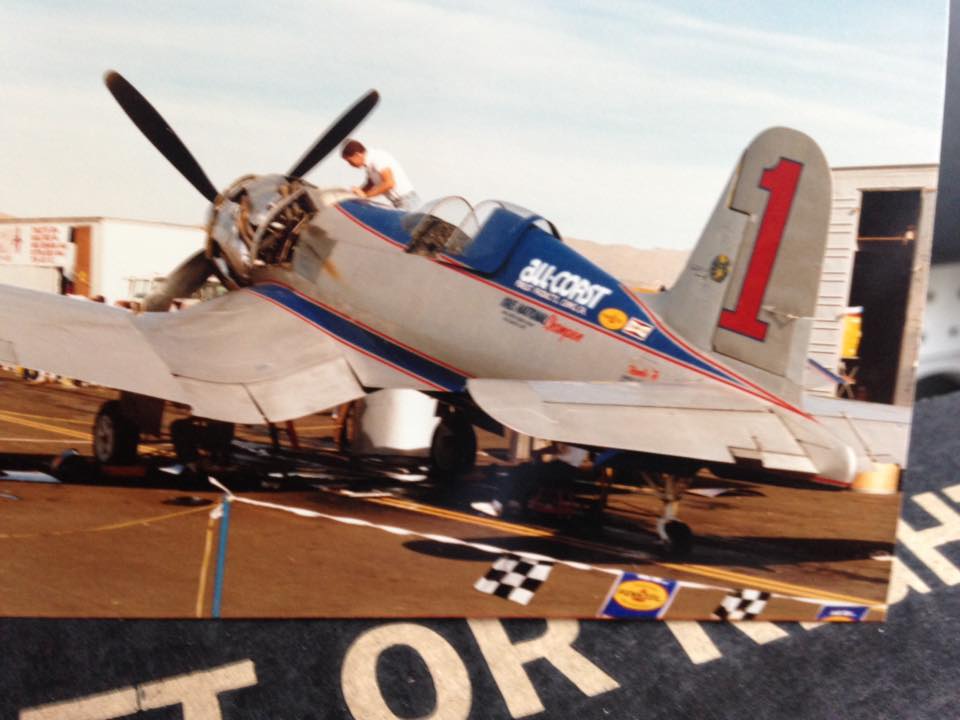
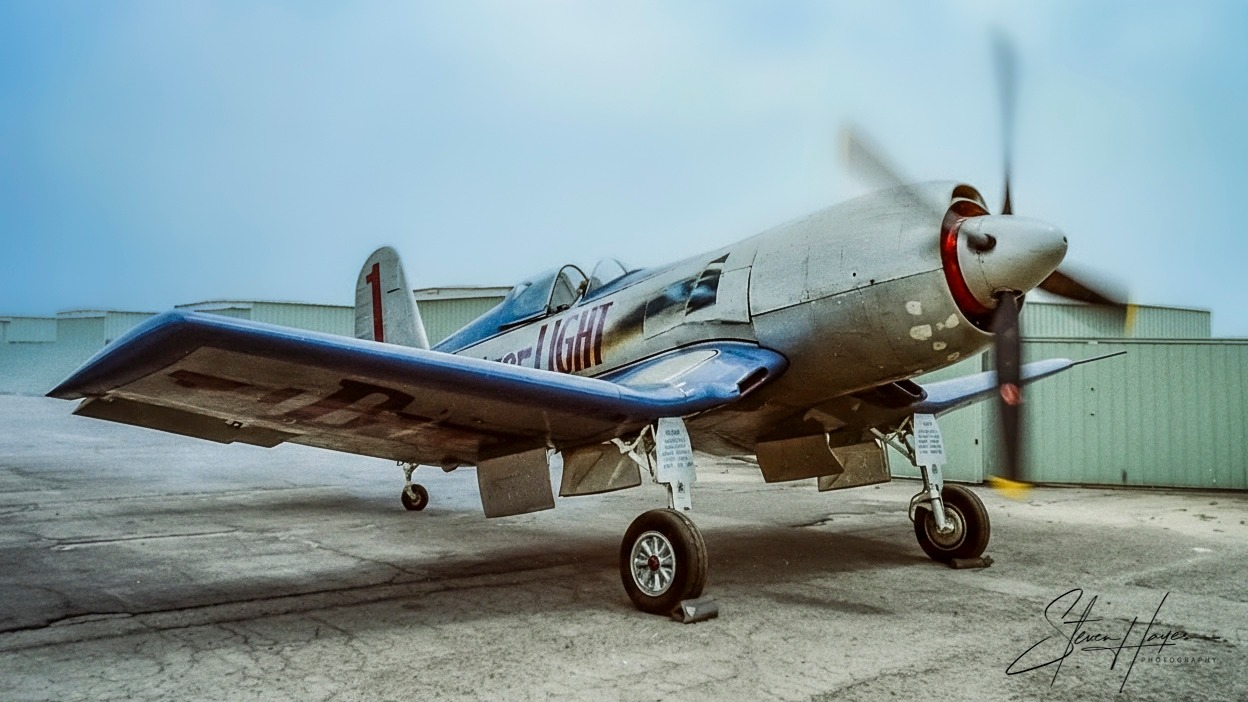
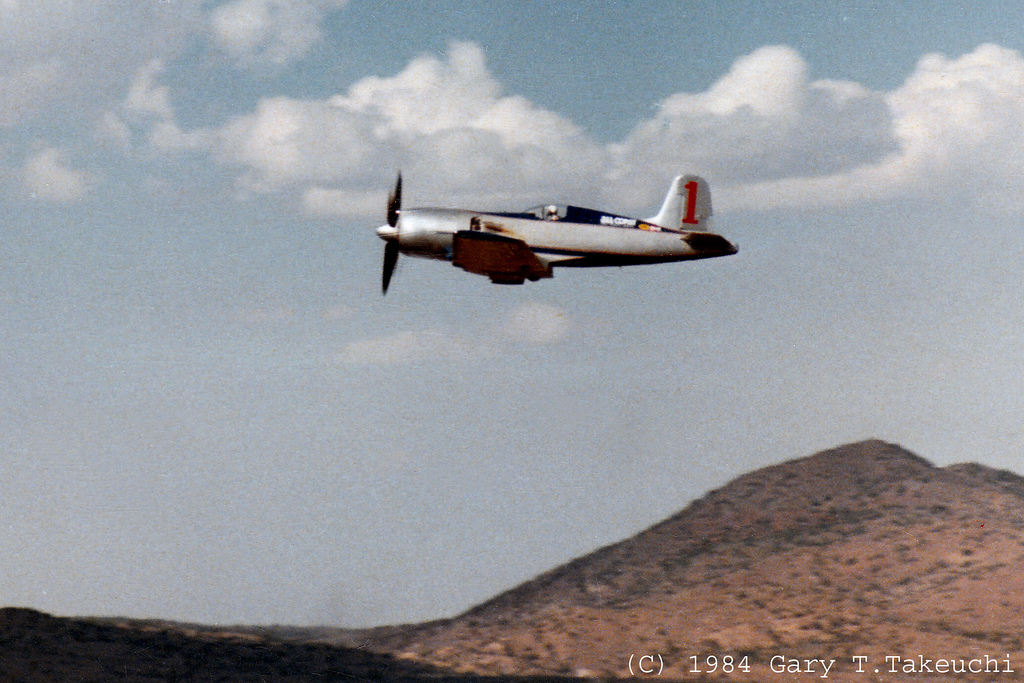
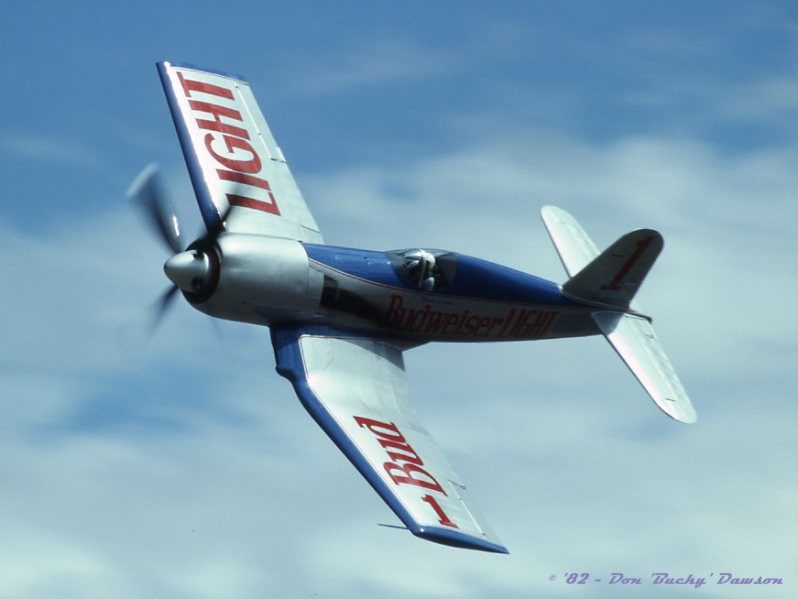
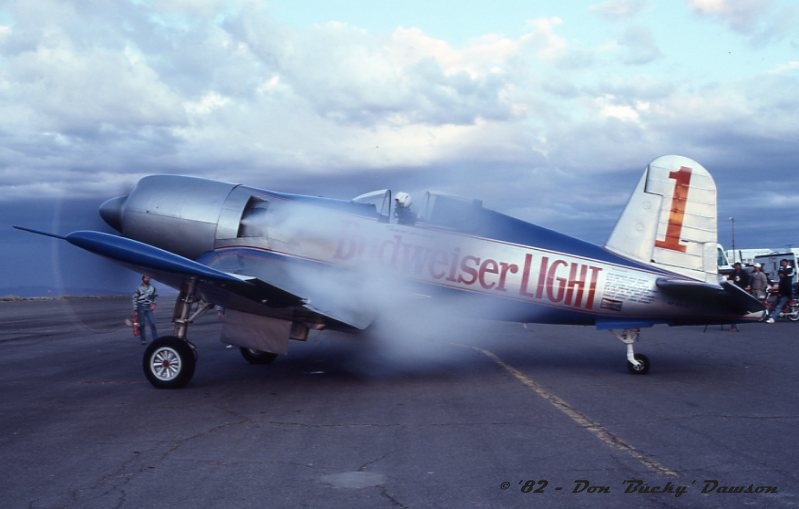
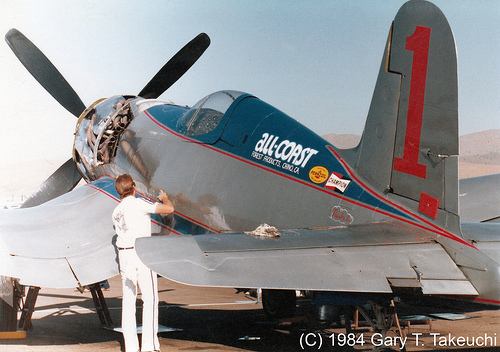
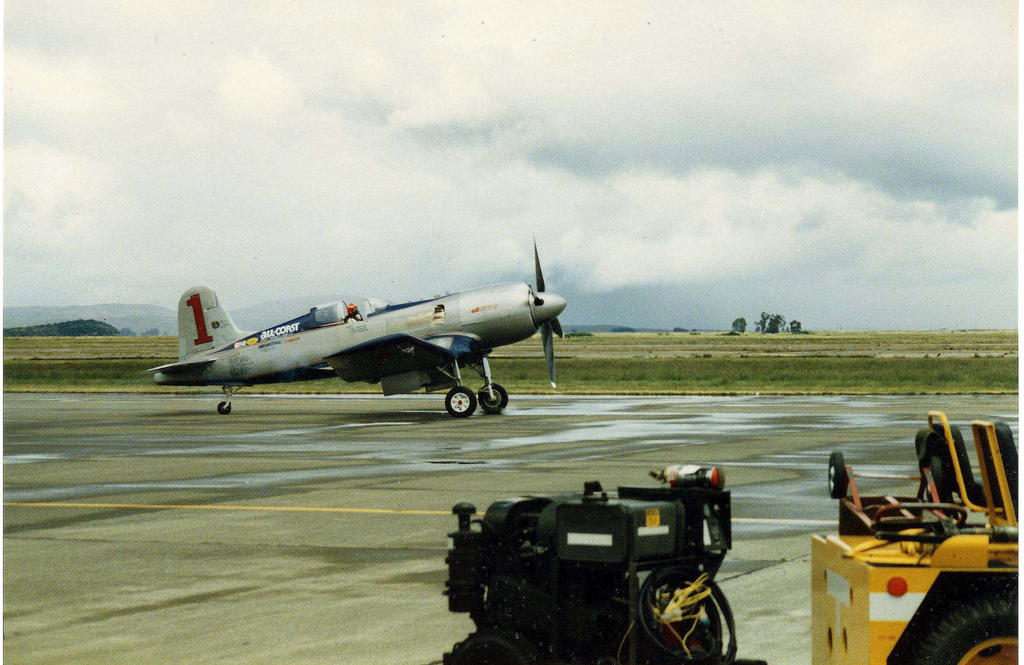
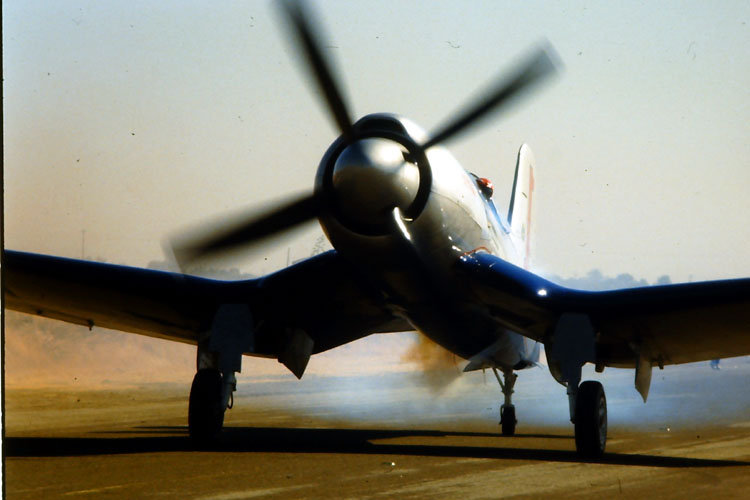
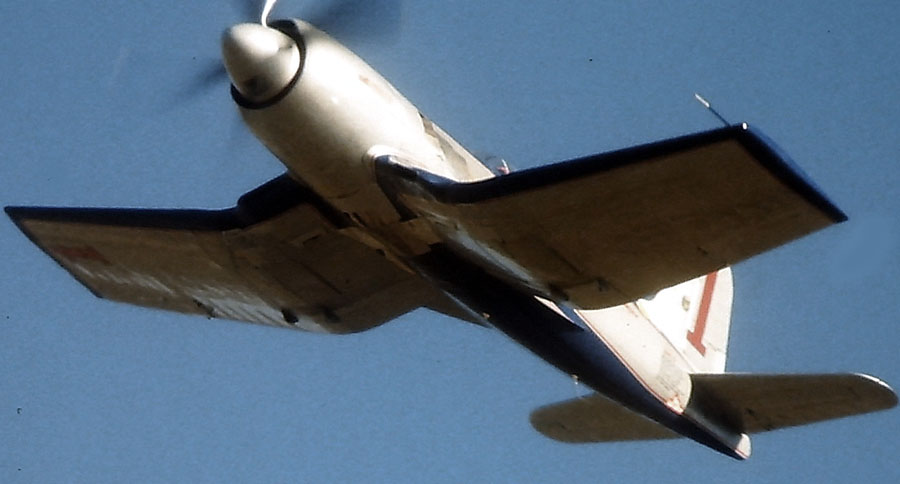
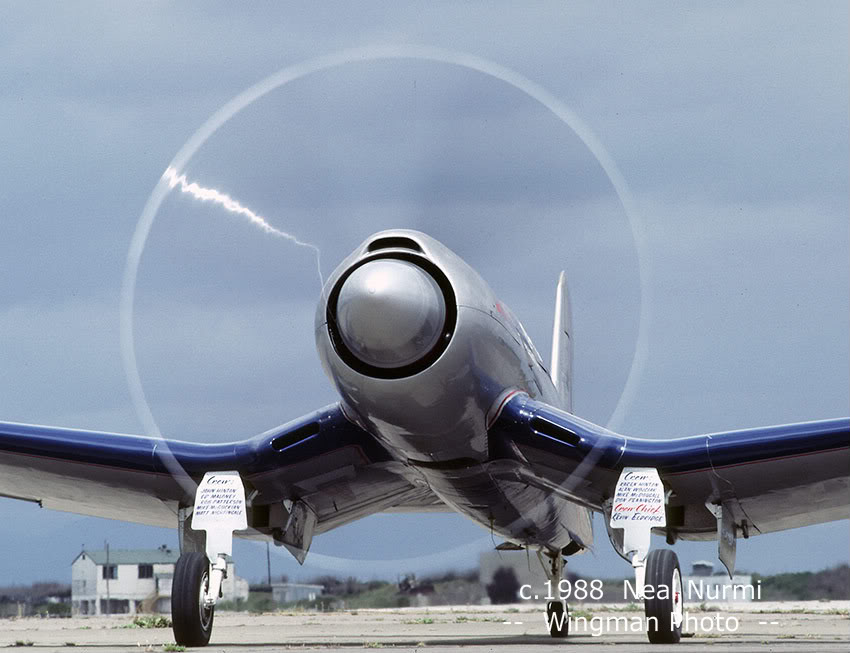
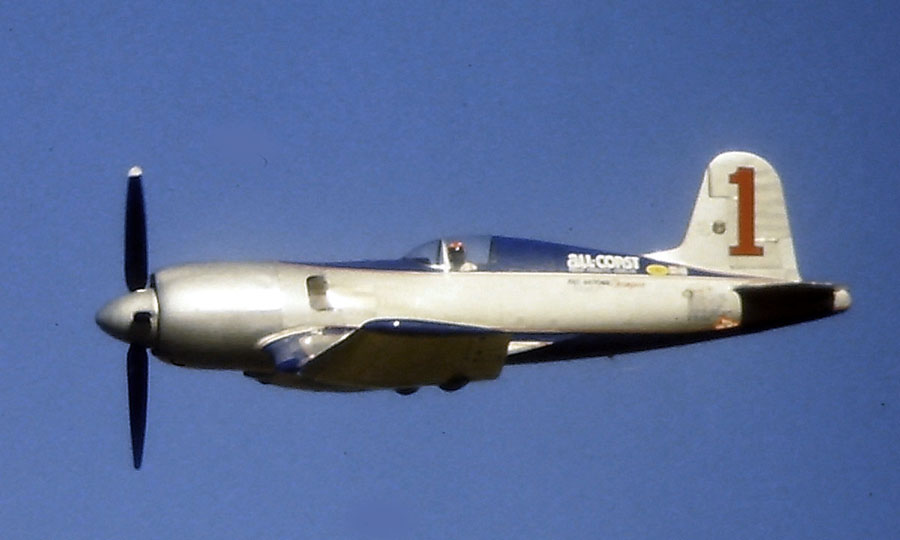
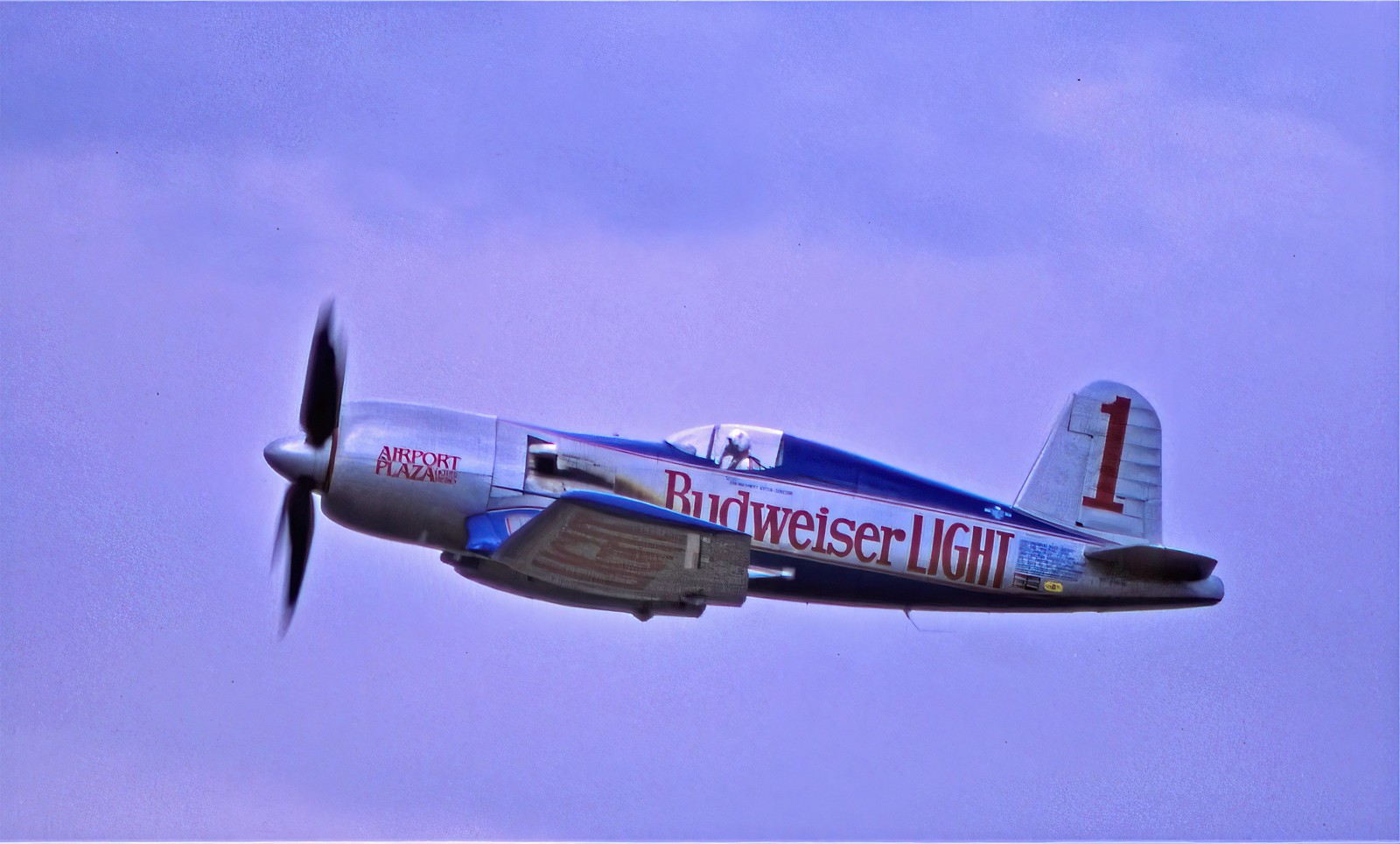
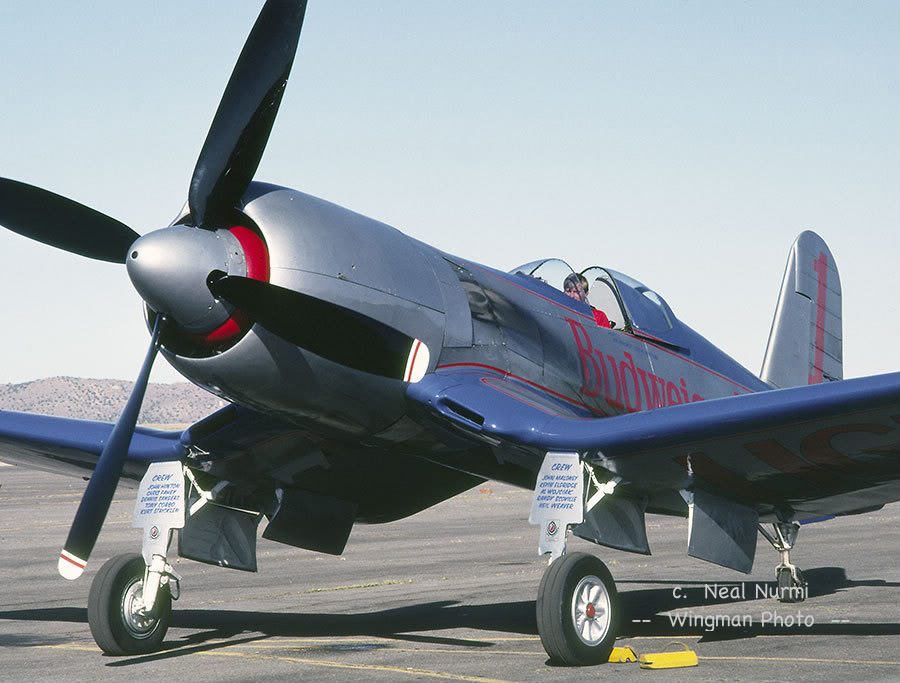
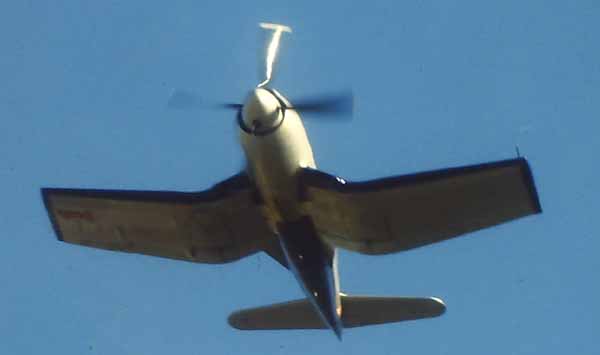
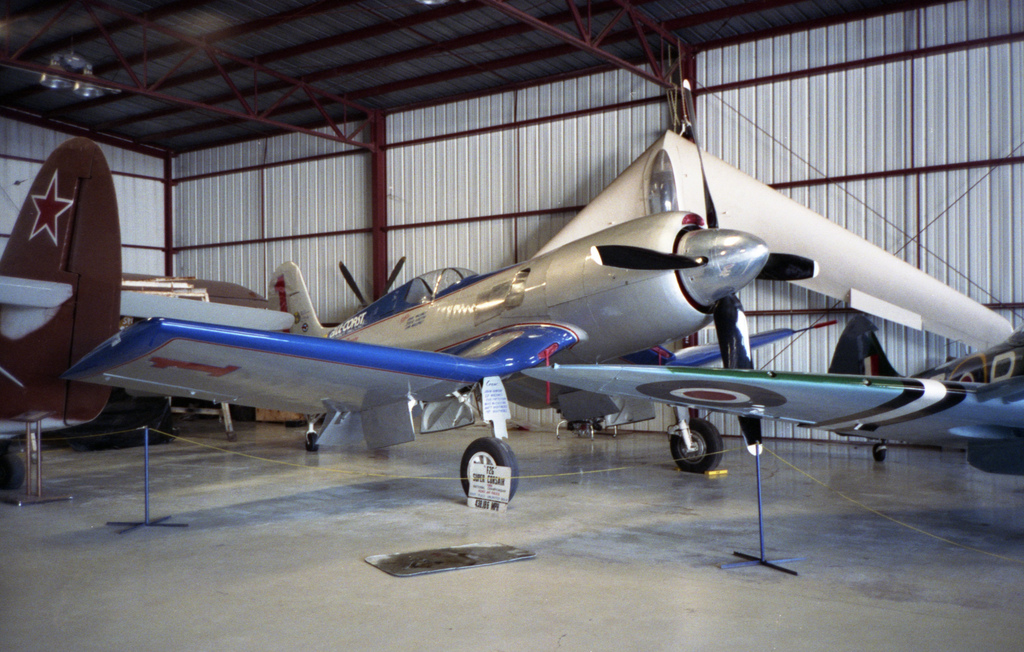
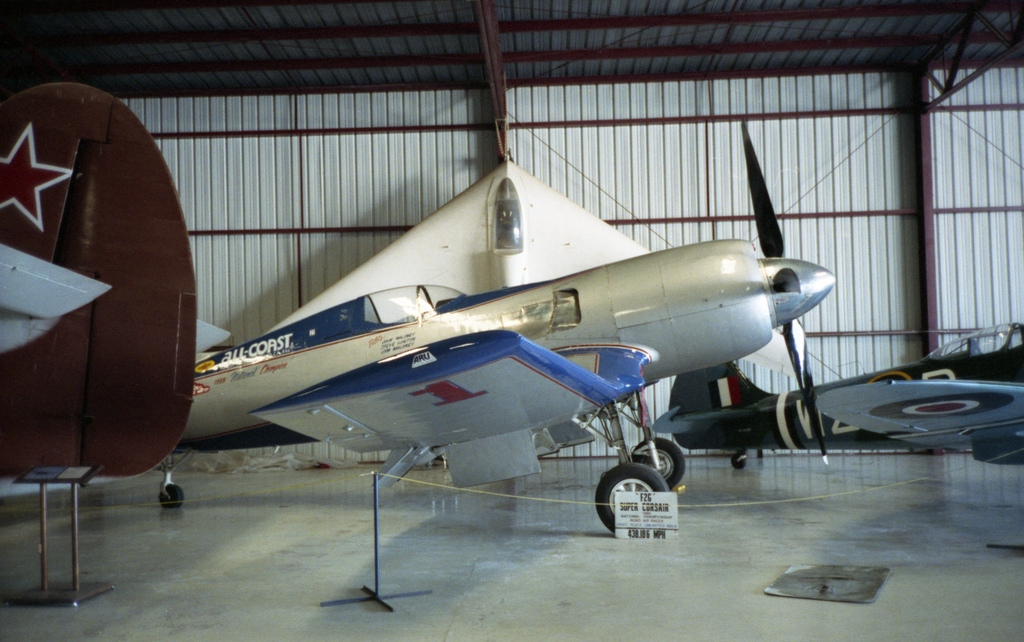
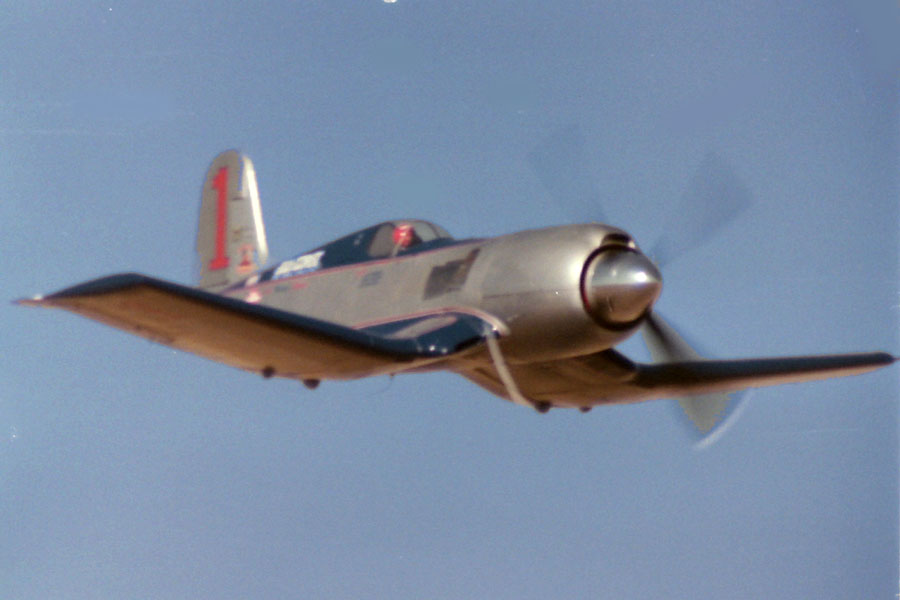
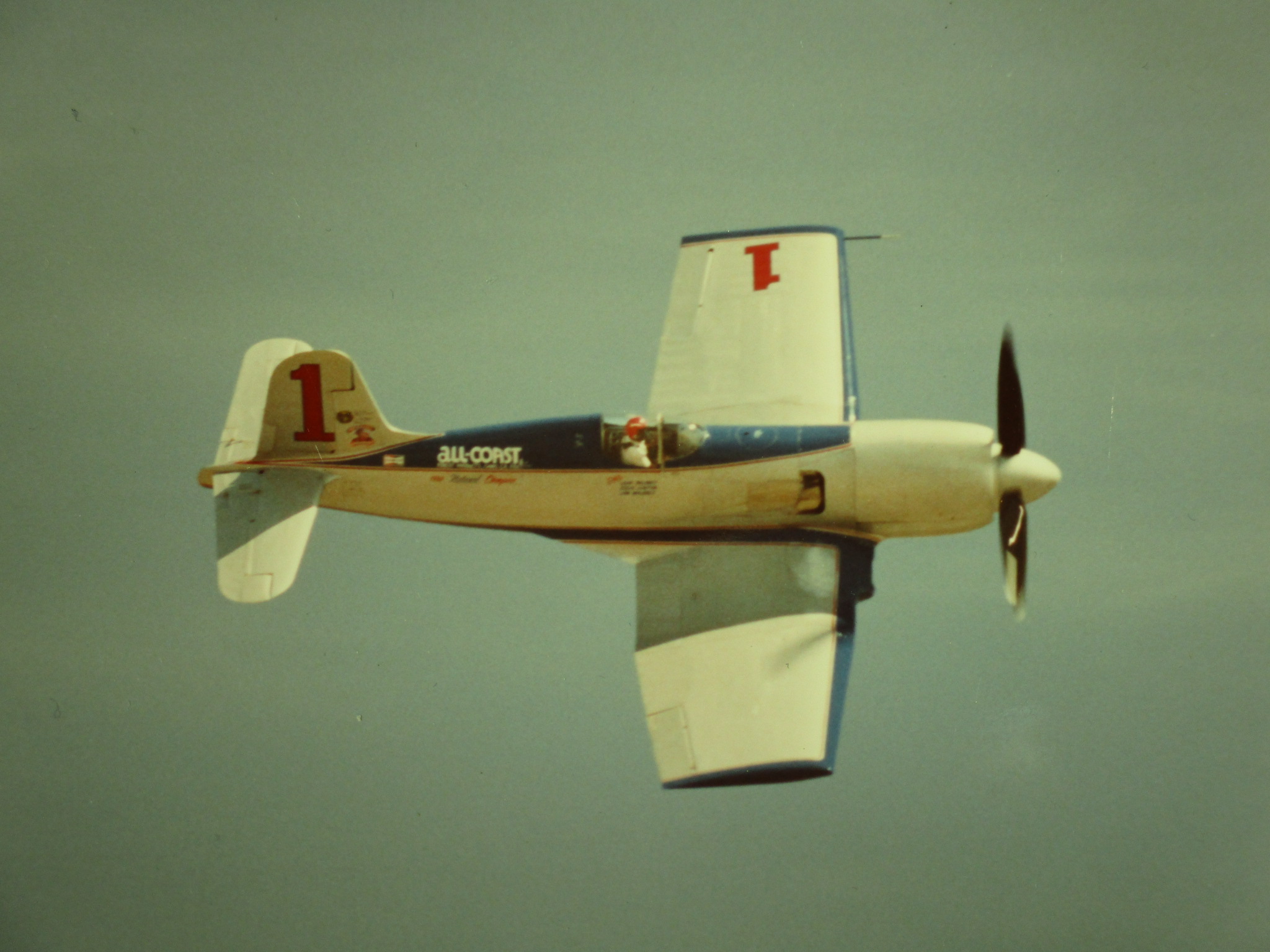
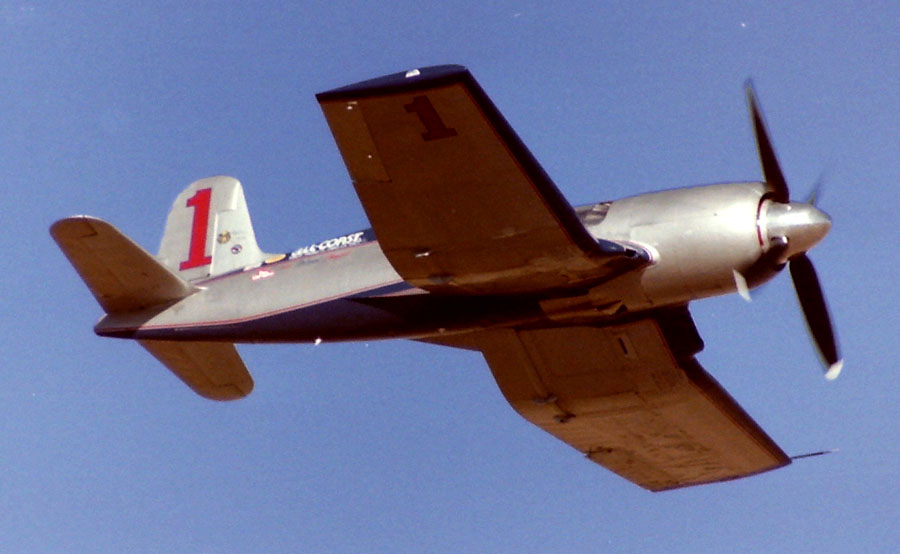
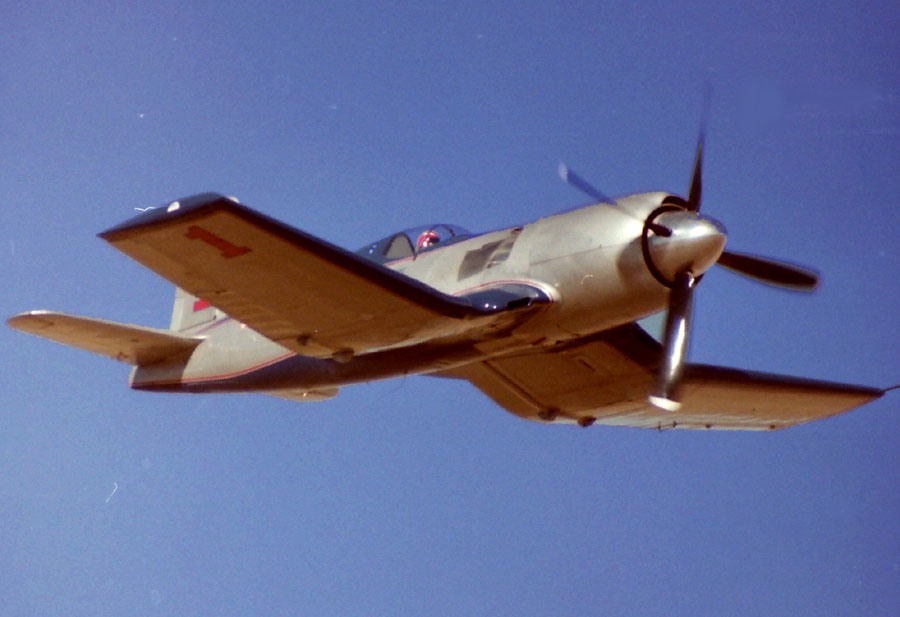
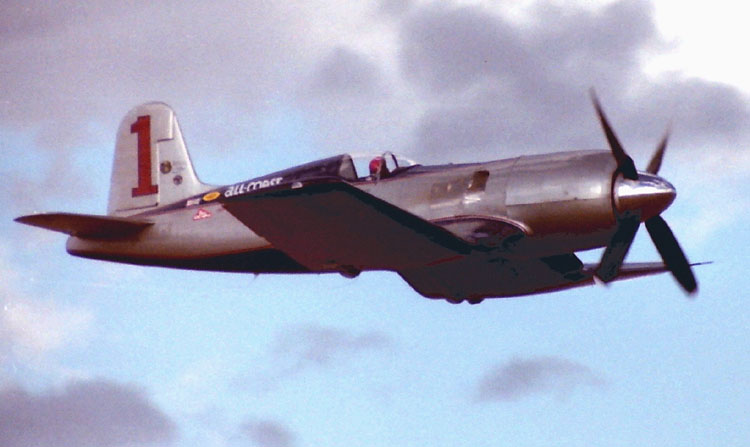
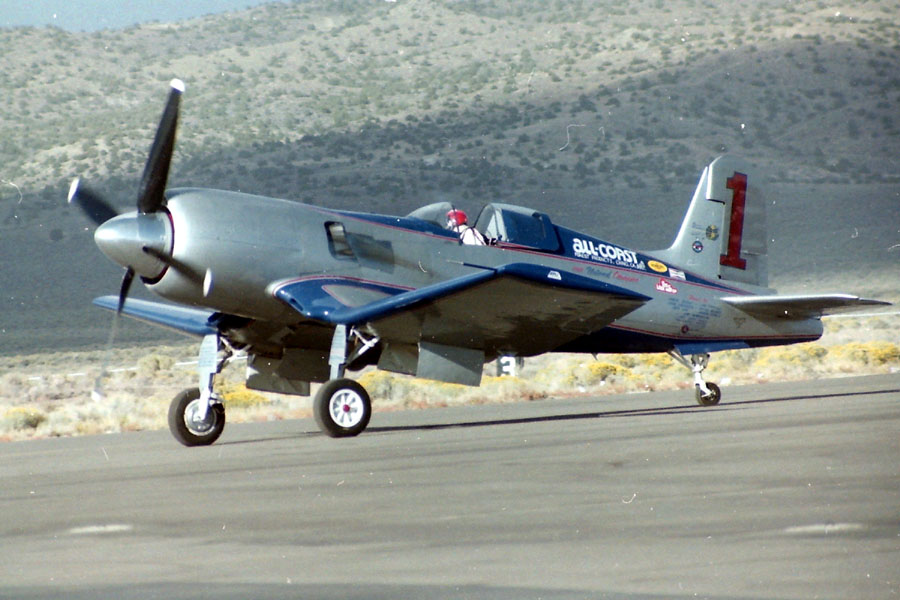
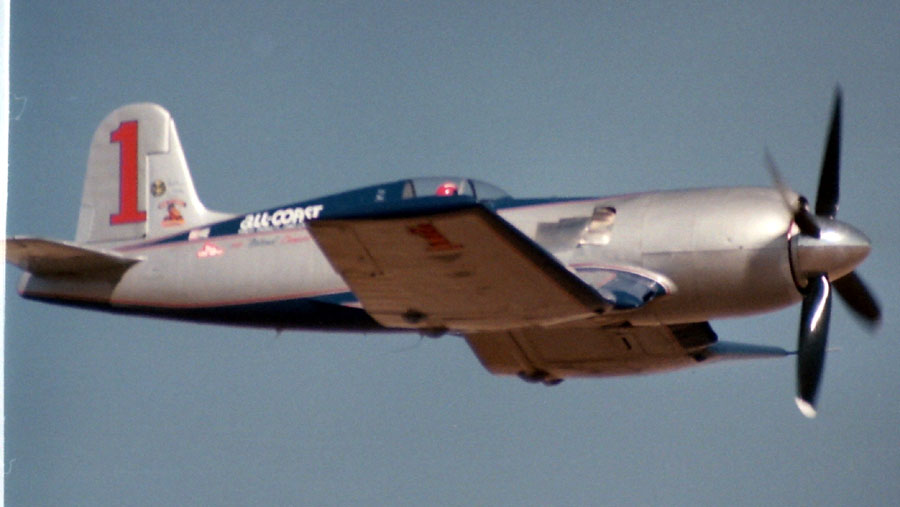
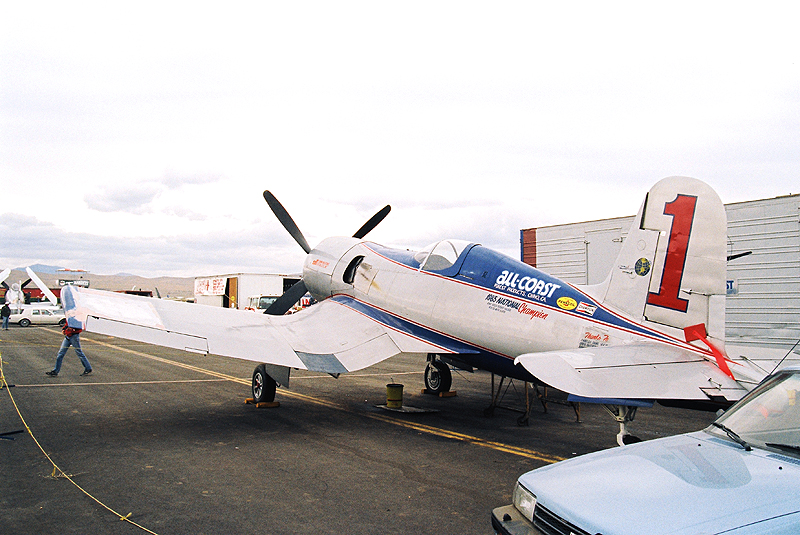
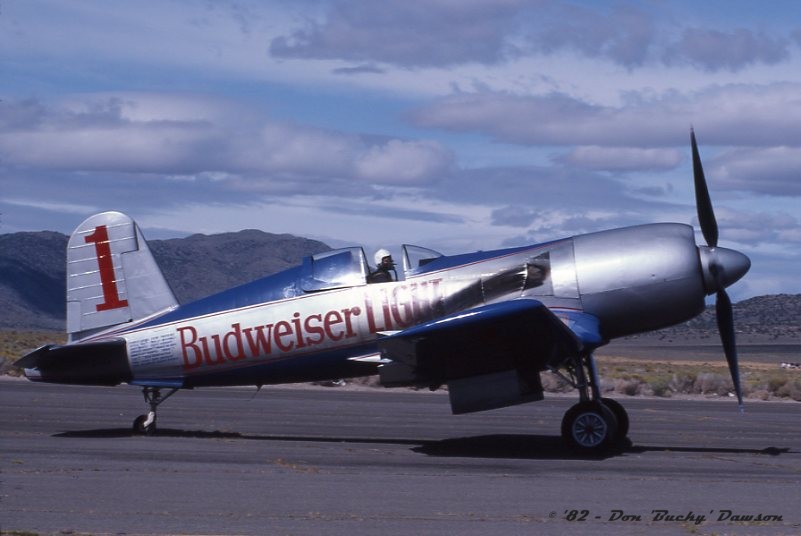
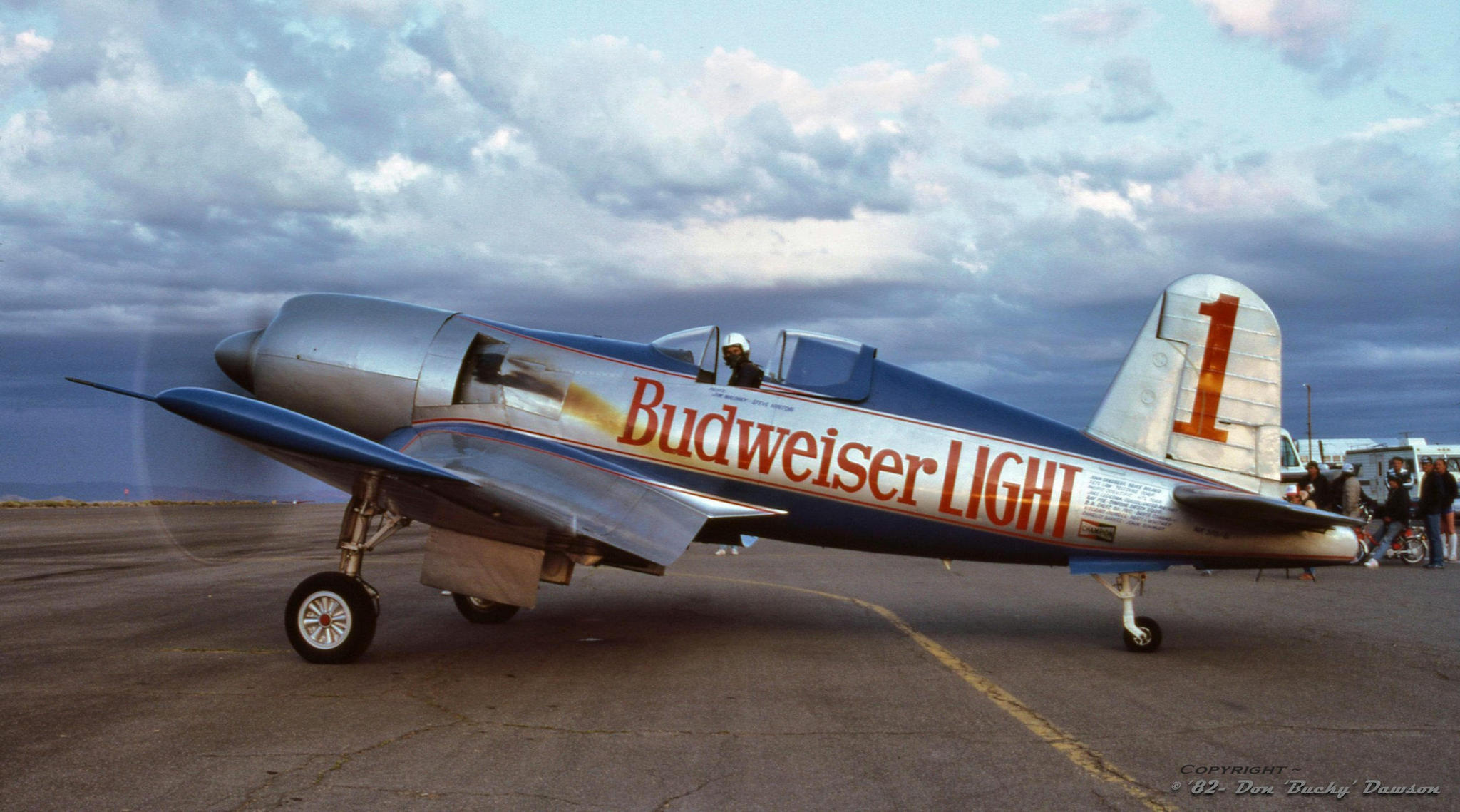
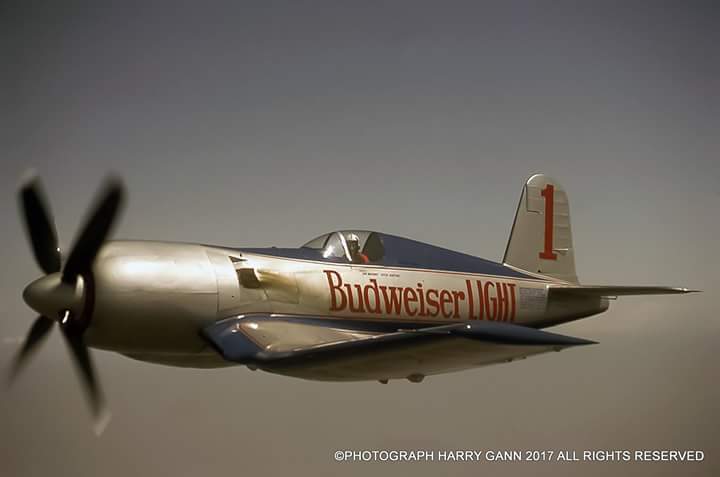
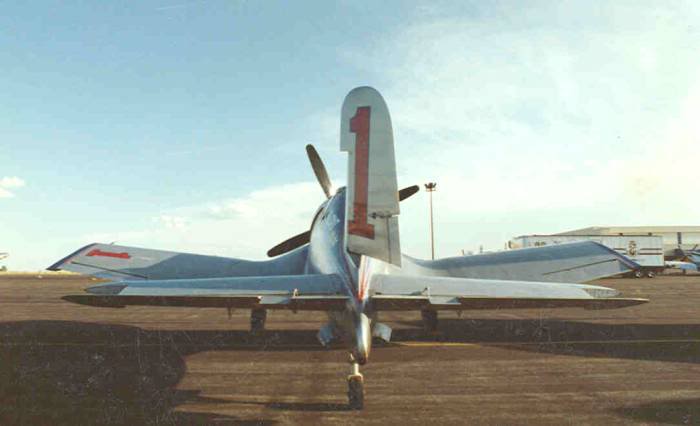
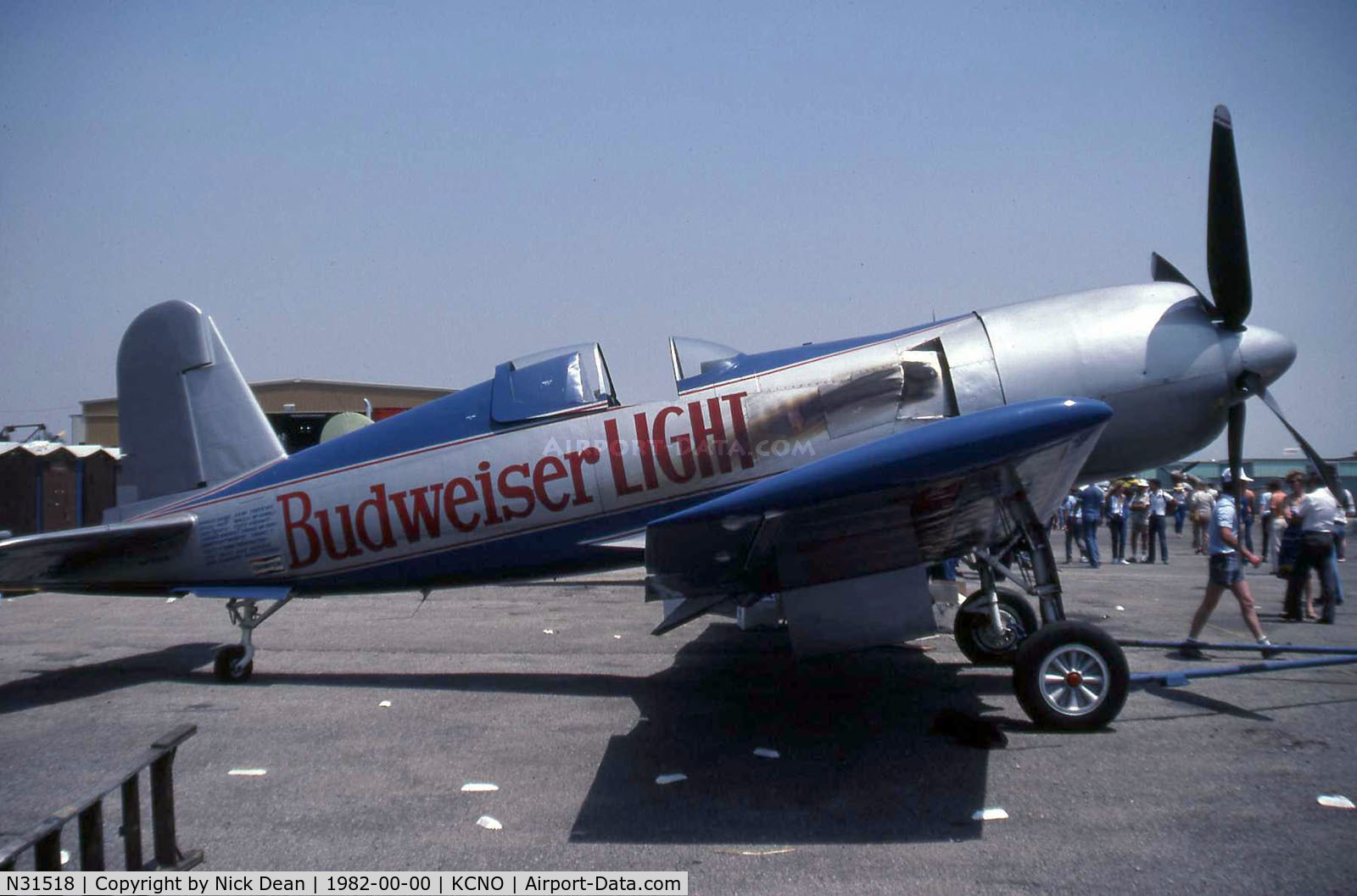
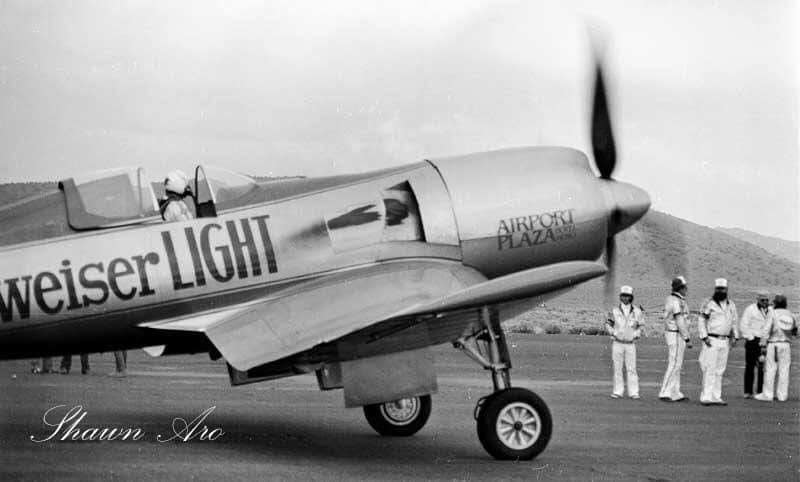
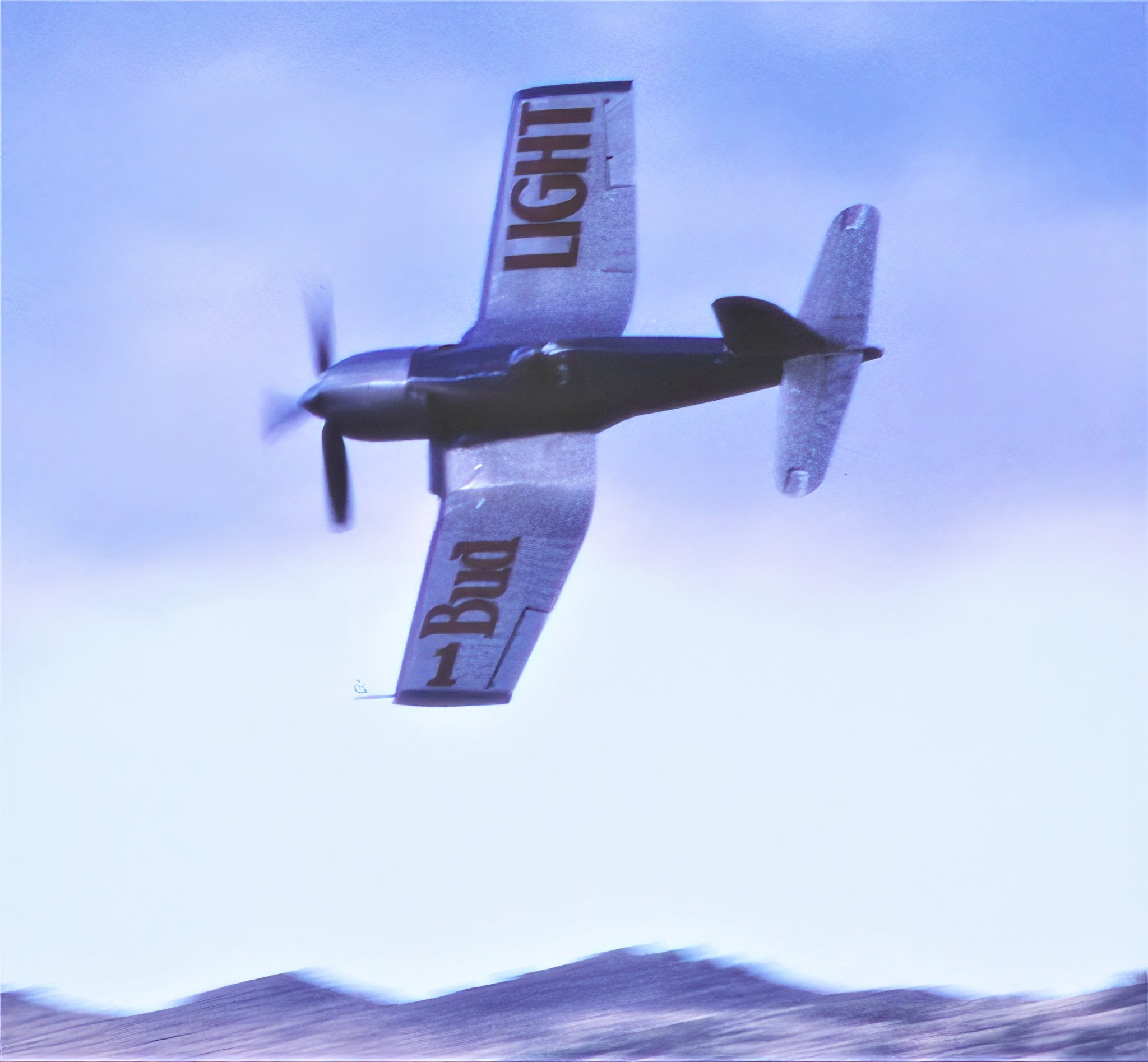
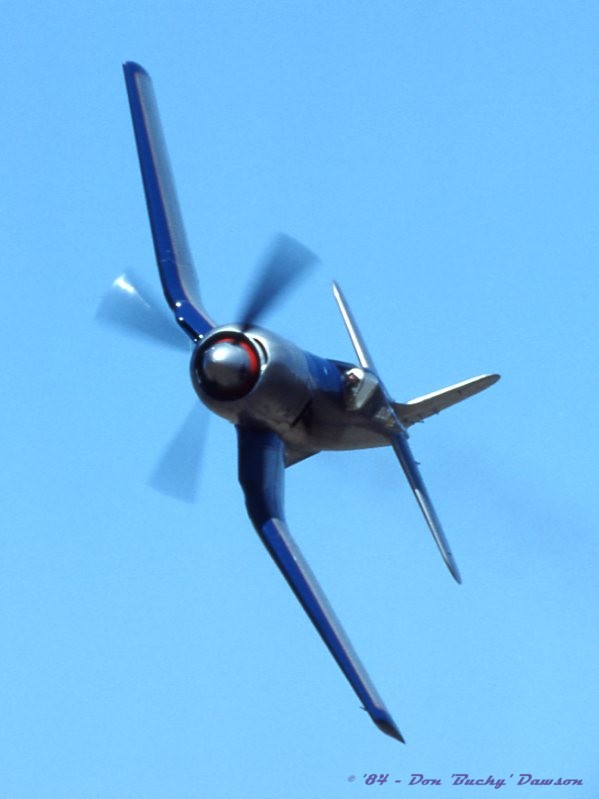
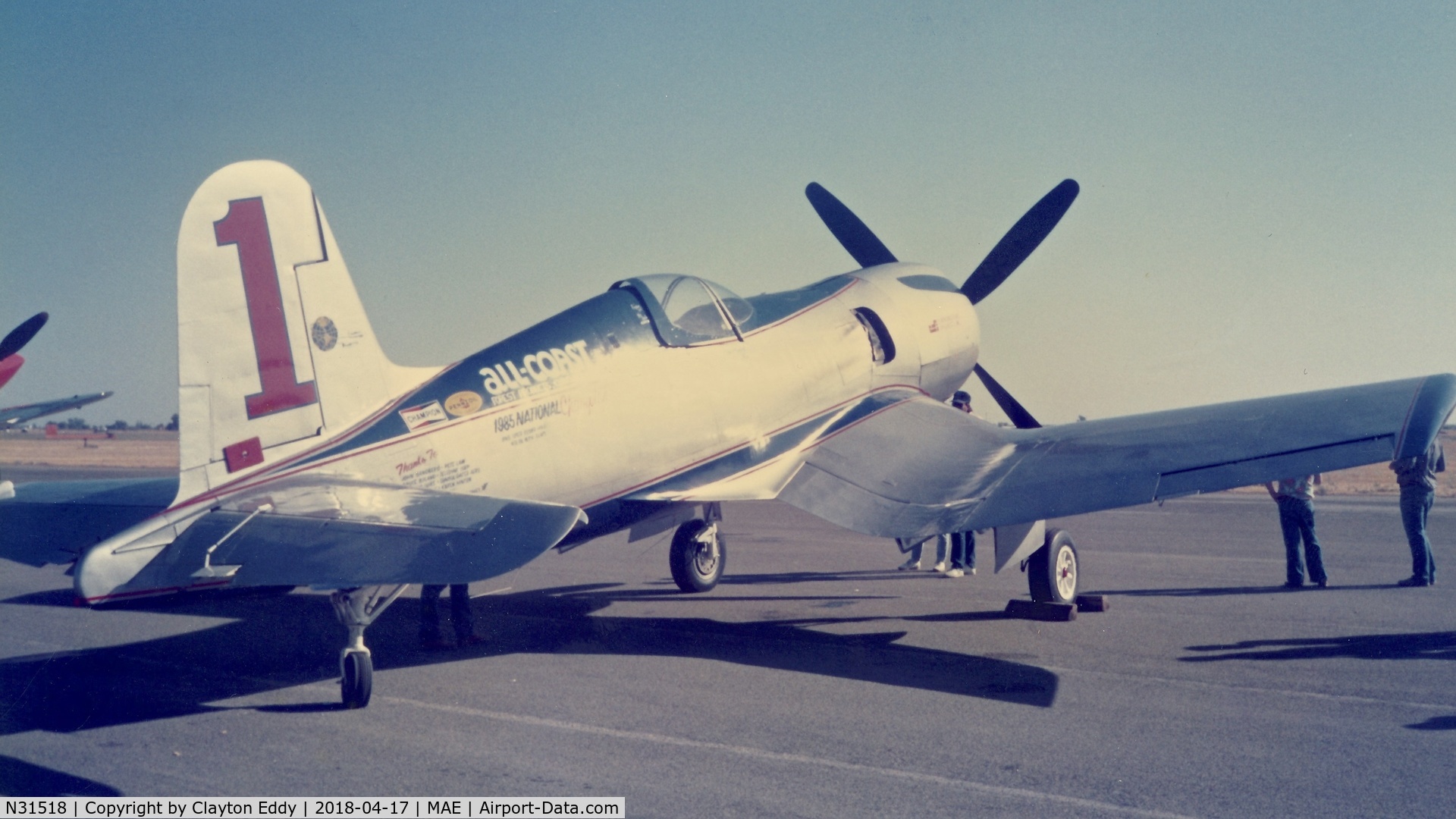
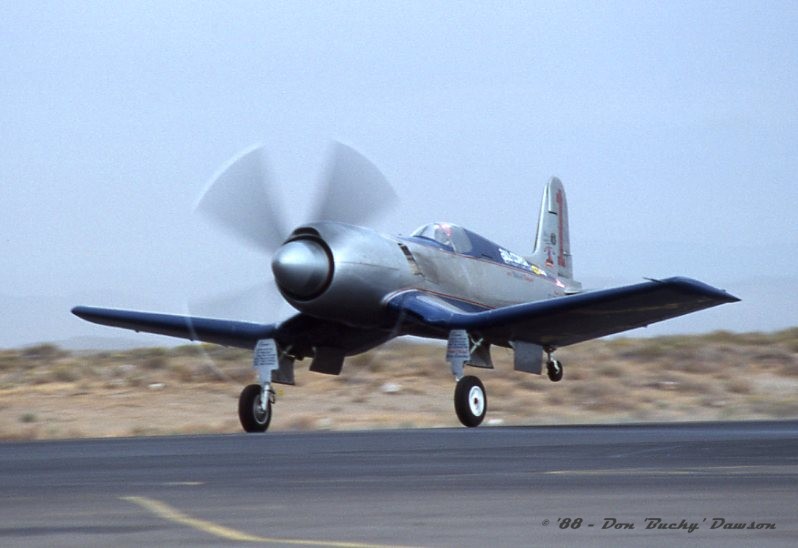
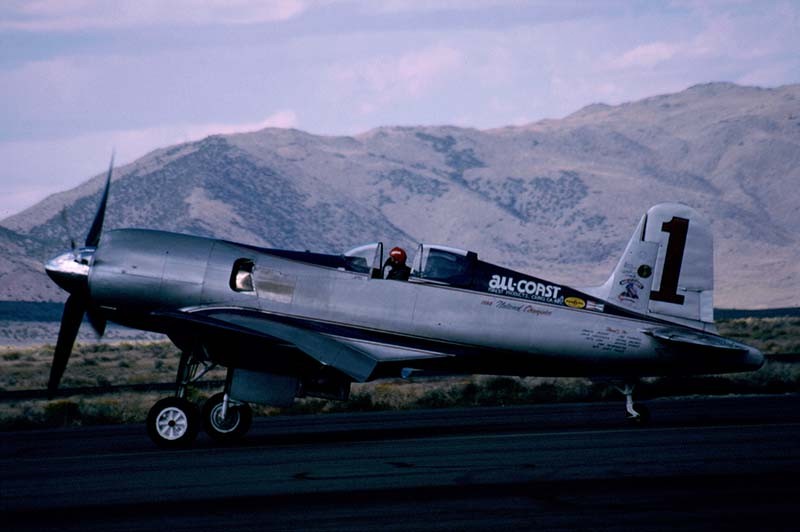
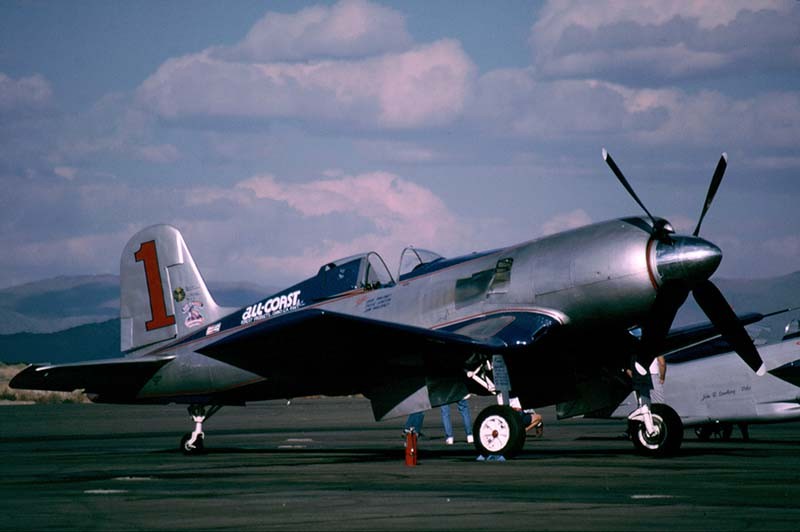
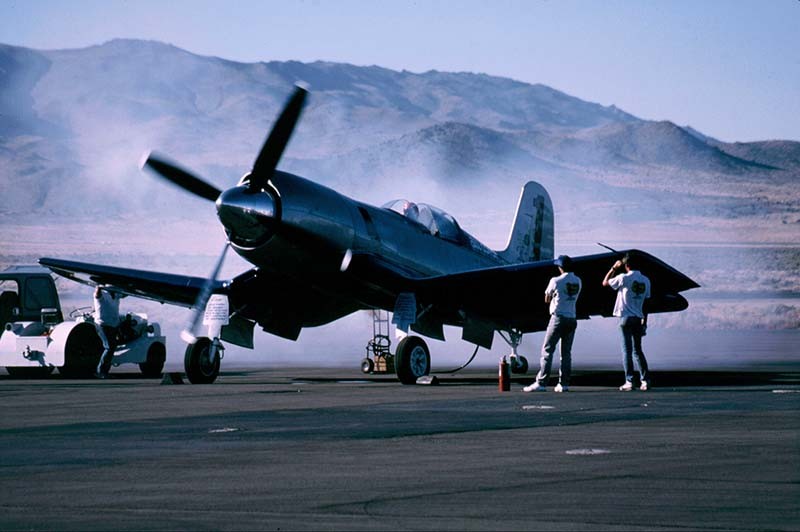
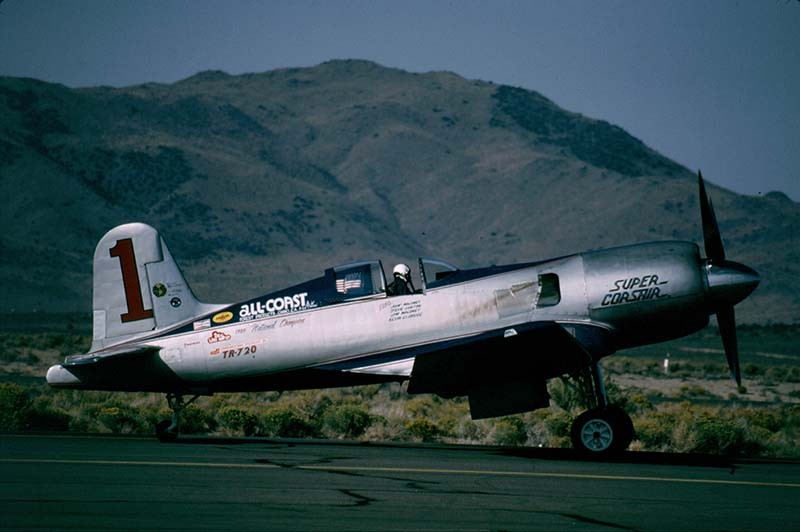
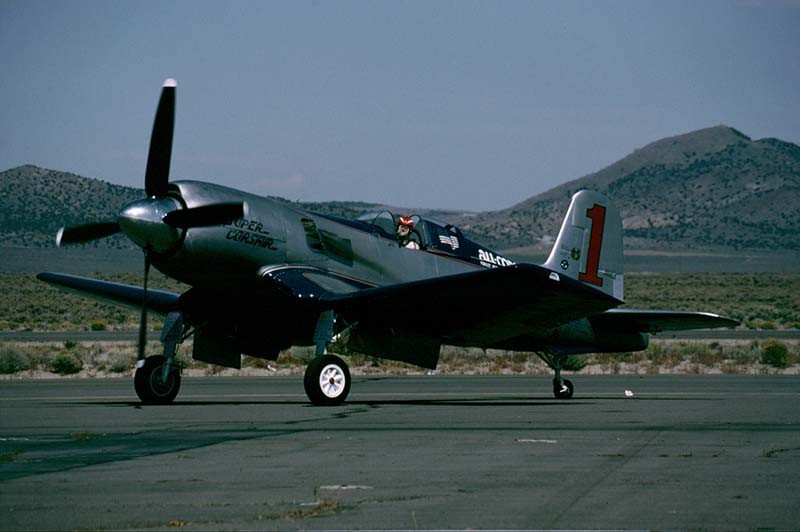
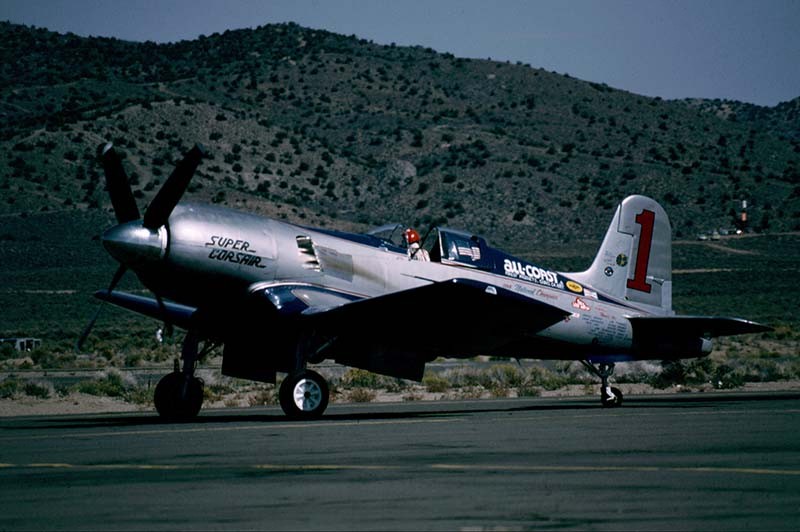
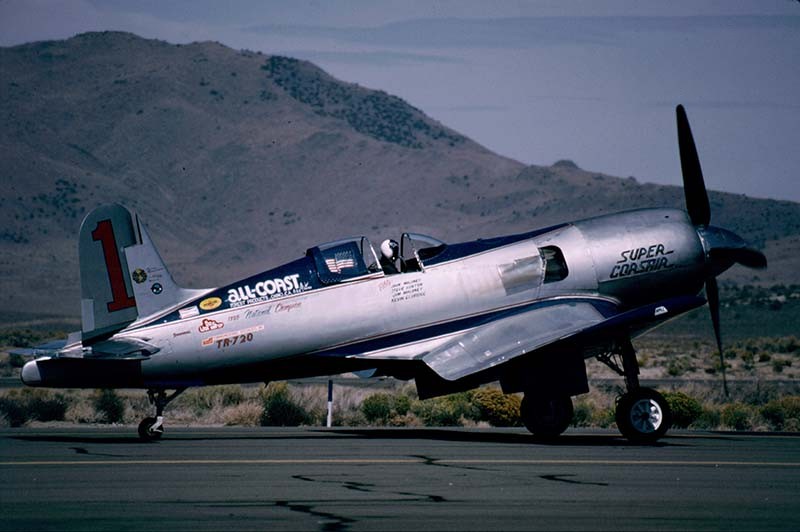
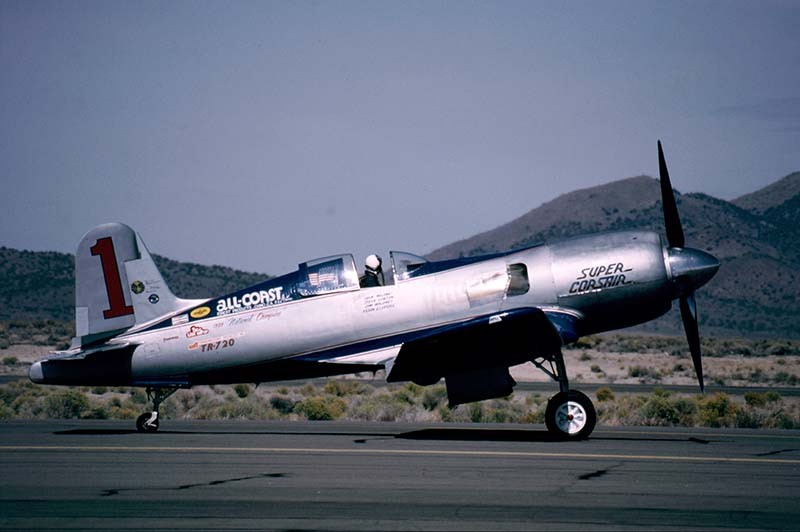
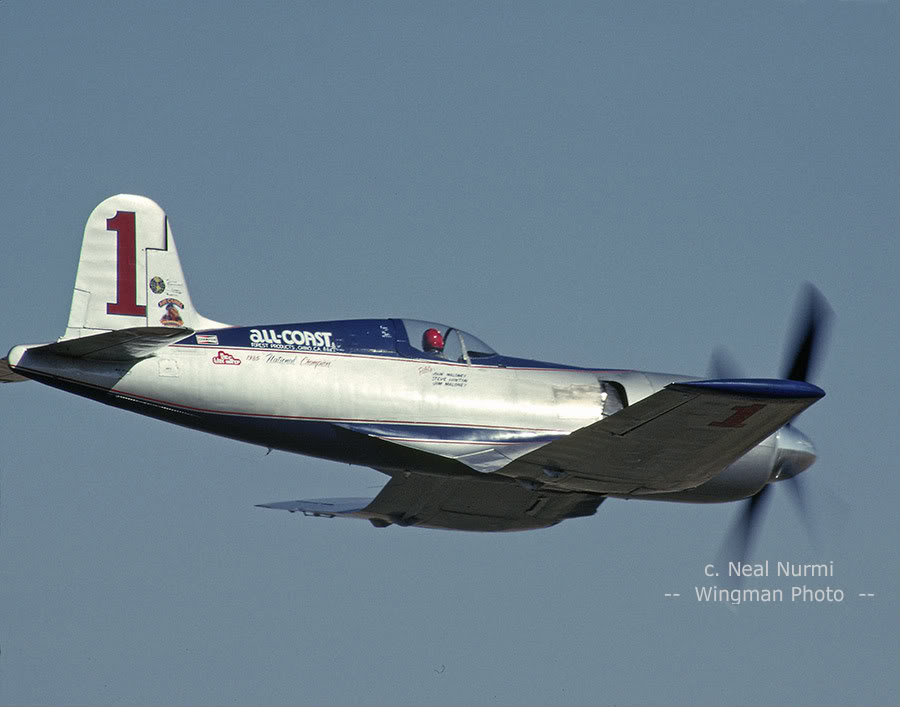
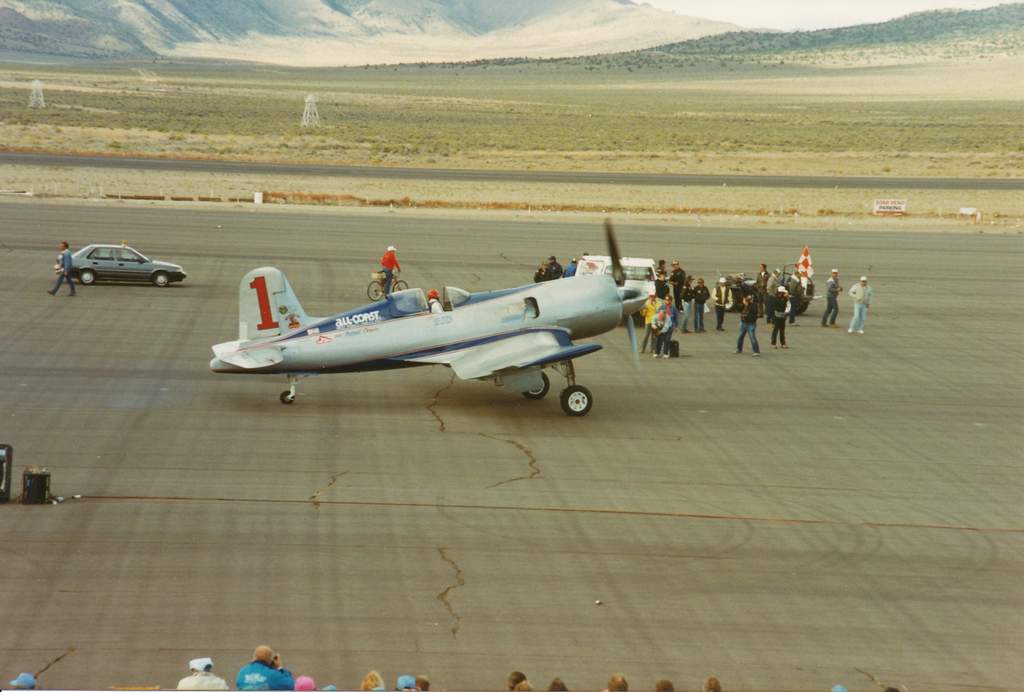
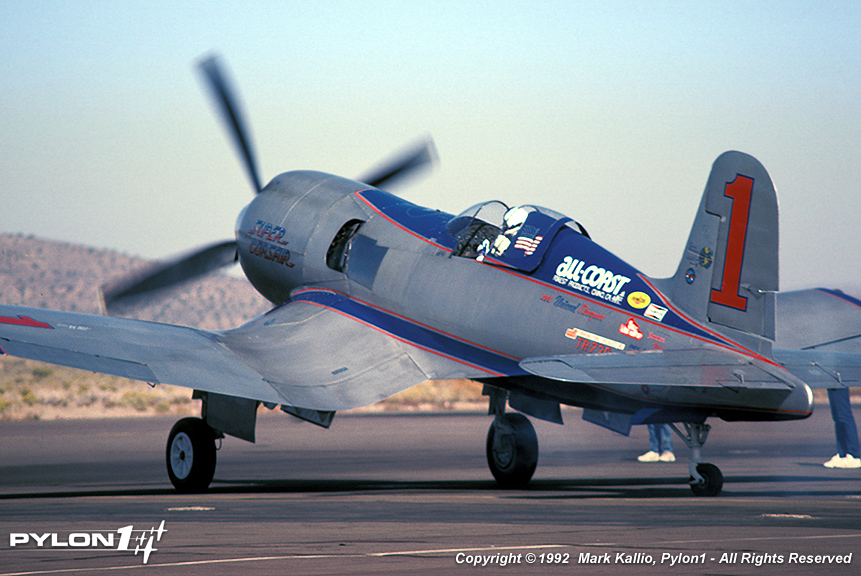
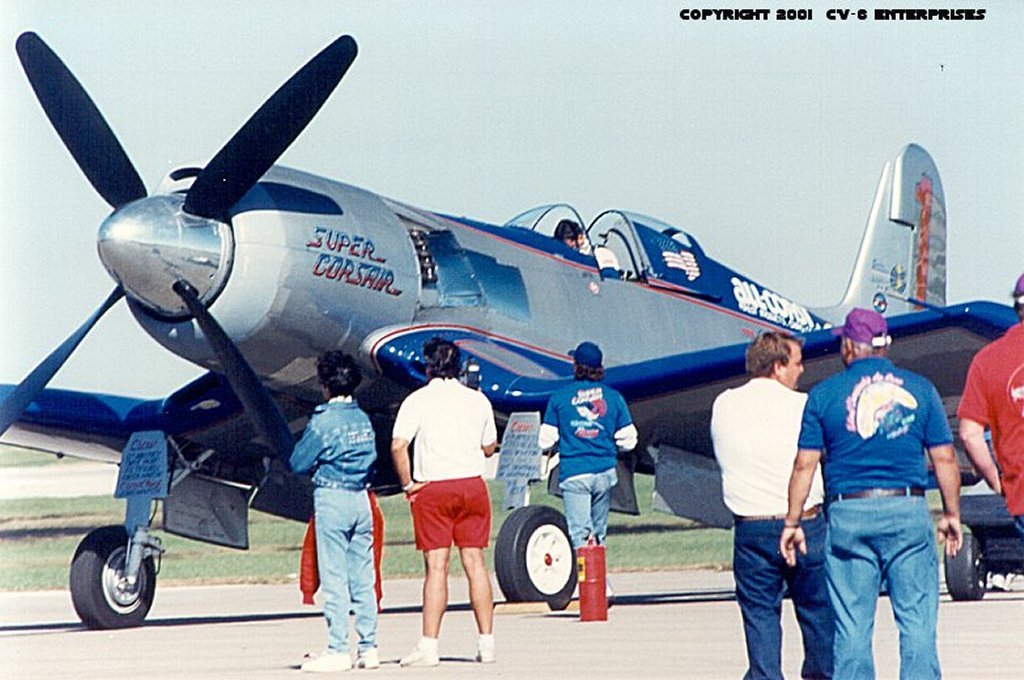
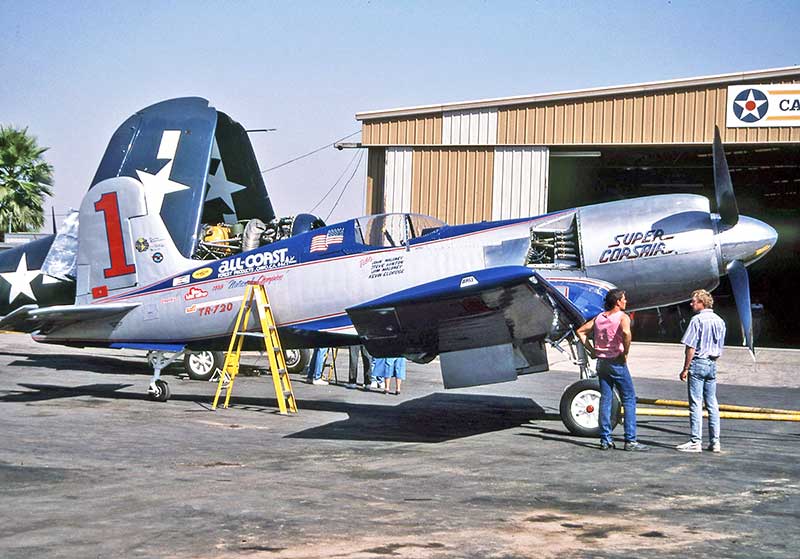
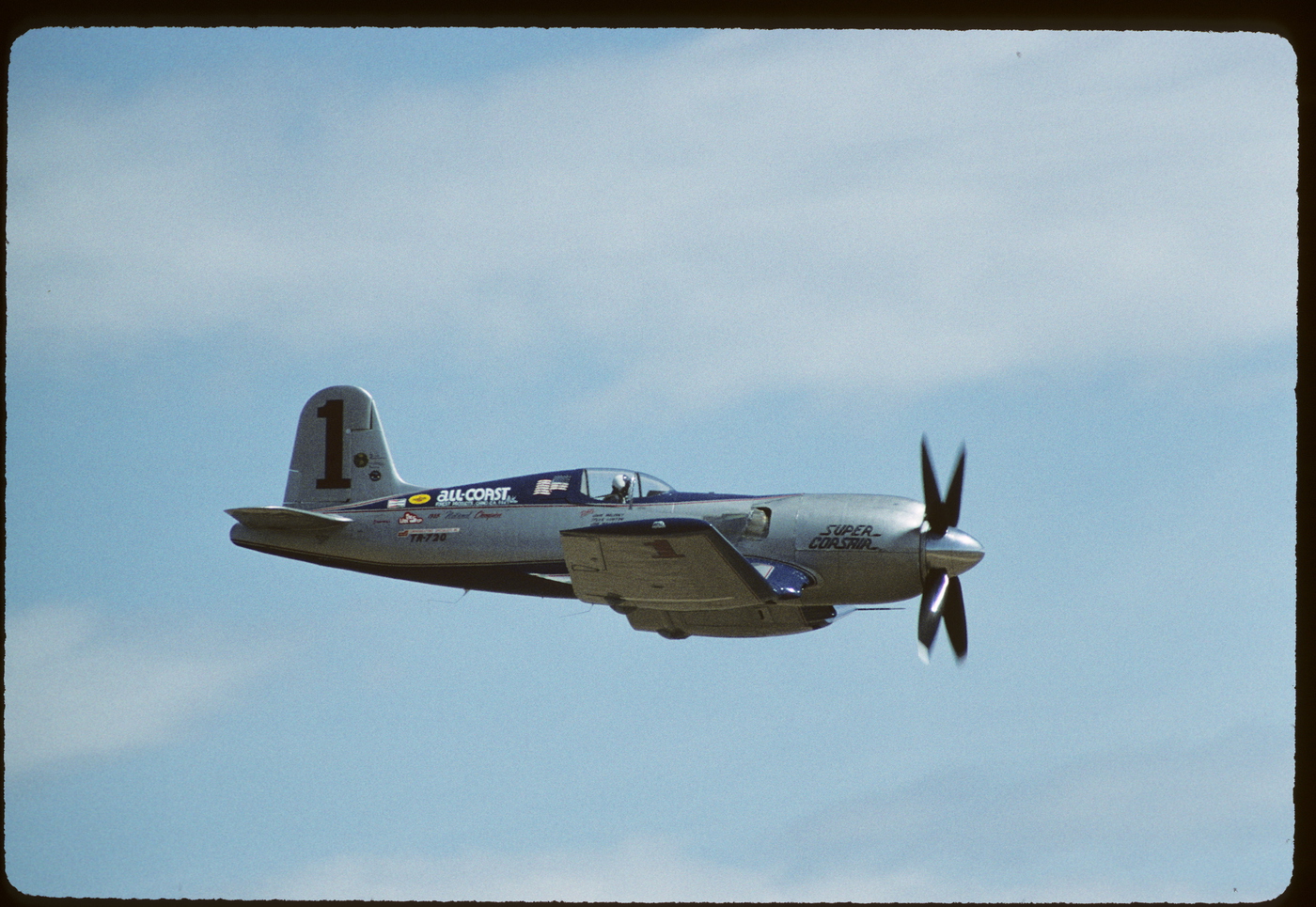
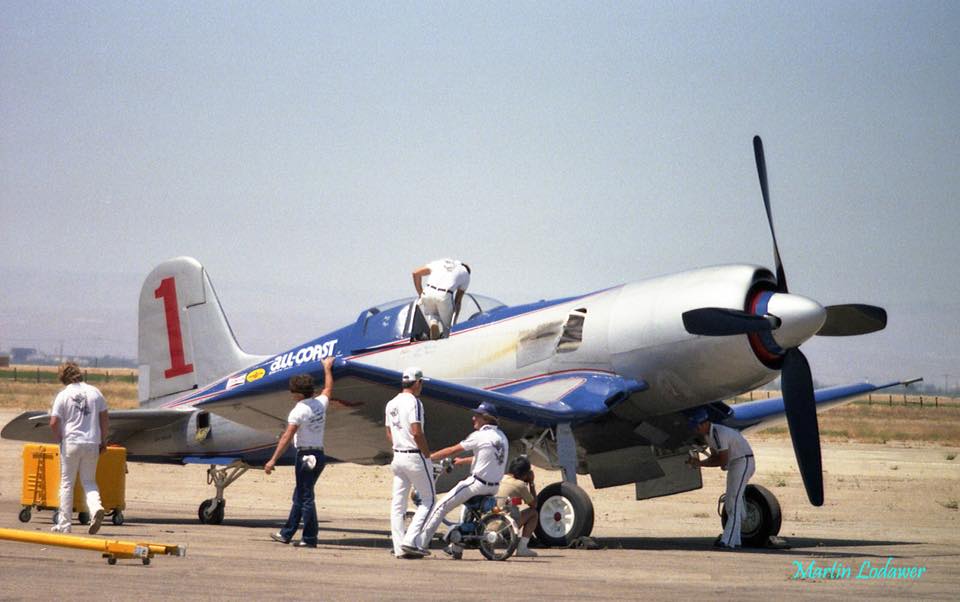
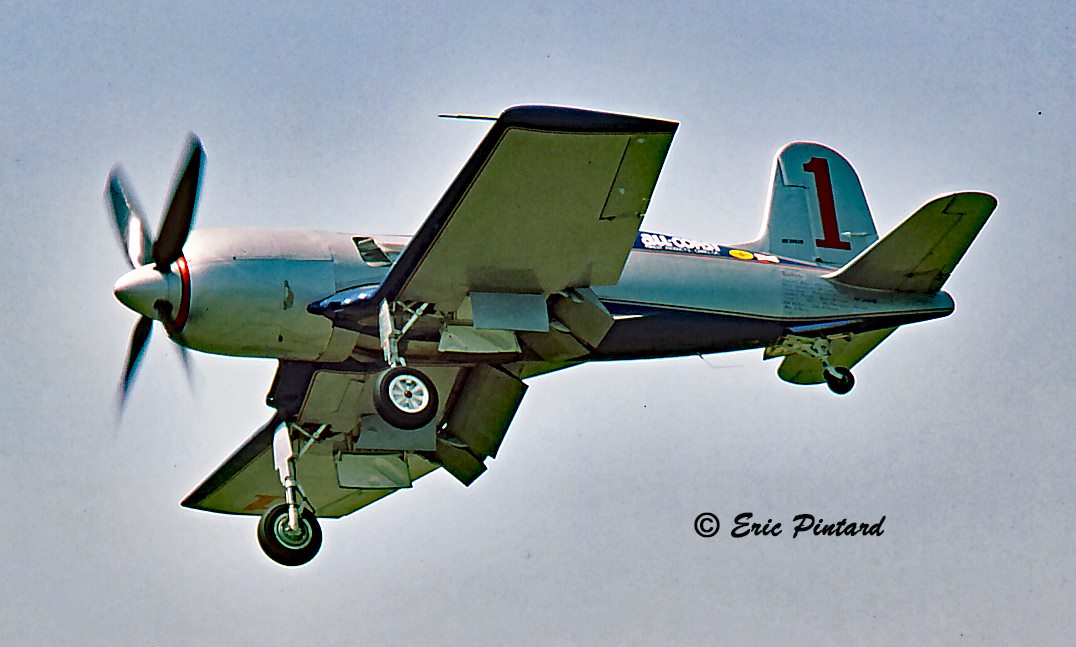
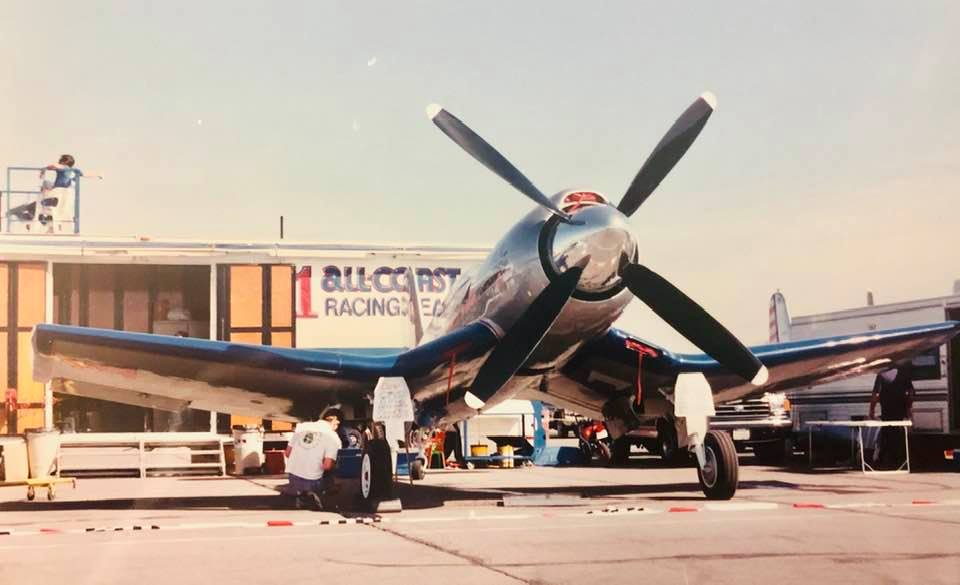
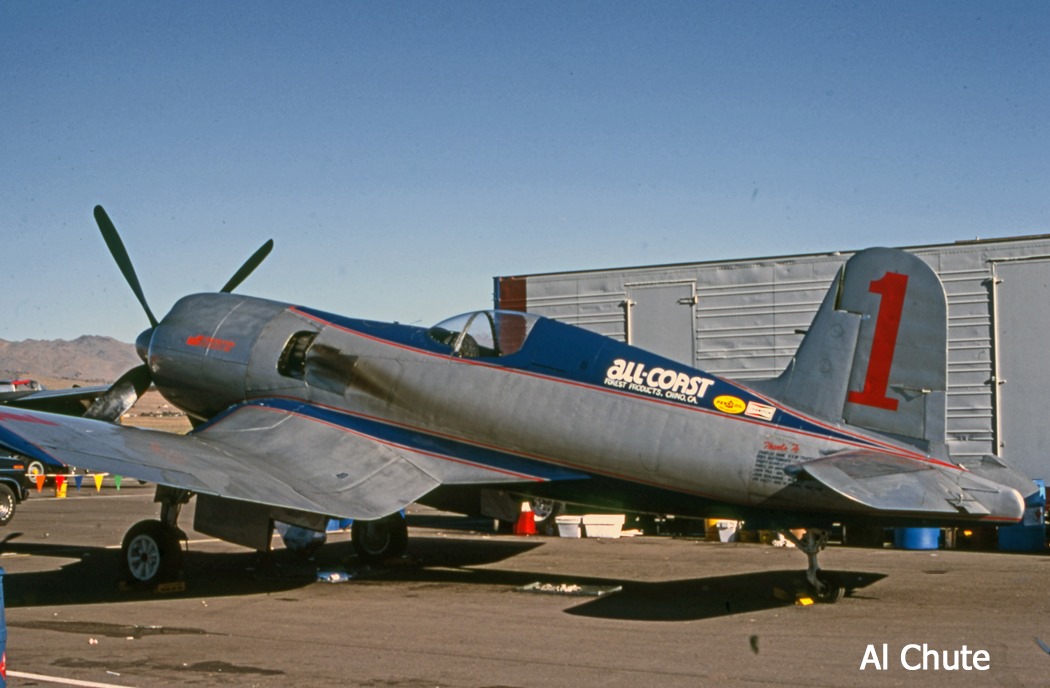
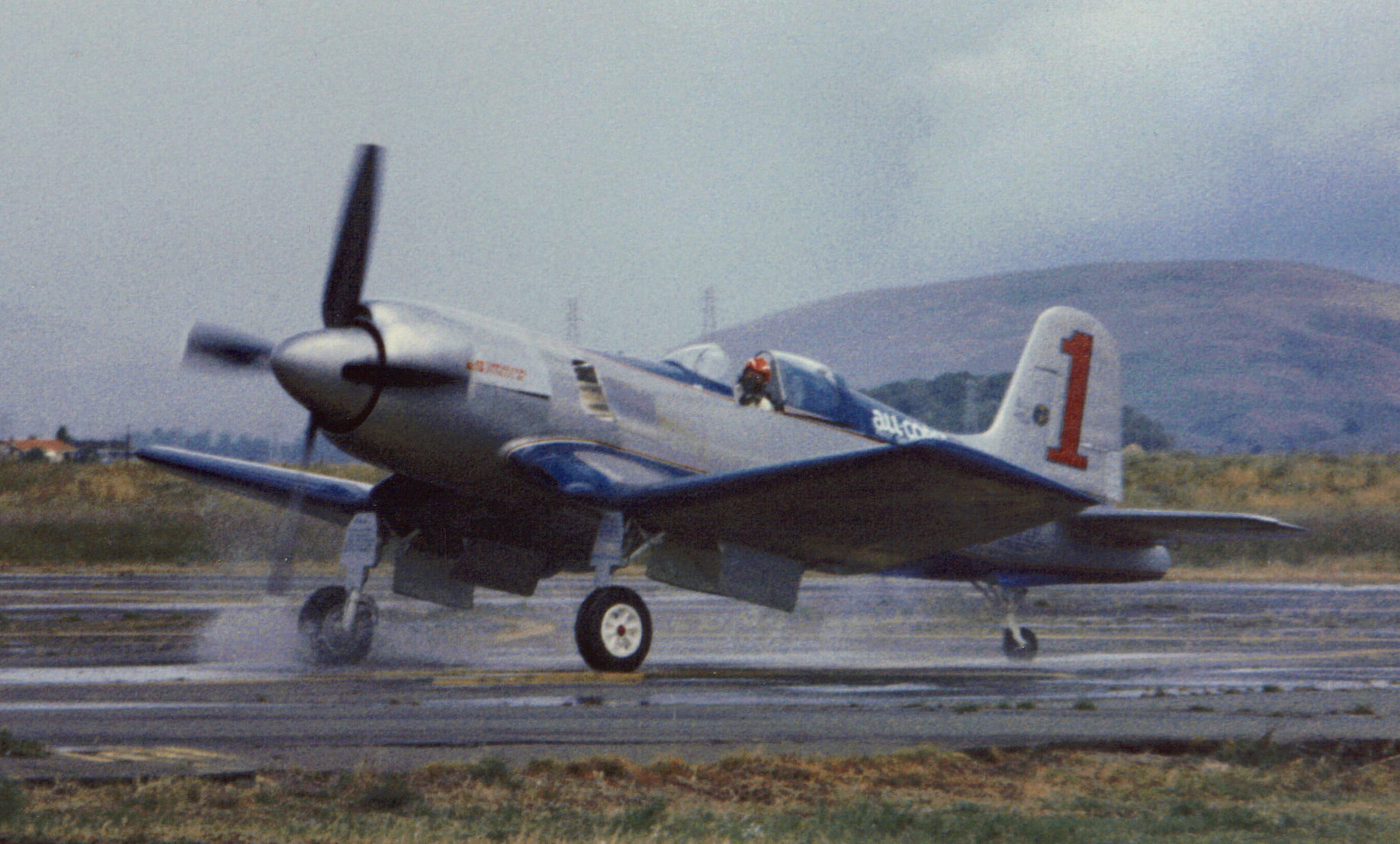
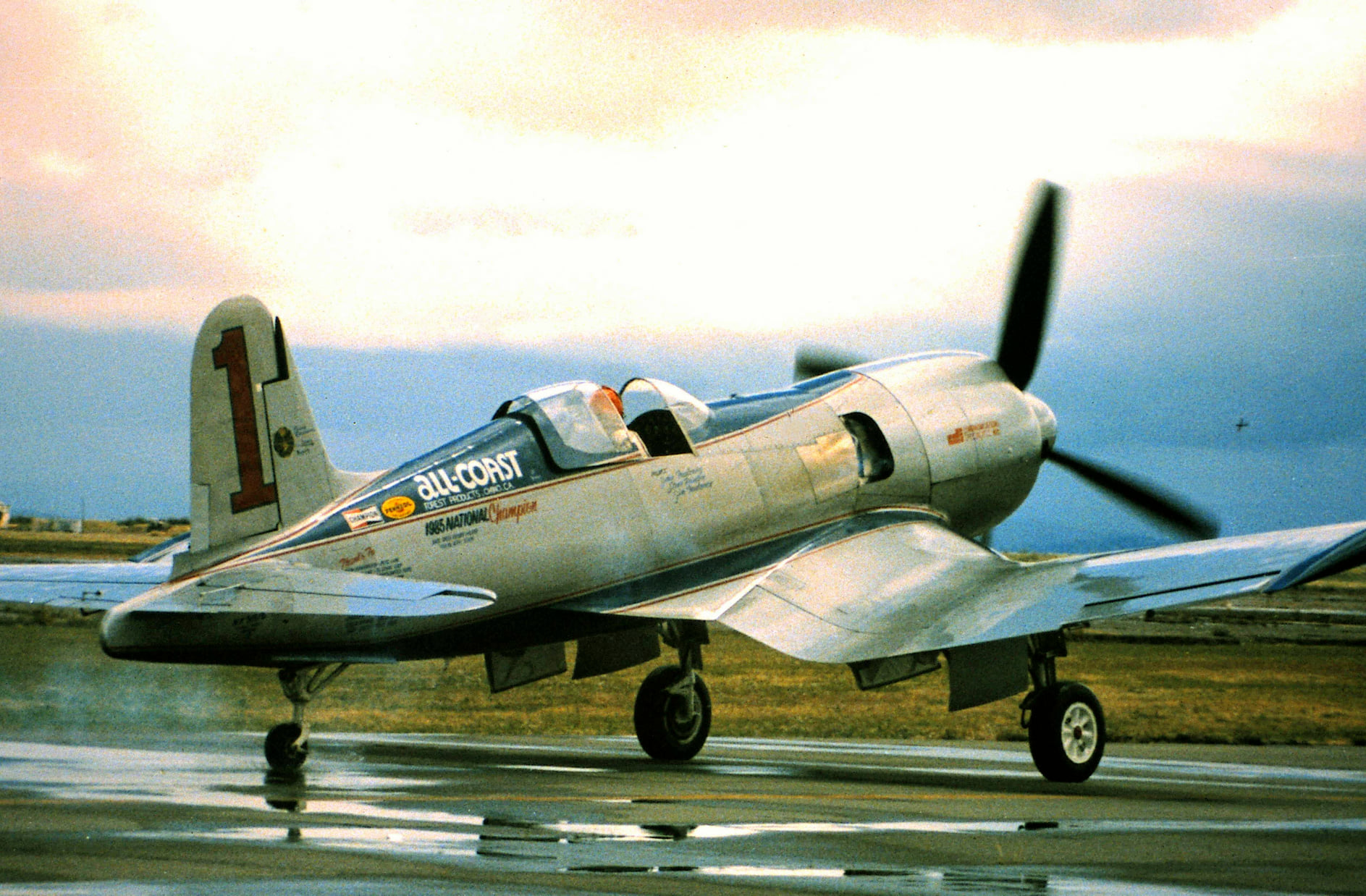
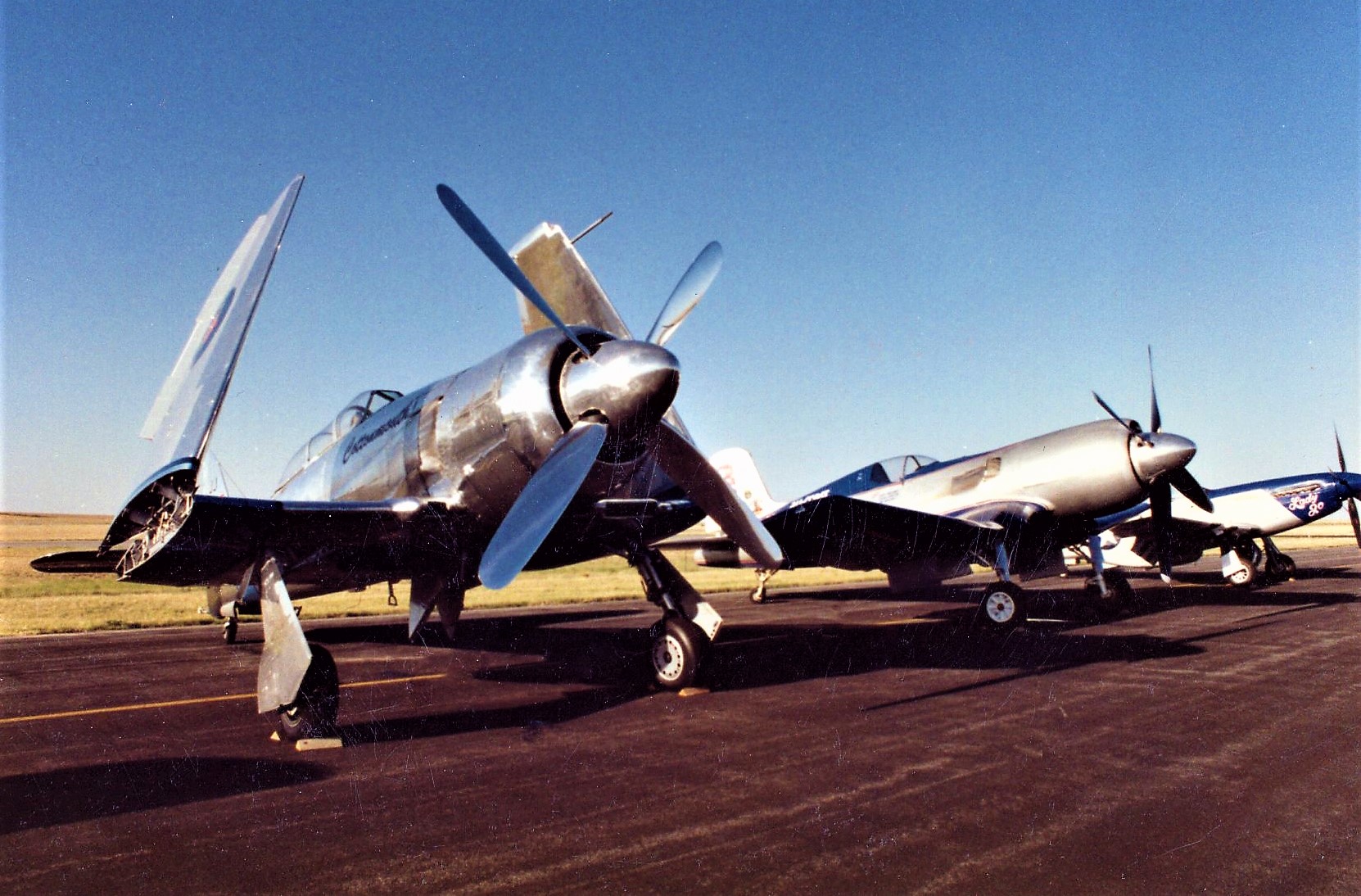
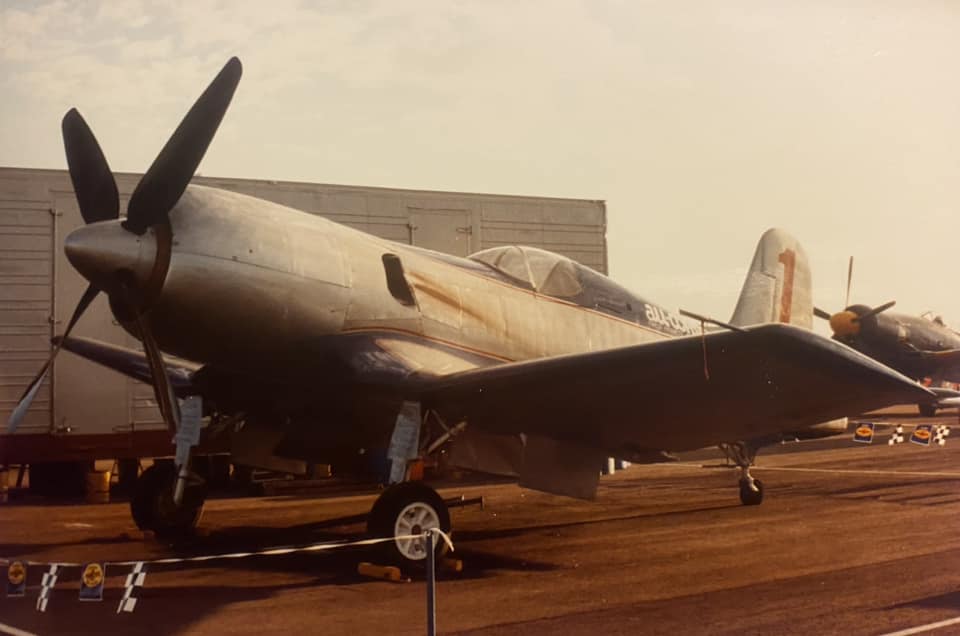
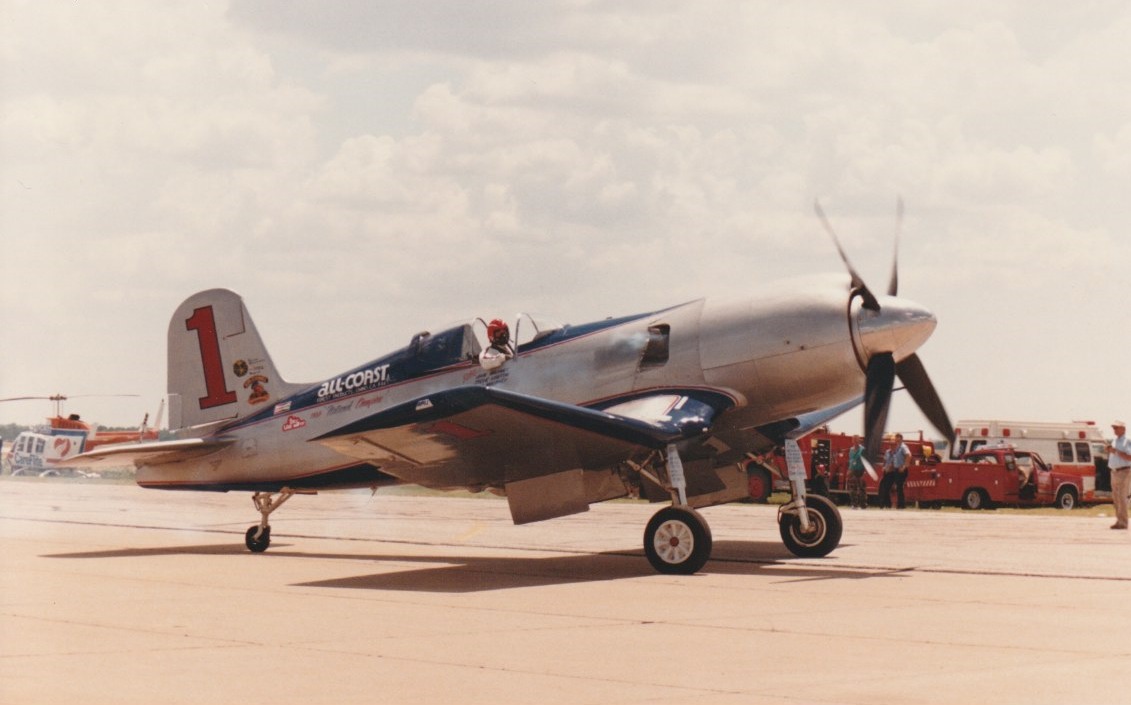
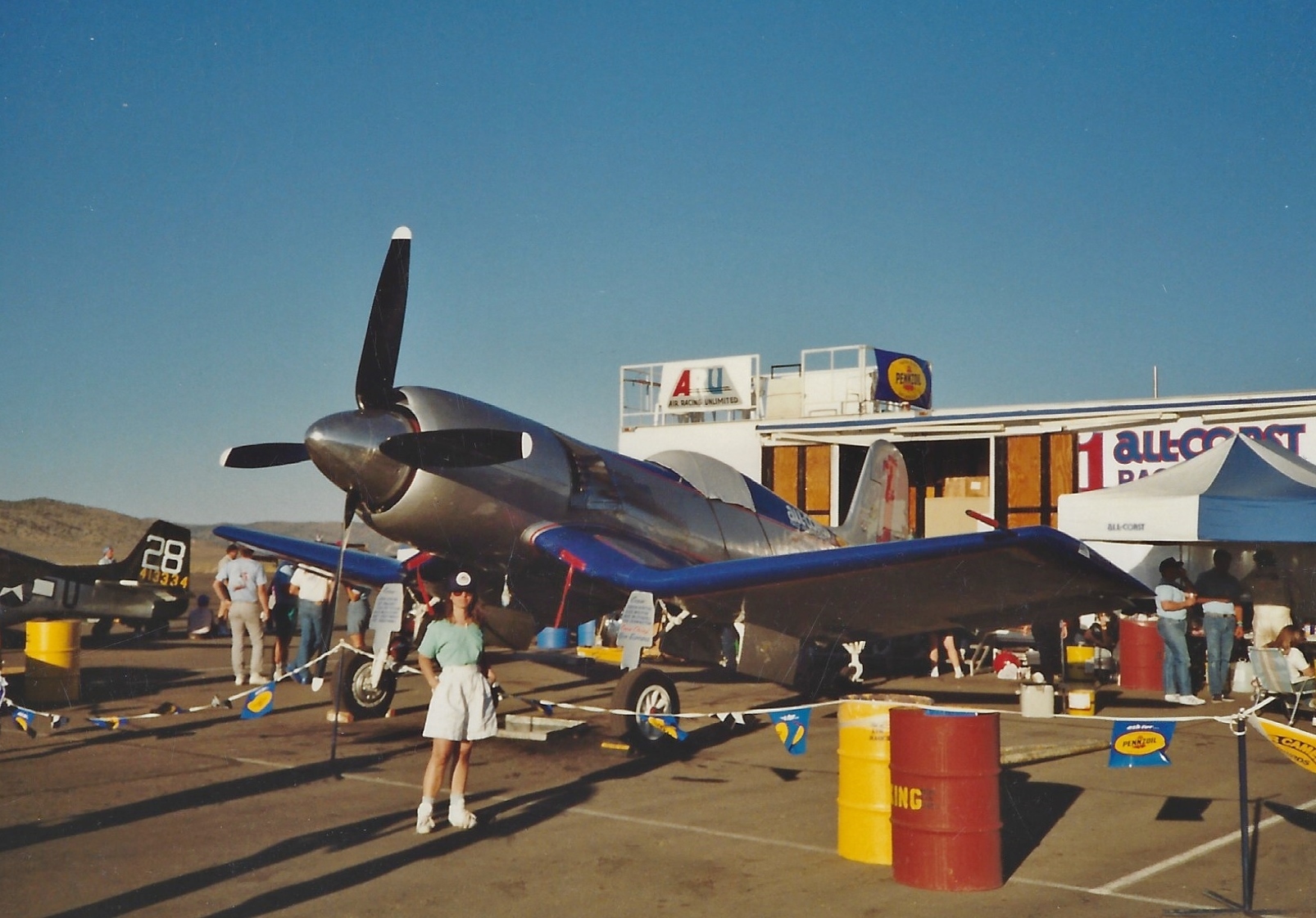
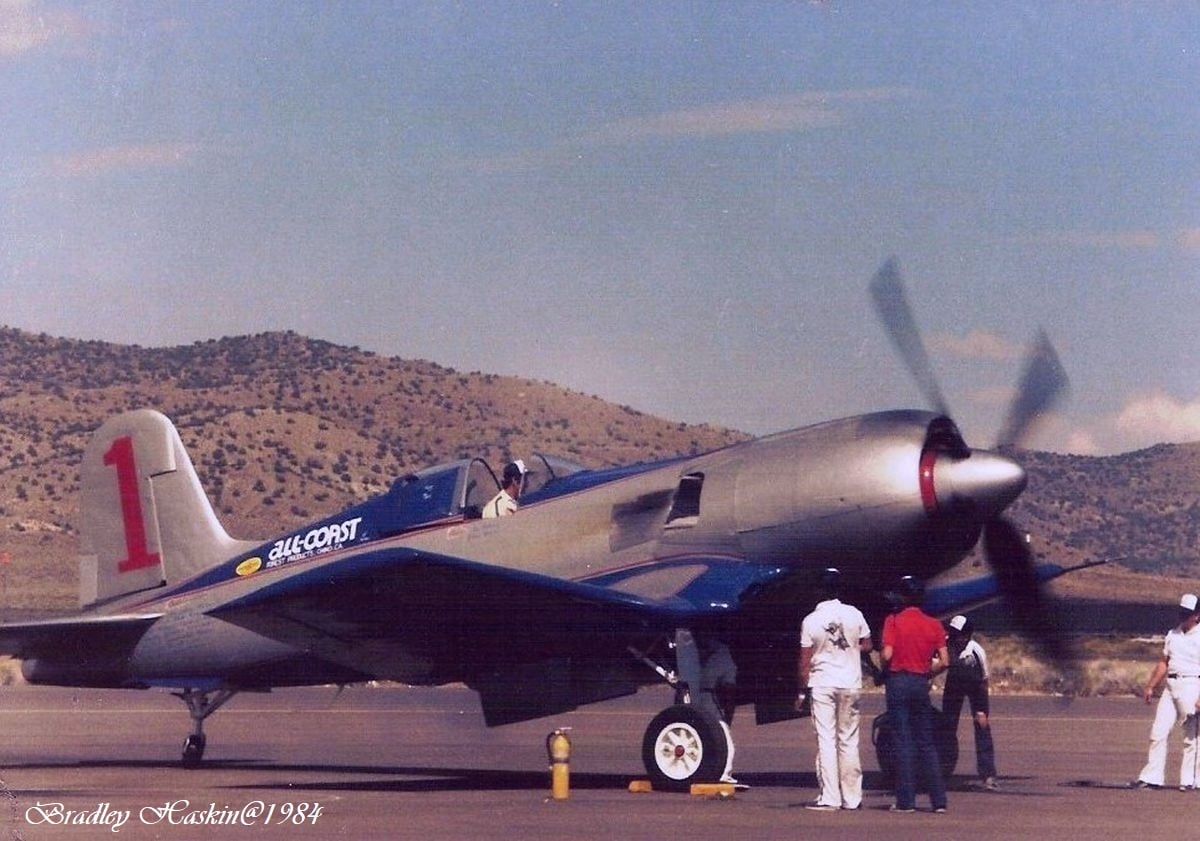
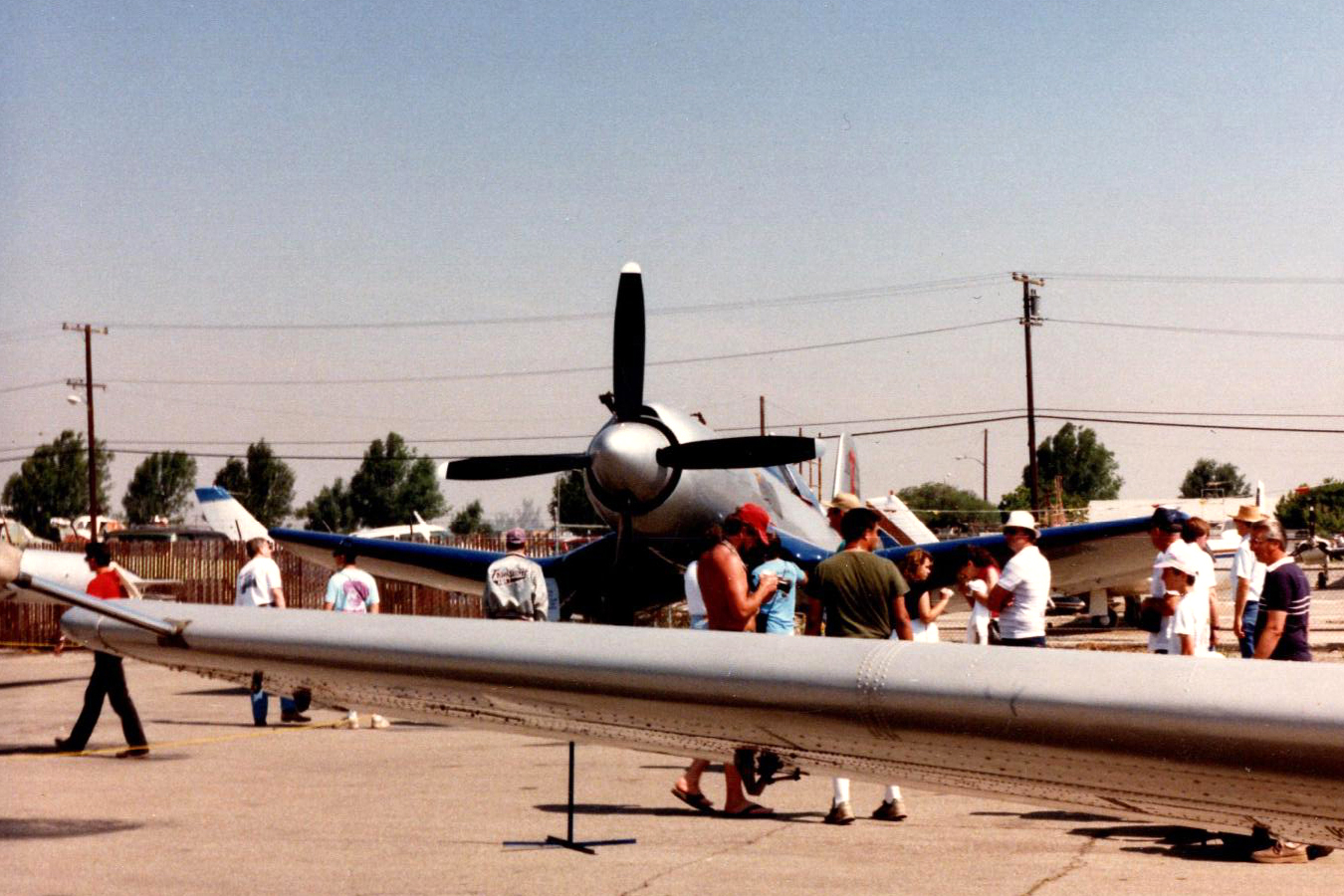
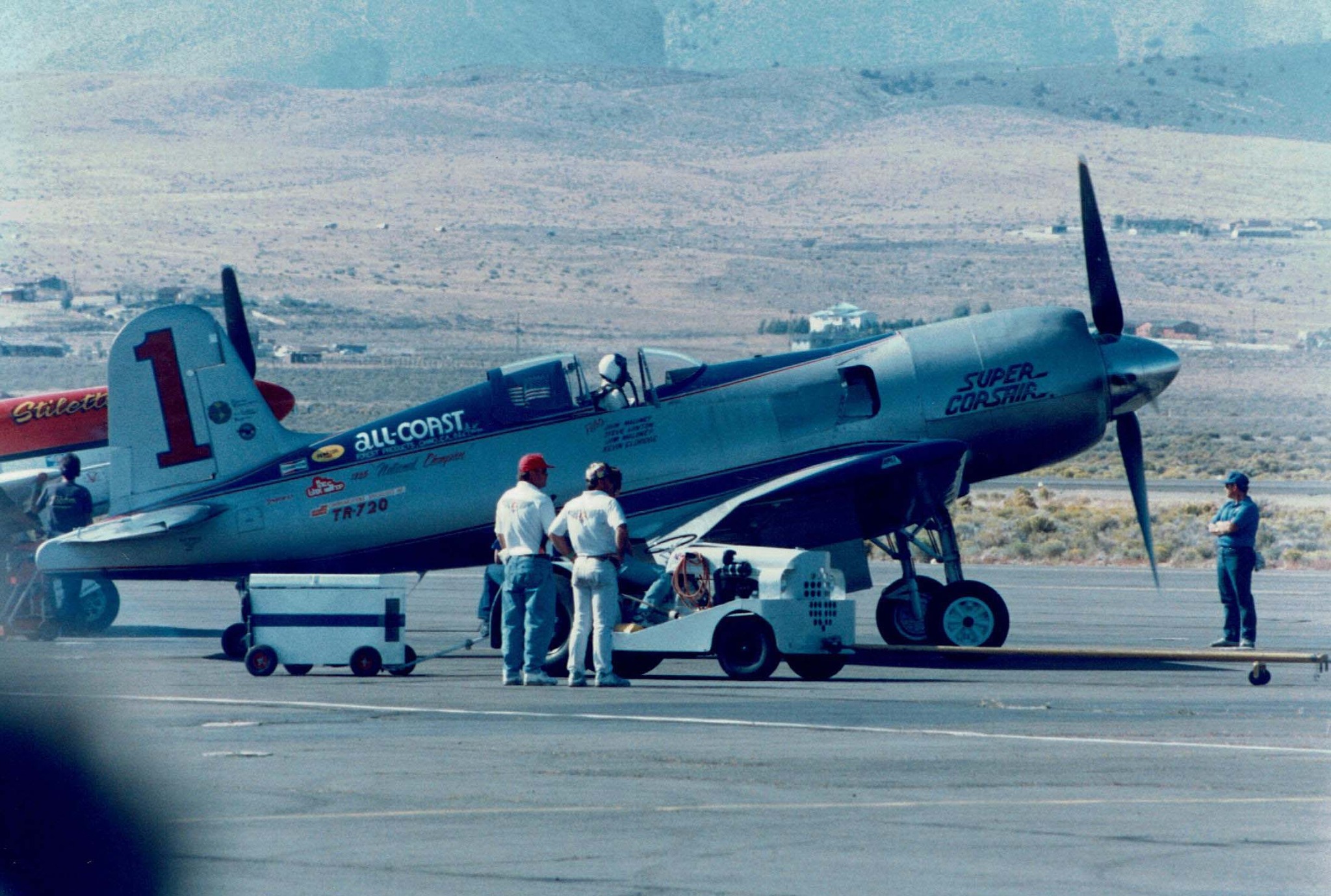
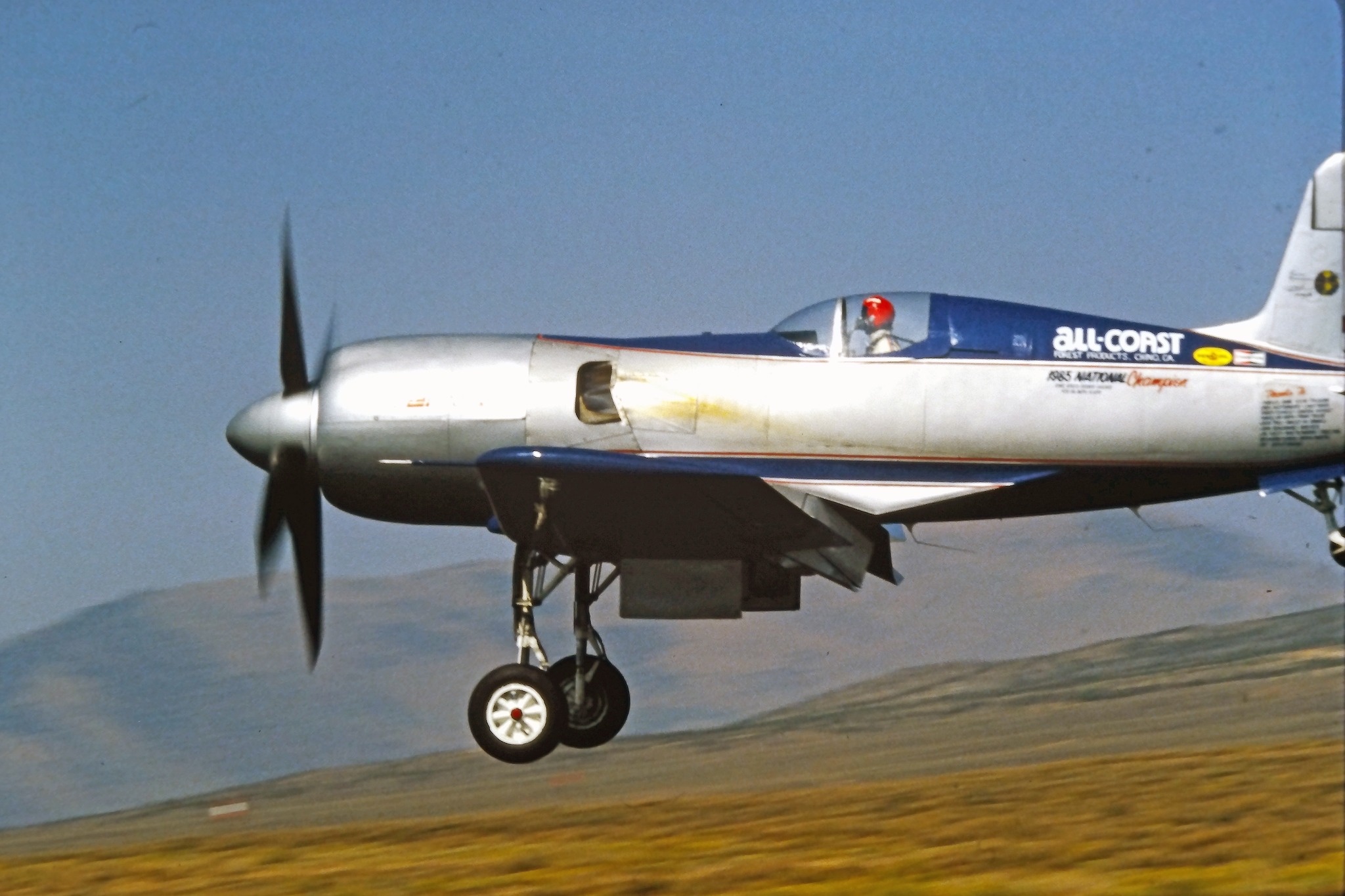
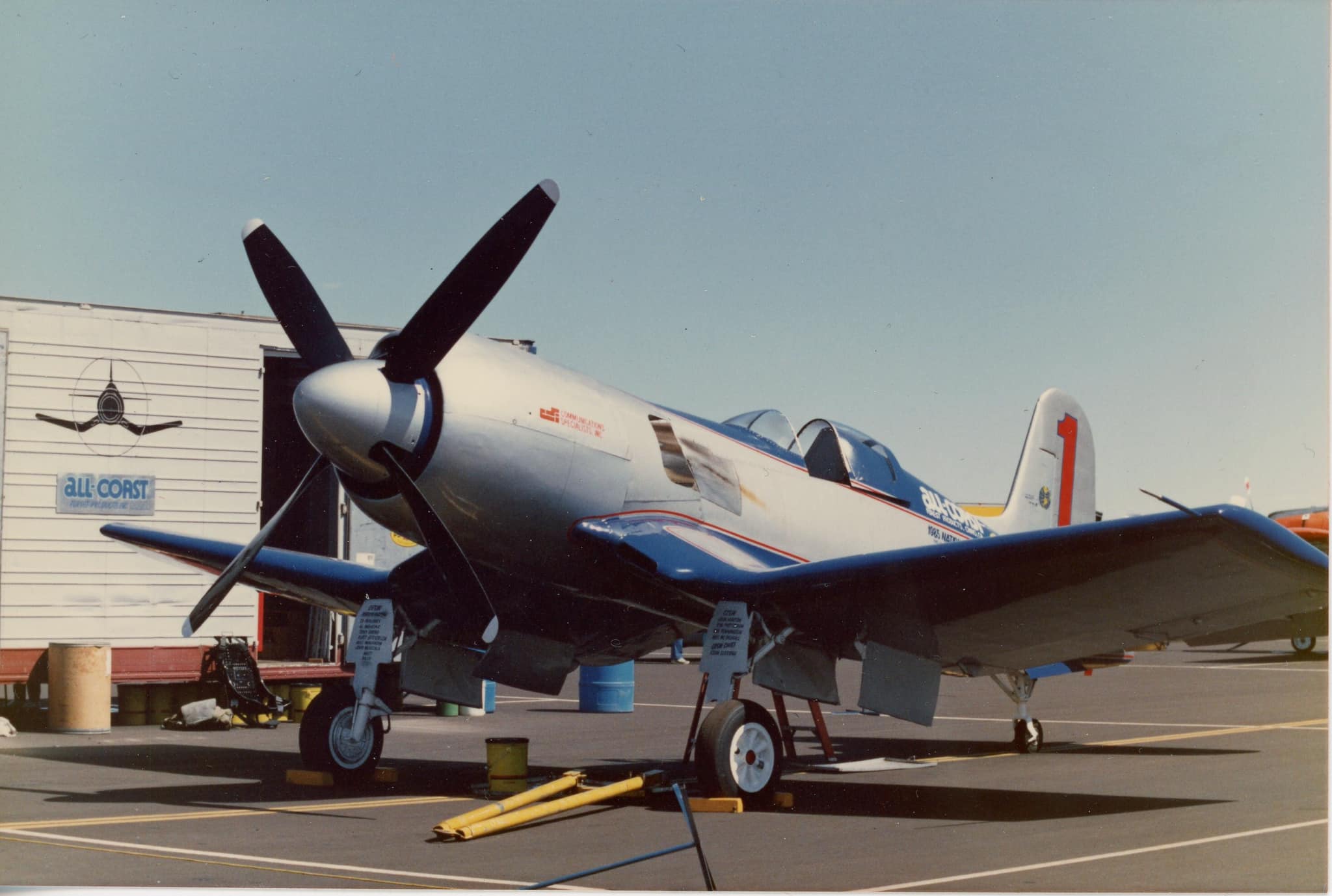
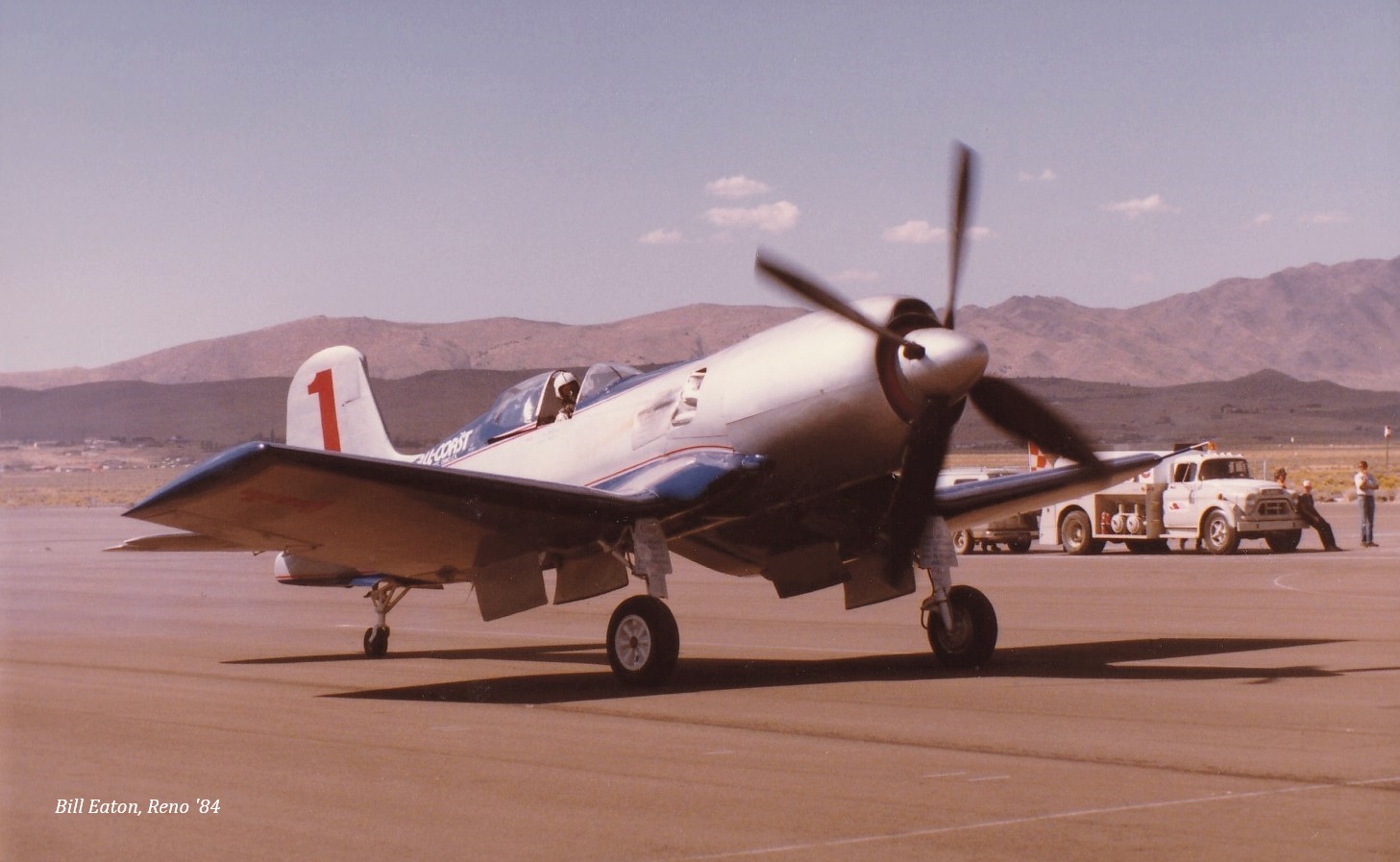
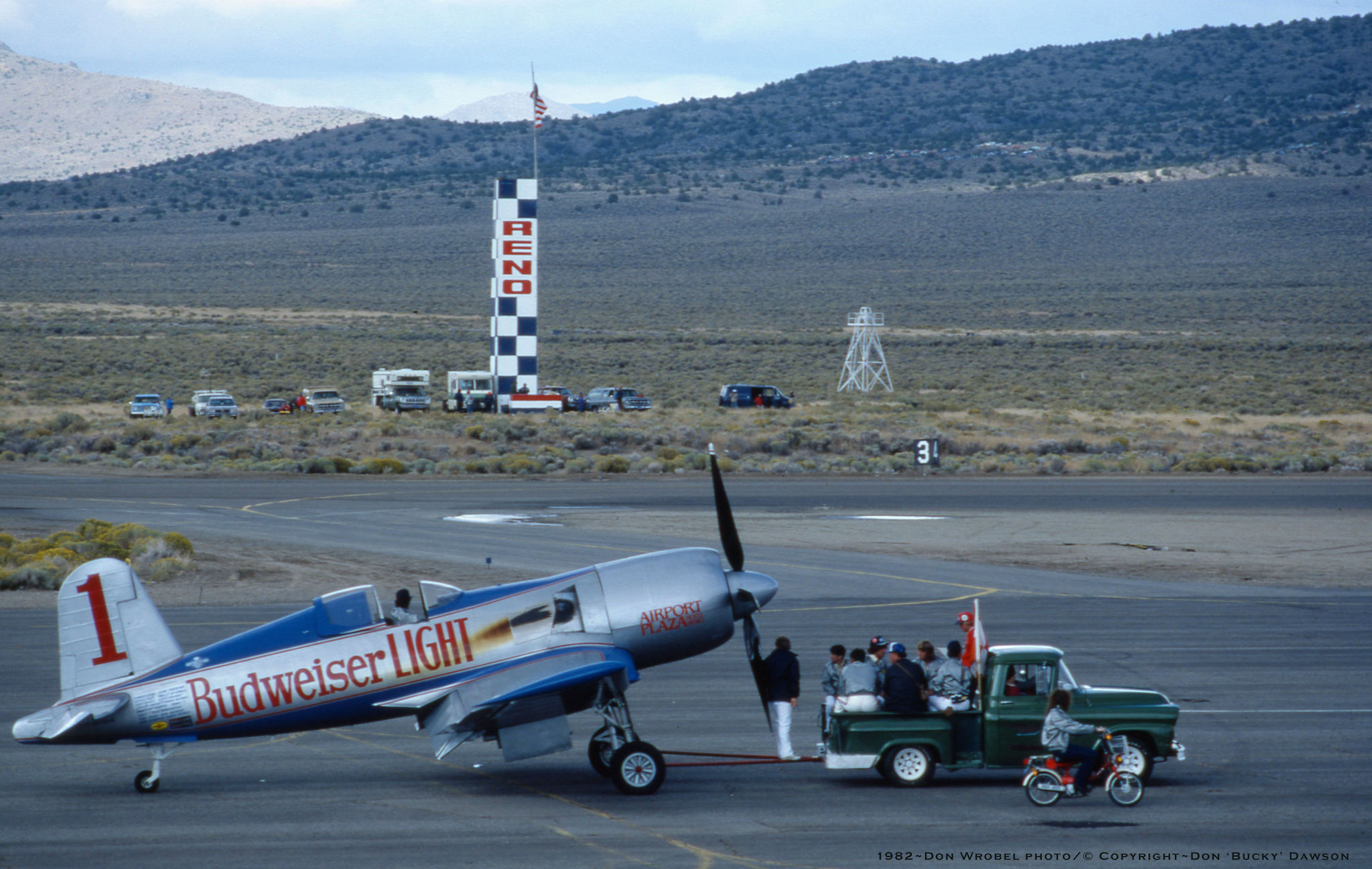
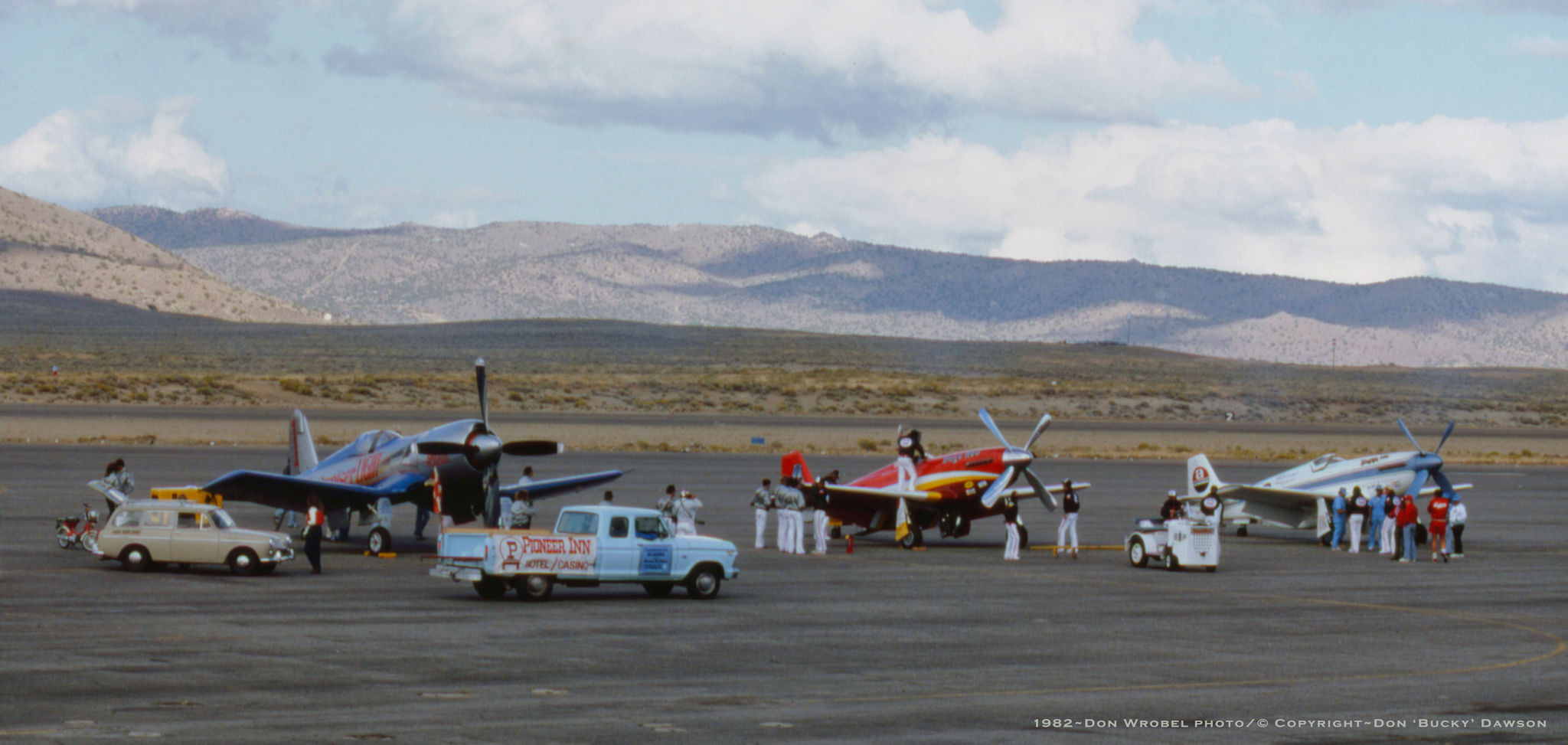
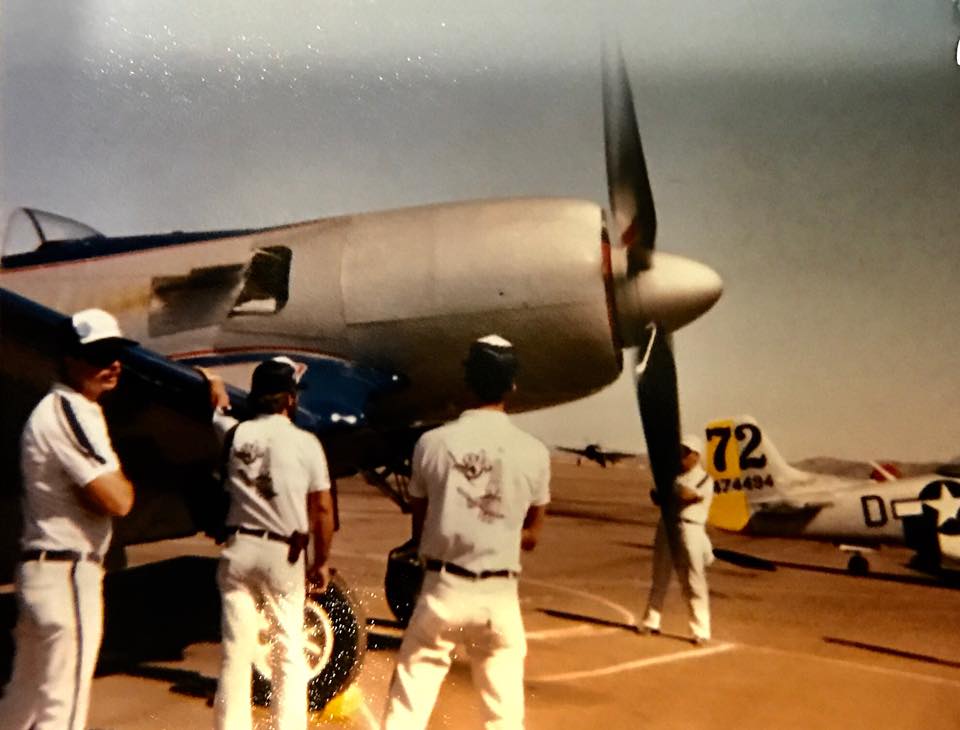
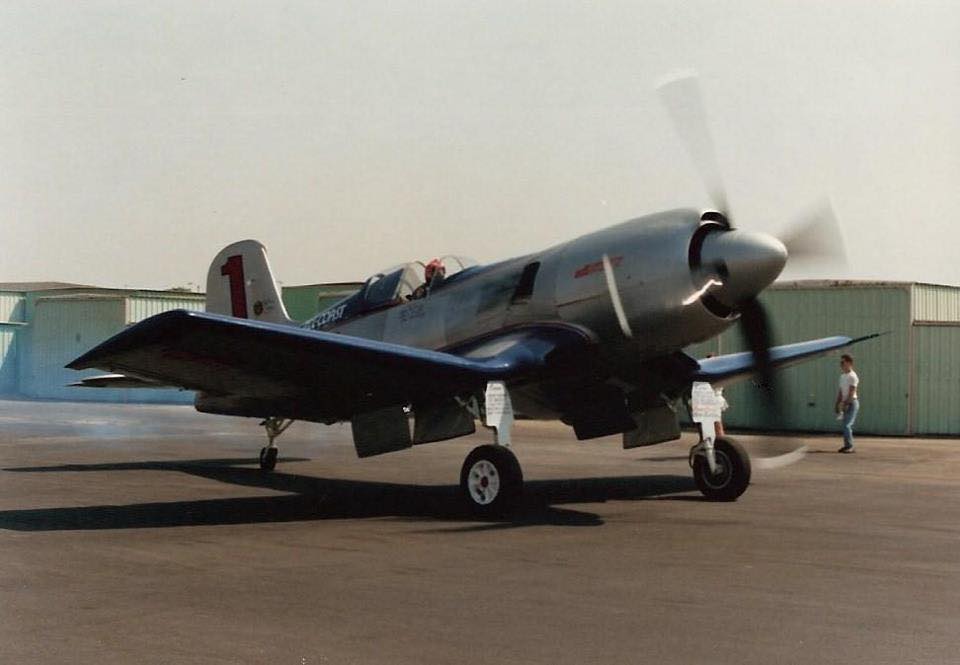
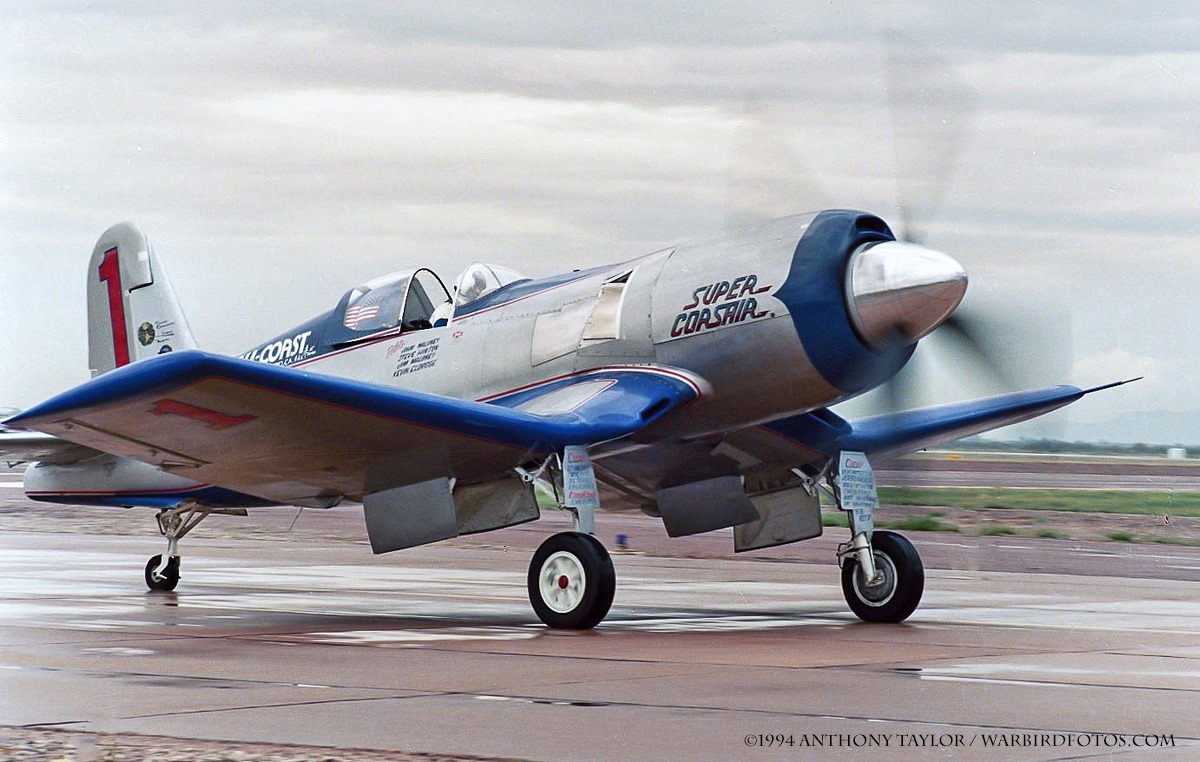
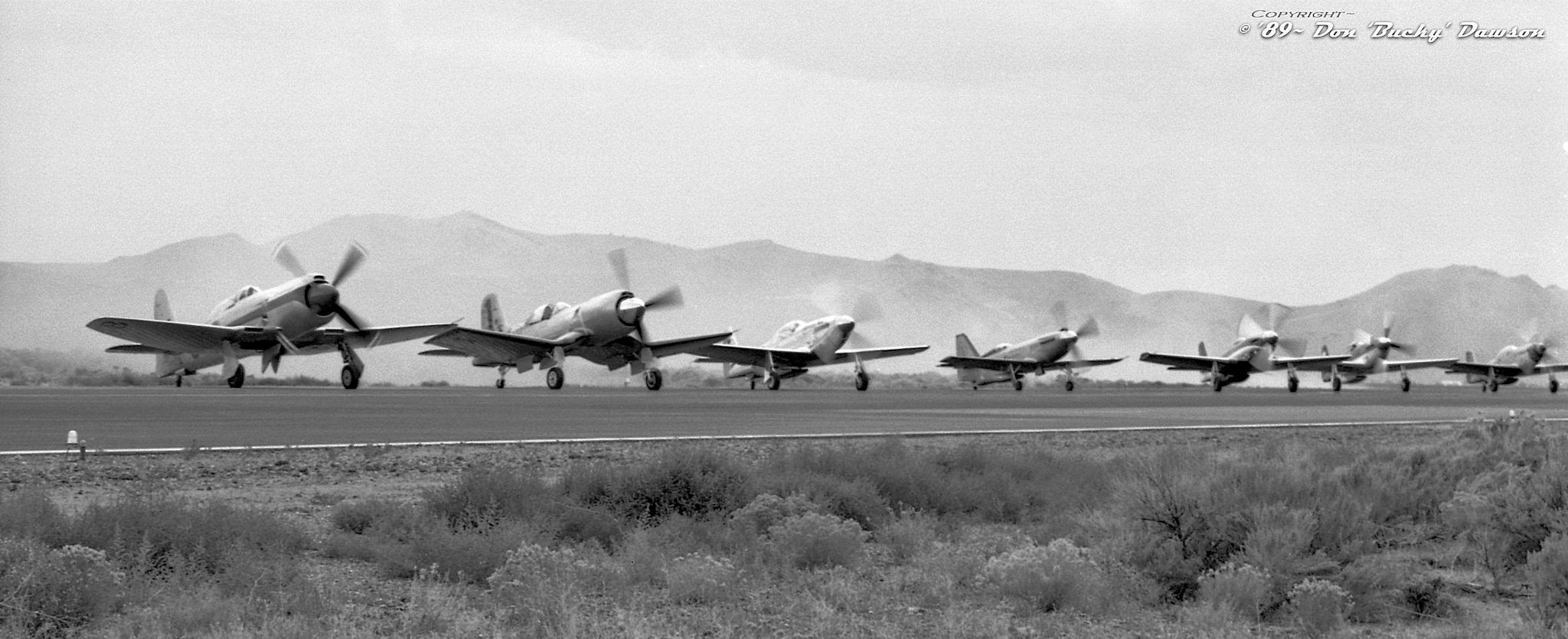
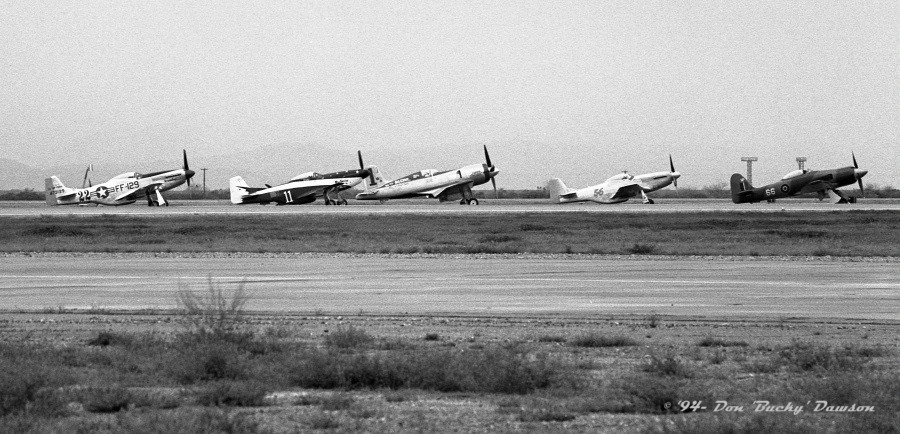
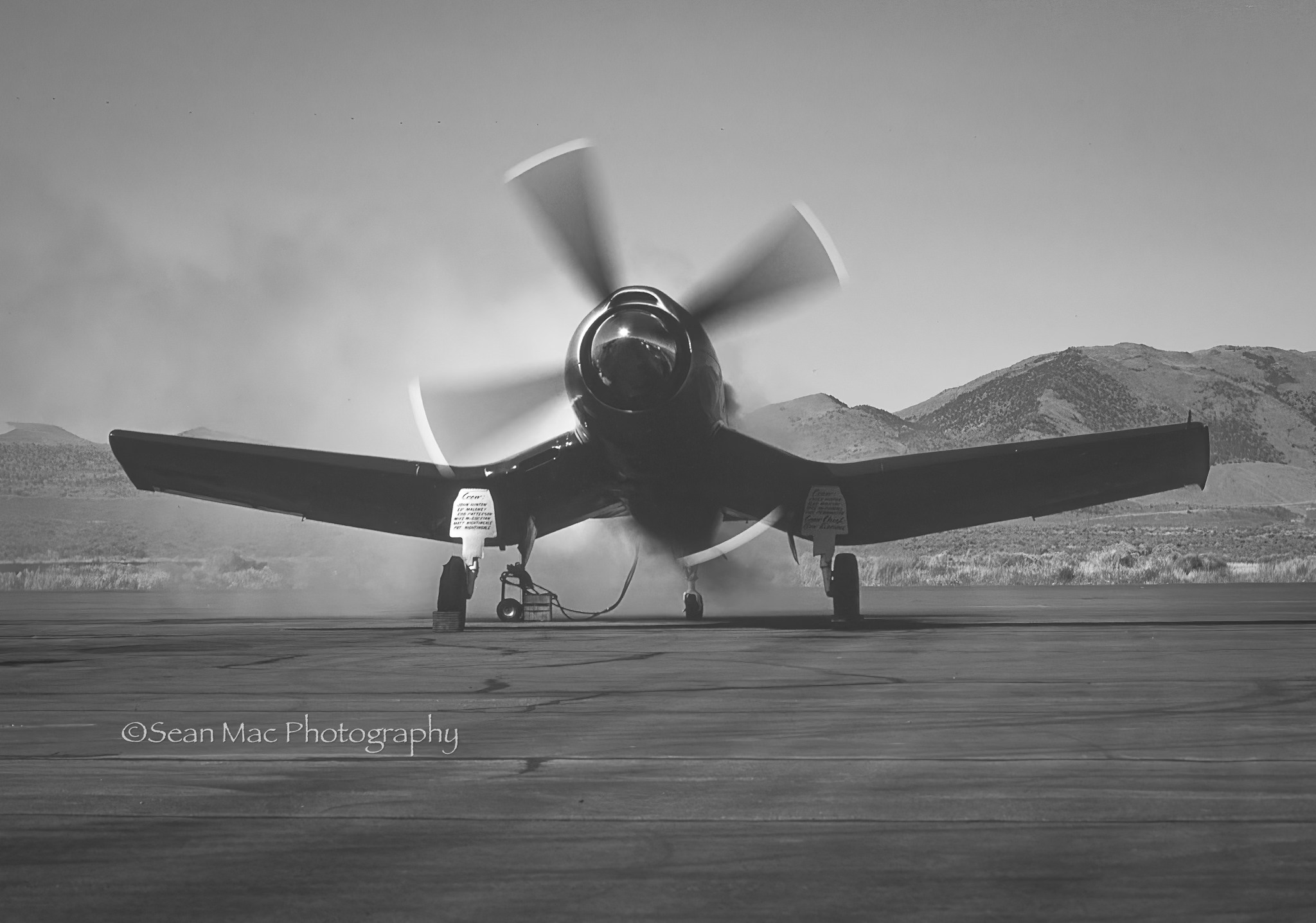
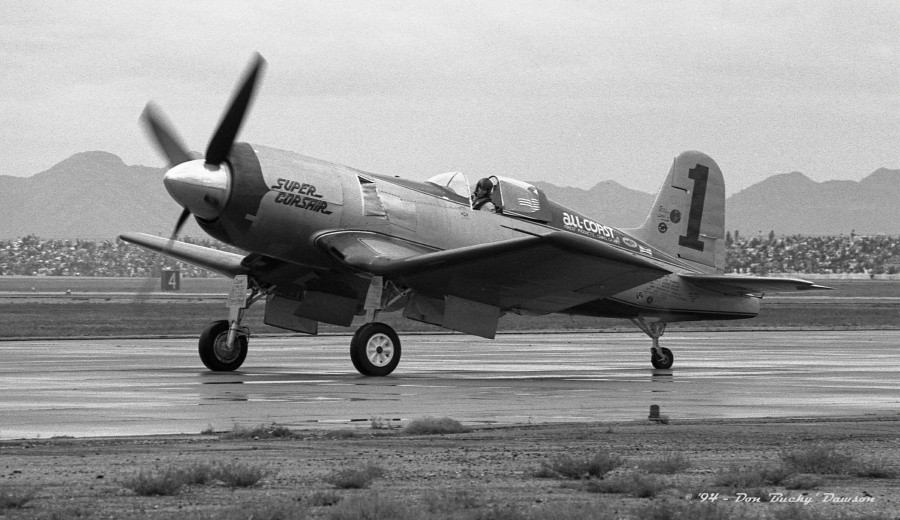
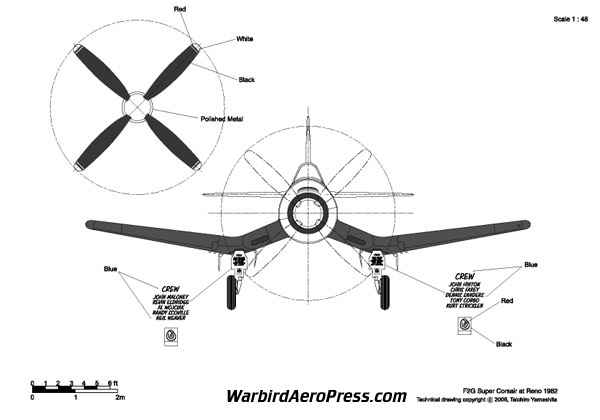
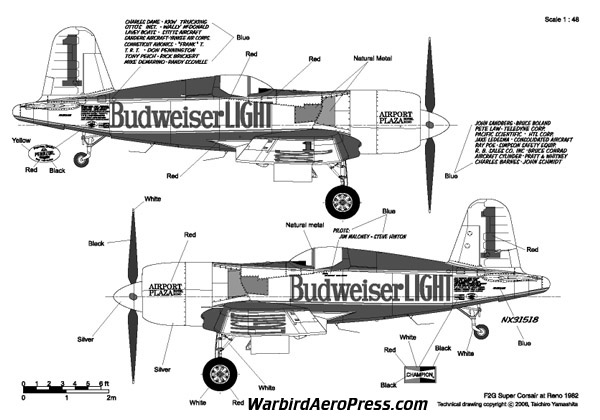
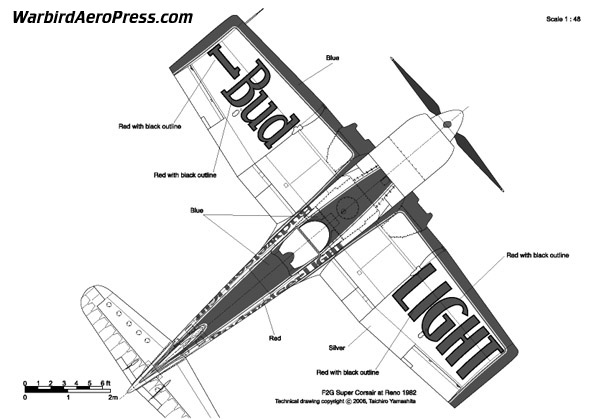
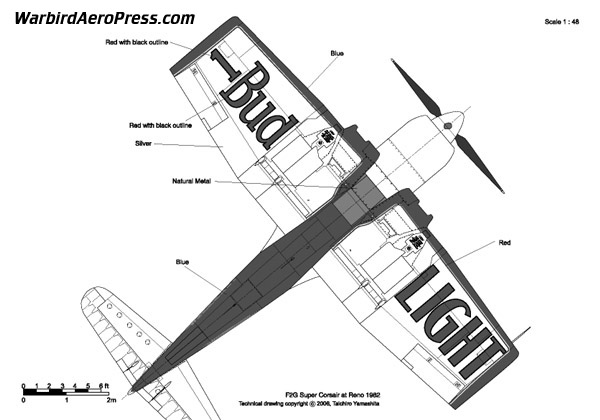
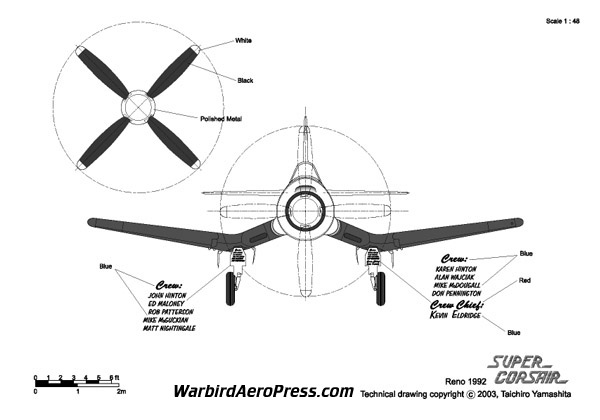
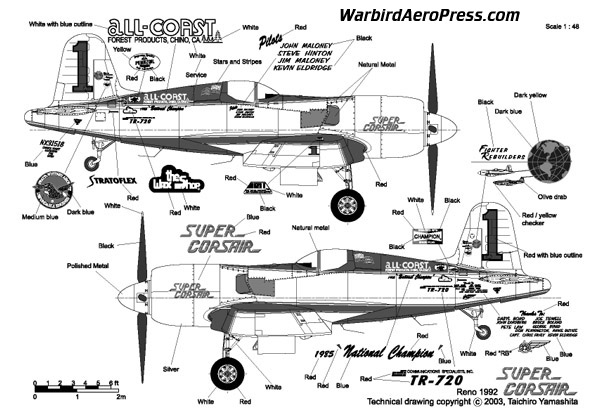
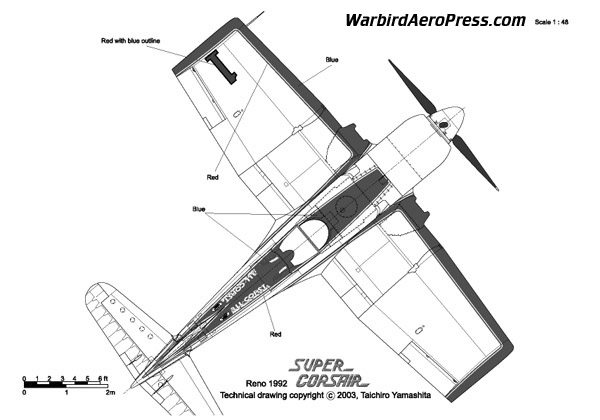
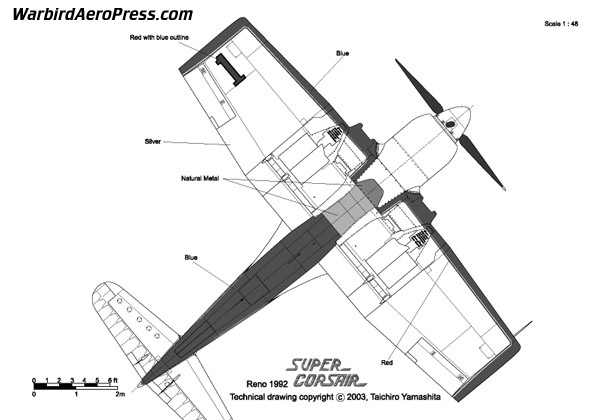
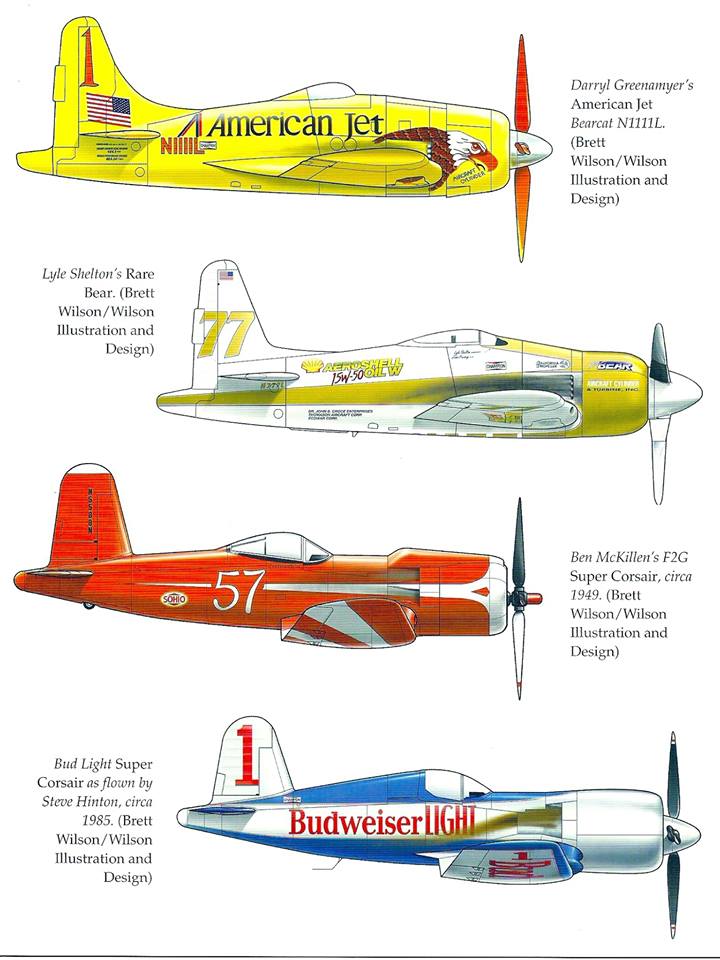
The story of the famous F4U Super Corsair “Budweiser Light 1” (N31518) is closely tied to the passion of aviation enthusiasts who sought to recreate the legendary racing spirit of the F2G Super Corsair.
For many aviation and scale modeling enthusiasts, the Super Corsair became a symbol of the ultimate piston-engine performance. For me personally, the fascination began when I came across a February 1983 issue of Aircraft Illustrated magazine. The article presented the Super Corsair as a tribute to one of the most impressive aircraft ever built from the Corsair family.
From that moment on, it was love at first sight. In many ways, that article was one of the reasons I eventually became a scale modeler.
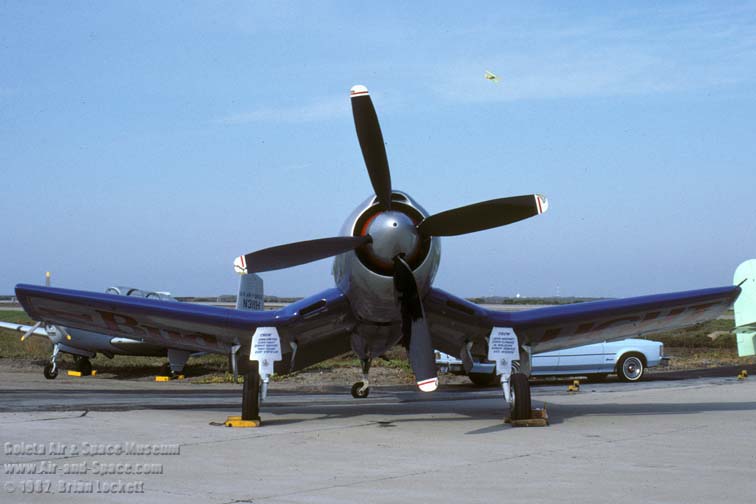
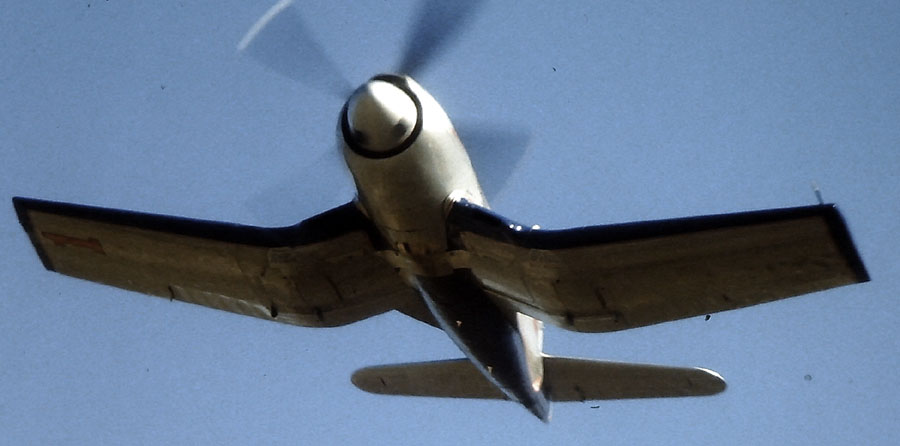
The F4U Corsair remains one of the most recognizable aircraft ever built. With its distinctive inverted gull wings, impressive speed, and outstanding combat performance during World War II, the Corsair established itself as one of the most successful fighter aircraft operated by the United States Navy and Marine Corps.
Despite its fame, for many years very little information was available about racing Corsairs or about its powerful descendant, the F2G Super Corsair.
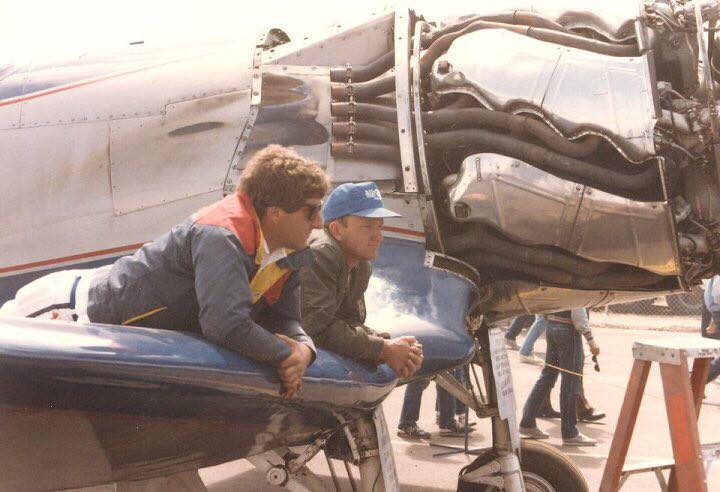
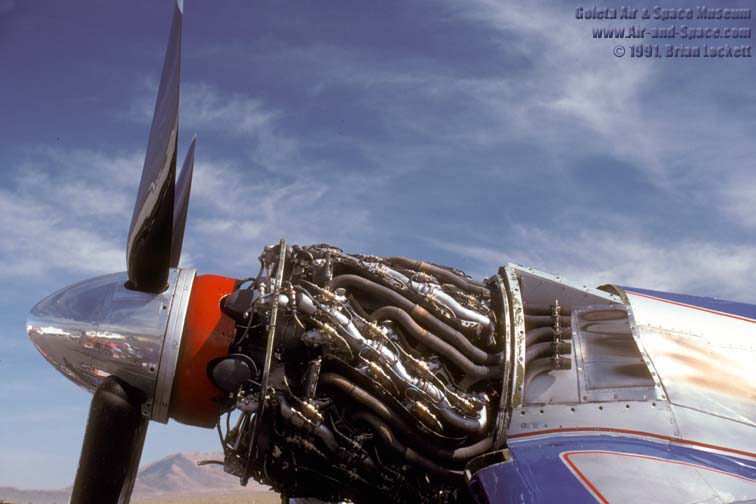
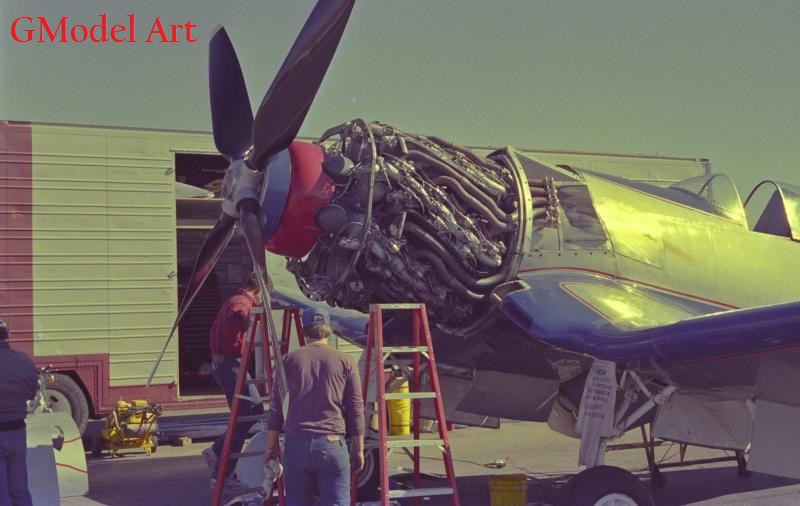
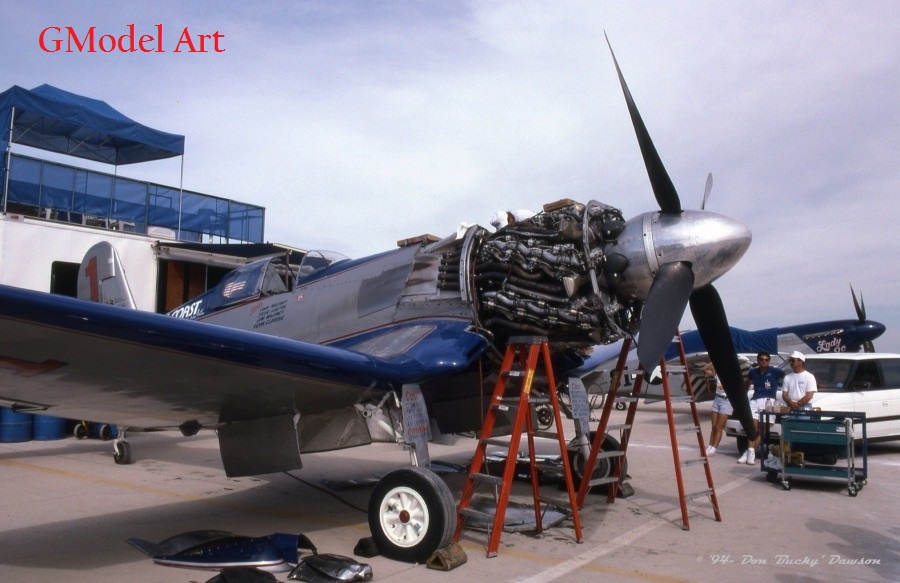
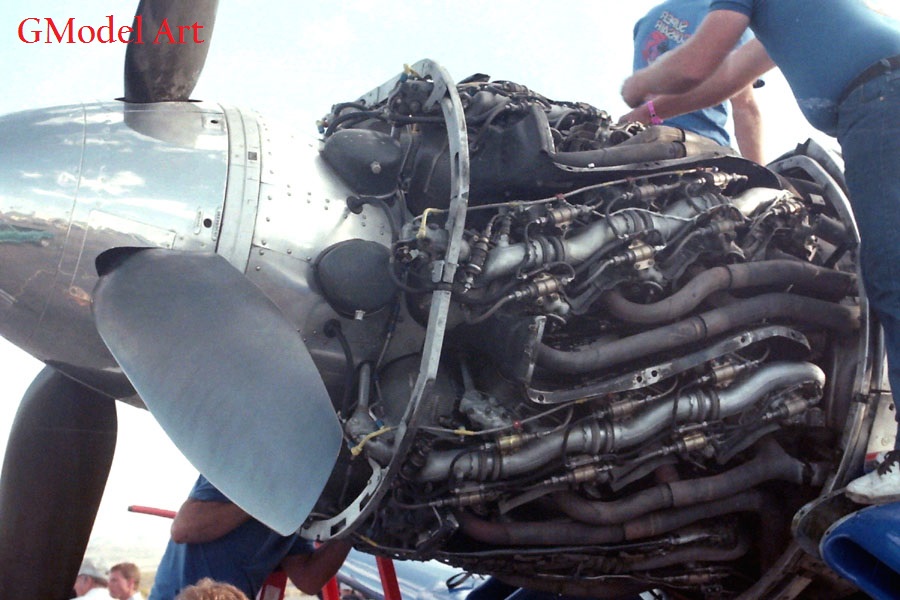
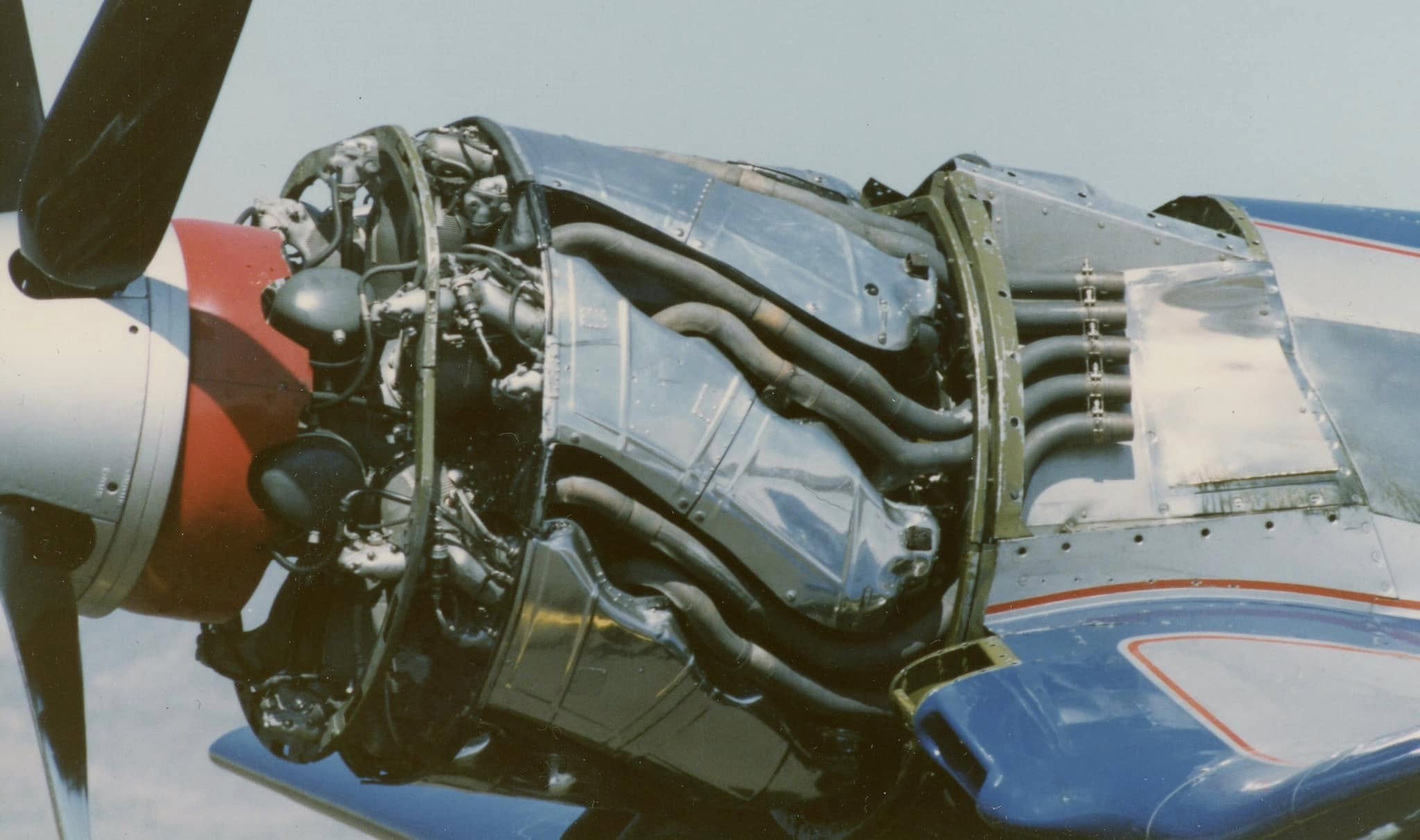
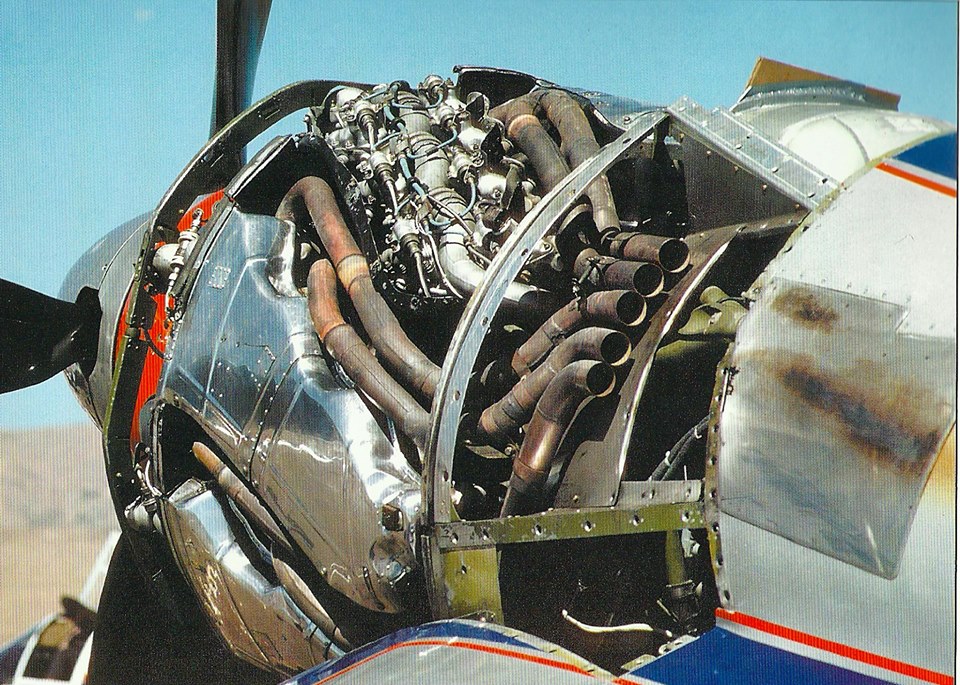
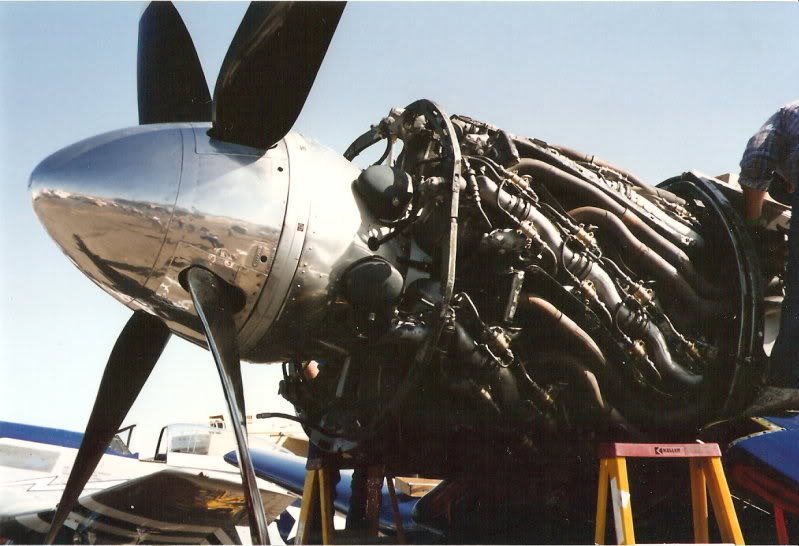
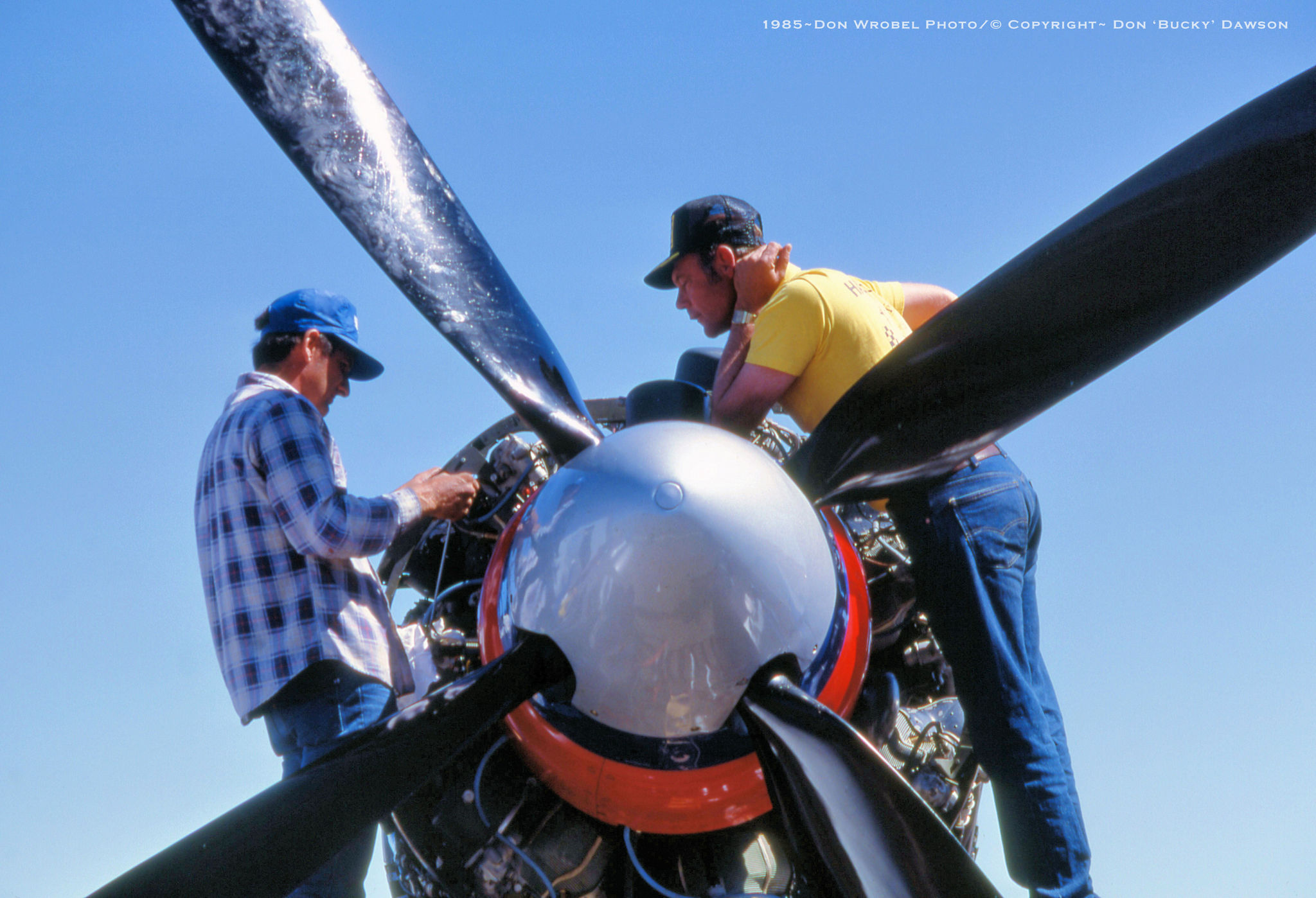
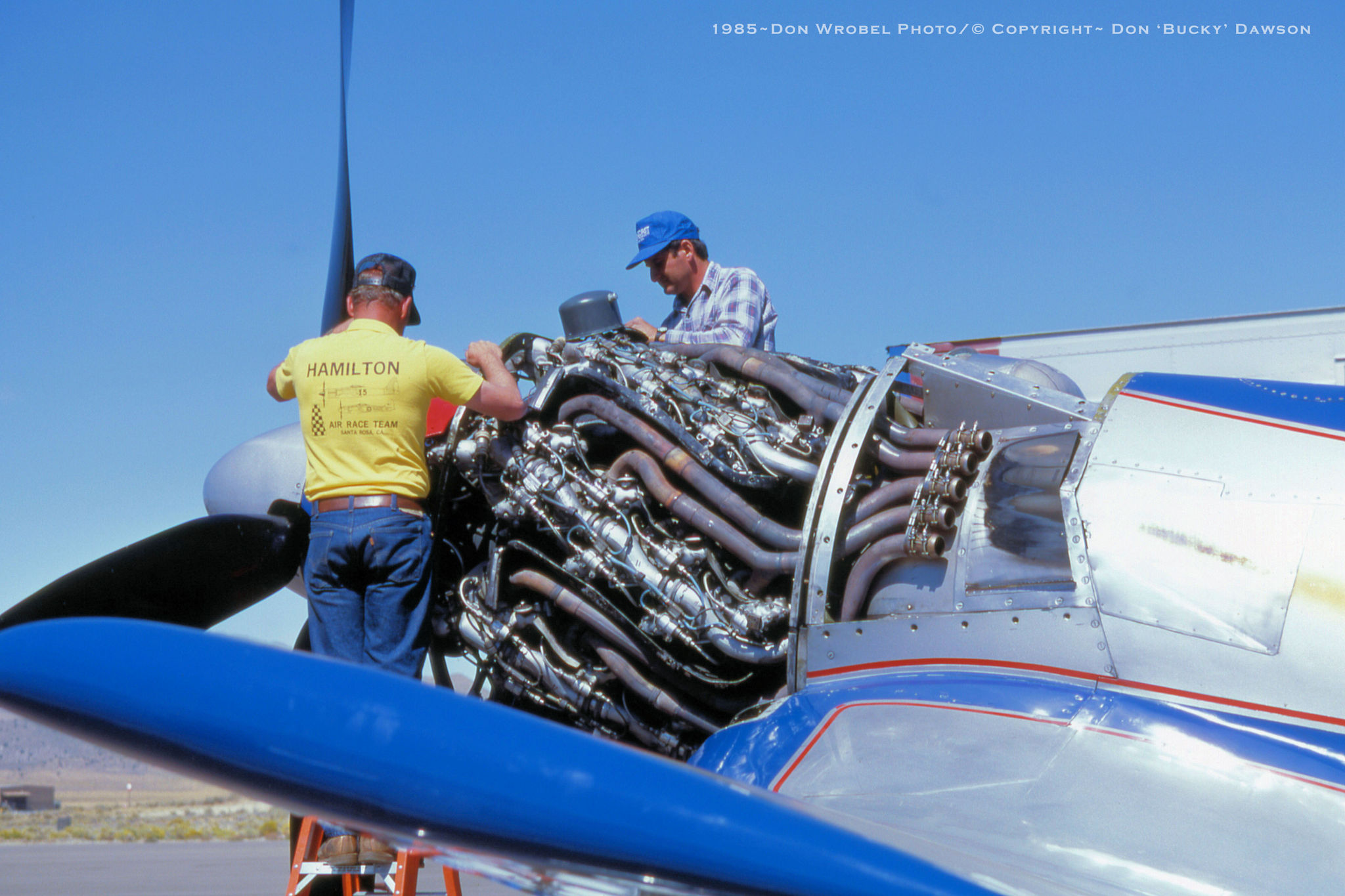
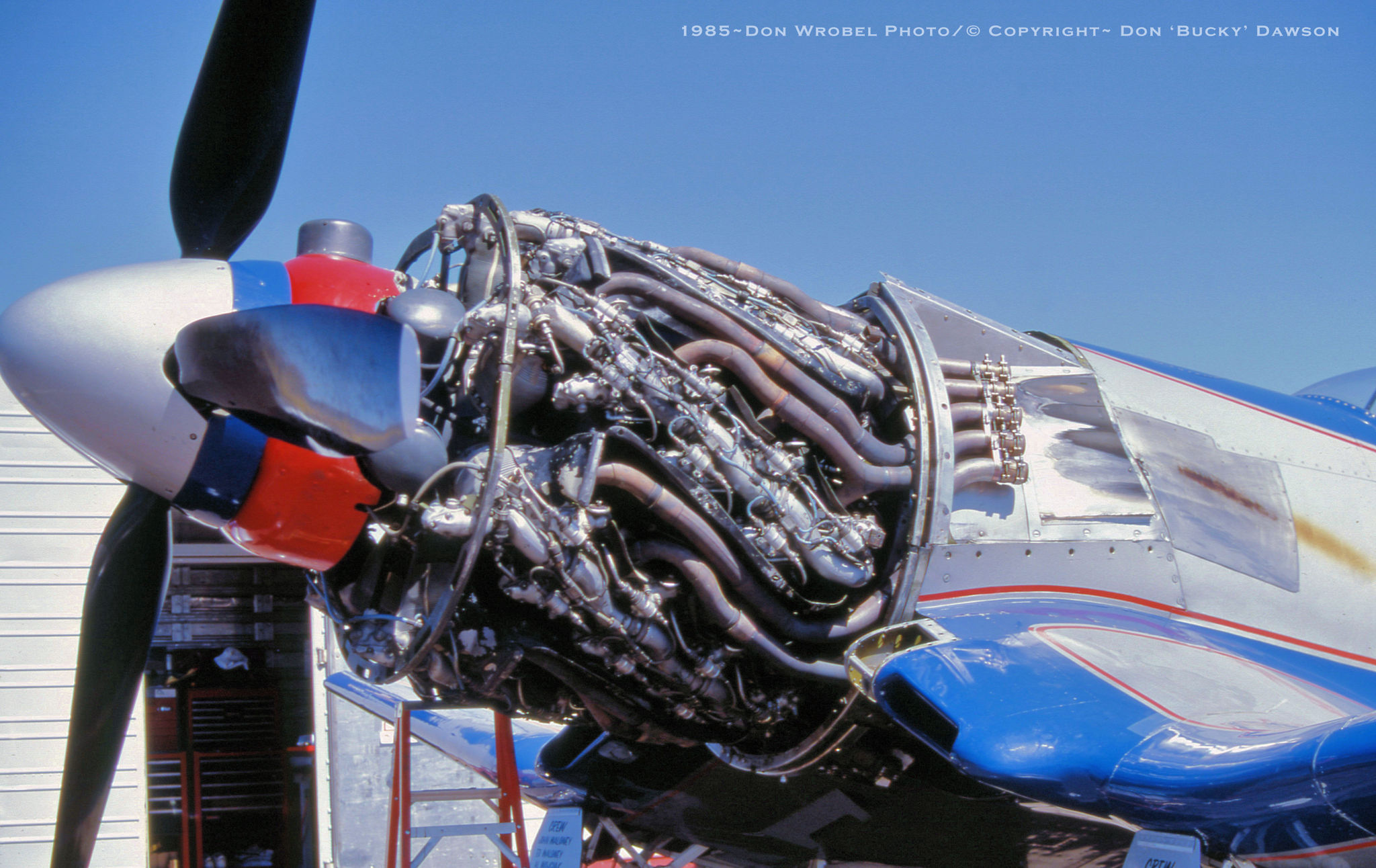
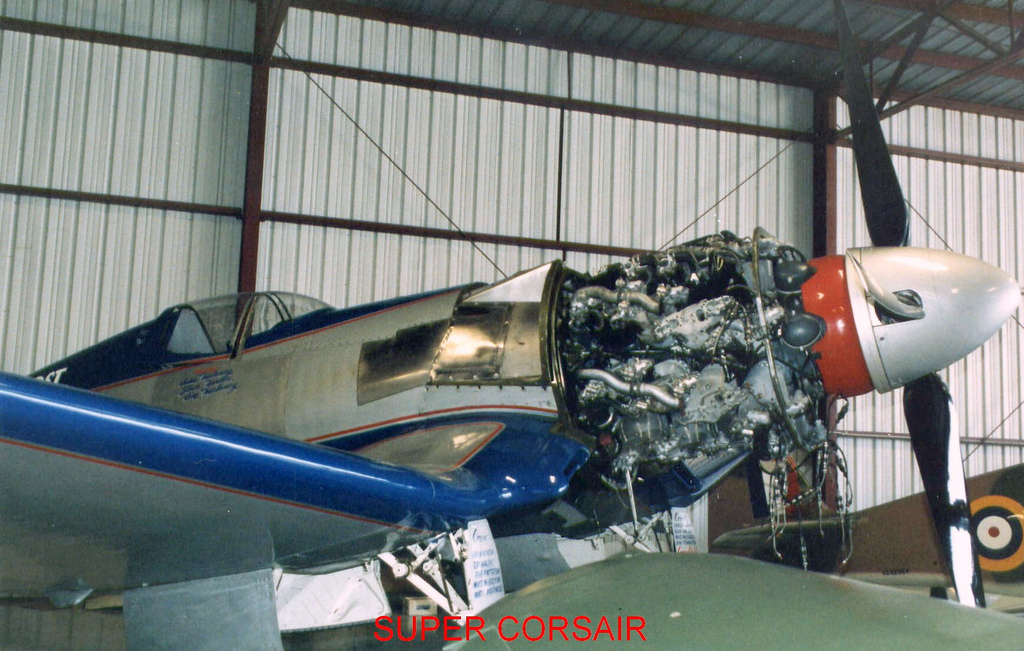
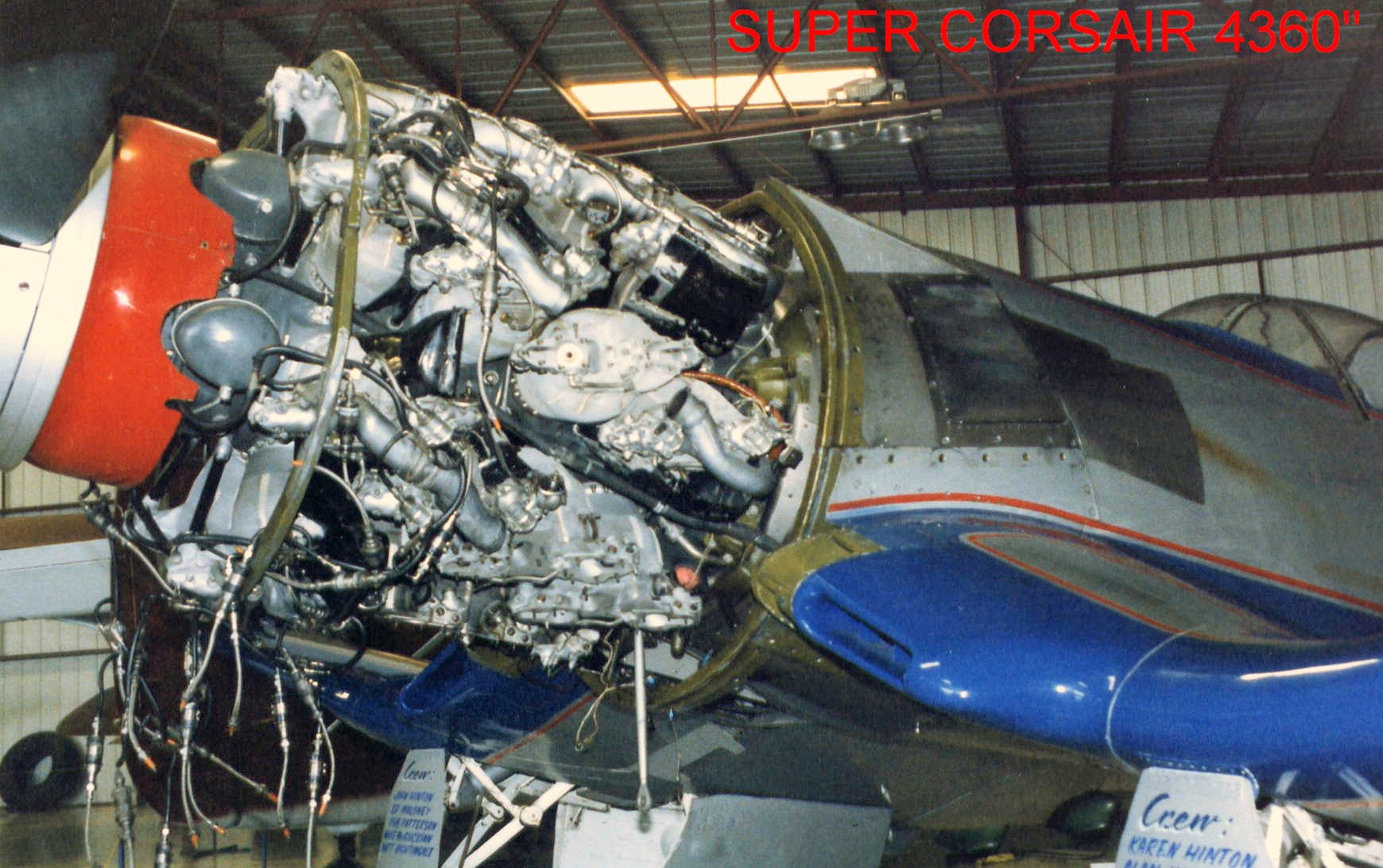
What made the aircraft truly fascinating was its enormous engine: the Pratt & Whitney R-4360 Wasp Major, one of the most powerful piston engines ever installed in a fighter aircraft. Producing around 3,000 horsepower, it was capable of pushing the aircraft to speeds approaching 450 mph.
The original F2G Super Corsair program began in 1945 when Goodyear installed the massive R-4360 engine into newly built Corsair airframes.
Only a small number of aircraft were completed — approximately 17 in total.
These aircraft were intended to serve as high-performance interceptors against Japanese attacks during the final phase of World War II.
Unfortunately, the war ended before the evaluation program was completed, and the aircraft never entered operational combat service.
After the war, several of these aircraft were sold to private owners and eventually found their way into air racing. This is where the legend of the Reno Racing Corsairs truly began.
Decades later, the idea of recreating a modern racing version of the Super Corsair emerged among a group of aviation enthusiasts based in Chino, California.
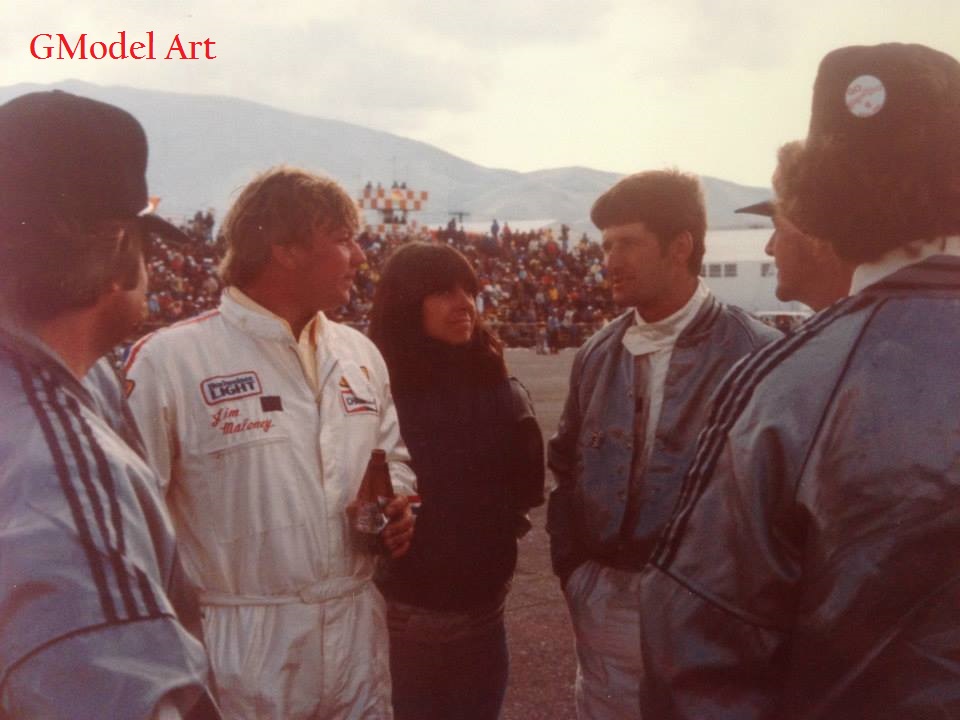
The driving force behind the project was Jim “Chino Kid” Maloney, who envisioned building a modern Unlimited Class racing aircraft inspired by the legendary F2G Super Corsair.
In 1978, several surplus Corsair aircraft were repatriated to the United States from Honduras. One of these aircraft would eventually become the foundation for the future racing Super Corsair.
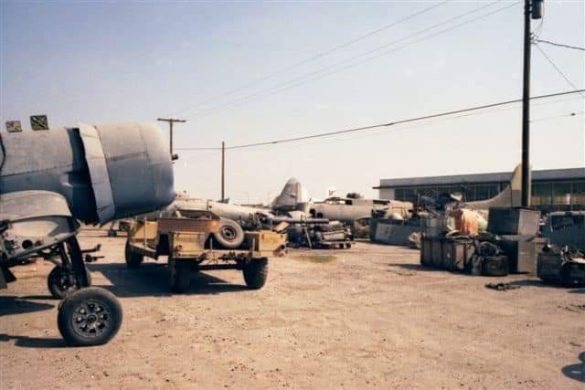
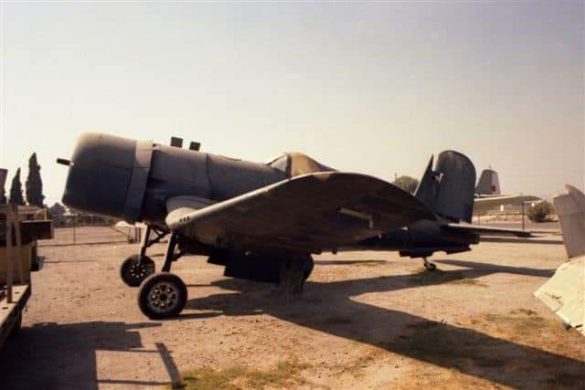
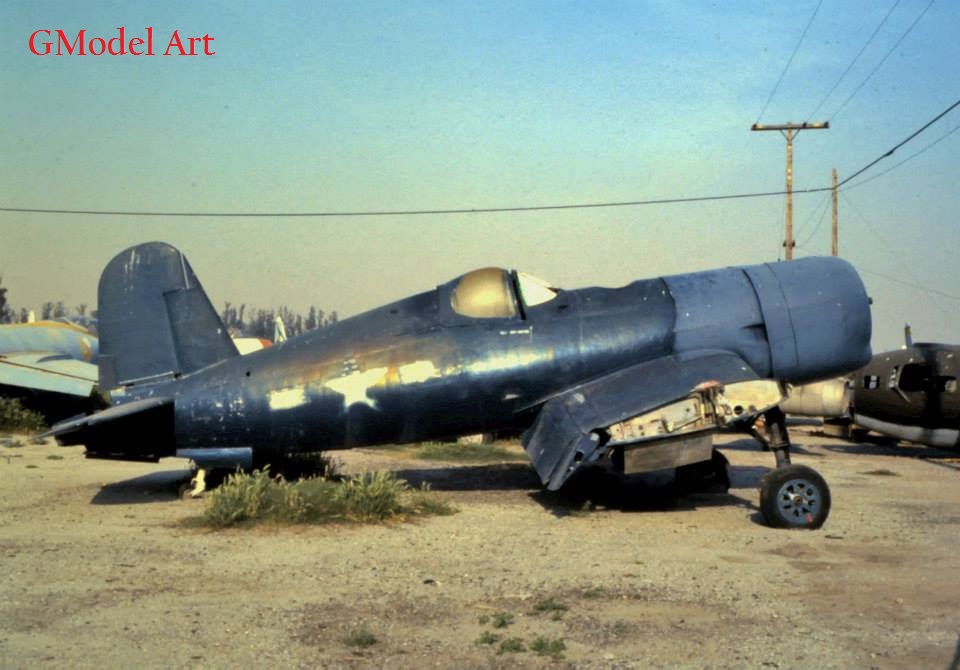
The aircraft selected for the project carried the registration N17799 and was originally an F4U-1D Corsair.
Interestingly, the aircraft had previously appeared in the Hollywood television series “Black Sheep Squadron.”
According to some sources and photographs, the aircraft retained several F4U-1D characteristics such as the cockpit layout and canopy. However, other sources describe it as an F4U-4 Corsair configuration BuNo (Bureau NumberIt is not known. ) since it was equipped with the R-2800-18W engine at that time.
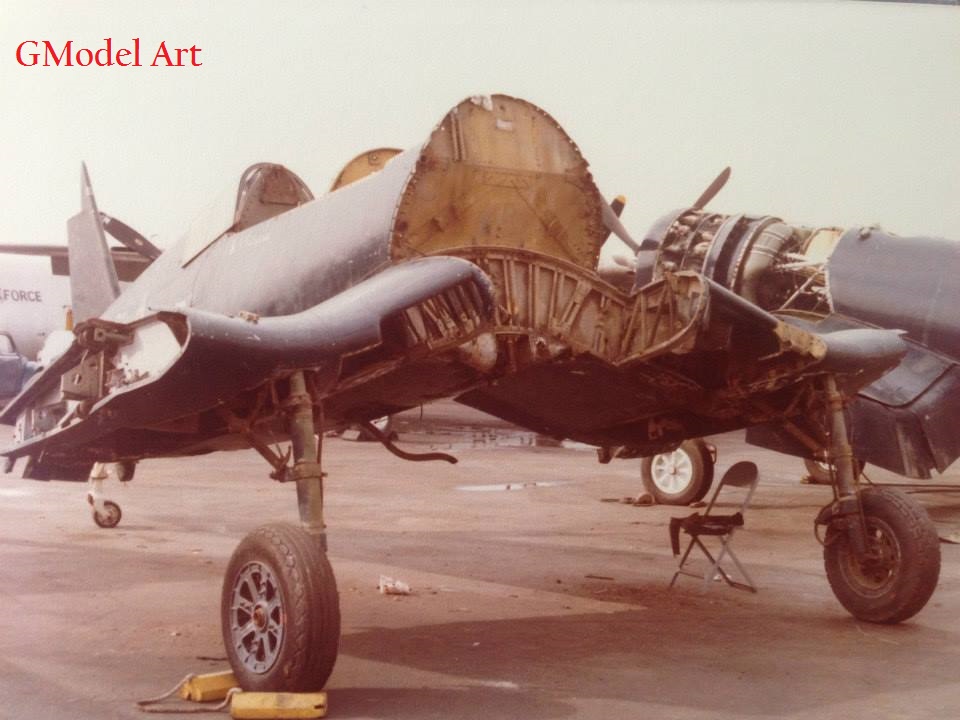
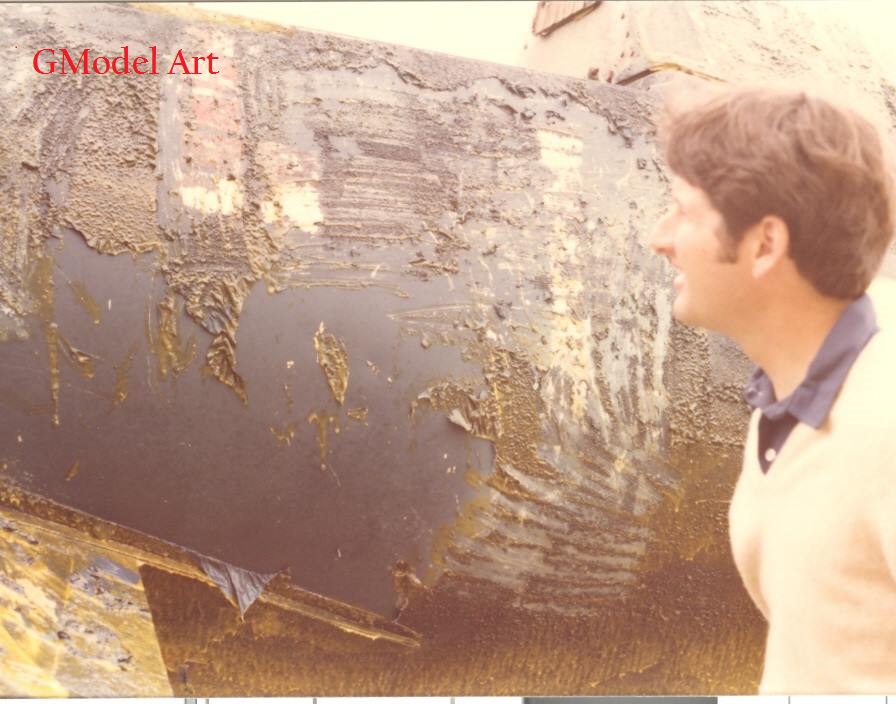
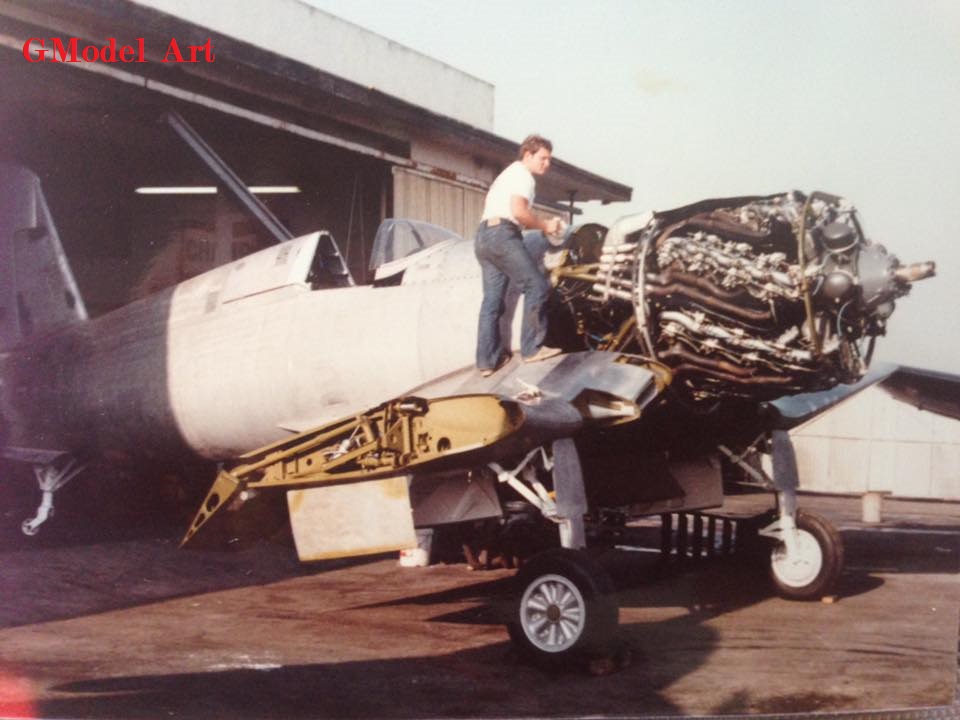
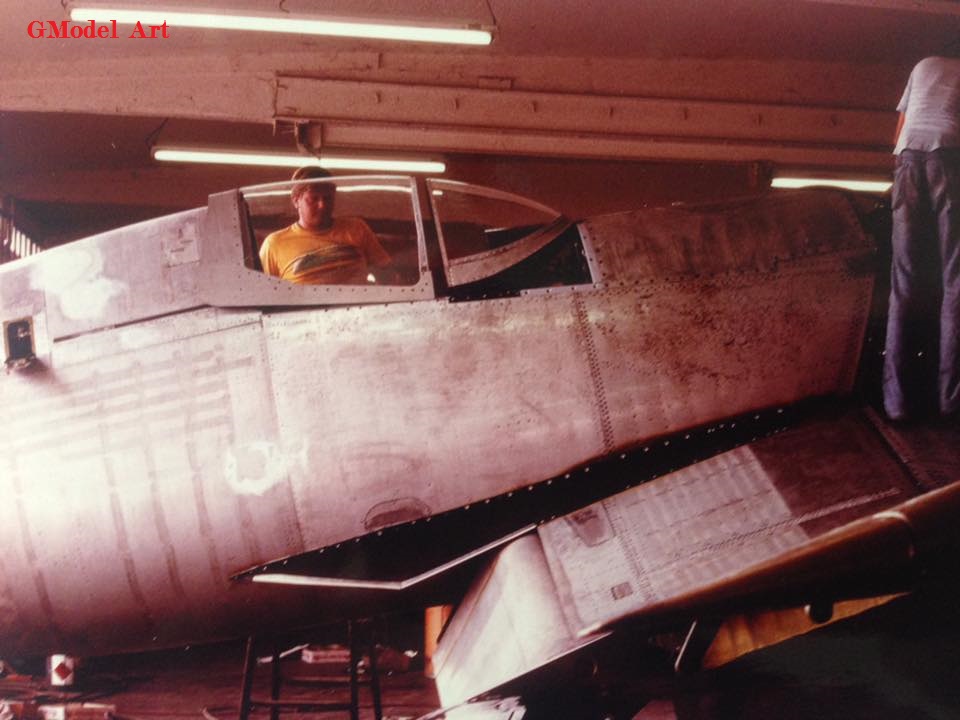
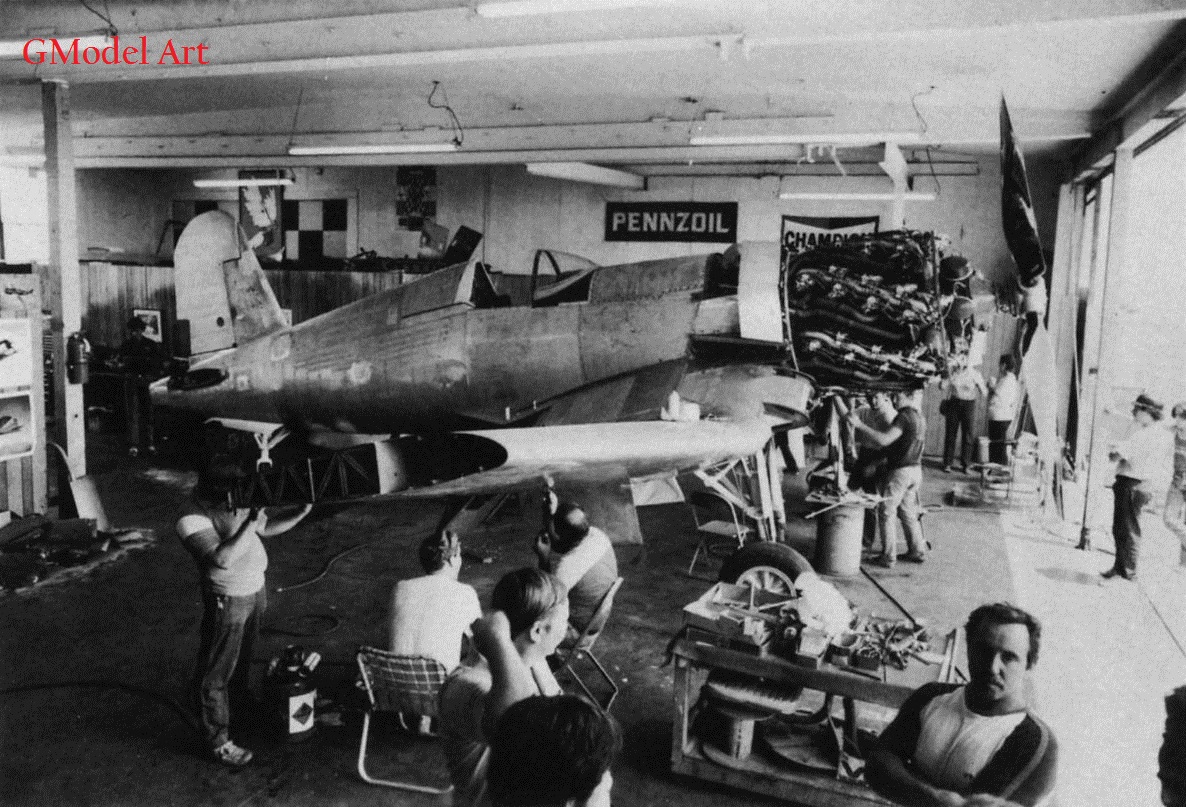
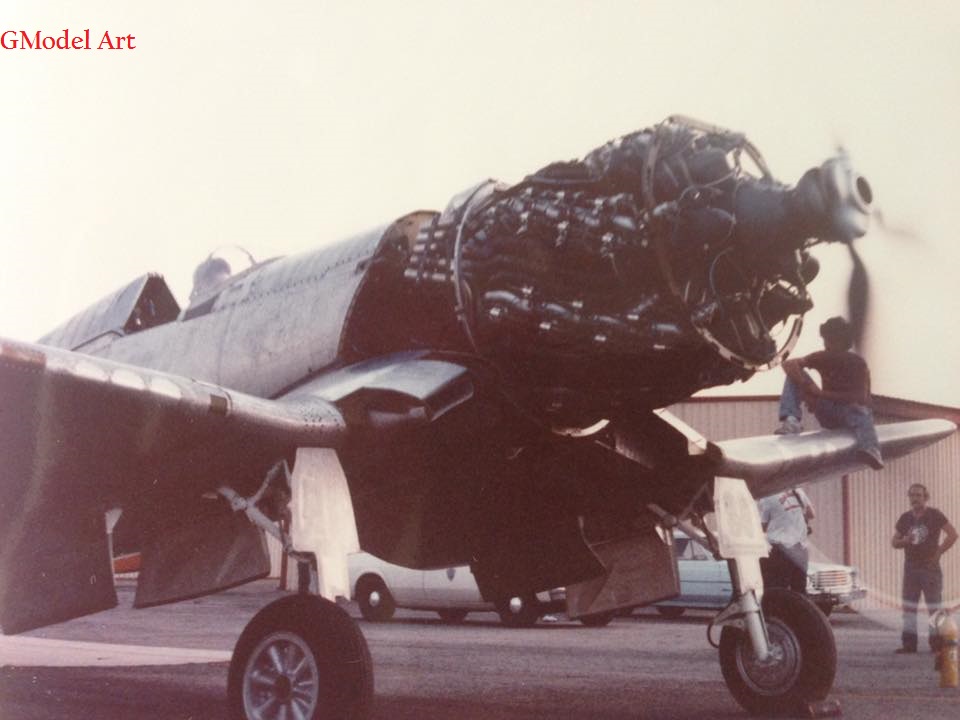
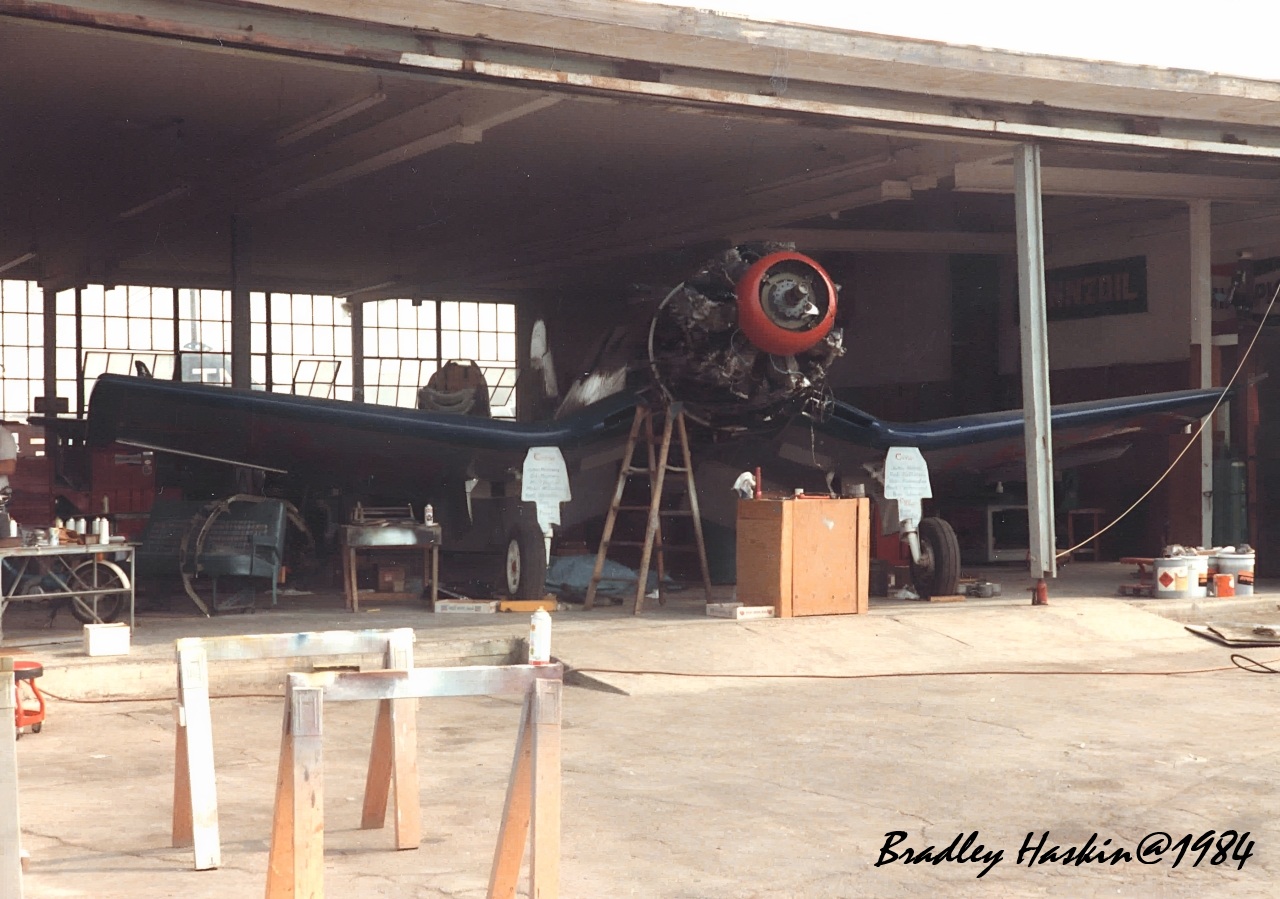
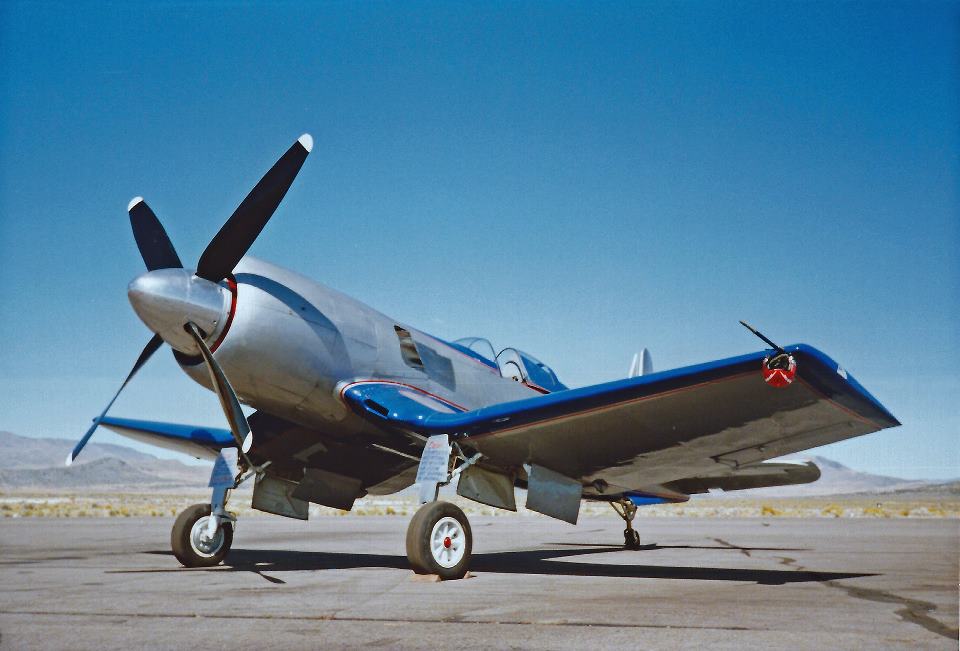
Before its transformation into a racing aircraft, the Corsair could still be seen in its original configuration in Chino, California in 1981.
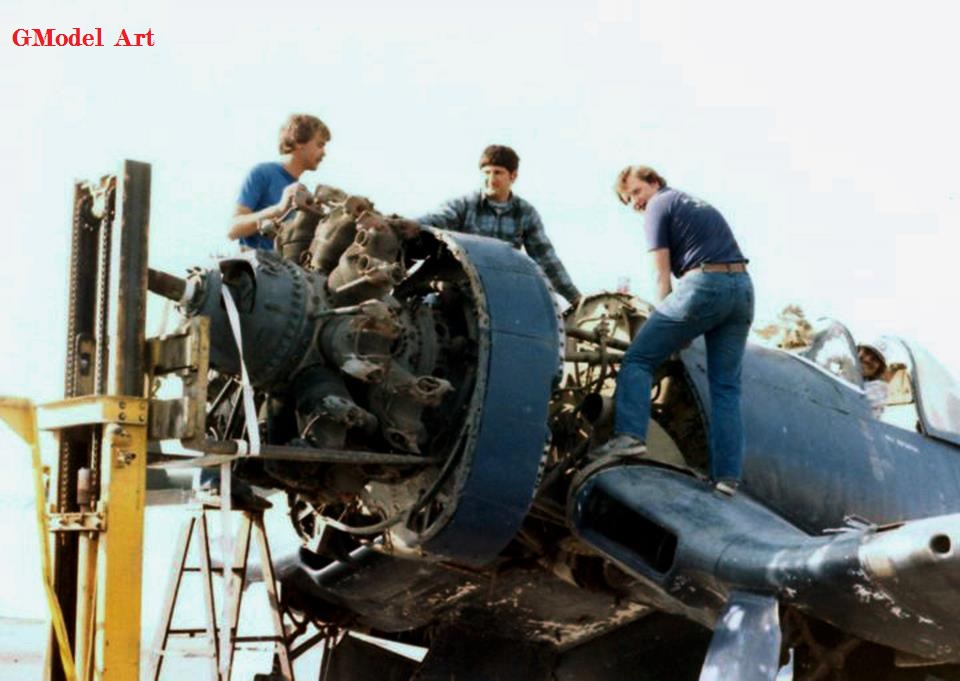
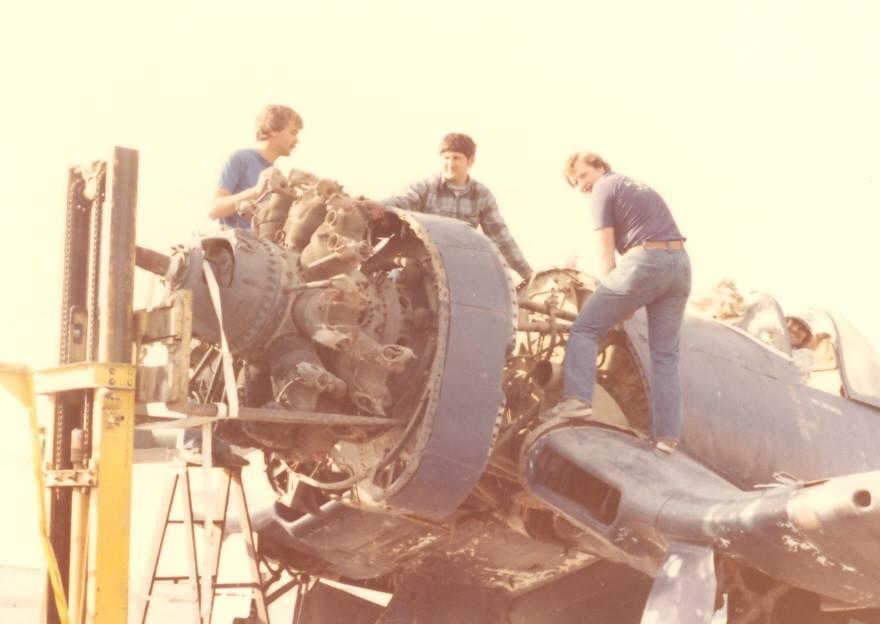
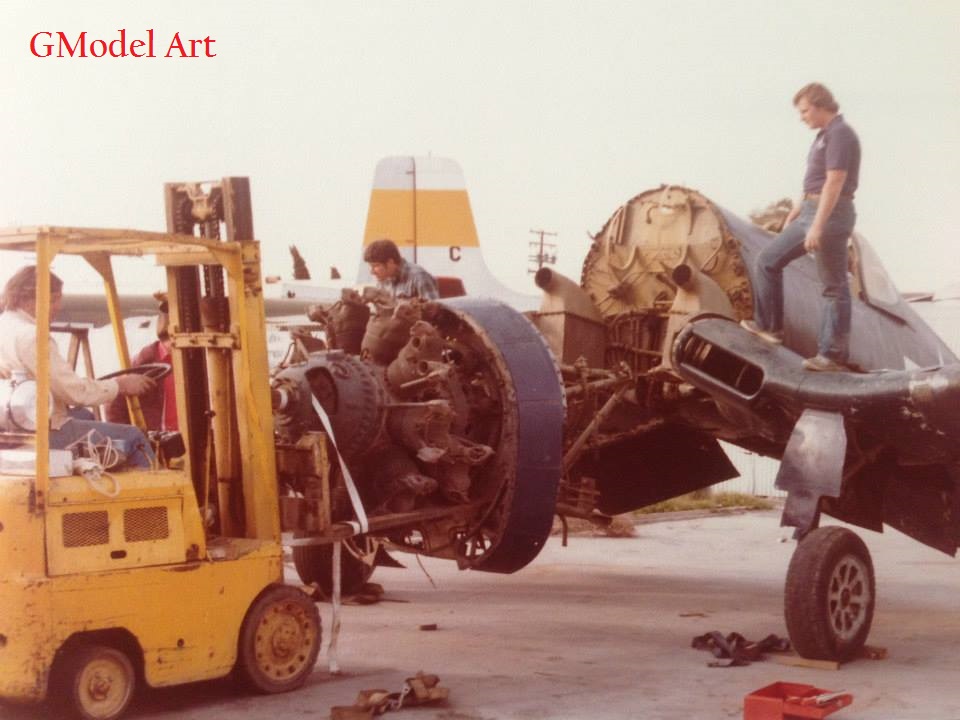
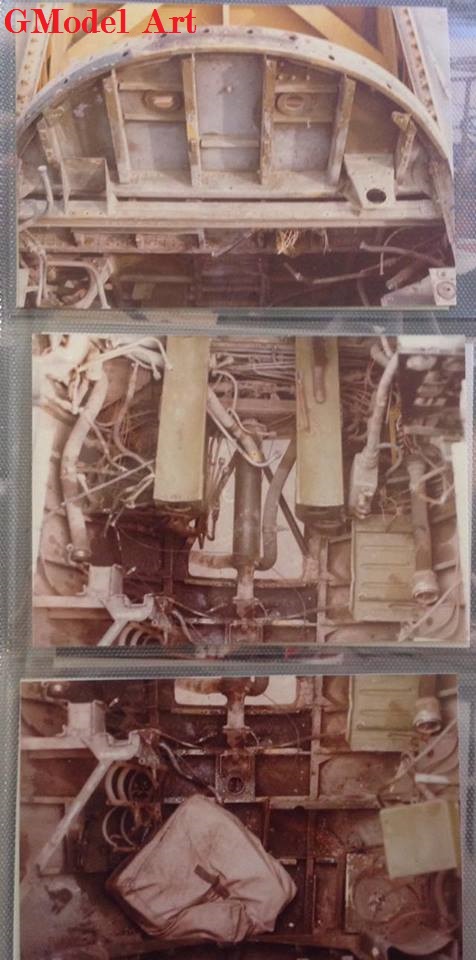
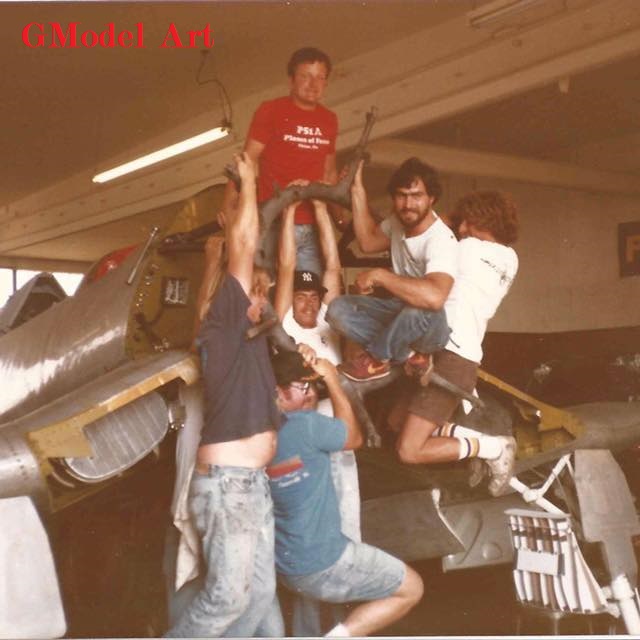
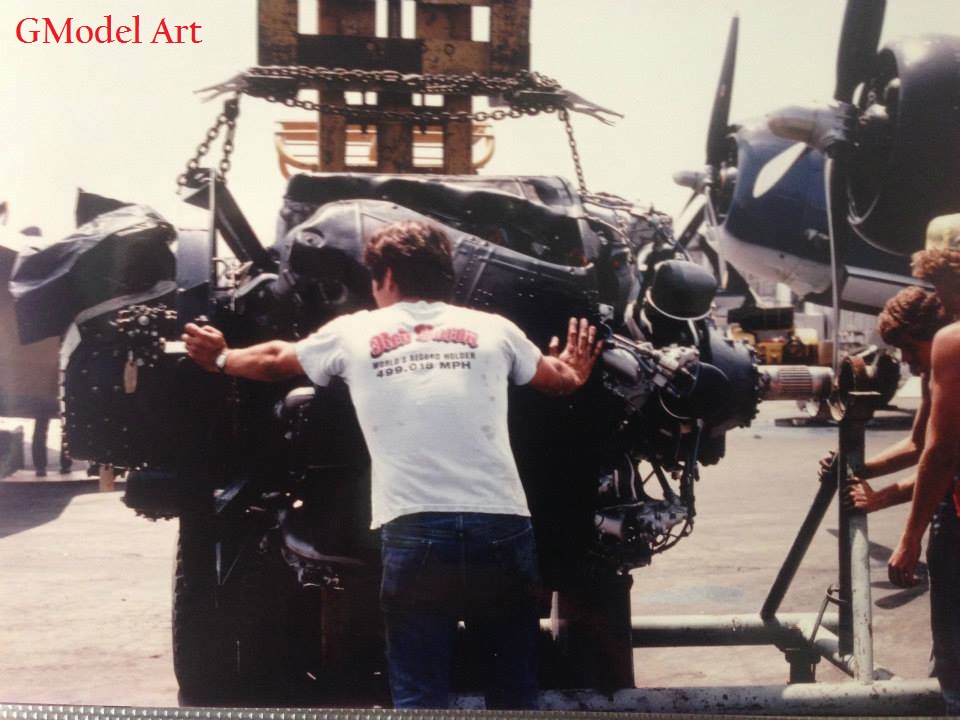
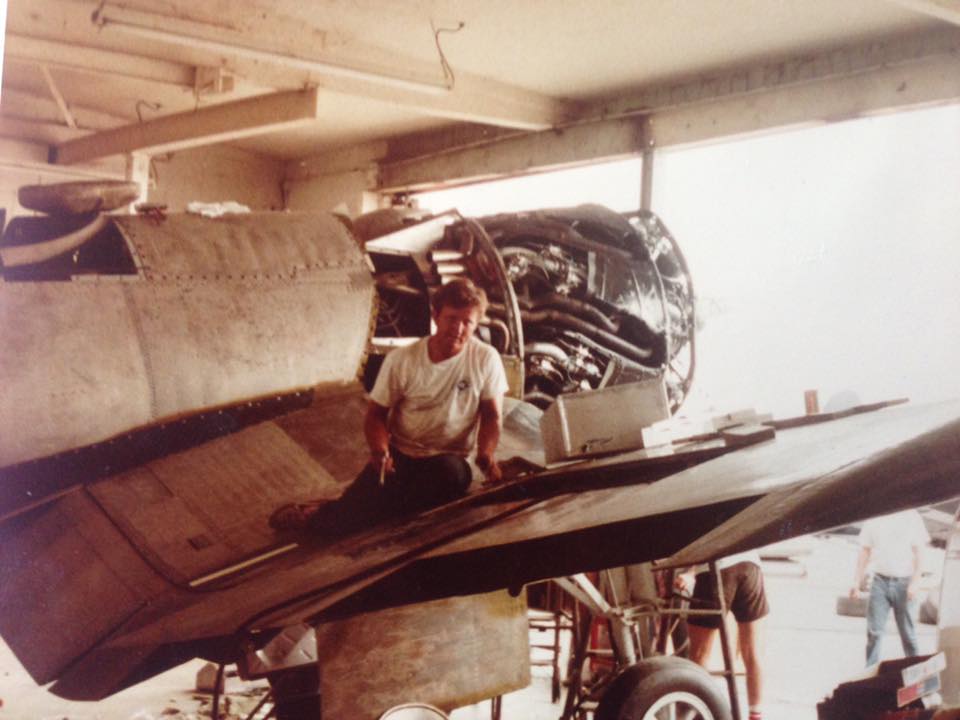
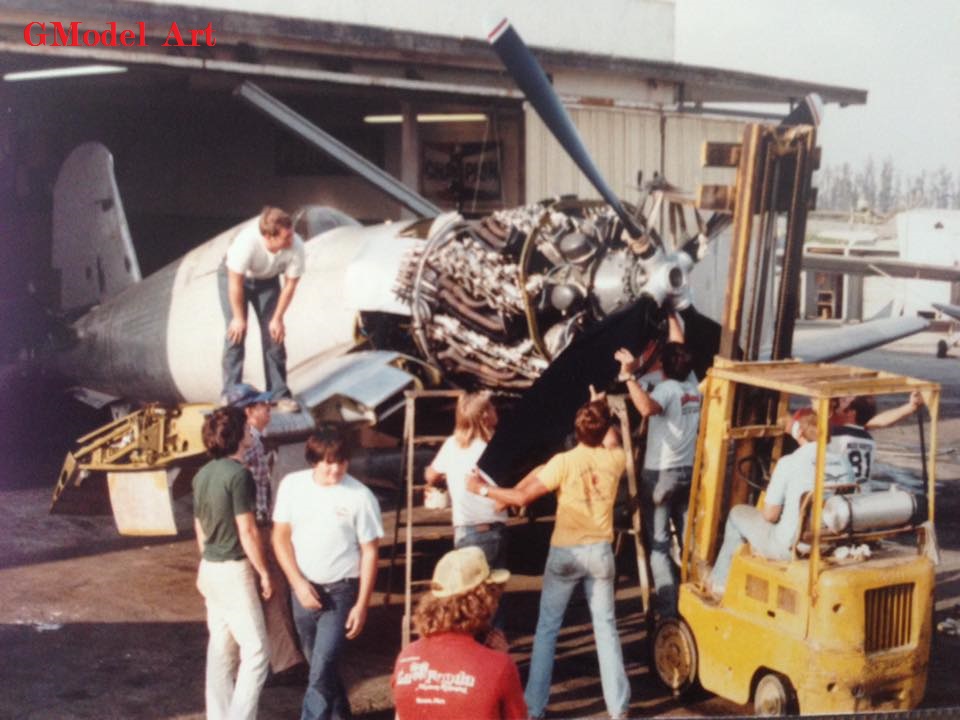
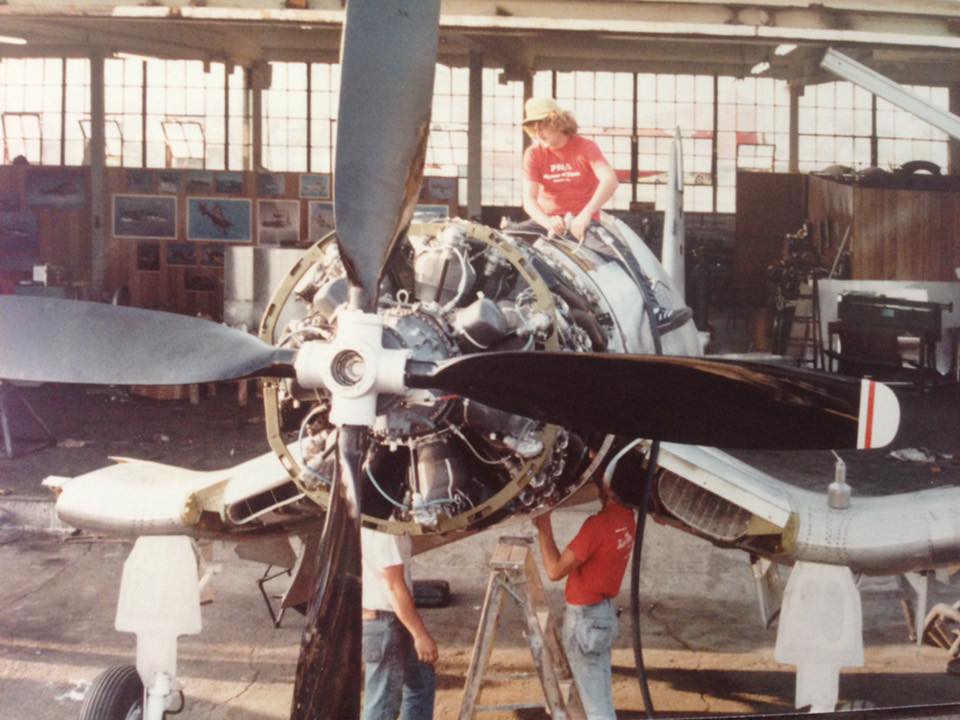
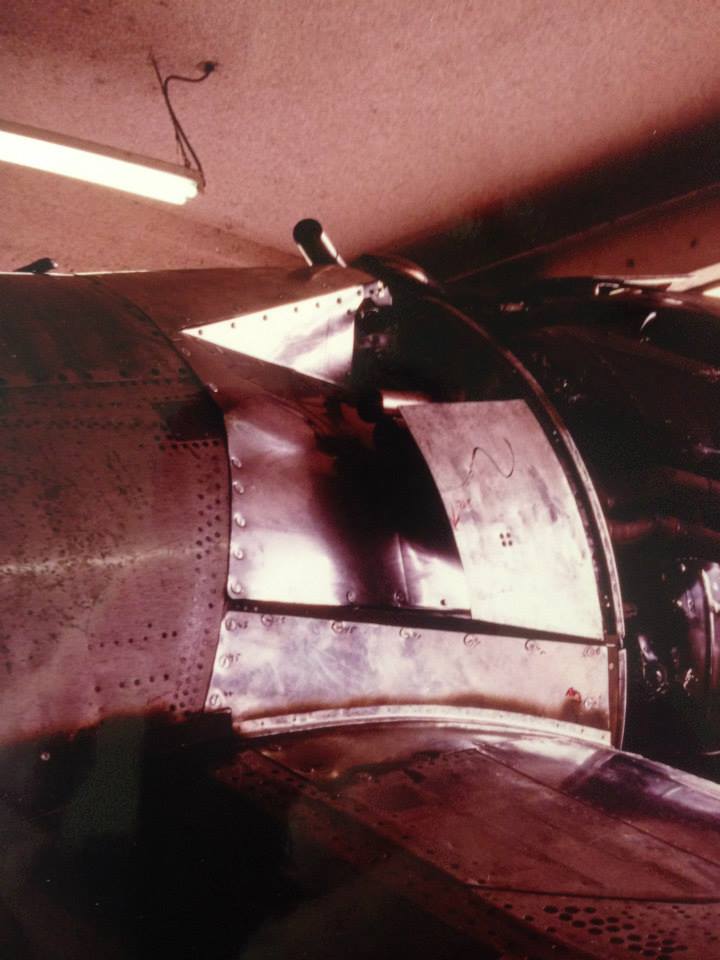
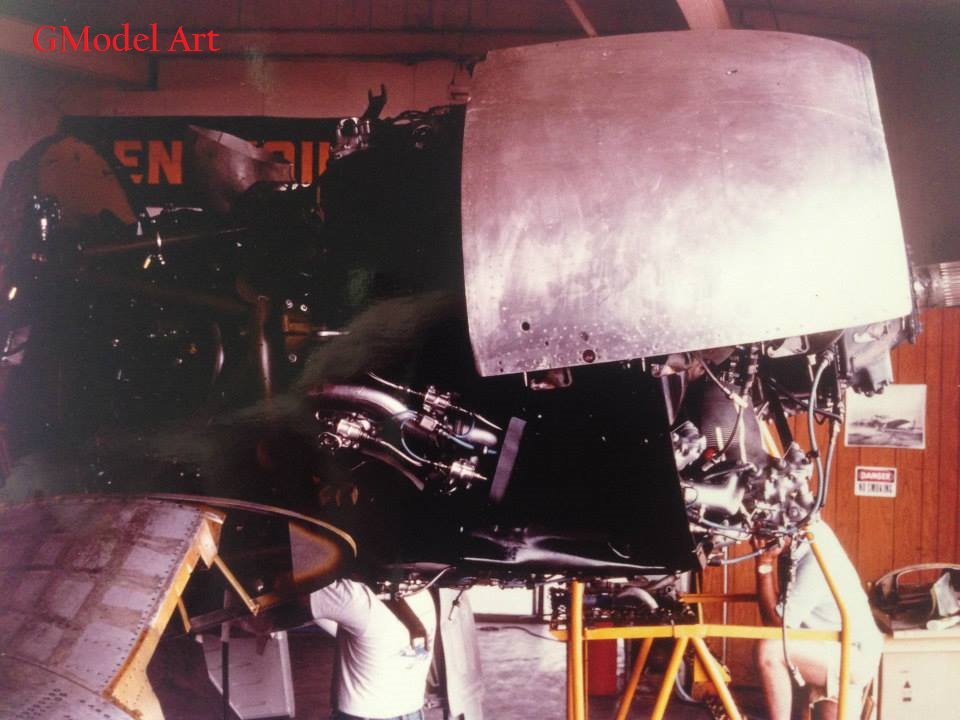
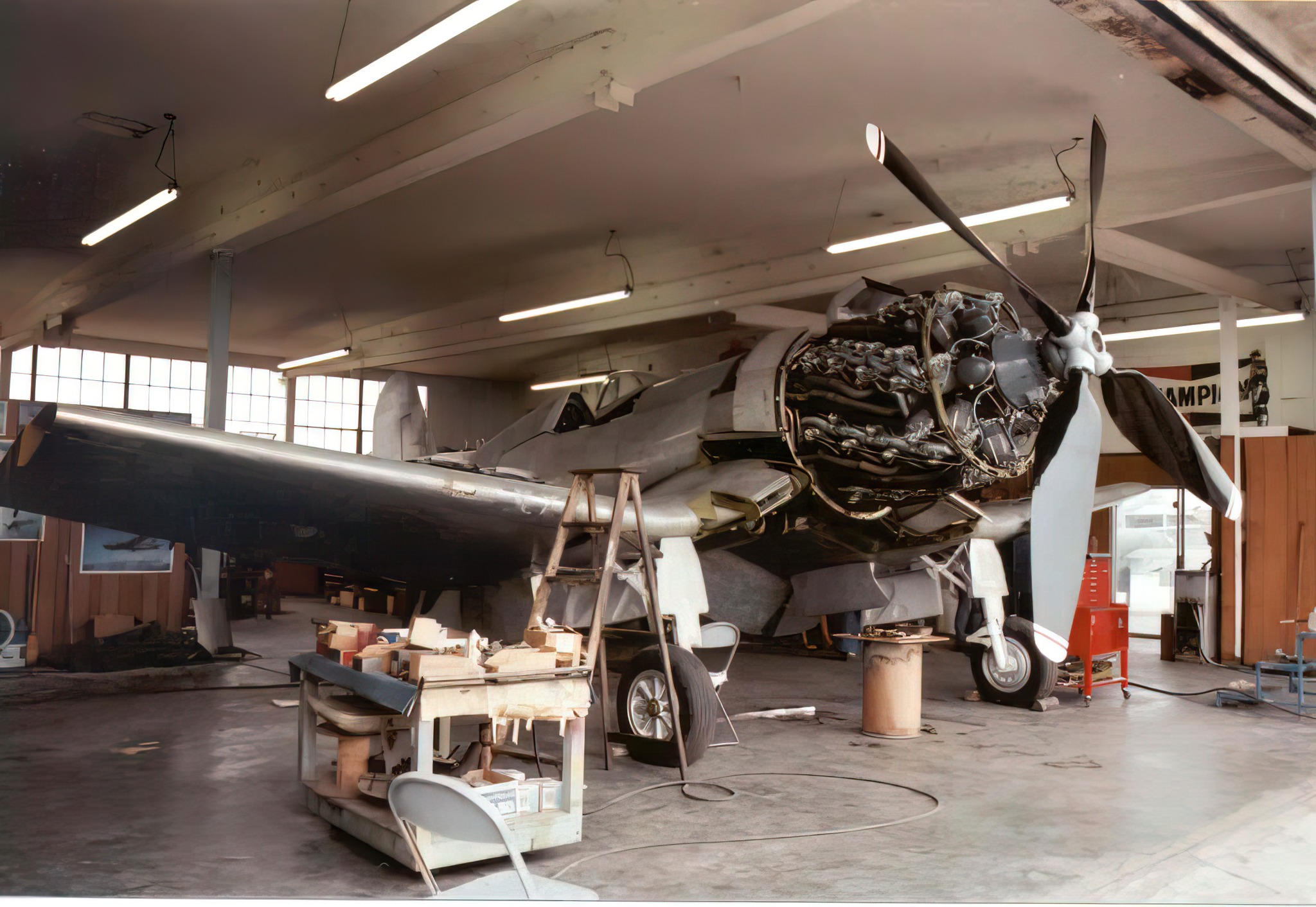
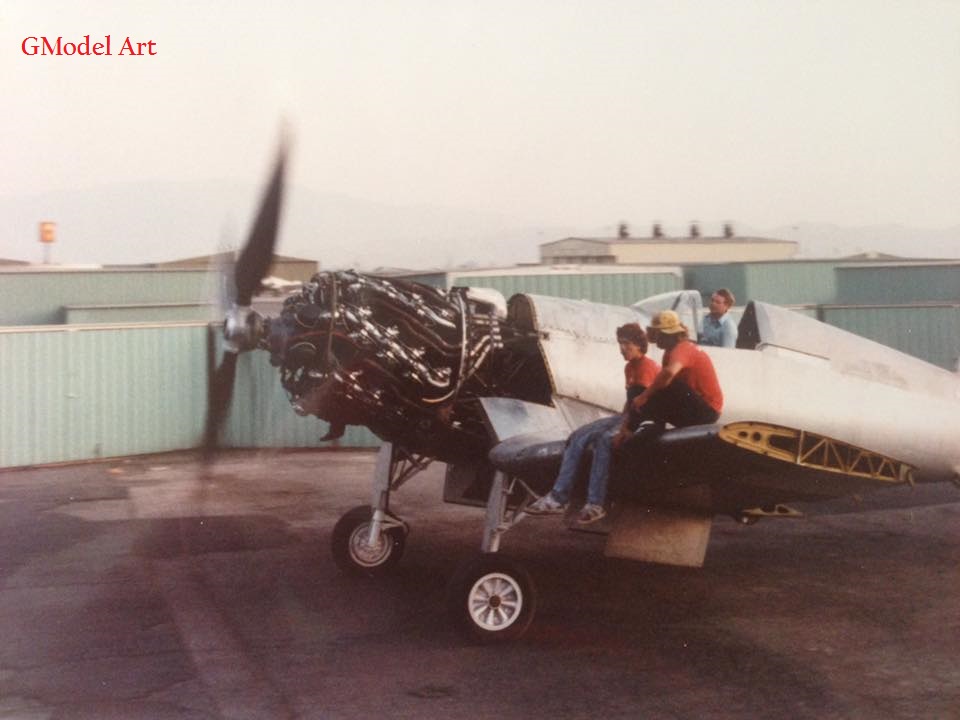
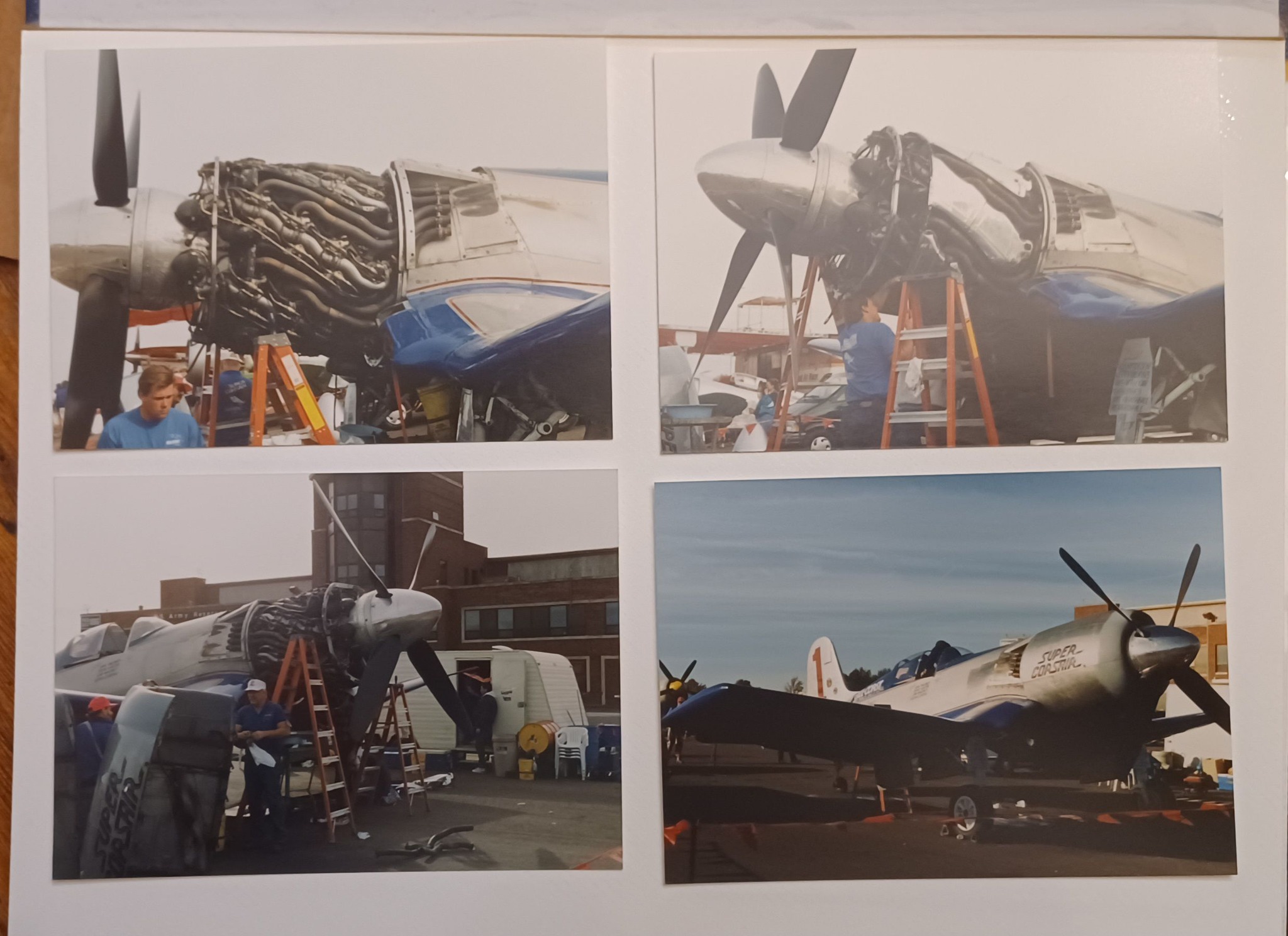
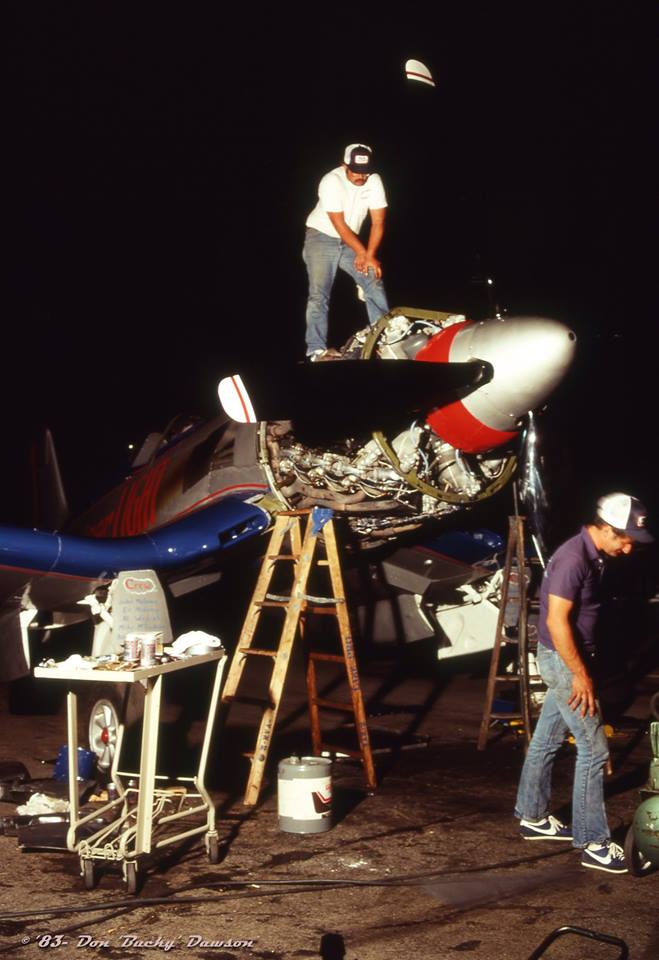
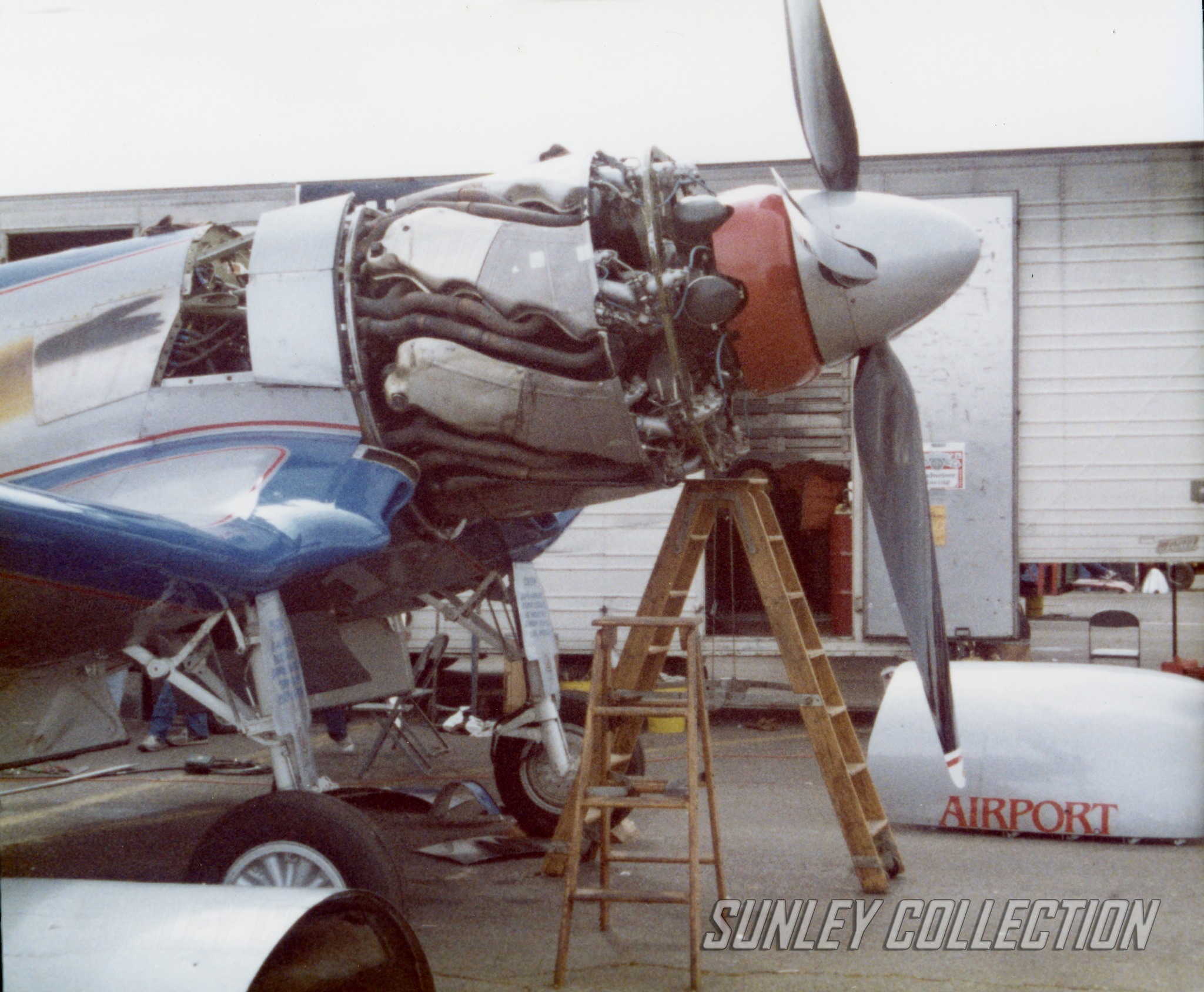
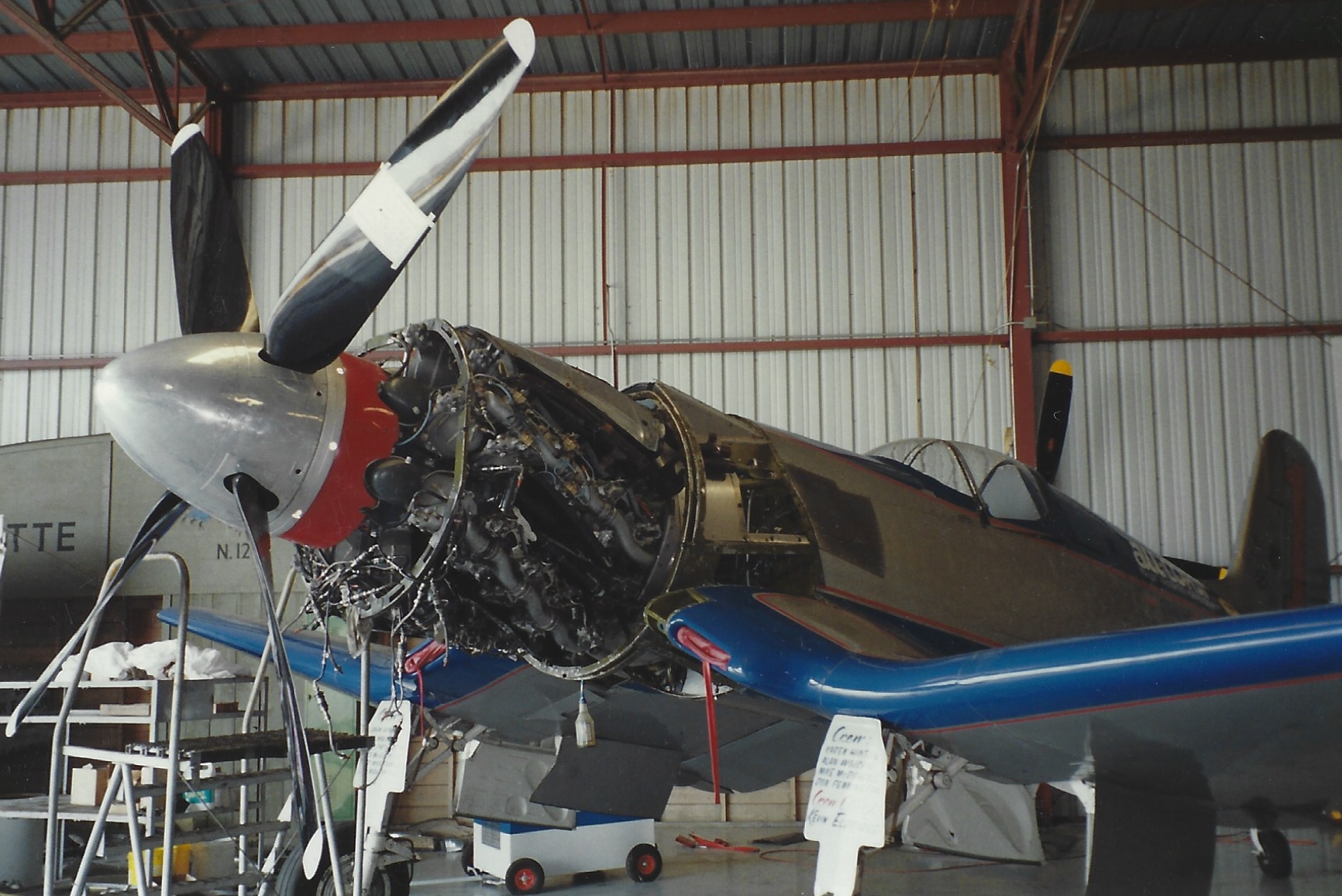
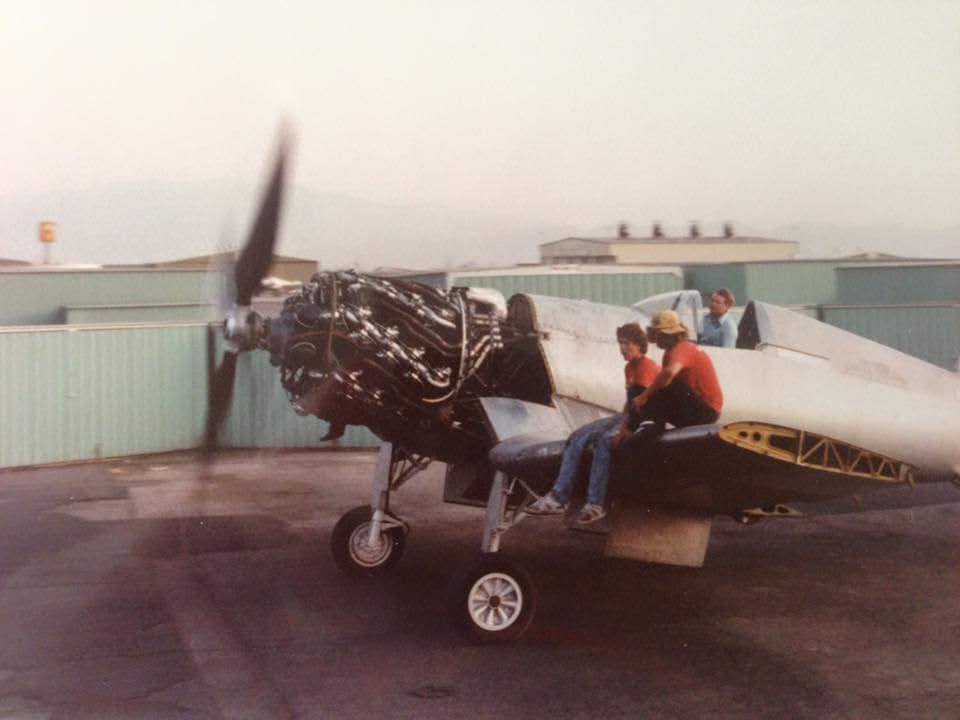
The first stage of the restoration and conversion involved removing the original Pratt & Whitney R-2800-18W engine.
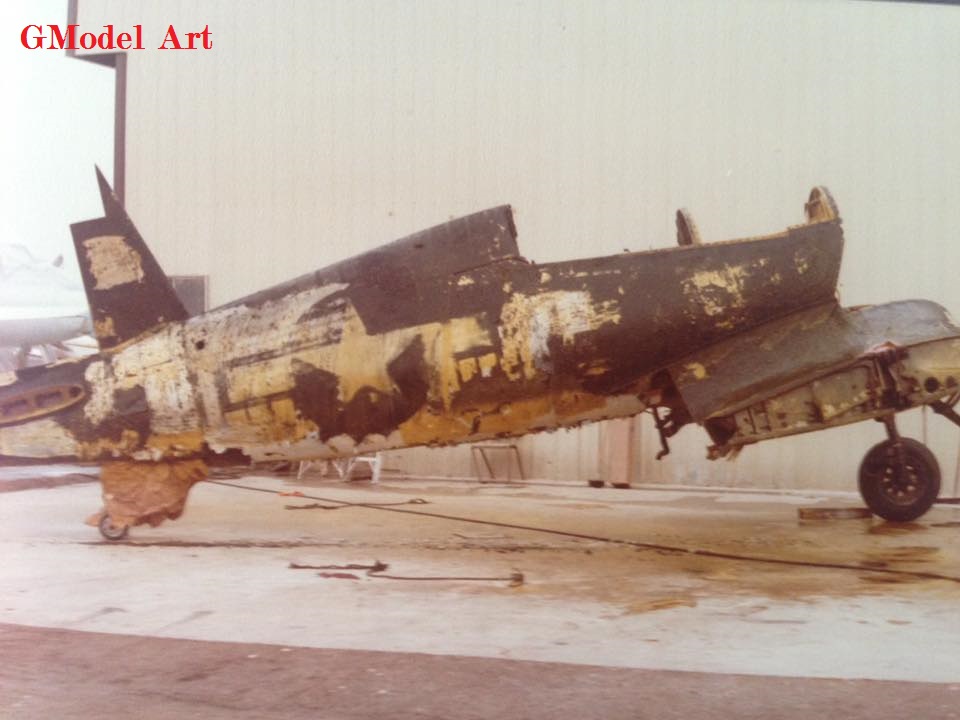
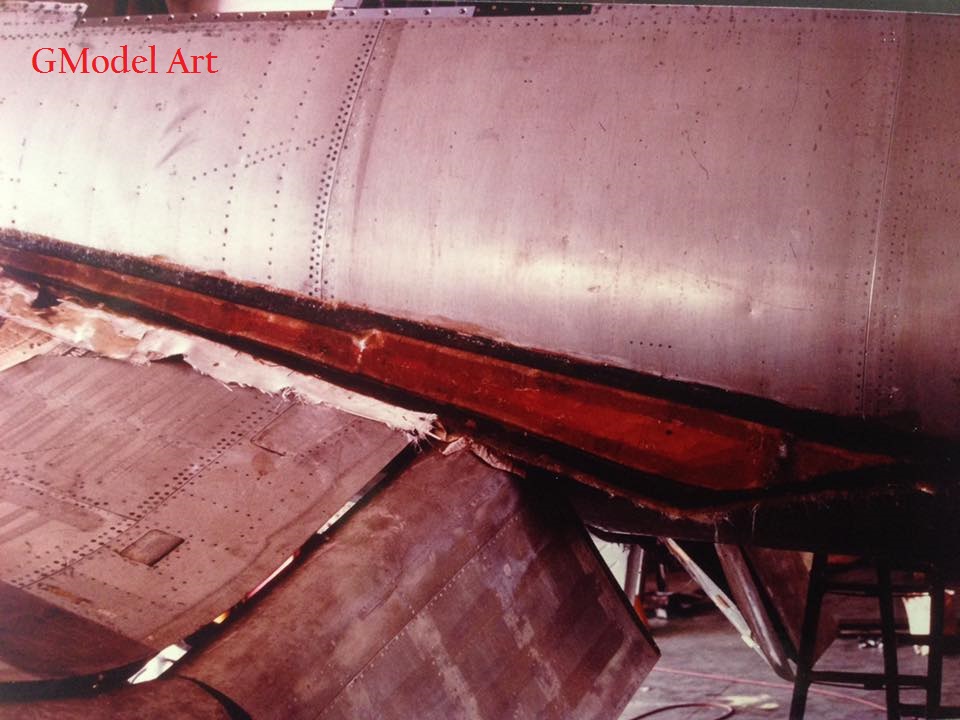
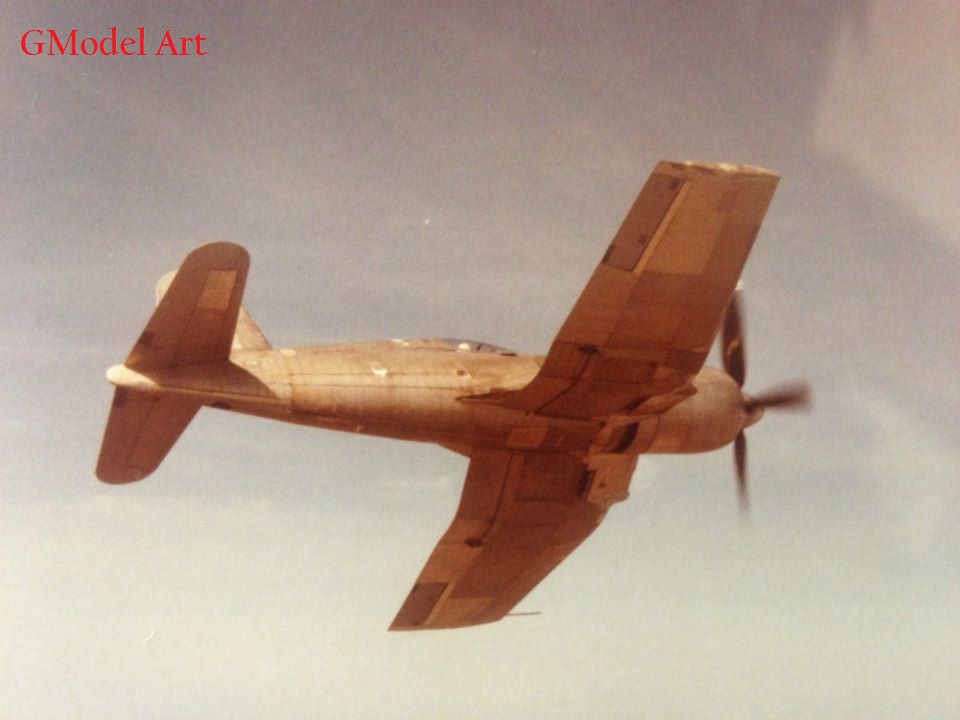
The aircraft was completely stripped of paint and underwent extensive structural reinforcement in order to withstand the enormous power of the new engine.
Major modifications included:
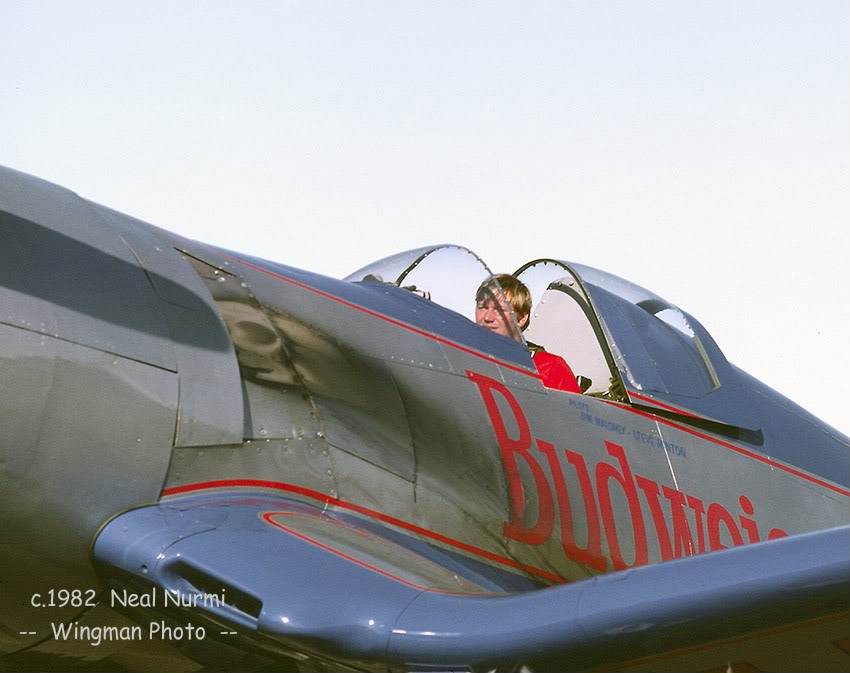
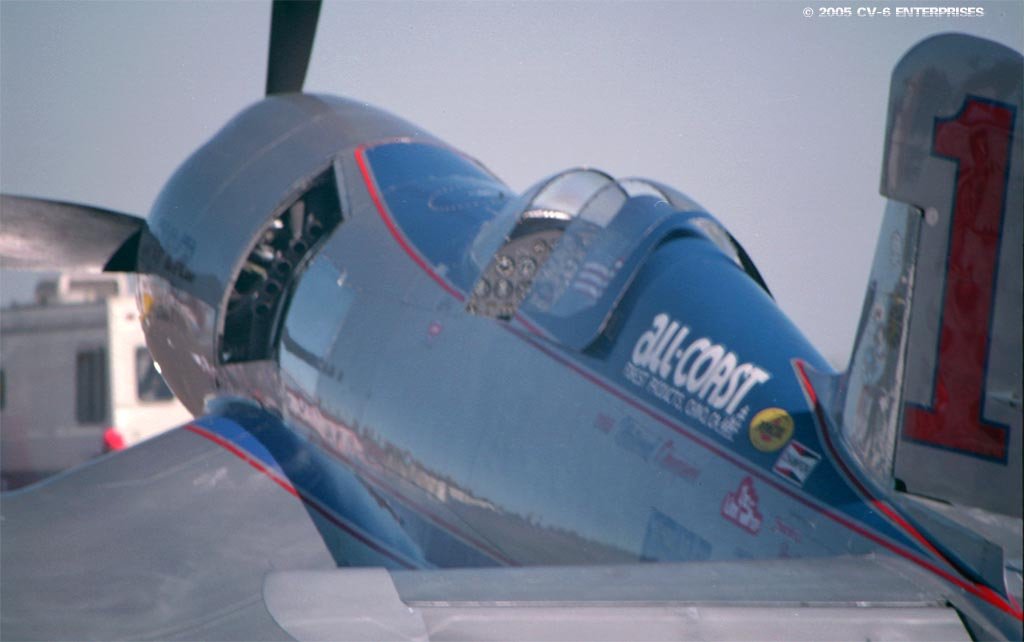
• installation of a new bubble canopy
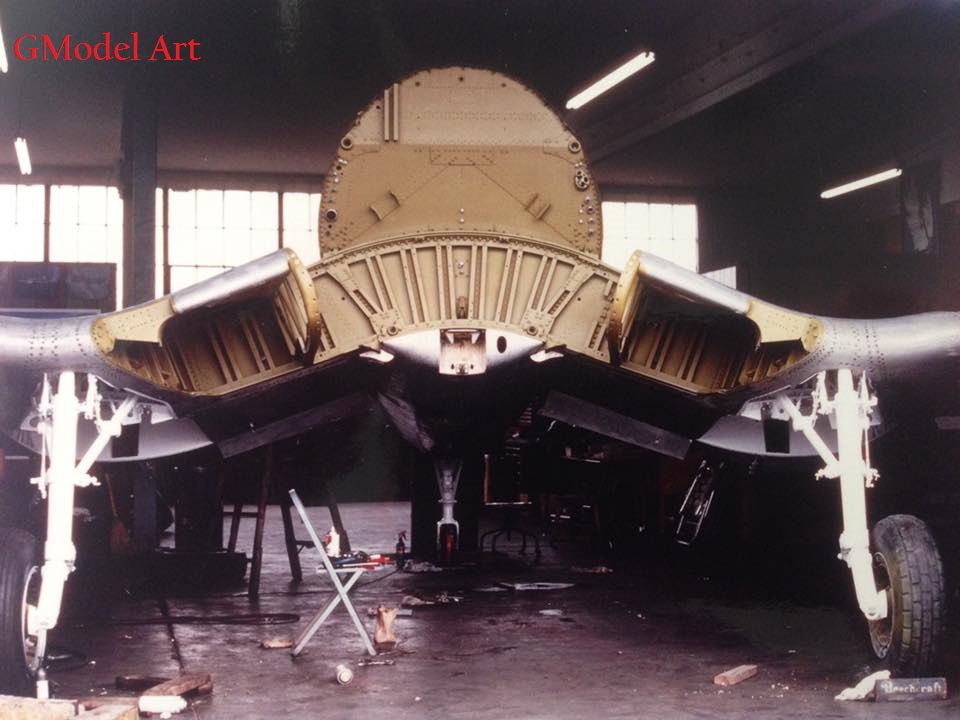
• structural reinforcement where the wings join the fuselage
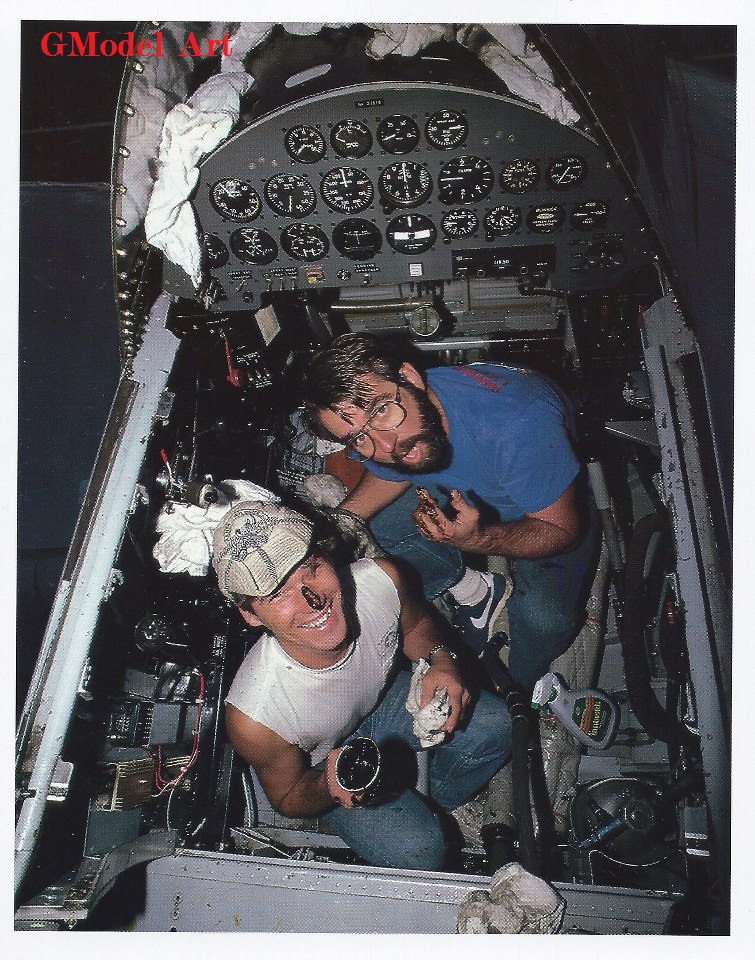
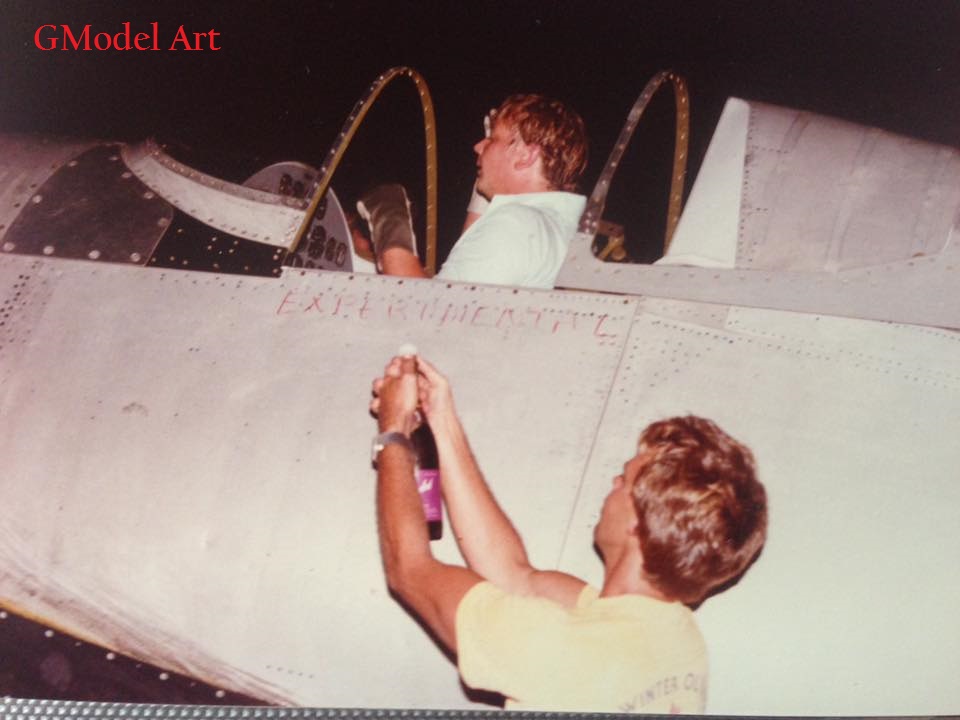
• redesign of the cockpit layout
• removal of armor plating and heavy military equipment
• installation of modern flight instruments
• overall weight reduction
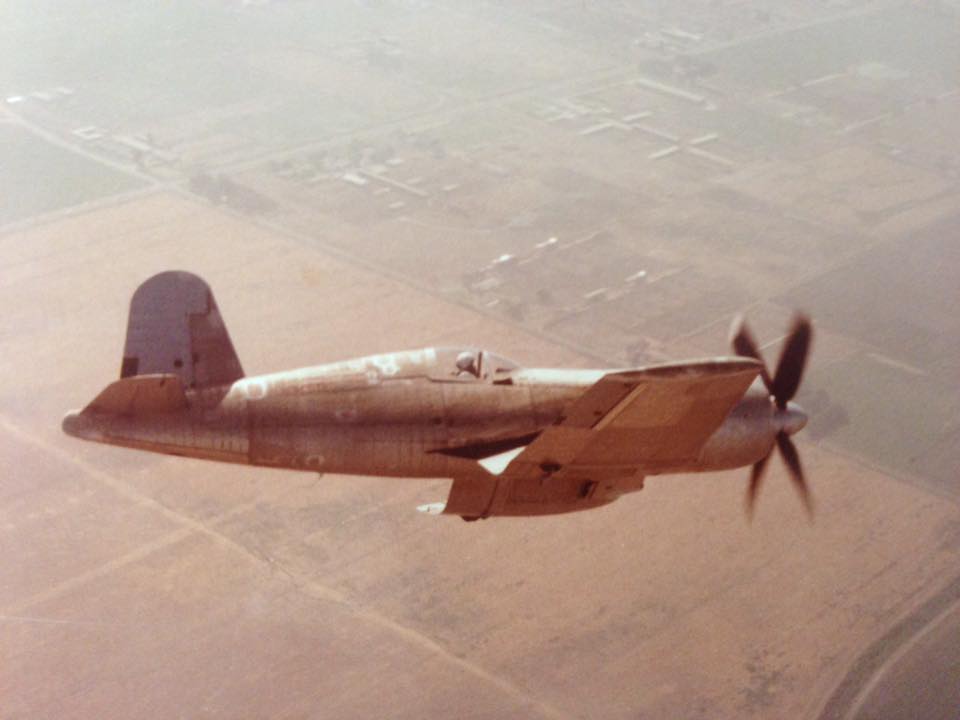
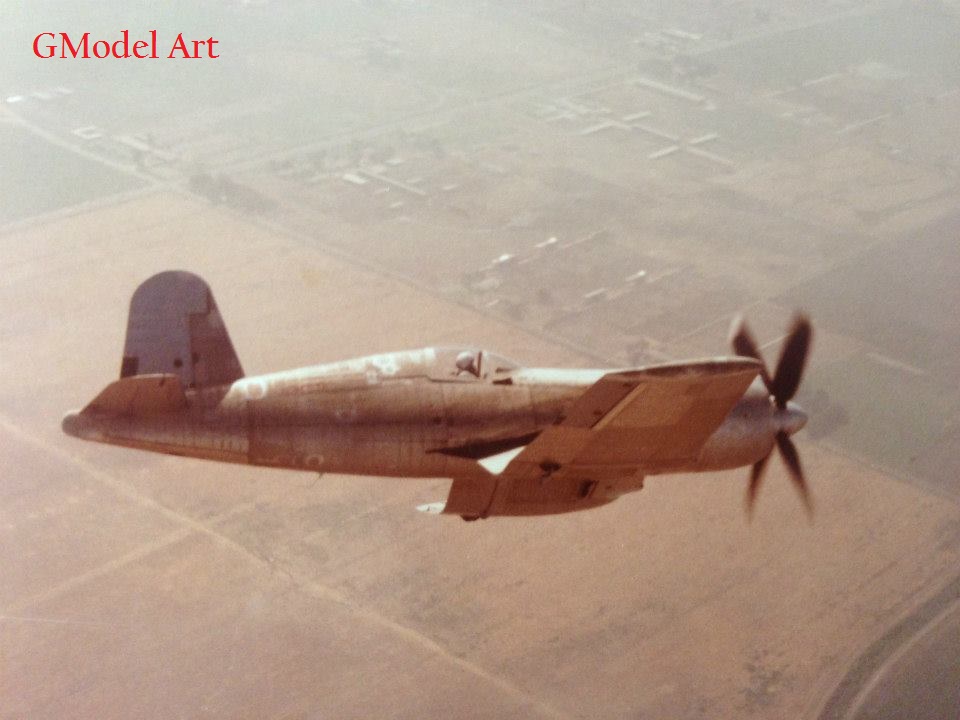
The wing tips were clipped in order to improve roll rate and maneuverability during pylon racing.
In addition to the engine replacement, several aerodynamic improvements were introduced to enhance racing performance.
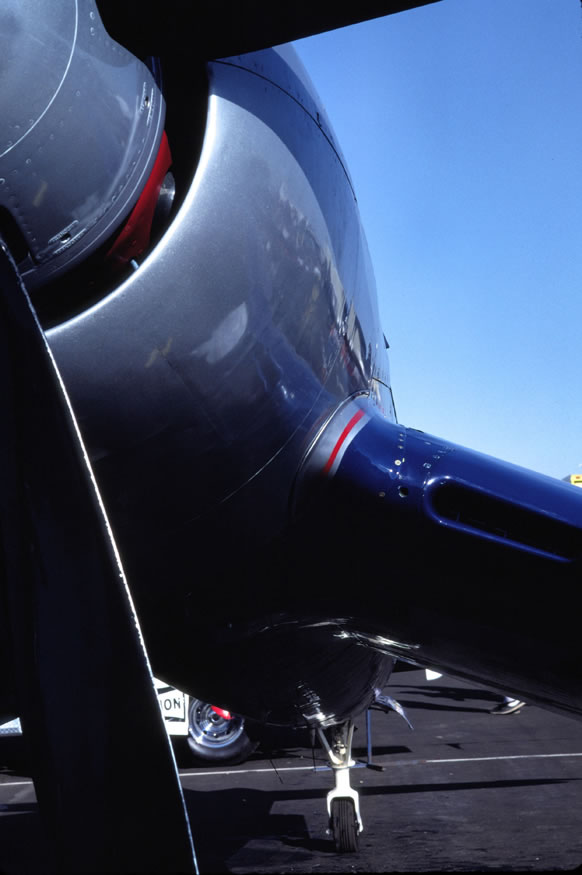
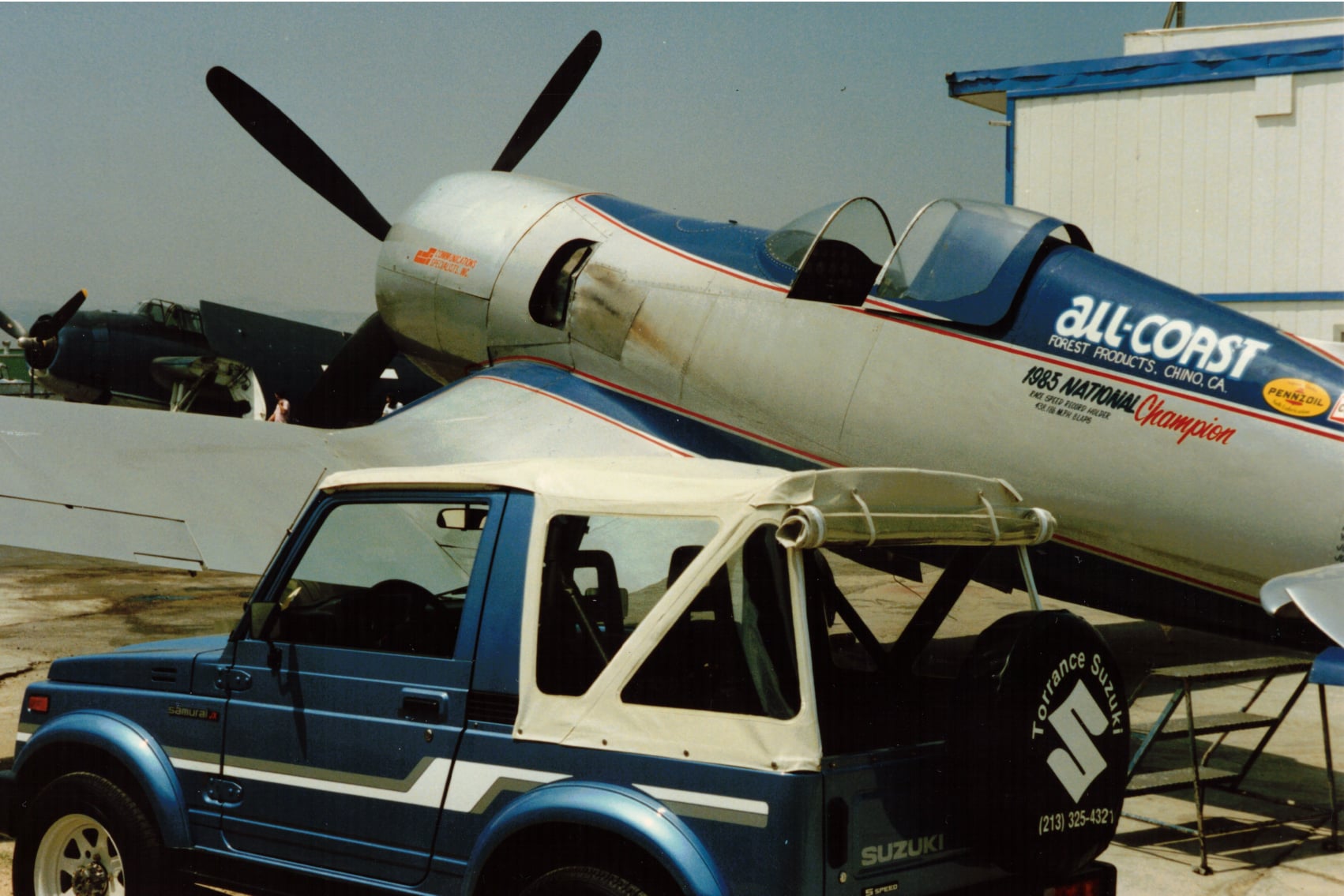
The exhaust outlets were redesigned based on the original F2G Super Corsair configuration, while additional modifications were made along the lower fuselage to improve airflow.
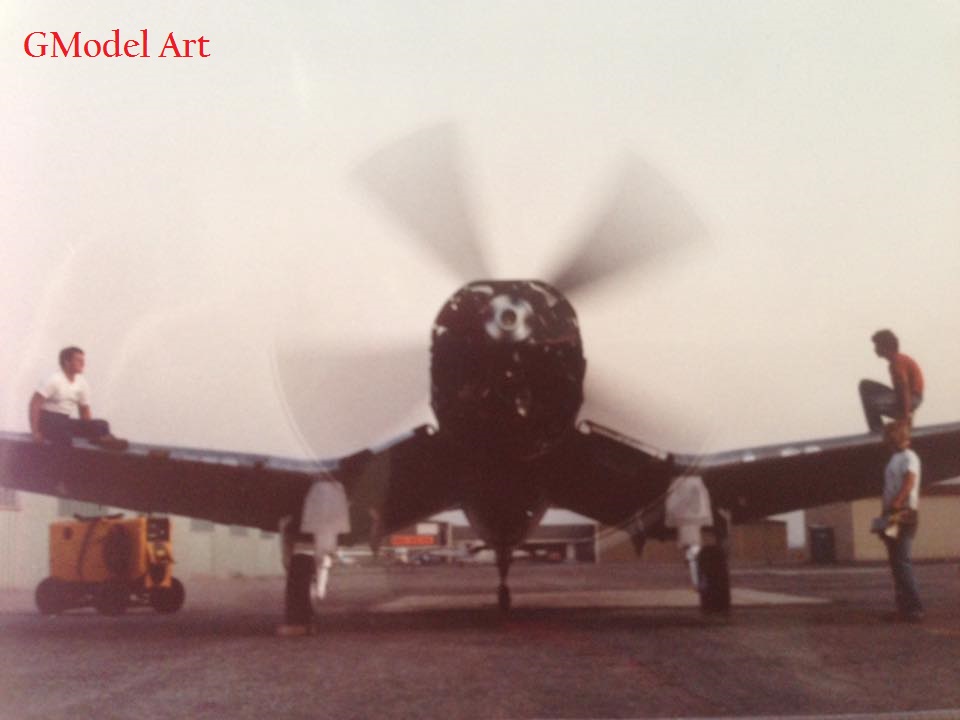
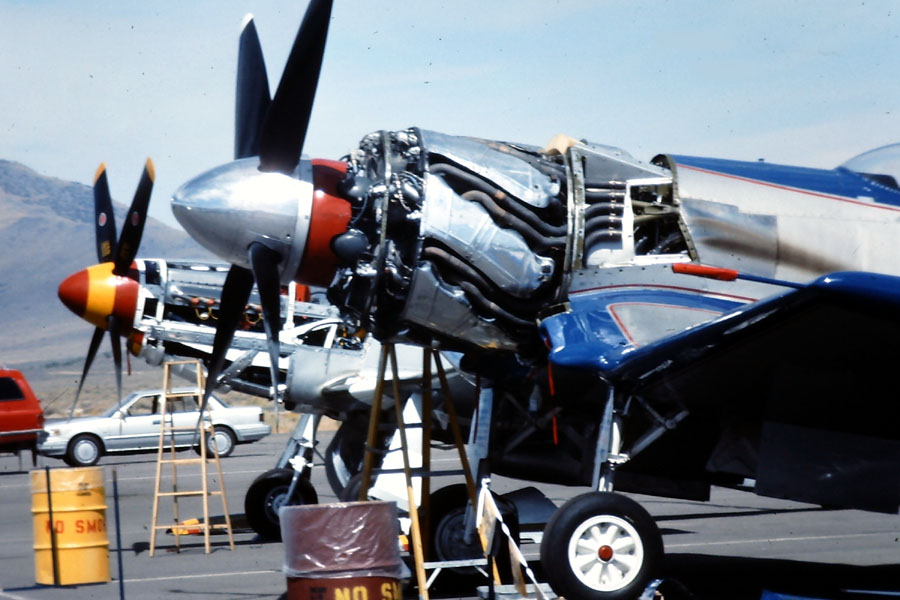
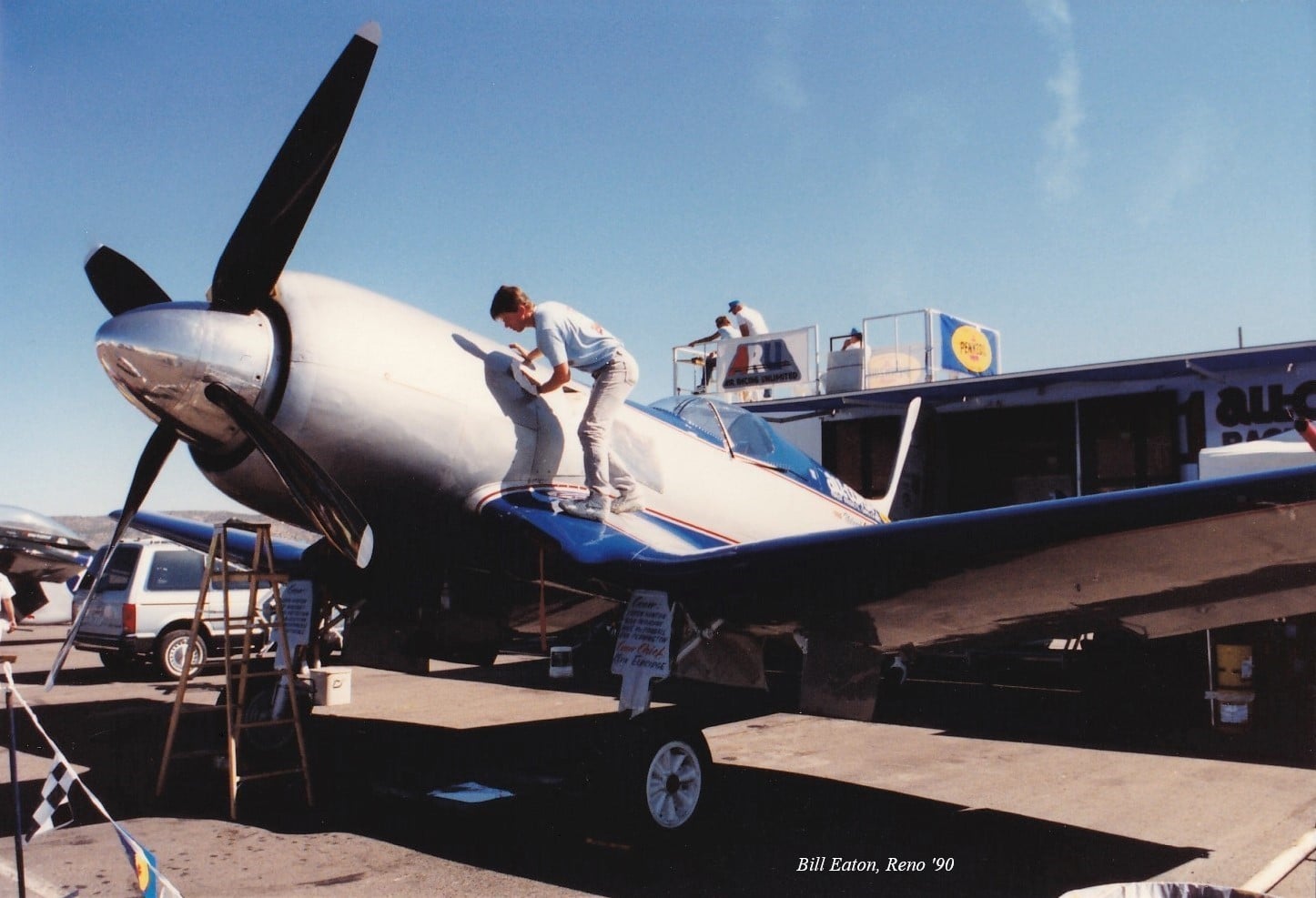
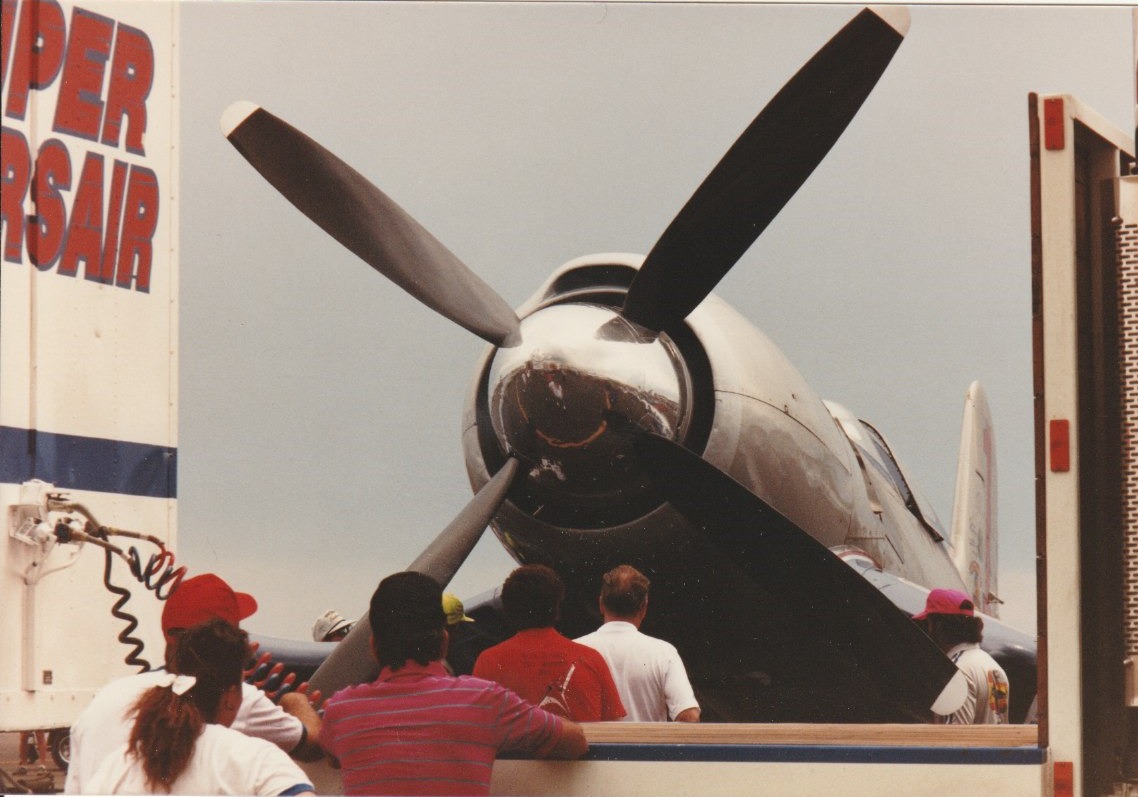
The propeller was likely sourced from a Grumman F8F Bearcat, while the original propeller spinner used in early versions came from a North American P-51 Mustang.
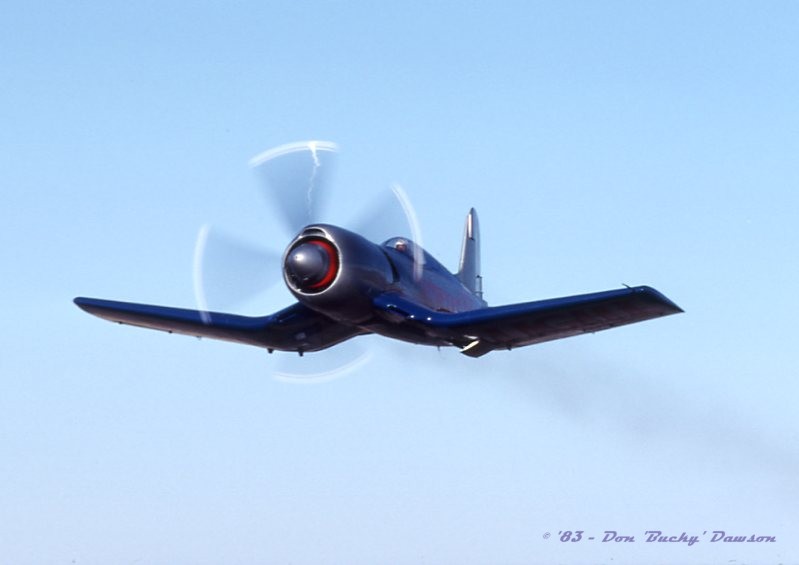
Later, a much larger custom spinner was installed to match the modified propeller system.
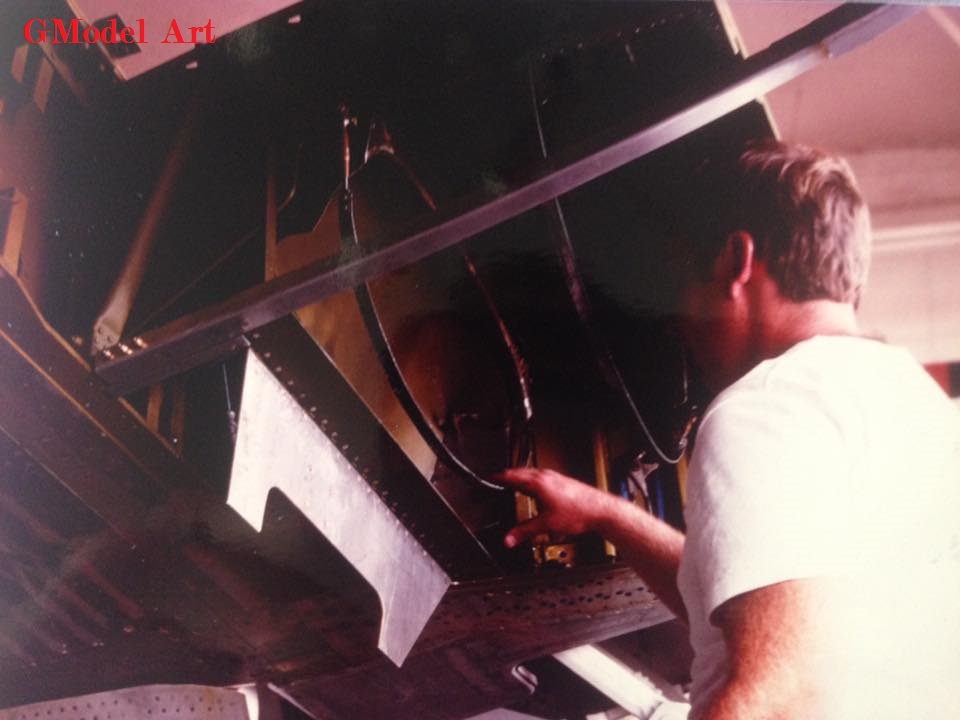
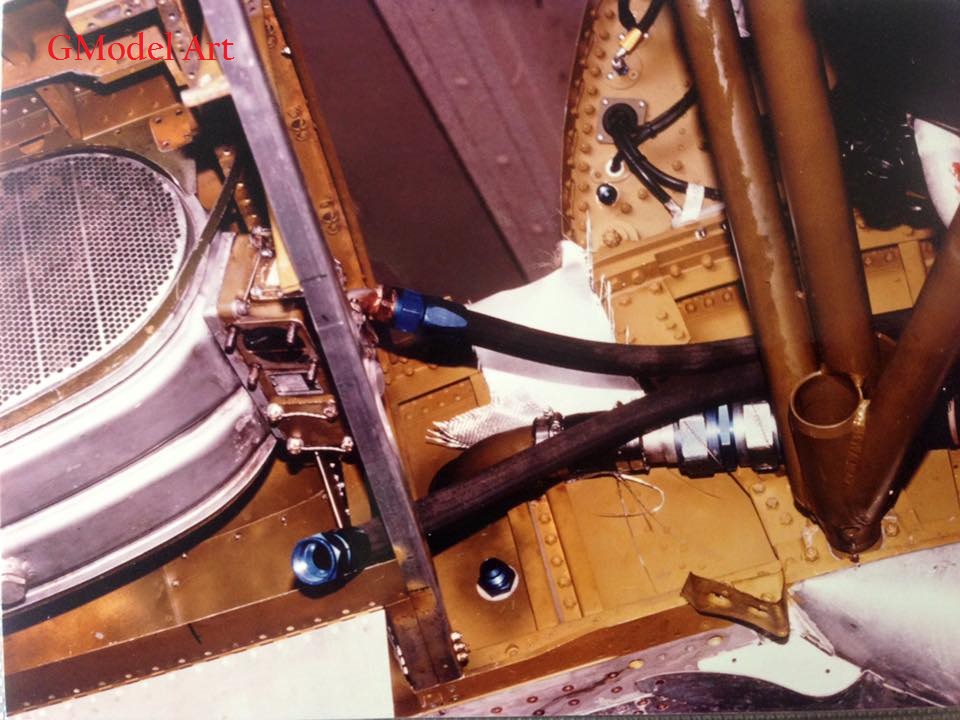
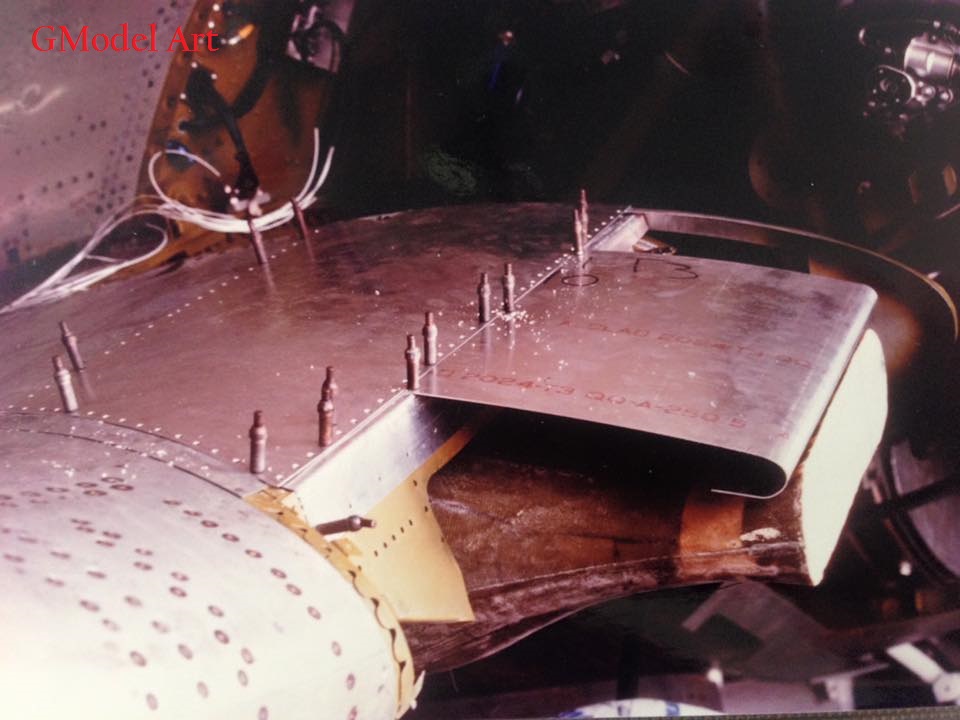
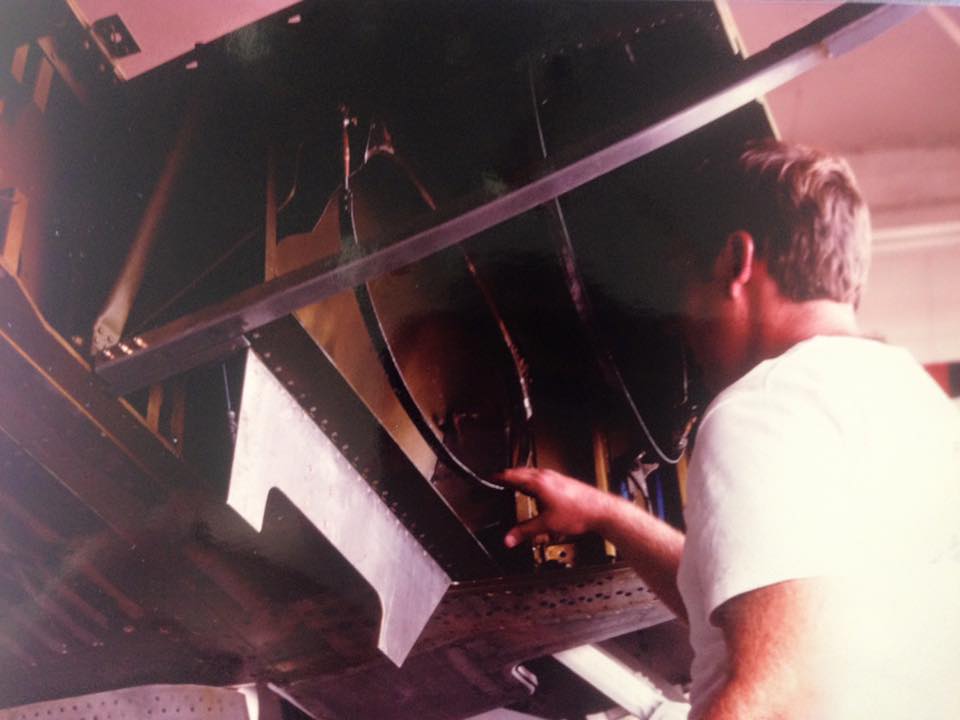
Two oil coolers taken from a Grumman S-2 Tracker were installed inside the wings.
The air intakes were redesigned and extended forward in order to improve airflow and cooling efficiency.
Inside the aircraft, several important systems were redesigned:
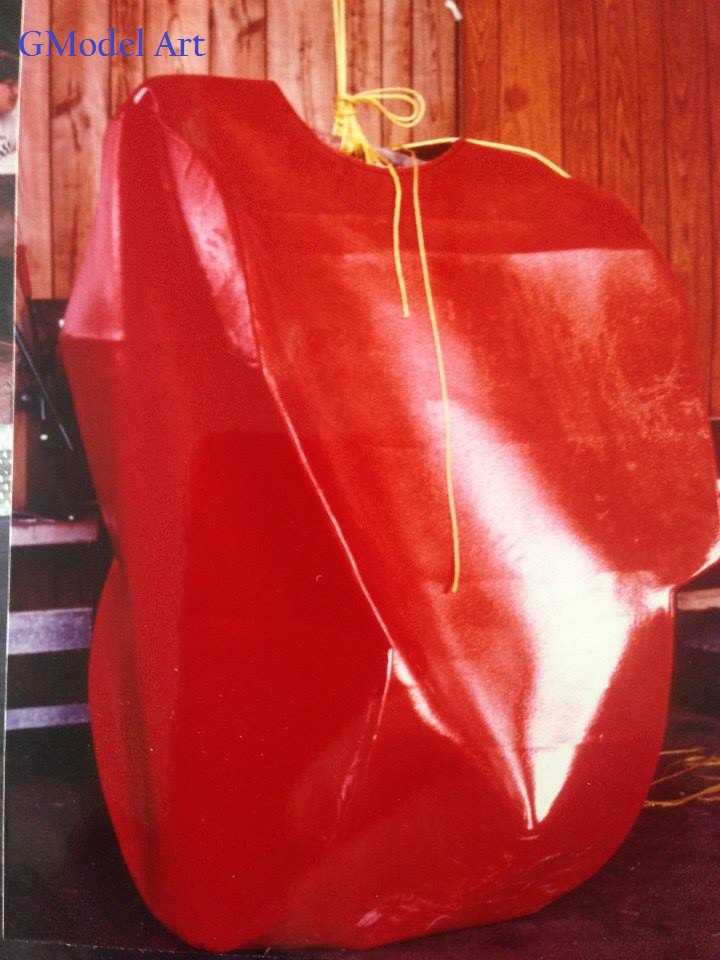
• a new fuel tank installed in front of the cockpit
• additional fuel capacity for longer race endurance
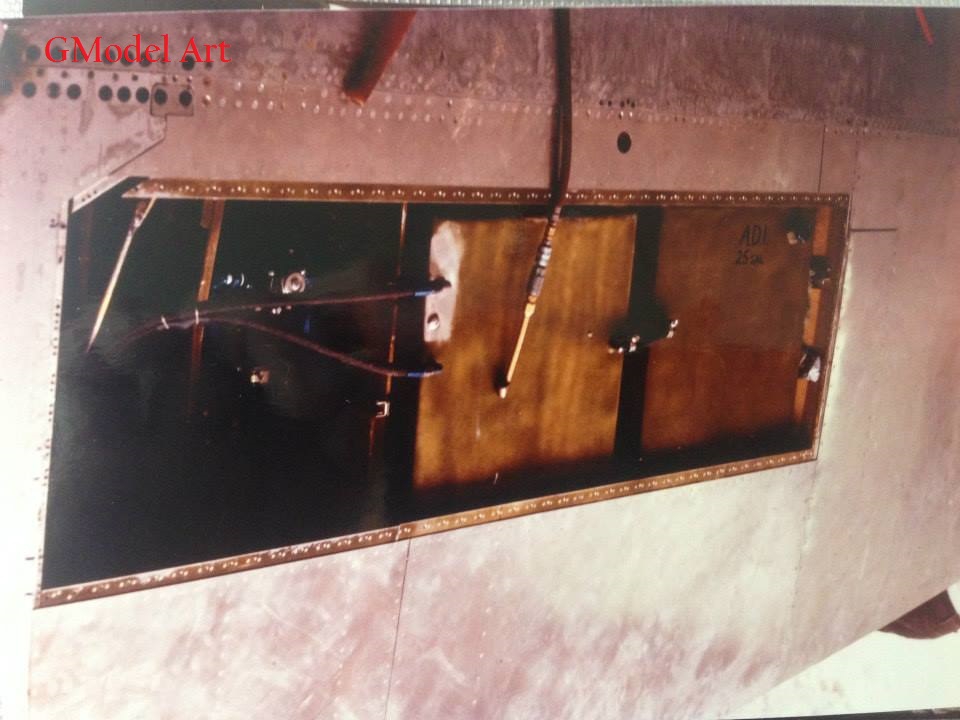
• installation of an ADI (Anti-Detonation Injection) system to cool the engine
• high-pressure water tanks placed in former gun bays
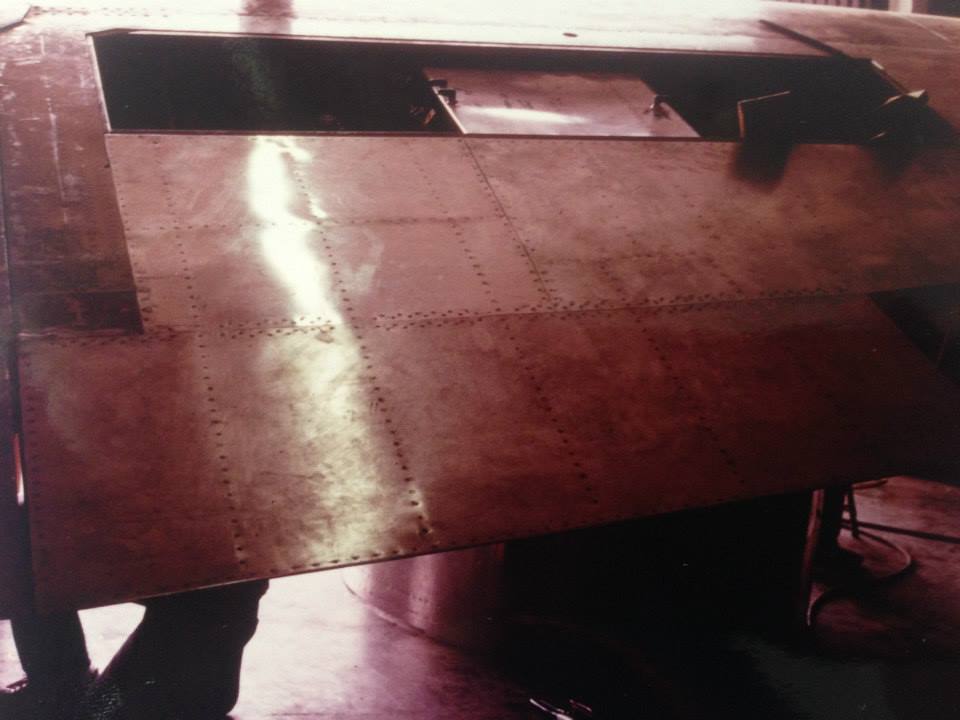
• replacement of fabric wing surfaces with aluminum panels
Additional structural modifications included removing the tail hook and reinforcing several wing sections.
These changes allowed the aircraft to safely handle the extreme power generated by the R-4360 engine.
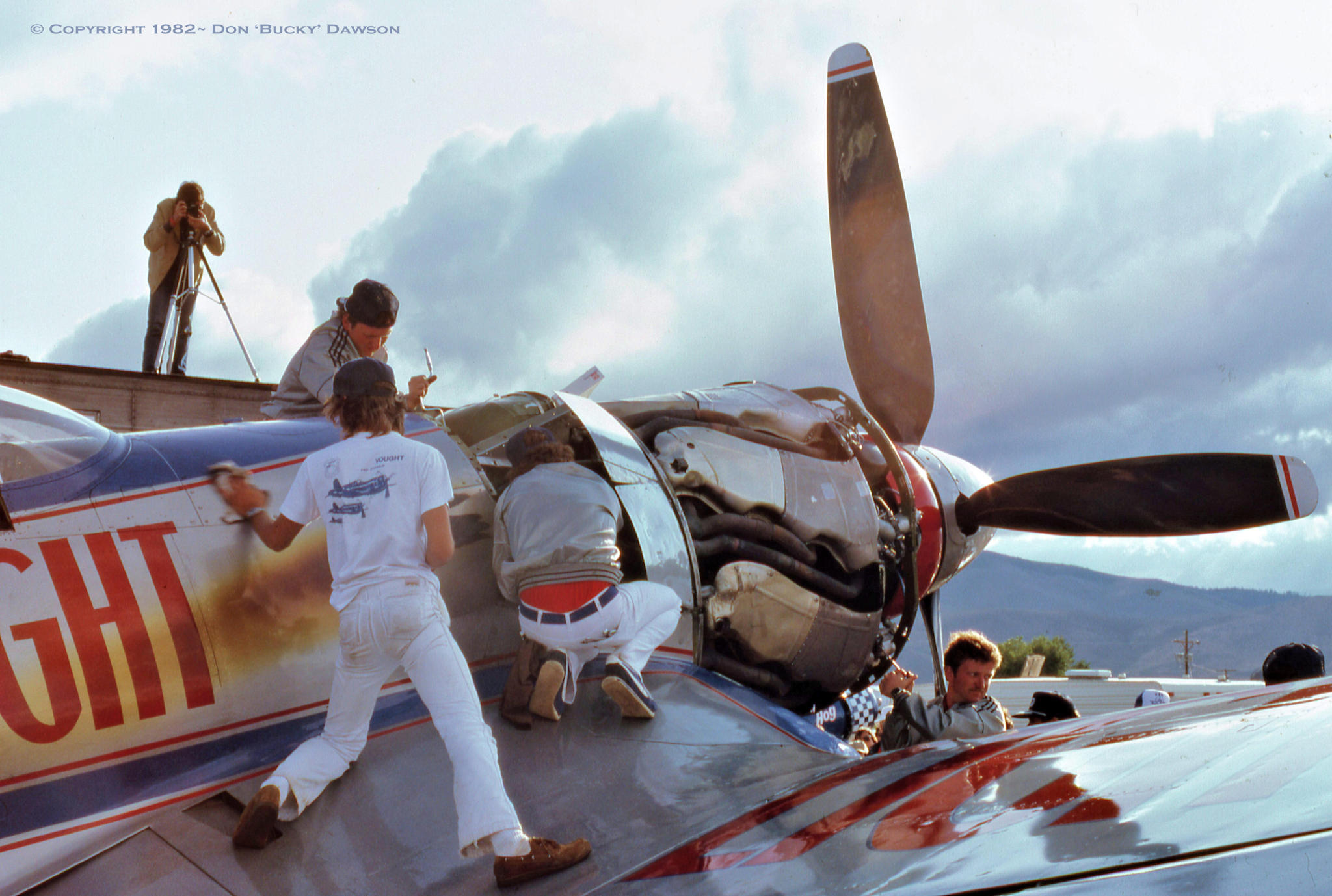
The engine selected for the racing Super Corsair was an advanced version of the Pratt & Whitney R-4360 Wasp Major, producing approximately 3,800 horsepower — significantly more powerful than the early engines used in the original F2G aircraft during World War II.
Many components used during the conversion came from other aircraft types.
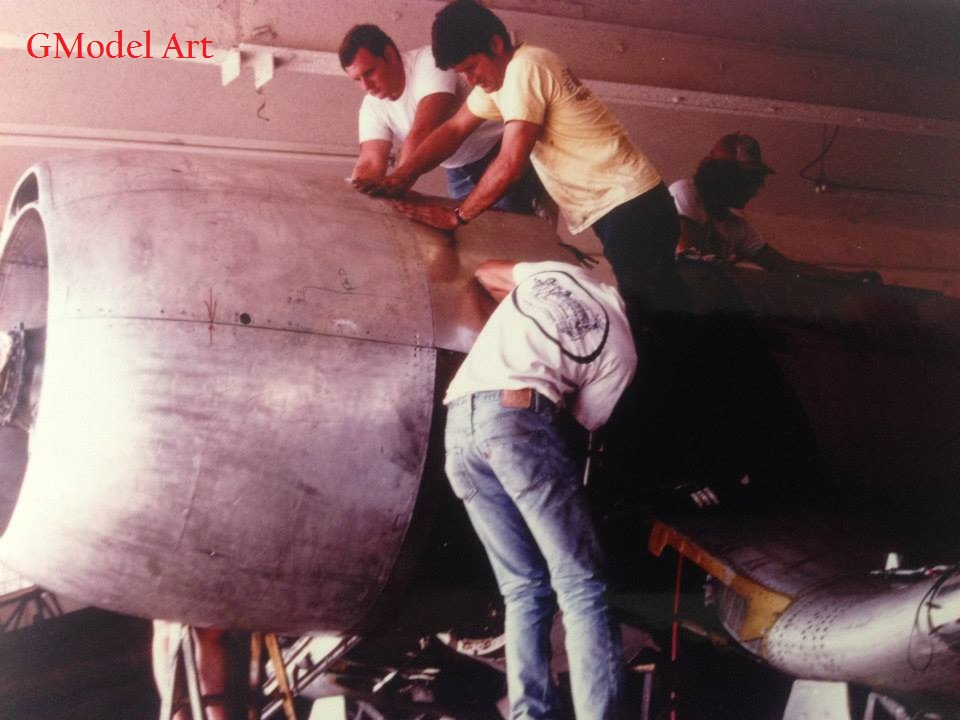
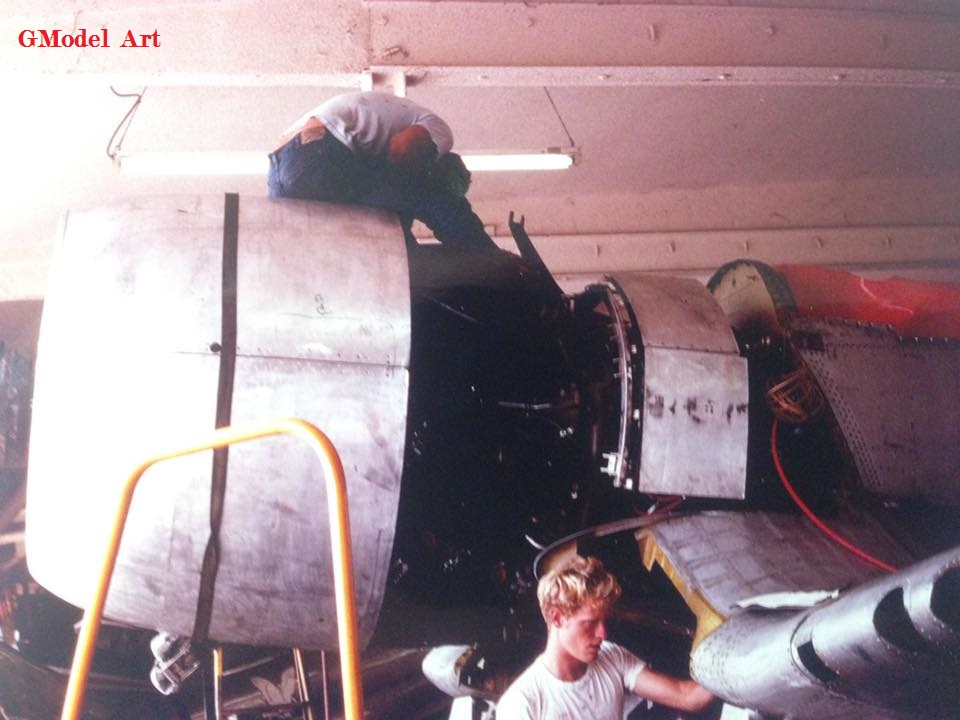
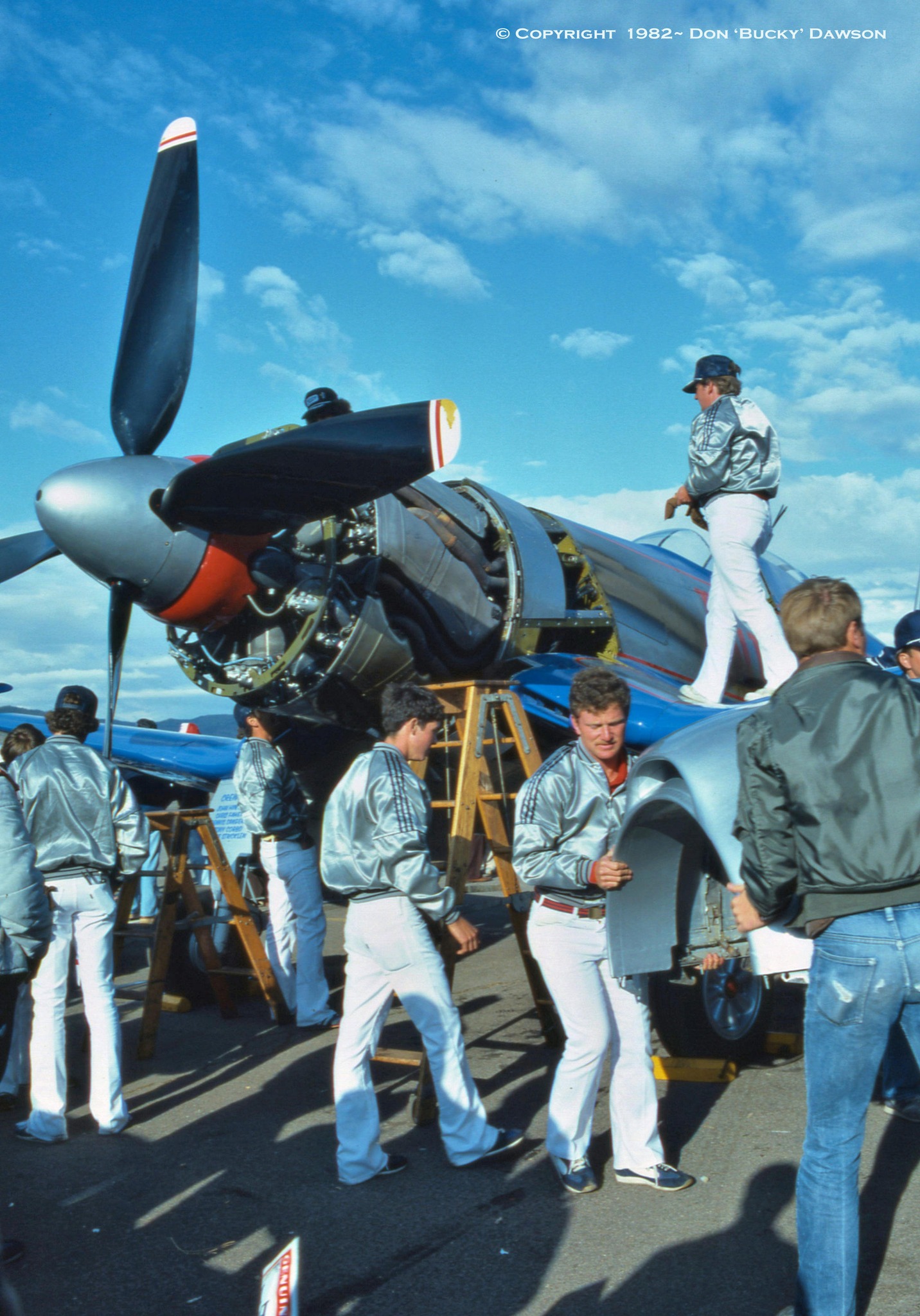
The engine cowling was adapted from a Douglas A-26 Invader, while the engine mount came from a Douglas Skyraider, both aircraft known for operating powerful radial engines.
These components allowed the team to successfully integrate the massive R-4360 engine into the Corsair airframe.
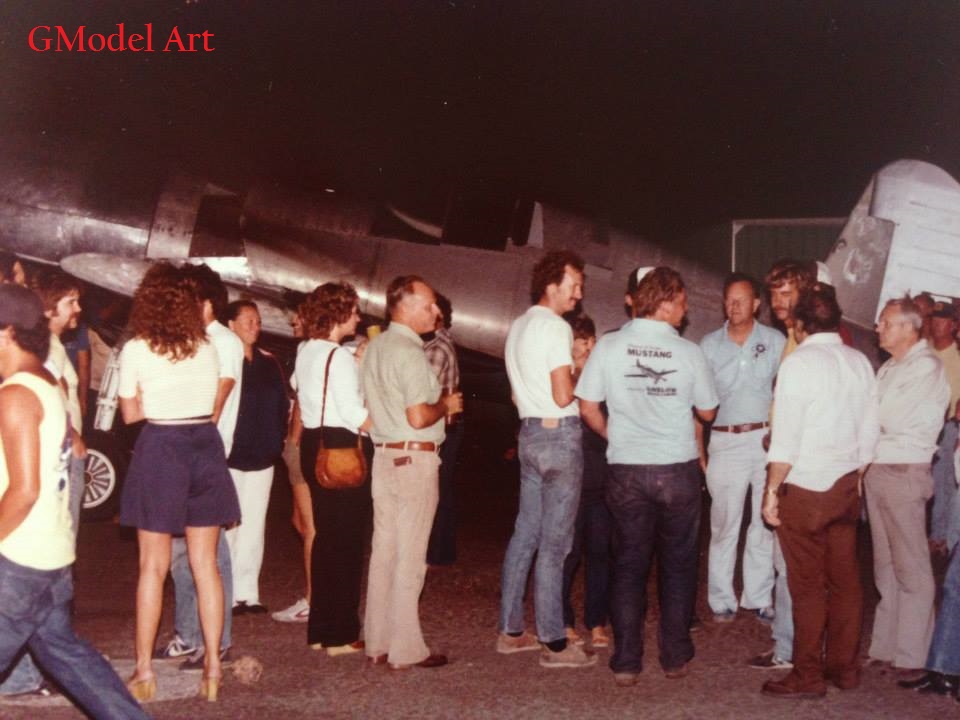
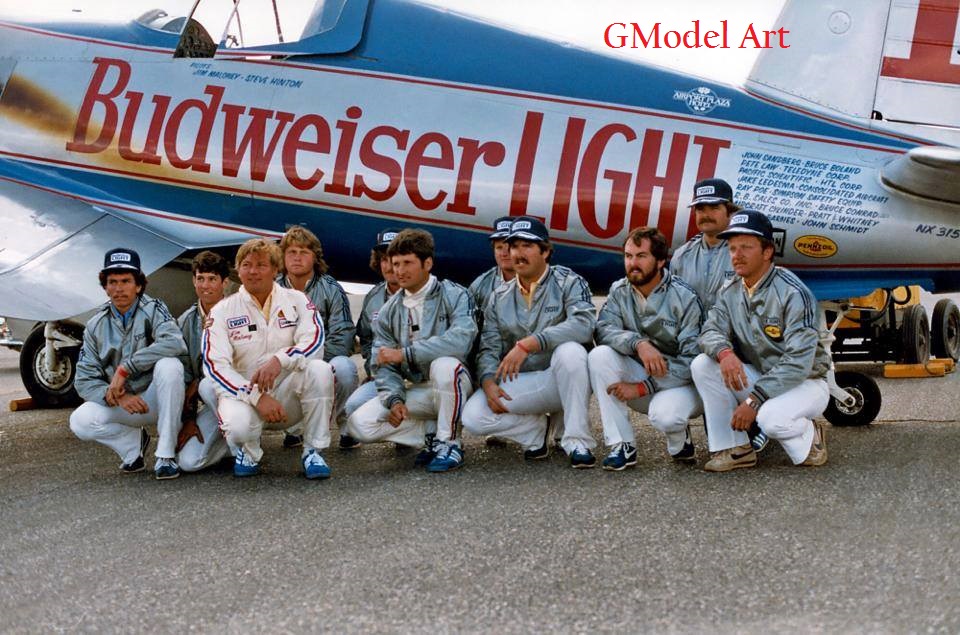
With the assistance of Lockheed engineers Pete Law and Bruce Boland, the aircraft was finally completed.
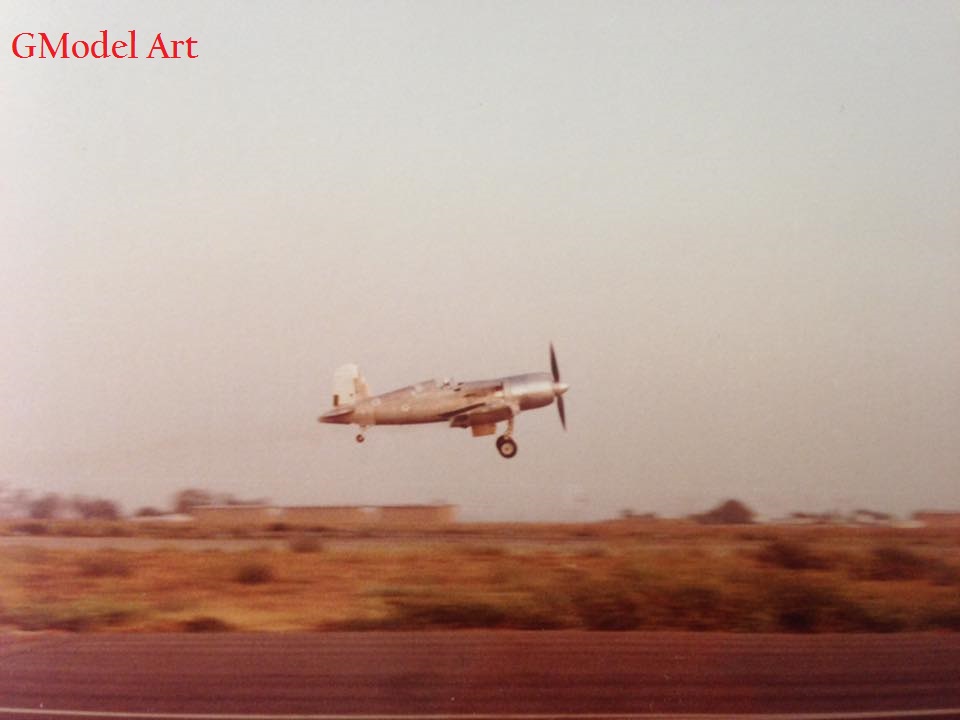
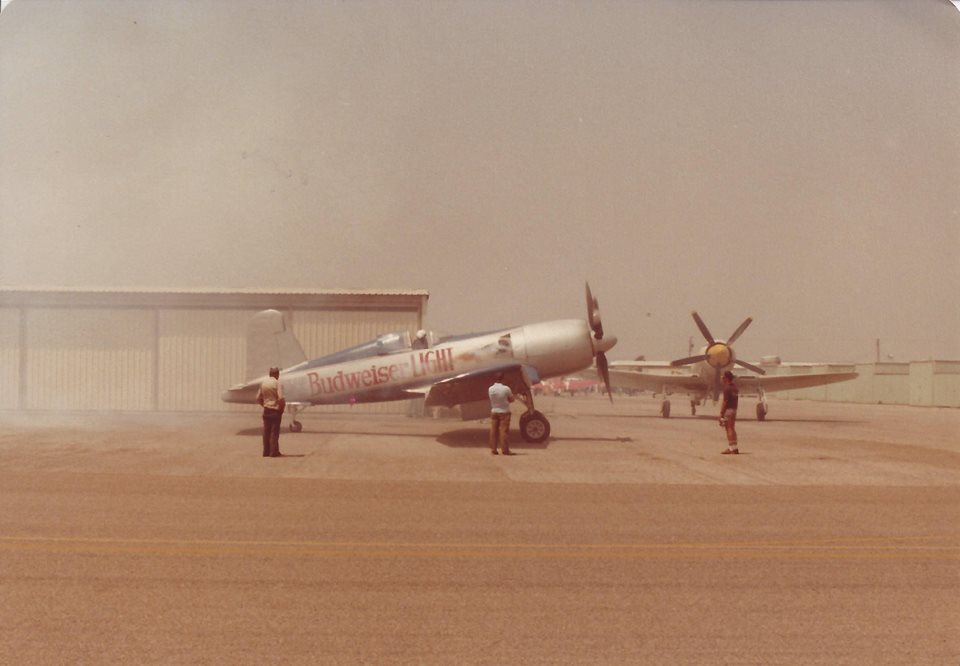
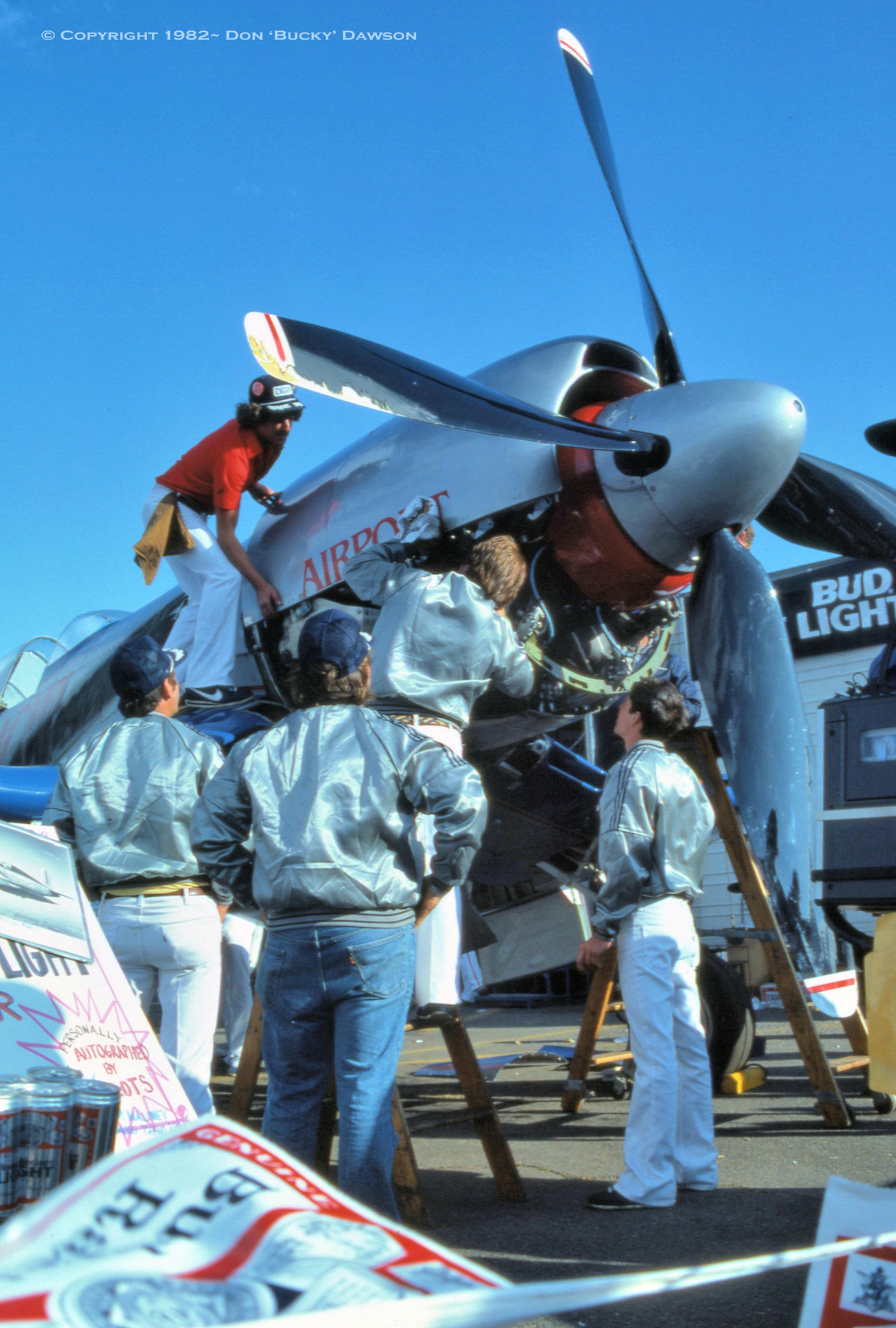
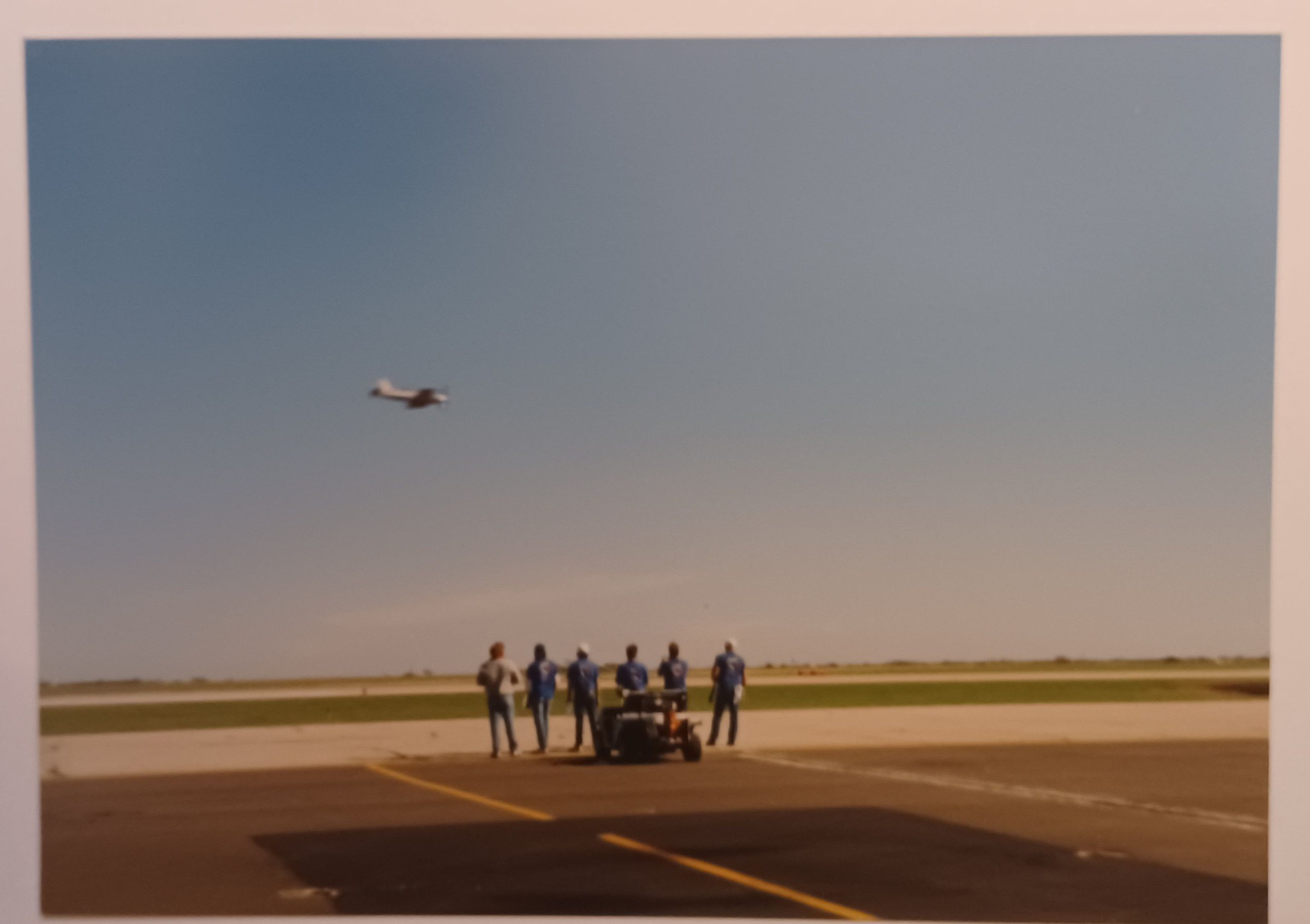
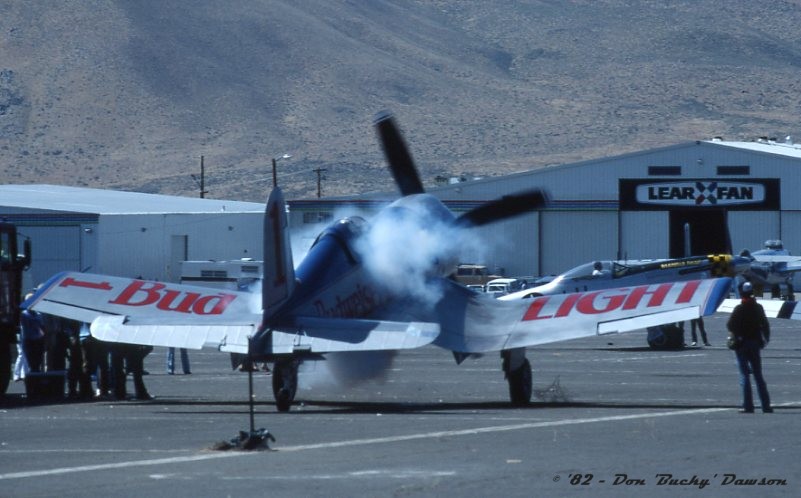
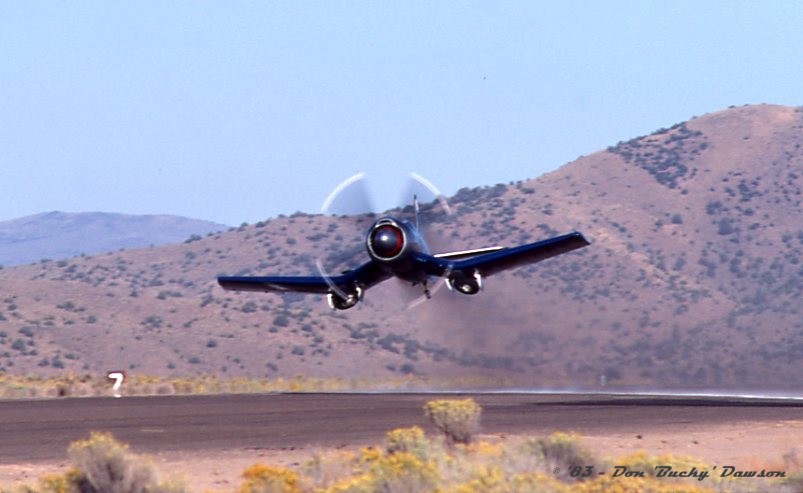
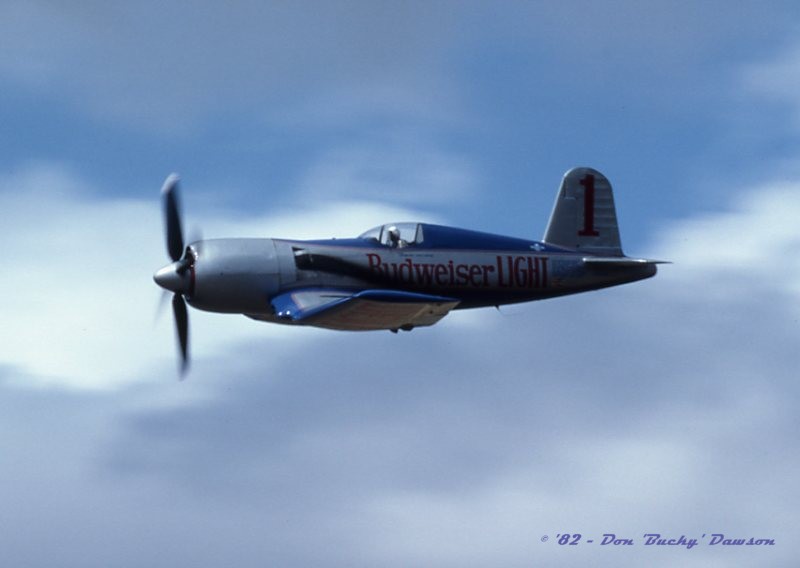
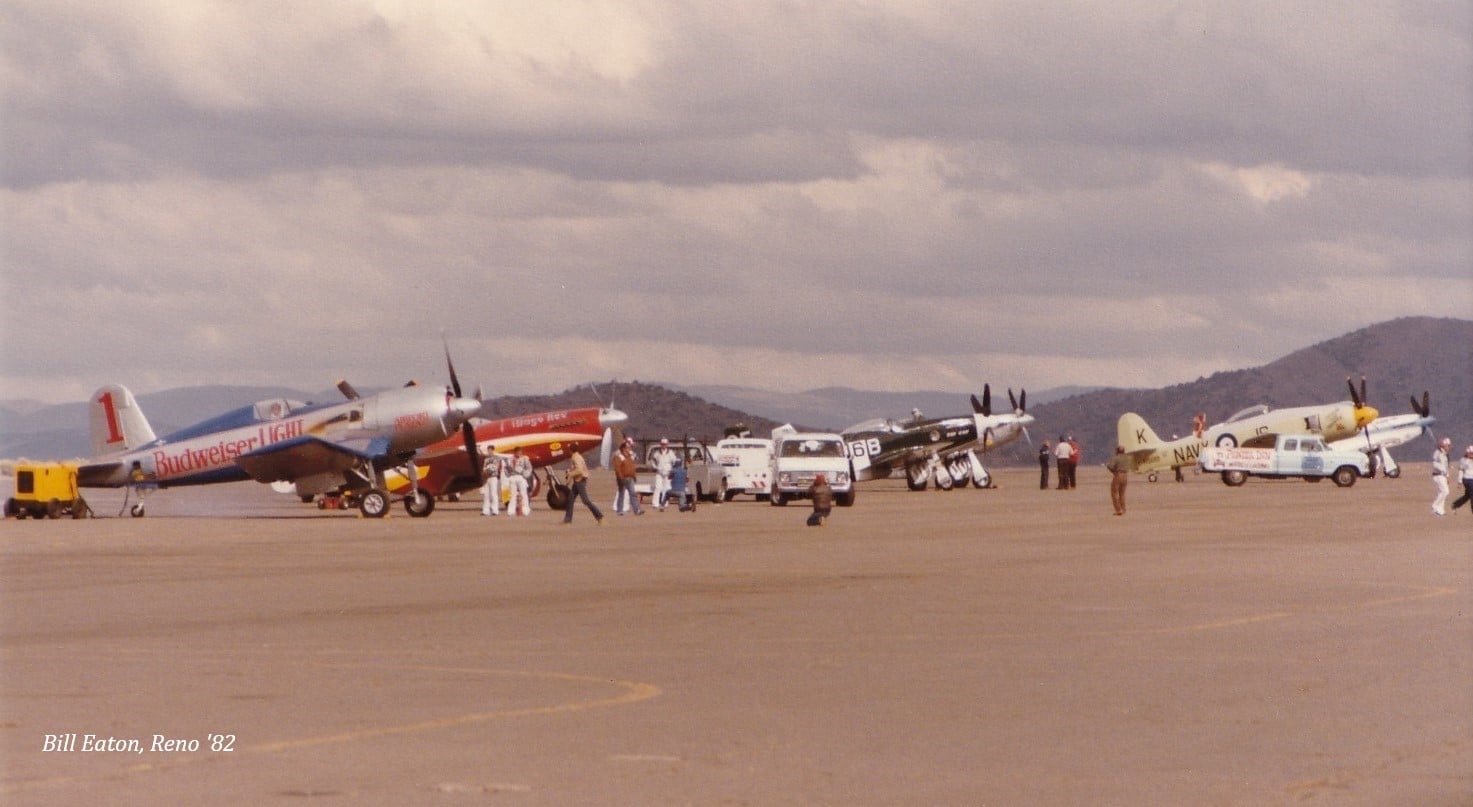
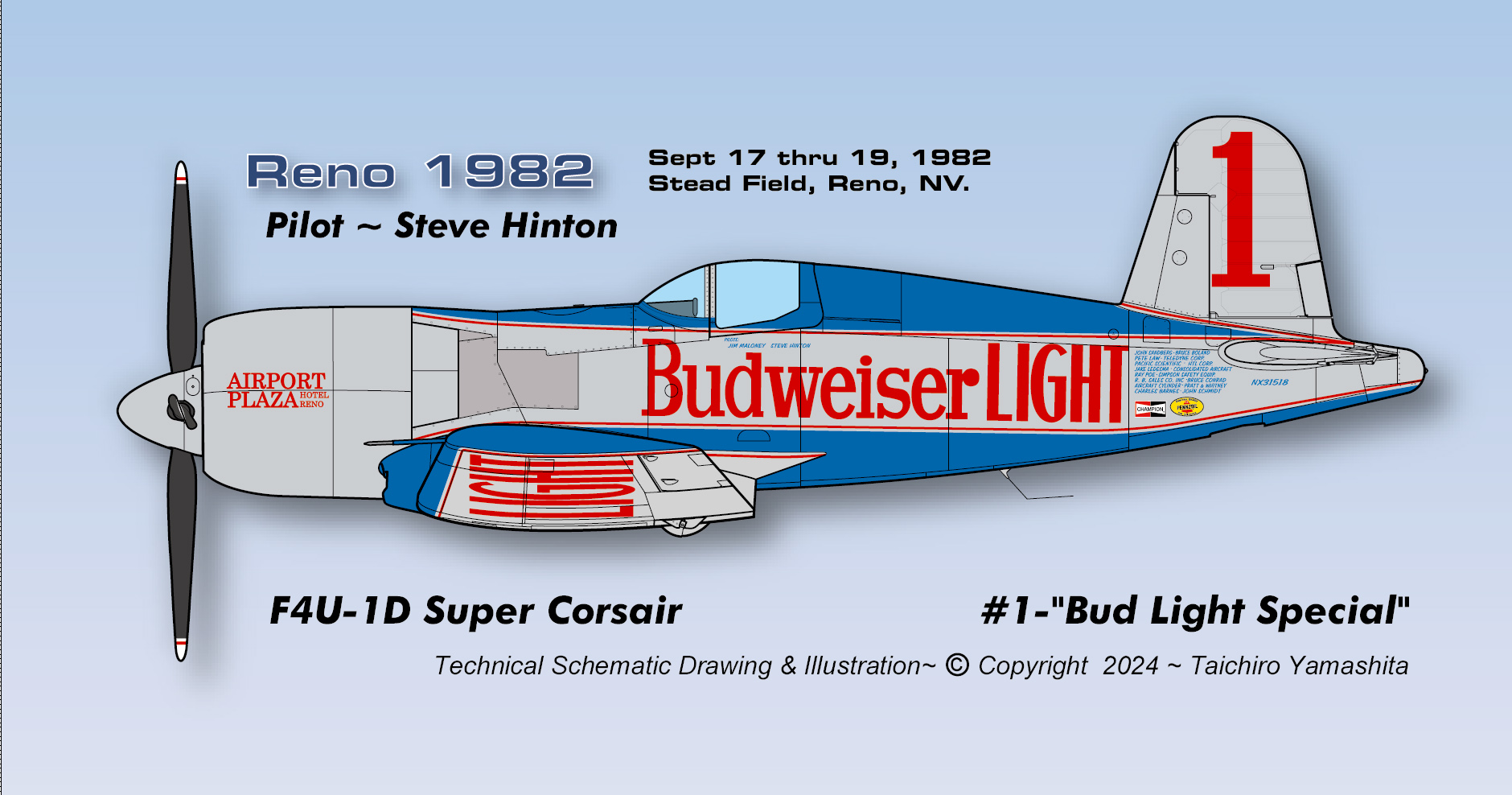
The Super Corsair made its racing debut at the Reno Air Races in 1982.
At the time, the aircraft was sponsored by Budweiser and appeared under the name:
“Bud Light Special.”
Throughout the late 1980s and early 1990s, the aircraft achieved several strong racing results at Reno.
1982 – 4th place, Gold Race
1983 – Winner, Unlimited Silver Race
1984 – 3rd place, Gold Championship
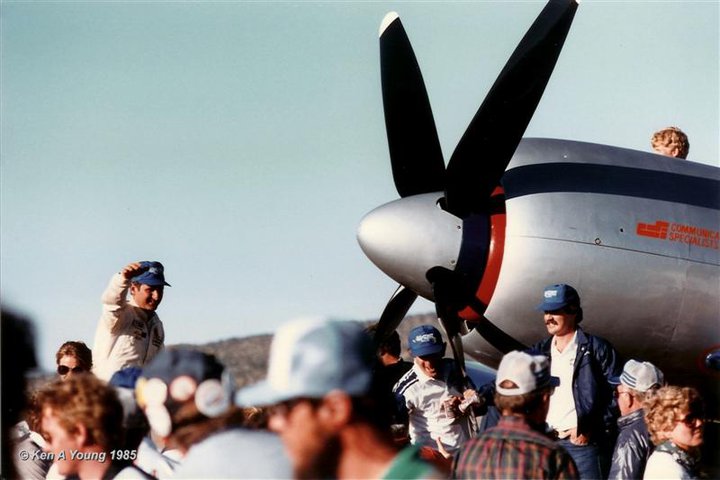
1985 – Gold Champion (Steve Hinton)
1987 – 4th place, Gold Race
1988 – 6th place, Gold Race
1989 – 3rd place, Gold Final
1990 – 5th place, Championship Race
1991 – 7th place, Gold Race
1992 – 6th place, Gold Race (Kevin Eldridge)
1993 – 5th place, Championship Race
The aircraft was flown by several notable pilots:
• Steve Hinton
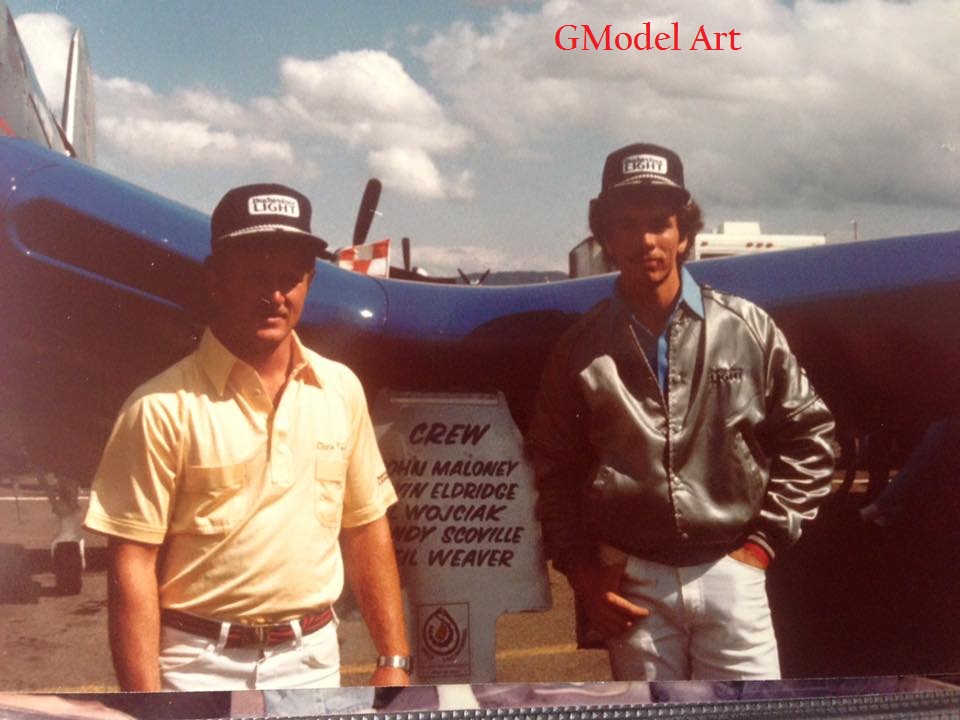
• John Maloney
• Kevin Eldridge
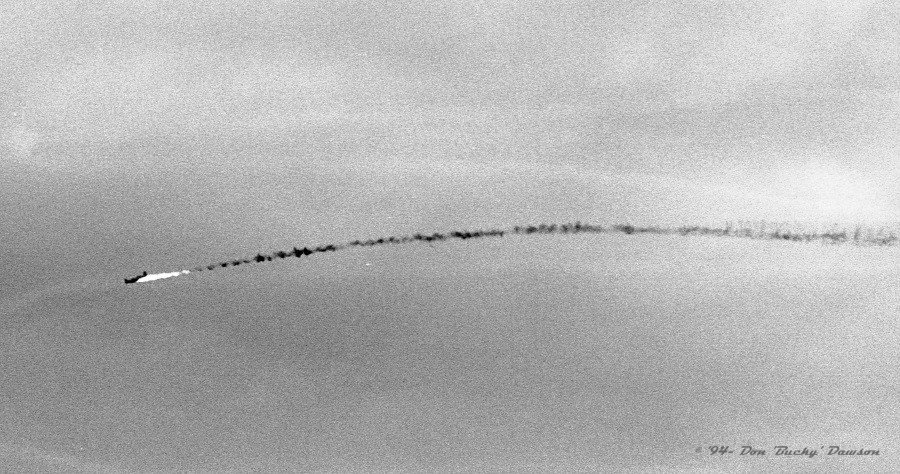
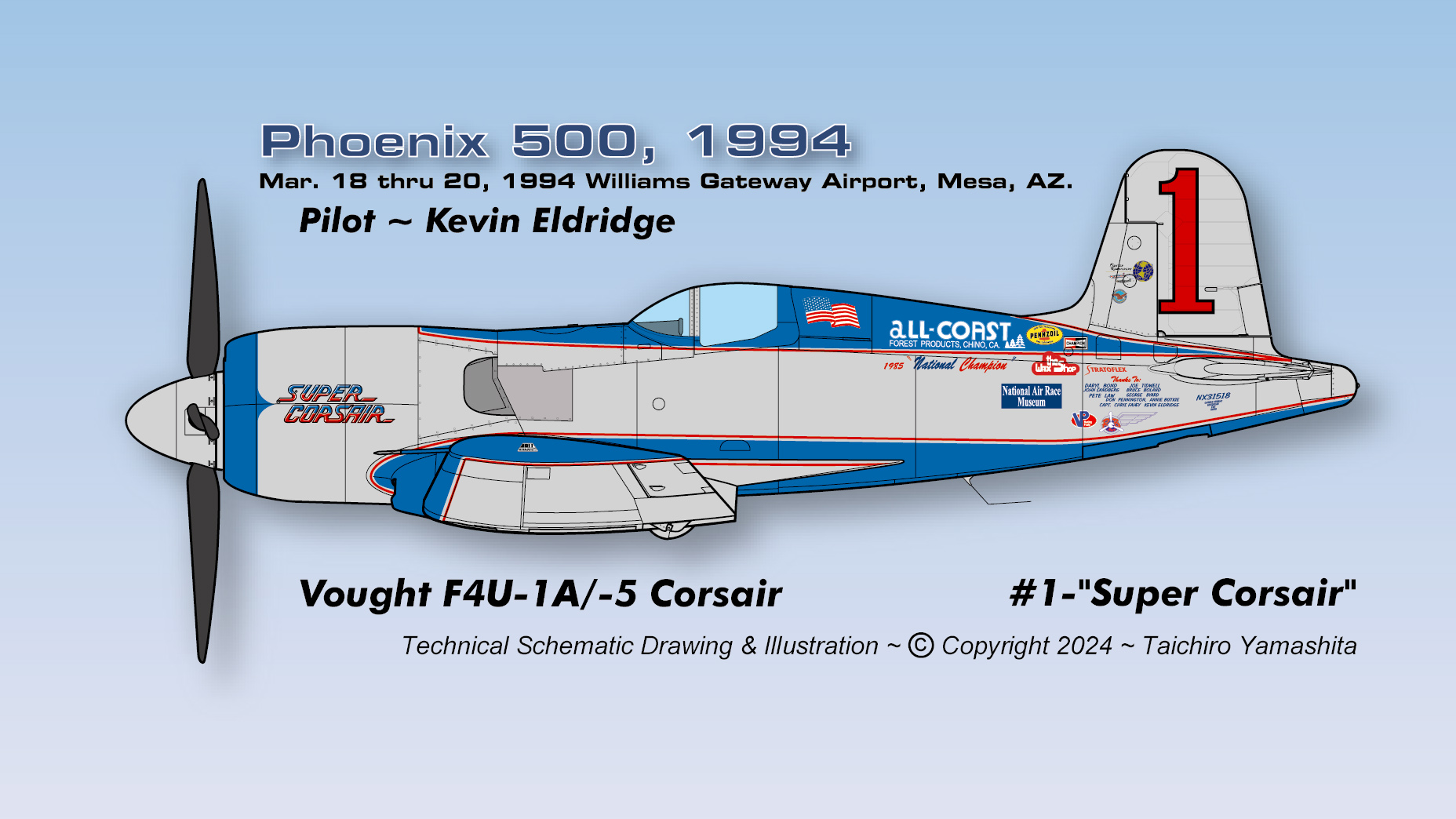
In March 1994, the Super Corsair participated in the Phoenix 500 Air Races.
During the Saturday qualifying session, the aircraft experienced a severe engine failure.
Witnesses reported:
• white smoke coming from the engine
• three bursts of flame
• fire spreading toward the cockpit
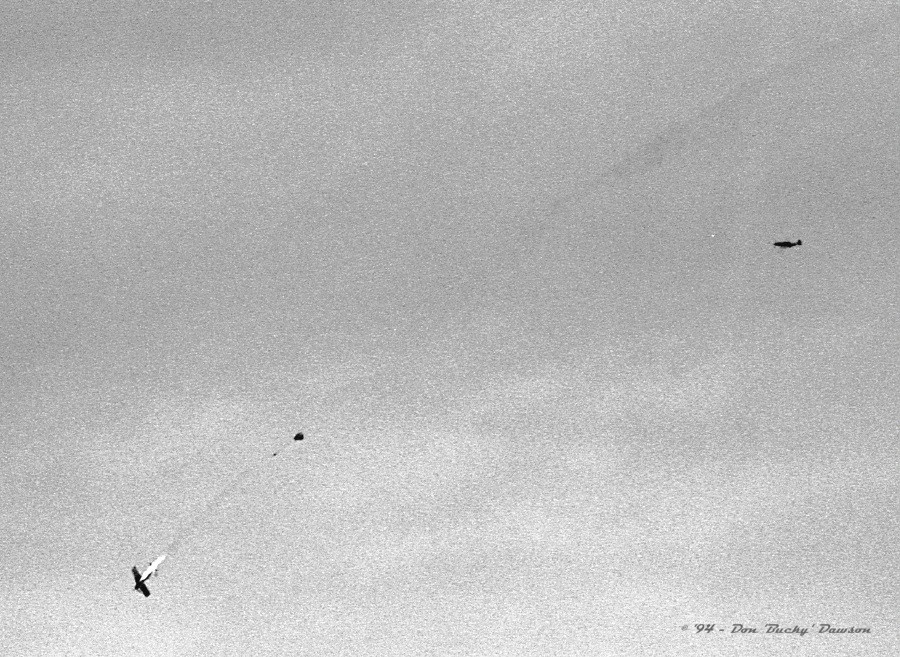
Pilot Kevin Eldridge managed to eject from the aircraft, but during his escape he struck the horizontal stabilizer.
He suffered serious injuries:
• two crushed cervical discs
• a broken arm
• a broken leg
Despite these injuries, his parachute deployed successfully and he survived.
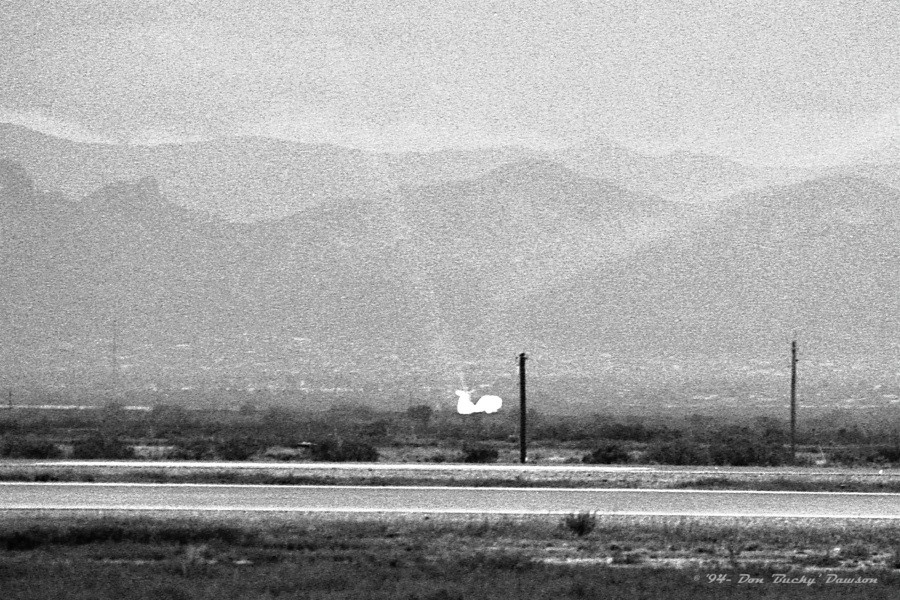
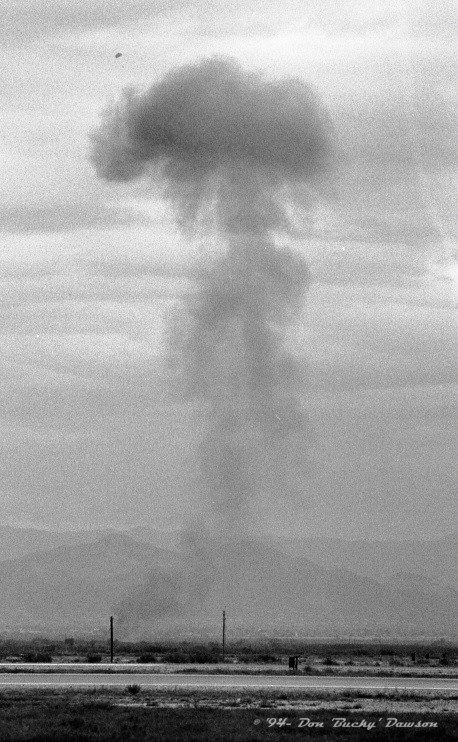
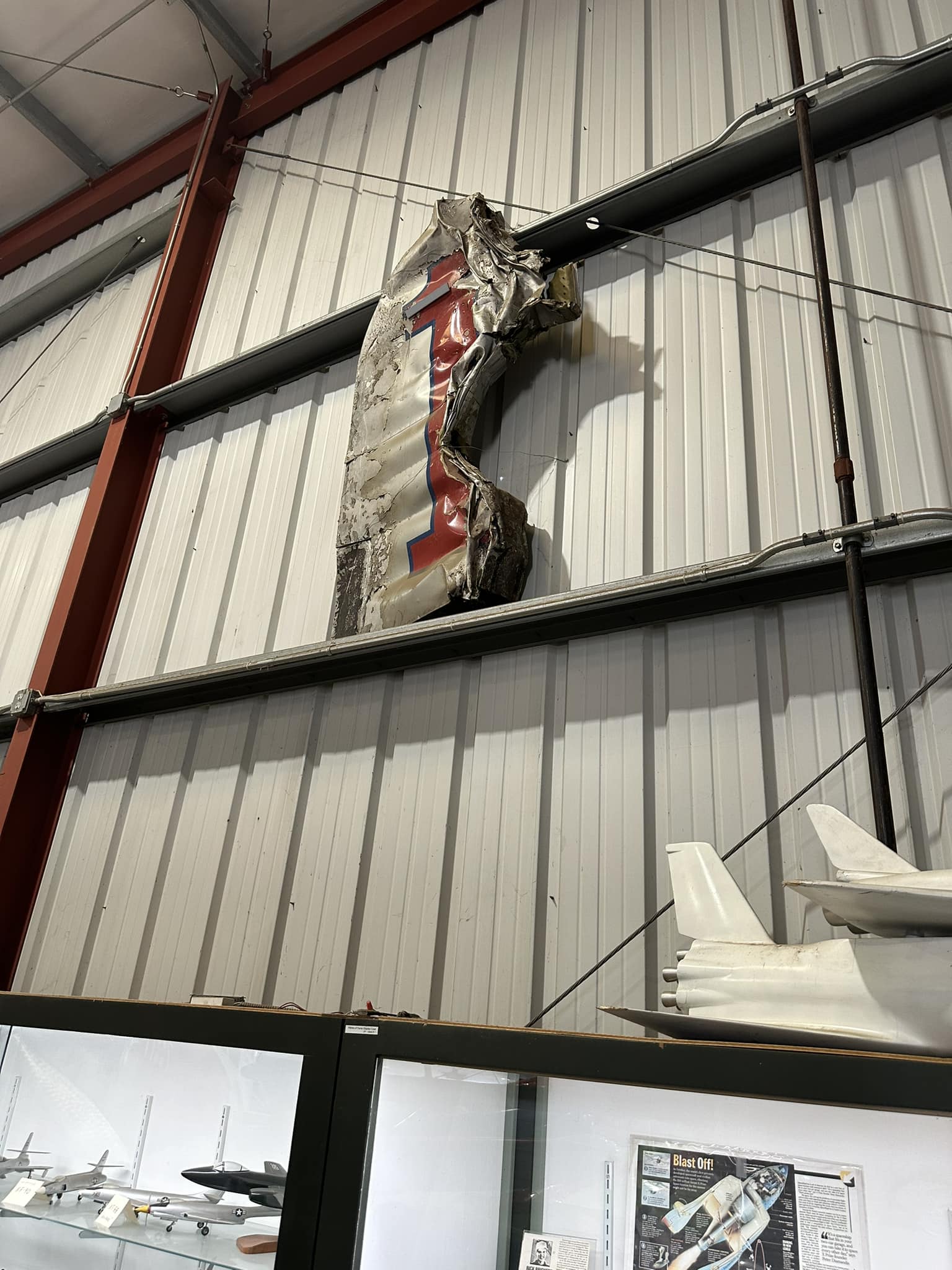
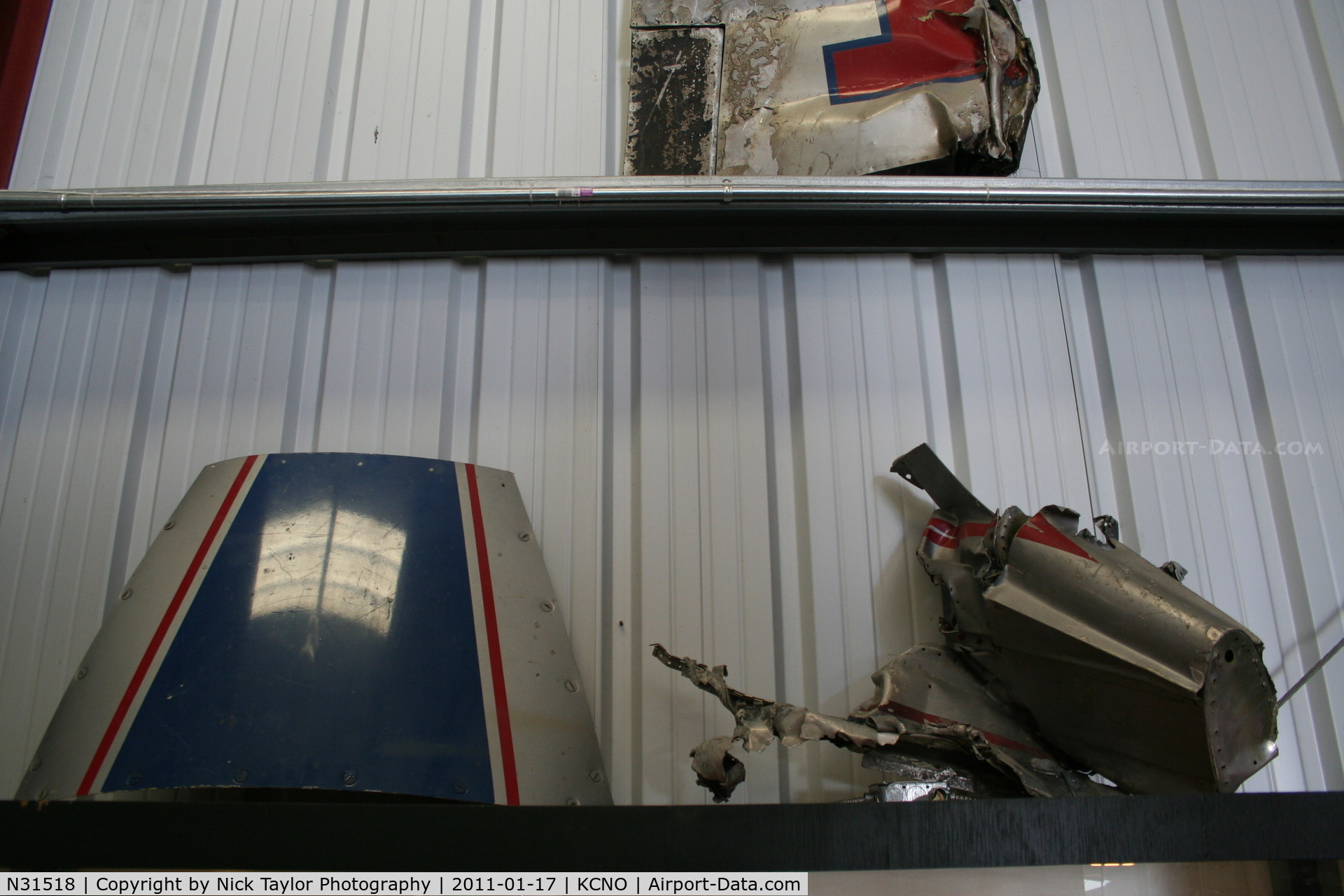
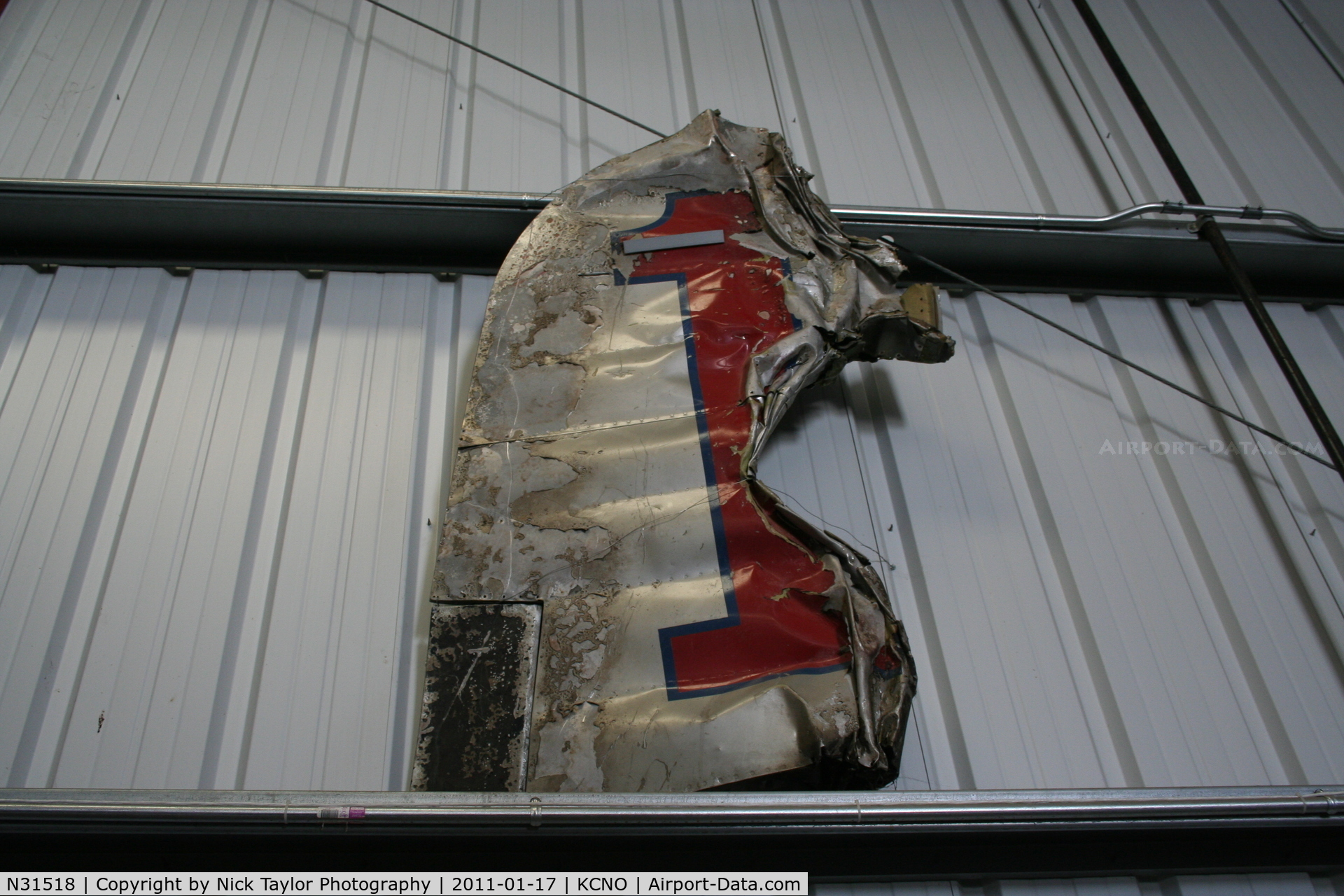
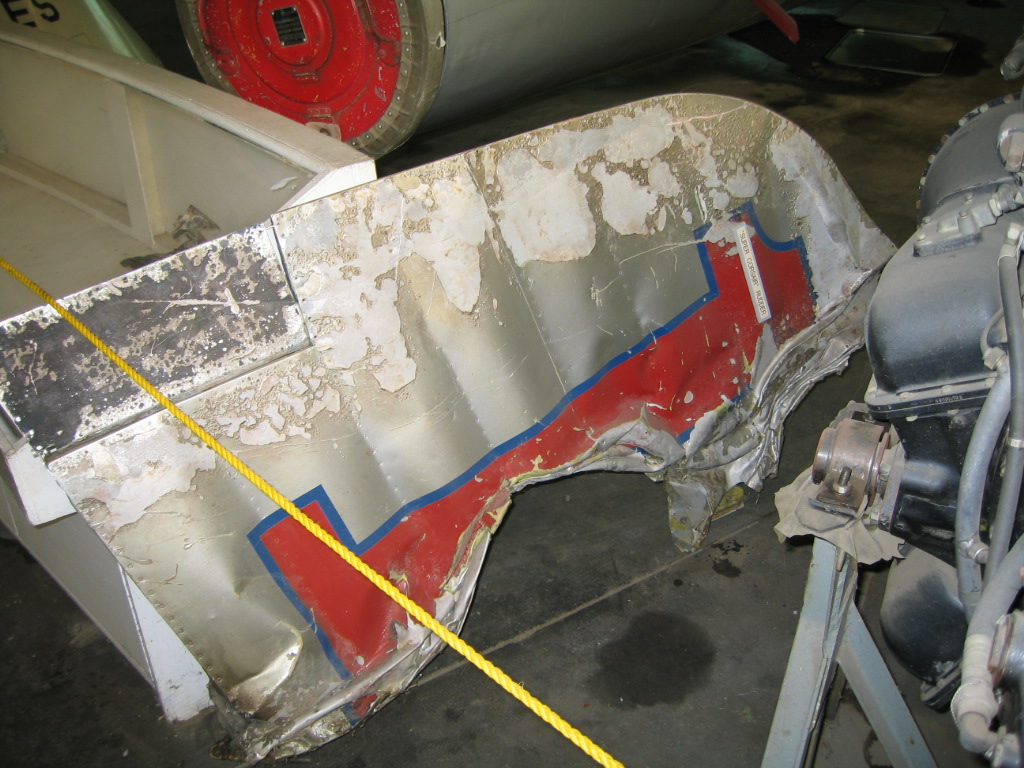
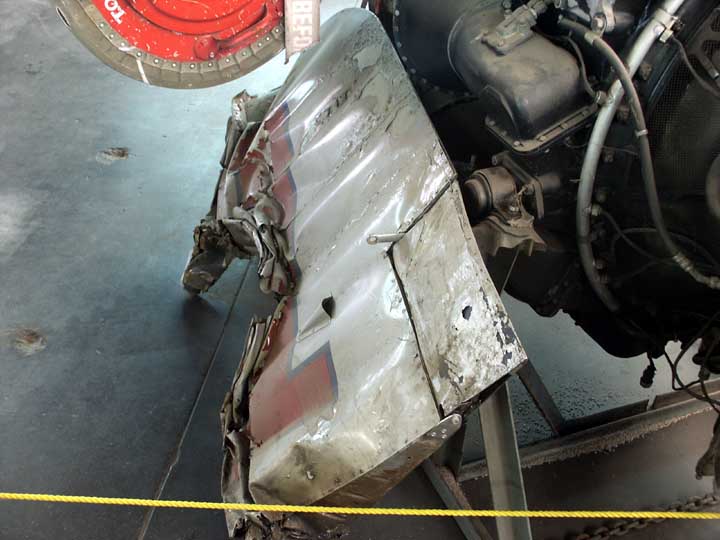
The aircraft rolled inverted and crashed vertically into the desert, bringing the racing career of this legendary Super Corsair to an end.
I still remember the day I saw the news of the crash.
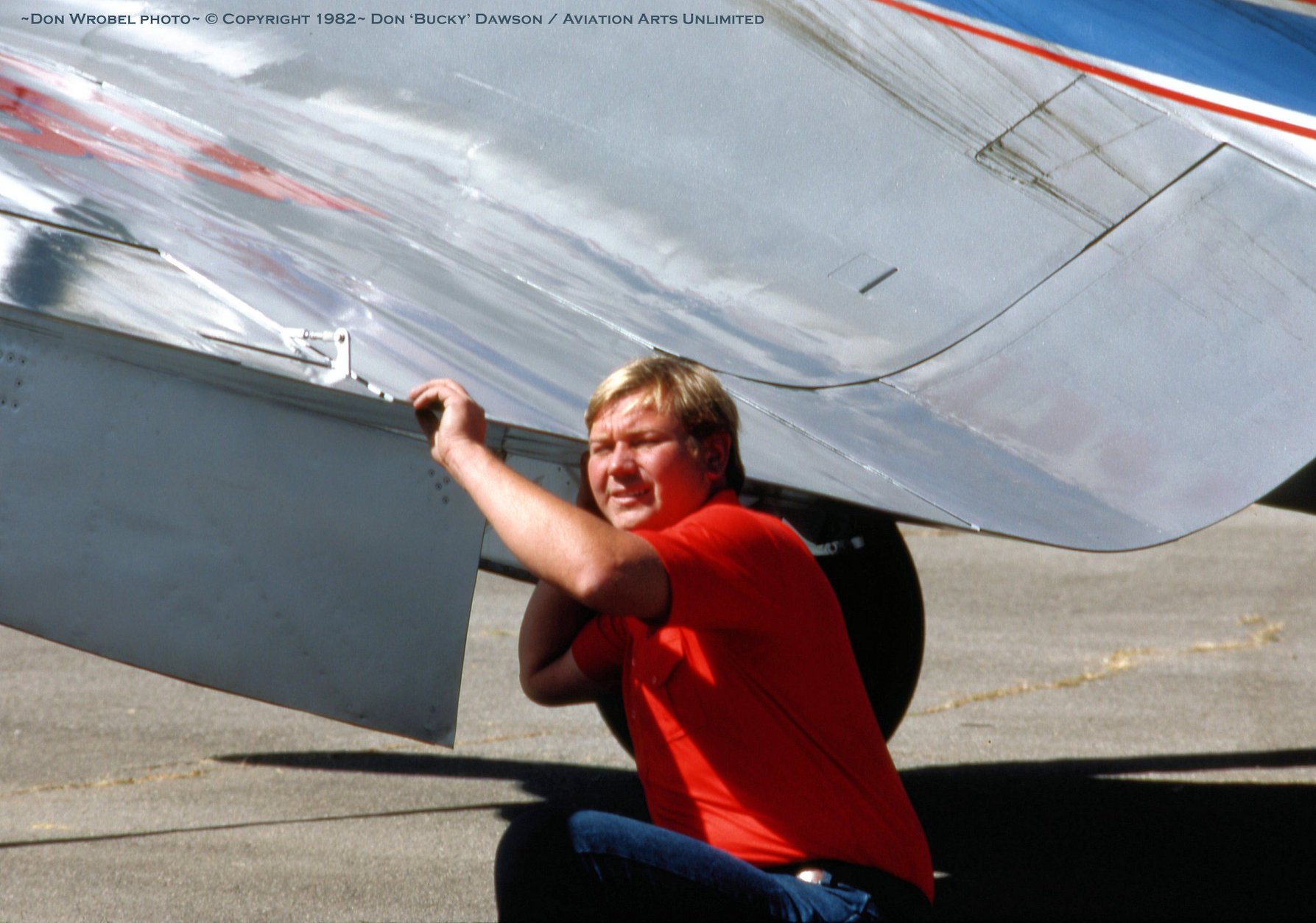
I would also like to express my sincere thanks for the restoration photo archive kindly provided by:
Frank Mormillo & Chris Fah,Don Dawson.
The SB2U Vindicator in McClelland Barclay’s Experimental Camouflage
article Curtiss-Wright XP-55 Ascender Curtiss-Wright XP-55 Ascender The Radical Fighter That Tried to Redefine WWII Aviation During the Second World War, aviation technology evolved at an extraordinary pace. Aircraft manufacturers were constantly searching for new…
article Curtiss XP-60 – Curtiss’s Last Attempt at a New Fighter Curtiss XP-60 Prototypes and the XP-40Q-2A – History and Modeling Guide During World War II the American aircraft industry was developing new fighters at…
article P-39Q-1 Airacobra – 46th Fighter Squadron, Makin Island 1943 Import During the critical stages of the Allied advance into the Central Pacific in 1943, American fighter units began operating from newly captured island bases.…
article P-40N Warhawk of the 45th Fighter Squadron at Nanumea (1943) The Unusual Pacific Island Camouflage During World War II, aircraft of the United States Army Air Forces operated in some of the most diverse and demanding environments…
article F6-F Hellcat Air Group 16 – USS Lexington (CV16) – 1942-1945 Rare photographic material from the pilots of Air Group 16 gives us the opportunity to see the F6F Hellcatnot just as a successful…
article P-51C Mustang North American ReconstructionROCAF – Texas – 1948 The P-51C Mustang is one of the early versions of the legendary Mustang, before the bubble canopy D/K version. It was built by North American…
article A-7E Corsair II VA-37 “Bulls” – Gulf War Desert Camouflage Modeling GuideRecreating a Rare Transitional Scheme from 1989–1990 The first time I encountered this specific Vought A-7E Corsair II was through the book A-7E…
article B-25 PBJ-1 Mitchell: The US Navy and Marines’ Bomber in the Pacific (WWII Naval B-25 Guide) Introduction The North American B-25 Mitchell is one of the most iconic twin-engine bombers of World War II.…
article F-35C VX-9 “Vampires” BuNo 168842 – The Mirror-Coated Stealth Fighter A New Chapter in Stealth Camouflage The F-35C BuNo 168842 assigned to VX-9 “Vampires” has stunned spotters and analysts alike with its unusual mirror-like…
This website uses cookies to improve your experience. We'll assume you're ok with this, but you can opt-out if you wish. Read More