article
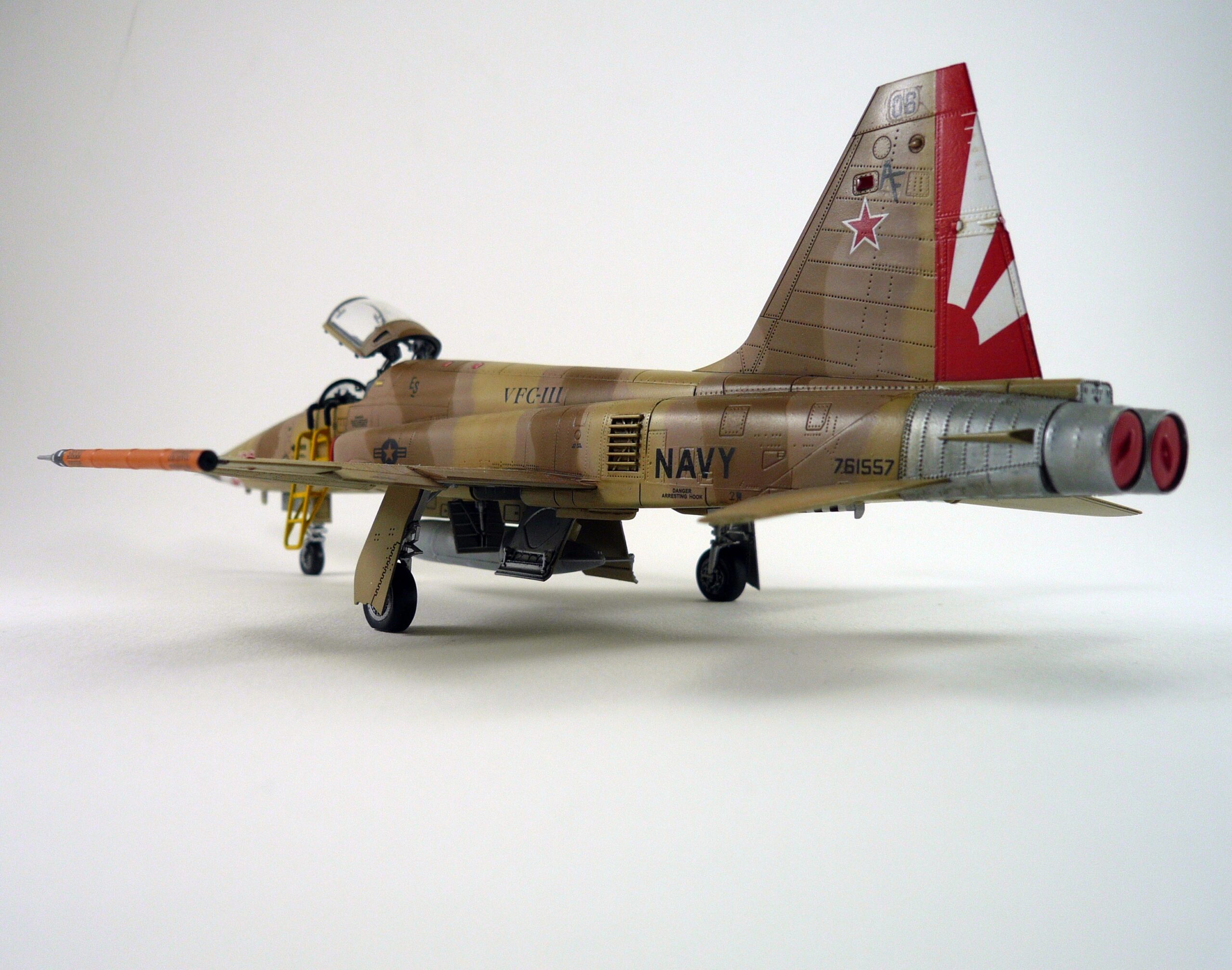
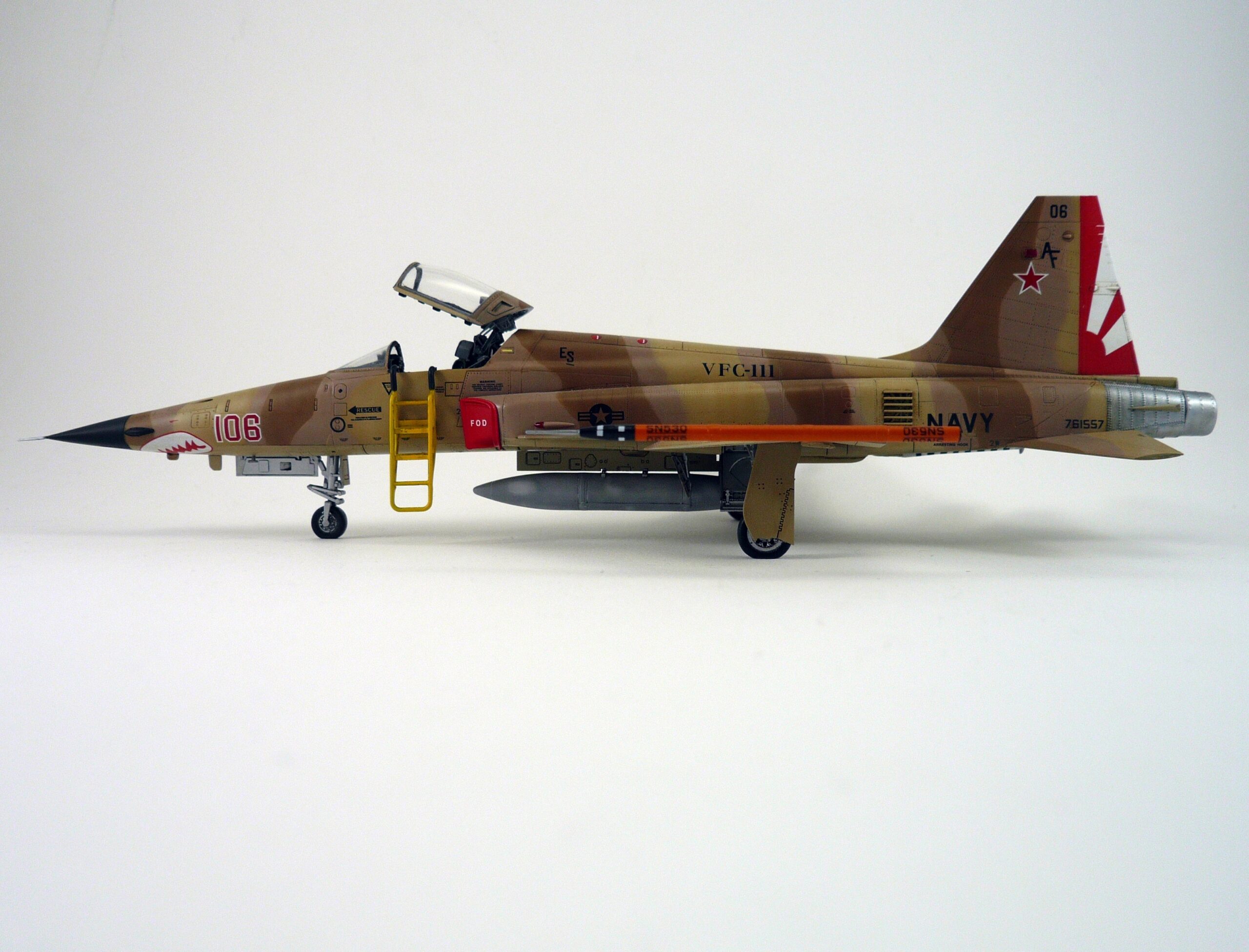
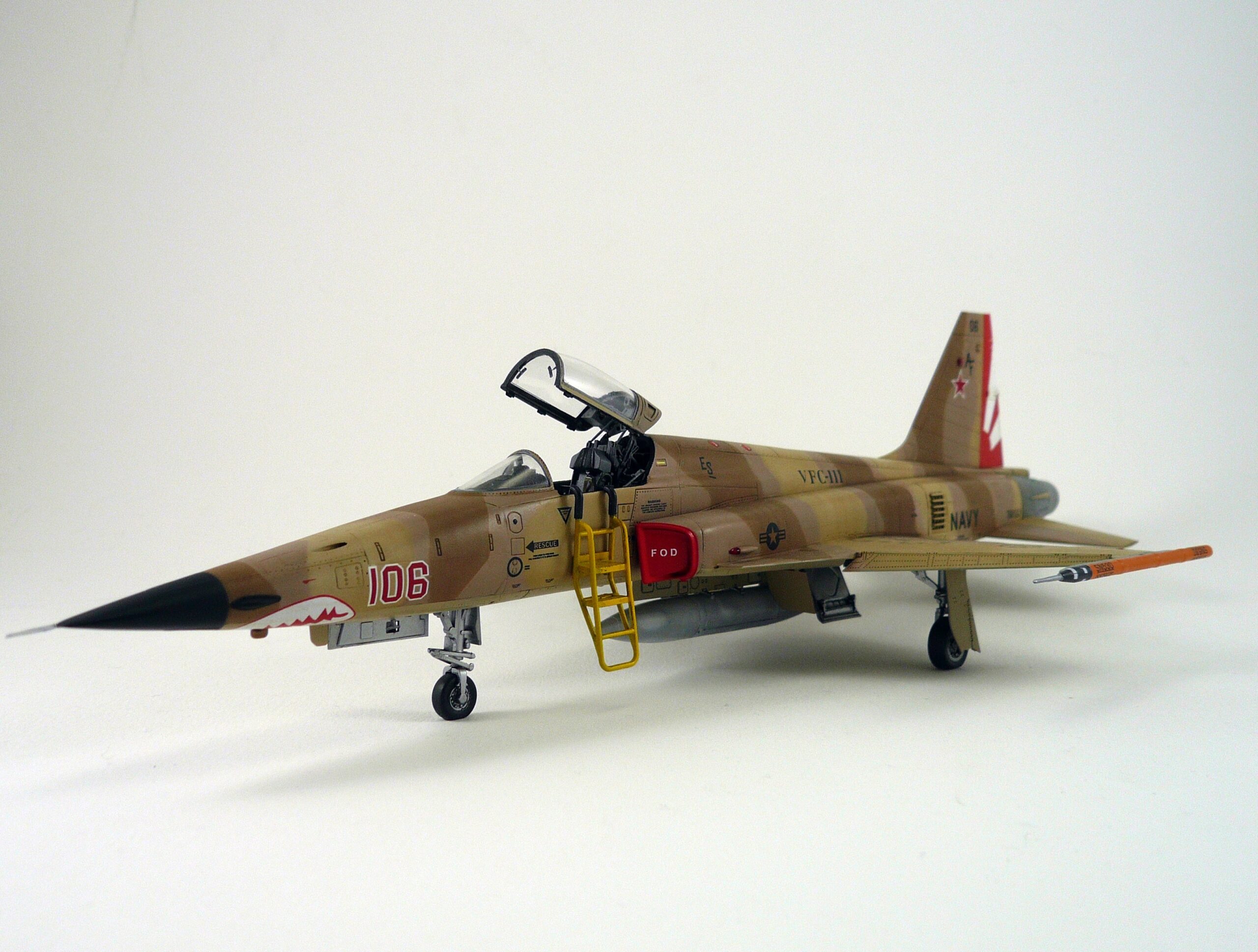
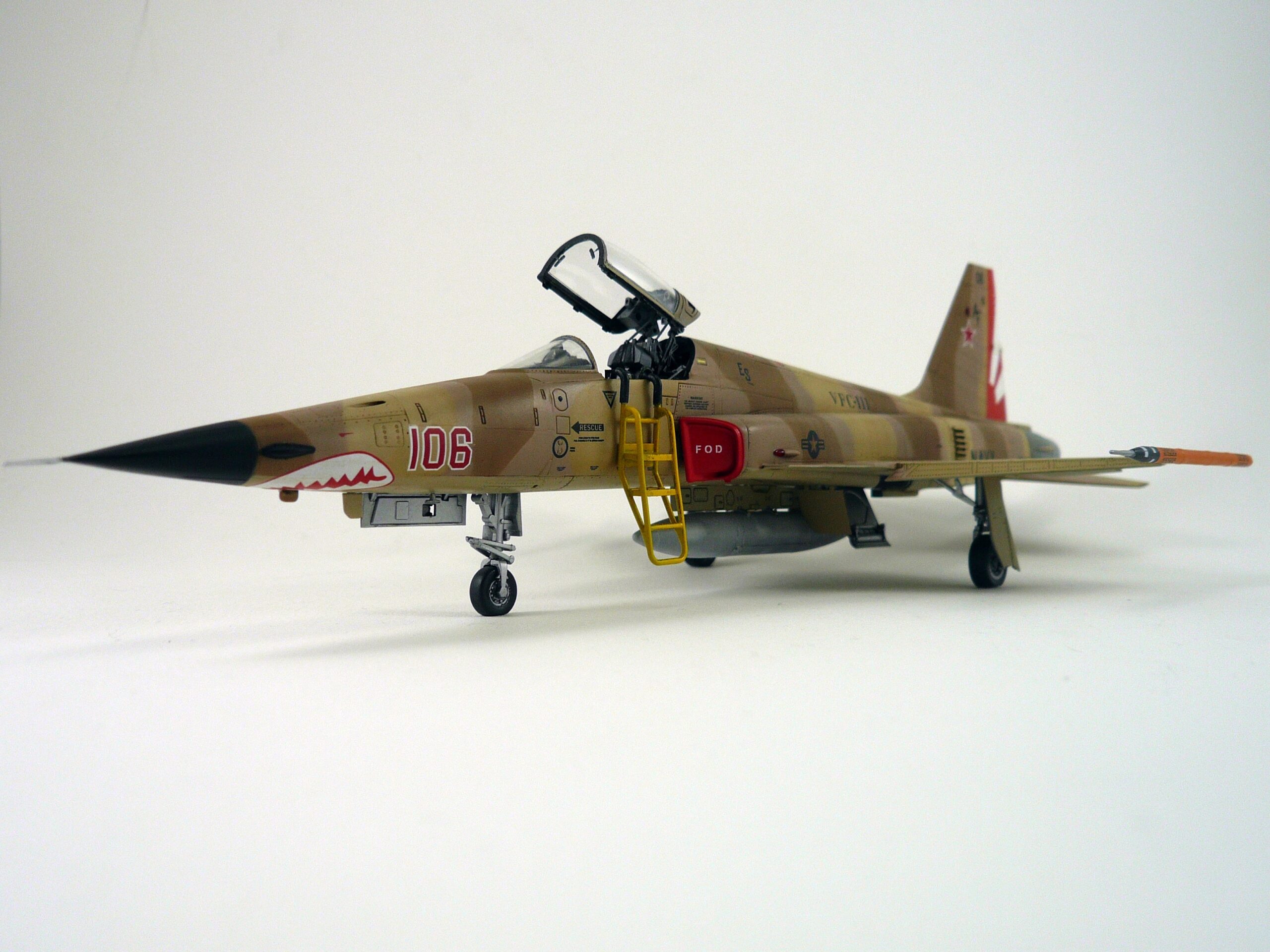
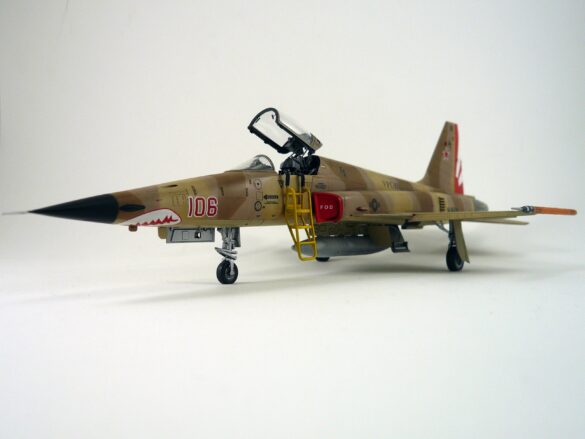
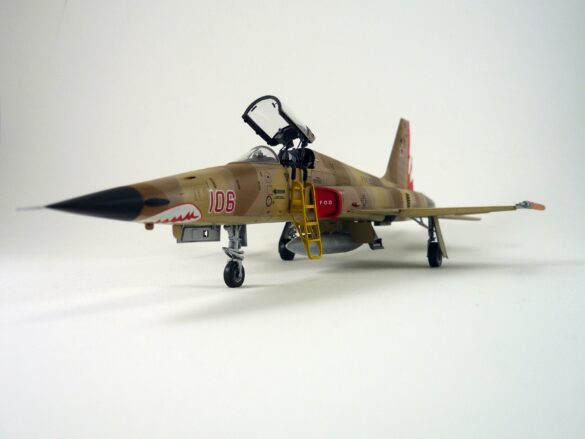
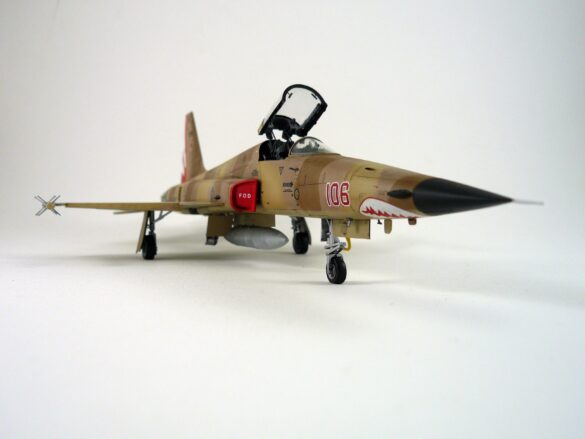
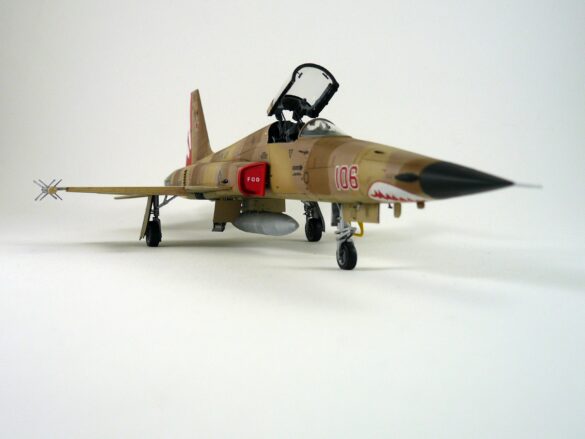
F-5N Tiger II VFC-111 Sundowners Build Review – 1/48 AFV Club Aggressor Camouflage
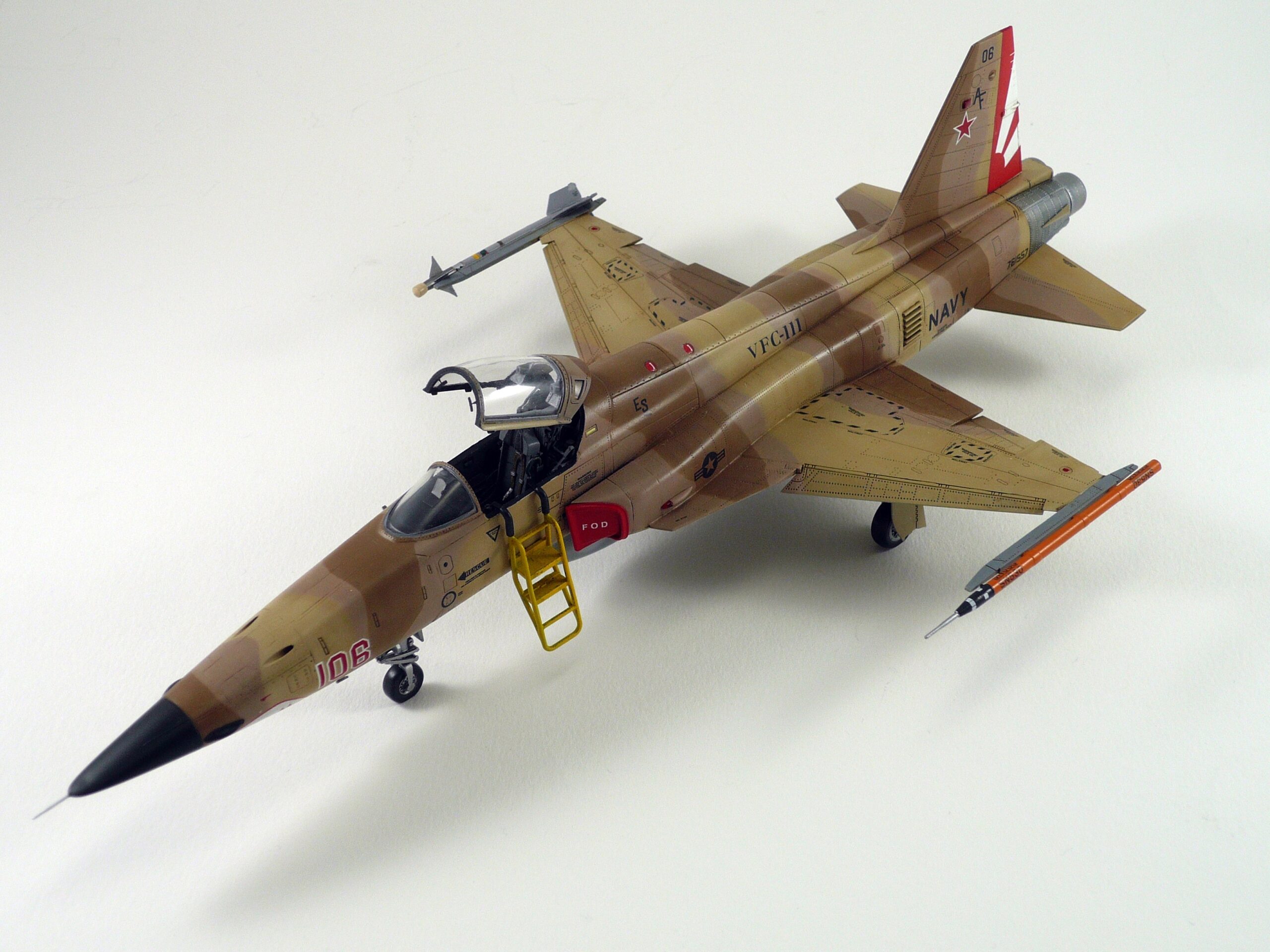
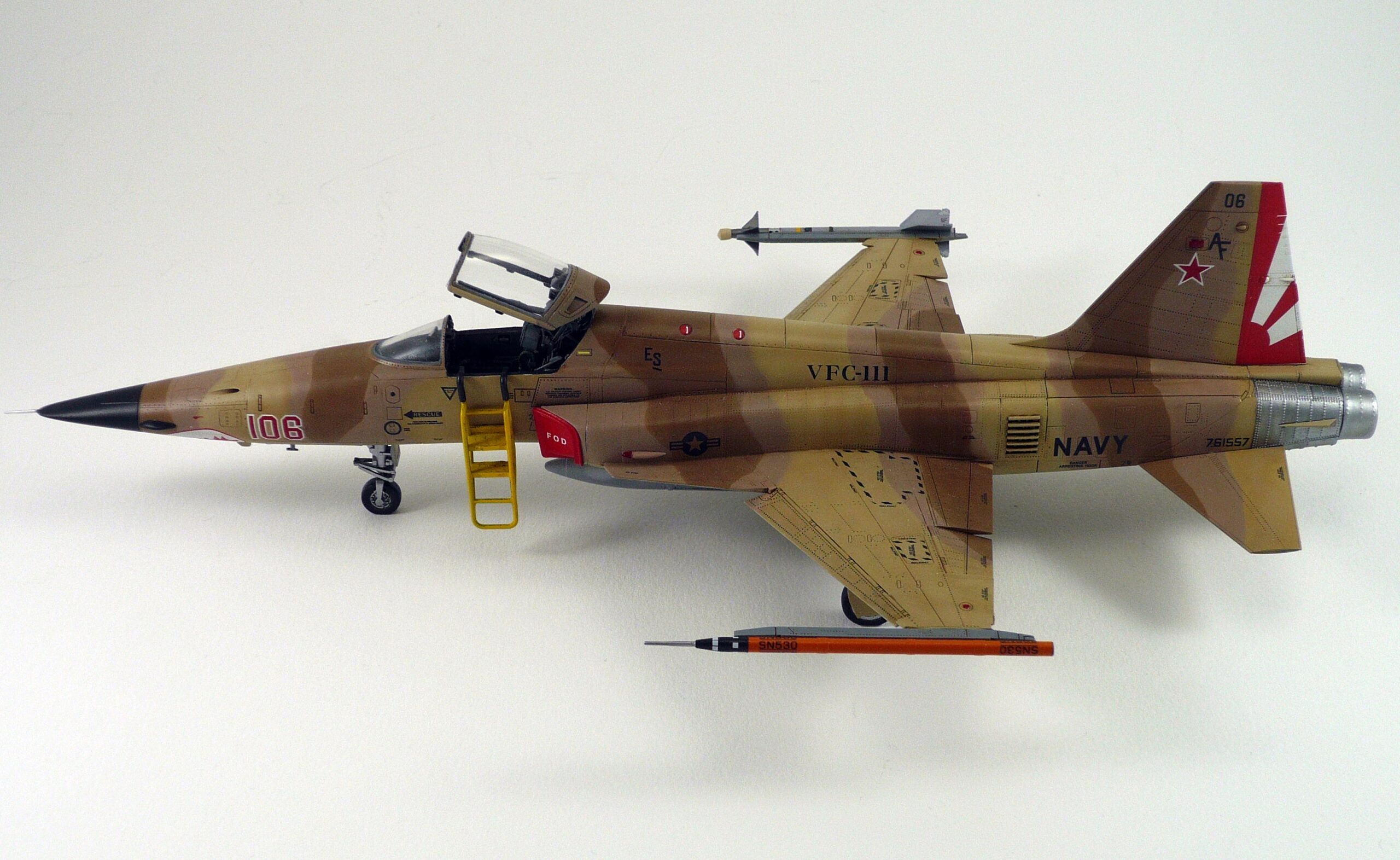
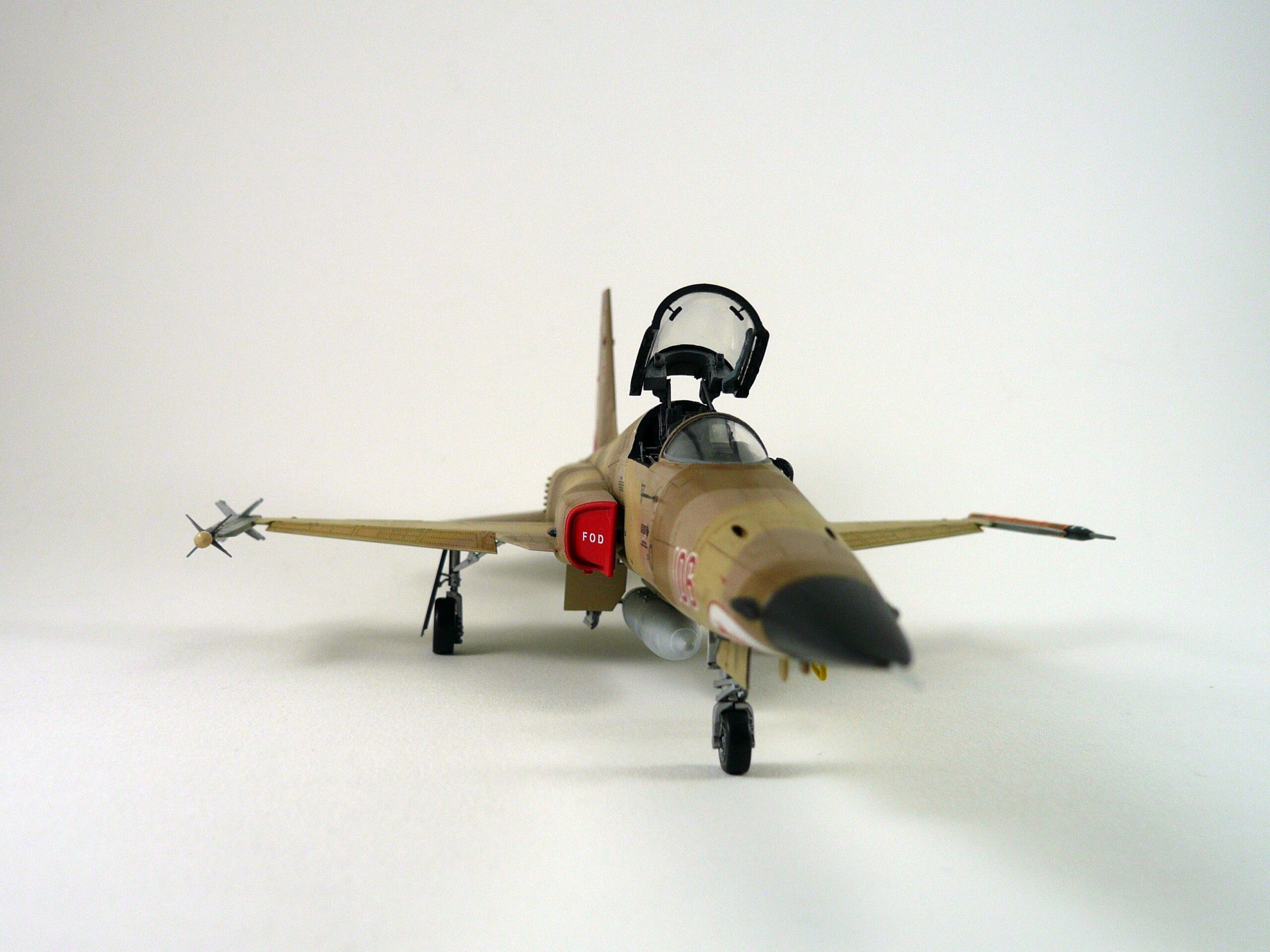
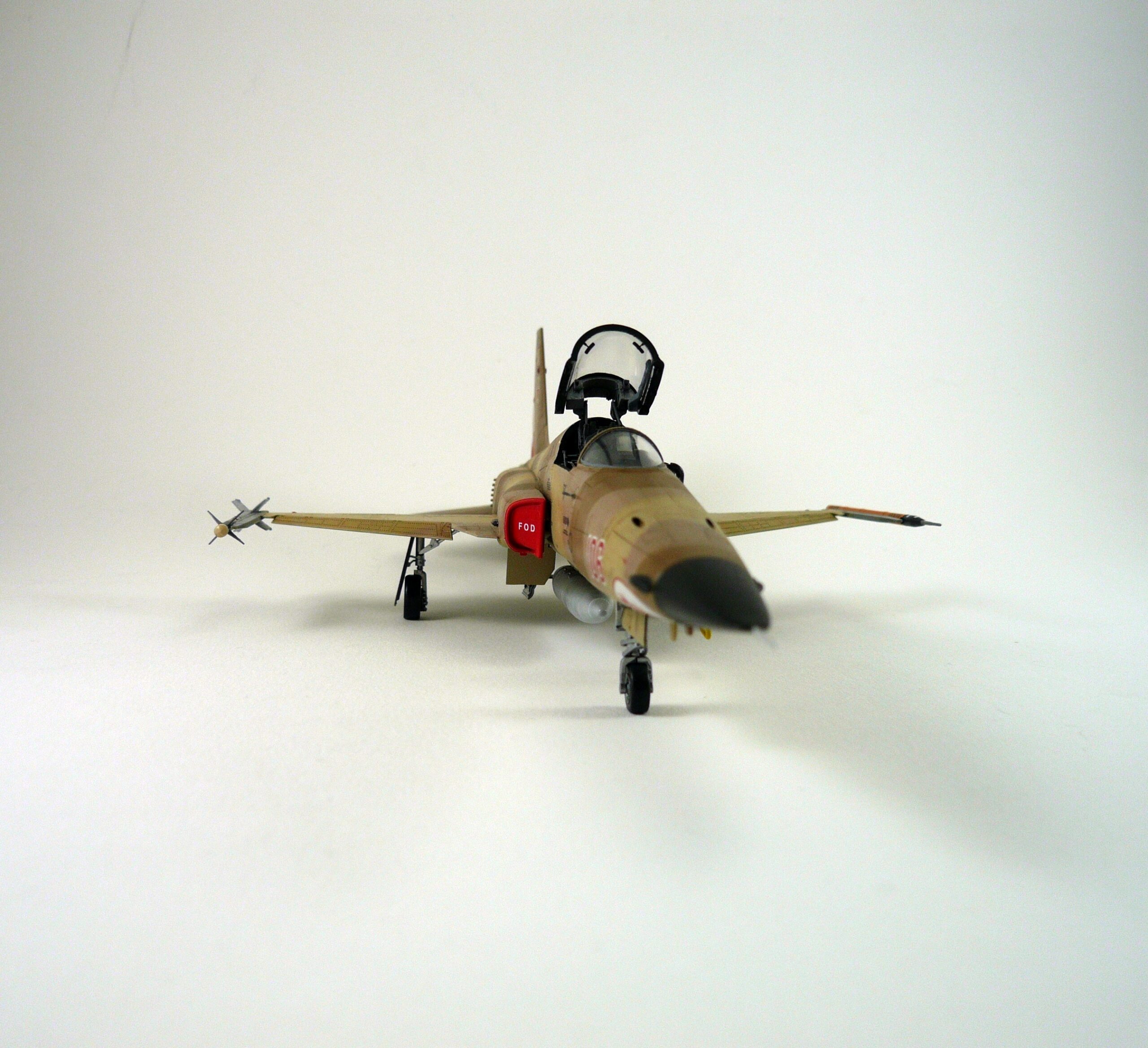
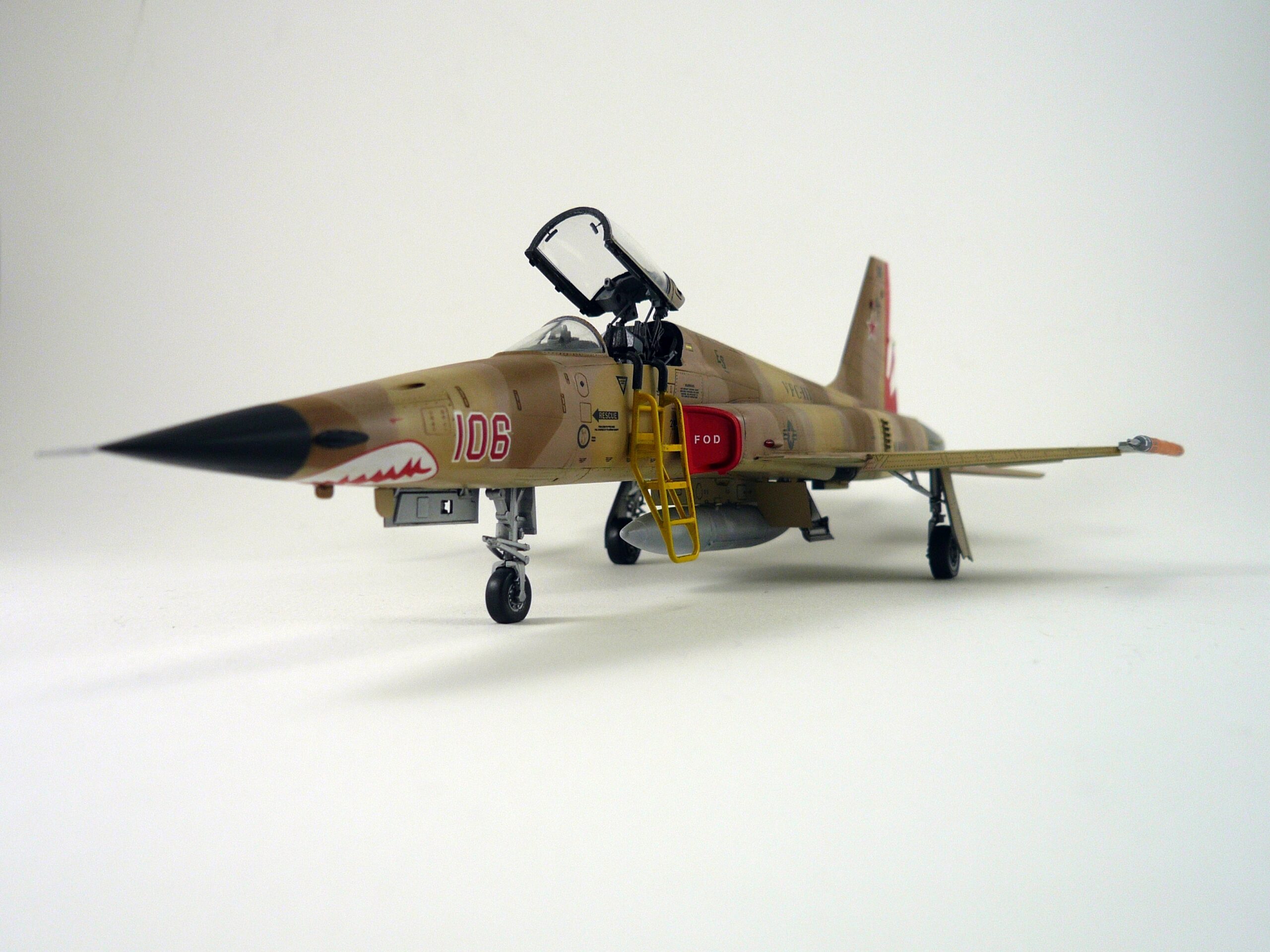
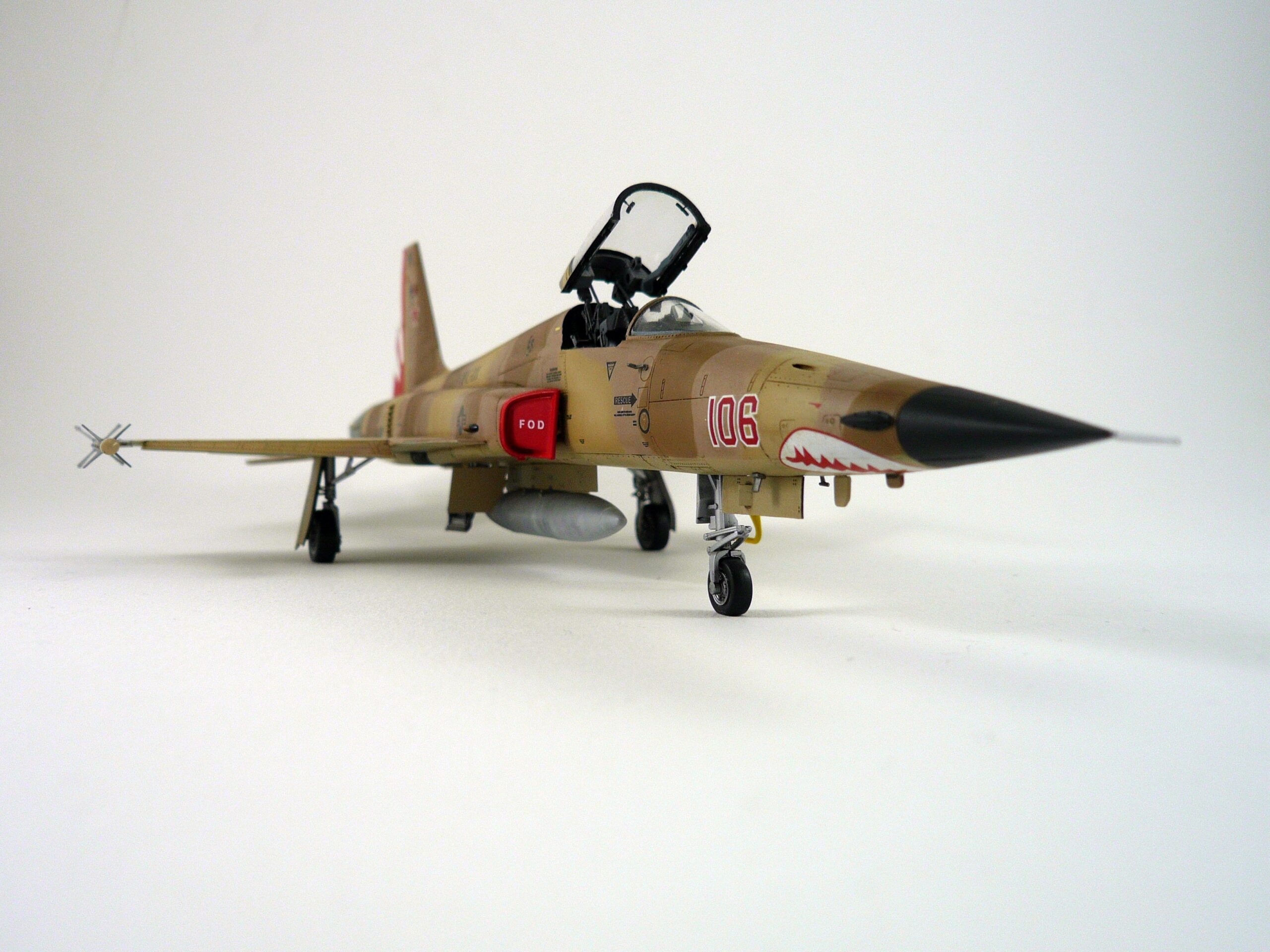
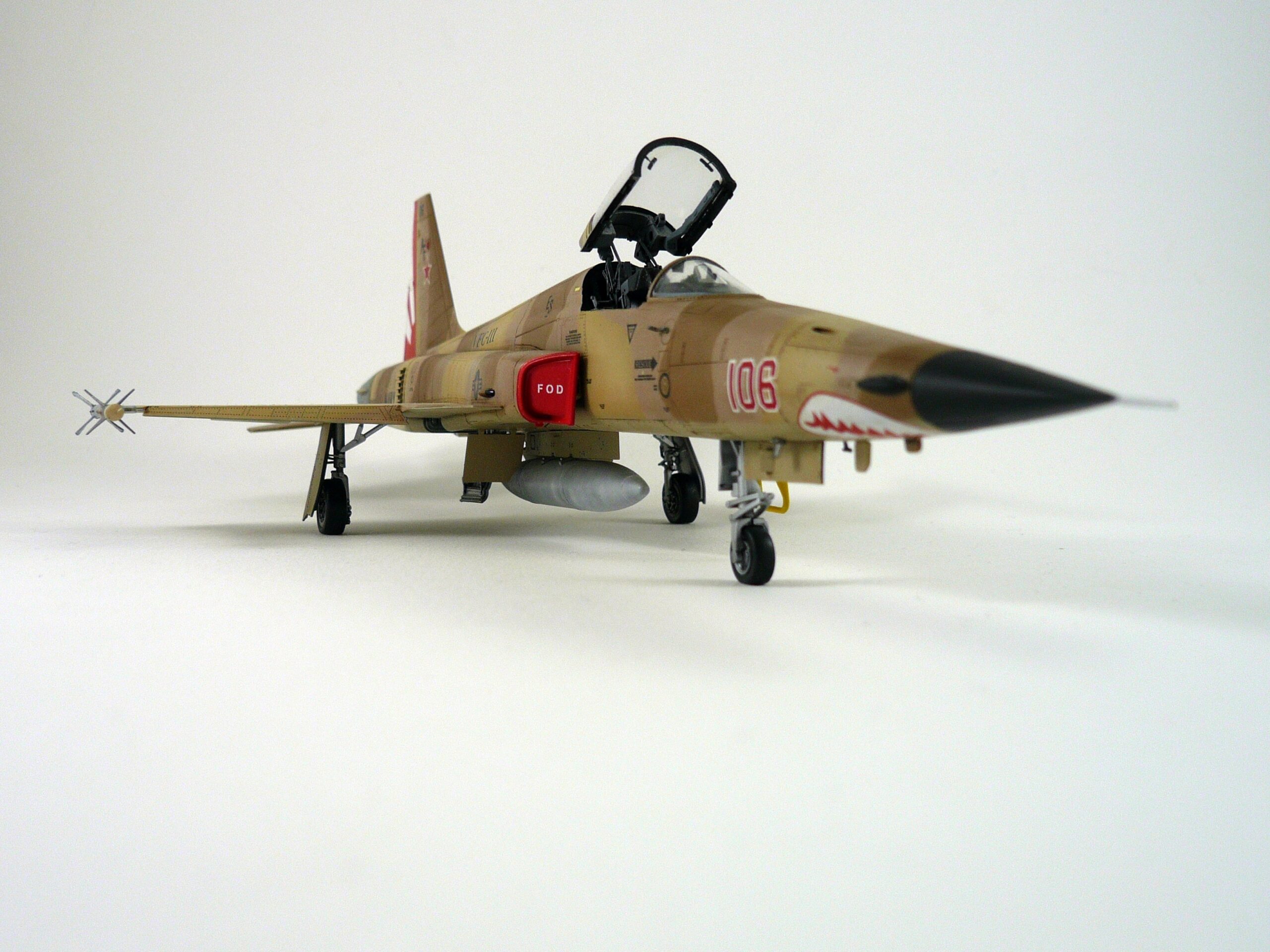
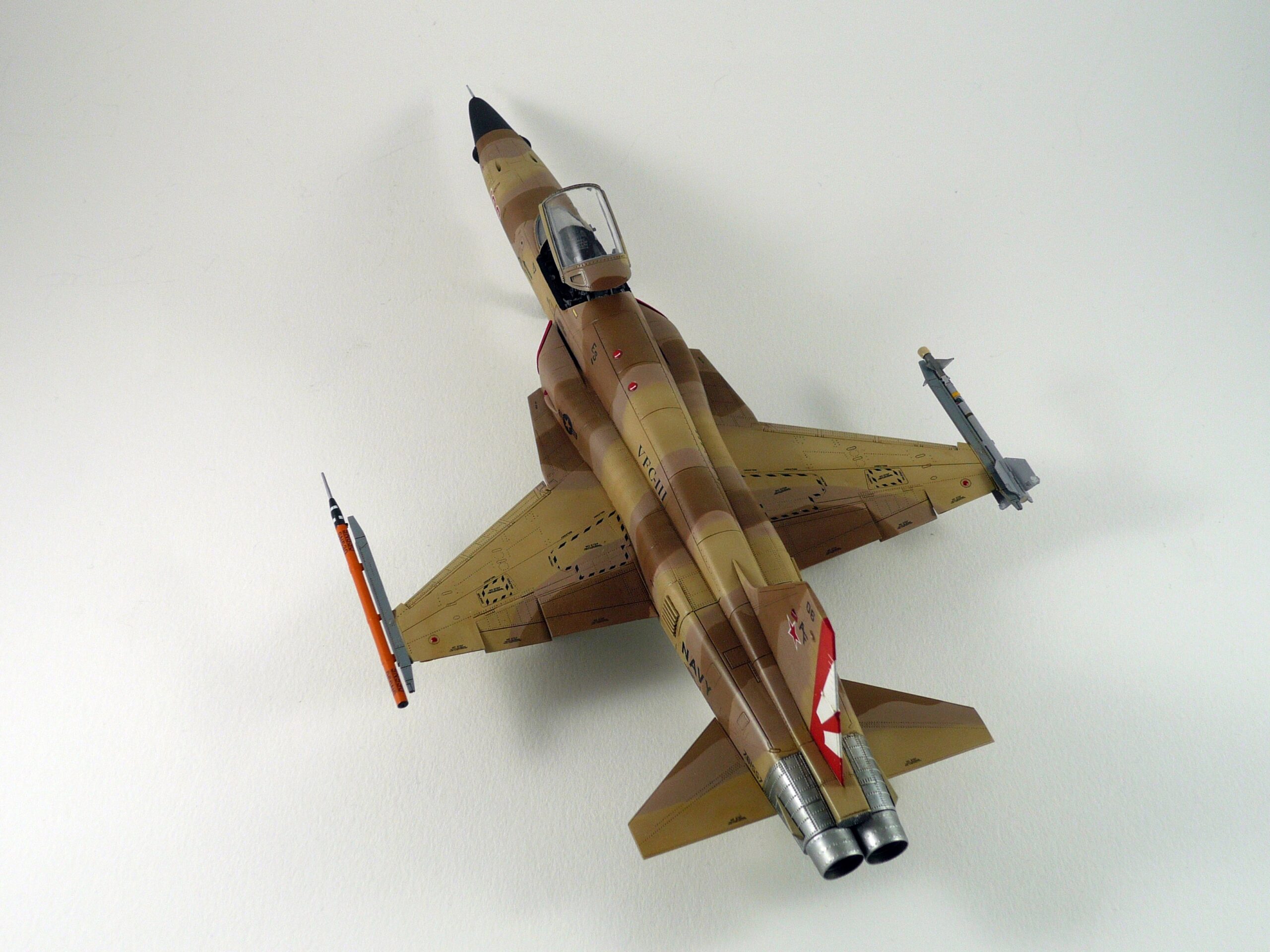
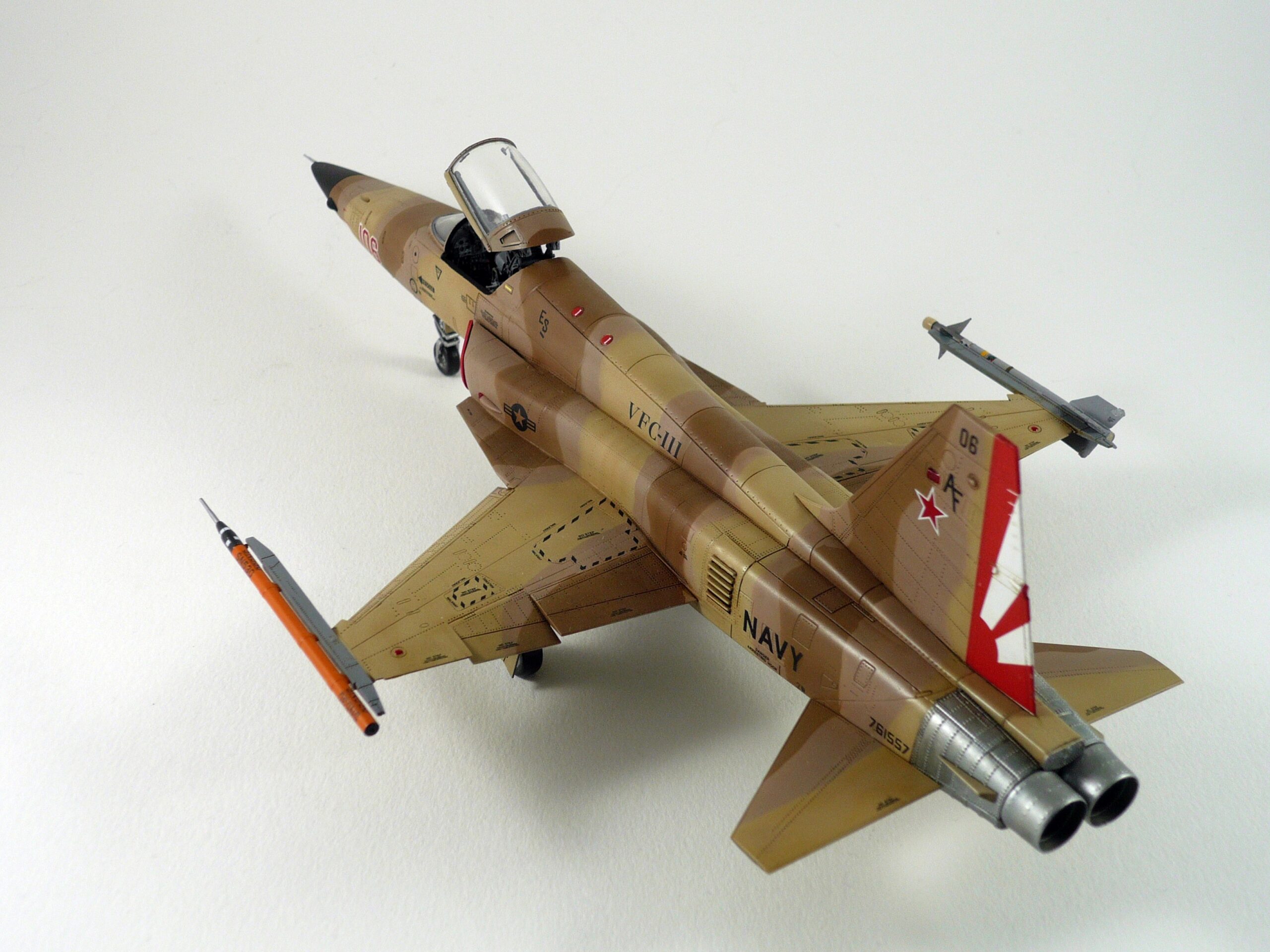
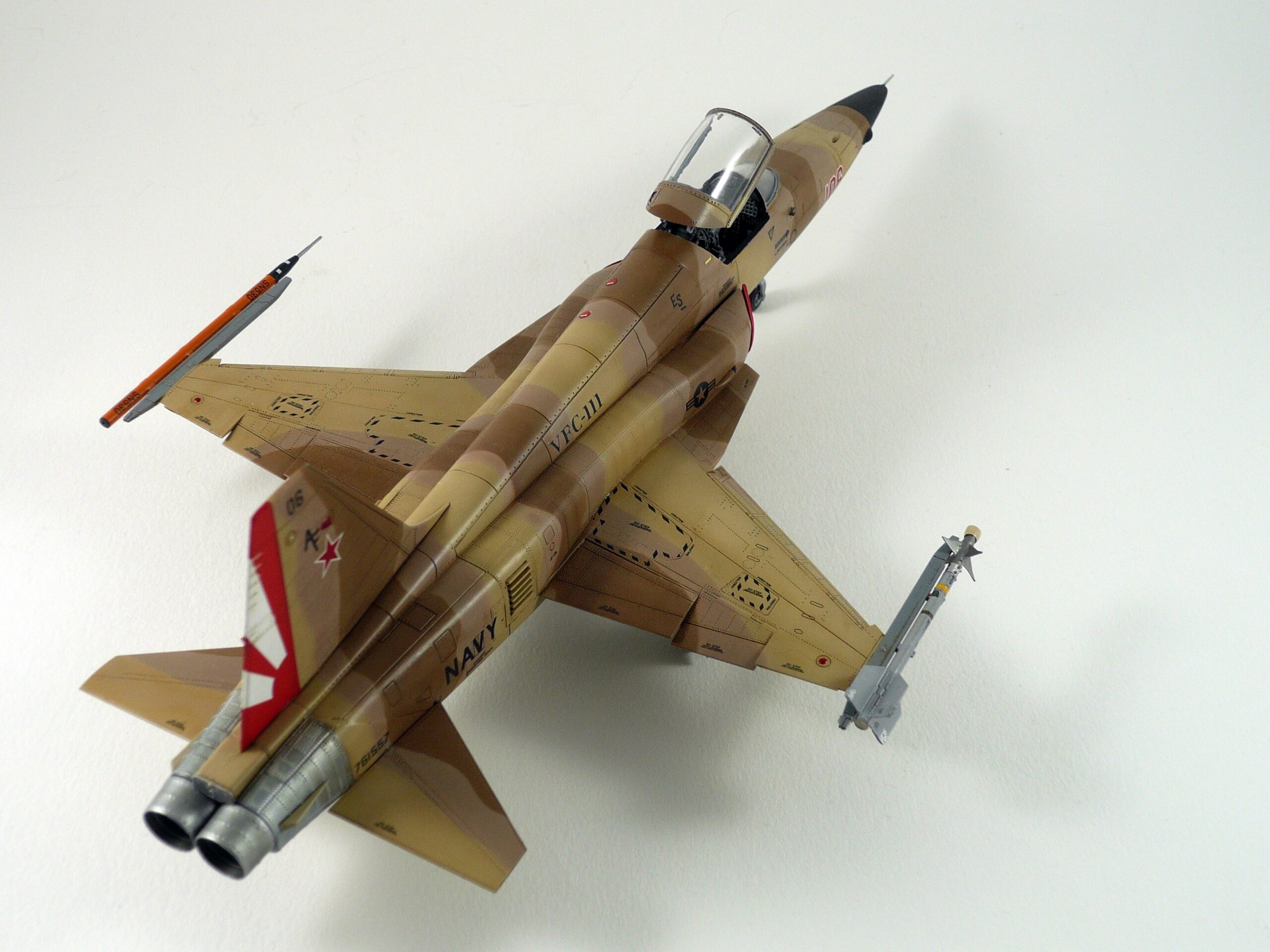
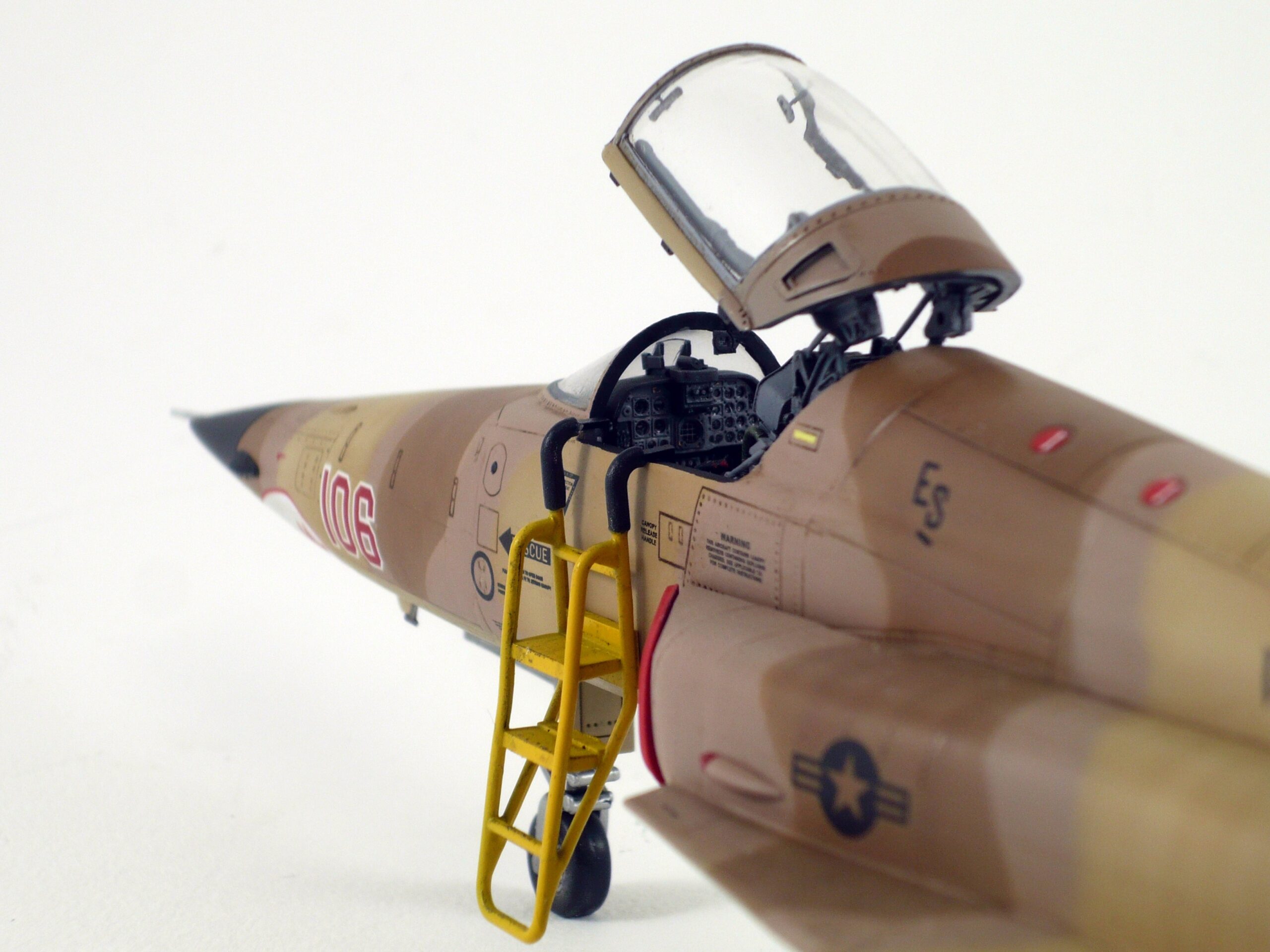
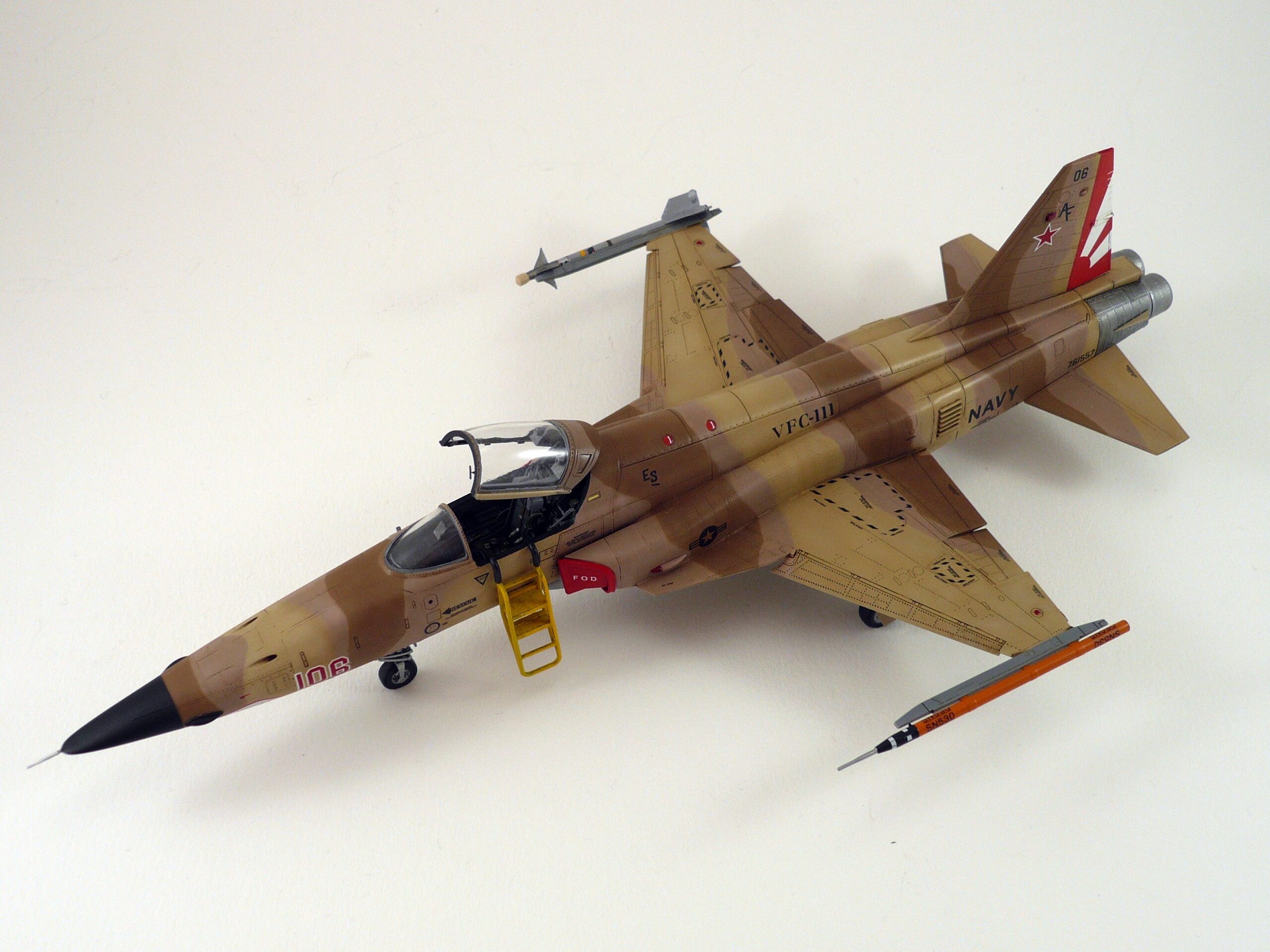
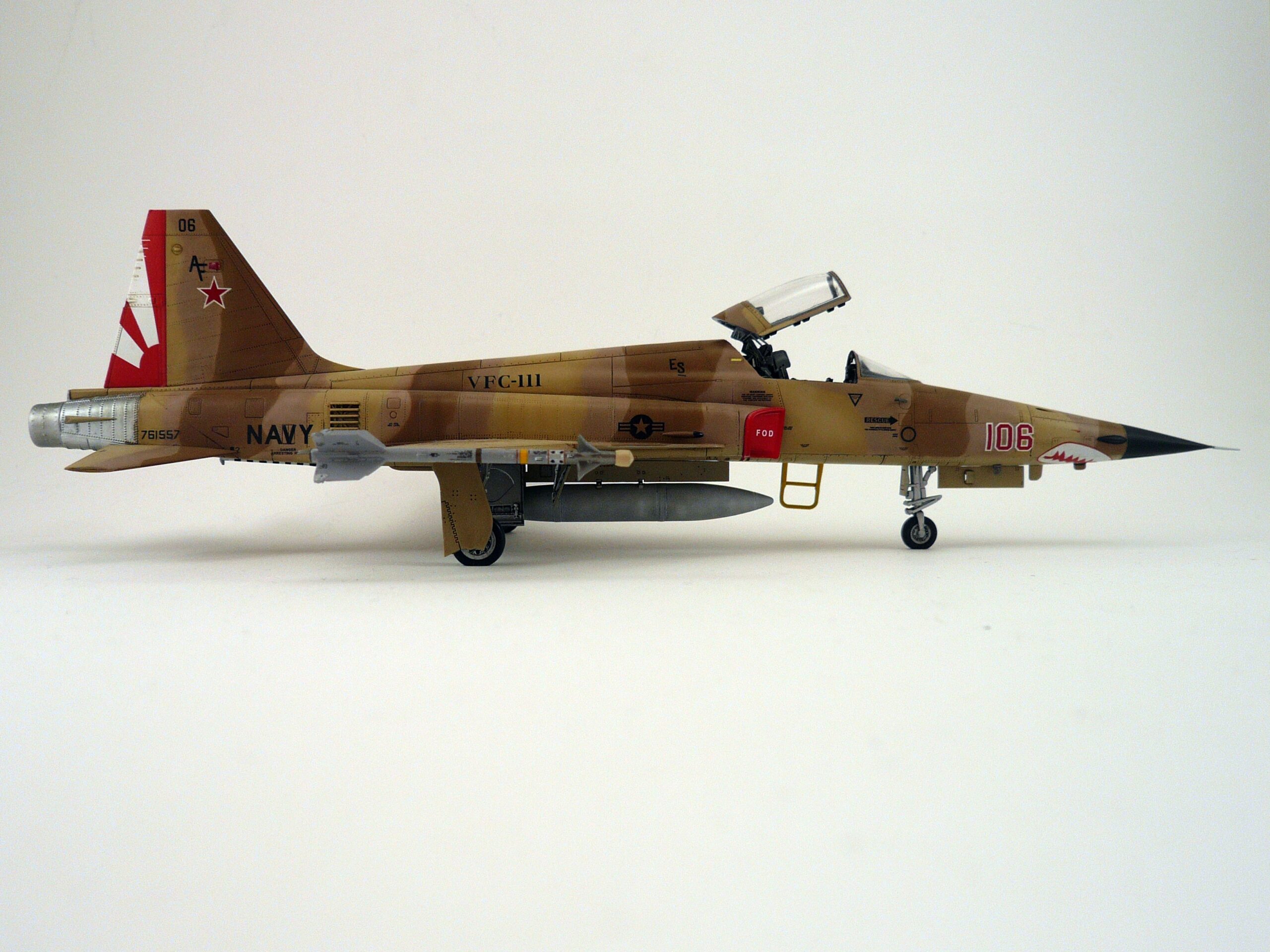
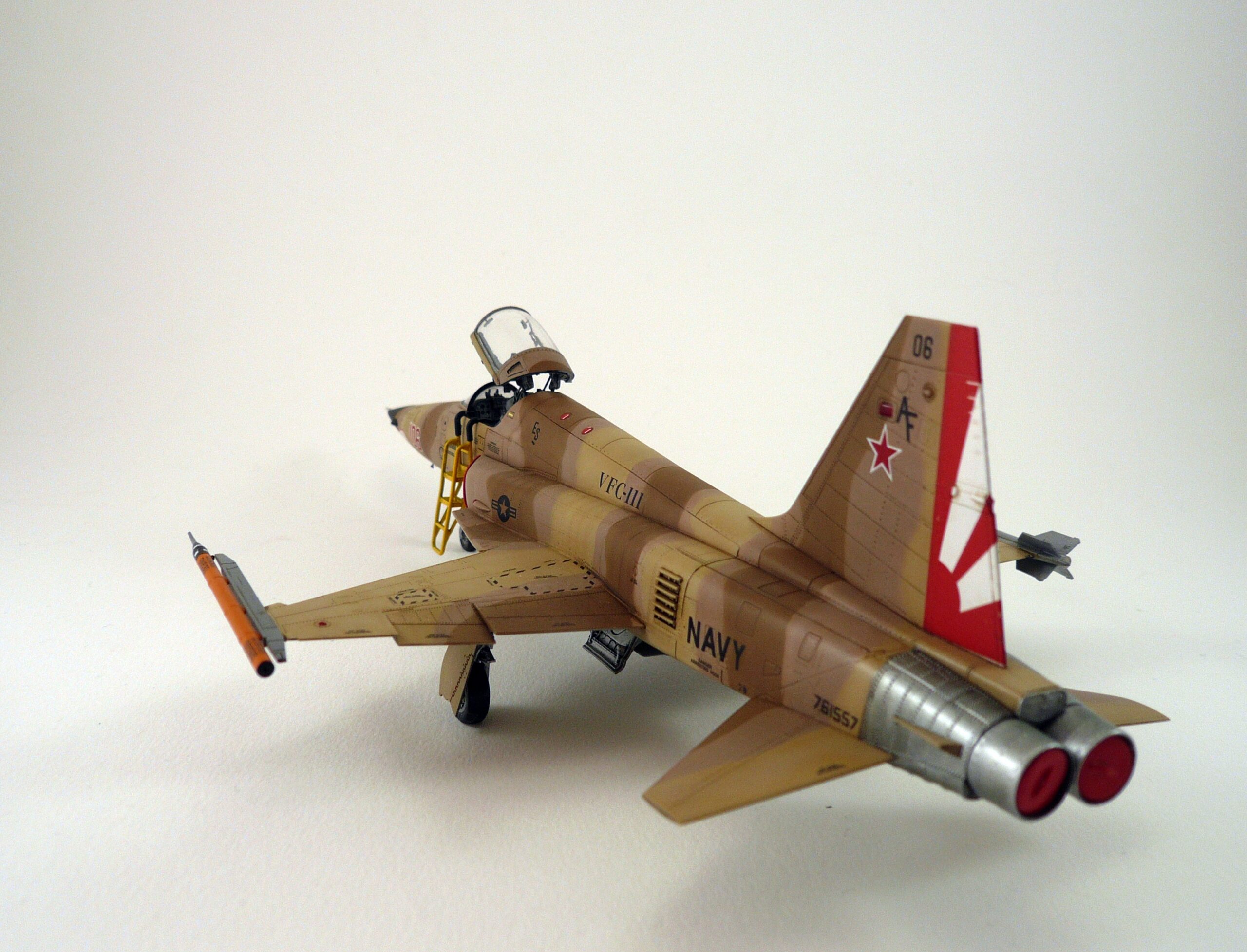
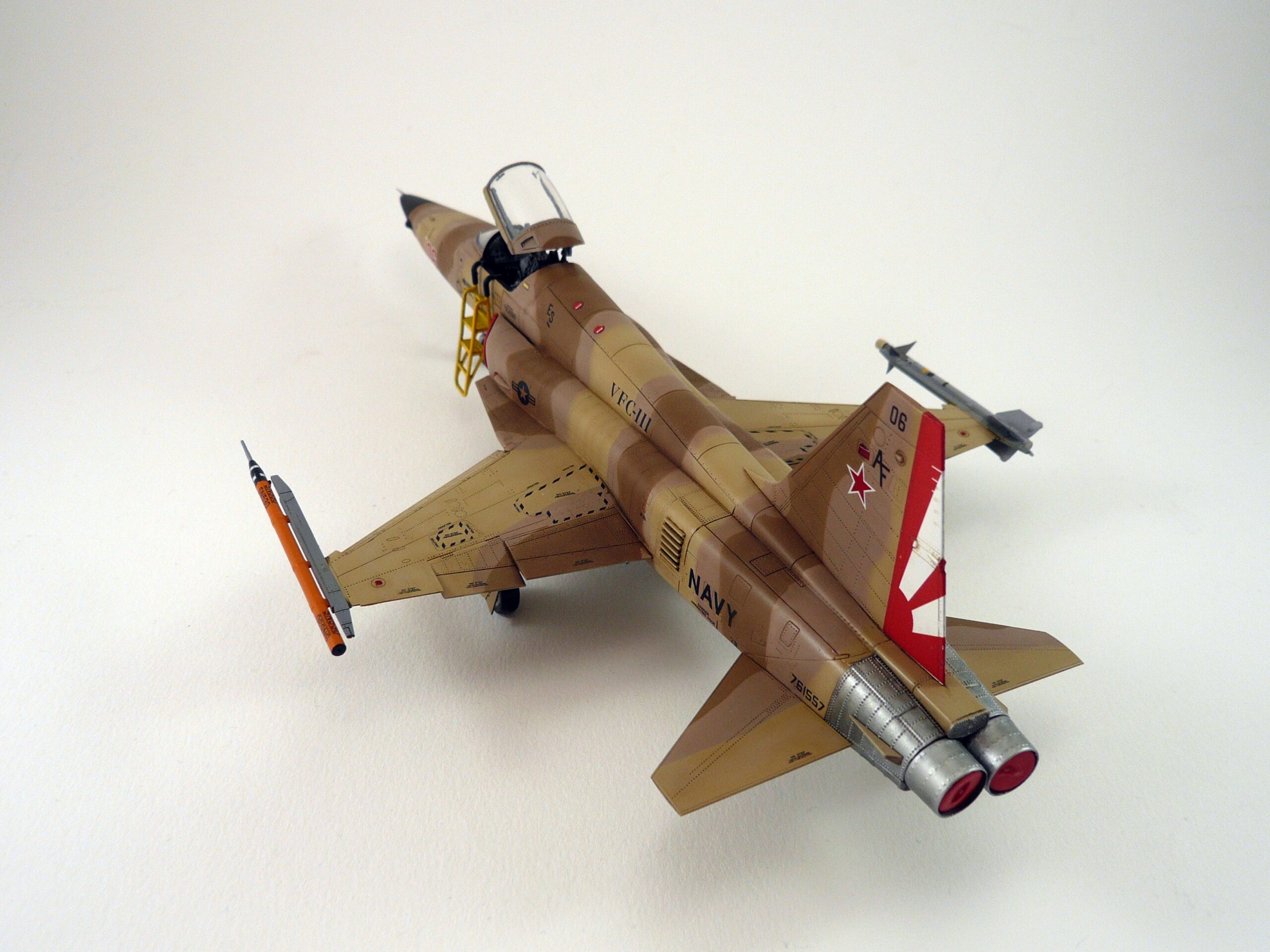
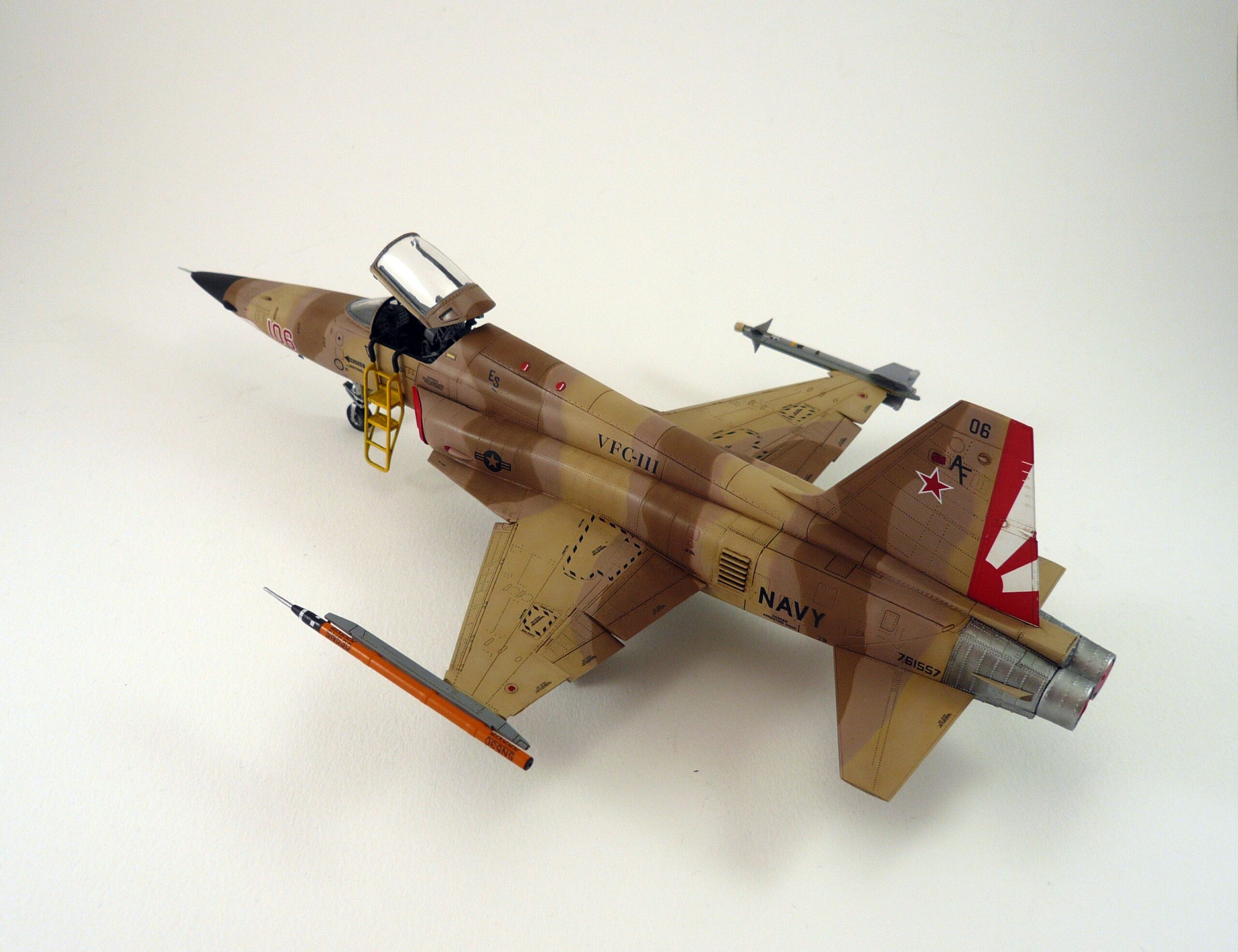
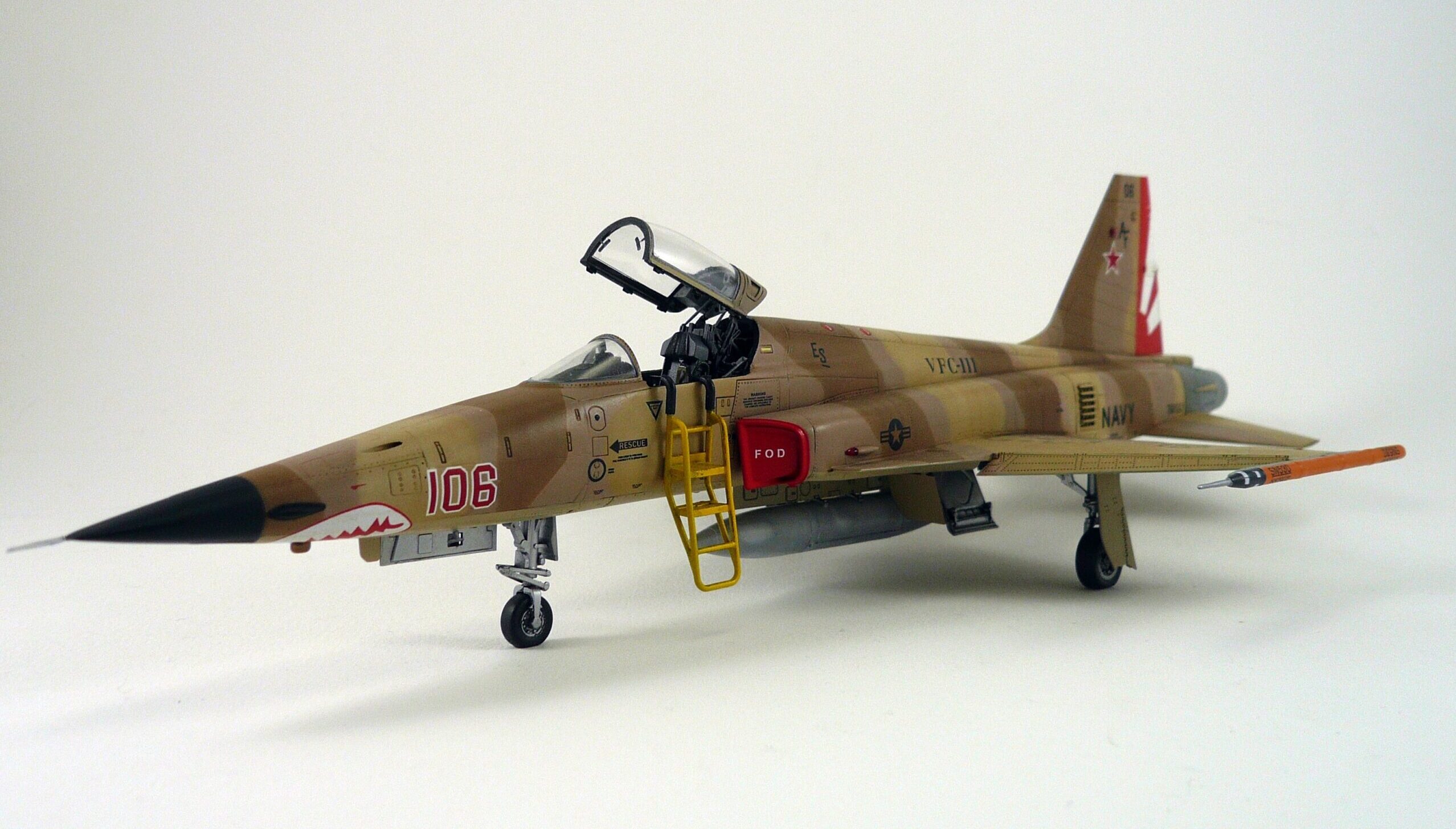
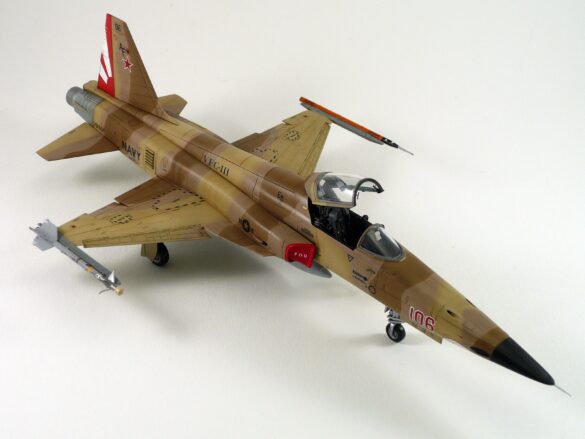
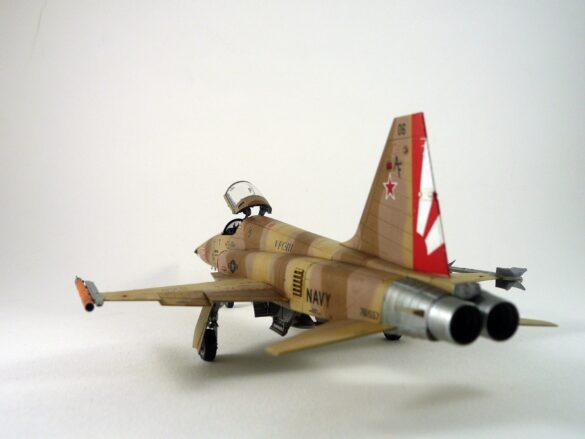
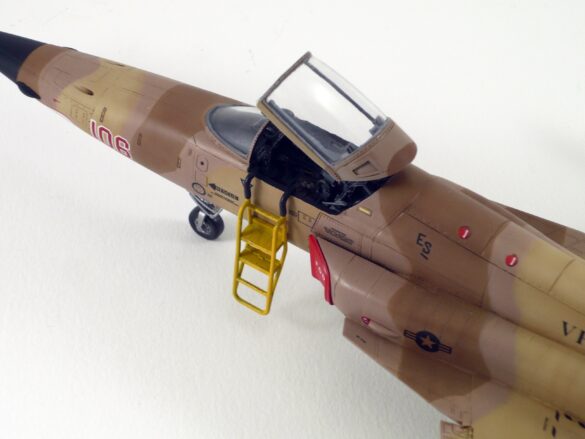
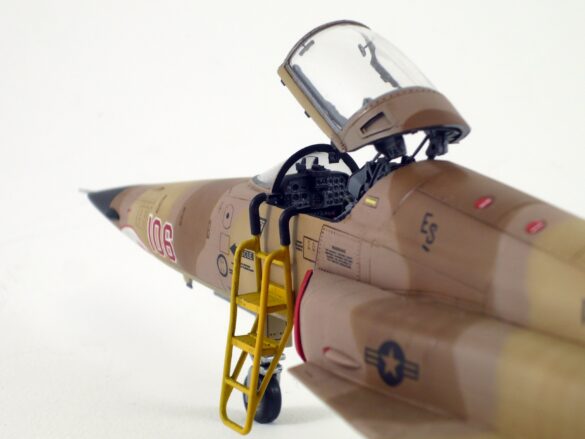
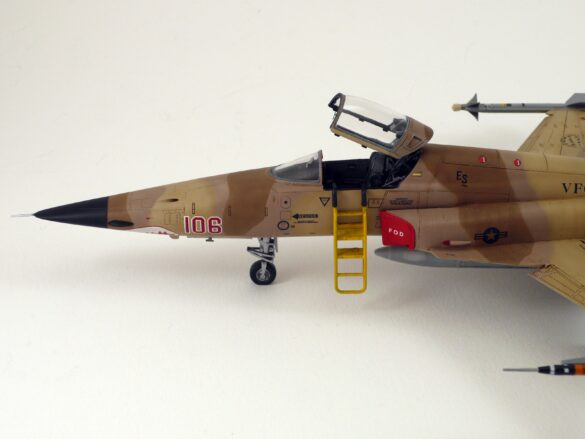
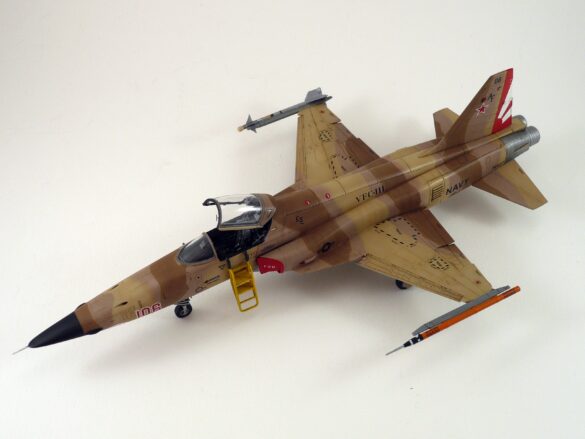
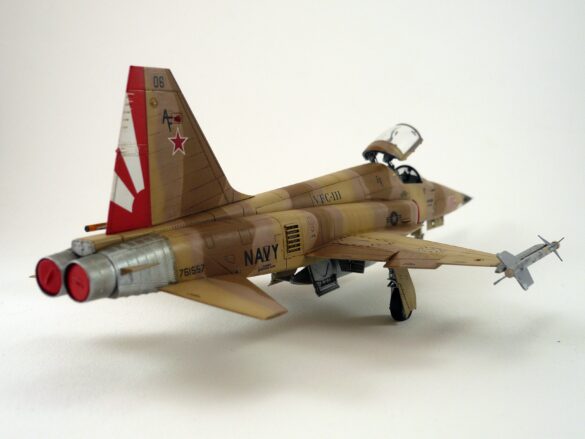
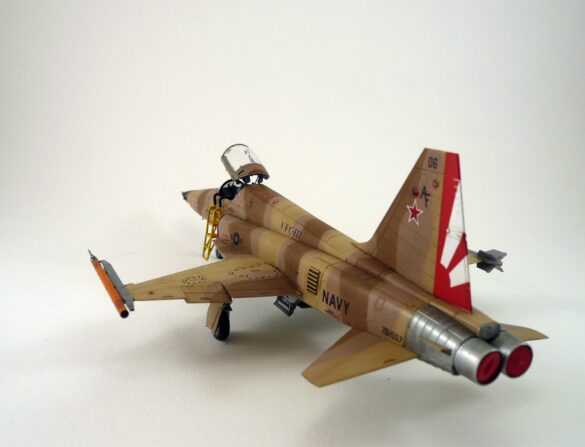
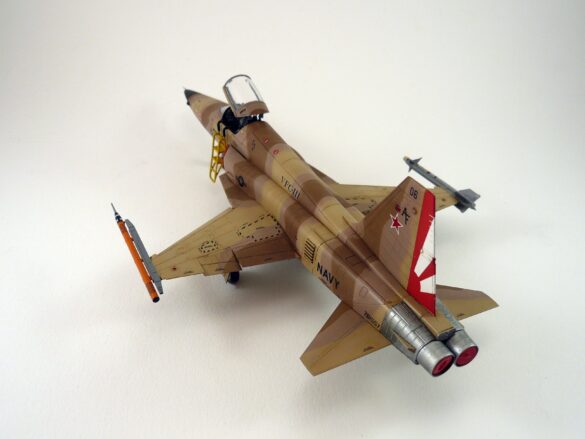
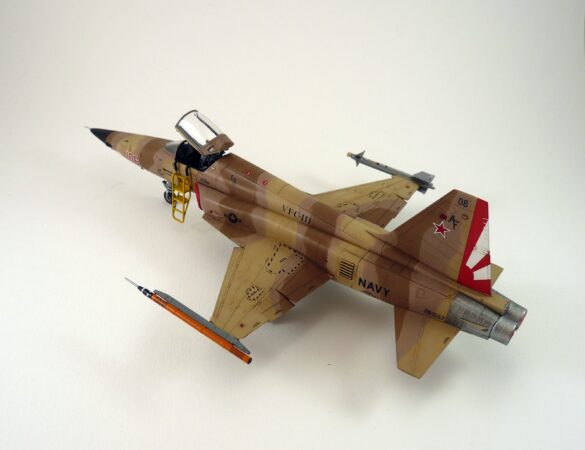
Some aircraft carry history. Others carry personality. The F-5N Tiger II of VFC-111 Sundowners manages to do both.
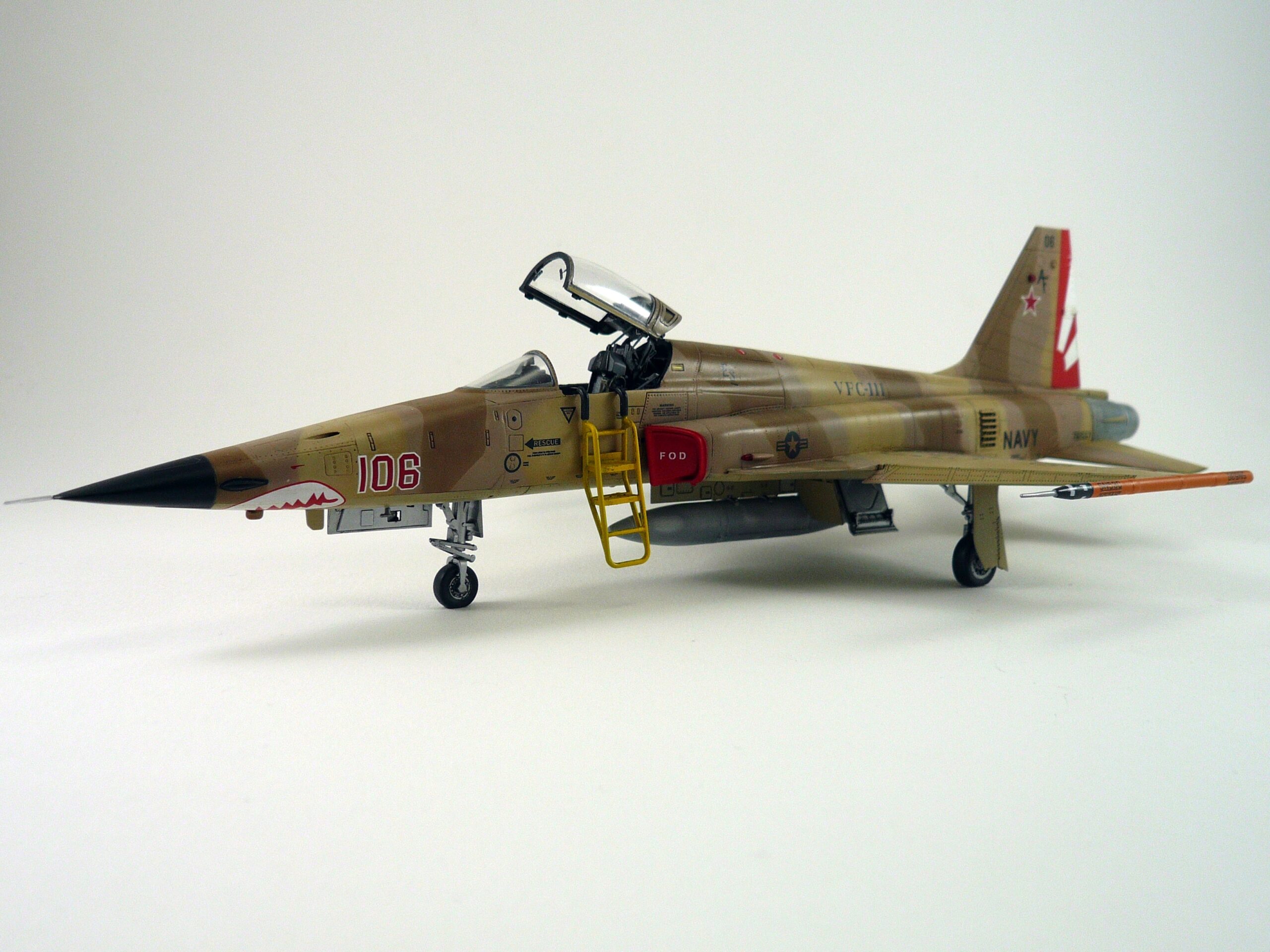
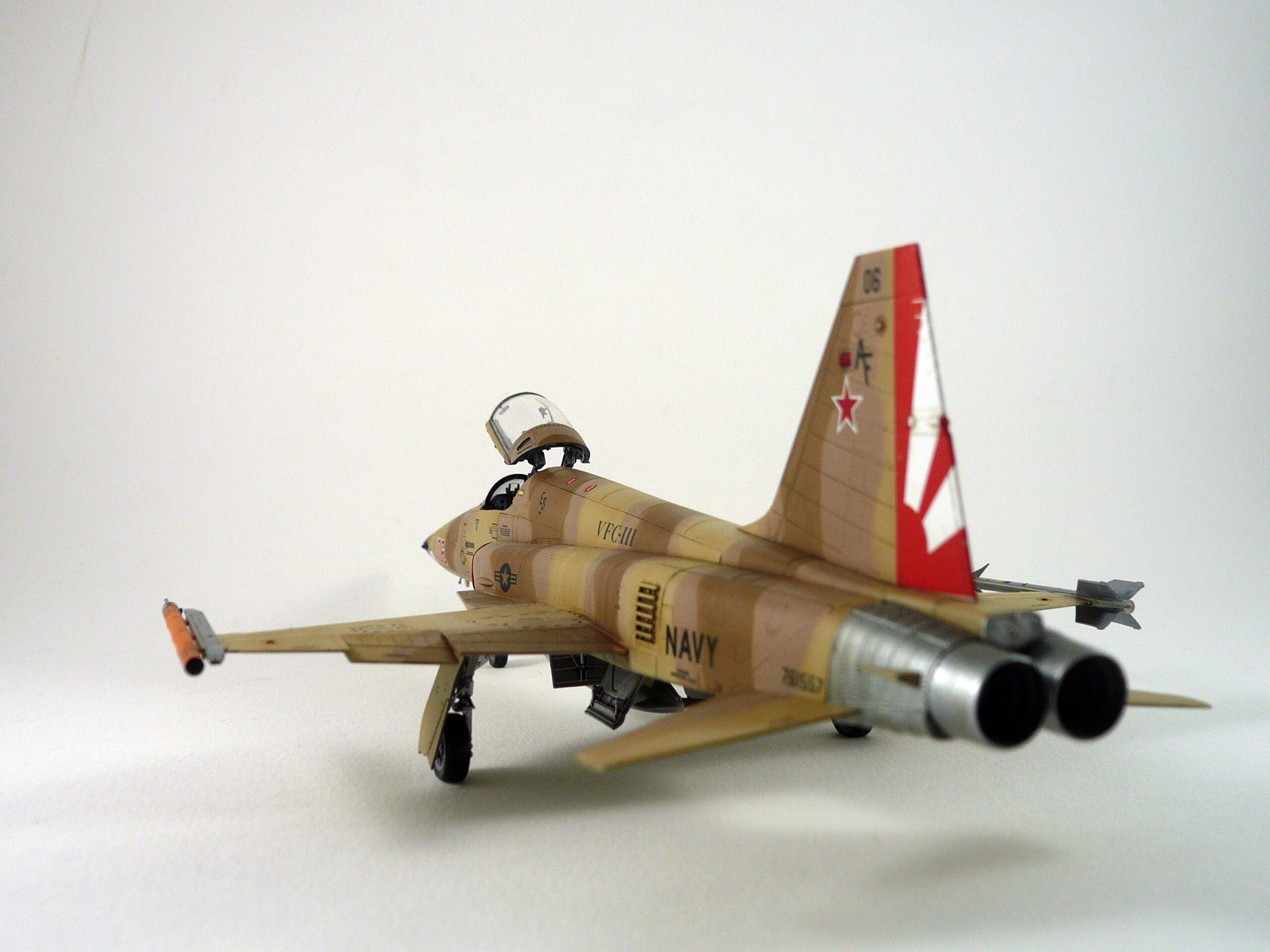
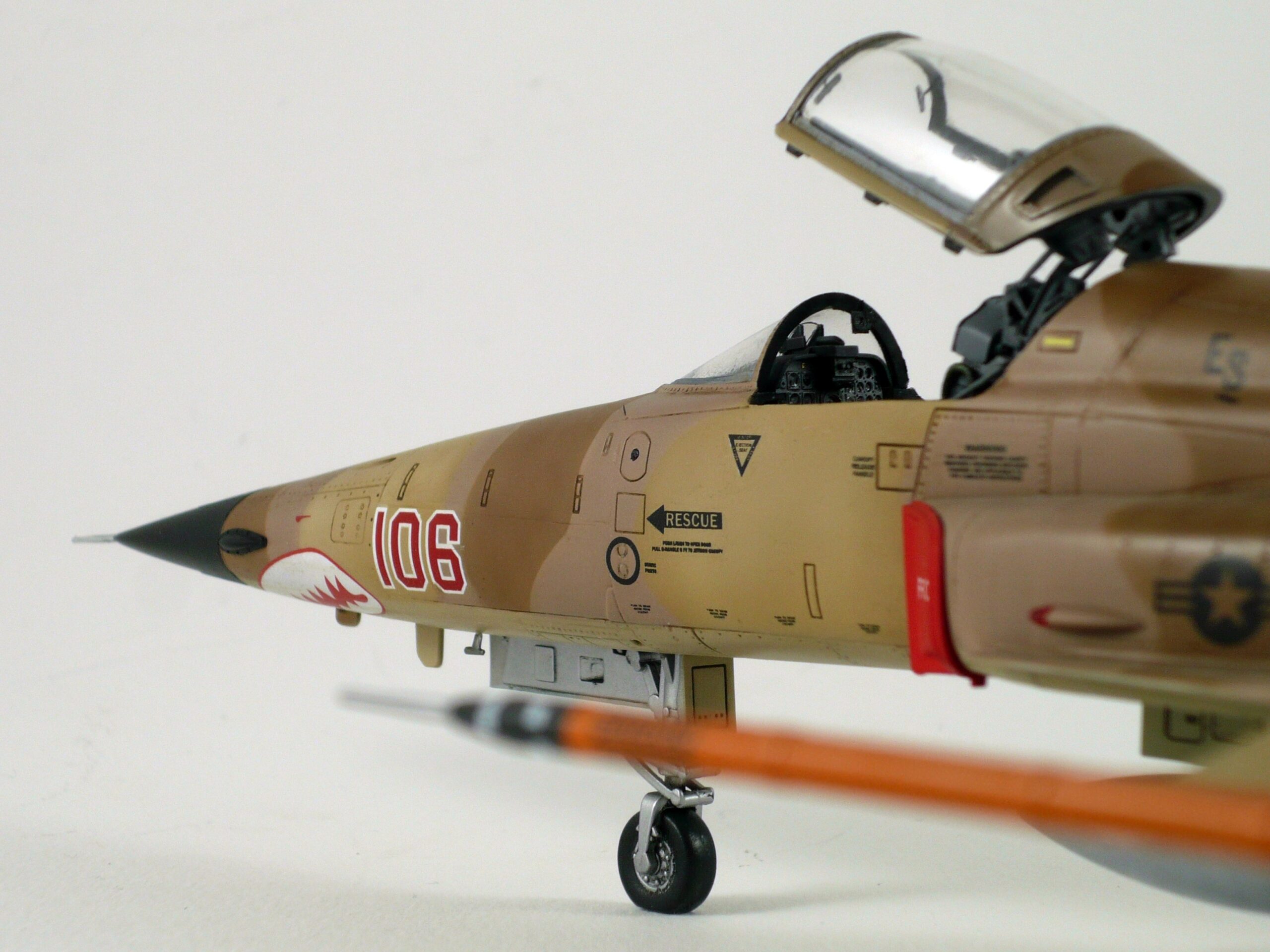
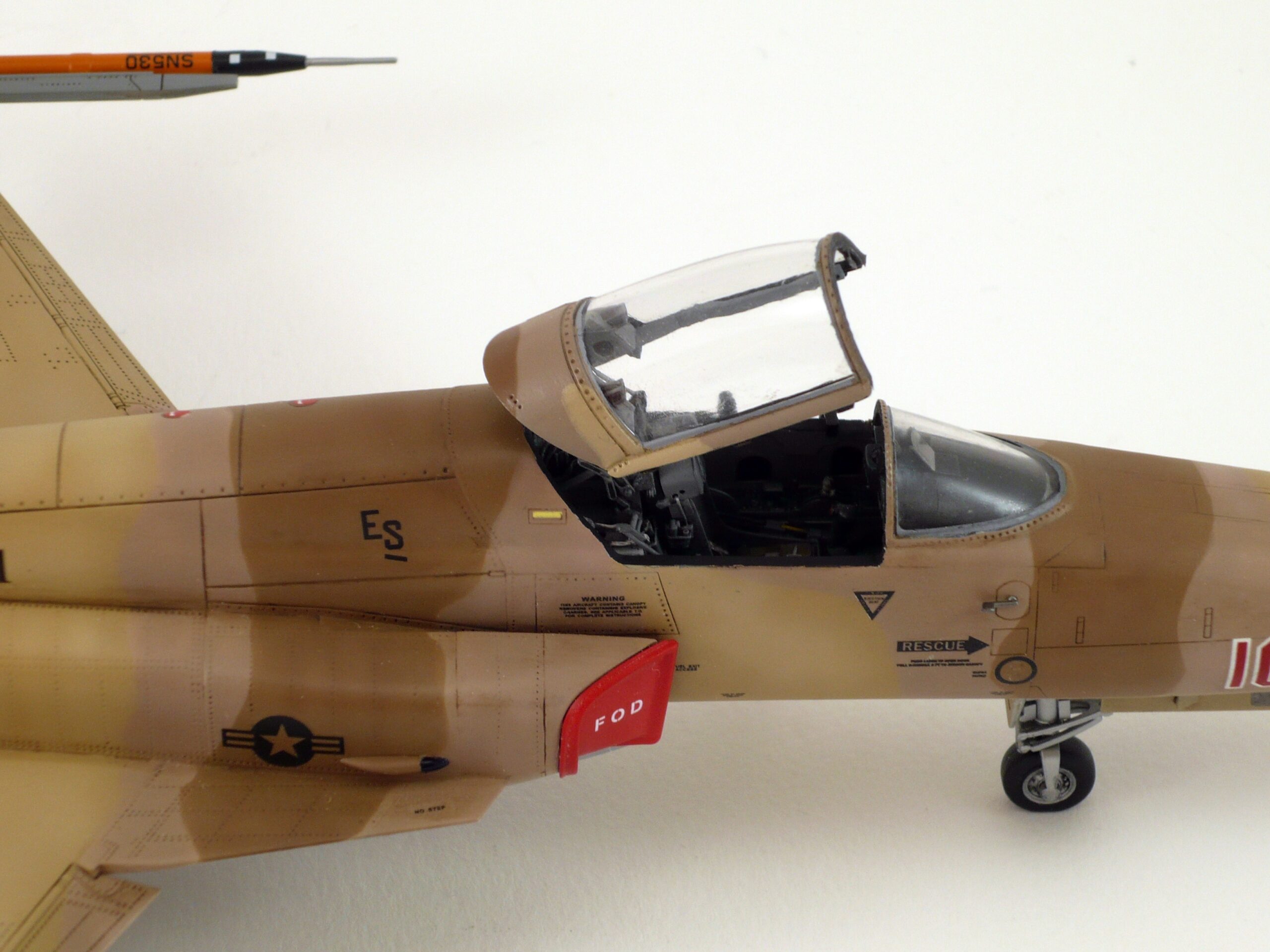
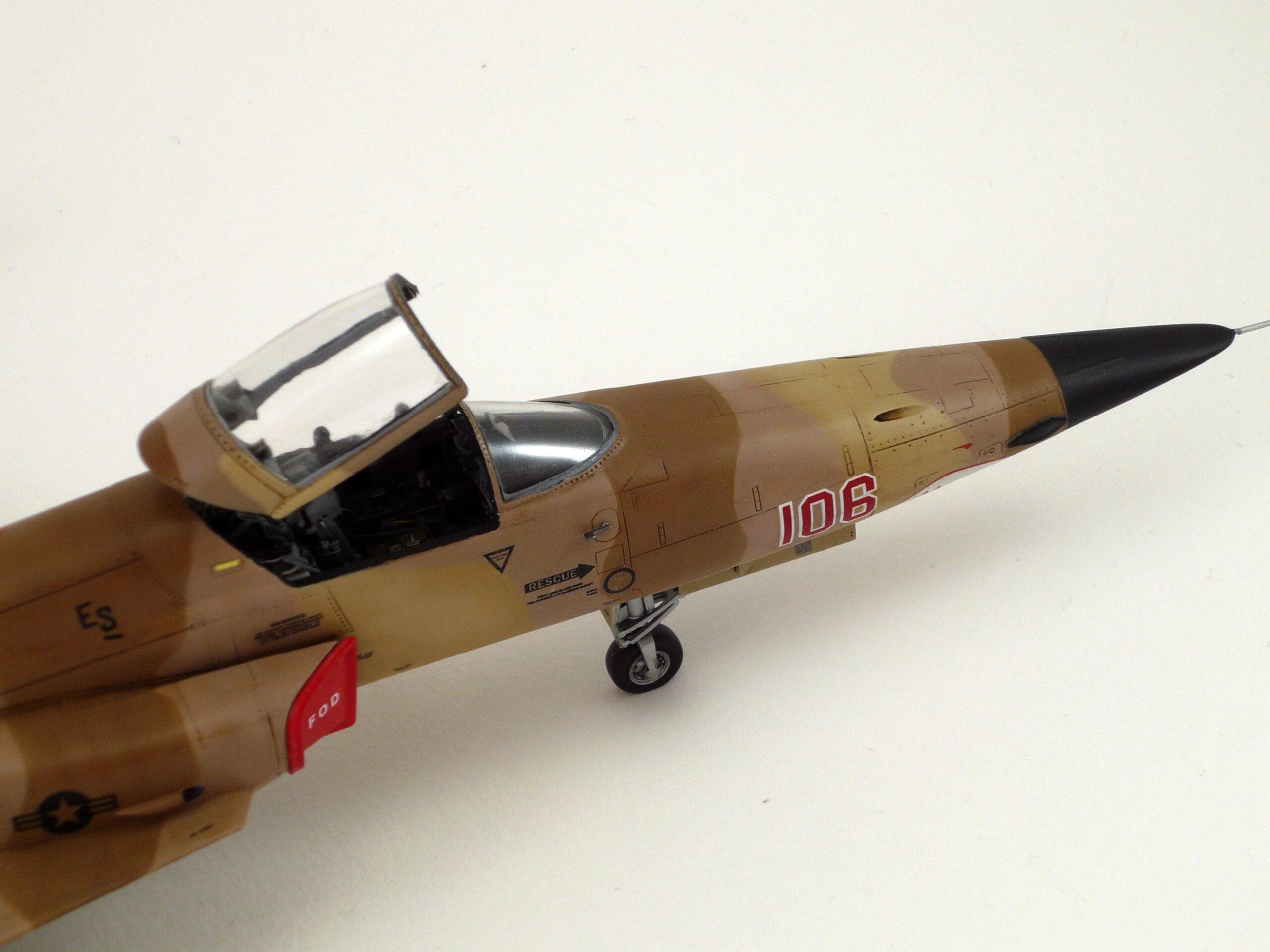
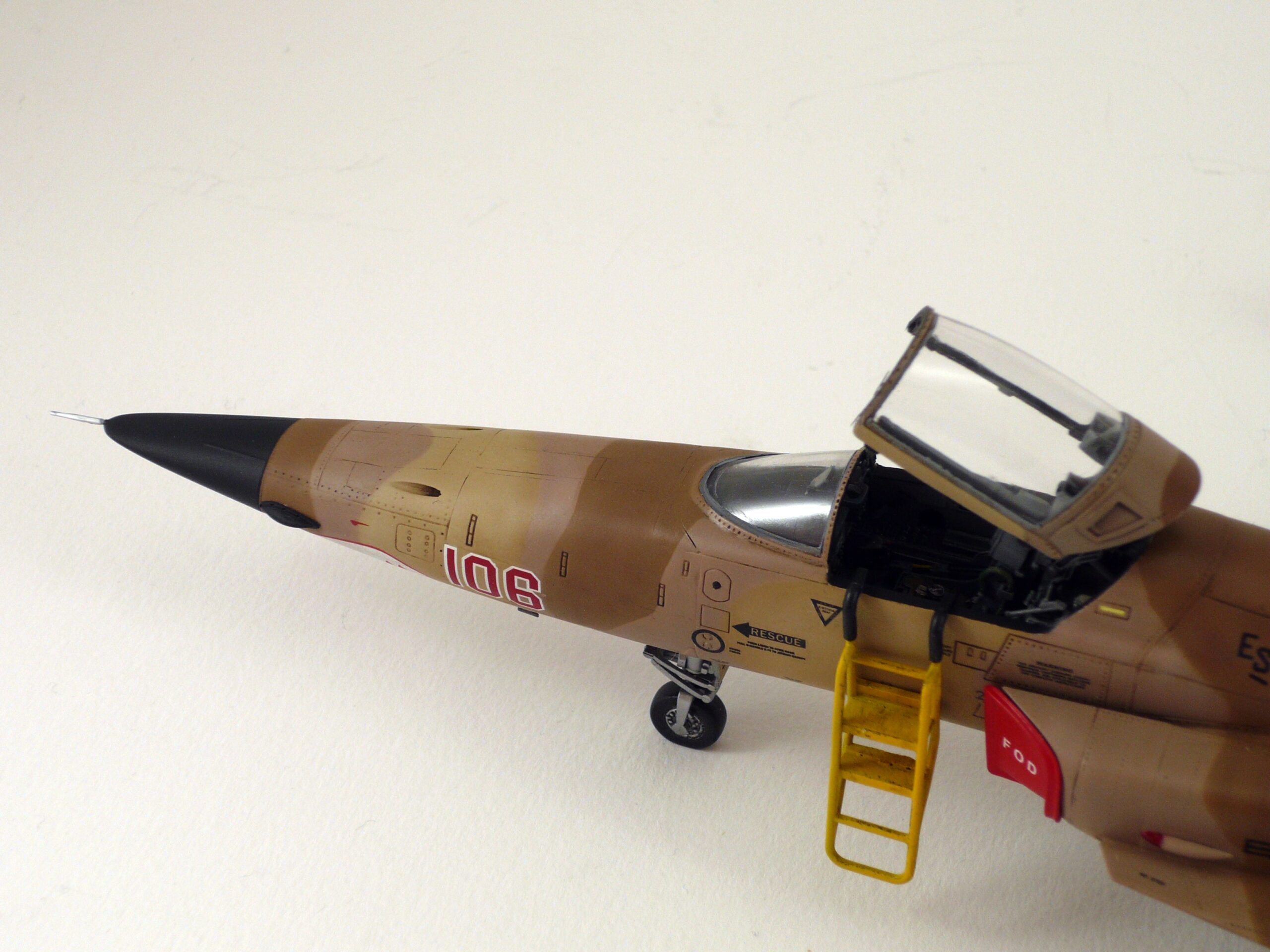
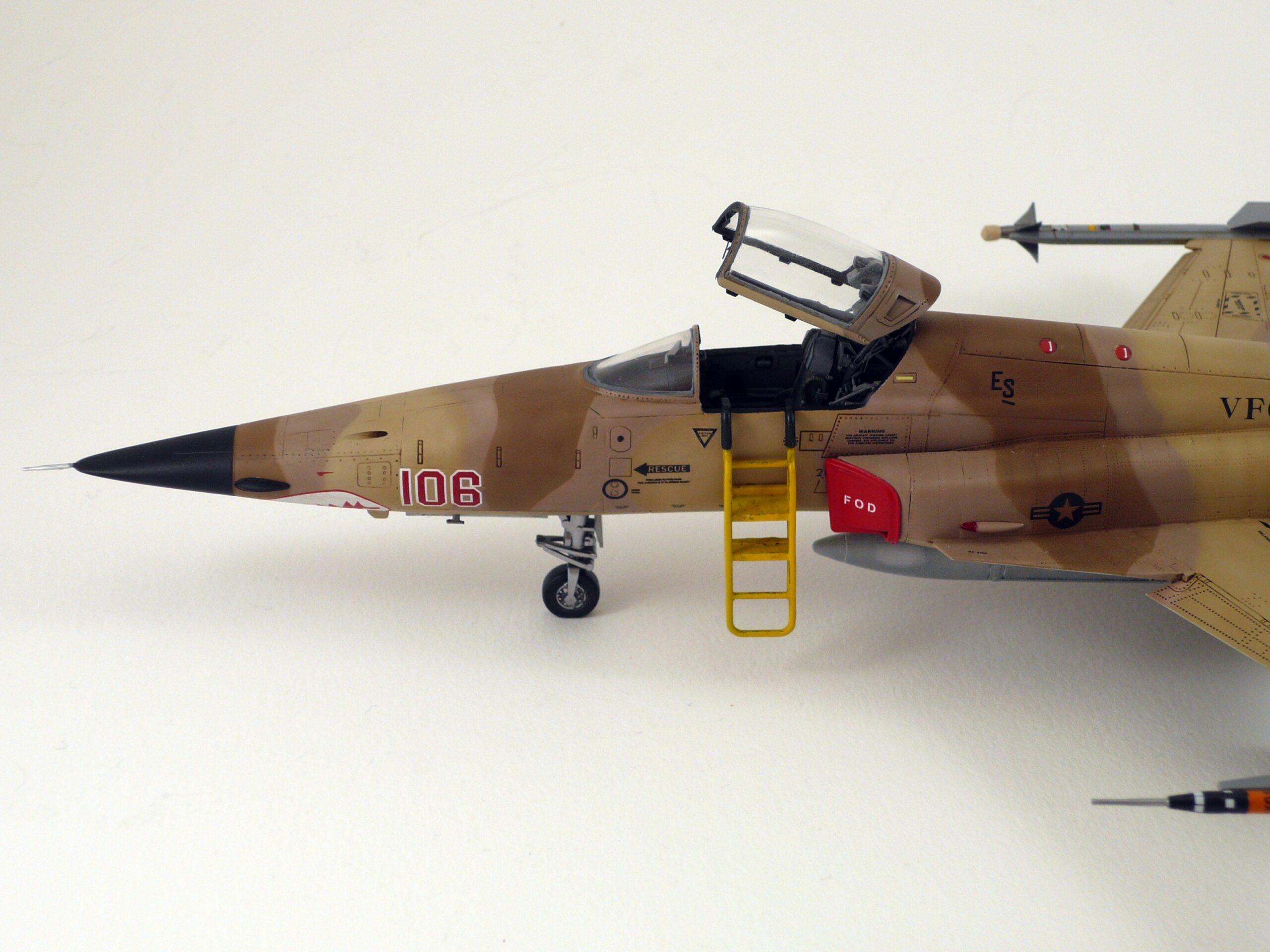
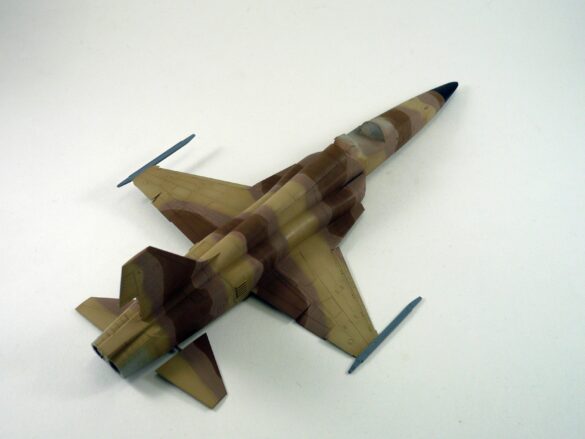
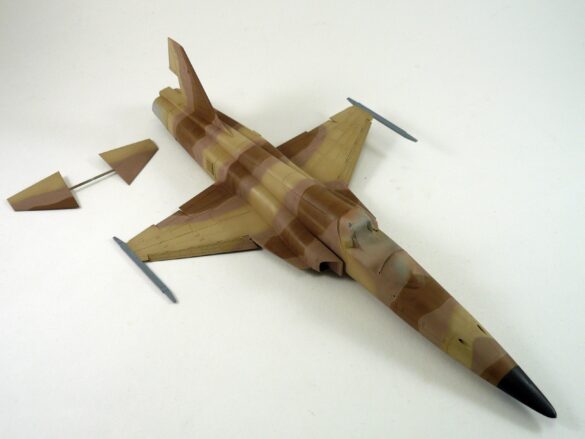
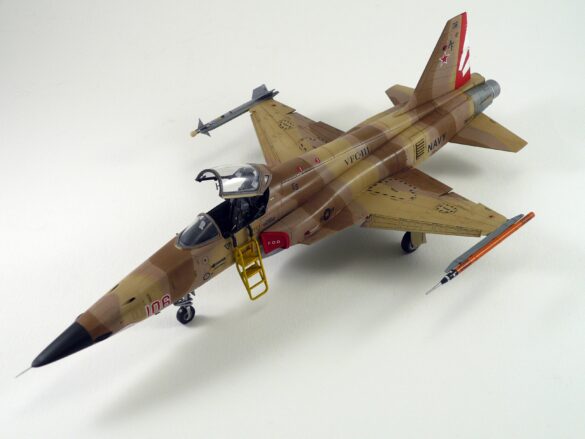
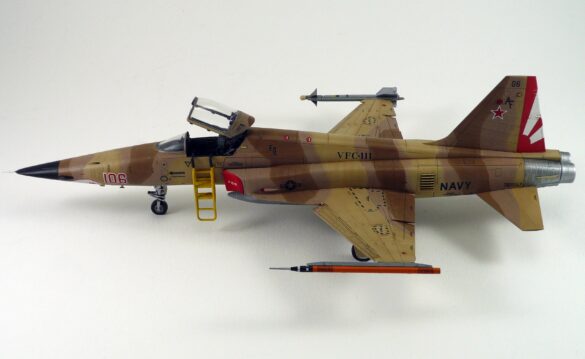
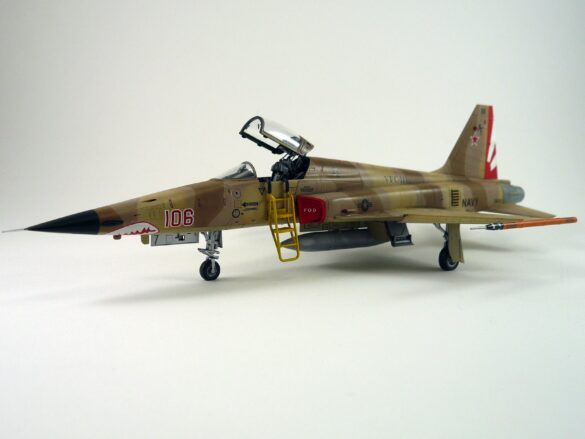
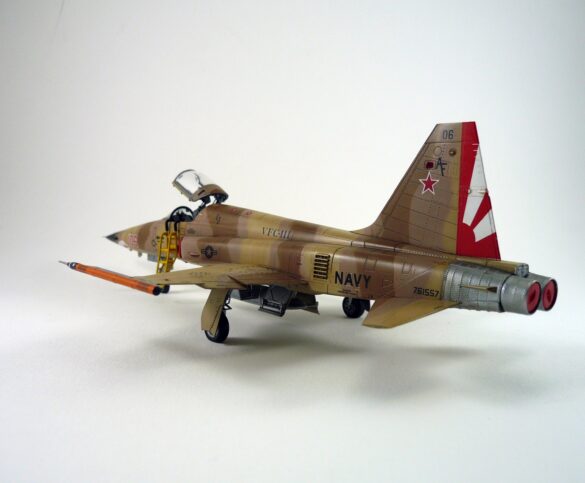
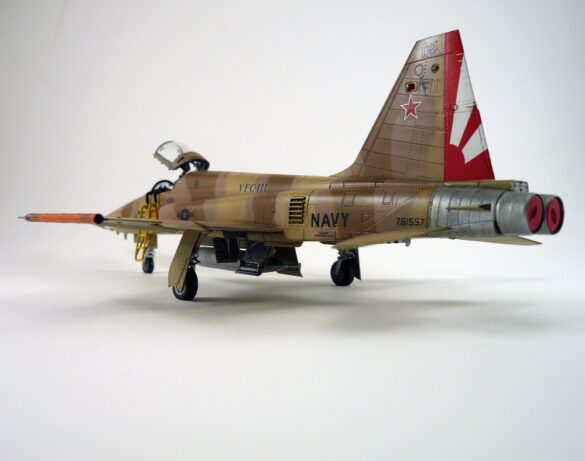
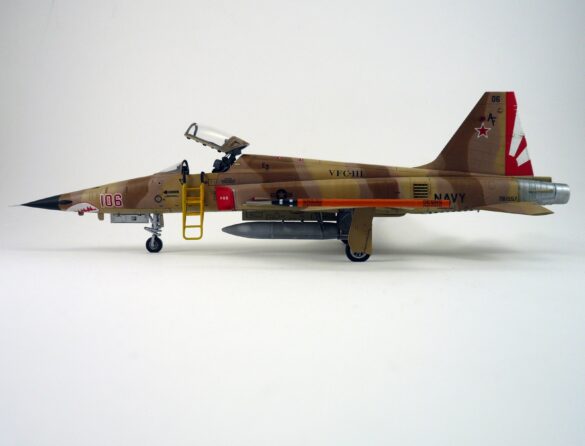
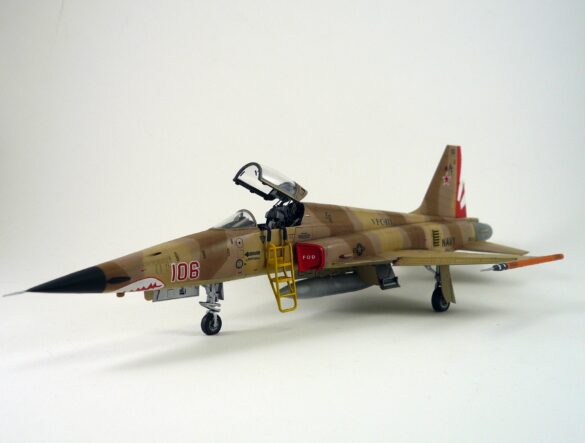
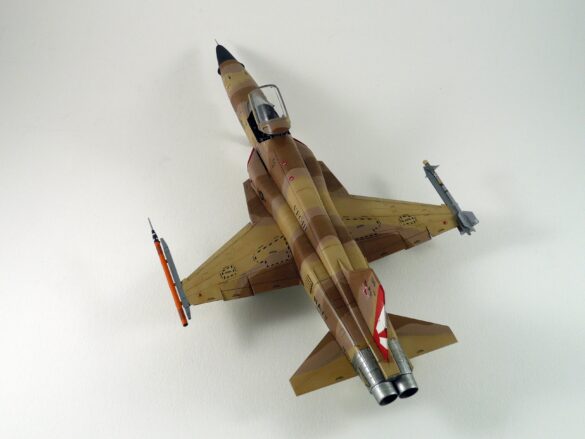
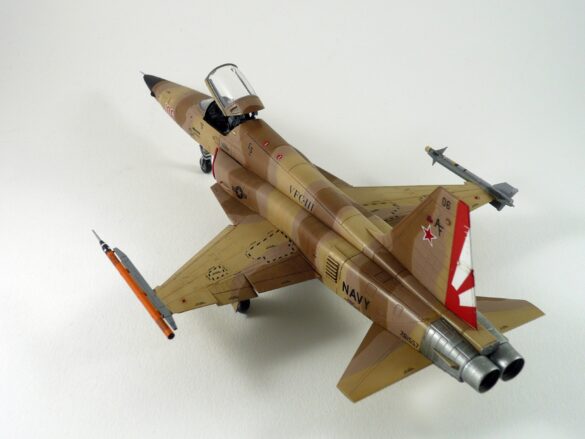
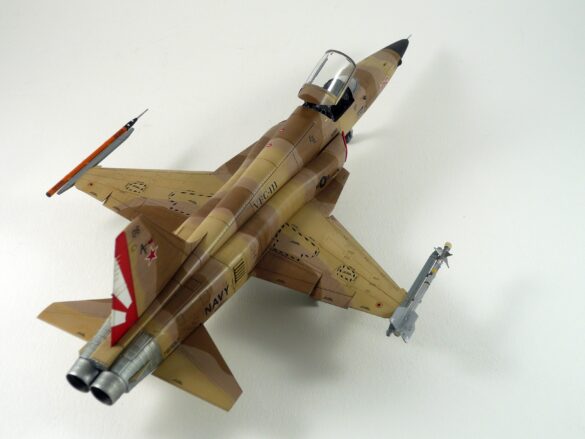
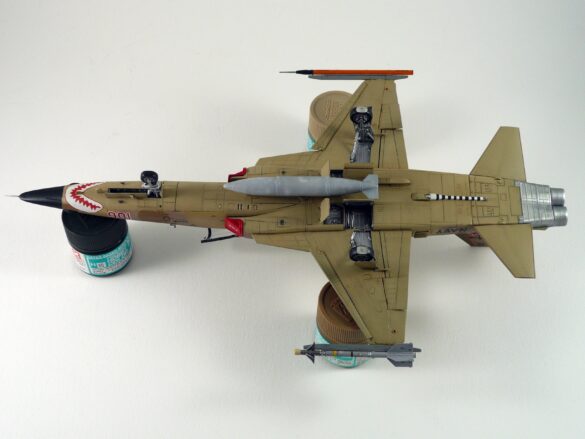
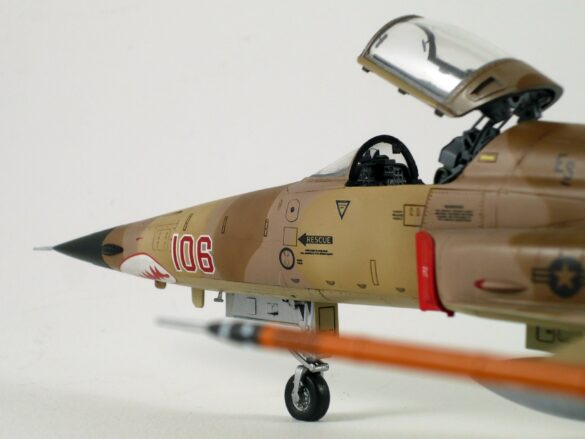
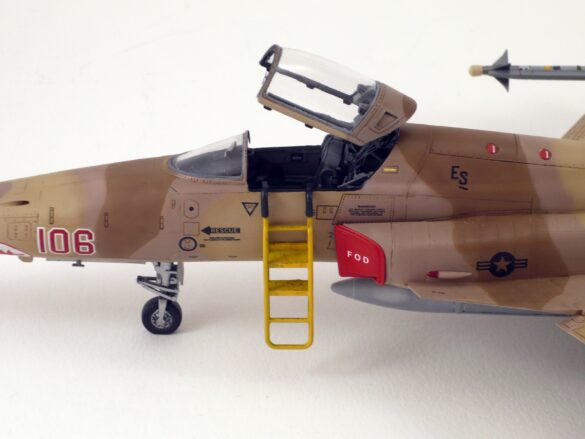
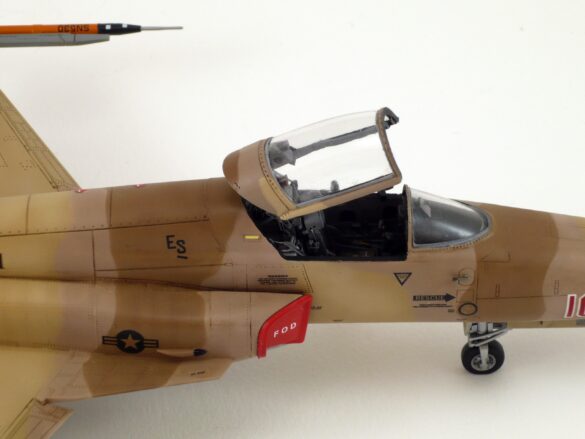
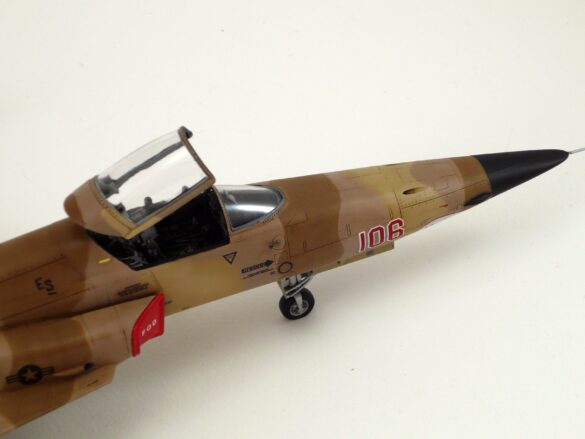
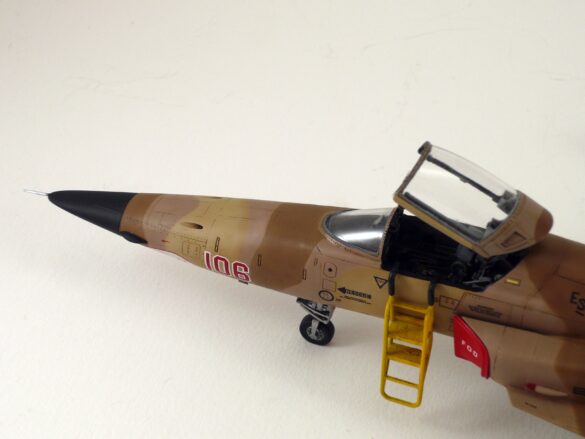
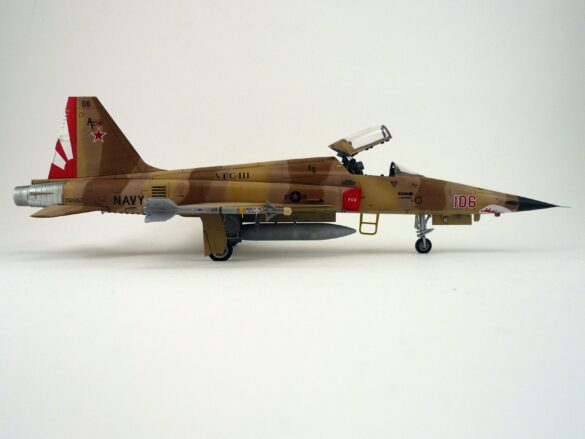
Finished as AF 113 (Bu. No. 761571), this aircraft represents one of the most recognizable aggressor schemes operated by the US Navy. Built around the lightweight and agile Northrop design, the F-5N continues to serve as an adversary platform, training frontline pilots by simulating opposing aircraft tactics while wearing unique camouflage patterns that stand apart from standard fleet aircraft.
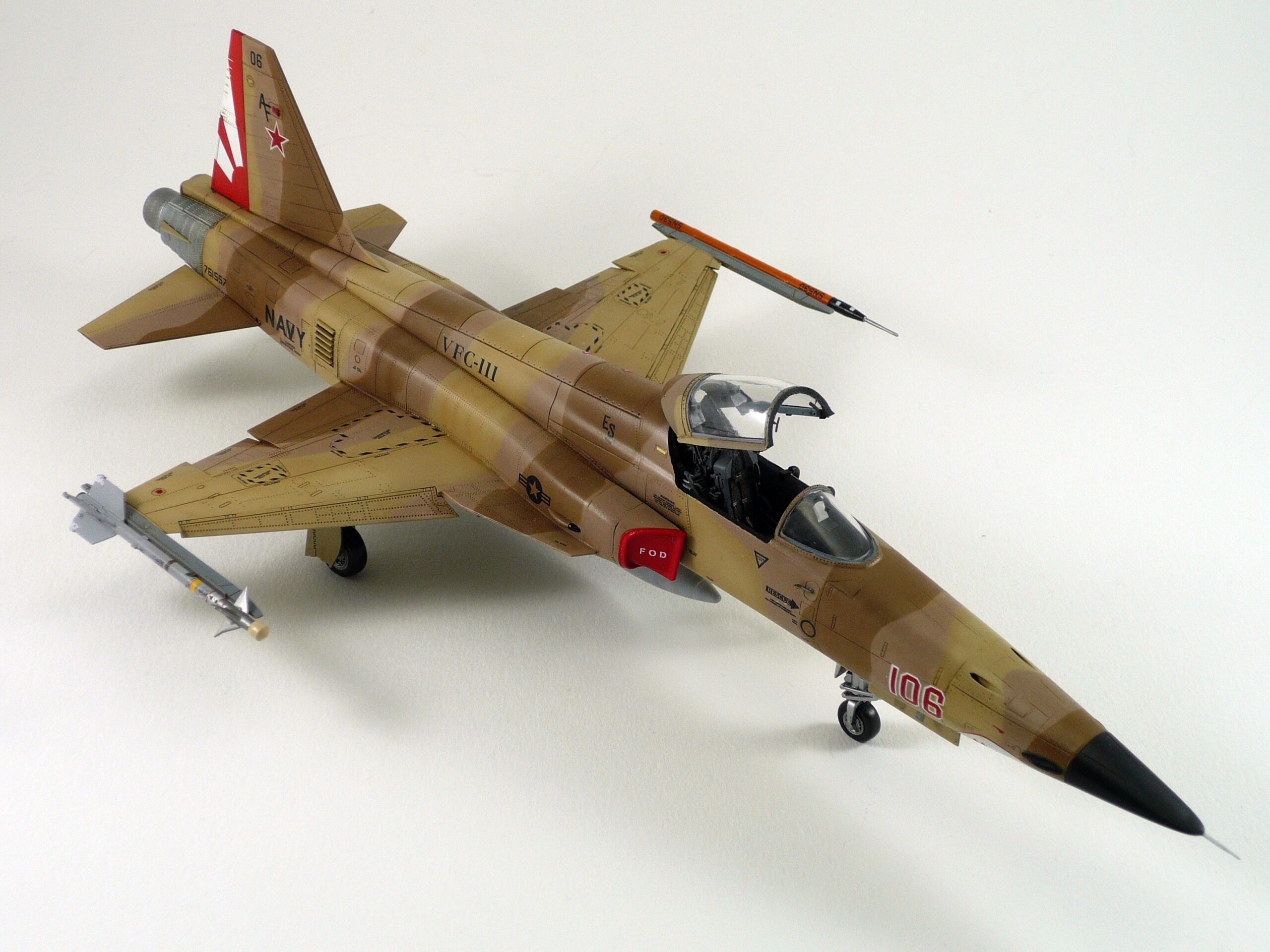
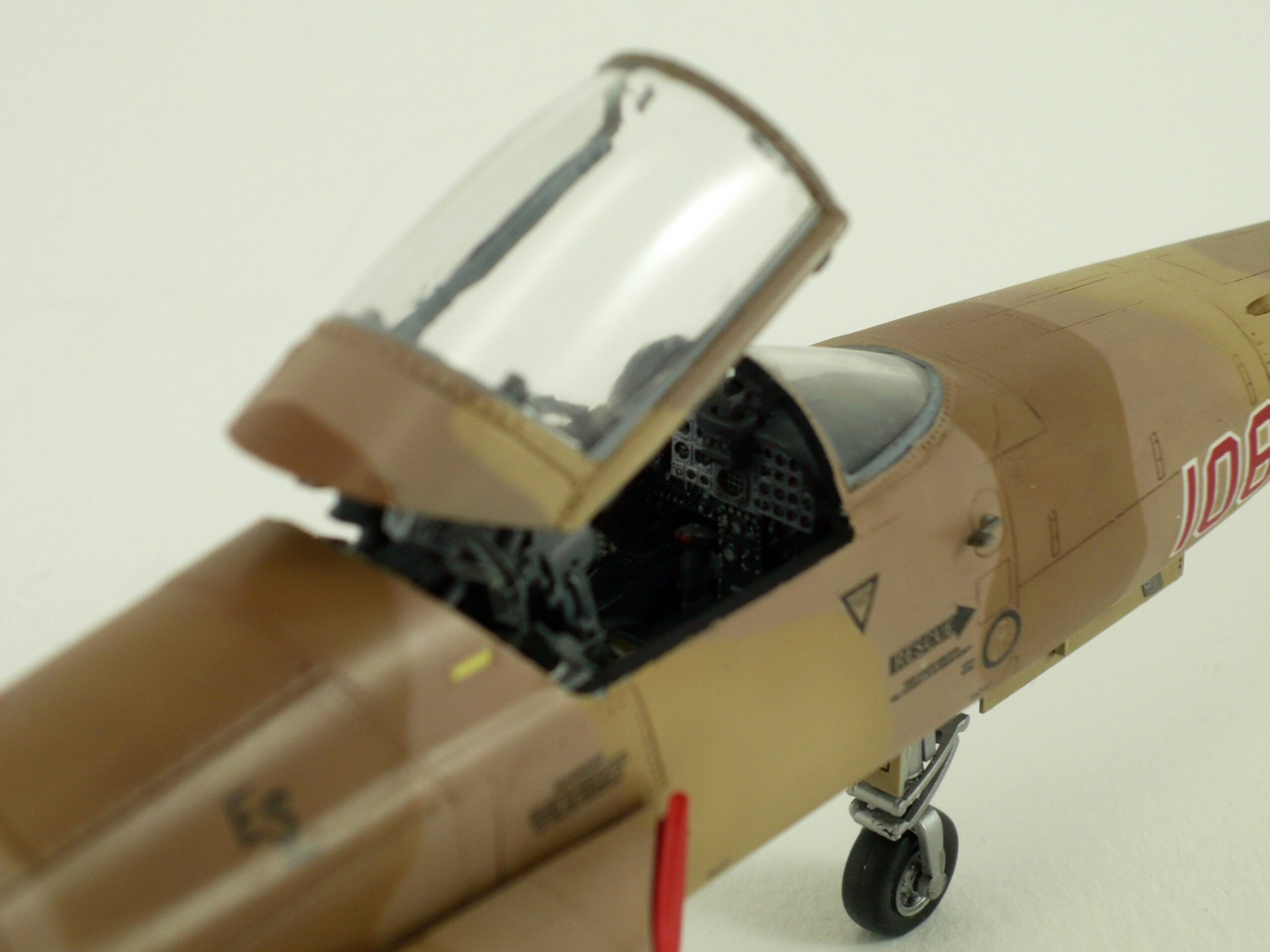
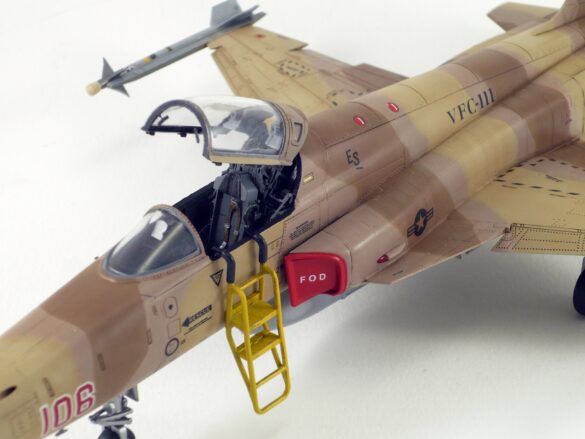
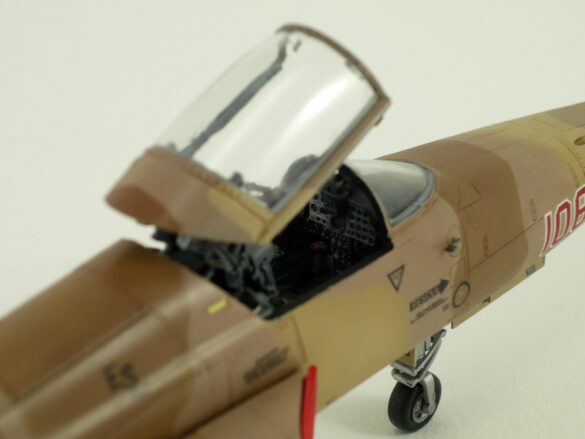
For this project the foundation was the 1/48 AFV Club F-5E/F-5N kit combined with a resin cockpit upgrade to enhance detail and improve the appearance of the front office.
Surface preparation started after completion of the main assembly. The entire model was cleaned with soap and water to remove dust residue, fingerprints and oils before primer application. Proper preparation at this stage determines the final quality of every paint layer that follows.
F-5N Tiger II AF 113 Bu. No. 761571 – VFC-111 Sundowners Build Review
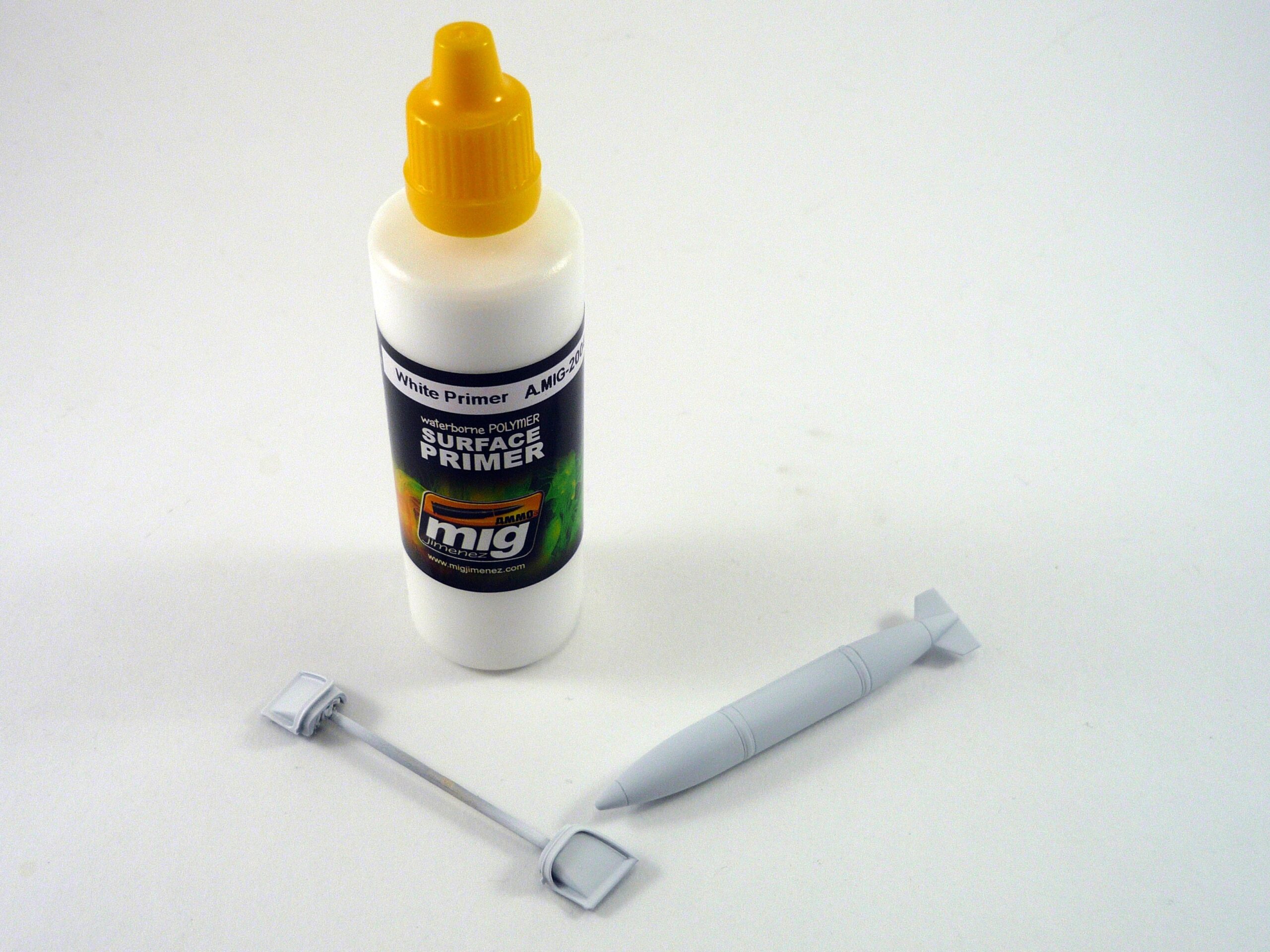
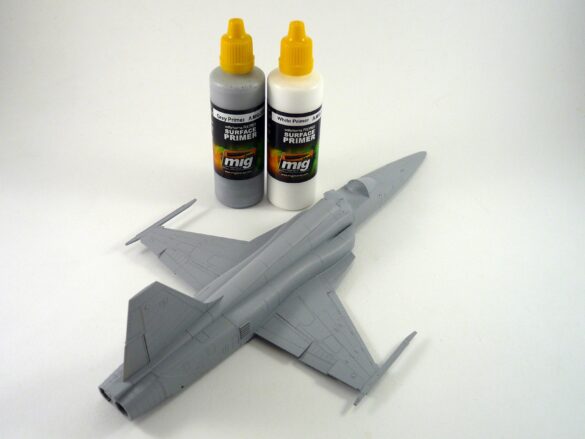
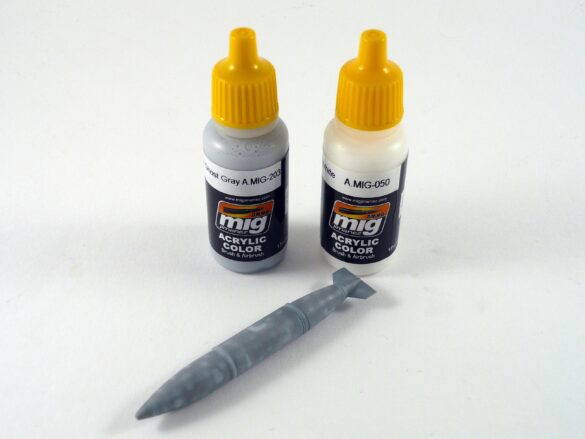
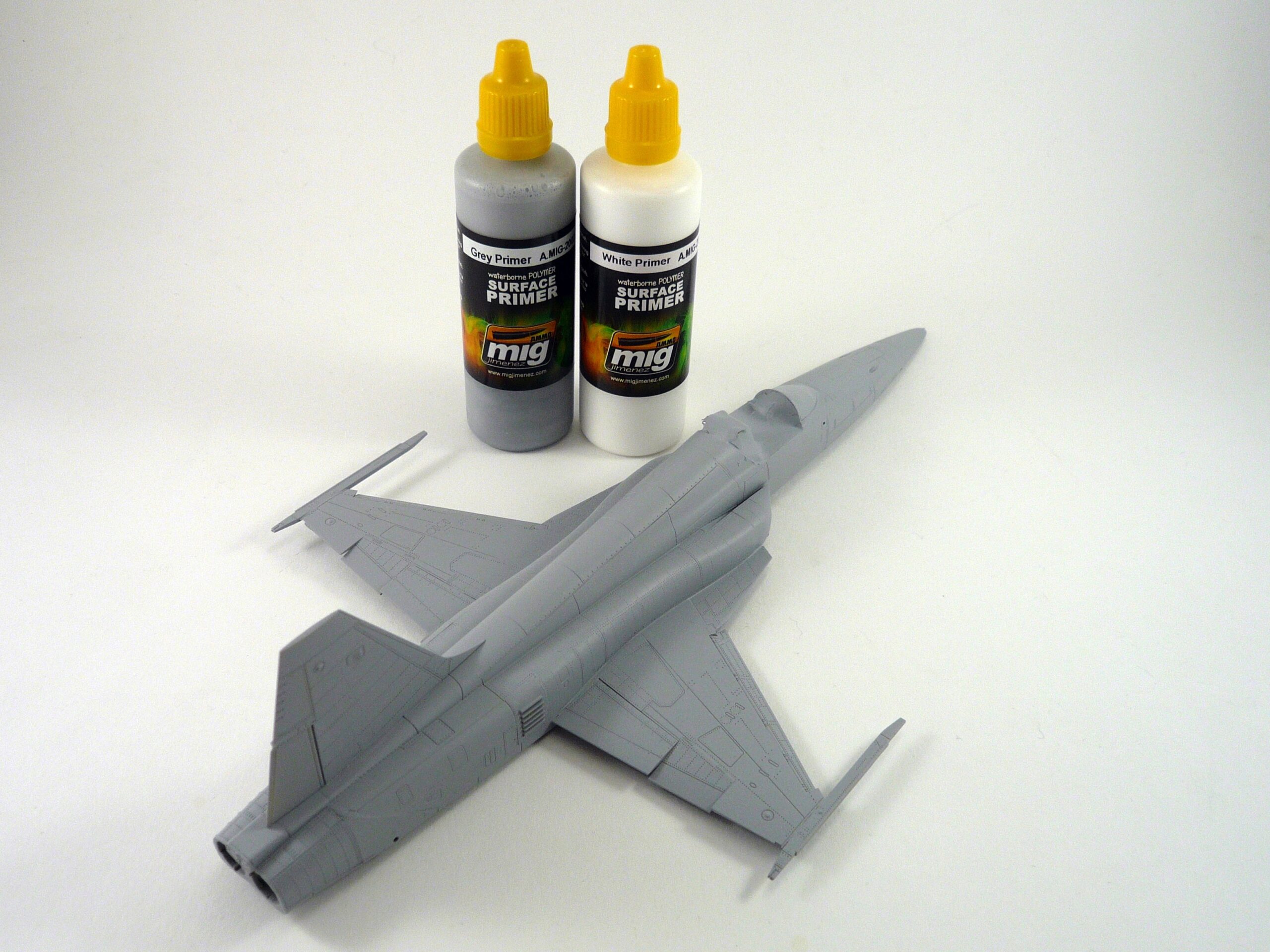
A custom light grey primer was created by mixing grey and white primer and applied in thin coats across the model. Besides improving paint adhesion, the primer stage revealed surface imperfections and allowed final corrections before color application.
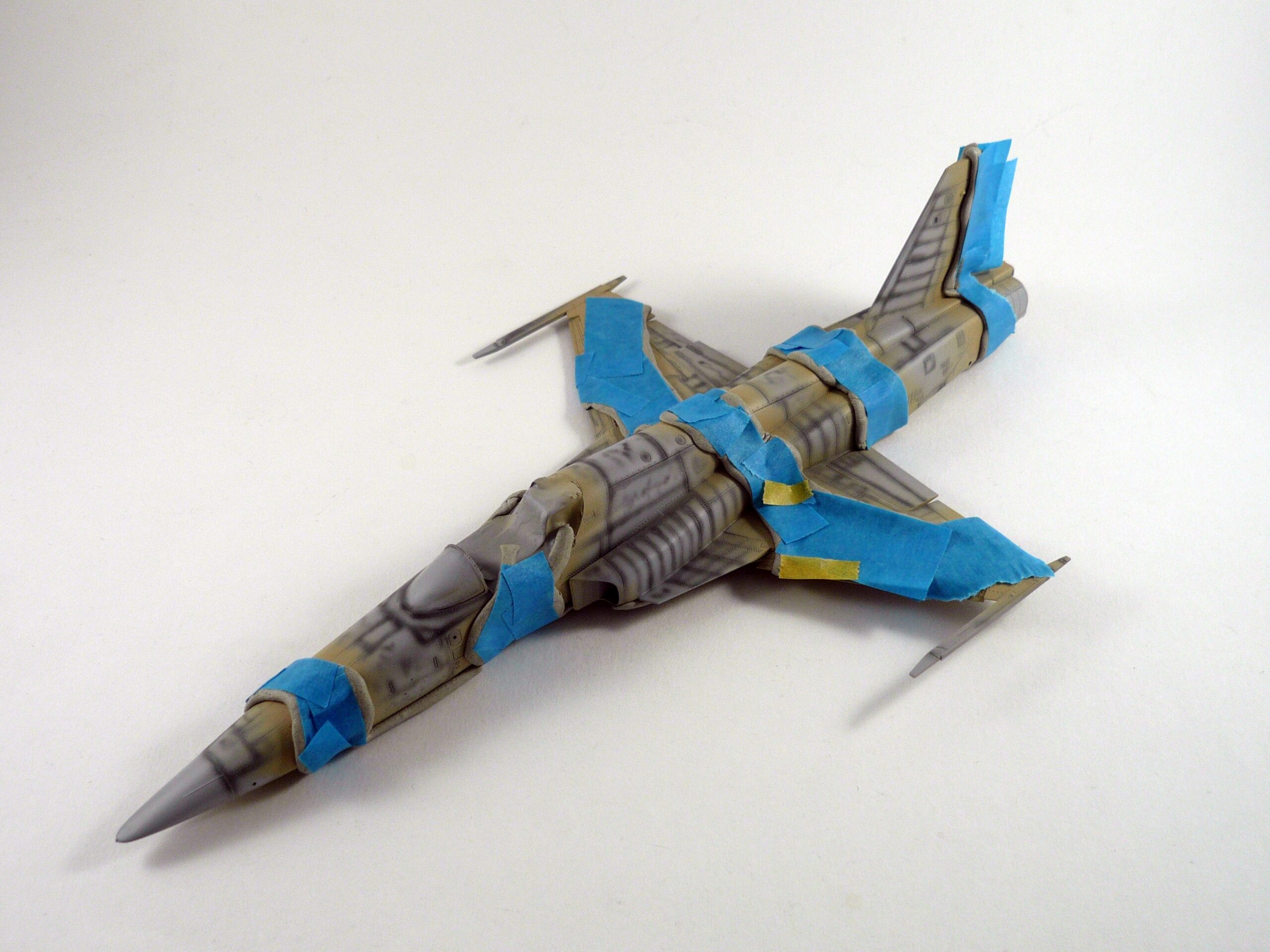
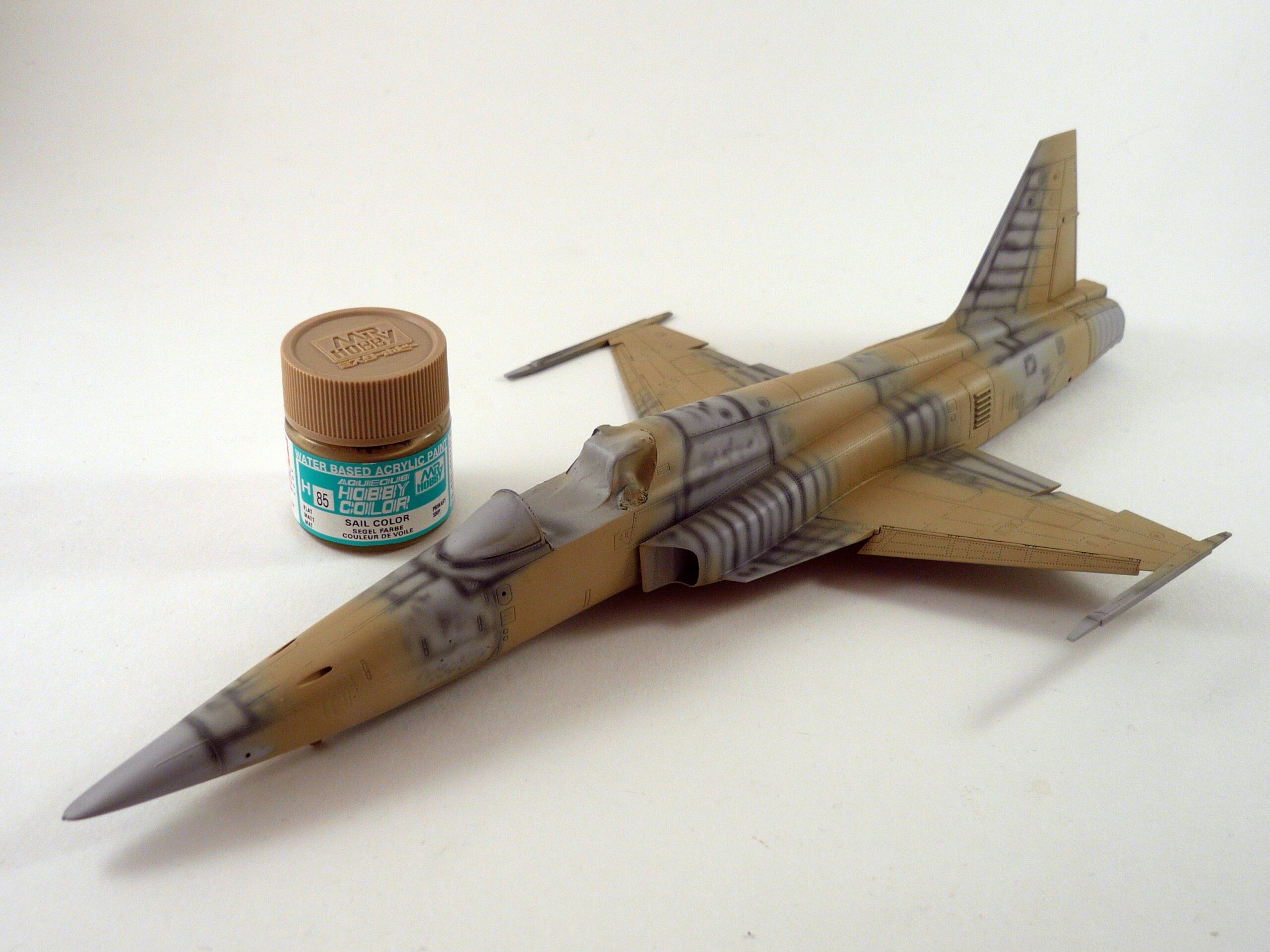
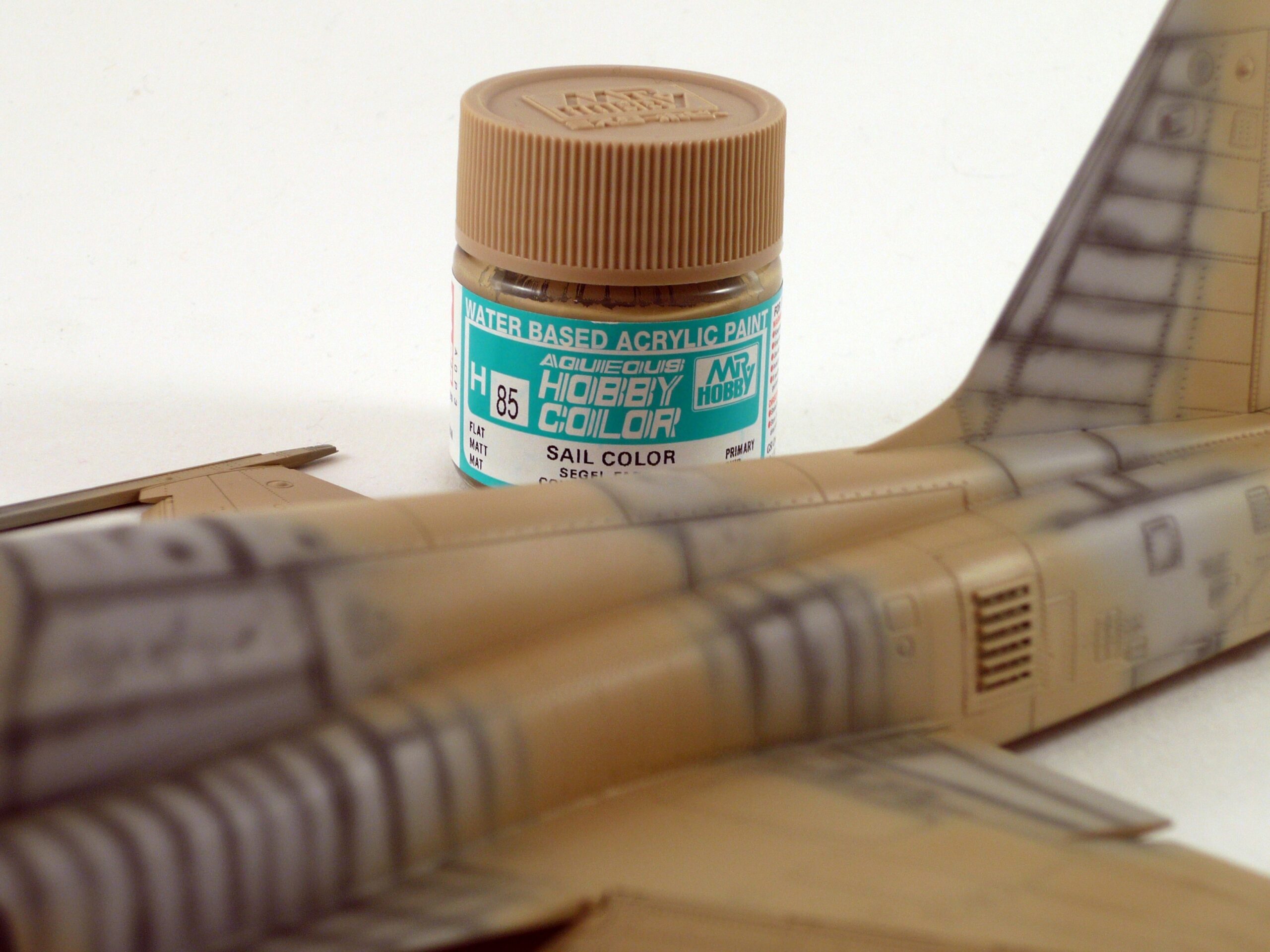
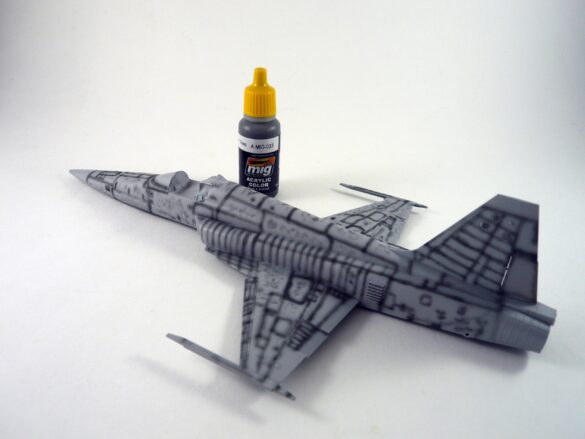
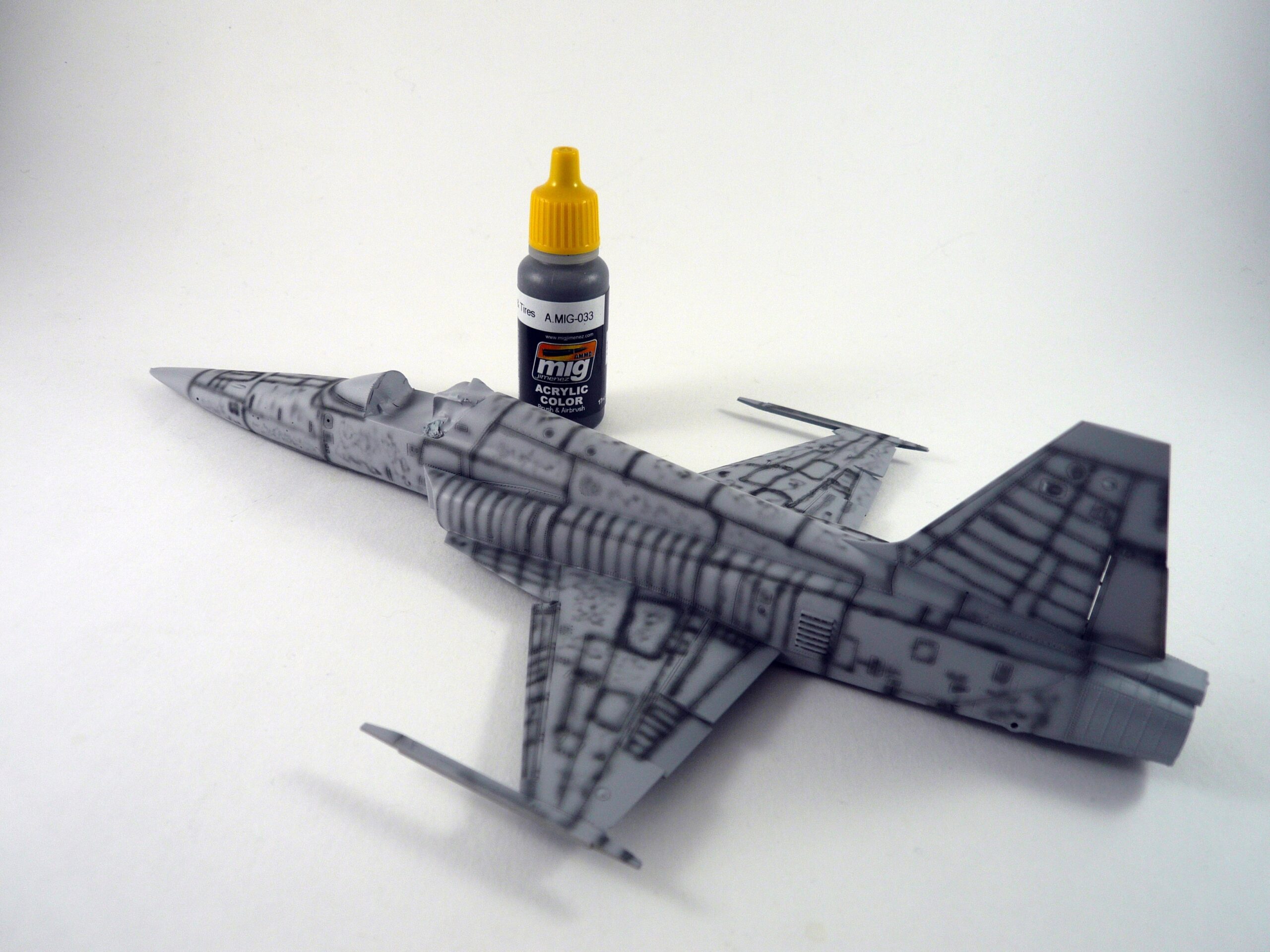
To increase visual depth, preshading was introduced on both upper and lower surfaces using a dark rubber-black tone. This technique helped establish subtle shadow effects and prevented the final camouflage from appearing flat.
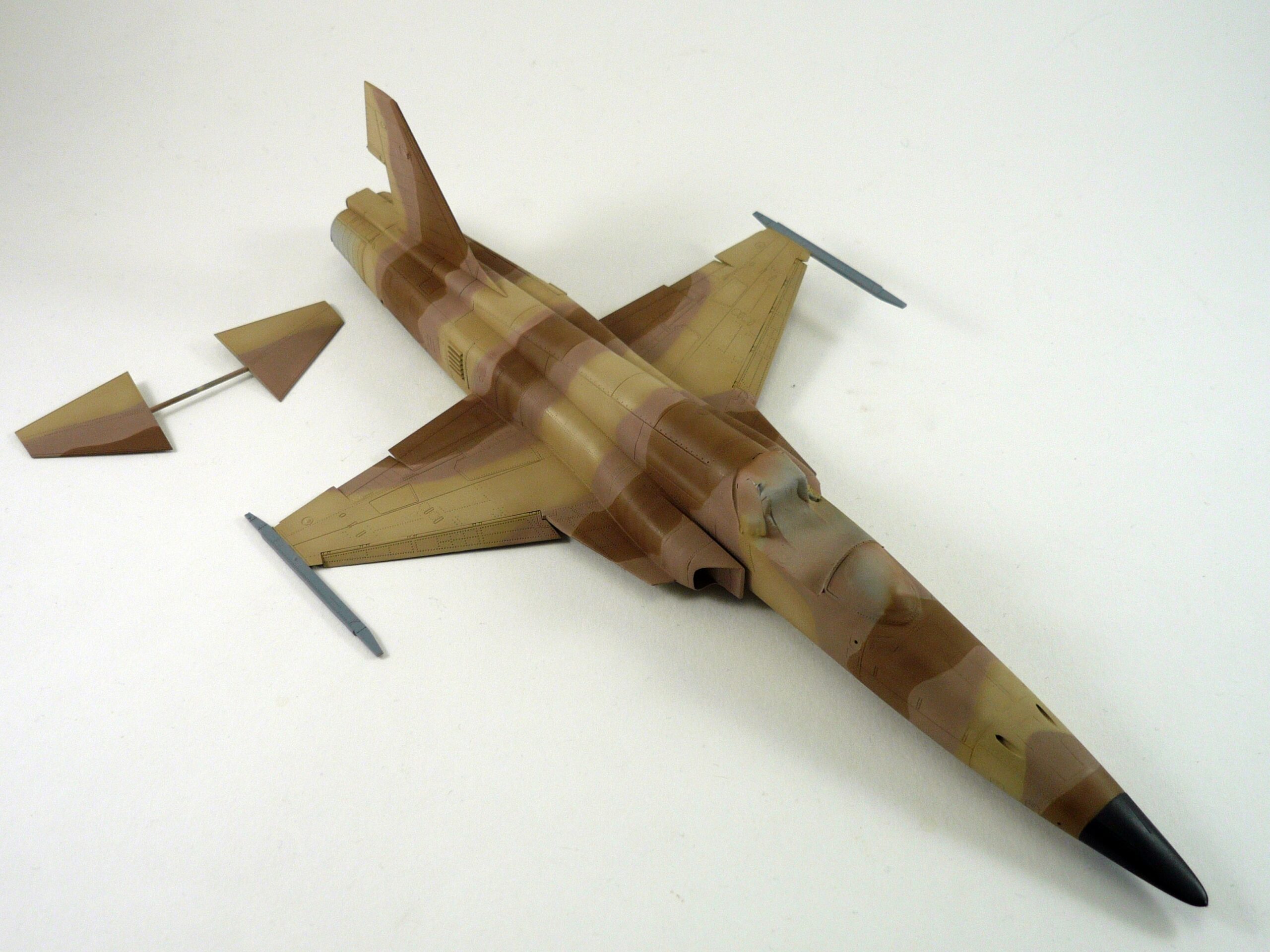
Painting began from the lower surfaces before moving to the upper camouflage. The first main color was applied gradually and then modulated with lighter tones to introduce natural variation and scale effect.
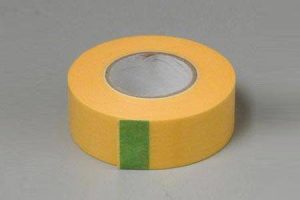
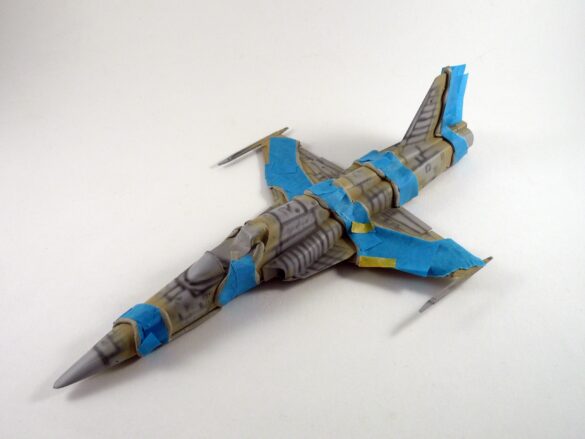
Once fully cured, masking began using soft-edge methods with Blu-Tack and tape to reproduce the flowing transitions characteristic of the aggressor pattern.
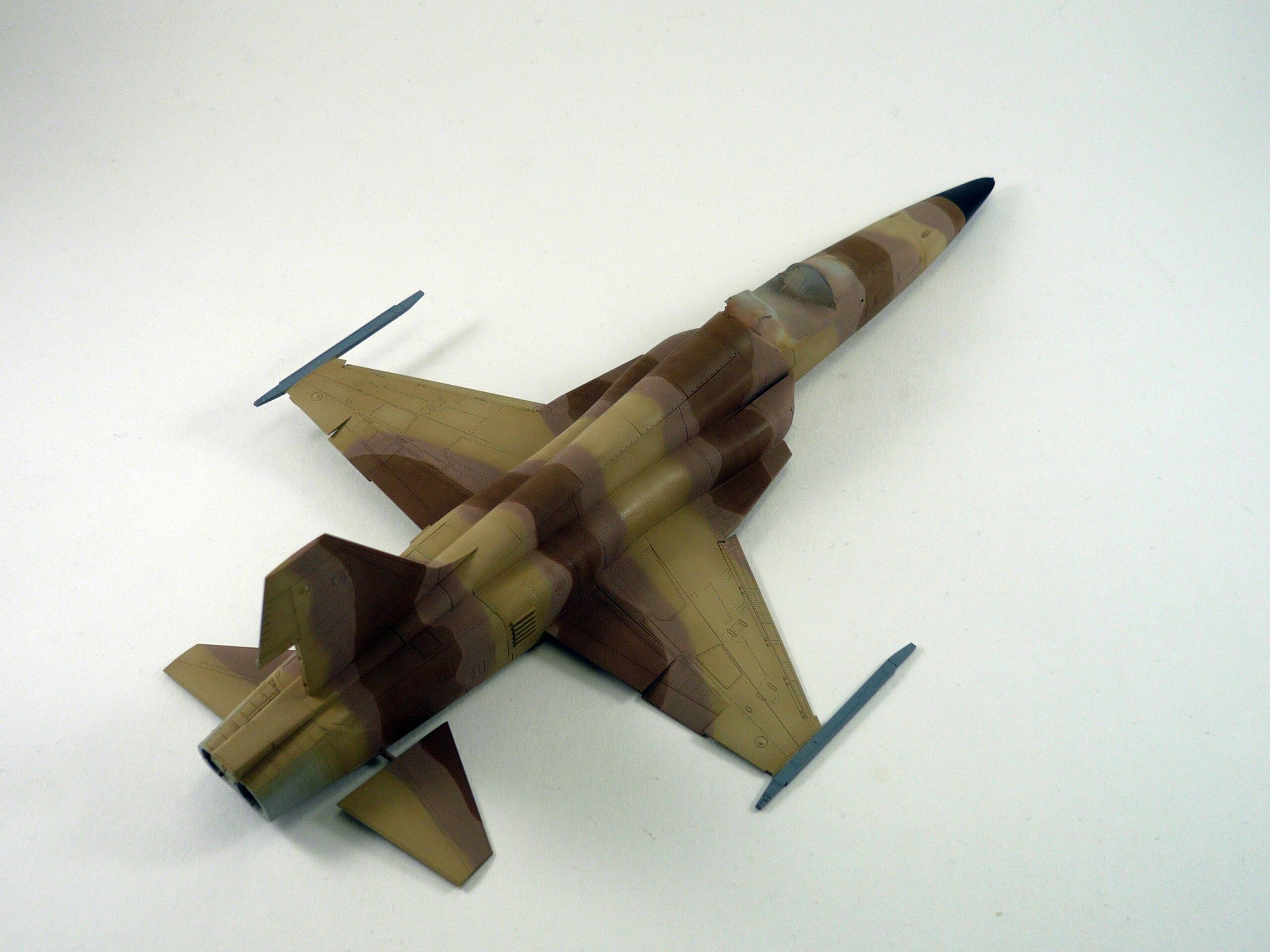
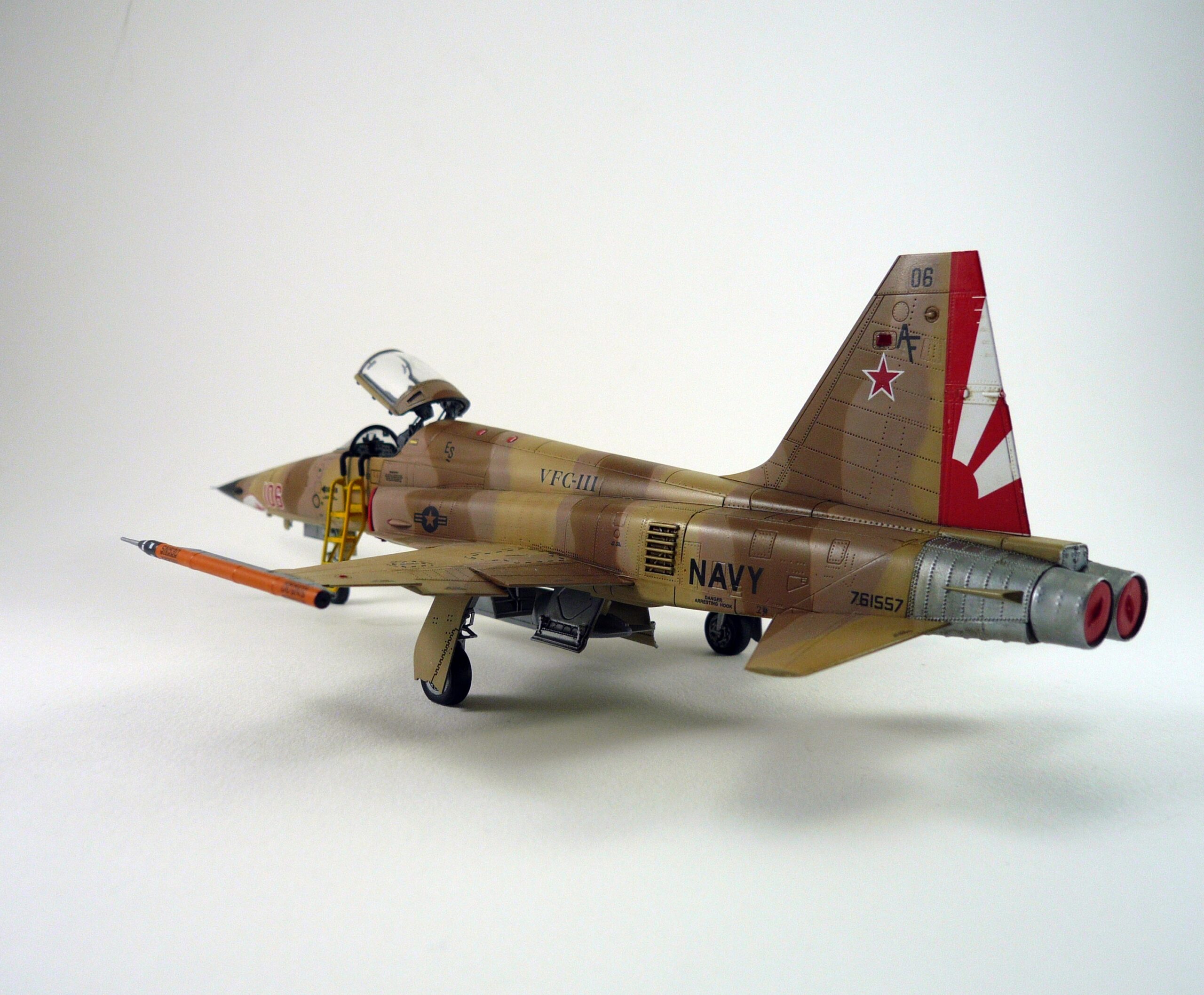
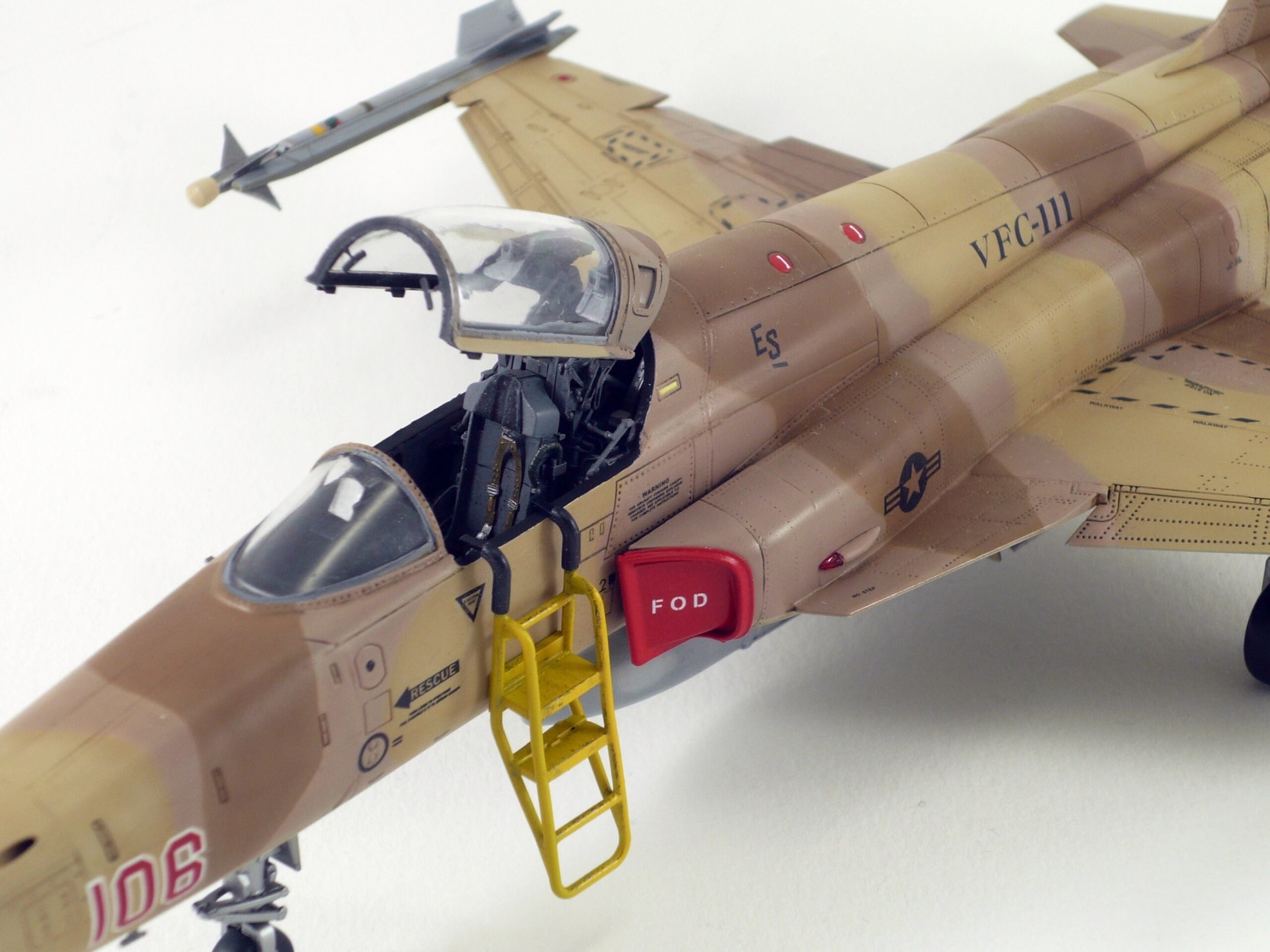
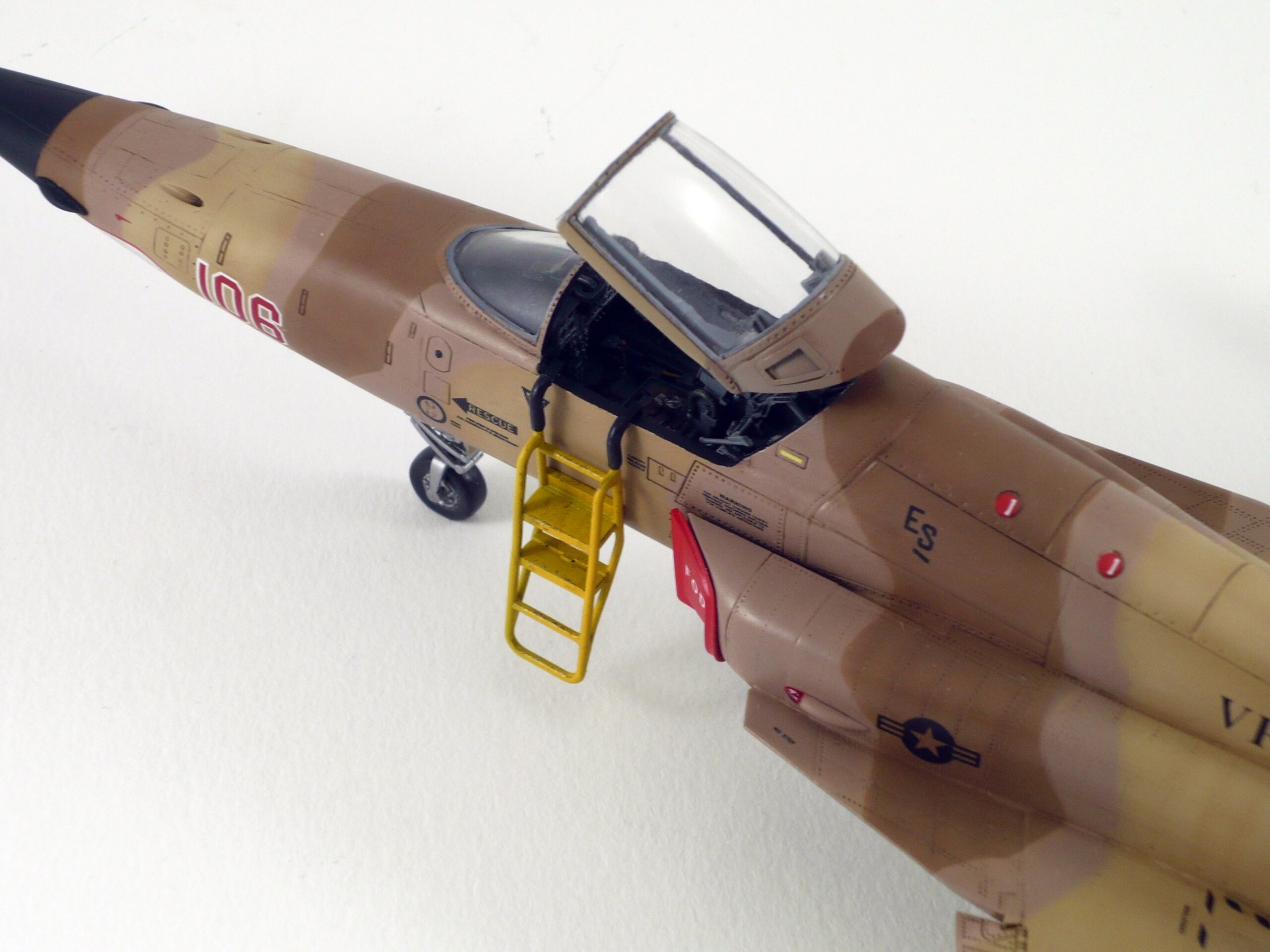
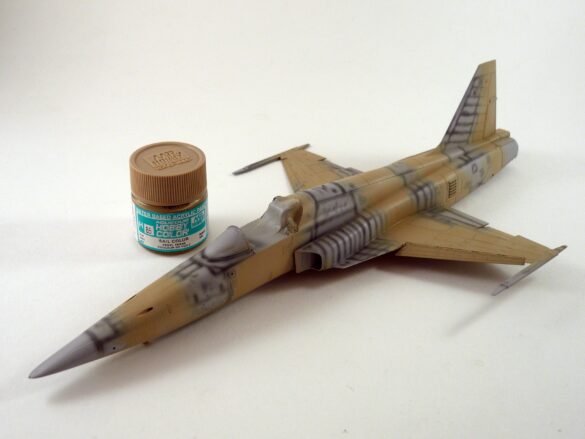
The remaining camouflage colors were mixed individually to match the appearance of the real aircraft rather than relying strictly on bottle references. The light brown tone was progressively highlighted to create sun-faded areas while the darker brown sections received additional depth to improve panel definition and break uniformity.
The radome and dorsal white markings added contrast and immediately transformed the appearance into the recognizable VFC-111 profile.
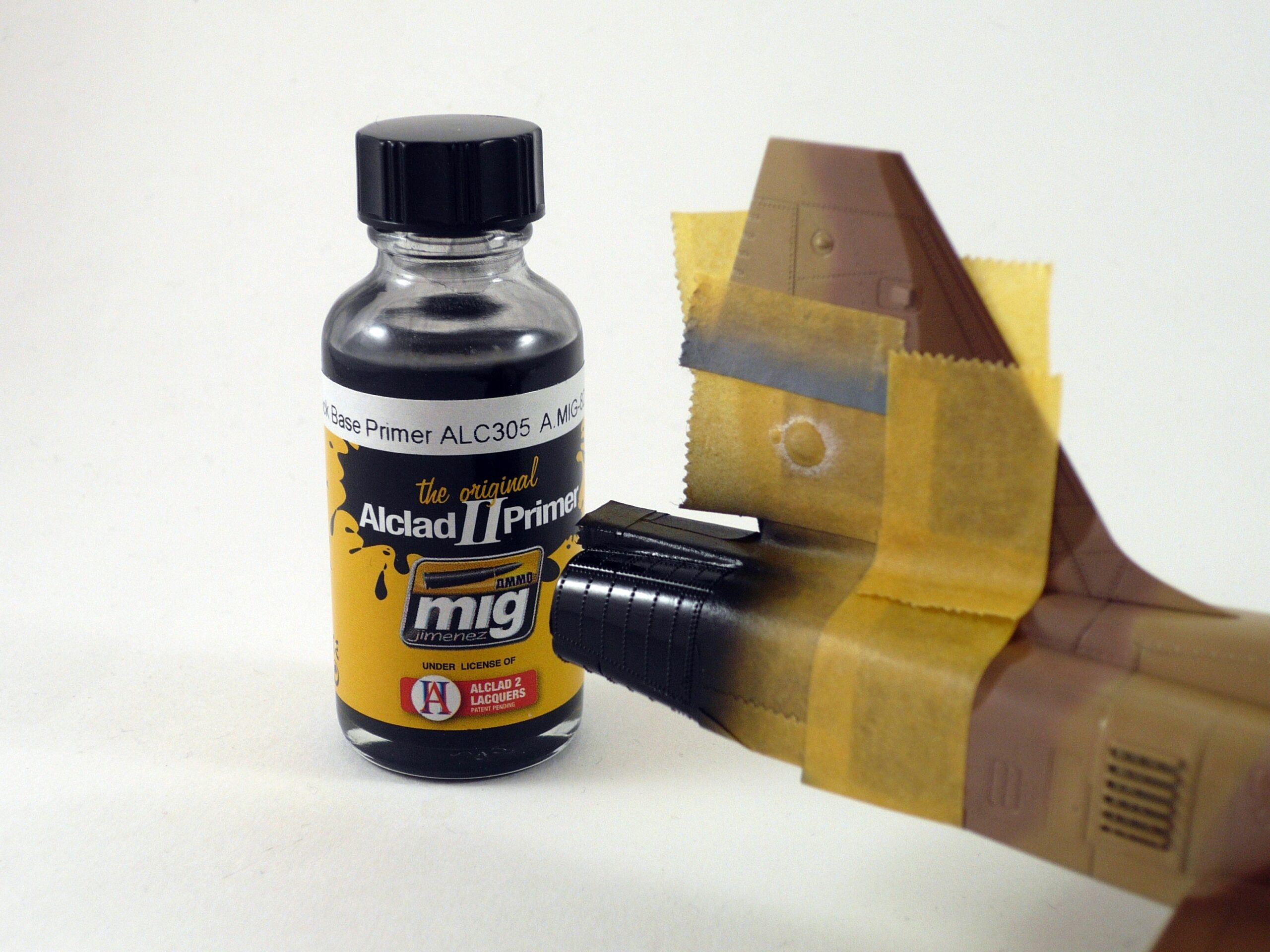
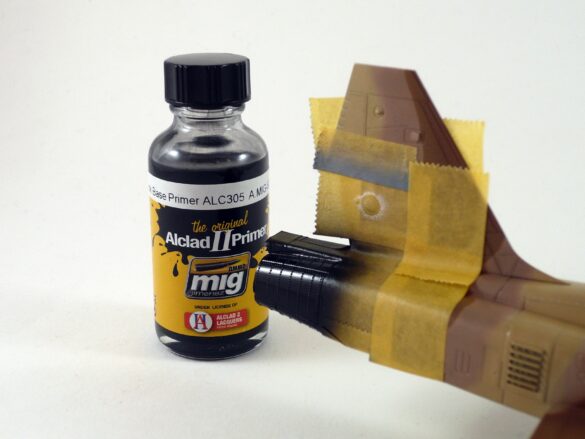
Attention then shifted to the metallic areas.
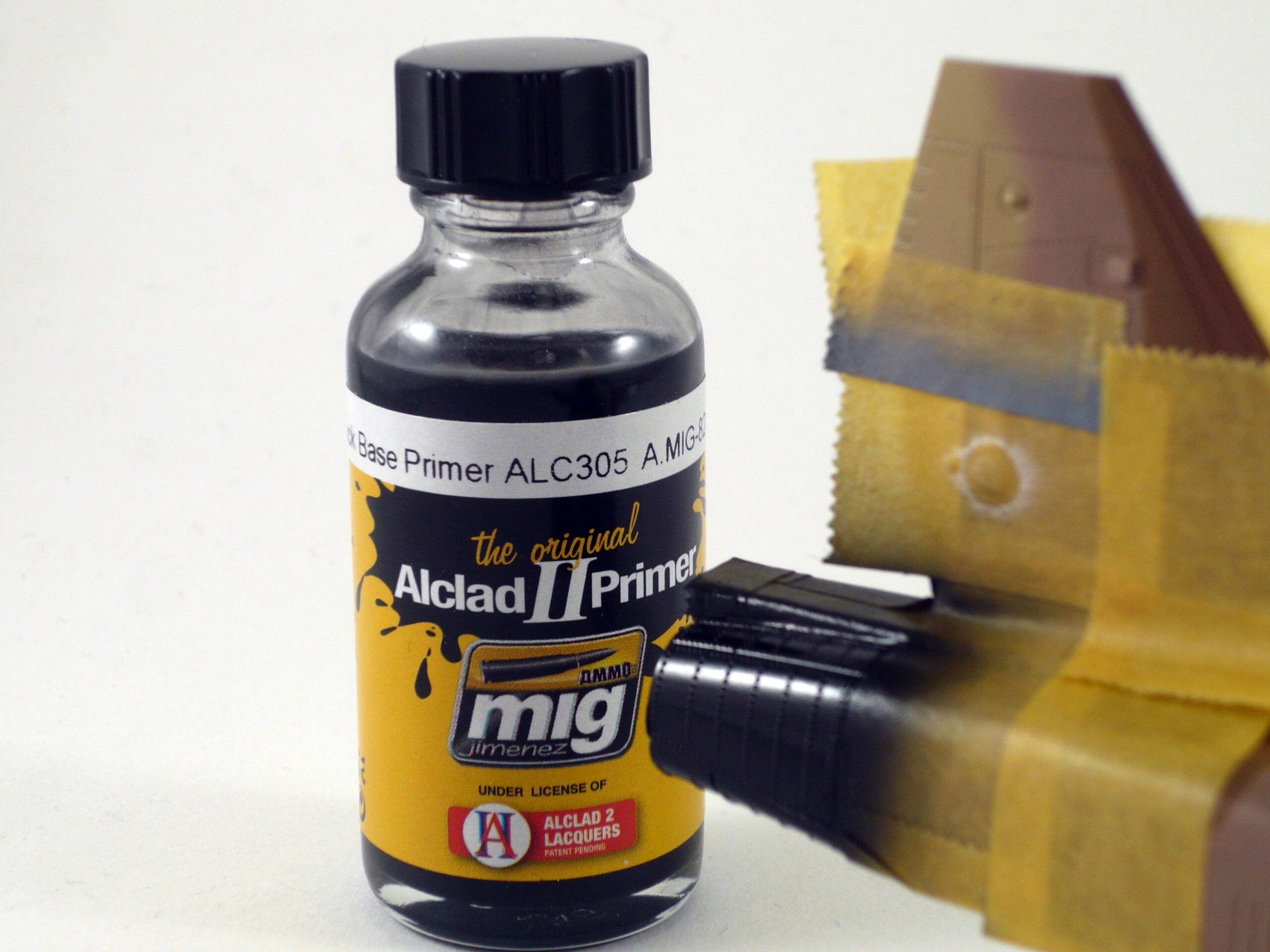
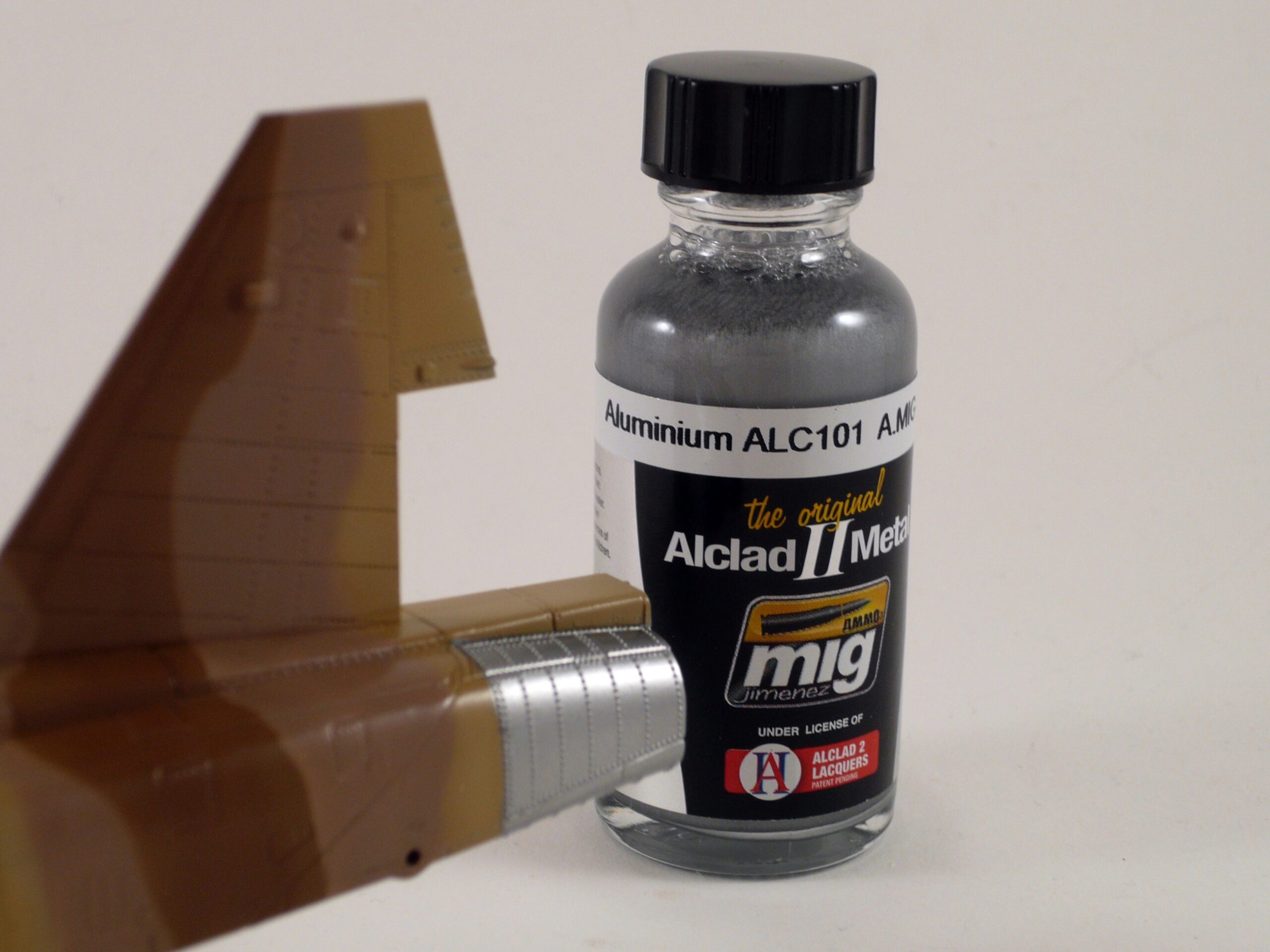
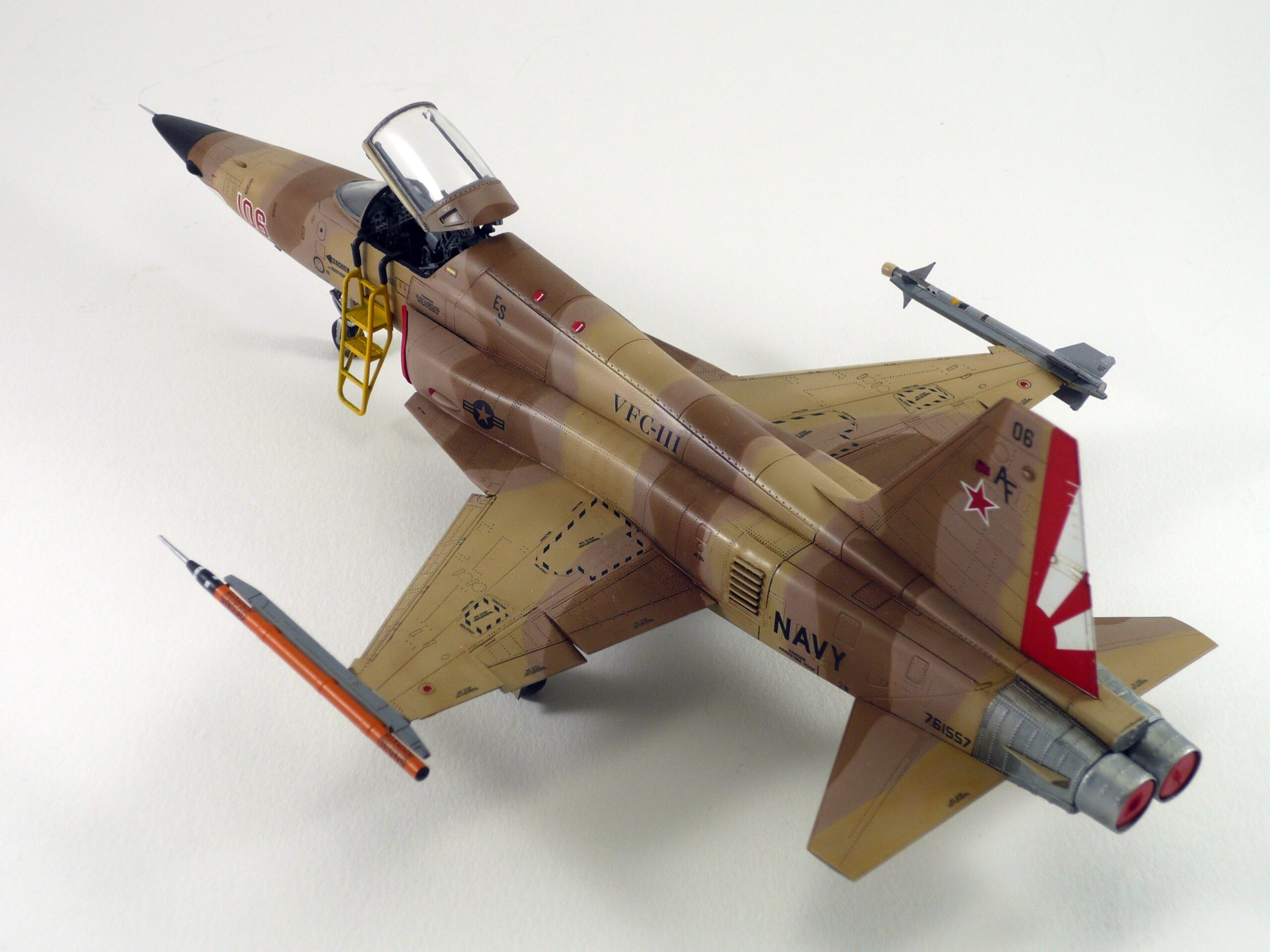
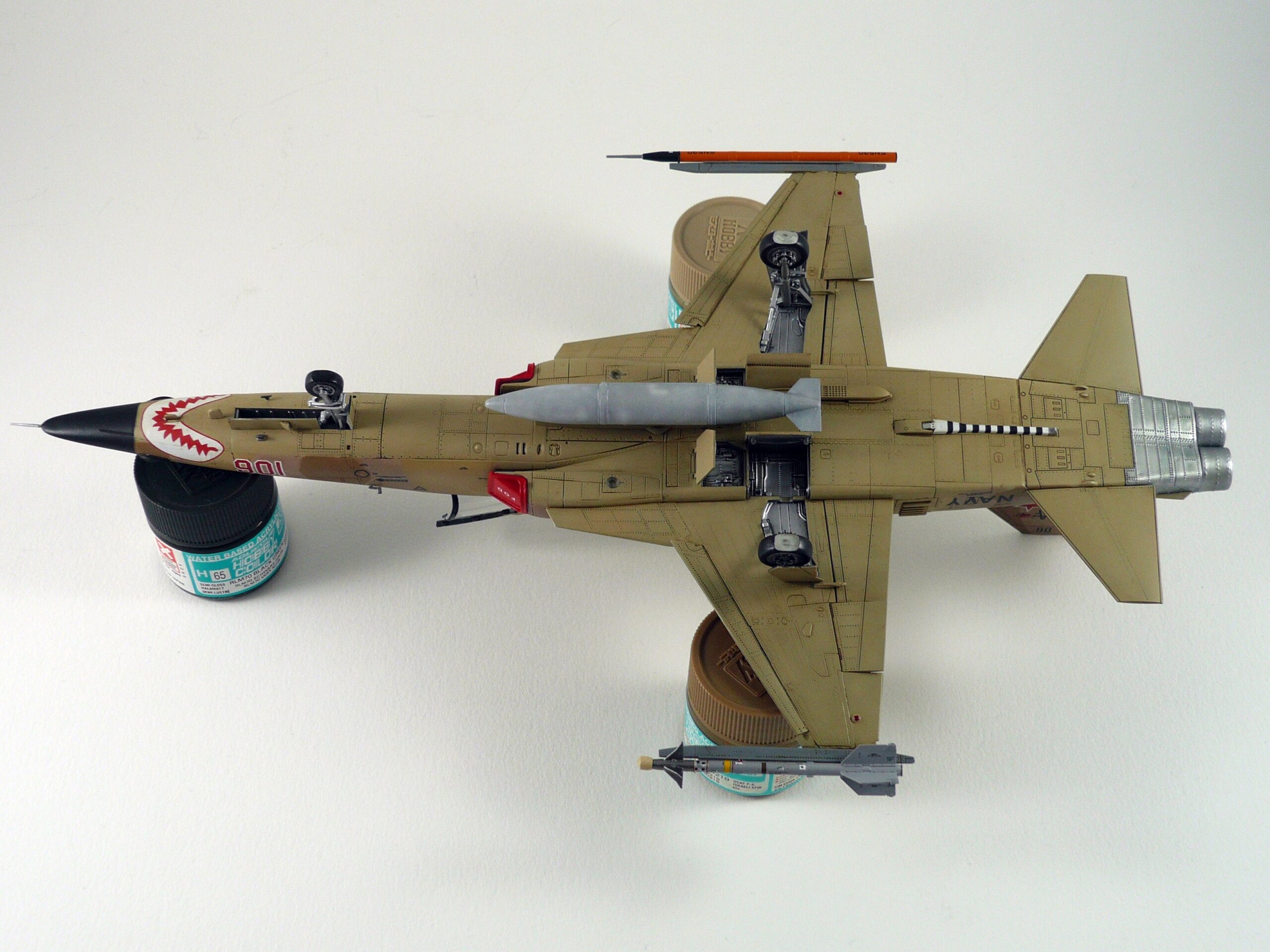
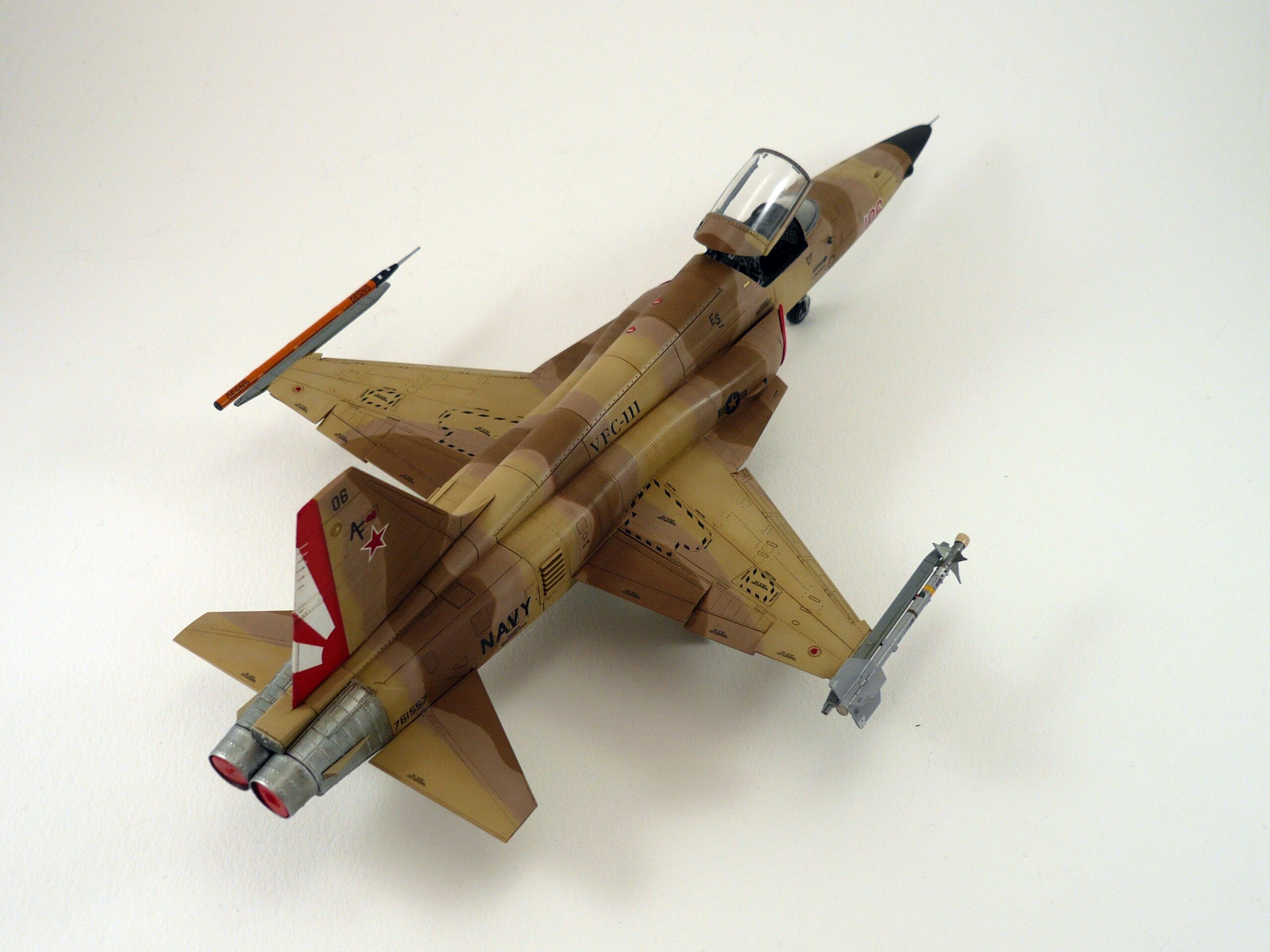
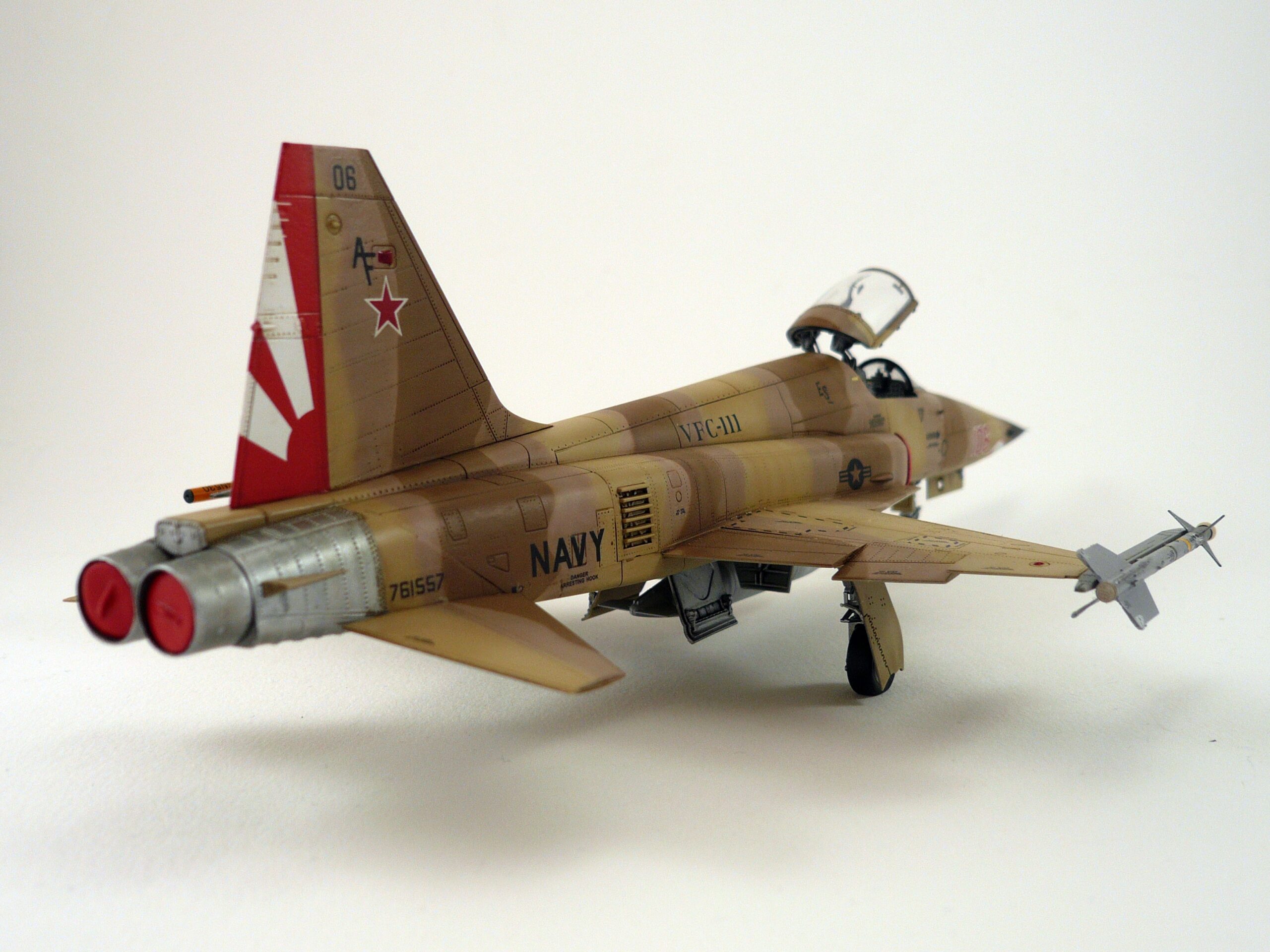
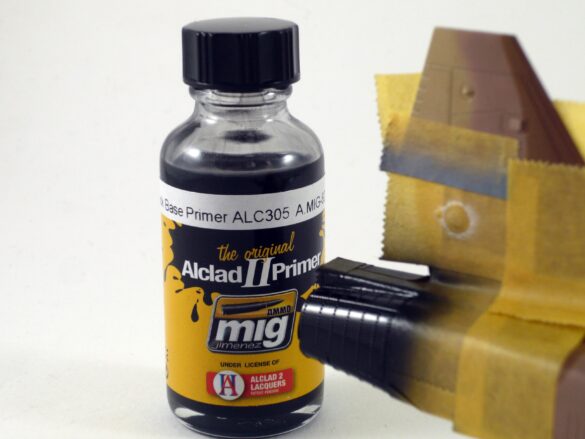
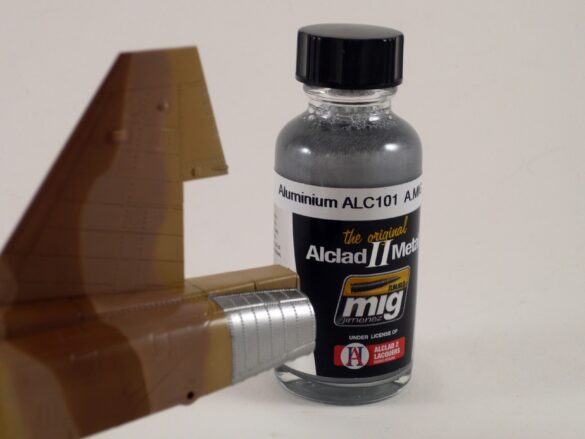
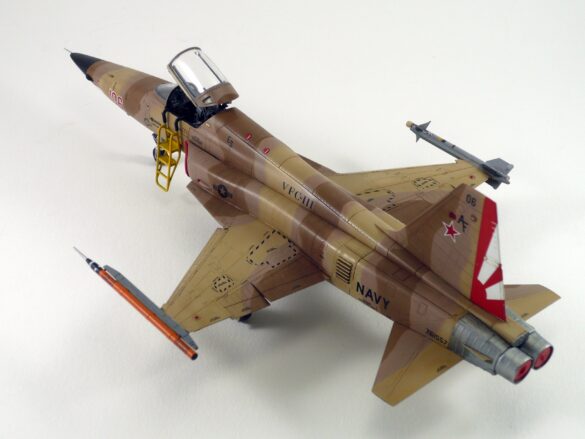
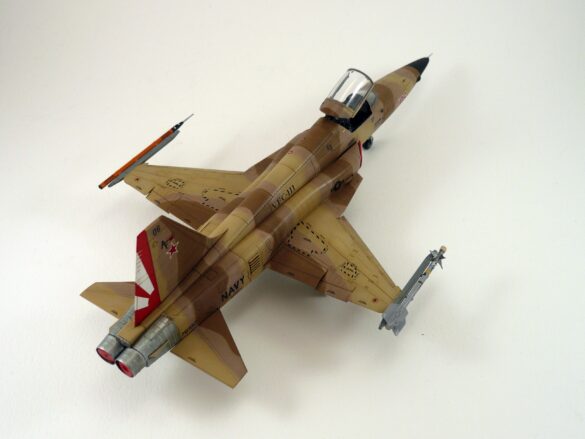
A gloss black base was applied and allowed extended curing time before metallic finishes were introduced. Aluminum shades were layered carefully to avoid fingerprints and preserve surface quality. Different metal tones around the engine nozzles created variation and reproduced heat exposure.
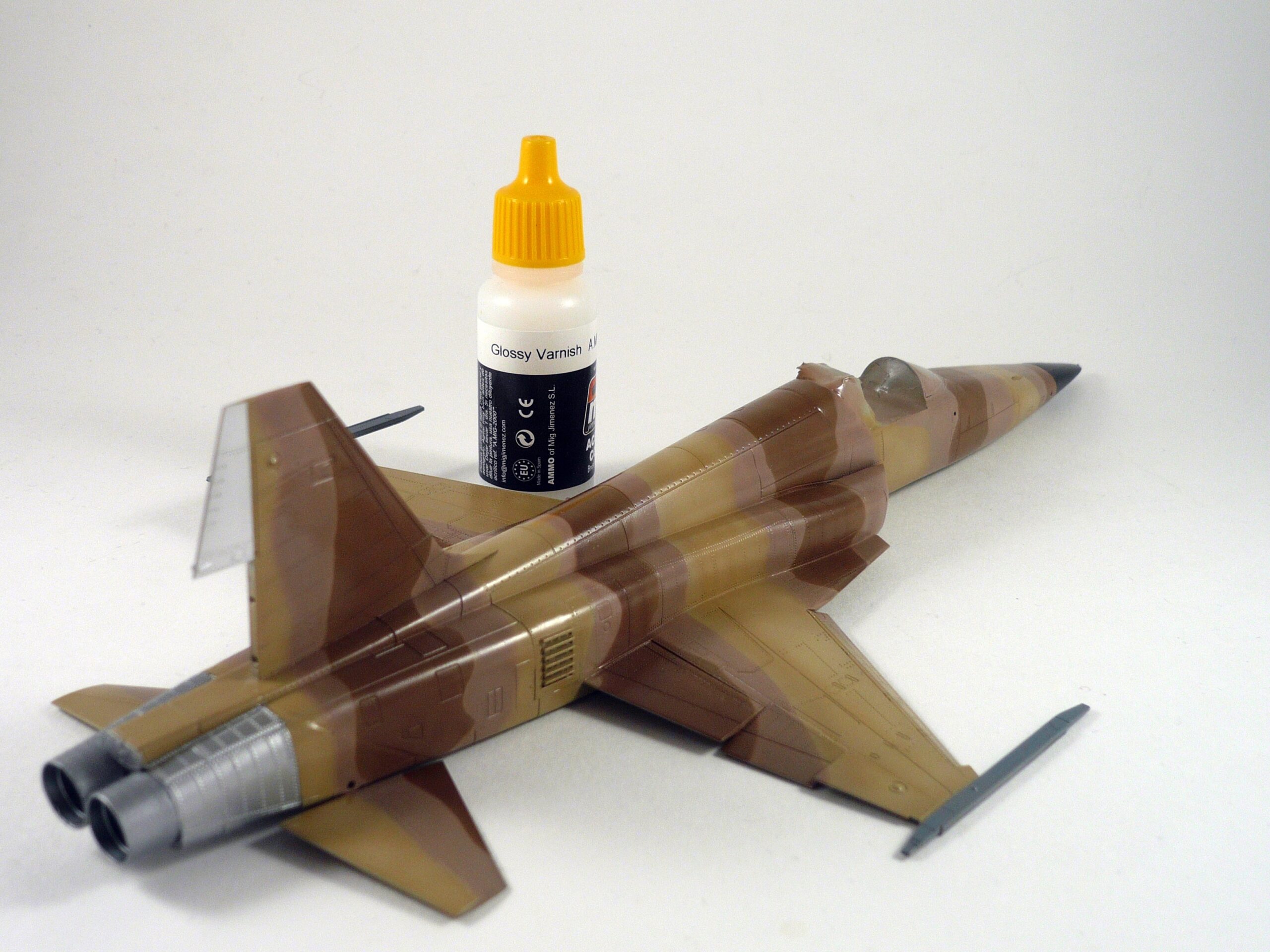
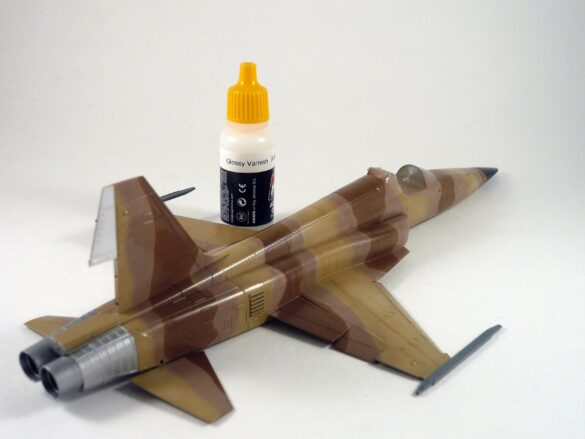
Following completion of the paintwork, multiple gloss coats prepared the surface for decals and weathering.
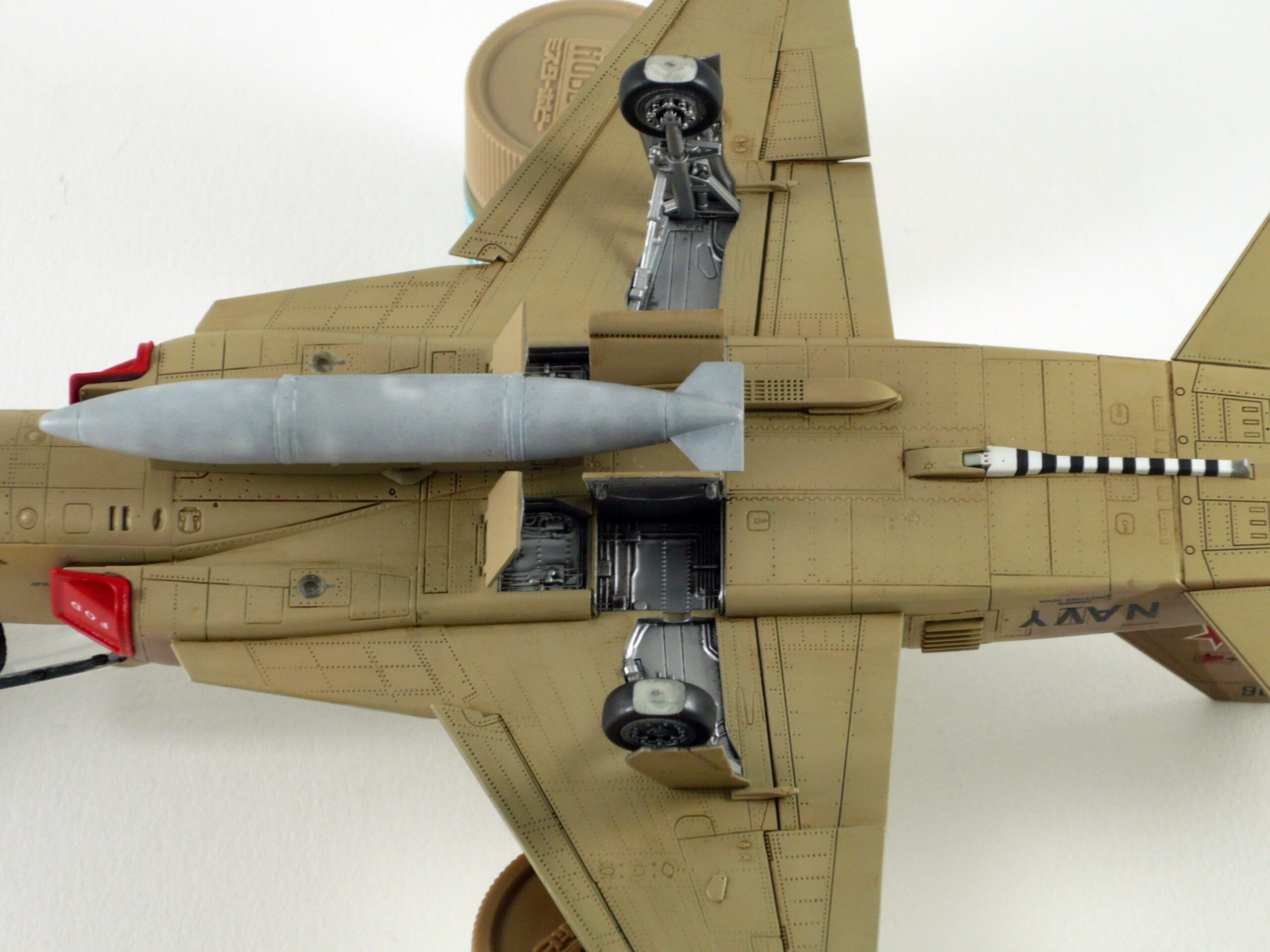
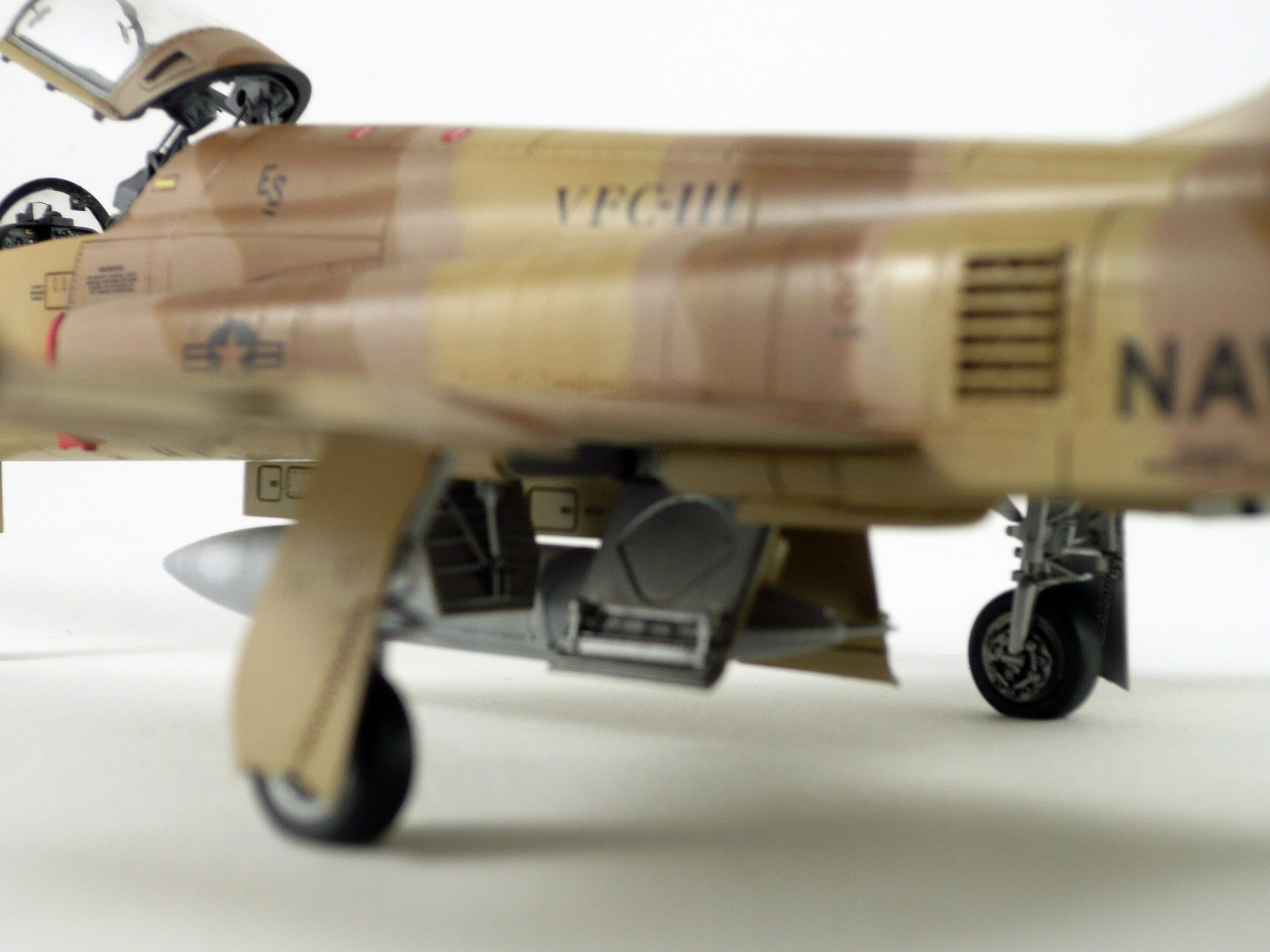
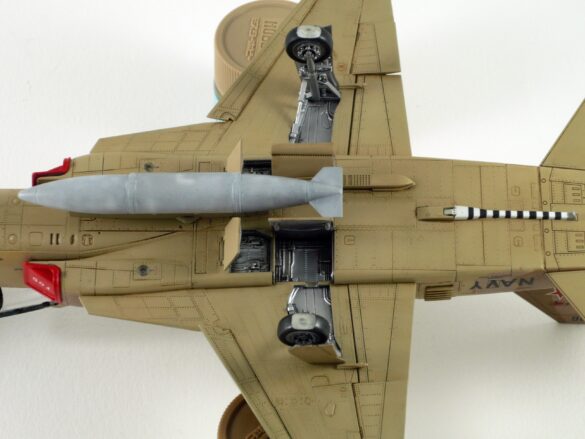
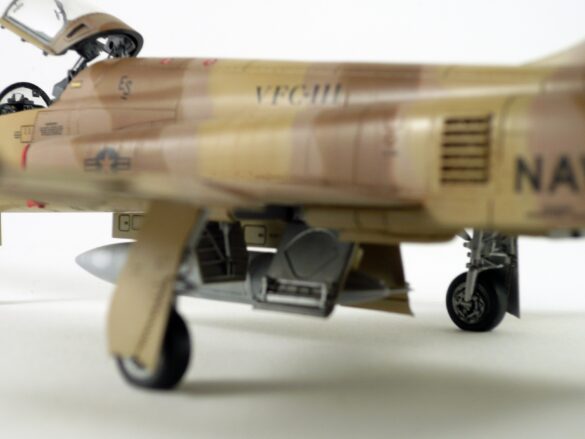
The landing gear received dedicated treatment with metallic finishes and selective washes to create operational wear without excessive contrast.
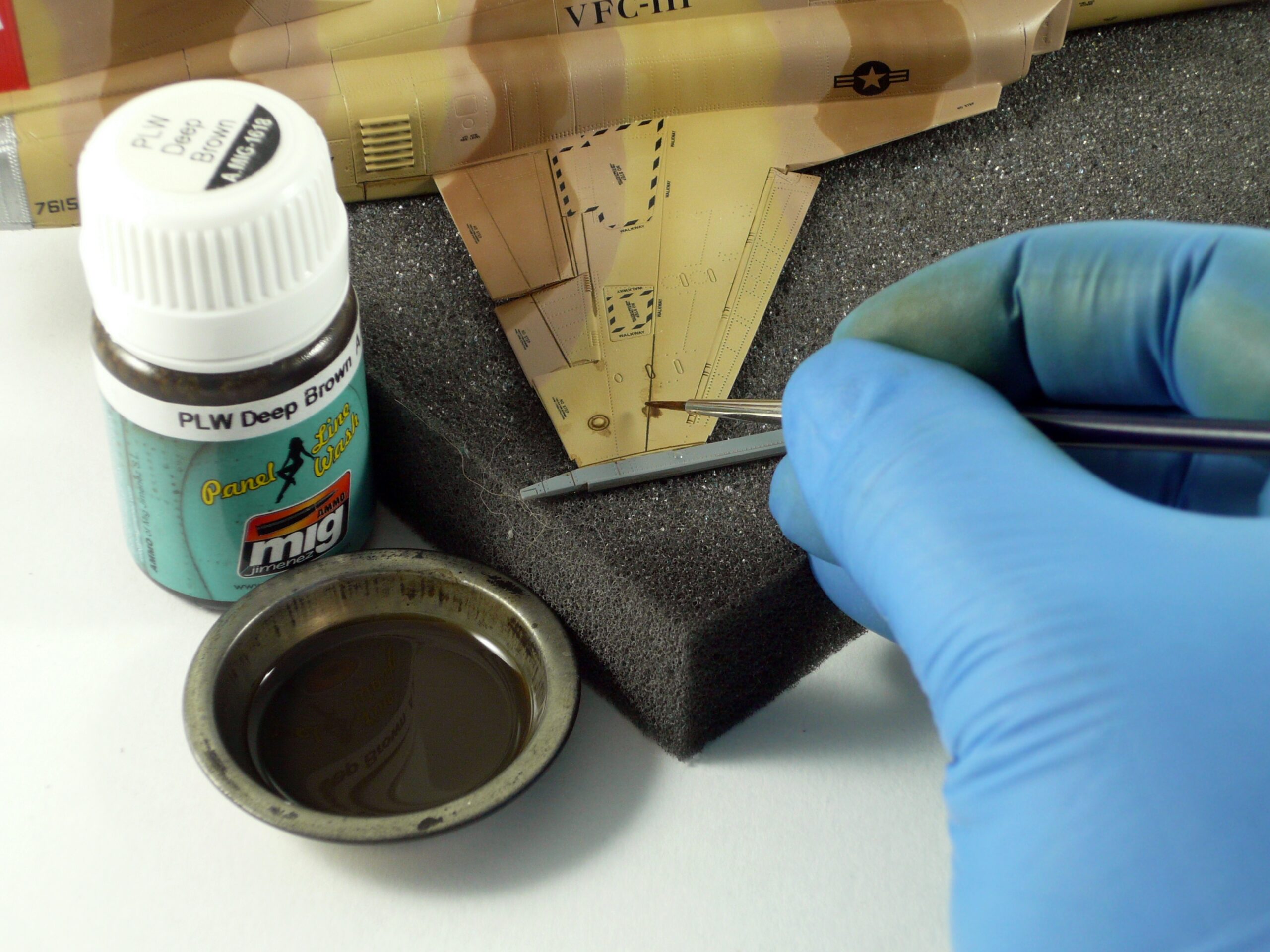
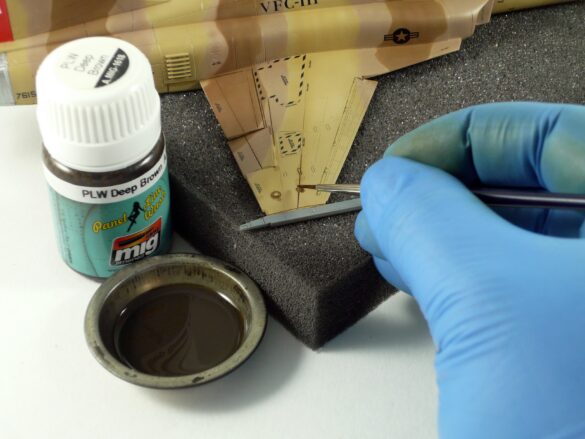
Weathering focused on enhancing camouflage depth rather than creating heavy operational damage. Deep brown washes emphasized panel lines while additional tonal filters introduced subtle color shifts across the aircraft.
Different wash tones were selected depending on surrounding camouflage areas to avoid repetition and maintain realism.
The wheel wells received extra treatment using oil and grease effects to recreate accumulated operational staining.
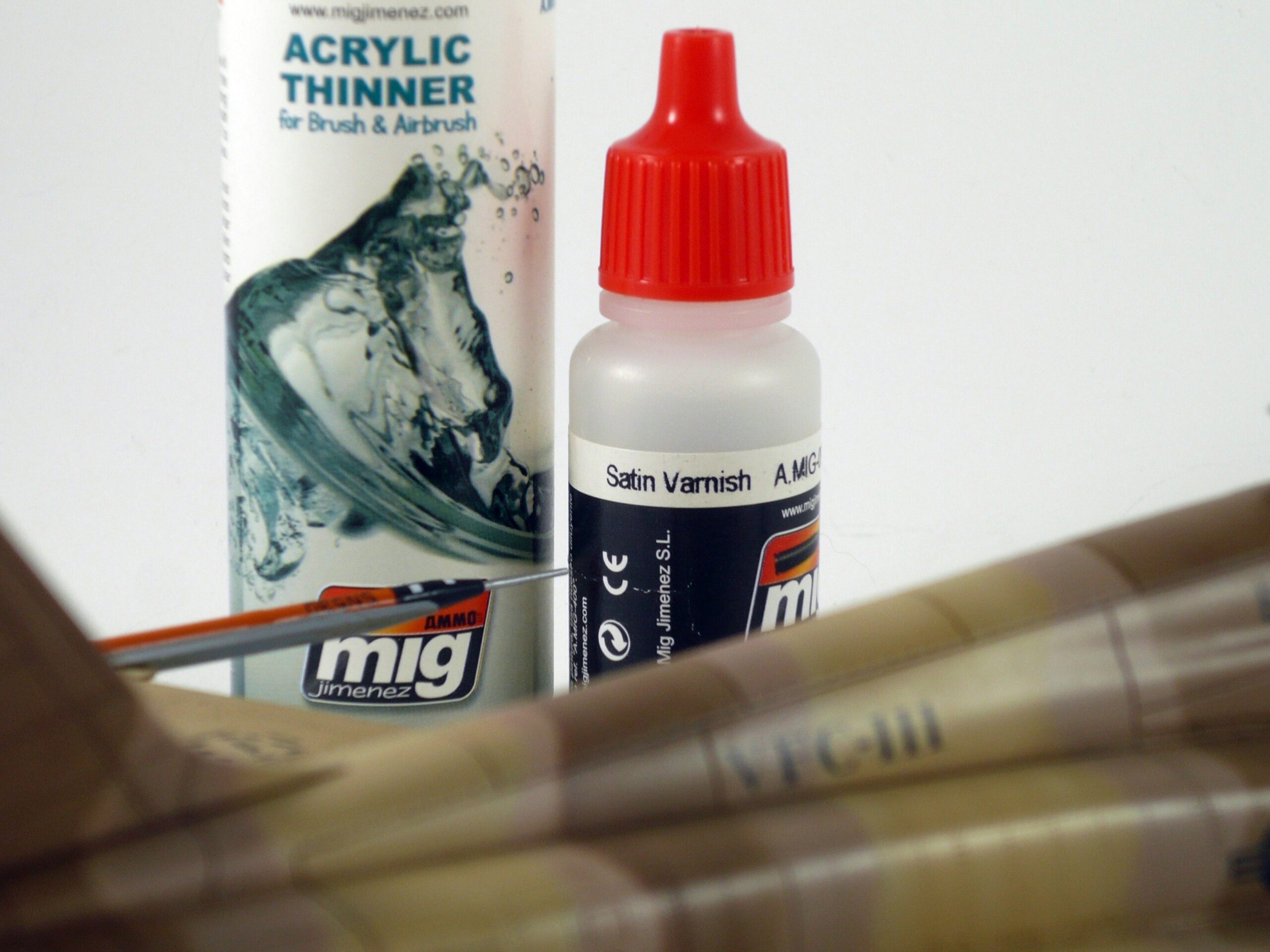
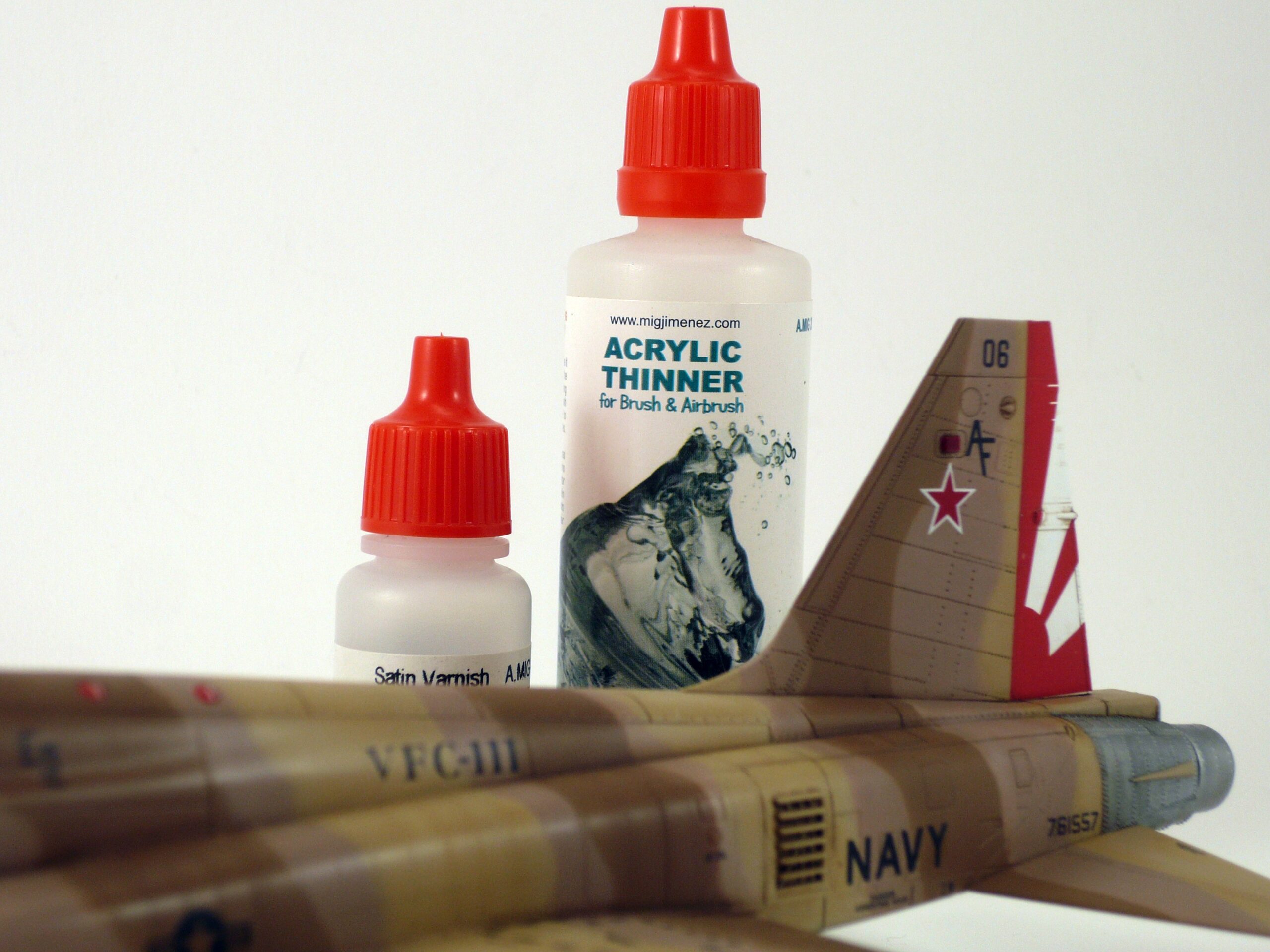
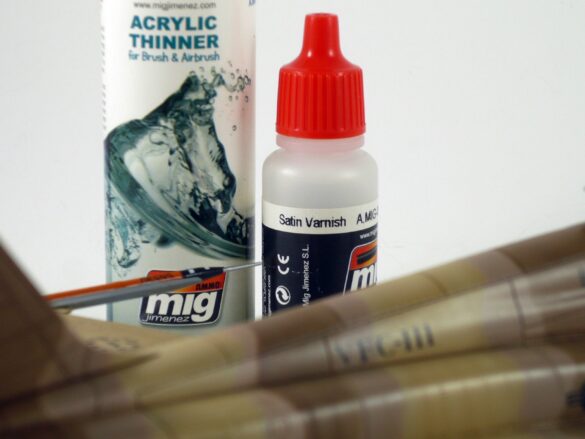
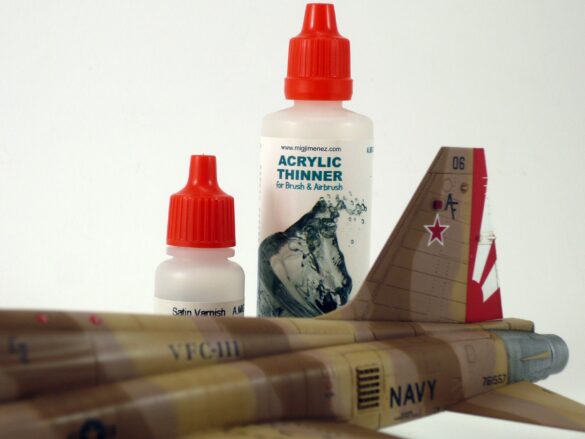
After all weathering stages were complete, the model received a satin protective coat which unified the finish while preserving realistic reflections.
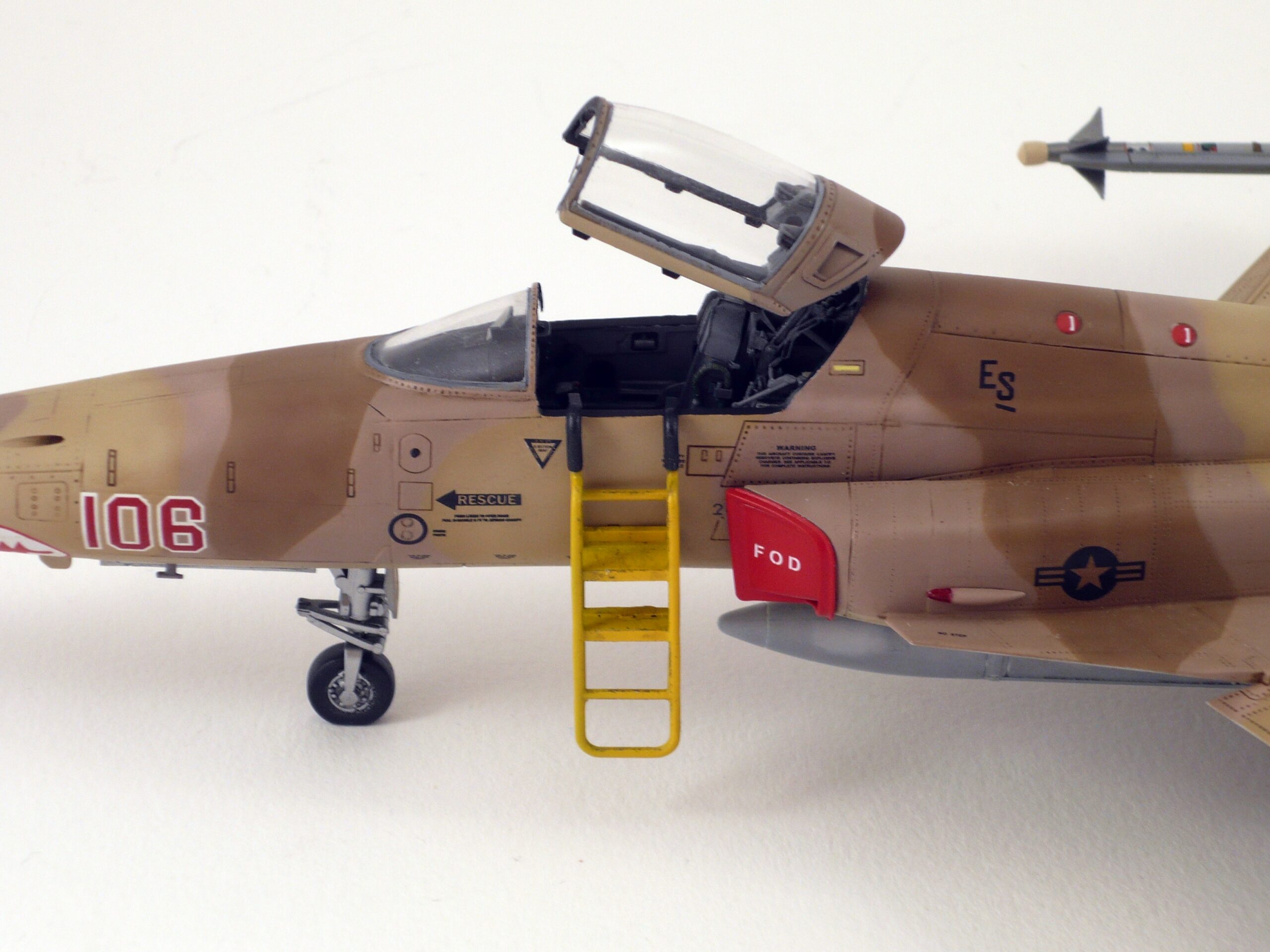
Additional details such as intake and exhaust FOD covers completed the presentation and added visual interest.
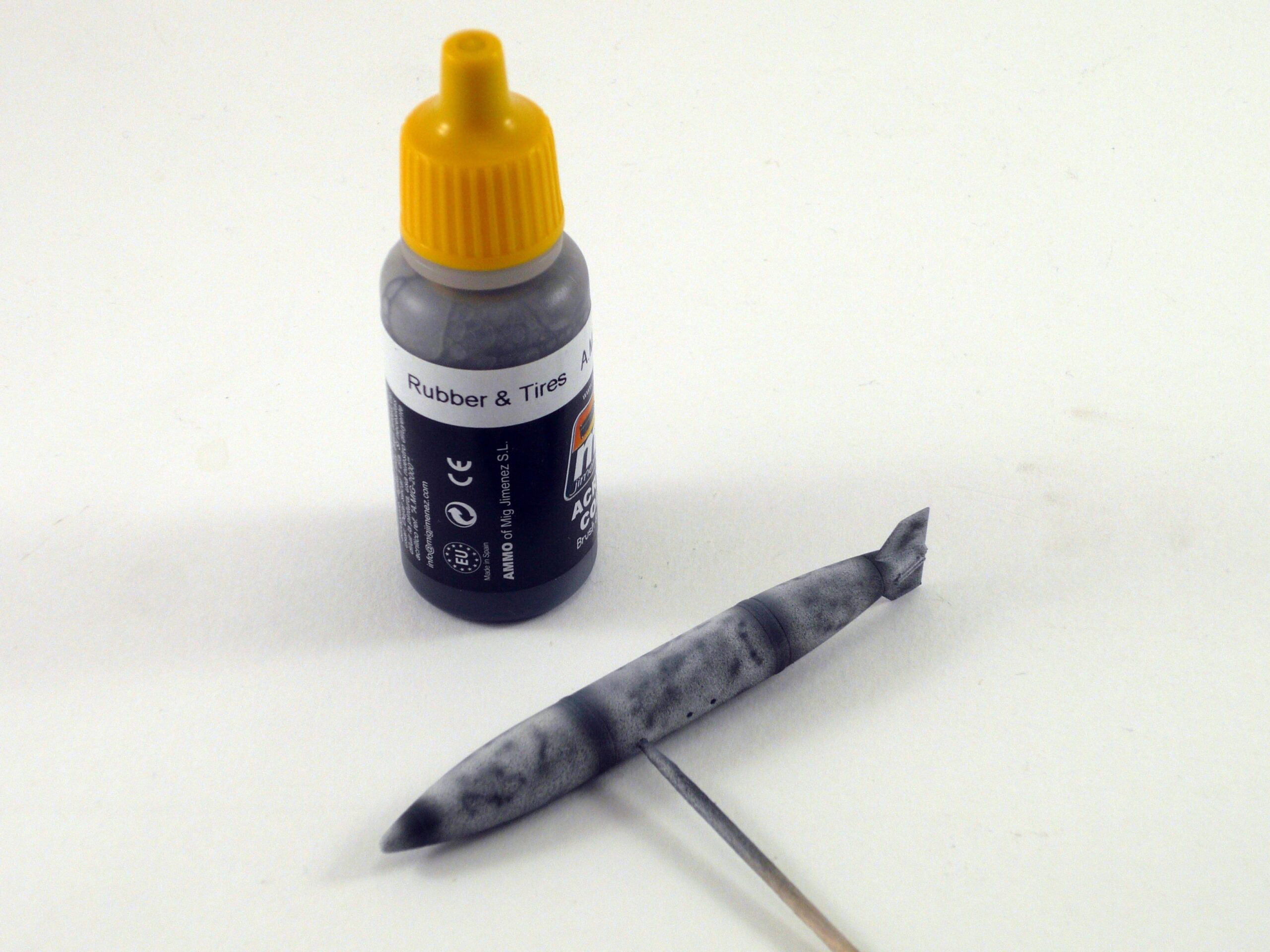
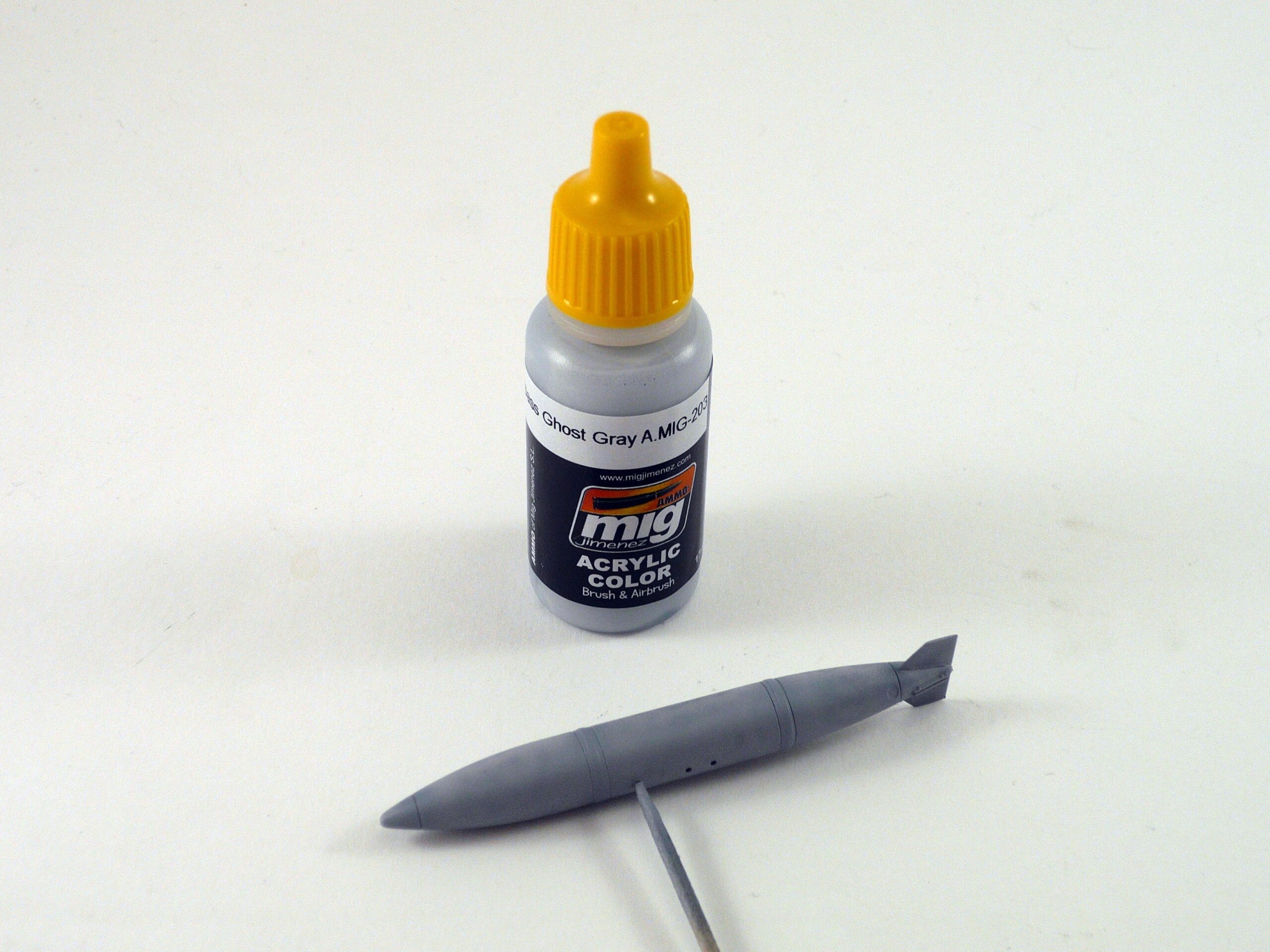
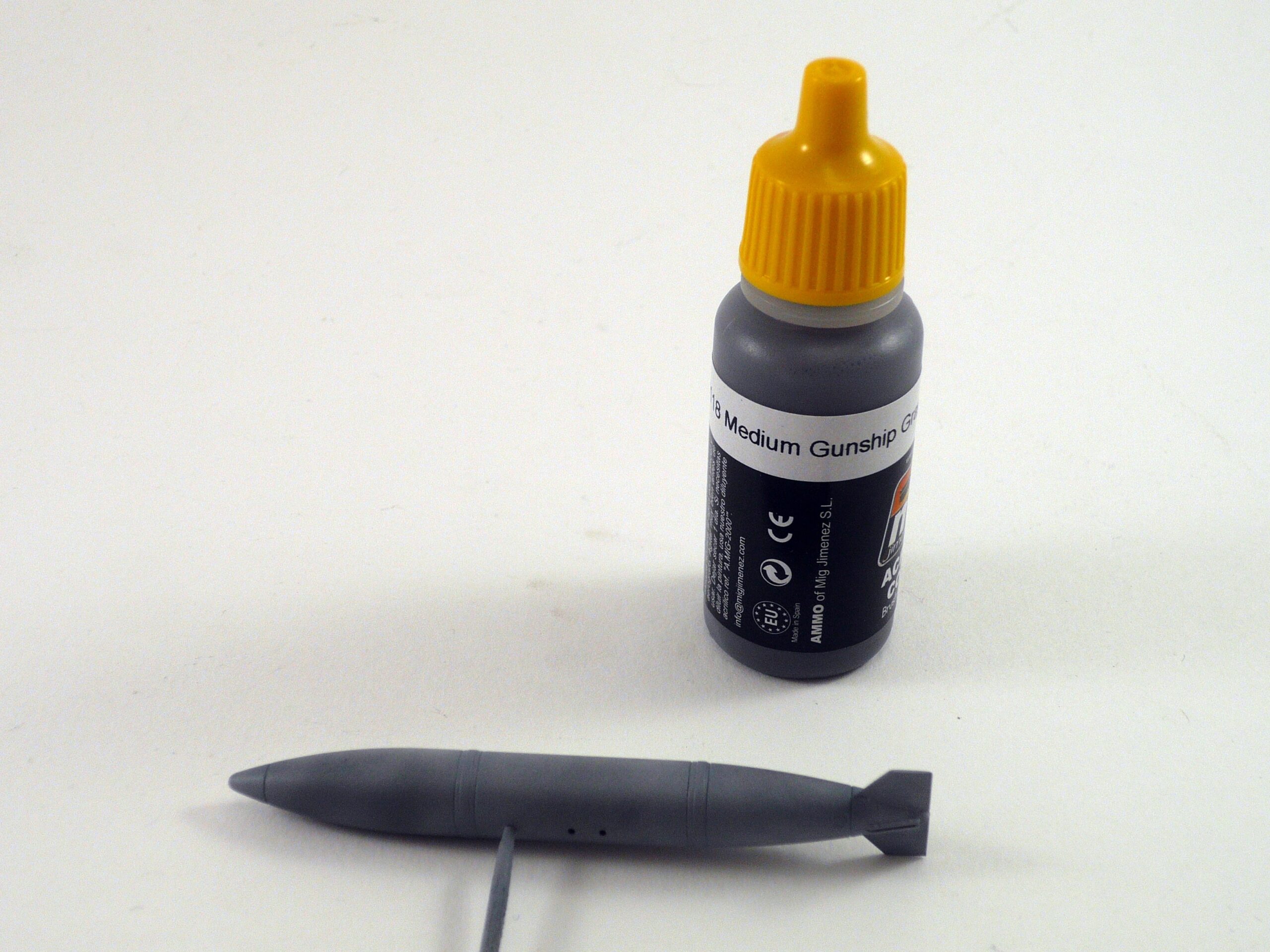
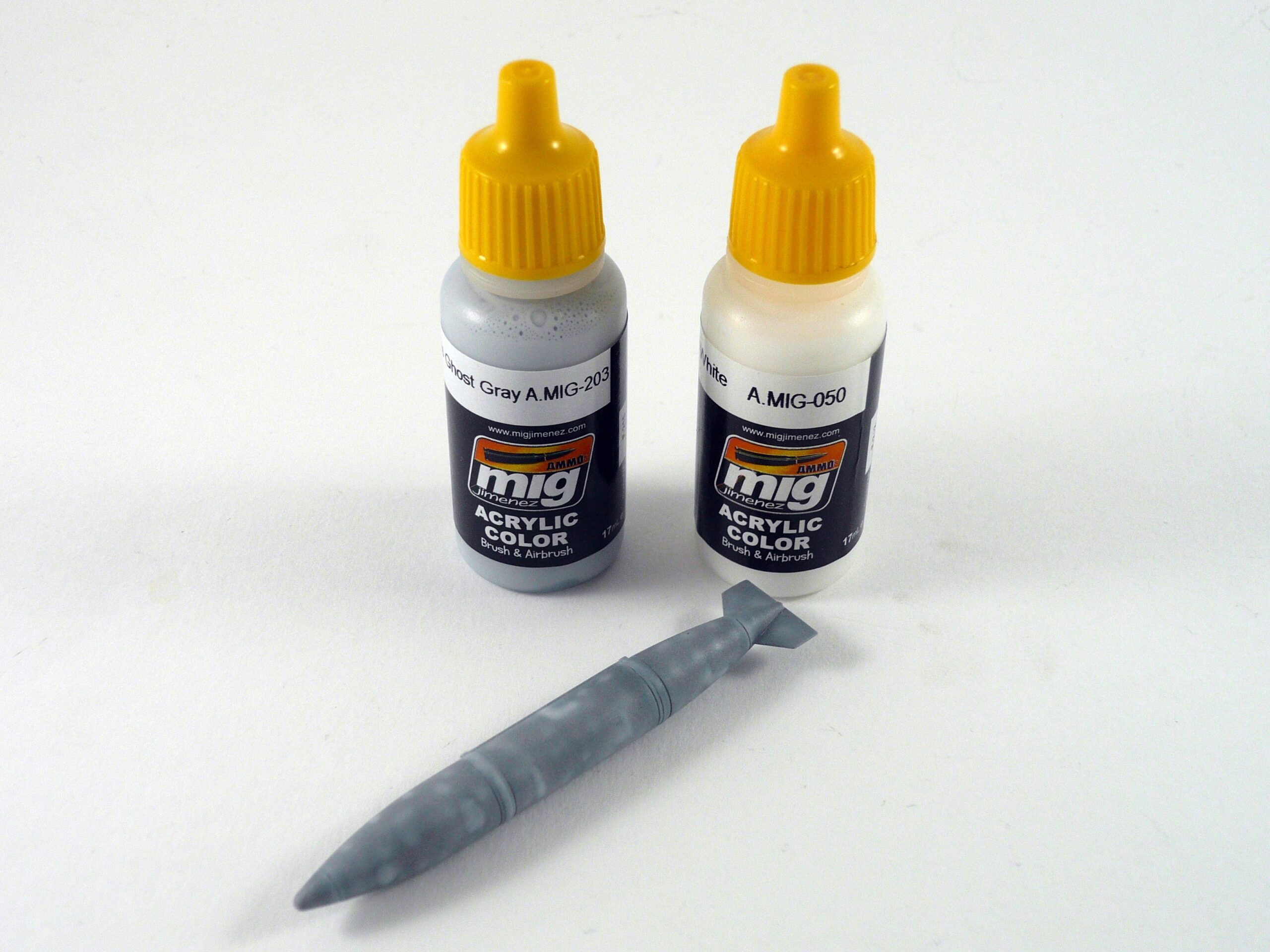
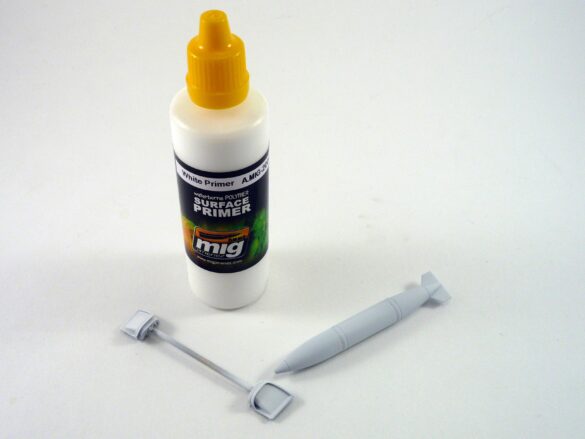
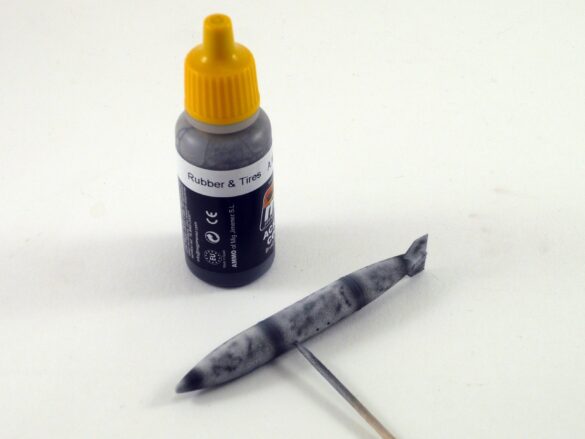
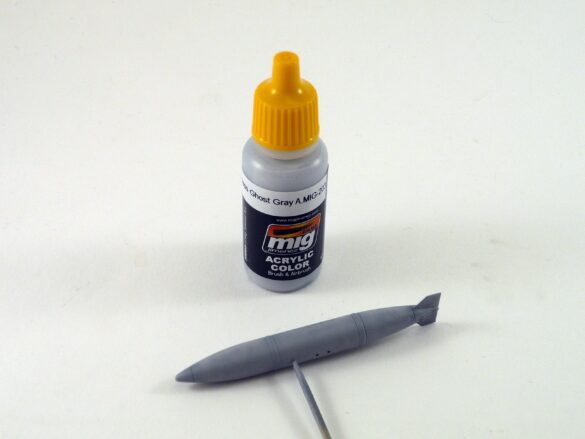
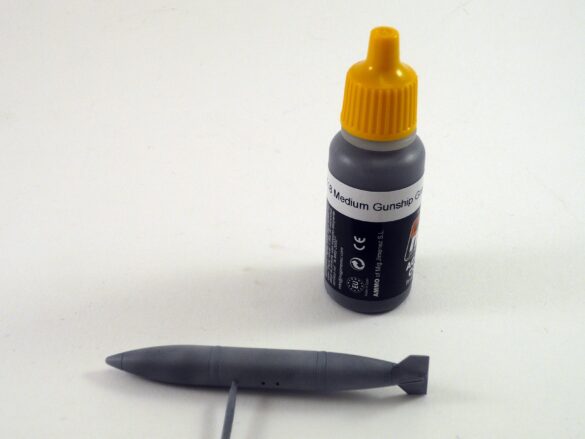
The external tank followed a separate painting workflow using layered greys, filters, modulation and washes to distinguish it from the main aircraft.
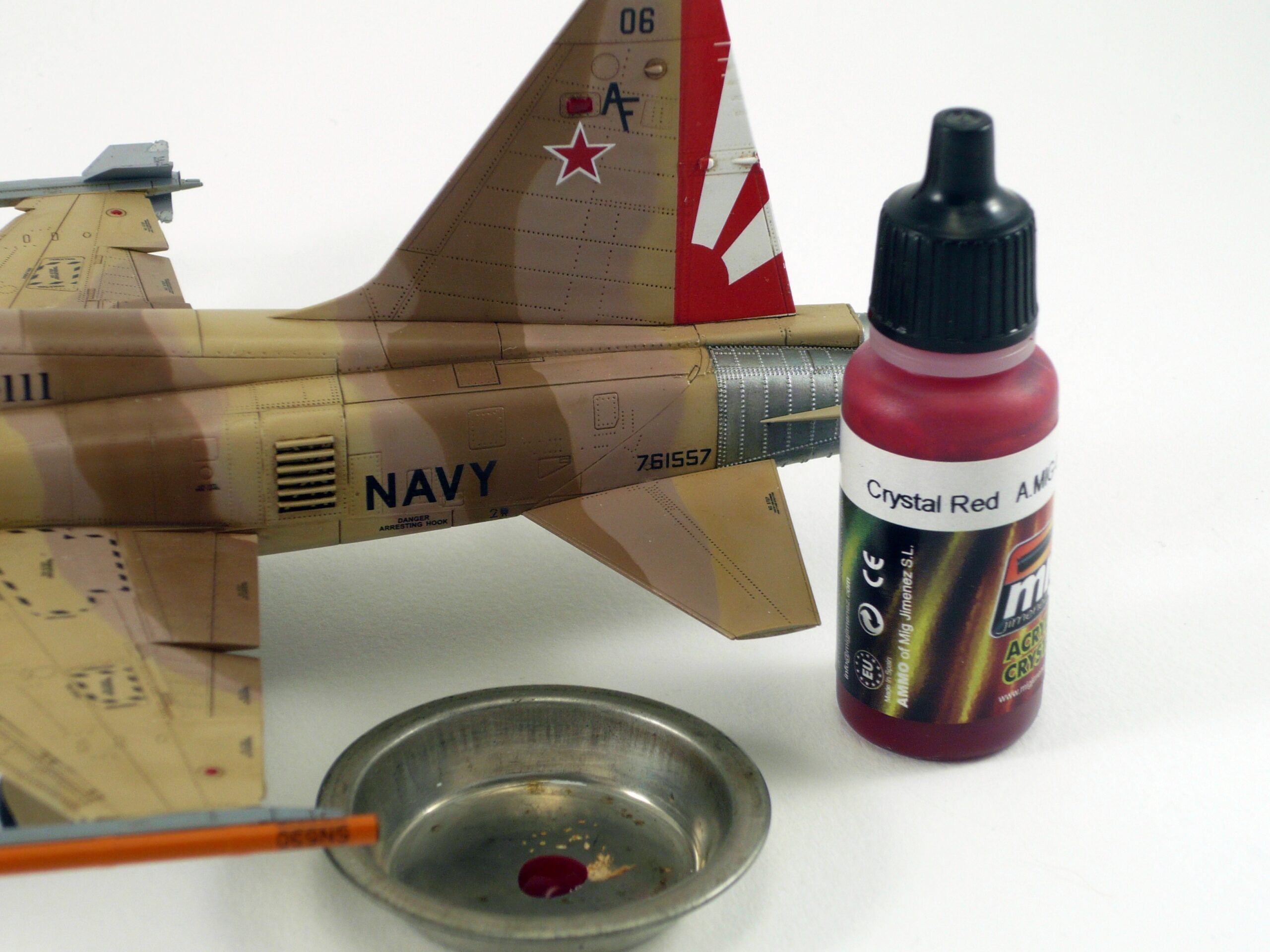
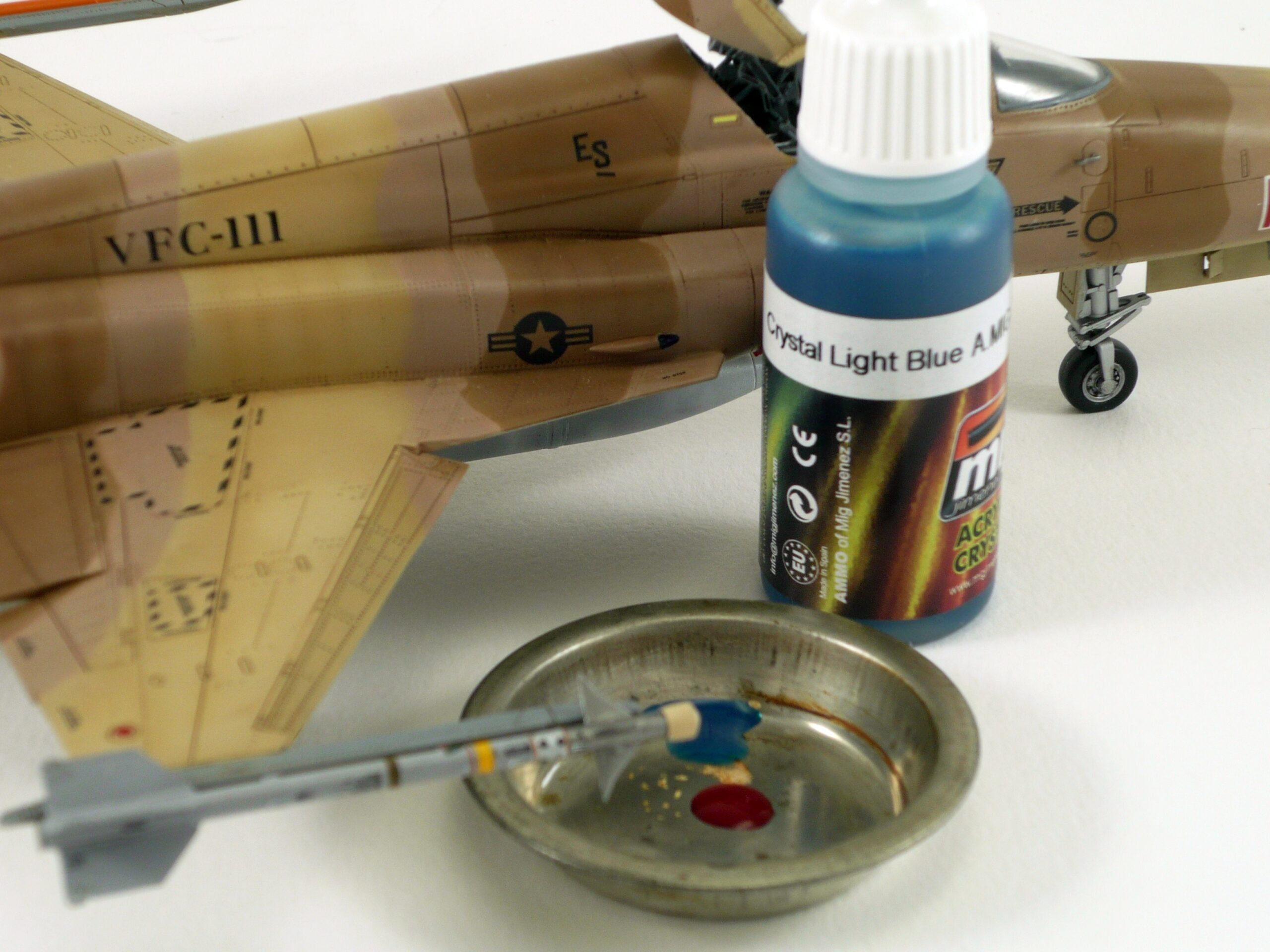
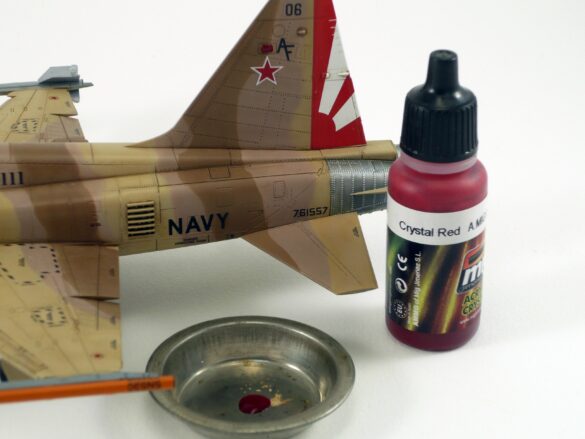
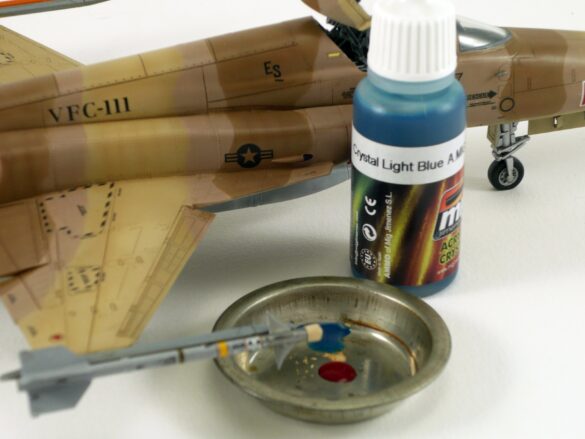
Formation lights received transparent color treatment to reproduce the appearance of operational navigation lighting.
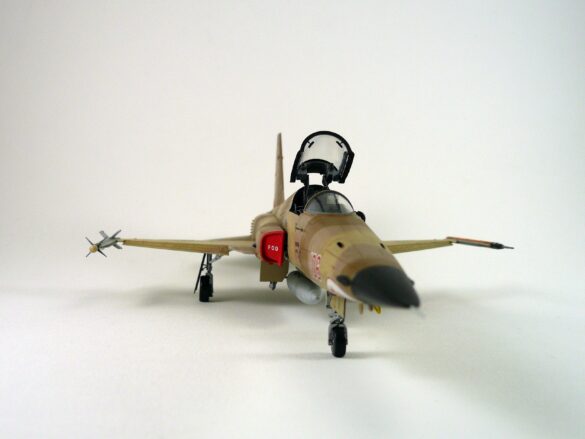
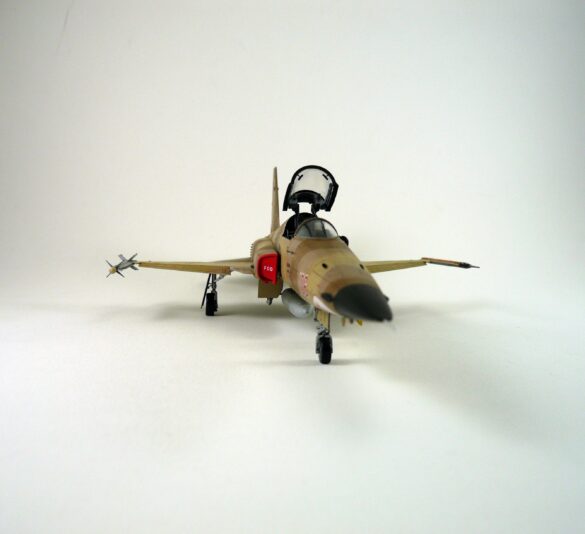
The final result captures the aggressive personality of the VFC-111 Sundowners while preserving the subtle weathering and complex camouflage transitions that make this aircraft such an attractive subject for modern jet modelers.
F-5E Tiger II VFC-13 “Fighting Saints” Aggressors Camouflage
| Area | Paint |
|---|---|
| Primer | Mig Ammo Grey + White Mix |
| Preshade | Mig Ammo Rubber & Tire Black |
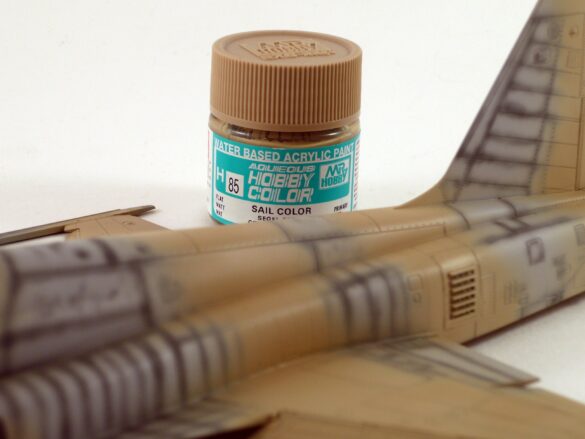
| Base Color | Mr Hobby H85 Sail Color |
| Light Brown | Tamiya XF-52 + XF-2 + XF-7 |
| Brown | Mr Hobby H310 + XF-64 |
| Radome | Mig Ammo Flat Black |
| Metal Areas | Mig Ammo / Alclad Aluminum |
| FOD Covers | Tamiya XF-7 |
| Tank | Compass Ghost Gray |
Gallery