article
Goodyear XF2G-1 Super Corsair BuNo 14693 — Race #94
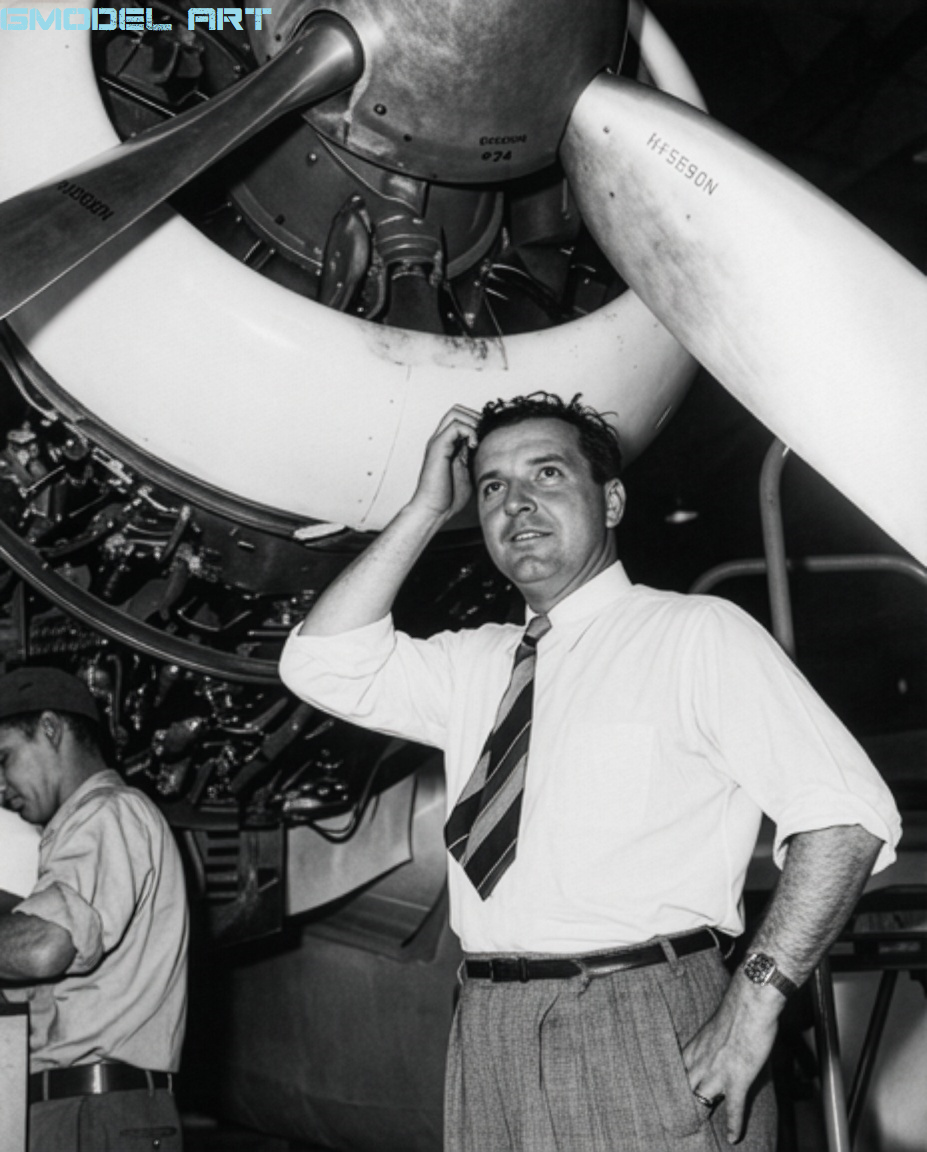
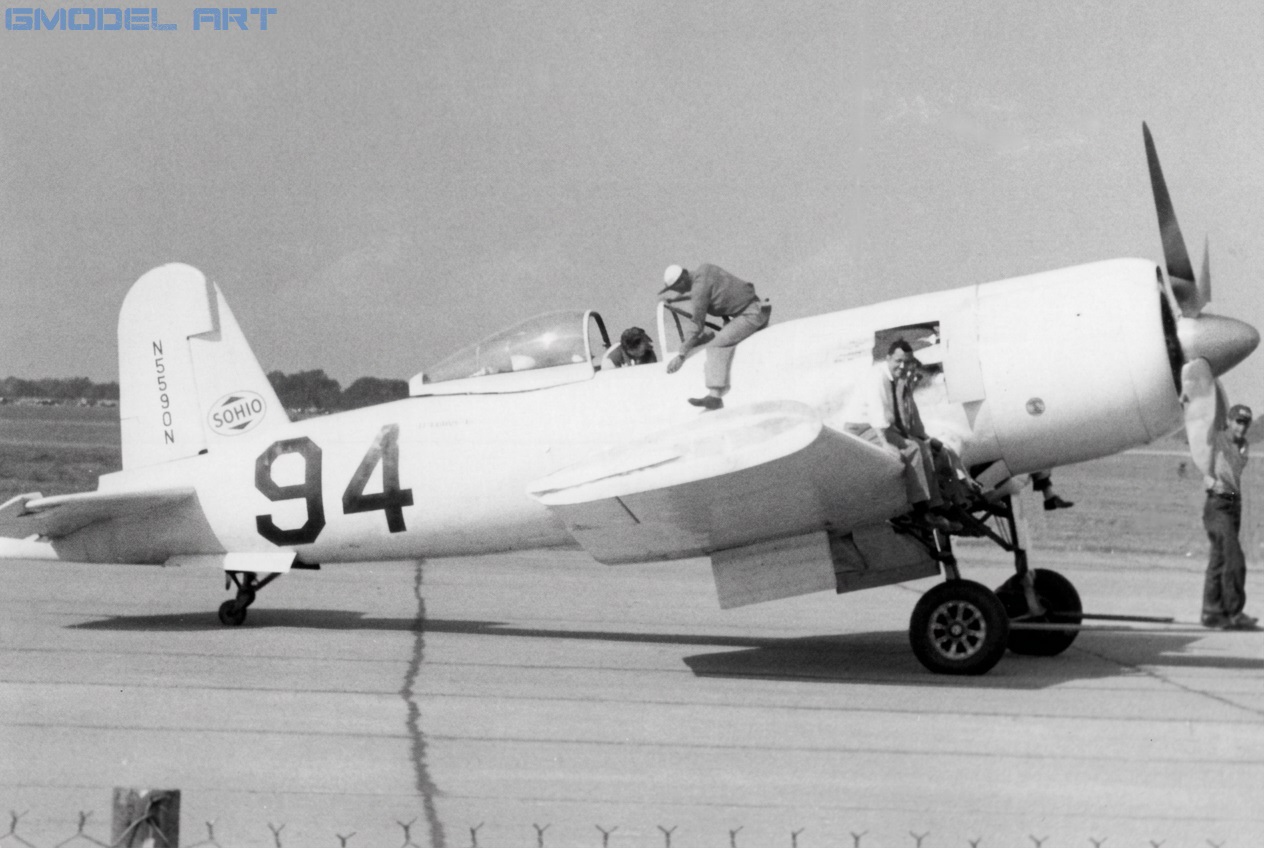
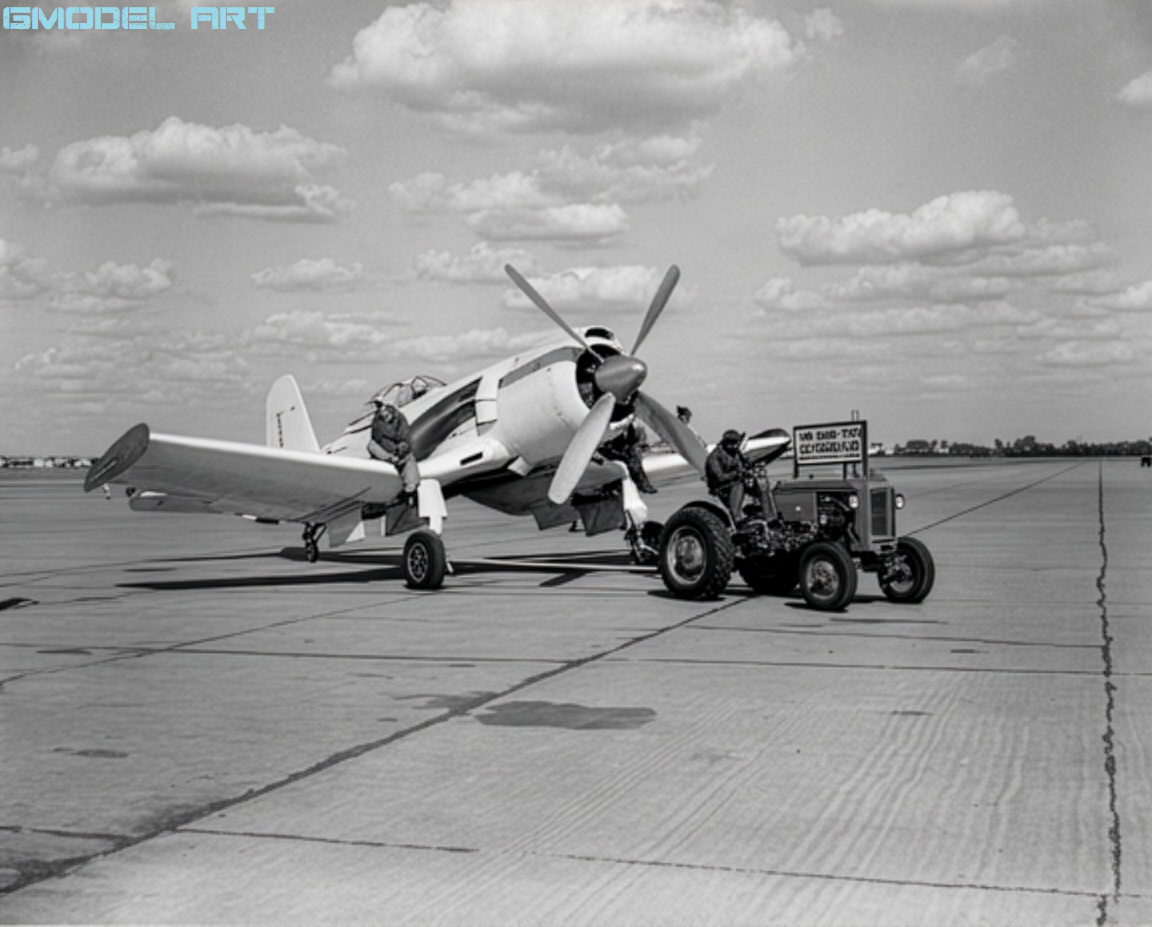
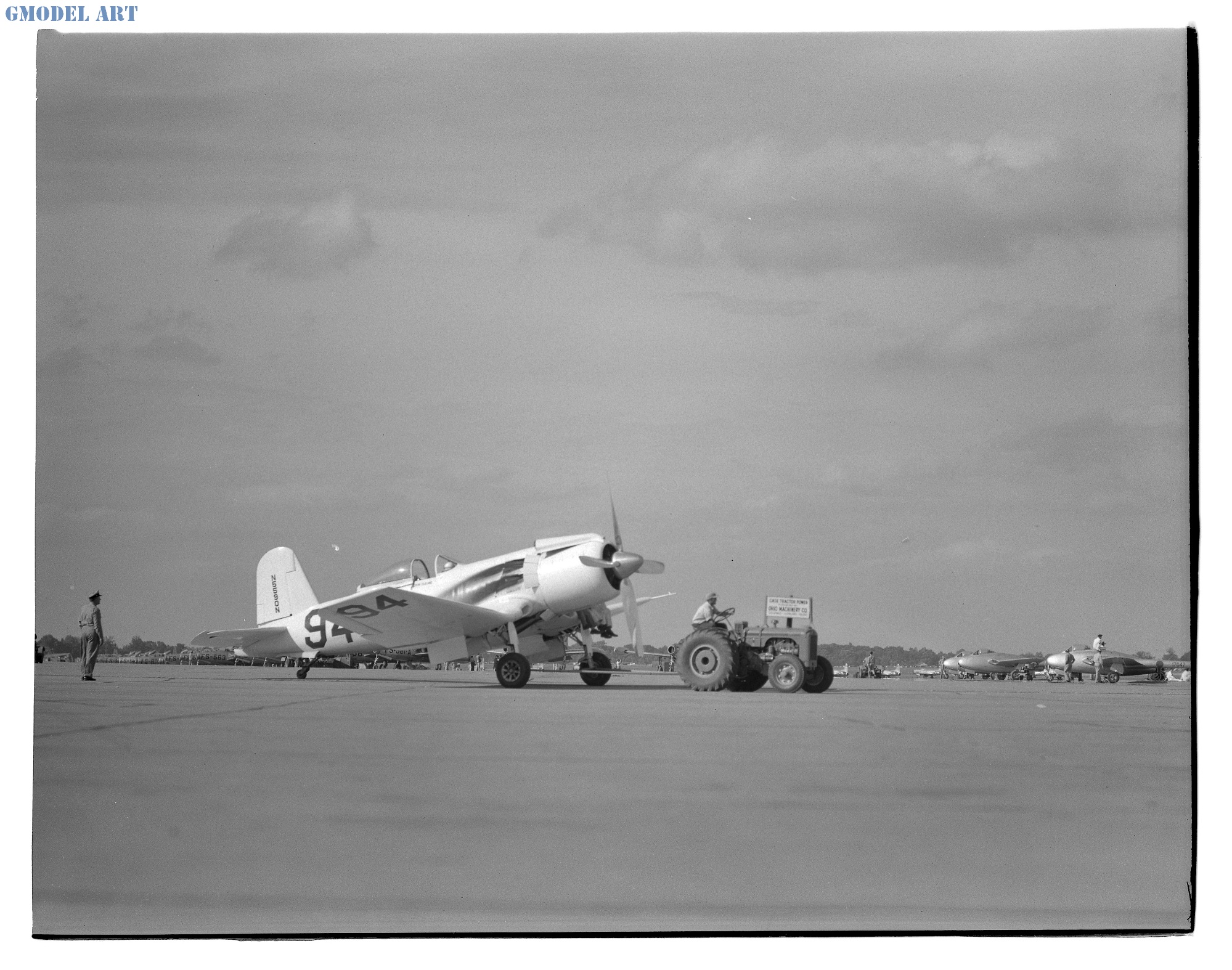
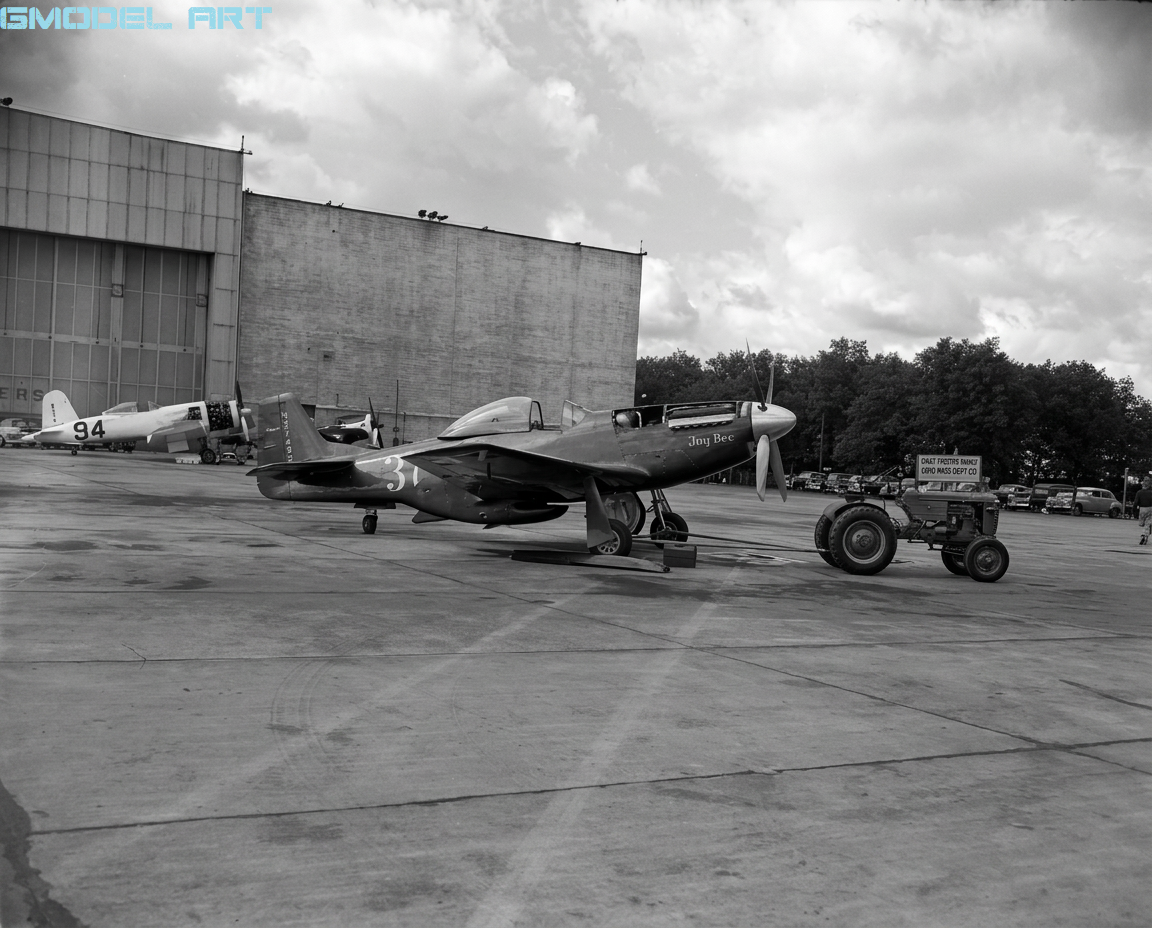
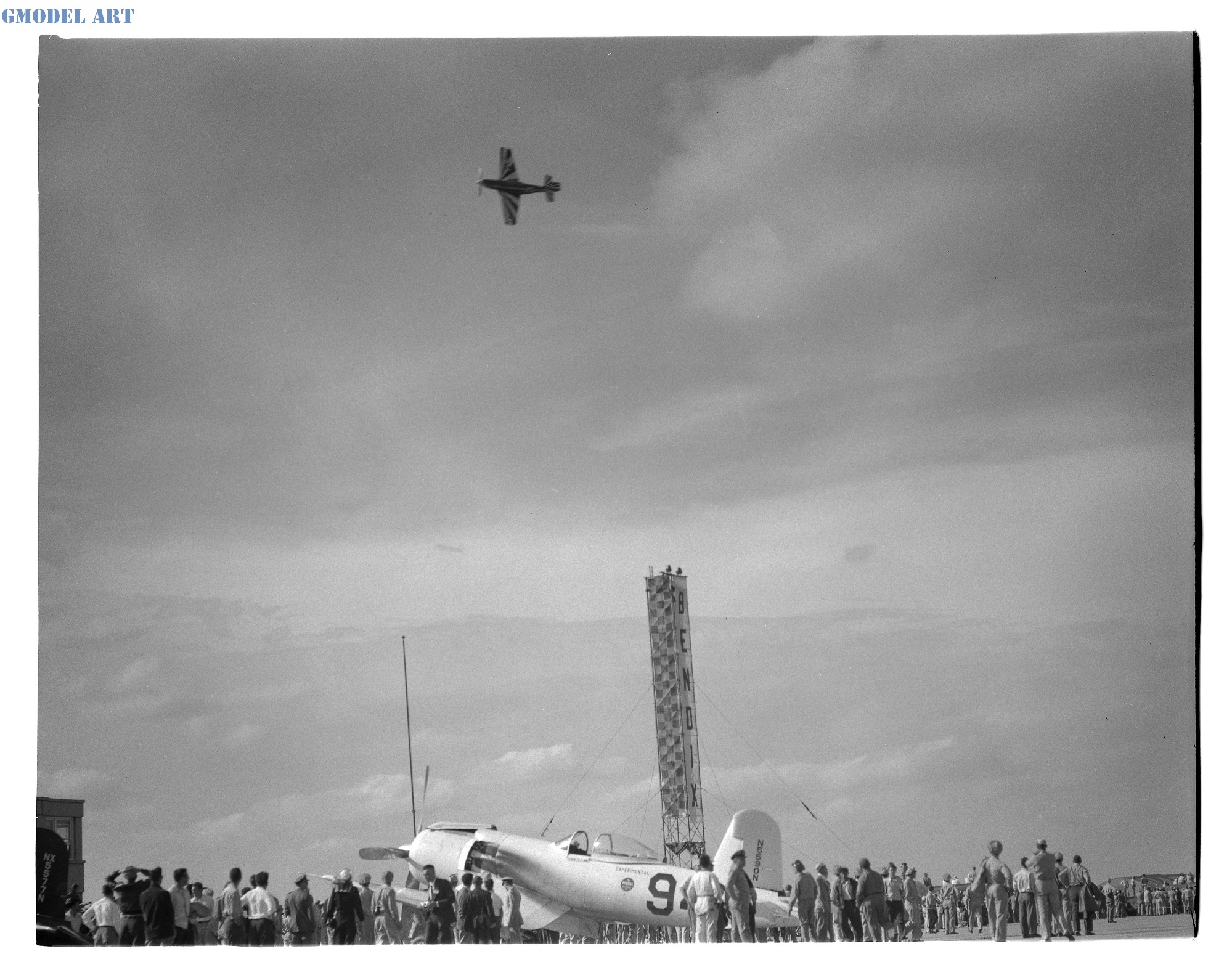
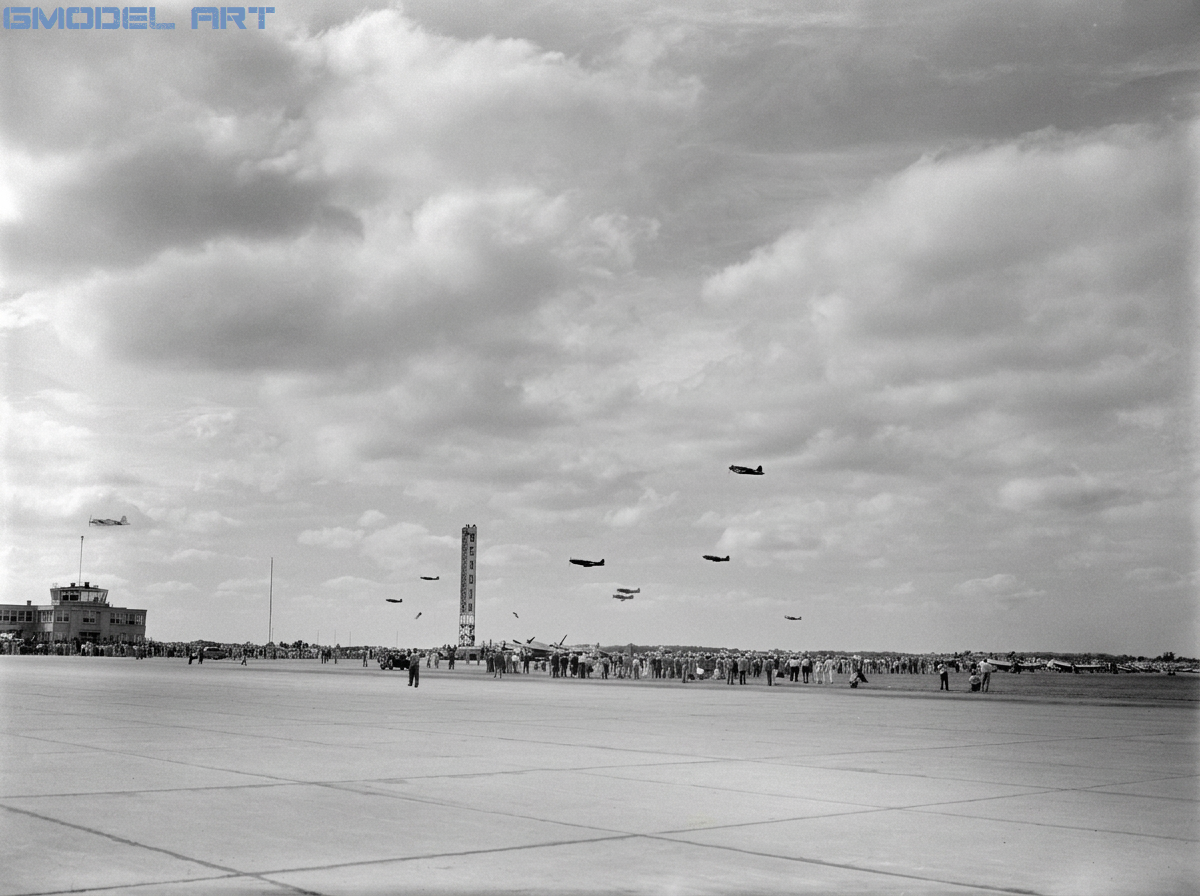
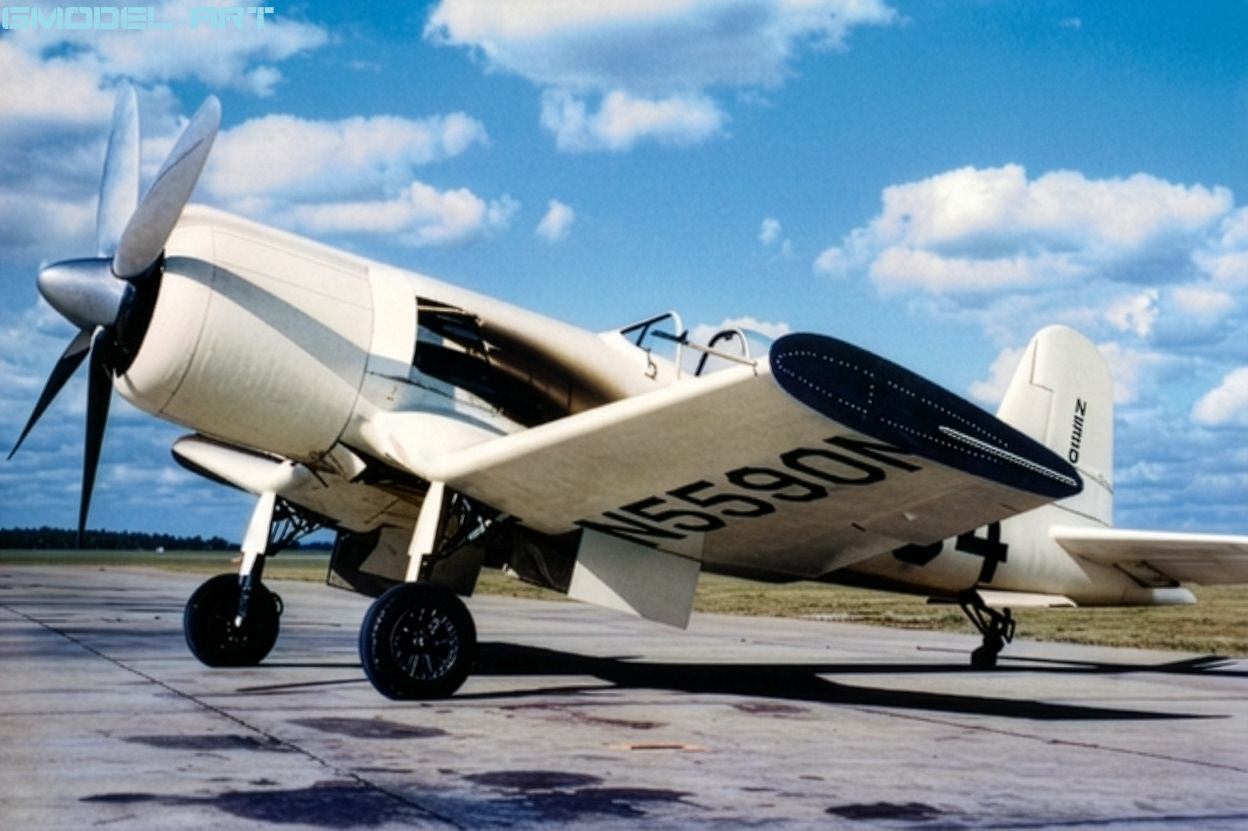
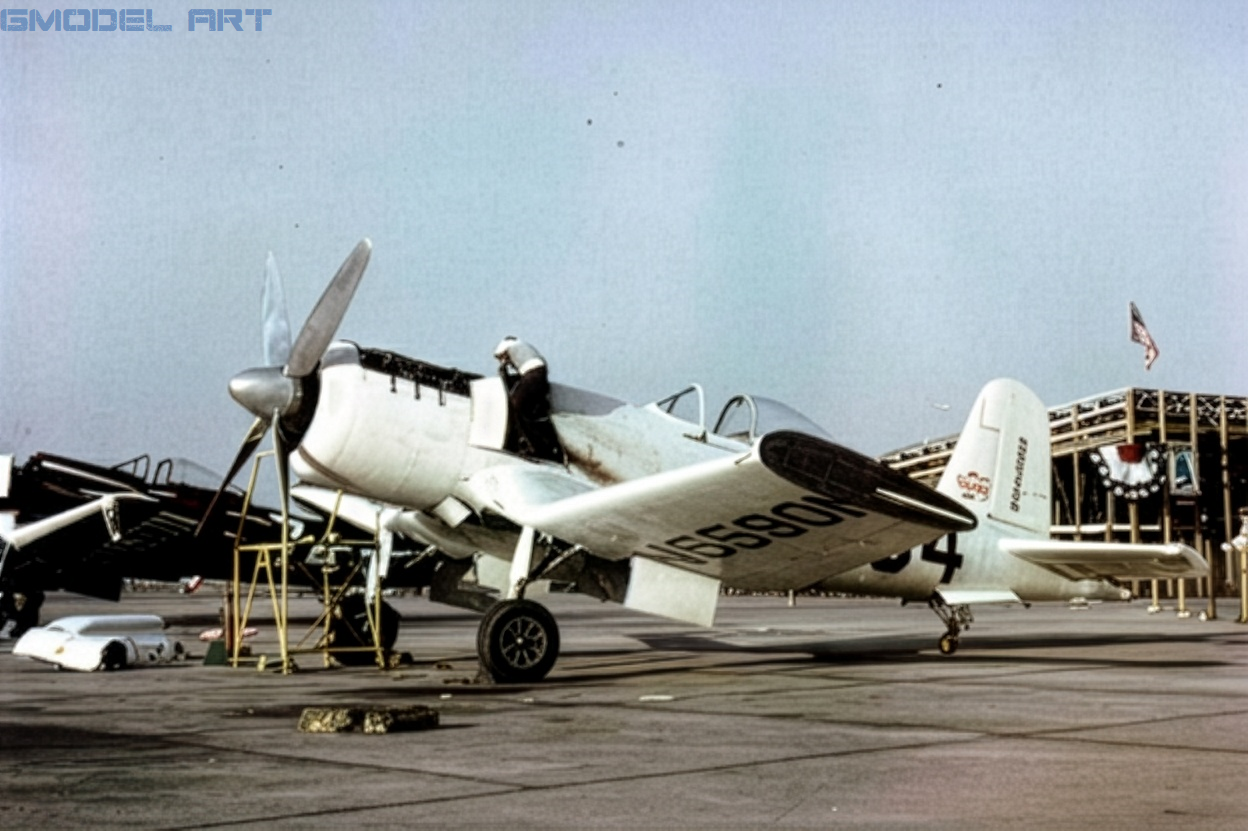
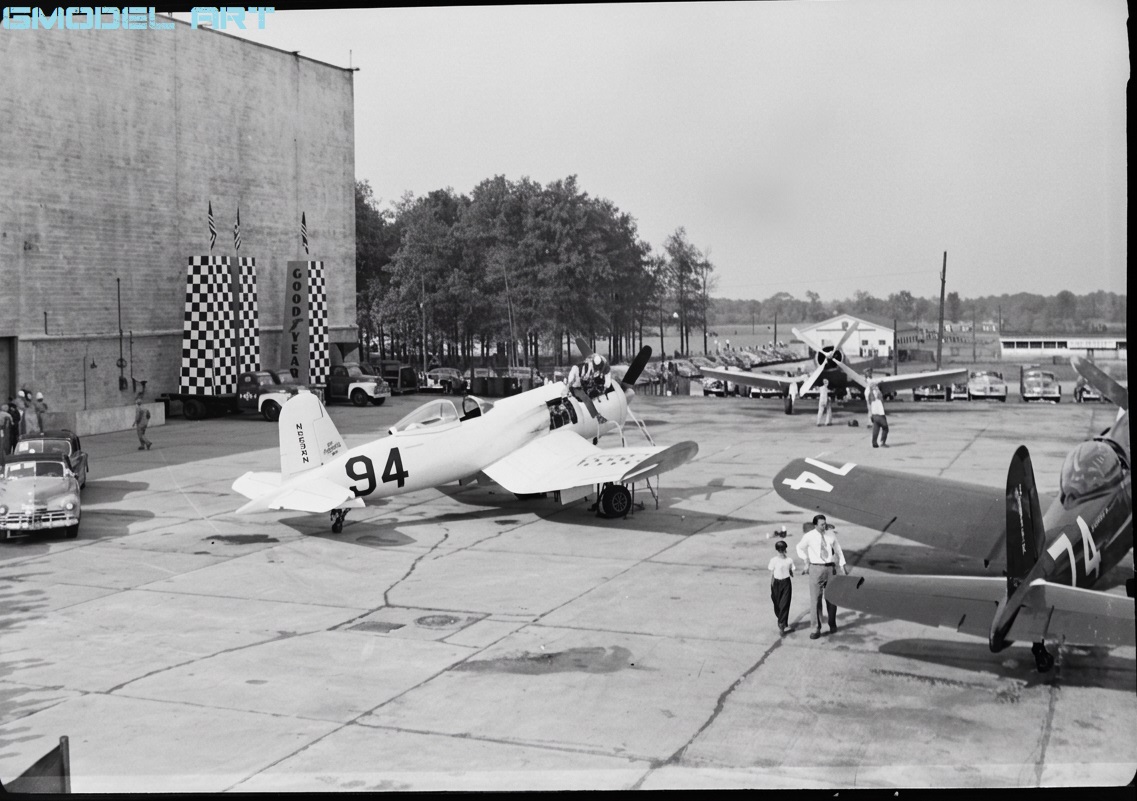
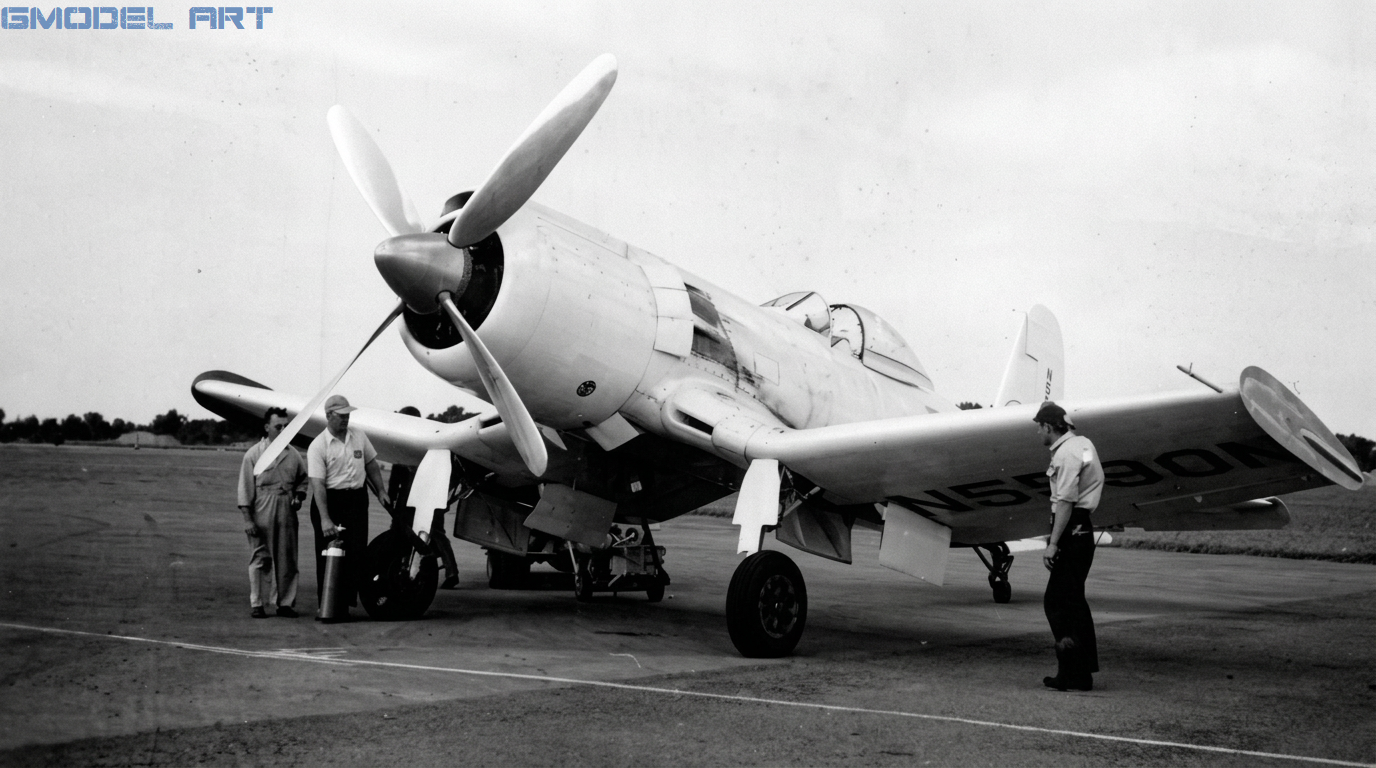
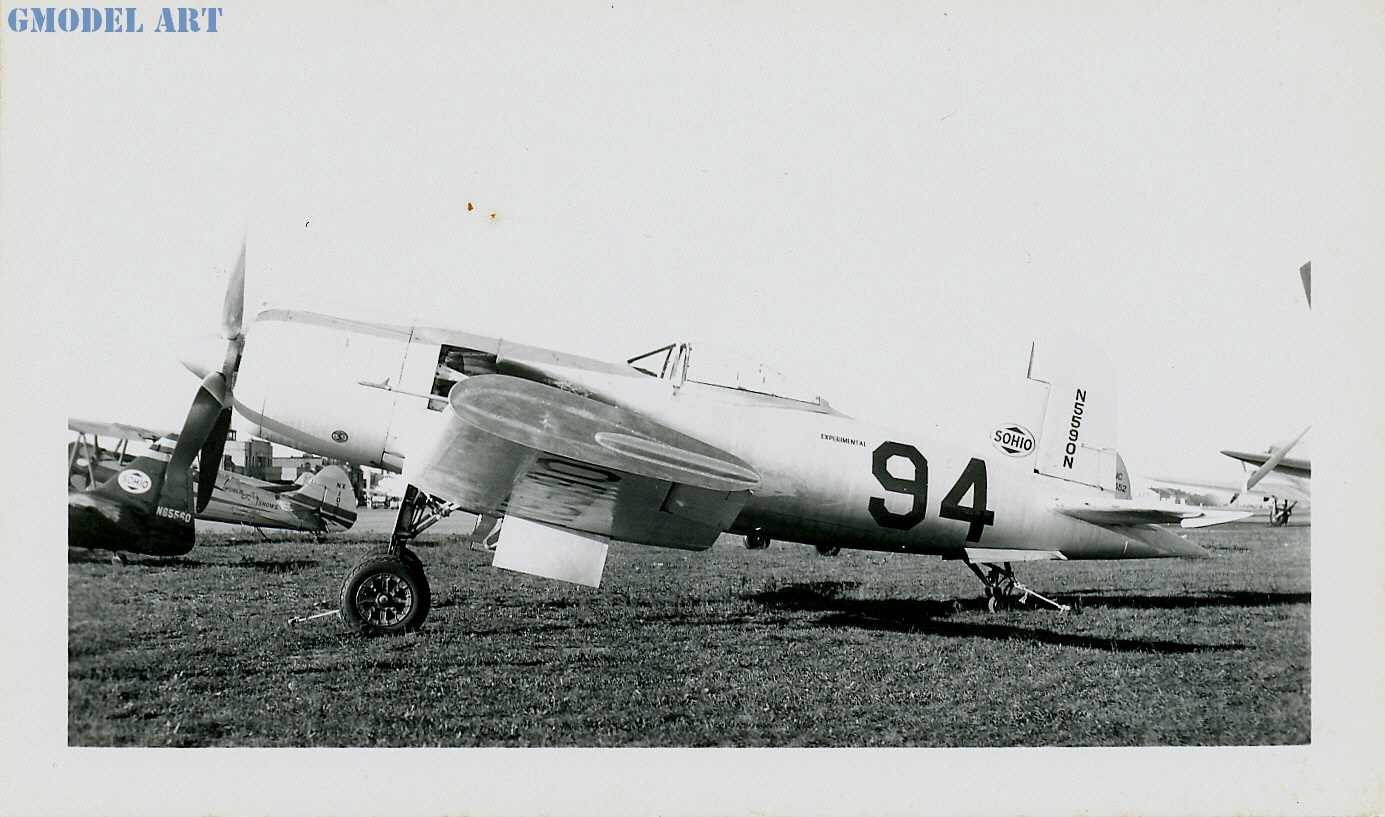
The Goodyear XF2G-1 Super Corsair BuNo 14693, known on the air racing circuit as Race #94, was one of the experimental aircraft developed by the Goodyear Aircraft Corporation during the final years of World War II. Following its experimental testing, the aircraft passed into the hands of former US Navy pilot Cook Cleland and was converted into a racing aircraft, competing in the Cleveland National Air Races from 1947 to 1949.
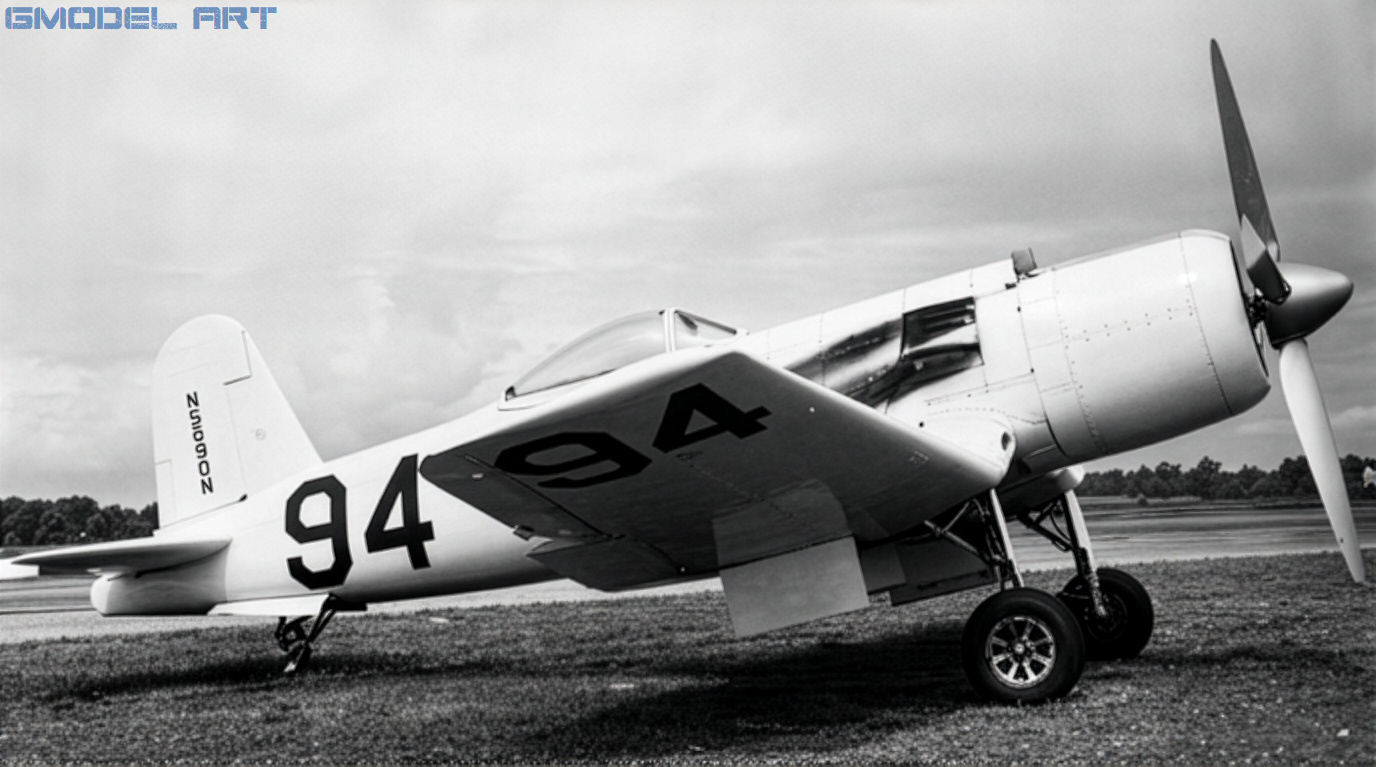
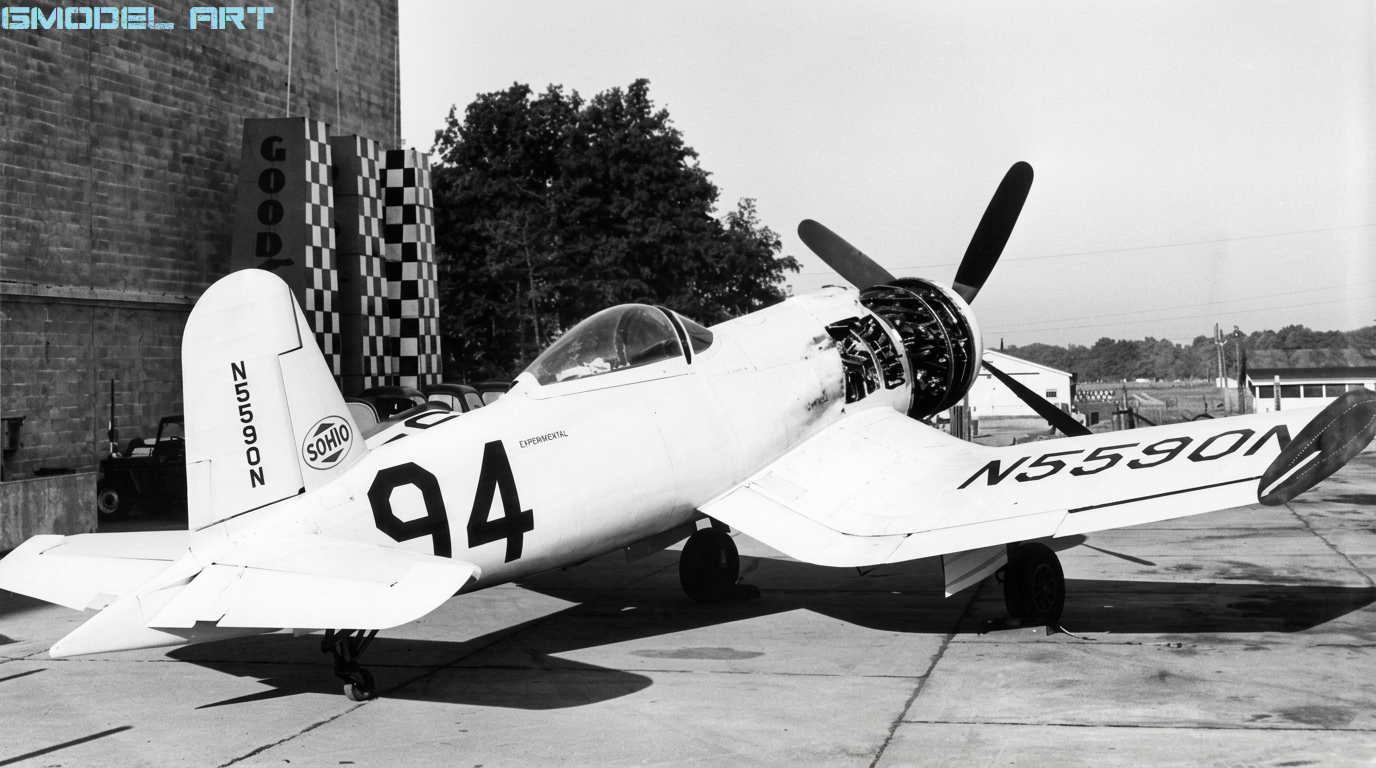
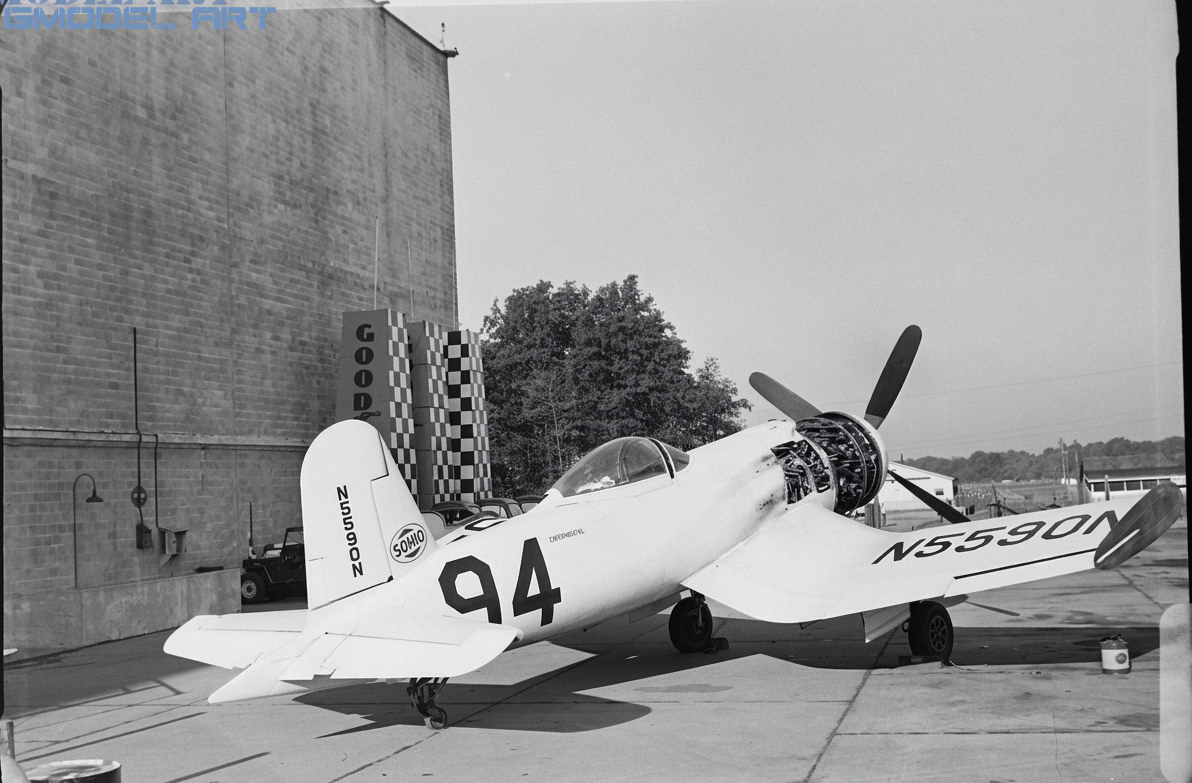
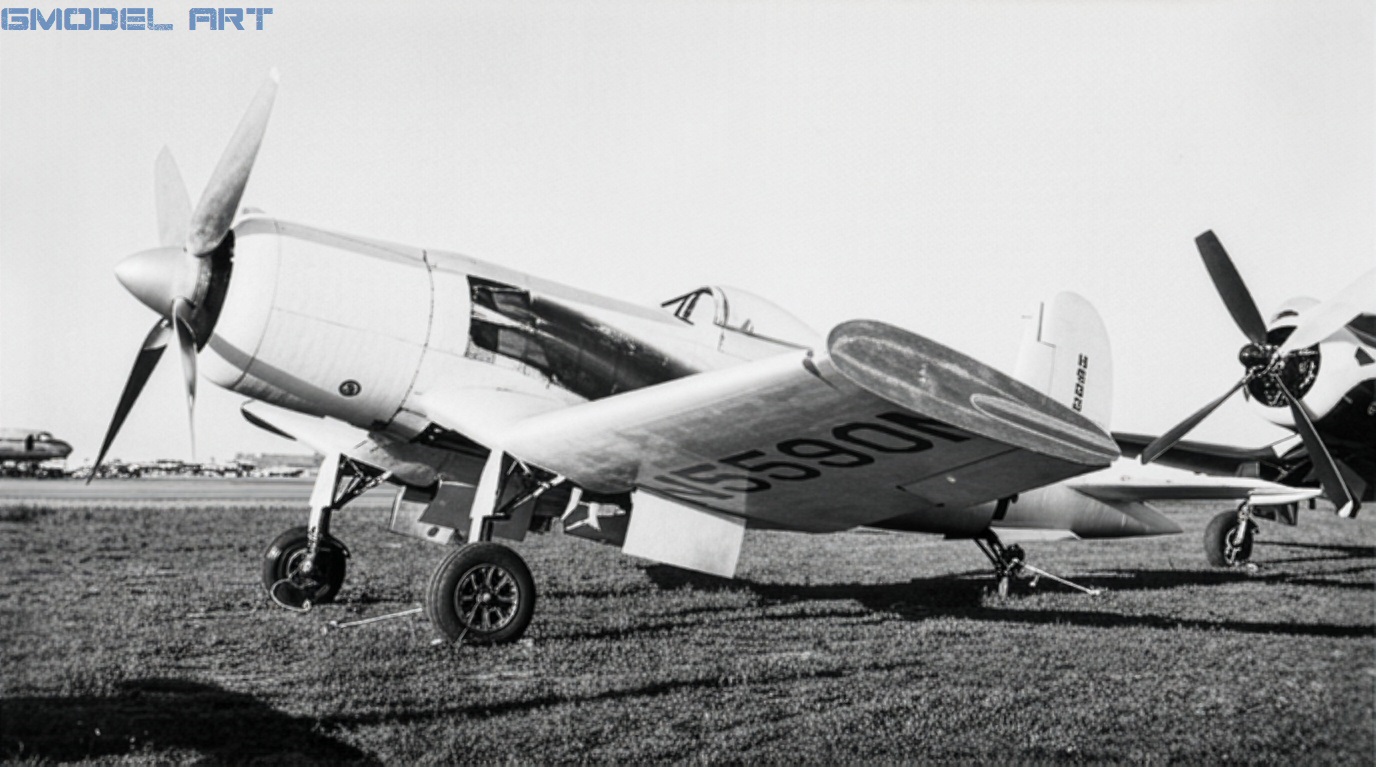
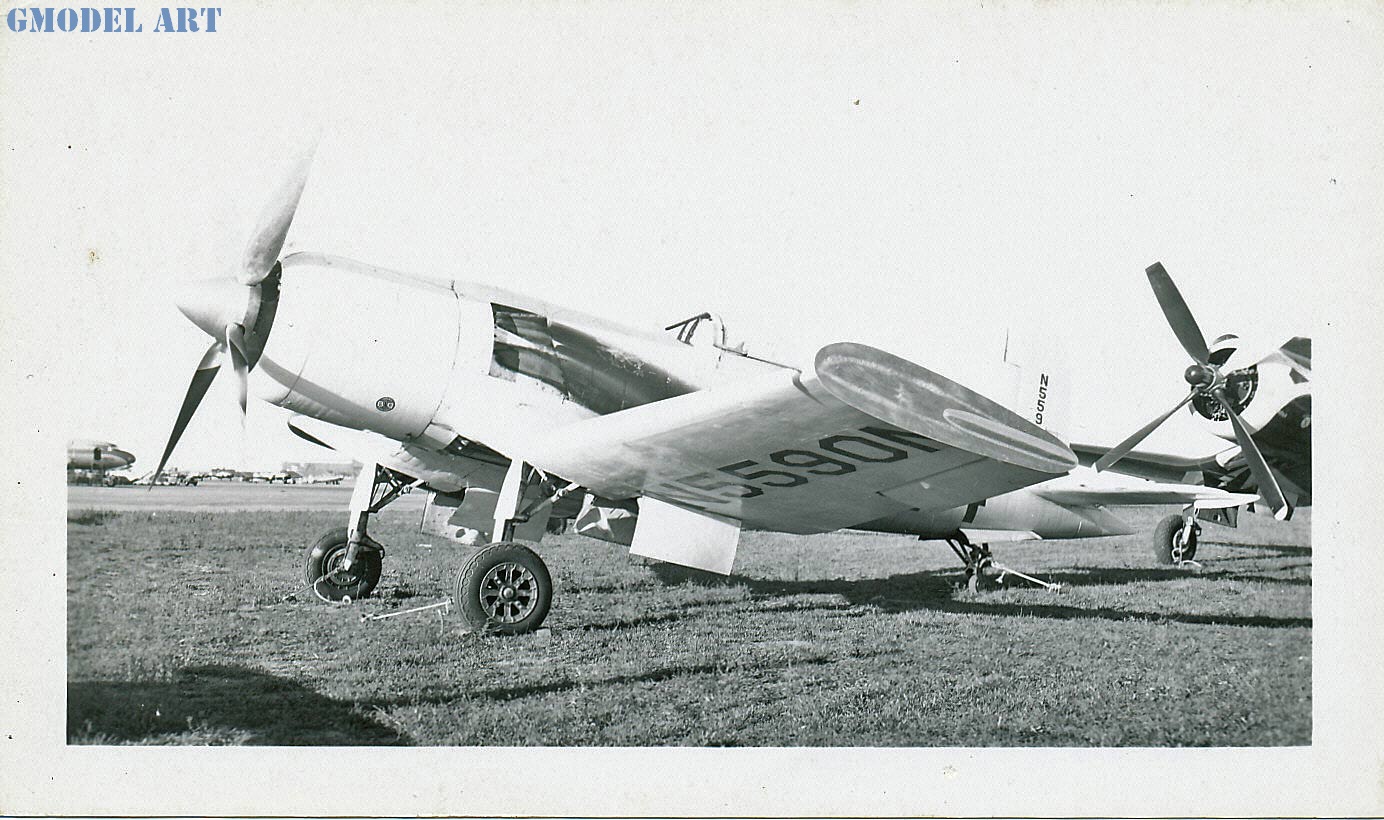
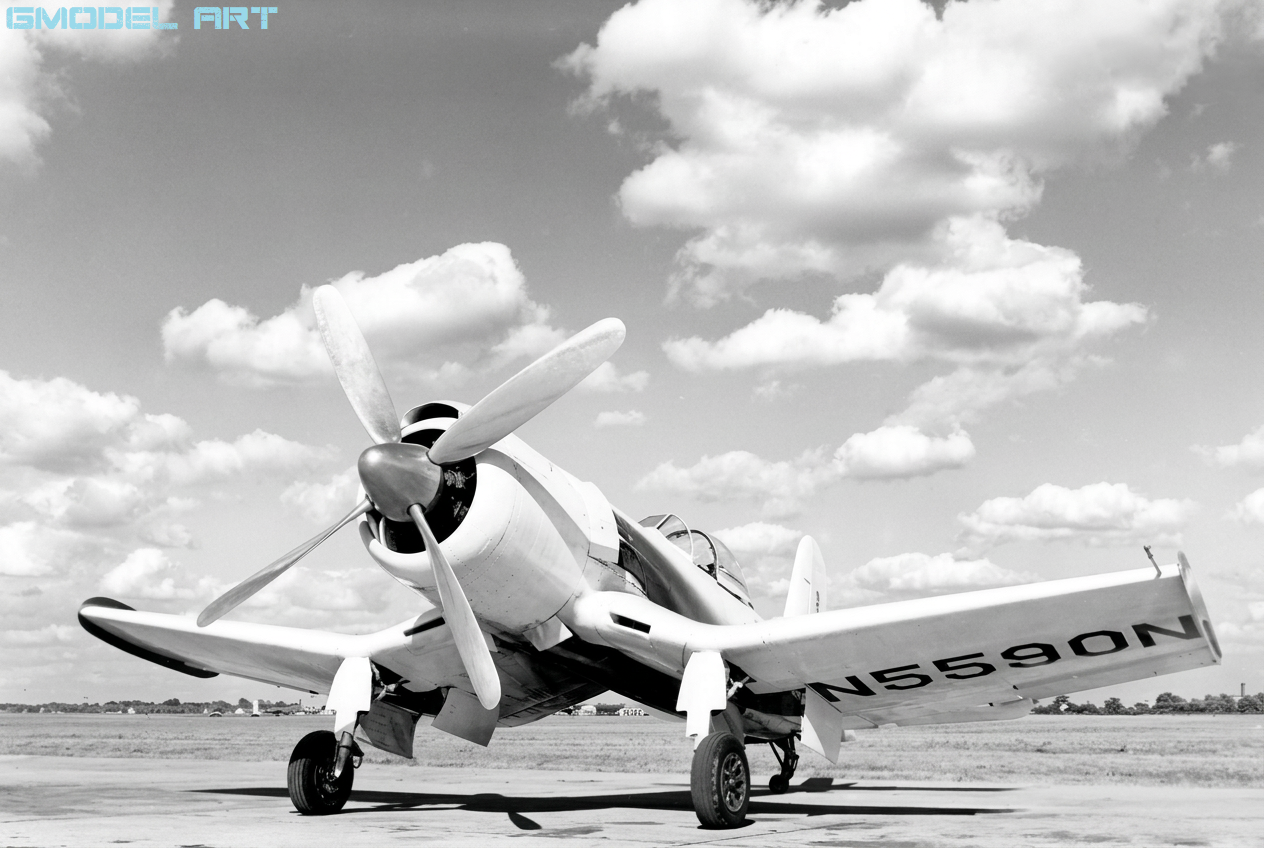
Its history combines the development of one of the most powerful piston-engine fighters of its era with the technical modifications required for competitive air racing. Registered as N5590N, the aircraft became particularly recognizable through its distinctive engine installation, progressively modified wings, special propeller configuration and changing racing appearance.
Development of the Goodyear F2G Super Corsair
In March 1944, Pratt & Whitney requested an F4U-1 Corsair from Vought, BuNo 02460, to evaluate the installation of its new Pratt & Whitney R-4360 Wasp Major engine. Developing approximately 3,000 hp, the R-4360 was a 28-cylinder radial engine arranged in four rows, offering substantially greater power than the engines used in earlier Corsair versions.
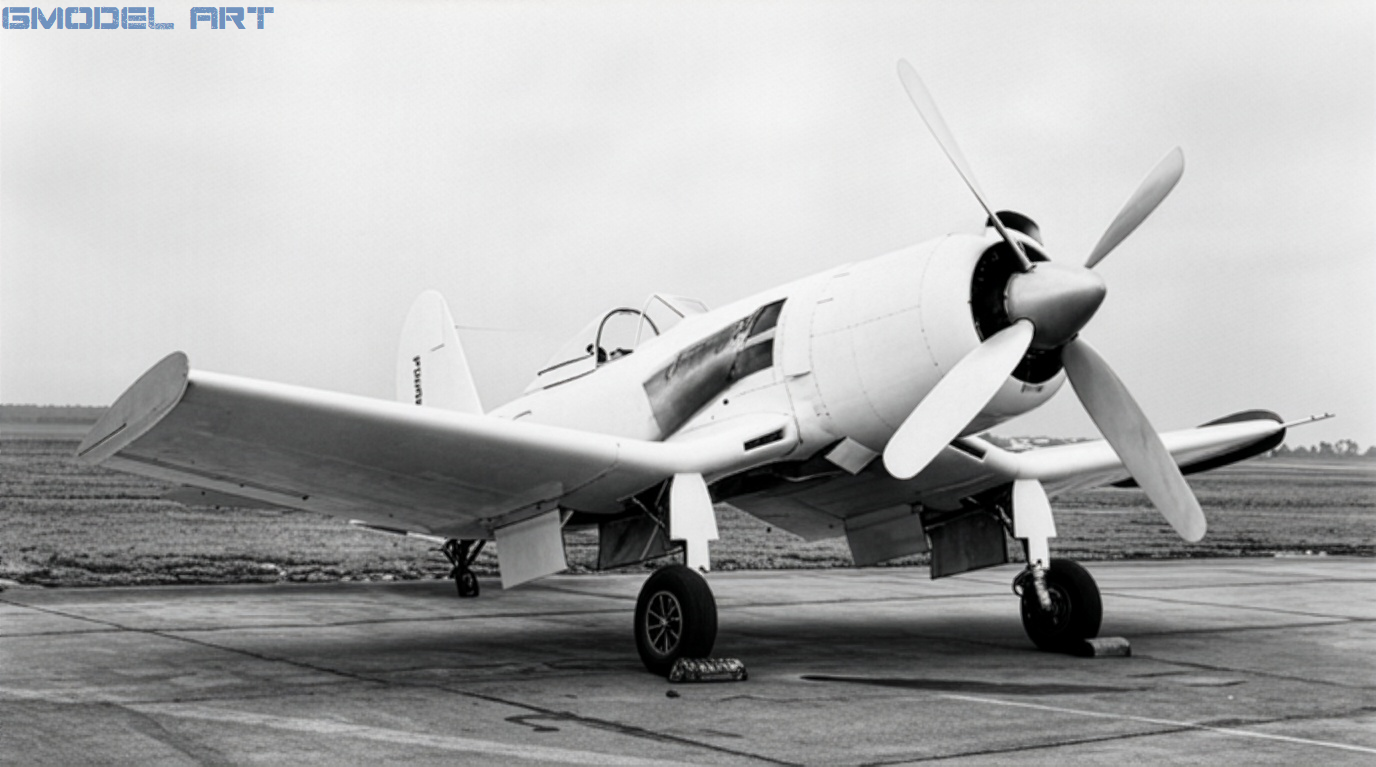
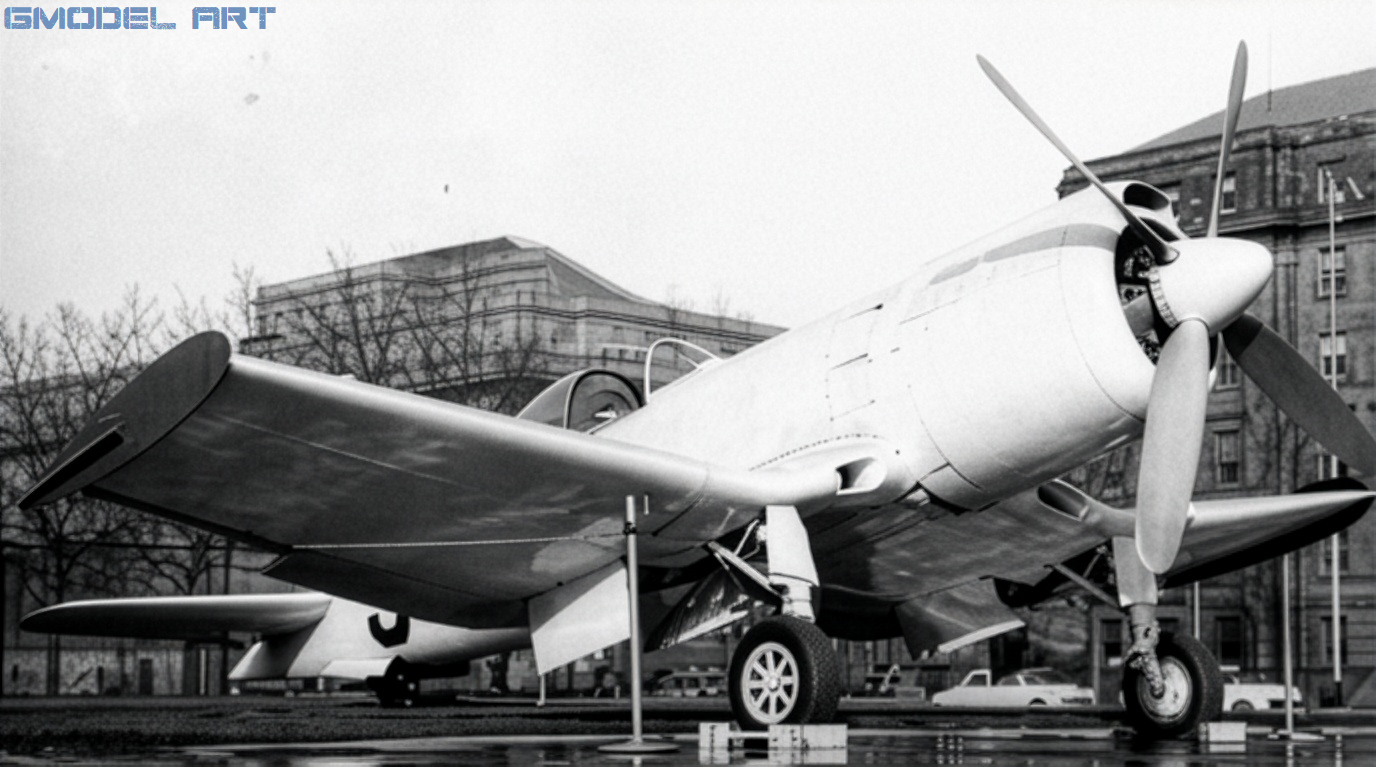
The successful initial evaluation led to the development of the F2G by Goodyear Aircraft Corporation, which was already manufacturing Corsairs under licence as the FG-1. The new aircraft was considerably more than a simple engine replacement. It incorporated substantial changes to the airframe, engine installation, air intake, vertical tail and cockpit canopy.
The increased torque of the R-4360 required modifications to the vertical tail, while the raised bubble canopy provided improved visibility. The installation also demanded careful attention to engine cooling and airflow management.
The programme included five experimental XF2G-1 aircraft and ten production aircraft: five F2G-1s and five F2G-2s. The F2G-1 was primarily intended for land-based operations, featuring a manually operated wing-folding mechanism and no arresting hook. The carrier-oriented F2G-2 featured hydraulic wing folding and an arresting hook for aircraft carrier operations.
Despite its impressive performance potential, the Super Corsair did not enter operational service during World War II. Its post-war career, however, established it as one of the most interesting aircraft in American air racing history.
Experimental XF2G-1 BuNo 14693
The aircraft covered in this article was originally built by Goodyear as an F2G-1 and carried US Navy Bureau Number 14693, together with manufacturer’s construction number 1702. It was subsequently converted to XF2G-1 configuration for experimental testing.
According to available historical records, this aircraft was associated with testing an extended carburetor air intake, a distinctive feature of its experimental configuration. Testing was conducted at Pratt & Whitney facilities, followed by evaluation at the Naval Air Test Center, NAS Patuxent River, Maryland.
BuNo 14693 was reportedly intended for transfer to the Royal Navy under the serial number KD262, but the delivery never took place. The aircraft remained with Goodyear before eventually being acquired by Cook Cleland, who converted it for competitive air racing.
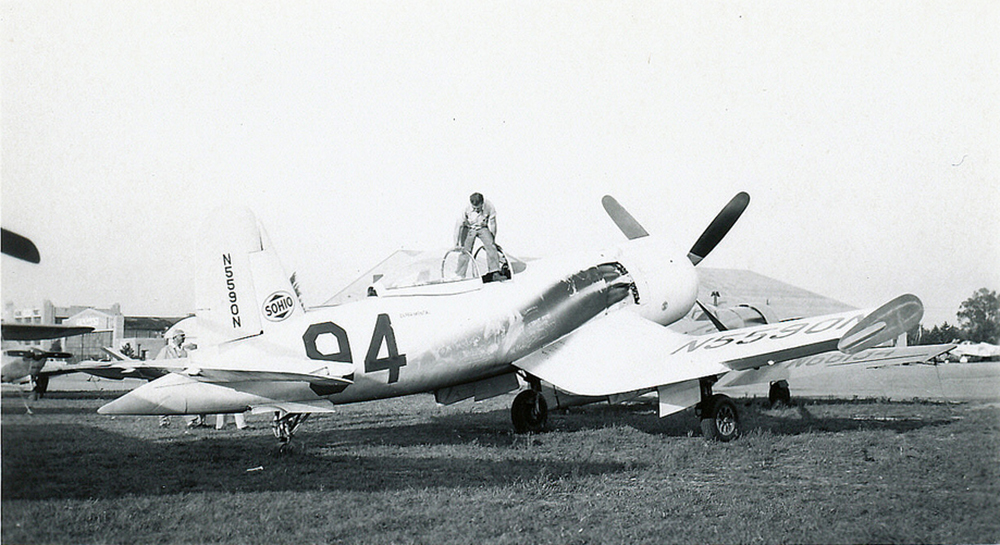
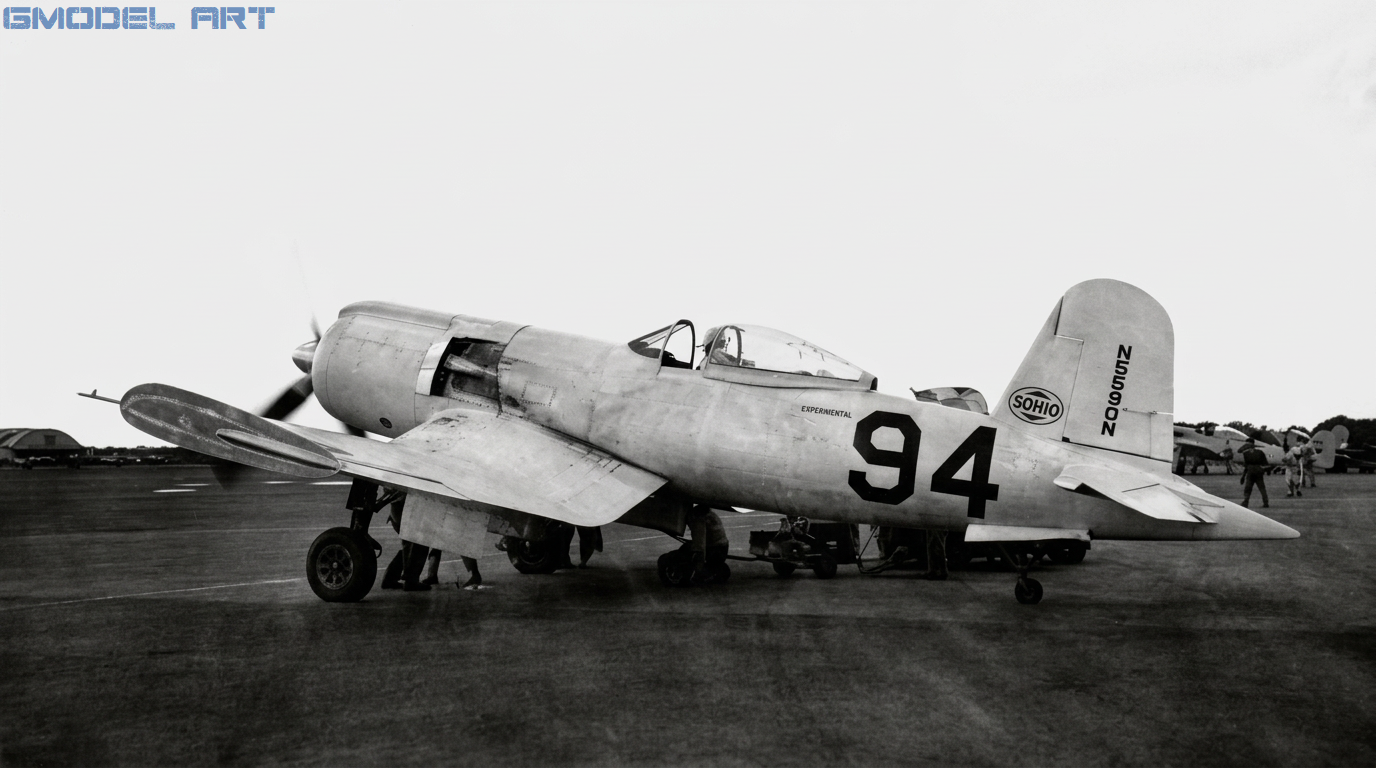
It subsequently received the civilian registration N5590N and raced under the number #94. Its individual identity is important because it should not be confused with other F2G Super Corsairs that competed with different modifications and racing numbers.
The Racing Career of Race #94
1947 — First Racing Appearance
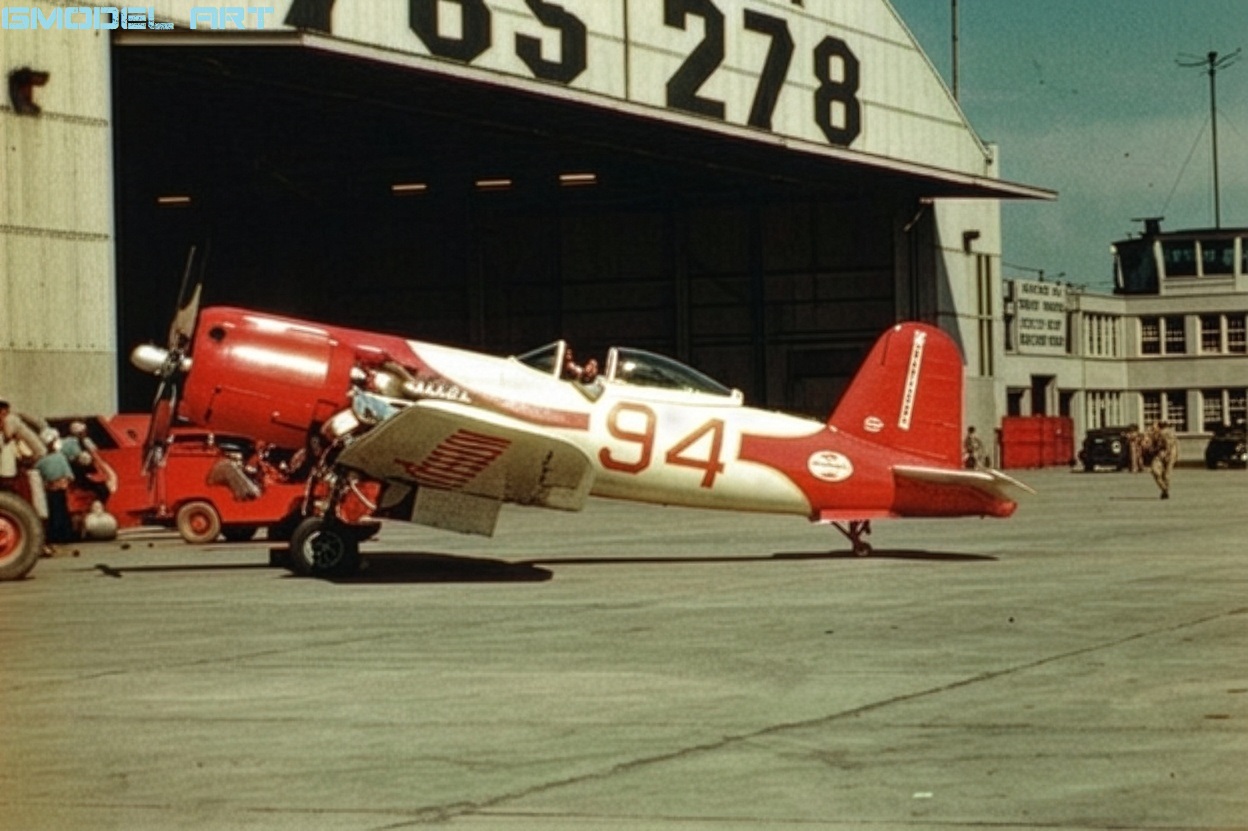
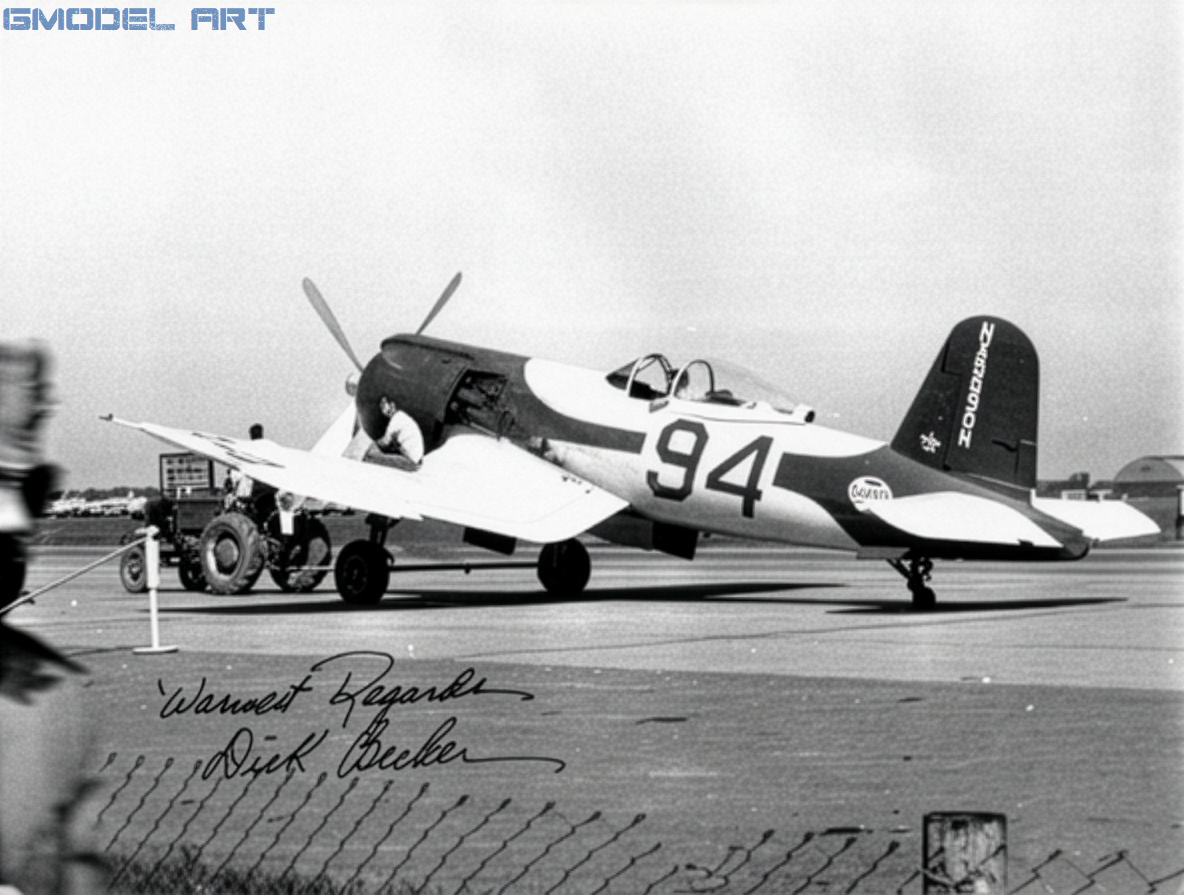
At the Cleveland National Air Races, held from August 30 to September 1, 1947, the #94 was flown by Richard “Dick” Becker, a friend and associate of Cook Cleland.
The aircraft qualified in second place with an average speed of 400.941 mph and finished second in the B Feature race, averaging 390.133 mph.
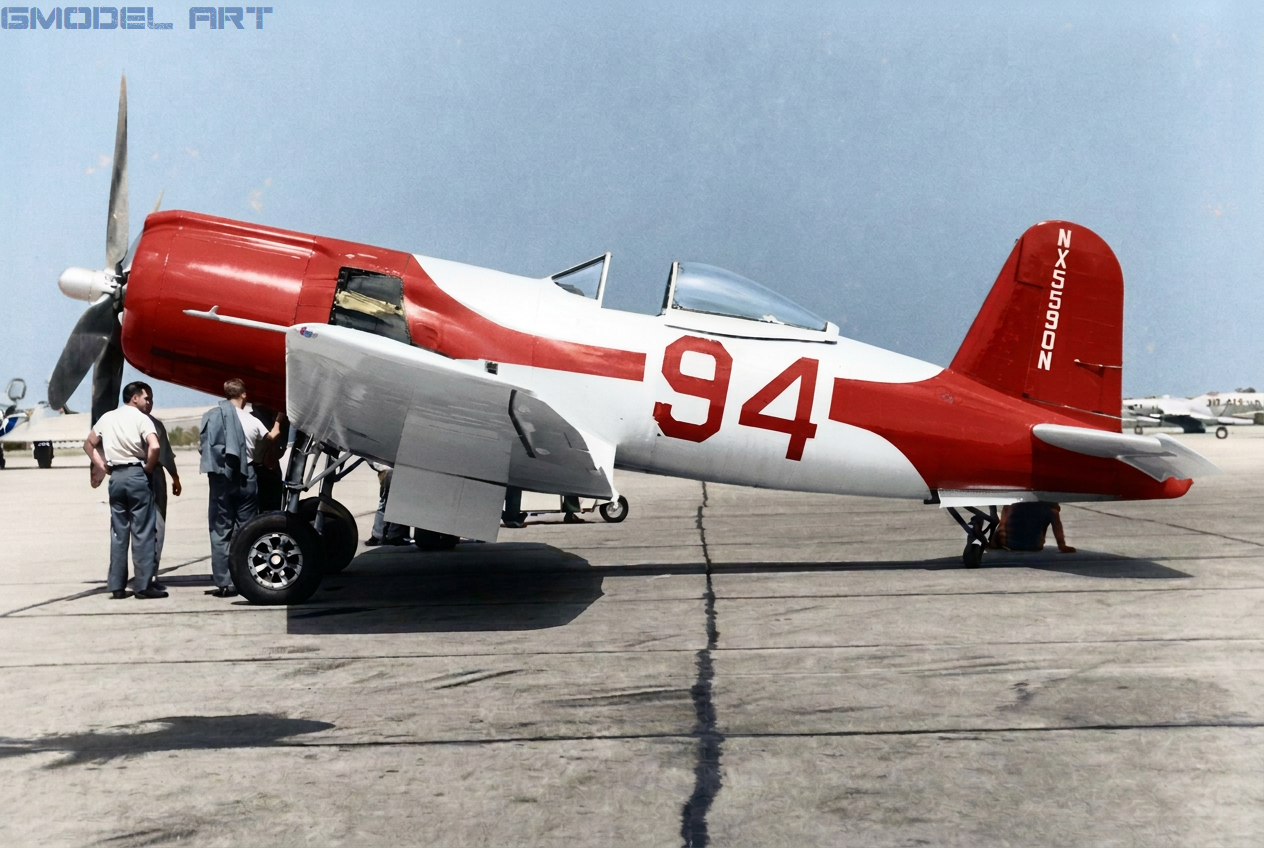
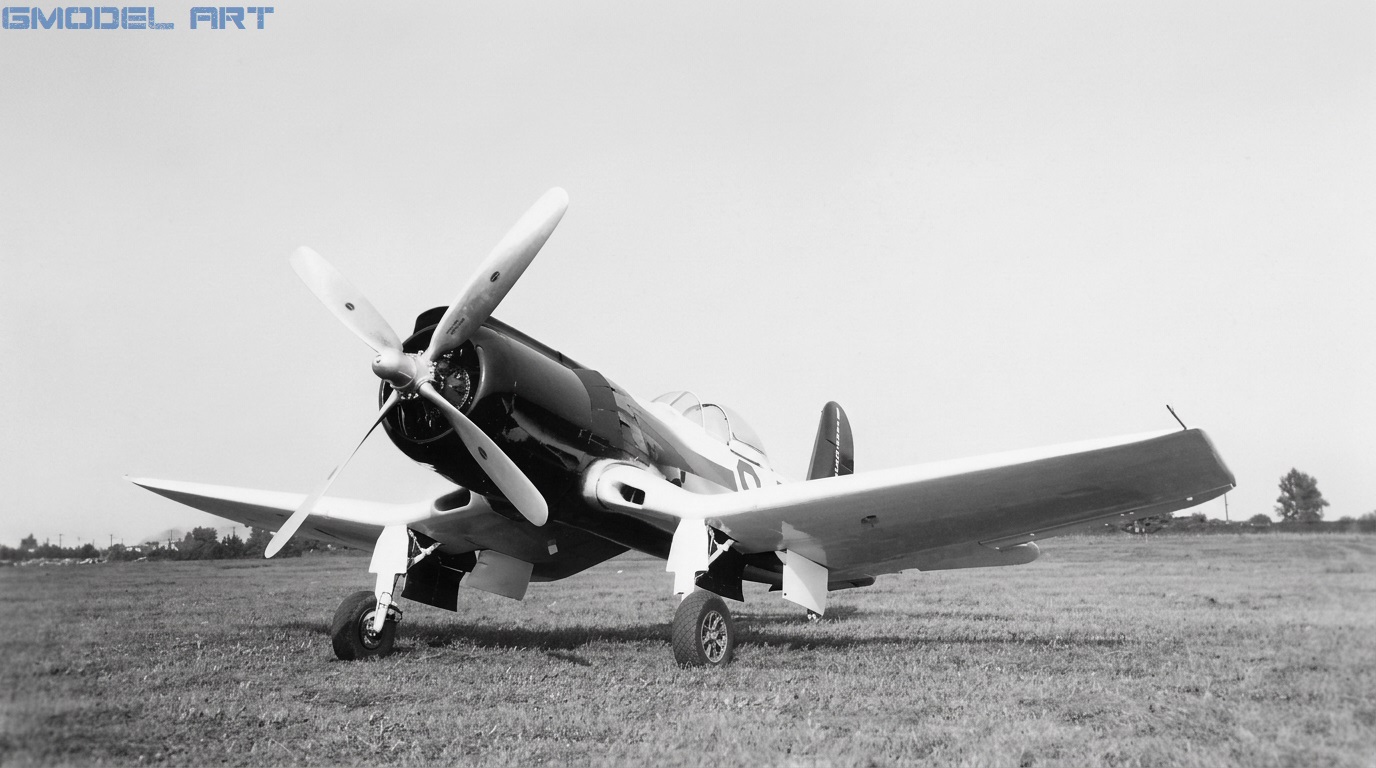
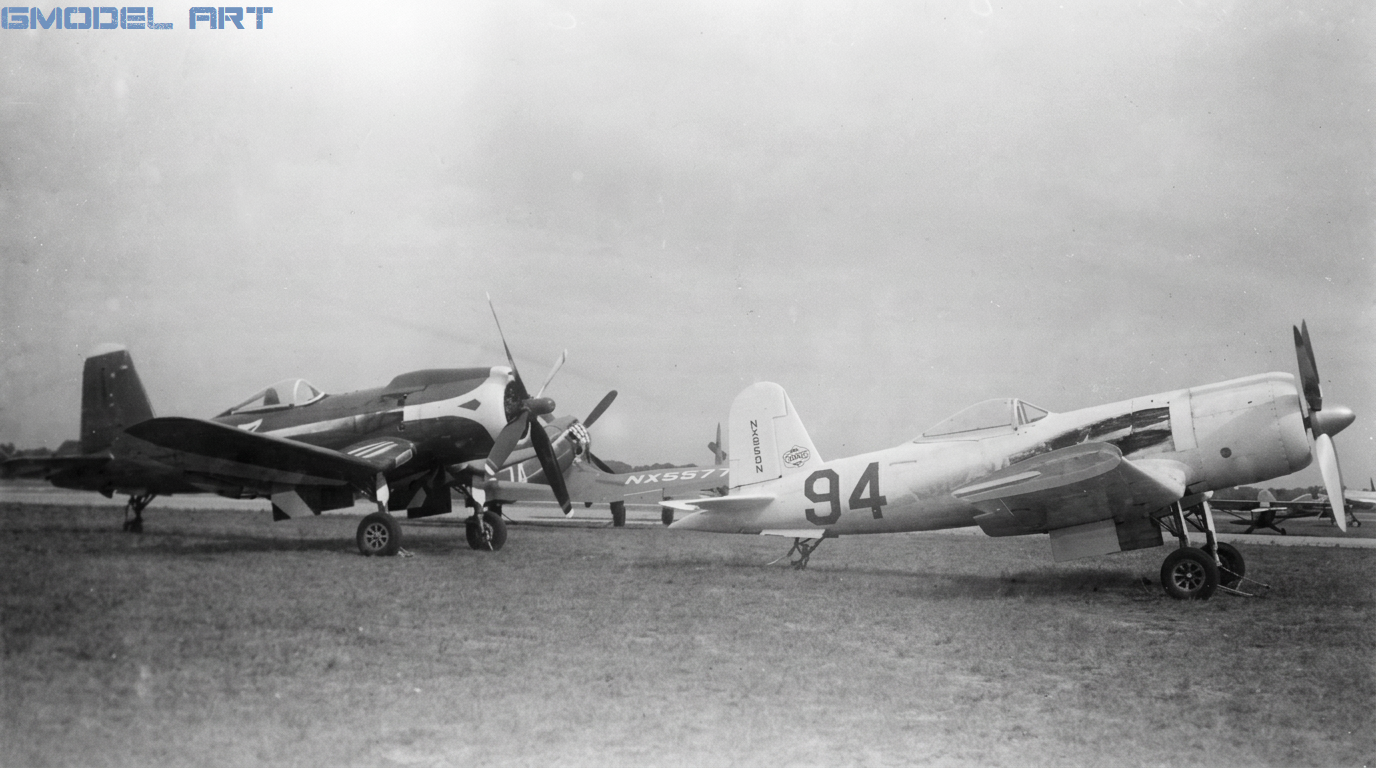
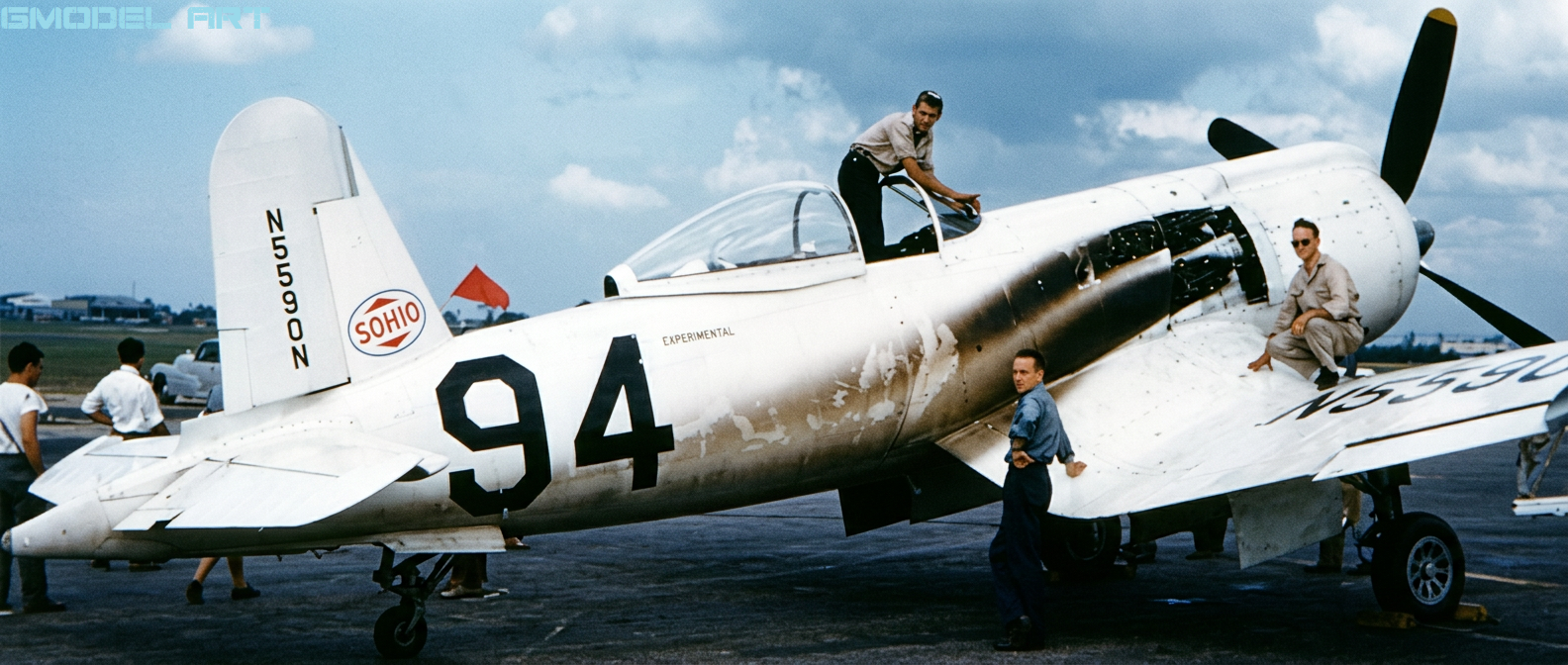
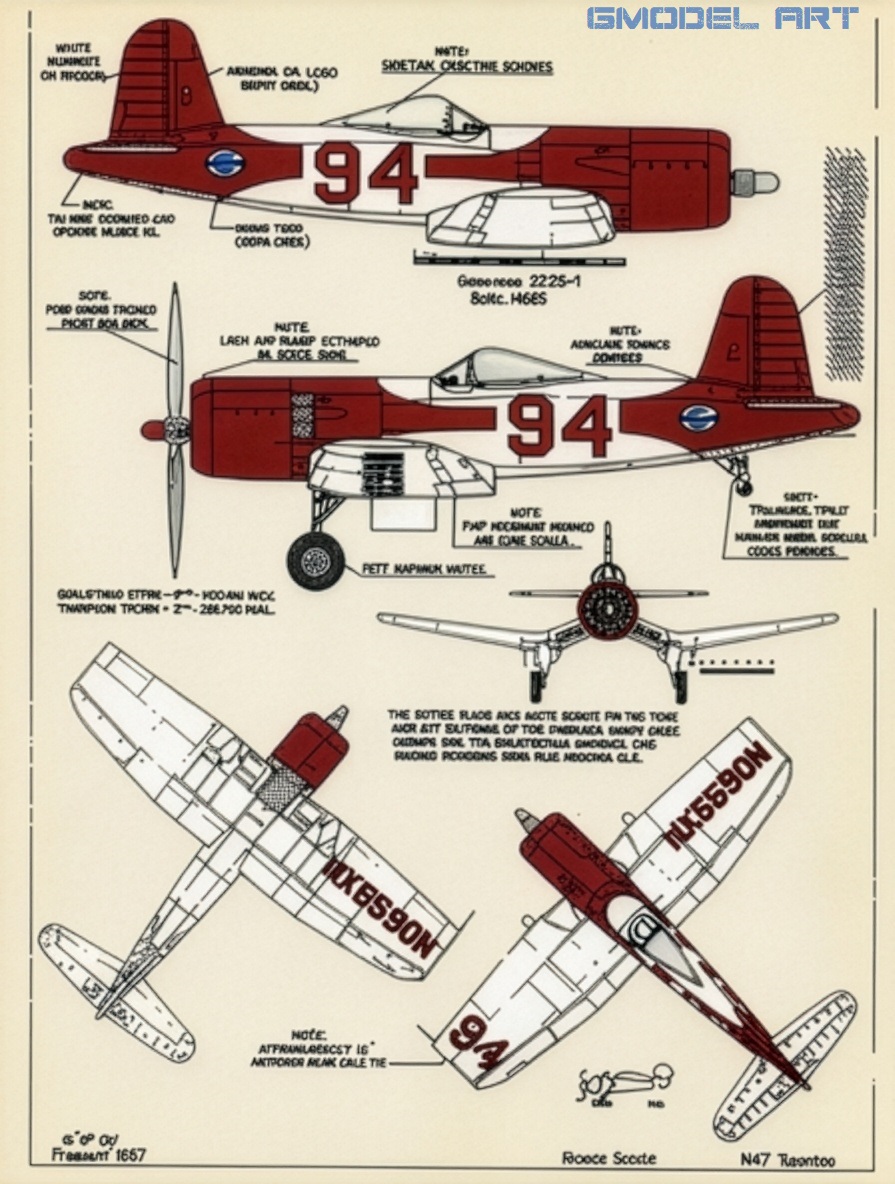
Its exterior appearance during this period featured a red-and-white racing scheme, as shown in photographs from the period. This early configuration represents a distinct modeling subject and must not be confused with the predominantly white appearance associated with 1949.
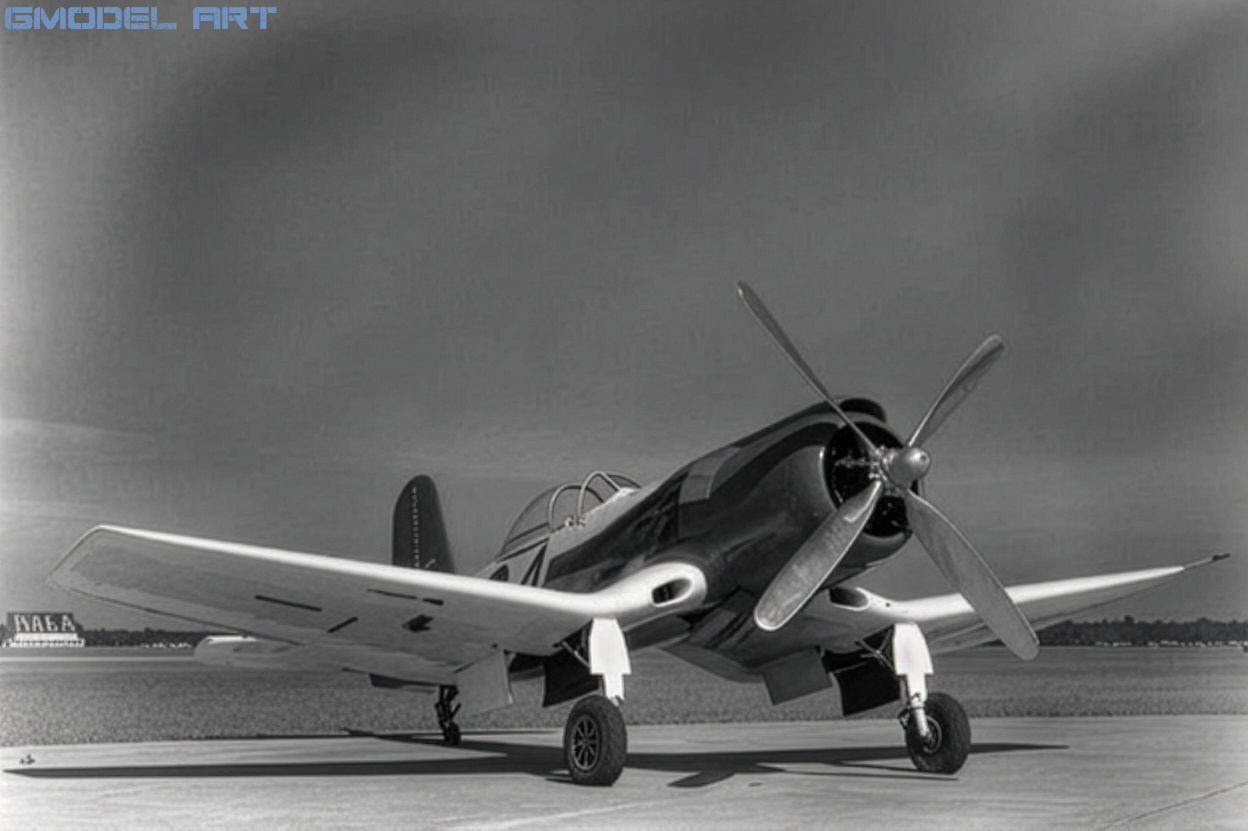
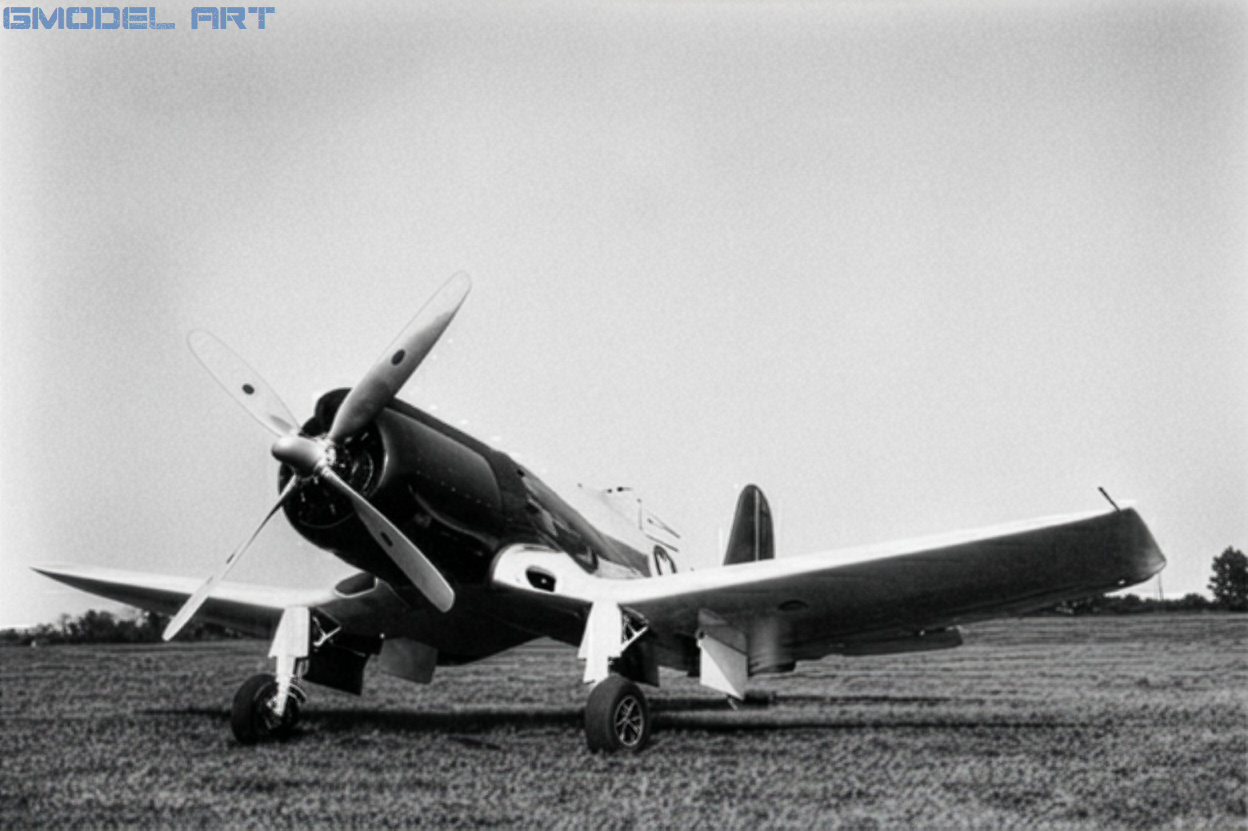
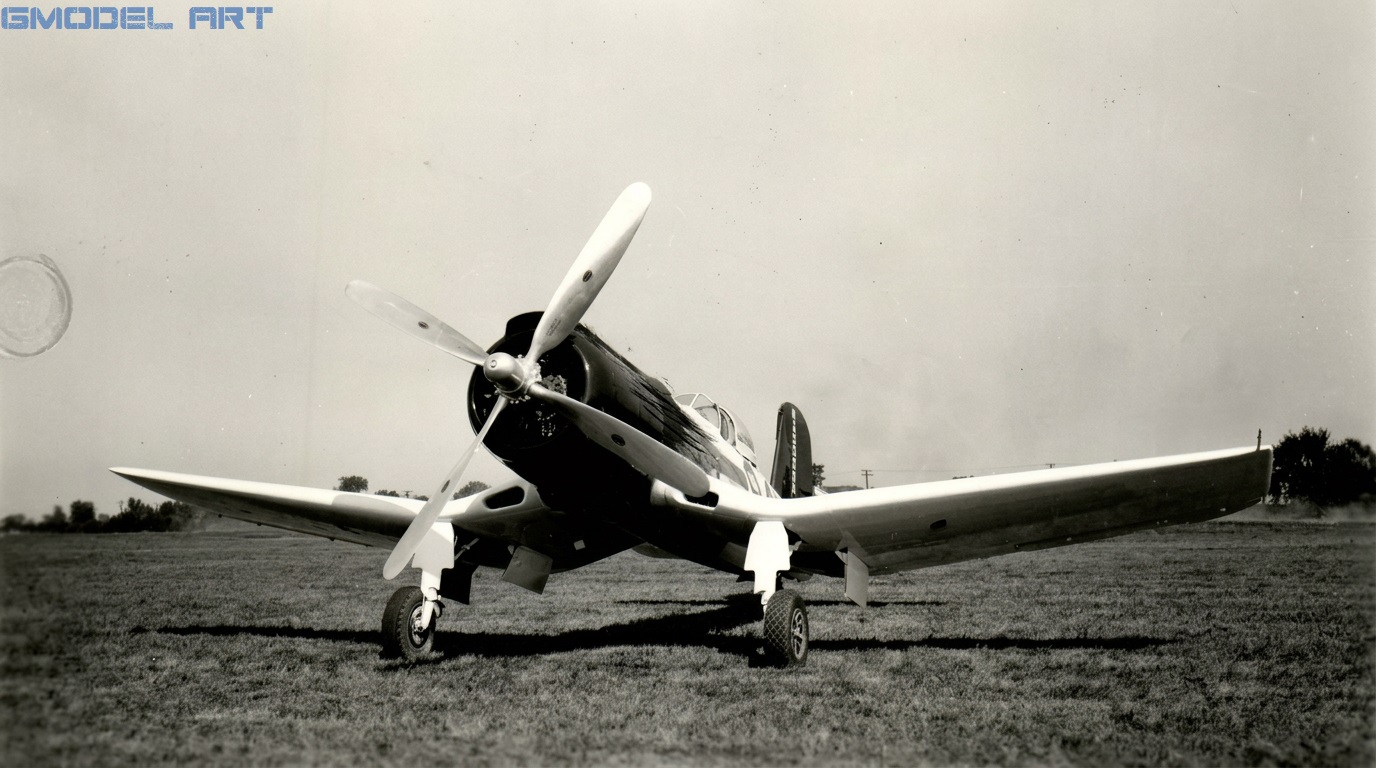
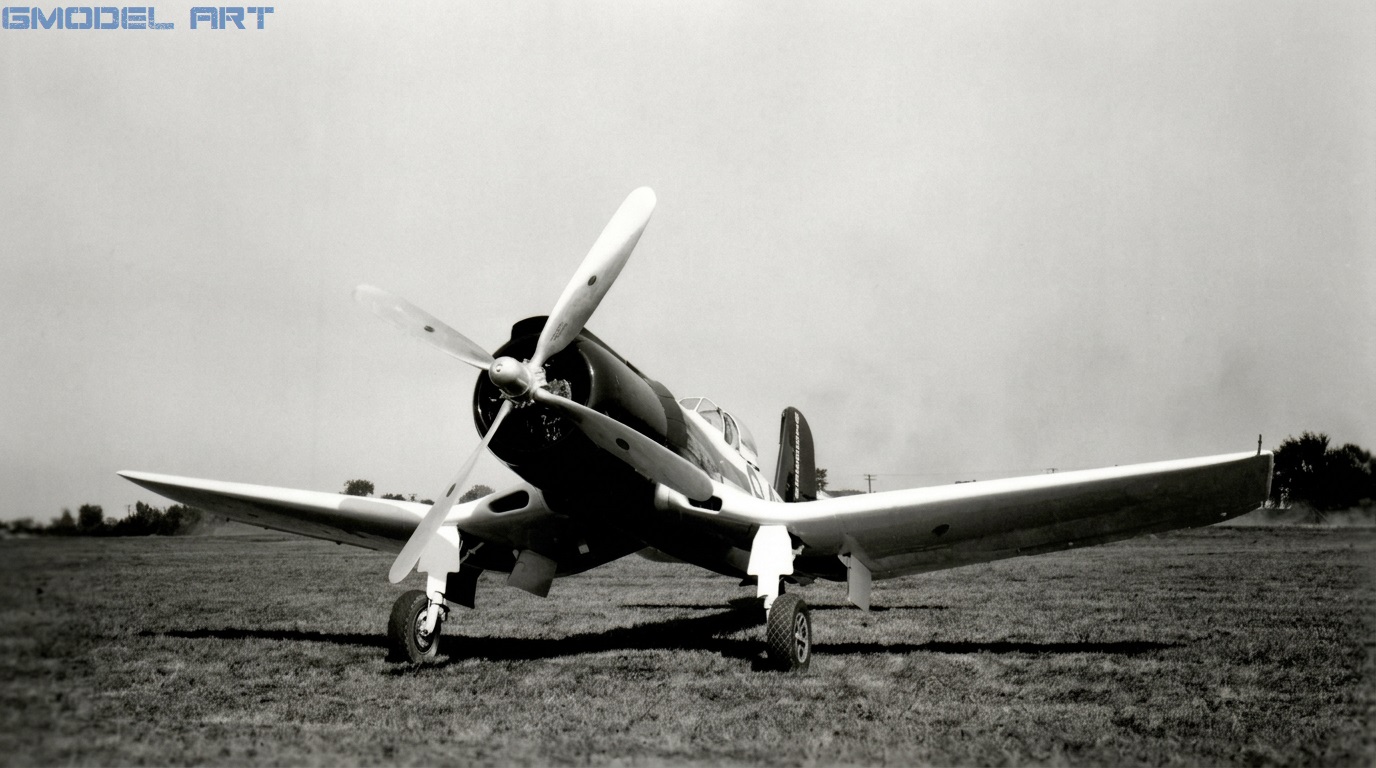
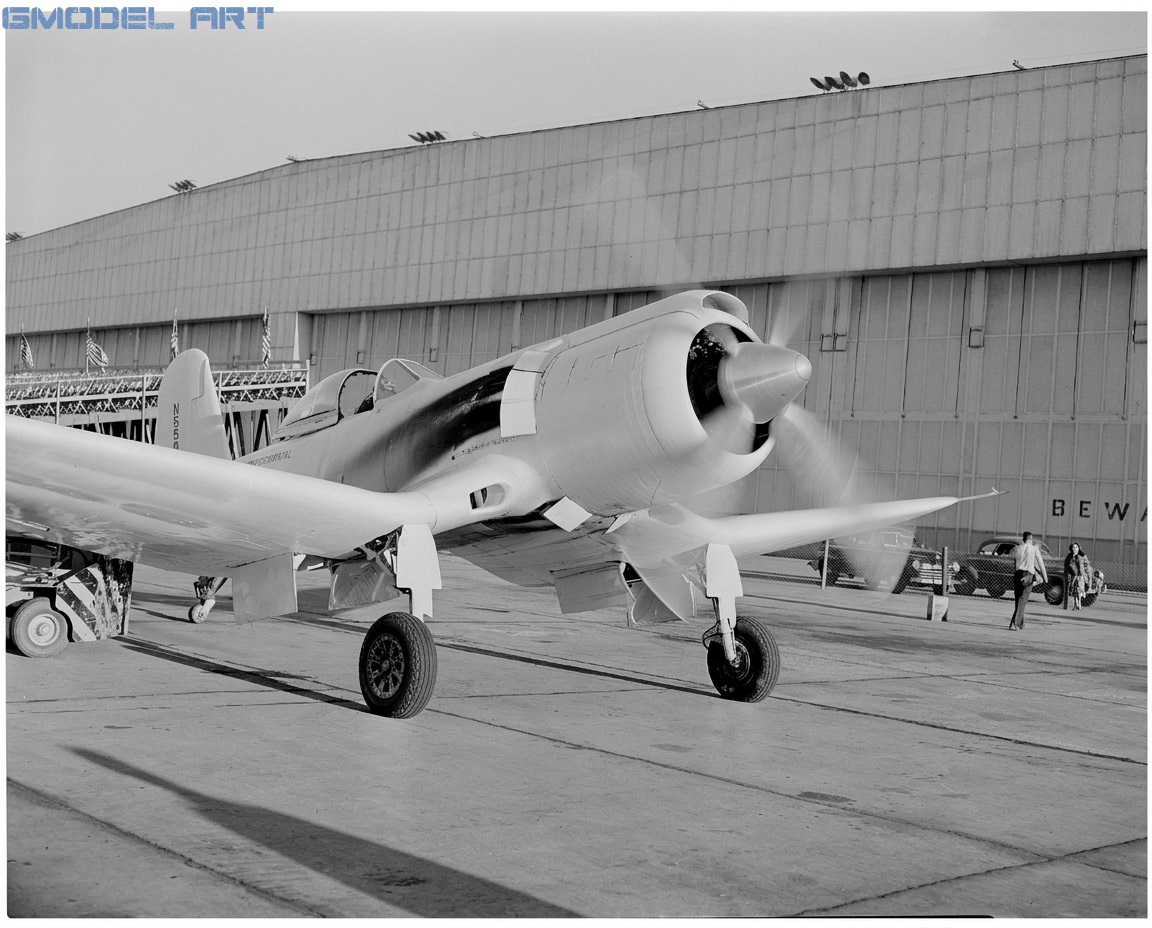
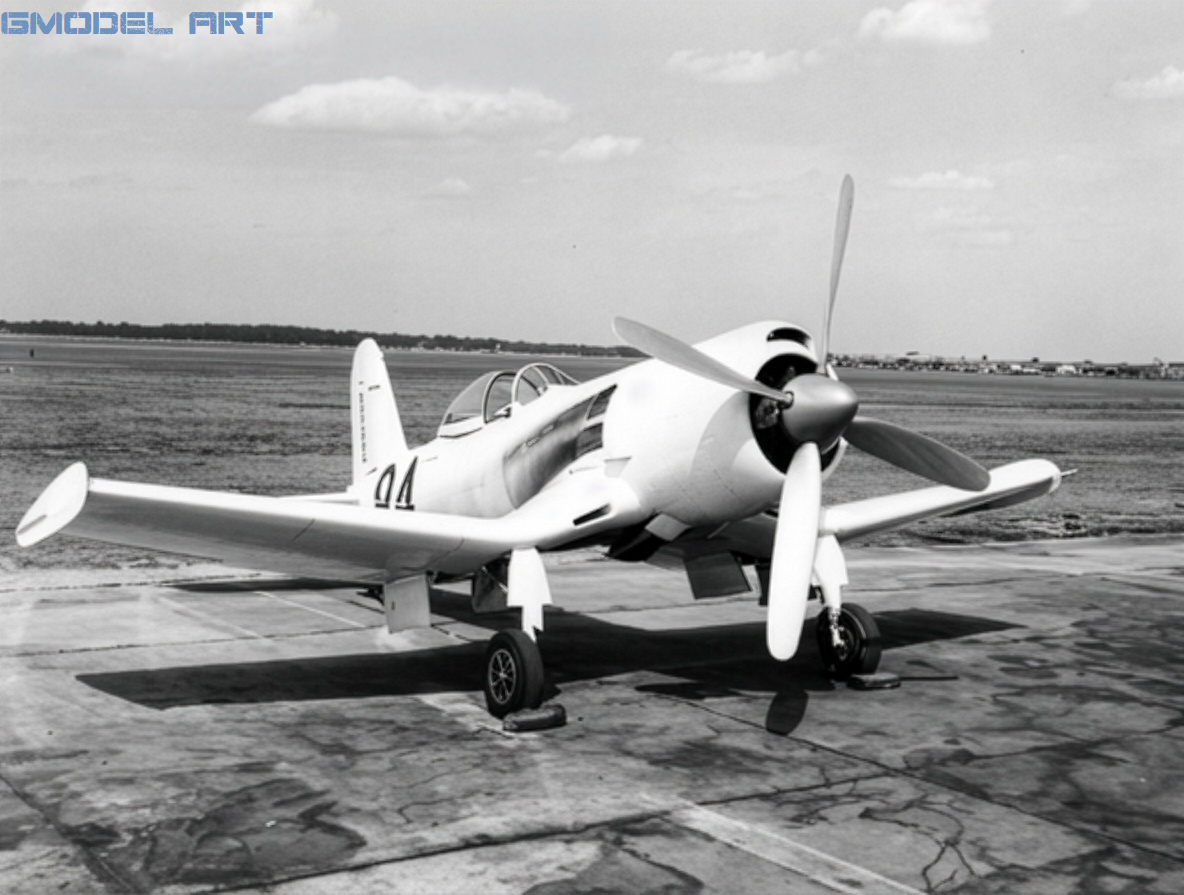
The aircraft presented an elegant racing appearance, with its distinctive clipped wing tips and polished propeller. These features contributed to its unmistakable silhouette on the racing circuit.
1948 — Wing Modifications and Propeller Changes
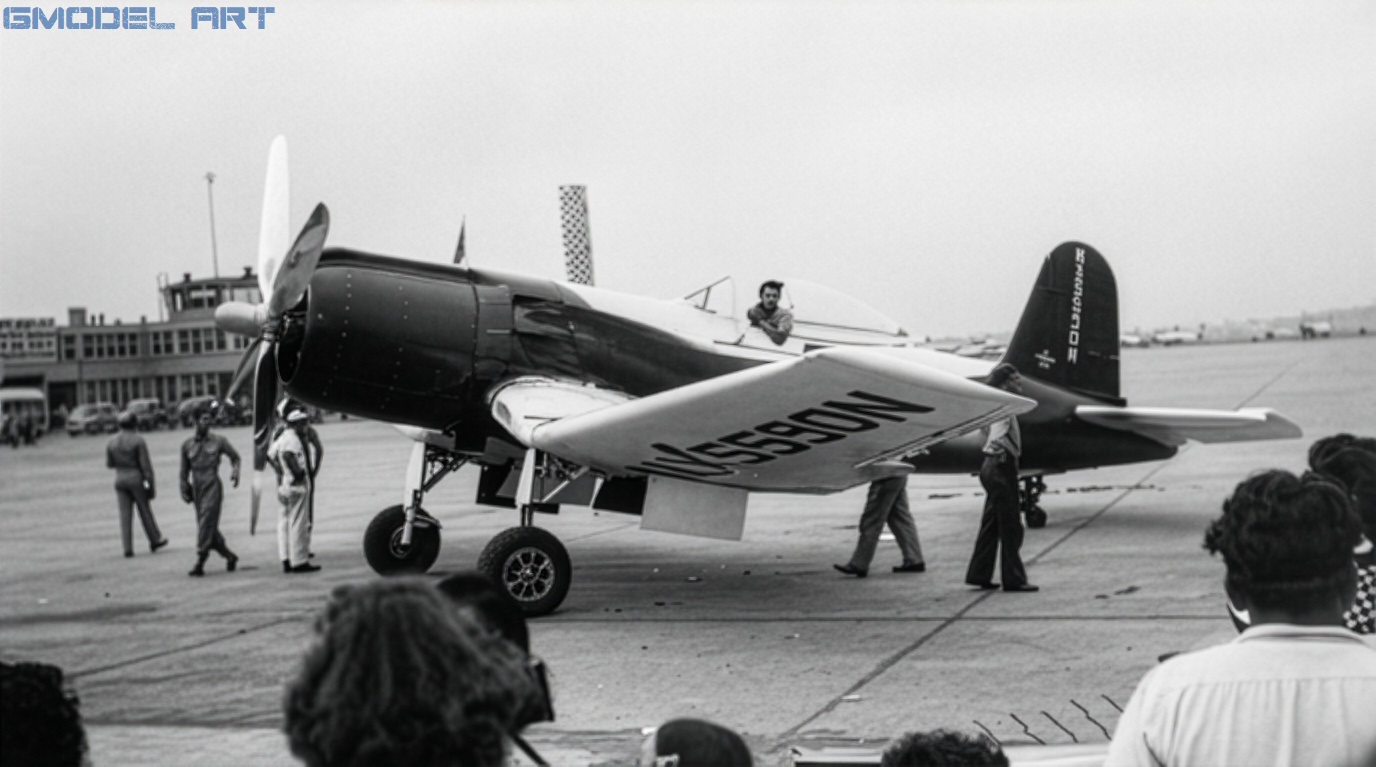
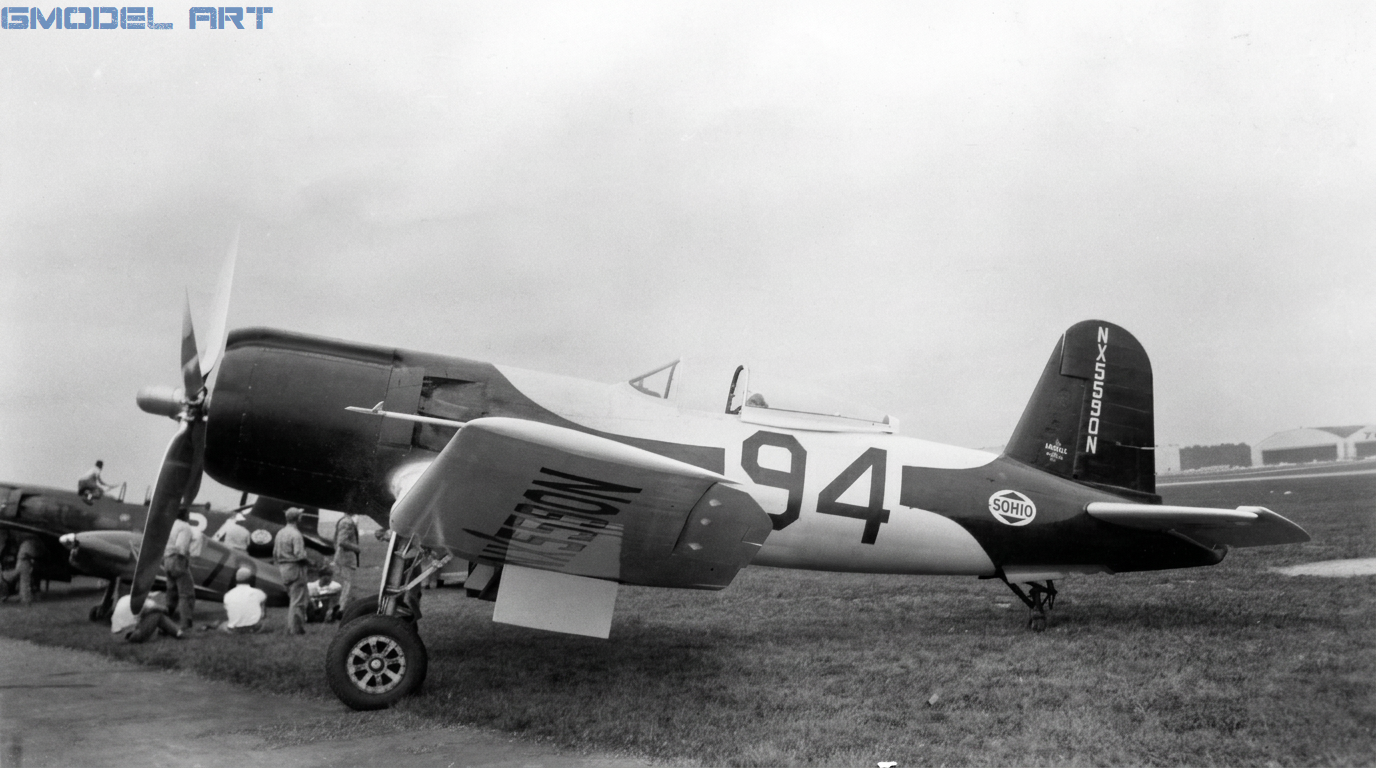
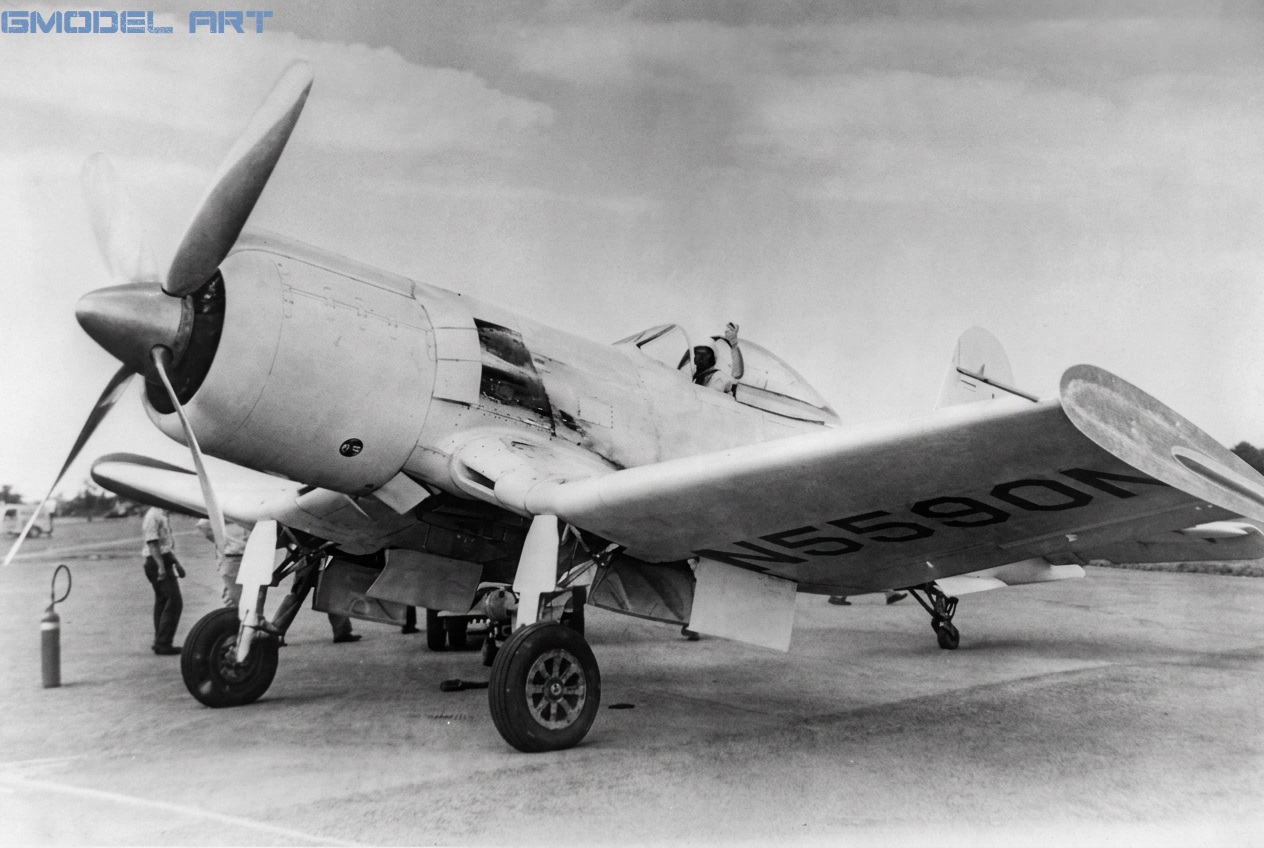
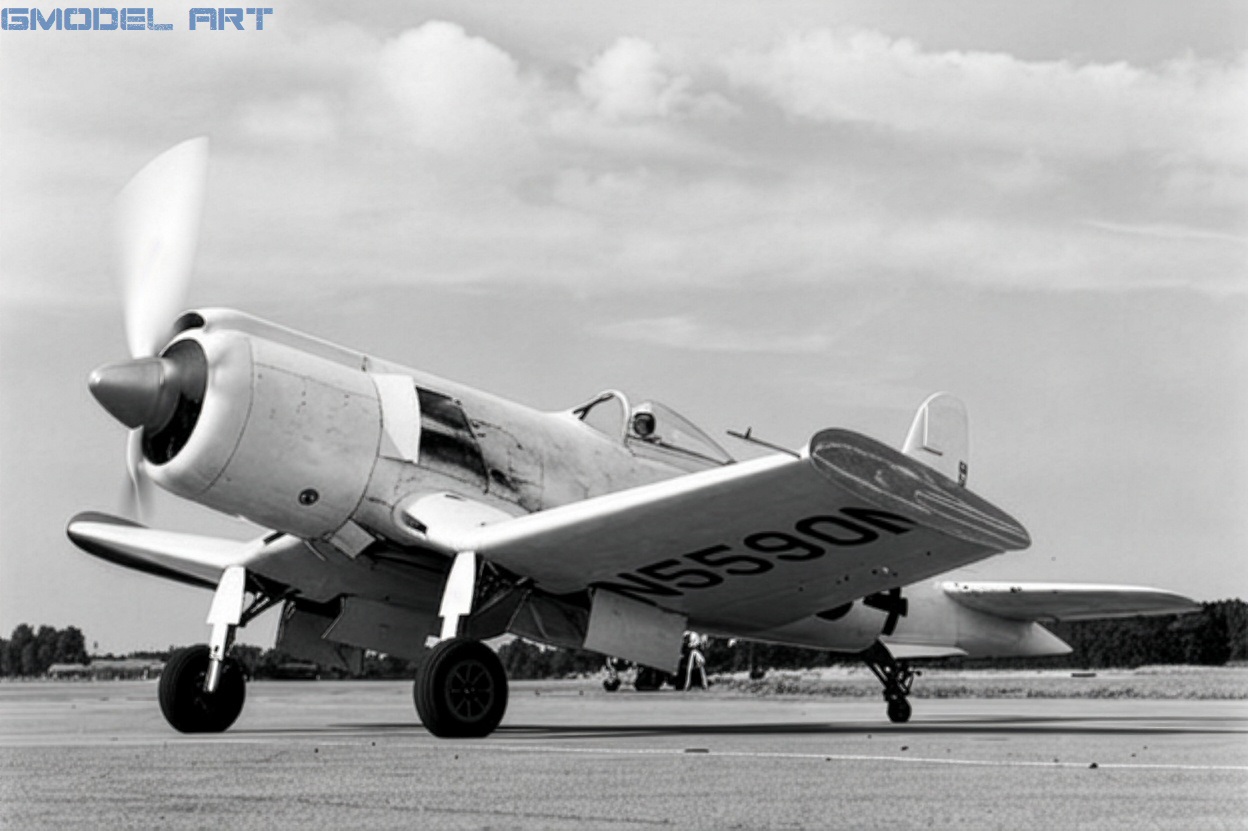
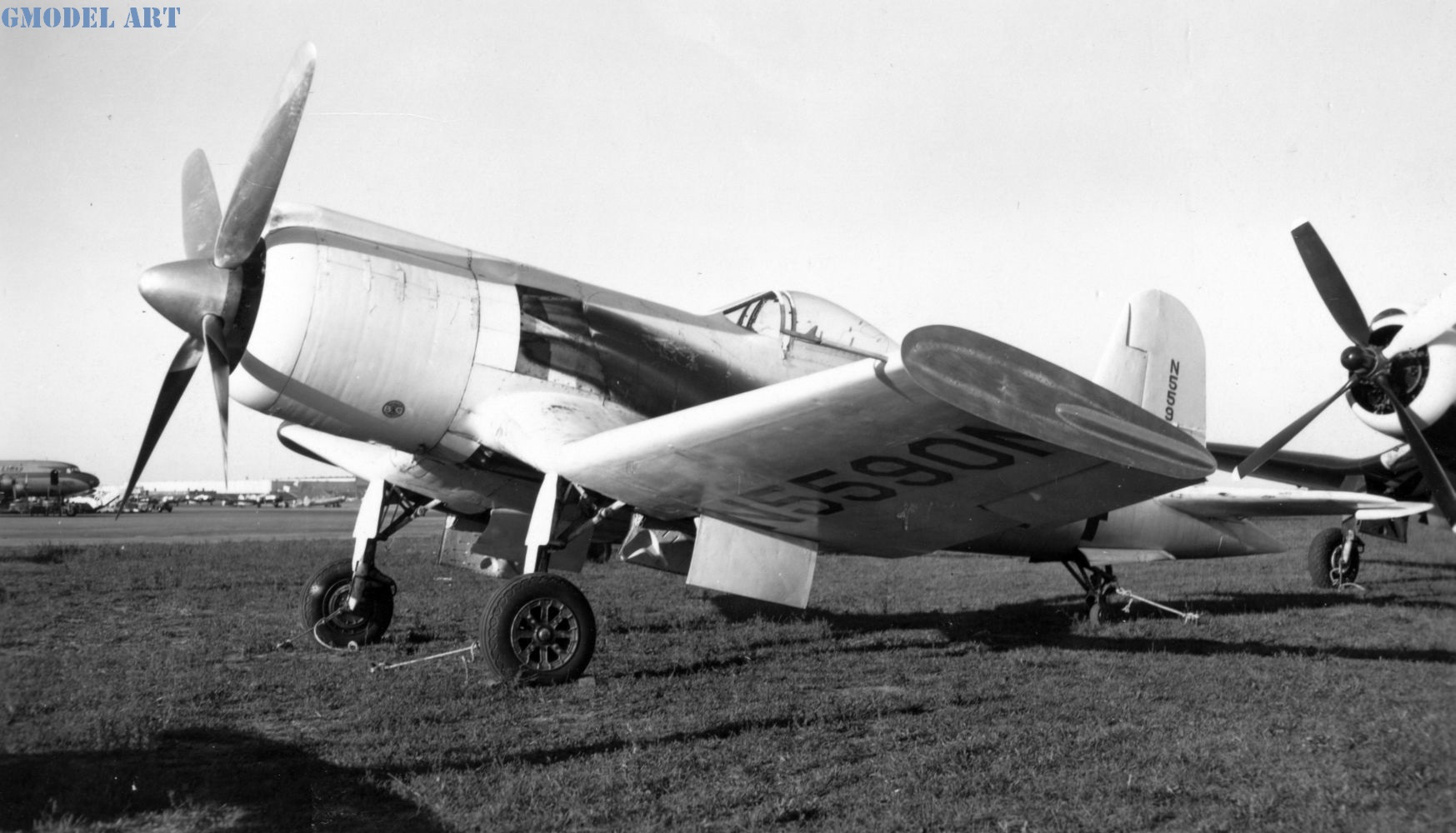
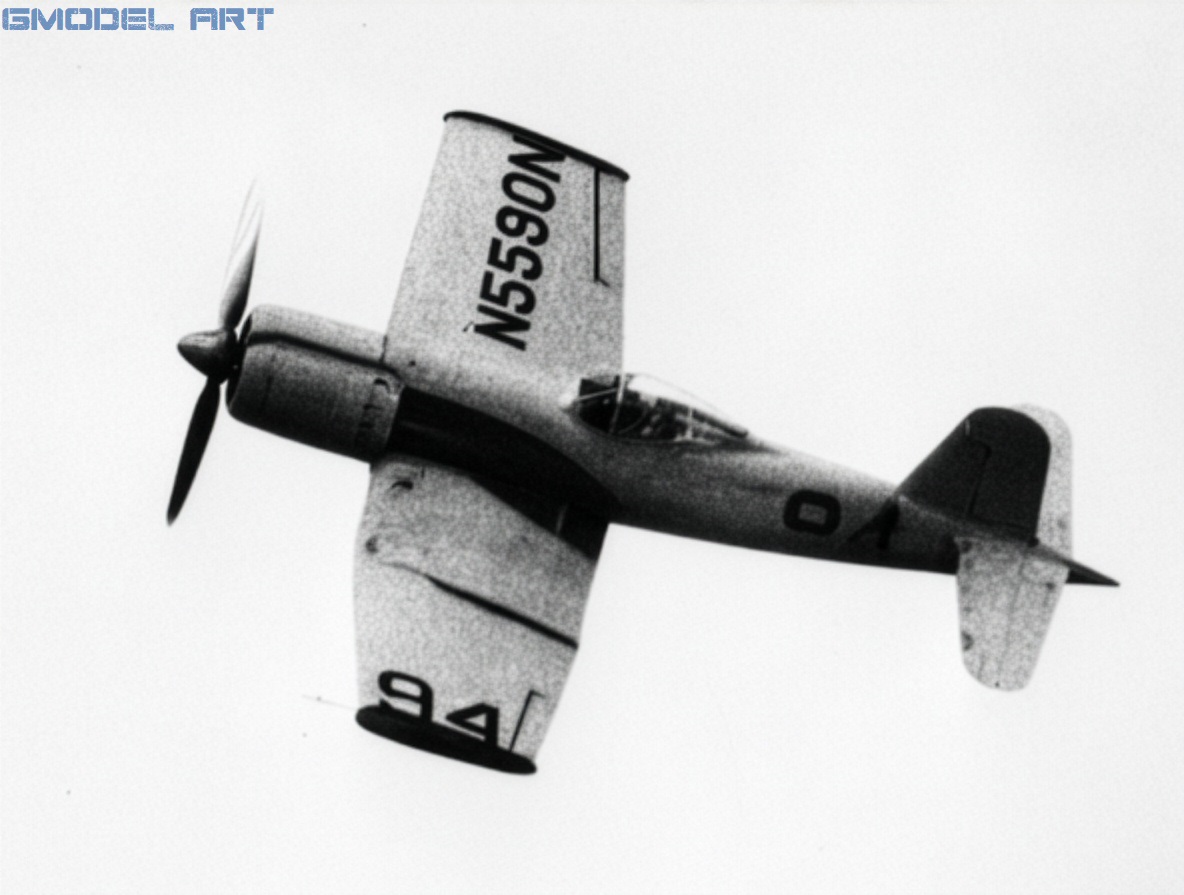
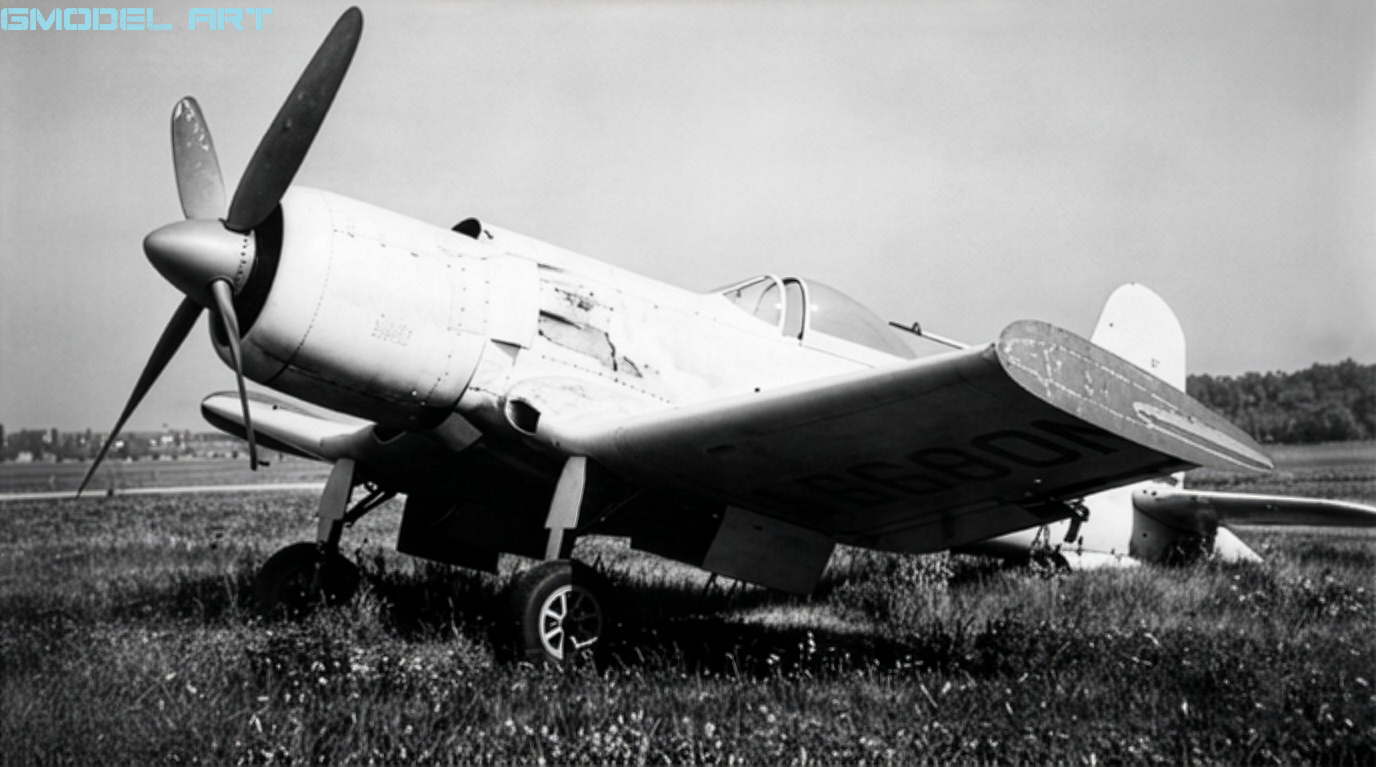
For the 1948 racing season, Cook Cleland substantially modified the aircraft, using wings taken from another FG-1 Corsair. The wings were clipped to reduce their span, and their original fabric covering was replaced with an all-metal skin.
These modifications were intended to improve the aircraft’s handling and racing performance. The resulting configuration noticeably changed the silhouette of the #94 compared with a standard Corsair.
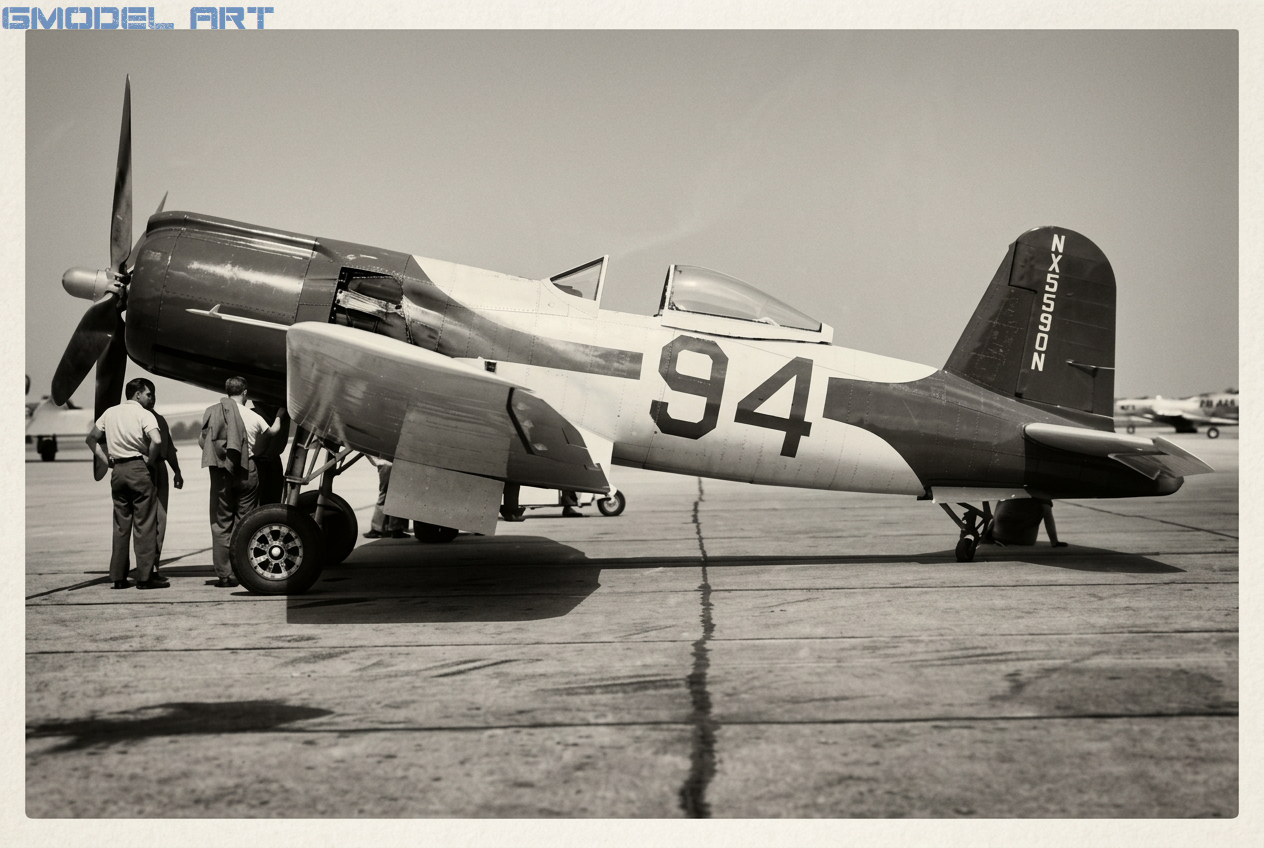
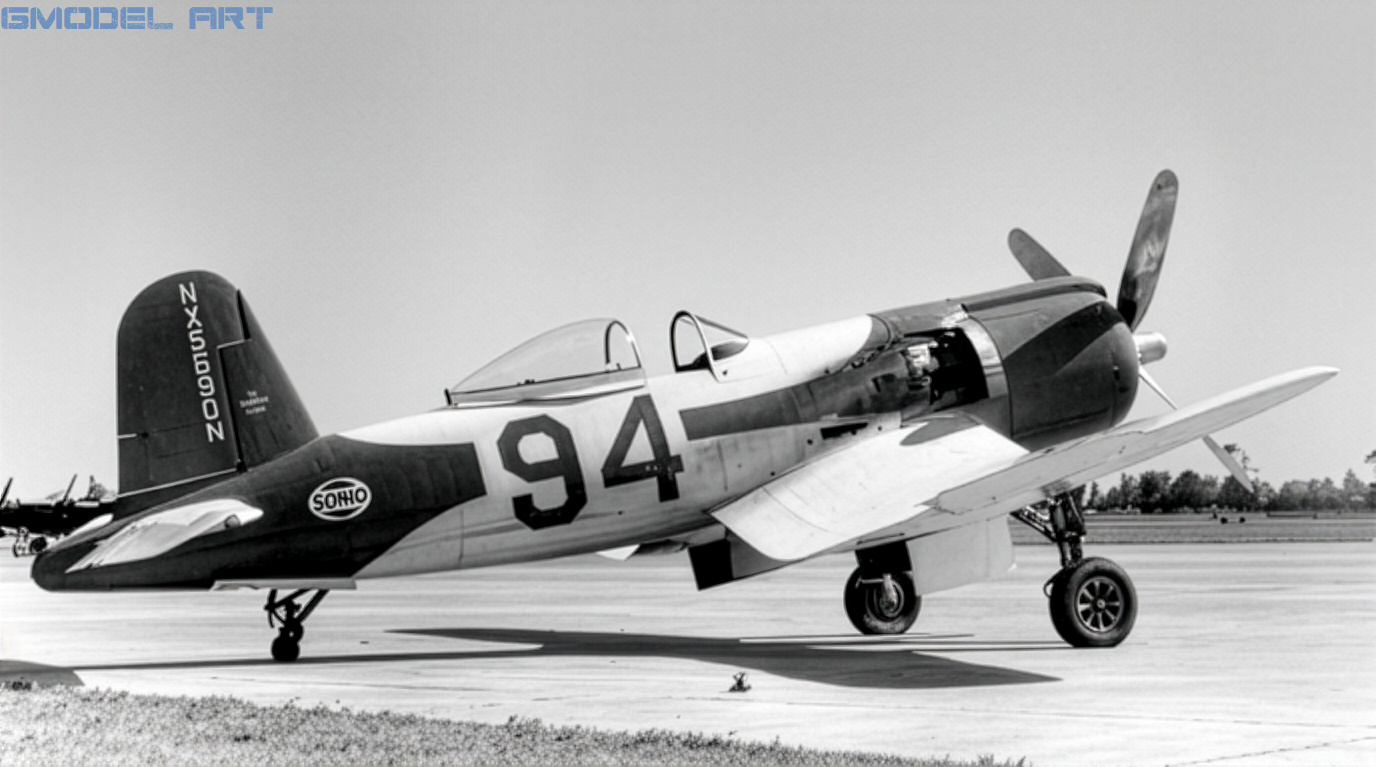
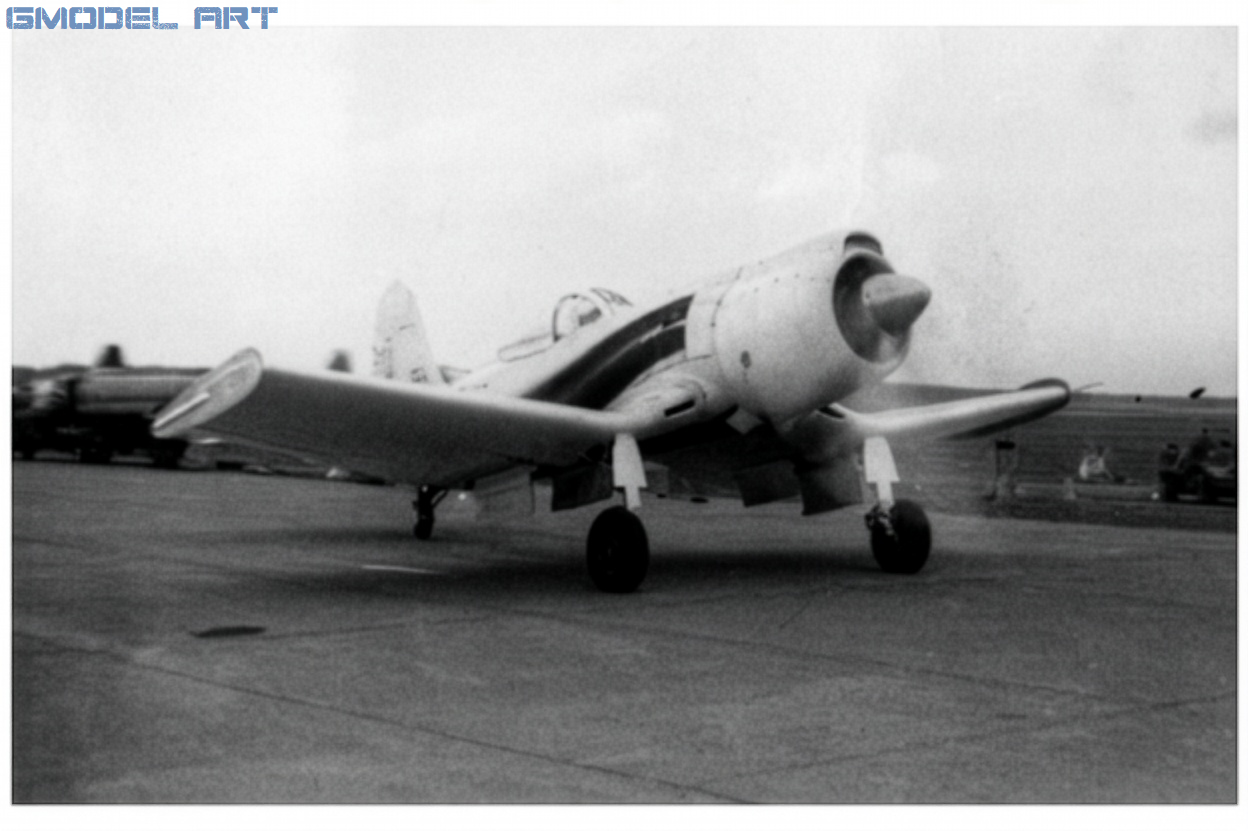
Another particularly interesting modification involved the propeller. The aircraft received a different propeller hub or spinner arrangement, with a polished aluminium appearance and a black rear-facing surface. Its shape has a visual resemblance to the spinner arrangement associated with the Bell P-63 Kingcobra. However, the exact origin of this modification has not been established and should not be treated as a confirmed connection with the P-63.
At the Cleveland National Air Races, held from September 4 to 6, 1948, Cleland qualified in second place with an average speed of 417.424 mph. The aircraft failed to complete the race. Historical records report that an engine backfire caused the engine cowling to detach during lap five.
1949 — Final Racing Configuration
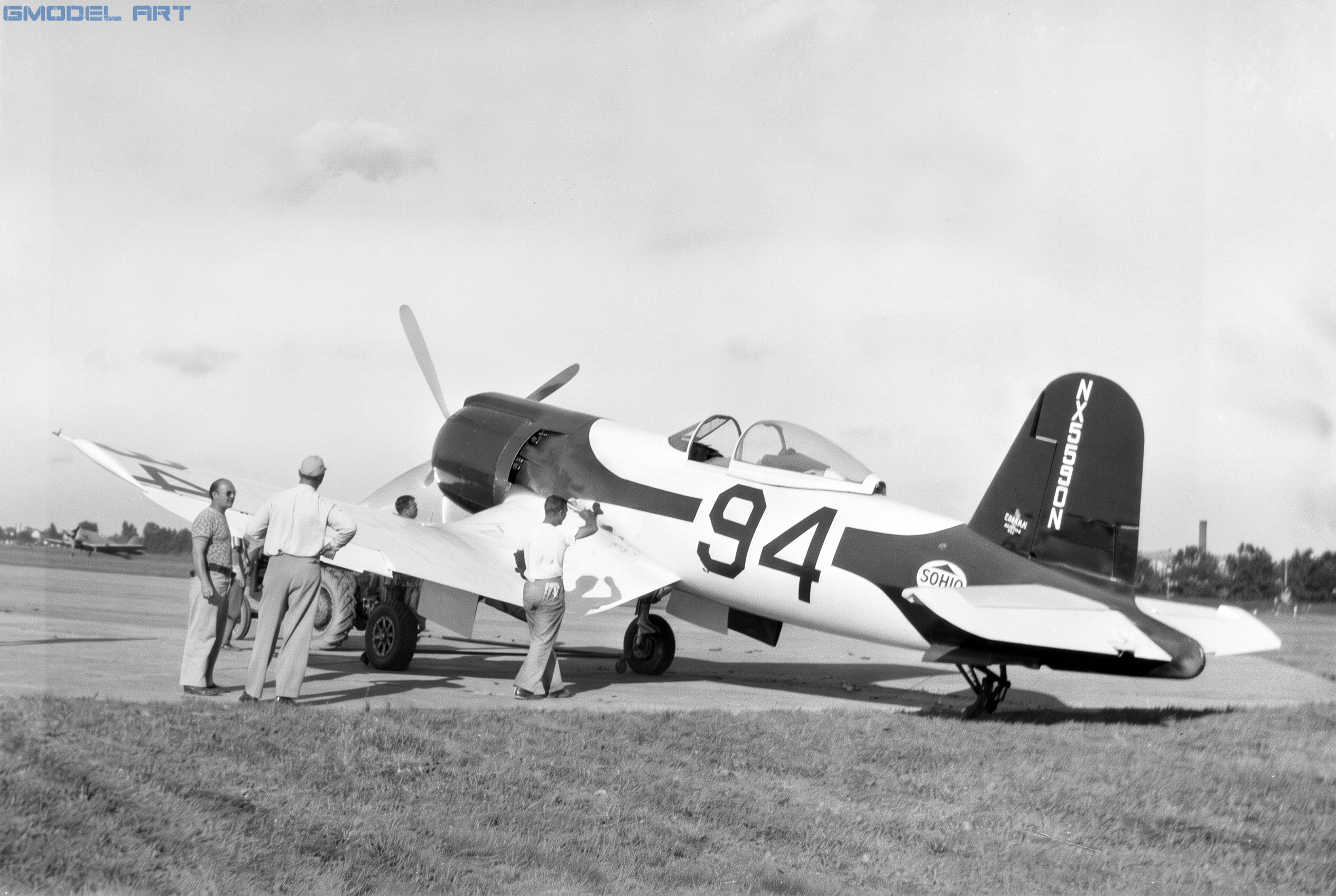
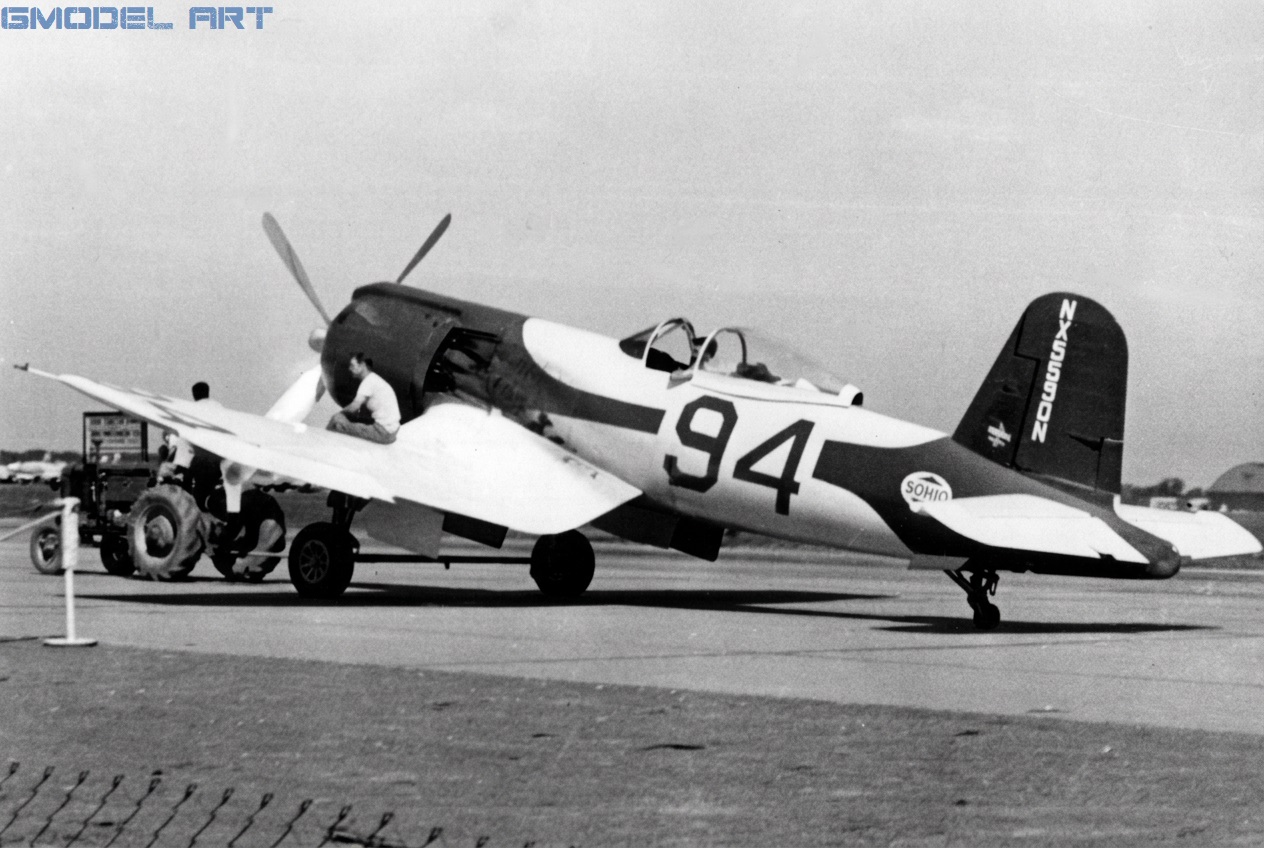
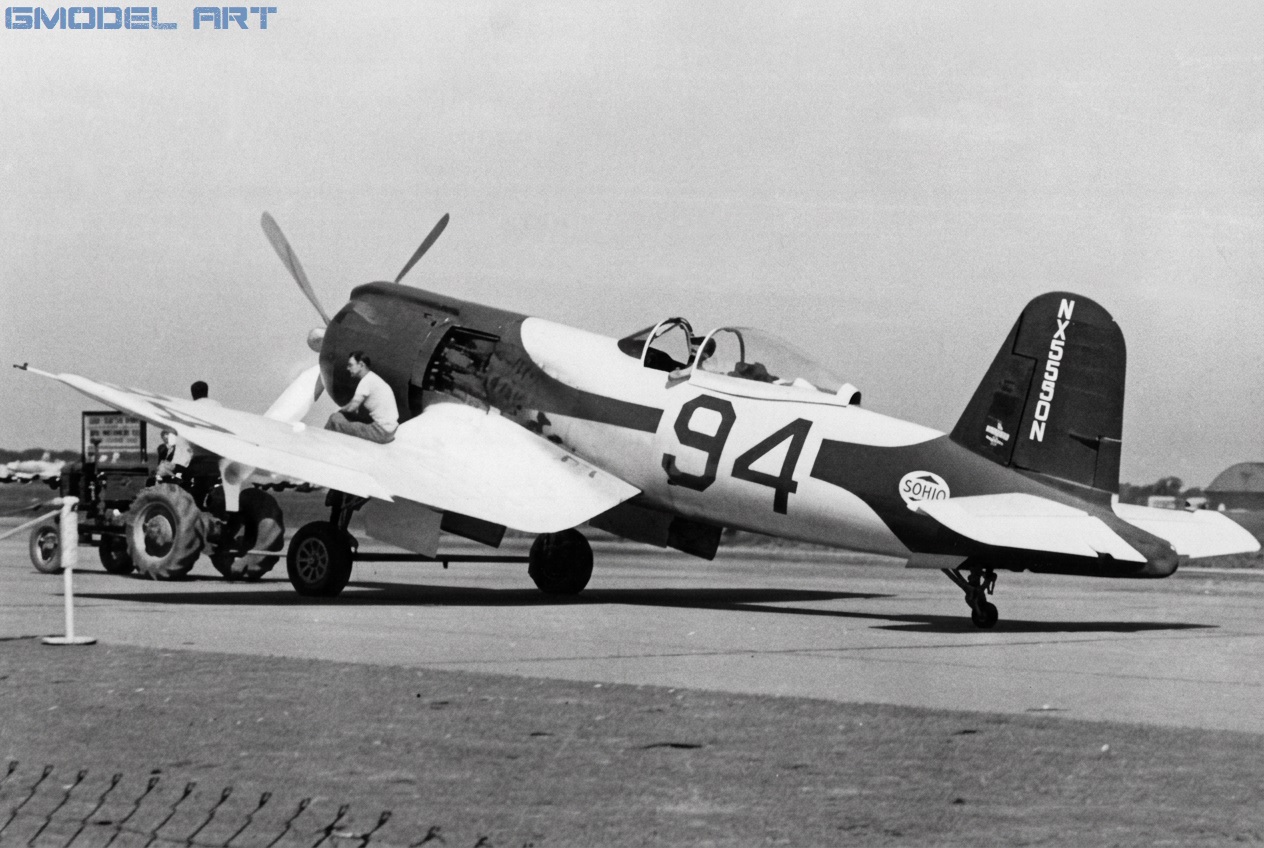
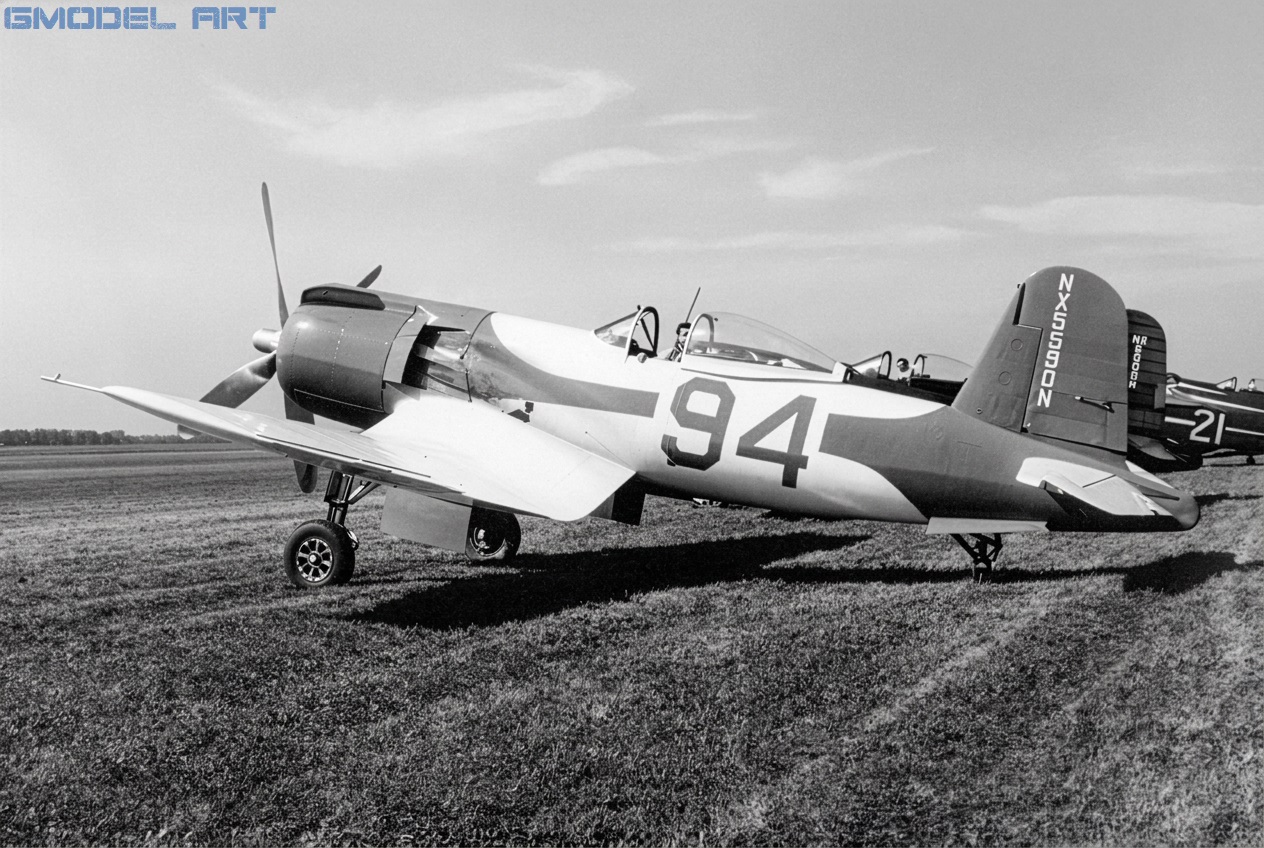
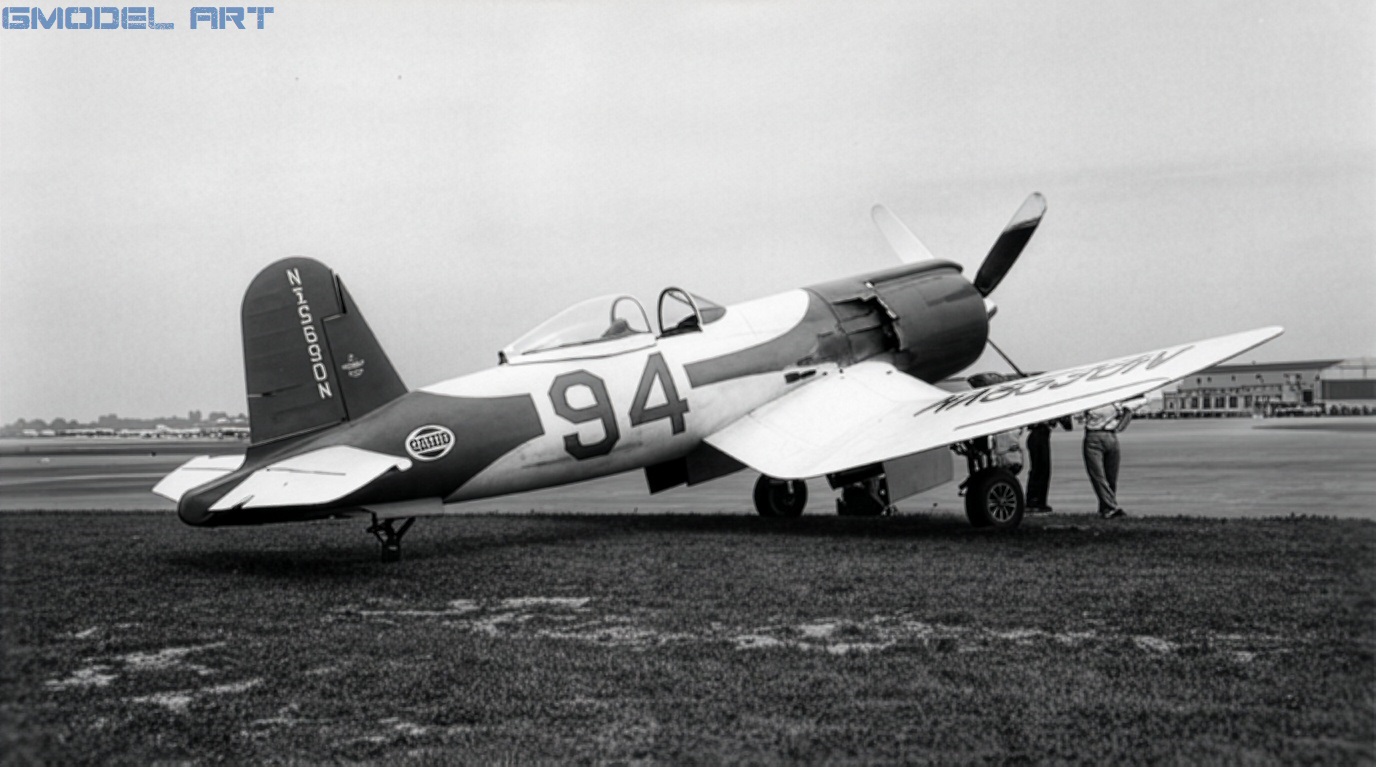
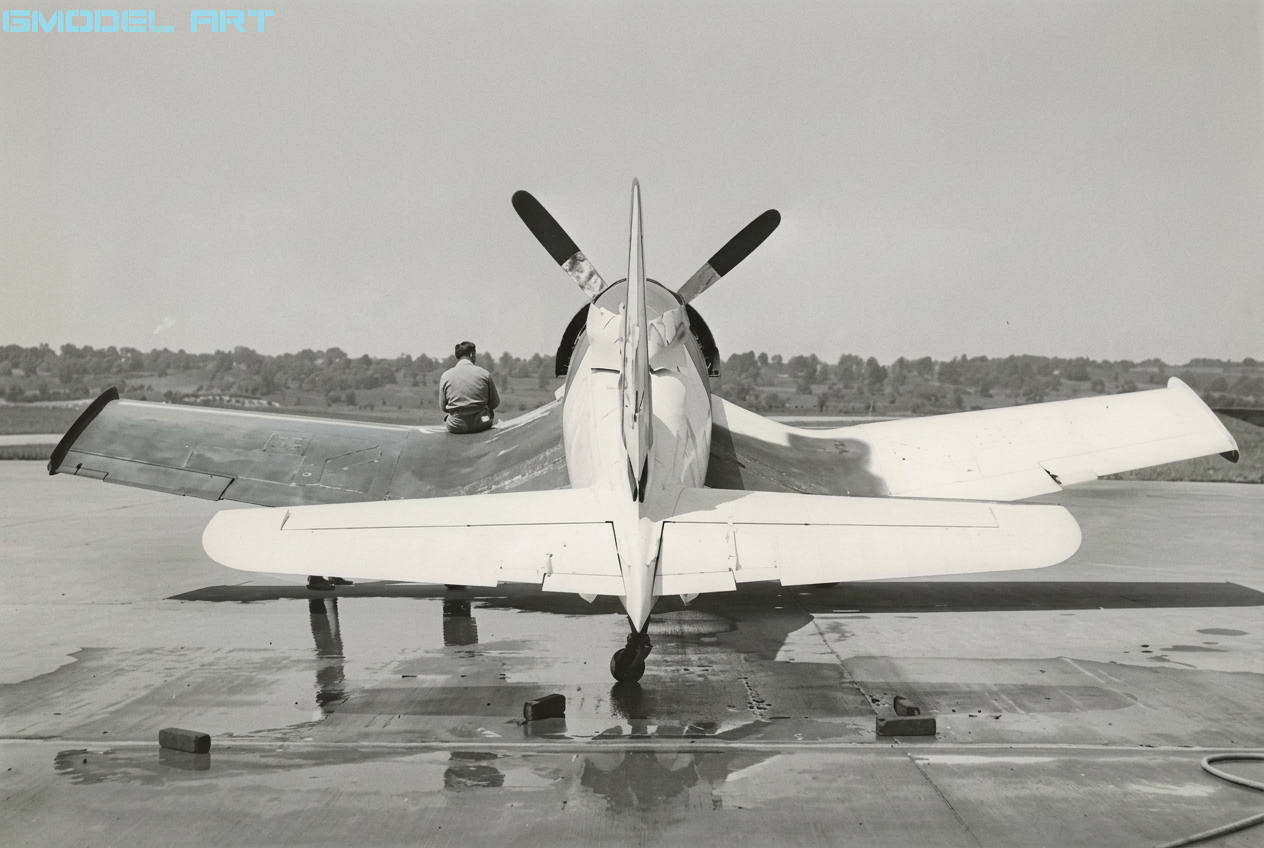
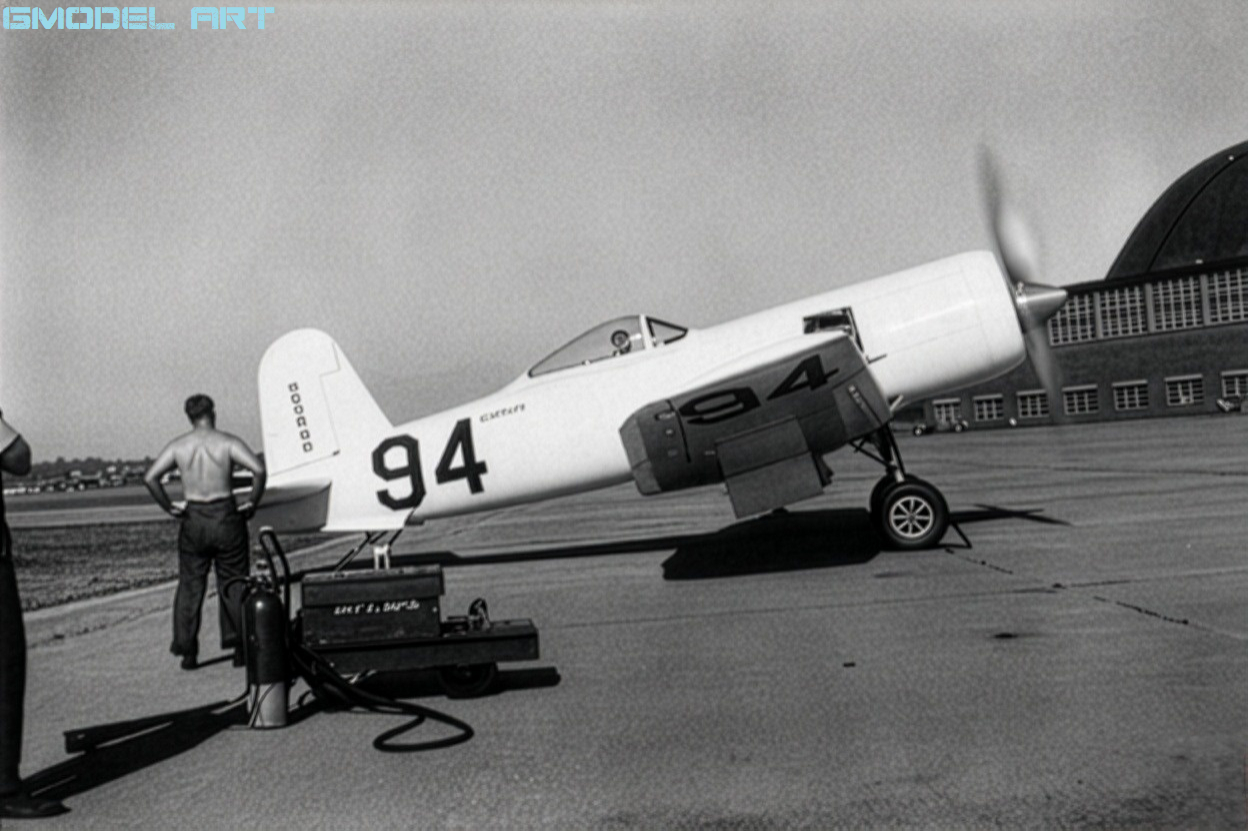
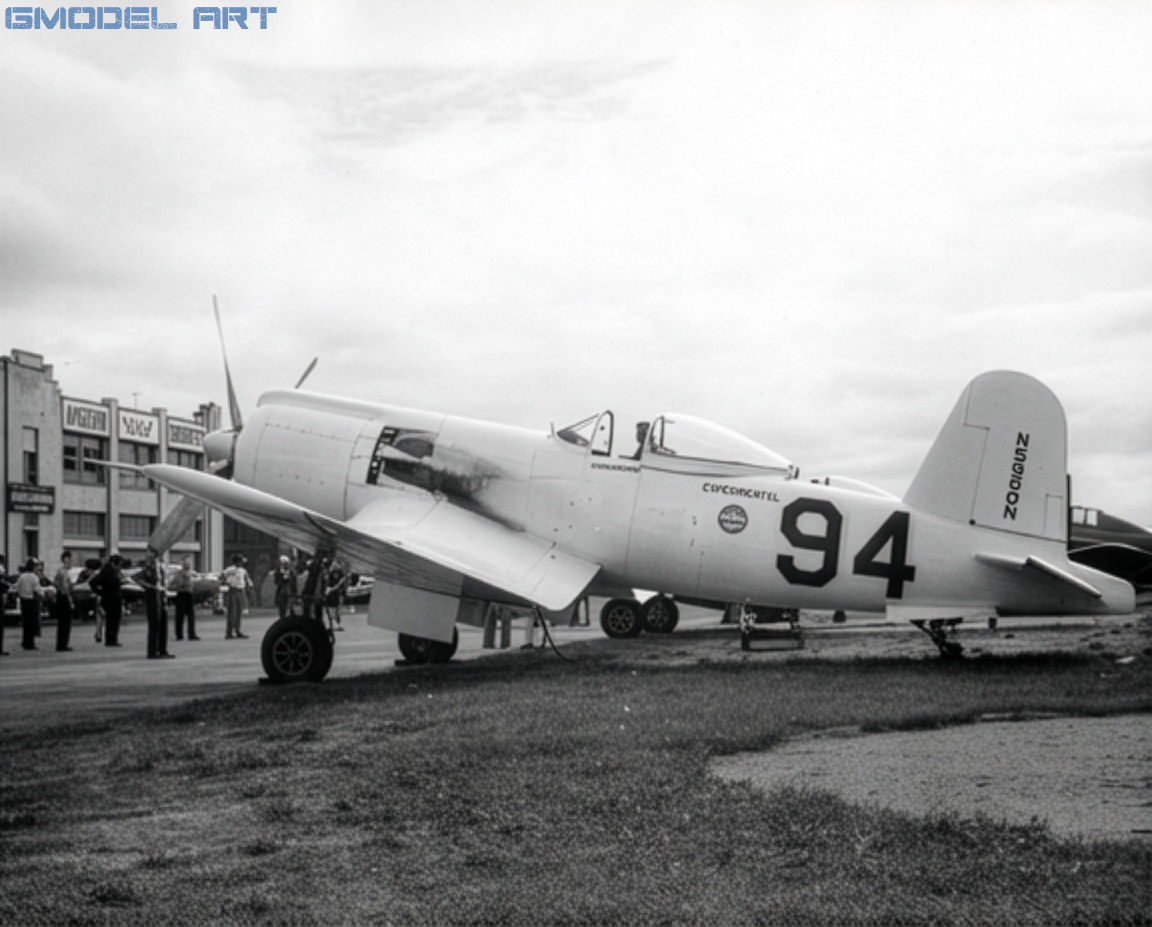
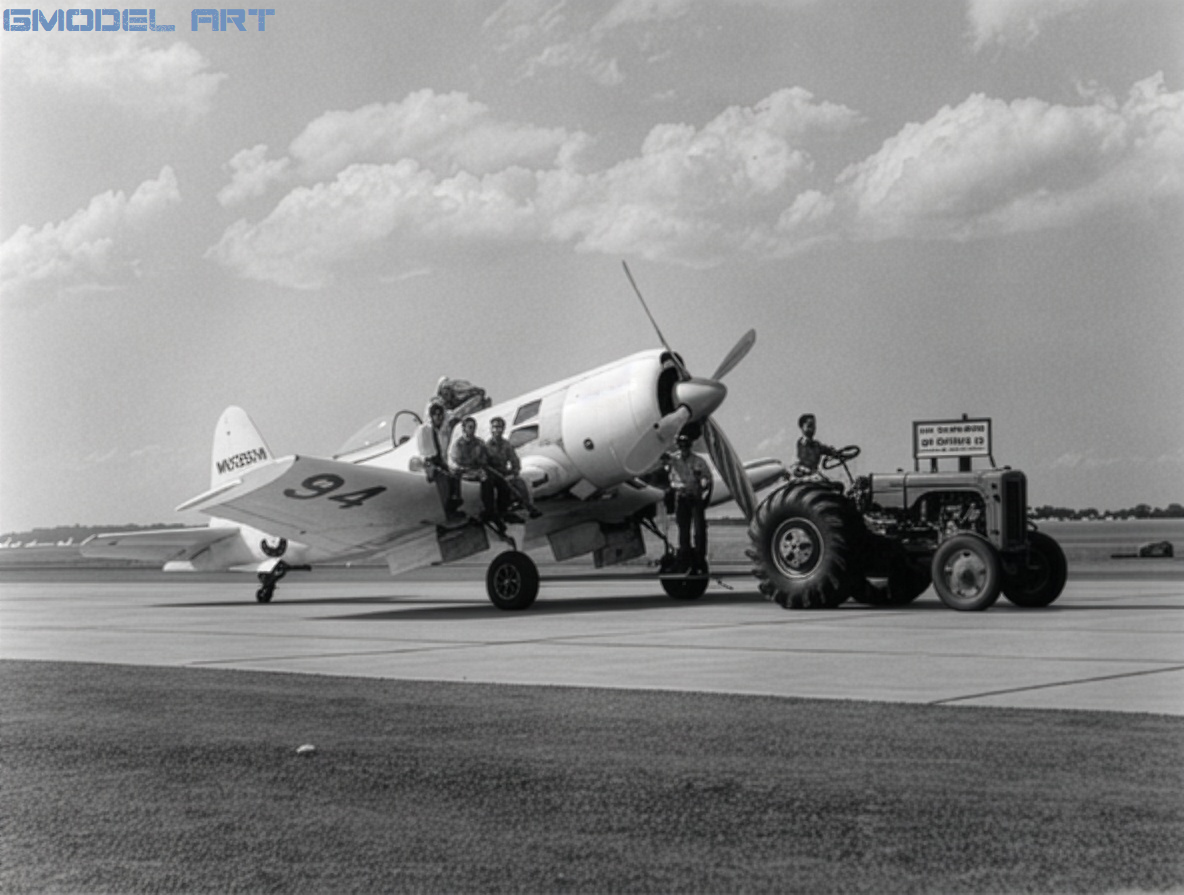
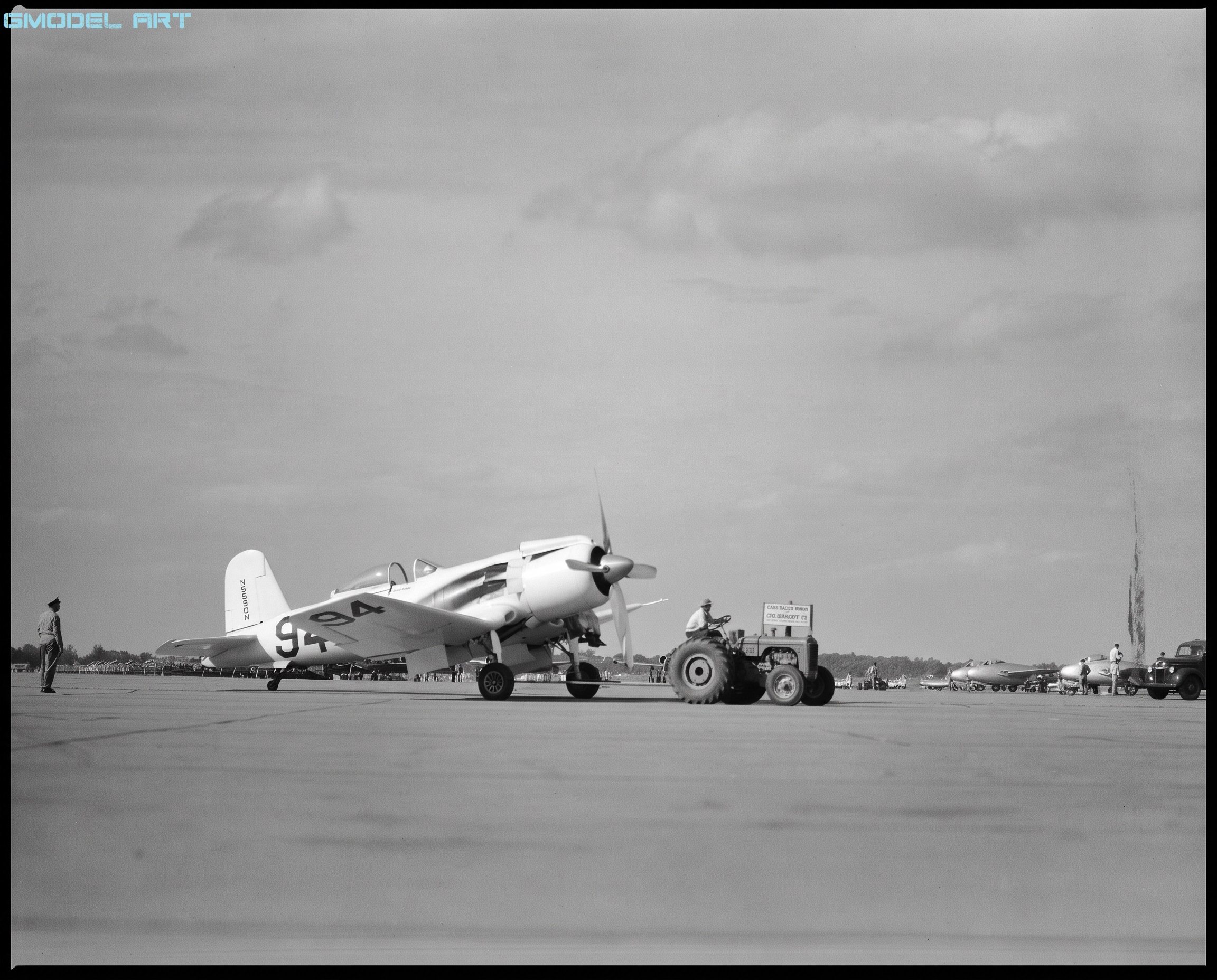
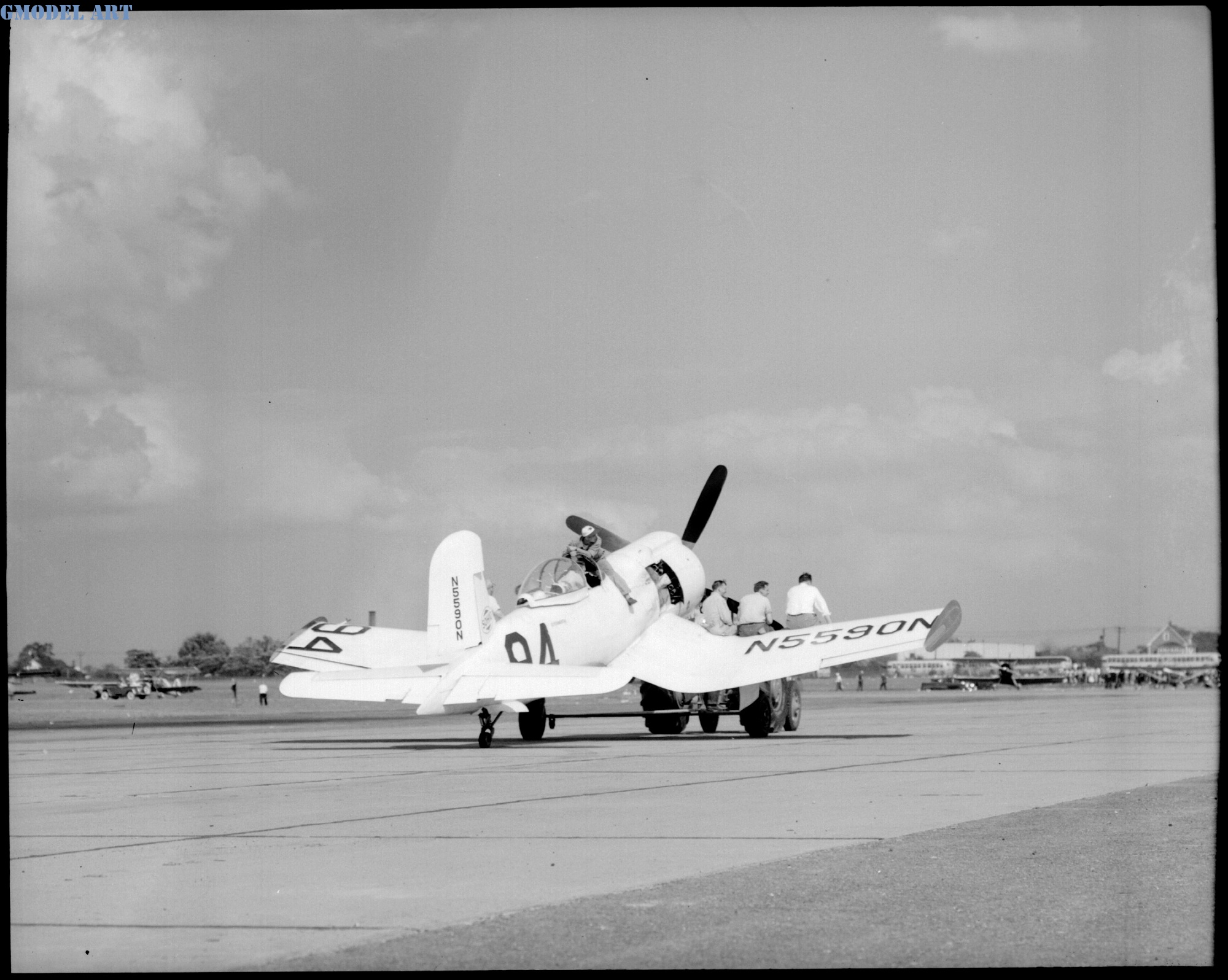
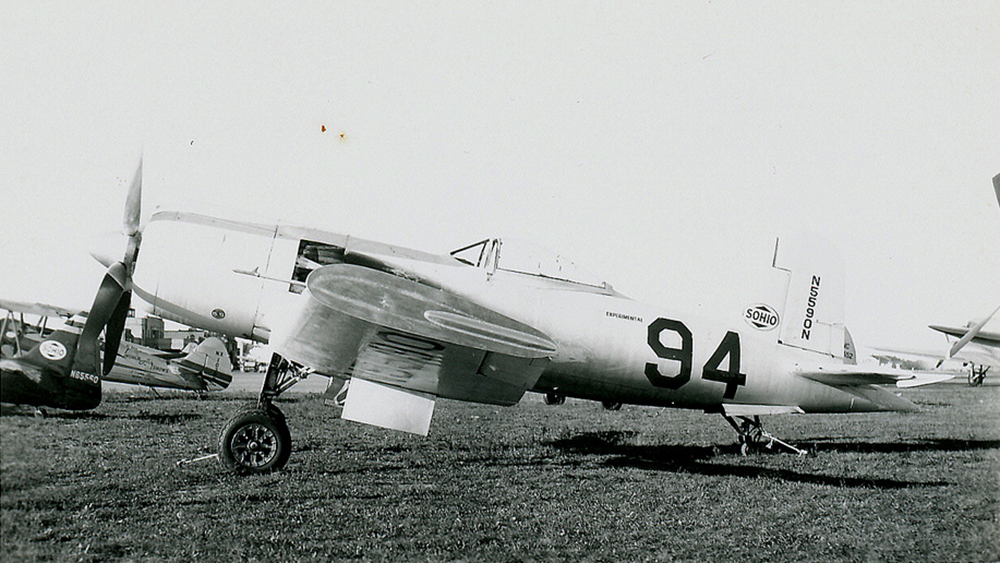
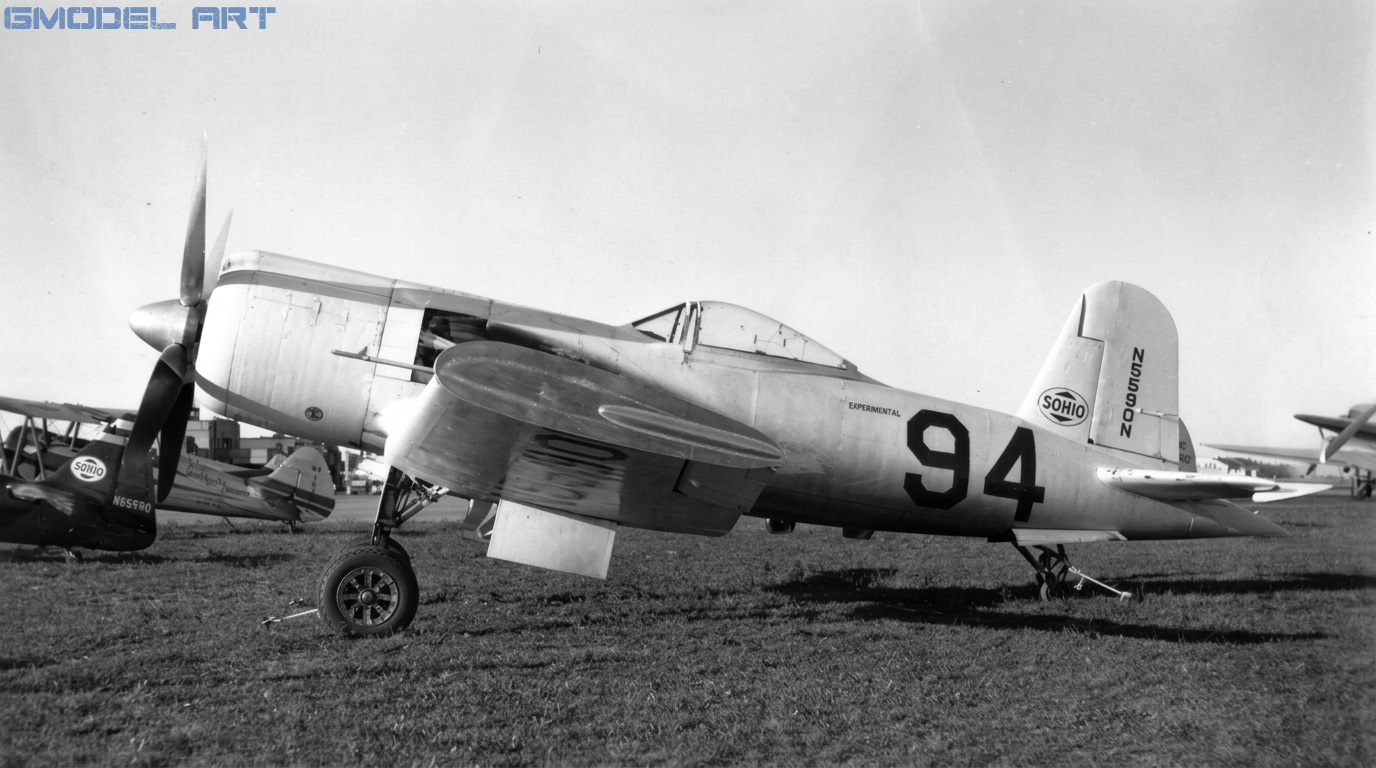
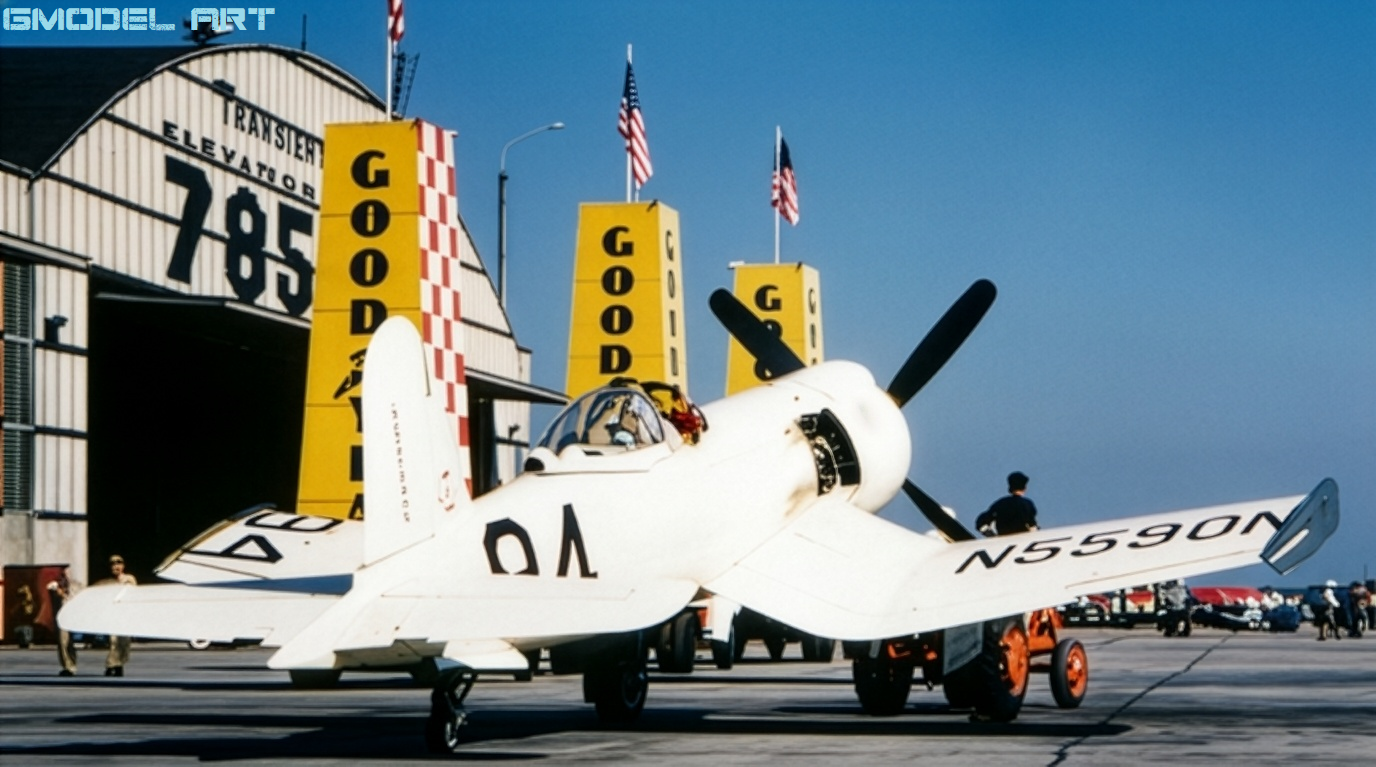
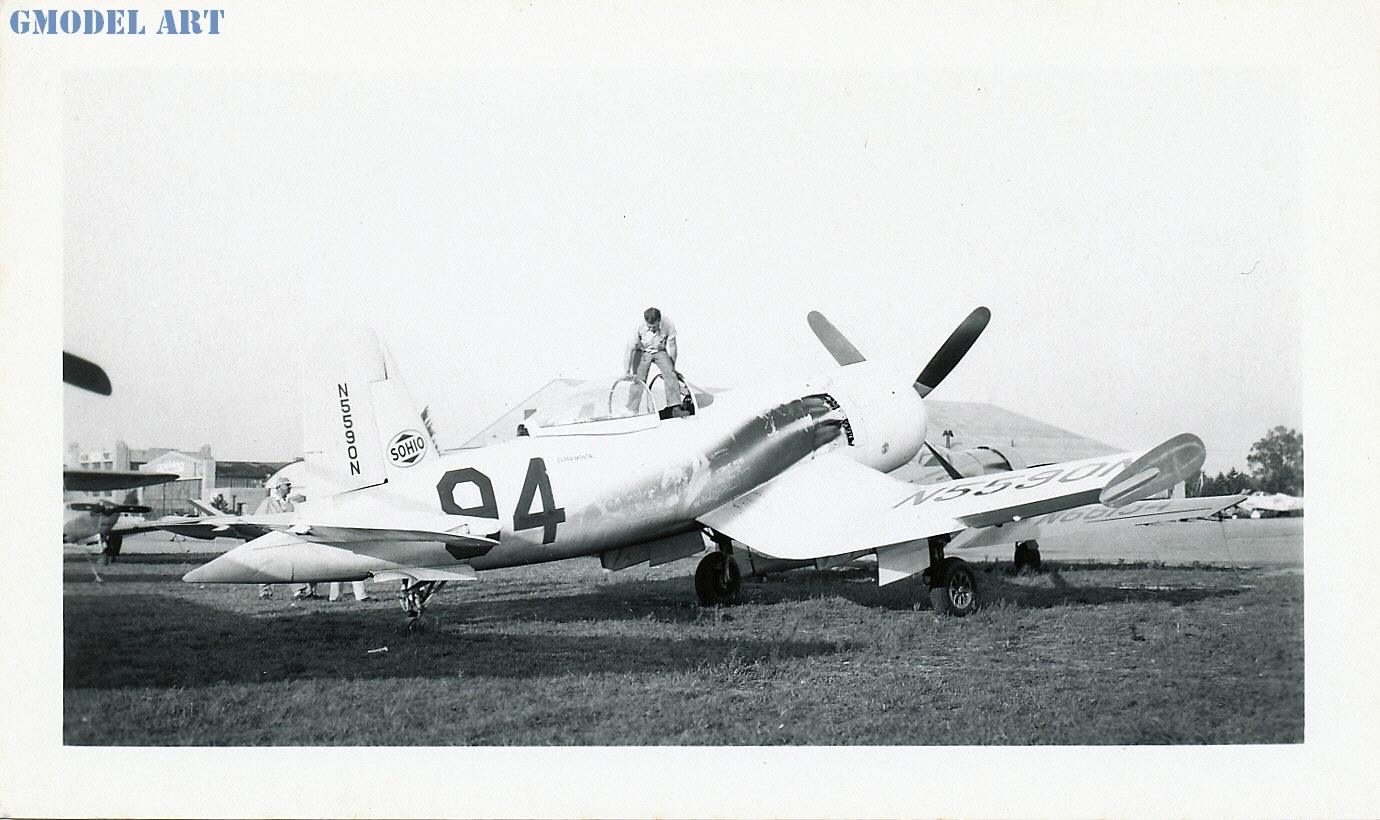
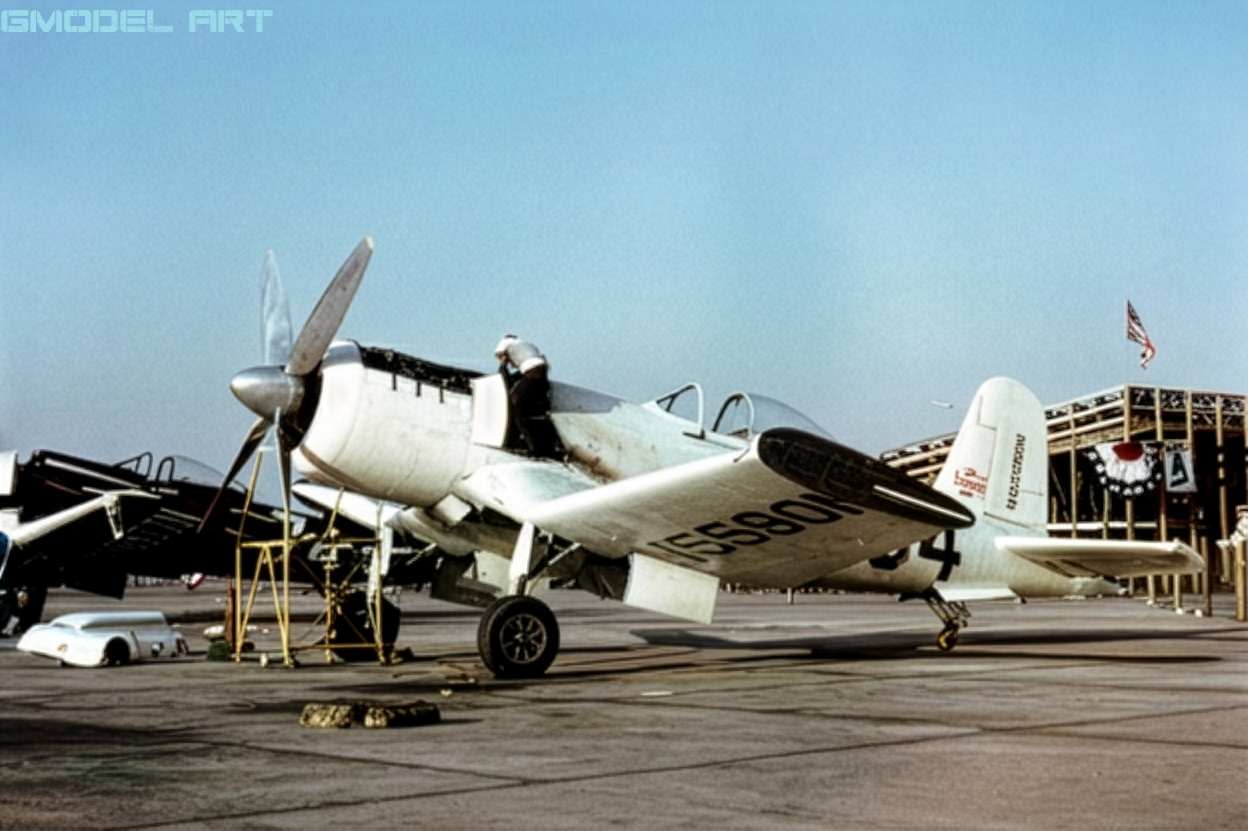
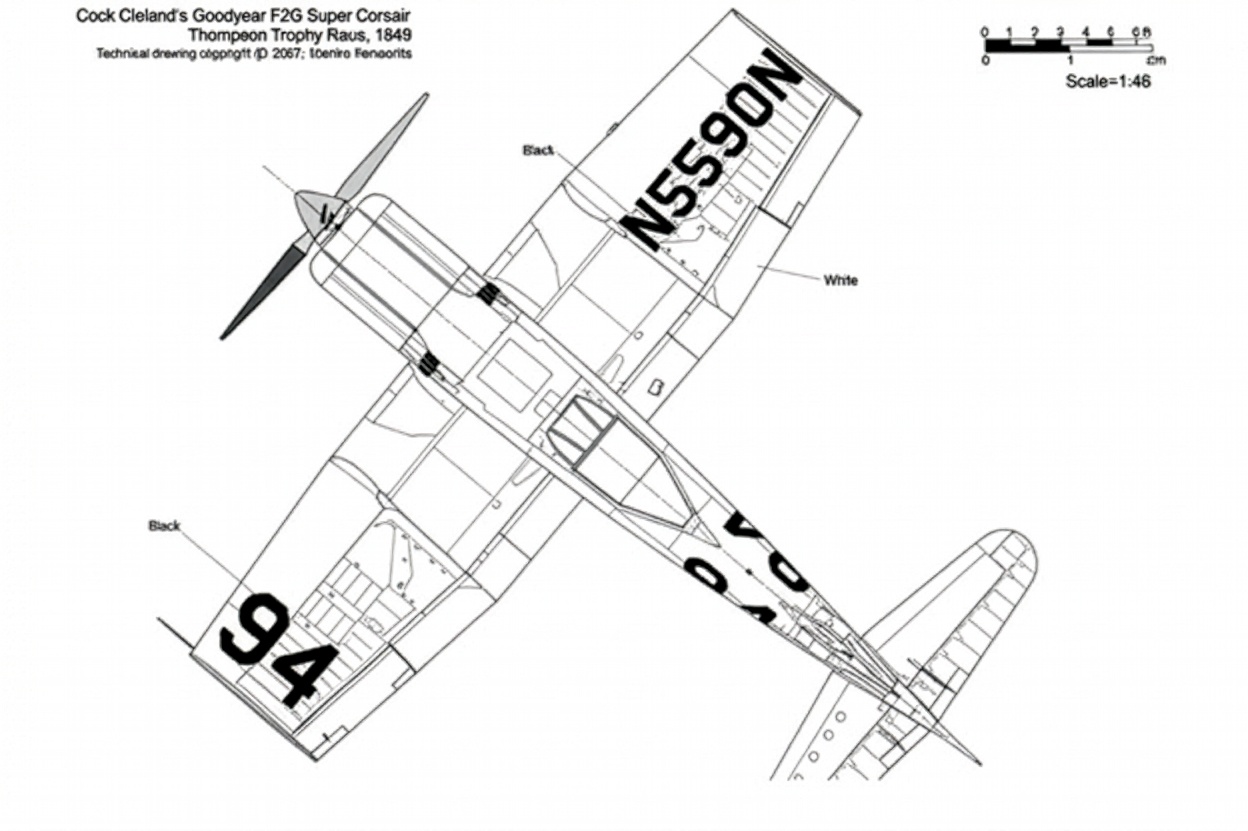
For the 1949 season, the #94 received further modifications. The clipped wings were retained and fitted with additional end plates, commonly described as wingtip plates.
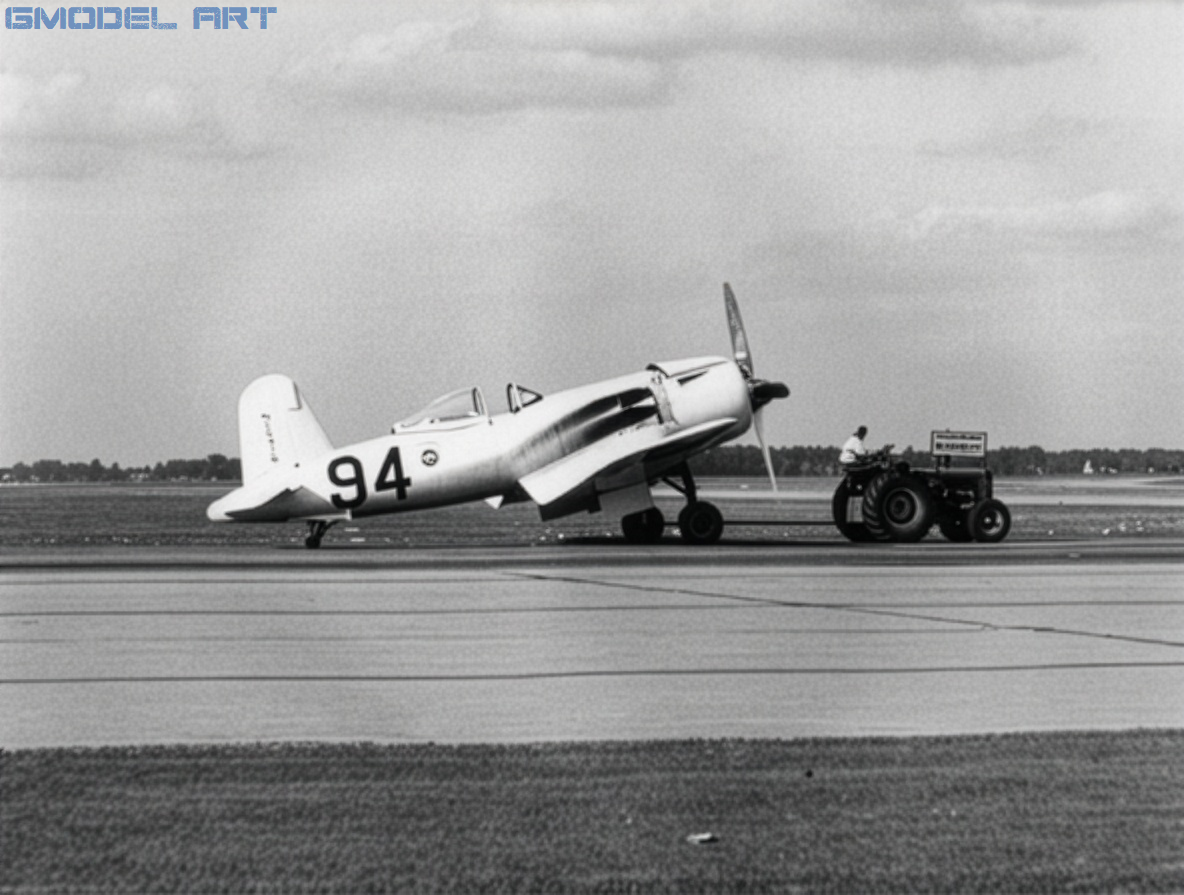
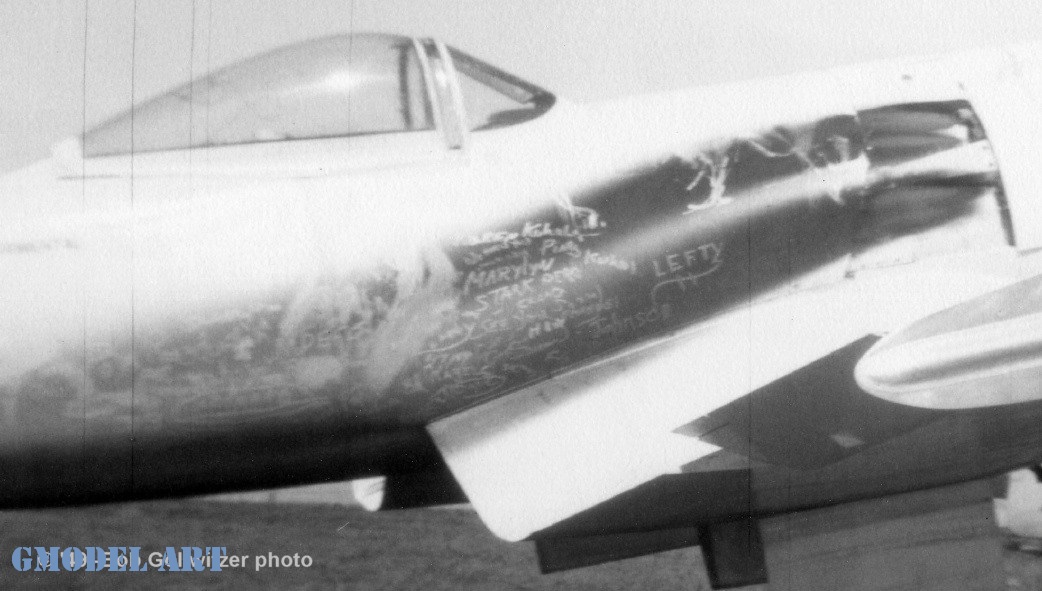
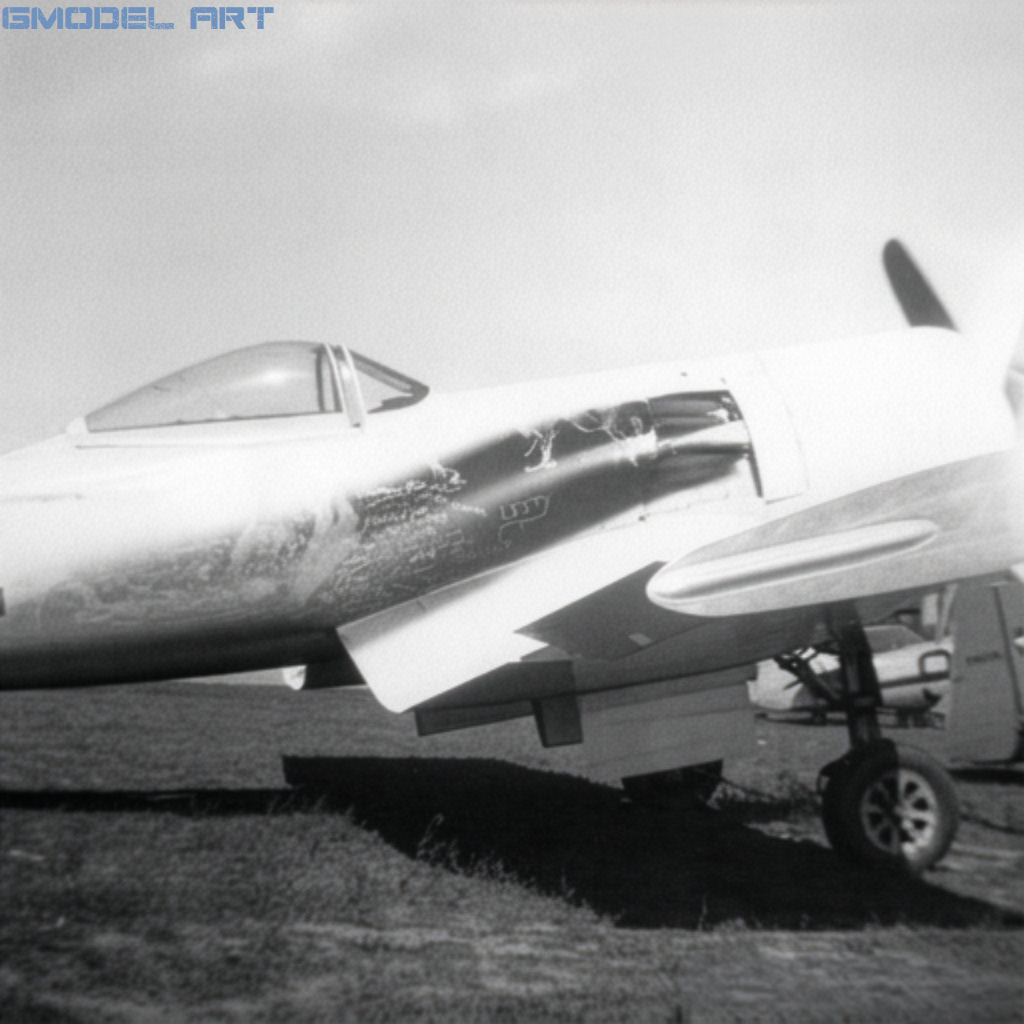
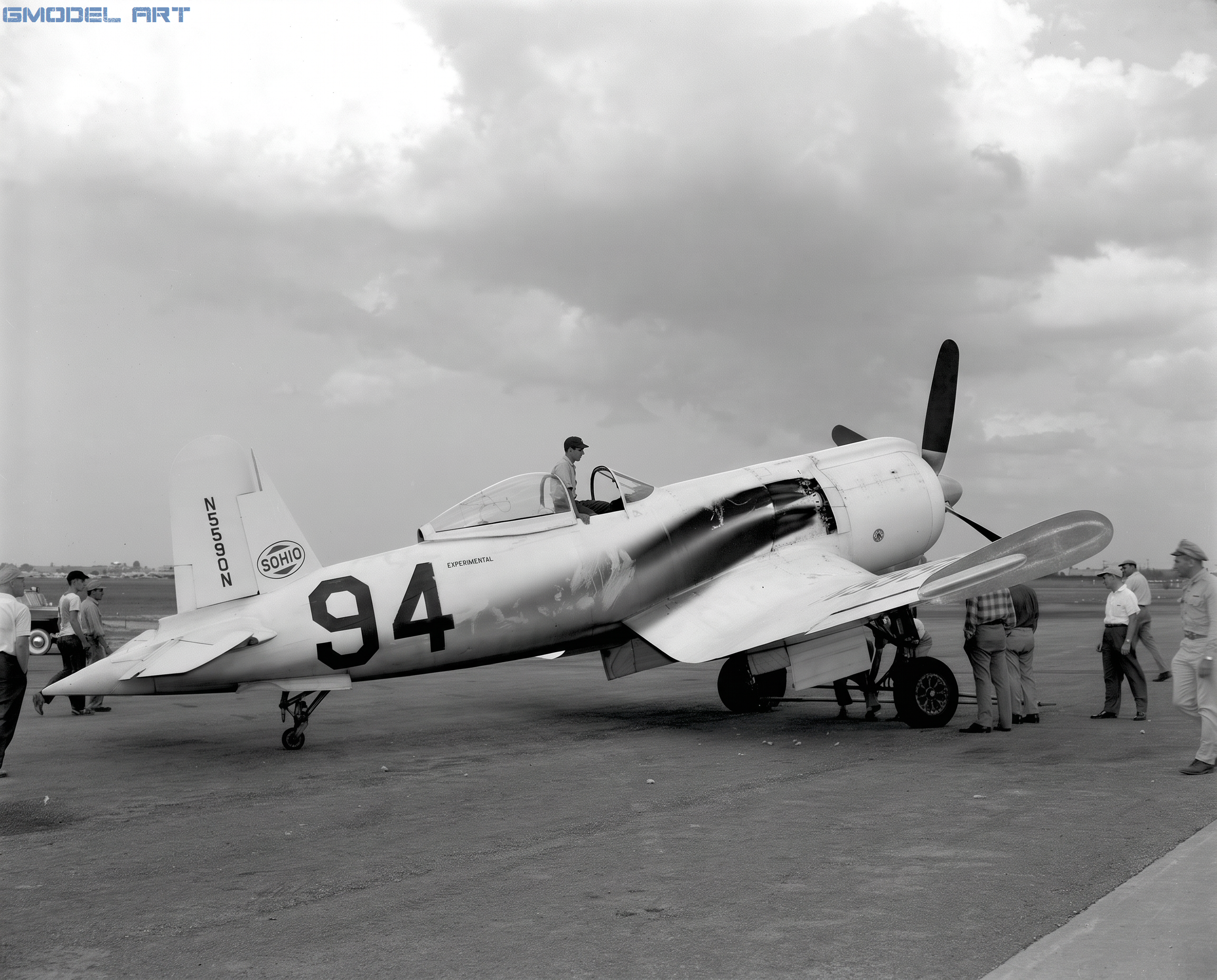
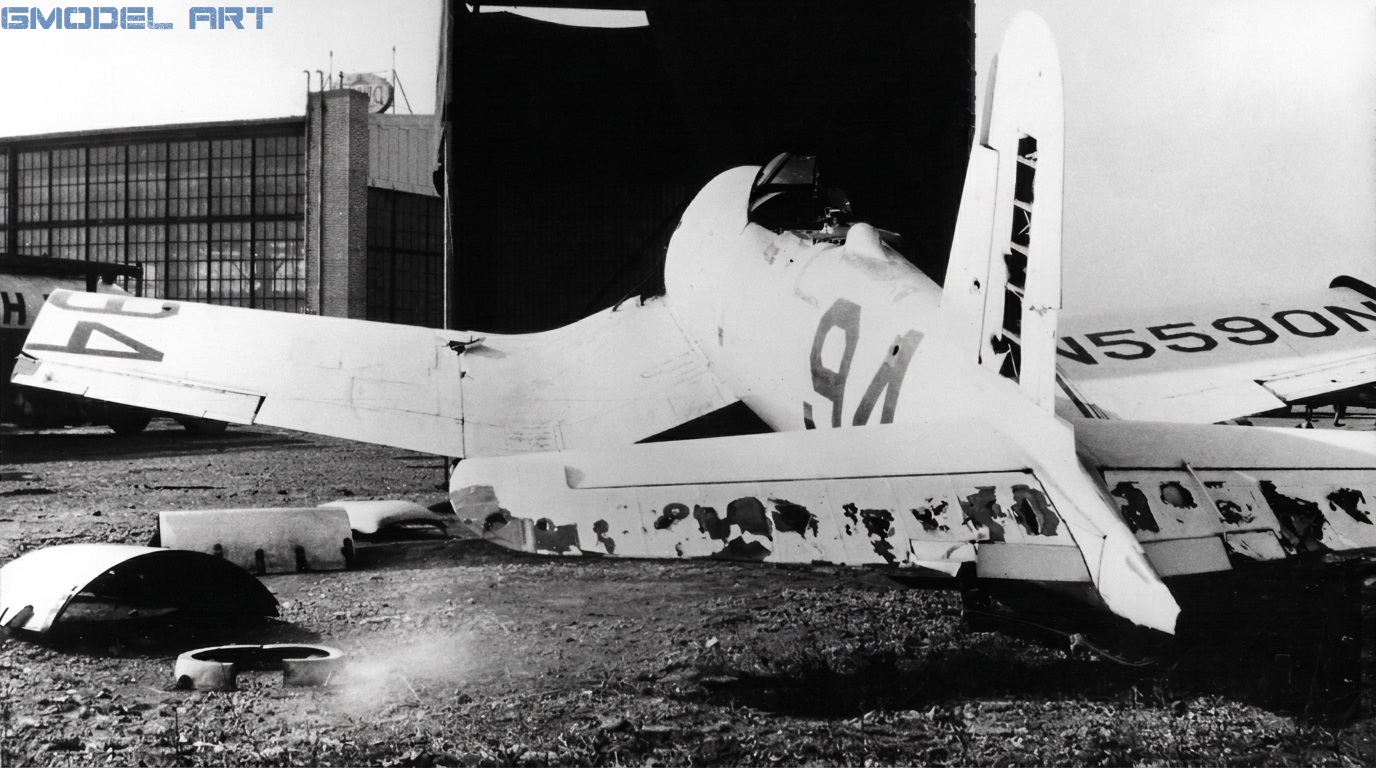
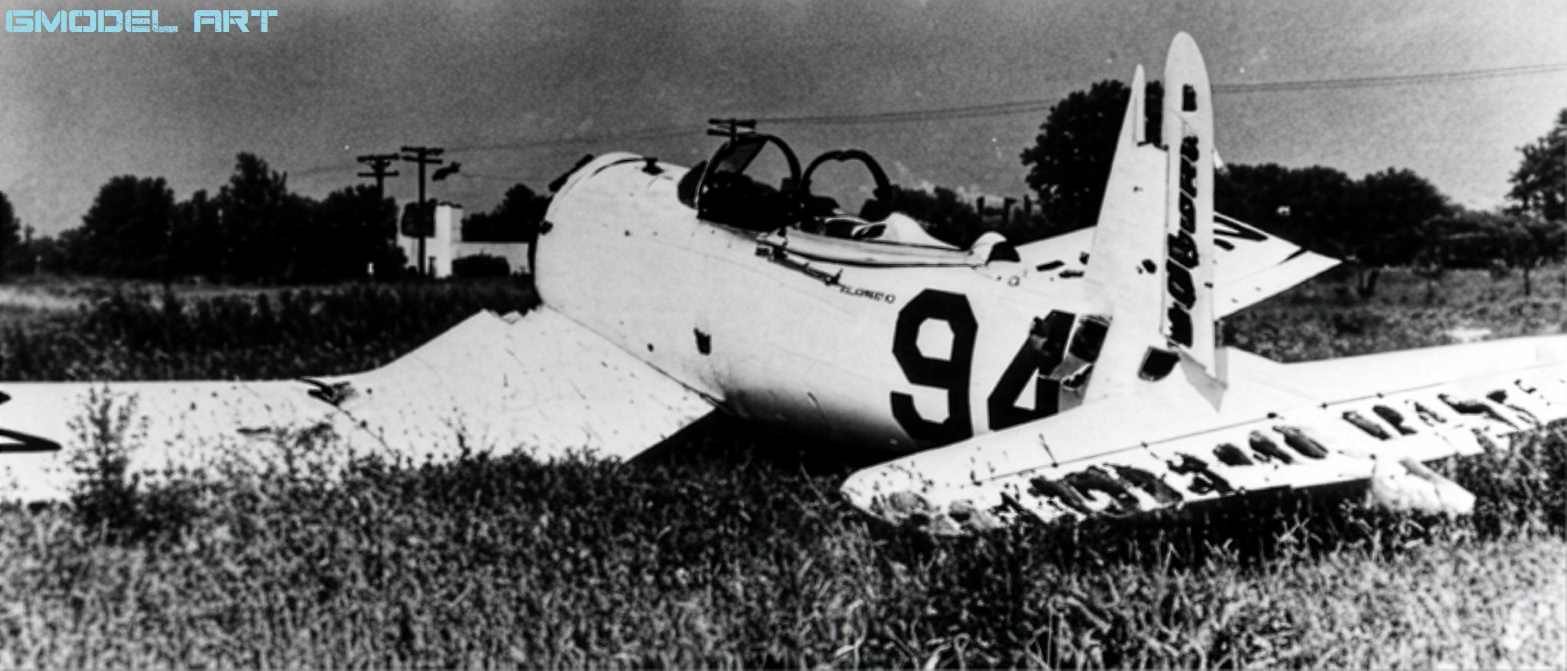
Photographic observations of the aircraft also indicate a modification to the rear fuselage, with an additional extension that altered its overall profile. The intercooler air intake also appears to have been revised into a more enclosed arrangement. These details should be evaluated against photographs of the actual aircraft before being reproduced in a model.
Cook Cleland competed at the Cleveland National Air Races from September 3 to 5, 1949. The aircraft qualified second in the Thompson Trophy Reciprocating Division with an average speed of 407.211 mph.
In the B Feature race, the #94 finished first, recording an average speed of 397.071 mph. This distinction is important: the aircraft won the B Feature race, not the main Thompson Trophy race.
The aircraft also entered the Tinnerman Trophy competition. It recorded first place in qualifying, with an average speed of 407.211 mph, but did not start the B Feature race.
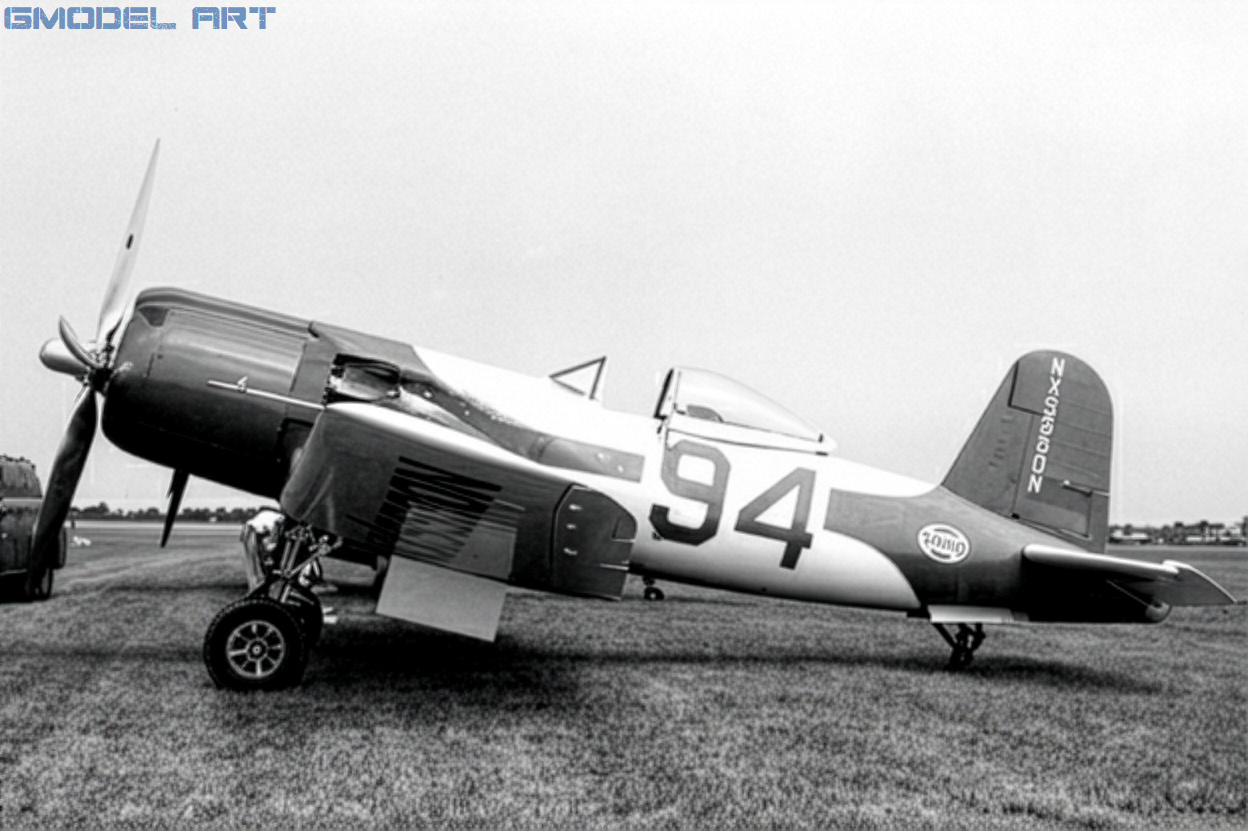
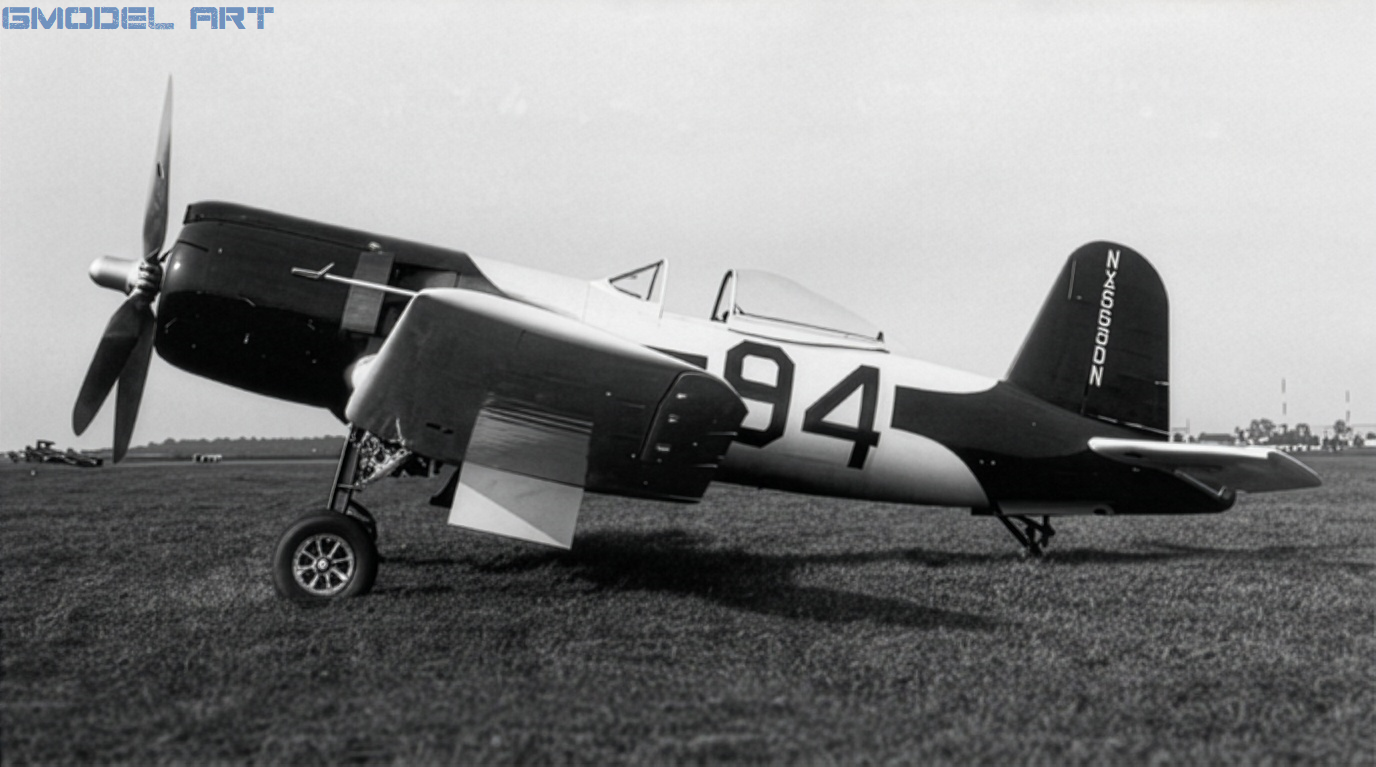
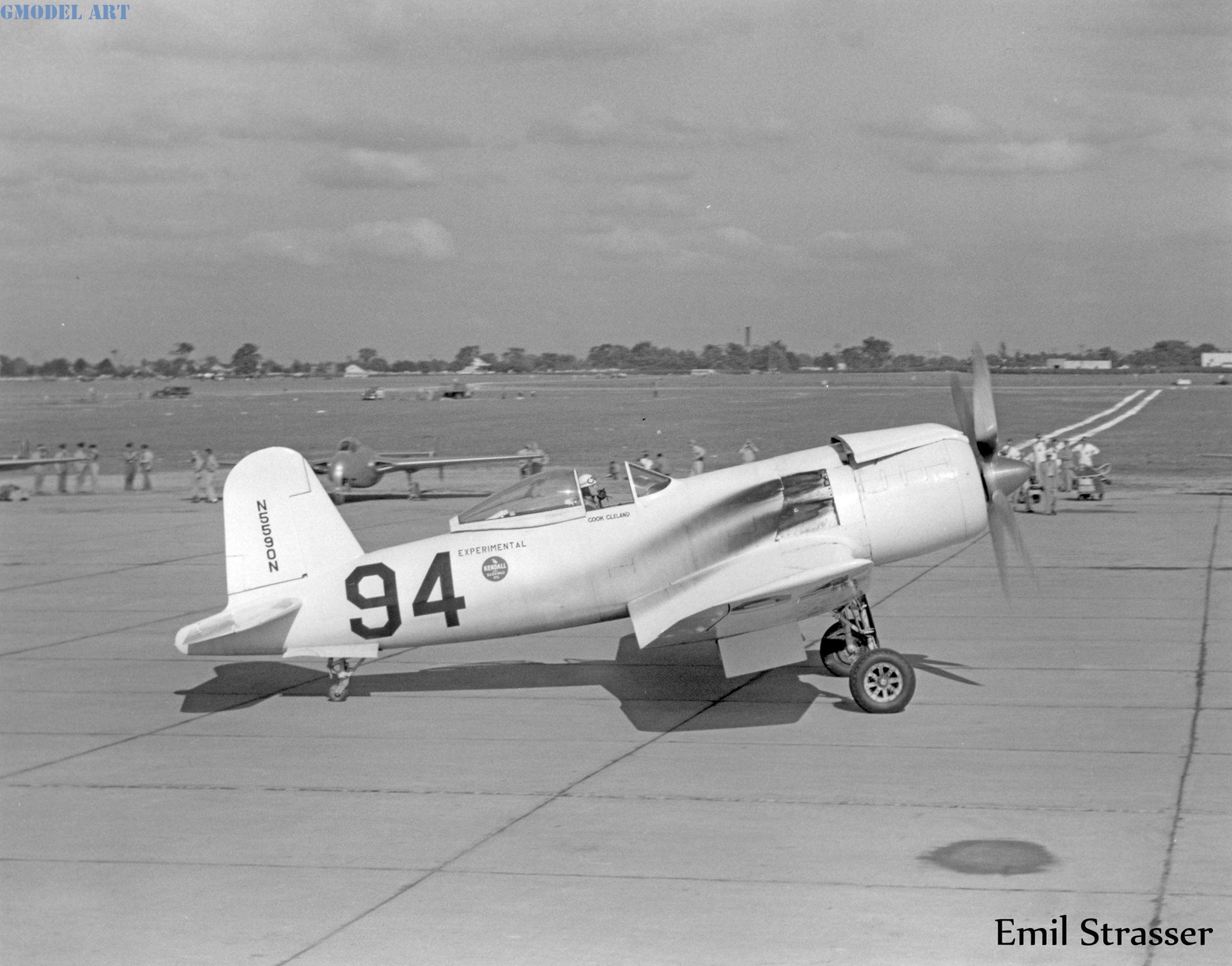
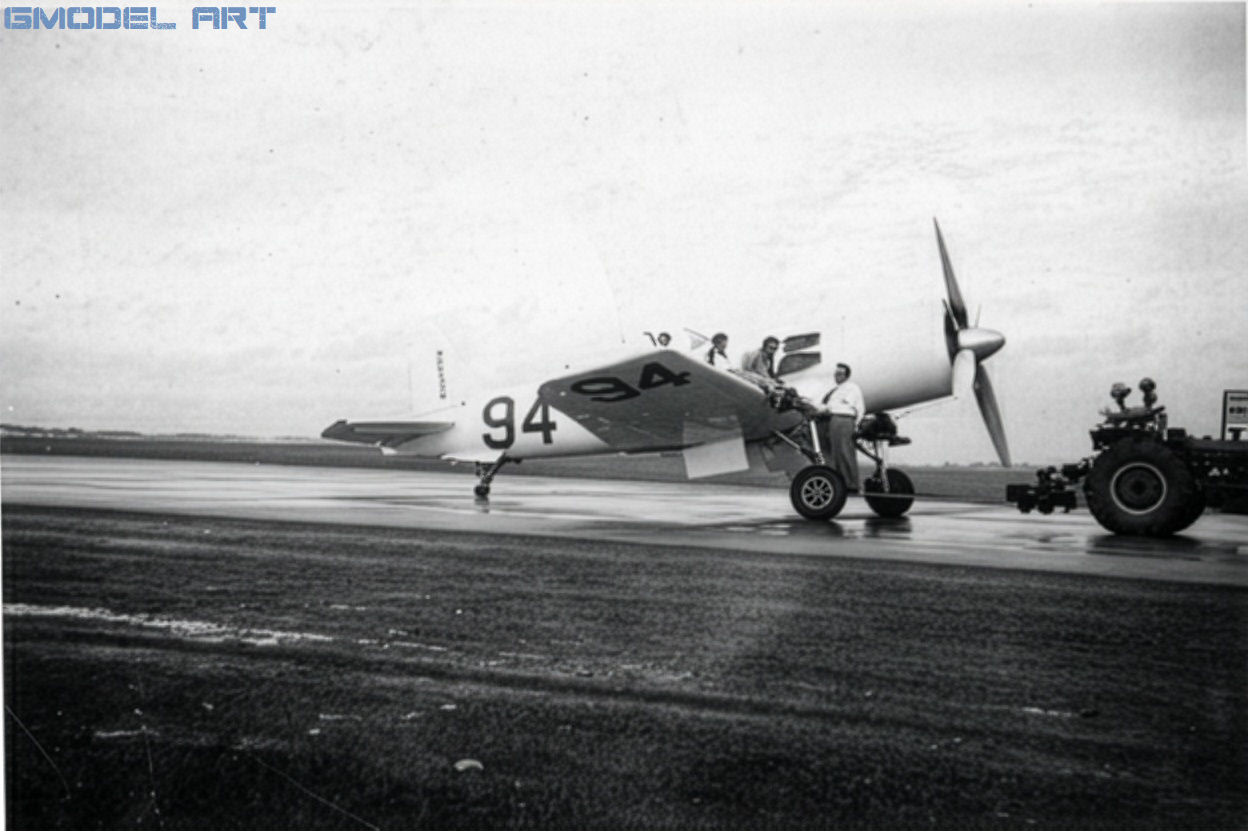
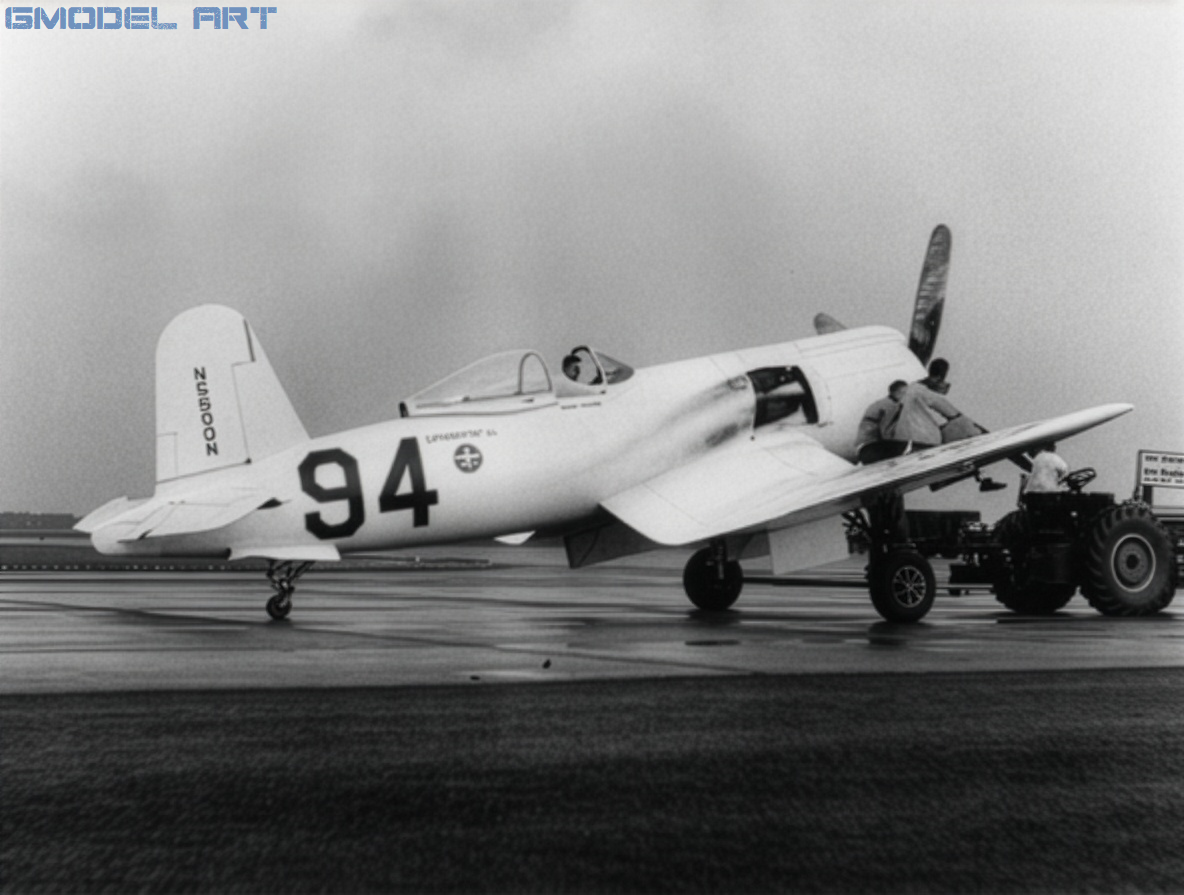
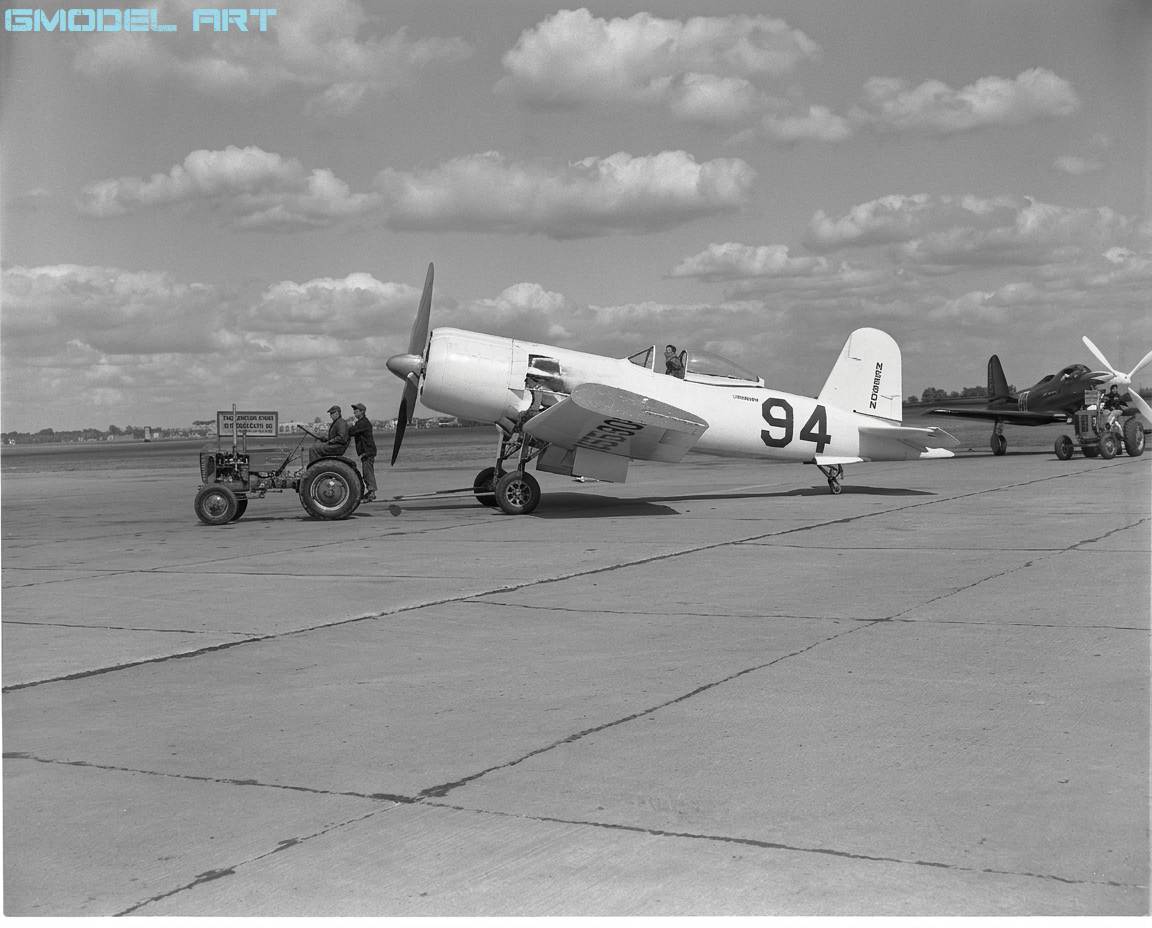
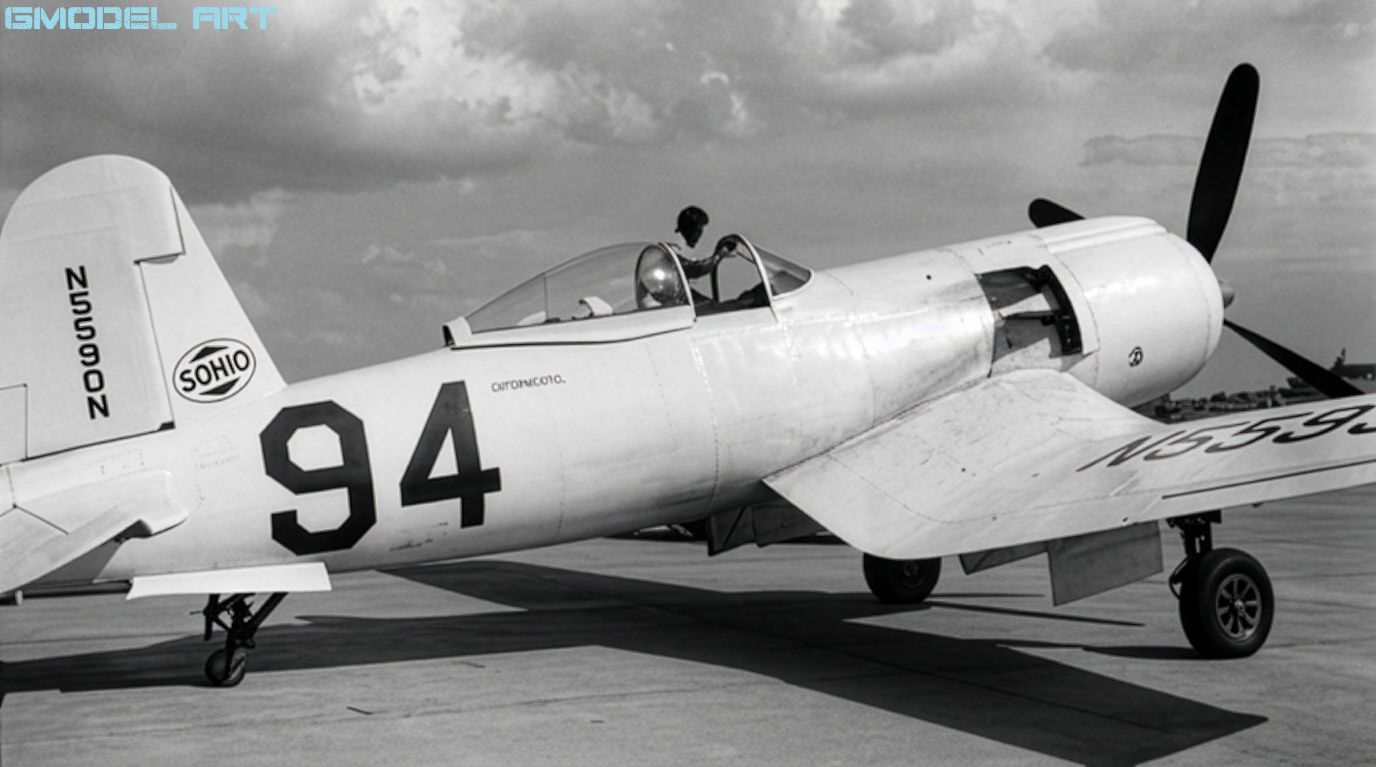
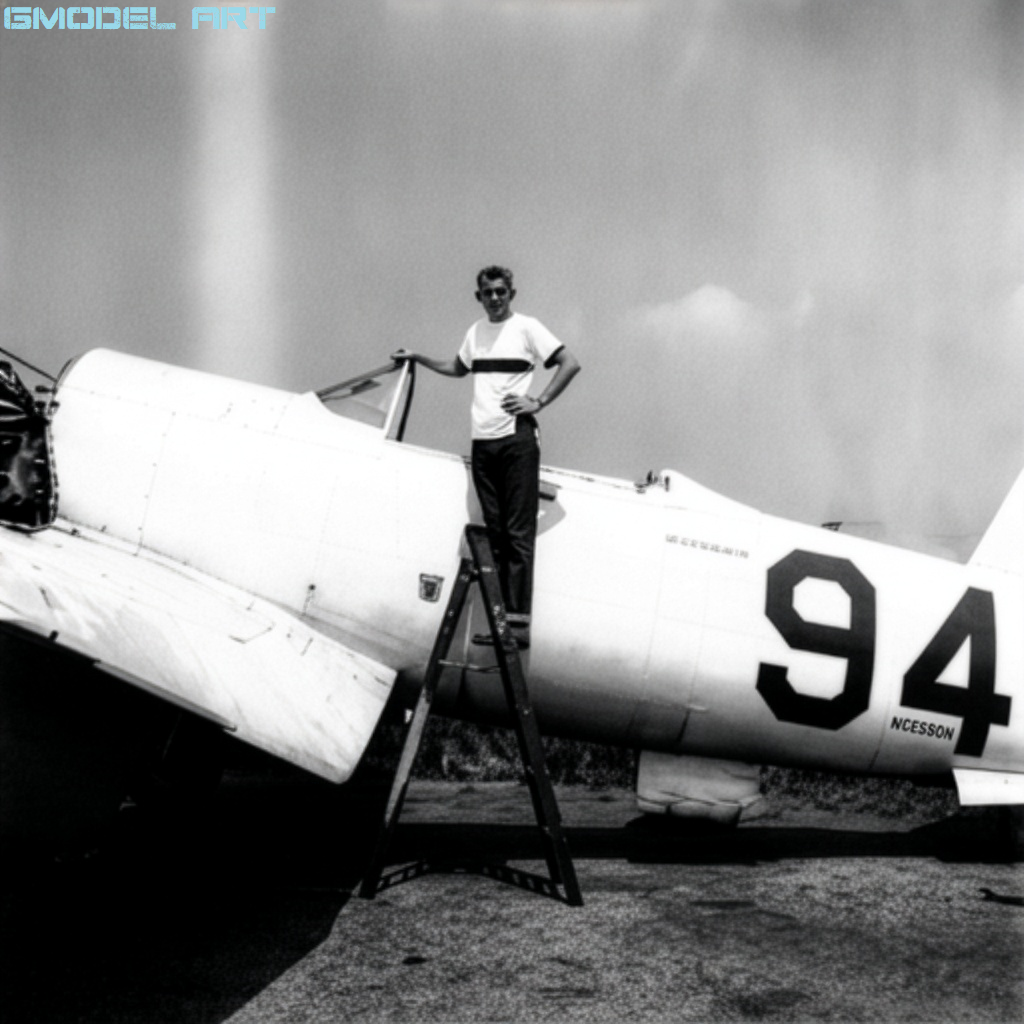
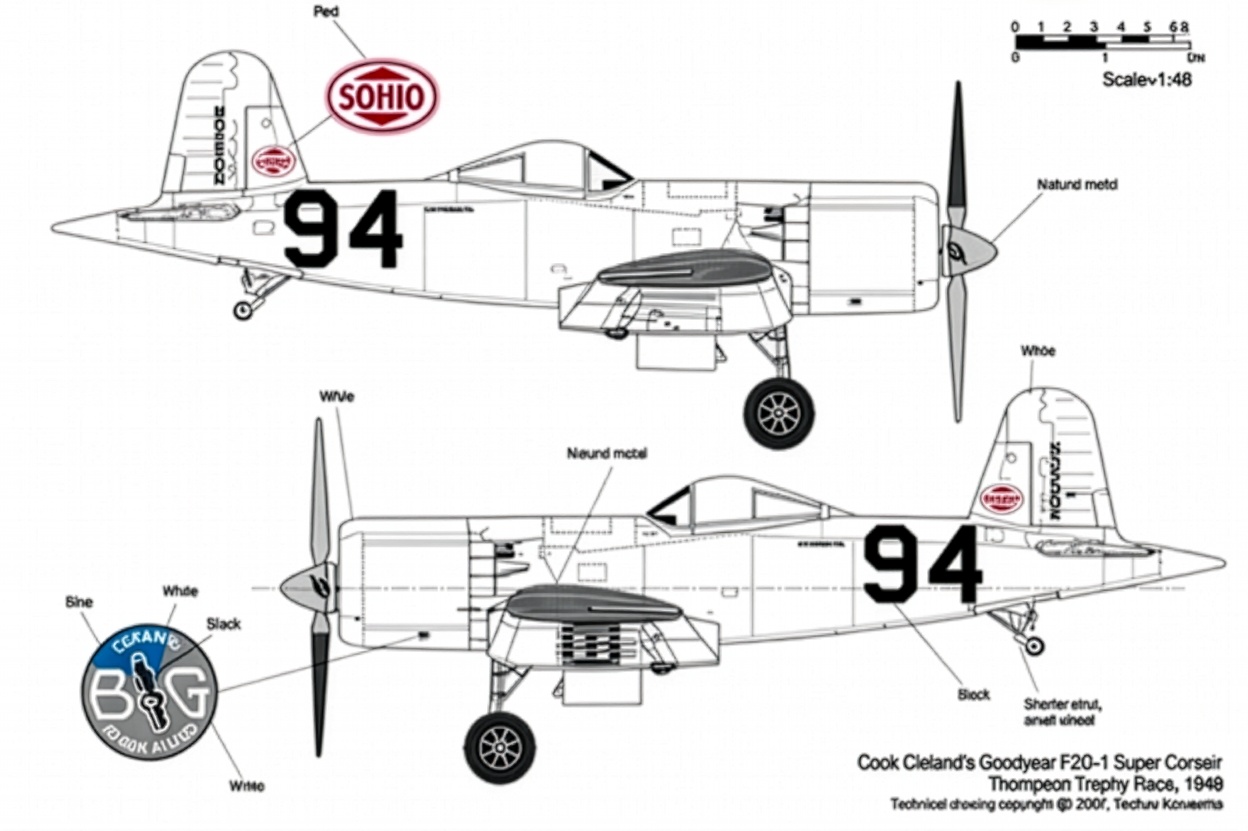
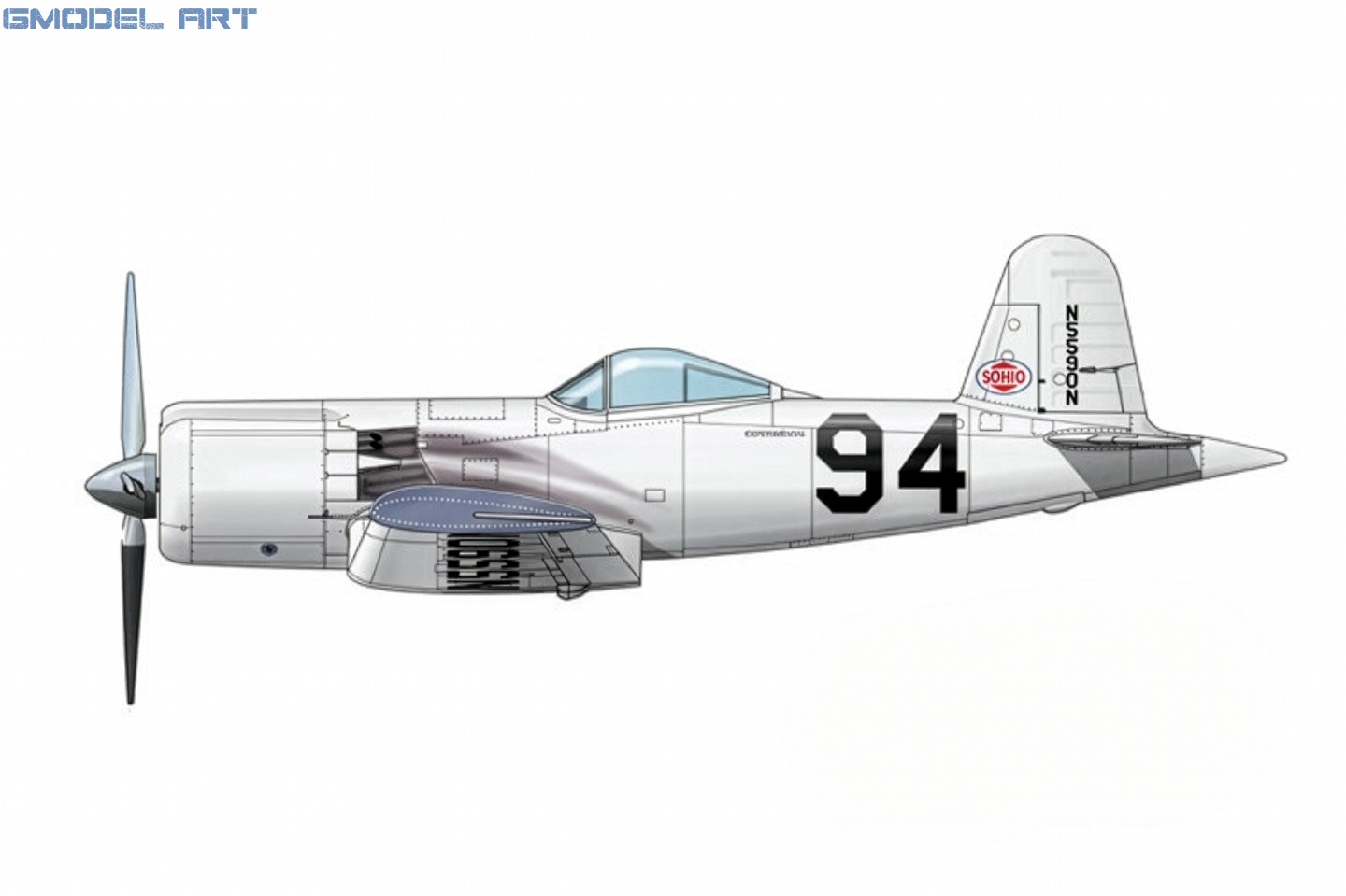
The 1949 racing appearance is associated with an all-white exterior finish, black racing numbers and black lettering. This is the characteristic final racing scheme of the aircraft.
Technical Characteristics and Individual Modifications
The XF2G-1 Super Corsair #94 retained the basic layout of the Corsair, but the installation of the R-4360 and its subsequent racing modifications made it substantially different from a standard F4U.
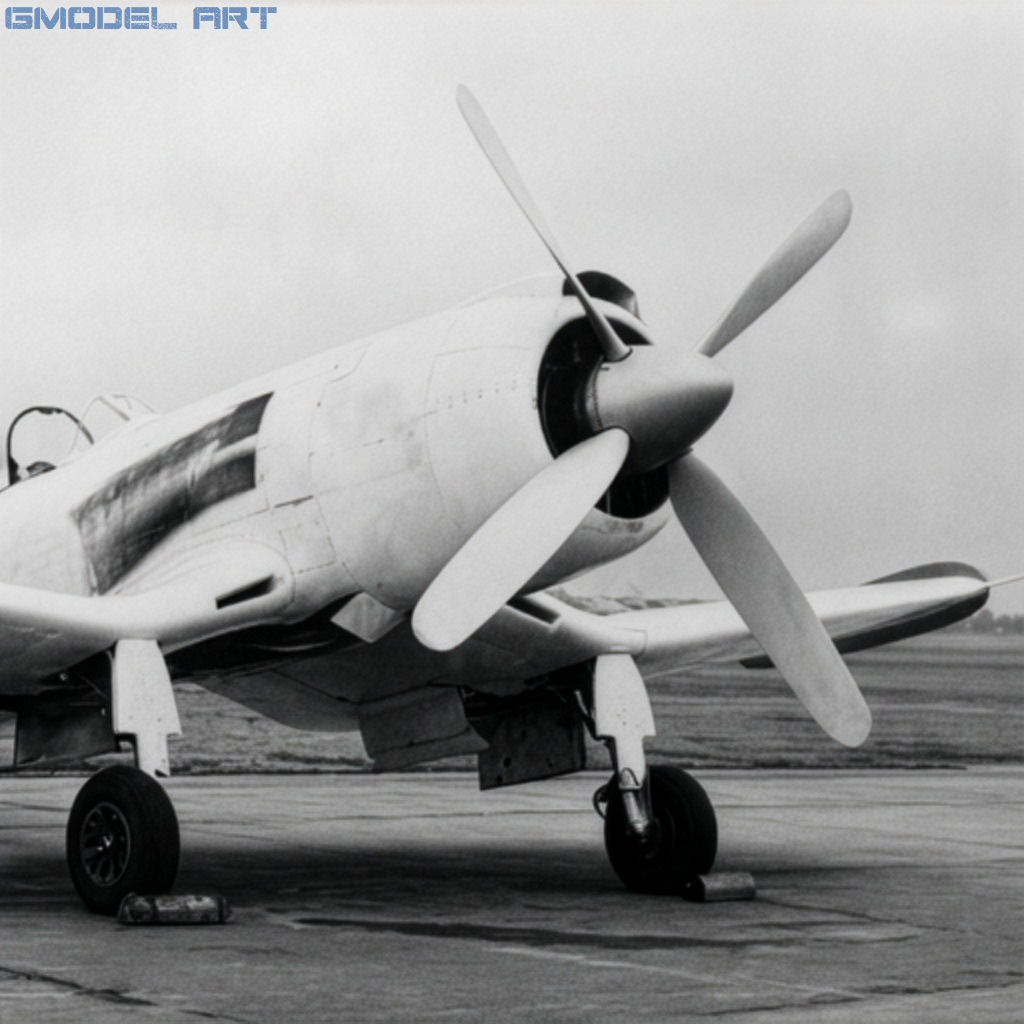
The Pratt & Whitney R-4360 Wasp Major was a 28-cylinder, four-row radial engine producing approximately 3,000 hp. It was coupled to a four-bladed propeller, while its large dimensions required a specially adapted engine cowling and carefully designed air intake arrangements.
The extended carburetor air intake is one of the distinctive features associated with the experimental configuration of BuNo 14693. The raised cockpit canopy, taller vertical tail with auxiliary rudder and modified engine installation further distinguish the Super Corsair from earlier F4U versions.
The wing modifications were particularly important to its racing appearance. In 1948, the aircraft received clipped wings with metal covering. In 1949, additional wingtip plates were introduced.
The propeller deserves special attention. The different hub or spinner arrangement, together with its polished aluminium finish and contrasting black rear-facing surface, is a particularly interesting visual feature of the racing aircraft. Its exact technical origin remains uncertain, making photographic references especially important for an accurate reconstruction.
Modeling Guide — Goodyear XF2G-1 Super Corsair #94
An accurate model of the XF2G-1 requires choosing a specific racing season before construction begins. Photographs from 1947, 1948 and 1949 show different external configurations, and their features should not be combined indiscriminately.
The 1949 configuration is an especially interesting choice because it combines clipped wings, additional wingtip plates, the modified rear fuselage and the characteristic all-white racing finish with black markings.
Particular attention should be paid to the R-4360 engine, its cowling and the extended carburetor air intake. These details should be based on photographs of the actual BuNo 14693 rather than generic drawings of a standard F4U Corsair.
The wings must also reflect the correct racing period. For a 1948 model, reproduce the clipped wings with metal covering. For the 1949 version, include the additional wingtip plates and the other documented changes visible in period photographs.
The propeller and its hub are another important modeling feature. The polished aluminium finish and contrasting black rear-facing surface should be reproduced carefully, using photographs as the main reference. The precise origin of the modified spinner arrangement remains uncertain, so unnecessary assumptions should be avoided.
For the 1949 version, the basic exterior finish should be white, with black racing number 94 and civilian registration N5590N. No specific FS or ANA colour designation should be assigned without supporting documentation, as this was a civilian racing finish rather than a standardized military camouflage scheme.
The final finish should remain relatively clean. Subtle tonal variation across the white surfaces, limited wear around maintenance areas and restrained treatment of the metallic wing surfaces will provide a convincing result. Excessive weathering, heavy oxidation or extensive operational wear would not accurately represent an aircraft maintained for competitive racing.
The historical configuration must take priority over aesthetic interpretation. Correct wing geometry, engine installation, air intakes, propeller details and racing markings are the elements that make the finished model recognizable as Cook Cleland’s XF2G-1 Super Corsair #94.
F2G Super Corsair: Goodyear Factory Story
Modeling Paint Reference Chart — Four Essential Colors
This chart covers the four essential color categories required for the racing schemes of Race #94: red and white for the earlier appearance, white and black for the 1949 scheme, and polished metallic finishes for the propeller.
Paint Manufacturer | Pure Red | Gloss White | Gloss Black | Chrome / Aluminium |
|---|---|---|---|---|
X-7 Red | X-2 White | X-1 Black | X-11 Chrome Silver | |
Mr. Hobby Aqueous | H3 Red | H1 White | H2 Black | H8 Silver |
Vallejo Model Air | 71.003 Red | 71.001 White | 71.057 Black | 71.064 Chrome |
AK11092 Red | AK11001 White | AK11029 Black | AK11207 Aluminium | |
Humbrol | 19 Bright Red | 22 Gloss White | 21 Gloss Black | 11 Silver |
Revell Aqua Color | 31 Fiery Red | 04 White | 07 Black | 90 Silver |
The Final Fate of the Aircraft
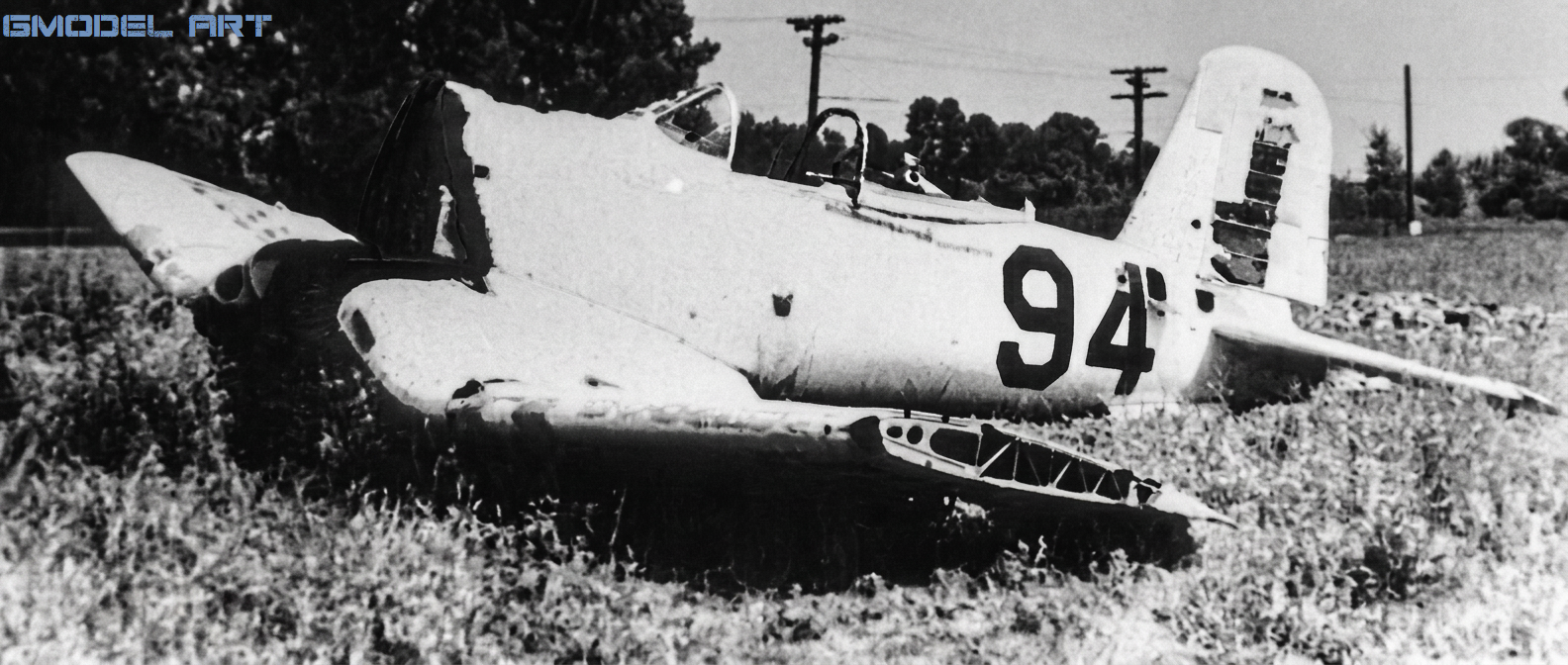
Following the end of its racing career, BuNo 14693 was used by the Cleveland Airport Fire Department for fire-training purposes. The civilian registration N5590N was cancelled in 1955. Historical records indicate that around 1956 the fuselage was burned during fire-training exercises and subsequently buried.
The R-4360 engine, four-bladed propeller and engine cowling survived and were transferred to the Fred Crawford Aviation and Auto Museum in Cleveland. The complete aircraft was not preserved.
The Goodyear XF2G-1 Super Corsair BuNo 14693 — Race #94 remains a remarkable example of the transition from wartime experimental aviation to post-war air racing. Its engineering development, successive modifications and racing achievements make it an especially interesting subject for aviation historians and scale modelers alike.