article
Sikorsky S-64 Skycrane: Greek Firefighting and Scale Modeling Guide
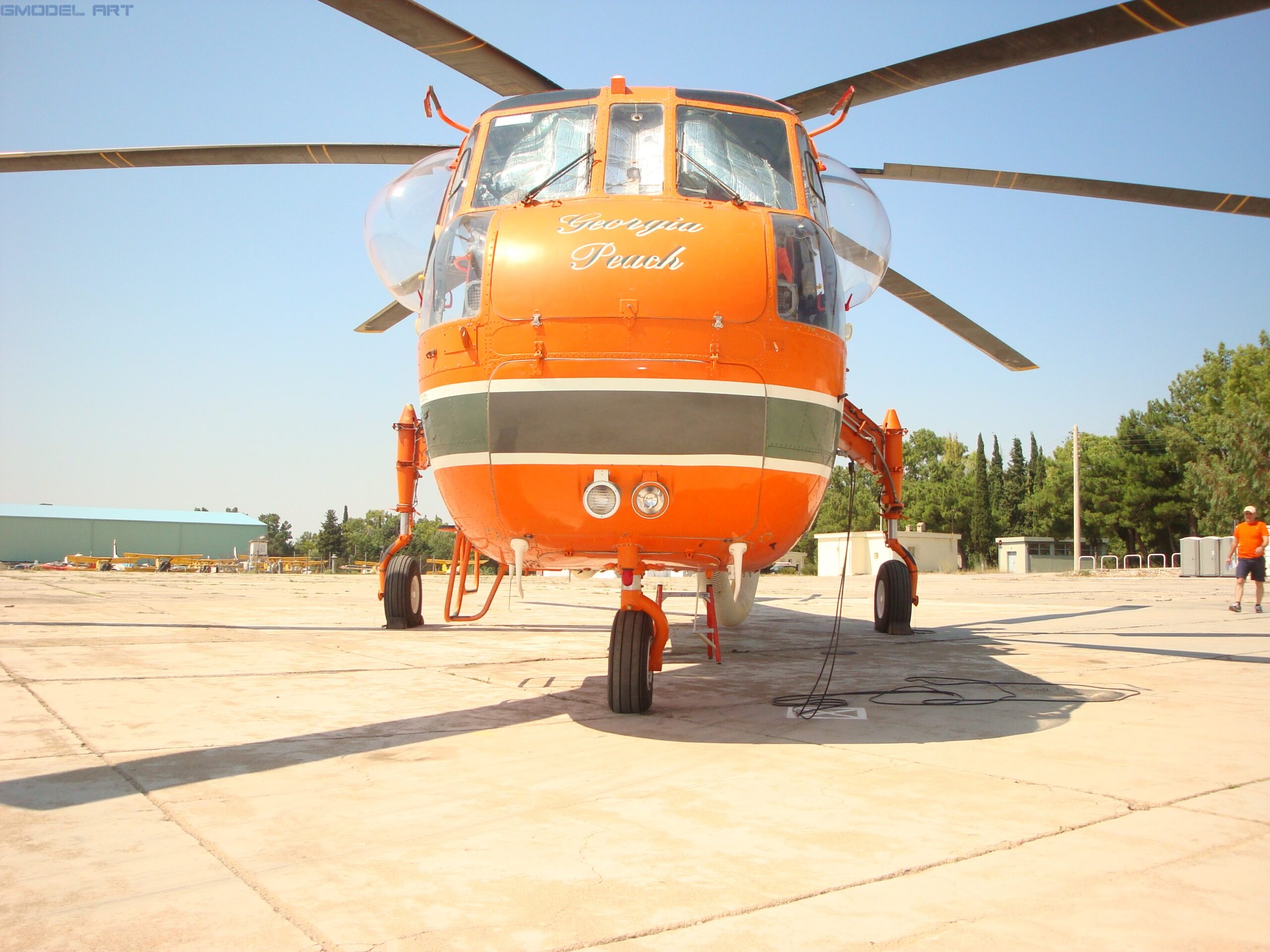
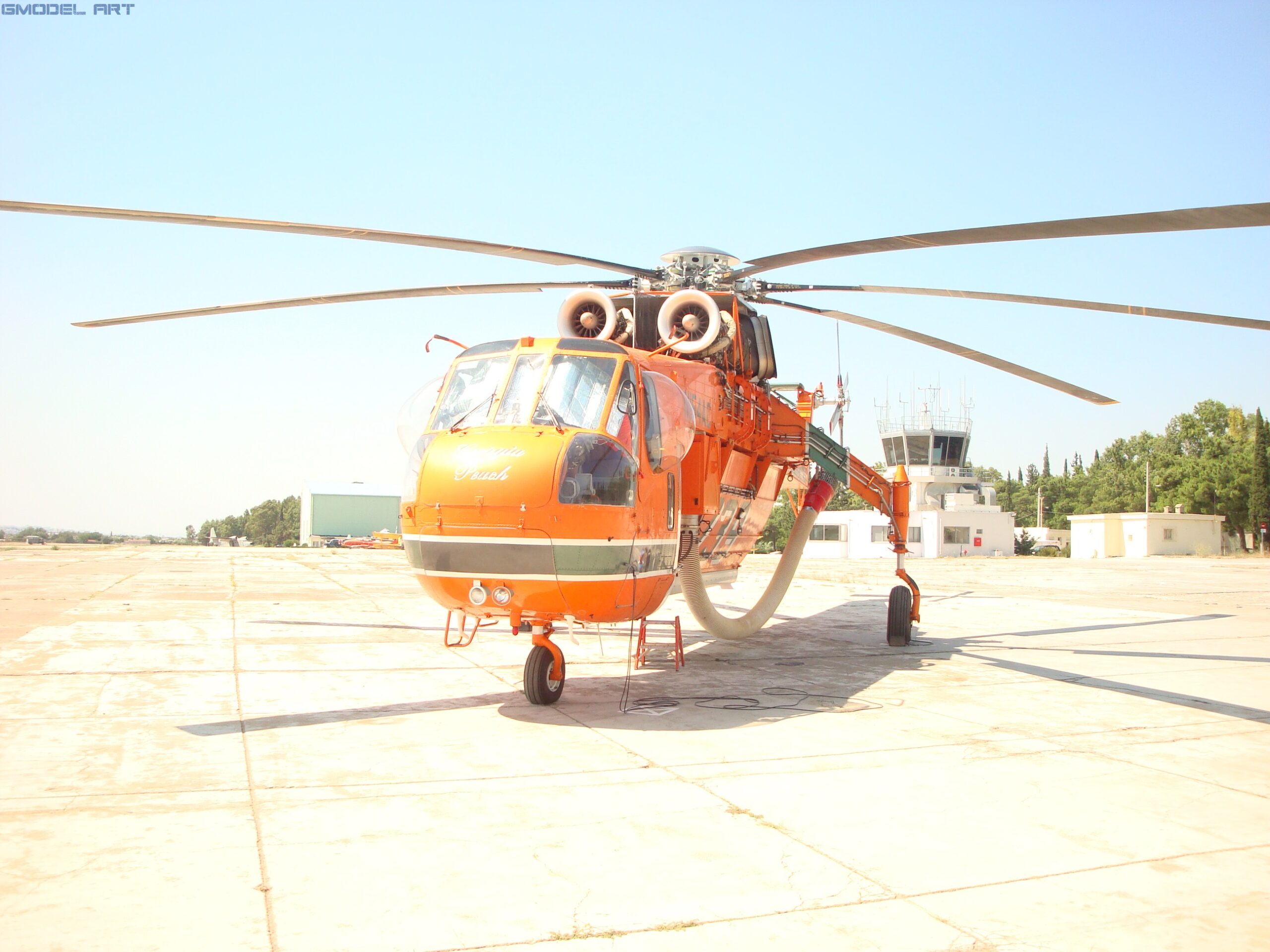
The Sikorsky S-64 Skycrane is one of the most distinctive heavy-lift helicopters ever developed. Its open-frame fuselage, high landing gear and exceptional lifting capability give it an appearance unlike that of a conventional helicopter. Originally designed to transport heavy loads, the aircraft has evolved into a valuable platform for aerial firefighting, including operations in Greece.
For aviation enthusiasts and scale modelers, the S-64 combines an unusual engineering design with a strong connection to modern firefighting and an equally fascinating military history.
From the S-64 Prototype to the CH-54A Tarhe
Developed by Sikorsky Aircraft, the original S-64 prototype made its first flight on May 9, 1962. The U.S. Army subsequently adopted the military version as the CH-54A Tarhe, which became widely used during the Vietnam War.
The CH-54A transported artillery, vehicles, ammunition and other heavy equipment using an external cargo sling. Its lifting capability also made it particularly valuable for recovering damaged aircraft and helicopters from difficult locations.
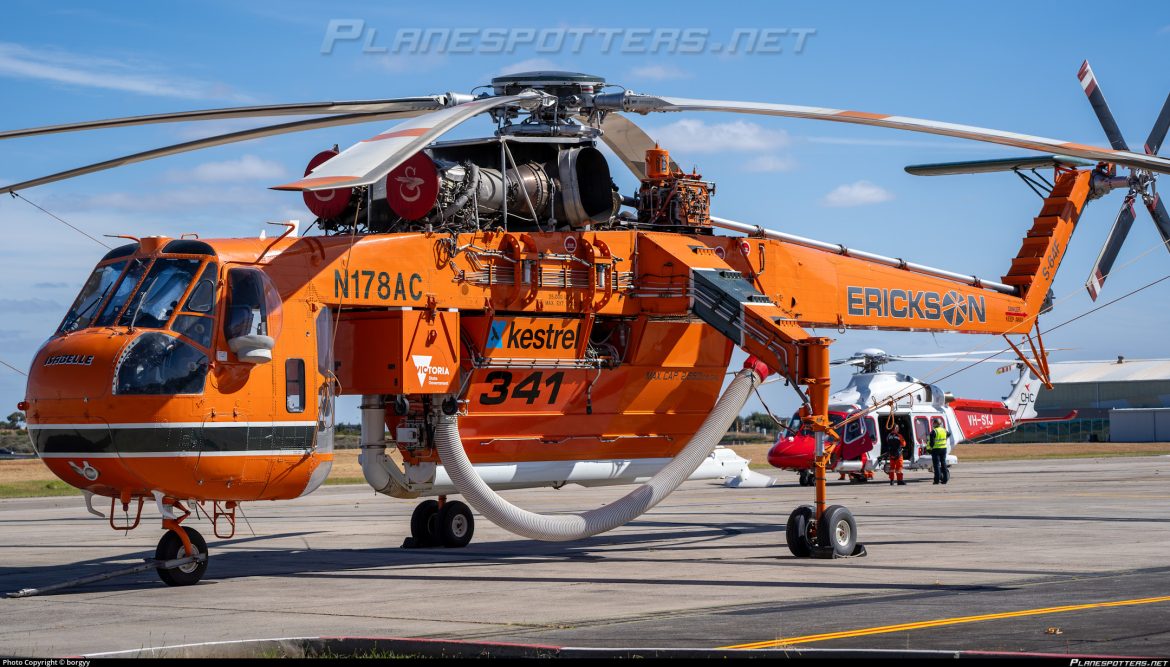
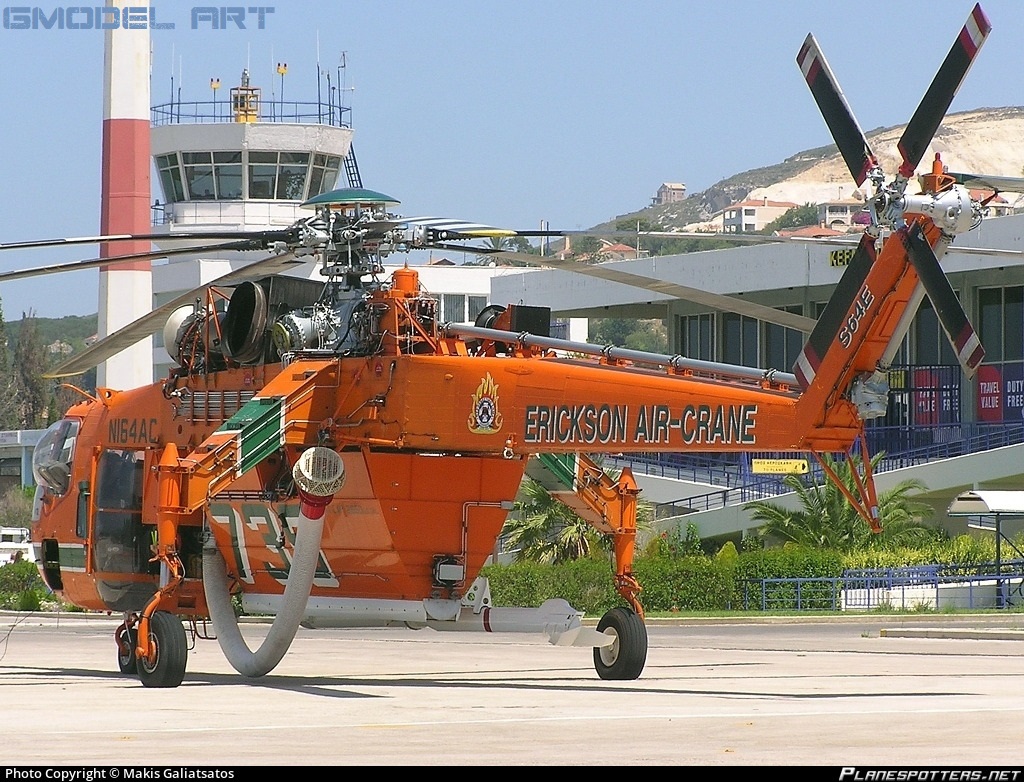
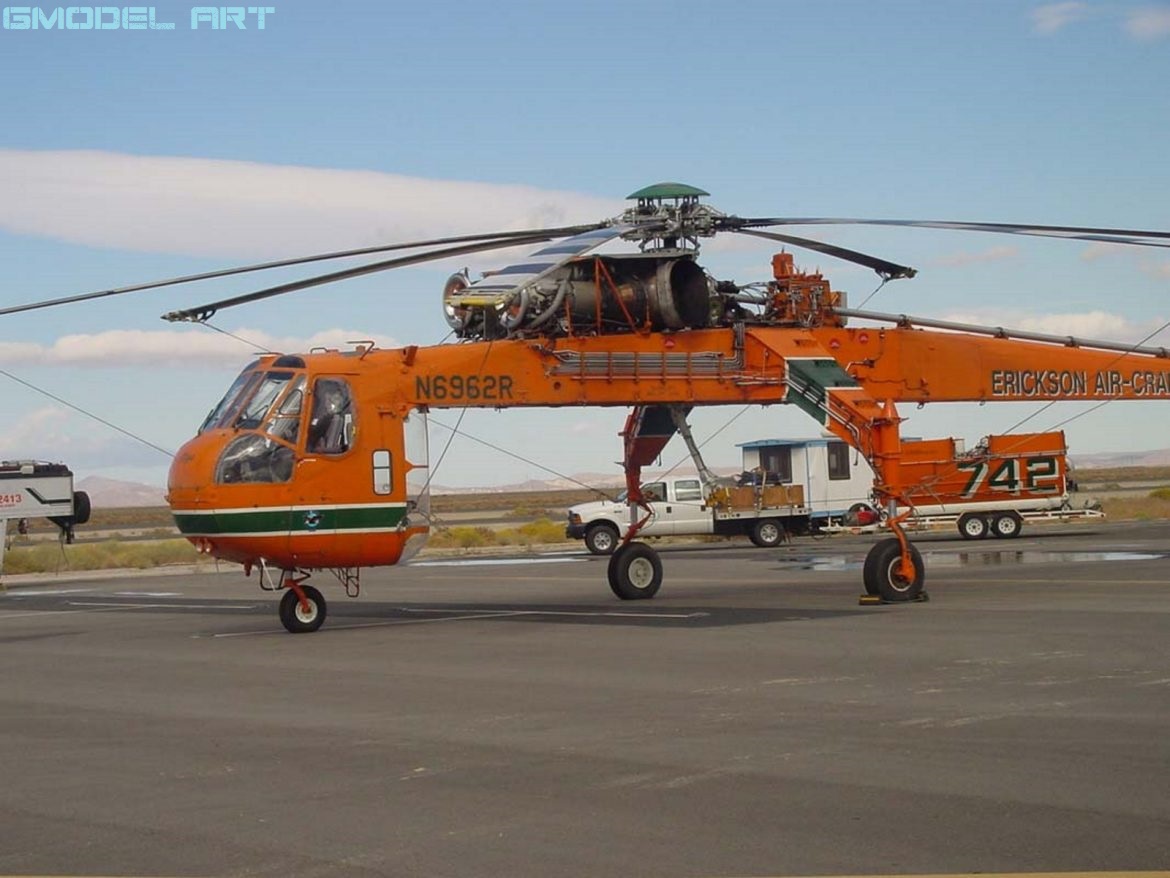
The Skycrane’s open-frame architecture was central to its design. Rather than carrying conventional cargo inside a large enclosed fuselage, it suspended loads beneath the airframe. Powerful engines, a high landing gear arrangement and a specialized load-handling system allowed it to perform demanding lifting operations without landing.
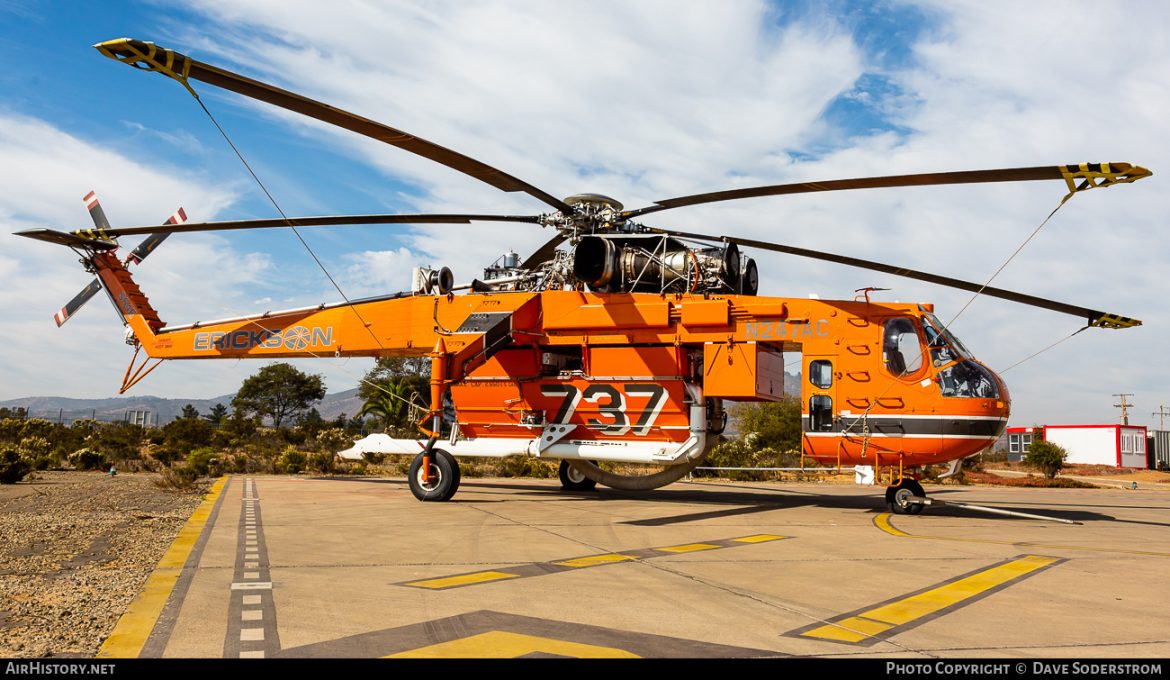
The civilian Sikorsky S-64E Skycrane, later closely associated with Erickson’s Aircrane operations, retained this distinctive design for heavy construction, industrial transportation, rescue support and aerial firefighting.
The S-64 Skycrane in Greek Aerial Firefighting
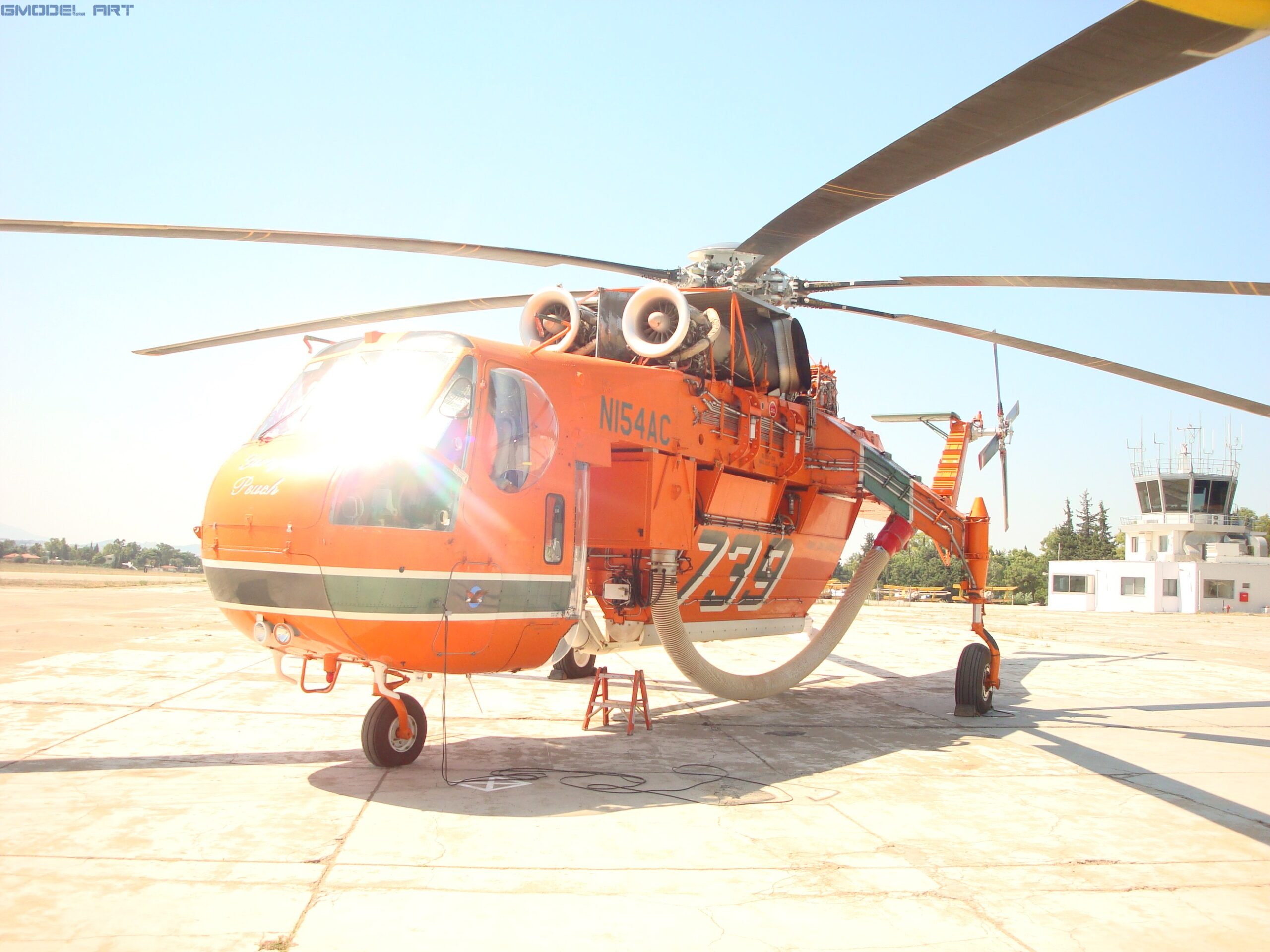
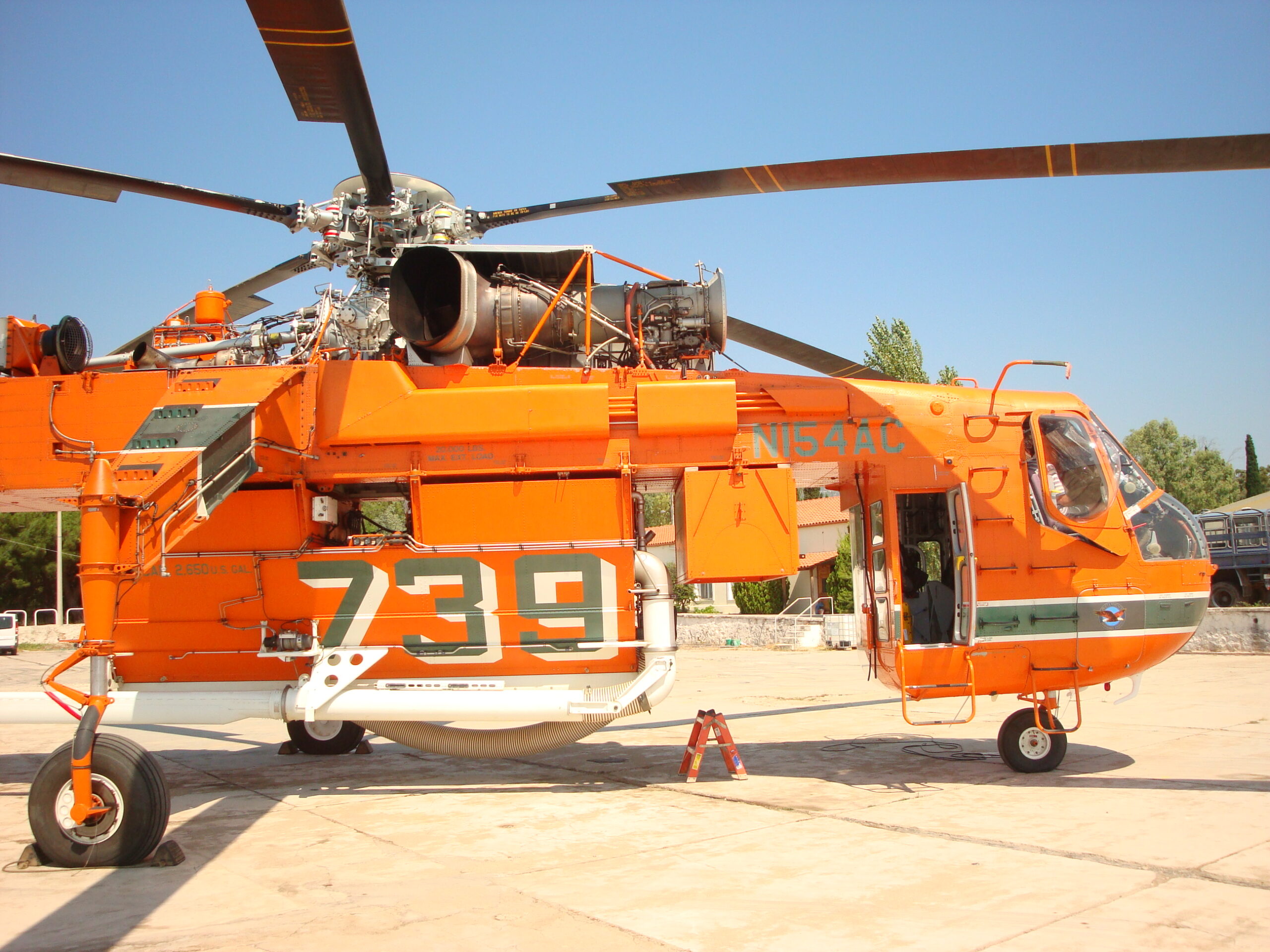
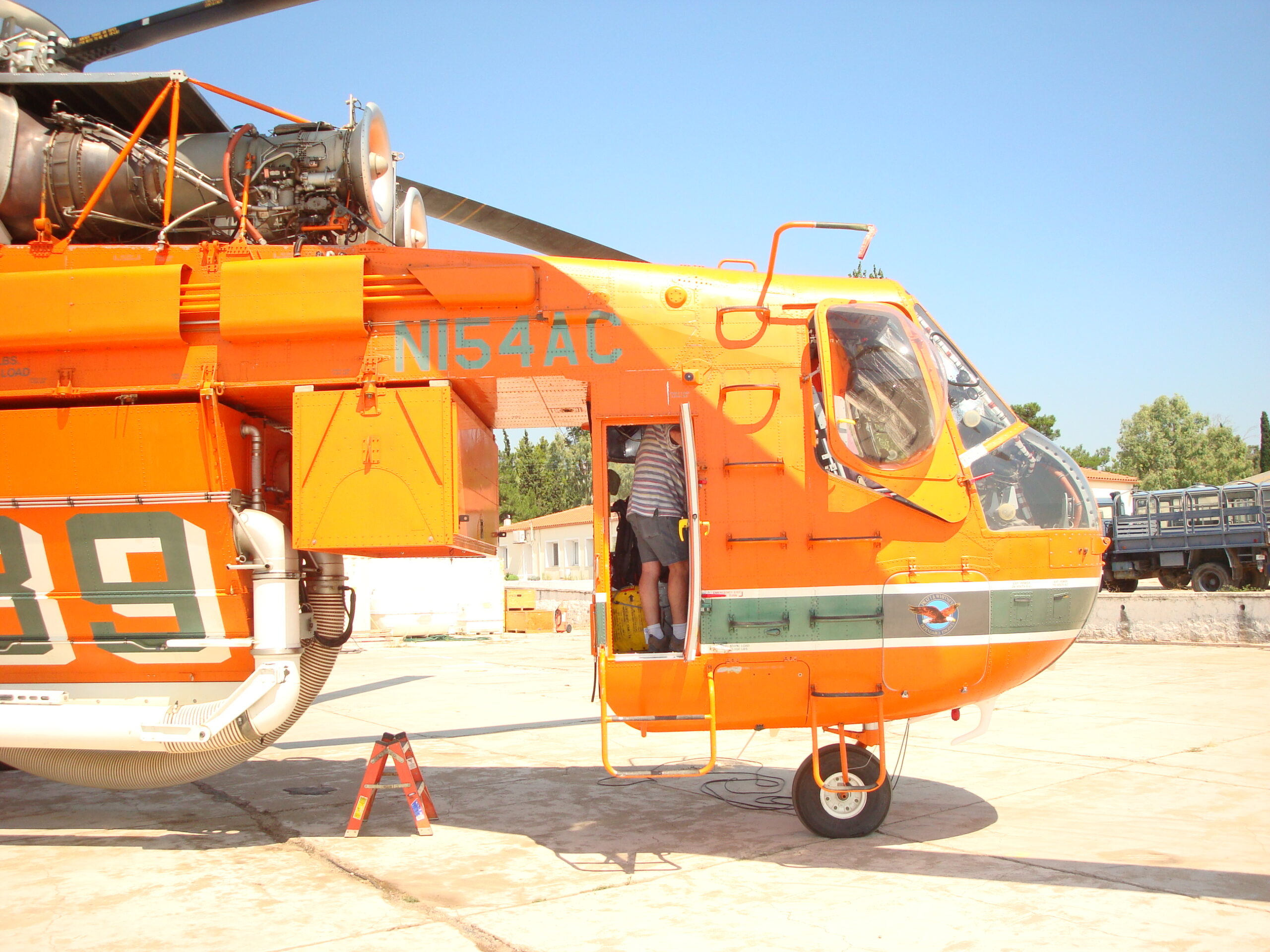
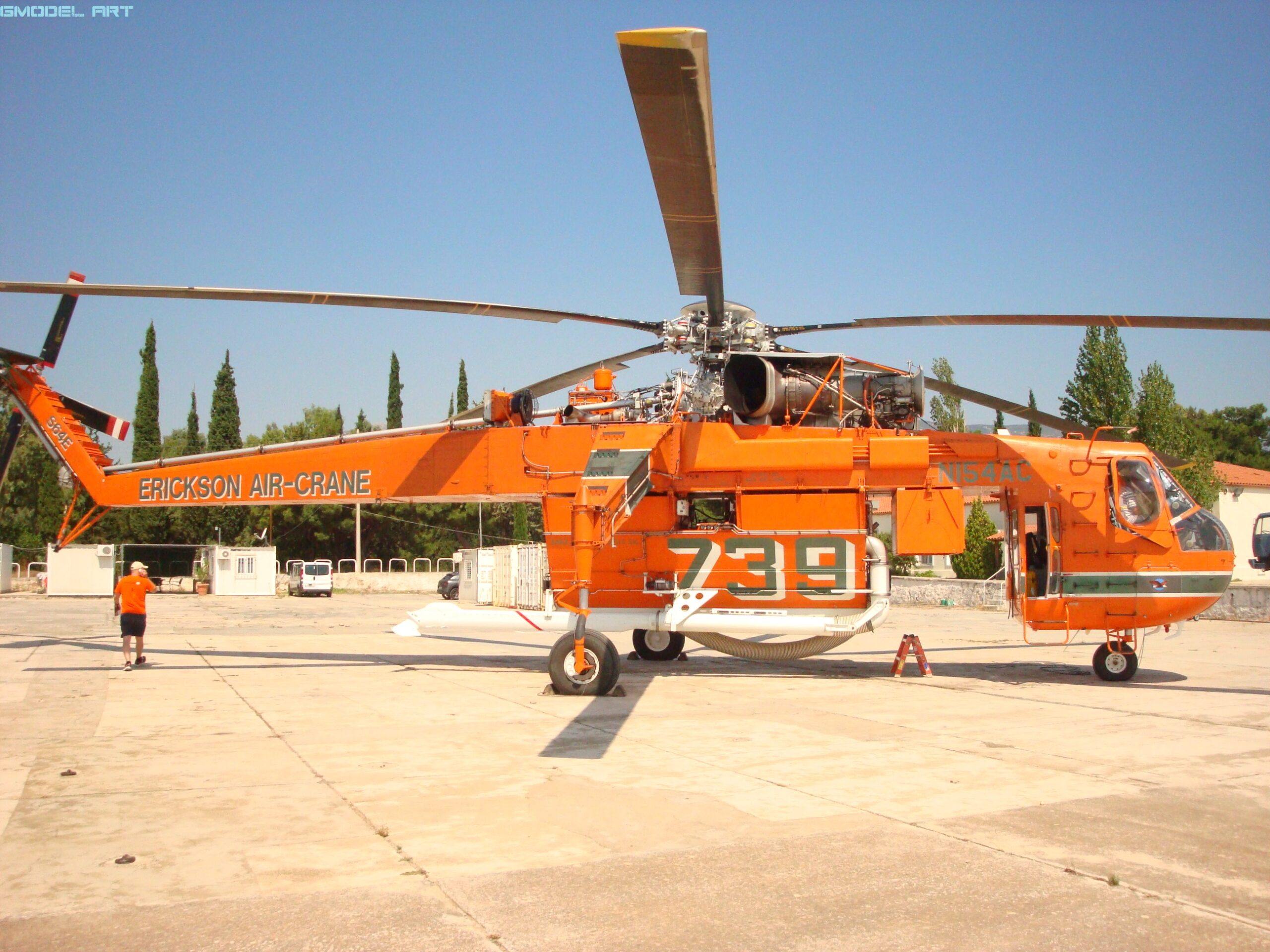
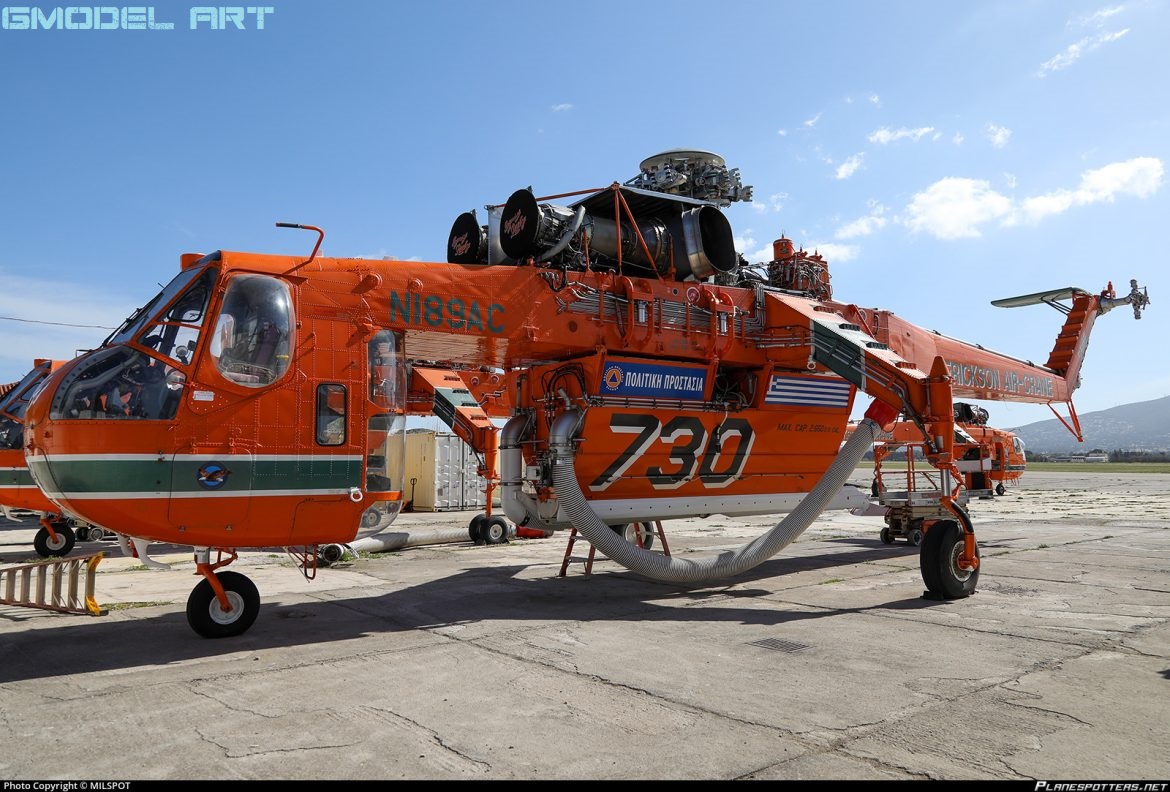
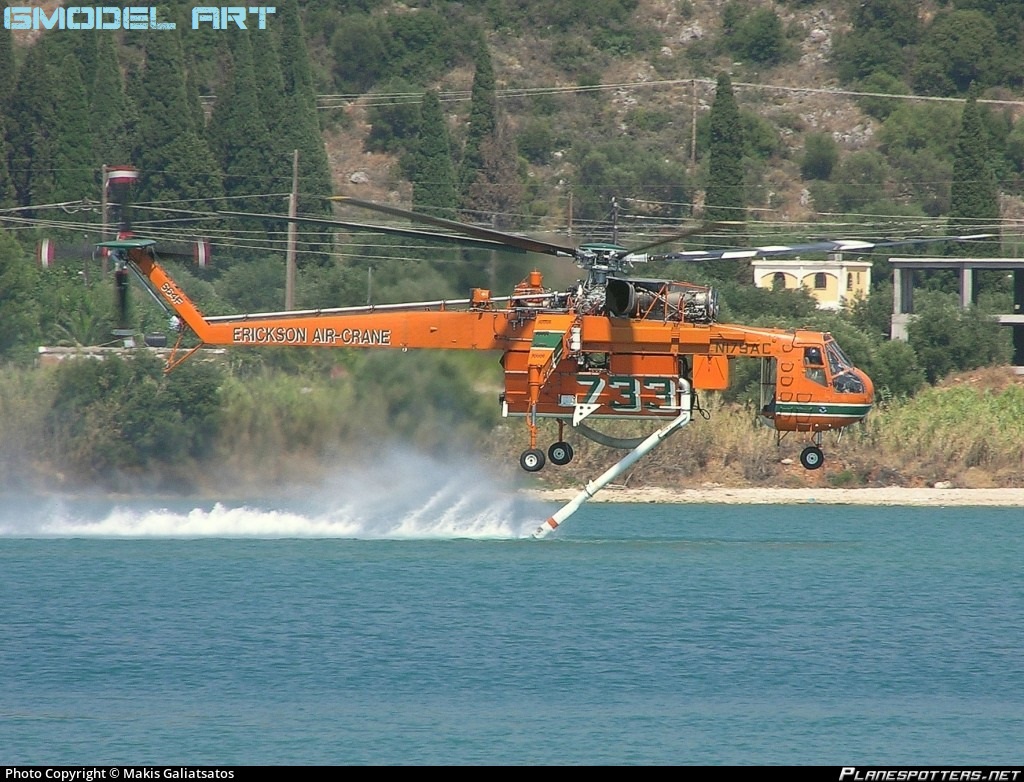
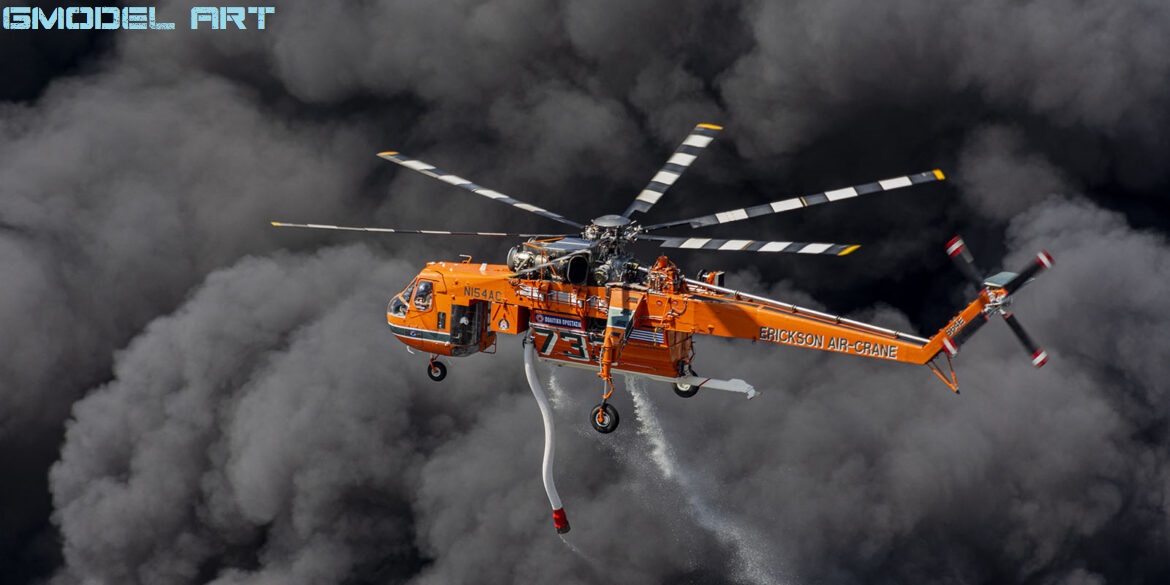
Greece has used contract-operated S-64 Aircrane helicopters to support the Hellenic Fire Service during wildfire seasons. Their ability to carry a large quantity of water and refill rapidly makes them valuable assets when ground crews face extensive or fast-moving fires.
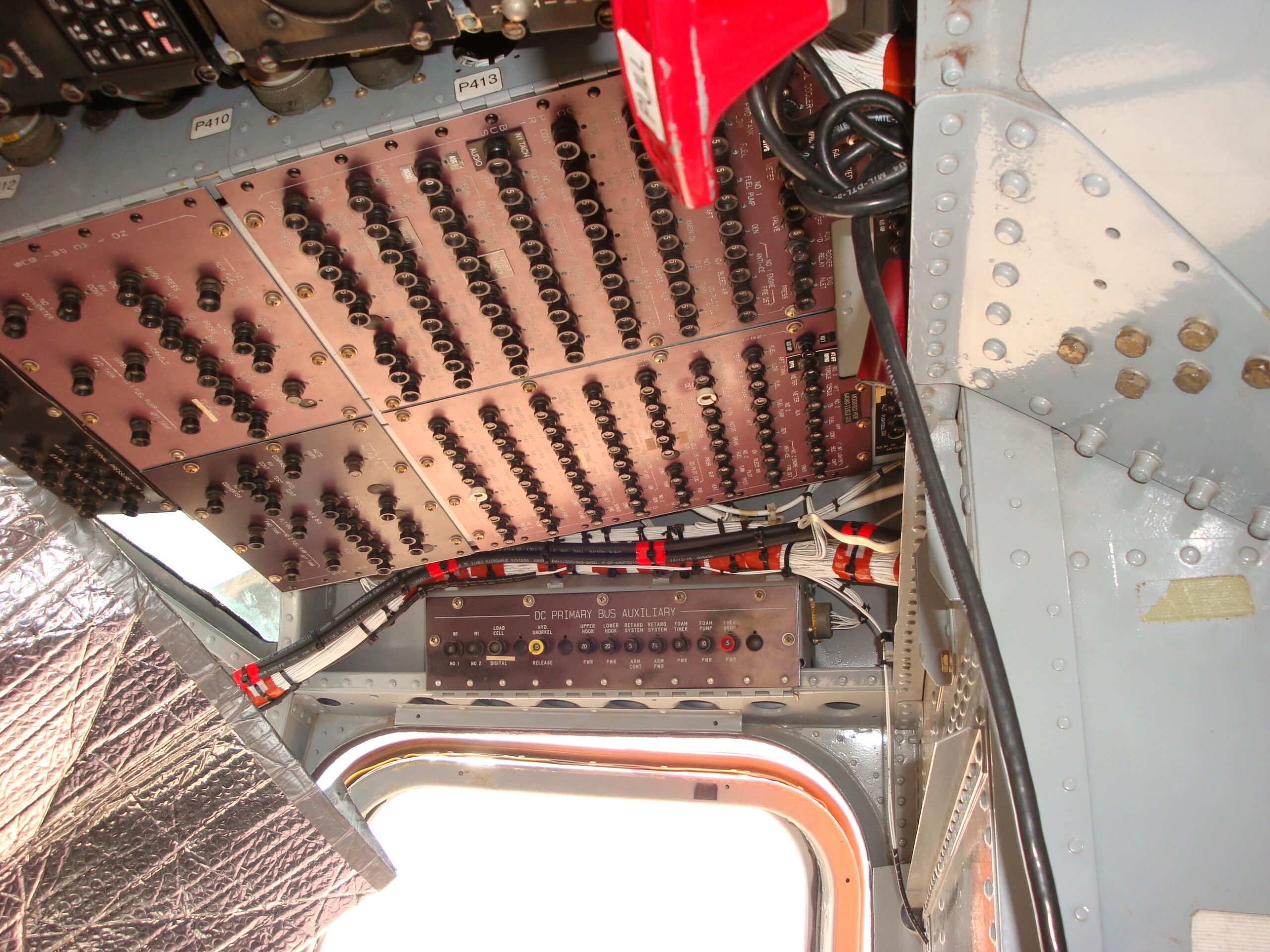
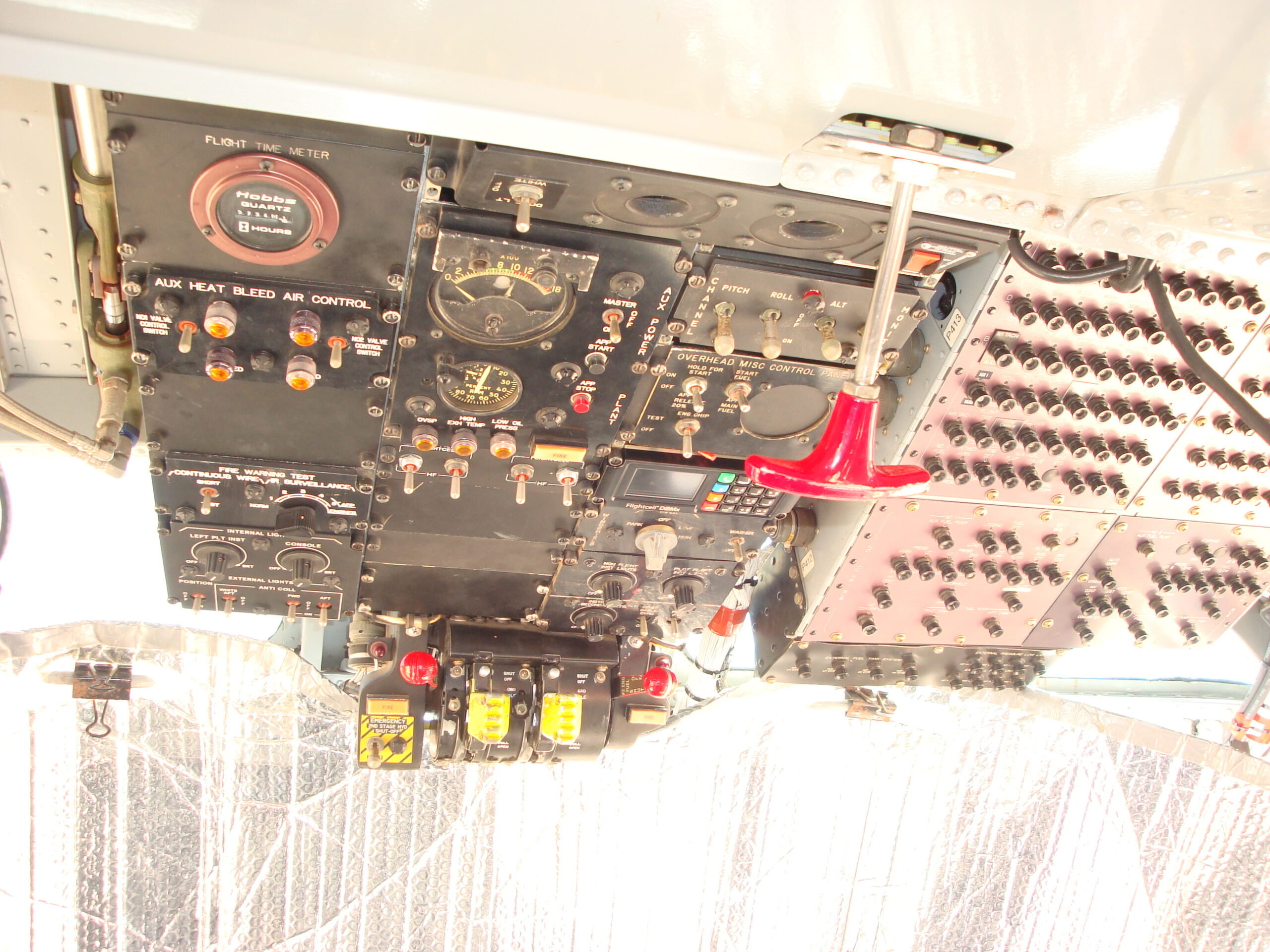
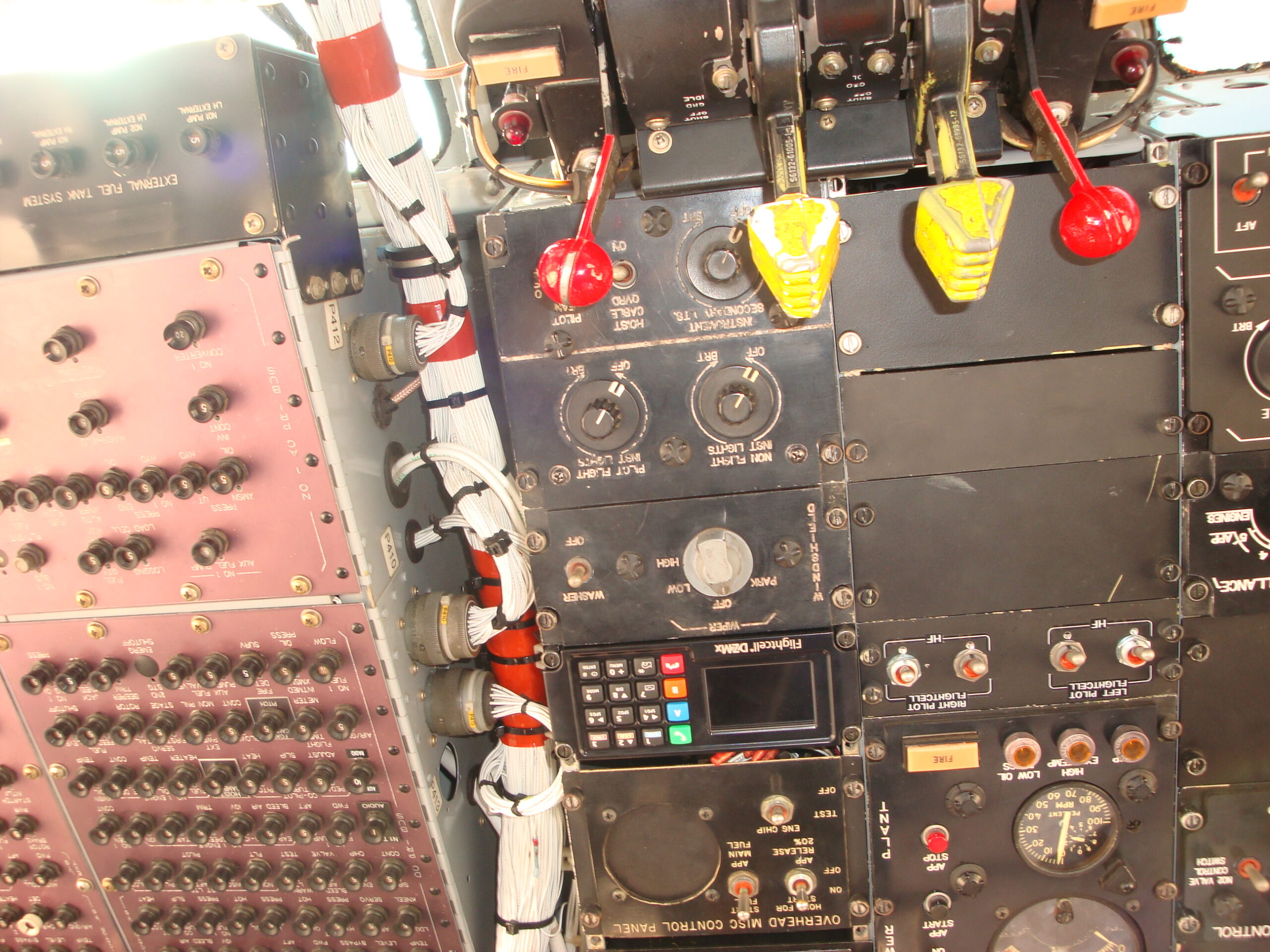
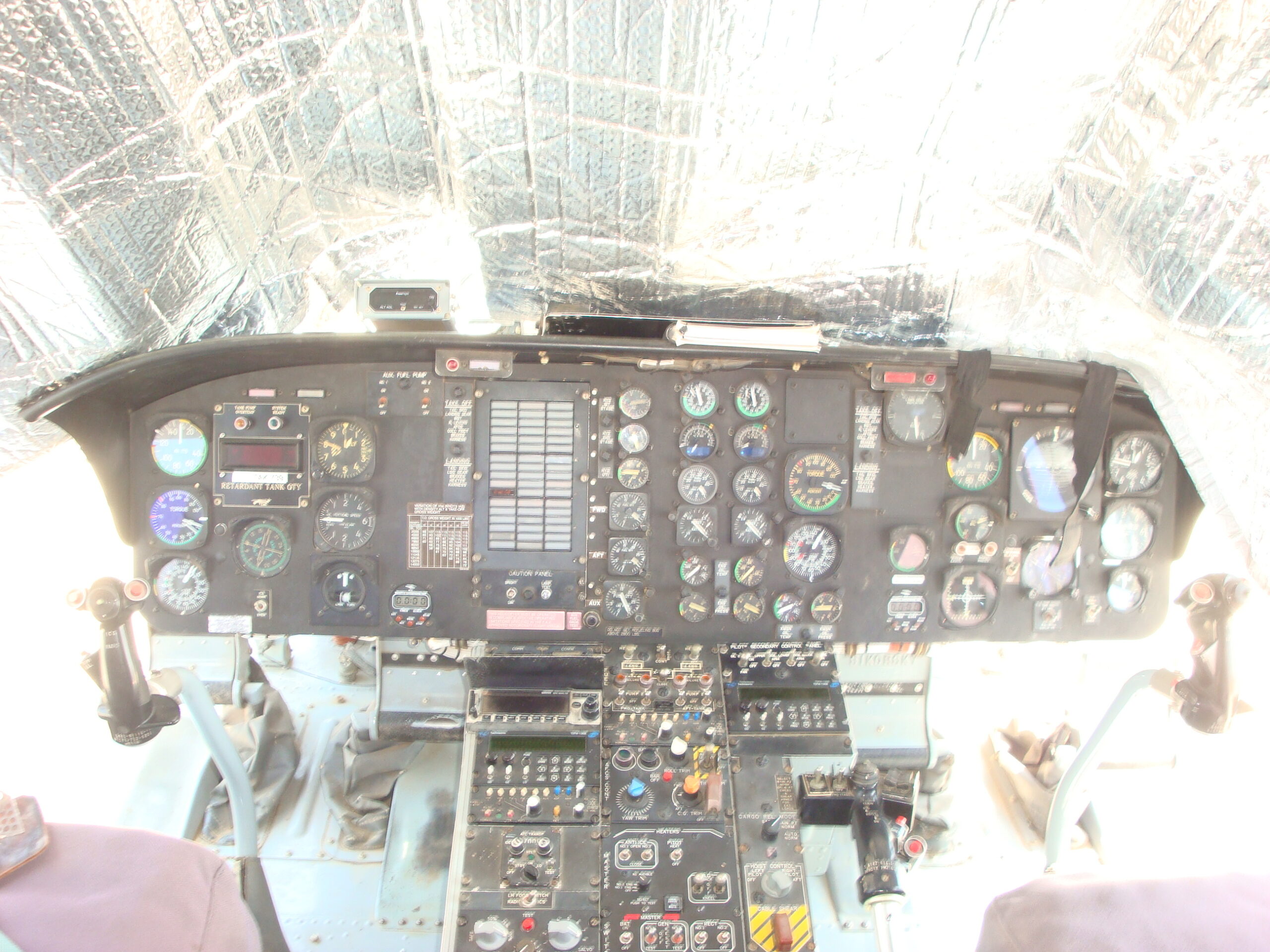
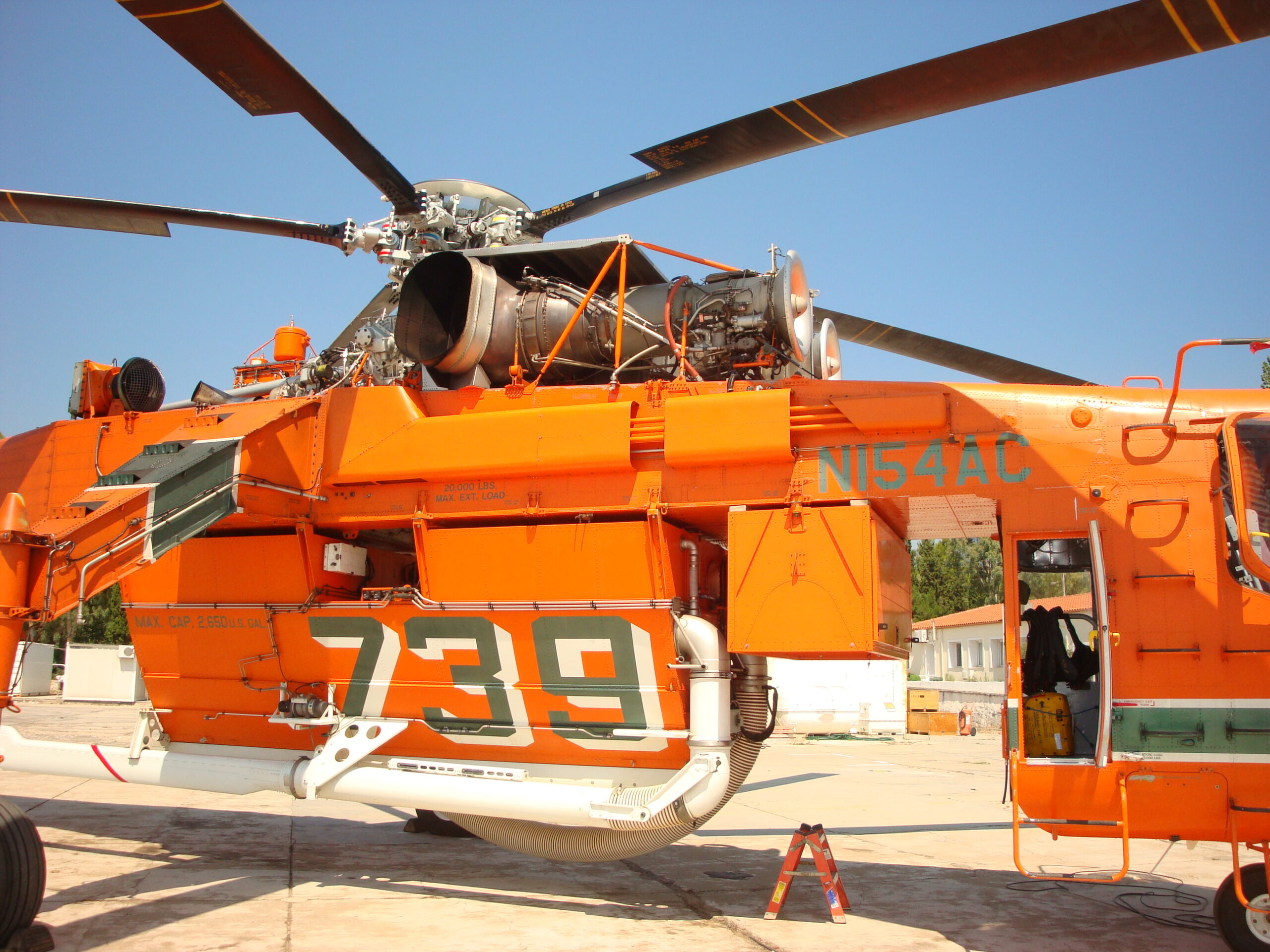
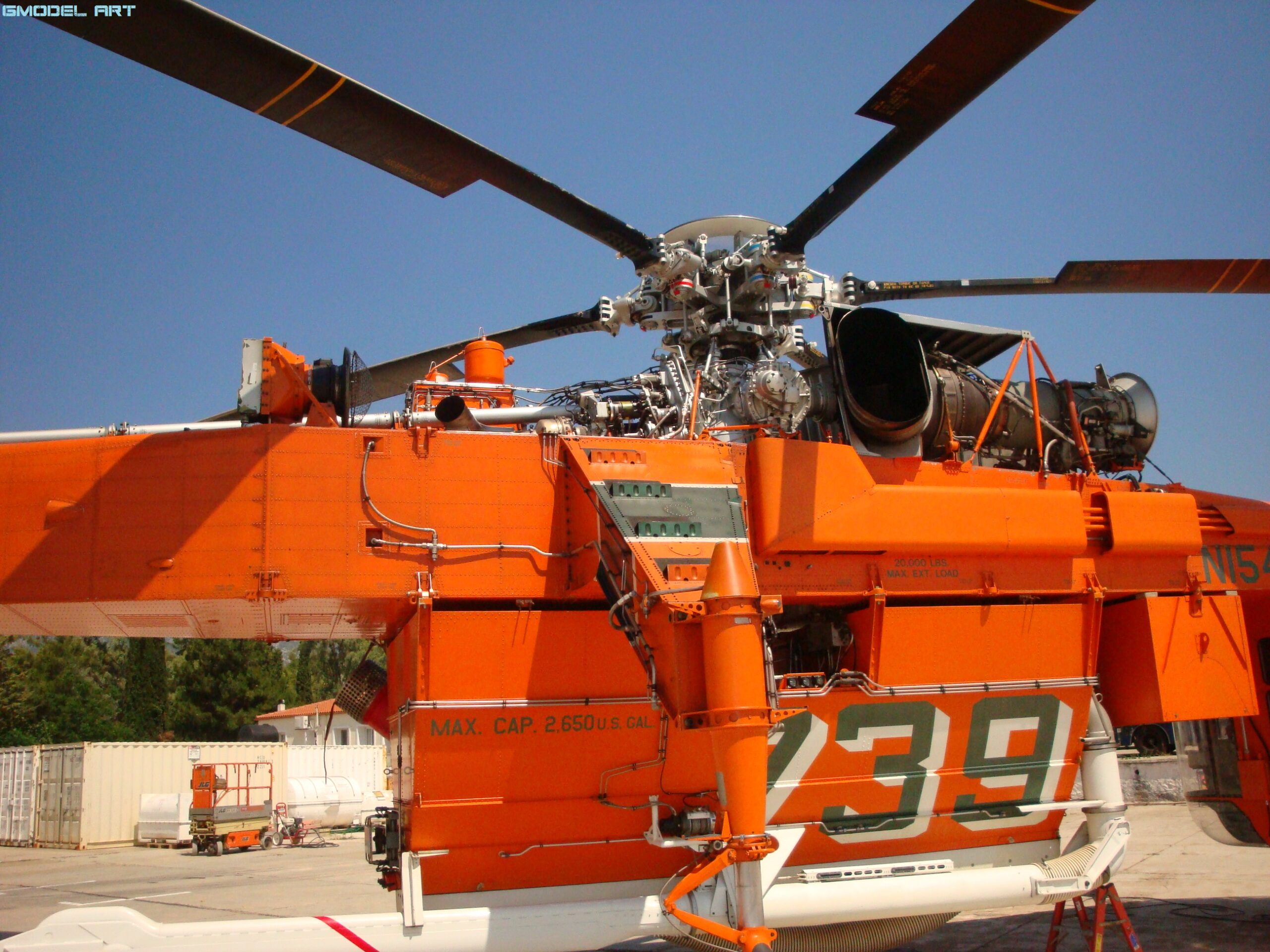
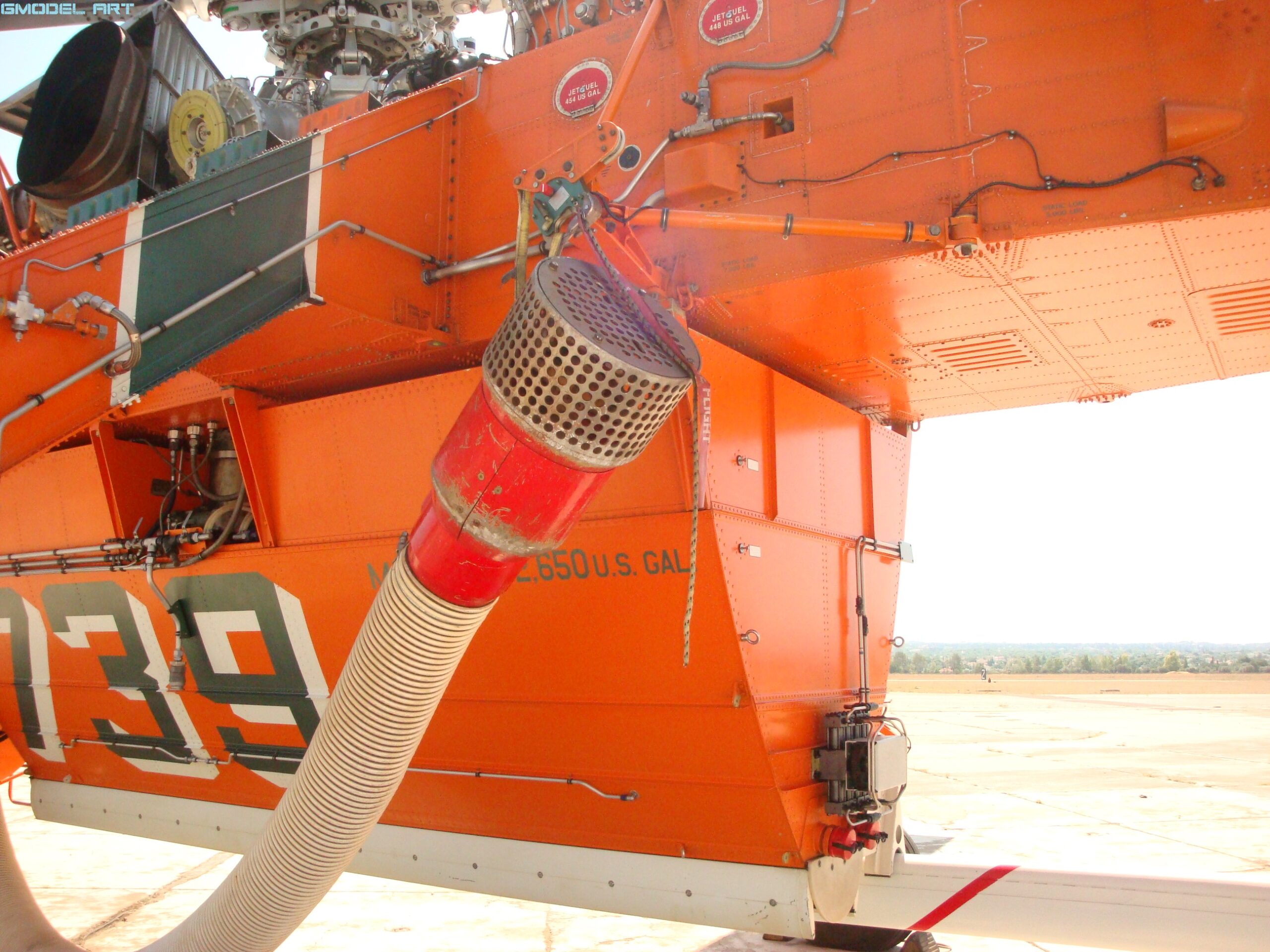
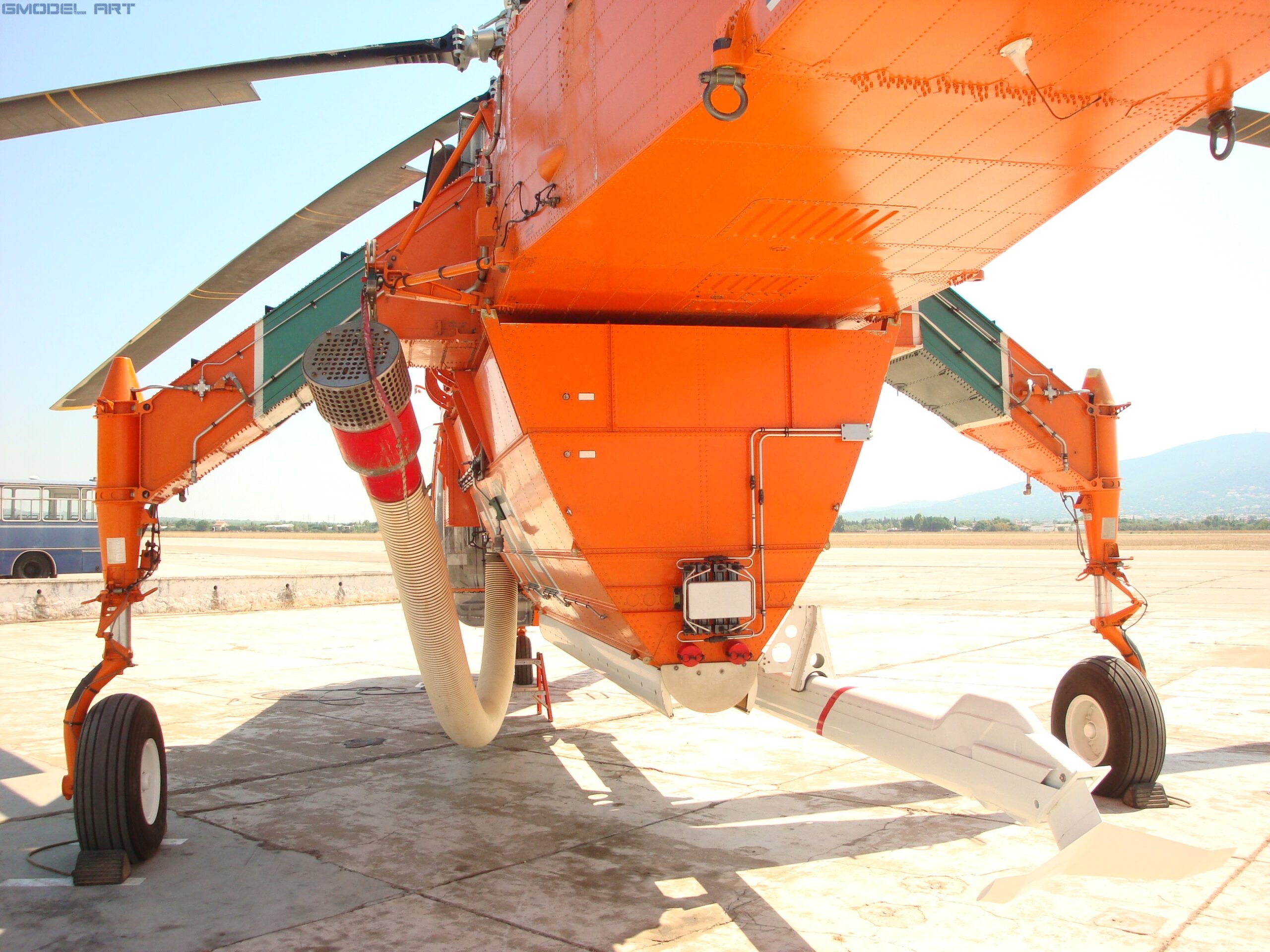
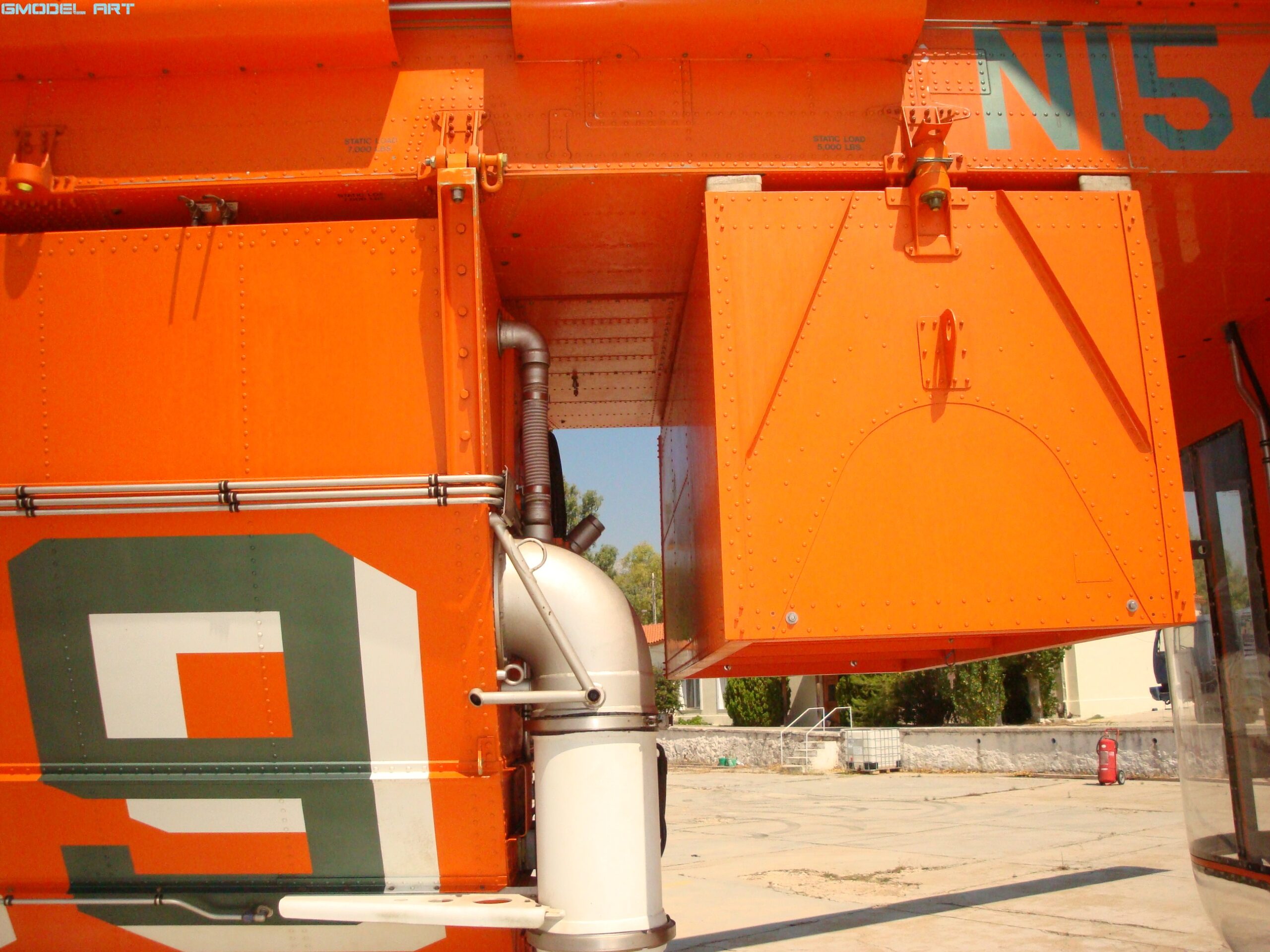
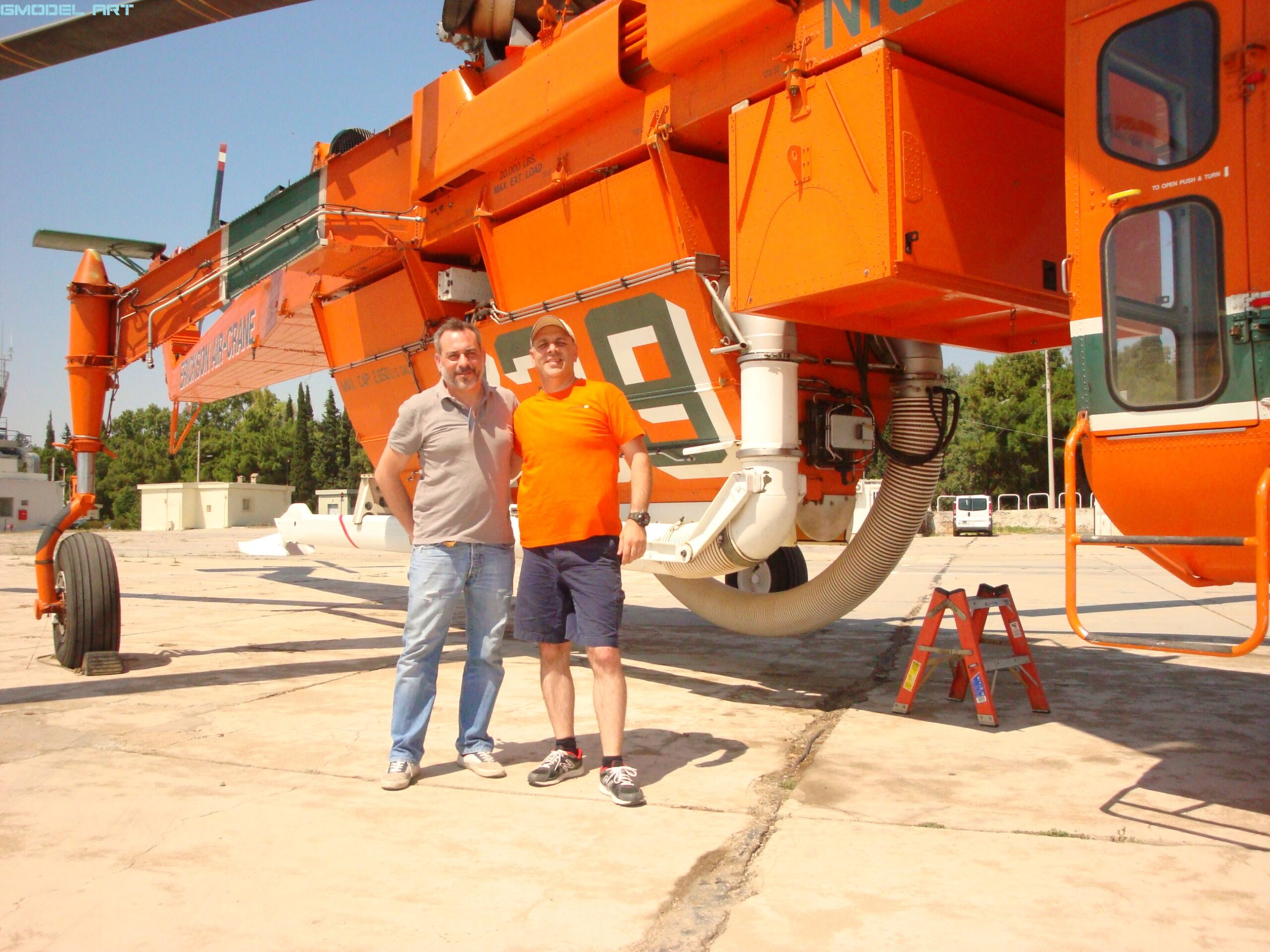
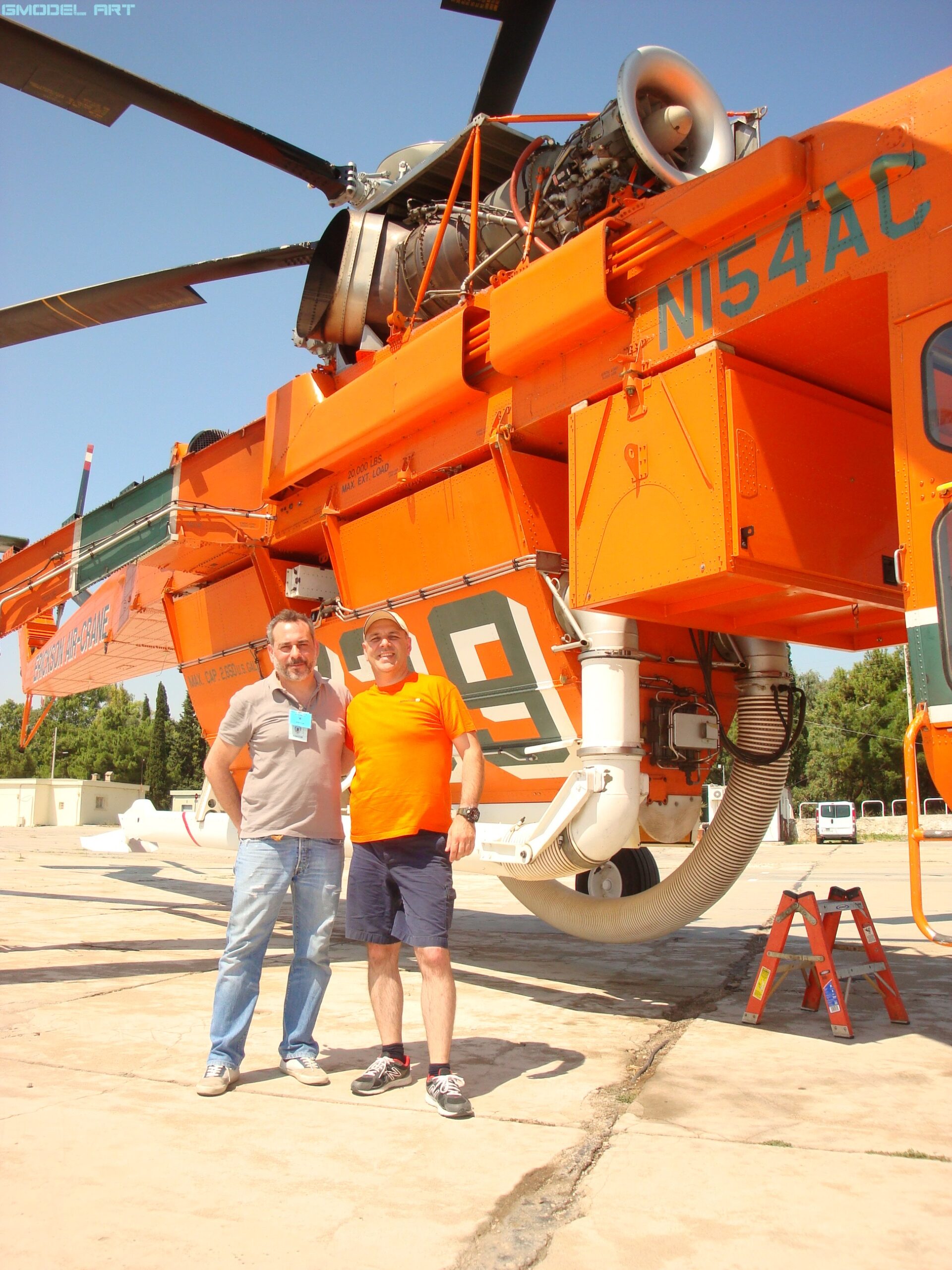
The firefighting configuration uses a specialized tank mounted beneath the fuselage. With a capacity of approximately 2,650 US gallons, or 10,000 litres, the system allows the crew to regulate the quantity and pattern of each water drop according to the operational situation.
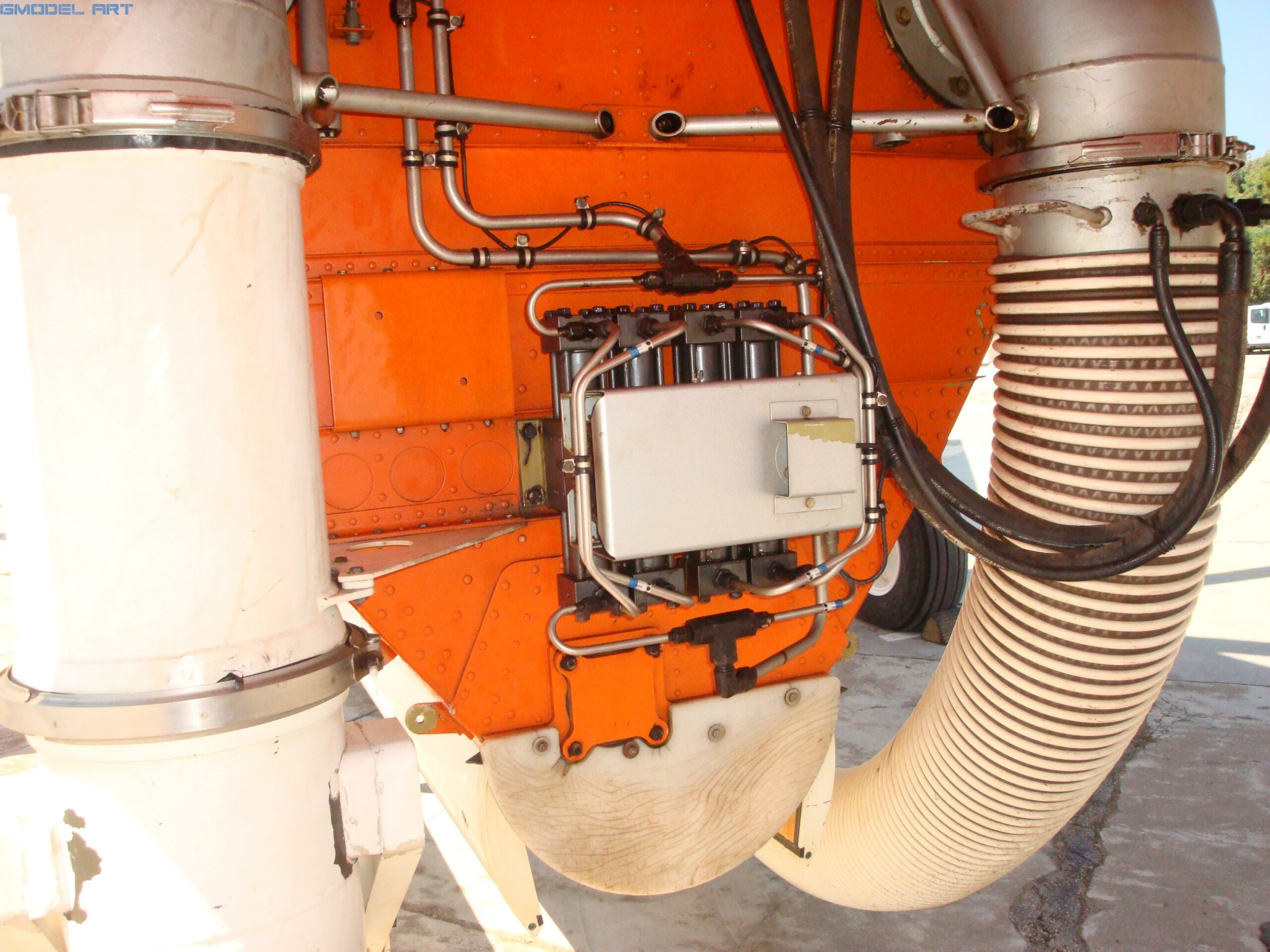
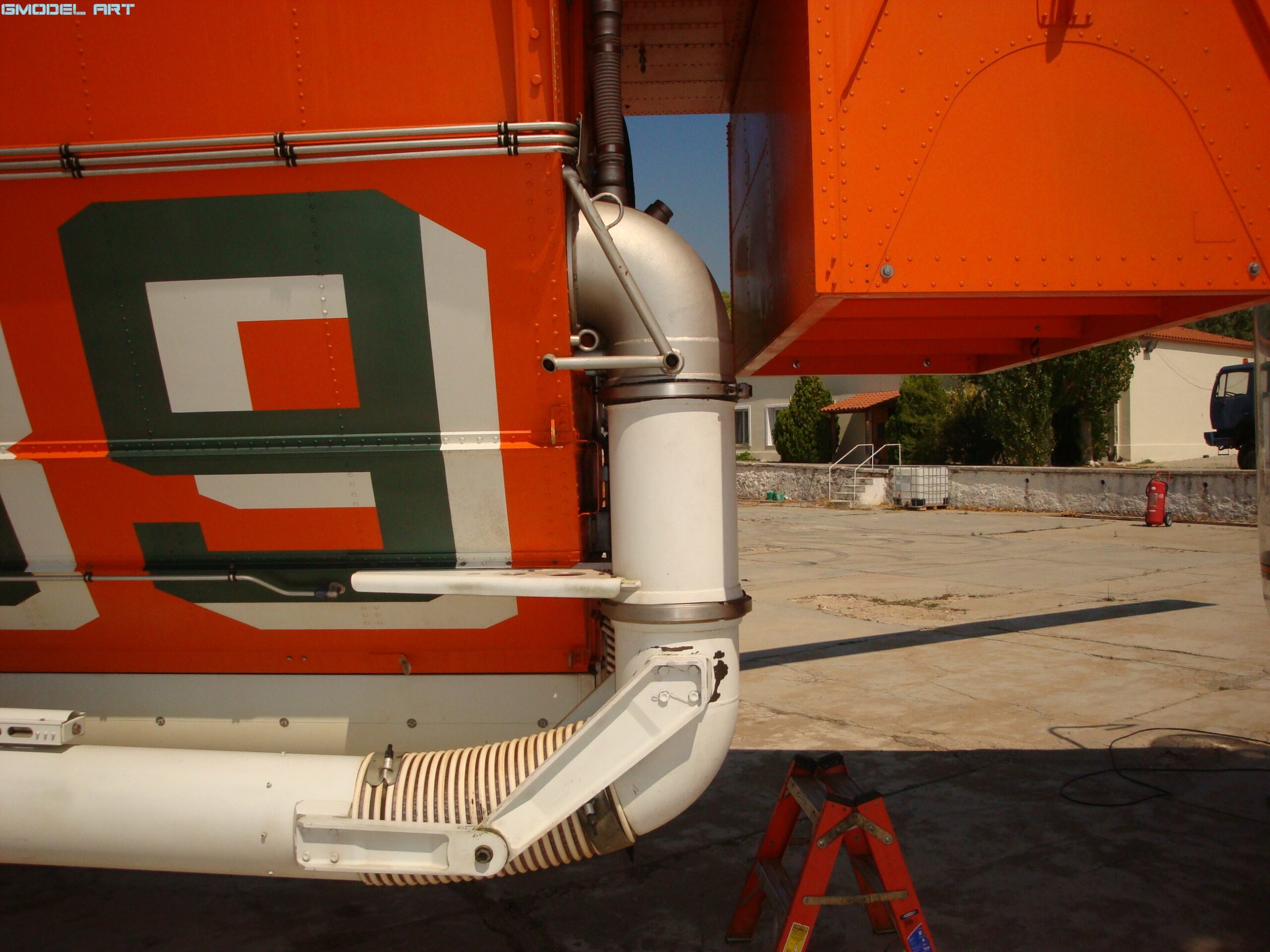
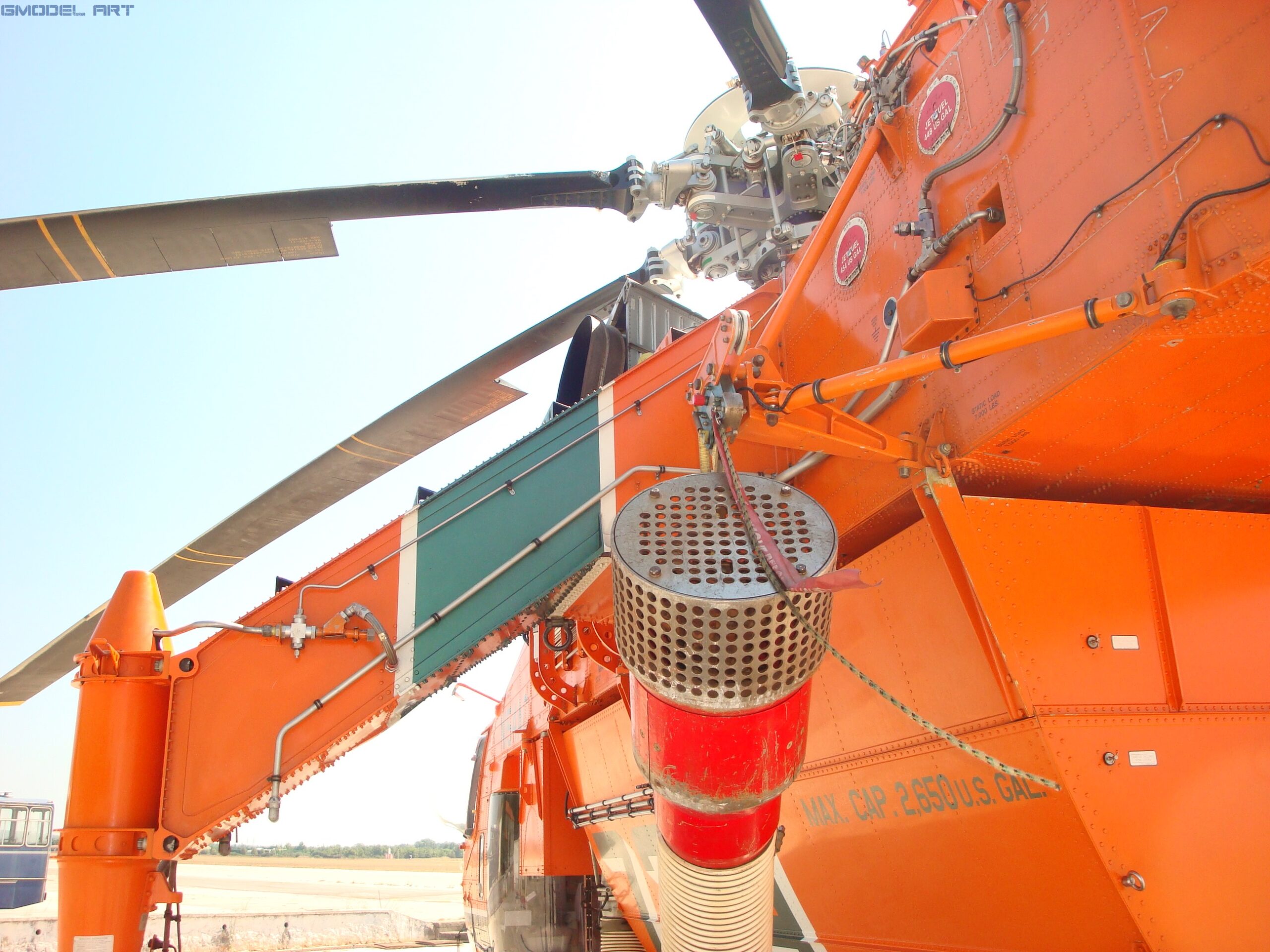
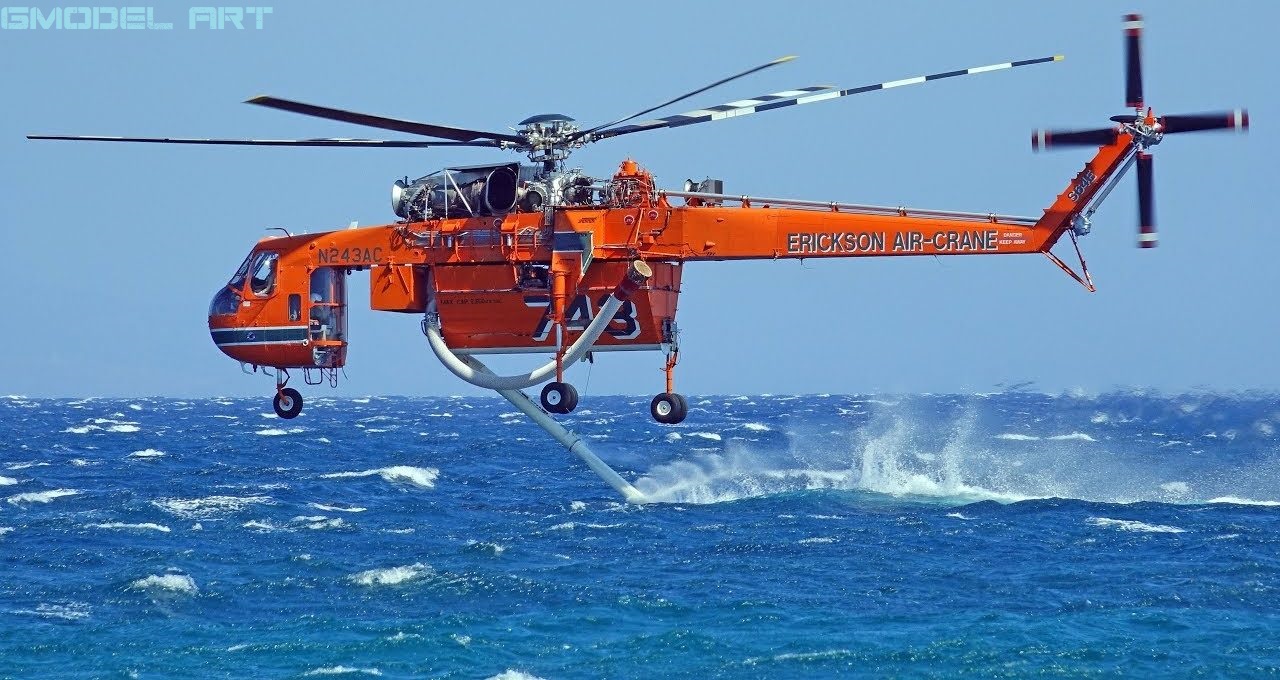
Another major advantage is the ability to refill without landing. The Sea Snorkel collects water while the helicopter moves just above a suitable water surface, while the Pond Snorkel allows collection from suitable smaller bodies of water using a hovering procedure. Depending on the system and operating conditions, refilling can take approximately 30–45 seconds.
The S-64E firefighting system can deliver up to 30,000 US gallons of water per hour under favourable operating conditions, according to ICM’s published description of the aircraft. Its combination of payload, refill speed and controlled discharge makes it particularly effective during sustained firefighting operations.
Sikorsky S-64 Skycrane: Technical Specifications
| Characteristic | Specification |
|---|---|
| Aircraft type | Heavy-lift helicopter |
| Crew | Typically 3 |
| Engines | 2 × Pratt & Whitney T73-P-1 |
| Published engine output | Approximately 4,500 shp each |
| Length | 21.41 m |
| Height | 5.66 m |
| Main rotor diameter | 21.95 m |
| Empty weight | Approximately 8,724 kg |
| Maximum take-off weight | Approximately 19,051 kg |
| Maximum speed | Approximately 202 km/h |
| Cruise speed | Approximately 169 km/h |
| Maximum external-load capacity | Approximately 9,100 kg |
| Firefighting tank capacity | Approximately 10,000 litres |
Figures are representative published specifications; exact performance and operating limits depend on the variant, equipment and mission. The maximum external-load capacity is not the same as the water-tank capacity.
Scale Modeling the Sikorsky S-64 and CH-54 Tarhe
The Skycrane offers several rewarding modeling subjects, from a modern firefighting helicopter operating in Greece to a military CH-54A Tarhe serving with U.S. Army aviation units during the Vietnam War.
For modelers interested specifically in Greek firefighting operations, the ICM 53060 S-64E Firefighting Helicopter in 1/35 scale is the most direct starting point. The kit includes the firefighting tank and represents the aircraft in a modern civilian configuration.
Recommended Kits and Alternative Versions
| Manufacturer / Kit | Scale | Subject |
|---|---|---|
| ICM 53060 S-64E Firefighting Helicopter | 1/35 | Civilian firefighting Skycrane with water tank |
| ICM 53058 S-64E Skycrane | 1/35 | Civilian cargo and utility configuration |
| ICM 53059 S-64E Skycrane with Universal Pod | 1/35 | Civilian Skycrane with an enclosed transport pod |
| ICM 53202 S-64 Helicopter Fire Tank | 1/35 accessory | Separate firefighting tank for a compatible build |
| ICM 53054 CH-54A Tarhe | 1/35 | U.S. Army heavy-lift helicopter |
| ICM 53055 CH-54A Tarhe with M-121 Bomb | 1/35 | Vietnam War configuration carrying the M-121 bomb |
| ICM 72001 CH-54A Tarhe | 1/72 | Military version with alternative historical markings |
| ICM 72002 CH-54A Tarhe with M-121 Bomb | 1/72 | Military version with the specialized bomb load |
The 1/35 S-64E kits are substantial models, with the firefighting kit measuring approximately 77.5 cm in length. Before choosing a version, consider the available display space as well as the historical subject you want to represent.
For a Greek firefighting aircraft, use photographs of the specific airframe that operated in Greece. The markings supplied with ICM 53060 represent U.S.-registered civilian aircraft, so a historically accurate Greek operational scene requires carefully researched references rather than simply adding generic national markings.
Paint References for the S-64 Skycrane
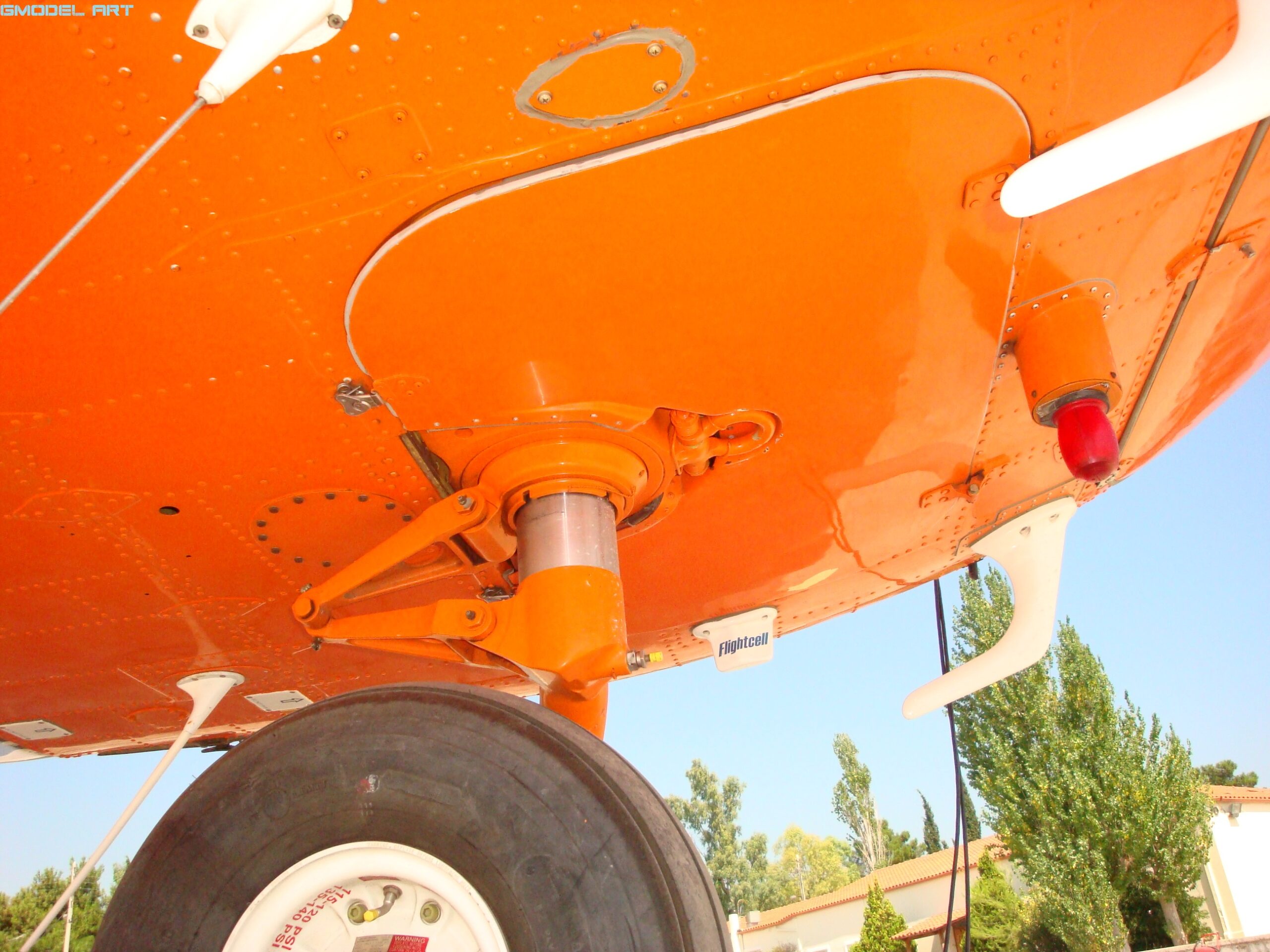
The bright orange finish is one of the most recognizable features of the civilian firefighting Skycrane. However, the exact colours and details can vary with the aircraft, operator and period.
| Model area | Colour reference | Federal Standard |
|---|---|---|
| Main orange finish | Safety Orange — approximate reference | FS 12300 |
| Green details, only where confirmed by reference photographs | NASA Safety Medium Green | FS 14110 |
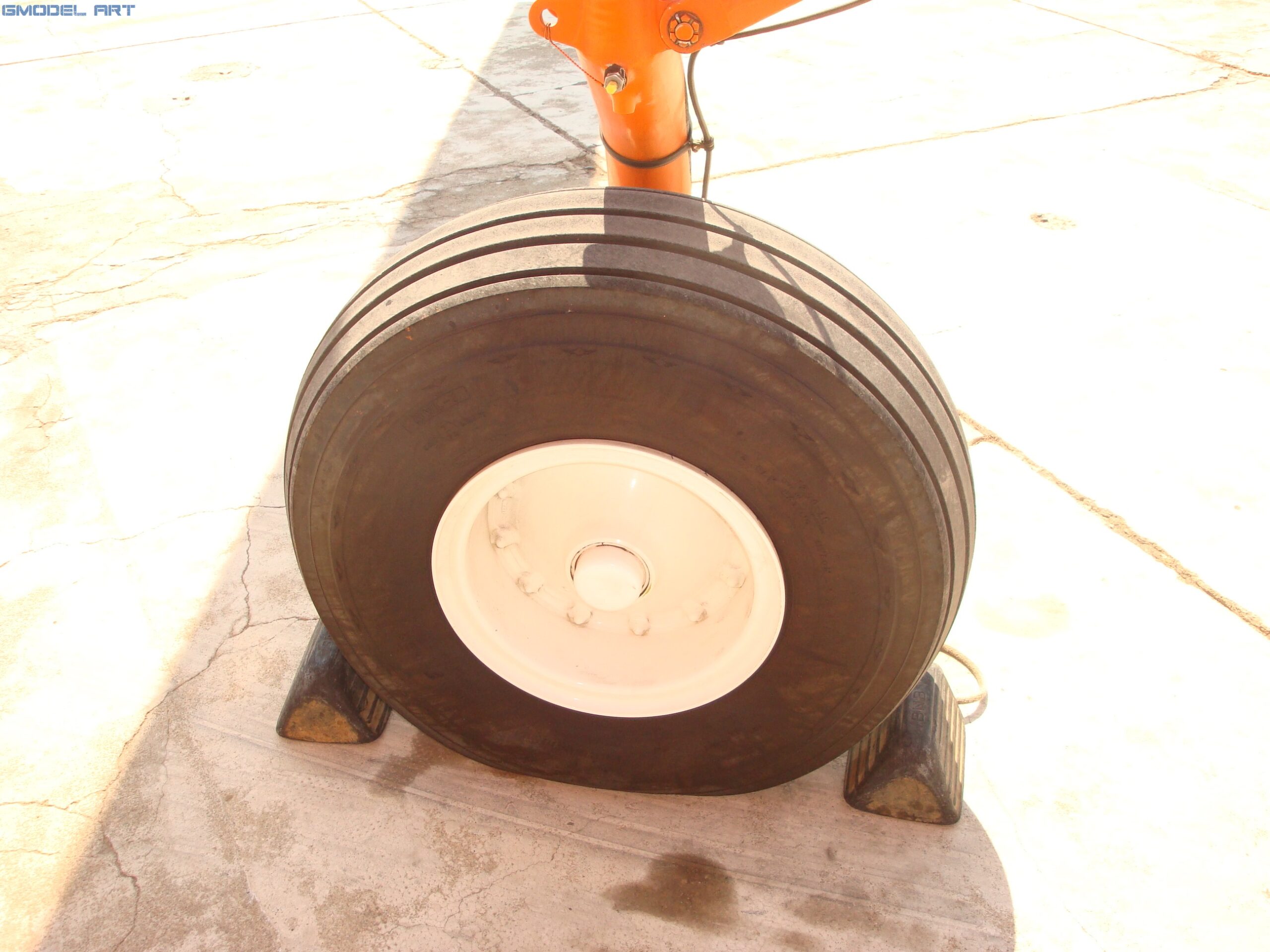
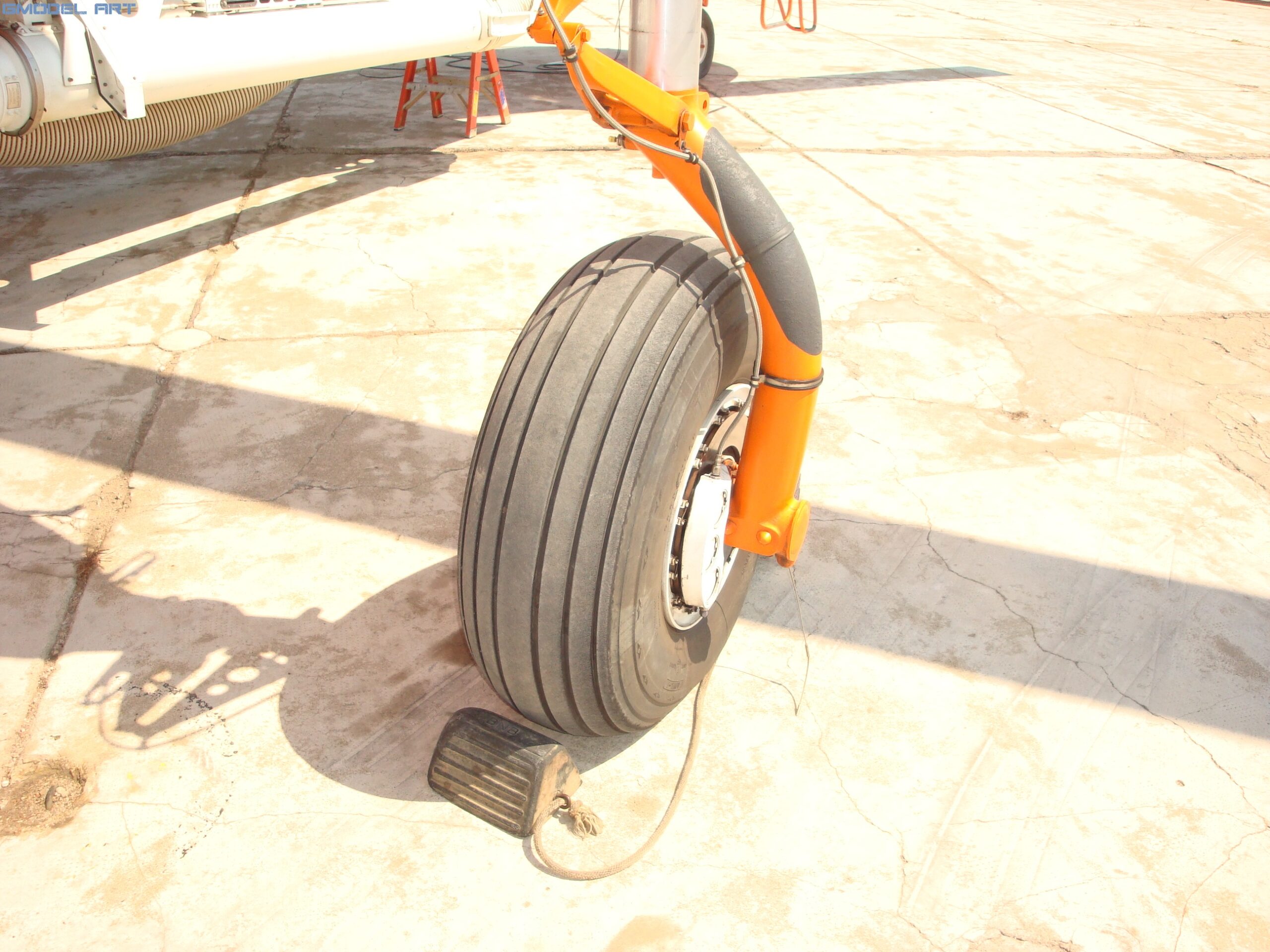
| Tires and selected mechanical components | Black or dark charcoal | Match photographic references |
| Rotor head and transmission details | Dark metallic and grey tones | Match the individual component |
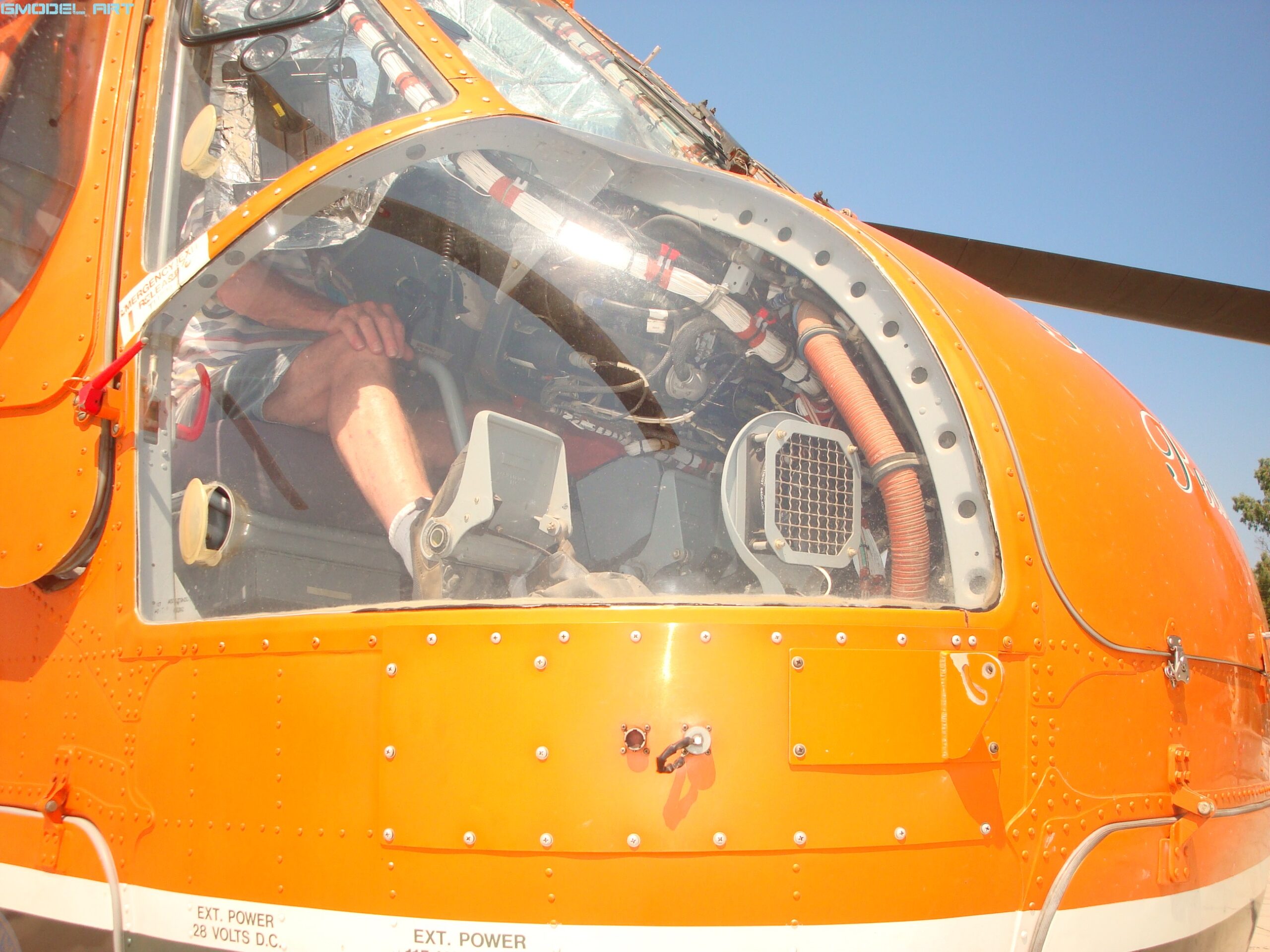
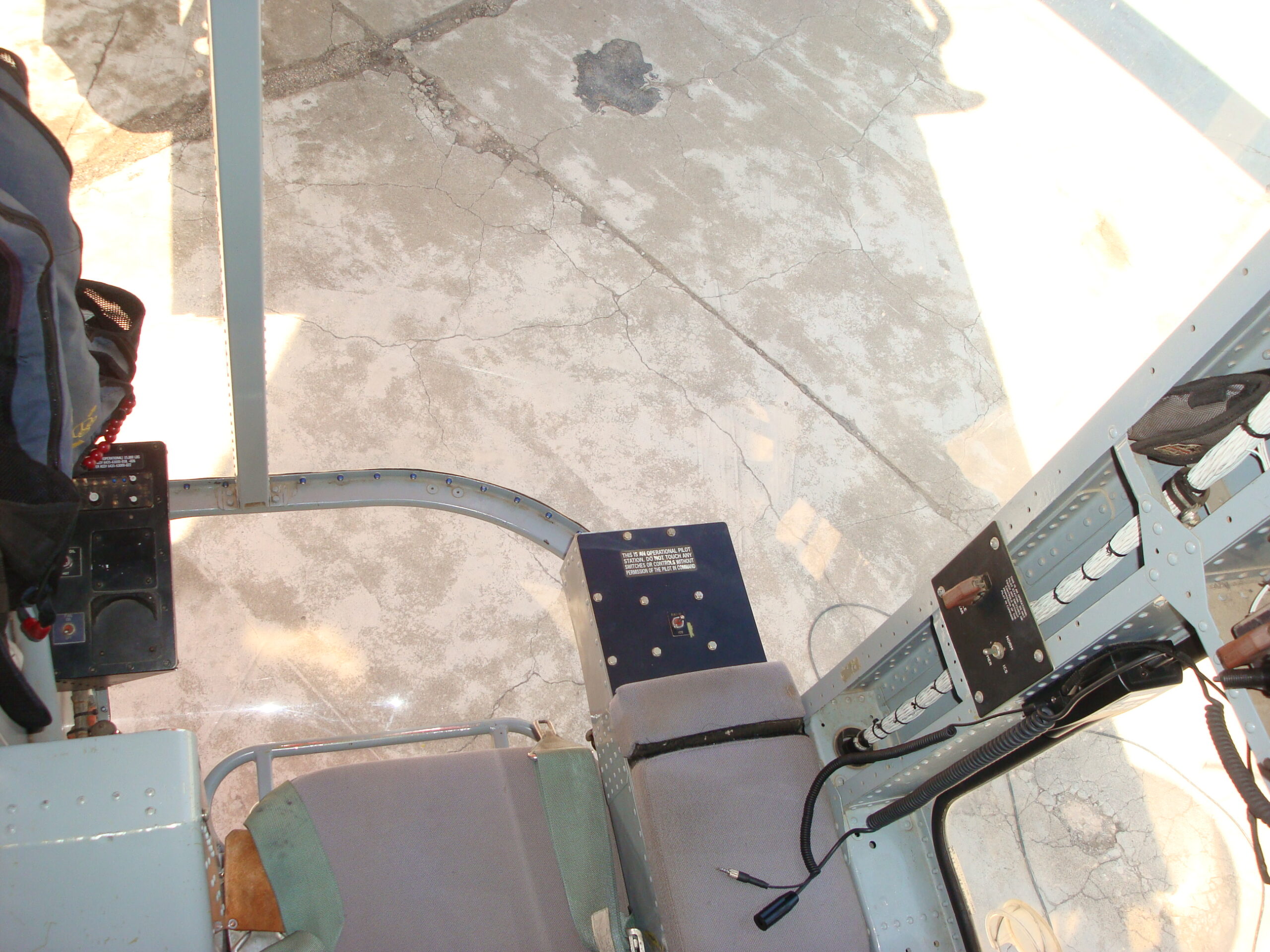
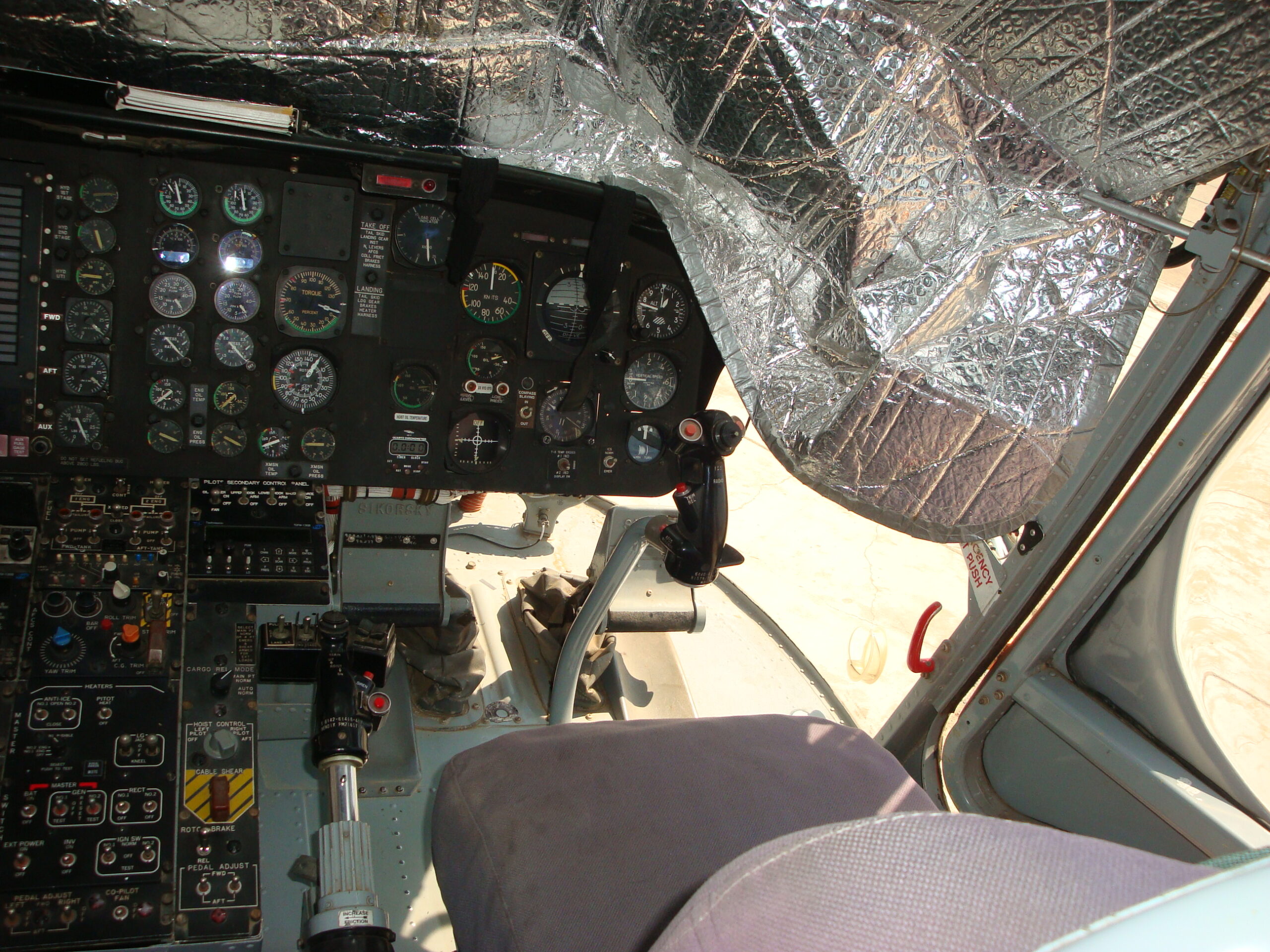
| Cockpit glazing | Clear glazing with natural reflections | Transparent material |
FS 12300 and FS 14110 are useful colour references, not proof that every S-64 uses these exact shades. Check the chosen airframe’s photographs and the paint references in the kit instructions before applying the final finish.
Getting the Construction Right
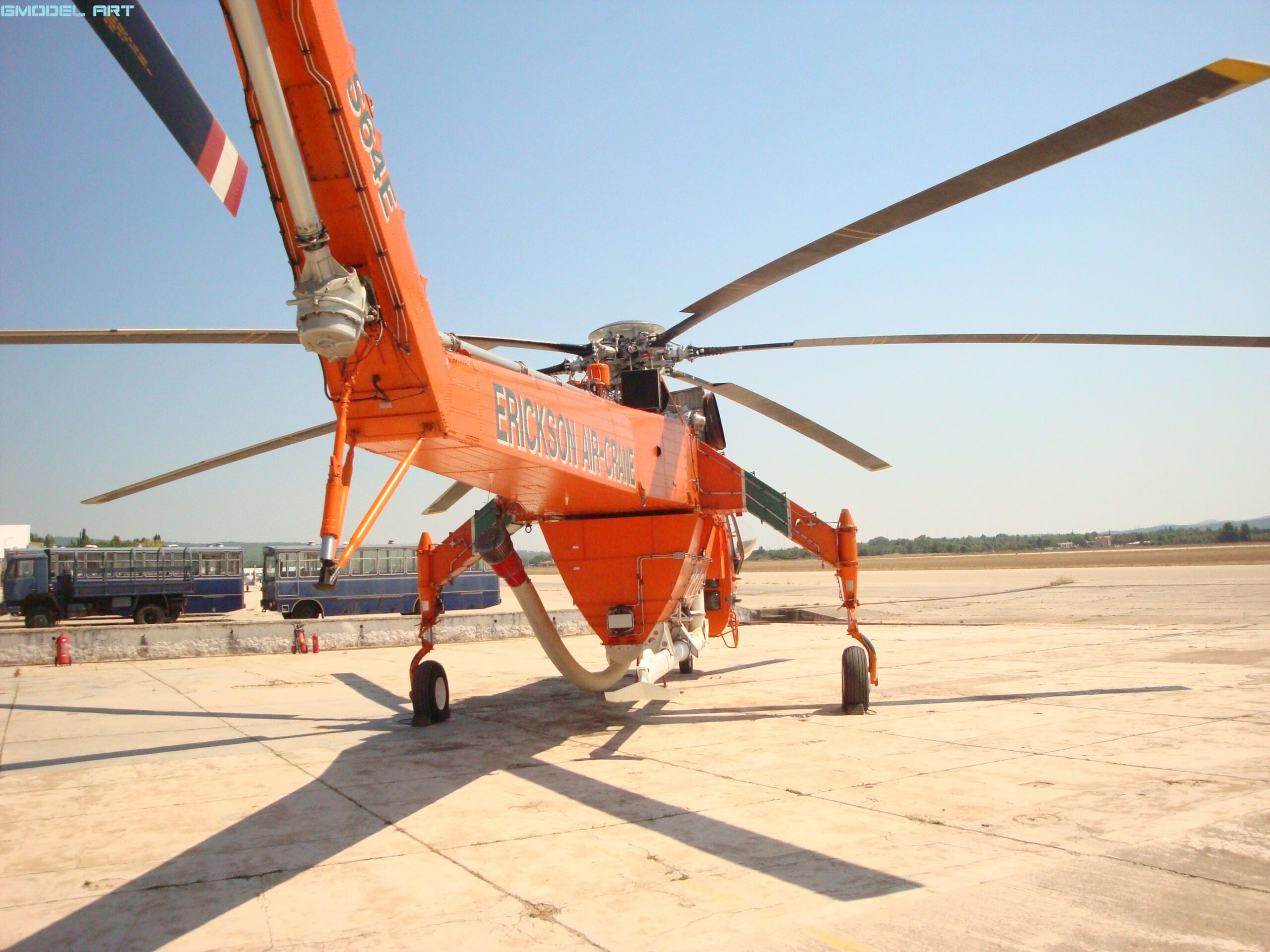
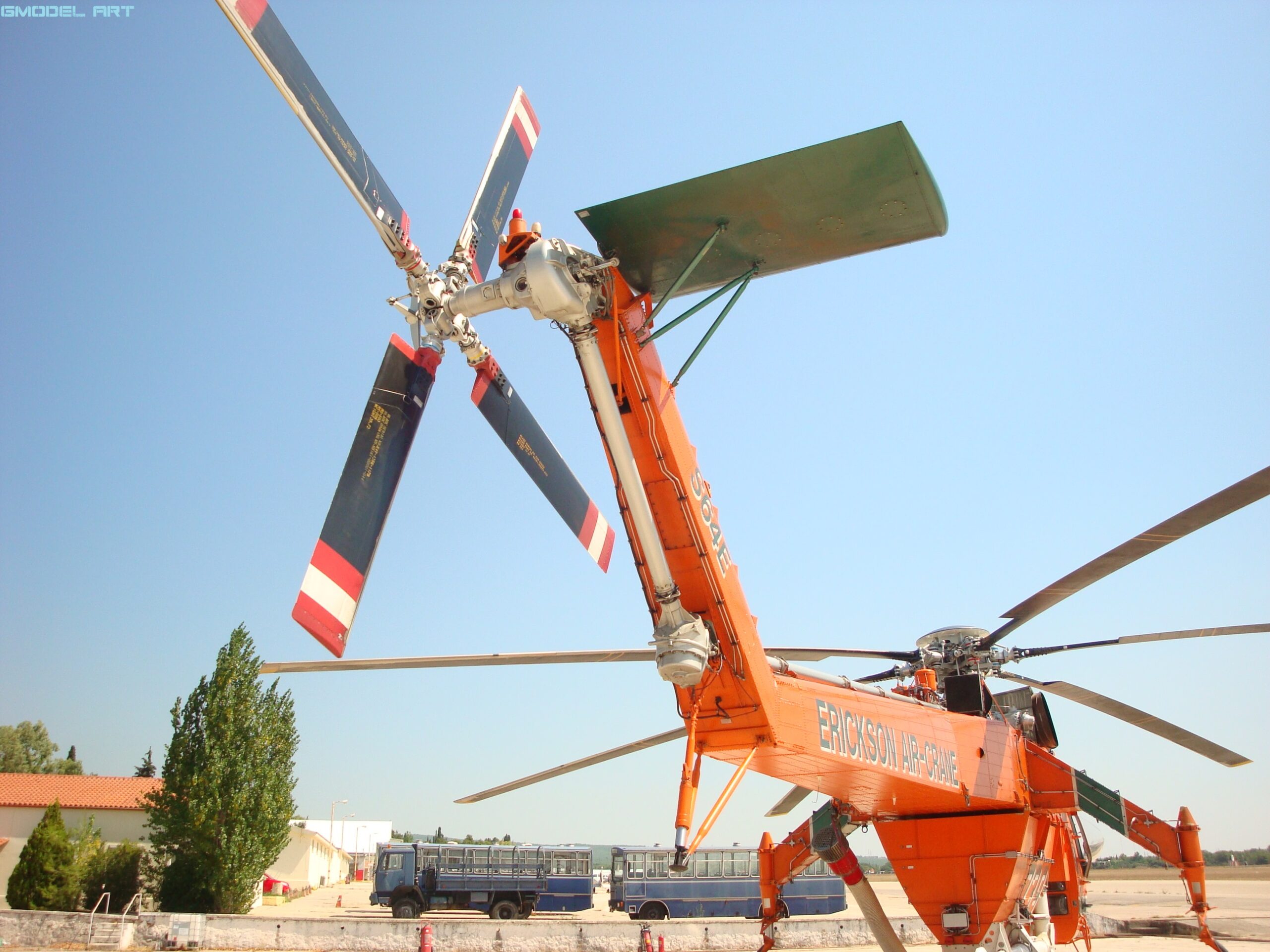
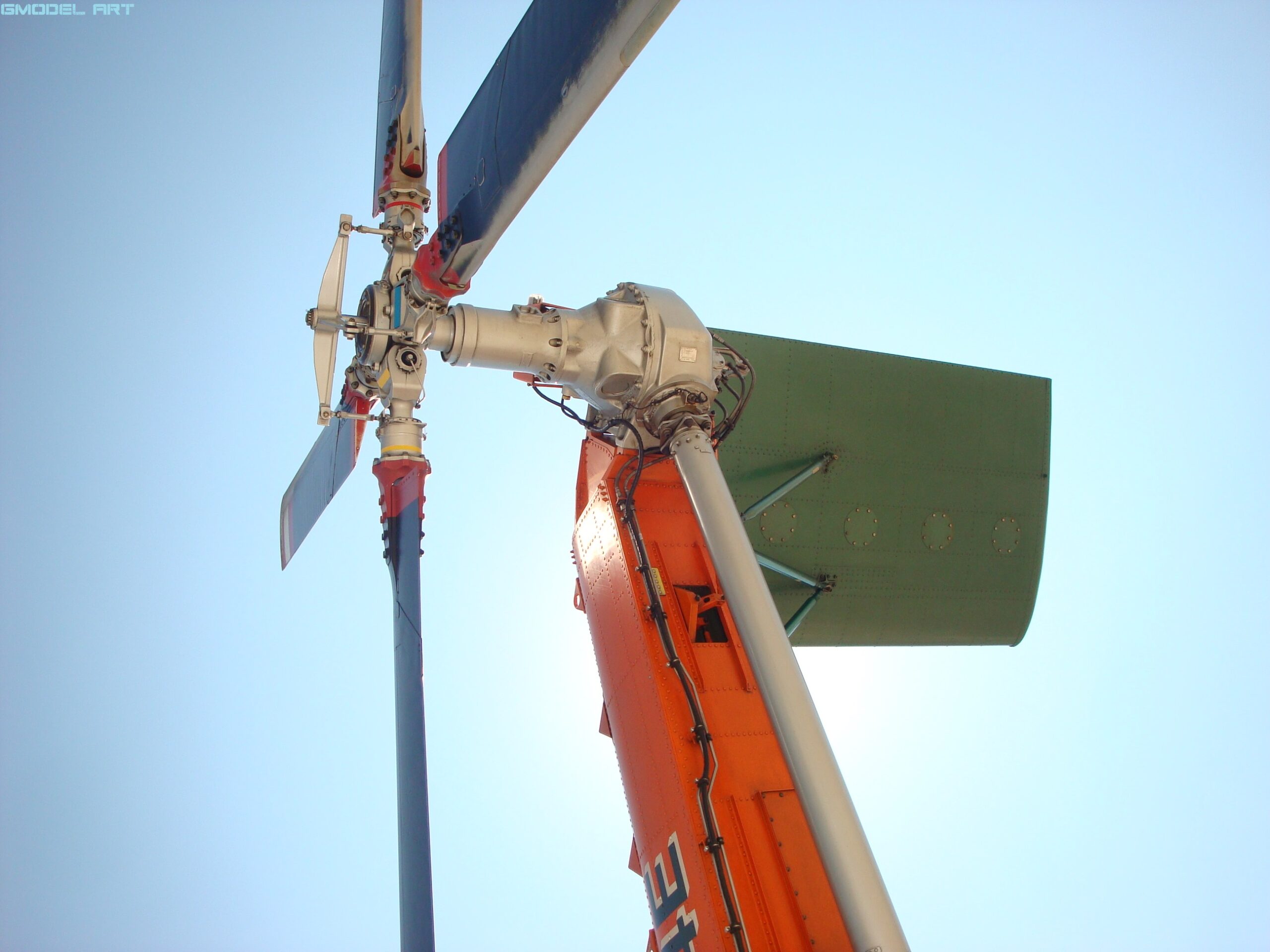
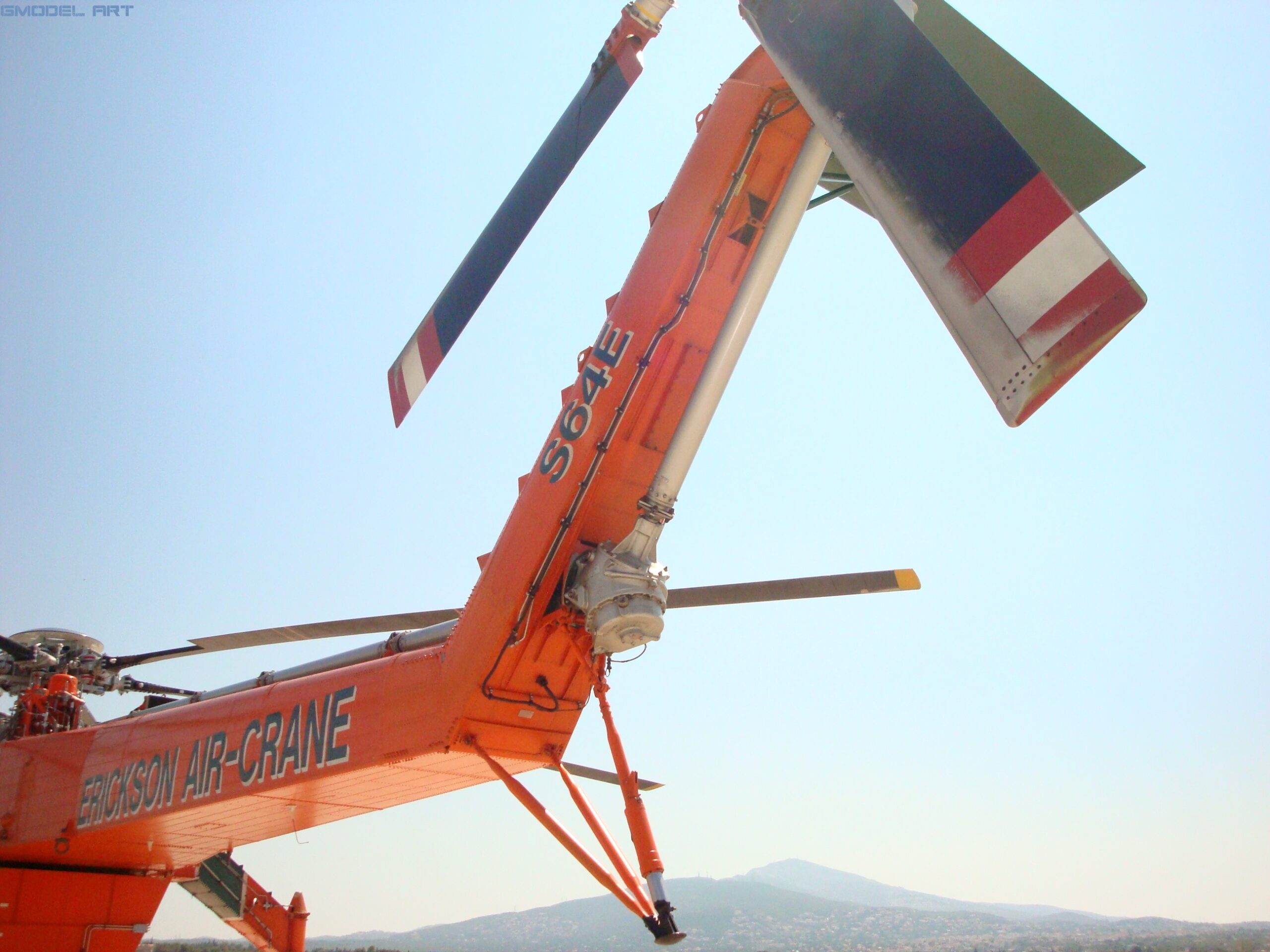
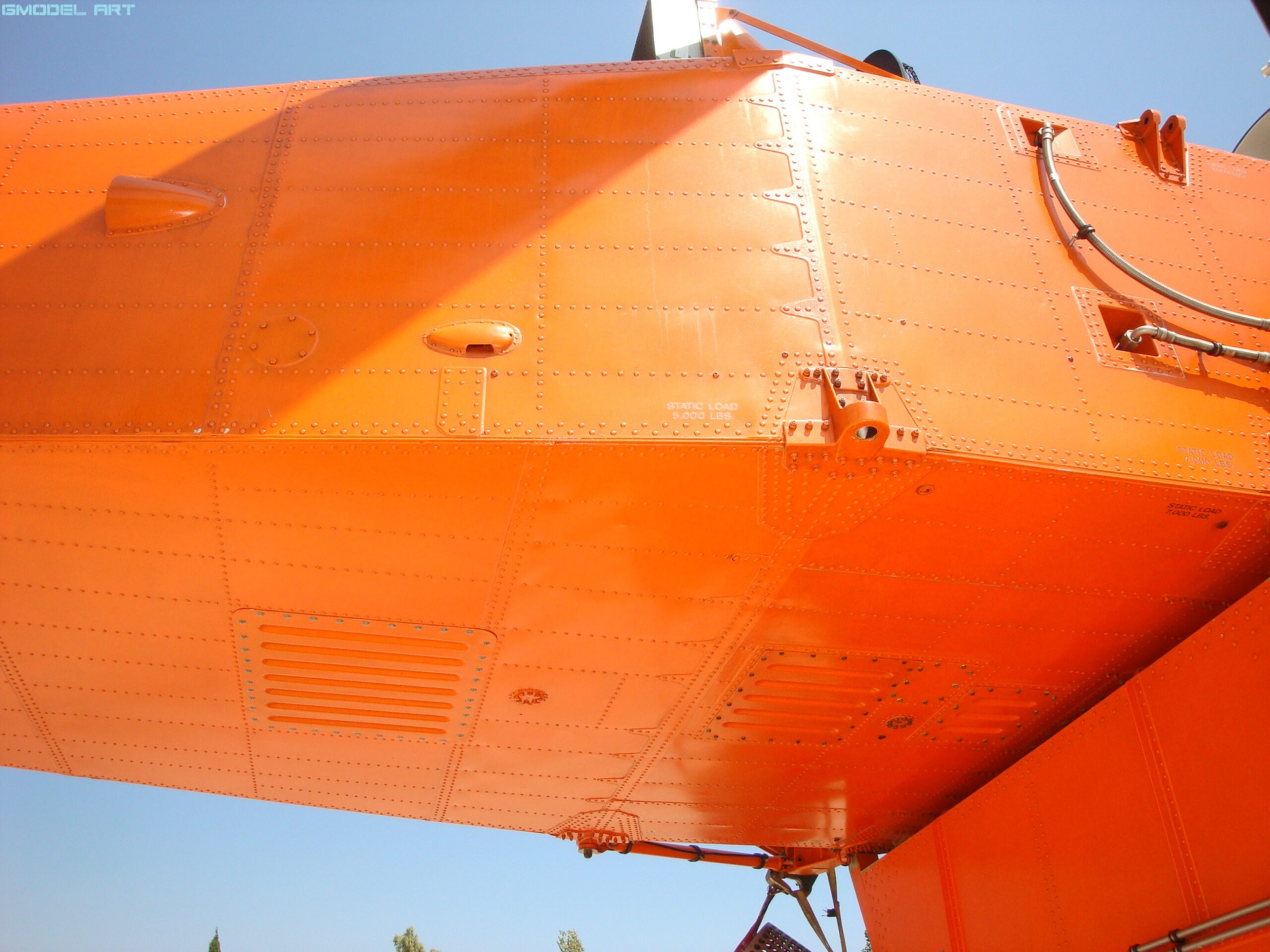
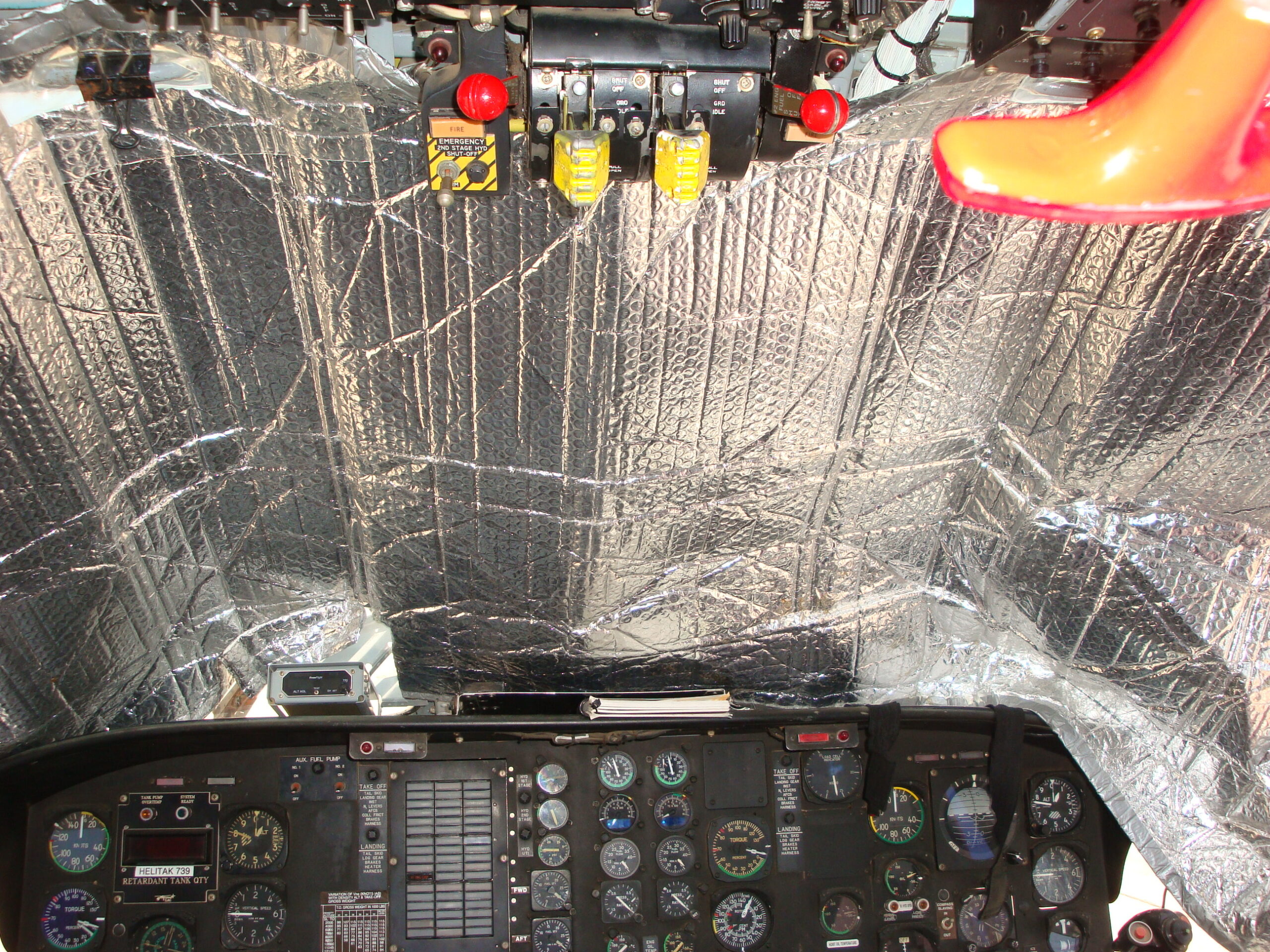
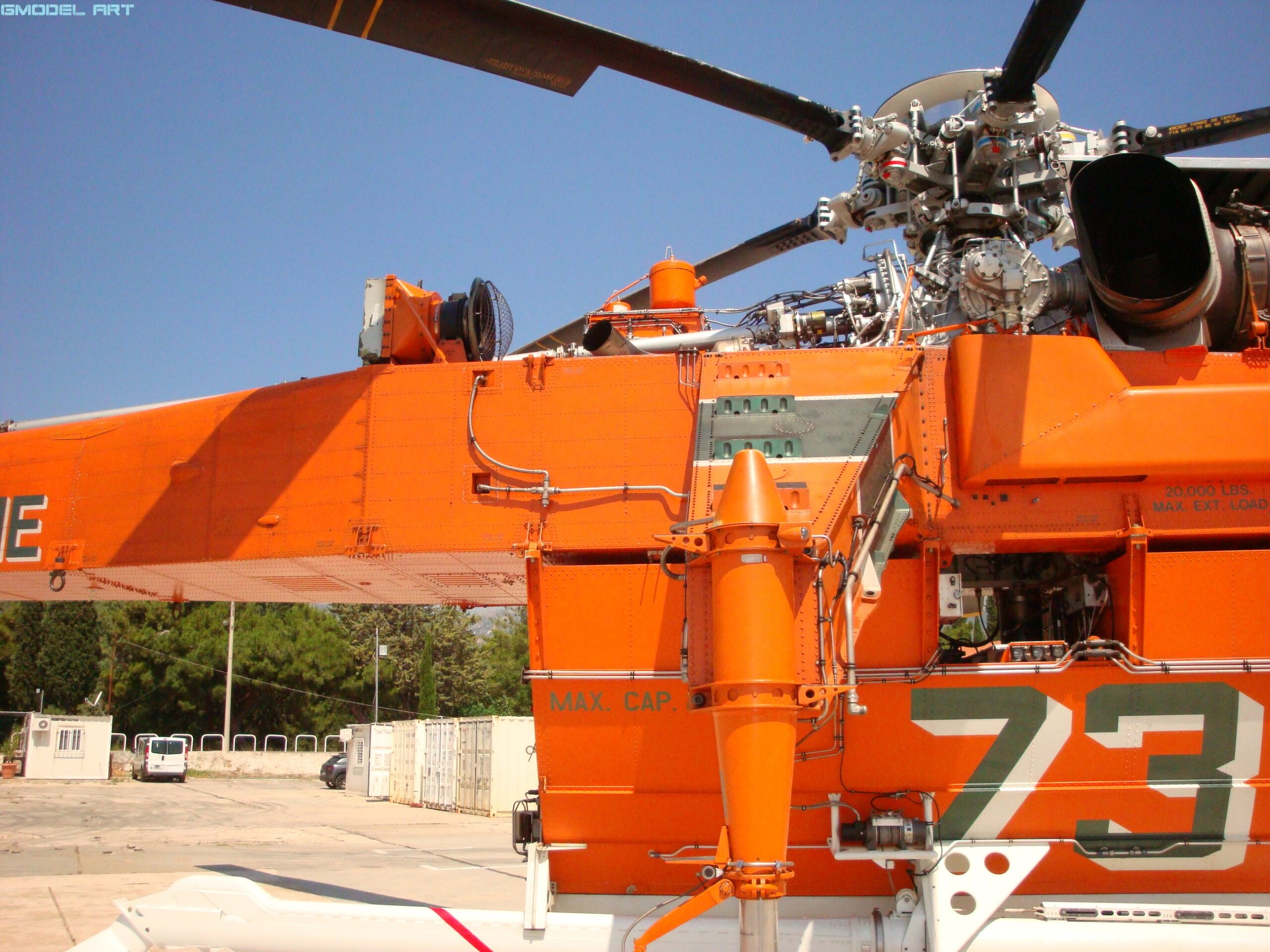
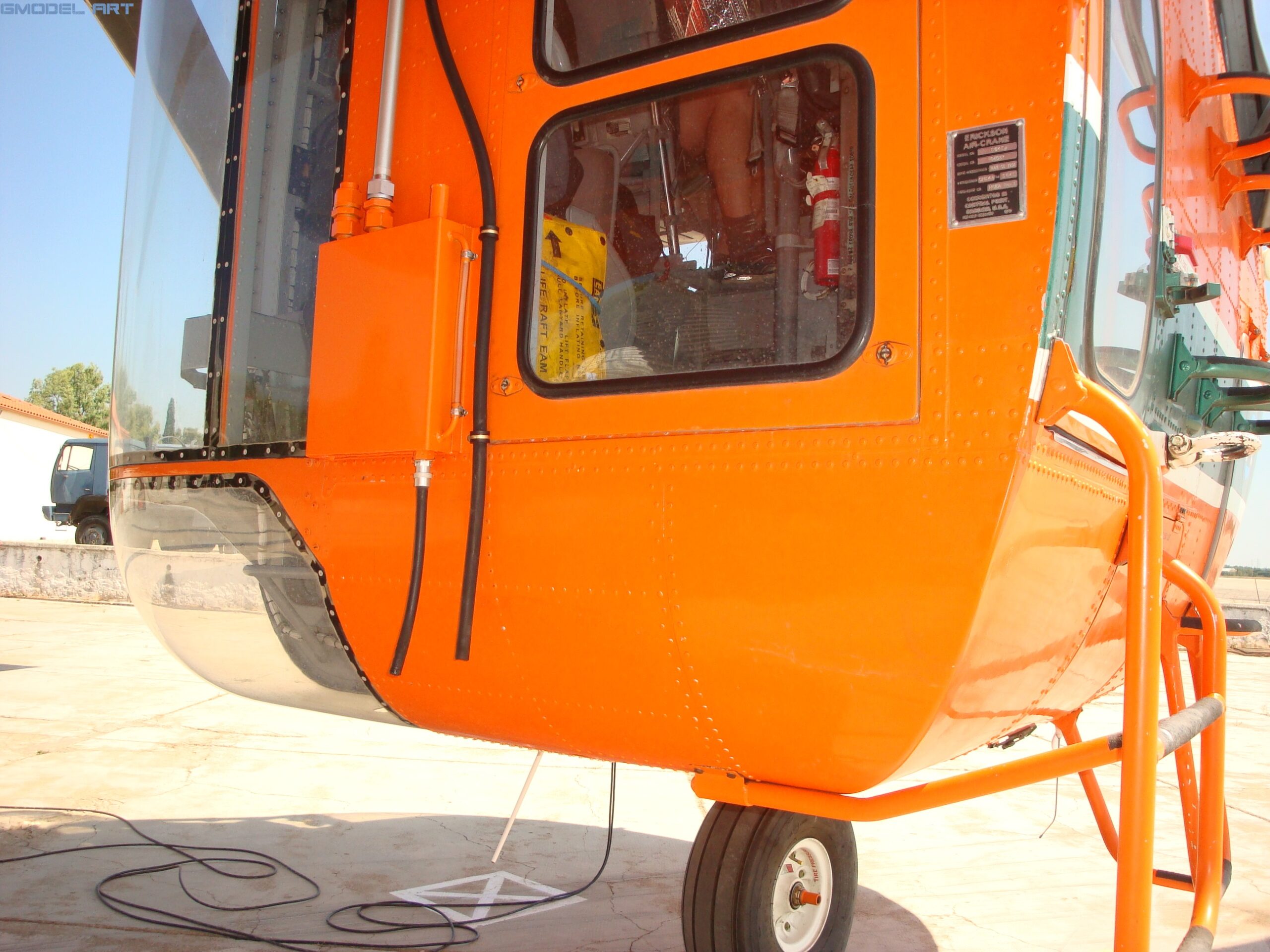
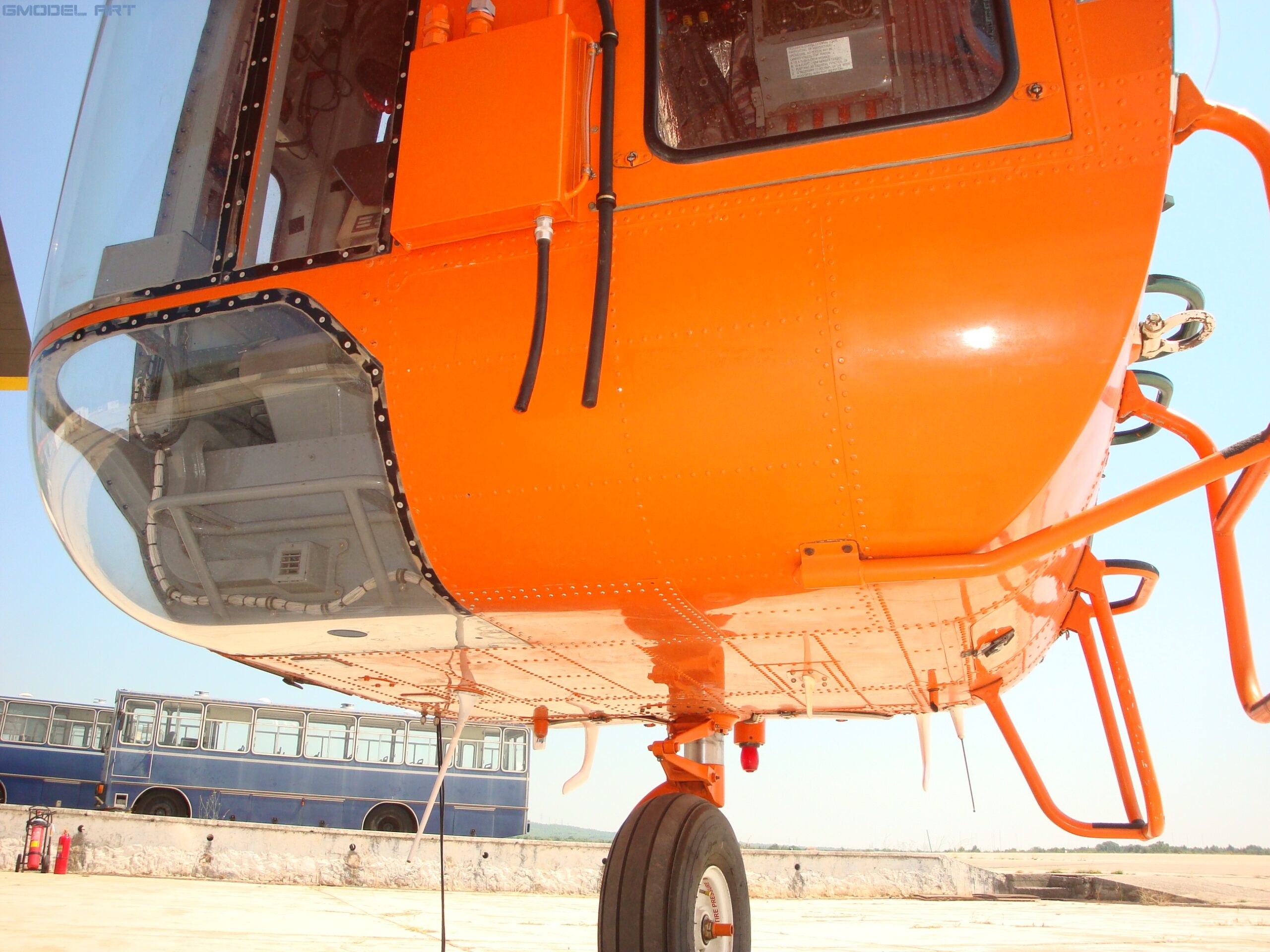
The Skycrane’s open structure is its defining feature, so frame alignment matters more than adding excessive aftermarket detail. Carefully align the landing gear, structural supports and fuselage framework; small inaccuracies become highly visible on such a large model.
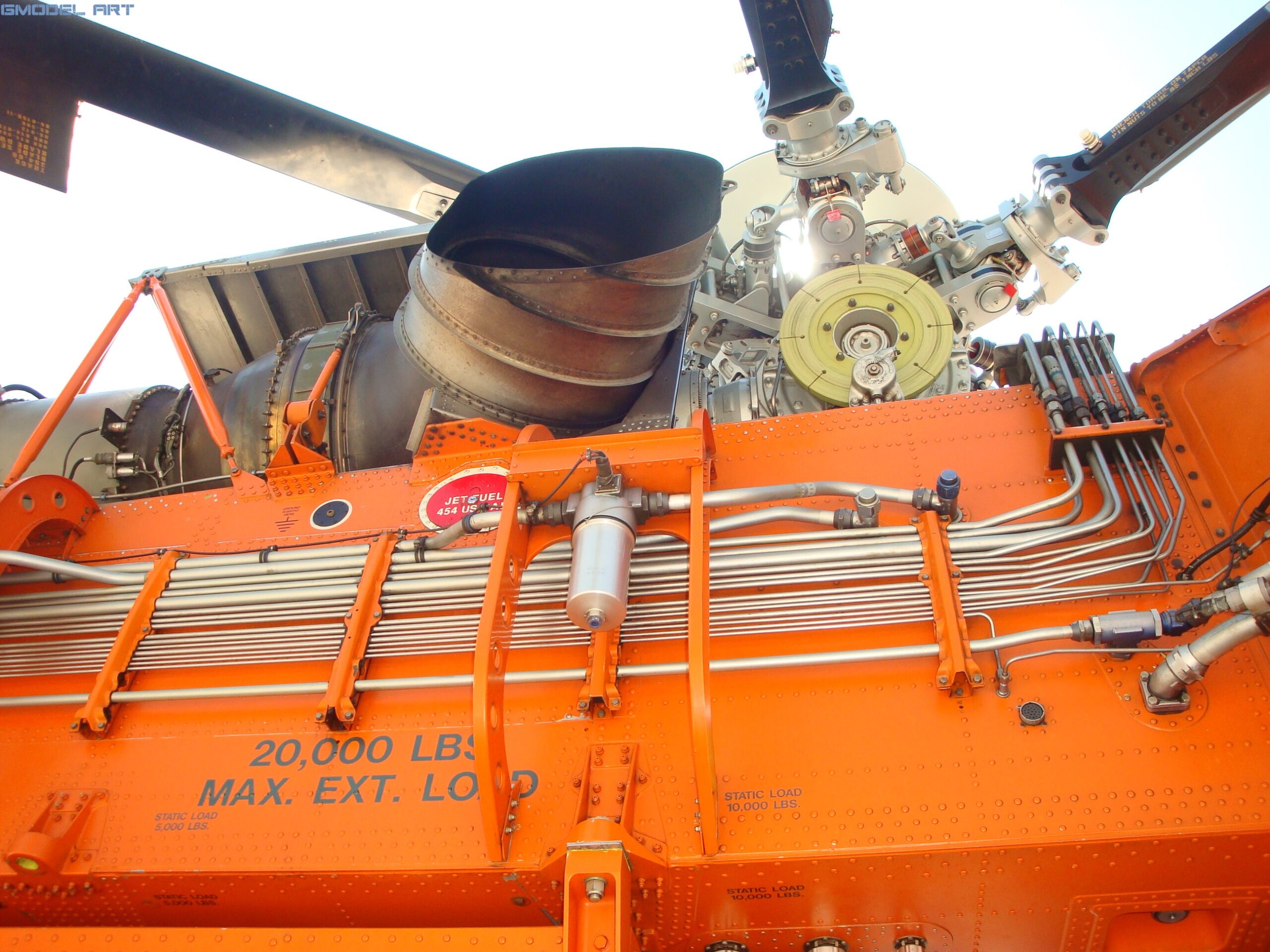
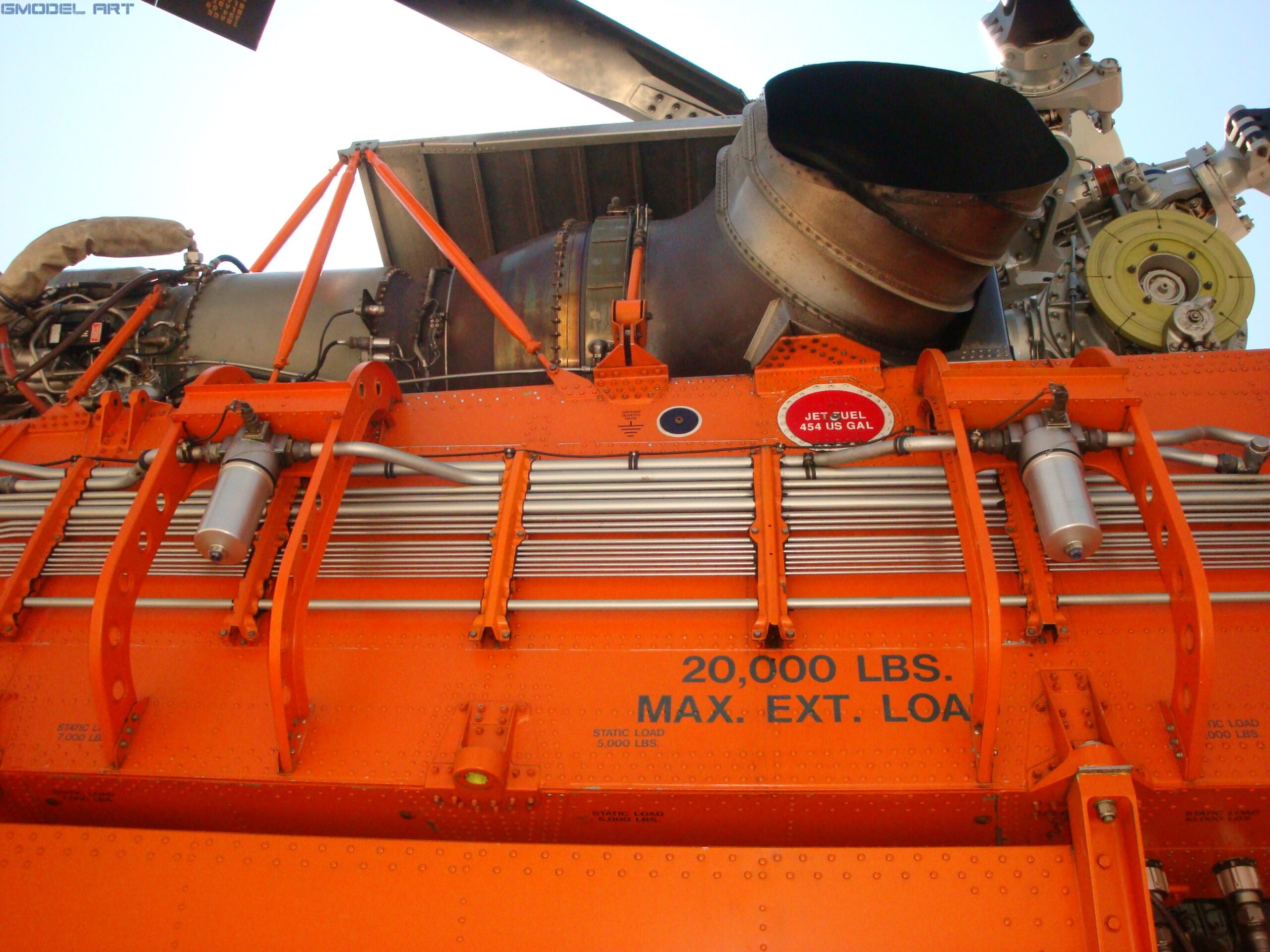
Paint the engine assemblies, rotor head and other difficult-to-reach components before final installation wherever the instructions permit. Keep the firefighting tank and its associated equipment separate for as long as practical, allowing the orange finish and mechanical details to be completed cleanly.
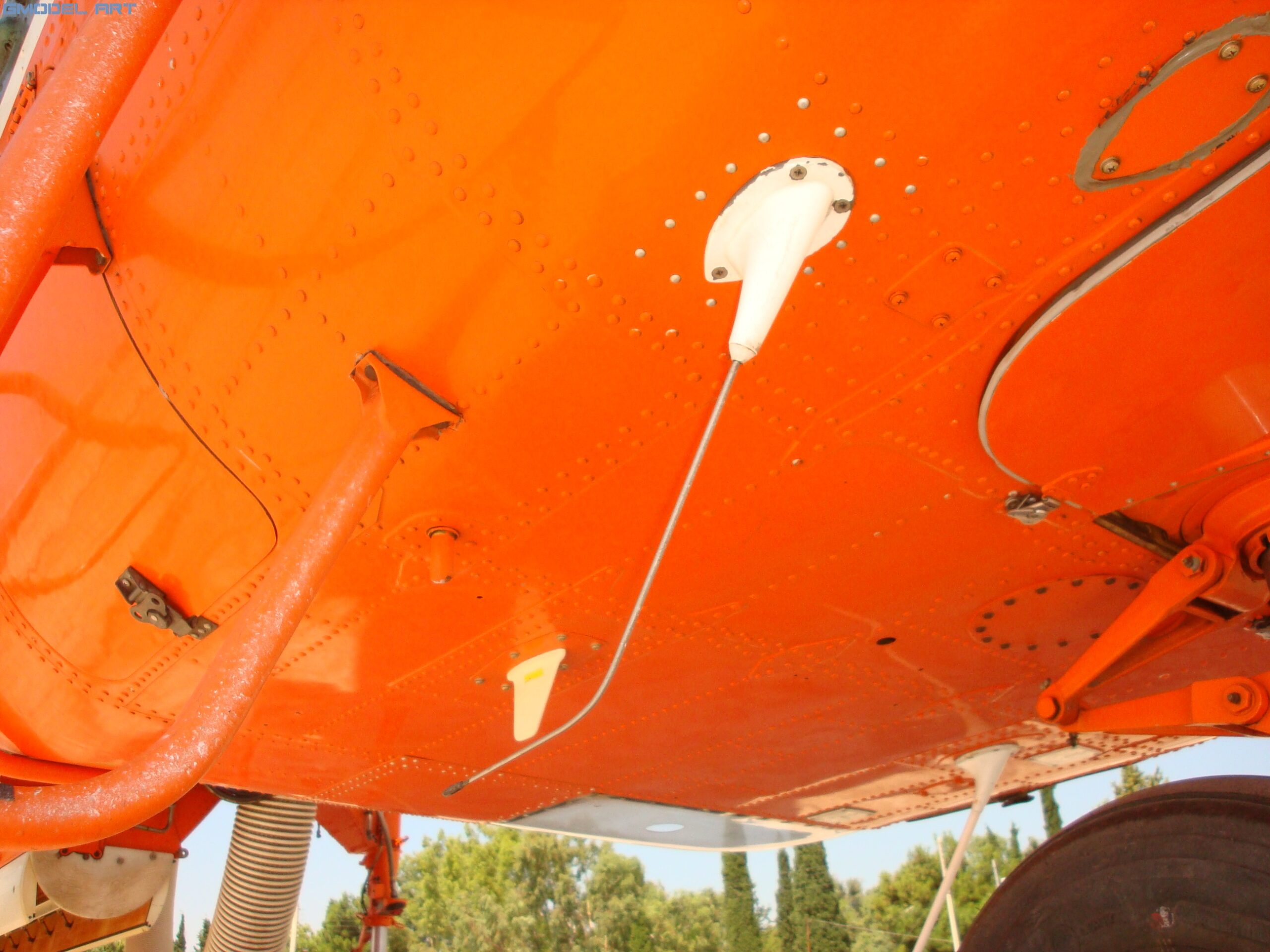
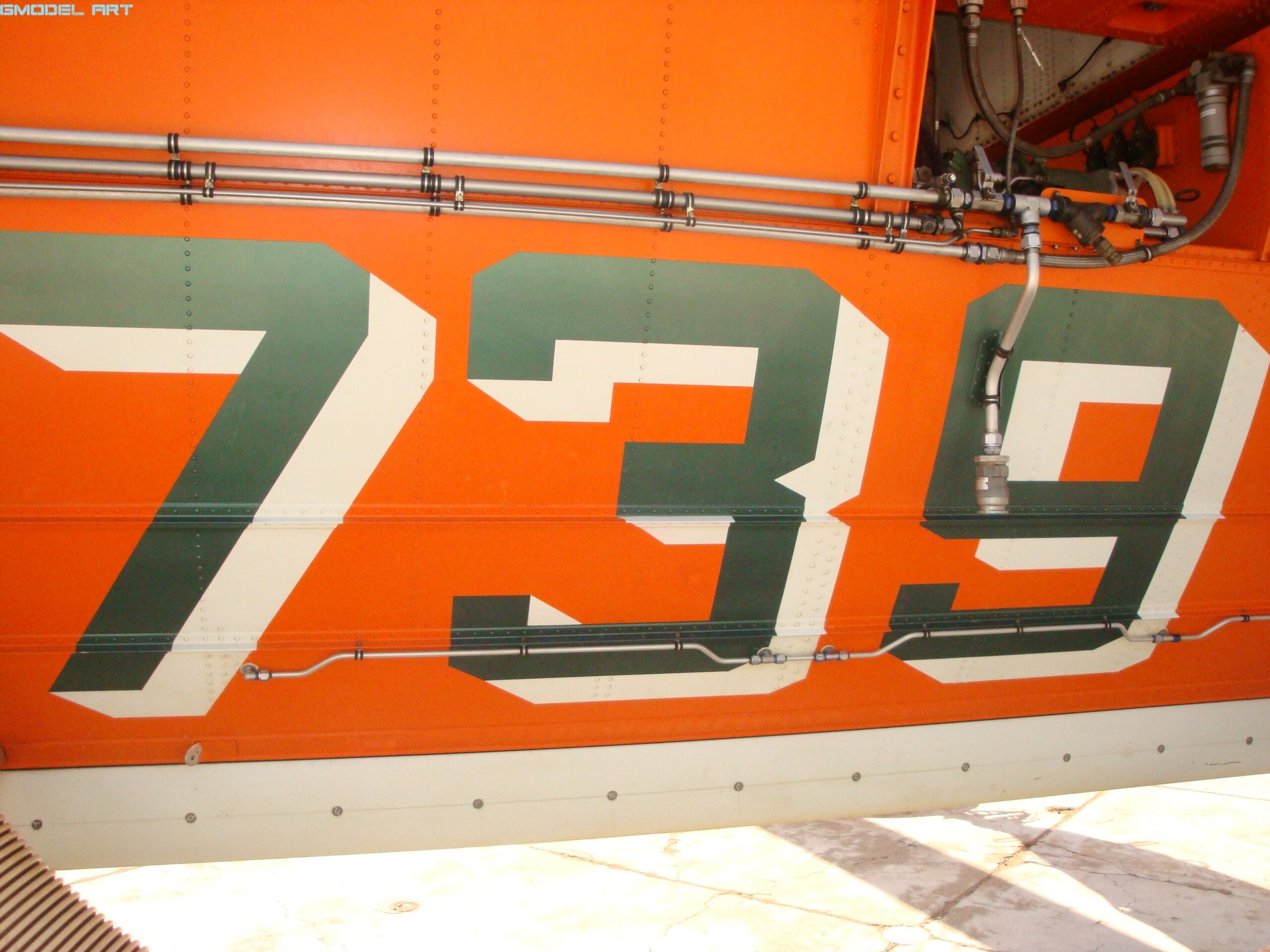
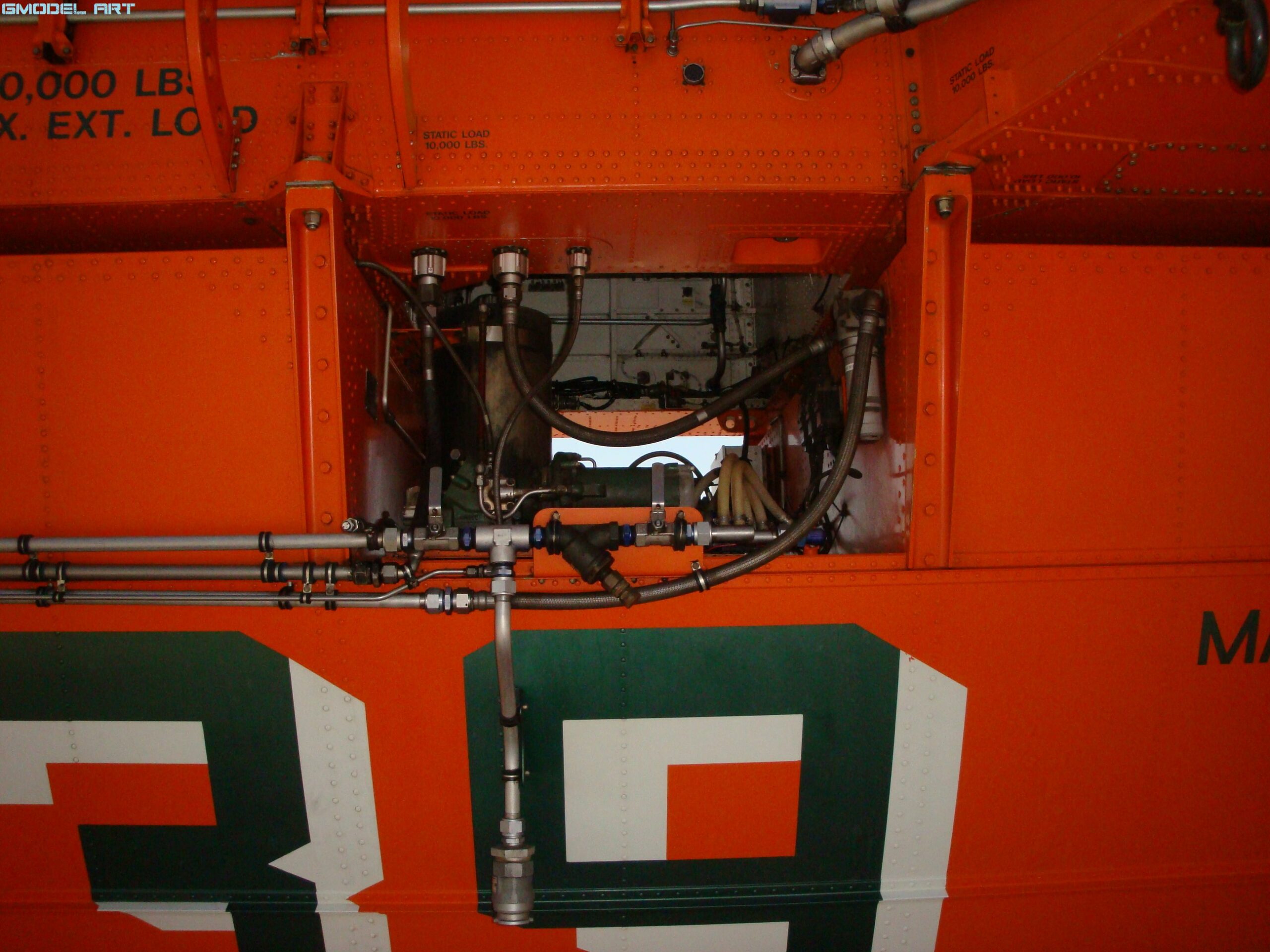
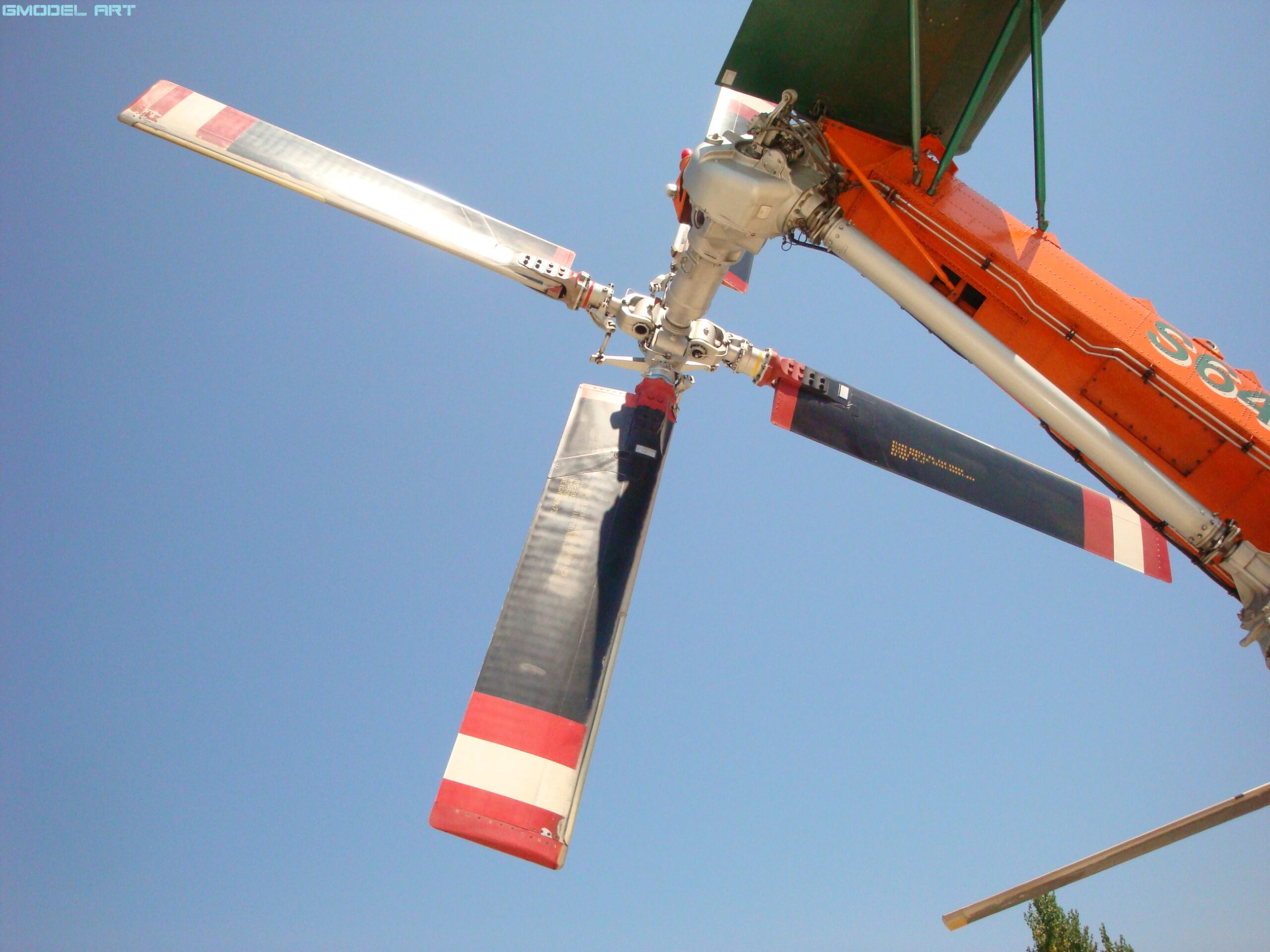
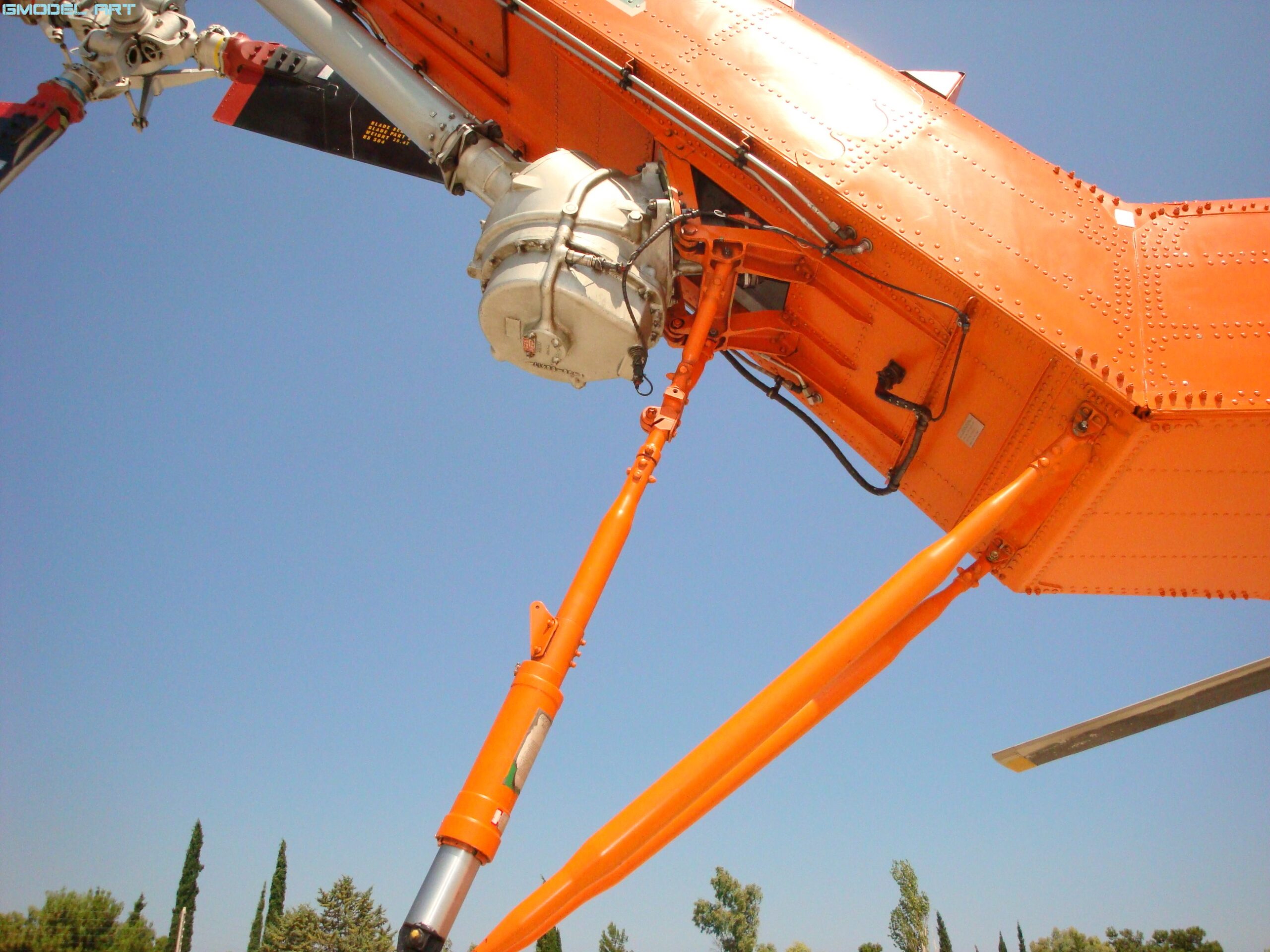
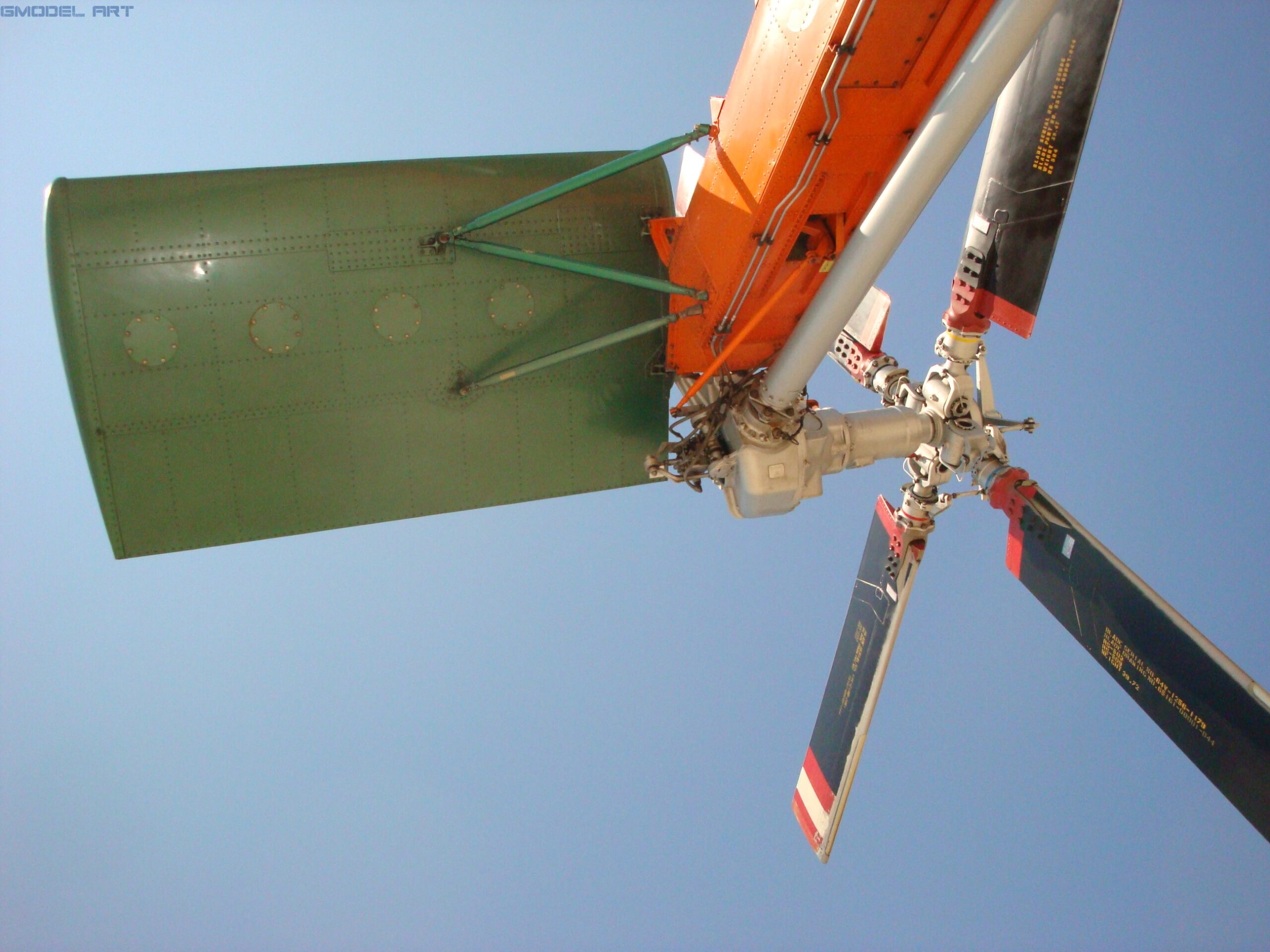
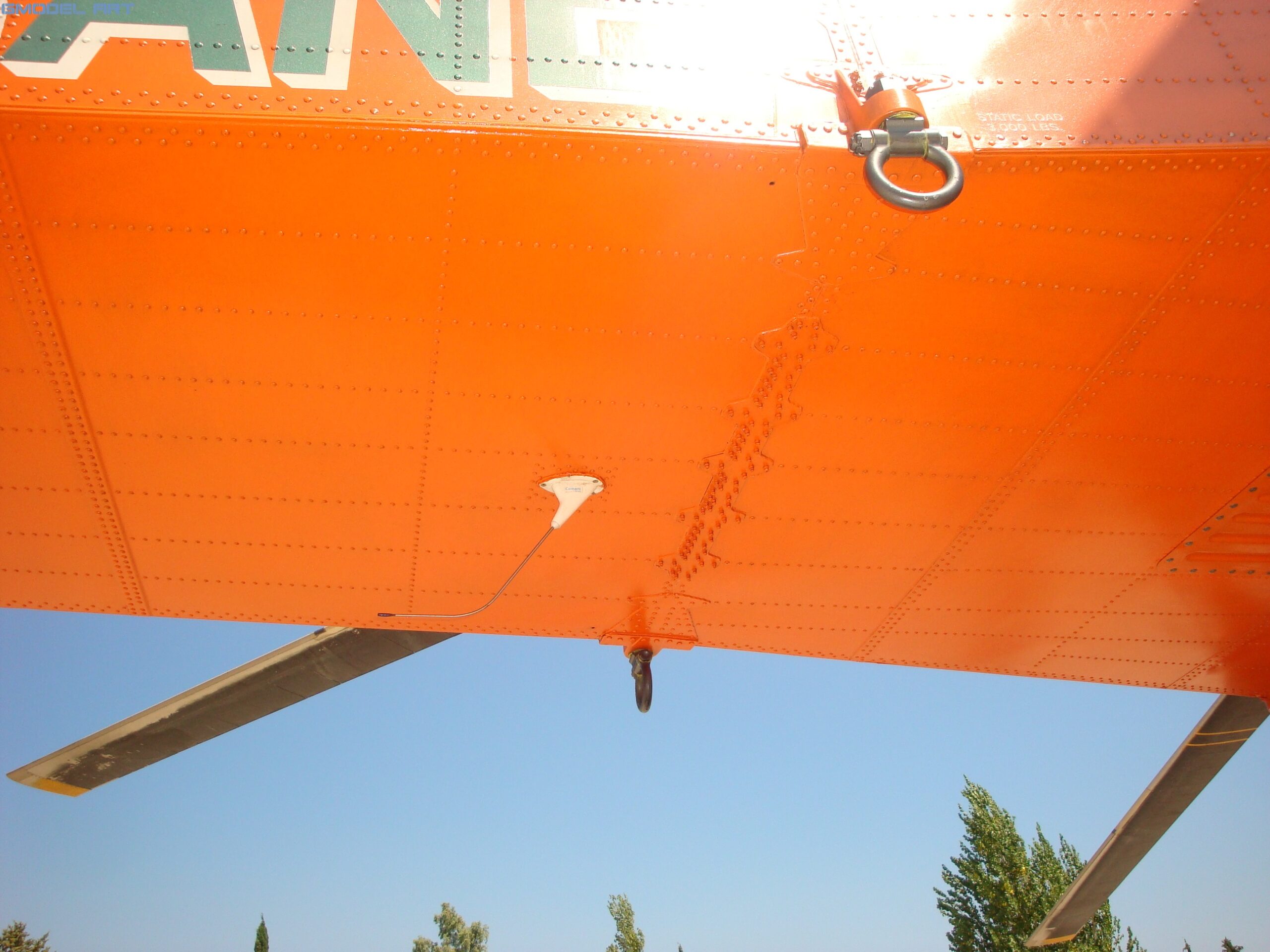
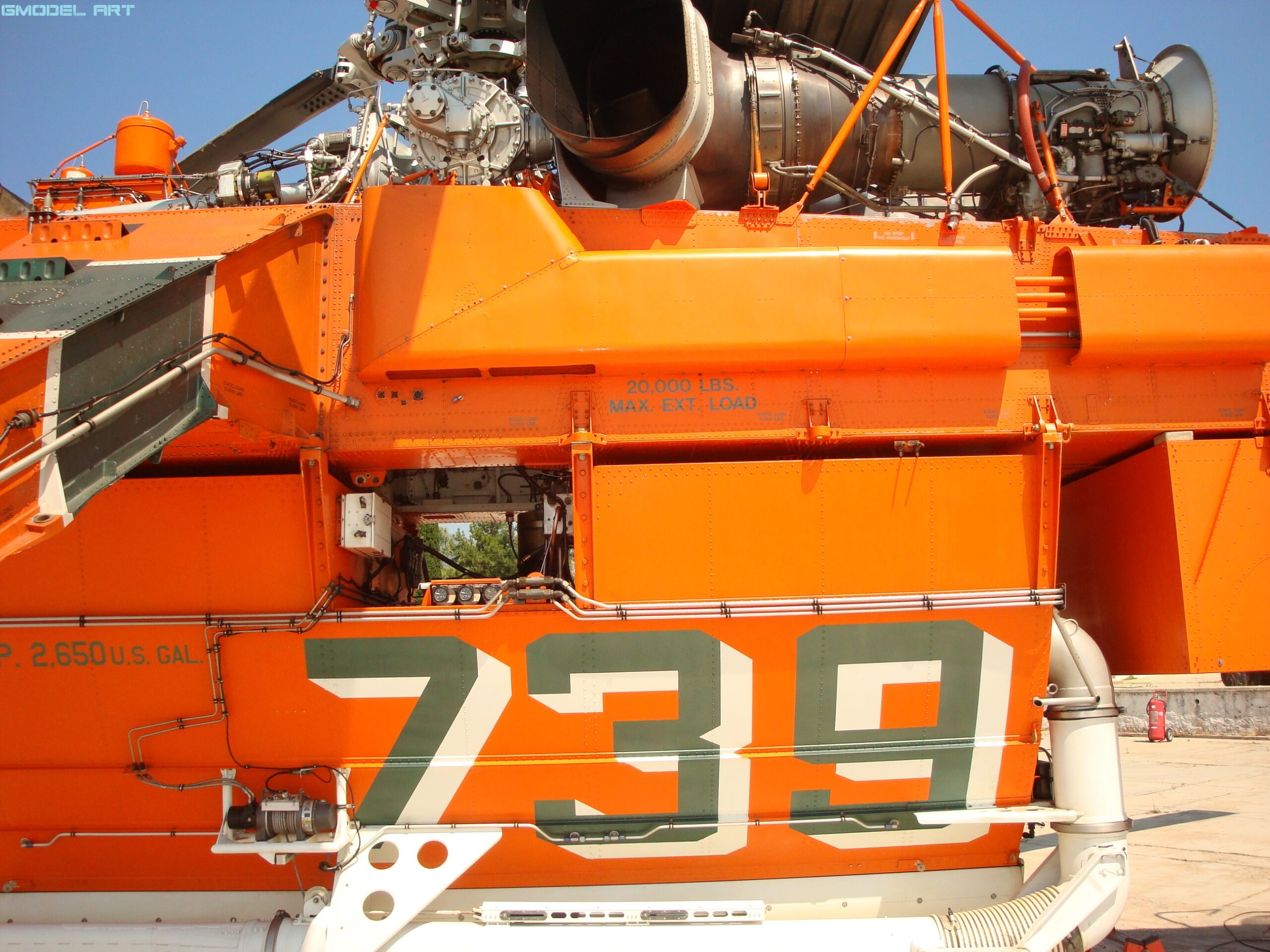
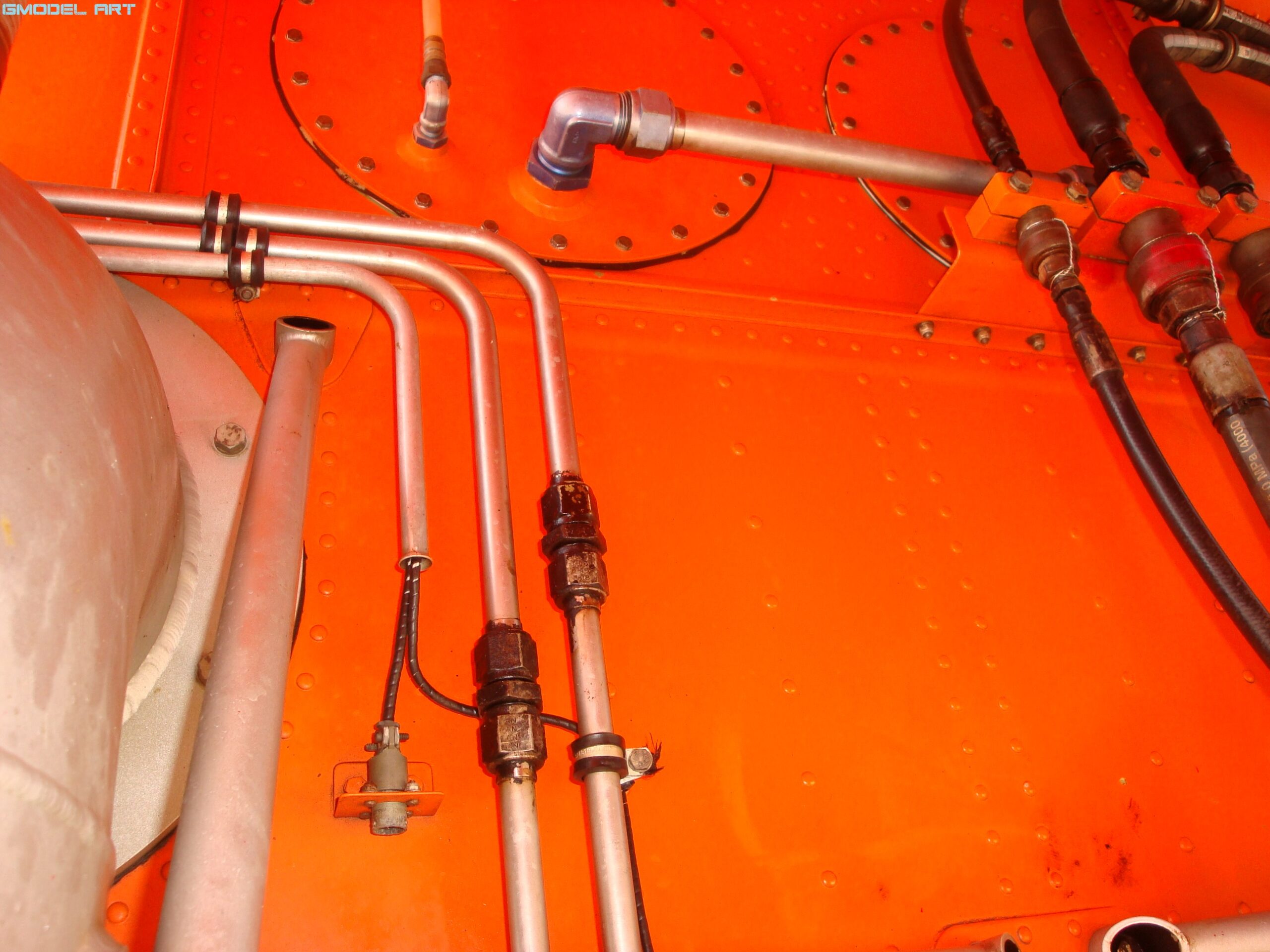
Pay particular attention to the rotor assembly, visible transmission components, hydraulic lines and water-intake equipment. These details help distinguish a convincing Skycrane from a simple orange helicopter model.
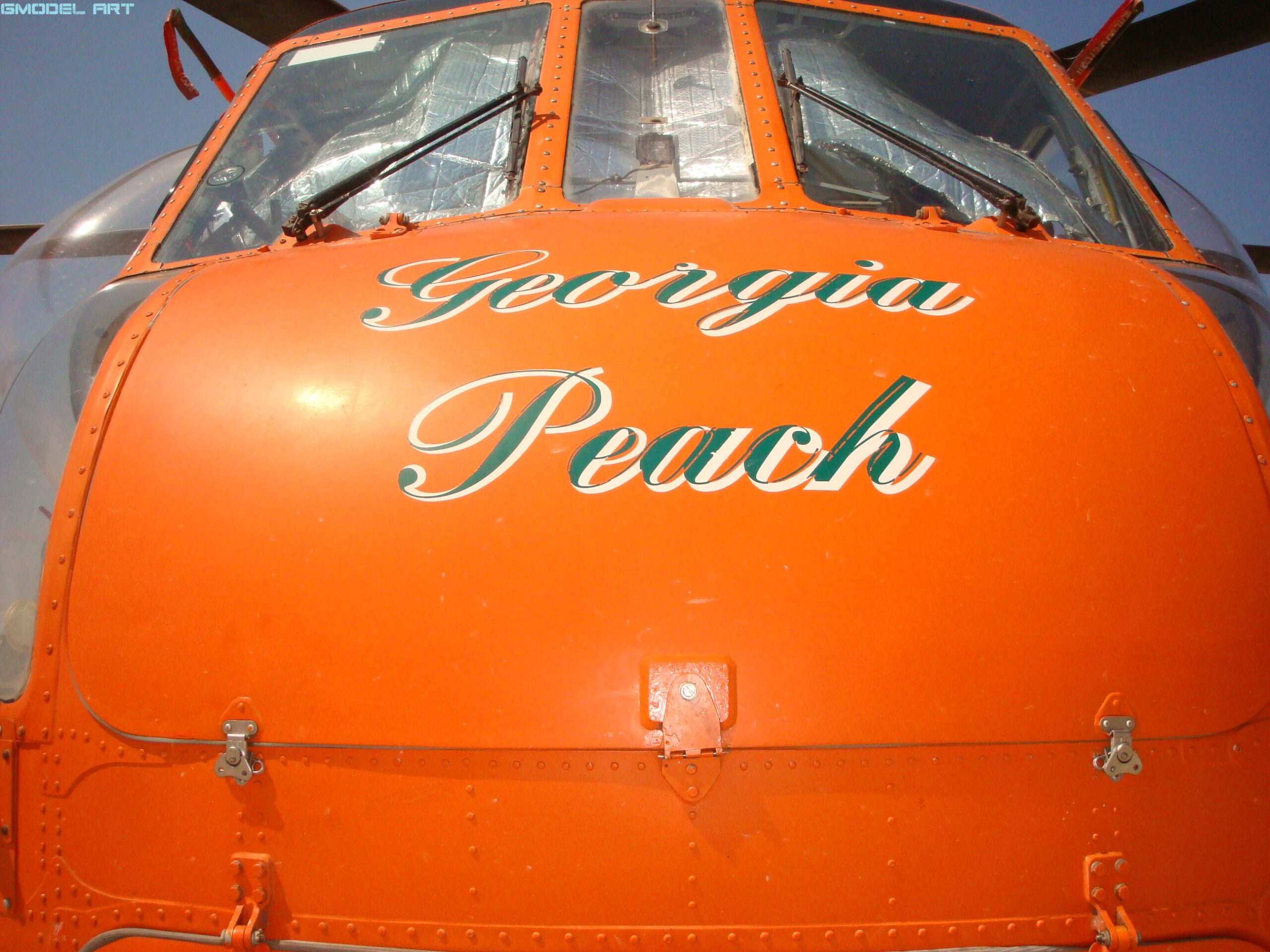
For a Greek operational representation, concentrate on the correct orange finish, the appropriate tank and snorkel configuration, the actual aircraft’s identification markings and the placement of external equipment. Photographic accuracy will contribute more to the final result than an elaborate weathering effect.
Because the S-64 is a working aircraft, use restrained weathering. Subtle differences in finish, limited staining around mechanical areas and light dust on lower components are generally more convincing than extensive chipping or heavy exhaust effects.
Optional Upgrades and Detailing
Before purchasing additional parts, check exactly what is included in the selected box. The ICM 53060 firefighting kit already includes its water tank, so the separate ICM 53202 tank accessory is not an essential extra for this build.
Where suitable products are available, small photo-etched or 3D-printed details may improve selected mechanical areas. Fine hydraulic lines, external fittings and carefully reproduced markings can also be added using reference photographs and scratch-built details. Confirm that any aftermarket part is designed for the correct ICM kit and scale before buying it.
Which Skycrane Should You Build?
For a model connected to modern Greece, the ICM 53060 S-64E Firefighting Helicopter is the strongest choice. It directly represents the civilian firefighting configuration and provides a suitable base for a carefully researched Greek operational display.
For a historical military scene, the CH-54A Tarhe offers a different modeling challenge, with alternative loads, military markings and the possibility of a Vietnam War diorama. The ICM 53054 in 1/35 provides a large display model, while the 1/72 kits offer a more compact alternative.
The Sikorsky S-64 Skycrane is more than an unusual helicopter. It is a remarkable example of specialized aviation engineering and a distinctive subject for scale modeling, linking military aviation history with the continuing challenge of wildfire suppression in Greece.
My personal thanks go to my friend Alkiviadis Paraskevopoulos. I dedicate this article to all the firefighters and aircrews who fight wildfires in Greece every summer.
TBM Avenger – From Torpedo Bomber to Spray Plane and Firefighter