article
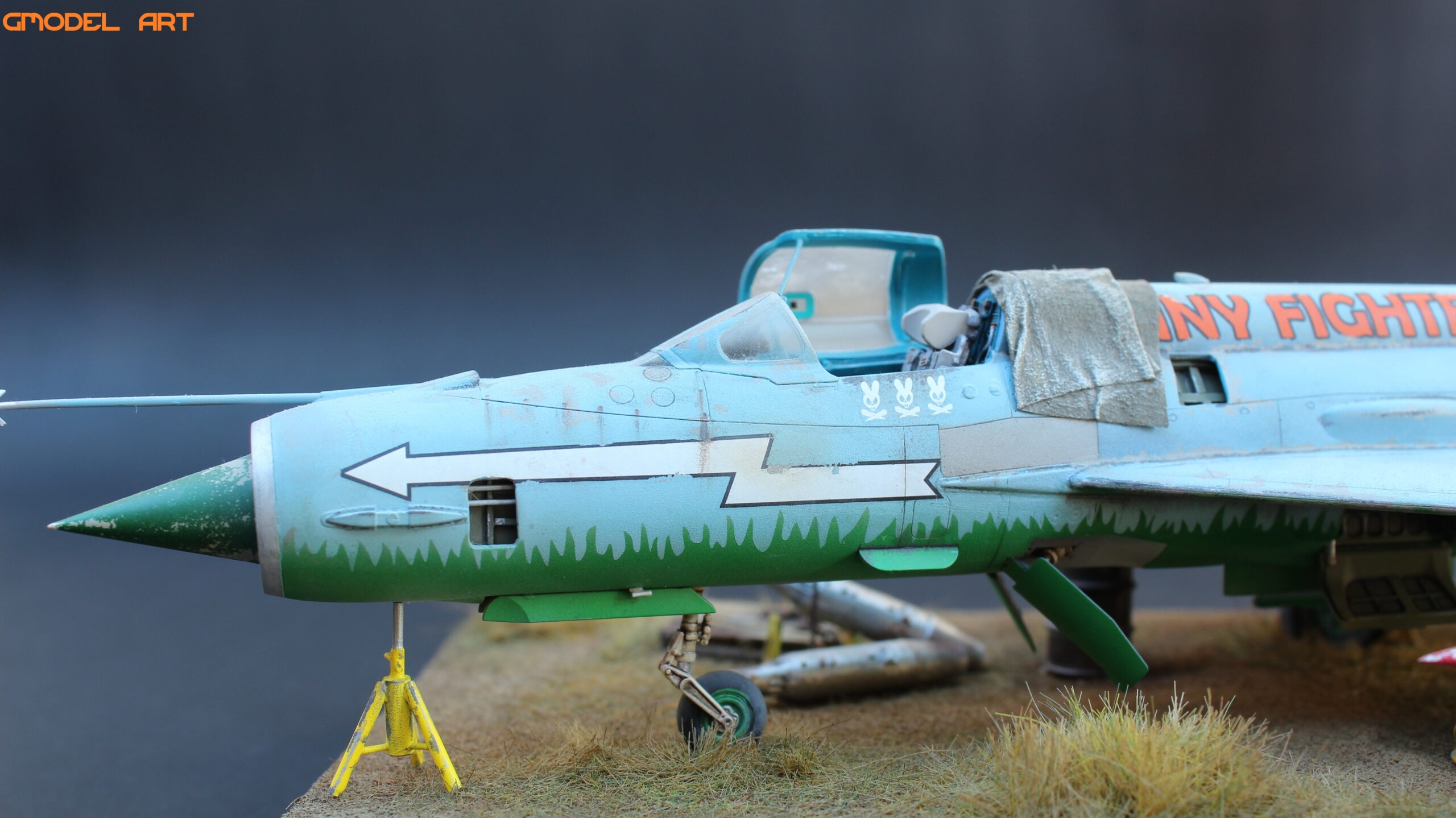
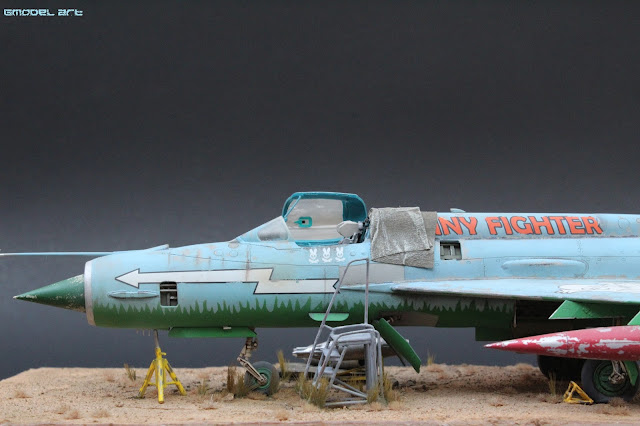
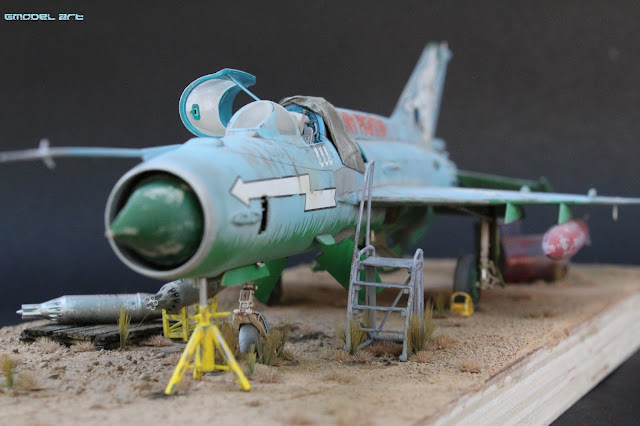
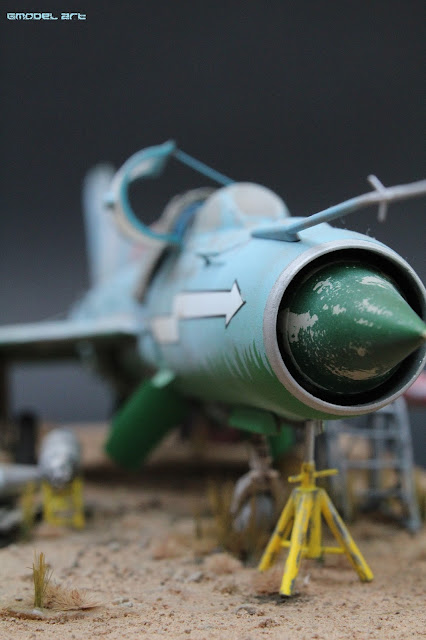
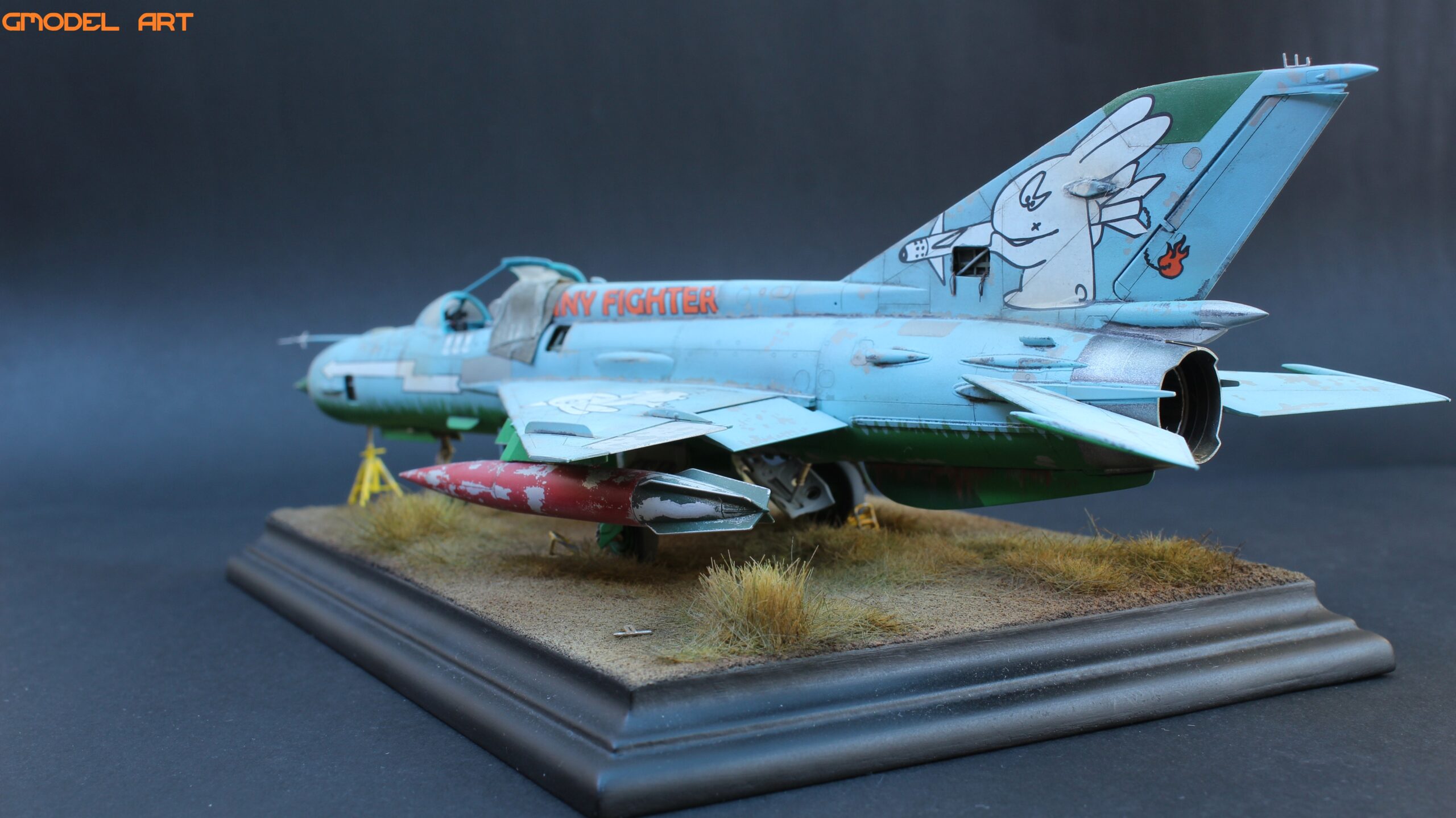
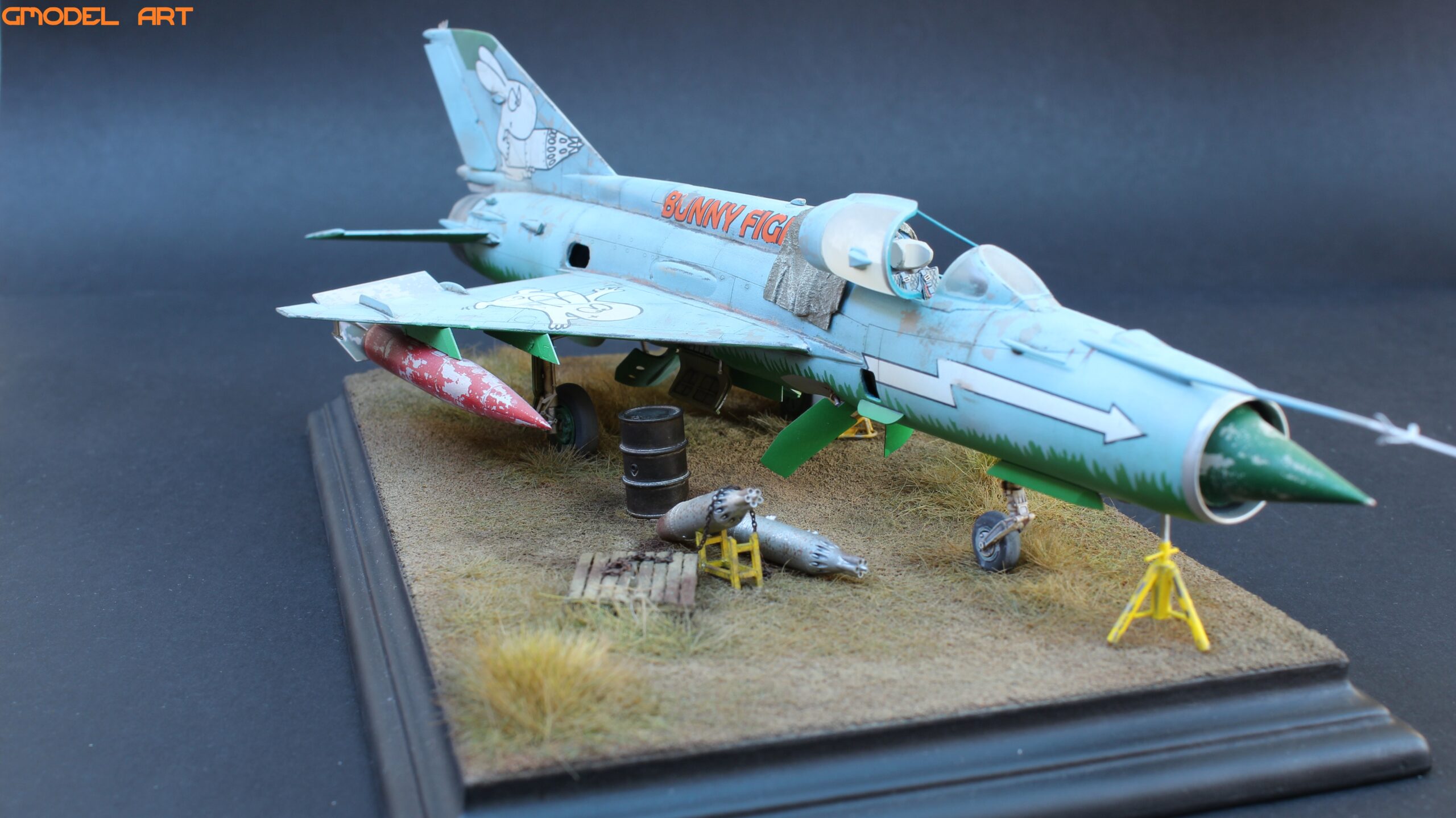
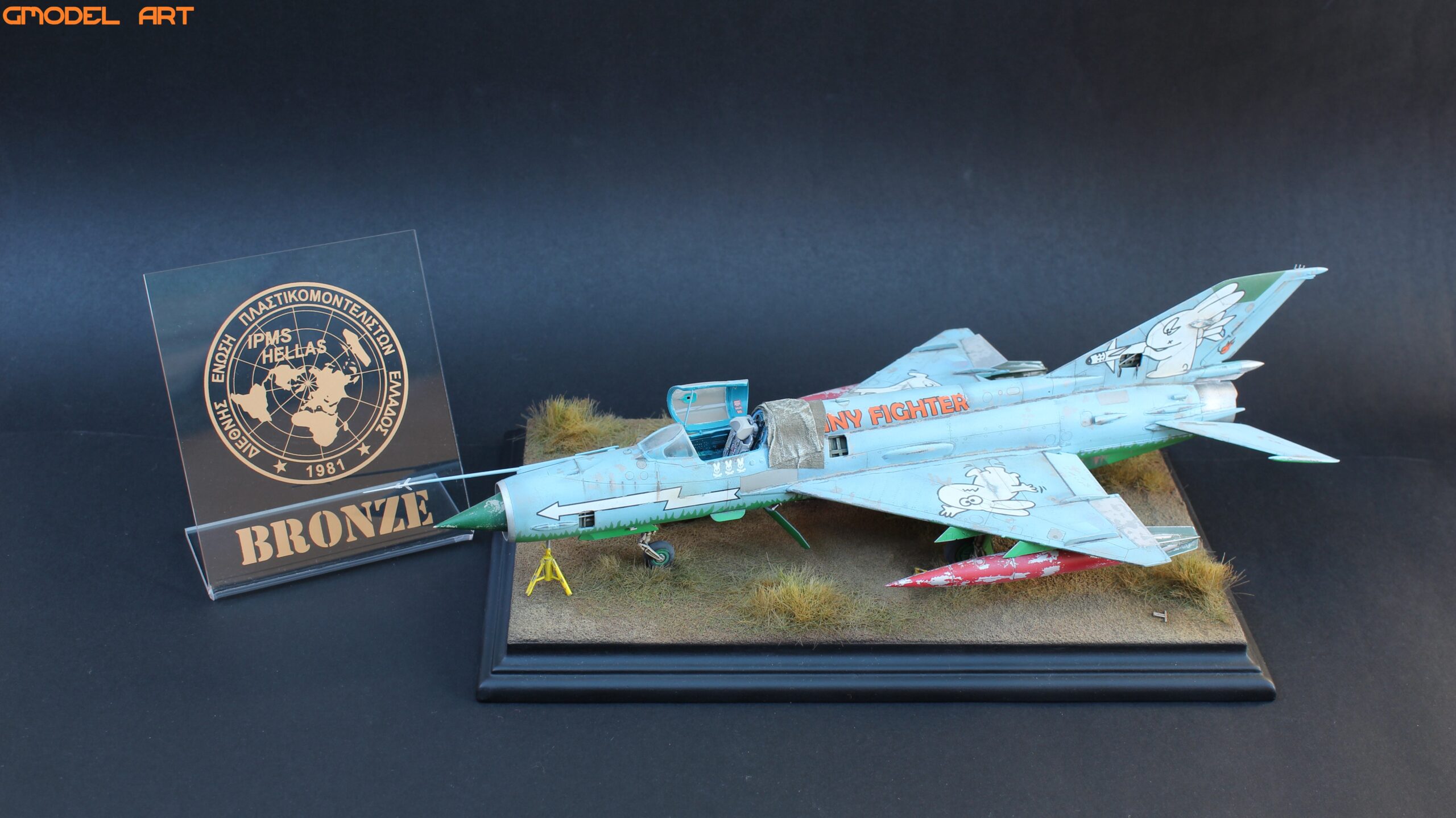
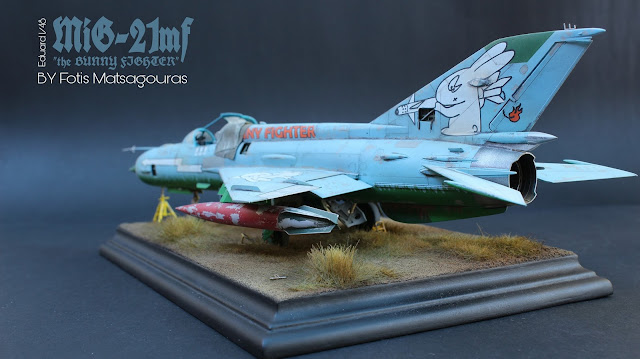
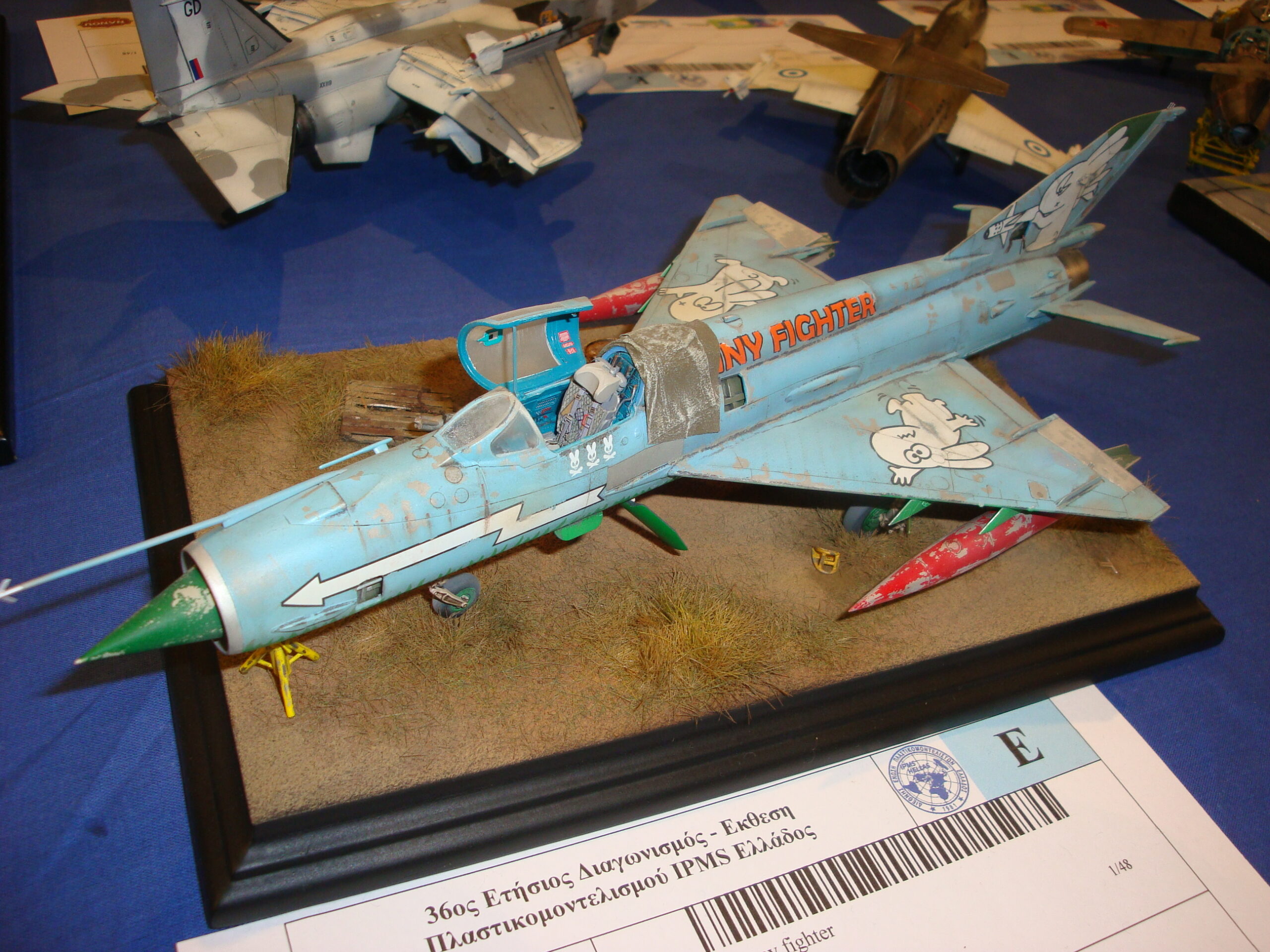
MiG-21MF “Bunny Fighter” Eduard 1/48
The Mikoyan-Gurevich MiG-21 remains one of the most iconic fighter aircraft ever produced. Designed during the Cold War, the MiG-21 served in dozens of countries and participated in conflicts across Europe, Asia, the Middle East, and Africa.
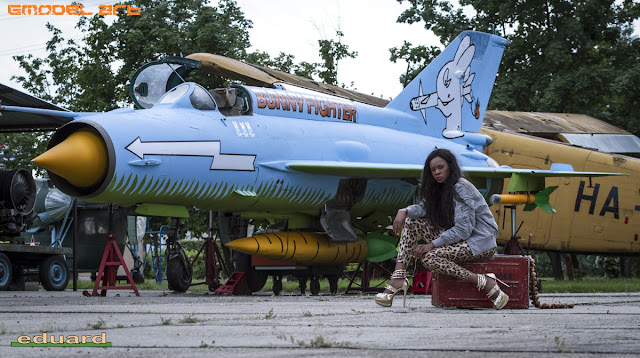
Among the countless camouflage schemes and operational stories linked to the MiG-21, one aircraft became especially legendary among aviation enthusiasts and scale modellers alike: the mysterious MiG-21MF “Bunny Fighter” from the Democratic Republic of Congo.
This unusual aircraft combined mercenary pilots, African civil war history, bizarre camouflage, and one of the most dramatic abandoned aircraft appearances ever seen on a combat jet.
For weathering enthusiasts, it is the perfect modelling subject.
The Story Behind the MiG-21MF “Bunny Fighter”
In late 1995, the Democratic Republic of Congo acquired eight former Czech MiG-21MF aircraft. During the violent civil conflicts of the late 1990s, the Congolese Air Force suffered from a severe lack of trained local pilots and technical personnel.
Because of this, many combat missions were carried out by foreign mercenary pilots from Ukraine and other former Soviet bloc countries.
One of the most famous among them was Igor Valenchenko.
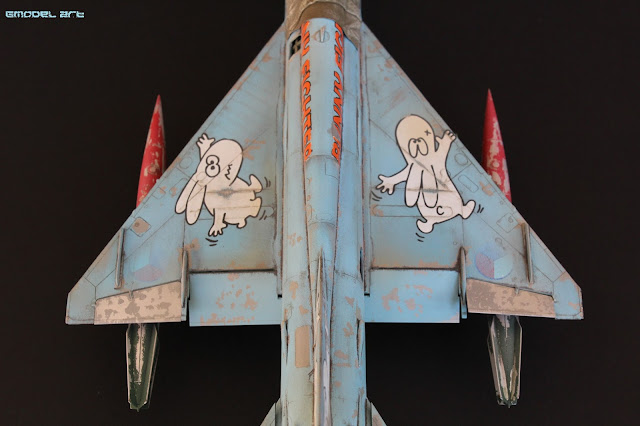
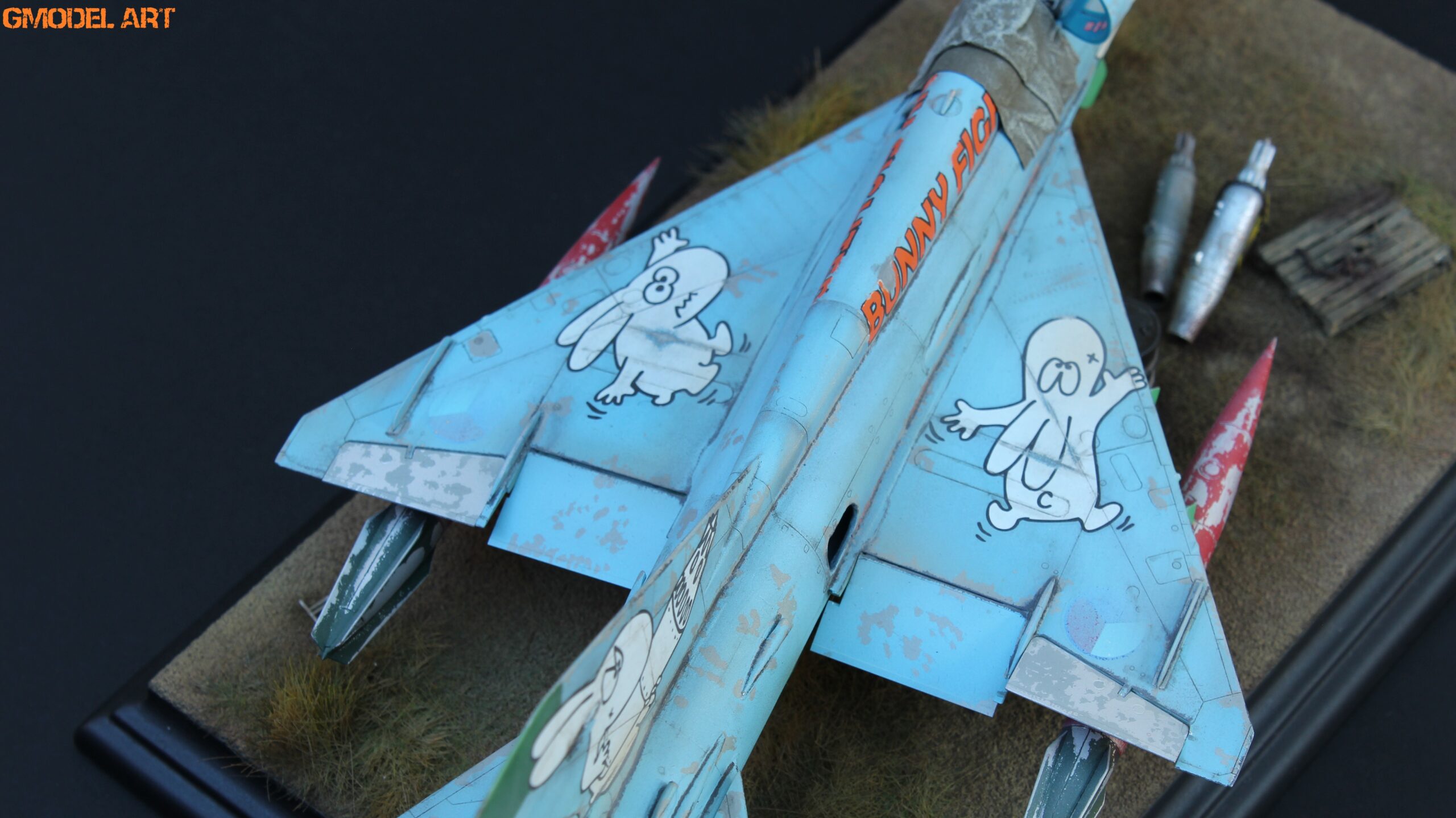
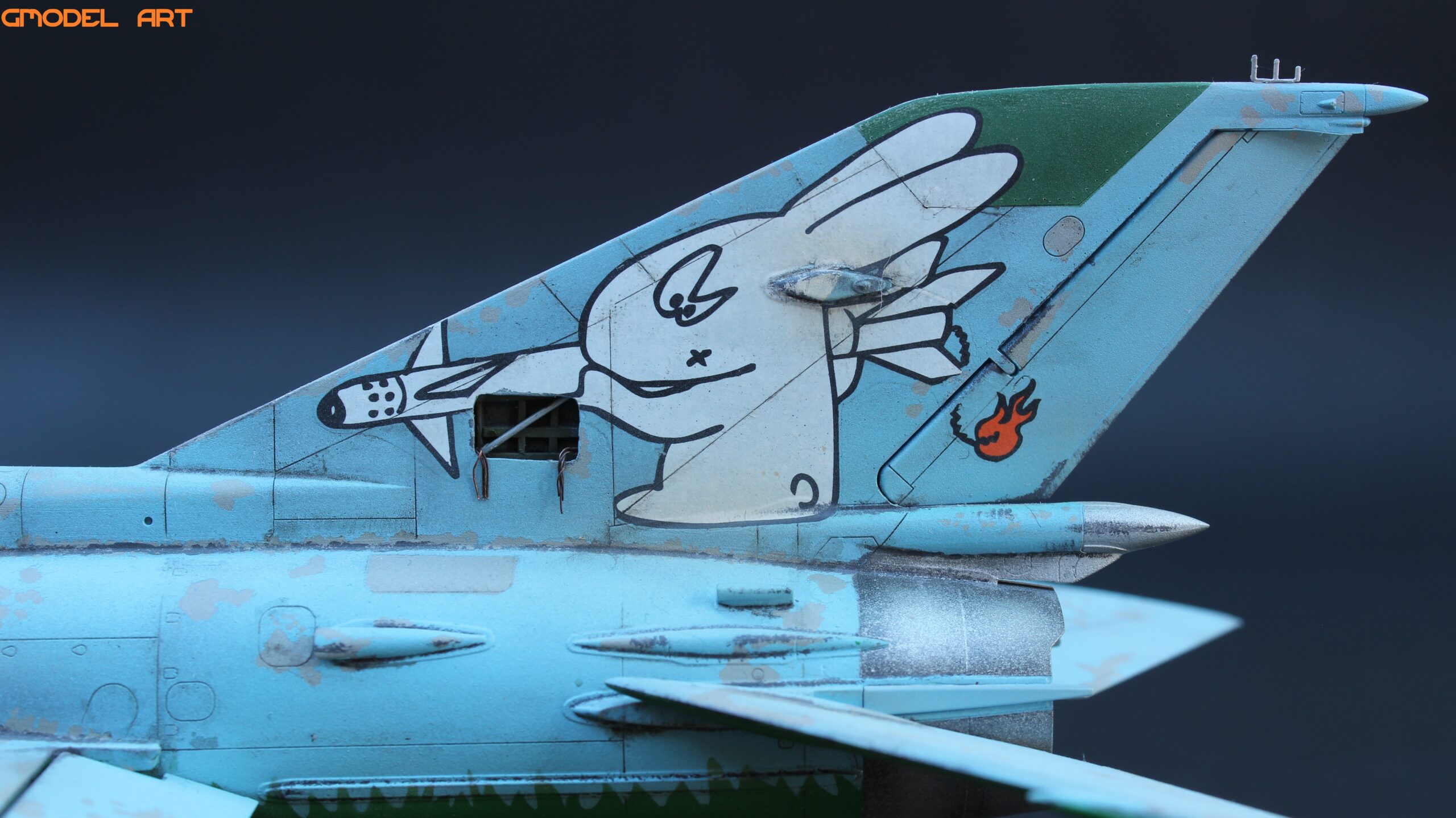
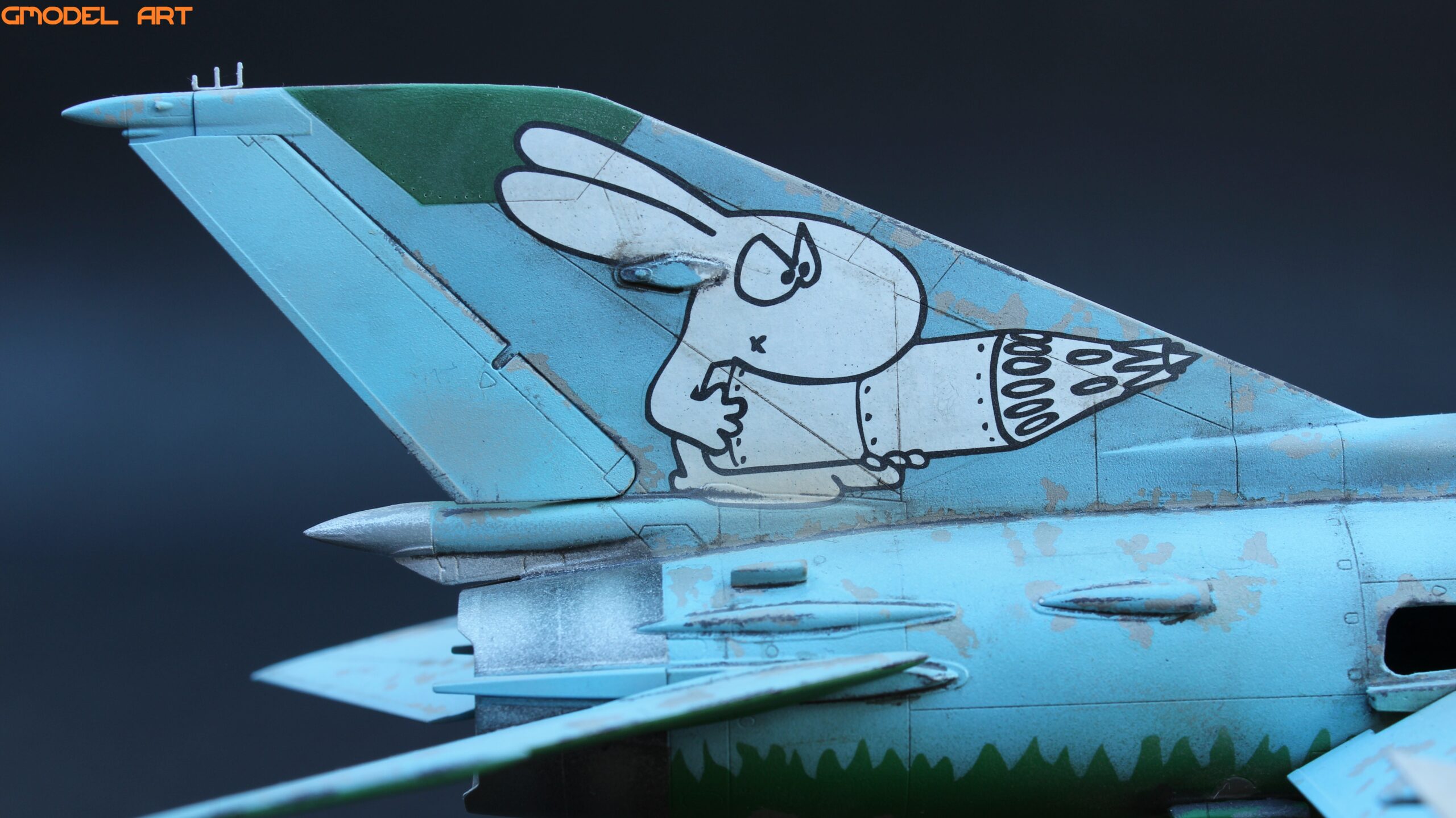
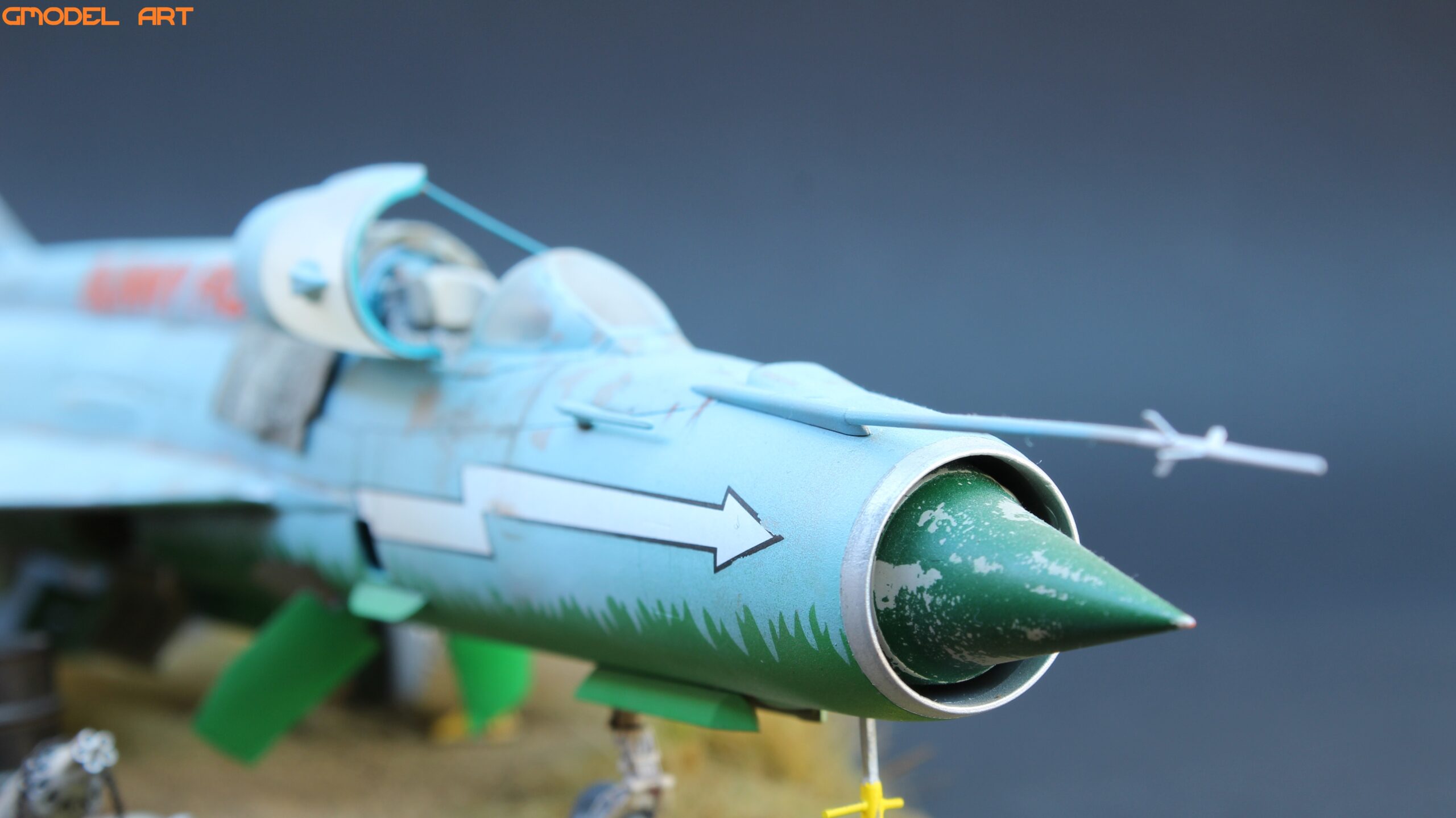
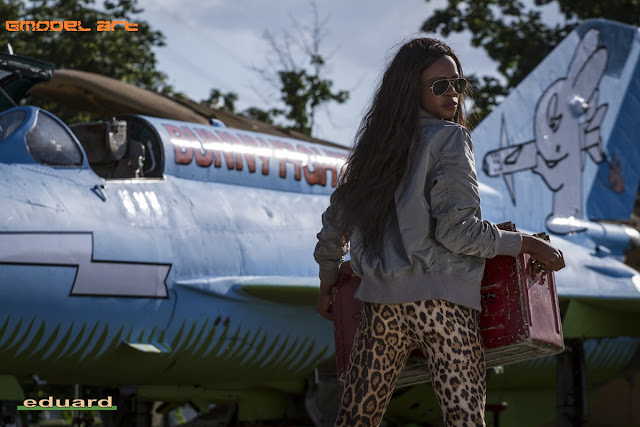
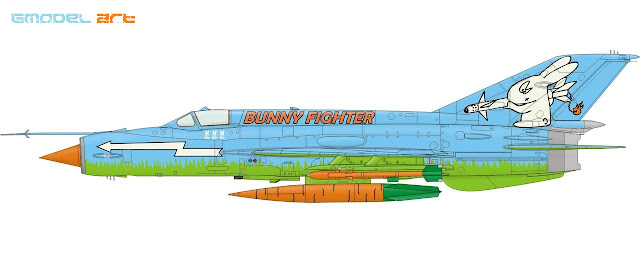
Valenchenko reportedly flew one of the most recognizable MiG-21s ever painted. The aircraft carried an unusual and extravagant camouflage pattern that later became known among aviation enthusiasts as the “Bunny Fighter”.
Unlike traditional military camouflage designed to conceal aircraft, this bizarre paint scheme was allegedly intended to attract attention during combat.
According to several reports connected to the conflict, Valenchenko used the colorful MiG-21 as bait to lure Angolan pilots into aerial engagements and dogfights.
The tactic proved surprisingly effective.
The Congolese Air Force operated these MiG-21MF fighters alongside Chinese-built Chengdu F-7 aircraft during the conflict. However, corruption, poor logistics, lack of spare parts, and limited maintenance infrastructure quickly destroyed operational capability.
Like many African air forces during the period, aircraft maintenance became nearly impossible.
Many aircraft were abandoned, cannibalized for parts, or simply left exposed to the environment.
The fate of the famous “Bunny Fighter” was no different.
Today, the aircraft reportedly remains abandoned near Kinshasa, slowly deteriorating under the harsh African climate while suffering from corrosion, vandalism, and decades of neglect.
That tragic appearance is exactly what makes it such an incredible scale modelling subject.
Why the “Bunny Fighter” Is Perfect for Scale Modelling
Most MiG-21 builds focus on operational Soviet, Warsaw Pact, or Middle Eastern aircraft. The “Bunny Fighter” offers something completely different.
This aircraft allows the modeller to experiment with:
- Extreme weathering
- Rust streaking
- Oxidized metal
- Heavy paint fading
- Damaged decals
- Missing access panels
- Structural exposure
- Dust and dirt accumulation
- Abandoned aircraft effects
Instead of building a clean operational aircraft, the goal becomes telling the story of a forgotten war machine left to decay in an African aircraft graveyard.
That creates visual drama few aircraft subjects can match.
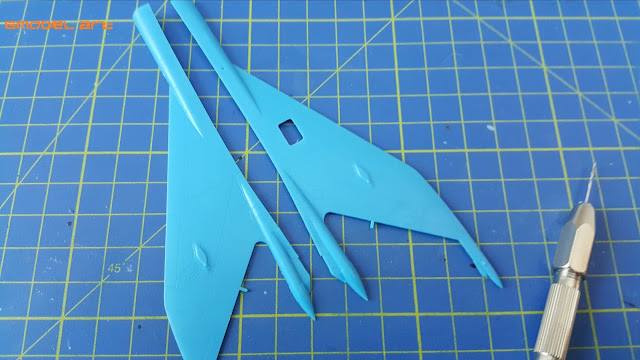
The Kit – Eduard MiG-21MF 1/48
The Eduard MiG-21MF in 1/48 scale is considered one of the finest MiG-21 kits available today.
Opening the box immediately reveals the quality of the kit:
- Sharp recessed panel lines
- Excellent cockpit detail
- High-quality decals
- Precision masking set
- Optional photo-etched parts
- Superb engineering and fit
For this project, the goal was not simply accuracy.
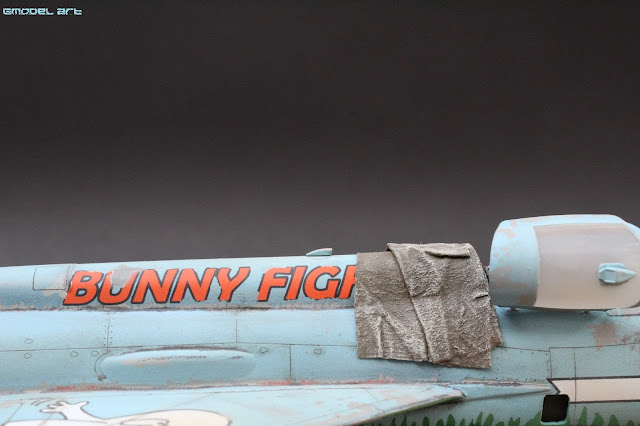
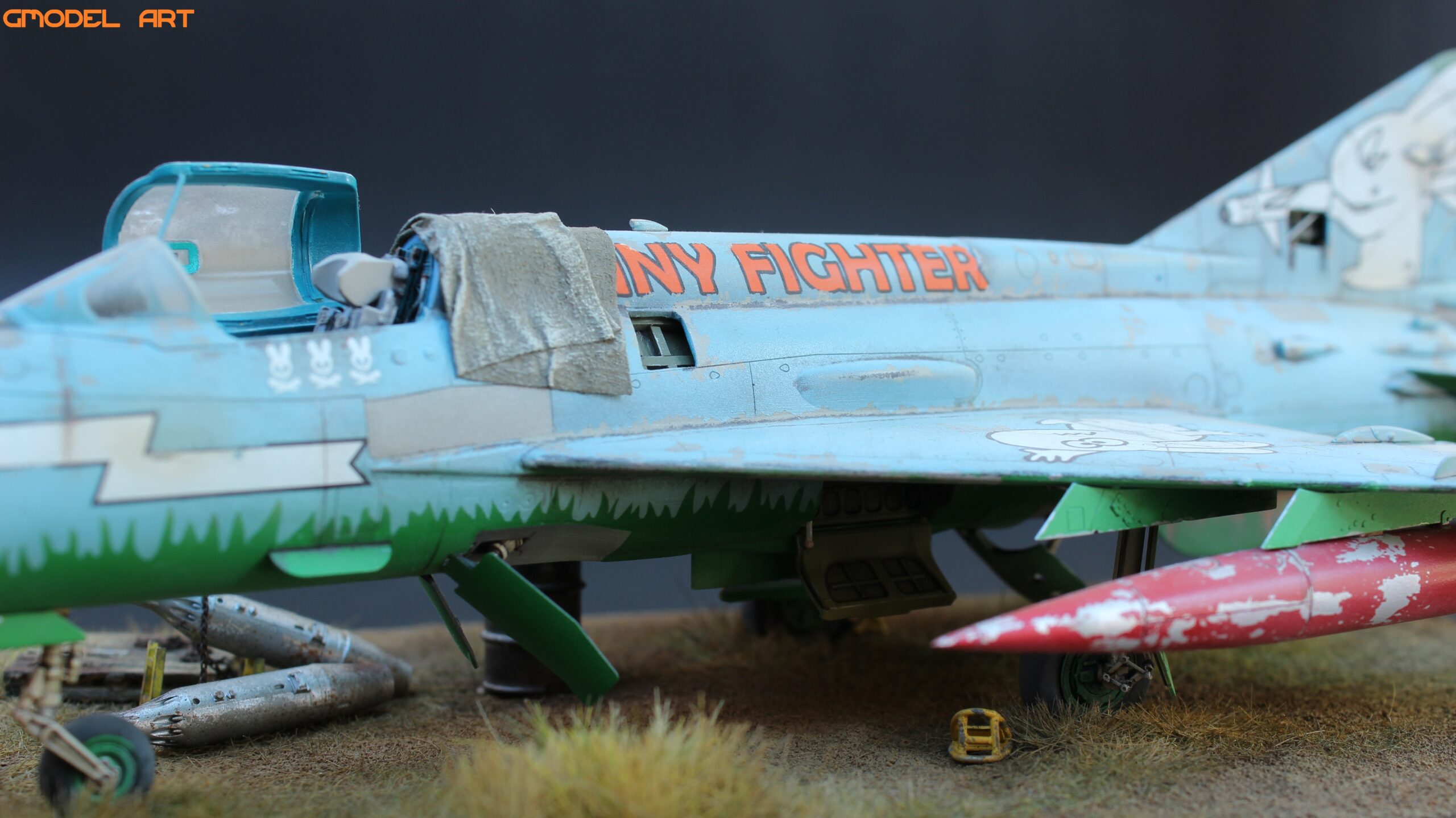
The intention was to recreate an abandoned and heavily weathered MiG-21 destroyed by climate, time, and neglect.
The Eduard kit provided the perfect platform for that vision.
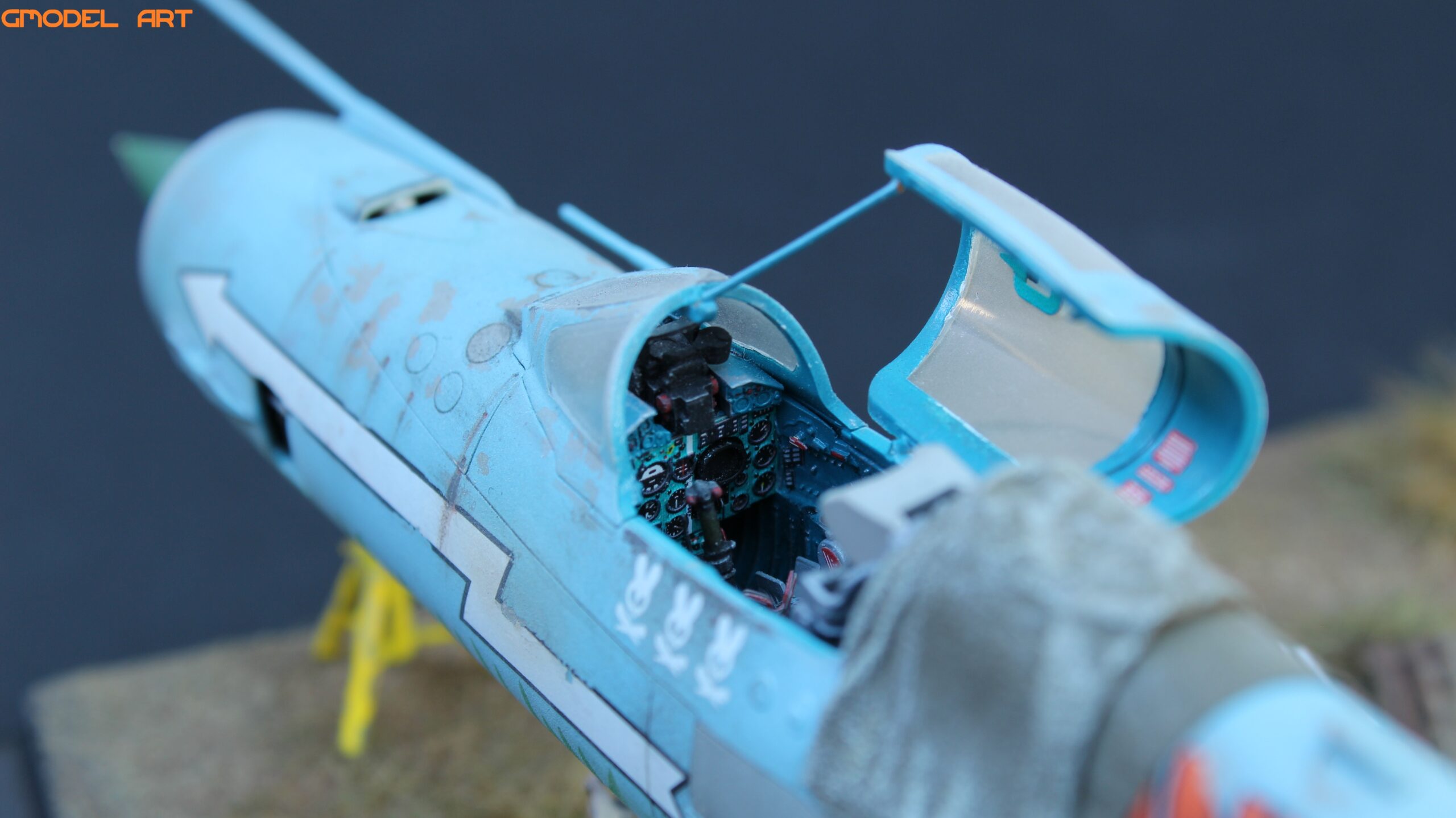
Cockpit Construction
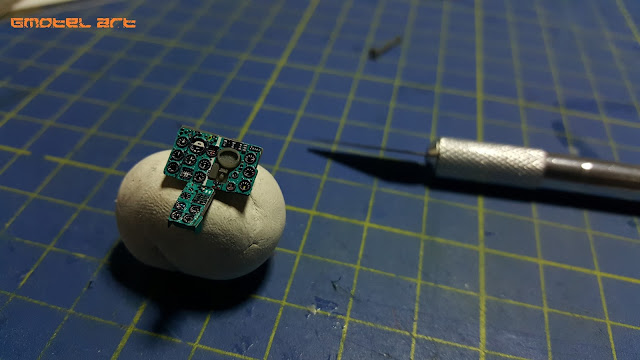
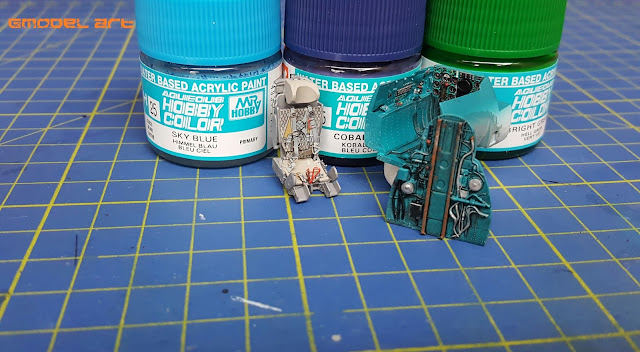
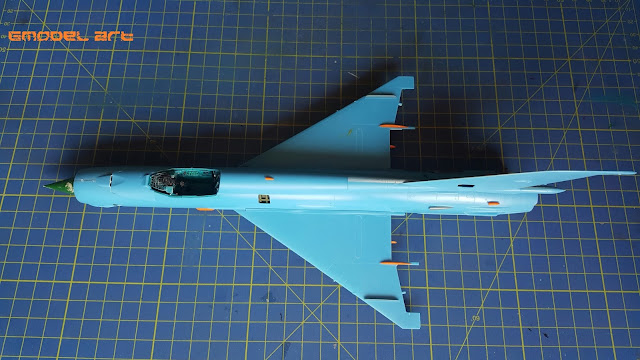
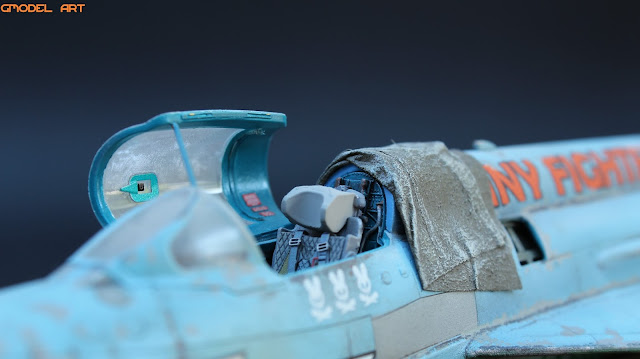
Construction started with the cockpit section using the resin components included in the kit.
Detail quality was outstanding and assembly proved surprisingly smooth. Unlike many resin upgrades that require heavy modification, the cockpit fit almost perfectly inside the fuselage.
Because the aircraft would be portrayed abandoned, the cockpit needed a completely different atmosphere compared to an operational fighter aircraft.
The focus shifted toward:
- Dirt accumulation
- Surface fading
- Dead instrument appearance
- Dust effects
- Neglected textures
Subtle tonal variation helped create the impression of a cockpit exposed for years to heat and humidity.
Opening Panels & Structural Details
One of the most distinctive features of abandoned aircraft is exposed internal structure.
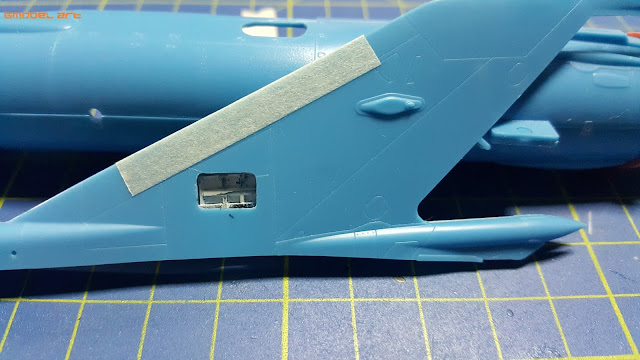
Several fuselage panels were removed in order to reveal internal sections beneath the skin of the aircraft. Additional scratch-built structures were inserted into the fuselage before final assembly.
This immediately transformed the project from a standard MiG-21 build into something far more cinematic and realistic.
The excellent fit quality of the Eduard kit made these modifications surprisingly easy.
Painting the MiG-21MF “Bunny Fighter”
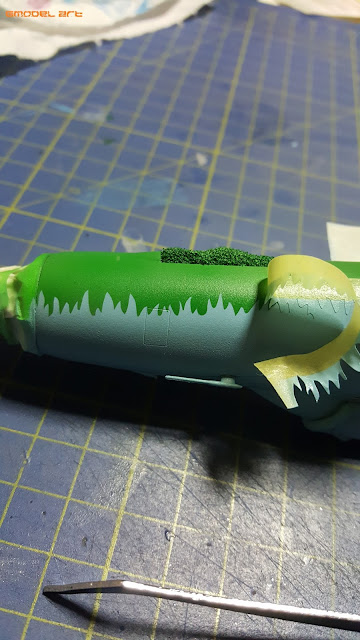
Step 1 – Metallic Base Layer
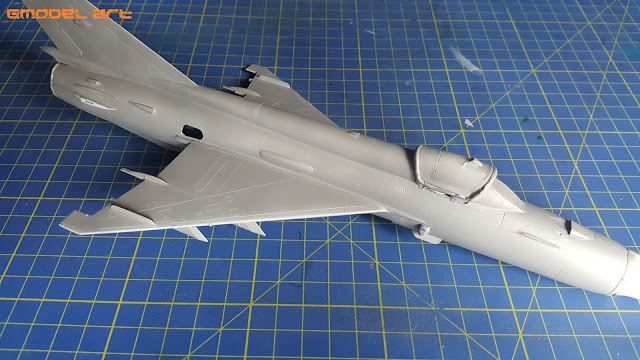
The entire aircraft was first painted in metallic silver.
This undercoat is essential for realistic weathering because it later appears through chipped paint and worn surfaces.
For abandoned aircraft subjects, metallic foundations add visual depth and realism impossible to achieve using surface weathering alone.
Step 2 – Paint Chipping & Camouflage Fading
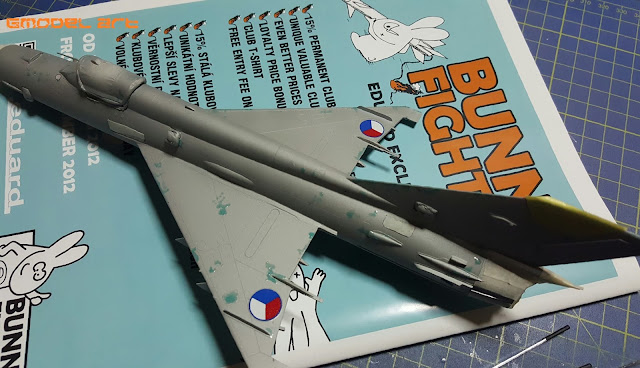
Masking fluid was applied across selected areas of the fuselage and wings to prepare for paint chipping effects.
Once the camouflage layers were sprayed, the masking was removed to reveal natural metallic wear beneath the paint.
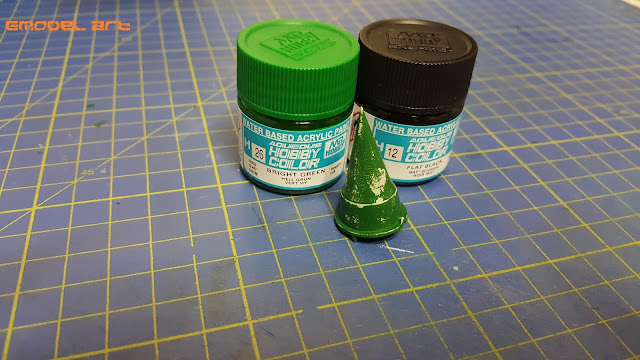
The camouflage itself was painted using heavily diluted Mr. Hobby acrylic paints.
White tones were mixed into the base colors to reproduce the severe sun fading caused by years of exposure to African heat and ultraviolet light.
Additional airbrushed tonal variation was added across the airframe to break up the surface and avoid a uniform appearance.
Rust, Corrosion & Damage Effects
The next stage focused on bringing life to the abandoned appearance of the aircraft.
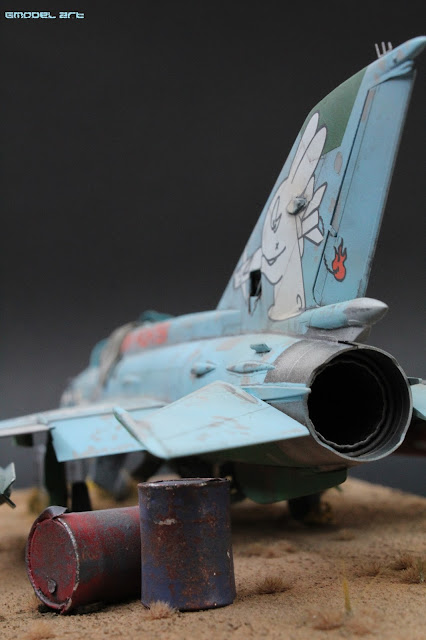
Rust streaks and corrosion effects were carefully painted using fine brushes across:
- Panel lines
- Hinges
- Structural joints
- Access panels
- Damaged sections
The decals also required weathering.
Clean decals on a destroyed aircraft instantly break realism.
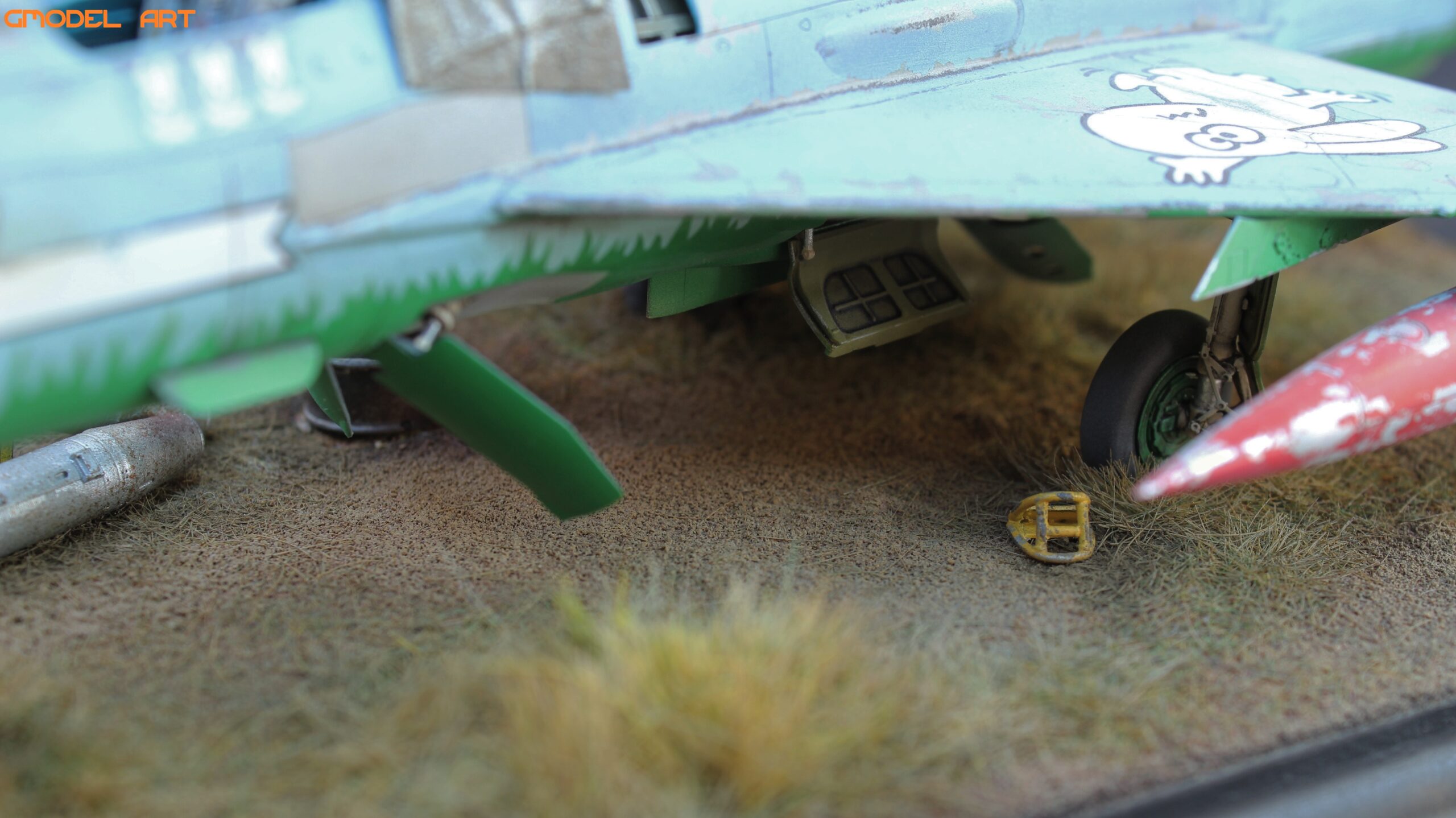
After application, portions of the decals were carefully damaged using sharp tools in order to create peeling and fragmented markings.
This small detail dramatically increased the realism of the final model.
Final Weathering & Dust Effects
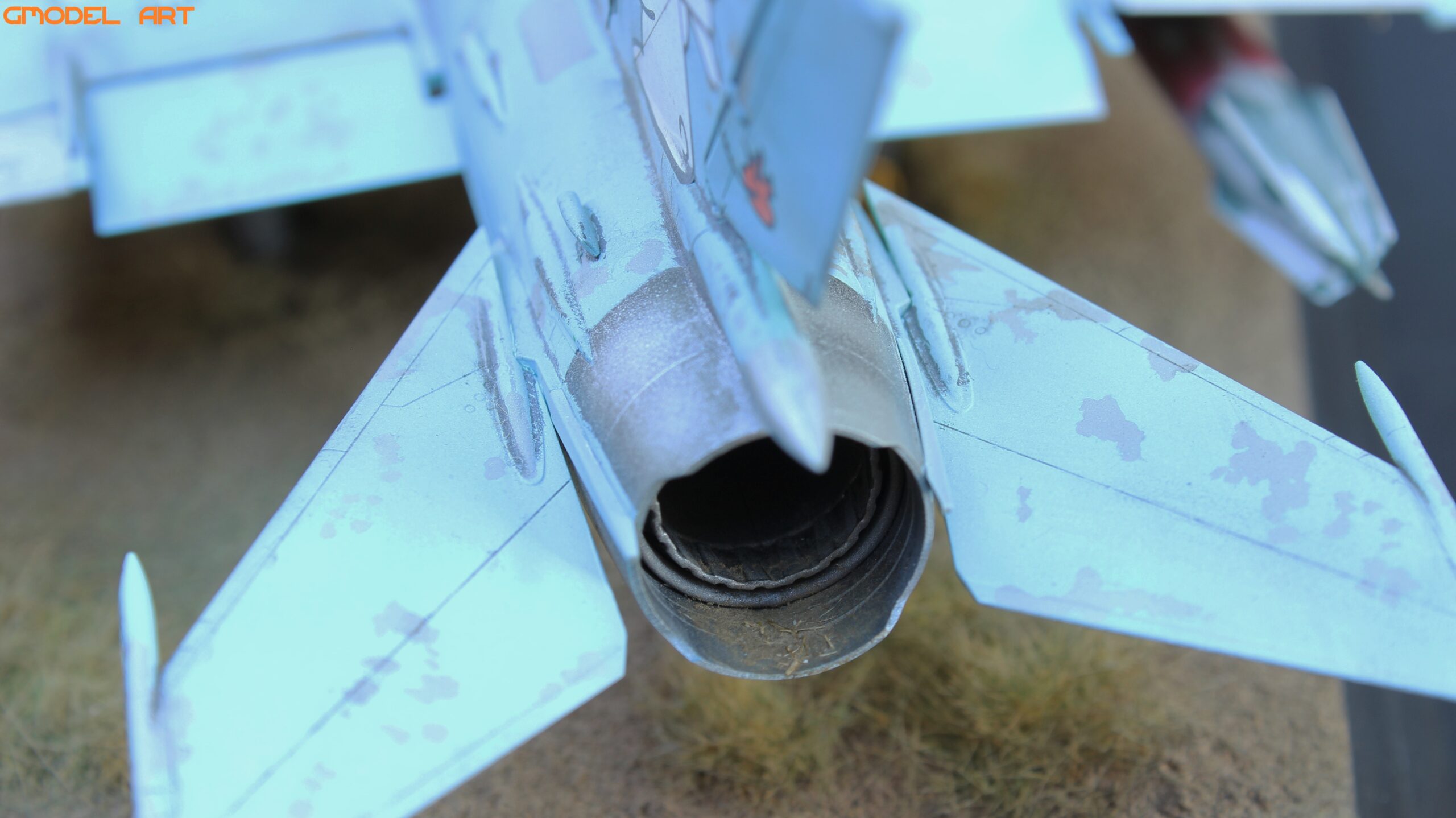
Very fine 2000-grit sandpaper was used to soften transitions and physically distress parts of the surface.
Pigment powders were then applied across the model to simulate:
- African dust
- Dry dirt
- Oxidation
- Surface contamination
- Long-term neglect
Fuel tanks received additional aging using lacquer weathering techniques to recreate severe operational wear.
Final varnishes were applied using Gunze products to unify the finish and protect the weathering work.
Paint Reference Table – MiG-21MF “Bunny Fighter”
Recommended Products for This Build
To recreate similar abandoned aircraft effects, these products are highly recommended:
- Aircraft Model Kits
- Weathering Products & Pigments
- Acrylic Paints for Aircraft Models
- Photo-Etch & Detail Sets
These categories are ideal for modellers interested in advanced jet weathering and realistic abandoned aircraft finishes.
Diorama Base
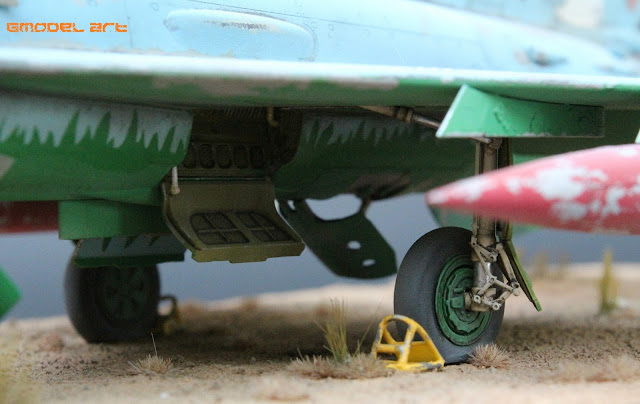
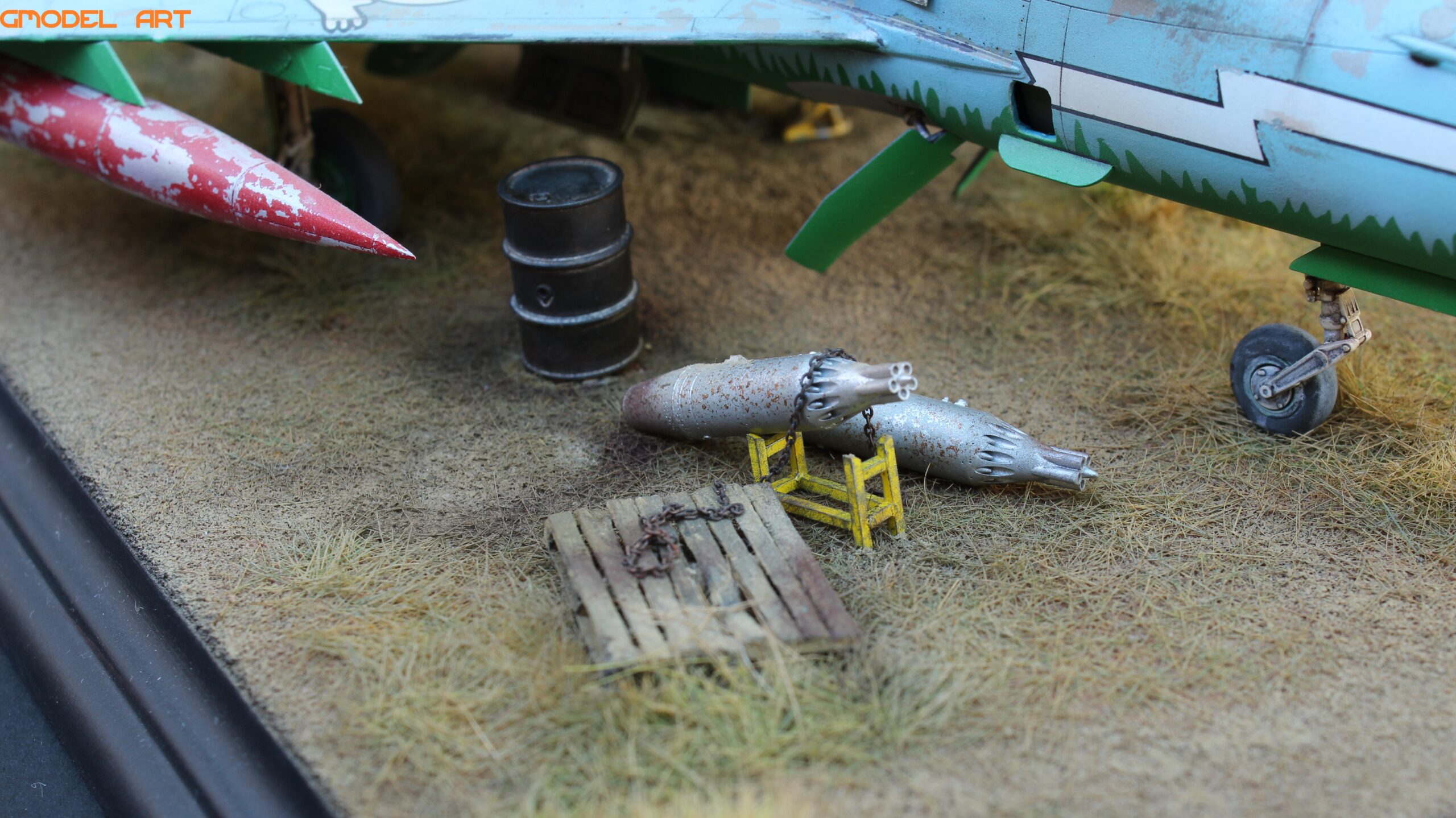
Instead of displaying the aircraft on a clean tarmac, the model was placed on a small abandoned-style display base.
The compact base helps emphasize the neglected appearance of the aircraft without distracting attention from the MiG itself.
Cracked ground textures, faded earth colors, and subtle environmental details reinforce the feeling of isolation and abandonment.
Sometimes a small base tells a bigger story than a large diorama.
https://www.facebook.com/dioramania.gr/
Competition Award
The MiG-21MF “Bunny Fighter” received a Bronze Award at the 2017 competition organized by IPMS Hellas.
The award recognized both the technical quality of the build and the originality of the subject.
This is not simply another MiG-21 model.
It is a visual story about war, decay, abandonment, and survival.
MiG-21MF Bunny Fighter
What scale is the Eduard MiG-21MF Bunny Fighter?
The model was built using the Eduard 1/48 MiG-21MF kit.
Was the real Bunny Fighter operational?
Yes. The aircraft reportedly flew combat missions during African conflicts in the late 1990s.
Which paints were used for the build?
Mainly Mr. Hobby/Gunze acrylic paints together with weathering pigments and rust effects.
Why is the Bunny Fighter famous?
The aircraft became famous because of its bizarre camouflage scheme, mercenary pilot history, and heavily abandoned appearance.
Is the Eduard MiG-21MF difficult to build?
No. The Eduard MiG-21 series is considered one of the best-engineered MiG kits available in 1/48 scale.
USSR/Russia cockpit Colors