article
SBD Dauntless “White C 46” – A Modeler’s Guide to Paint Fading and Wartime Wear
The Douglas SBD Dauntless remains one of the most iconic aircraft of the Second World War. Known for delivering the decisive blows against Japanese carriers at Midway, the rugged dive bomber earned a reputation far beyond its modest performance figures. Sailors joked that SBD meant “Slow But Deadly,” yet the aircraft repeatedly proved that accuracy, reliability, and determined crews mattered more than speed.
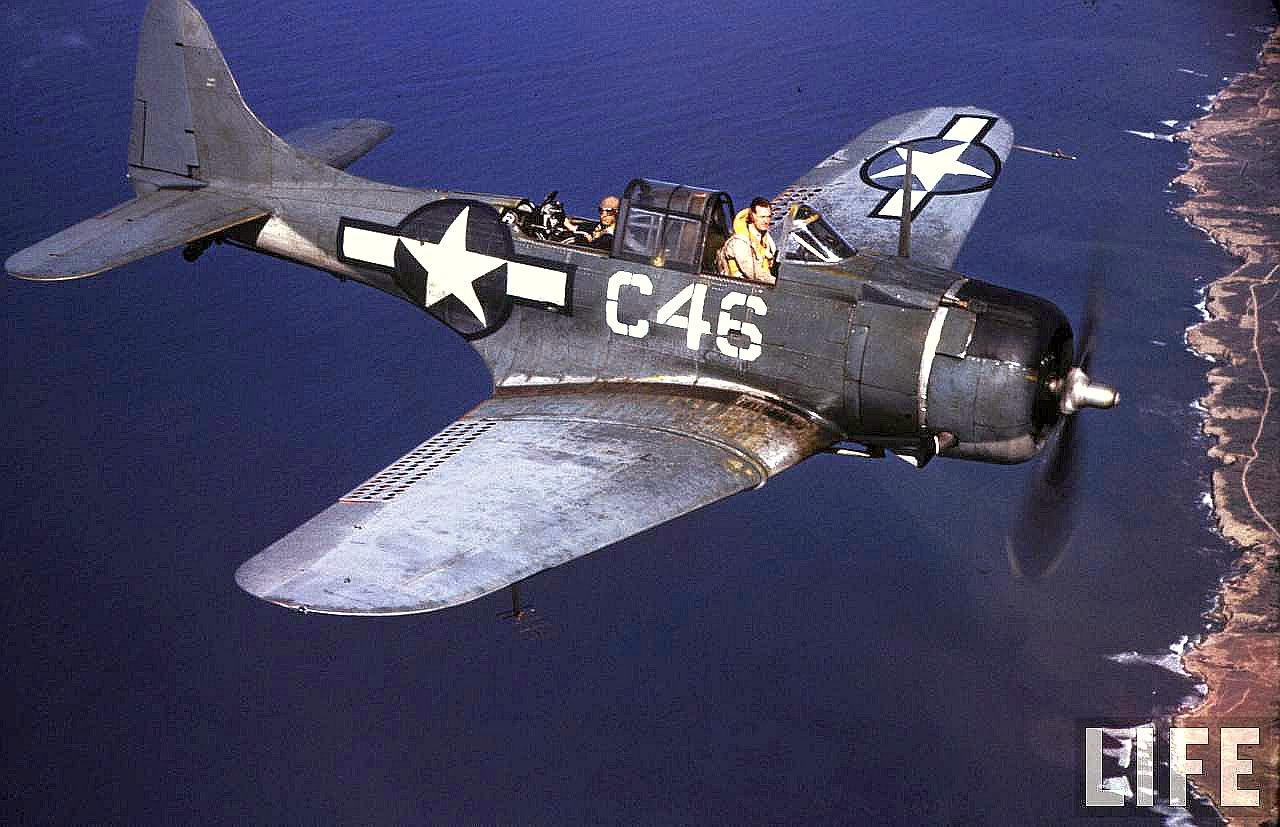
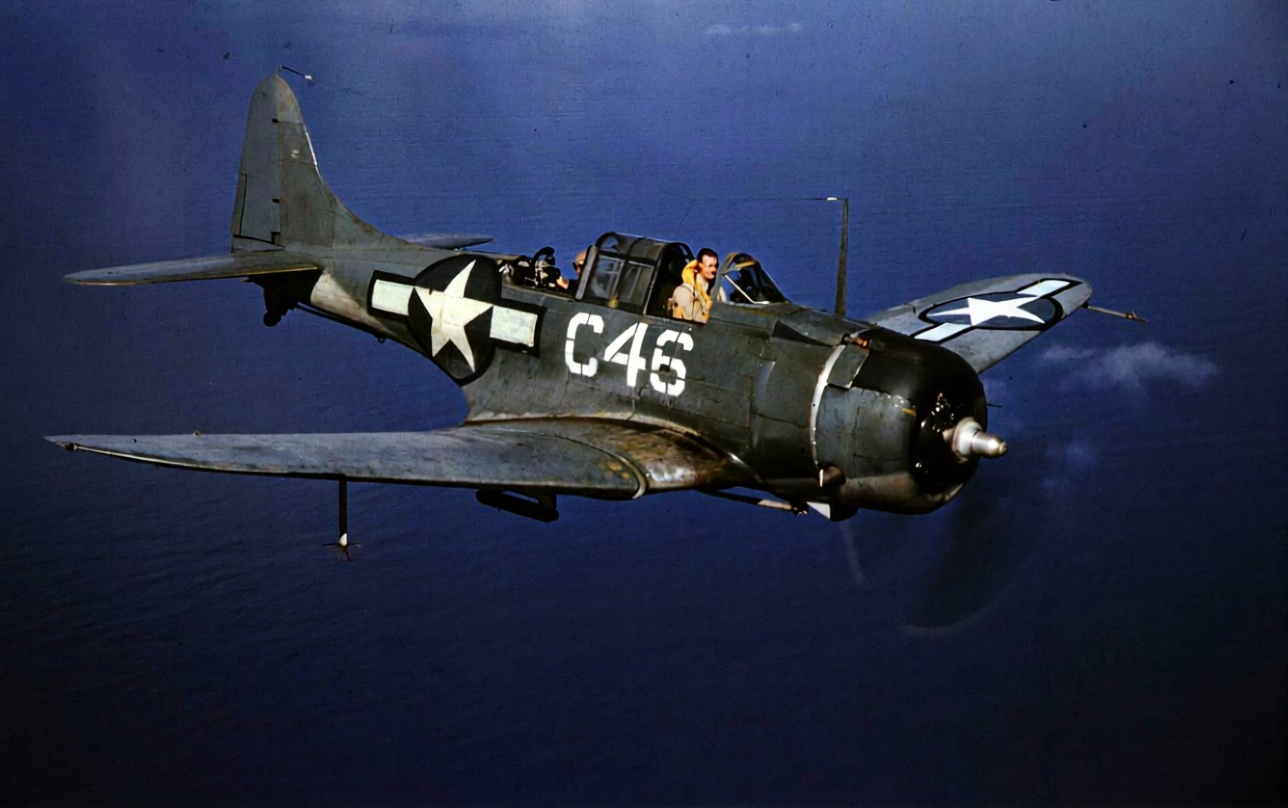
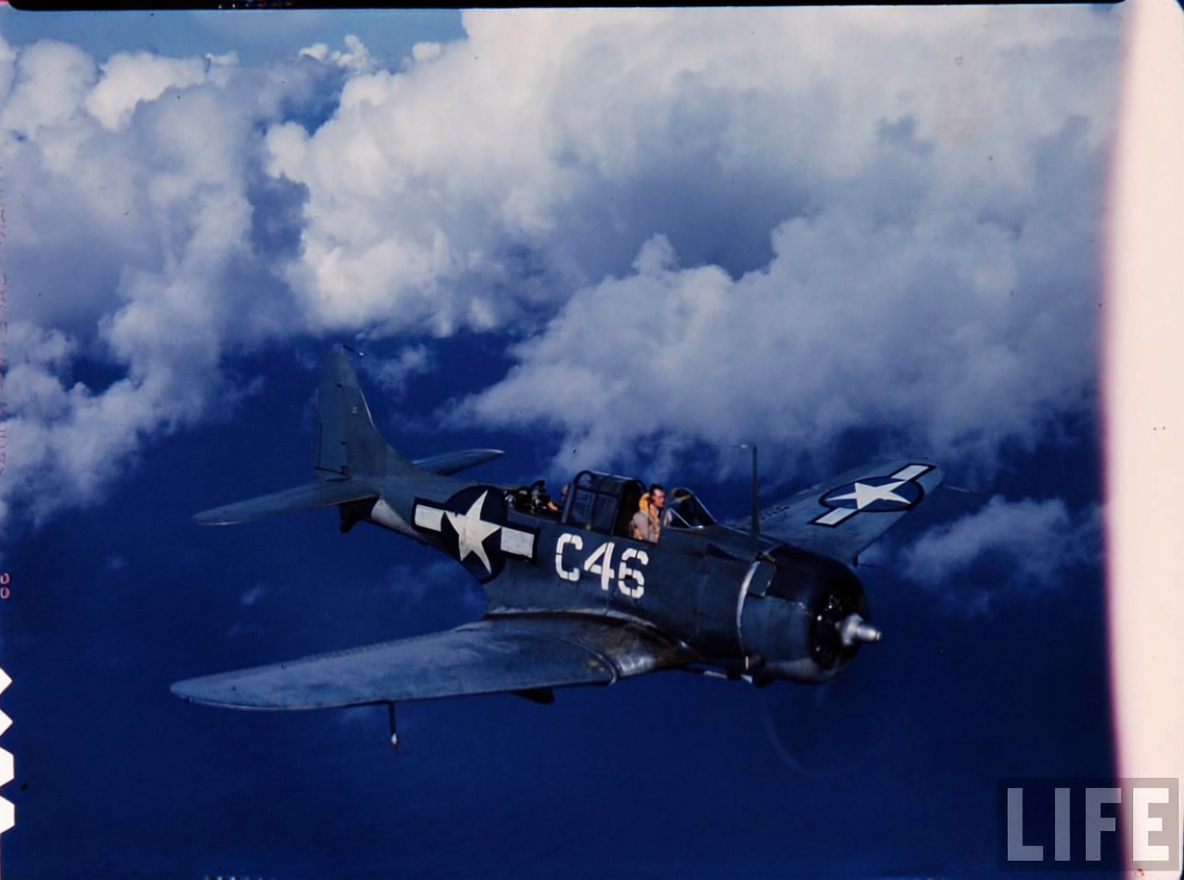
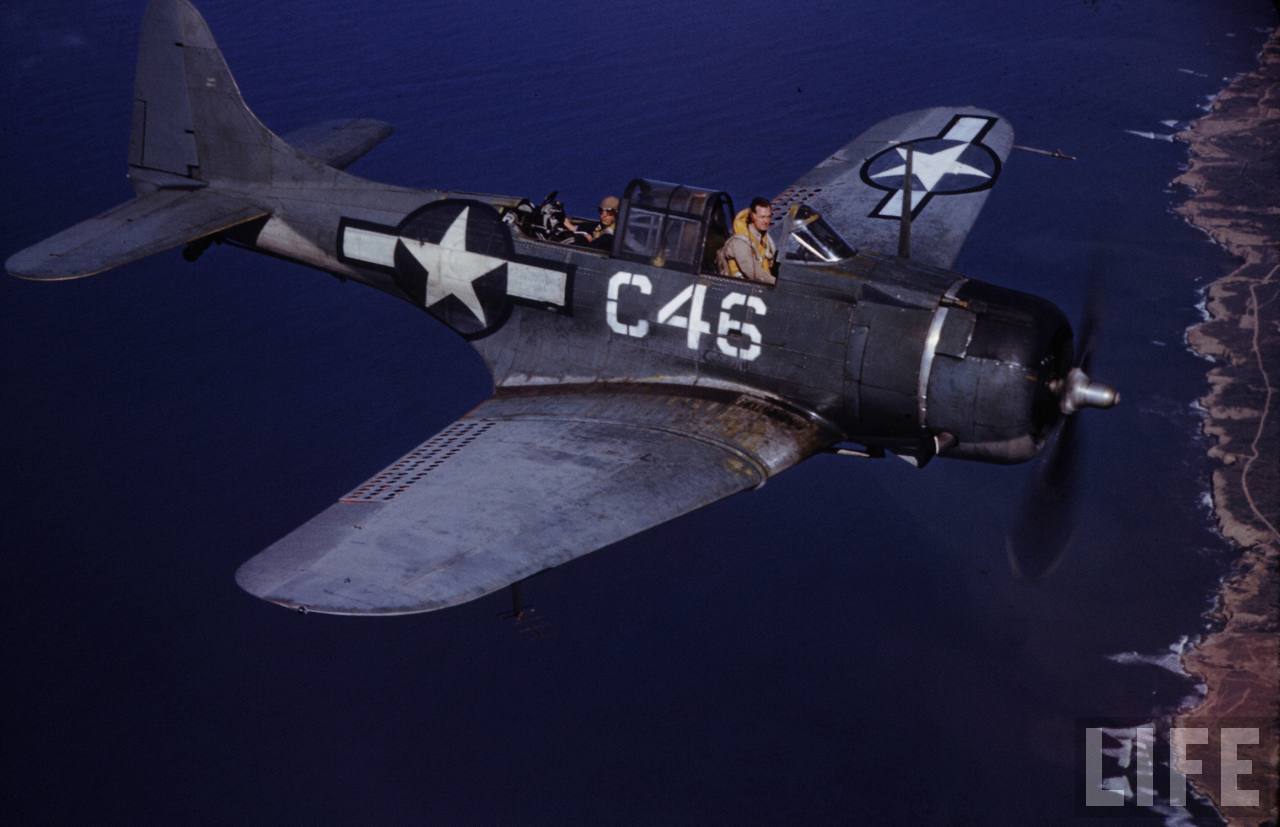
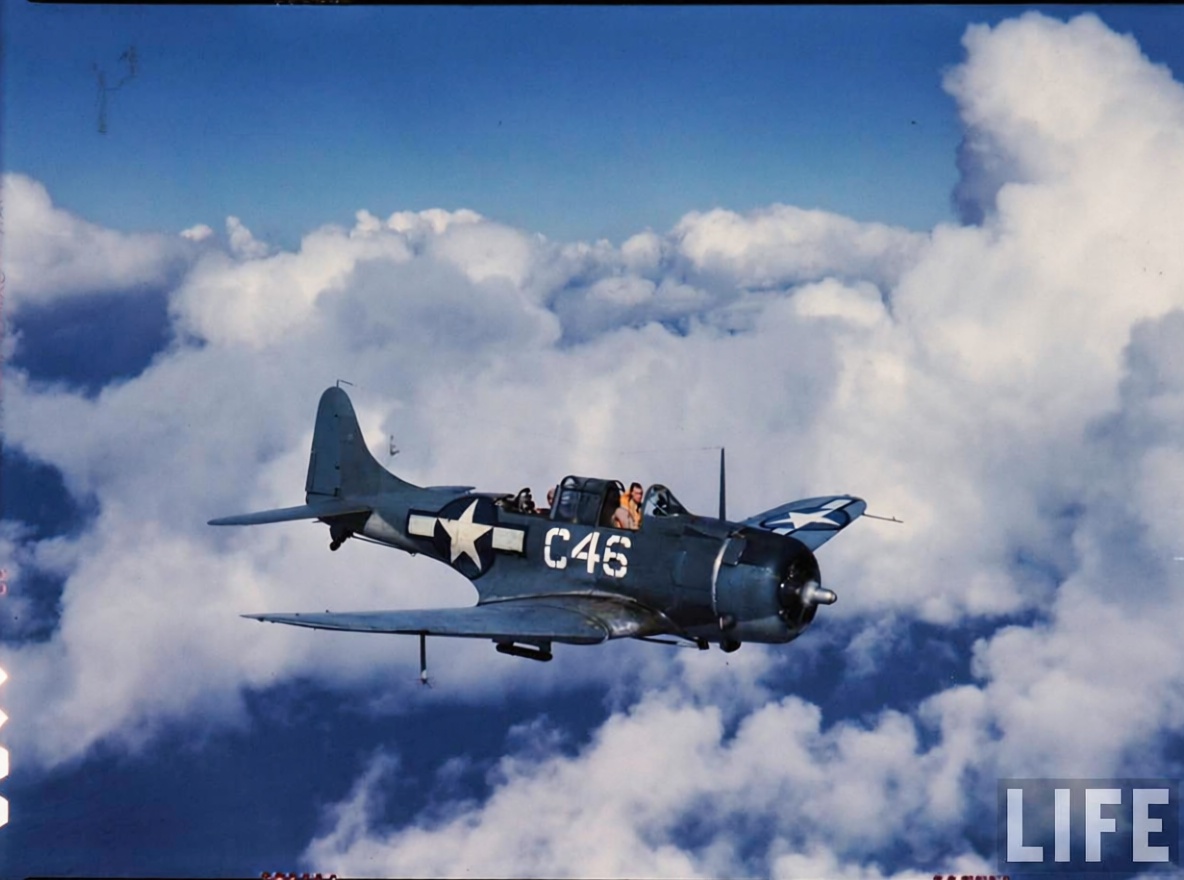
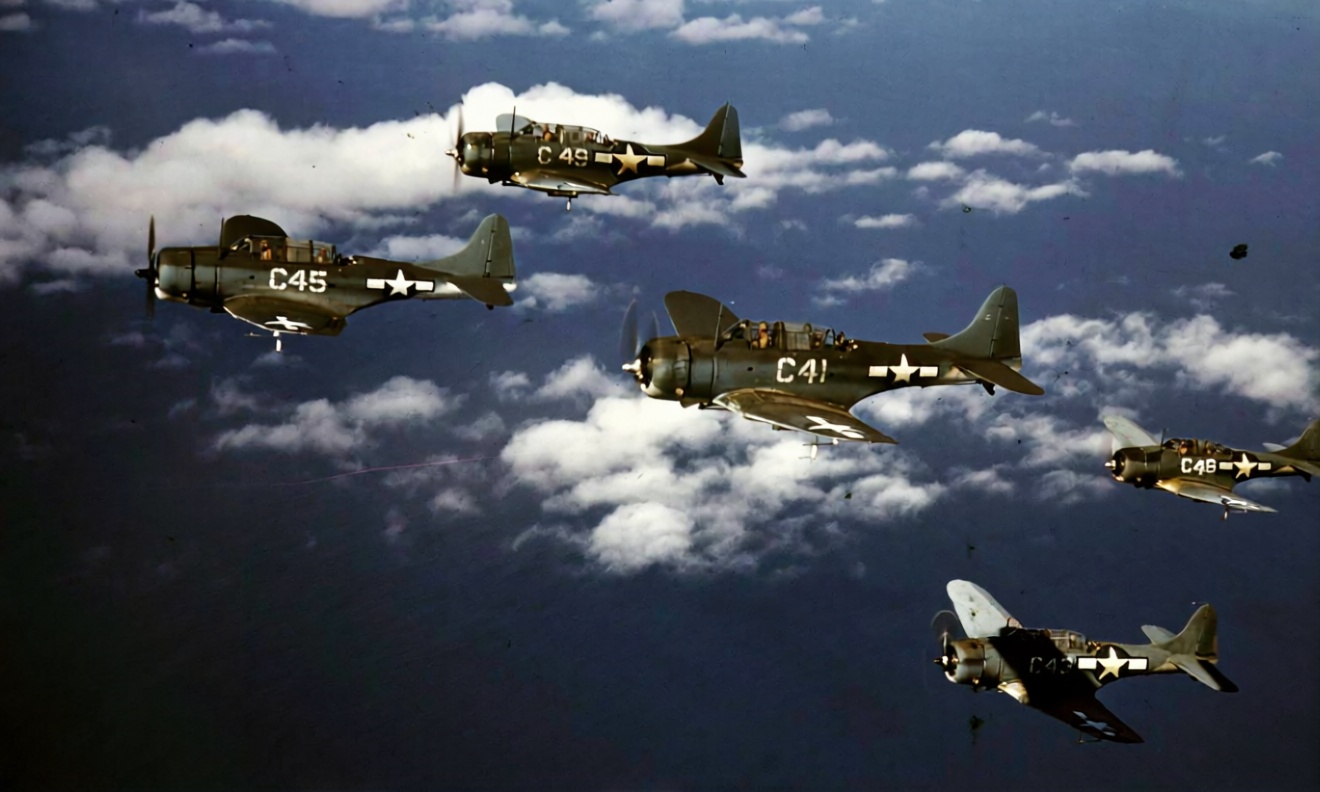
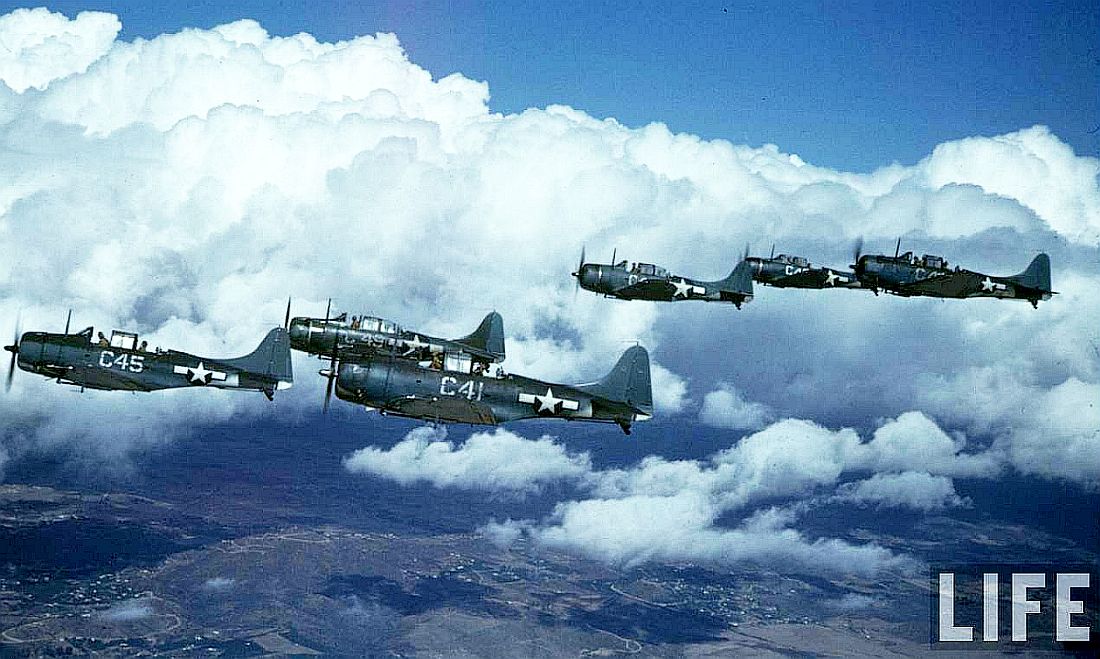
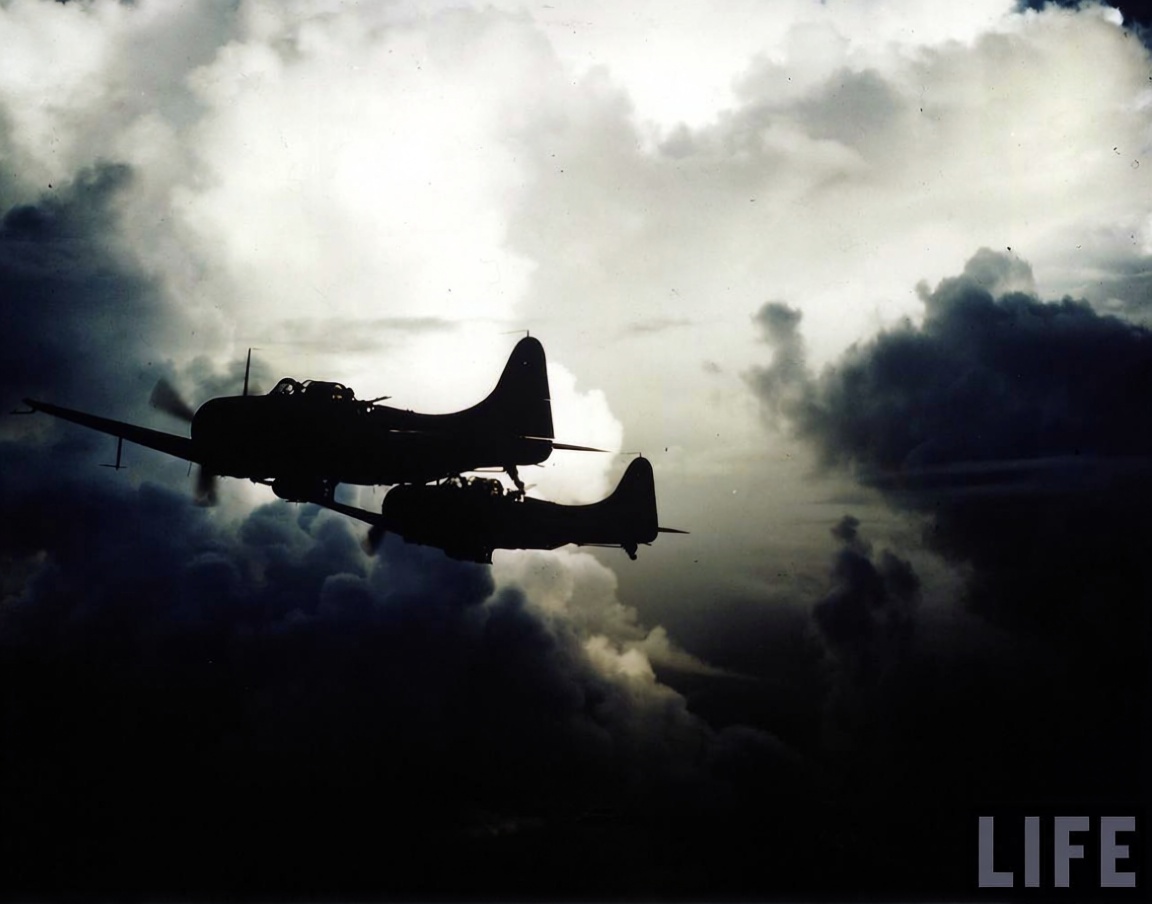
Among the most fascinating surviving color photographs of the type is the weather-beaten aircraft known to modelers as “White C 46.” Captured by photographers working for LIFE Magazine, the machine presents a remarkable study in operational wear, repainting practices, and tropical fading. Although the exact Bureau Number and unit assignment remain unconfirmed, evidence strongly suggests that the aircraft served within a U.S. Navy training command during the latter part of 1943 or early 1944. The presence of the Insignia Blue-bordered national markings indicates a date after 31 August 1943, when the revised insignia became standard throughout naval aviation.
For scale modelers, this aircraft offers something even more valuable than combat fame: an authentic lesson in how wartime aircraft actually aged under constant use.
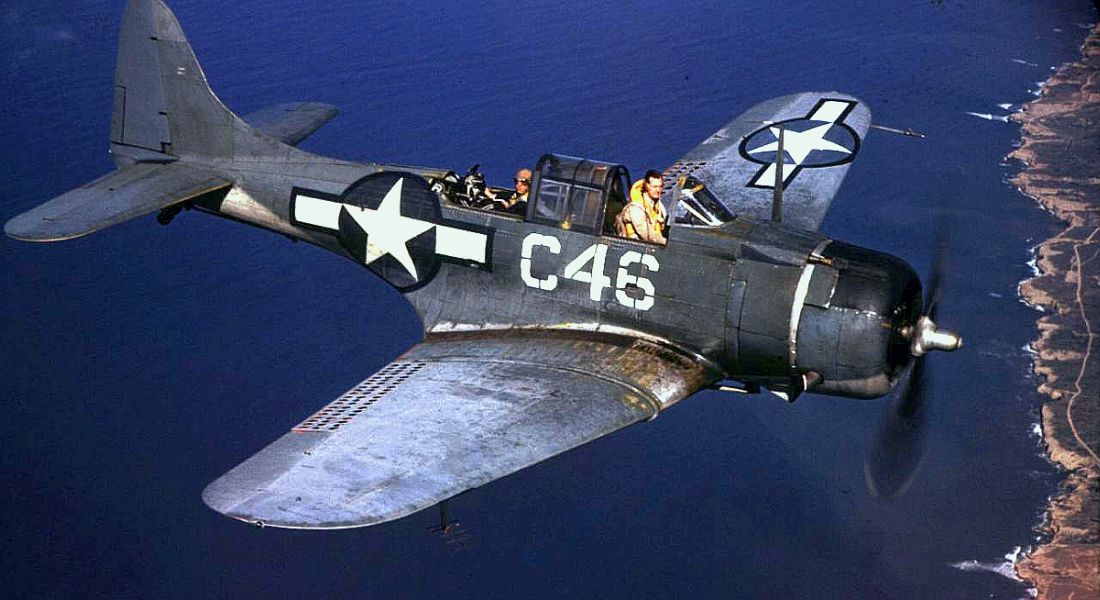
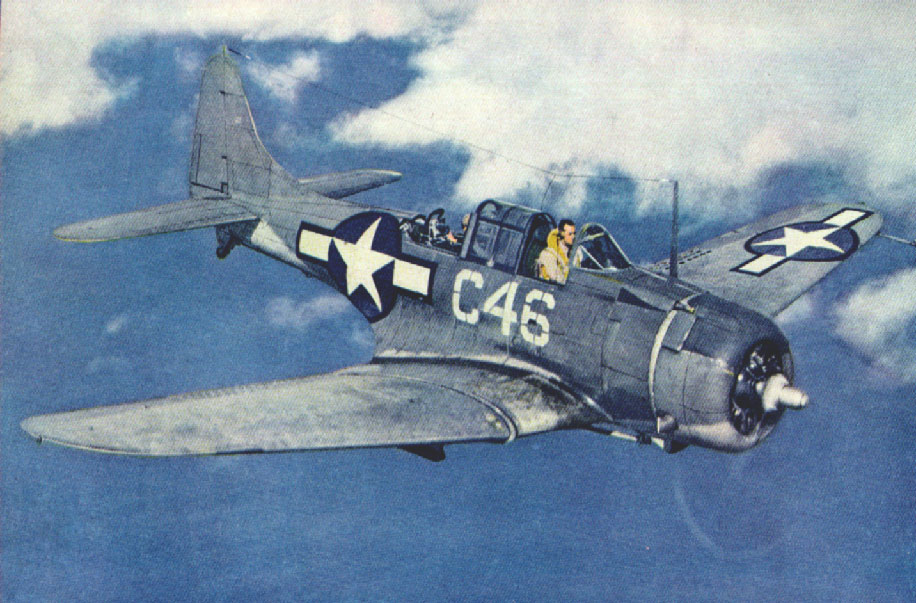
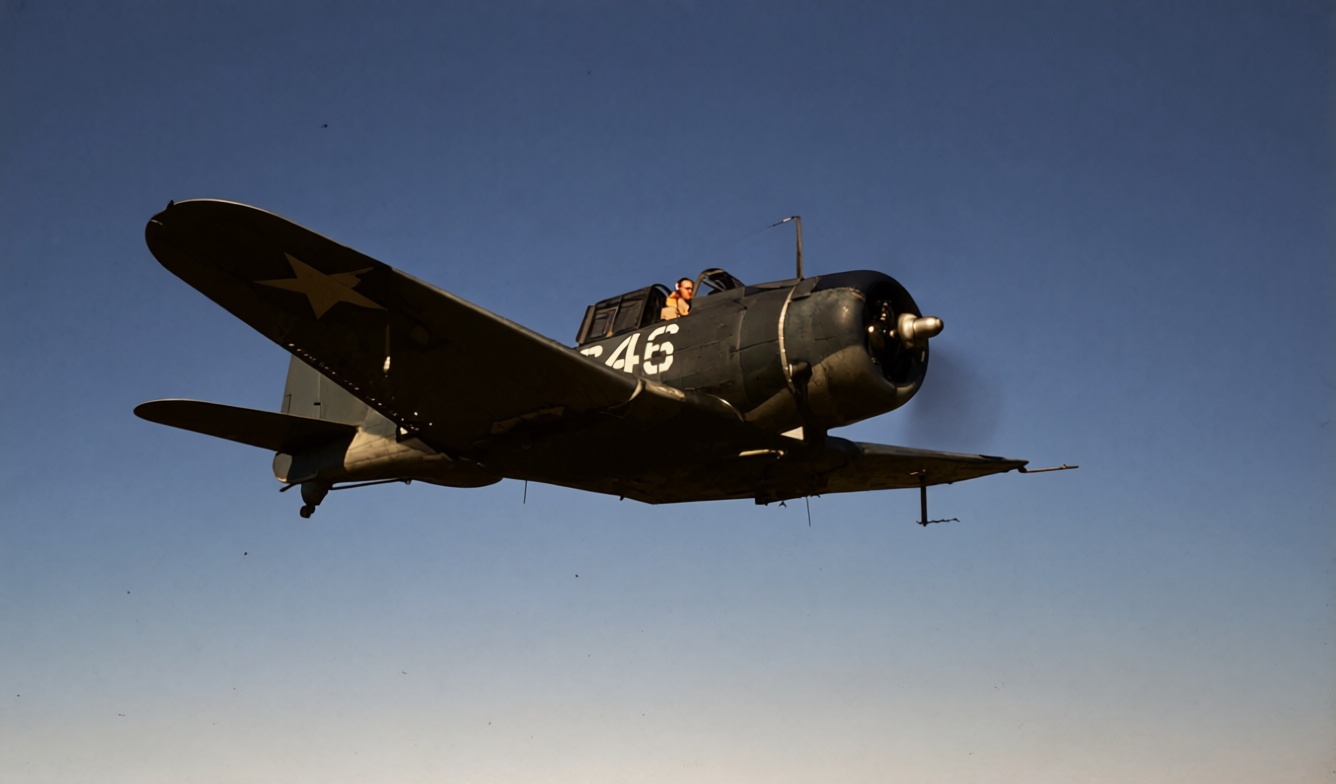
The first impression is the extraordinary variation in color across the airframe. The original Blue Gray finish has faded dramatically under prolonged exposure to sunlight, salt air, and operational maintenance. Unlike museum restorations or factory-fresh reproductions, White C 46 displays multiple generations of paint simultaneously. Certain panels retain darker tones, while others have bleached into pale gray-blue shades almost unrecognizable from their original appearance.
The engine cowling immediately attracts attention. It appears noticeably darker than the surrounding fuselage and retains a more defined graded camouflage effect. Researchers and model historians have long suggested that this difference indicates a replacement component installed after operational damage or maintenance work. Such field substitutions were entirely normal and created a patchwork appearance rarely represented in scale models.
Equally interesting are the national insignia. The white bars and blue outlines appear considerably fresher than the surrounding camouflage. This supports the theory that the aircraft received updated markings after the official introduction of the Insignia Blue borders in late 1943. The contrast between newly applied insignia and heavily weathered camouflage offers a compelling visual feature that deserves accurate reproduction on any serious model.
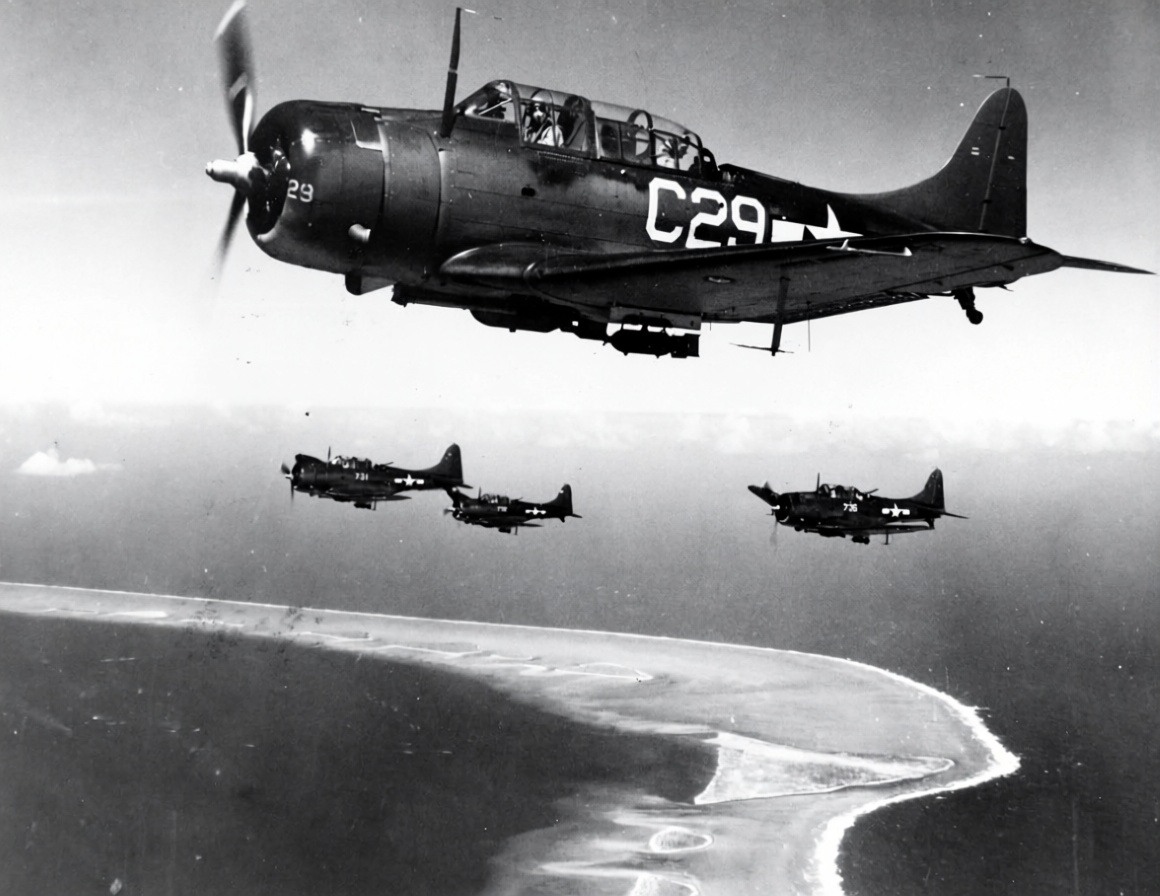
The wear patterns across the wing roots reveal another important lesson. Maintenance crews, pilots, and gunners repeatedly walked across these surfaces, gradually removing the matte finish and exposing oxidized aluminum beneath. However, the effect is not the bright metallic chipping often exaggerated in modern modeling. Instead, the metal appears dull, chalky, and weathered by tropical conditions. A restrained approach produces a far more authentic result.
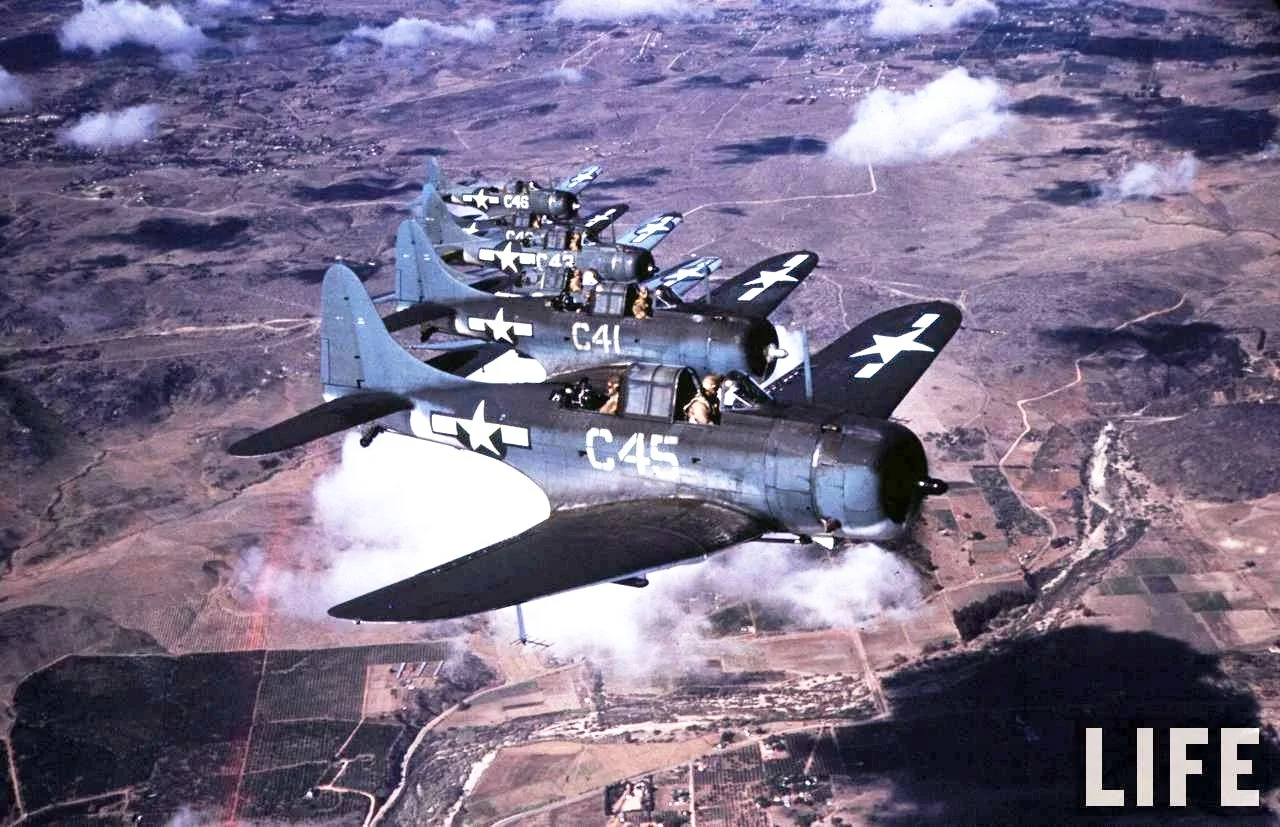
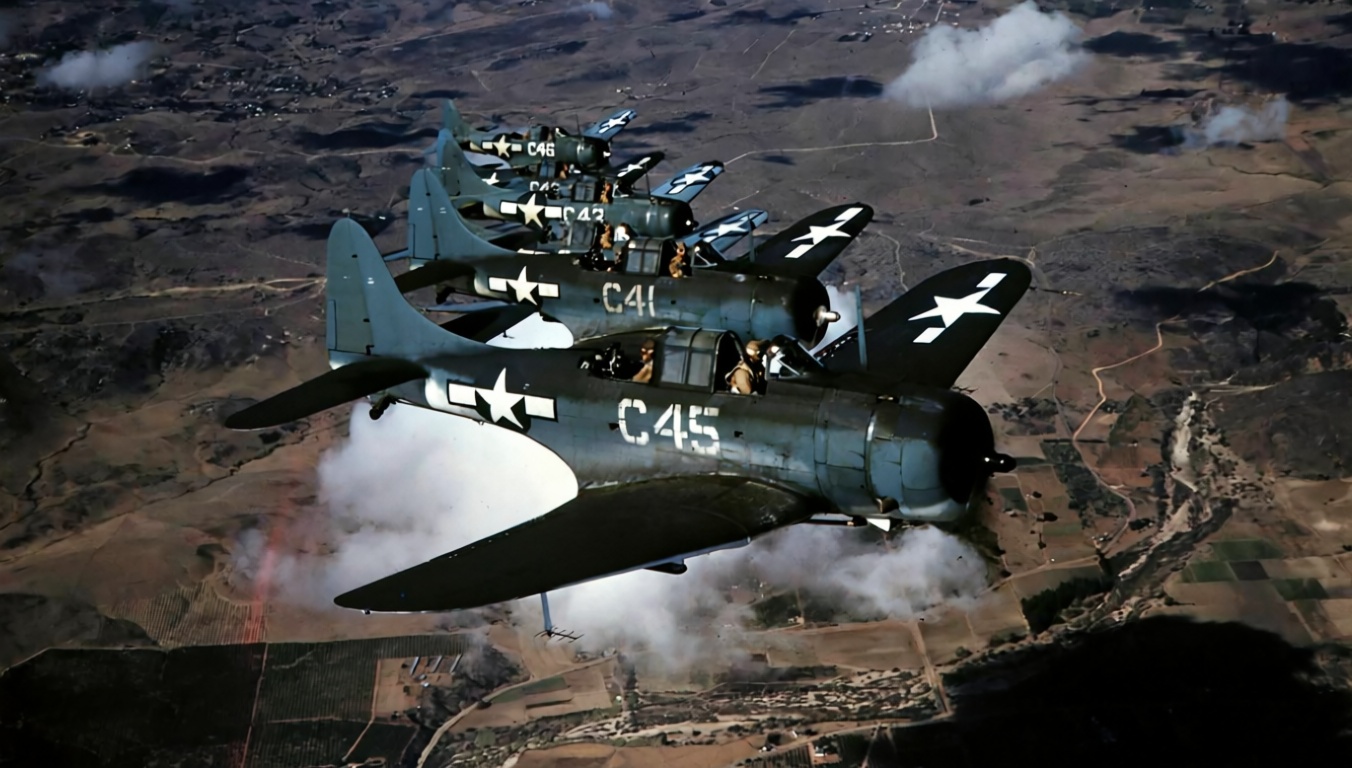
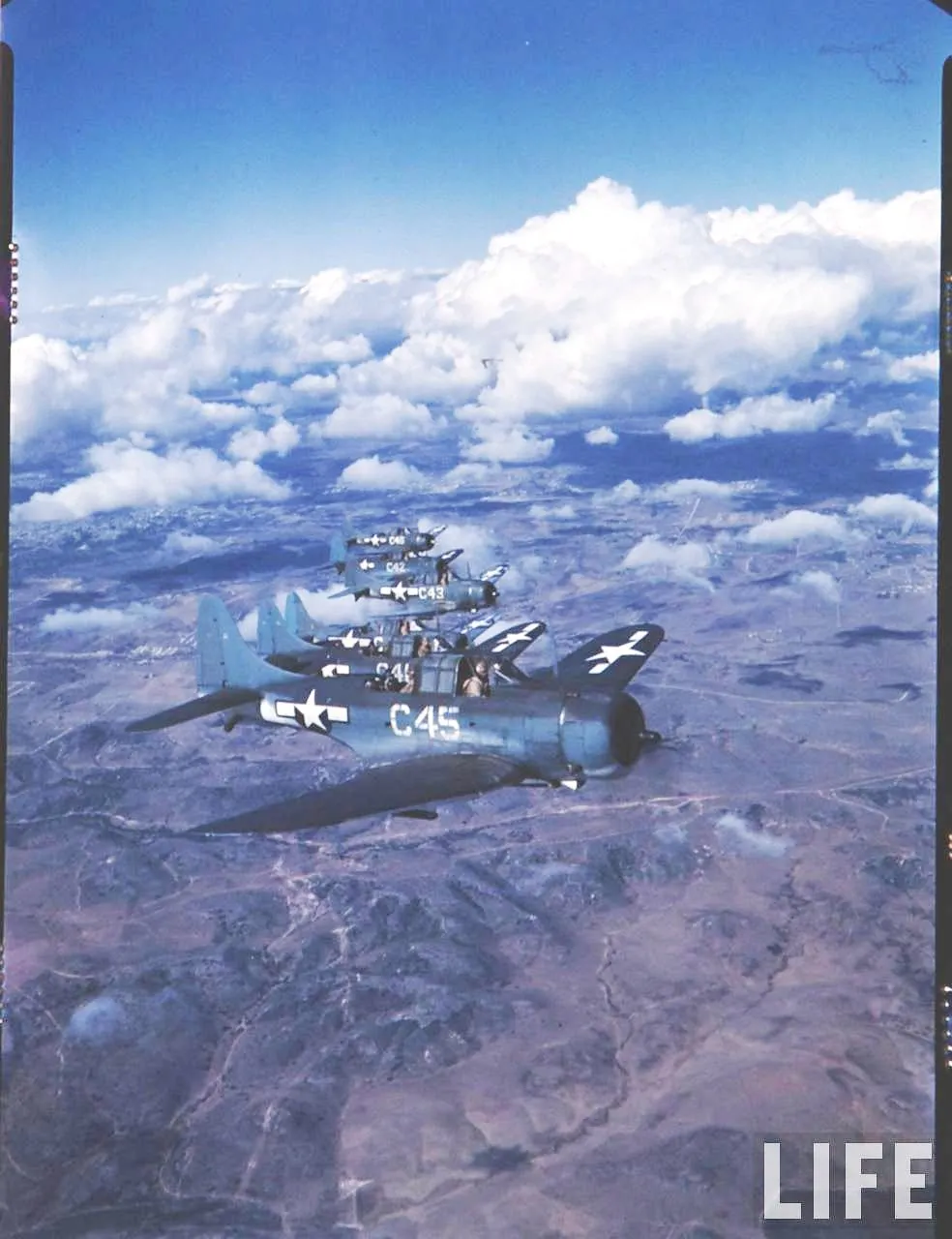
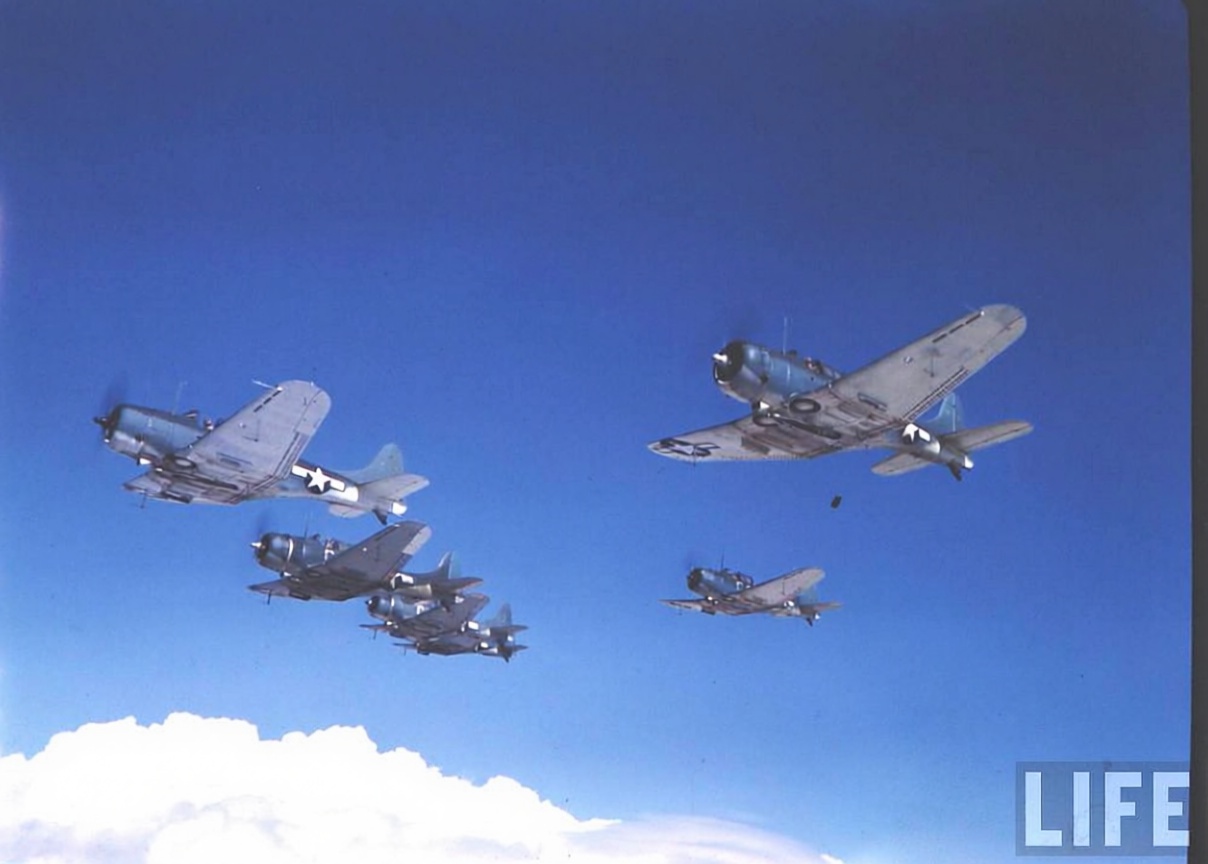
Photographic evidence also suggests that White C 46 belonged to a stateside or rear-area training organization rather than an active carrier squadron. Several LIFE photographs from the same series depict Dauntless aircraft assigned to training duties, and large identification markings or modified insignia were common among such units. By 1944, many SBDs displaced by the newer Curtiss SB2C Helldiver found a second life training naval aviators and carrier qualification crews.
This transition period created some of the most visually interesting Dauntless aircraft ever photographed. They combined combat experience, extensive maintenance histories, and the practical realities of wartime logistics. White C 46 embodies precisely that mixture.
For modelers building the aircraft, the greatest challenge lies in reproducing the subtle interplay between fresh paint and sun-bleached surfaces. A single shade of Blue Gray simply cannot capture the appearance seen in the original photographs. Instead, multiple layers and tonal variations are necessary.
Begin with a standard Blue Gray base coat corresponding to the accepted approximation of FS 35189. Selected panels should then receive progressive lightening using carefully controlled additions of white and neutral gray. The upper wing surfaces deserve the strongest fading effects, particularly around maintenance access panels and areas directly exposed to sunlight.
The replacement cowling should remain significantly darker, with sharper transitions and less weathering. This visual contrast immediately communicates the maintenance history of the aircraft and creates a more believable finished model.
Exhaust staining should remain relatively restrained. The Wright R-1820 Cyclone produced visible streaking, but wartime photographs indicate gray-brown deposits rather than heavy black soot. Similarly, oil staining around access panels and lower surfaces adds realism without overwhelming the overall finish.
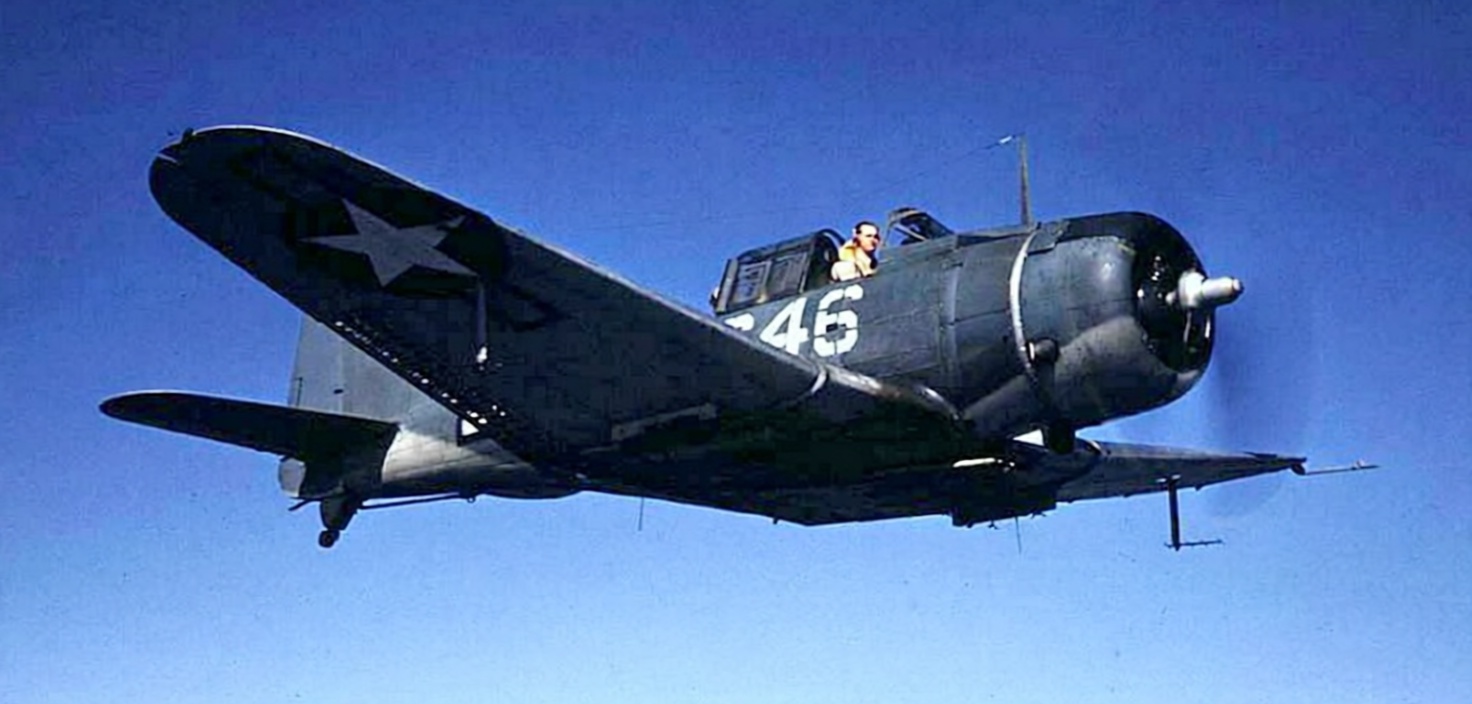
The underside Light Gray finish weathered differently from the upper camouflage. Salt accumulation, moisture, and operational grime created a slightly warmer and dirtier appearance, particularly near landing gear components and bomb attachment points. Gentle filters and oil washes are often sufficient to capture these effects.
Perhaps the most important lesson from White C 46 is that wartime aircraft rarely looked uniform. Modern restoration practices and box-art illustrations frequently present pristine machines with perfectly matched colors. Operational reality was far more complicated. Aircraft received replacement parts, field repairs, touch-up painting, and constant exposure to harsh environmental conditions. The resulting inconsistencies are precisely what give historic subjects their character.
For advanced builders, White C 46 offers an outstanding opportunity to experiment with layered weathering techniques. Oil-dot filters, subtle post-shading, faded panel centers, and restrained metallic effects can all be combined to recreate the aircraft faithfully. The goal is not dramatic artistic interpretation but historical observation translated into scale.
The enduring appeal of the Dauntless lies not only in its victories at Coral Sea and Midway but also in its service beyond the front lines. Long after newer aircraft entered combat, veteran SBDs continued training pilots, teaching carrier operations, and preparing the next generation of naval aviators. White C 46 stands as a visual reminder of that overlooked chapter in the aircraft’s history.
For historians, it represents an intriguing photographic mystery still awaiting complete identification. For modelers, however, it remains one of the finest references ever captured for understanding authentic Pacific weathering and the complex reality of wartime maintenance.
SBD Dauntless White C 46: Fading Under the Pacific Sun
Scale Modeling Paint Table – SBD “White C 46”
| Area | Historical Color | FS Approximation | MRP | AK Real Colors | Mr. Color | Tamiya Mix |
|---|---|---|---|---|---|---|
| Upper Surfaces (factory finish) | Blue Gray | FS 35189 | MRP-123 | RC222 | C367 | XF-18 + XF-19 |
| Moderately Faded Panels | Faded Blue Gray | FS 35237 | Custom Mix | RC222 + White | C337 | XF-18 + XF-2 |
| Heavily Sun-Bleached Areas | Weathered Blue Gray | FS 36307 | Custom Mix | Custom Mix | C308 | XF-19 + XF-2 |
| Undersides | Light Gray | FS 36440 | MRP-124 | RC221 | C311 | XF-19 |
| Replacement Cowling | Fresh Blue Gray | FS 35189 | MRP-123 | RC222 | C367 | XF-18 |
| National Insignia Blue | Insignia Blue | FS 35044 | MRP-131 | RC223 | C365 | XF-17 |
| National Insignia White | Insignia White | FS 37875 | MRP-004 | RC004 | C316 | XF-2 |