article
TF-104G Starfighter European I Camouflage – Painting, Weathering and Final Finishing Guide
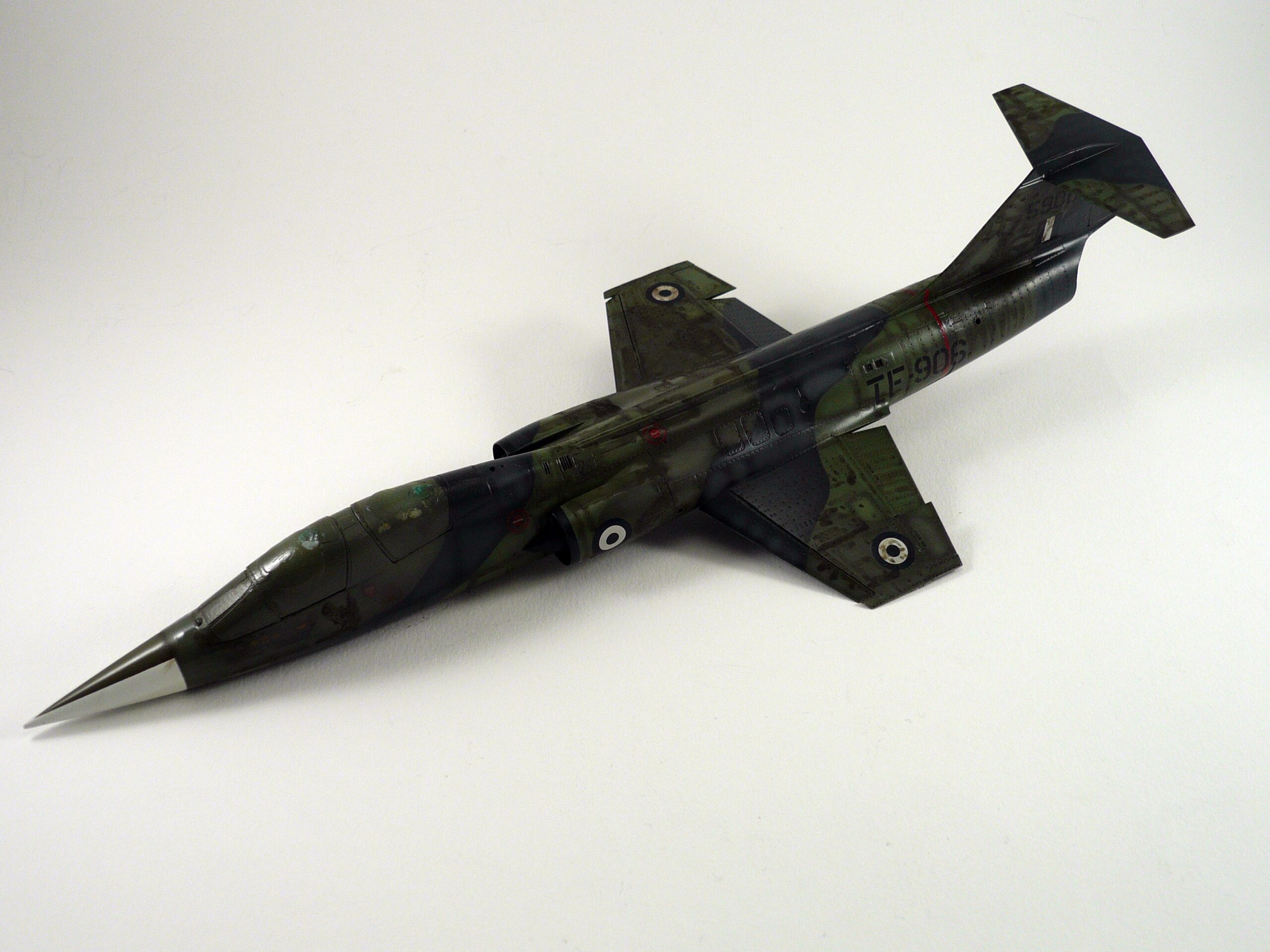
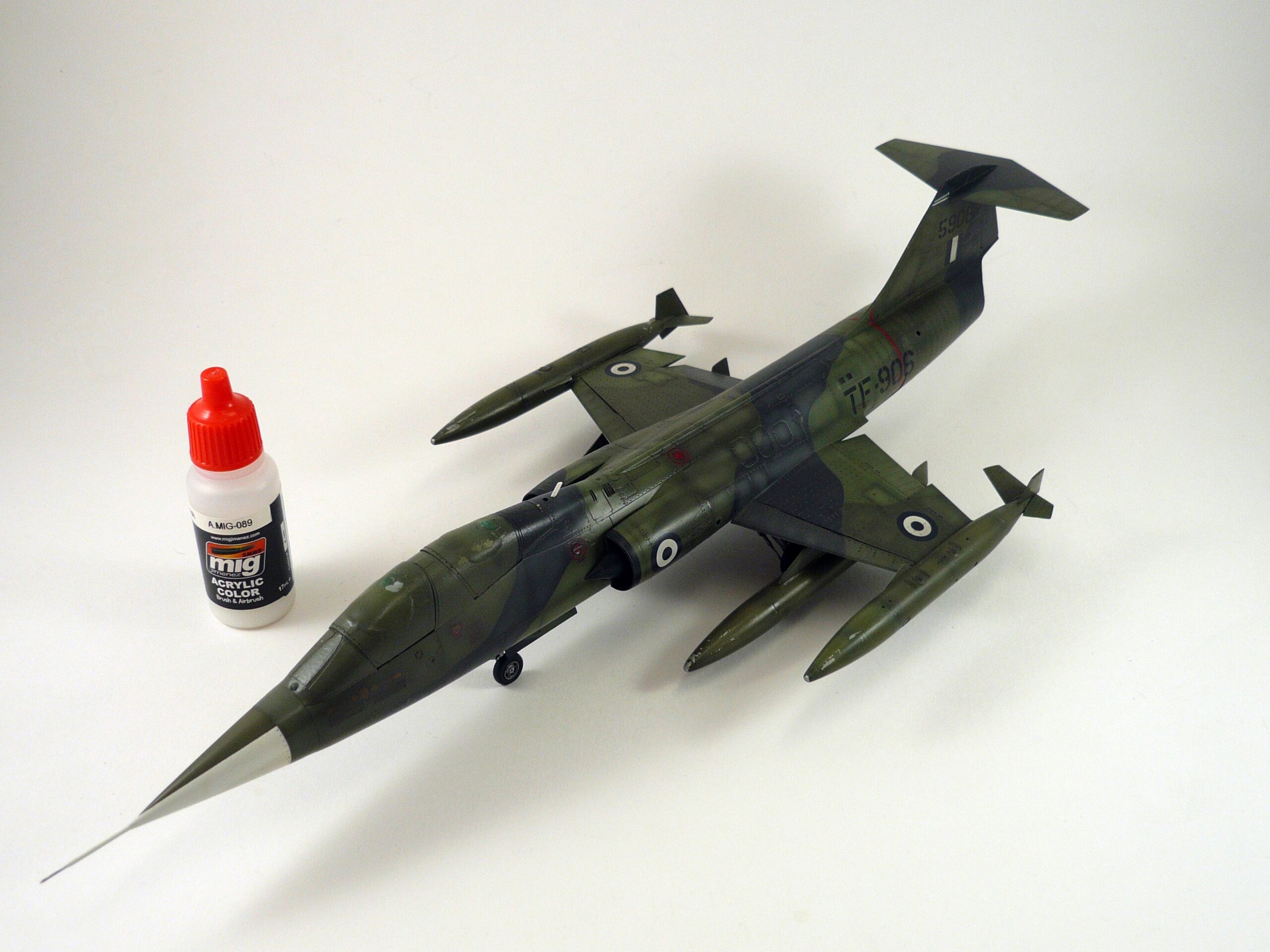
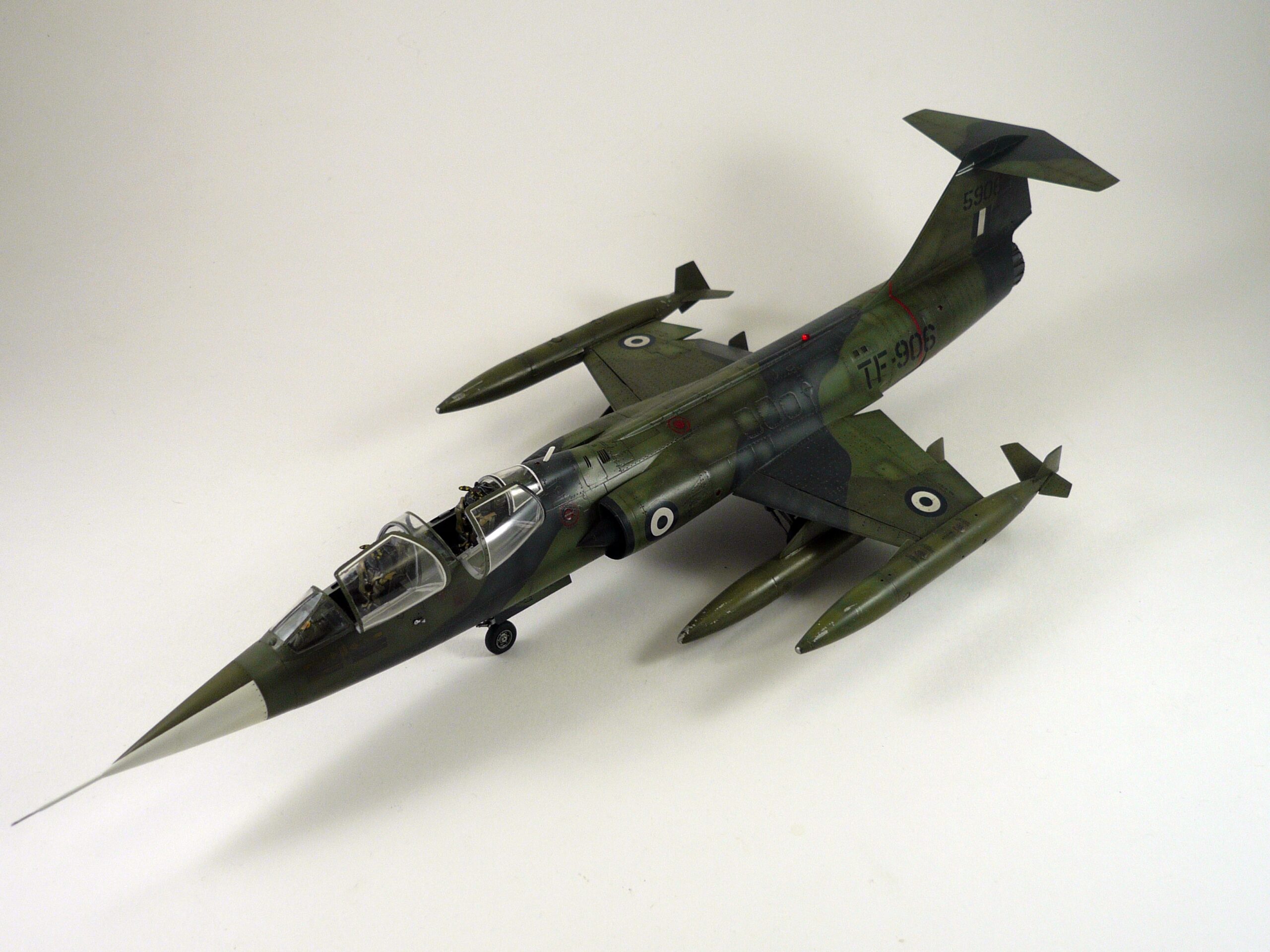
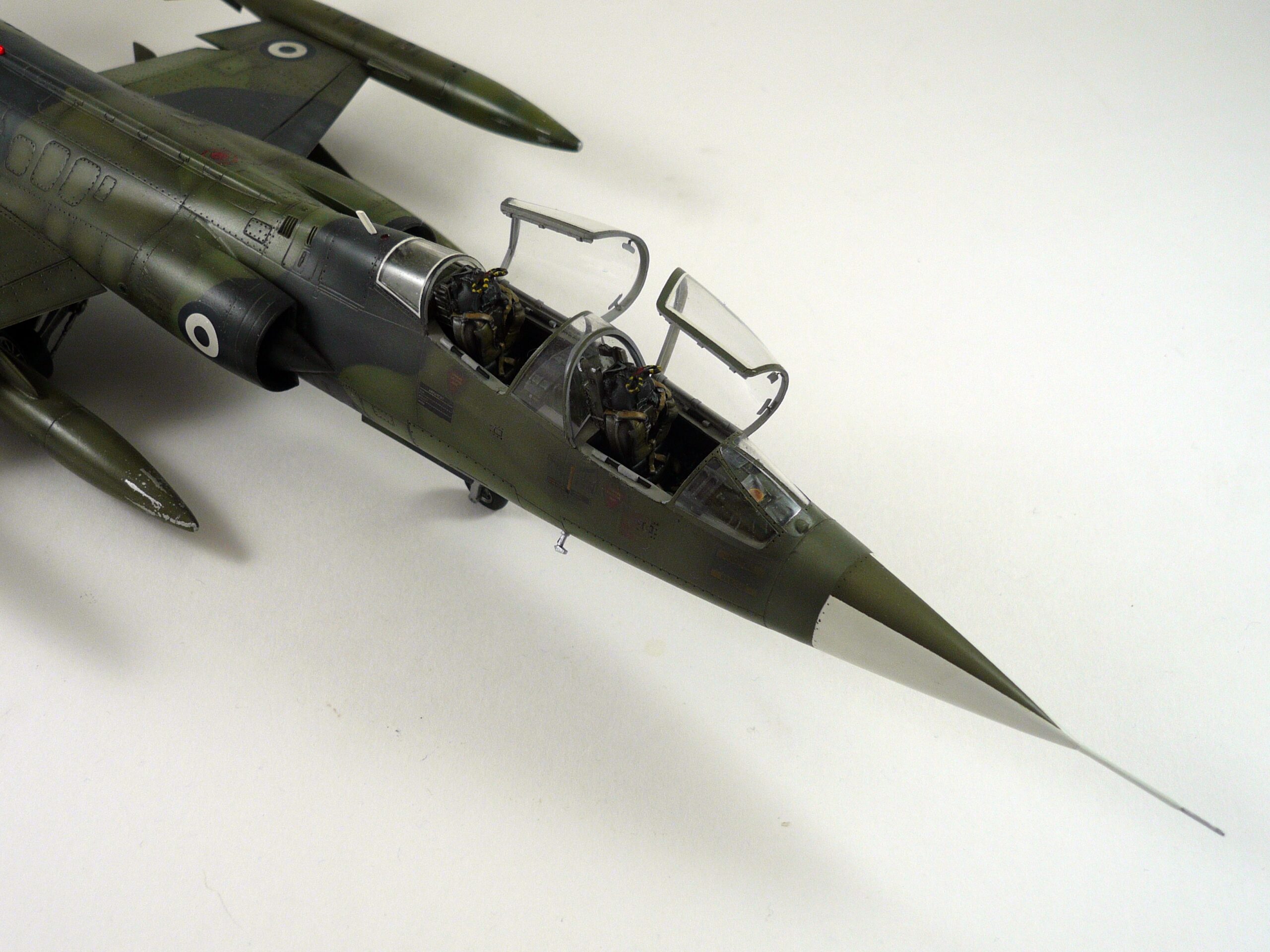
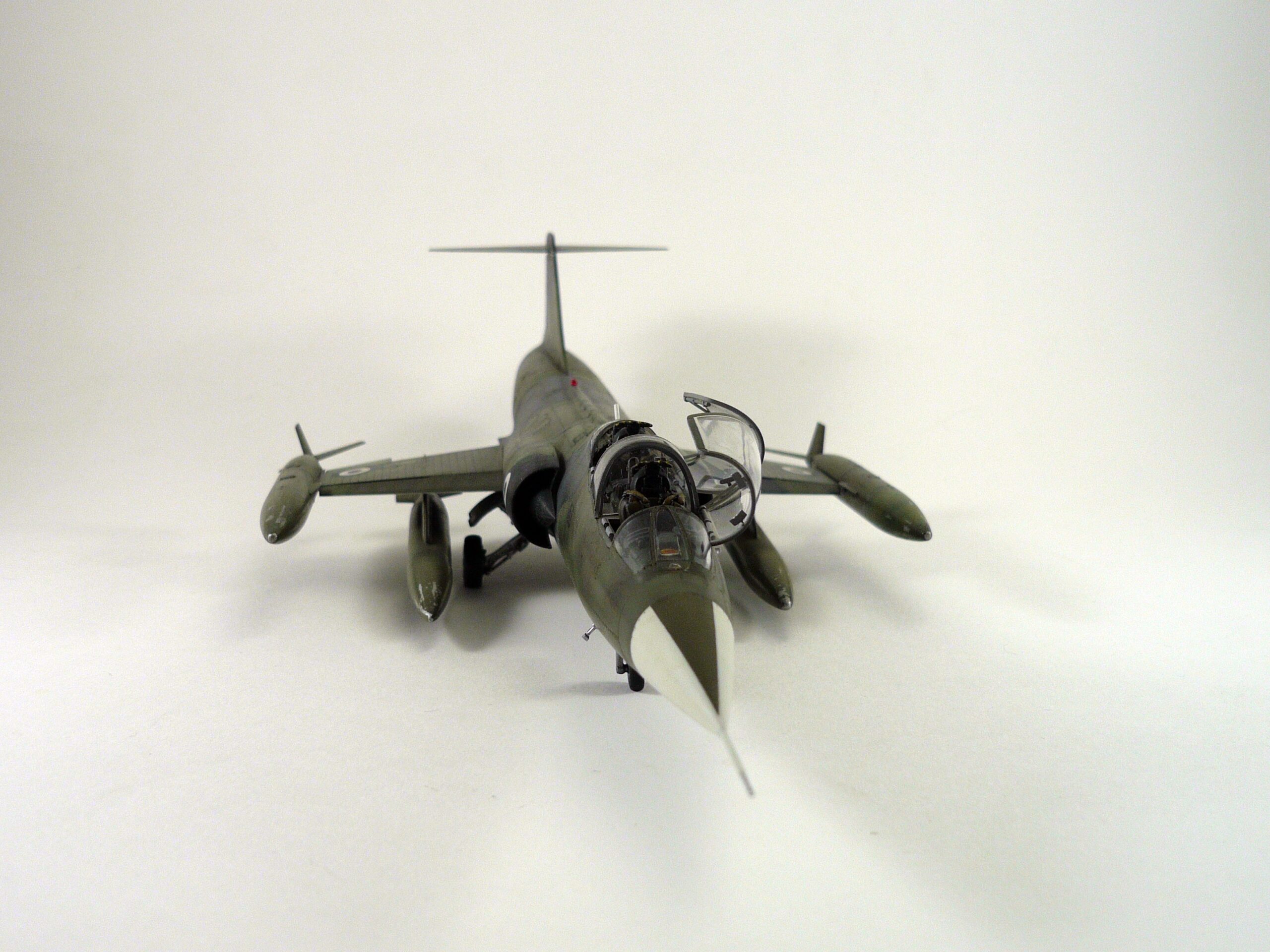
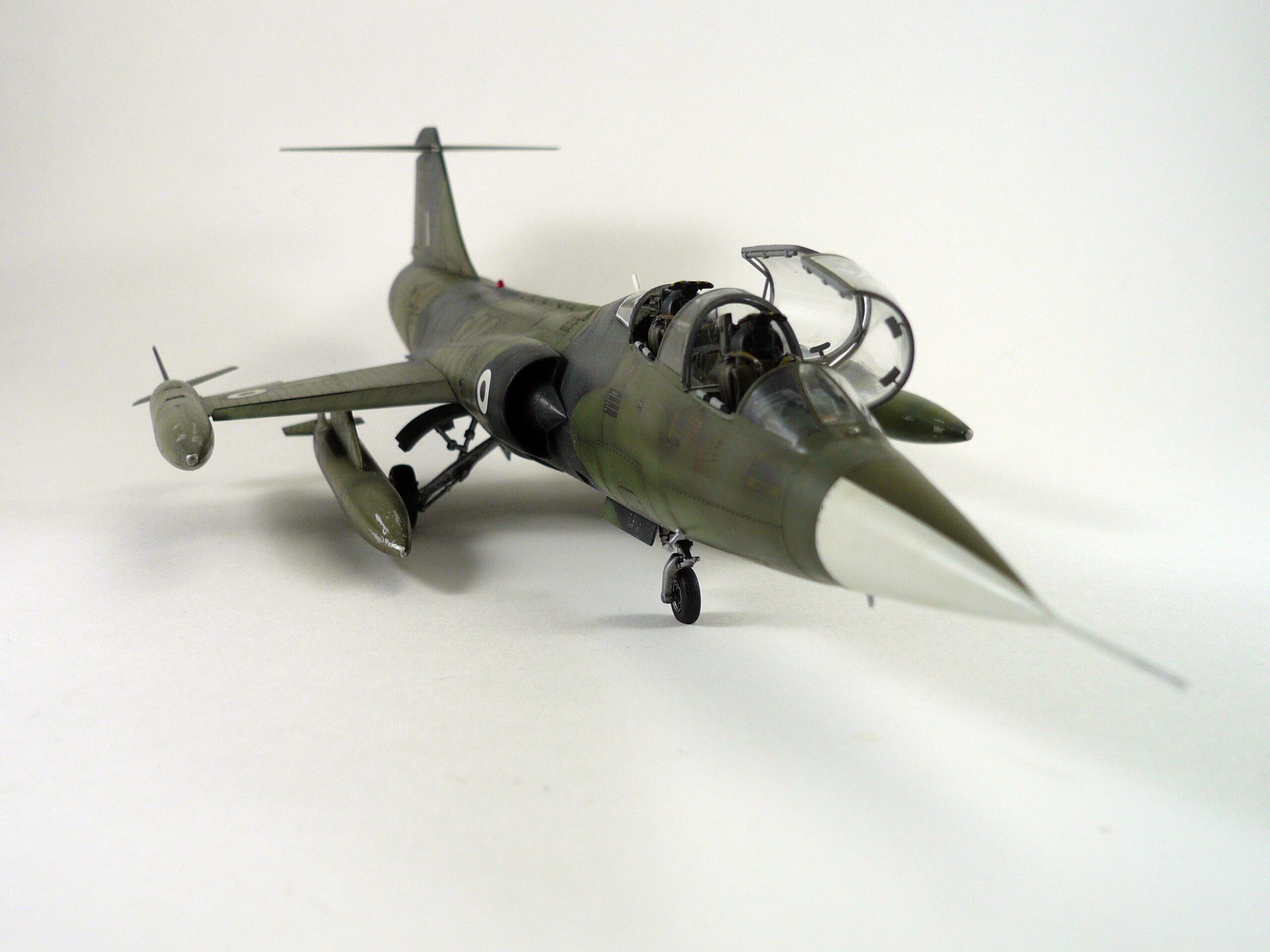
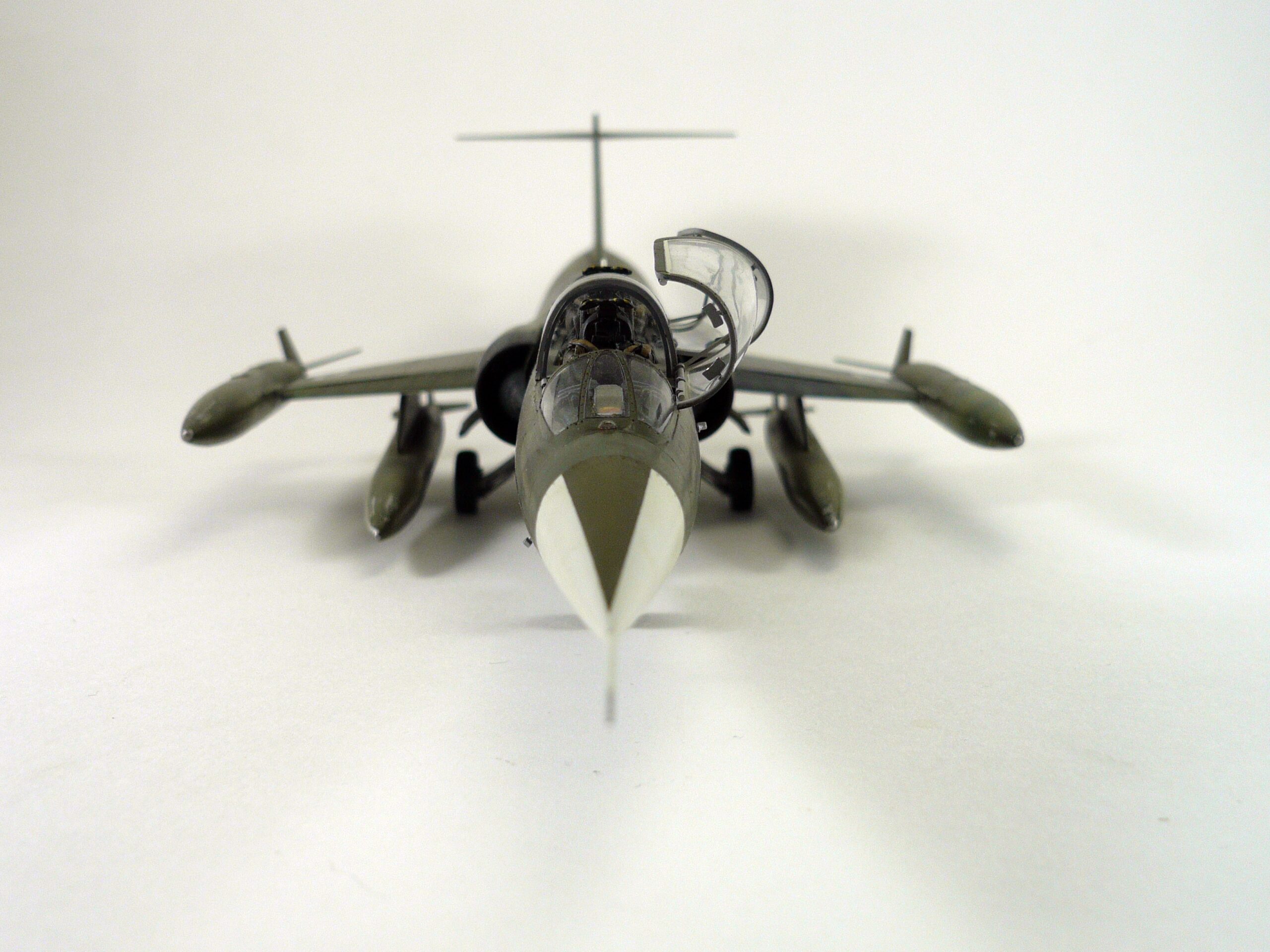
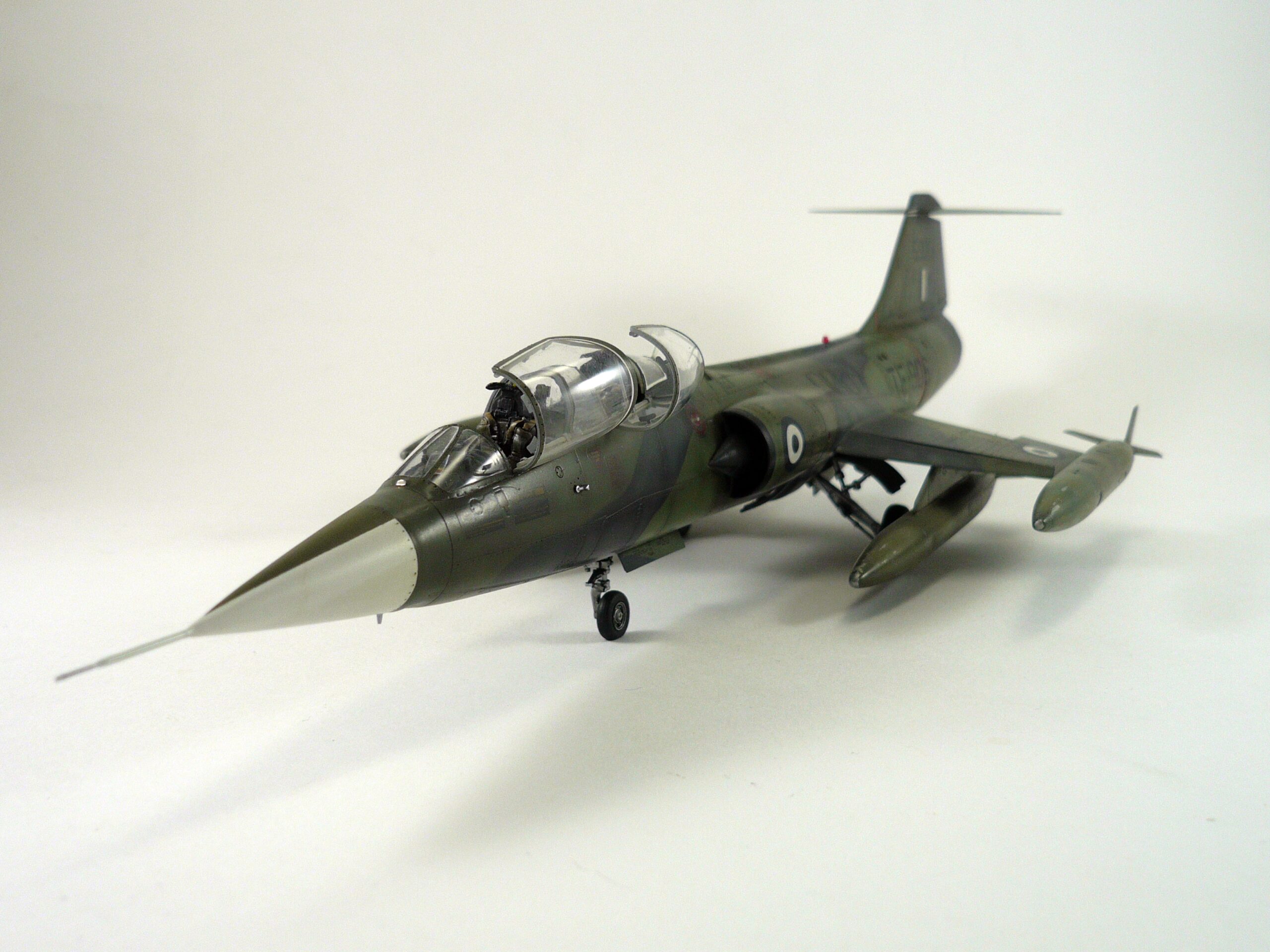
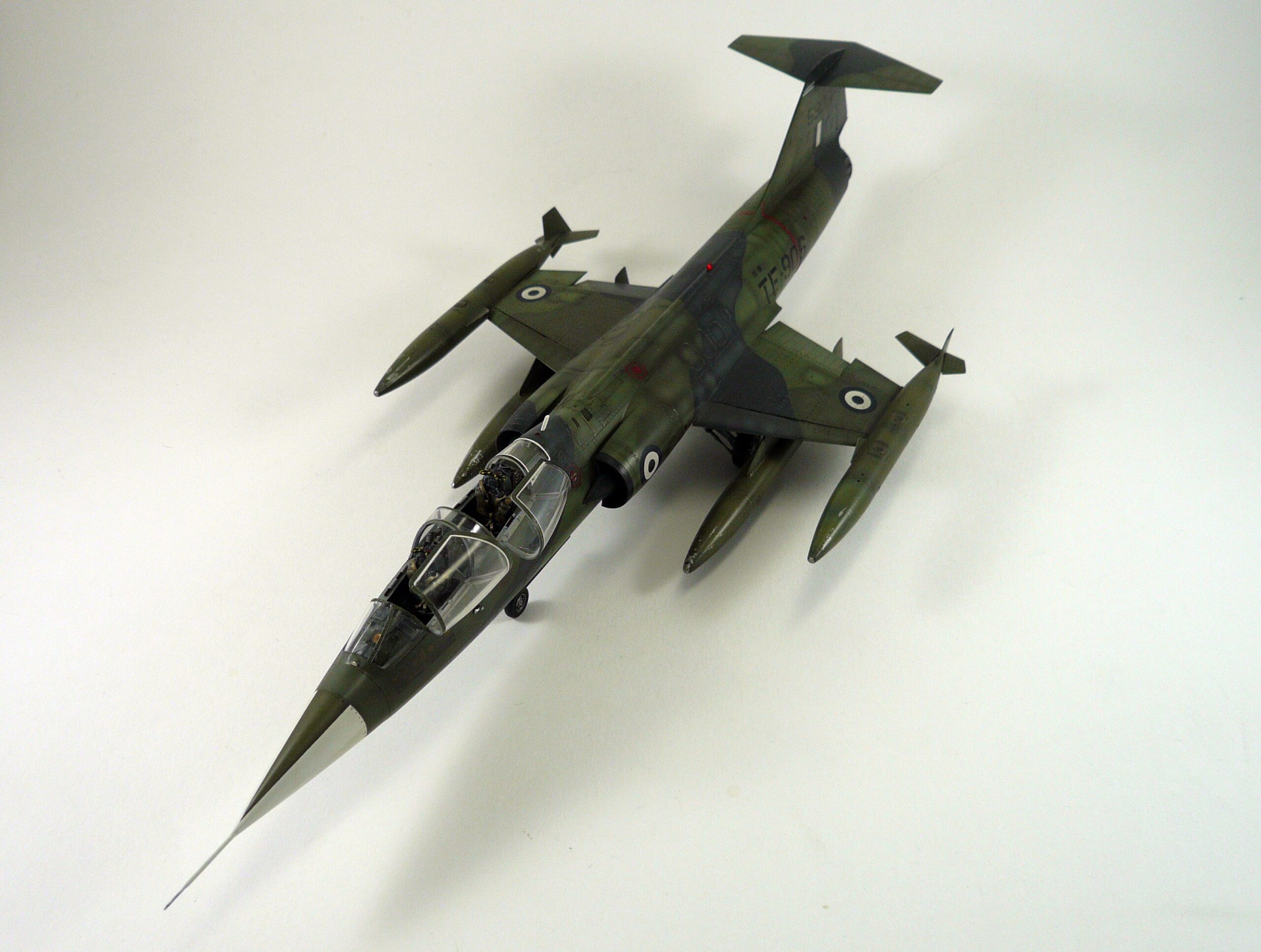
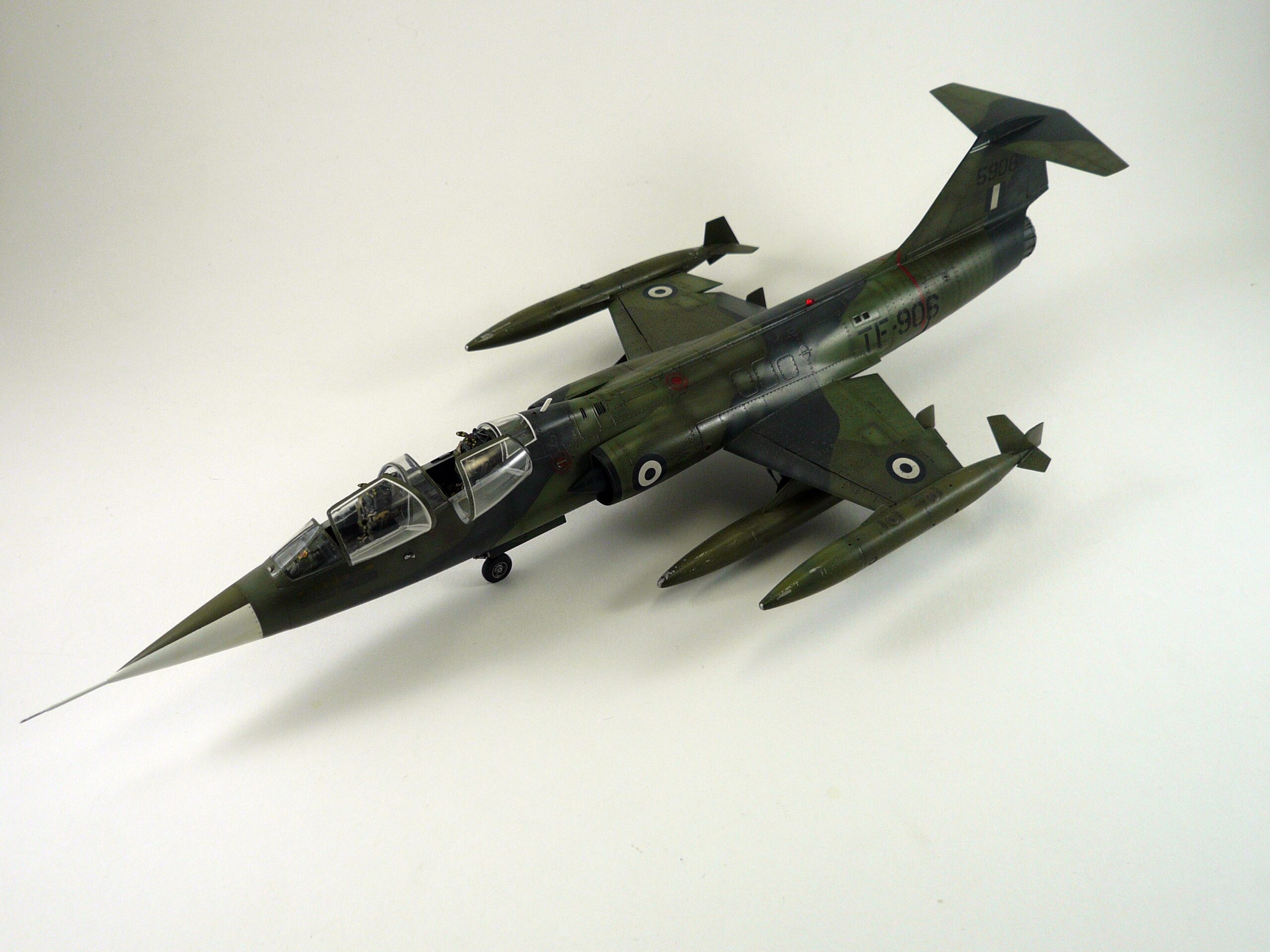
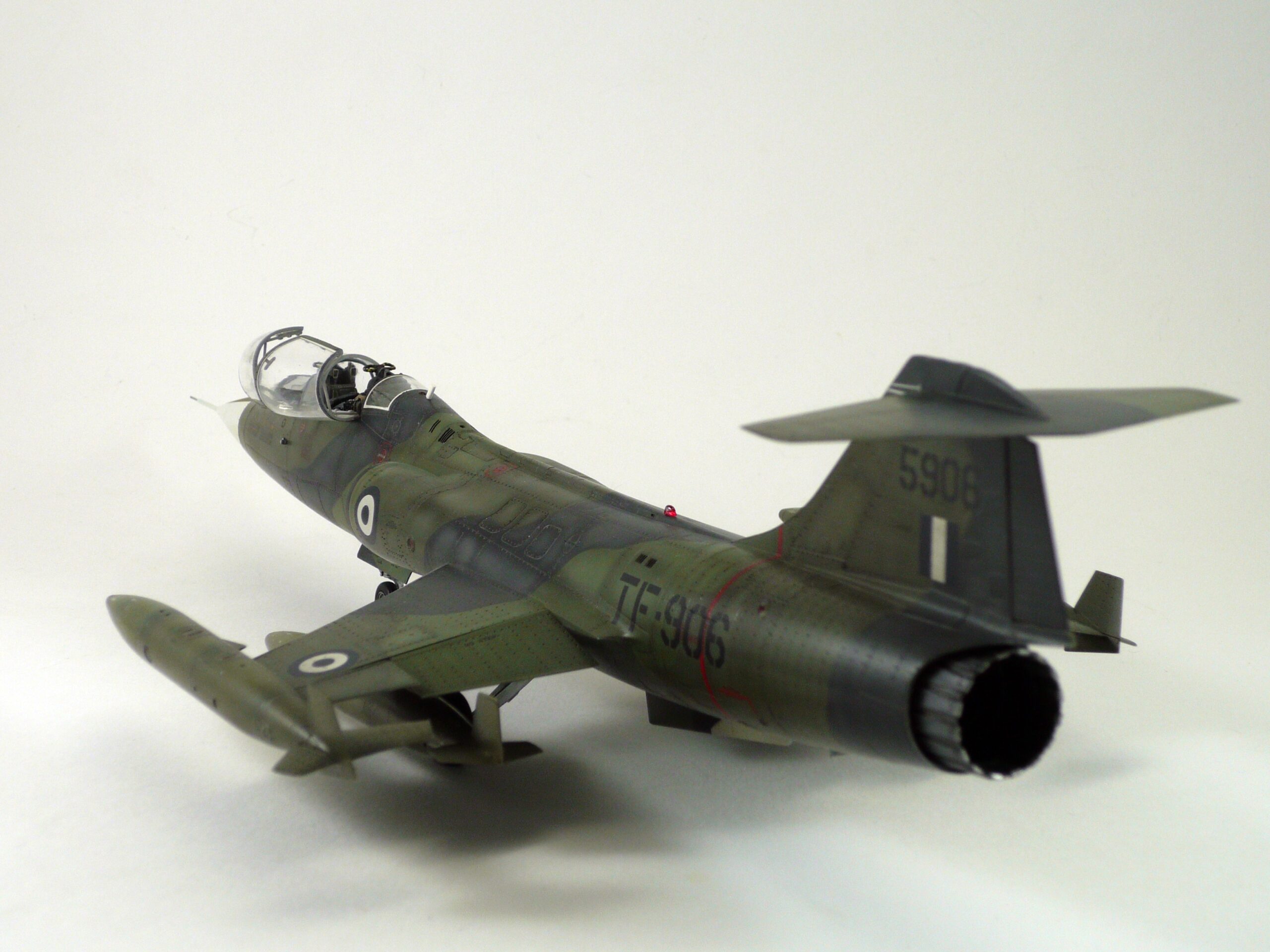
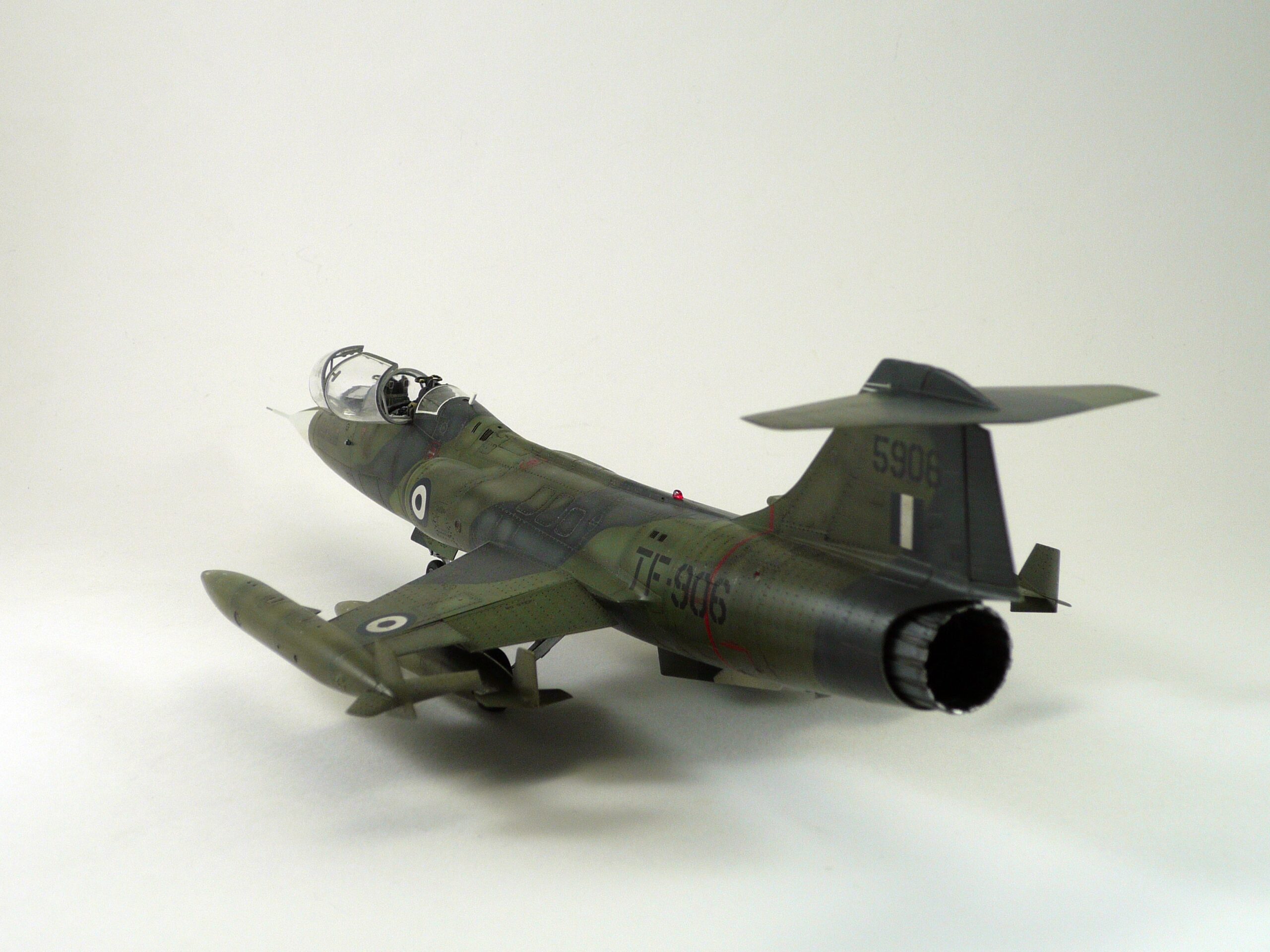
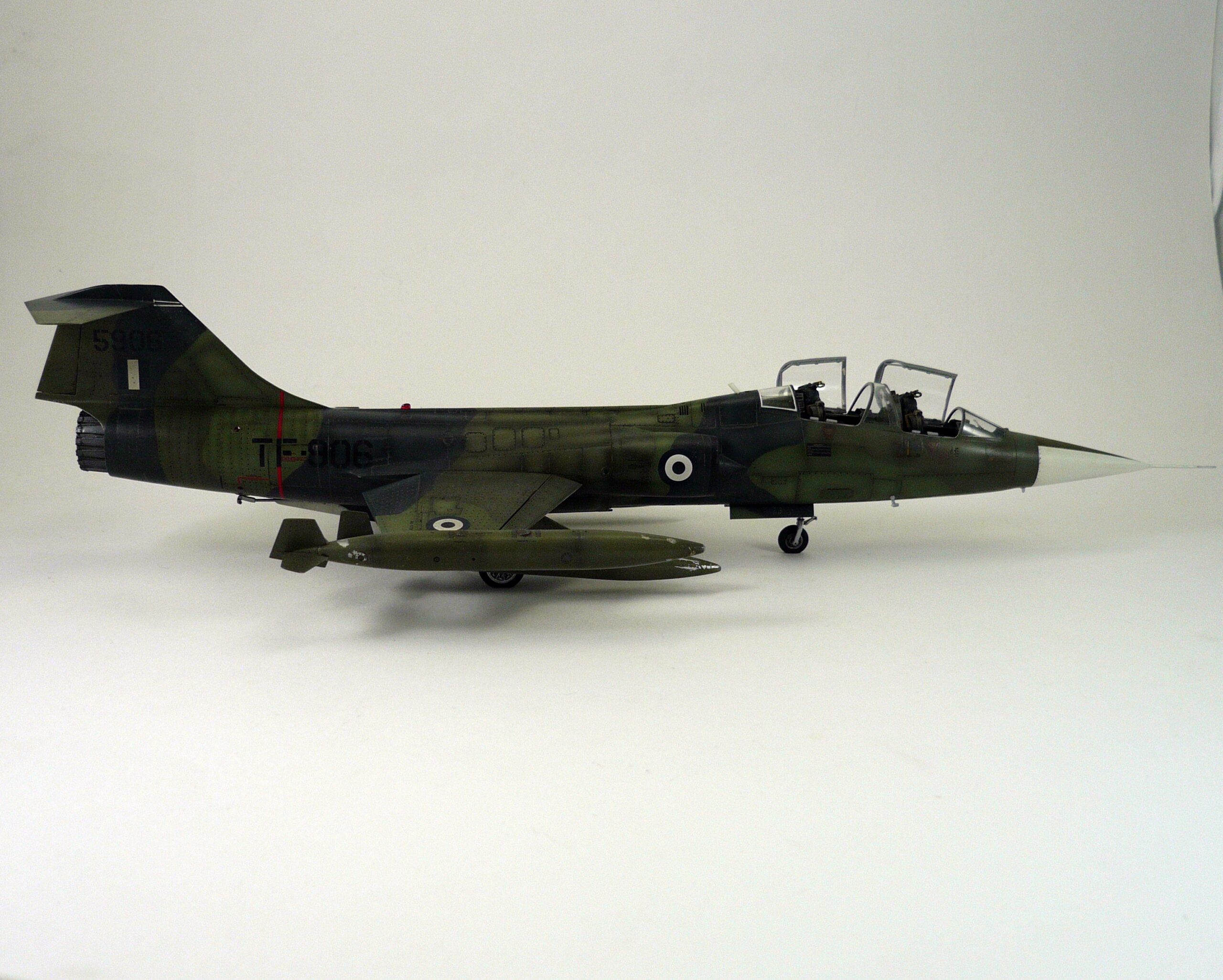
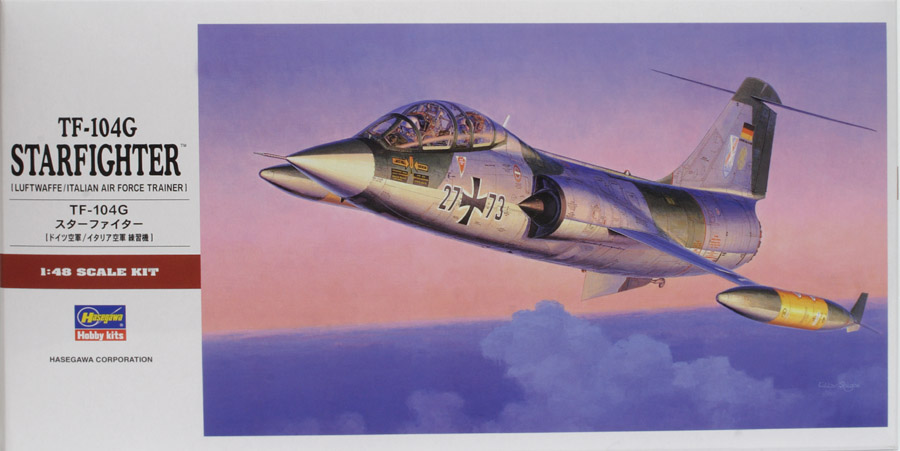
The Lockheed TF-104G Starfighter remains one of the most recognizable Cold War aircraft ever produced. Its aggressive lines, compact airframe and distinctive European camouflage schemes make it a highly attractive subject for scale modelling. For this project, I chose Hasegawa’s 07240 / PT40 kit and focused on achieving a realistic European I camouflage finish combined with subtle weathering and metallic detailing.
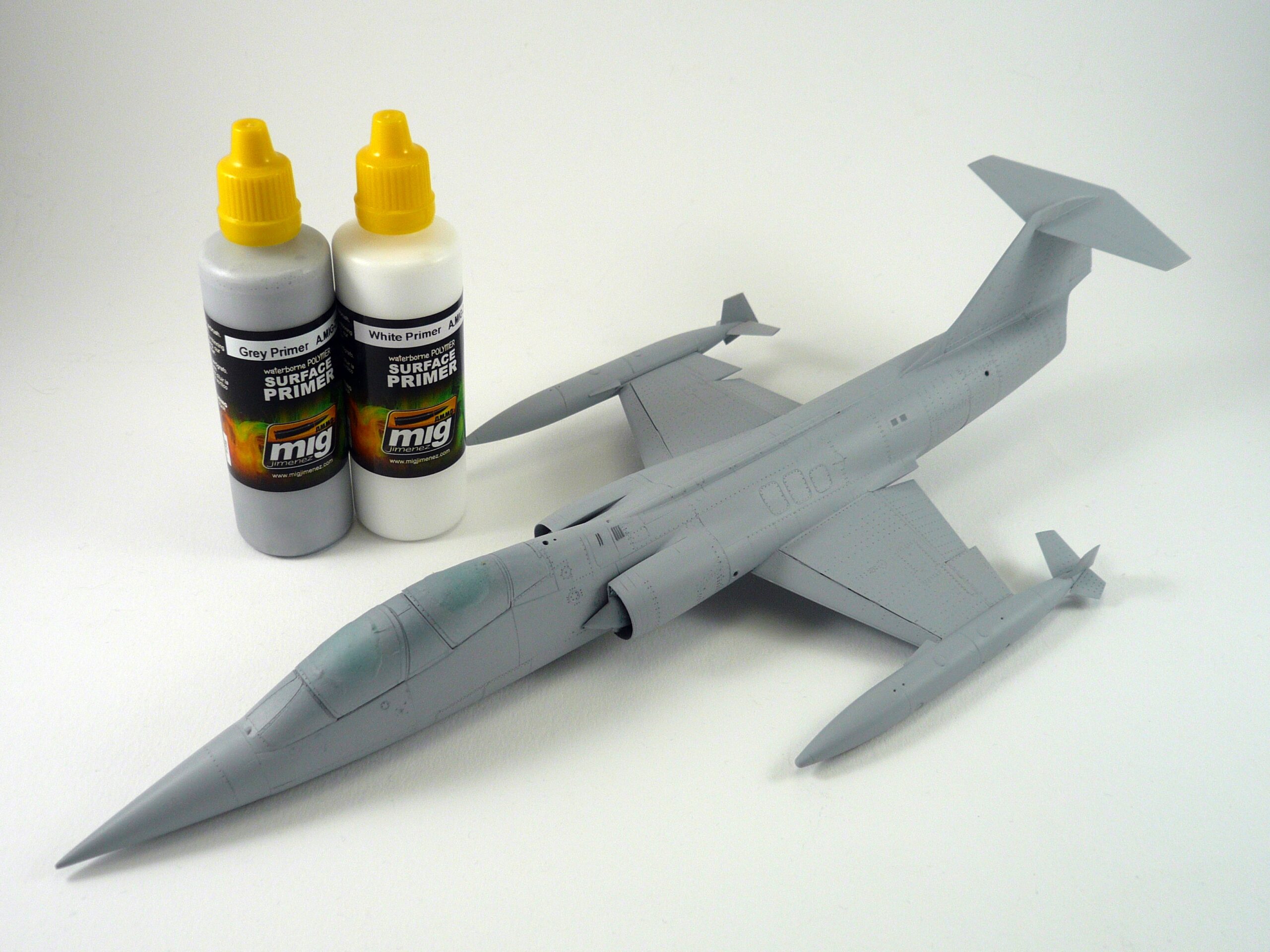
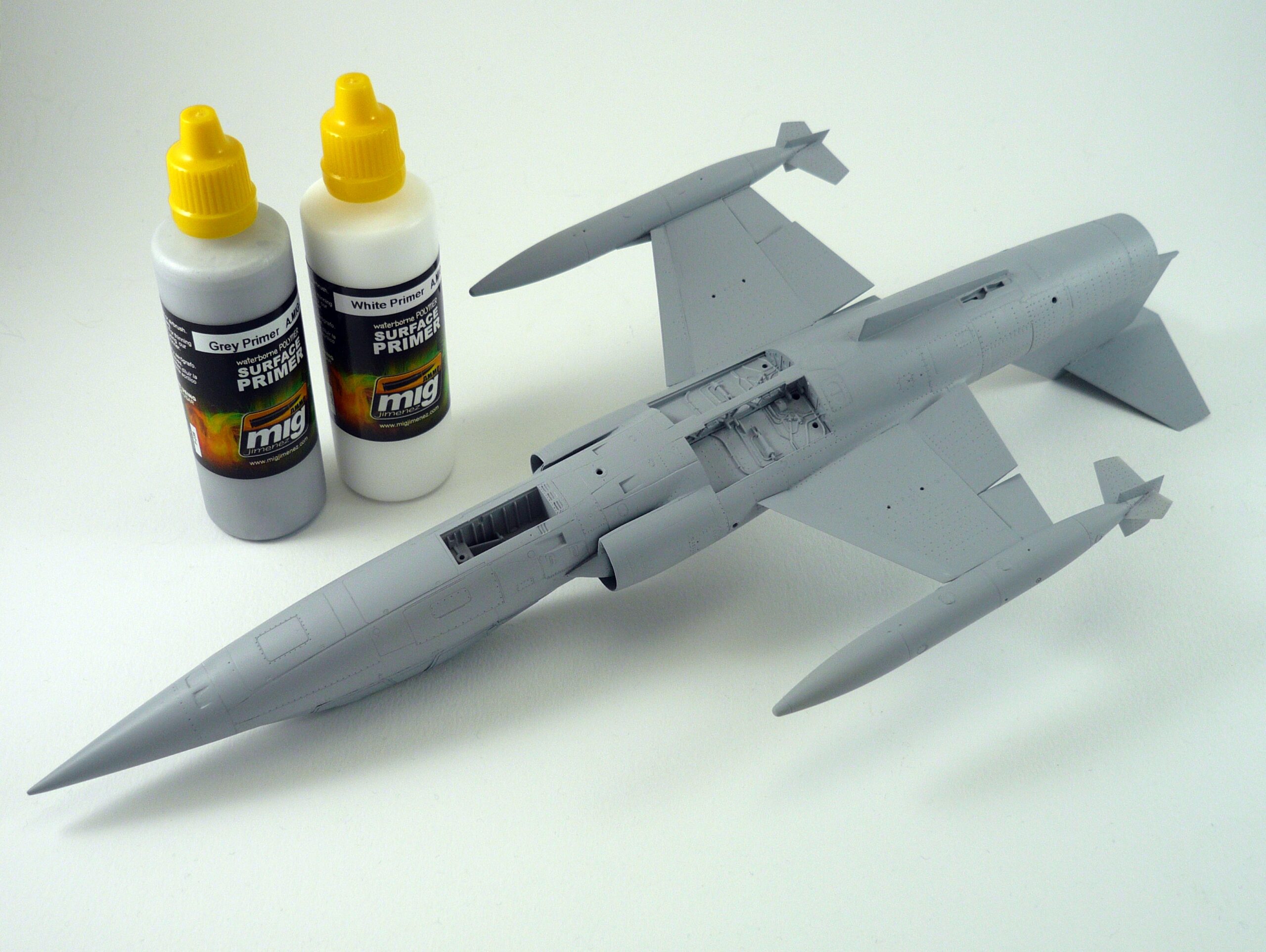
After completing the construction phase, the model was carefully prepared for painting. The entire surface was washed with soap and water to remove fingerprints, dust and any remaining residues. Proper surface preparation is an essential step because it improves paint adhesion and helps reveal imperfections before the final finish.
The painting process began with several light coats of Mig Ammo primer. To achieve a softer base tone, gray and white primer were mixed together. Priming not only creates a uniform surface but also allows corrections before the camouflage stage begins.
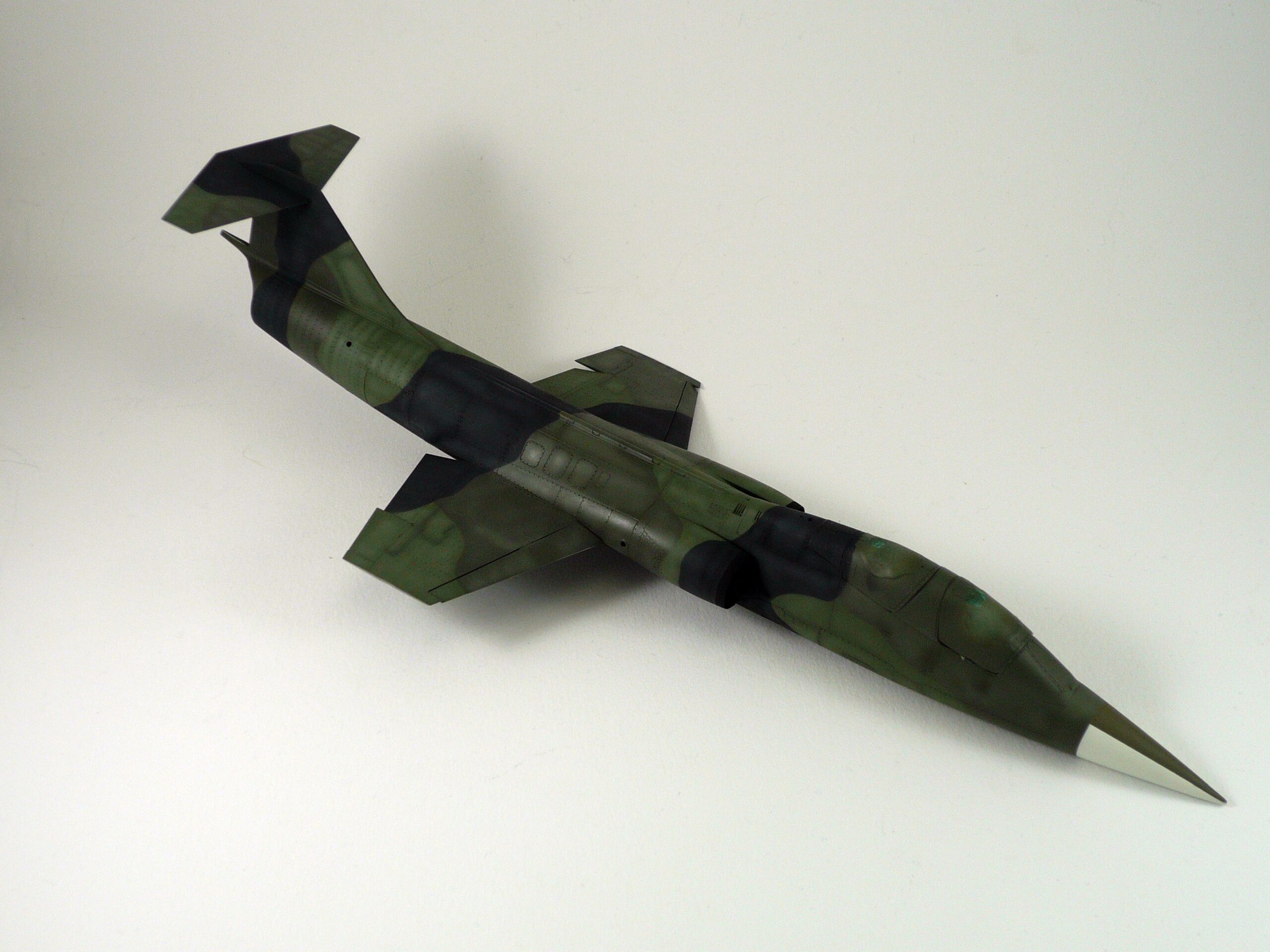
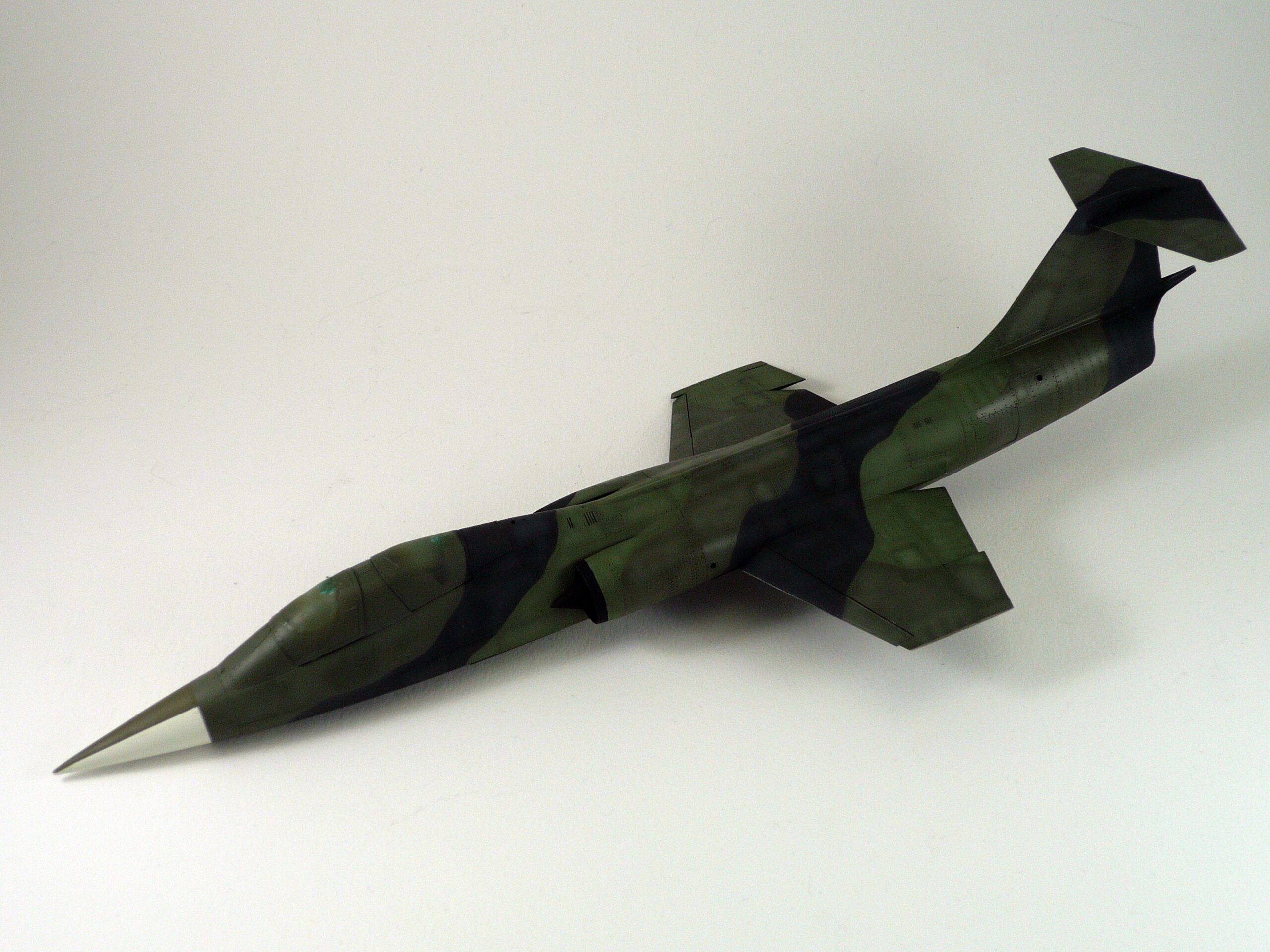
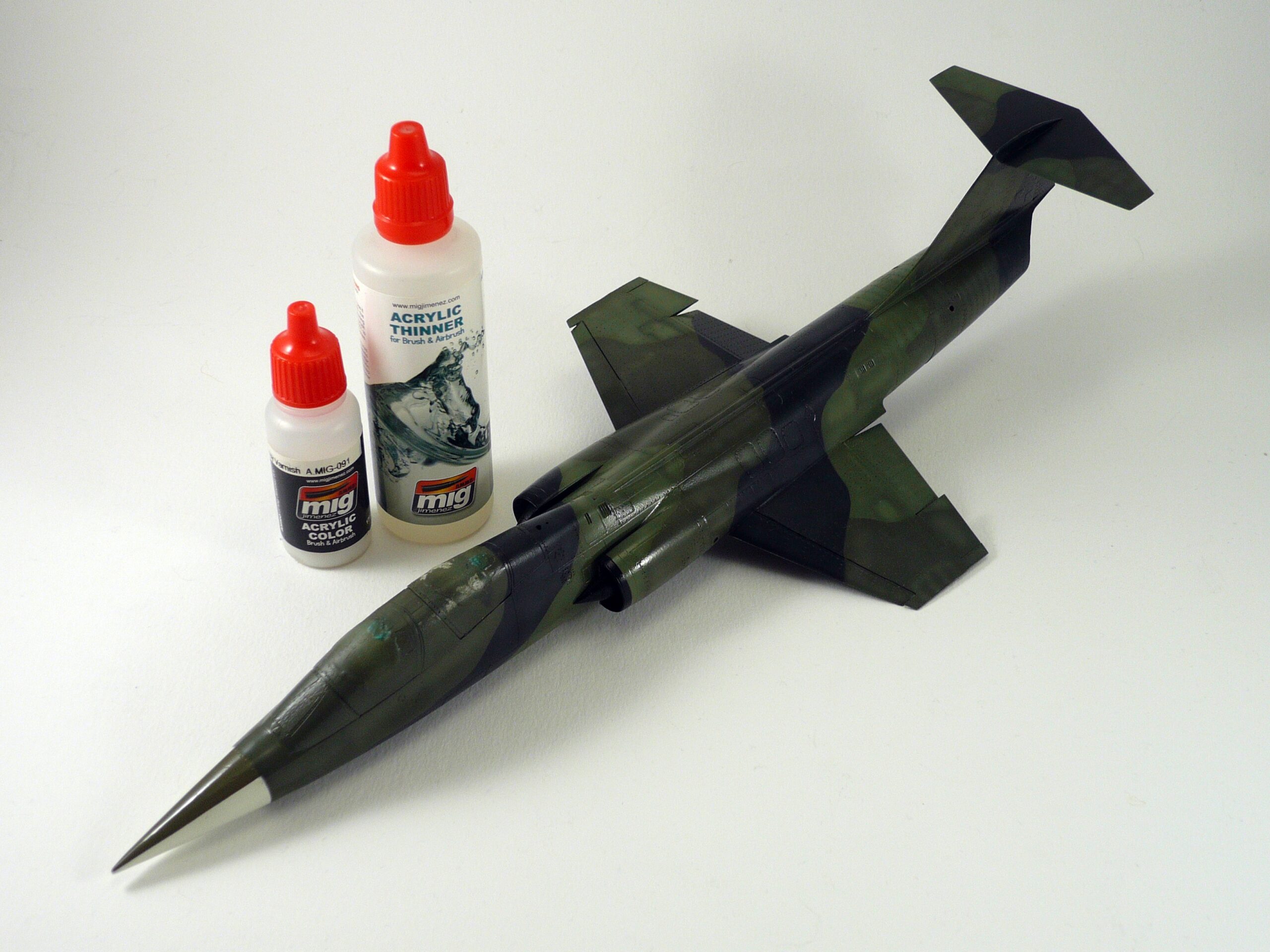
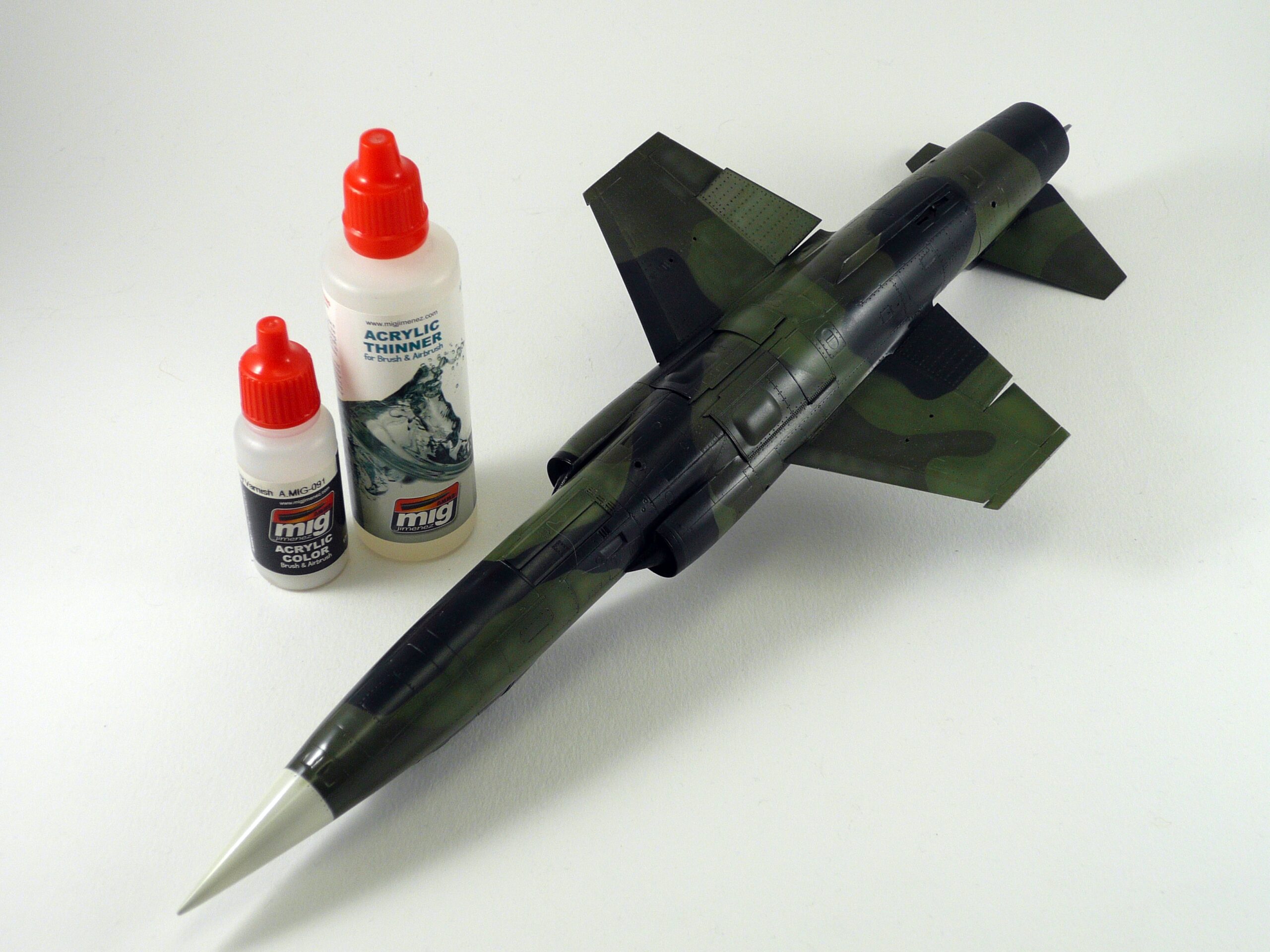
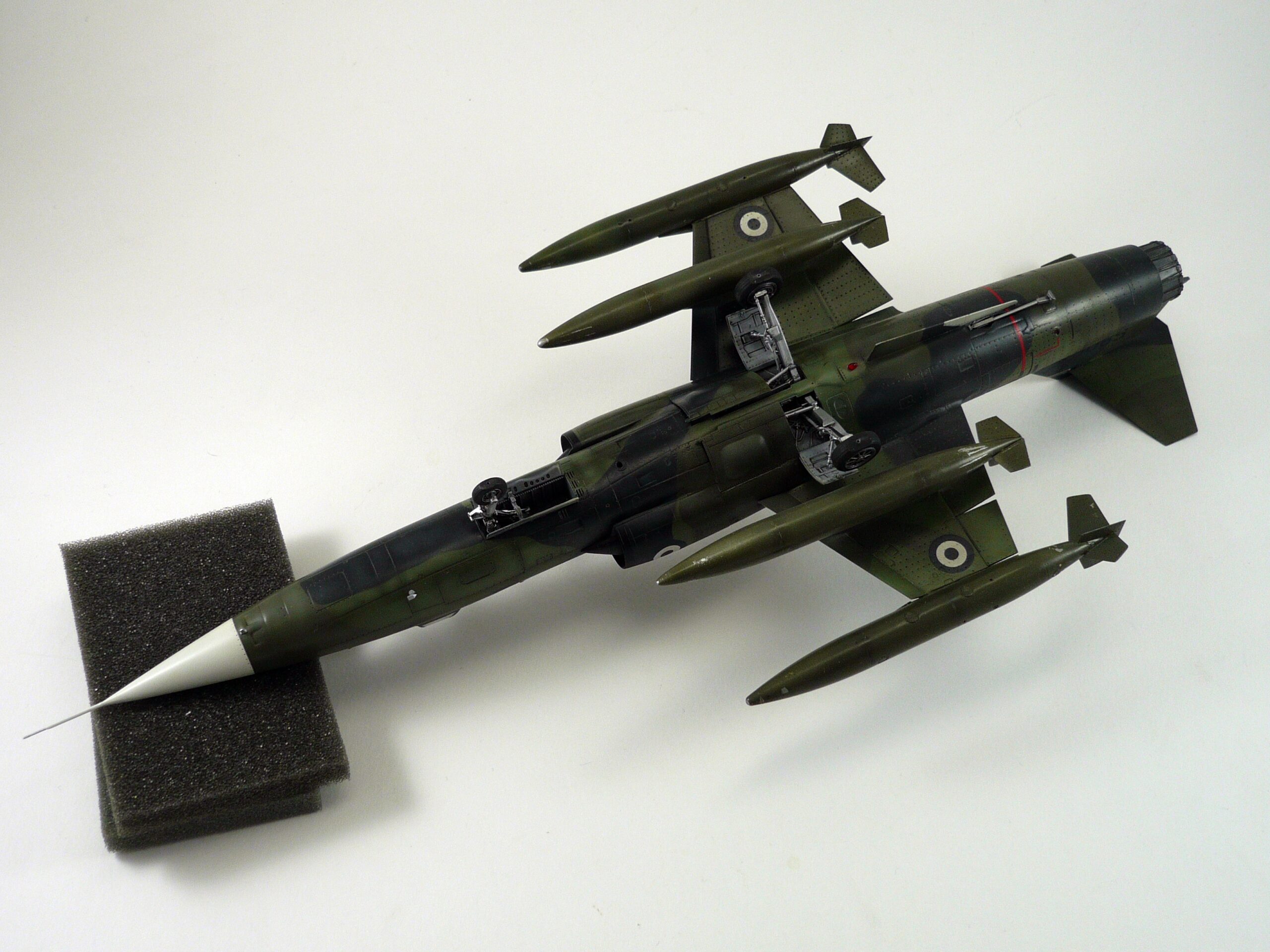
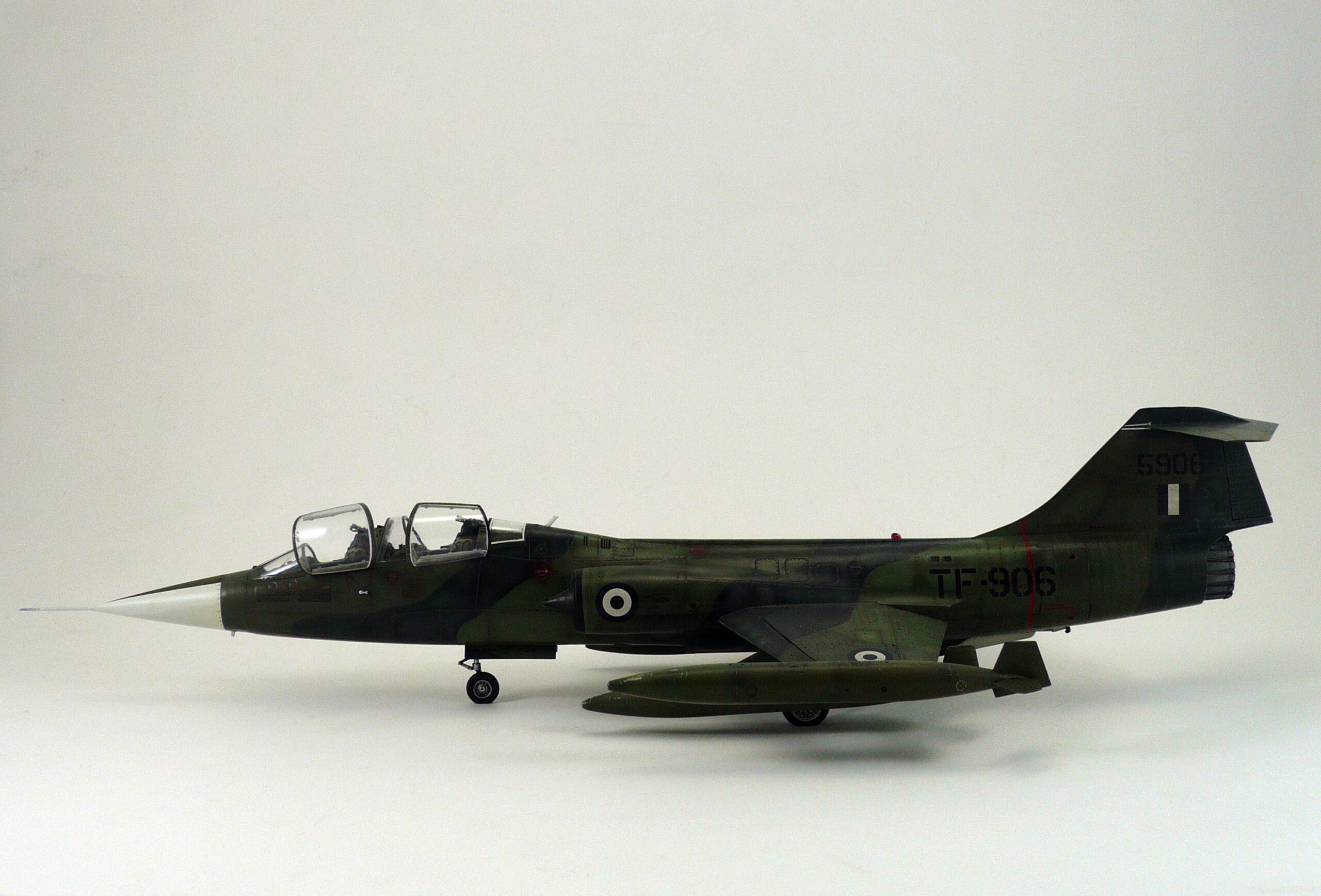
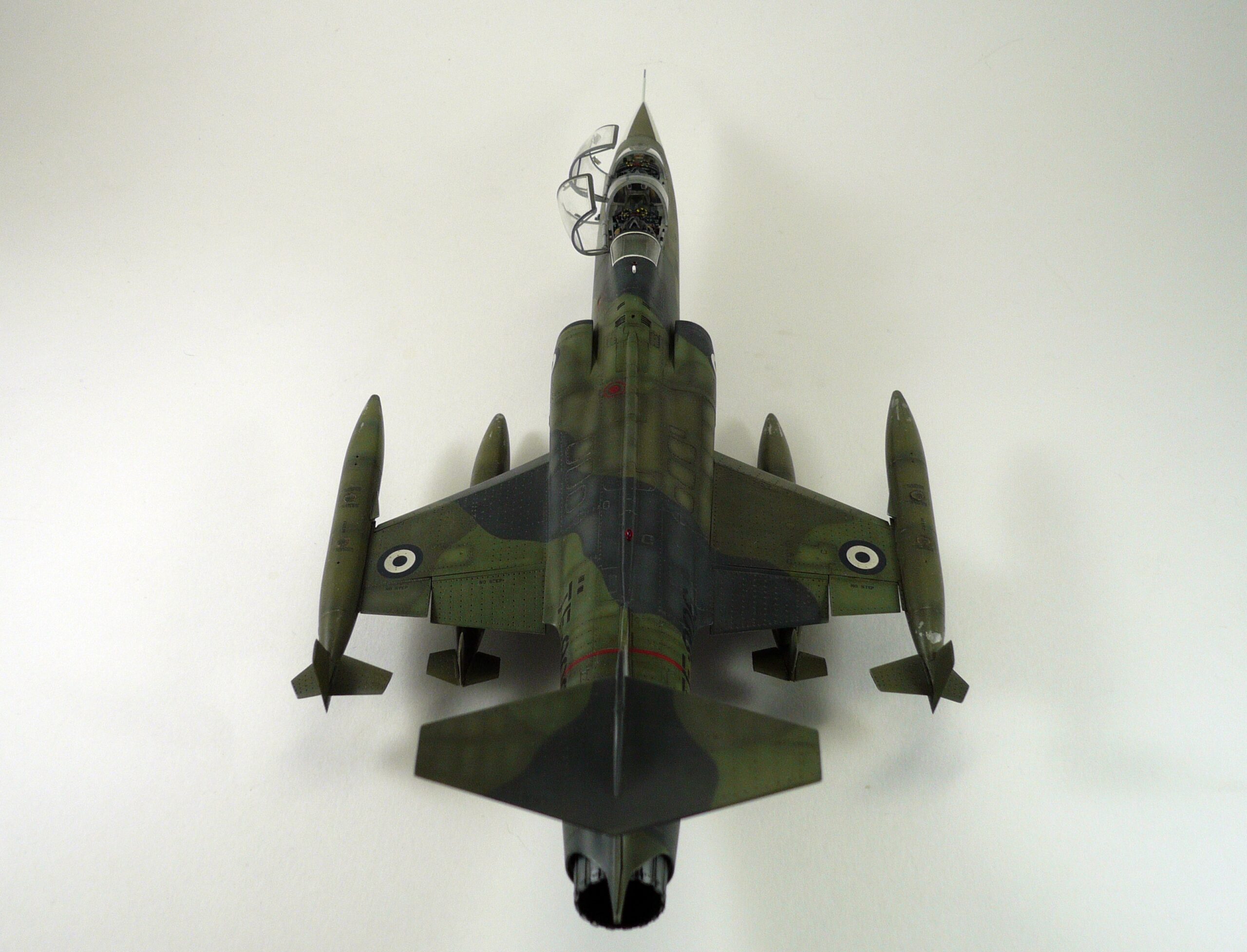
The three-tone European I camouflage started with the lightest shade. This color was created using a custom mix of Tamiya XF-58 Olive Green and Tamiya XF-19 Sky Gray in a 70/30 ratio. The second camouflage color was Gunze H309 Green, while the darkest tone was mixed from Tamiya XF-85 and XF-19 in an 80/20 ratio.
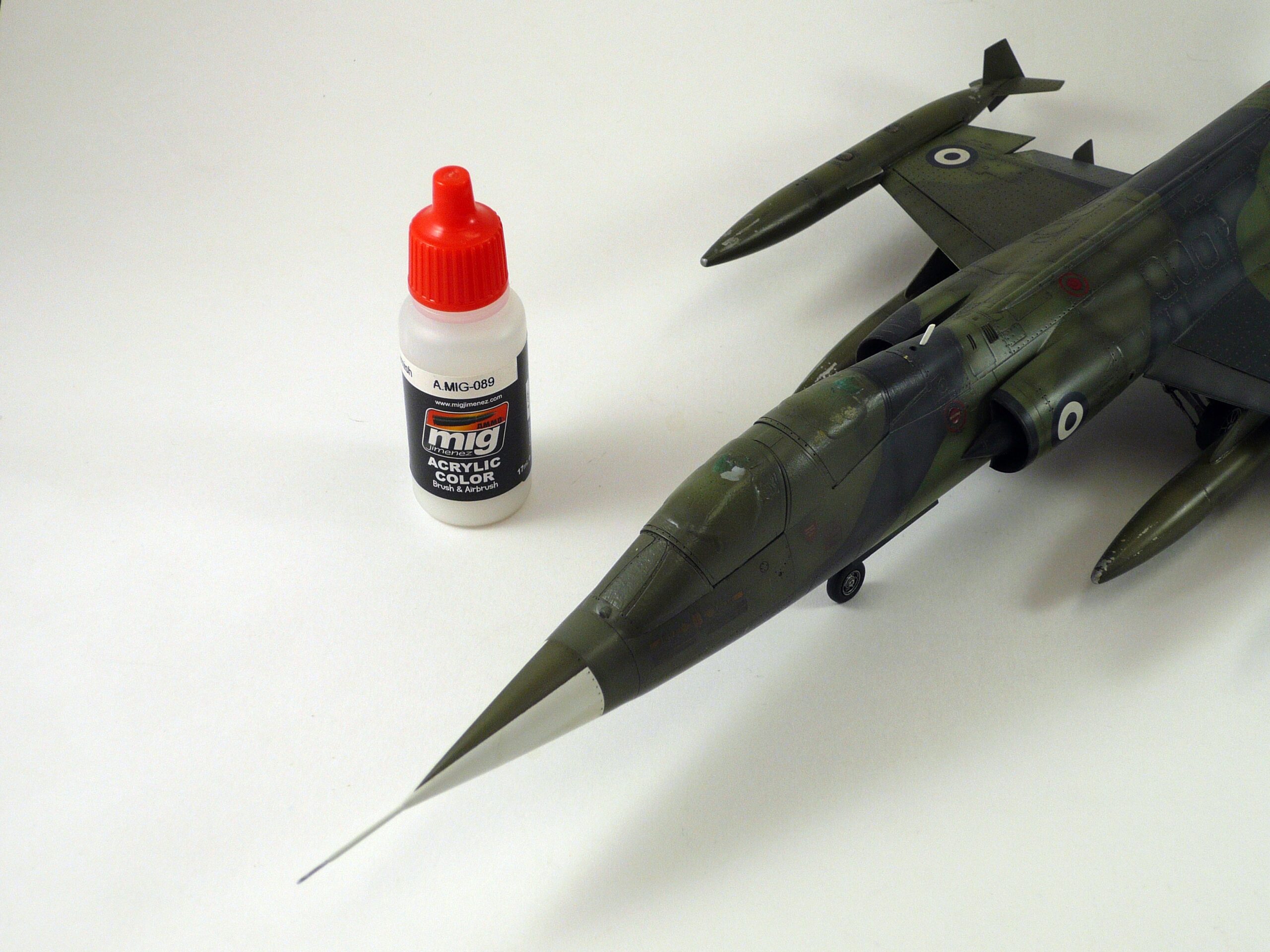
The radome received its own dedicated color mixture using Gunze H316 White and Tamiya XF-62 Olive Drab. To reproduce the soft transitions of the camouflage pattern, the Blue Tak masking technique was used.
To increase visual interest and avoid a flat appearance, subtle highlights were introduced by adding small amounts of Tamiya XF-19 Light Gray into the camouflage colors. Light gray was selected instead of white in order to keep transitions smoother and closer to the appearance of the real aircraft.
Once the camouflage painting was completed, the entire model received multiple coats of Ammo clear gloss varnish. This step sealed the paintwork and created the ideal surface for decal application.
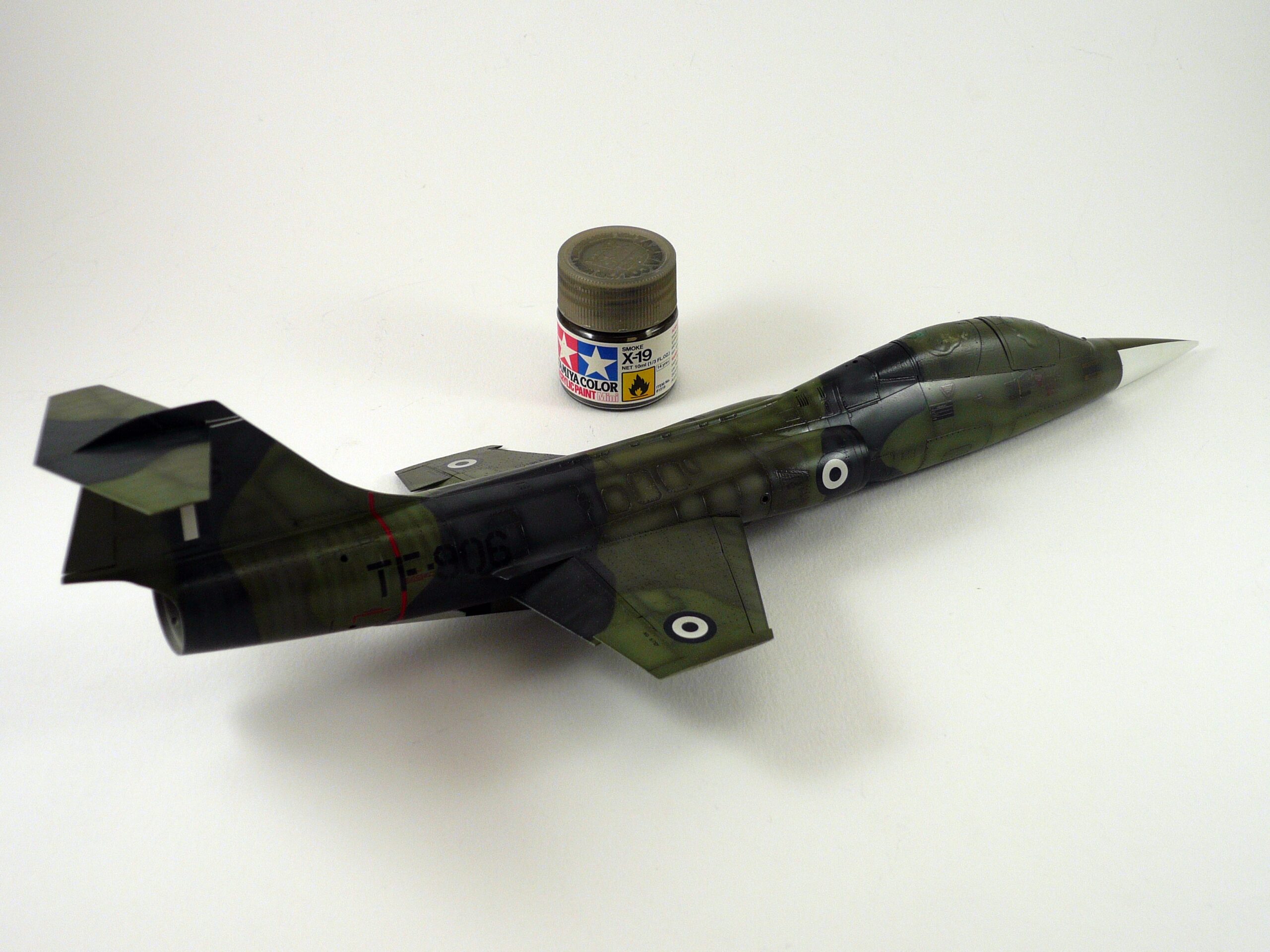
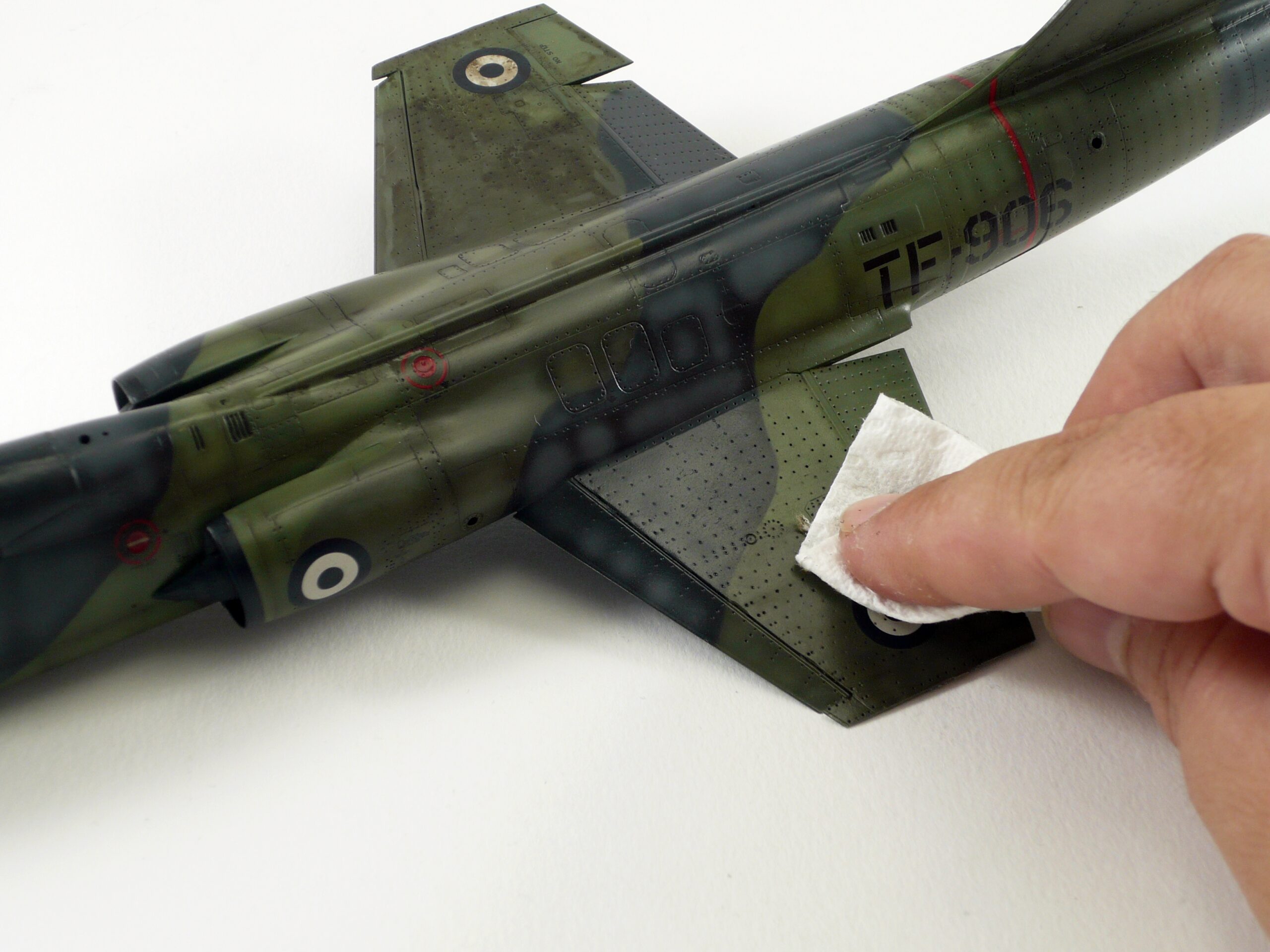
After decals were applied, part of the highlighting effect became less visible. To restore tonal variation and operational realism, Tamiya X-19 Smoke was applied as post-shading across selected areas of the airframe.
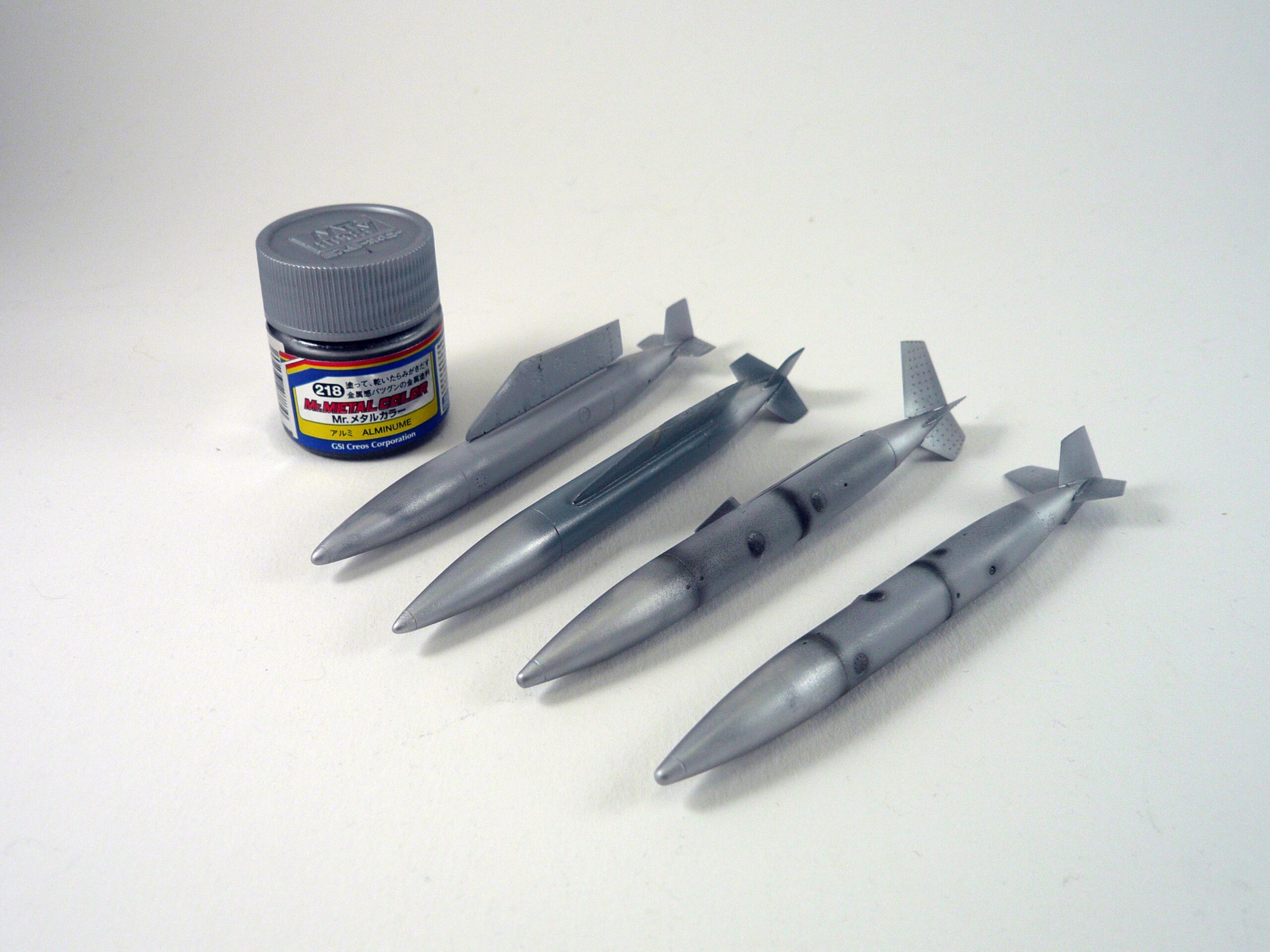
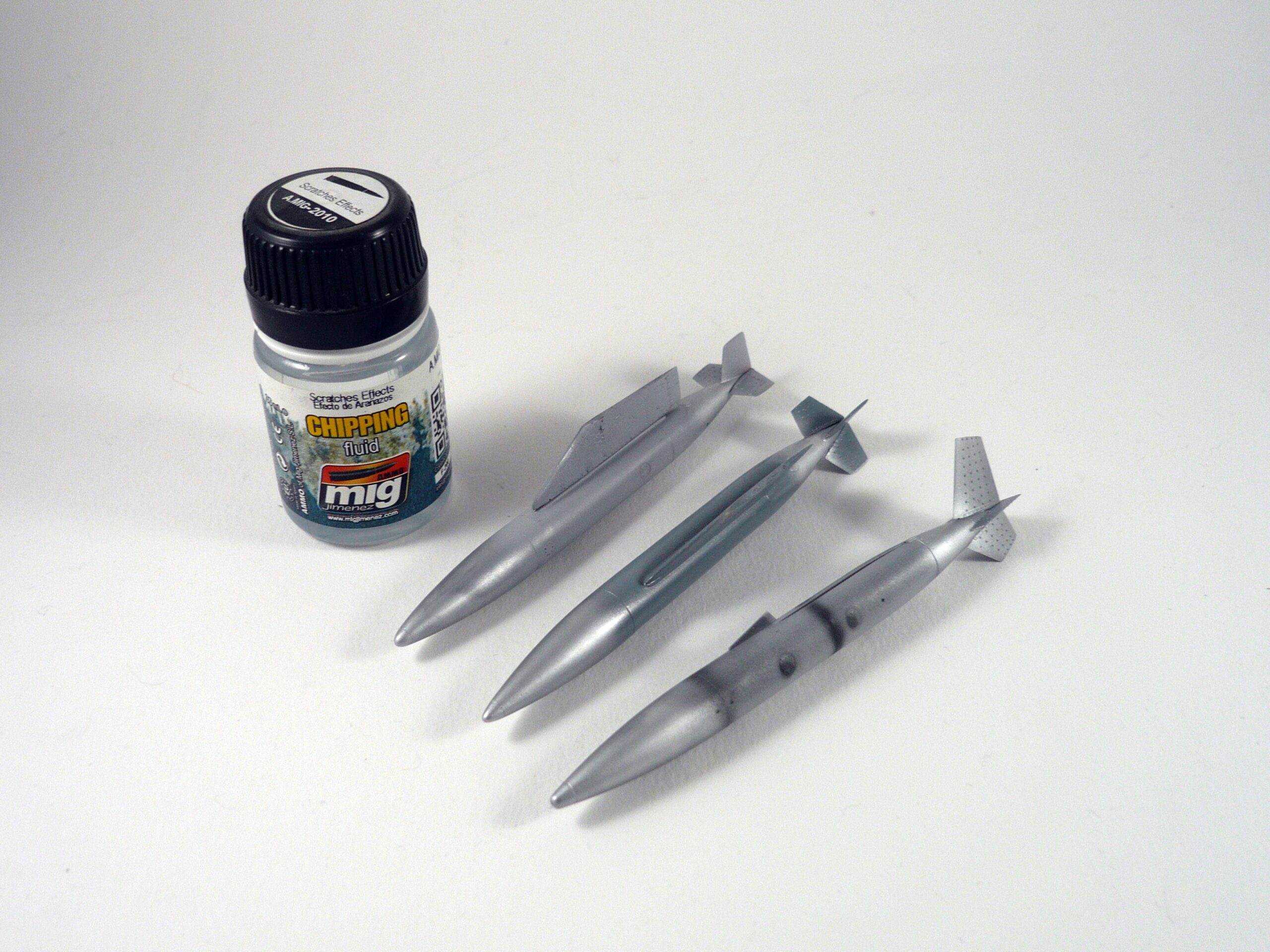
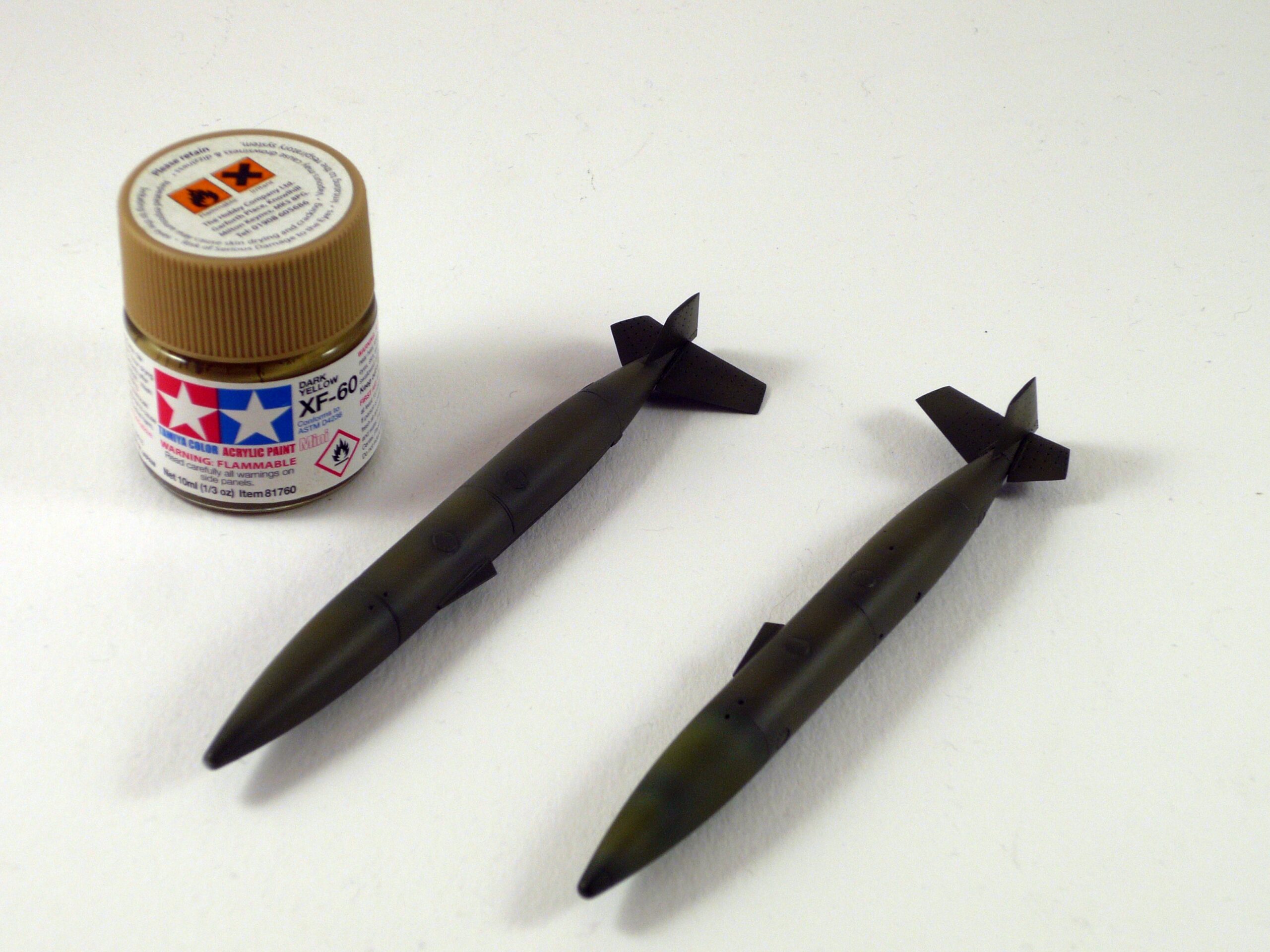
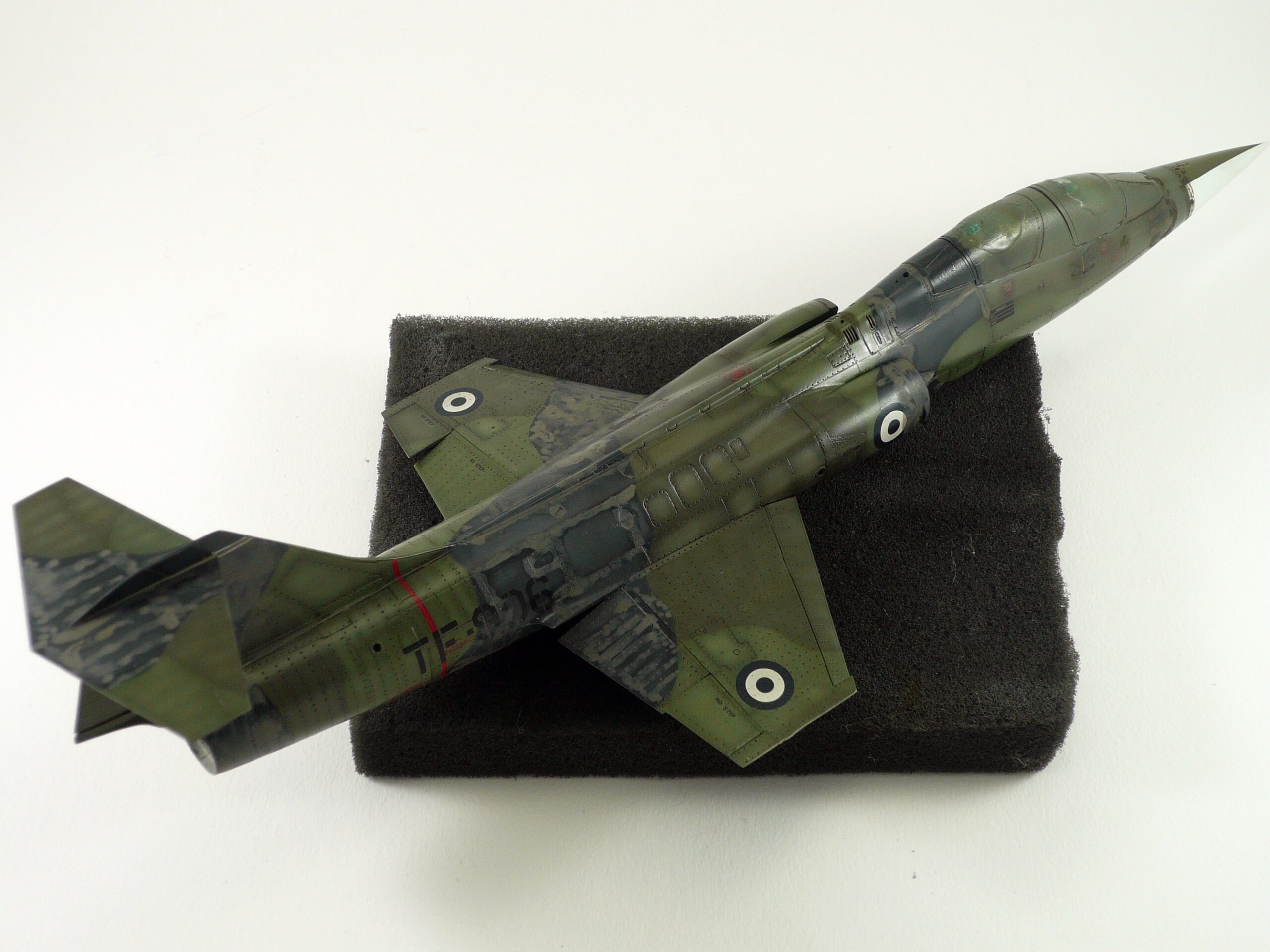
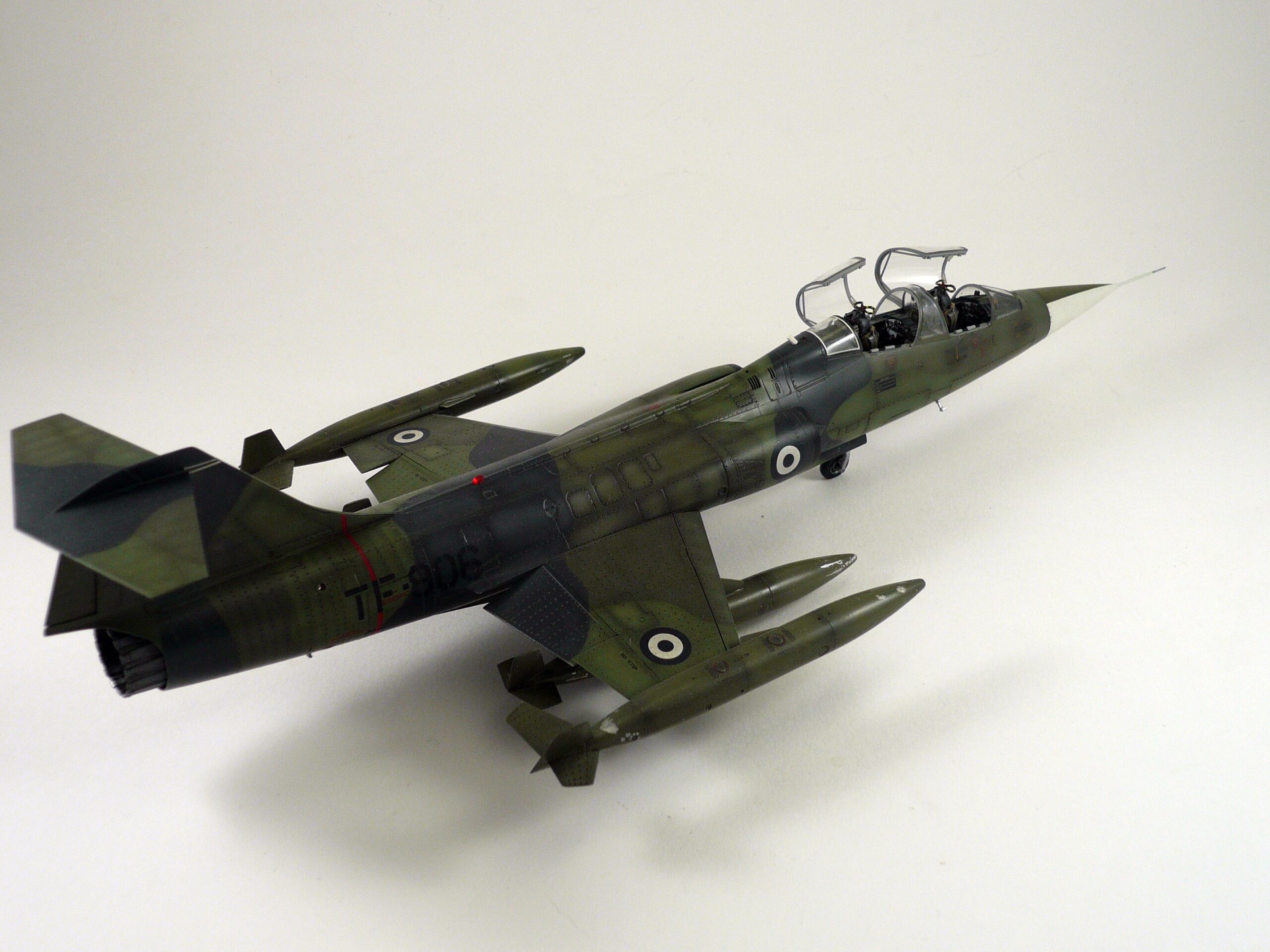
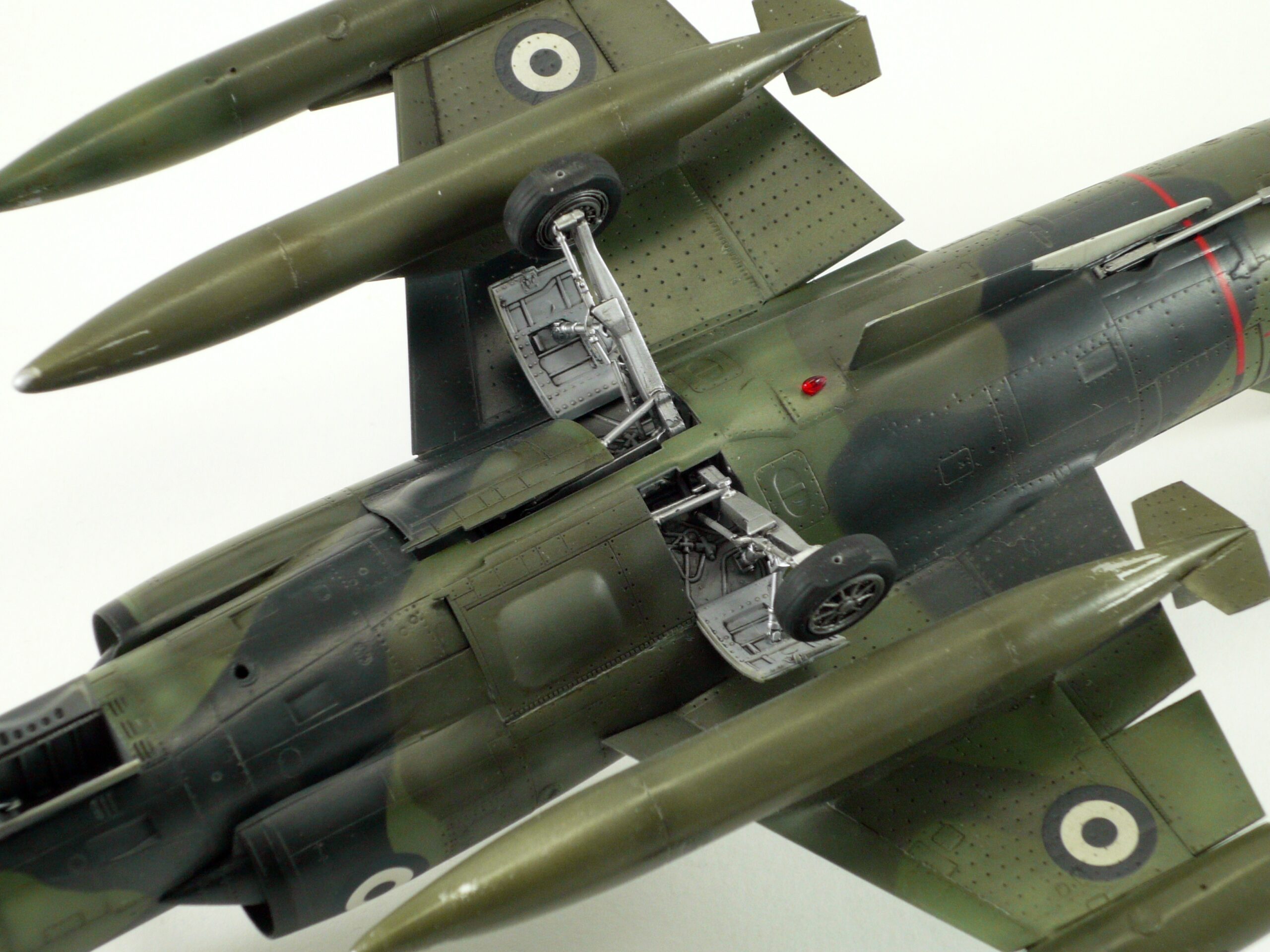
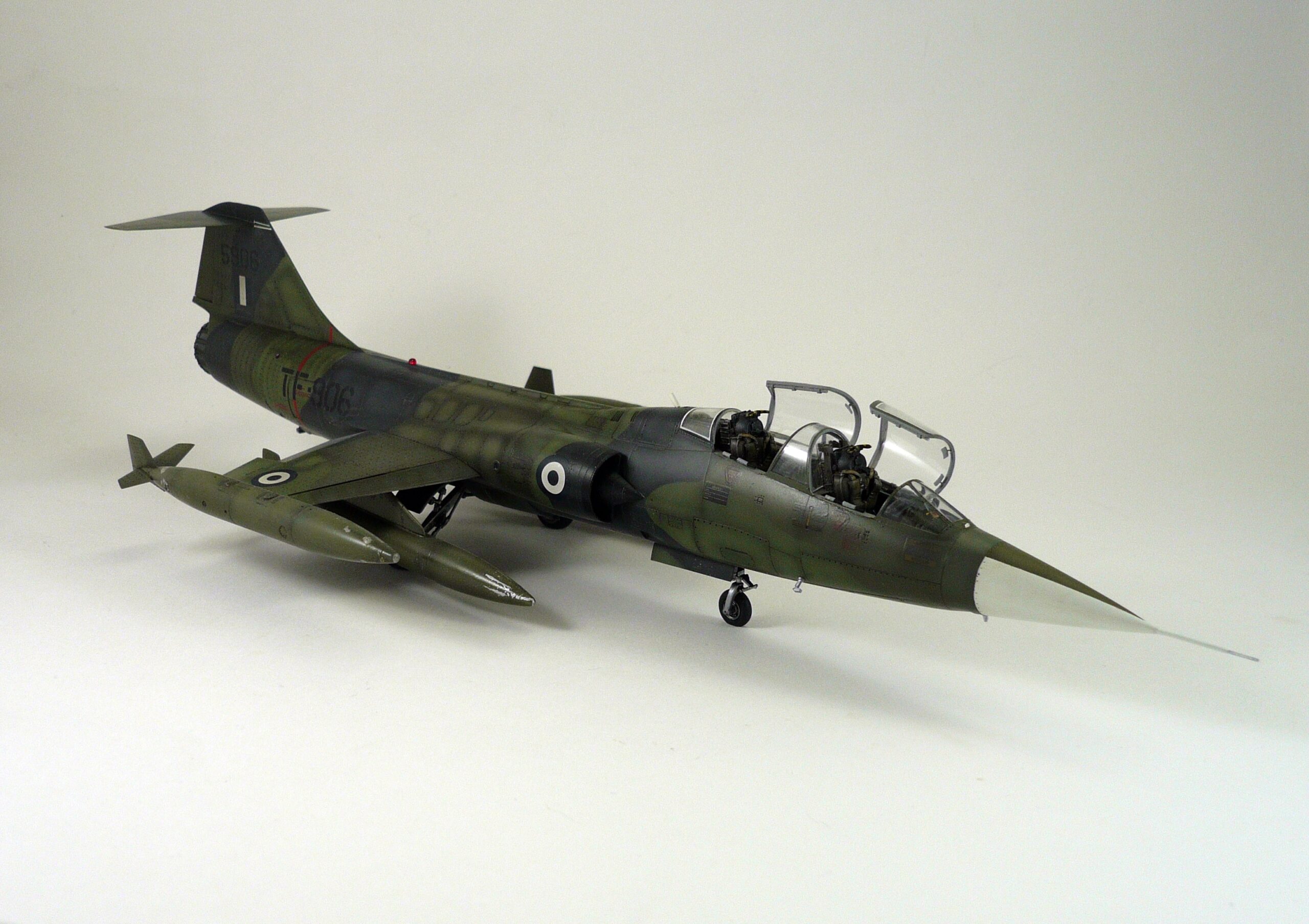
Special attention was given to the wing and underwing fuel tanks. These were first painted with Mr. Metal Color 218 Aluminum and gently buffed by hand to achieve a realistic metallic appearance. A layer of Ammo Chipping Fluid was then applied to create controlled paint wear and chipping effects. Final fading was added using Tamiya XF-60 Dark Yellow to simulate operational use and environmental exposure.
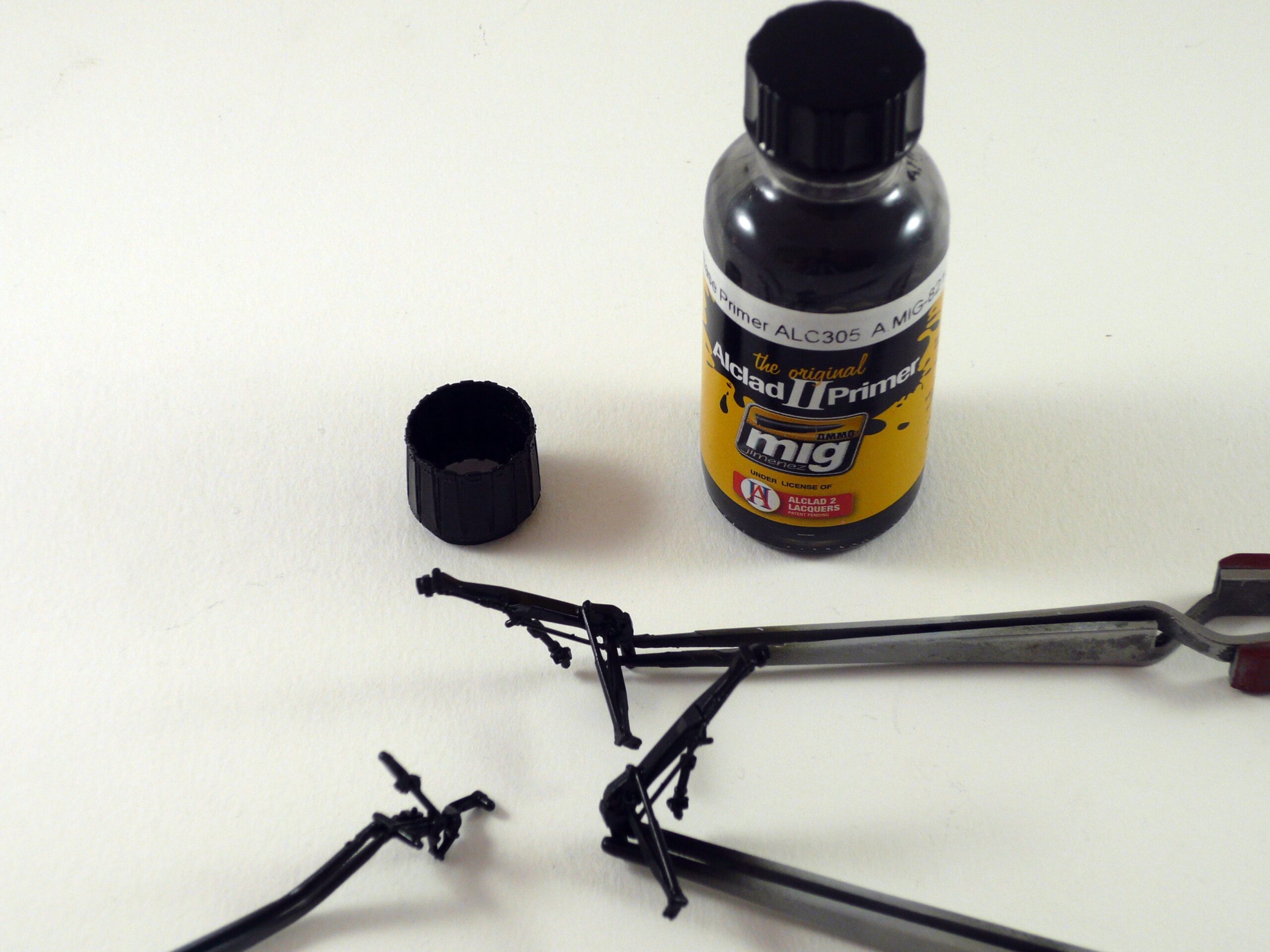
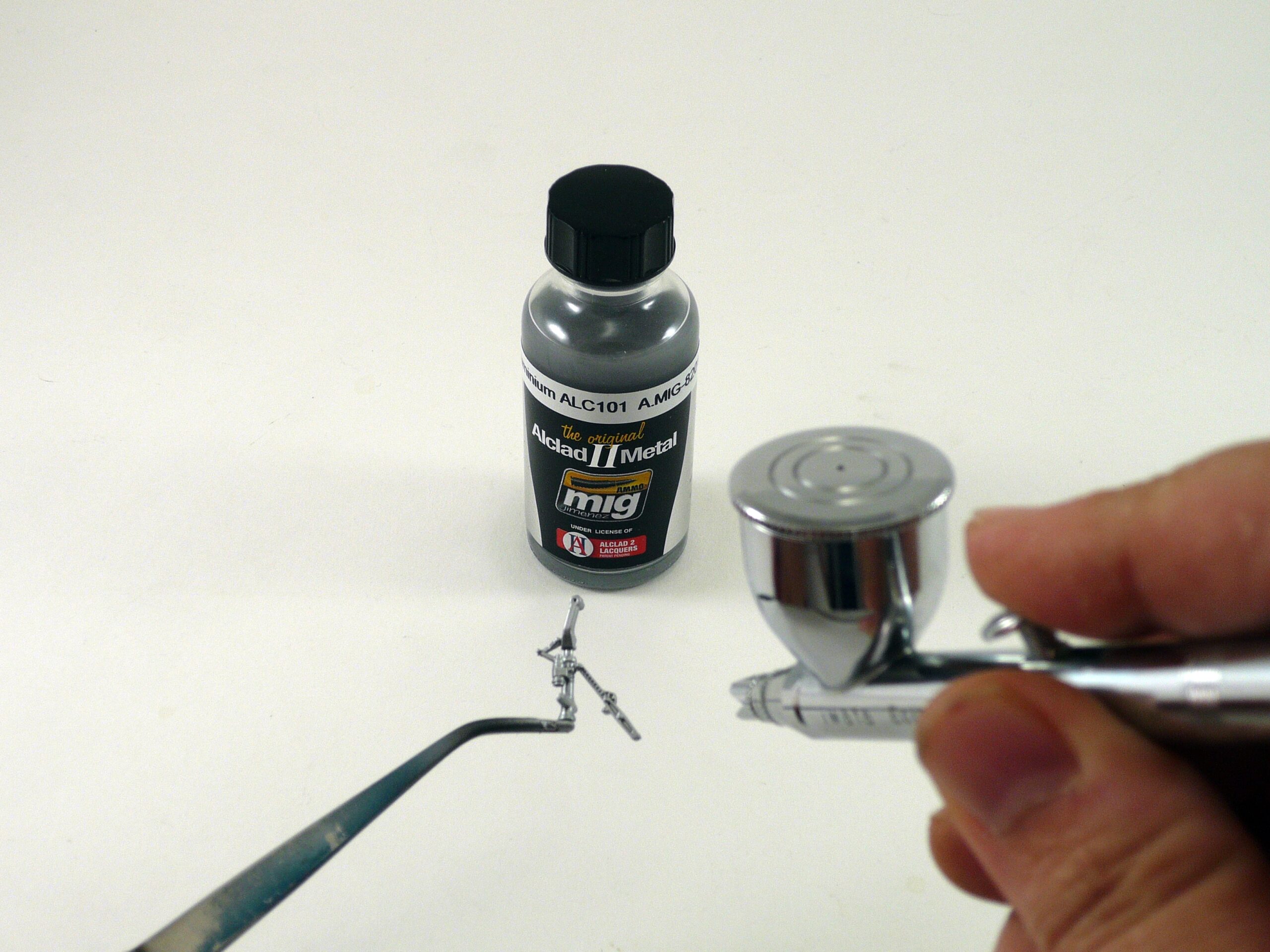
The landing gear and exhaust nozzle received separate treatment to maximize realism. Both components were initially painted with Black Base Primer from the Mig Ammo–Alclad collaboration and allowed to cure fully.
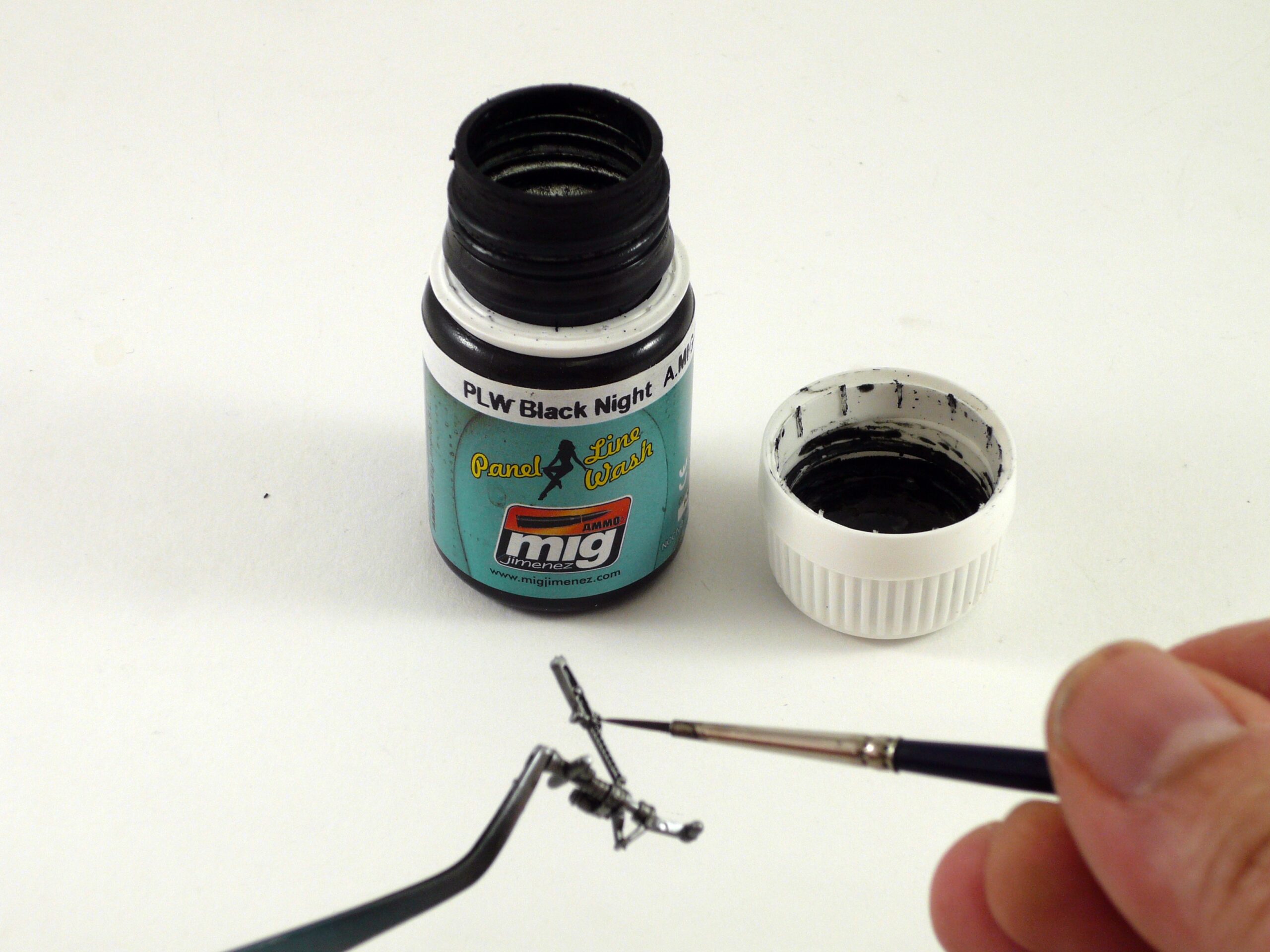
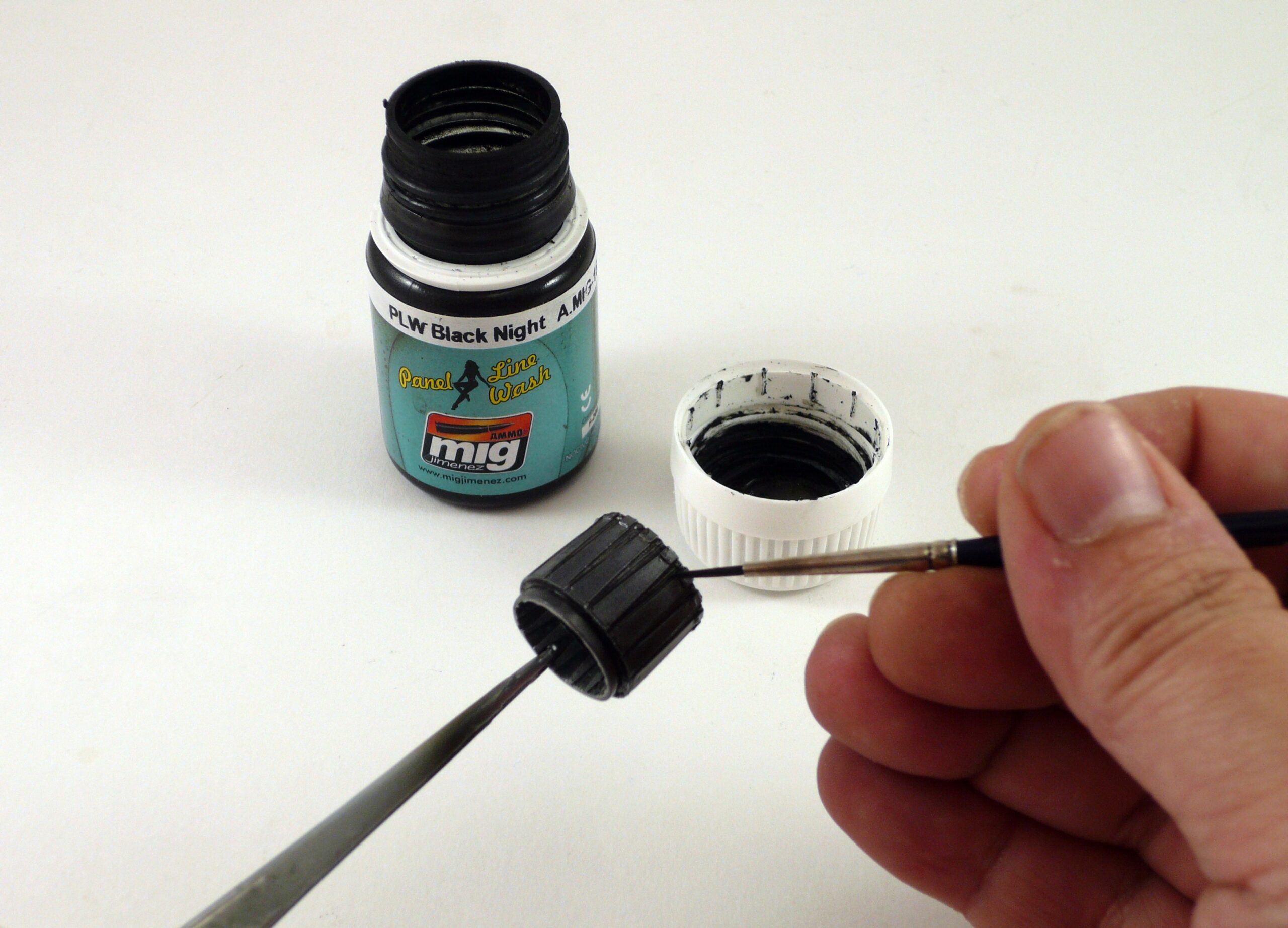
The landing gear was finished with Alclad Aluminum followed by Mig Ammo PLW Black Night wash to increase depth and highlight structural details.
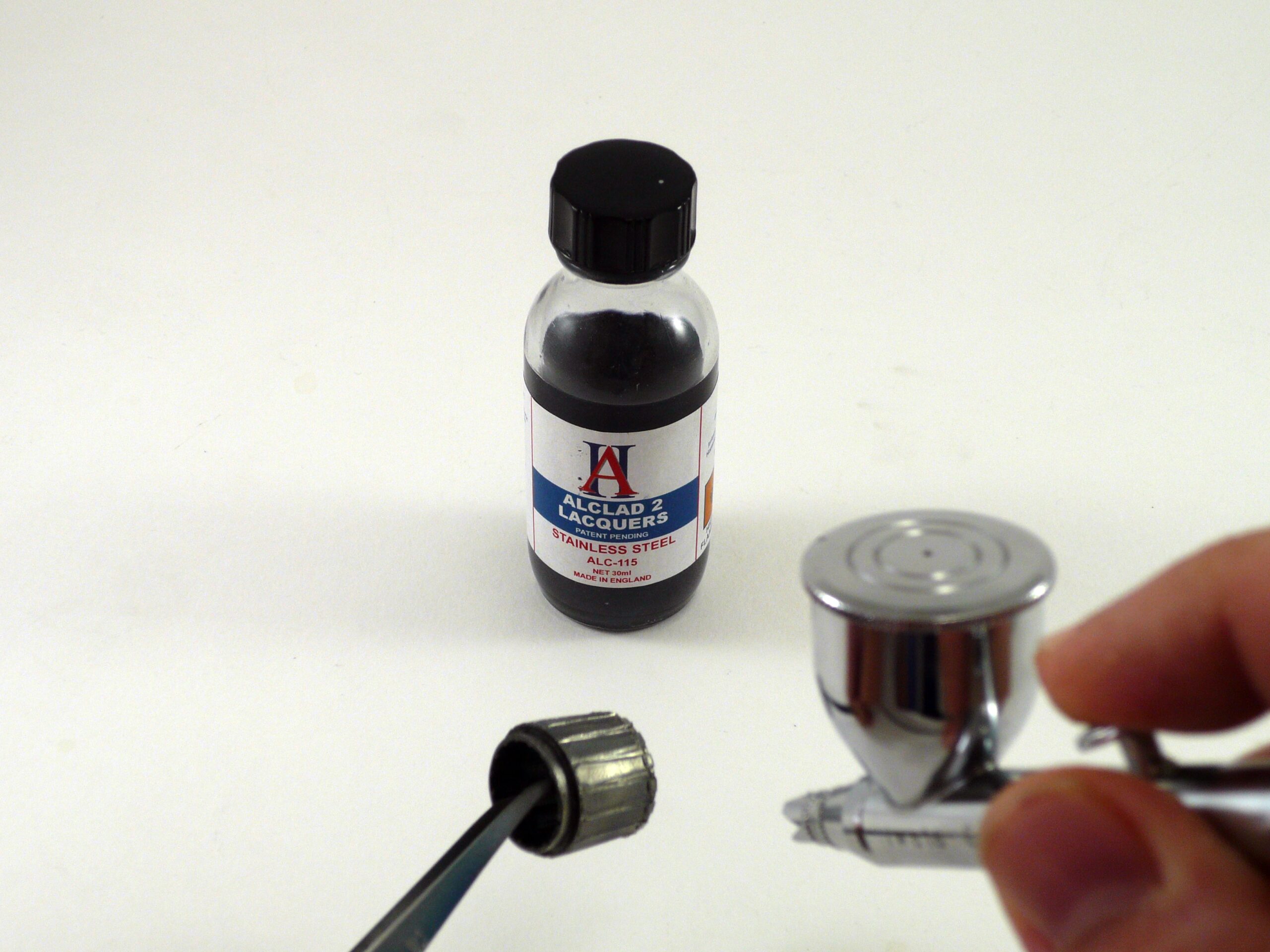
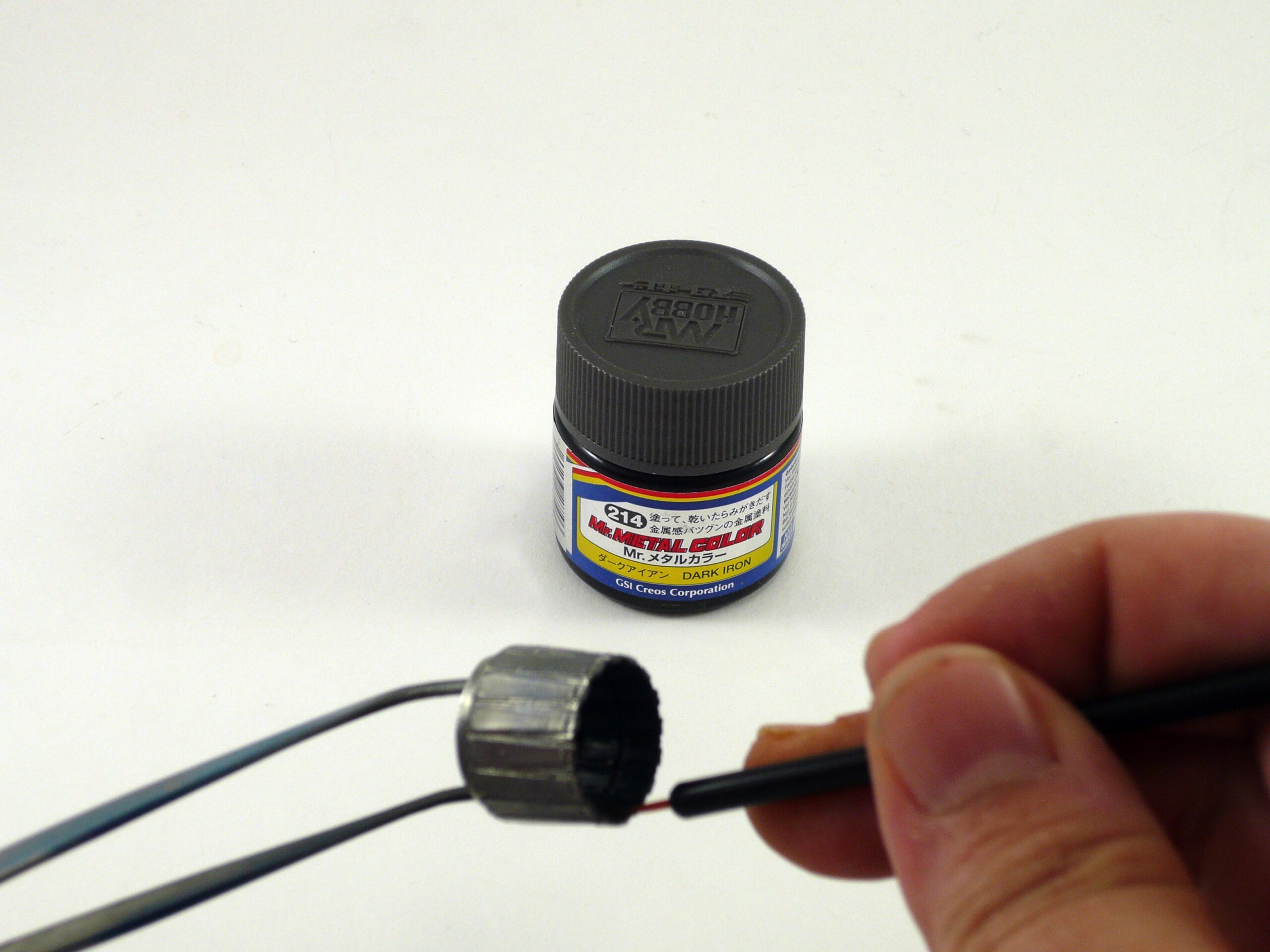
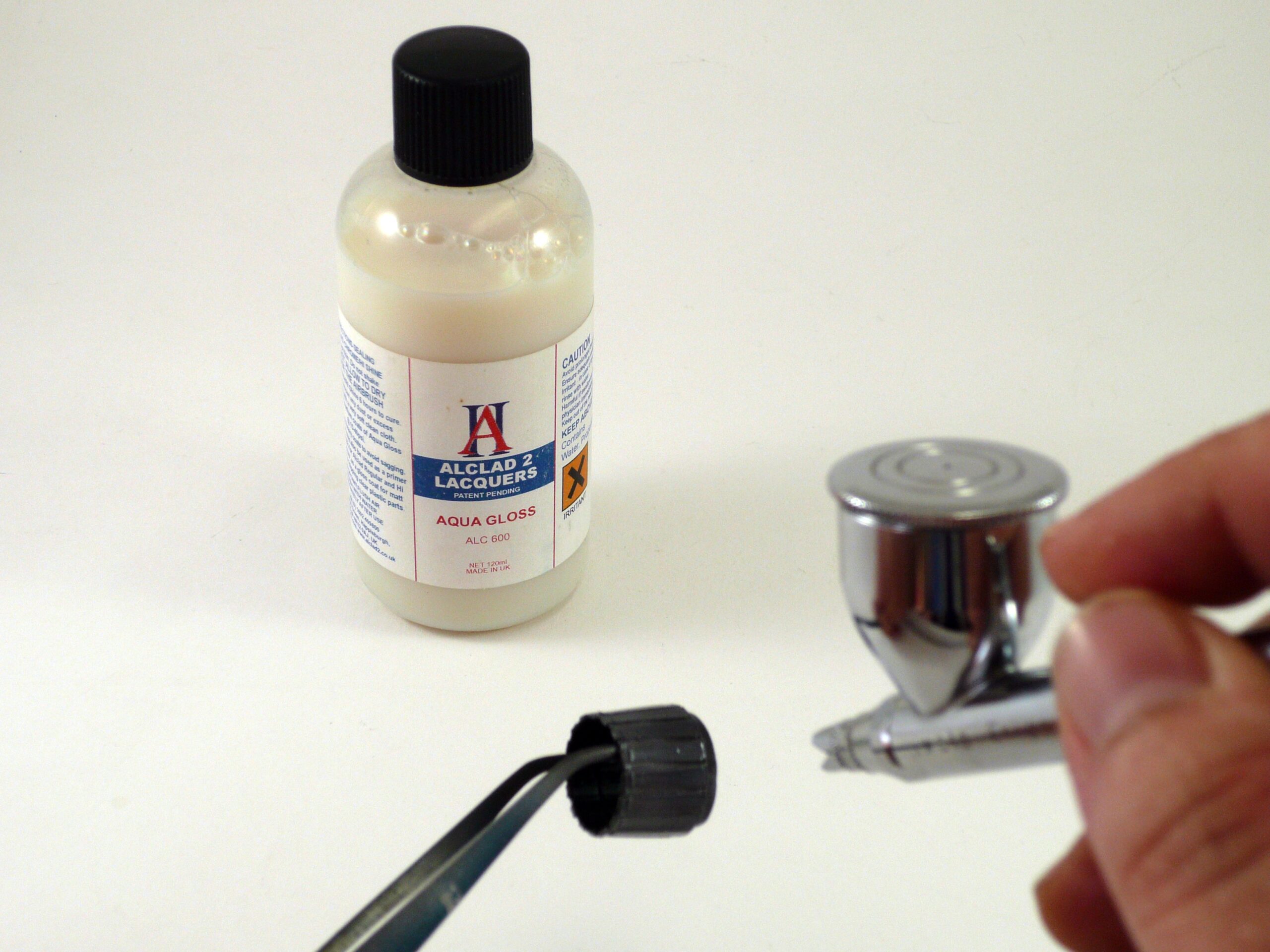
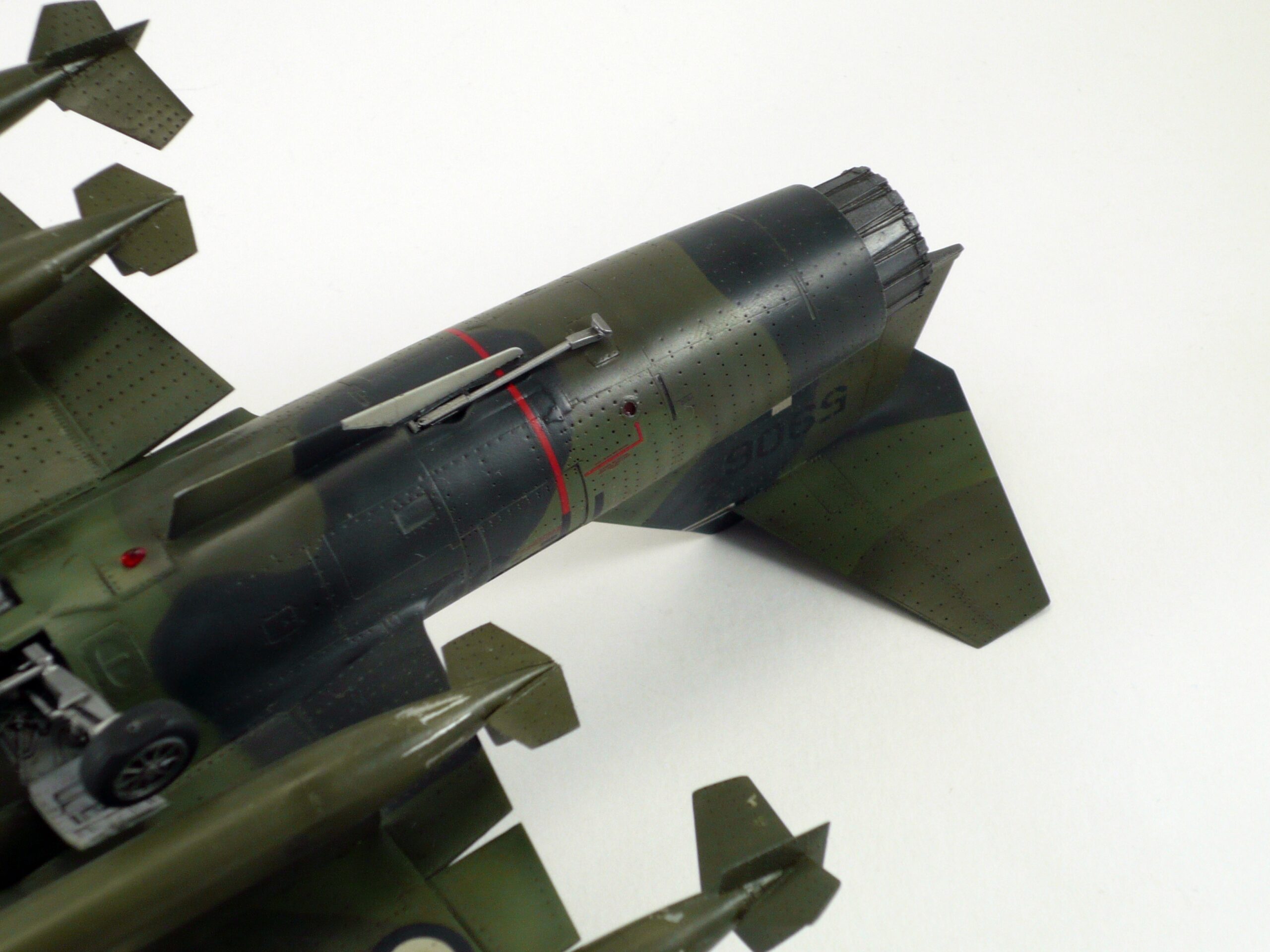
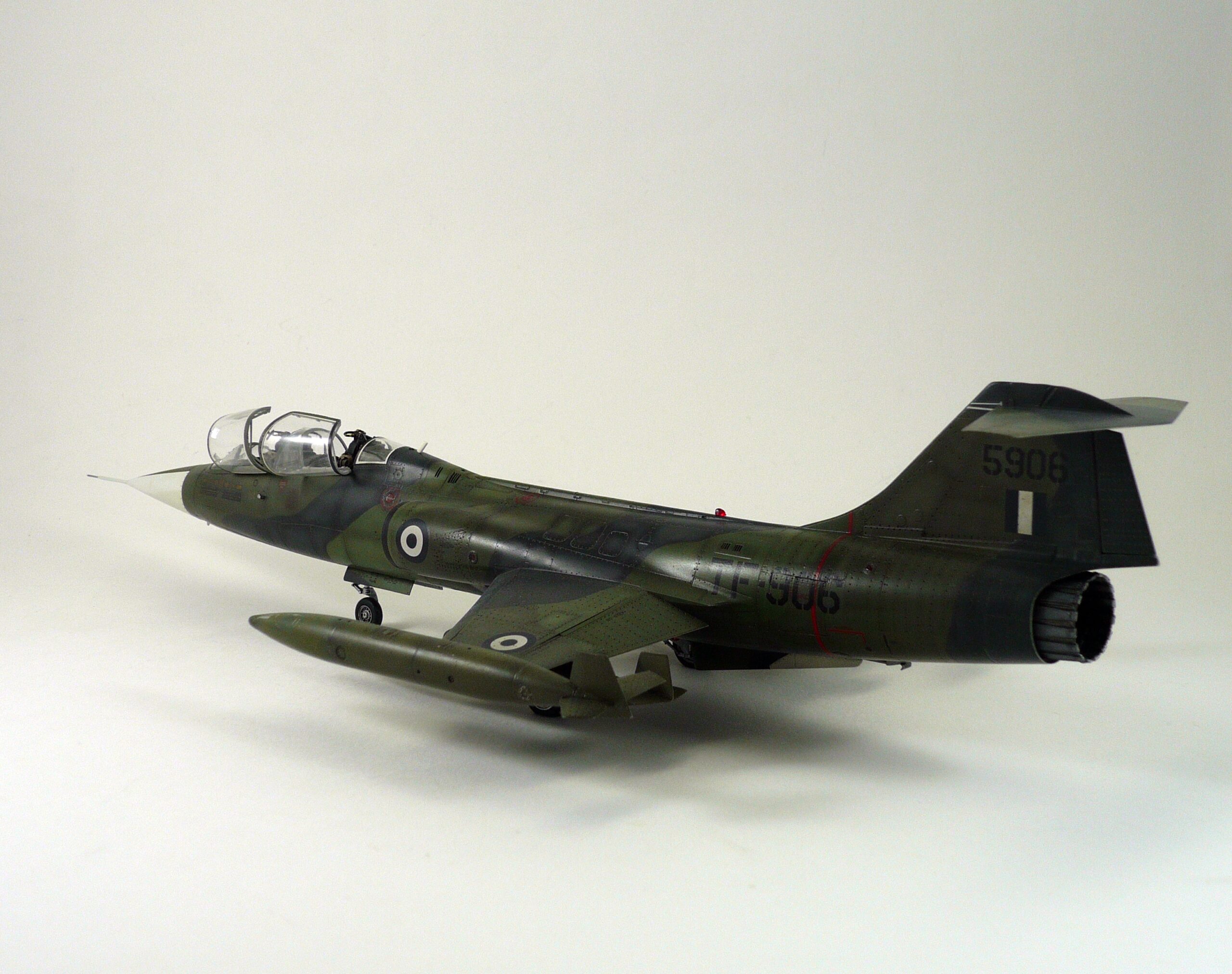
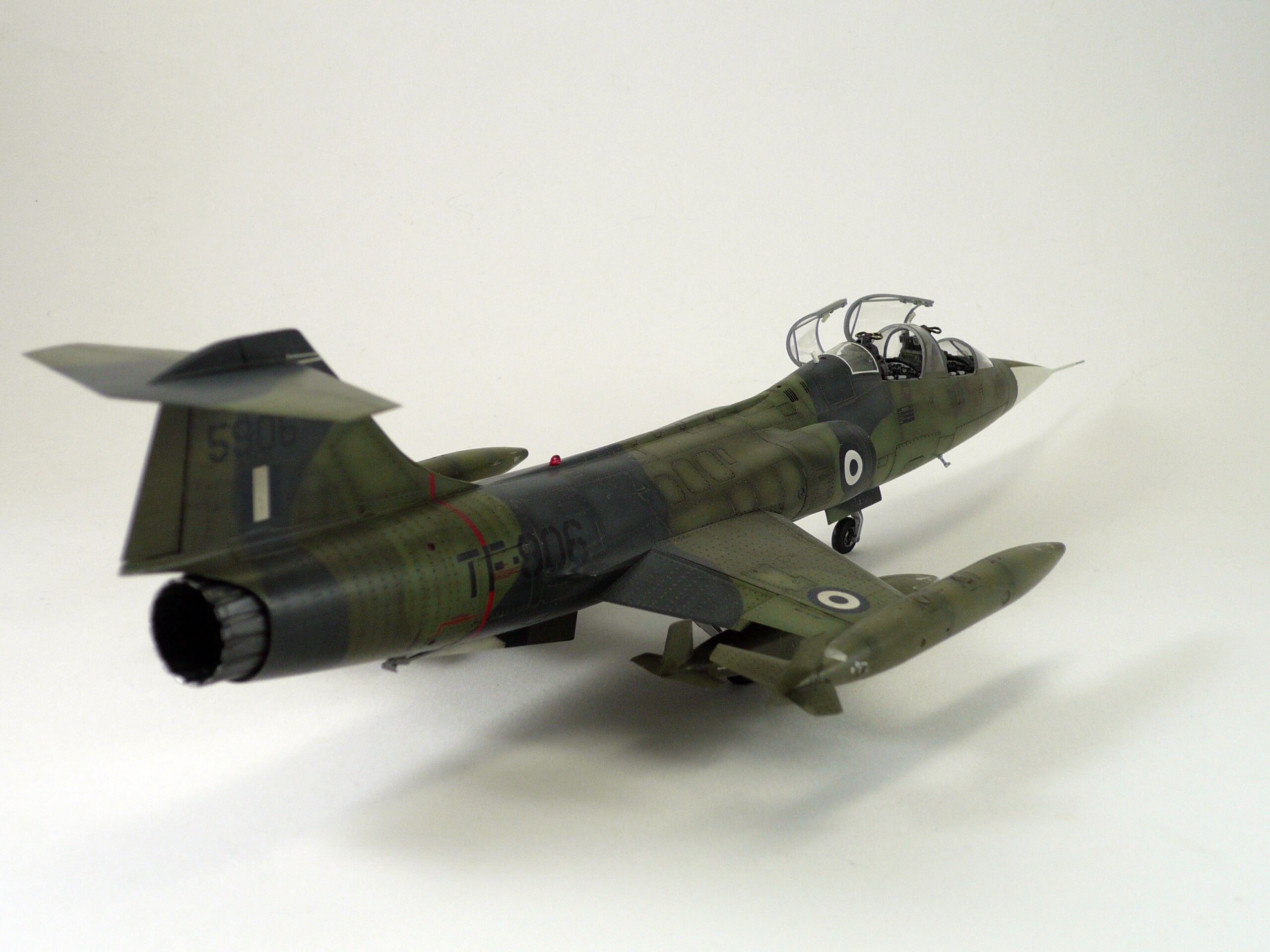
For the exhaust nozzle, Alclad Stainless Steel was used externally, while Mr. Metal Color 214 Dark Iron was applied internally. After curing, the nozzle was sealed with Alclad Aqua Gloss and enhanced with PLW Black Night wash before receiving its final satin finish.
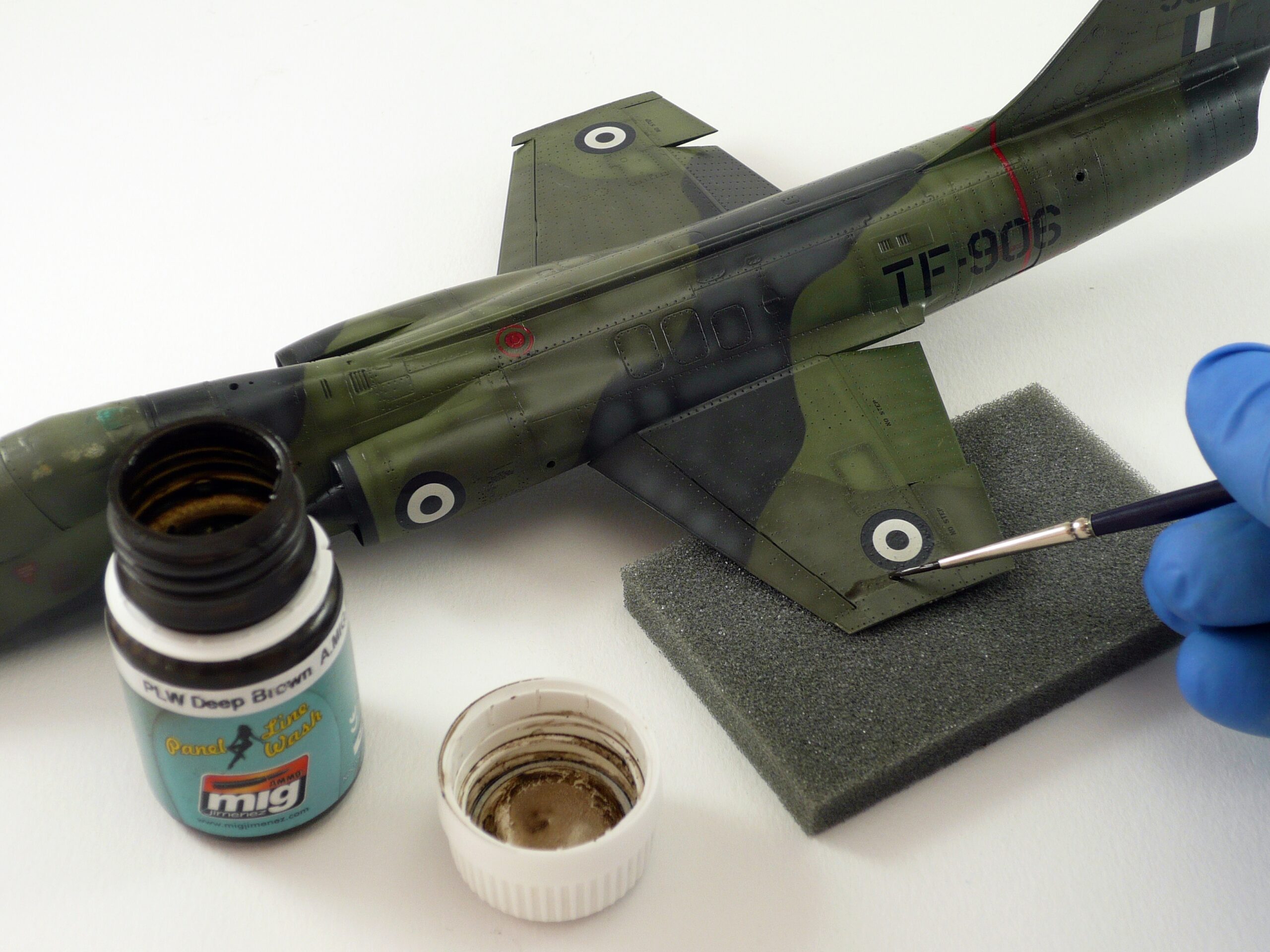
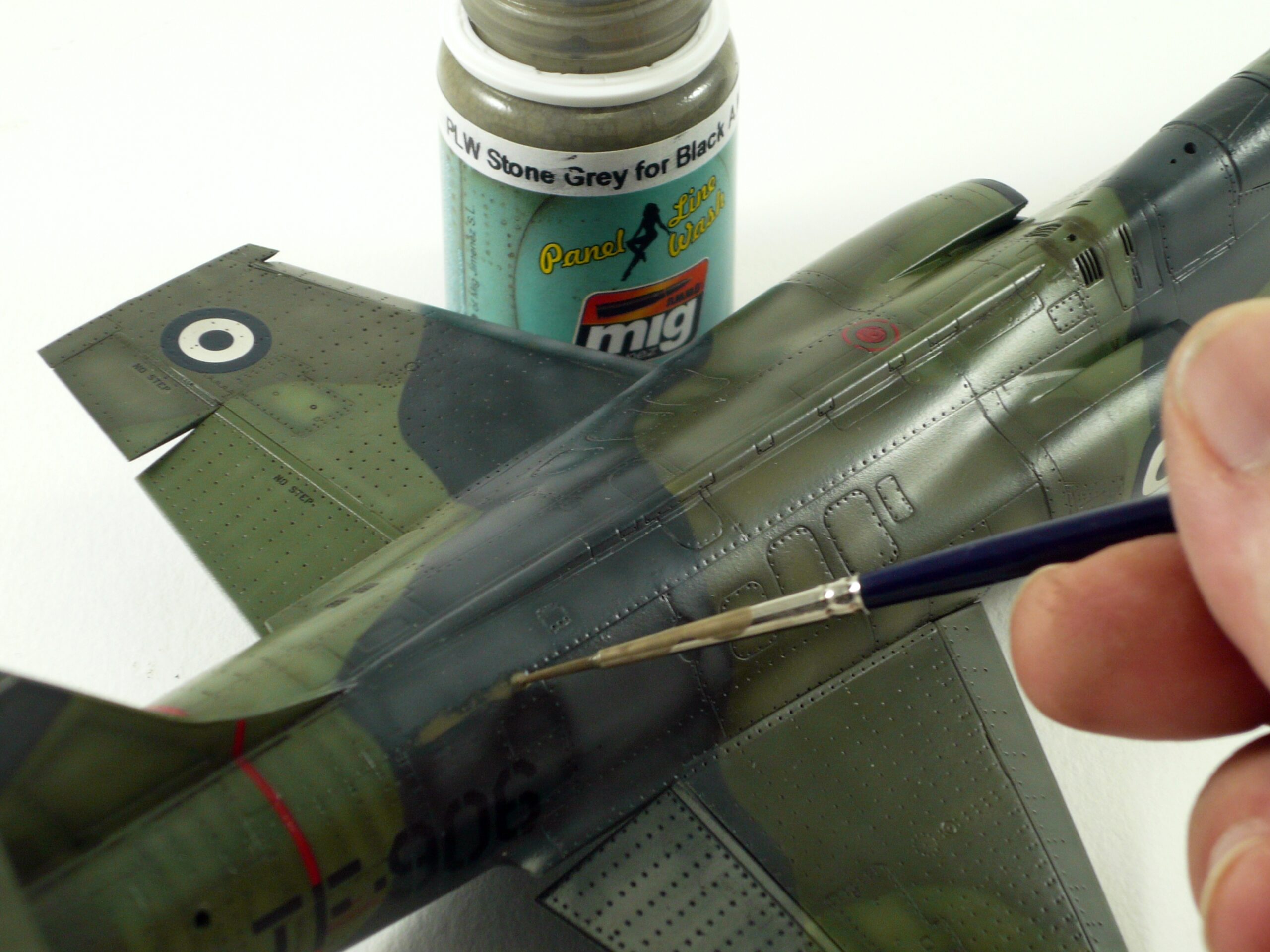
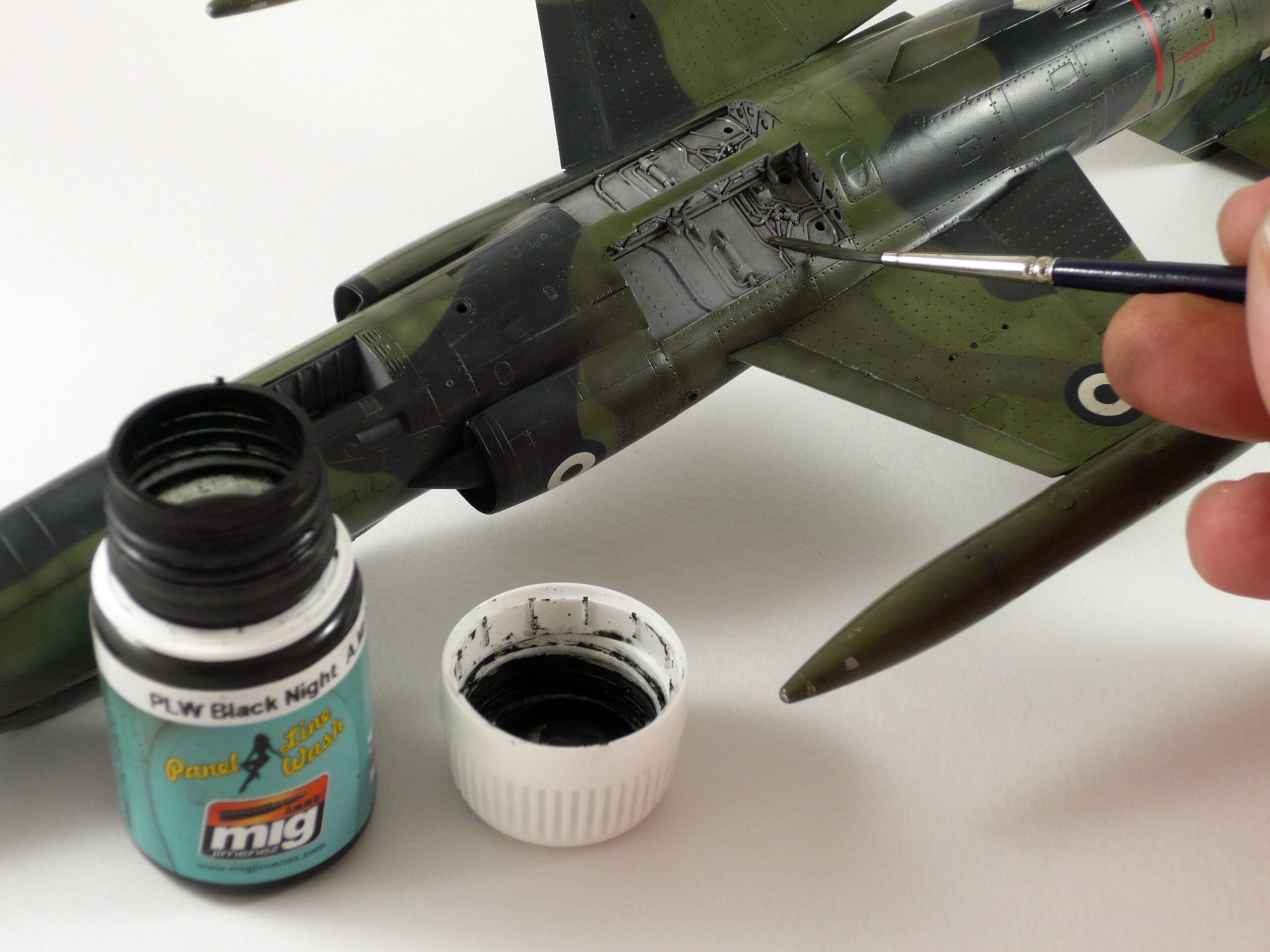
Weathering across the aircraft was intentionally kept controlled and realistic. Ammo PLW Deep Brown wash was applied to the green camouflage areas to emphasize panel lines and structural detail. For the darker sections, Ammo PLW Stone Gray for Black was used to maintain proper contrast without overpowering the finish.
The wheel wells were also weathered using PLW Black Night wash to bring out internal detail and create additional depth.
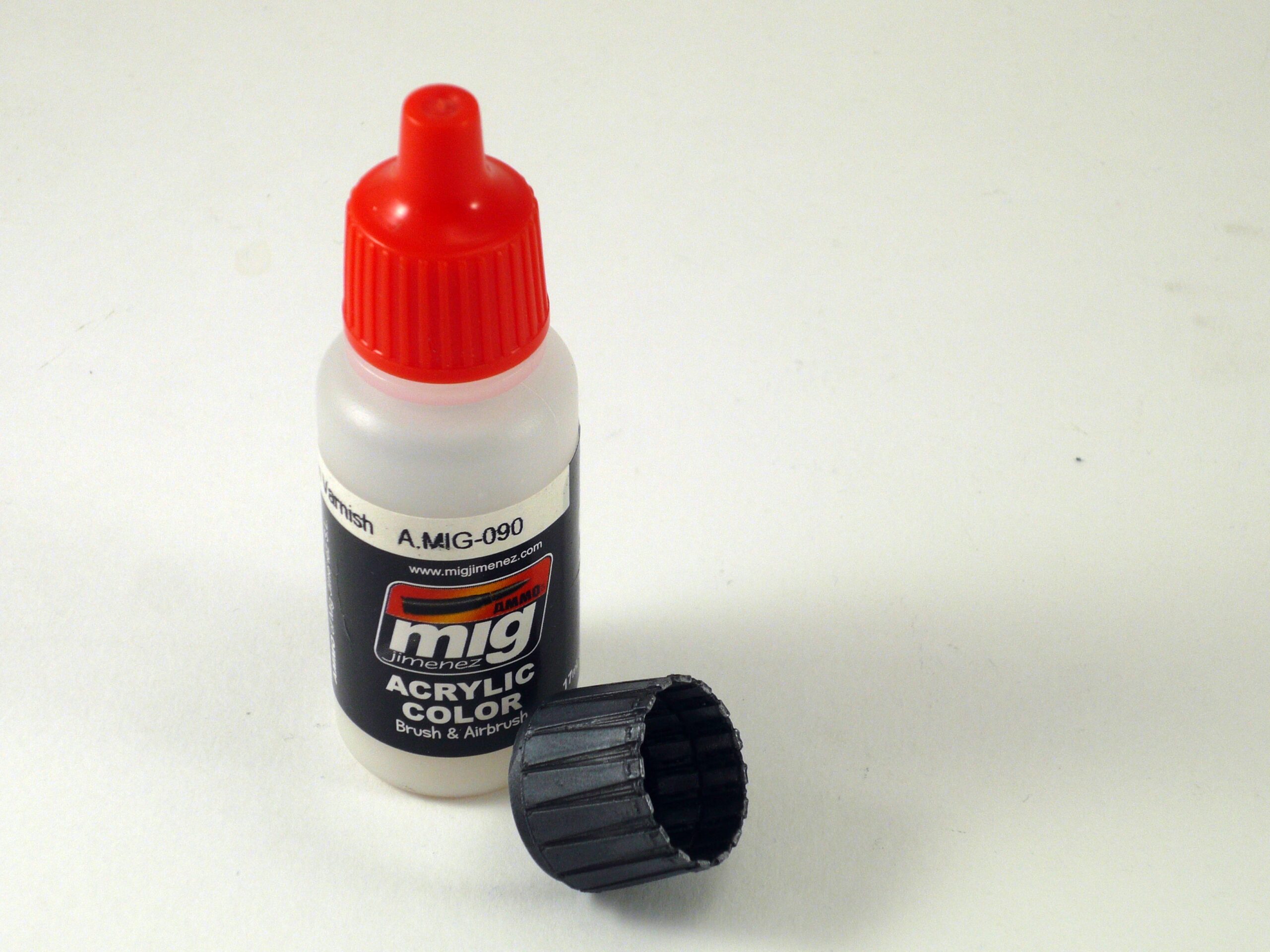
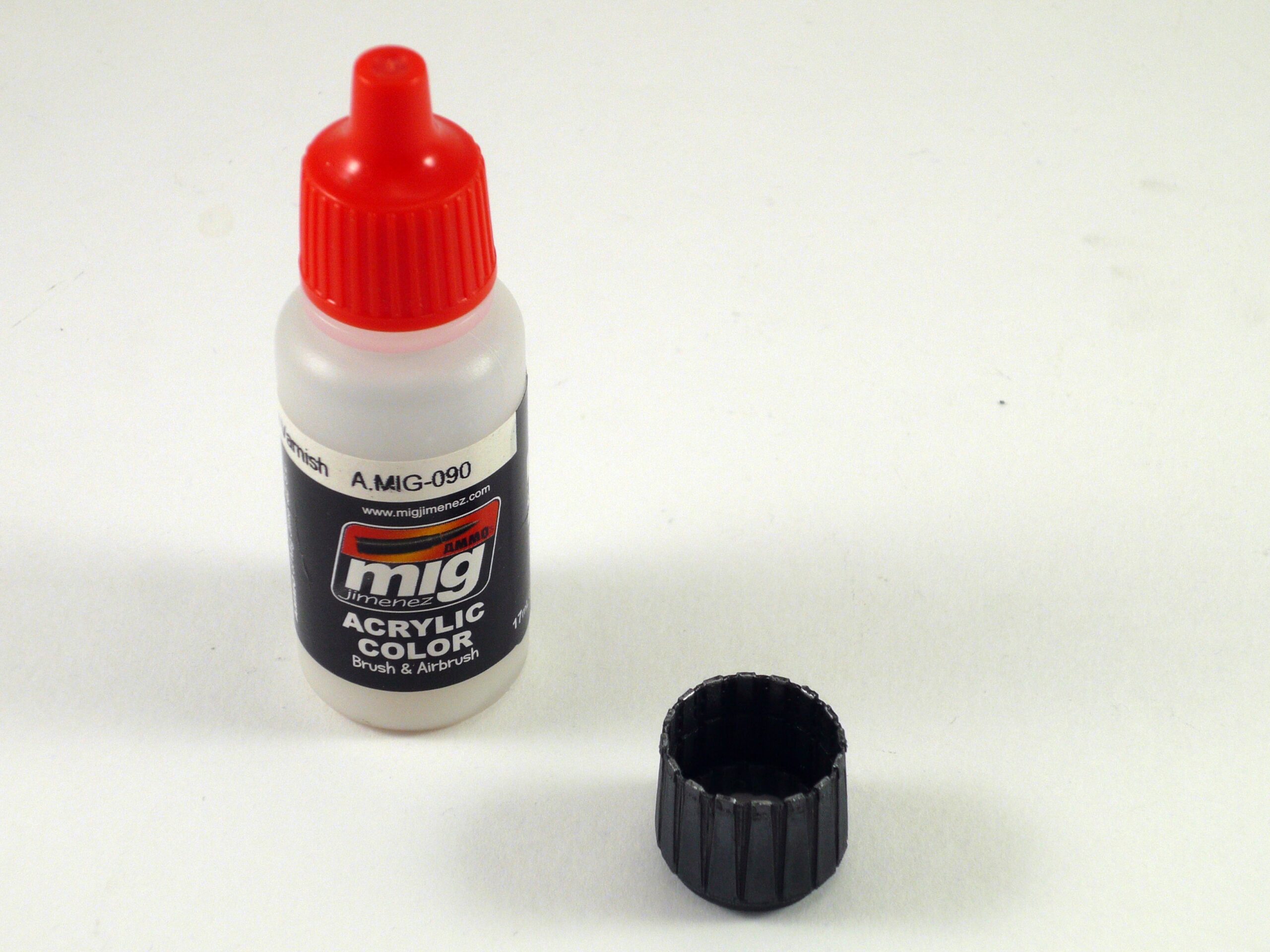
The final protective coat consisted of Ammo Matt Varnish diluted 50/50 with Ammo acrylic thinner. Adequate drying time ensured the finish remained durable and uniform.
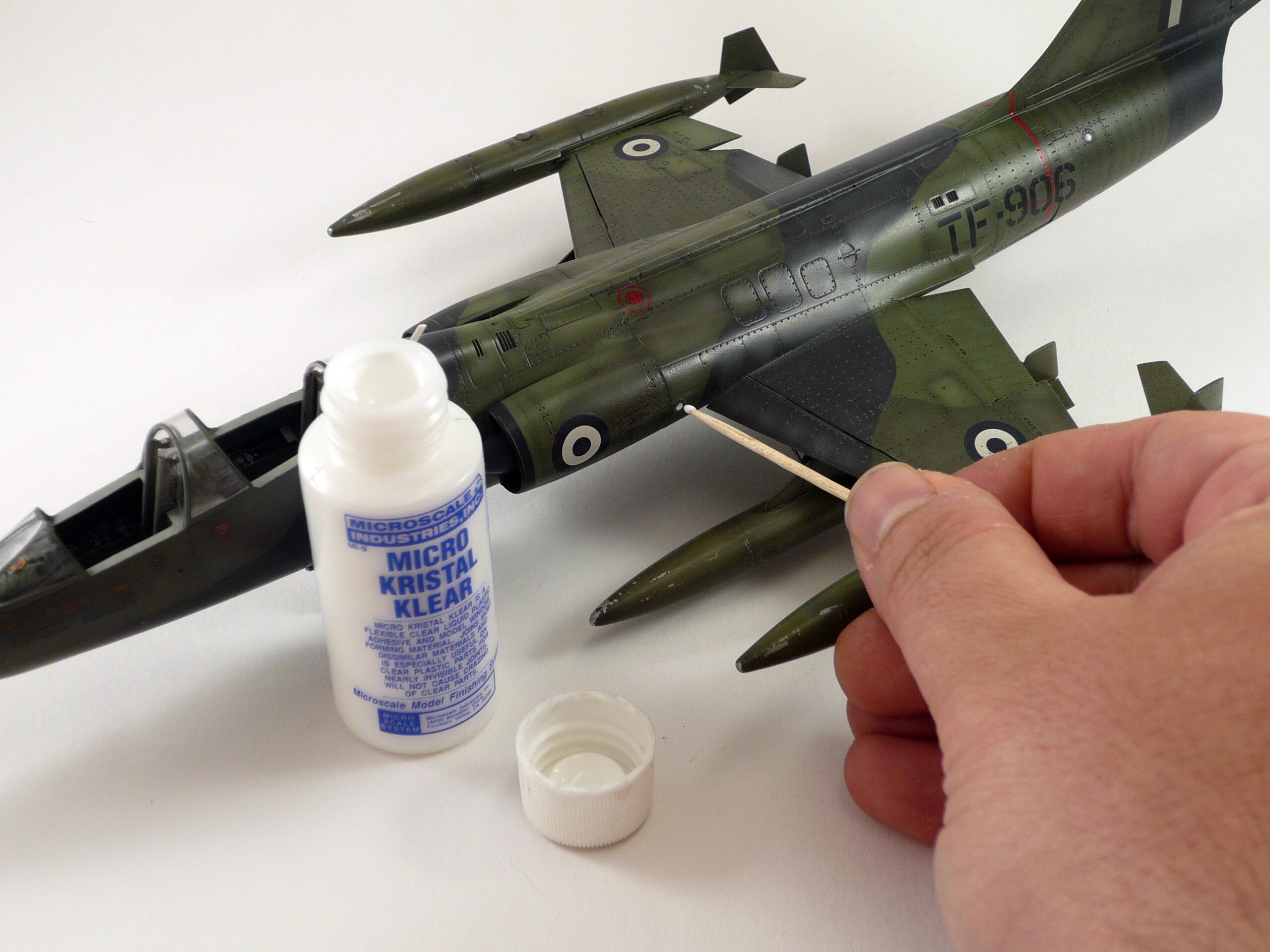
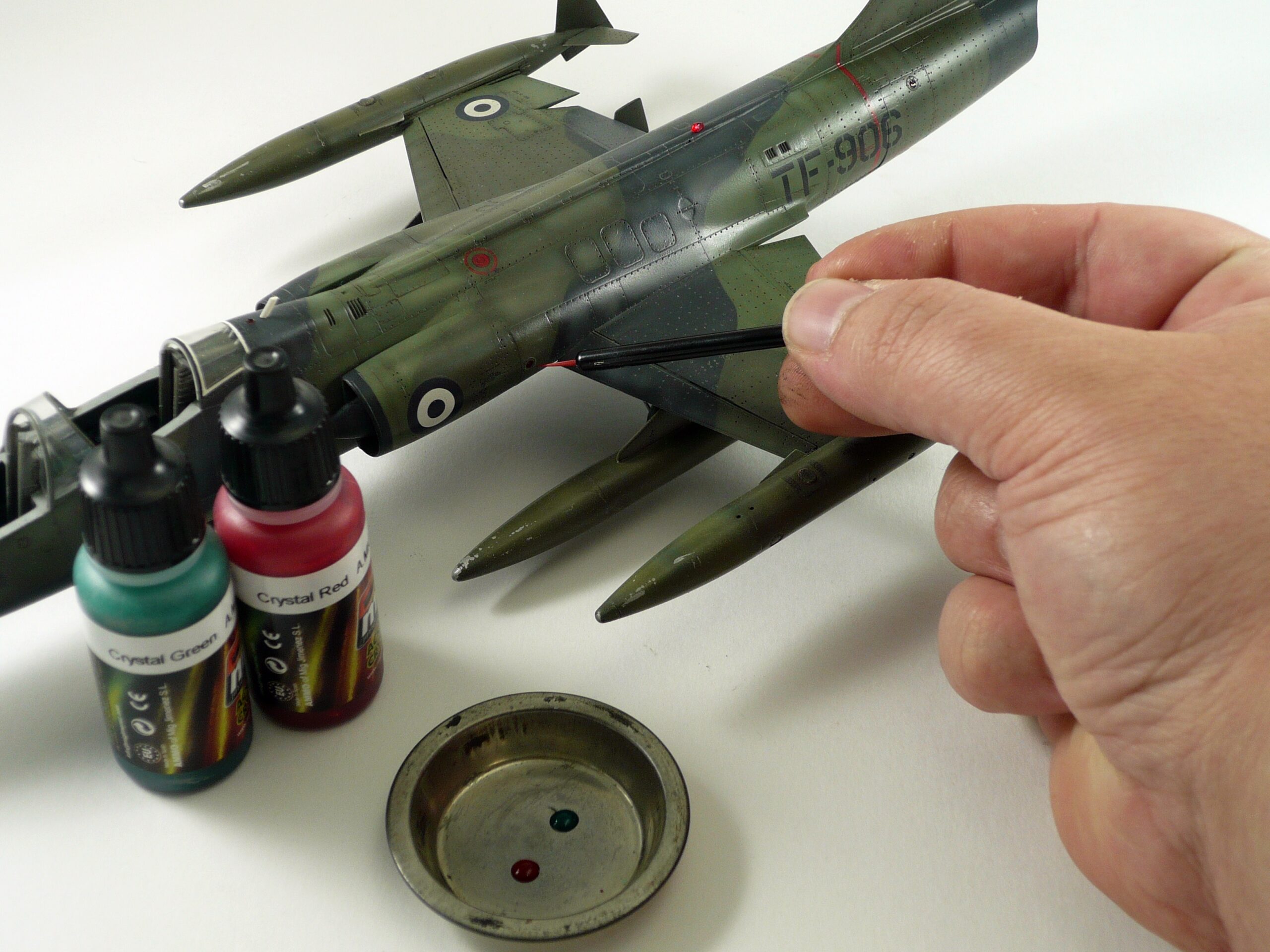
Navigation lights were recreated by filling pre-opened positions with Microscale Crystal Klear to simulate transparent lenses. Once cured, transparent crystal green and red paints were applied to reproduce the characteristic appearance of aircraft navigation lights.
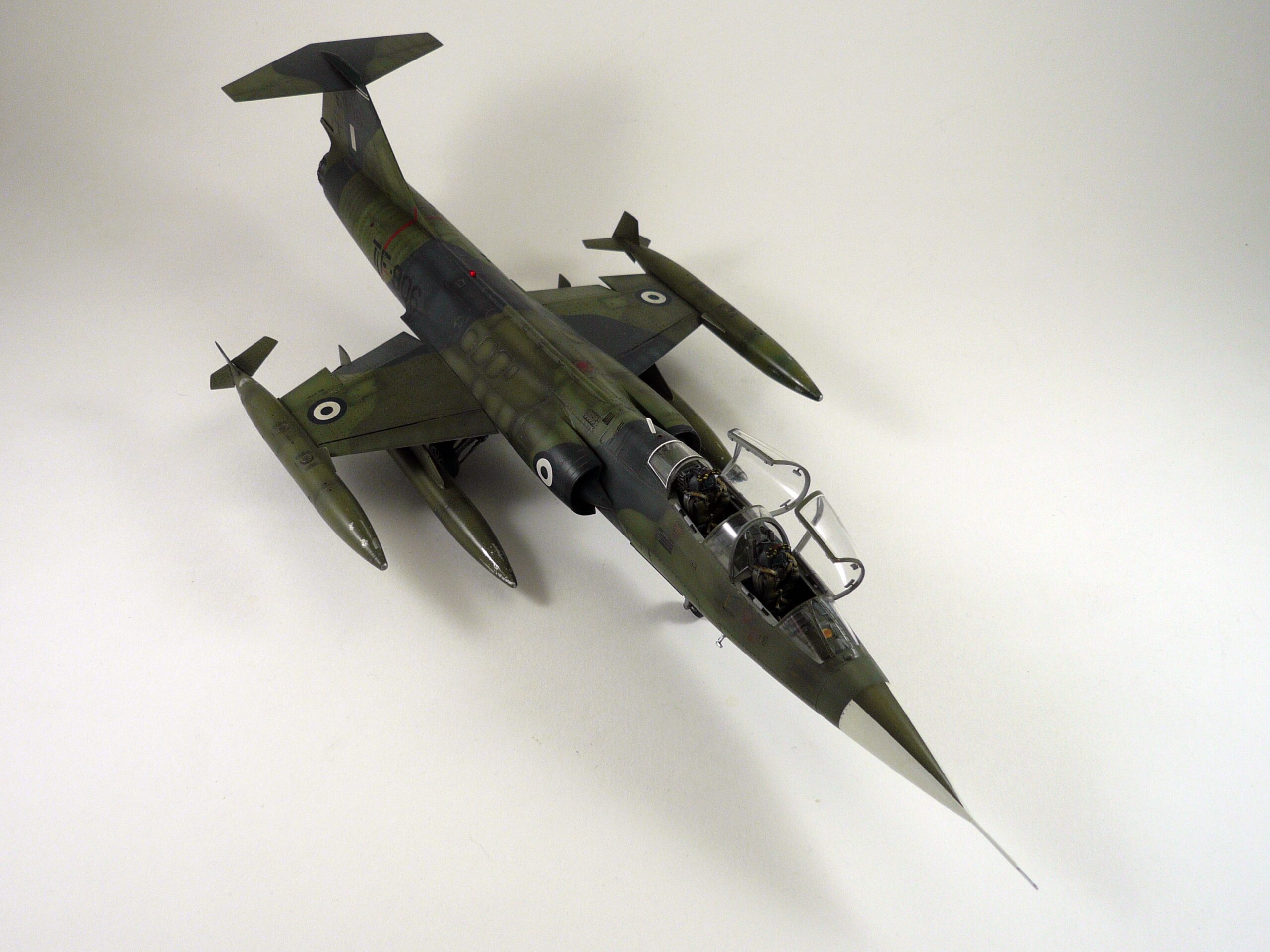
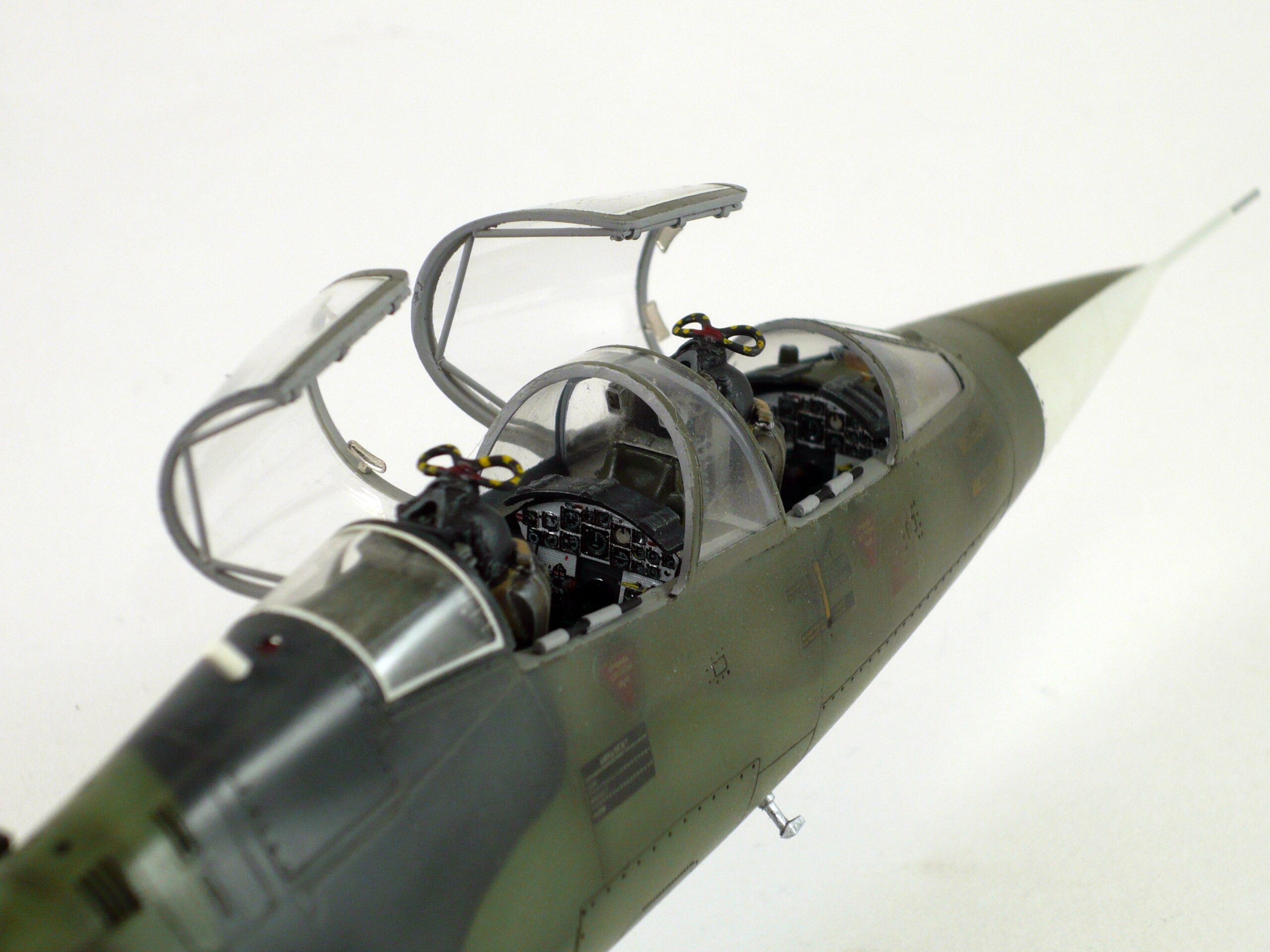
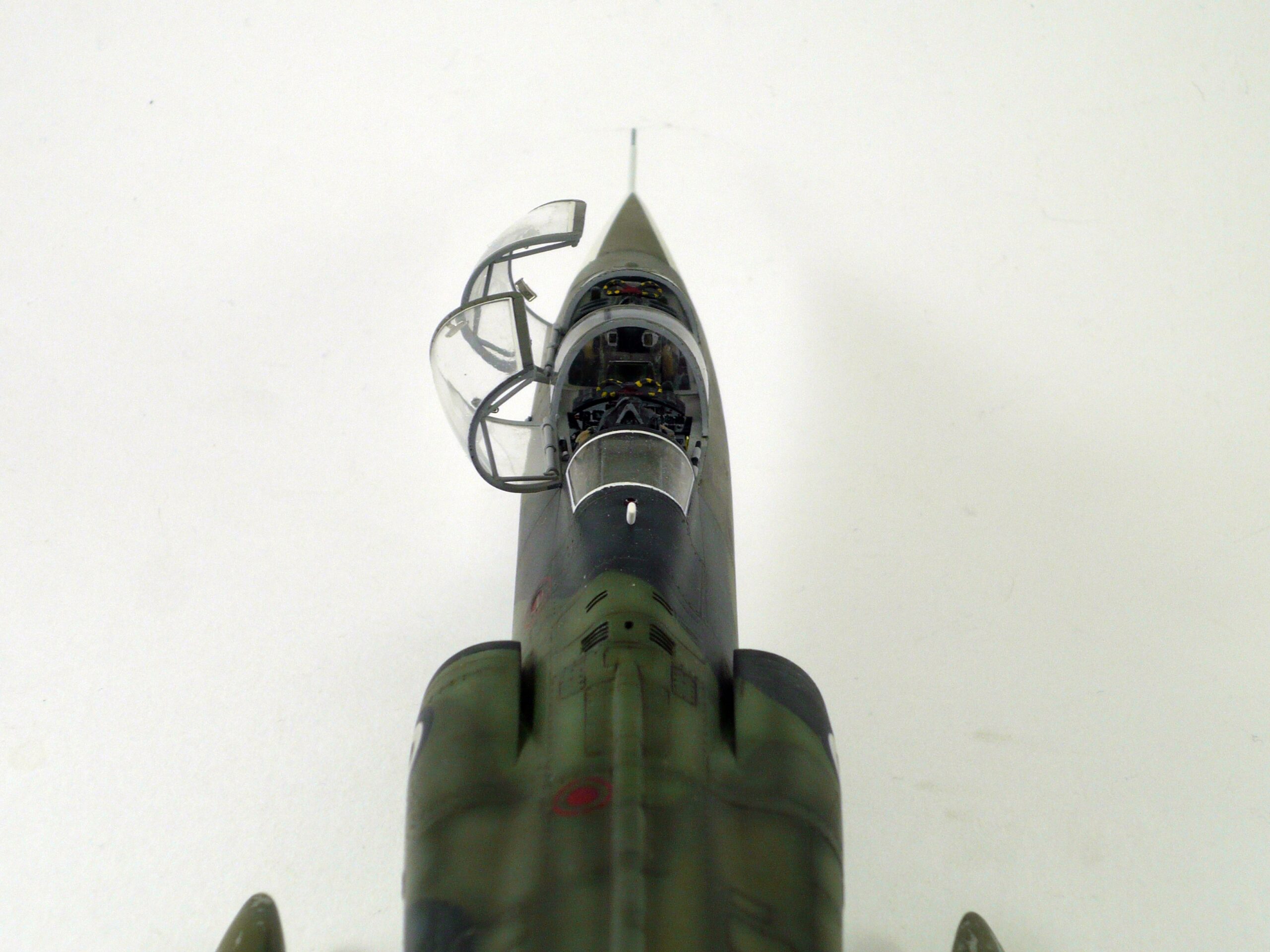
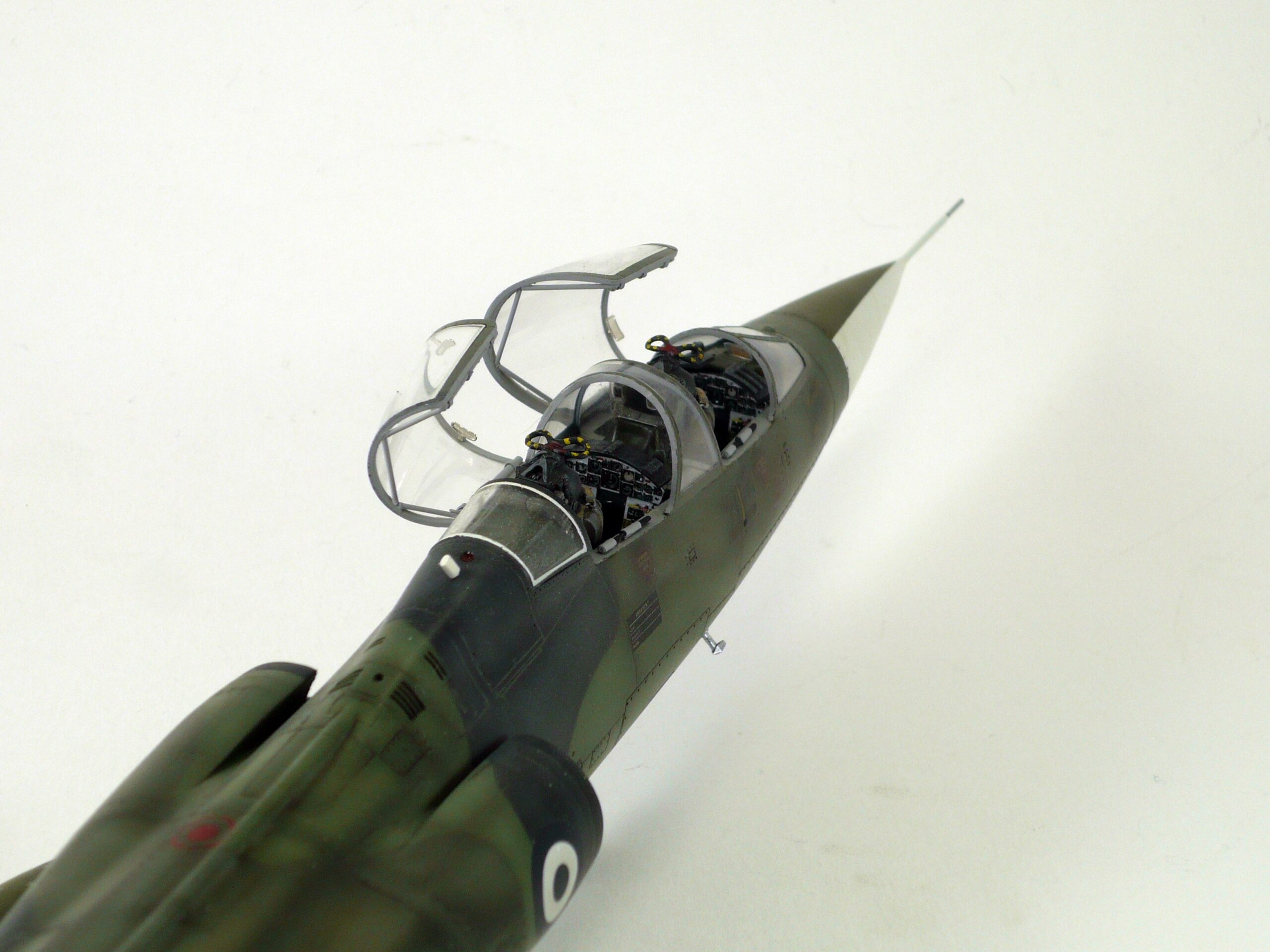
As a final upgrade, the canopy interior structure was scratch-built using Evergreen plastic rods and LED tape. Since the Hasegawa kit provides almost no canopy interior detail, this small modification significantly improved the final appearance of the model. Apart from the typical absence of weapons often seen in Hasegawa releases, the kit offers an excellent foundation for an accurate TF-104G Starfighter build.
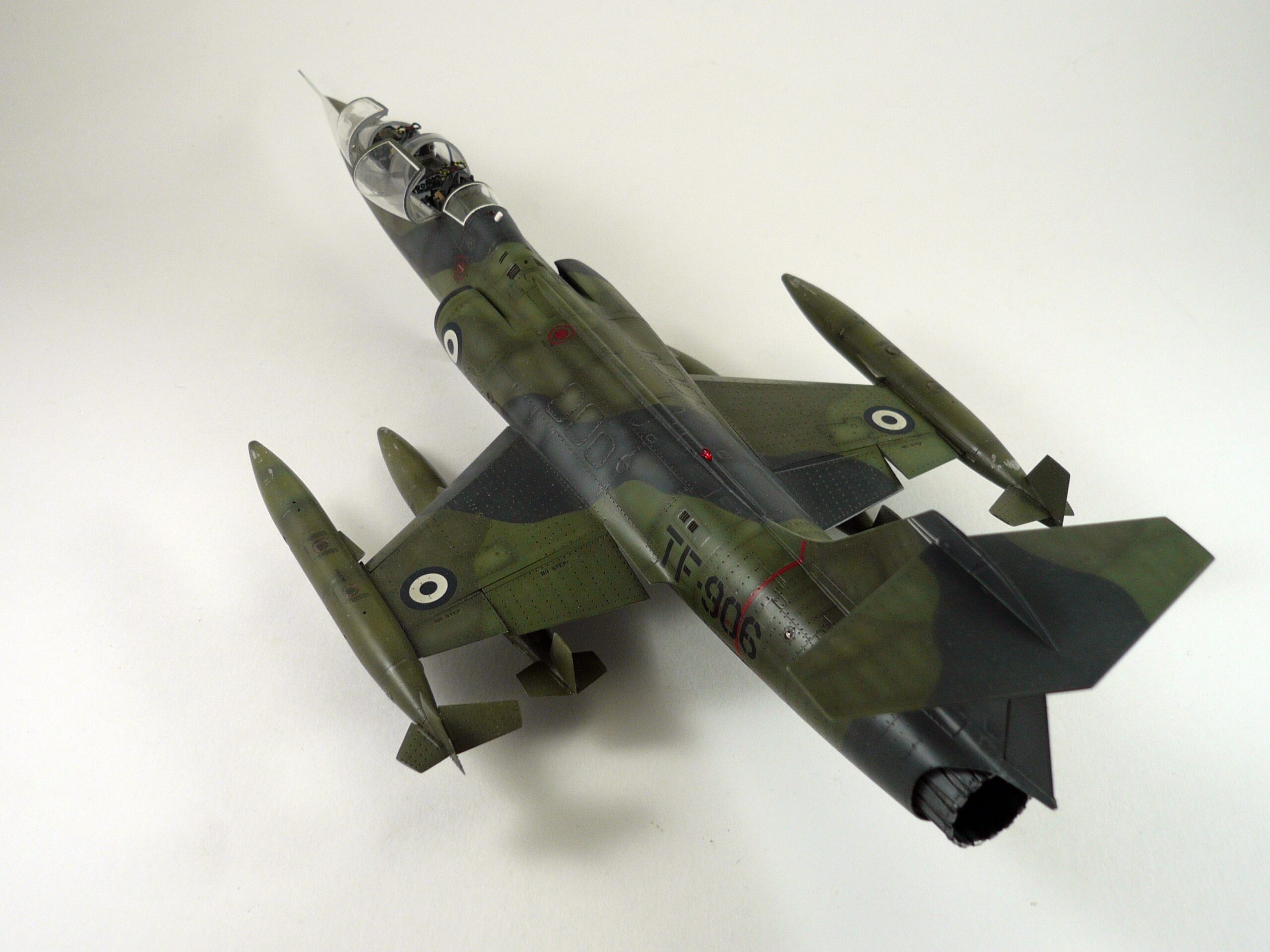
The completed model captures the unique appearance of the European I camouflage scheme while combining subtle weathering, metallic variation and extra detailing to produce a realistic operational finish.