article
U.S. Night Fighter Camouflage, 1943–1945: Colors, ANA 622 and Aircraft History
During World War II, the United States Army Air Forces (USAAF) faced a demanding challenge: developing aircraft capable of detecting and intercepting enemy aircraft at night while remaining difficult to see themselves. Radar, airborne interception equipment and ground-controlled interception were essential to this mission, but visual concealment also remained an important consideration.
Between 1943 and 1945, American night fighter camouflage evolved through technical trials, operational experience and changes in aircraft finishing policies. The resulting approach was more complex than simply painting an aircraft black. Researchers had to consider background contrast, reflected light, surface gloss, paint durability, production requirements and the practical difficulties of maintaining camouflage in wartime service.
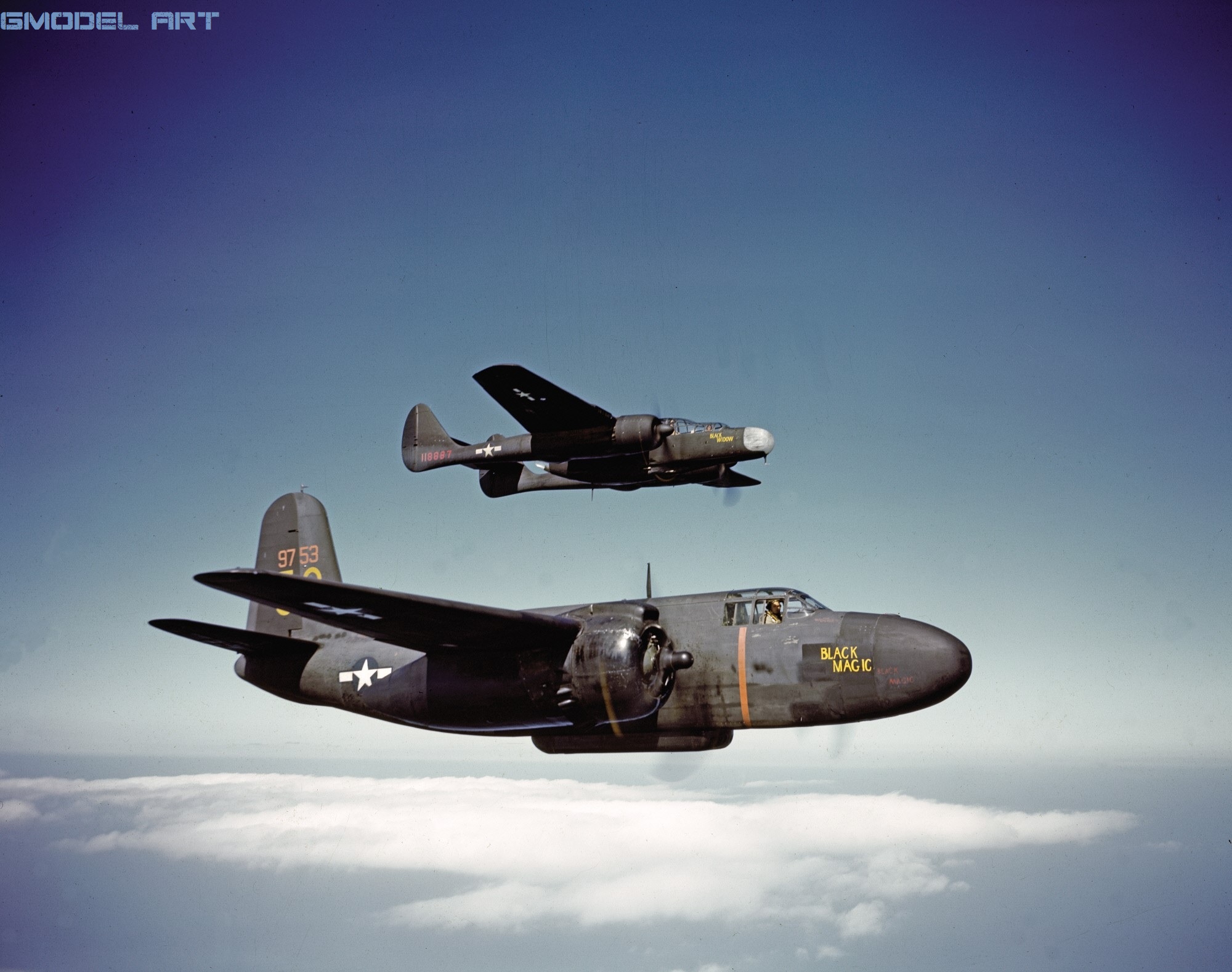
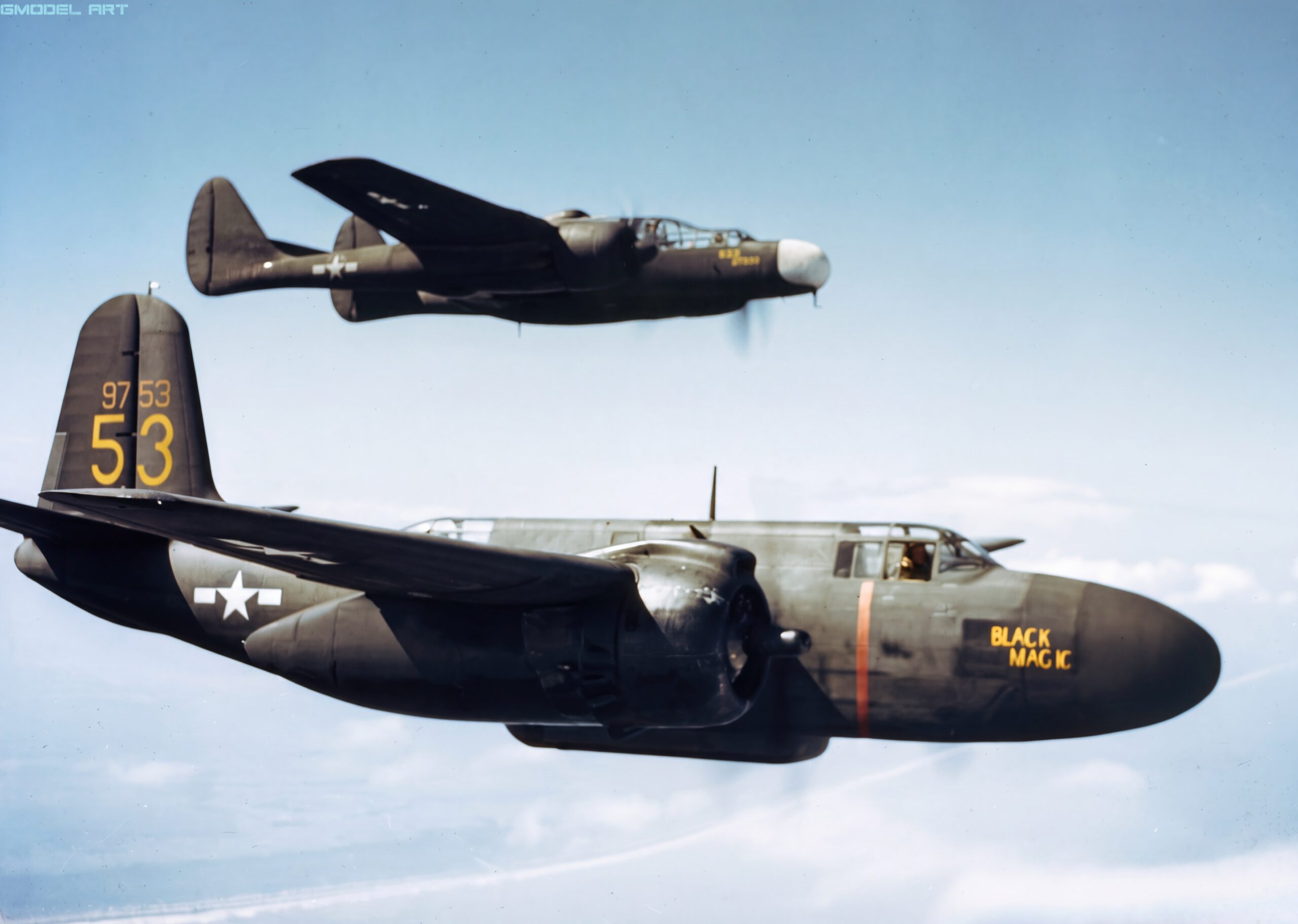
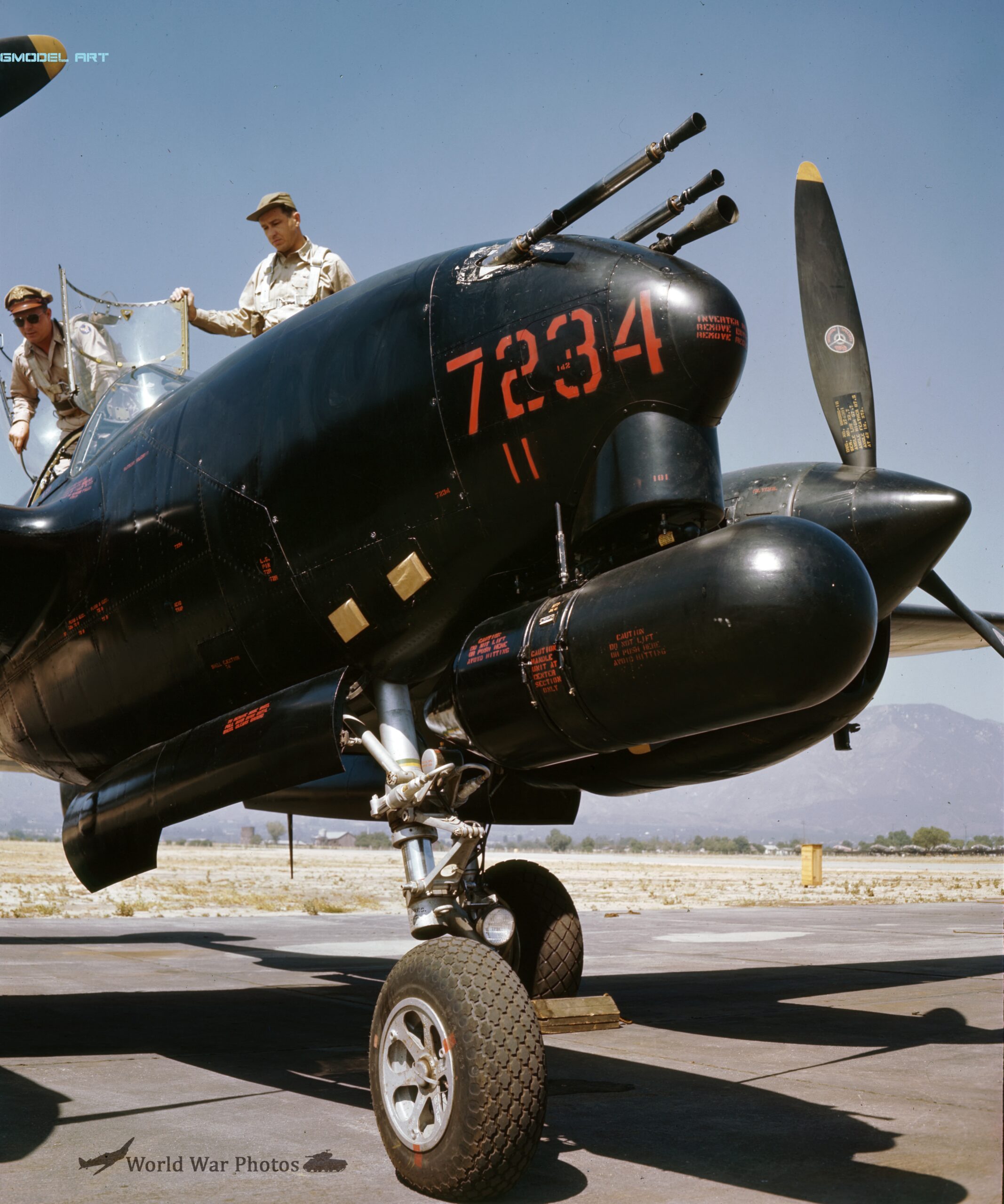
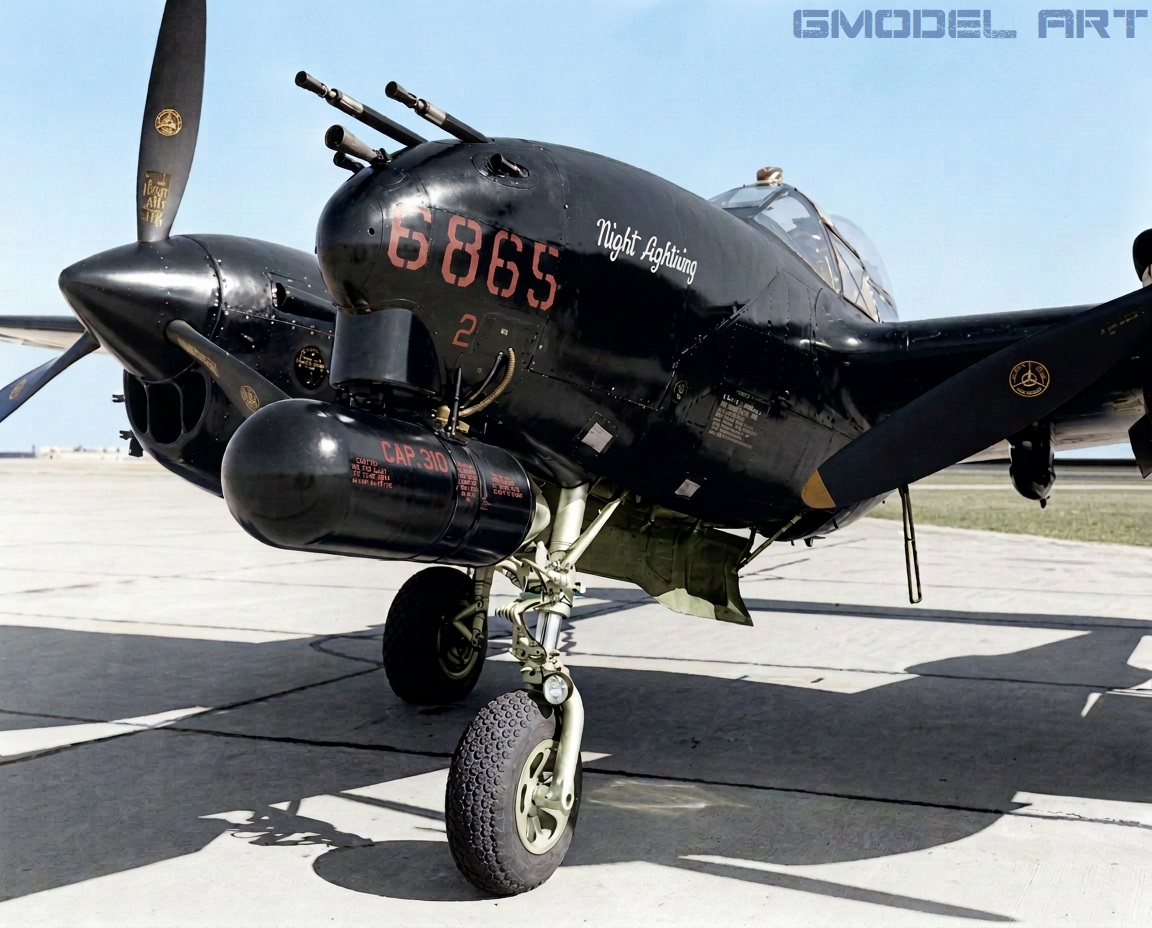
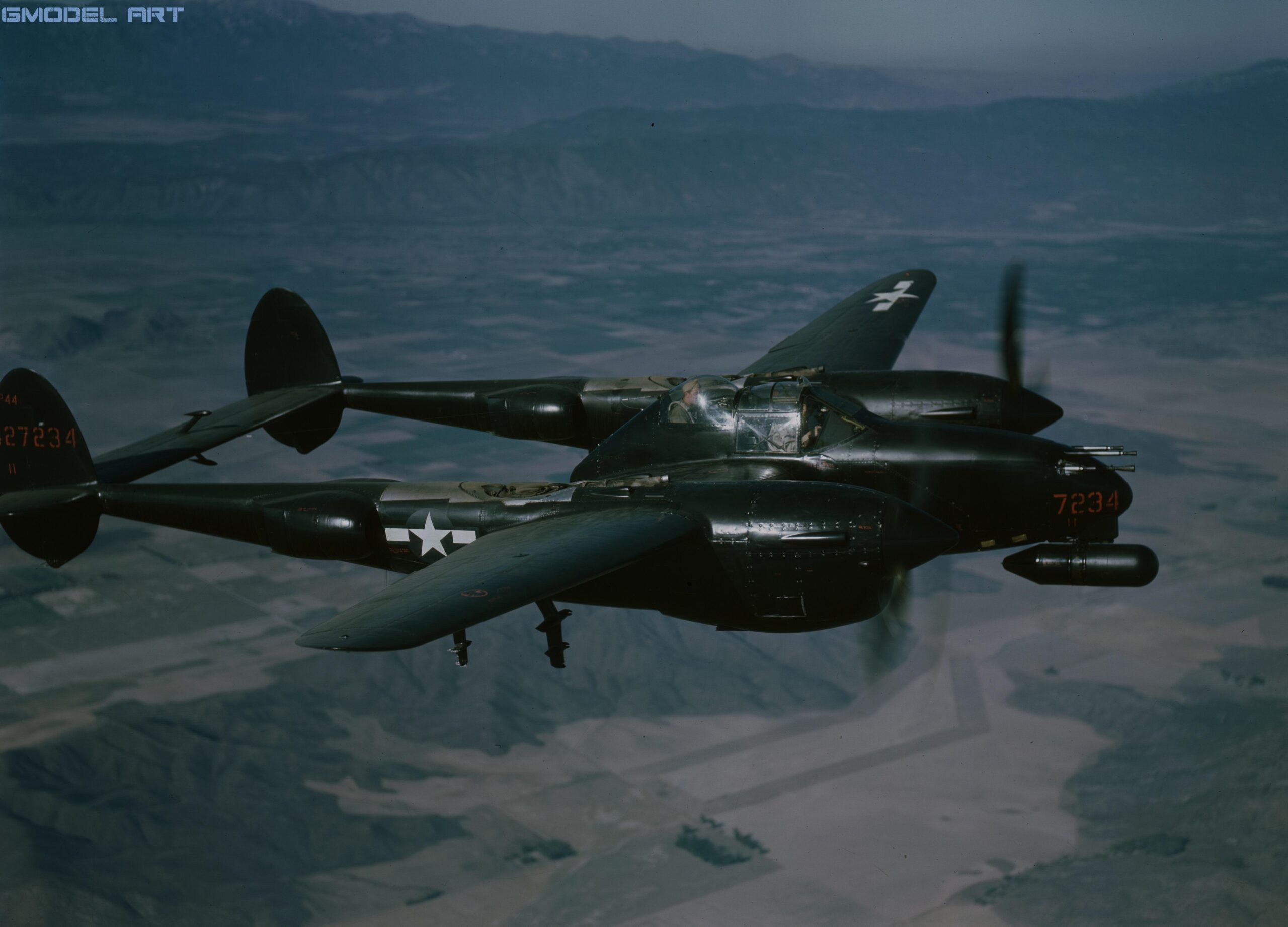
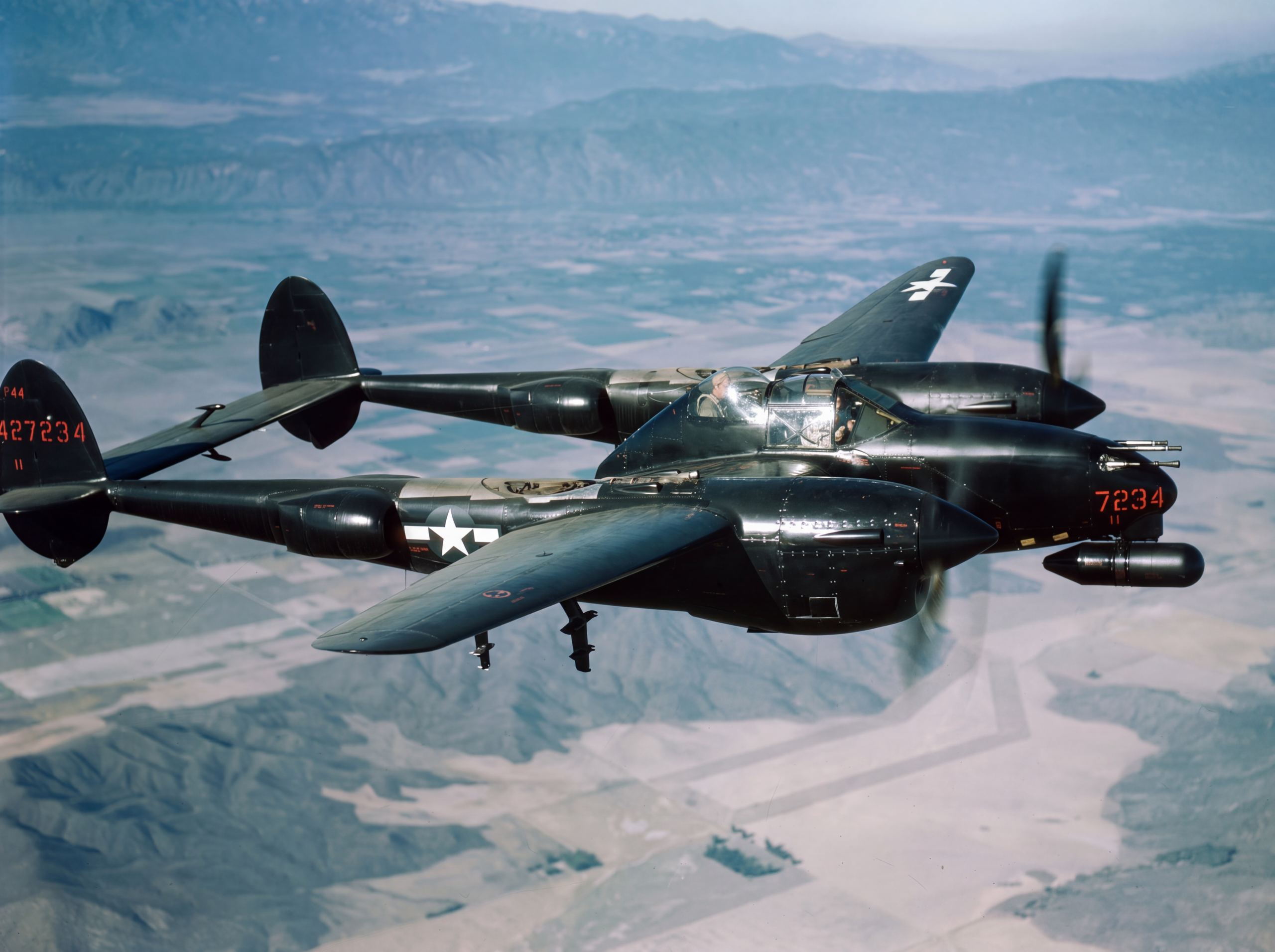
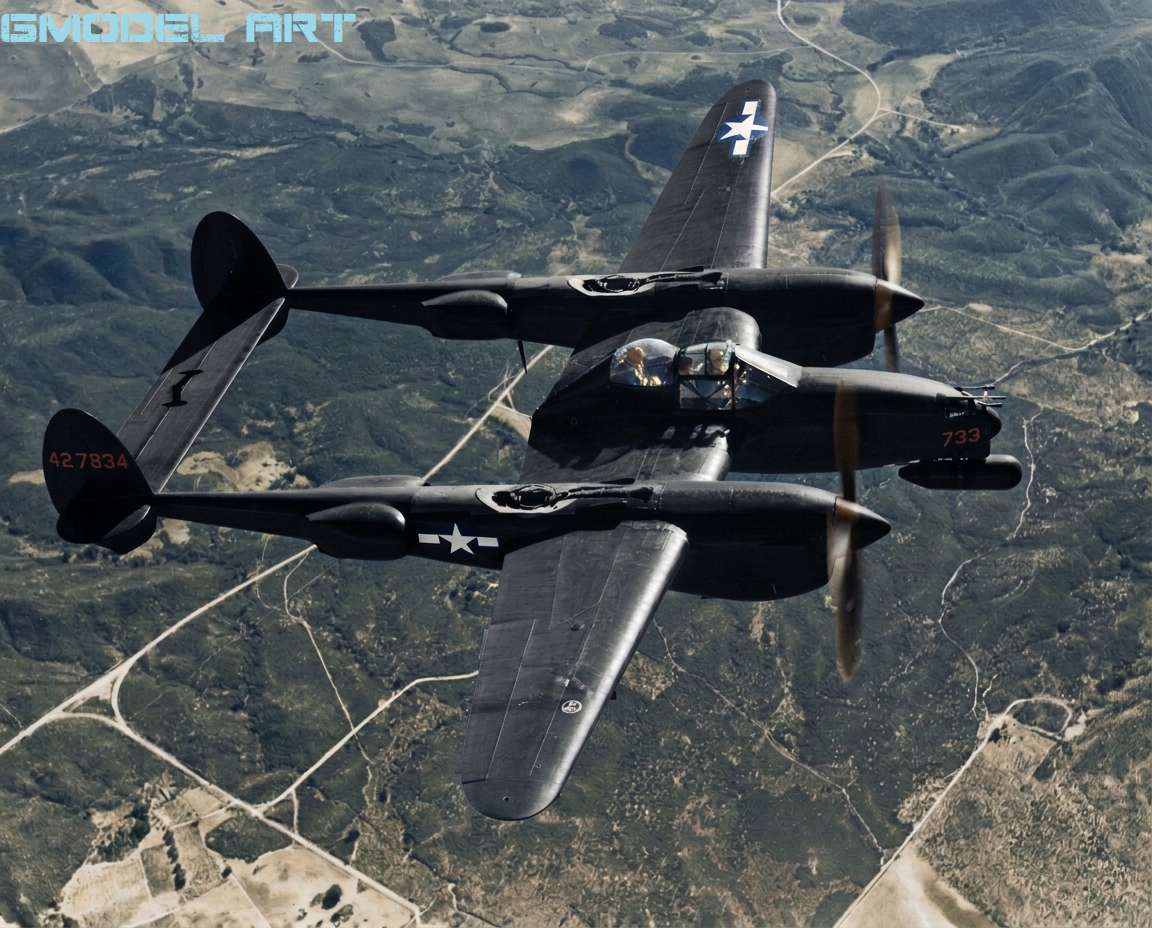
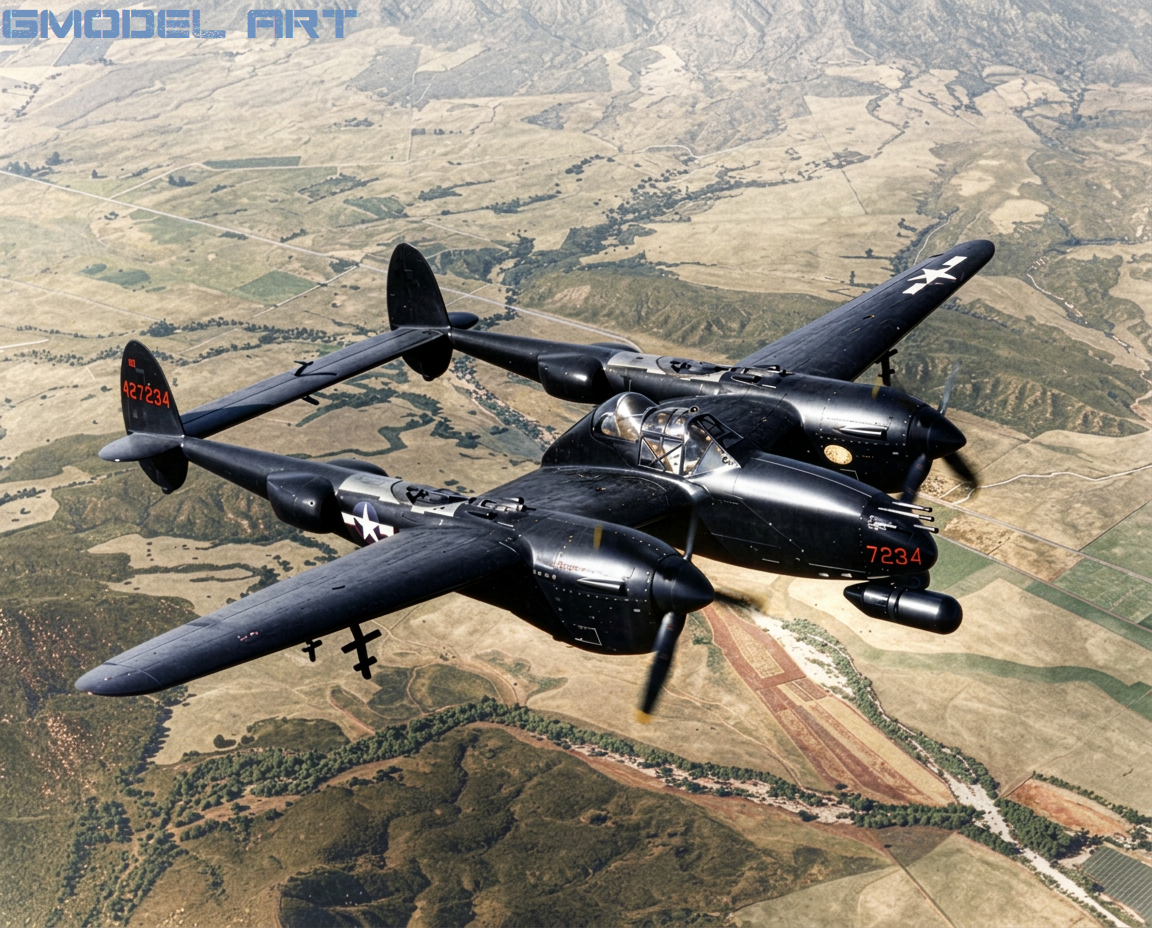
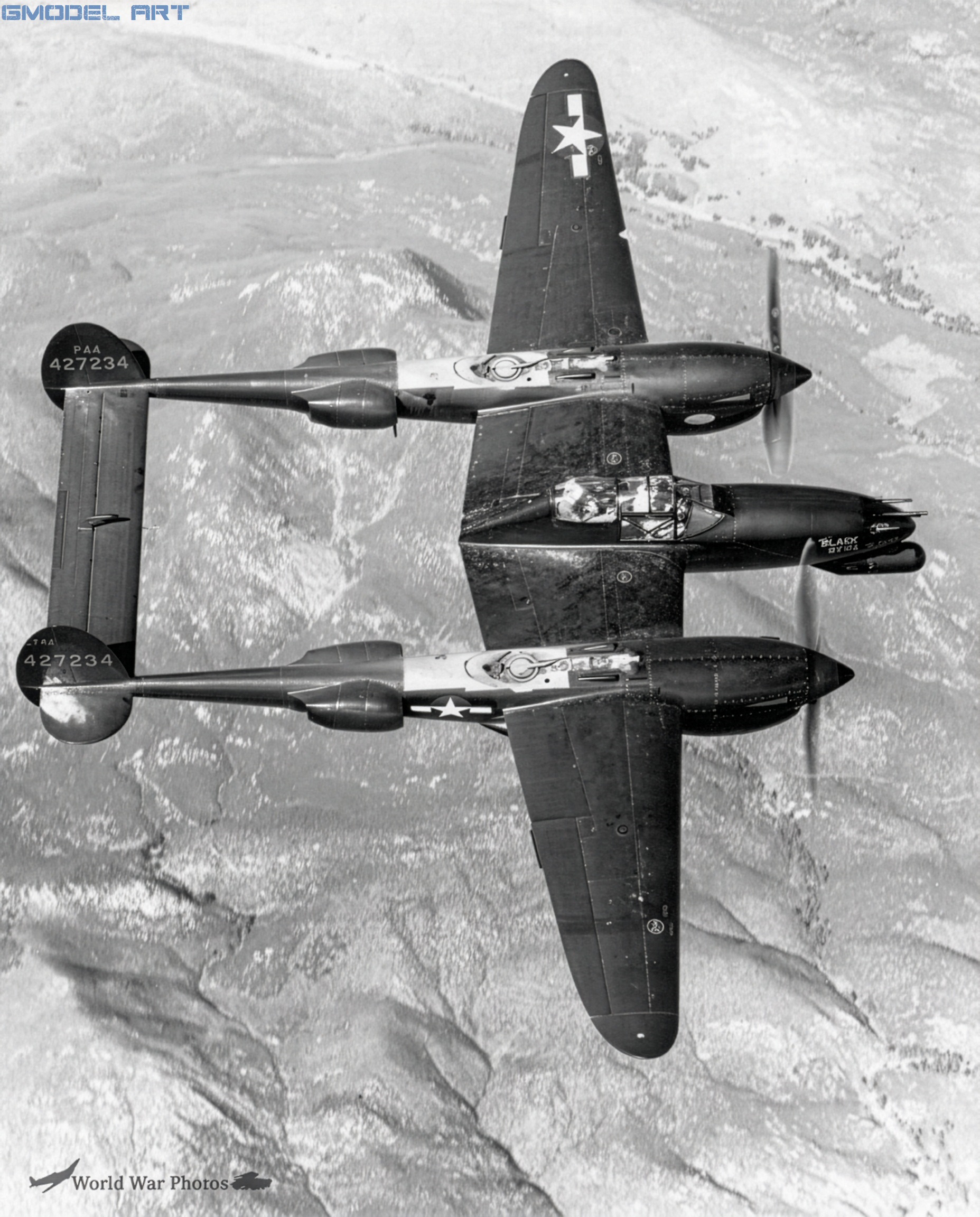
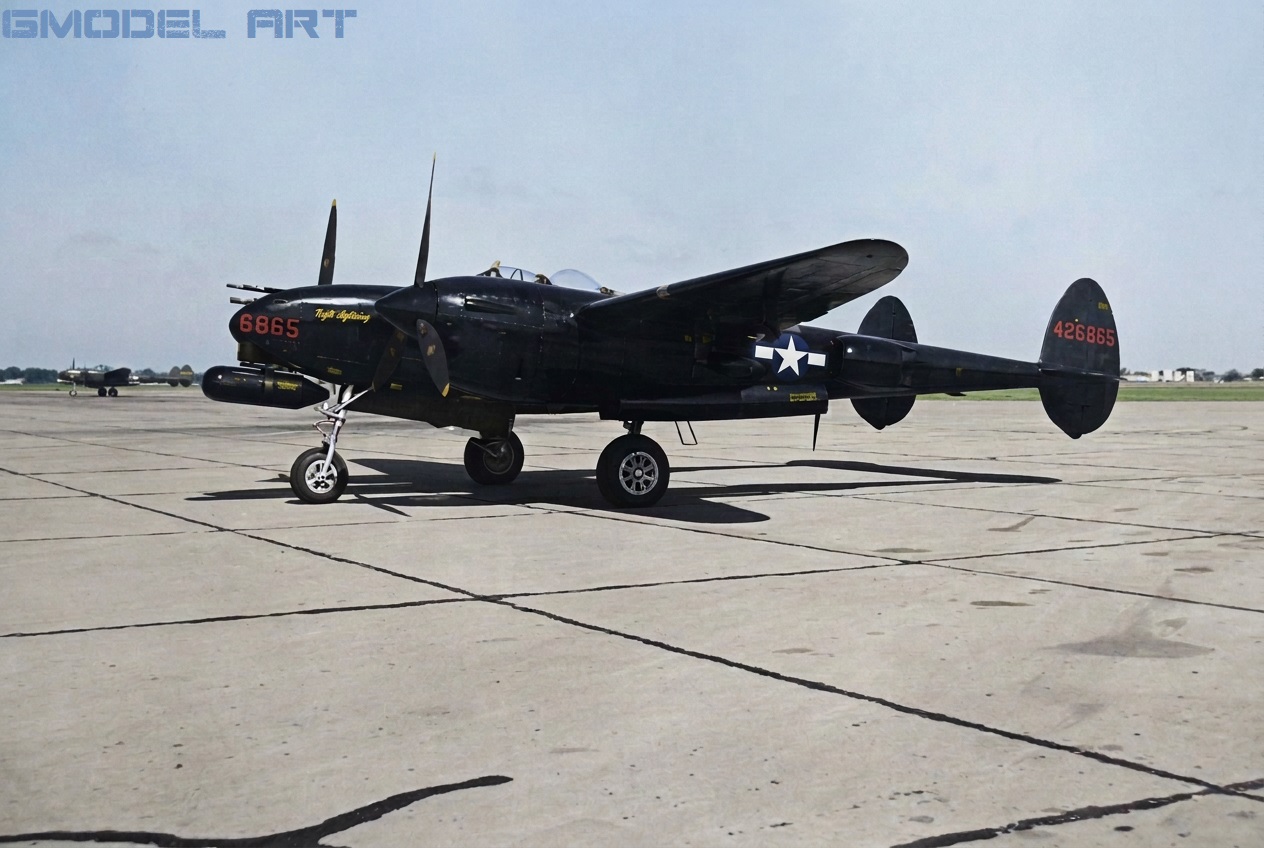
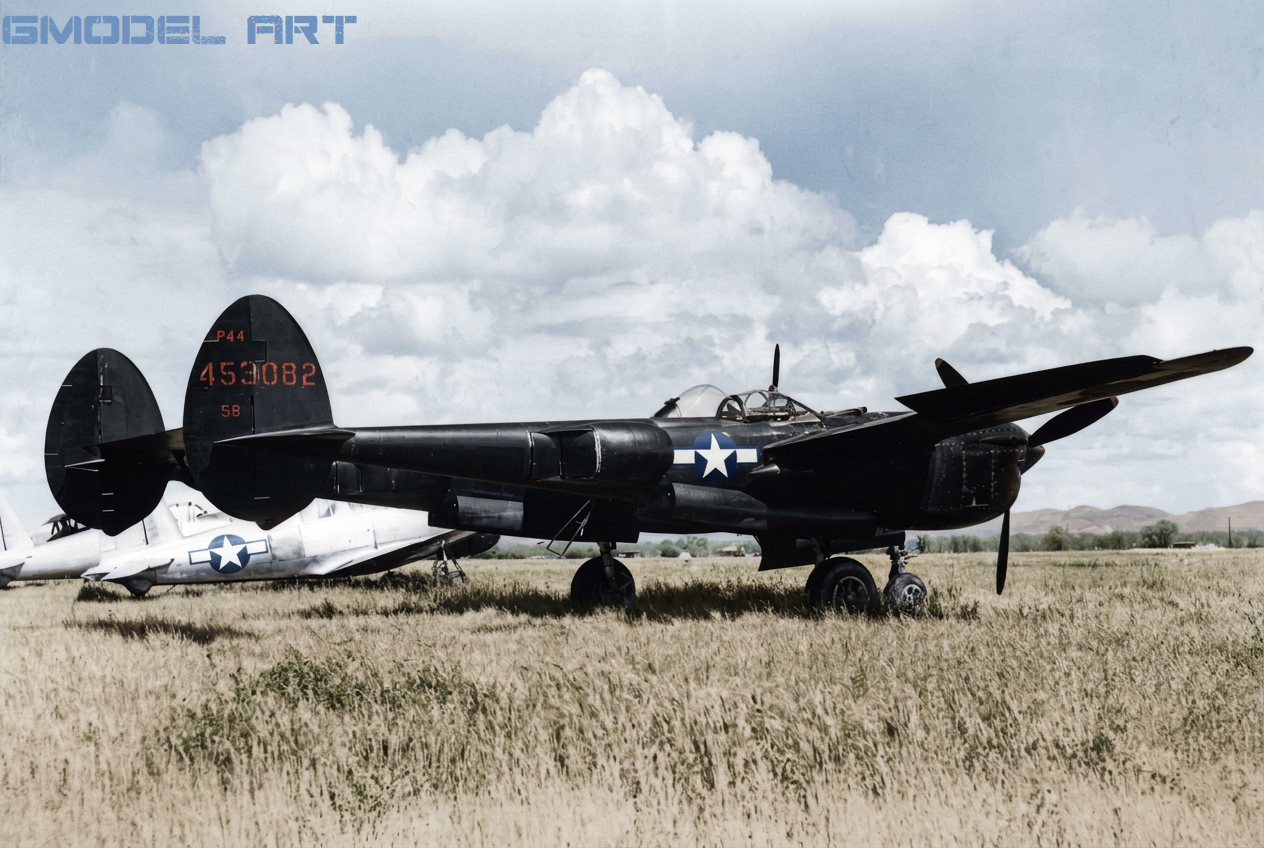
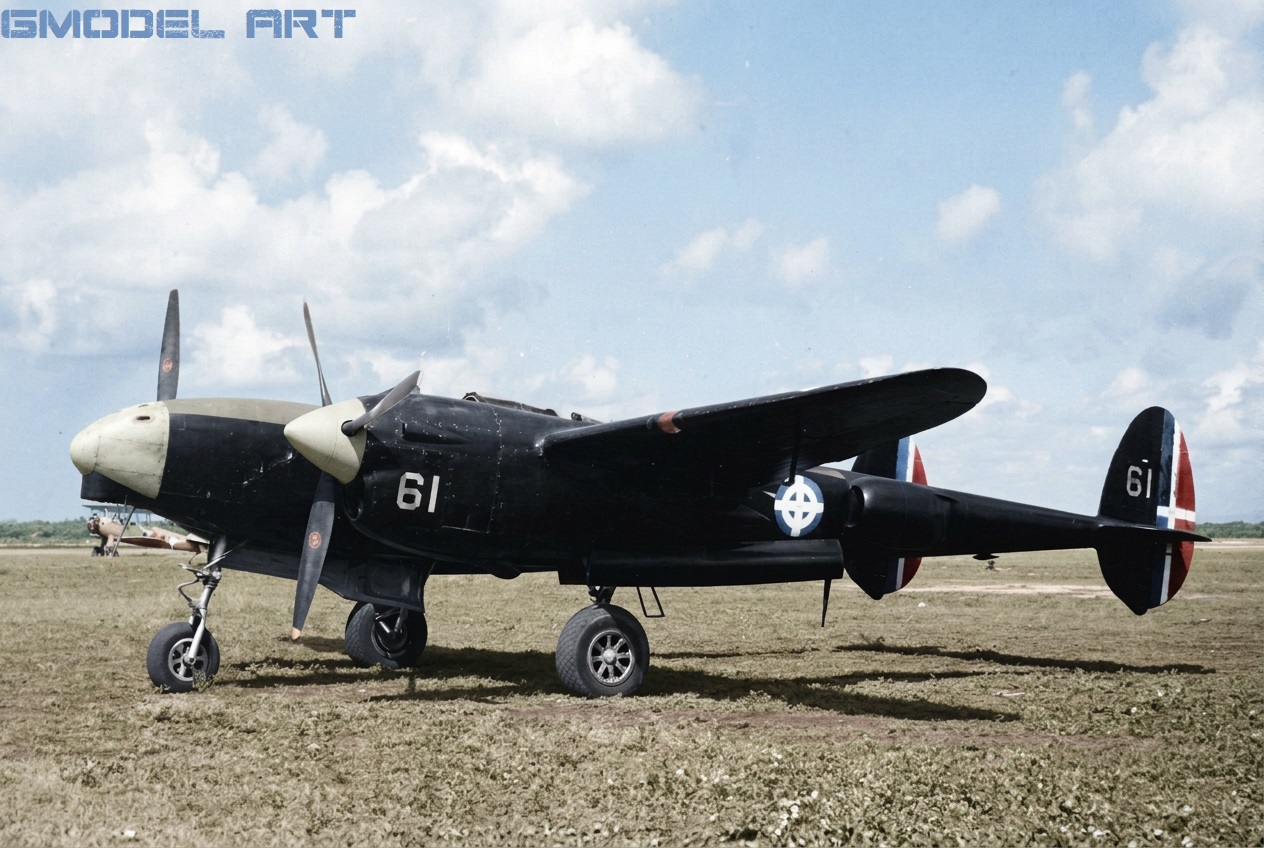
The development of Jet Black, officially designated Jet Finish No. 622, became one of the most distinctive results of this work. The finish was associated with aircraft such as the Northrop P-61 Black Widow, the Douglas P-70 Havoc and, later, the Lockheed P-38M Night Lightning. Understanding these finishes helps modelers reproduce American night fighters more accurately and avoid treating every black aircraft as an identical example of a single paint scheme.
The Evolution of USAAF Aircraft Camouflage
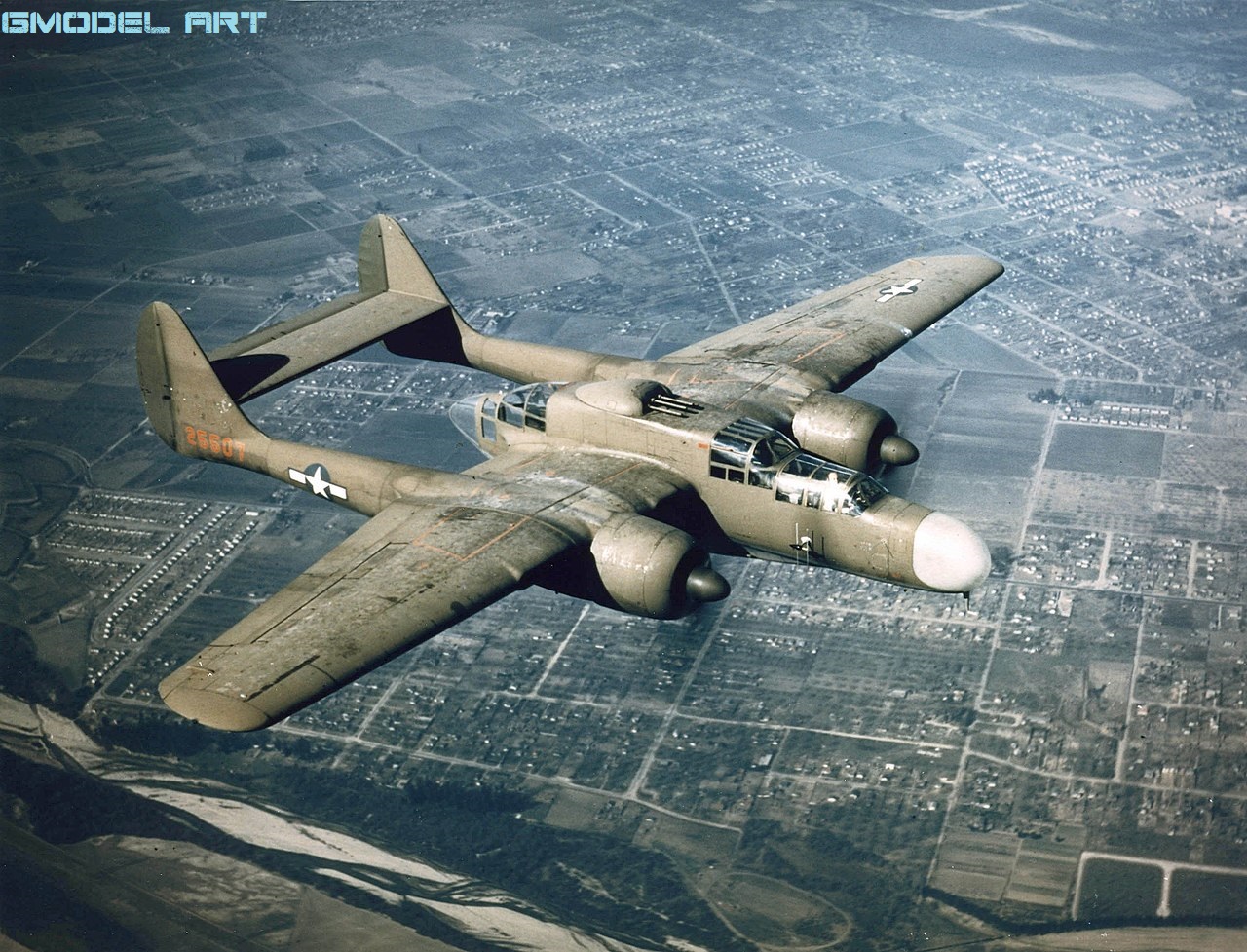
During the early years of American involvement in World War II, the USAAF adopted Olive Drab upper surfaces and Neutral Gray undersides as a standard camouflage scheme for many land-based combat aircraft. The system was intended to reduce visibility against the ground and from the air, particularly when aircraft were parked or operating at relatively low altitudes.
Olive Drab No. 41 and Neutral Gray No. 43 were important early wartime color designations. The subsequent Army-Navy Aeronautical (ANA) system introduced standardized color specifications, including ANA 613 Olive Drab and ANA 603 Sea Gray. These later designations should not automatically be treated as exact equivalents of the earlier No. 41 and No. 43 paints.
By late 1943, American aircraft production was moving increasingly toward natural-metal finishes. On 30 October 1943, a directive called for most combat aircraft to be delivered without the previously standard camouflage finishes. Reducing paint application saved material, labor and weight, while smooth, unpainted metal surfaces could offer aerodynamic advantages.
This policy did not eliminate every form of camouflage. Aircraft operating under particular conditions still required specialized finishes, and night fighters represented a distinct category. Their mission created different visual concealment requirements from those of fighters and bombers primarily intended for daylight operations.
Why Night Fighters Required a Different Camouflage Scheme
An aircraft is visible because it contrasts with its surroundings. Its outline, movement, shadow, surface texture, color and reflections can all contribute to detection.
At night, the effectiveness of a camouflage finish depends on the viewing angle, the brightness of the background, available ambient light and the presence of searchlights. A dark aircraft may blend into a dark sky, but it can become conspicuous when illuminated against a lighter background.
The challenge was therefore not simply to select the darkest available paint. USAAF researchers needed to determine how a painted surface behaved under different lighting conditions and whether its finish increased or reduced the aircraft’s visibility.
The distinction between matte and glossy black proved particularly important. A matte surface scatters incoming light in many directions, whereas a glossy surface produces more directional reflections. Under certain viewing conditions, a glossy black aircraft could consequently be less conspicuous than one finished in flat black.
This did not mean that gloss was universally superior under every condition. It meant that the relationship between surface finish and visibility was more complicated than early assumptions suggested.
Jet Black ANA 622: The Standard Night Fighter Finish
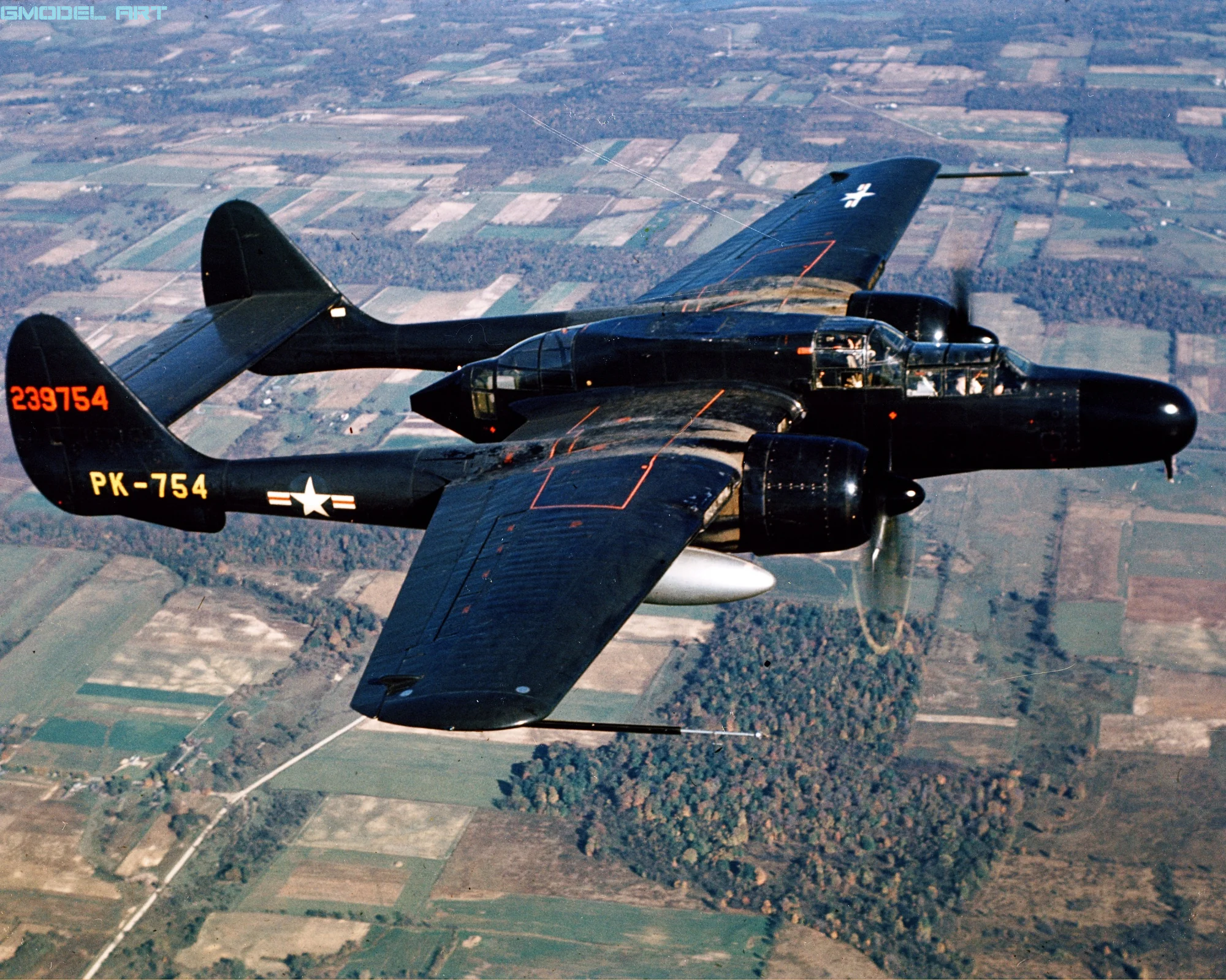
Experiments conducted during the war led to the adoption of a specialized glossy black finish for American night fighters. Known as Jet Finish No. 622, the color became part of the ANA system on 26 April 1944, although its use had begun earlier in January of that year.
The designation is generally known among aviation historians and scale modelers as Jet Black ANA 622. It was intended to provide an appropriate finish for aircraft whose operational role depended on reducing visual detection at night.
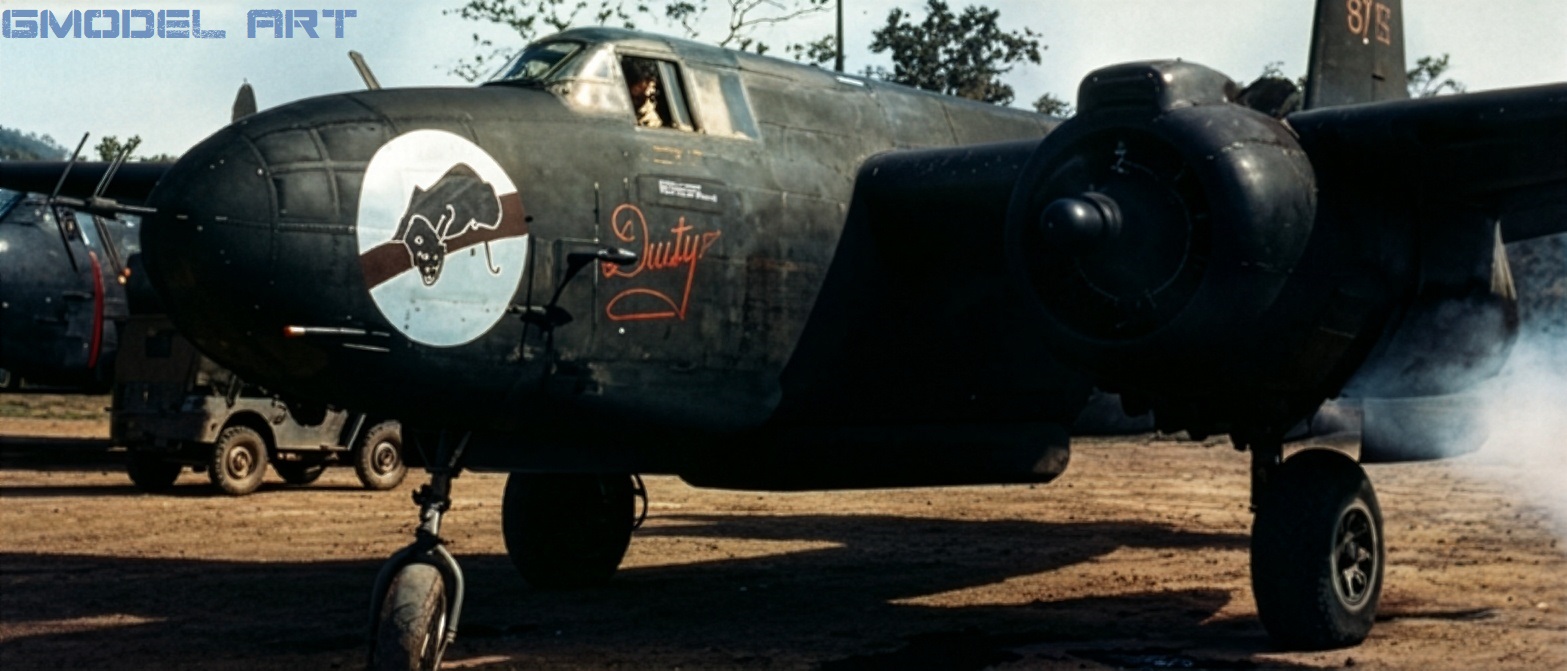
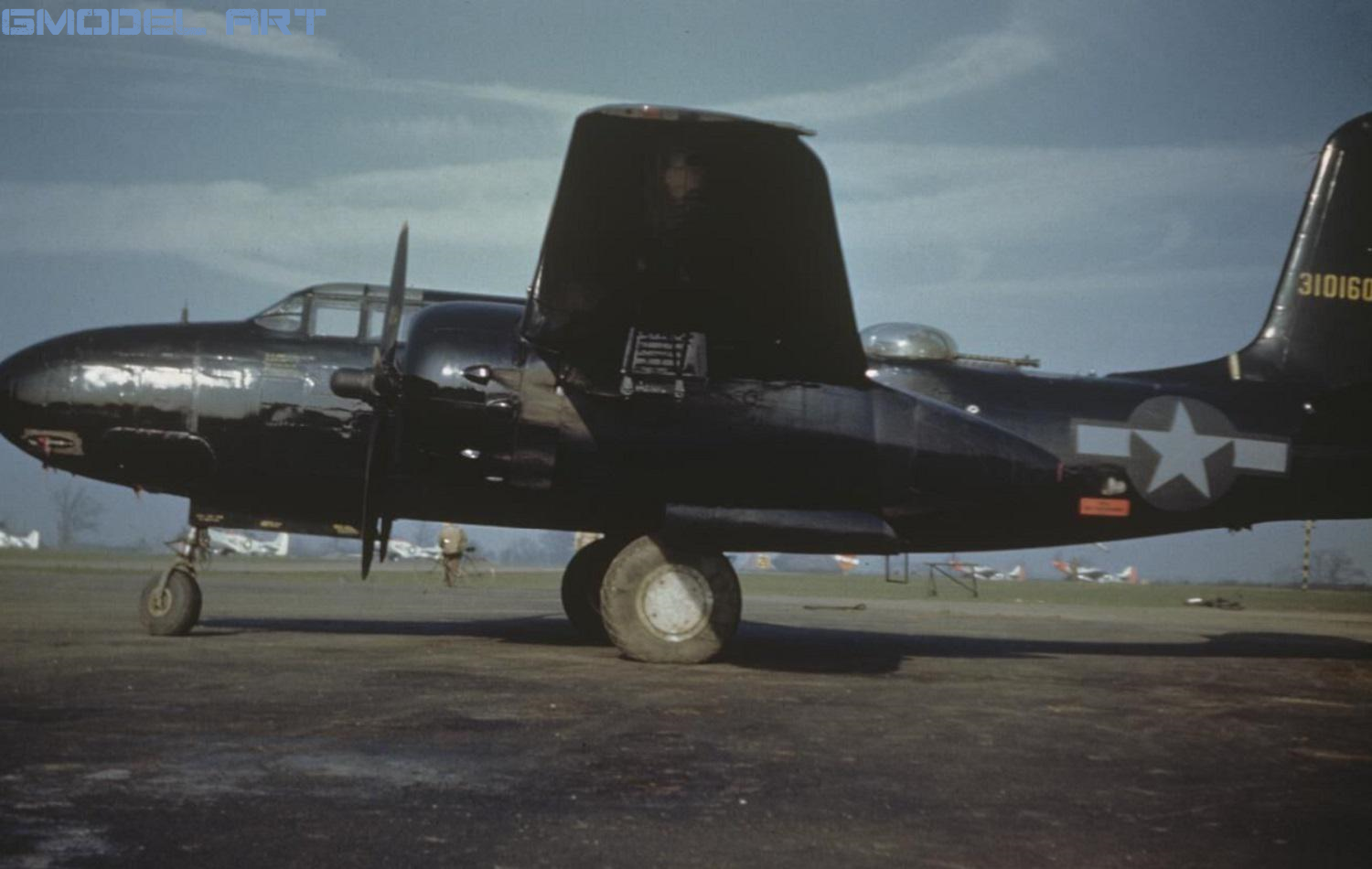
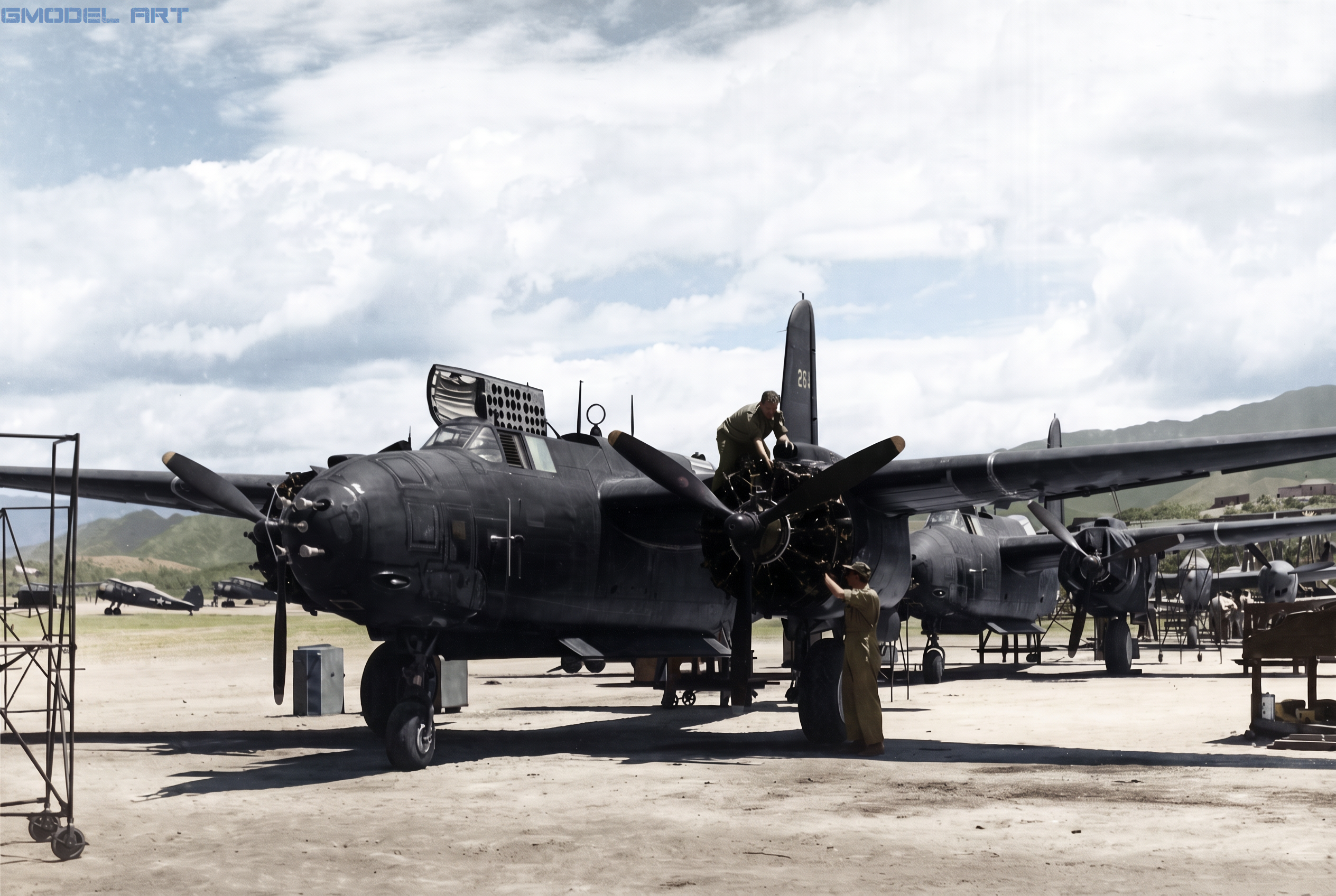
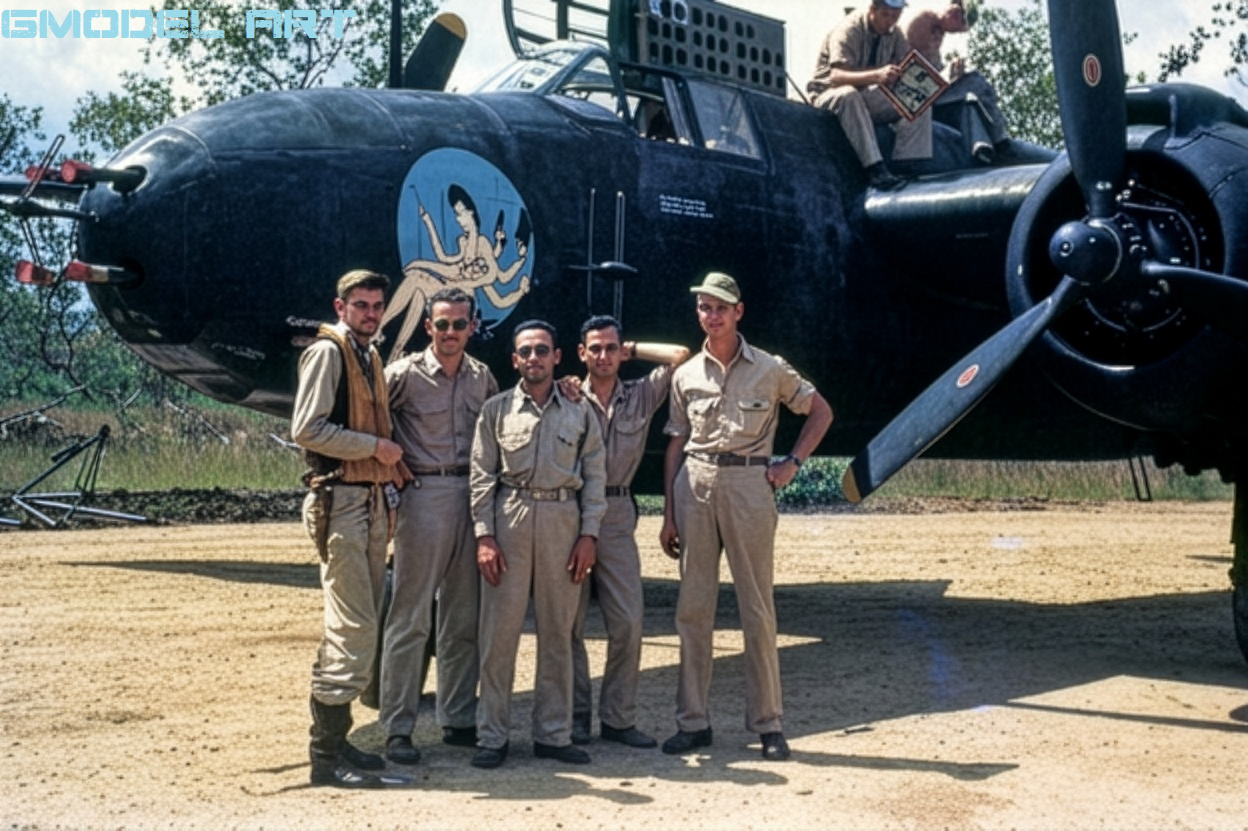
In 1944, the USAAF standardized glossy black as the preferred finish for its principal night fighter types. The policy covered the P-61 and P-70 and was subsequently relevant to the P-38M and later night-fighter developments.
The specification called for a glossy surface that could, where practical, be polished to a highly reflective finish. This is an important distinction for historical interpretation: the original specification and the appearance of an aircraft after months of operational service were not necessarily the same.
The application process also varied. Northrop’s P-61 production, for example, could involve applying the black finish without a separate primer. Consequently, differences in paint application, surface preparation, maintenance and weathering could affect the appearance of individual aircraft.
For historical research, ANA 622 should be understood as a defined wartime paint specification rather than a guarantee that every surviving photograph will show an identical shade or level of gloss.
Northrop P-61 Black Widow
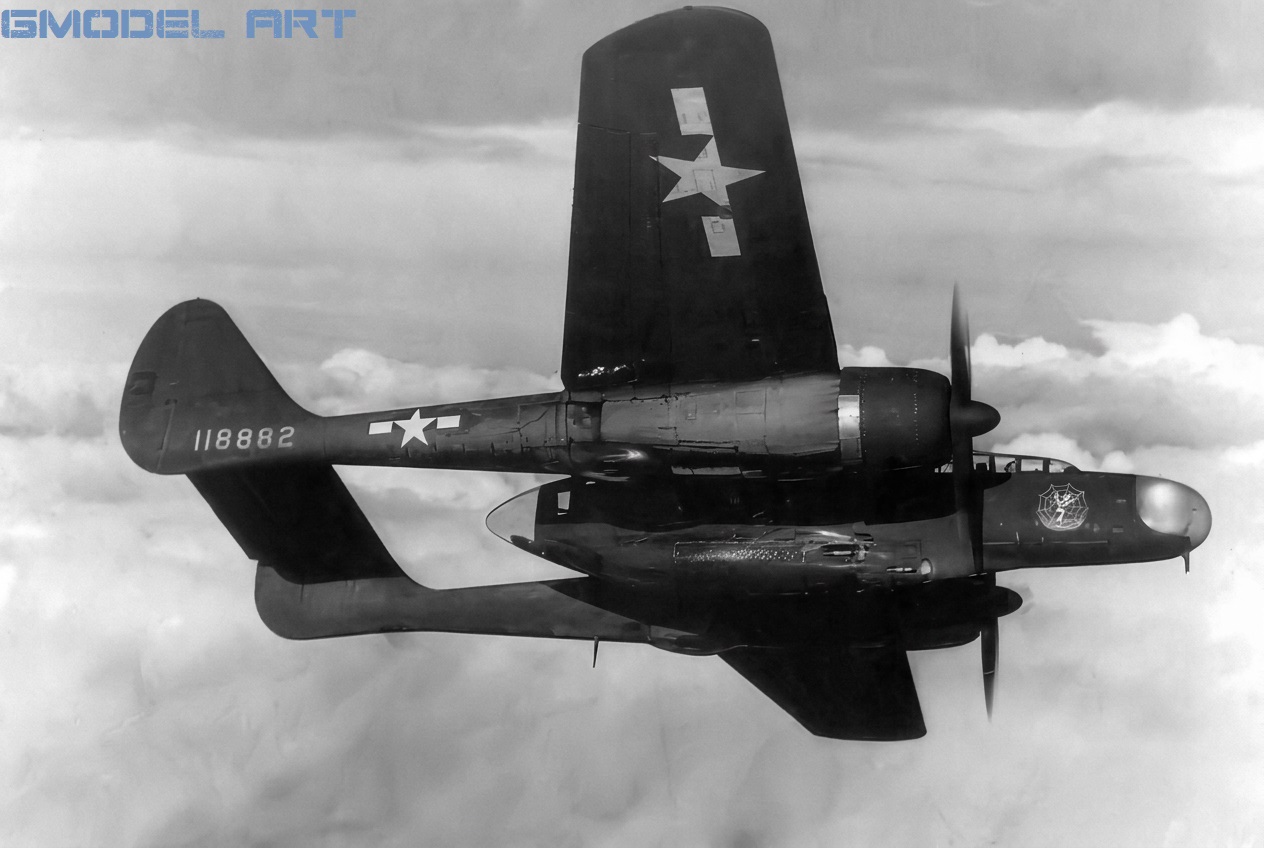
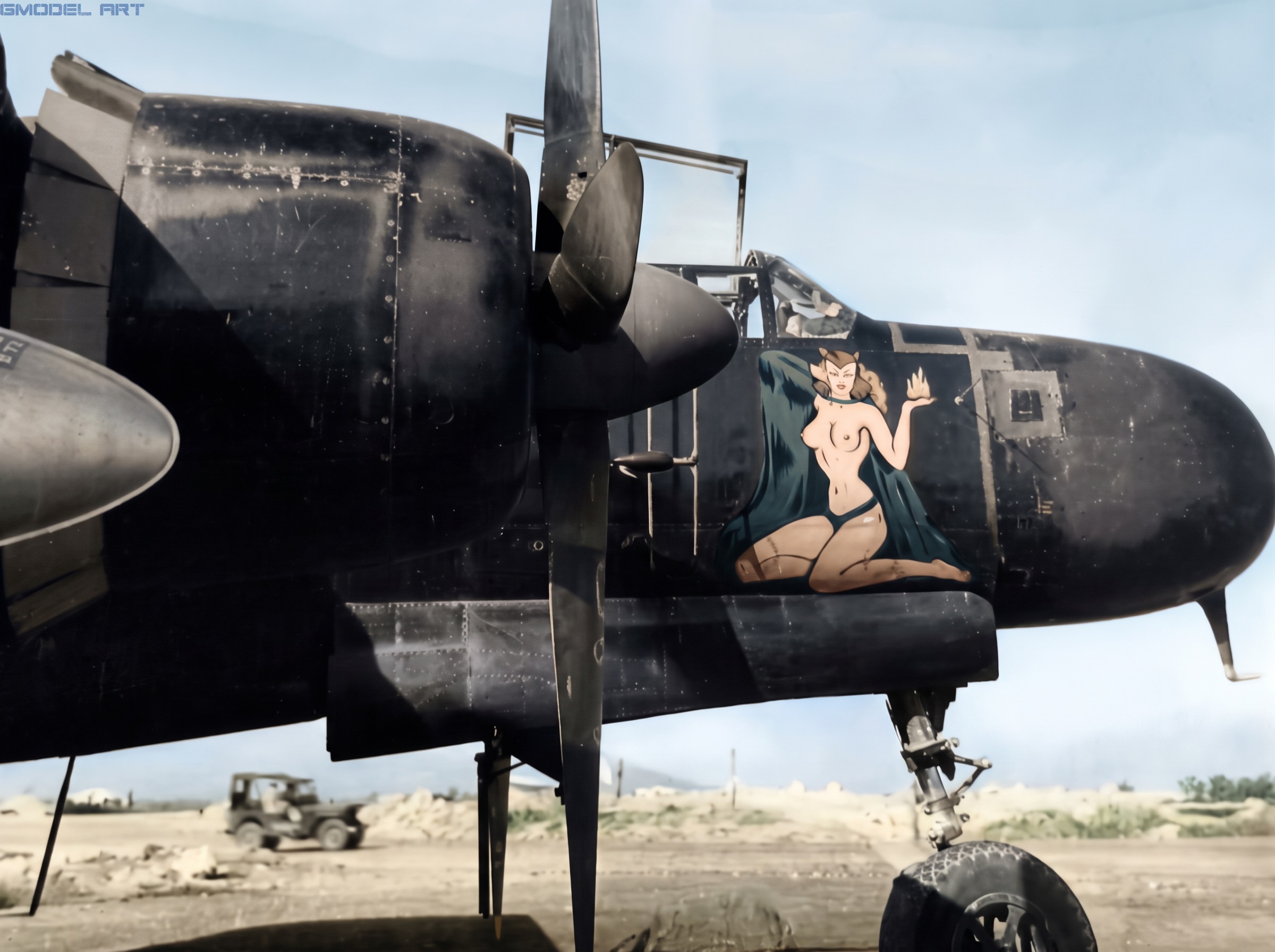
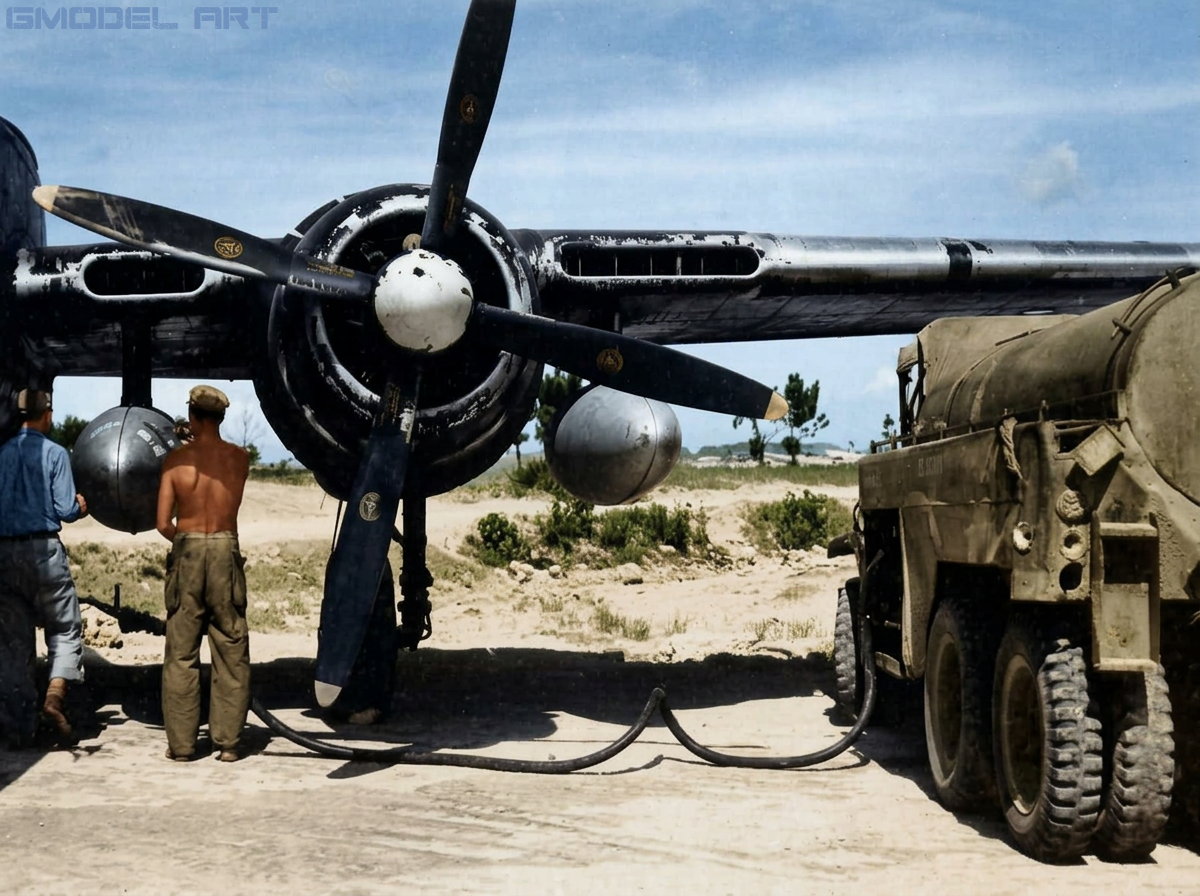
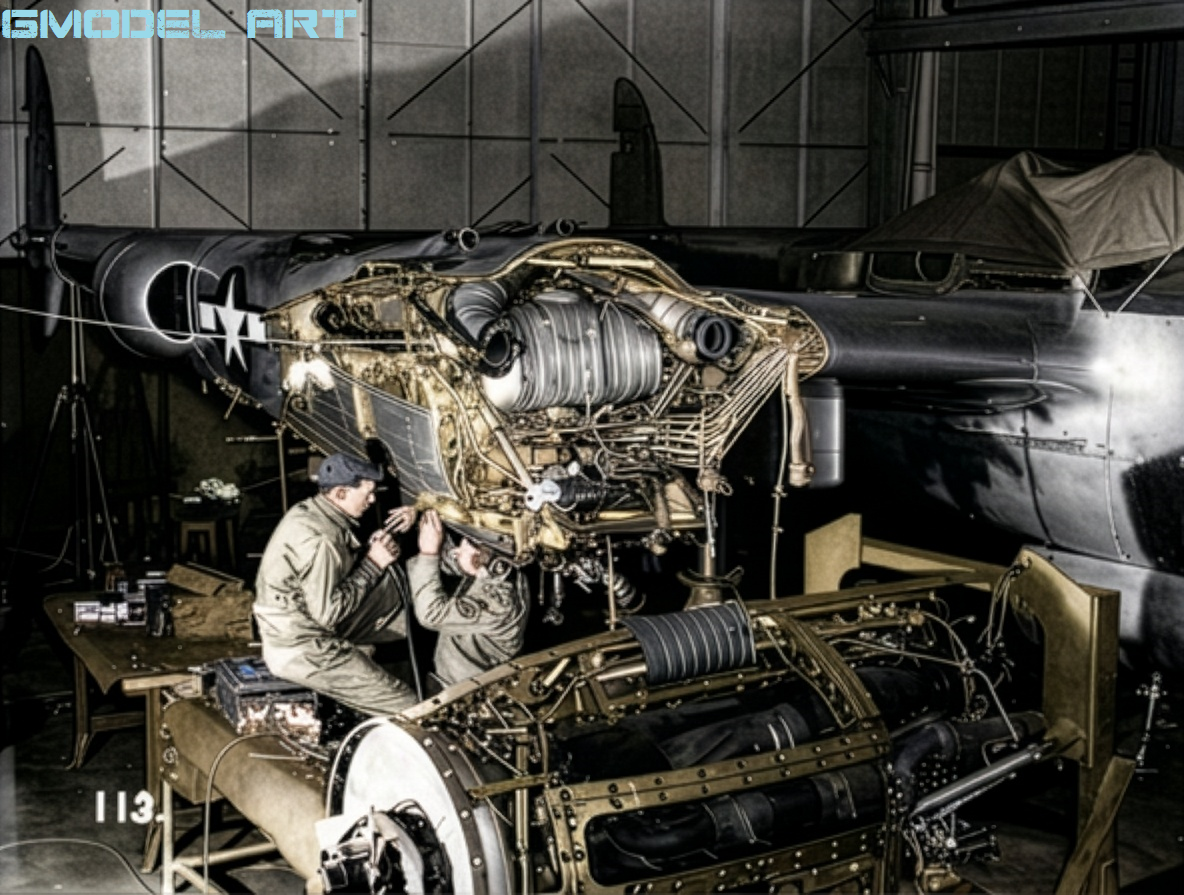
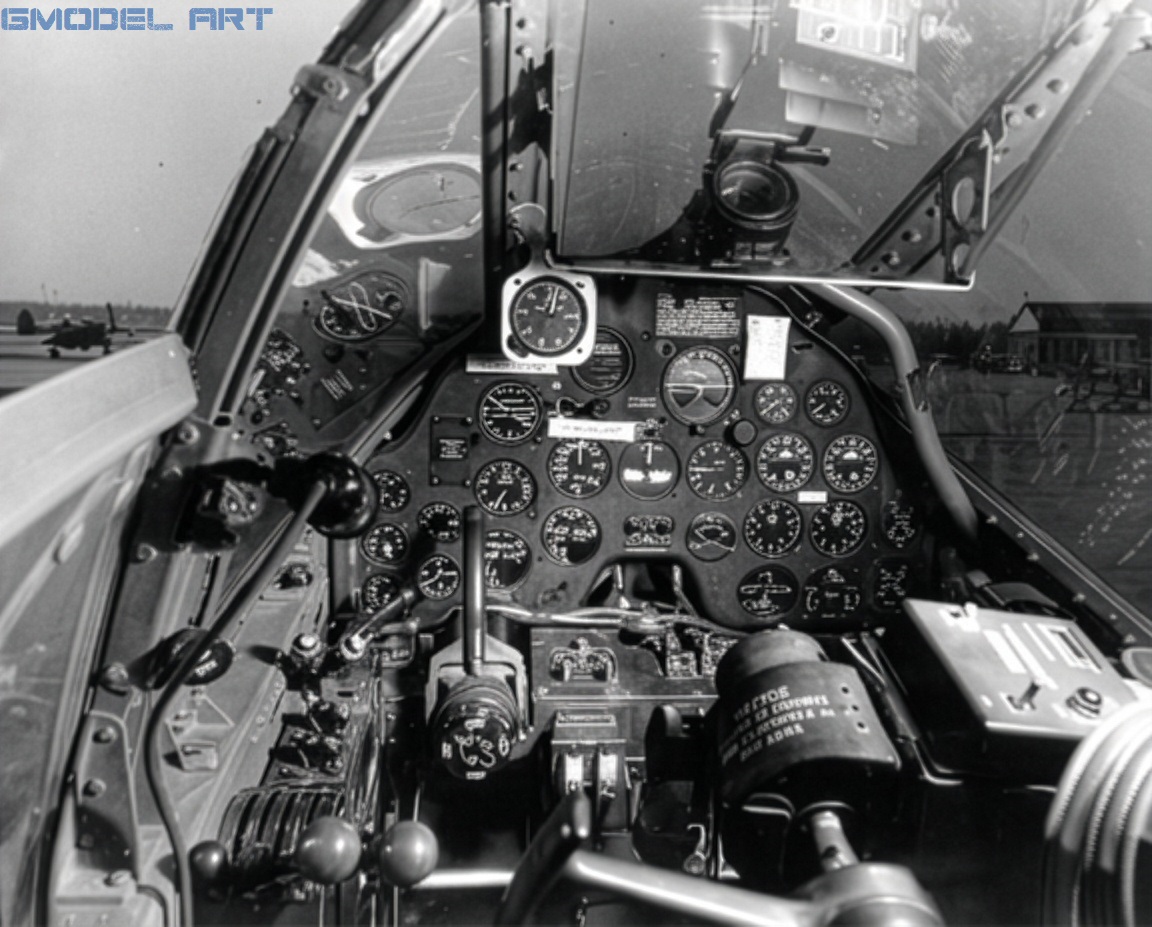
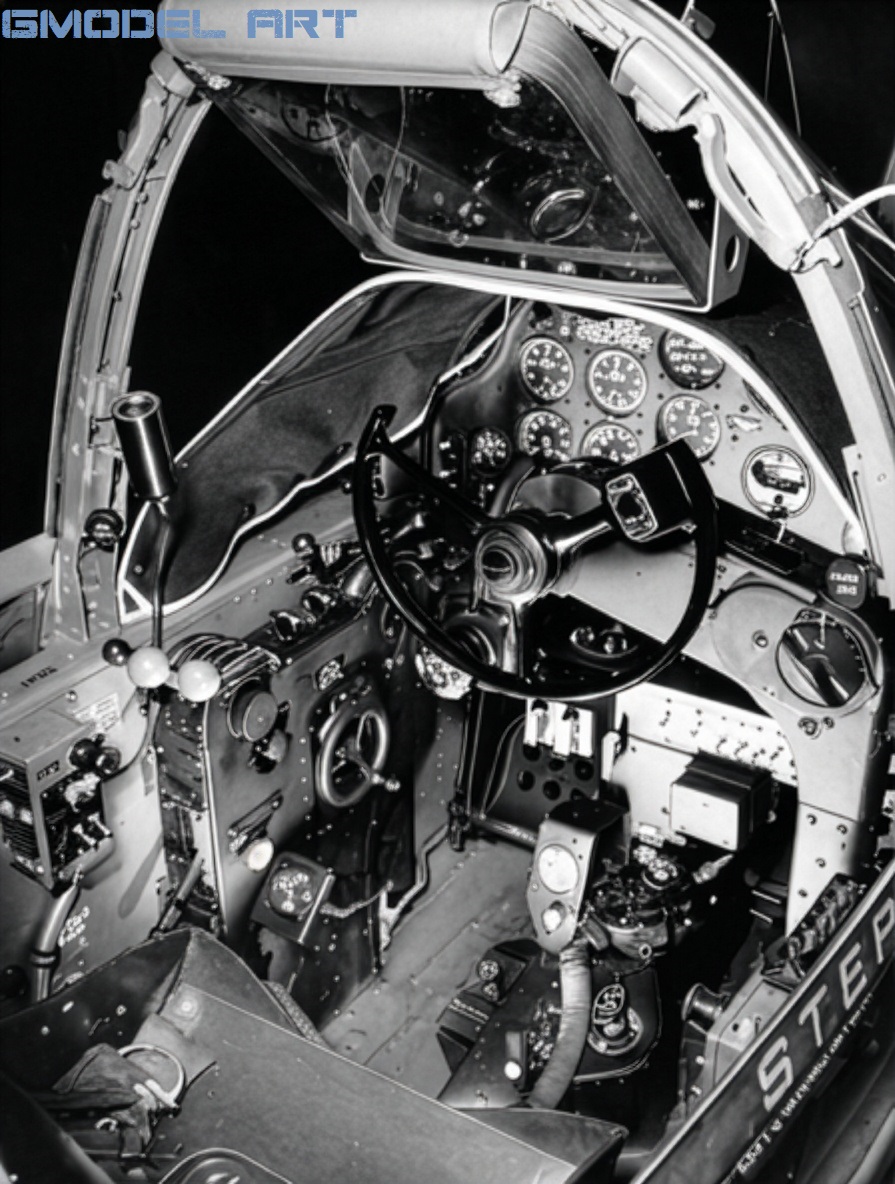
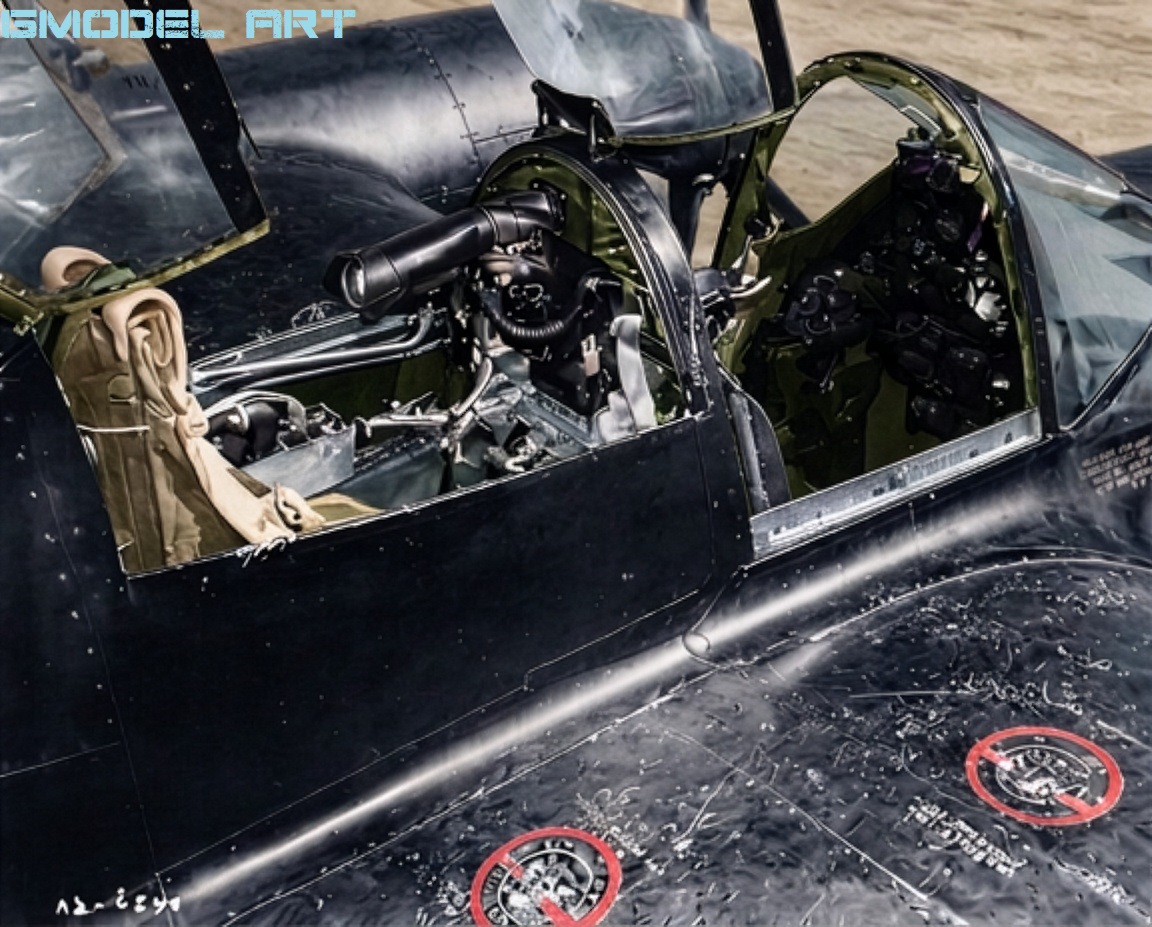
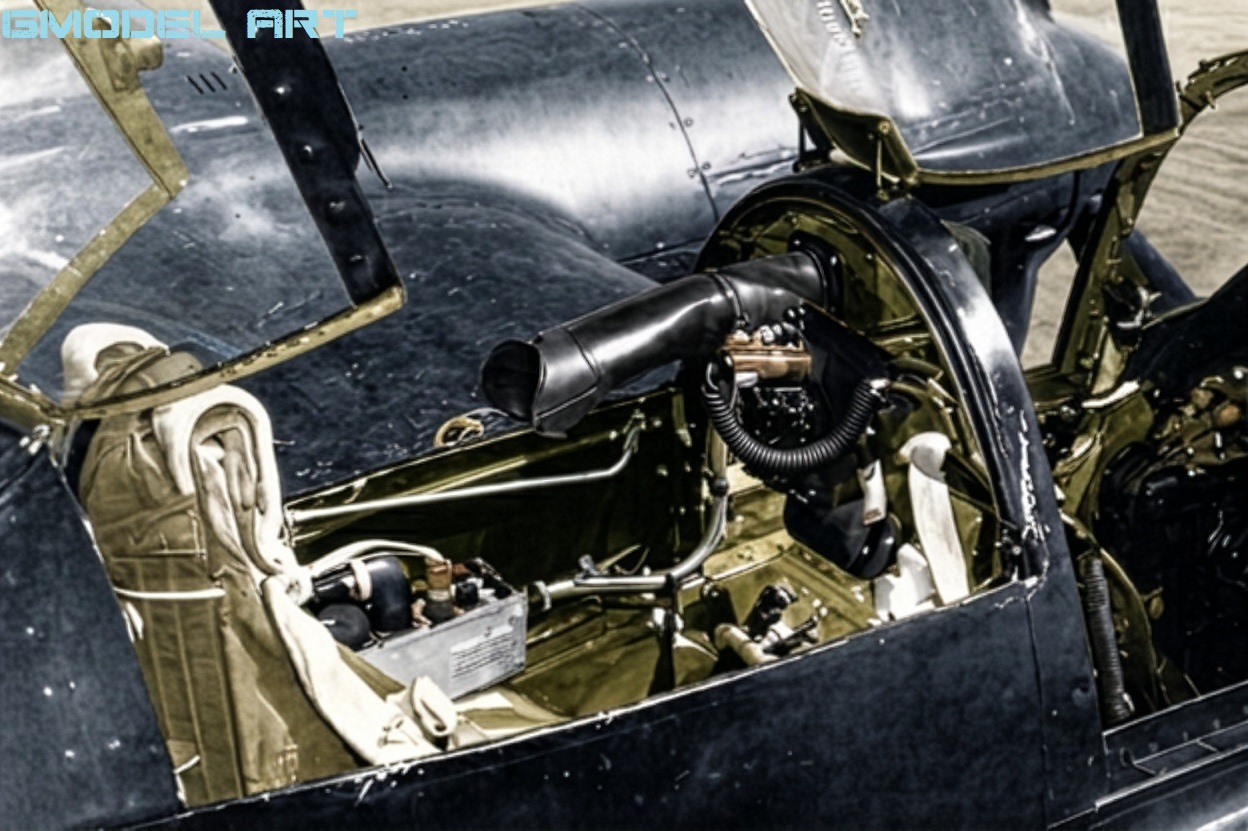
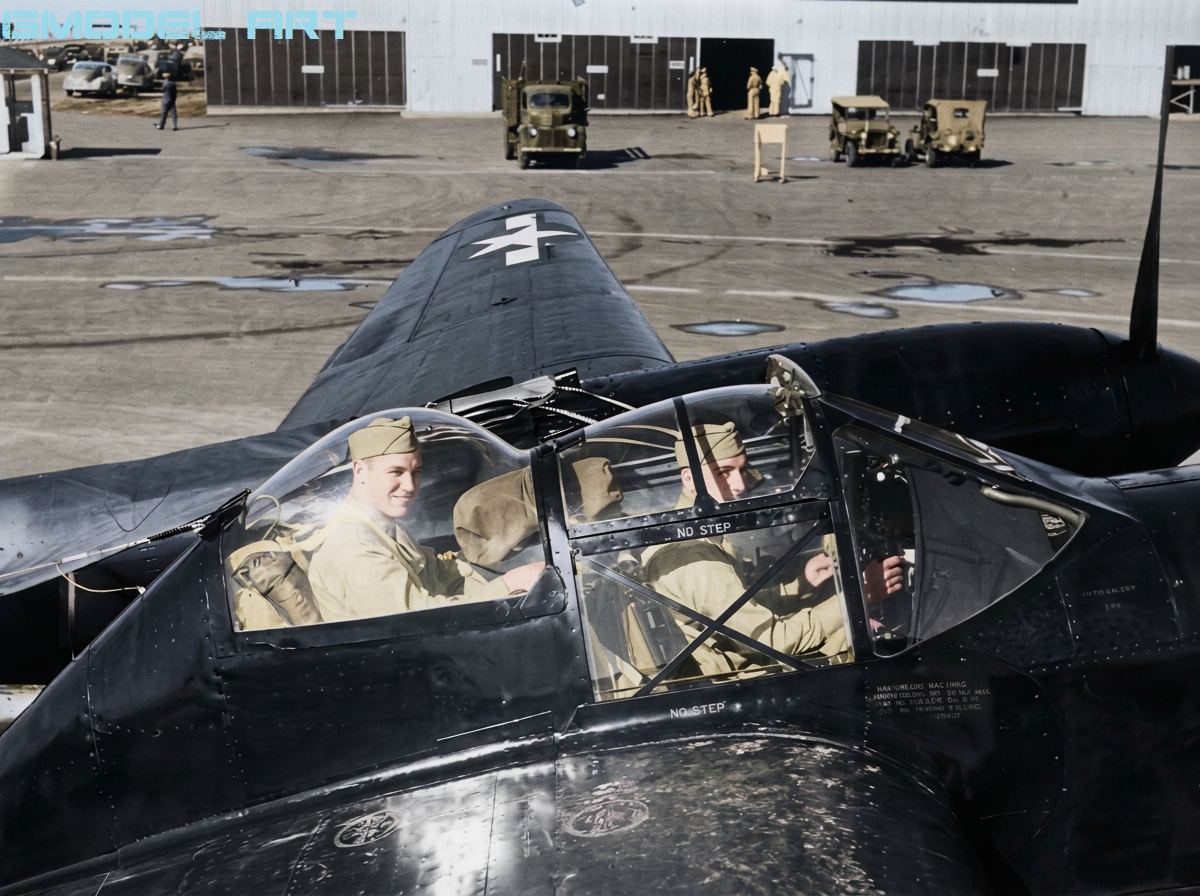
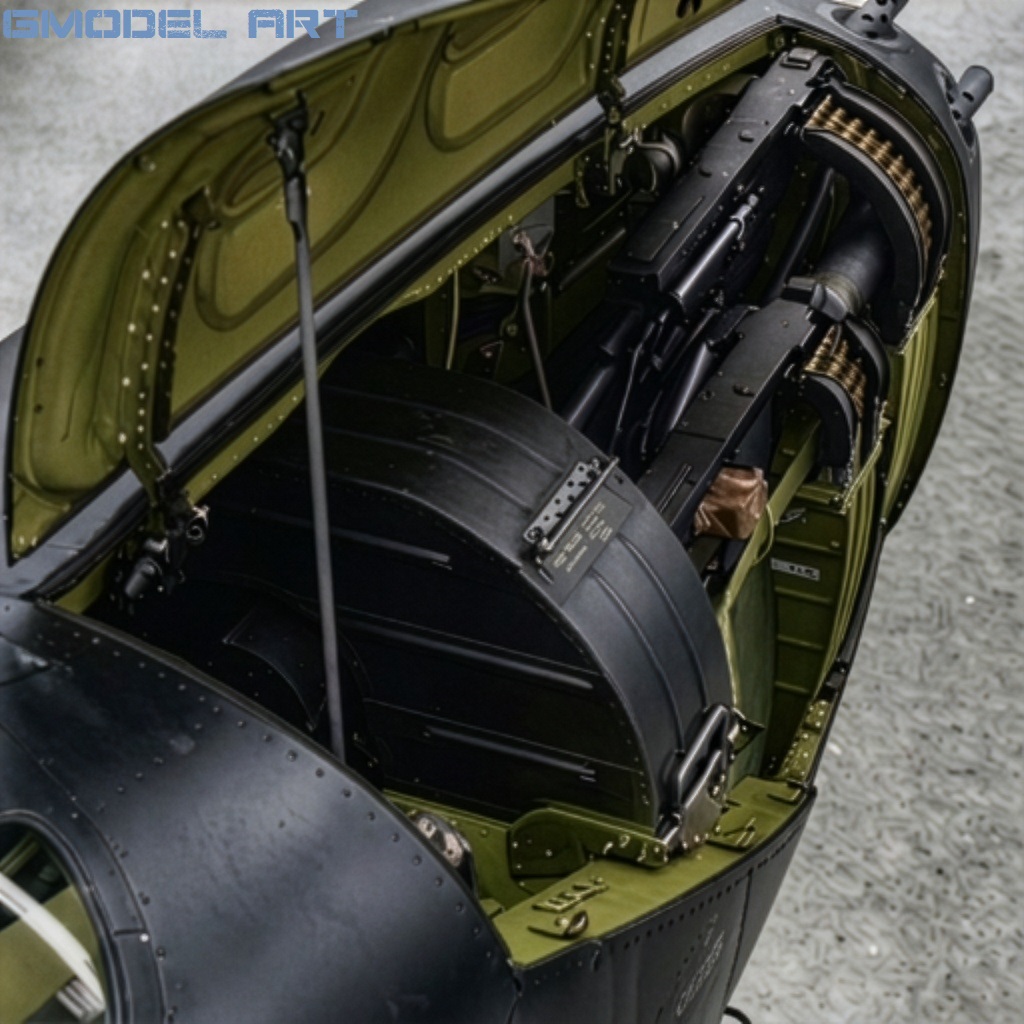
The Northrop P-61 Black Widow was designed specifically for night fighting and became one of the most recognizable American aircraft of this category. Its twin-boom configuration, radar equipment and specialized systems reflected the requirements of intercepting enemy aircraft in darkness.
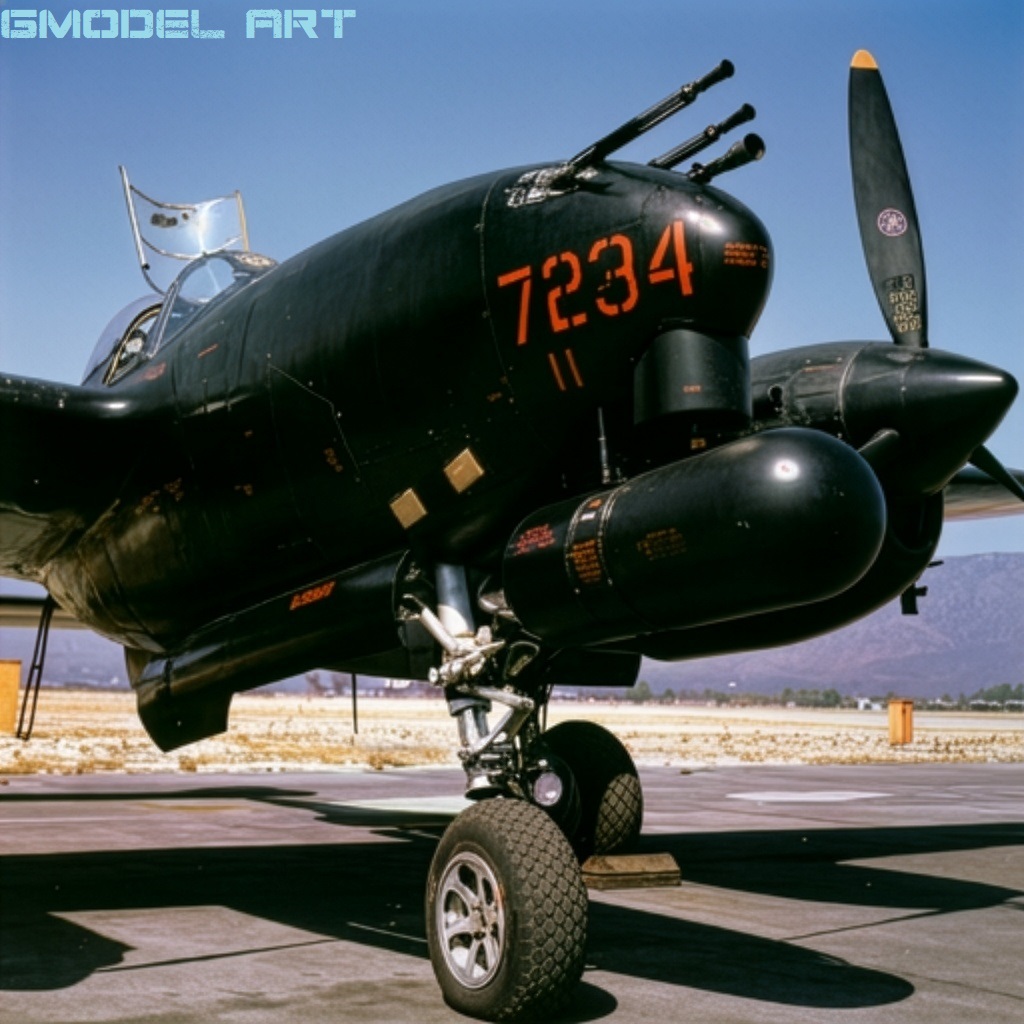
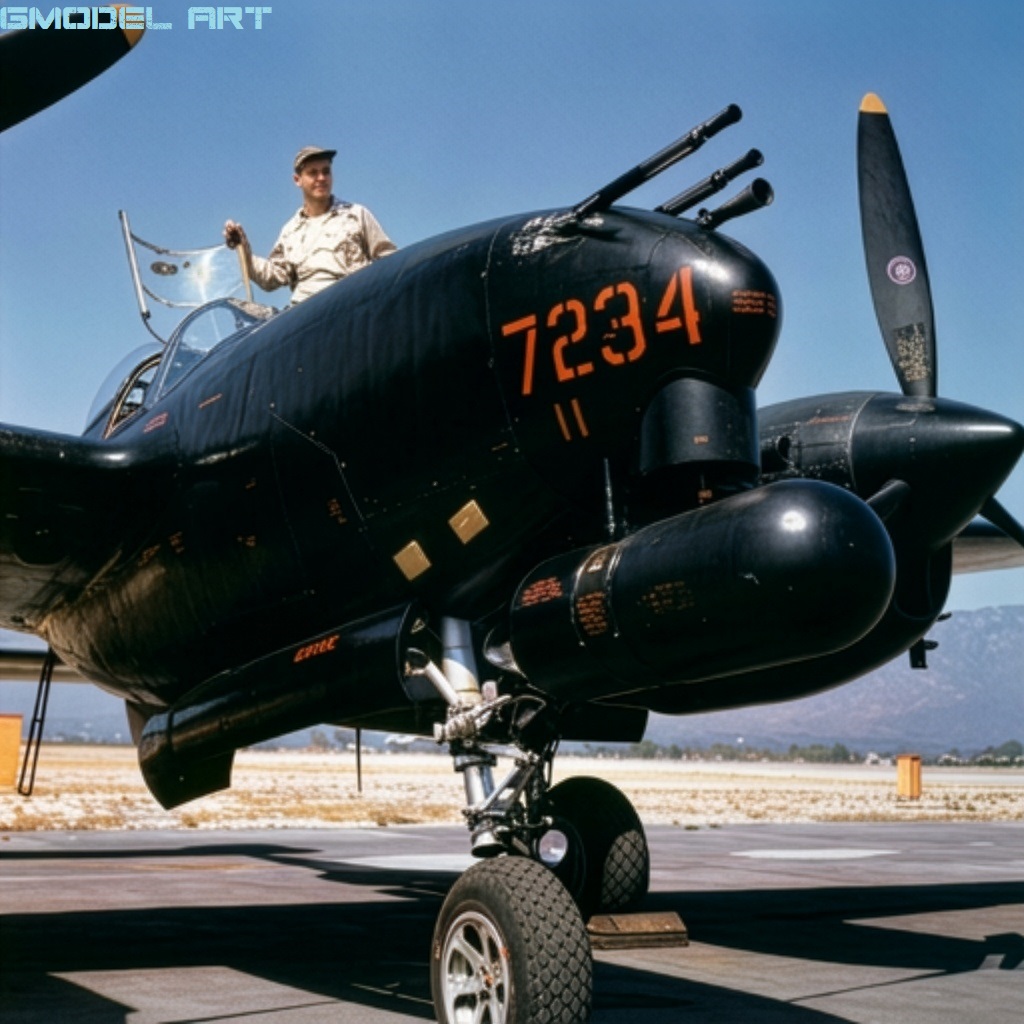
Early wartime camouflage practices included Olive Drab upper surfaces and Neutral Gray undersides on American aircraft. As the USAAF developed a dedicated night-fighter finishing policy, an overall black finish became a defining feature of the P-61.
However, not every P-61 should automatically be represented with an identical black finish. Individual aircraft could differ according to production batch, finishing practice, maintenance history and the period depicted. Historical photographs remain essential when identifying the precise appearance of a particular aircraft.
Some P-61 photographs show a lighter radome contrasting with the surrounding black airframe. Insignia White No. 46 and ANA 601 are relevant historical color references for white-painted areas, but a white radome should not be assumed on every Black Widow. The specific aircraft and photographic evidence must support the choice.
The radome was also made from a different material from the surrounding metal structure. Differences in material, surface preparation and exposure could produce a different appearance or weathering pattern. Such variations should be interpreted individually rather than reproduced as a universal feature of the type.
For a more detailed examination of P-61 development, variants, camouflage and scale modeling, see the dedicated GModel Art article:
P-61 Black Widow: History, Variants, Camouflage & Modeling Guide
Read the complete P-61 Black Widow article on GModel Art
Douglas P-70 Havoc
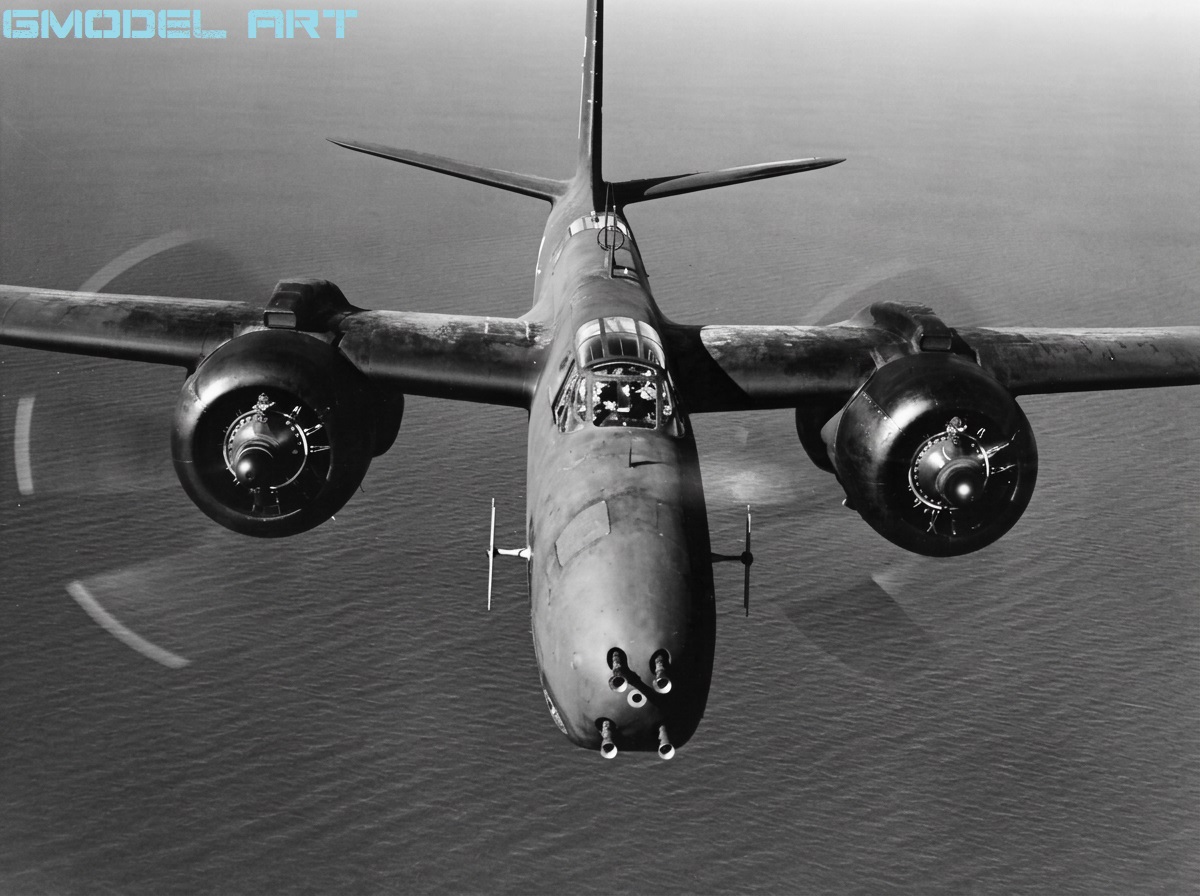
The Douglas P-70 Havoc was derived from the A-20 Havoc light bomber and adapted for night-fighting duties. These conversions represented an early American effort to use available aircraft as radar-equipped night interceptors while more specialized designs were being developed.
The P-70’s origins are important when studying its camouflage. An aircraft converted from an existing production type could retain features associated with its earlier configuration, and the finish of an individual airframe must be assessed in relation to its conversion and operational history.
The broader development of night-fighter camouflage eventually favored glossy black, but it is not historically sound to assume that every P-70 carried an identical overall black finish throughout its service life. The available evidence for the particular aircraft, unit and period should determine the final interpretation.
For scale modeling, photographs of the actual aircraft are more reliable than a generalized instruction that assigns one color scheme to every P-70. The distinction is especially important when reproducing early conversions or aircraft whose appearance predates the full adoption of the 1944 night-fighter standard.
Lockheed P-38M Night Lightning
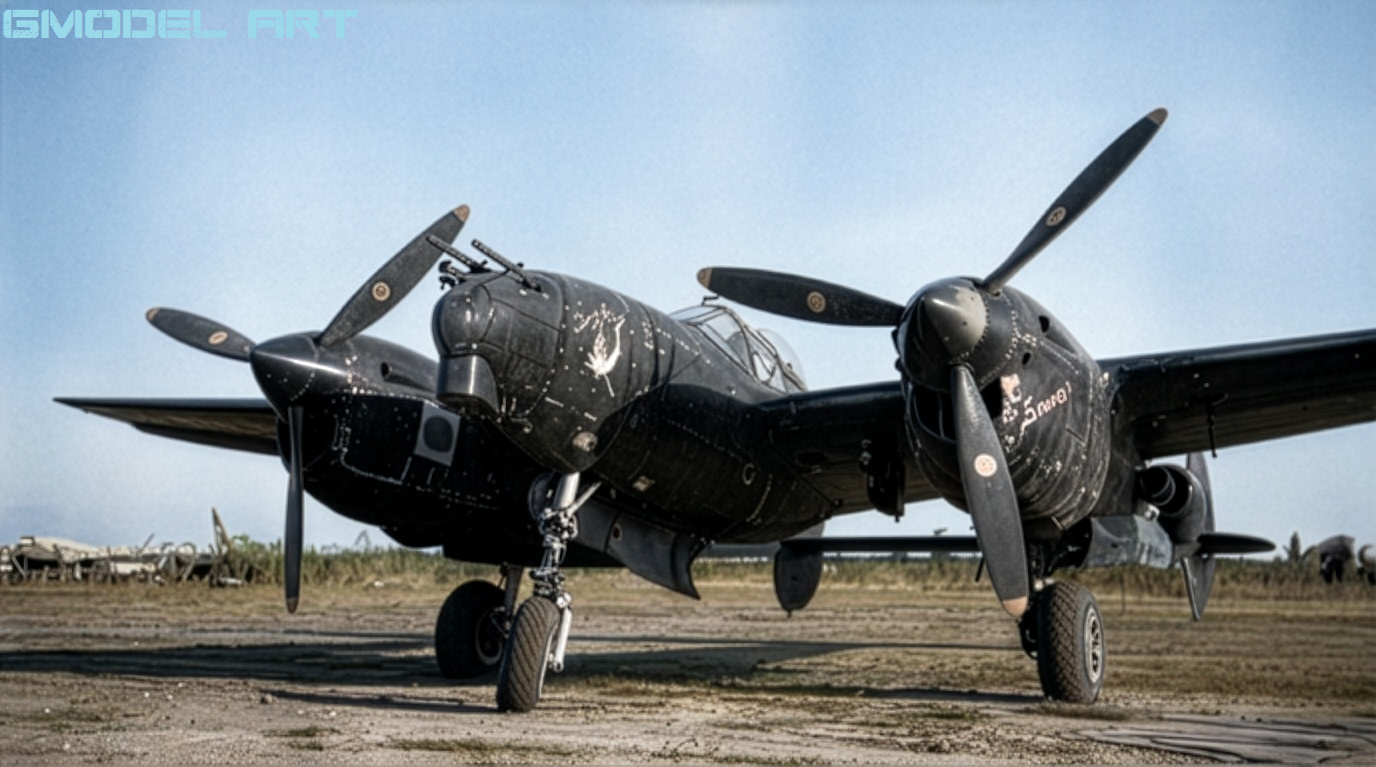
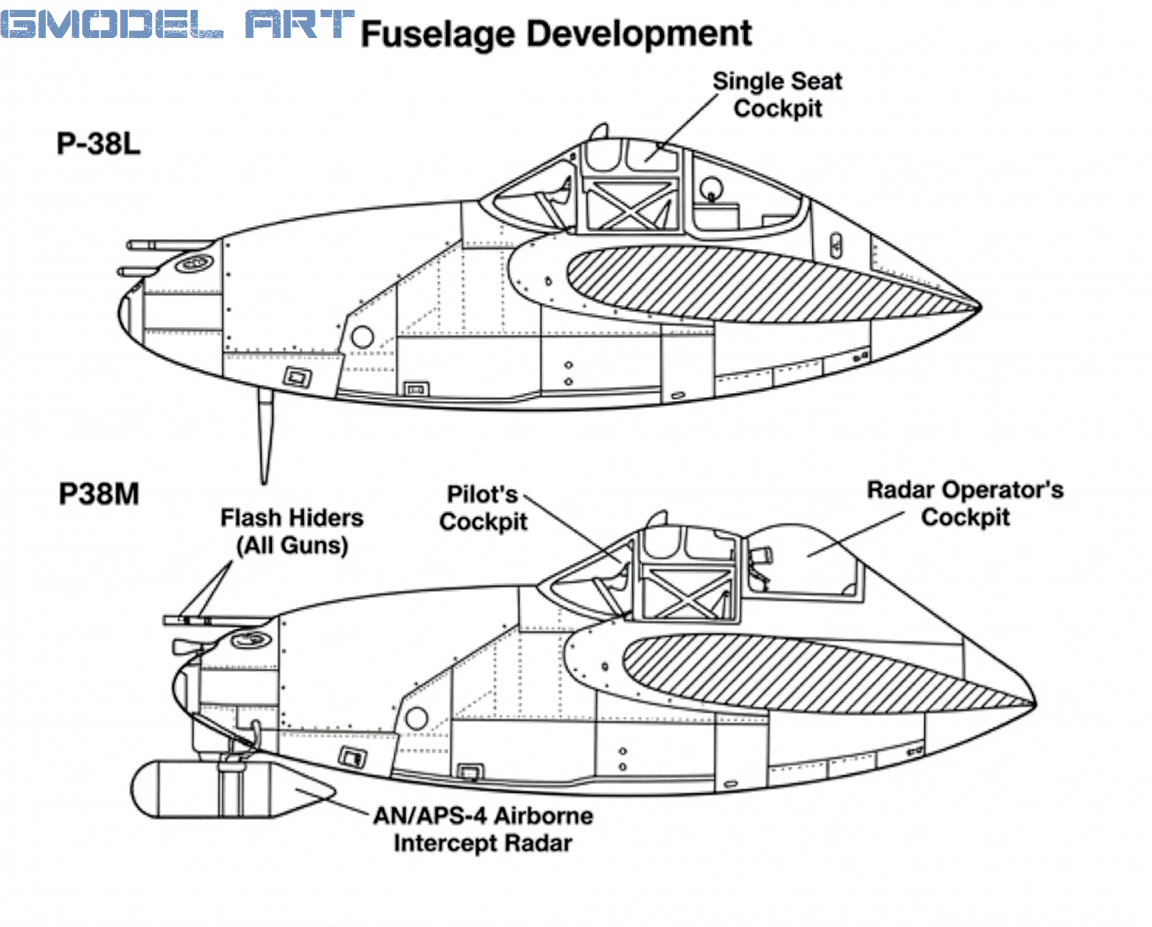
The Lockheed P-38M Night Lightning was a specialized night-fighter development of the P-38 Lightning. It incorporated equipment and configuration changes intended to support night interception, including radar-related equipment and a revised crew arrangement.
The P-38M belongs to the later stage of American night-fighter development, when the use of a dedicated glossy black finish had become established policy. Its appearance should nevertheless be distinguished from that of reconnaissance versions of the P-38, such as the F-4 and F-5.
Those reconnaissance aircraft were associated with experimental Haze Paint schemes designed to reduce visibility at high altitude. These finishes used carefully controlled combinations of tones and application techniques intended to alter the aircraft’s appearance against the sky. They were not simply alternative names for the black finish used by night fighters.
Haze Paint was highly dependent on the method of application and the skill of the personnel applying it. Wear and surface damage could reduce its effectiveness, while the distinctive finish could also reveal that an aircraft was a specialized reconnaissance platform.
The P-38M’s night-fighter role therefore needs to be considered separately from the visual concealment requirements of high-altitude photographic reconnaissance.
Gloss, Weathering and Operational Appearance
Jet Black ANA 622 was specified as a glossy finish, but an aircraft in active service did not necessarily retain its original factory appearance.
Sunlight, moisture, dirt, abrasion, maintenance work and repeated handling could affect the surface. Localized repairs might also produce differences in sheen or texture. These changes are particularly important when interpreting photographs of operational aircraft.
A black aircraft that appears dull in a photograph has not necessarily been repainted in a different color. The photograph may record a reduction in gloss, the effects of lighting, surface contamination or limitations in the photographic process.
Similarly, a highly reflective aircraft in a contemporary photograph should not automatically be interpreted as freshly painted. The original finish, lighting angle and camera position can all affect how the surface appears.
For a scale model, the correct approach is to distinguish the historical paint specification from the aircraft’s condition at the date being represented. A newly completed aircraft may justify a stronger gloss, while a well-used operational example may require a more subdued finish if supported by photographic evidence.
Weathering should remain restrained unless the historical record indicates otherwise. Excessive fading, artificial gray patches or exaggerated paint chipping can create an appearance that is visually attractive but historically unsupported.
Historical Paint References for Scale Modelers
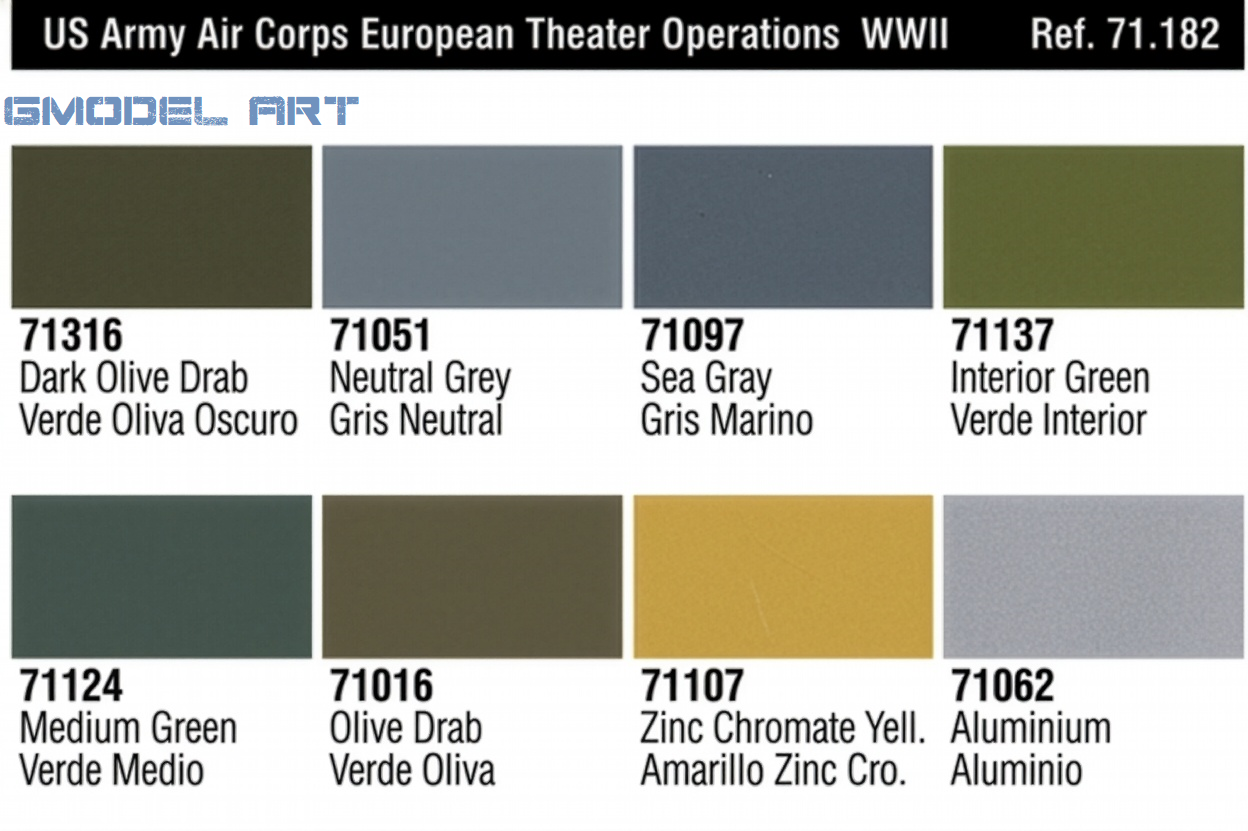
The following designations provide a starting point for identifying American wartime aircraft finishes. They are historical references, not a guarantee that every commercial modeling paint bearing a similar name is an exact match.
| Historical designation | Color or finish | Modeling consideration |
|---|---|---|
| Olive Drab No. 41 | Early USAAF Olive Drab | Associated with early wartime camouflage schemes |
| Neutral Gray No. 43 | Early USAAF Neutral Gray | Used on the undersides of many early camouflage schemes |
| ANA 613 | Olive Drab | A later ANA designation; do not assume an exact match to No. 41 |
| ANA 603 | Sea Gray | Distinguish from the earlier Neutral Gray No. 43 designation |
| Insignia White No. 46 / ANA 601 | Insignia White | Use for documented white-painted areas, not automatically for every radome |
| Jet Finish No. 622 / ANA 622 | Jet Black | The principal historical reference for the glossy night-fighter finish |
The ANA designations are useful for understanding the wartime standardization of aircraft colors, but they should not be confused with modern Federal Standard (FS) numbers. The FS system was introduced after World War II, and any comparison between an ANA color and a later FS reference should be treated as an approximation unless a reliable technical source establishes the relationship.
Commercial model paints from manufacturers such as Tamiya, Gunze, Humbrol, Vallejo, AK Interactive, AMMO by Mig and Mr. Paint can help reproduce these finishes. However, product names and color charts alone do not establish historical equivalence. Paint formulation, scale effect, primer, application method and final varnish can all influence the result.
For an overall-black P-61, a modeler may begin with a suitable black and adjust the final sheen to match the reference photograph. A slightly less intense black may help preserve visible detail on a small-scale model, but it should not be presented as the exact original color without supporting evidence.
| ANA 601 | ANA 603 | ANA 613 | ANA 622 | |
| Insignia White | Sea Gray | Olive Drab | Jet | |
| Schemes | ||||
| Basic | (Radome) | Lower | Upper | |
| Black | (Radome) | Overall | ||
| Color matches | ||||
| Gunze Aqueous | (H316) | – | H52 | (H2) |
| Gunze Mr. Color | (C316) | – | C12 | (C2) |
| Humbrol | (22) | (125) | (155) | (21) |
| Model Master | (1745) | (1723) | 2050 | (1747) |
| Revell | (04) | (74) | – | (08) |
| Tamiya | (X-2) | (XF-24) | – | (X-1) |
| Vallejo Model Air | 71.279* | 71.097* | 71.016* | (71.057) |
| Vallejo Model Color | (70.820) | (70.868) | 70.887* | (70.861) |
| AKAN | (73146) | 72040* | 72033 | (78005) |
| AK Interactive | (AK 2052) | (AK 2144) | AK 2204 | (AK 719) |
| AK Real Colors | (RC222) | (RC244) | – | (RC001) |
| AMMO by Mig | (A.MIG-047) | (A.MIG-204) | A.MIG-240* | (A.MIG-032) |
| Colourcoats | ACUS37 | (ACUS14) | – | |
| Hataka | HTK-_043* | HTK-_031* | HTK-_018 | (HTK-_041) |
| Lifecolor | (LC 51) | (UA 022) | – | (LC 01) |
| Mission Models | (MMP-104) | (MMP-084) | – | (MMP-047) |
| Mr. Paint | MRP-135 | (MRP-40) | MRP-138 | MRP-137 |
| Xtracolor | (X141) | (X130) | X113 | (X012) |
| Xtracrylix | (XA1141) | (XA130) | XA1113 | (XA1012) |
The most important decision is the final surface finish. Gloss black, satin black and matte black produce substantially different visual effects. The selected finish should reflect the documented condition of the aircraft rather than a general preference for one modeling technique.
Historical Accuracy: Choosing the Right Finish
American night-fighter camouflage between 1943 and 1945 illustrates how operational requirements could challenge established assumptions about aircraft painting. The move toward natural-metal finishes for most combat aircraft did not eliminate the need for specialized camouflage, and night fighters remained an important exception.
The adoption of Jet Black ANA 622 reflected research into visibility, reflected light and surface finish. It was not simply a decision to paint aircraft black because they operated at night. The distinction between glossy and flat finishes was central to the resulting policy.
For scale modelers, the most reliable process begins with identifying the aircraft, its unit and the period represented. Historical photographs and technical references should then be used to establish the appropriate paint scheme, markings and surface condition.
The result should reproduce the evidence rather than a generic image of a black night fighter. By distinguishing early Olive Drab and Neutral Gray schemes, the later ANA color standards and the dedicated Jet Black finish, modelers can produce more convincing representations of the aircraft that carried out America’s night-interception missions during World War II.
For further reading, explore the dedicated GModel Art feature on the Northrop P-61 Black Widow, covering its history, variants, camouflage and modeling considerations.
P-61 Black Widow: History, Variants, Camouflage & Modeling Guide
Gallery