article
Vought F4U-1A Corsair “Big Hog” (BuNo 17649) – The Personal Aircraft of Lt. Cdr. John T. “Tommy” Blackburn
The Corsair That Became the Symbol of the “Jolly Rogers”
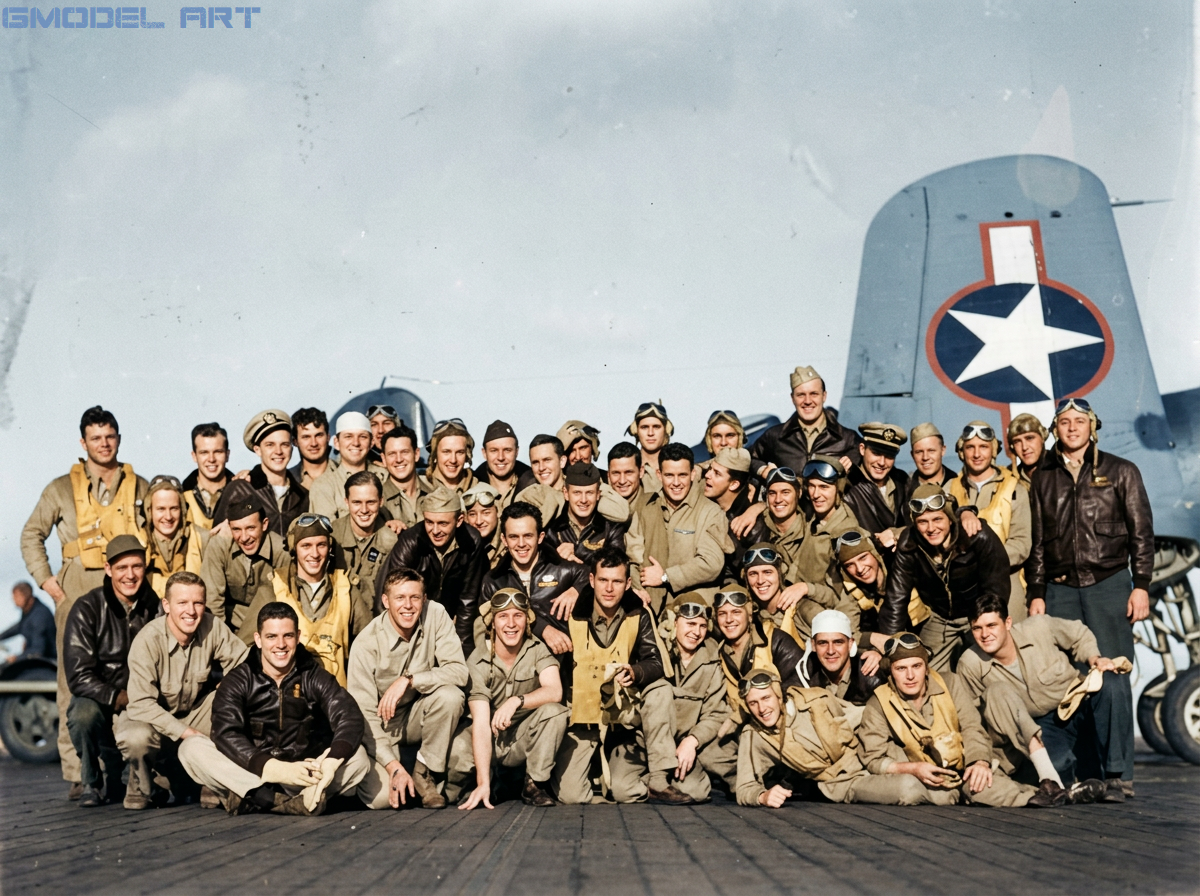
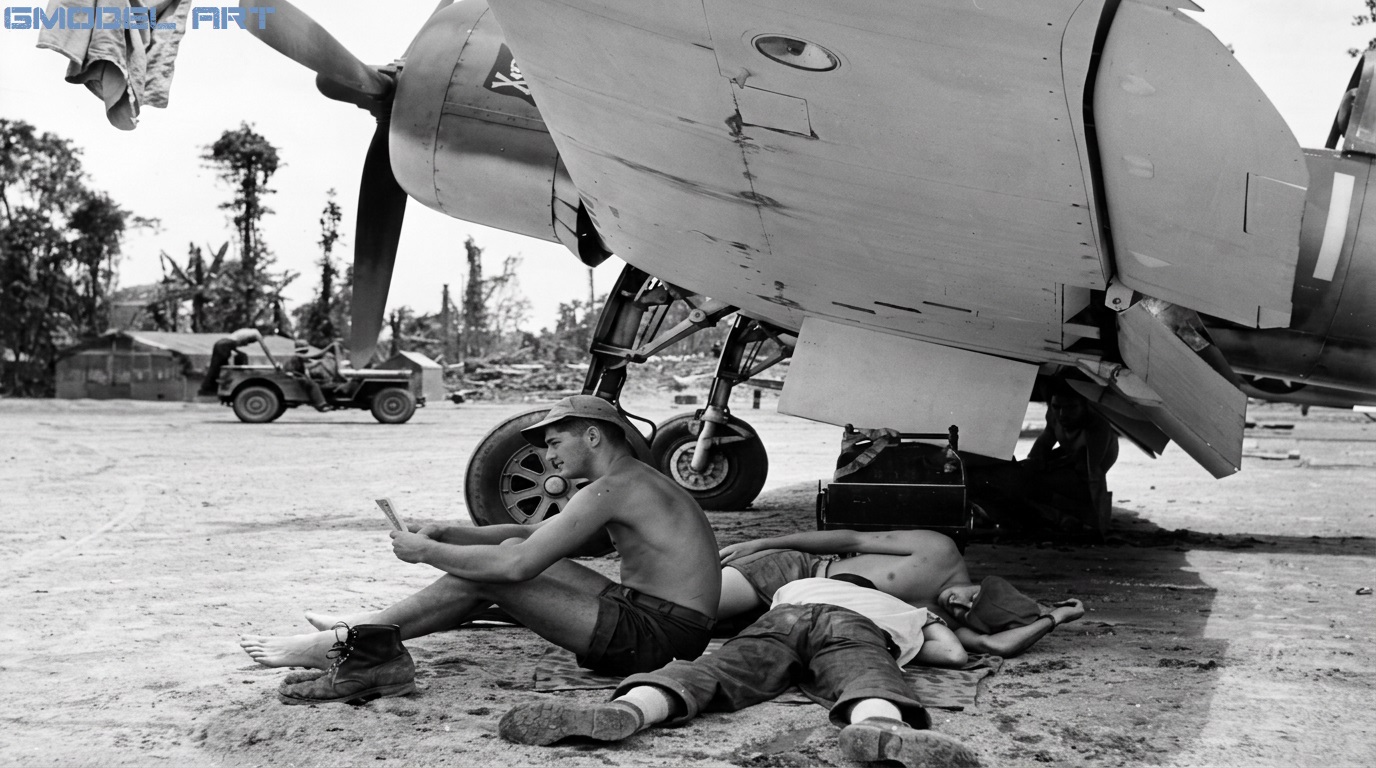
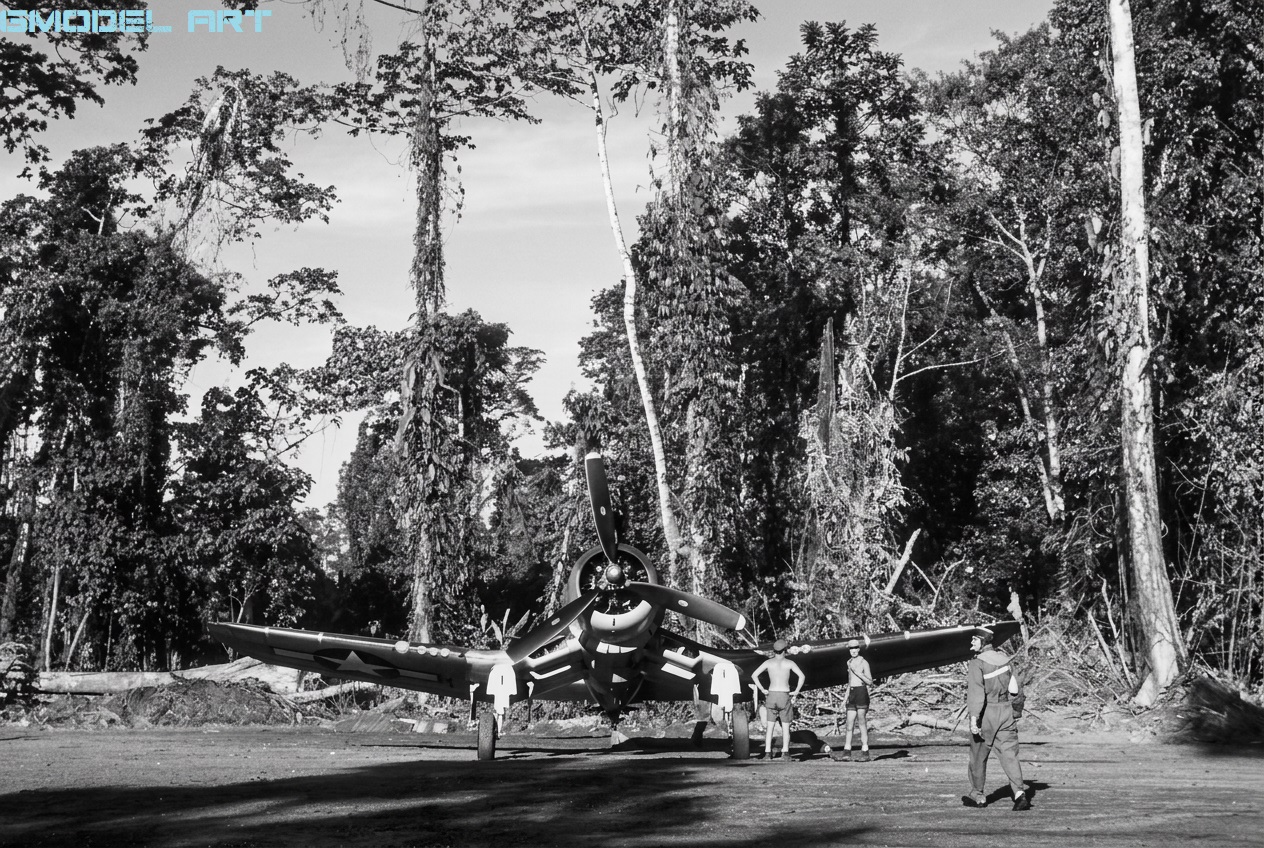
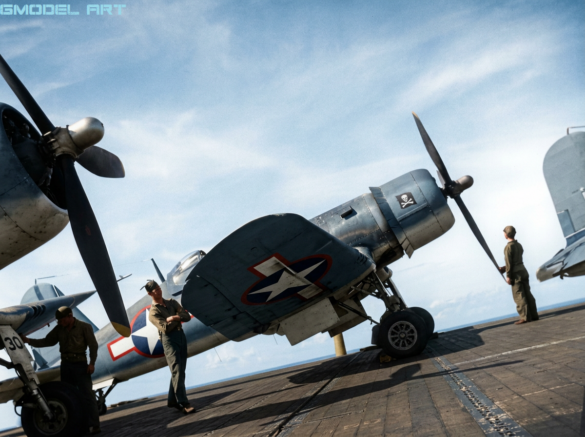
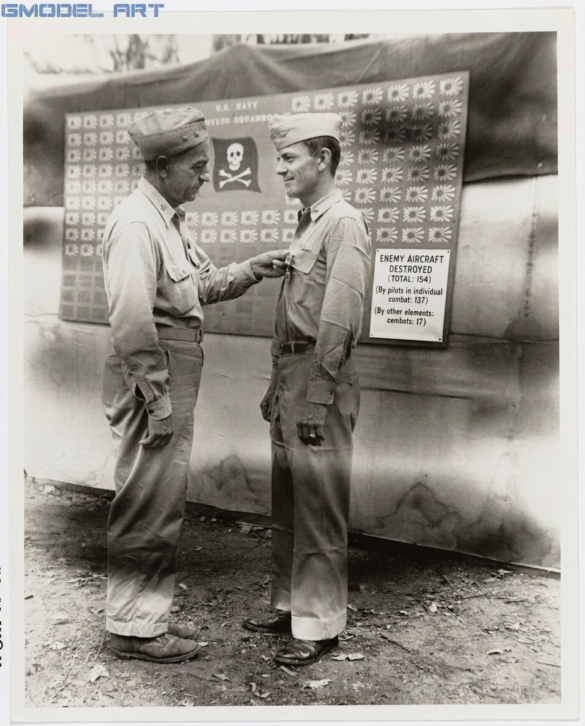
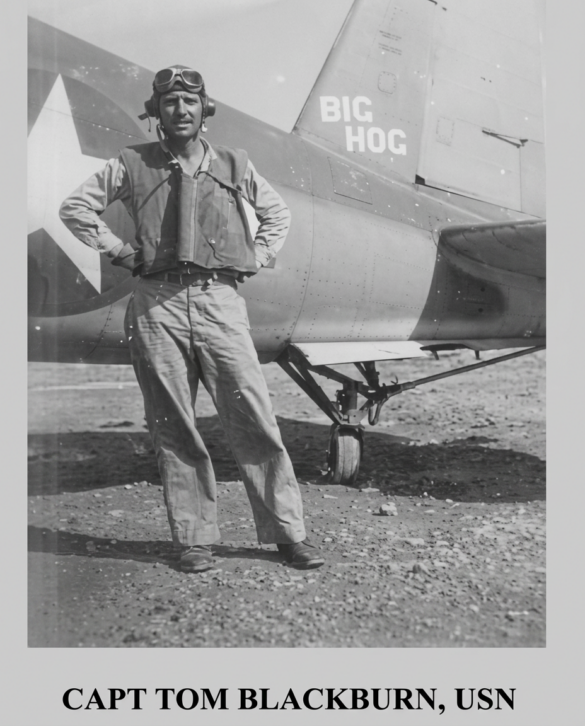
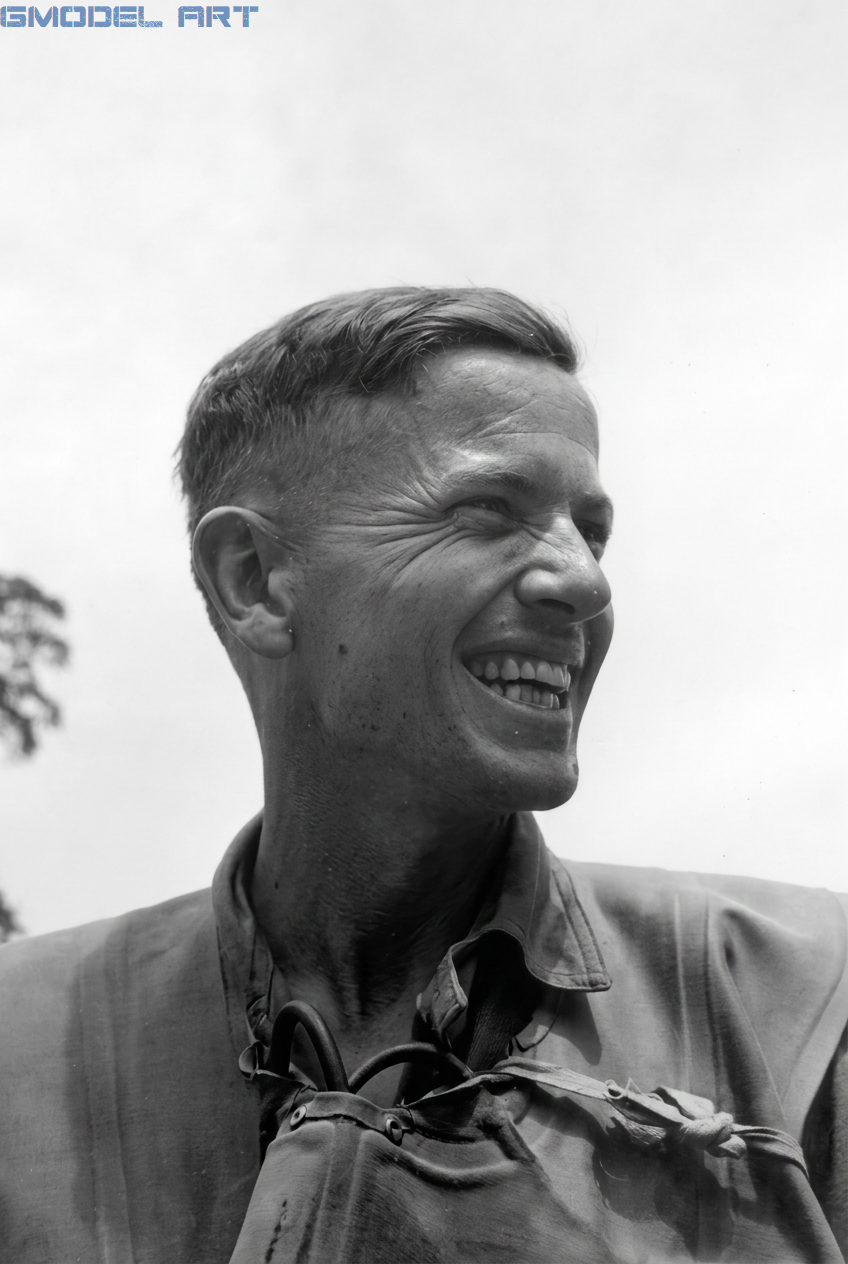
Few aircraft of the Second World War have achieved such an iconic status in the history of U.S. Naval Aviation as the Vought F4U-1A Corsair “Big Hog” (BuNo 17649). This particular aircraft was closely associated with Lt. Cdr. John T. “Tommy” Blackburn, founder and first commanding officer of the legendary VF-17 “Jolly Rogers”, a squadron that played a decisive role in establishing the Corsair as one of the finest American fighter aircraft of the Pacific War.
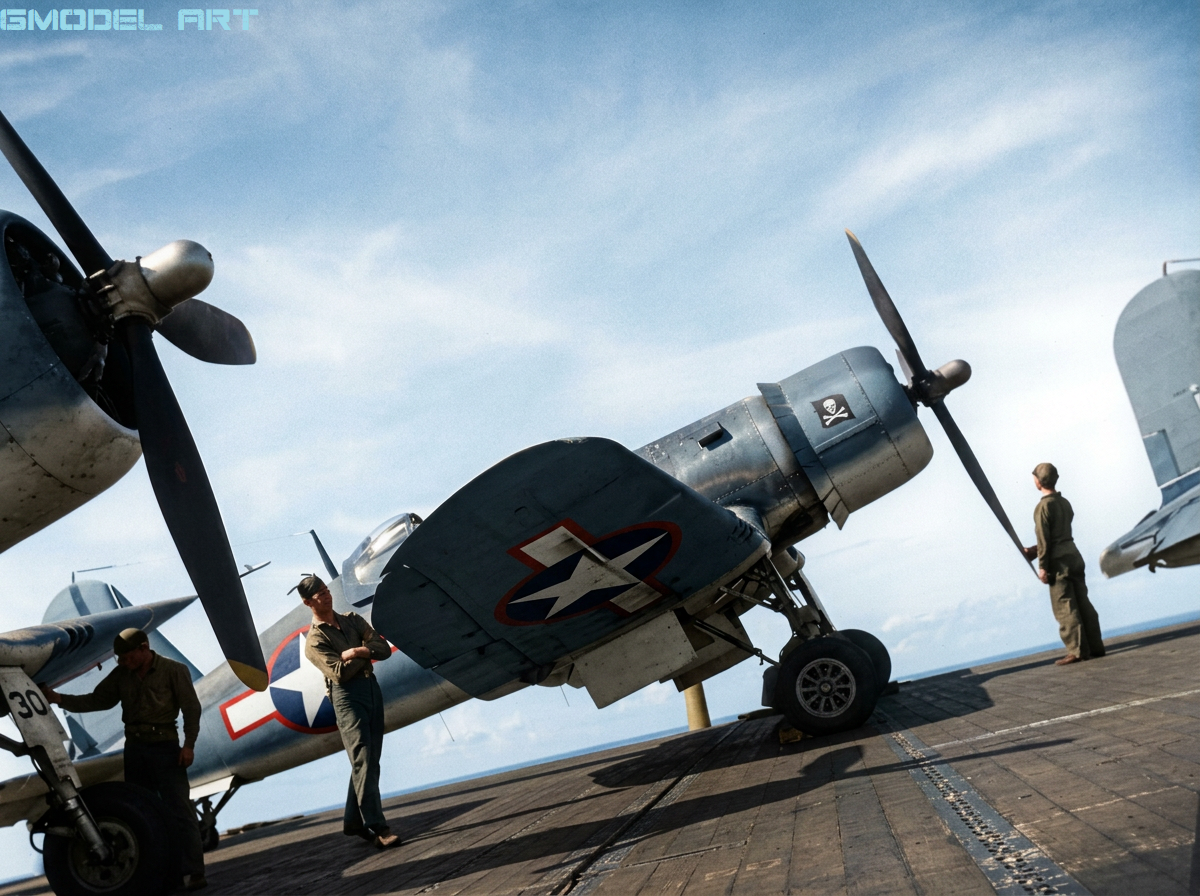
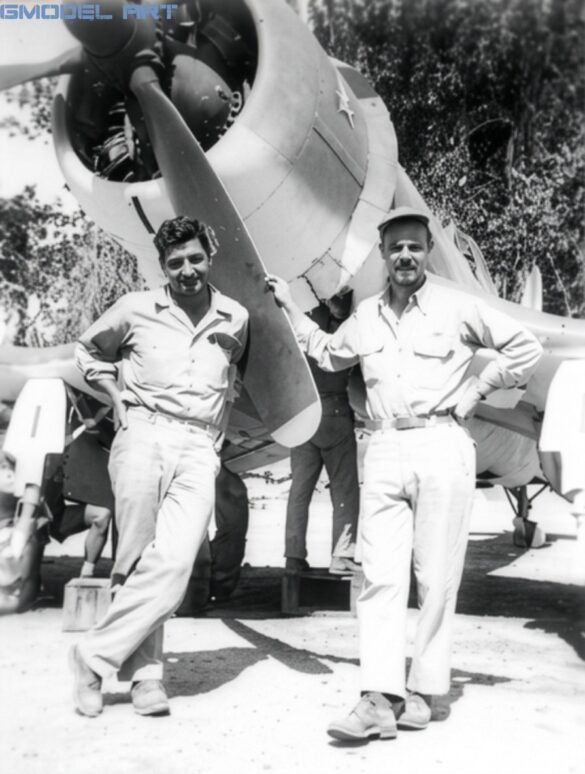
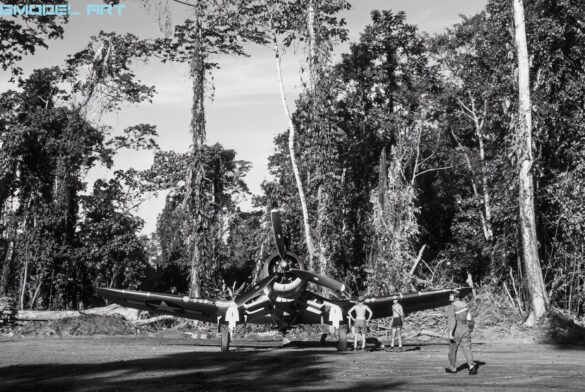
In 1943, VF-17 became one of the first operational U.S. Navy squadrons to receive the new Corsair. Blackburn quickly realized that behind the aircraft’s demanding low-speed handling characteristics—especially during carrier landings—lay an exceptional combat fighter. Powered by the mighty Pratt & Whitney R-2800 Double Wasp, equipped with the massive Hamilton Standard propeller, the distinctive Inverted Gull Wing, six Browning .50 caliber machine guns, outstanding speed and superb diving performance, the Corsair proved to be one of the most formidable fighters of its generation.
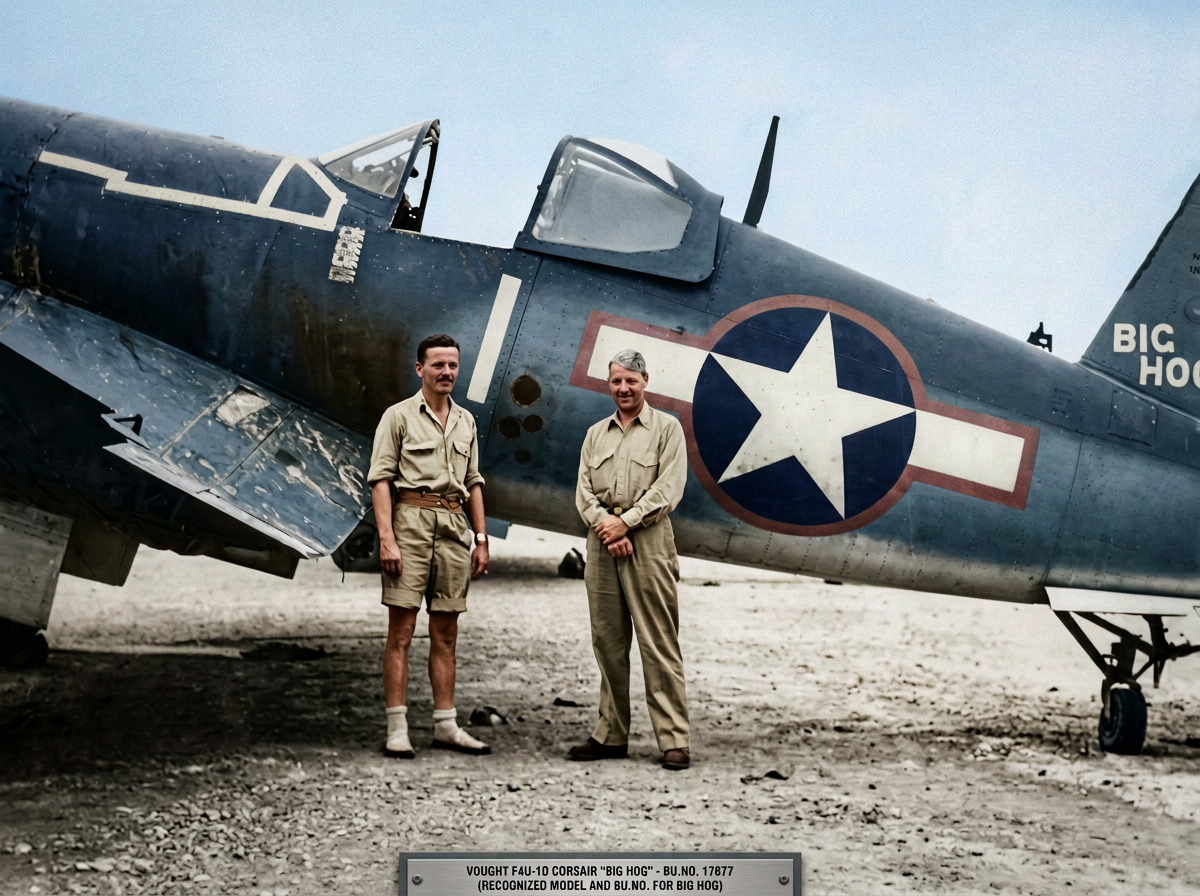
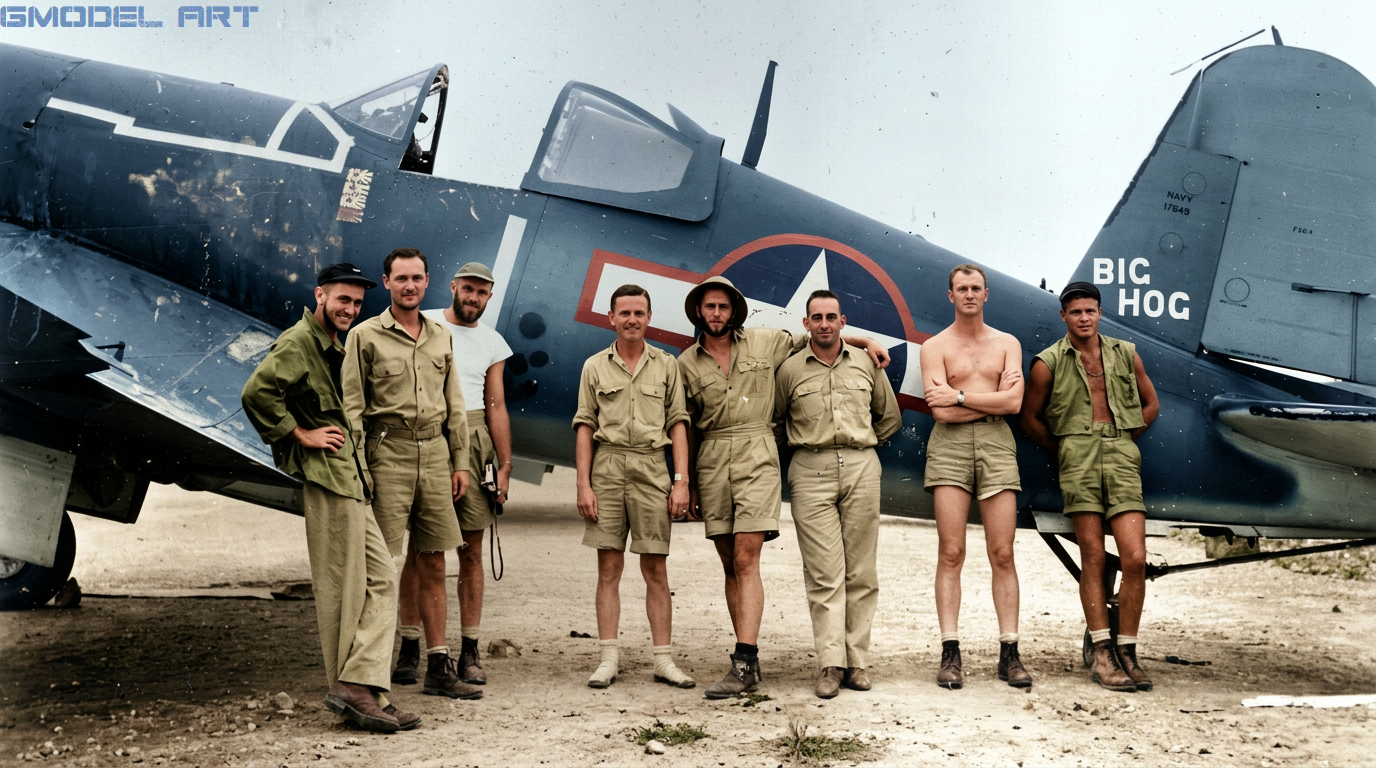
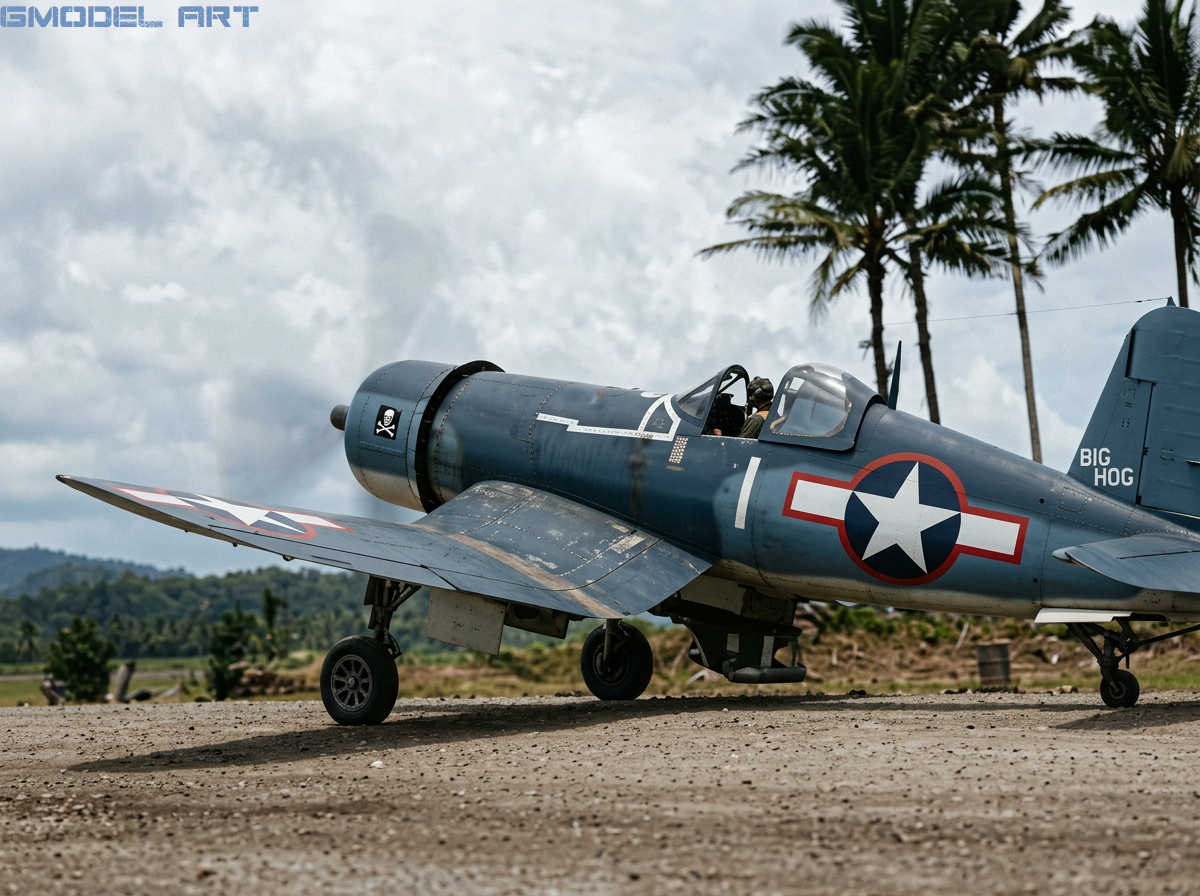
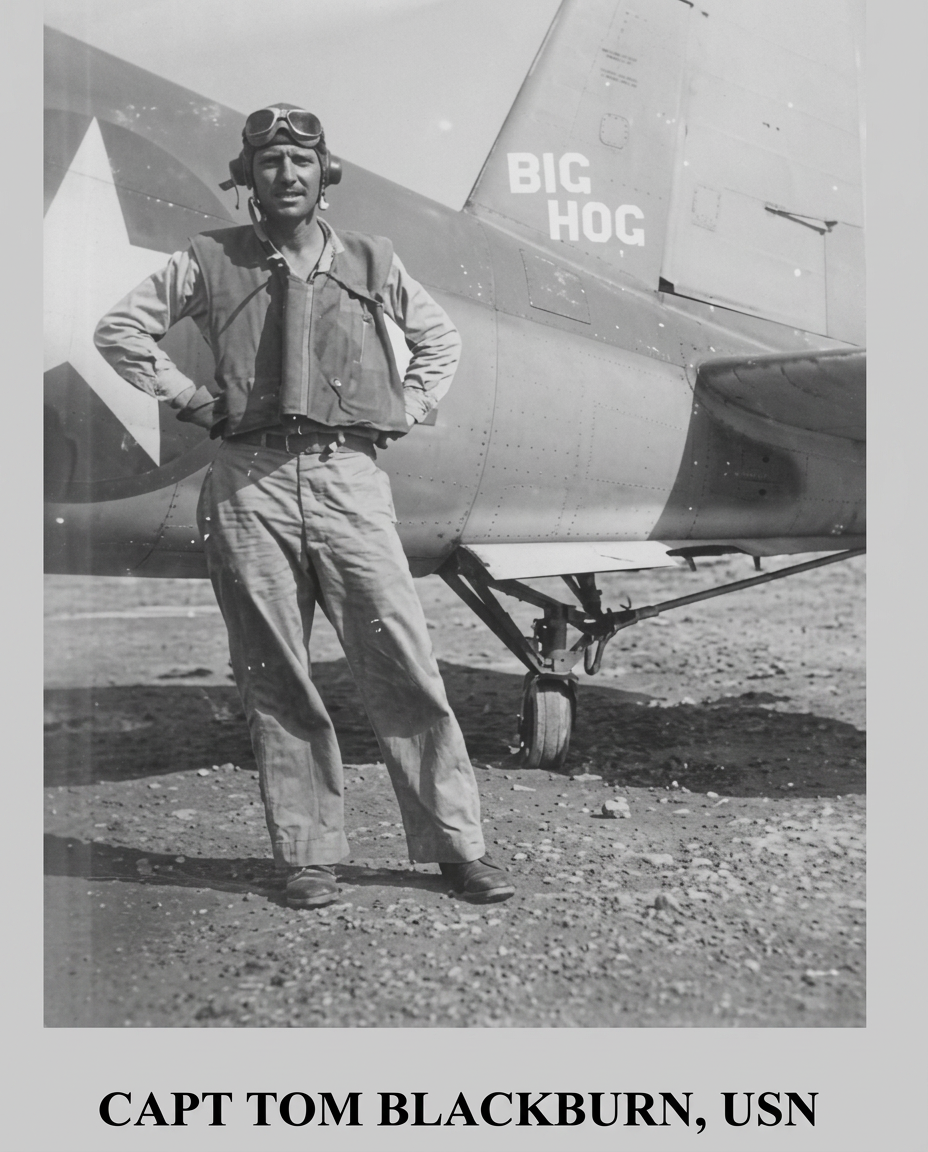
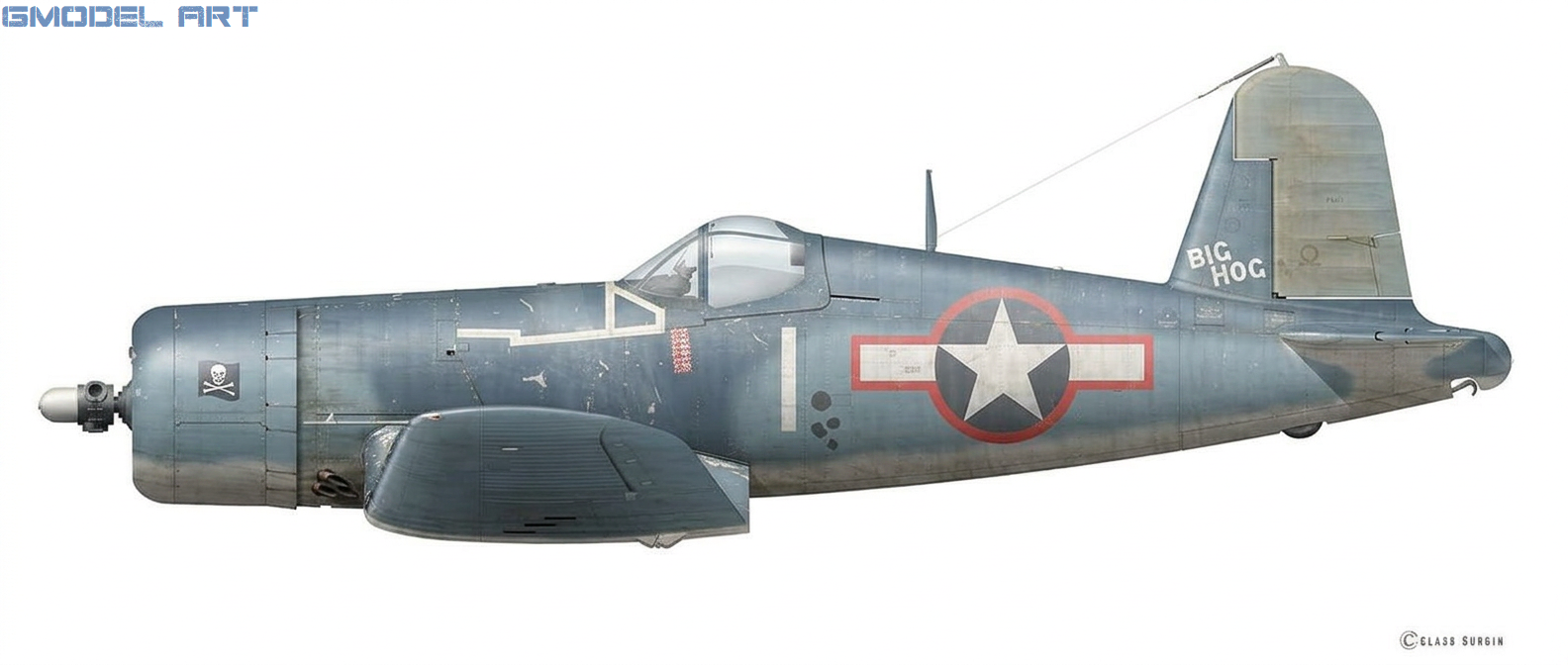
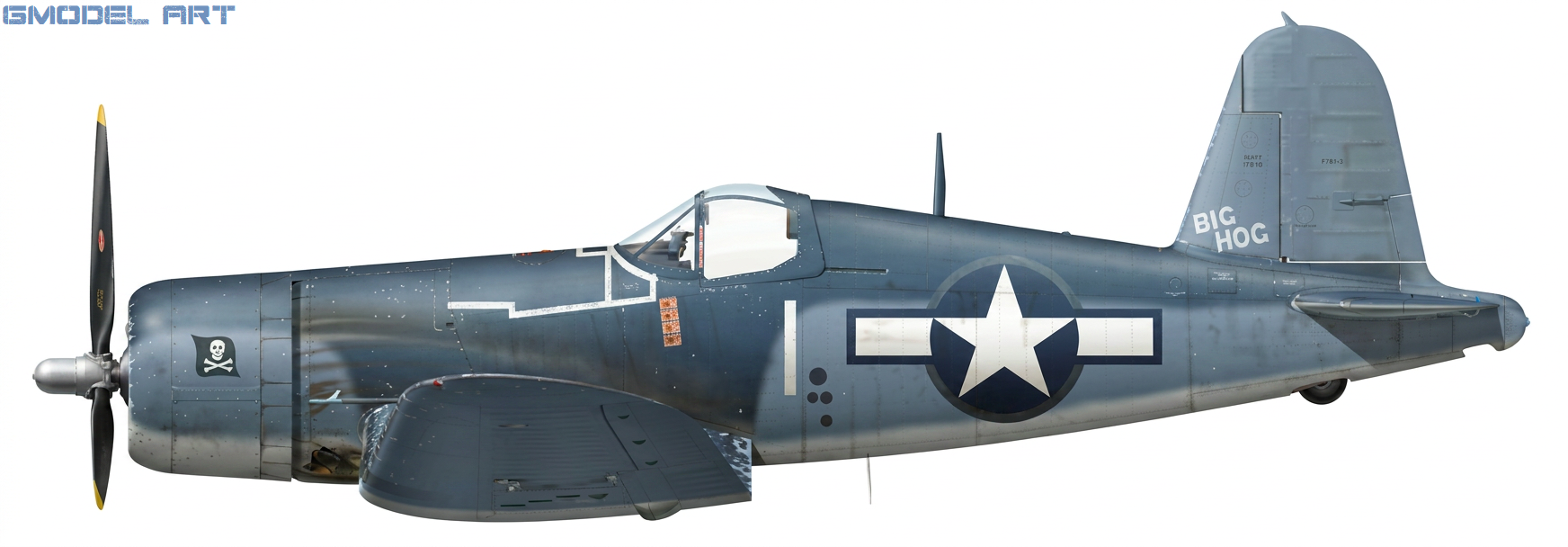
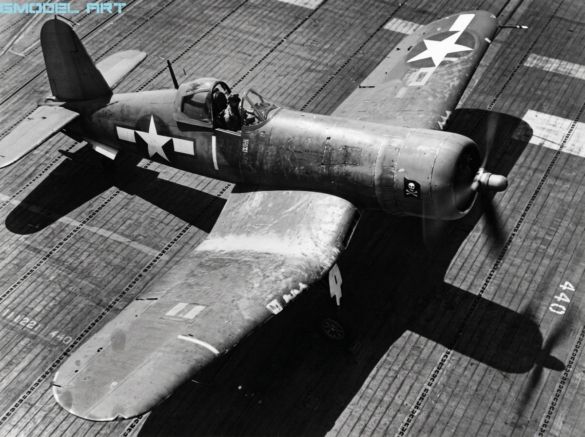
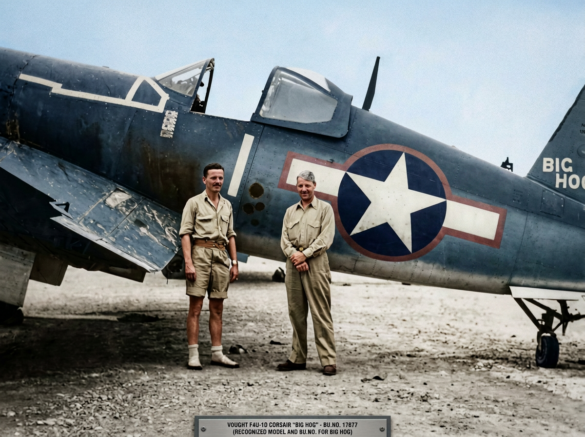
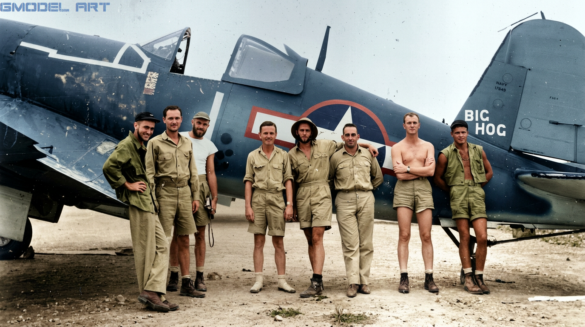
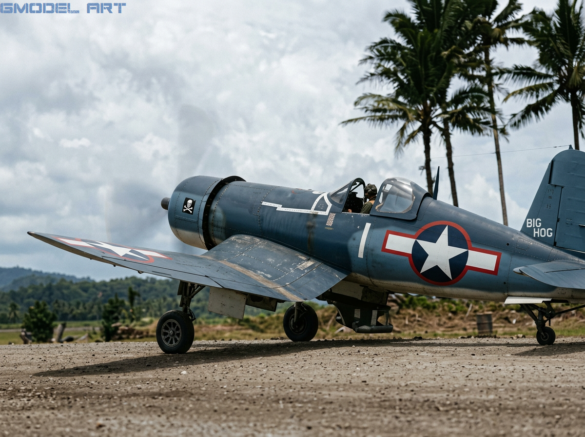
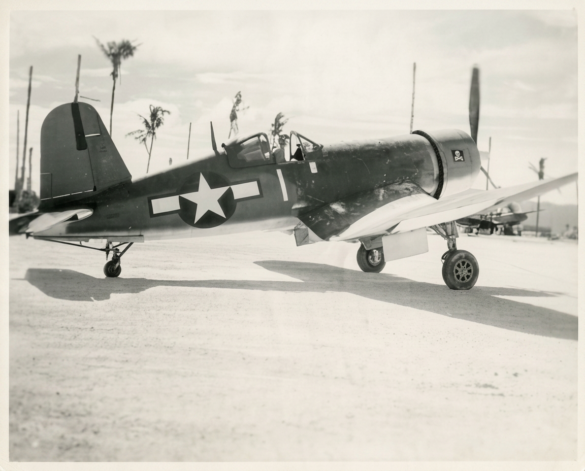
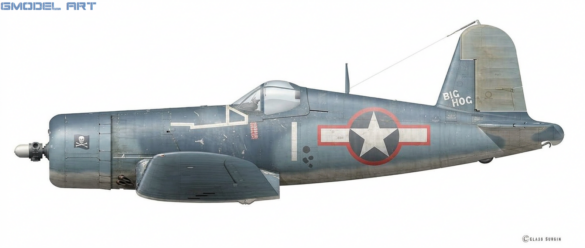
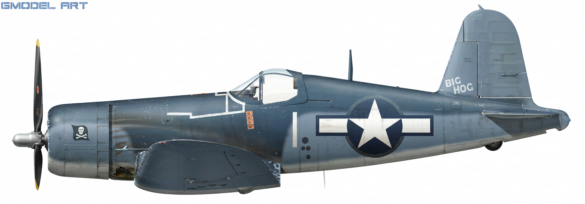
The aircraft most closely identified with Blackburn was BuNo 17649, carrying the tactical number White 1 and the famous “Big Hog” inscription on its tail. The nickname became permanently associated with both Blackburn and the early history of VF-17, eventually becoming one of the most recognizable names ever carried by a Corsair during World War II.
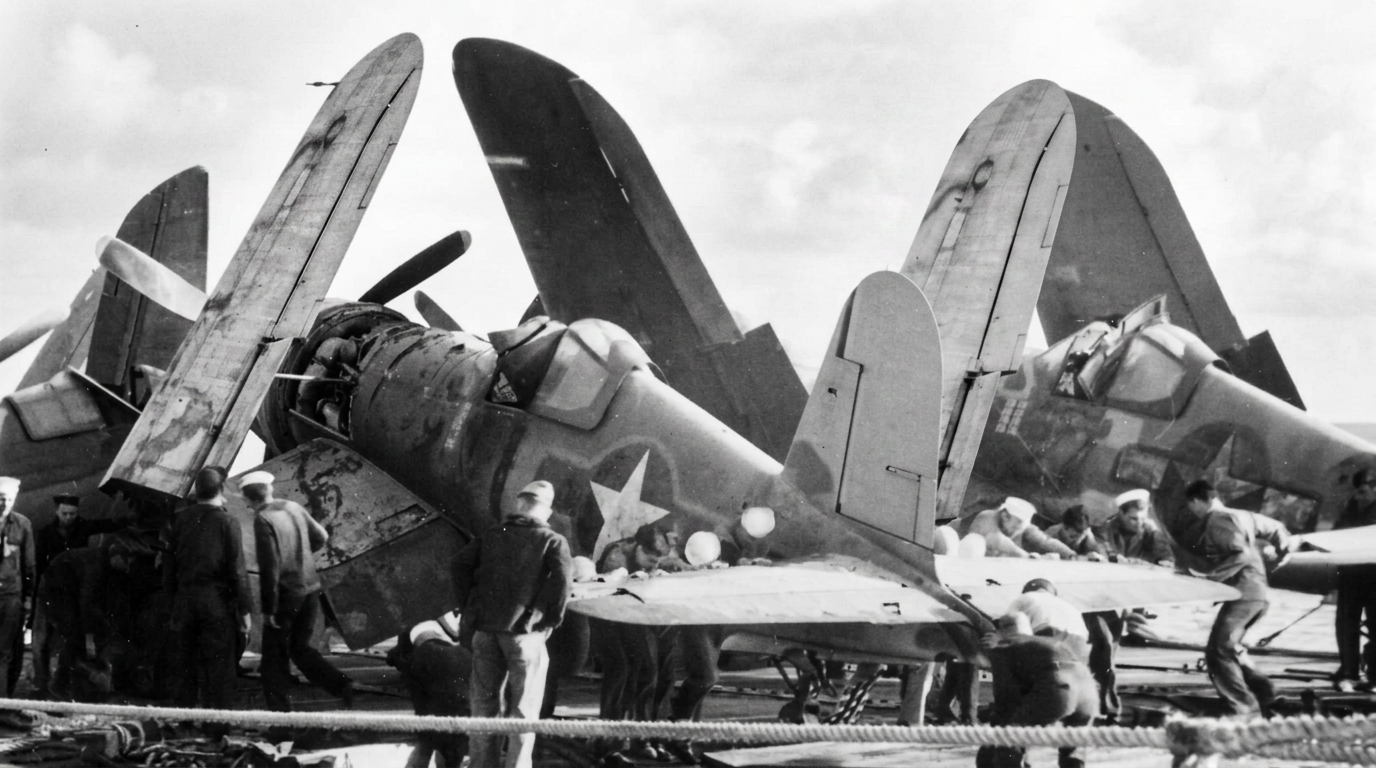
BuNo 17649 is particularly significant because it belongs to the early transition period between the original F4U-1 Birdcage and what is conventionally known today as the F4U-1A. Although the designation “F4U-1A” has become standard terminology among historians and scale modelers, it was not originally an official U.S. Navy production designation in the same sense as later Corsair variants.
The most obvious improvement was the raised cockpit position and the replacement of the original Birdcage canopy with a redesigned canopy offering significantly improved all-around visibility. Nevertheless, these early transitional aircraft still retained several construction features inherited directly from the Birdcage production line.
This is precisely what makes Big Hog (BuNo 17649) so fascinating for scale modelers: it should not be treated as just another standard late-production F4U-1A.
National Insignia – From Red Outline to Insignia Blue
One of the most important details for accurately dating the appearance of Big Hog is its U.S. national insignia.
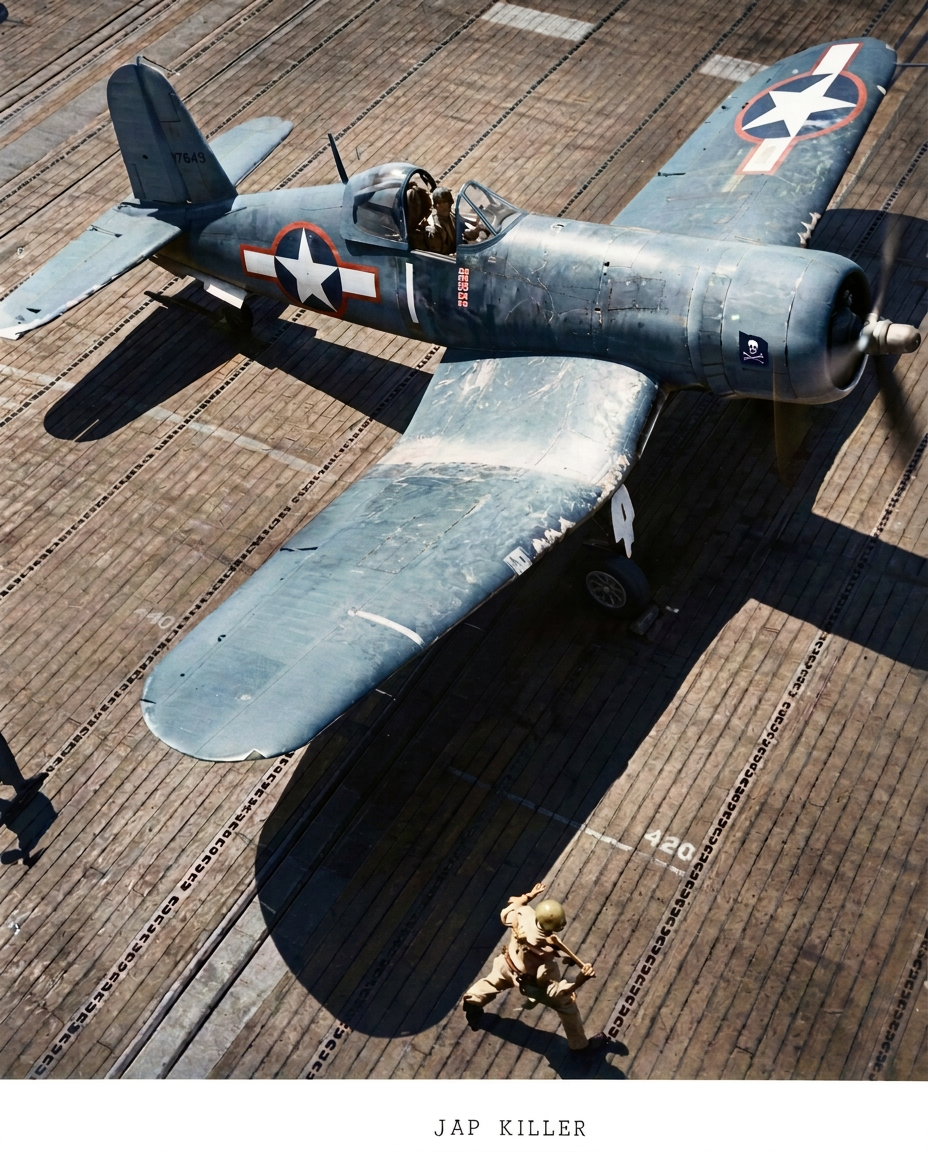
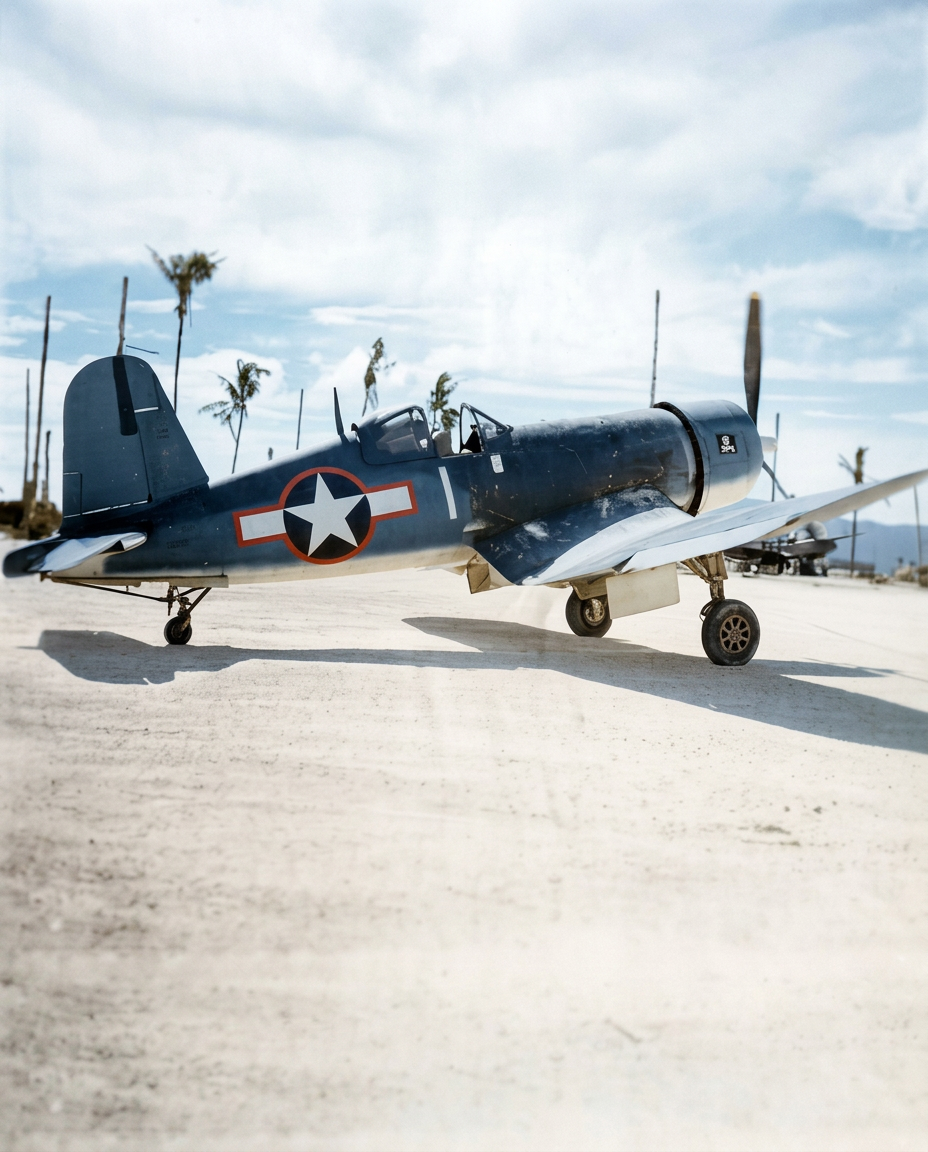
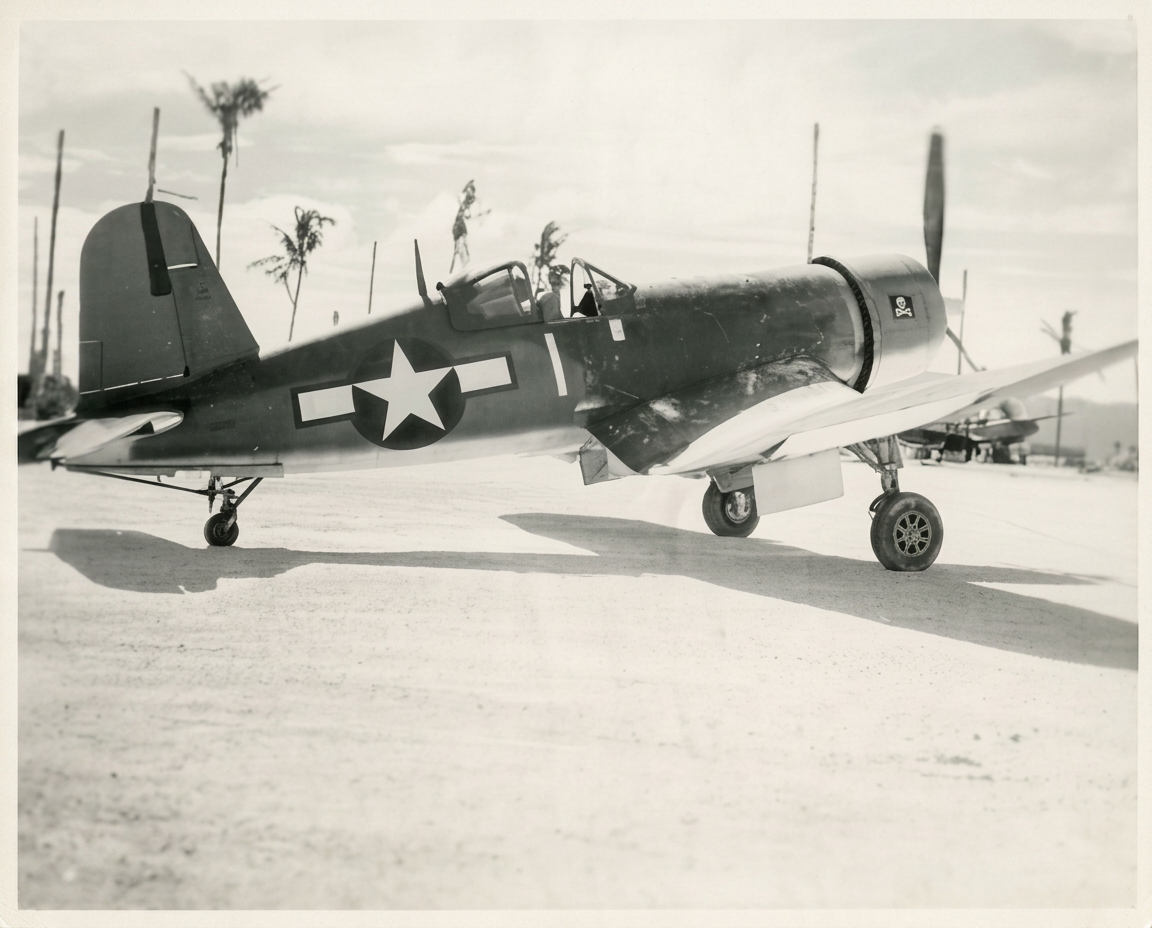
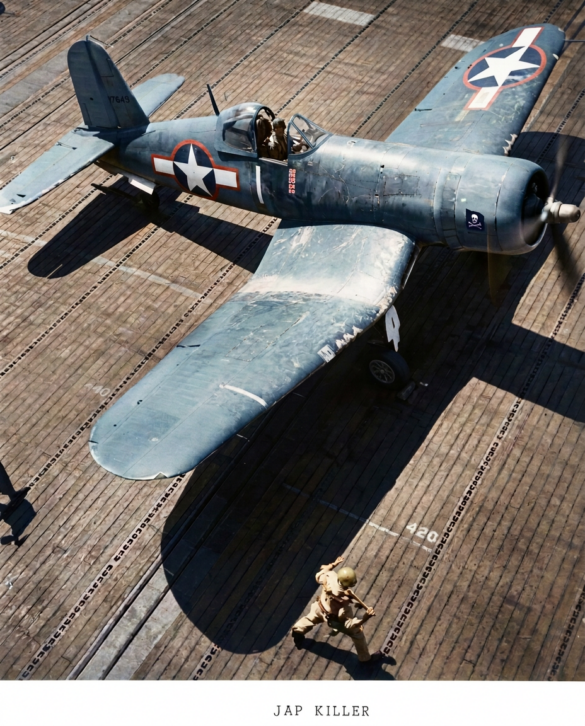
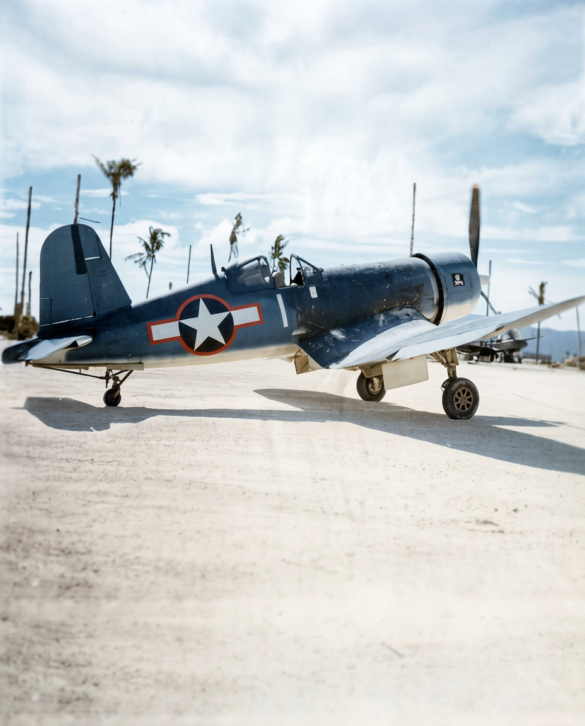
Early photographs show the aircraft carrying the famous Star-and-Bar with the red outline, introduced during the brief transitional period in the summer of 1943.
This version of the insignia remained in service for only a very short time.
When the red outline was officially eliminated, it was not simply removed from Big Hog. Instead, it was repainted with Insignia Blue, following the new official specification adopted by the U.S. military. This effectively transformed the existing insignia into the later blue-outlined Star-and-Bar carried by virtually all U.S. combat aircraft.
Consequently, photographs showing BuNo 17649 with either the red or the blue outline should not be interpreted as contradictory representations.
They simply depict different moments in the operational life of the same aircraft.
For modelers, this is an extremely important detail, as it allows at least two historically accurate versions of Big Hog to be built, provided that all other details correspond to the chosen time period.
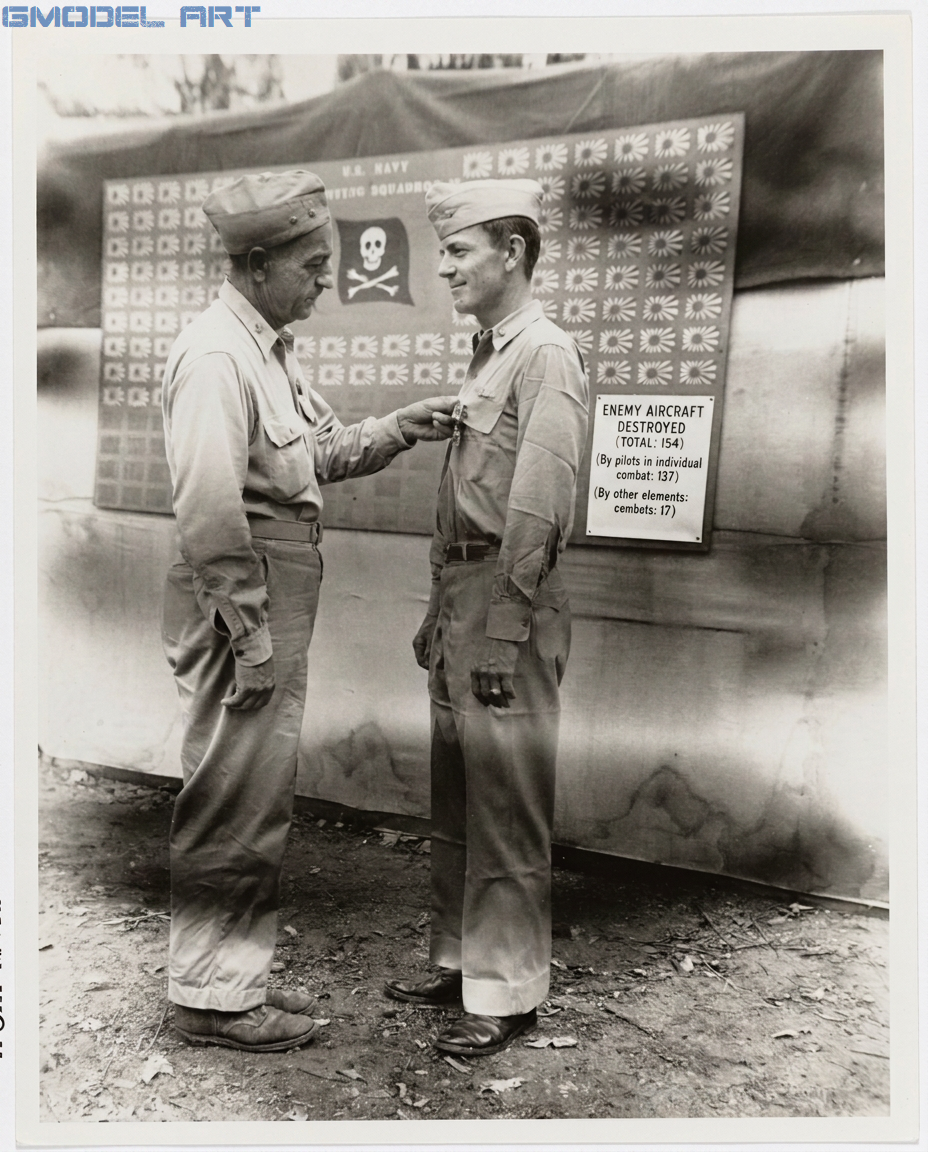
Lt. Cmdr. John T. “Tommy” Blackburn | 11 Confirmed Aerial Victories | VF-17 “Jolly Rogers”
| Date | Enemy Aircraft | Result | Total Victories | Notes |
|---|---|---|---|---|
| 14 September 1943 | Mitsubishi A6M Zero | Destroyed | 1 | First confirmed aerial victory. |
| 17 September 1943 | Mitsubishi A6M Zero | Destroyed | 2 | Combat over the Solomon Islands. |
| 17 September 1943 | Mitsubishi A6M Zero | Destroyed | 3 | Second victory of the day. |
| 1 October 1943 | Mitsubishi A6M Zero | Destroyed | 4 | Offensive sweep over the Northern Solomons. |
| 1 October 1943 | Mitsubishi A6M Zero | Destroyed | 5 | Became a fighter ace. |
| 1 October 1943 | Mitsubishi A6M Zero | Destroyed | 6 | Third victory during the mission. |
| 14 October 1943 | Aichi D3A “Val” | Destroyed | 7 | Dive bomber intercepted during fleet operations. |
| 29 October 1943 | Mitsubishi A6M Zero | Destroyed | 8 | Escort mission. |
| 11 November 1943 | Mitsubishi A6M Zero | Destroyed | 9 | Fighter engagement over Rabaul. |
| 11 November 1943 | Mitsubishi A6M Zero | Destroyed | 10 | Second victory of the mission. |
| 11 November 1943 | Mitsubishi A6M Zero | Destroyed | 11 | Final confirmed aerial victory. |
Total Confirmed Aerial Victories: 11
Victory Markings – A Frequently Misinterpreted Detail
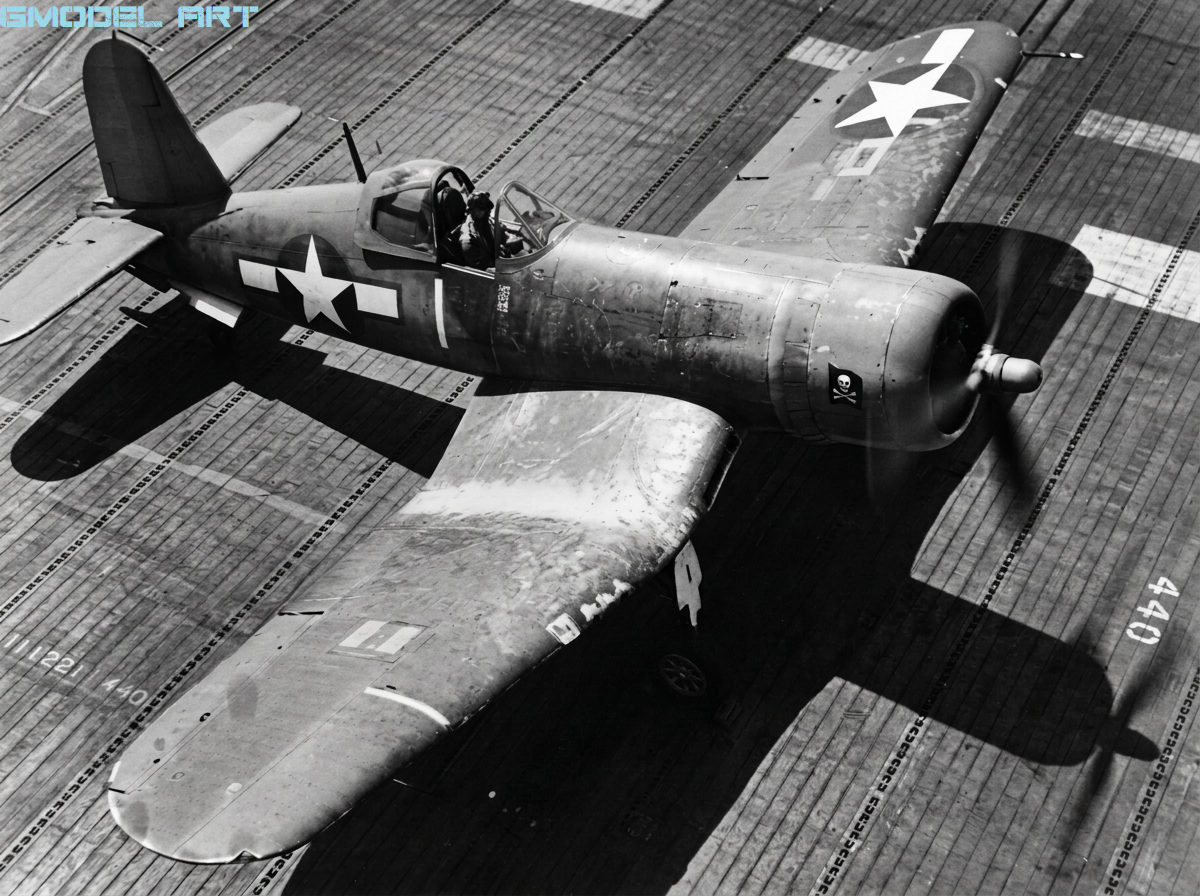
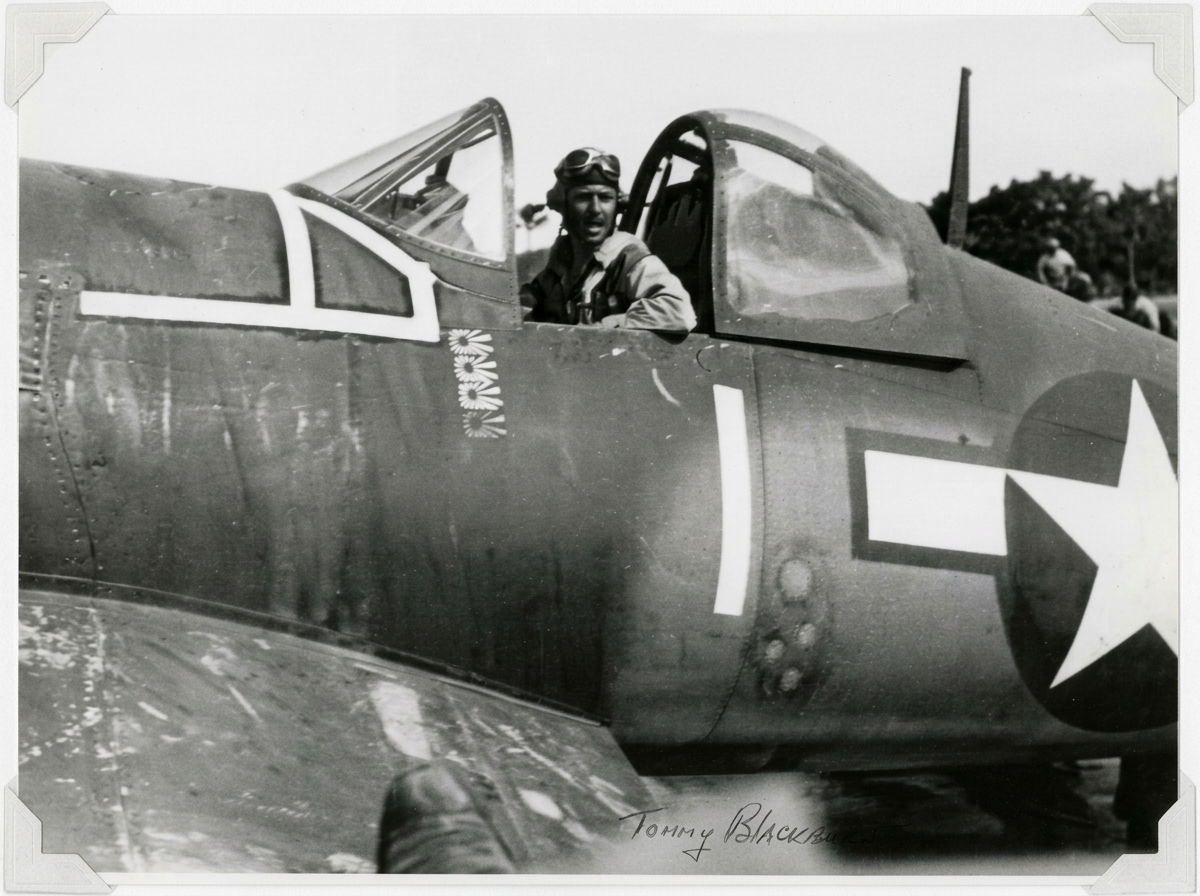
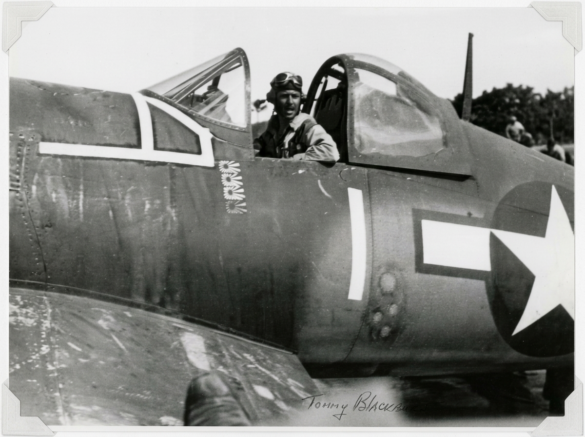
Another feature that deserves special attention is the Japanese victory flags (Victory Markings) painted below the cockpit of Big Hog.
Although many decal manufacturers depict the aircraft with a fixed number of victory flags, the historical reality is considerably more complex. Period photographs clearly demonstrate that BuNo 17649 did not always carry the same number of Japanese victory flags, as additional markings were progressively added as Blackburn accumulated new aerial victories.
Equally important is the fact that the victory flags themselves were not always painted using the same style or proportions. Comparison of photographs taken at different times reveals noticeable variations in the size, proportions, and even the rendering of the red Hinomaru disc. These differences strongly suggest that the markings were applied or refreshed in the field by different painters rather than following a single standardized pattern.
For scale modelers and aviation historians, this is a significant detail. There is no single universally correct arrangement of the victory markings for “Big Hog”. The number, appearance, and placement of the Japanese flags should always correspond to the specific photograph and period being represented. Consequently, decal sheets depicting a fixed number of identical victory flags should be treated with caution unless they are supported by photographic evidence from the exact stage of the aircraft’s operational career.
The “Big Hog” Inscription – Left and Right Side
Another feature requiring special attention is the famous “Big Hog” inscription itself.
Photographic evidence clearly confirms the inscription on the left side of the vertical tail.
However, no known photograph confirms the presence of the same inscription on the right side.
Instead, available photographs reveal a distinctive vertical strip of Sea Blue paint on the rudder, apparently resulting from a field repaint or local repair, with no visible evidence of the “Big Hog” name.
This is an important modeling consideration.
Modelers should not automatically apply the “Big Hog” inscription to both sides, even if suggested by certain decal sheets or kit instructions.
Based on currently available photographic evidence, the most historically accurate approach is to reproduce the inscription only where it is actually documented and to finish the right side exactly as shown in period photographs.
The Early Engine Cowling – A Feature Missing from Every Kit
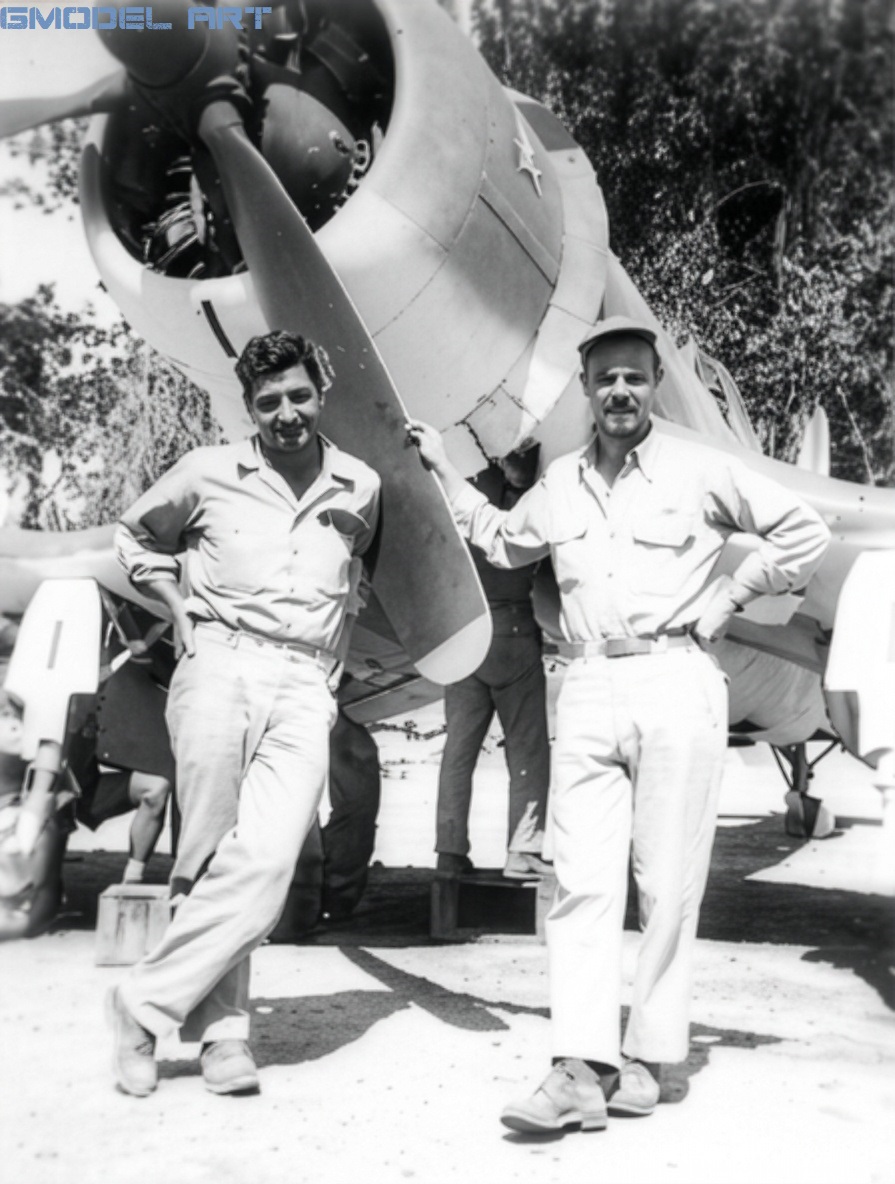
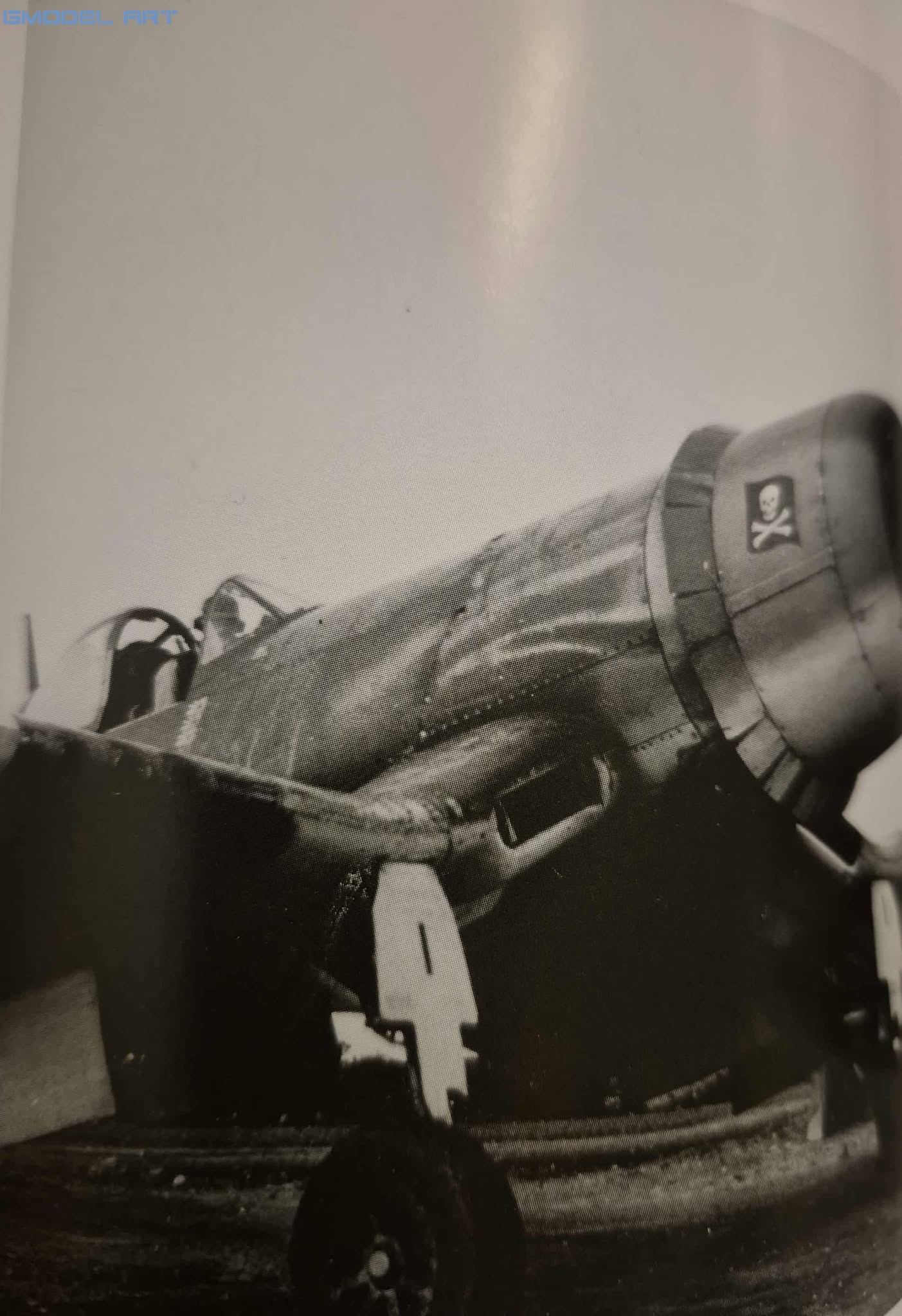
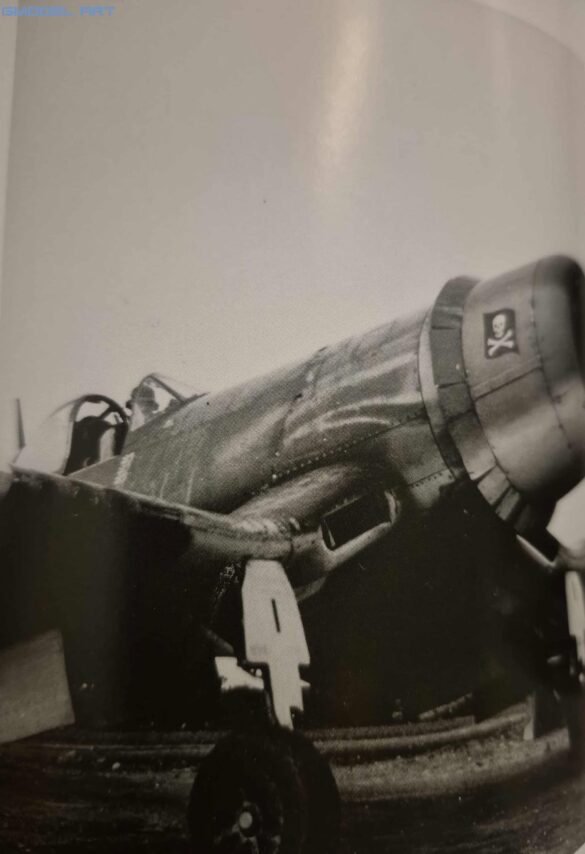
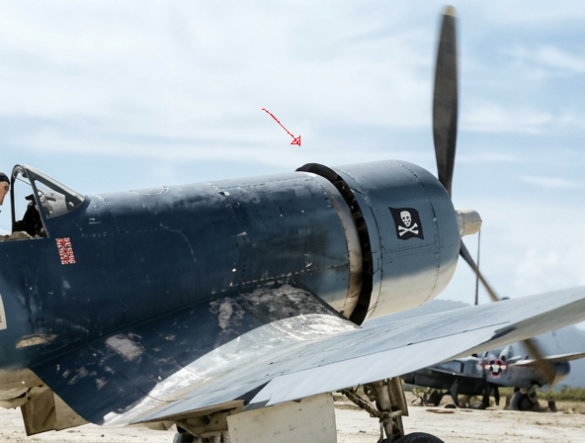
One of the most important yet frequently overlooked construction details of Big Hog (BuNo 17649) is found at the very front of the aircraft: the configuration of the engine cowling, particularly the front cowl ring surrounding the Pratt & Whitney R-2800 engine.
Because BuNo 17649 belonged to the early transitional production batch, it retained a cowling configuration inherited directly from the earlier F4U-1 Birdcage Corsairs.
In this early configuration, the upper portion of the cowling retained the original one-piece continuous construction, resulting in a noticeably different profile and panel layout compared with later-production F4U-1A aircraft.
Although subtle, this difference is extremely important for anyone attempting to reproduce BuNo 17649 accurately rather than building a generic F4U-1A.
As production continued, Vought redesigned this area by introducing the later fixed upper cowling panel, one of several improvements intended to enhance the pilot’s forward visibility over the Corsair’s long nose.
Consequently, Big Hog occupies a unique position in Corsair development, combining several Birdcage construction features with the major improvements of the later canopy design.
A Note for Scale Modelers
This is a detail that deserves particular attention during construction.
Virtually all currently available F4U-1A kits represent the more common later production configuration and therefore do not accurately reproduce the unique cowling arrangement found on BuNo 17649.
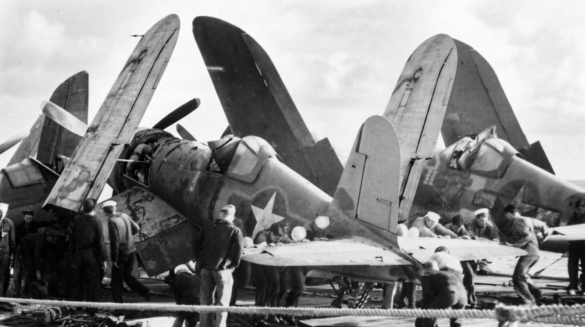
In addition, Big Hog displayed battle damage repairs on the fuselage in the area adjacent to the cockpit. Period photographs clearly show patches painted in Sea Blue, covering damage caused by enemy fire. These repaired panels are a distinctive recognition feature of BuNo 17649 and should be reproduced on any historically accurate model.
Therefore, modelers aiming to build a truly authentic Big Hog should consider correcting this area.
Depending on the kit, this may require filling incorrect panel lines, rescribing the proper joints and modifying the upper cowling to match the original aircraft.
This is not simply a weathering effect or an artistic choice.
It is an authentic production and field-repair characteristic of the real aircraft.
Antennas and Radio Equipment
Another area that should always be based on photographs rather than generic F4U-1A drawings is the antenna arrangement.
Early VF-17 Corsairs did not necessarily share identical external antenna configurations throughout their service lives. Different radio equipment, field modifications and production changes could result in noticeable differences even between apparently identical aircraft.
For BuNo 17649, the mast antenna behind the cockpit is clearly documented photographically, while any additional antenna installation should always be verified against the specific photograph and time period being modeled.
Big Hog as a Modeling Subject
The most important conclusion is that F4U-1A “Big Hog” (BuNo 17649) should never be built as a standard F4U-1A with the appropriate decals simply applied.
The real aircraft represents an early Corsair built during a period when the design was still evolving.
Its early cowling configuration, changing national insignia, transition from the red-outline to the blue-outline Star-and-Bar, the documented placement of the “Big Hog” inscription, the unique appearance of the right-side rudder, the repaired battle-damage patches, and the specific antenna arrangement must all be considered together and within the correct historical time frame.
For the serious scale modeler, Big Hog is far more than just a paint scheme or a decal option.
It is a genuine historical research project.
That is precisely what makes BuNo 17649 so fascinating: the numerous construction details, field repairs, and subtle changes that reveal the Corsair’s evolution from the original F4U-1 Birdcage to the improved versions that would become one of the most successful carrier-based fighters of the Second World War.