article
US Navy & Marine Corps WW II Camouflage (1942–1944) – Early War Paint Guide
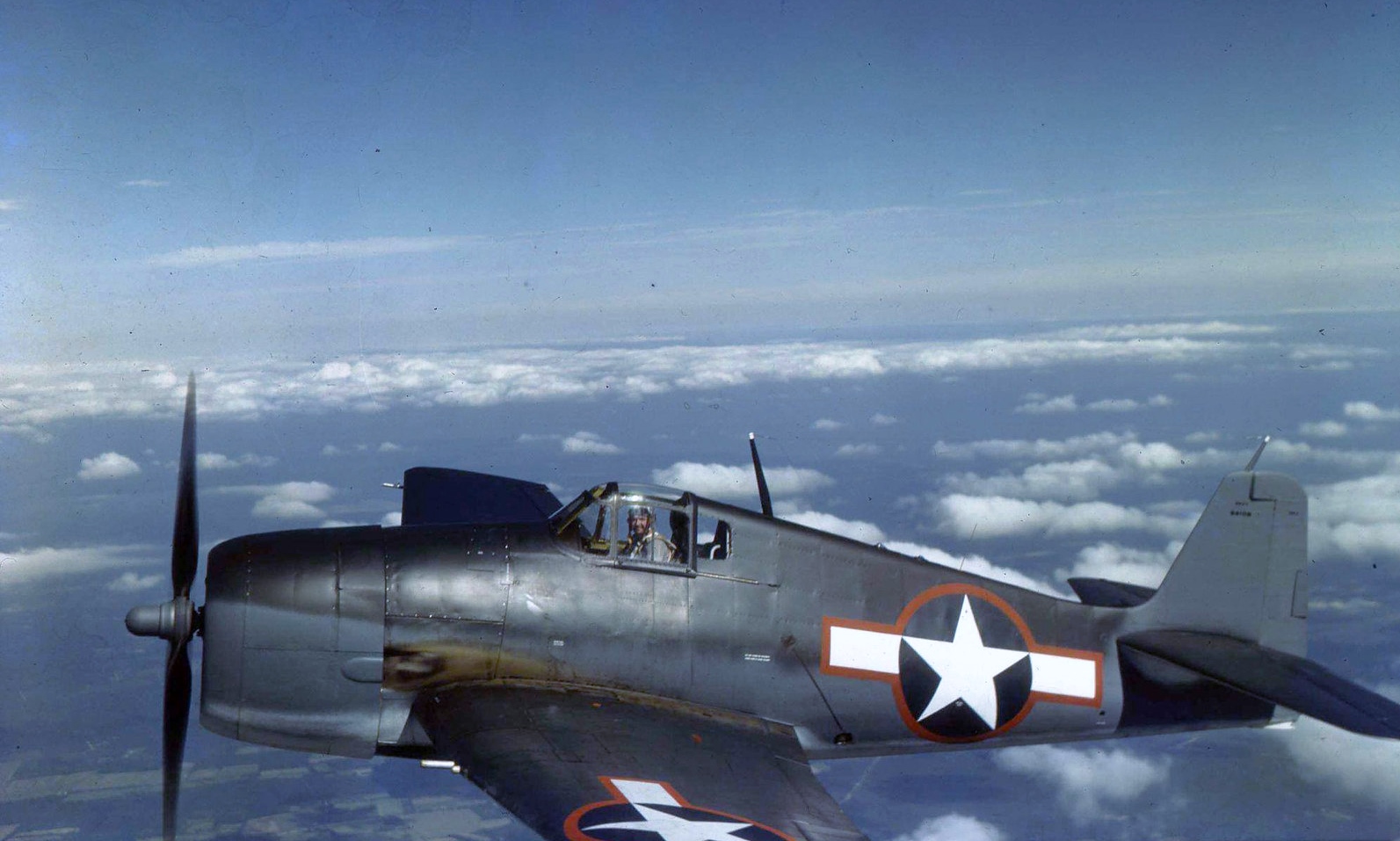
The early years of World War II forced the US Navy and Marine Corps to abandon pre-war visibility-focused finishes and move toward operational camouflage that prioritized survival. Between 1942 and 1944, this transition produced one of the most recognizable—but also misunderstood—paint schemes in aviation history: the Non-Specular Light Gray / Blue Gray scheme.
This guide breaks it down practically—what the real colors were, how they behaved, and most importantly, how to replicate them correctly on a model without guesswork.
The Shift to Combat Camouflage (1940–1942)
On December 30, 1940, the Bureau of Aeronautics (BuAer) officially standardized a new finish for carrier-based aircraft: Non-Specular Light Gray overall. This marked the end of bright pre-war schemes like aluminum and yellow wings, which had become liabilities in combat conditions.
Shortly after, a two-tone camouflage was introduced:
- Upper surfaces: Non-Specular Blue Gray
- Undersides: Non-Specular Light Gray
By mid-1941, this became standard across the fleet.
Real-World Application – Why No Two Aircraft Look the Same
Here’s the truth most guides skip: there was zero consistency.
Paint was applied freehand, often on carriers, under pressure. That led to:
- Soft, uneven demarcation lines
- Variations in tone between squadrons
- Field improvisations (especially in the Pacific)
- Odd details like cowling tips painted differently
Examples:
- Early F4U Corsair had Blue Gray even under folding wing sections
- F4F Wildcat kept Light Gray undersides due to wing folding design
- Some SBD Dauntless aircraft had mismatched nose sections
If your model looks “too clean” or perfectly masked, it’s probably wrong.
The M-485 Specification – The Truth Behind the Colors
Both colors originated from M-485 specification (Dec 1940):
- Non-Specular Light Gray
- Non-Specular Blue Gray (added later in M-485a)
Important clarification:
The commonly referenced “M-495” is incorrect—it’s a long-standing typo that spread across publications.
Color Analysis & FS Equivalents
Non-Specular Light Gray
- Tone: Light warm gray (slightly beige/gold tint)
- Closest FS: FS 36440
- Visual behavior: Often appears lighter in photos due to lighting and weathering
Non-Specular Blue Gray
This is where things get messy.
There were multiple variations:
- Early version – lighter, more blue, heavily fades
- Later version – darker, more gray, more stable
- Possible transitional variant (rarely confirmed)
- Closest FS approximation: FS 35189 (approximate only)
- Real behavior: Extreme fading in Pacific sun → chalky, washed-out look
Bottom line:
If your Blue Gray looks slightly “off”, you’re probably closer to reality than someone using a perfect swatch.
Weathering – The Key to Realism
If you ignore this, your model will look fake.
Real aircraft showed:
- Heavy sun bleaching (especially upper surfaces)
- Patchy repainting
- Salt wear and streaking
- High contrast fading between panels
Pro tip:
Start darker → fade unevenly → add variation panel by panel.
Modeling Paint Guide (AK, Tamiya, Vallejo, MRP)
NS Light Gray (FS 36440 equivalent)
- AK Real Colors – RC222
- Tamiya – XF-19 (lightened slightly)
- Vallejo – 71.050
- MRP – MRP-98
NS Blue Gray
No perfect match exists. Choose based on effect:
- AK Real Colors – RC261 (faded look)
- Colourcoats – accurate but light
- Model Master – more balanced
- MRP – closer to fresh paint
Tamiya mix (recommended):
- XF-18 + White (2:1)
→ Adjust until slightly desaturated
Transition to Three-Tone Scheme (1943–1944)
By 1943, the Navy realized the Blue Gray scheme wasn’t enough.
This led to the famous three-tone camouflage:
- Sea Blue (ANA 607) – upper surfaces
- Intermediate Blue (ANA 608) – mid sections
- Insignia White (ANA 601) – undersides
This wasn’t just visual—it improved concealment against sea + sky.
ANA Color Breakdown (For Late Early-War Builds)
Insignia White (ANA 601)
- Warmer tone than FS 17875
- Slight ivory tint
Intermediate Blue (ANA 608)
- Lighter than FS 35164
- Needs lightening in scale models
Sea Blue (ANA 607)
- Deep navy blue
- FS equivalent: FS 35042
https://ww2aircraft.net/forum/threads/usn-paint-schemes-on-carrier-aircraft.51536/
https://www.theworldwars.net/stats/index.php
Important:
Differences between ANA 607 and ANA 623 are minimal in scale—focus on contrast, not a theory.
US Navy Pre-War Aircraft Colors (1931–1941)
| ANA 601 | ANA 608 | ANA 607 | ANA 606 | |
| Insignia White | Intermediate Blue | NS Sea Blue | SG Sea Blue | |
| Schemes | ||||
| Basic | Lower | Sides | Upper | Wings |
| Color matches | ||||
| Gunze Aqueous | H316* | H56 | H54 | (H54) |
| Gunze Mr Color | C316* | C72 / C366* | C14 | (C14) |
| Humbrol | – | (144) | (181) | (181) |
| Model Master | 1745* | (1720) | 1718* | (1718) |
| Revell | – | – | – | – |
| Tamiya | – | XF-18 (!) | XF-17 (!) | (XF-17) (!) |
| Vallejo Model Air | 71.279* | 71.299* | 71.295* | (71.295) |
| Vallejo Model Color | (70.820) | (70.903) | 70.898* | (70.898) |
| AKAN | (73146) | (72050) | 72042* | (72.042) |
| AK Interactive | AK 2052* | (AK 2054) | AK 2233 | (AK 2233) |
| AK Real Colors | RC222* | (RC235) | RC257 | (RC257) |
| AMMO by Mig | – | (A.MIG-228) | (A.MIG-227) | (A.MIG-227) |
| Colourcoats | ACUS10 | ACUS08 | ACUS33 | ACUS07 |
| Hataka | HTK-_043* | HTK-_027* | HTK-_006 | (HTK-_006) |
| Lifecolor | – | UA 045* | UA 044* | (UA 044) |
| Mission Models | MMP-104* | (MMP-071) | MMP-062* | (MMP-062) |
| Mr Paint | MRP-135 | MRP-136 | MRP-237* | (MRP-237) |
| Xtracolor | X141* | (X125) | (X121) | (X121) |
| Xtracrylix | XA1141* | (XA1125) | (XA1121) | (XA1121) |