article
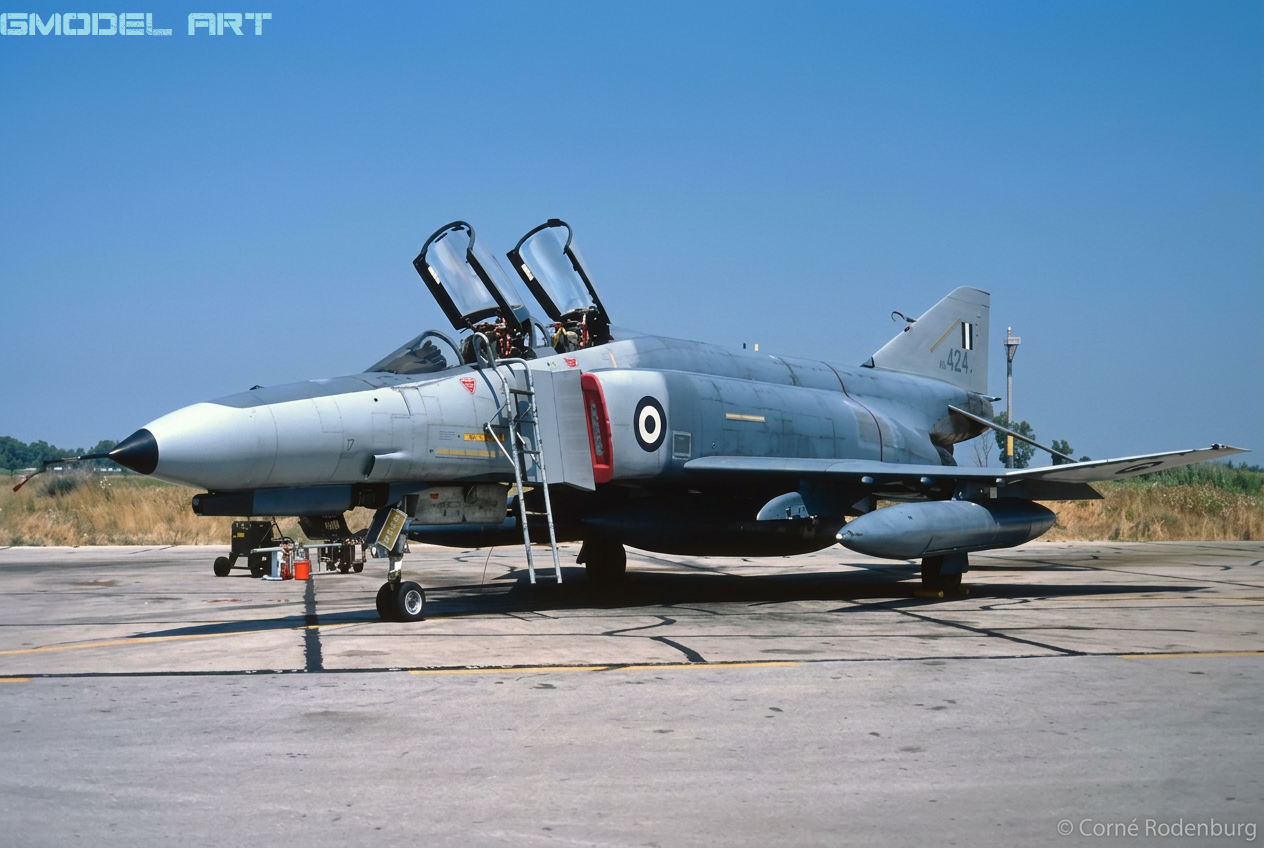
F-4E Phantom II SRA 68-0424 HAF — One-Piece Windshield
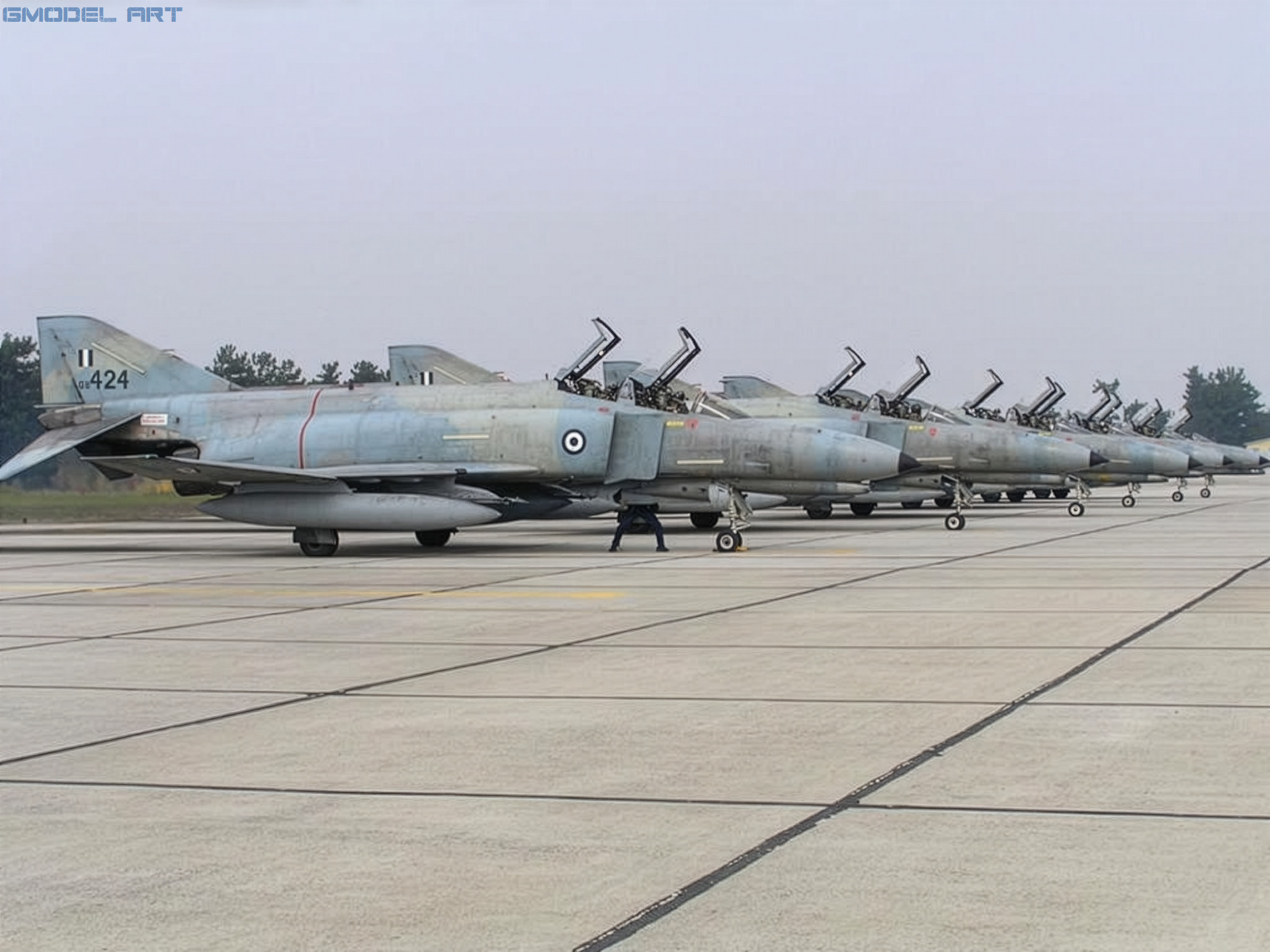
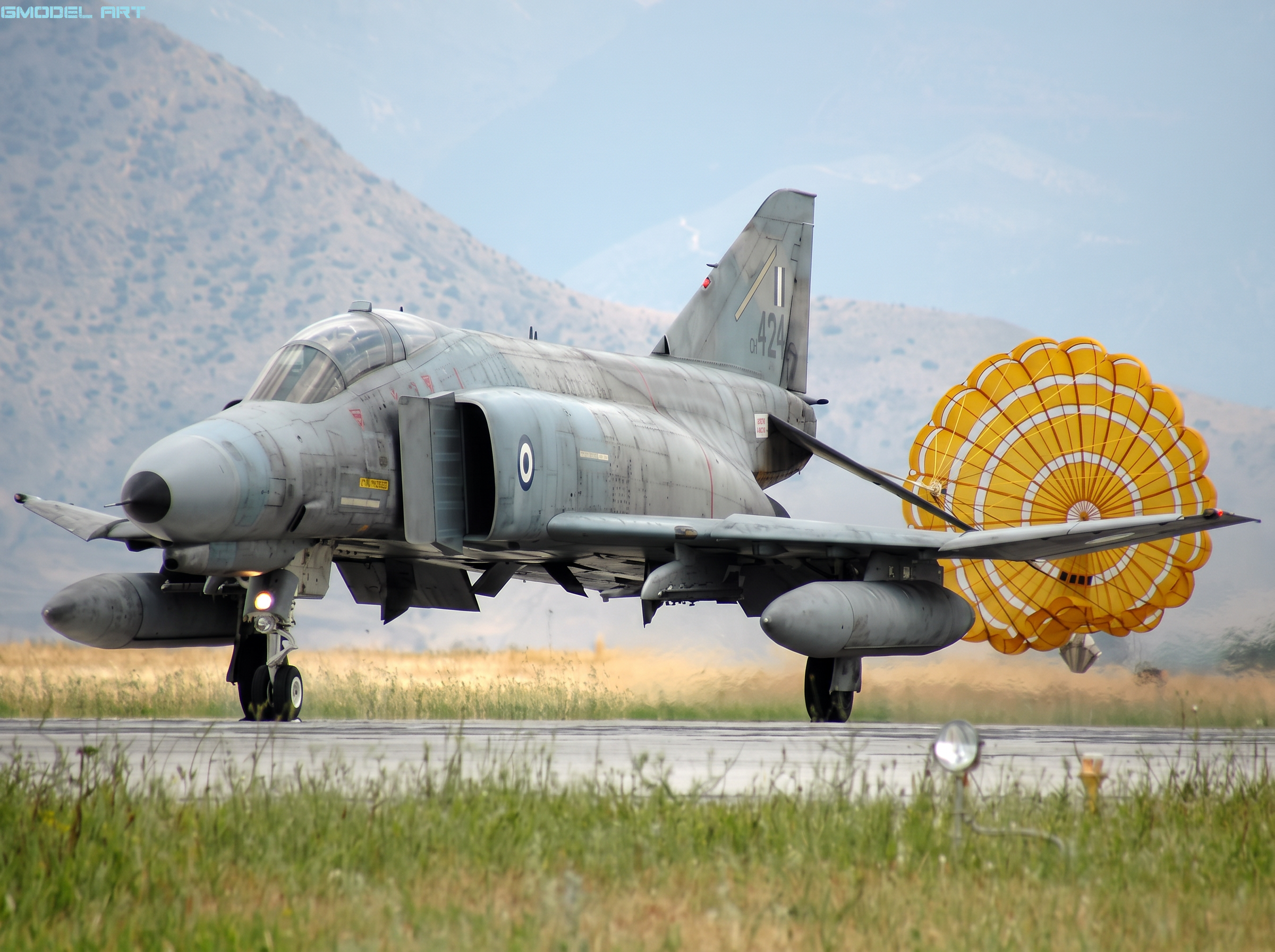
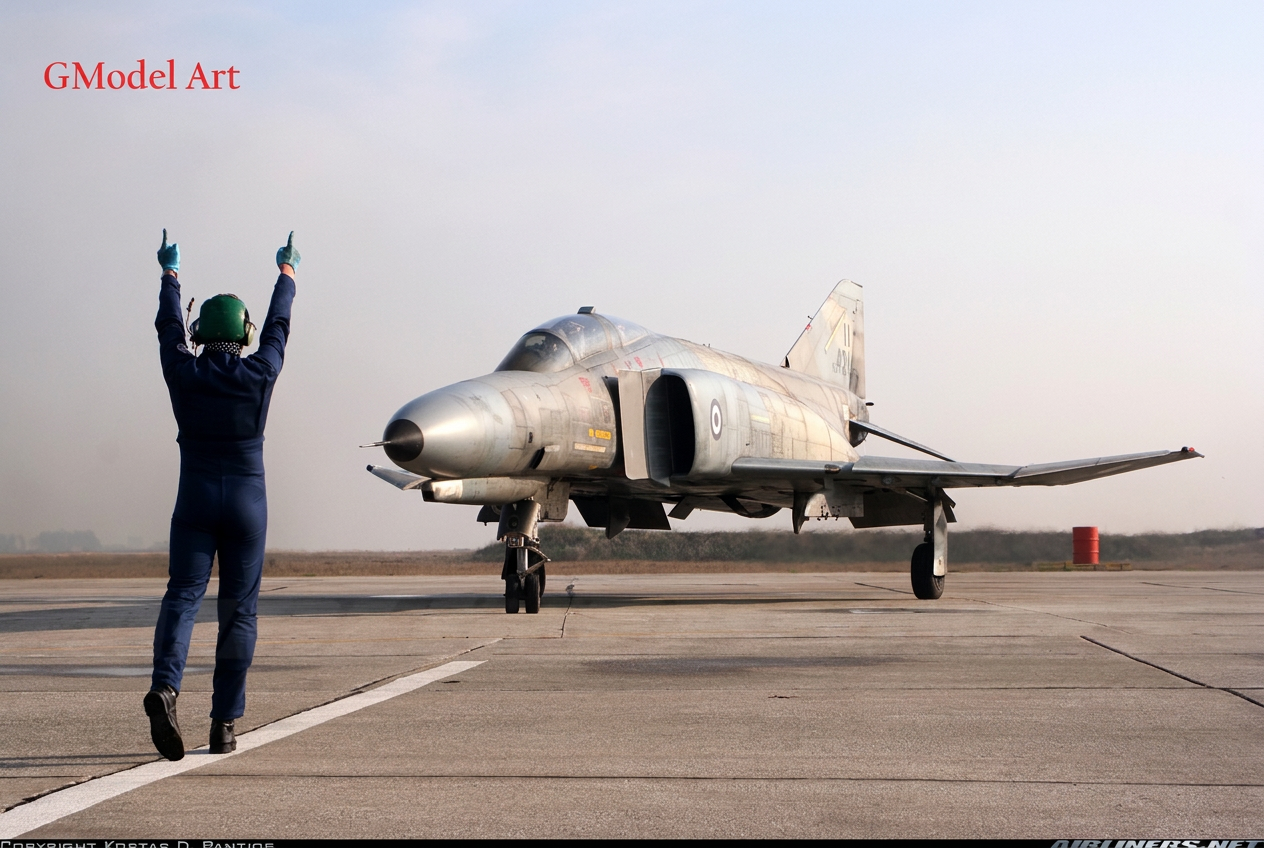
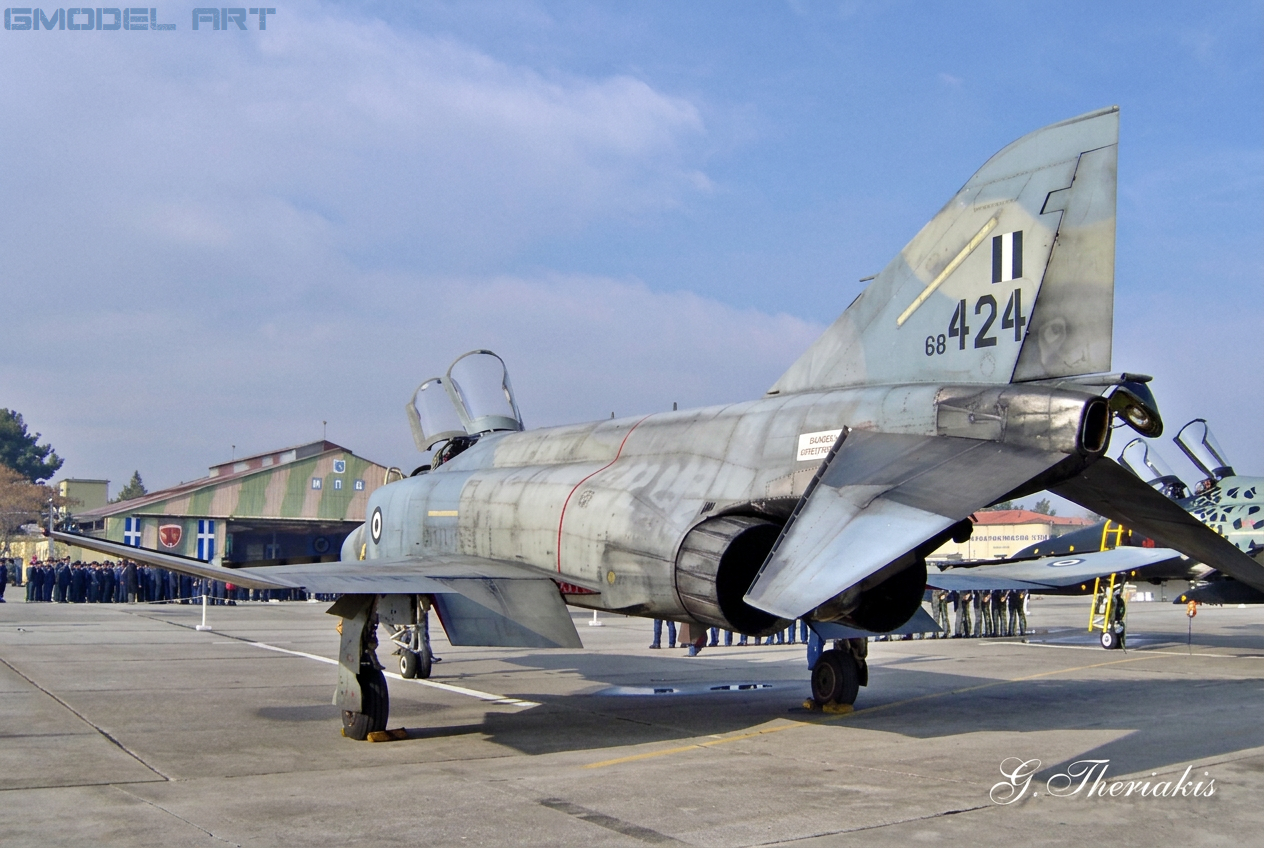
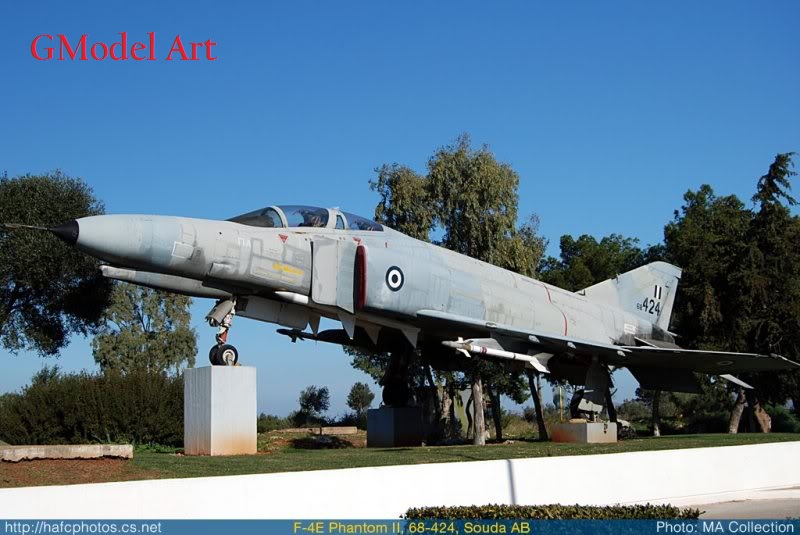
The McDonnell Douglas F-4E Phantom II 68-0424 is one of the most distinctive aircraft to have served with the Hellenic Air Force as part of the F-4E SRA fleet.
Its history began in the United States in 1969 and continued through several USAF and Air National Guard units before the aircraft was transferred to Greece in 1991.
For aviation historians and scale modellers, however, the most distinctive feature of this particular aircraft is not its serial number alone.
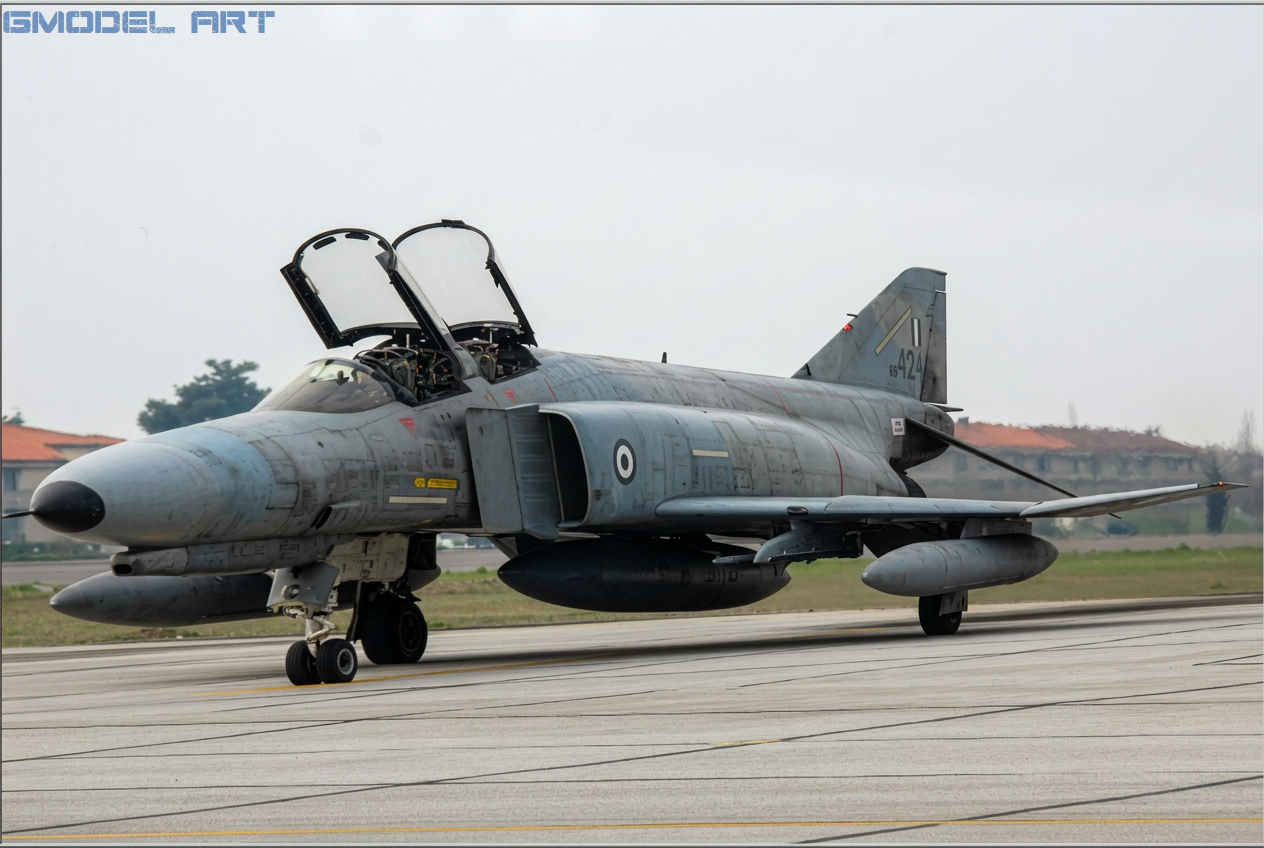
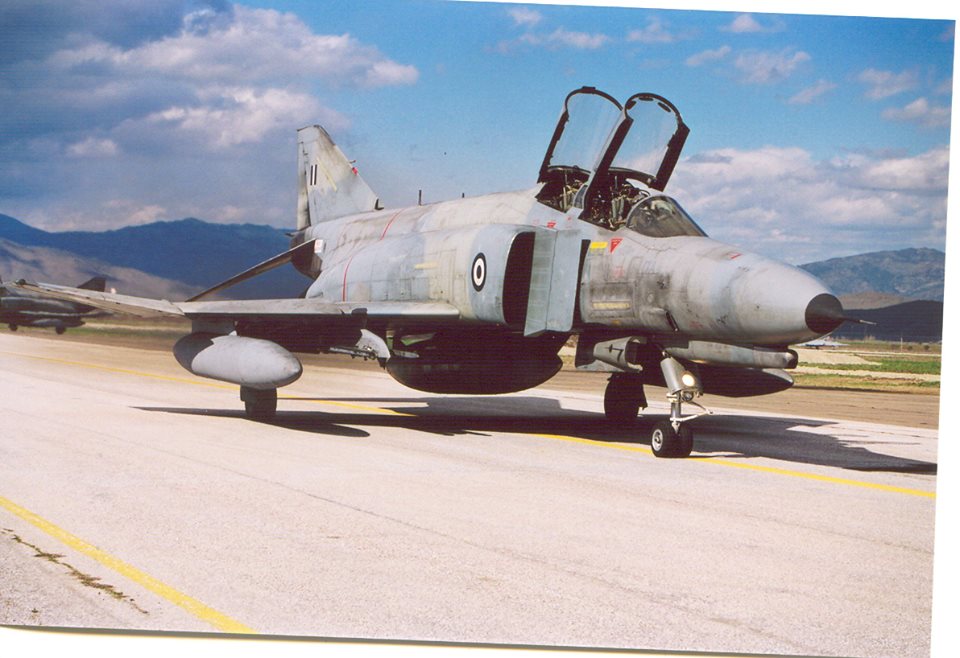
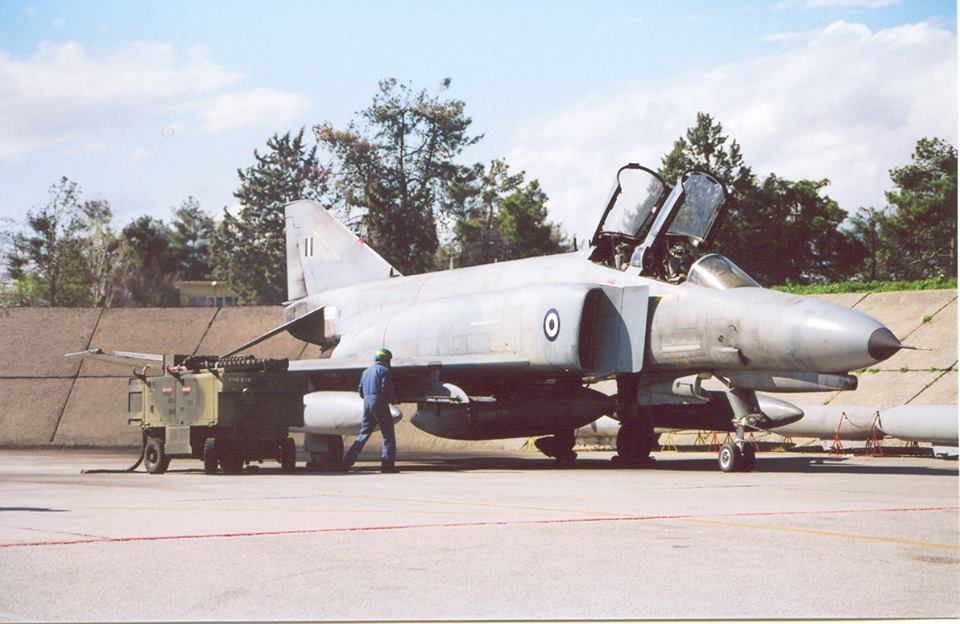
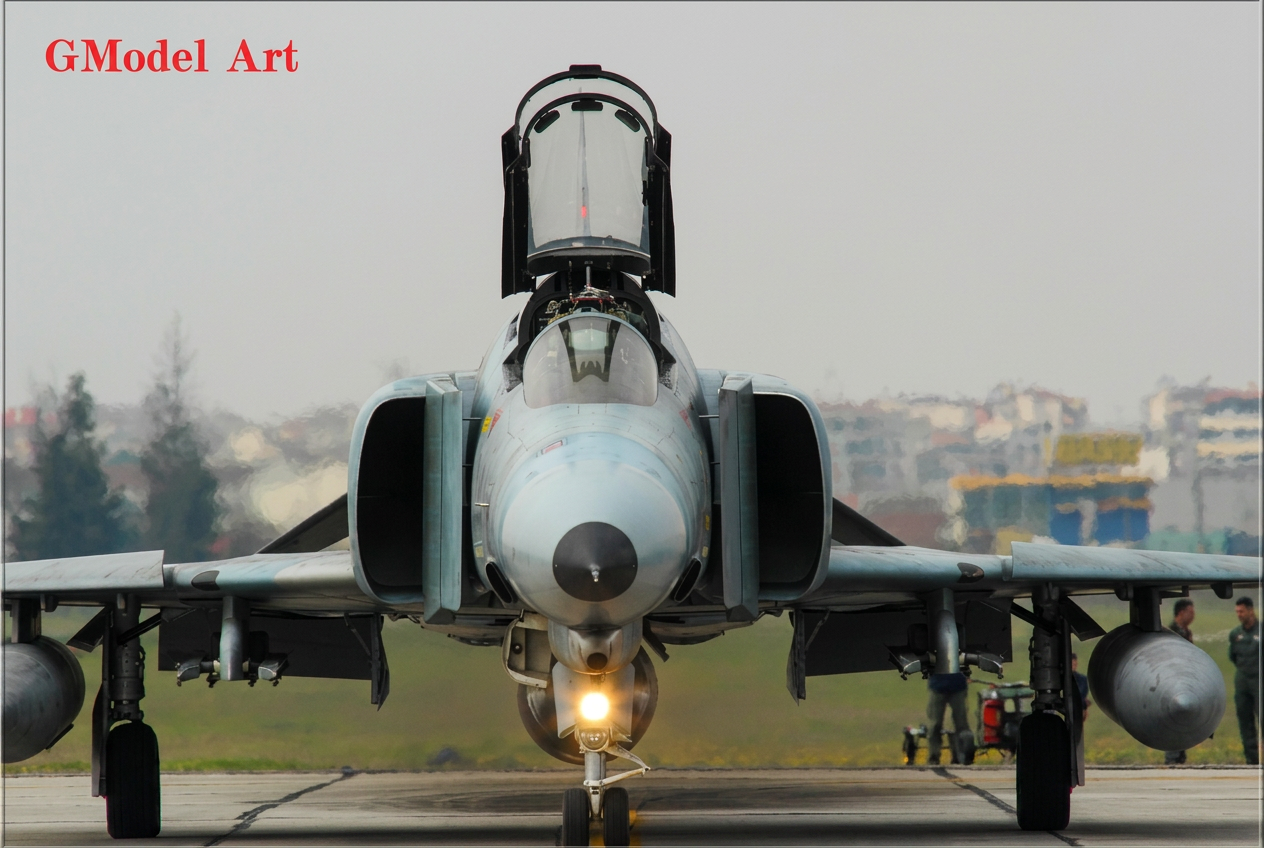
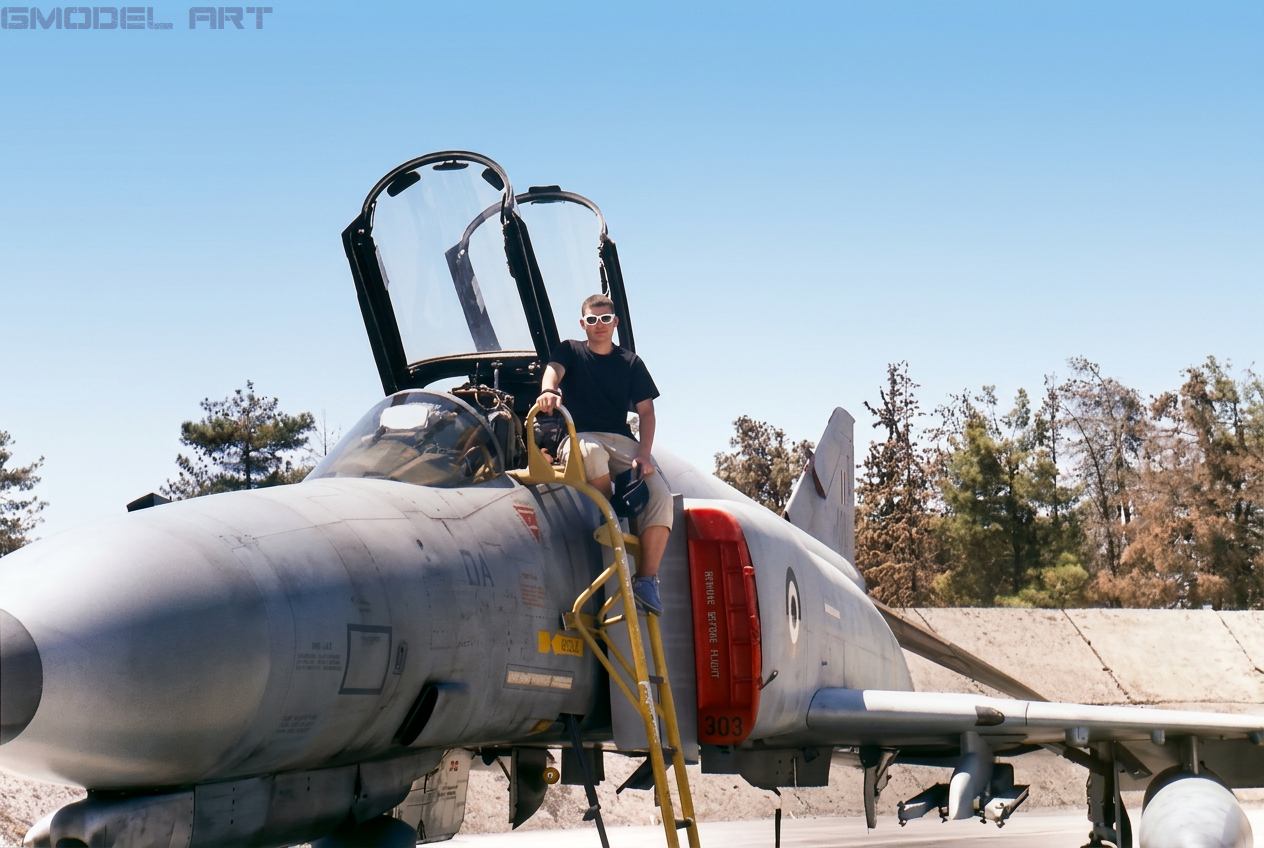
It is the one-piece windshield.
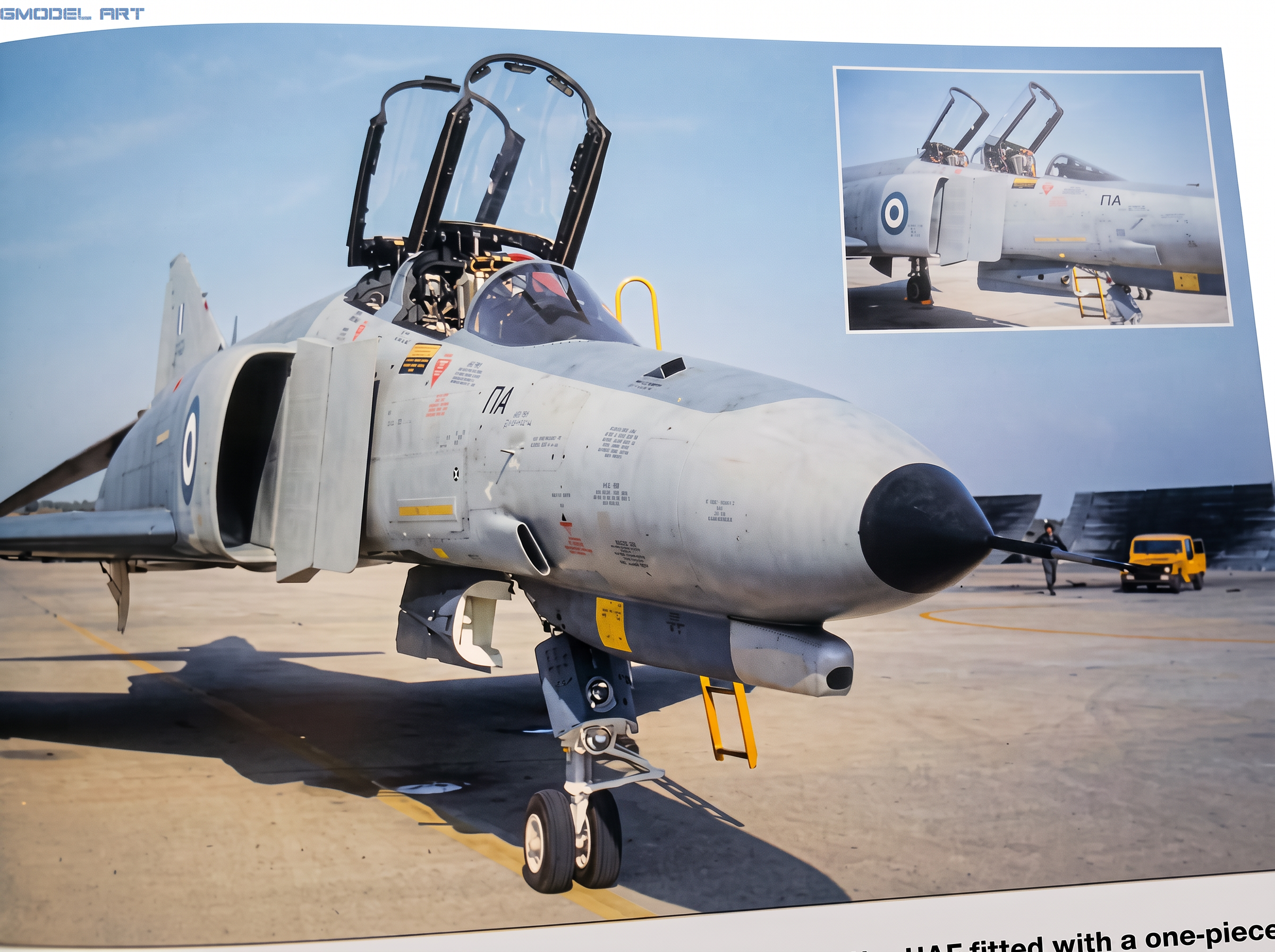
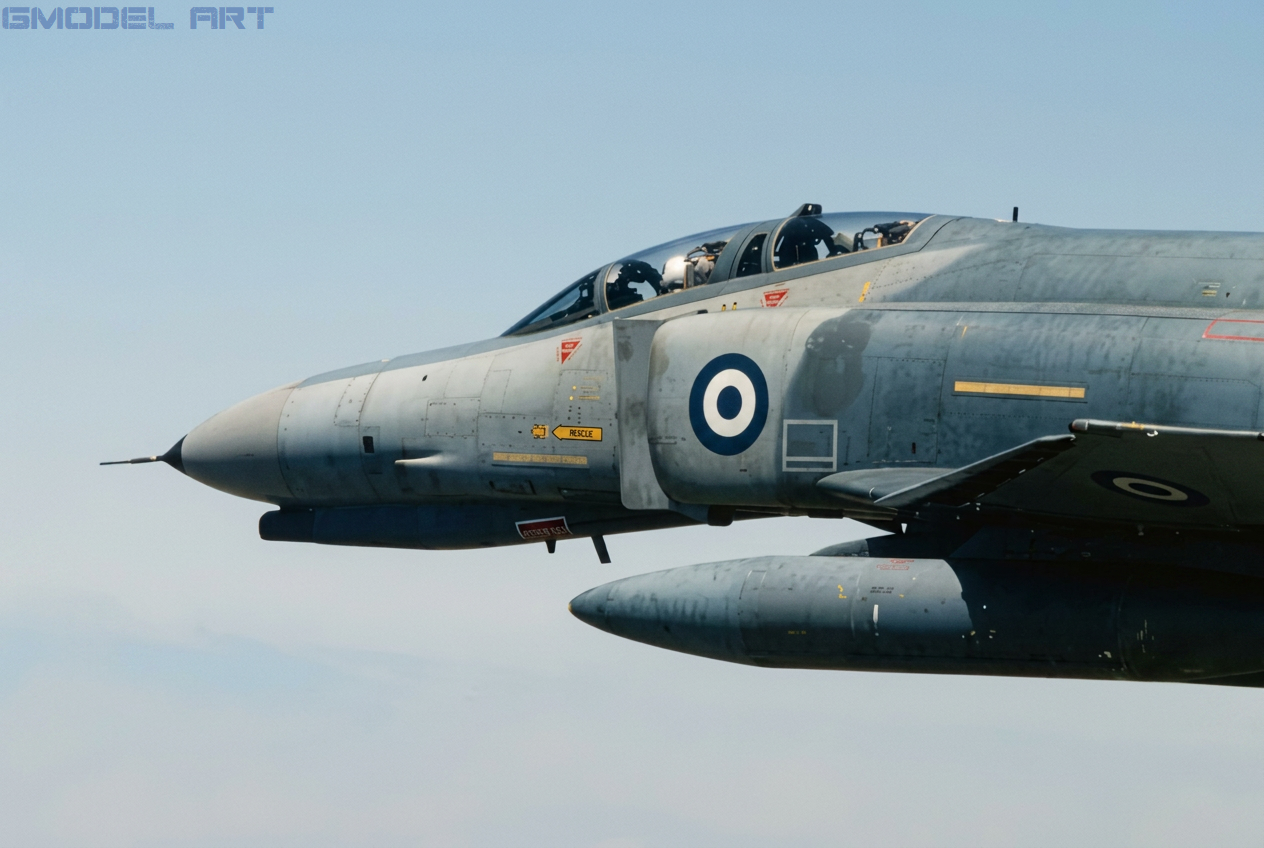
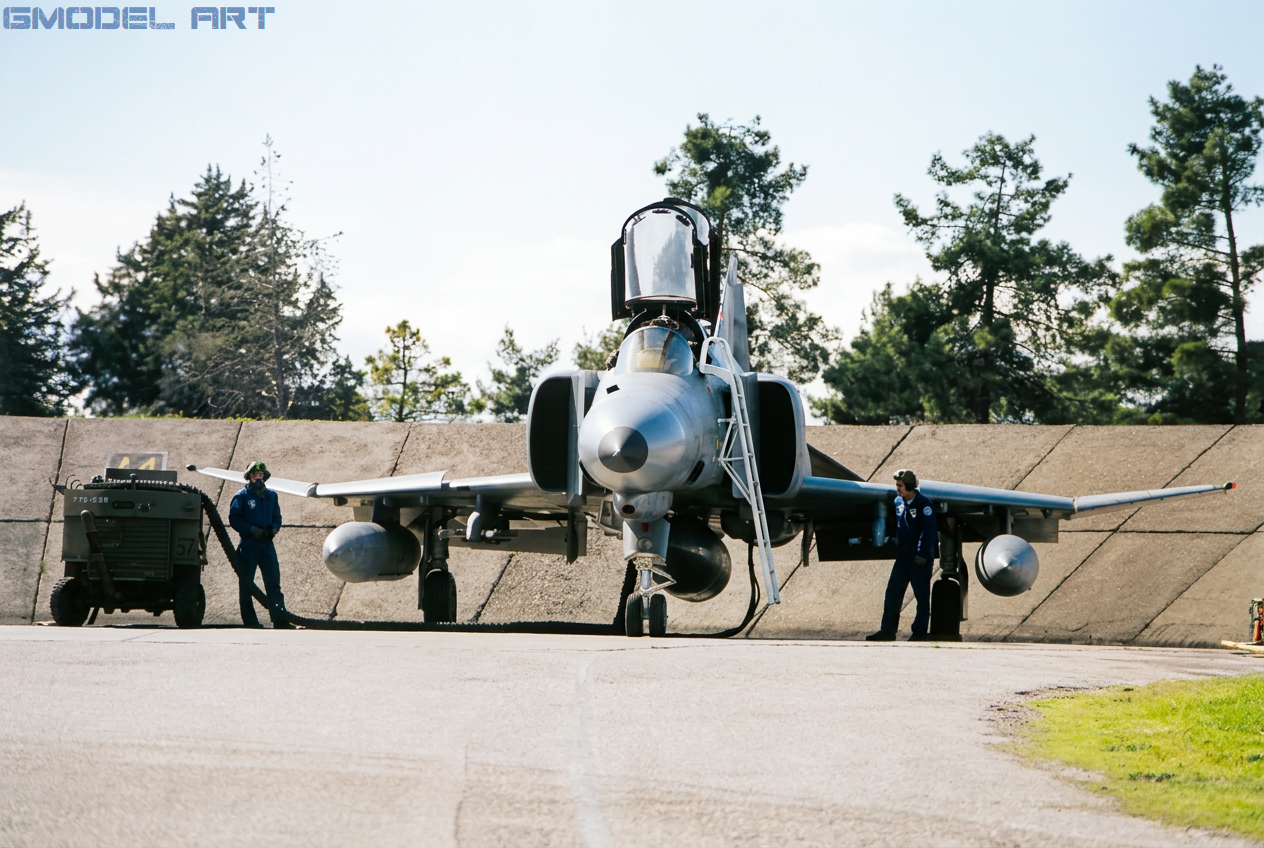
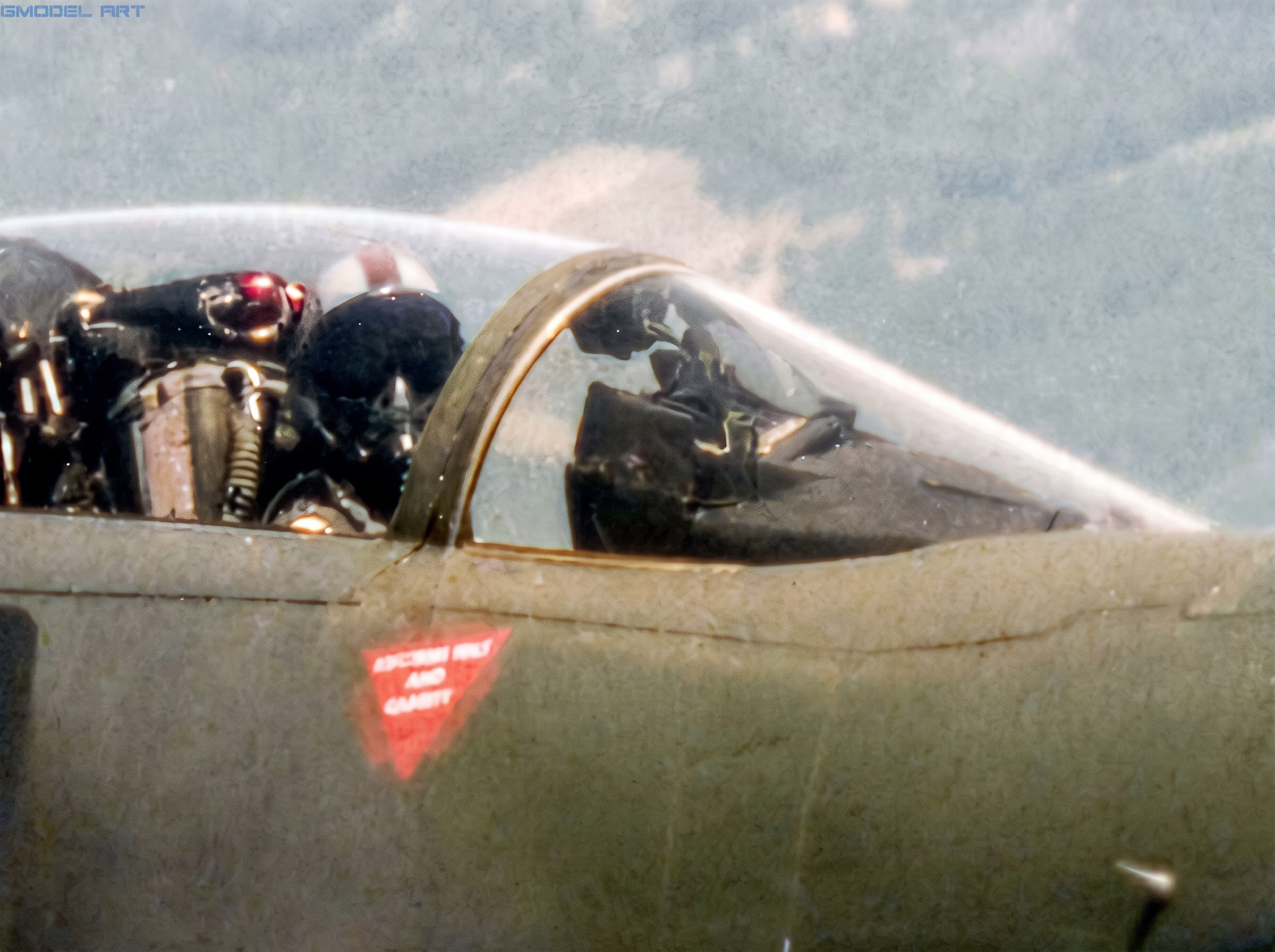
Unlike the standard multi-panel windshield fitted to production McDonnell Douglas F-4E Phantom II aircraft, the 68-0424 eventually carried a distinctive wrap-around, single-piece windshield developed as part of a U.S. Air Force program intended primarily to improve protection against high-speed bird strikes.
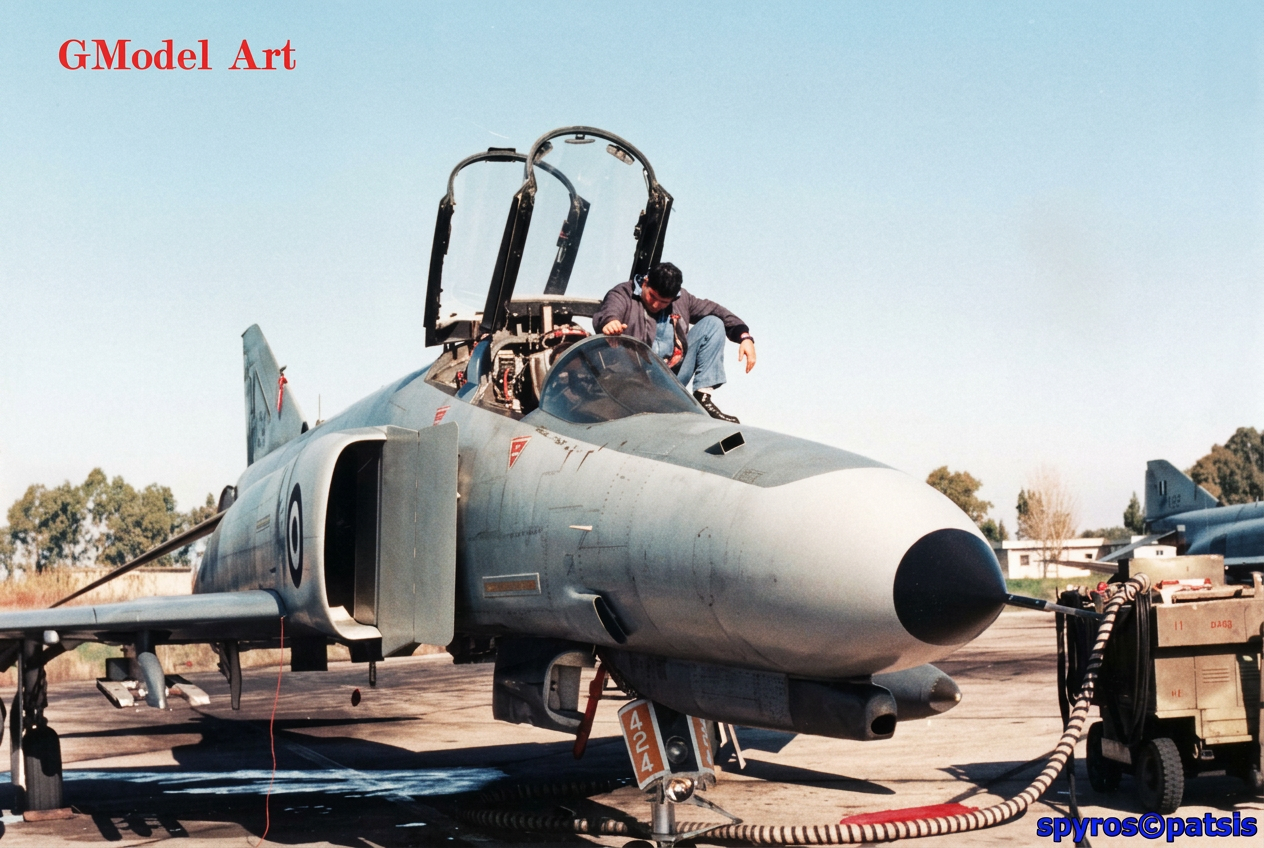
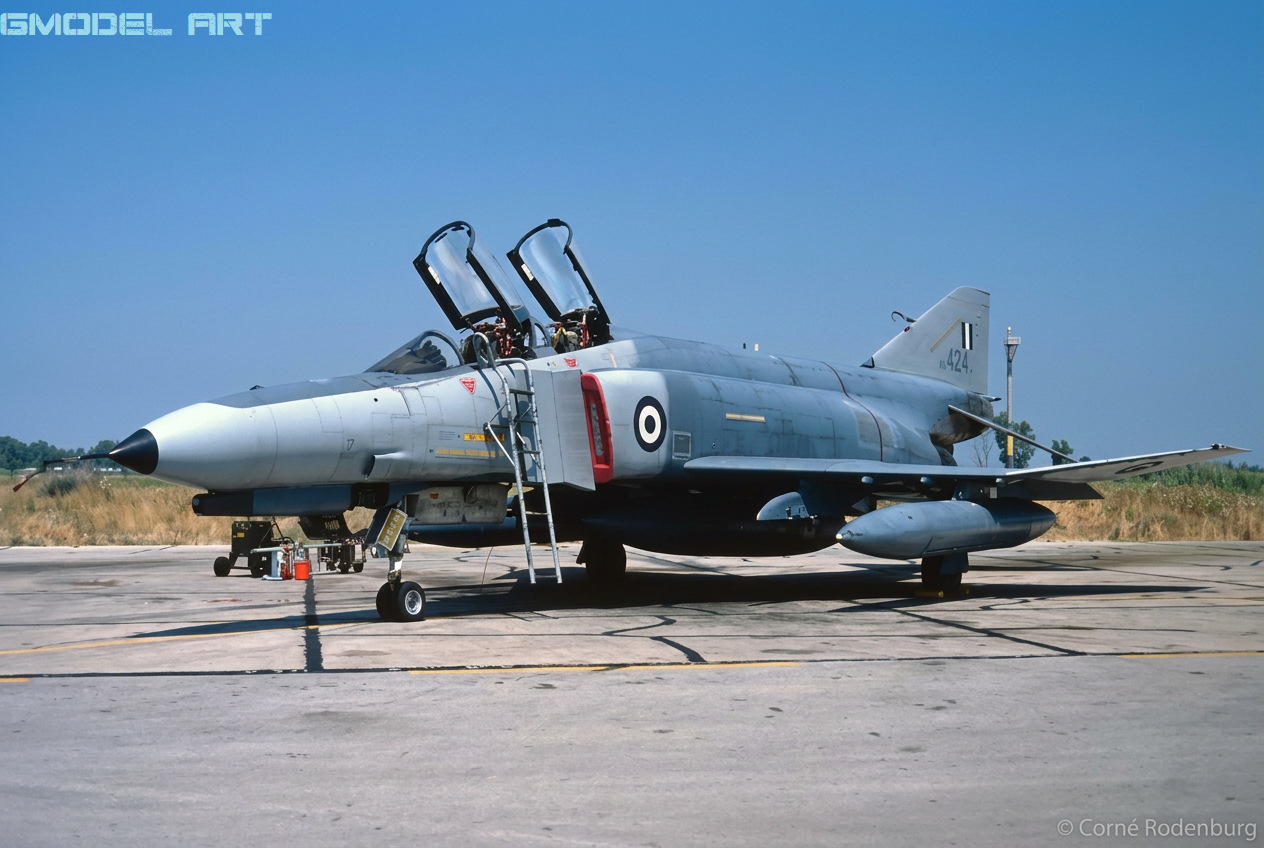
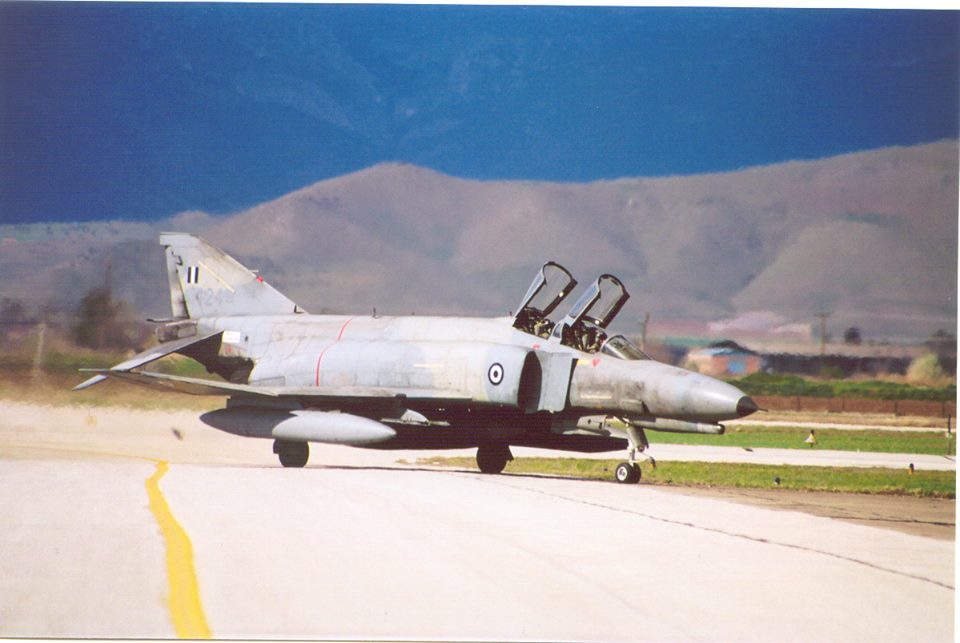
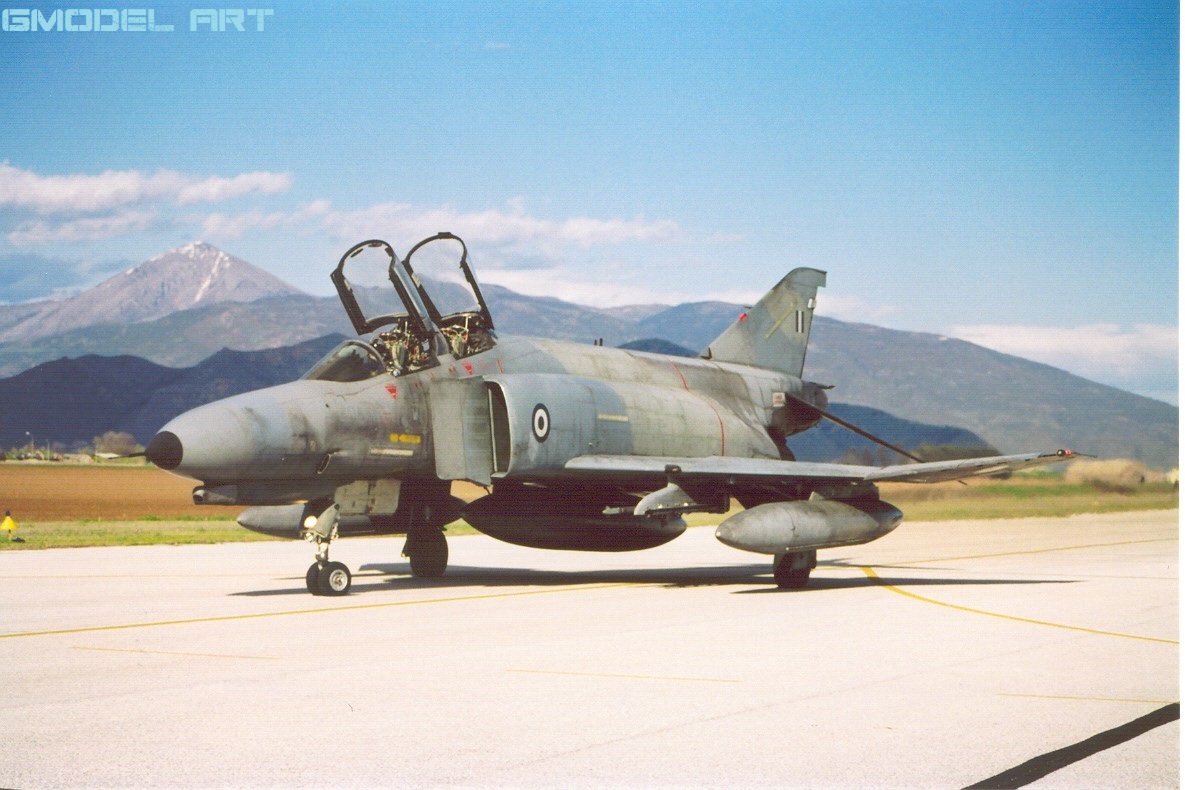
The aircraft retained this unusual configuration throughout its later career and was still photographed with the one-piece windshield in Greek service in December 2005.
The birth of 68-0424
The aircraft was manufactured by McDonnell Douglas at St. Louis as an F-4E-39-MC Phantom II, construction number 3541, with USAF serial number 68-0424.
Its first flight took place on 15 July 1969, and it entered United States Air Force service shortly afterwards.
During its early career, the aircraft served with USAF Tactical Fighter units, including the 46th Tactical Fighter Squadron / 15th Tactical Fighter Wing at MacDill Air Force Base and later the 70th Tactical Fighter Squadron / 347th Tactical Fighter Wing.
Like other McDonnell Douglas F-4E Phantom II aircraft of this period, it was initially associated with the standard USAF Southeast Asia camouflage, commonly known as the SEA scheme.
The F-4E 68-0424 in Southeast Asia camouflage
One of the most valuable photographic references for the early history of the aircraft dates from 22 September 1981.
On that date, McDonnell Douglas F-4E Phantom II 68-0424 was photographed during Gunsmoke ’81 at Nellis Air Force Base while operating with the 347th Tactical Fighter Wing.
The photograph is particularly valuable because it documents the actual aircraft rather than simply another aircraft of the same unit or production block.
The aircraft therefore provides a useful reference for the appearance of an operational USAF McDonnell Douglas F-4E Phantom II in its earlier SEA camouflage period.
California Air National Guard
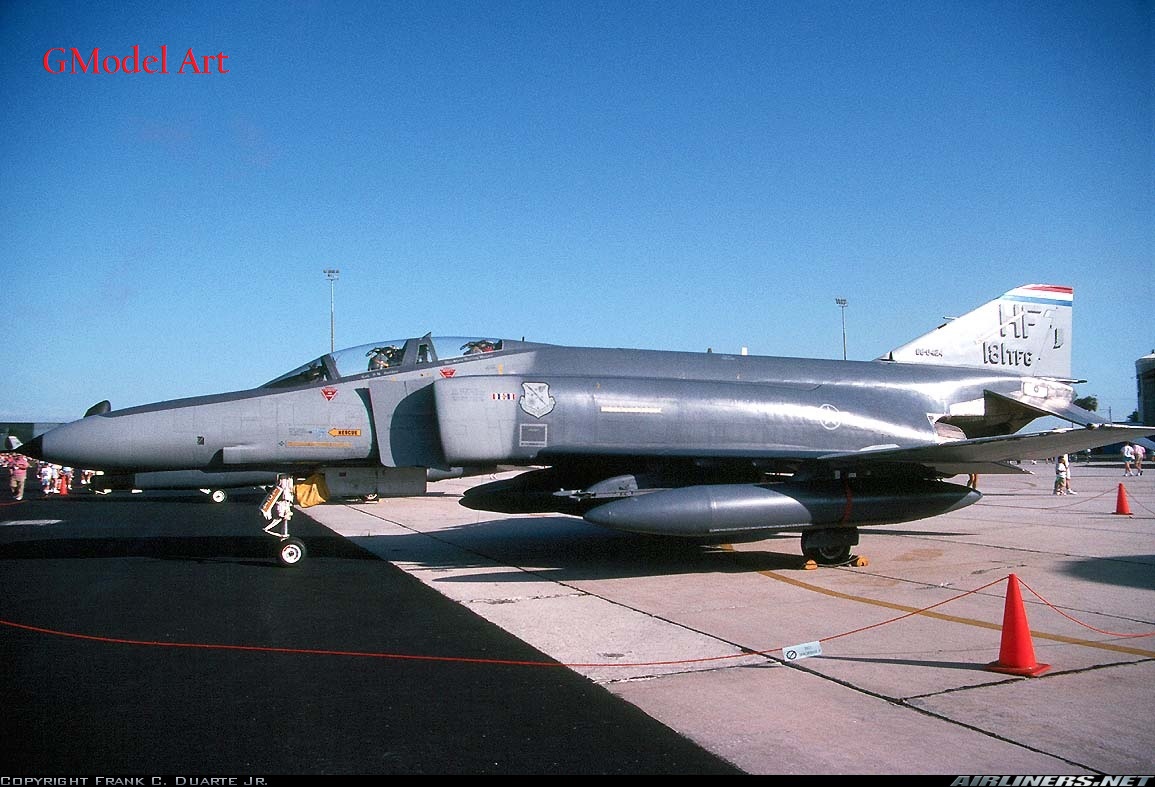
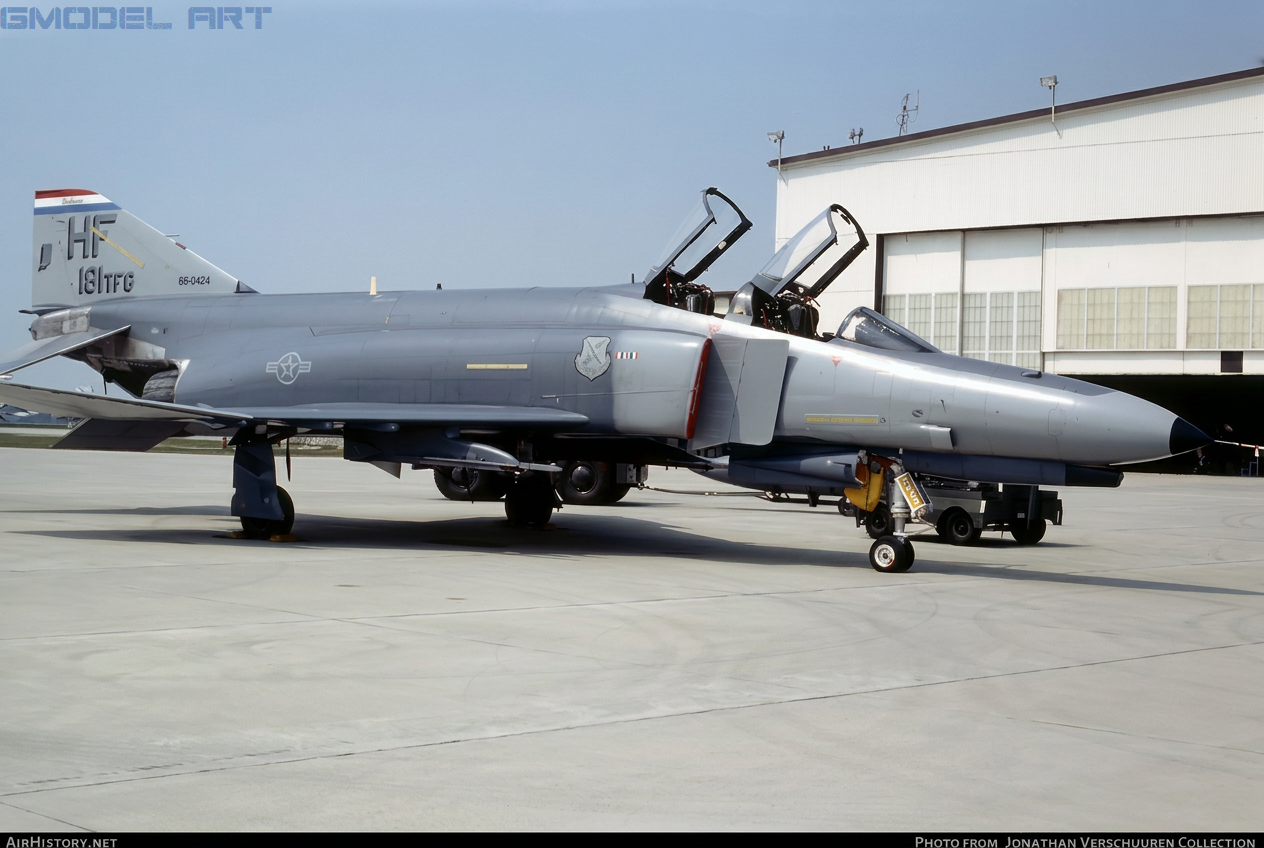
By the late 1980s, McDonnell Douglas F-4E Phantom II 68-0424 had moved into Air National Guard service.
On 3 September 1987, it was photographed at March Air Base while serving with the 196th Tactical Fighter Squadron, 163rd Tactical Fighter Group, California Air National Guard.
The photographic record identifies the aircraft specifically as 68-0424 and confirms that it was subsequently transferred to Greece in August 1991.
This period is particularly useful when following the aircraft’s transition from its earlier USAF career toward its eventual role as a Greek F-4E SRA.
Indiana Air National Guard
The next important chapter in the aircraft’s history came with the Indiana Air National Guard.
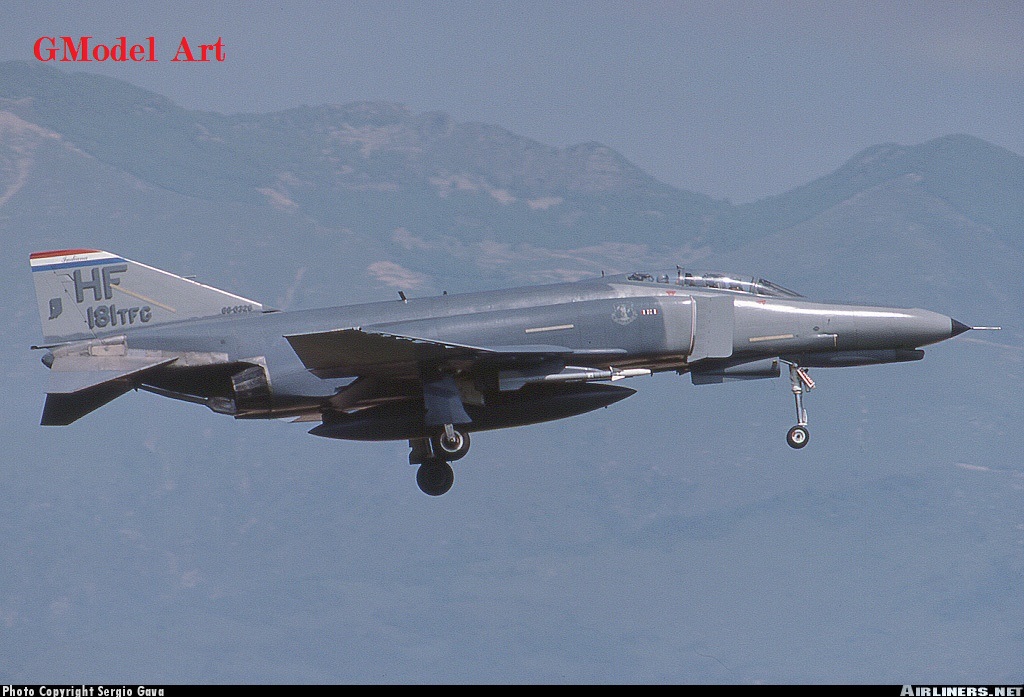
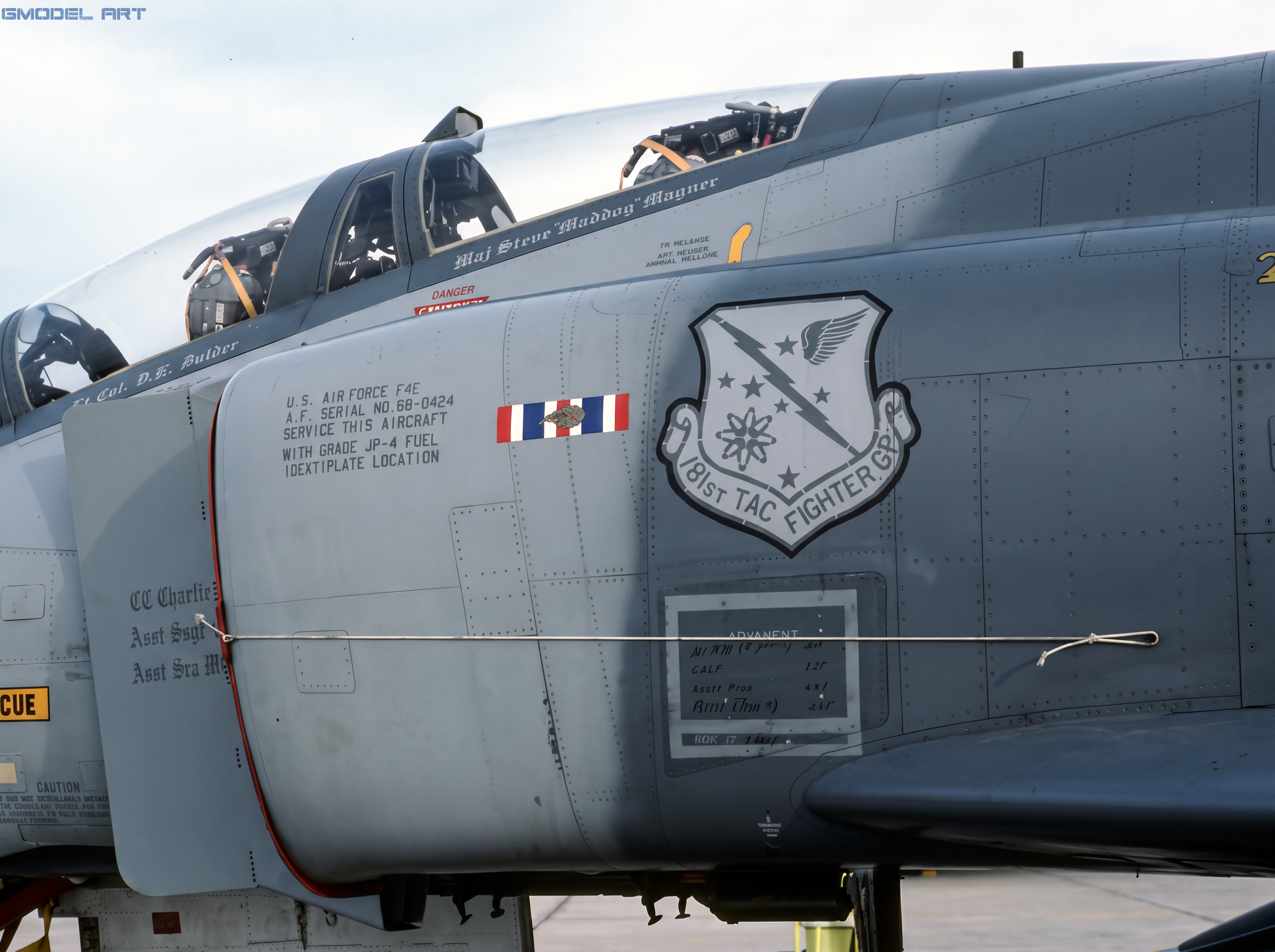
By 1990, McDonnell Douglas F-4E Phantom II 68-0424 was assigned to the 113th Tactical Fighter Squadron / 181st Tactical Fighter Group, carrying the unit code HF.
The aircraft was also used as the 181st Tactical Fighter Group commander’s aircraft.
This was the final stage of its American career.
It was during this period that the aircraft’s unusual one-piece windshield became especially significant.
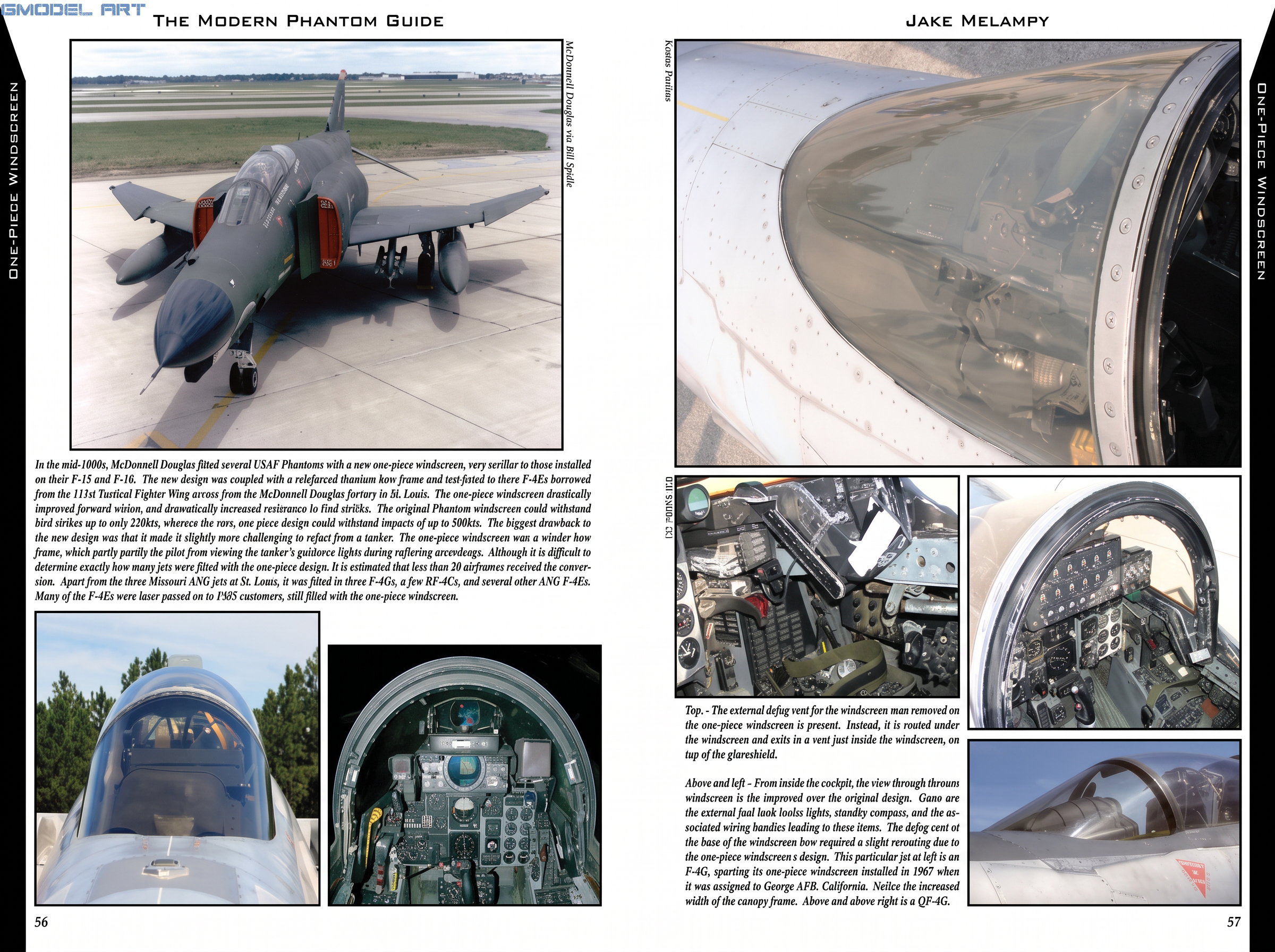
The One-Piece Windshield
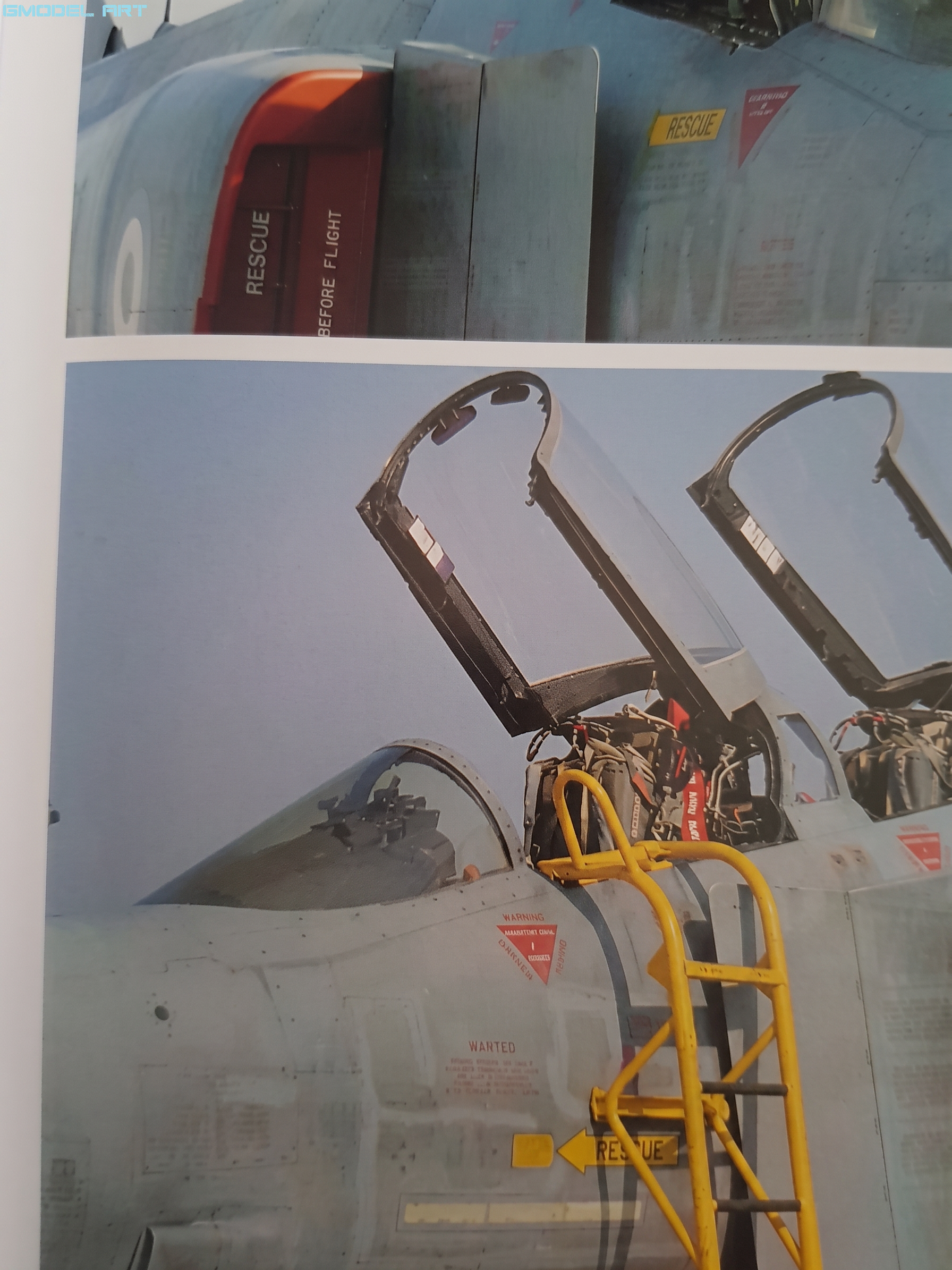
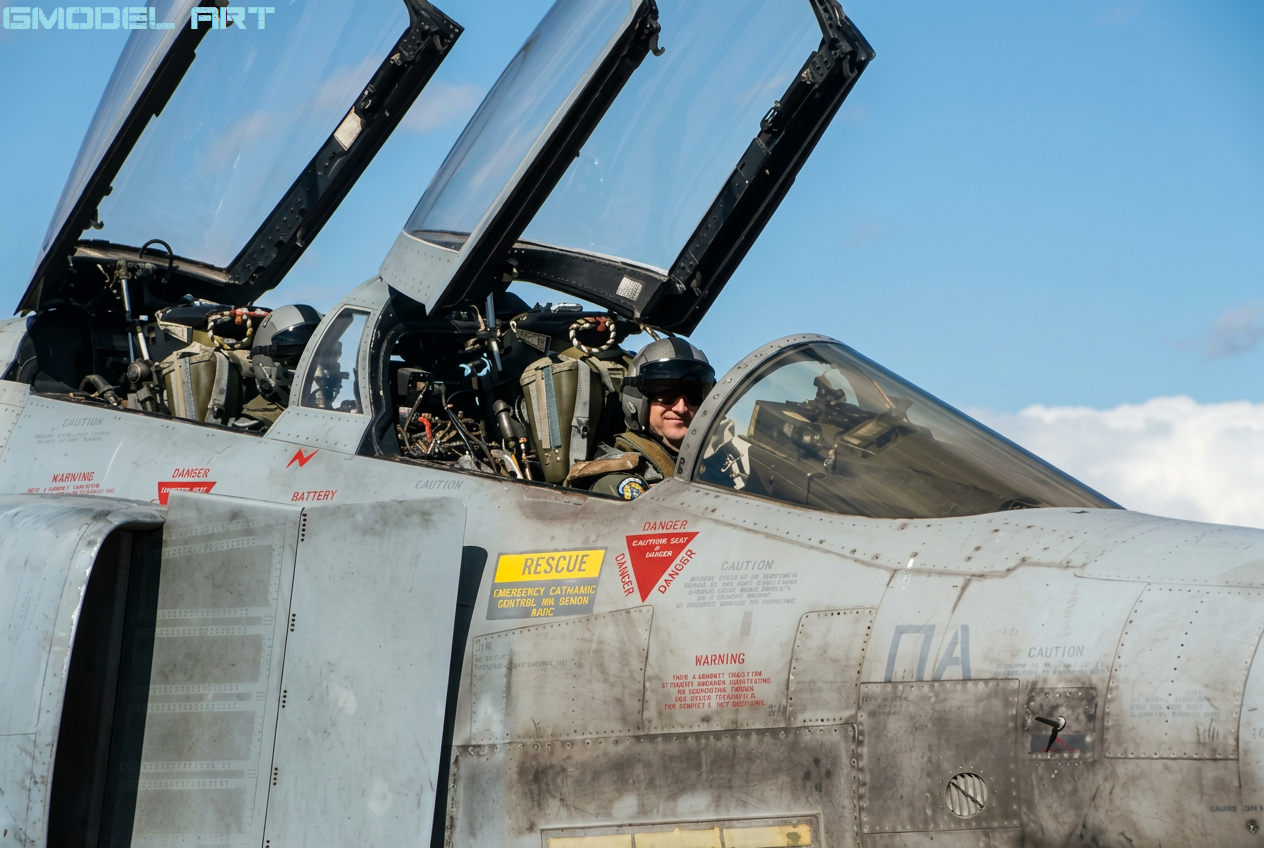
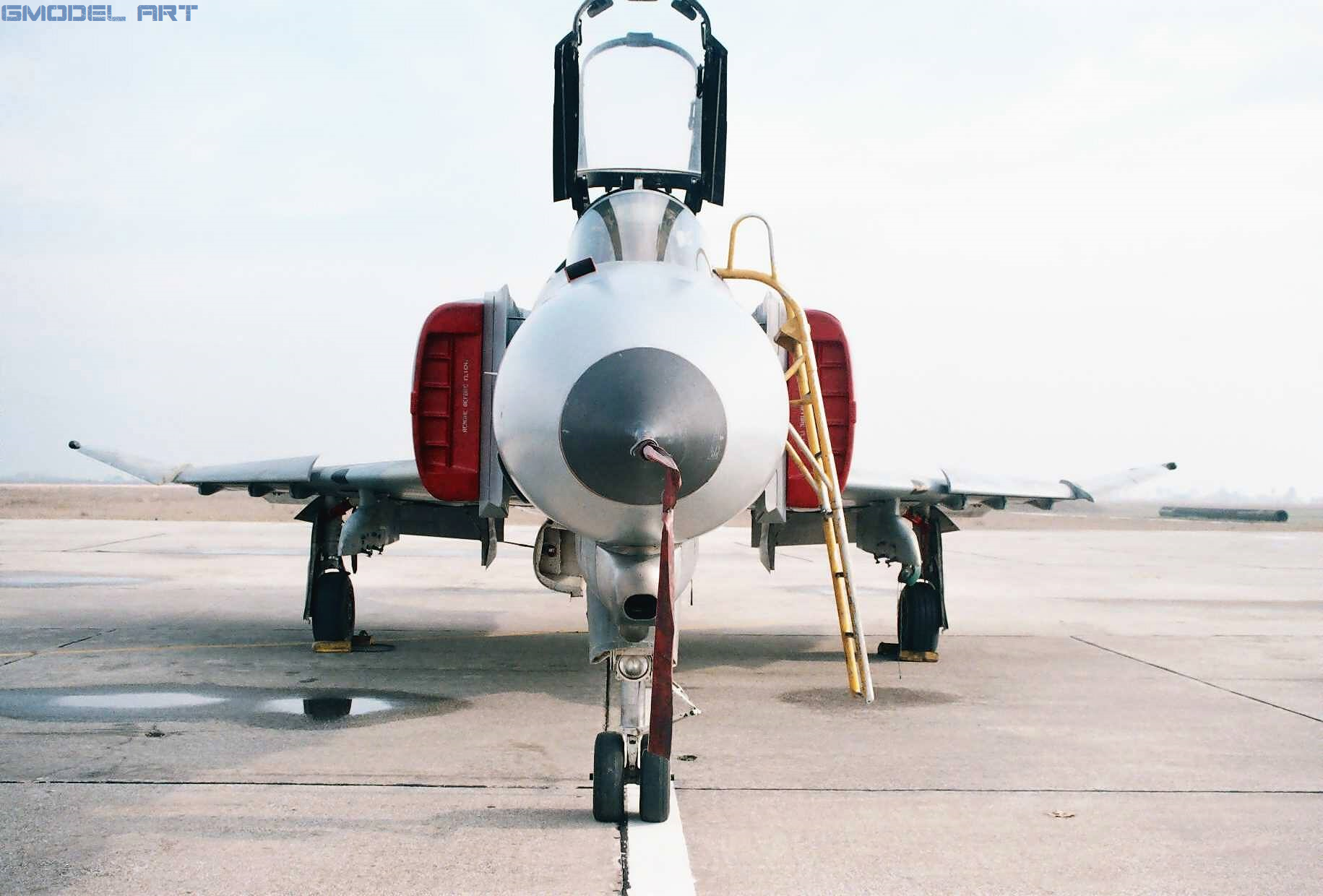
The standard production McDonnell Douglas F-4E Phantom II used a multi-piece forward windshield with structural framing between the transparent sections.
The one-piece windshield was a very different solution.
Instead of the original three-piece arrangement, the proposed system used a single wrap-around windshield combined with a new composite structural frame.
The modification was developed primarily because the increasing use of high-speed, low-level flight created a serious bird-strike hazard.
The U.S. Air Force’s existing F-4 windshield could withstand a four-pound bird impact at approximately 190 knots. The new development program sought to raise this protection dramatically, targeting a four-pound bird strike at 500 knots.
This was an enormous increase in the required impact capability.
Why was such a windshield necessary?
Bird strikes had become an increasingly serious problem for fast military aircraft.
The development of terrain-following and low-level attack operations meant that aircraft were flying extremely fast at altitudes where encounters with birds were unavoidable.
The problem was particularly serious because a bird could appear in front of a pilot only moments before impact.
A major U.S. Air Force article published in 1985 described the problem and identified the McDonnell Douglas F-4 Phantom II as one of the aircraft receiving improved windshield development work.
At that time, McDonnell Douglas and Goodyear Aerospace were developing a one-piece wrap-around windshield capable of withstanding a four-pound bird strike at 500 knots.
The technical solution
The F-4 program did not simply remove the centre windshield frame.
The engineers had to develop an entirely new structural concept.
The technical paper “F-4 Windscreen – An All Composite Frame”, by Scott A. Speelman of Texstar, explains that the U.S. Air Force requested a one-piece wrap-around windshield to replace the original three-piece configuration.
Three major requirements were established:
Resistance to a 4 lb bird strike at 500 knots without debris entering the cockpit.
Compatibility with the Head-Up Display (HUD).
Rapid replacement for improved maintainability.
The resulting solution combined impact-resistant transparent materials with an all-composite frame.
This was an important step in the development of composite aircraft transparency structures.
The A-7 connection
The technology used for the F-4 was not developed from zero.
Earlier work on the Northrop T-38 Talon had introduced the use of composite technology into aircraft transparency structures.
However, the more influential predecessor was the LTV A-7 Corsair II One Piece Windscreen and Bow Frame Replacement Program.
The A-7 program also sought to replace the original three-piece windshield and metallic arch with a one-piece wrap-around windshield incorporating a composite aft arch.
The A-7 program successfully demonstrated a 480-knot / 4-pound bird-strike capability, providing valuable engineering knowledge for the subsequent F-4 program.
This is an important distinction:
The A-7 Corsair II was a predecessor development program, not a donor aircraft for the F-4 68-0424 conversion.
A limited modification — not a production version
The one-piece windshield should not be confused with a new production variant of the Phantom.
The aircraft remained an McDonnell Douglas F-4E Phantom II.
The windshield was a limited retrofit and evaluation modification applied to a relatively small number of aircraft.
Specialist Phantom research indicates that the modification was trialled on a small number of airframes, with the modified aircraft subsequently retaining the windshield rather than being returned to their original configuration.
Importantly, available specialist research indicates that production F-4 aircraft were not originally manufactured as standard with the one-piece windshield.
This makes the configuration of McDonnell Douglas F-4E Phantom II 68-0424 particularly interesting.
It was not a special factory-built version.
It was an operational McDonnell Douglas F-4E Phantom II that received a rare technical modification during its service life.
The aircraft associated with the One-Piece Windscreen development
The following table separates the aircraft directly associated with the one-piece windscreen from the earlier aircraft programs that contributed to its technical development.
| Aircraft type | Role in the program | One-piece windshield |
|---|---|---|
| Northrop T-38 Talon | Early composite windscreen/frame development | Predecessor technology |
| LTV A-7 Corsair II | One-piece windscreen and composite bow-frame development | Predecessor program |
| McDonnell Douglas F-4E Phantom II | Main fighter application | Yes — limited retrofit/evaluation aircraft |
| McDonnell Douglas RF-4C Phantom II | Reconnaissance Phantom application | Yes — limited retrofit aircraft |
| McDonnell Douglas F-4G Wild Weasel Phantom II | Wild Weasel application | Yes — limited retrofit aircraft |
The technical record therefore shows a clear development path:
T-38 composite technology → A-7 one-piece windscreen program → F-4 one-piece windscreen program.
The F-4 program was the most important application for the subject of this article because it produced the configuration later seen on McDonnell Douglas F-4E Phantom II 68-0424.
From Indiana to Greece
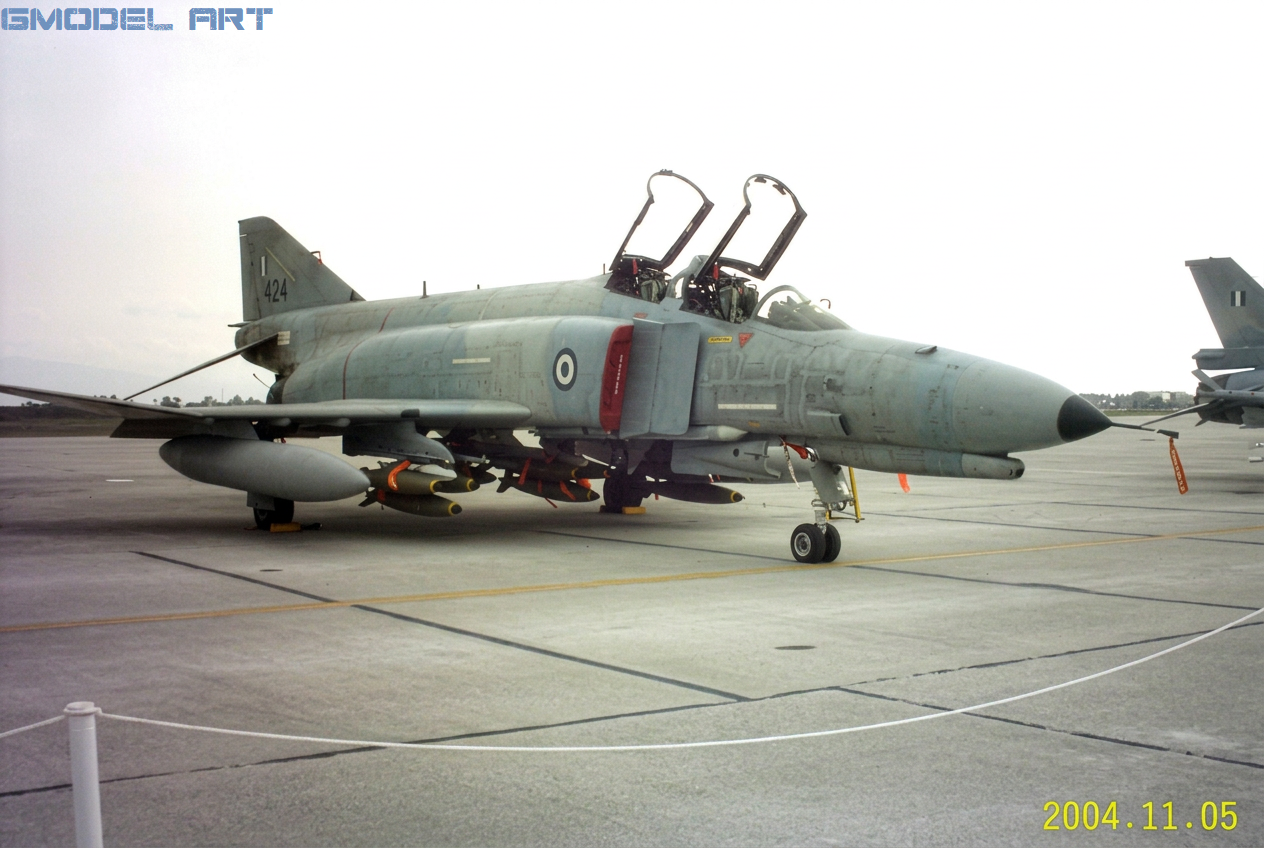
In August 1991, McDonnell Douglas F-4E Phantom II 68-0424 was transferred to the Hellenic Air Force as part of the F-4E SRA (Southeastern Regional Agreement) program.
The SRA aircraft were former American Air National Guard McDonnell Douglas F-4E Phantom II aircraft.
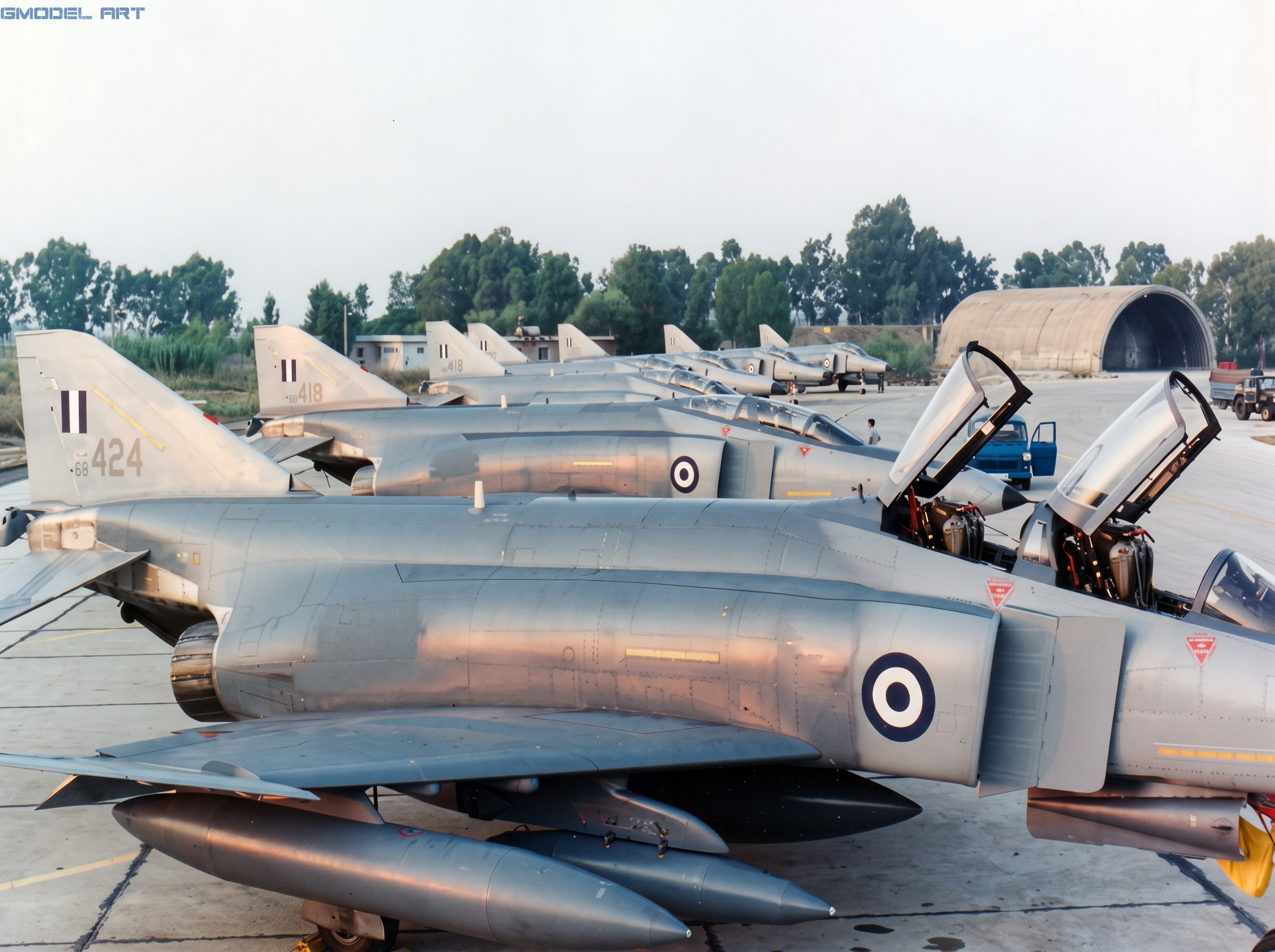
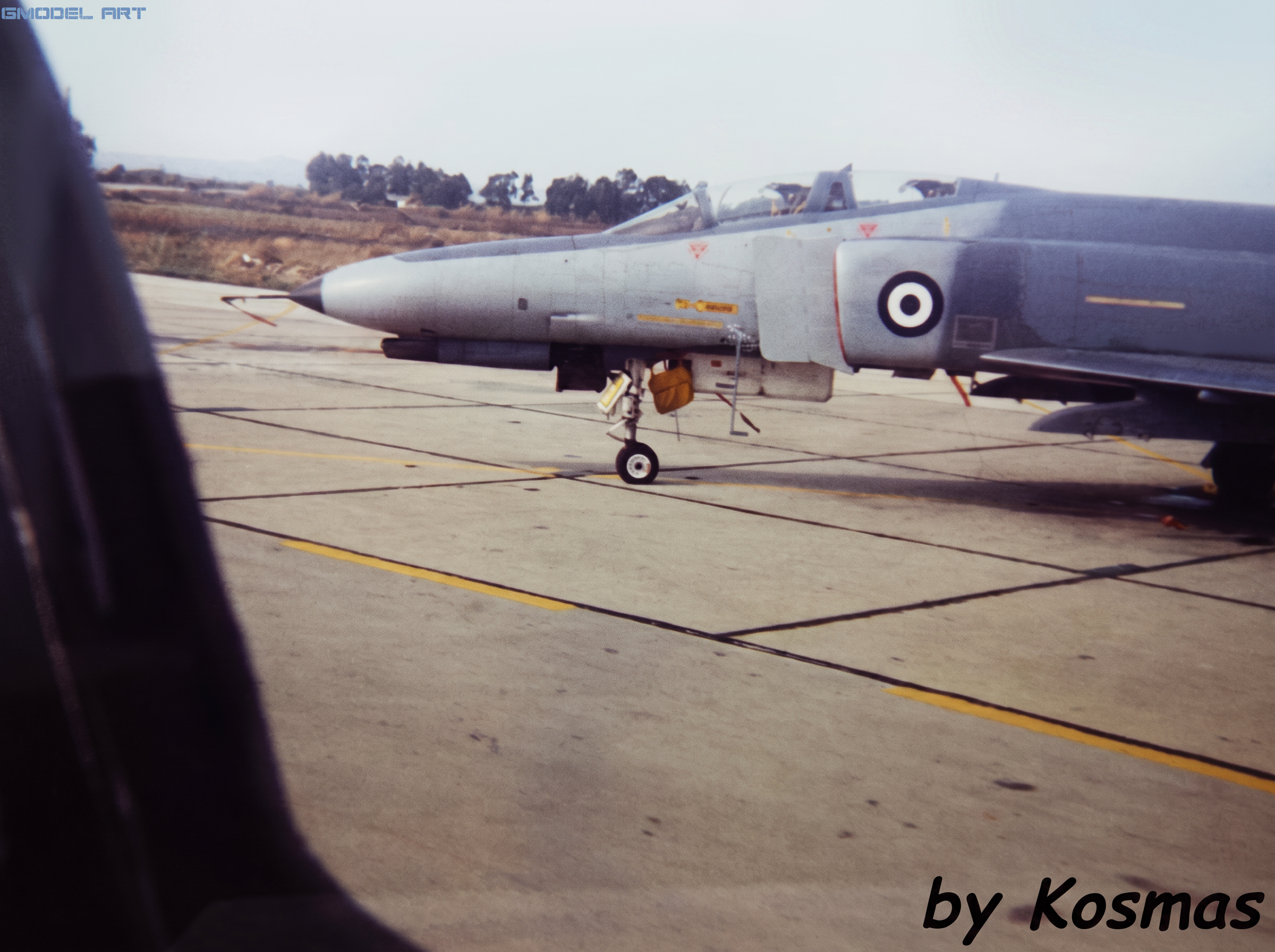
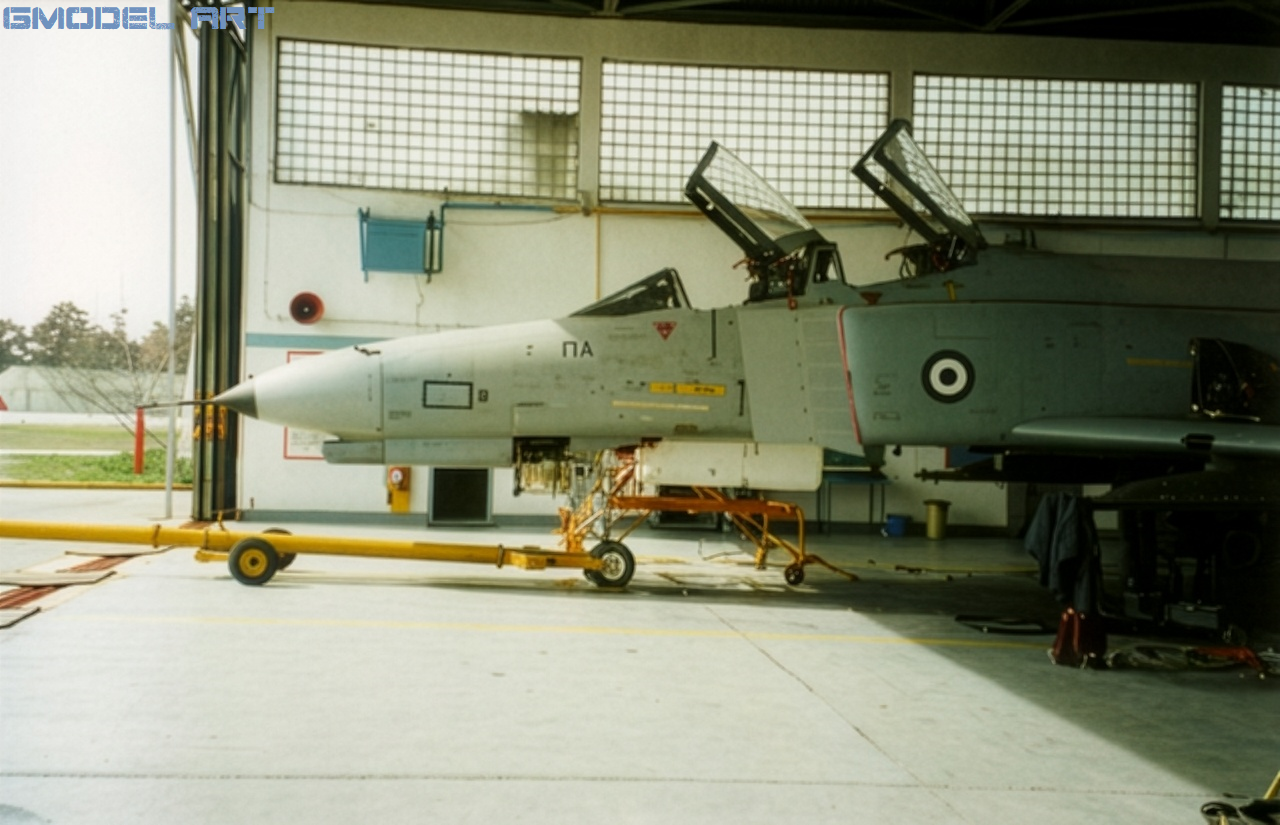
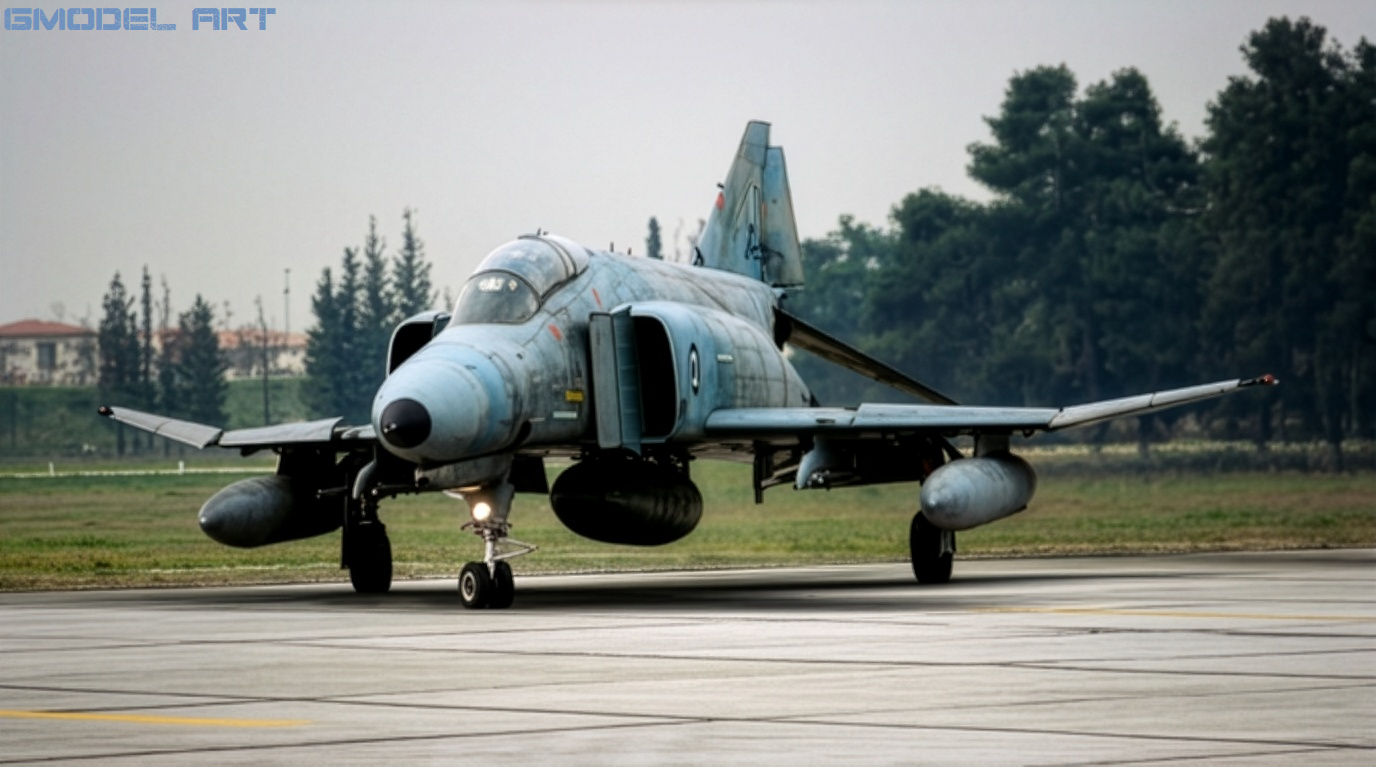
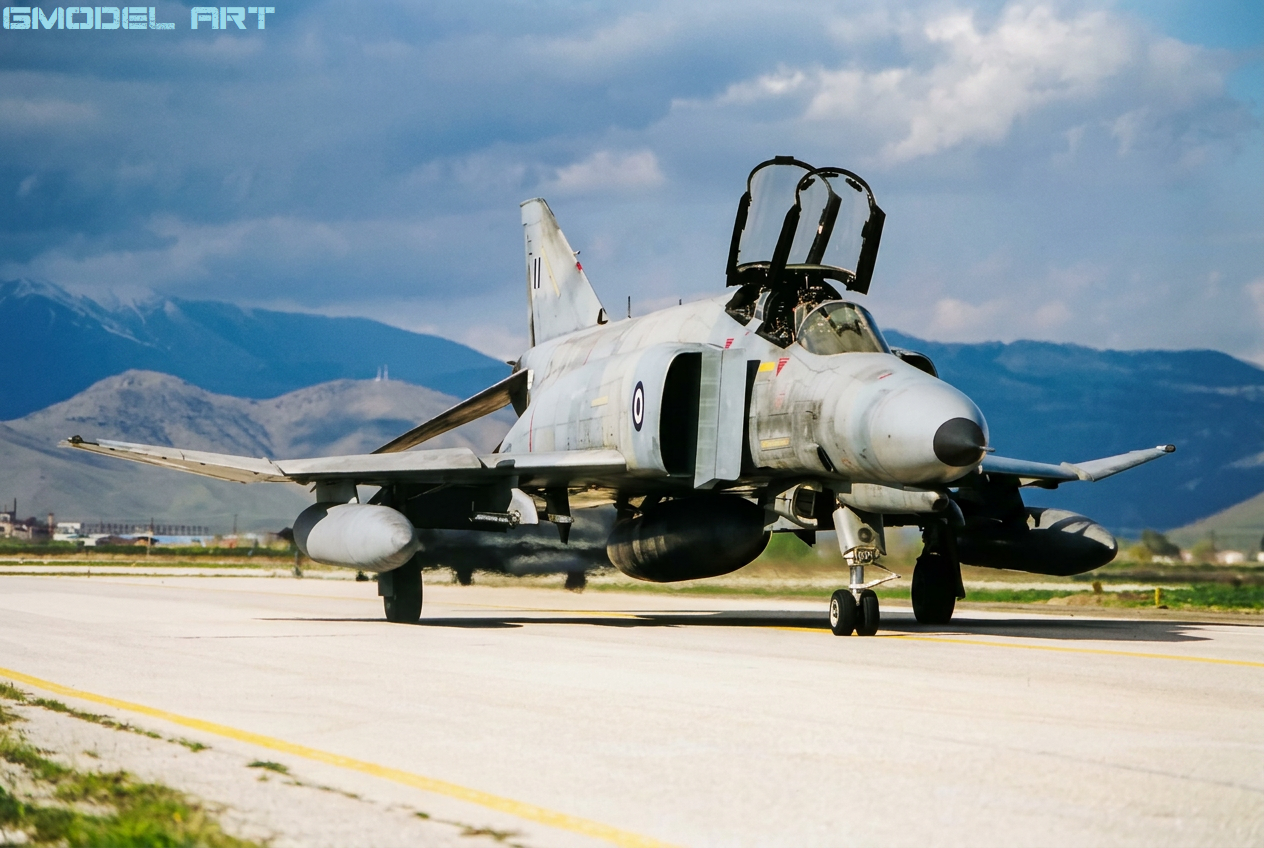
The Greek SRA fleet arrived in the standard American Hill Gray finish rather than the earlier SEA camouflage used by many American Phantom aircraft.
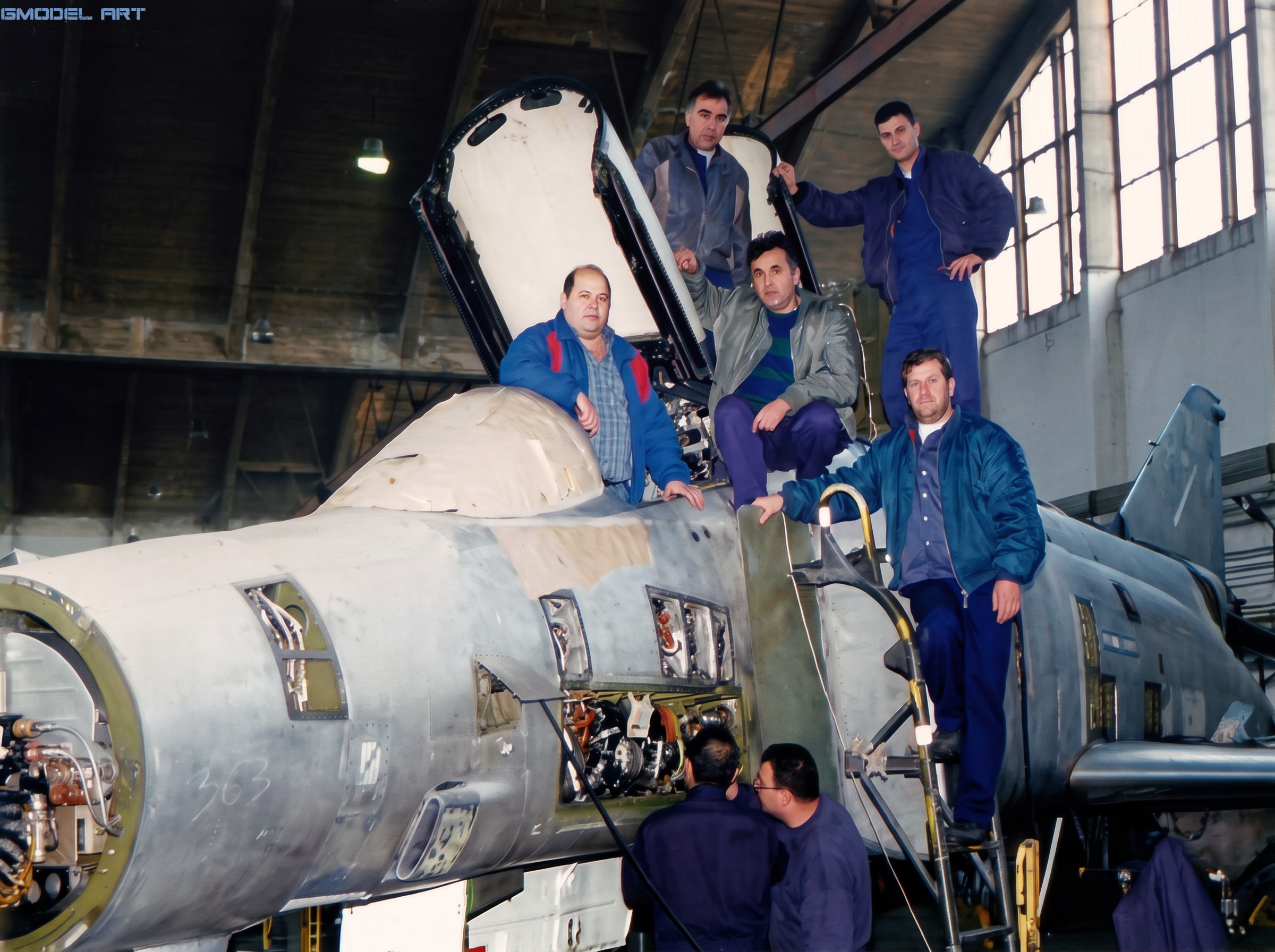
The SRA aircraft also incorporated improved mission equipment, including the Navigation and Weapon Delivery System (NWDS), along with other upgrades intended to increase their operational effectiveness.
For McDonnell Douglas F-4E Phantom II 68-0424, however, the most visually distinctive feature remained the one-piece windshield.
Service with the Hellenic Air Force
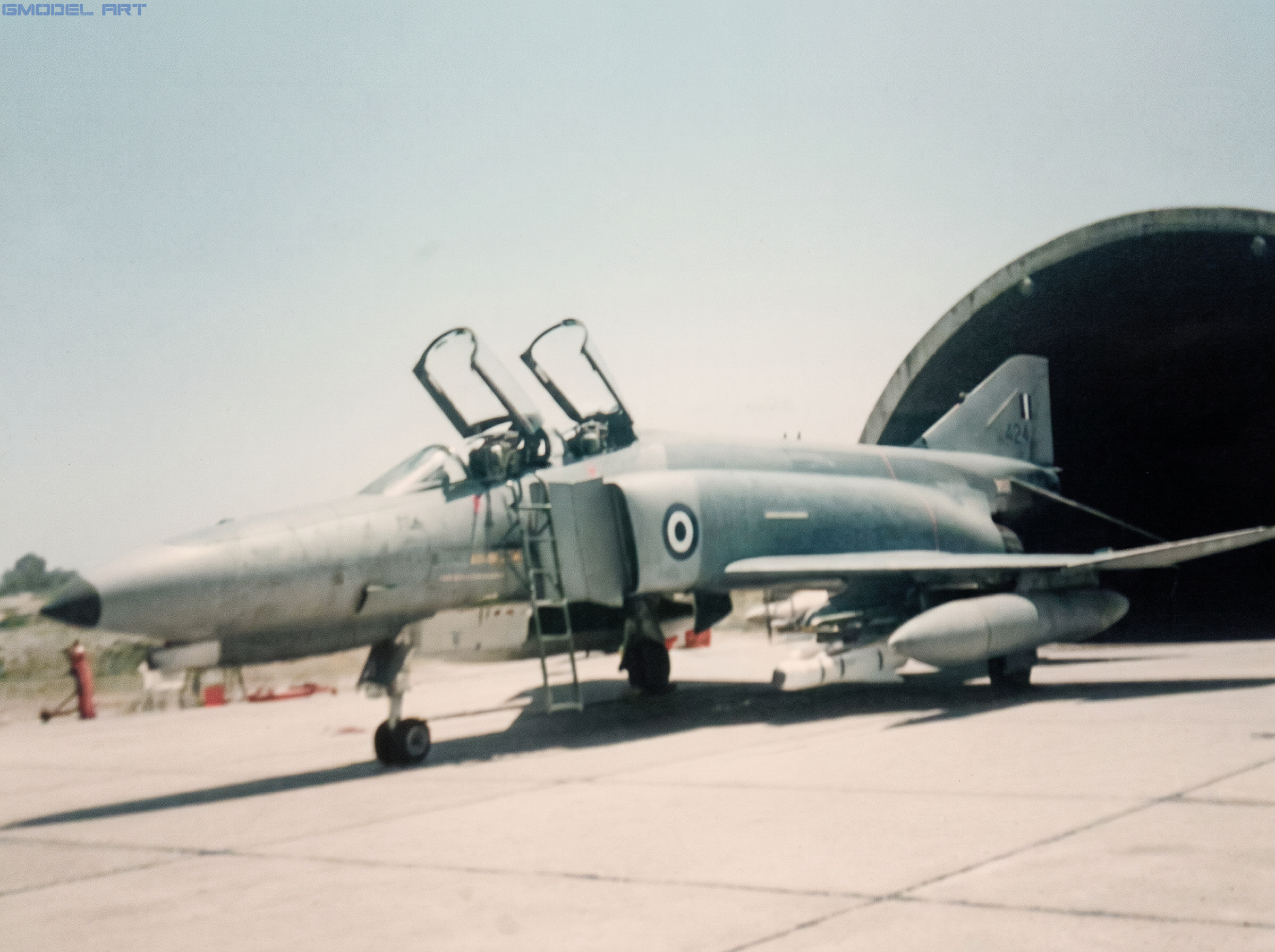
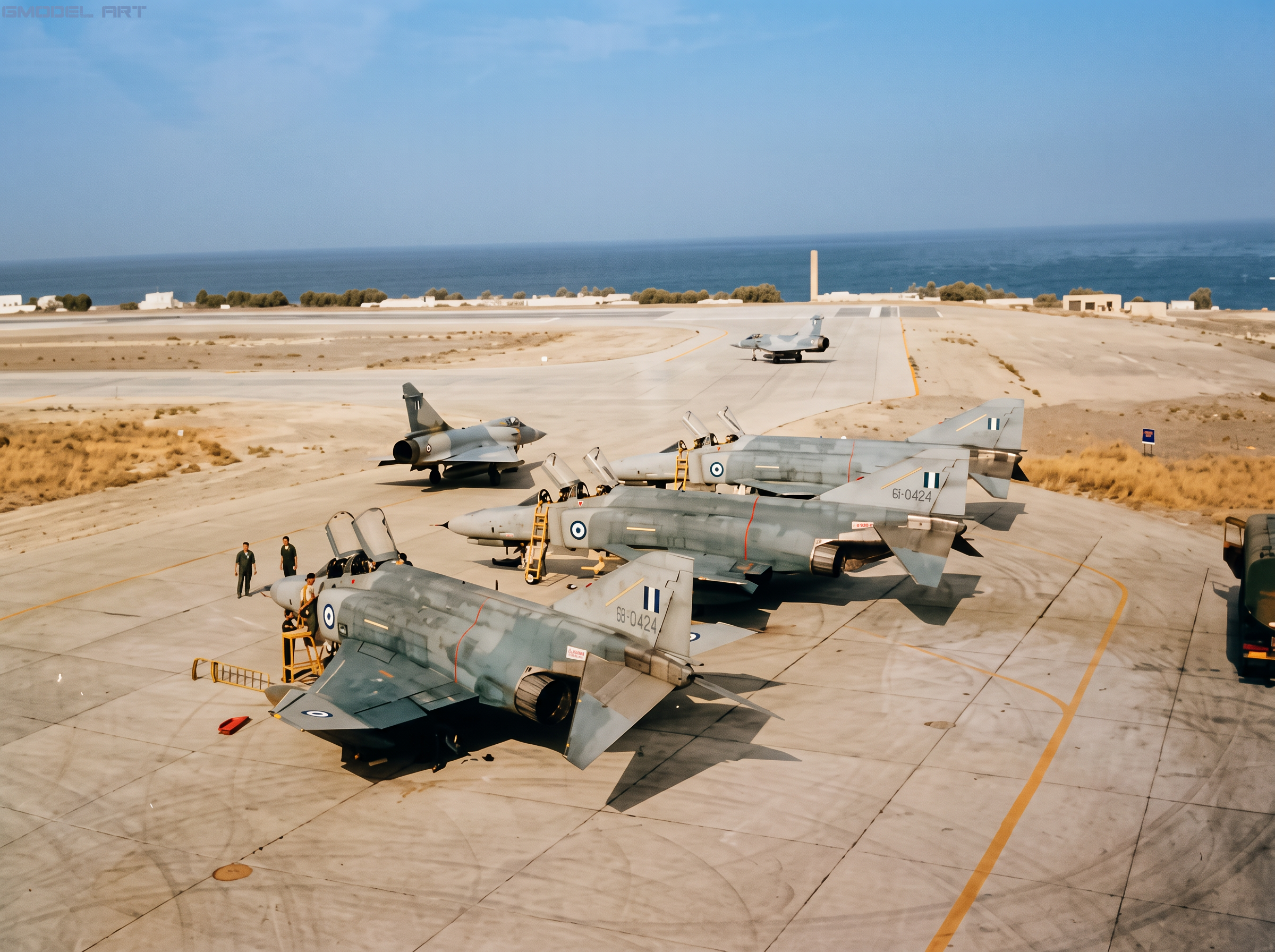
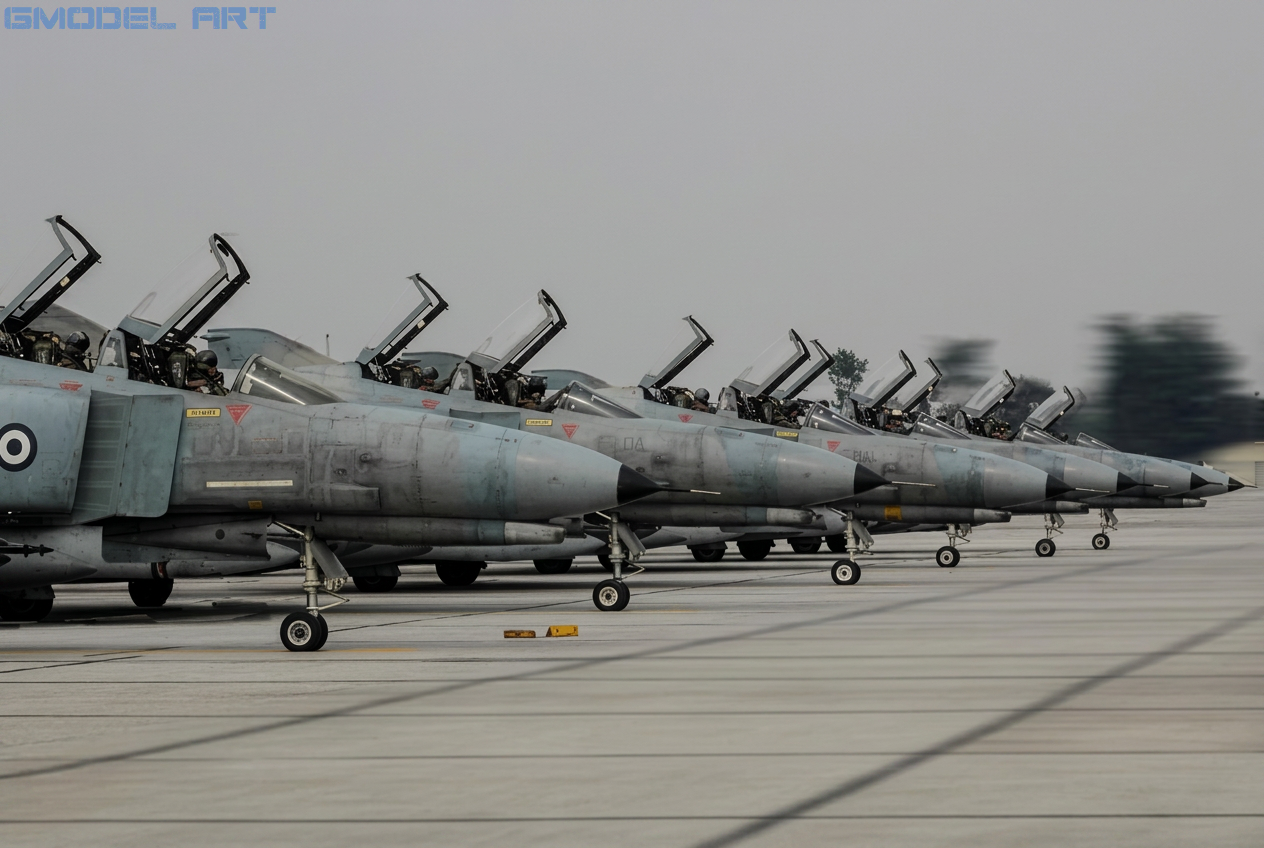
After its arrival in Greece, McDonnell Douglas F-4E Phantom II 68-0424 became part of the Hellenic Air Force F-4E SRA fleet.
The aircraft initially served with the 338 Squadron at Andravida and later became associated with the 337 Squadron at Larissa as the SRA aircraft were employed operationally.
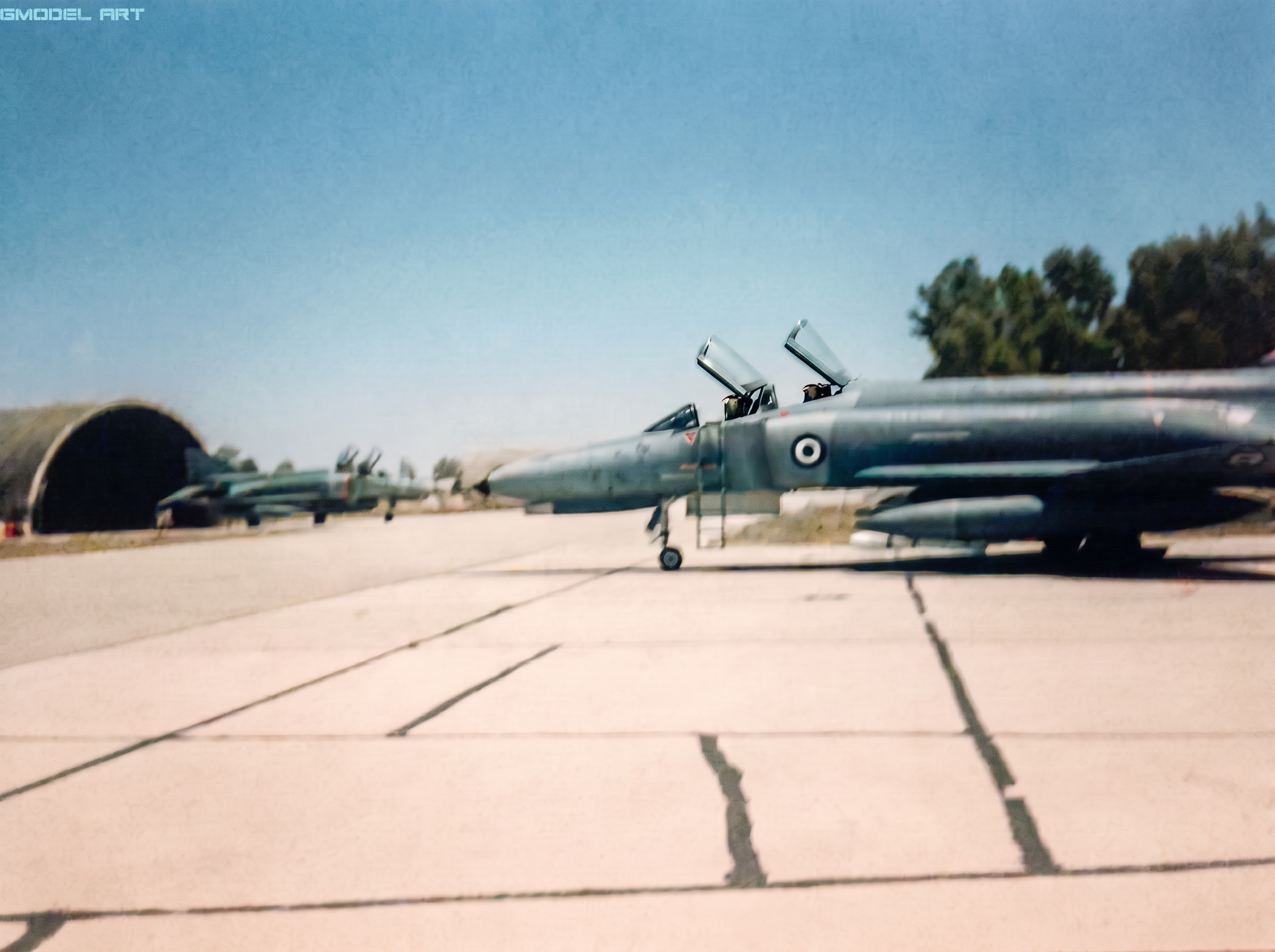
Throughout its Greek career, the aircraft retained its distinctive one-piece windshield.
This is particularly important because it demonstrates that the modification was not merely a temporary feature of its American evaluation period.
It remained with the aircraft after its transfer to Greece.
The final photograph — Larissa, 2005
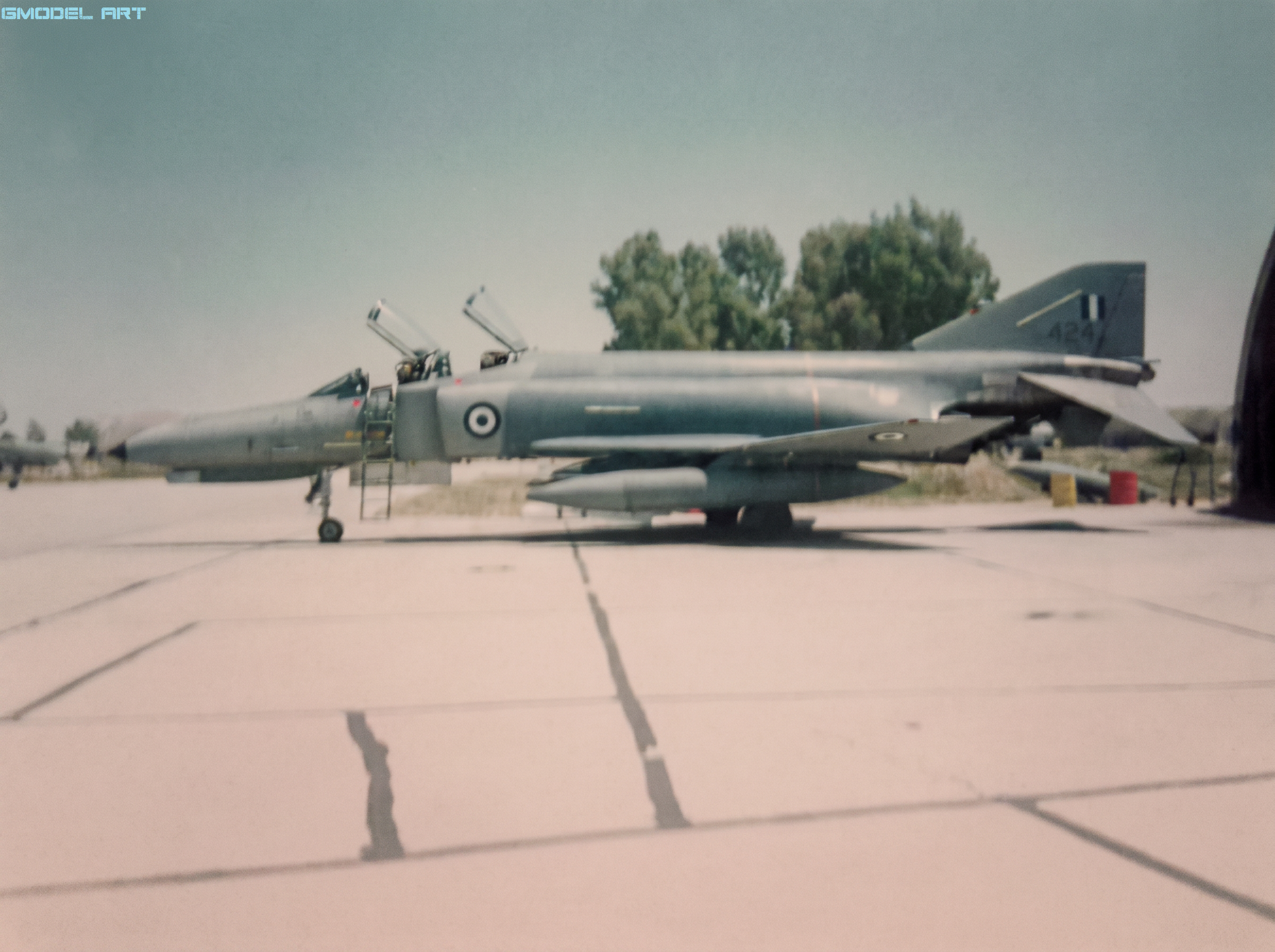
One of the most important photographic references for the aircraft was taken at Larissa on 16 December 2005.
The photograph identifies the aircraft as McDonnell Douglas F-4E Phantom II 68-0424 and specifically notes the single-piece windshield.
This photograph is especially valuable because it documents the aircraft during the final stage of its Greek operational career.
By this point, the aircraft had already passed through more than three decades of service, multiple American units, the Air National Guard and finally the Hellenic Air Force.
Yet the unusual windscreen was still present.
For anyone studying the aircraft as a historical subject, this photograph provides an exceptionally important reference.
The end of the SRA era
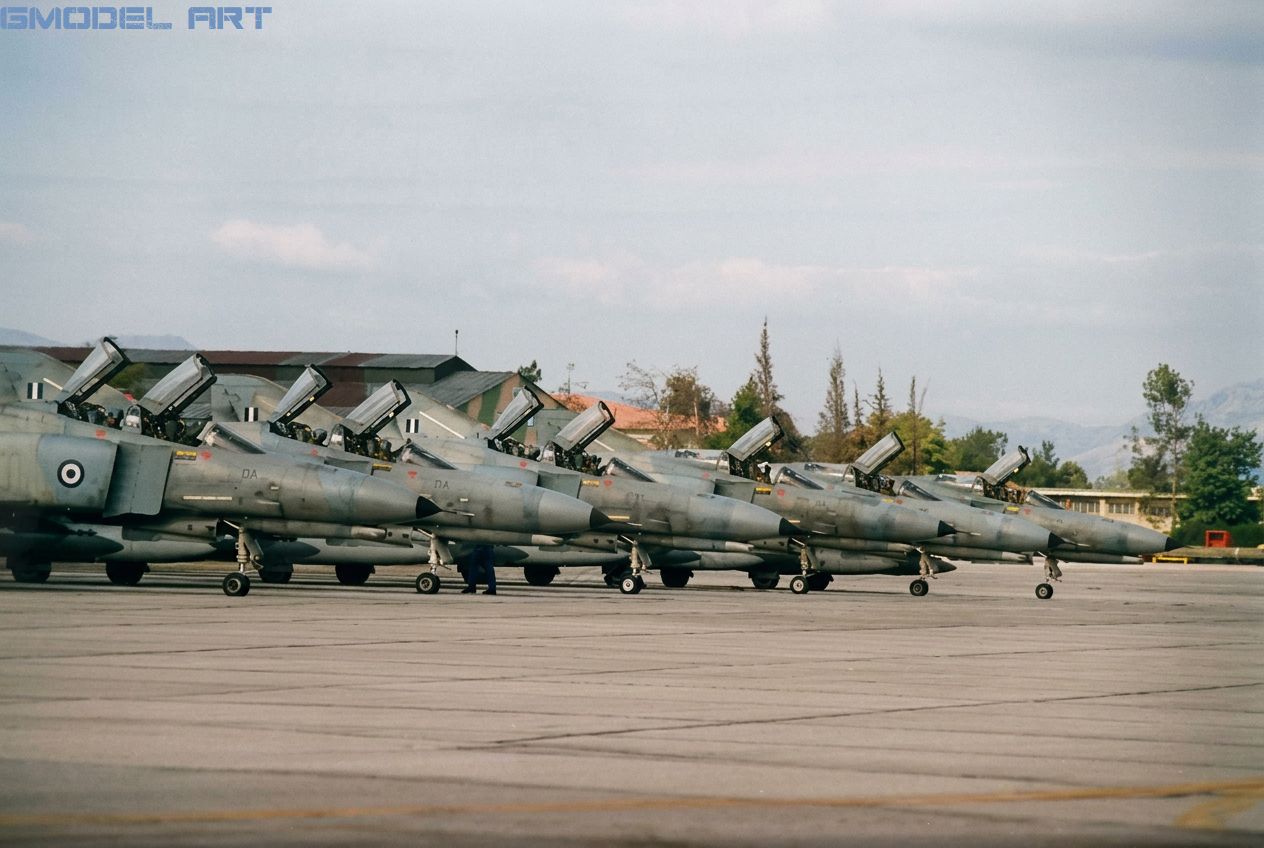
The Greek F-4E SRA aircraft were withdrawn from active service in December 2005.
For McDonnell Douglas F-4E Phantom II 68-0424, this marked the end of an operational career that had begun in the United States in 1969.
The aircraft had served in the USAF, the California Air National Guard, the Indiana Air National Guard and finally the Hellenic Air Force.
Its story was therefore not simply the story of an F-4E.
It was the story of one particular Phantom that carried a rare technical modification across two different air forces.
Why 68-0424 is special
Among the Greek SRA Phantom aircraft, McDonnell Douglas F-4E Phantom II 68-0424 deserves particular attention because its identity can be followed through photographic evidence across several stages of its career.
Heater Ferris U.S. NAVY Camouflage
Its story can be summarized as:
1969 — built as an F-4E-39-MC
1981 — USAF service, documented in SEA camouflage
1987 — California Air National Guard
1990–1991 — Indiana Air National Guard, 181st TFG
1991 — transferred to the Hellenic Air Force
1991–2005 — Hellenic Air Force F-4E SRA
16 December 2005 — photographed at Larissa with its distinctive one-piece windshield
The windshield is therefore not simply an interesting visual detail.
It is part of the individual history of McDonnell Douglas F-4E Phantom II 68-0424.
For a scale modeller attempting to reproduce this particular Greek Phantom, recognizing the one-piece windshield is essential.
A standard F-4E kit with the conventional multi-piece windshield does not automatically represent 68-0424.
The aircraft requires the correct windshield configuration, the appropriate Greek SRA appearance and the correct historical details for the period being modelled.
And that is precisely what makes F-4E Phantom II SRA 68-0424 HAF — One-Piece Windshield such an interesting subject: it is not merely another Greek Phantom, but a specific aircraft with a documented and highly unusual technical history.
https://www.360aviationworld.com/f-4_sra
https://aerialvisuals.ca/AirframeDossier.php?AirframeSN=109670&utm_source=chatgpt.com
Gallery