article
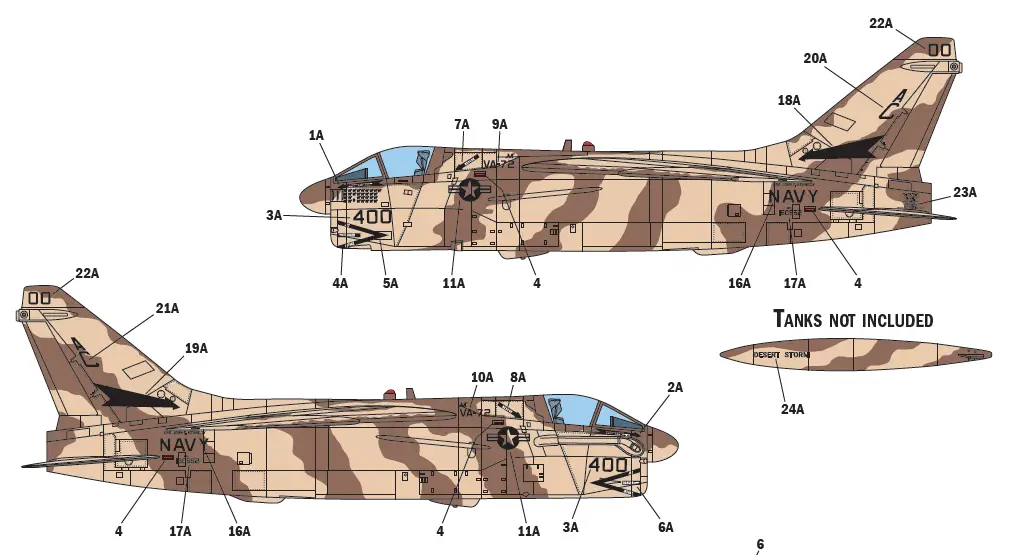
A-7E Corsair II “Desert Storm” – VA-72 Blue Hawks, BuNo 160552
The A-7E Corsair II During Operation Desert Storm
The LTV A-7E Corsair II was a carrier-based attack aircraft of the United States Navy, designed to deliver accurate conventional strikes and support naval aviation operations. During Operation Desert Storm in 1991, the A-7E remained an important part of the US Navy’s carrier-based attack capability in the Persian Gulf region.
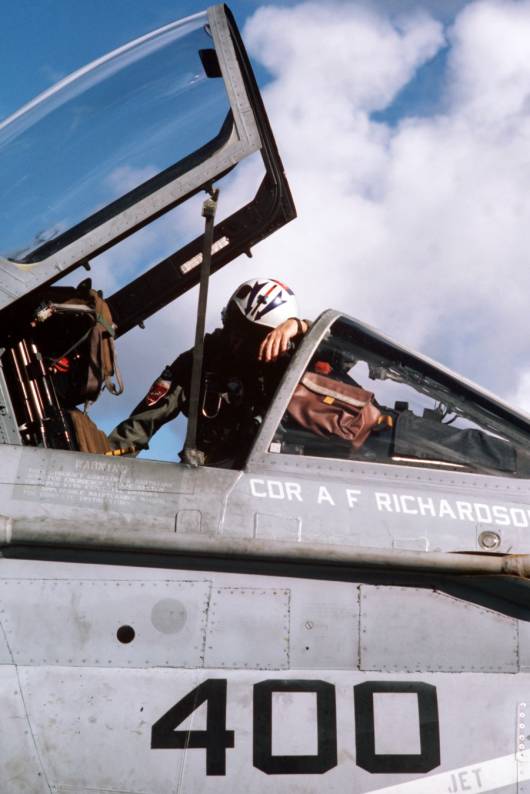
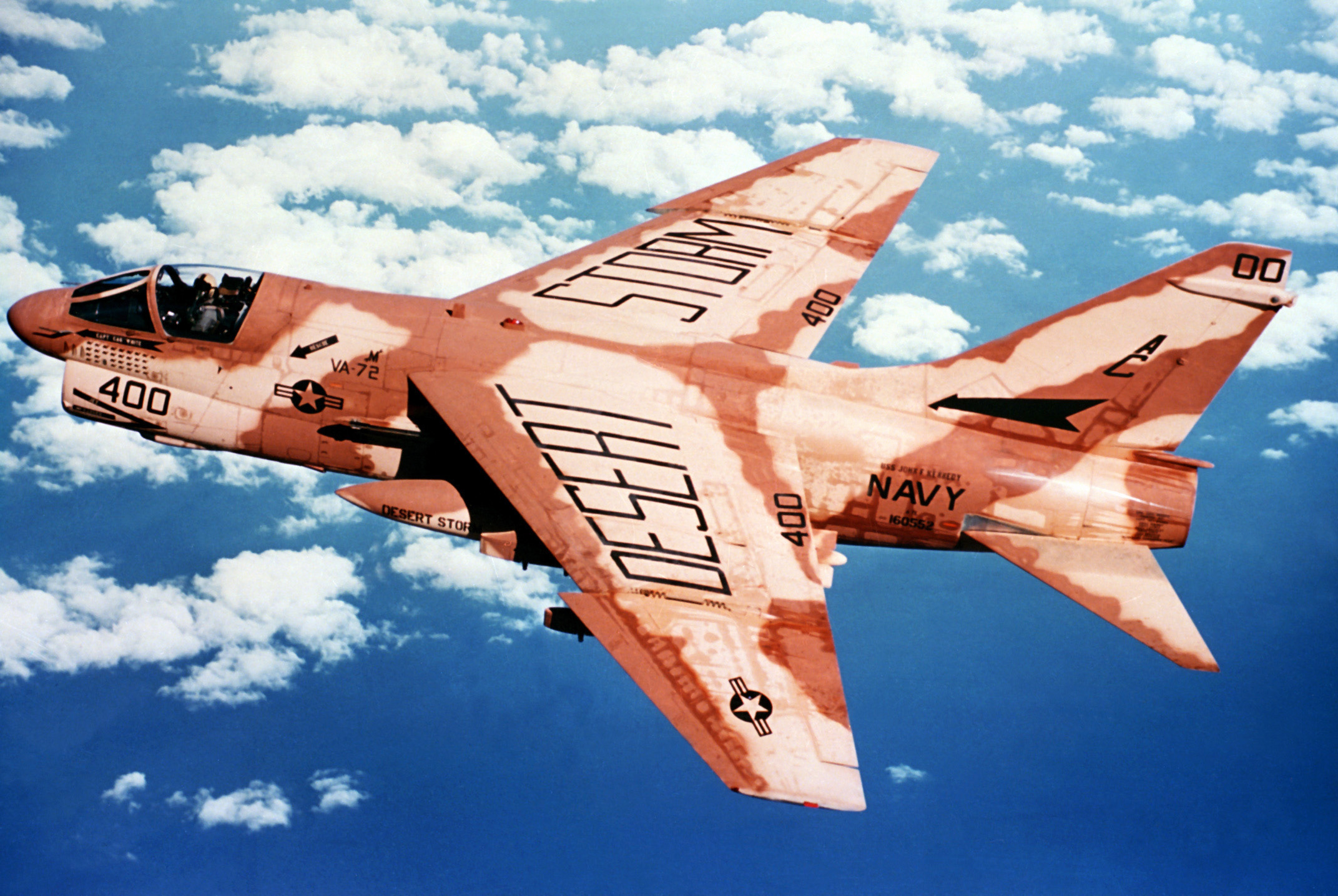
One particularly distinctive aircraft associated with this period was A-7E Corsair II BuNo 160552, operated by Attack Squadron 72 (VA-72), the “Blue Hawks”. The aircraft carried the markings of the Commander, Carrier Air Wing 3 (CAG CVW-3) and displayed a special desert camouflage scheme commemorating its participation in the Gulf War.
VA-72 “Blue Hawks” and Carrier Air Wing 3
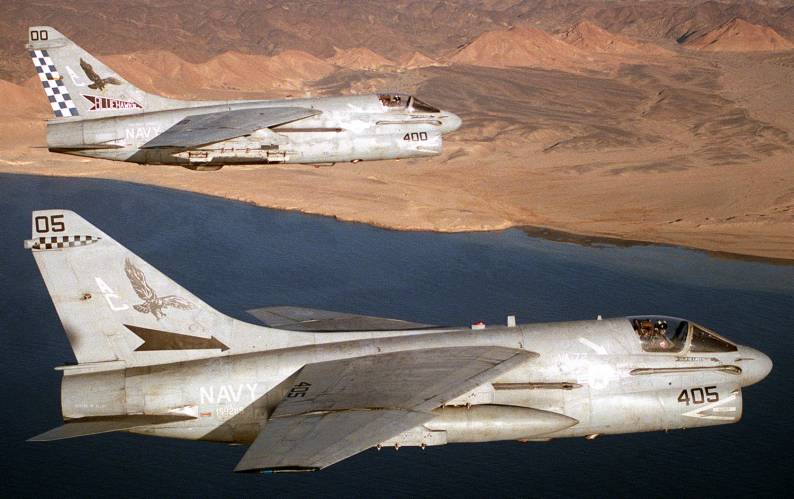
Attack Squadron 72 (VA-72), known as the “Blue Hawks”, operated the A-7E Corsair II as part of the United States Navy’s carrier-based aviation force. During Operation Desert Storm, VA-72 operated alongside Attack Squadron 46 (VA-46), the “Clansmen”.
Aircraft from both squadrons were deployed aboard the aircraft carrier USS John F. Kennedy (CV-67) during operations connected with the Persian Gulf region. Their deployment formed part of the extensive naval air campaign conducted during the 1990–1991 Gulf War.
The aircraft featured here, BuNo 160552, is particularly interesting to aviation enthusiasts and scale modellers because of its distinctive camouflage and commemorative markings. Unlike the conventional grey schemes commonly associated with late-service US Navy aircraft, this Corsair II wore a desert-inspired finish reflecting the operational environment and the conflict in which it served.
BuNo 160552 – Desert Camouflage and Mission Markings
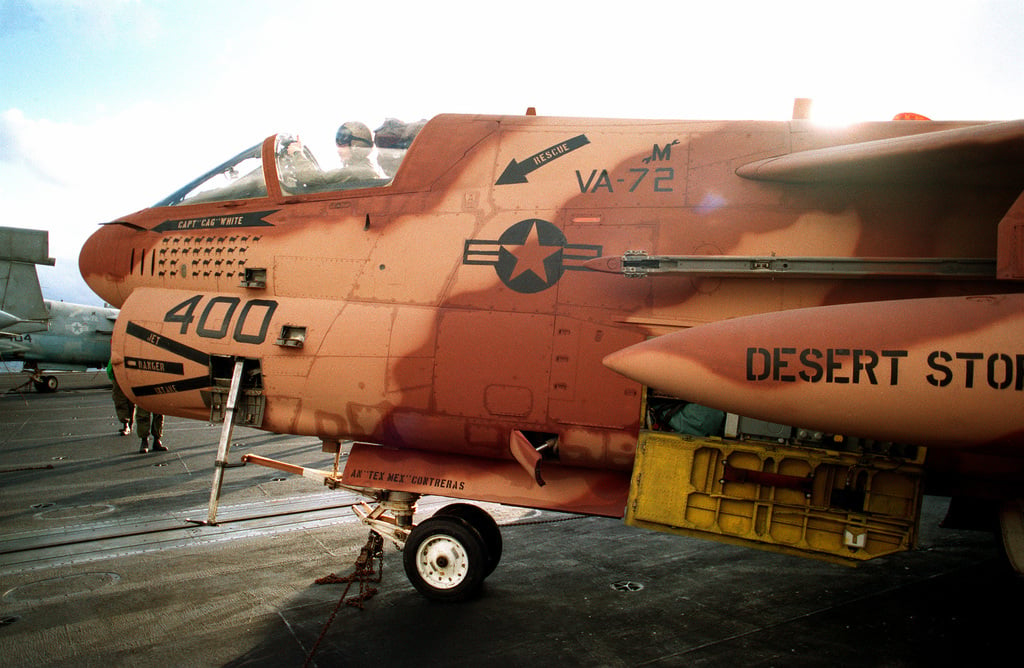
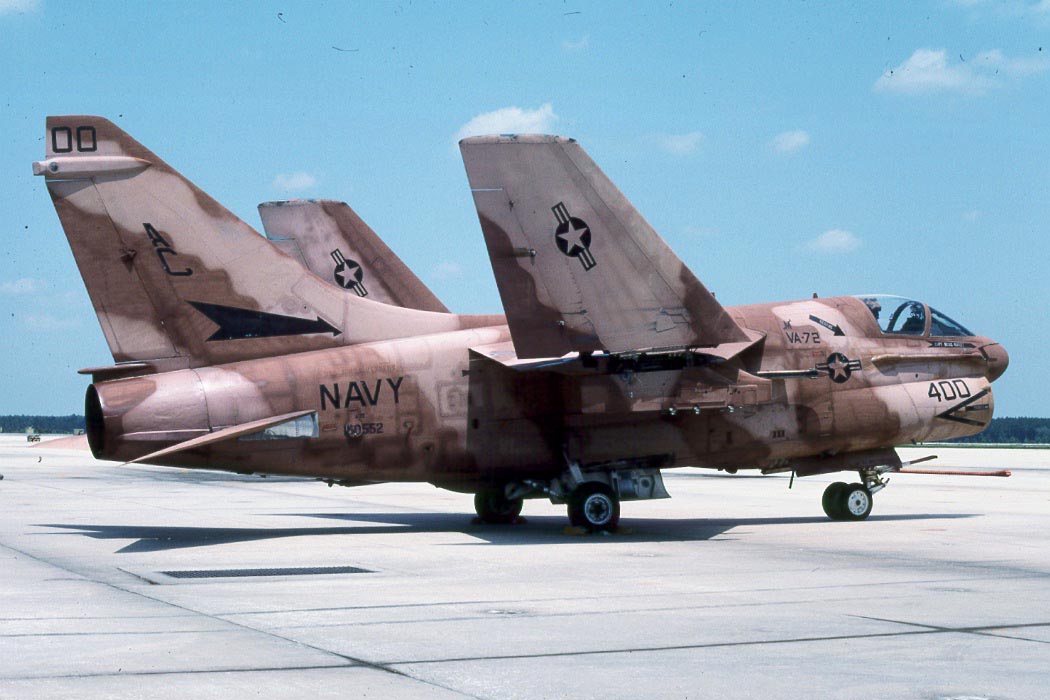
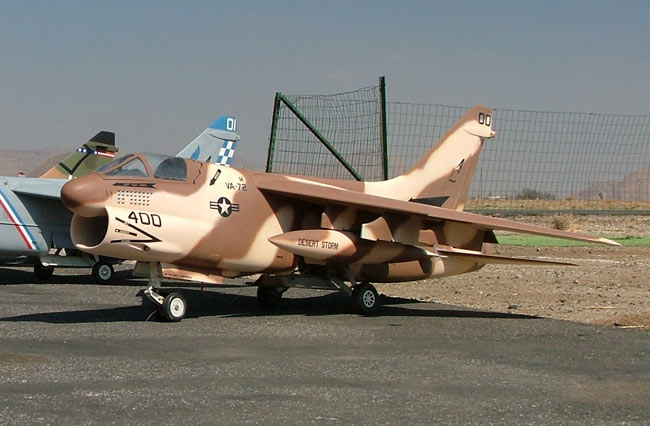
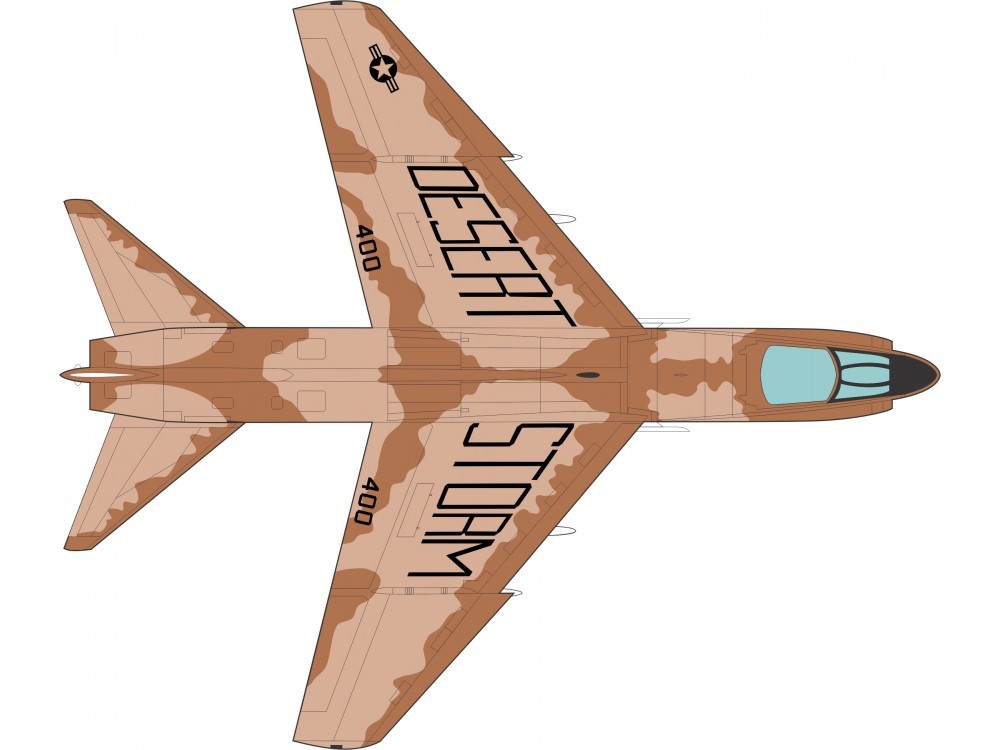
The most striking feature of this A-7E Corsair II is its unusual desert camouflage. The combination of brown and sand tones gives the aircraft a distinctive appearance and makes it an appealing subject for a scale modelling project.
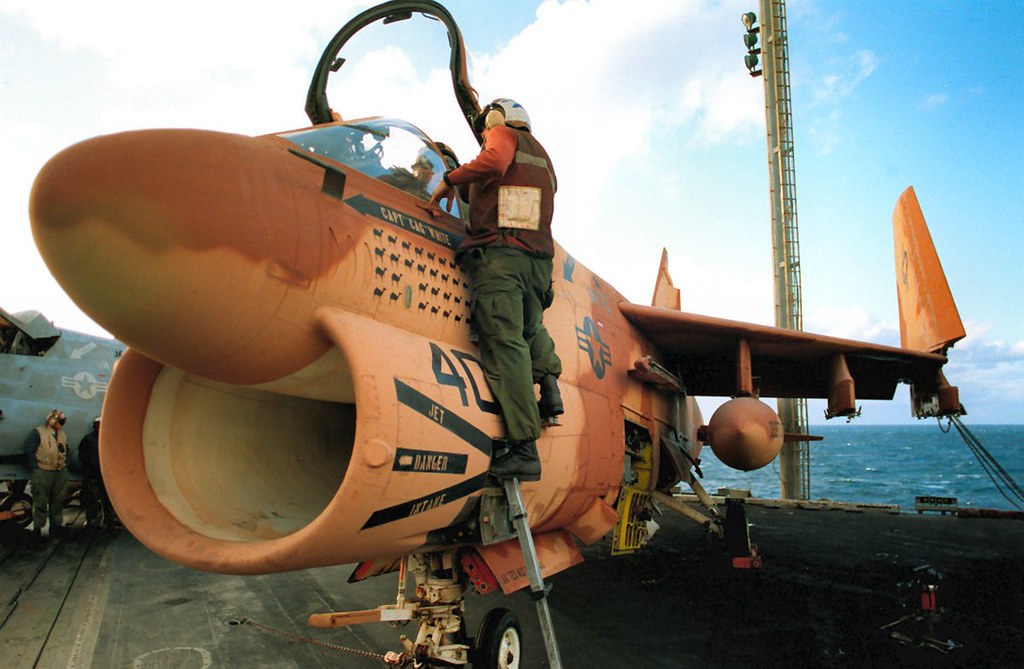
The aircraft also carried the name “Desert Storm”, directly connecting its appearance with the 1991 Gulf War. Another notable detail is the series of camel symbols displayed beneath the cockpit area, representing missions flown during Operation Desert Storm, as identified in the accompanying aircraft reference.
These mission symbols provide an important visual feature for anyone wishing to reproduce BuNo 160552 accurately. Their position, shape, spacing and relationship to the surrounding markings should be studied carefully when preparing decals or painting a scale model.
The aircraft’s CAG markings further distinguish it from standard squadron aircraft. Together, the camouflage, mission symbols and command aircraft identification create a configuration that is immediately recognizable to enthusiasts of modern US naval aviation.
A-7E Corsair II “Desert Storm” – Federal Standard Colors
For model builders recreating the camouflage shown in the reference, the following Federal Standard colors are specified:
| Area / Color | Federal Standard |
|---|---|
| Flat Dark Brown | FS 30233 |
| Flat Sand | FS 31667 |
Both colors should be applied with a flat finish to reproduce the appearance specified for this particular aircraft.
Before painting, modellers should compare the chosen paints with reliable photographs of BuNo 160552. Lighting, photographic aging, surface weathering and differences between digital displays can affect the apparent color of historical aircraft photographs. The Federal Standard references provide a useful starting point, but the exact camouflage boundaries should be taken from suitable photographic references.
Avoid automatically applying a standard grey US Navy scheme to this subject. The defining characteristic of this aircraft is its documented desert camouflage, which sets it apart from more conventional A-7E finishes.
Building the A-7E Corsair II as a Scale Model
The A-7E Corsair II “Desert Storm” is an excellent subject for modellers interested in US Navy aviation during the Gulf War. Its camouflage offers a welcome alternative to the grey finishes more frequently encountered on carrier-based aircraft.
When choosing an A-7E kit in 1/72 or 1/48 scale, first confirm that the kit represents the correct A-7E variant. Although the A-7 family shares a common design, differences between versions can affect the accuracy of a finished model.
Particular attention should be paid to the following details:
Camouflage: Reproduce the Flat Dark Brown FS 30233 and Flat Sand FS 31667 scheme, following photographs of the specific aircraft.
Aircraft identity: Confirm the BuNo 160552 and the correct VA-72 “Blue Hawks” and CAG markings.
Mission symbols: Position the camel symbols beneath the cockpit in accordance with the reference photograph.
Commemorative markings: Reproduce the “Desert Storm” name and any other visible markings without changing their proportions or placement.
Surface finish: Use a flat finish appropriate to the documented paint scheme.
Weathering: Apply restrained weathering based on the available photographic evidence. Fading, exhaust staining and panel variation should not obscure the aircraft’s distinctive camouflage or markings.
For the most accurate result, treat photographs of BuNo 160552 as the primary reference rather than relying exclusively on generic A-7E profiles or kit painting instructions.
The End of an Era for VA-72 and VA-46
The return from the Gulf War marked the final chapter of the A-7E Corsair II’s service with VA-72 “Blue Hawks” and VA-46 “Clansmen”. Both squadrons were decommissioned on 30 June 1991, following their return to the United States after approximately twenty years of service with Carrier Air Wing 3.
Their retirement represented the end of a significant period in US Navy carrier aviation. The A-7 Corsair II had served as a central element of the Navy’s light attack force for years, combining a compact design with the ability to operate from aircraft carriers and deliver conventional strike missions.
BuNo 160552 remains an especially interesting subject for aviation historians and scale modellers because its distinctive Desert Storm appearance connects a specific aircraft with the closing days of the A-7E era in these two squadrons.
Conclusion
The A-7E Corsair II BuNo 160552 of VA-72 “Blue Hawks” is a distinctive Gulf War aircraft and a rewarding subject for a historically focused scale model. Its desert camouflage, commemorative “Desert Storm” name, camel mission symbols and CAG identification offer several details that distinguish it from standard US Navy Corsair II schemes.
For a convincing reproduction, begin with the correct A-7E kit, use the specified FS 30233 Flat Dark Brown and FS 31667 Flat Sand colors, and carefully match the markings to photographic references. The result will be a model that captures the character of this unusual aircraft and commemorates the service of VA-72 and VA-46 during Operation Desert Storm.
GModel Art – Scale Modelling, Aircraft History and Reference Guides.
A-7E Corsair II VA-72 “Blue Hawks” – Desert Storm 1991 | Hasegawa 1/48 Build