Yiannis Mitzas

article


F2A Buffalo No. 21 of Commander Joseph C. Clifton: The First U.S. Navy Monoplane Fighter and Its Unique Camouflage

The Brewster F2A Buffalo occupies a special place in aviation history as the first monoplane fighter to enter operational service with the United States Navy. Designed and built by Brewster Aeronautical Corporation in 1937, the aircraft represented a significant technological leap from the biplane era, replacing the aging Grumman F3F and introducing modern fighter concepts to naval aviation.

Although its combat reputation remains controversial, the Buffalo played an important role during the early stages of the Second World War and today remains an exceptionally attractive subject for historians and scale modelers alike.

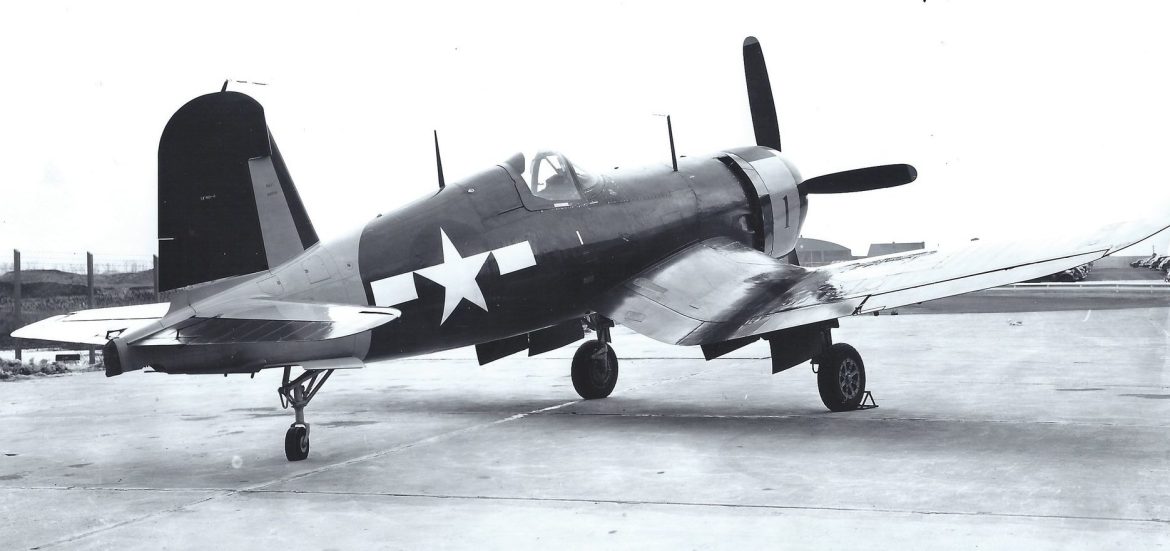
Among the most interesting examples is F2A Buffalo No. 21, associated with Commander Joseph C. Clifton, photographed during his service in August 1942. The aircraft presents several distinctive camouflage characteristics that differ from the standard fleet appearance and provide fascinating opportunities for accurate historical modeling.

The Brewster Buffalo entered service in June 1939 and underwent multiple modifications before America’s entry into World War II. The ultimate naval variant, the F2A-3, incorporated additional fuel capacity, improved protection, and structural changes, although these improvements increased the aircraft’s weight and negatively affected performance.

Measuring approximately 35 feet in length with a wingspan exceeding 43 feet, the Buffalo was powered by a single Wright R-1820 Cyclone radial engine. Its armament consisted of two fixed forward-firing 0.50-inch machine guns mounted above the engine cowling and two additional 0.50-inch guns installed in the wings, providing considerable firepower for its era.

The aircraft gained its most famous combat experience during the Battle of Midway. Operating with VMF-221 on Midway Island, Buffalo pilots faced overwhelming Japanese attacks involving Aichi D3A1 “Val” dive bombers and the formidable Mitsubishi A6M Zero fighters.

Despite the courage of their pilots, the Buffalo suffered severe losses during the battle. The aircraft’s limitations in speed, climb rate, and maneuverability became painfully evident against more modern Japanese opponents. Following Midway, the Buffalo’s frontline combat career with American squadrons effectively ended, and surviving aircraft were reassigned to advanced training duties.

Photographs preserved in the collection of the National Naval Aviation Museum show Buffalo fighters operating from Naval Air Station Miami during training flights between 1941 and 1942. Among these historical images is aircraft number 21, associated with Commander Joseph C. Clifton, providing valuable references for historians and model builders.

What makes Buffalo No. 21 particularly fascinating is its unusual camouflage pattern. At first glance, the aircraft follows the standard early-war U.S. Navy scheme consisting of Non-Specular Blue Gray on upper surfaces and Non-Specular Light Gray on the undersides. However, closer examination reveals several distinctive features not commonly observed on other F2A aircraft.

The primary upper color corresponds to Non-Specular Blue Gray (FS 35189), while the lower surfaces employ Non-Specular Light Gray (FS 36440). These colors formed the standard U.S. Navy camouflage introduced in late 1940 and used extensively until the transition to the tri-color scheme in 1943.

Unlike most Buffalo aircraft, No. 21 appears to display extended applications of Light Gray FS 36440 onto portions of the wing tips and the left side of the vertical tail. The rear section of the right wing and parts of the rudder also demonstrate noticeable tonal variations that suggest either field modifications, repainting, or maintenance-related touch-ups.

Another particularly intriguing feature concerns the upper right rudder surface, which appears considerably darker and is best represented in scale modeling by Mat Sea Blue FS 15042. The surviving black-and-white photographs do not provide definitive evidence, but tonal analysis strongly suggests a darker blue finish compared to the surrounding Blue Gray areas.

Modelers should also note that the Blue Gray finish exhibited significant panel fading and weathering. Operational exposure to intense sunlight, salt air, and maintenance activity caused substantial tonal variation across the aircraft. Lightened panel centers and subtle modulation effects are therefore entirely appropriate when reproducing this machine in scale.

The engine cowling deserves special attention as well. Contemporary photographs indicate extensive staining from burnt oil and exhaust residue, a common characteristic of heavily used radial-engine aircraft. Oil leaks around the Wright Cyclone engine produced dark streaks and grime deposits that dramatically altered the appearance of the forward fuselage.

Although frequently overshadowed by more famous fighters such as the F4F Wildcat and the F6F Hellcat, the Buffalo represents an important transitional step in naval aviation development. It was a large and robust aircraft for its time and introduced American naval pilots to the realities of modern monoplane fighter operations.

For scale modelers, F2A Buffalo No. 21 offers a compelling combination of historical significance and visual uniqueness. Its non-standard camouflage features, extensive weathering opportunities, and direct connection to one of the most dramatic periods of early Pacific warfare make it a truly rewarding subject.

Whether built in 1/72, 1/48, or 1/32 scale, this aircraft provides an excellent canvas for advanced painting techniques, subtle color modulation, and historically informed interpretation. More importantly, it commemorates an often-overlooked chapter in U.S. naval aviation history and the men who flew these pioneering machines during some of the most challenging moments of the Second World War.

The Brewster Buffalo may not have achieved legendary combat success, but its legacy as America’s first operational naval monoplane fighter ensures that it remains an enduring and fascinating subject for historians and modelers alike.

Brewster F2A Buffalo
AreaColorFS CodeRecommended Modeling Paints
Upper SurfacesNon-Specular Blue GrayFS 35189AK Real Colors RC222, Mr. Color C367, MRP-123
Lower SurfacesNon-Specular Light GrayFS 36440Tamiya XF-19, AK RC220, Mr. Color C338
Dark Tail SurfacesMat Sea BlueFS 15042AK RC257, Mr. Color C365, MRP-014
EngineBurnt Metal / SteelFS 36081Alclad Exhaust Manifold, AK Extreme Metal Burnt Iron
Oil Stains & WeatheringEngine Oil Effects—AMMO Fresh Engine Oil, AK Engine Grime

FG-1A Corsair “Lucky Gallon” 92

article FG-1A Corsair “94” NX69900 Lucky Gallon” Built as FG-1A by Goodyear. Received Strength/Charge with the United States Navy as BuNo 13481. History12 August 1946To Cook Cleland Air Service/Cook Cleland, Willoughby, OH with new c/r…

Read more

B-29 Superfortress Boeing WW2

article Boeing B–29 Superfortress A series of historical images of the legendary Boeing B-29 Superfortress during WW2, depicting its life at the Pacific resort. Although it bore the “Superfortress” tag, a nod to another game-changer, the B-17,…

Read more

Wrecked Japanese zero

article Japanese Zero Wreck Any self-respecting modeller. You have to creatively destroy a kit at some point, In this article I will try to help you give it a different look, playing with the weather…

Read more

Akutan Zero Mitsubishi A6M2

article   Akutan Zero (Koga’s Zero): The Captured Mitsubishi A6M2 That Changed the Air War in the Pacific On 4 June 1942, while the Battle of Midway was unfolding hundreds of kilometers to the south,…

Read more

F-4E Phantom AUP

F-4E Phantom II AUP Aegean Ghost The Phantom entered service with the HAF in 1974 as part of the “Peace Icarus” weapons program. Although this is a second generation aircraft, 36 Hellenic Phantoms have been…

Read more

This website uses cookies to improve your experience. We'll assume you're ok with this, but you can opt-out if you wish. Read More