article
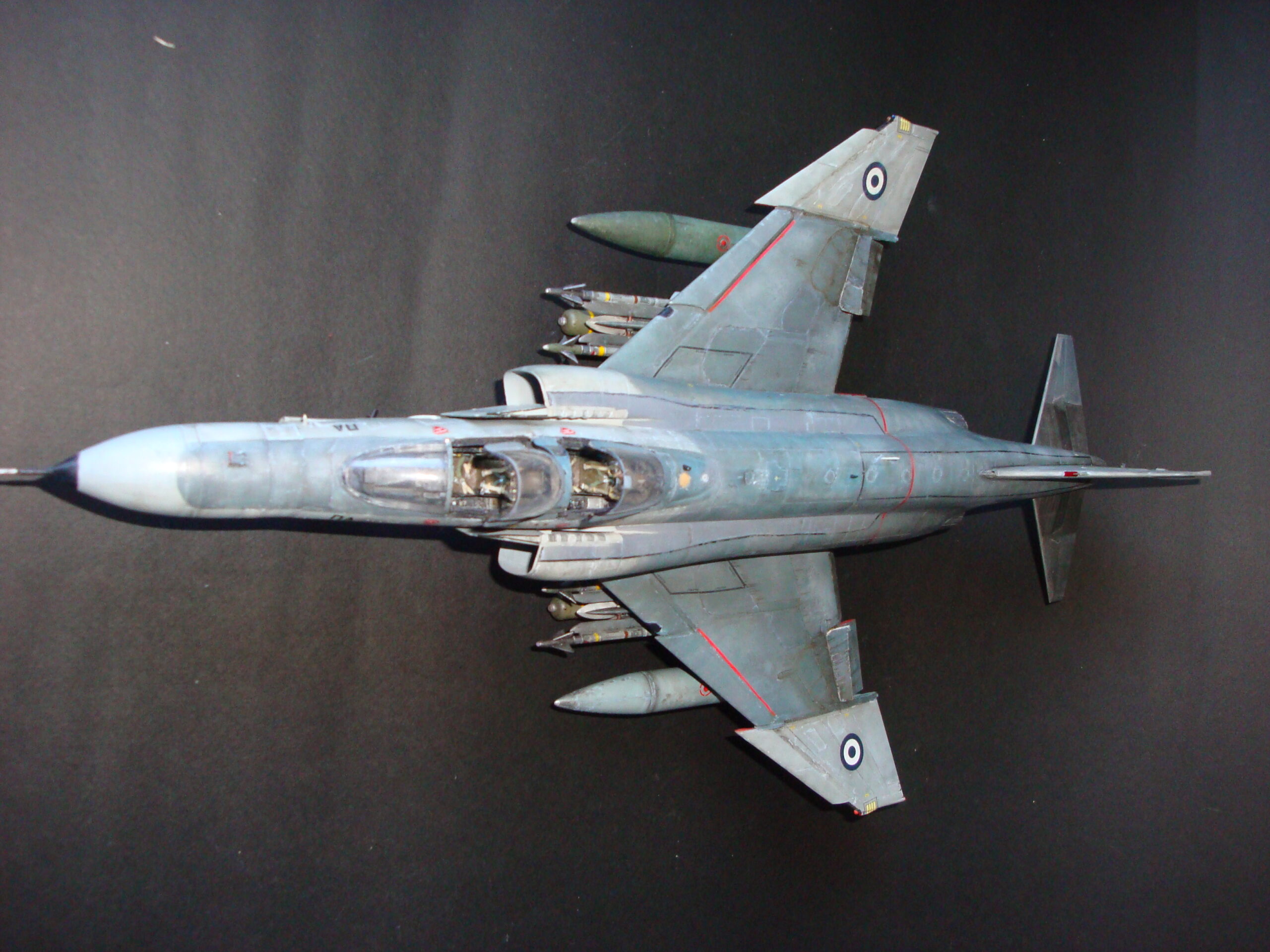
F-4E Phantom II SRA 68-0424 HAF – Hasegawa 1/48 Scale Model
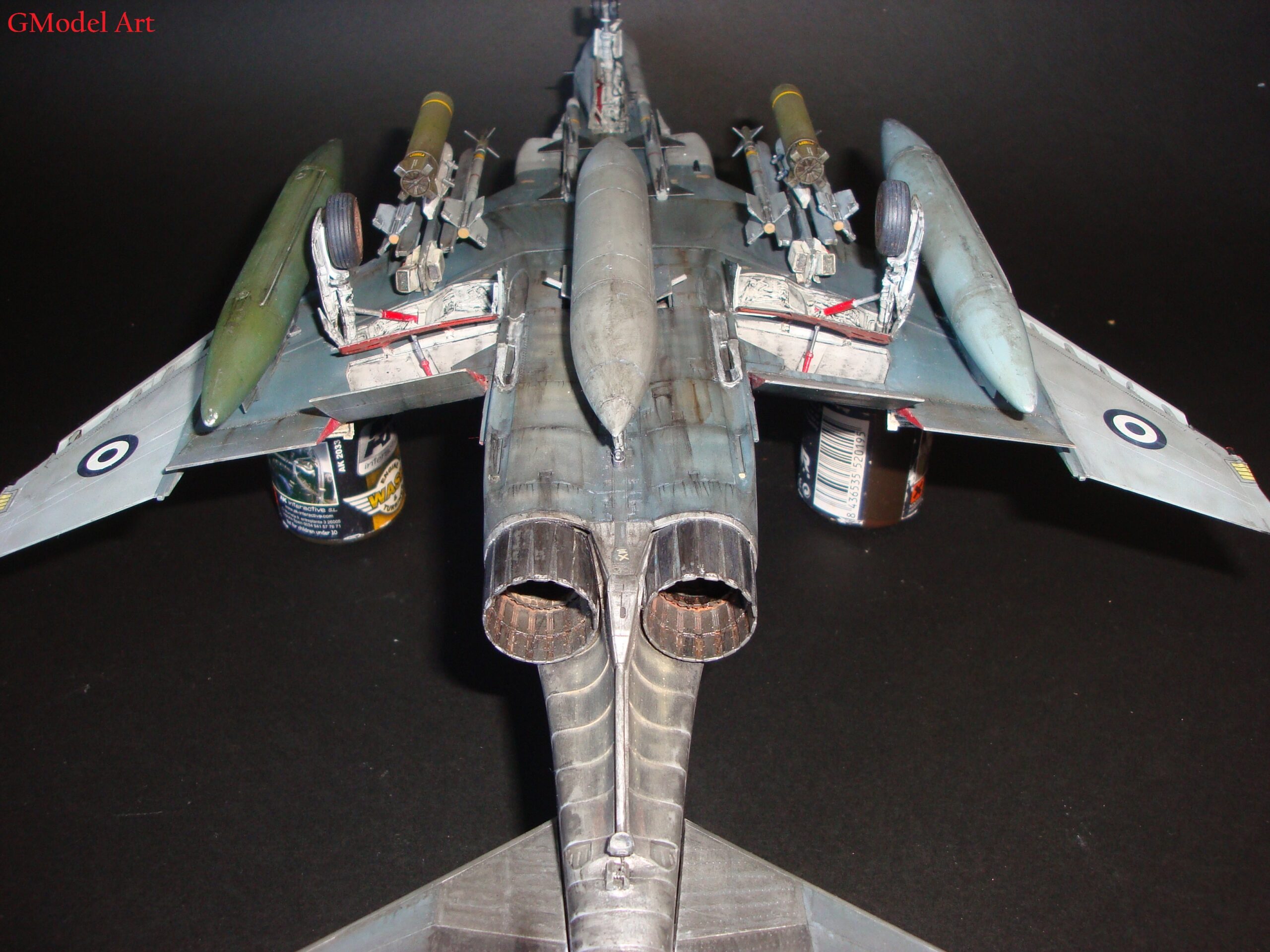
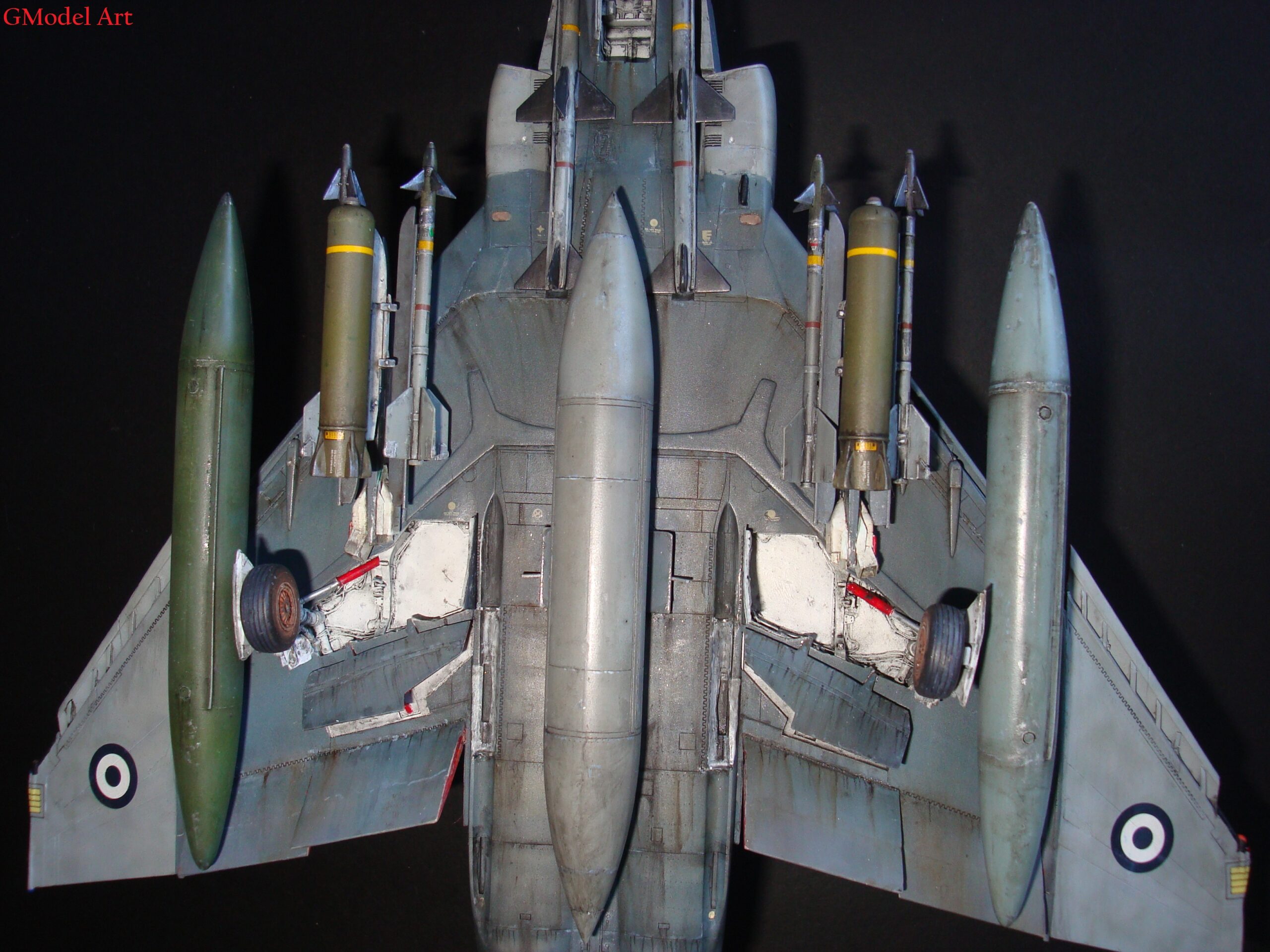
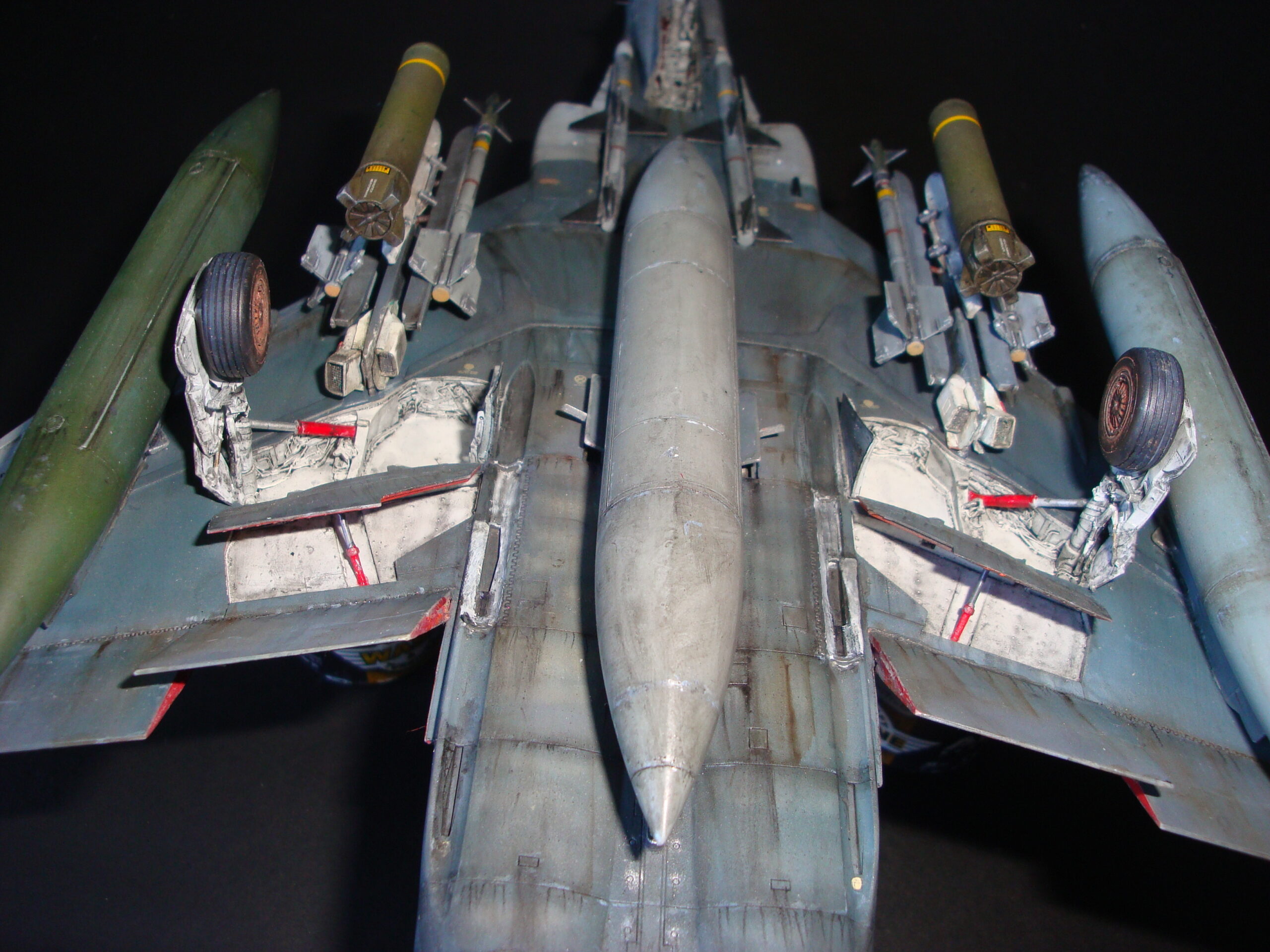
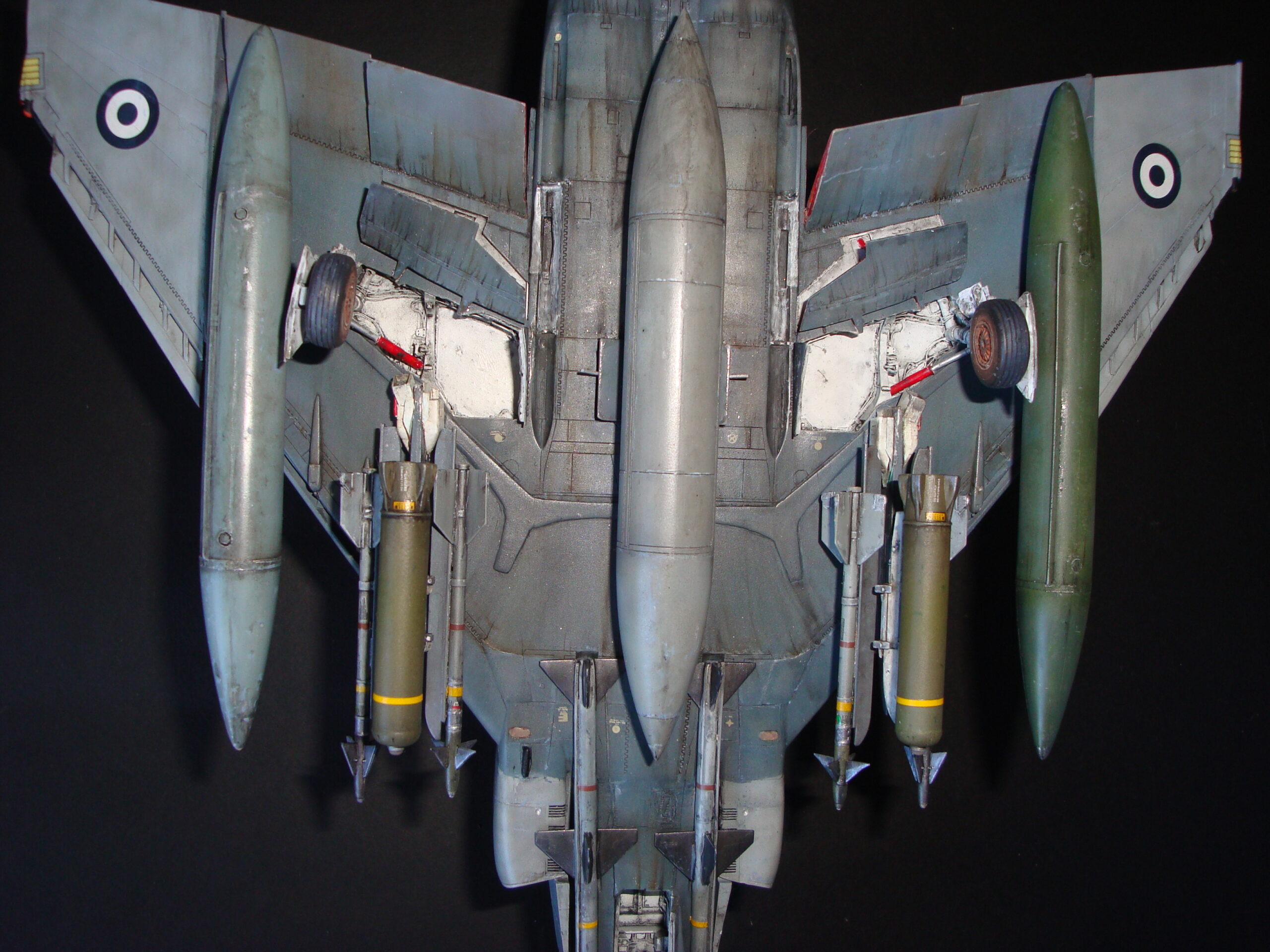
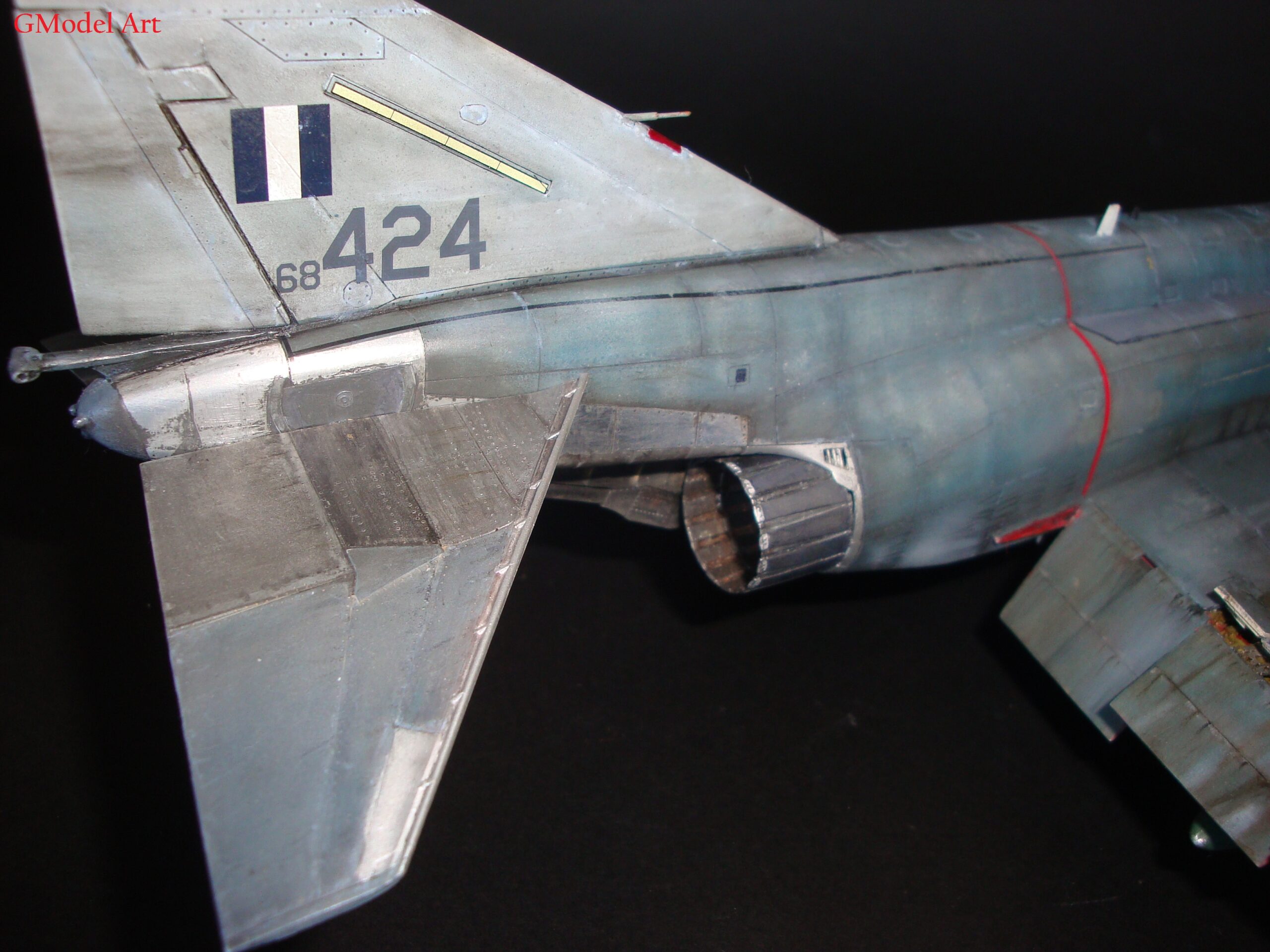
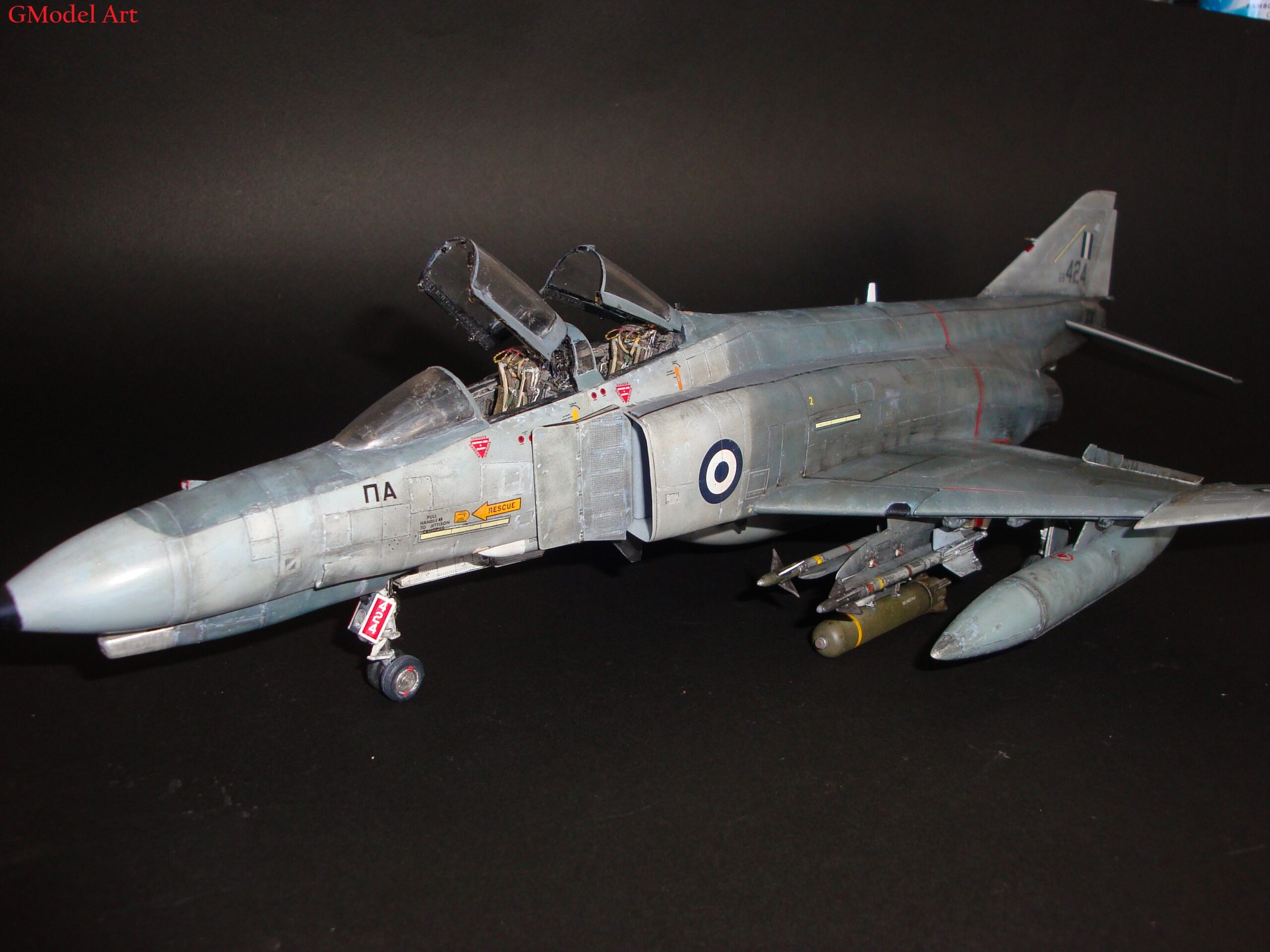
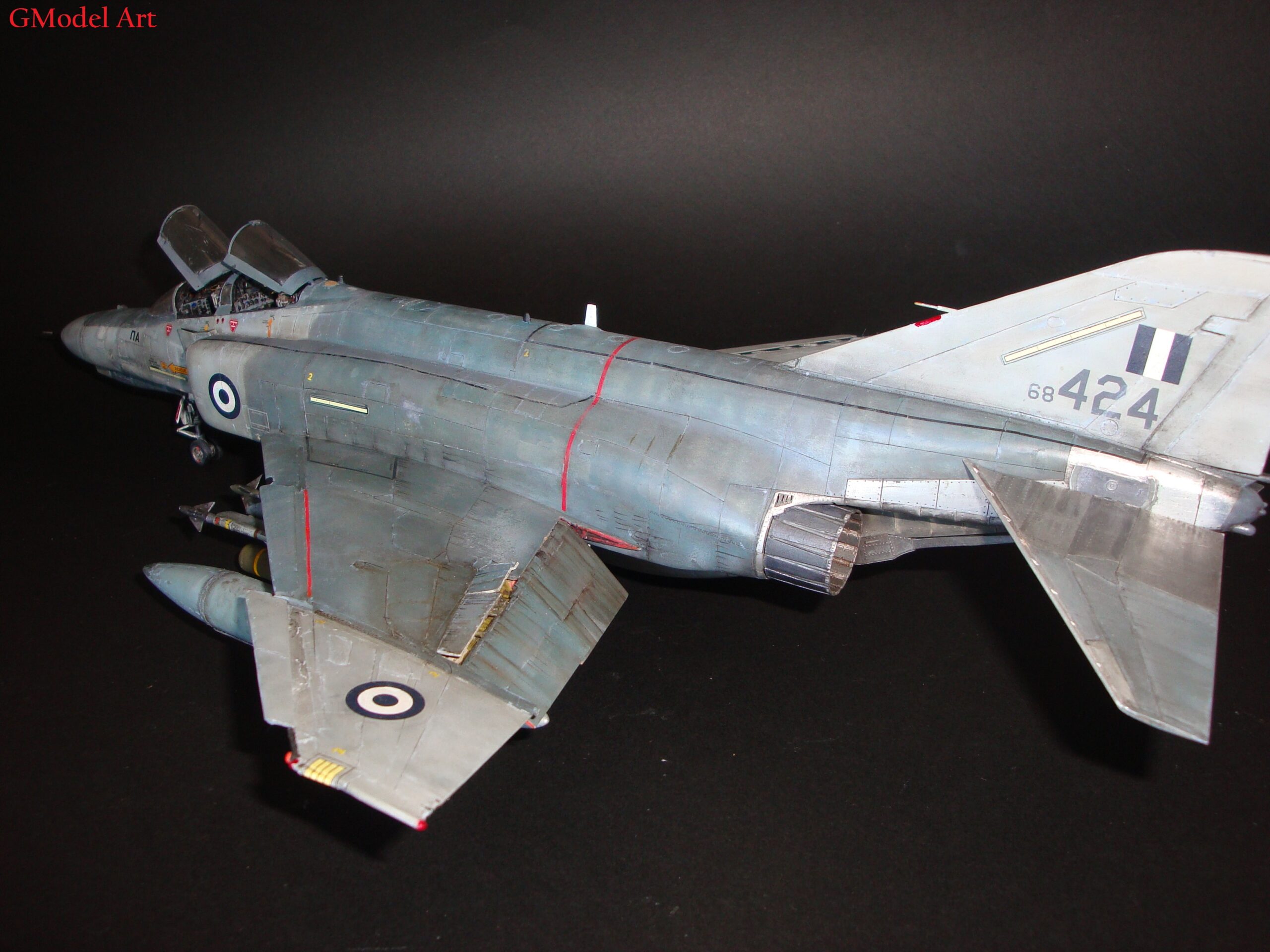
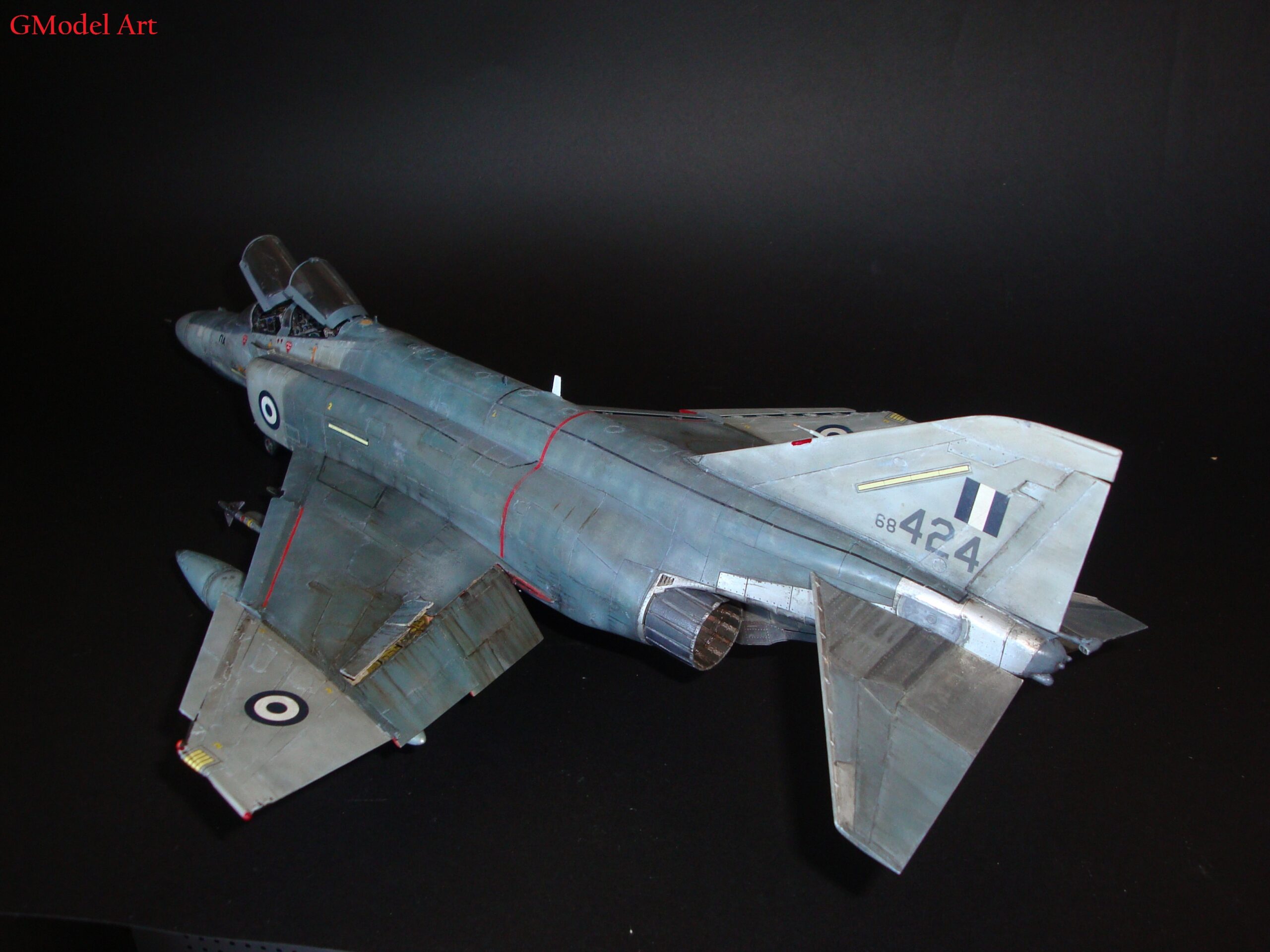
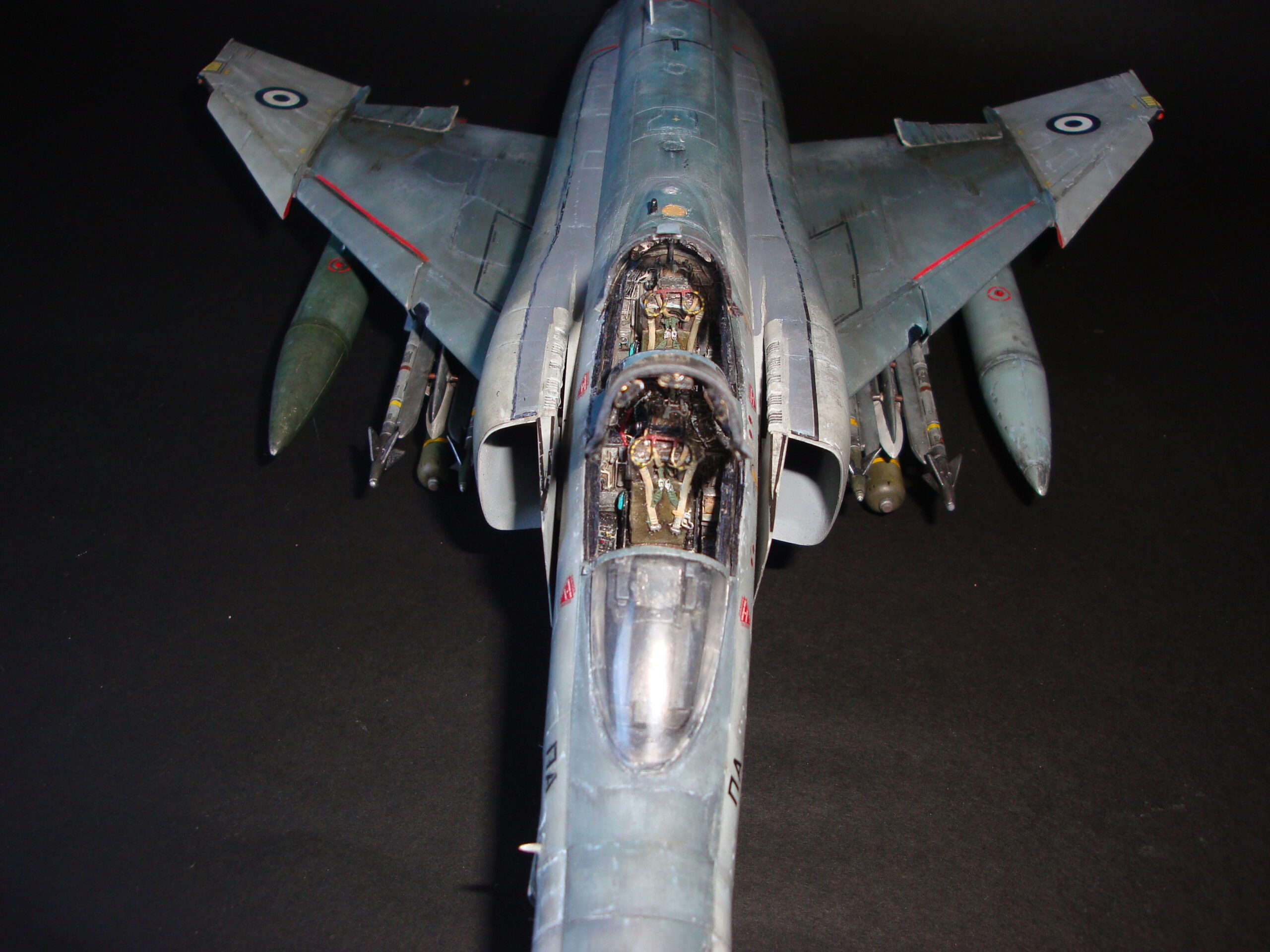
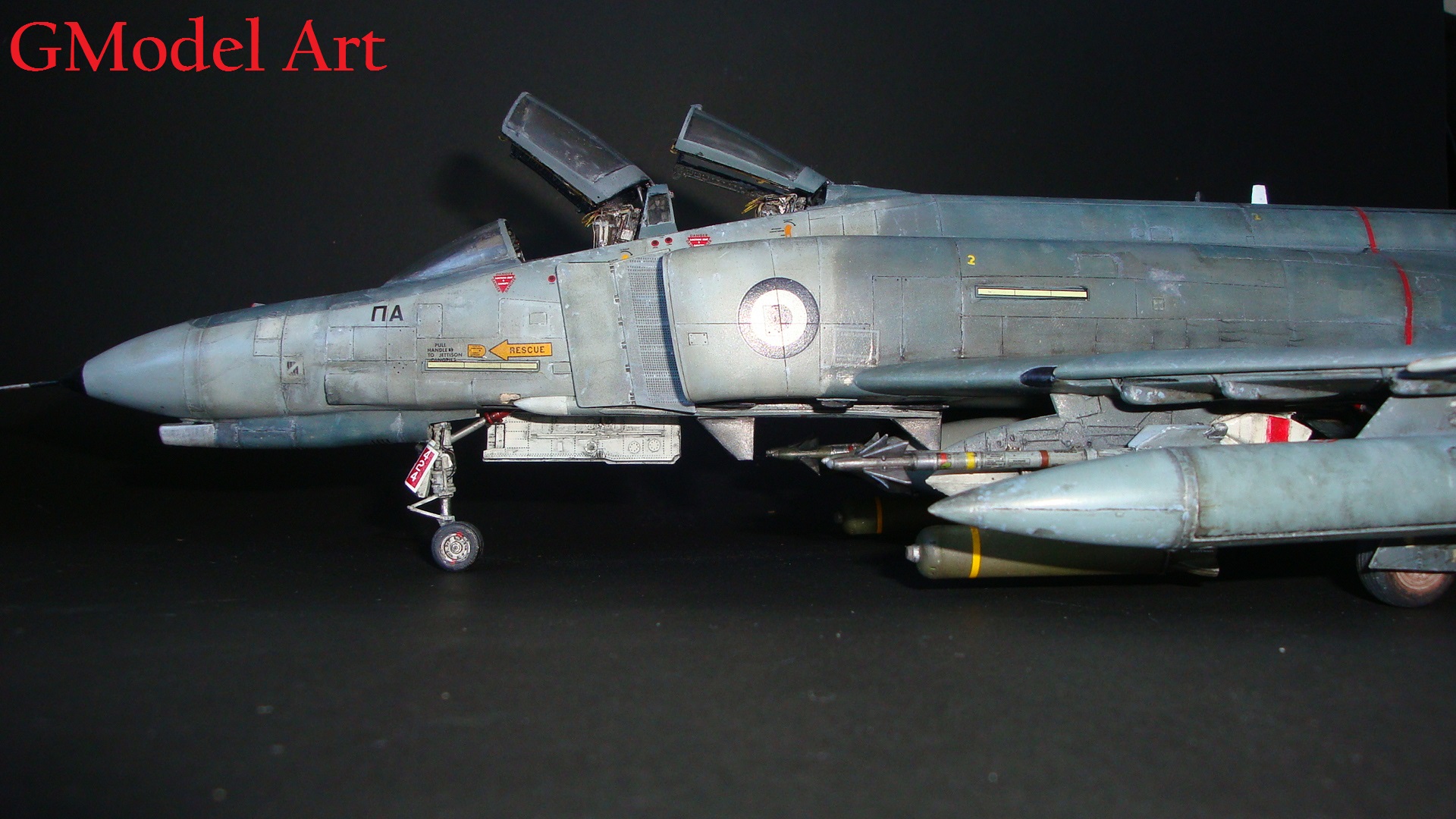
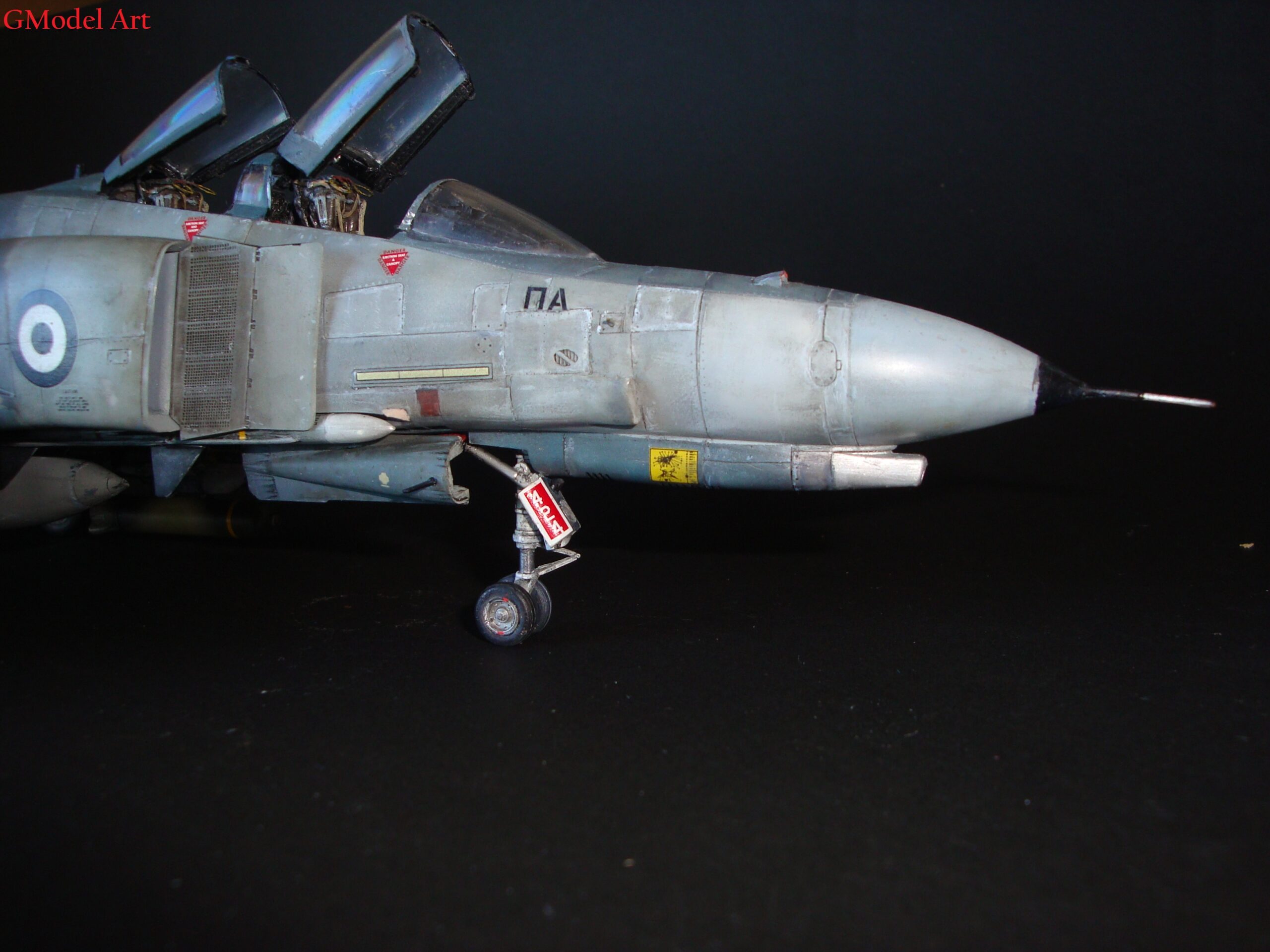
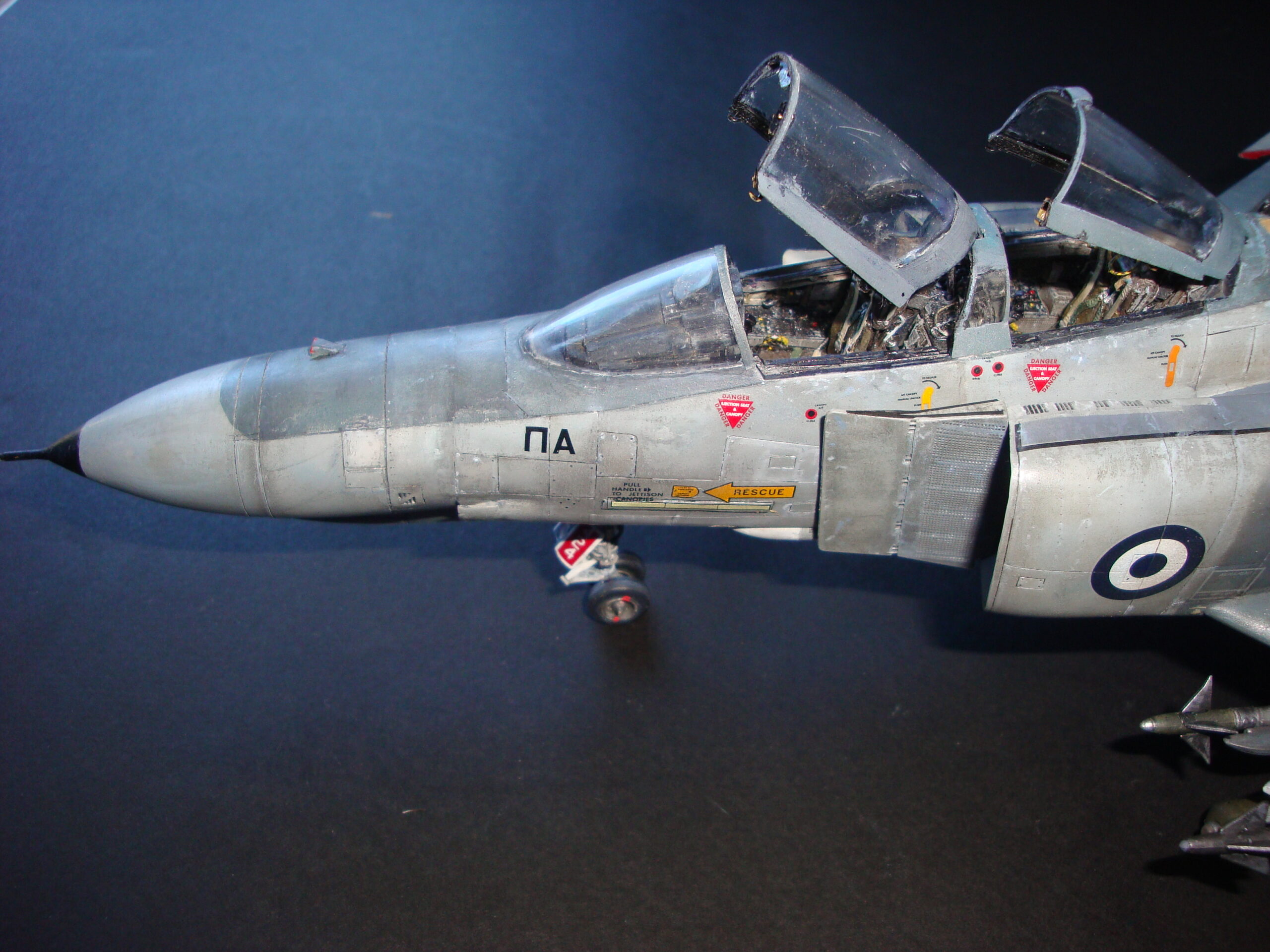
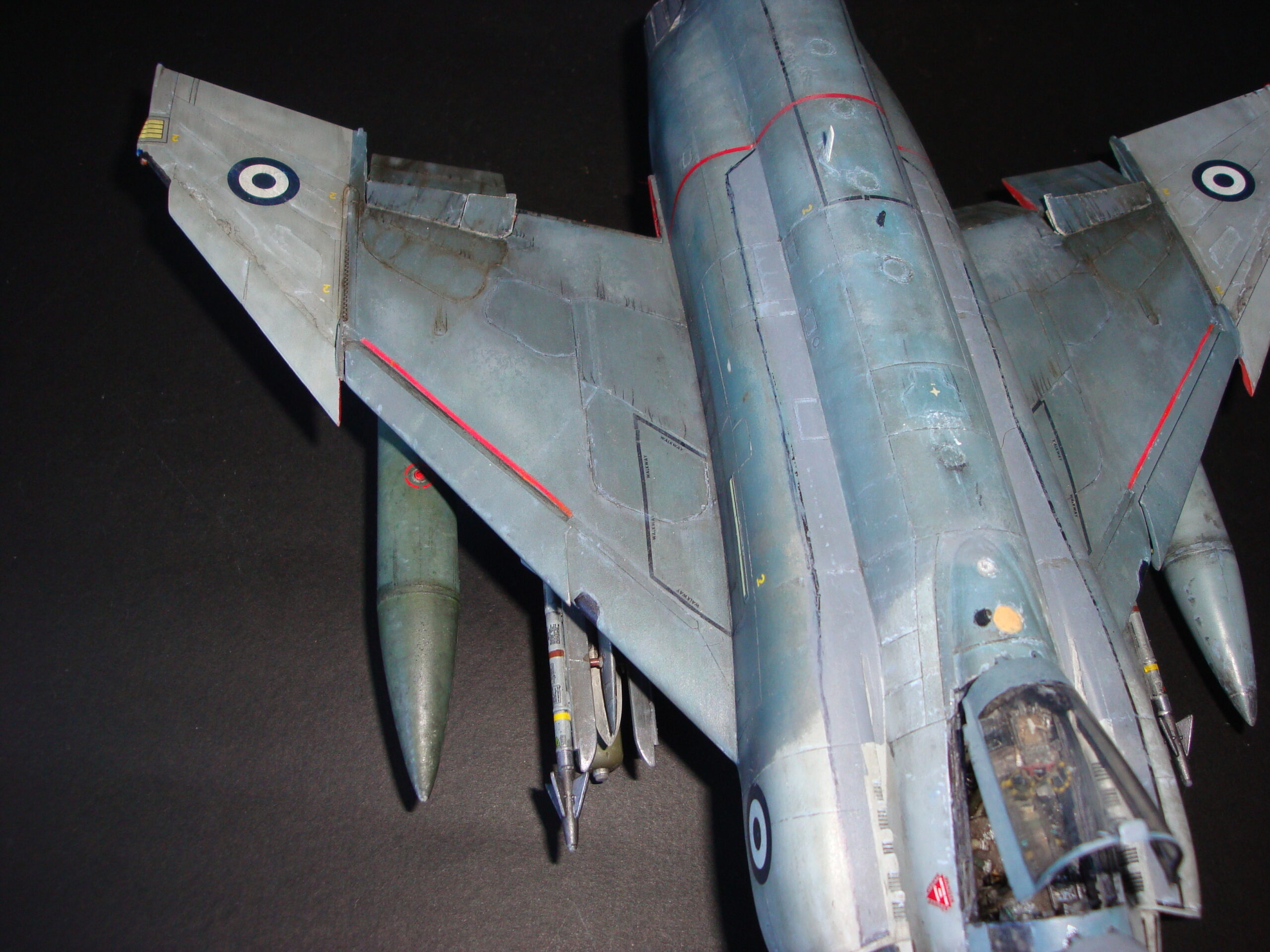
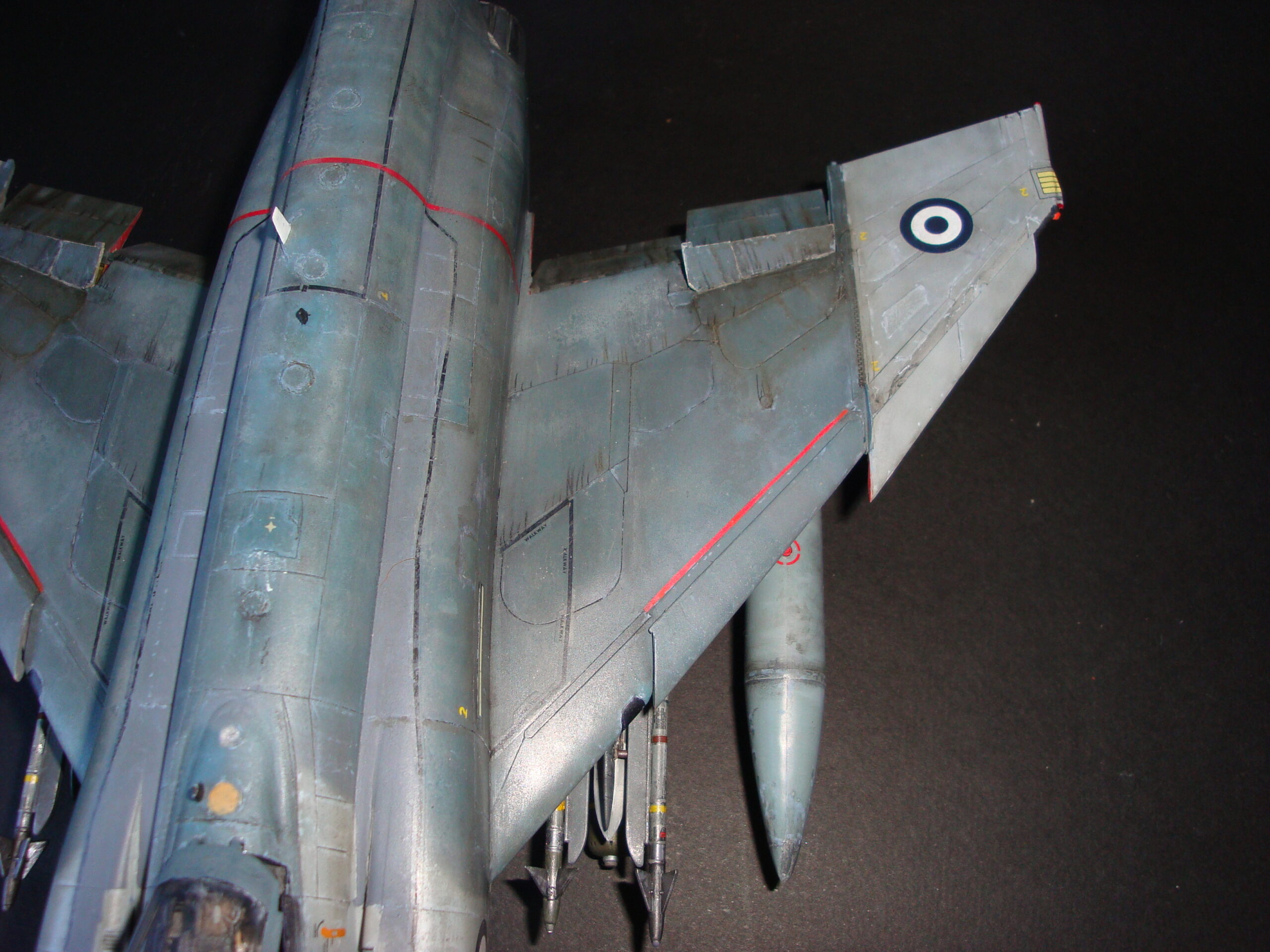
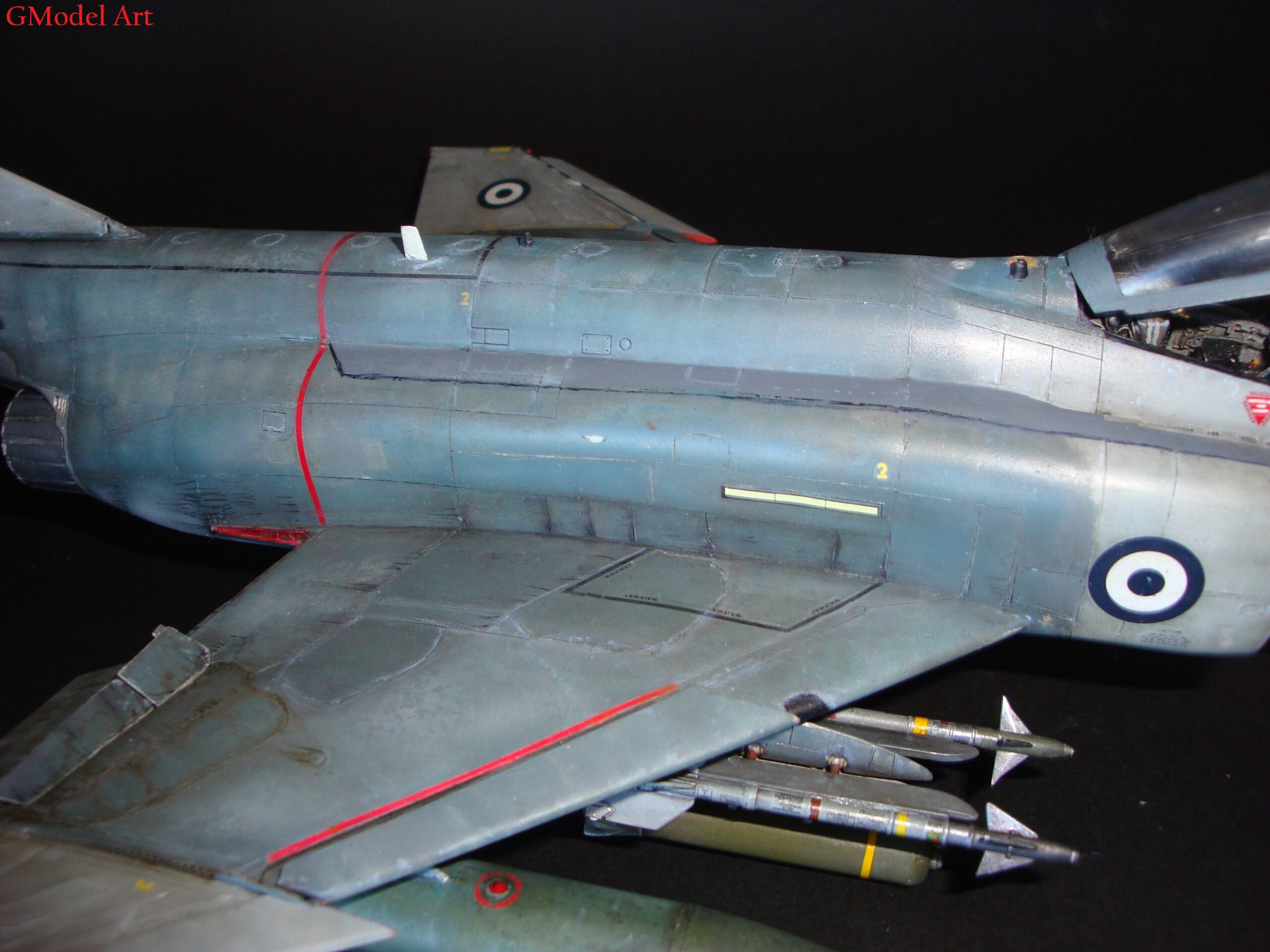
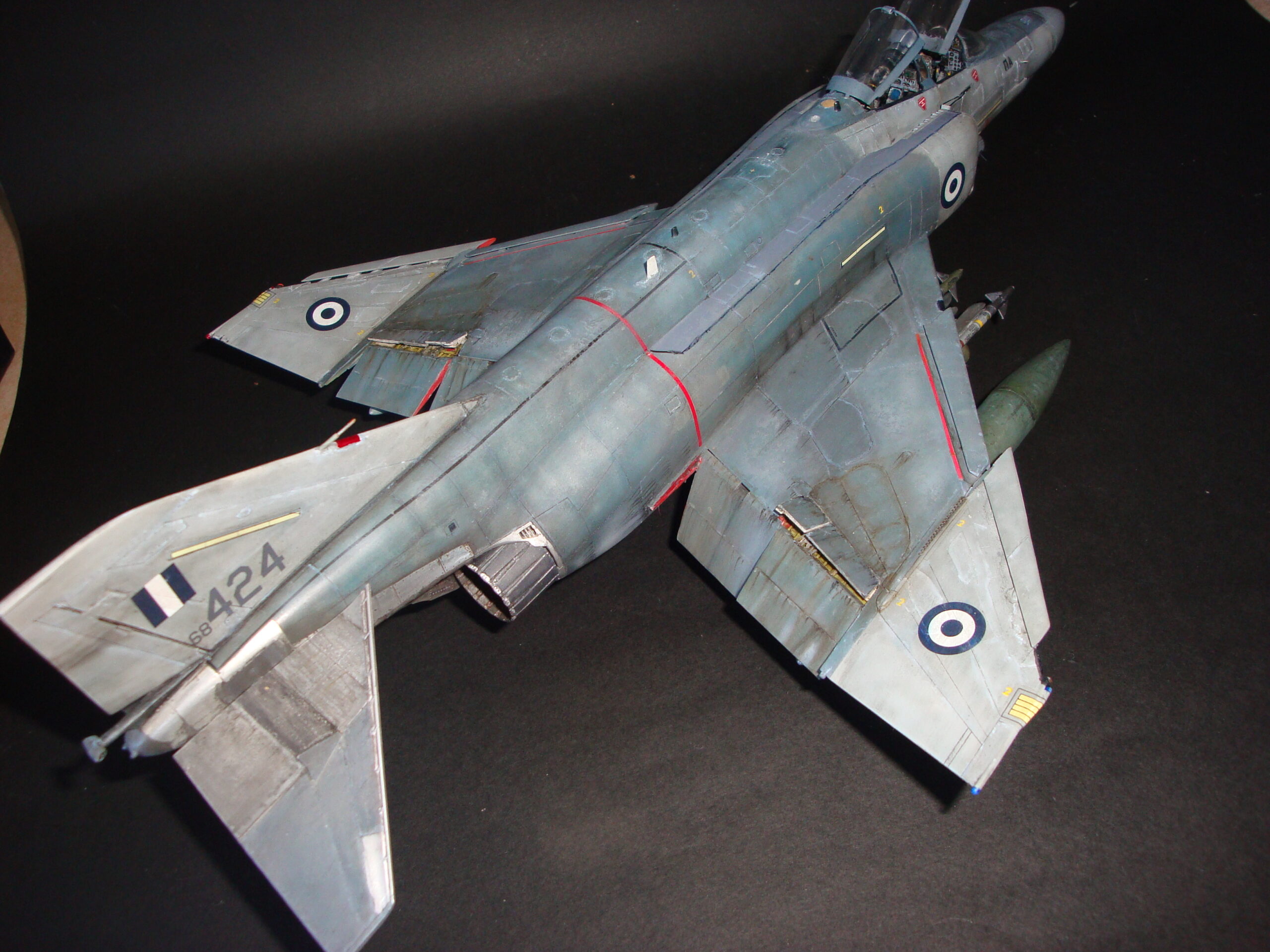
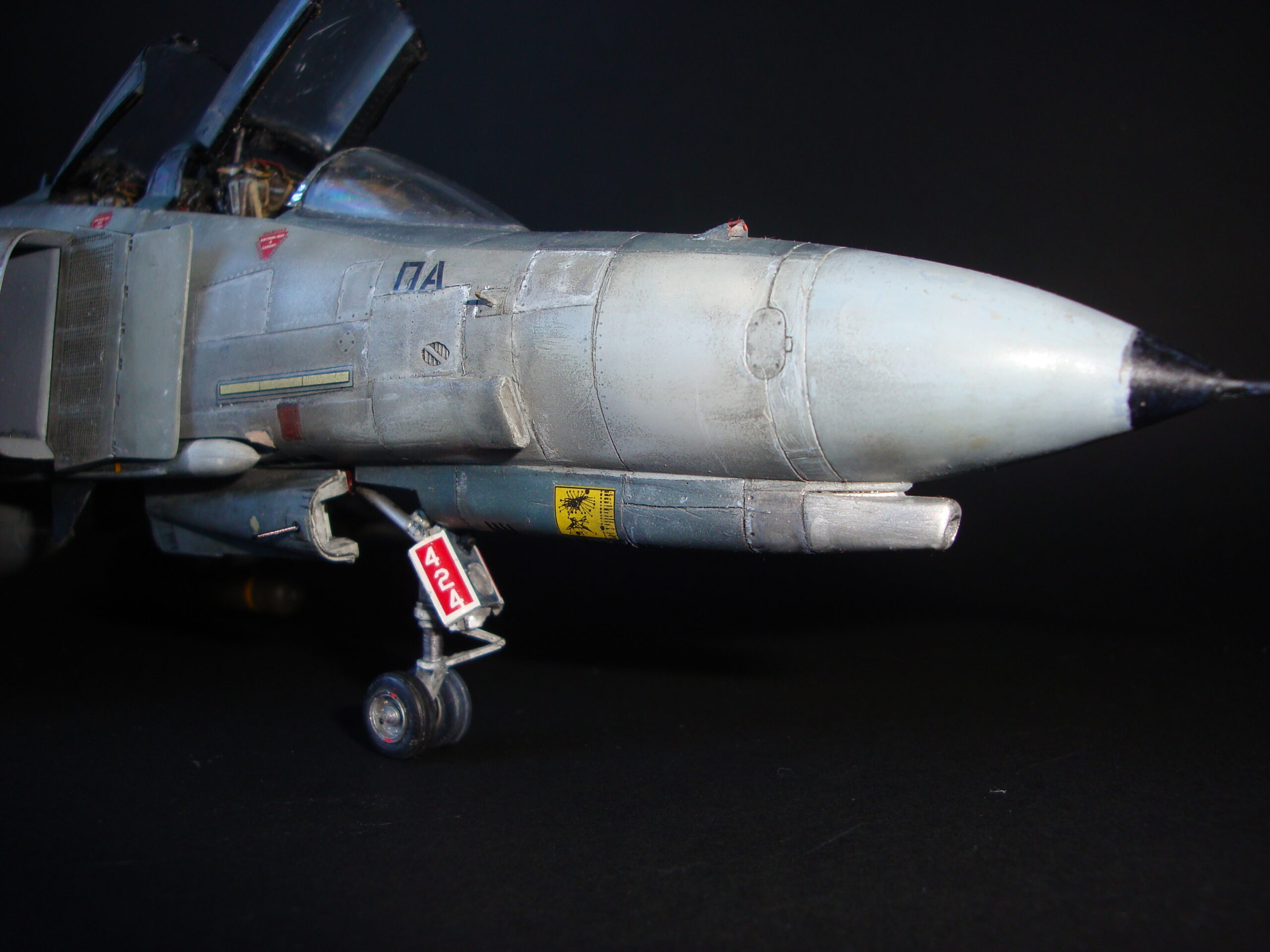
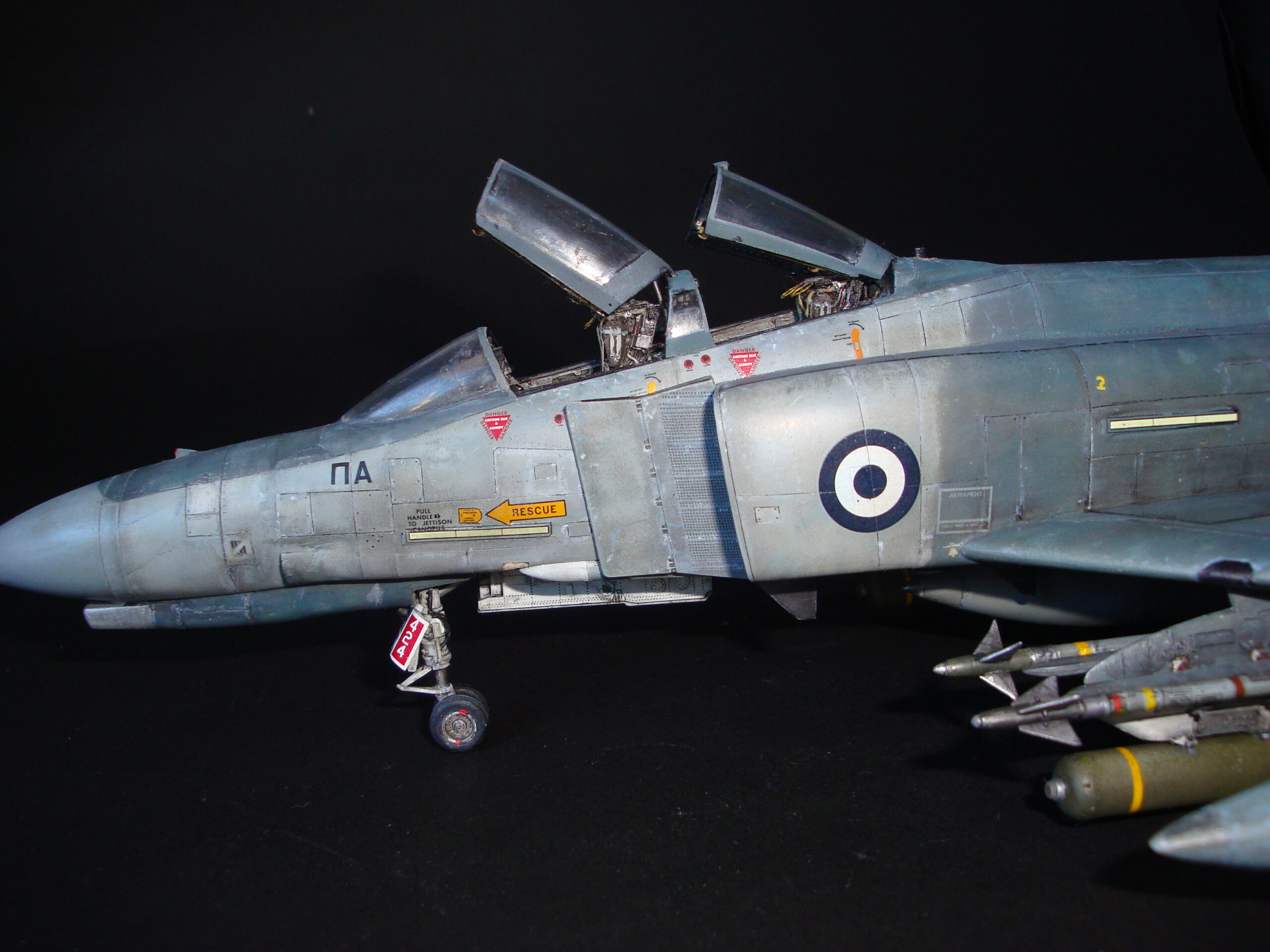
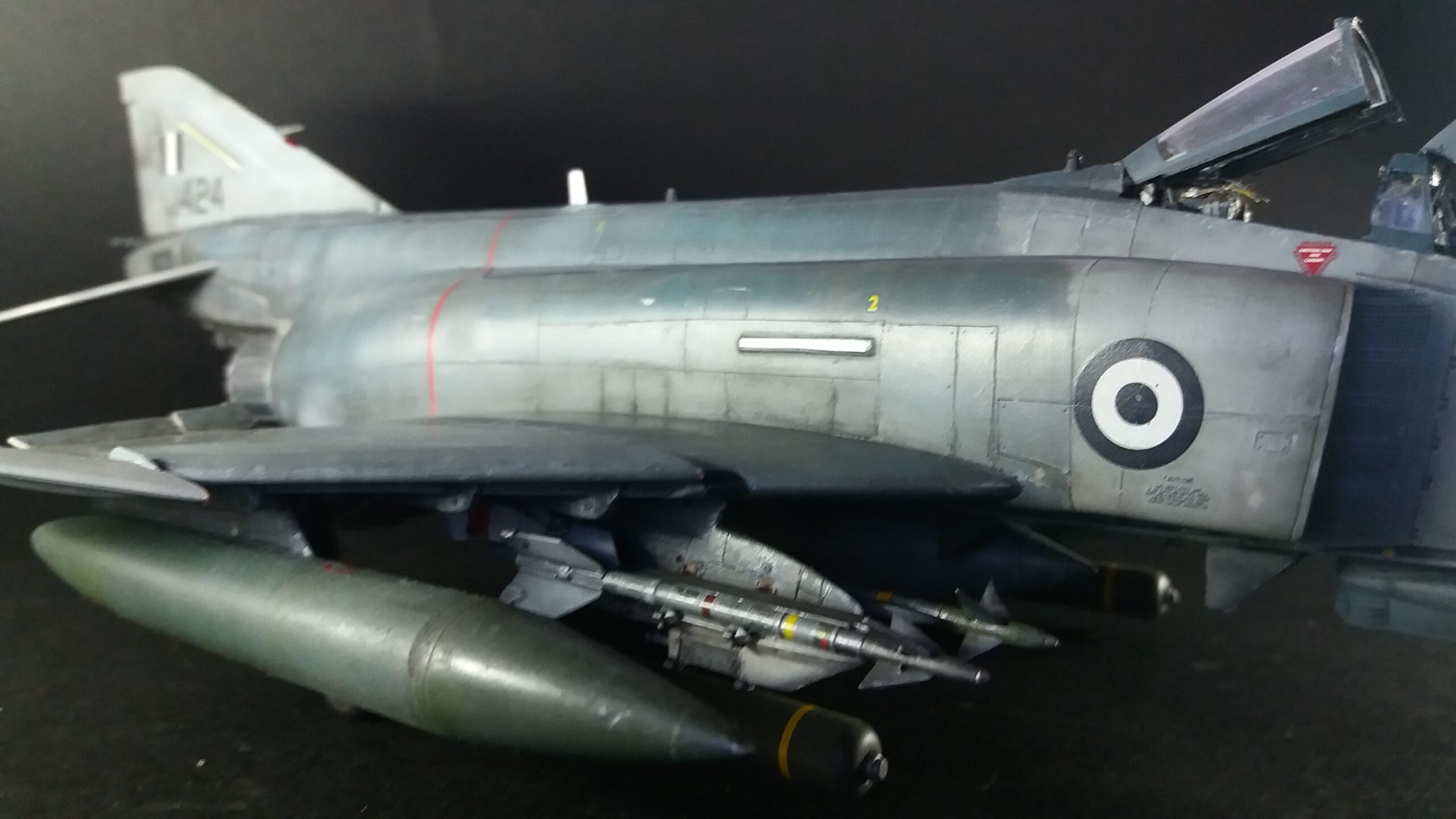
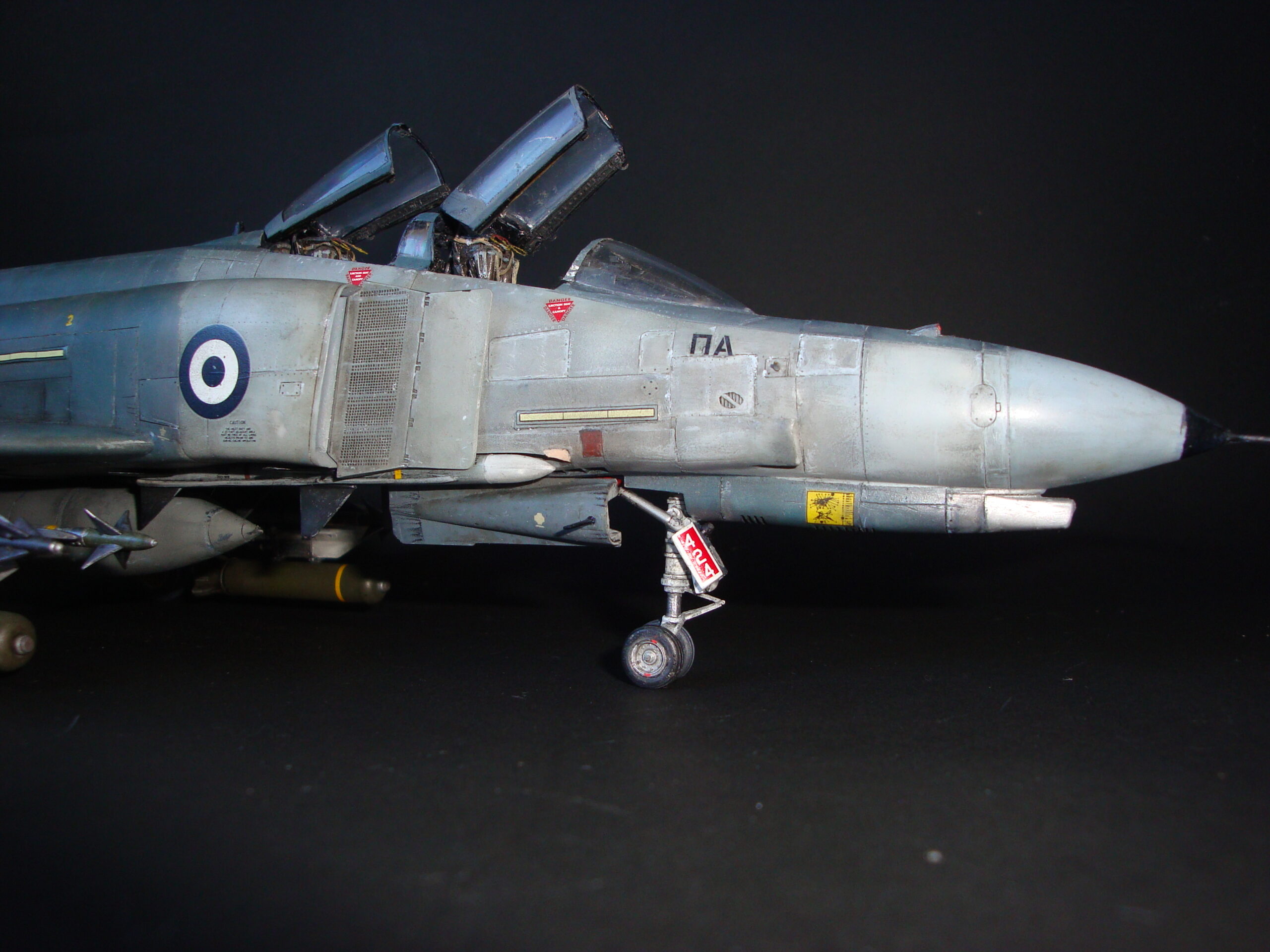
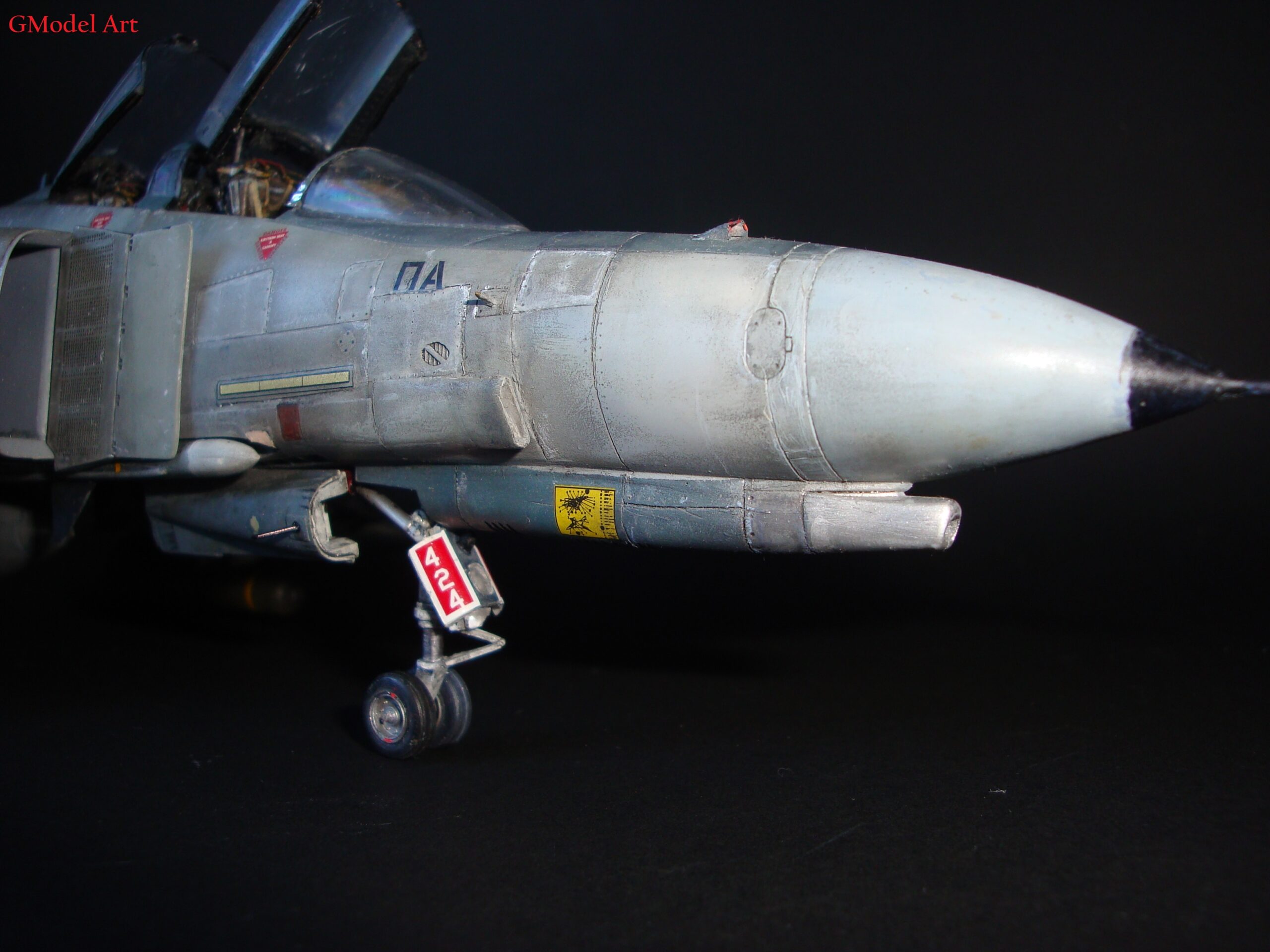
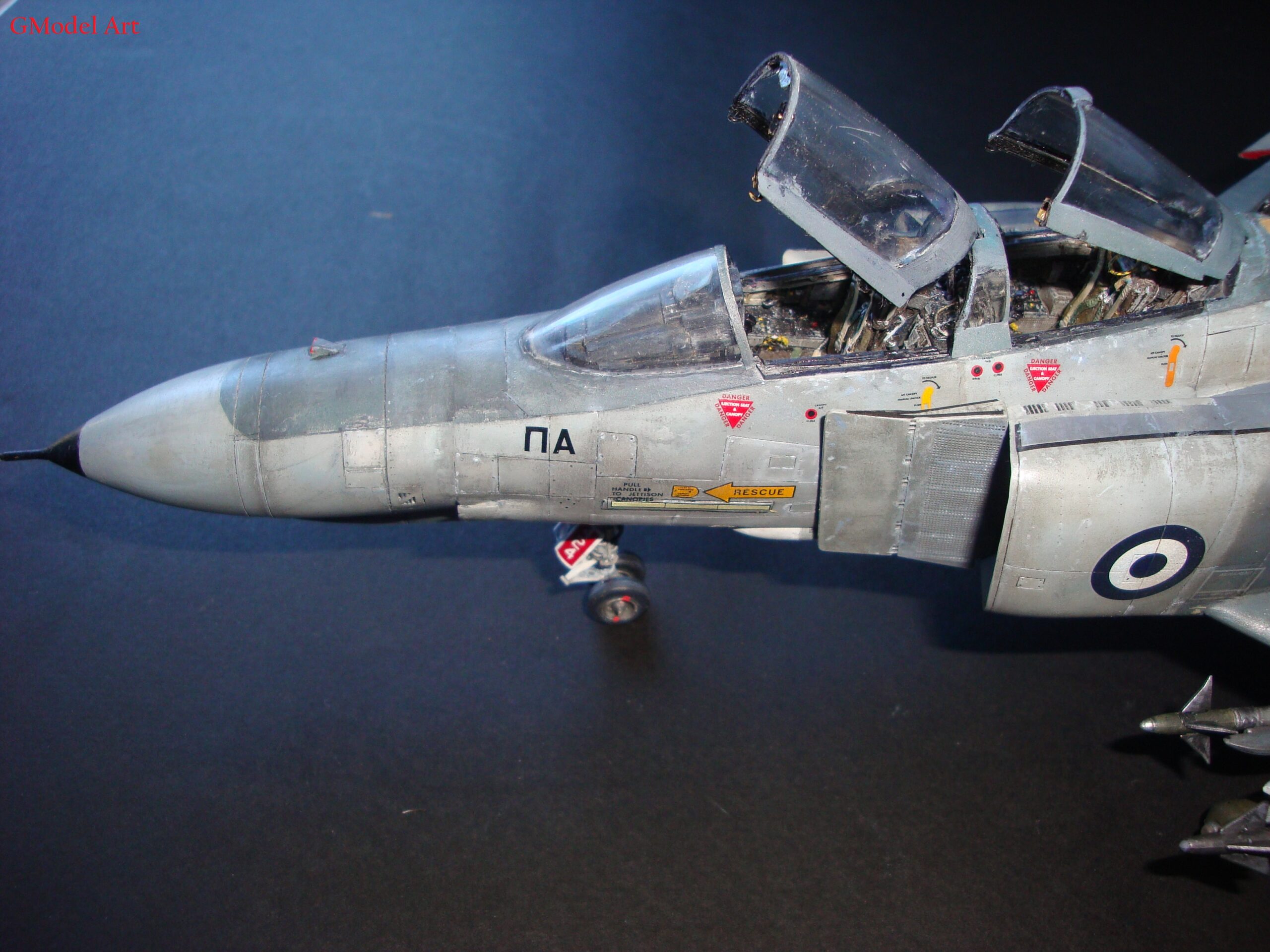
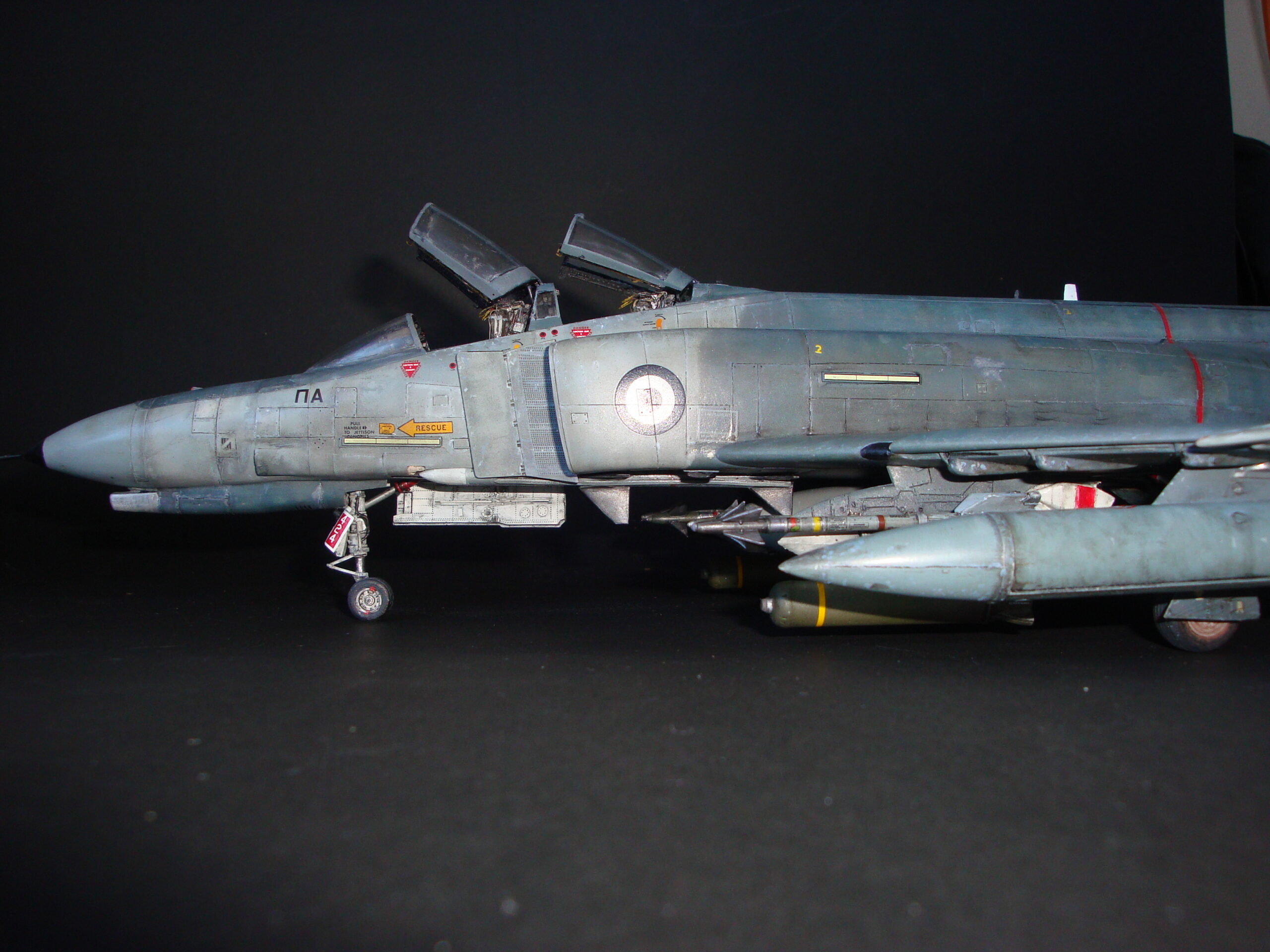
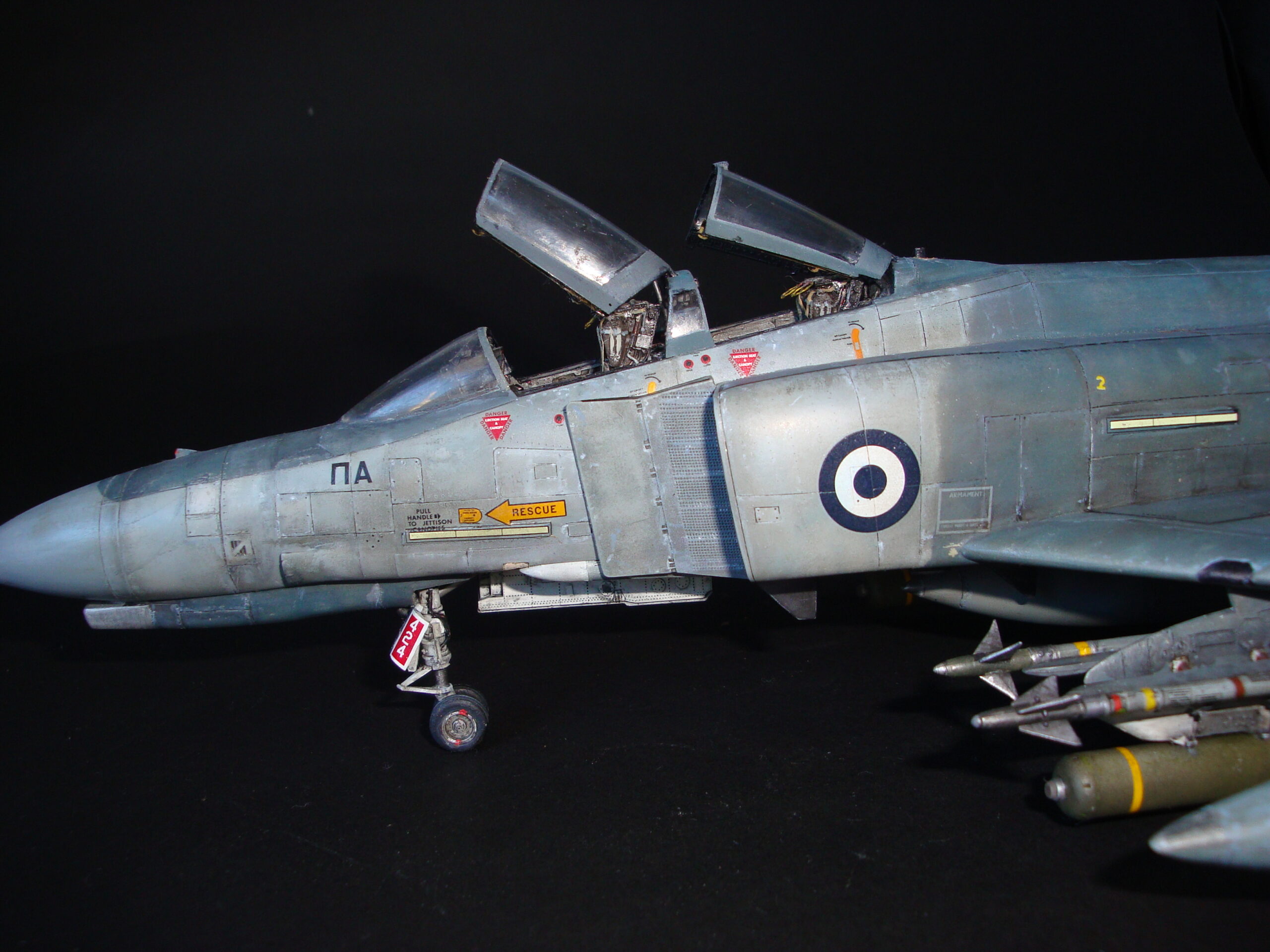
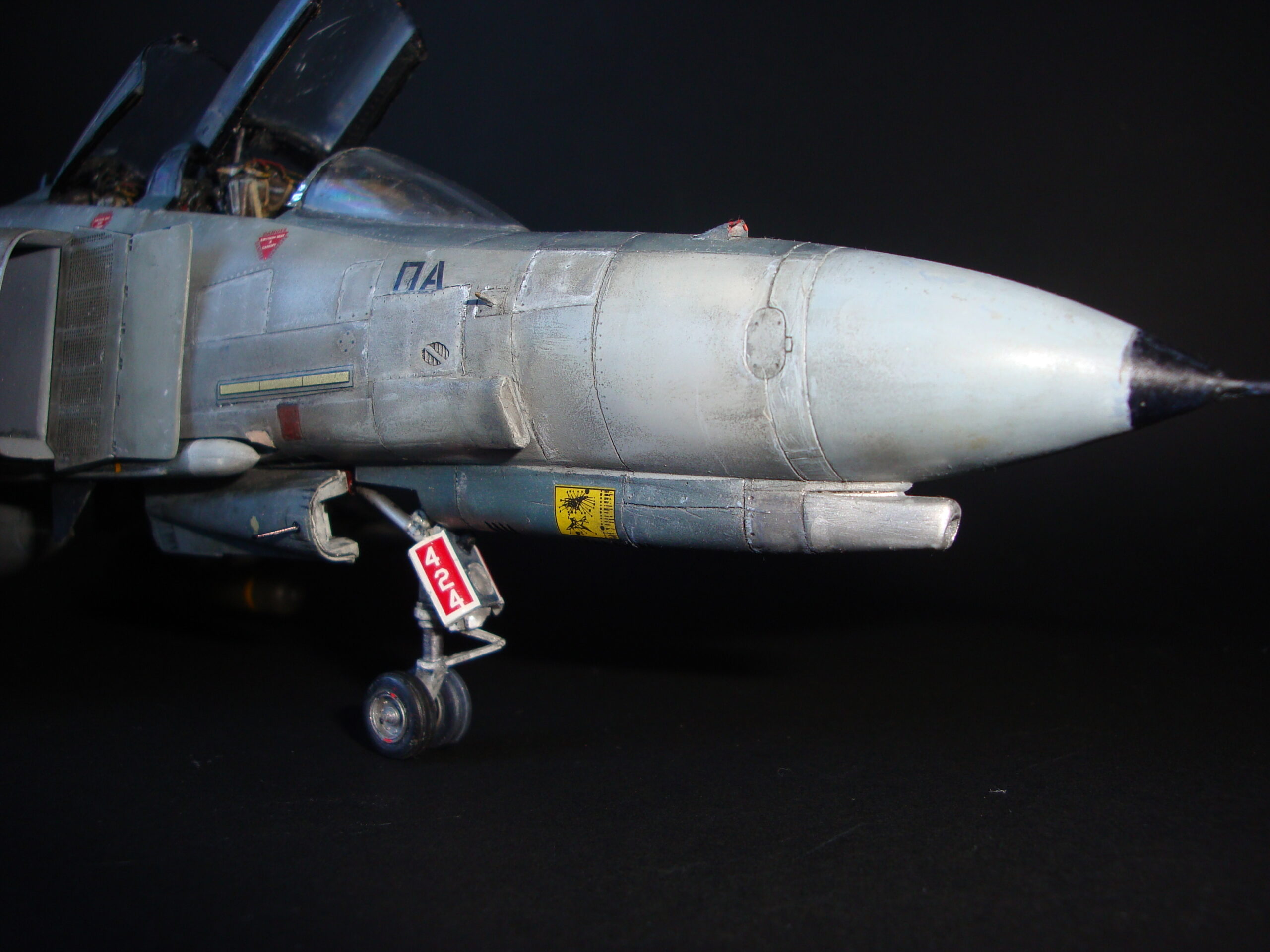
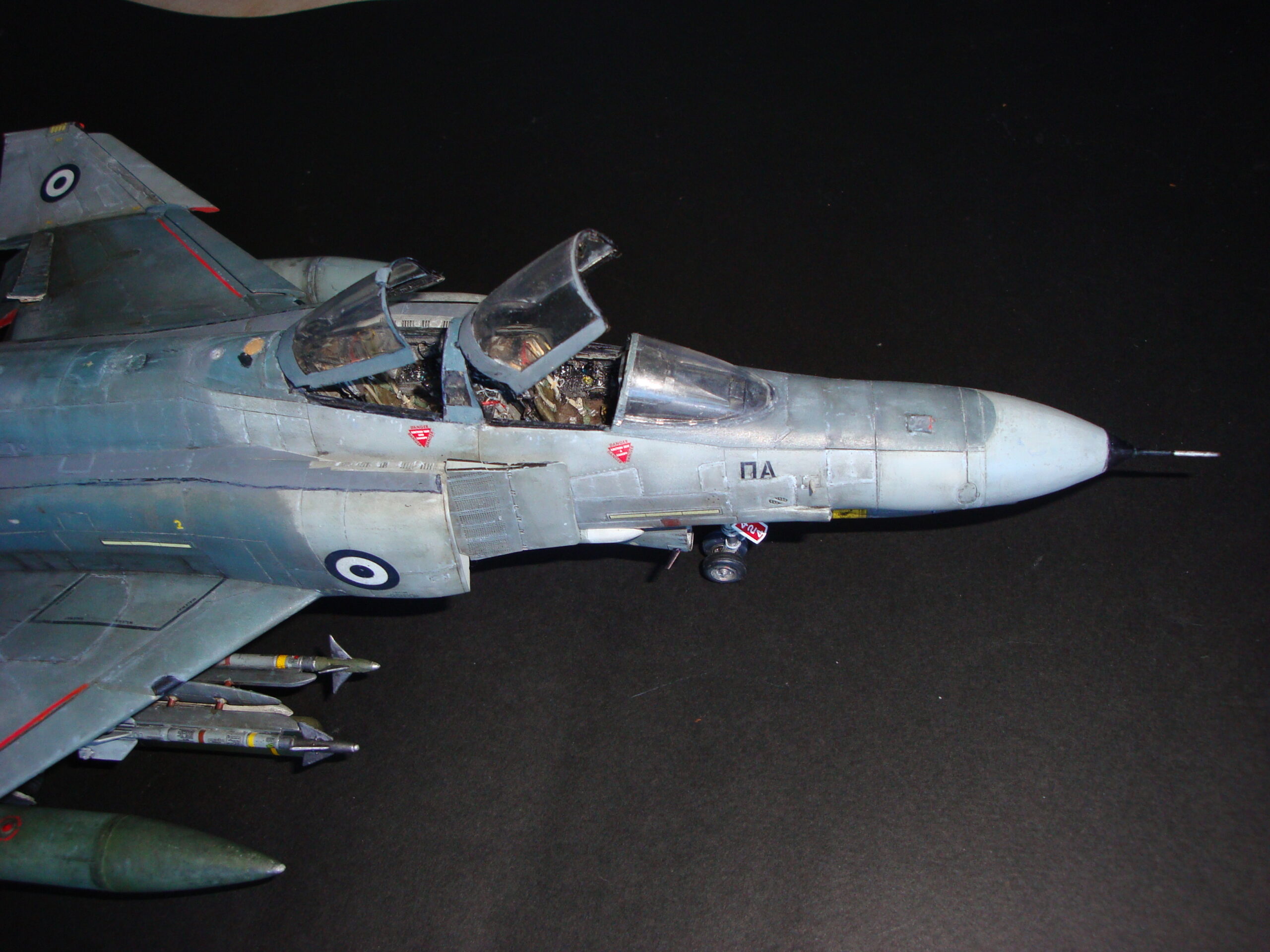
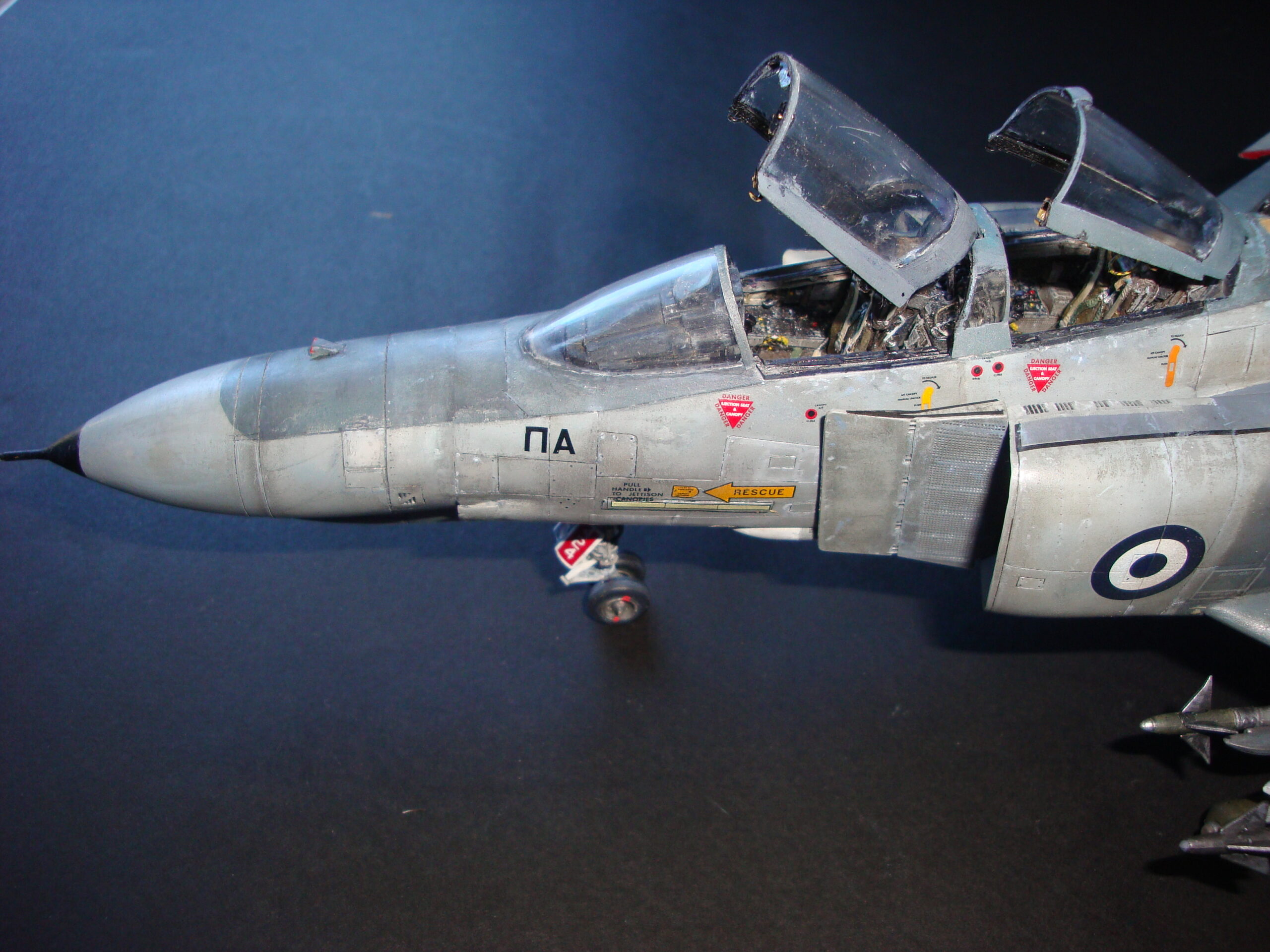
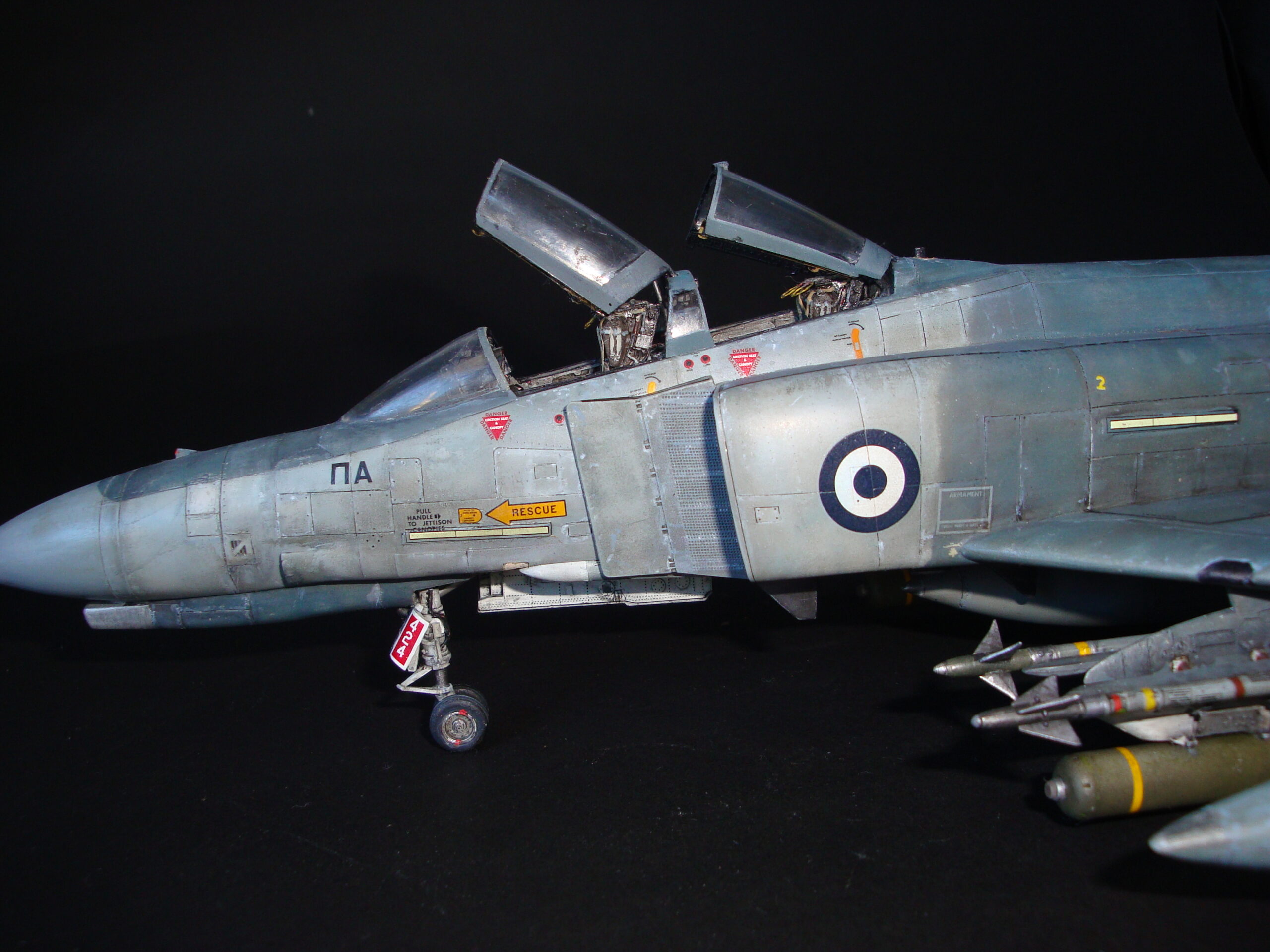
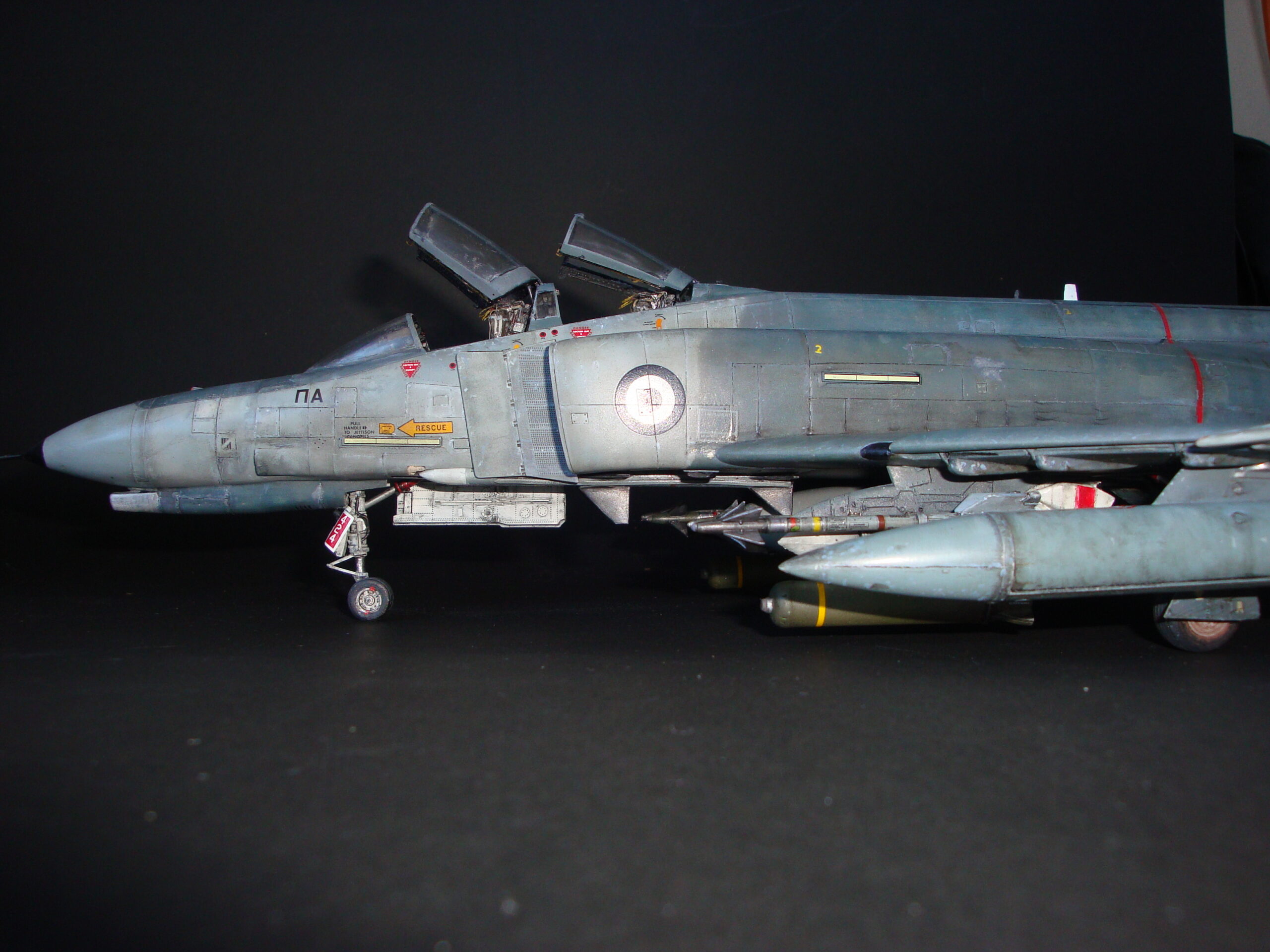
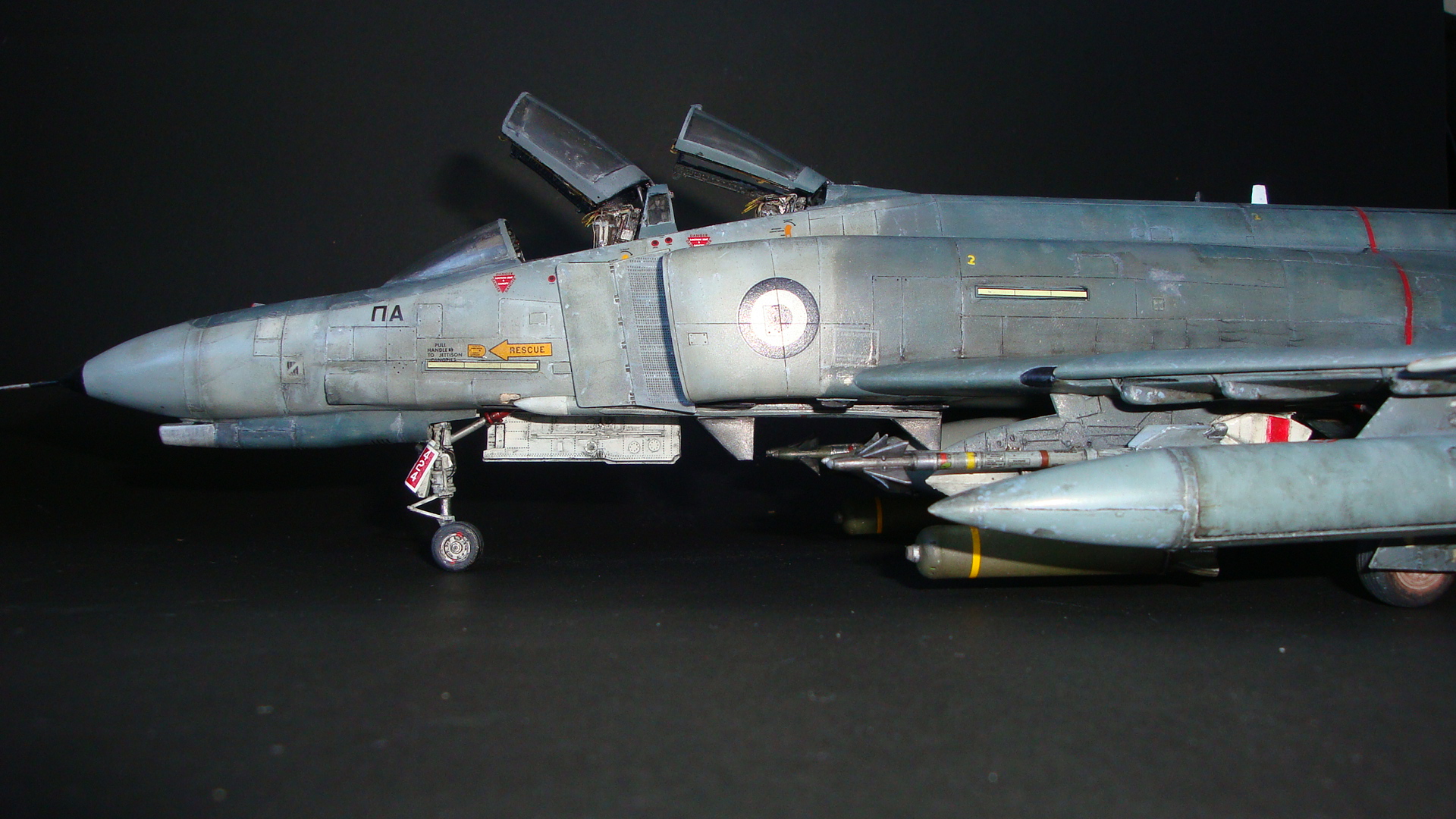
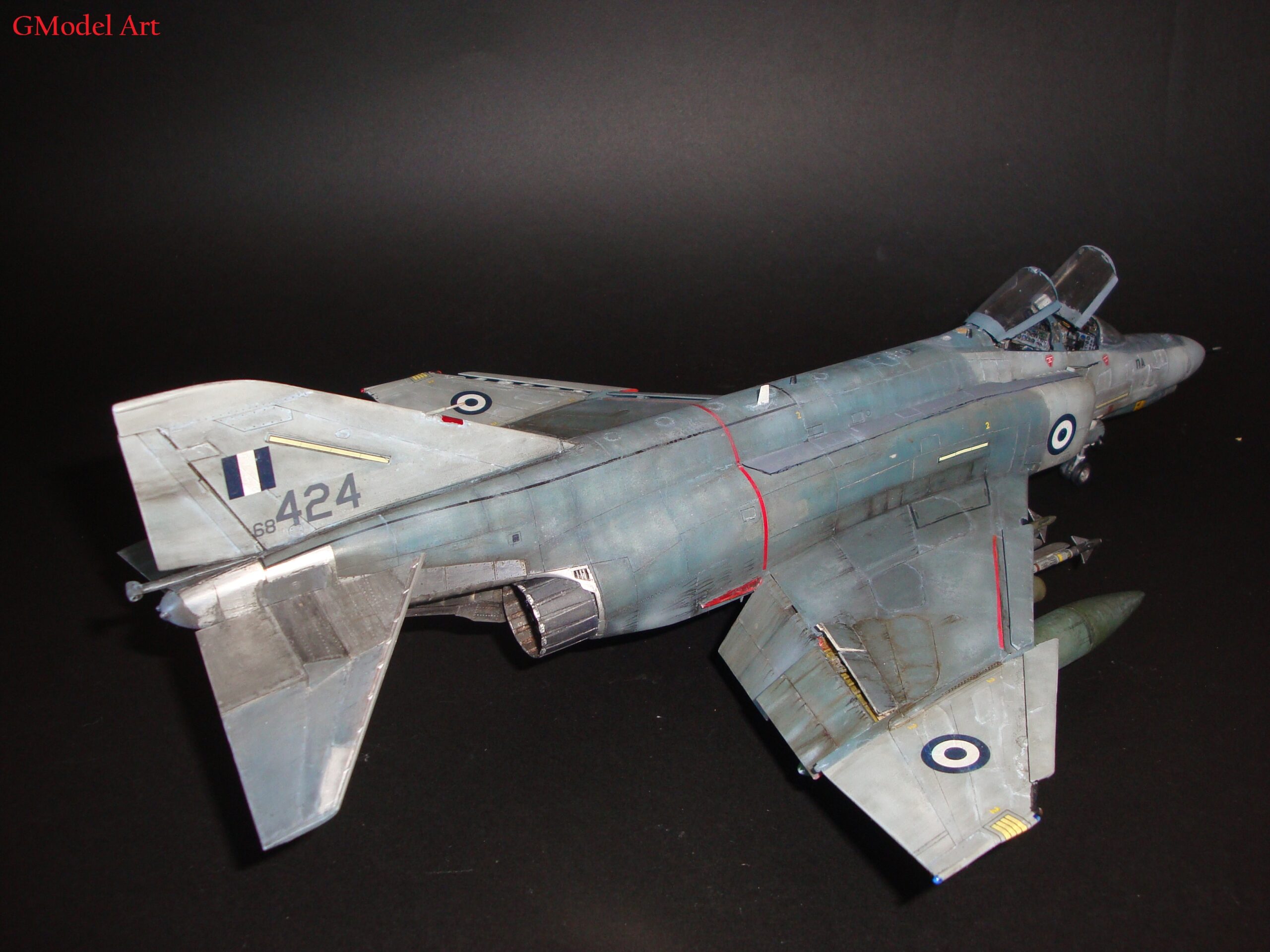
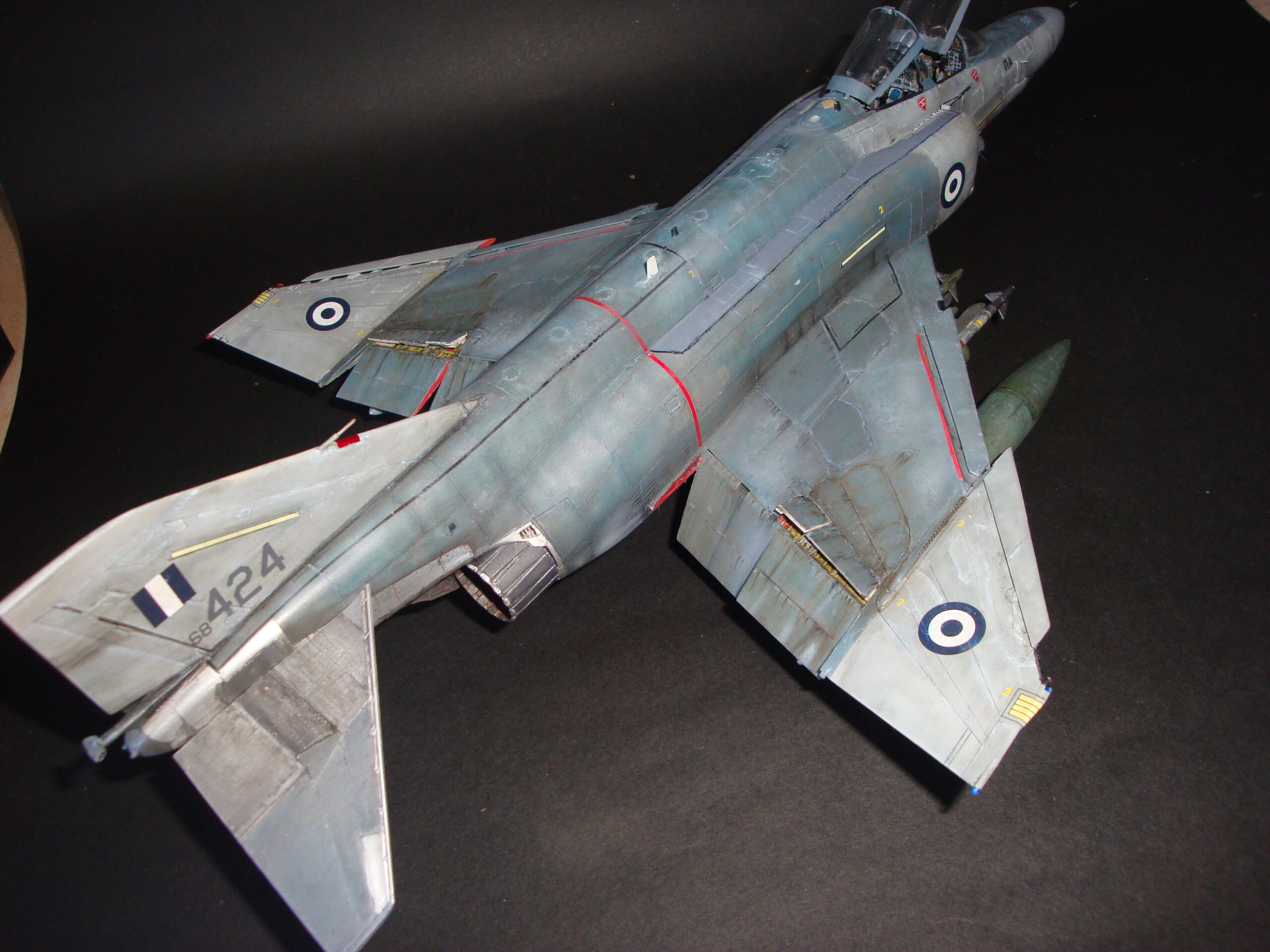
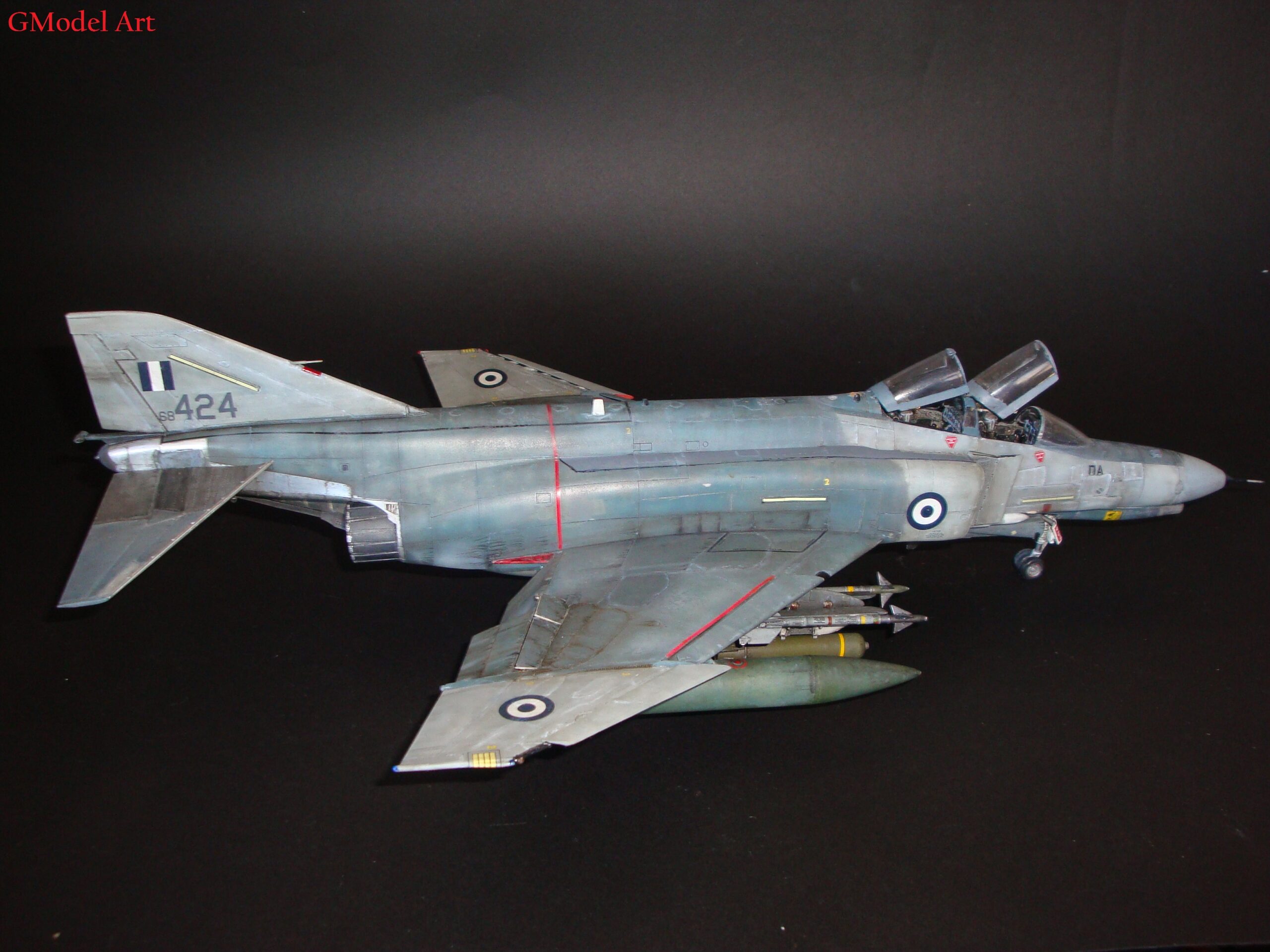
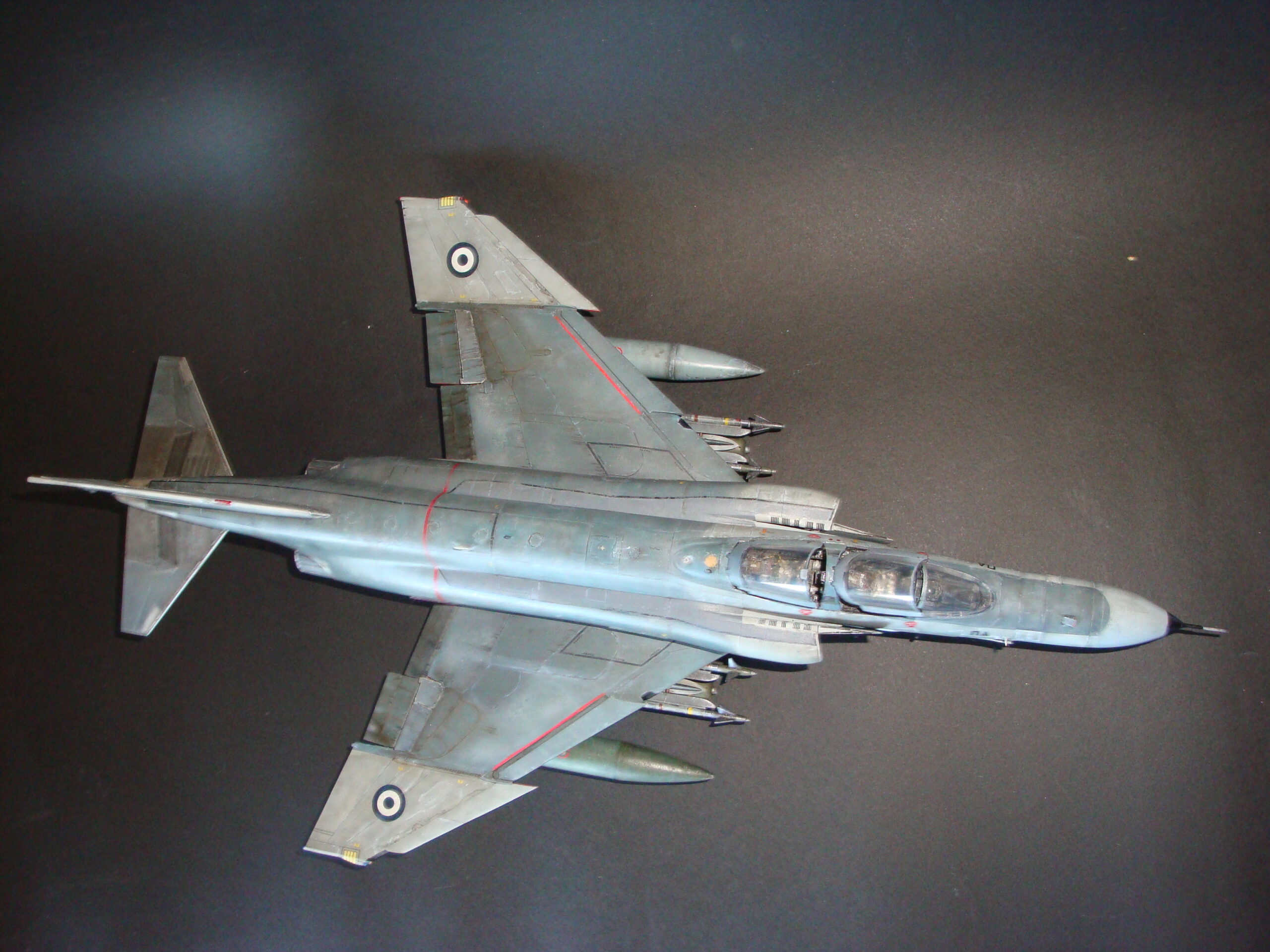
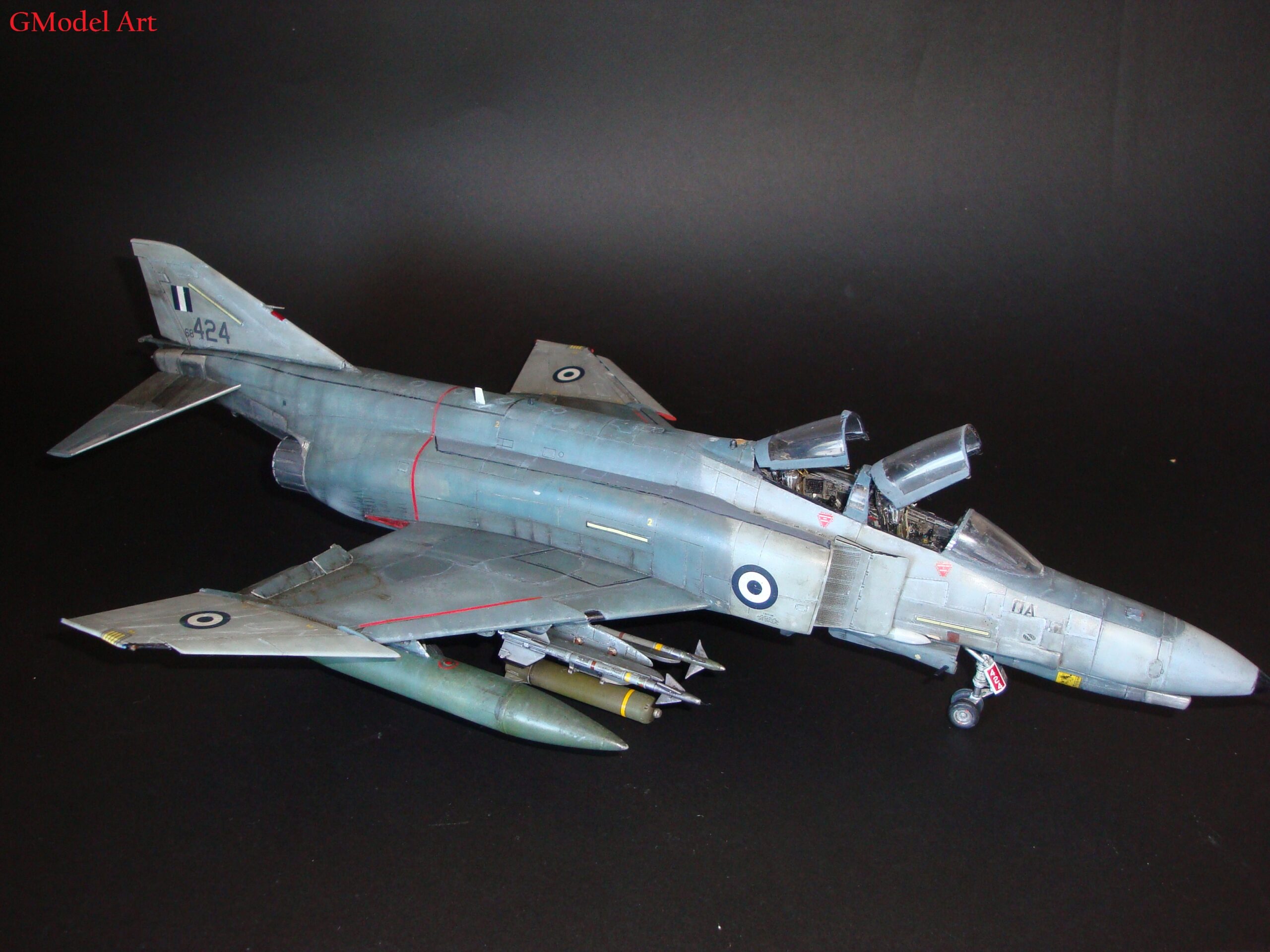
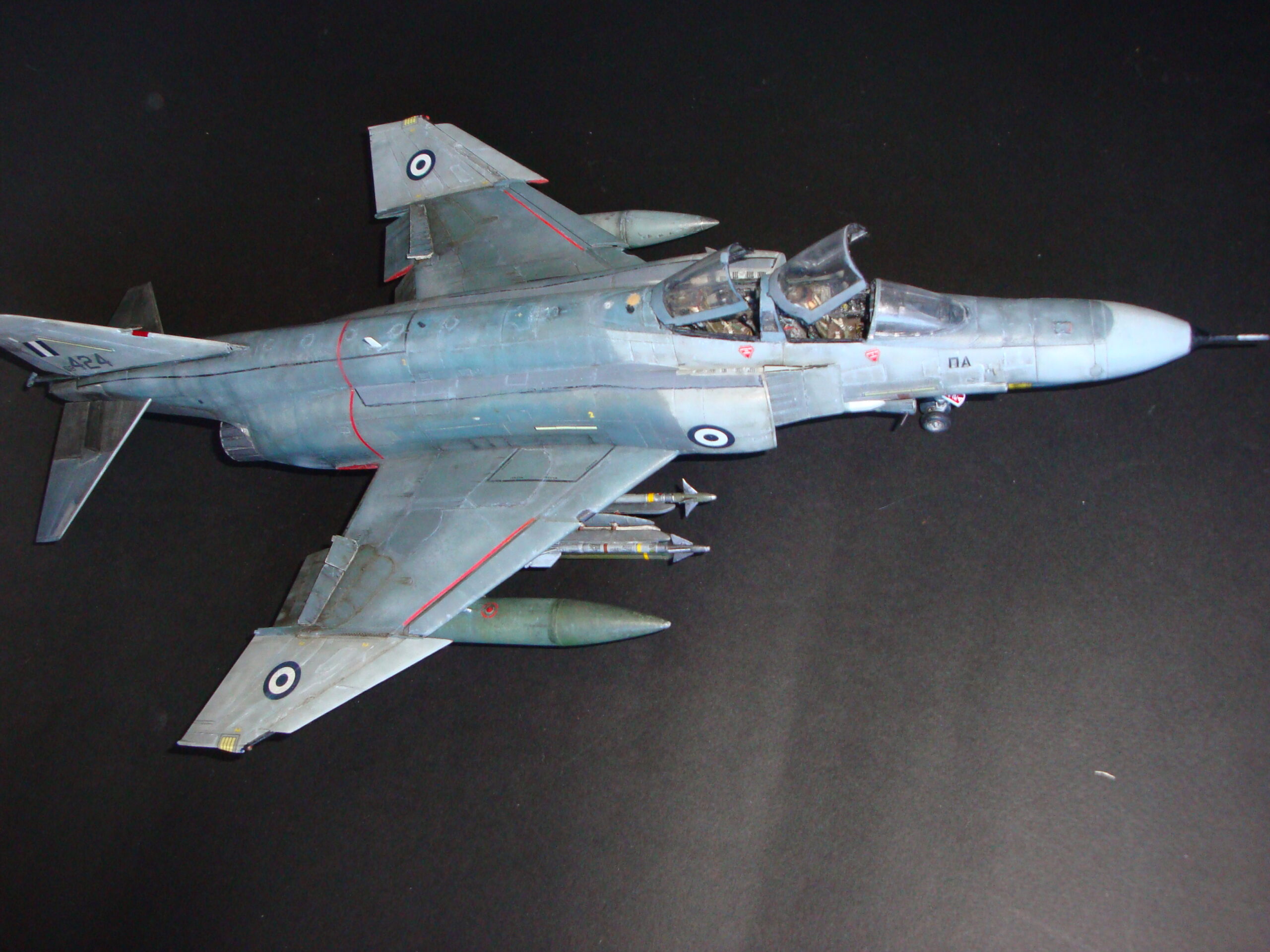
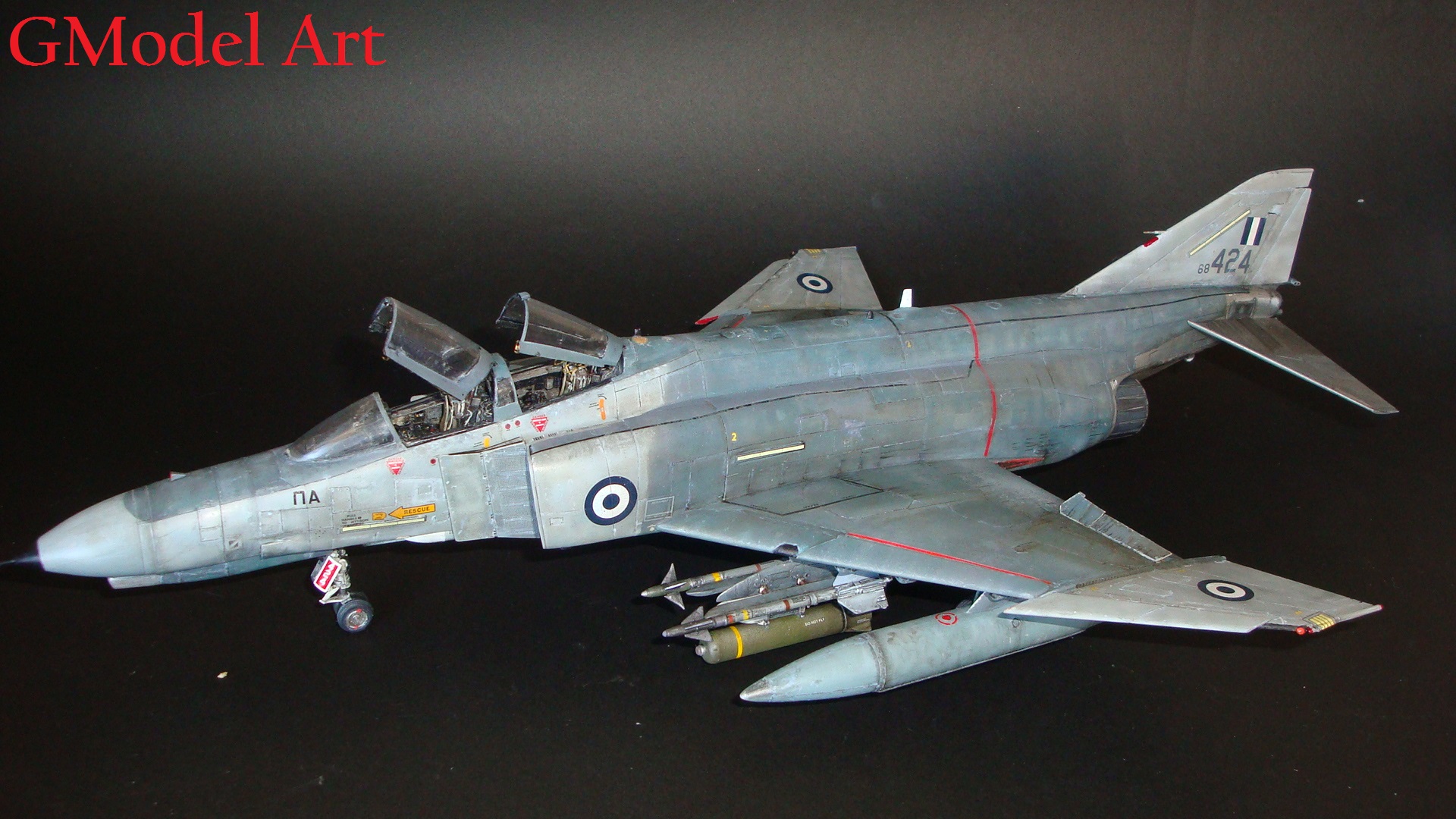
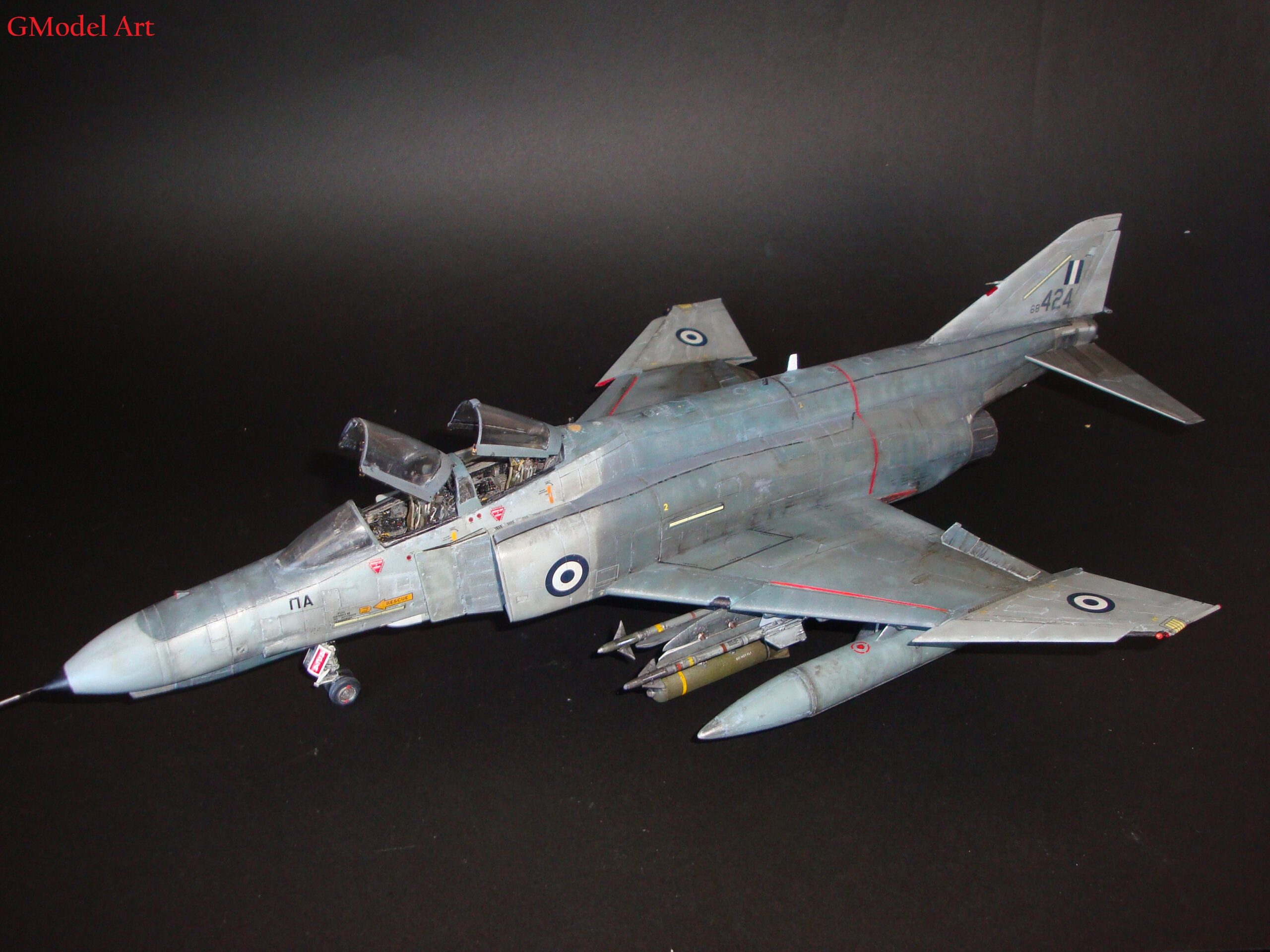
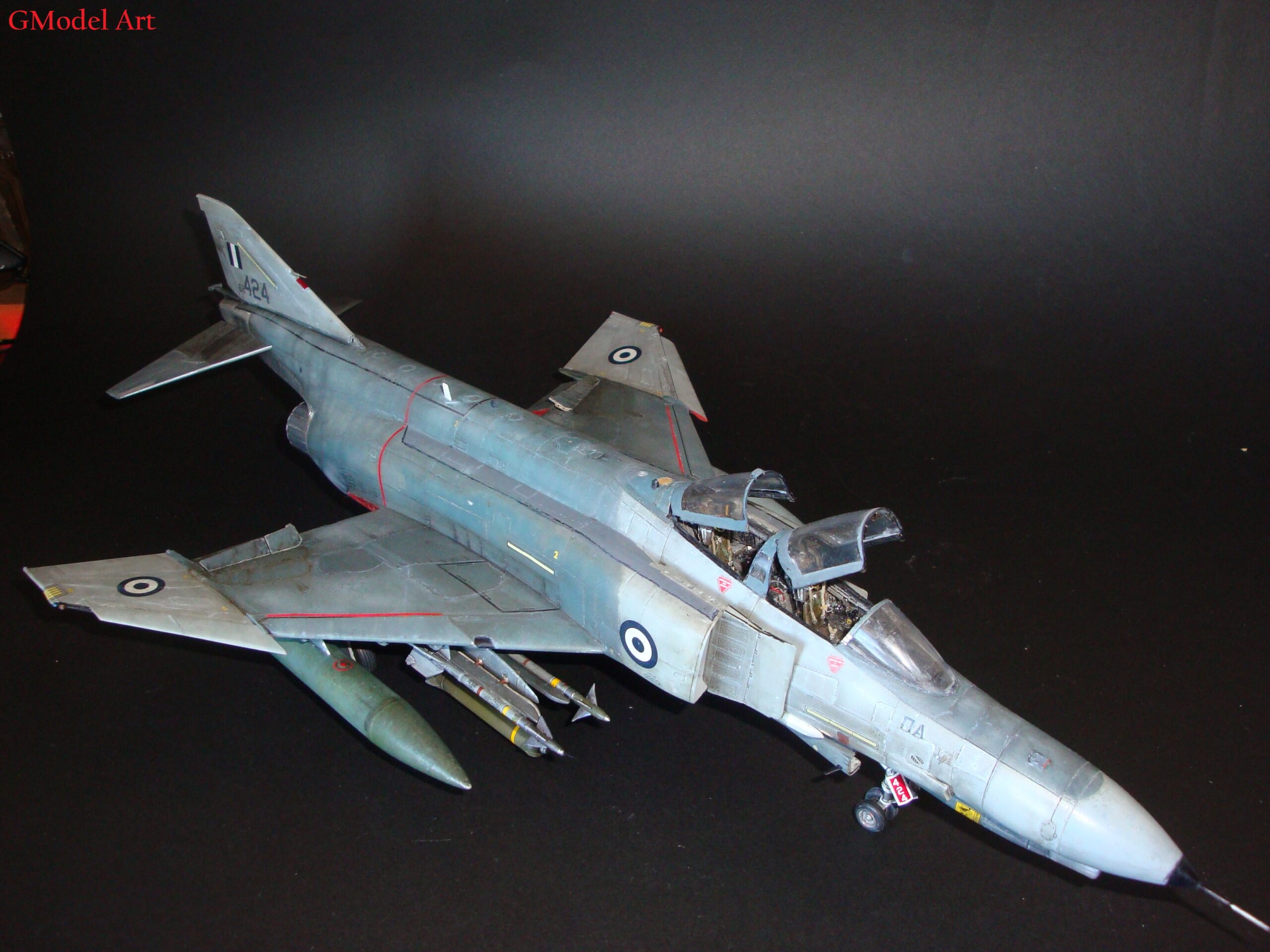
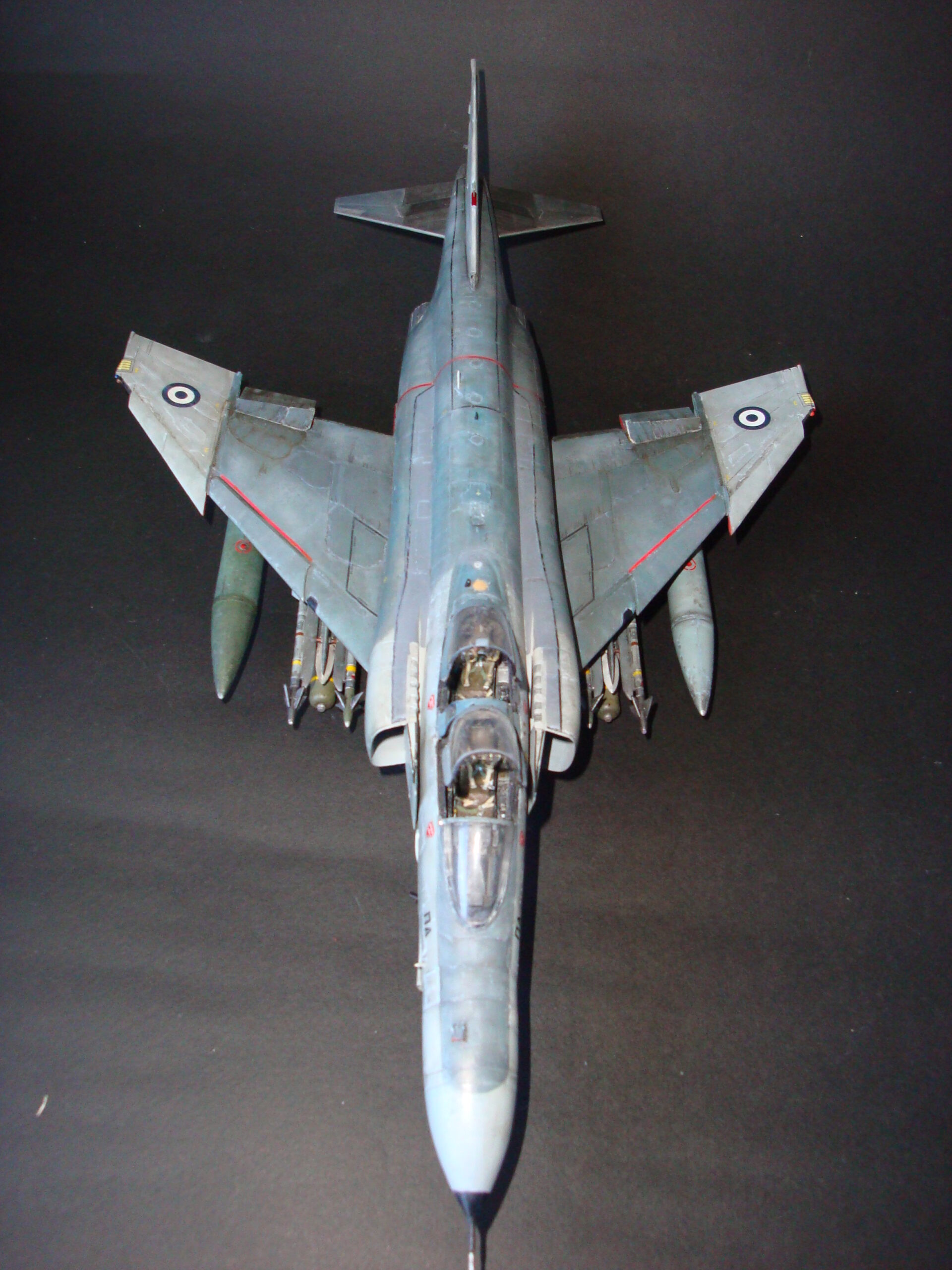
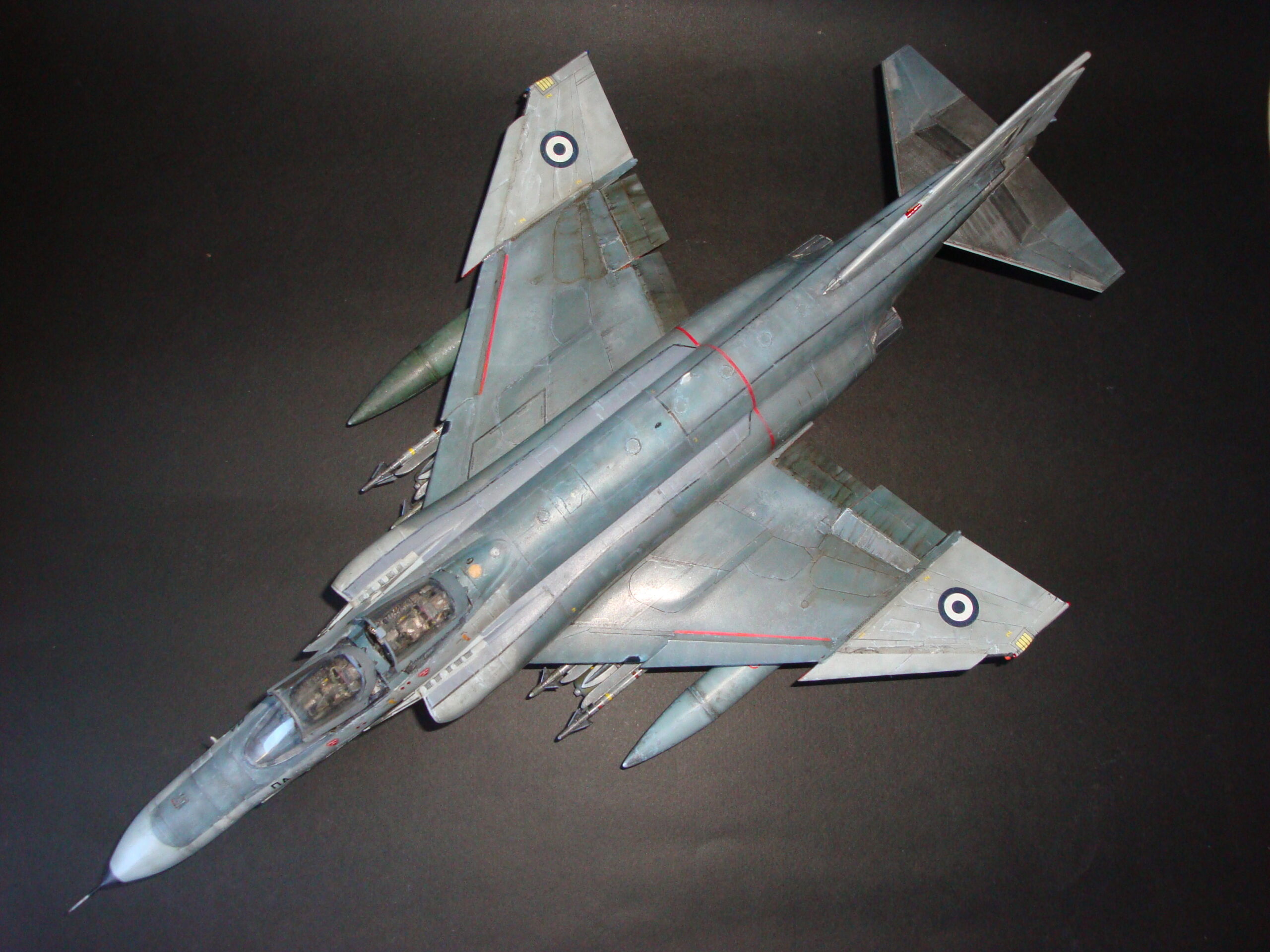
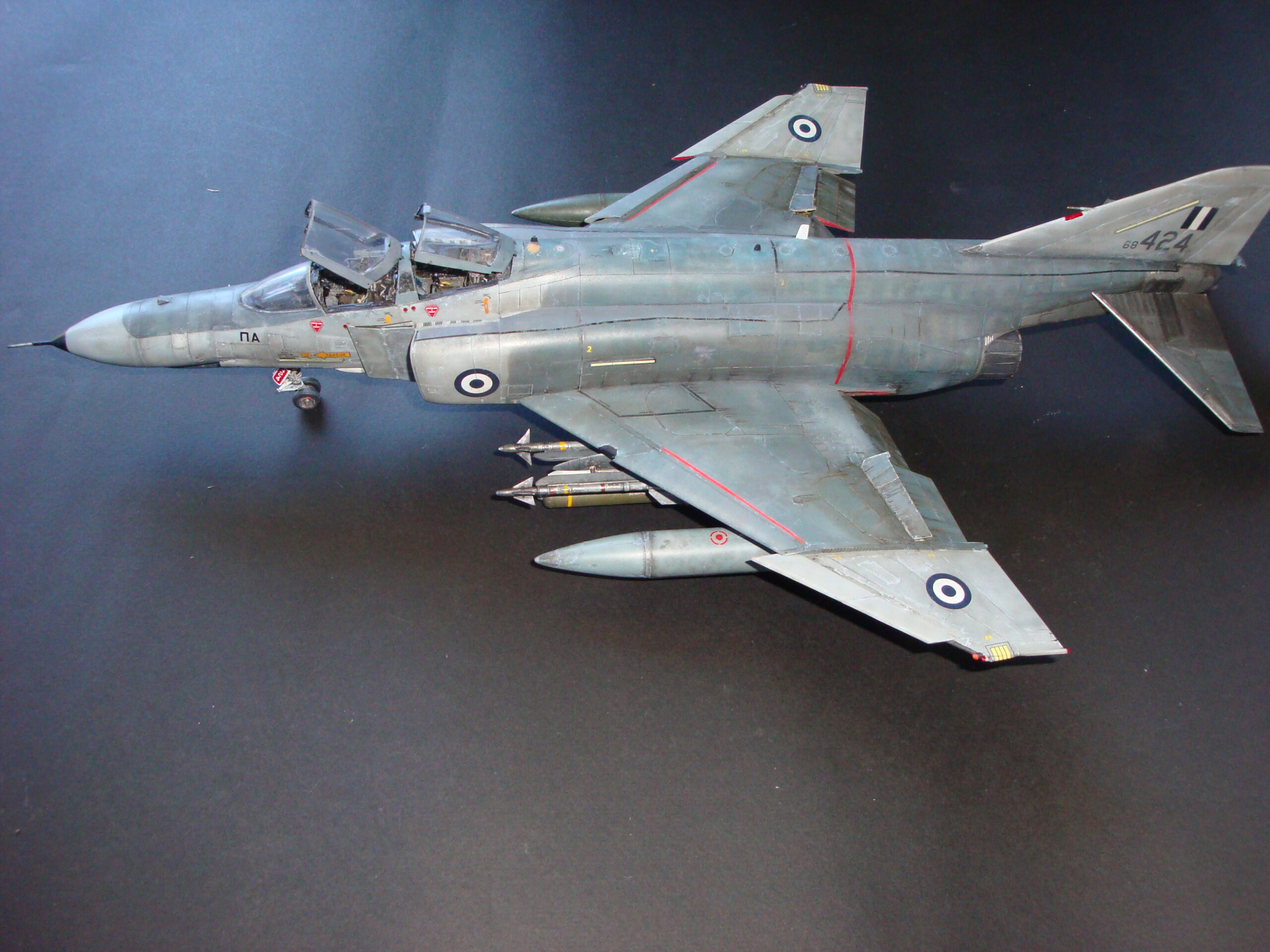
The McDonnell Douglas F-4E Phantom II SRA 68-0424 is the subject of this 1/48 scale Hasegawa F-4E Phantom II model build, representing a Greek Phantom operated by the Hellenic Air Force.
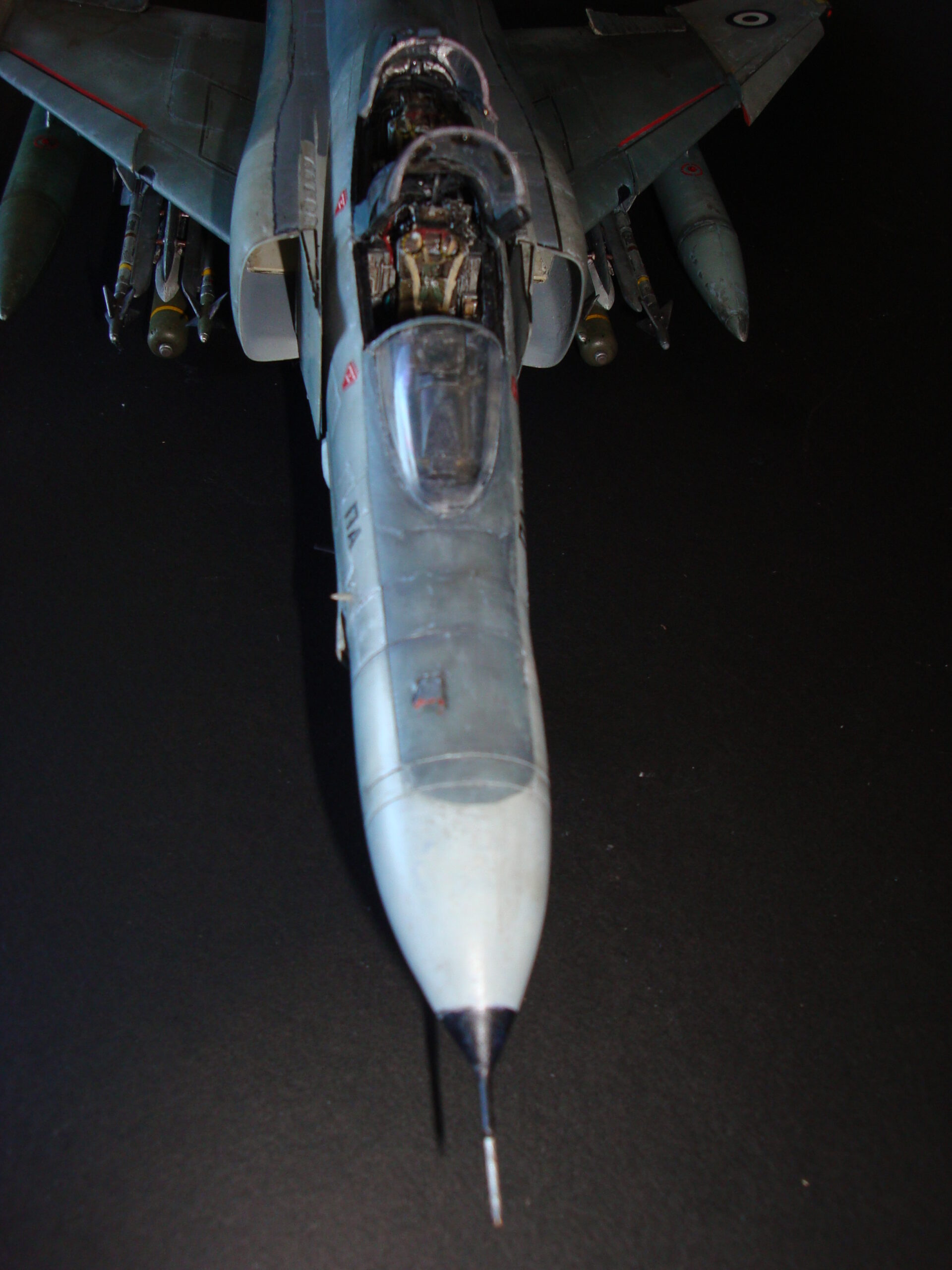
The choice of aircraft is not accidental. Although the Greek F-4E fleet offers many interesting subjects for scale modelers, aircraft 68-0424 has a particularly distinctive feature: its one-piece windshield.
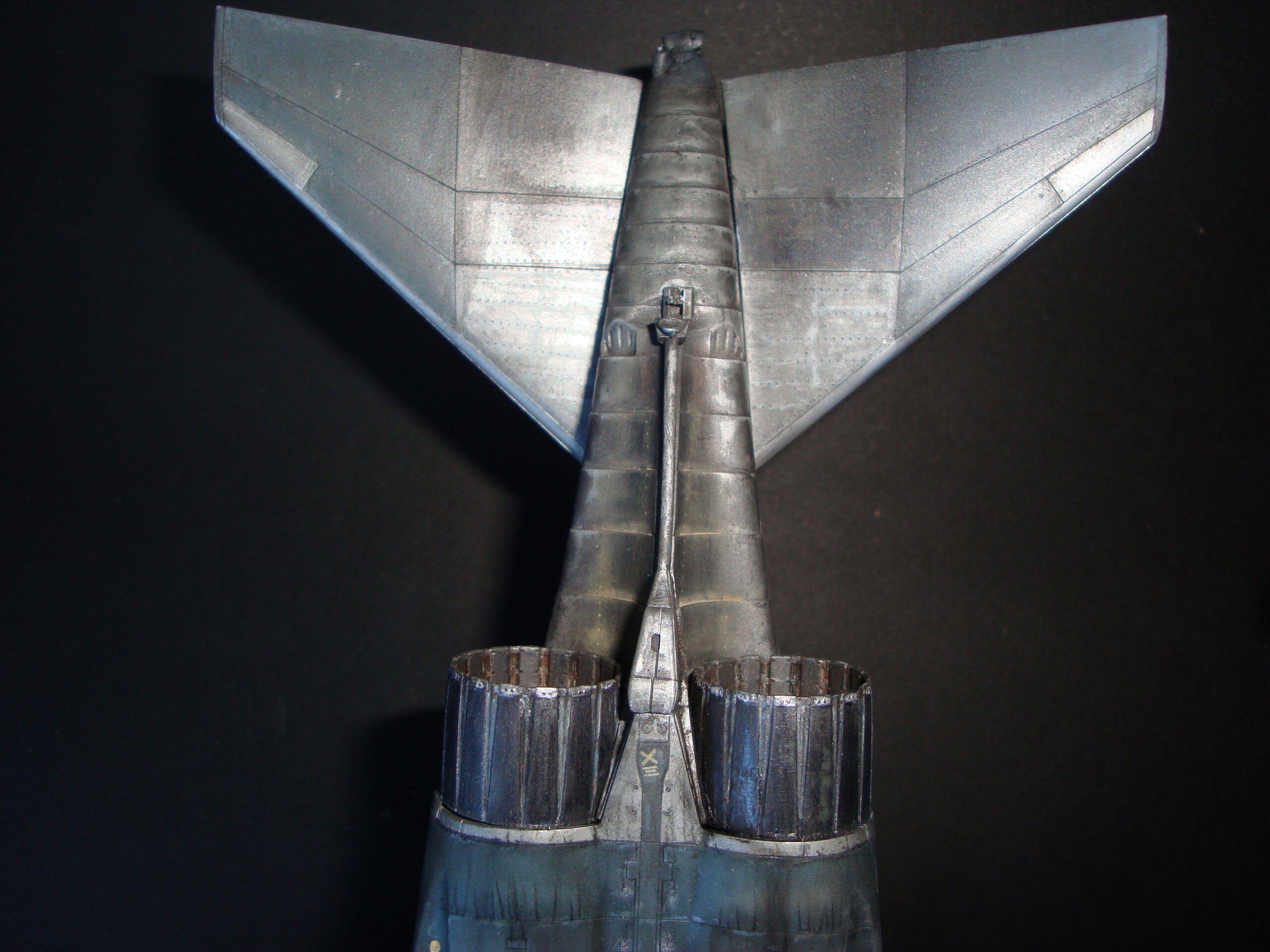
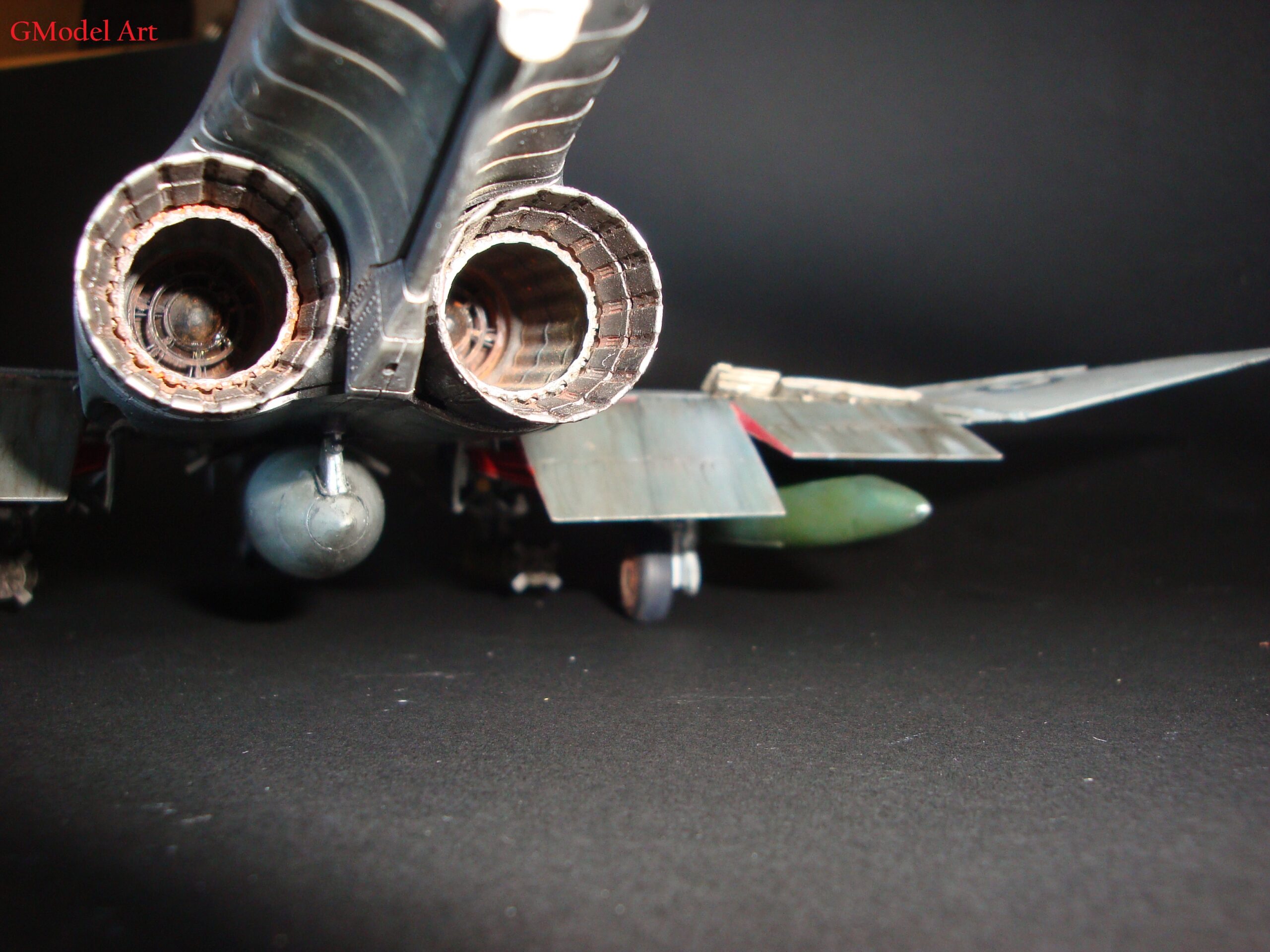
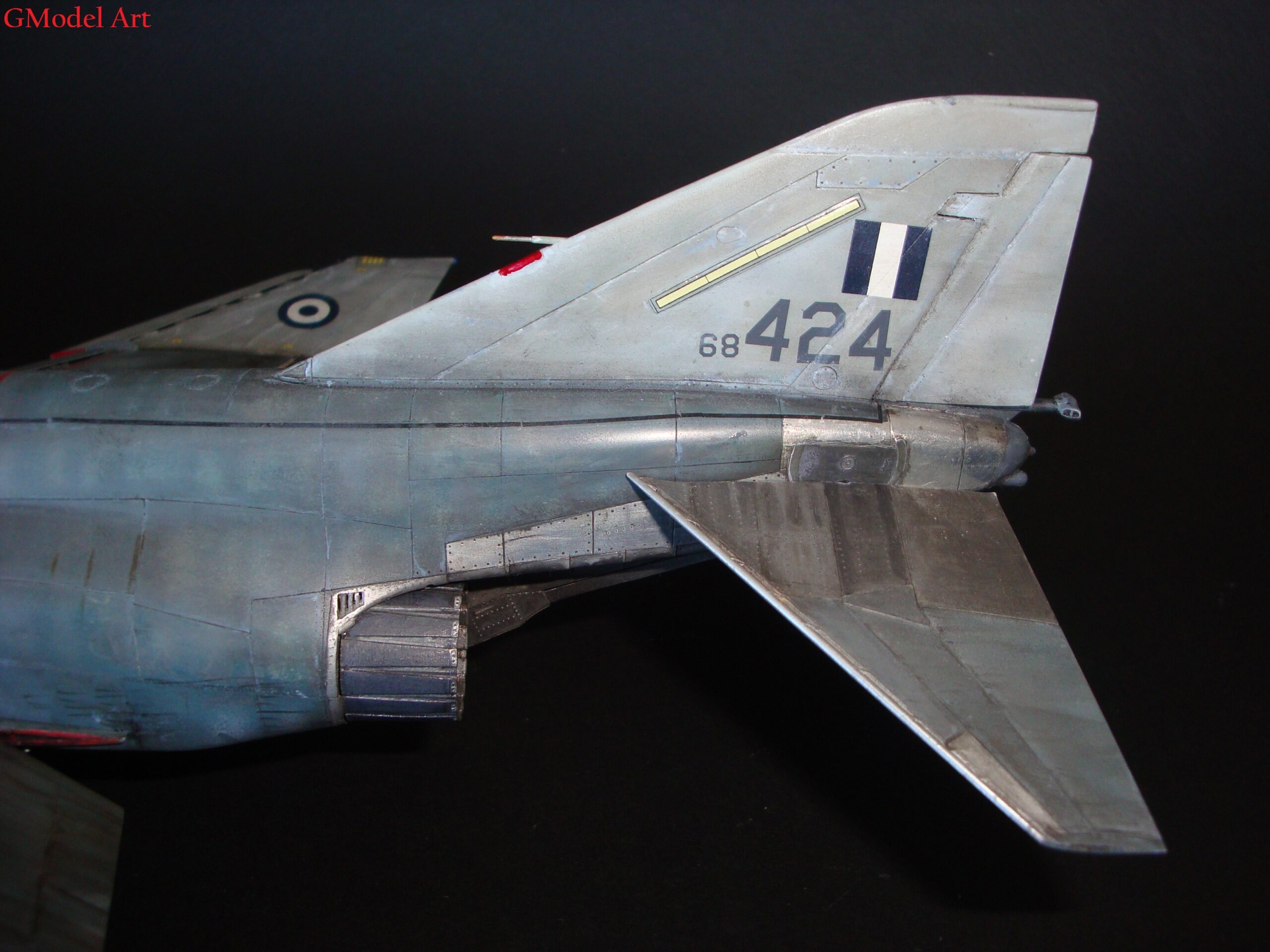
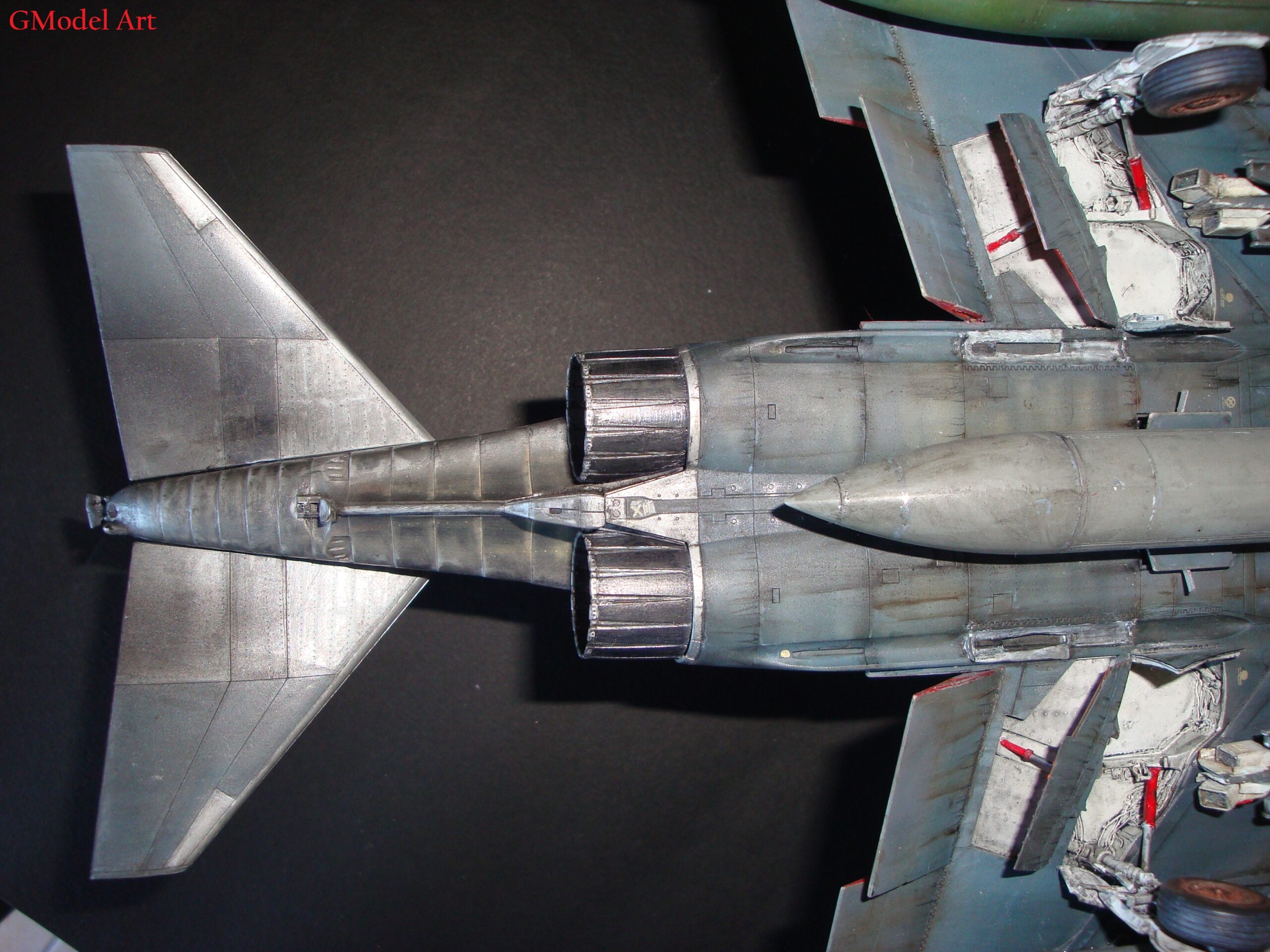
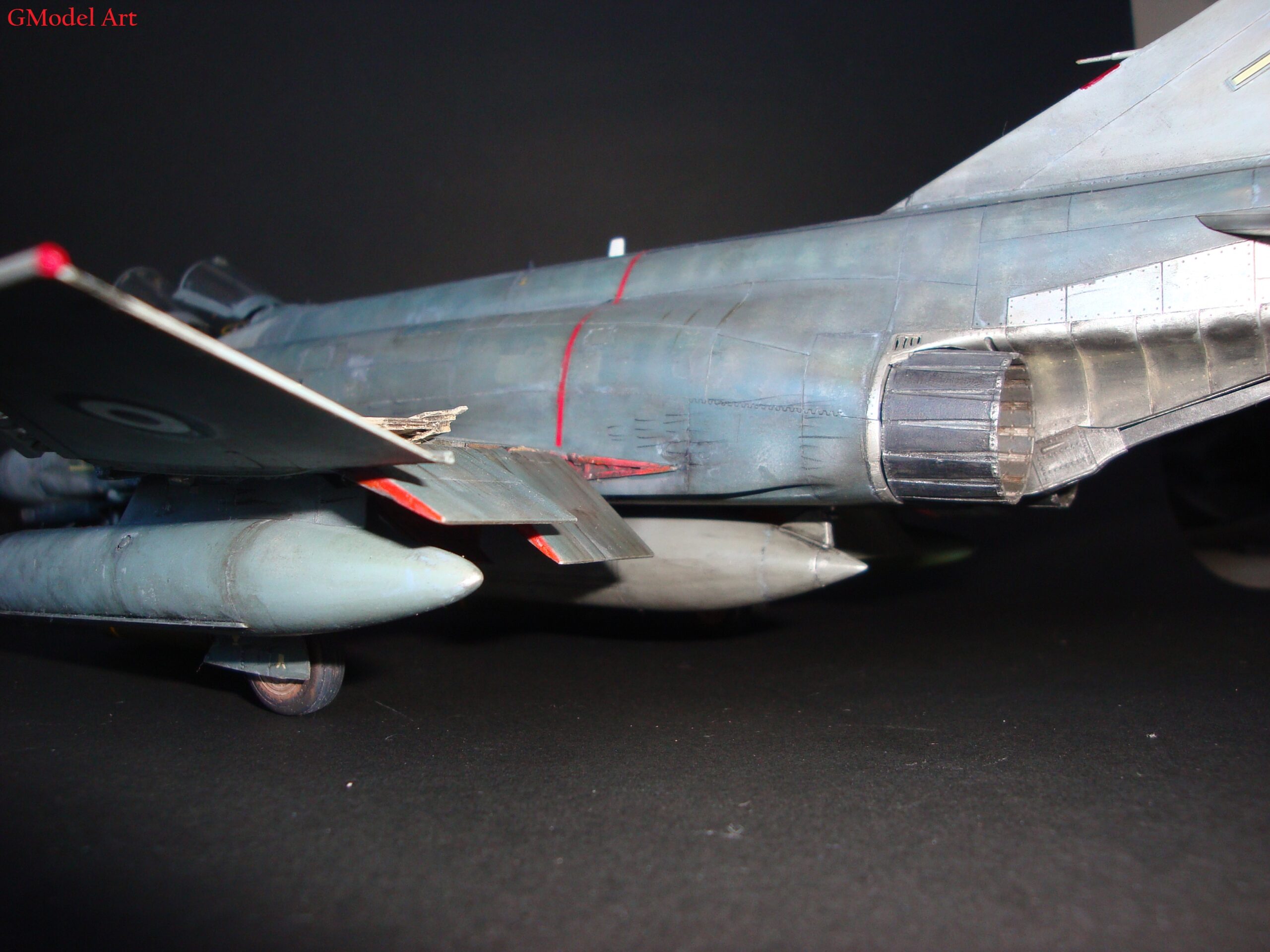
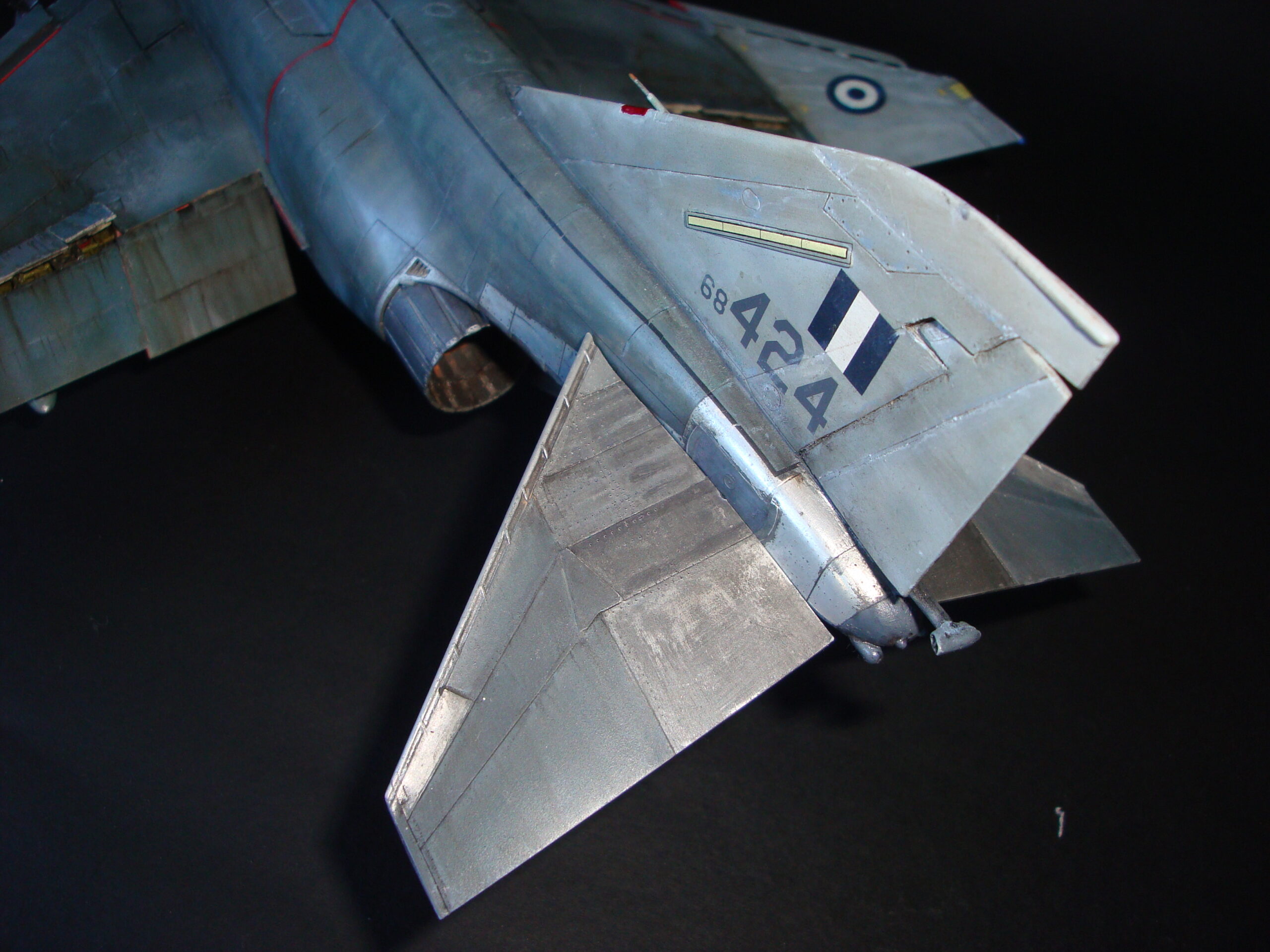
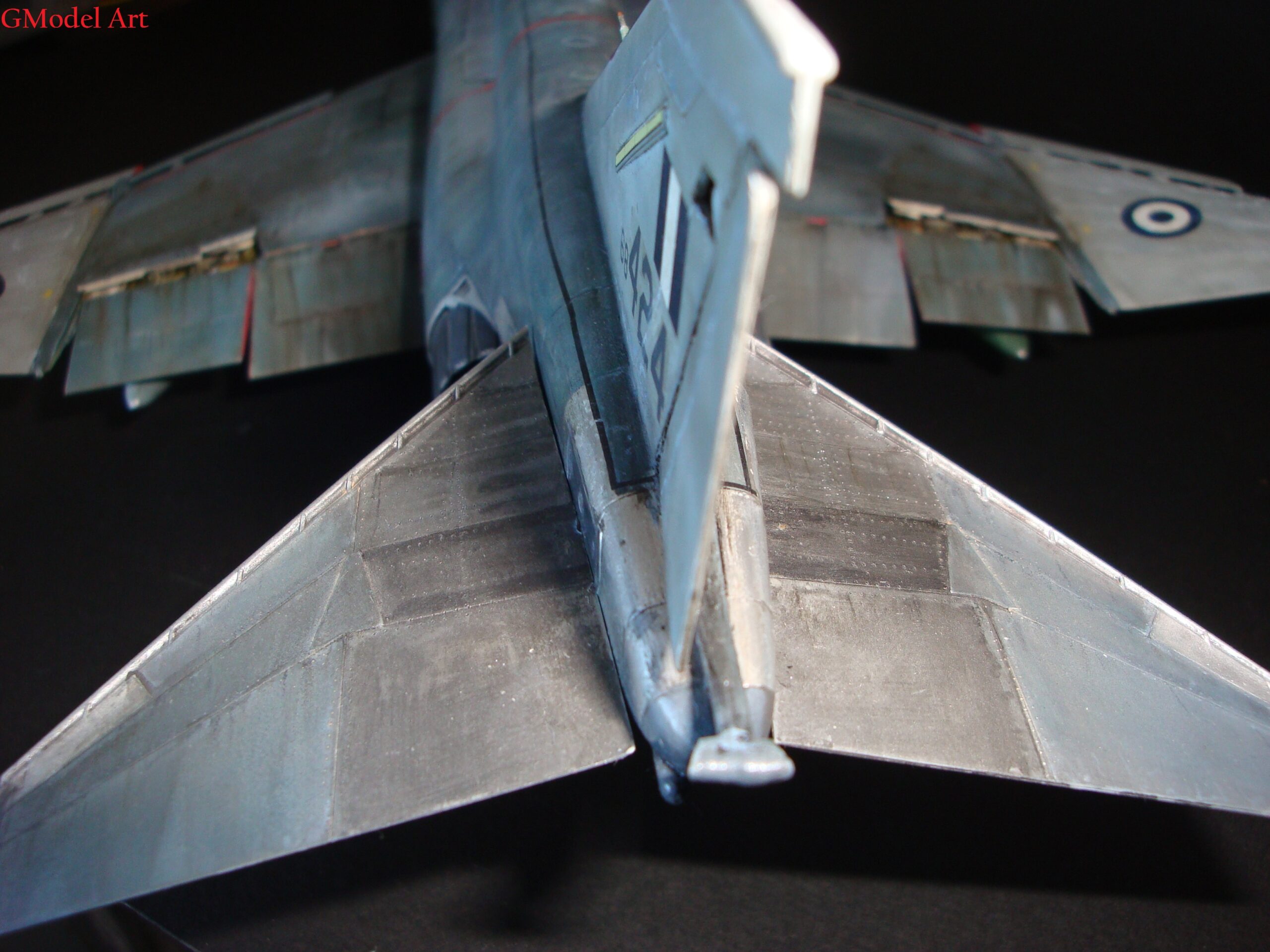
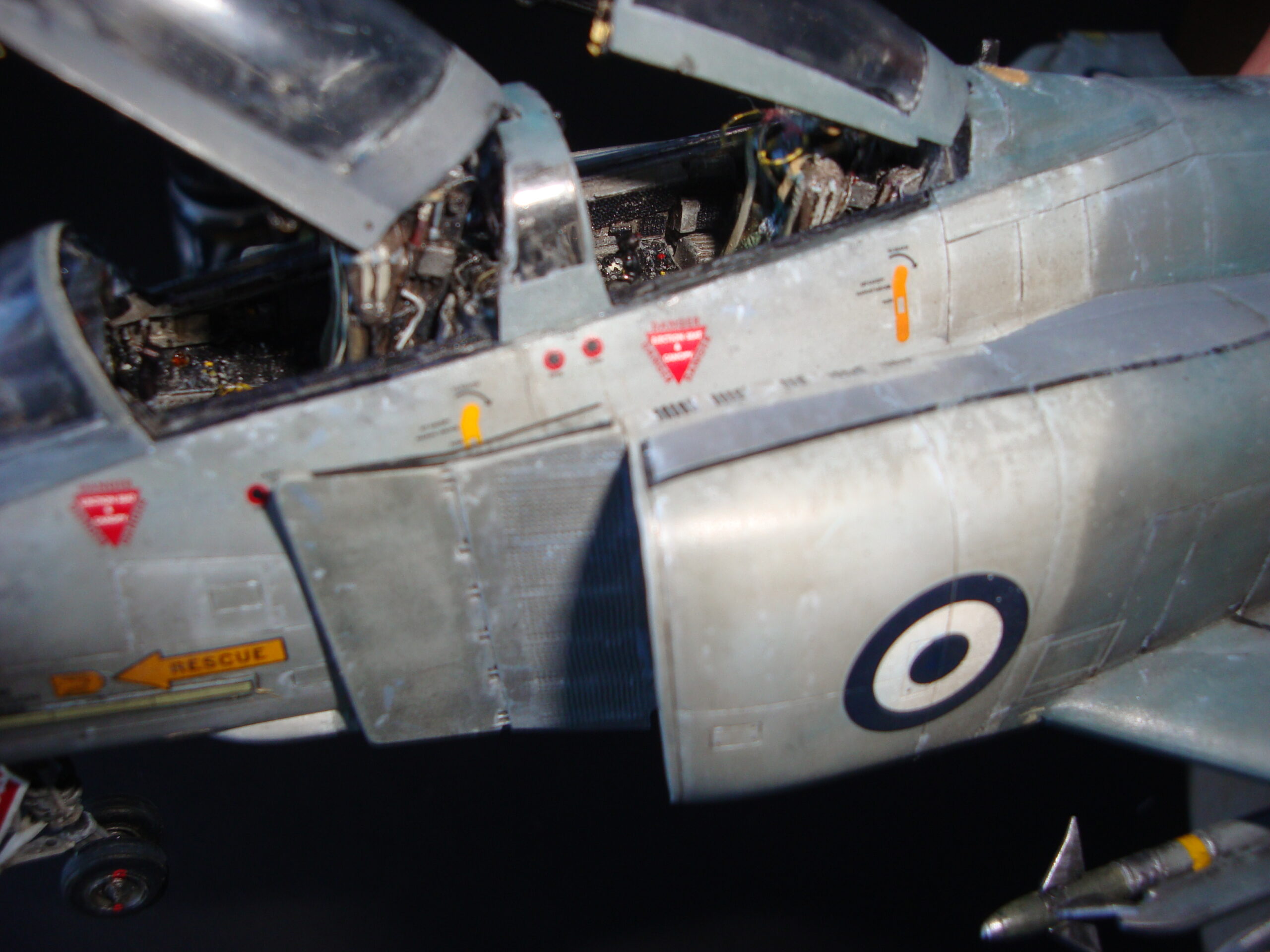
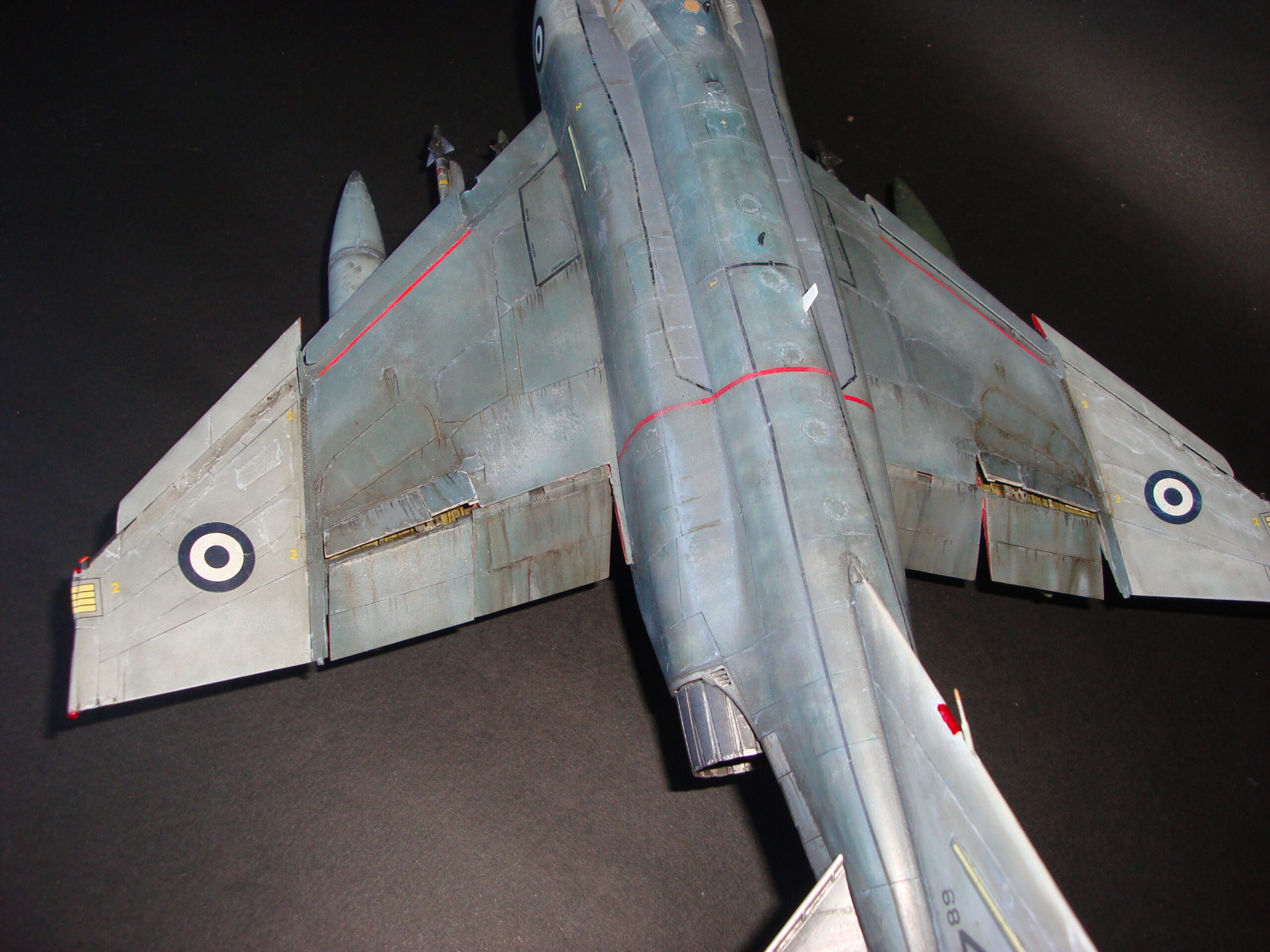
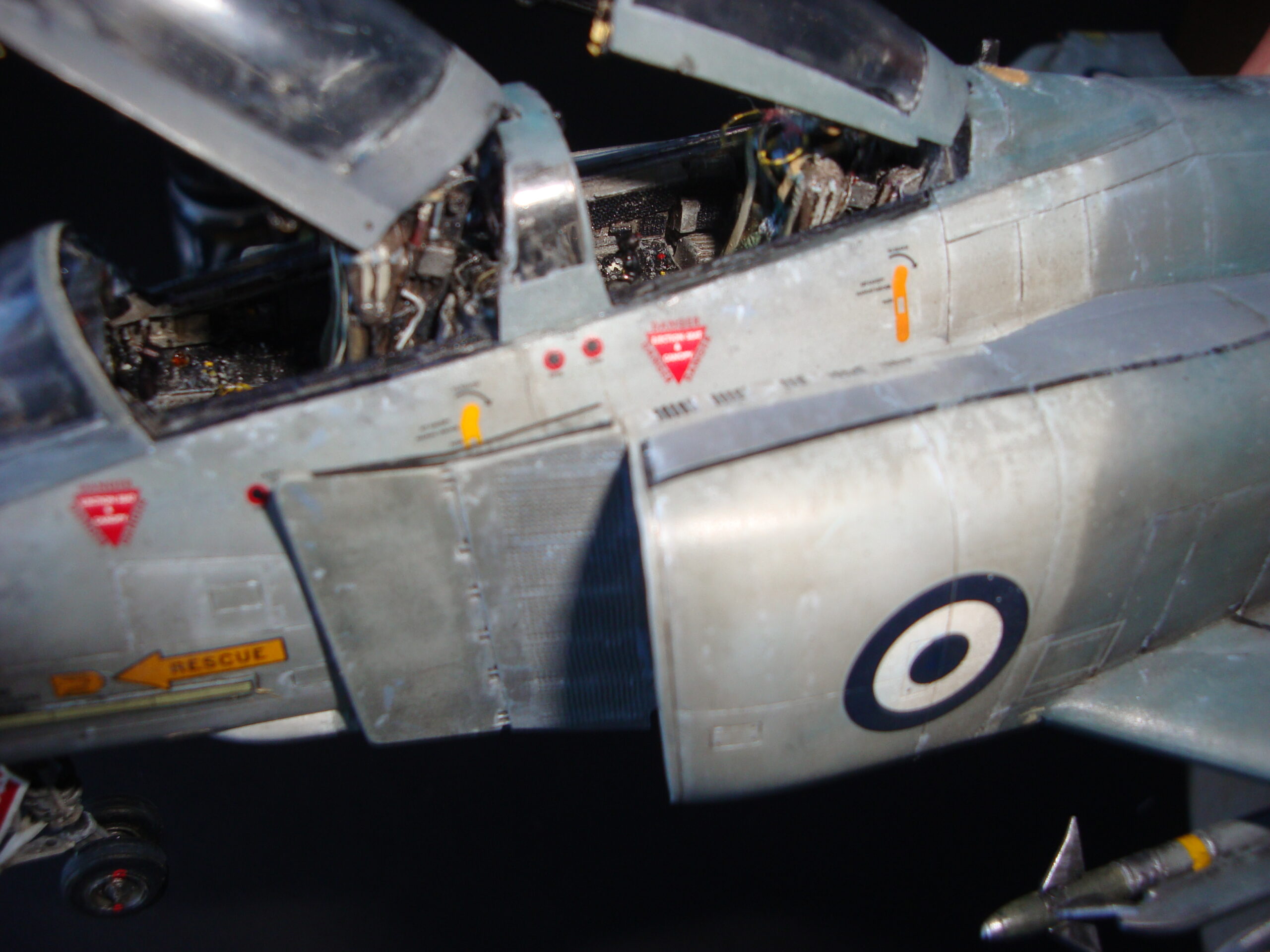
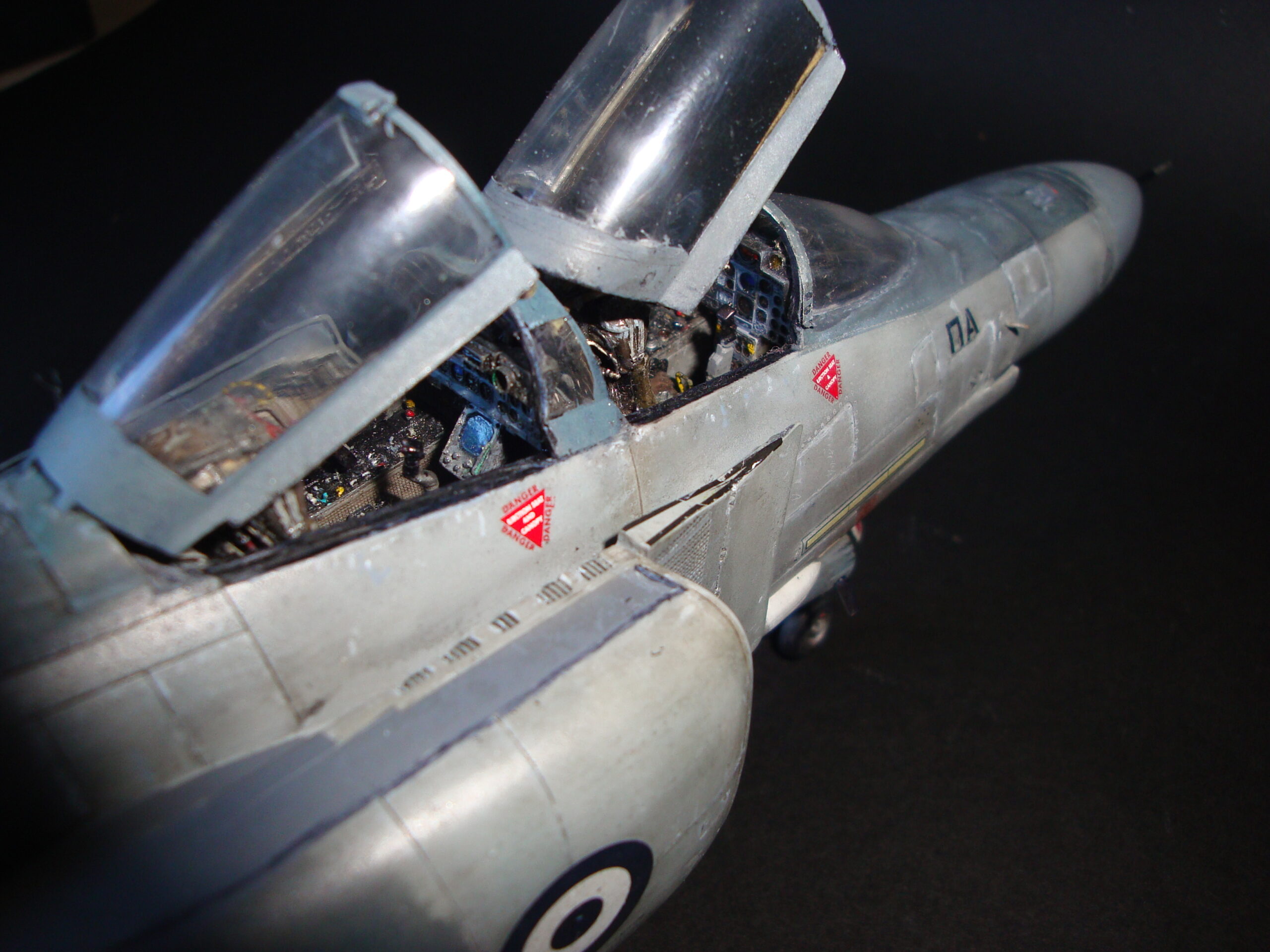
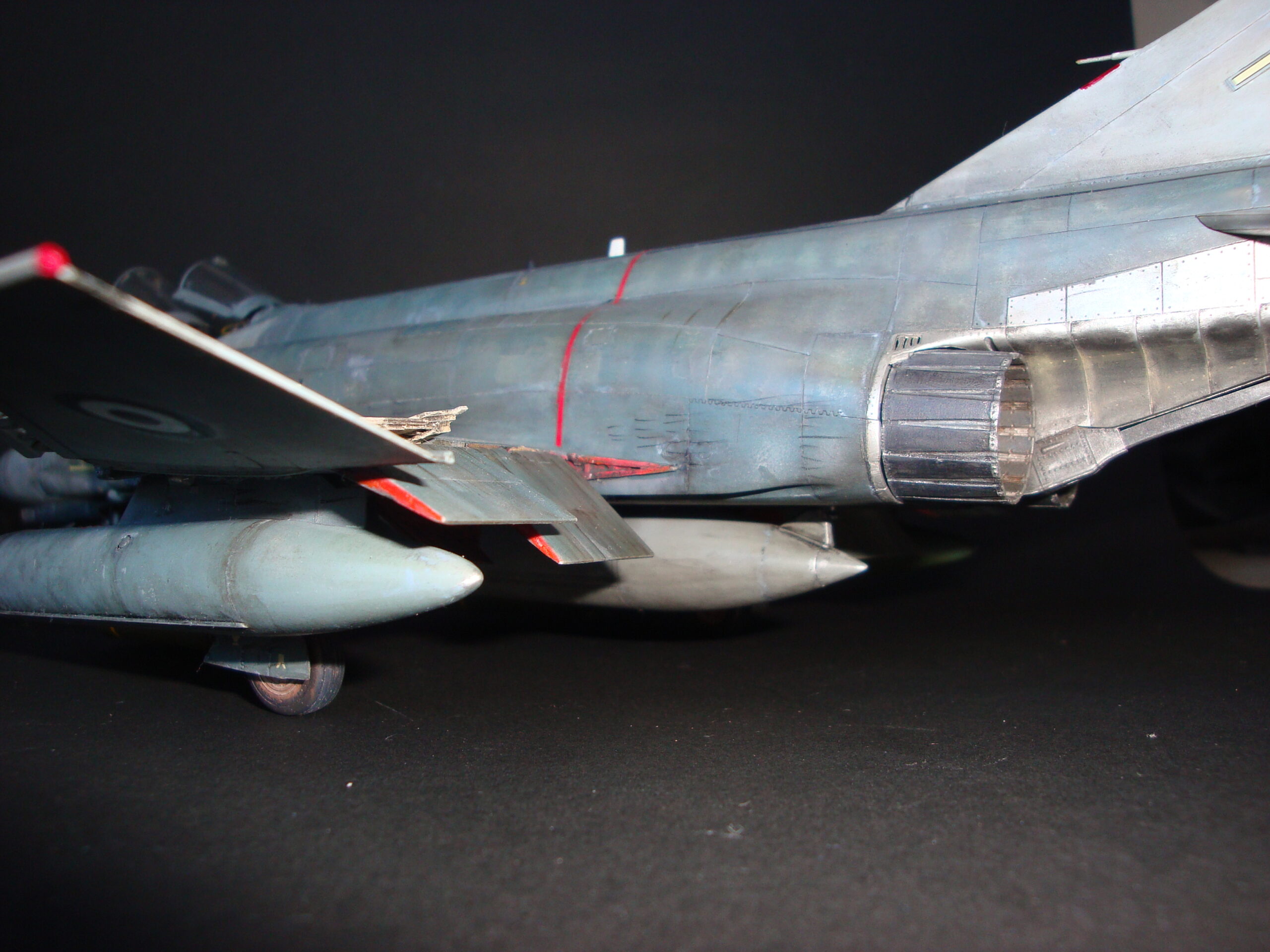
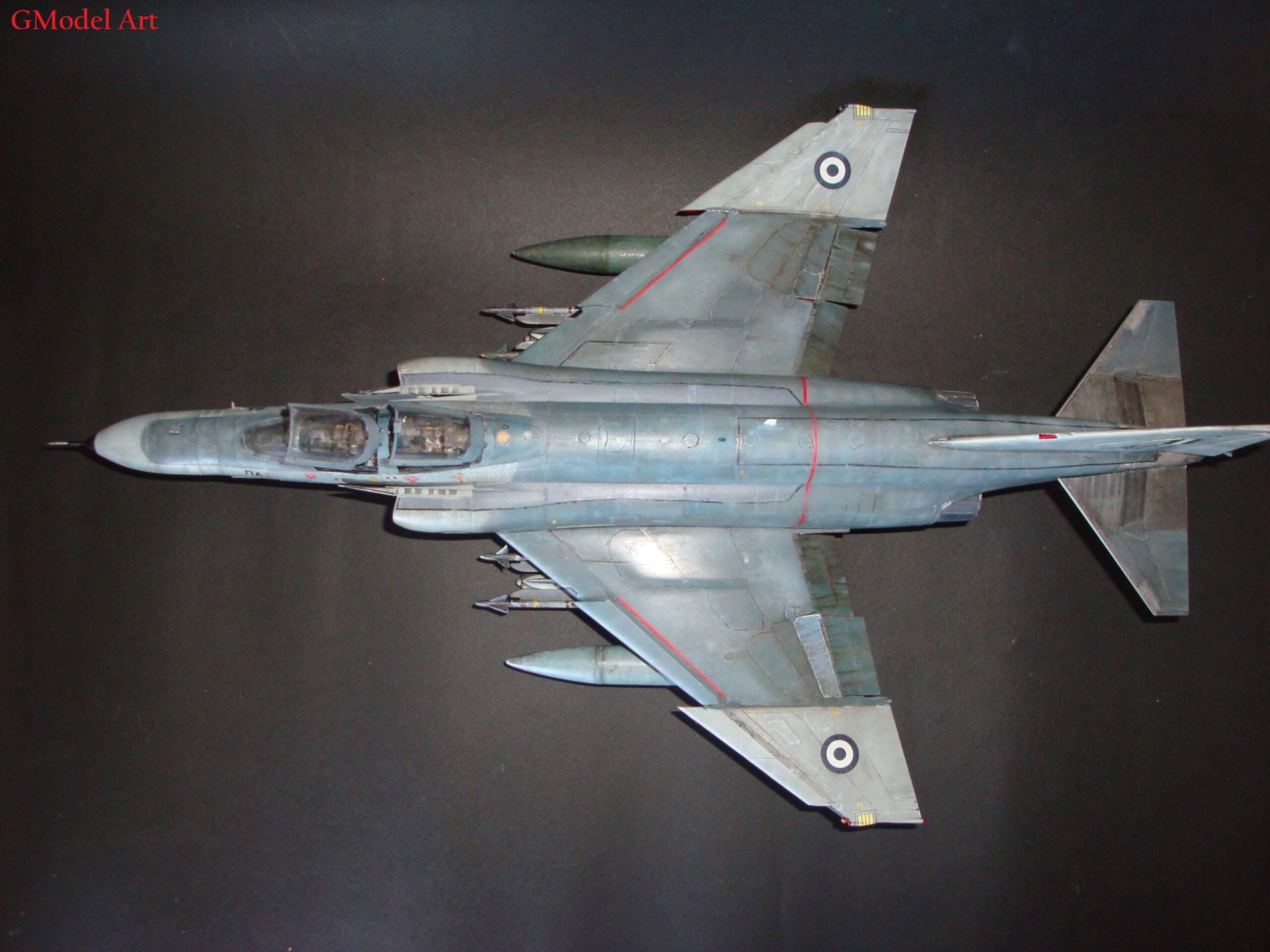
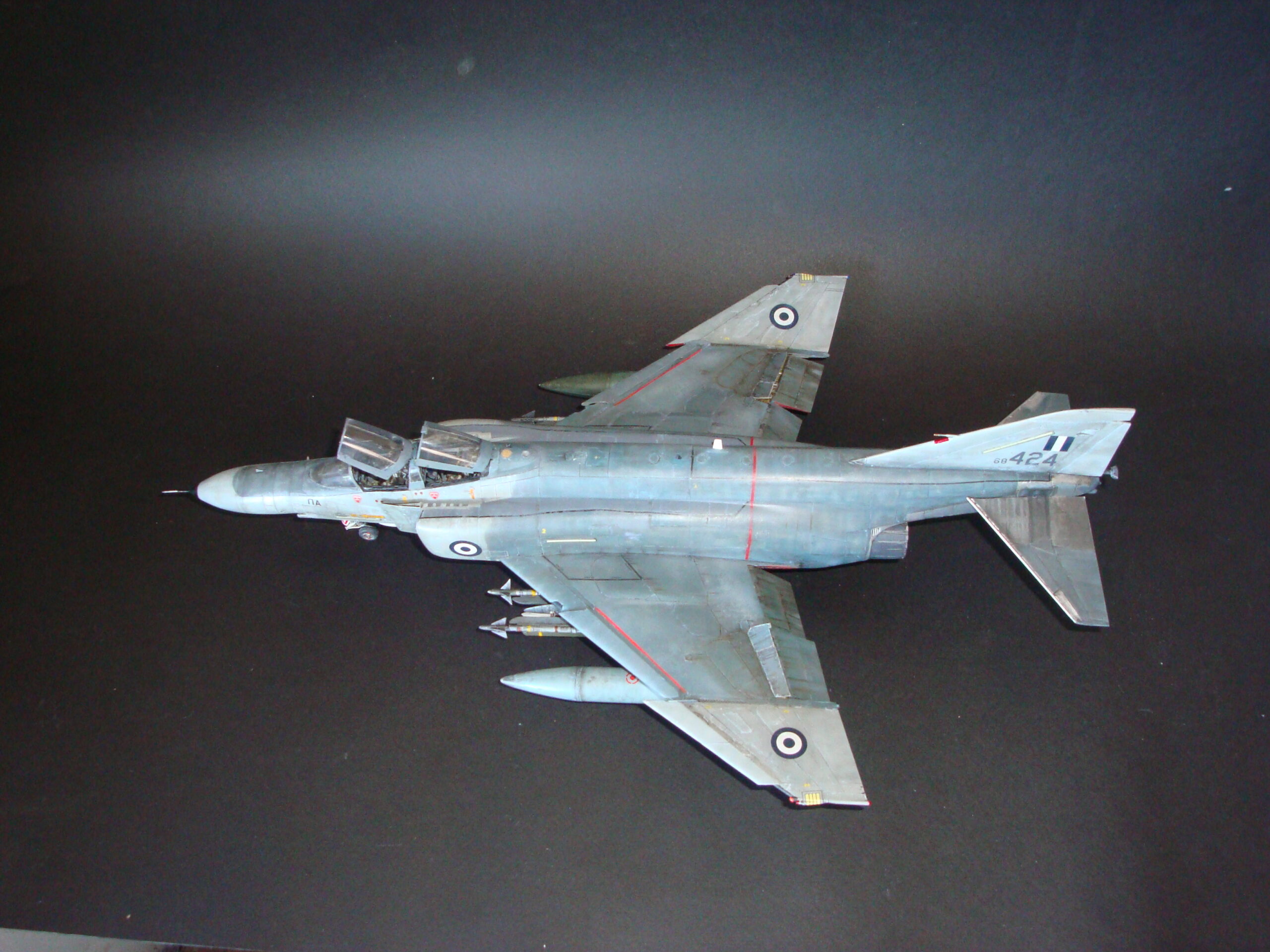
For a modeler building a specific Hellenic Air Force Phantom rather than a generic F-4E, details such as the windshield configuration, camouflage, markings and individual aircraft characteristics are essential. The photographs included with this build provide the visual references used to reproduce the aircraft as accurately as possible.
The Hasegawa 1/48 F-4E Phantom II
The model is built in 1/48 scale using the Hasegawa F-4E Phantom II kit.
The F-4E is one of the most recognizable versions of the Phantom II family, and the Hasegawa 1/48 kit provides an excellent starting point for representing a Greek F-4E. For a subject such as 68-0424, however, the kit should not simply be assembled according to the box instructions and finished with Greek markings.
The real aircraft must be used as the reference.
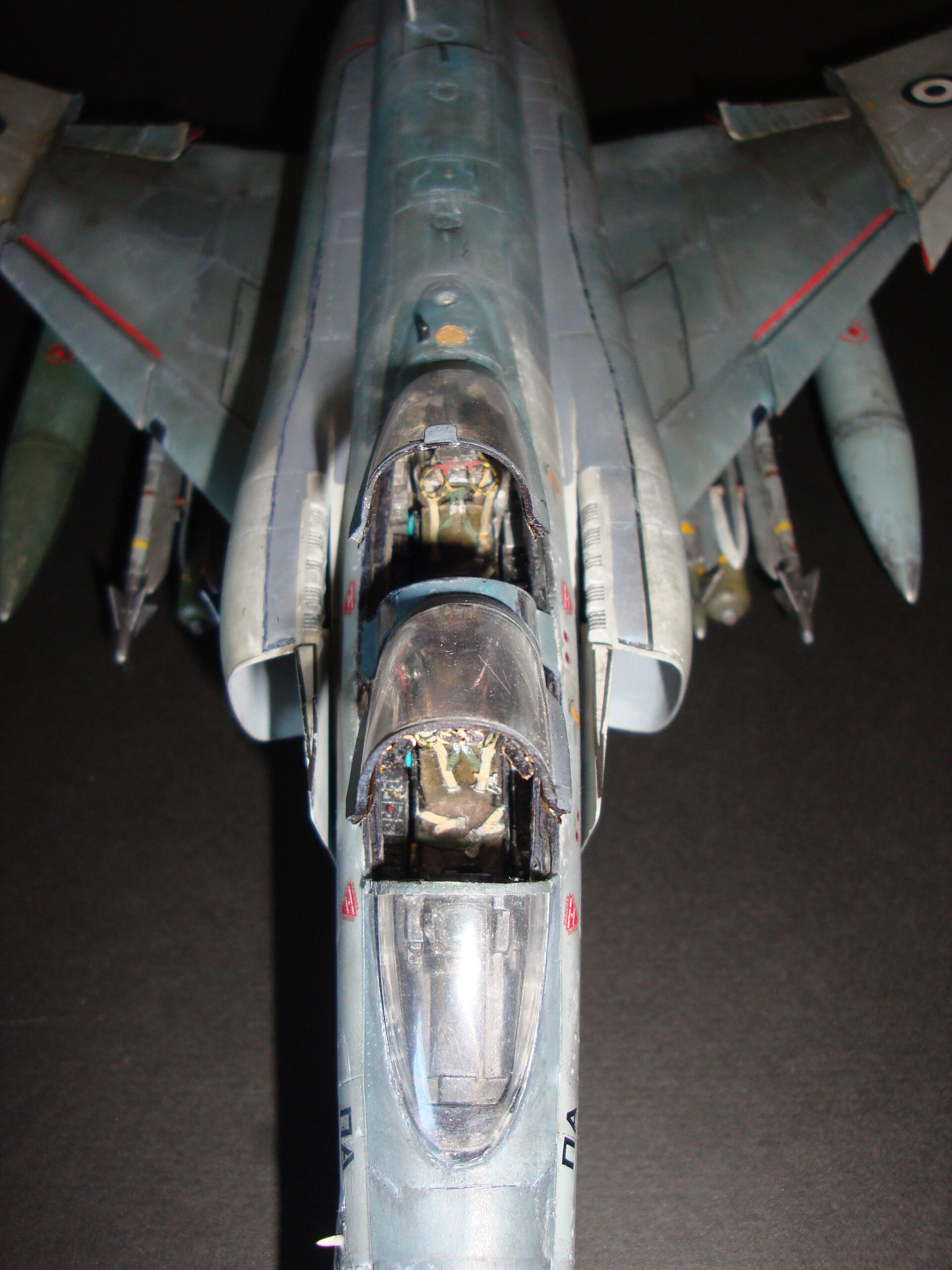
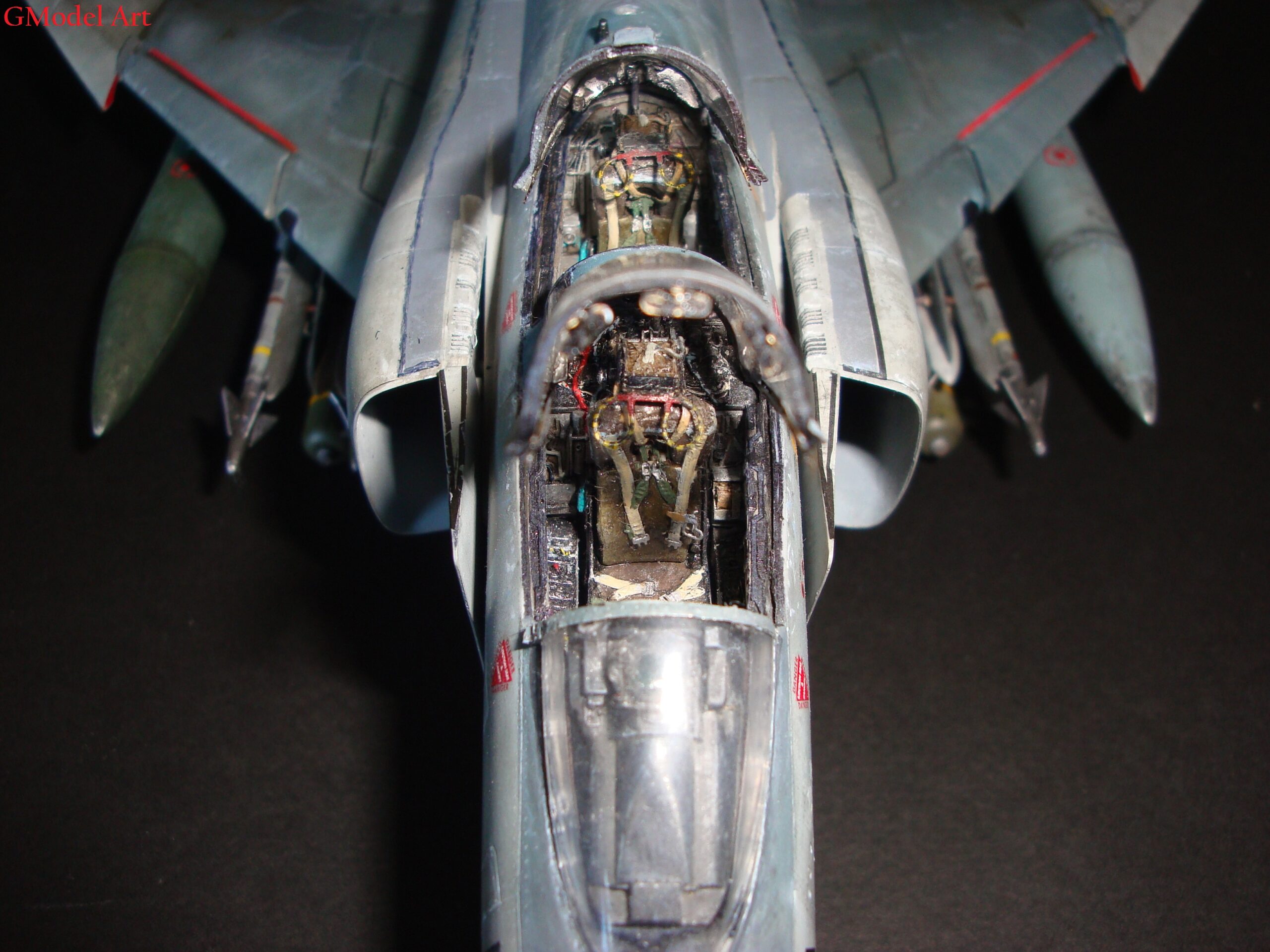
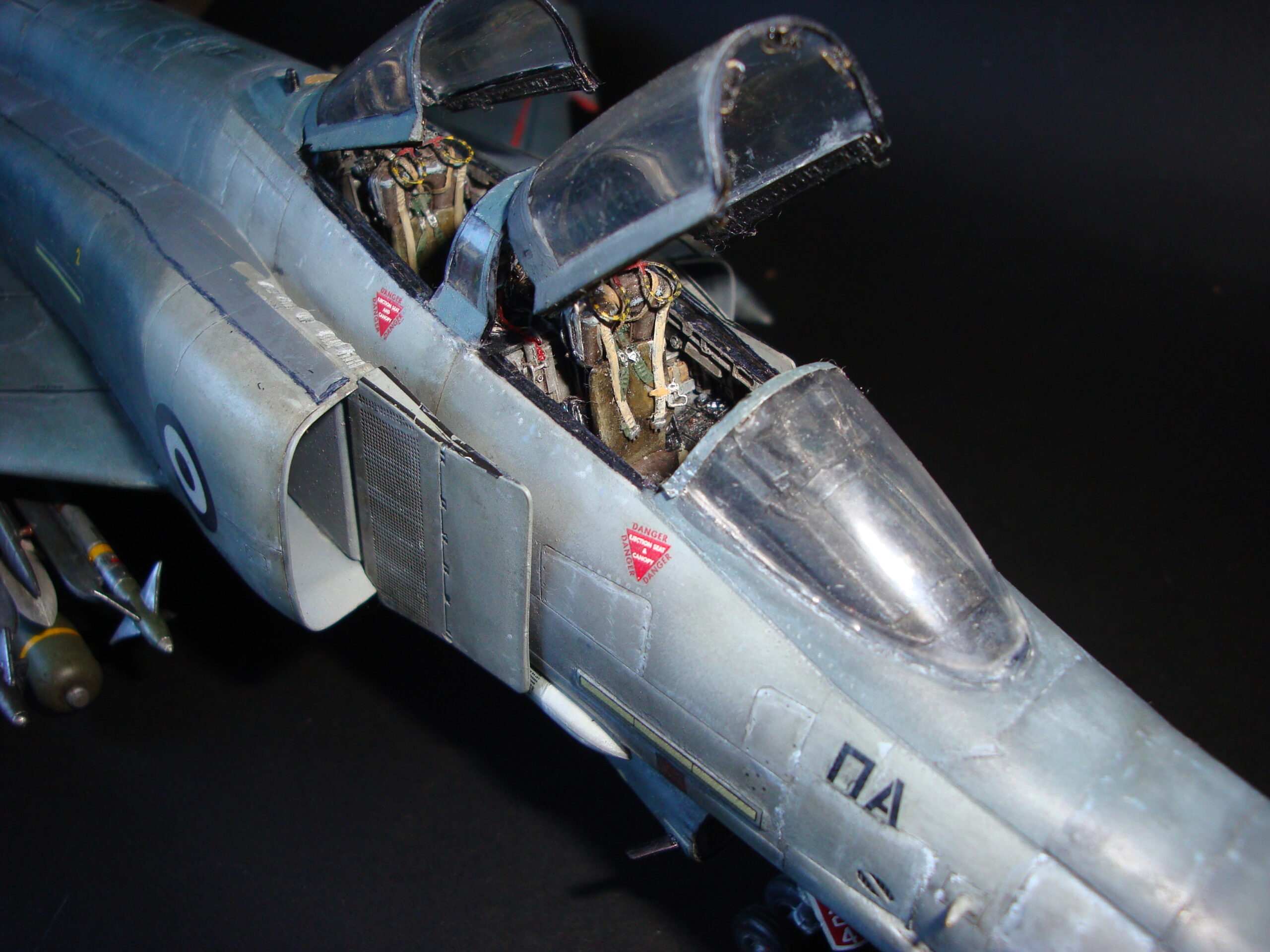
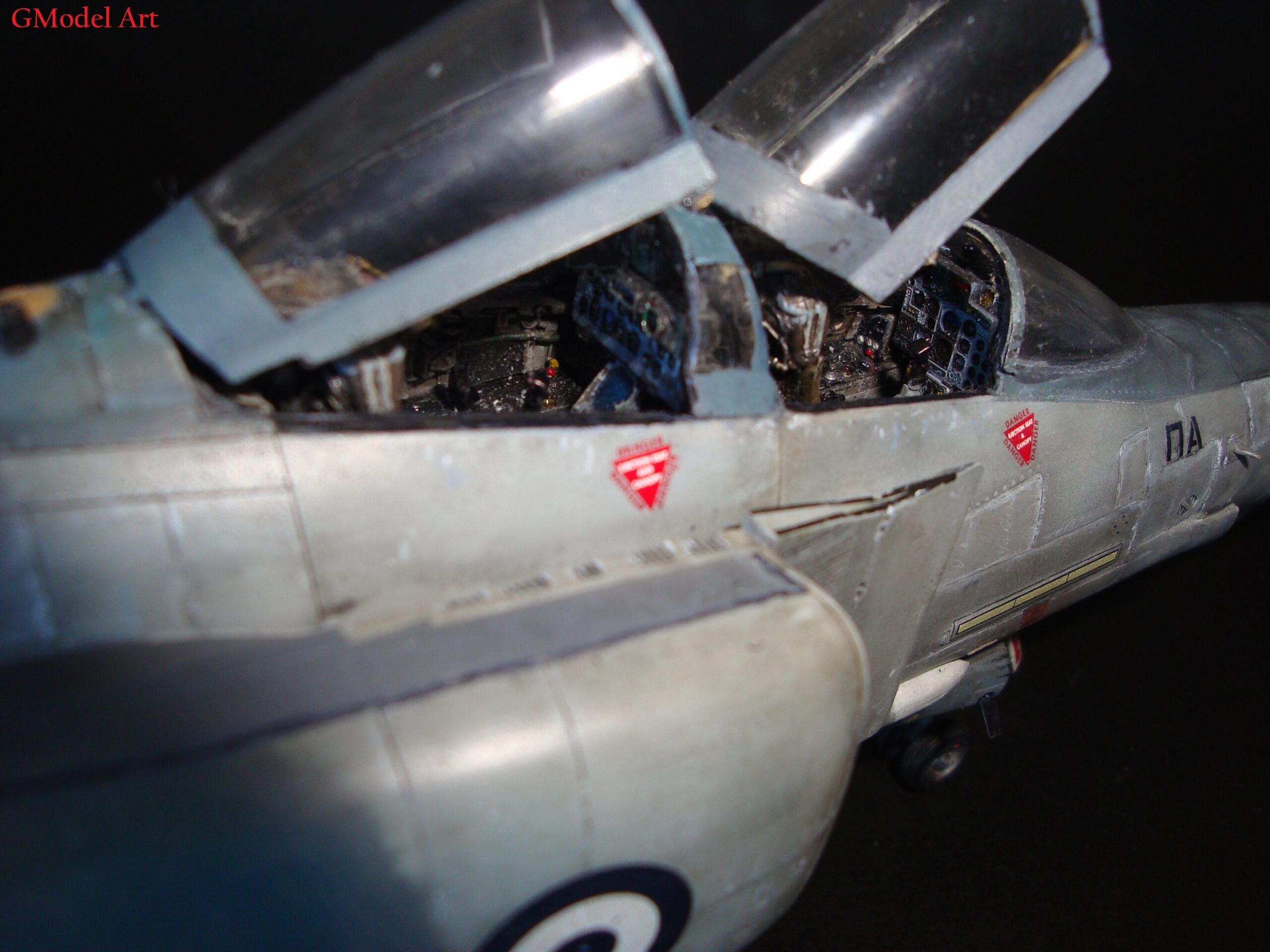
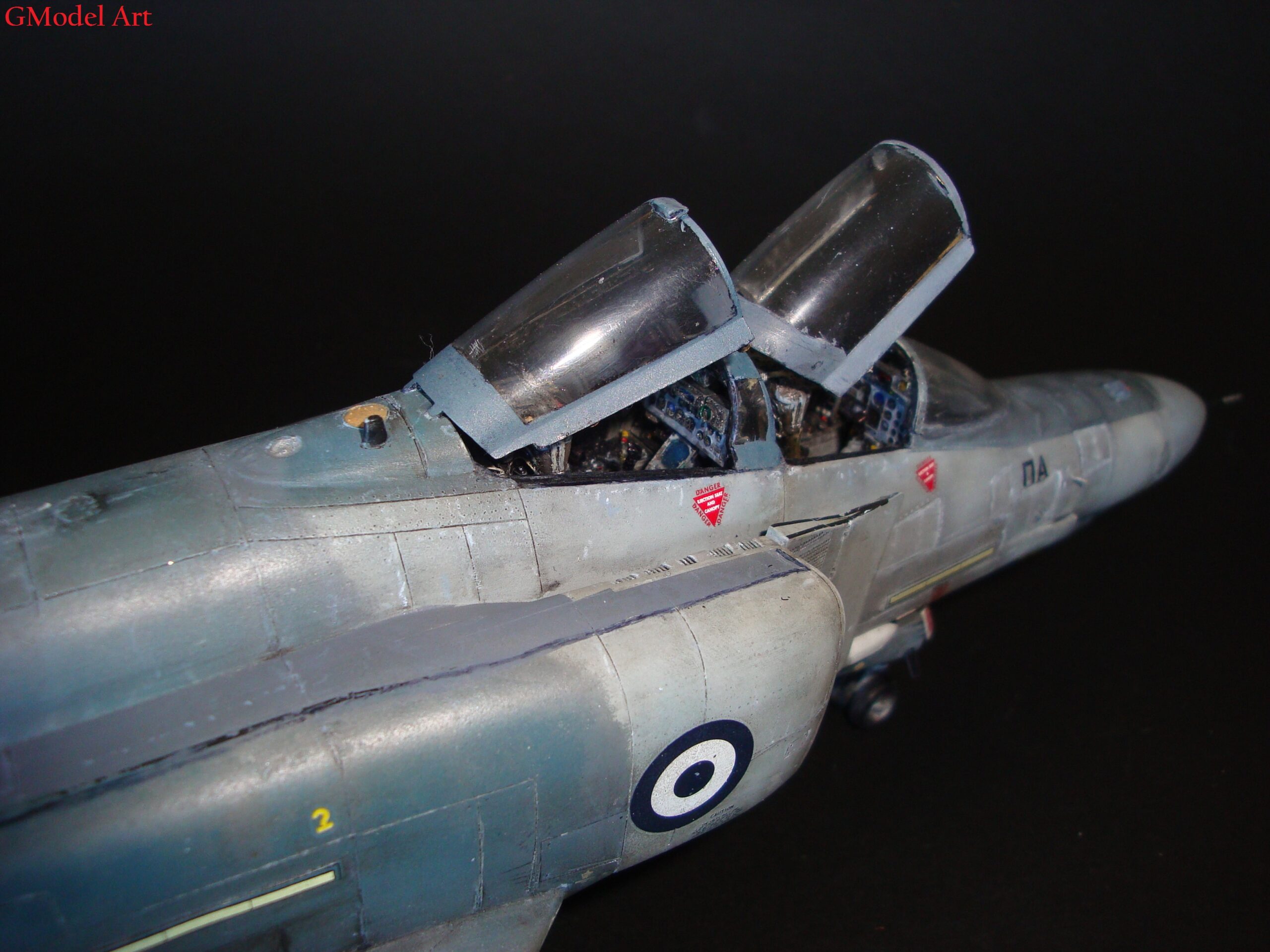
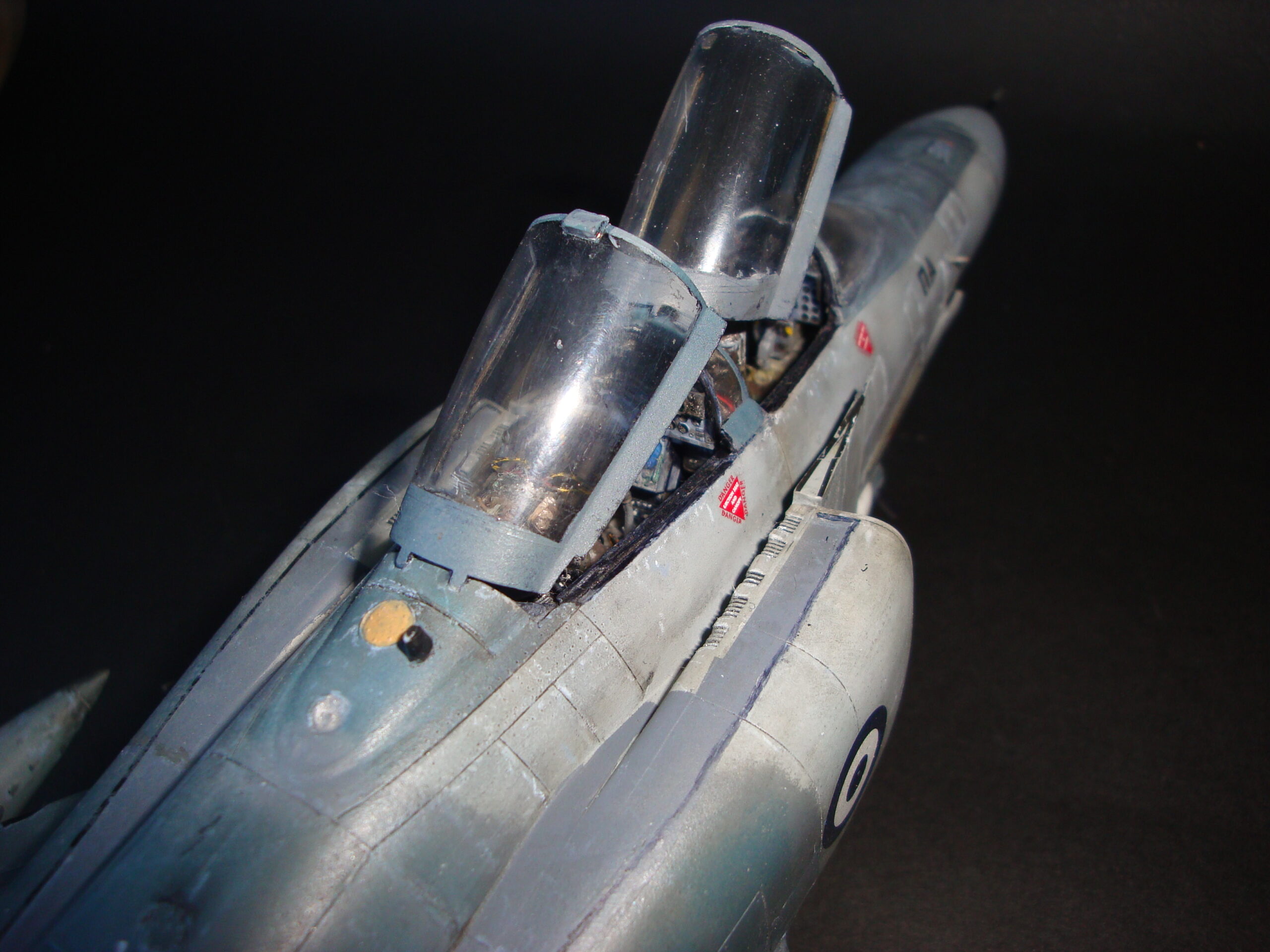
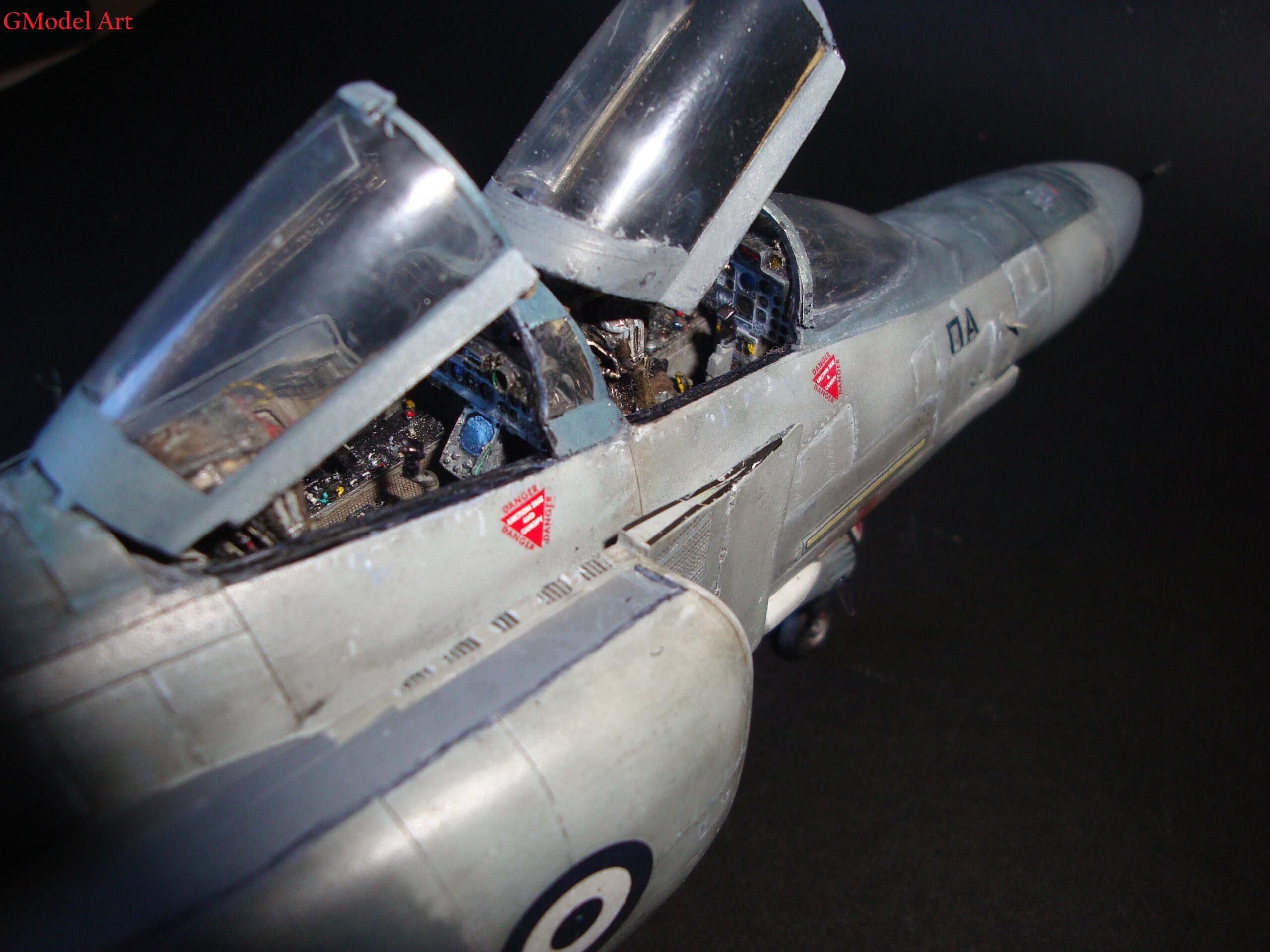
This is particularly important around the cockpit and forward fuselage, where the one-piece windshield changes the appearance of the aircraft considerably.
Choosing Hellenic Air Force F-4E SRA 68-0424
The aircraft represented in this build is F-4E Phantom II 68-0424, one of the 28 F-4E aircraft transferred to Greece under the Southeastern Regional Agreement (SRA).
The SRA aircraft were transferred to the Hellenic Air Force in the early 1990s and were delivered in the Hill Gray camouflage scheme. Contemporary references identify the SRA aircraft as former U.S. aircraft equipped with upgraded navigation and weapons-delivery equipment.
For the modeler, this is important because the early Greek SRA Phantoms should not automatically be confused with later Hellenic Air Force F-4E aircraft wearing the Aegean Ghost camouflage.
The aircraft’s exact period therefore needs to be established before selecting the final colors, markings and weathering.
The One-Piece Windshield
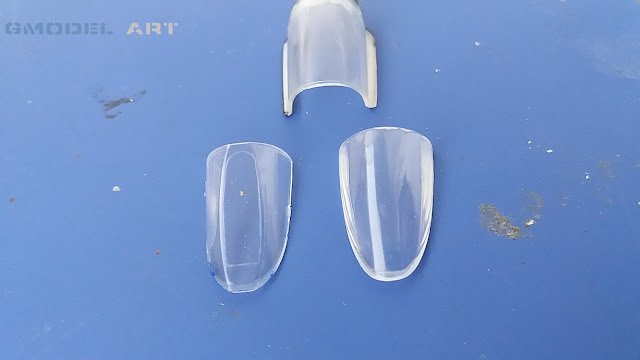
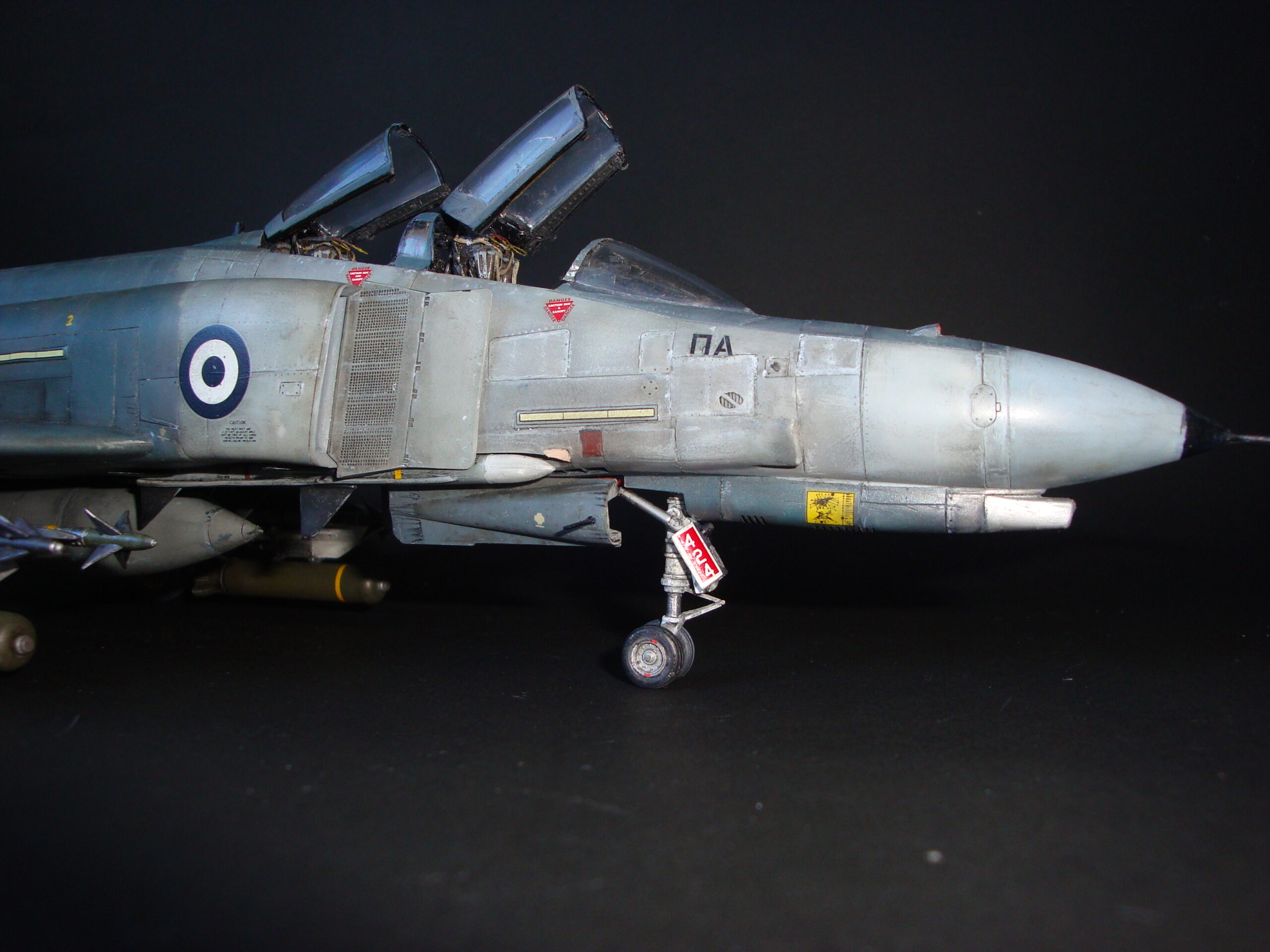
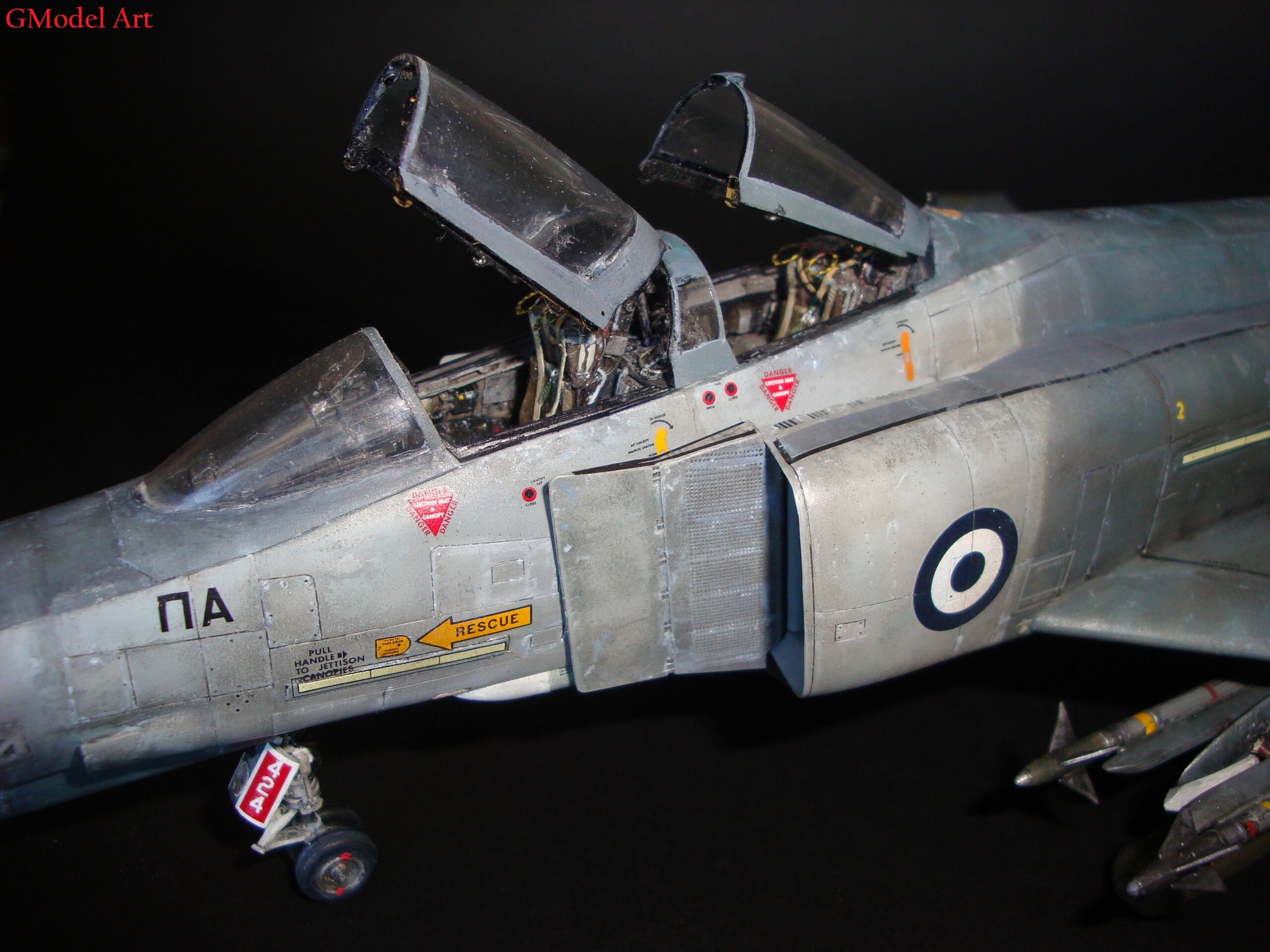
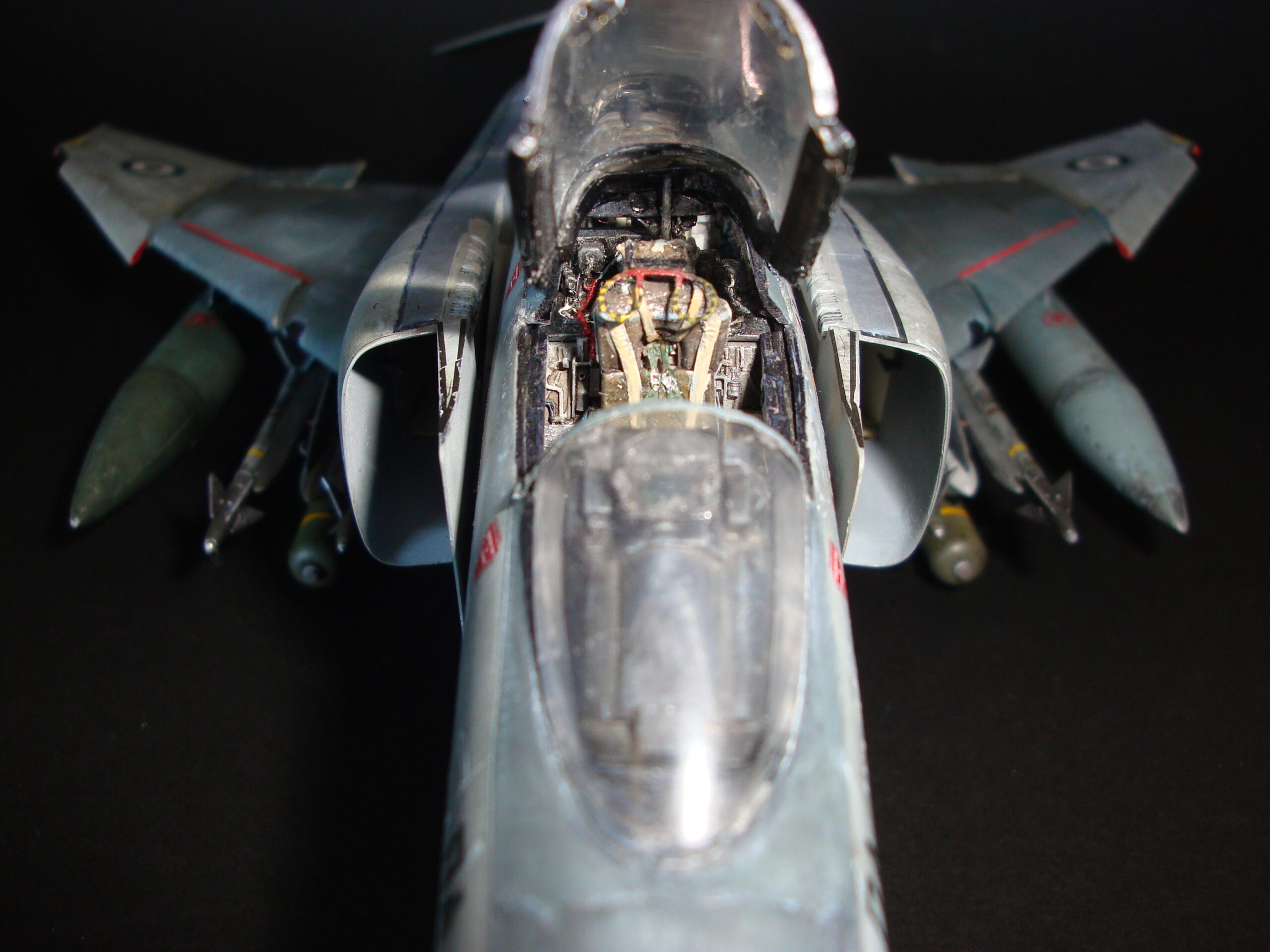
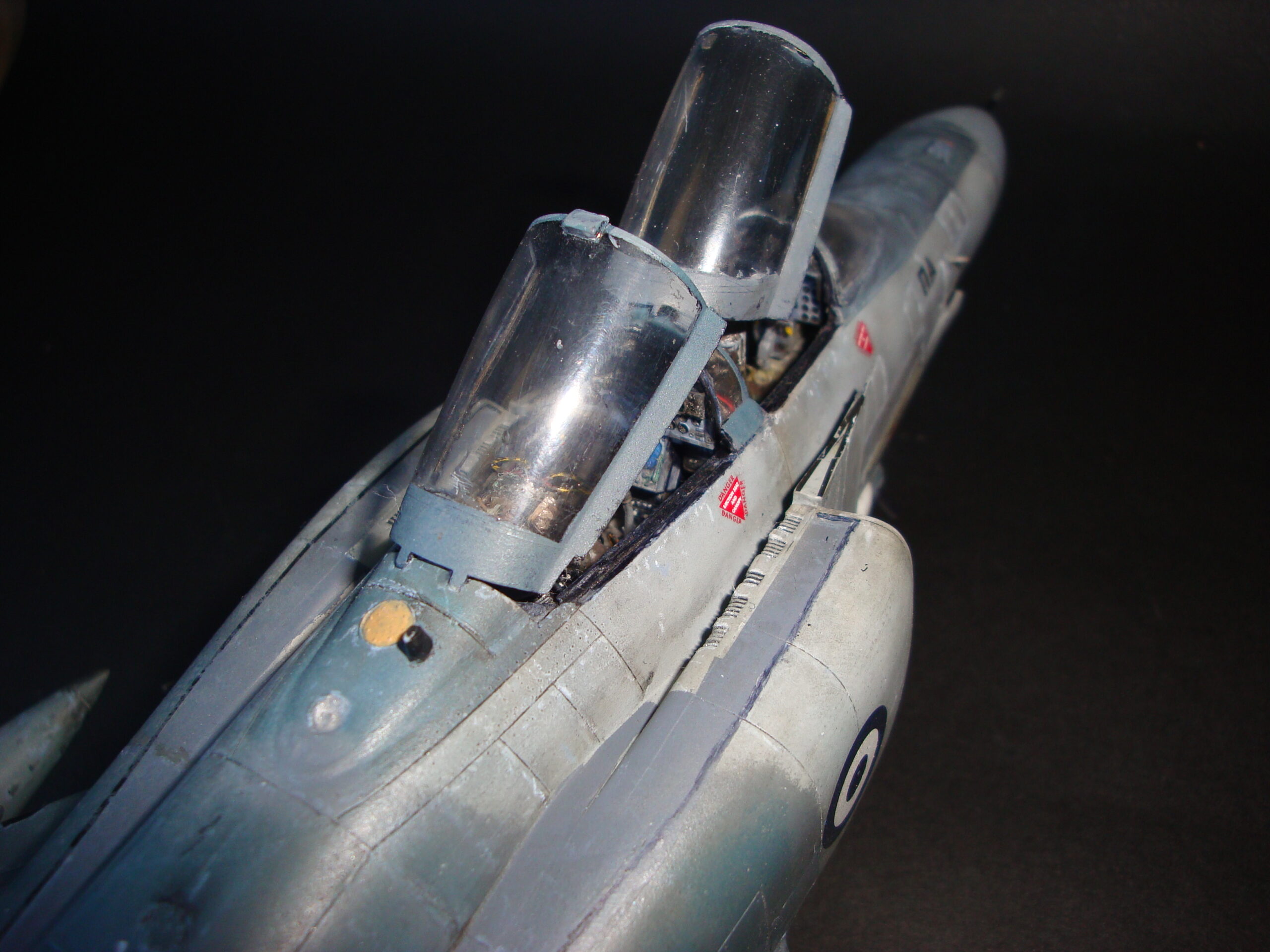
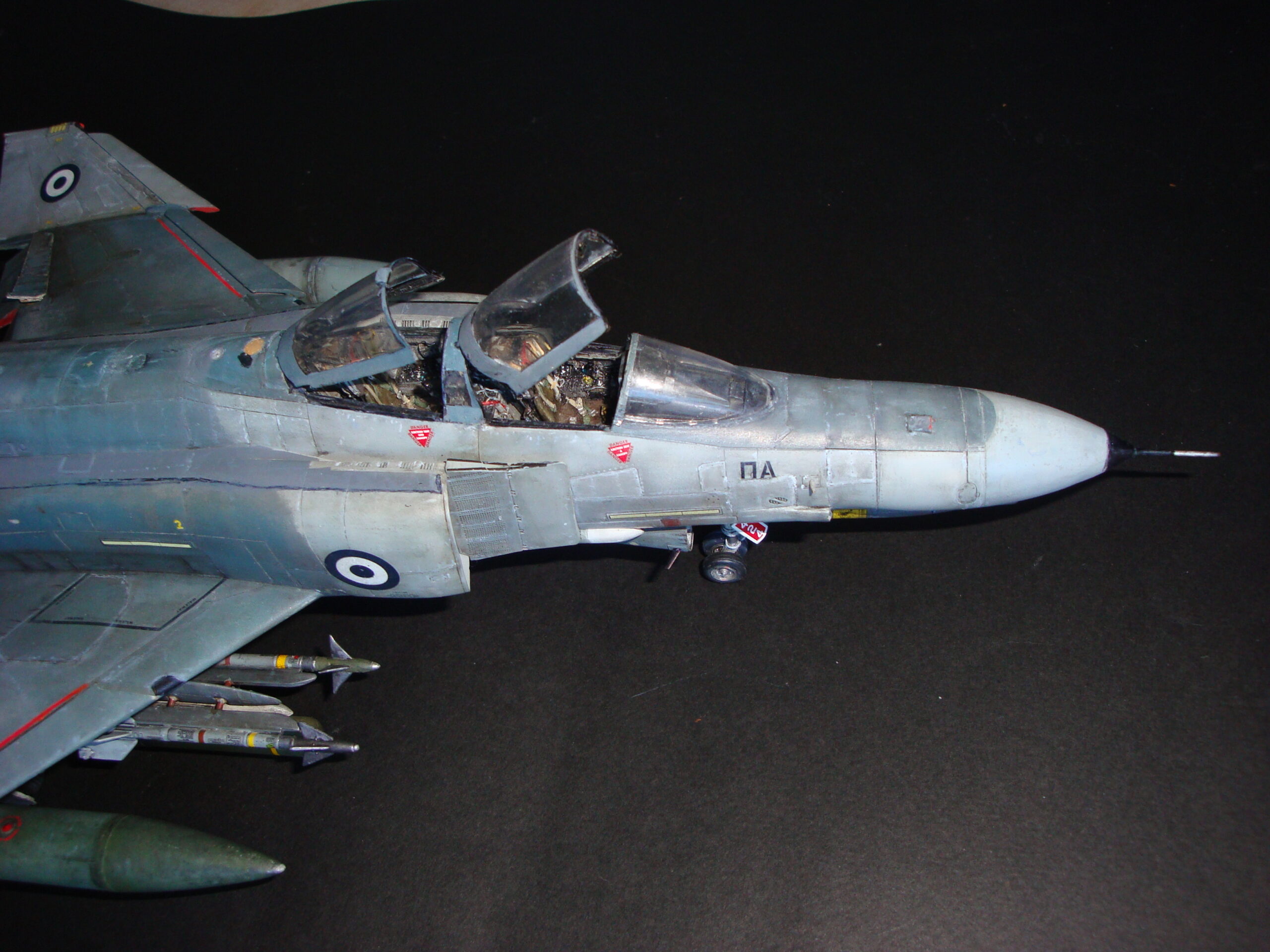
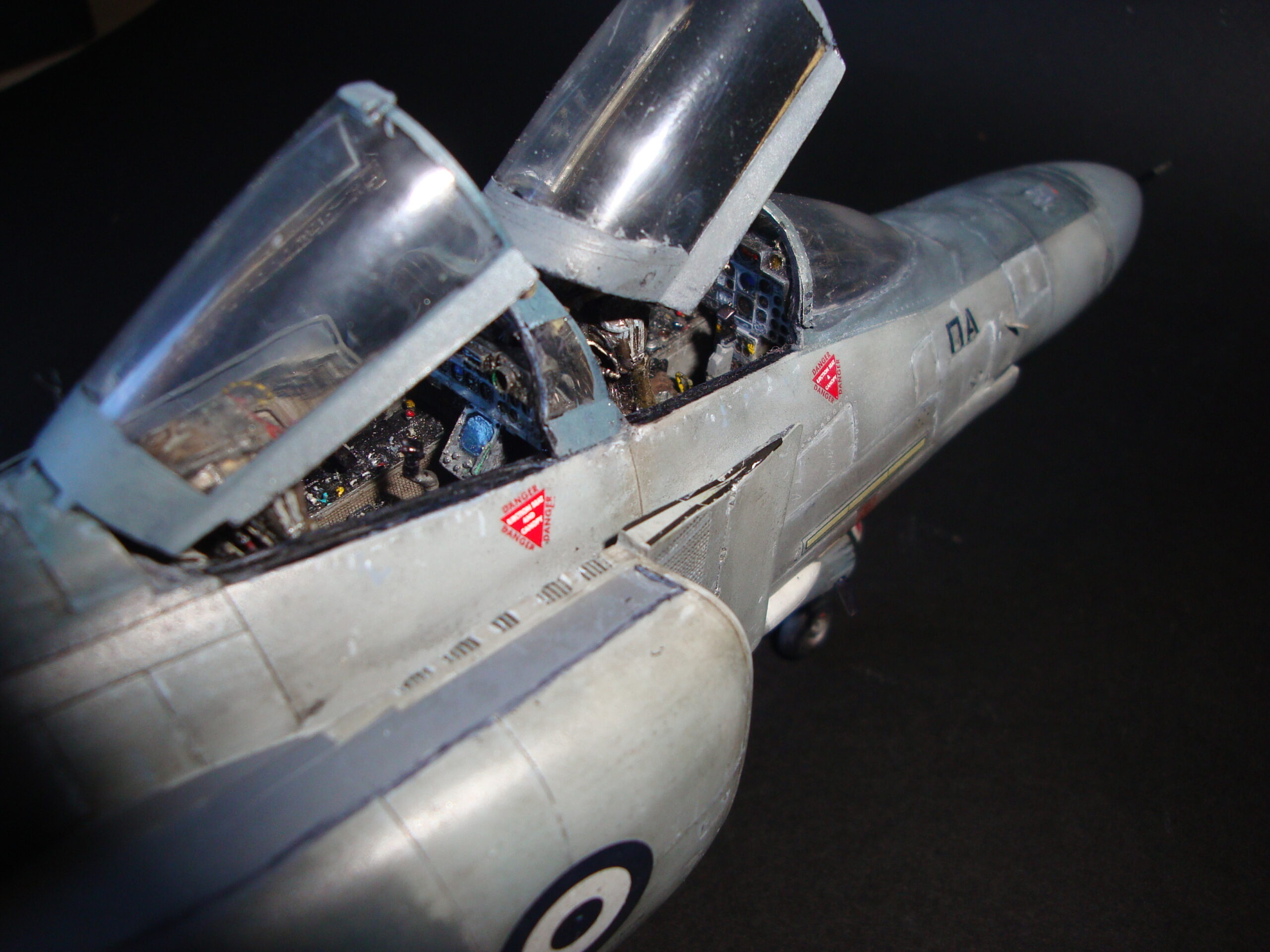
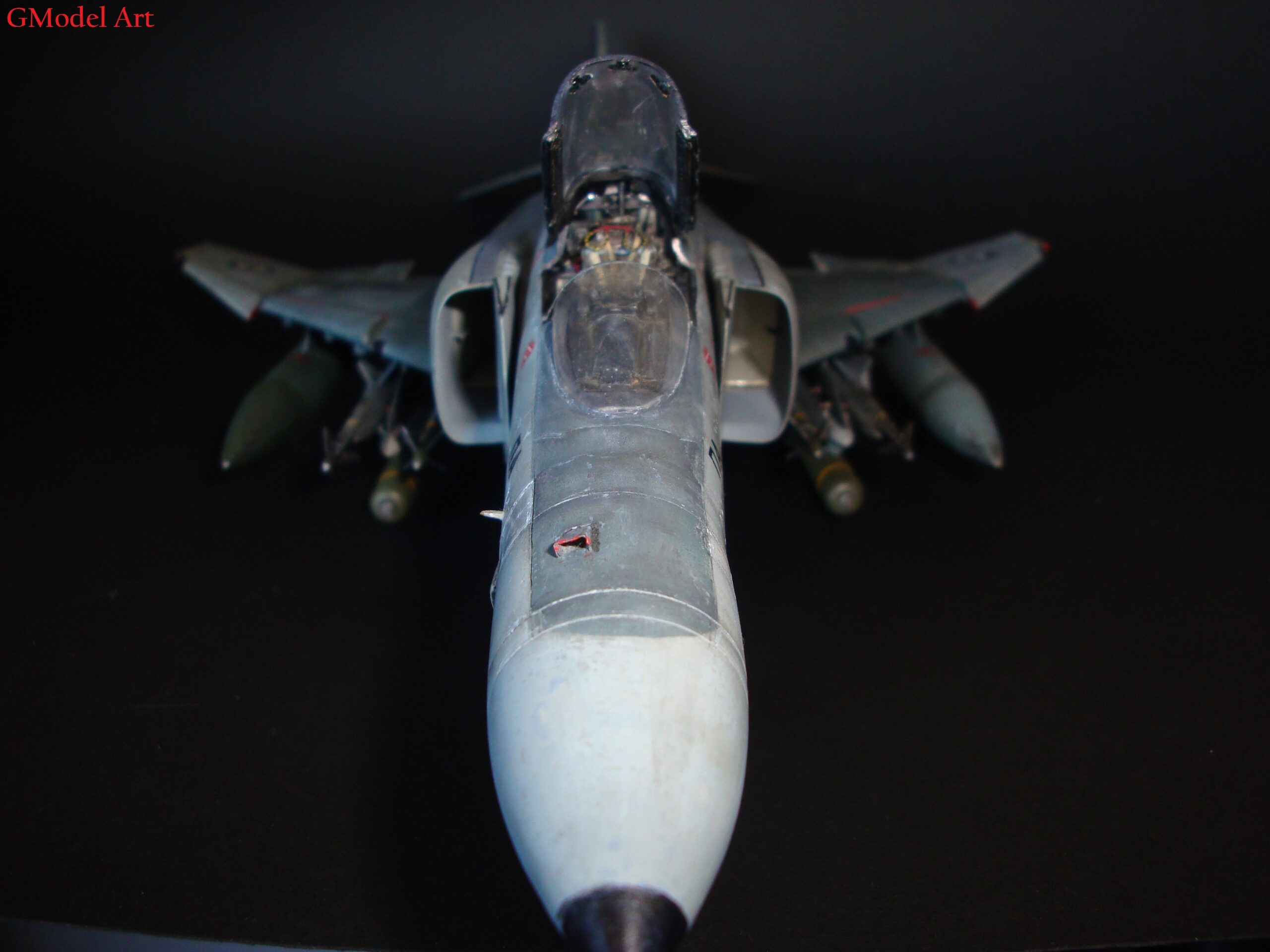
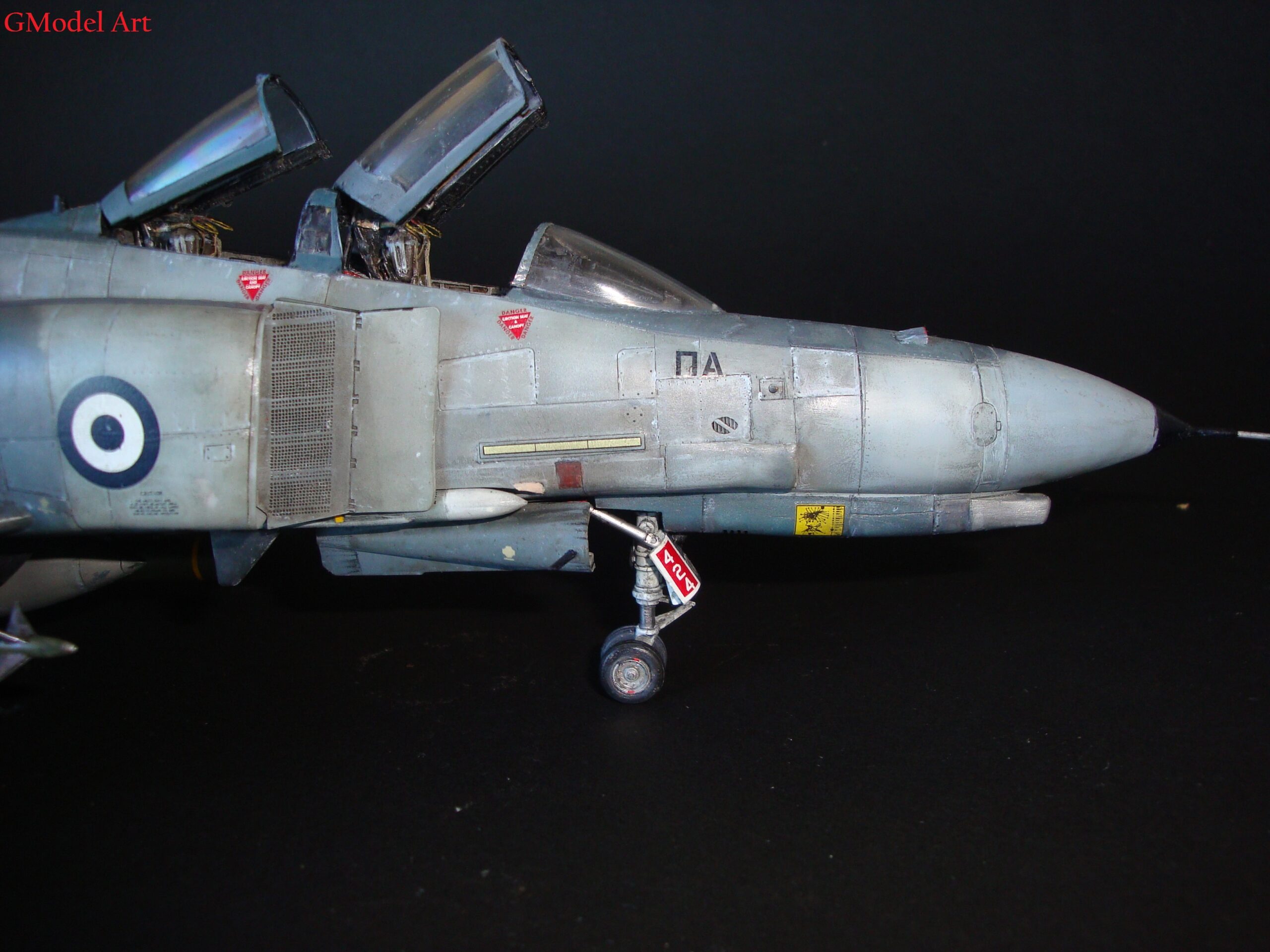
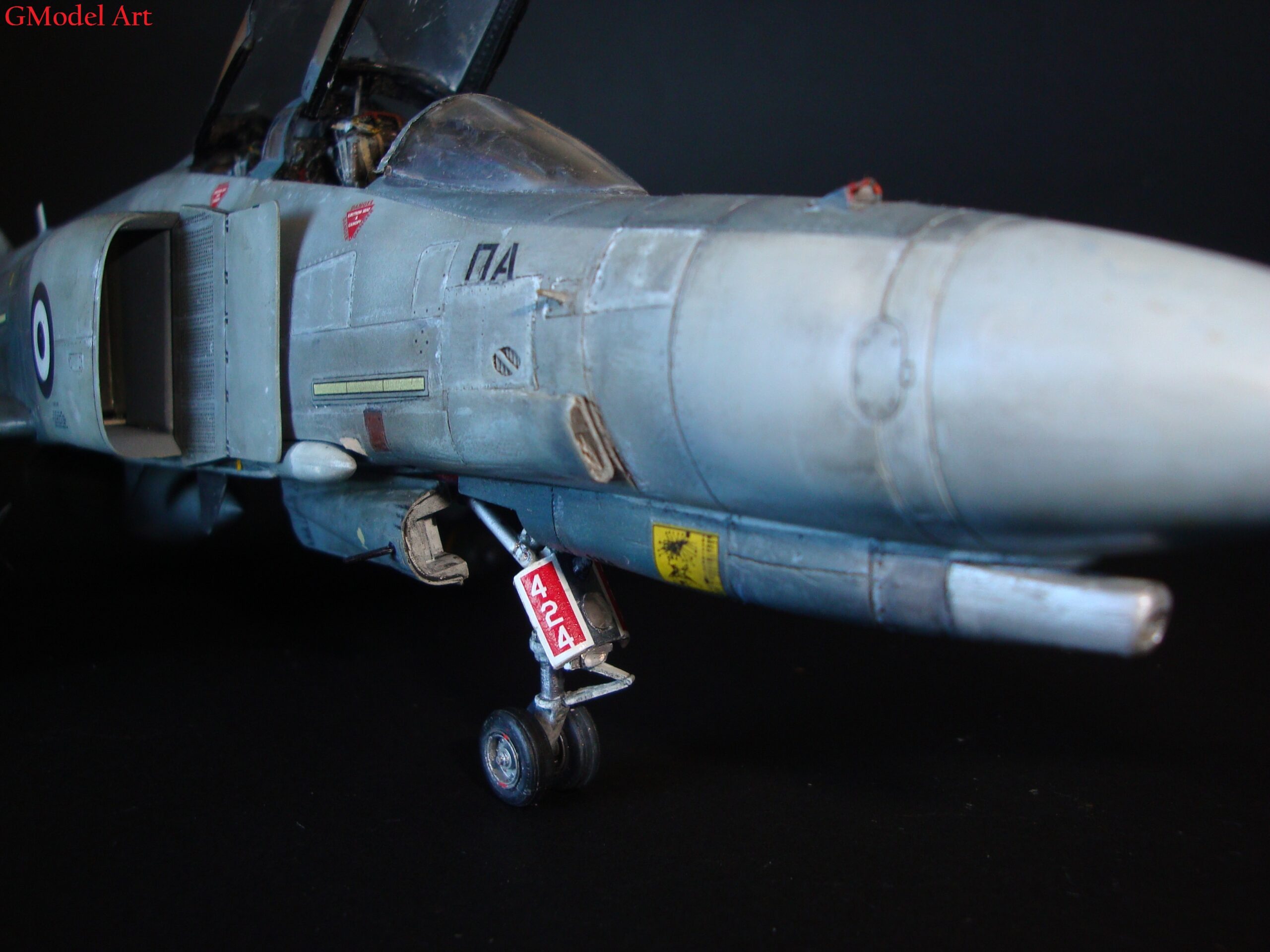
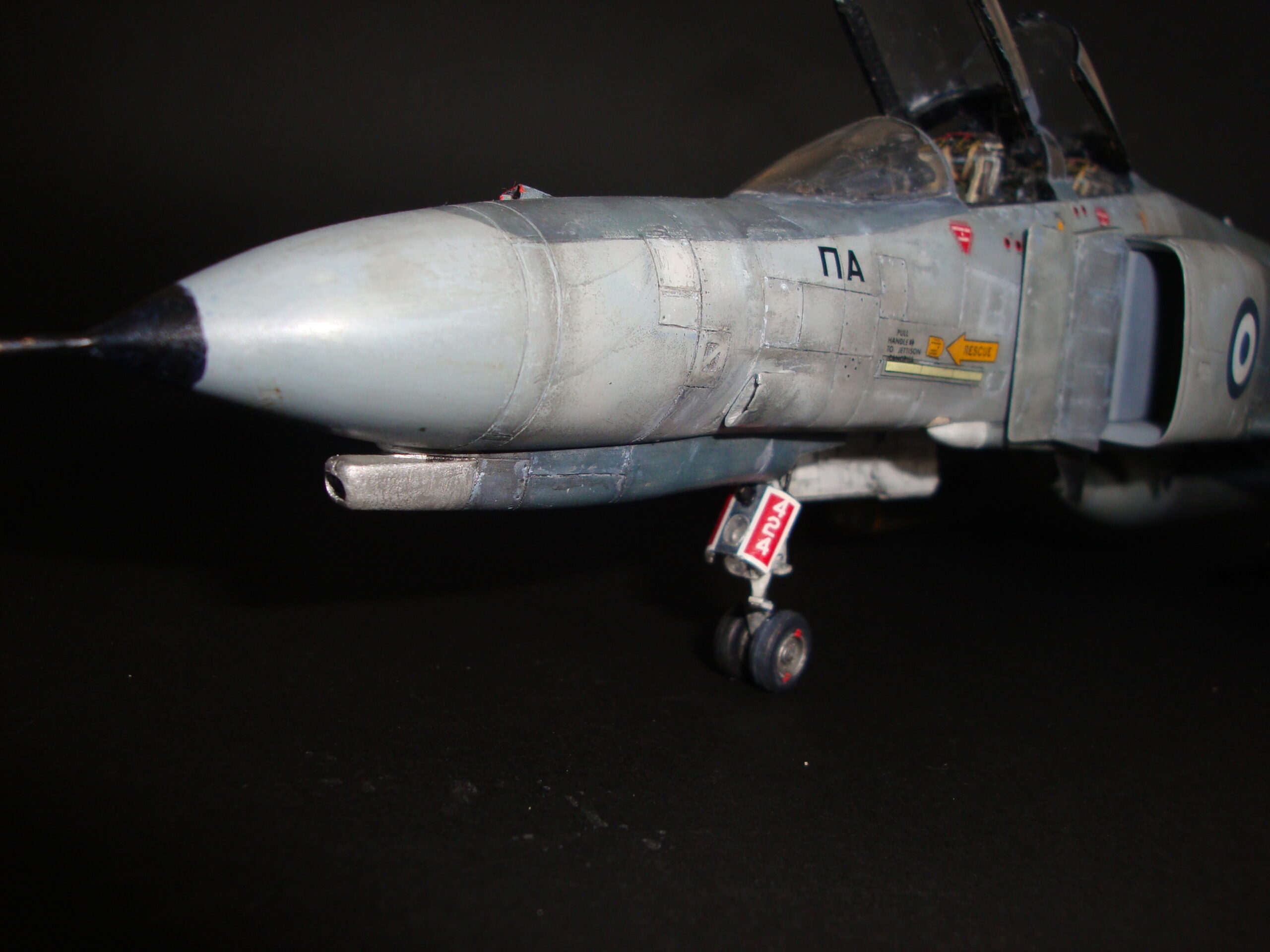
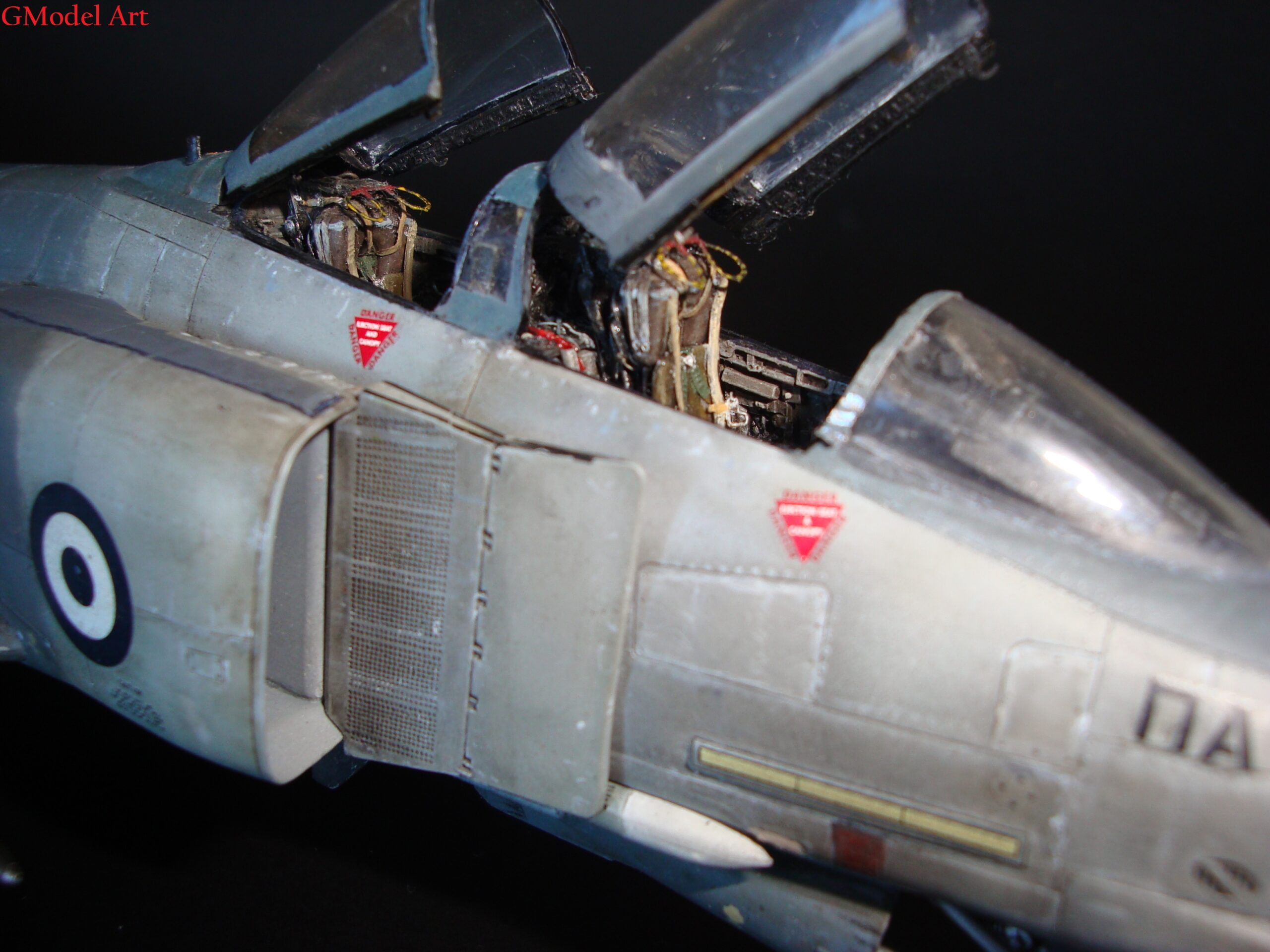
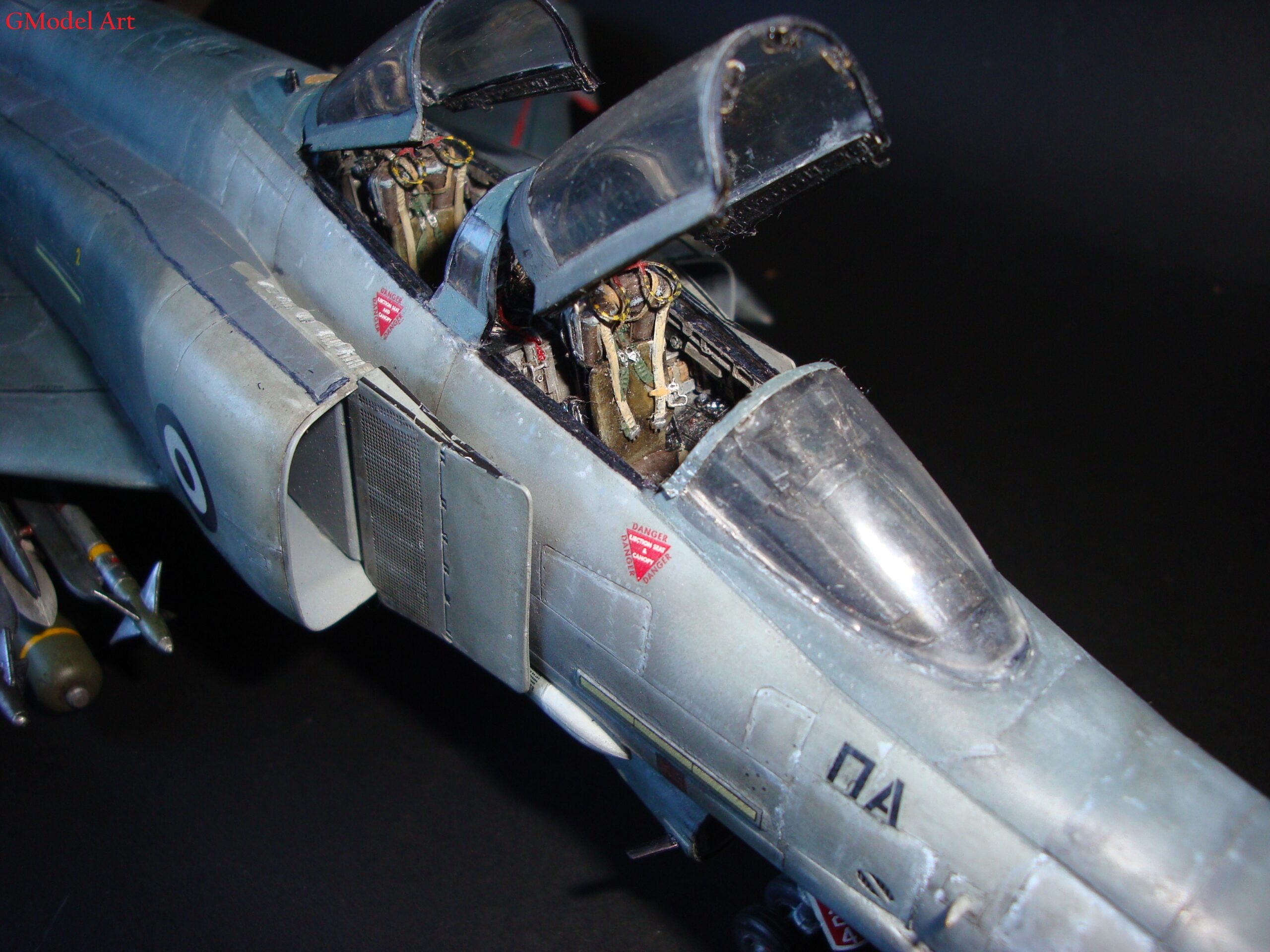
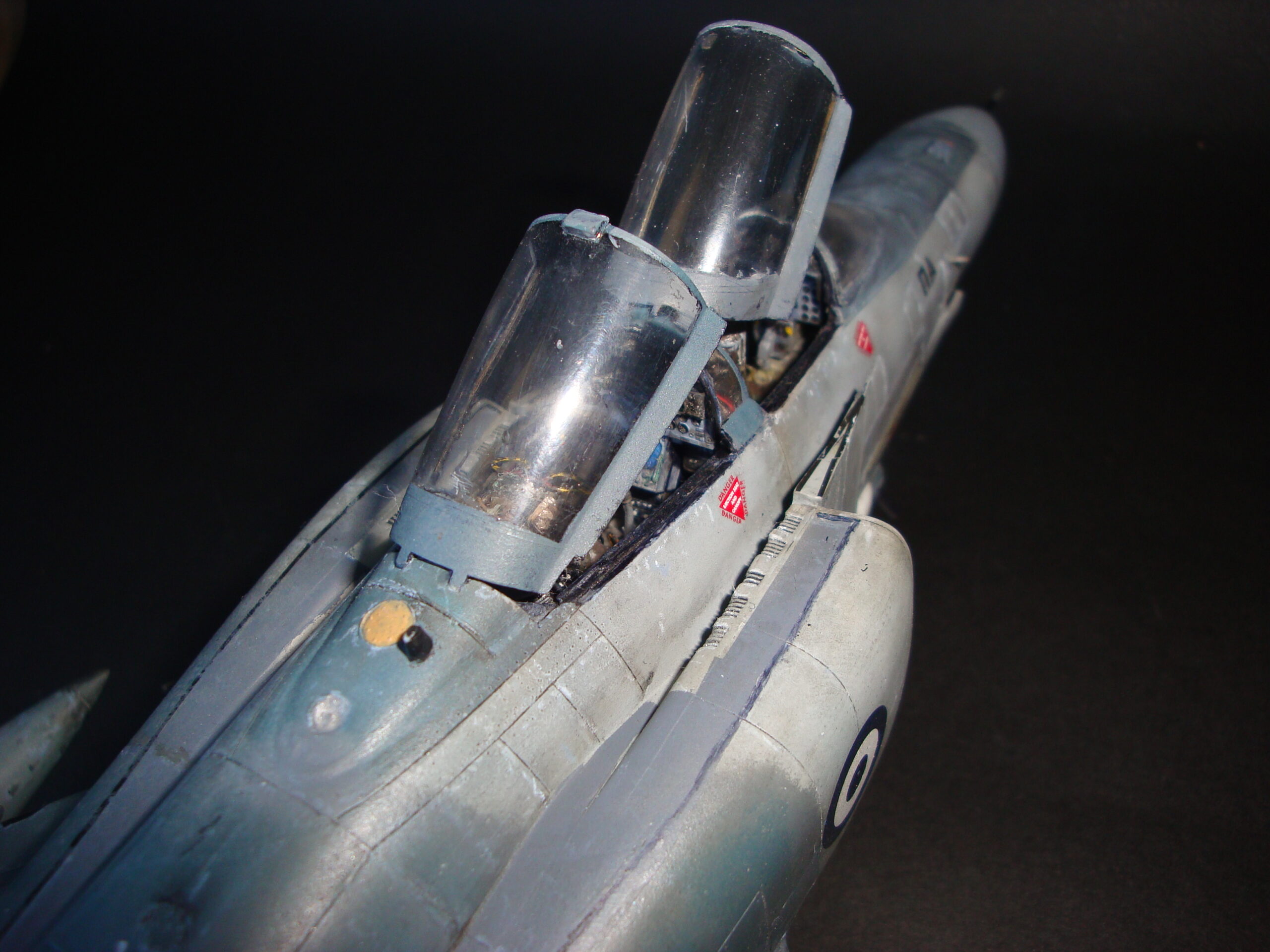
The most interesting modeling feature of F-4E Phantom II 68-0424 is the one-piece windshield.
This is immediately noticeable when the aircraft is viewed from the front or from a three-quarter angle. It is therefore one of the first details that should be checked when converting or adapting a Hasegawa 1/48 F-4E Phantom II to represent this particular aircraft.
The windshield was developed as part of efforts to improve resistance to bird strikes. The absence of the conventional central framing gives the forward cockpit a different appearance, but it should not be interpreted simply as a major increase in pilot visibility. The geometry of the revised installation and the equipment surrounding the forward cockpit remained important factors.
For scale modeling, the practical issue is much simpler: 68-0424 must be represented with the correct windshield configuration.
A standard F-4E kit configuration may therefore require careful comparison with photographs of the actual aircraft.
From the U.S. to the Hellenic Air Force
The story behind the model begins with the U.S. Air Force reduction of its tactical aircraft fleet in the early 1990s.
Twenty-eight F-4E Phantom II aircraft were transferred to Greece under the Southeastern Regional Agreement. The aircraft had received upgrades including the Navigation and Weapons Delivery System (NWDS), giving them improved navigation and weapons-delivery capabilities.
The aircraft arrived in Greece wearing the Hill Gray camouflage associated with their U.S. service.
They were initially associated with the 338 Squadron of the 117 Combat Wing at Andravida. The SRA Phantoms later served with other Hellenic Air Force units during their operational careers.
This background is useful when building the model because it explains why the aircraft appears different from other Greek F-4E Phantom II examples.
Hill Gray: The Starting Point for the Finish
One of the most important visual characteristics of the SRA aircraft was their Hill Gray camouflage.
The Hill Gray finish is particularly attractive on a scale model because the relatively restrained gray tones allow panel lines, surface detail and weathering to become important parts of the final appearance.
However, the modeler should avoid treating Hill Gray as a single uniform gray color.
Operational aircraft could show considerable variation because of weathering, maintenance, repainting and the effects of sunlight and exposure. The radome could also appear different from the surrounding fuselage because of the materials and coatings used in its construction. GModel Art’s dedicated Hill Gray reference discusses these variations and the relevant Federal Standard colors for modeling.
For this reason, photographic references of the actual 68-0424 are more valuable than relying solely on a generic color profile.
Building a Specific Phantom Rather Than a Generic F-4E
This is where the difference between building an F-4E and building F-4E 68-0424 becomes important.
The Hasegawa kit provides the basic aircraft, but the photographs of the real aircraft determine the final configuration.
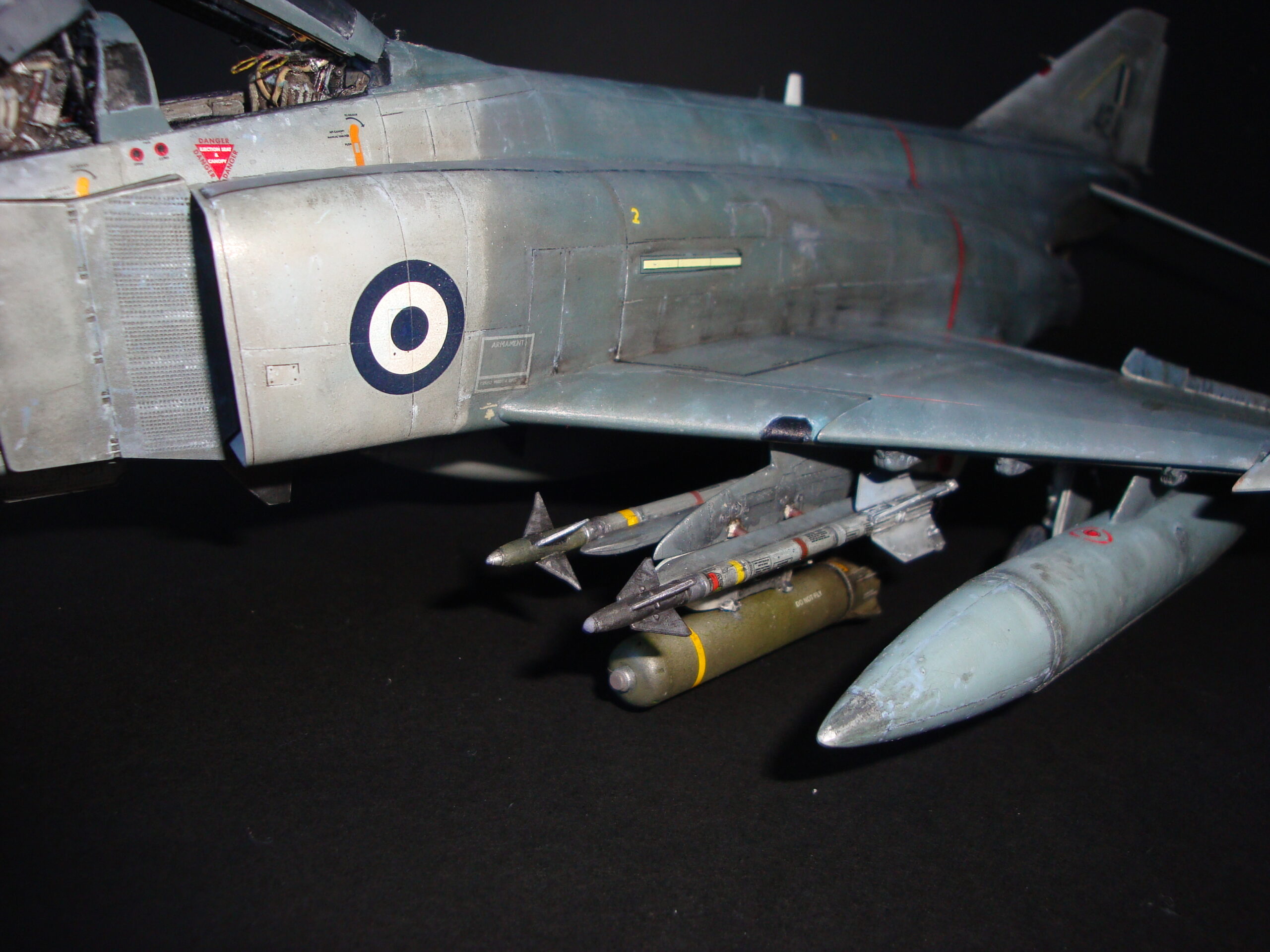
The modeler should compare the kit with the reference photographs for:
- windshield configuration
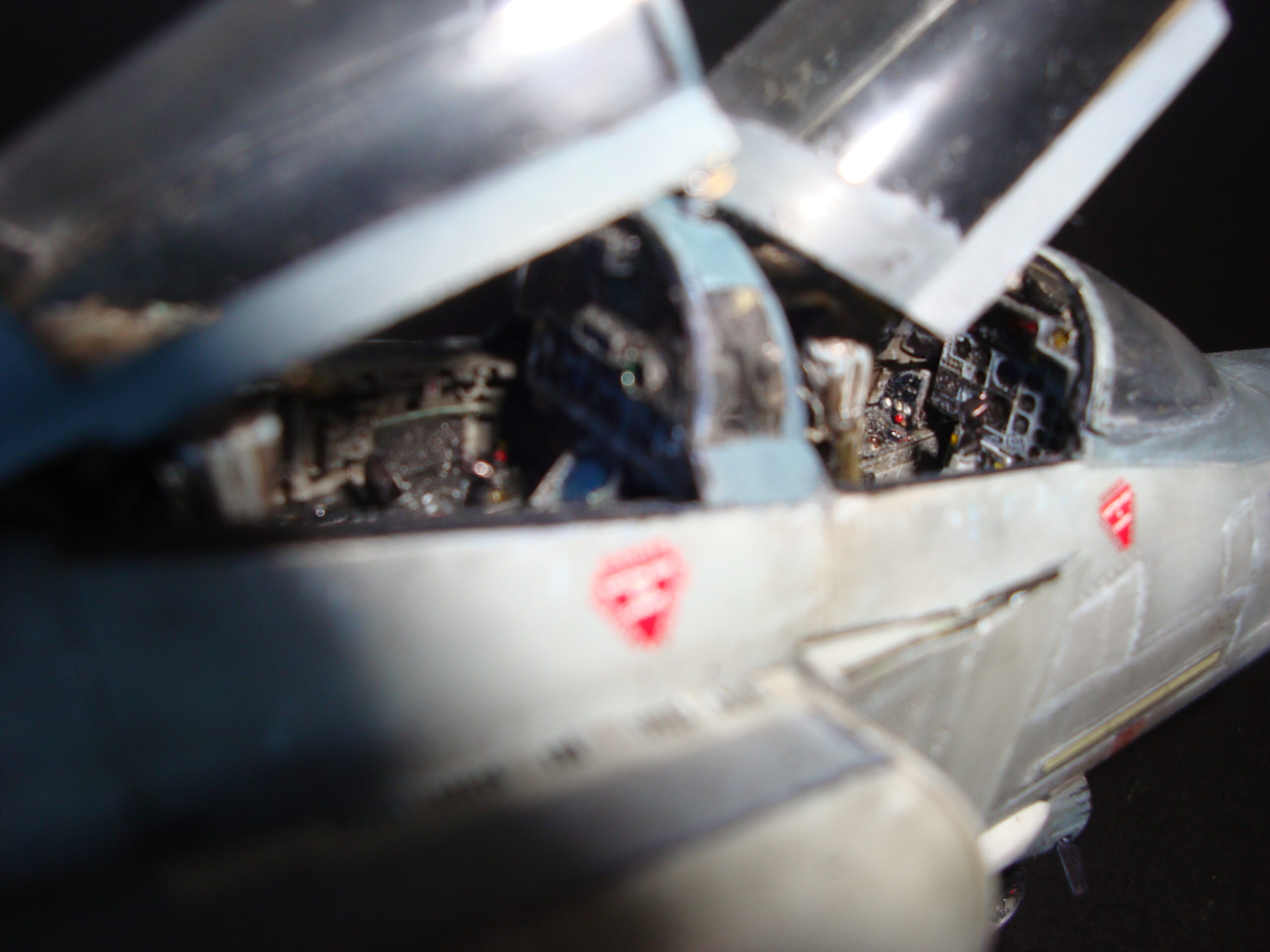
- cockpit and canopy appearance
- antennas and external fittings
- camouflage pattern
- national insignia
- serial numbers
- squadron markings
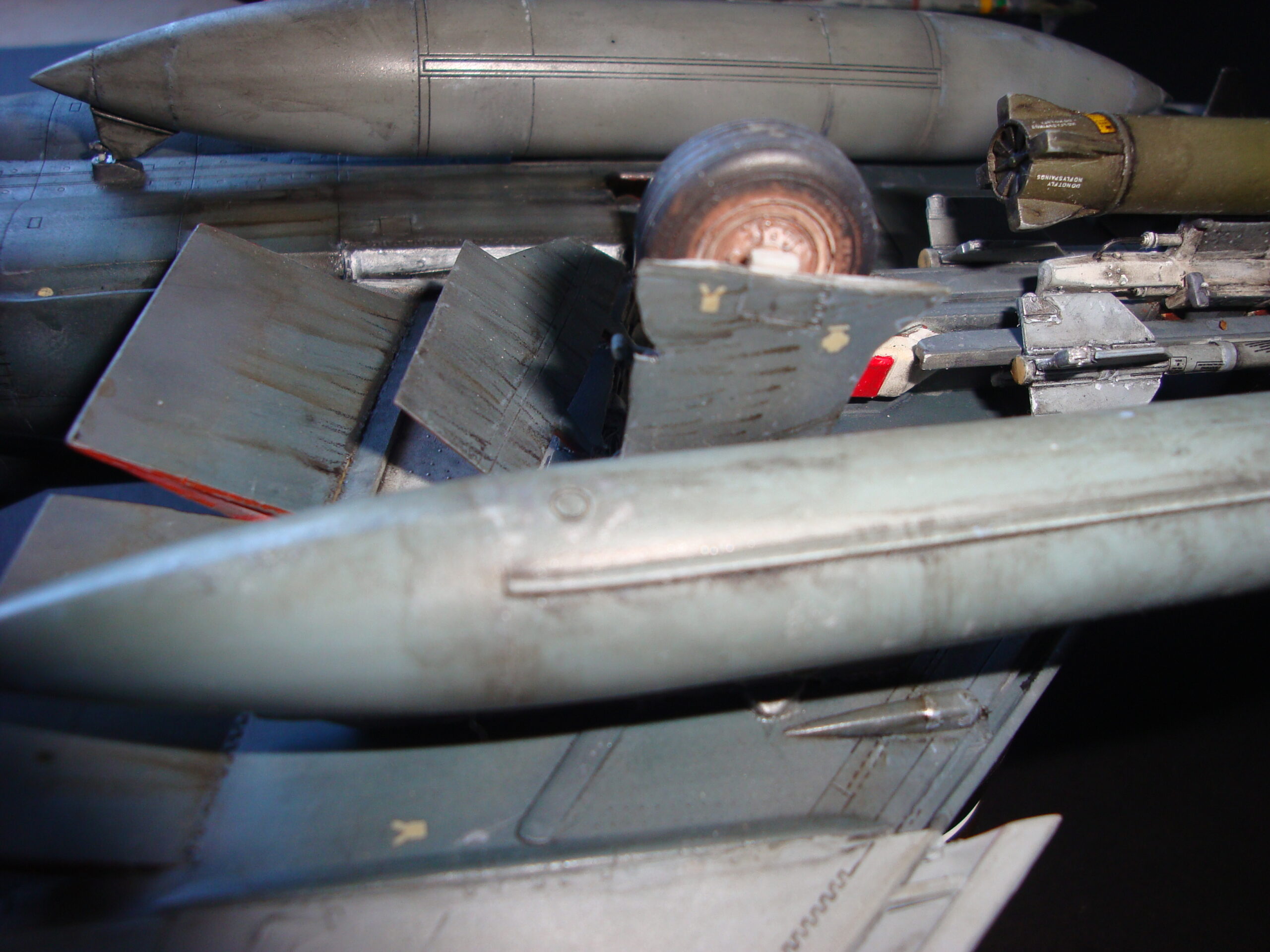
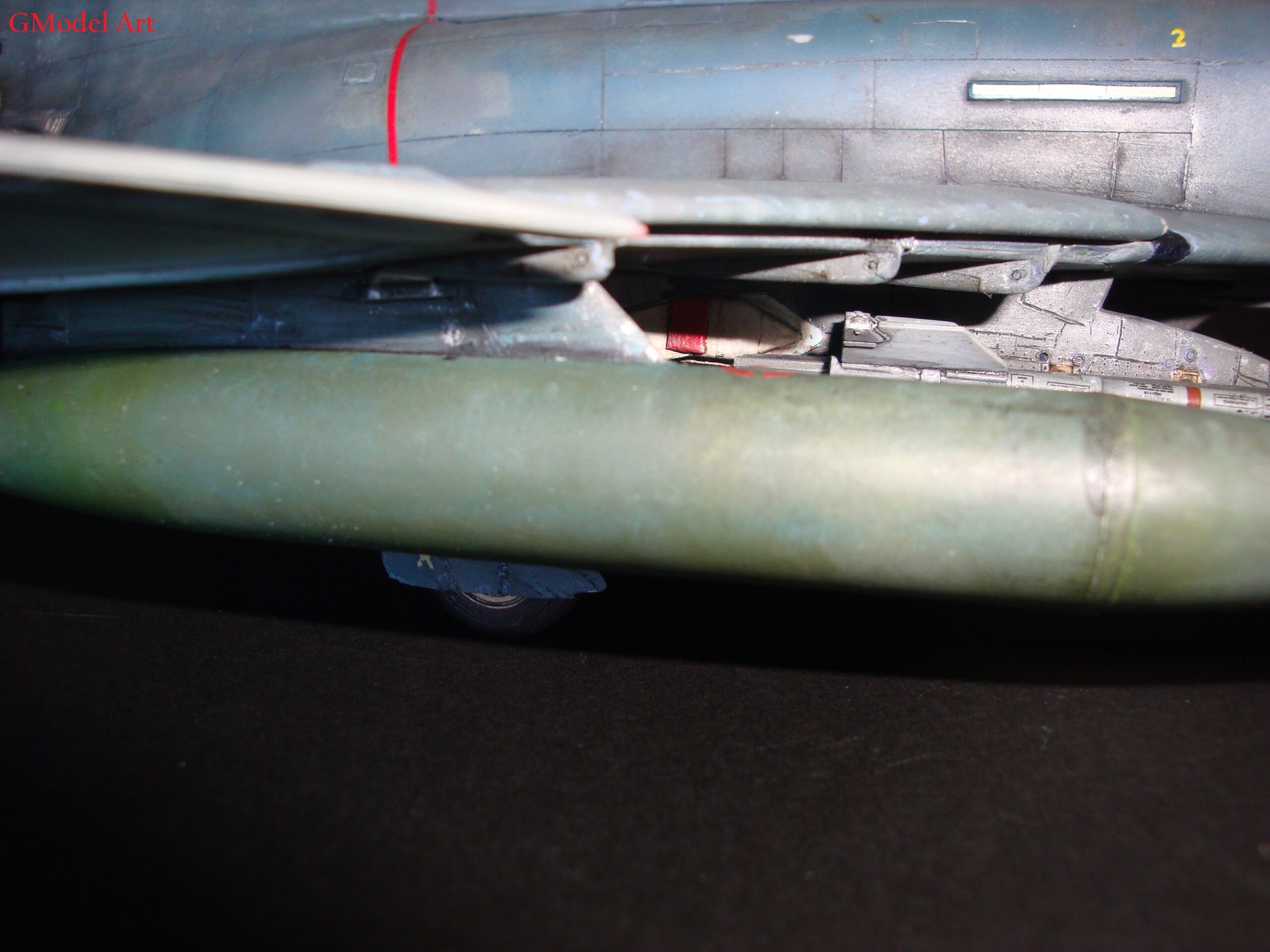
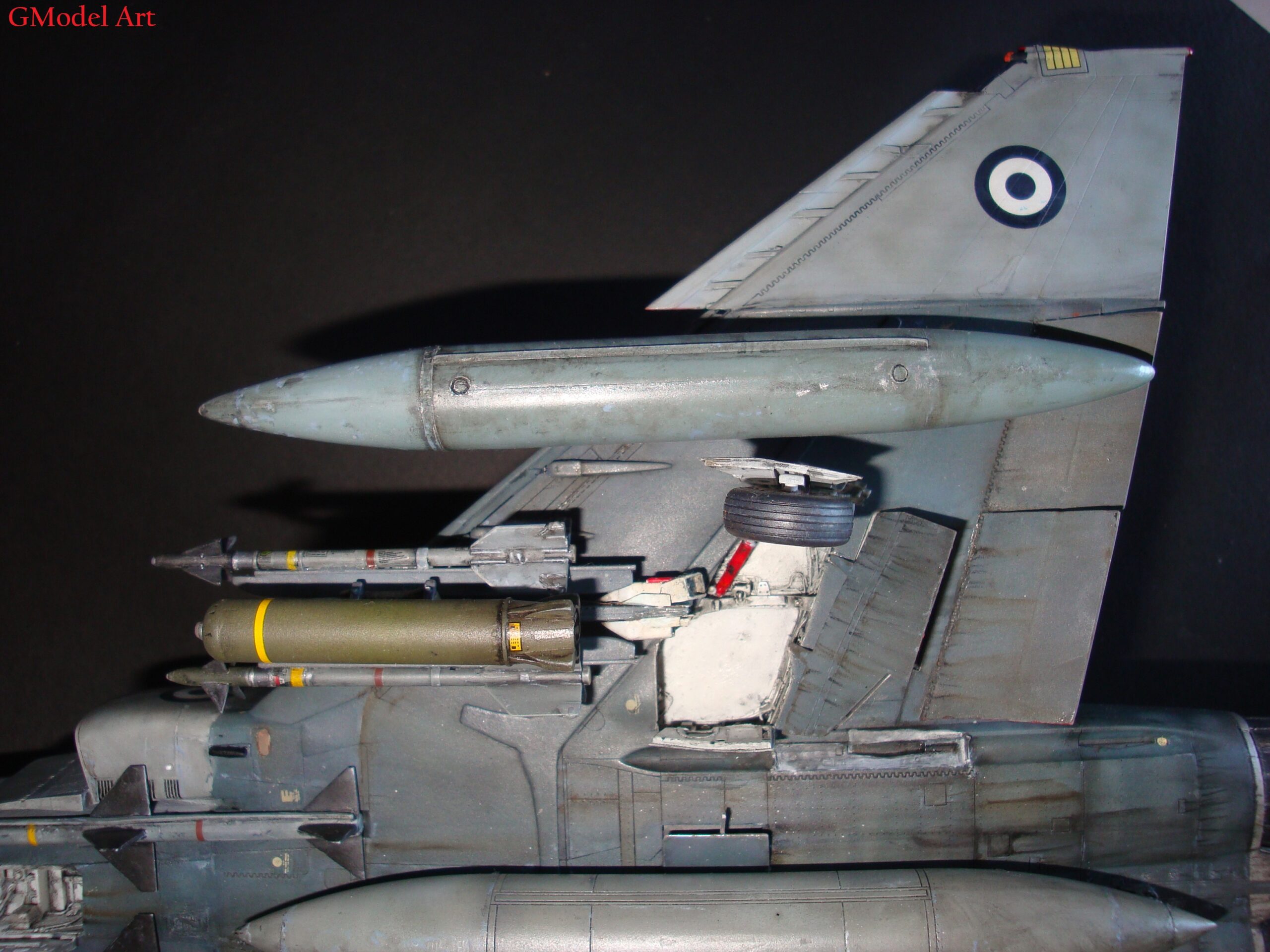
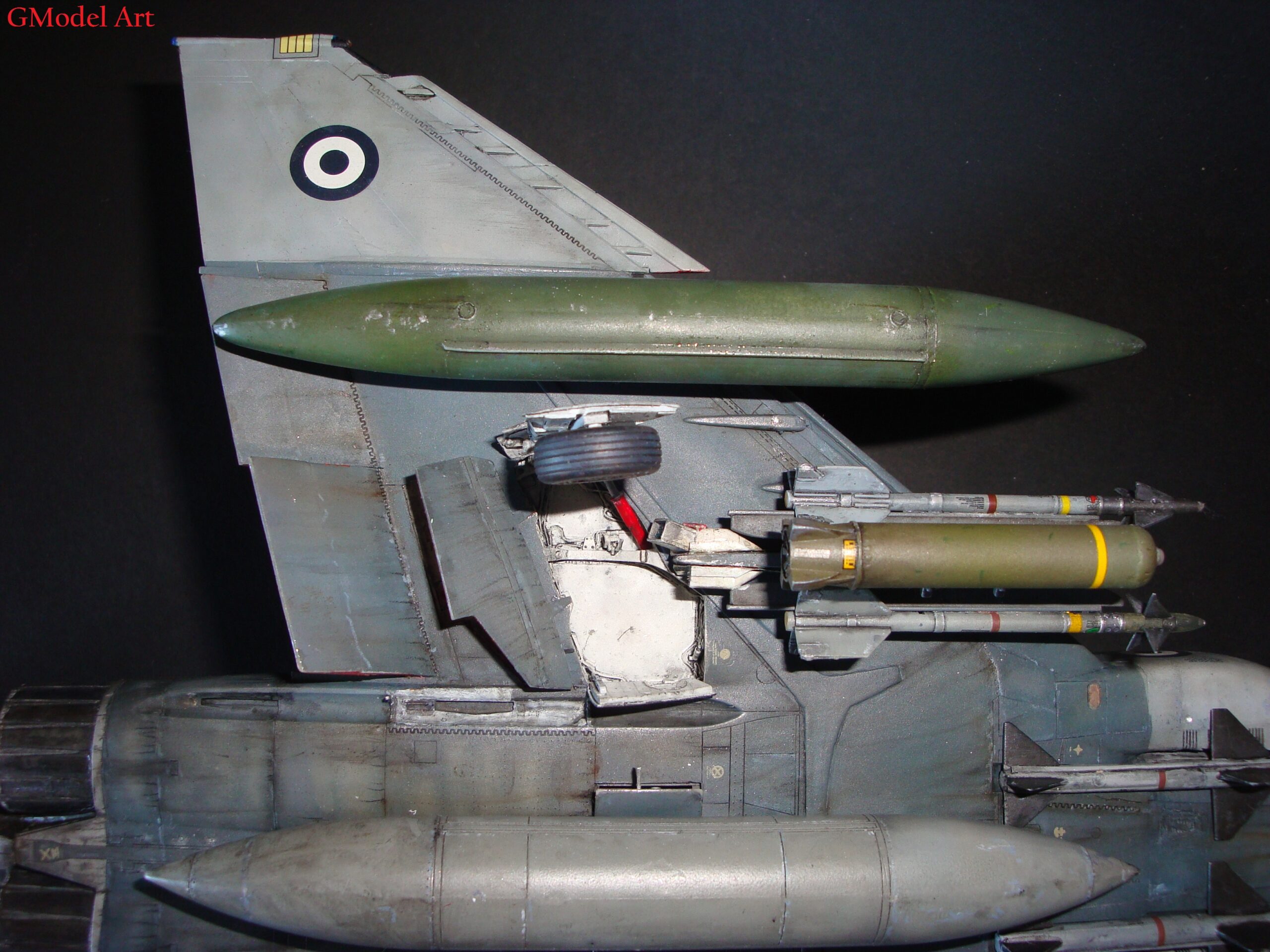
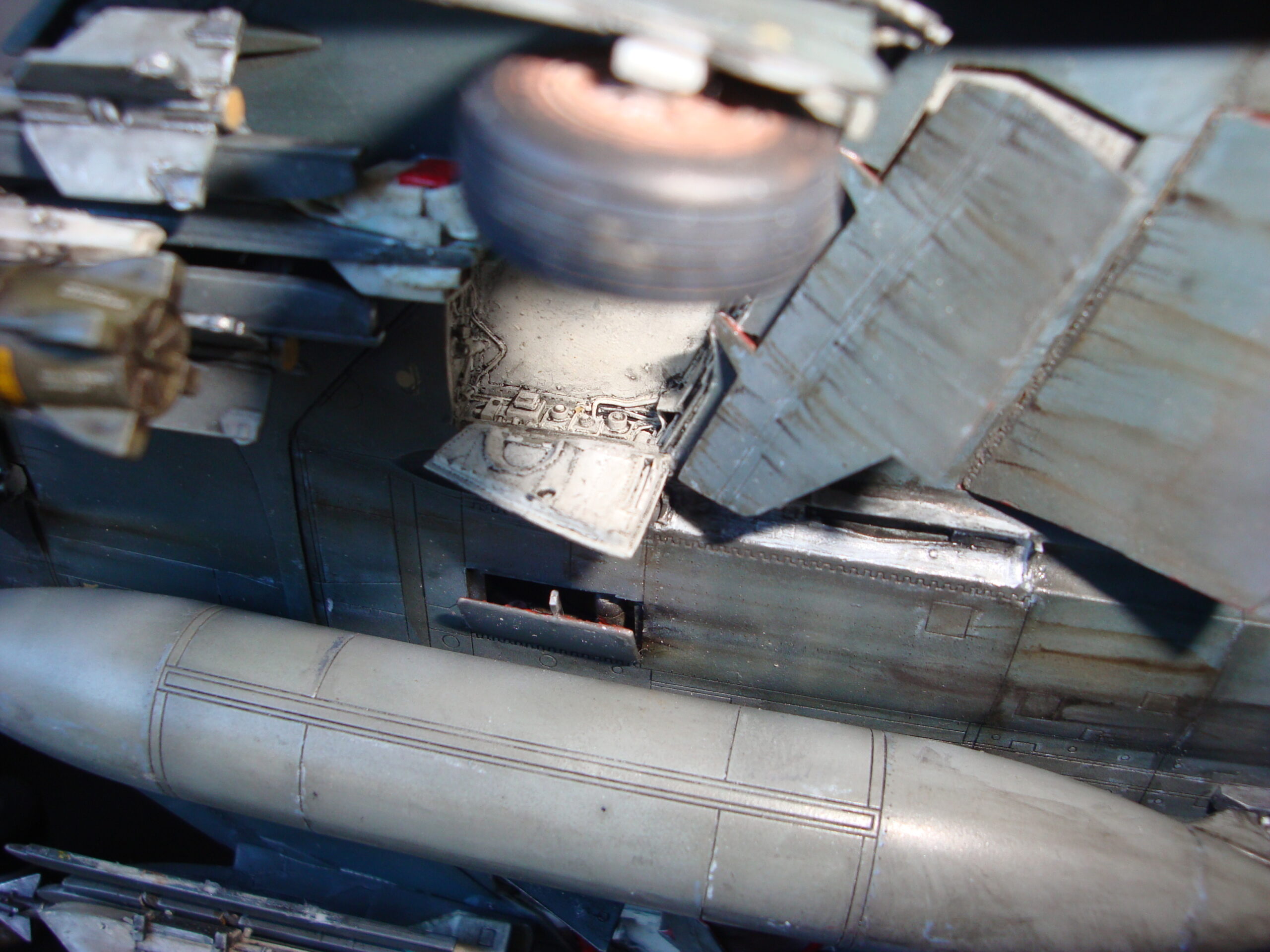
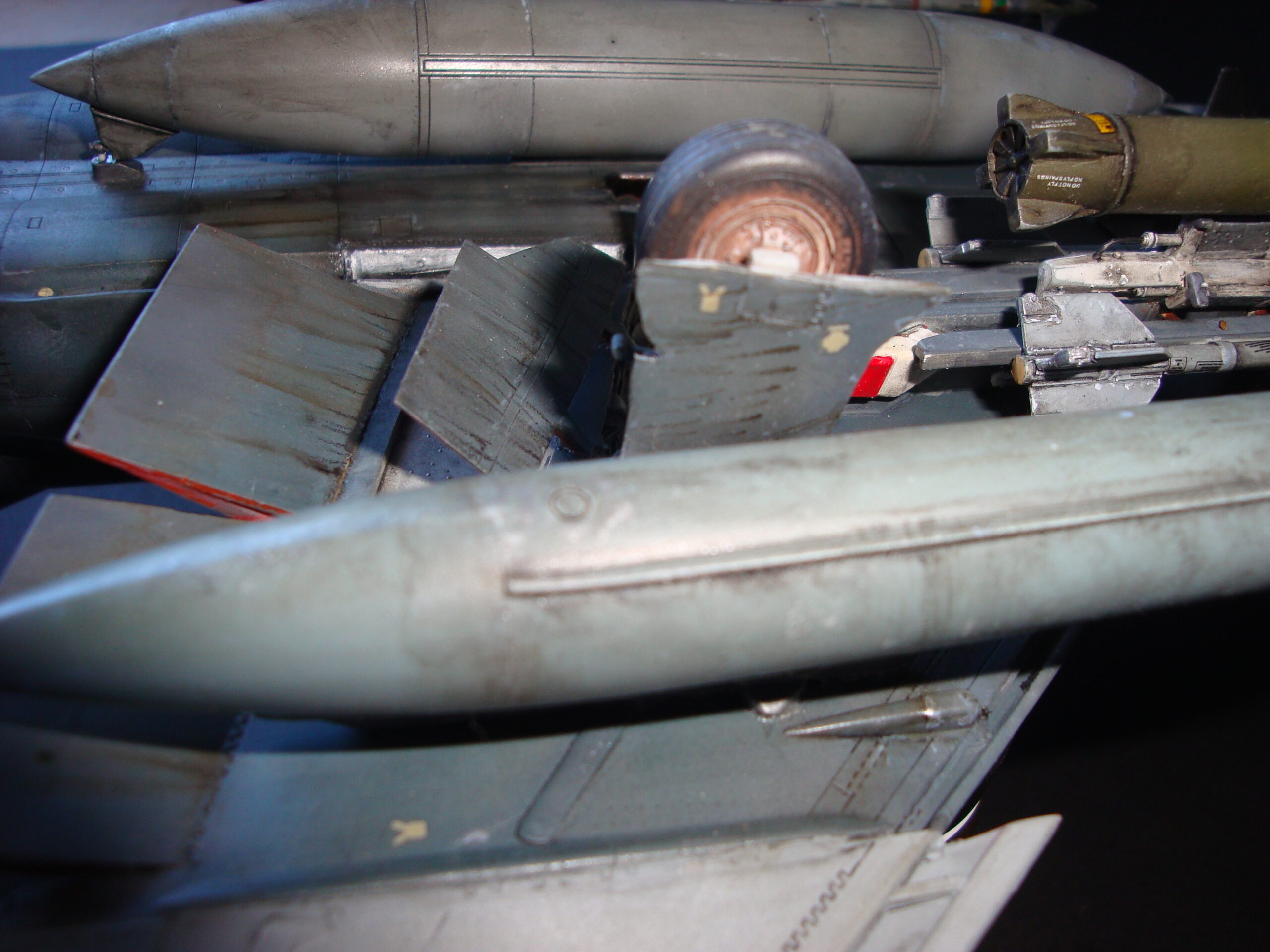
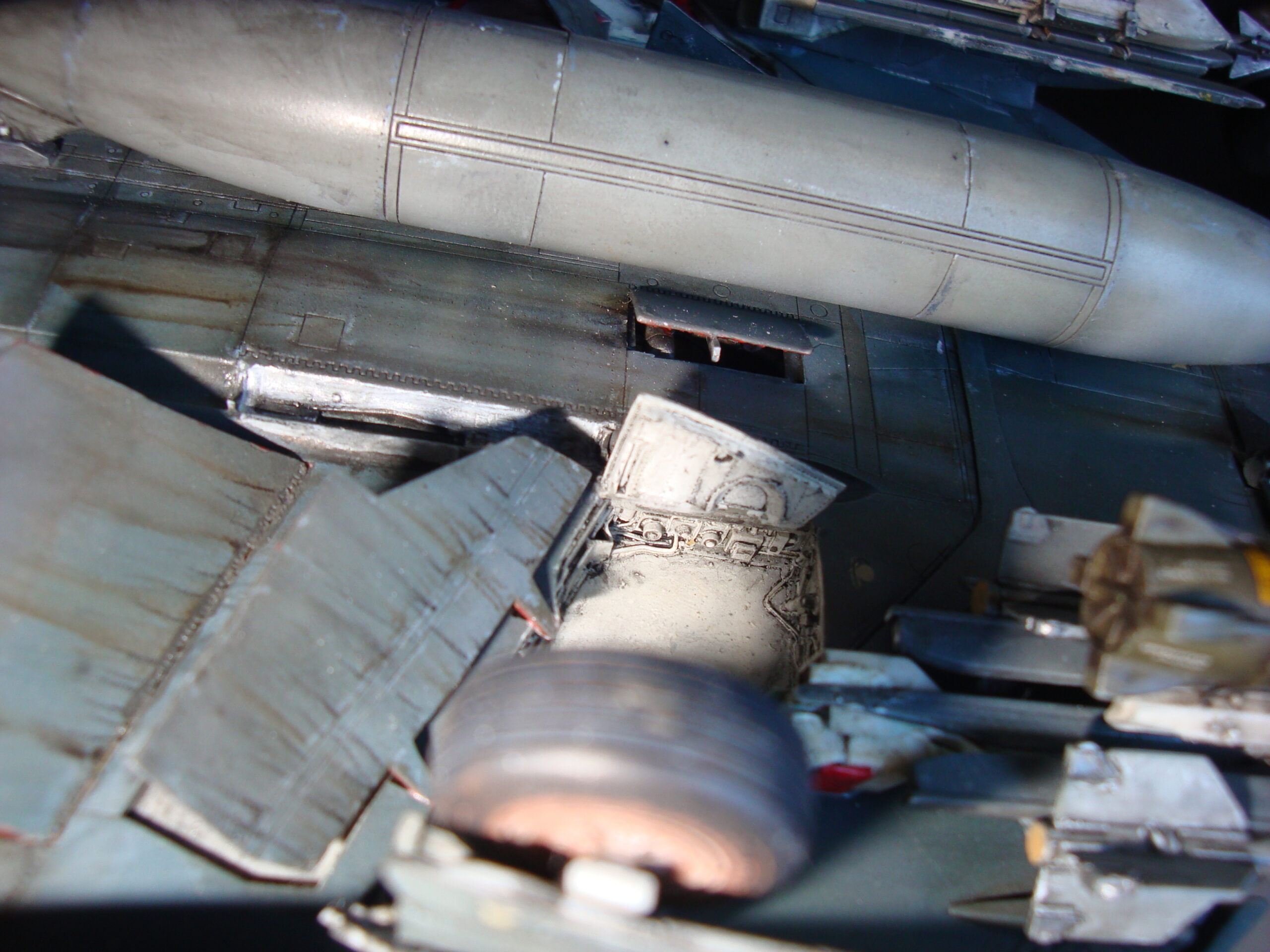
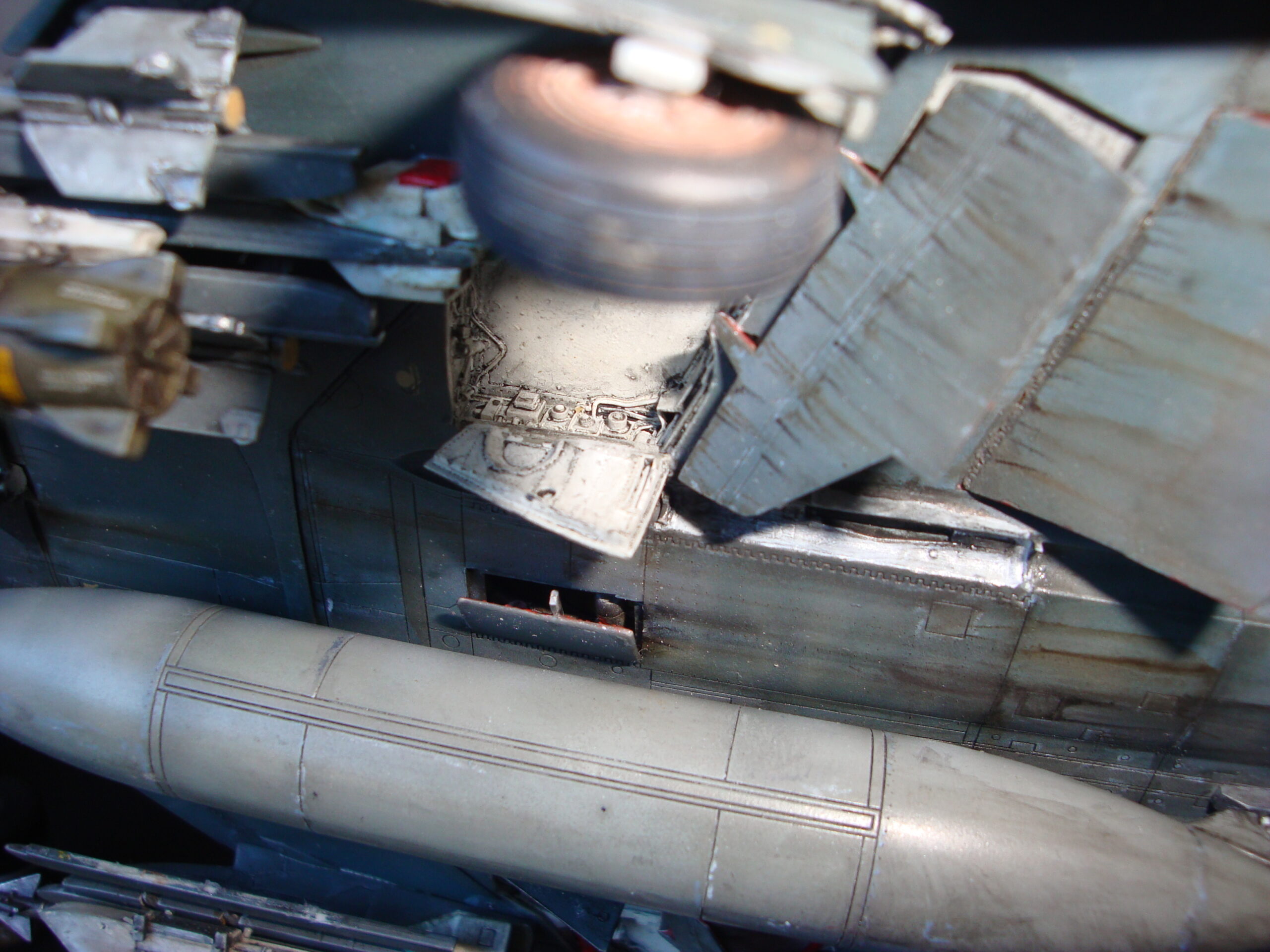
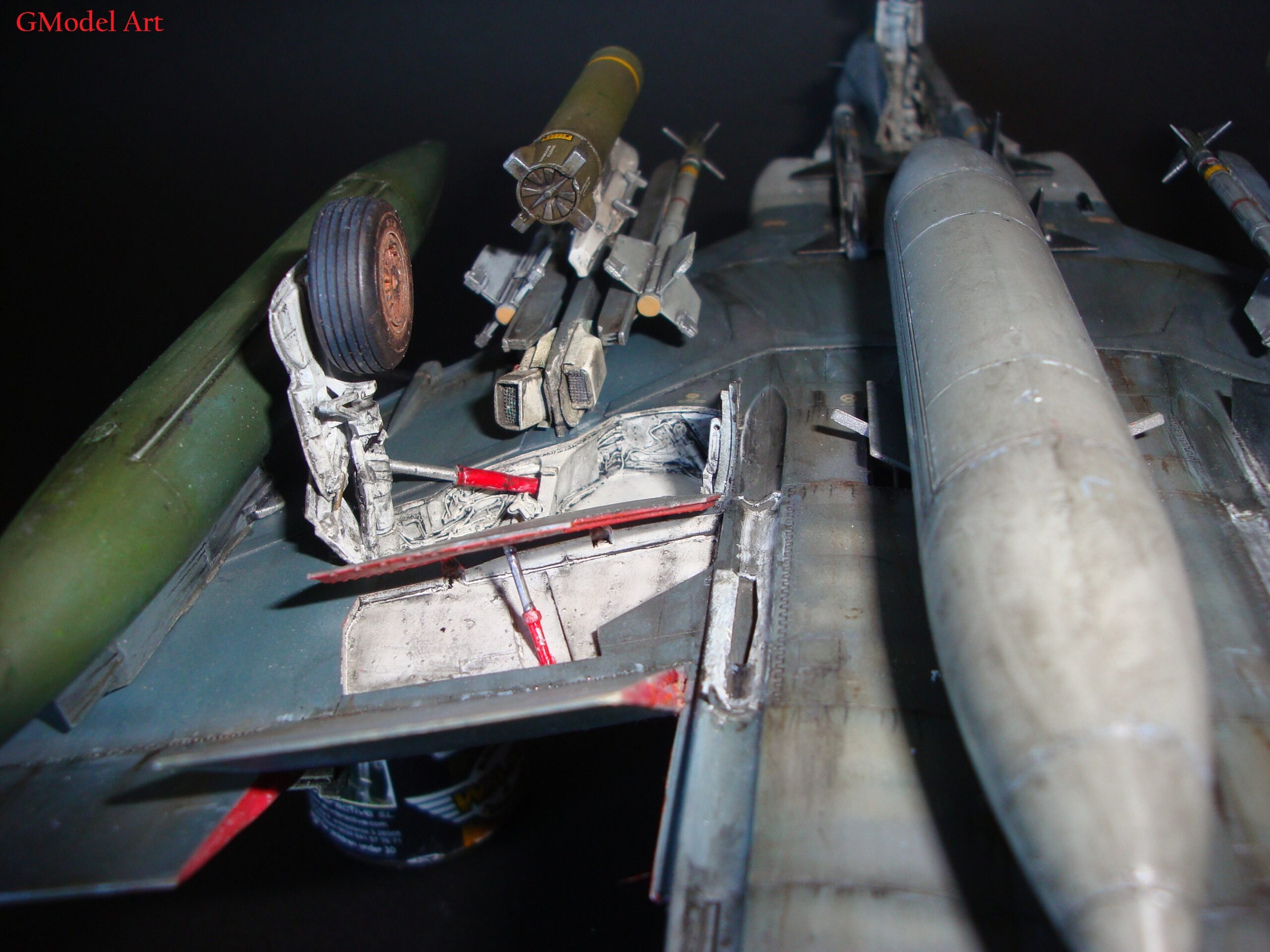
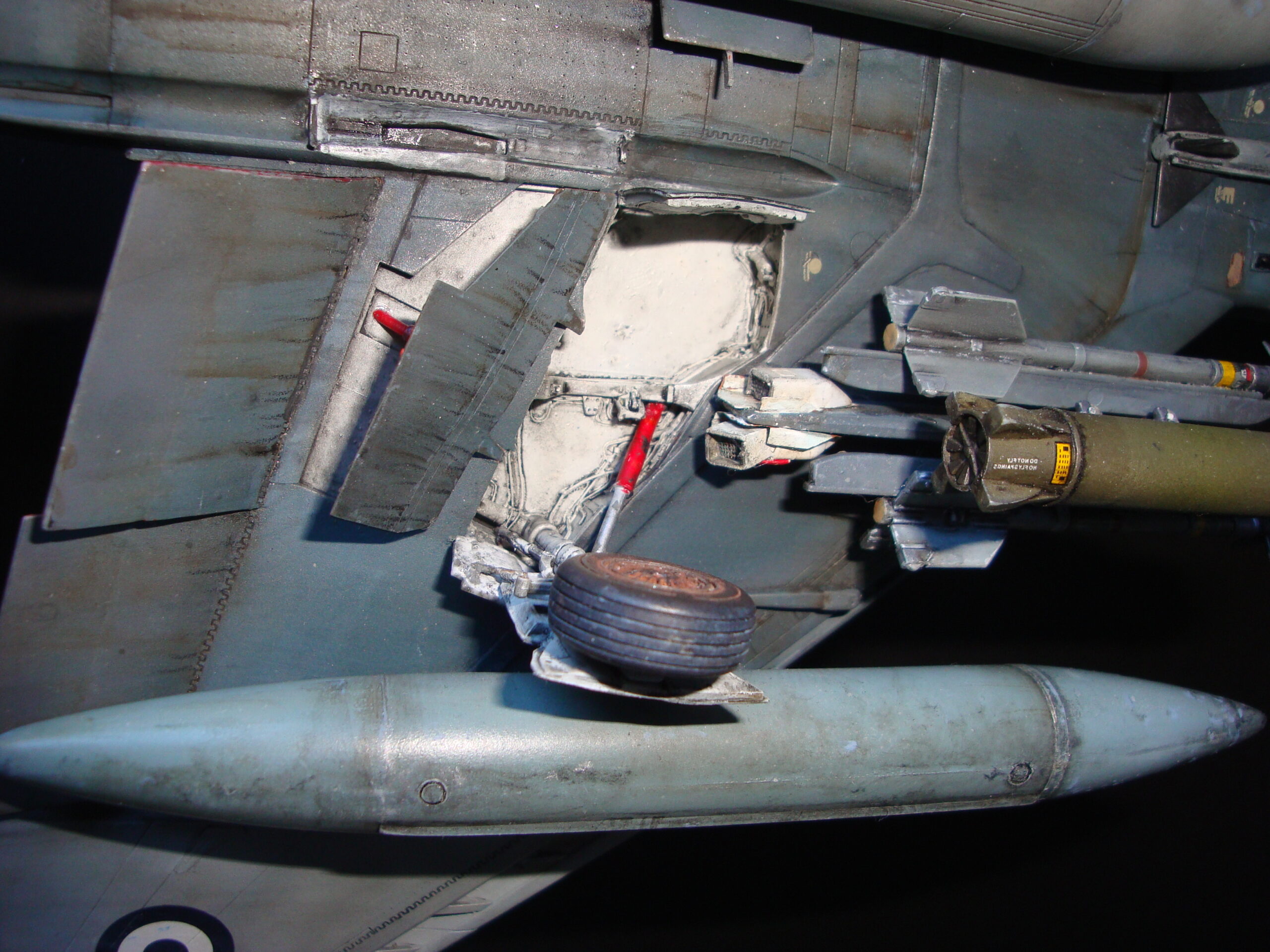
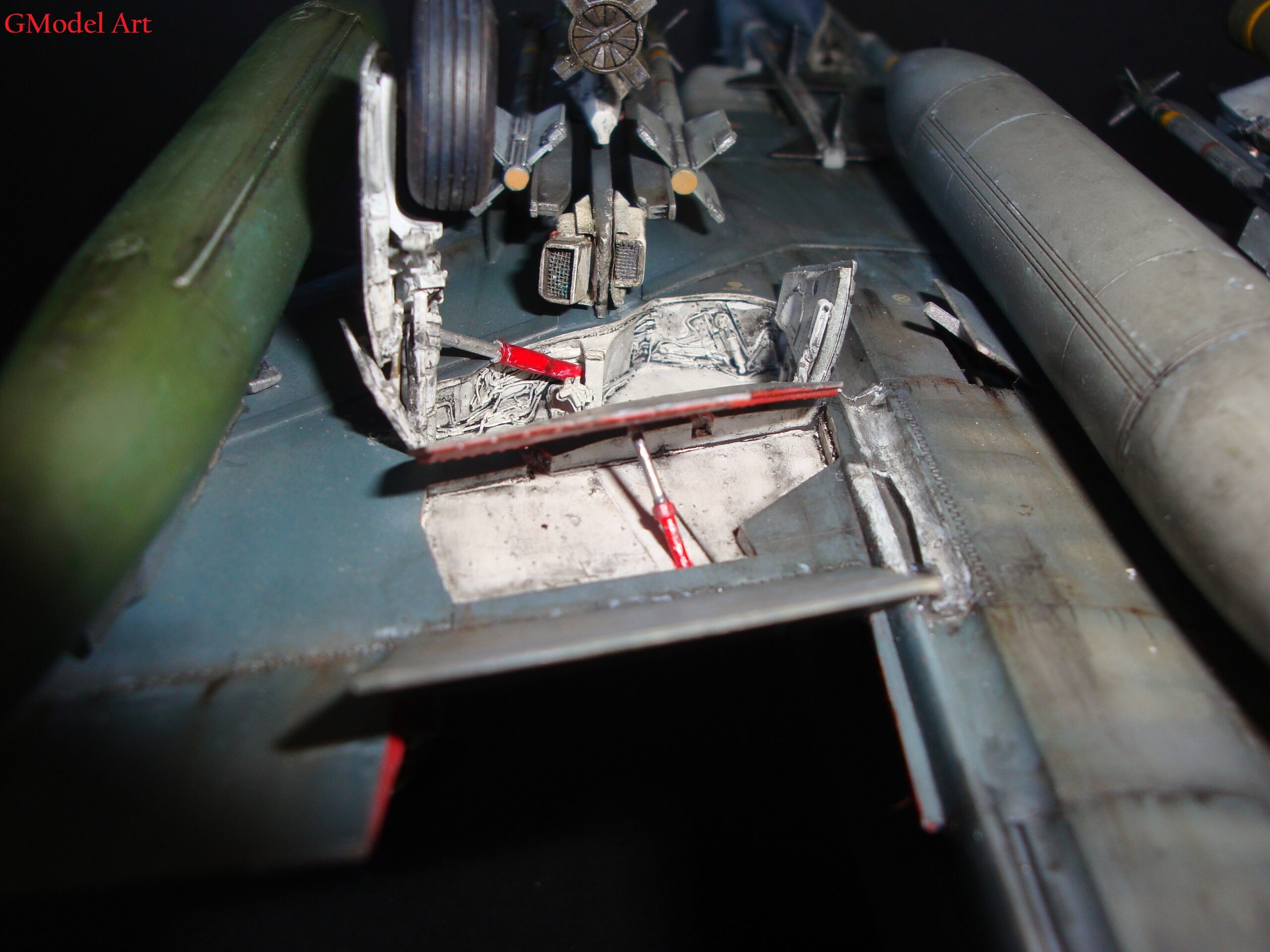
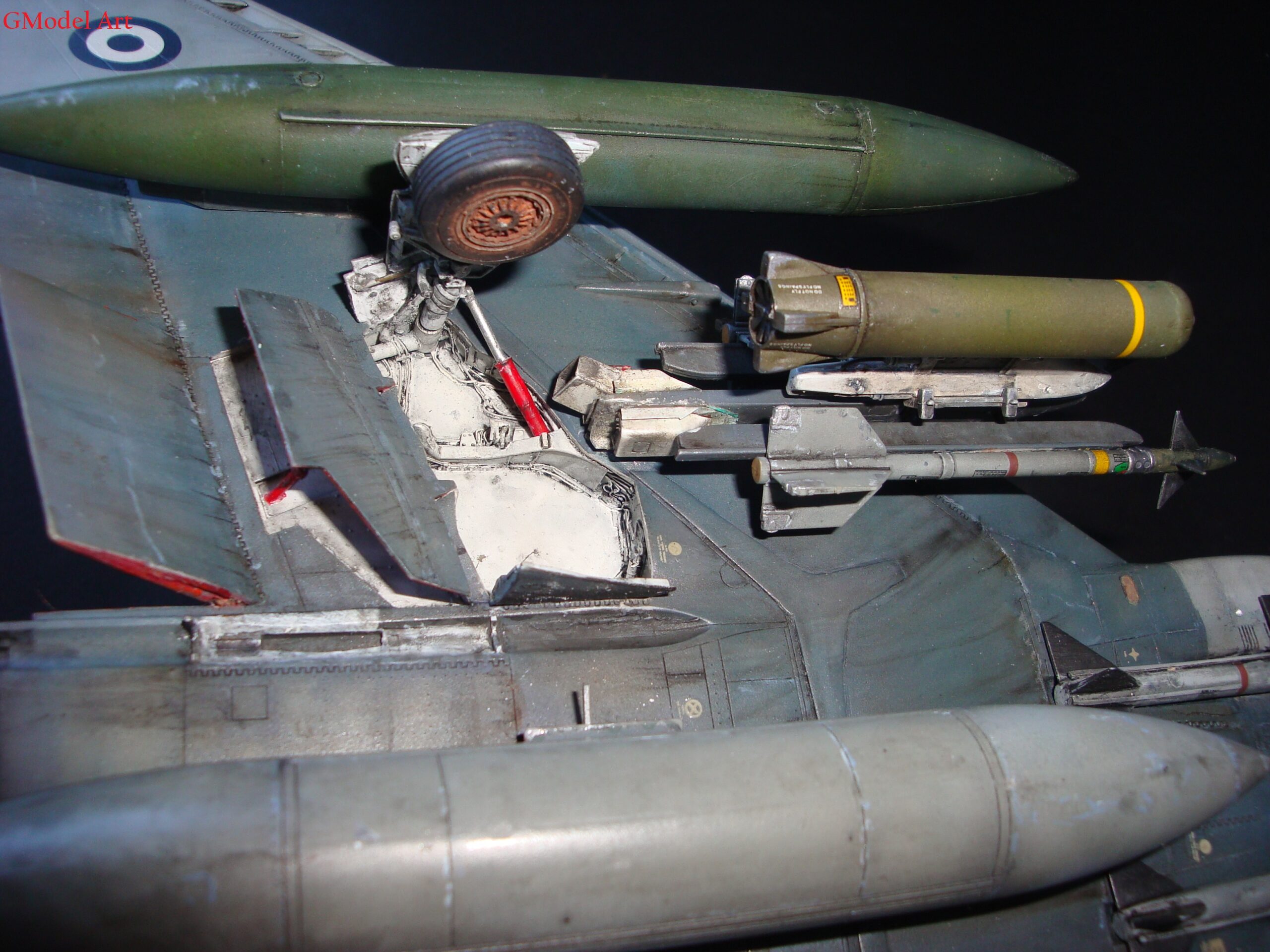
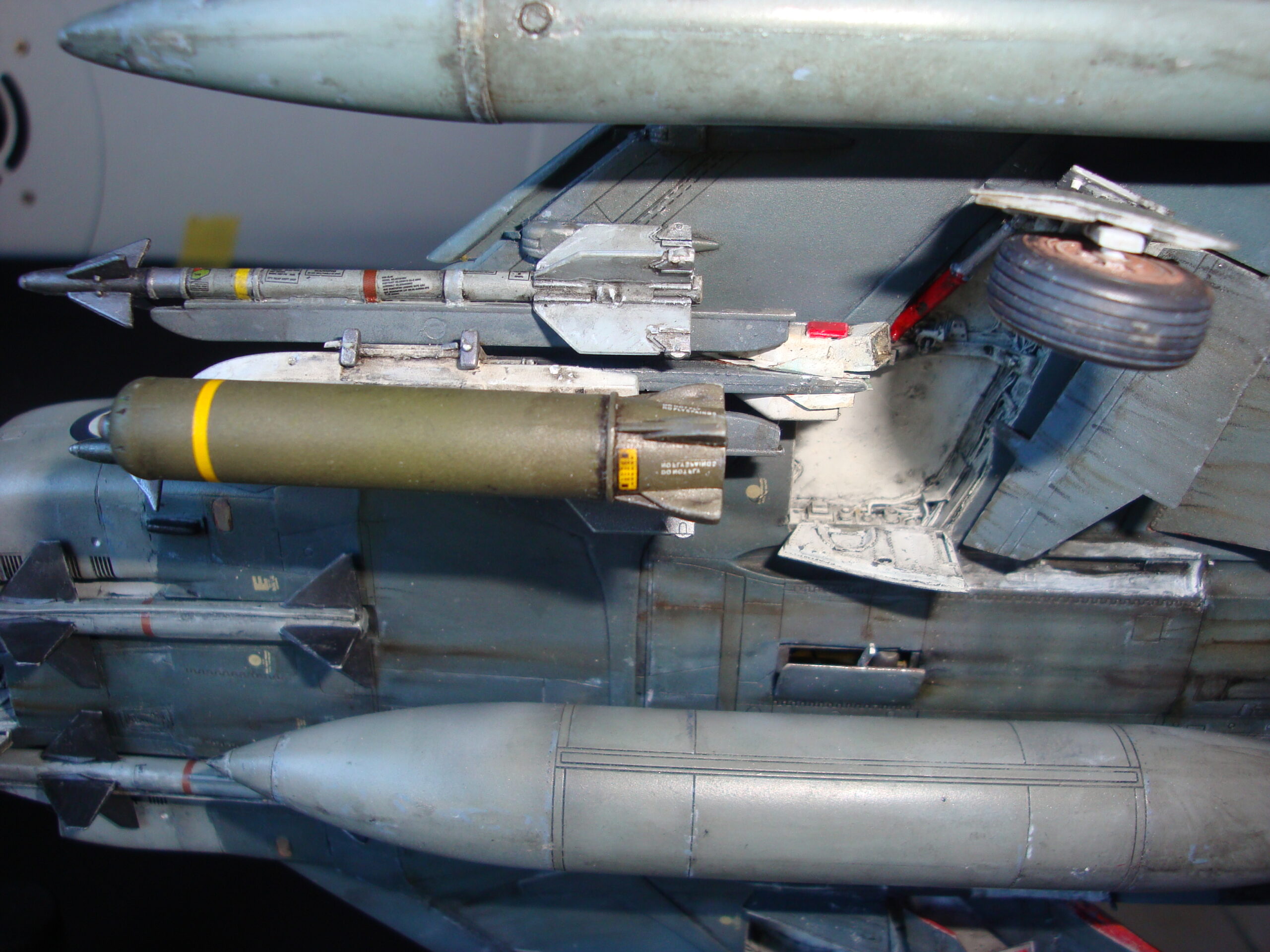
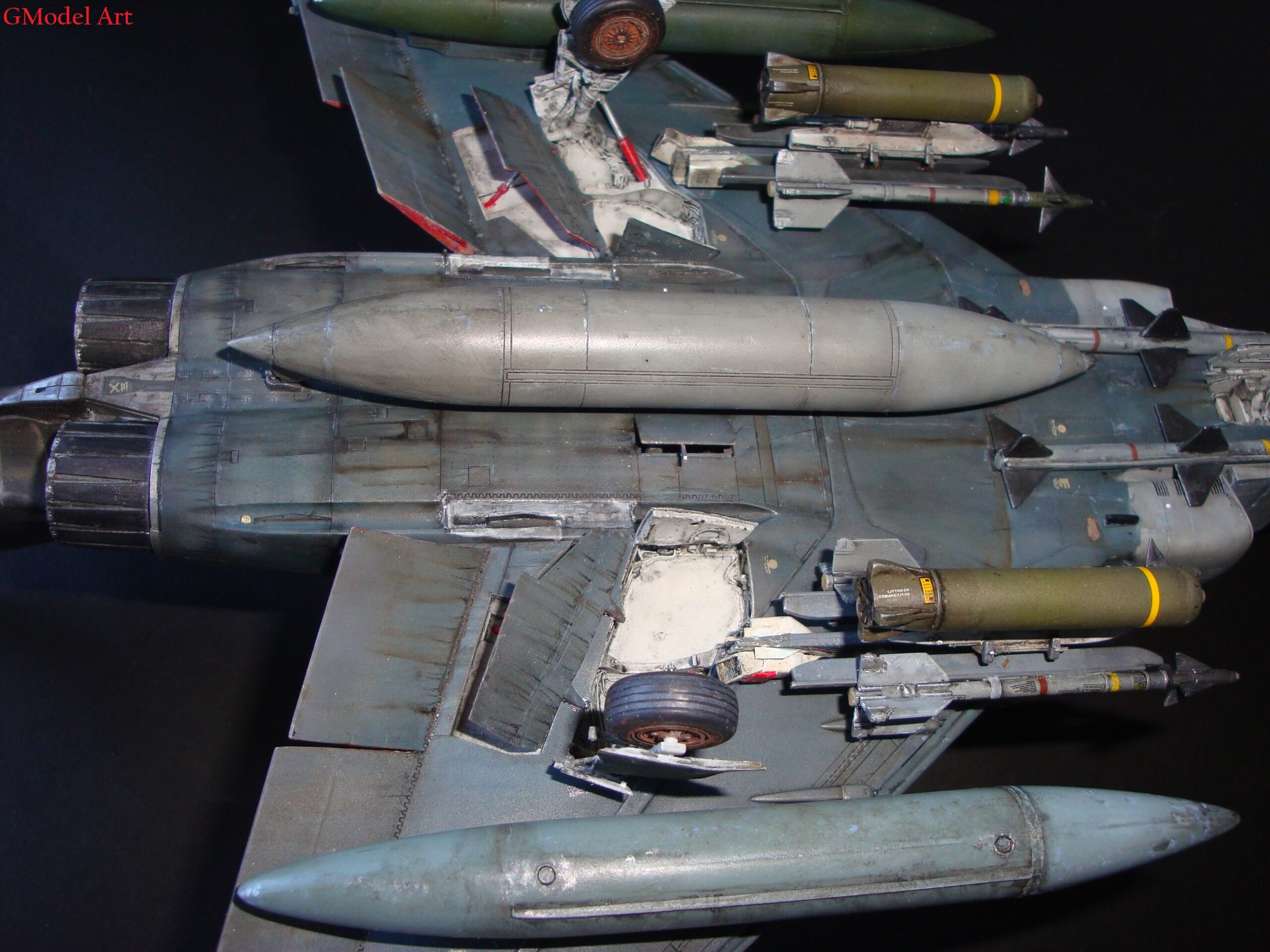
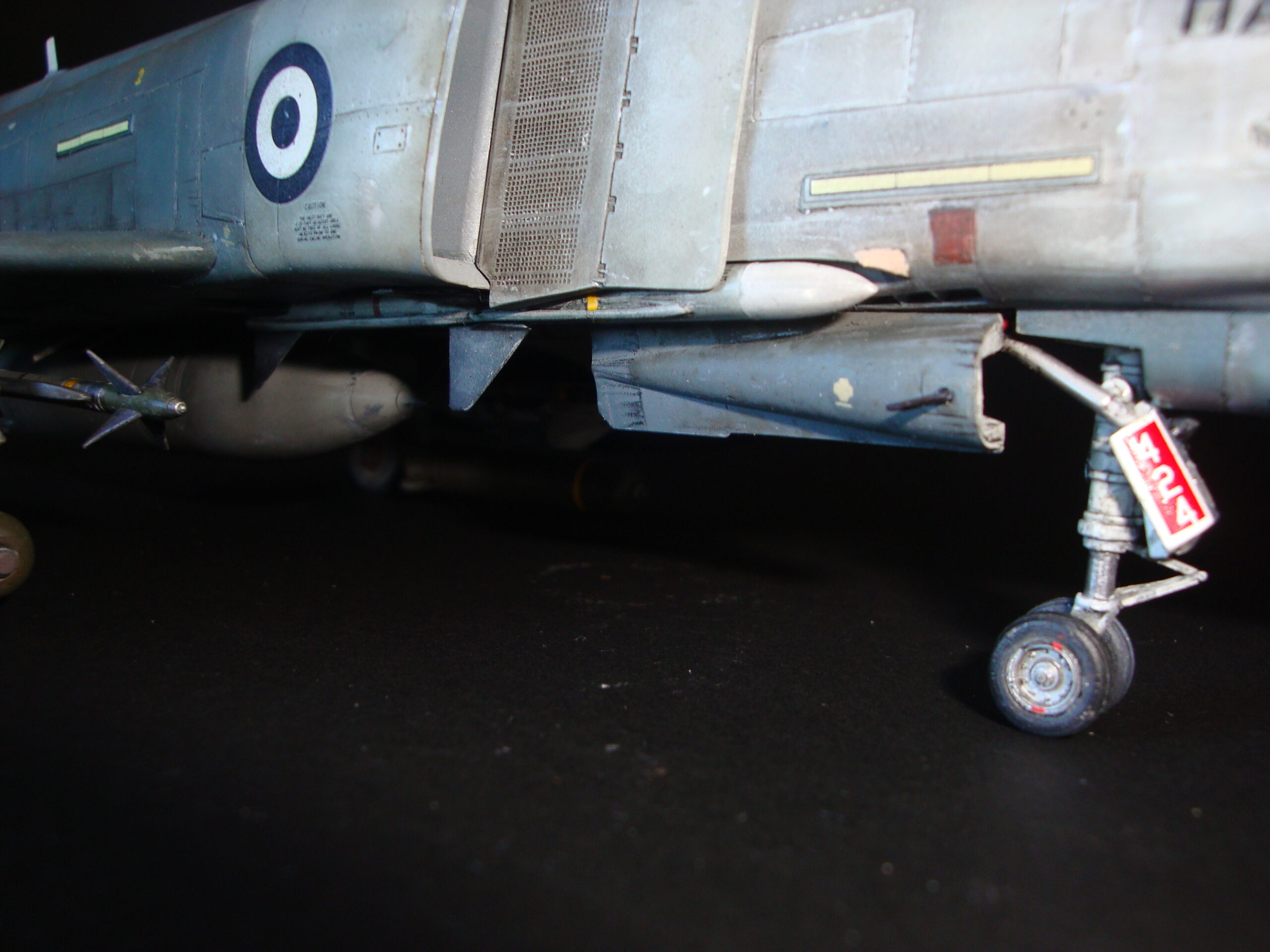
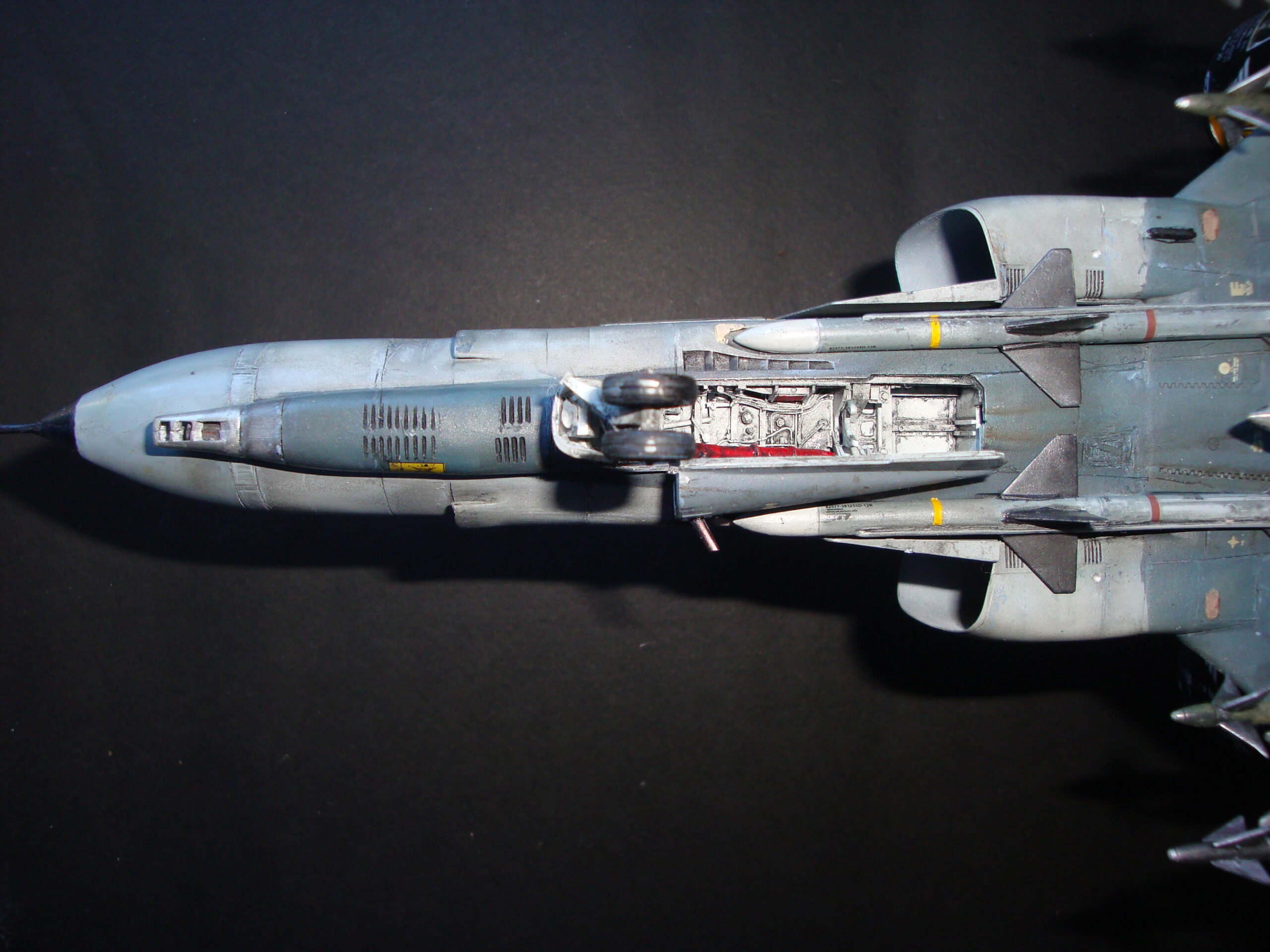
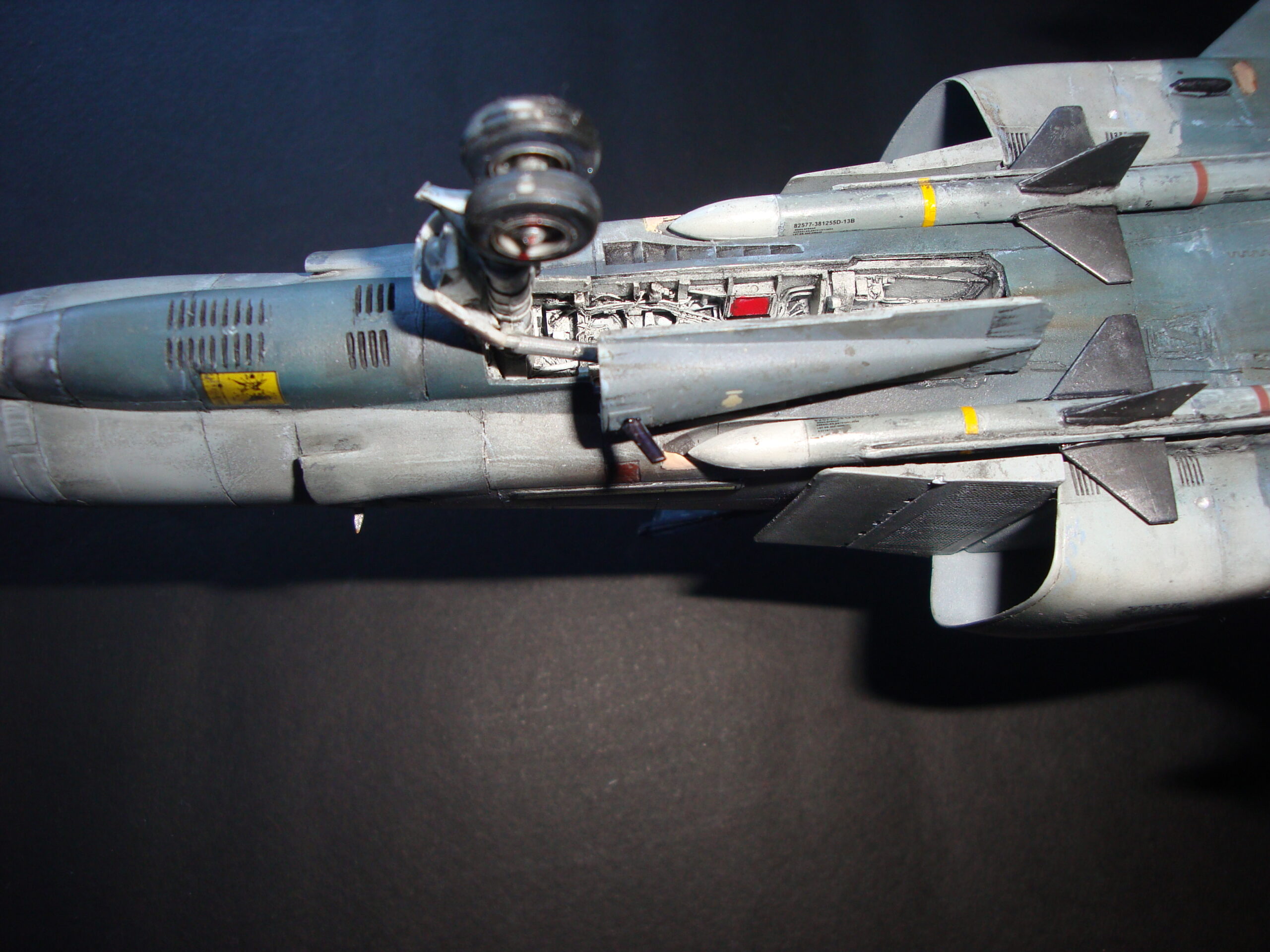
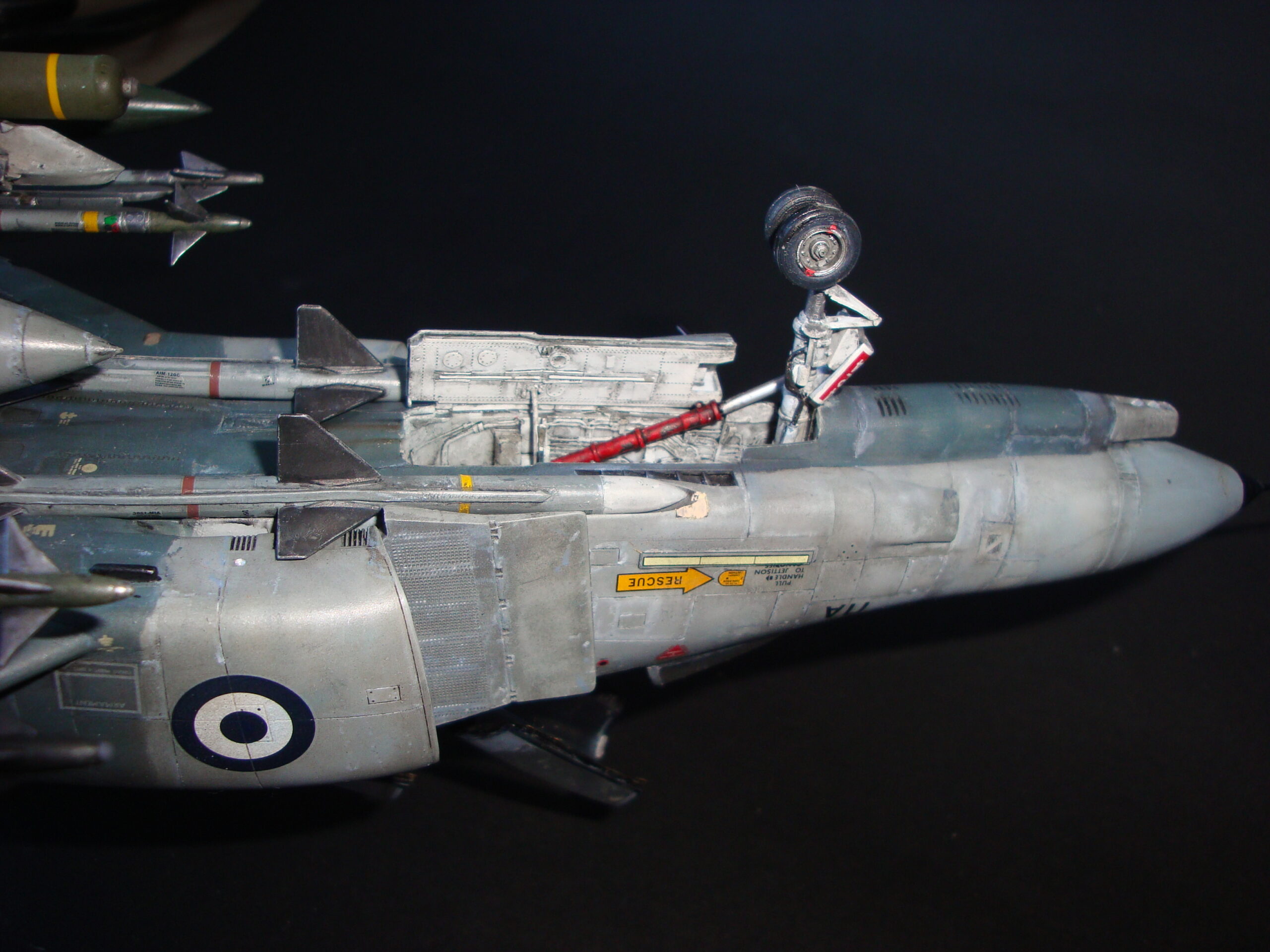
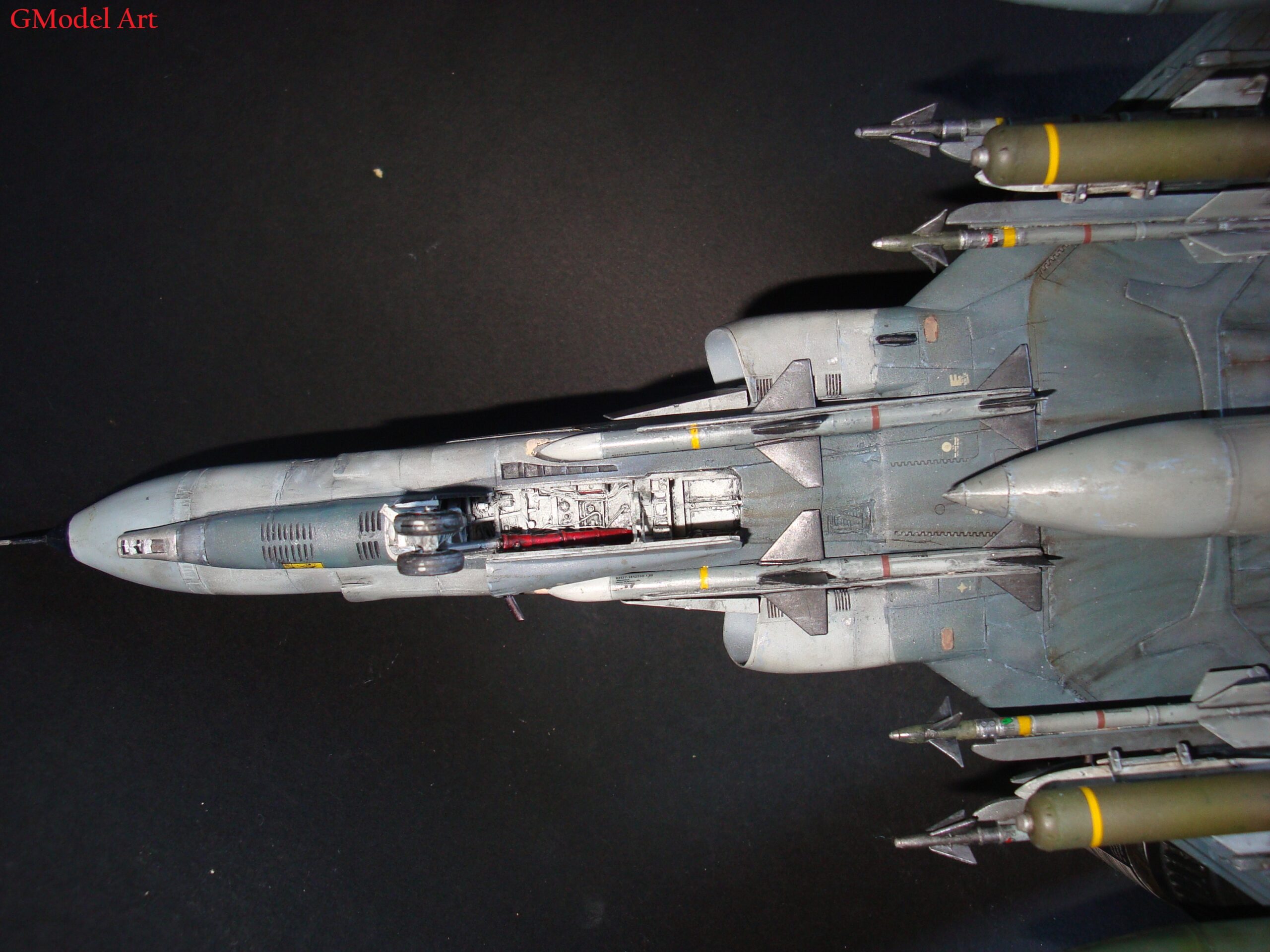
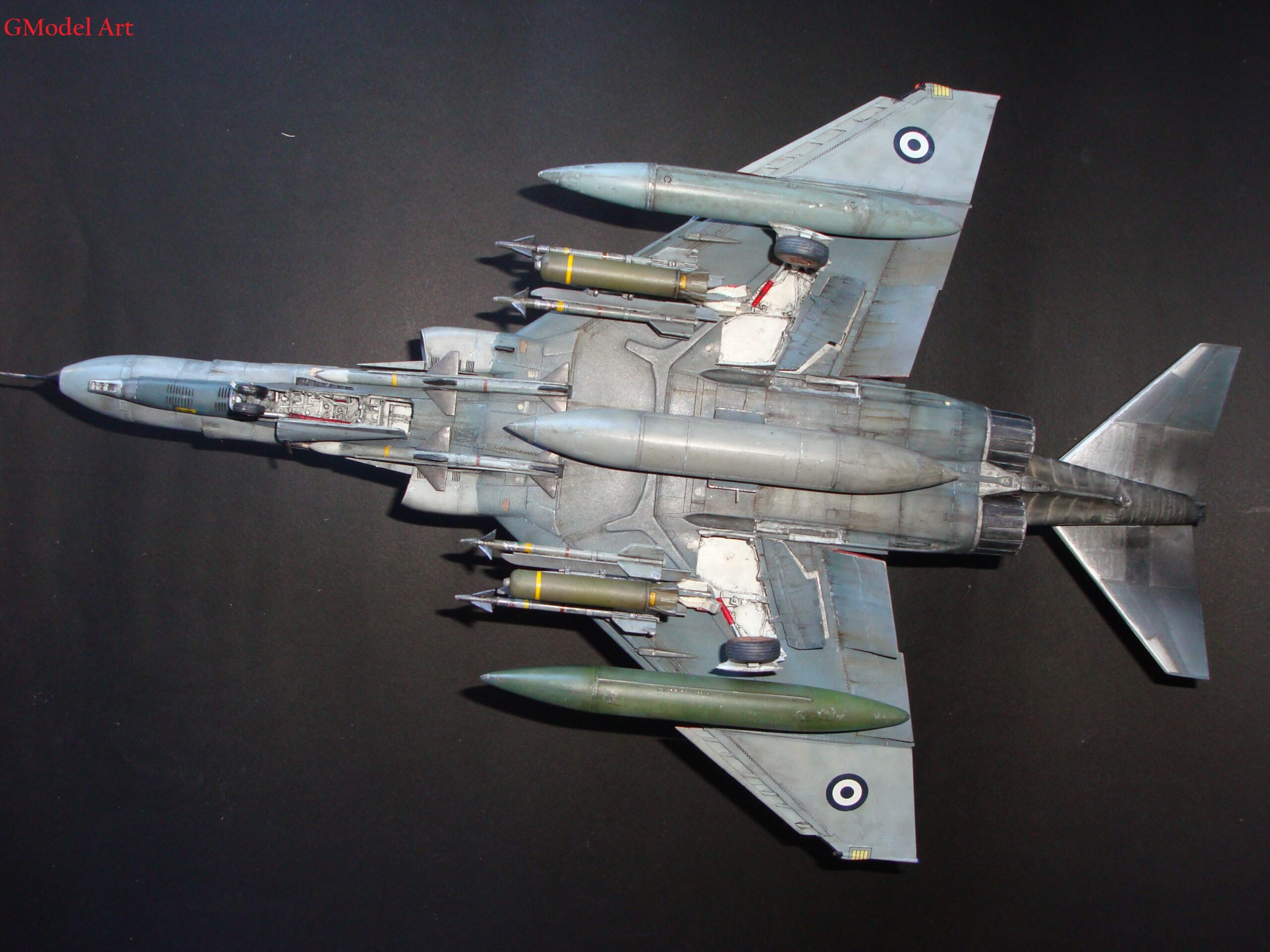
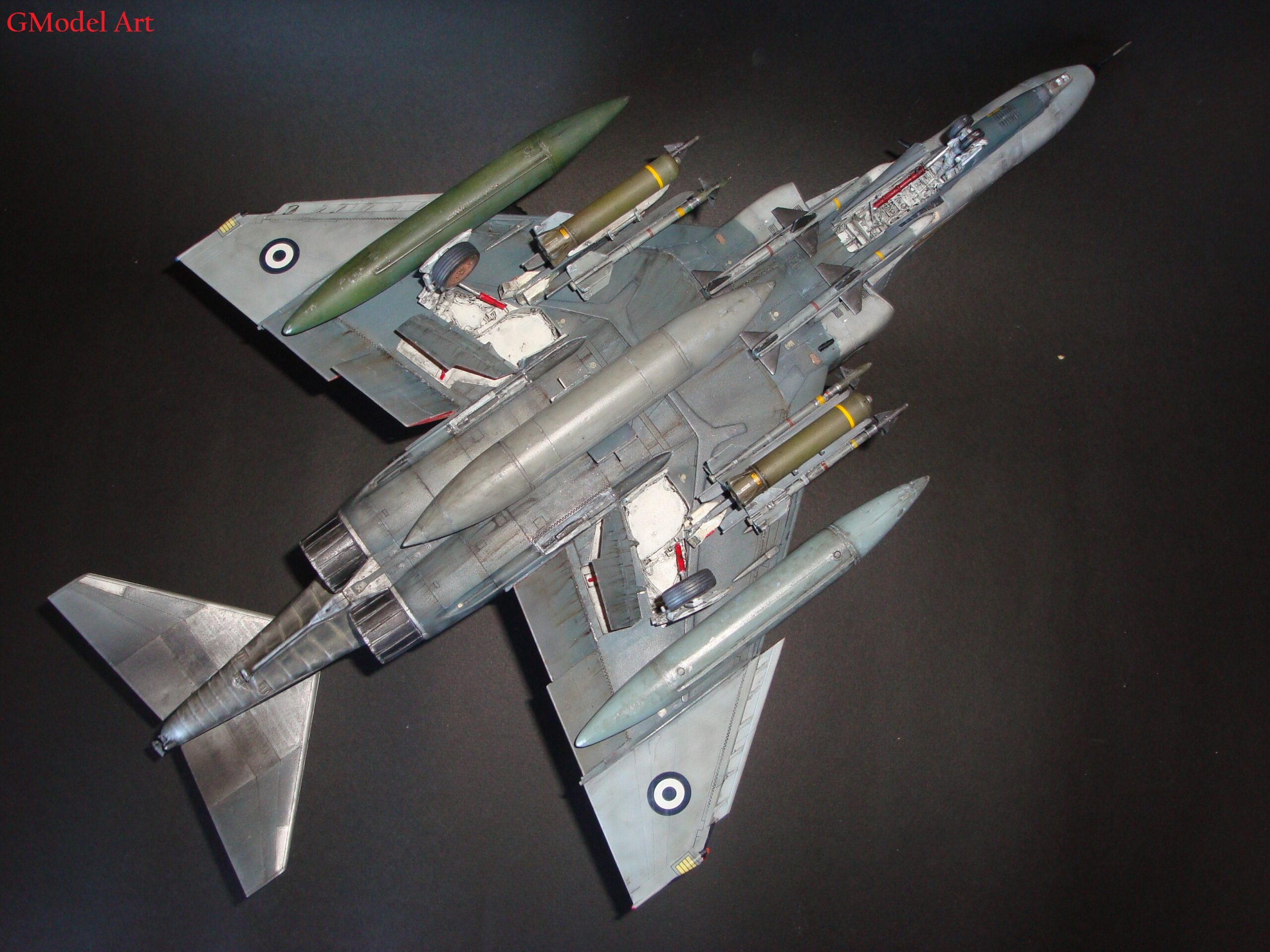
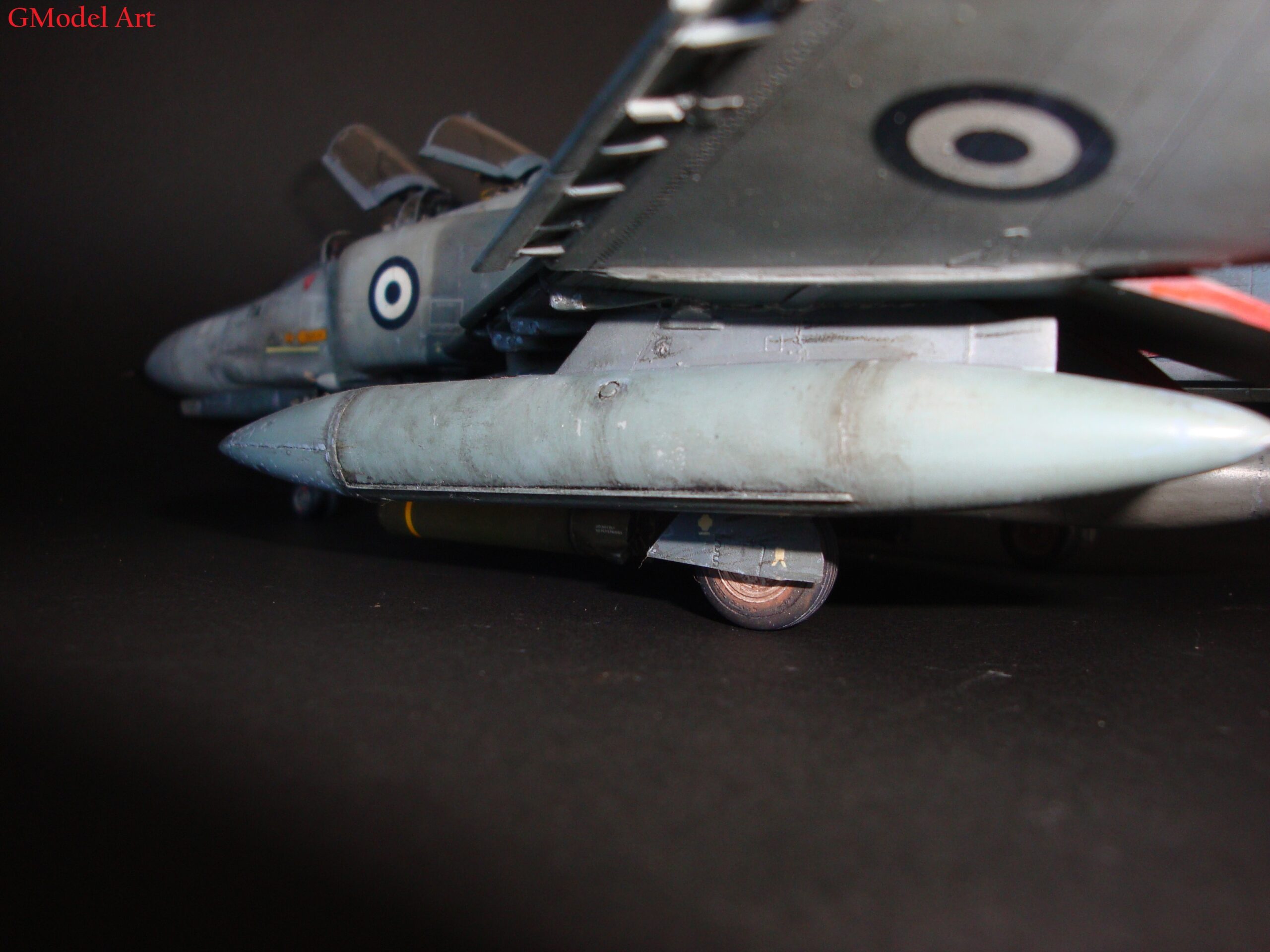
- landing gear details
- wheel doors
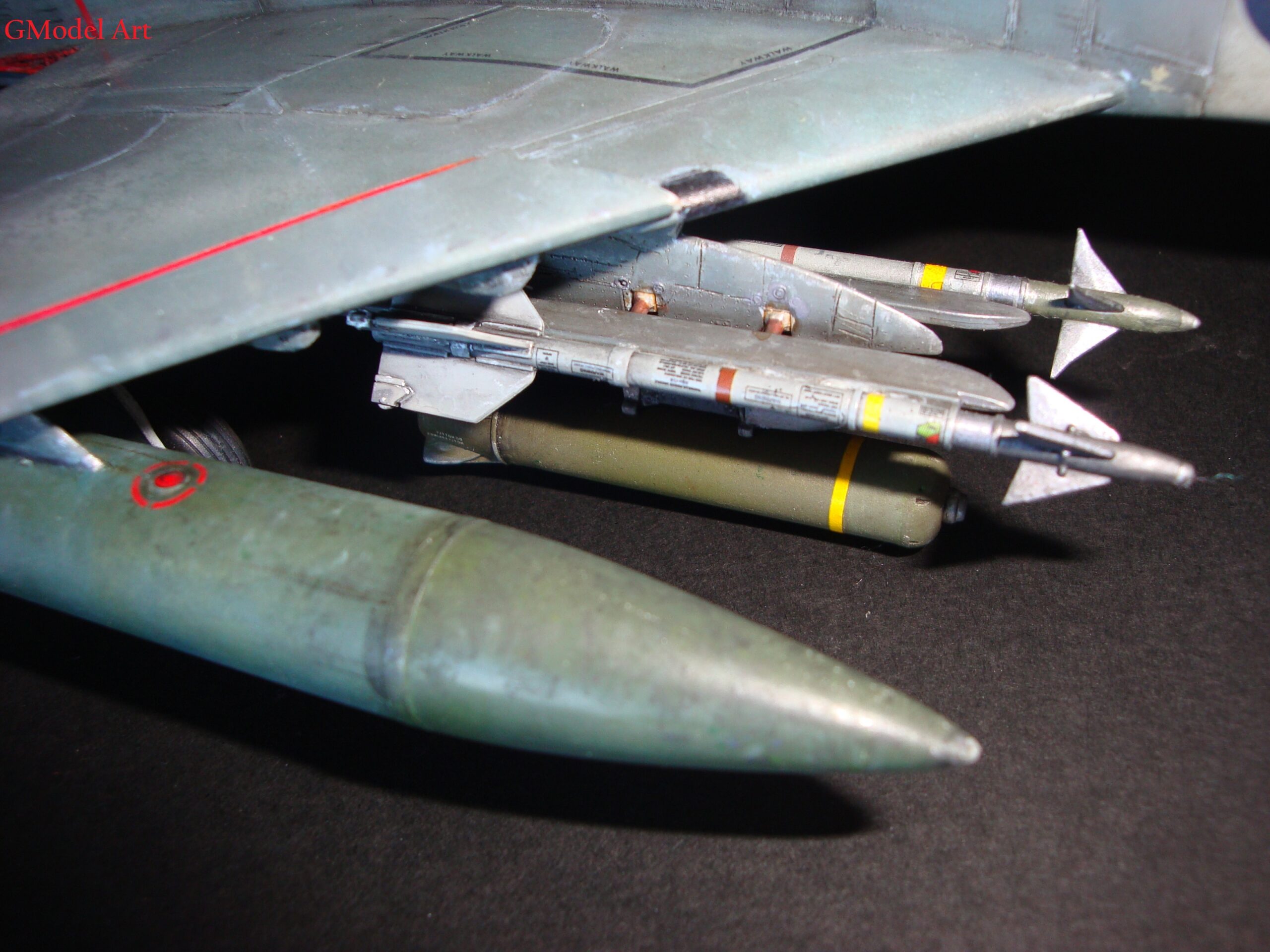
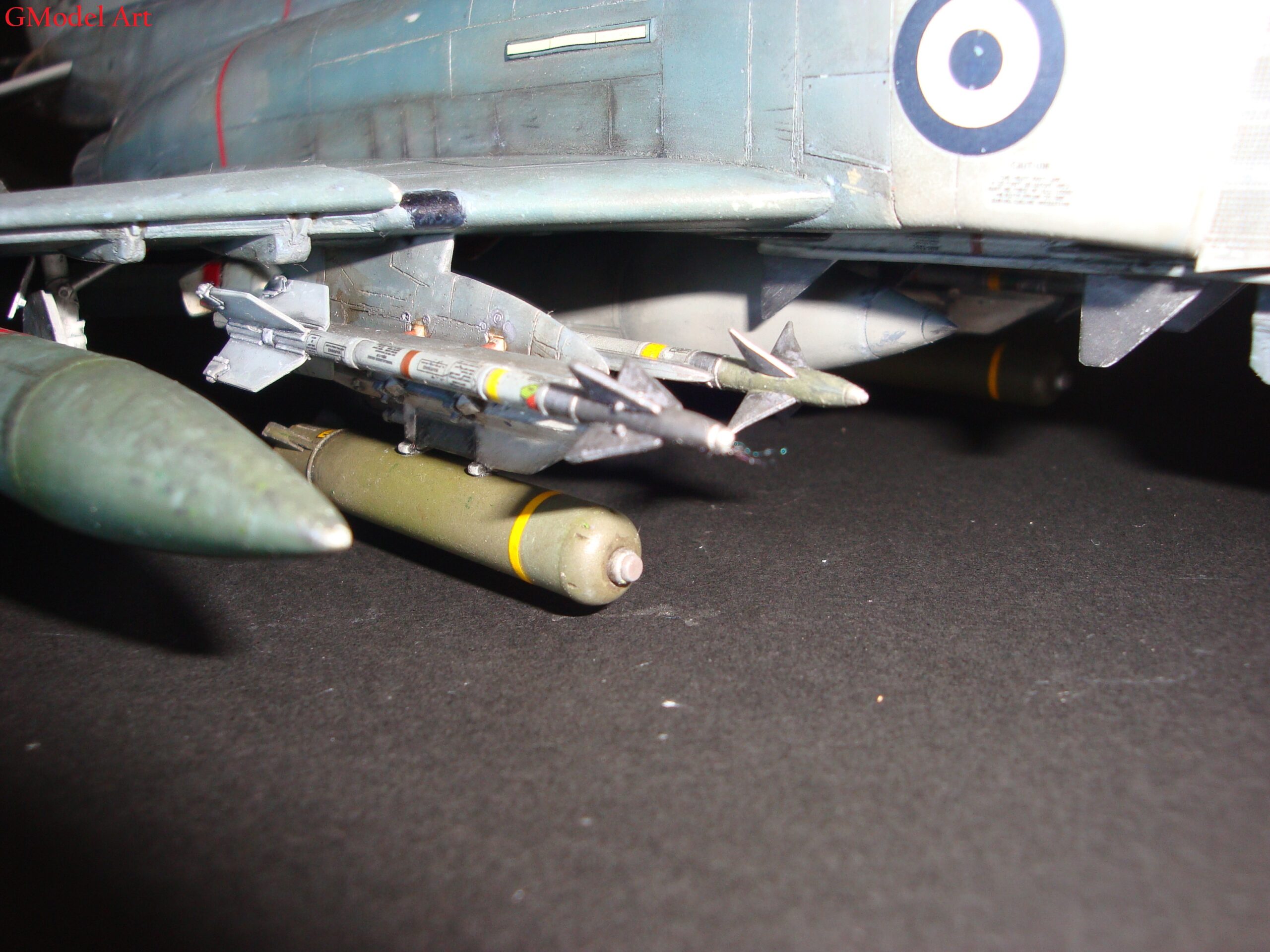
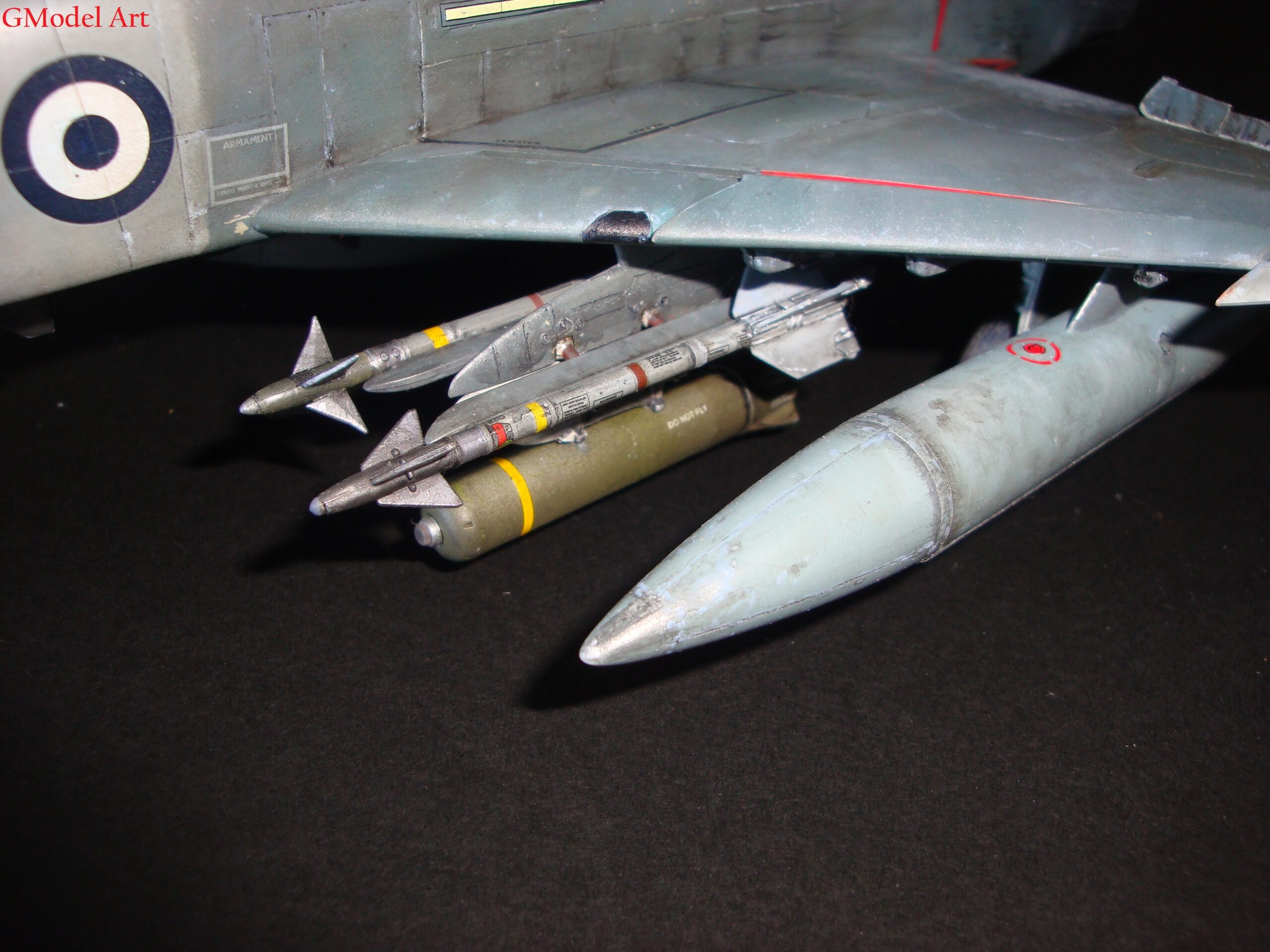
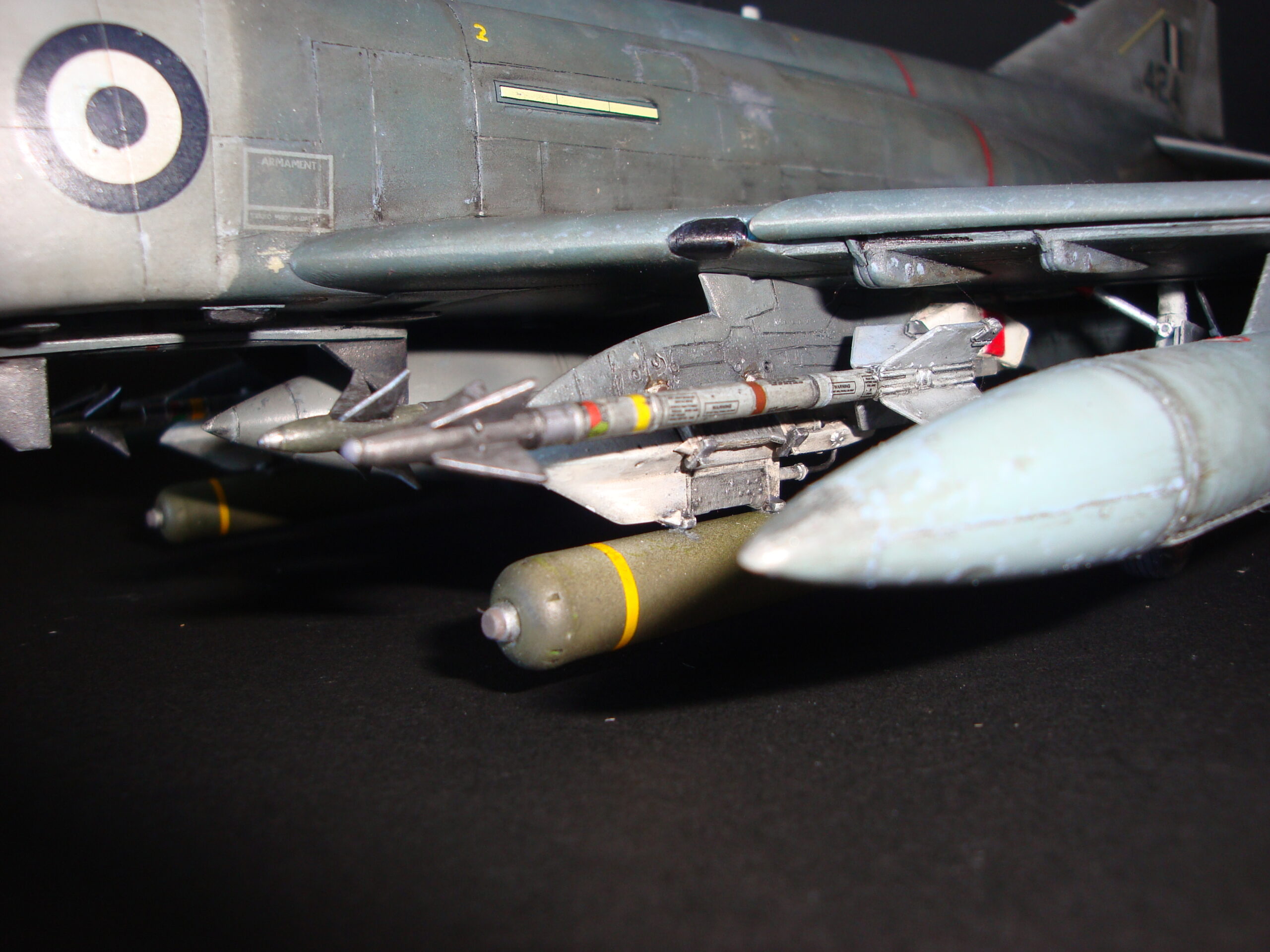
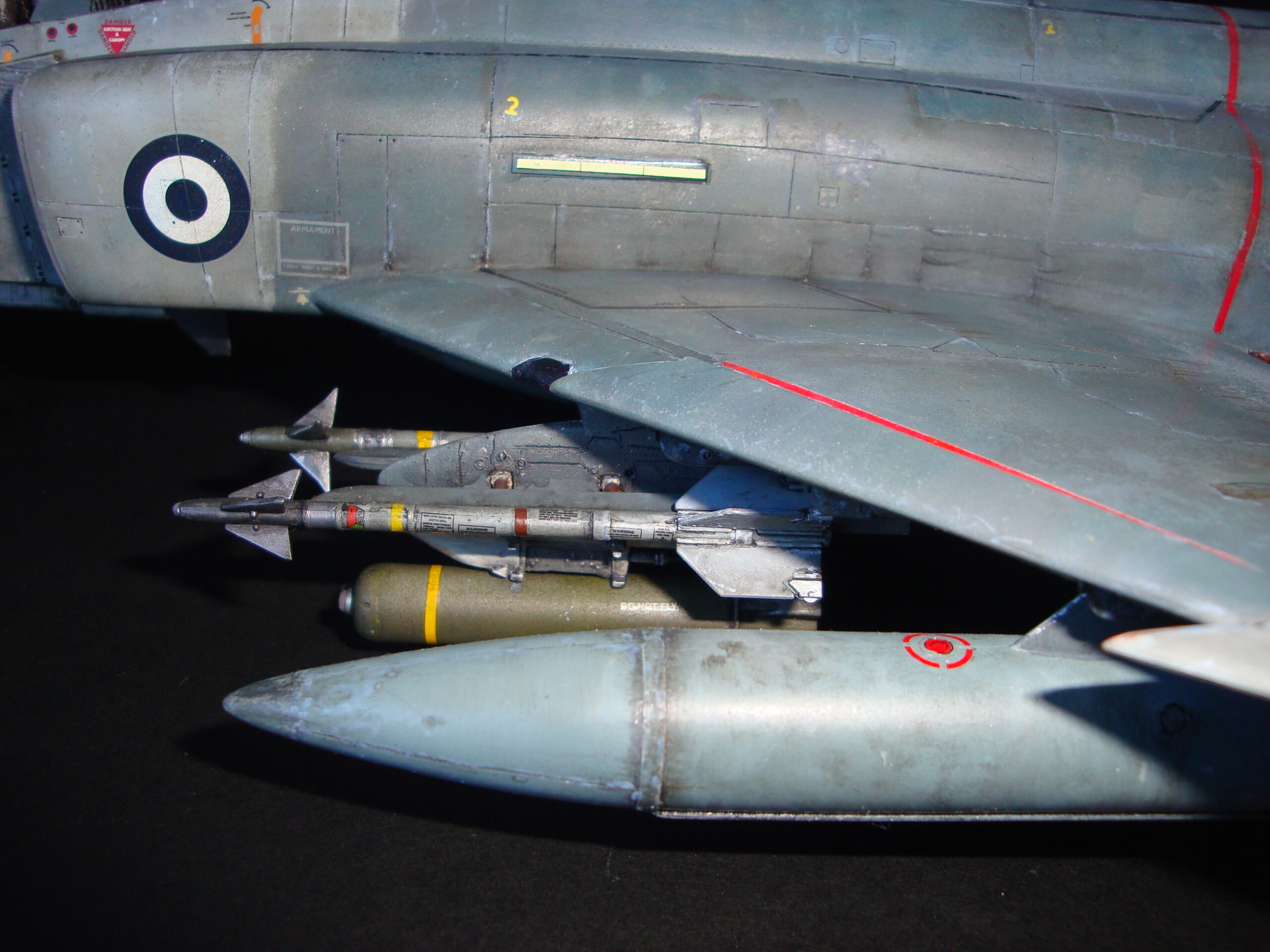
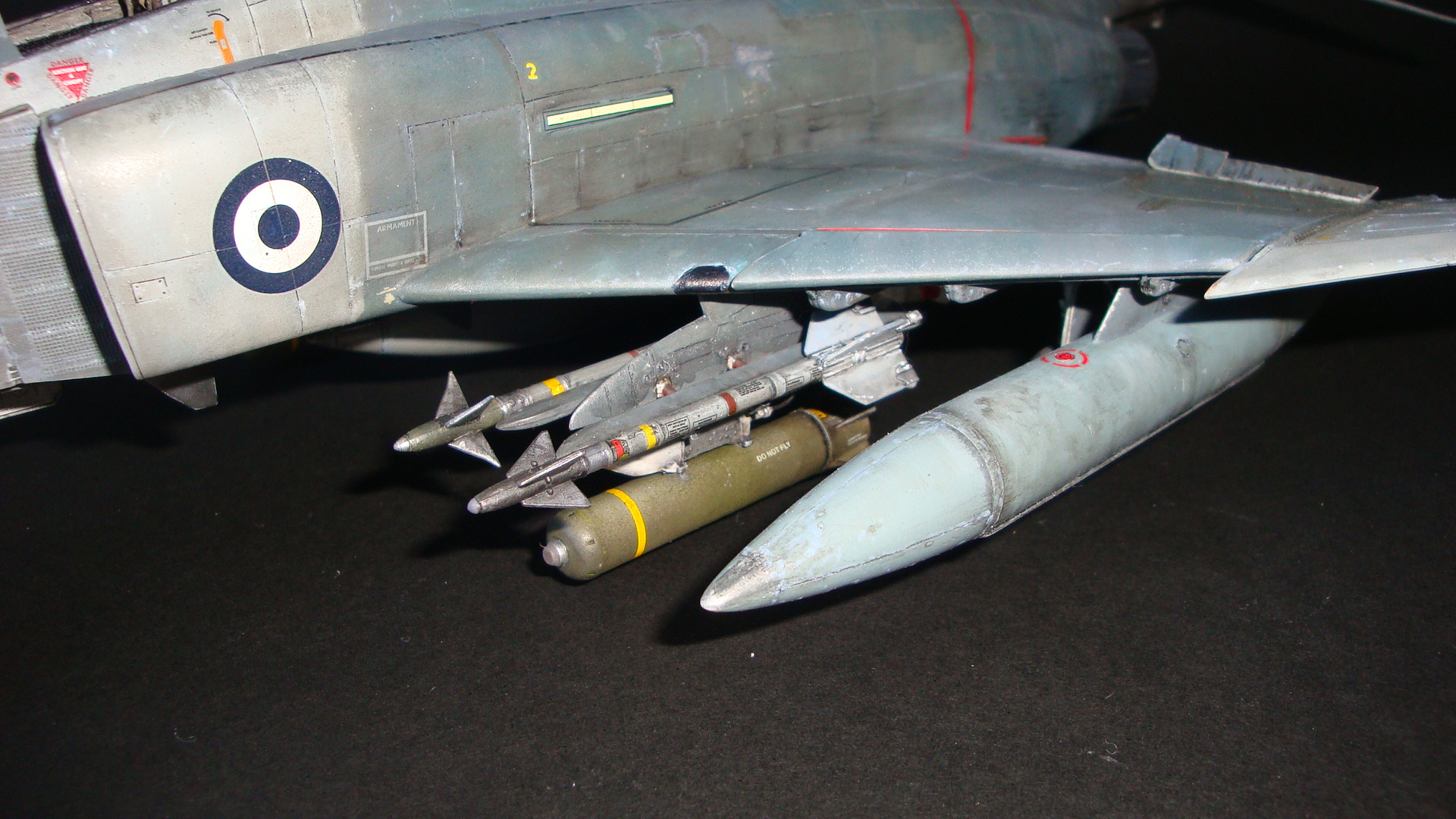
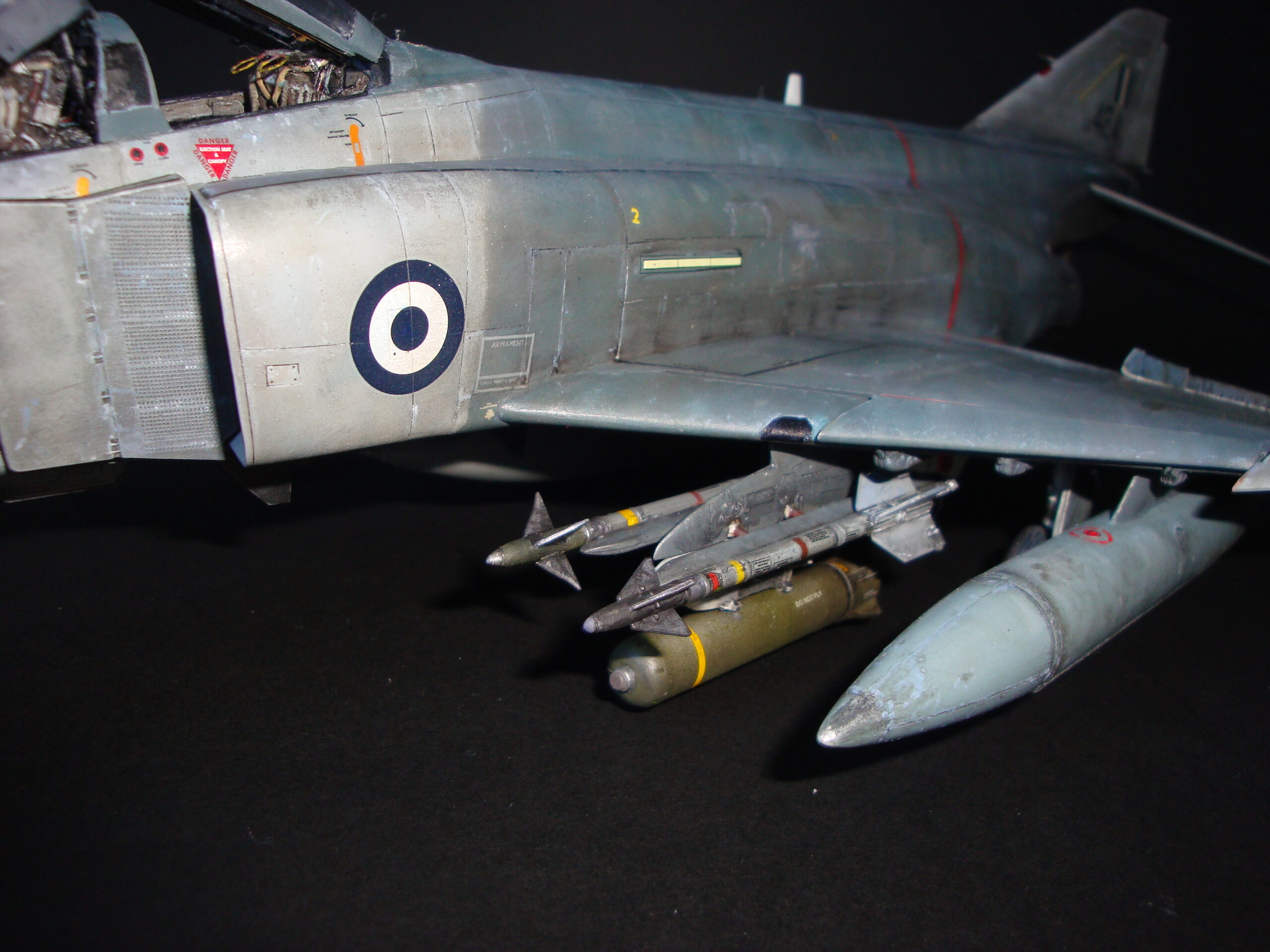
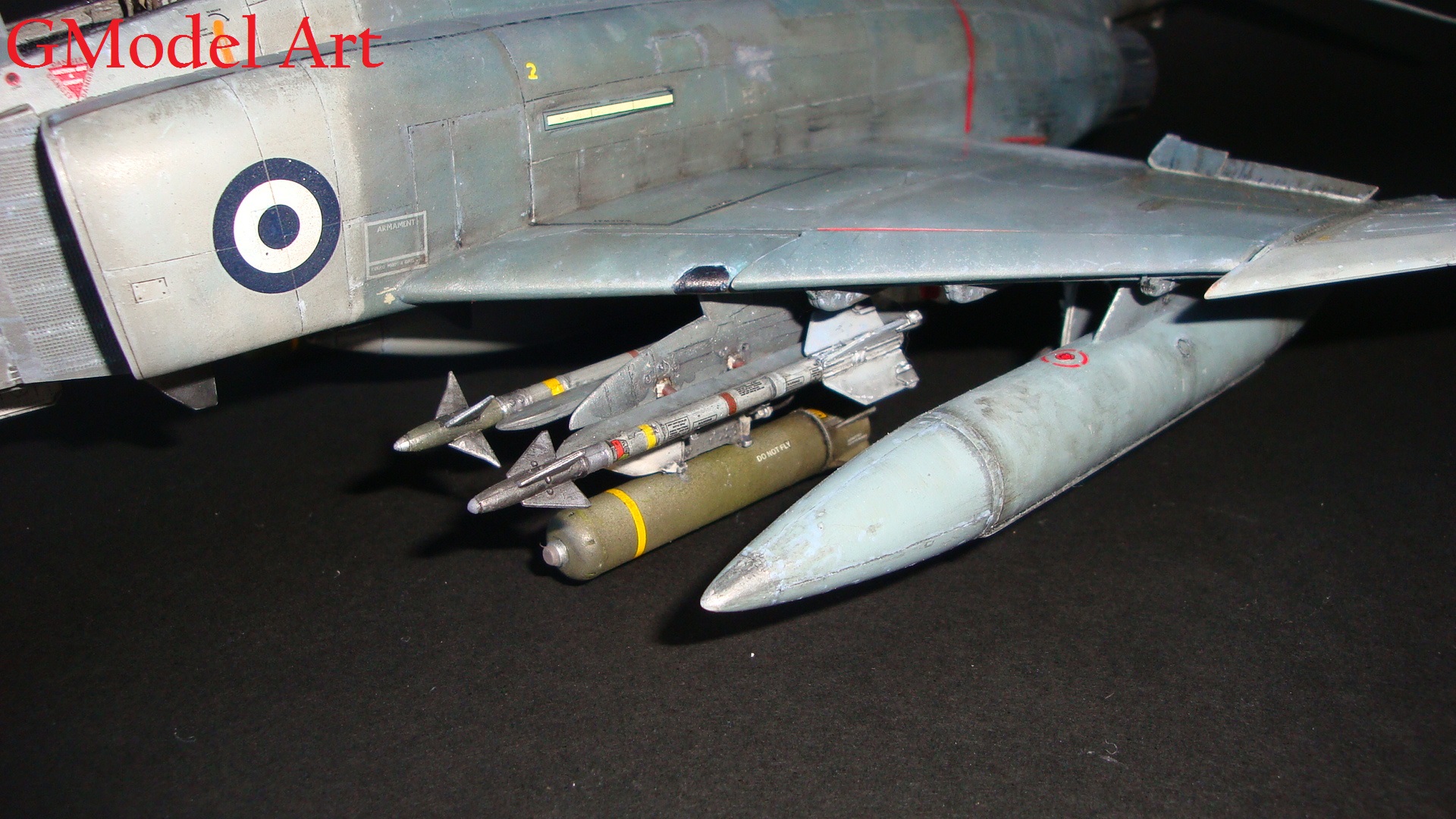
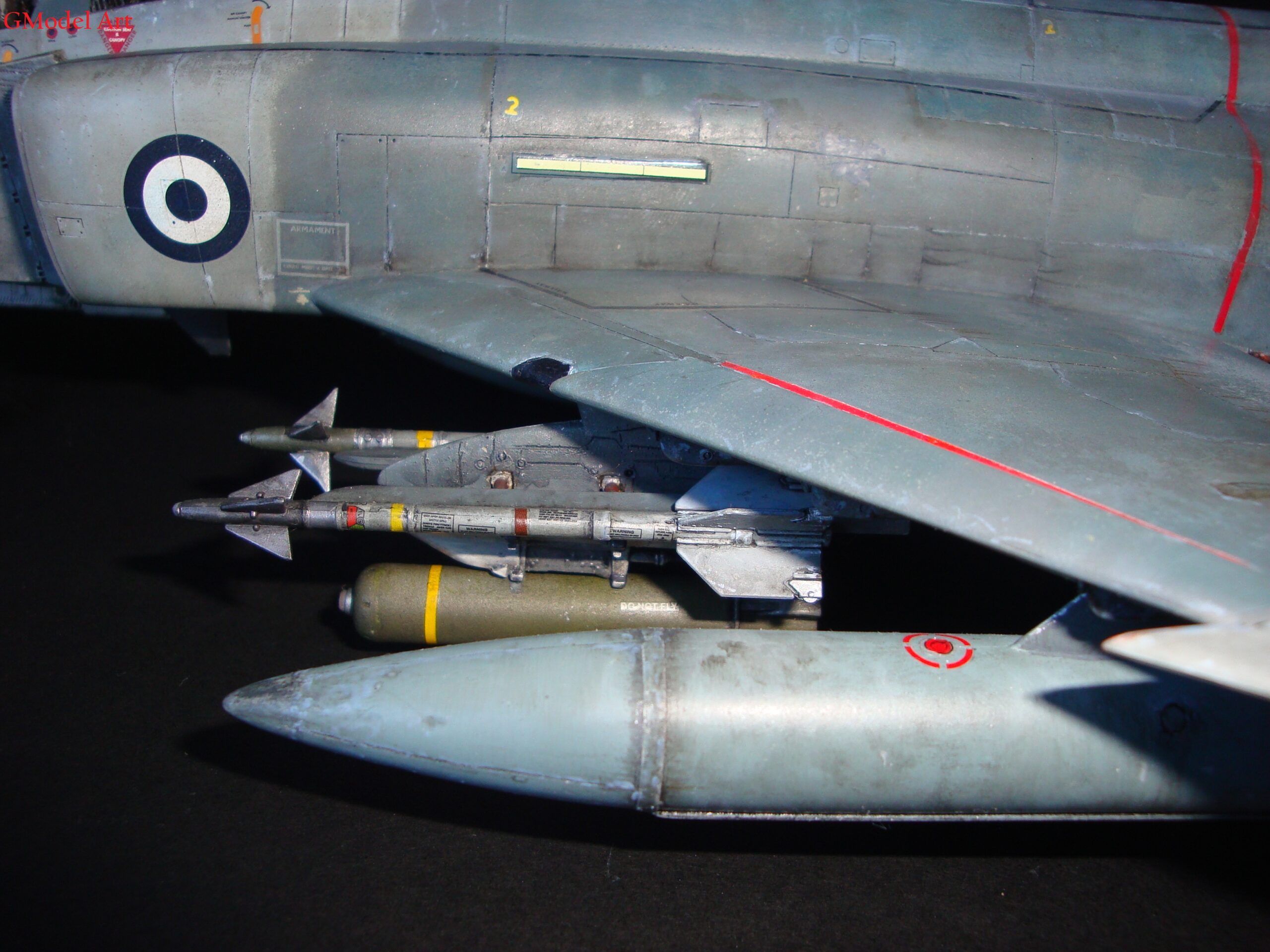
- external stores
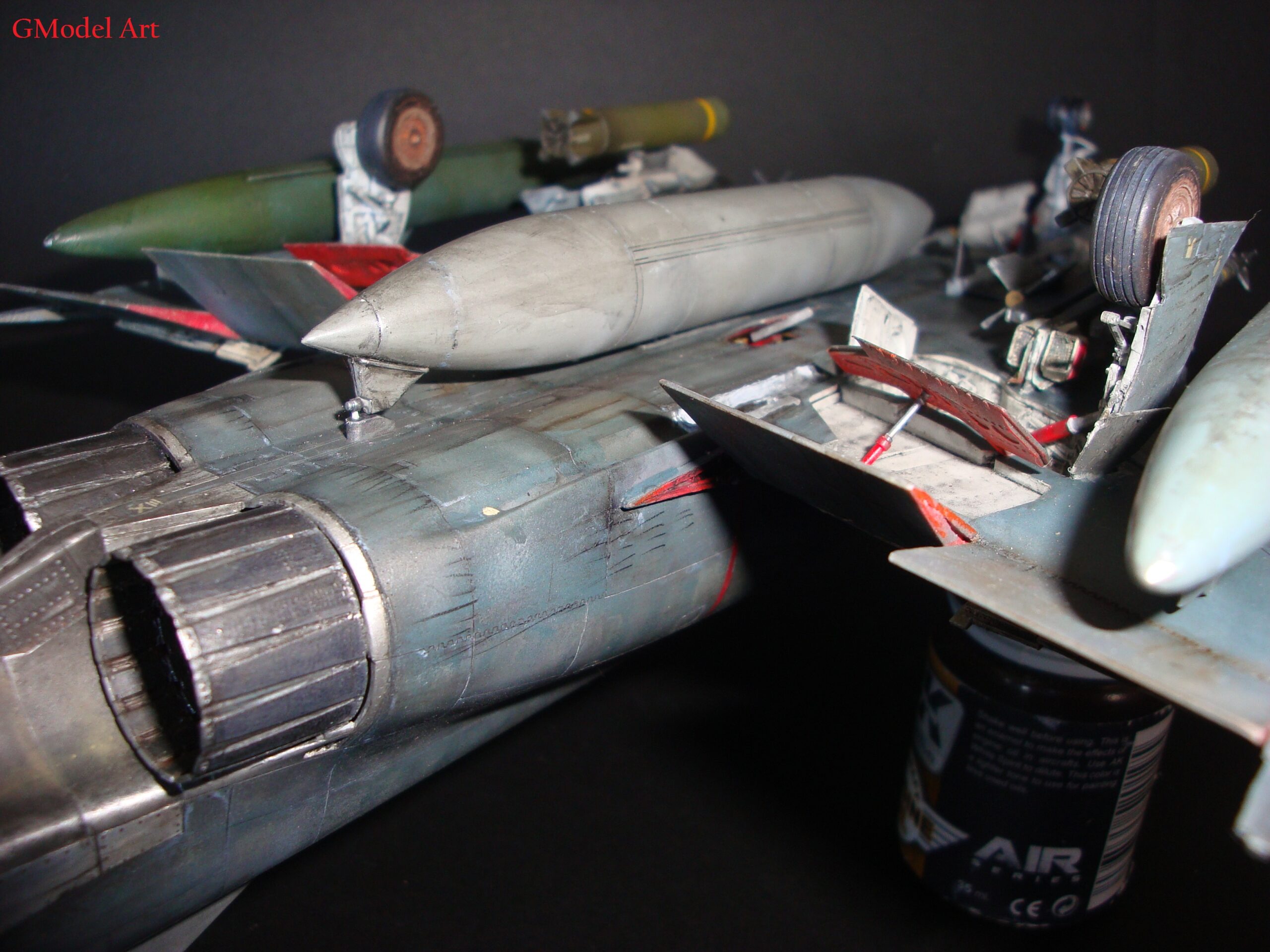
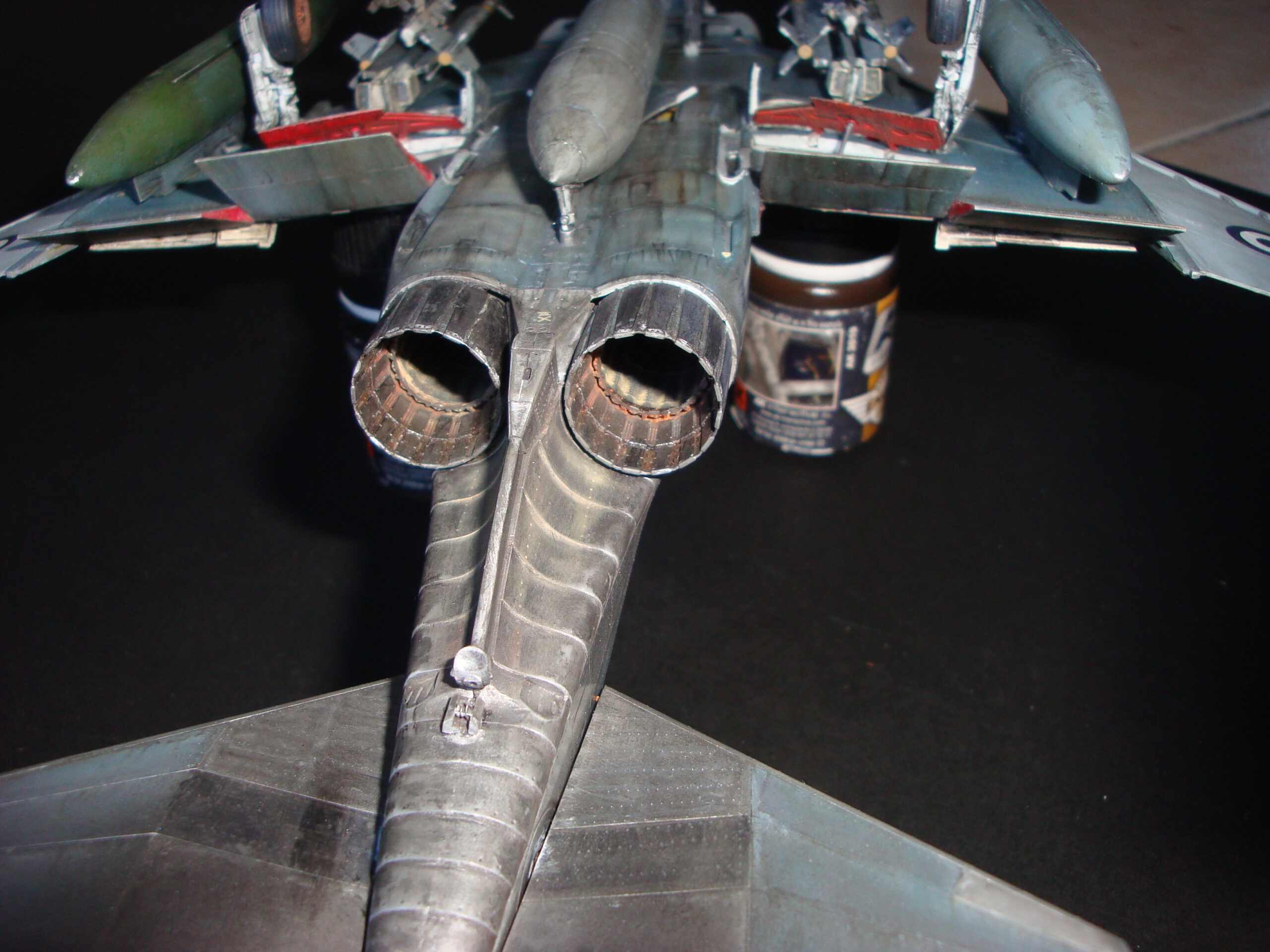
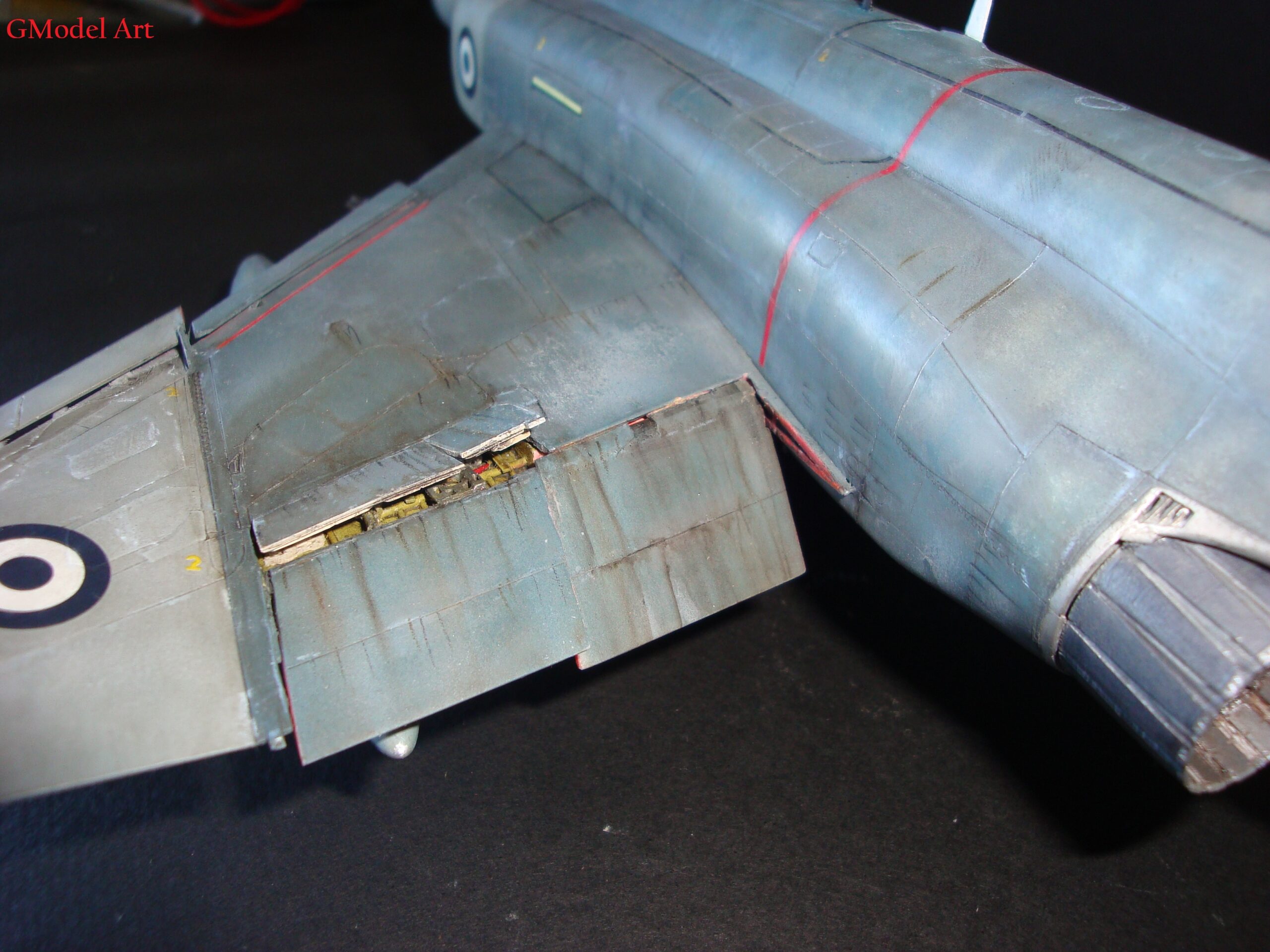
- panel lines and access panels
- surface weathering
- maintenance and paint variations
Not every detail visible on another Greek F-4E necessarily belongs on 68-0424.
That is the advantage of researching an individual aircraft.
Photographic References for the Model
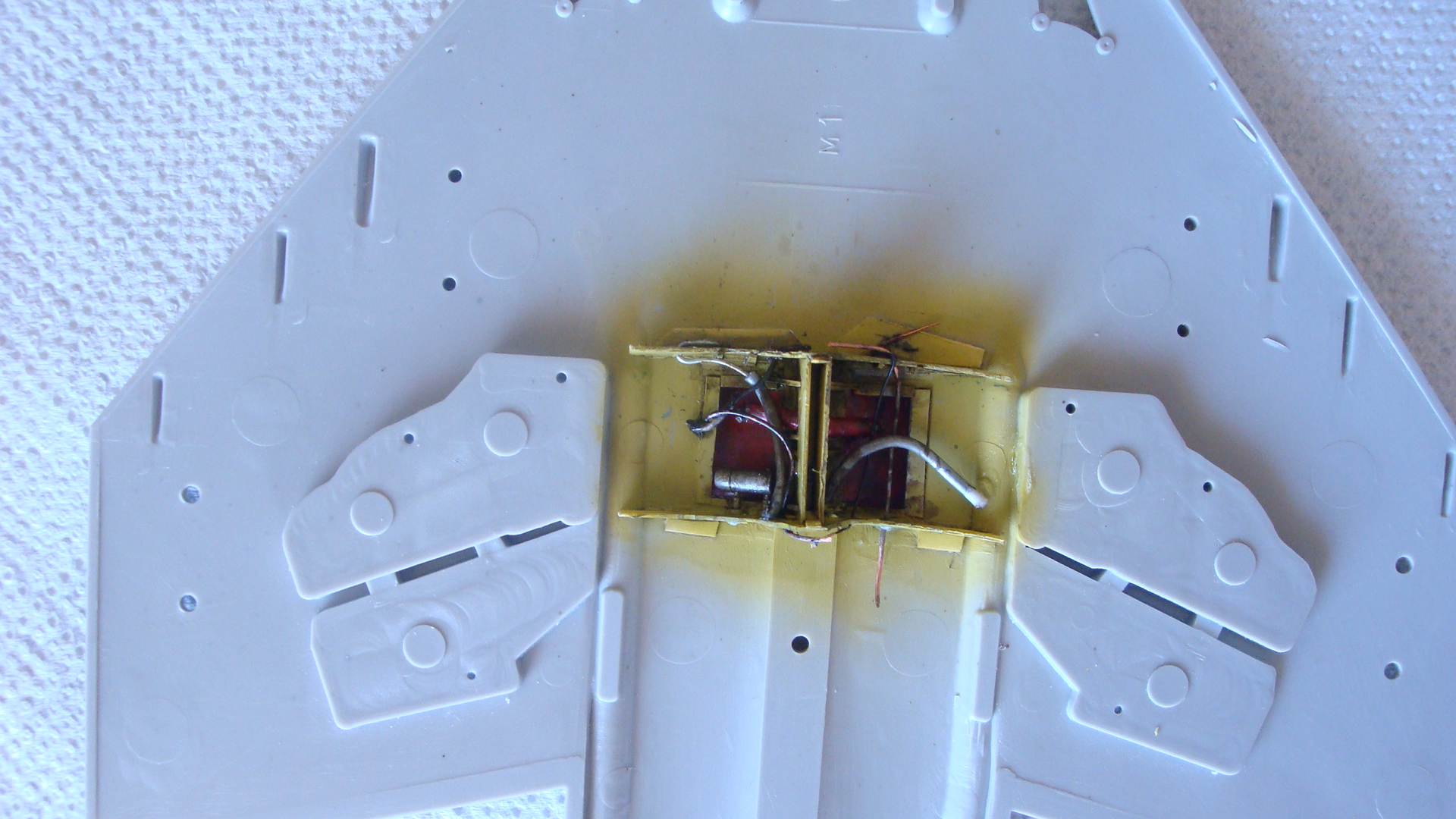
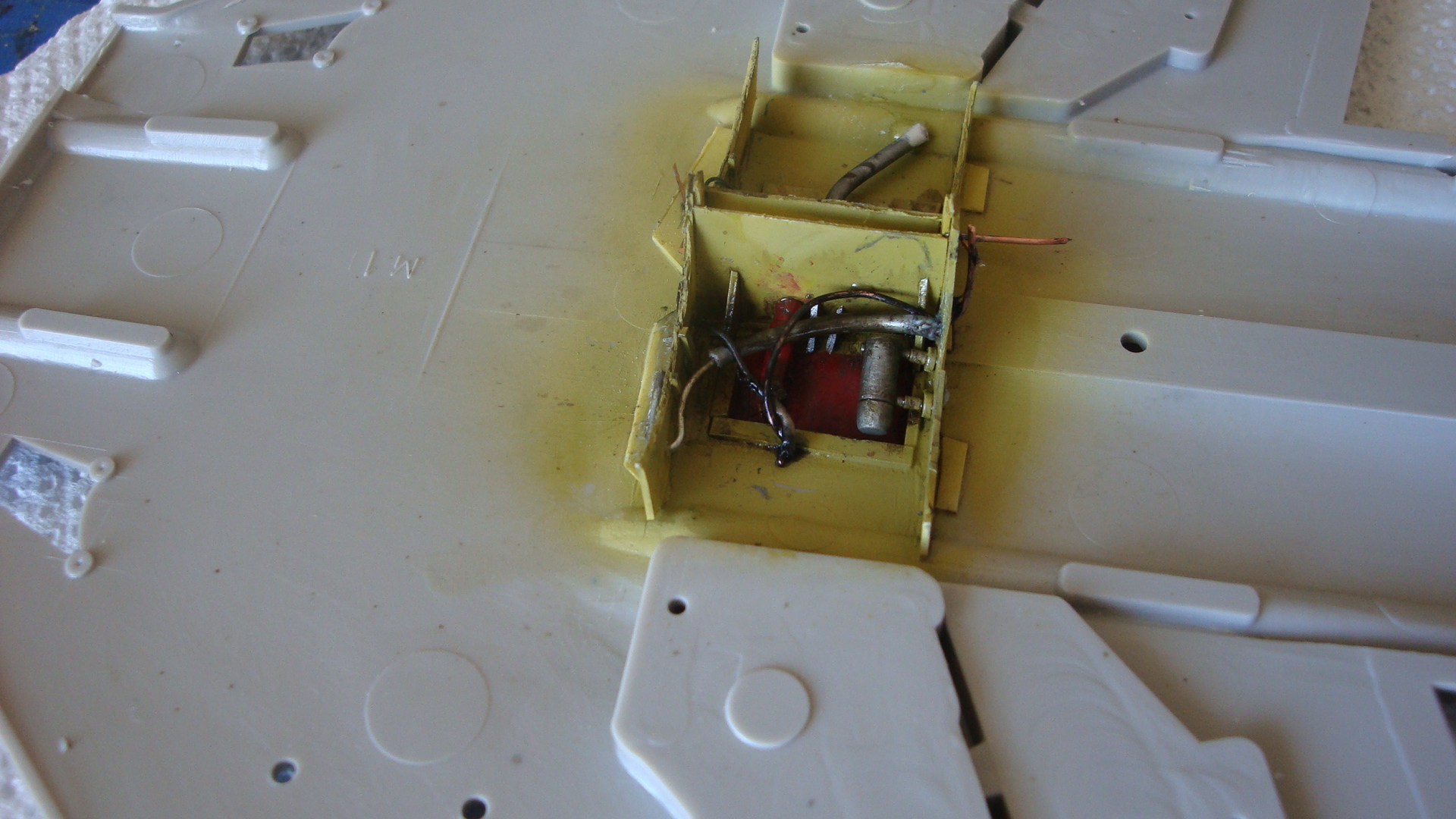
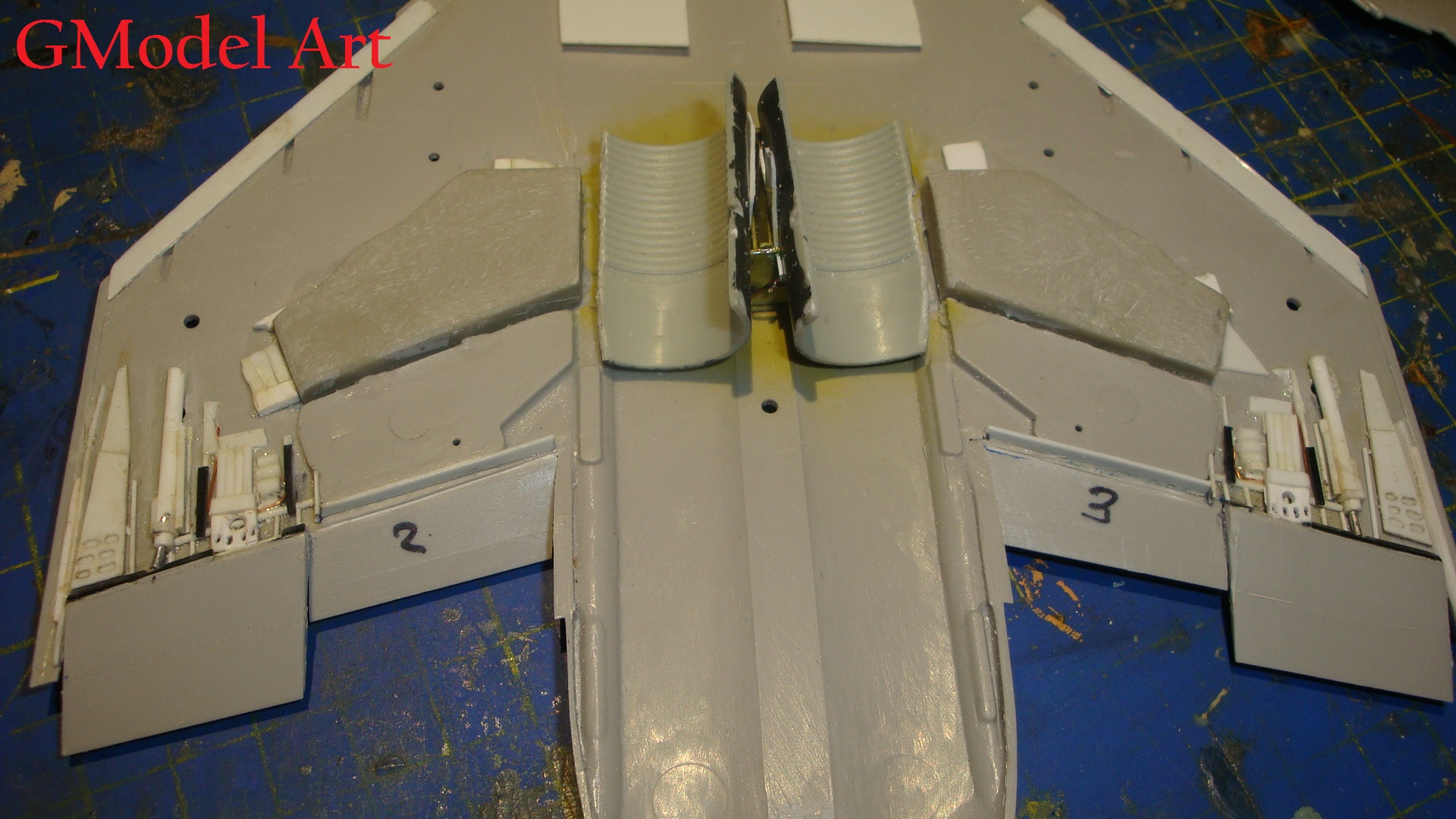
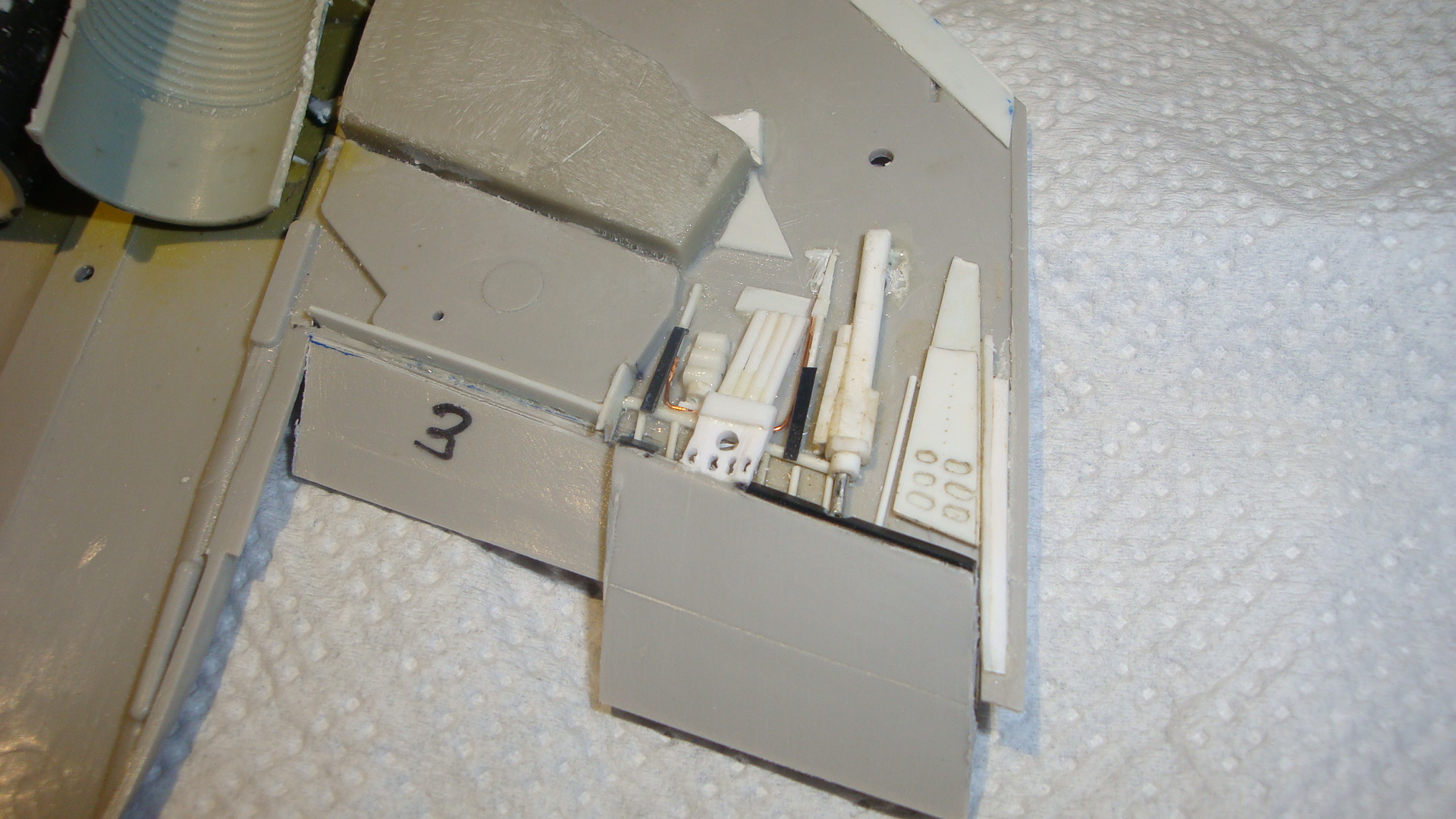
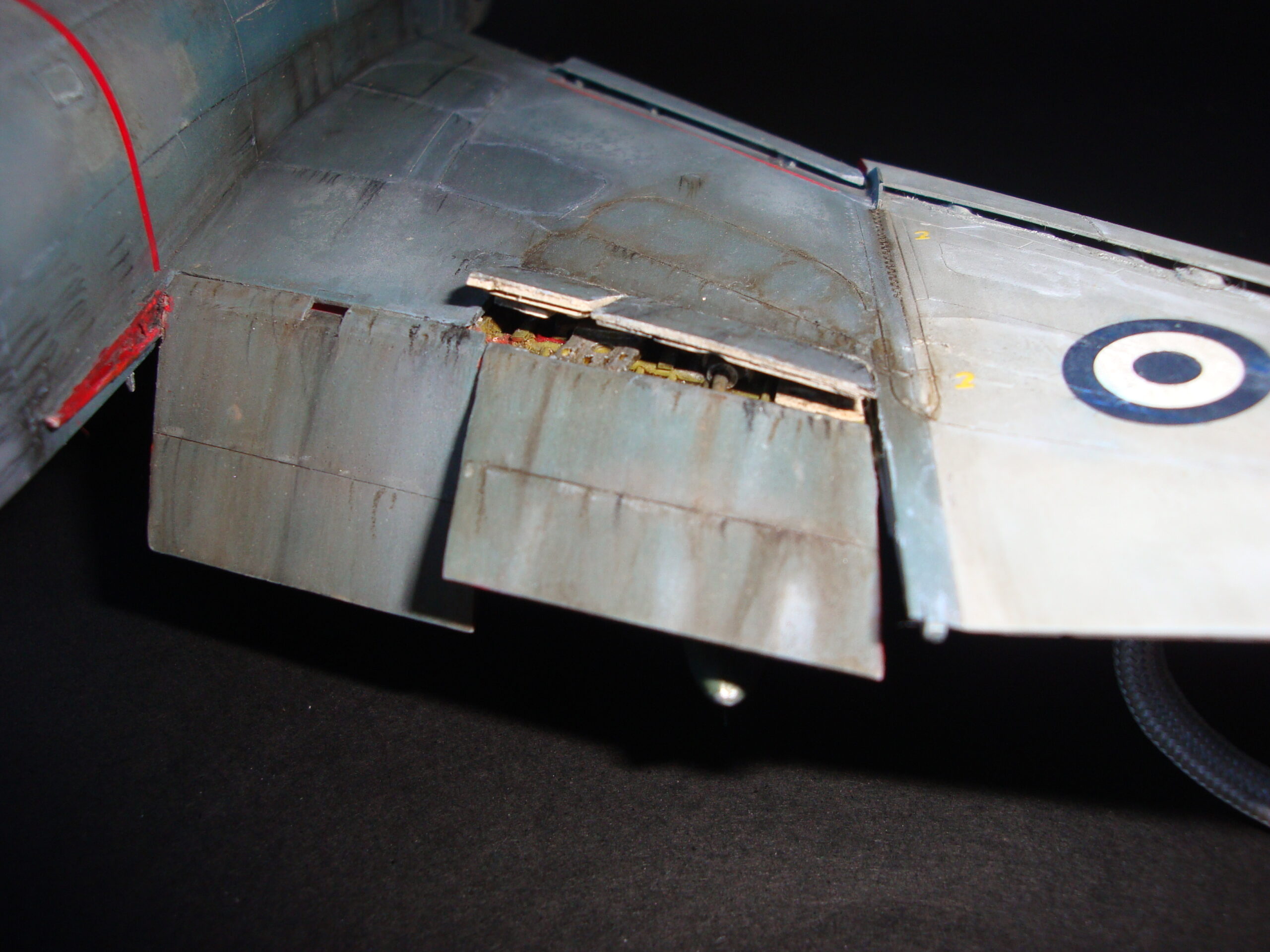
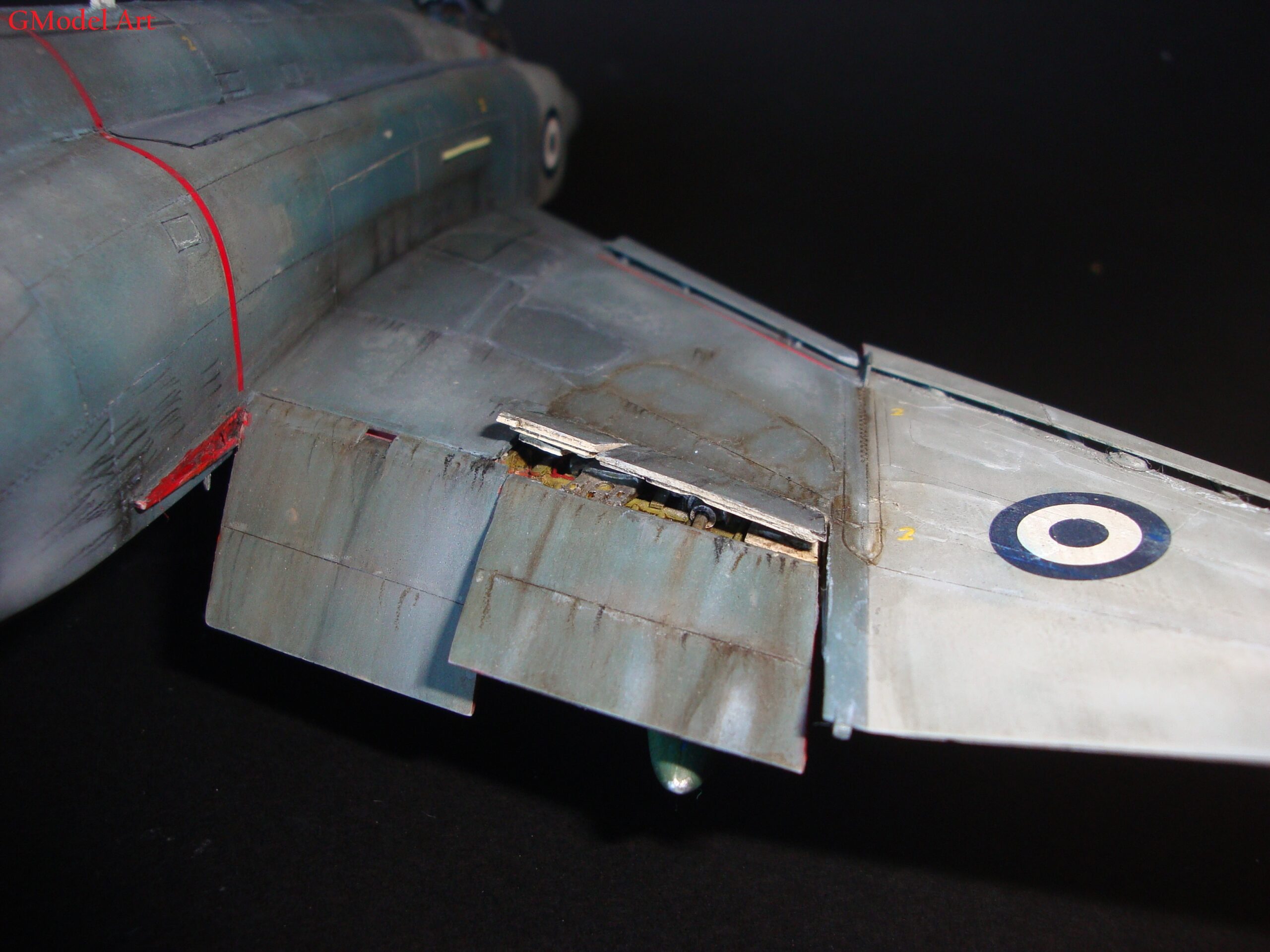
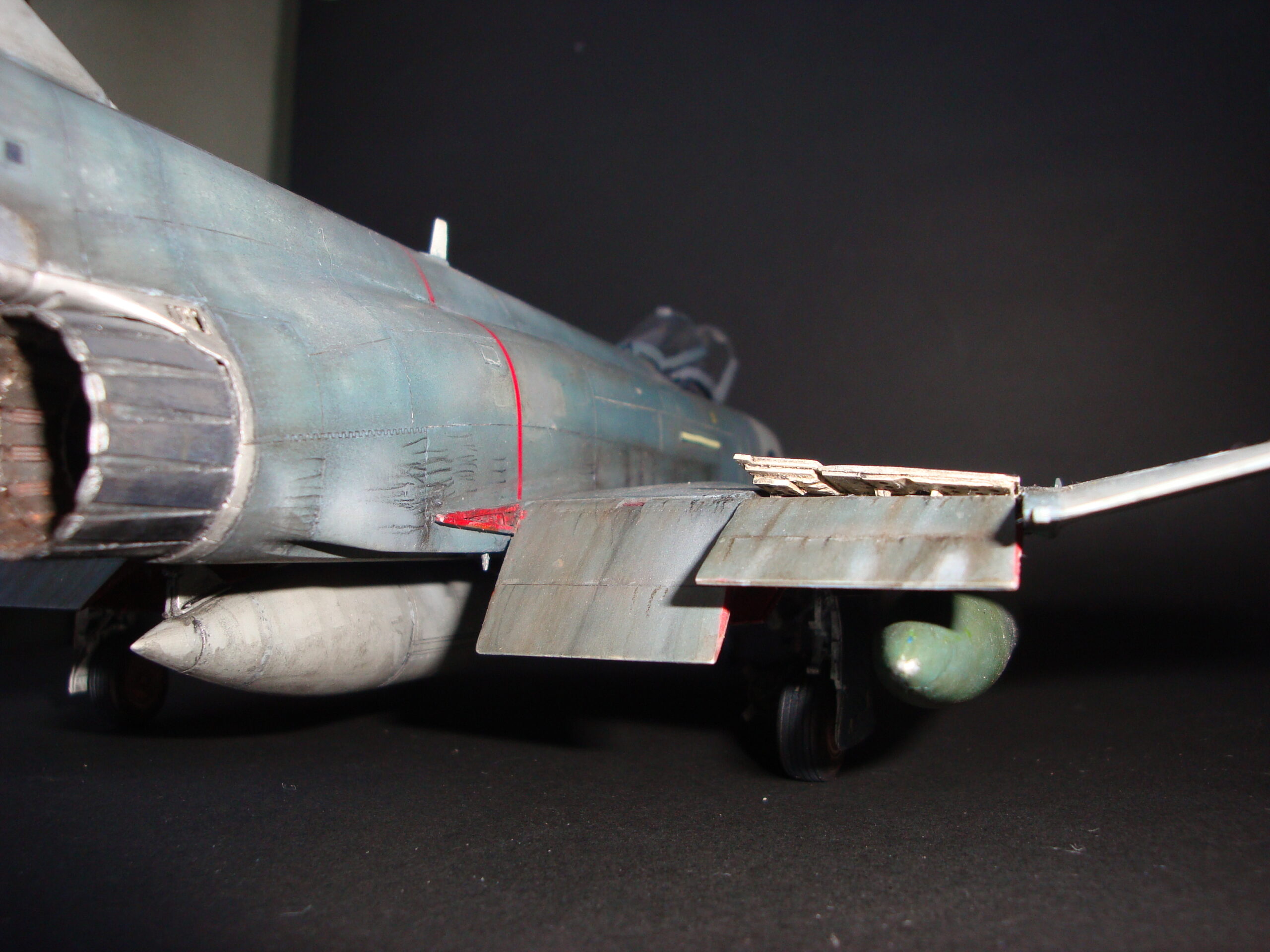
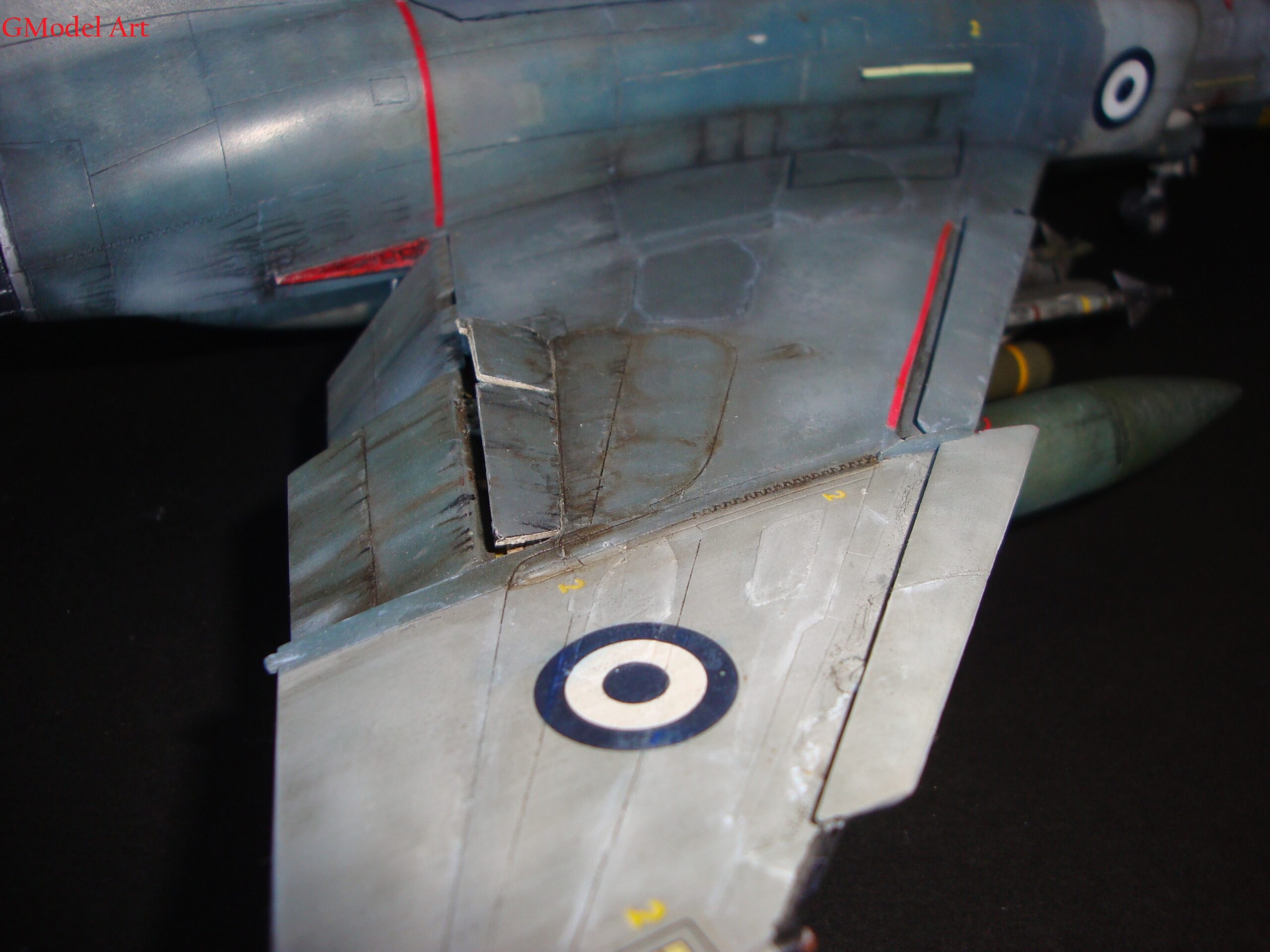
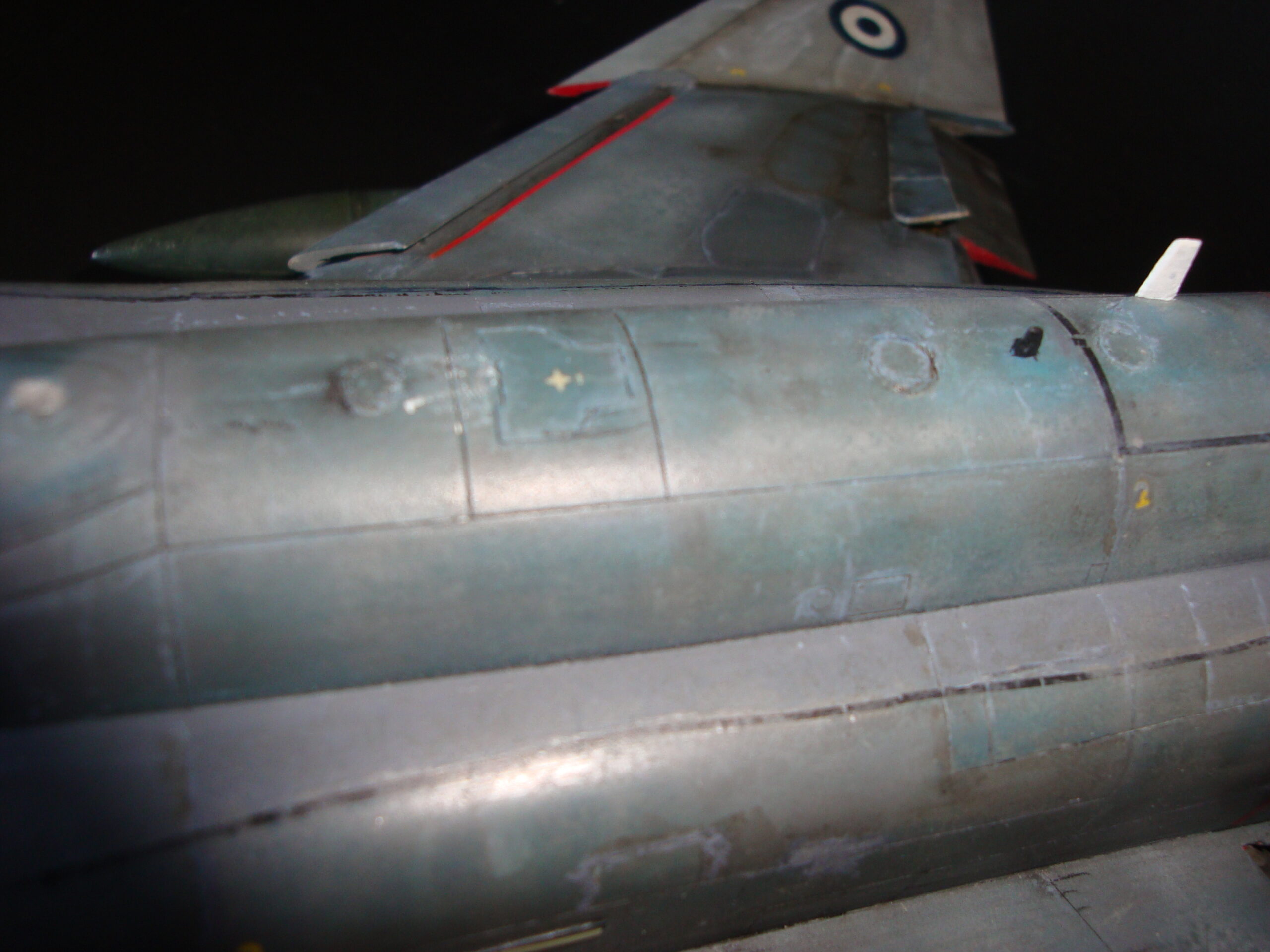
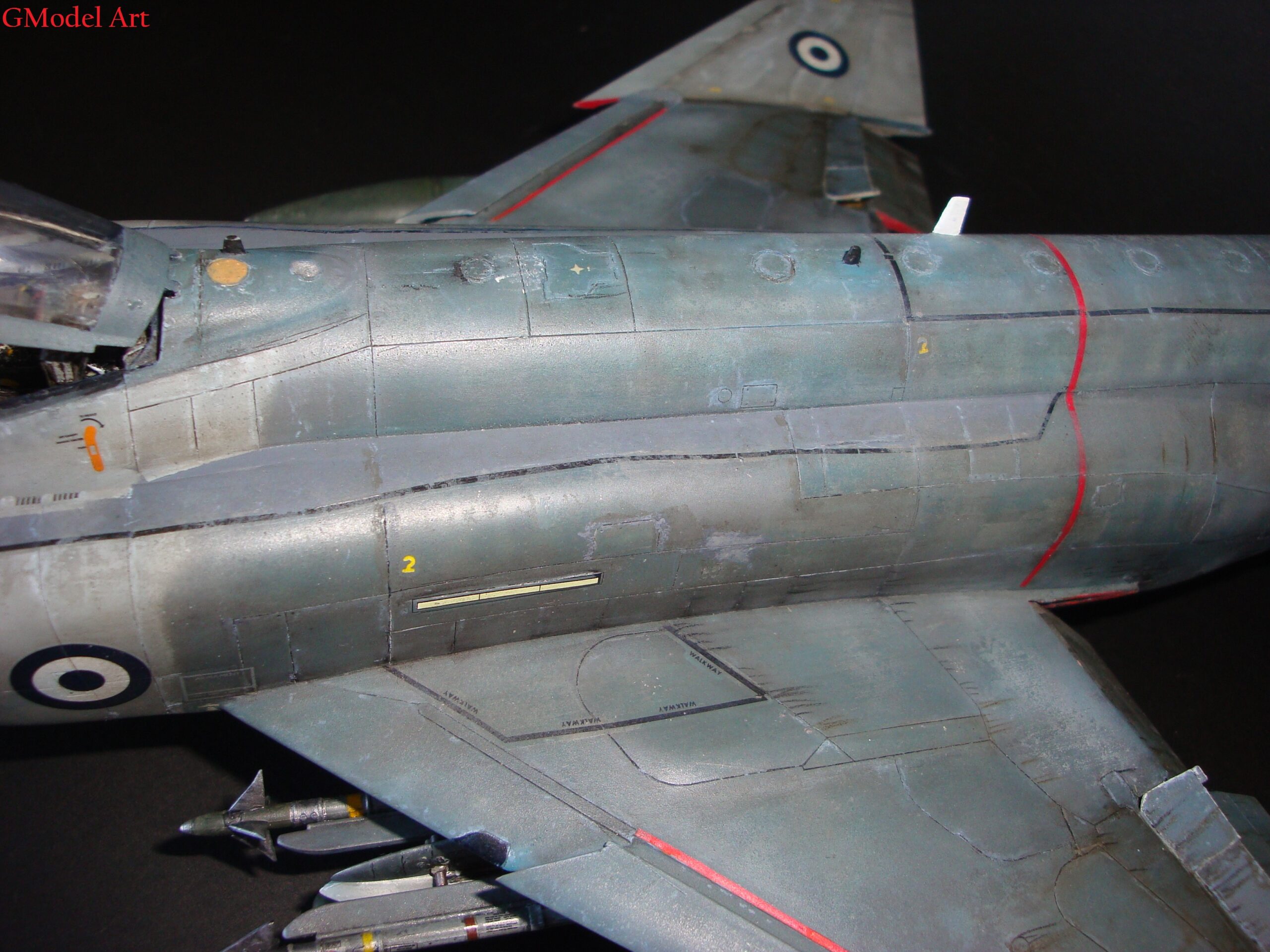
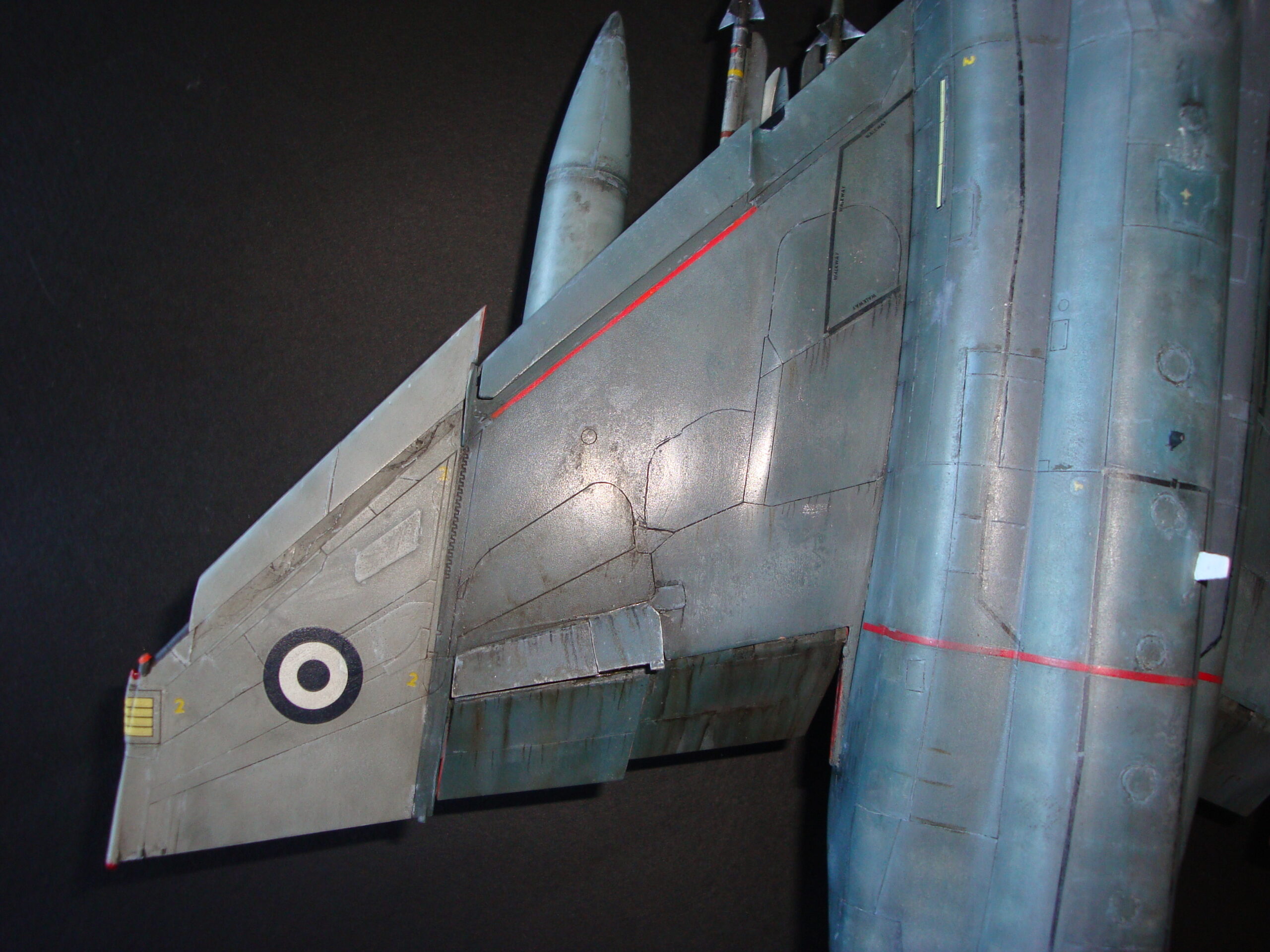
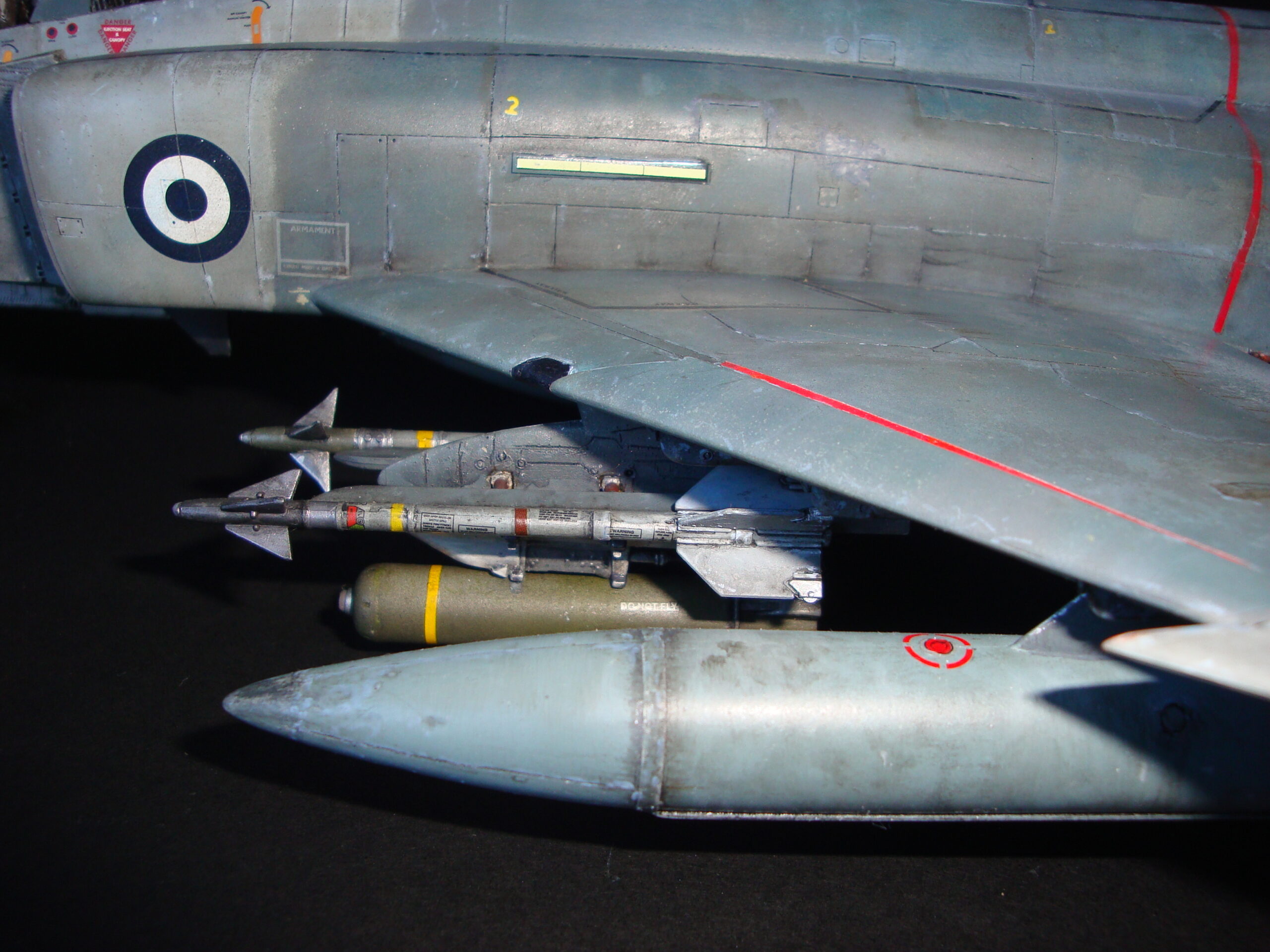
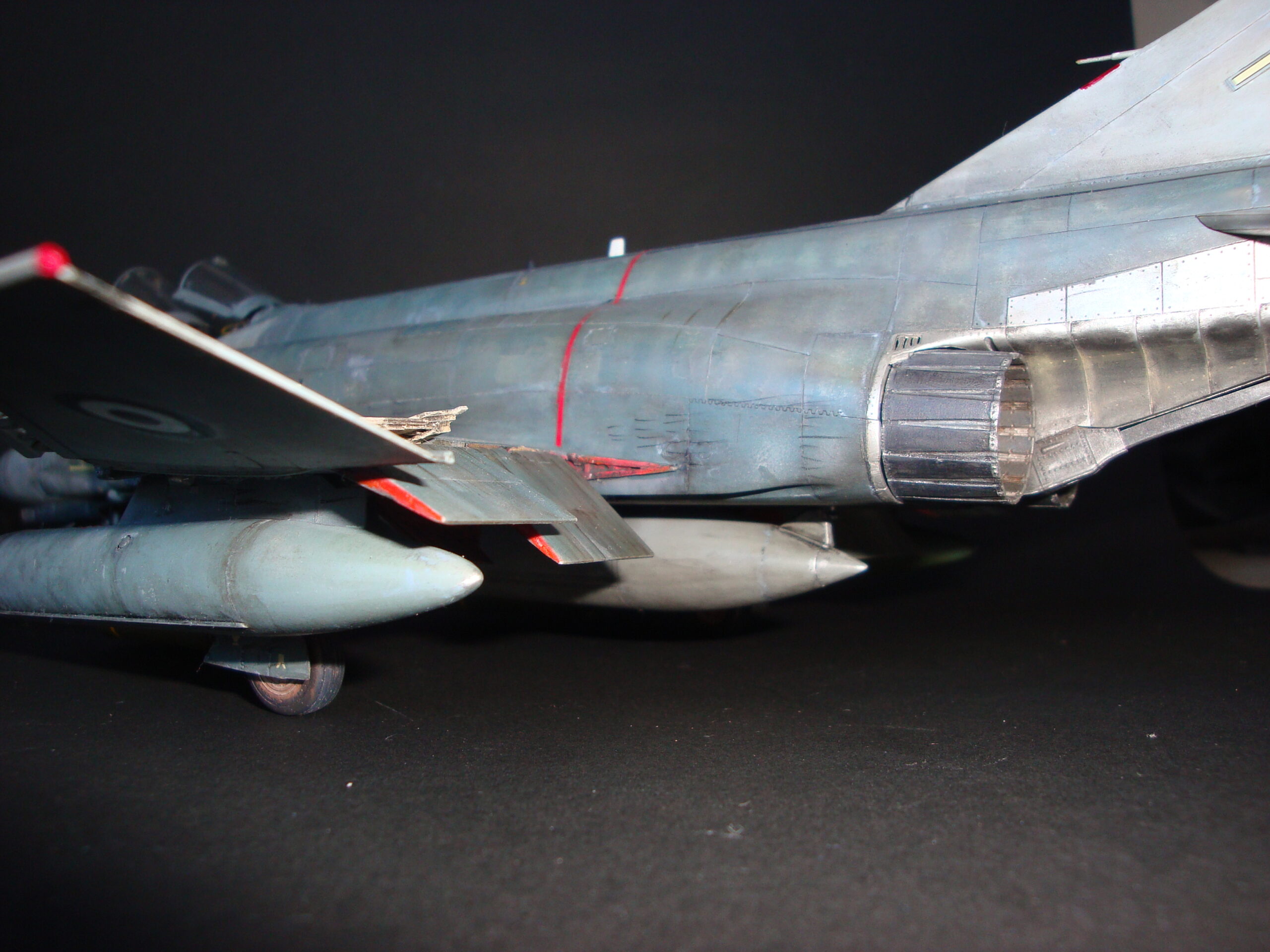
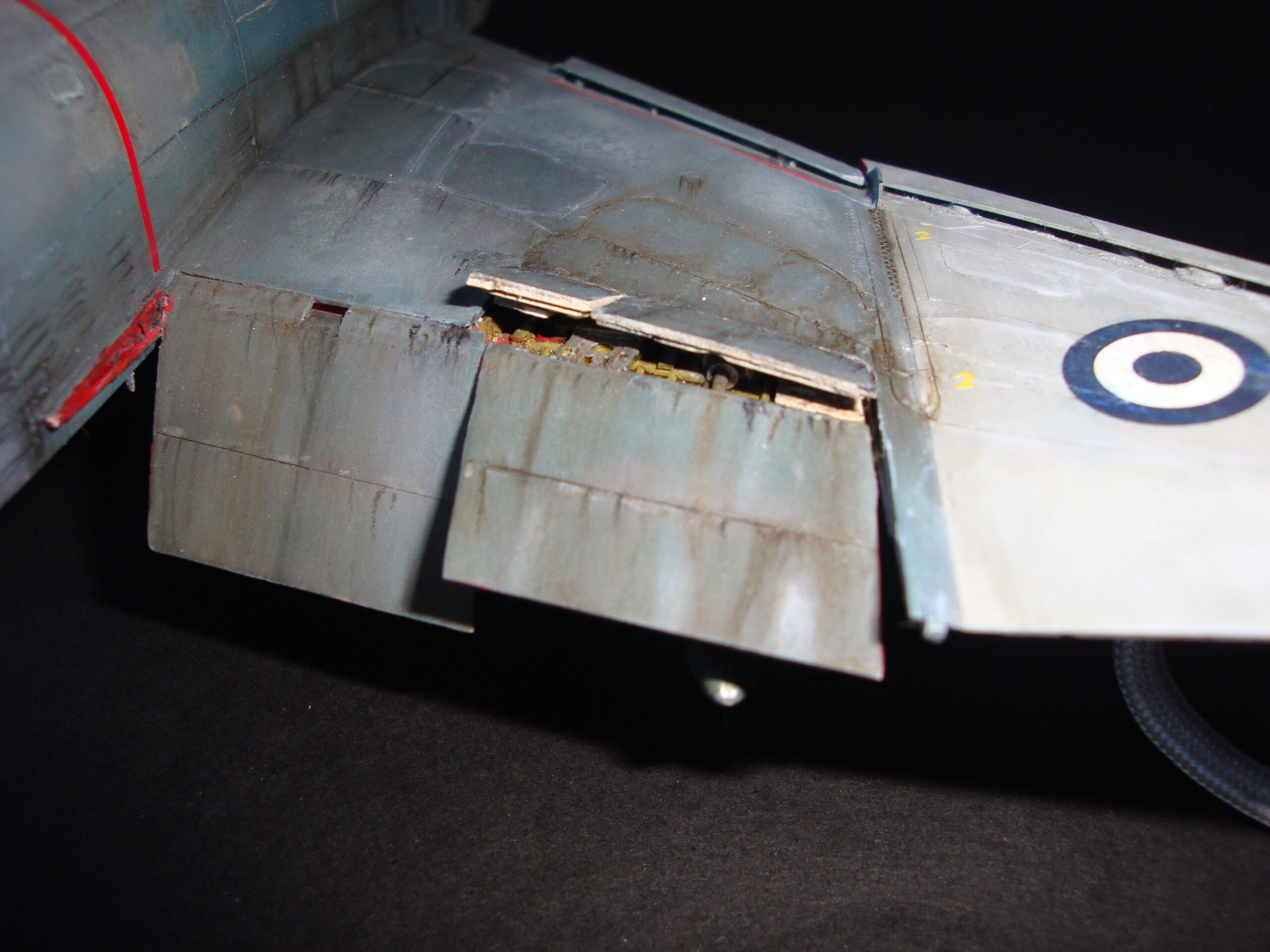
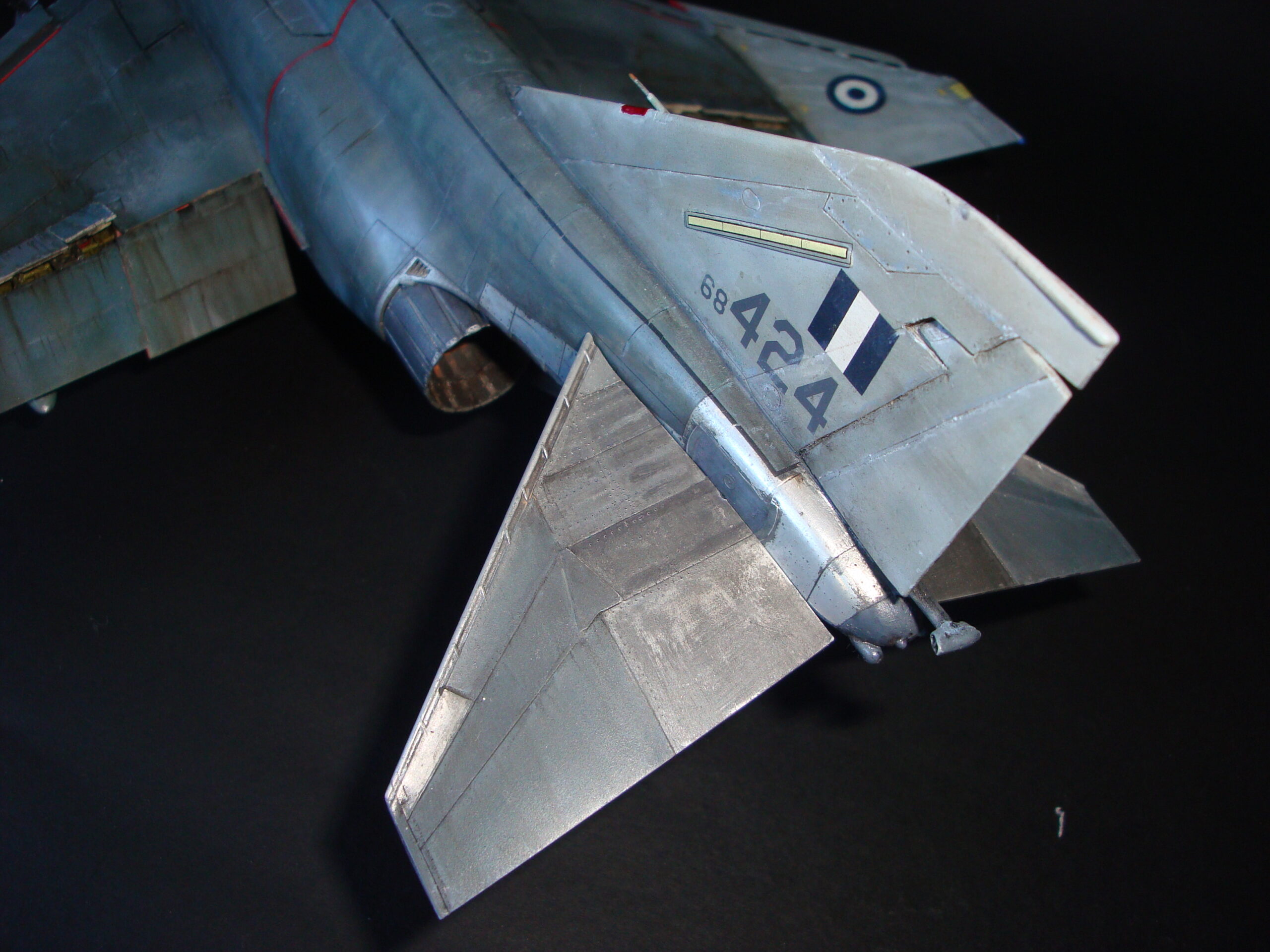
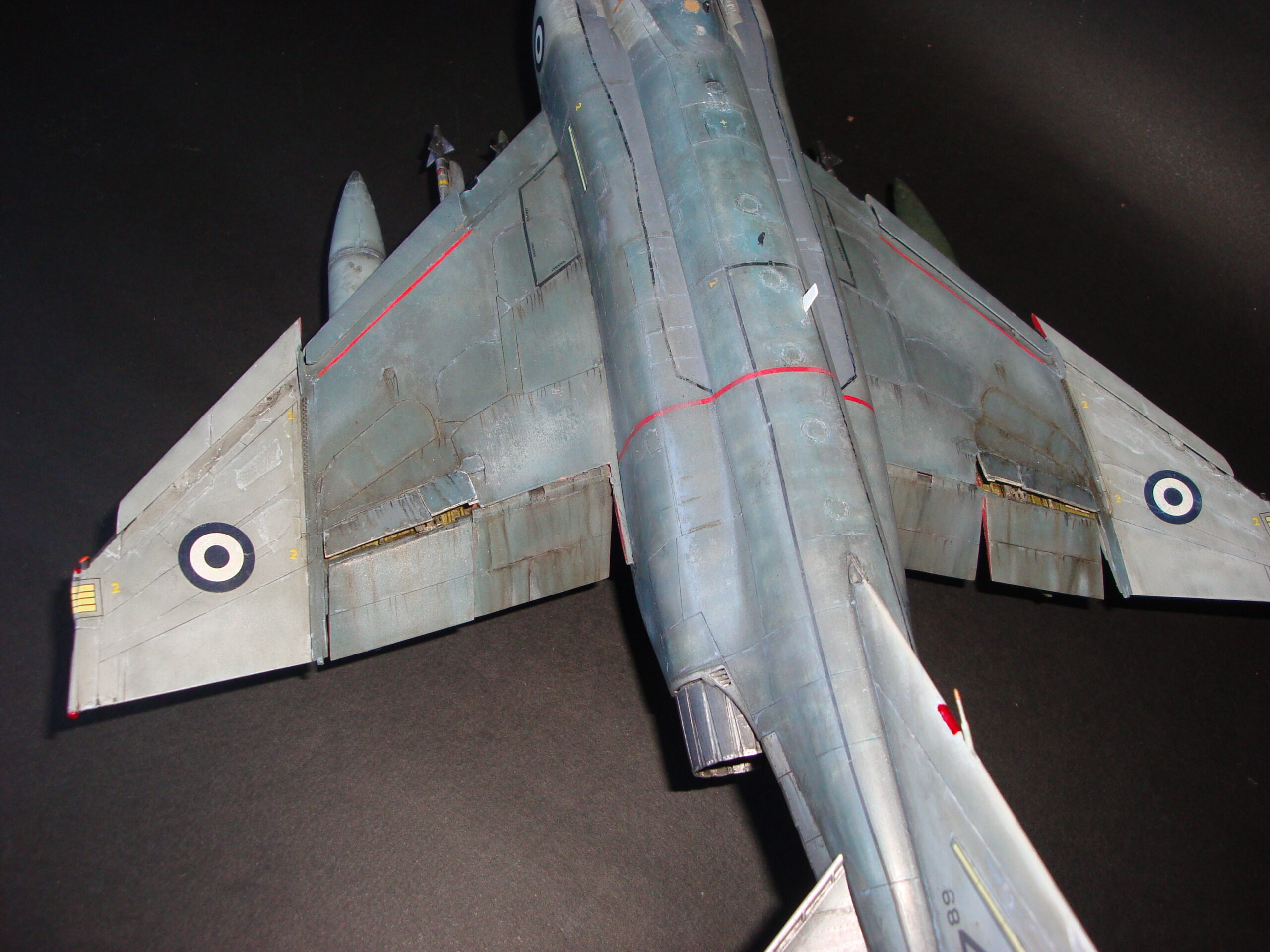
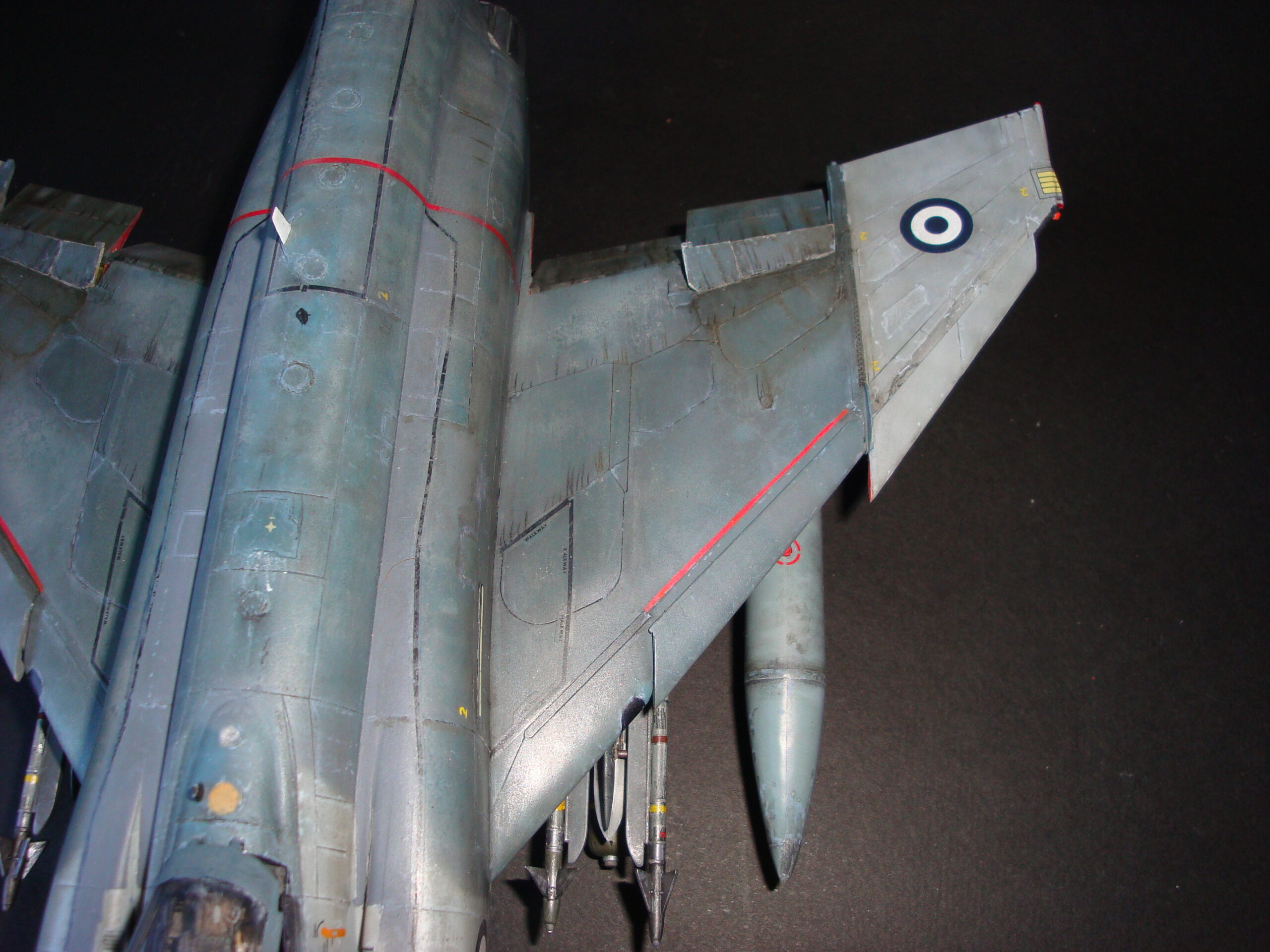
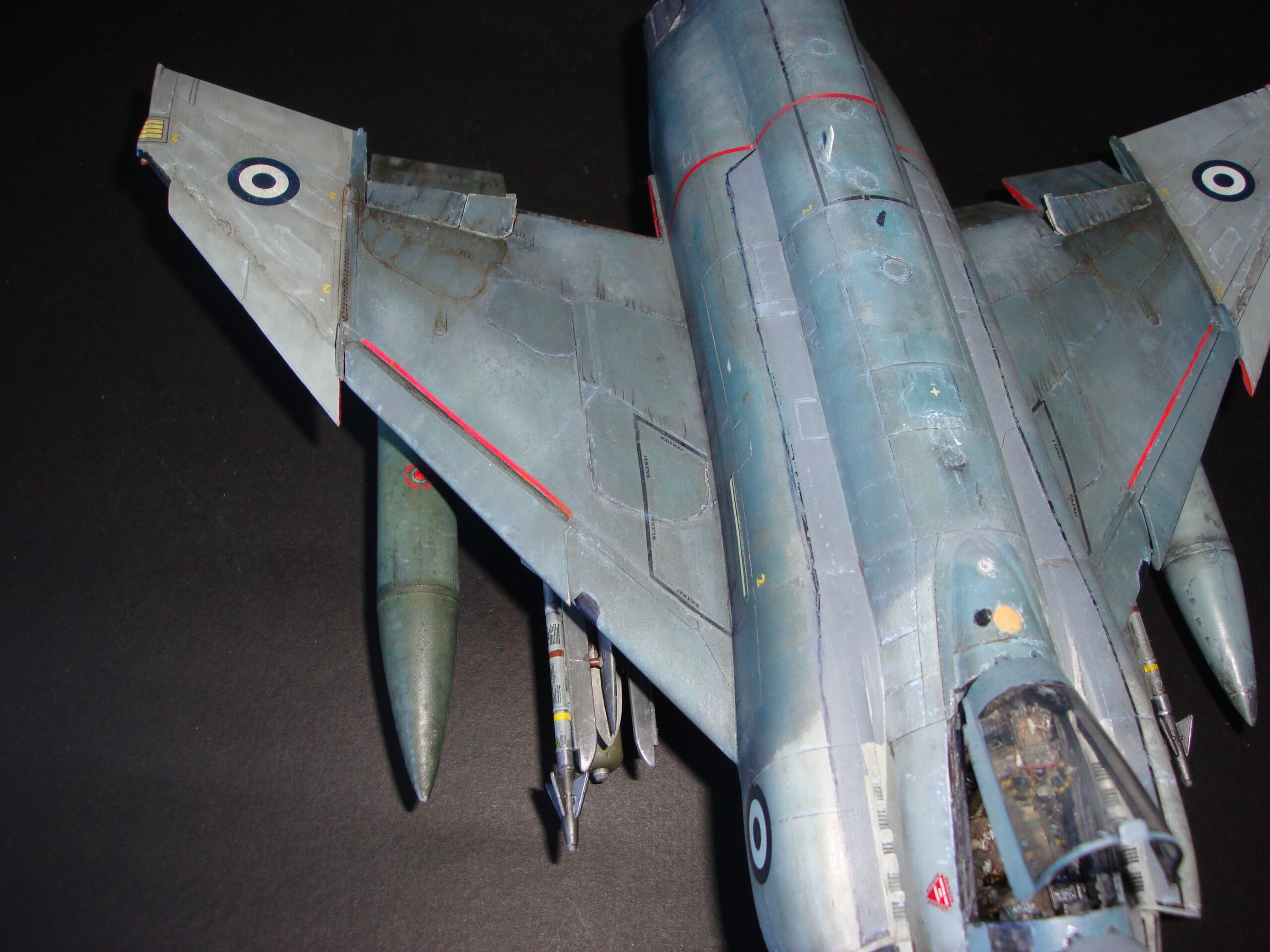
The photographs accompanying this article are an important part of the build.
Rather than relying only on general photographs of the Hellenic Air Force F-4E Phantom II, the objective is to use images of the actual aircraft to identify details that can easily be missed when working from a generic reference.
This is particularly useful for the windshield.
On a large aircraft such as the Phantom, small differences can become very obvious in 1/48 scale. A change in windshield framing, an antenna, a panel or a marking can completely change the appearance of a finished model.
The photographic documentation of 68-0424 therefore becomes part of the modeling process itself.
The Hasegawa 1/48 Build
The Hasegawa 1/48 F-4E Phantom II provides the foundation for this representation of the Greek SRA aircraft.
The objective is not simply to produce another F-4E Phantom II with Greek markings. The aim is to reproduce a particular aircraft and its documented configuration.
This approach makes the research phase just as important as the construction itself.
The modeler first identifies the aircraft, establishes the period represented, studies the available photographs and then compares those references with the kit.
The result is a much more precise scale model because every visible feature has a reason for being there.
F-4E Phantom II SRA 68-0424 – Modeler’s Reference
| Detail | Model |
|---|---|
| Aircraft | McDonnell Douglas F-4E Phantom II |
| Aircraft serial | 68-0424 |
| Operator | Hellenic Air Force |
| Aircraft group | F-4E SRA |
| SRA | Southeastern Regional Agreement |
| Scale | 1/48 |
| Kit manufacturer | Hasegawa |
| Camouflage reference | Hill Gray |
| Distinctive feature | One-piece windshield |
| Modeling subject | Specific aircraft 68-0424 |
Why This F-4E Is an Interesting Scale Modeling Subject
The F-4E Phantom II is already one of the most popular subjects for aircraft modelers, but reproducing an individual aircraft adds another level of research to the build.
The Hellenic Air Force F-4E SRA 68-0424 is especially interesting because its one-piece windshield immediately distinguishes it from the standard appearance of many F-4E Phantom II aircraft.
That single feature makes the aircraft worth studying in detail.
Combined with the Hill Gray camouflage, Greek service history and photographic references, it gives the modeler the opportunity to build something more specific than a standard Phantom II.
The result is not simply a Hasegawa 1/48 F-4E Phantom II.
It is a scale representation of Hellenic Air Force F-4E Phantom II 68-0424.
| Feature | Modeling consideration |
|---|---|
| Aircraft | McDonnell Douglas F-4E Phantom II |
| HAF serial | 68-0424 |
| Construction number | 3541 |
| SRA aircraft | Yes |
| Windshield | One-piece / single-piece configuration |
| Original operator | U.S. Air Force / Air National Guard |
| Greek service | Hellenic Air Force |
| Initial Greek unit | 338 Squadron |
| Later operational unit | 337 Squadron |
| Initial camouflage | Hill Gray |
| Retirement | December 2005 |
| Important reference | Larissa photograph, 16 December 2005 |
The windshield should be the first point checked against the kit being used. The second is the aircraft’s camouflage and markings for the specific date being represented.
This is especially important when using aftermarket decals. A decal sheet may correctly identify the aircraft serial but still depict a configuration that belongs to another period of the aircraft’s career.
| FS 36118 | FS 36270 | FS 36375 | |
| Medium Gunship Gray | Medium Gray | Light Ghost Gray | |
| Schemes | |||
| F-4E Phantom II / Hill Gray I | Upper | Sides | Lower |
| Hill Gray II | Upper | Lower | |
| Color matches | |||
| Gunze Mr. Color | C305 | C306 | C308 |
| Gunze Mr. Hobby | H305 | H306 | H308 |
| Humbrol | 125 | 126 | 127 |
| Italeri | 4752AP | 4746AP | 4762AP (!) |
| Model Master | 1723 | 1725 | 1728 |
| Revell | 74 | 43 | – |
| Tamiya Acrylic | (XF-24) | – | – |
| Tamiya Lacquer | – | LP-85 | LP-37 |
| Vallejo Model Air | 71.097* | 71.275 | – |
| Vallejo Model Color | 70.836* | 70.870 | 70.615 |
| AKAN | 6/72040 | 6/72028 | 6/72032 |
| AK 3Gen Acrylic | AK11881 | AK11886 | AK11888 |
| AK Real Colors | RC913 | RC918 | RC920 |
| AMMO by Mig | A.MIG-204 | A.MIG-211 | A.MIG-203 |
| Hataka | HTK-_031 | HTK-_054 | HTK-_037 |
| Lifecolor | UA 022 | UA 028 | UA 026 |
| Mission Models | MMP-084 | MMP-118 | MMP-073 |
| Mr. Paint | MRP-40 | MRP-39 | MRP-38 |
| Xtracolor | X130 | X133 | X136 |
| Xtracrylix | XA1130 | XA1133 | XA1136 |
Final Thoughts
Building a historically specific aircraft requires more than a good kit and a set of decals.
The Hasegawa 1/48 F-4E Phantom II provides the starting point, while the photographs of Hellenic Air Force F-4E SRA 68-0424 provide the information needed to turn that kit into a representation of a particular aircraft.
The one-piece windshield is the most obvious identifying feature, but the camouflage, markings, external equipment and small details are equally important when the objective is an accurate aircraft reproduction.
For modelers interested in Greek Phantoms, the 68-0424 is therefore an excellent subject: a Hellenic Air Force F-4E Phantom II SRA in 1/48 scale, built from the Hasegawa kit and based on photographic evidence of the actual aircraft.
The photographs in this article provide the reference material needed to study the aircraft and its distinctive configuration in detail.
F-4E Phantom II SRA 68-0424 HAF — One-Piece Windshield