article
Republic P-47 Thunderbolt: Inside the Production Line
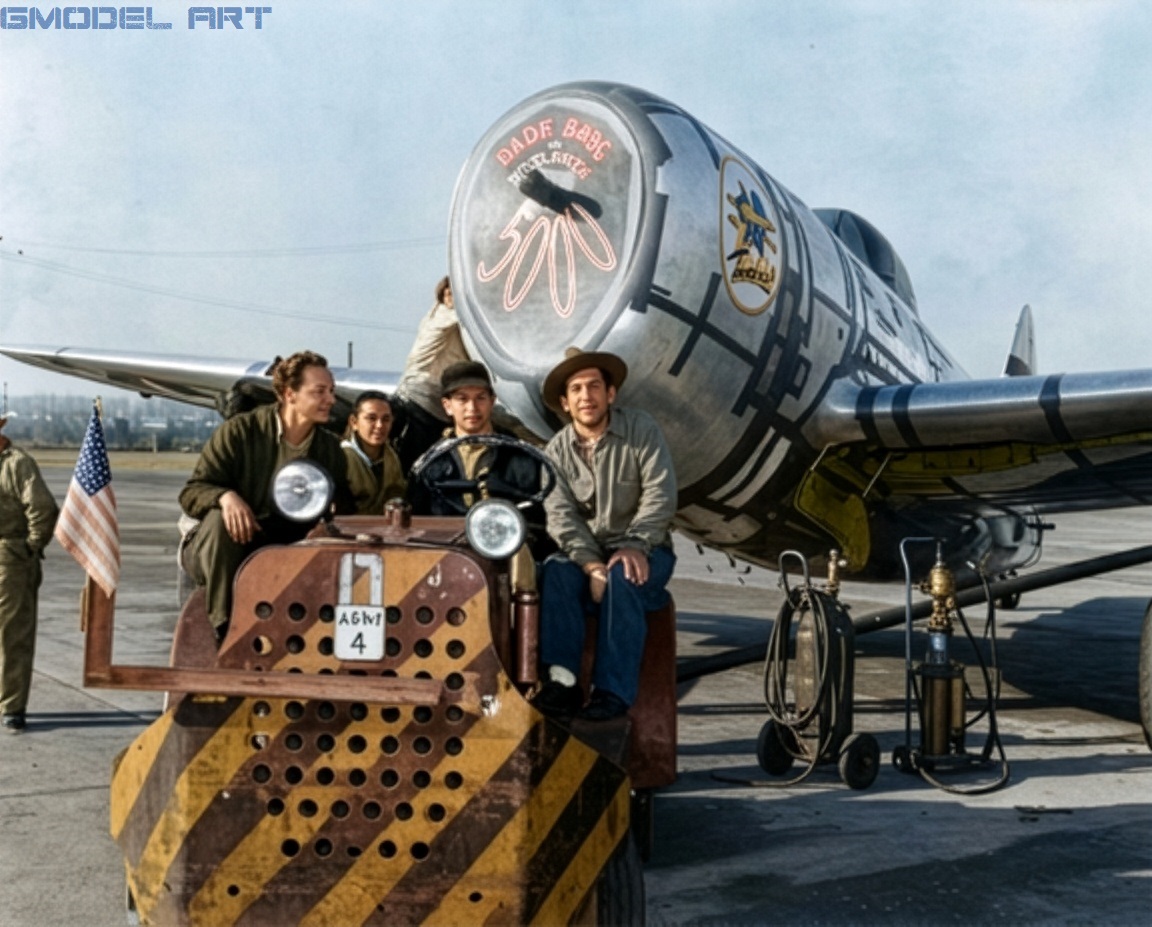
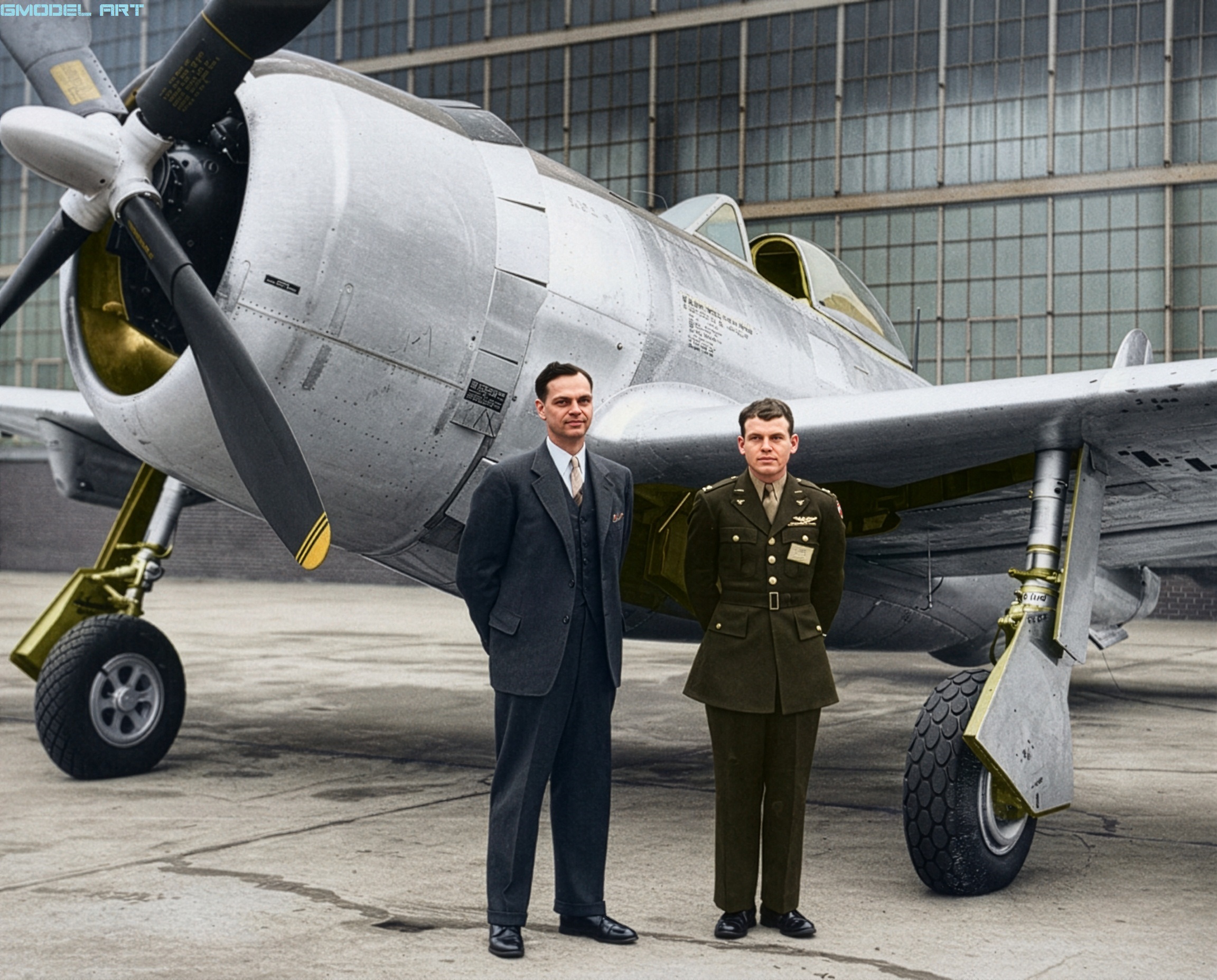
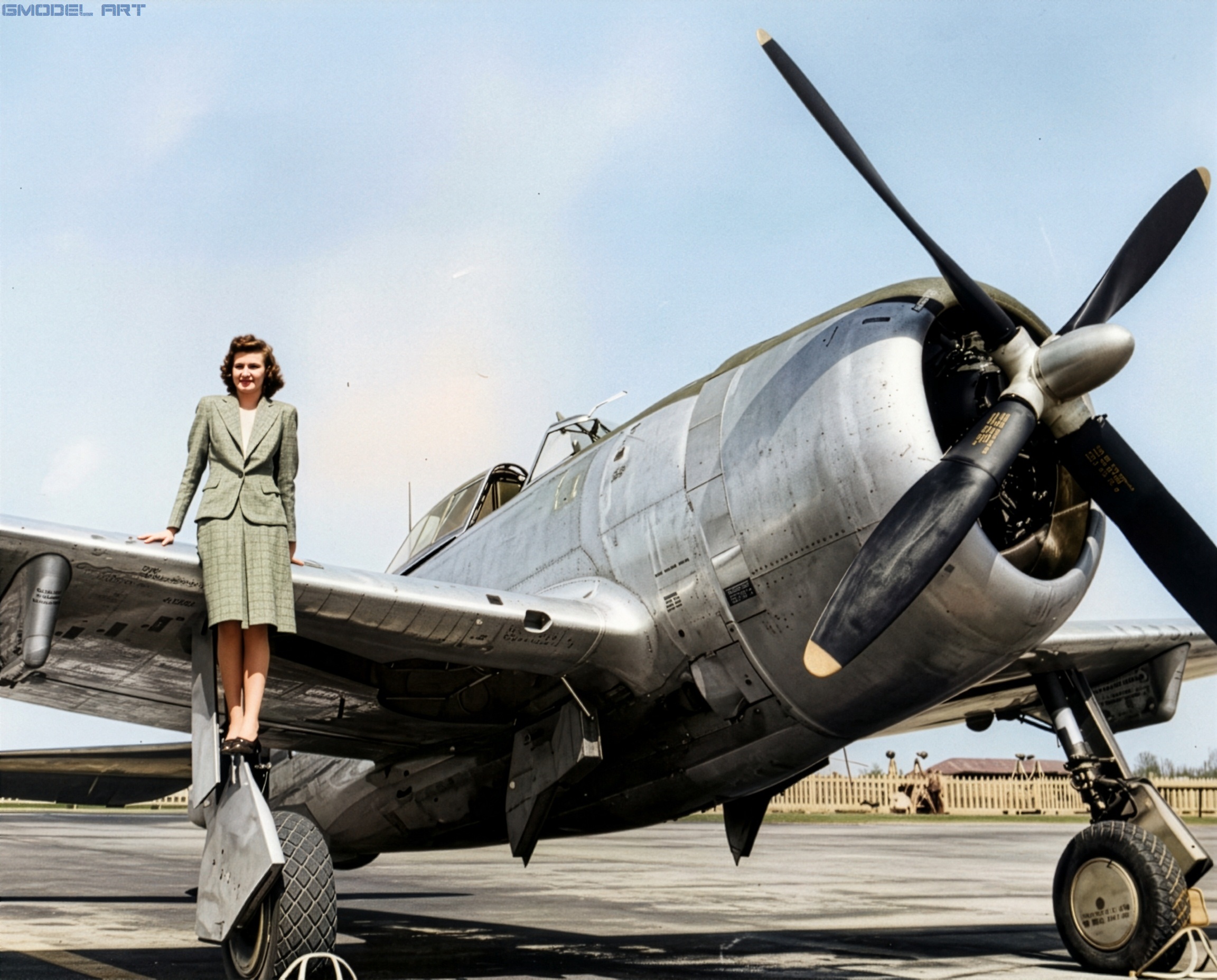
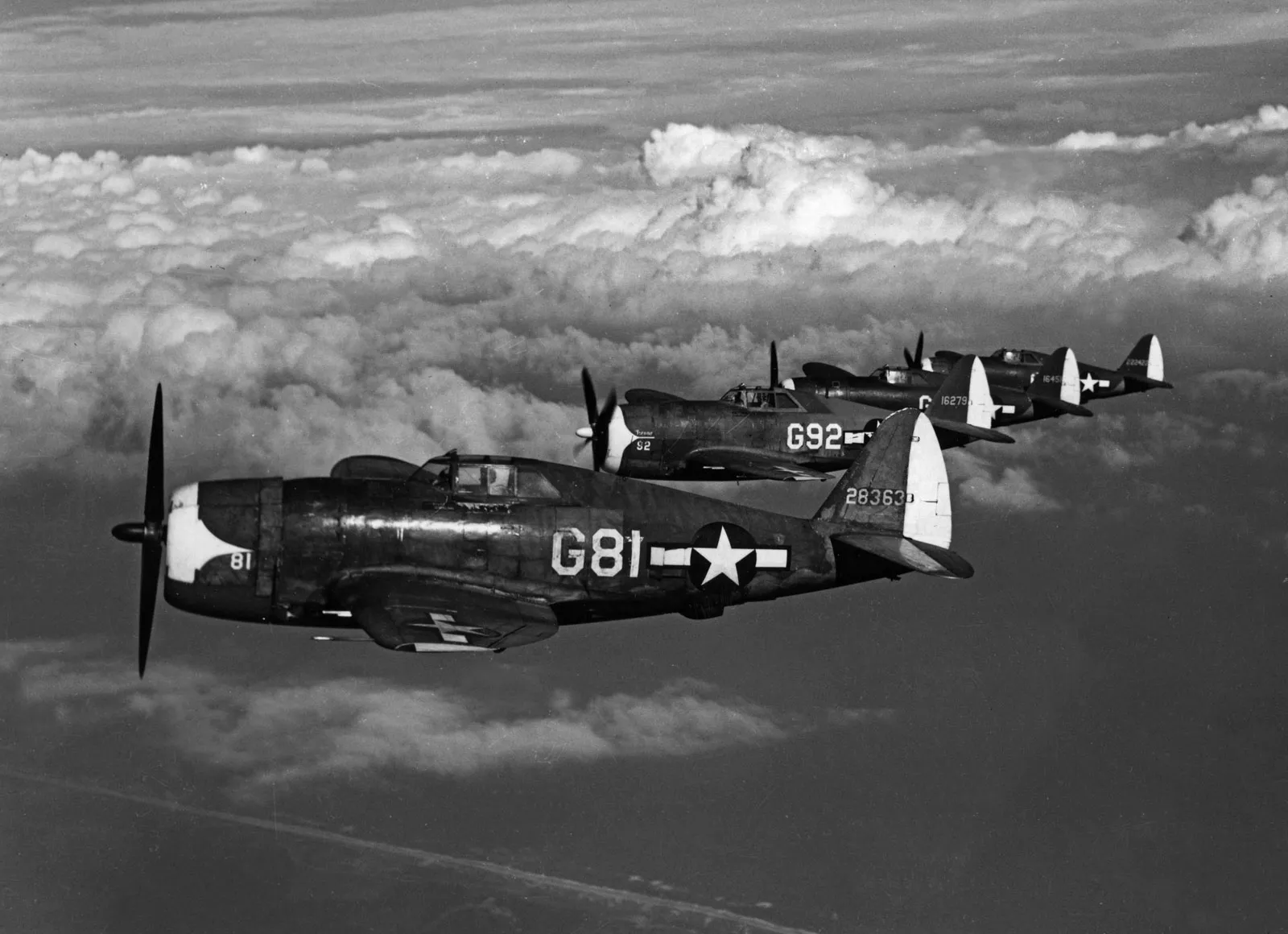
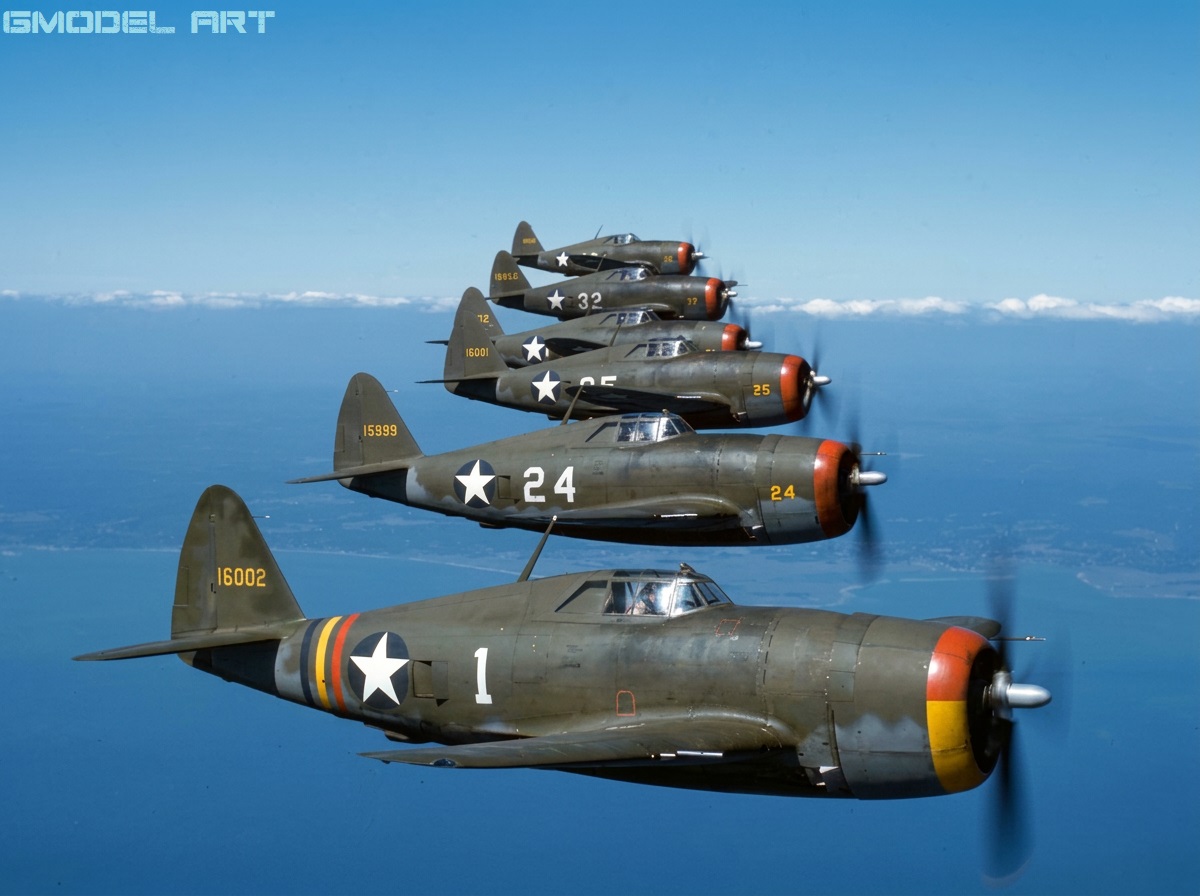
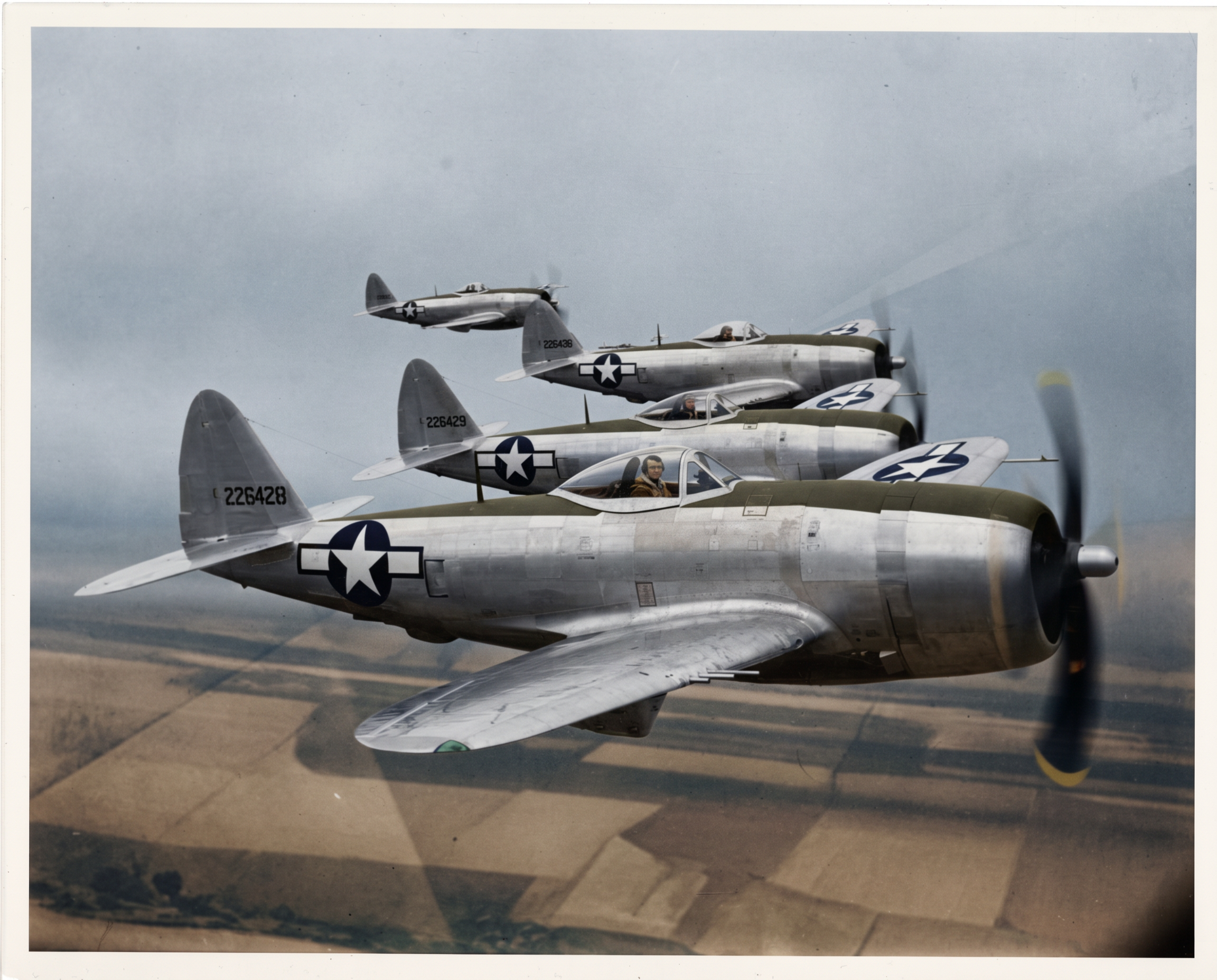
The Republic P-47 Thunderbolt was one of the largest and most powerful single-engine fighters produced by the United States during the Second World War. More than 15,000 aircraft were built, and the P-47 served with the United States Army Air Forces and Allied air forces in both Europe and the Pacific.
Beyond its combat history, however, the Republic P-47 Thunderbolt offers something particularly interesting to the scale modeller: a production process that can be transformed into an exceptionally detailed factory diorama.
From Components to a Complete Thunderbolt
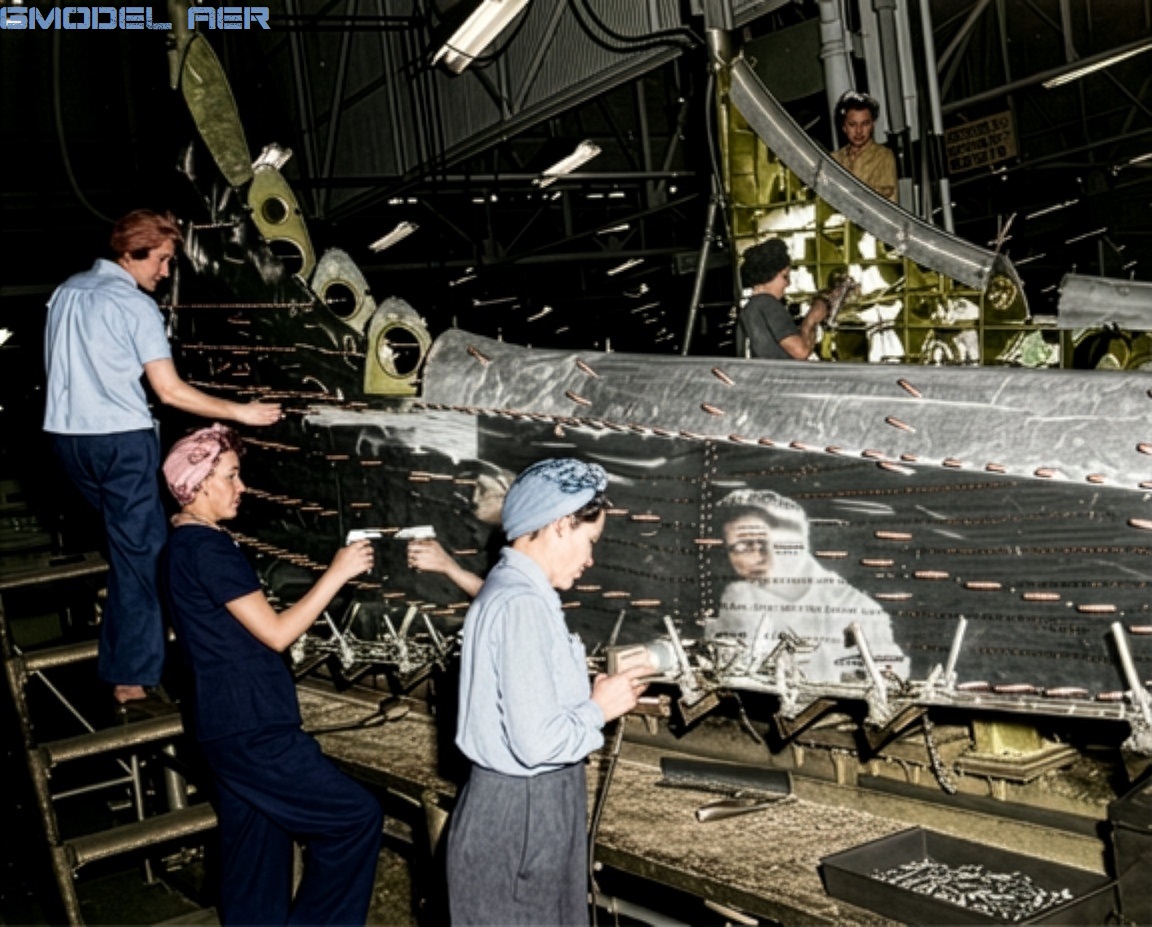
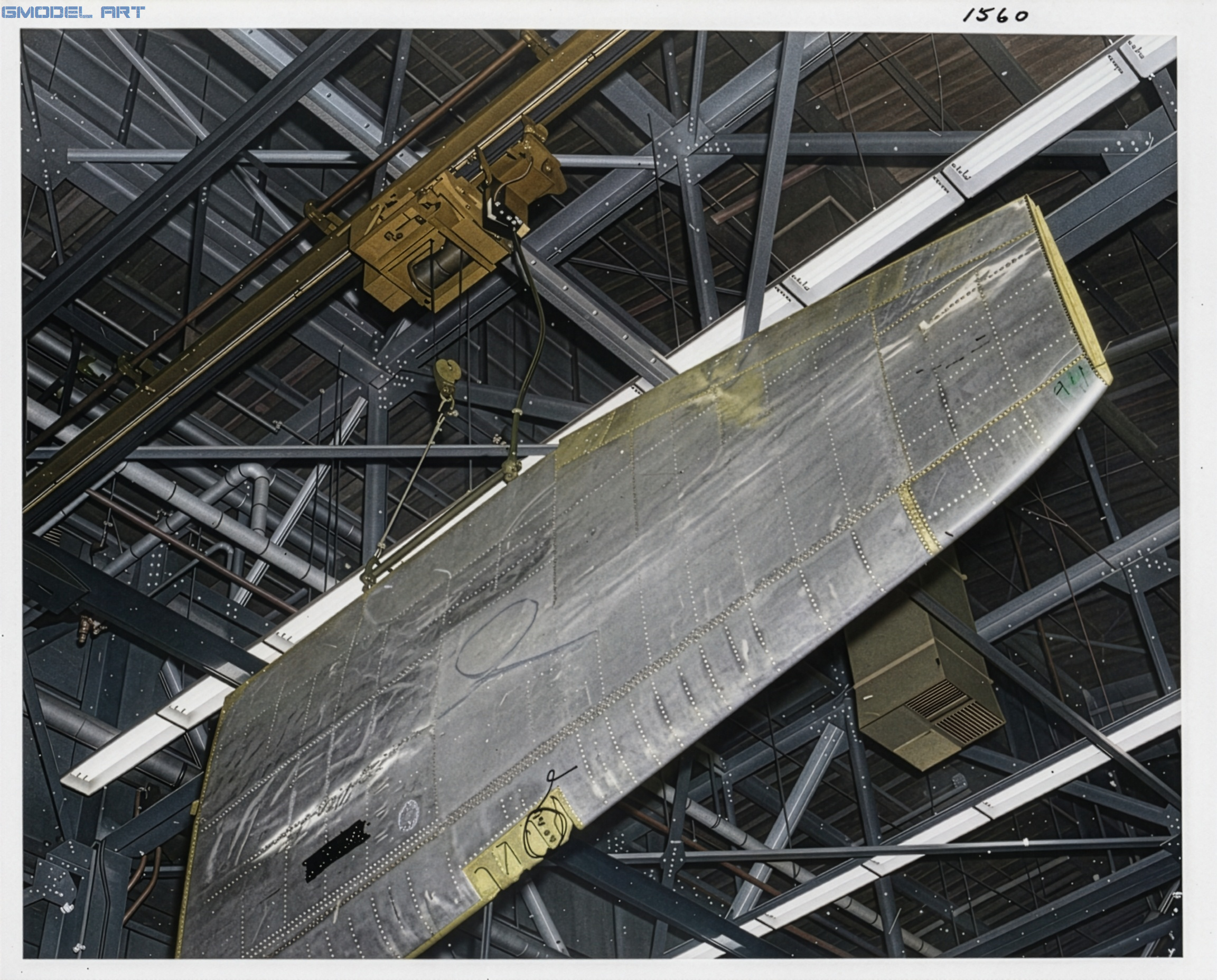
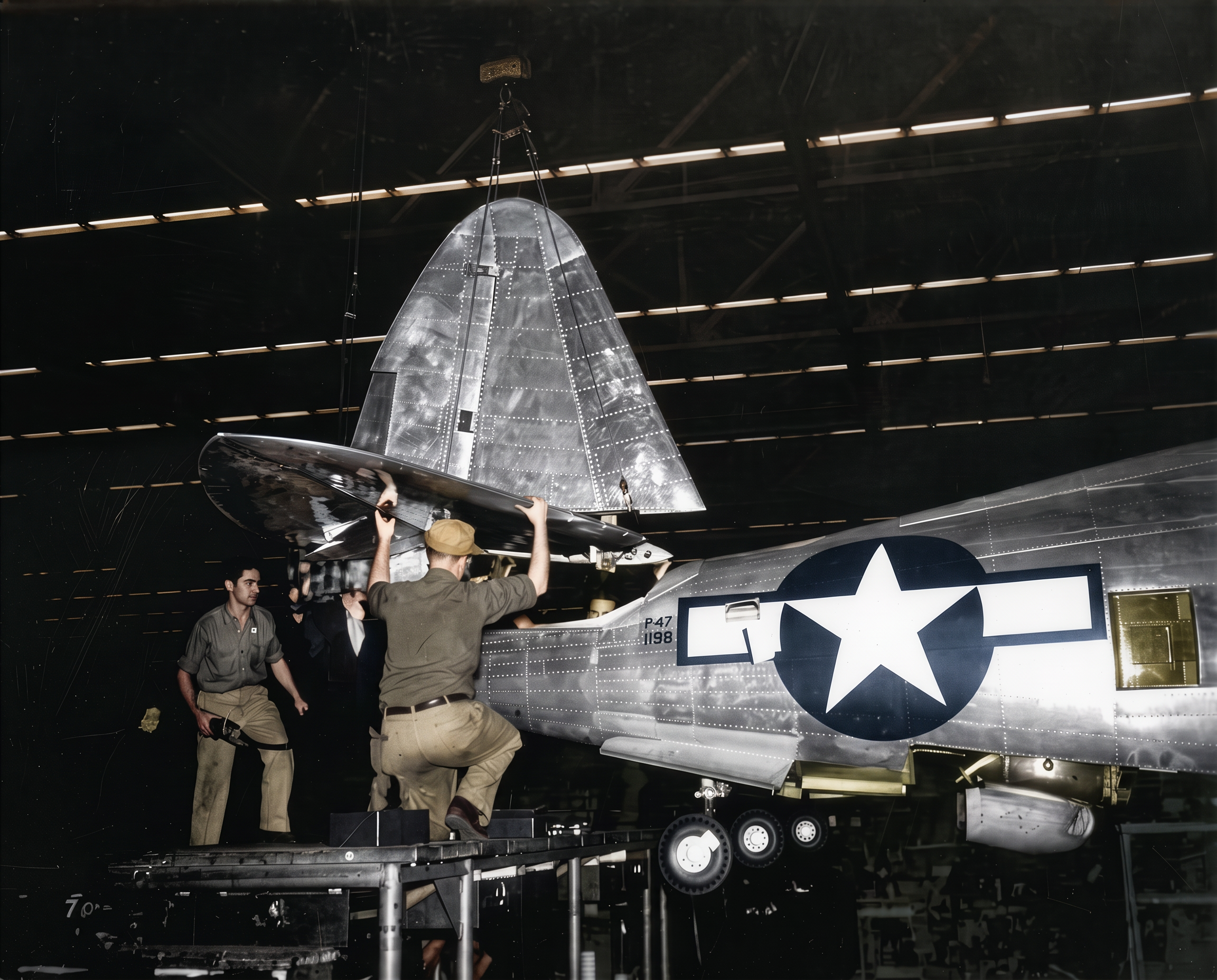
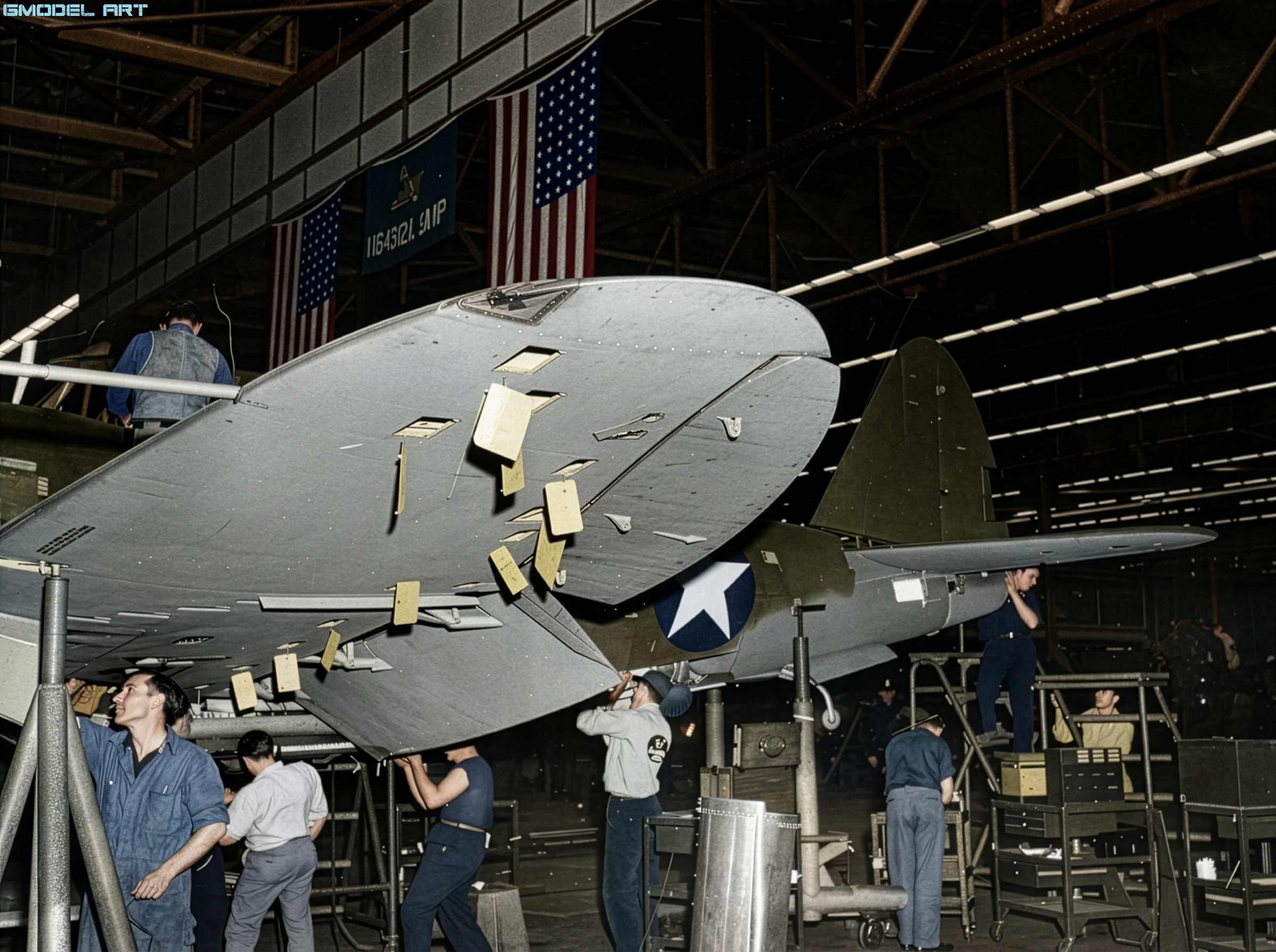
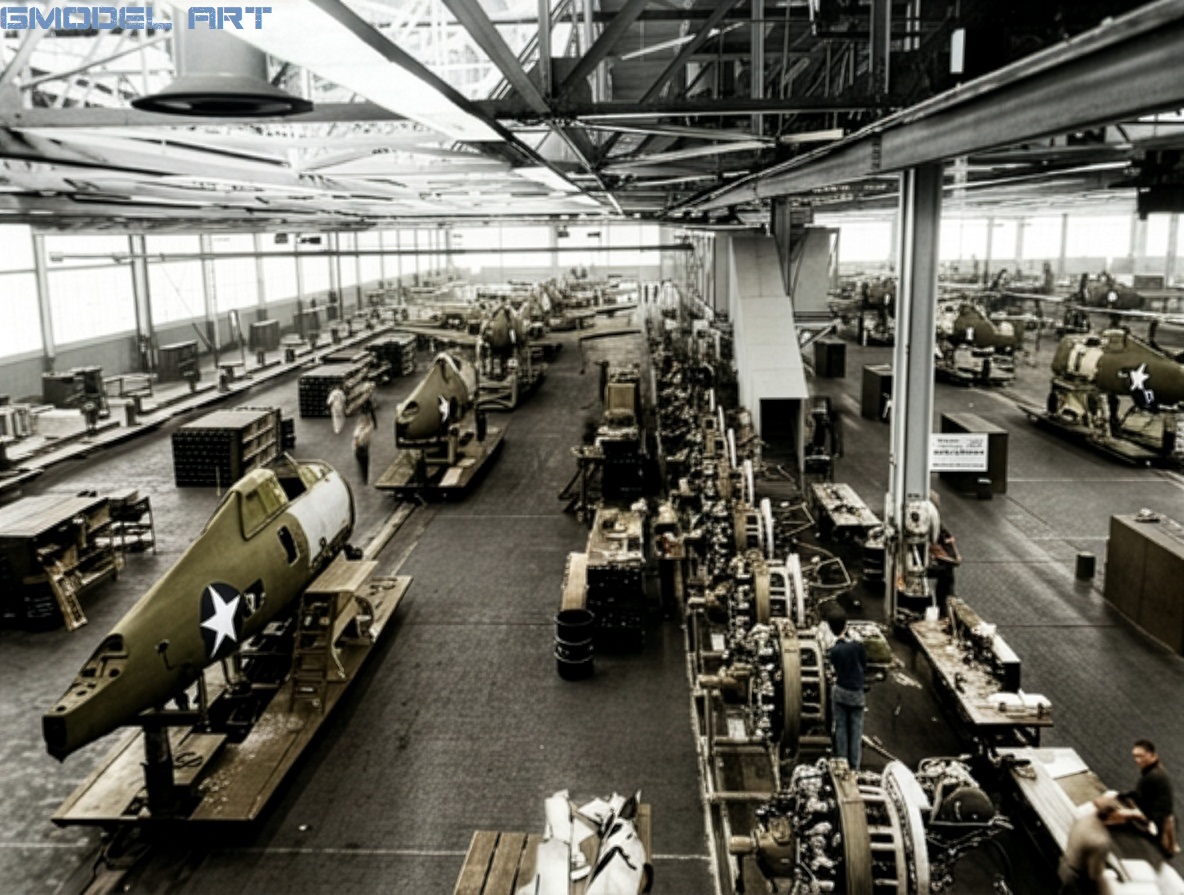
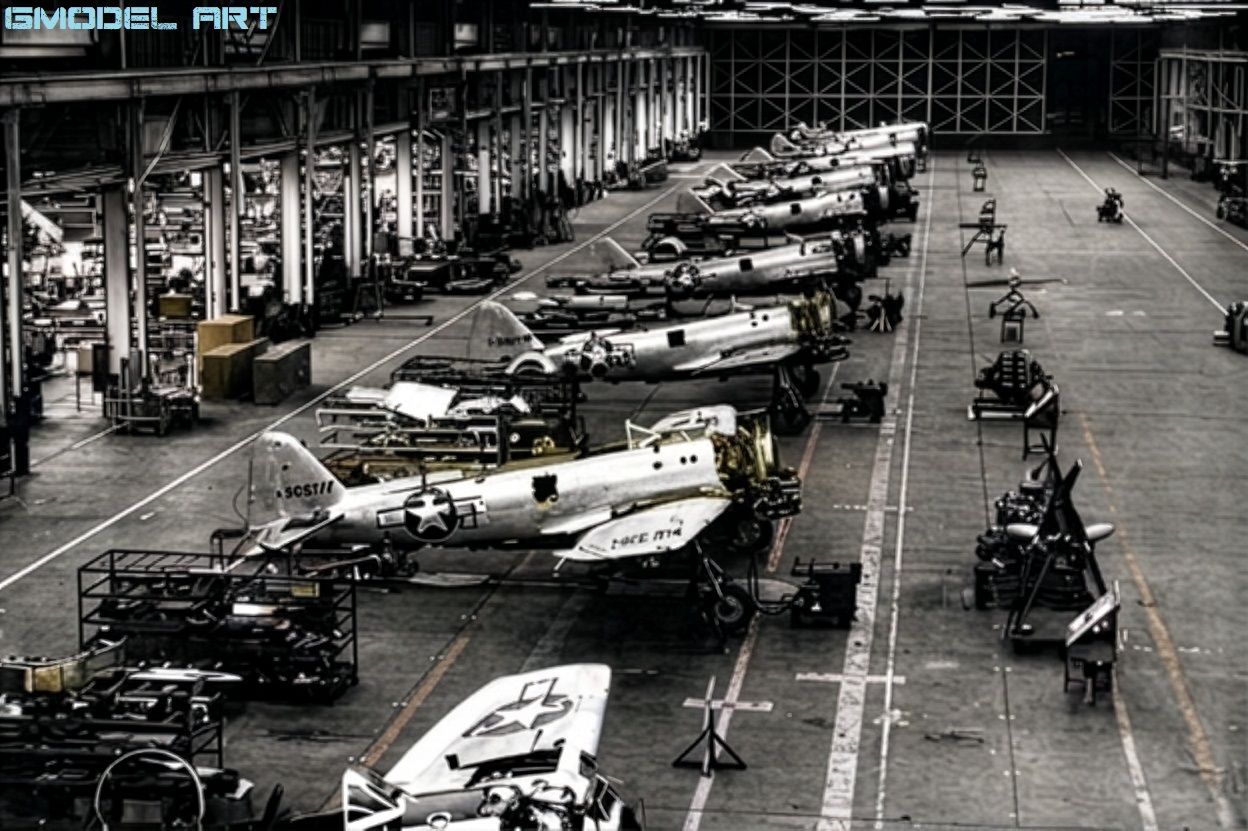
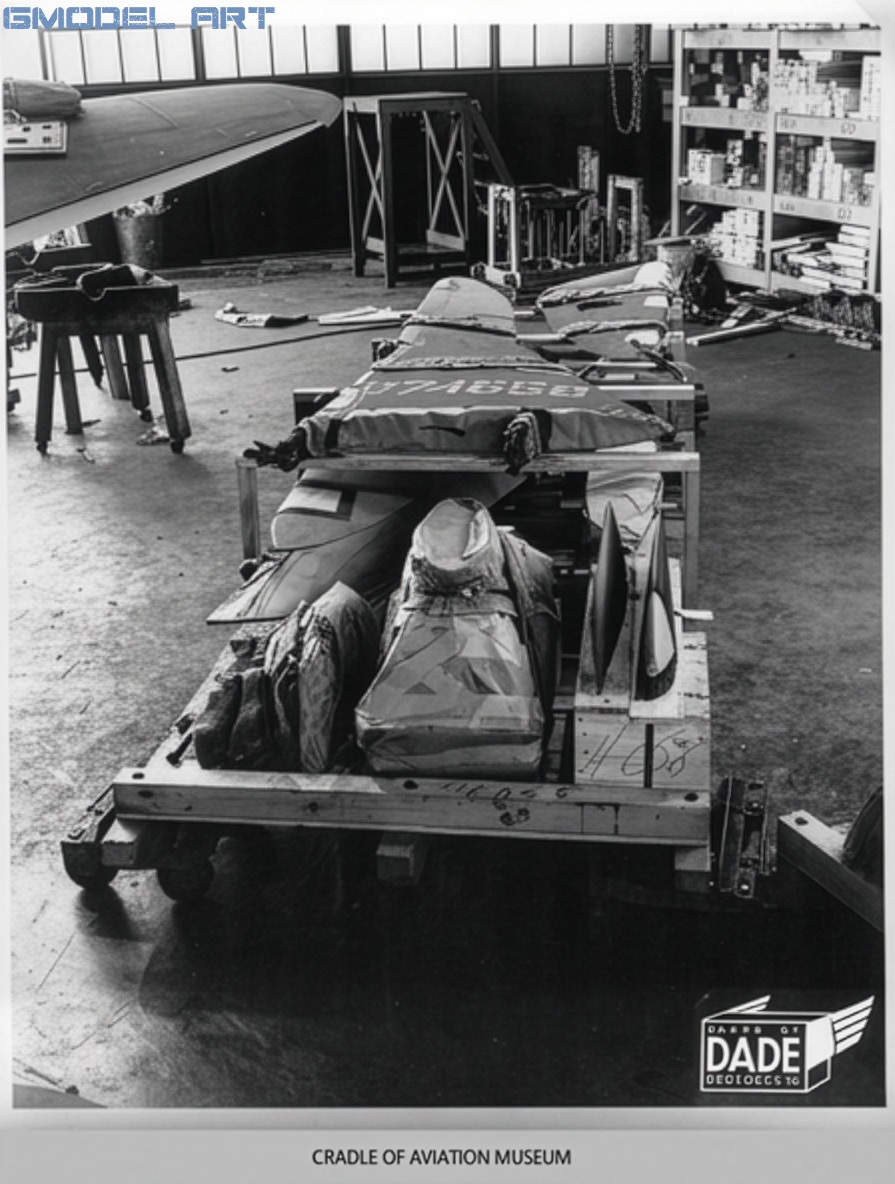
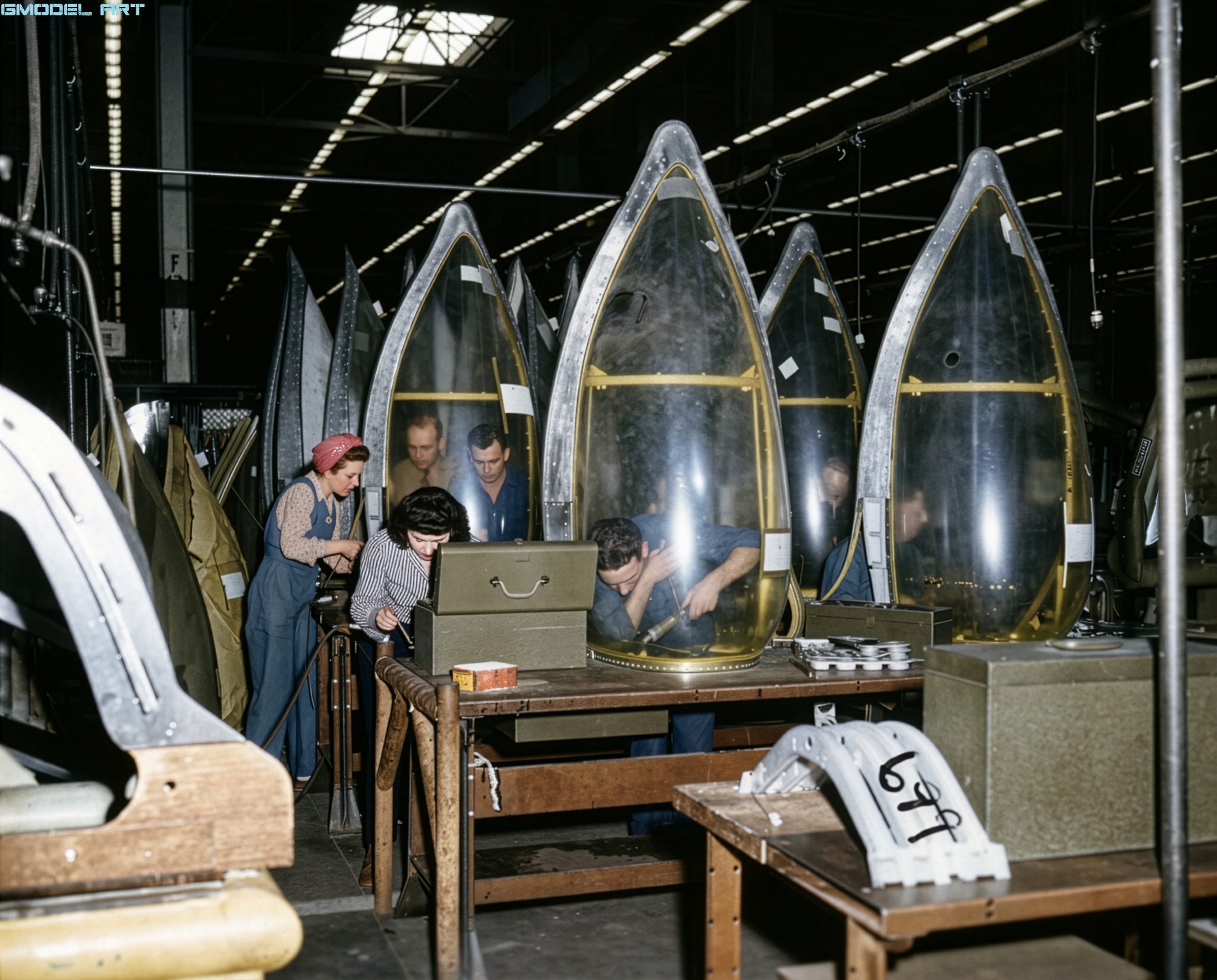
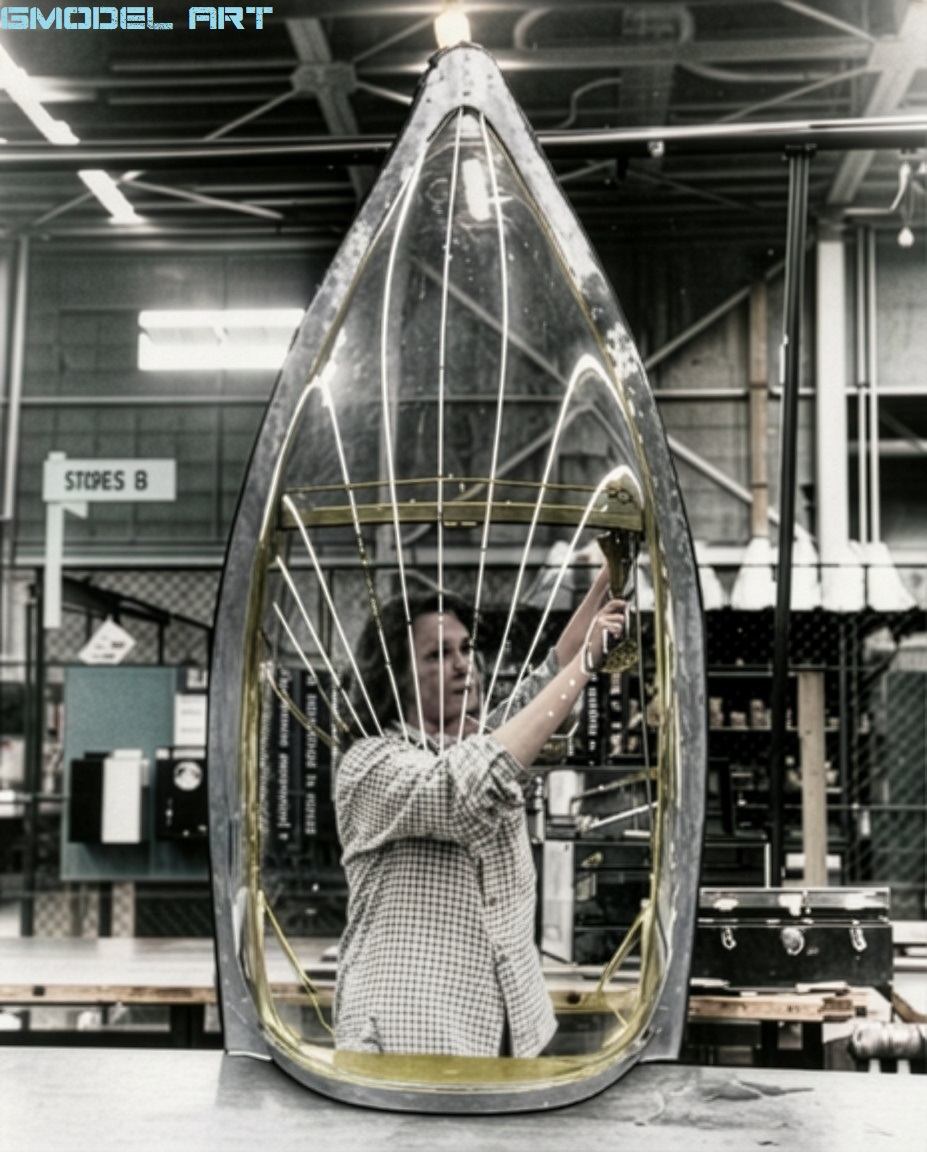
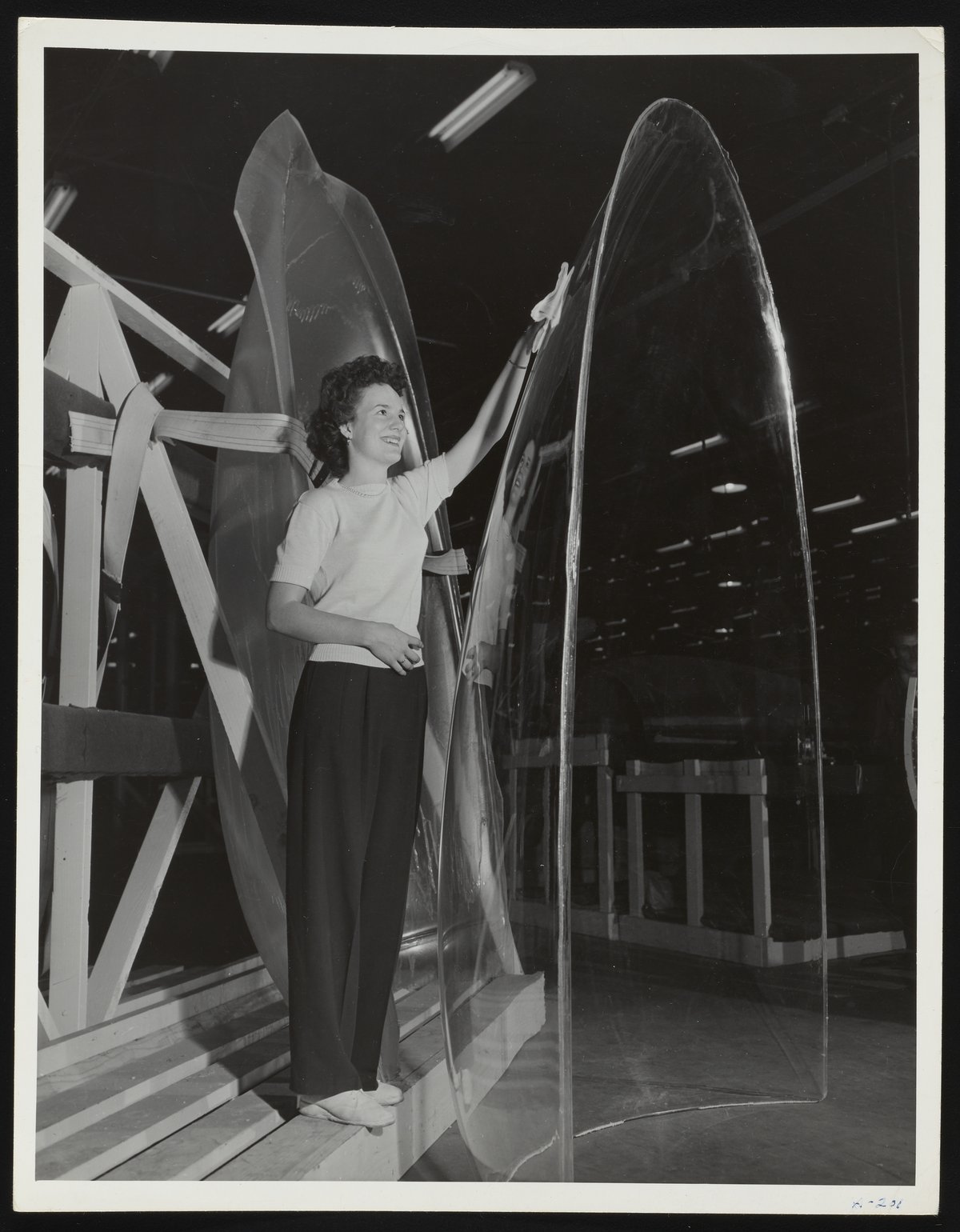
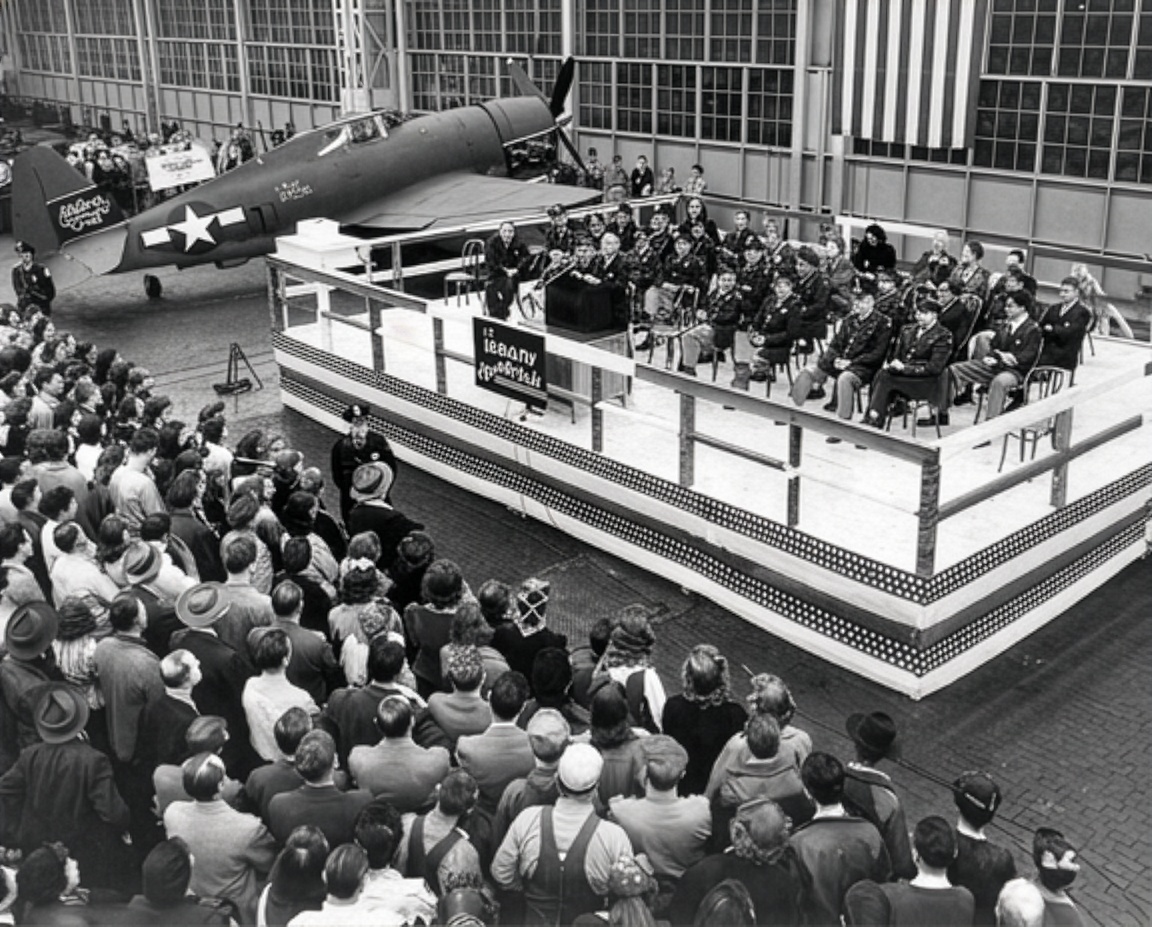
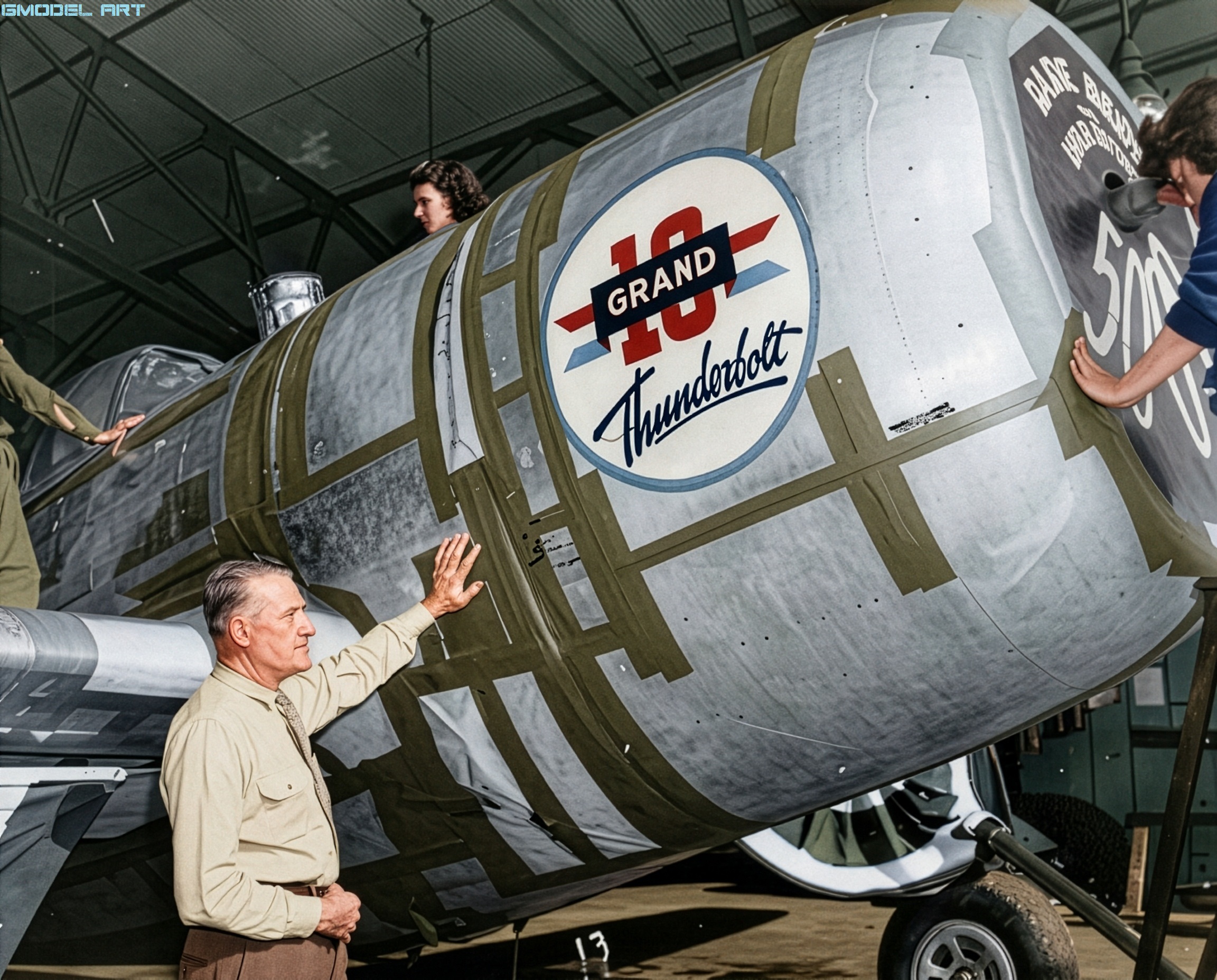
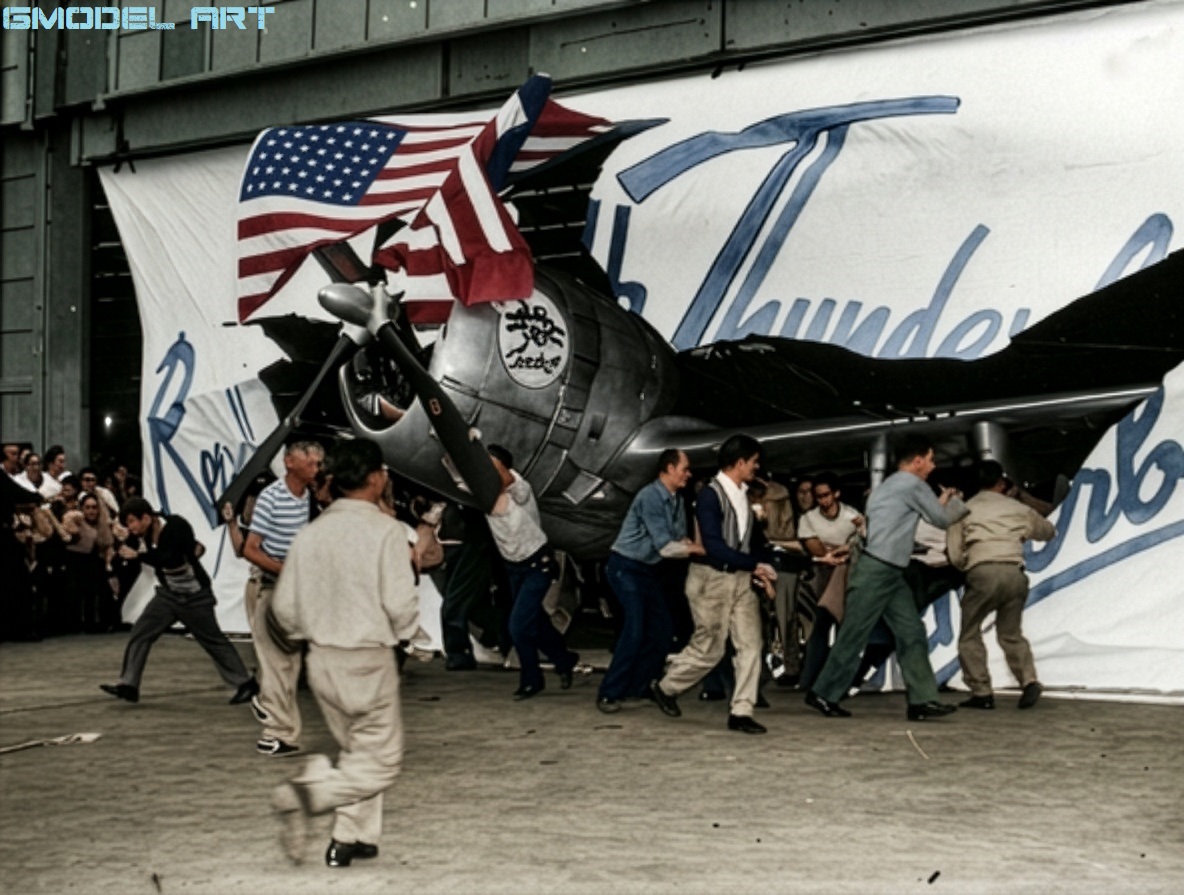
The production of the Republic P-47 Thunderbolt was a large industrial operation involving more than one factory and numerous subcontractors. Different companies produced complete sections and subassemblies that were delivered ready for installation on the main production line.
This method allowed Republic and its manufacturing partners to assemble the aircraft rapidly while maintaining a highly organised production process. The aircraft was not simply built piece by piece from raw material at a single workstation. Major structures and equipment arrived at different stages and were progressively integrated into the aircraft.
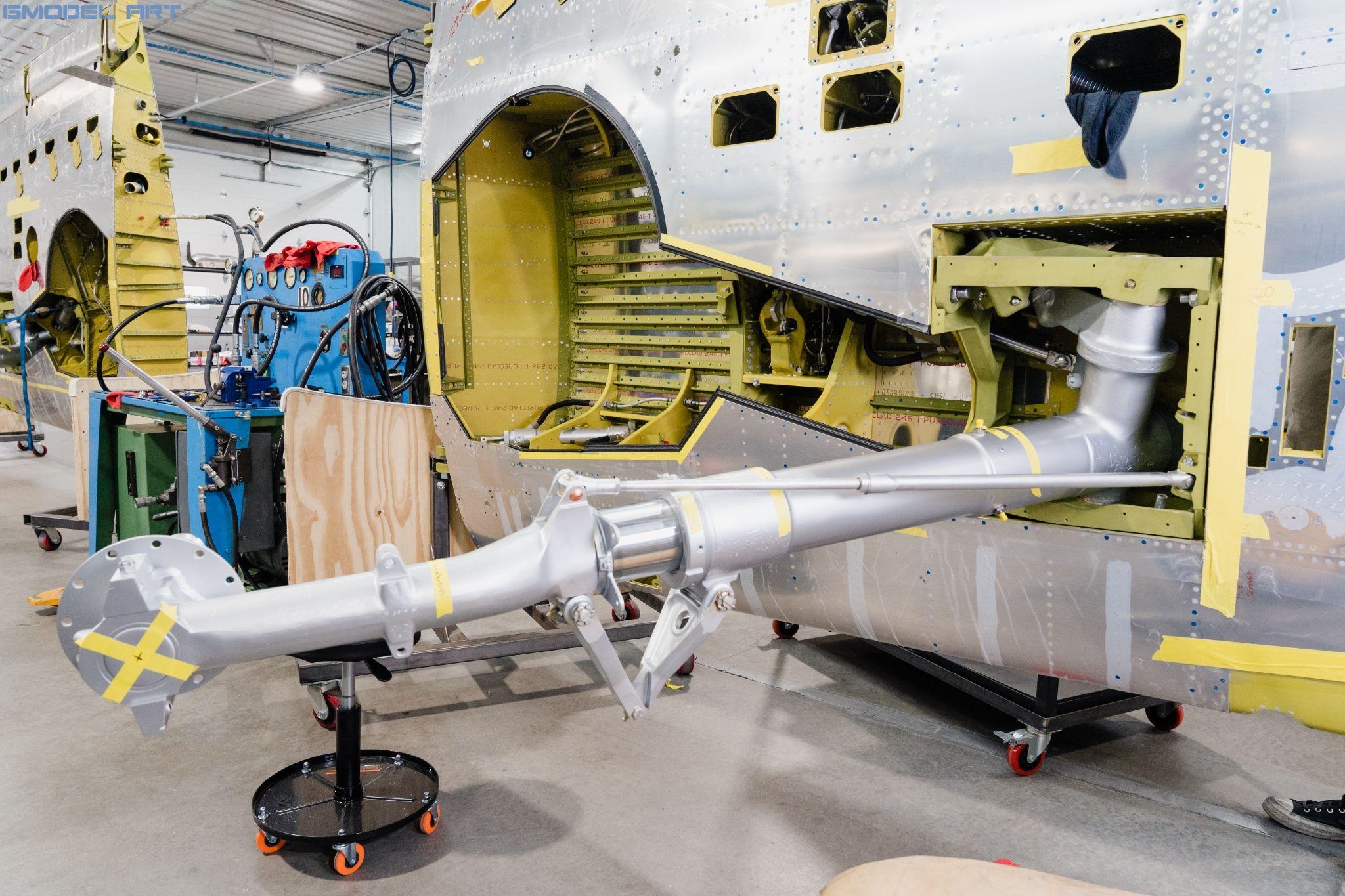
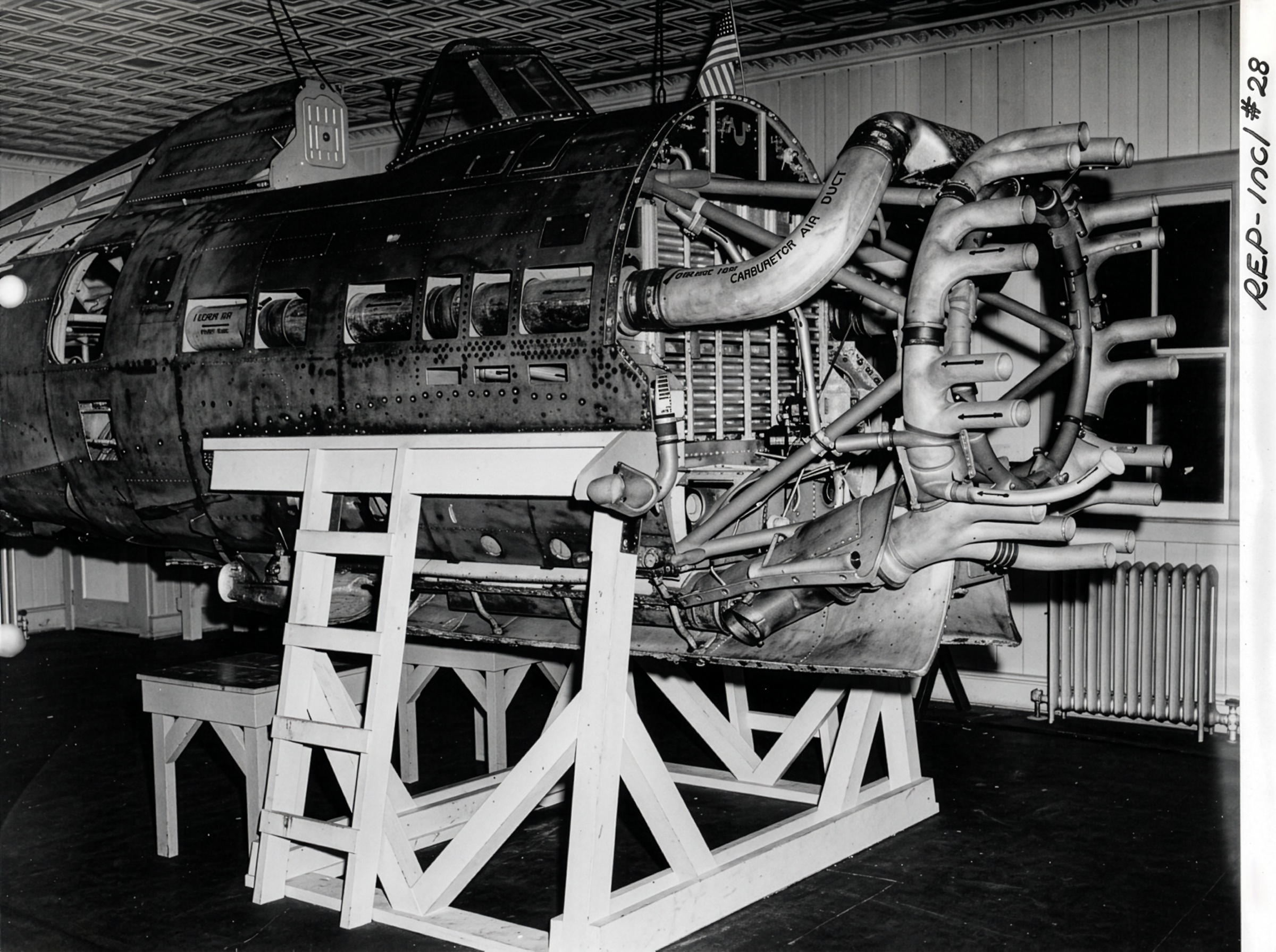
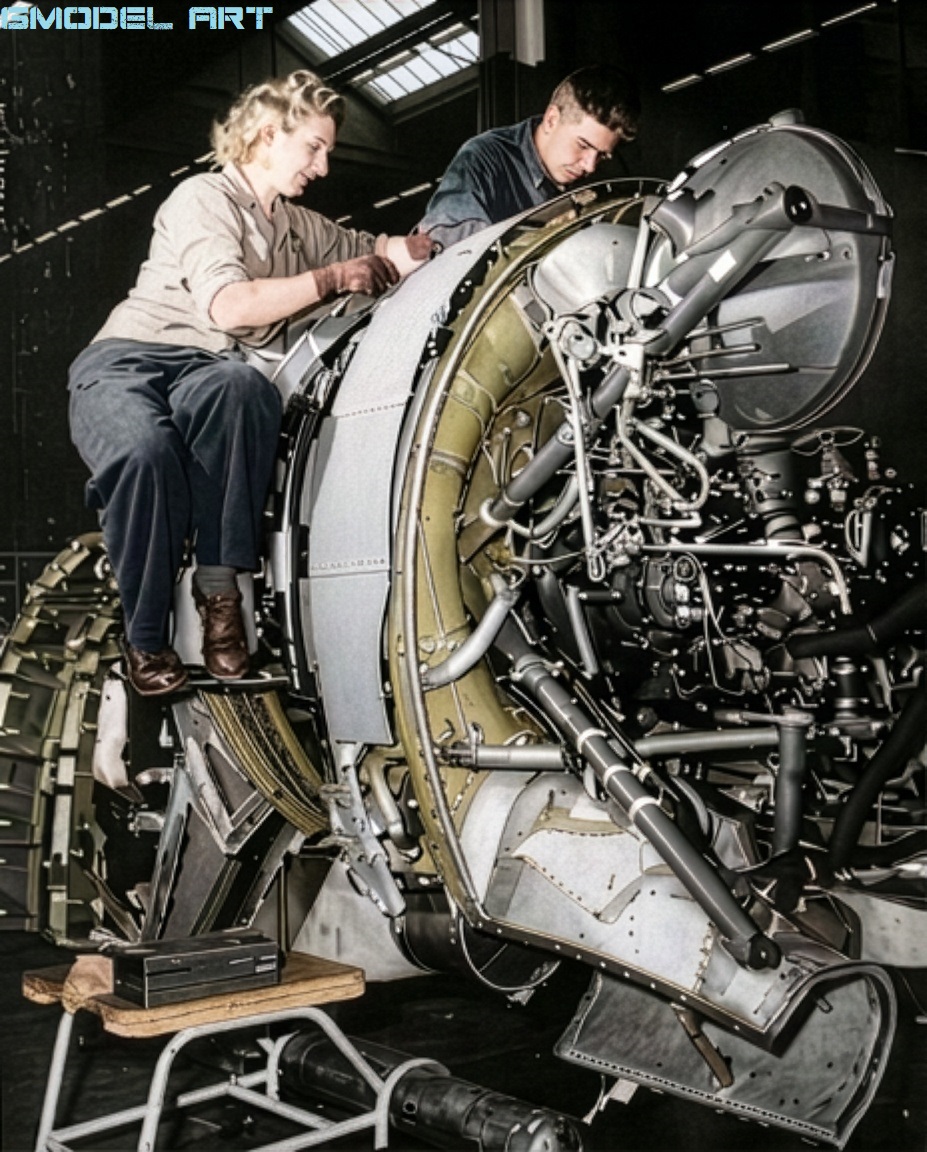
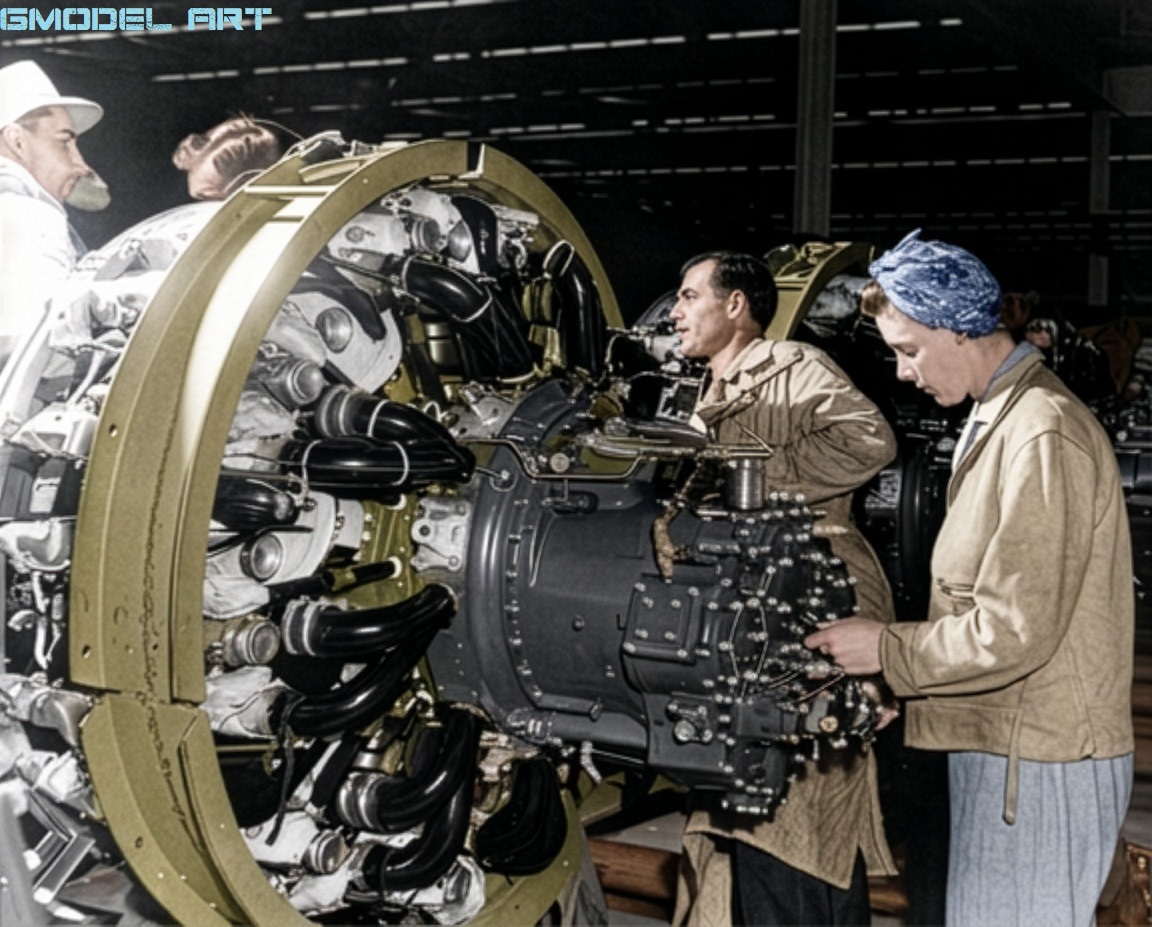
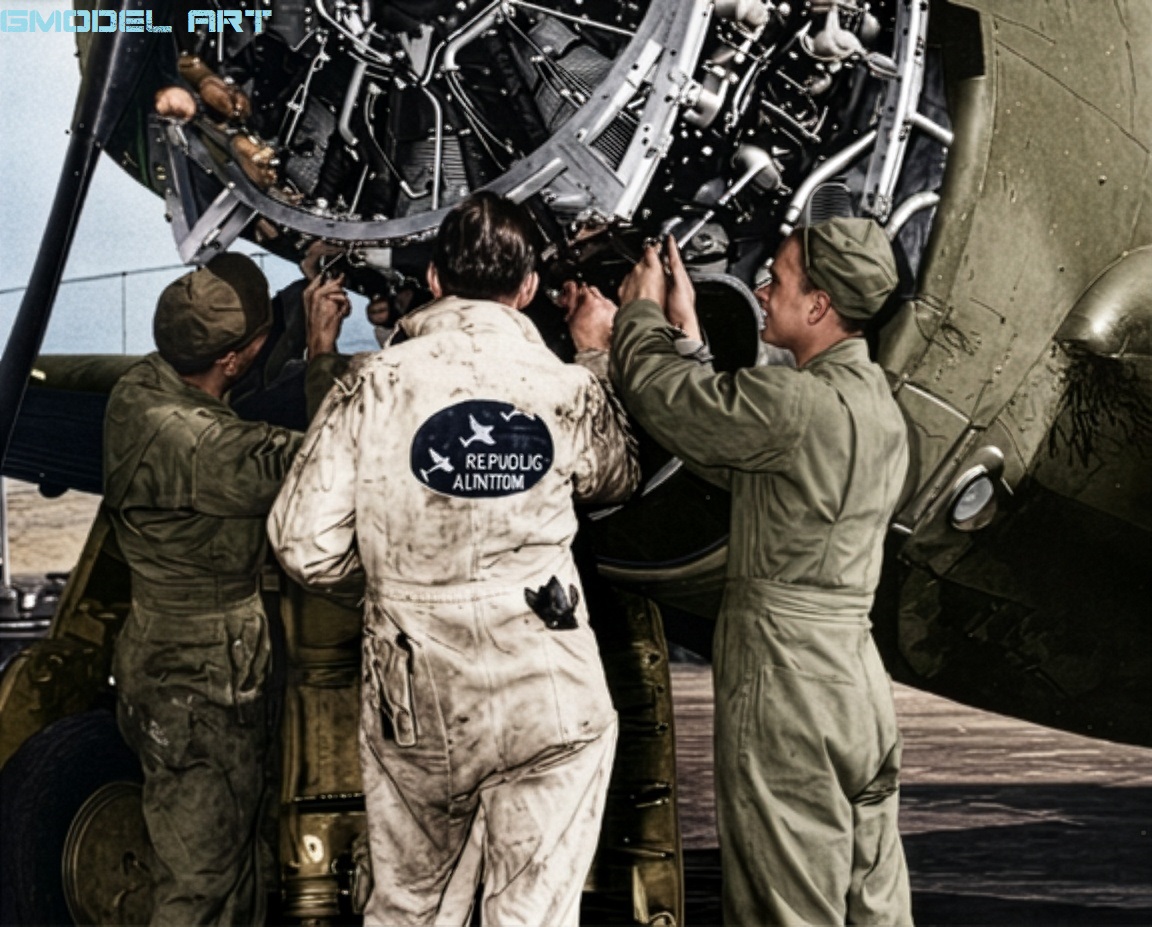
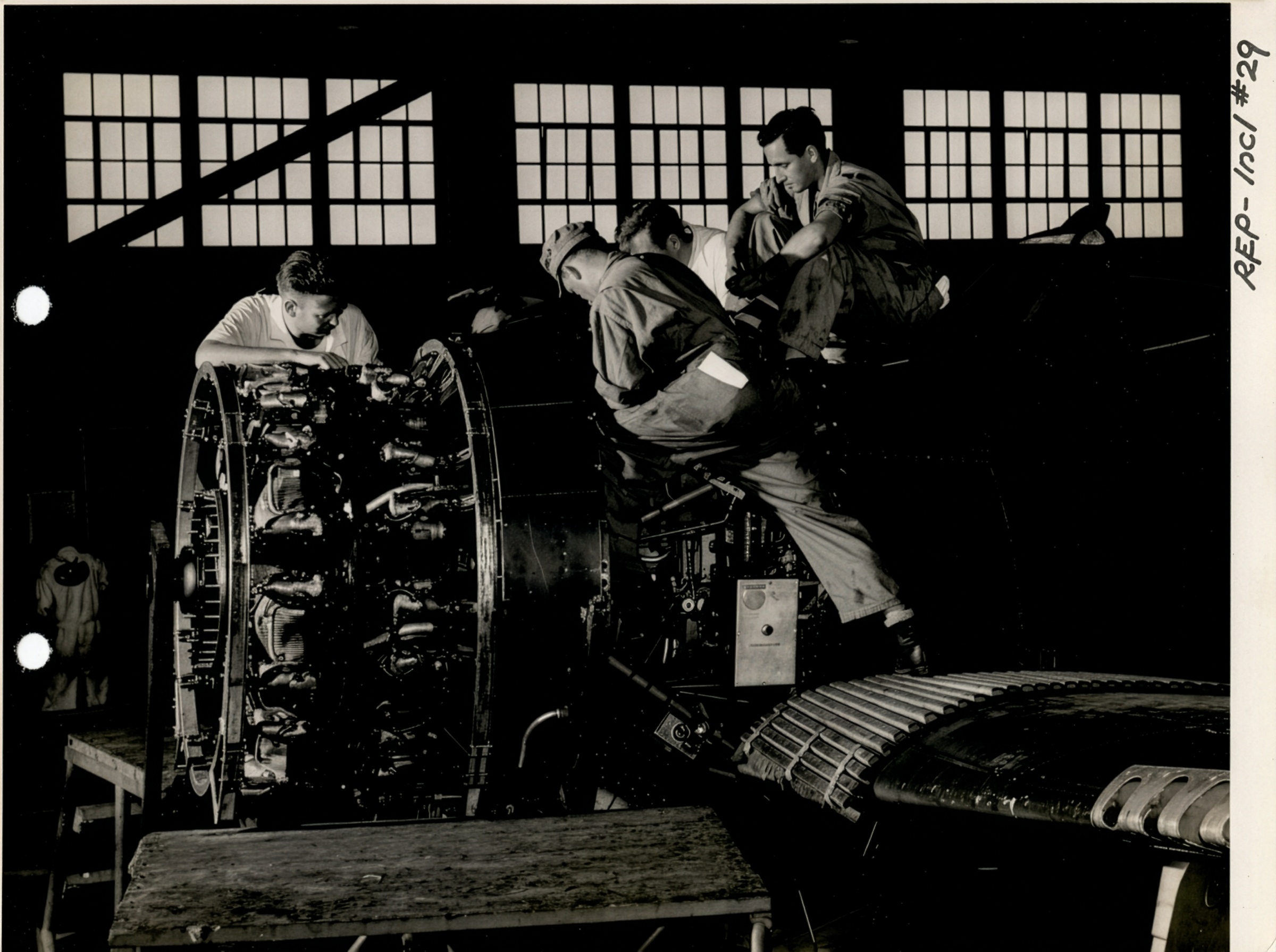
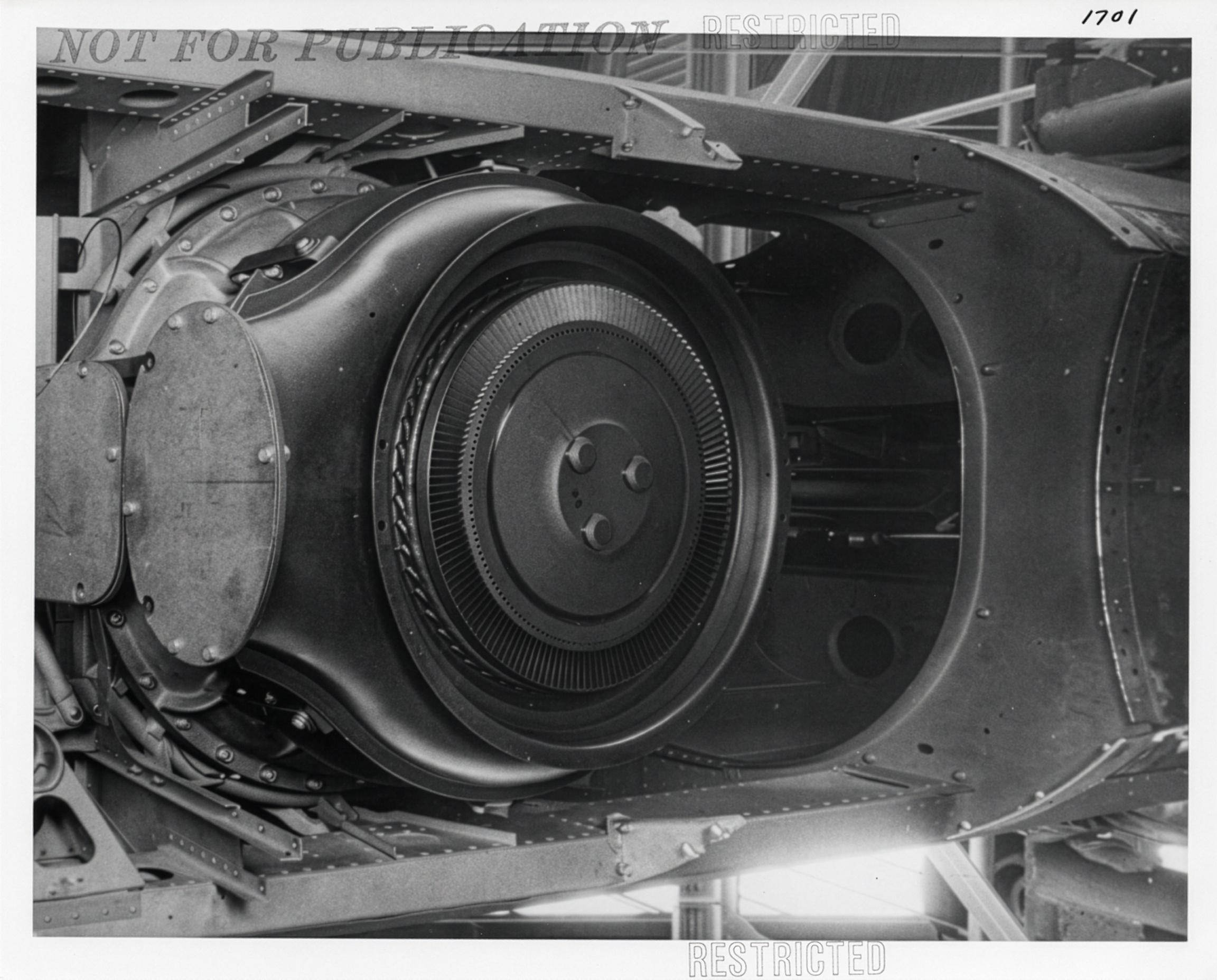
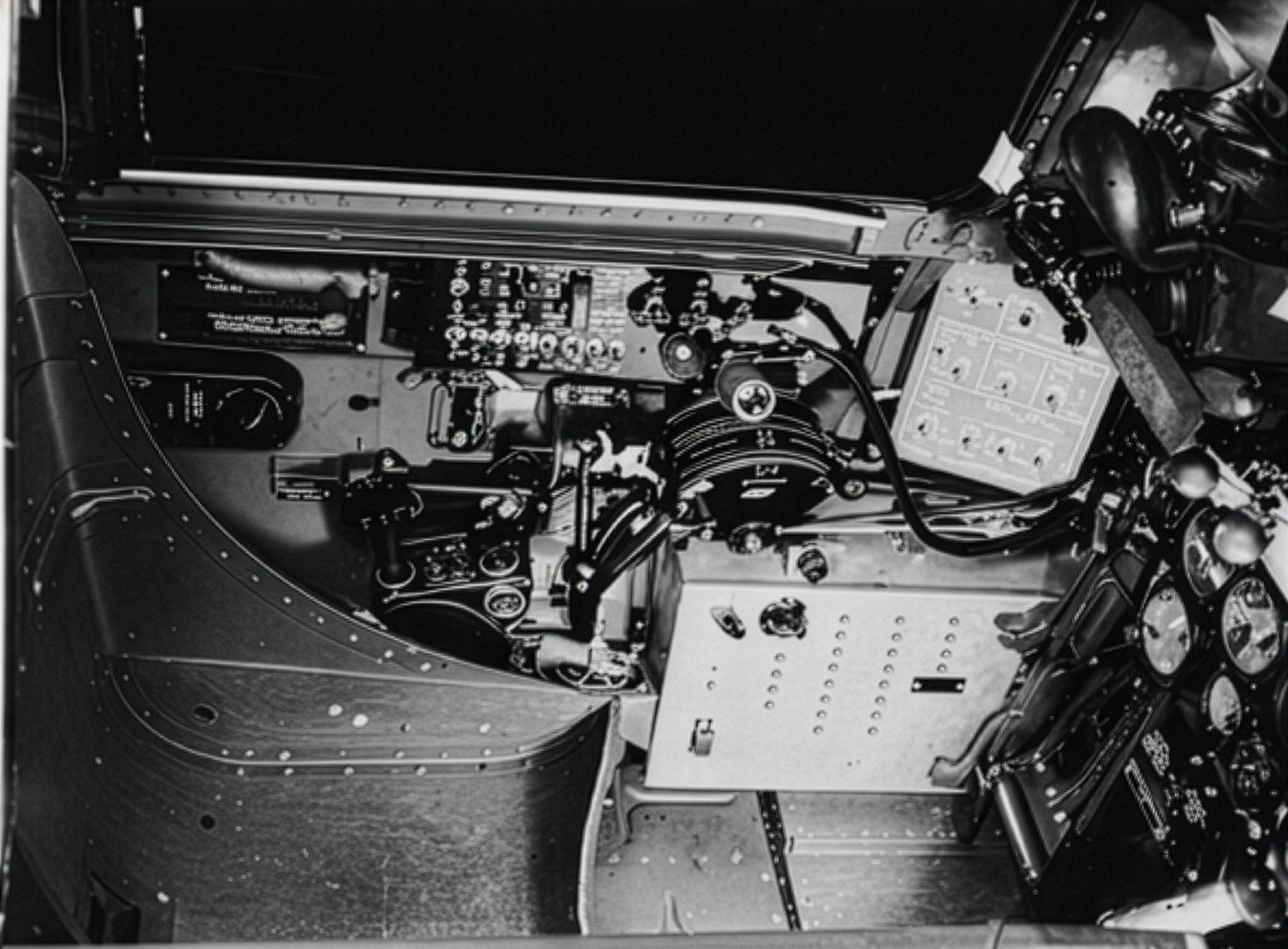
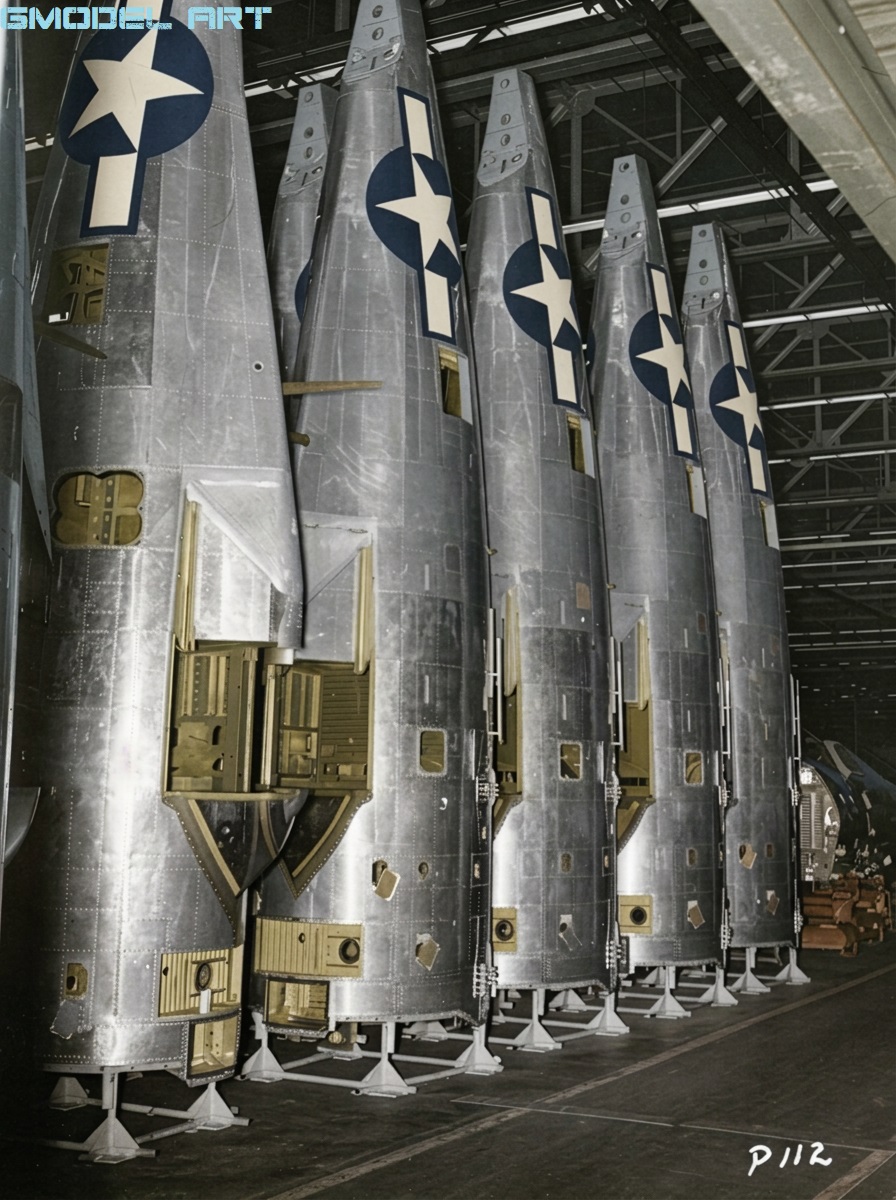
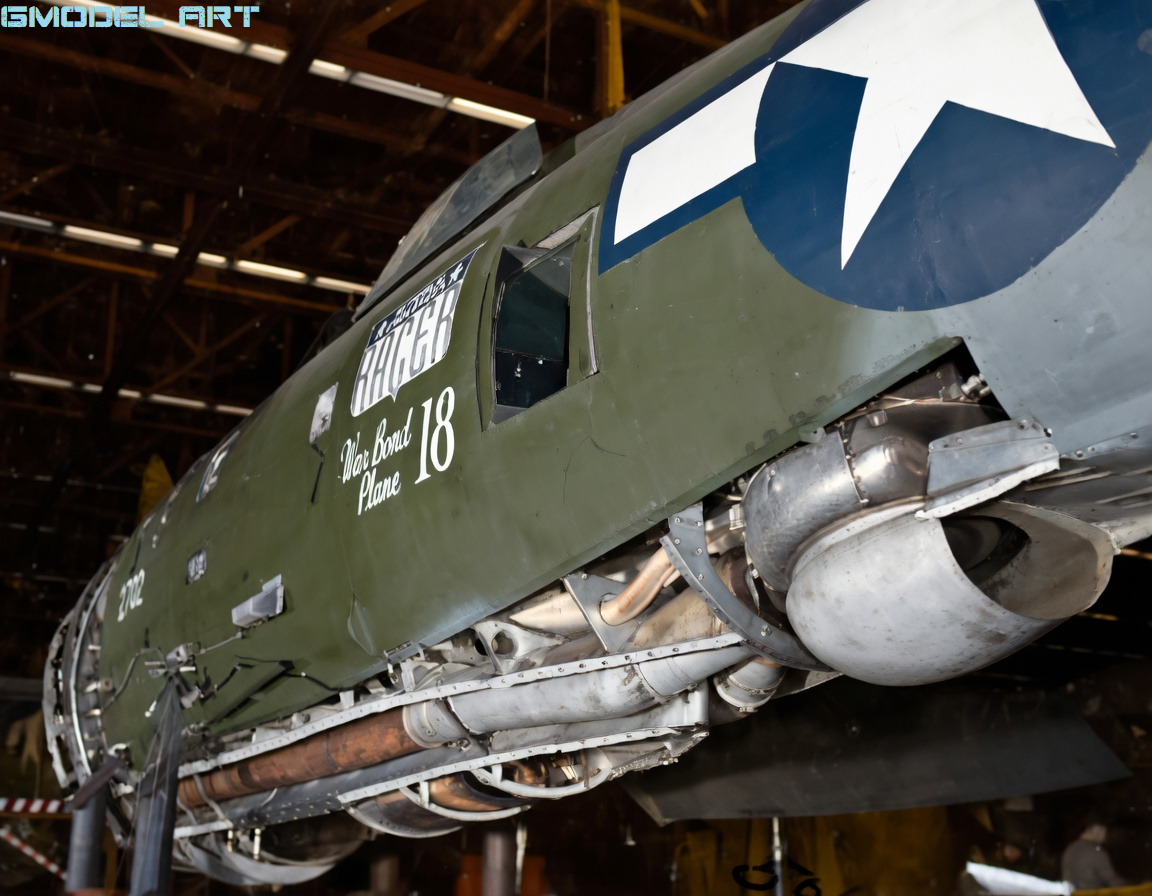
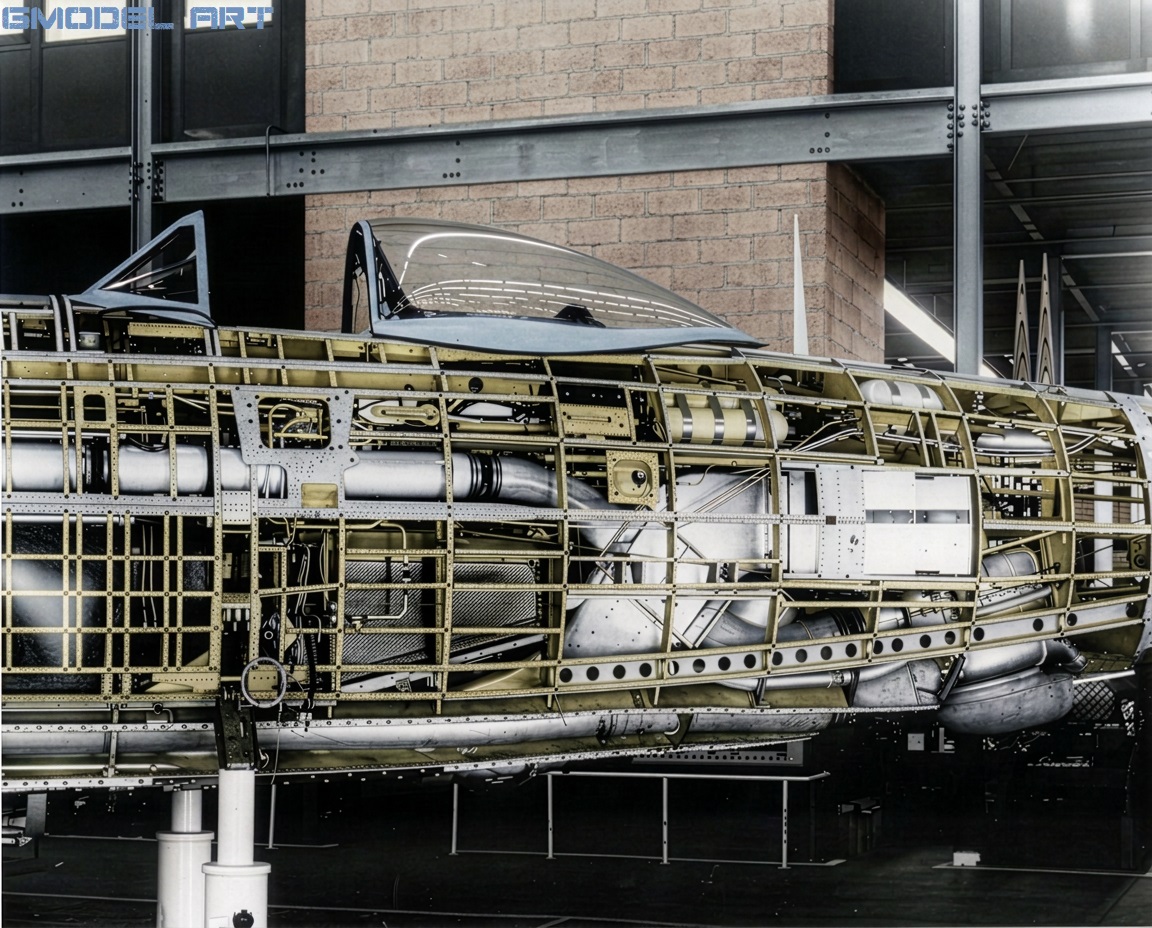
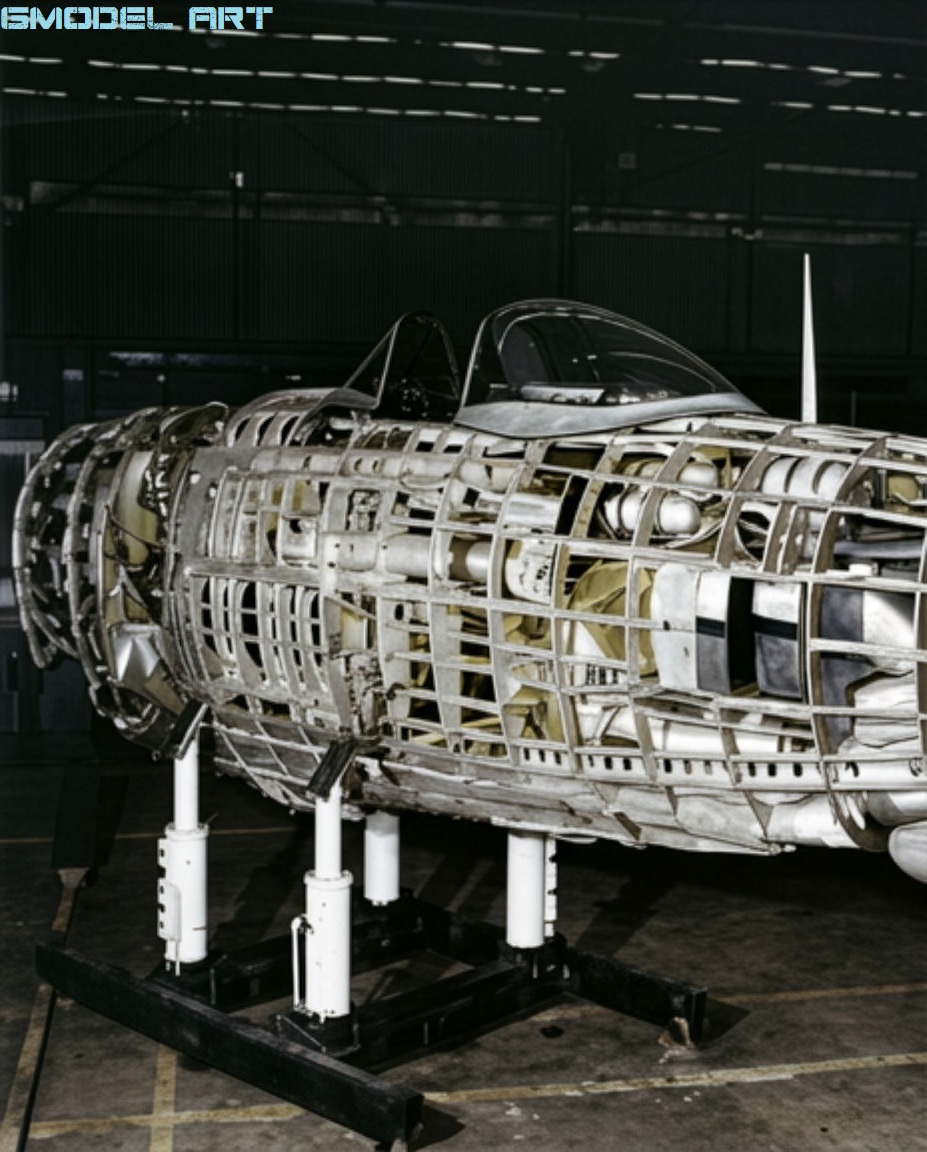
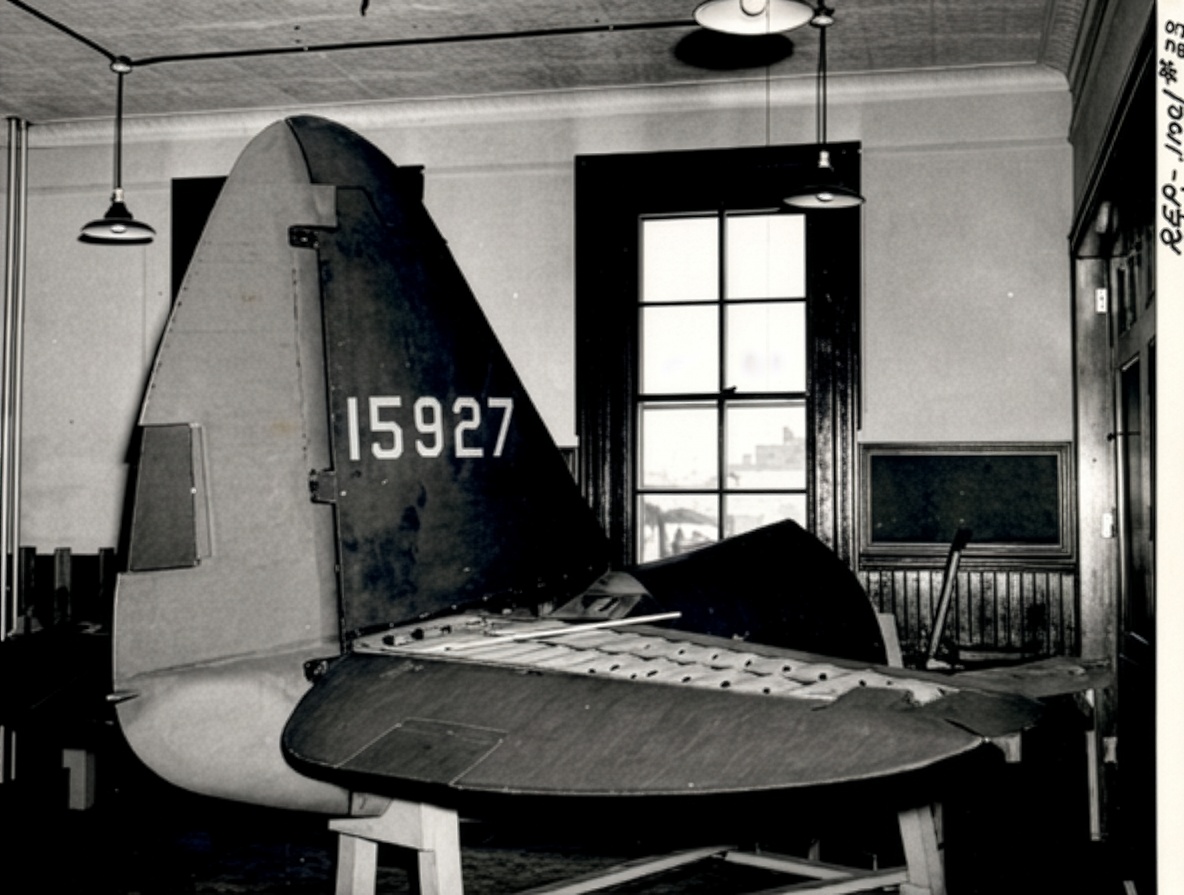
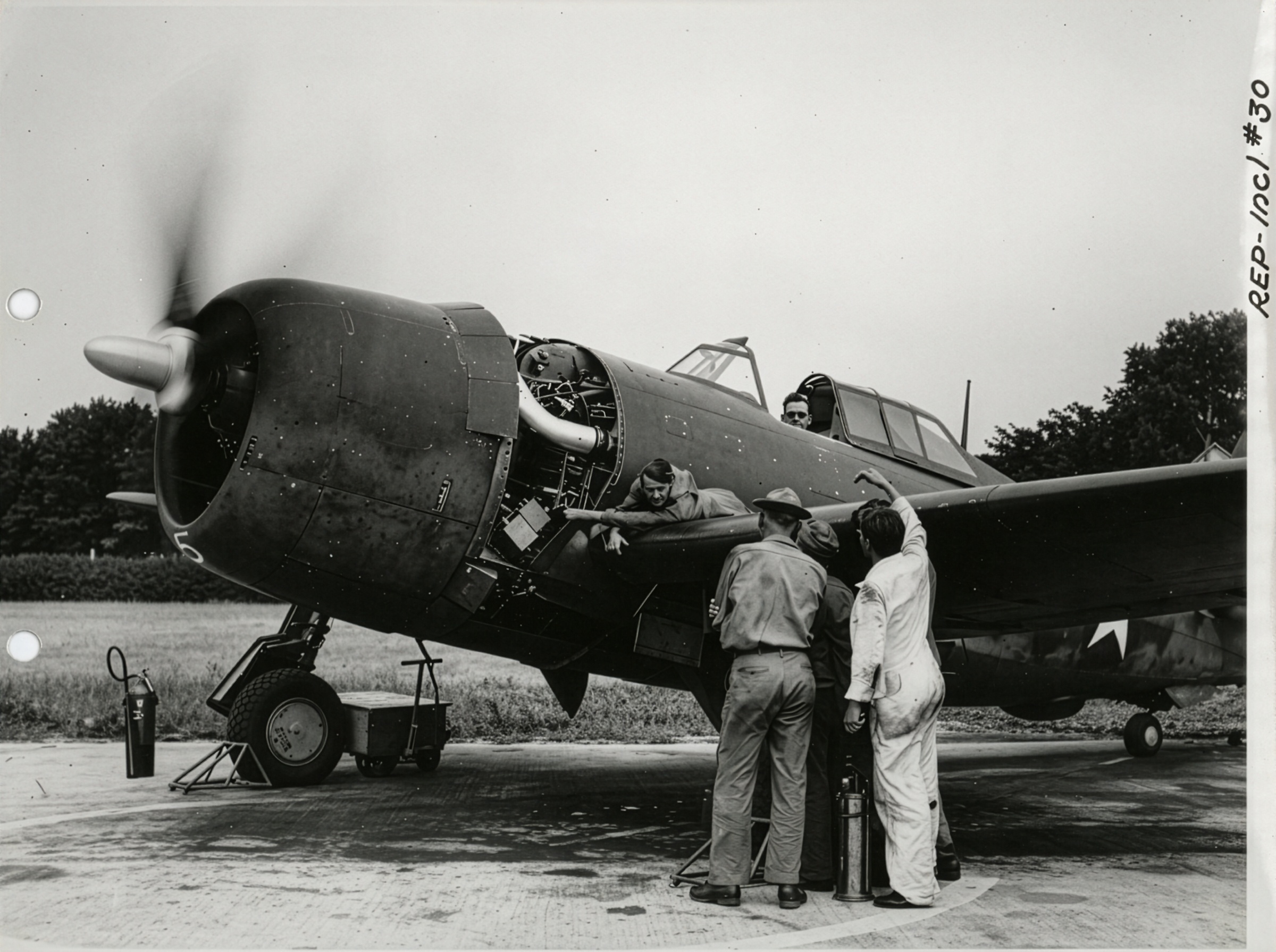
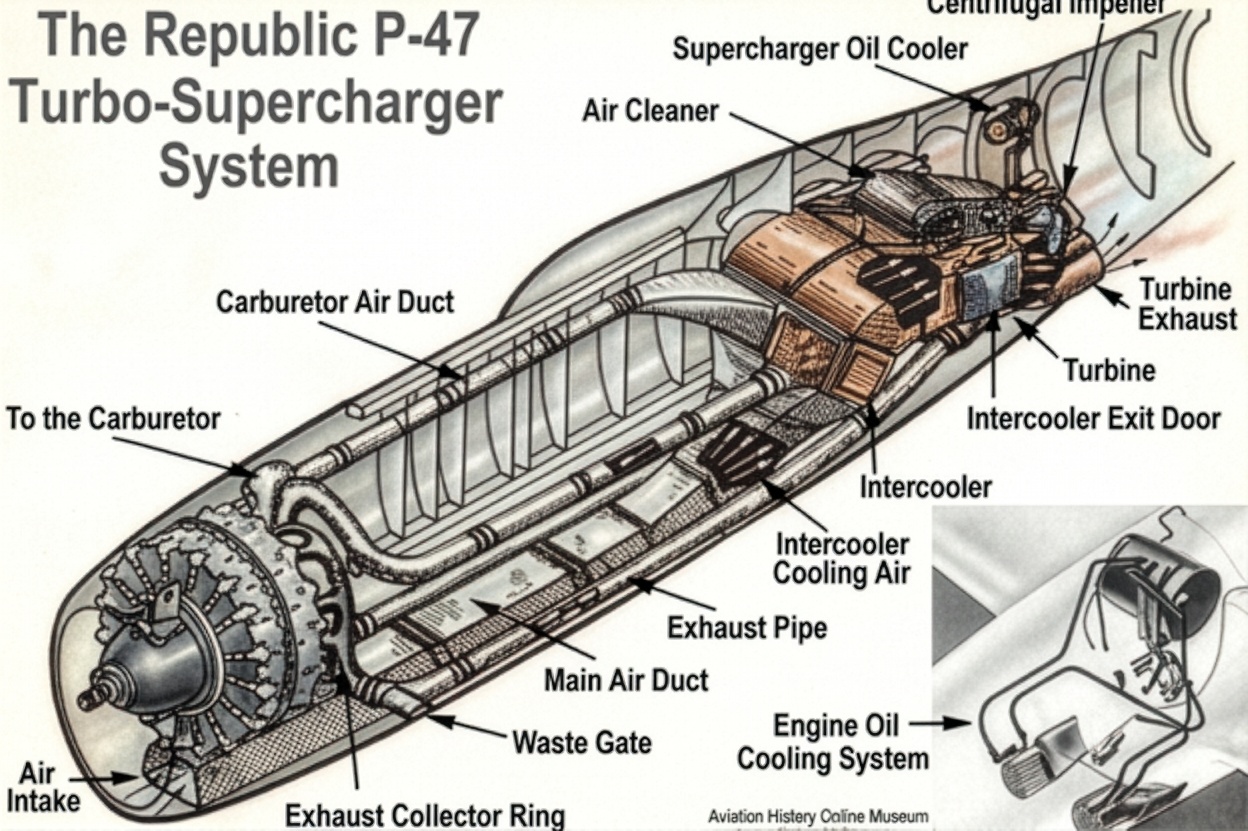
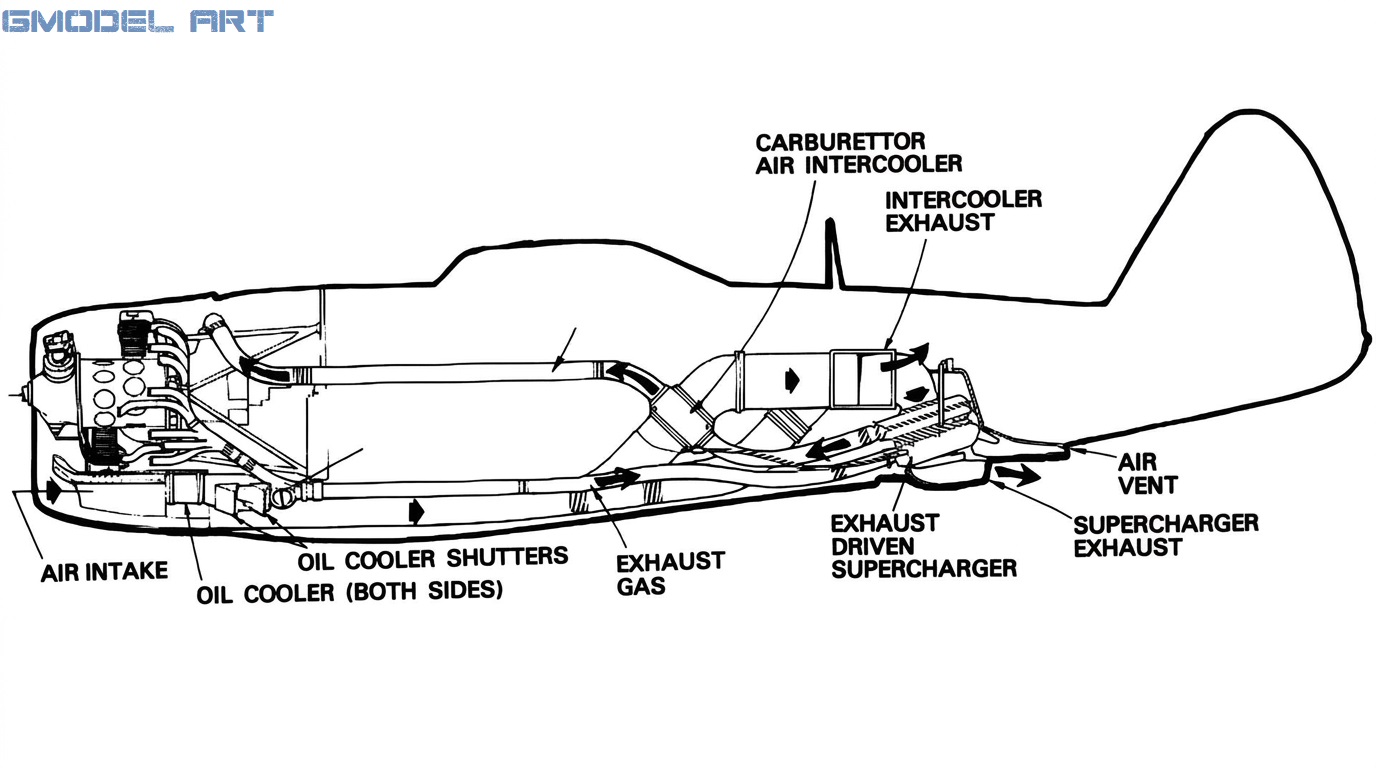
The P-47’s distinctive engineering made this process particularly interesting. Its powerful Pratt & Whitney R-2800 radial engine was combined with a turbo-supercharger installed in the rear fuselage. The resulting system required considerable internal structure, ducting, piping and equipment.
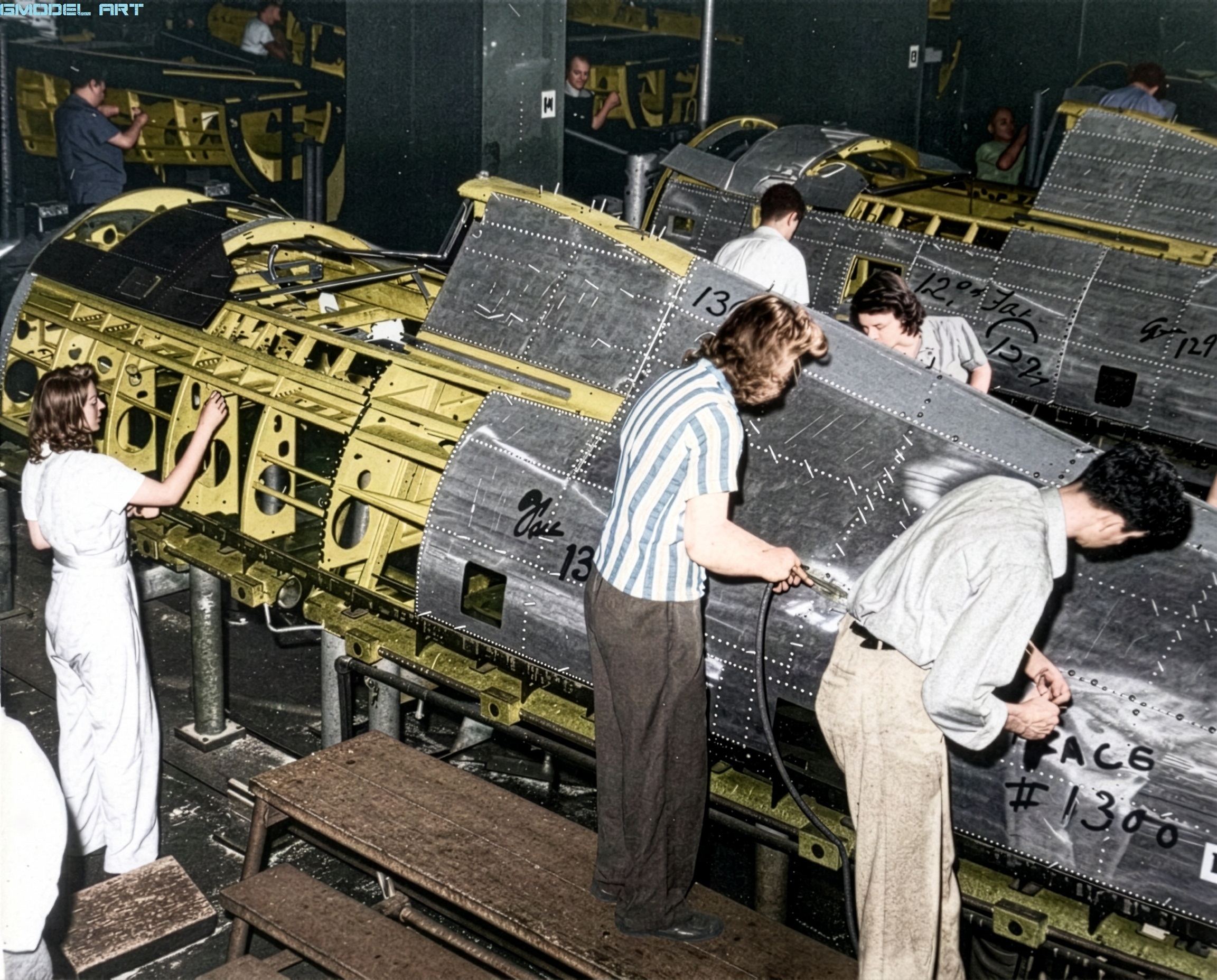
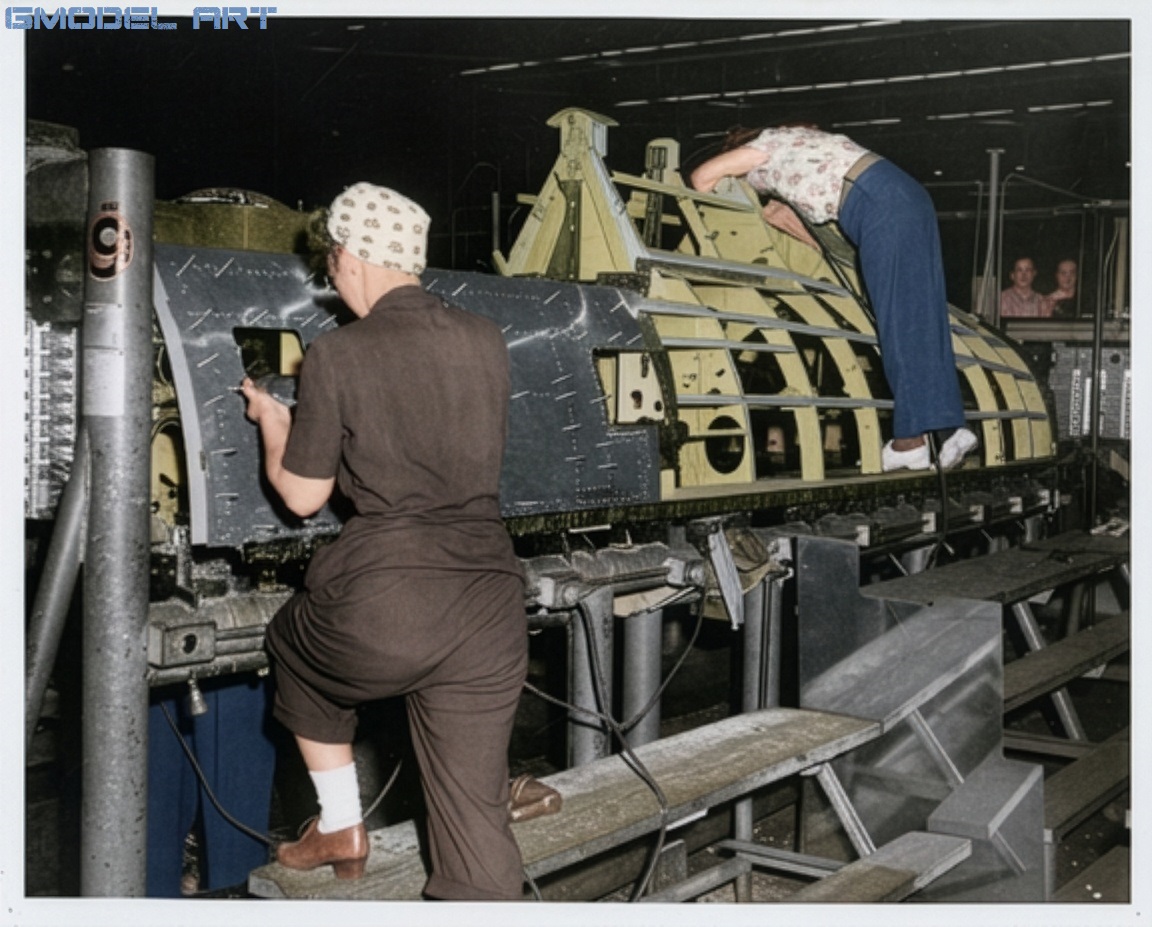
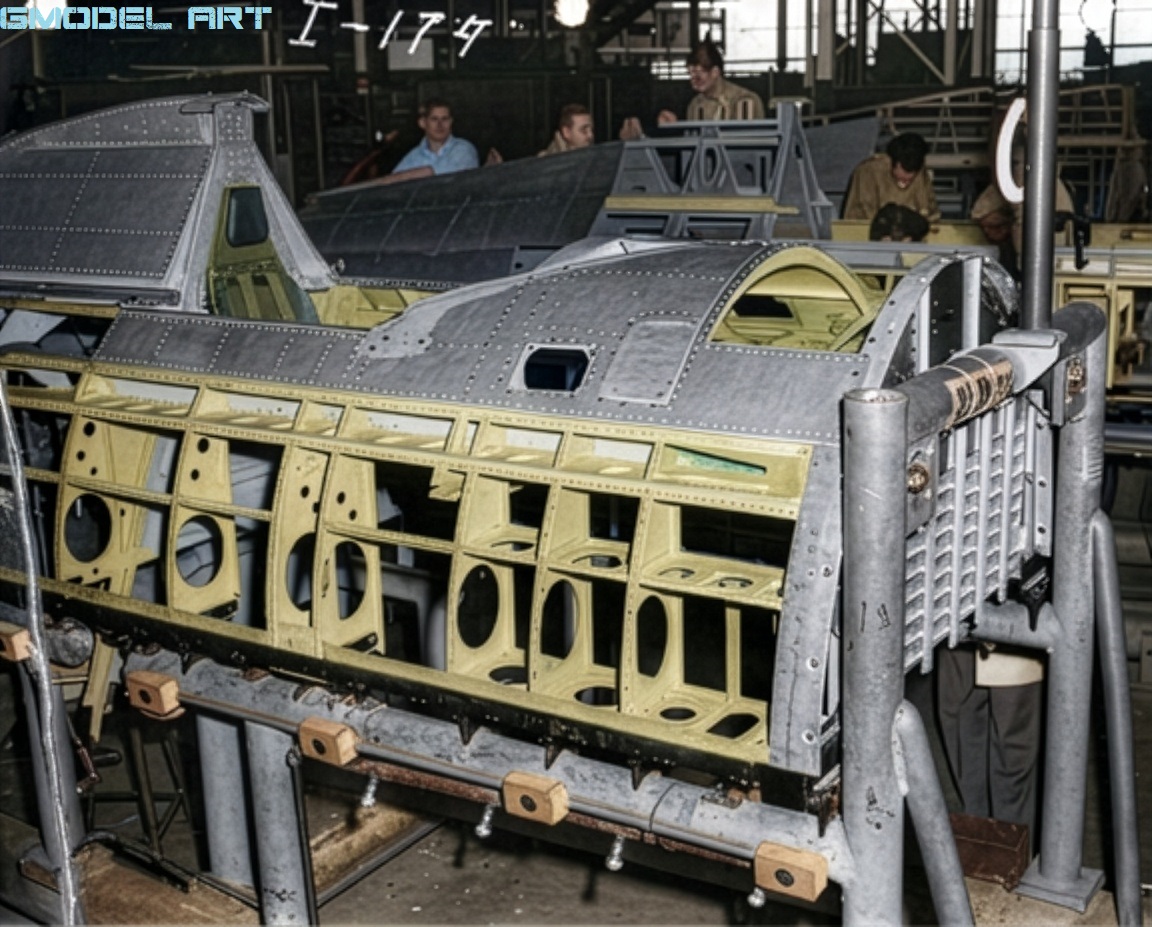
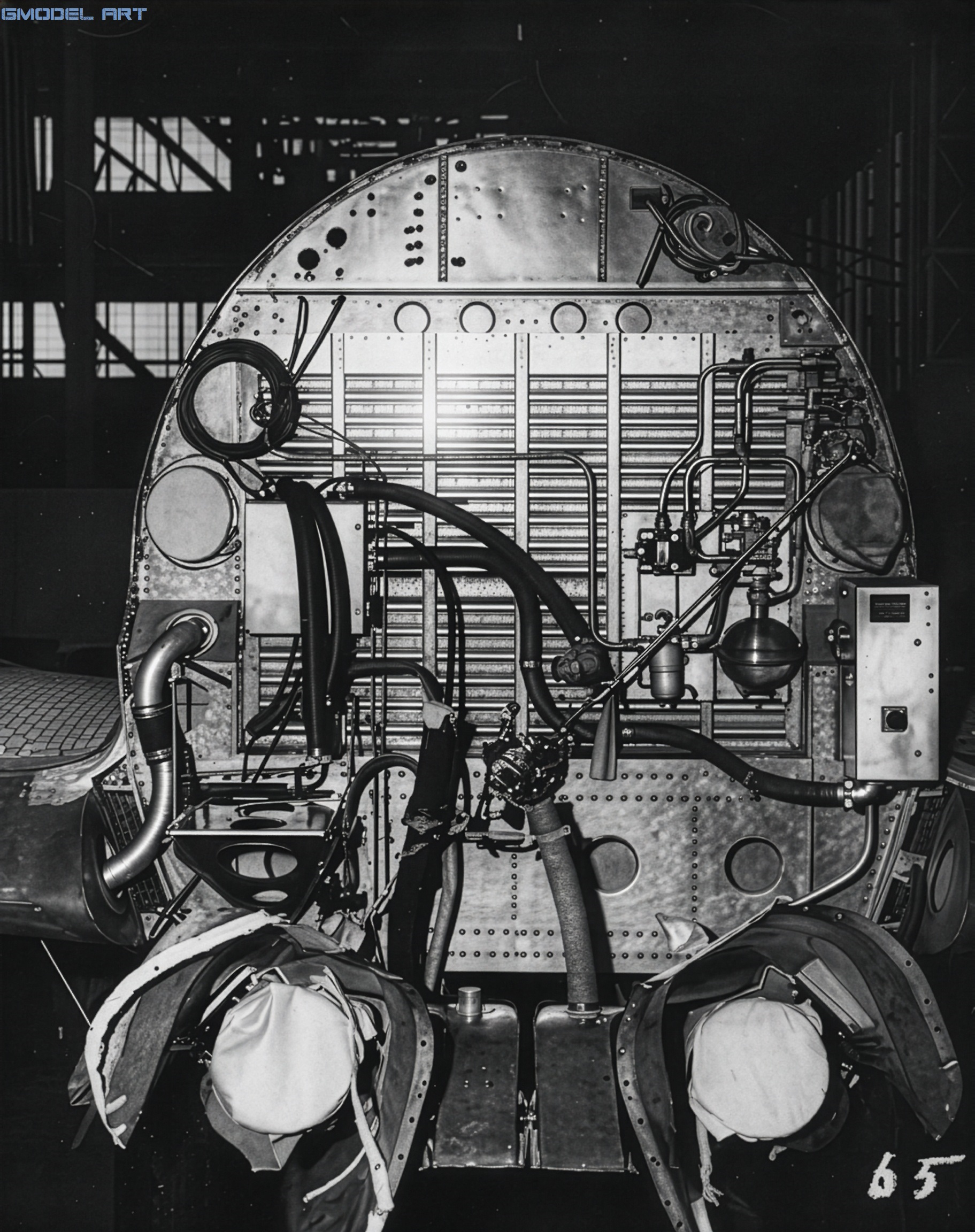
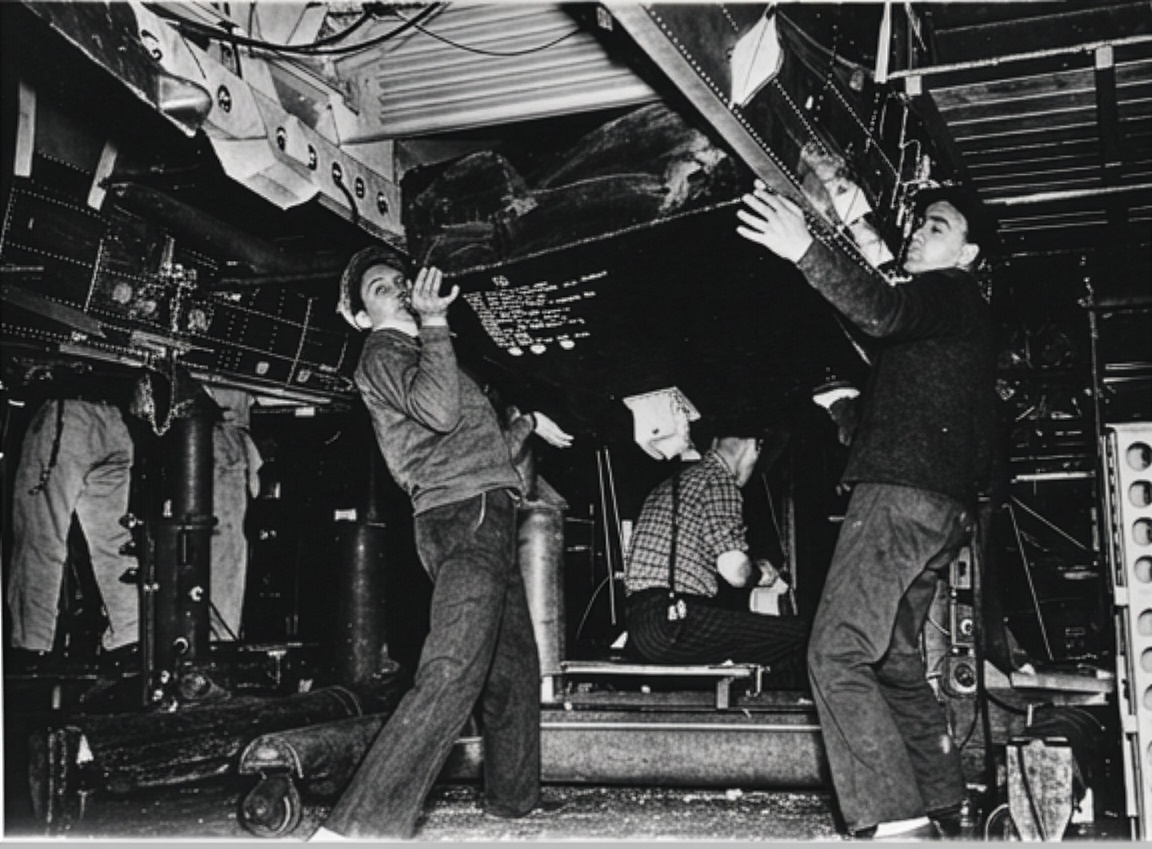
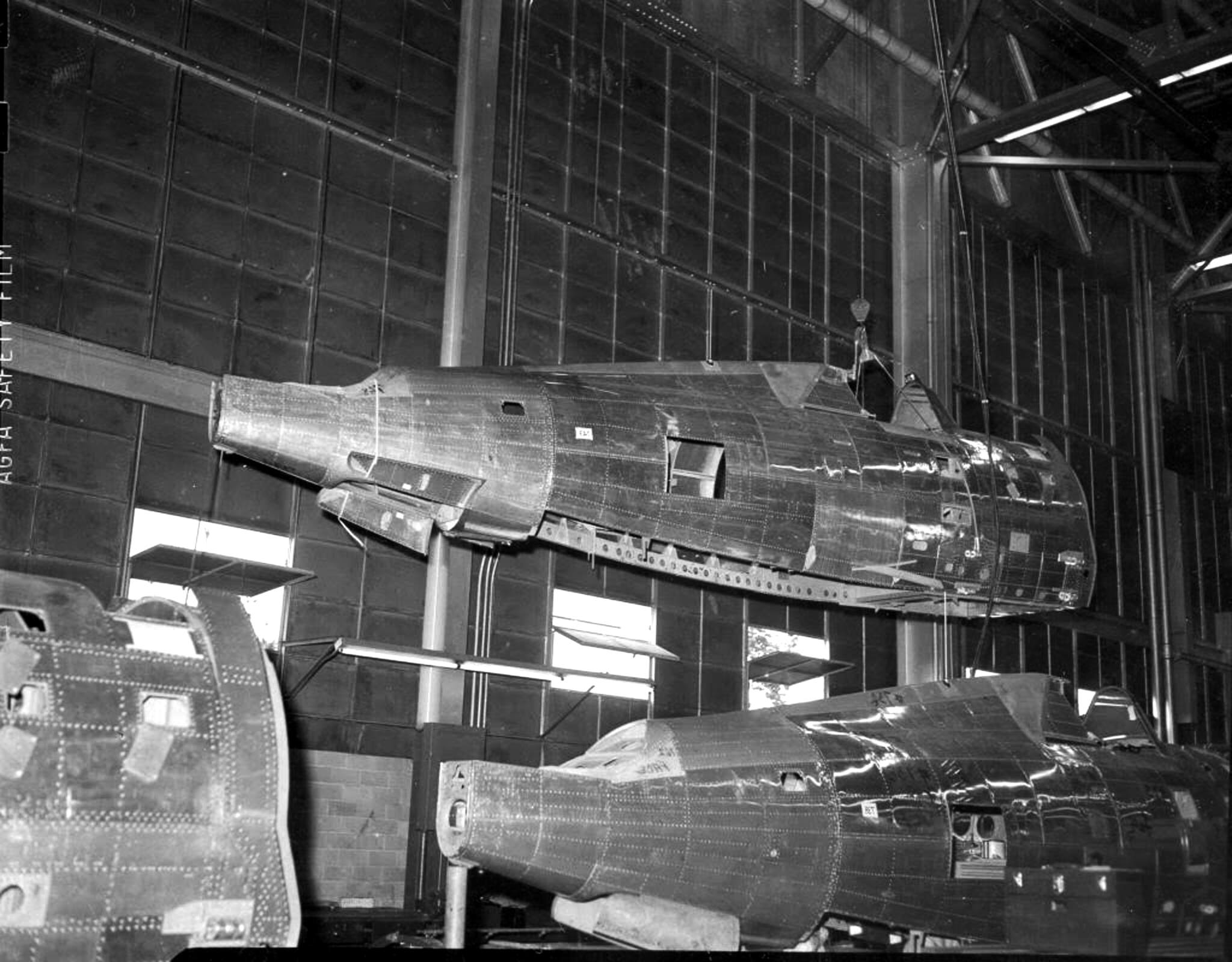
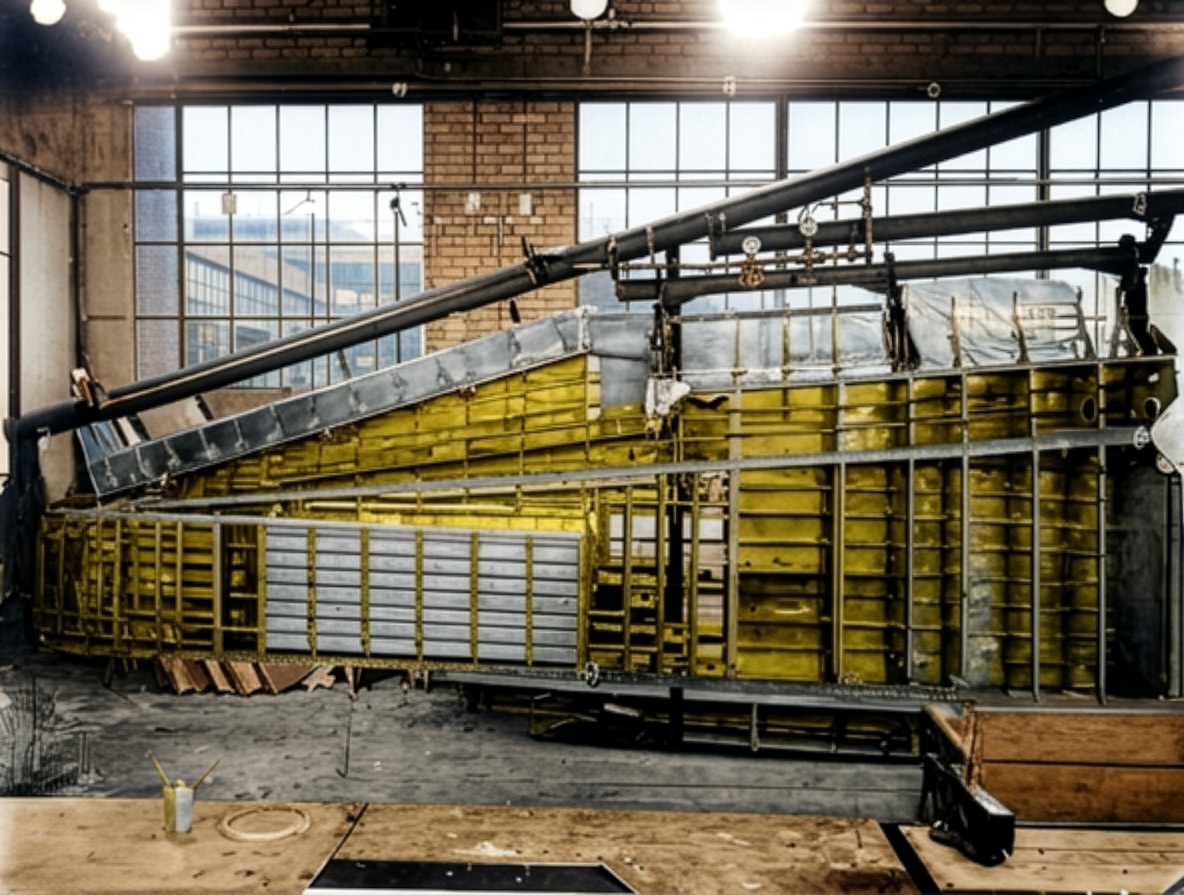
For the modeller, this creates an opportunity that is rarely available with such visual impact: the aircraft can be shown before its external skin completely hides the internal structure.
The P-47 Production Line as a Diorama
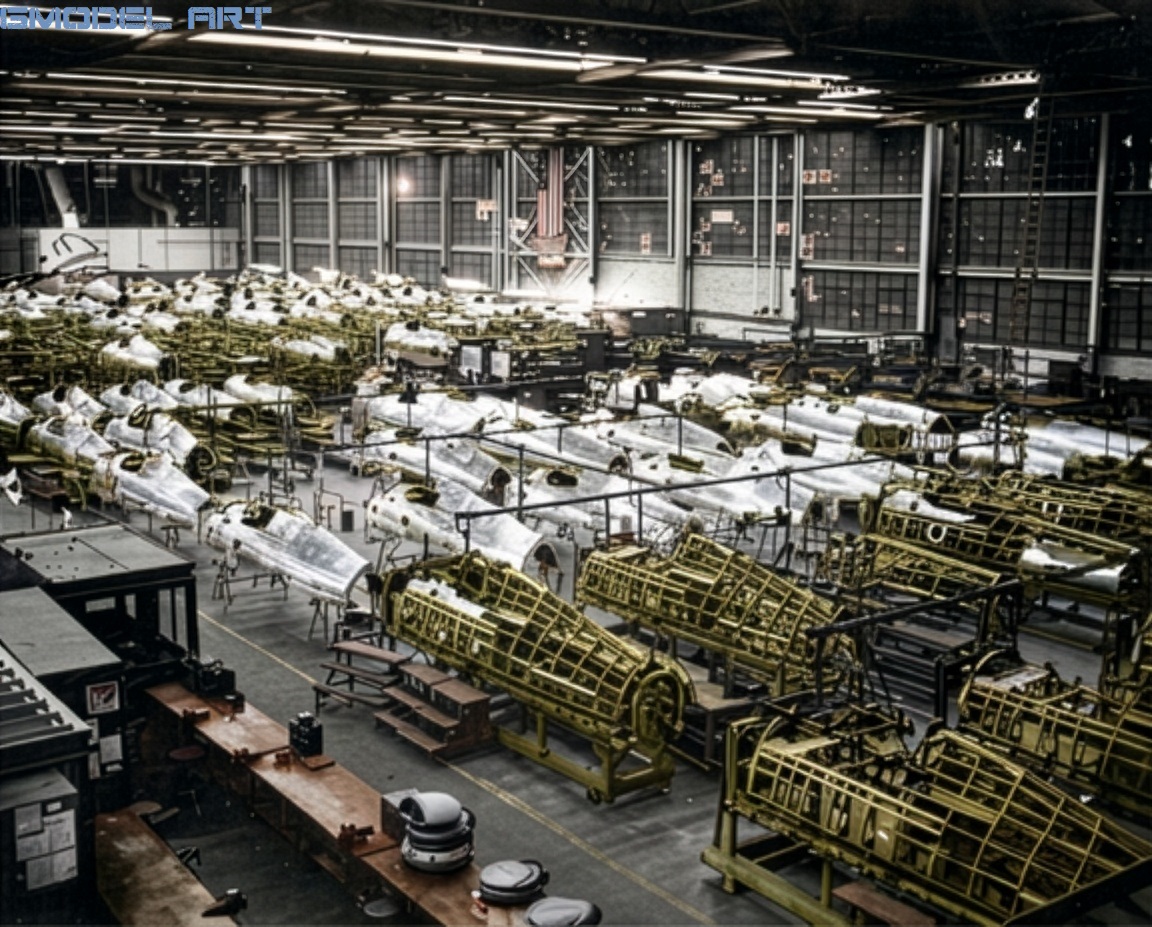
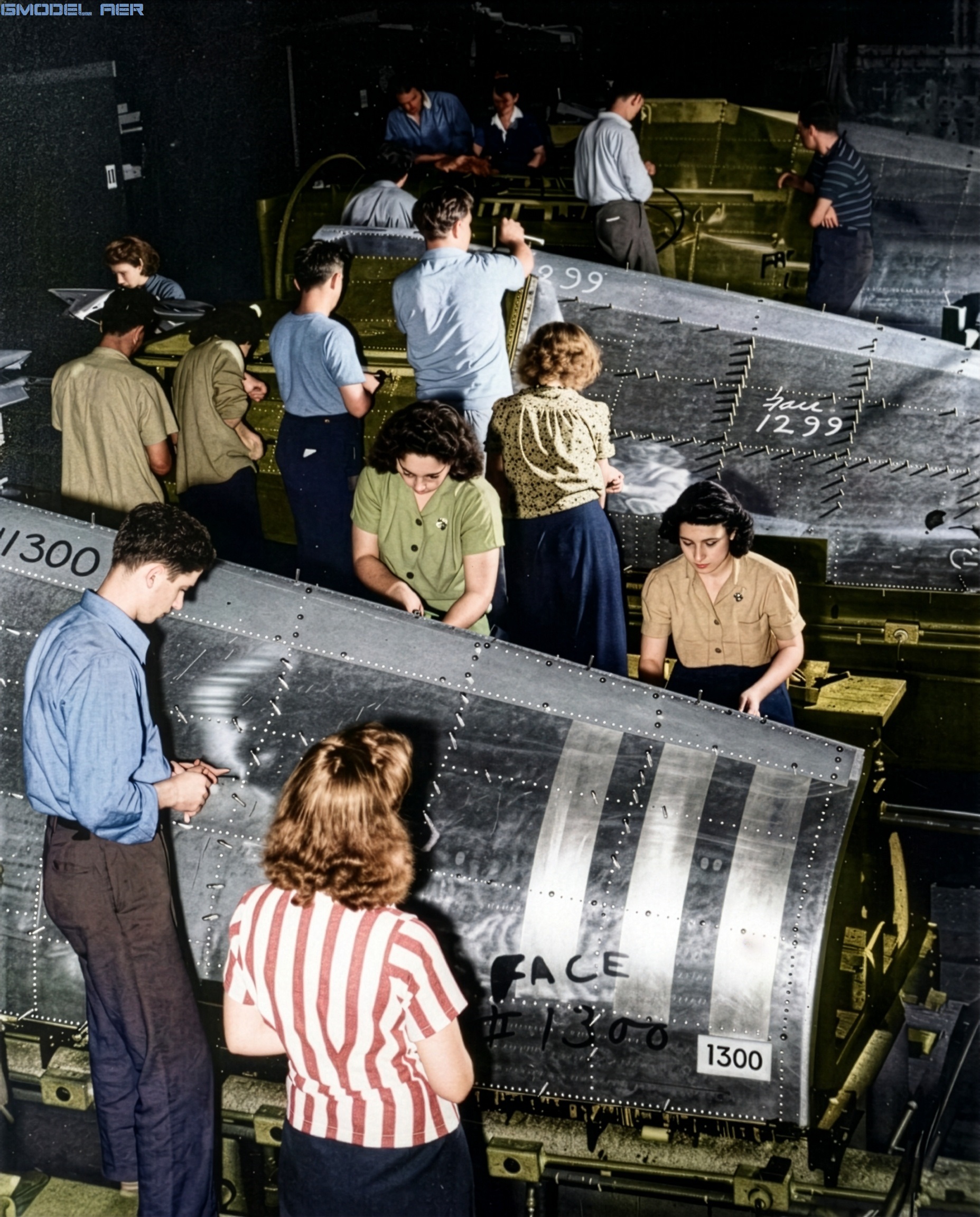
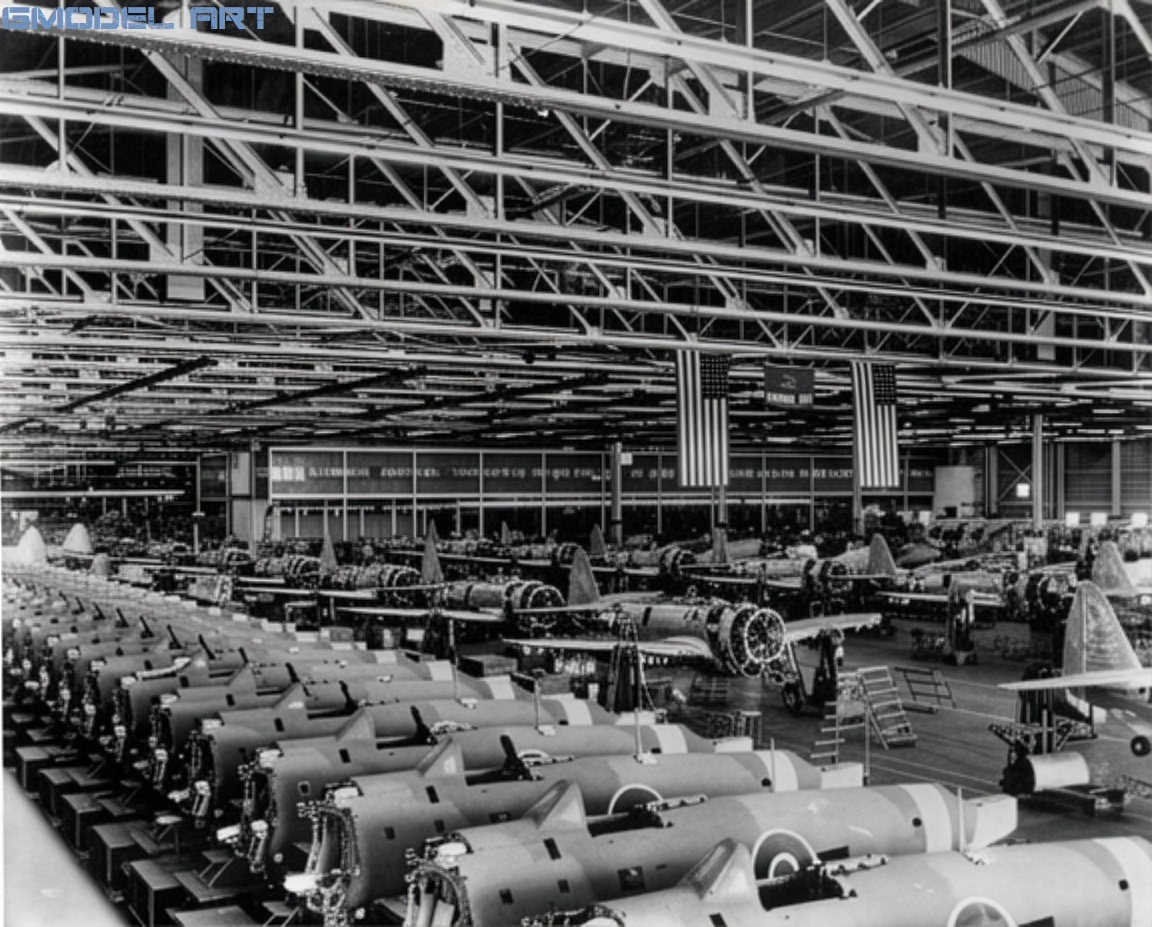
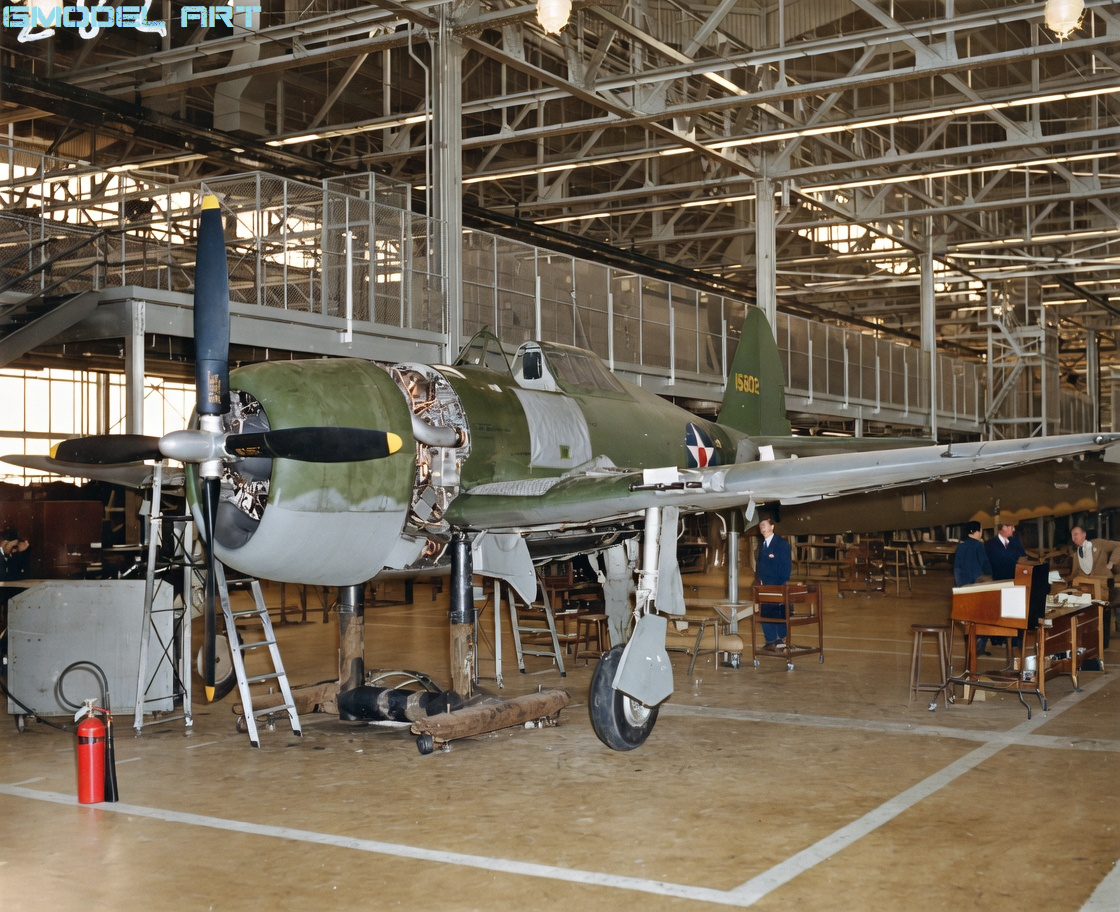
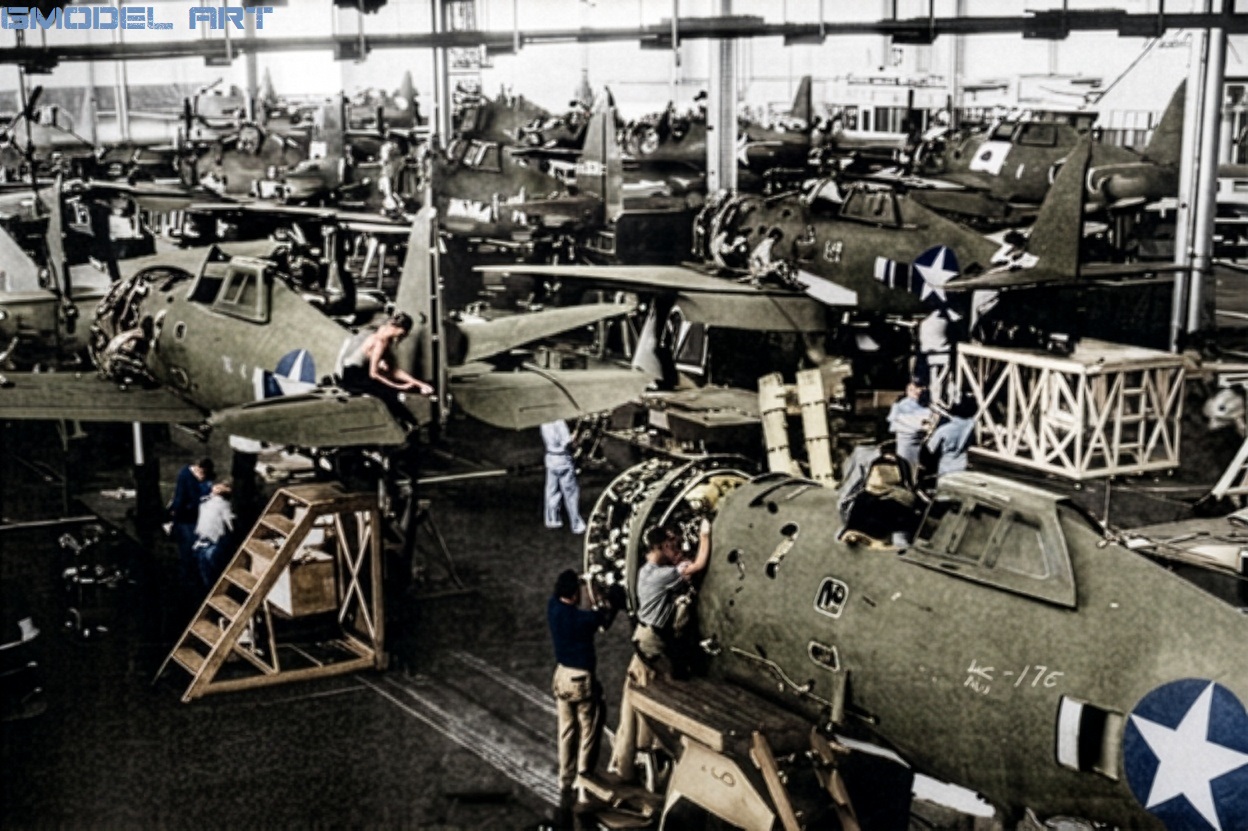
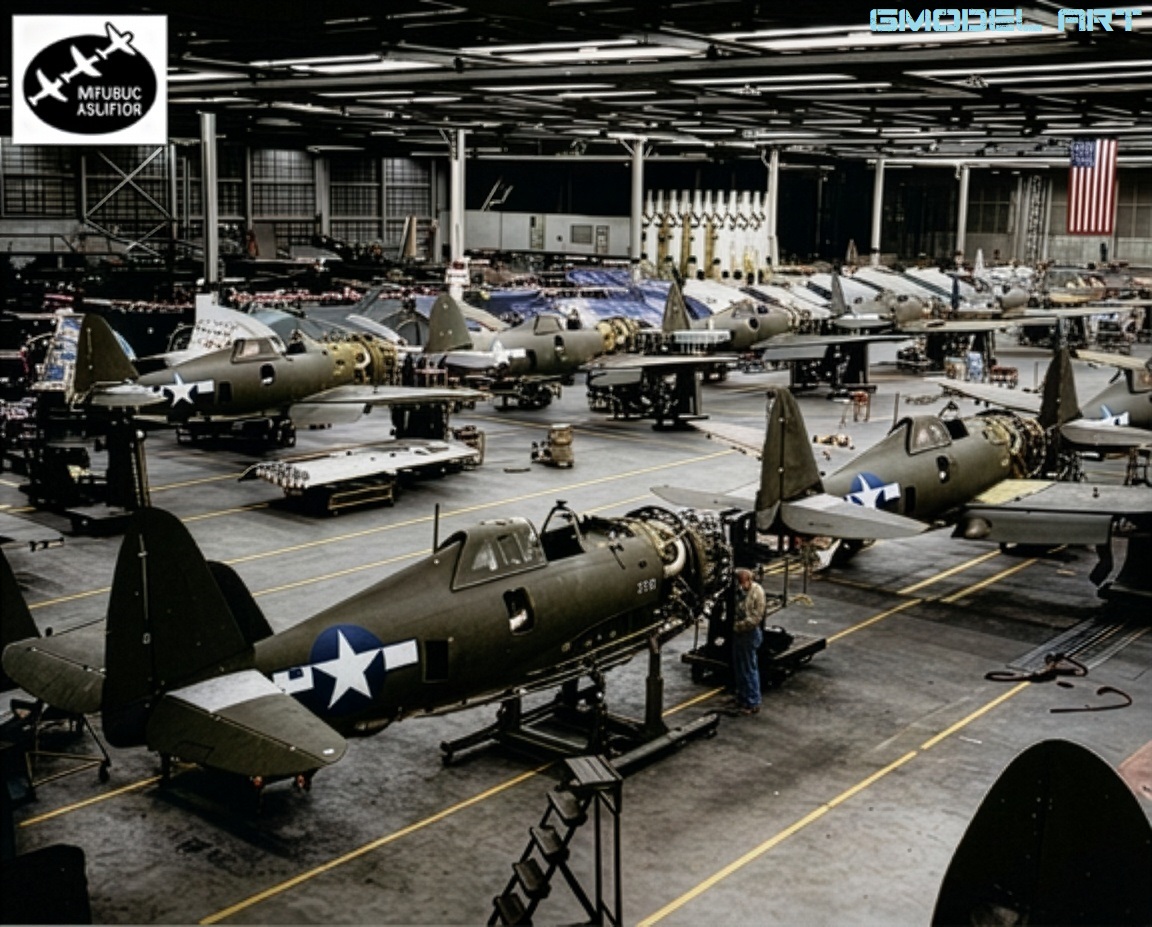
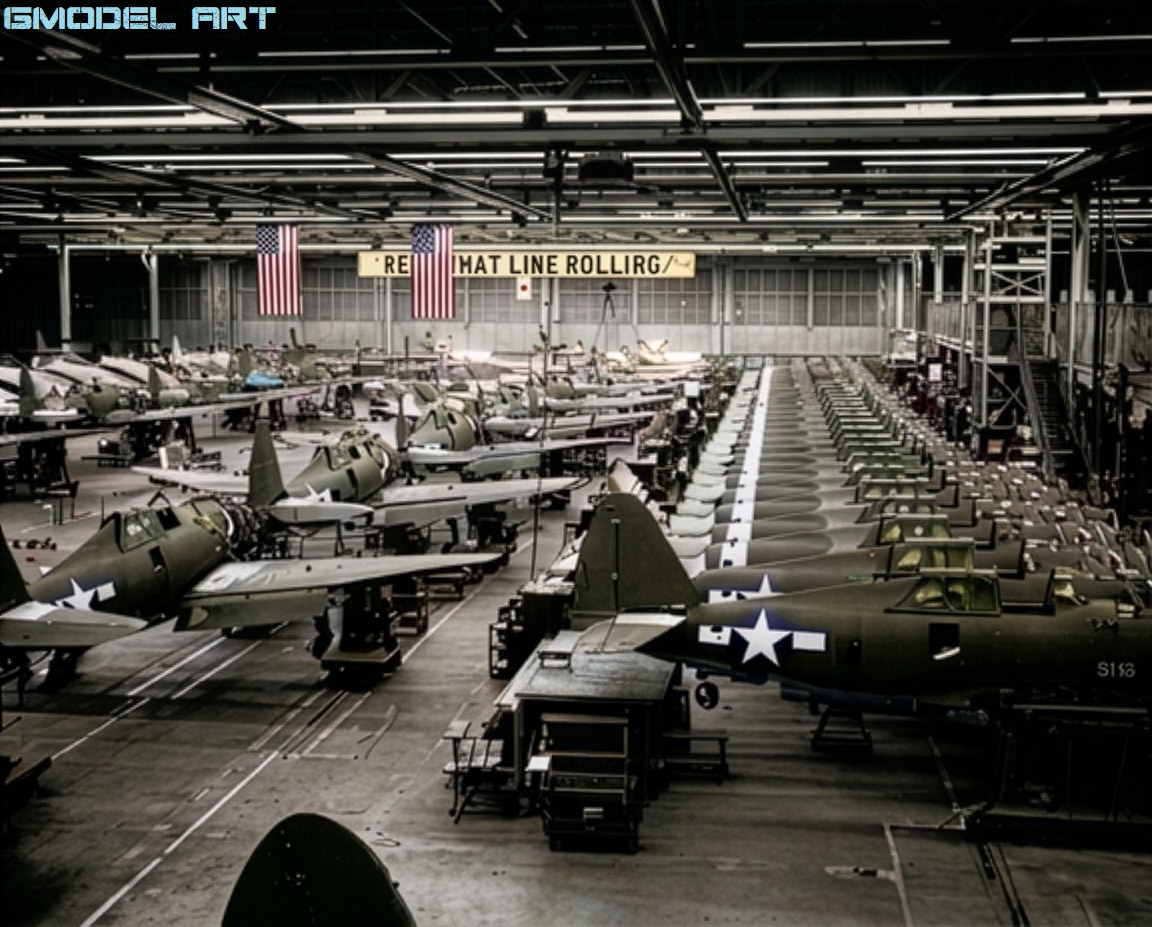
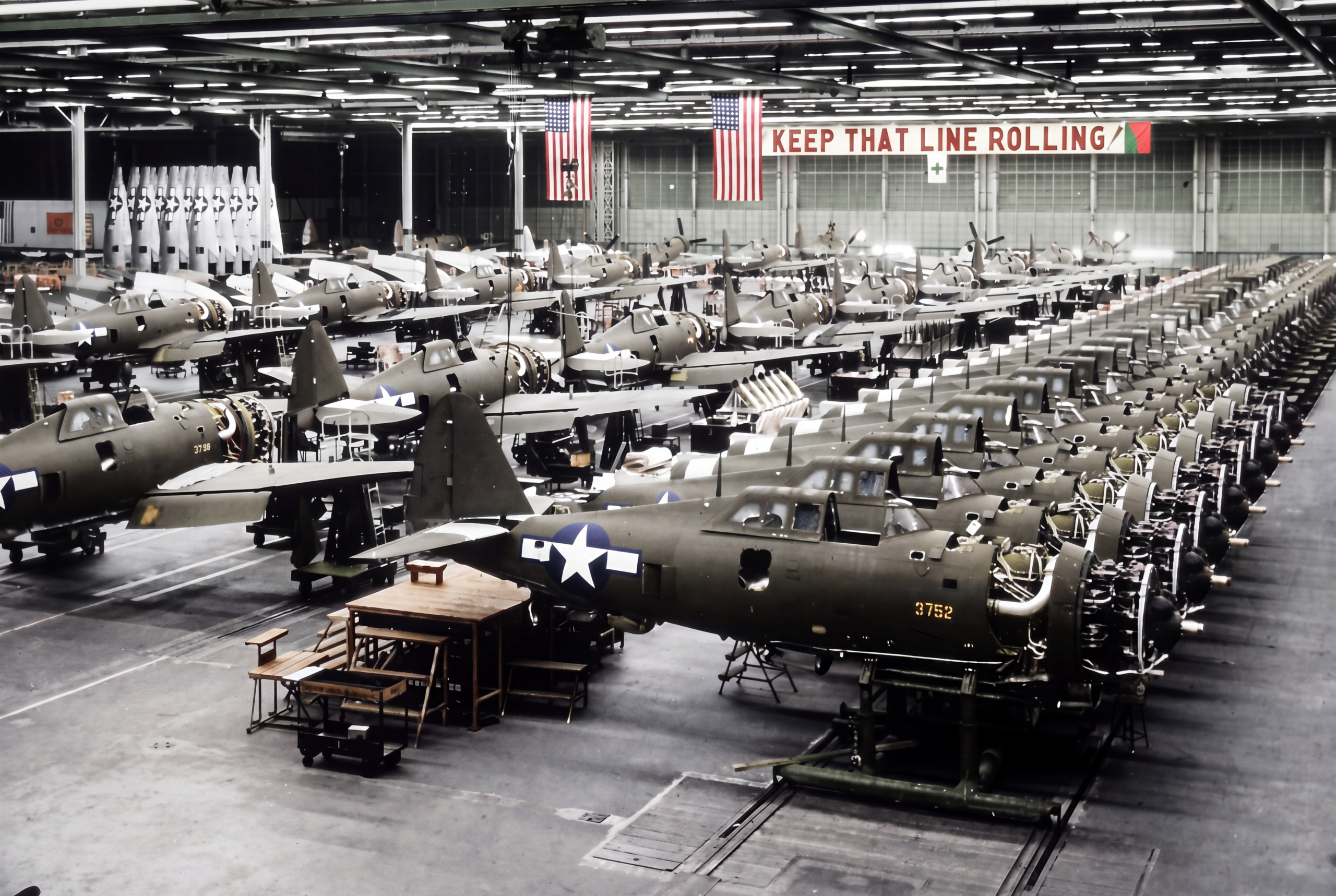
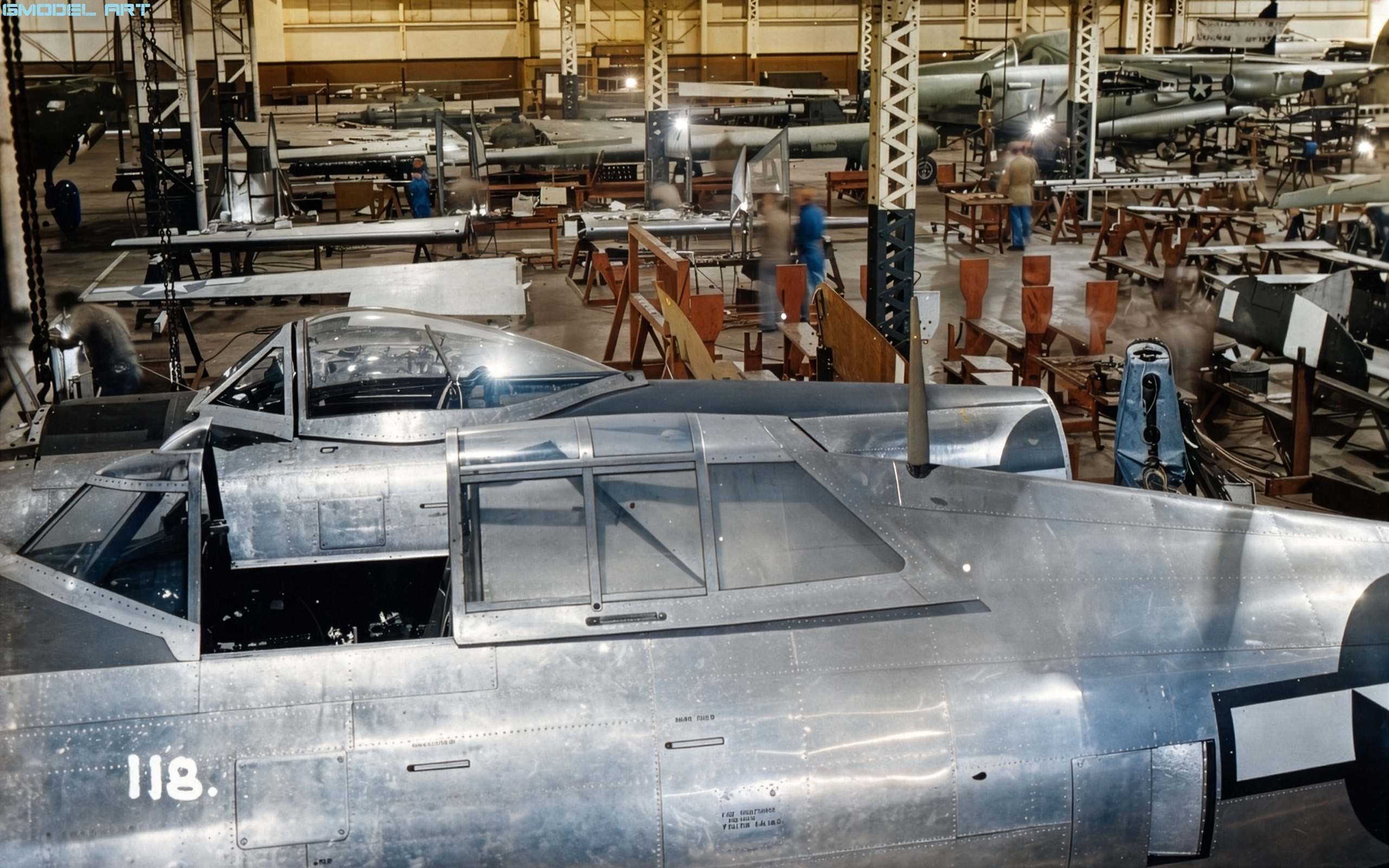
A Republic P-47 Thunderbolt factory diorama can present several aircraft simultaneously, each at a different stage of completion.
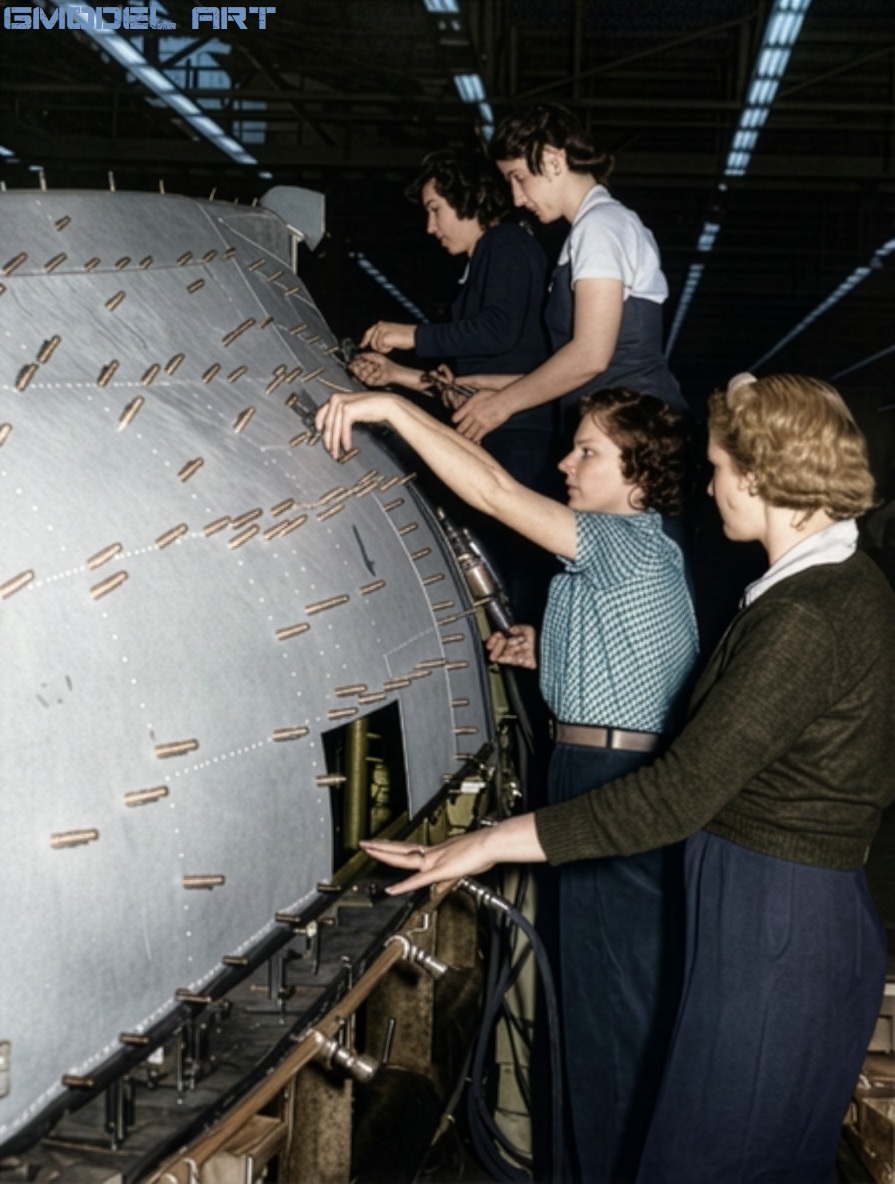
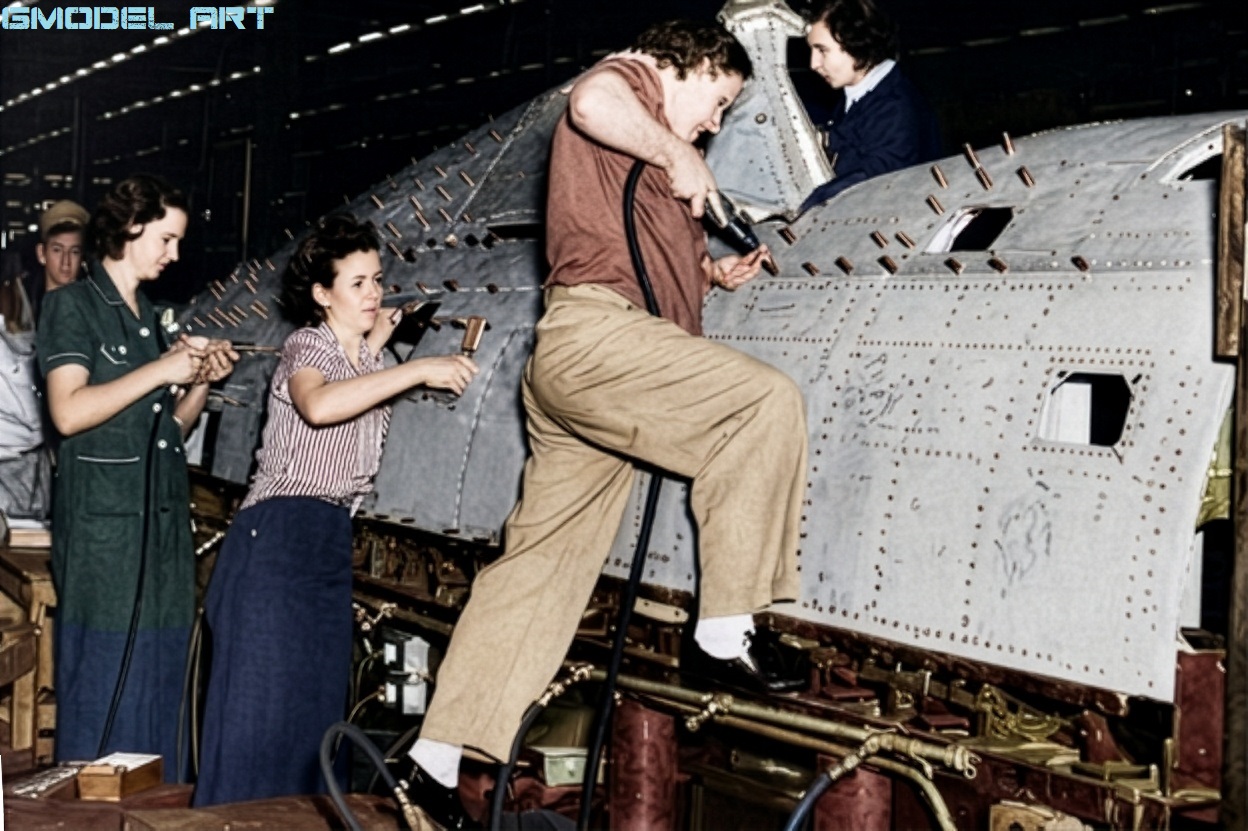
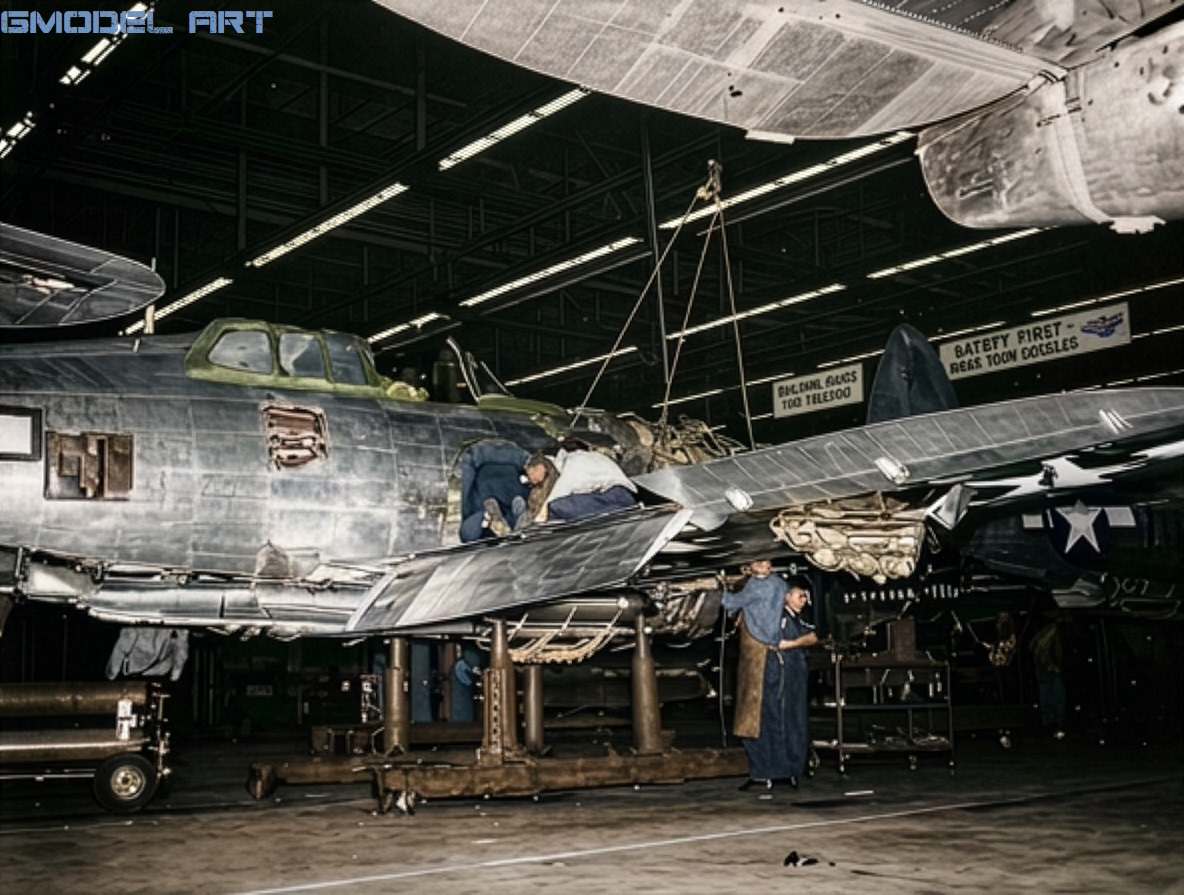
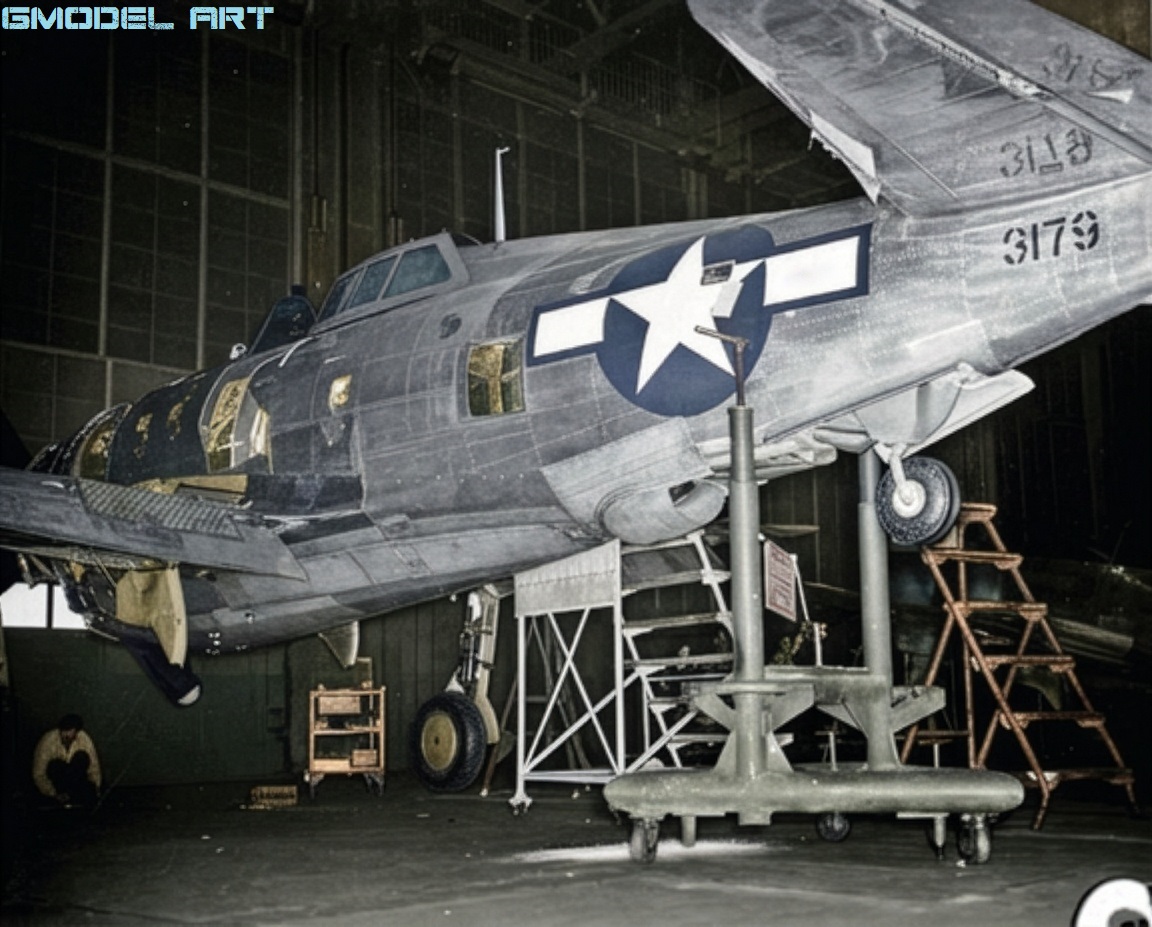
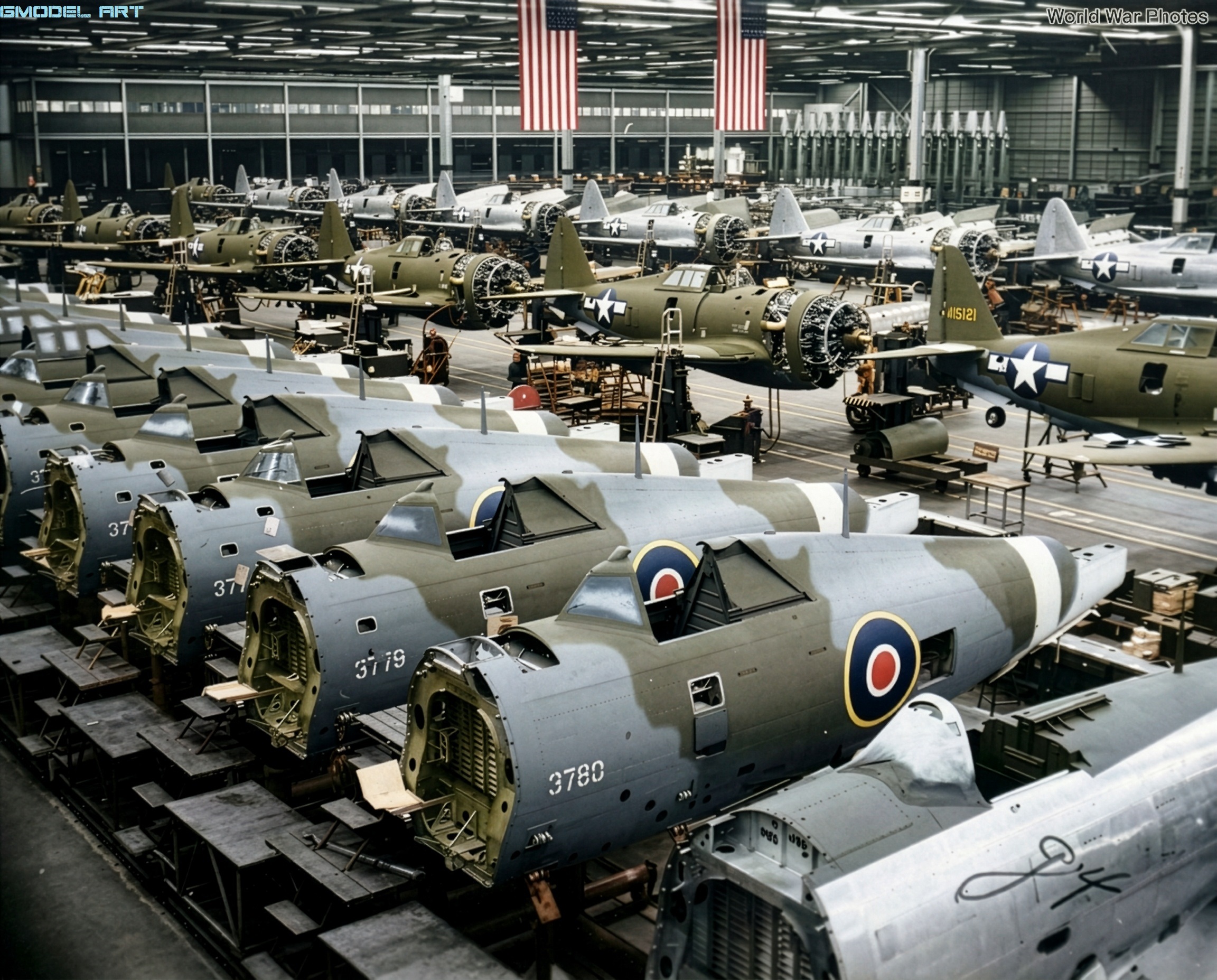
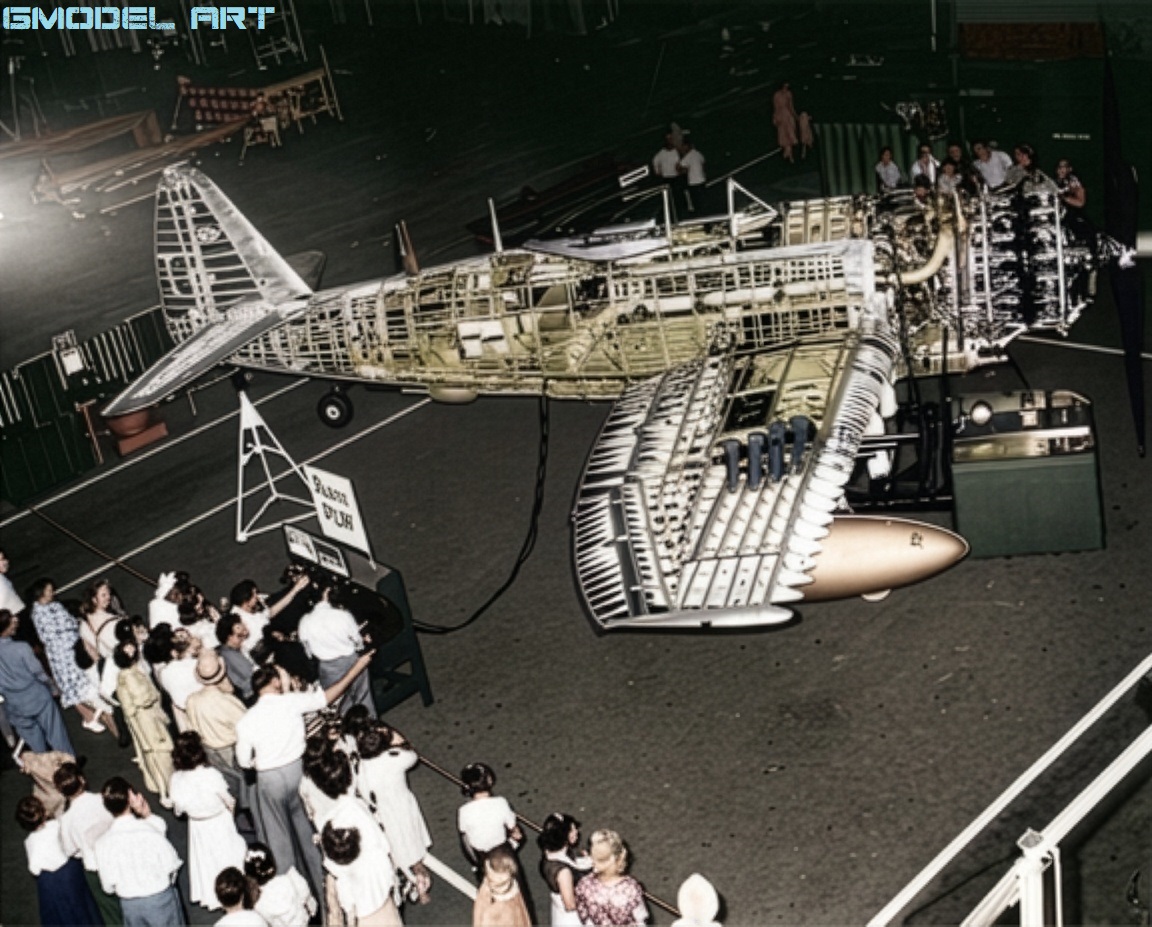
One aircraft can show the internal fuselage framework and equipment before the external panels are installed. Another can have part of its skin fitted, revealing the complex structure underneath. A third can be almost complete and ready for finishing, while another may already carry its camouflage.
This makes it possible to display the same aircraft in completely different states within a single scene.
The modeller can also introduce different finishes into the same production environment, including American and British-operated Republic P-47 Thunderbolt aircraft, depending on the historical setting being represented.
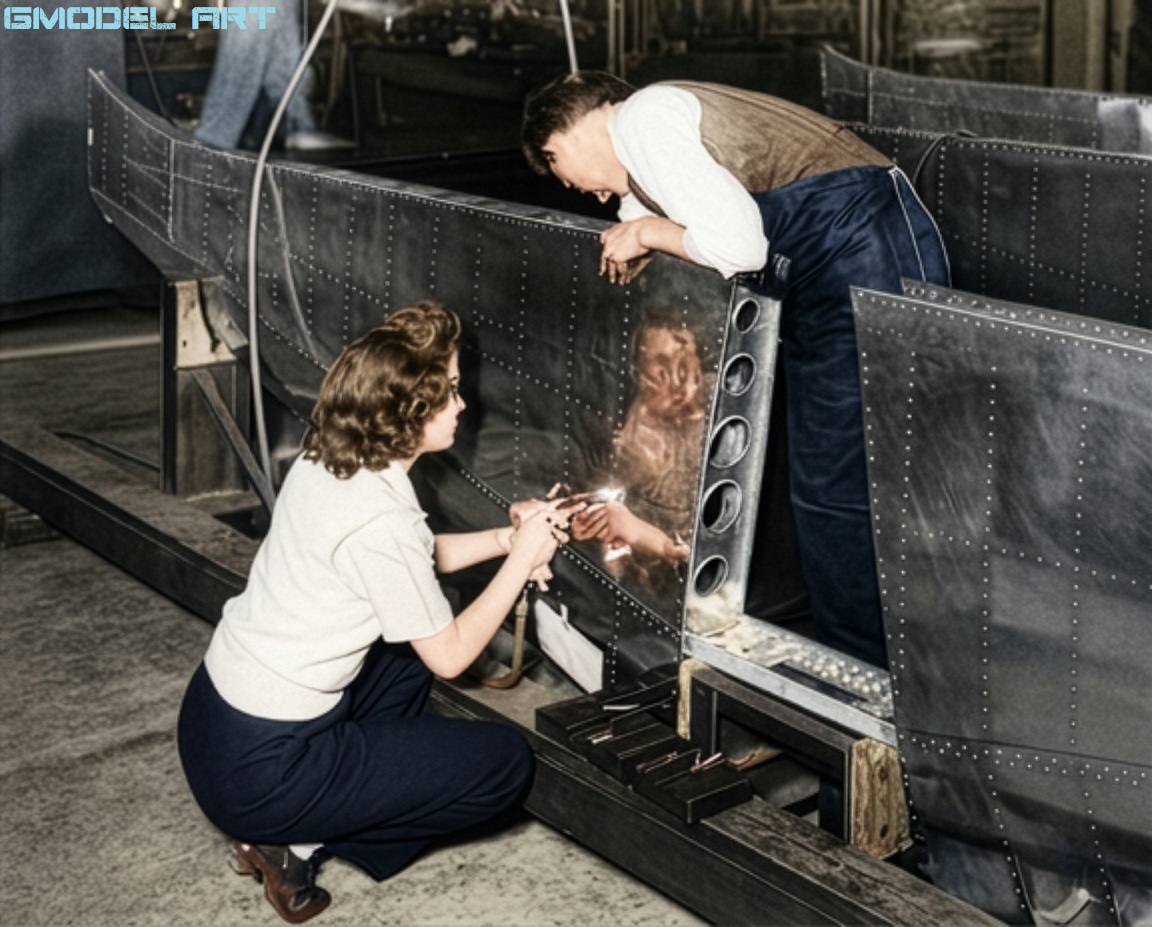
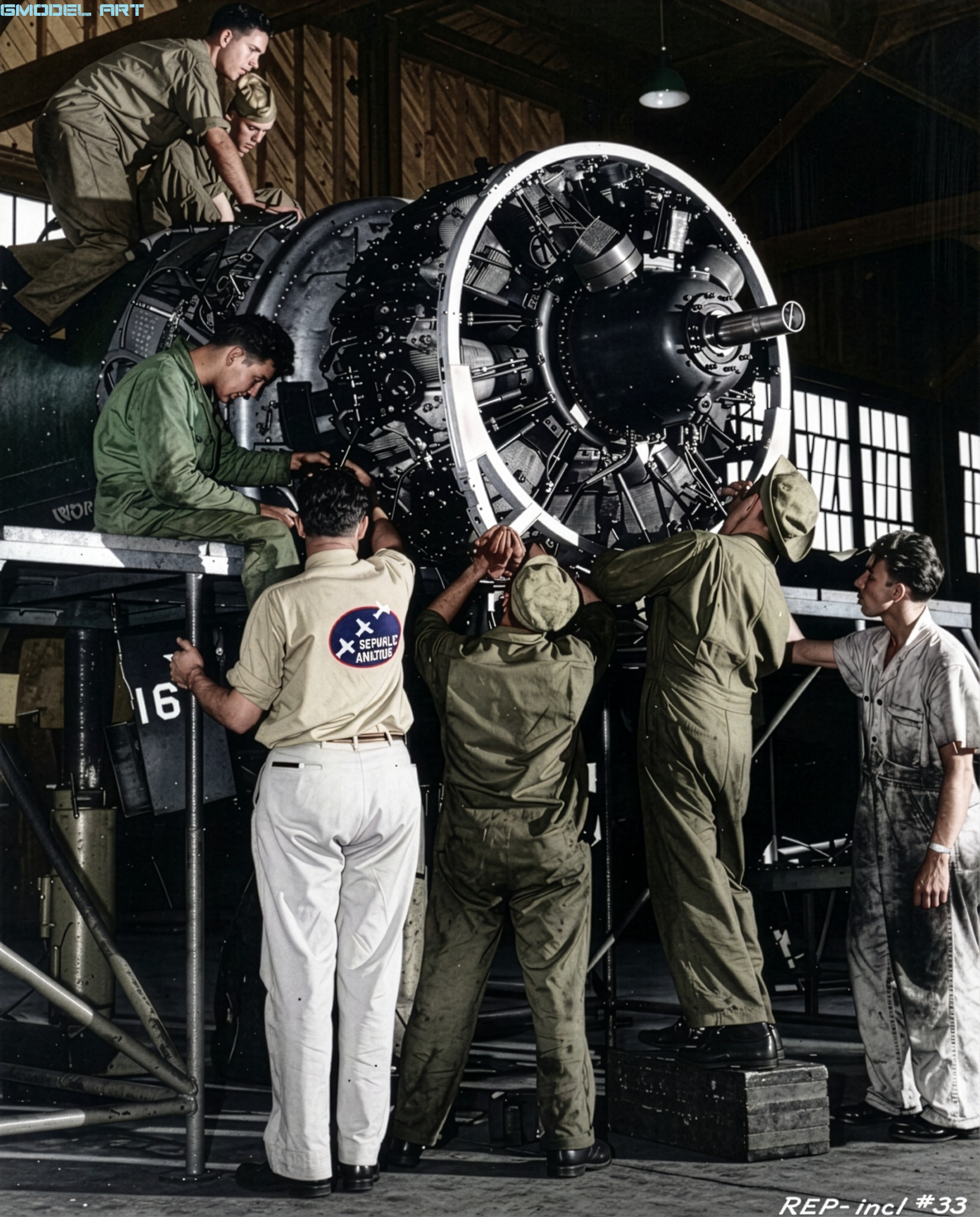
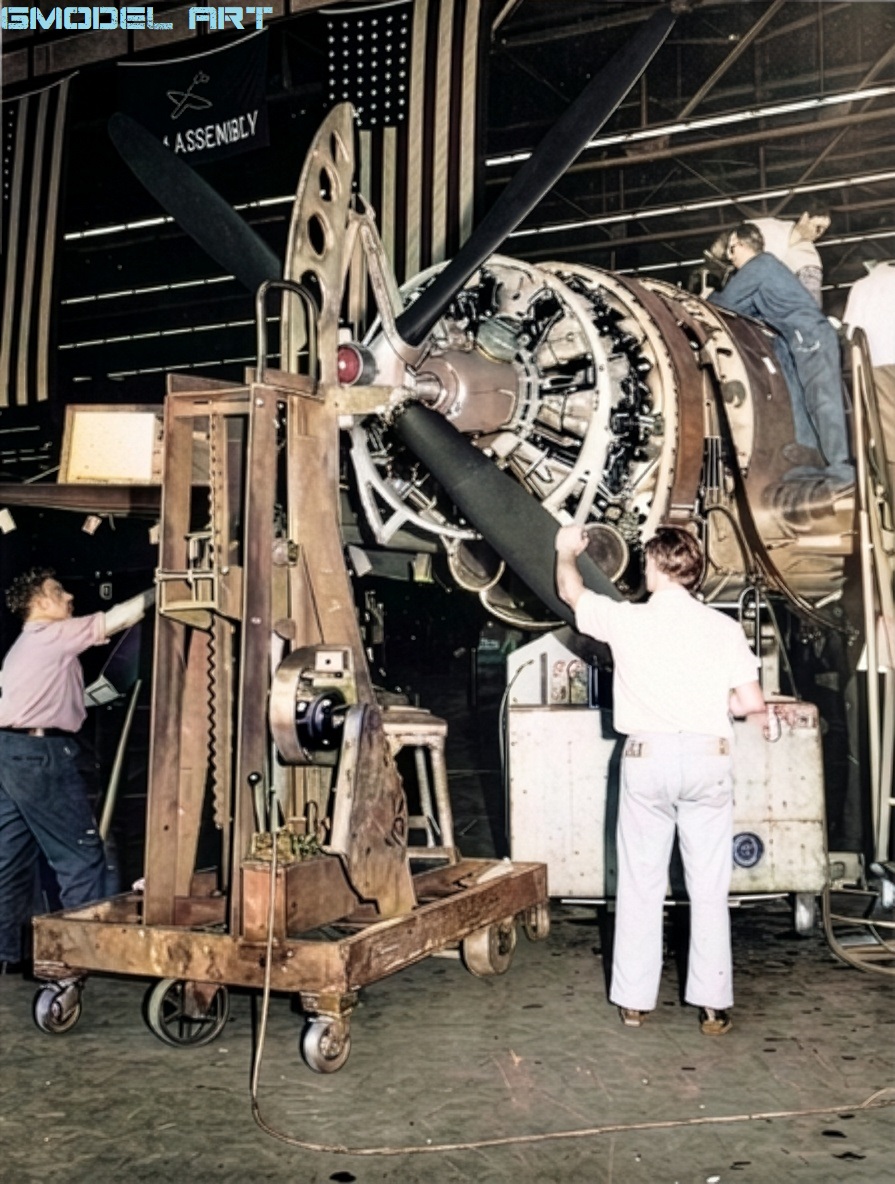
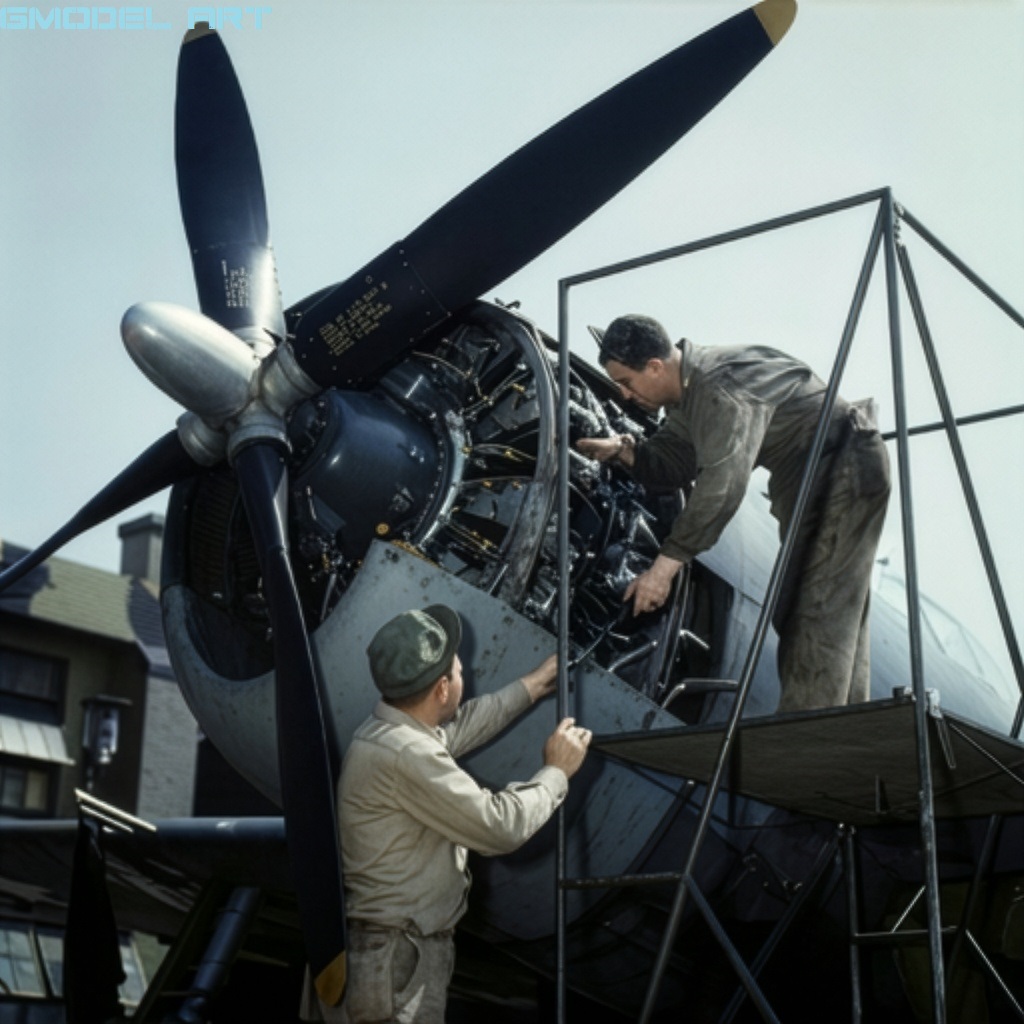
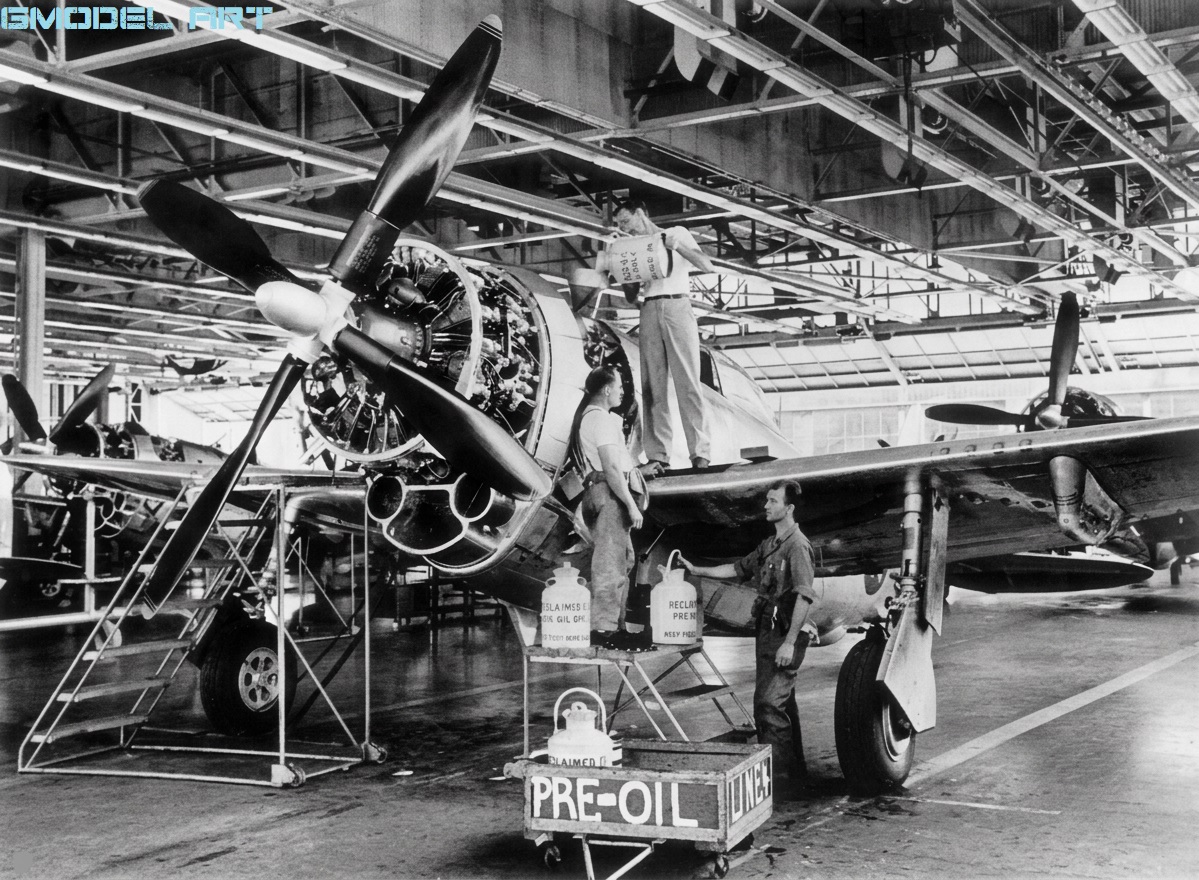
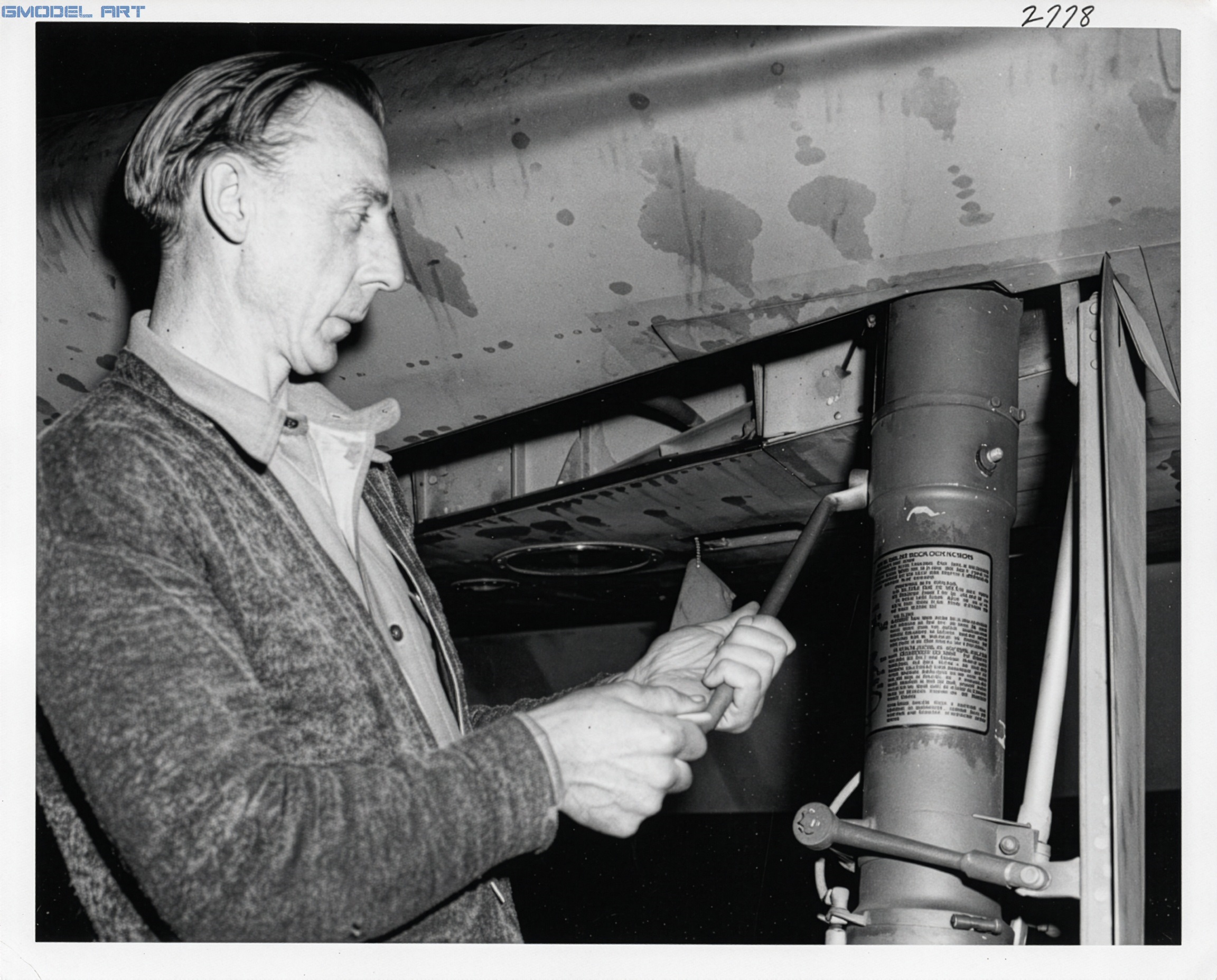
The real strength of such a diorama is the amount of detail that can be added around the aircraft. Plastic sheet and copper wire can be used to reproduce structural elements, cables, pipes and small factory components. Ladders, working platforms, jacks, supports, maintenance stands, tools and other workshop equipment can also be scratch-built relatively easily.
The result is much more than an aircraft sitting inside a factory. The production line itself becomes the modelling subject.
P-47 Production Variants
The Republic P-47 Thunderbolt was produced in several major variants during World War II. Production was concentrated at Republic Aviation’s factories in Farmingdale, New York, and Evansville, Indiana, while Curtiss-Wright built the P-47G under license. More than 15,600 Thunderbolts were eventually produced.
The P-47B was the first production version, with 171 aircraft built. The P-47C introduced several improvements, including provisions for carrying a centerline bomb or auxiliary fuel tank and cockpit heating.
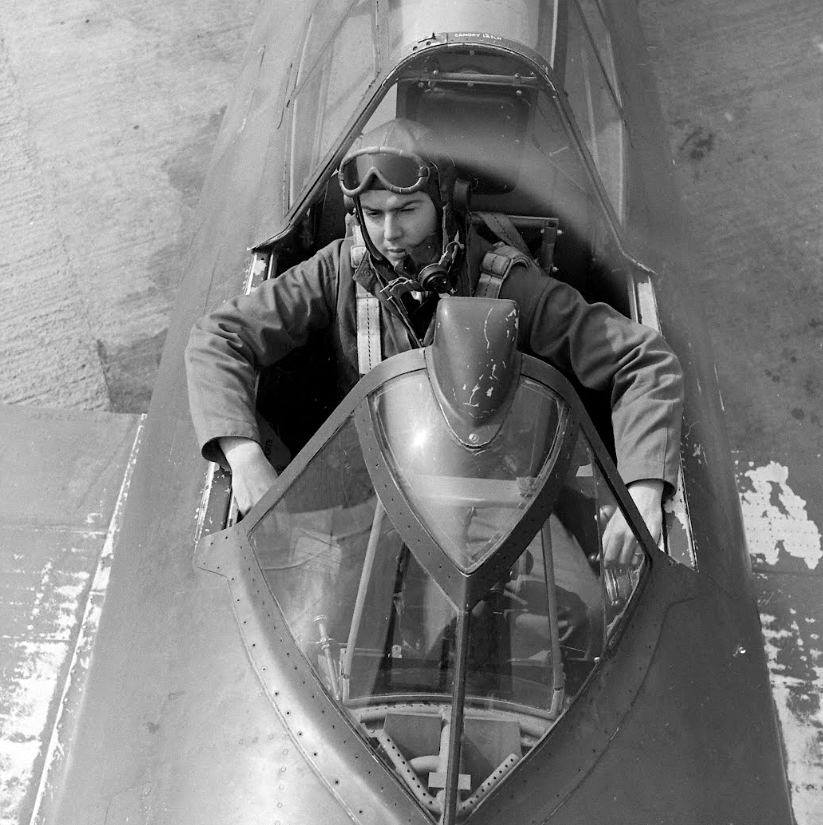
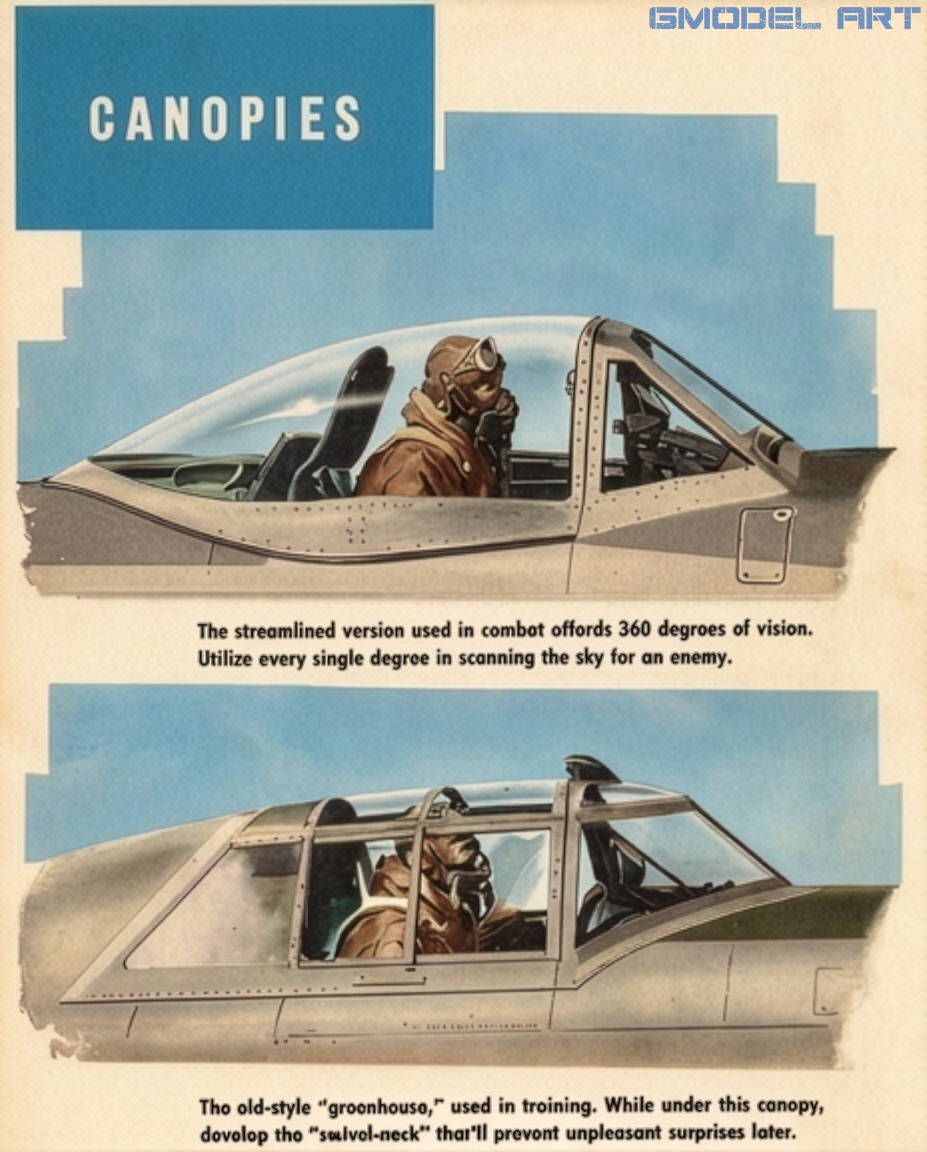
The P-47D became the dominant production version, with more than 12,600 aircraft produced. Early D models retained the distinctive razorback fuselage, while later production introduced the bubble canopy. The transition to the bubble canopy occurred with the P-47D-25-RE and subsequent production blocks.
The P-47G was produced by Curtiss-Wright at Buffalo under license. A total of 354 Curtiss-built aircraft were produced, with the early G models broadly comparable to Republic-built C models and later G models comparable to D-series aircraft.
The P-47M was a specialised high-speed version, while the P-47N received a redesigned wing and greater fuel capacity to provide the long range required for operations in the Pacific. The National Museum of the United States Air Force records 130 P-47Ms, 1,667 P-47N-REs and 149 P-47N-RAs.
For modelling purposes, the production code is also important. RE generally identifies aircraft produced at Farmingdale, while RA identifies aircraft produced at Evansville. There were exceptions during the earliest Evansville production, so the individual serial number and production block should always be checked when researching a specific aircraft.
The Republic P-47 Thunderbolt was produced in several major variants and at different manufacturing locations.
| Variant | Manufacturer / Factory Code | Main characteristic |
|---|---|---|
| P-47B | Republic – Farmingdale | Initial production version |
| P-47C | Republic – Farmingdale | Improved production fighter |
| P-47D | Republic / Evansville / Curtiss-Wright | Main wartime production version |
| P-47G | Curtiss-Wright | Curtiss-built Thunderbolt |
| P-47M | Republic – Farmingdale | High-performance late-war version |
| P-47N | Republic – Farmingdale / Evansville | Long-range Pacific version |
Why the P-47 Works So Well in Scale
The Republic P-47 Thunderbolt is an unusually rewarding subject for a factory diorama because its large fuselage, turbo-supercharger installation and heavy internal structure provide many areas where additional detail can be exposed.
Instead of building a completely finished aircraft, the modeller can deliberately remove selected panels and show what normally disappears after final assembly.
This approach also allows several different modelling techniques to exist in the same scene: conventional aircraft construction, scratch-building, structural detailing, weathering, painting and industrial diorama work.
The production-line setting therefore gives the modeller freedom to tell a story rather than simply display a finished aircraft.
Modelling Paint References
For a production-line diorama, the paint table is most useful when it provides modern modelling paint equivalents rather than simply listing historical colour specifications.
The exact colours should always be selected according to the aircraft’s production period, factory, variant and documented finish. For broader information about early-war USAAF camouflage, see the GModel Art article on Olive Drab No. 41 and Neutral Gray No. 43.
| Area | Modelling colour approach |
|---|---|
| Exterior camouflage | Olive Drab / Neutral Gray equivalents |
| Natural-metal aircraft | Aluminium / natural-metal shades |
| Interior structures | Appropriate zinc-chromate-based interior colours |
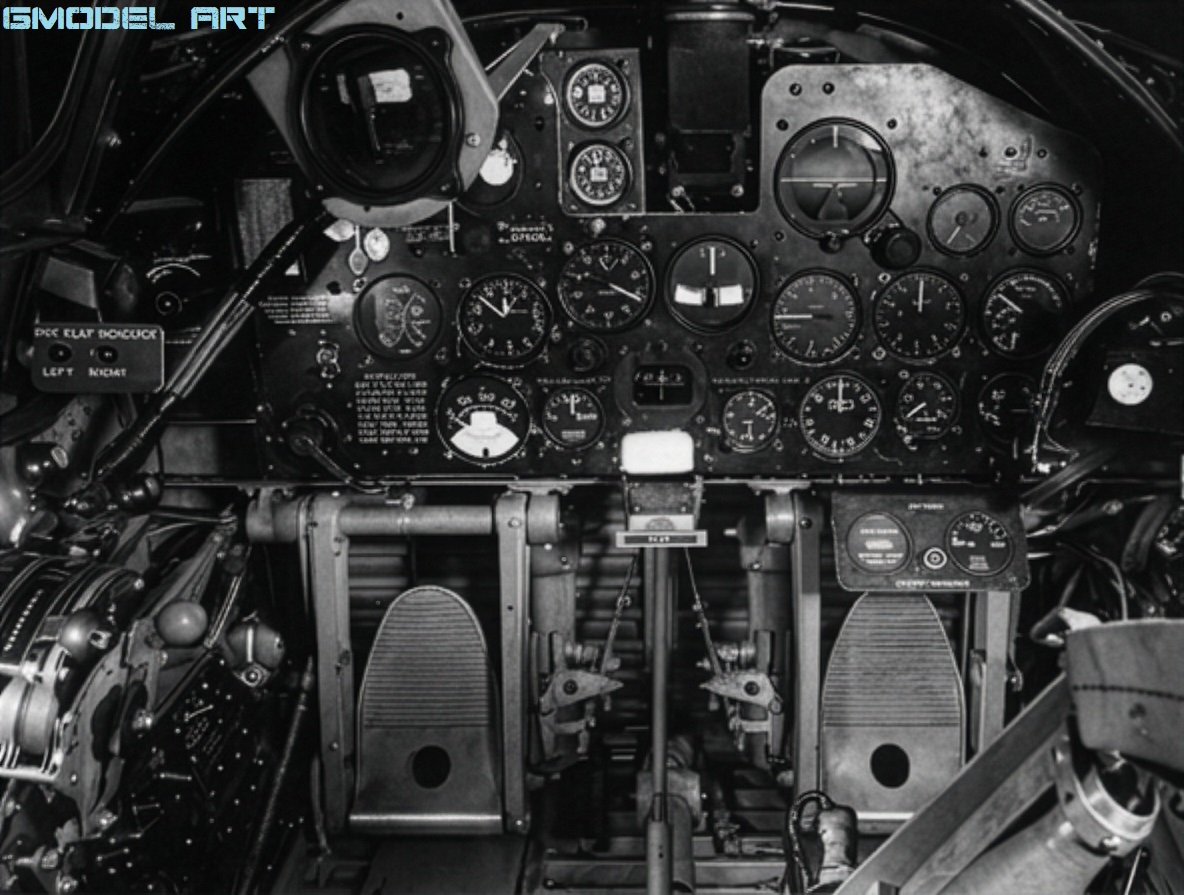
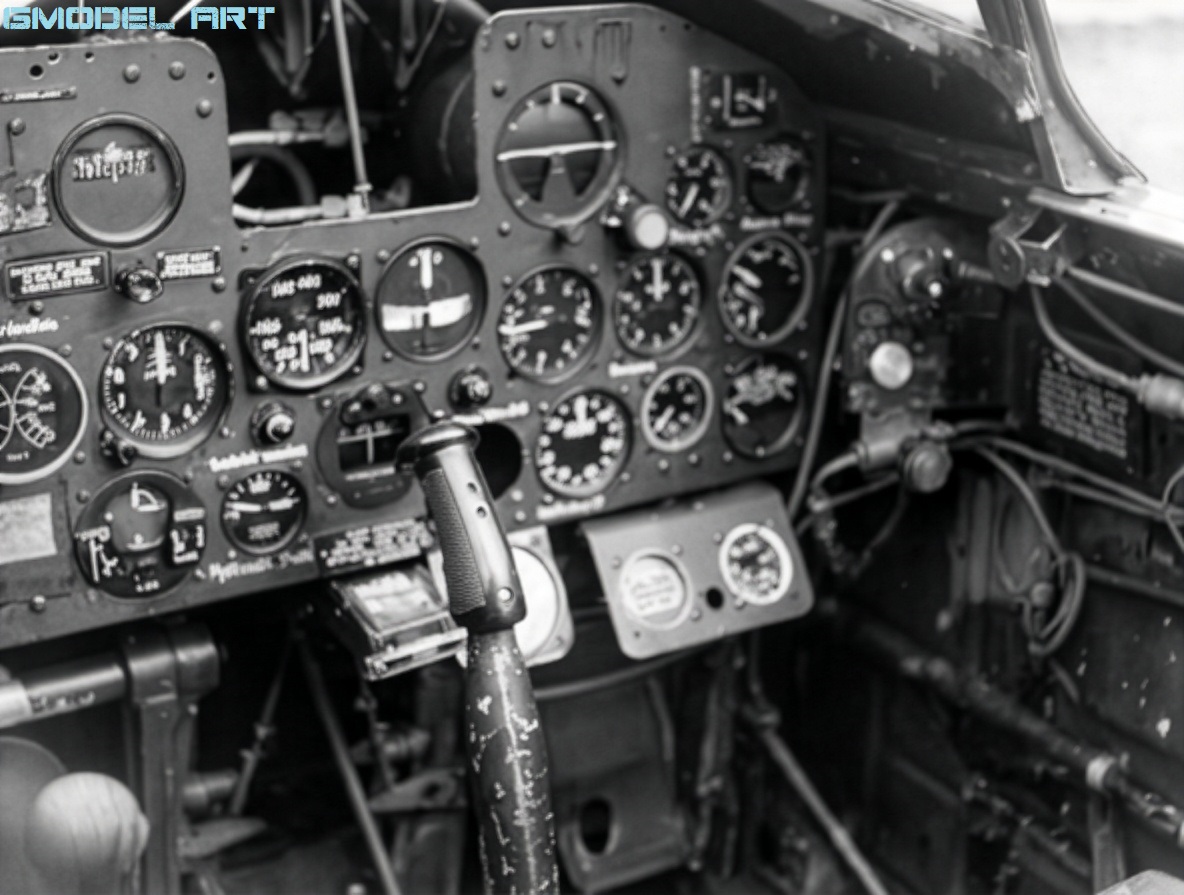
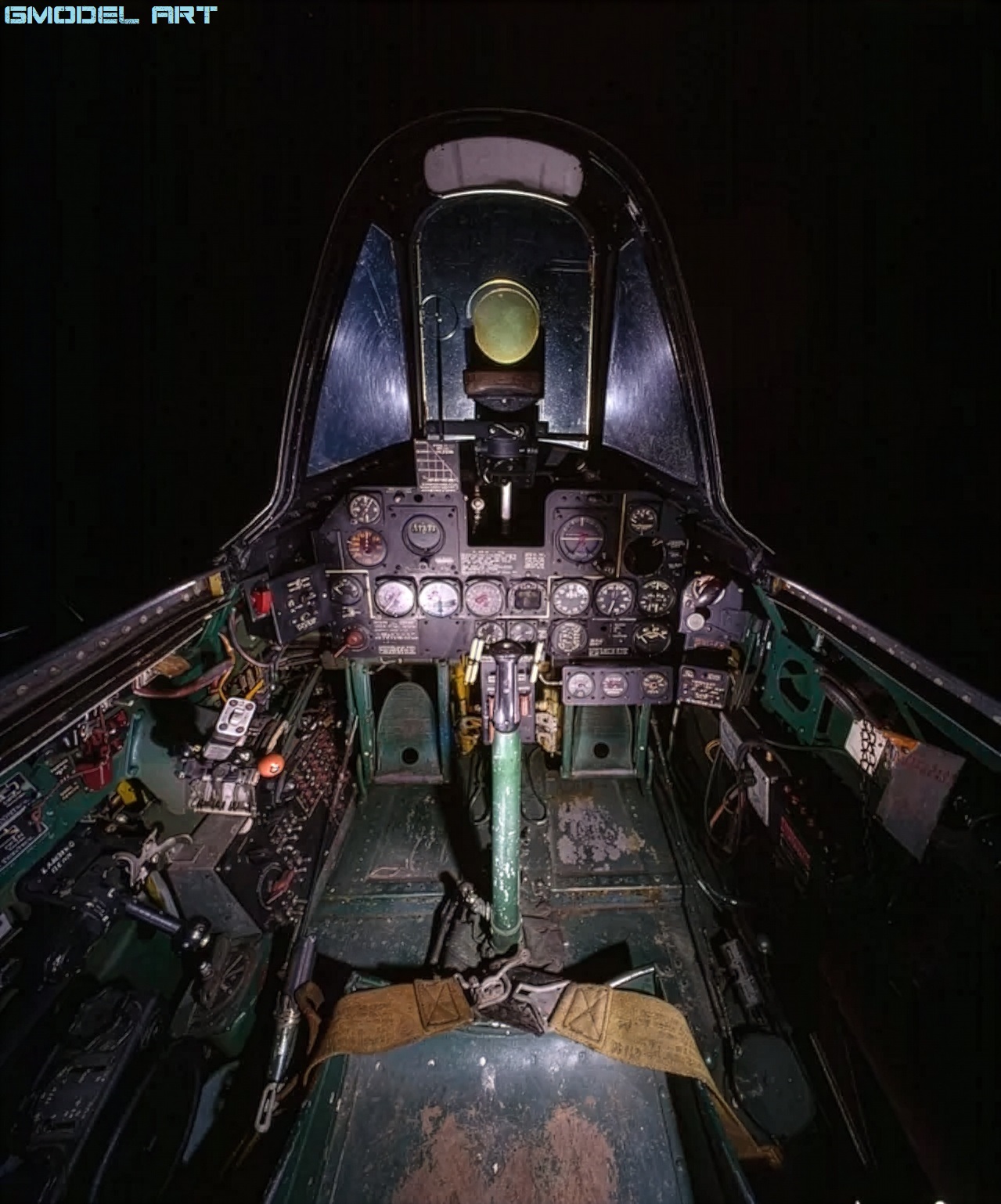
| Cockpit | Period-appropriate interior colour |
| Engine and mechanical components | Aluminium, steel, dark metal and black shades |
| Factory equipment | Aluminium, steel, grey and appropriate industrial colours |
| Region / Color | Tamiya | Mr. Hobby / Mr. Color | AK Interactive | Vallejo |
|---|---|---|---|---|
| Olive Drab No. 41 | XF-62 Olive Drab | C12 Olive Drab | RC231 Olive Drab | 71.016 US Dark Green / Olive Drab |
| Neutral Gray No. 43 | XF-53 Neutral Gray | C13 Neutral Gray | RC235 Neutral Gray | 71.273 US Medium Gray |
| Zinc Chromate Yellow | XF-4 Yellow Green* | C27 Interior Green* | Zinc Chromate Yellow | 71.107 US Interior Yellow |
| Zinc Chromate Green / Interior Green | XF-4 Yellow Green* | C58 Interior Green | Interior Green | 71.010 Interior Green |
| Aluminium / Natural Metal | LP-70 Aluminum / X-11 | SM201 Super Fine Silver 2 | AK Extreme Metal Aluminium | 77.701 Aluminium |
| Steel | X-10 Gun Metal | C61 Burnt Iron | AK Extreme Metal Steel | 77.712 Steel |
| Black | XF-1 Flat Black | C33 Flat Black | RC001 Black | 70.950 Black |
| Insignia White | XF-2 Flat White | C62 White | RC222 Insignia White | 71.279 Insignia White |
For an accurate build, these colours should not be applied generically to every P-47. Production location, date and individual aircraft documentation remain important.
Fighter Squadrons
The Republic P-47 Thunderbolt served with numerous USAAF fighter groups and squadrons, particularly in the European Theatre of Operations, where it became one of the principal American fighter-bombers.
| Theatre | Examples of units operating P-47 Thunderbolt |
|---|---|
| Europe | 4th Fighter Group |
| Europe | 56th Fighter Group |
| Europe | 78th Fighter Group |
| Europe | 353rd Fighter Group |
| Europe | 356th Fighter Group |
| Europe | 366th Fighter Group |
| Europe | 368th Fighter Group |
| Pacific | 318th Fighter Group |
| Pacific | 413th Fighter Group |
These units provide a wide range of possible markings and historical subjects for a scale-model production or maintenance scene.
US WWII Primer Colors 10 Key Interior Colors and
Building the Story
The most interesting way to approach a Republic P-47 Thunderbolt production-line diorama is not to concentrate on a single perfectly finished aircraft.
Instead, the modeller can build a sequence.
An exposed fuselage structure shows the engineering hidden beneath the skin. A partially assembled aircraft demonstrates the installation process. Another aircraft shows the final panels being fitted, while a completed Republic P-47 Thunderbolt waits for finishing or delivery.
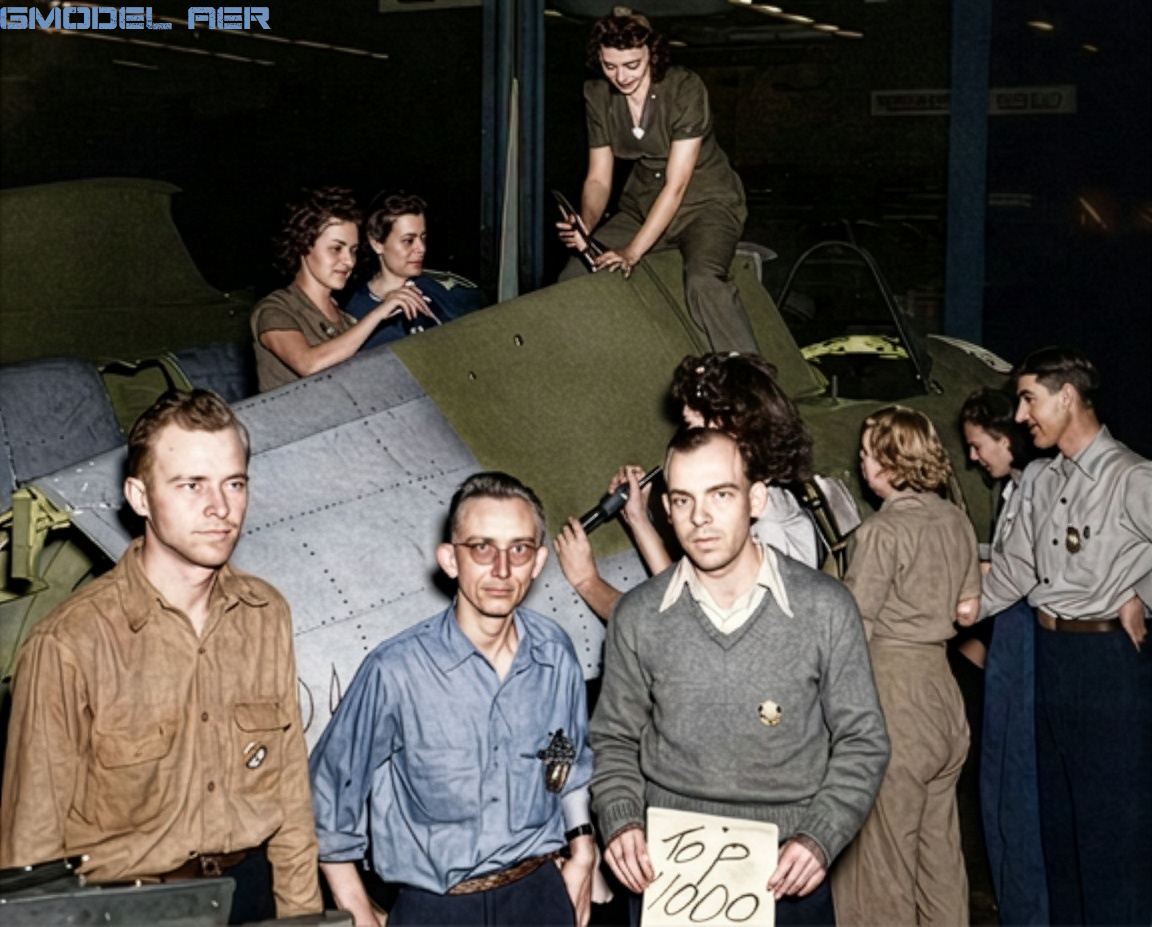
Add workers, ladders, platforms, tools, cables, jacks and factory equipment and the scene begins to explain how the aircraft was actually produced.
That is what makes the P-47 production line such a powerful modelling subject: the aircraft and the manufacturing process can be displayed together, allowing the modeller to show not only what the Thunderbolt looked like, but how it came to exist.