article
P-38F Lightning “Maid of Harlech” Diorama – Advanced Modeling Guide
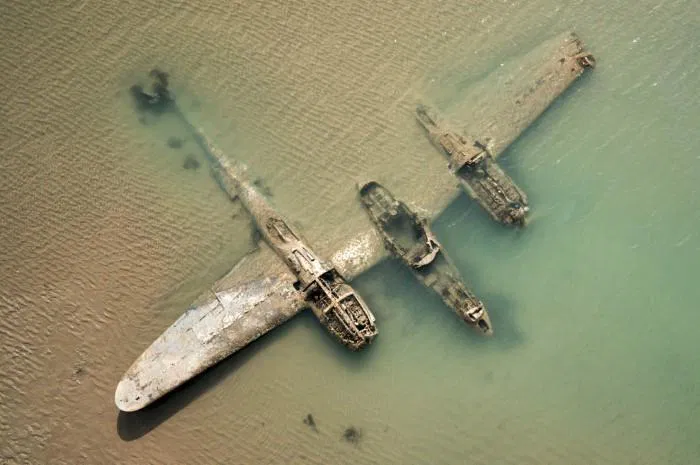
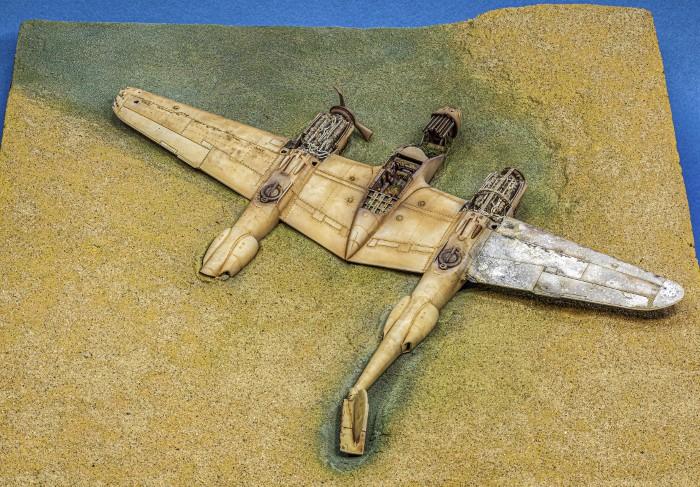
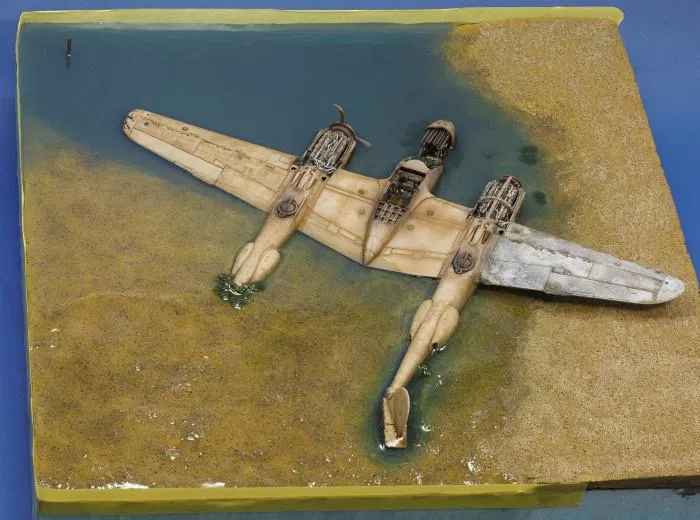
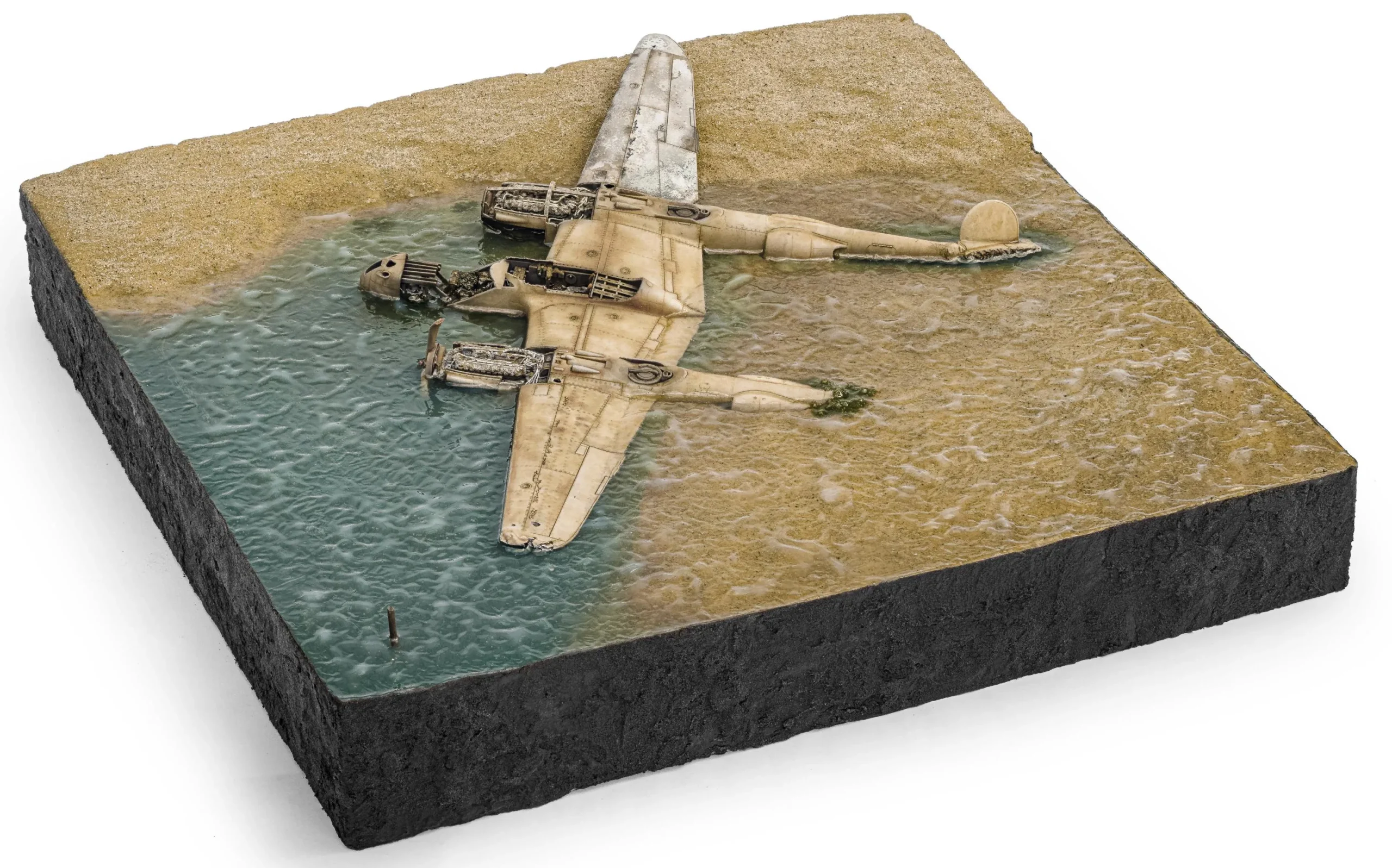
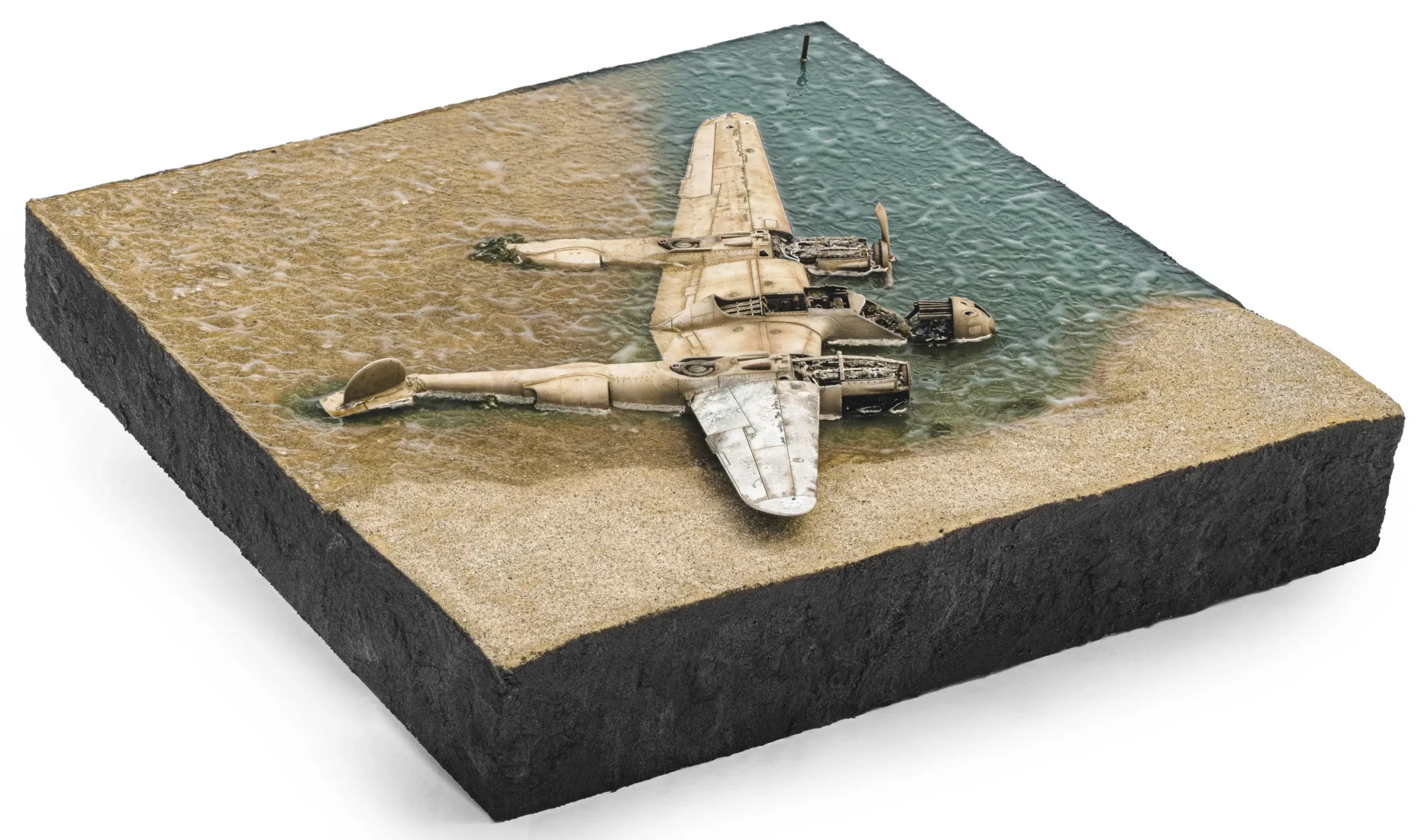
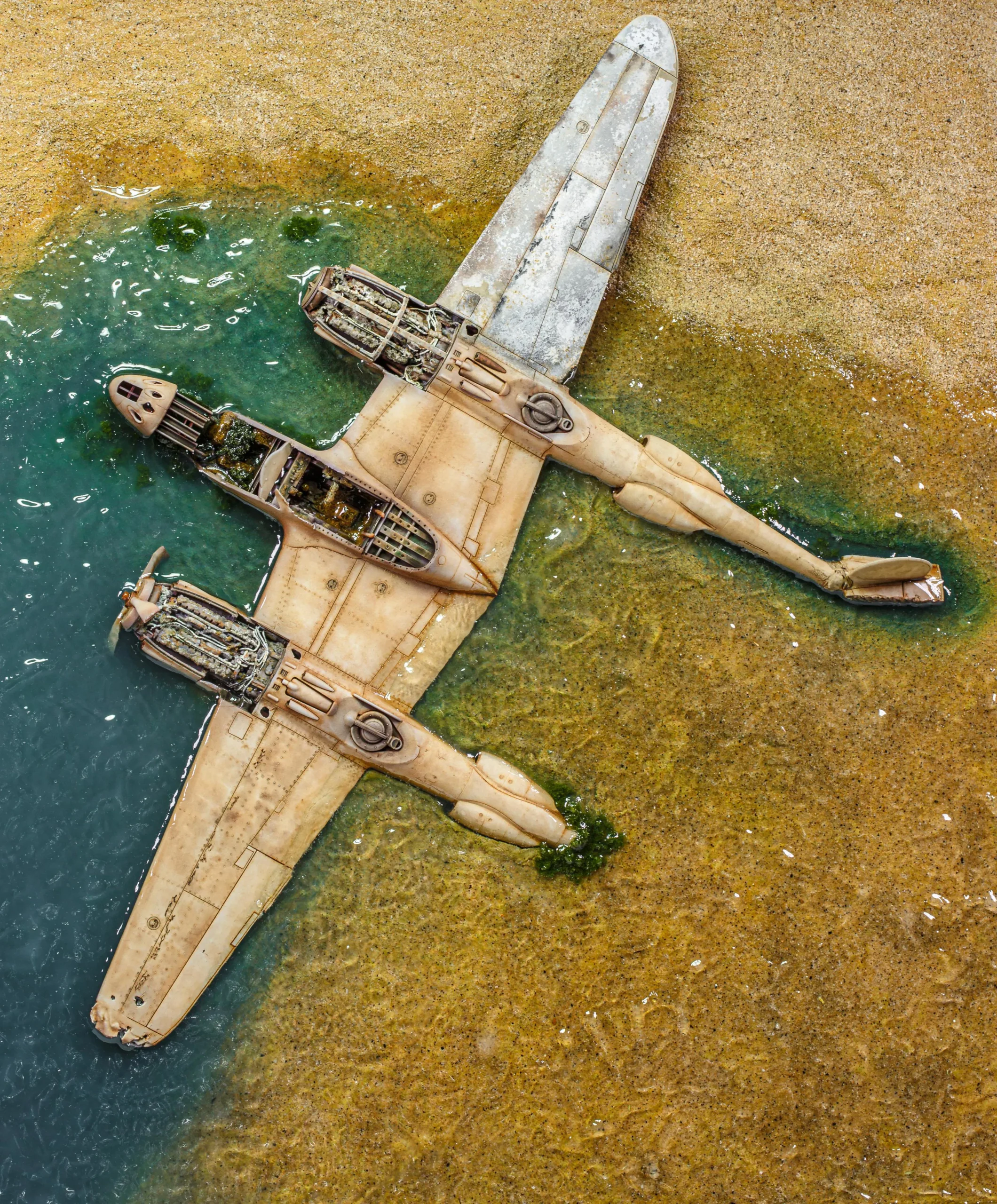
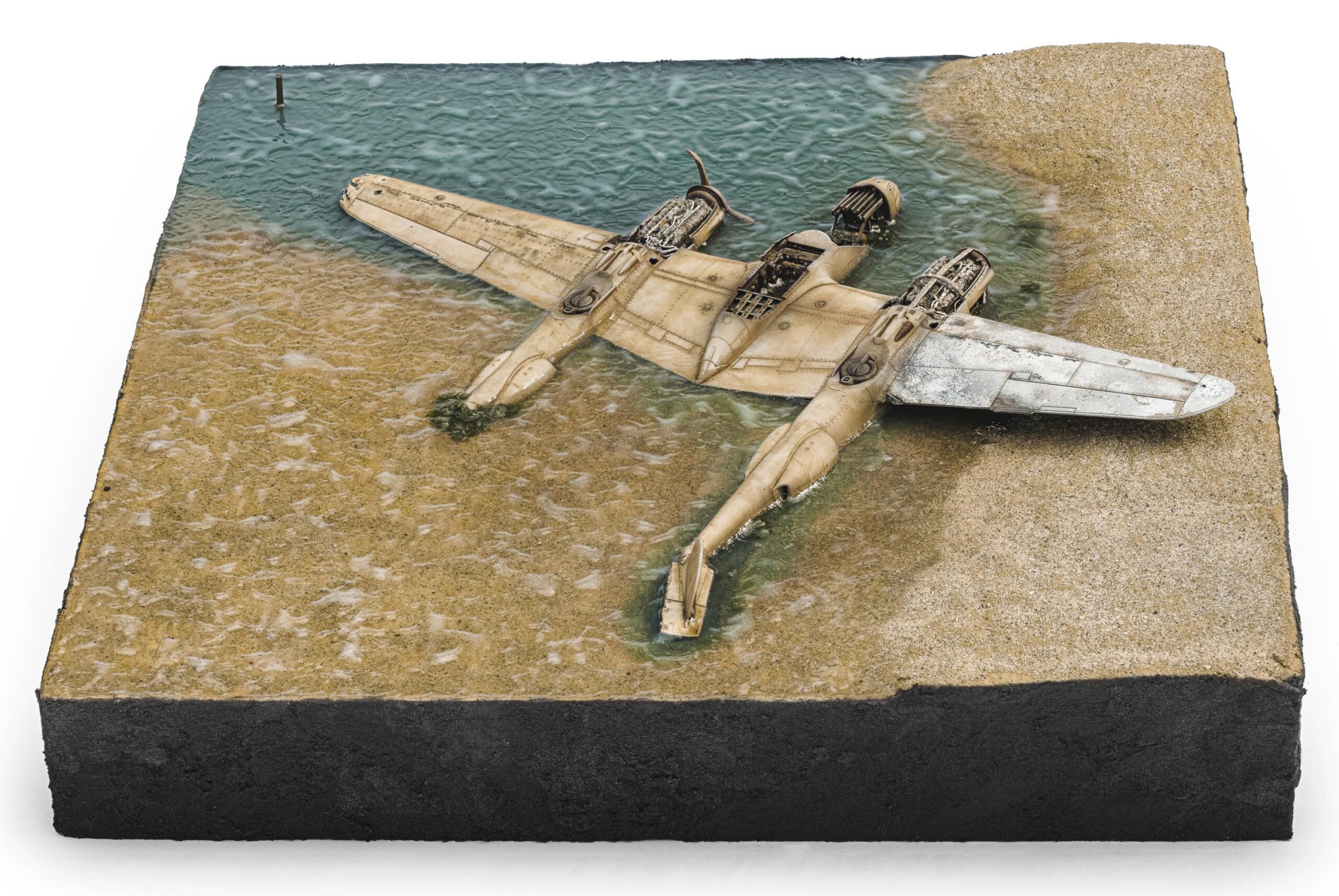
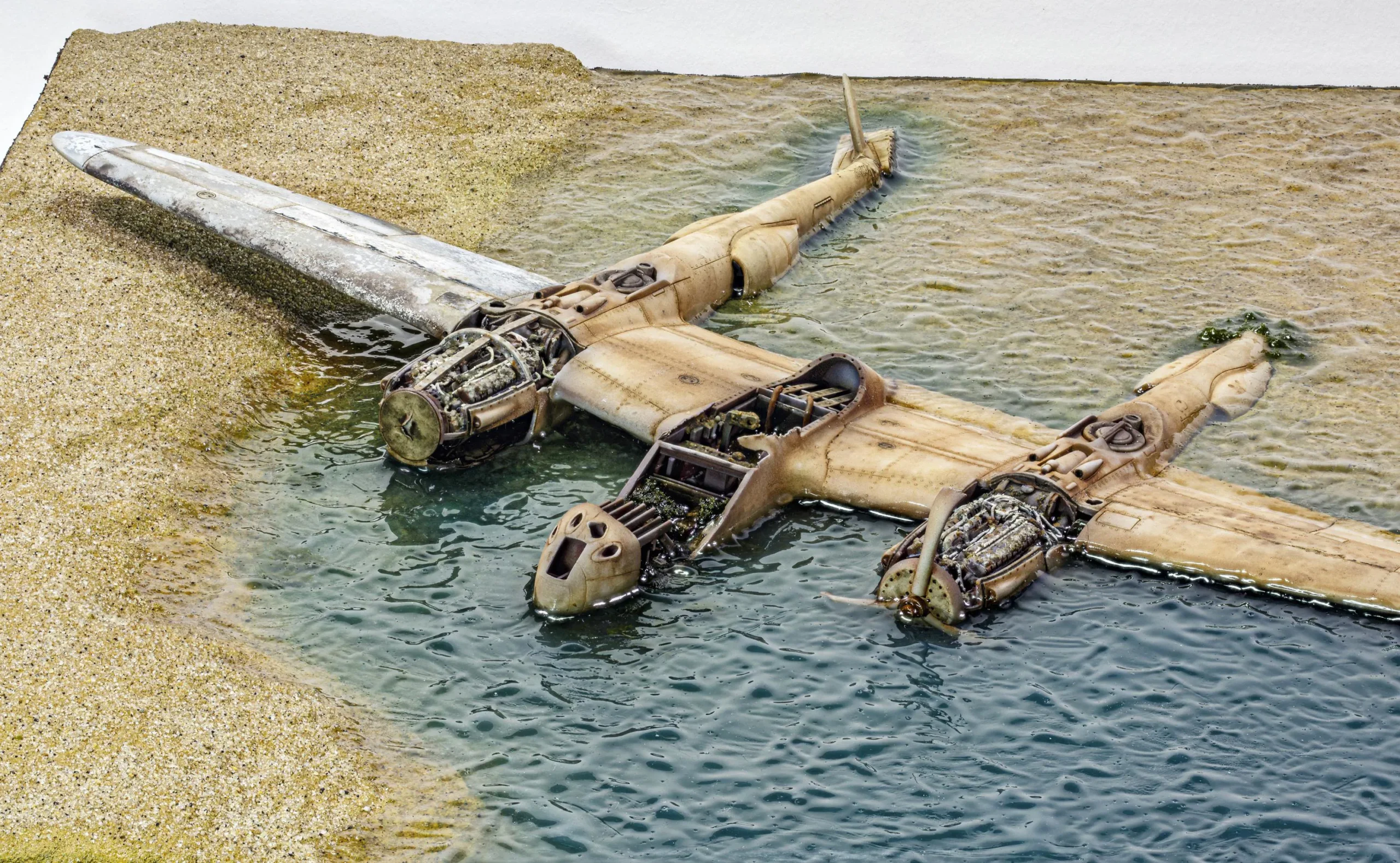
The Lockheed P-38 Lightning remains one of the most distinctive aircraft of the Second World War, but the story of the “Maid of Harlech” transforms it from a fighter into something far more compelling. Buried for decades beneath the sands of a Welsh beach, this aircraft became a perfect reference point for modelers who want to move beyond clean builds and into storytelling through decay, damage and time.
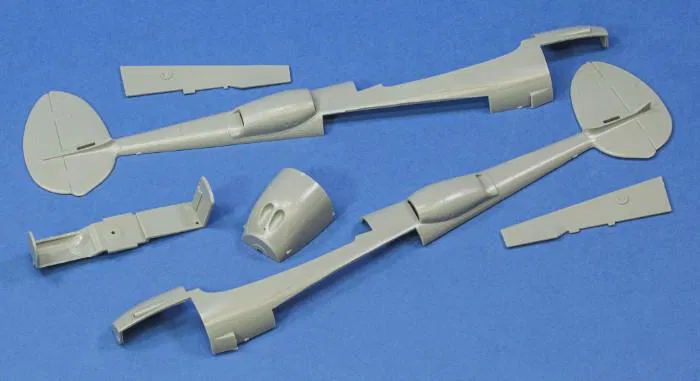
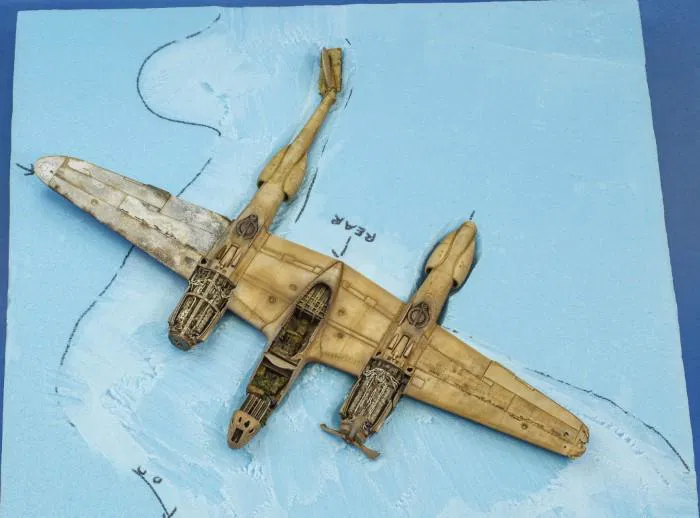
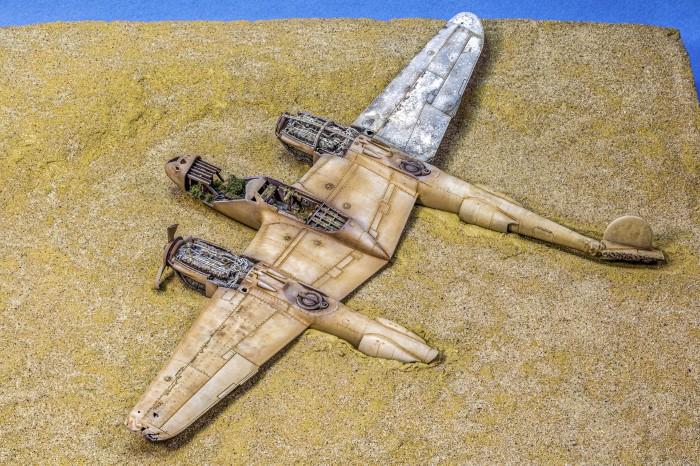
Building a diorama based on this aircraft using the Academy 1/48 P-38F Lightning Model Kit is not about achieving technical perfection. It is about capturing the visual essence of a long-abandoned wreck. This distinction is critical. Many modelers fall into the trap of chasing absolute accuracy, but in projects like this, visual credibility matters far more than microscopic precision.
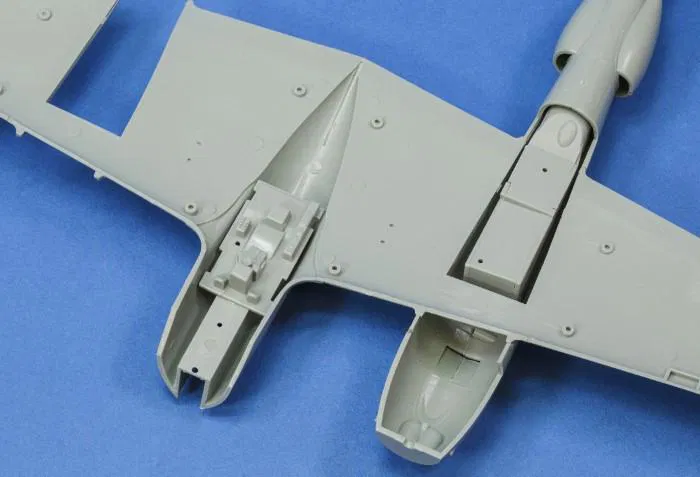
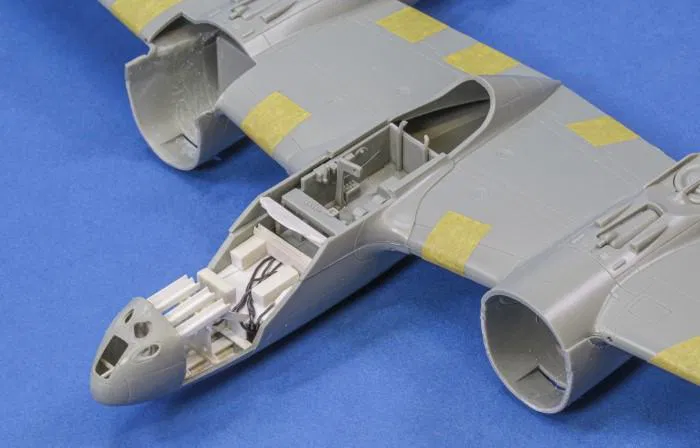
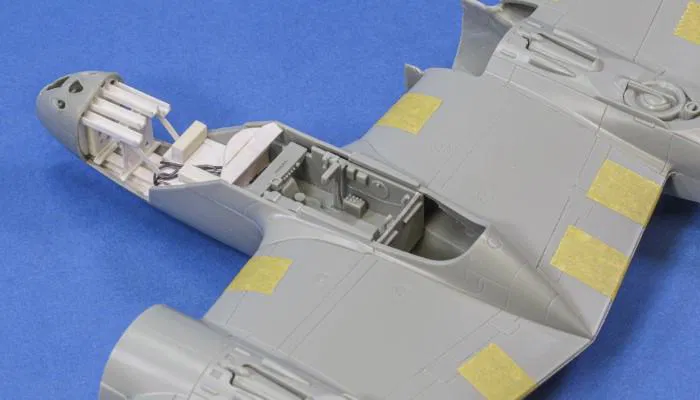
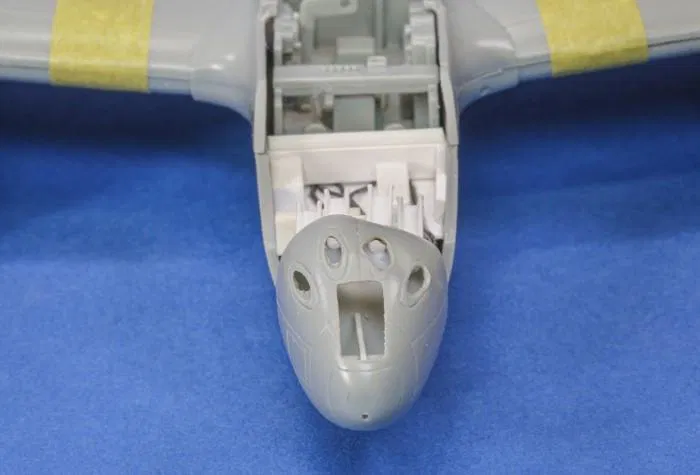
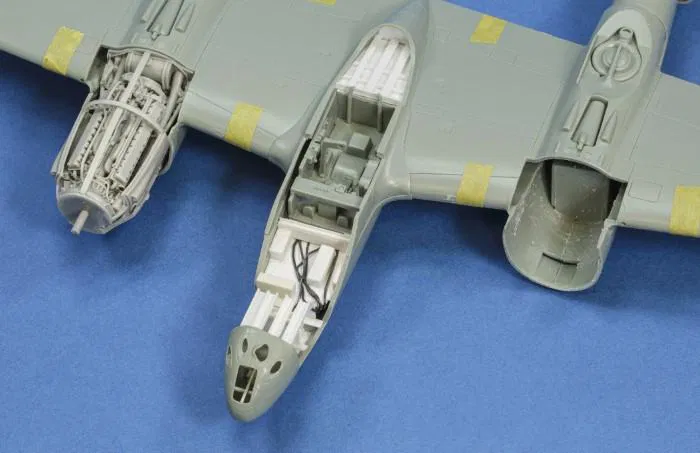
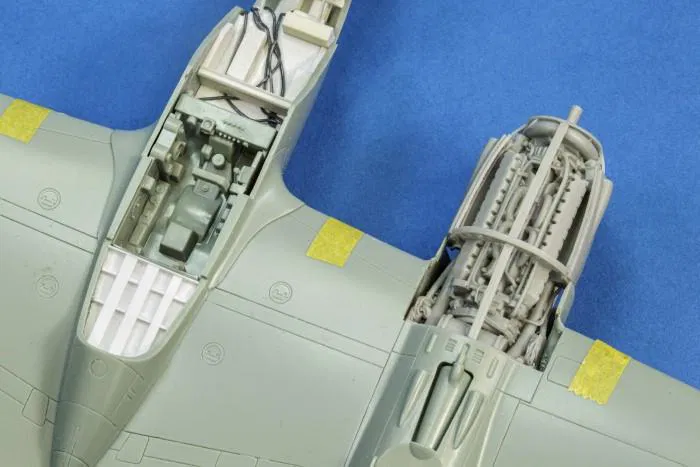
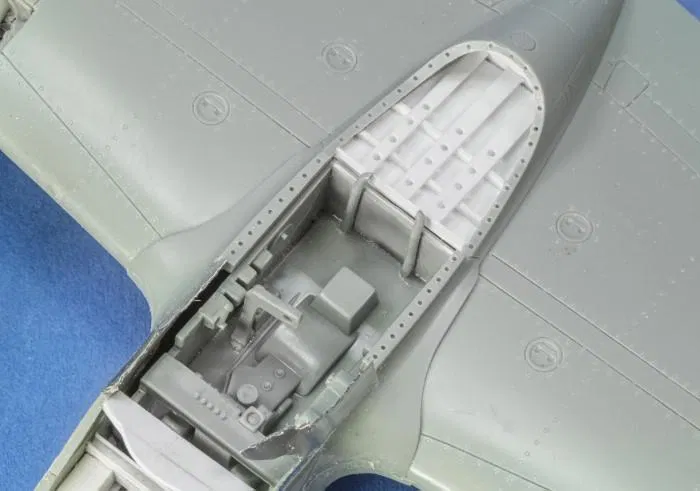
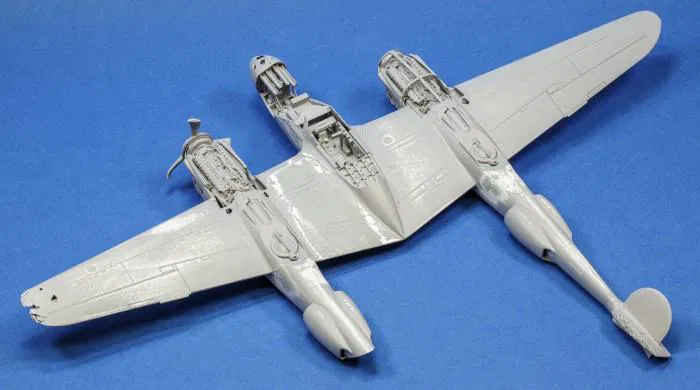
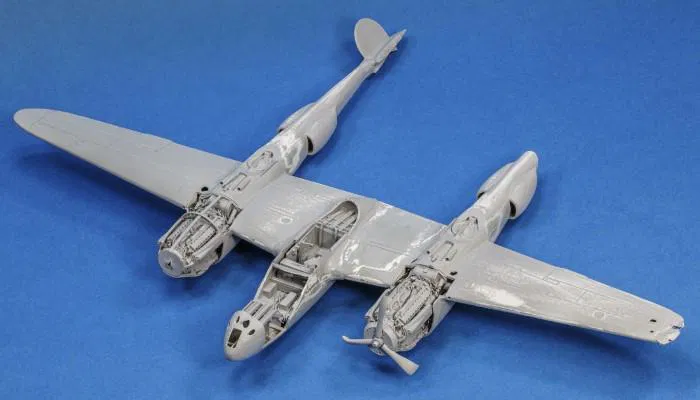
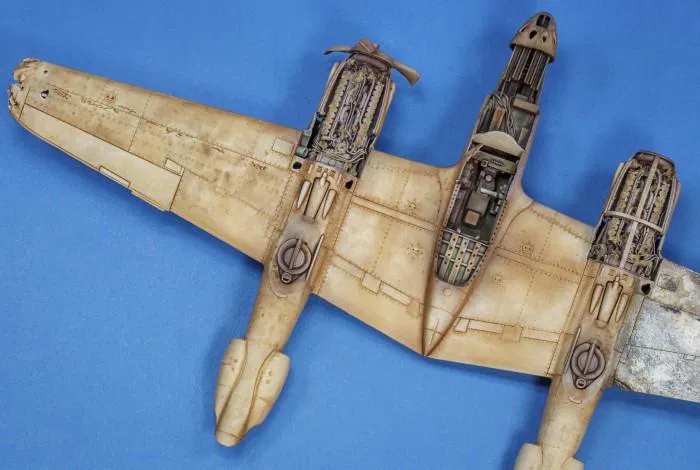
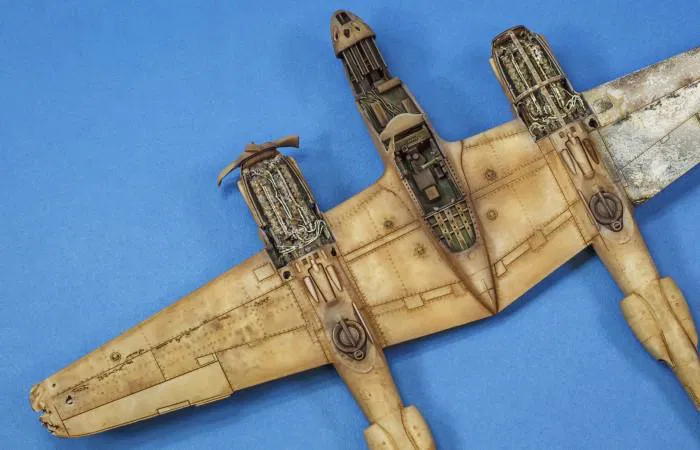
The process begins with the core structure of the model. With the upper and lower wing halves temporarily aligned, the cockpit floor is extended forward using thin plastic card. This extension is typically done in two sections to ensure a natural transition into the nose cone area. This simple modification immediately changes the internal geometry of the model and creates the foundation for further detailing.
At this stage, basic materials such as plastic sheets, styrene strips and precision cutting tools become essential. These are standard items that every serious modeler should have available through GModel Art, as they form the backbone of any scratchbuilding work. Without them, it is almost impossible to achieve convincing internal structures.
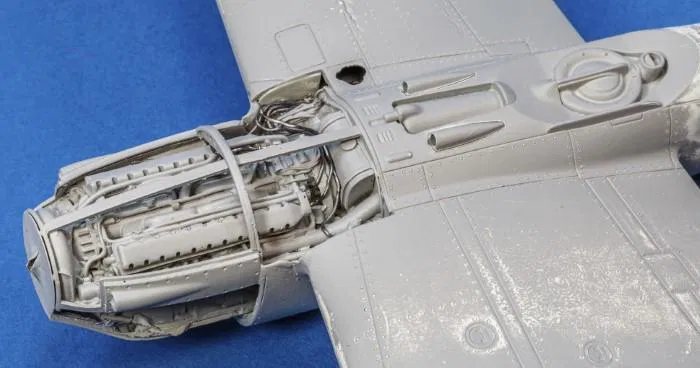
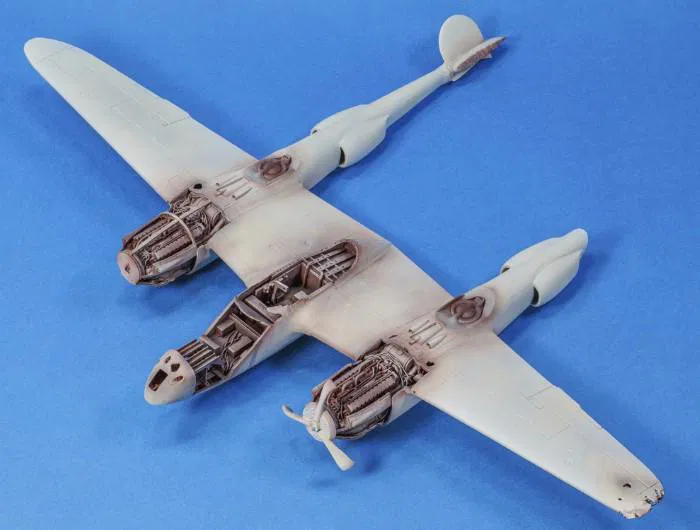
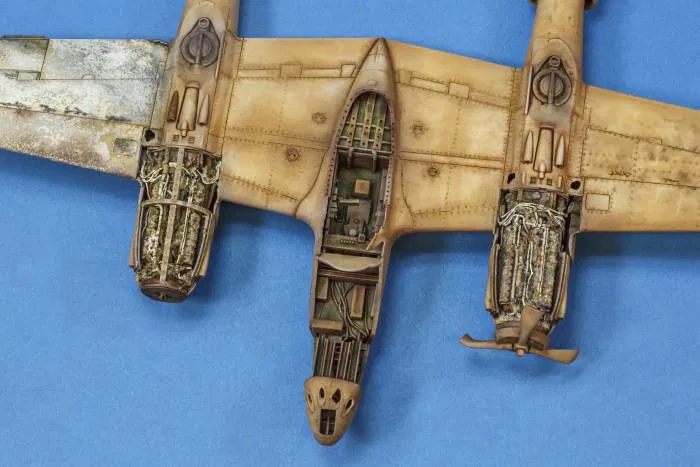
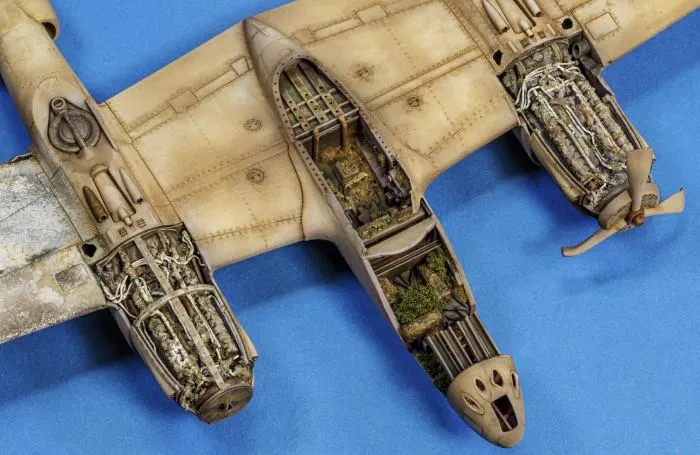
Research plays a decisive role in the next phase. Reference images of restored P-38 aircraft, especially gun bay sections, provide enough visual information to construct a believable interpretation of the internal layout. It is important to understand that the goal is not to replicate every structural element exactly. Instead, the objective is to create a “busy” interior using plastic card, U-channel rods and various small shapes that simulate complexity under weathering.
This approach is far more effective than leaving the interior empty or attempting an overly precise but lifeless reconstruction. The human eye responds to density and variation. If the space looks complex, it is perceived as realistic.
One of the most important observational details comes from photographs of the actual wreck, where the mounting bulkhead behind the instrument panel appears to have deteriorated and shifted forward over time. Recreating this effect using plastic card, and intentionally positioning it slightly off alignment, introduces asymmetry and reinforces the impression of structural decay.
This is where the philosophy of representation over replication becomes crucial. The model should not look factory-built. It should look damaged, unstable and affected by years of environmental exposure.
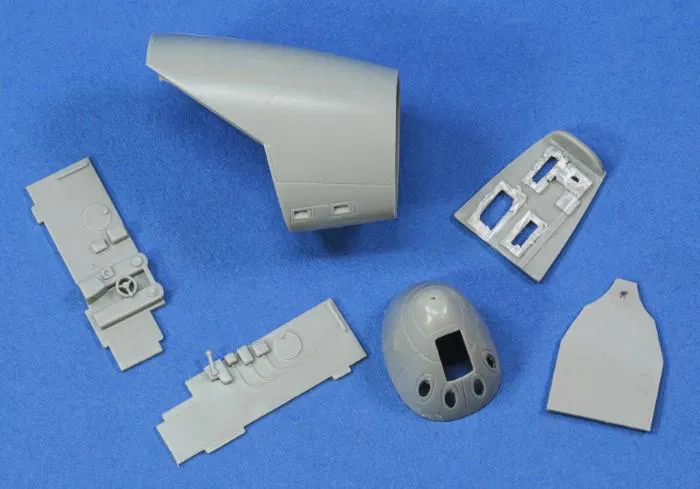
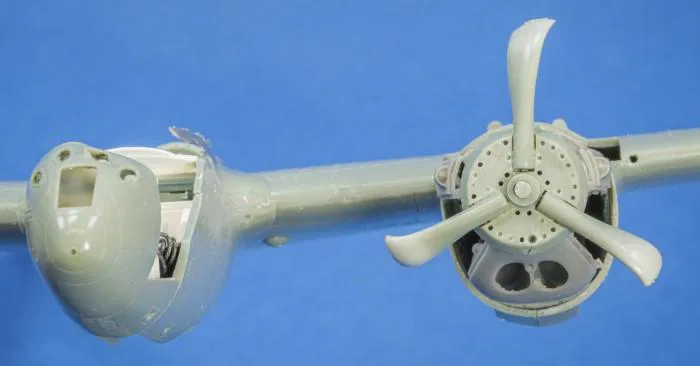
With the nose cone access panel removed, additional internal elements become visible. A cross brace structure, identified in reference images, can be added using simple plastic strip. This detail is small but significant, as it adds depth and reinforces the mechanical credibility of the interior.
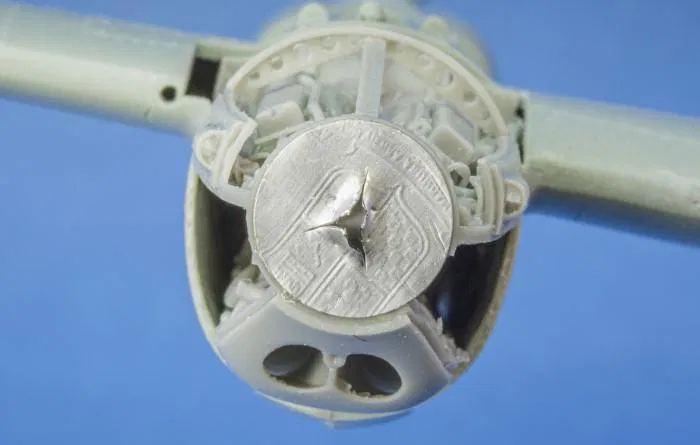
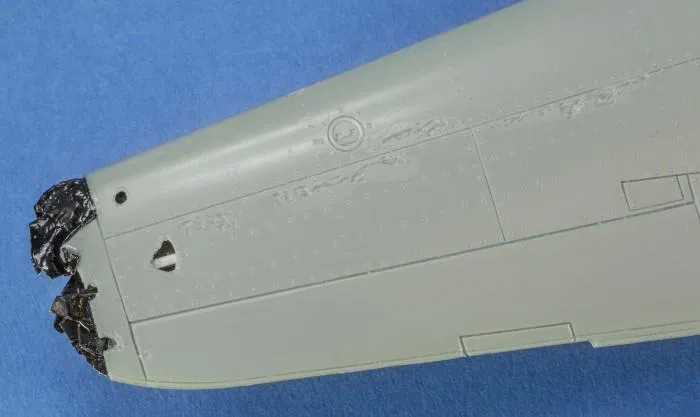
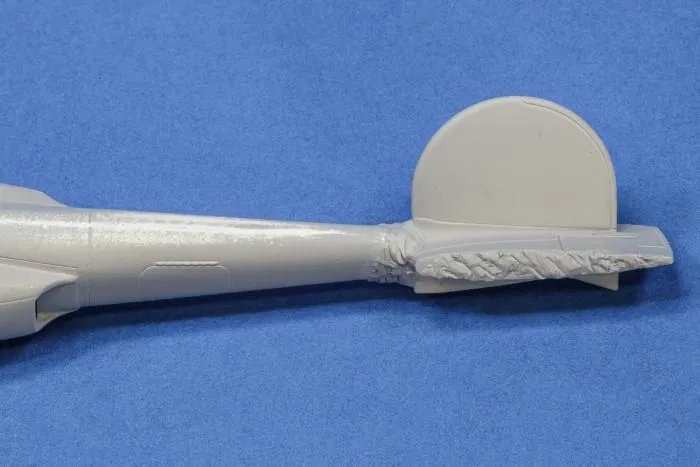
The most transformative stage of the build comes with the introduction of controlled damage. Using a small heat source applied carefully and indirectly, the plastic of the nose cone can be softened just enough to allow subtle deformation. By applying pressure with a tool such as a brush handle, the surface can be reshaped to simulate stress, impact and long-term deterioration.
This step requires precision and restraint. Too much heat or pressure will destroy the model. Too little will have no visible effect. The goal is controlled imperfection.
Additional refinement can be achieved using sculpting tools, sanding sticks and fine abrasives, all of which are essential tools available through GModel Art. These allow the modeler to smooth transitions, refine damage and avoid unrealistic distortions.
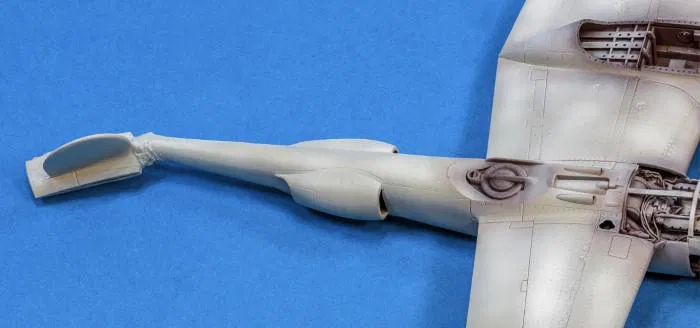
The blast ports on the nose can also be slightly deformed to enhance the sense of wear and structural fatigue. These small irregularities contribute significantly to the final realism of the model. Perfect symmetry is the enemy of authenticity in this type of project.
The rear section of the nose cone is completed by adding an internal wall using plastic card, closing the structure and giving a sense of thickness and mechanical integrity. With this step, the armament section reaches completion. It does not need to be perfect. It needs to be believable.
FS Color Chart for Weathering and Finish
| Area | FS Code | Description | Application |
|---|---|---|---|
| Base Camouflage | FS 34092 | Olive Drab | Main faded surface |
| Secondary Tone | FS 34102 | Medium Green | Panel variation |
| Underside | FS 36270 | Neutral Gray | Base tone |
| Light Rust | FS 30109 | Rust Brown | Initial oxidation |
| Heavy Corrosion | FS 30045 | Dark Rust | Deep weathering |
| Sand Deposits | FS 30277 | Sand | Environmental effects |
| Faded Highlights | FS 36375 | Light Gray | Drybrush and wear |
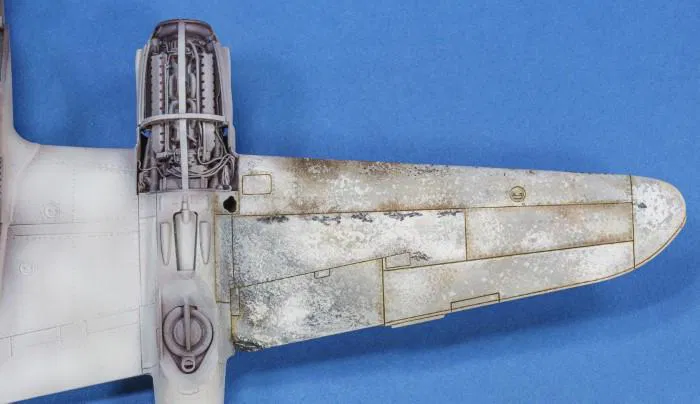
These colors should never be applied as clean, uniform layers. Each tone must be broken, blended and weathered to reflect prolonged exposure to salt, moisture and environmental conditions.
US Navy Blue Gray / Light Gray Camouflage (1941–1943): History, Aircraft & Paint Guide
Read the entire article at the link.
https://www.keymodelworld.com/article/academy-148-p-38f-maid-harlech-diorama
http://www.madu.org.uk/Page%204.28%20-%20Maid%20of%20Harlech%20-%202014.dwt