article
Sukhoi Su-33 Russian Navy Fighter – Complete Painting and Weathering Guide
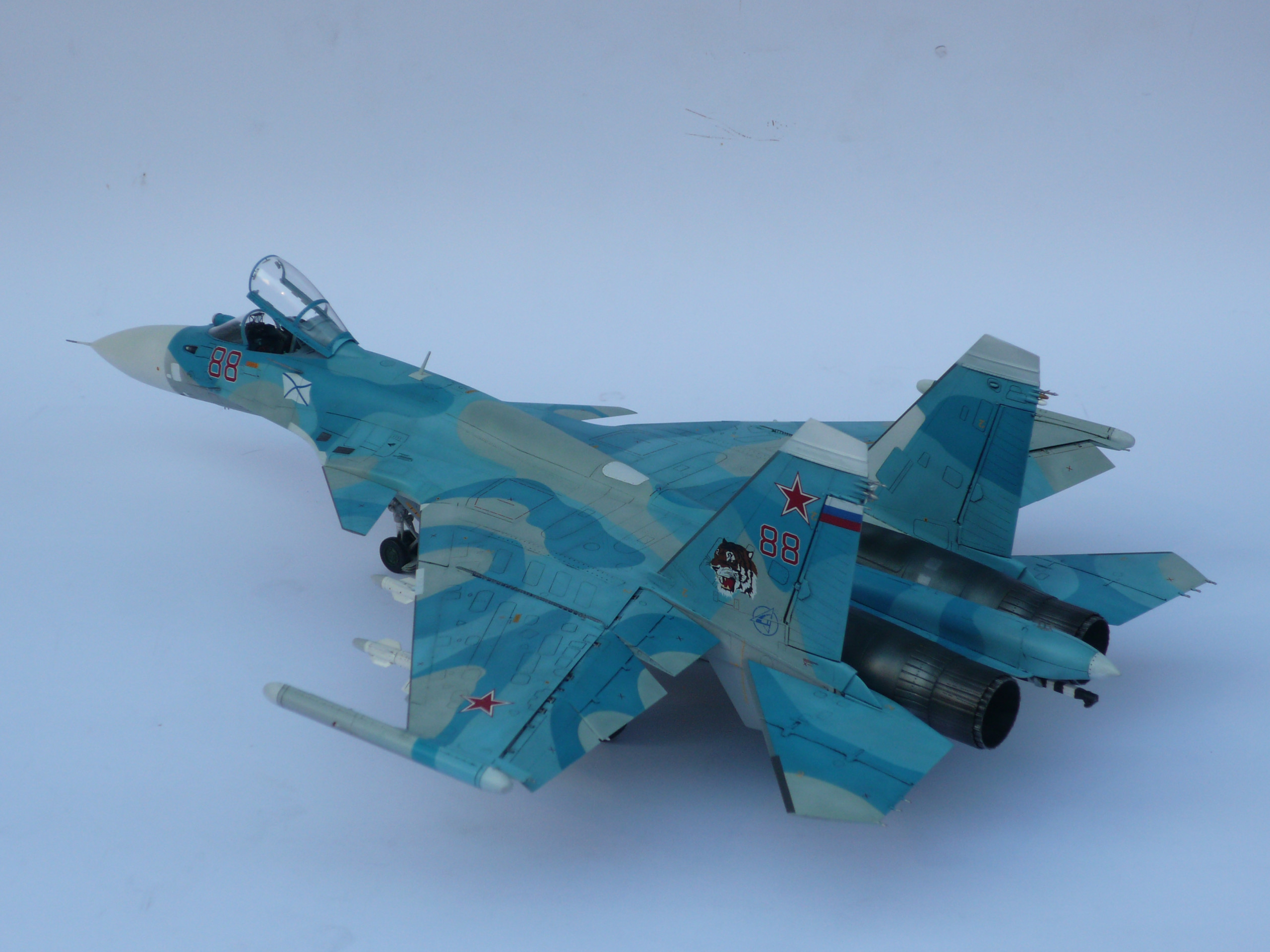
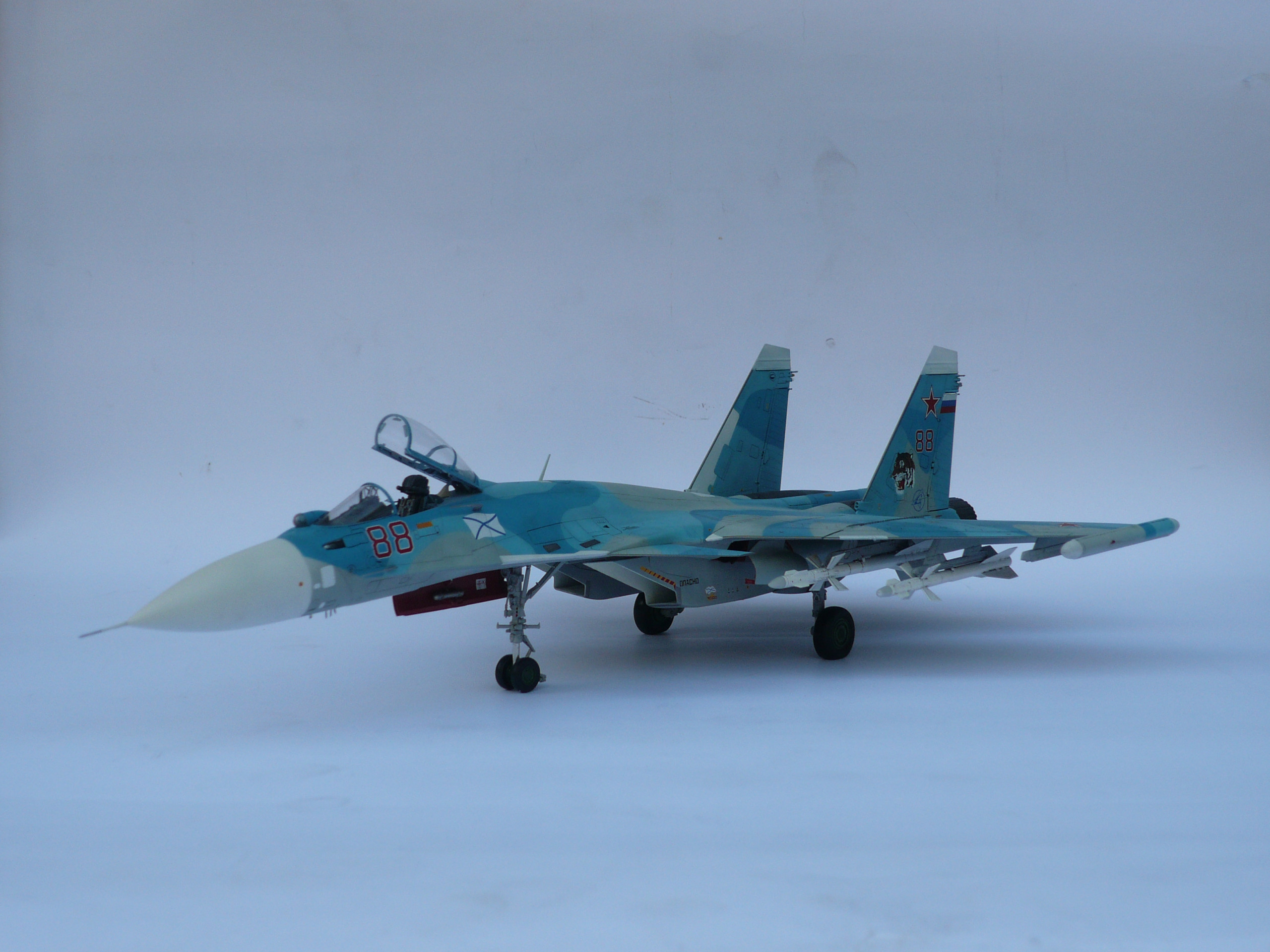
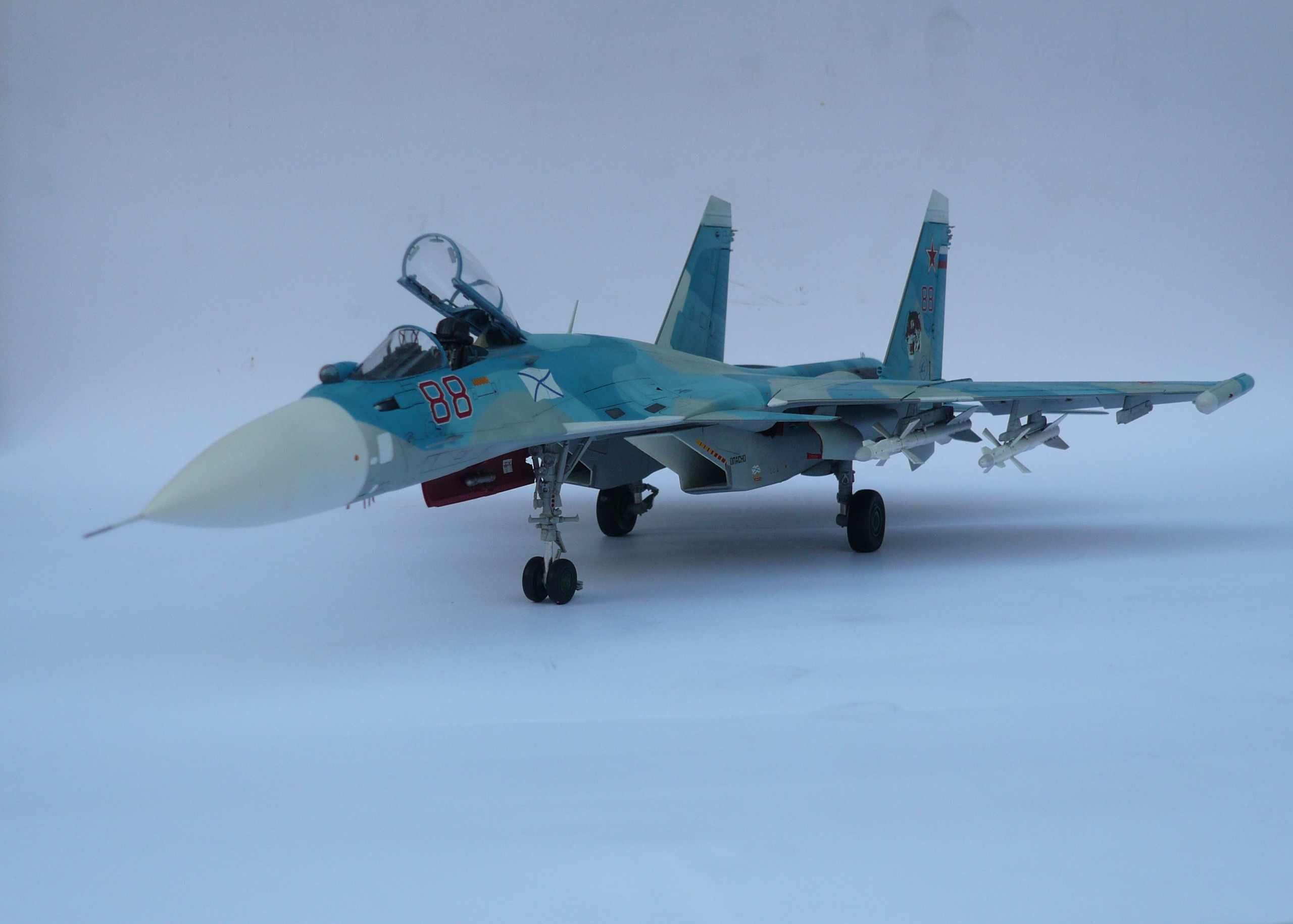
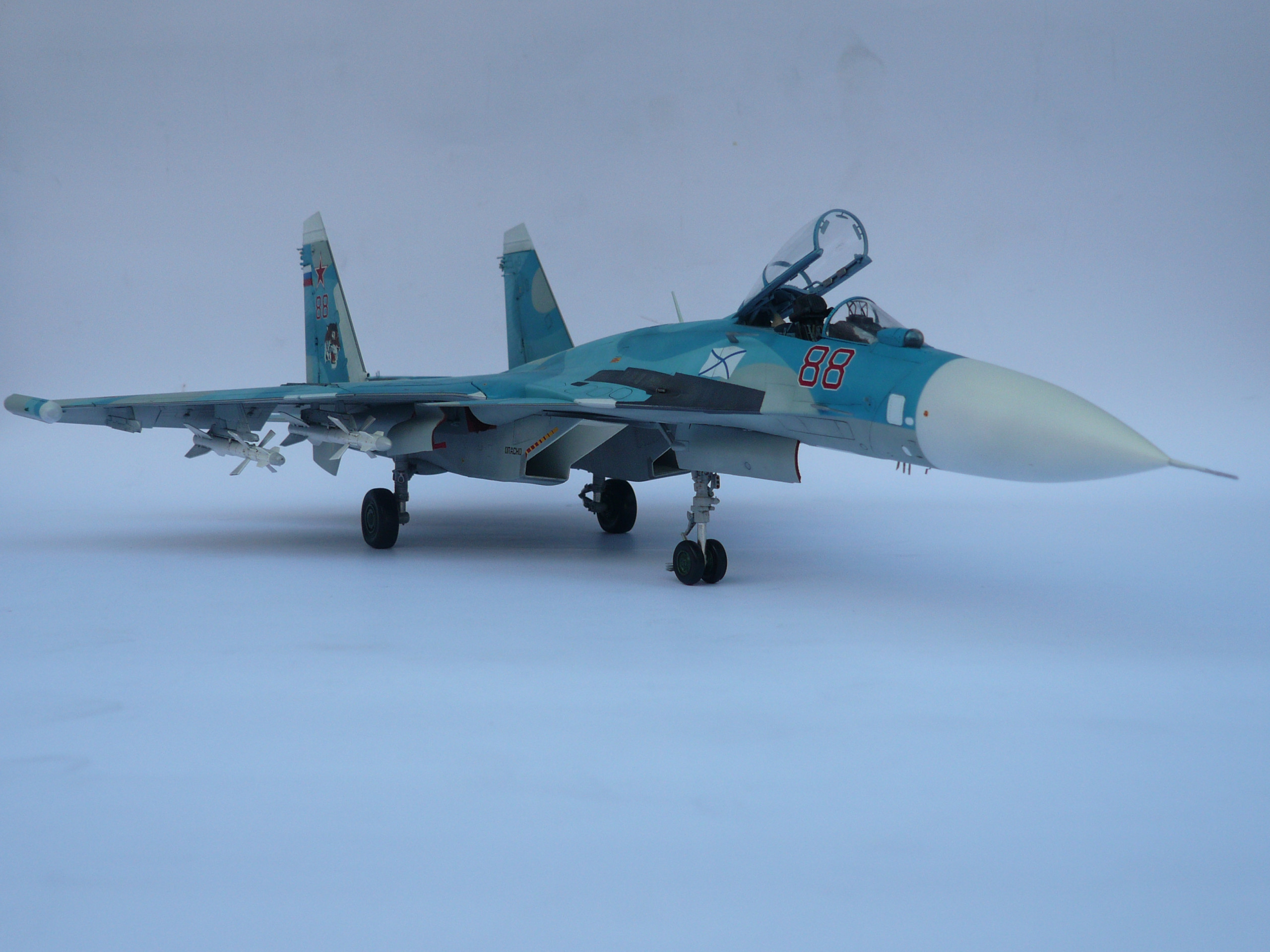
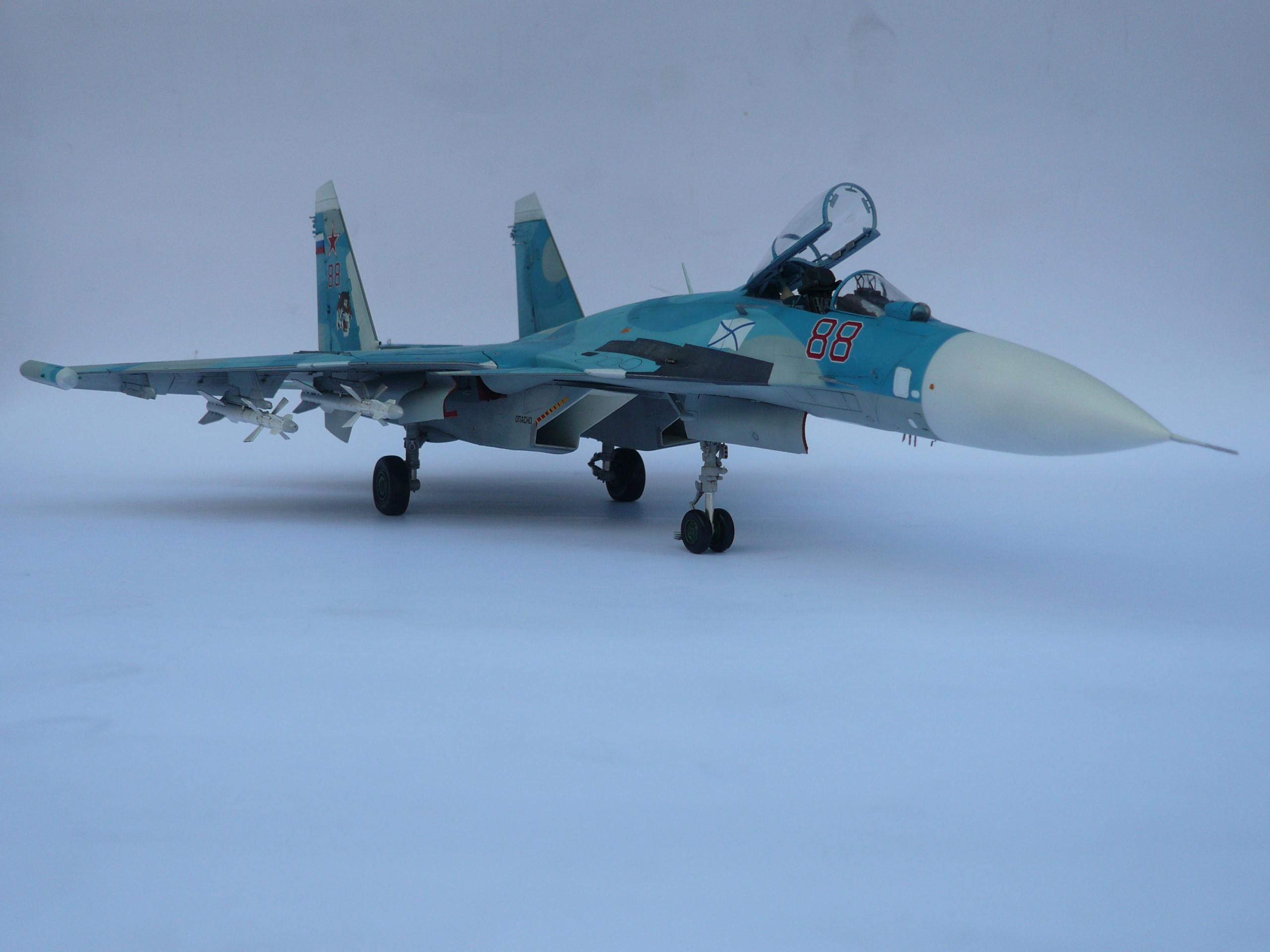
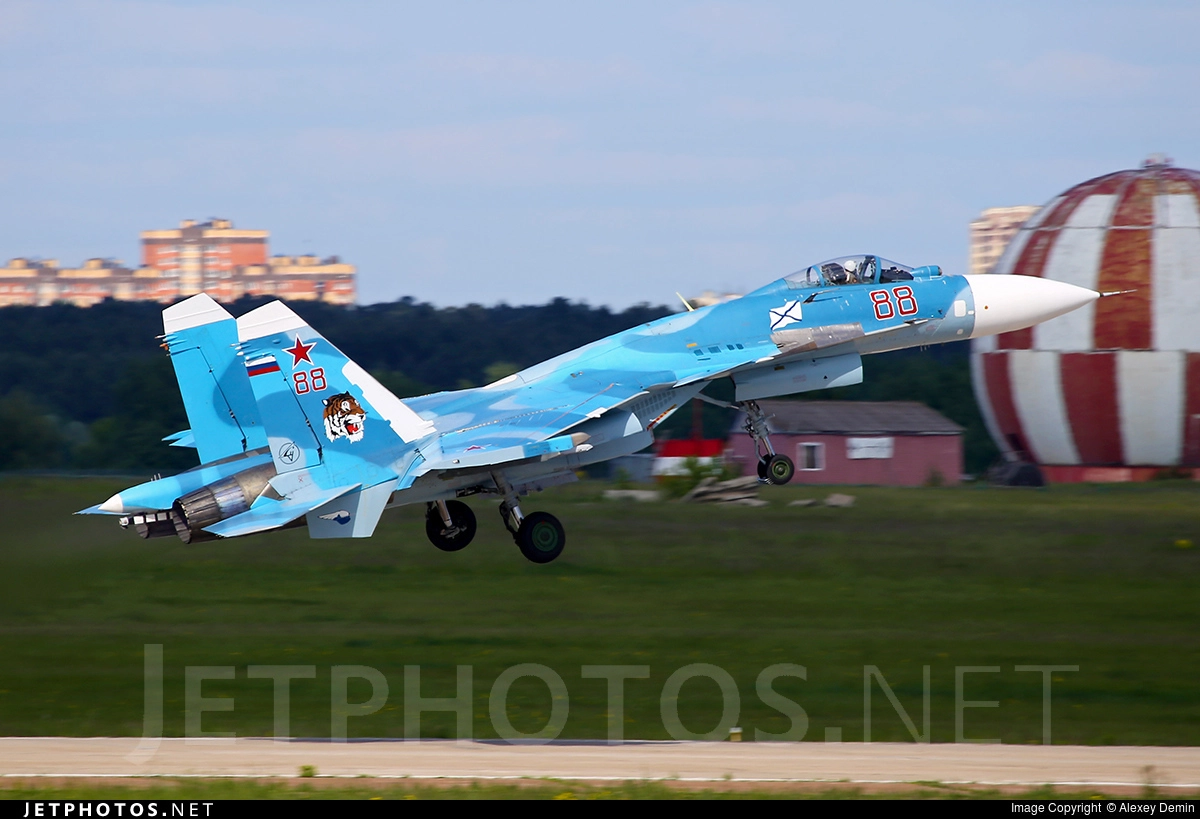
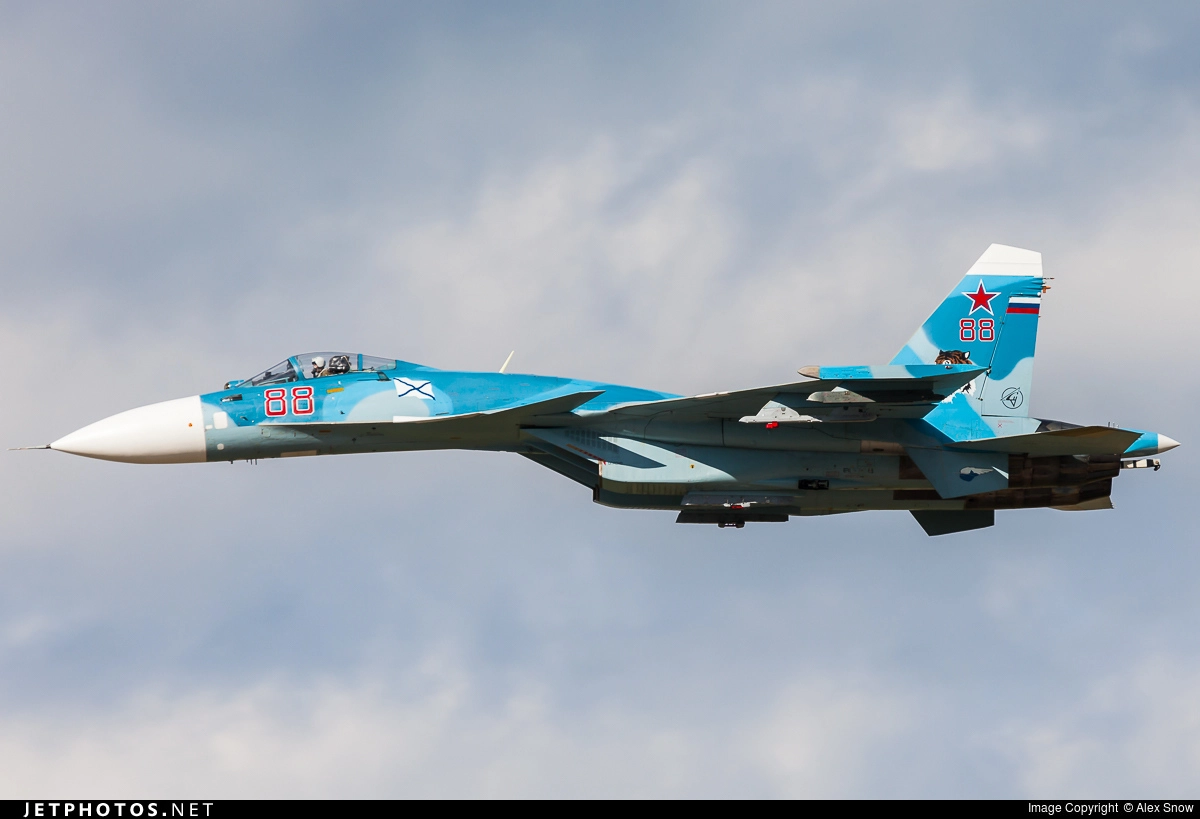
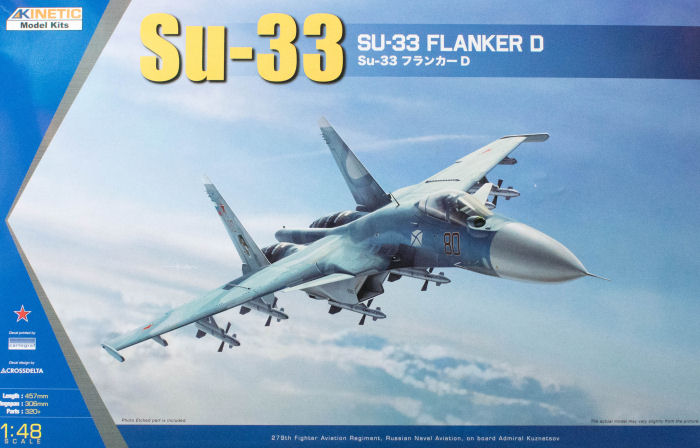
The Sukhoi Su-33 is one of the most recognizable carrier-based fighters ever developed in Russia. Operating from the aircraft carrier Admiral Kuznetsov, the aircraft combines the aerodynamic design of the Su-27 with naval modifications such as folding wings, reinforced landing gear and canards.
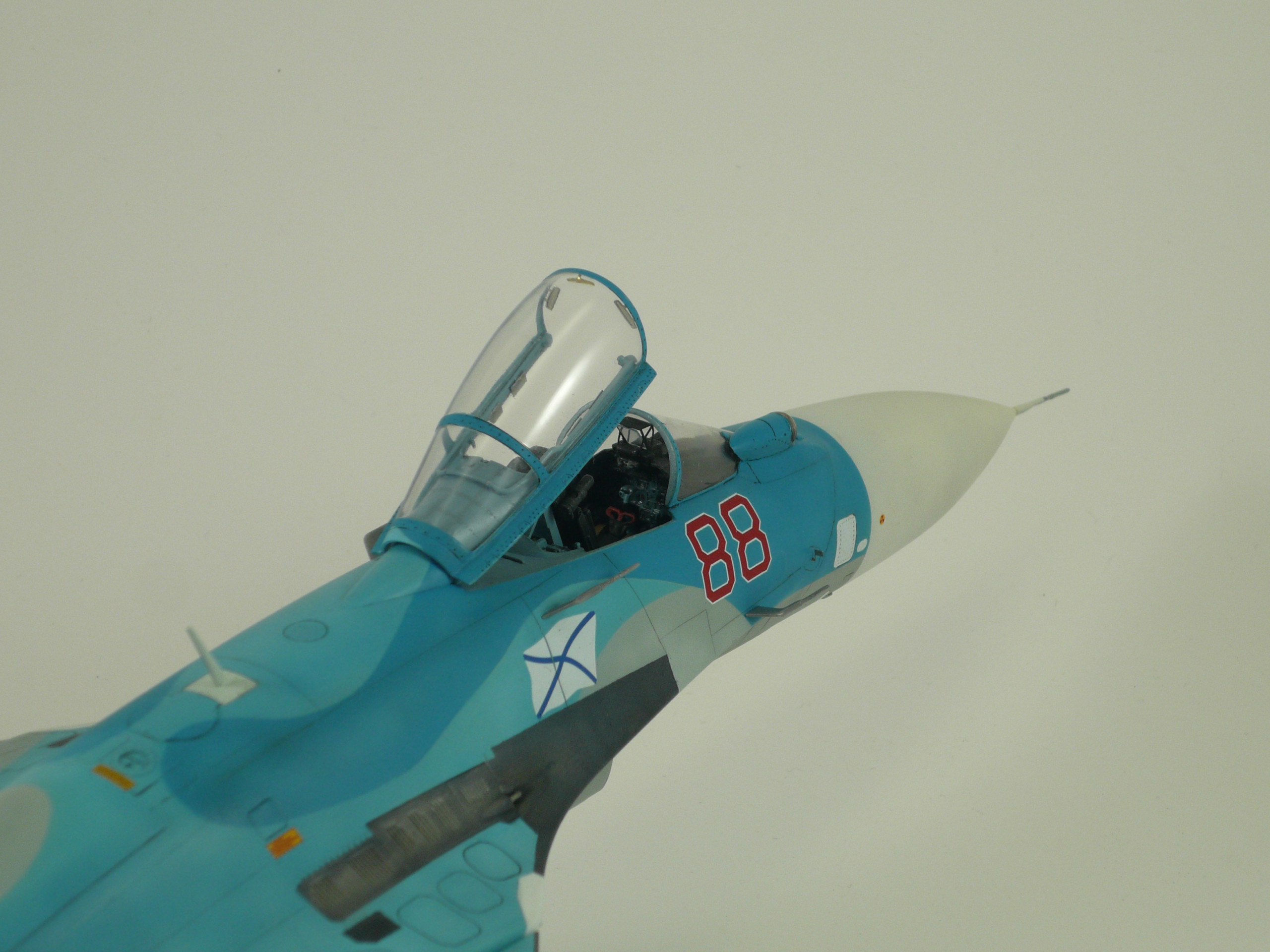
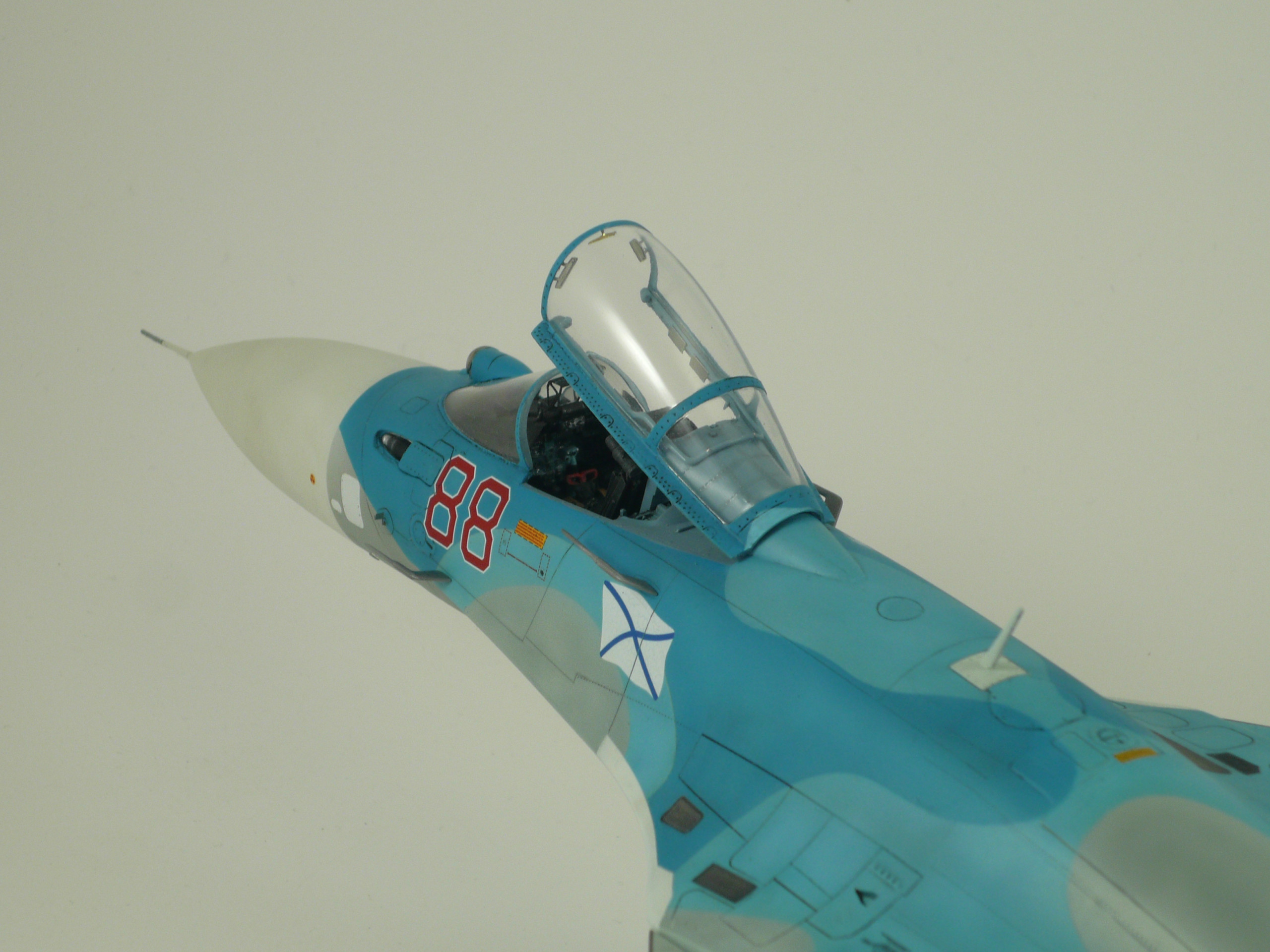
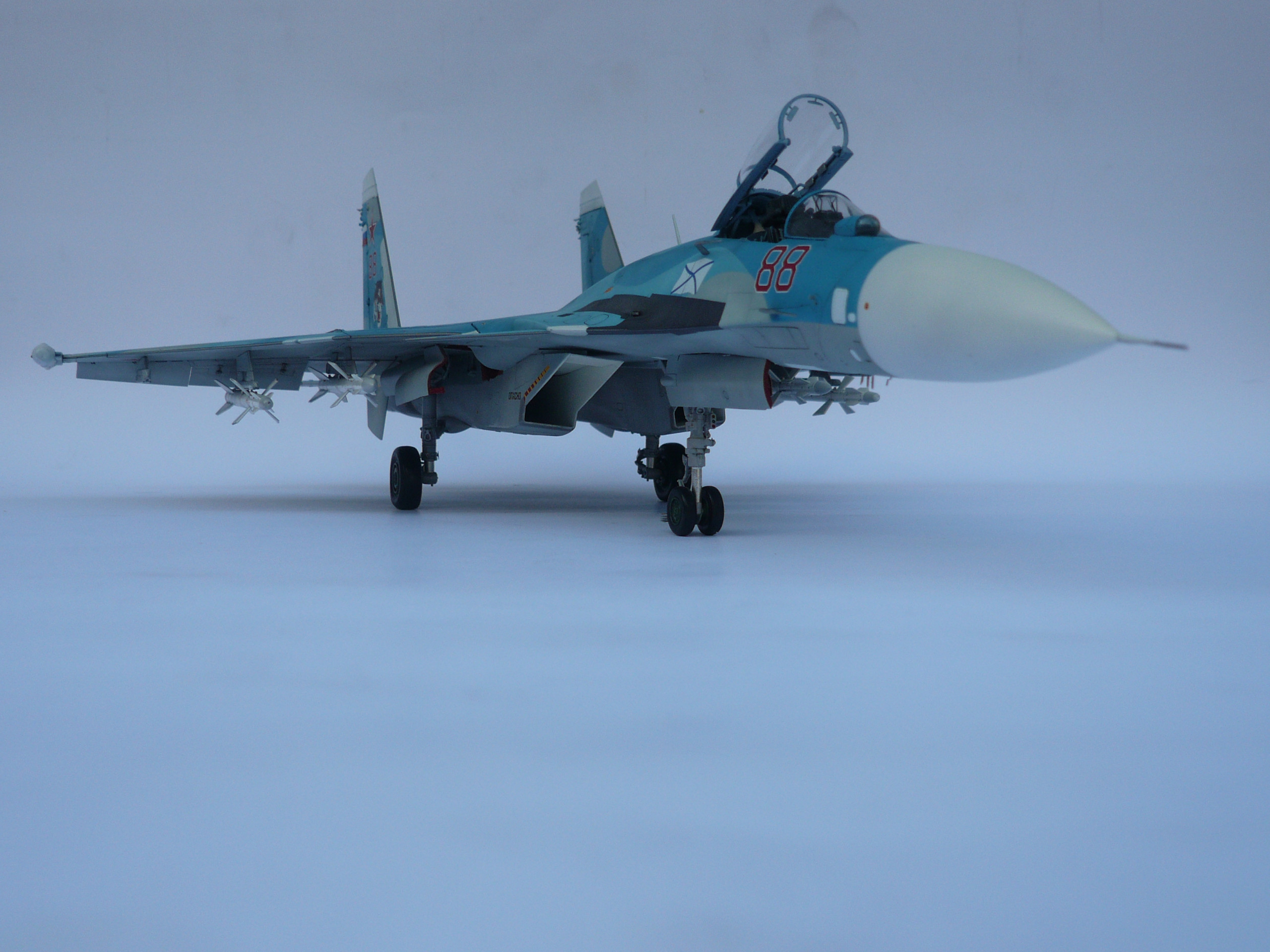
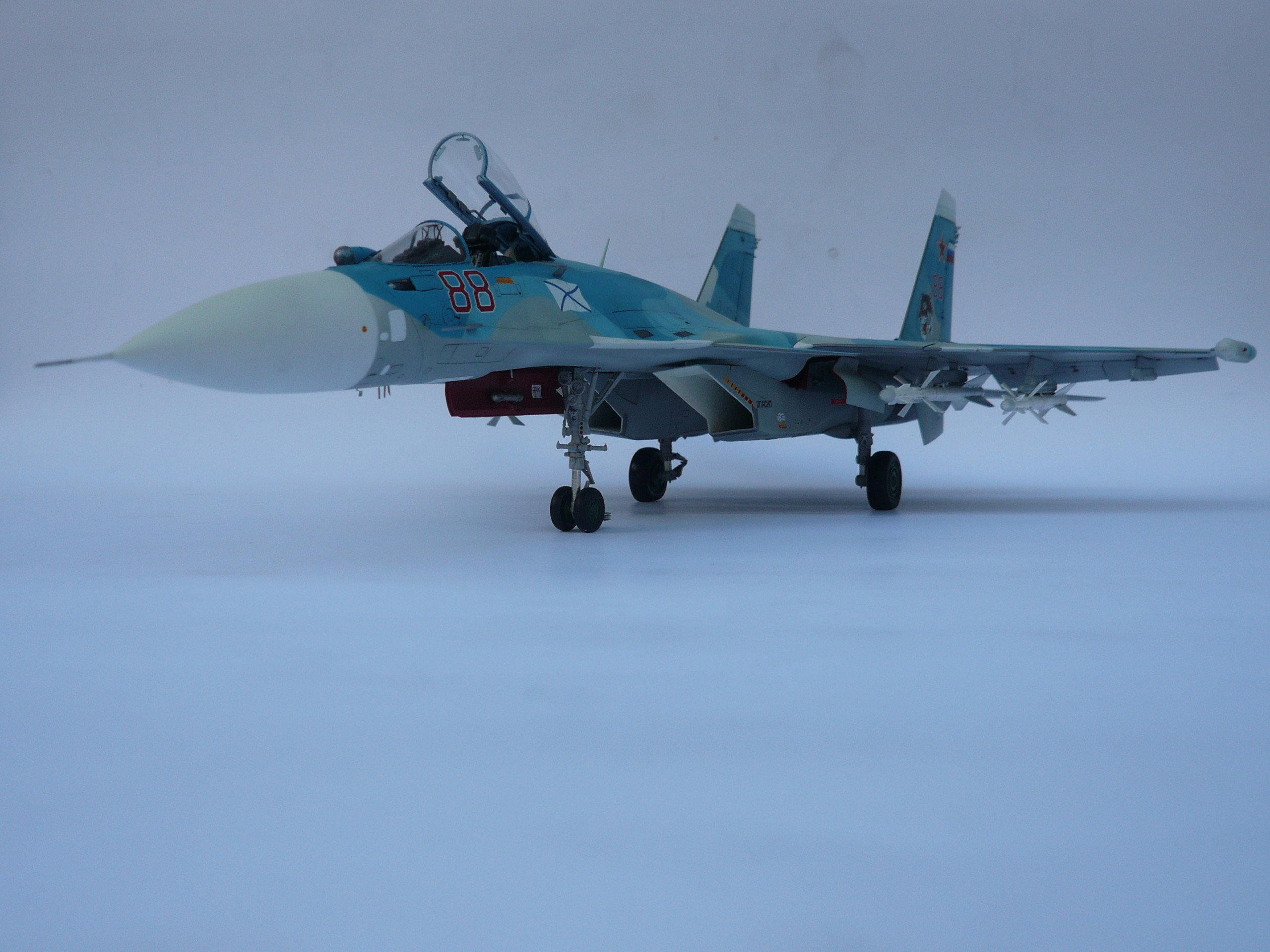
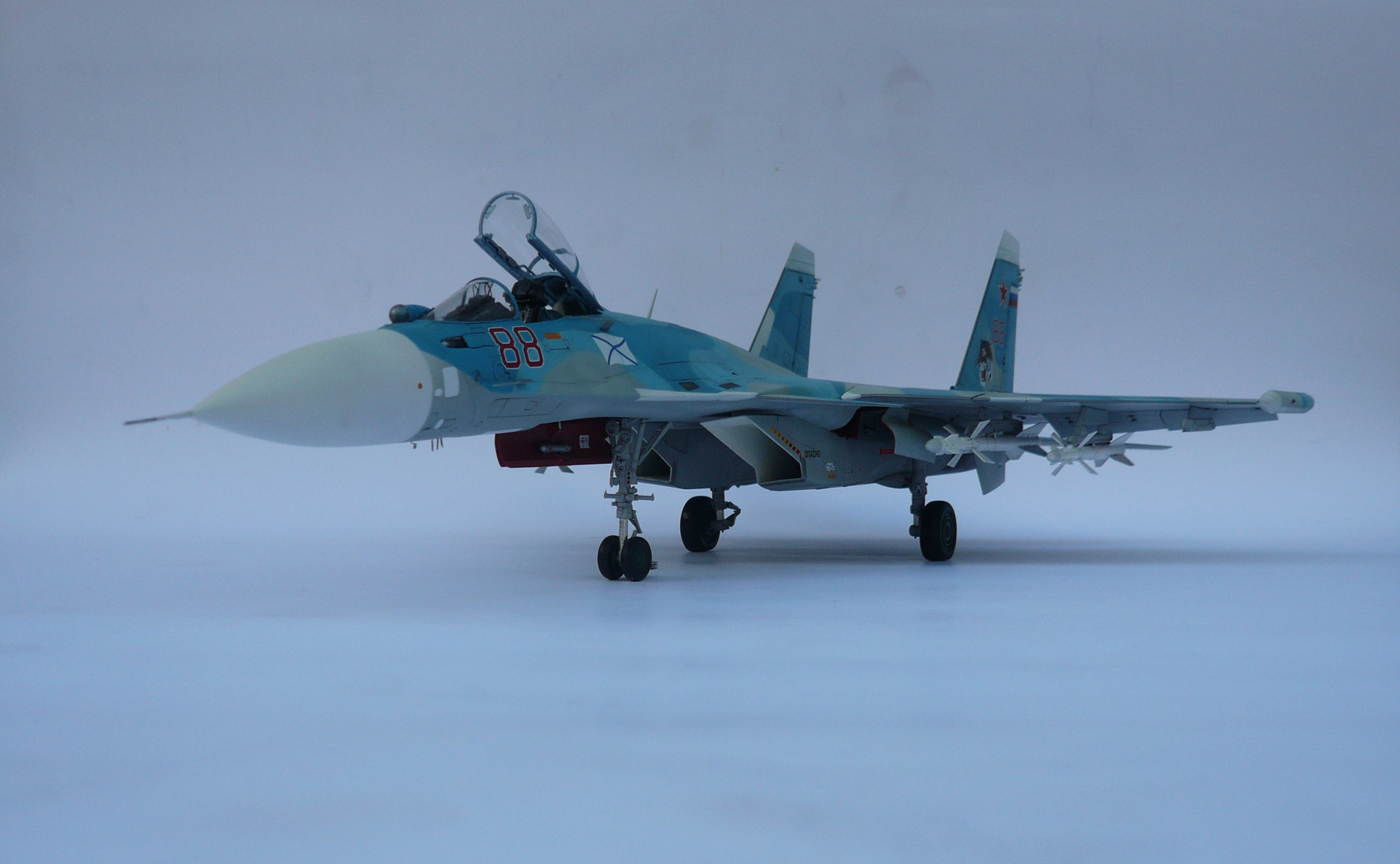
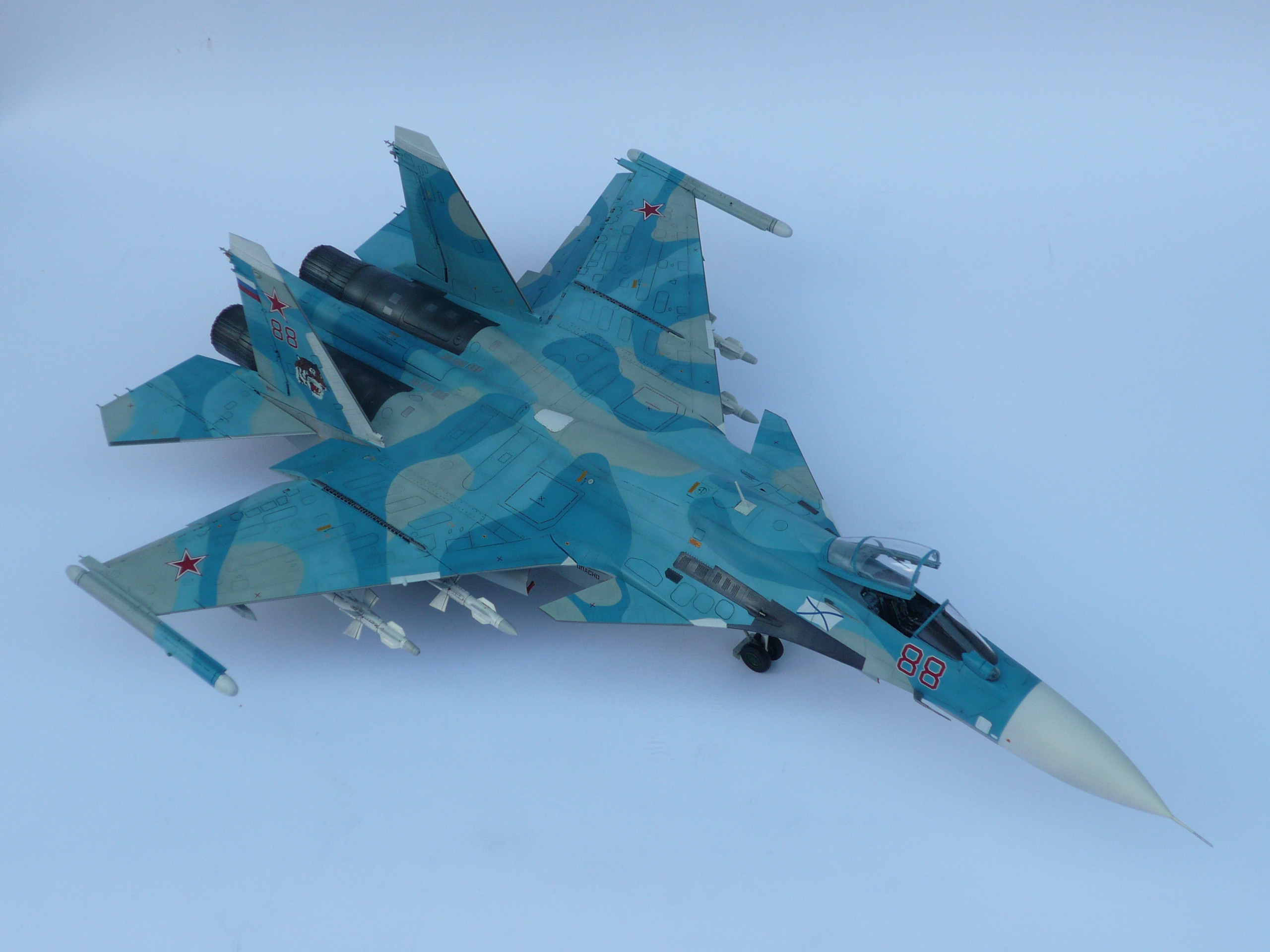
For scale modelers the Su-33 is a particularly rewarding subject. Its distinctive three-tone blue camouflage, large metallic engine areas and operational weathering provide an excellent opportunity to apply advanced painting techniques. The following guide describes the complete painting process used on a Su-33 scale model, from surface preparation to final finishing.
Surface Preparation and Primer
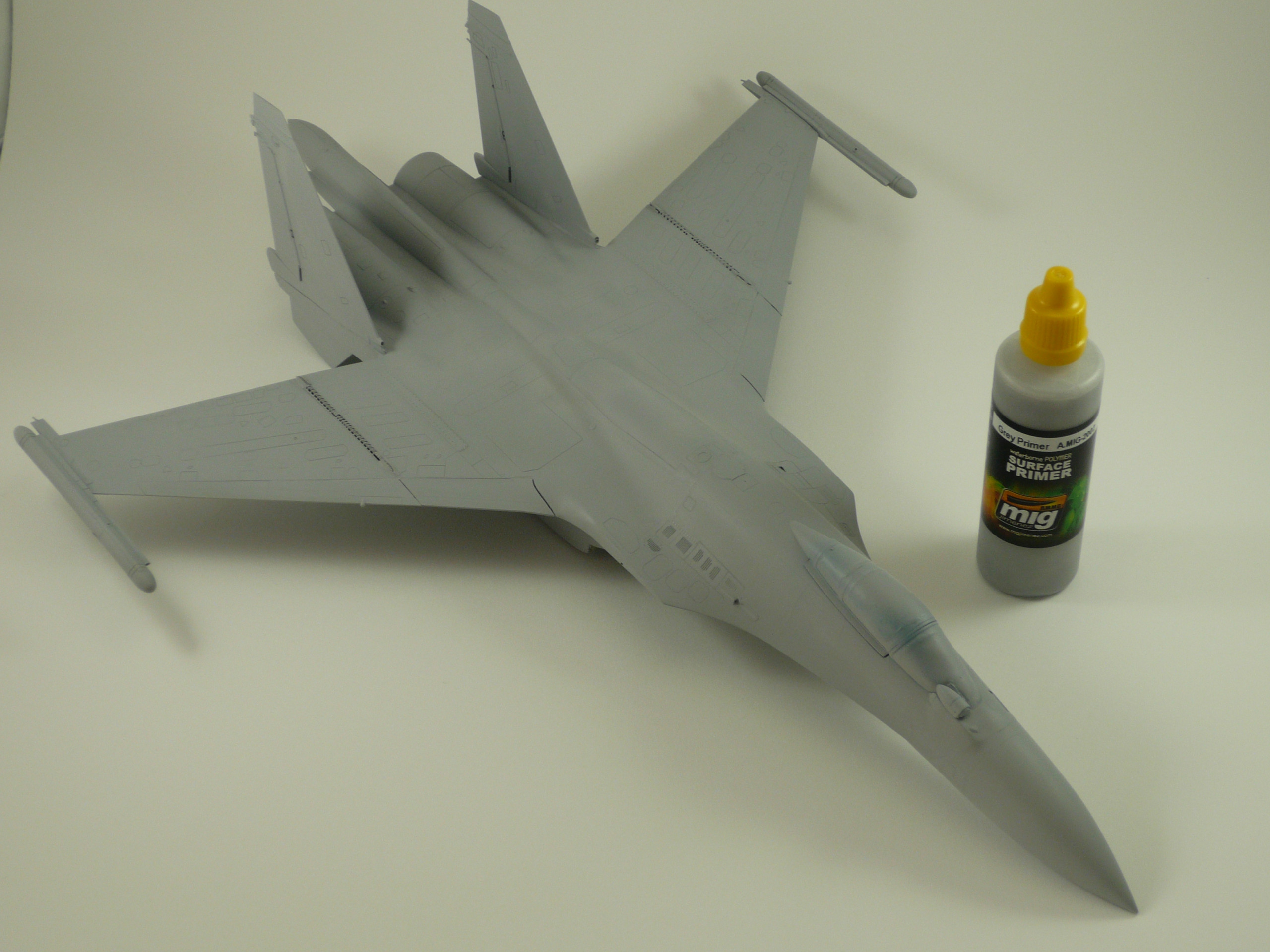
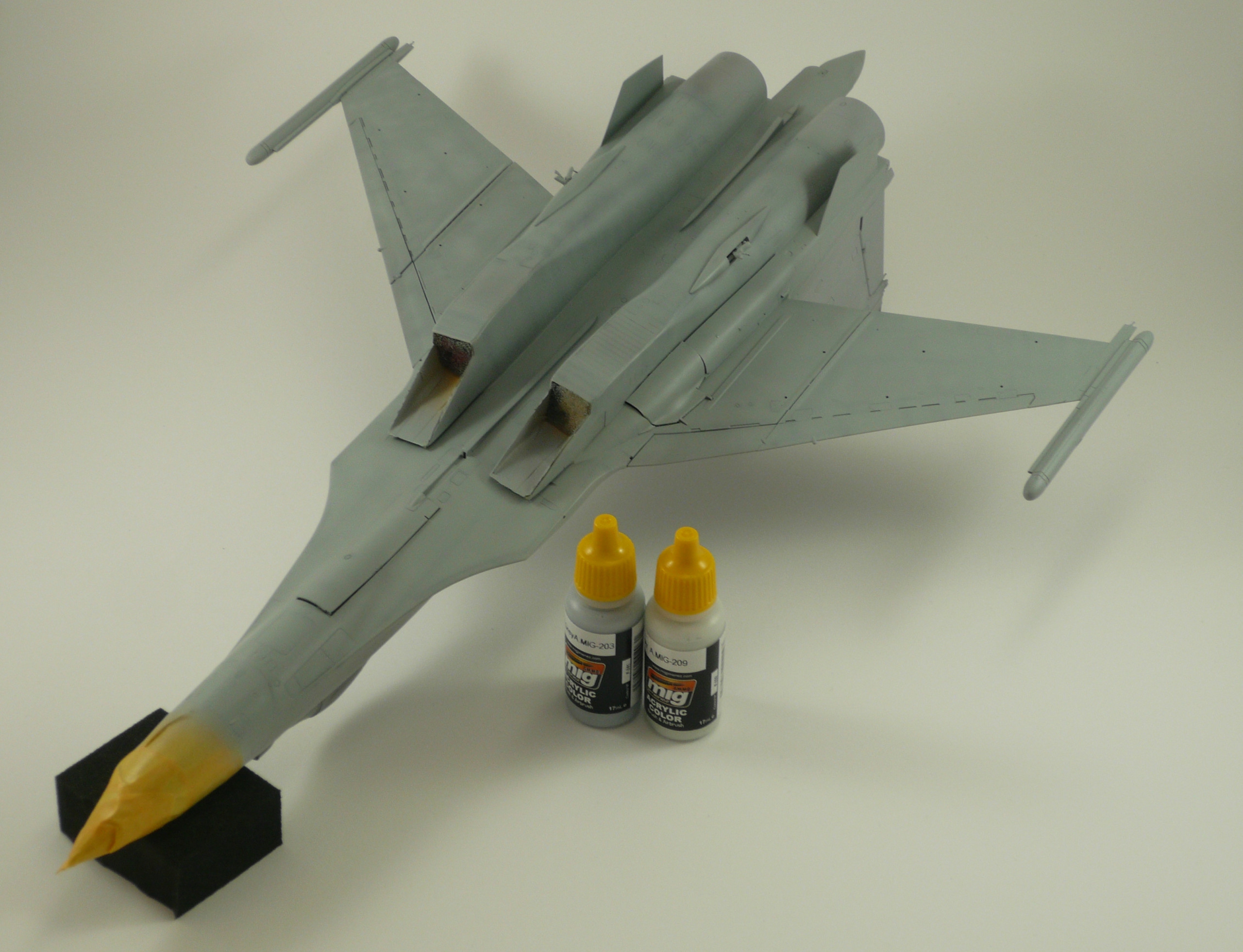
After completing the basic construction of the model, the first step was preparing the surface for painting. The entire model was washed carefully with warm water and mild soap. This removes grease from handling as well as dust created during sanding and assembly.
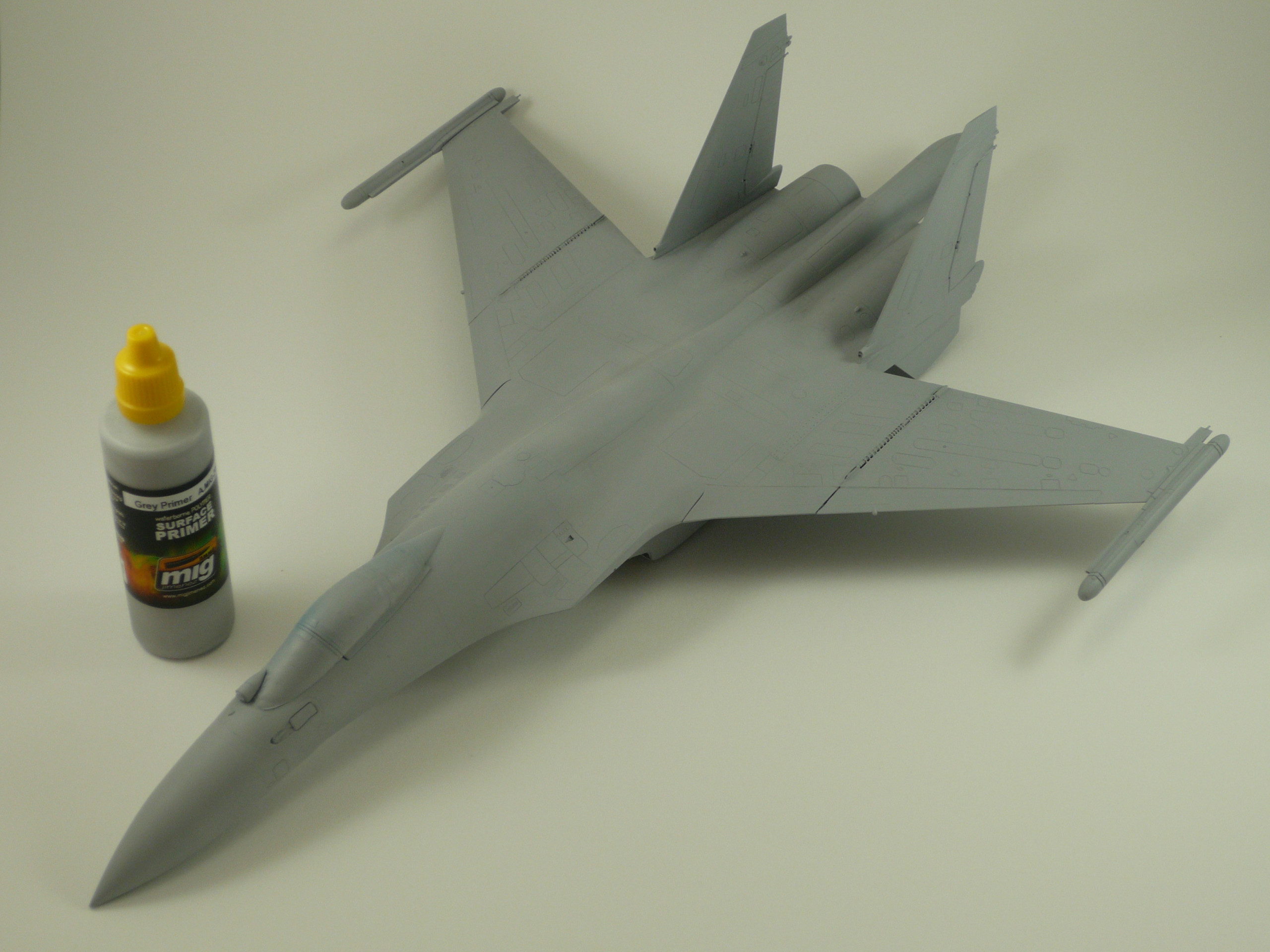
Once the model dried completely, a grey primer coat was sprayed over the entire aircraft. Primer serves two important purposes. First, it reveals small imperfections such as seams or scratches that might not be visible on bare plastic. Second, it creates a uniform surface that improves paint adhesion and ensures consistent color coverage.
After the primer cured, small imperfections were corrected and the model was ready for the main painting stage.
Painting the Lower Surfaces
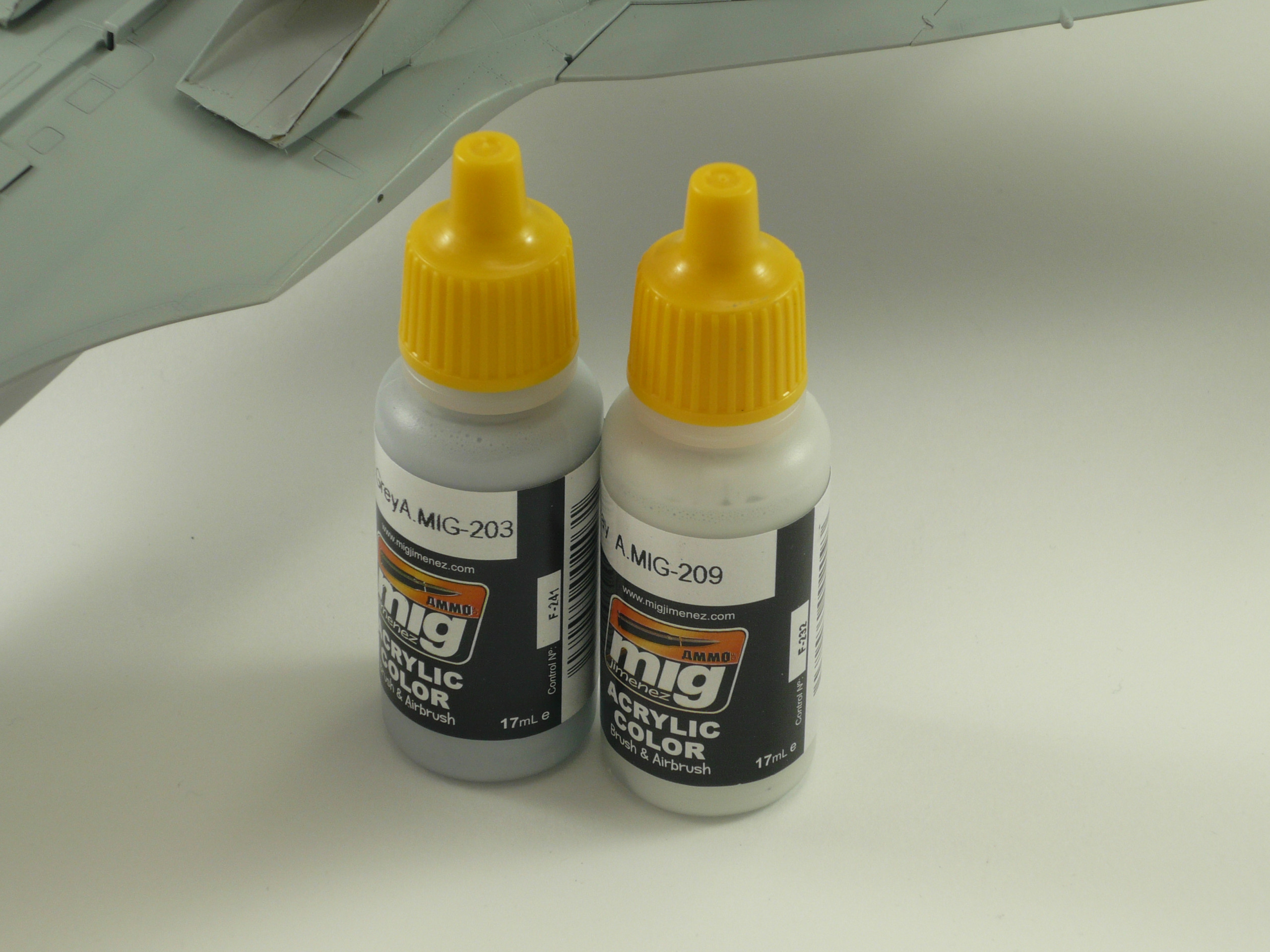
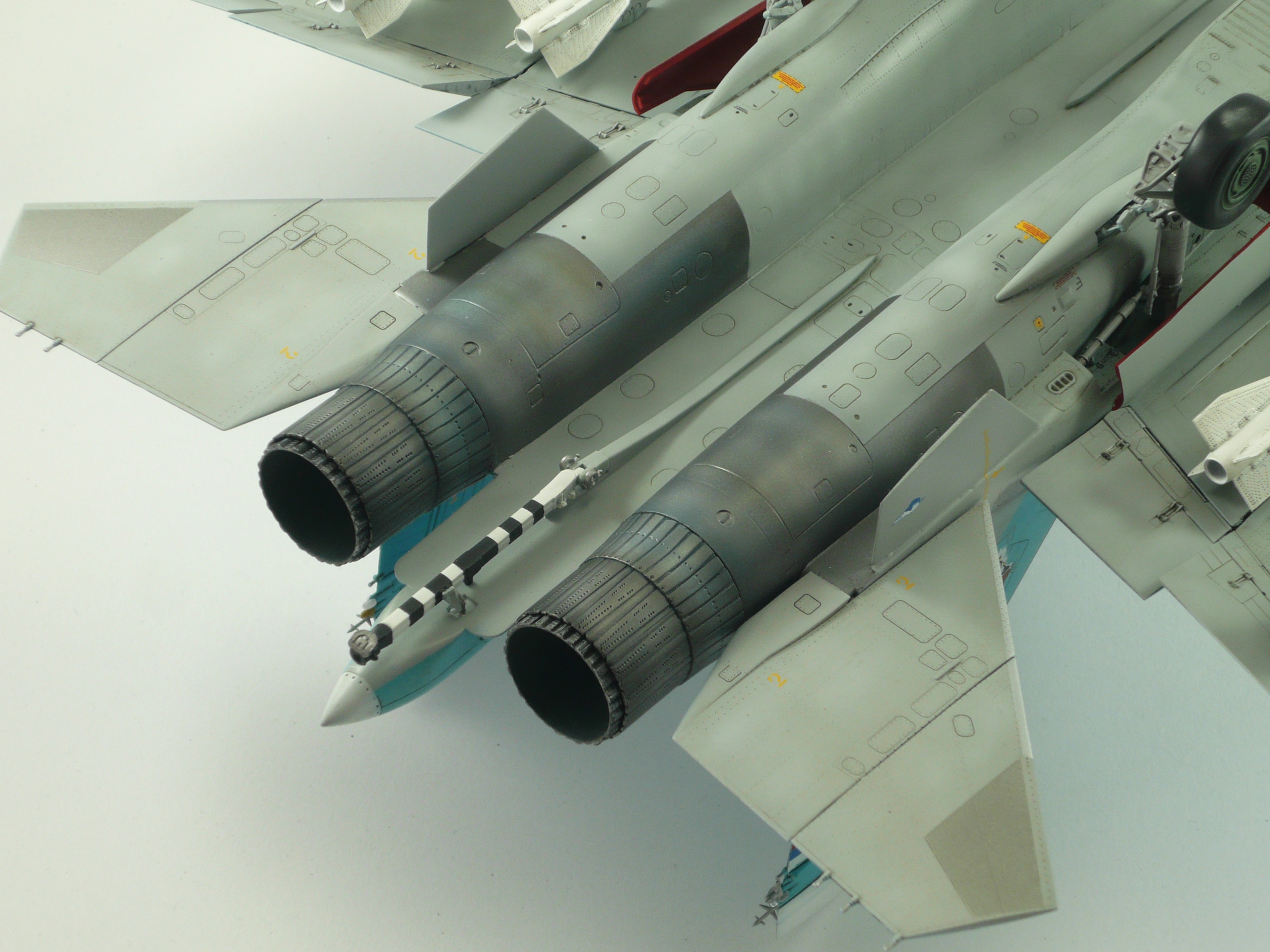
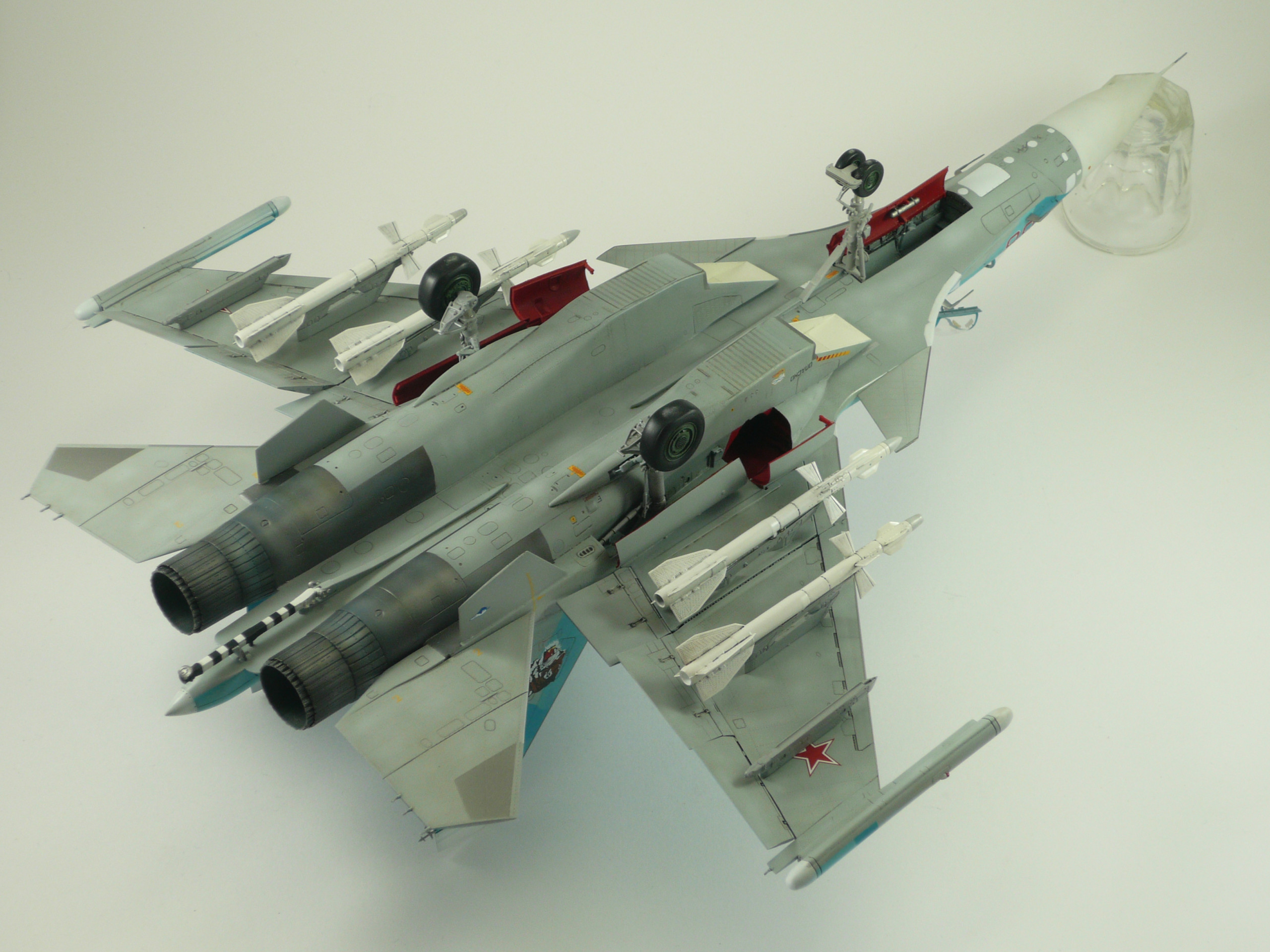
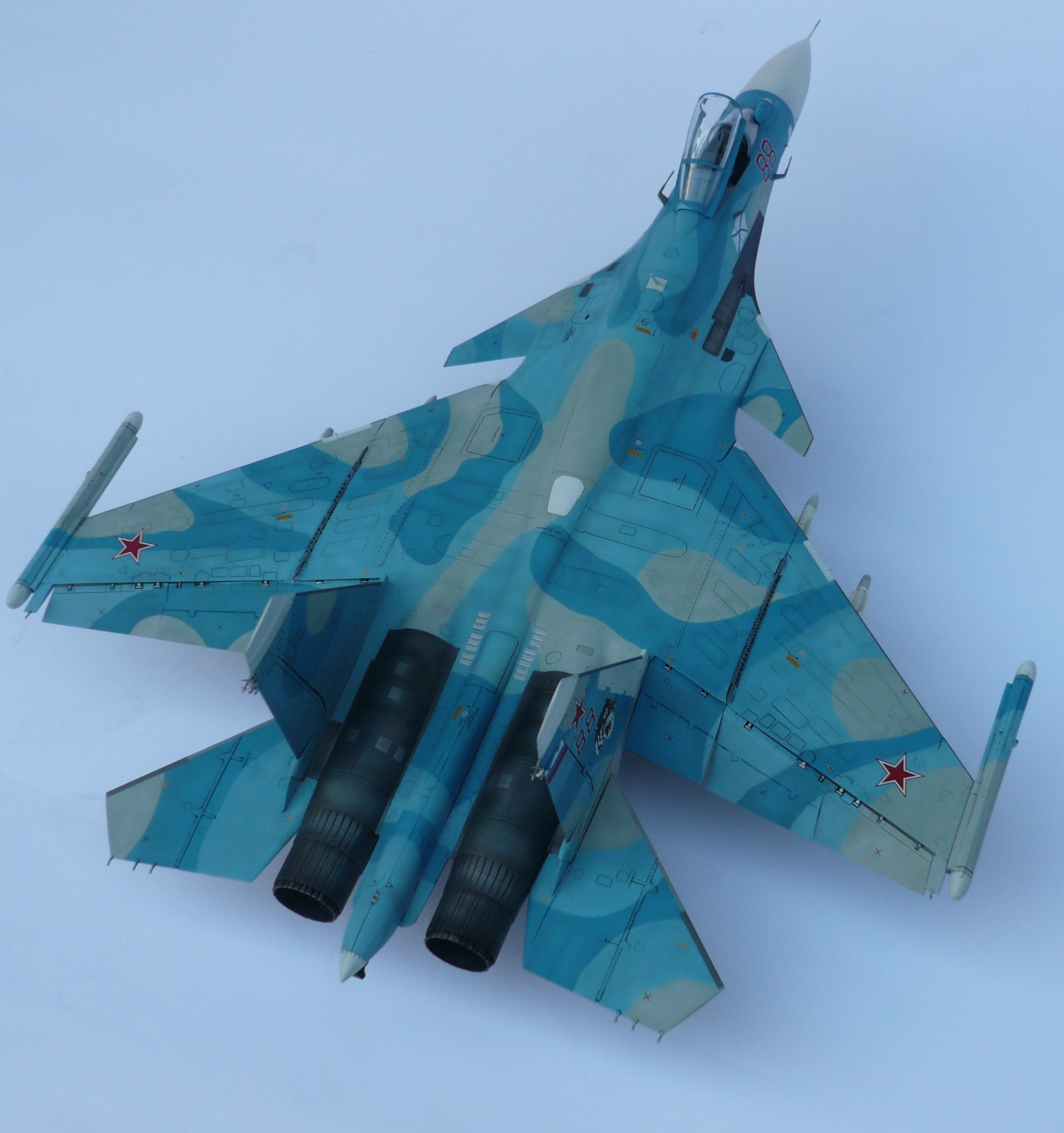
The painting process began with the lower surfaces of the aircraft. The base color was created using a mixture of Compass Ghost Grey and Light Grey. This combination reproduces the pale grey tones seen on the underside of operational Su-33 aircraft.
To avoid a flat finish, the base color was modified with a few drops of matte white to produce lighter variations used for subtle highlights and panel modulation. This technique simulates the fading and wear that occurs on real aircraft exposed to sun and harsh weather conditions.
A very diluted blue filter was then lightly sprayed across the underside. The mixture consisted of approximately 95% thinner and 5% paint. Although the effect is subtle and barely visible from a distance, it gives the surface a cooler tone and enhances realism when observed up close.
Painting the Upper Camouflage
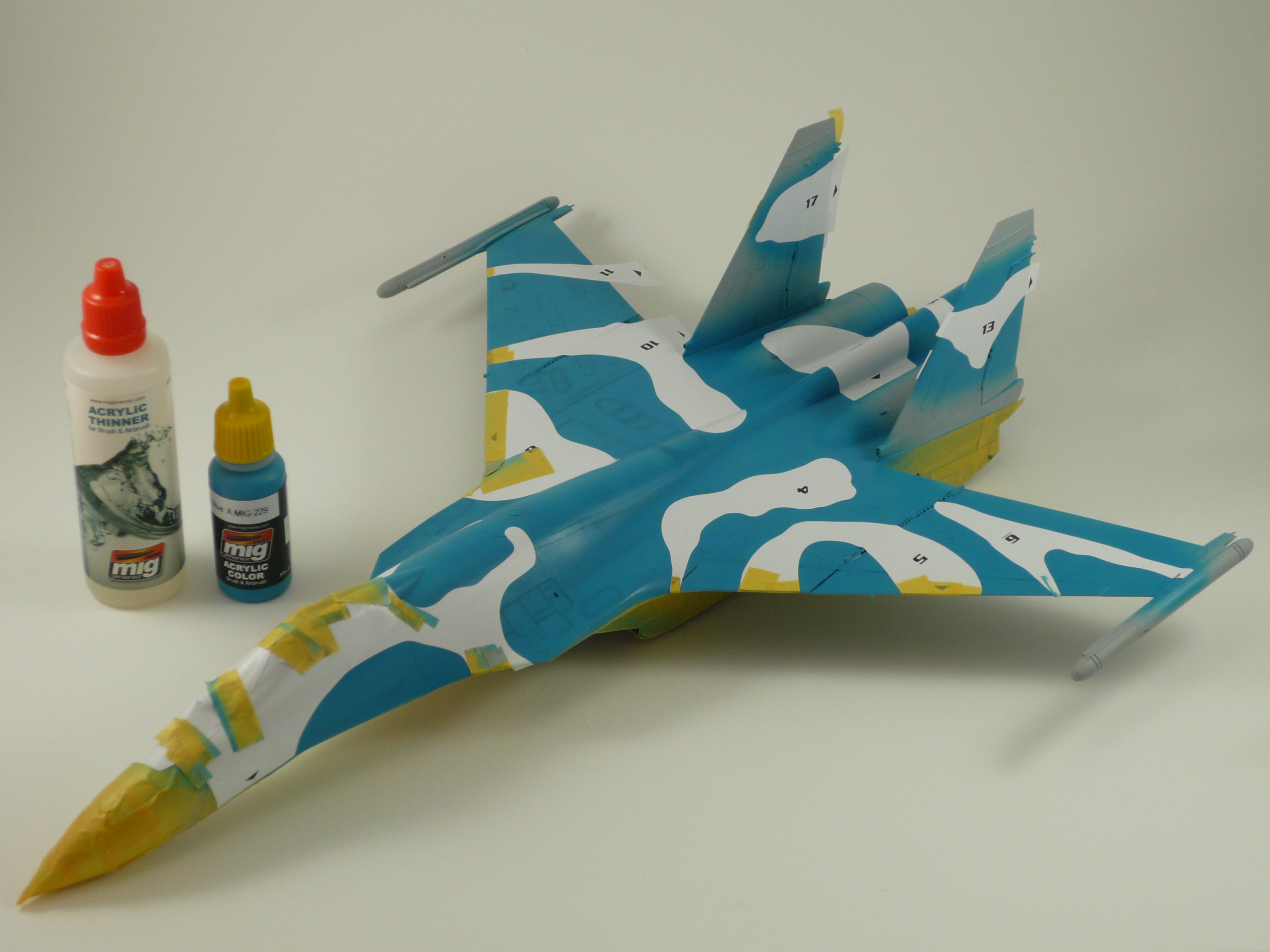
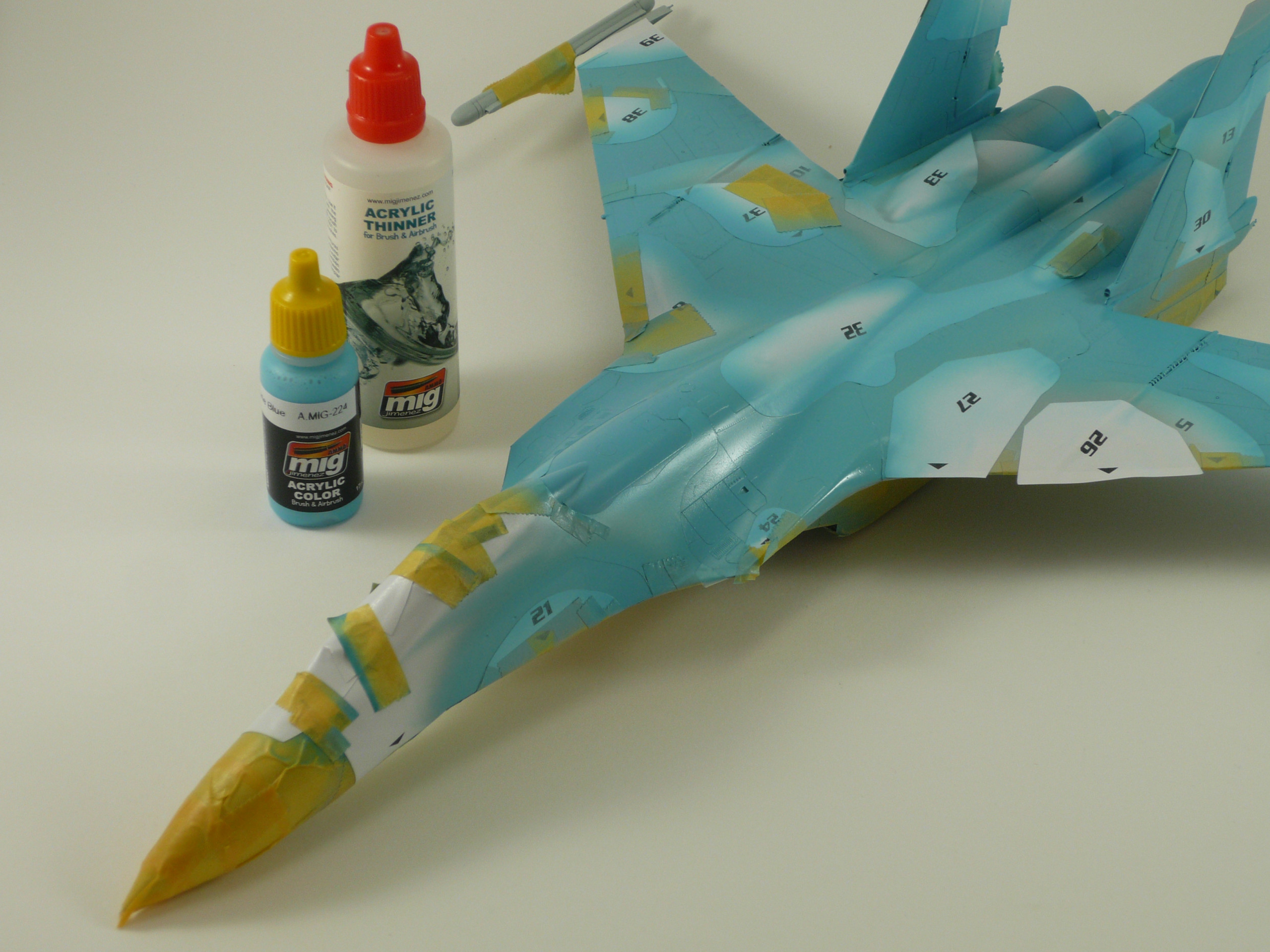
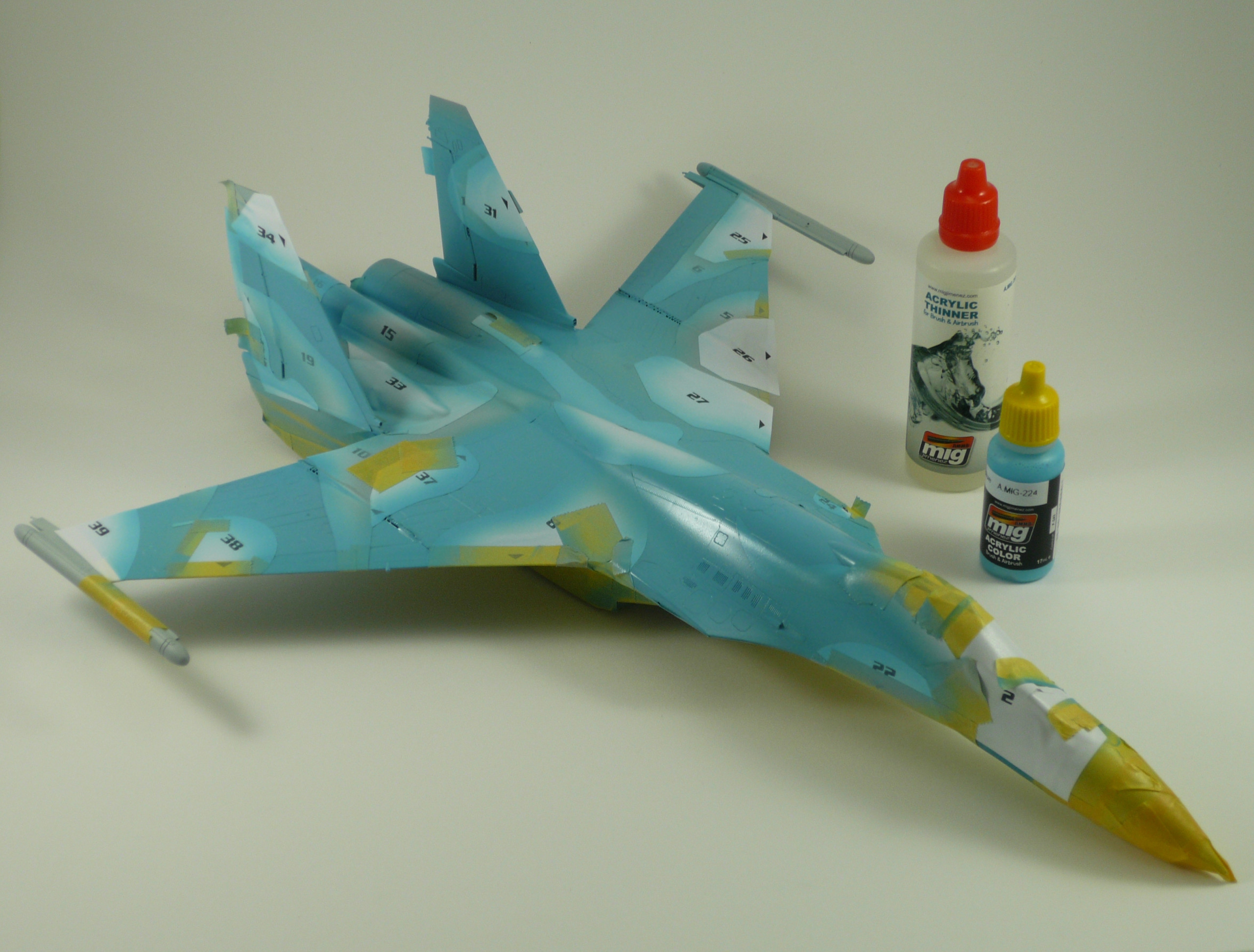
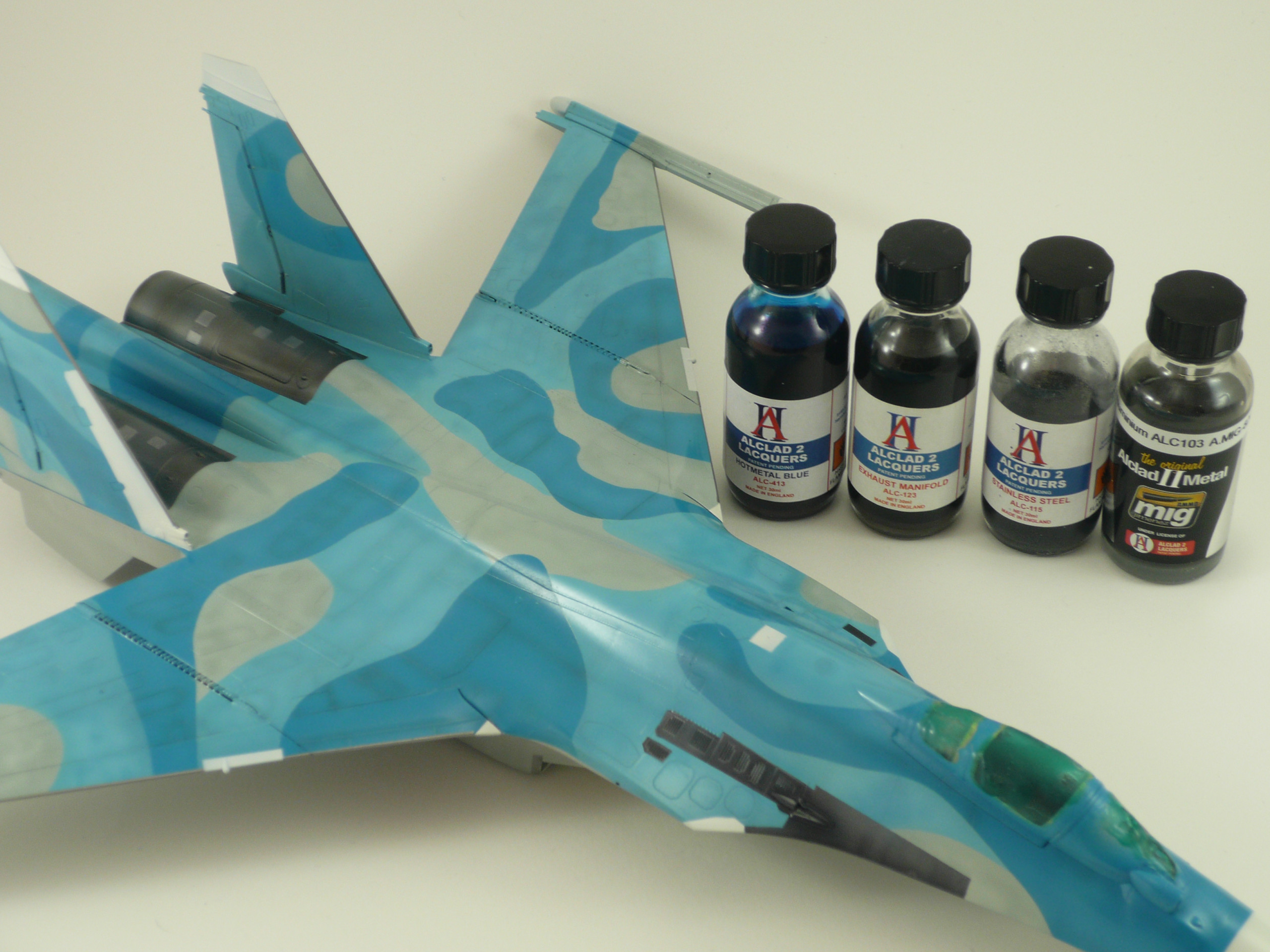
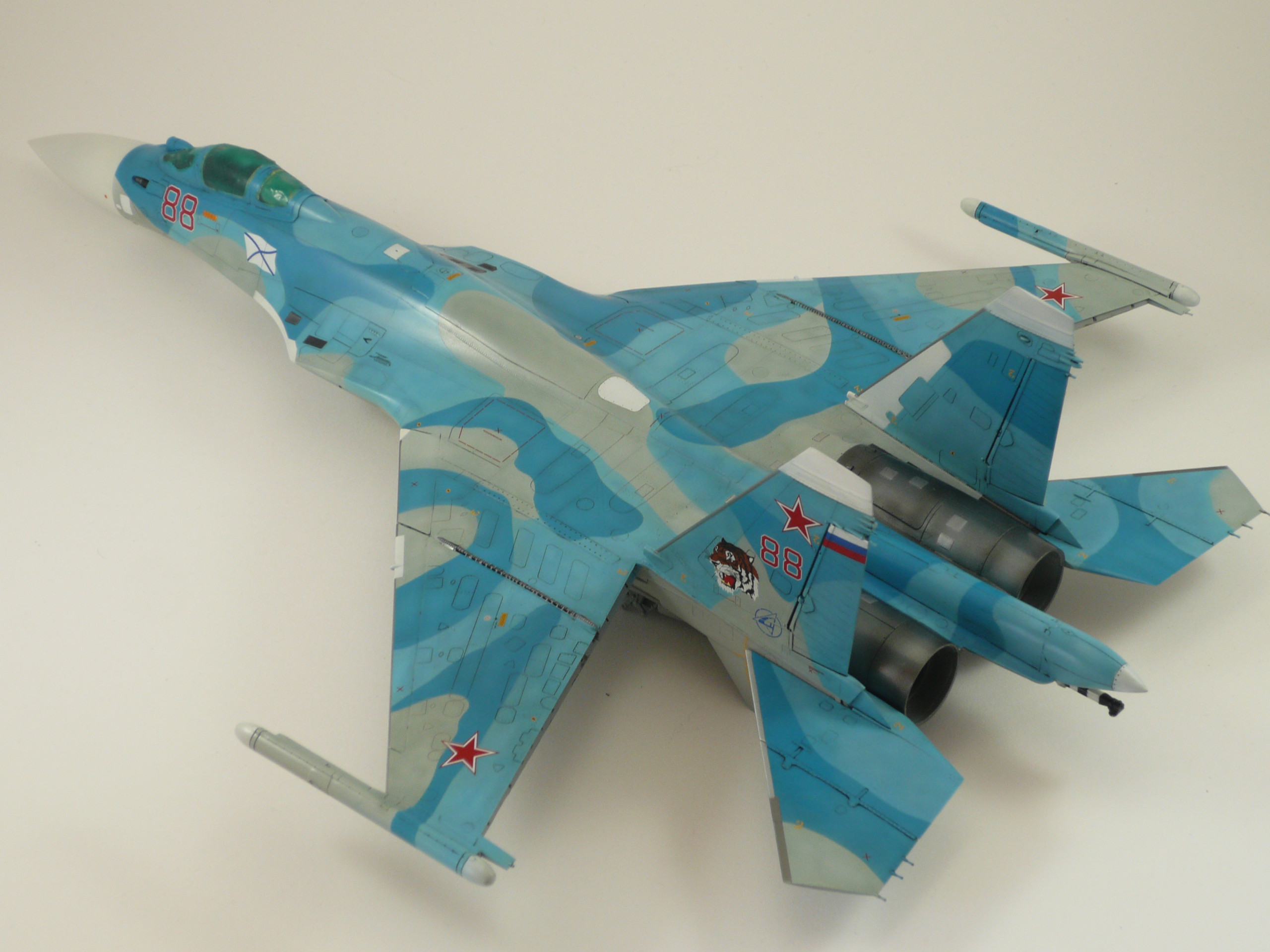
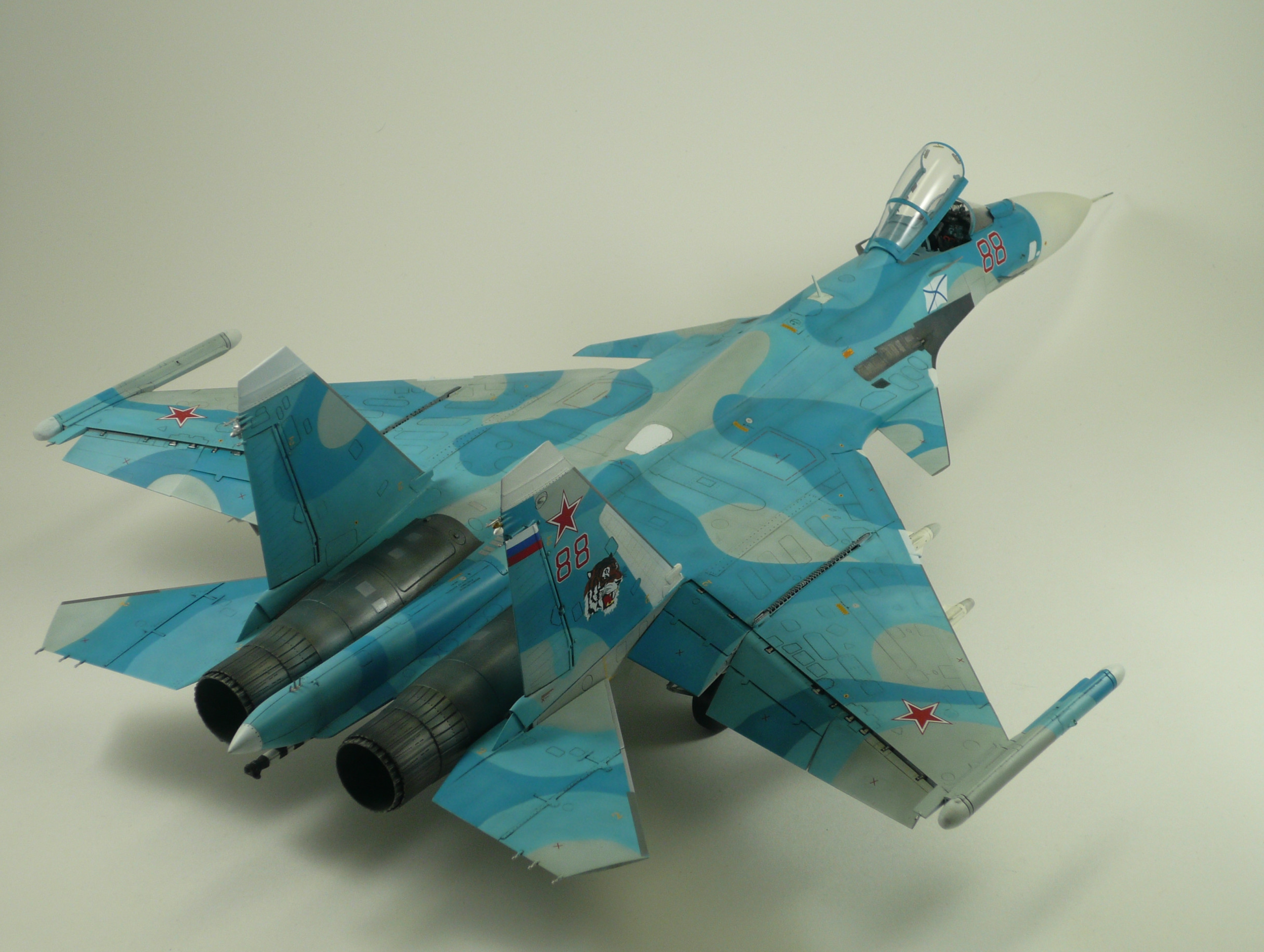
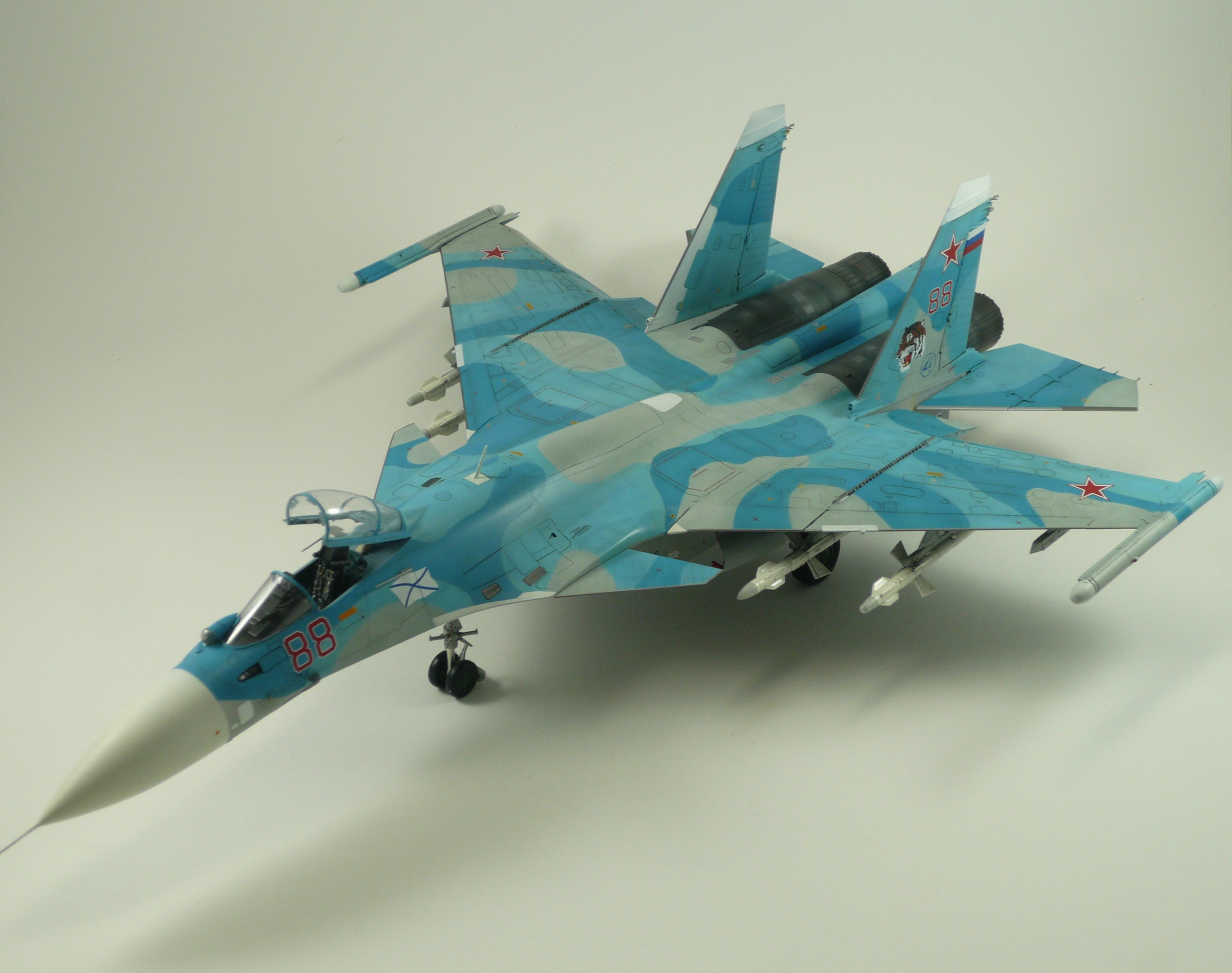
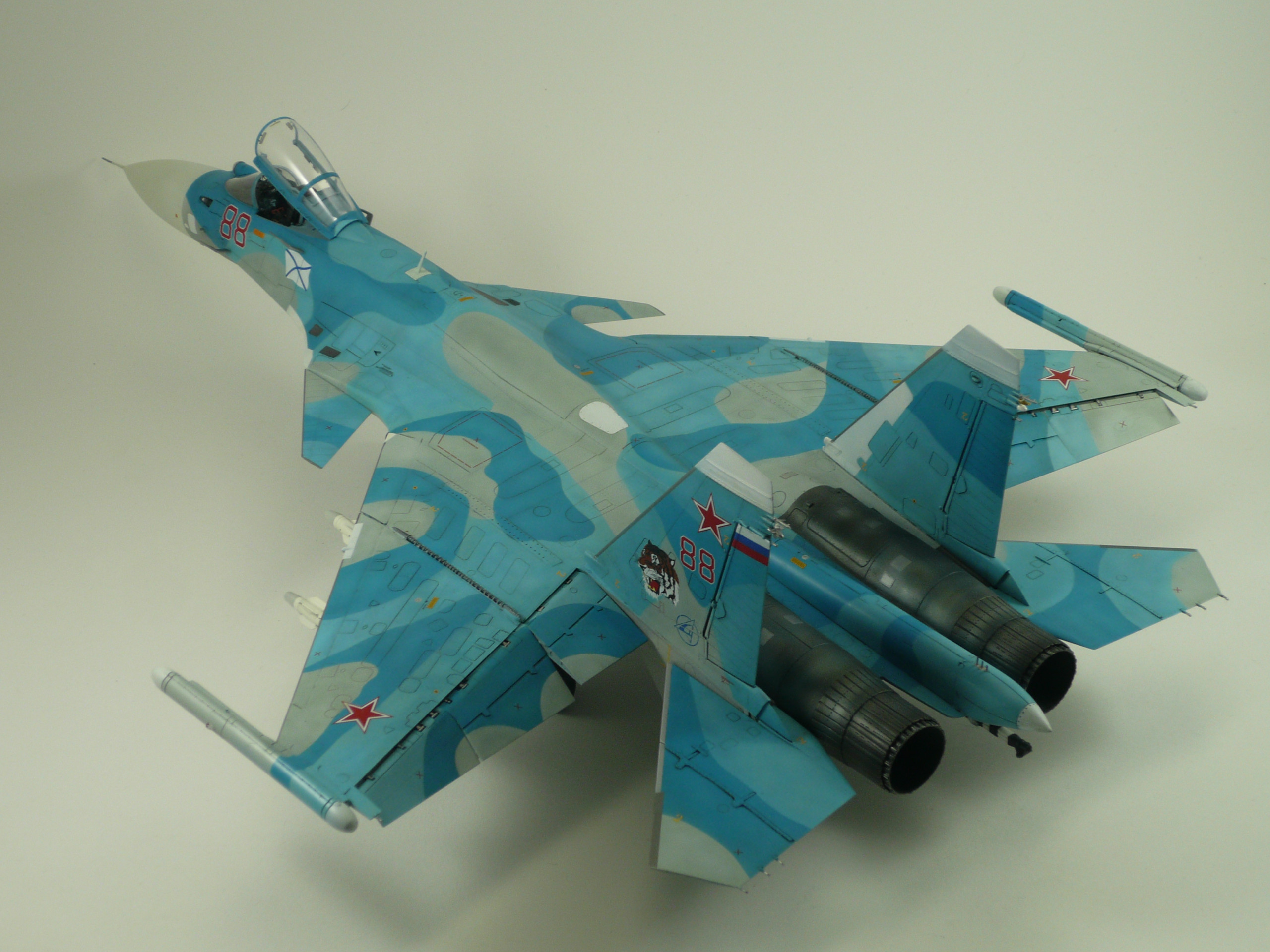
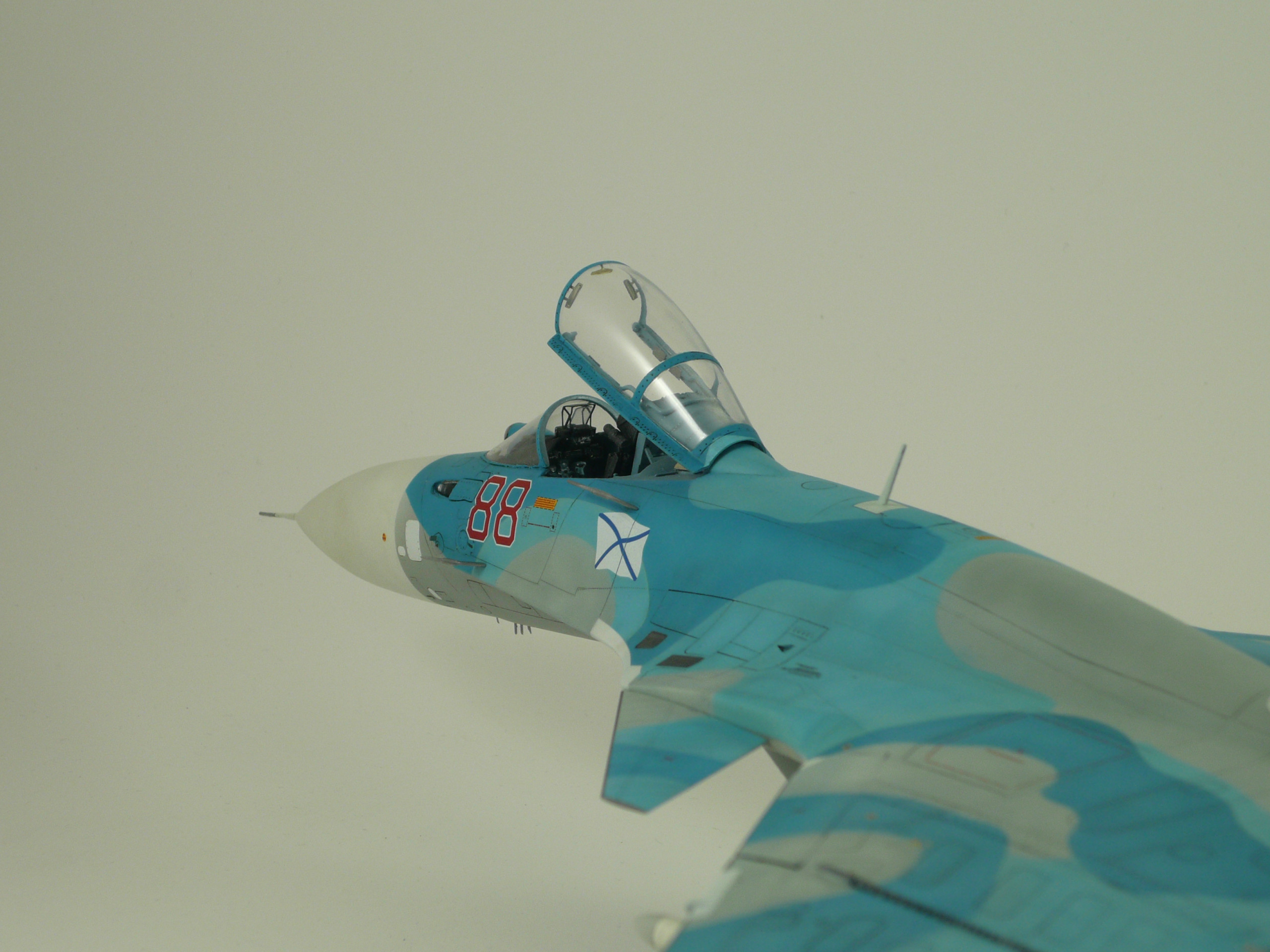
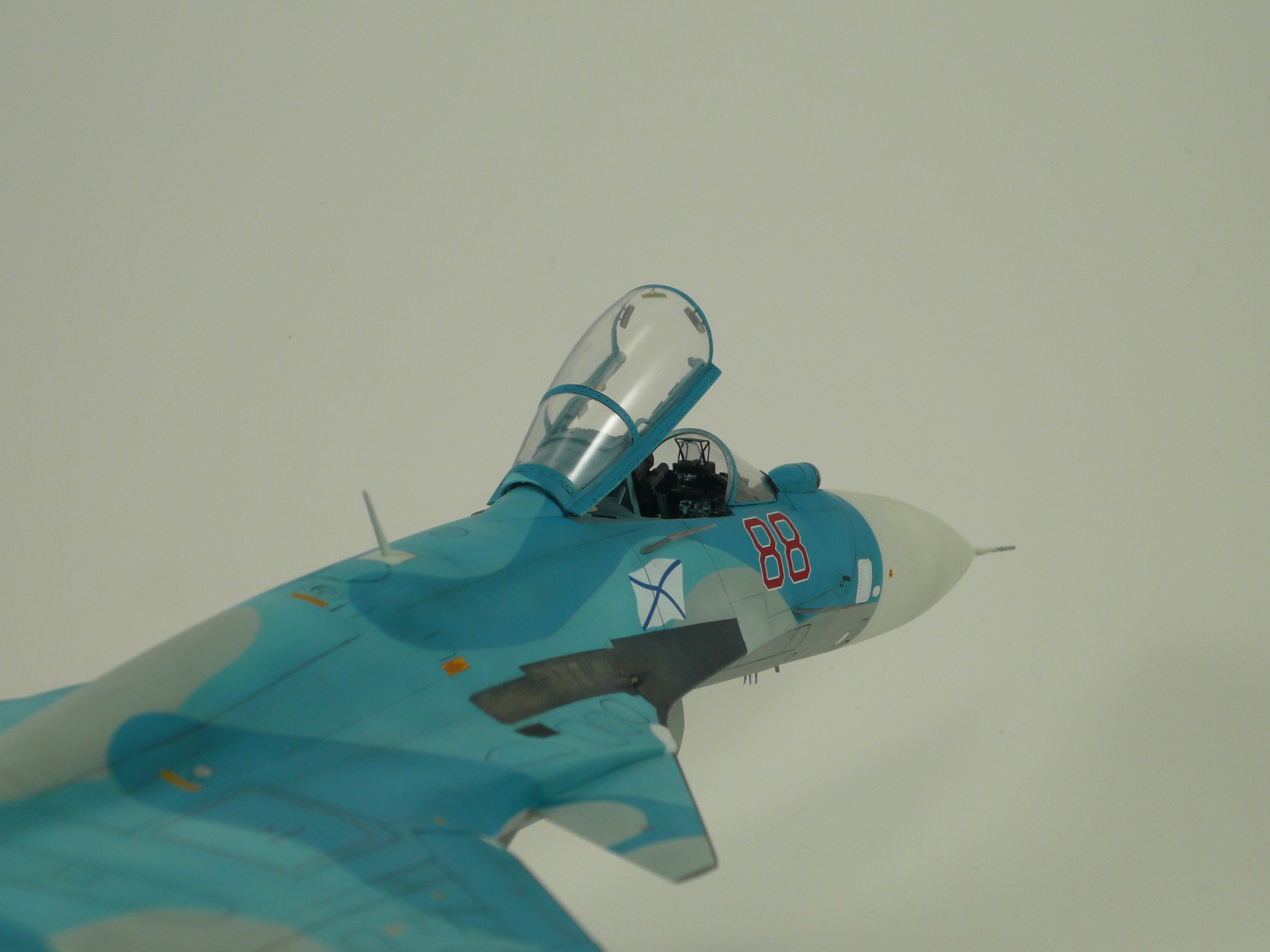
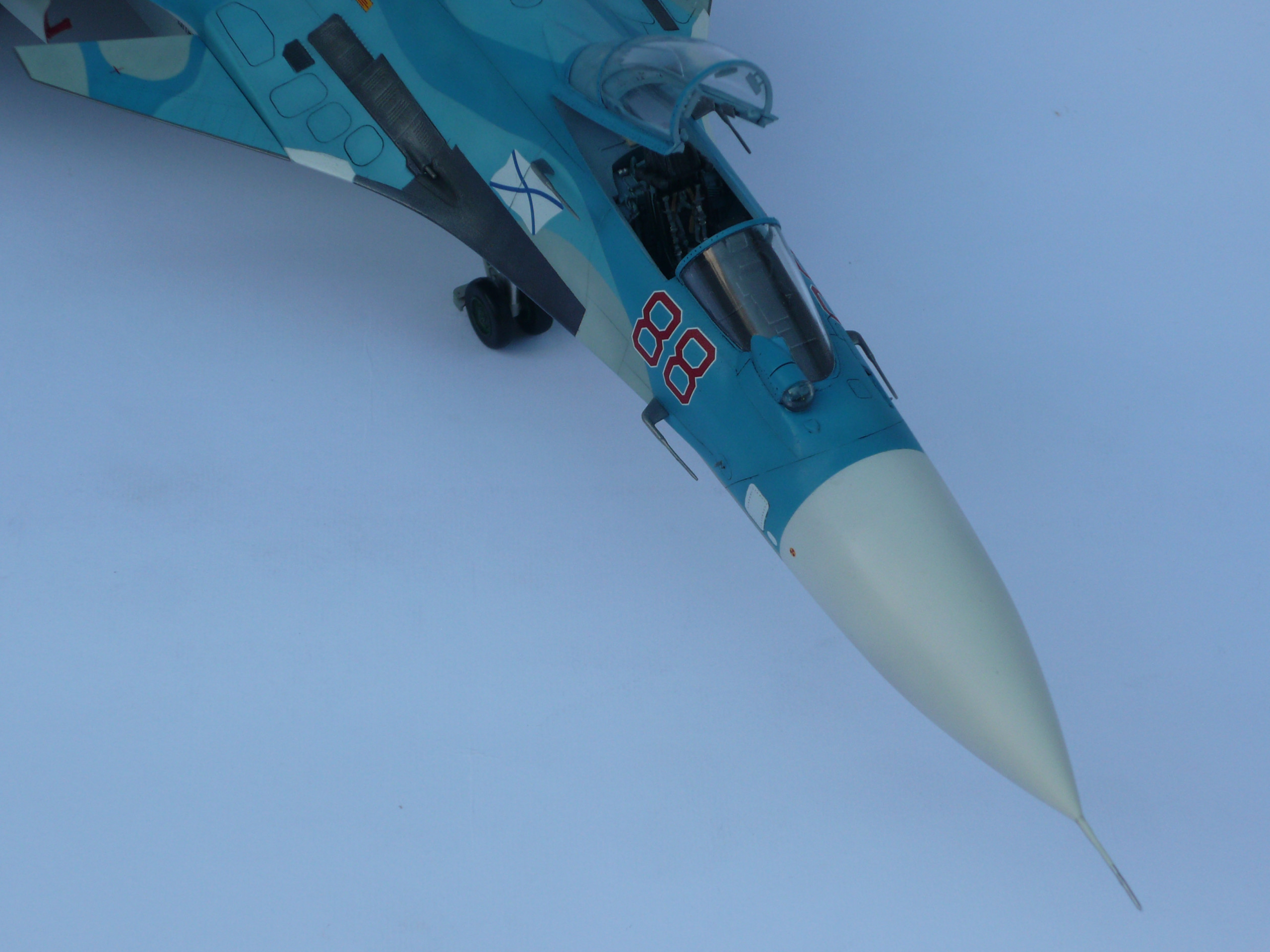
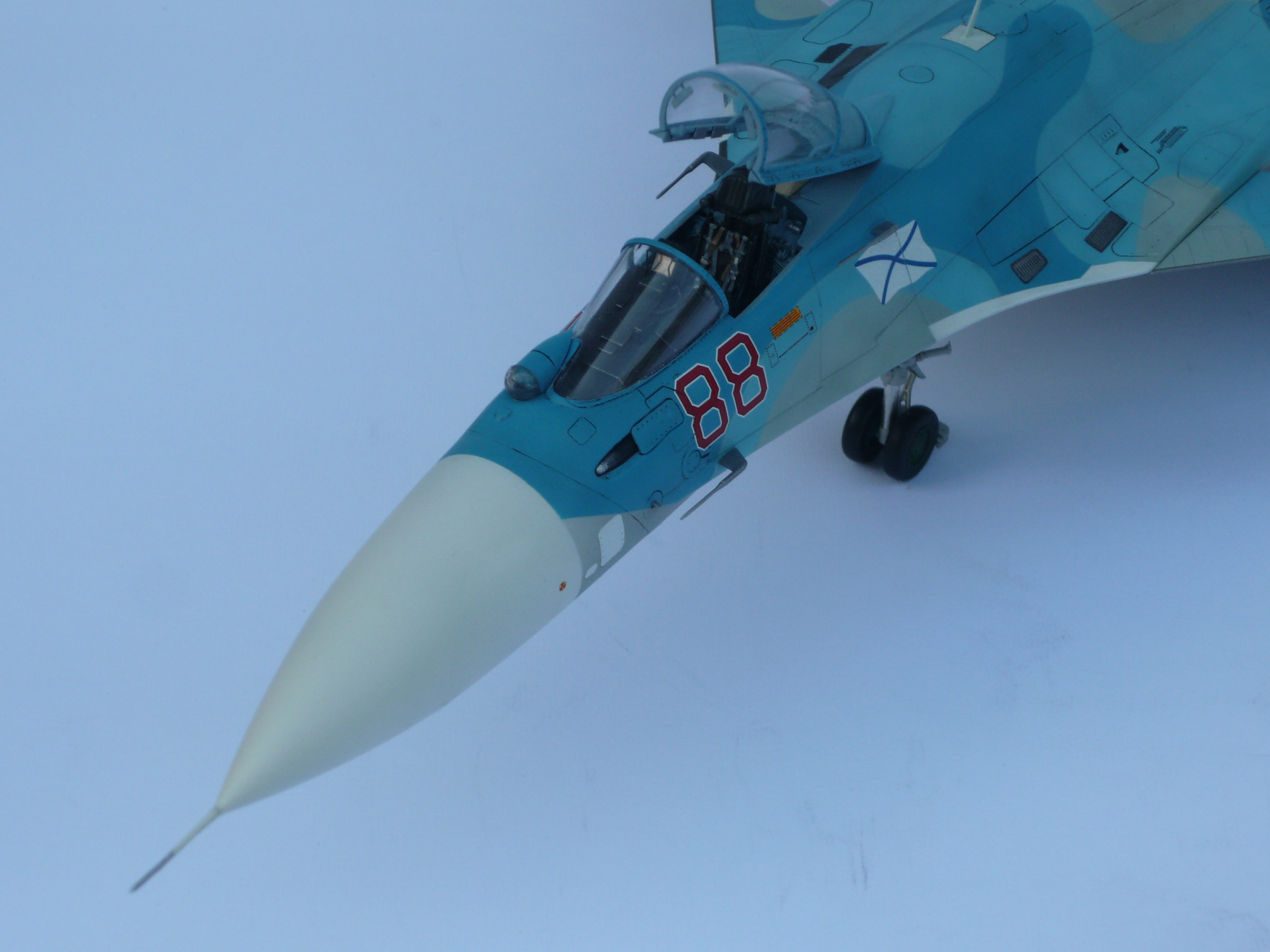
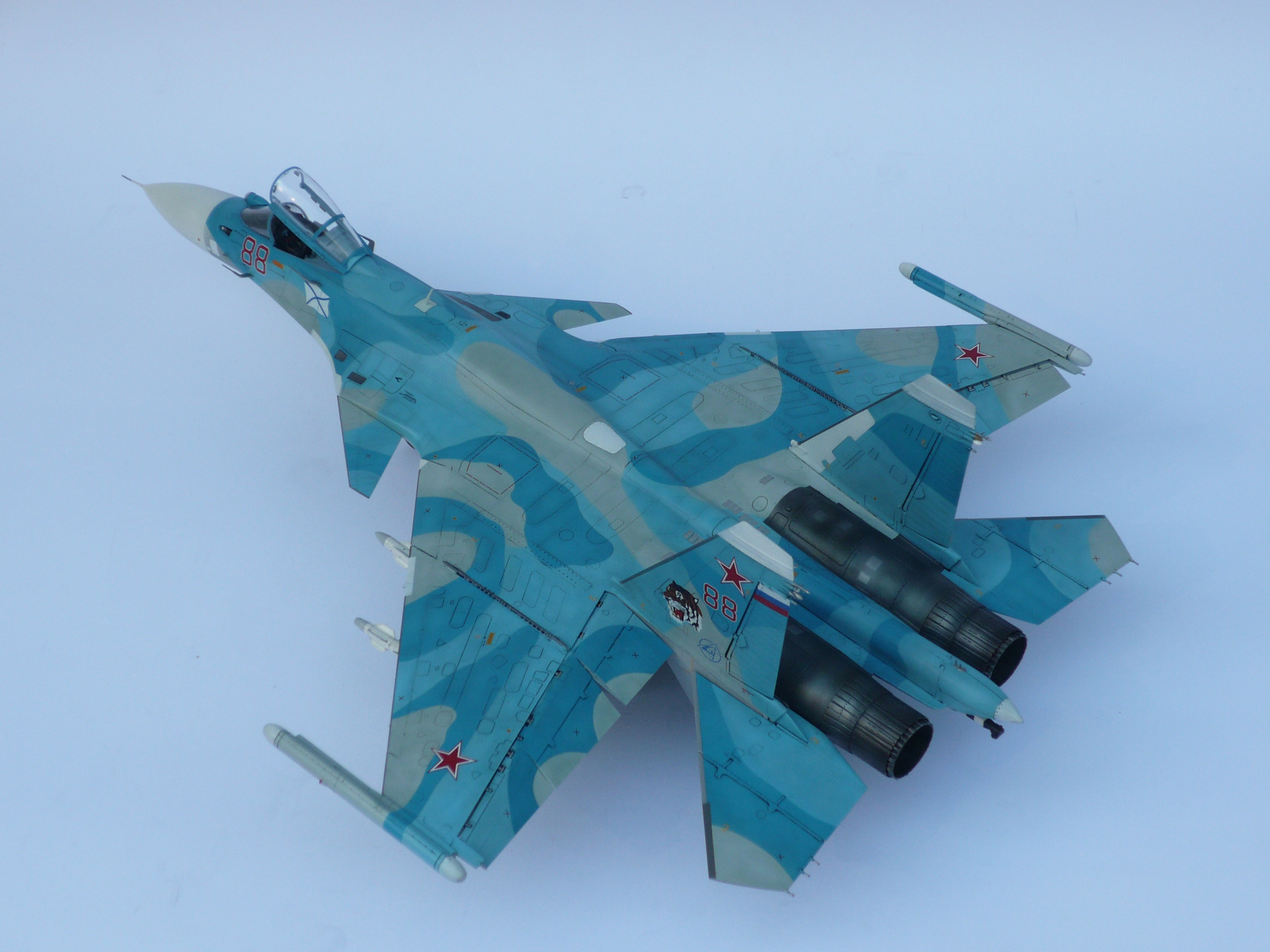
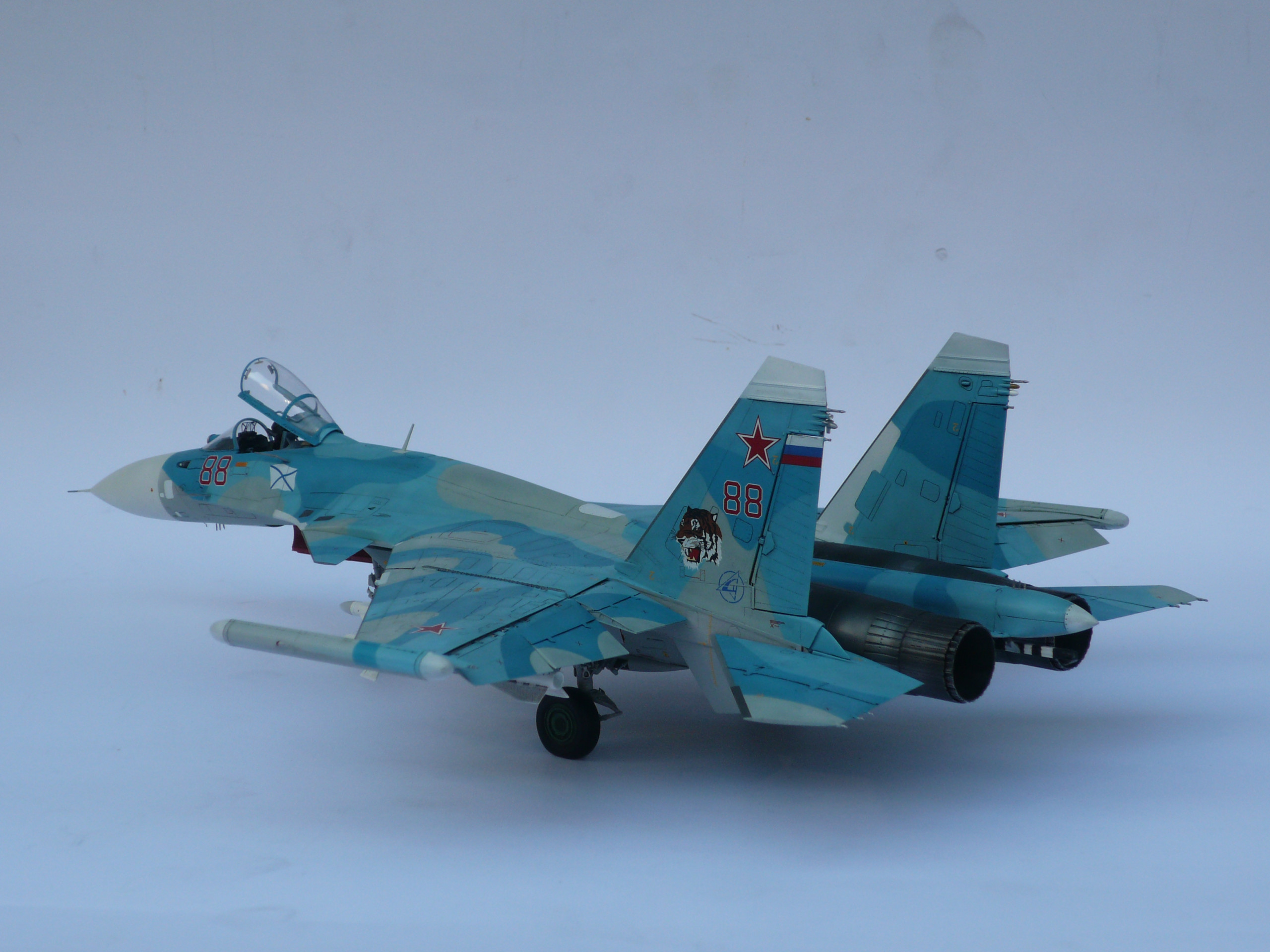
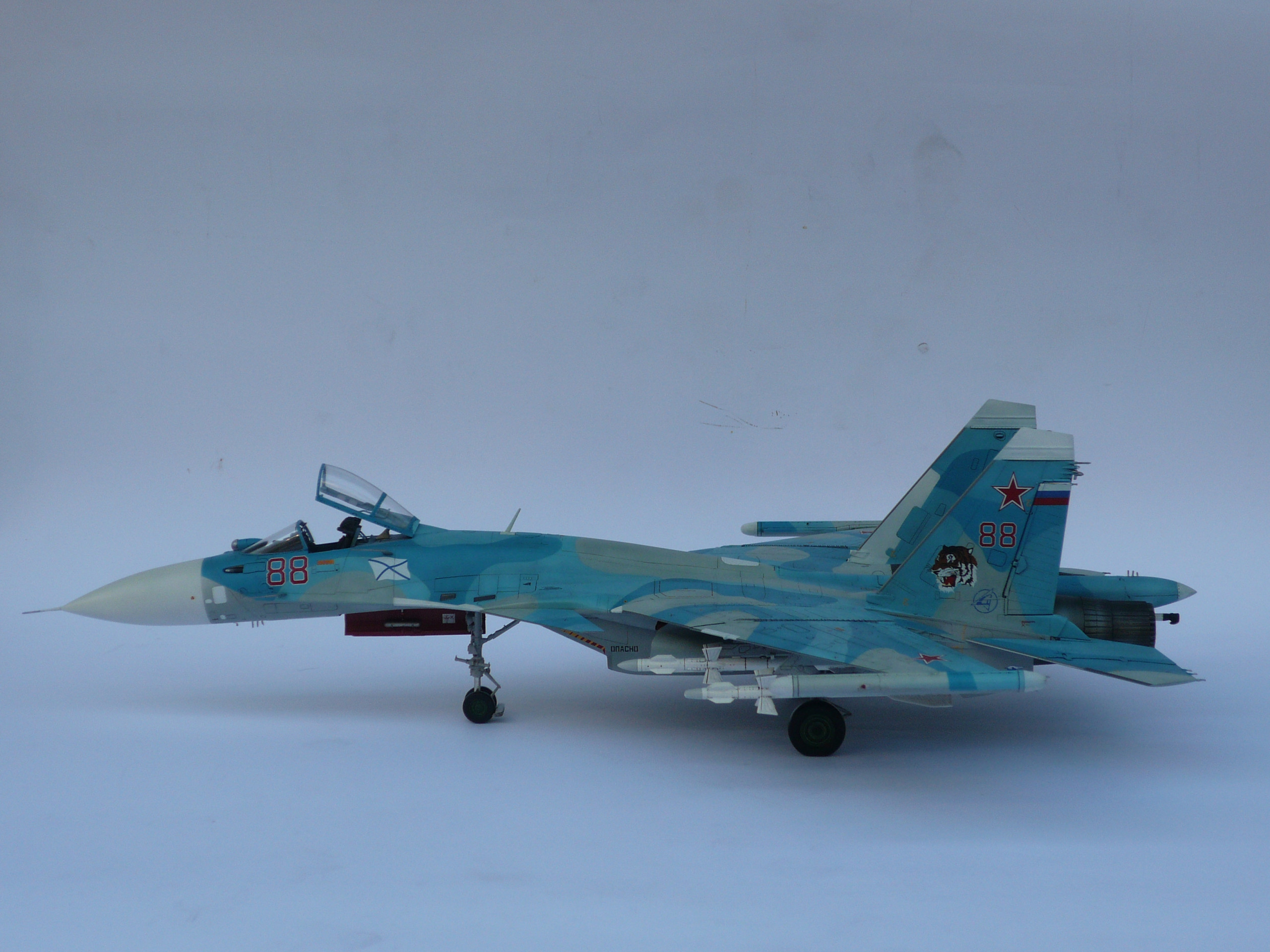
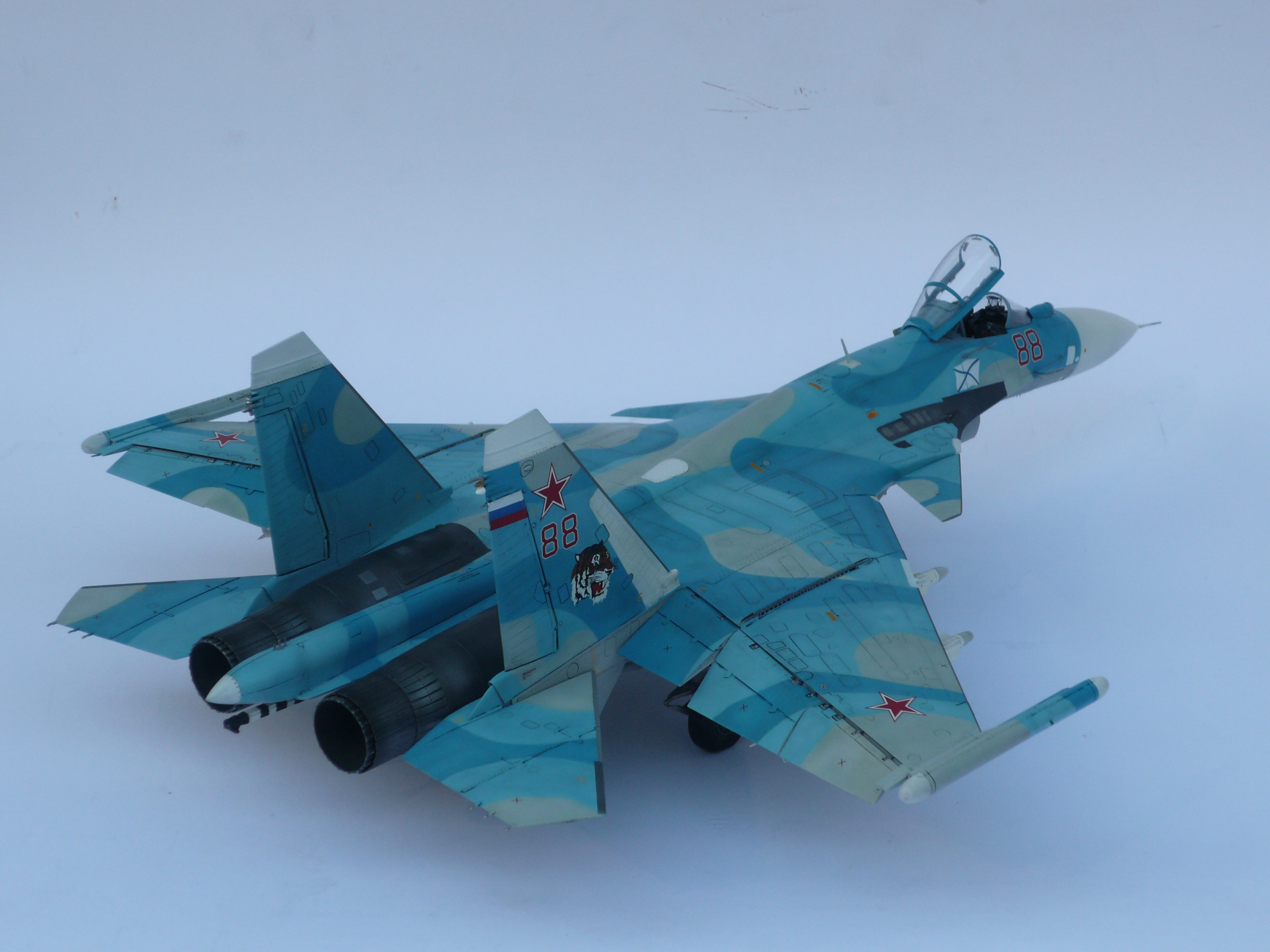
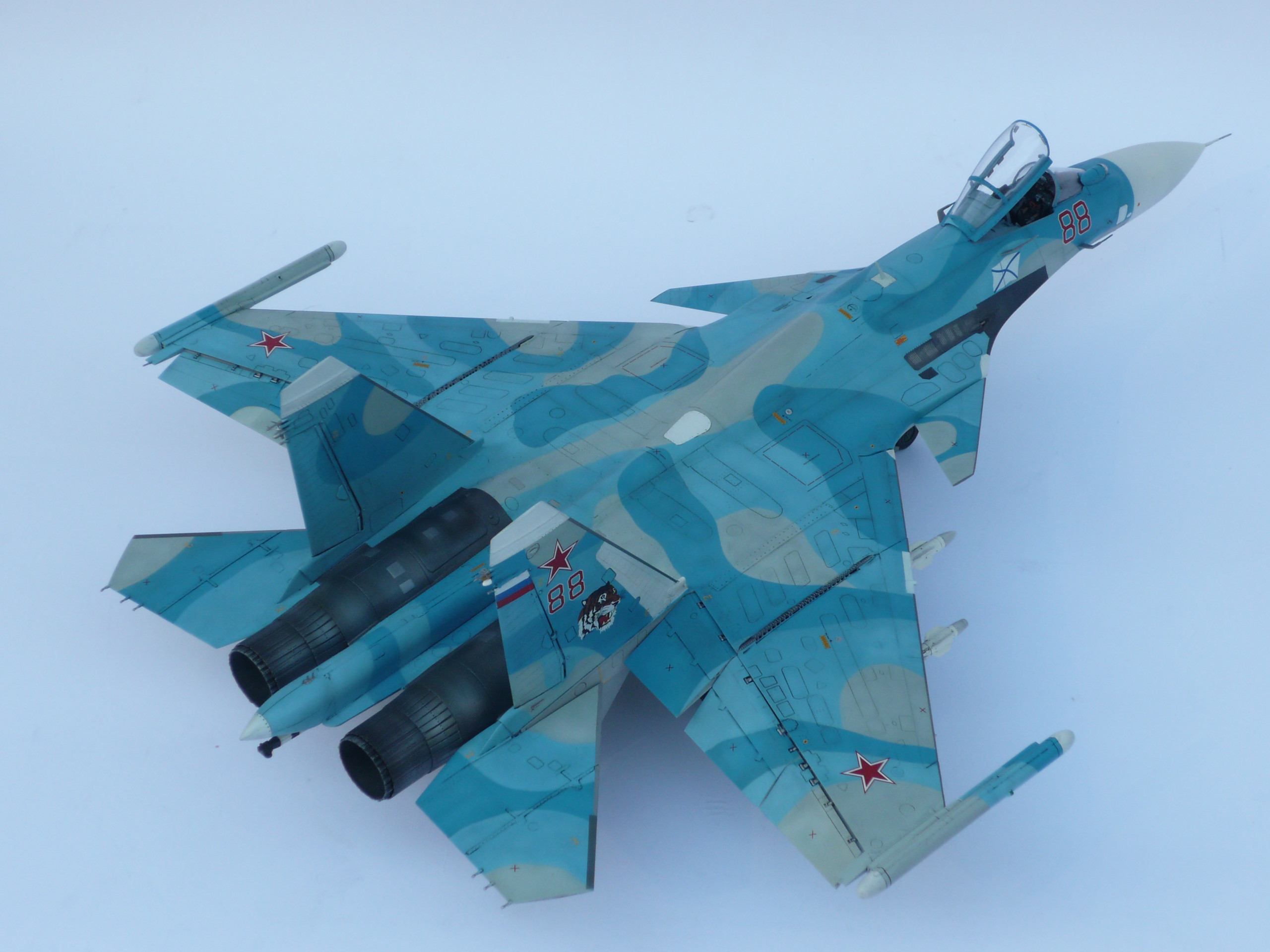
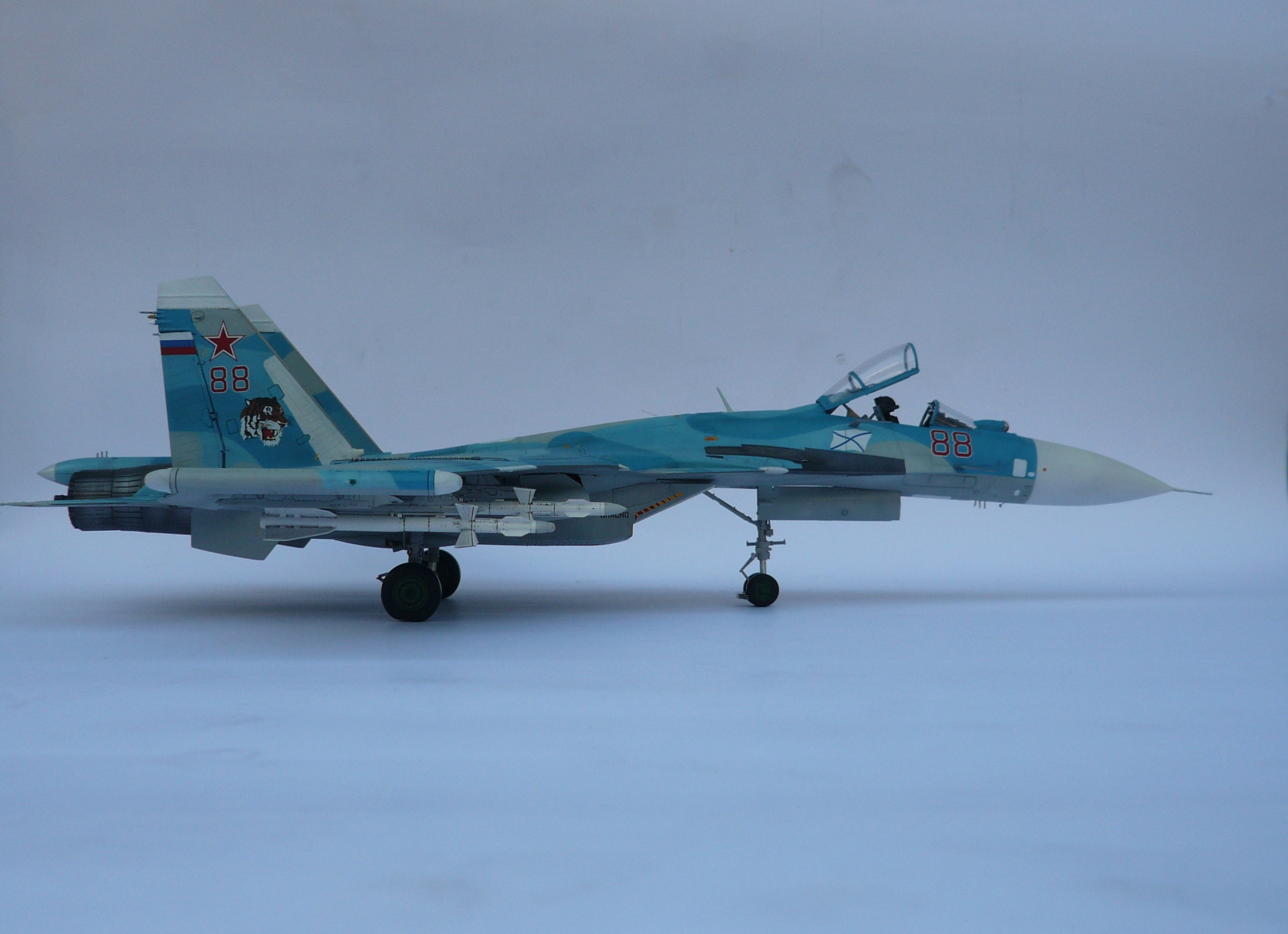
The upper surfaces of the Su-33 feature a distinctive three-color blue camouflage pattern. Achieving a convincing result requires careful masking and precise airbrushing.
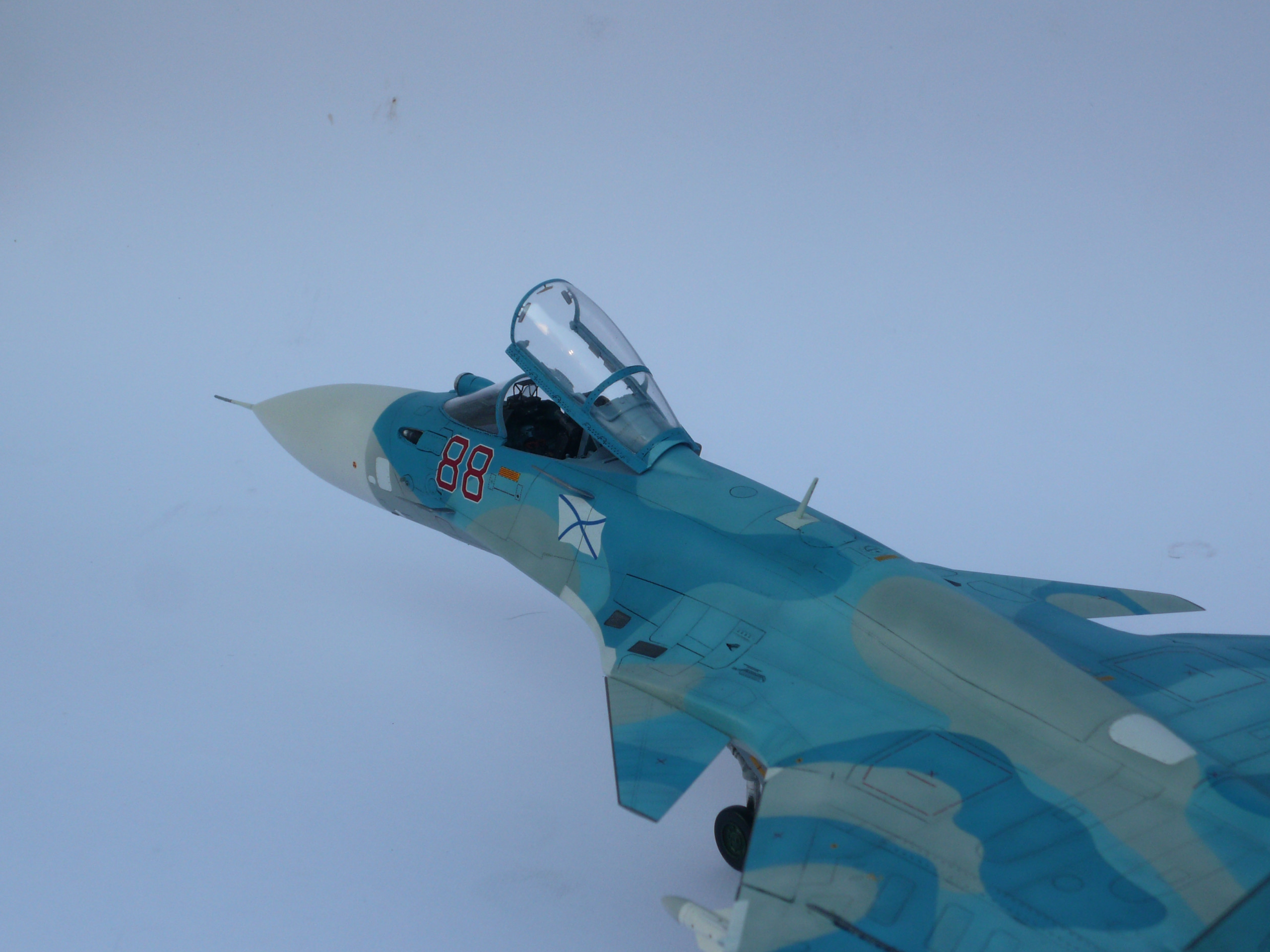
Before applying the camouflage colors, the radome was painted white and masked to protect it during the rest of the painting process.
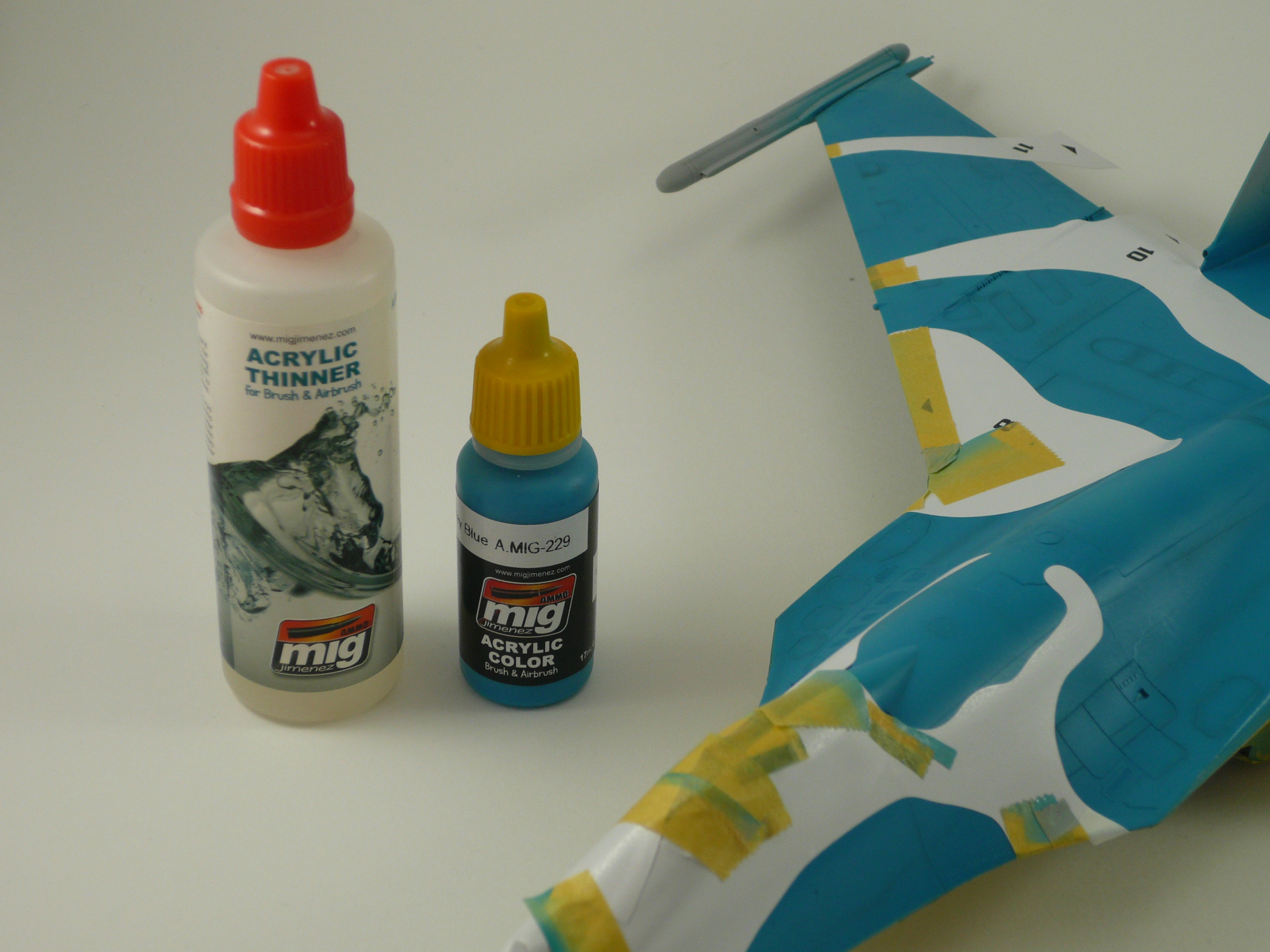
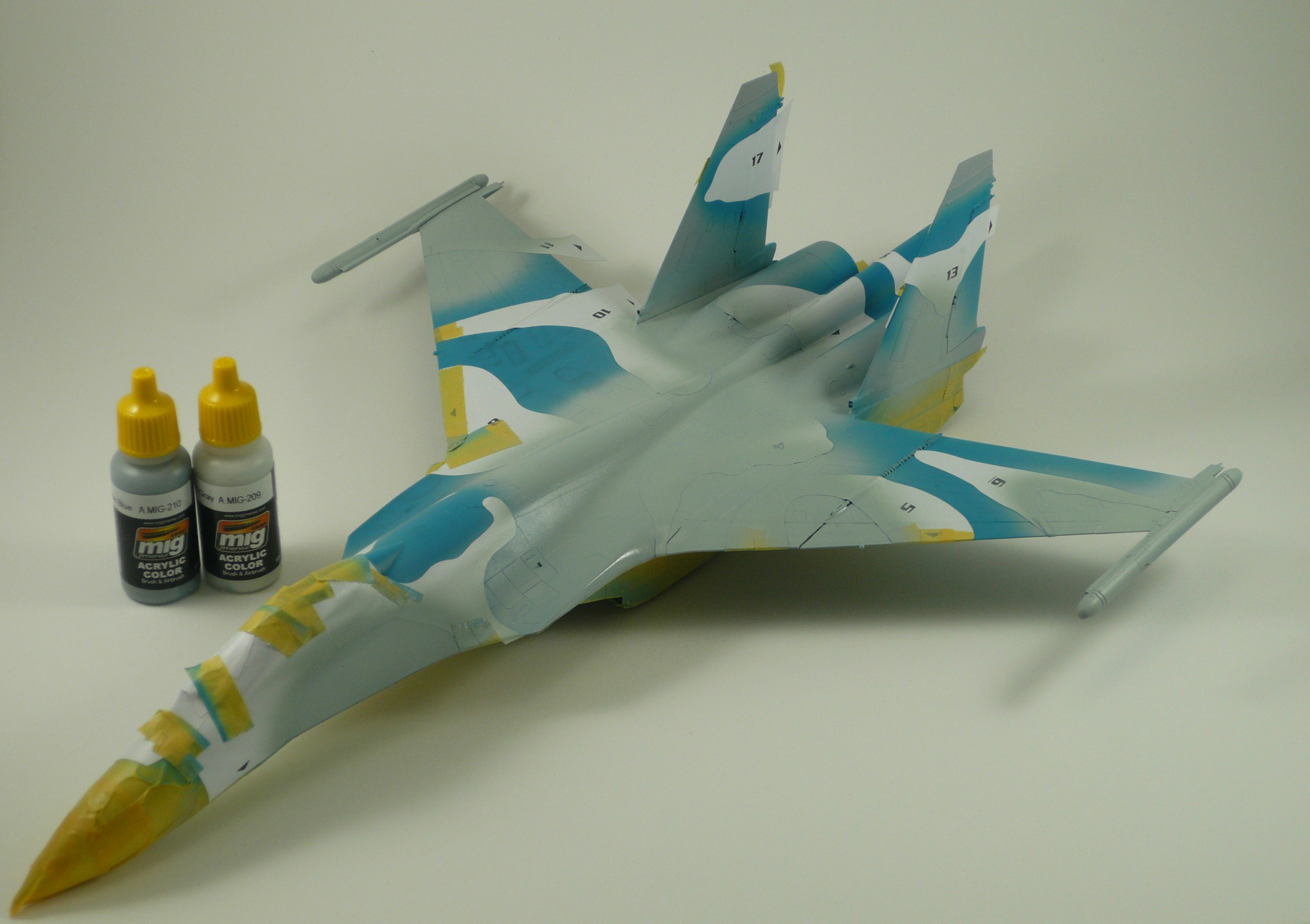
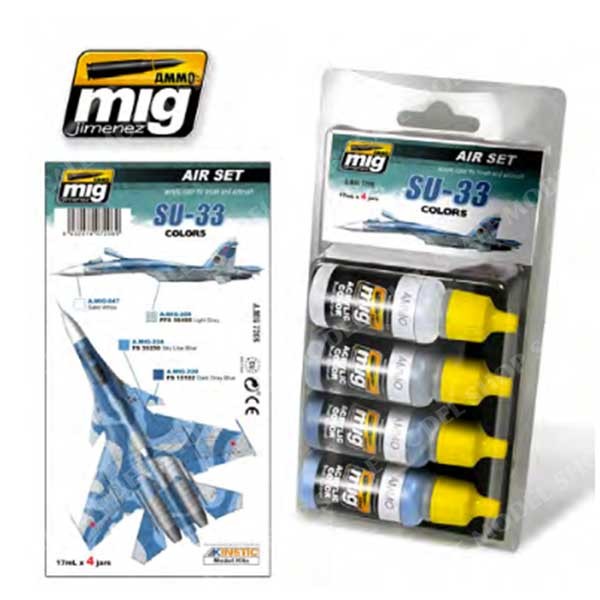
The first camouflage color applied was a dark grey-blue tone. This base shade was sprayed over the relevant areas following the camouflage pattern. After the main coat dried, a post-shading effect was created by adding a small amount of white to the base color and lightly spraying selected panels. This produced gentle highlights that break up the large surfaces of the aircraft.
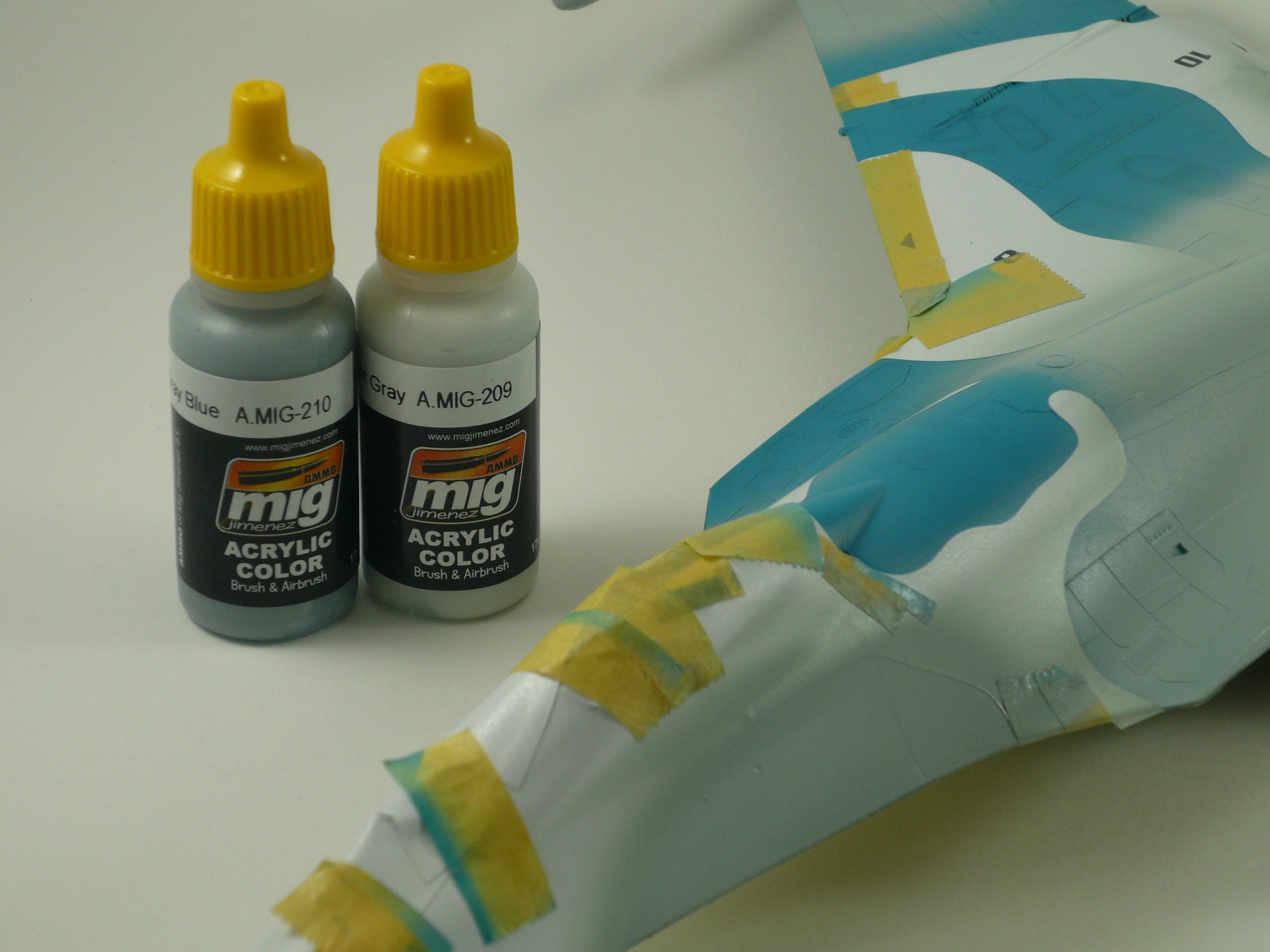
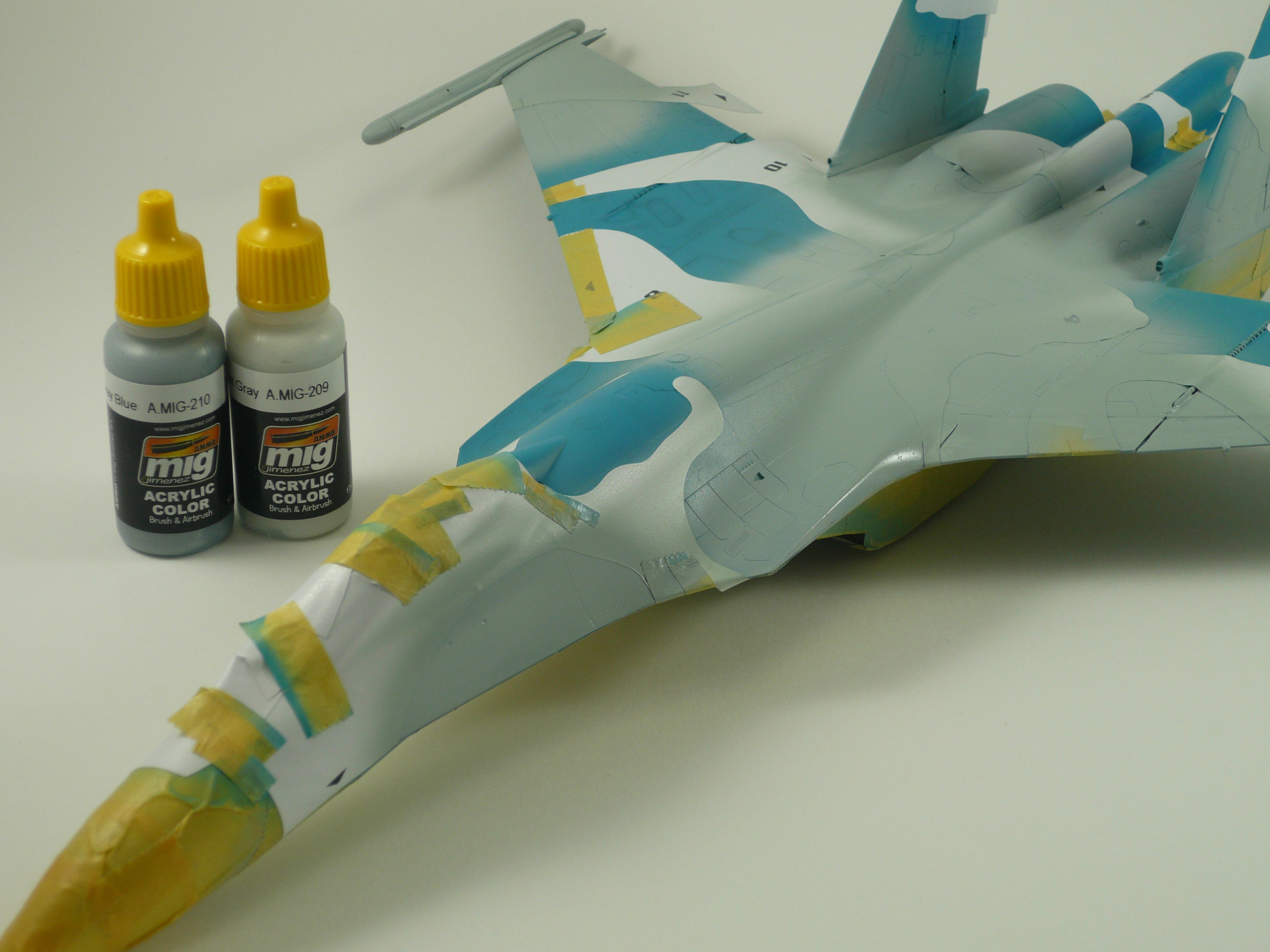
The second camouflage color was prepared using a mixture of Grey Blue and Light Grey. Reference photographs showed that the grey tone used on the real aircraft appears slightly darker than the one provided in the paint set. For this reason the mixture was adjusted accordingly before spraying it on the model.
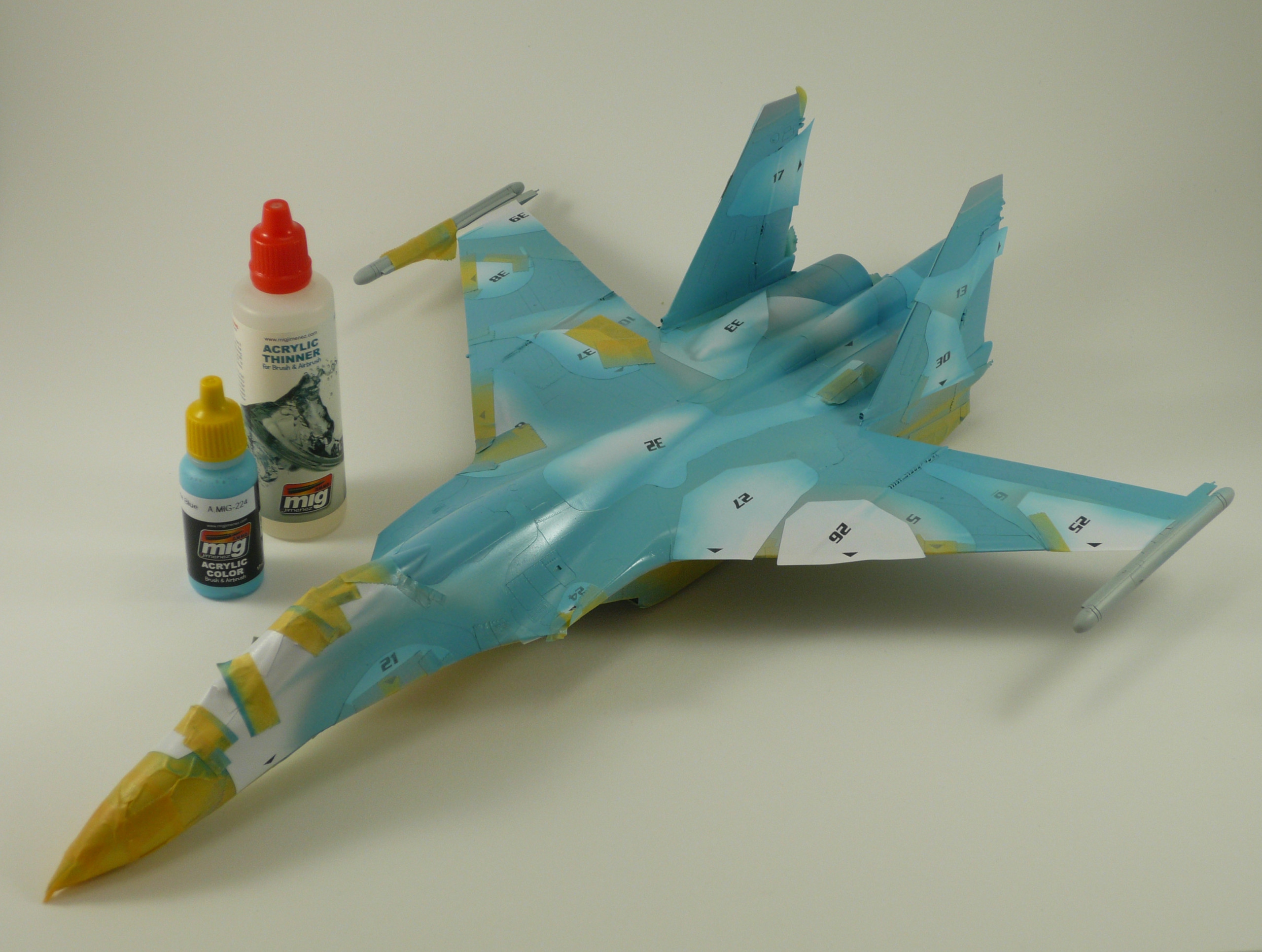
Finally, the third camouflage shade, Skyline Blue, was applied to complete the pattern. Masks were used throughout the process in order to create the tight edges characteristic of Russian aircraft camouflage.
During the final inspection of the painted model it became clear that some dark grey-blue areas near the cockpit did not match the reference photos perfectly. These sections were carefully corrected by slightly widening the camouflage curves. After the adjustments the pattern looked far more realistic.
Gloss Coat and Preparation for Metallic Areas
After completing the camouflage painting, the entire model received a coat of clear gloss varnish. This step protects the paint layers and prepares the surface for decals, washes and metallic finishes.
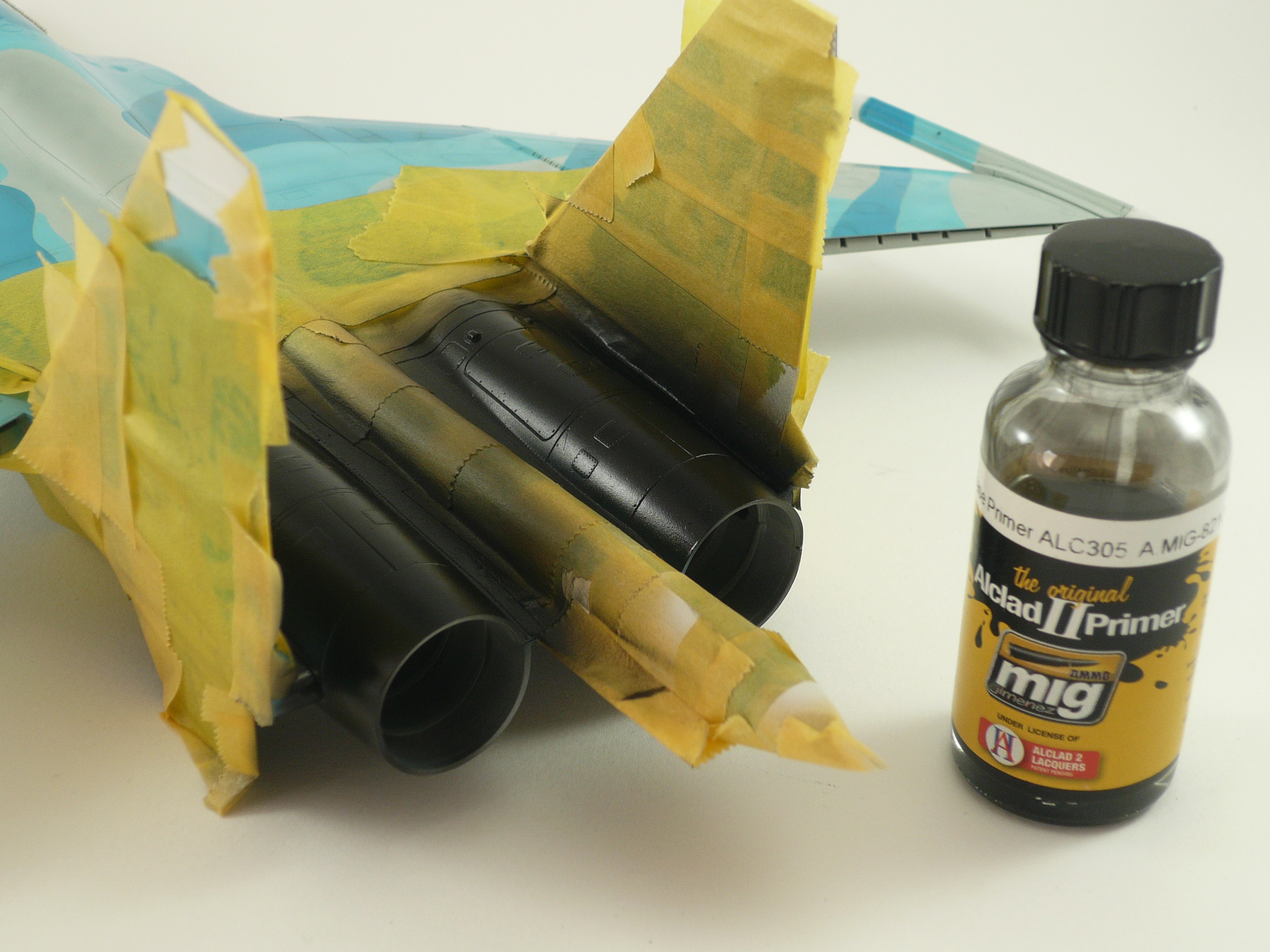
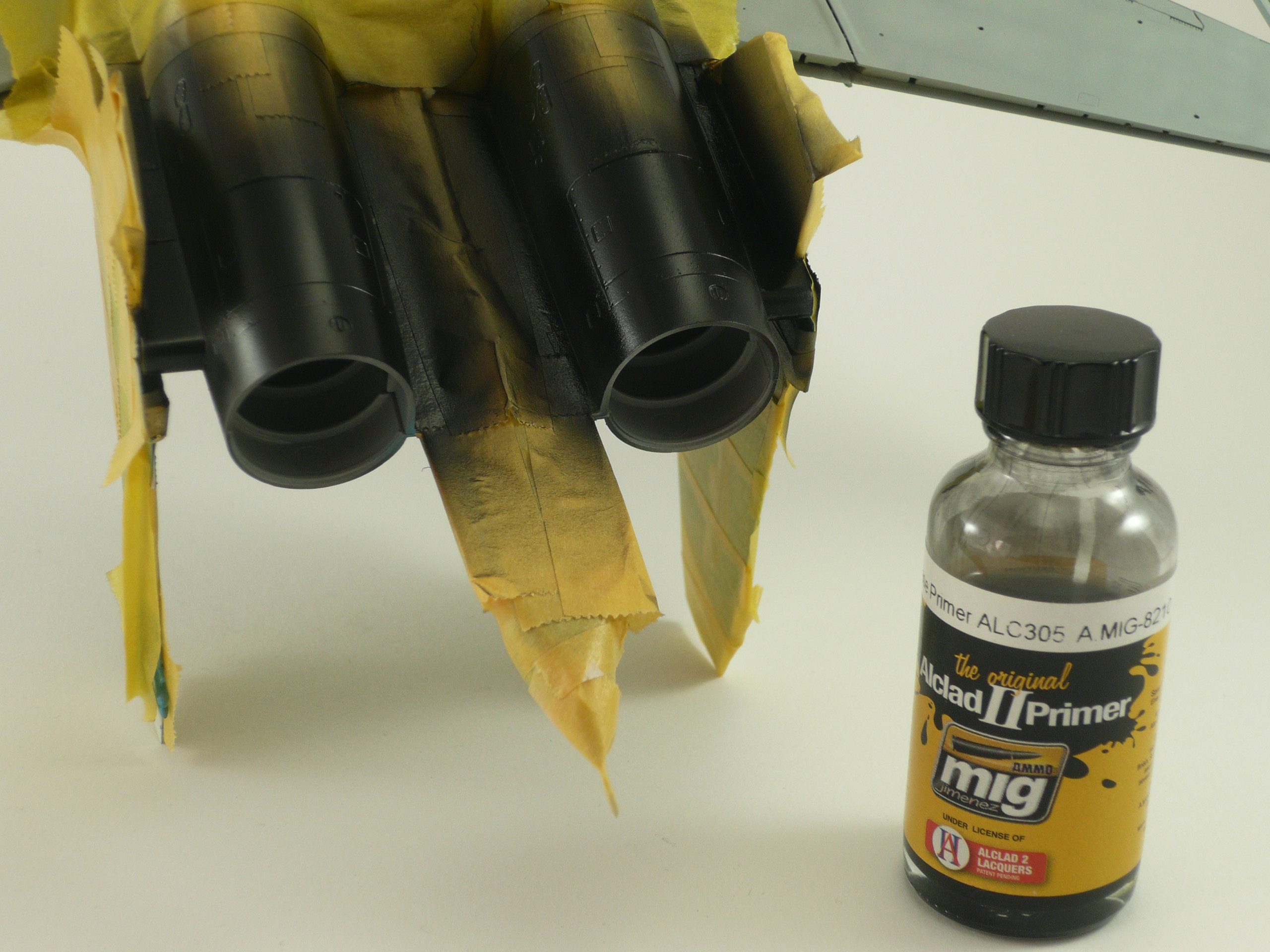
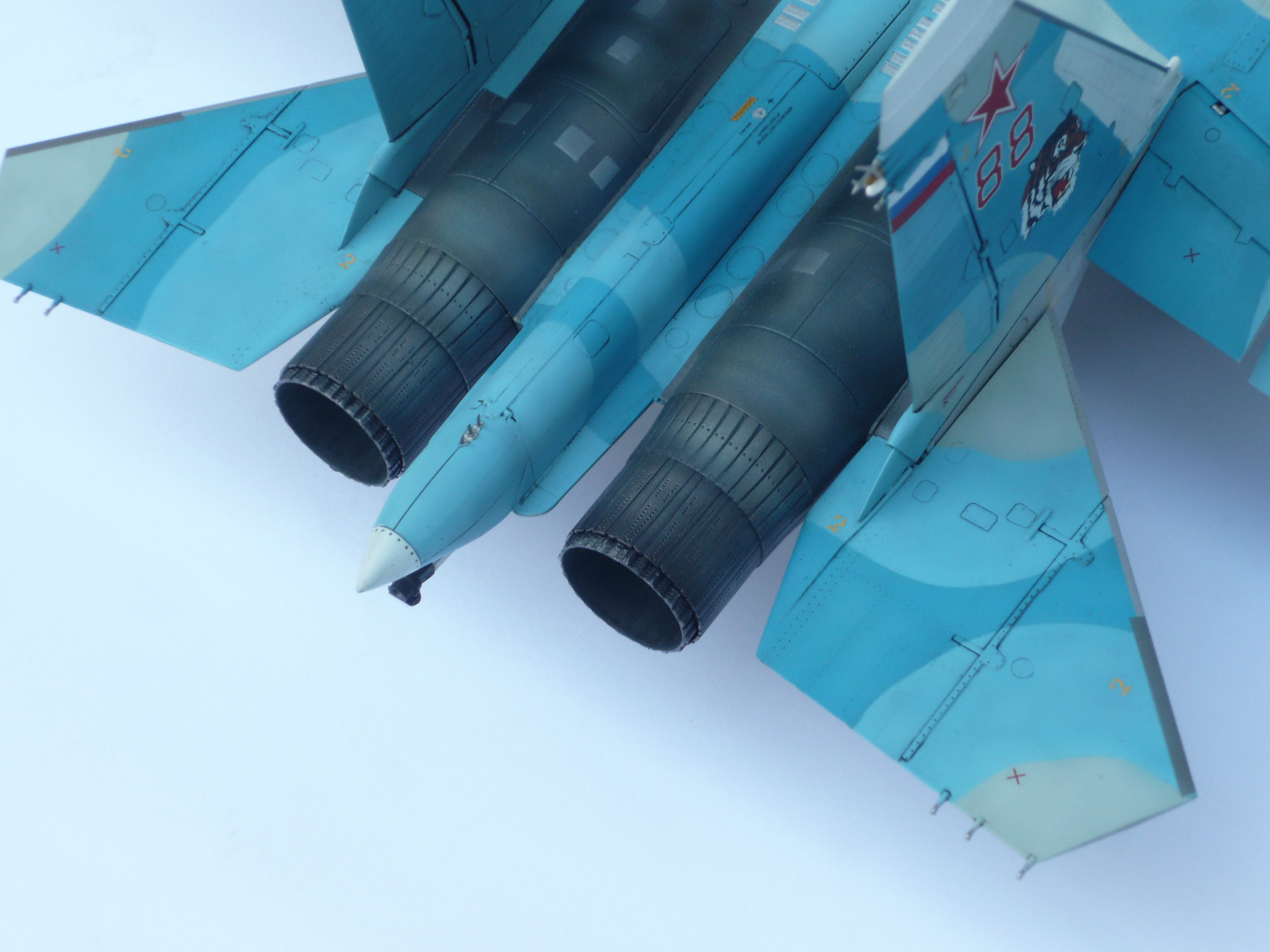
Russian fighter aircraft often display large metallic panels around the engine exhausts and rear fuselage. These areas require a specific painting technique to achieve realistic metal tones.
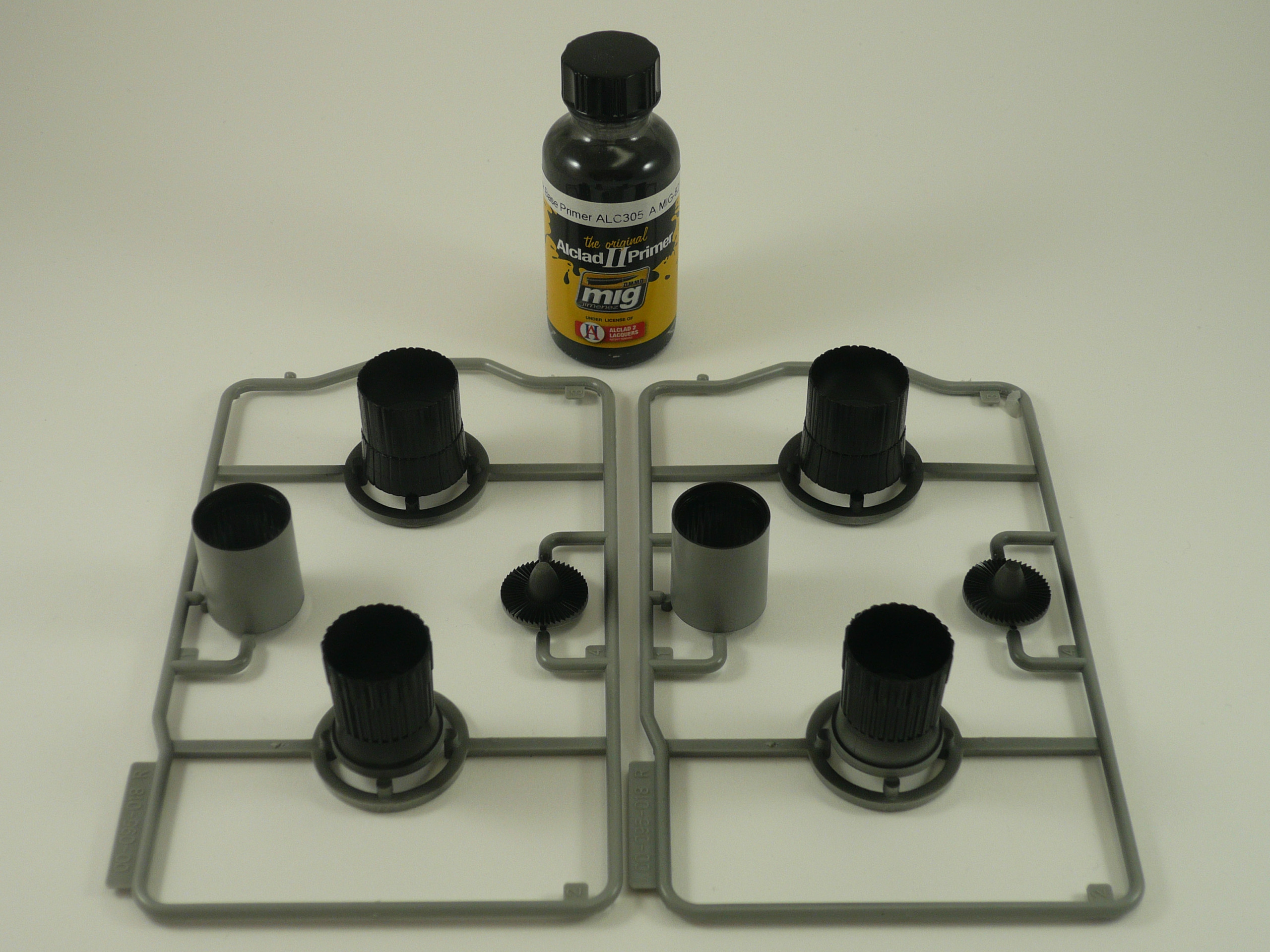
The metallic sections were carefully masked and a gloss black base coat was applied. A black base is essential for metallic paints because it increases depth and enhances the reflective quality of the metal finish.
Metallic Rear Fuselage
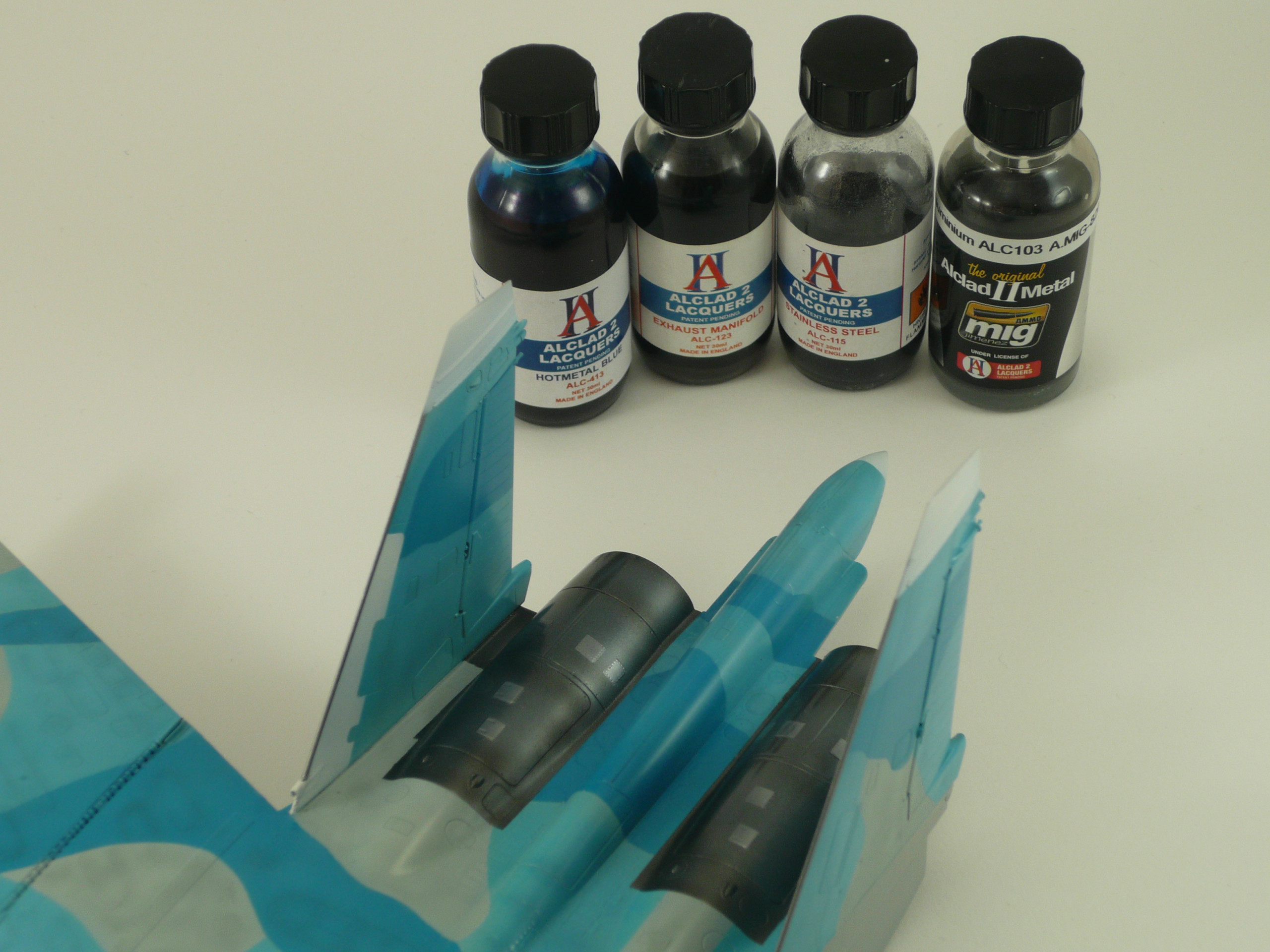
Once the black base had fully cured, the rear fuselage panels were painted using several metallic shades.
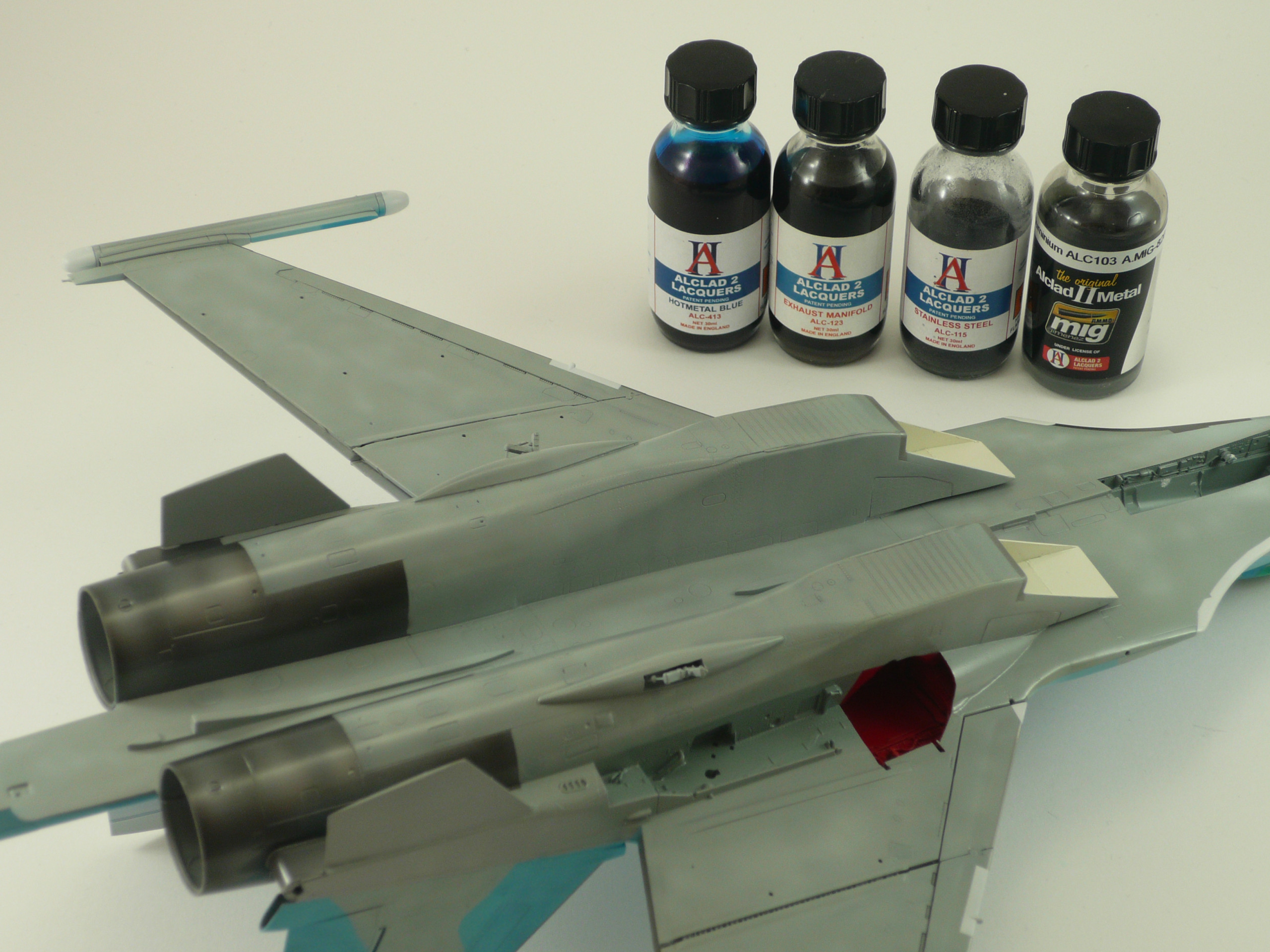
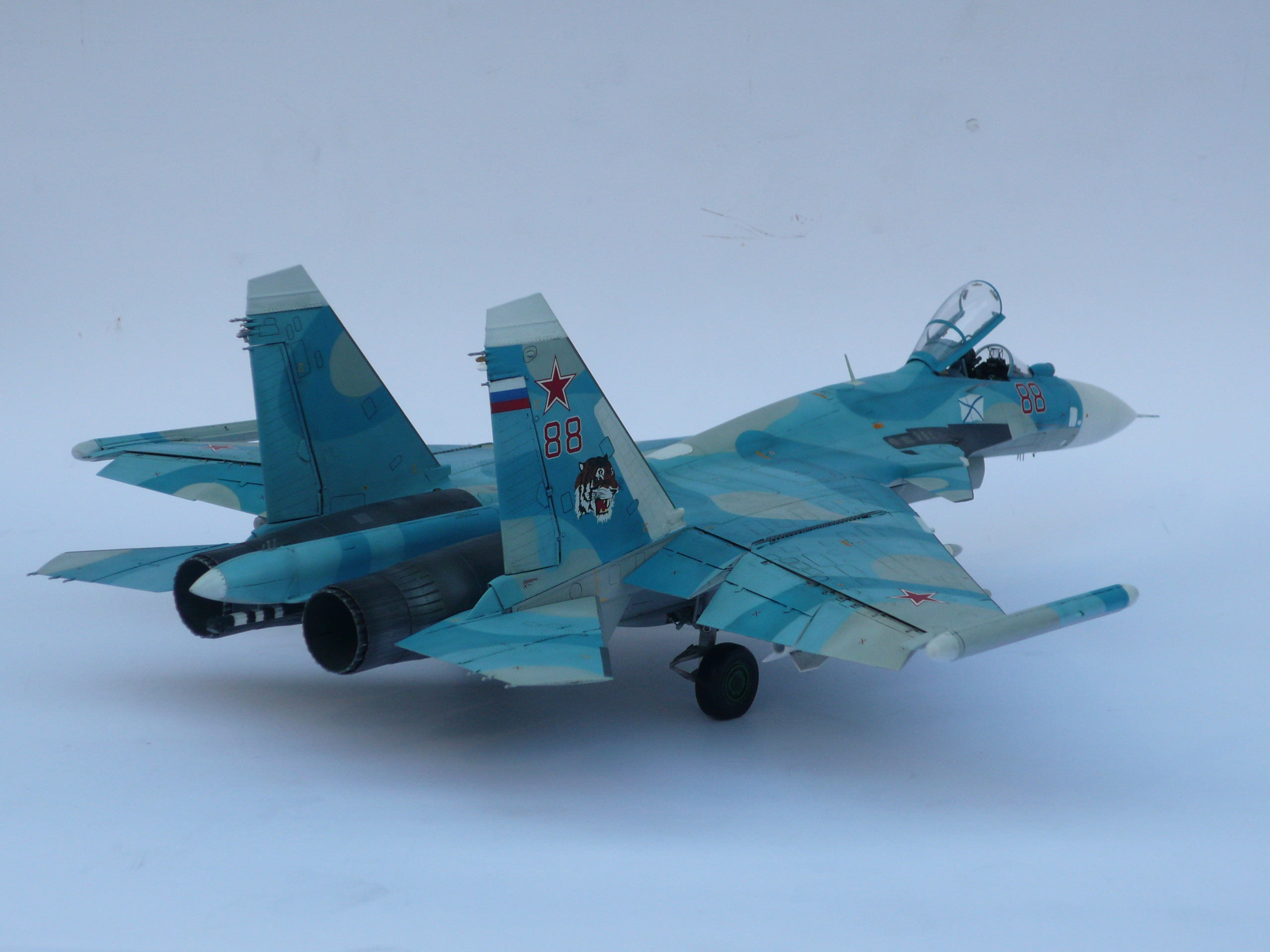
The first layer consisted of Dark Aluminium, which established the primary metallic tone. Additional colors such as Aluminium, Stainless Steel, Exhaust Manifold and Hot Metal Blue were then sprayed in small variations across the panels. This layering technique recreates the heat discoloration and tonal variation typical of jet exhaust areas.
Weathering powders were later used to introduce further tonal differences and subtle operational staining.
Leading Edge Metal Panels
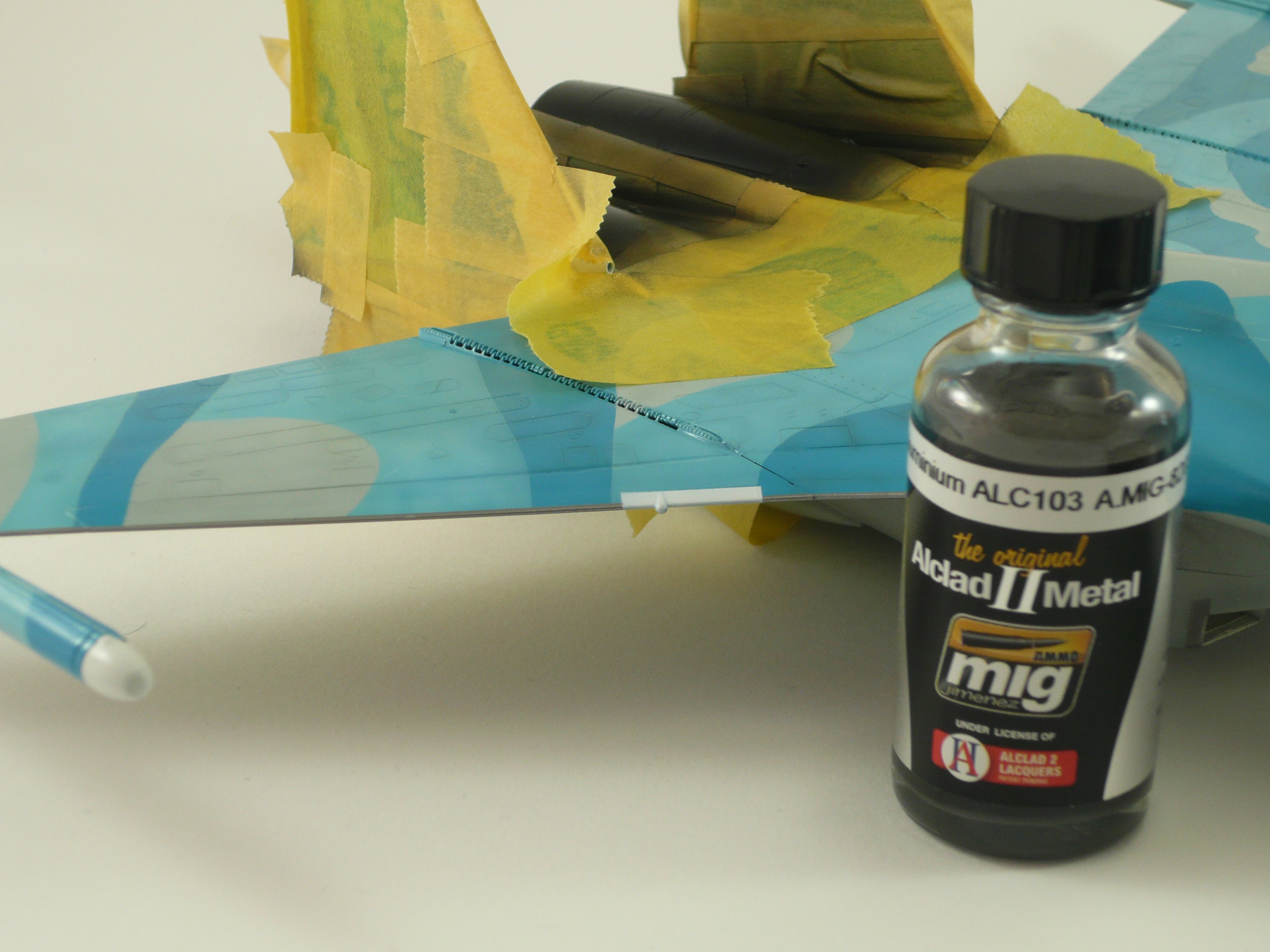
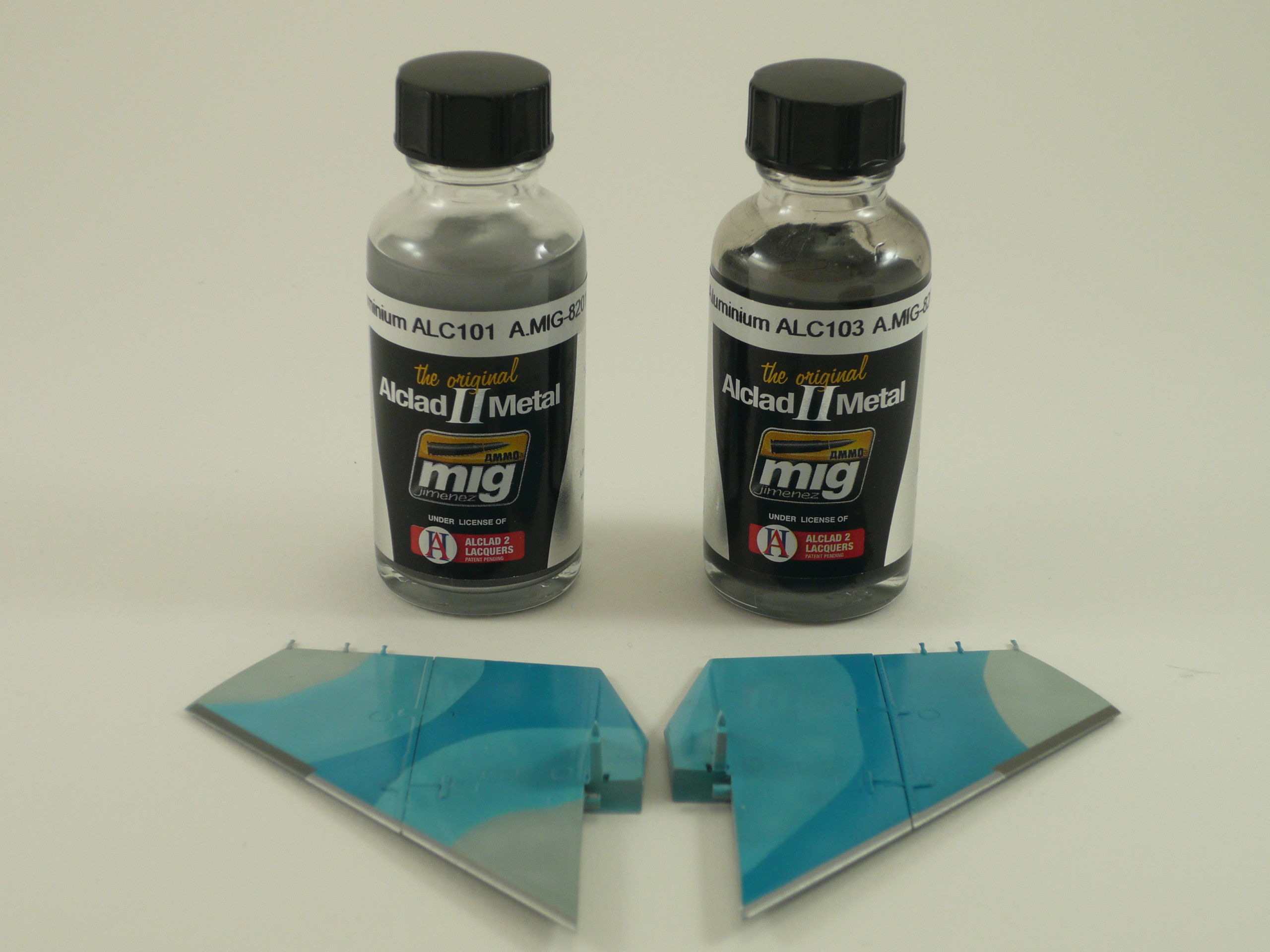
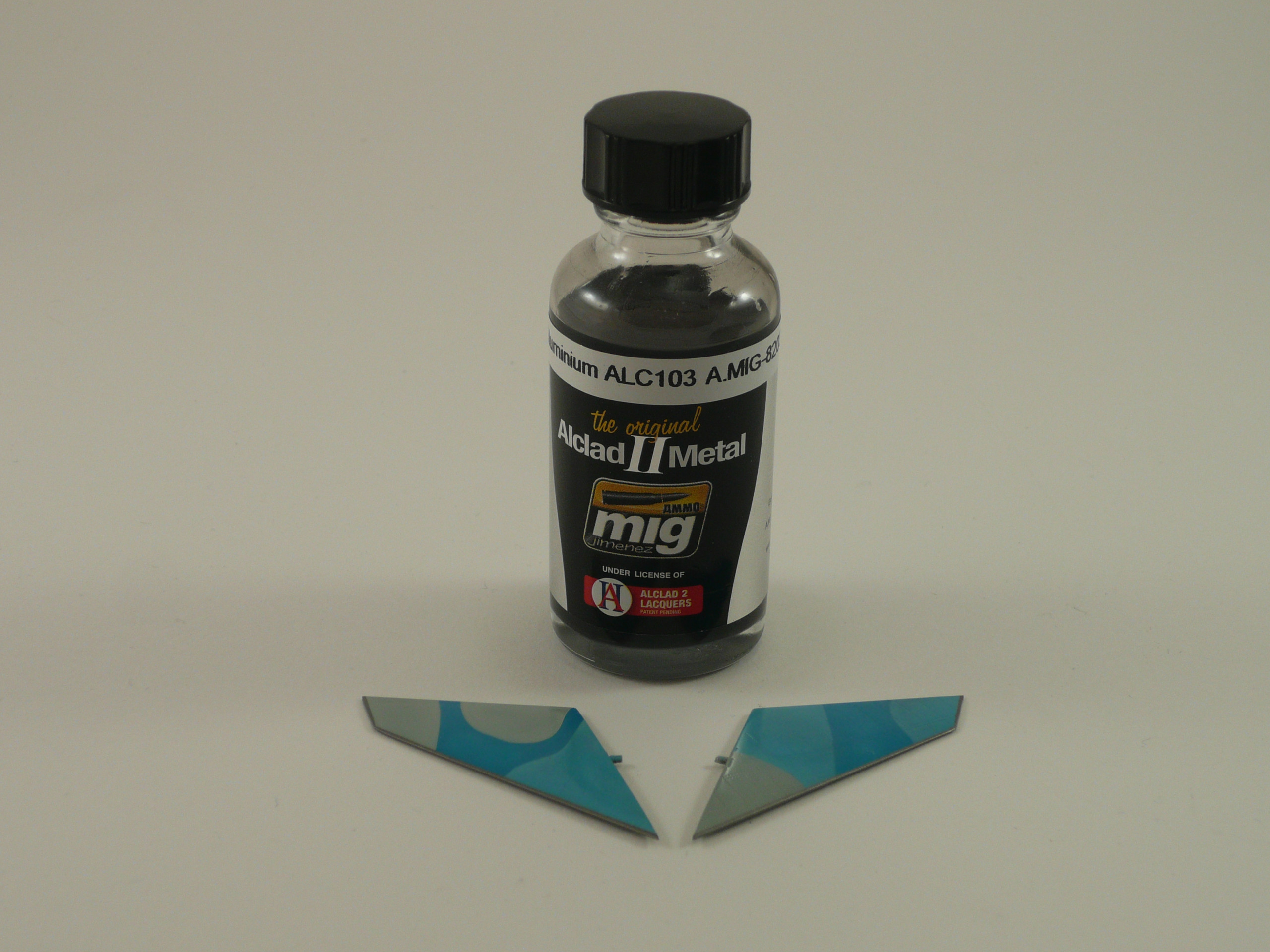
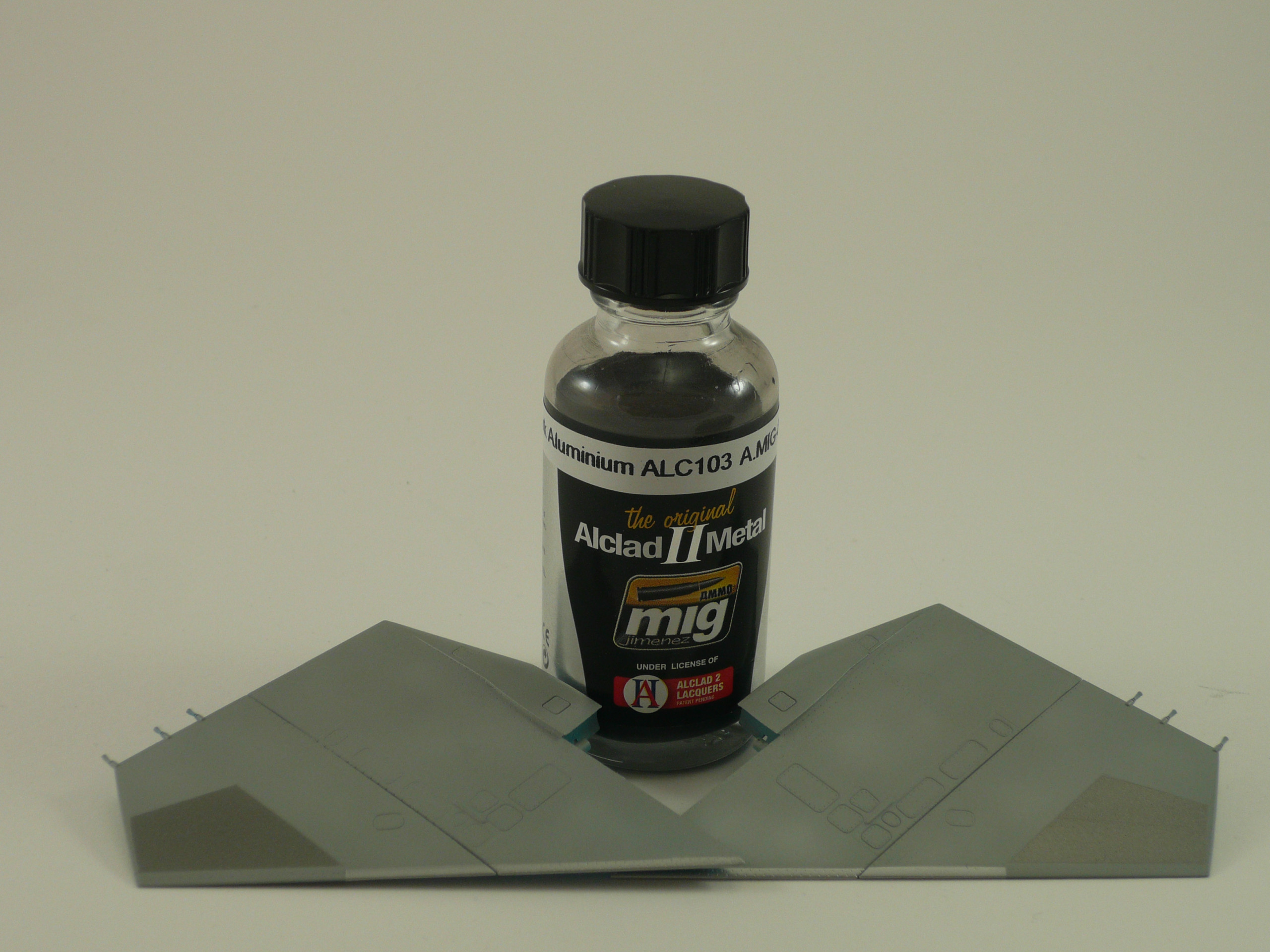
The leading edges of the wings and control surfaces often show exposed metal due to aerodynamic wear. Based on reference photographs, these areas were sprayed using Aluminium and Dark Aluminium.
This small detail helps break up the camouflage surfaces and adds realism to the model.
Engine Intake Fans
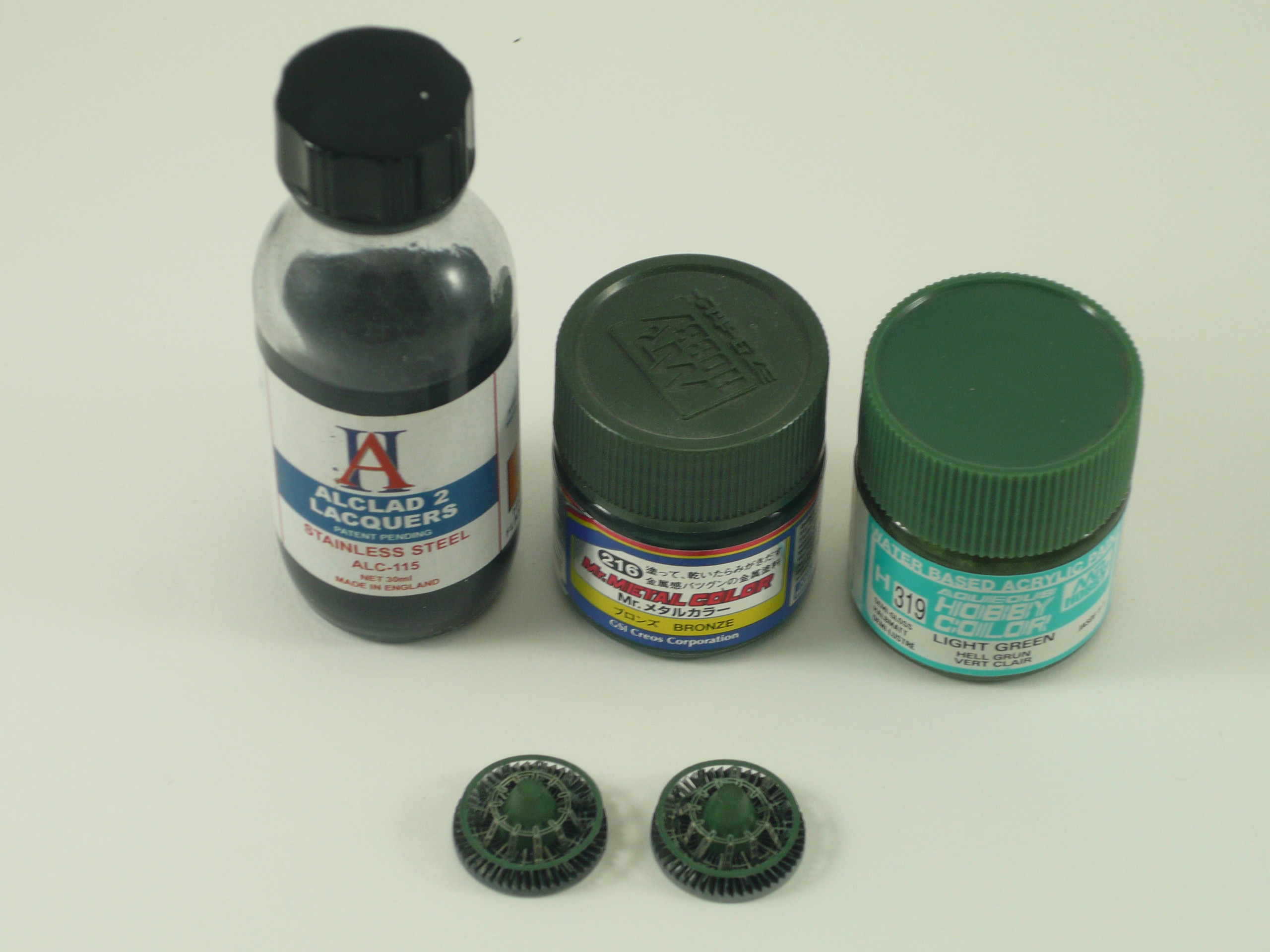
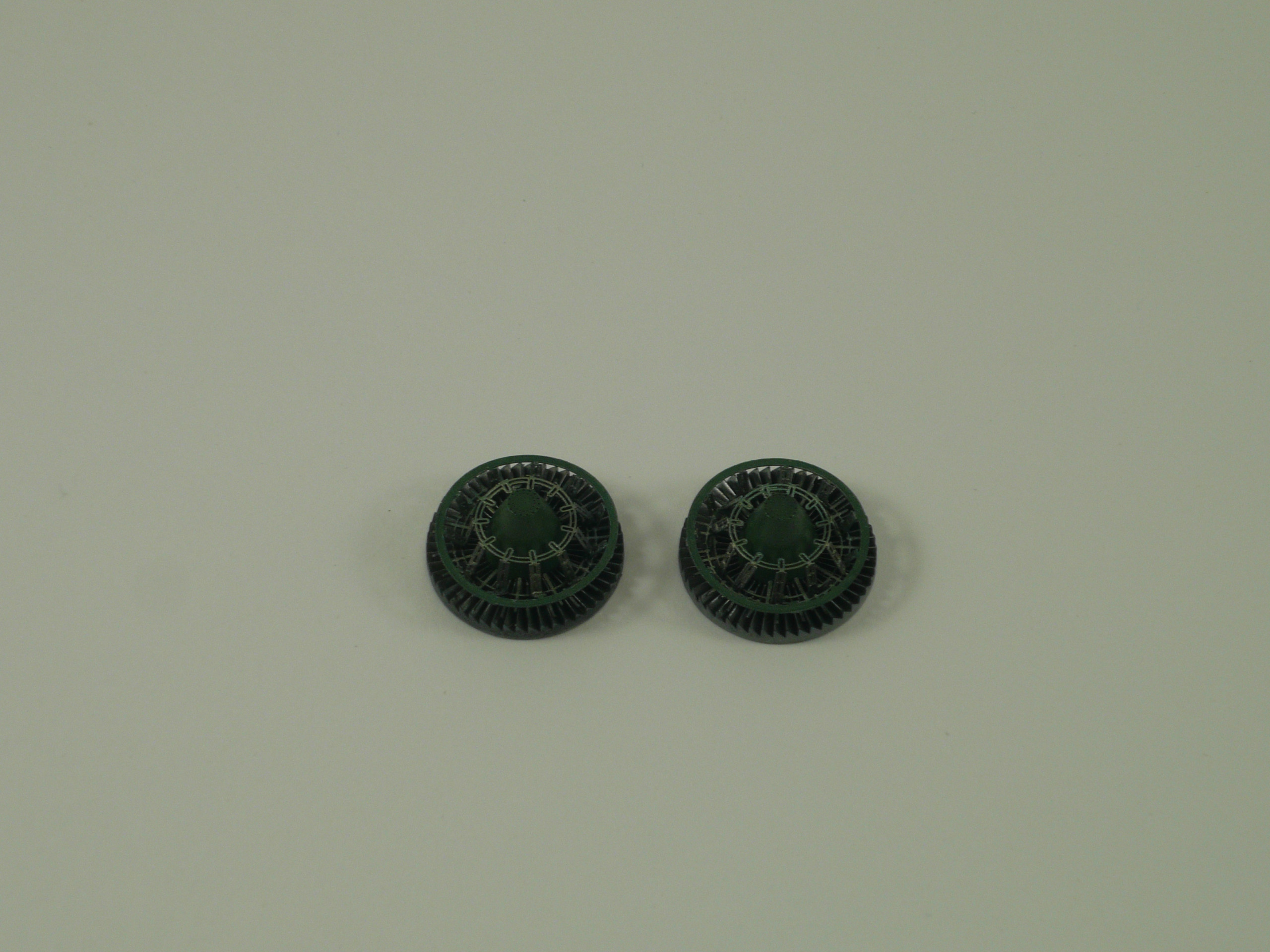
The kit provides finely detailed photo-etched parts for the engine compressor fans, significantly enhancing the realism of the intake area.
These parts were painted using stainless steel combined with subtle metallic bronze and light green tones. The color variations simulate the complex metallic appearance of real jet engine compressor stages.
Decals and Panel Line Wash
Once the painting stage was completed, the decals were applied across the model over the gloss surface.
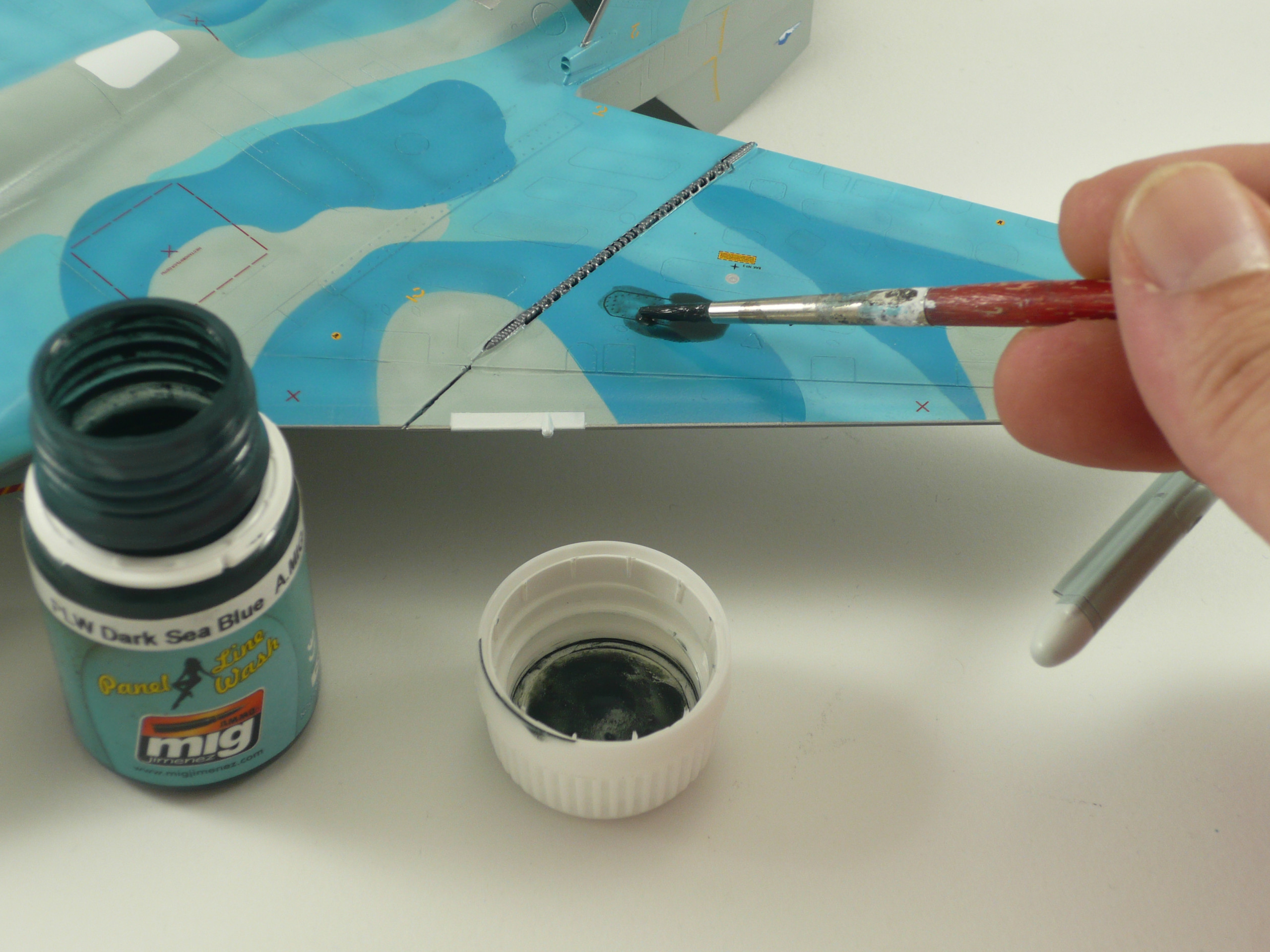
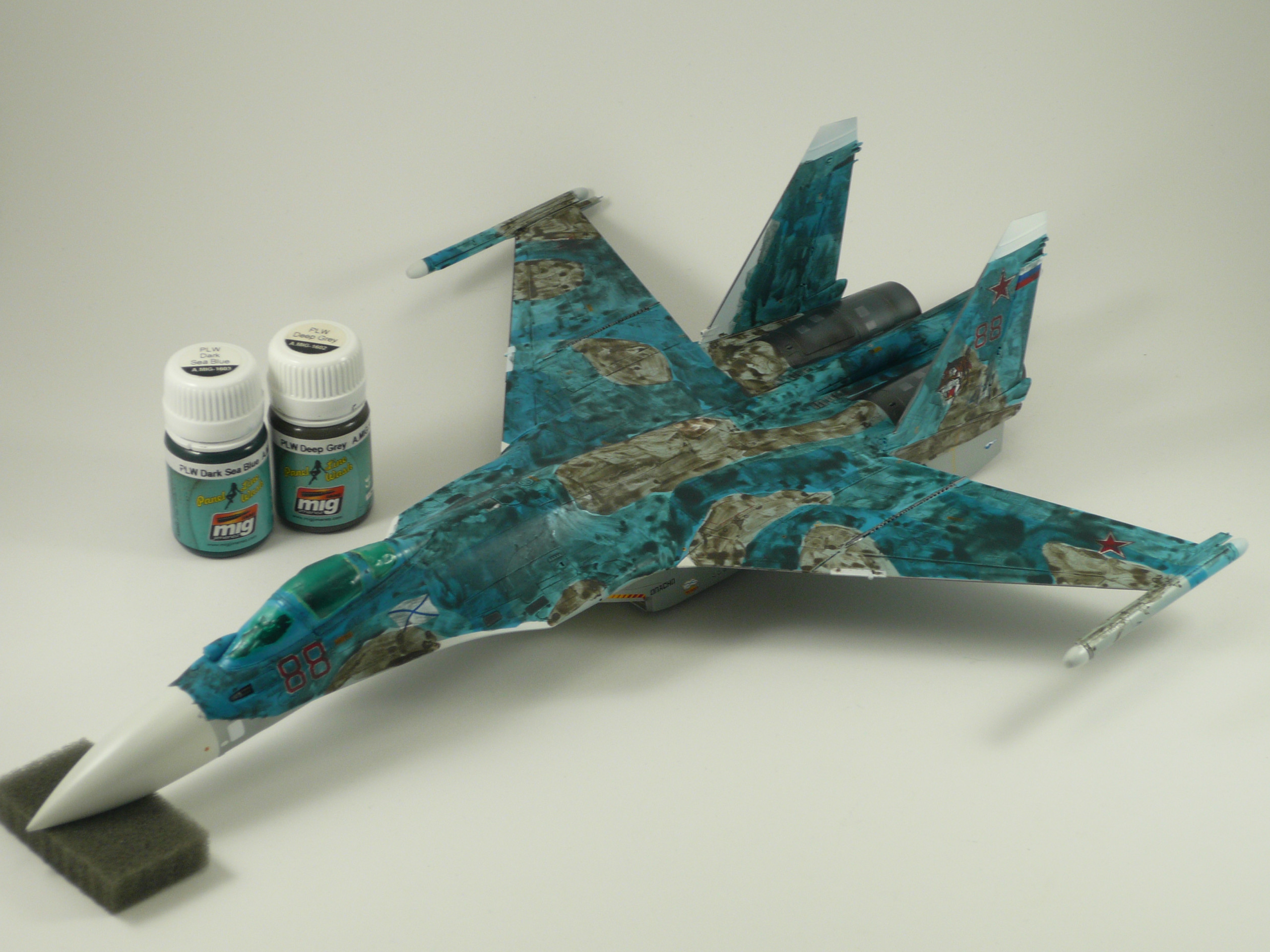
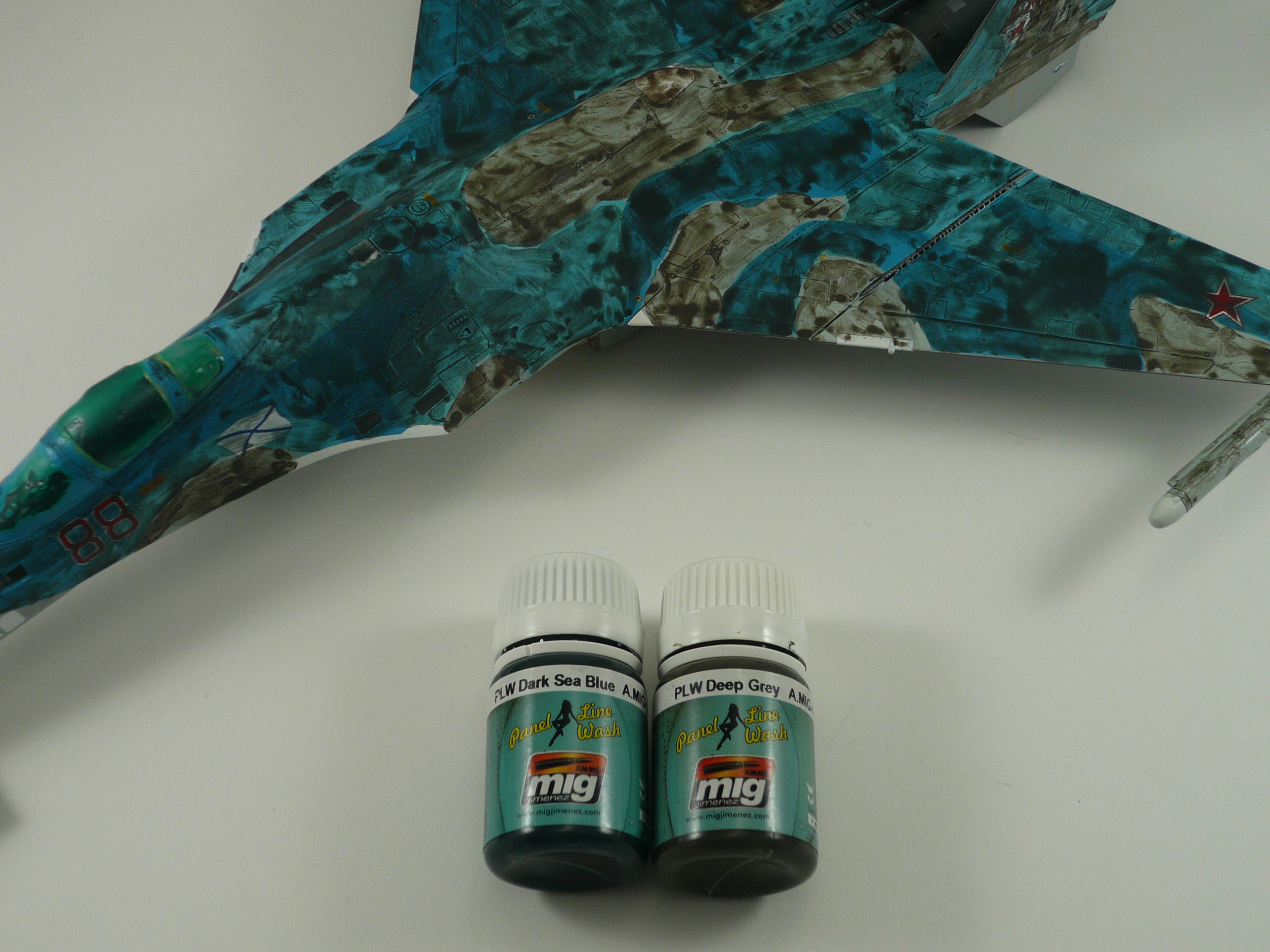
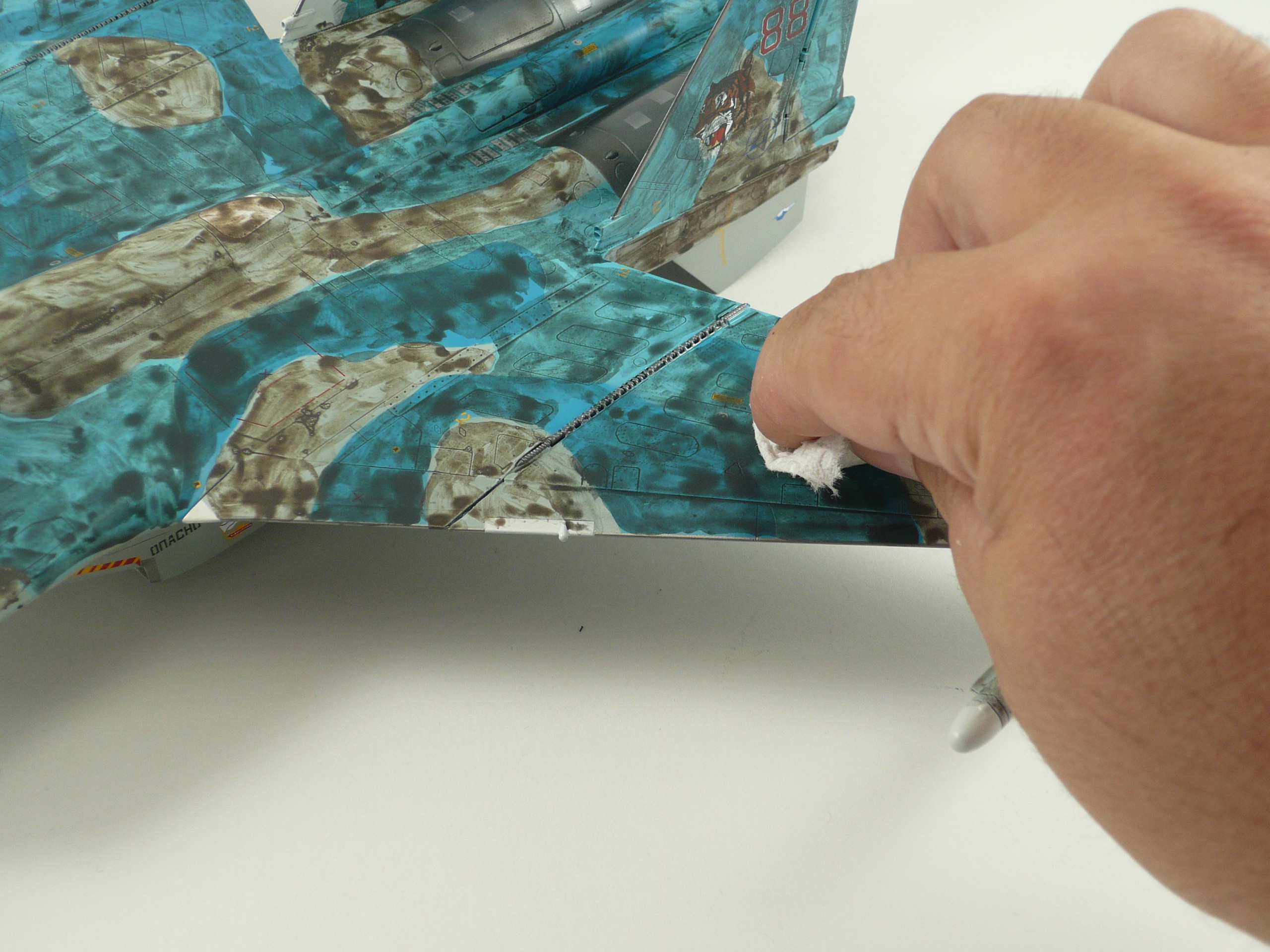
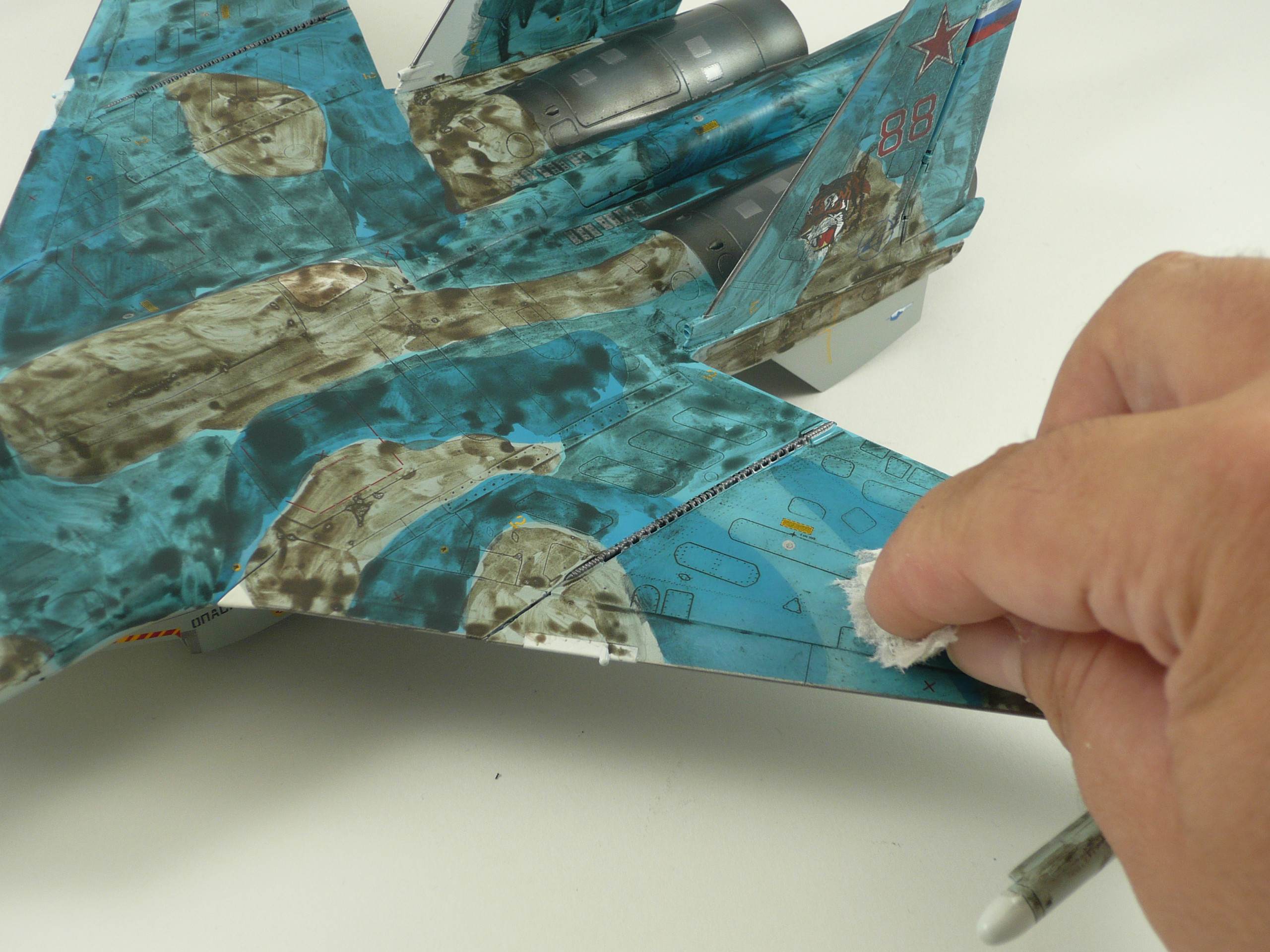
After allowing them to dry completely, panel line washes were used to highlight the surface details. A Dark Sea Blue wash was applied on the blue upper camouflage, while a Deep Grey wash was used on the grey areas and underside.
The wash was allowed to sit for approximately twenty to thirty minutes before removing the excess with a soft paper towel. If necessary, small amounts of thinner were used to clean the surface while leaving the wash inside the panel lines.
This technique greatly enhances depth and definition across the model.
Final Varnish and Finishing Touches
After the washes were cleaned, a satin varnish coat was applied across the entire aircraft. A satin finish accurately represents the slightly dull appearance of operational military aircraft while still retaining a subtle sheen.
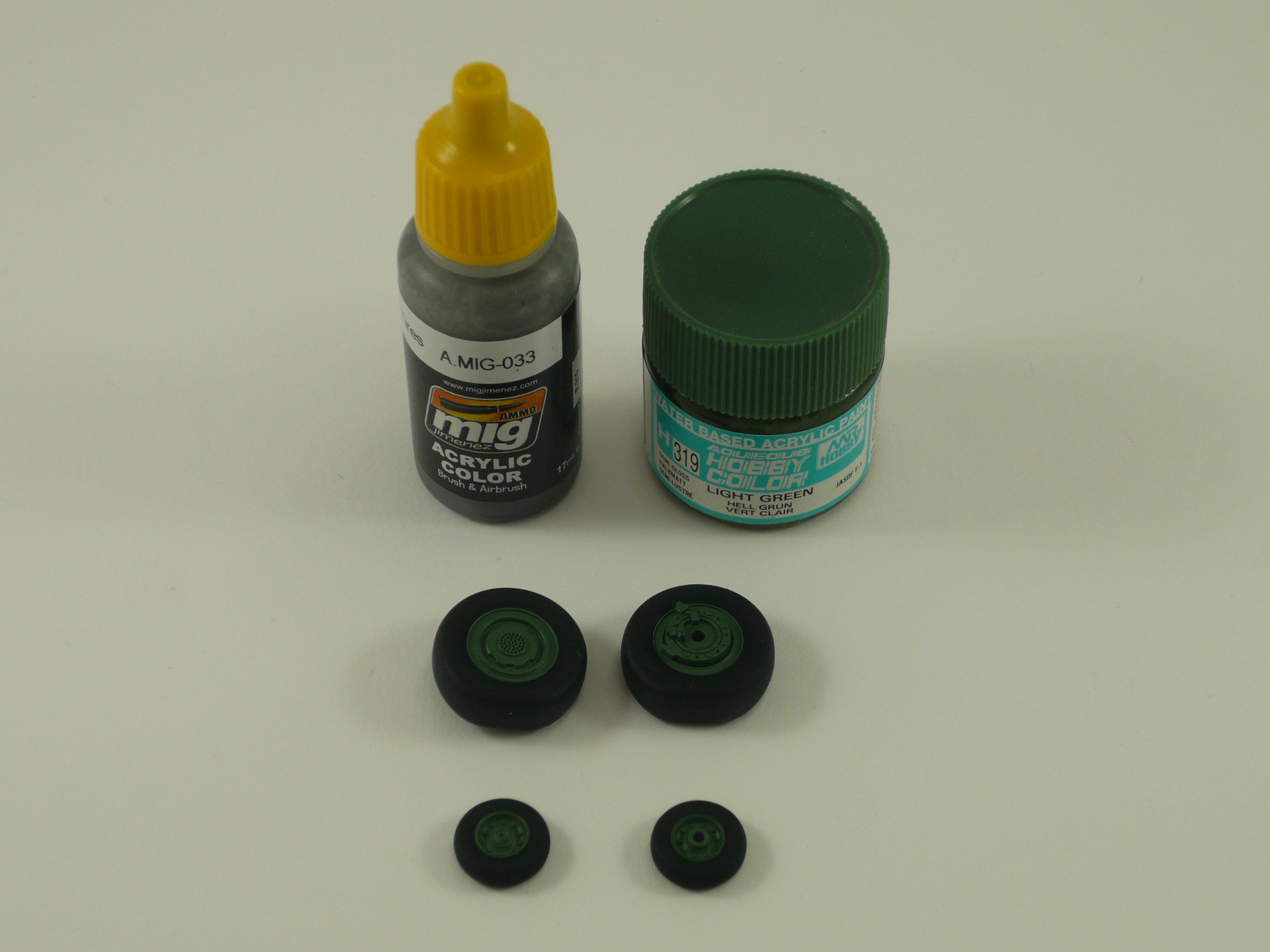
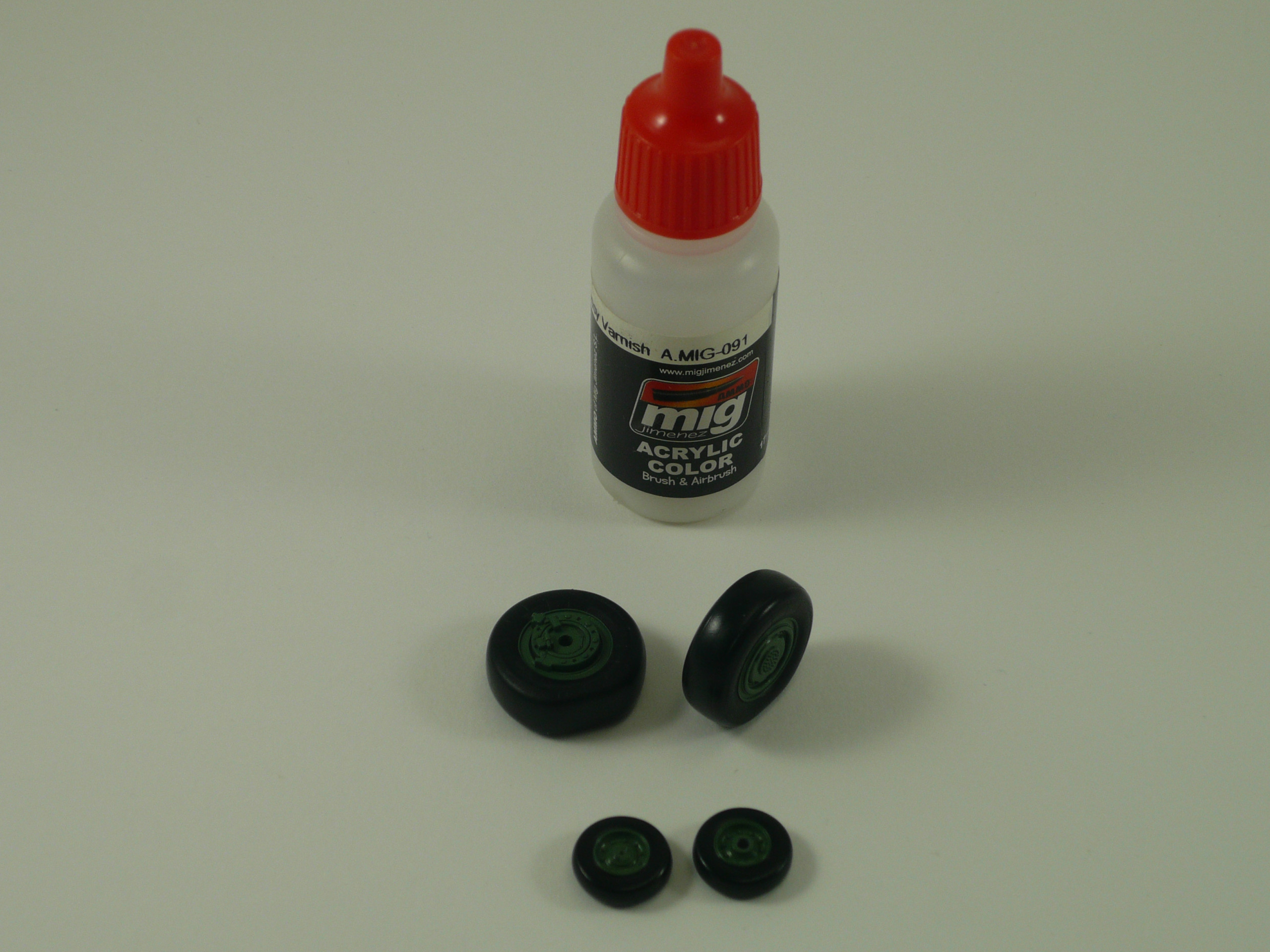
Before the final assembly stage, the landing gear wheels were painted using rubber black for the tires and light green for the hubs. After sealing them with gloss varnish, a deep brown wash was applied to highlight details and simulate accumulated dirt.
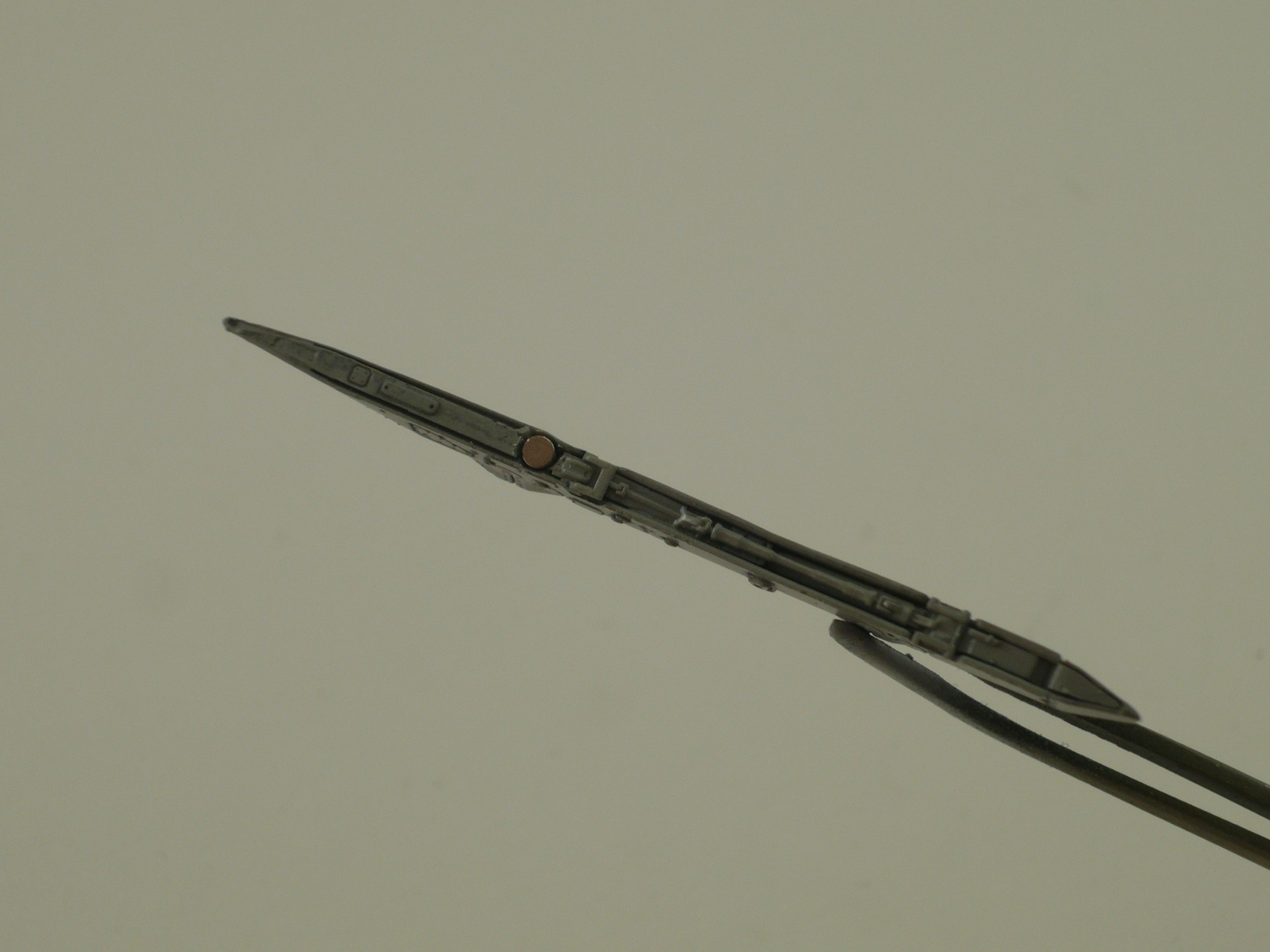
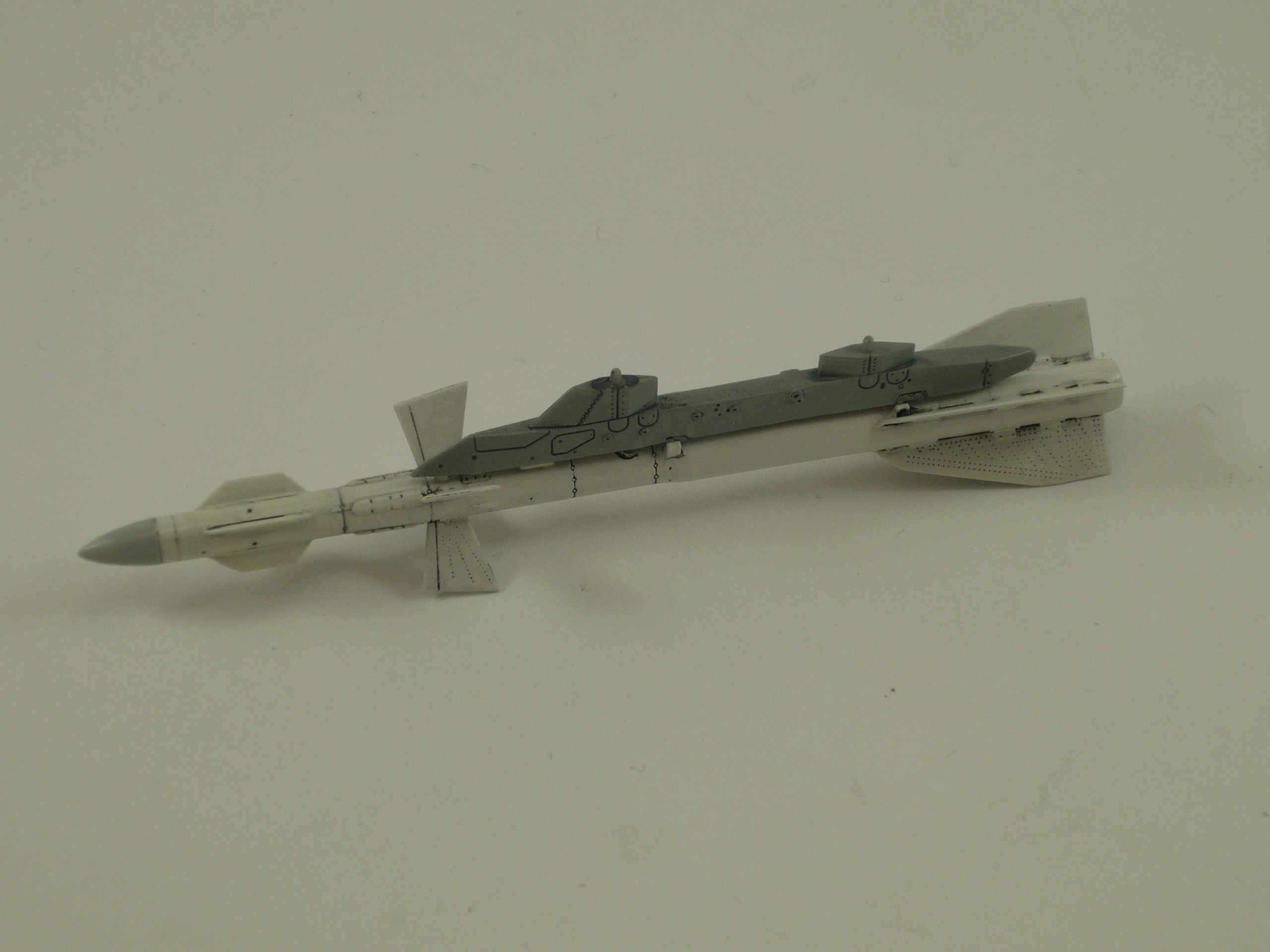
For the missile launchers, magnets were used instead of glue. This technique prevents glue marks and allows the weapons to be removed easily during transport or storage.
With the final assembly completed, the model successfully captures the powerful presence and unique camouflage of the Su-33 naval fighter.
Su-33 Camouflage Color Reference Table
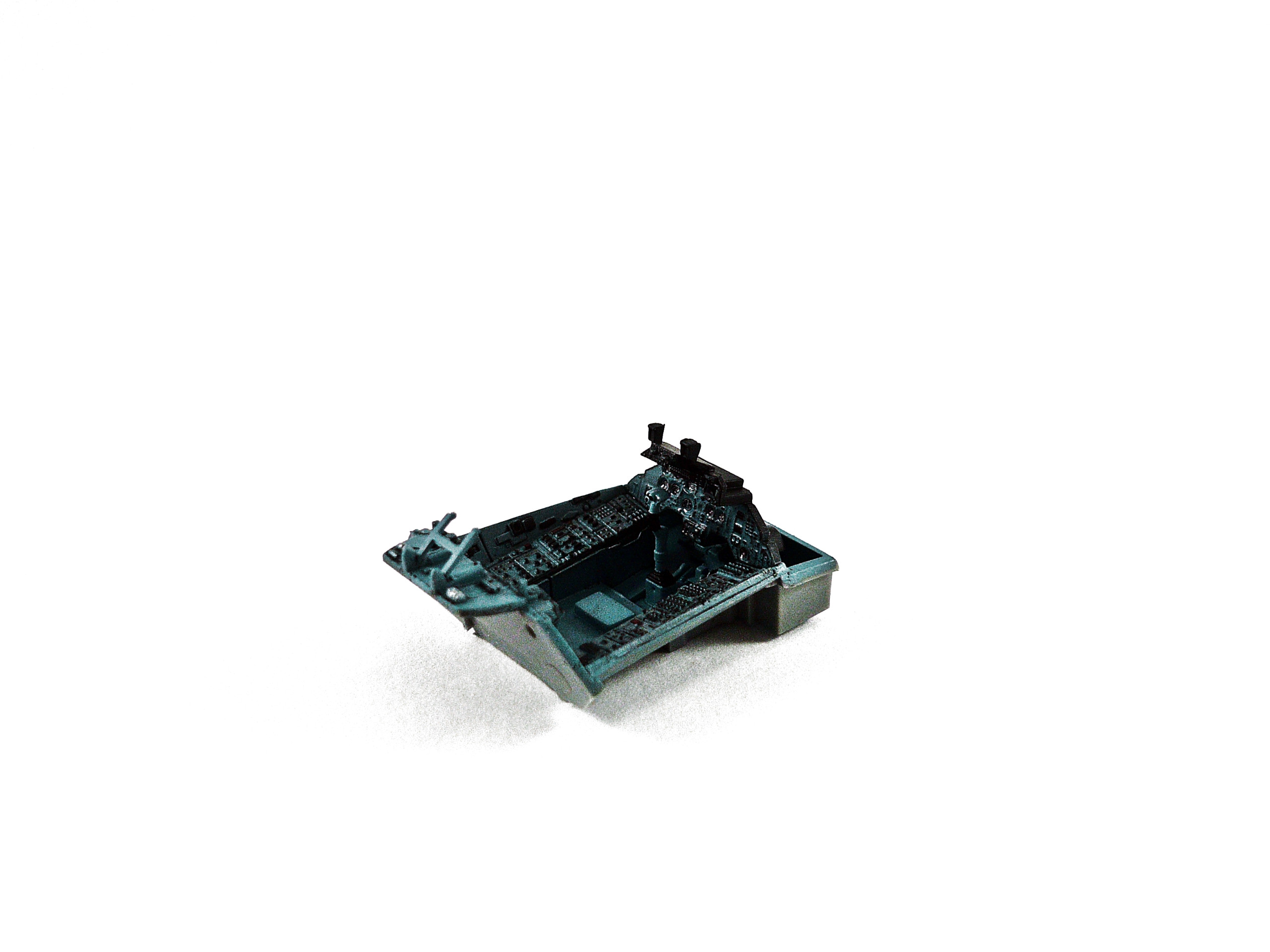
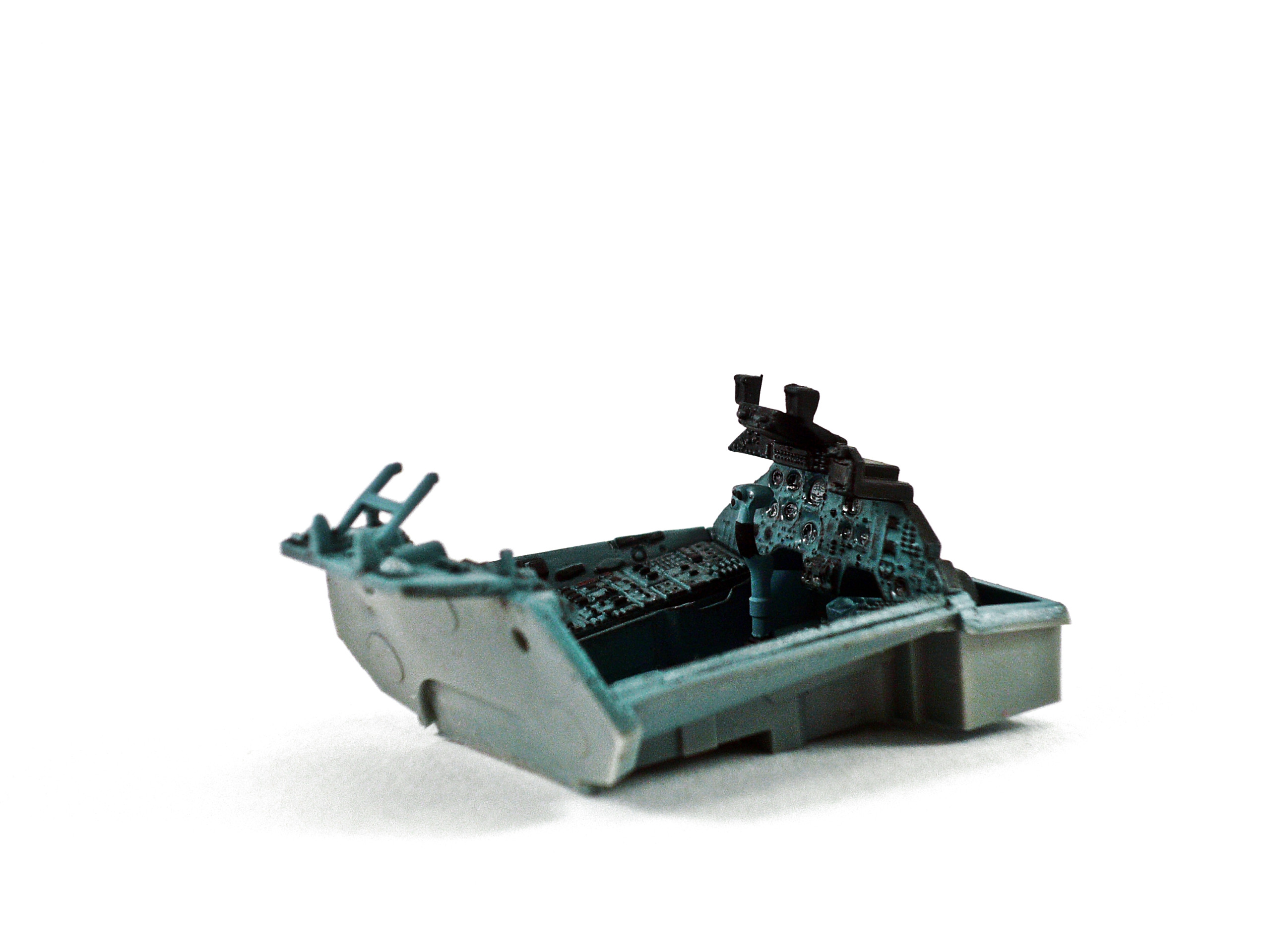
USSR/Russia cockpit Colors
| Area | Paint | Code | Notes |
|---|---|---|---|
| Primer | Mig Ammo GyrePrimer | A.MIG Primer | Surface preparation |
| Lower Surfaces | Compass Ghost Grey | A.MIG-203 | Mixed with Light Grey |
| Lower Surfaces Mix | Light Grey | A.MIG-209 | Used for tone variation |
| Camouflage Color 1 | Dark Grey Blue | A.MIG-229 | Main upper camouflage |
| Camouflage Color 2 | Grey Blue | A.MIG-210 | Mixed with Light Grey |
| Camouflage Color 3 | Skyline Blue | A.MIG-224 | Light blue camo tone |
| Radome | White | — | Masked during painting |
| Metallic Base | Gloss Black Base | ALC-305 | For metallic areas |
| Metal Panels | Dark Aluminium | ALC-103 | Main metal tone |
| Metal Panels | Aluminium | ALC-101 | Panel variation |
| Metal Panels | Stainless Steel | — | Heat variation |
| Metal Panels | Exhaust Manifold | — | Burnt metal tones |
| Weathering Wash | Dark Sea Blue | PLW | Blue camouflage wash |
| Weathering Wash | Deep Grey | PLW | Lower surfaces wash |
| Wheels | Rubber & Tires Black | A.MIG-033 | Tires |
| Wheel Hubs | Light Green | Gunze | Russian gear color |