article
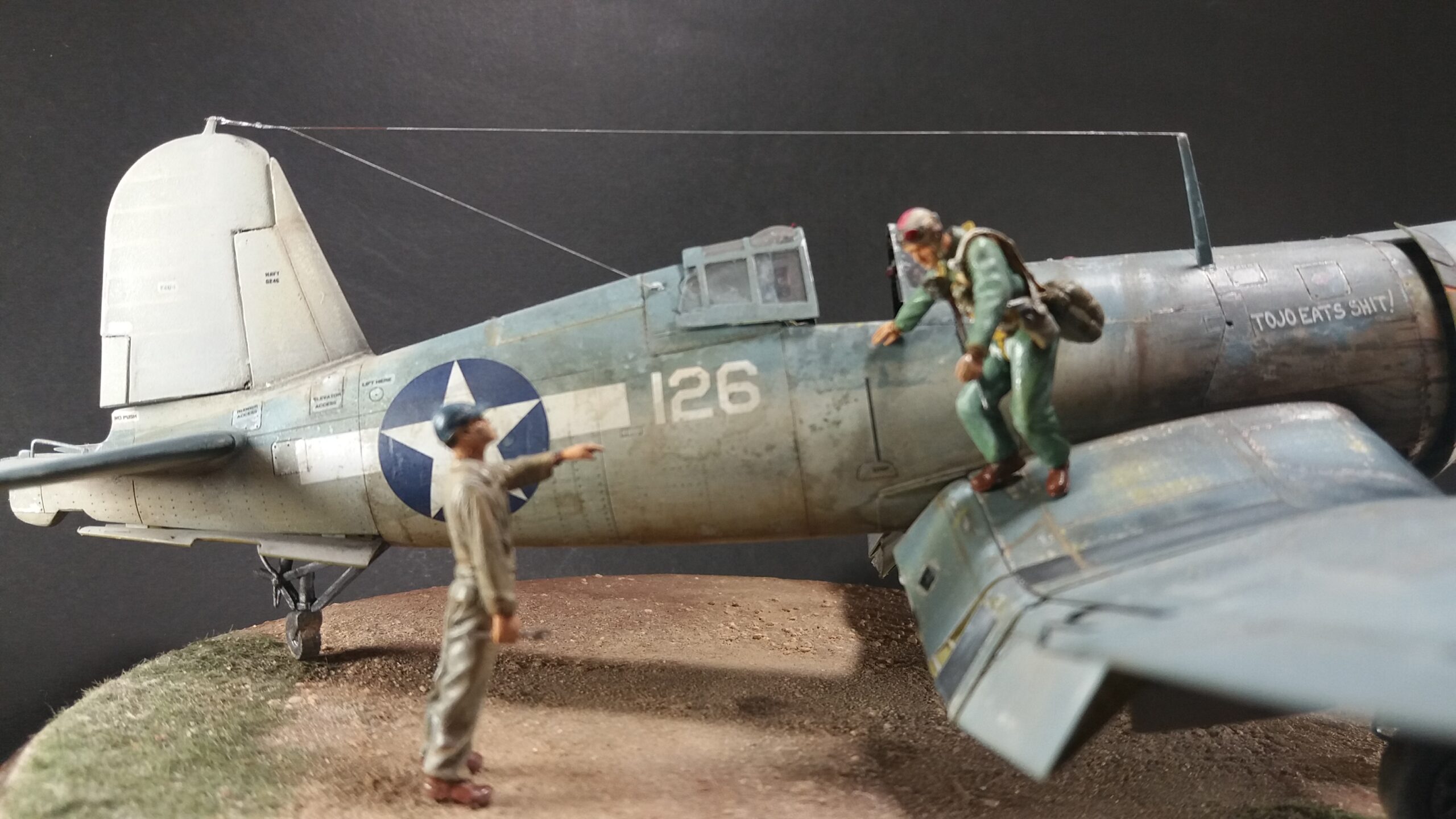
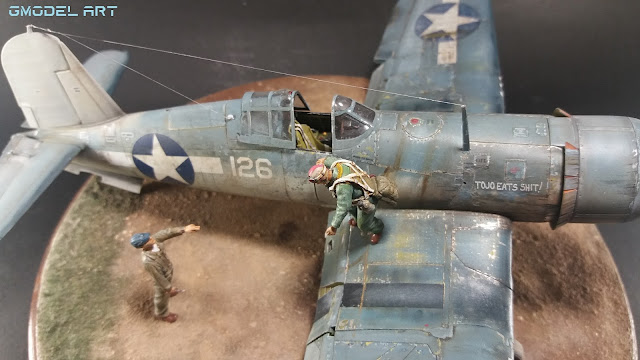
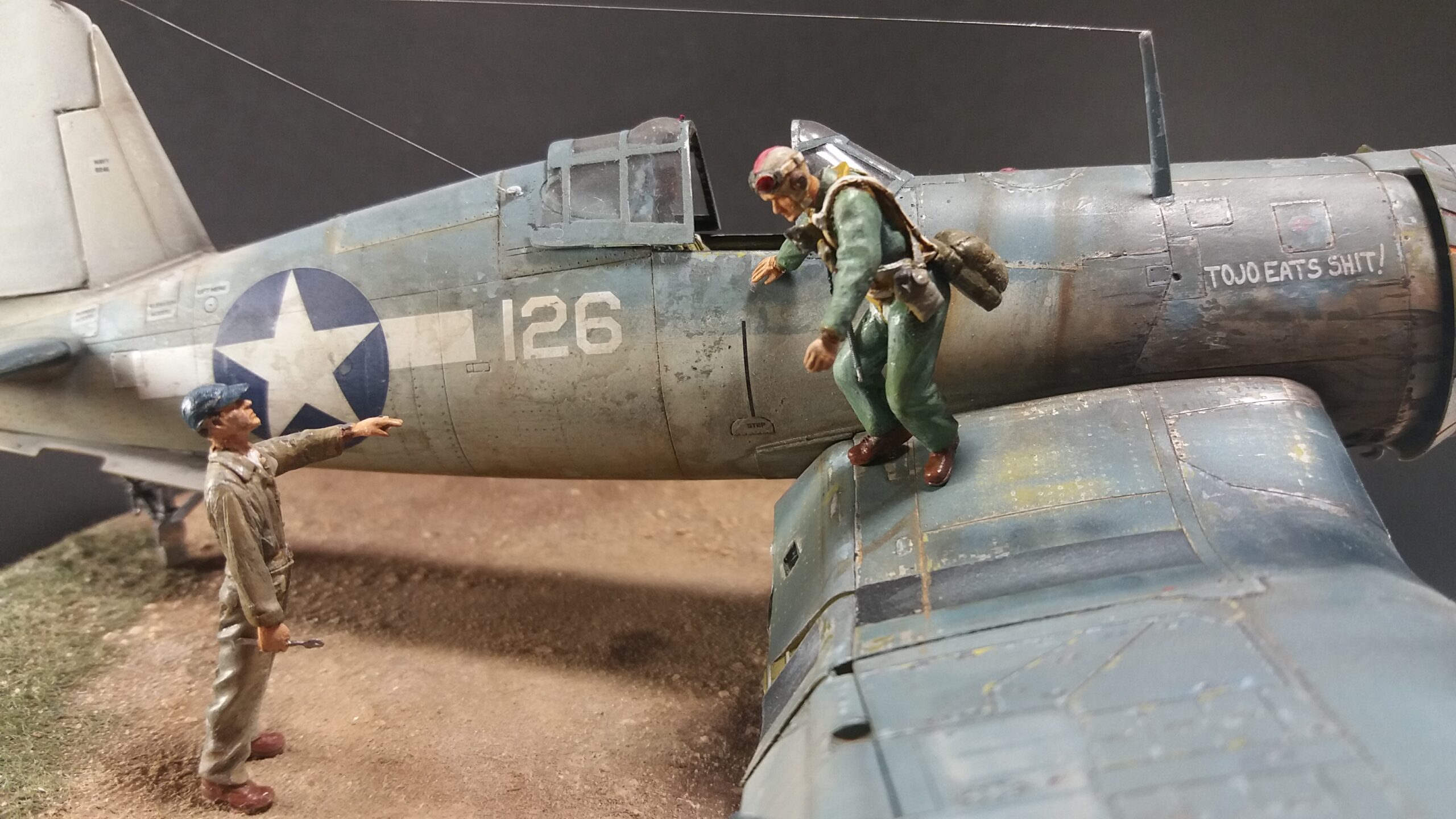
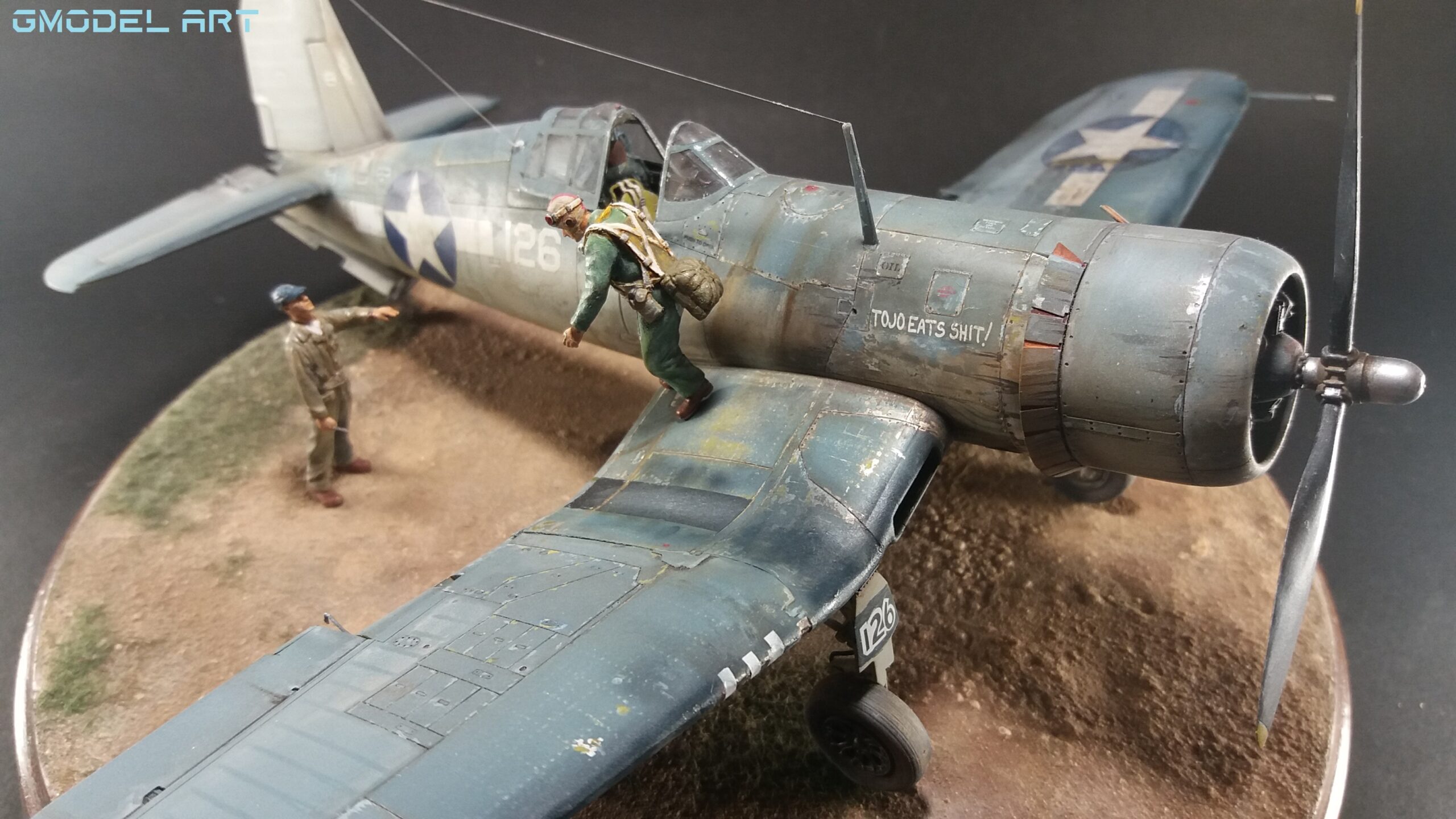
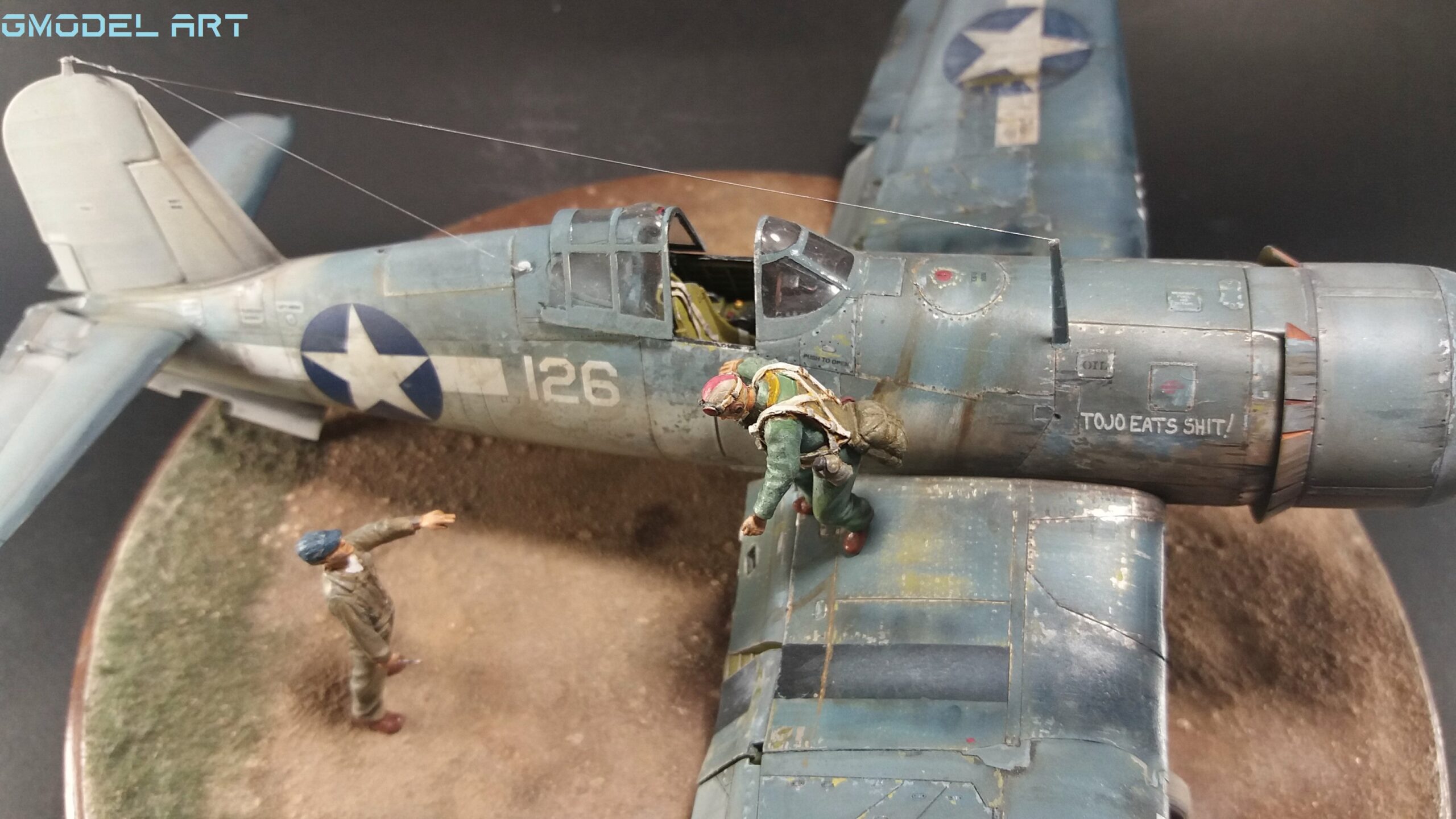
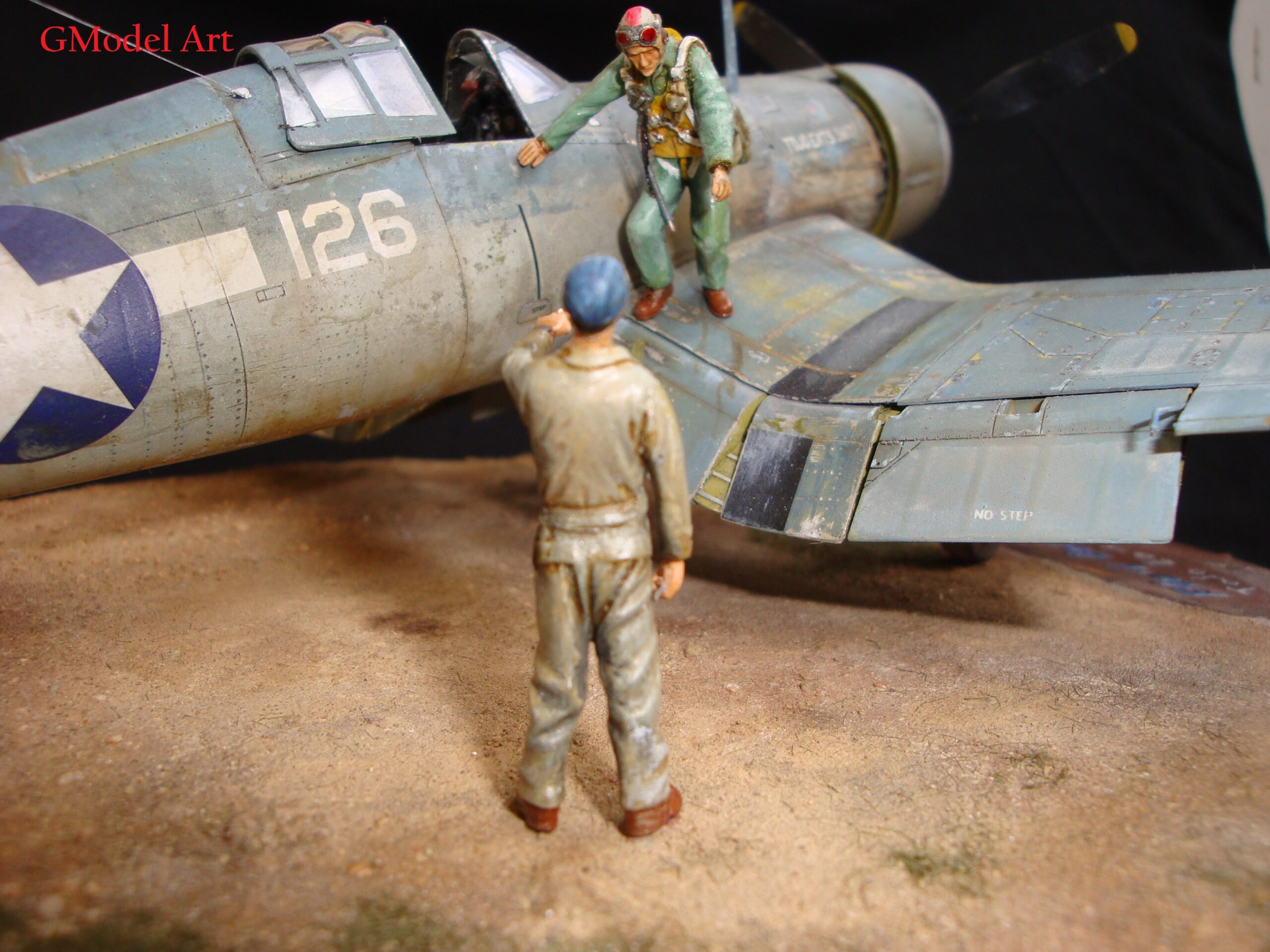
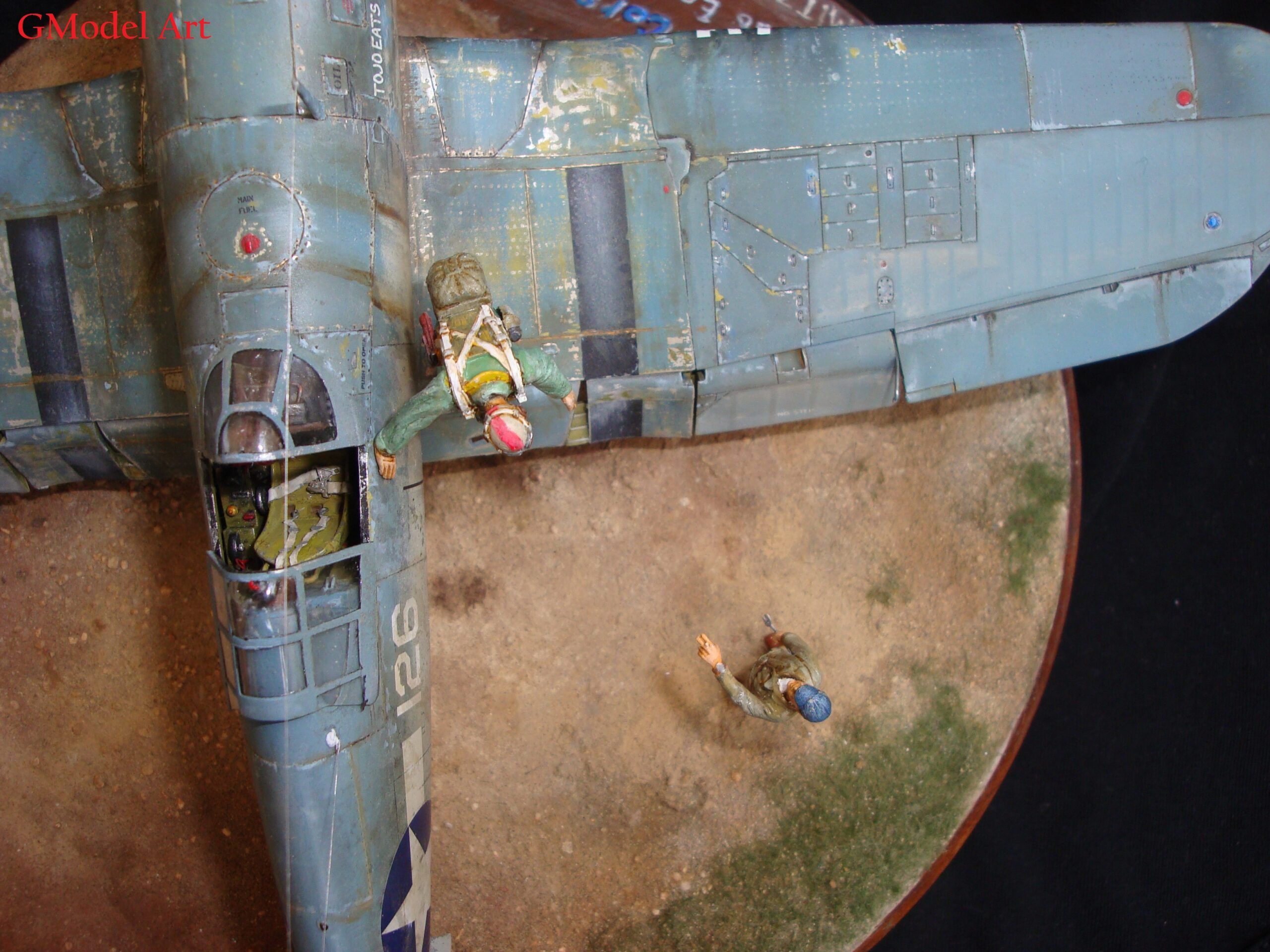
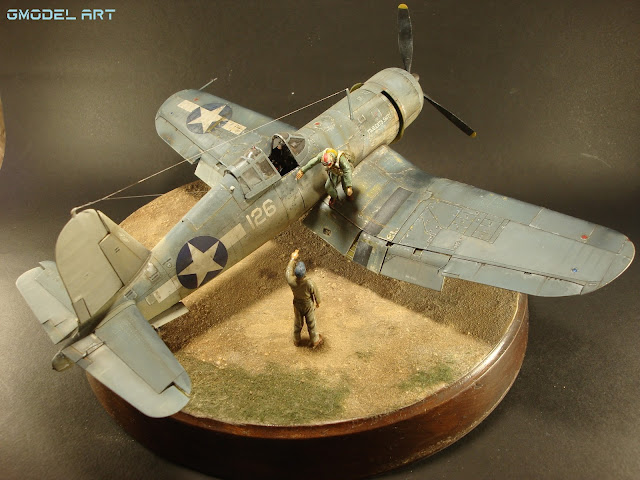
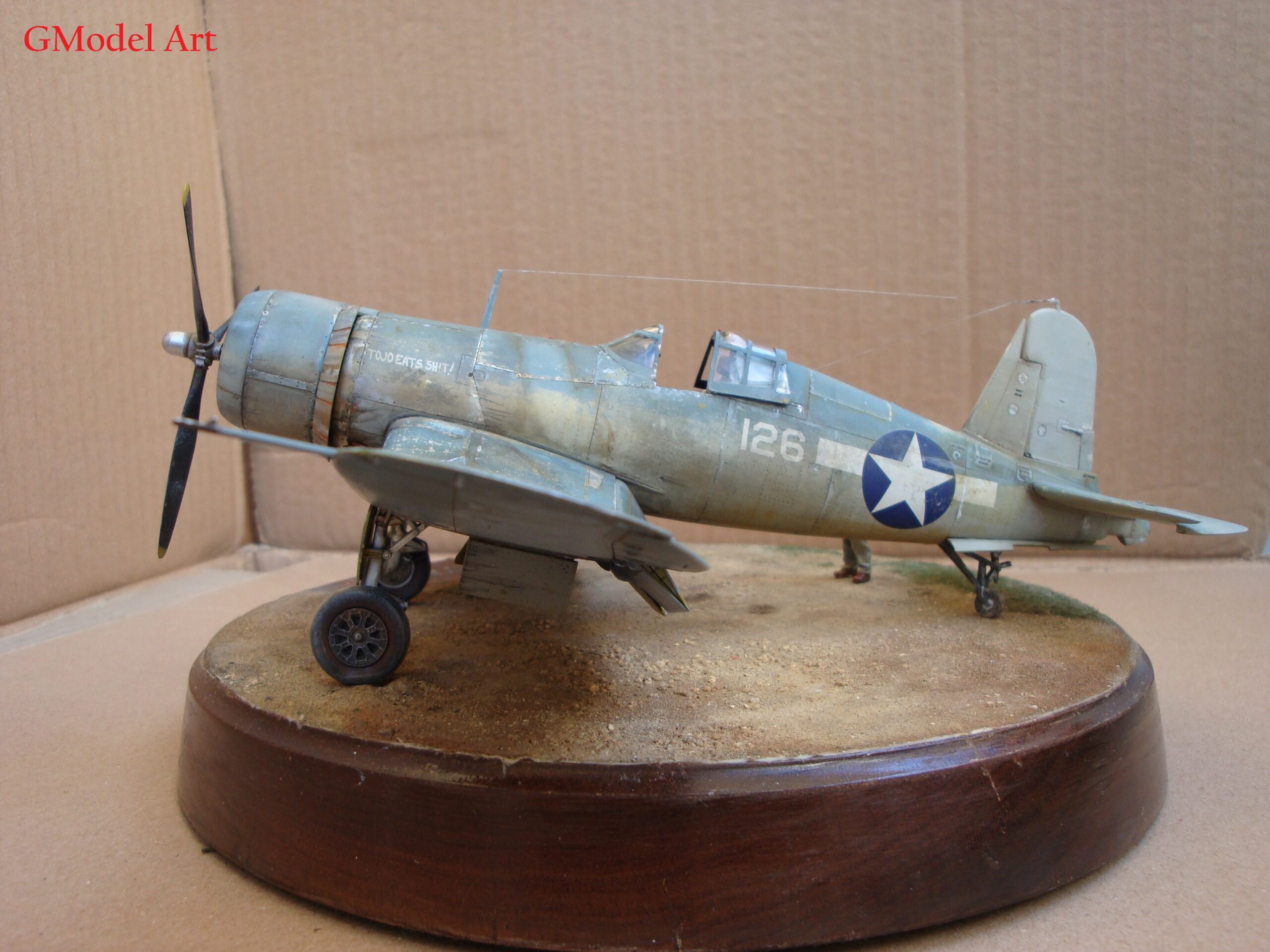
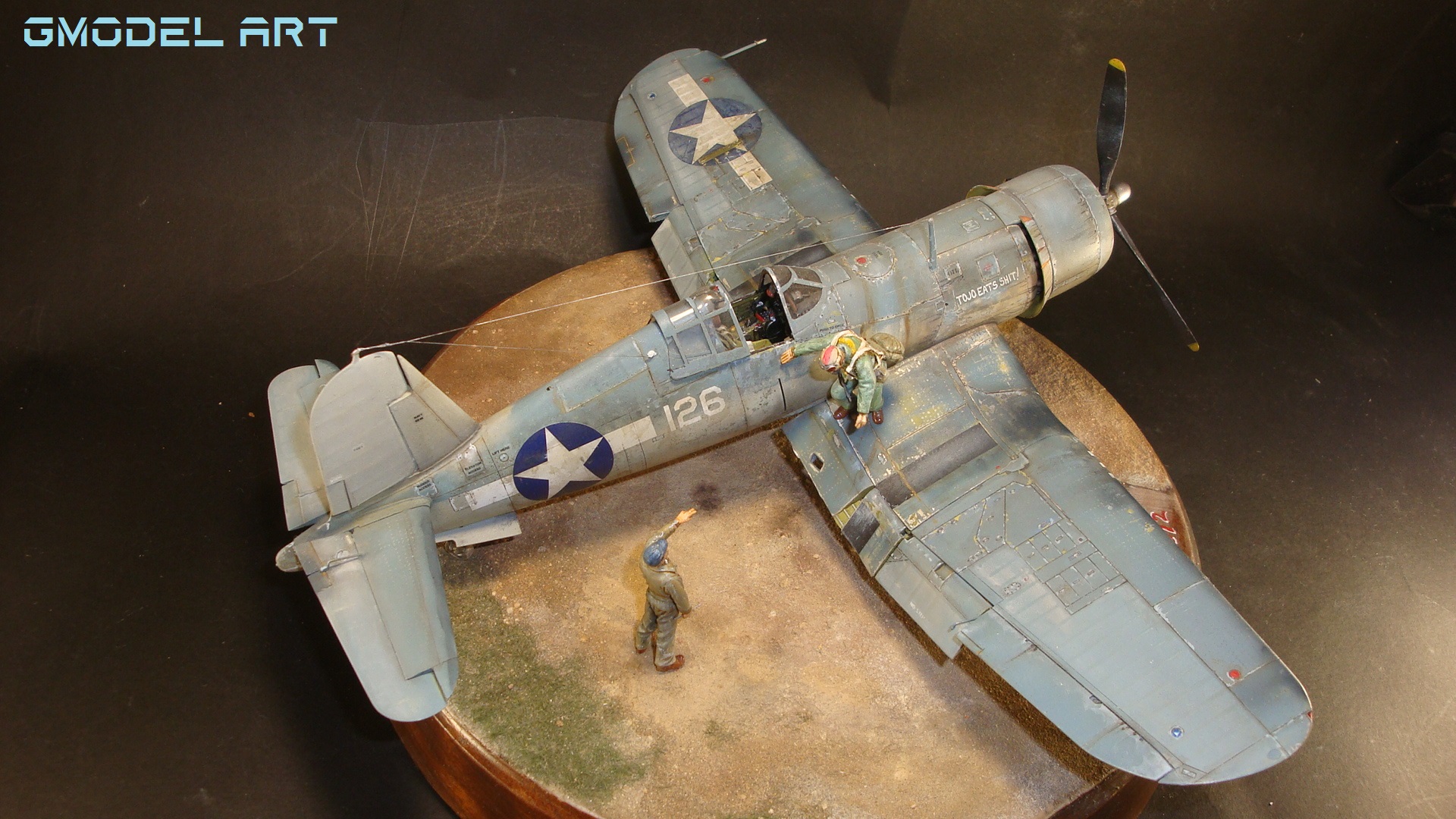
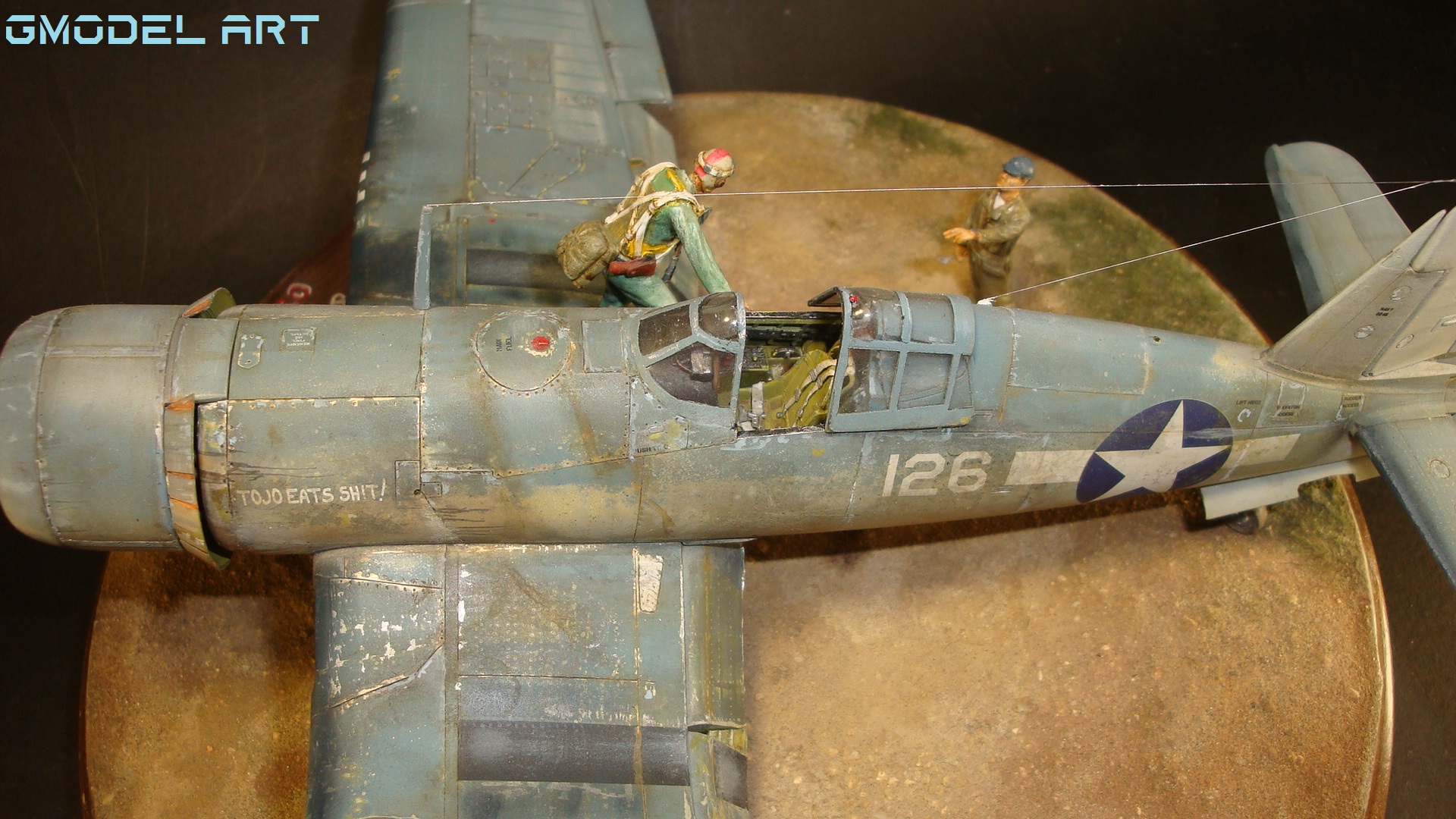
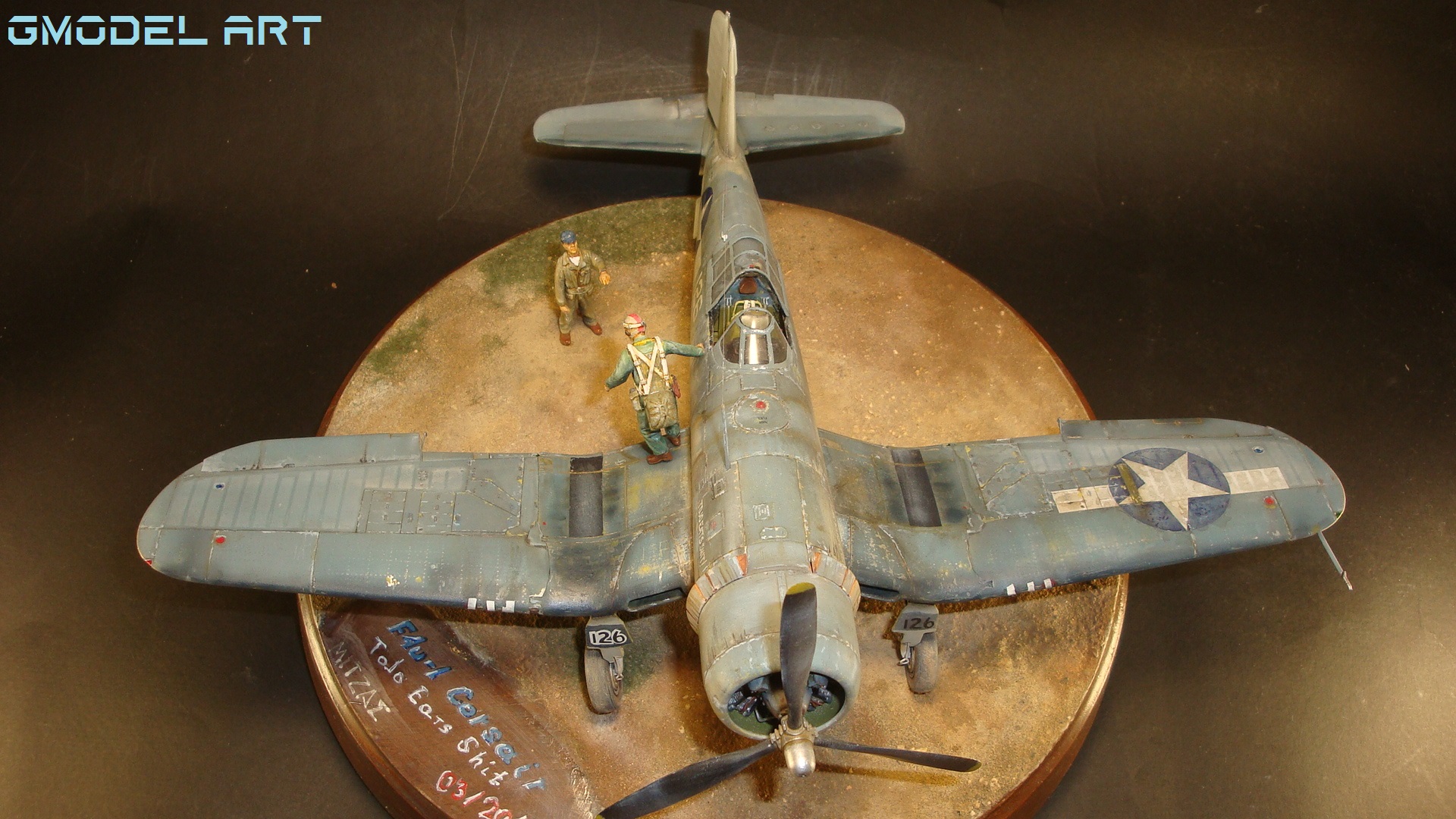
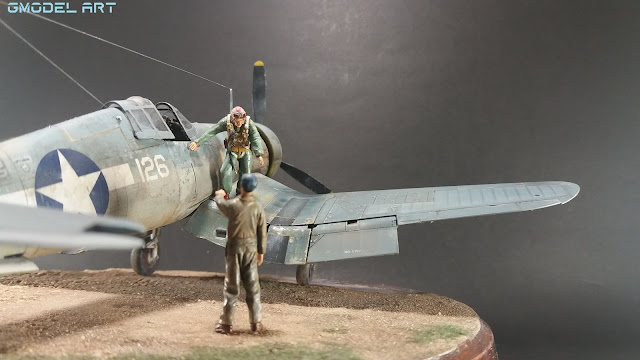
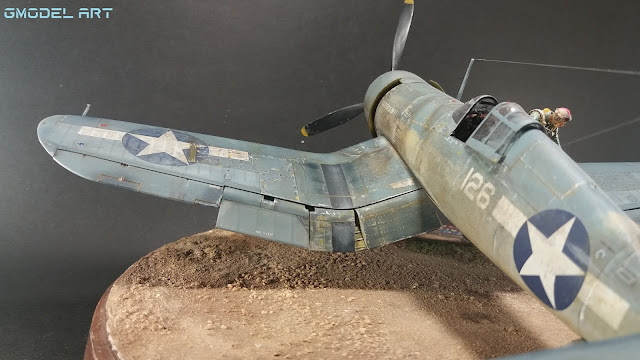
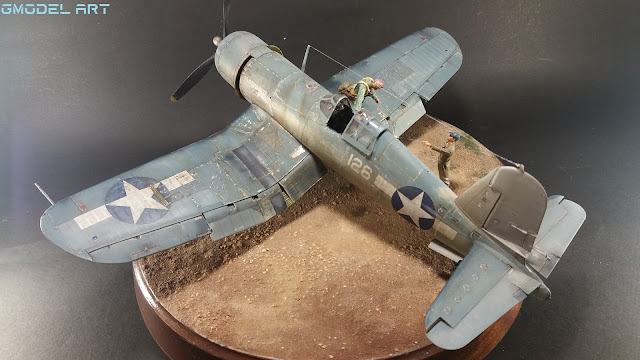
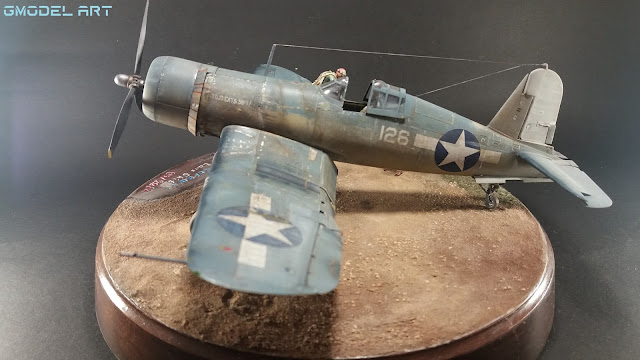
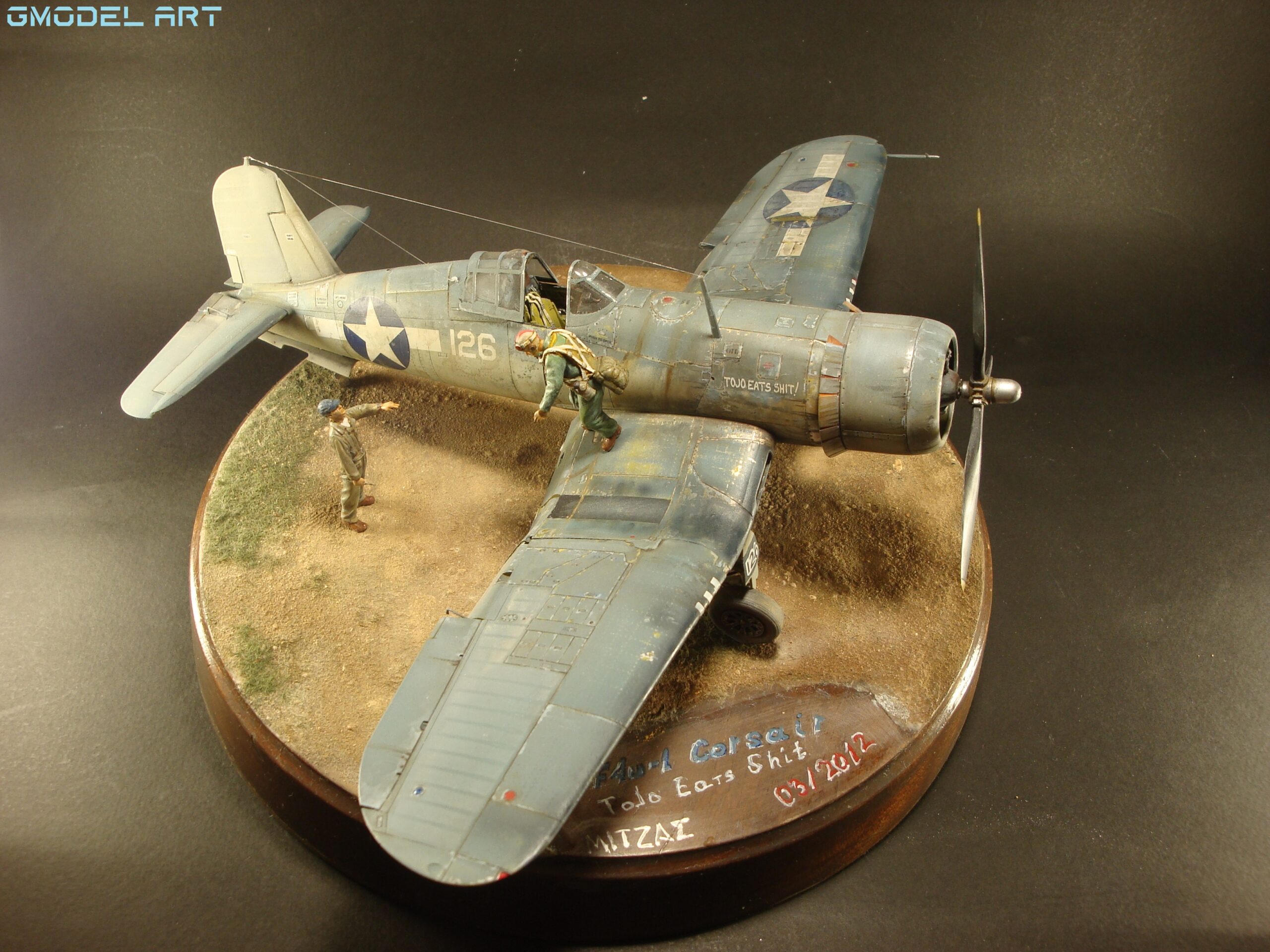
F4U-1 “Birdcage” Corsair 126 “Tojo Eats Shit”
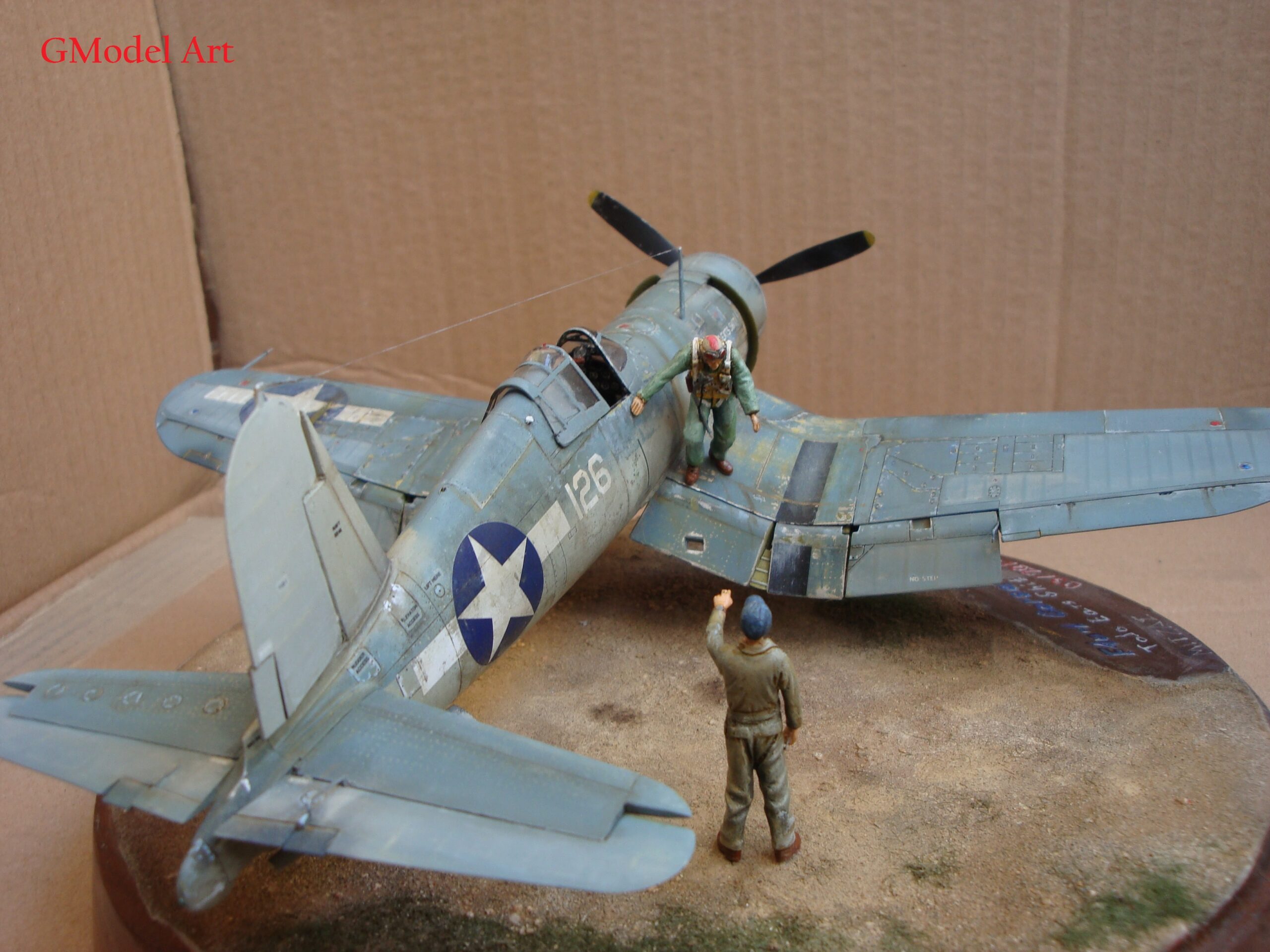
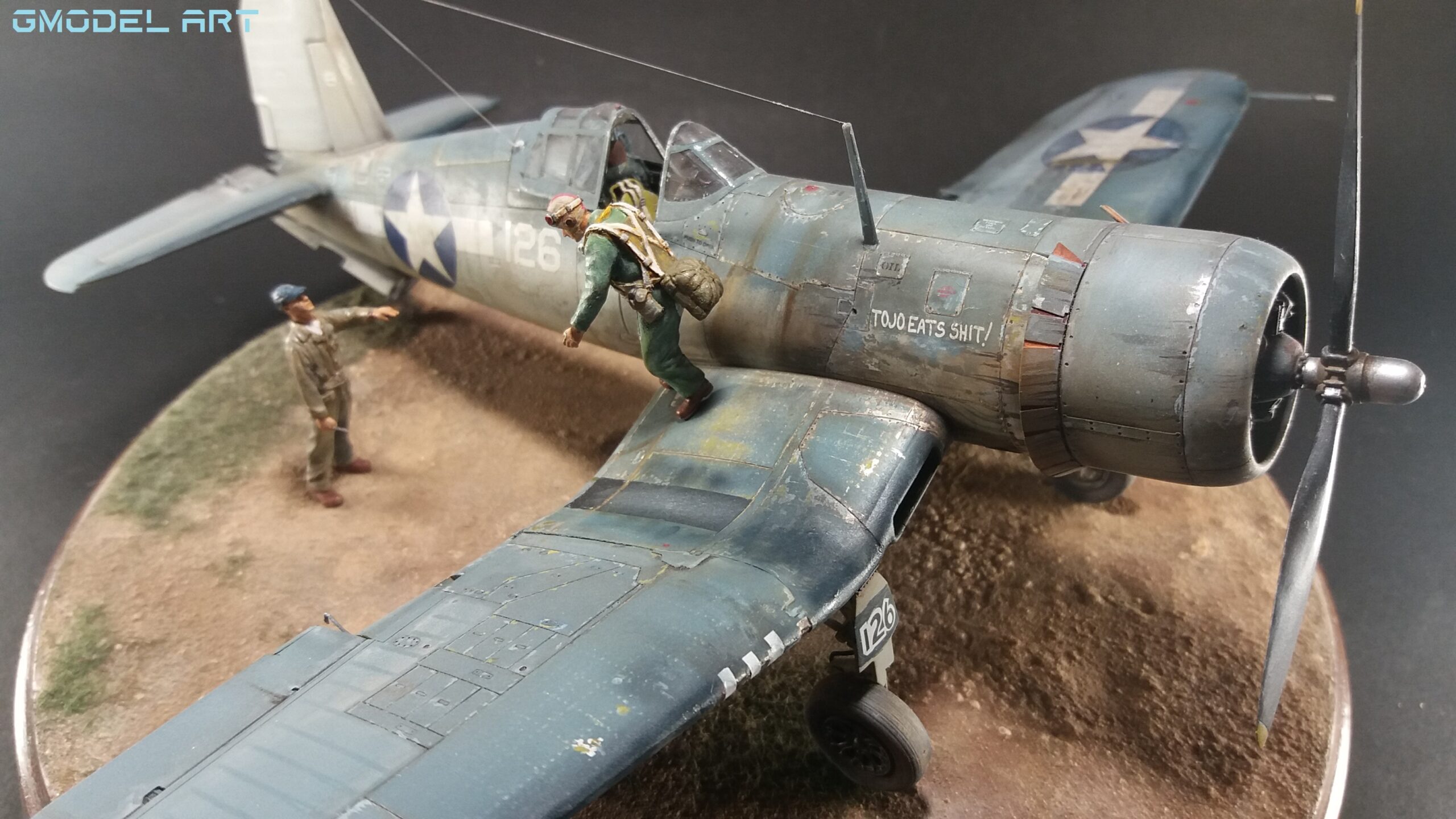
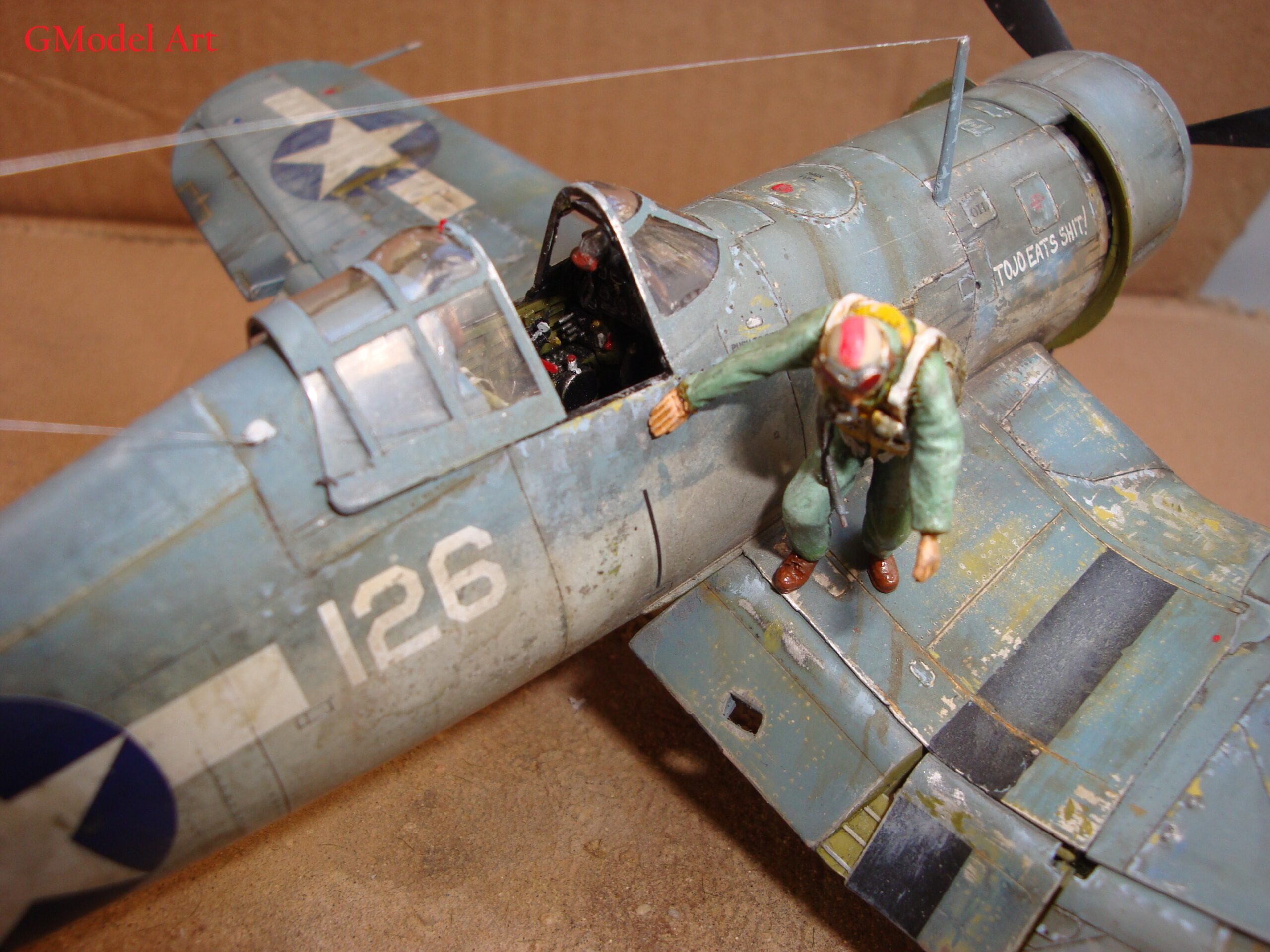
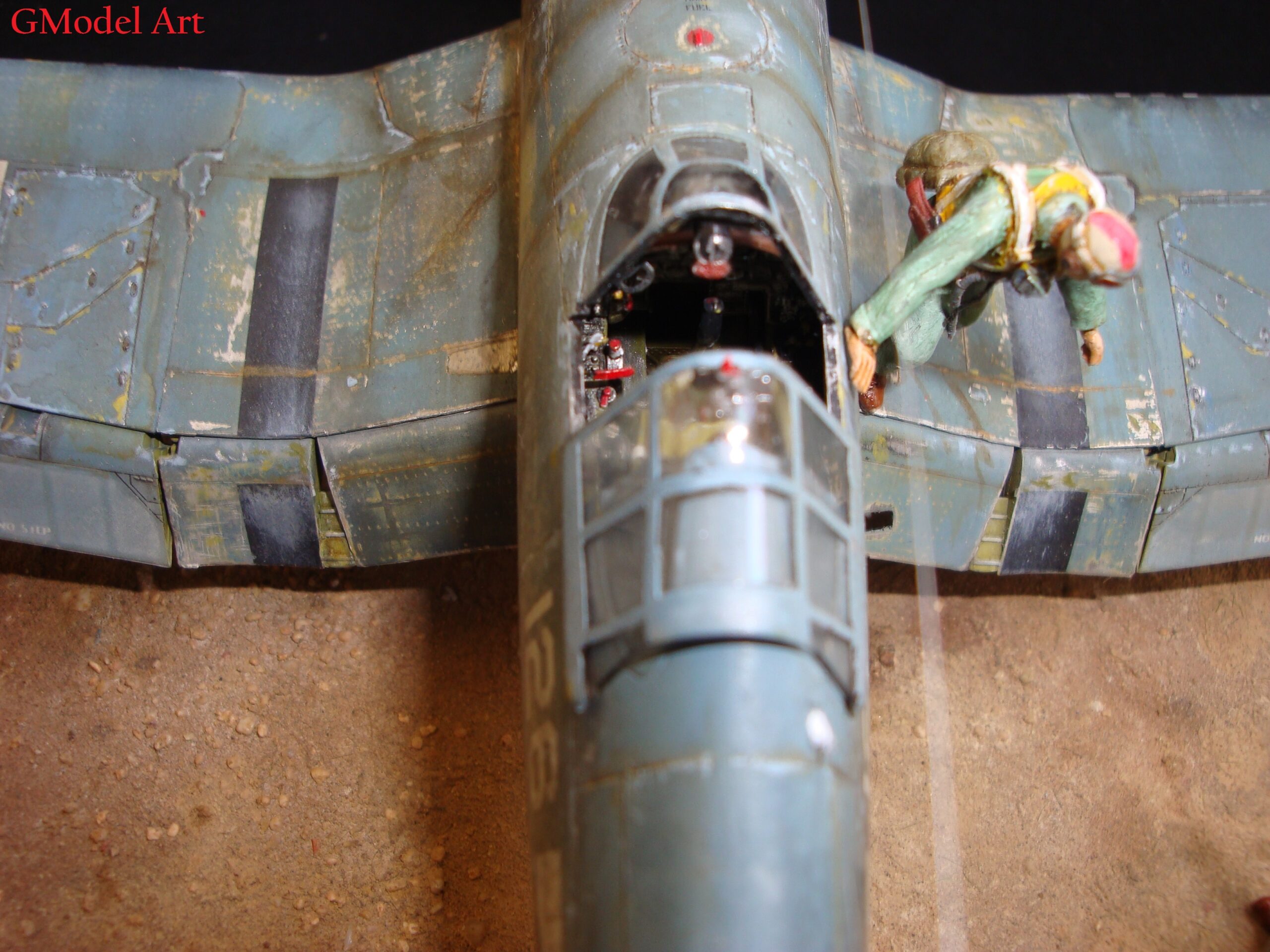
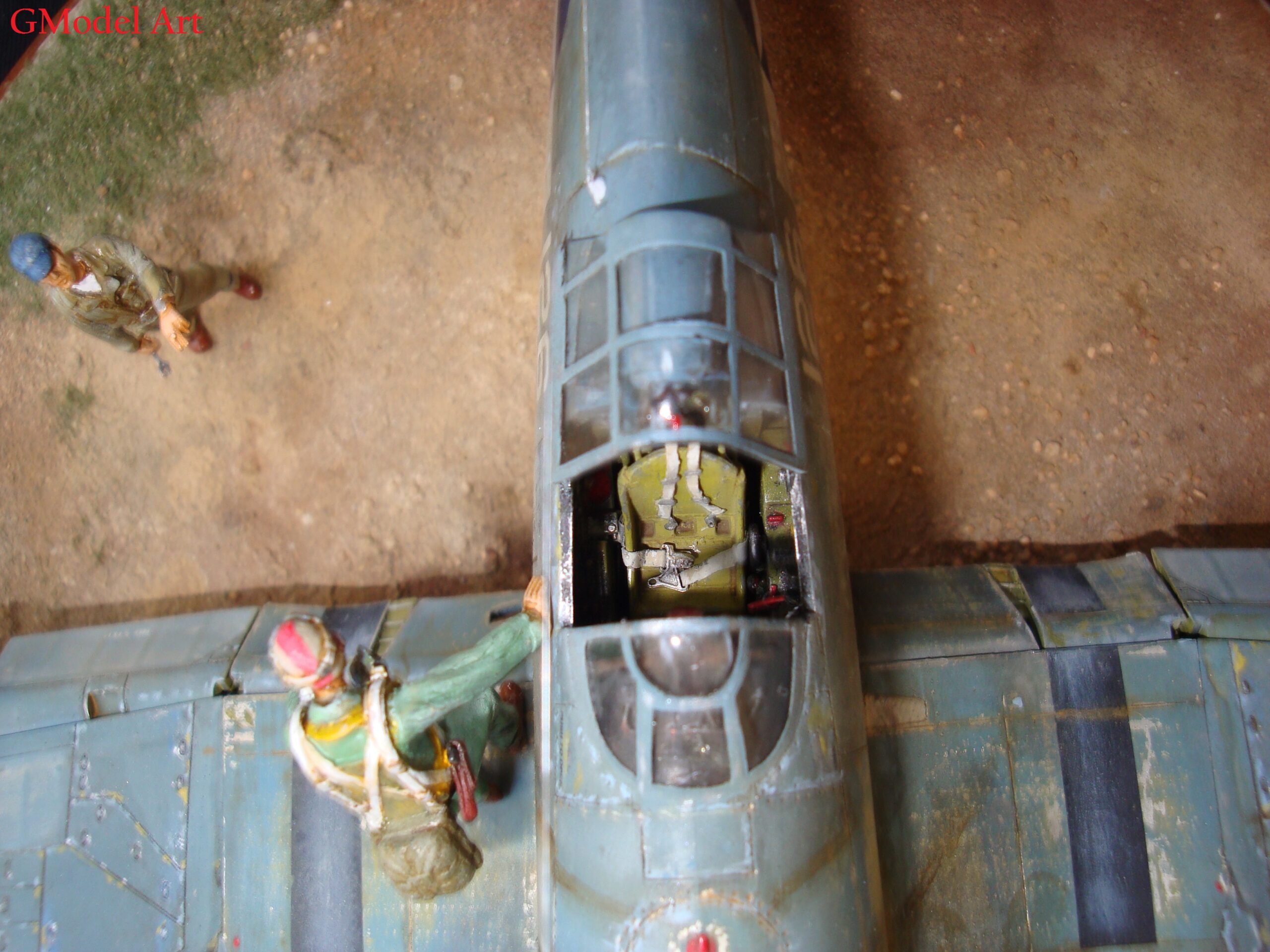
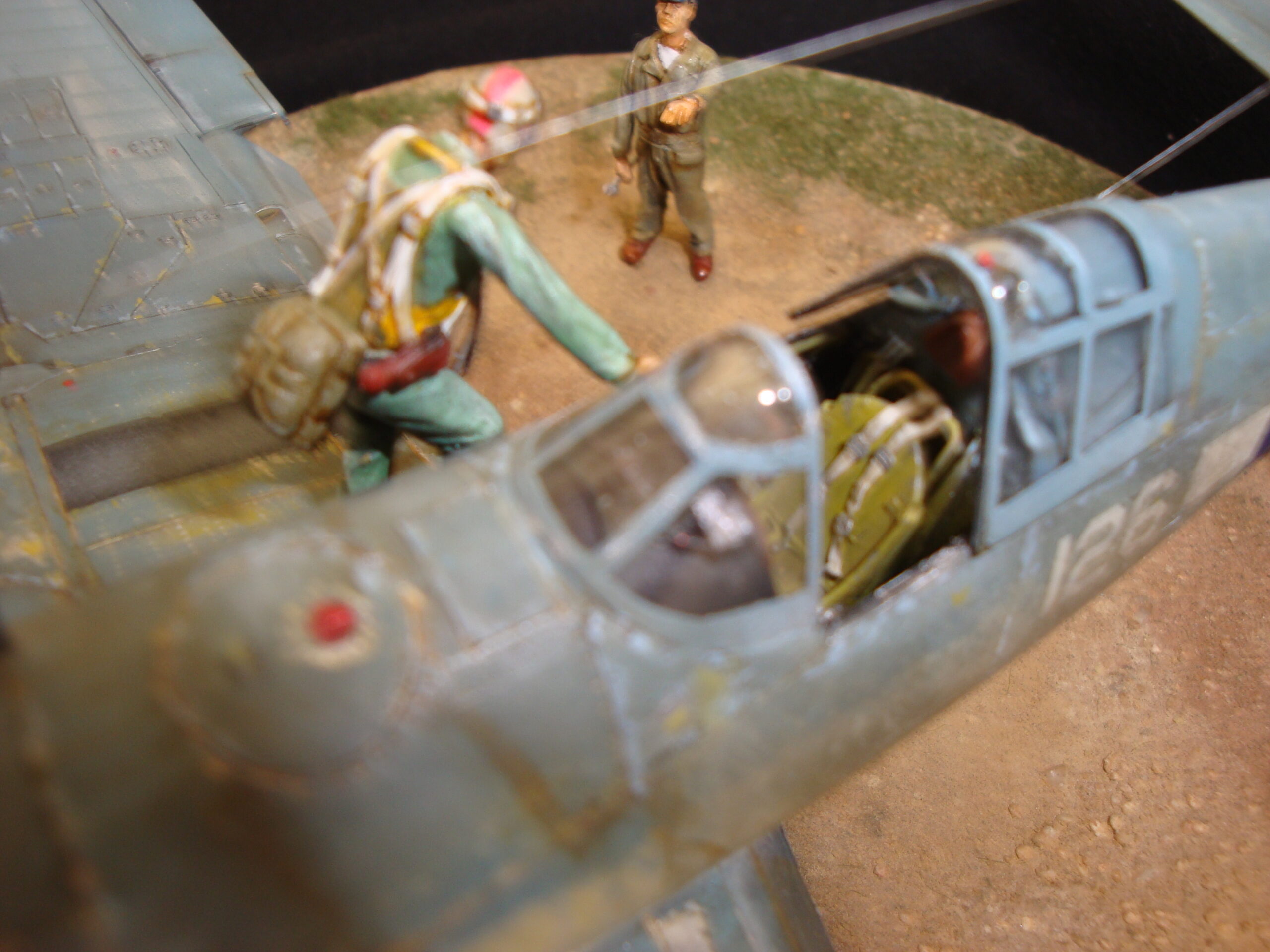
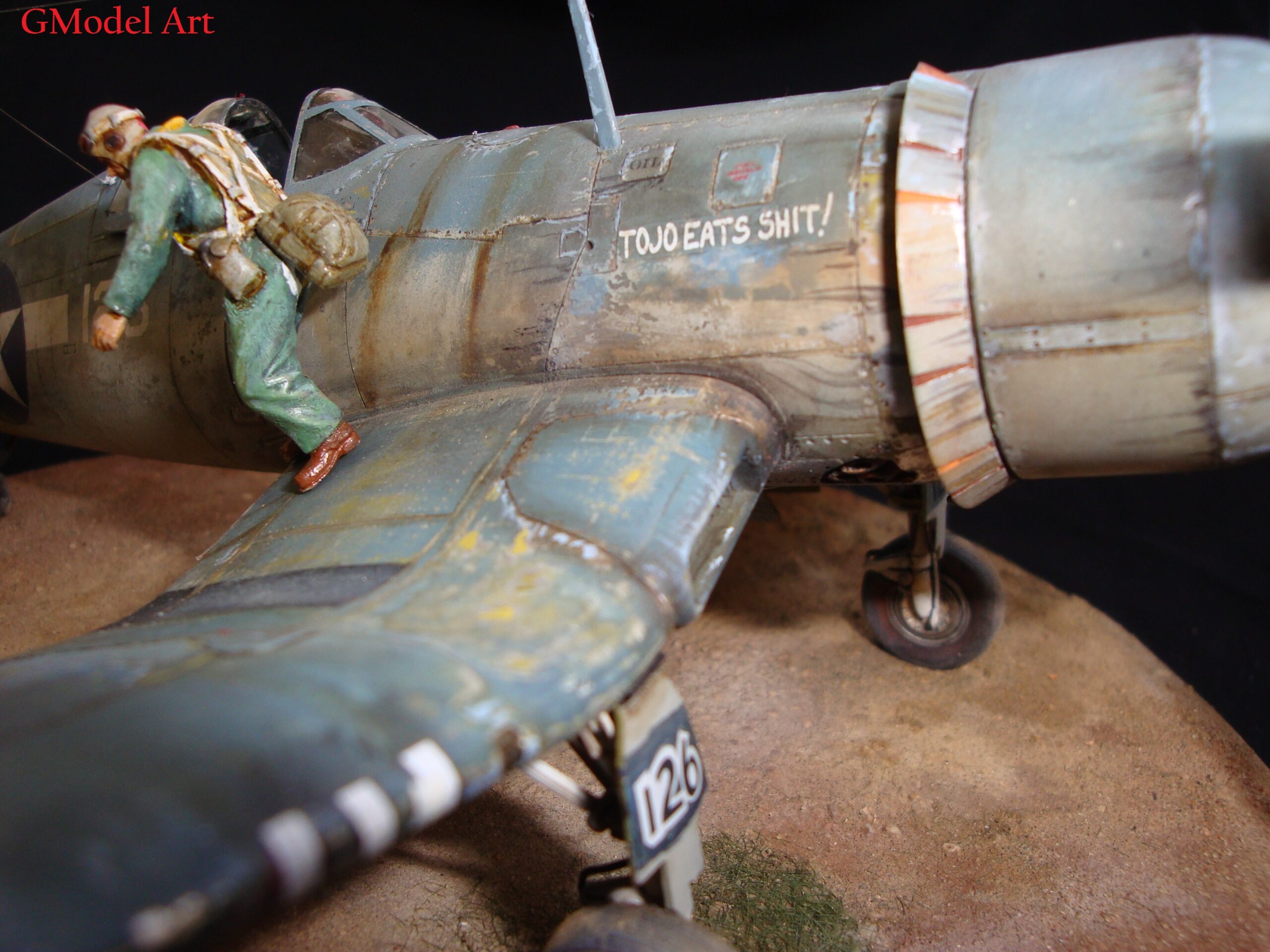
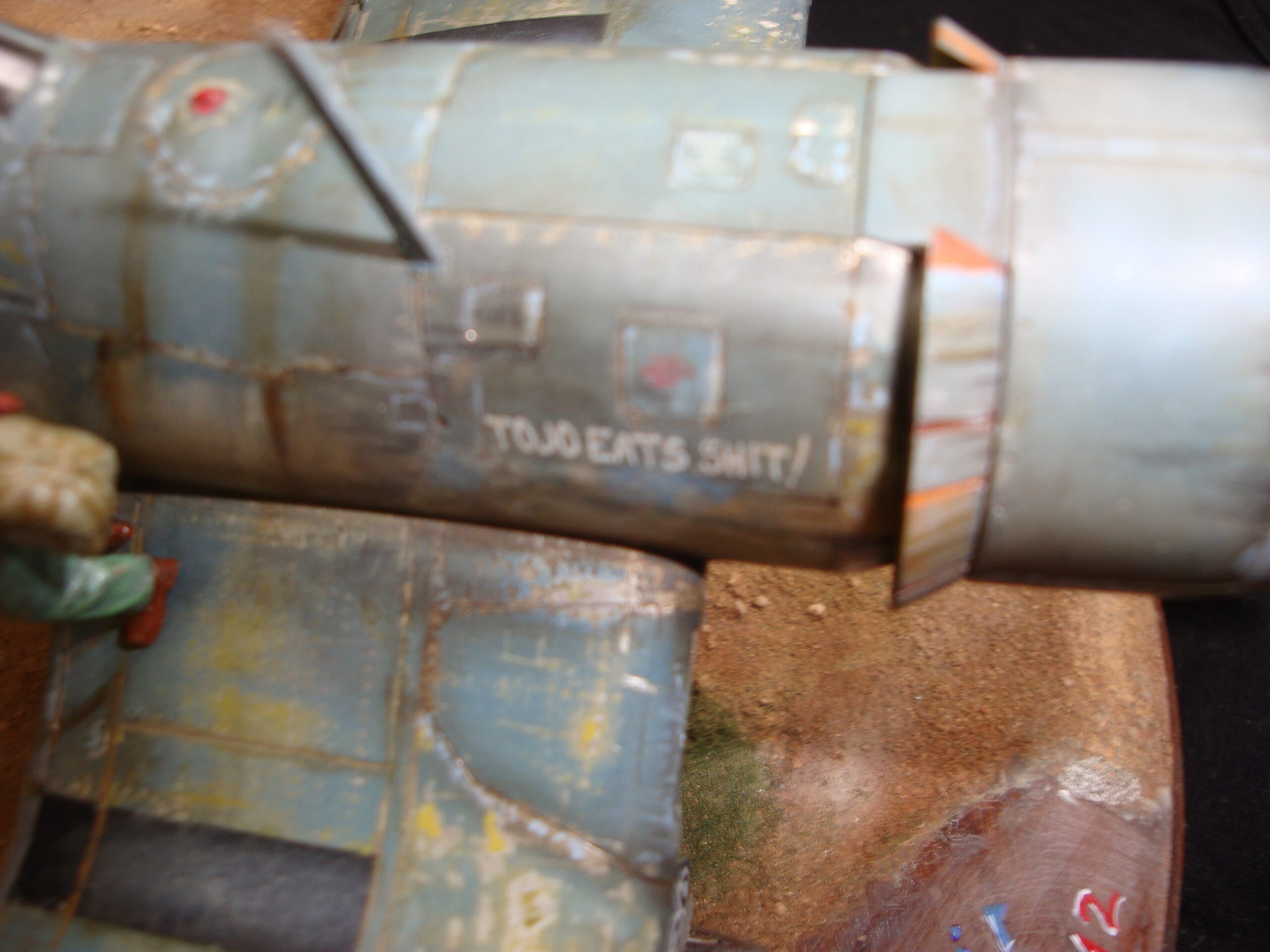
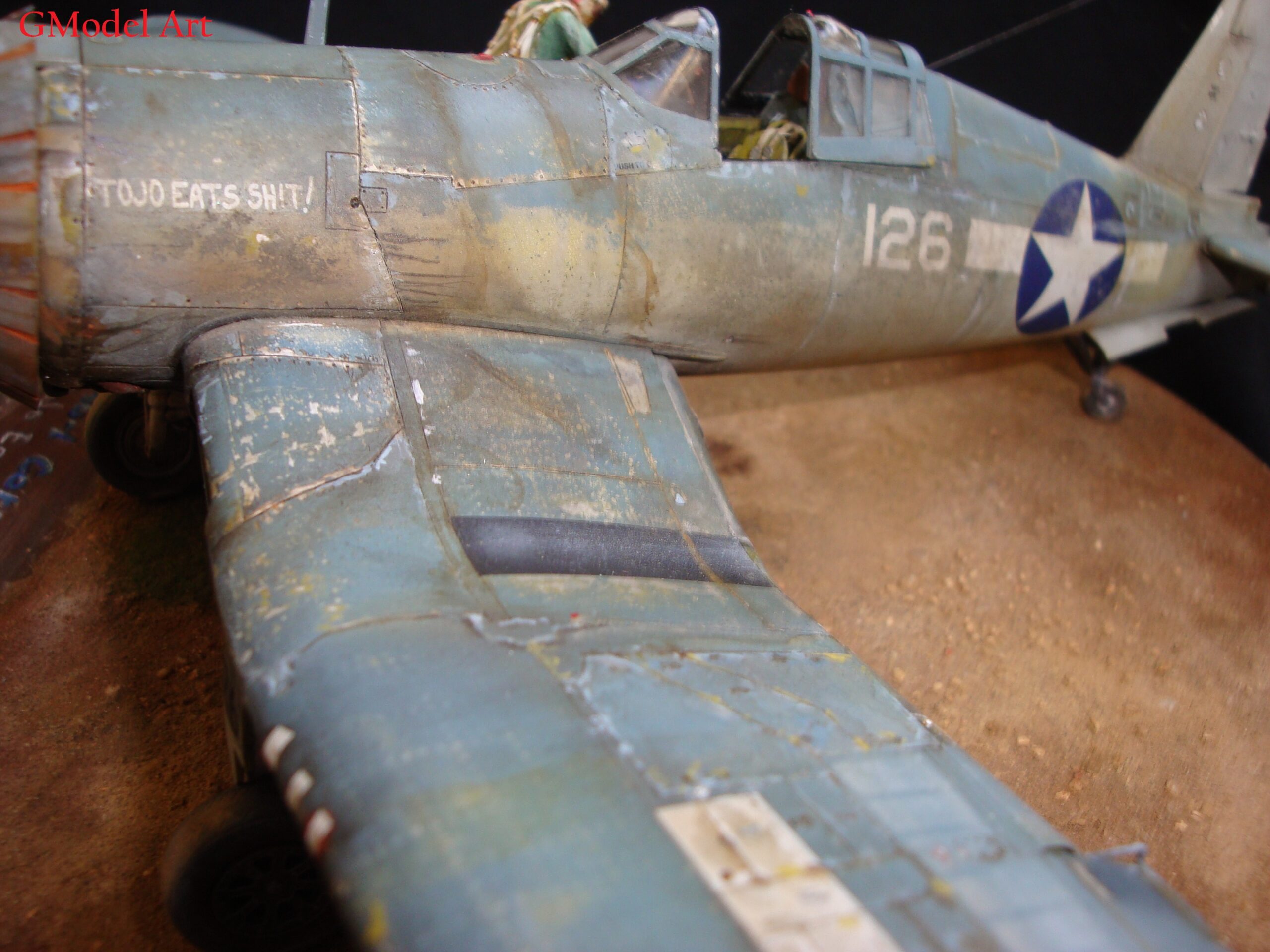
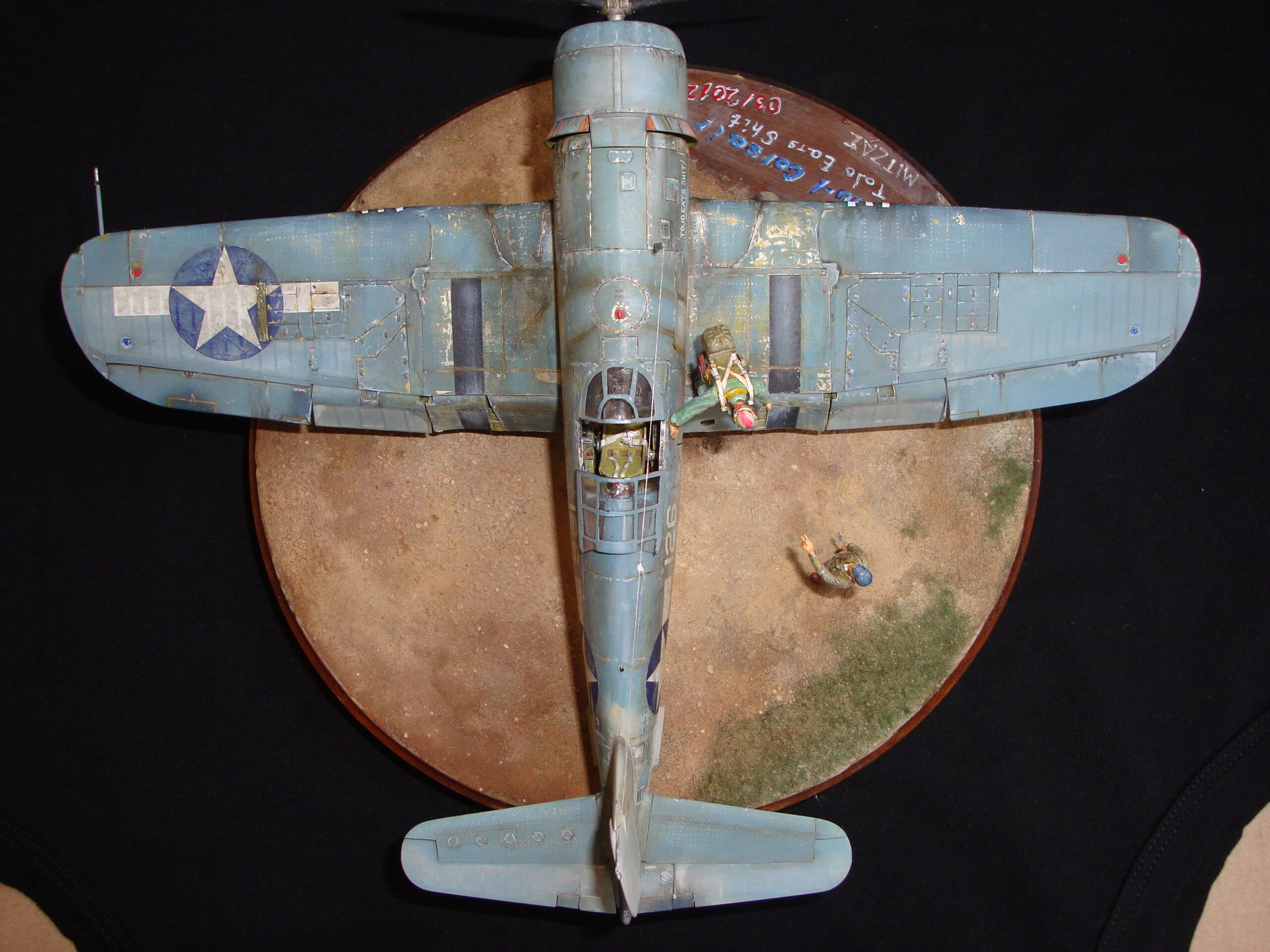
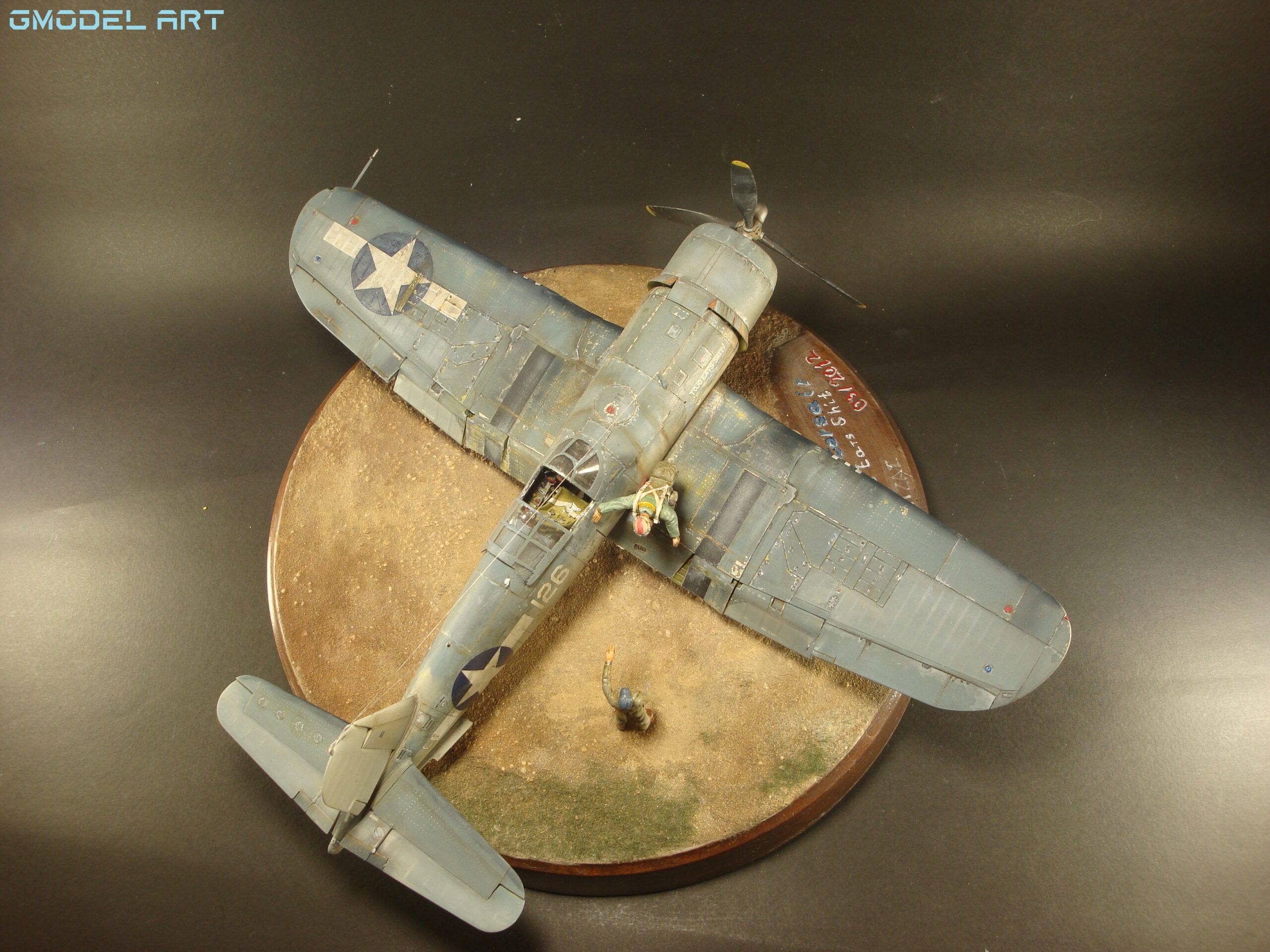
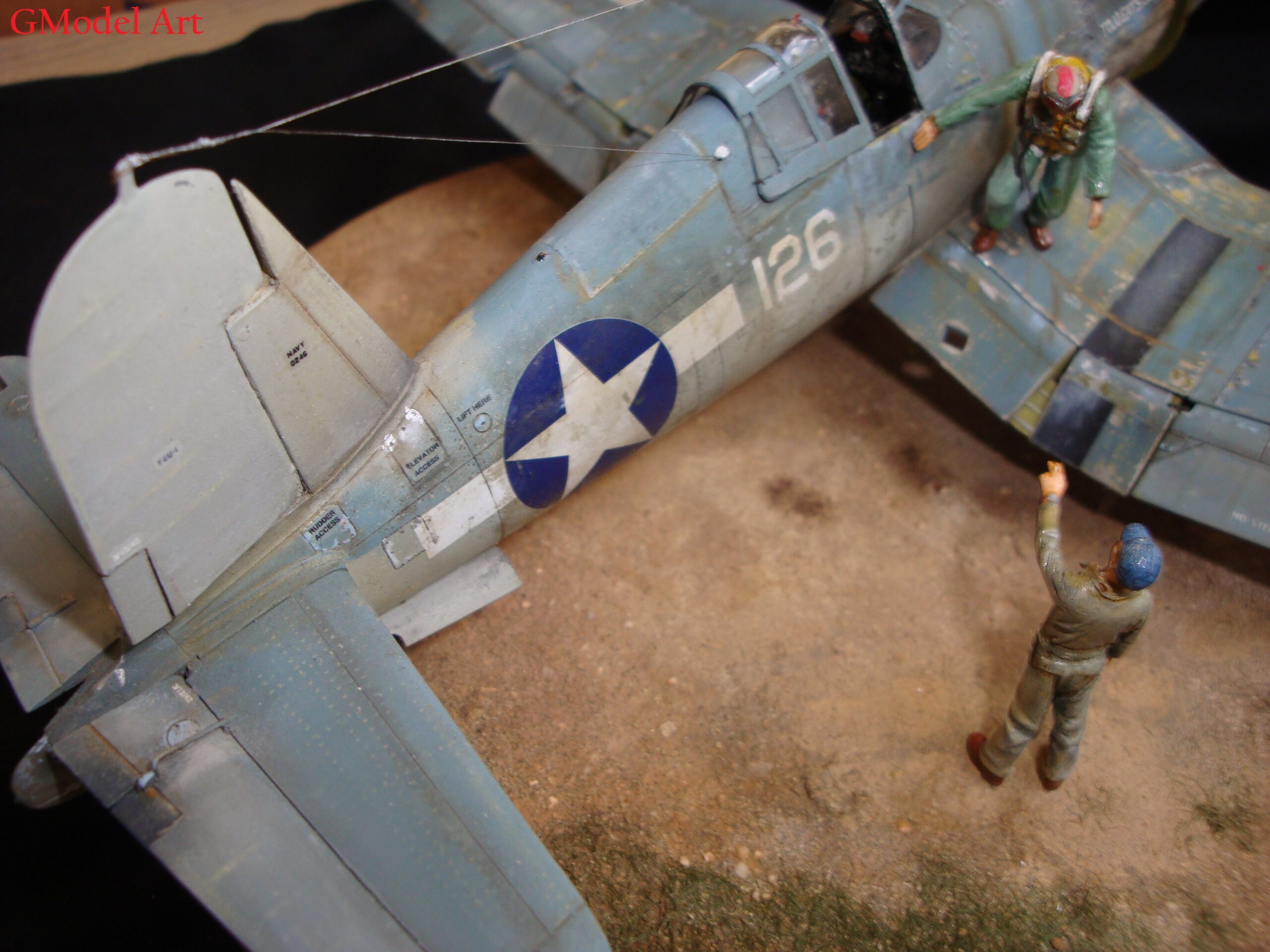
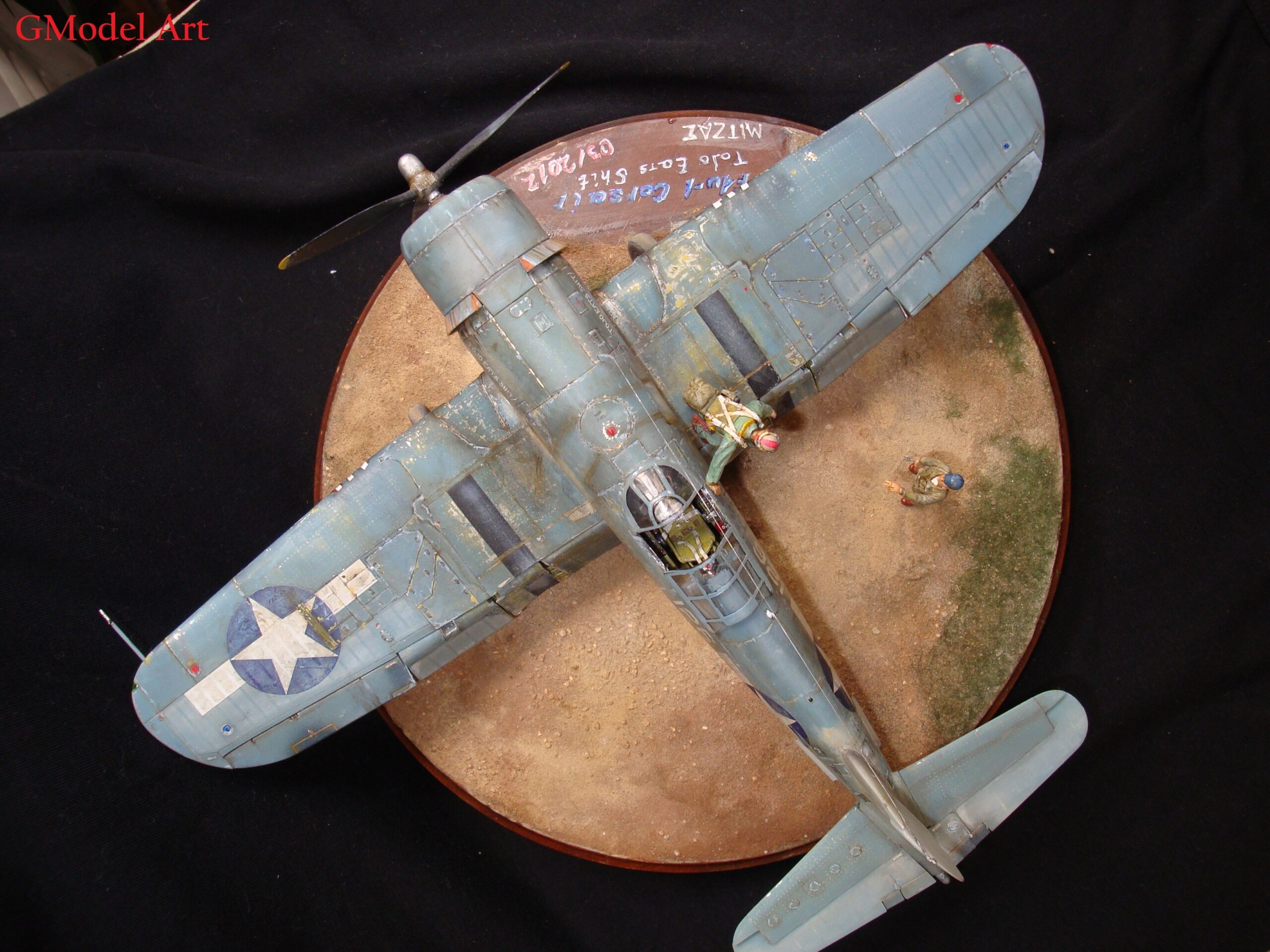
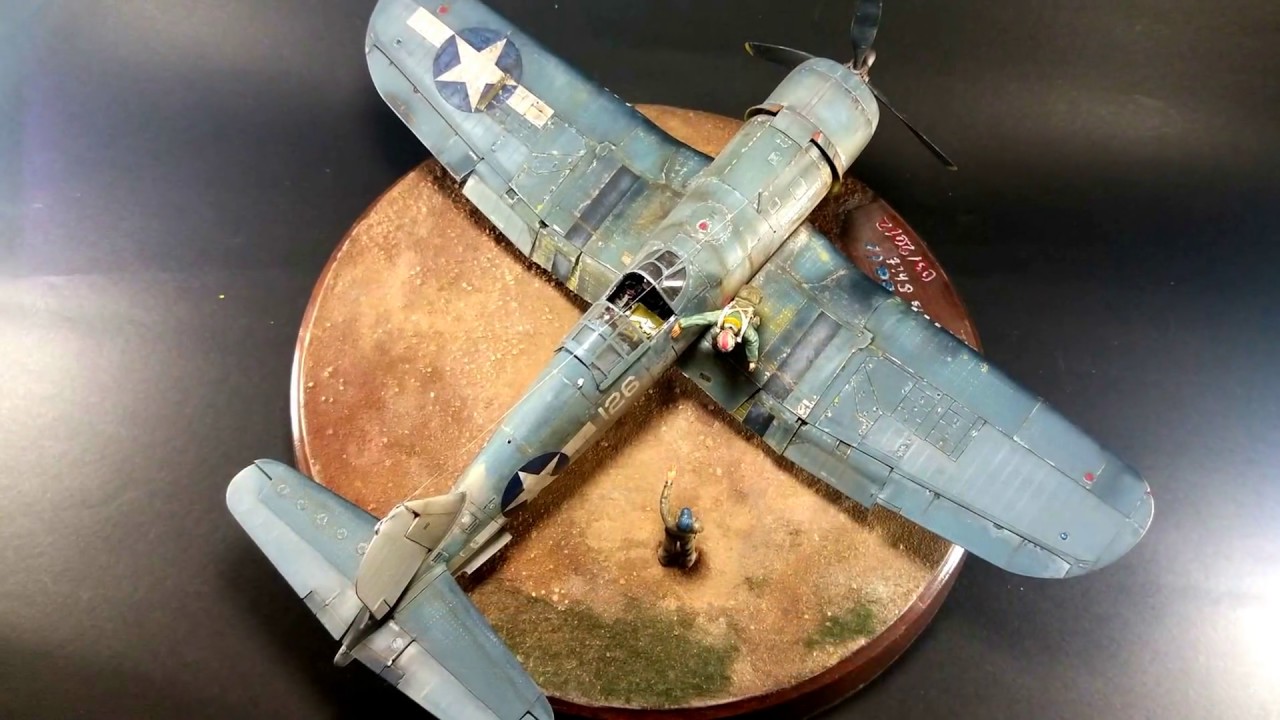
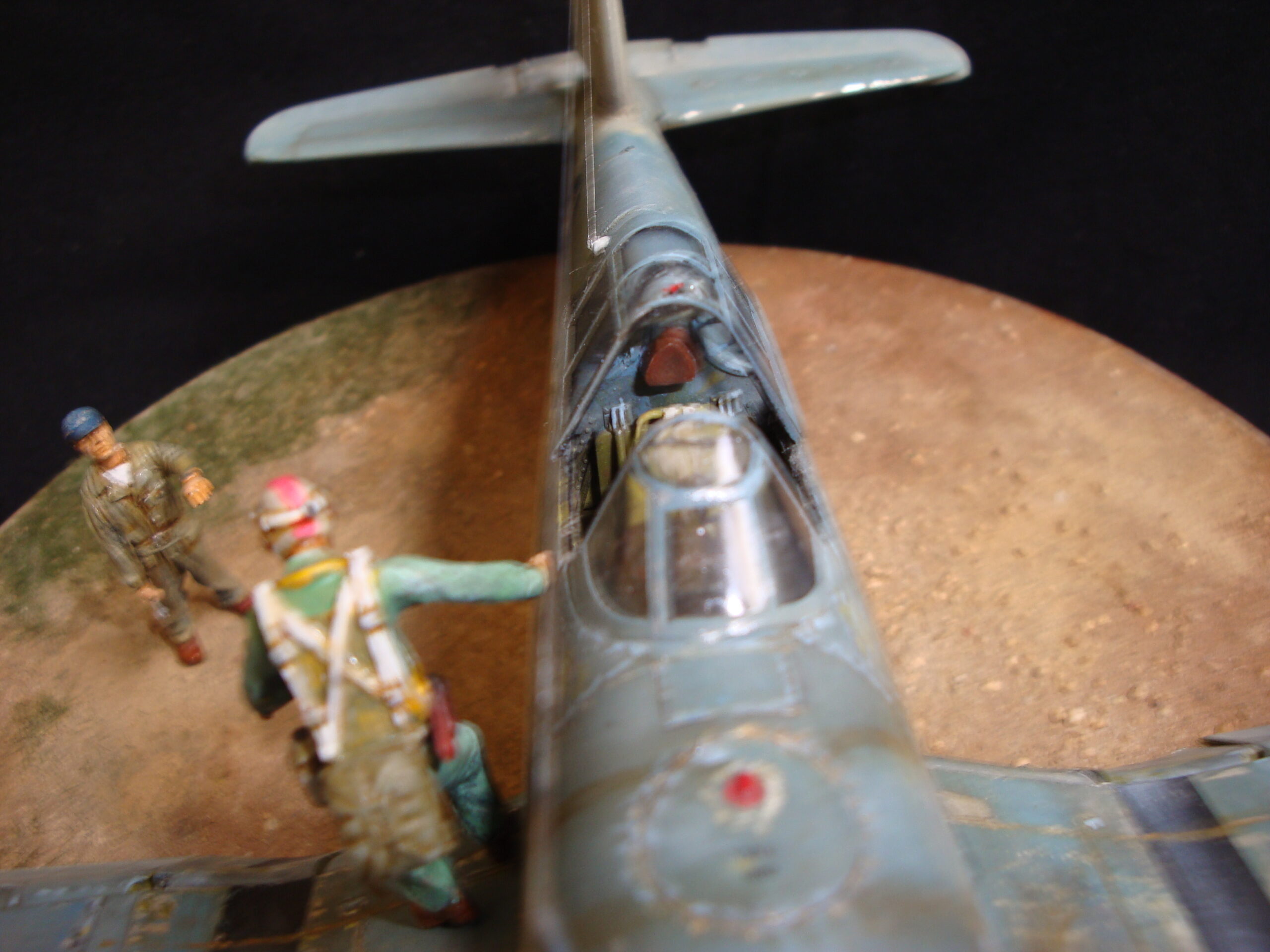
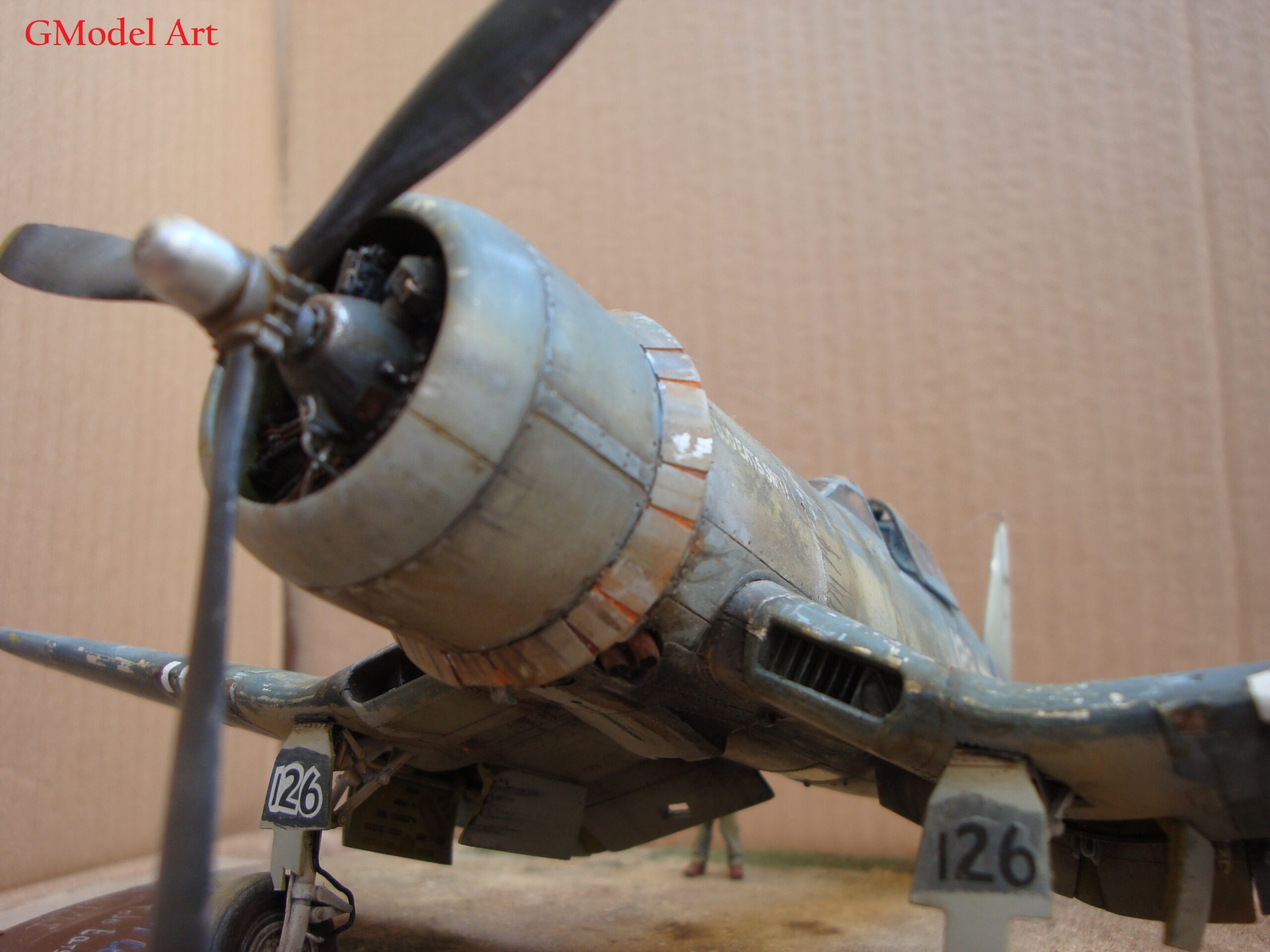
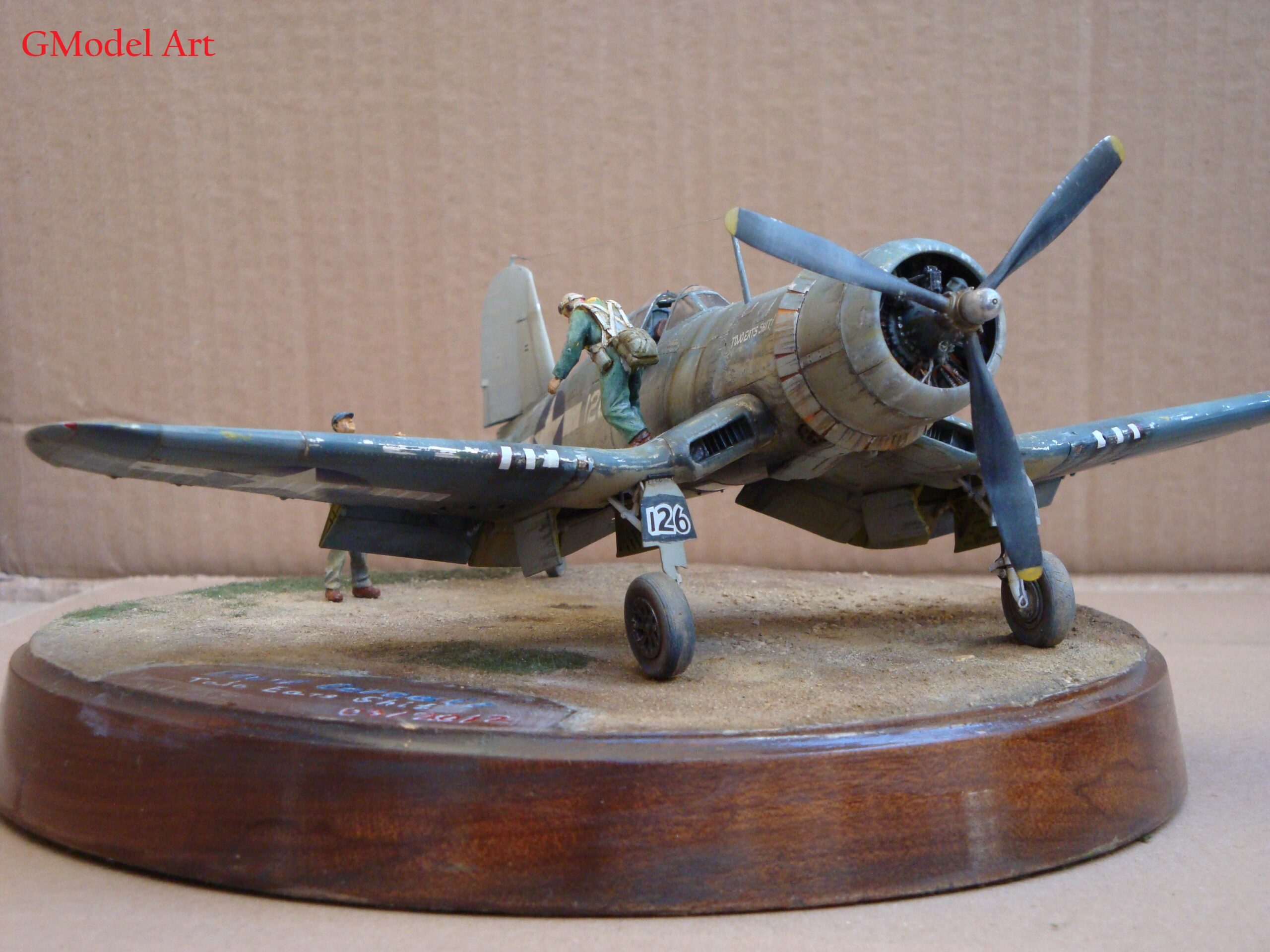
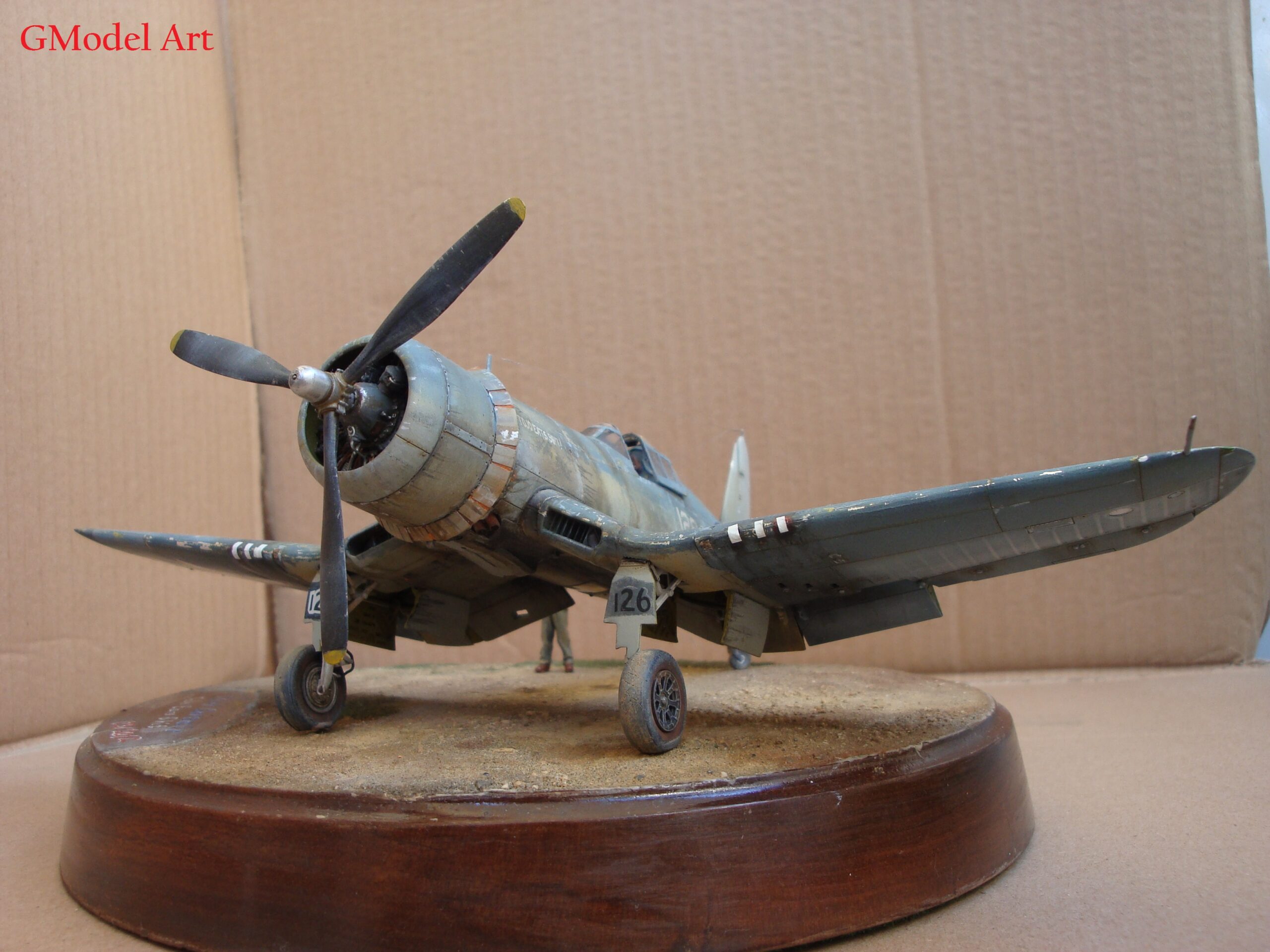
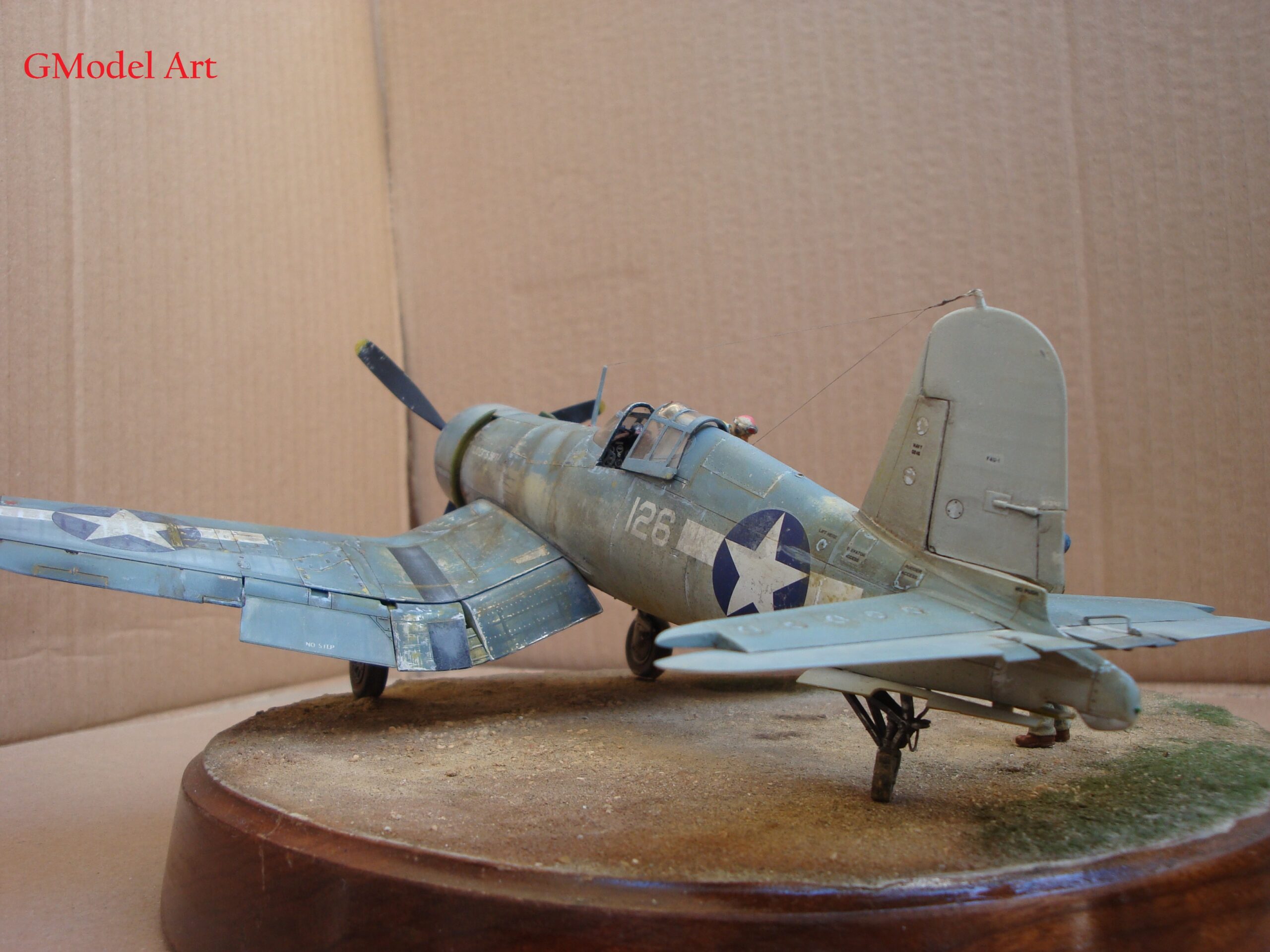
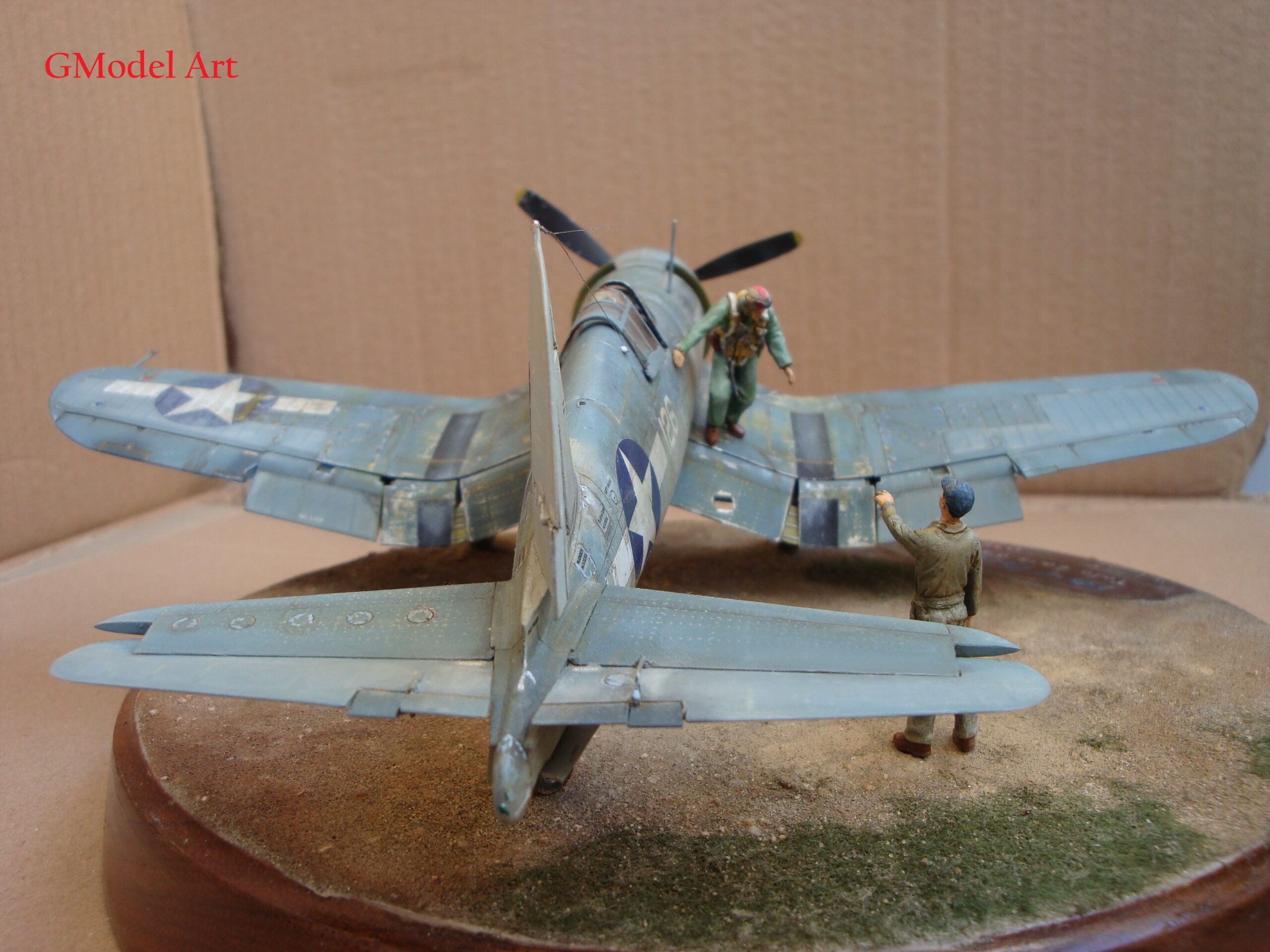
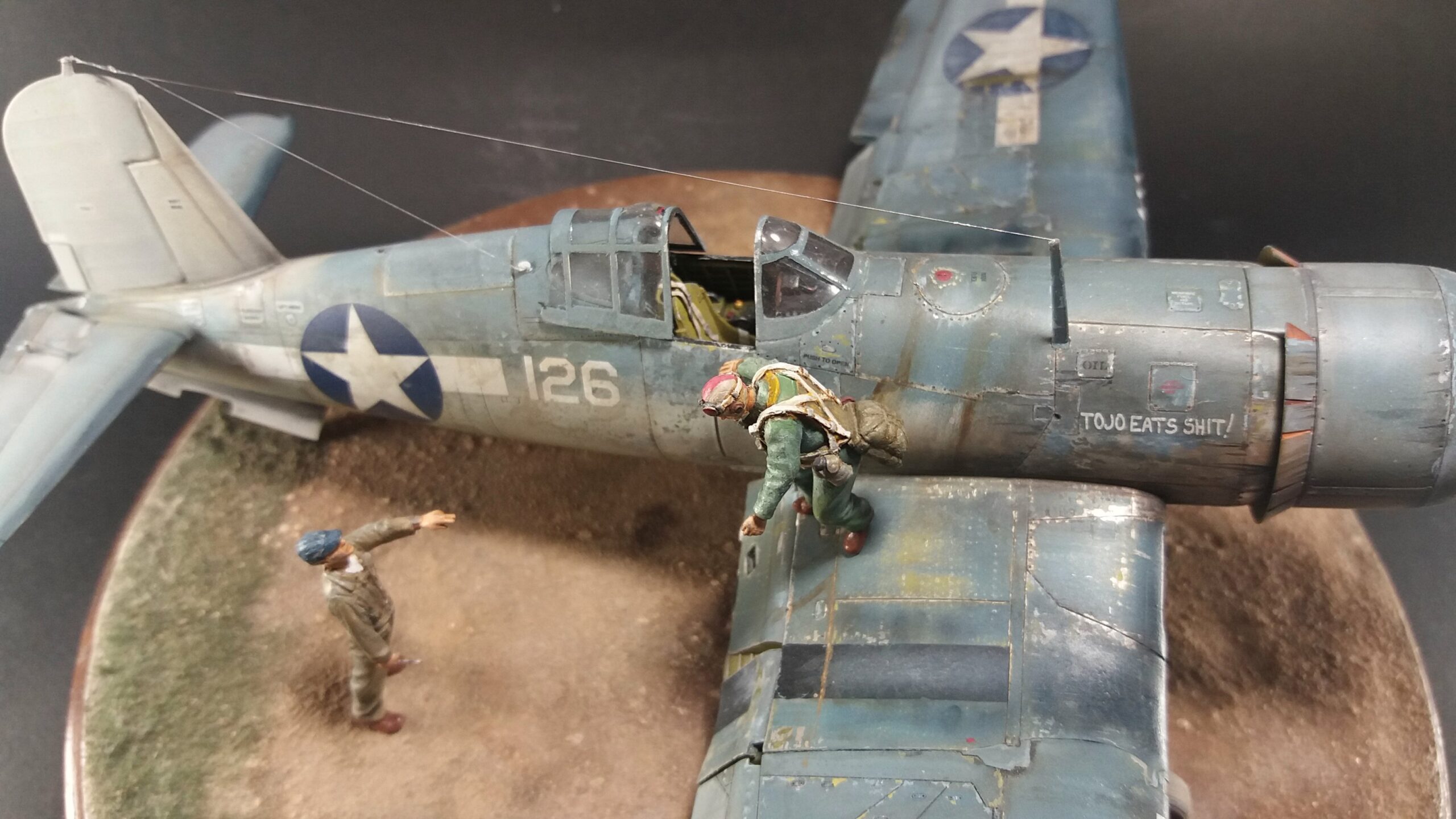
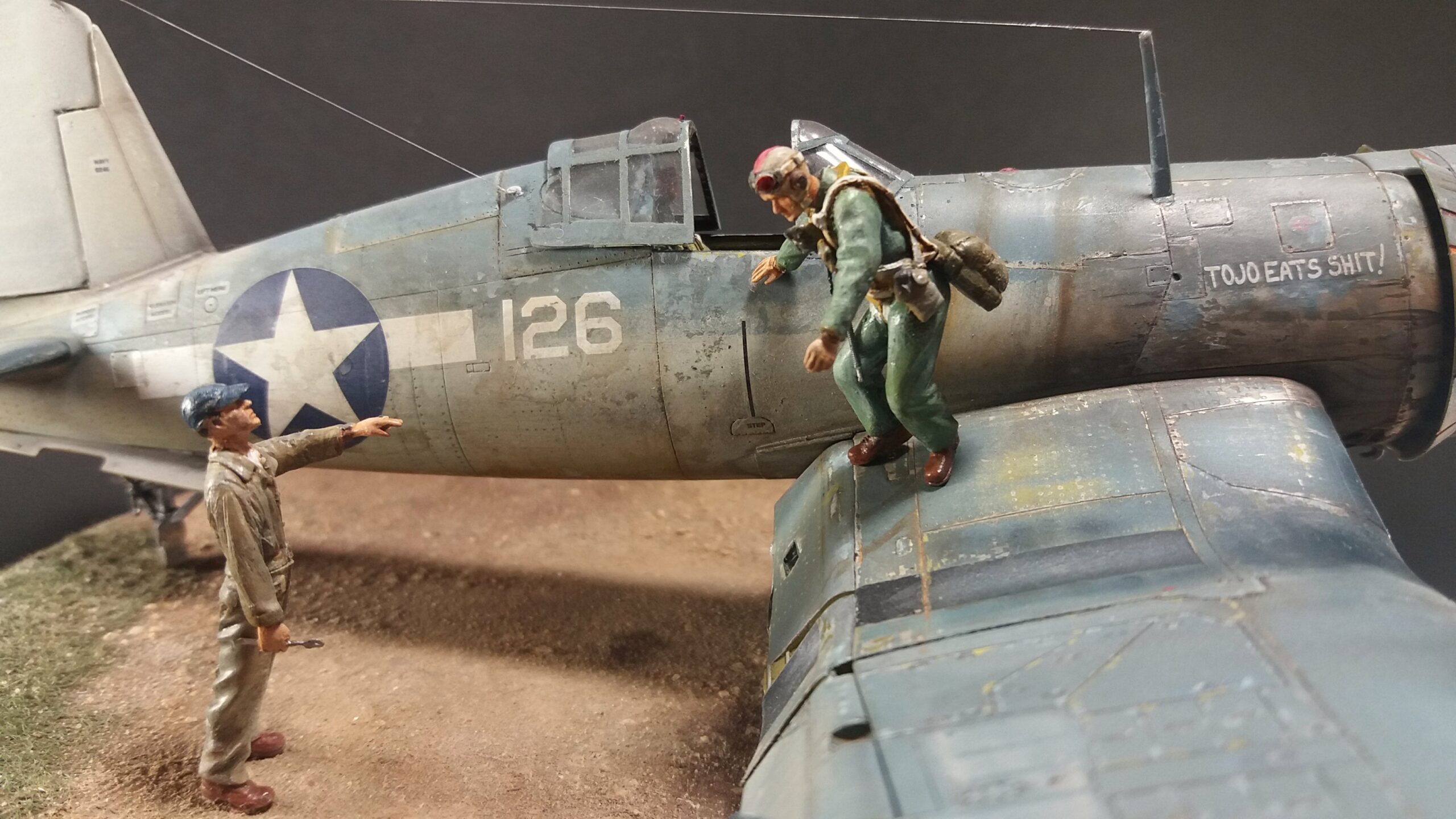
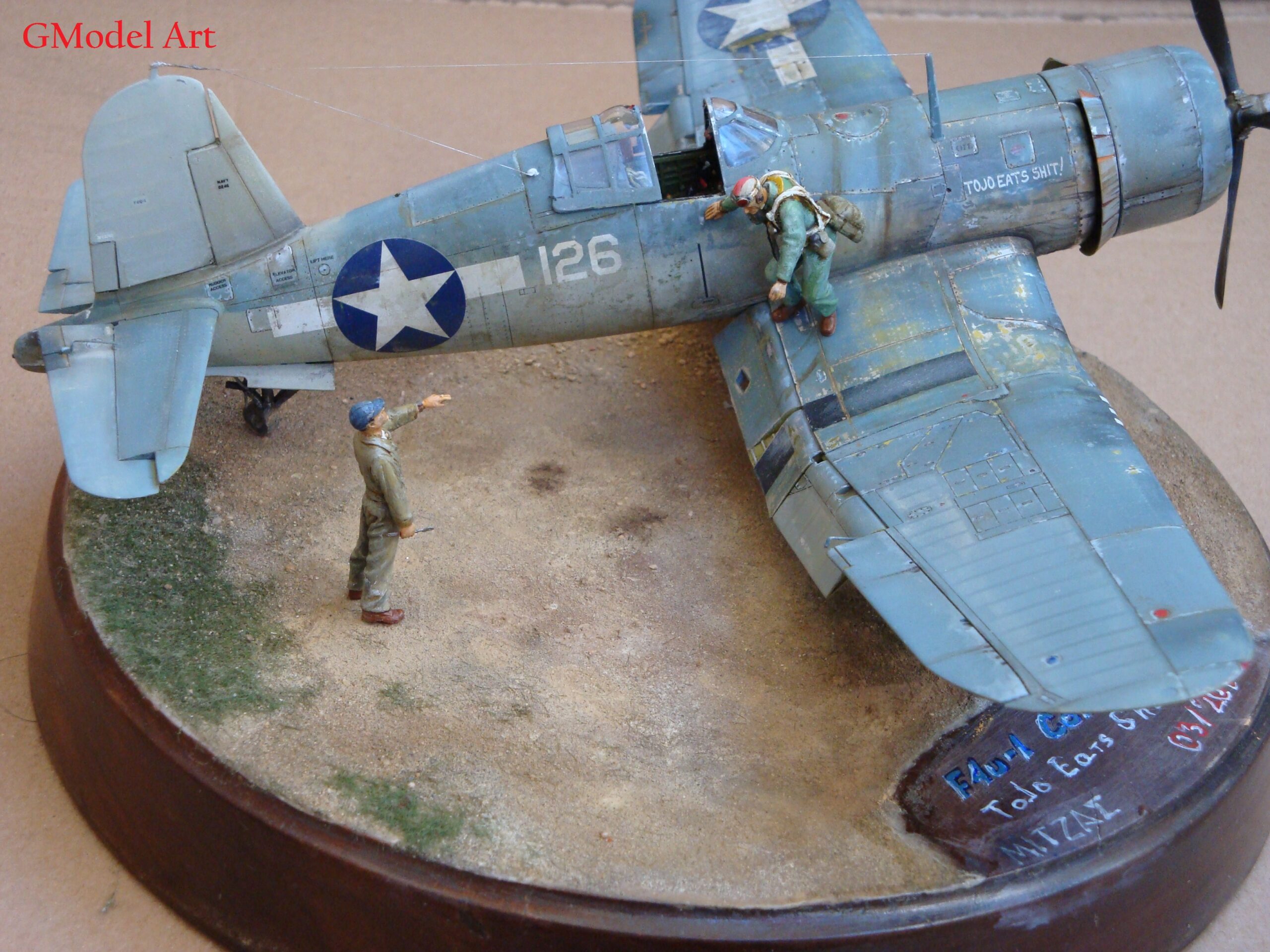
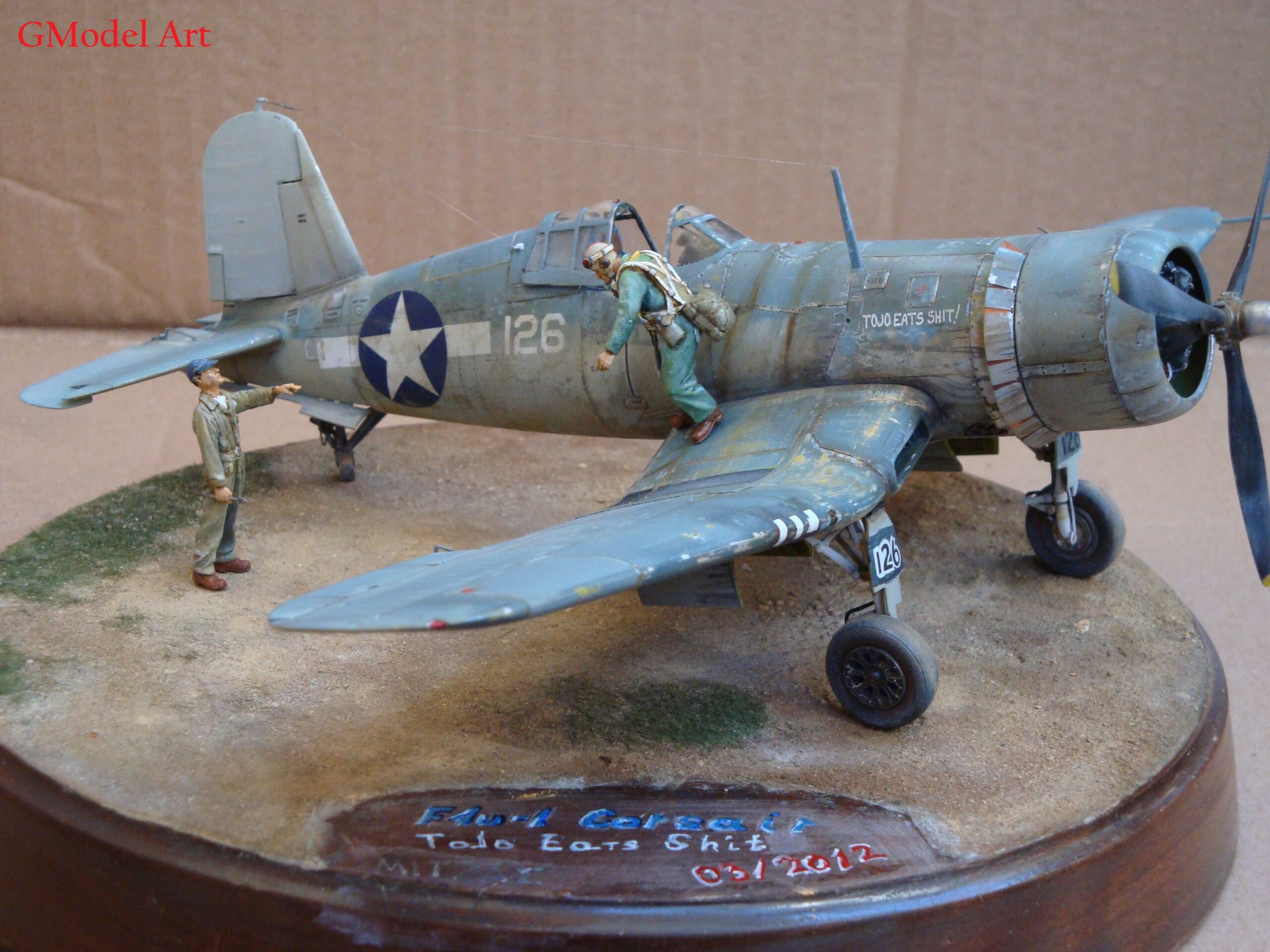
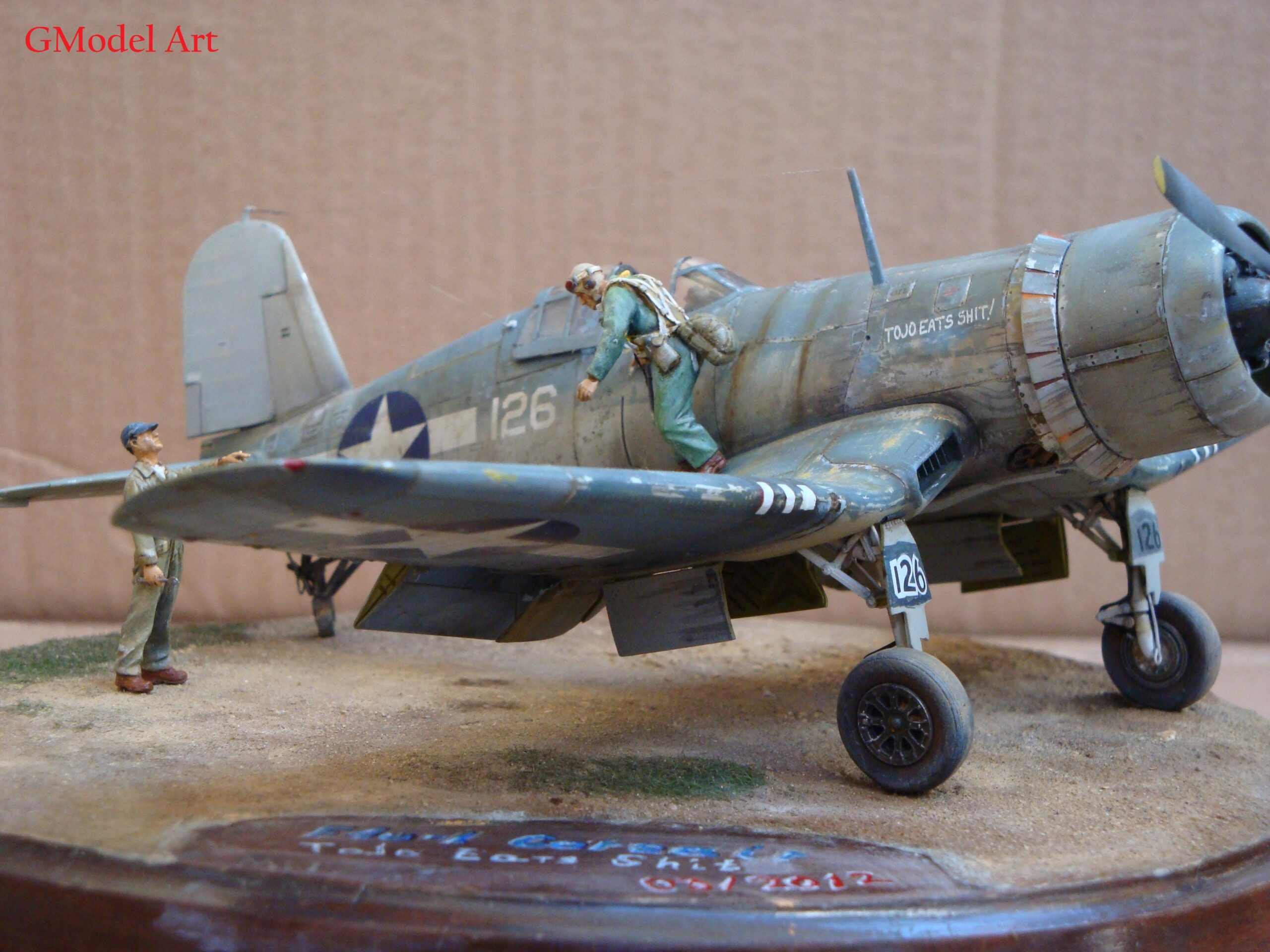
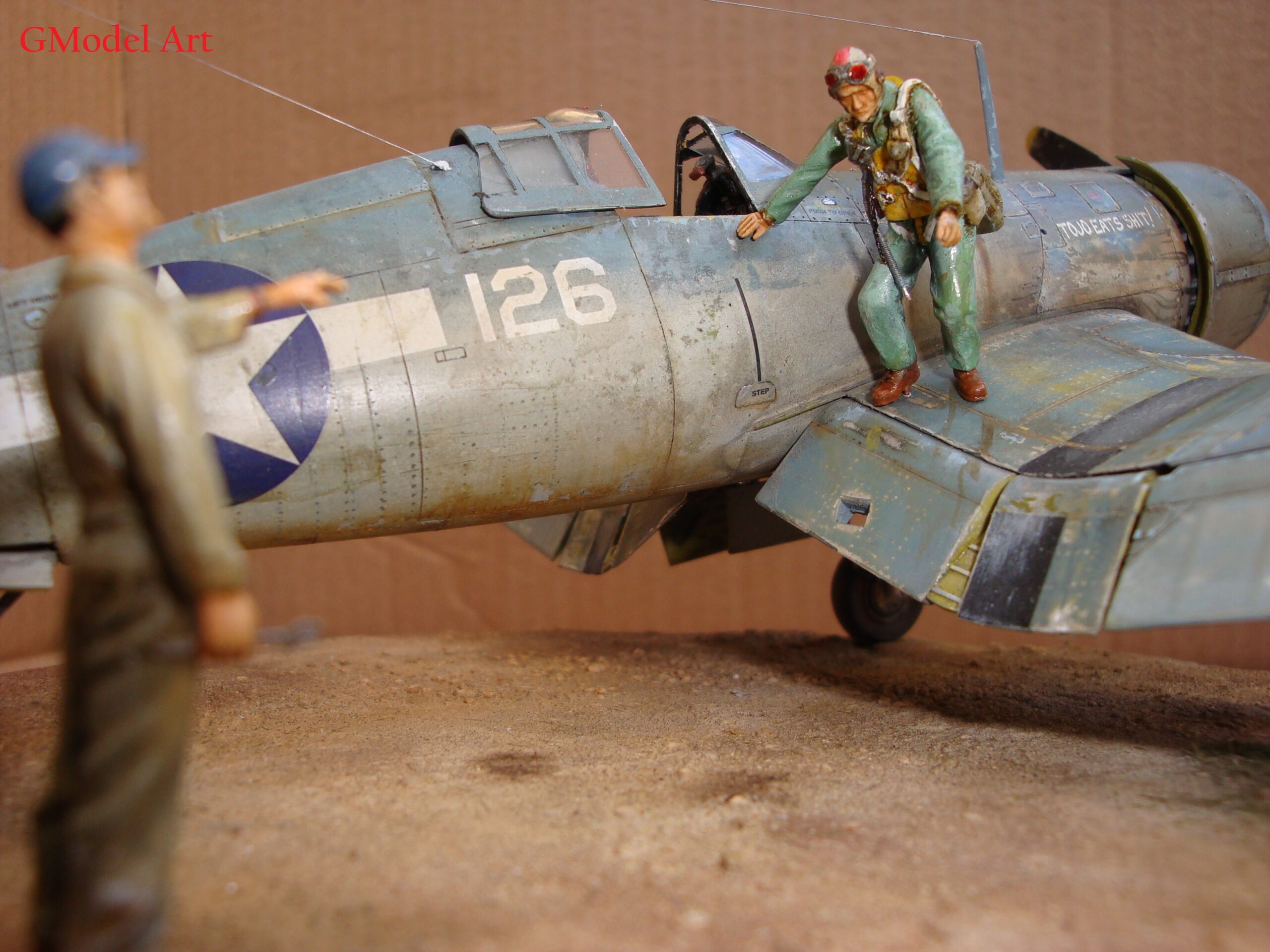
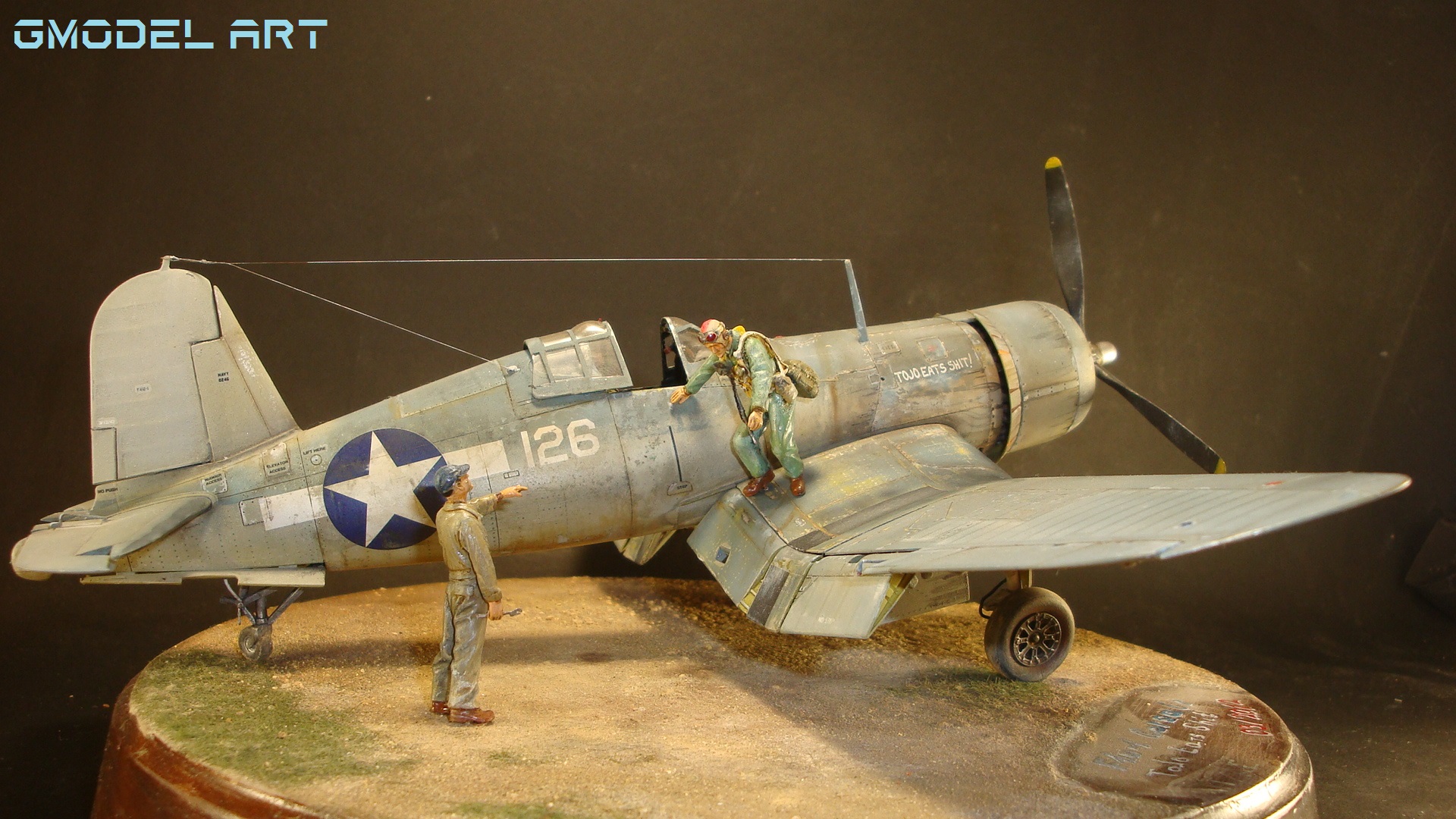
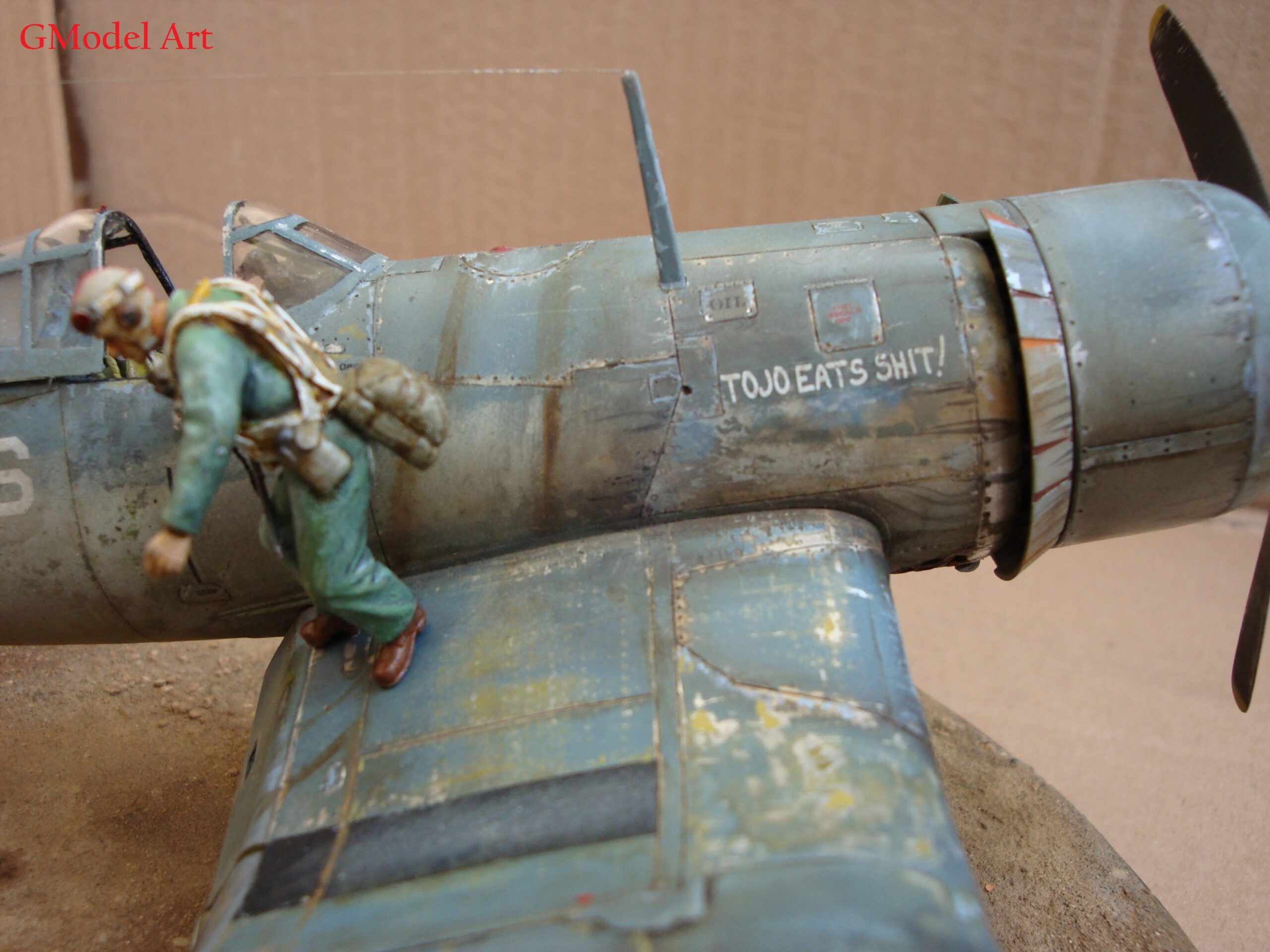
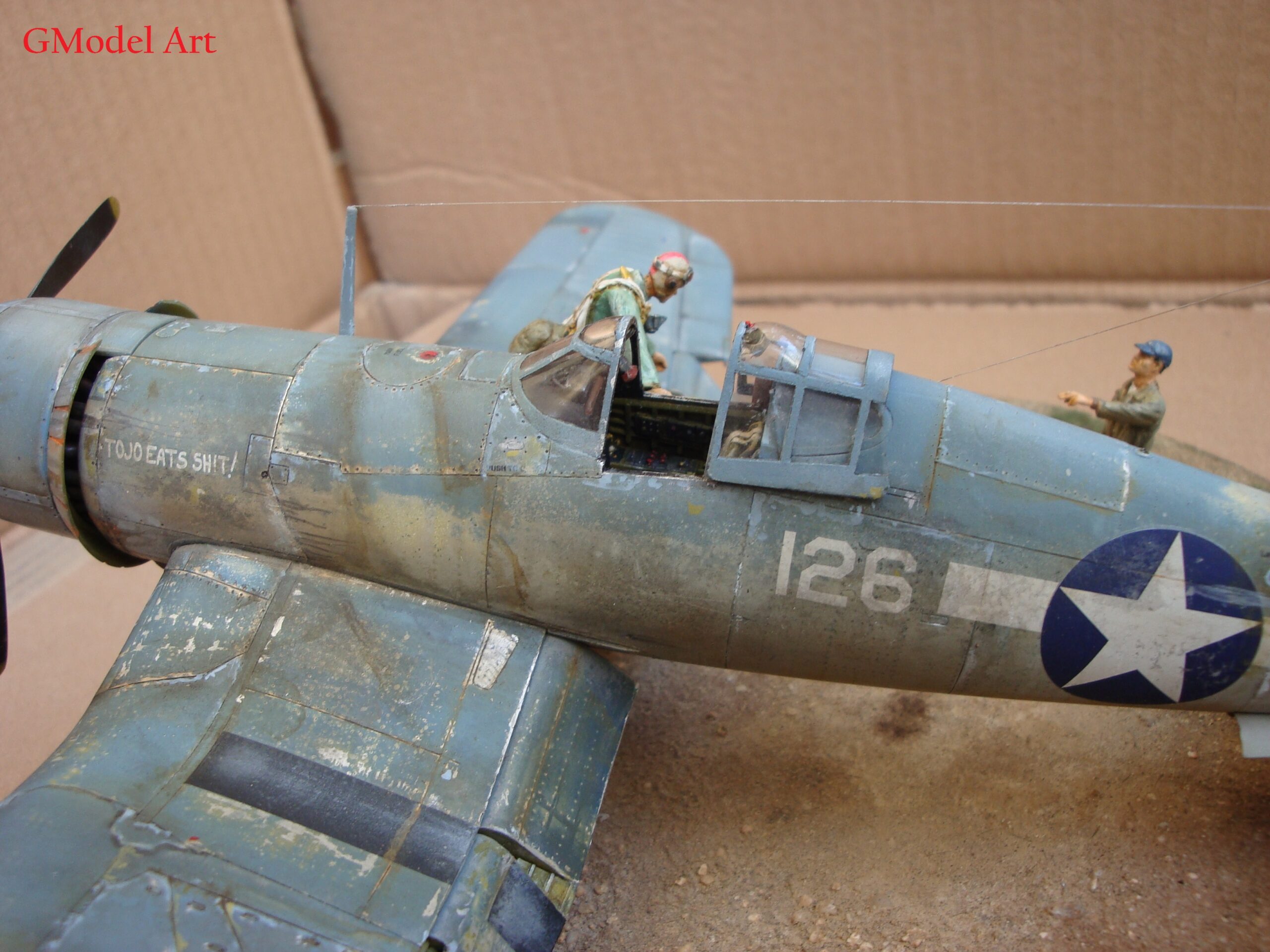
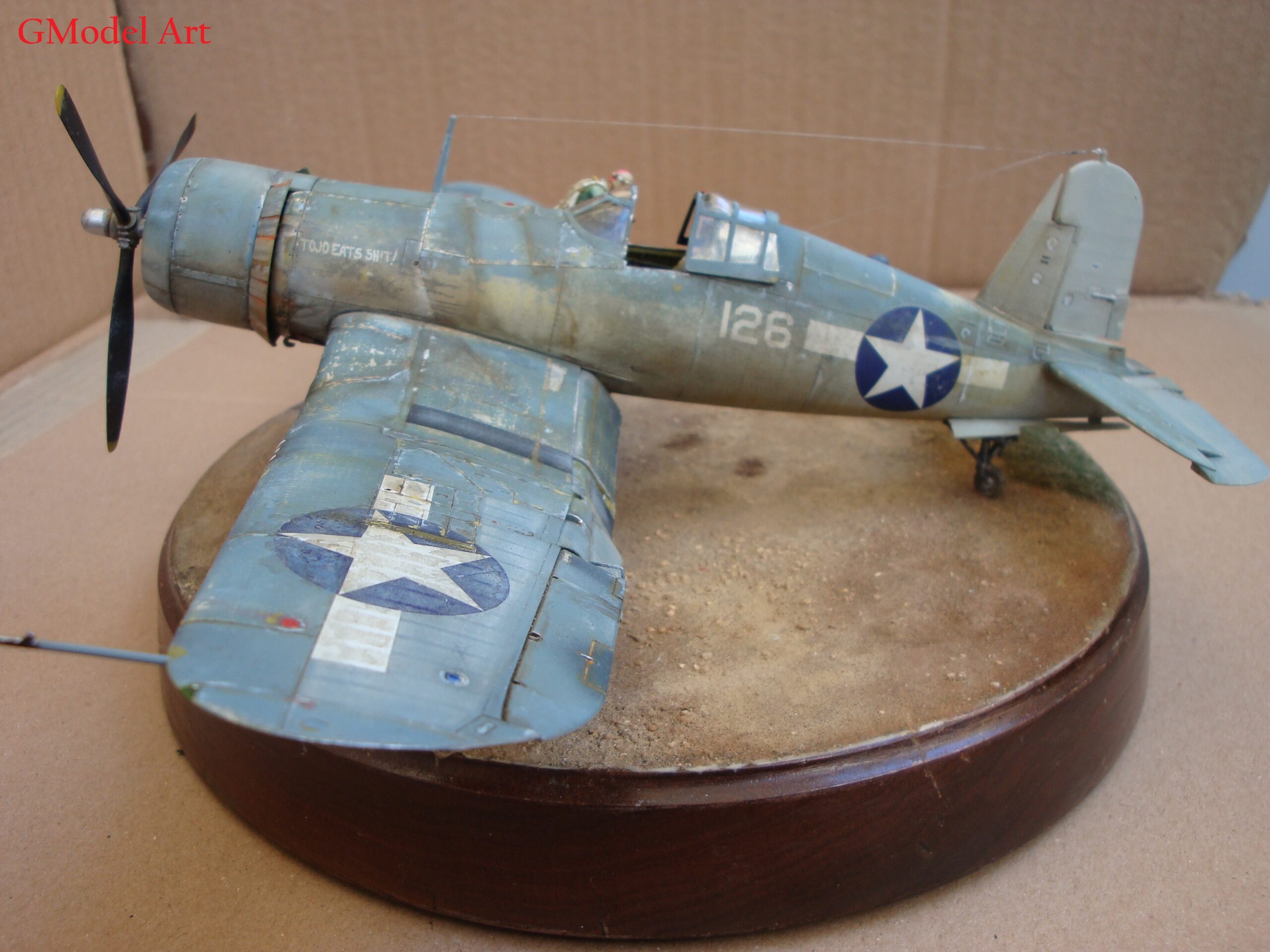
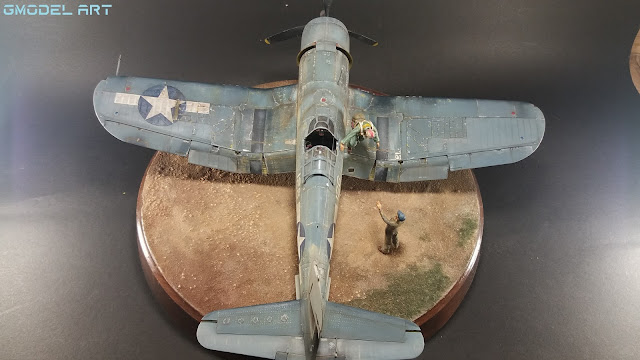
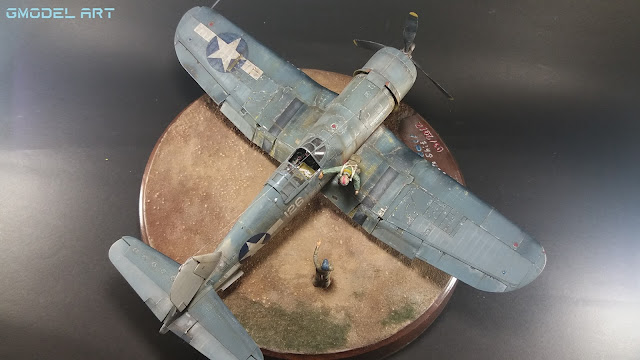
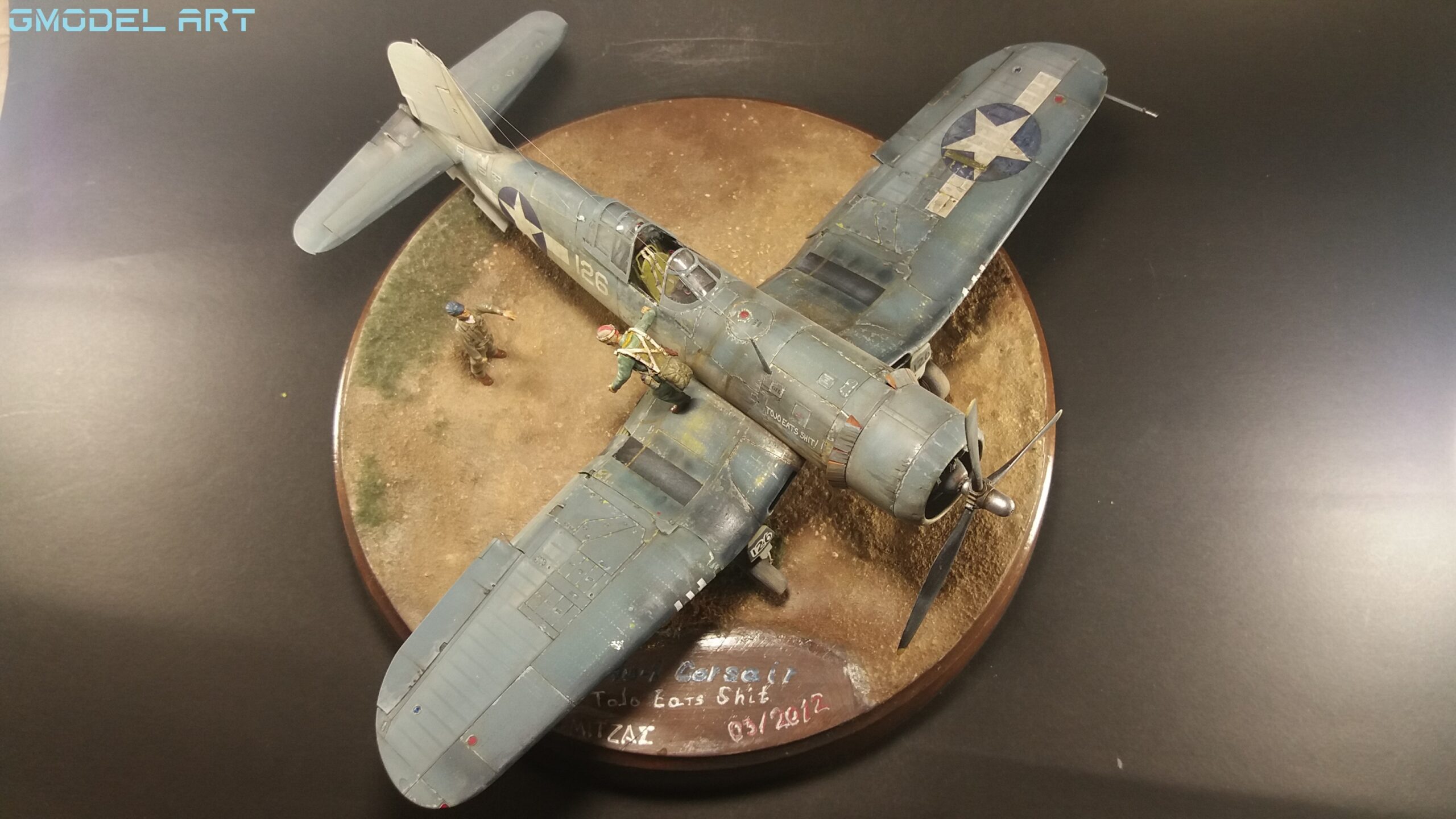
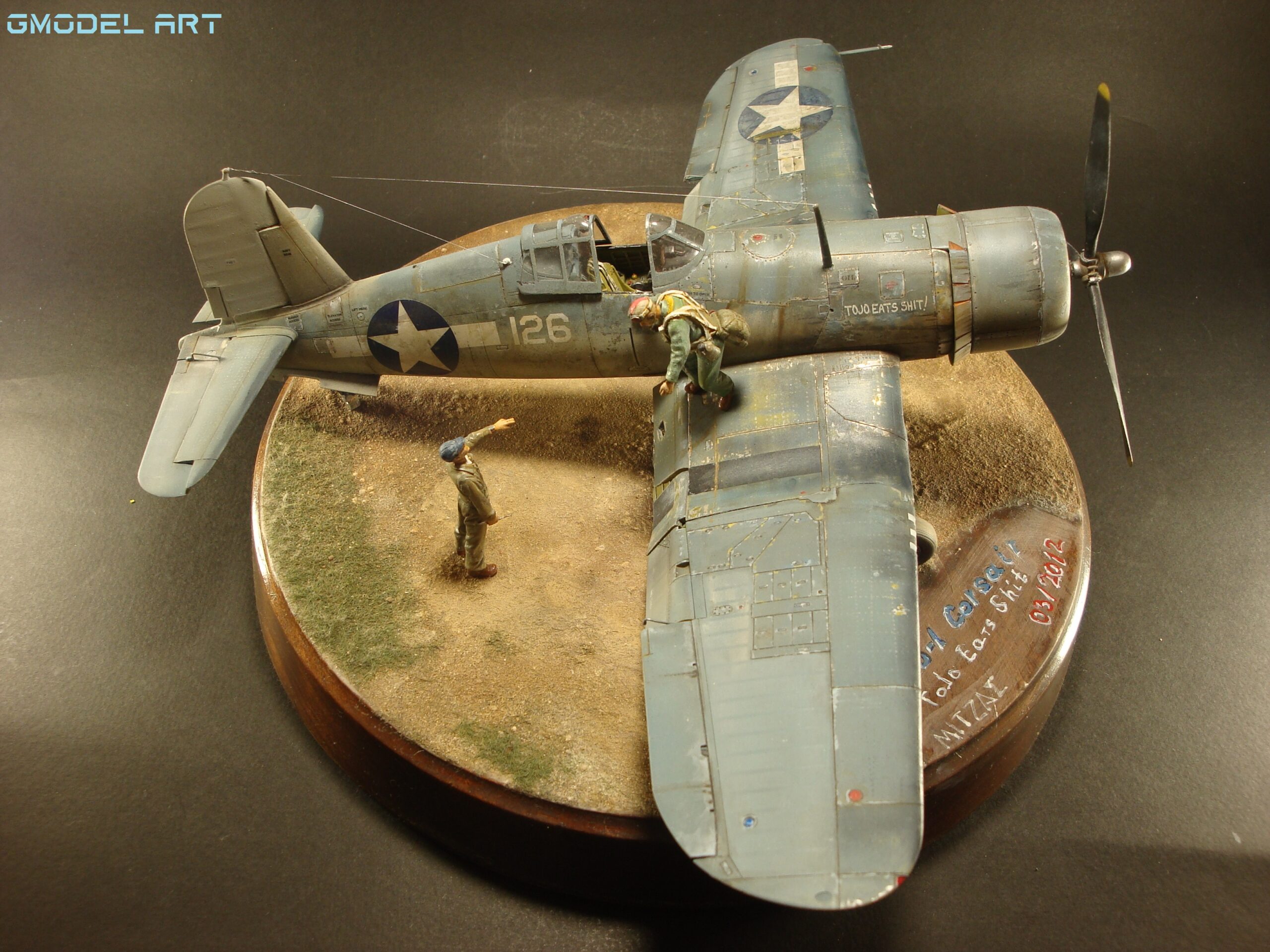
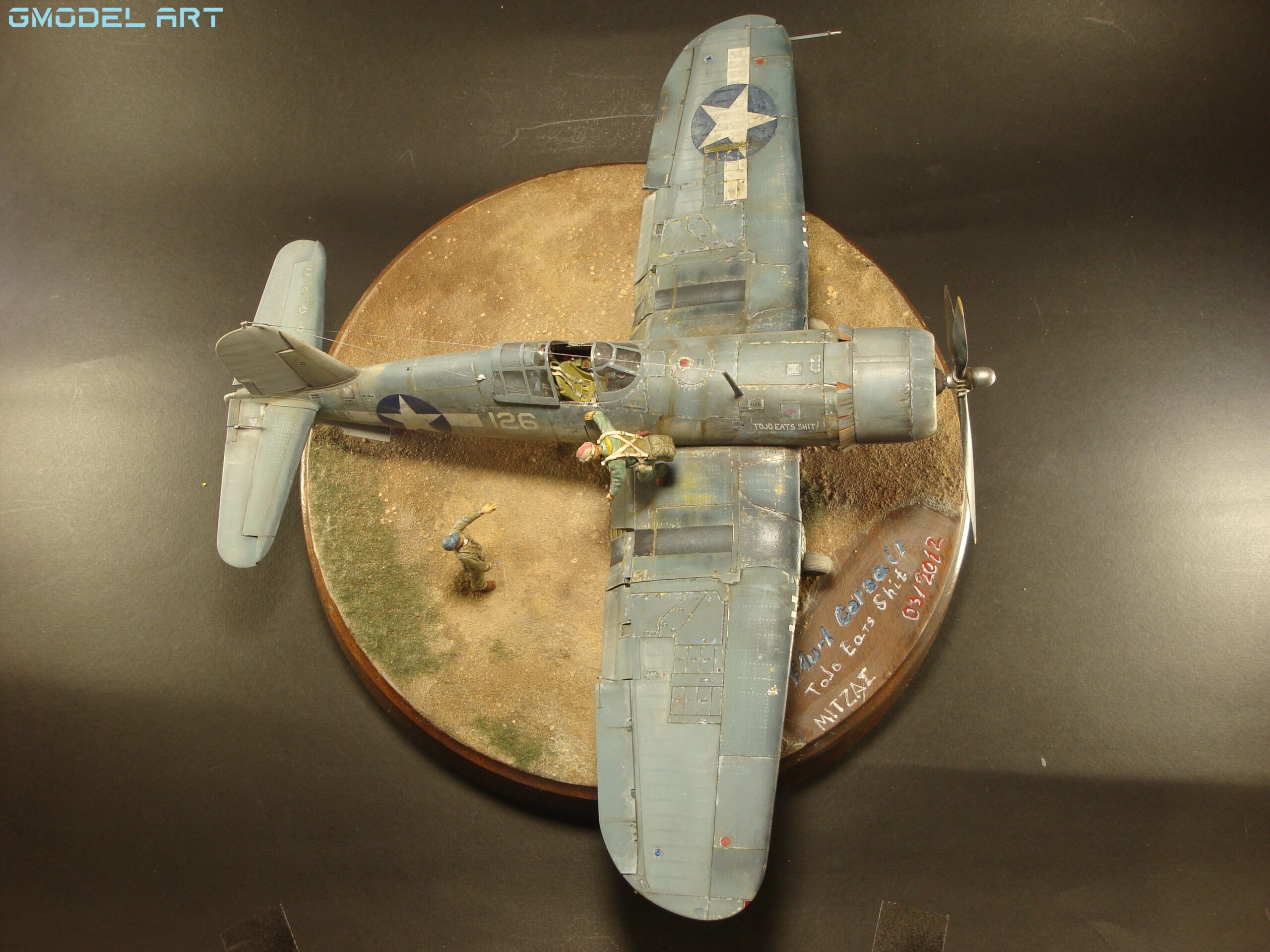
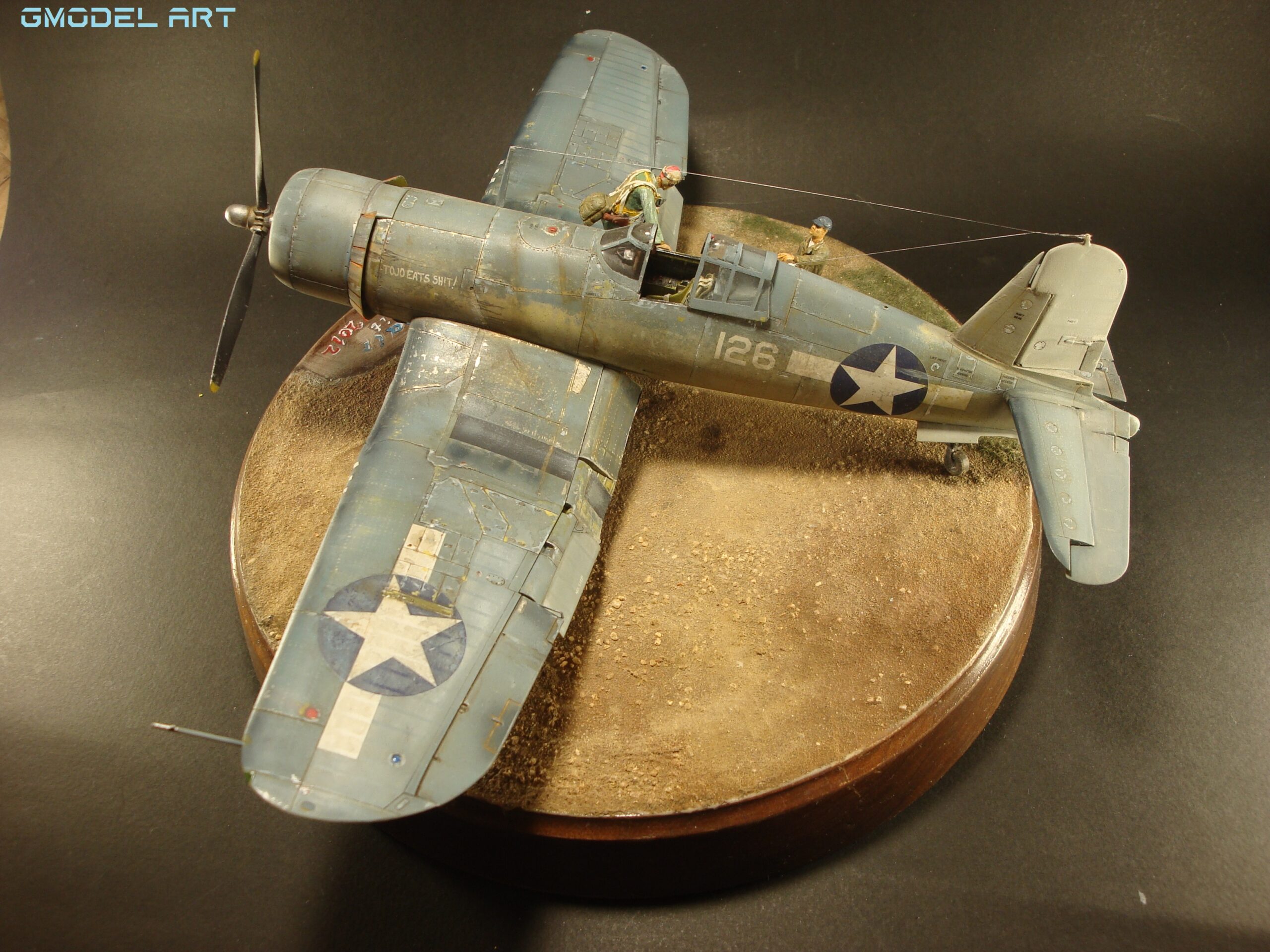
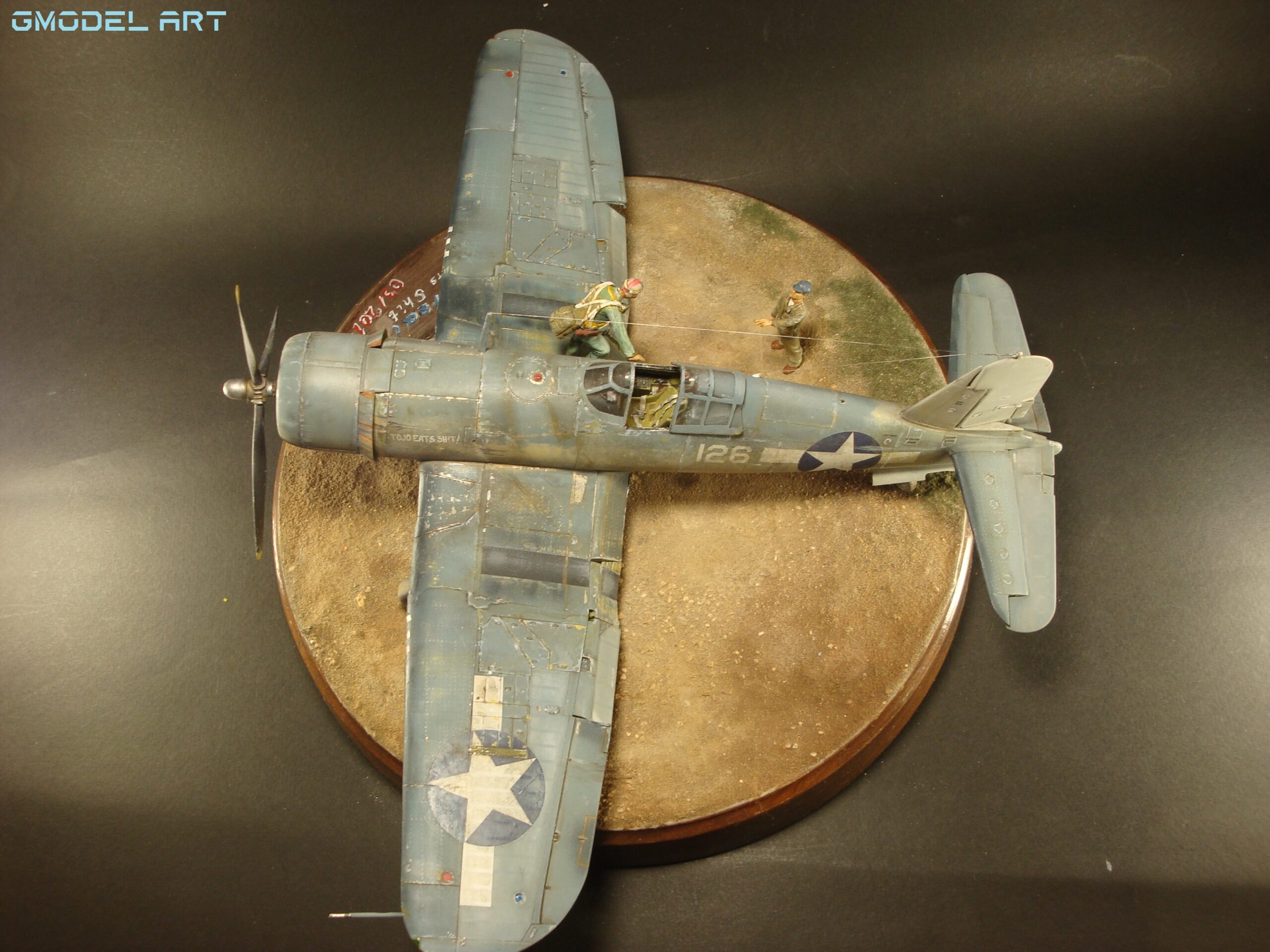
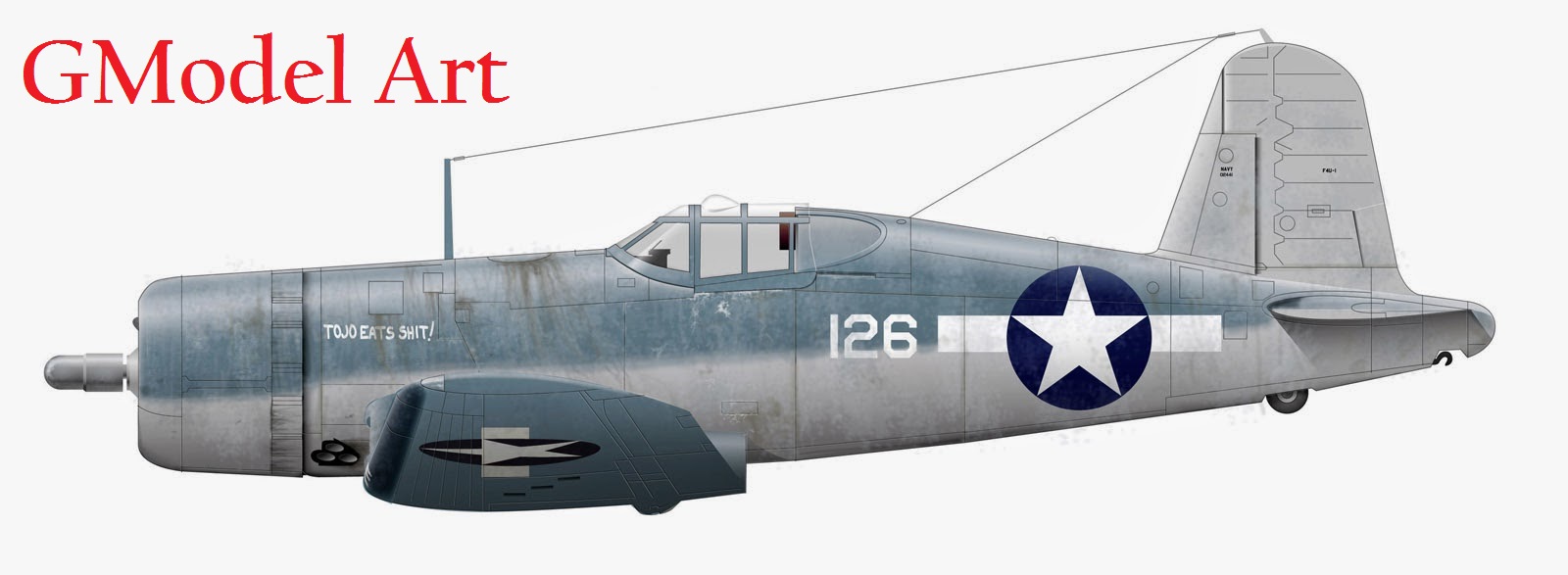
The F4U-1 Birdcage Corsair 126 is a striking example of early Pacific war aircraft, not only because of its aggressive nose art but also due to its unusual camouflage and extreme weathering.
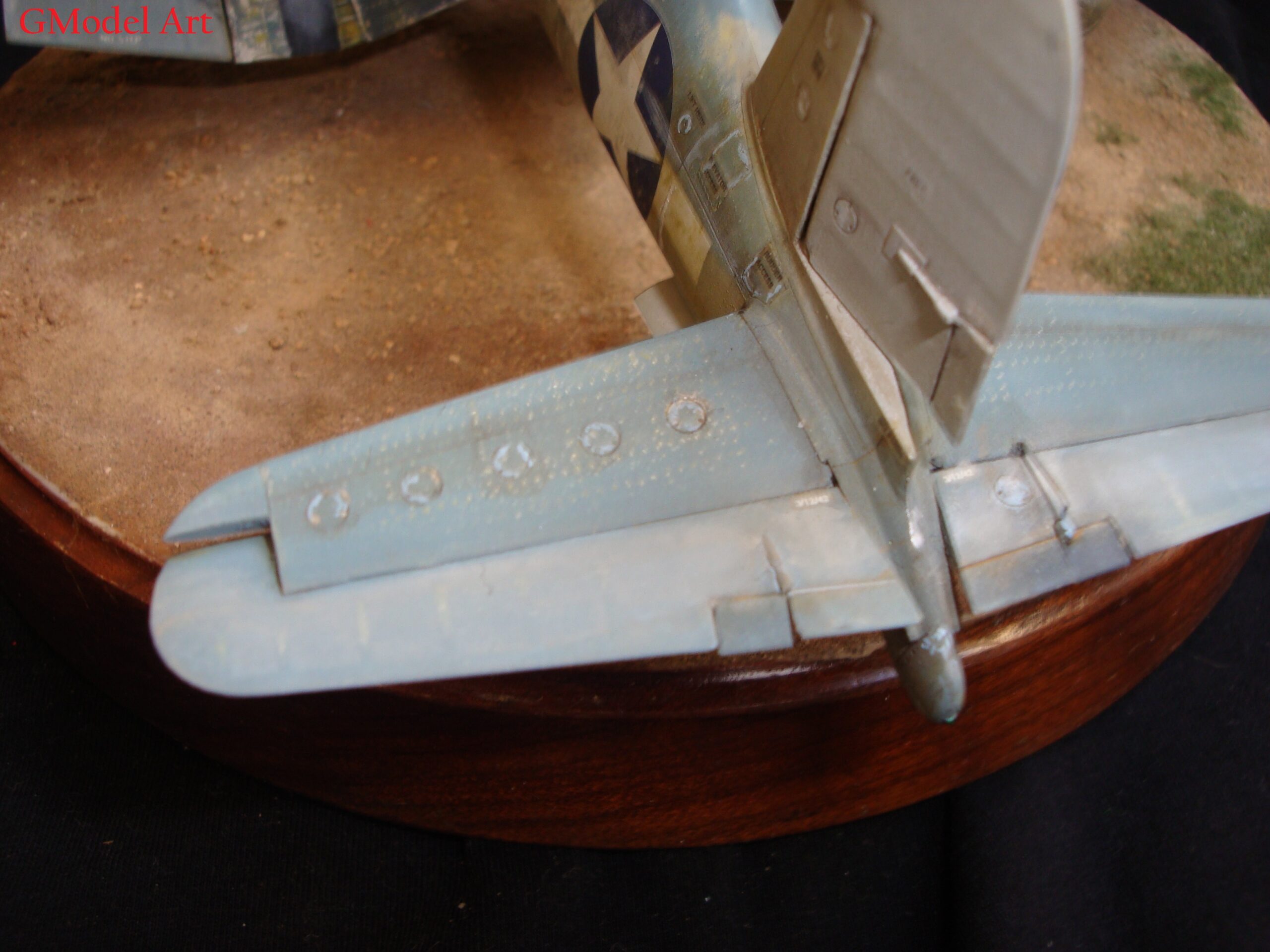
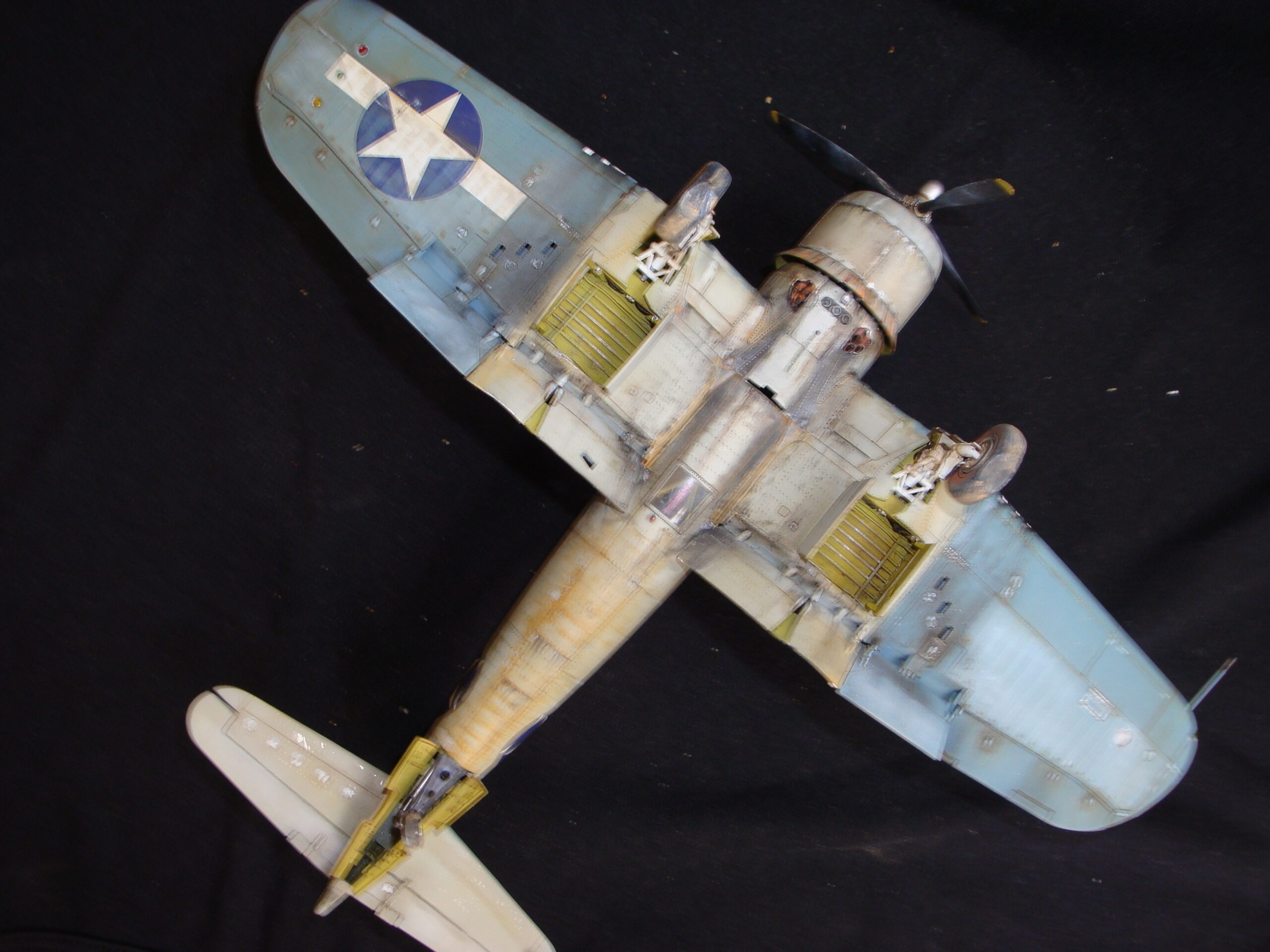
The choice of color scheme is not straightforward. At first glance, it appears to follow the early US Navy two-tone camouflage pattern, consisting of Blue Gray (FS35189) over Light Gray (FS36440). The timing of the markings supports this interpretation, placing the aircraft in early-to-mid 1943 service.
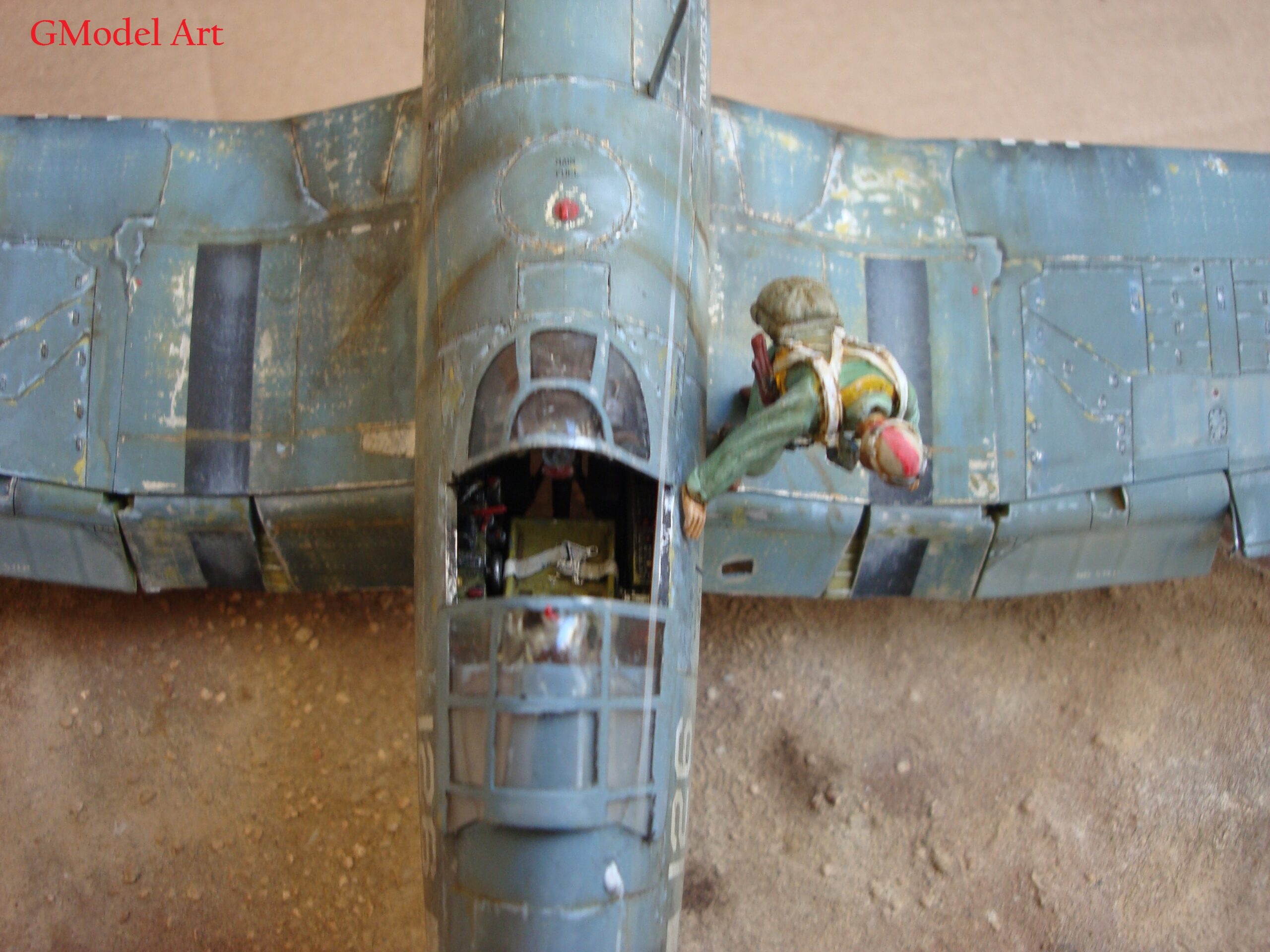
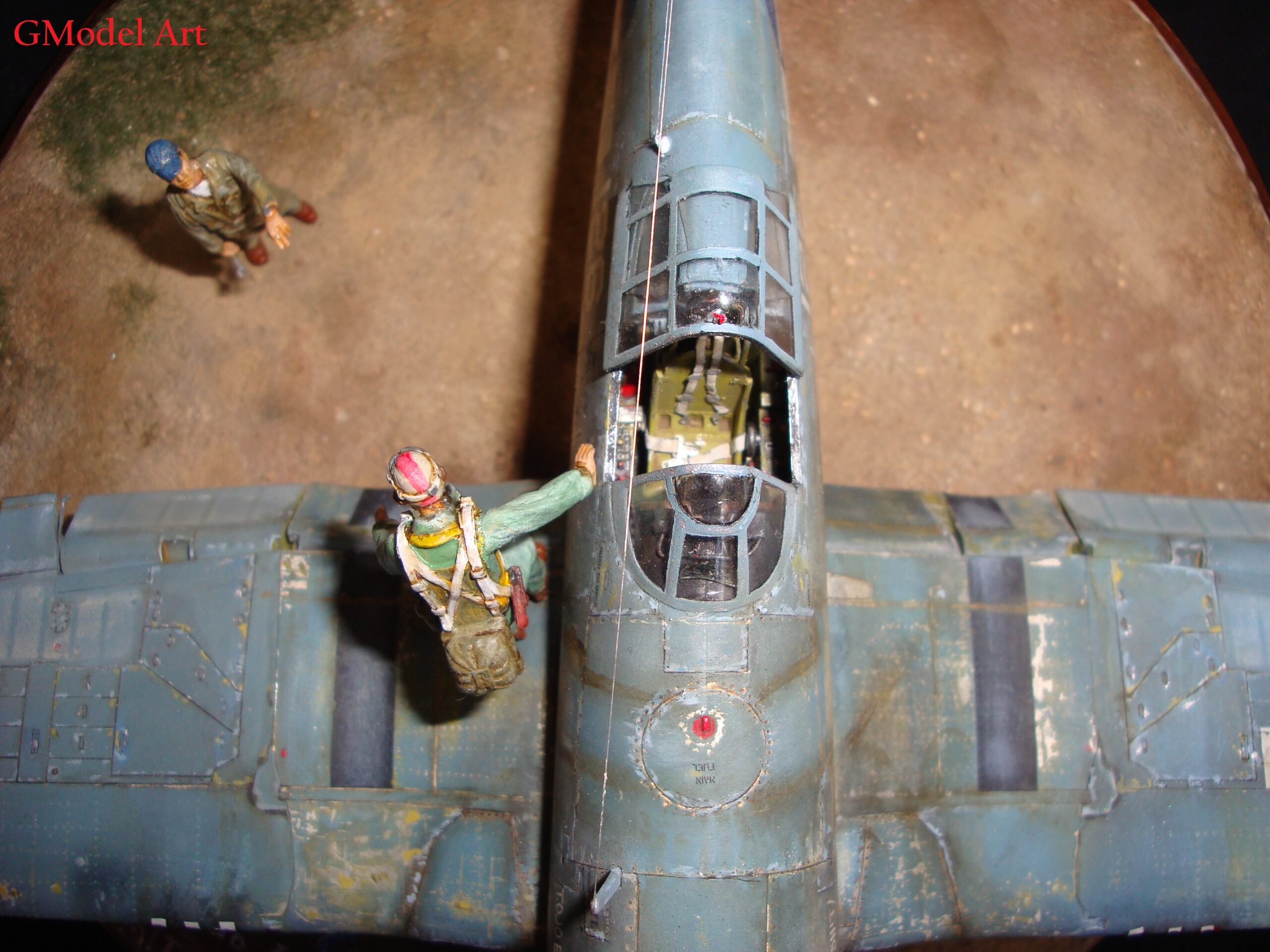
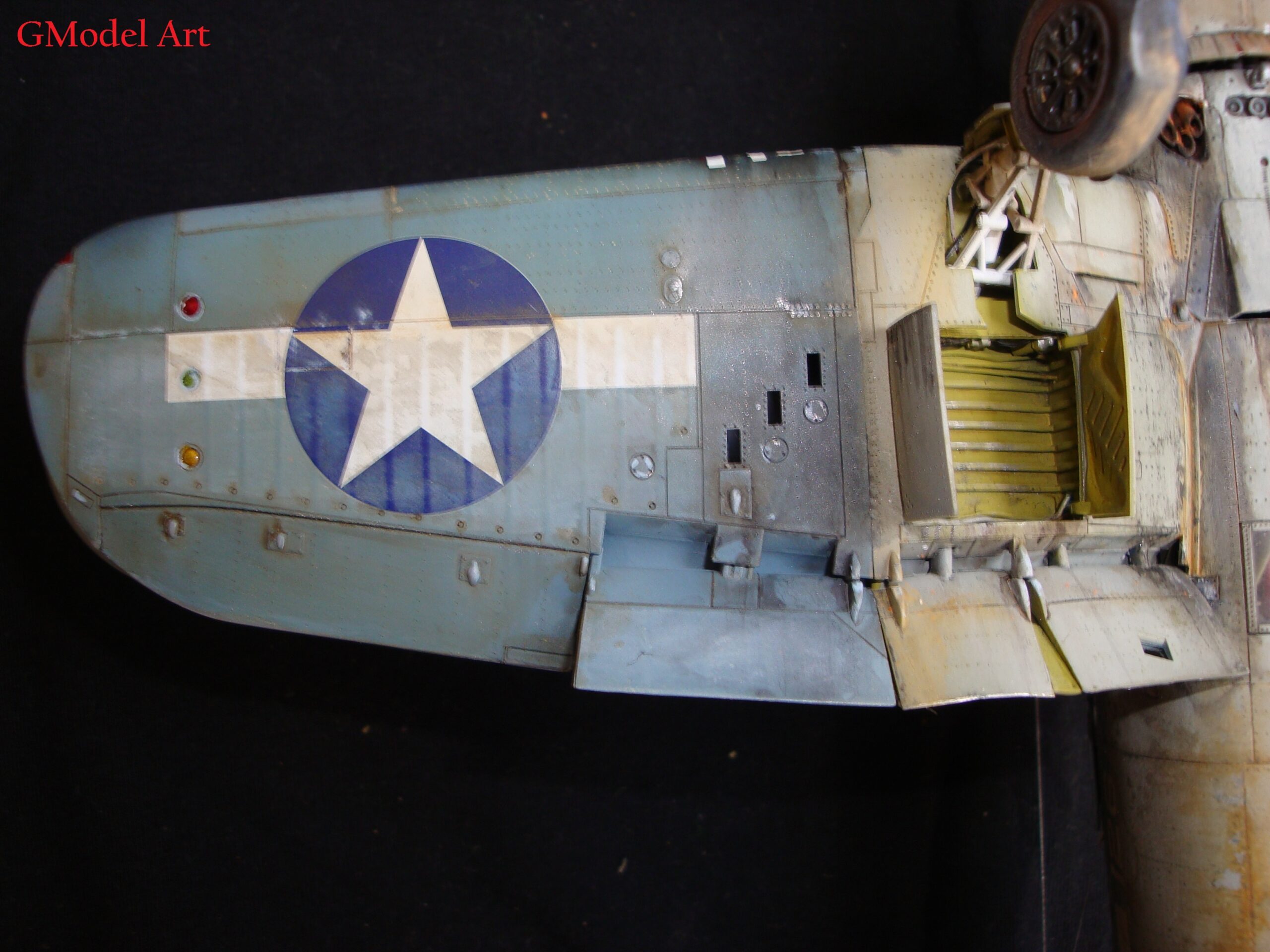
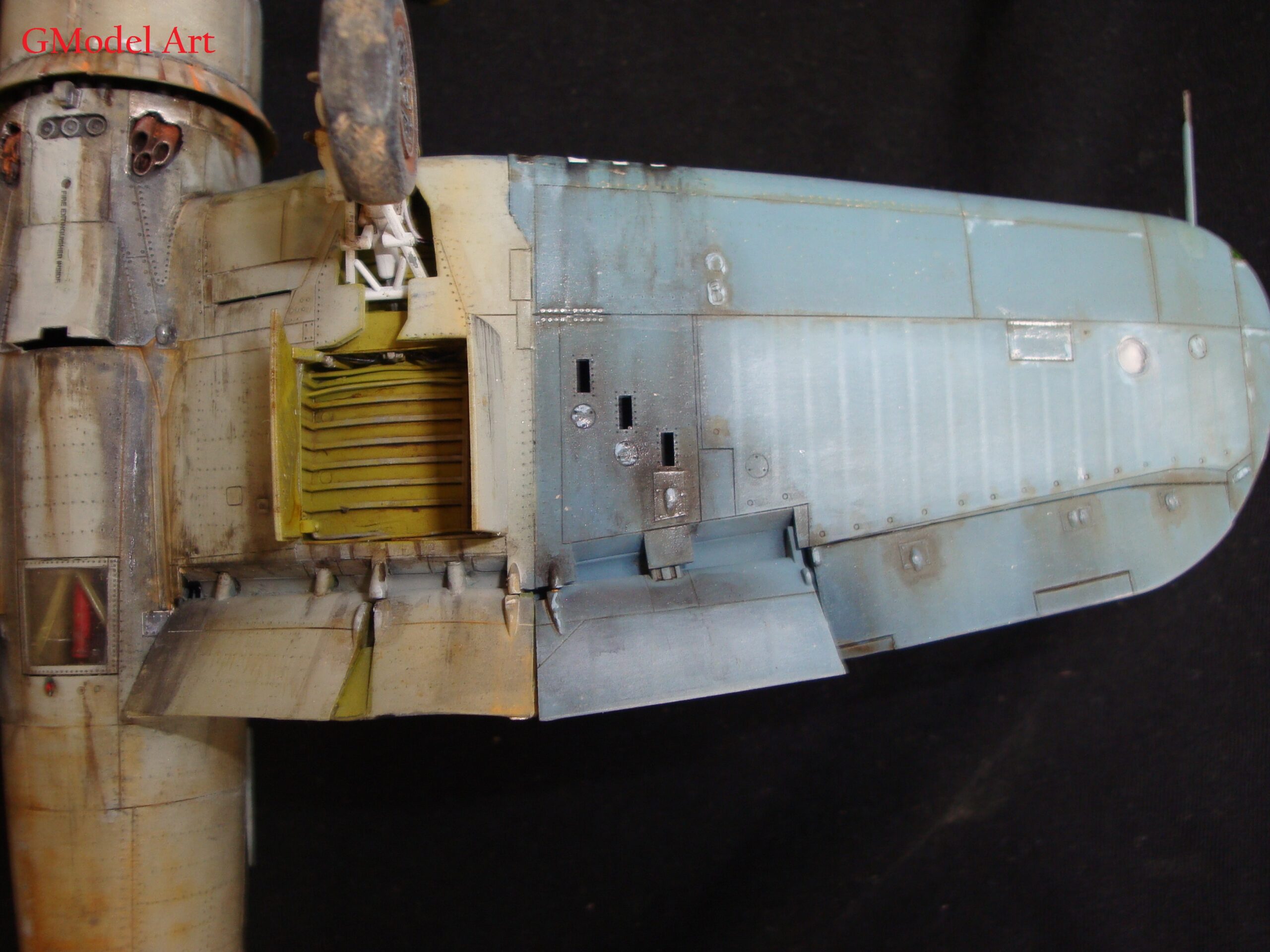
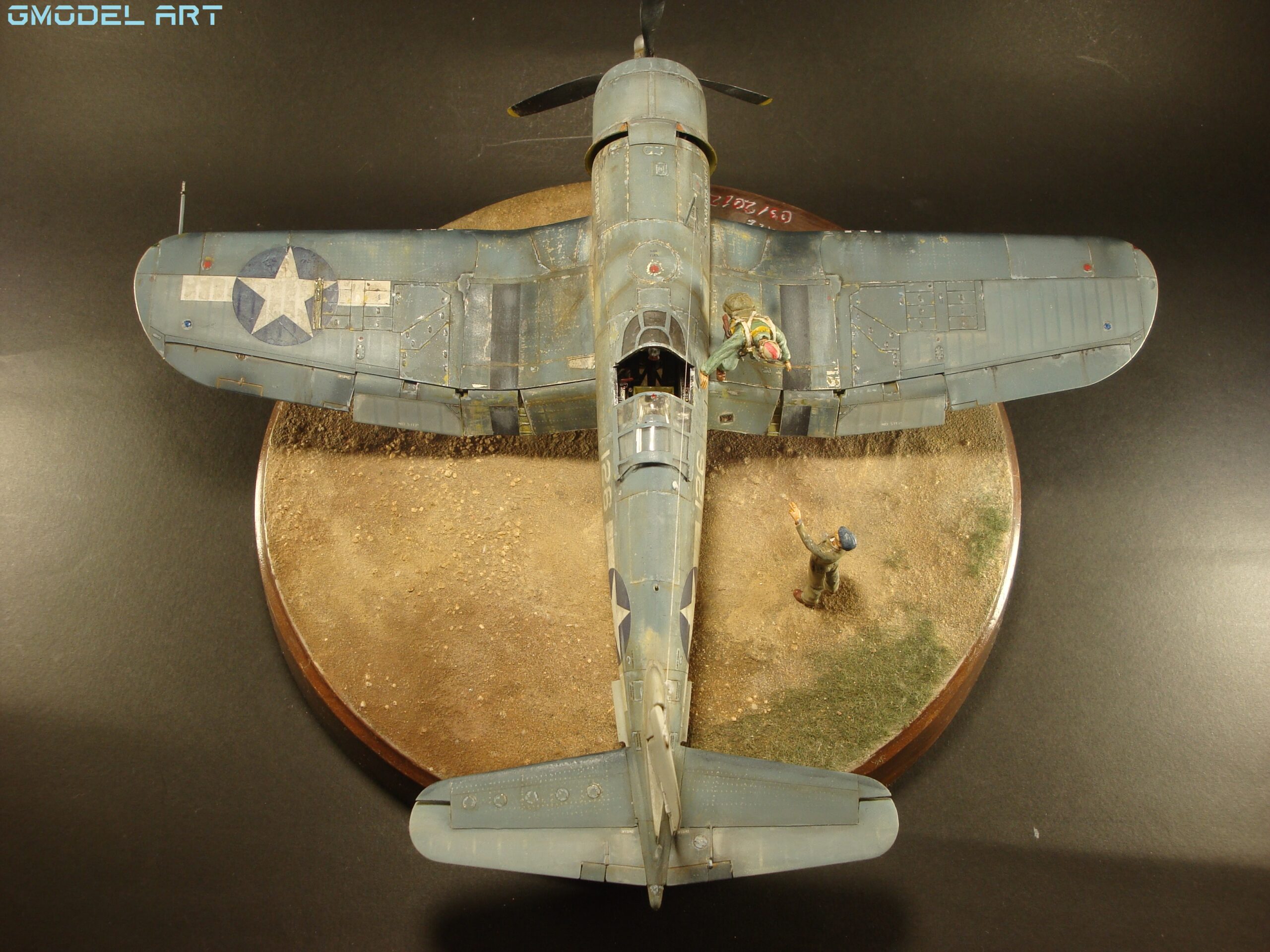
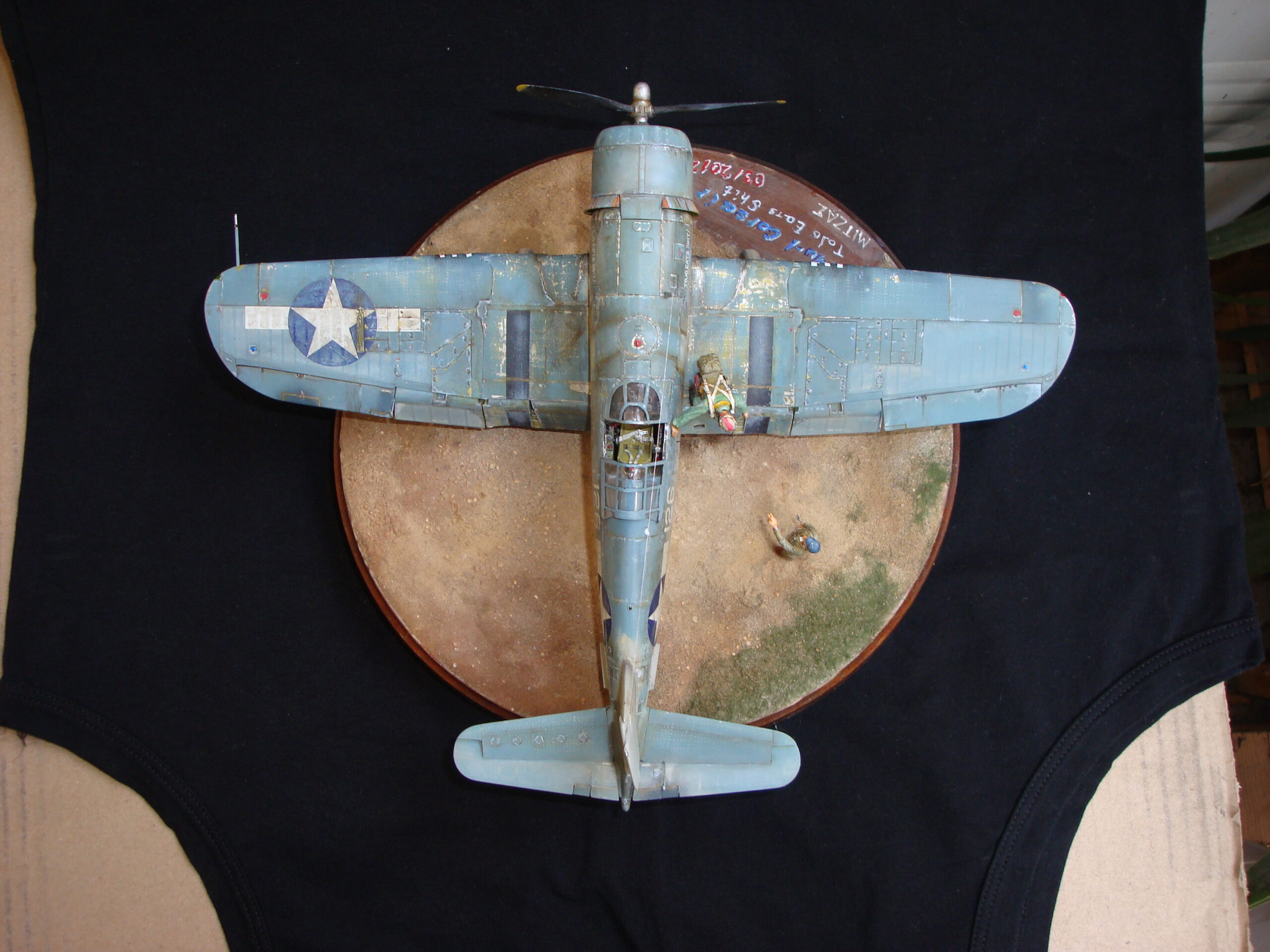
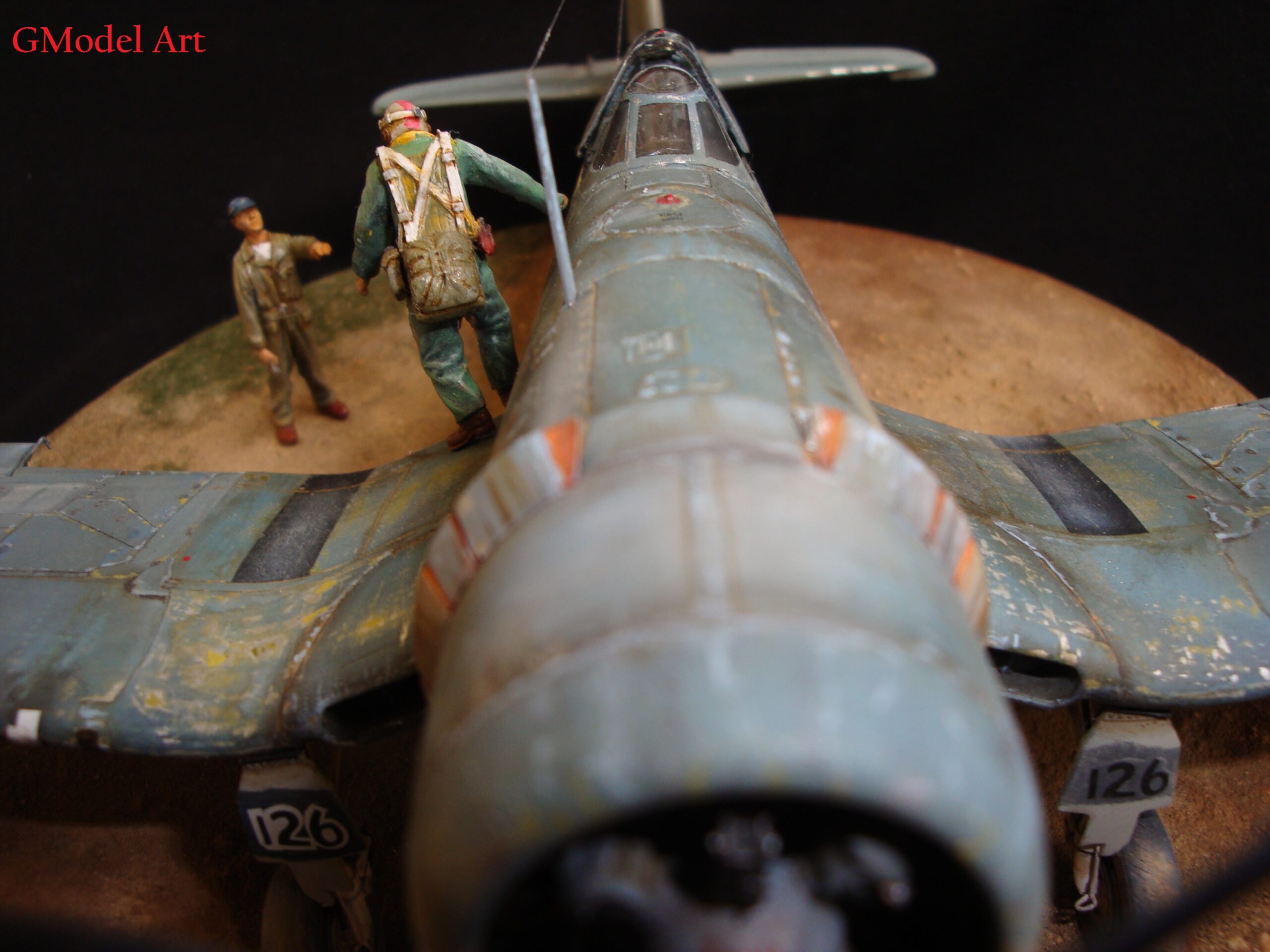
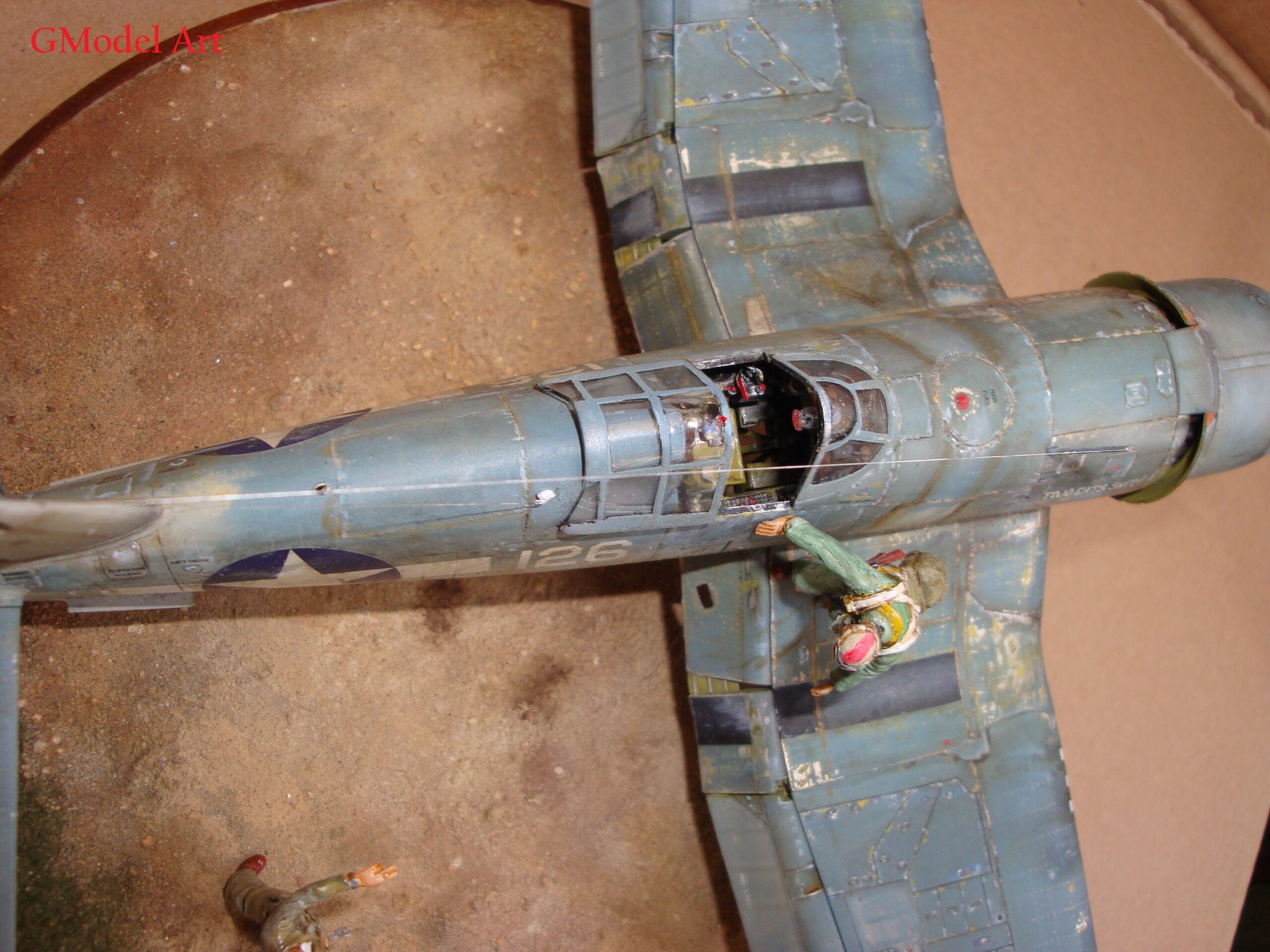
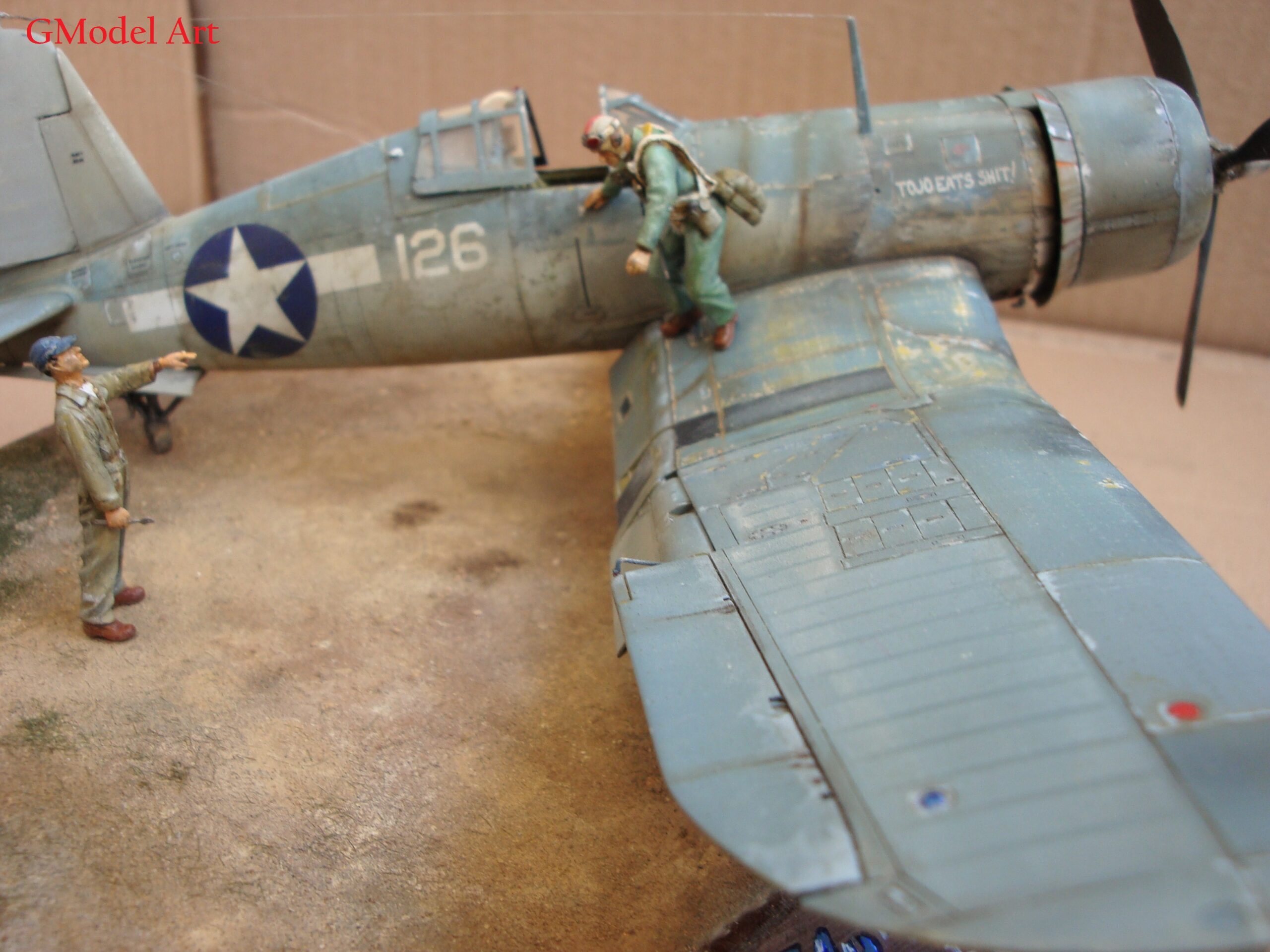
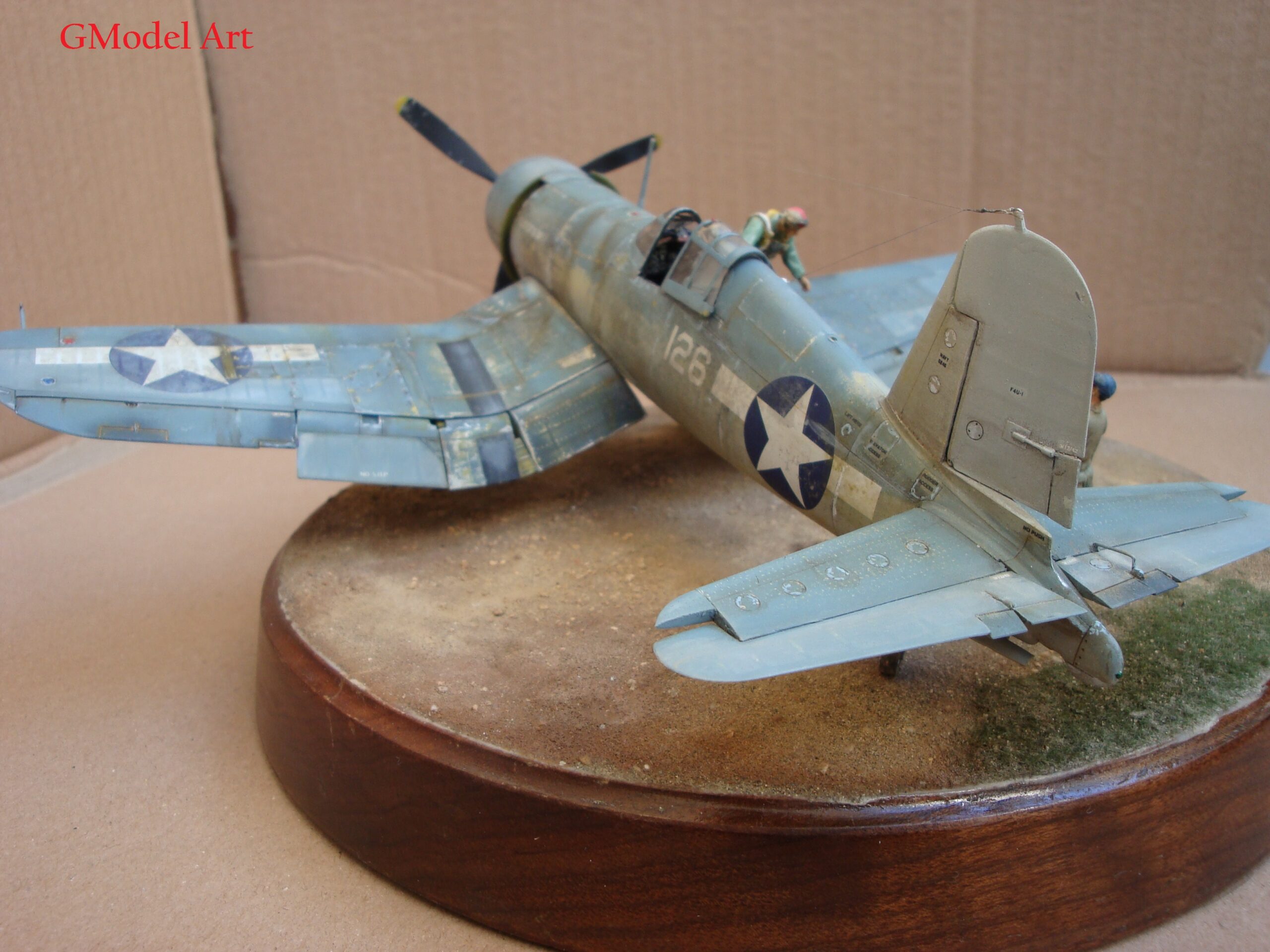
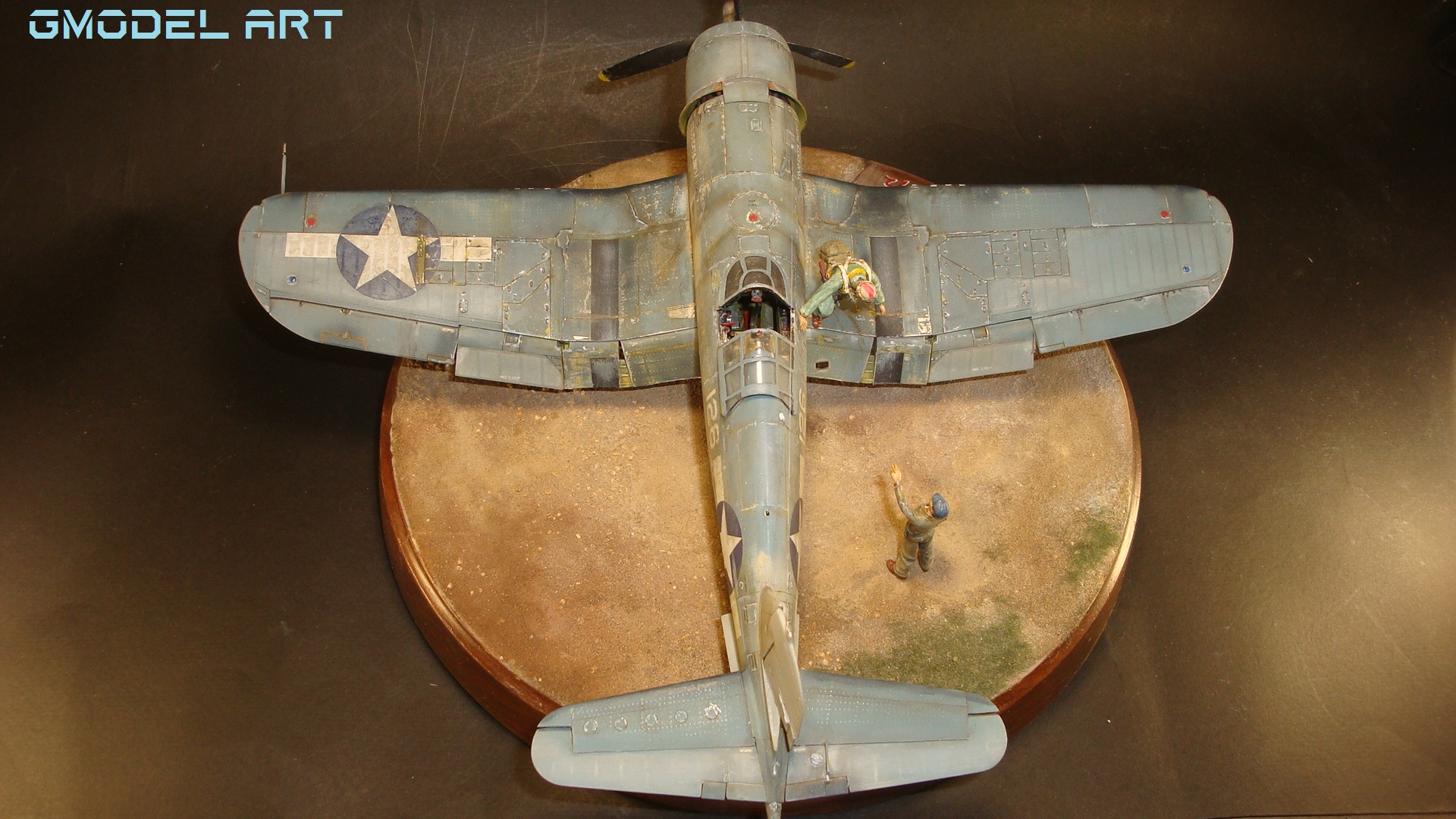
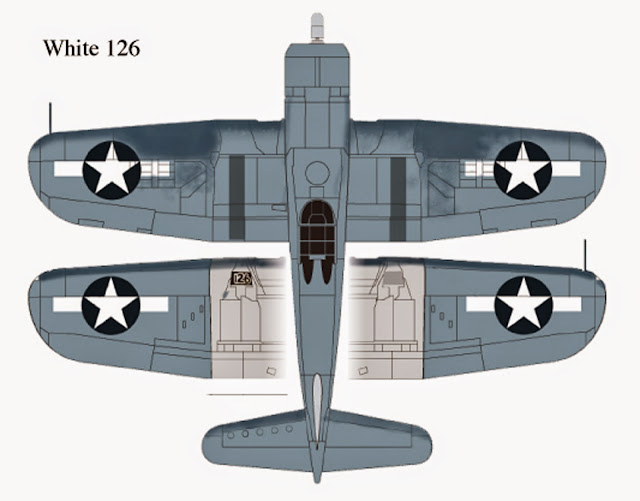
However, a closer look at the outer wing panels reveals a distinct blue-gray tint, while the upper wing surfaces appear significantly darker. This contrast raises an important question: what exactly is the darker tone visible on the wings?
A more convincing interpretation is that this F4U-1 Birdcage Corsair 126 may represent a heavily worn or field-modified transitional scheme. Evidence suggests the presence of Sea Blue (FS35042), likely applied in localized areas. Rather than a factory-applied three-tone camouflage, this points toward operational repainting under harsh combat conditions.
The aircraft seems to retain its original factory finish, with additional Sea Blue layers applied primarily across the forward wing sections. This kind of repainting was not aesthetic—it was practical, fast, and often crude.
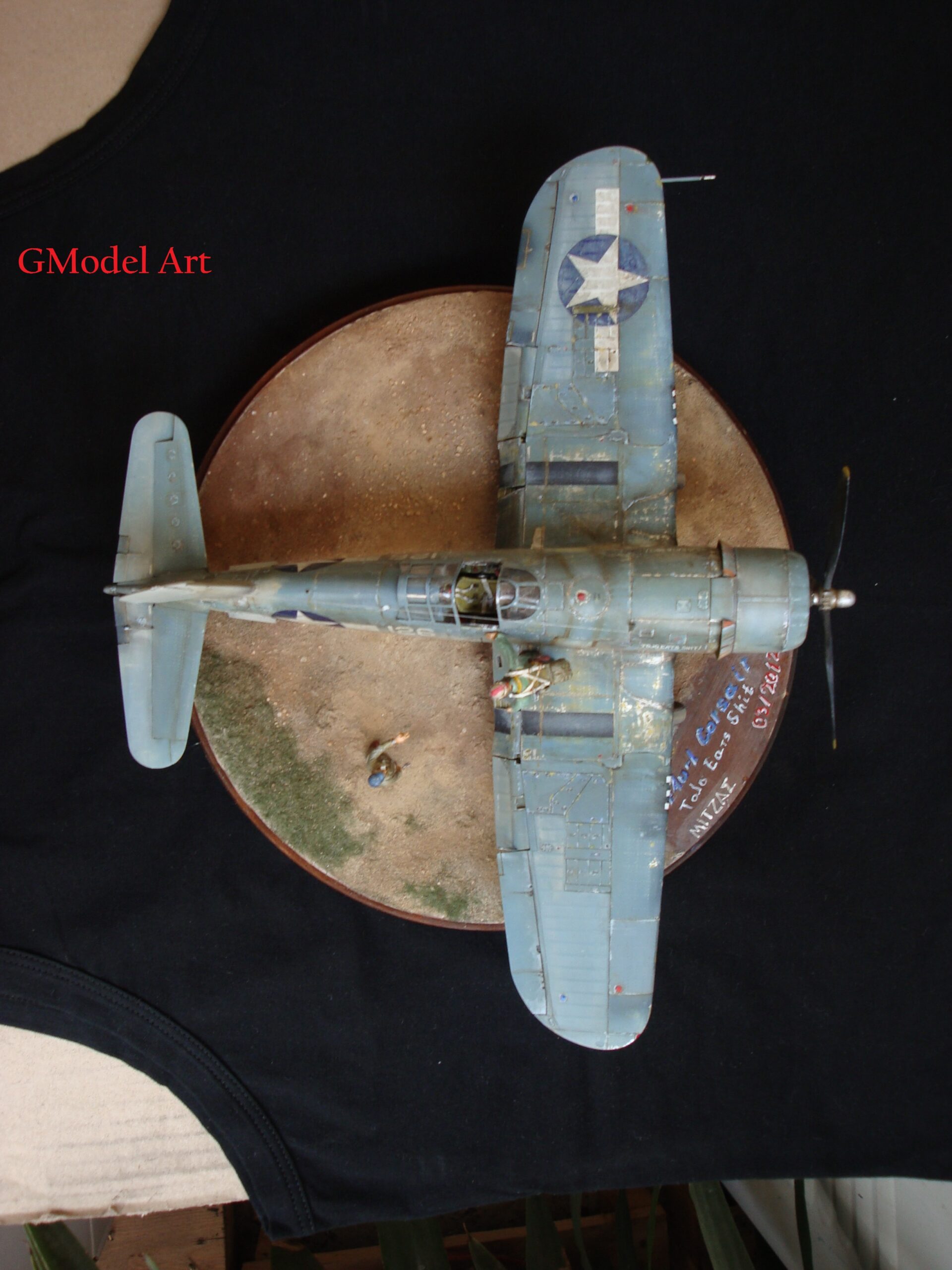
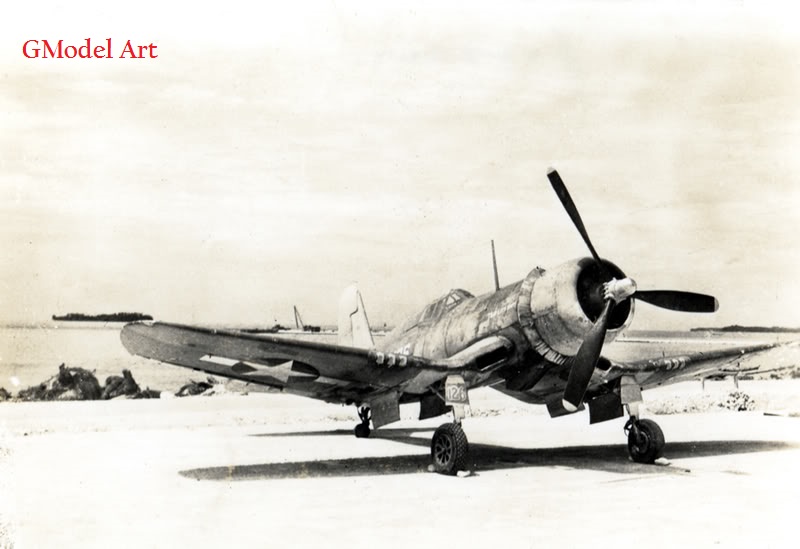
There is still uncertainty regarding the placement of national insignia. It is not confirmed whether the aircraft carried “star and bar” markings on both wings, despite what some decal manufacturers suggest. What remains undisputed is that this aircraft was among the early Corsairs delivered to the USMC in 1943, with photographic evidence placing it in service as late as 1944.
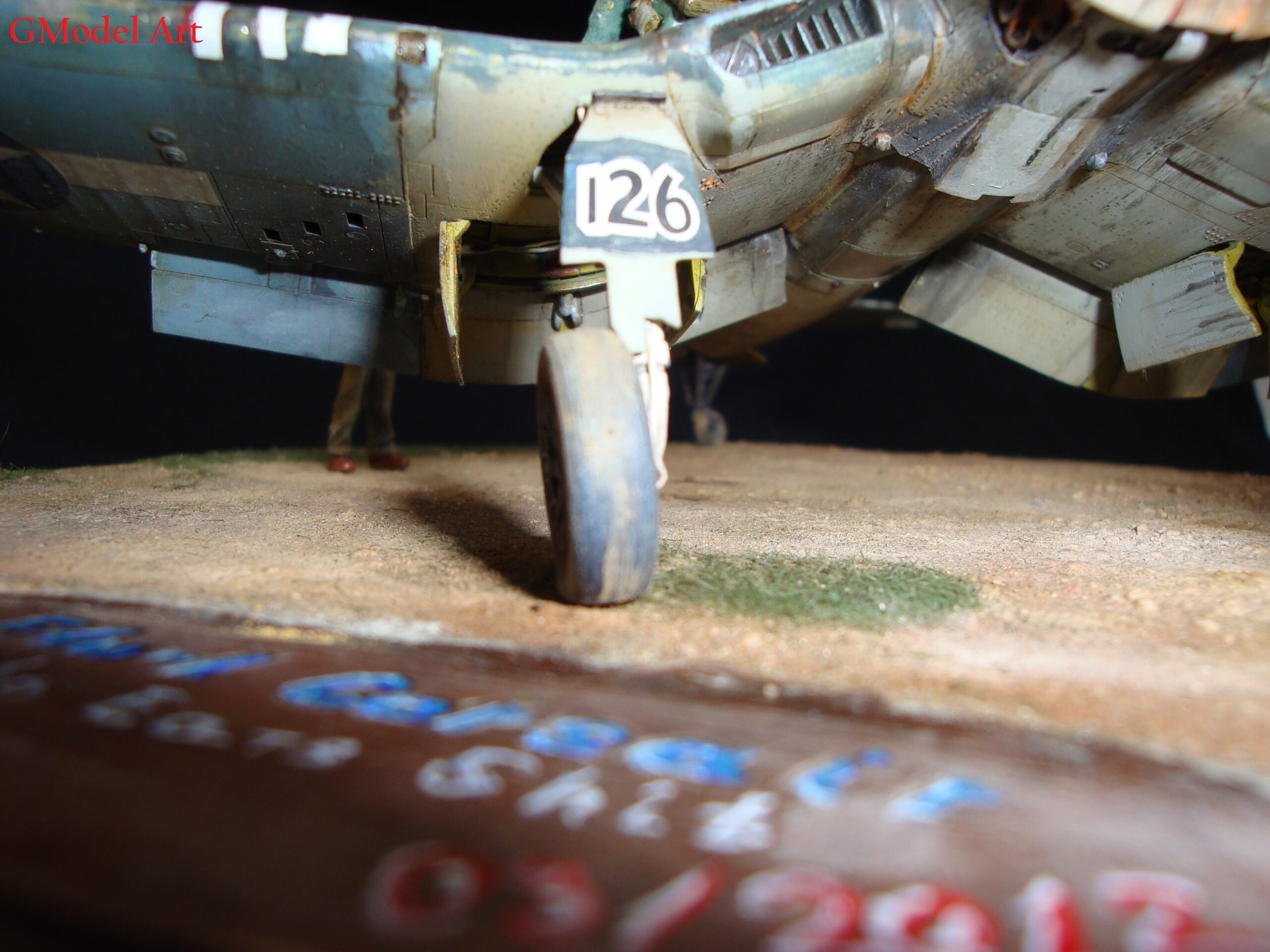
Operating in the Pacific meant exposure to some of the harshest environmental conditions of the war. Aircraft like the F4U-1 Birdcage Corsair 126 flew from improvised coral airstrips, where abrasive particles constantly wore down paint and metal surfaces.
Maintenance conditions were equally extreme. Water was a limited resource reserved strictly for drinking. Aircraft were never washed. Instead, when surfaces deteriorated, they were simply repainted over. Paint quality at the time was poor, and in many cases, gasoline was used as a thinner instead of proper solvents, further degrading durability.
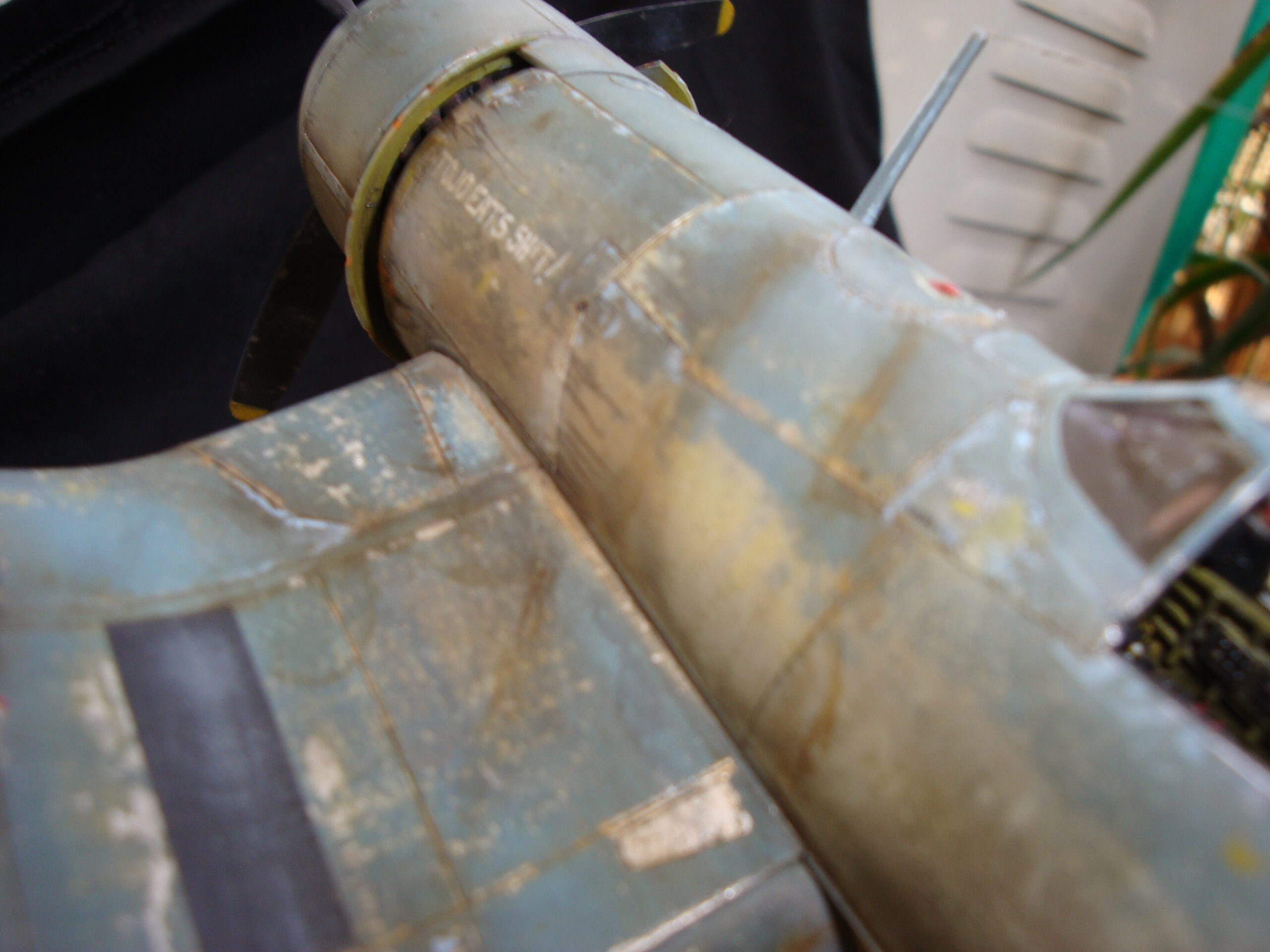
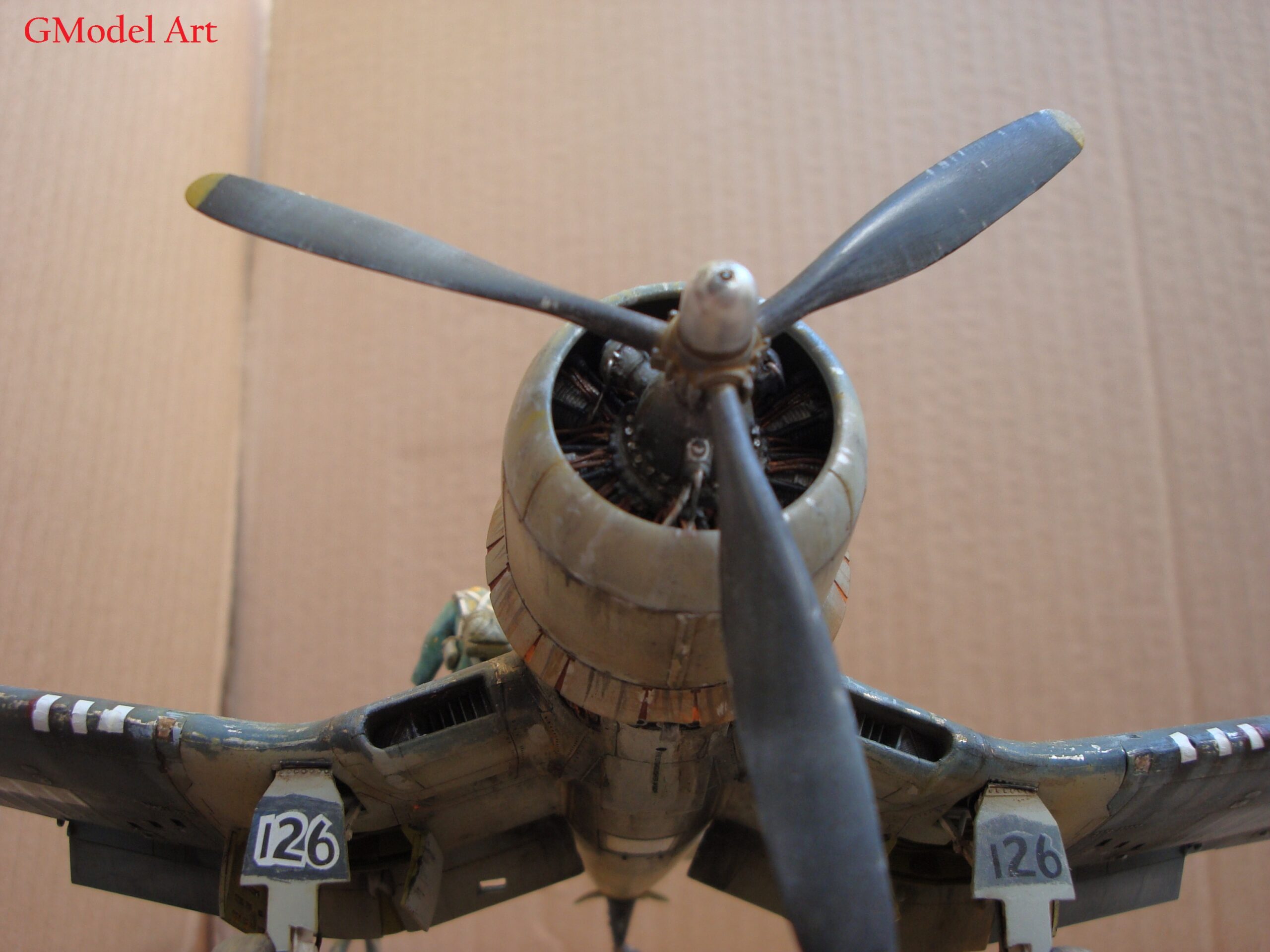
This combination of sun exposure, salt air, coral dust, and improvised maintenance created the heavily weathered appearance we see in this Corsair.
| Area / Section | Color Name | FS Code | Paint (Model Master / Hobby) | Notes |
|---|---|---|---|---|
| Upper Surfaces (base) | Blue Gray | FS35189 | Model Master Blue Gray | Factory base color, faded heavily |
| Undersurfaces | Light Gray | FS36440 | Model Master Light Gray | Early US Navy standard |
| Wing Upper (dark areas) | Sea Blue | FS35042 | Model Master Sea Blue | field repaint |
| Forward Wings (touch-ups) | Sea Blue (thin) | FS35042 | diluted for layering | uneven fitting |
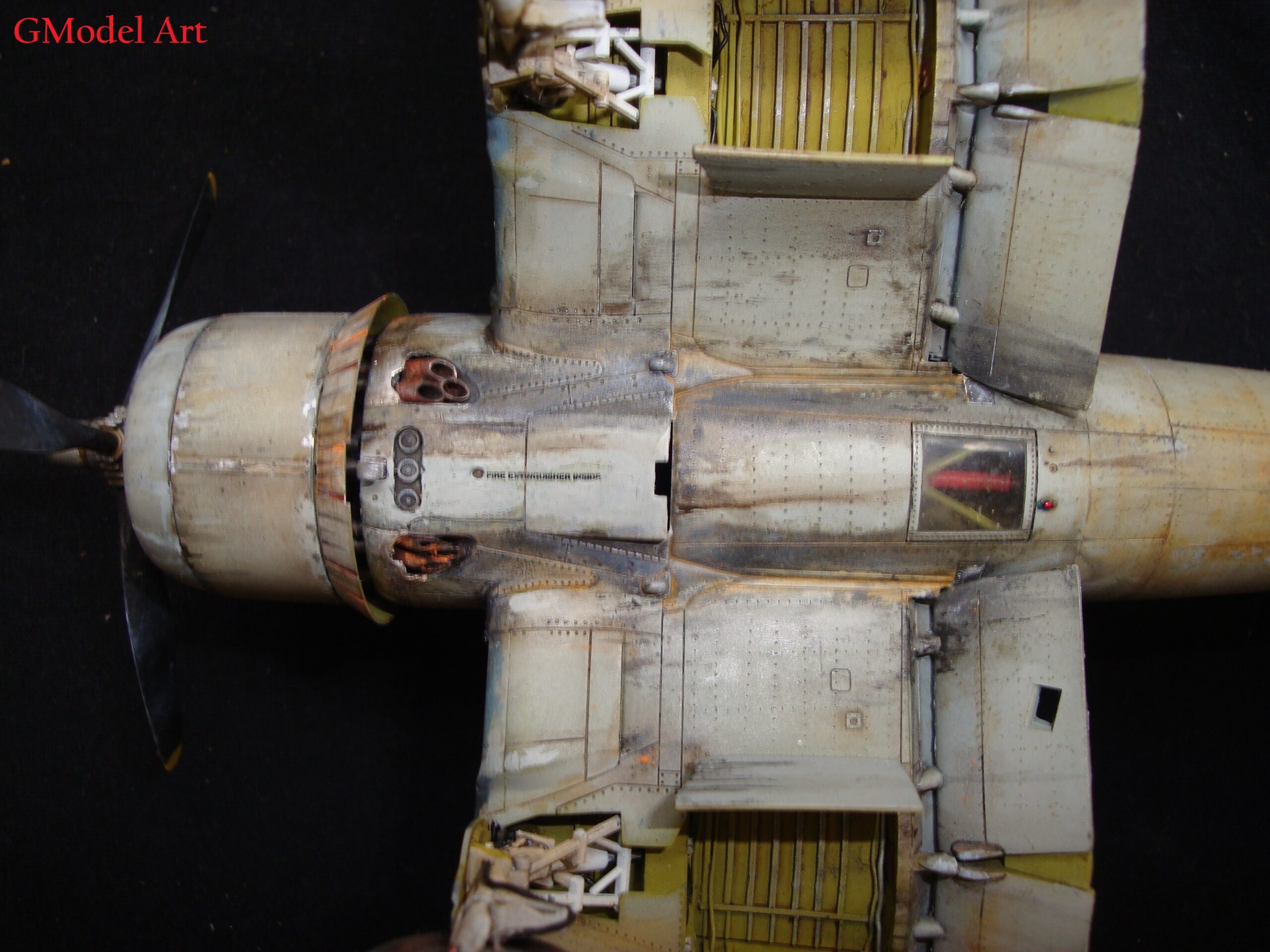
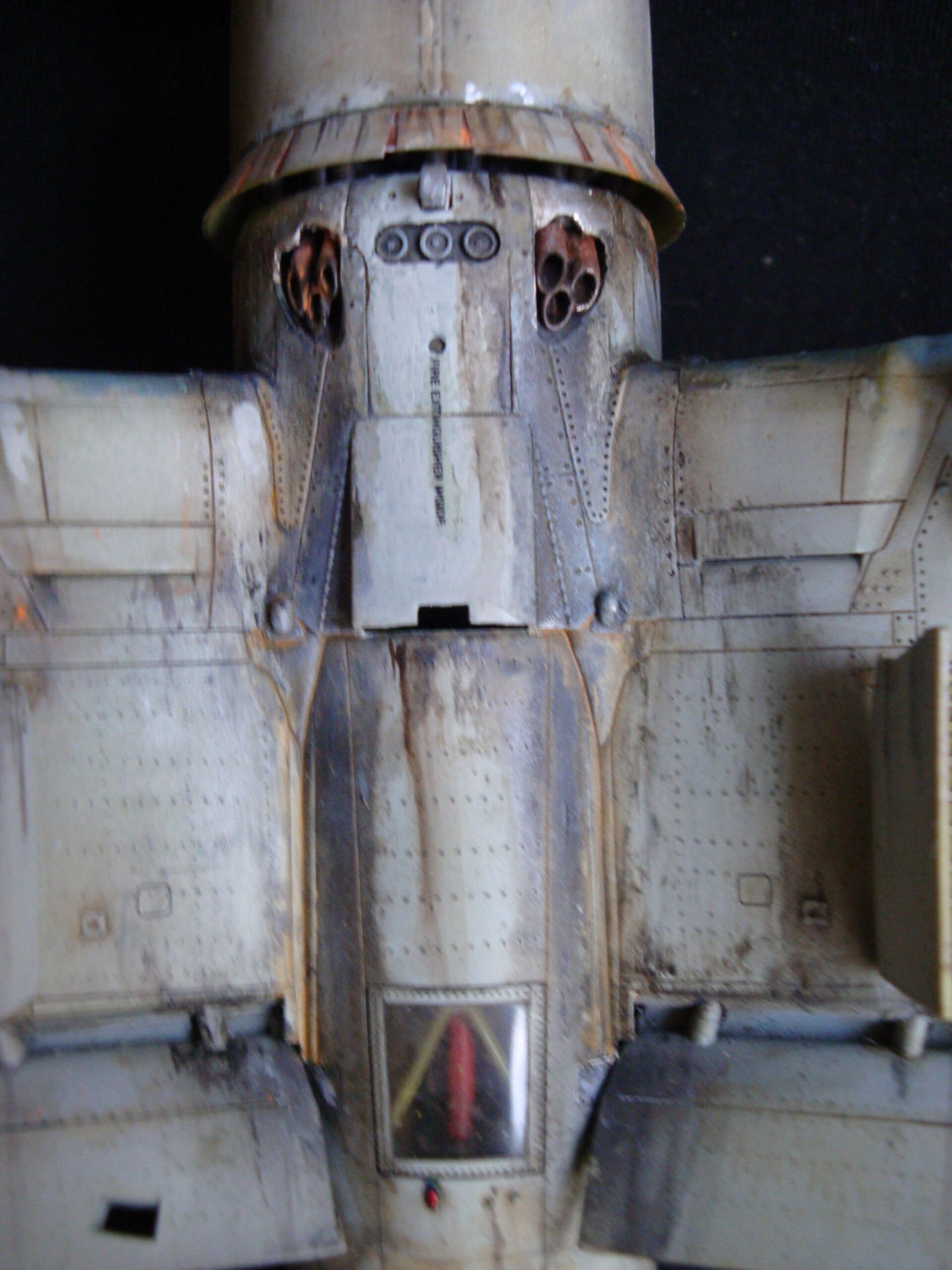
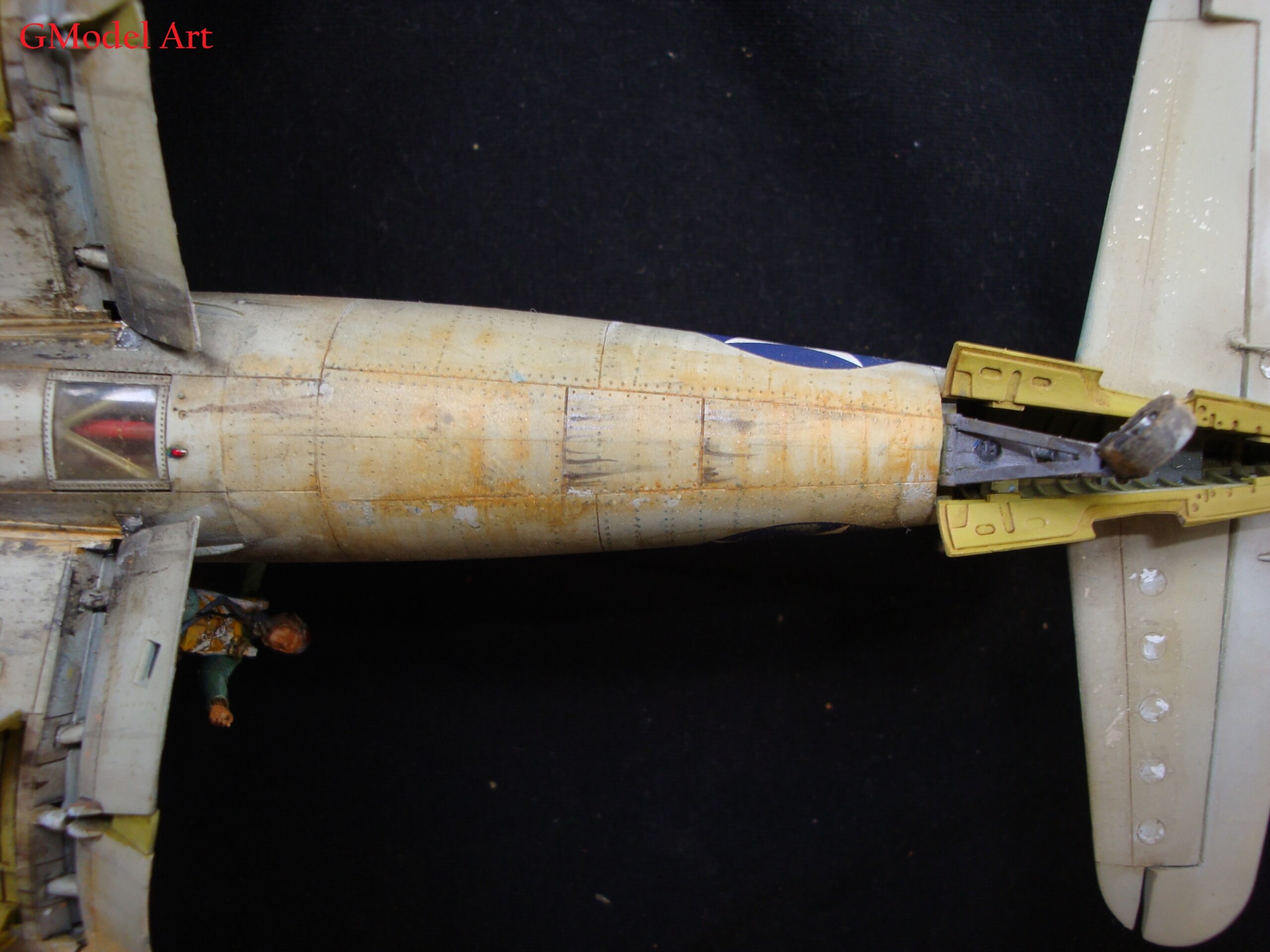
| Fuselage Weathering | Dust / Ochre | — | Oil Yellow Ochre | coral dust effect |
| Panel Highlights | Lightened tones | — | White Oil mix | to break the monotony |
| Wash (general dirt) | Sand / Desert | — | AK Sand & Desert Wash | basis weathering |
| Fuel Stains | Dark Brown | — | Burnt Umber Oil | around tank |
| Exhaust | Soot | — | Hobby Color H-343 | airflow pattern |
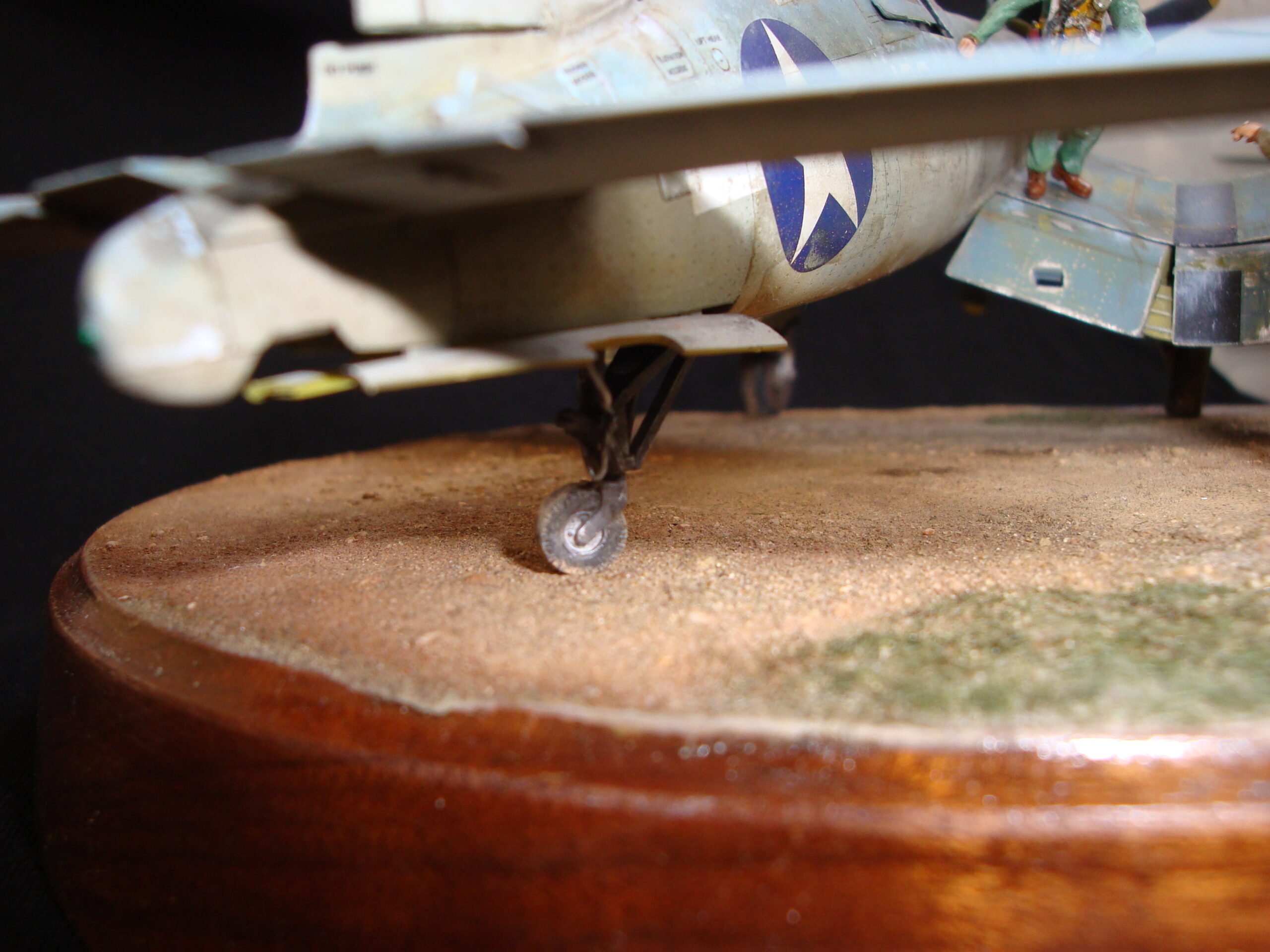
| Wheels / Landing Gear | Rough Sand | — | Hobby Color H-346 | coral mud |
| Engine Area | Oil / Kerosene | — | AK Engine Oil + Kerosene | leaks & grime |
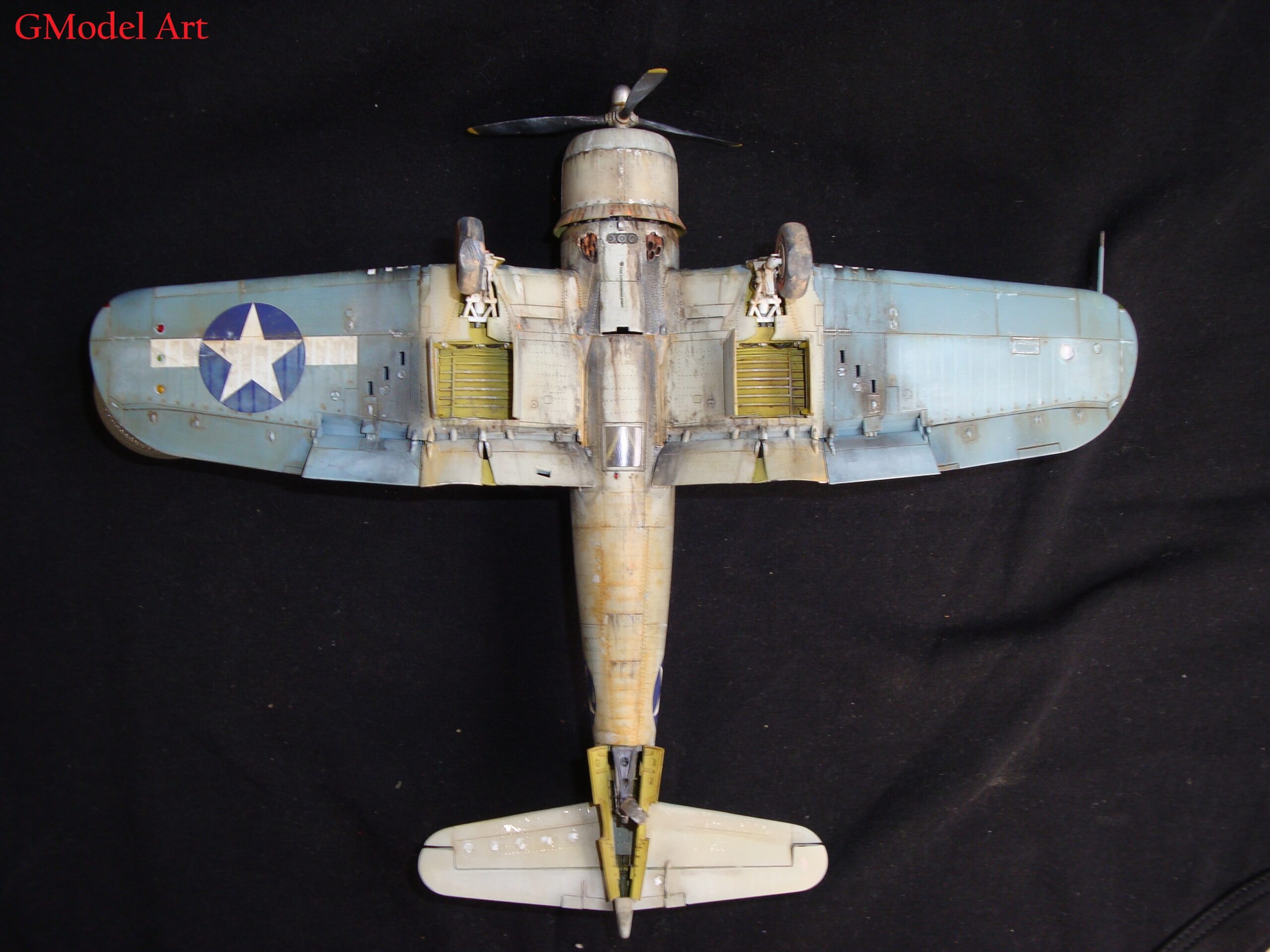
| Underside Streaking | Yellow Ochre | — | Oil paint | from cockpit to tail |
Modeling Work & Paint Application
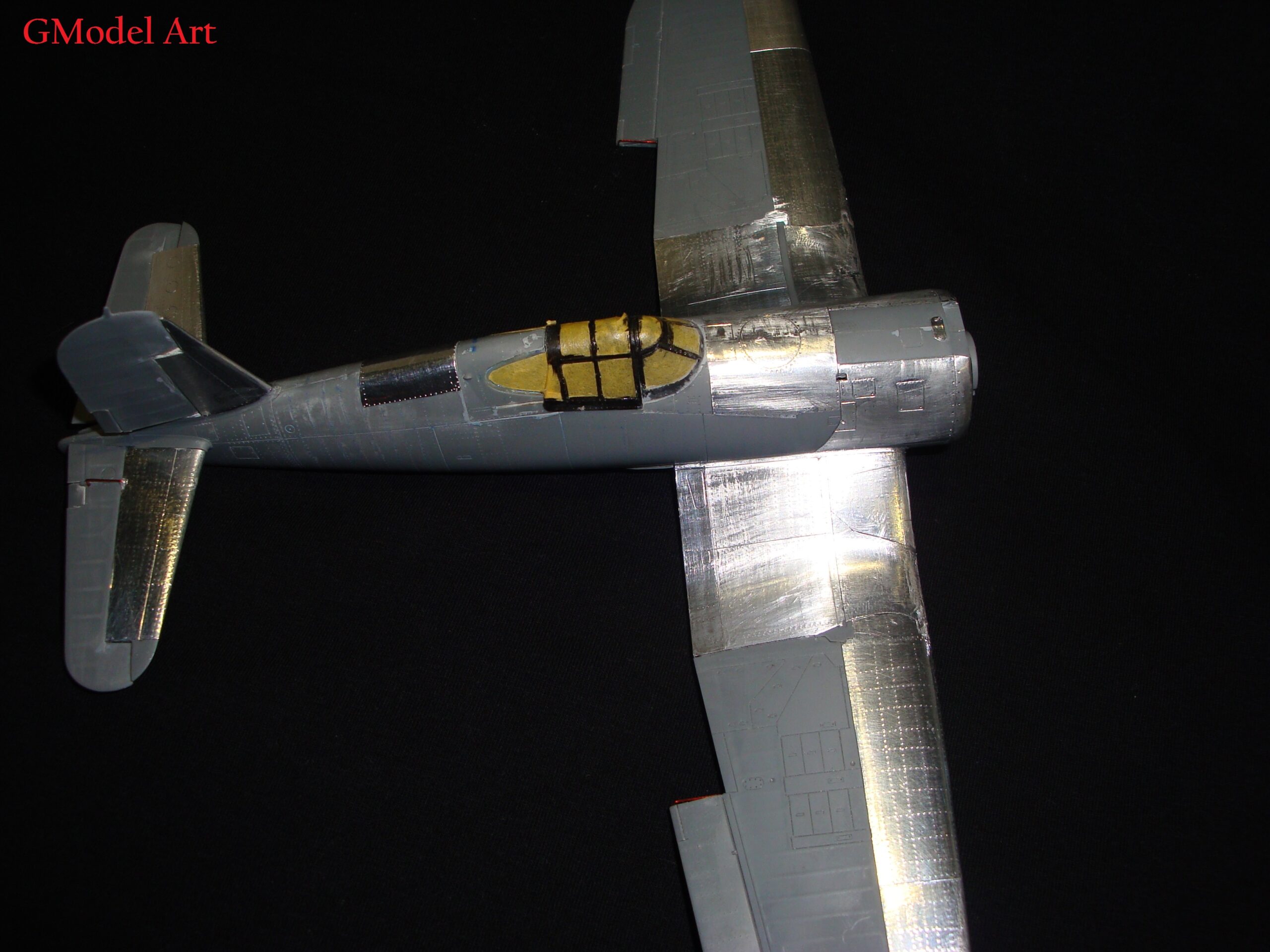
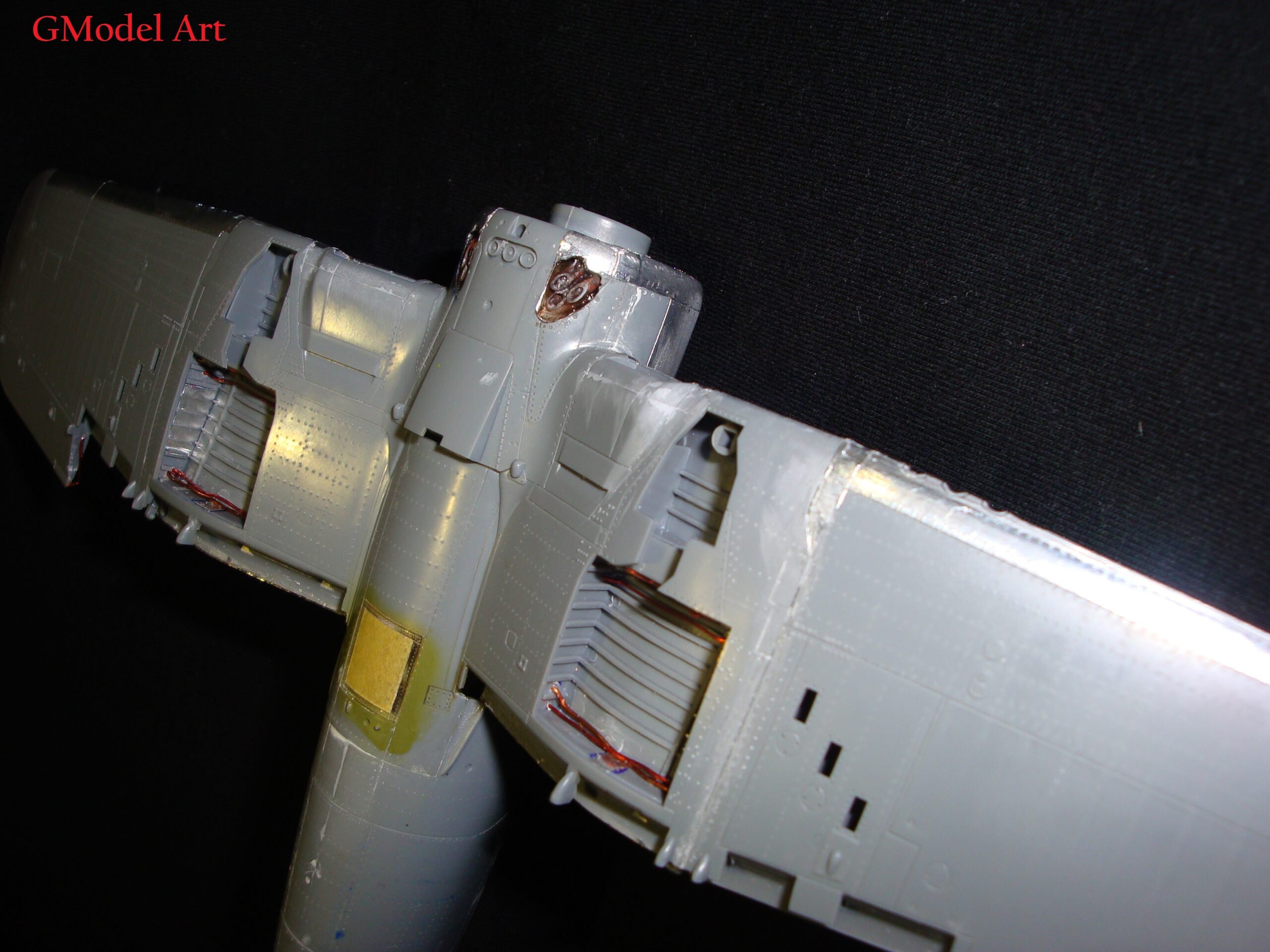
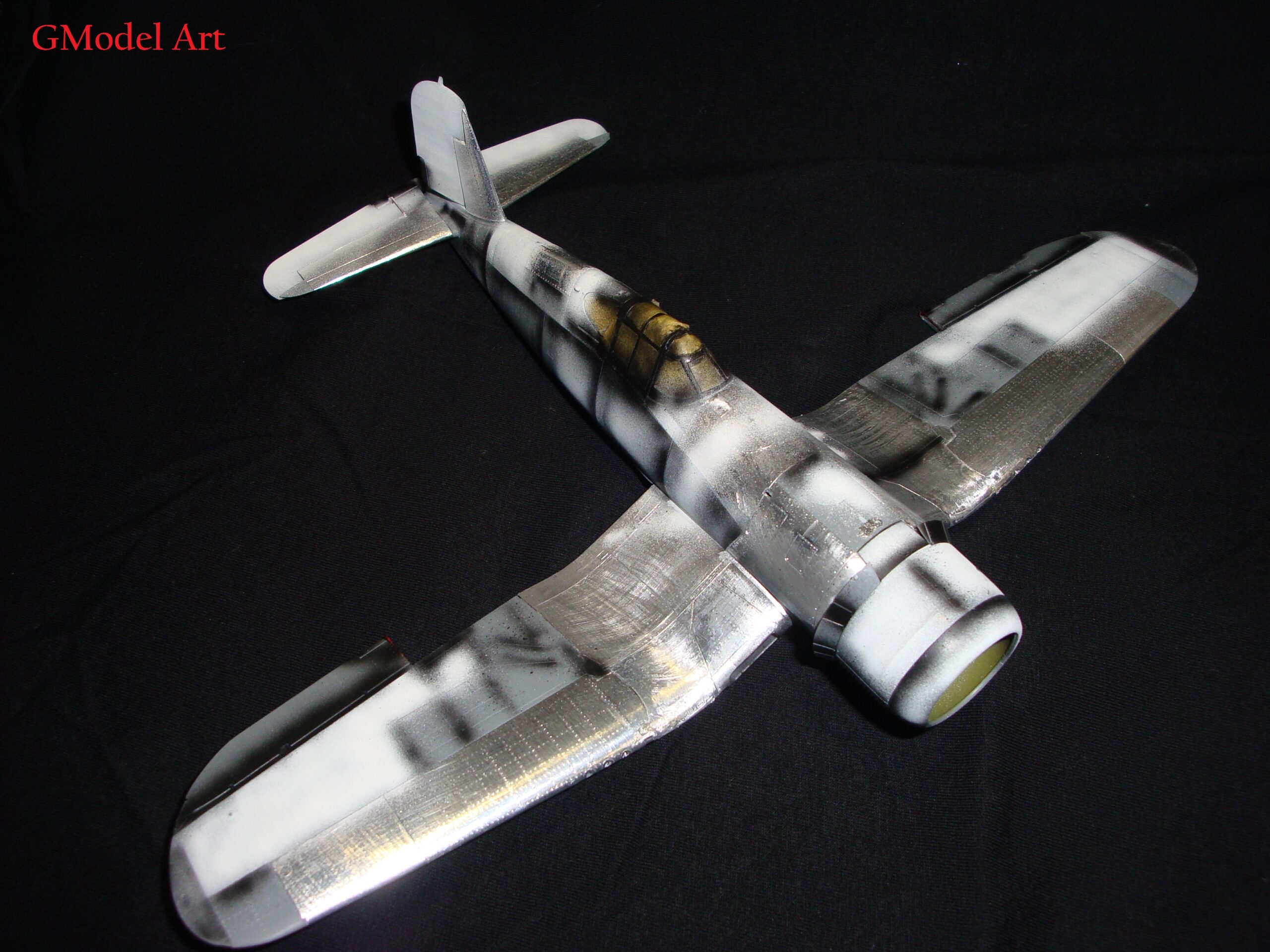
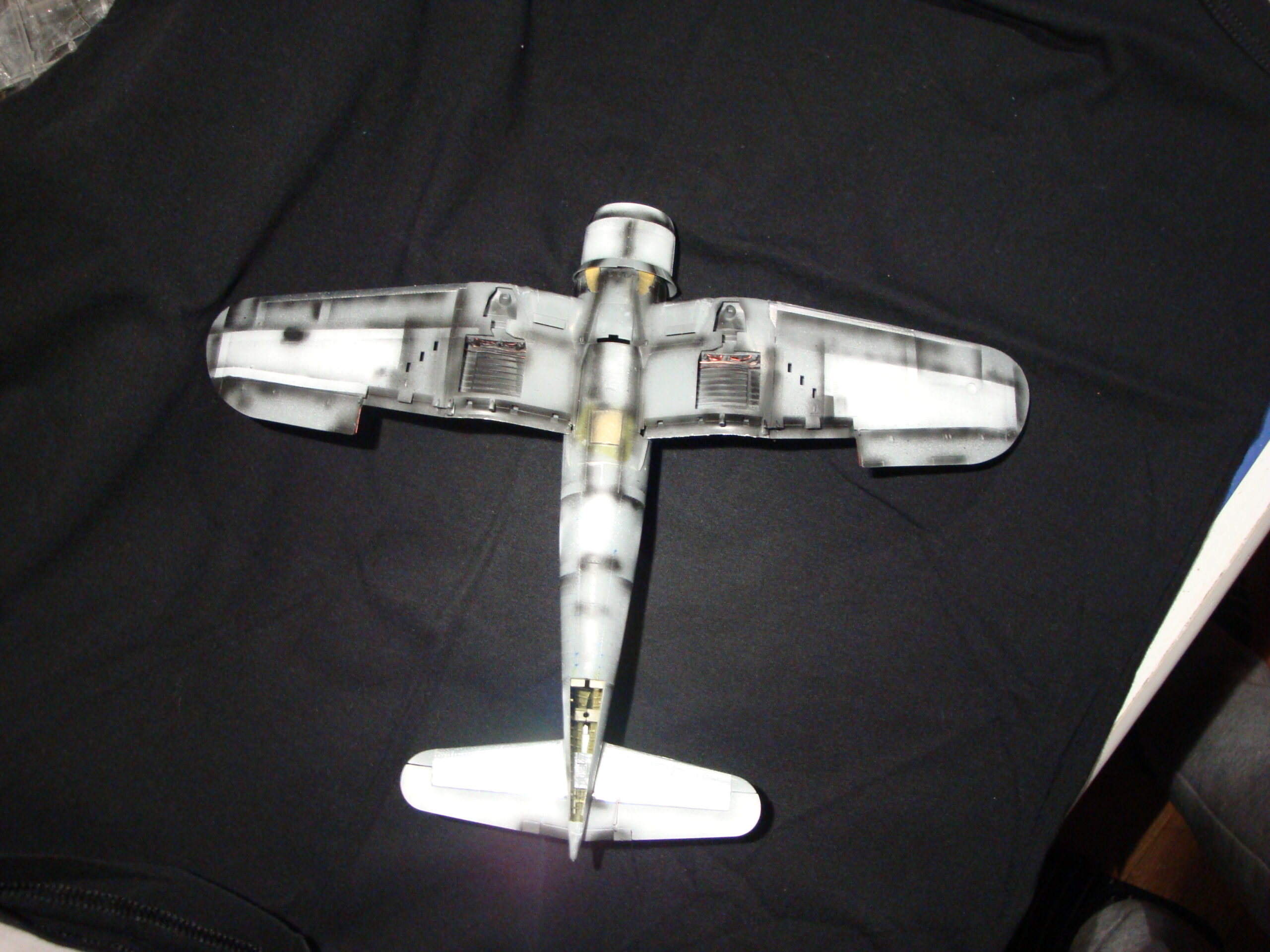
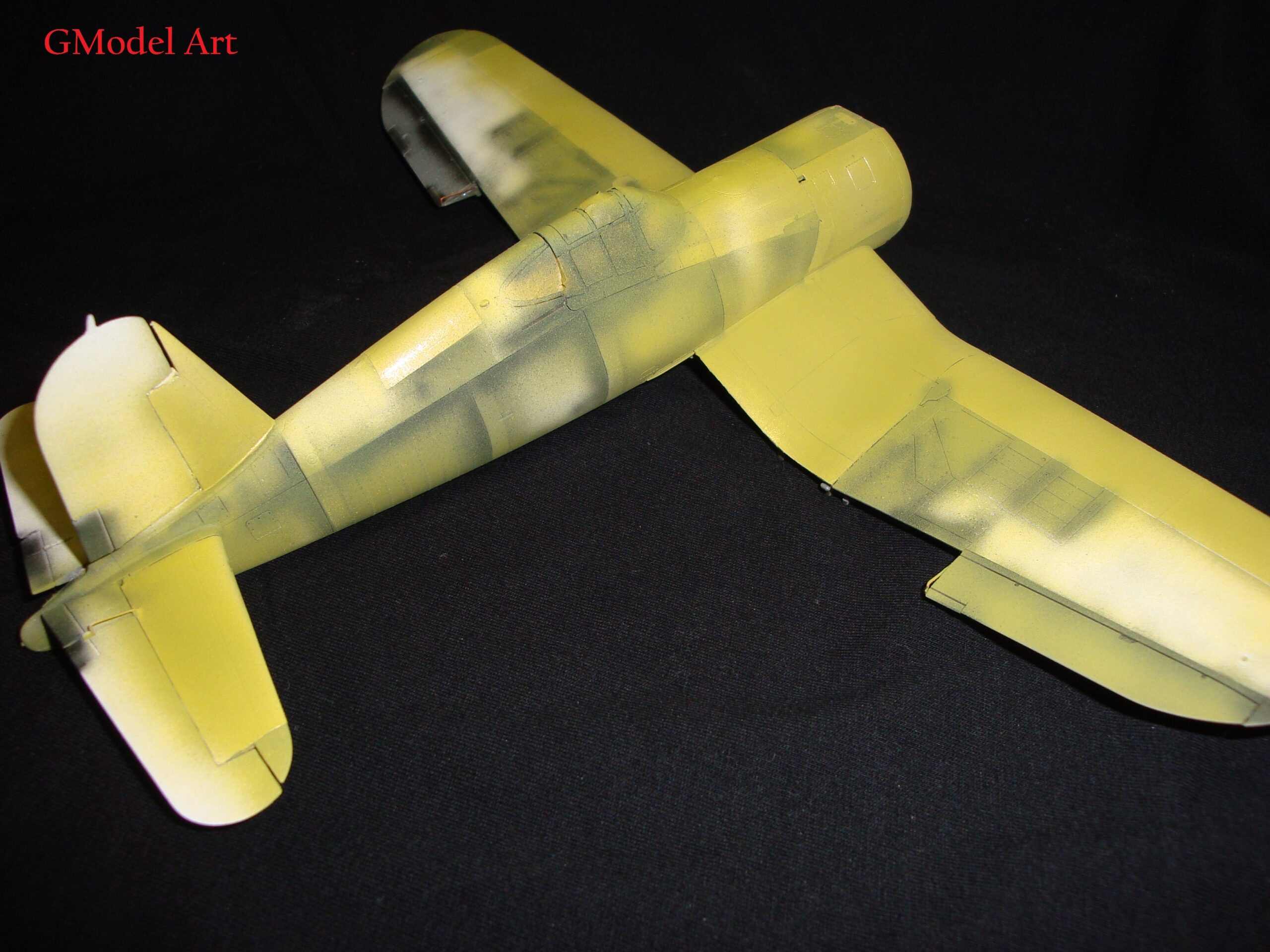
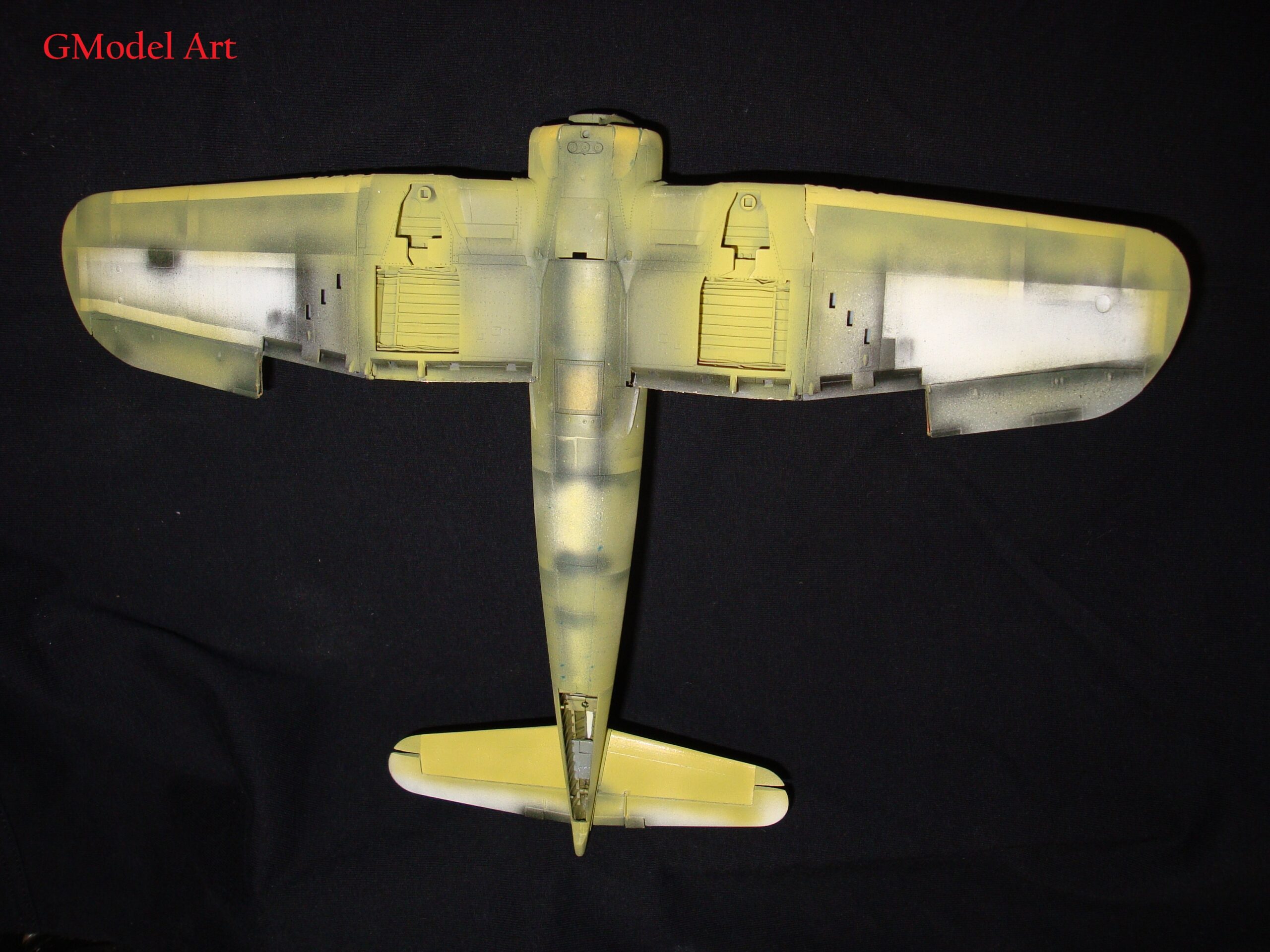
For the scale model of the F4U-1 Birdcage Corsair 126, the entire painting process focused on replicating this harsh operational reality rather than a clean factory finish.
All primary colors were applied using Model Master paints, while matte varnish was done with Hobby Color. Given that only one reference photo exists, the weathering process was built gradually and carefully, layer by layer.
The first stage involved lightening the base colors using white oil paint to subtly highlight panel lines and break the monotony of the surface.
This was followed by a wash using AK Sand & Desert tones, simulating dust accumulation typical of coral airfields.
Fuel stains were added using Burnt Umber oil paint, particularly around the tank and fuselage areas. Exhaust staining was applied with Hobby Color H-343 Soot, focusing on realistic airflow patterns.
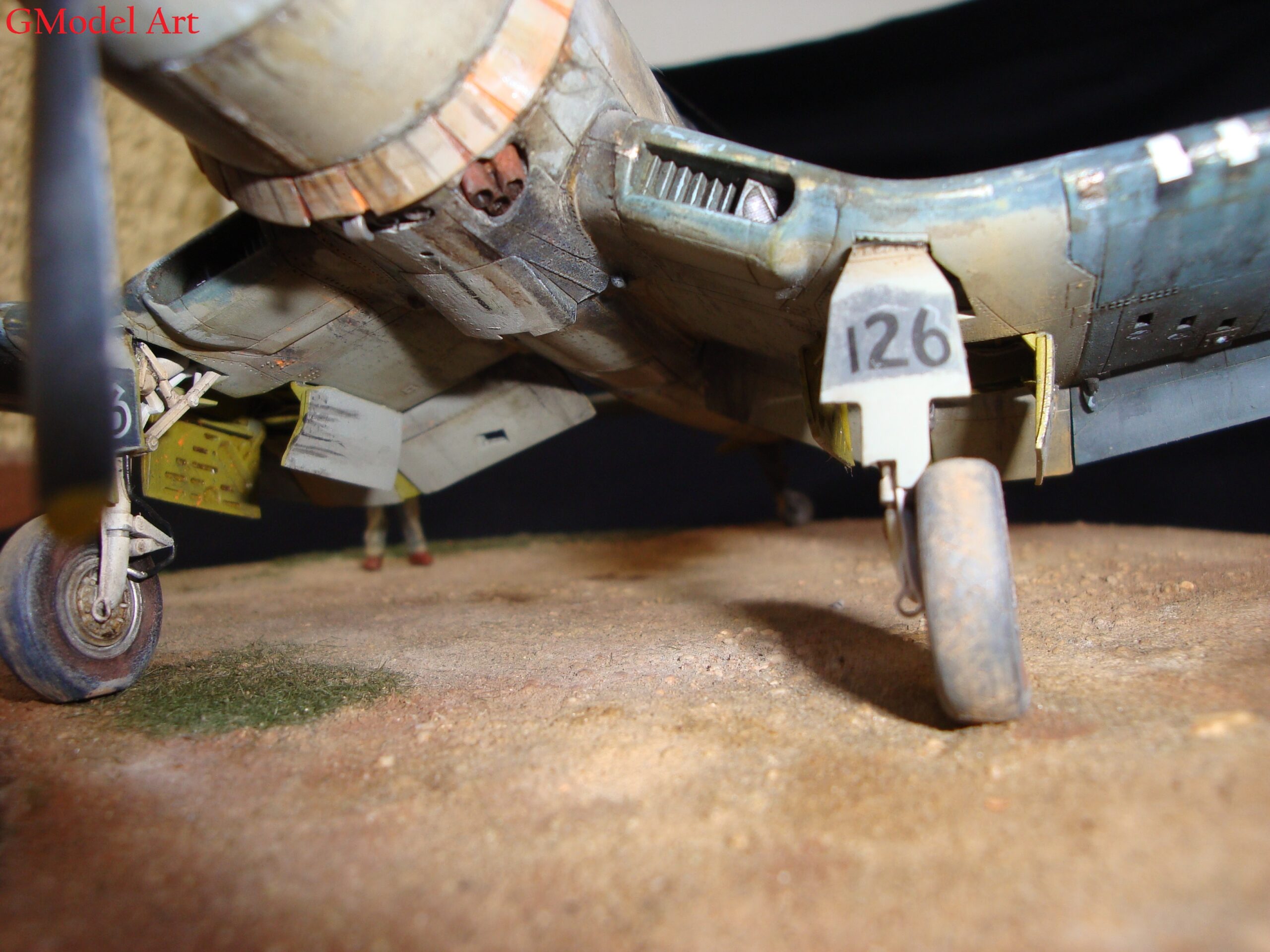
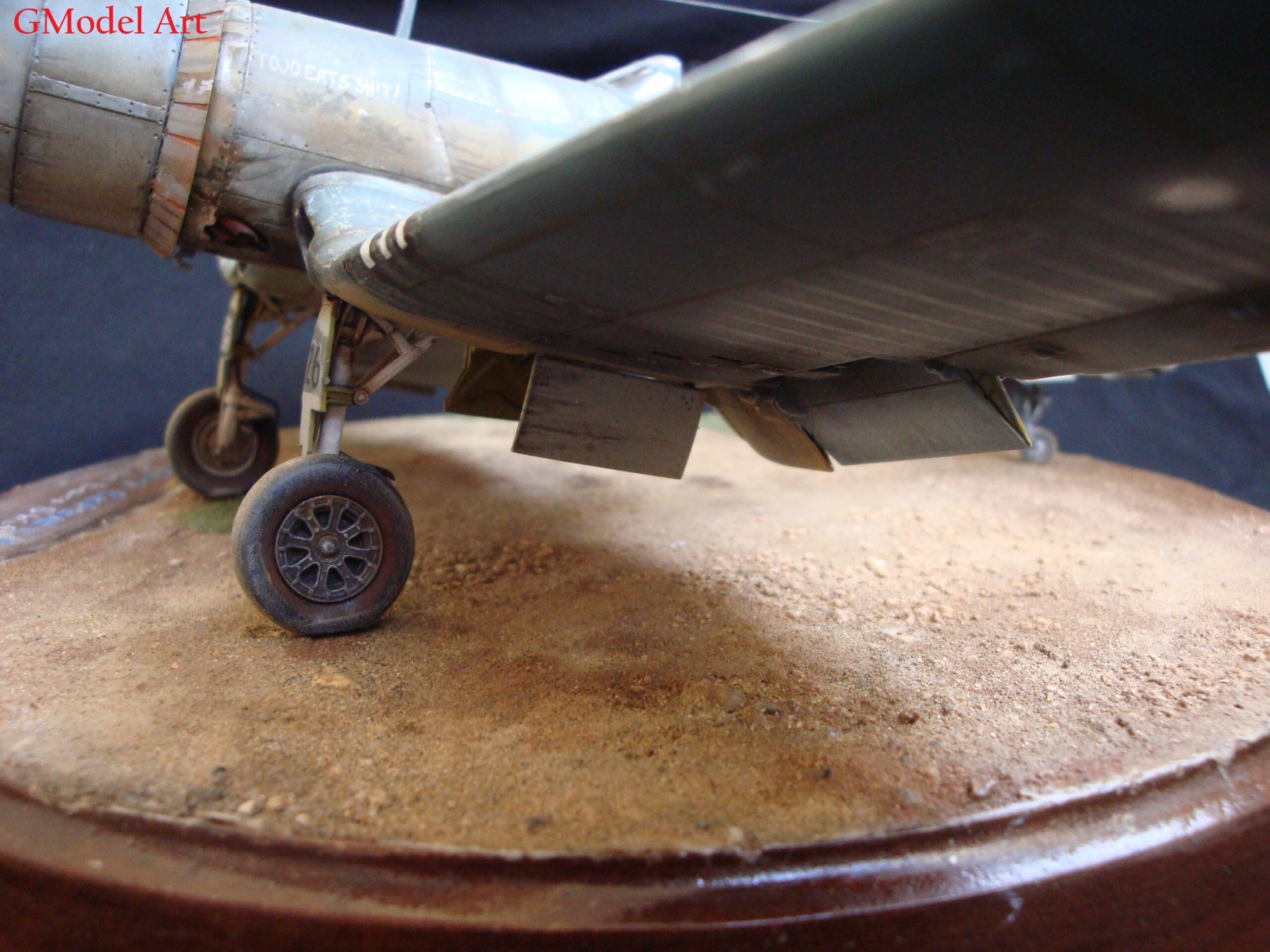
The landing gear and wheels were treated with H-346 Rough Sand to replicate dried mud and coral residue.
Around the engine area, a mix of AK Engine Oil and AK Kerosene effects was used to simulate leaks, grime, and operational wear.
Finally, under the fuselage, a Yellow Ochre wash was applied from behind the cockpit to the tailwheel, enhancing the sense of accumulated dust and environmental exposure.
Related Products (Internal Linking)
For similar builds and kits, explore:
https://eshop.gmodelart.com/?s=f4u-1&et_search=true&post_type=product
Fw 190 Focke-Wulf Access Ladder
Gallery