article
Boeing B-29 Superfortress in the Pacific – WWII History & Scale Modeling Guide
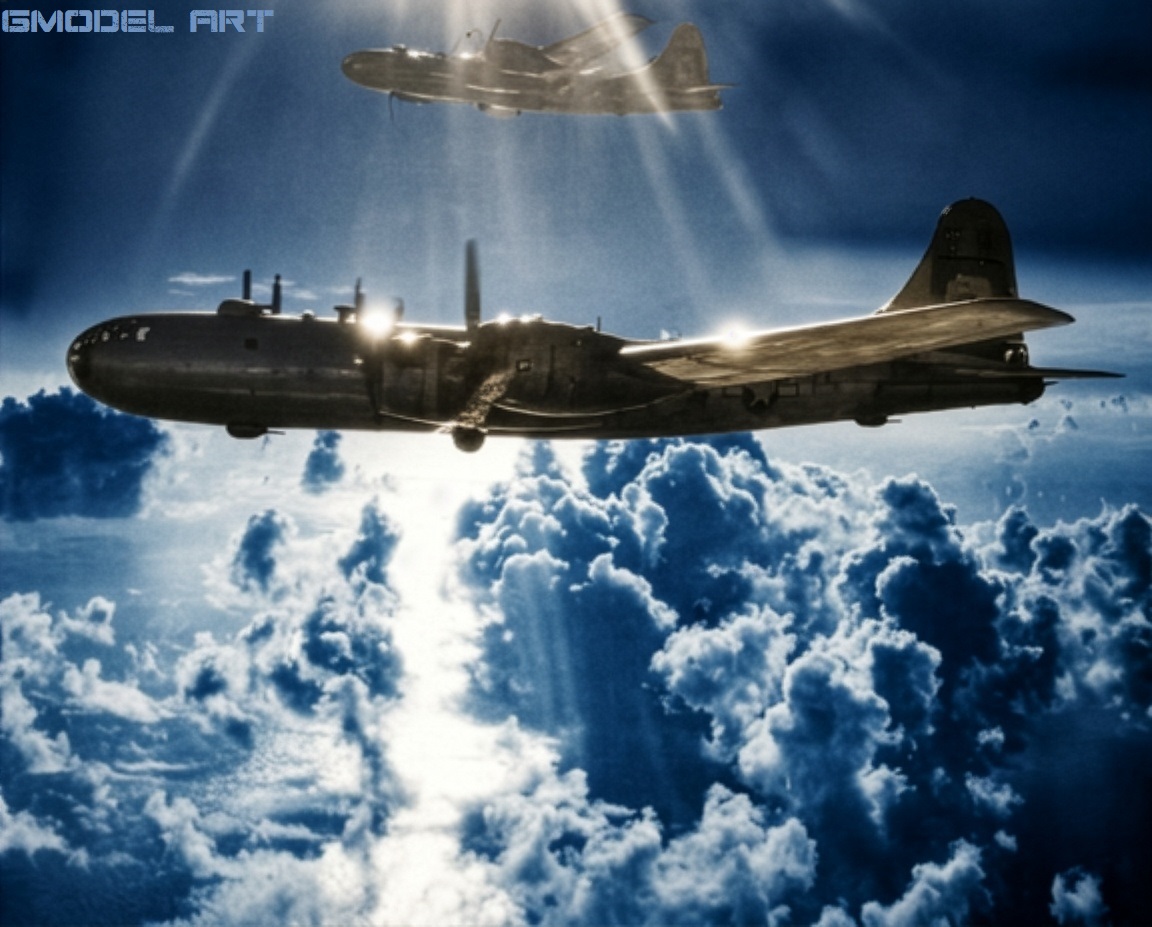
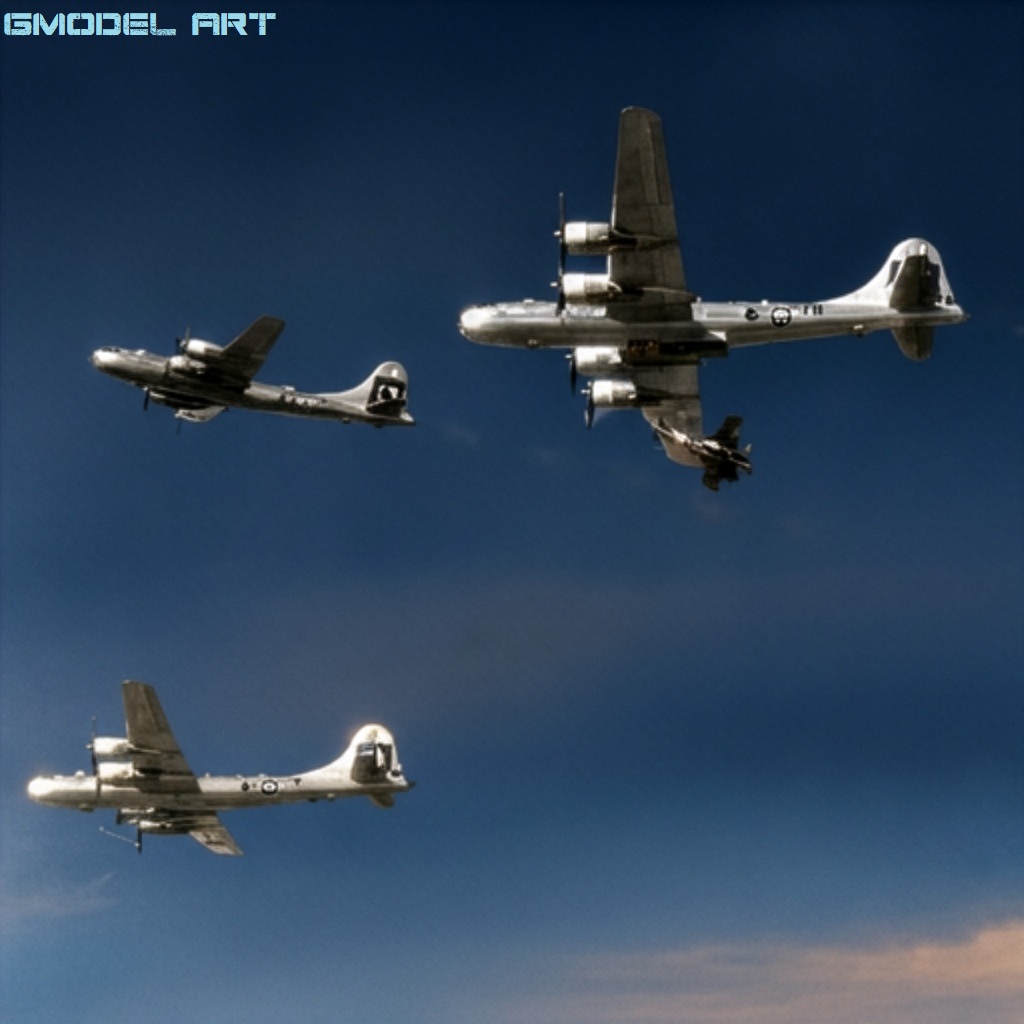
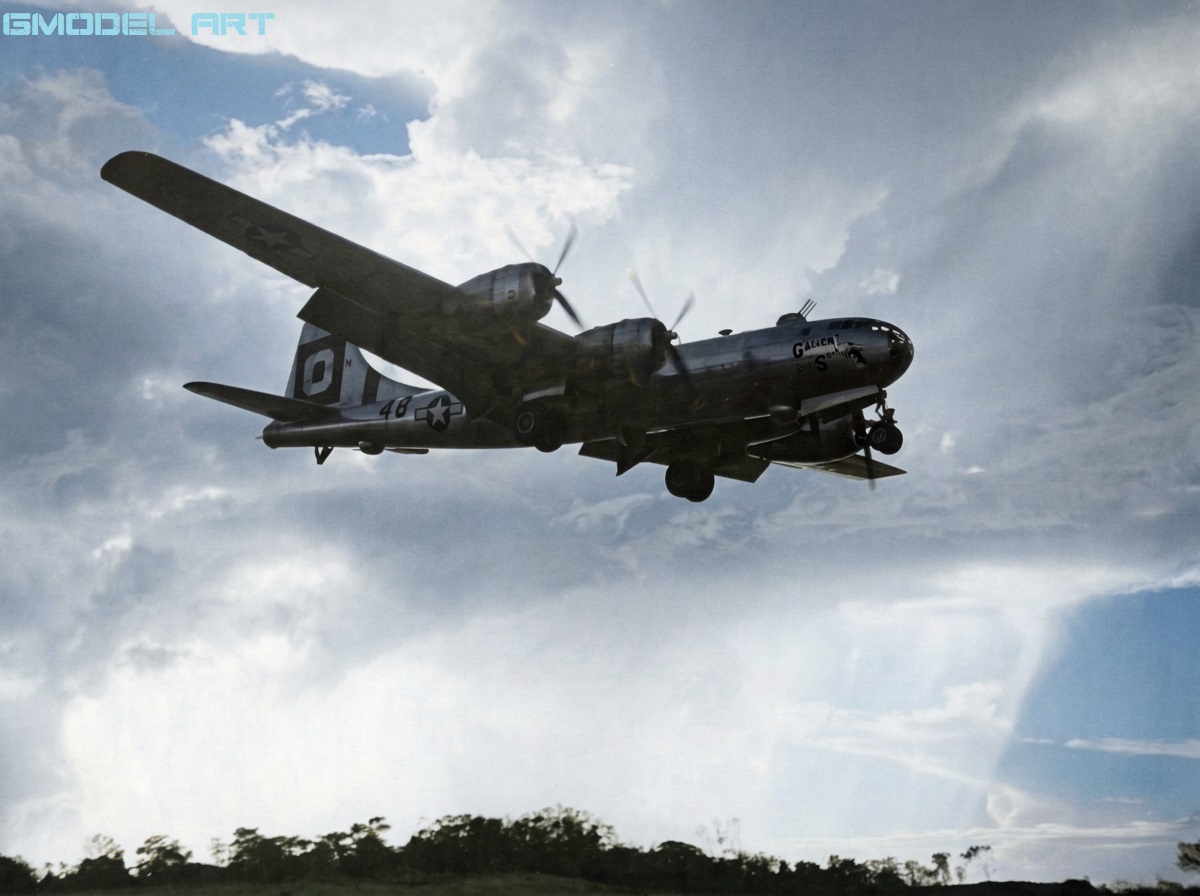
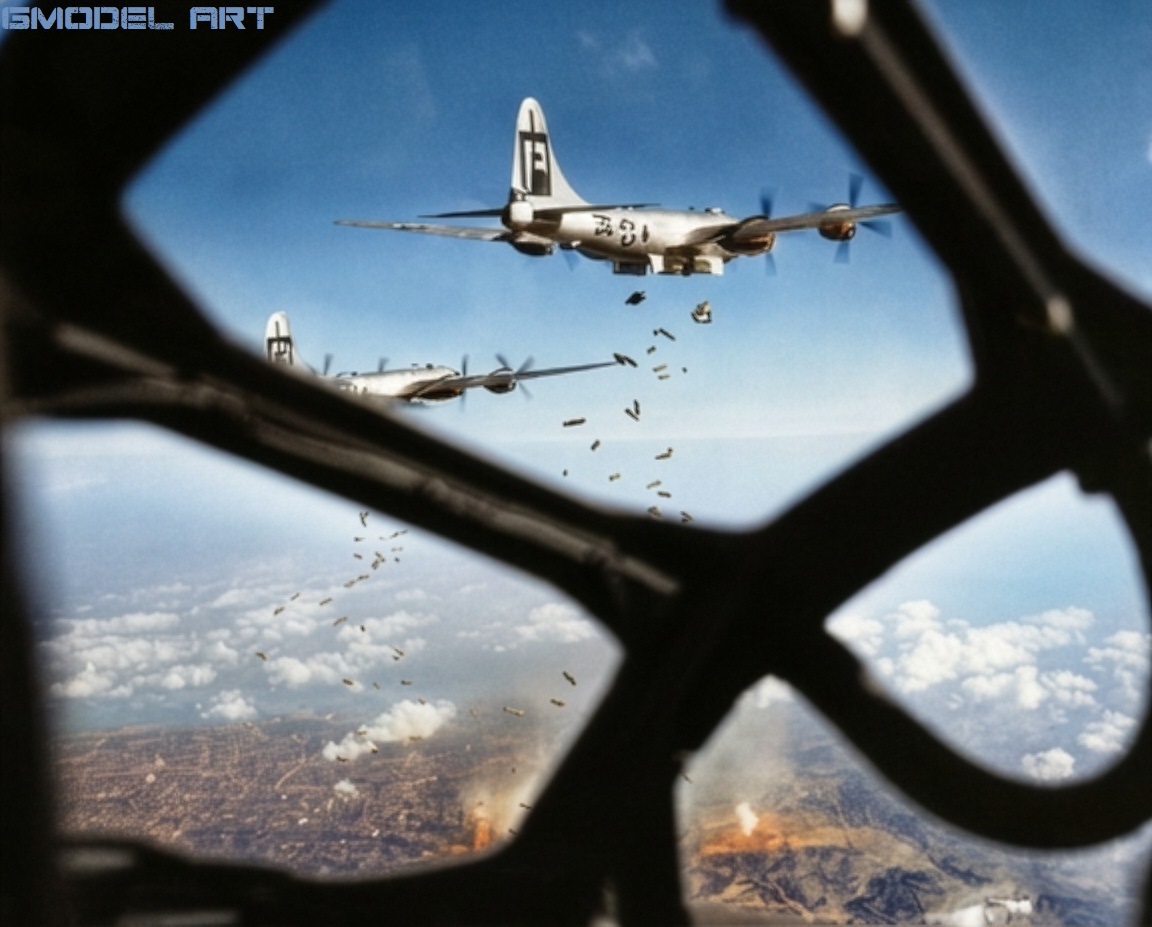
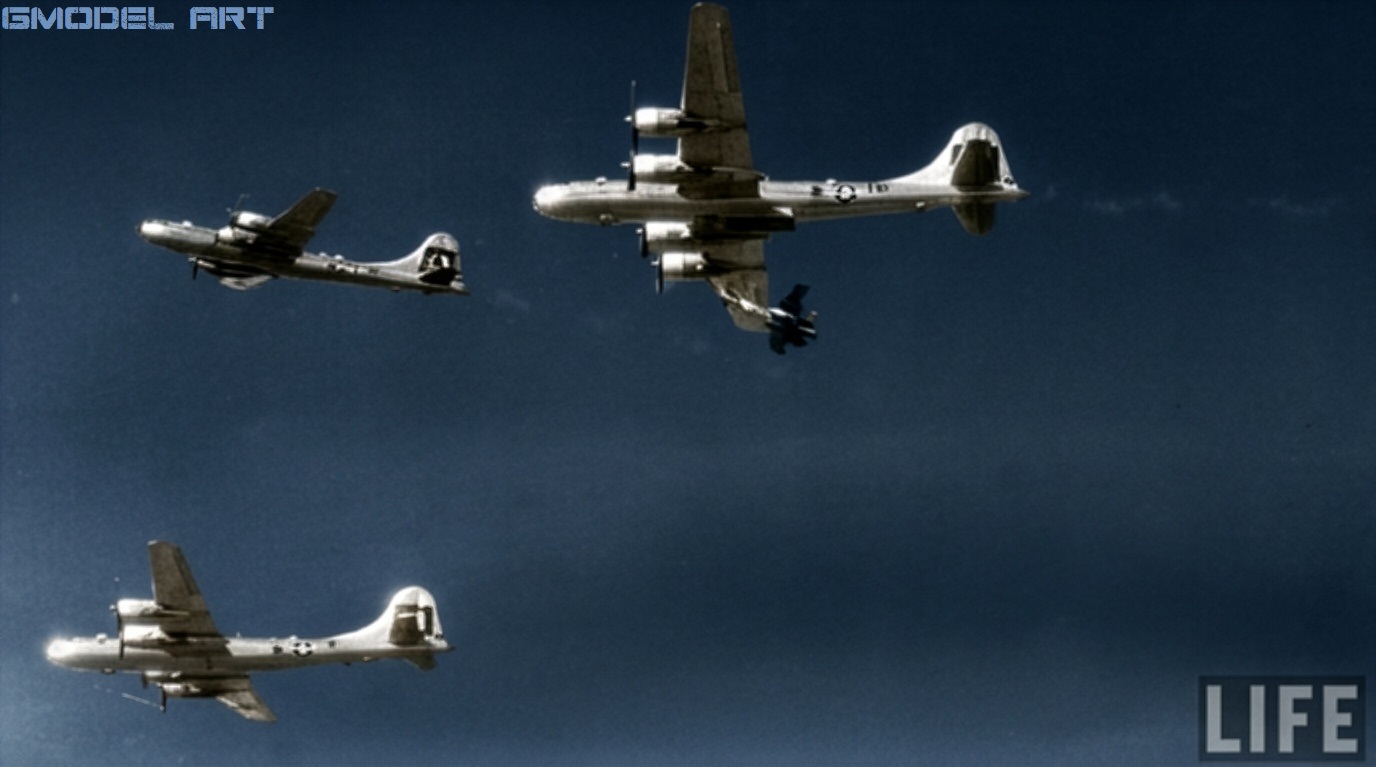
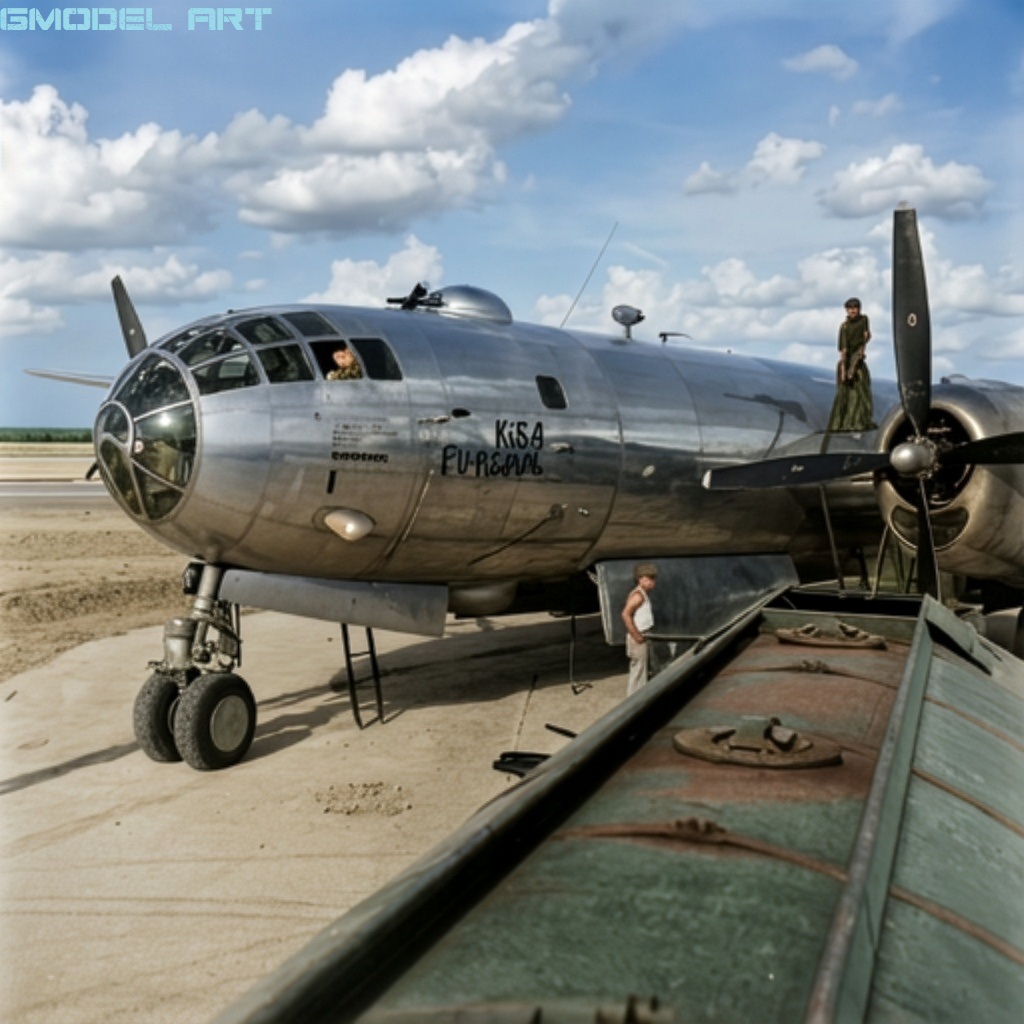
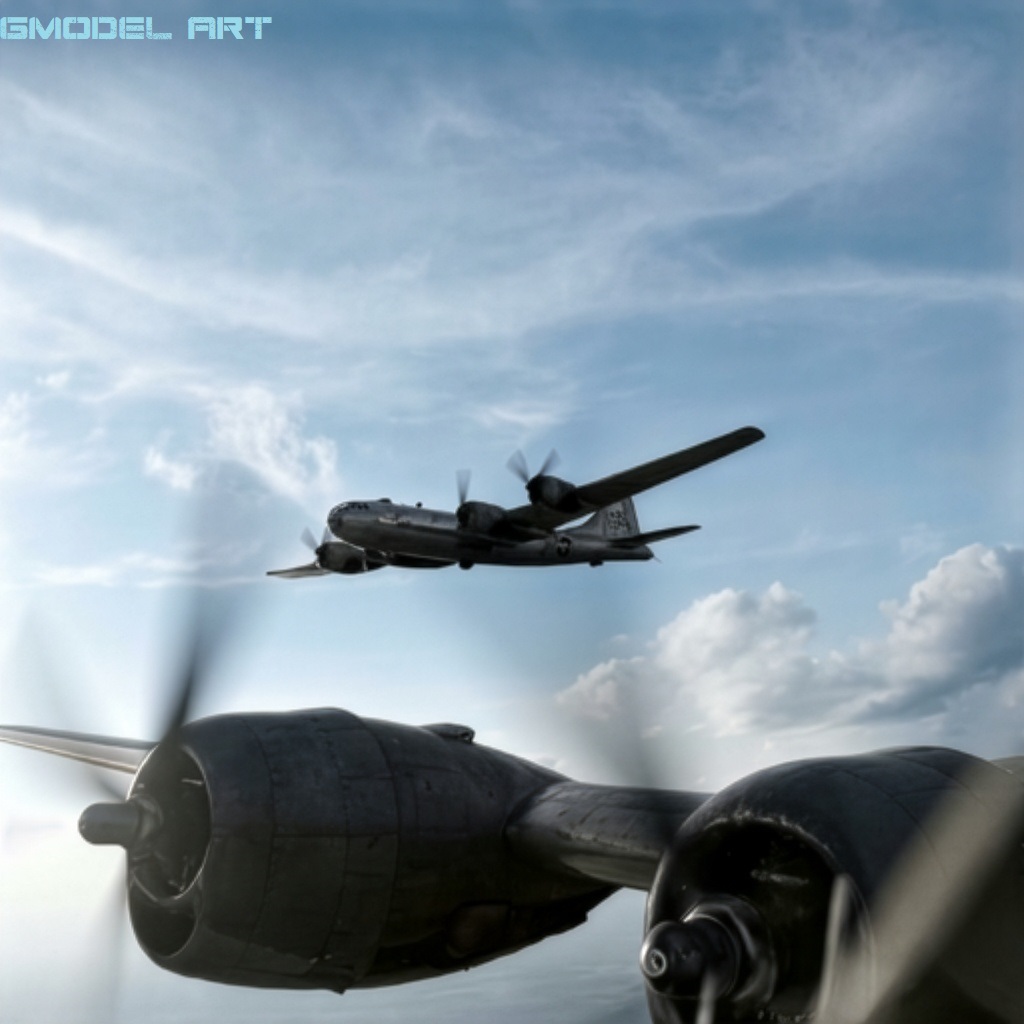
The Boeing B-29 Superfortress was the heavy bomber that transformed the scale of aerial warfare in the Pacific during World War II. With its long range, heavy bomb load, pressurized crew compartments, and remotely controlled defensive turrets, the B-29 was designed to operate at distances and altitudes beyond the capabilities of earlier American heavy bombers.
For scale modelers, however, the B-29 is much more than a large aircraft. Its operations from China, India, and especially the Marianas — Saipan, Tinian, and Guam created some of the most fascinating settings for large-scale WWII aircraft dioramas.
From China to the Marianas
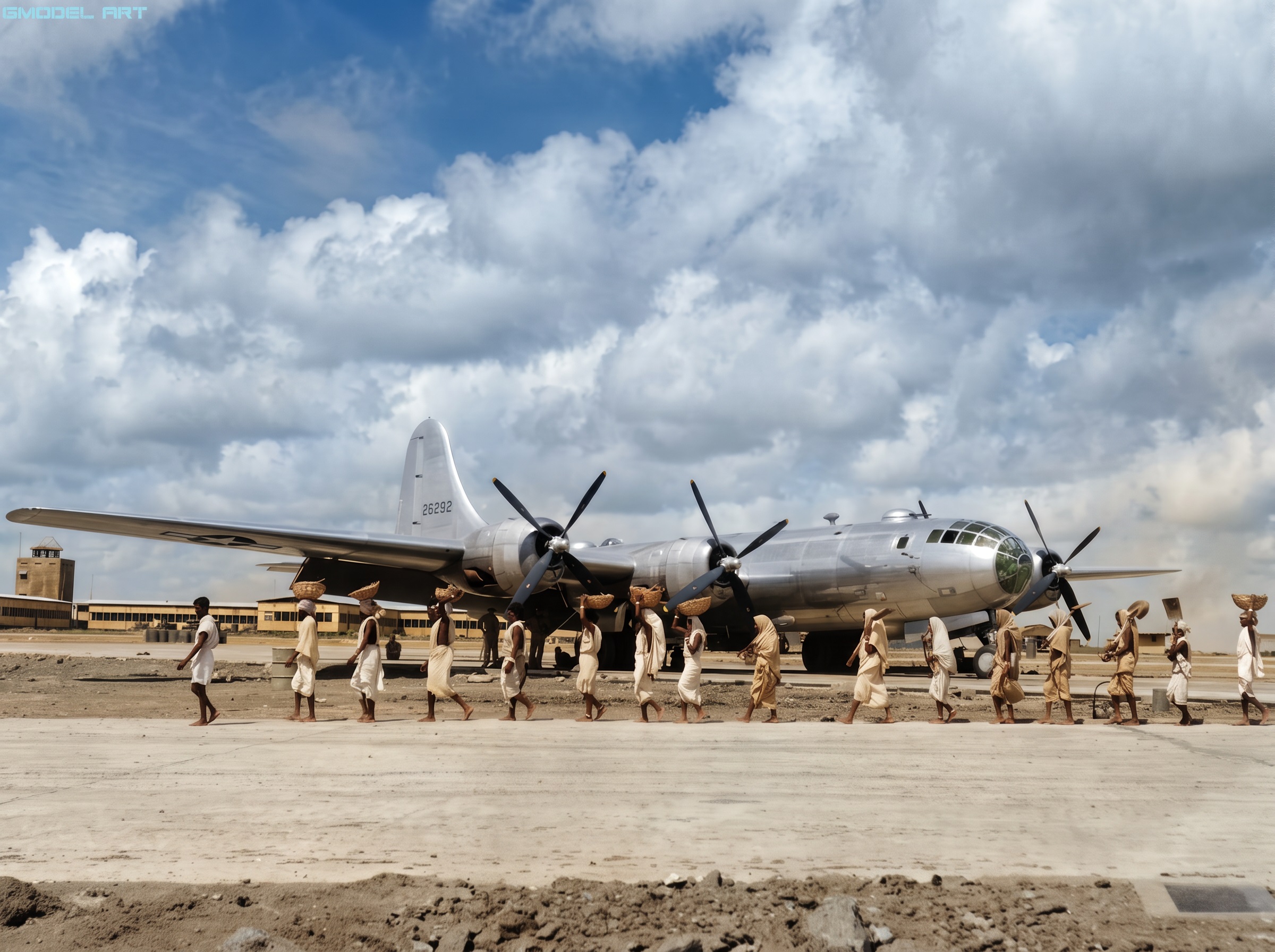
The first B-29 operations against Japan were launched from bases in China. Around Chengtu, four major airfields were developed to support the Superfortresses, with Hsinching, Kwanghan, Kiunglai, and Pengshan serving as forward bases for the 40th, 444th, 462nd, and 468th Bombardment Groups. (Pacific Wrecks)
The geography created enormous logistical problems. The capture of the Marianas changed the situation completely.
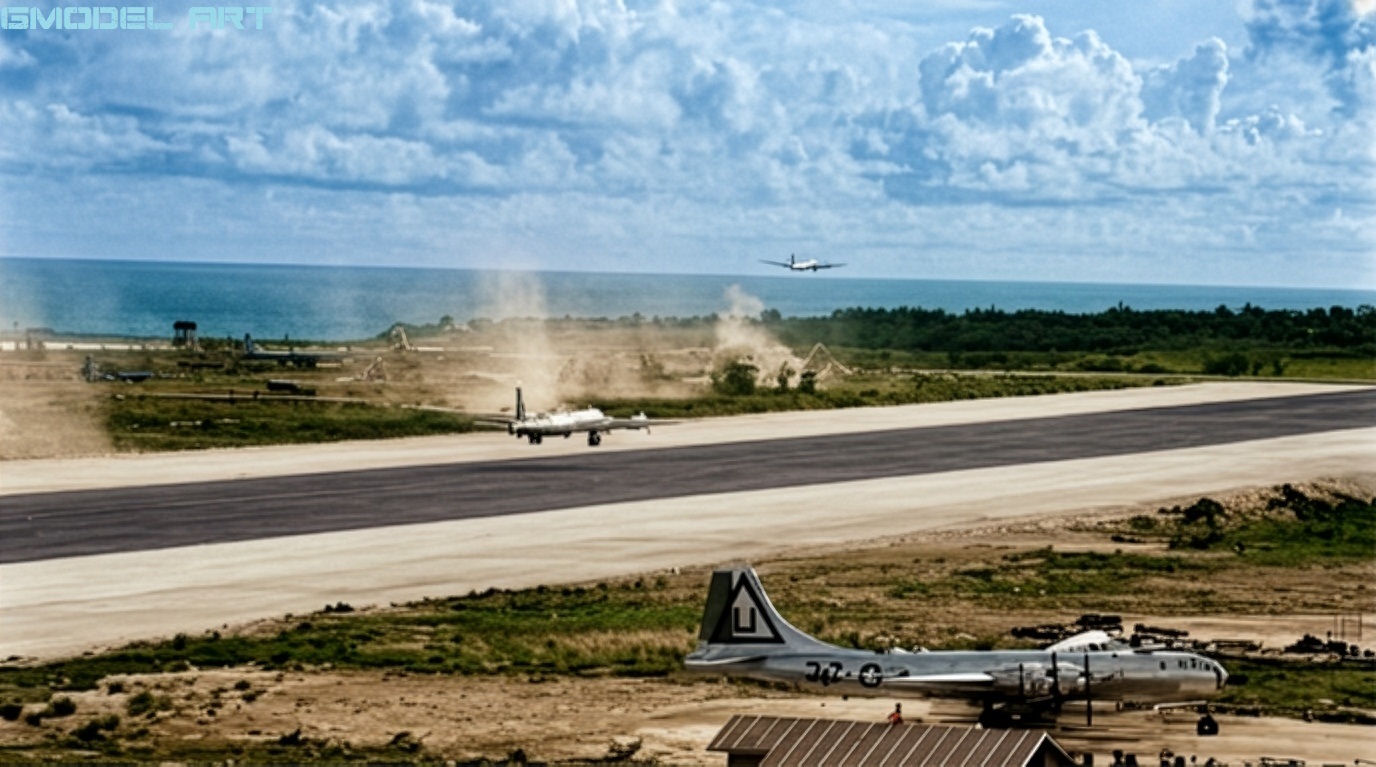
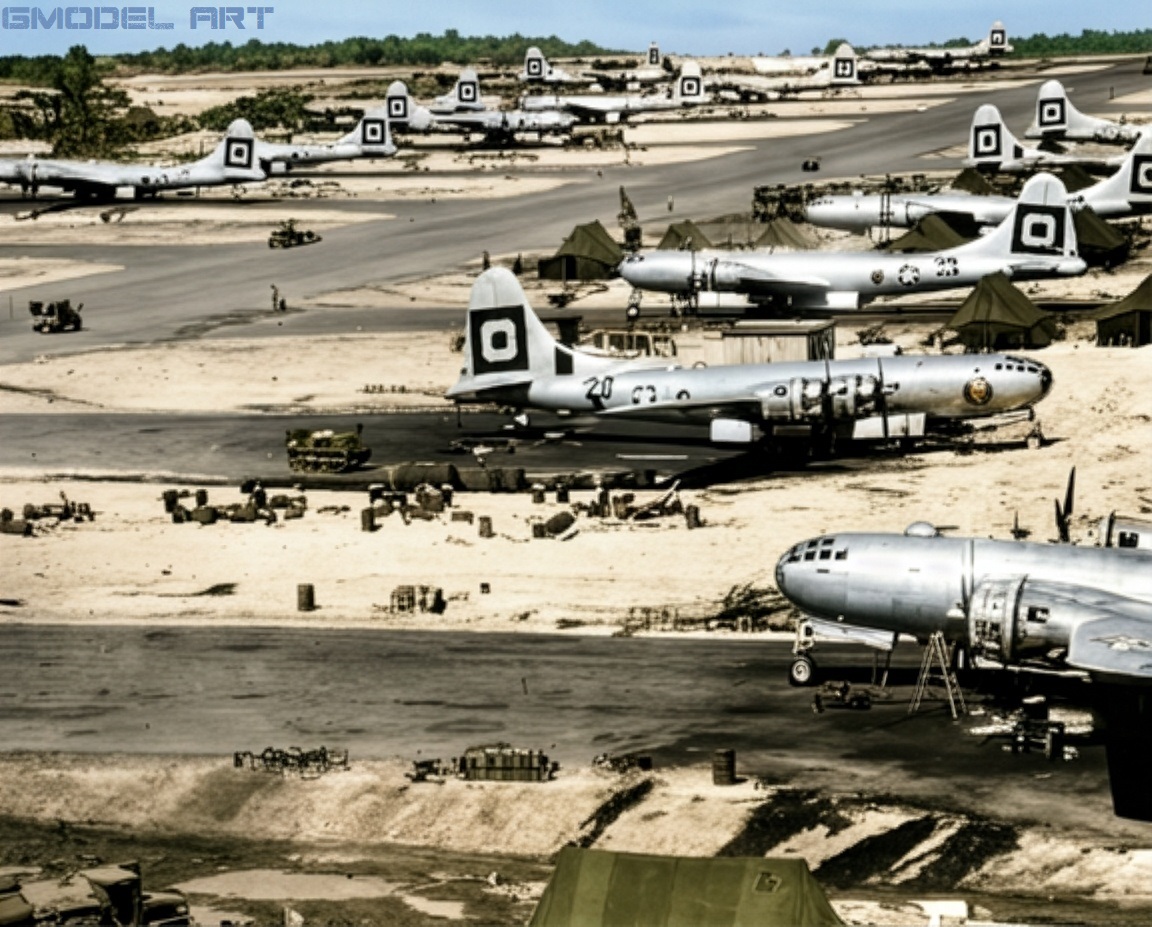
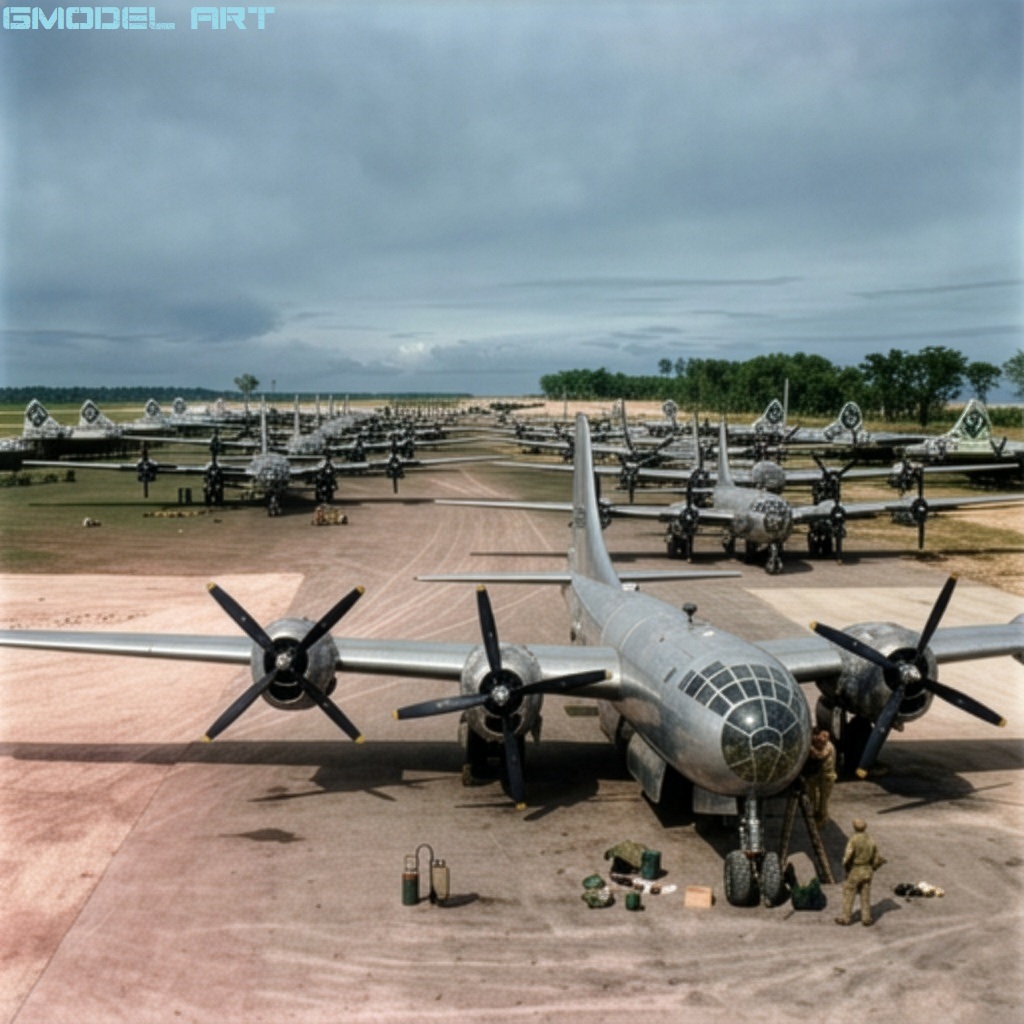
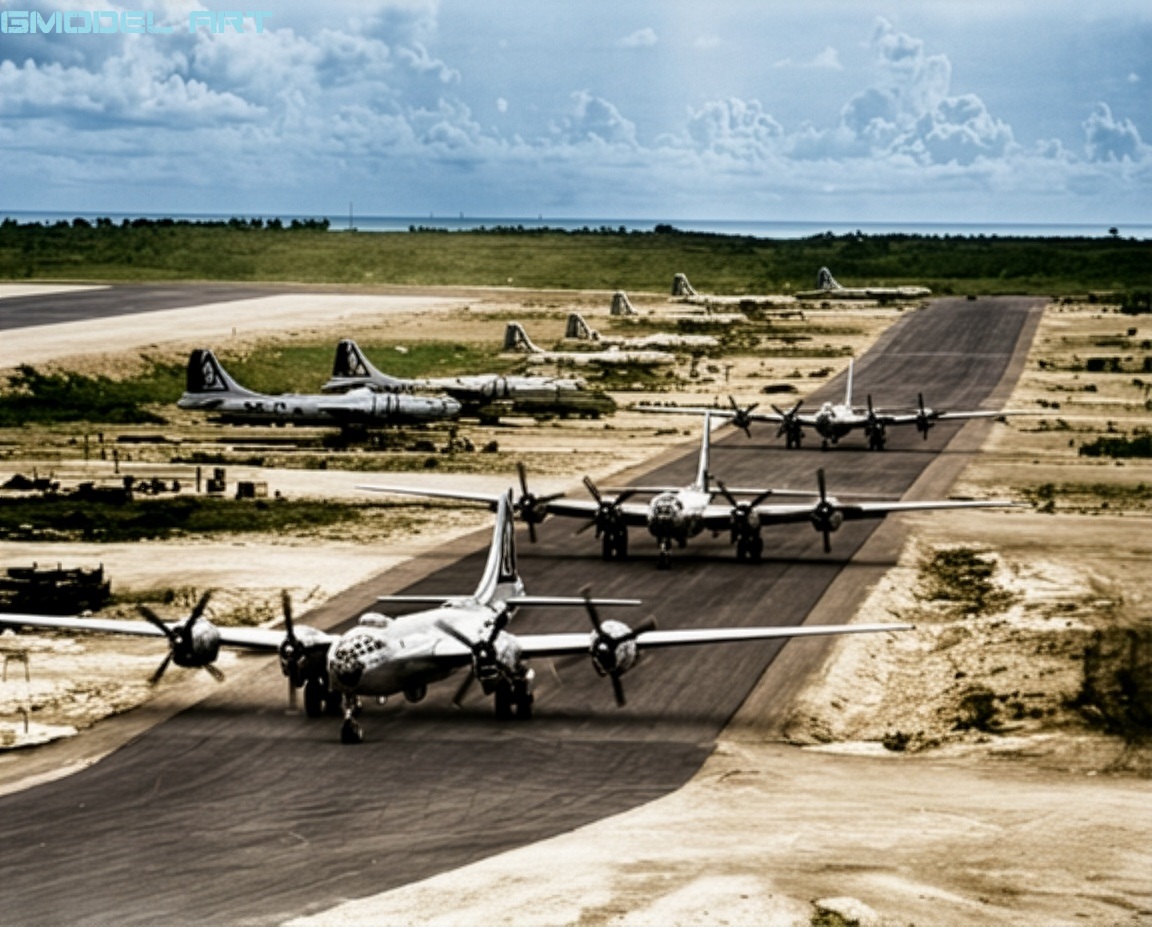
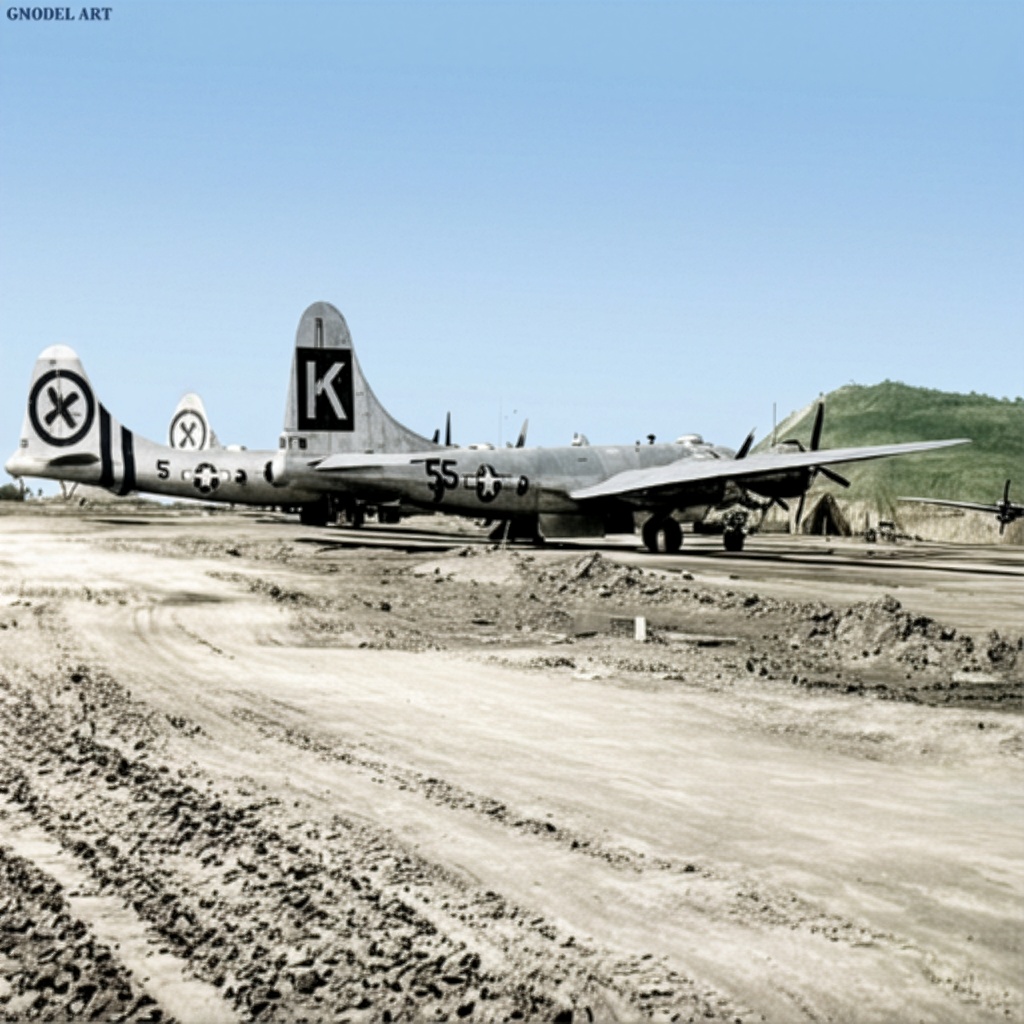
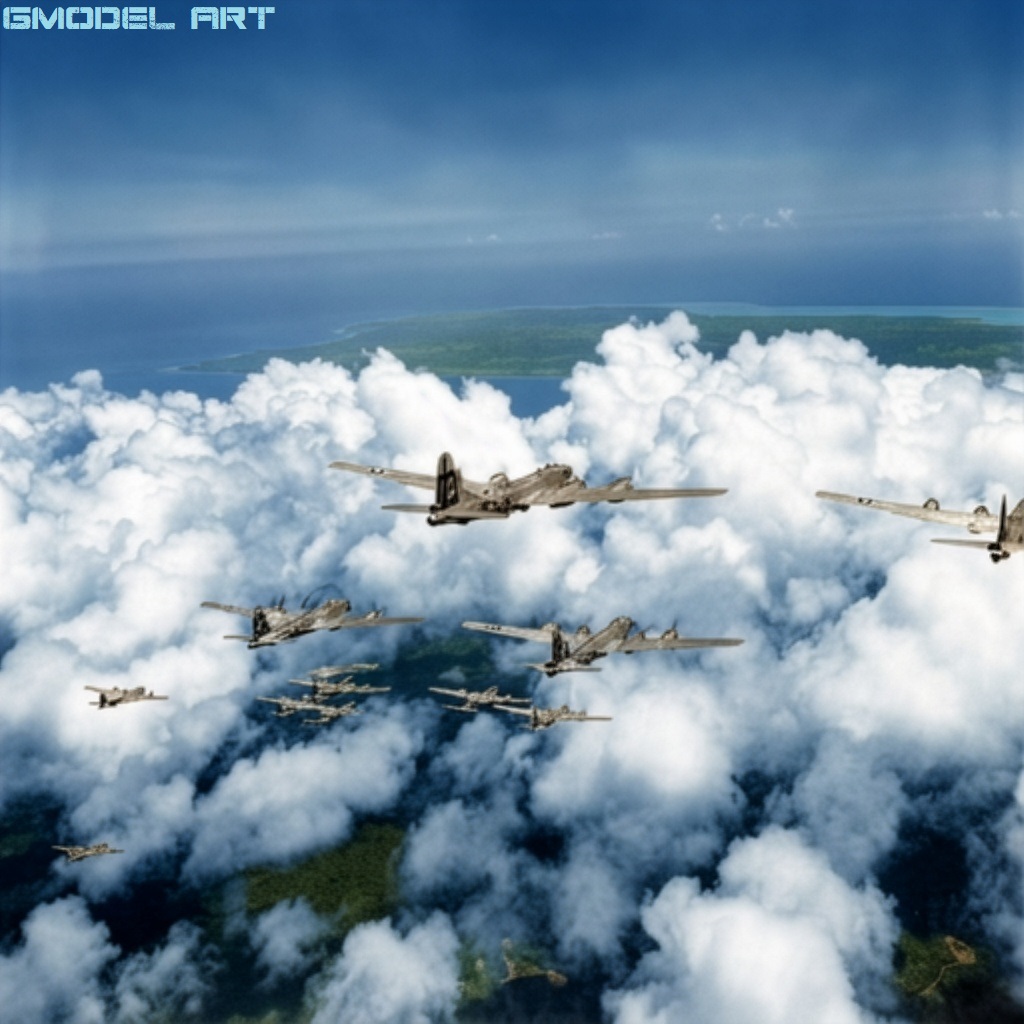
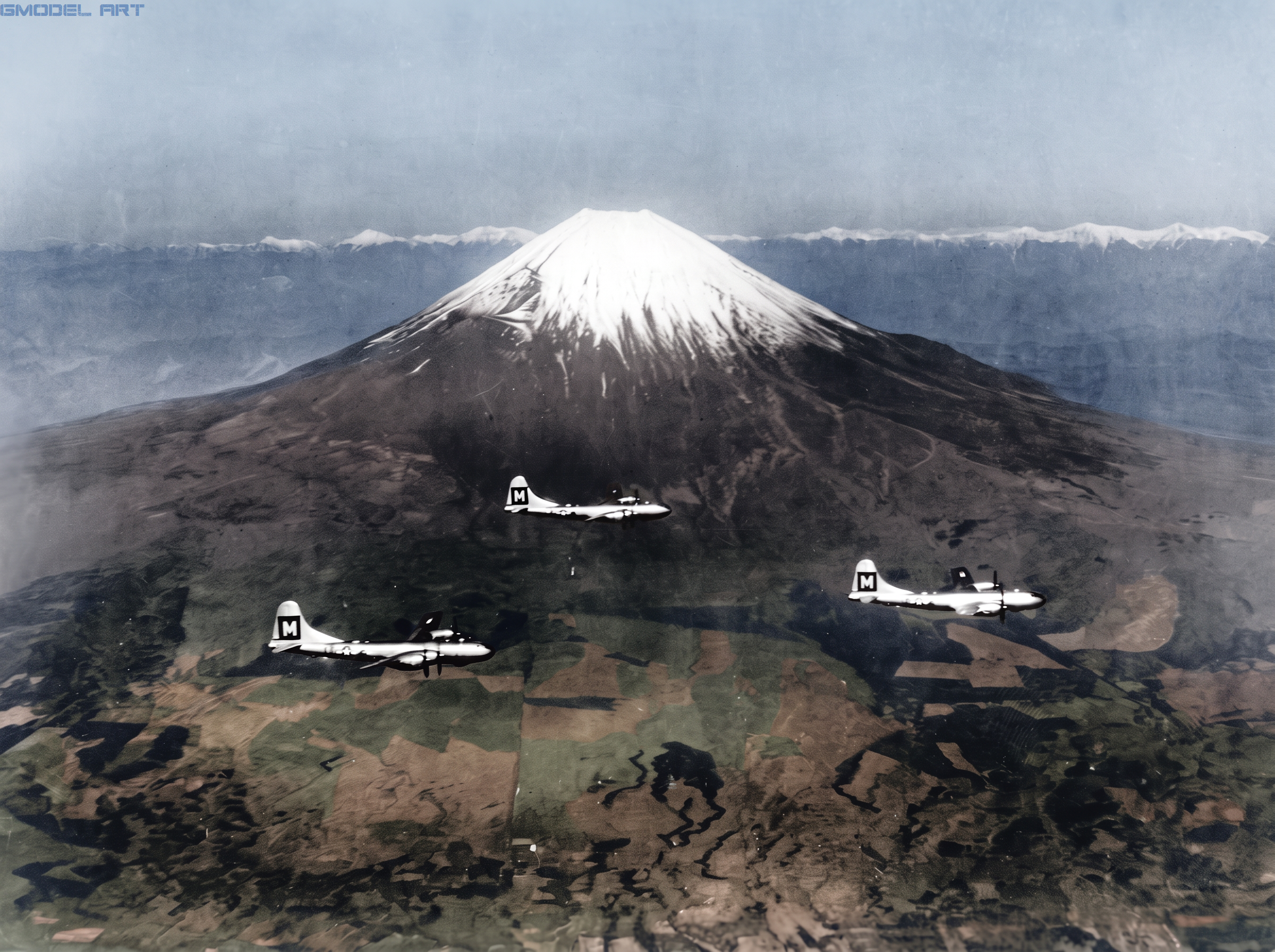
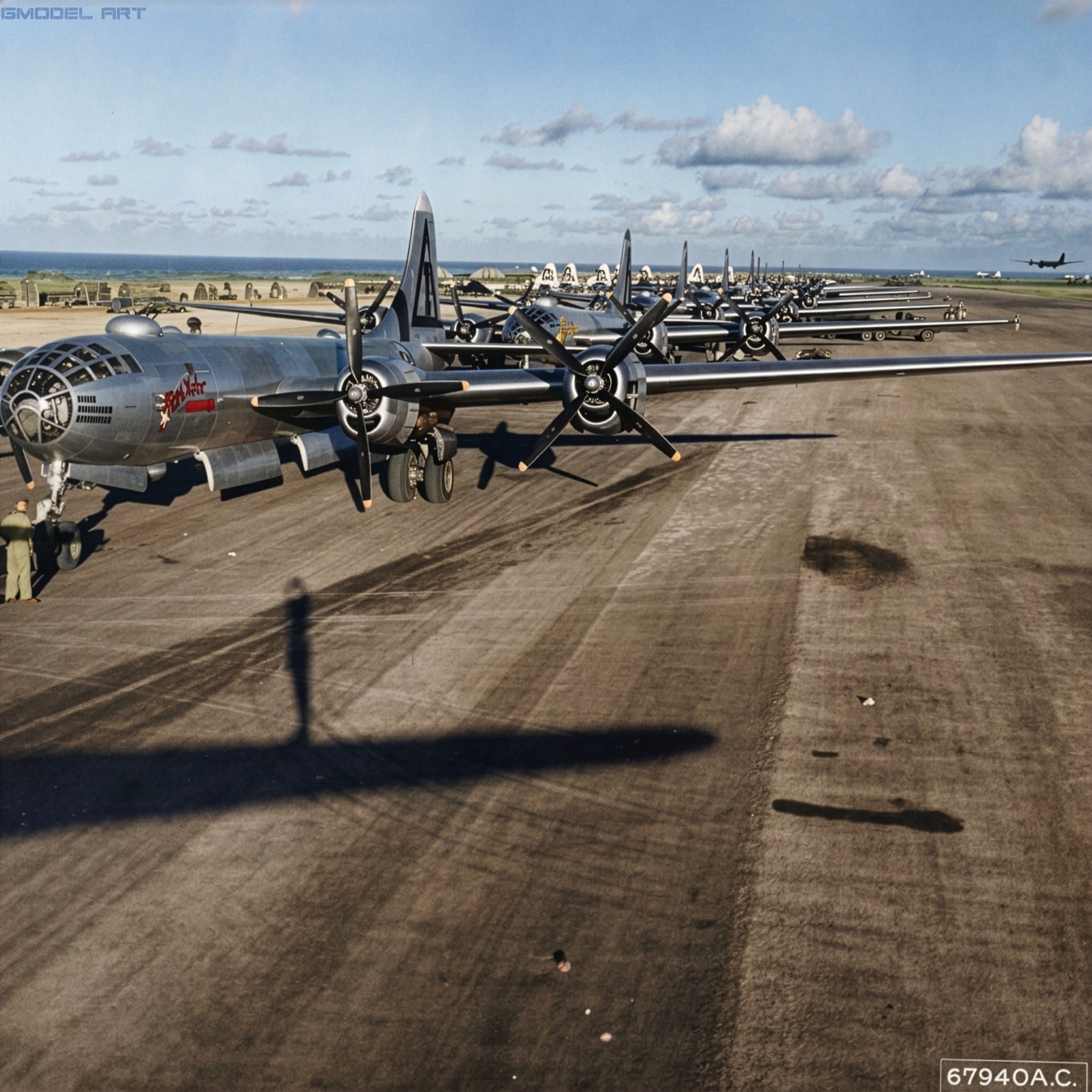
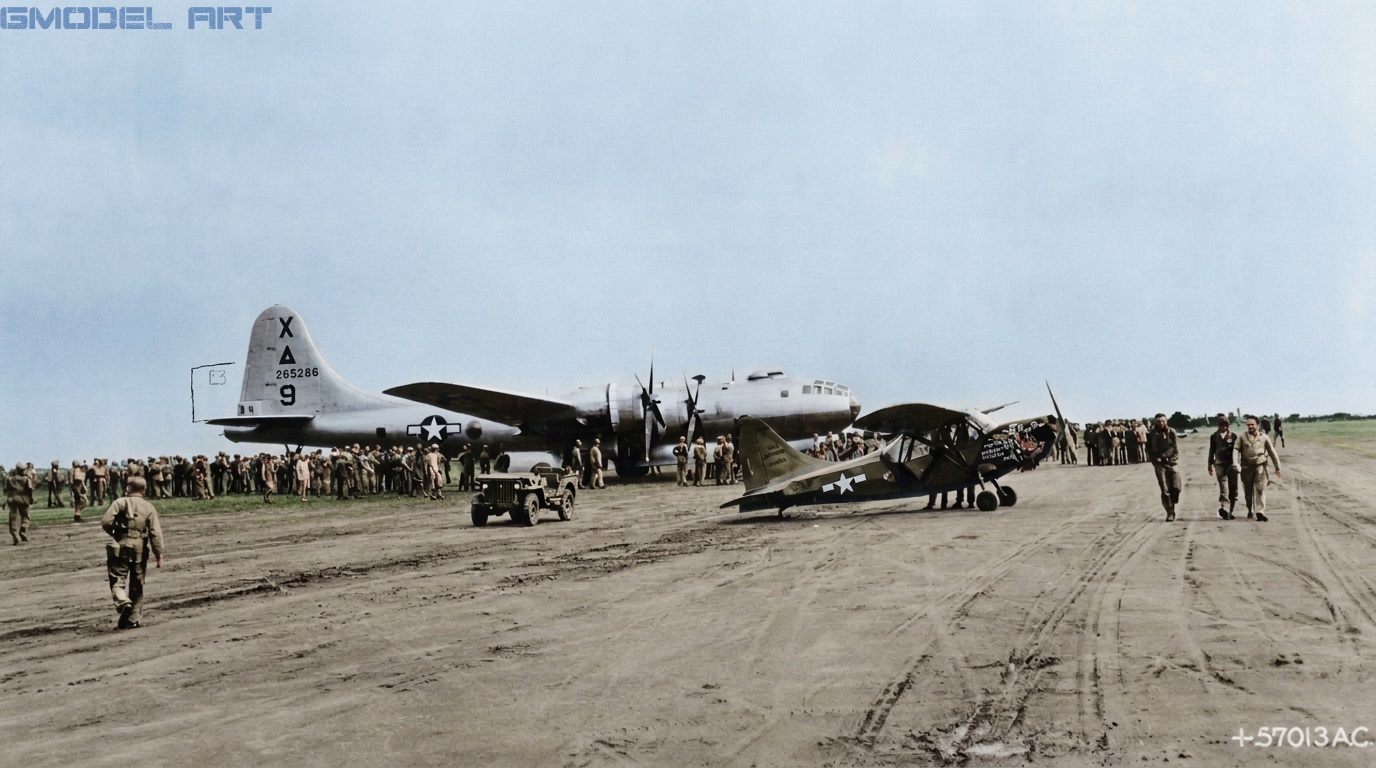
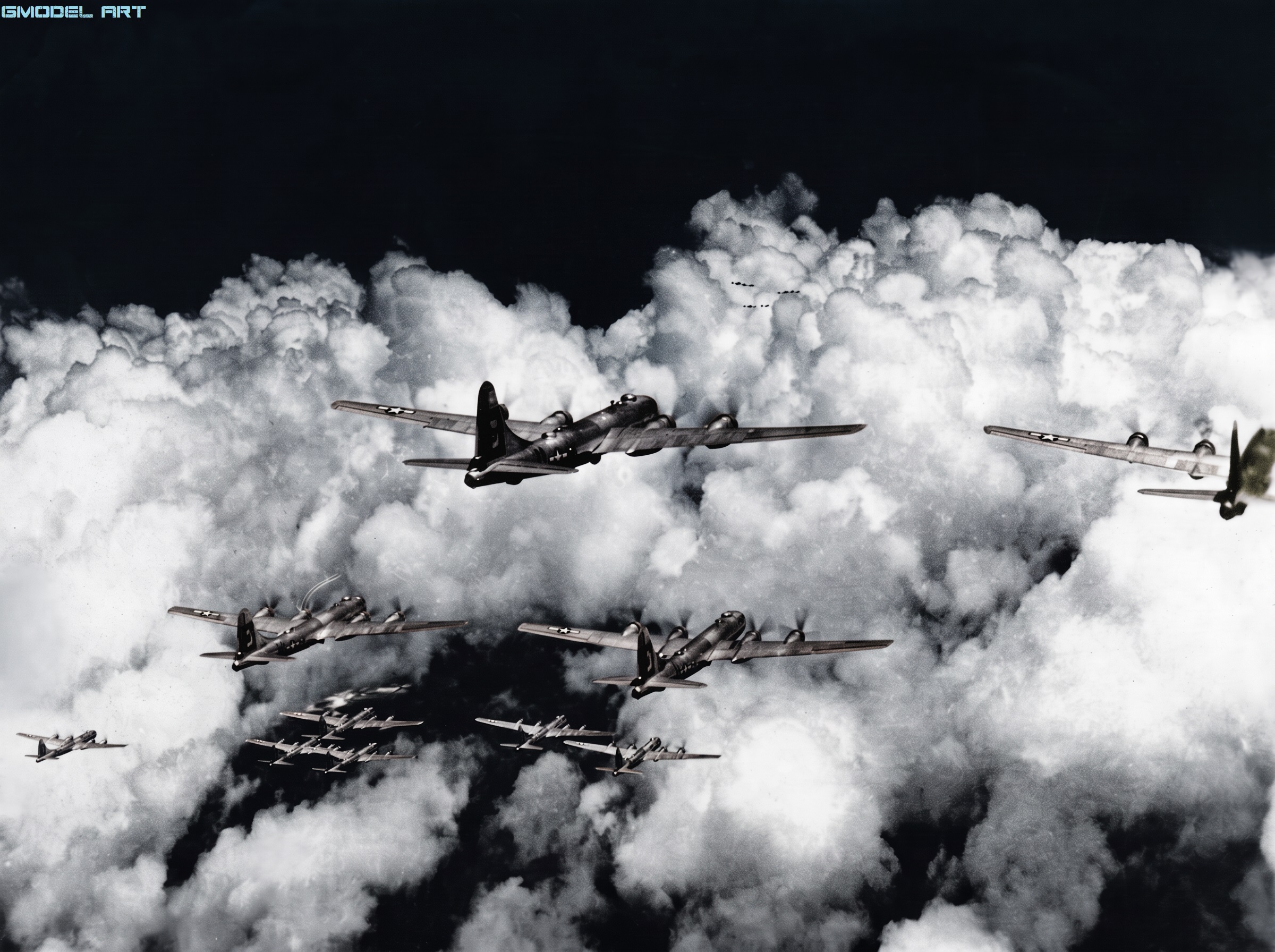
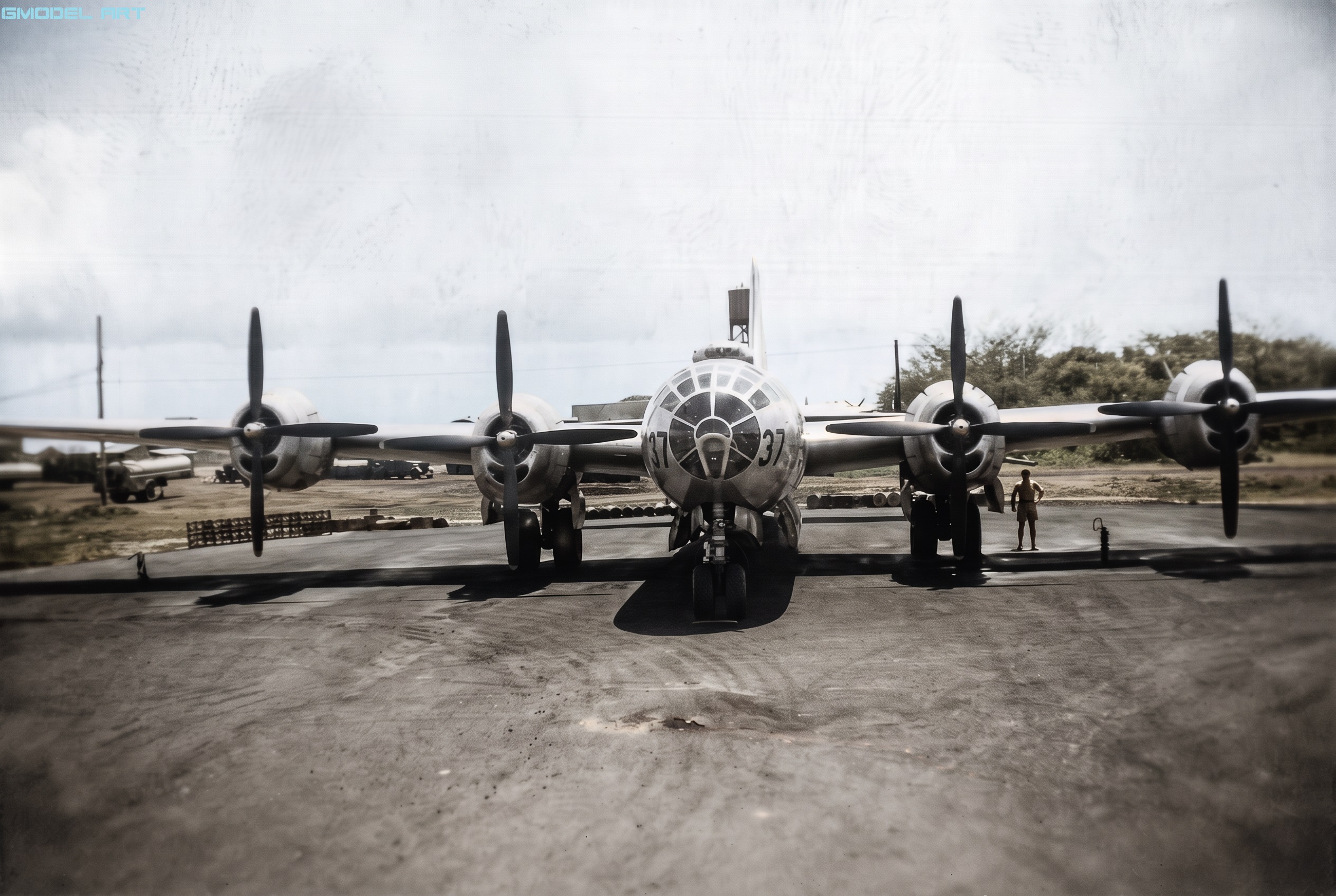
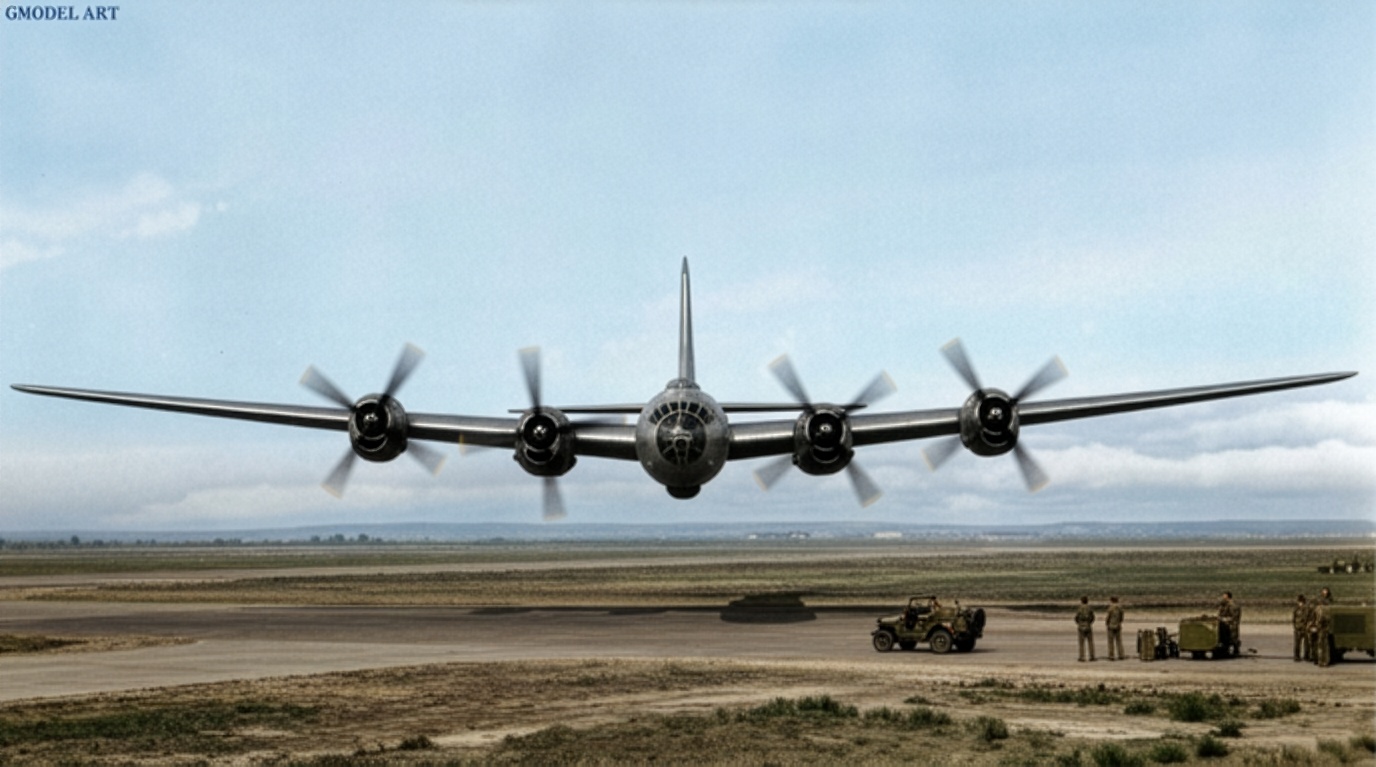
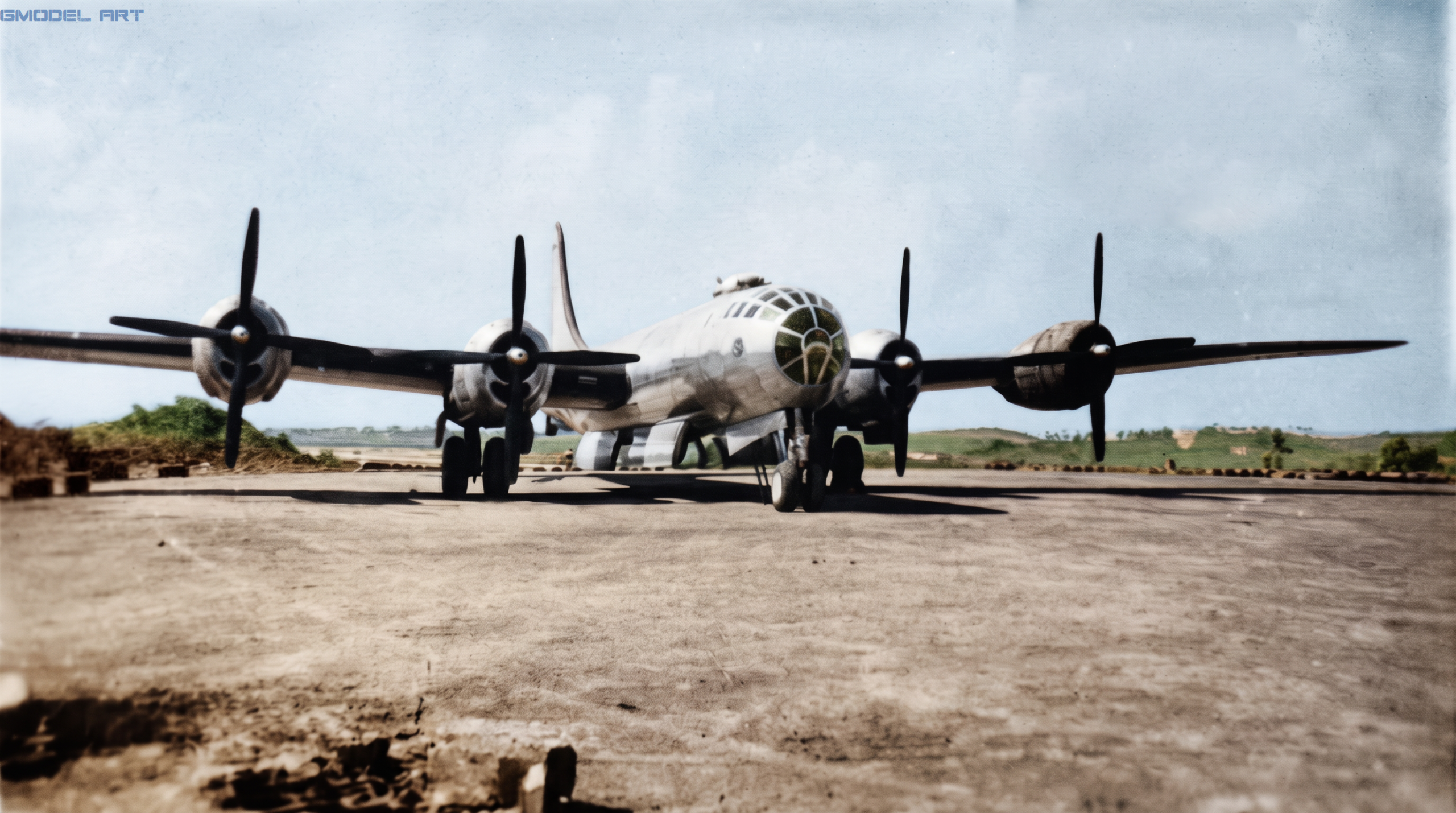
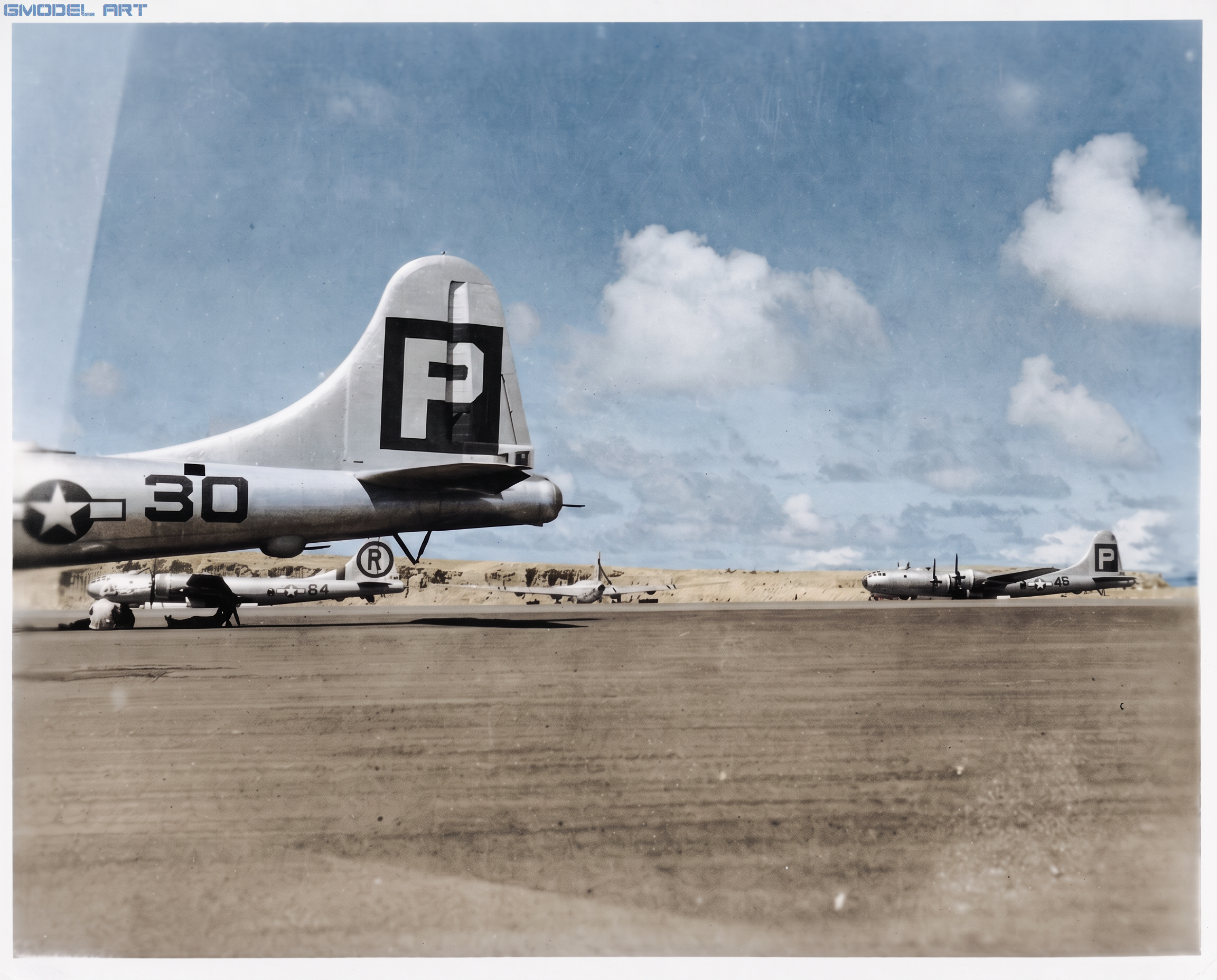
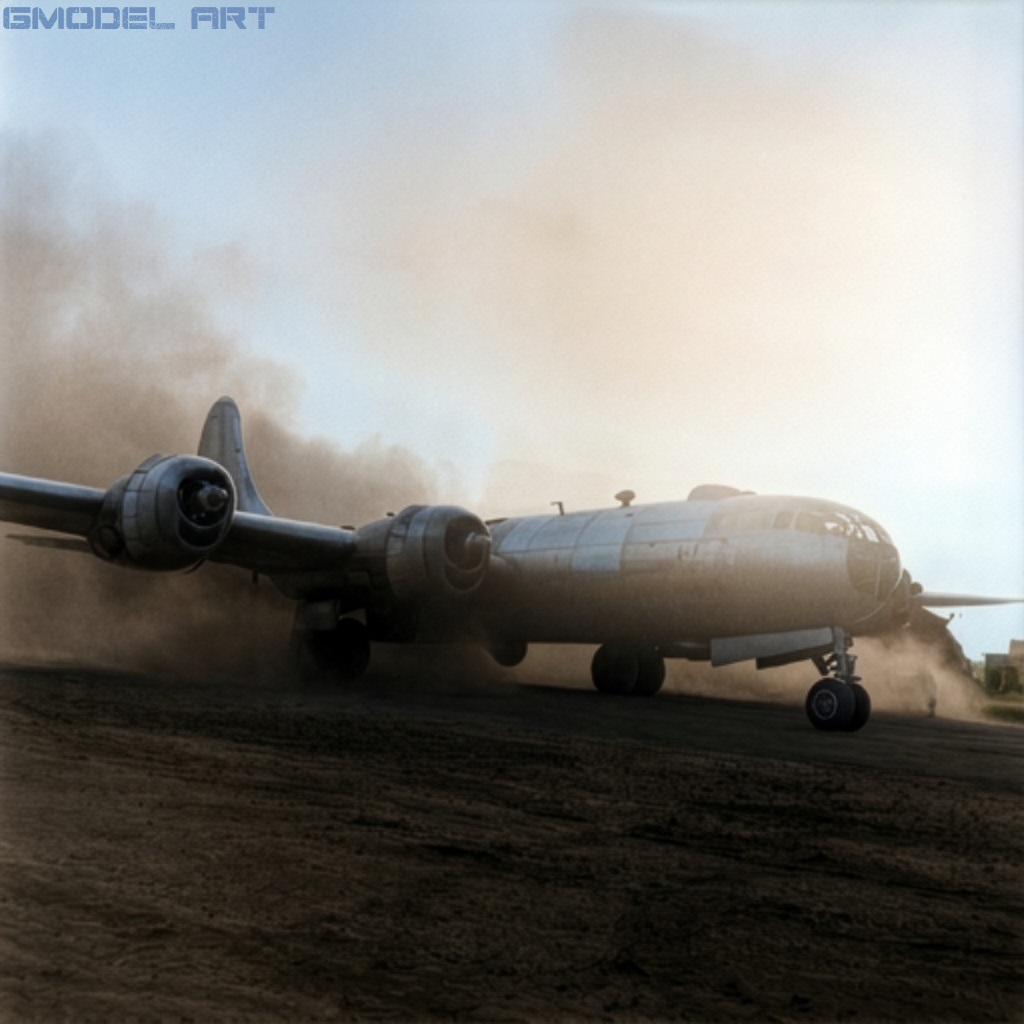
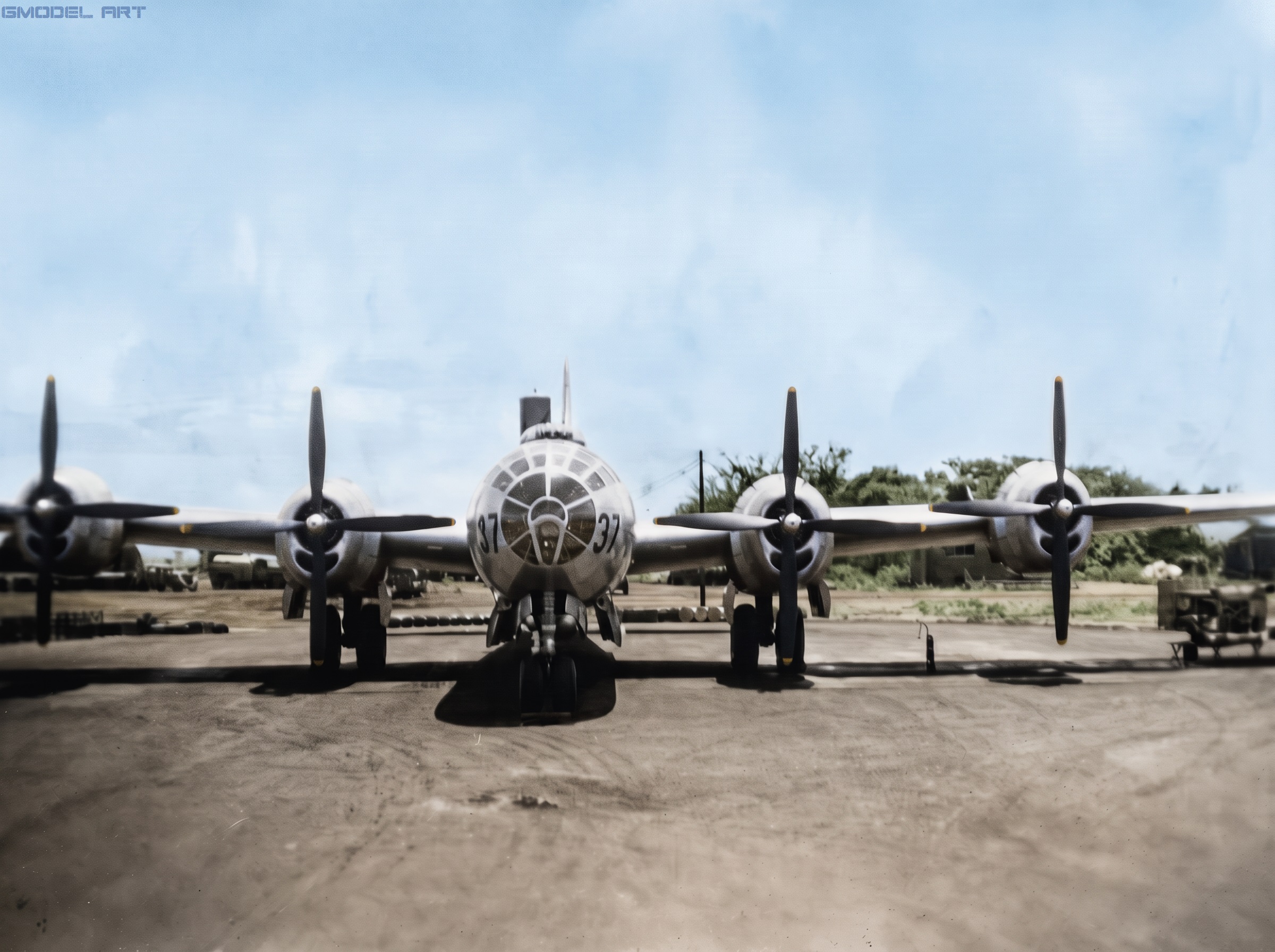
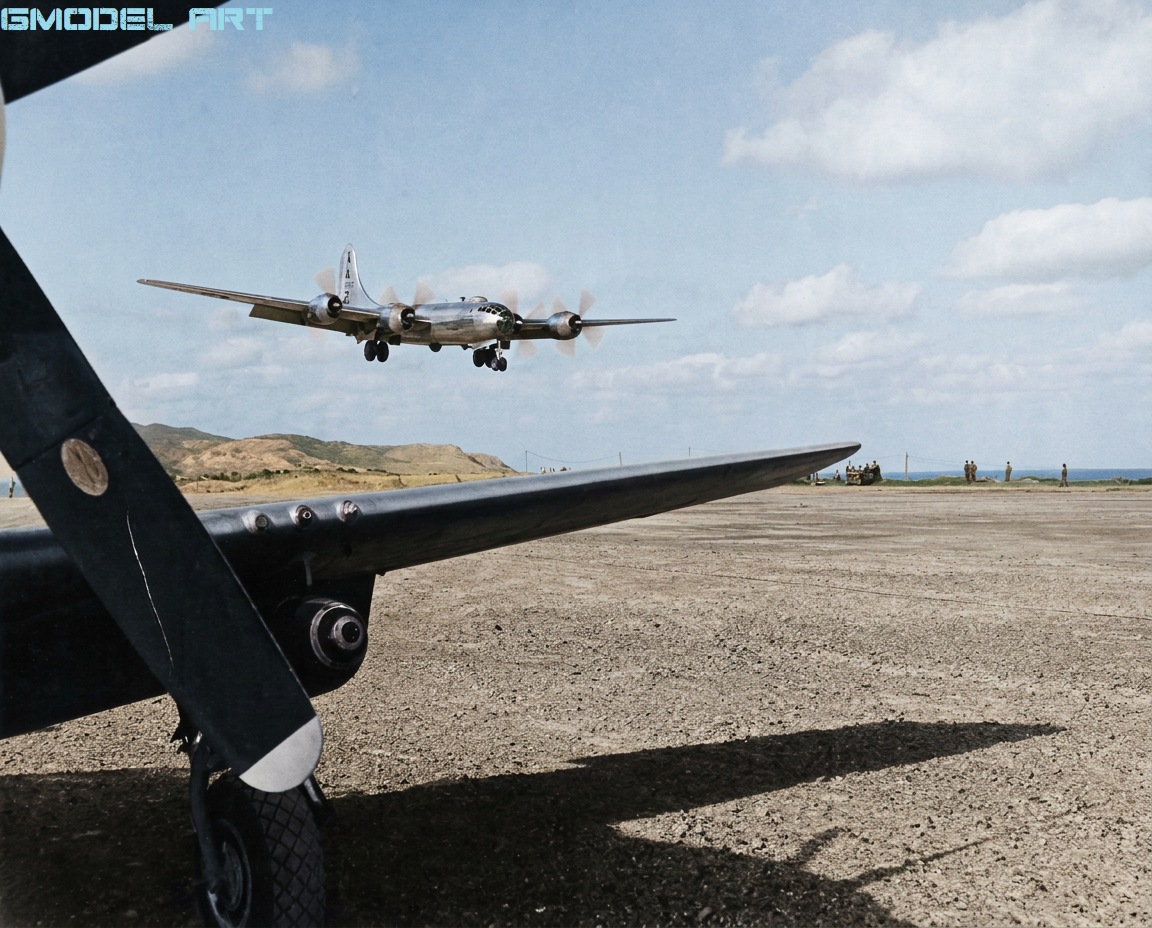
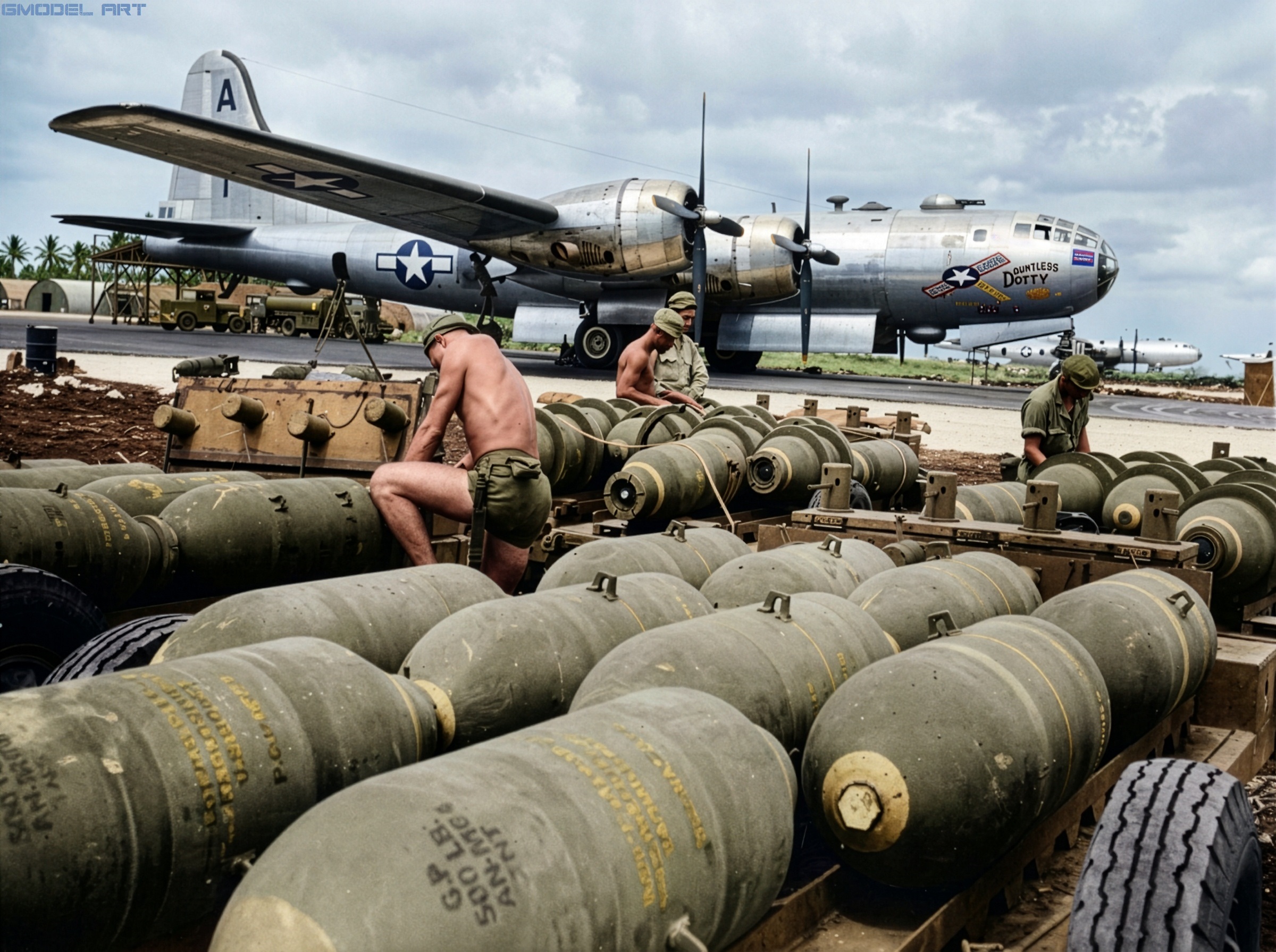
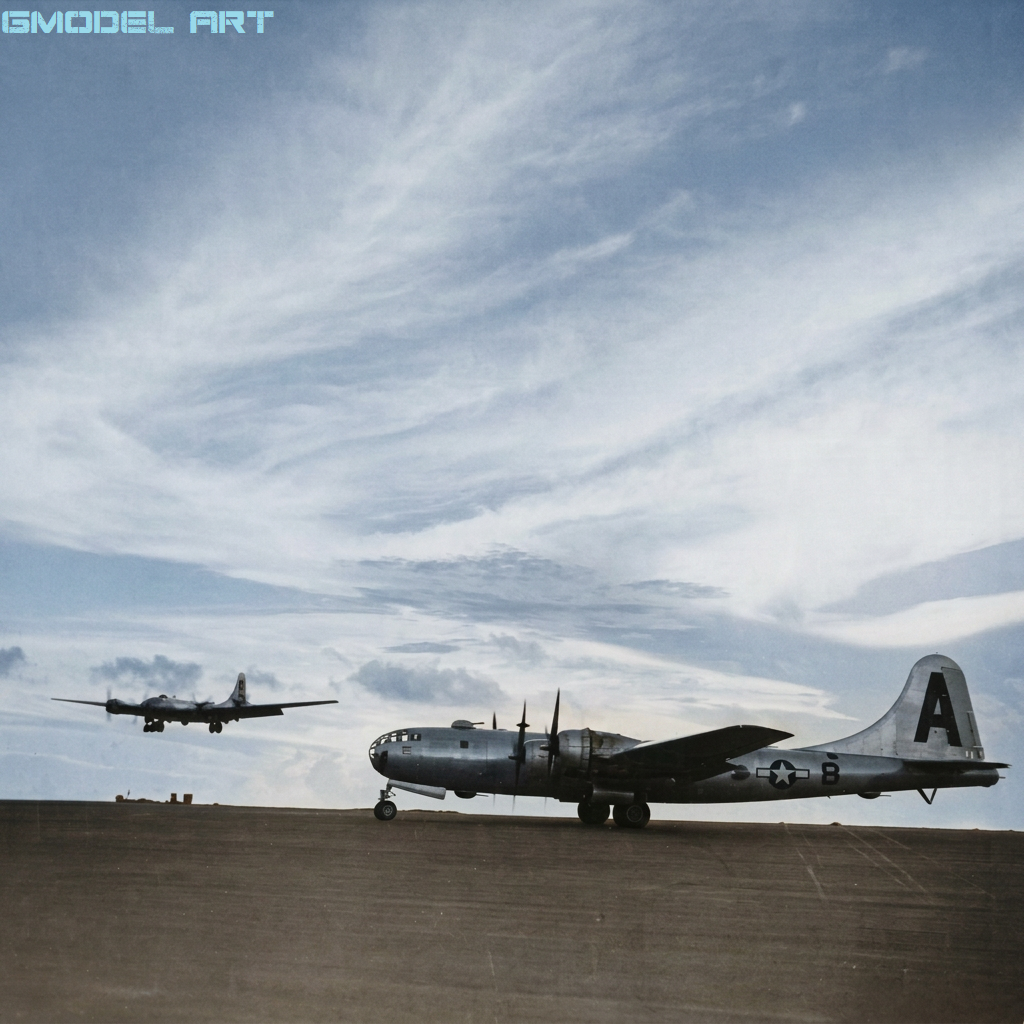
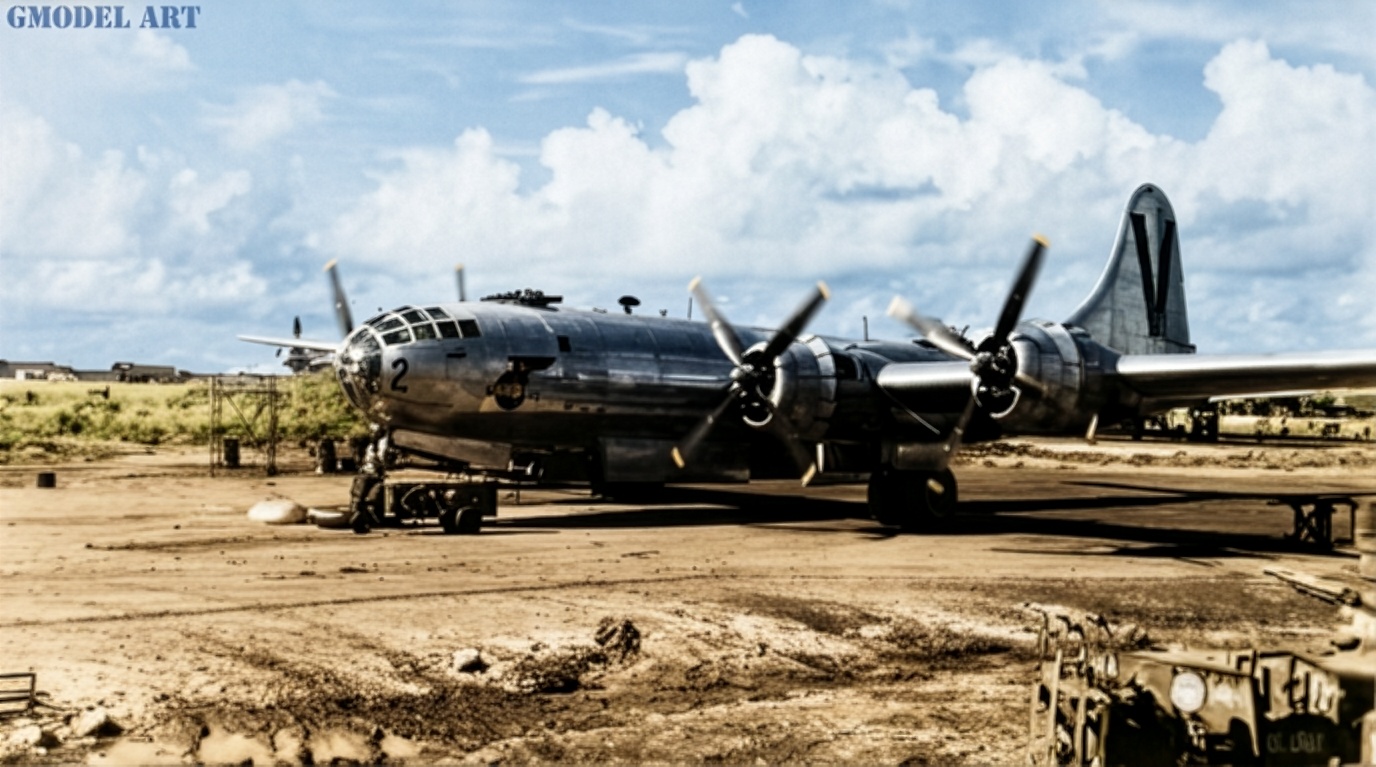
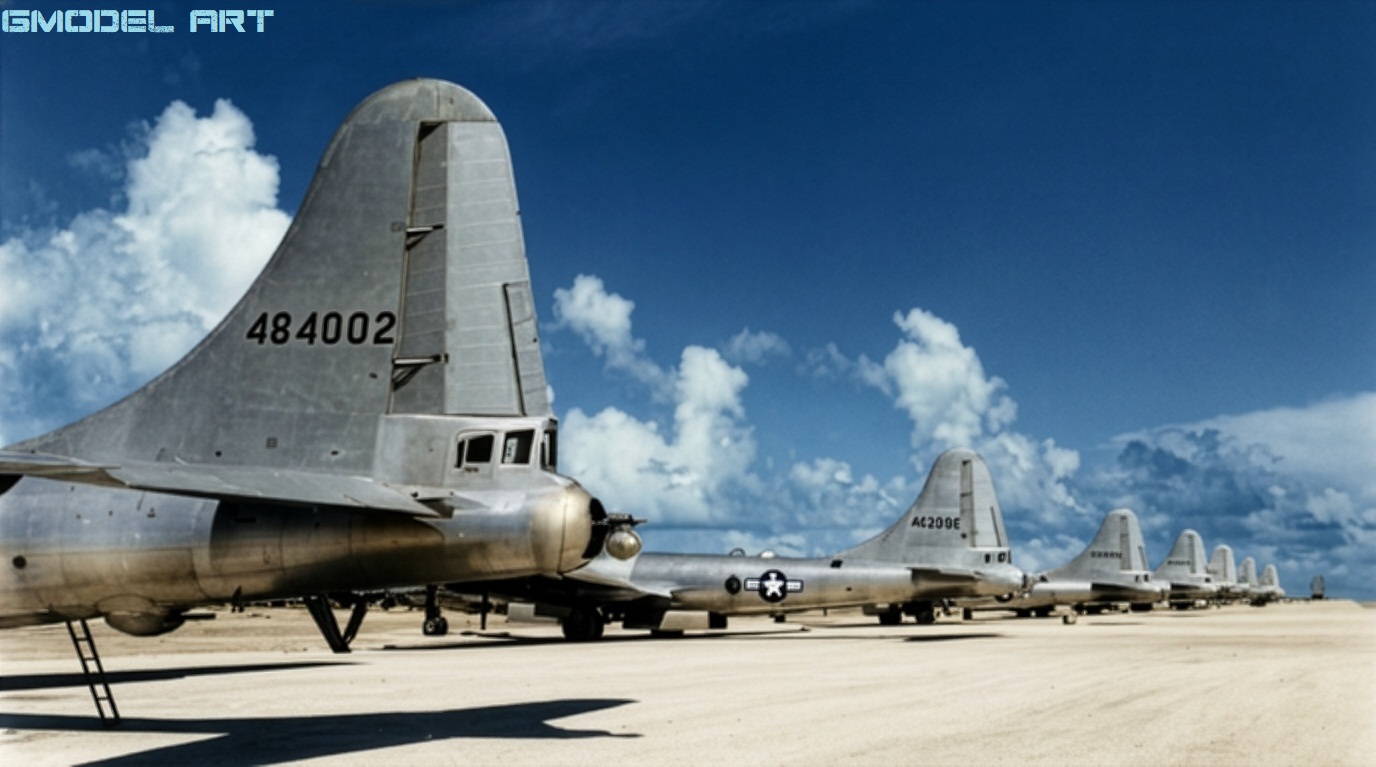
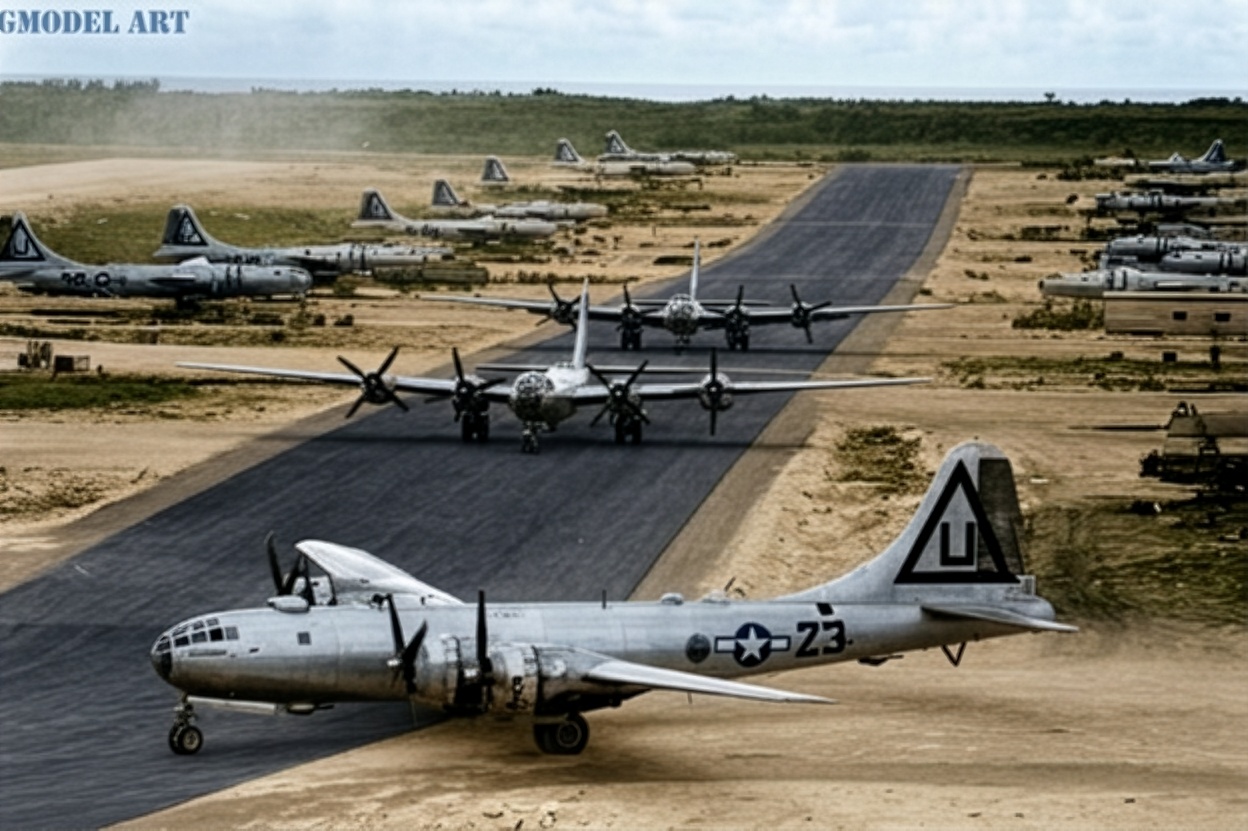
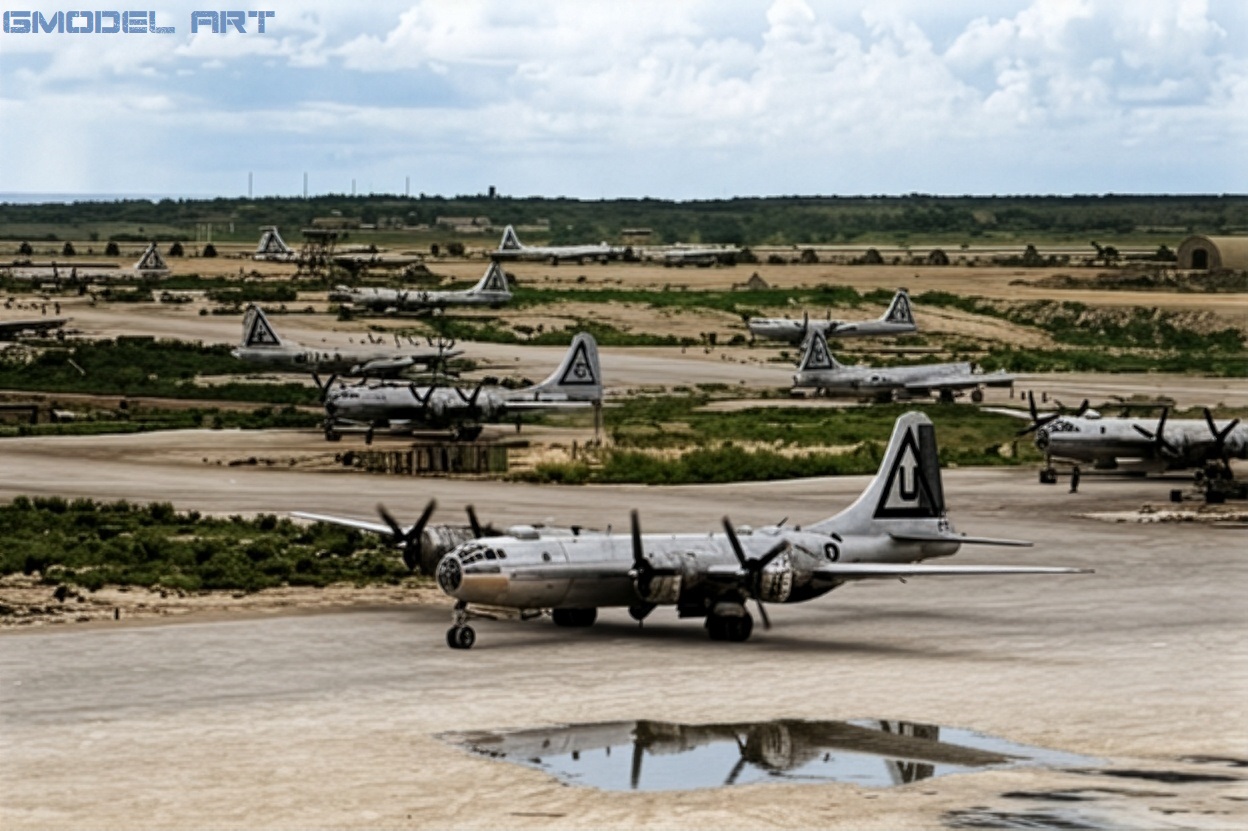
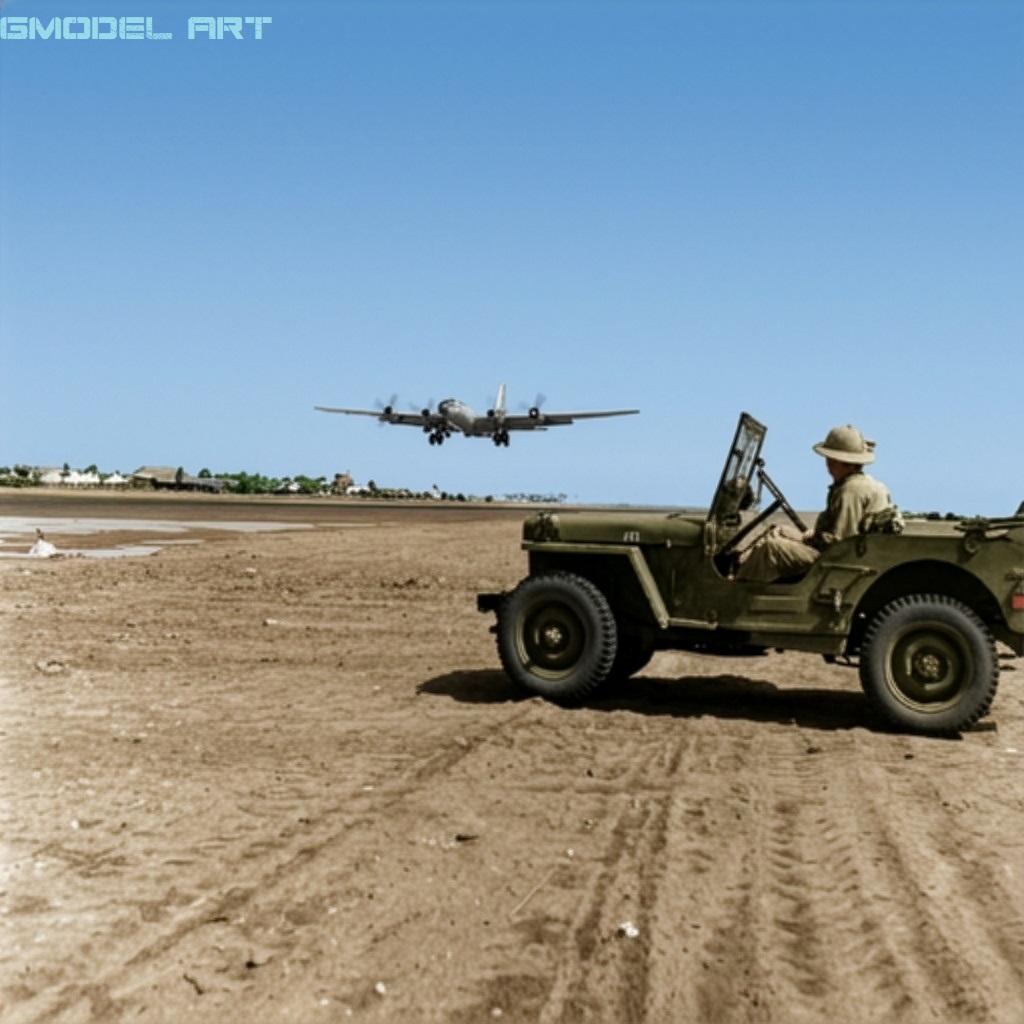
From Saipan, Tinian, and Guam, B-29s could operate directly against the Japanese Home Islands with far more effective logistical support. Tinian became one of the most important bases of the campaign. North Field included multiple runways, taxiways, service aprons, and hardstands capable of supporting hundreds of aircraft. (National Park Service)
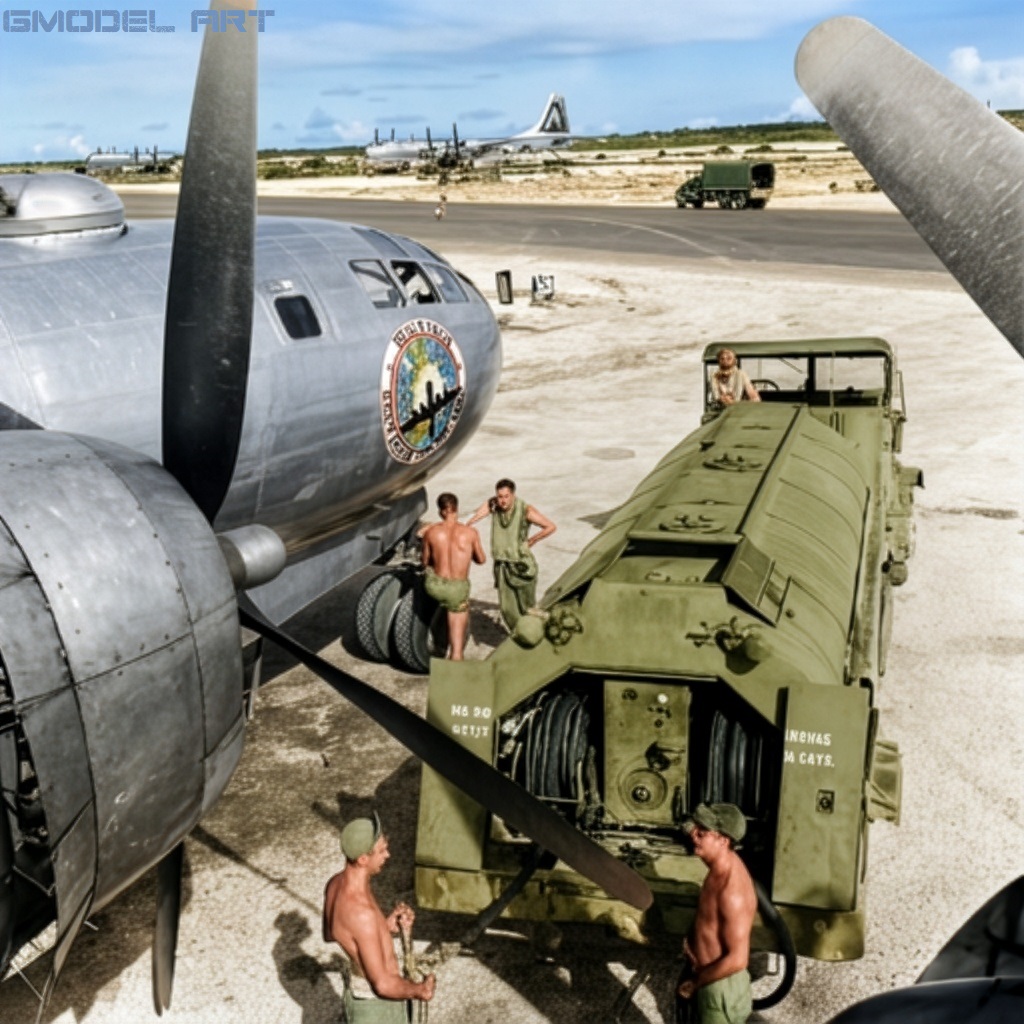
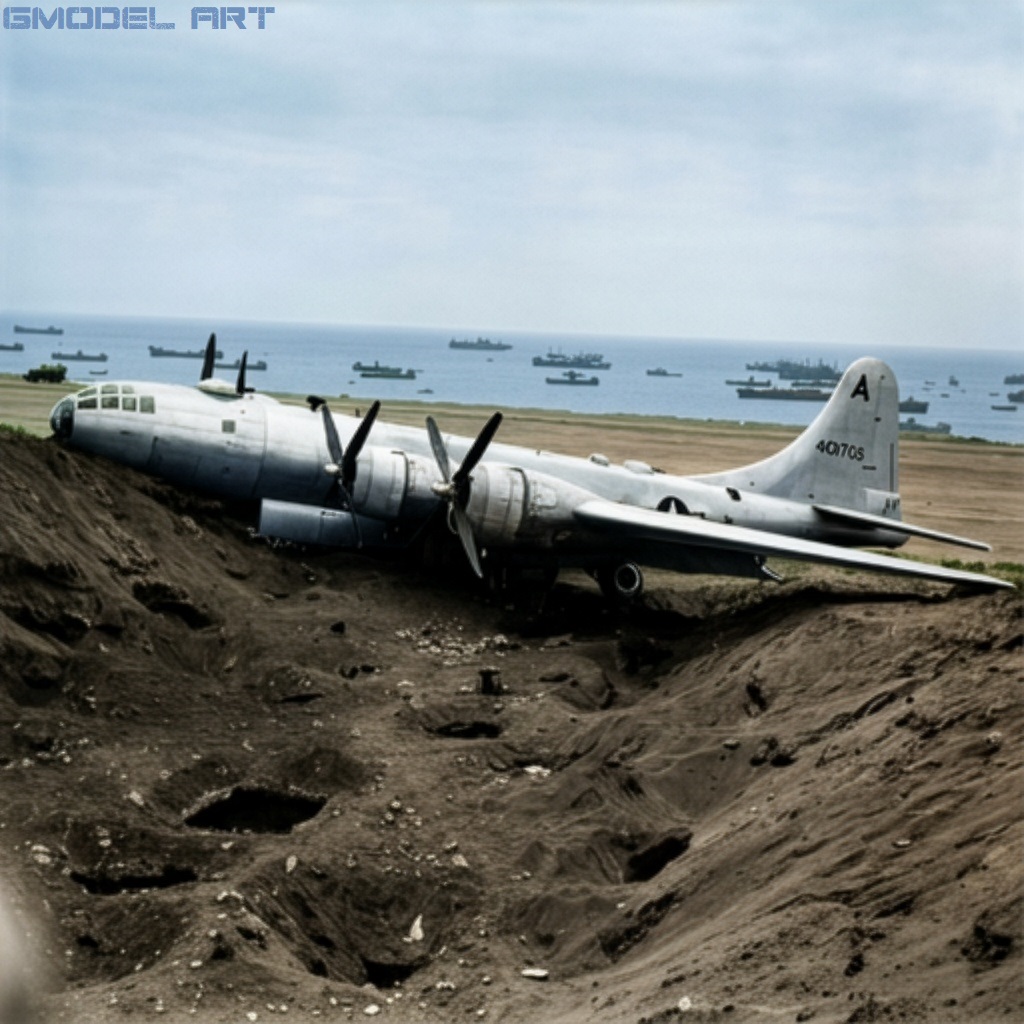
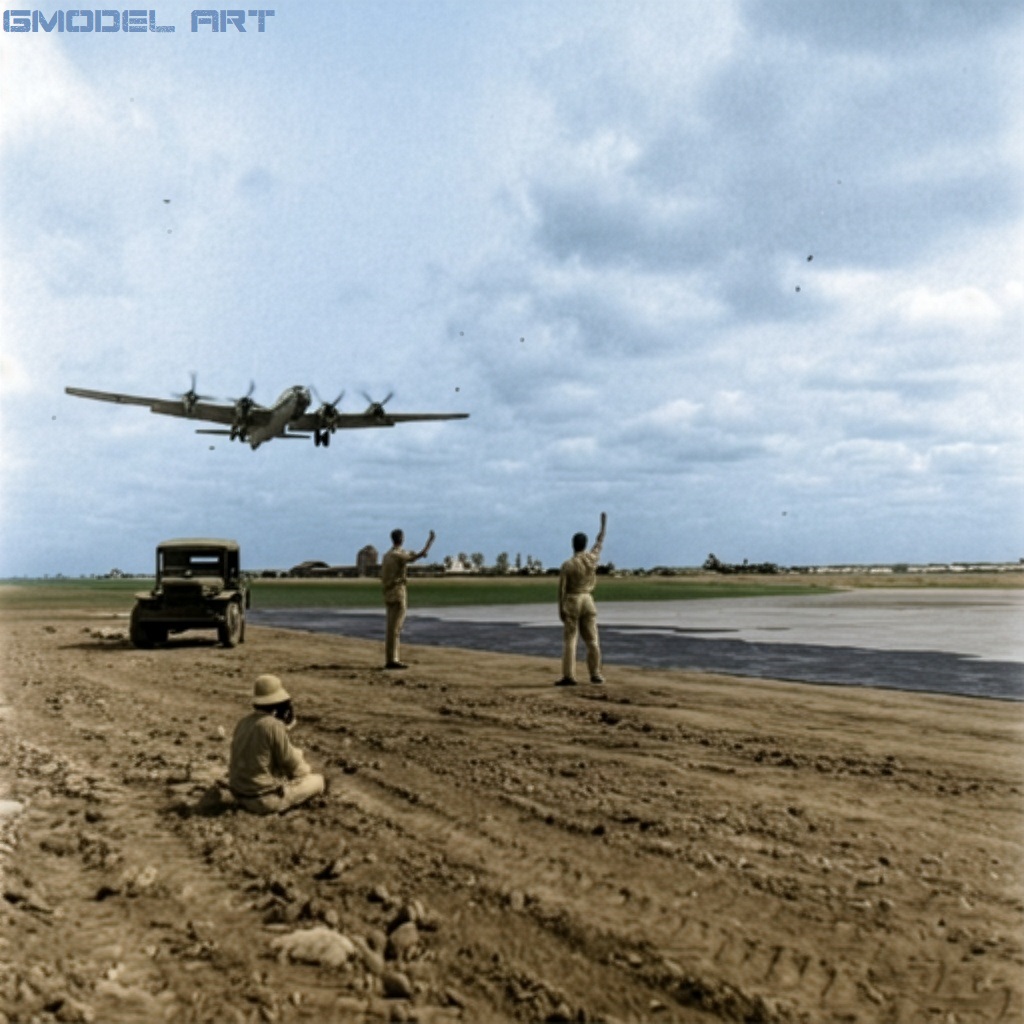
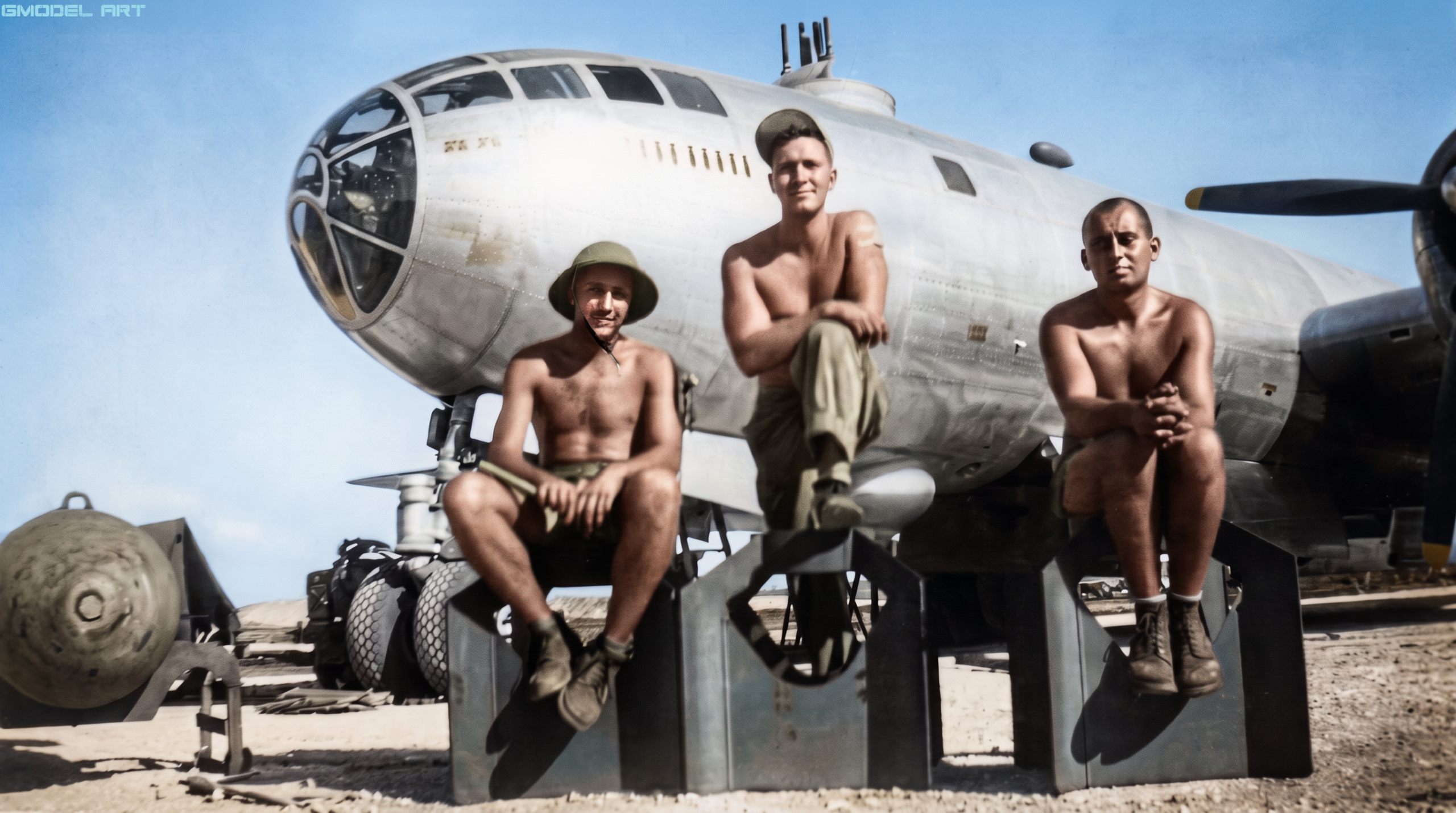
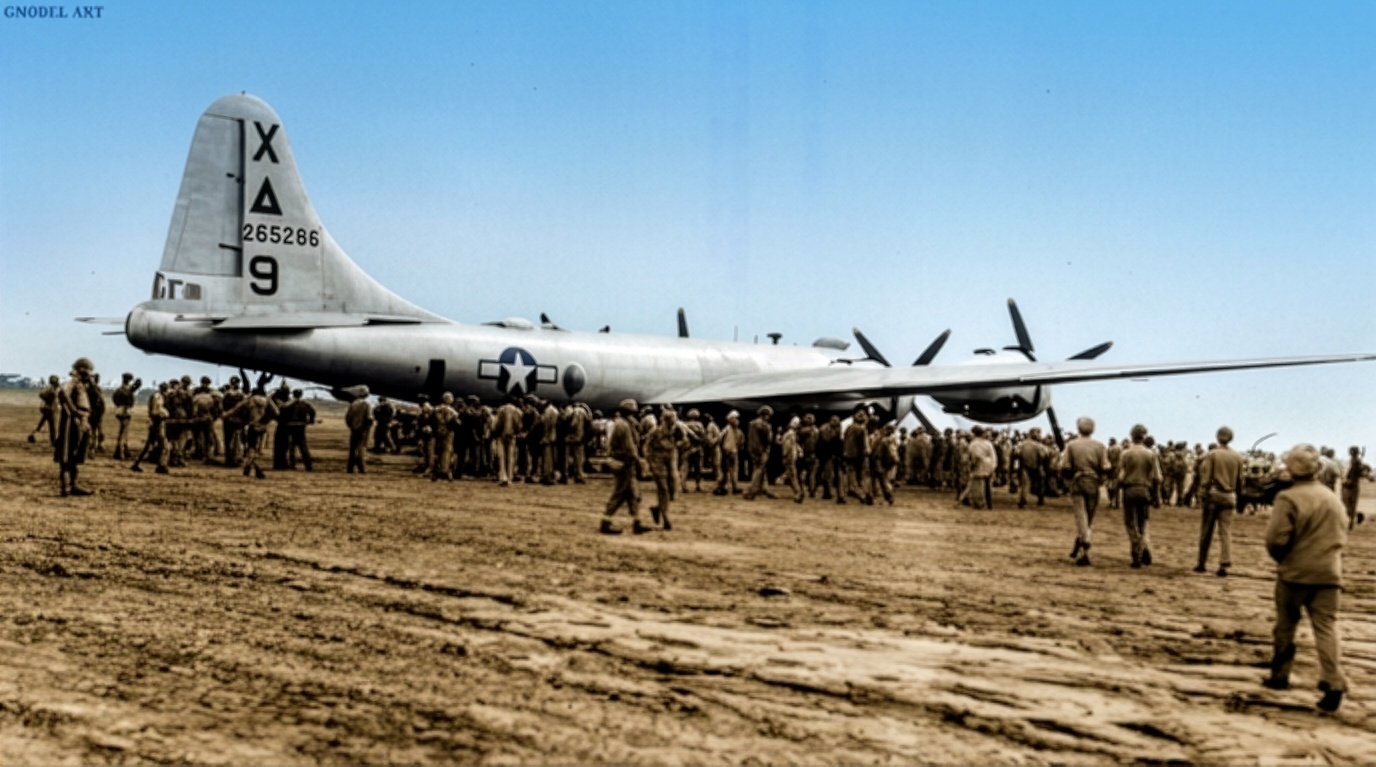
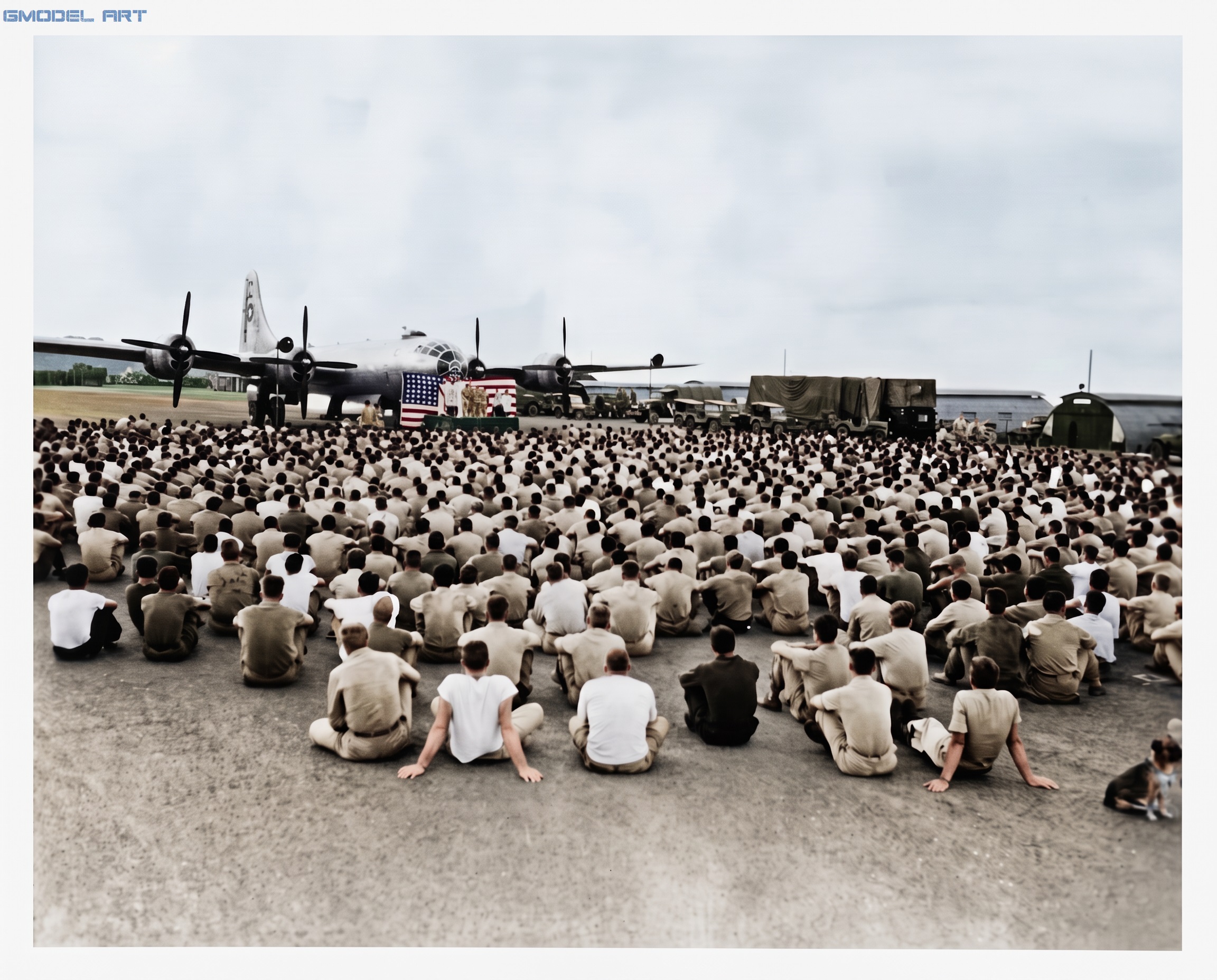
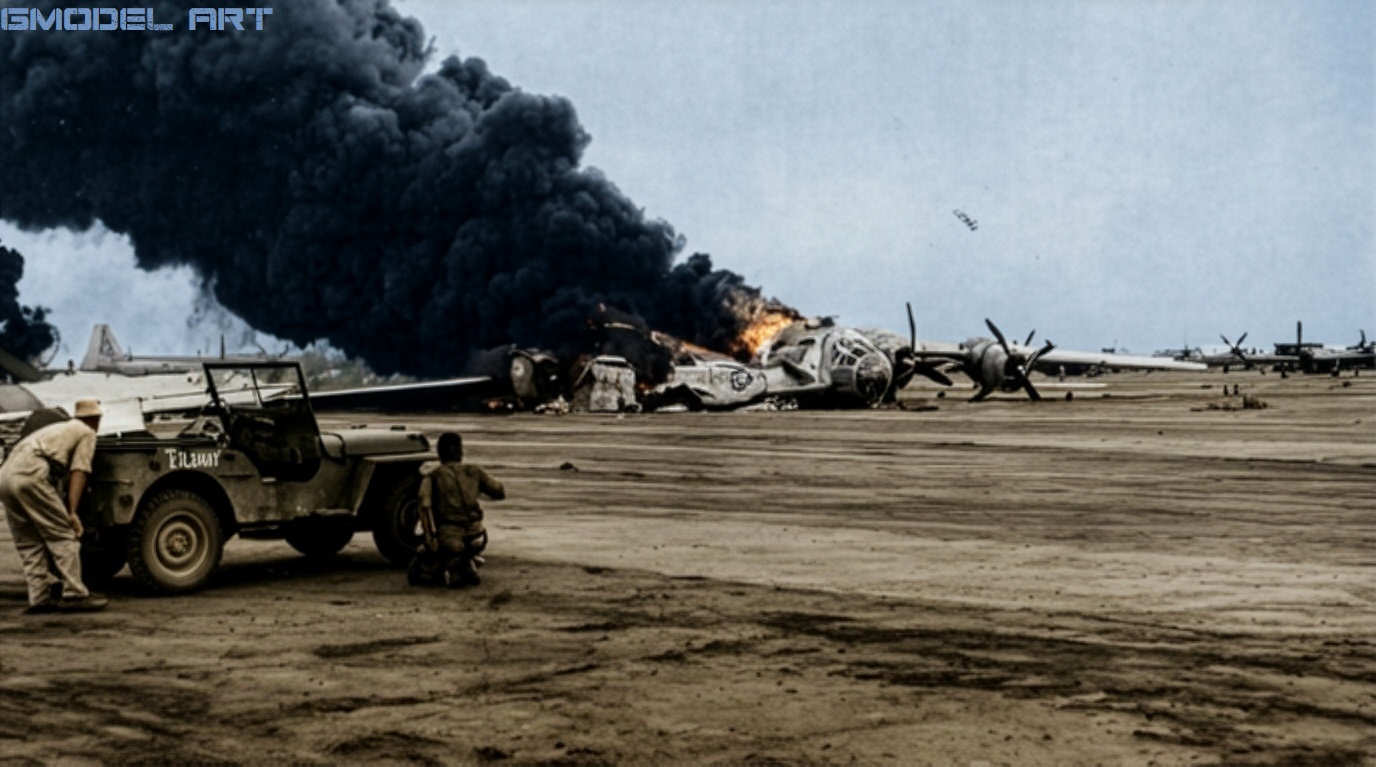
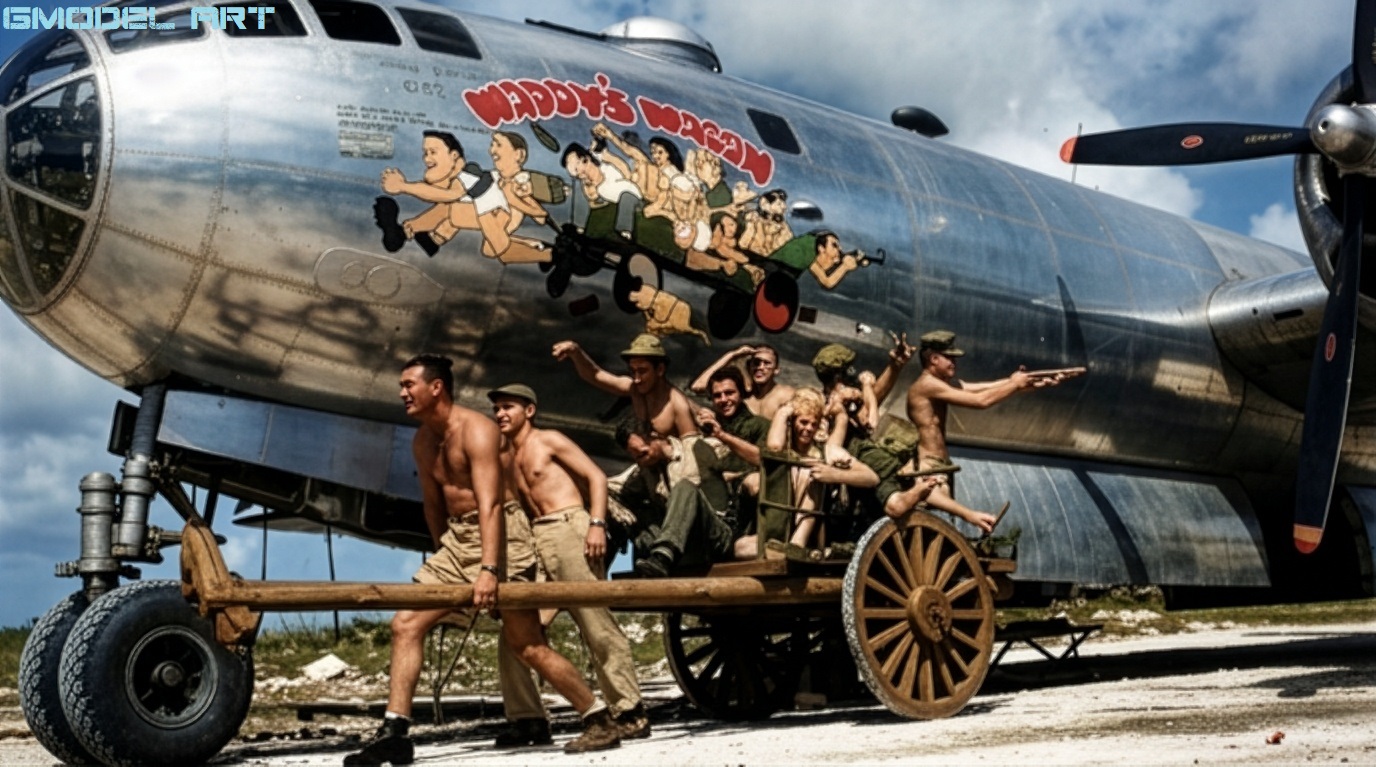
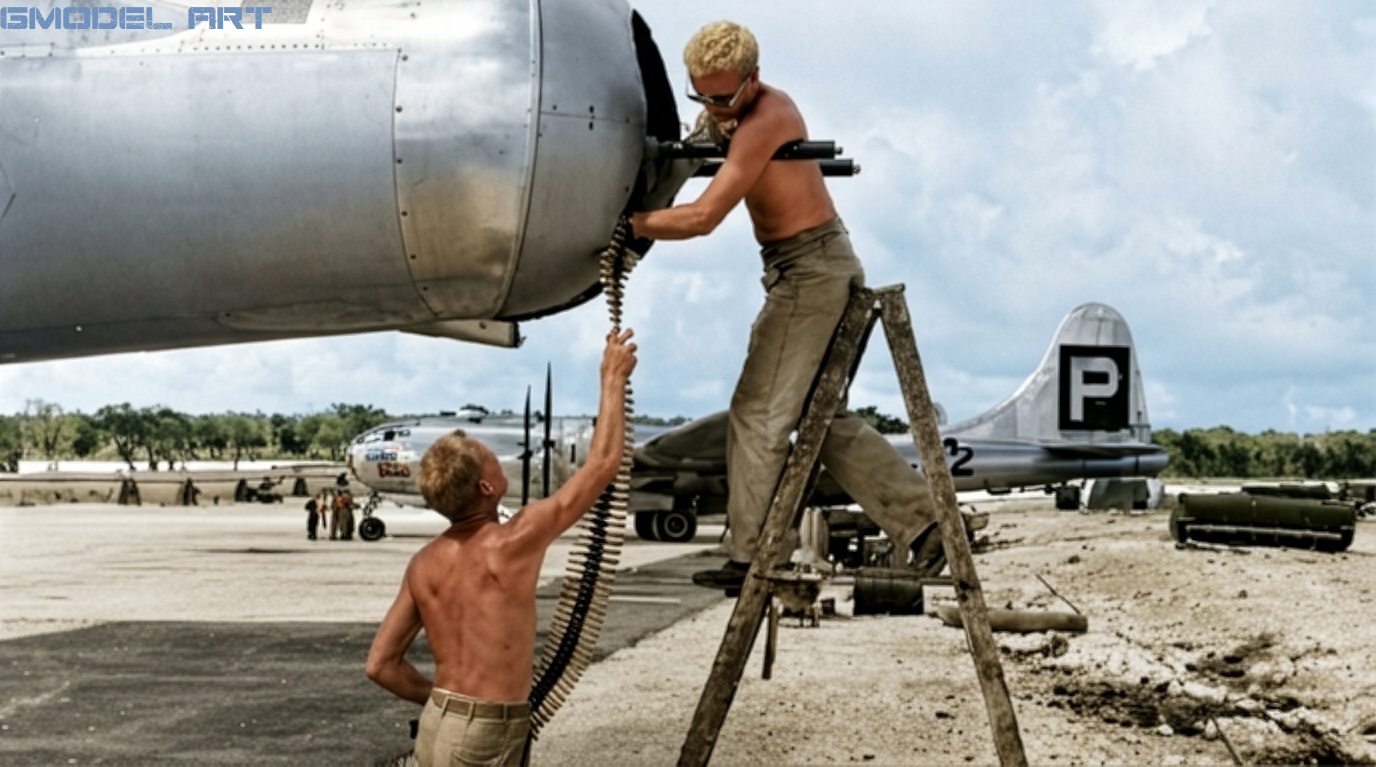
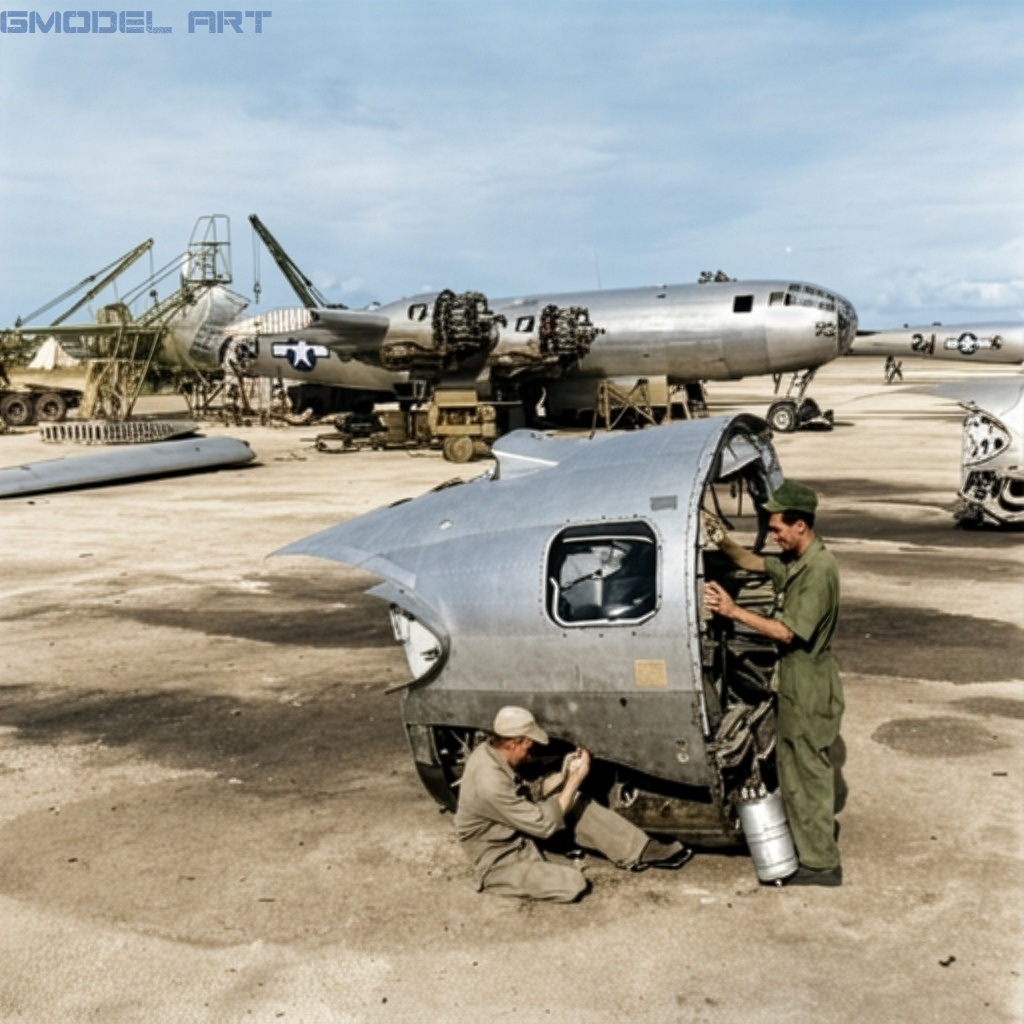
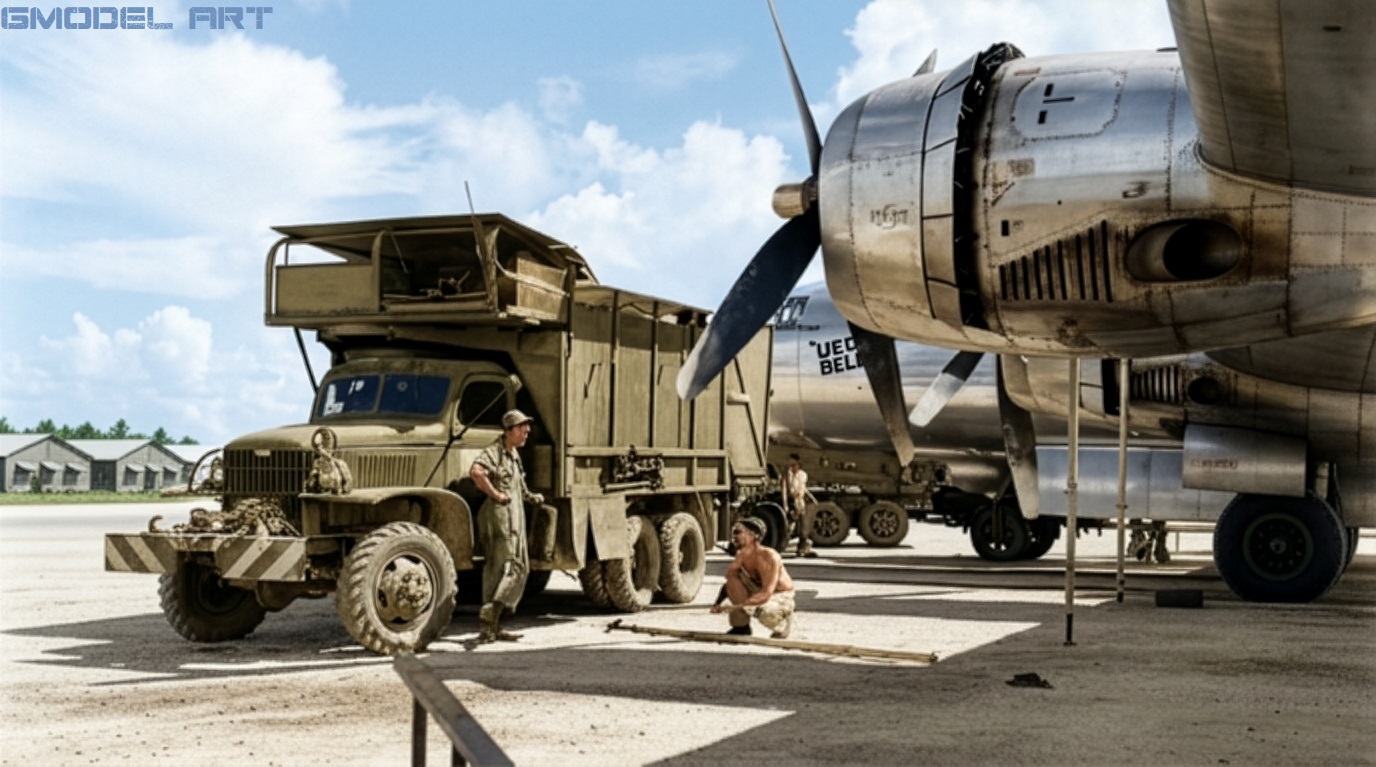
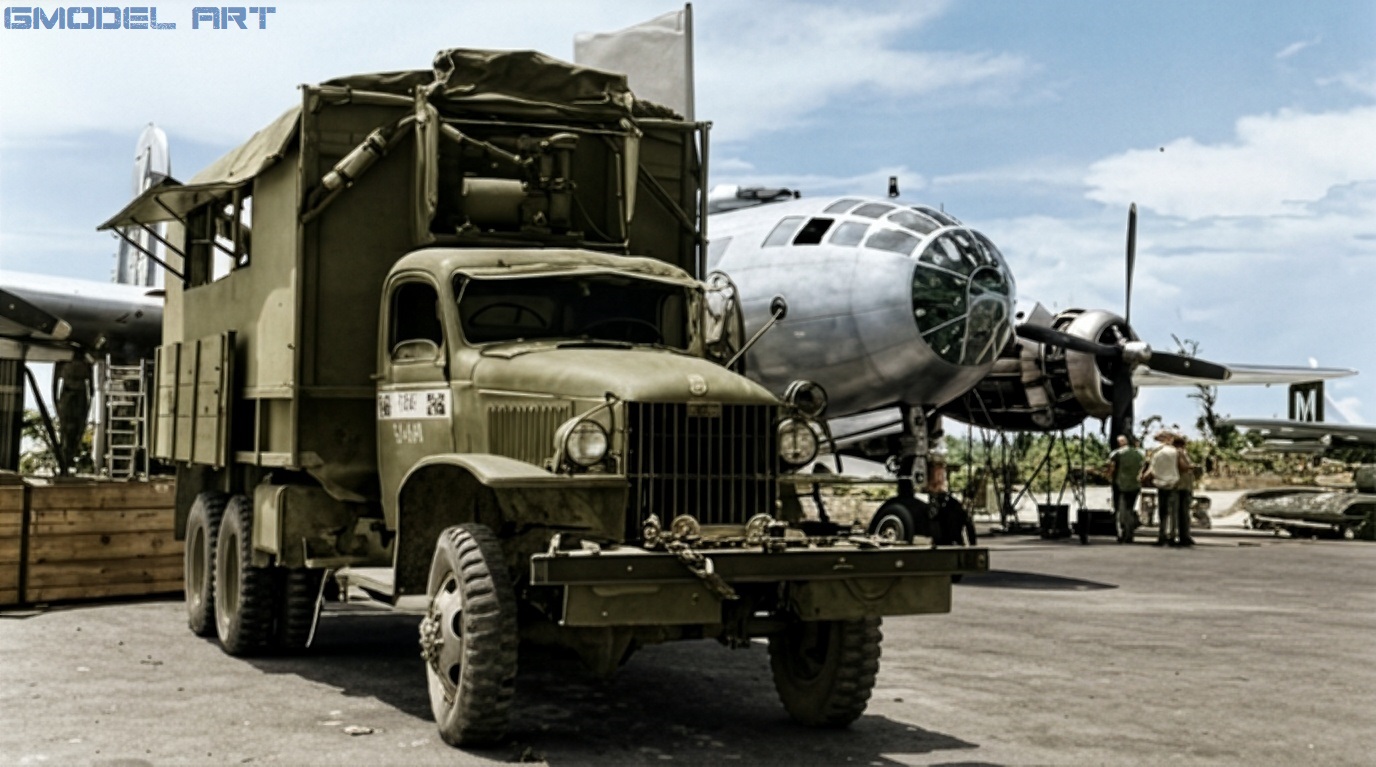
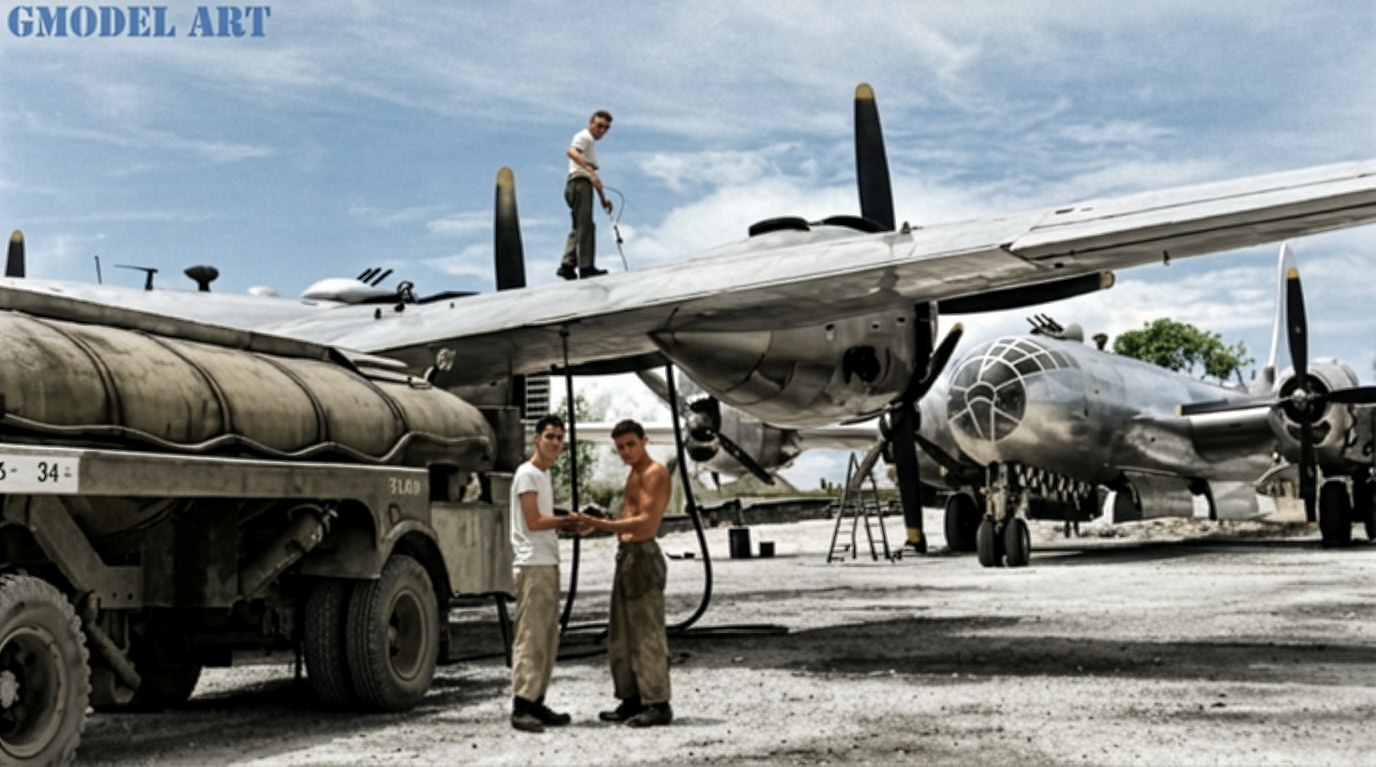
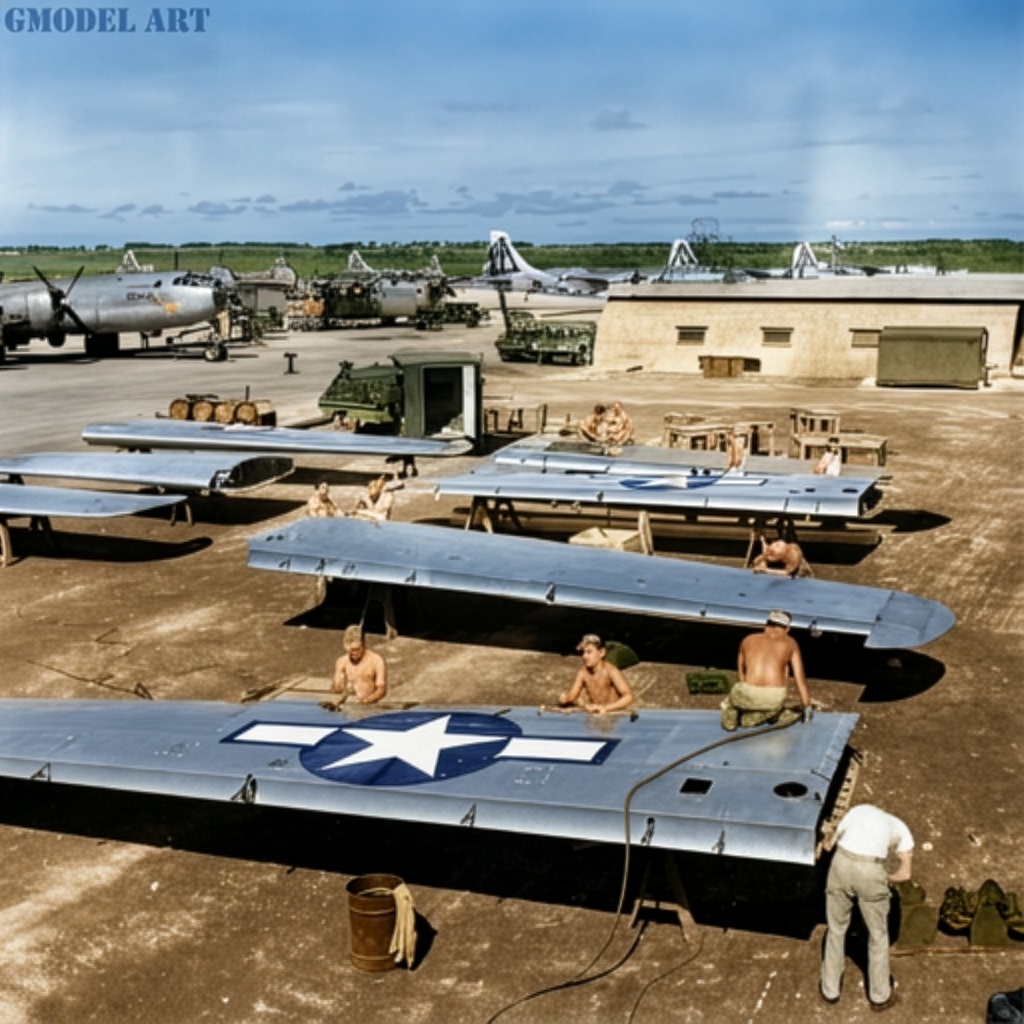
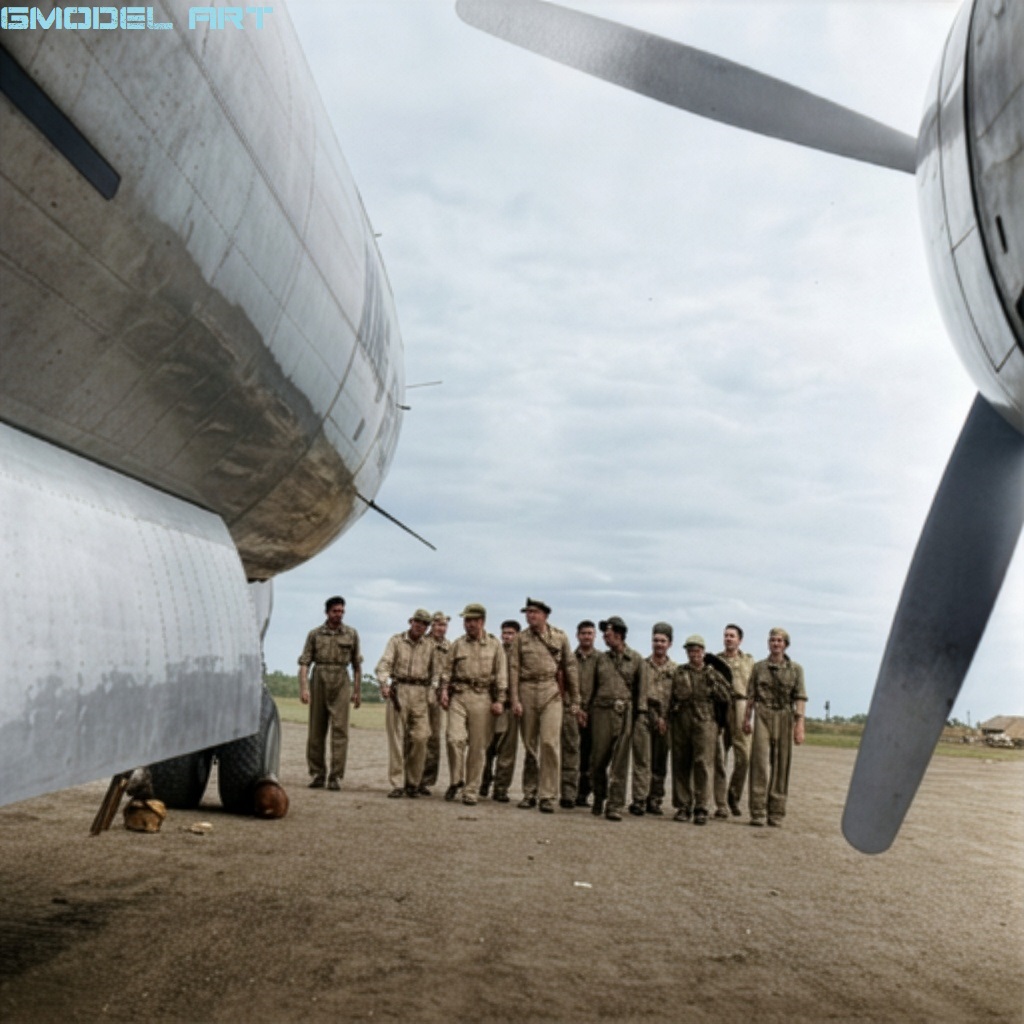
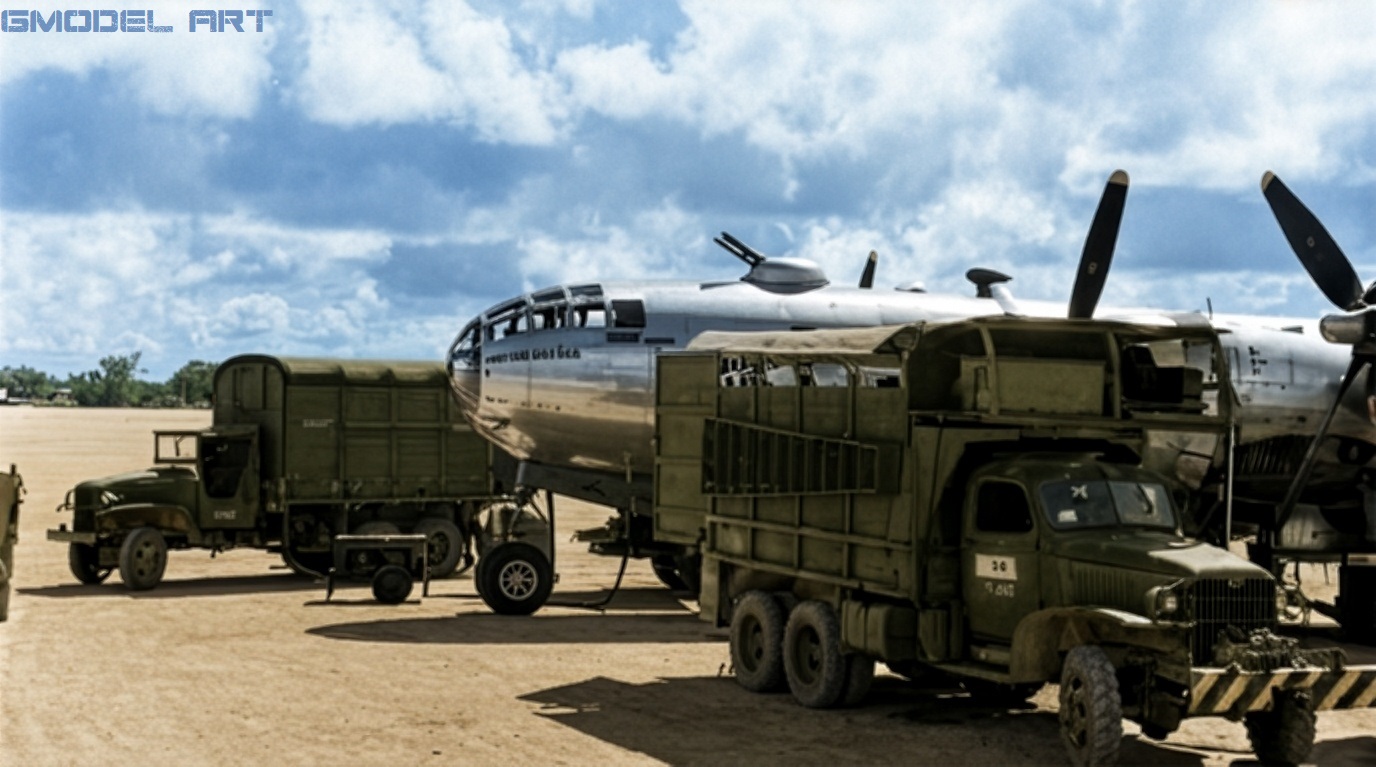
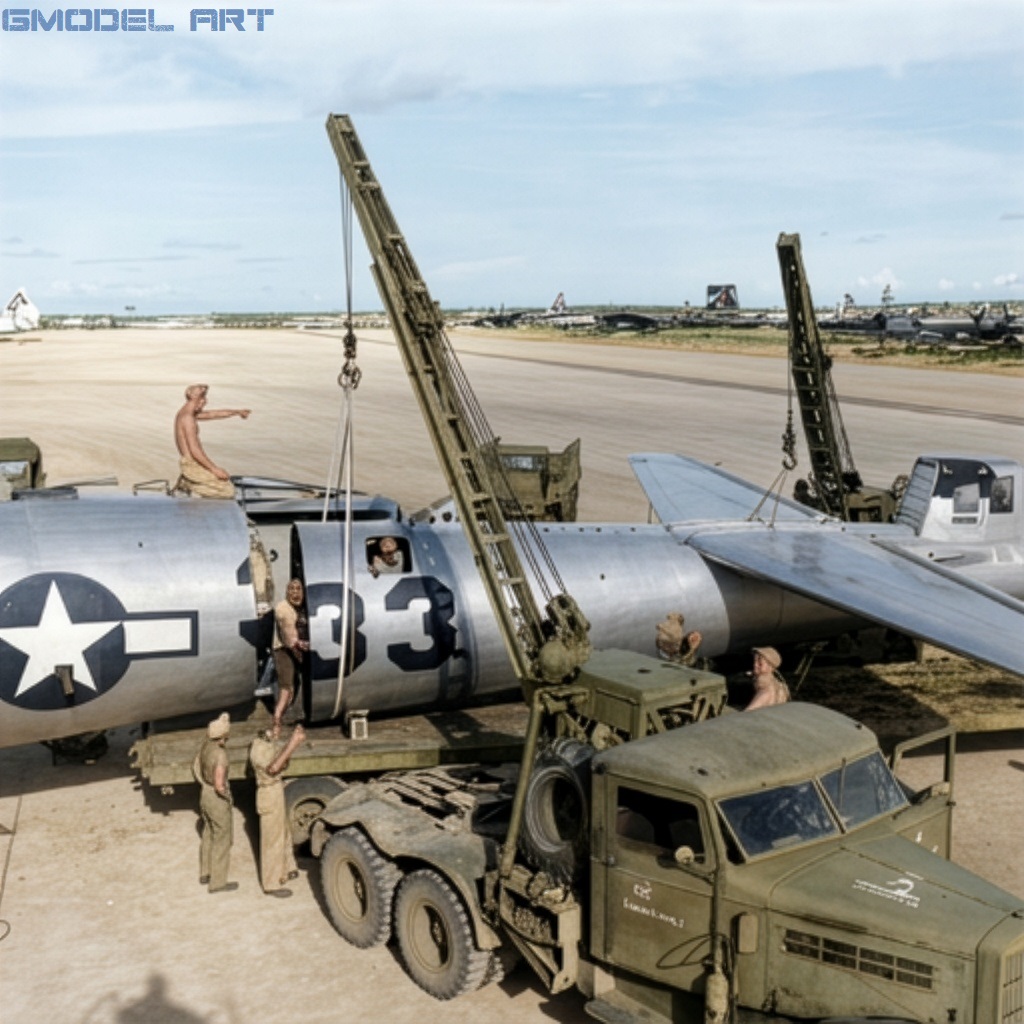
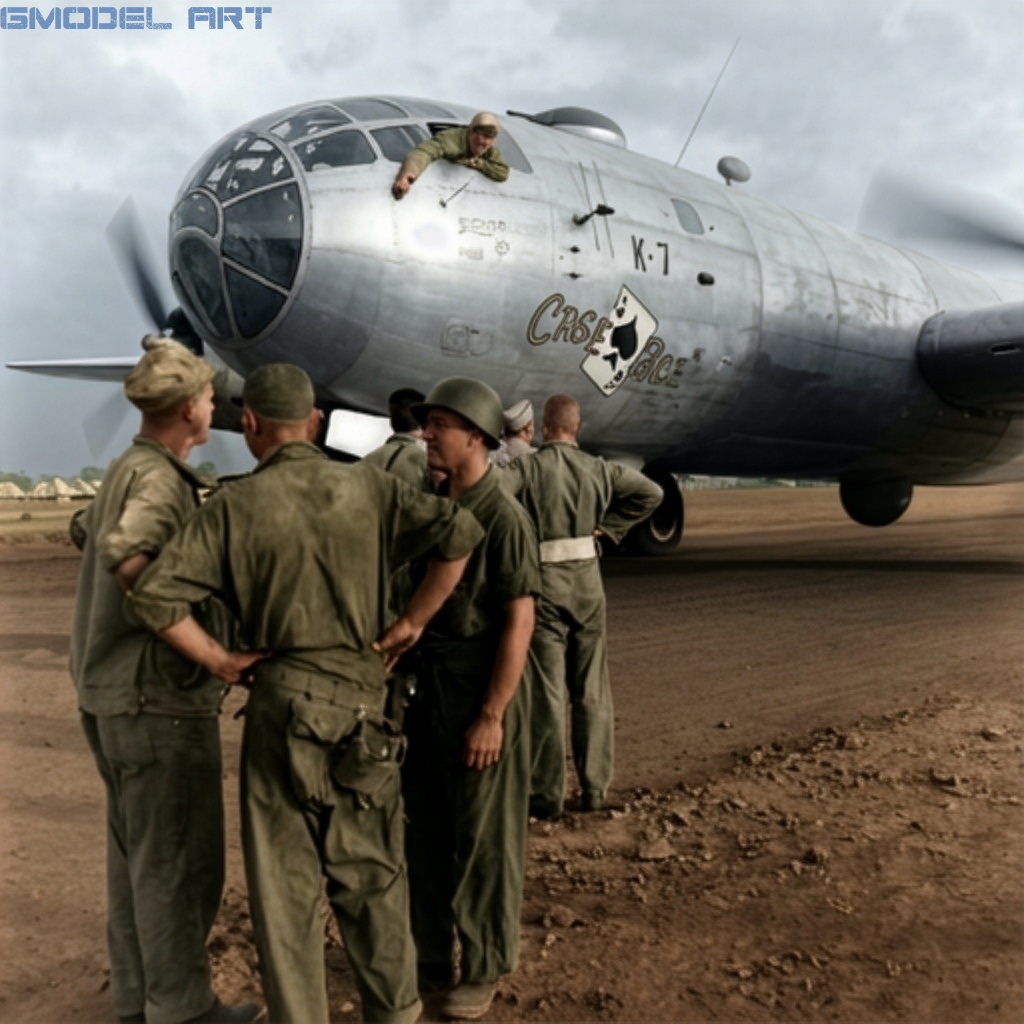
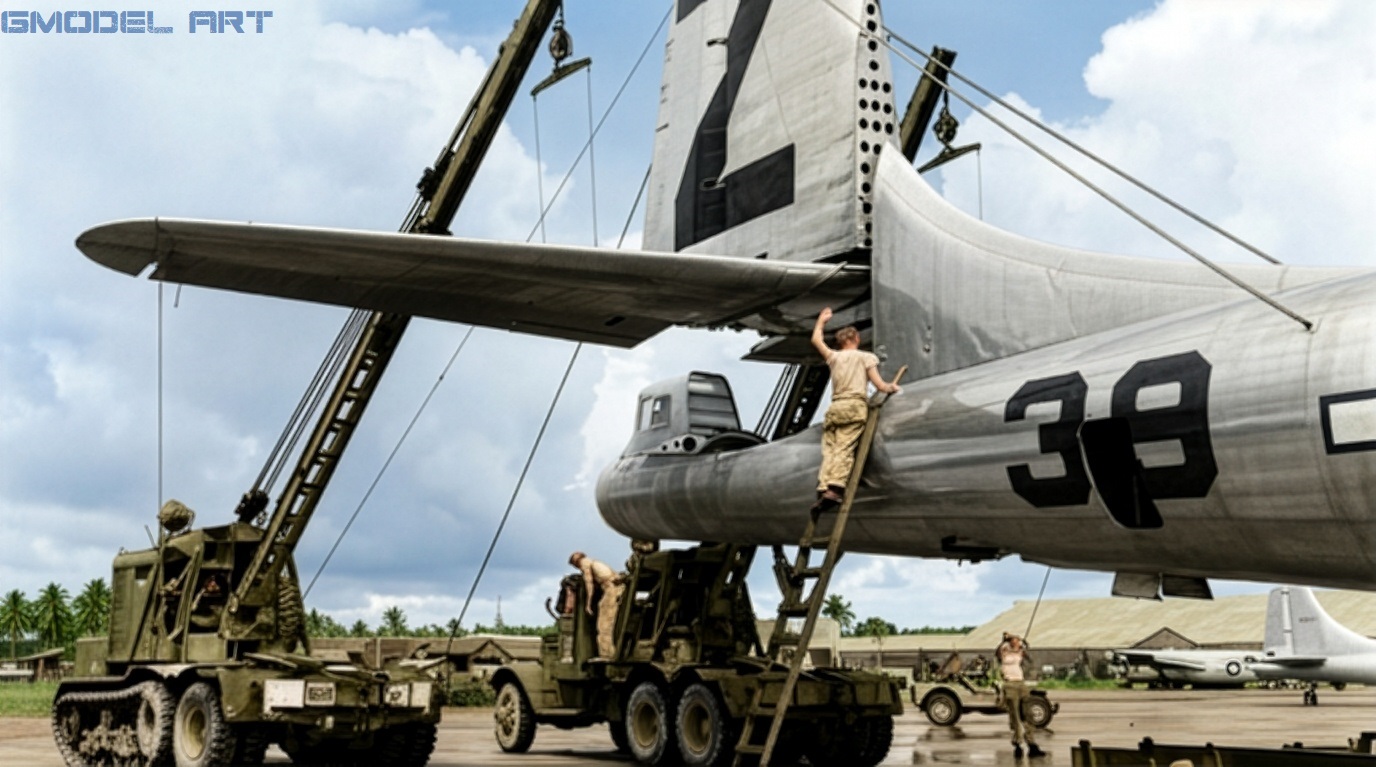
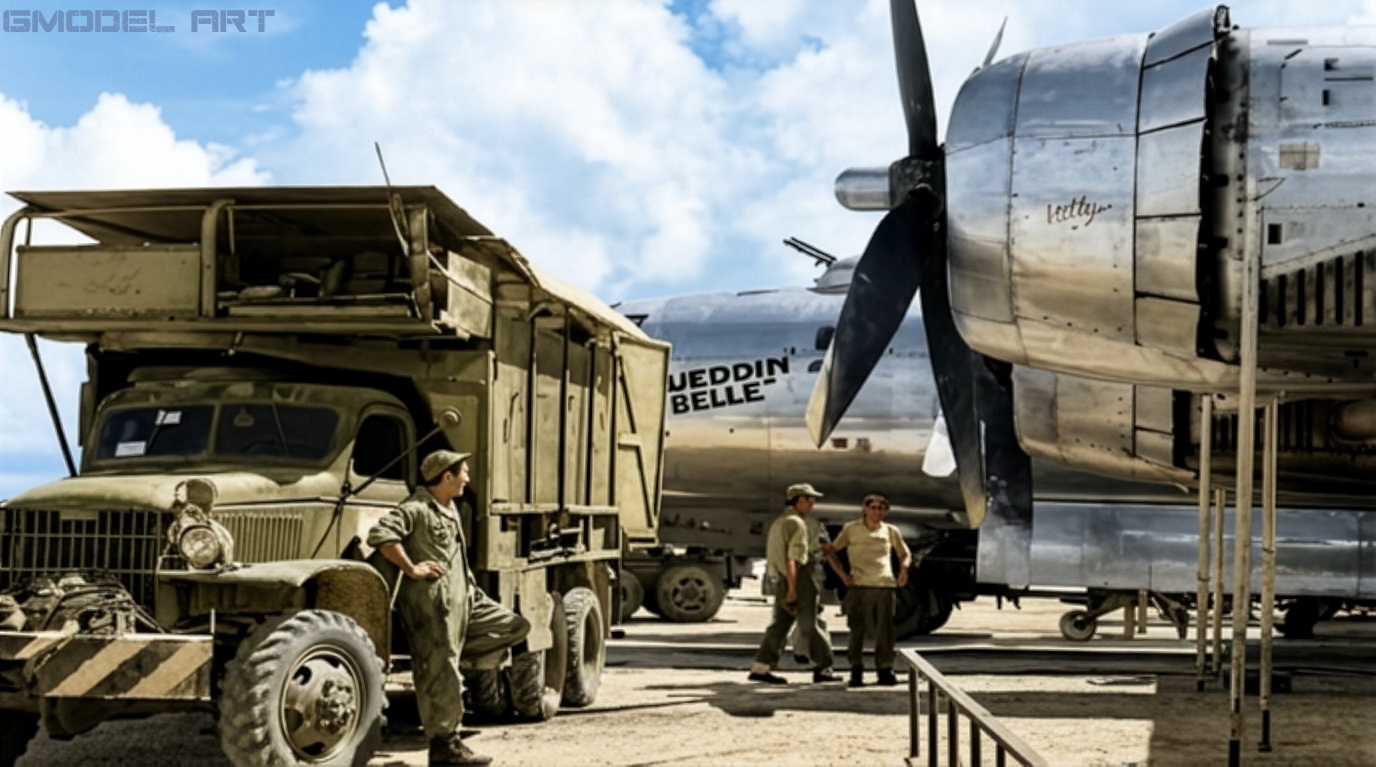
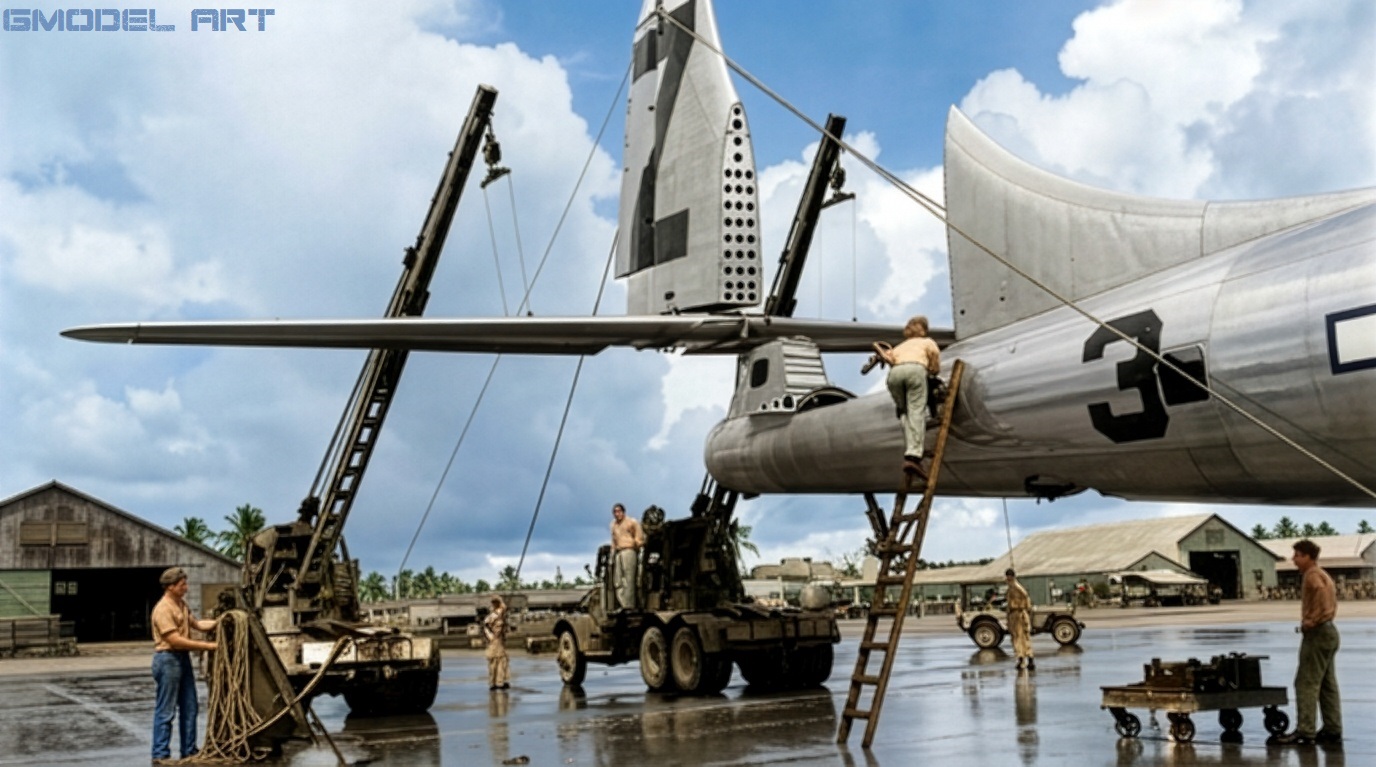
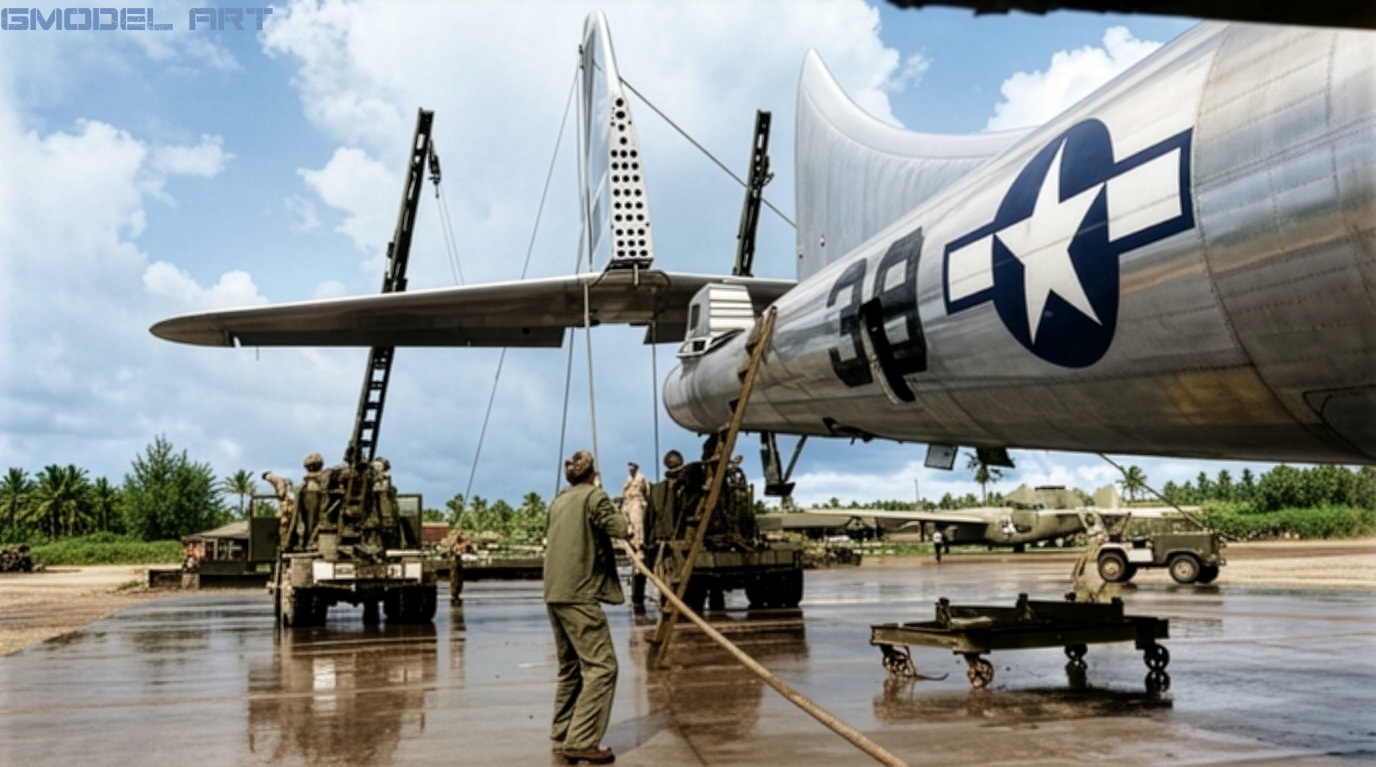
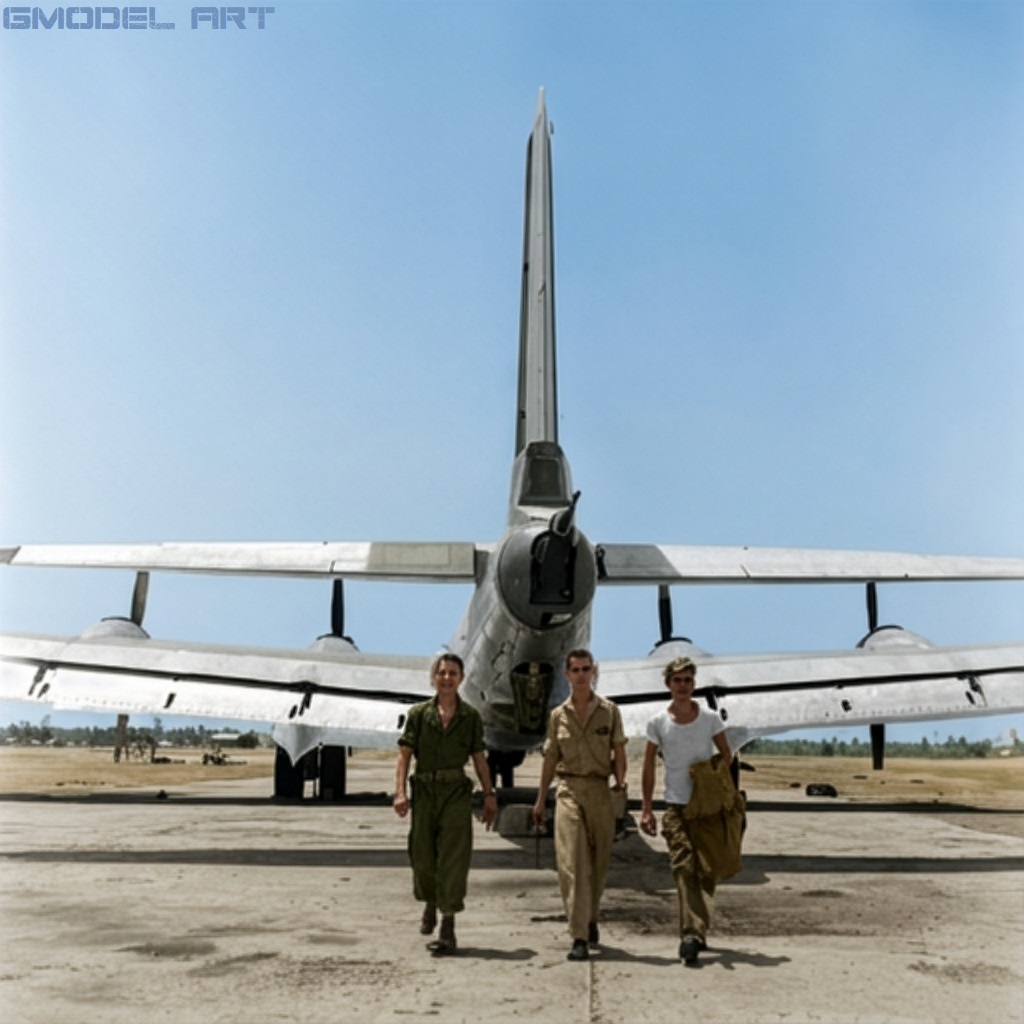
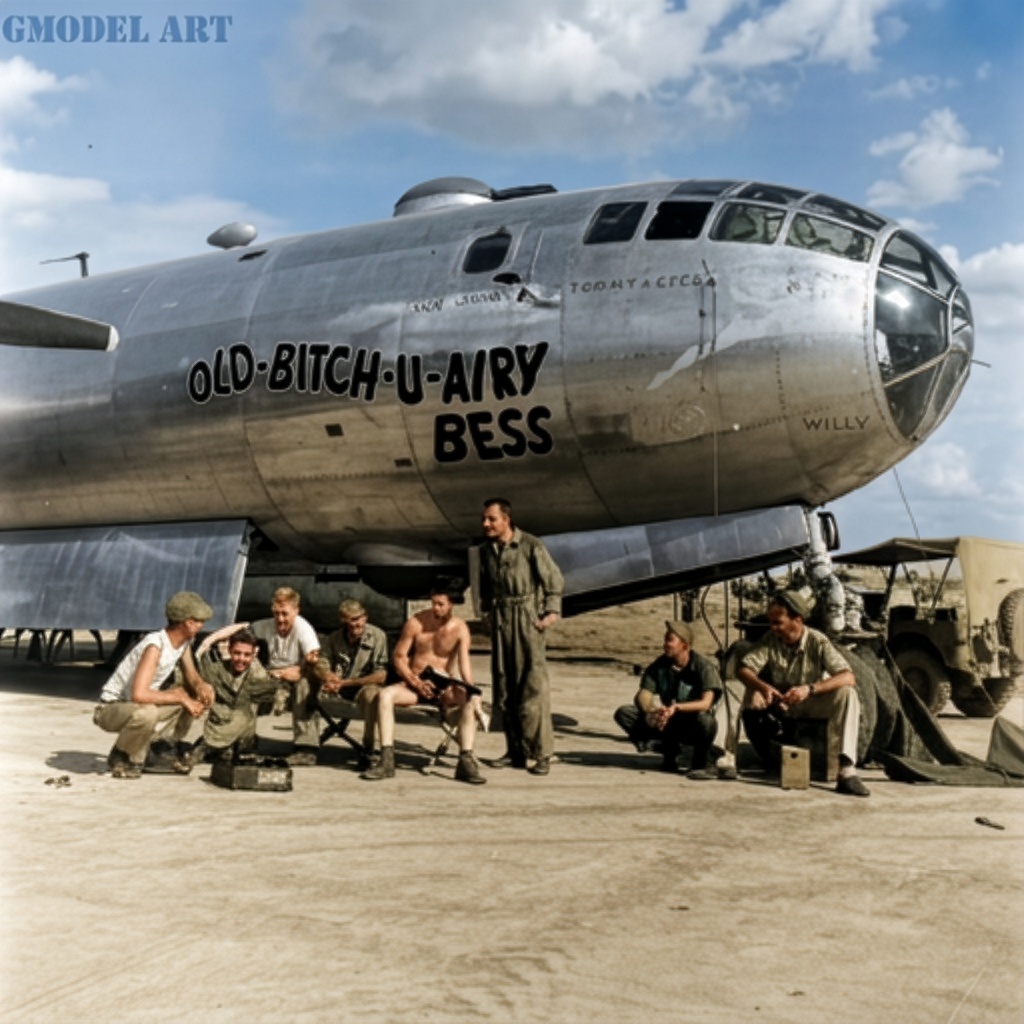
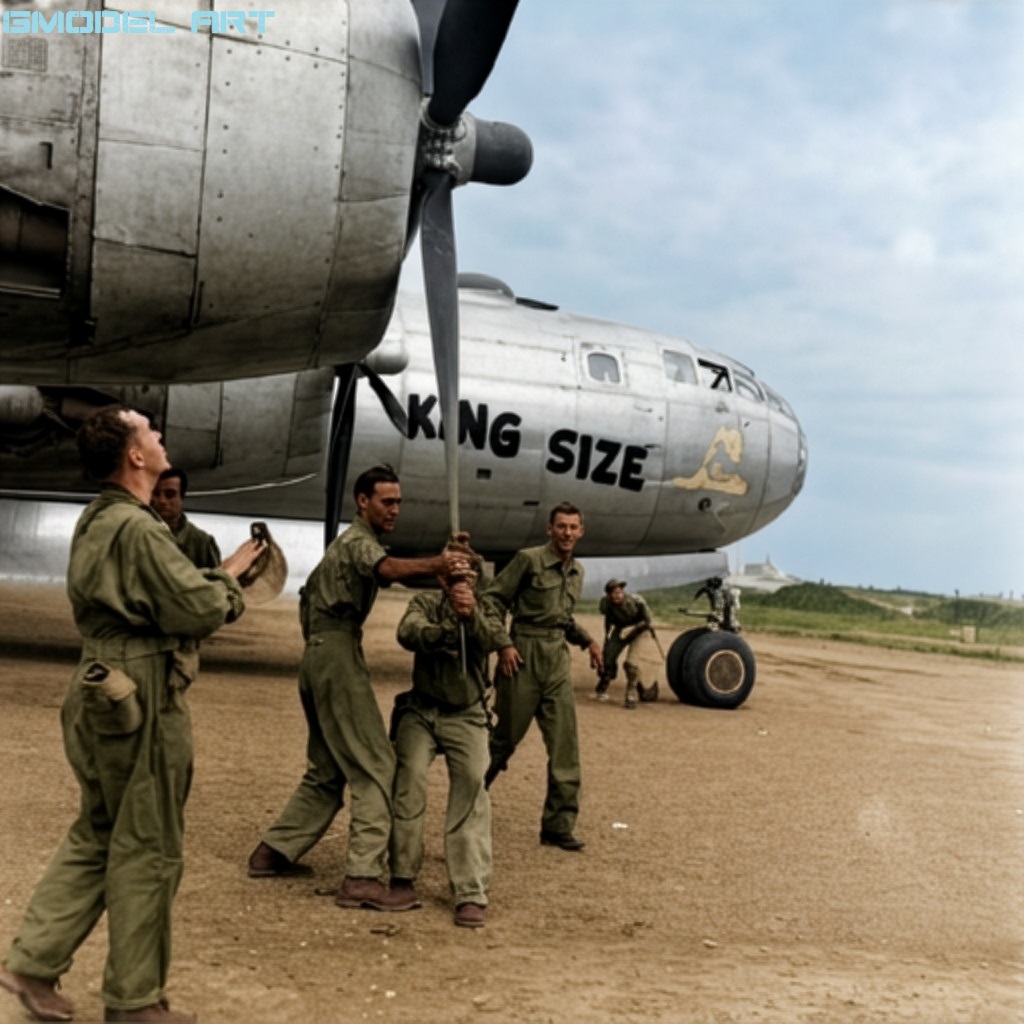
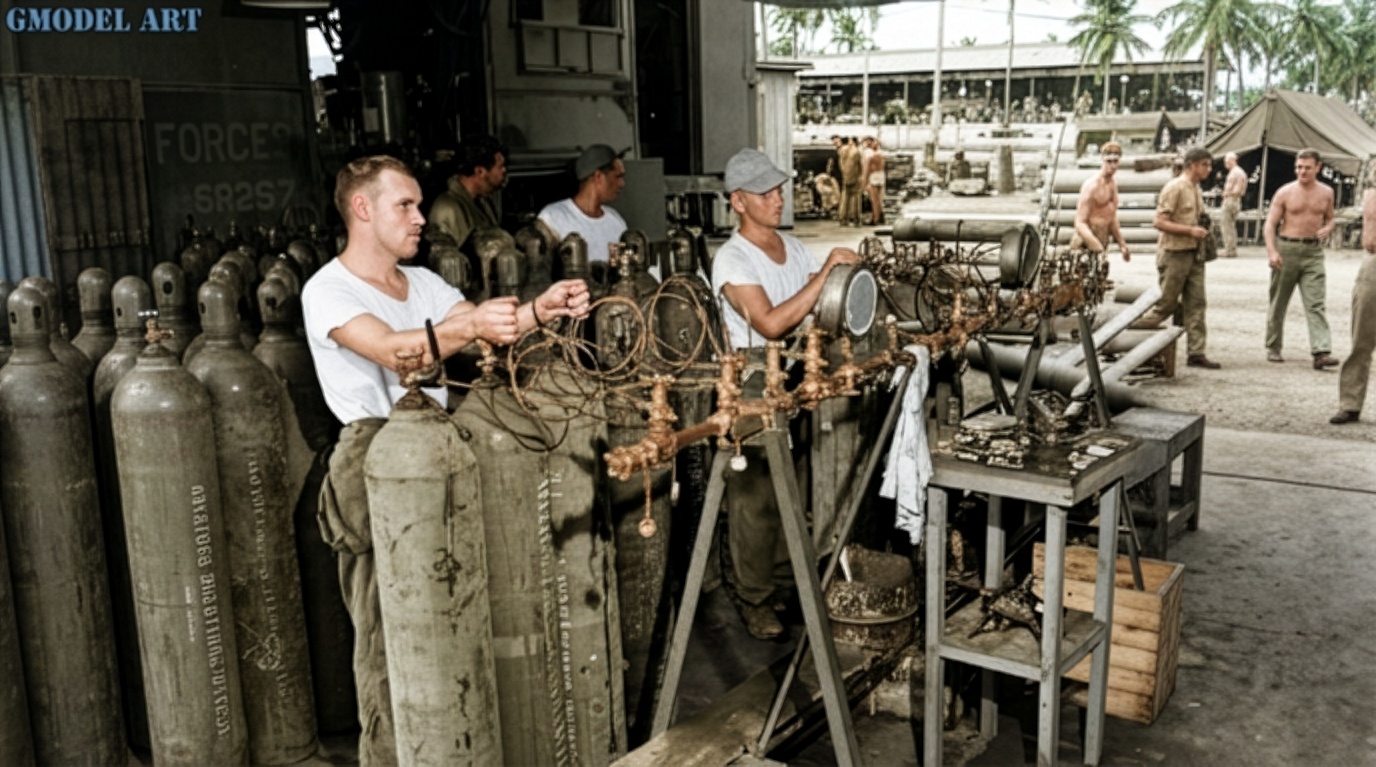
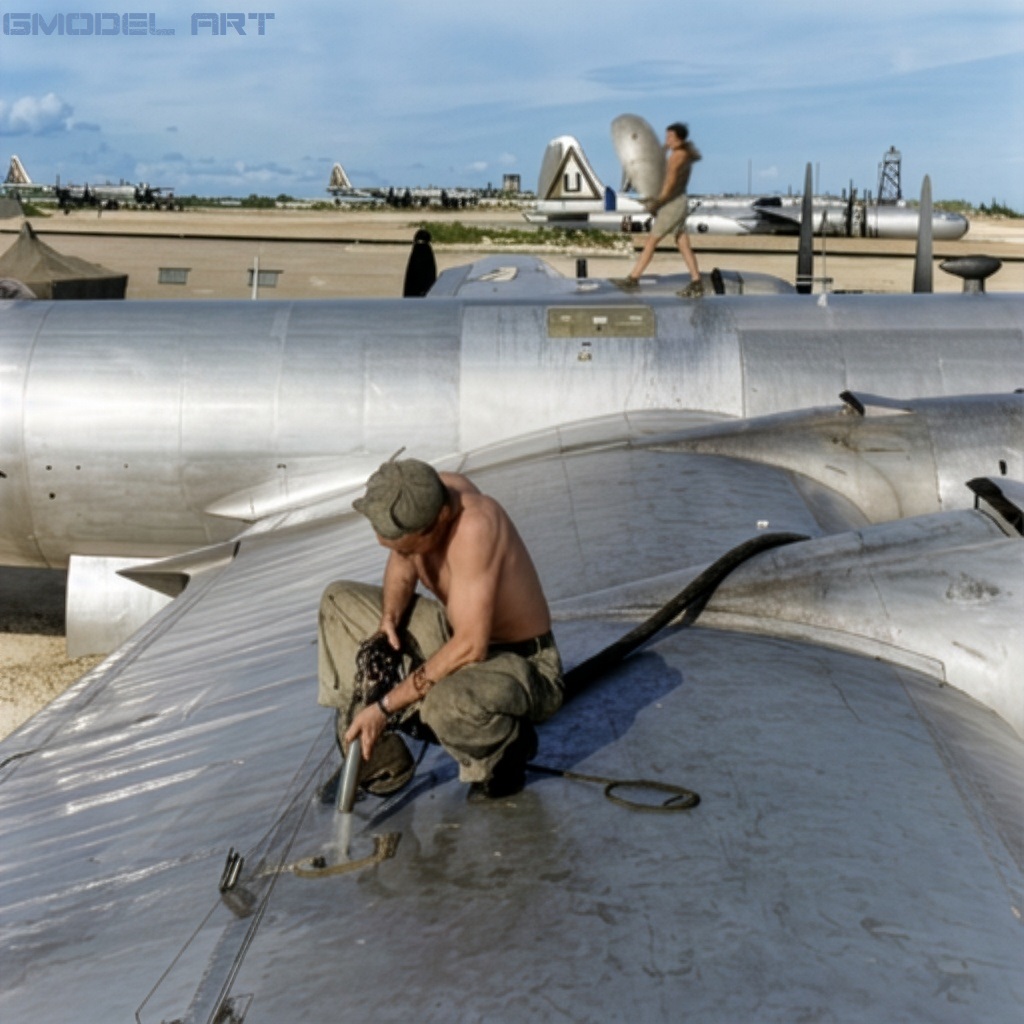
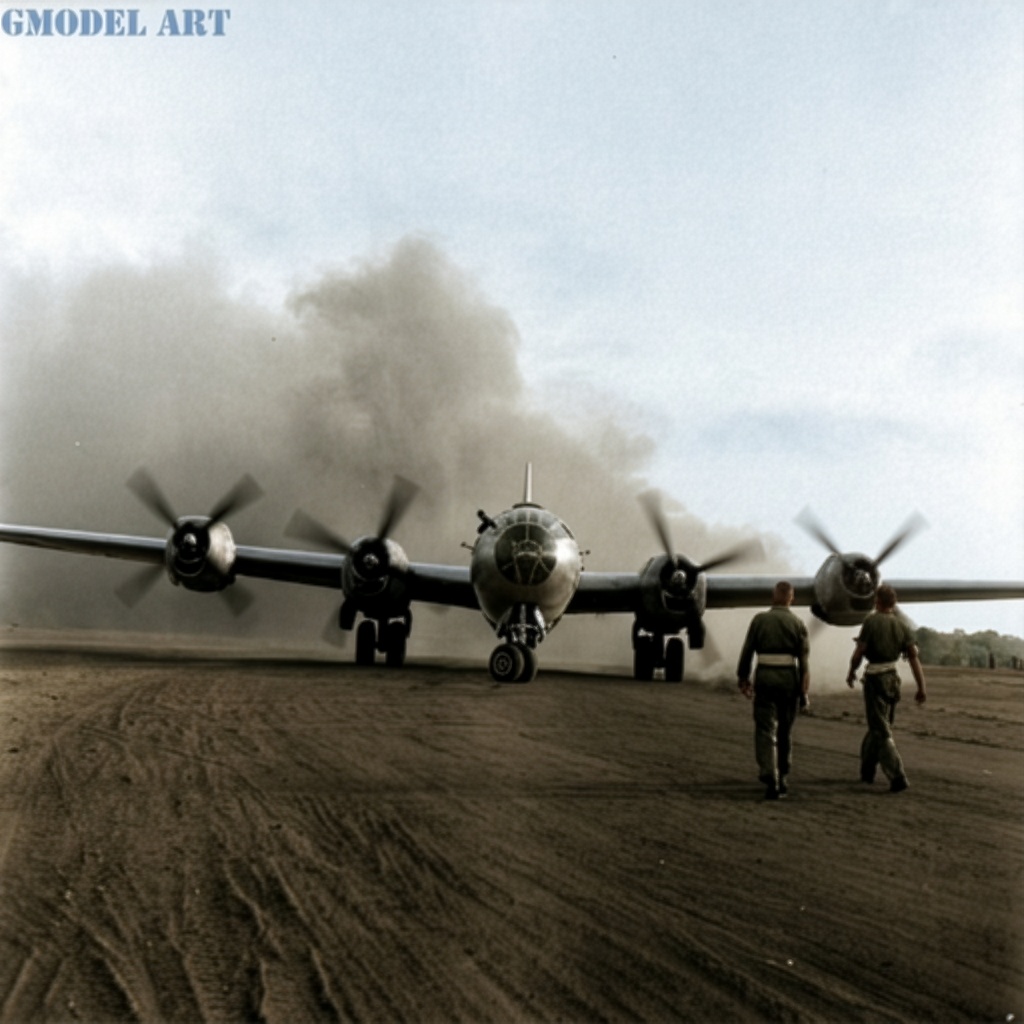
For modelers, this environment is especially valuable. Period photographs allow the B-29 to be studied not simply as an aircraft, but as part of a huge operational airfield.
Major B-29 Bombardment Groups in the Pacific
A large number of Twentieth Air Force units operated B-29s during the campaign against Japan. Among the most important Bombardment Groups associated with B-29 operations were:
| Bombardment Group | Representative Squadrons | Main Operational Area |
|---|---|---|
| 40th Bombardment Group | 25th, 44th, 45th, 395th BS | China / India / Pacific |
| 444th Bombardment Group | 676th, 677th, 678th, 679th BS | China / India / Pacific |
| 462nd Bombardment Group | 768th, 769th, 770th, 771st BS | China / India / Pacific |
| 468th Bombardment Group | 792nd, 793rd, 794th, 795th BS | China / India / Pacific |
| 497th Bombardment Group | 869th, 870th, 871st, 872nd BS | Marianas |
| 498th Bombardment Group | 873rd, 874th, 875th, 876th BS | Marianas |
| 499th Bombardment Group | 877th, 878th, 879th, 880th BS | Marianas |
| 500th Bombardment Group | 881st, 882nd, 883rd, 884th BS | Marianas |
| 501st Bombardment Group | 21st, 41st, 469th, 470th BS | Marianas |
| 502nd Bombardment Group | 402nd, 411th, 430th, 444th BS | Marianas |
| 509th Composite Group | 393rd BS | Special Operations |
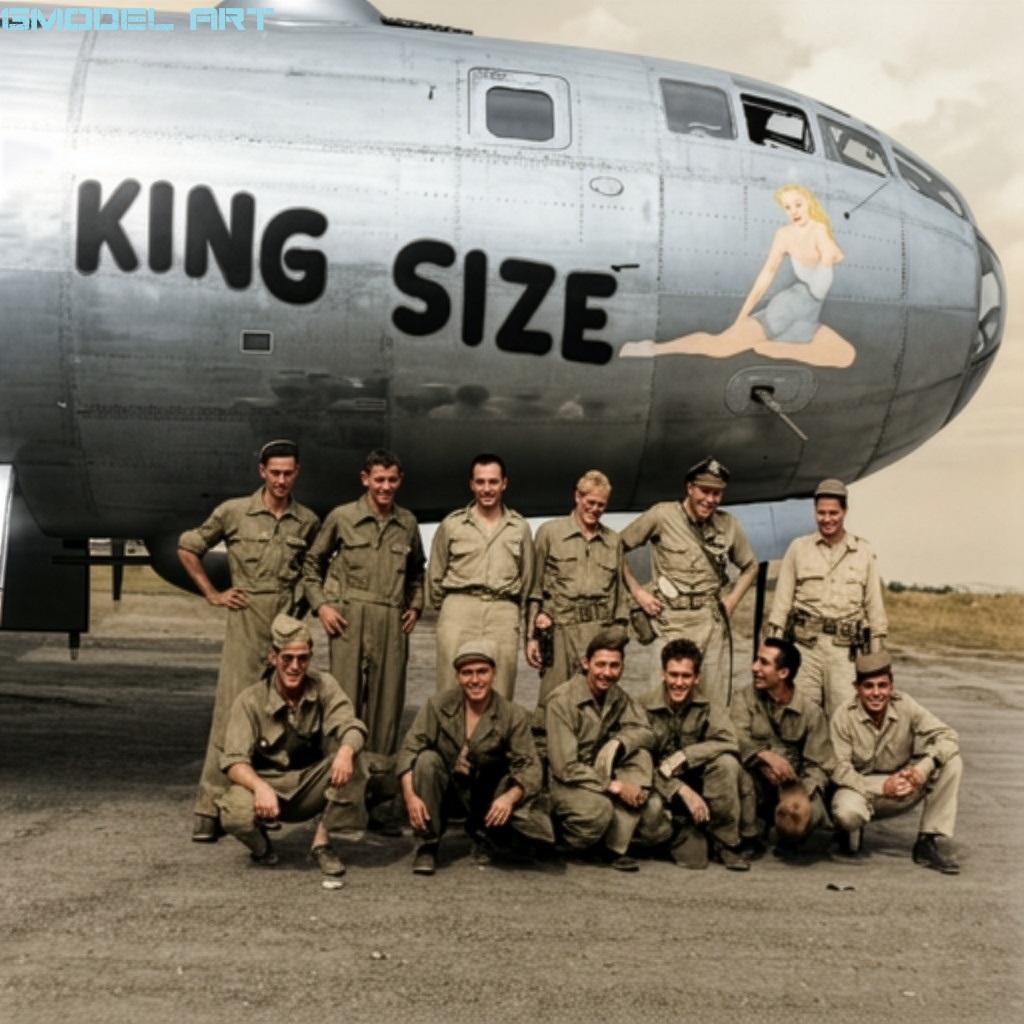
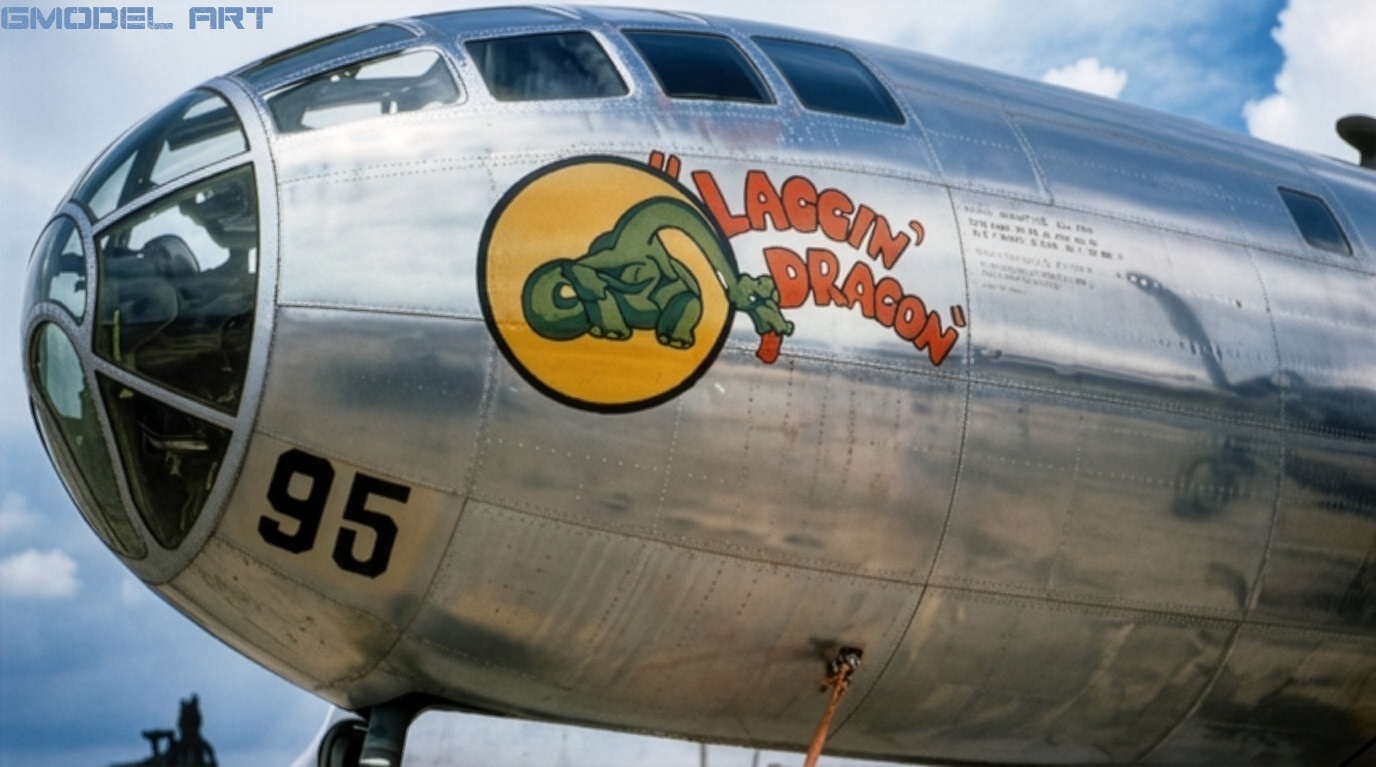
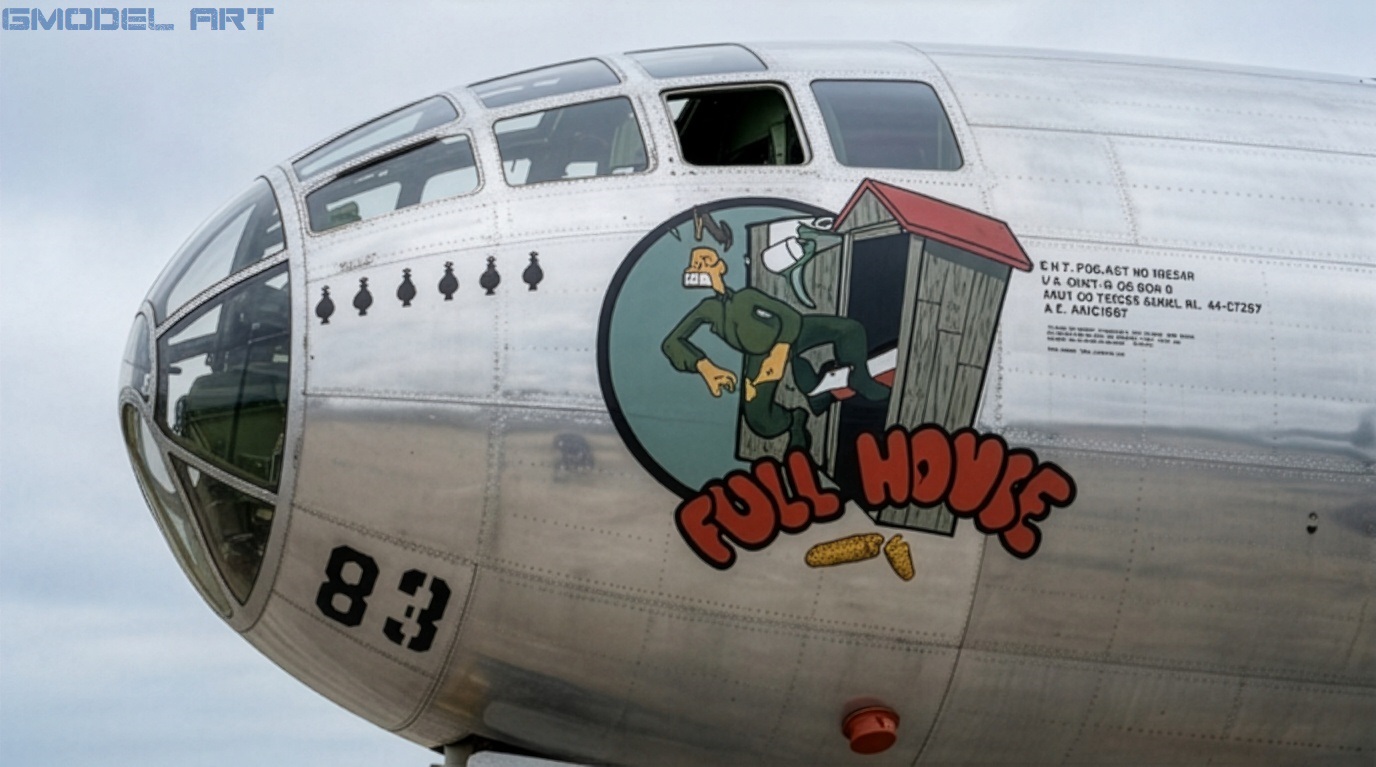
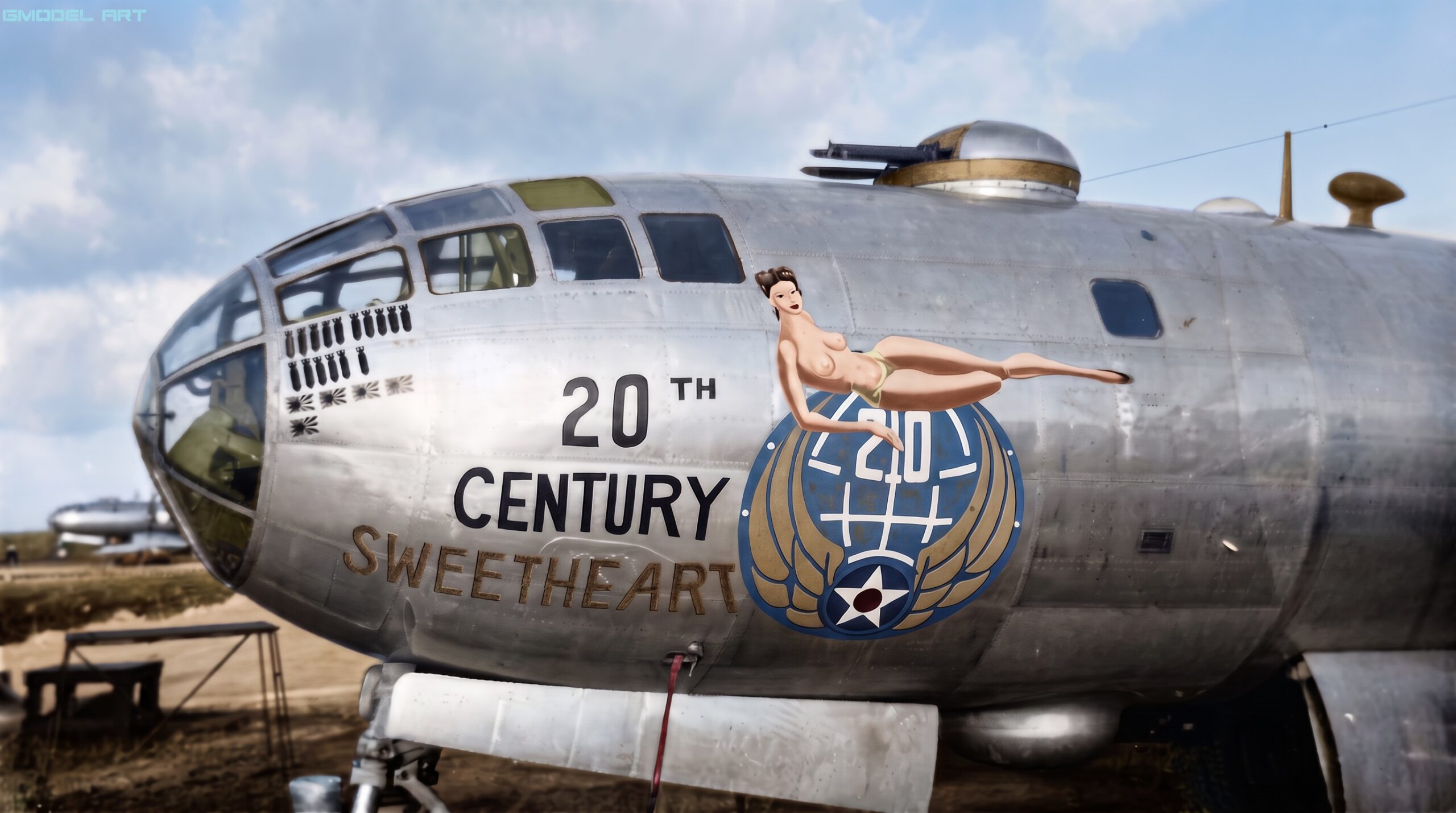
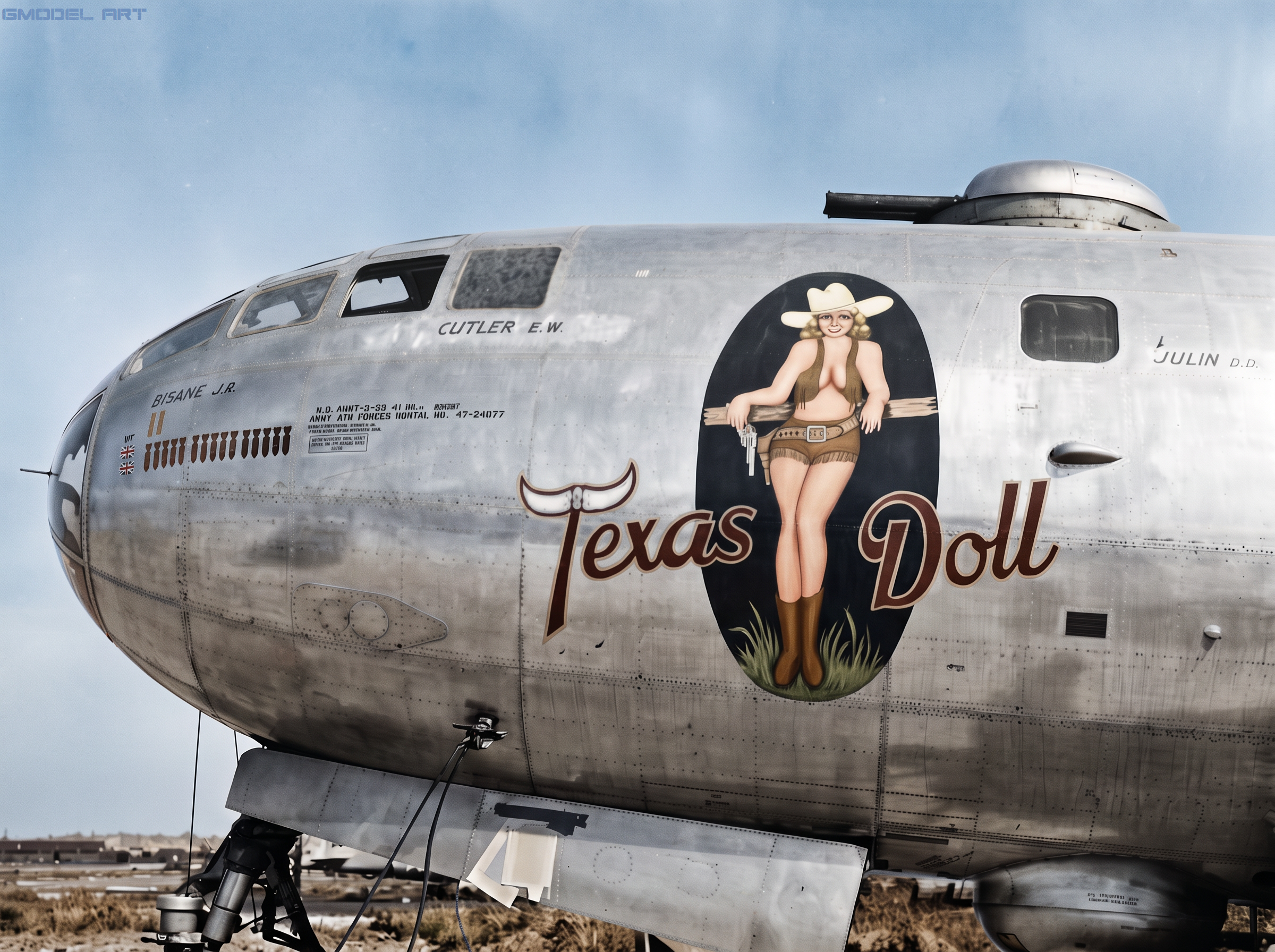
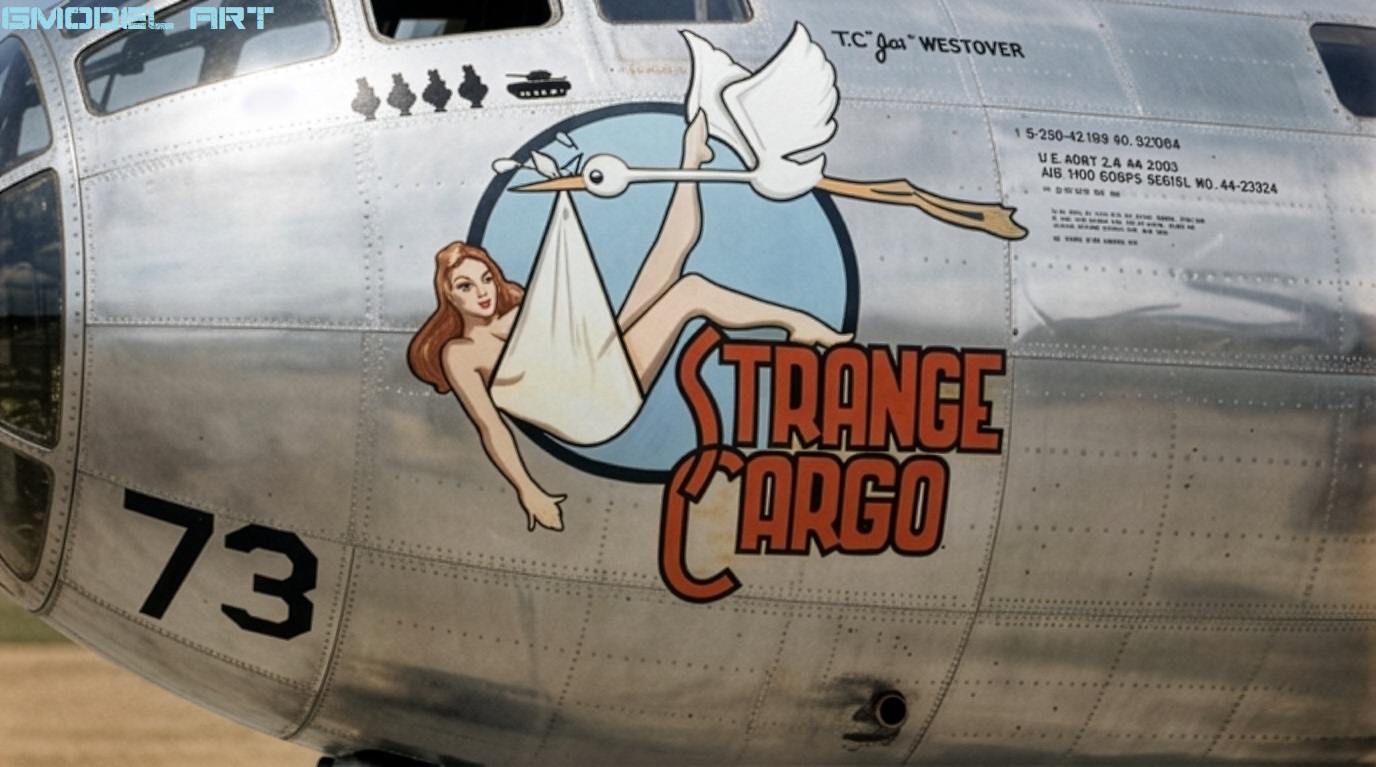
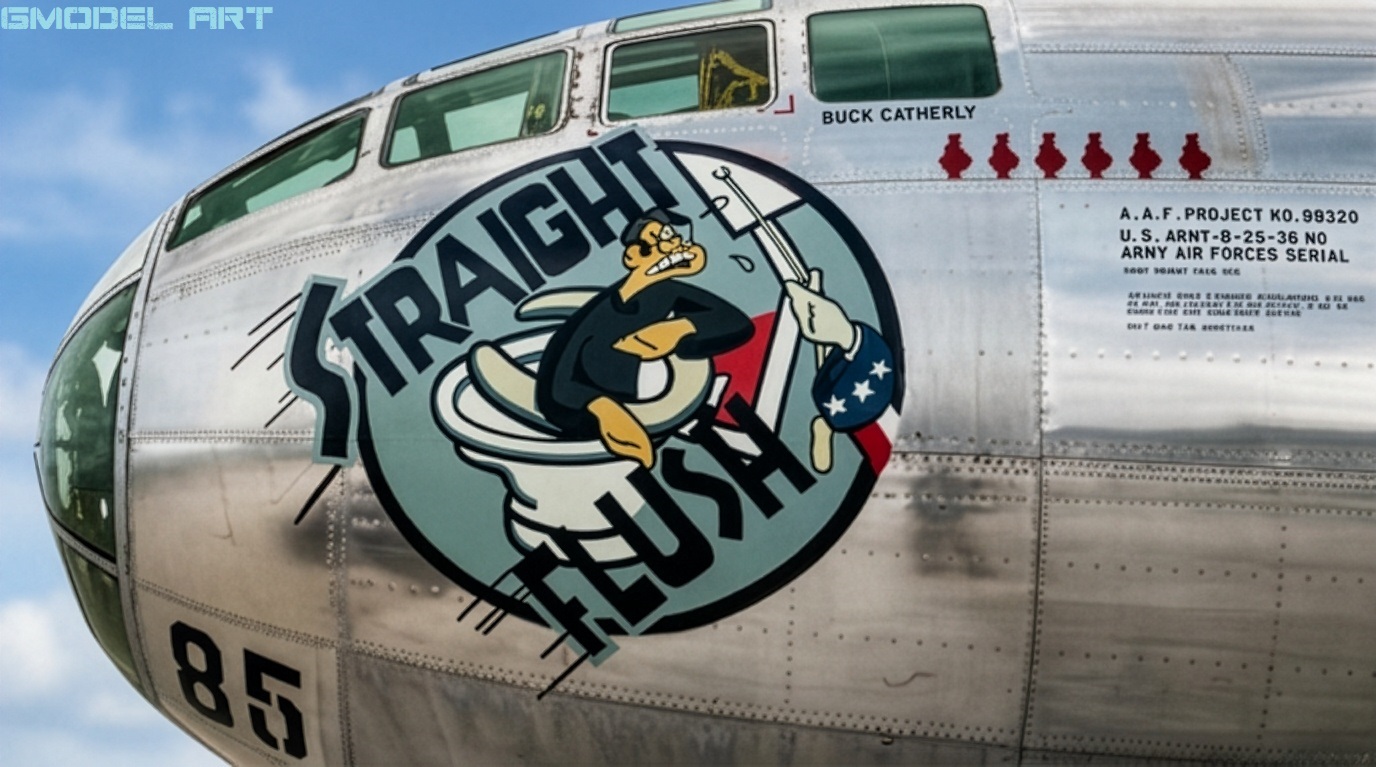
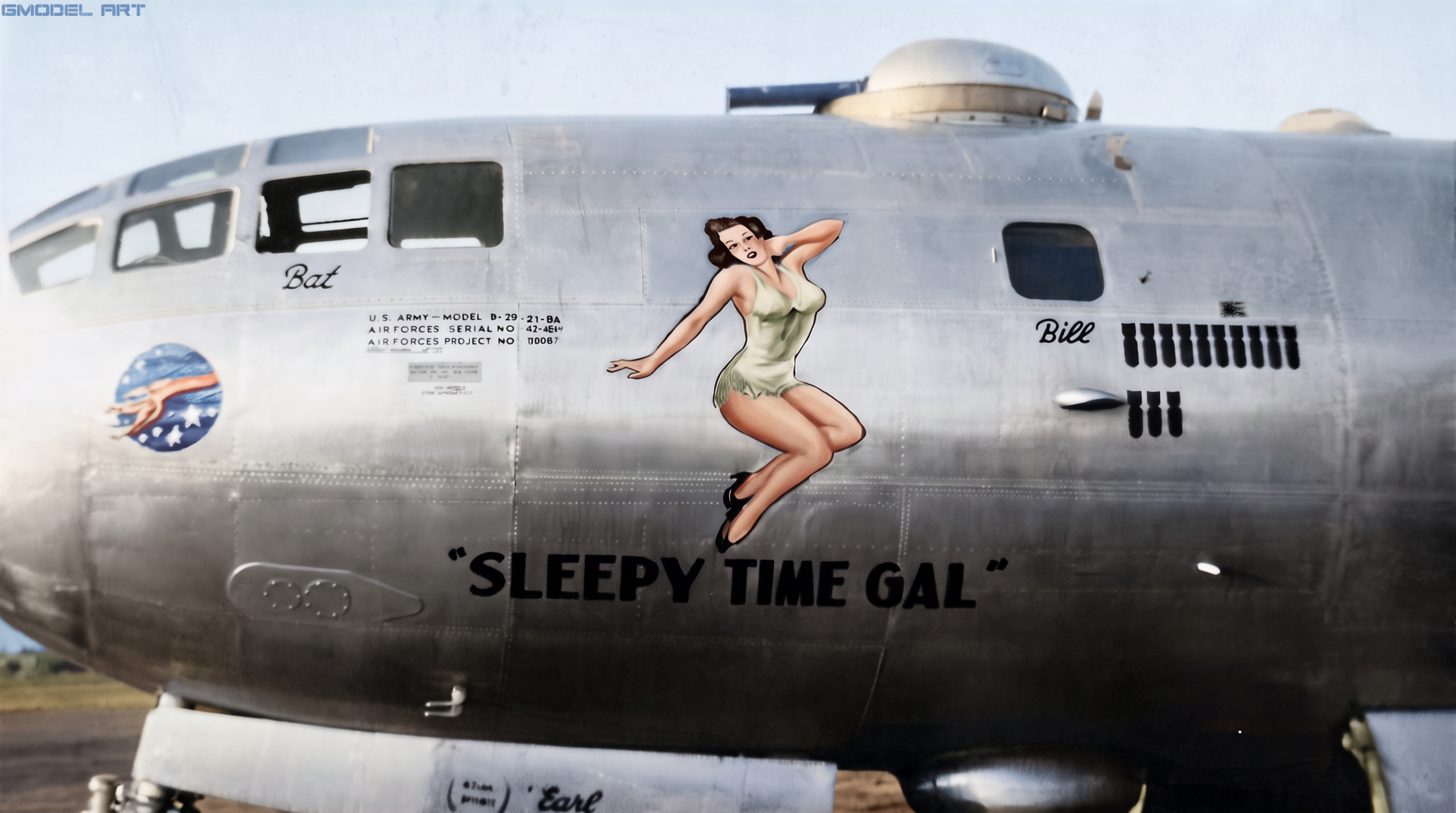
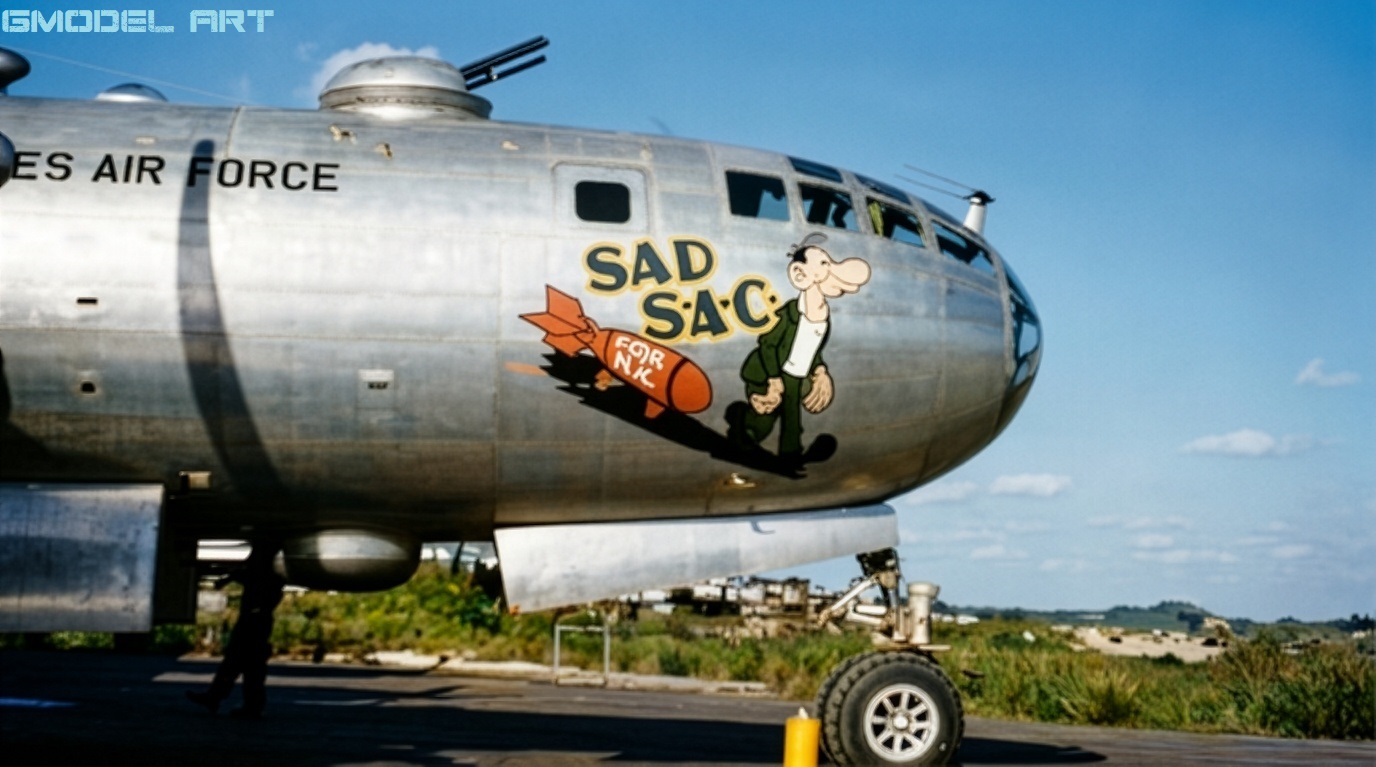
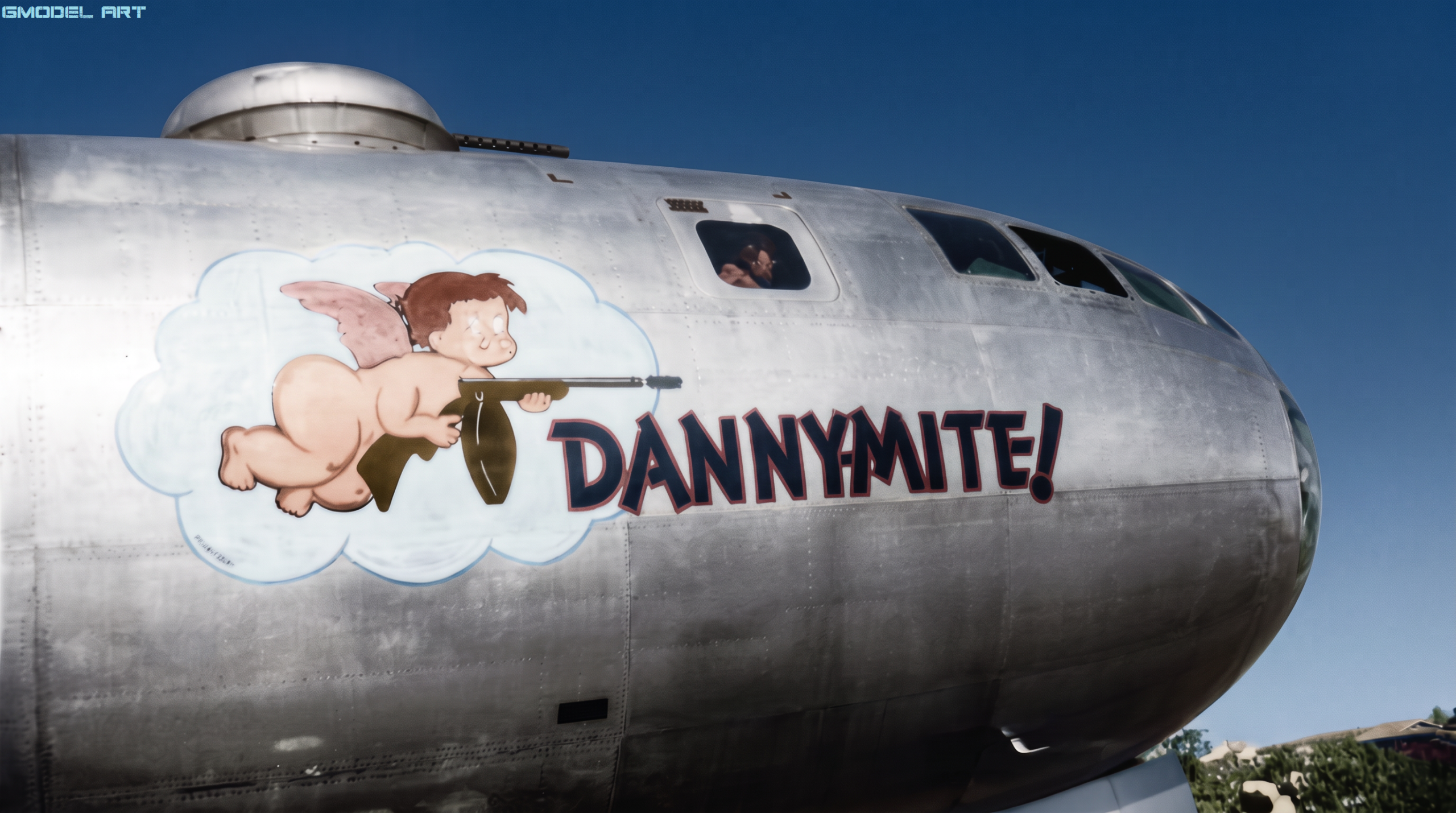
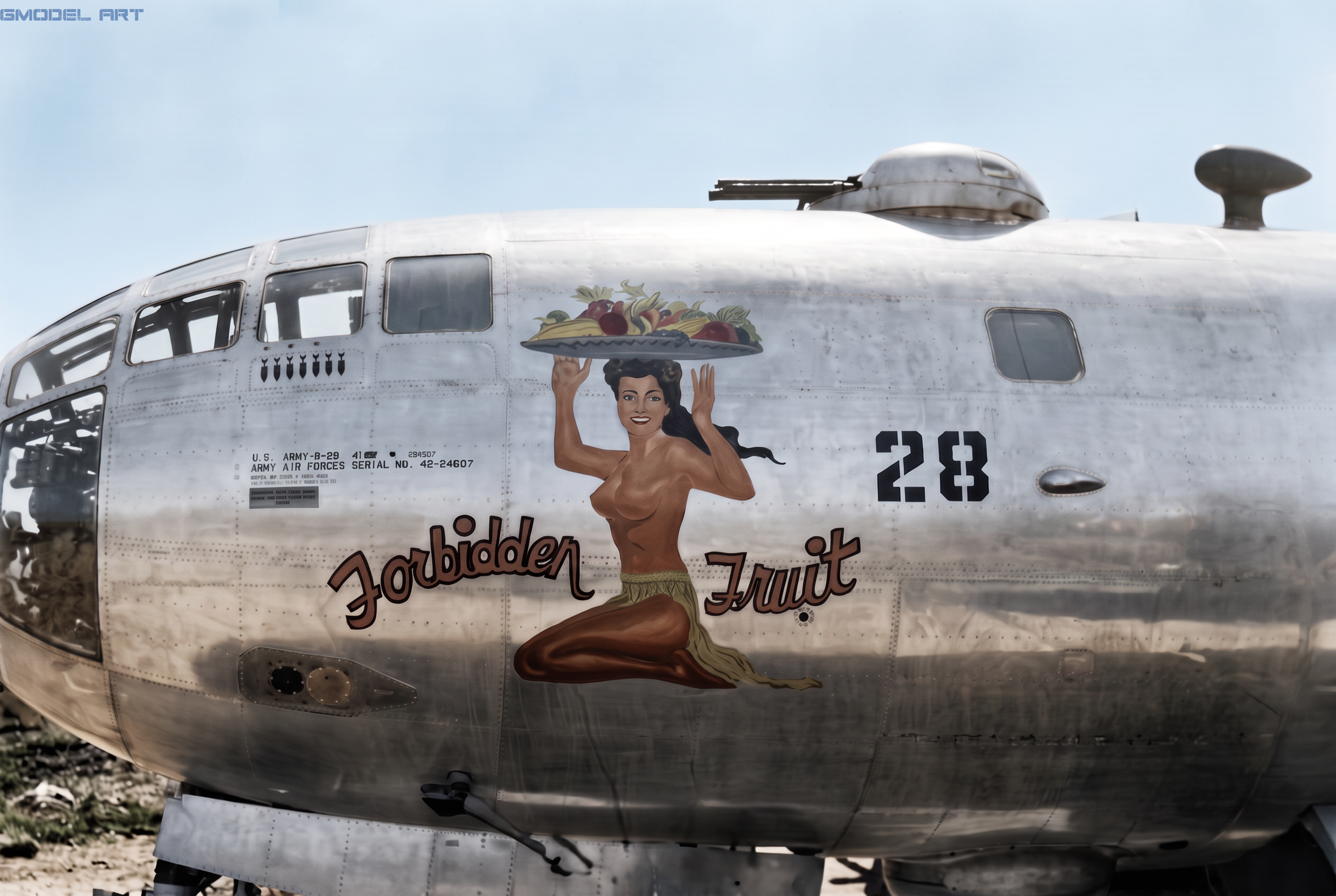
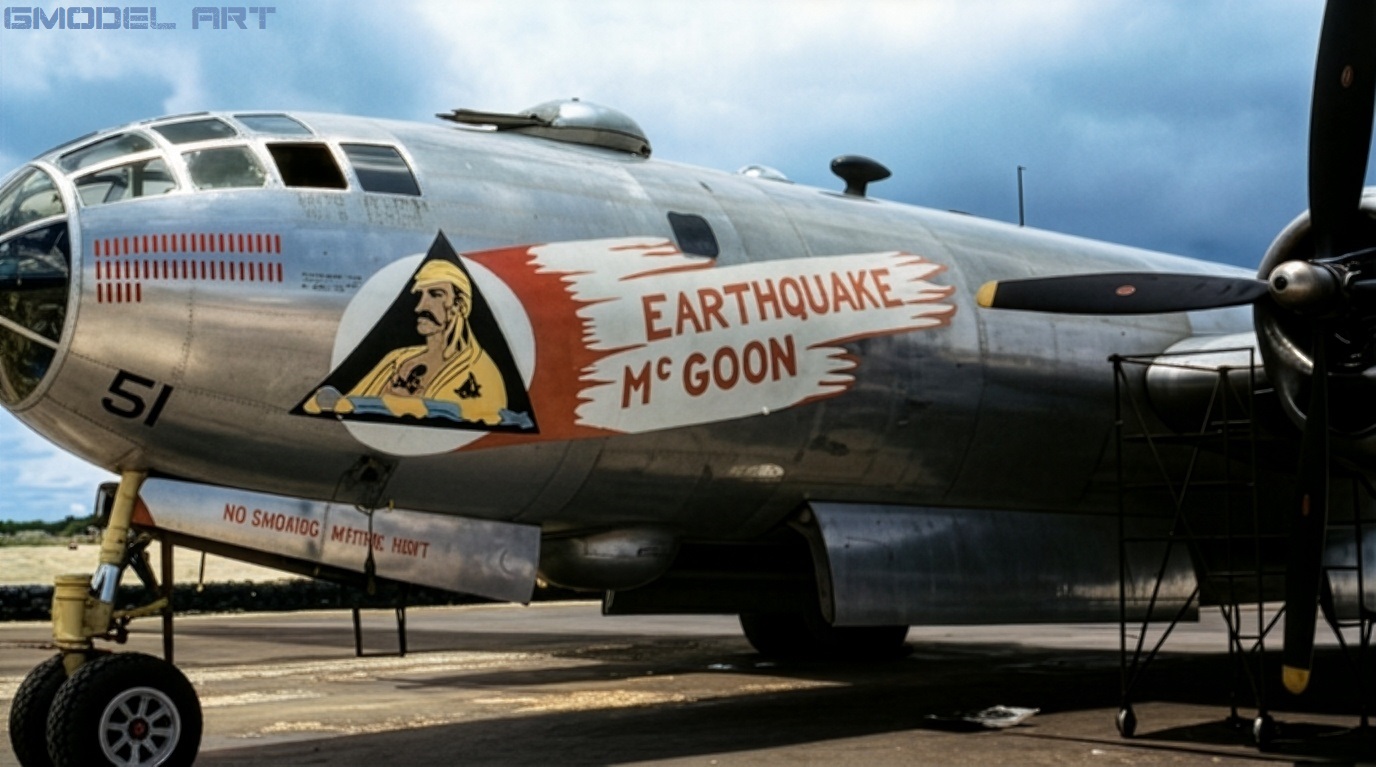
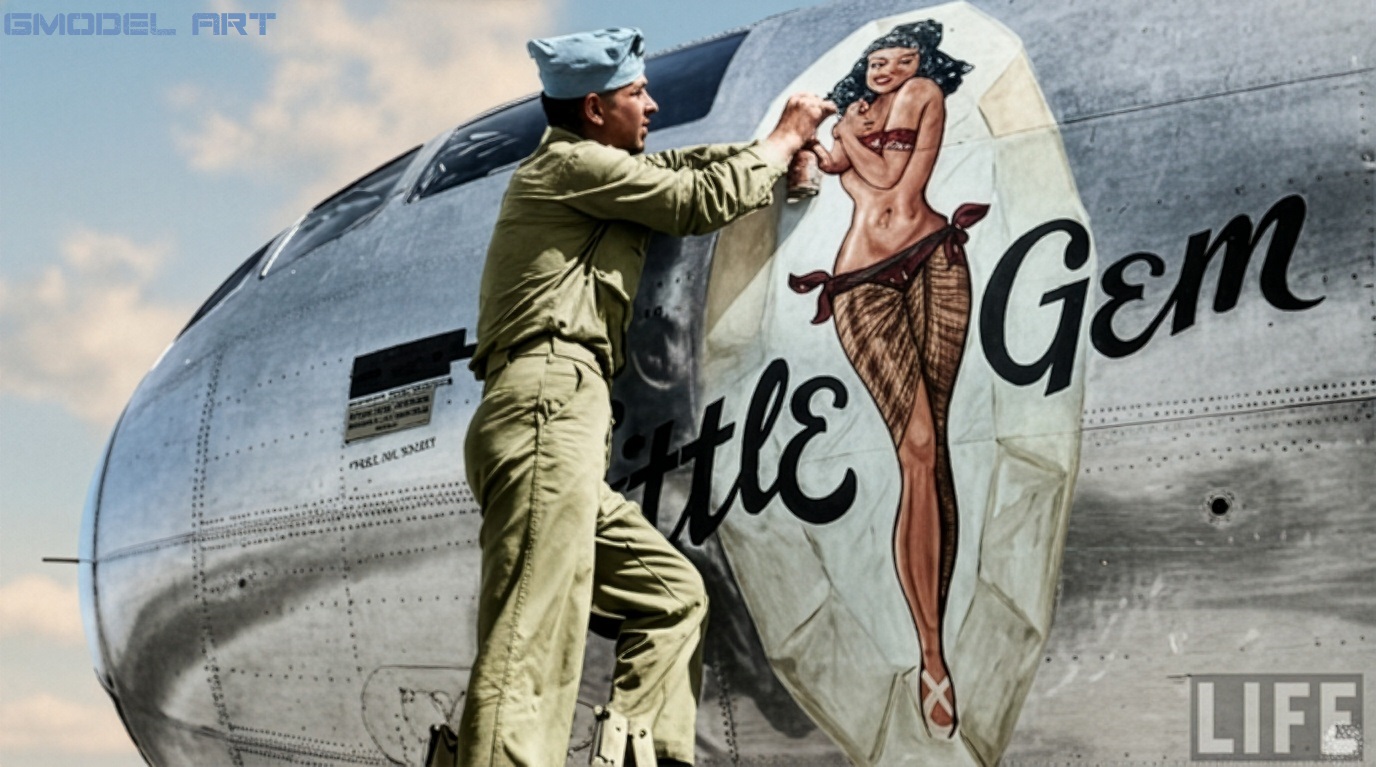
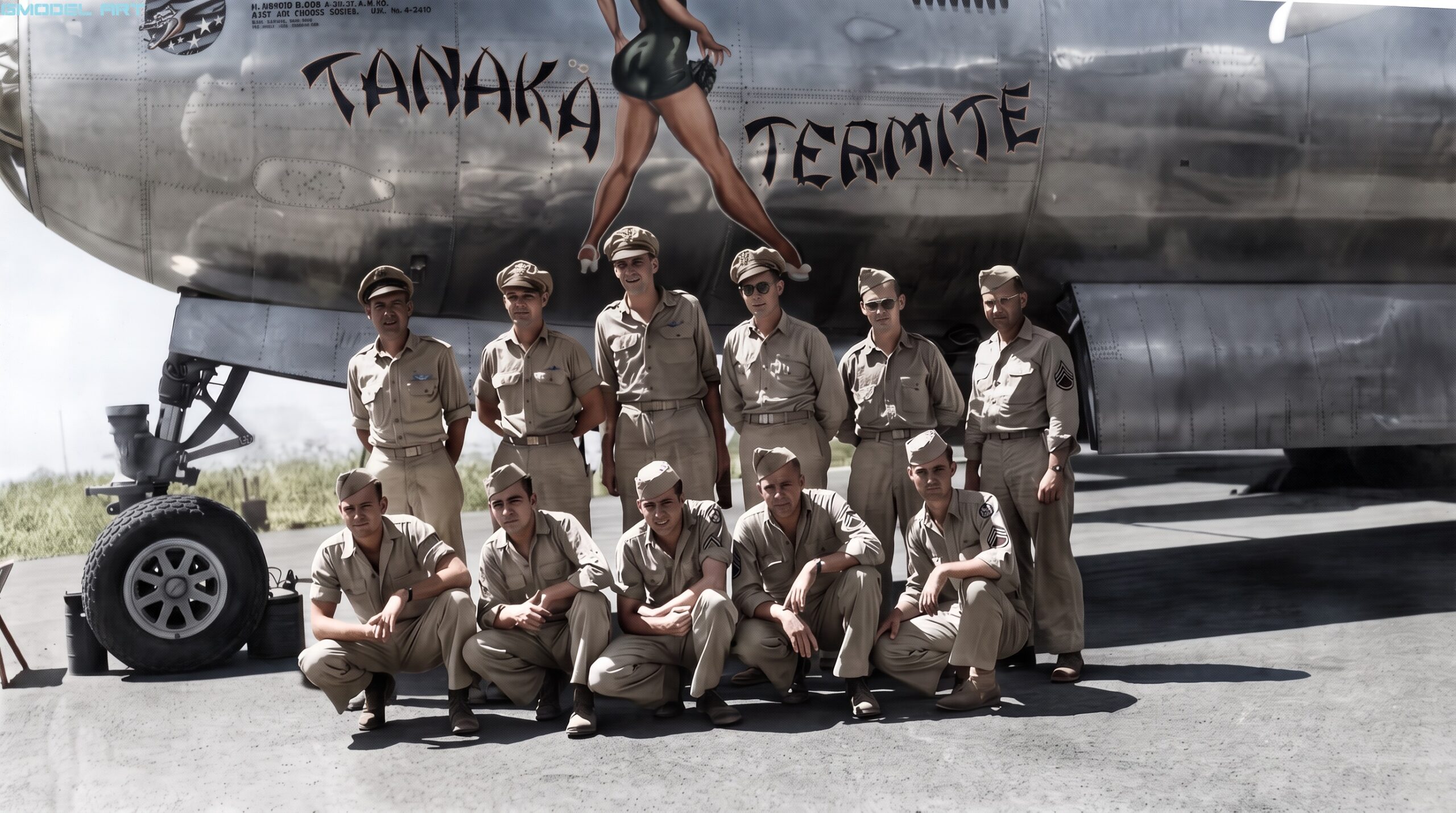
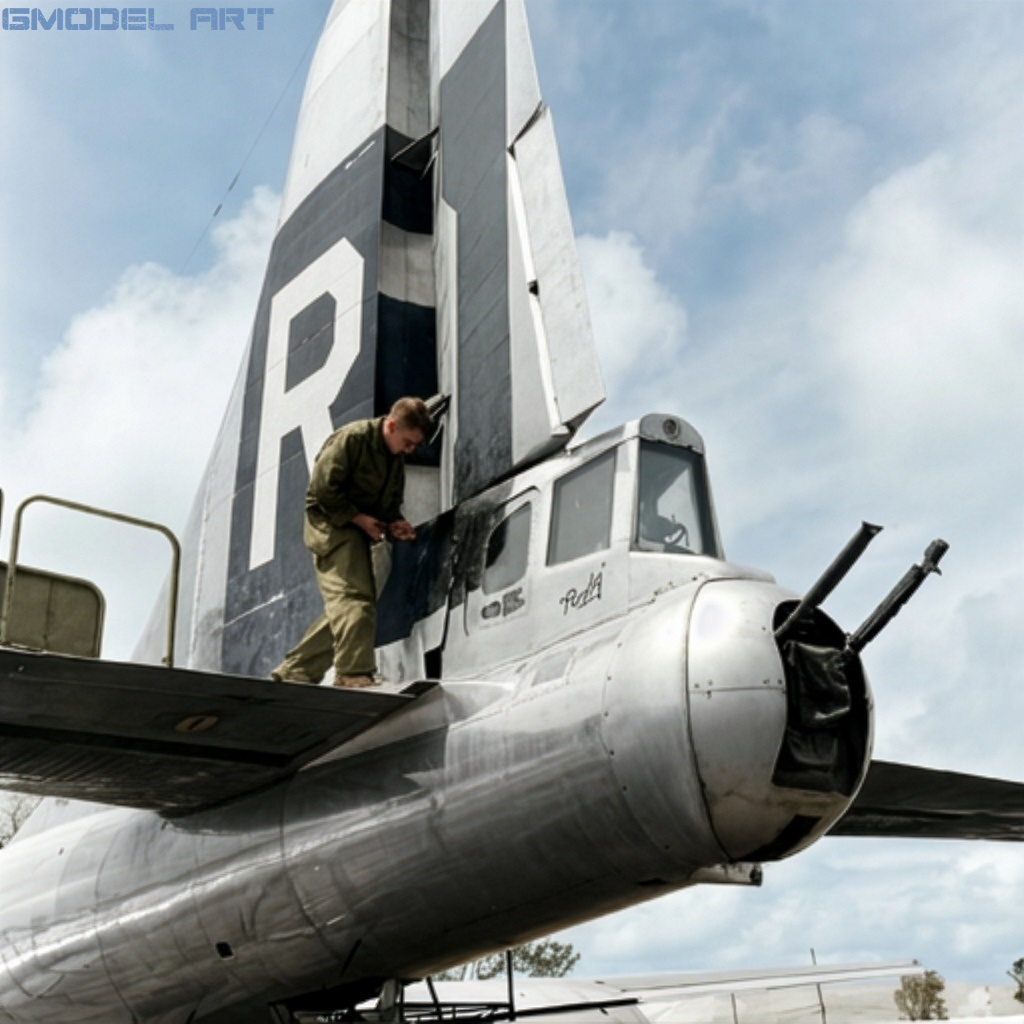
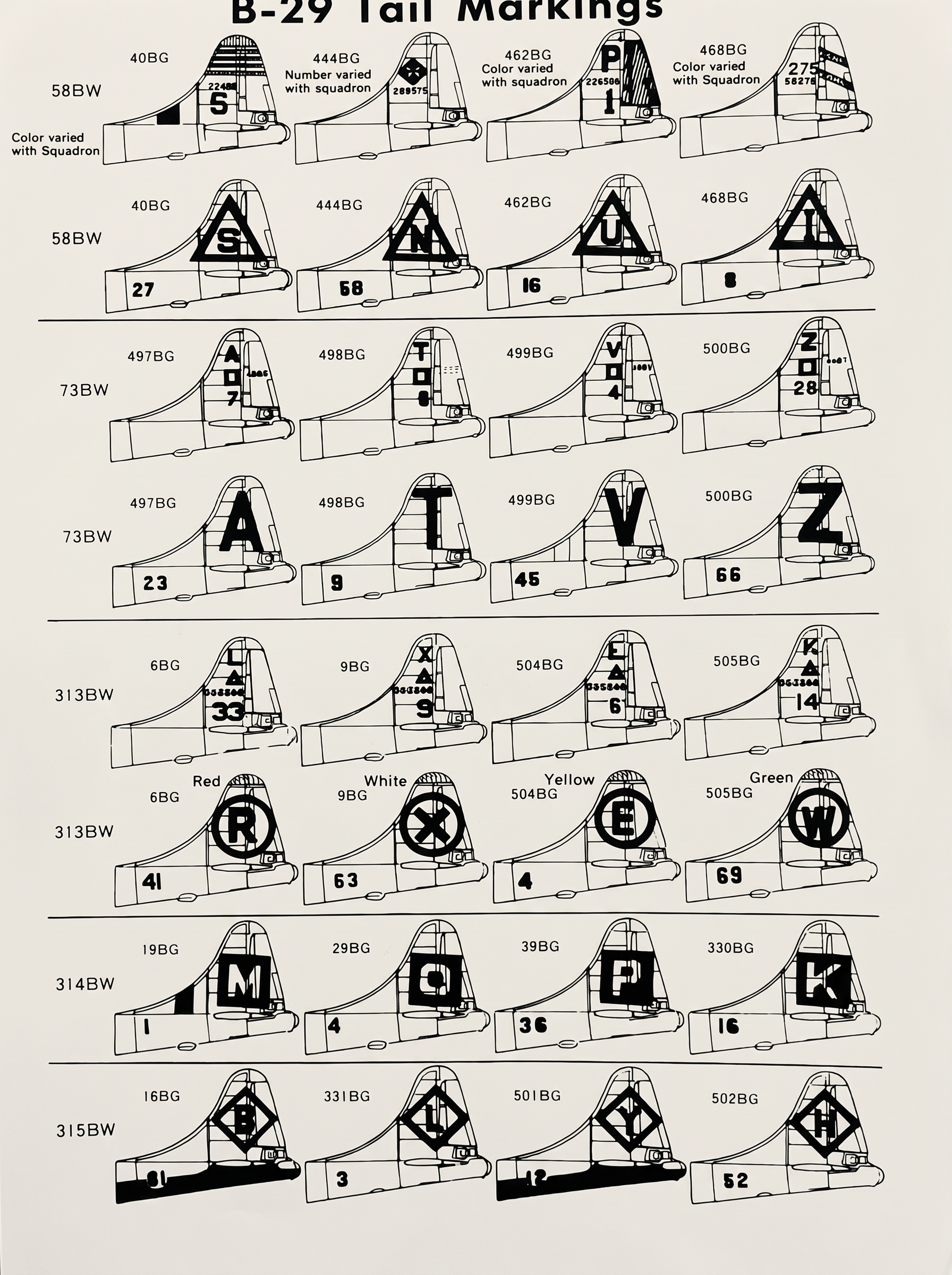
These units and their aircraft markings are particularly important when choosing a subject for a scale model. A B-29 should not simply be treated as “a Pacific B-29.” The unit, date, and individual aircraft could significantly affect its appearance.
B-29, B-29A and B-29B
The Superfortress family was not uniform.
The B-29 was the basic production version. The B-29A was built at Boeing’s Renton plant and incorporated several production and structural changes. The B-29B was a lighter version, with major changes to its defensive armament intended to reduce weight and improve performance.
For modelers, identifying the correct variant is essential. It is not enough to choose a kit simply labeled “B-29.” The kit must represent the correct version for the aircraft and markings being modeled.
Armament and Bomb Load
The defensive armament of the B-29 was one of the most advanced systems of its time.
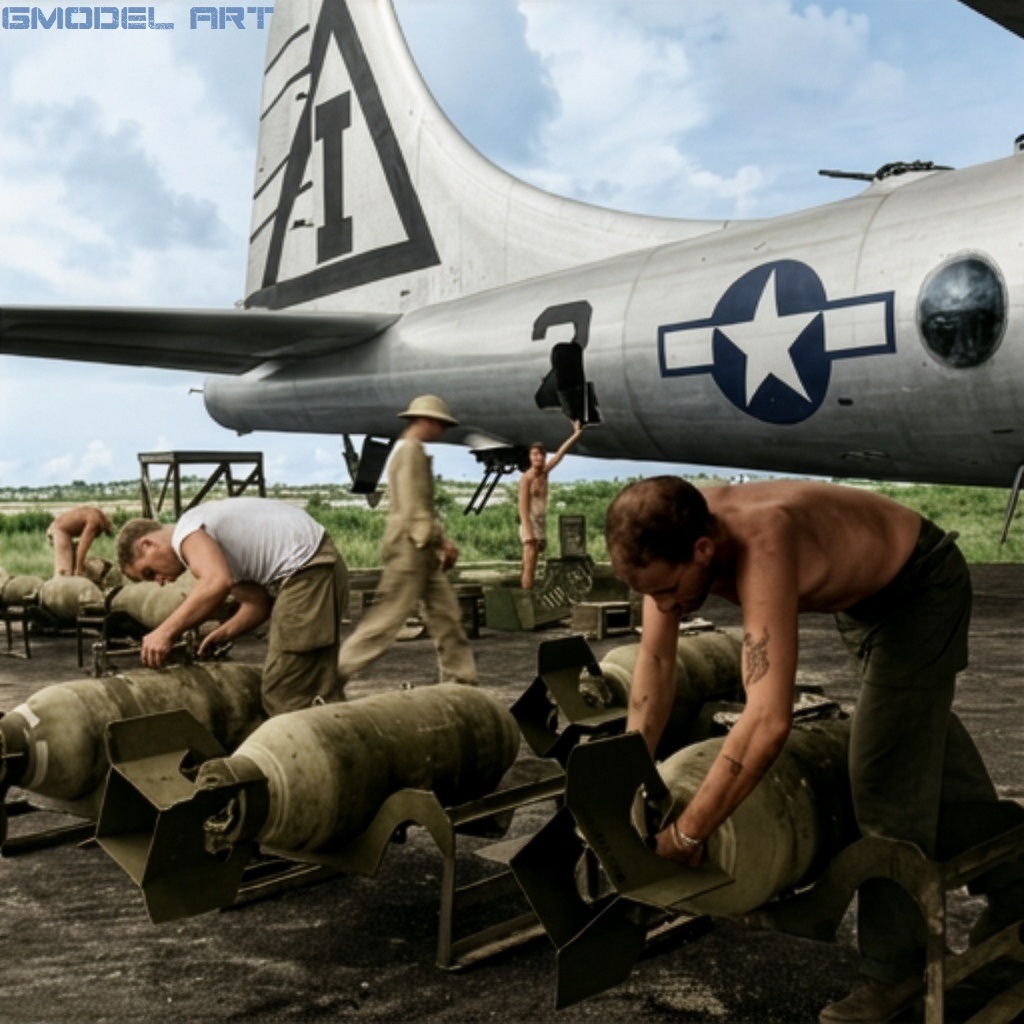
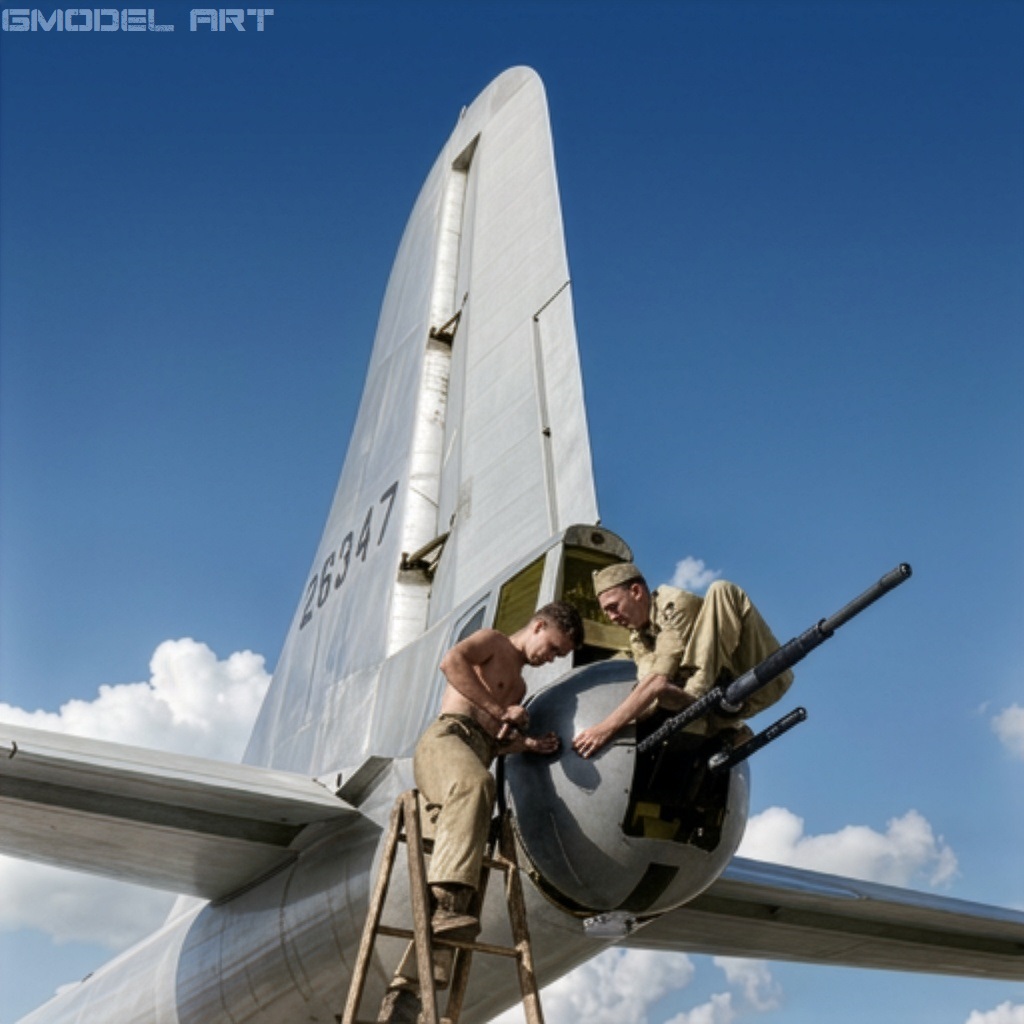
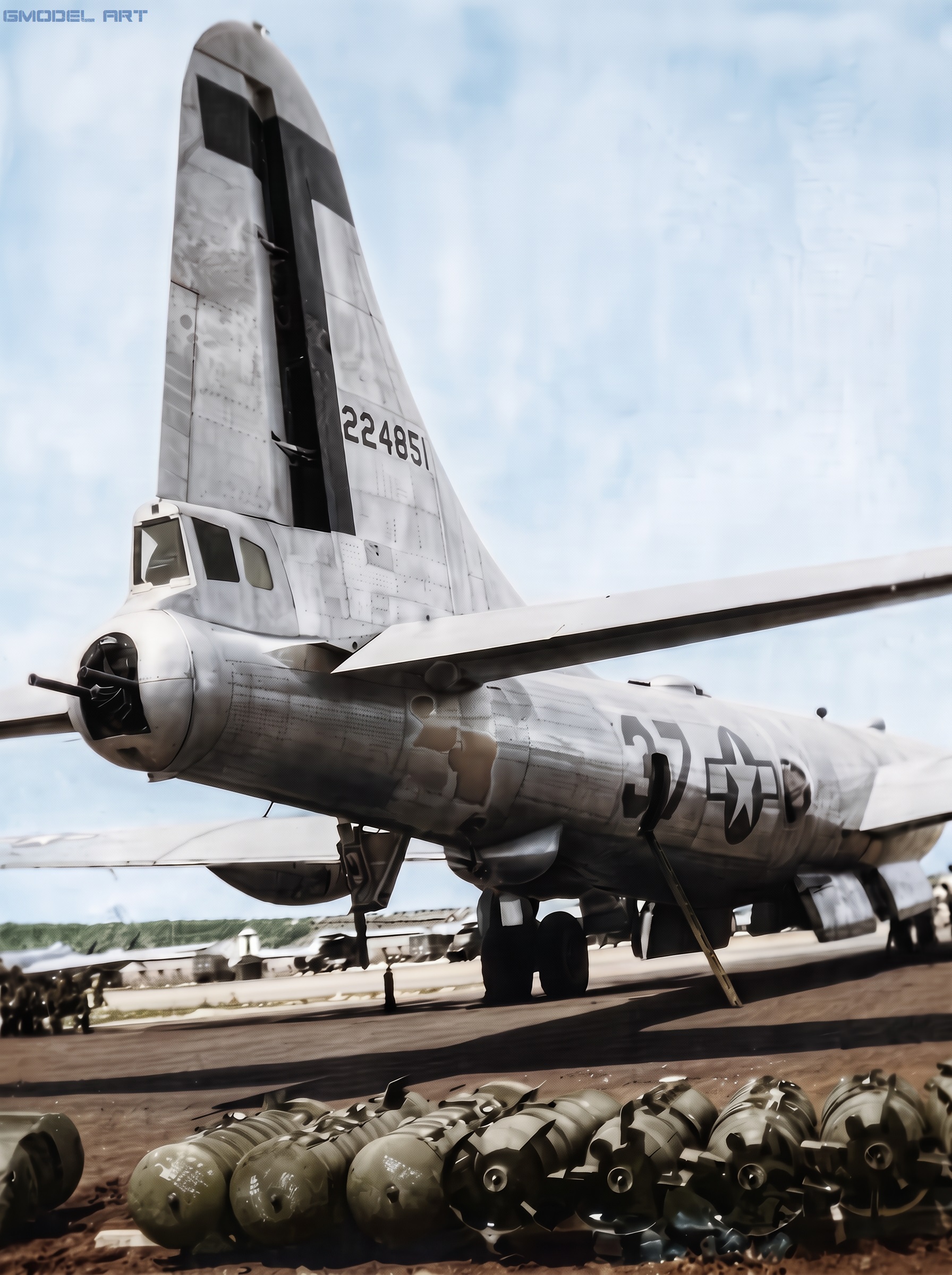
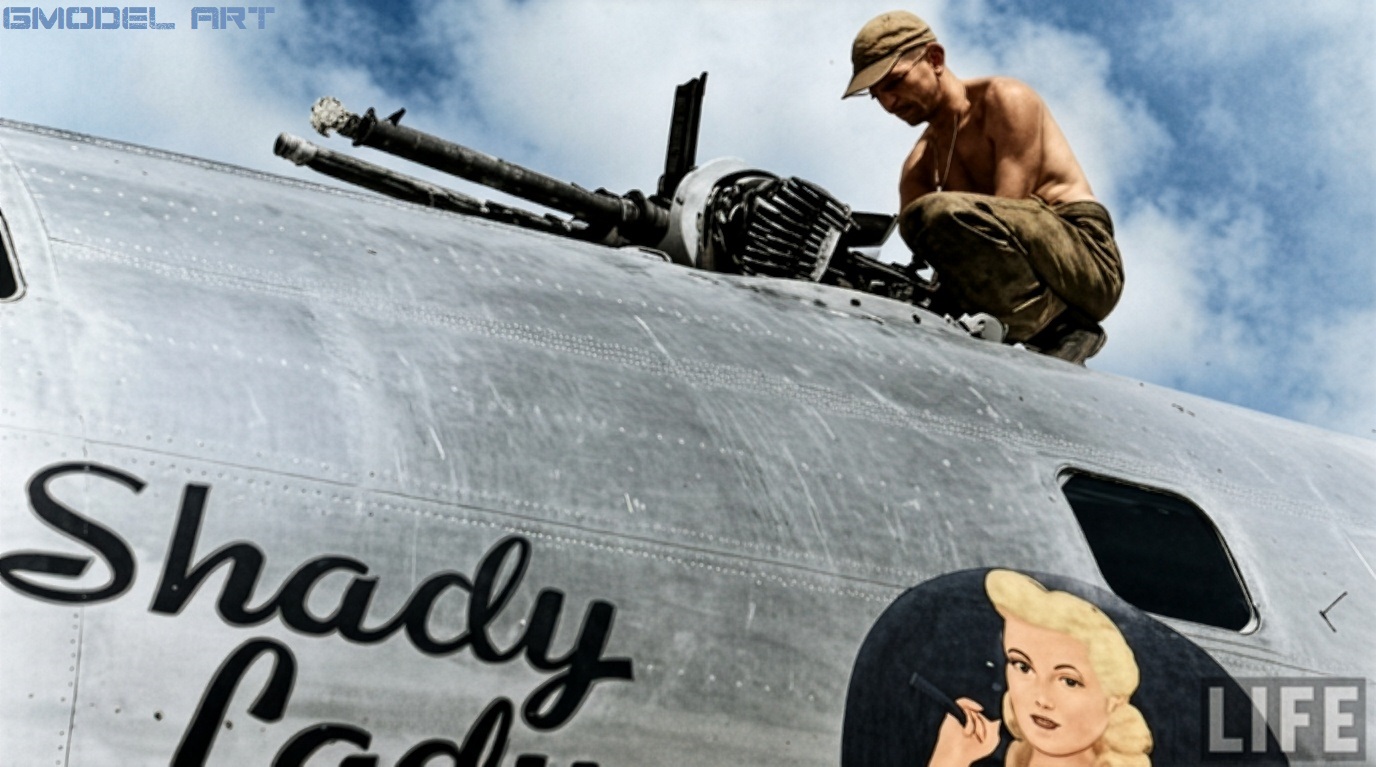
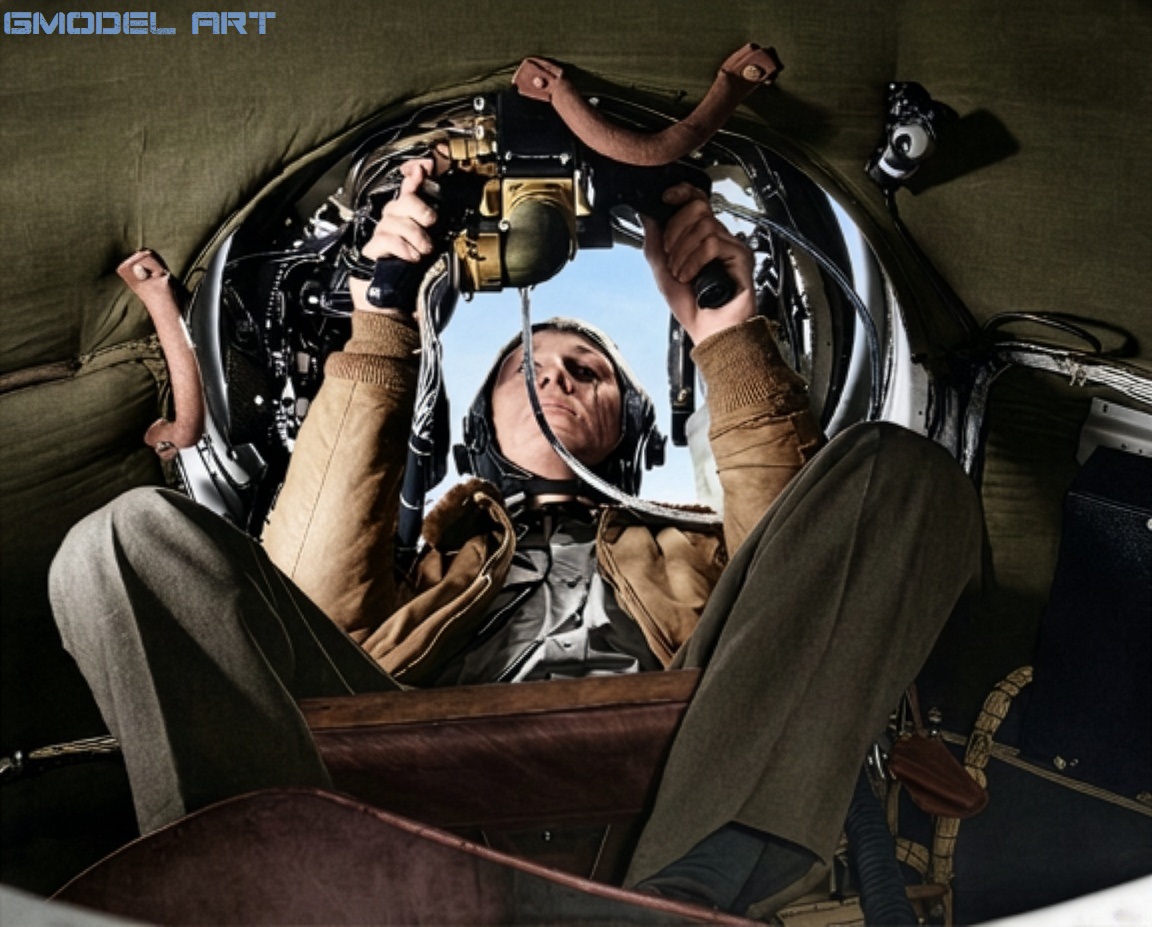
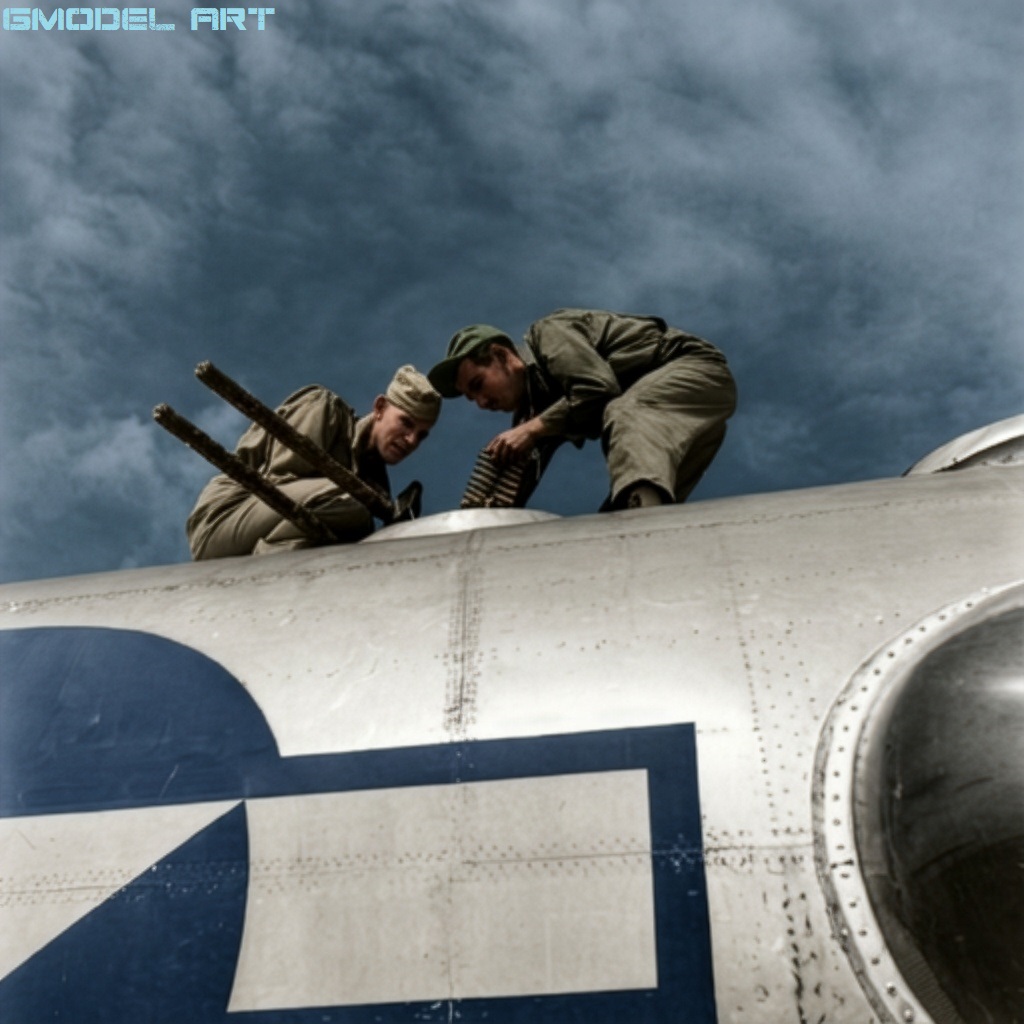
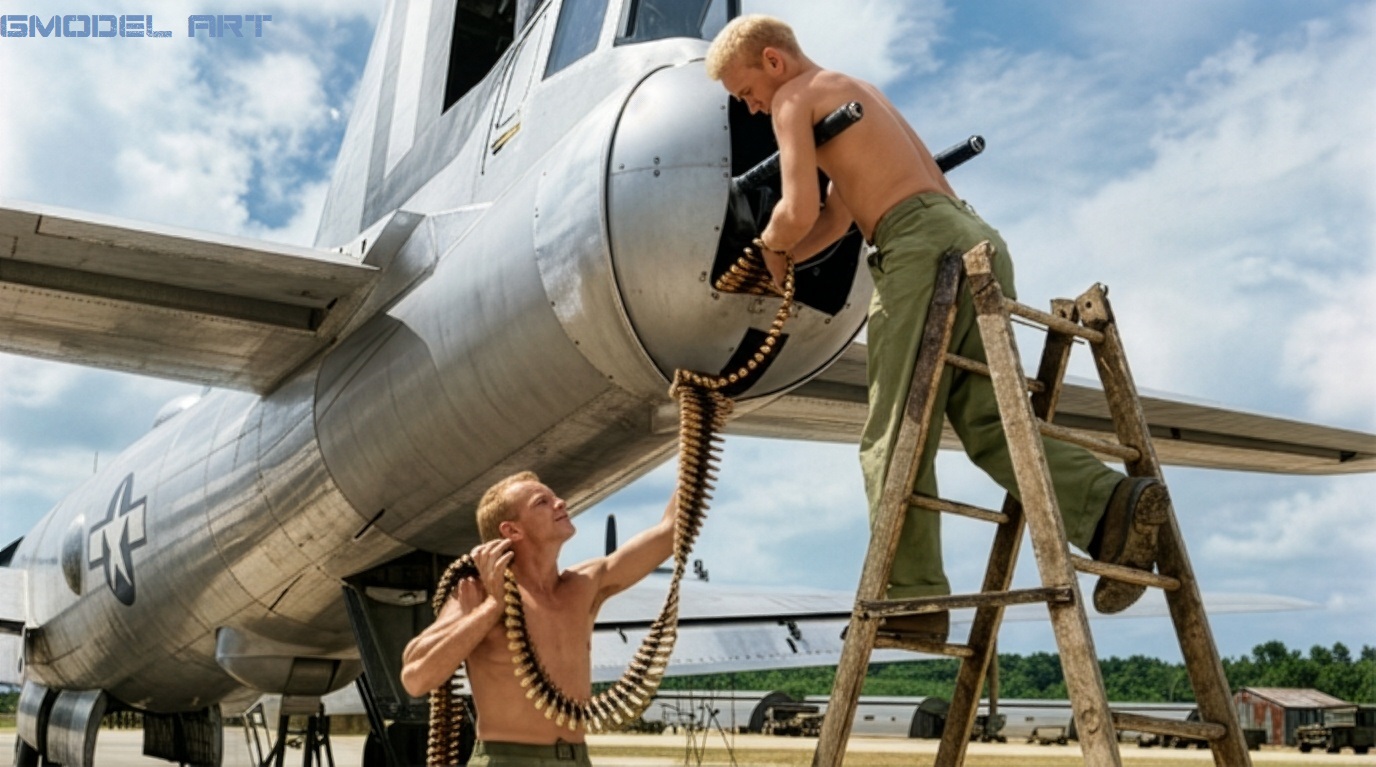
The main gun turrets were remotely controlled, allowing the gunners to operate the weapons from positions inside the fuselage. The exact configuration changed according to production block and operational period, but .50-caliber Browning machine guns formed the core of the defensive armament.
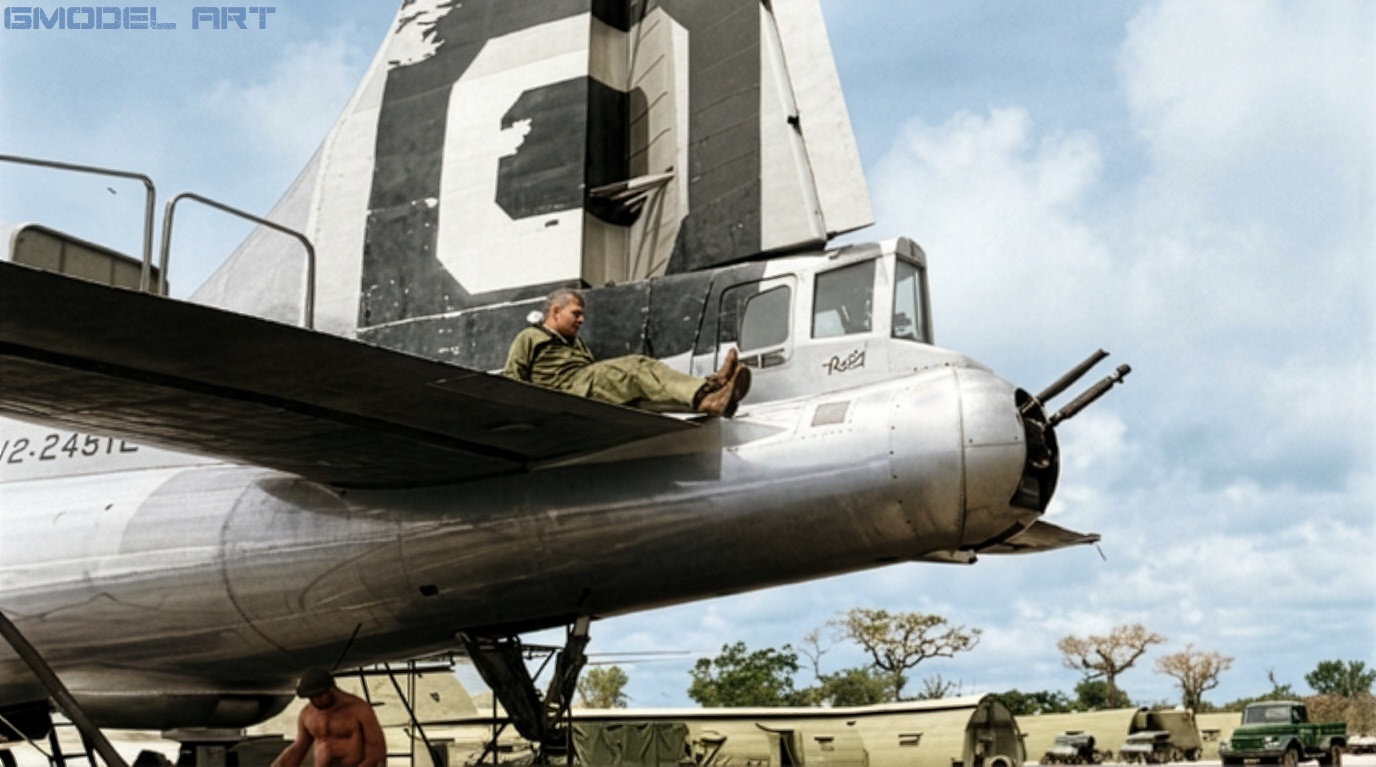
Some configurations also used a 20 mm cannon in the tail turret.
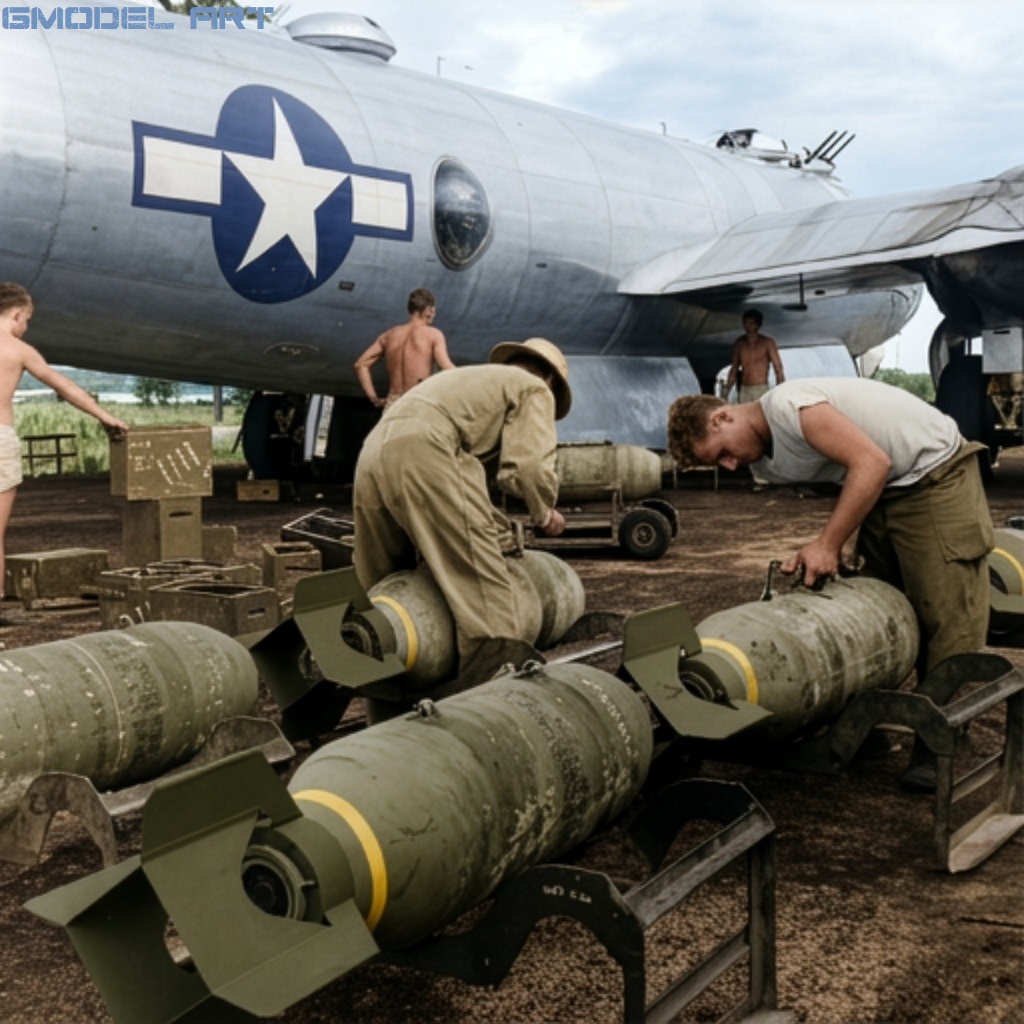
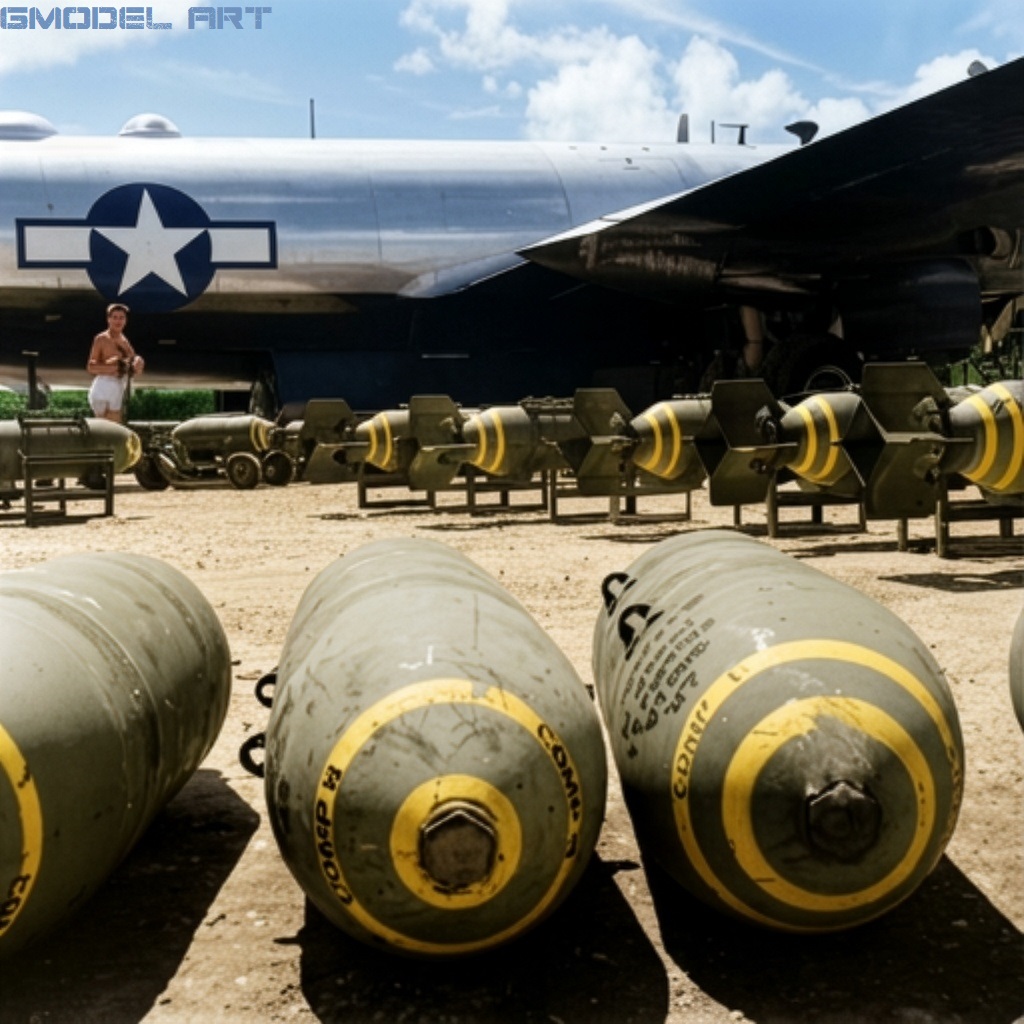
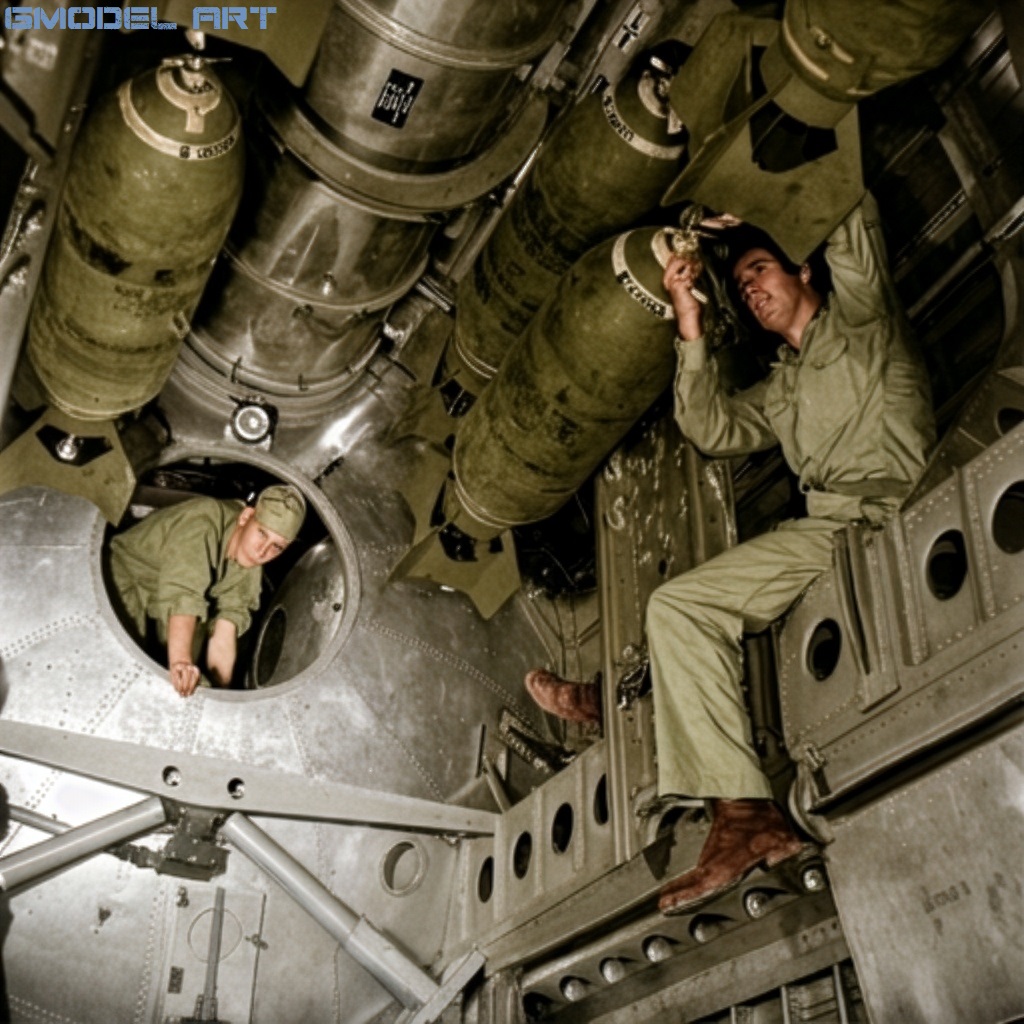
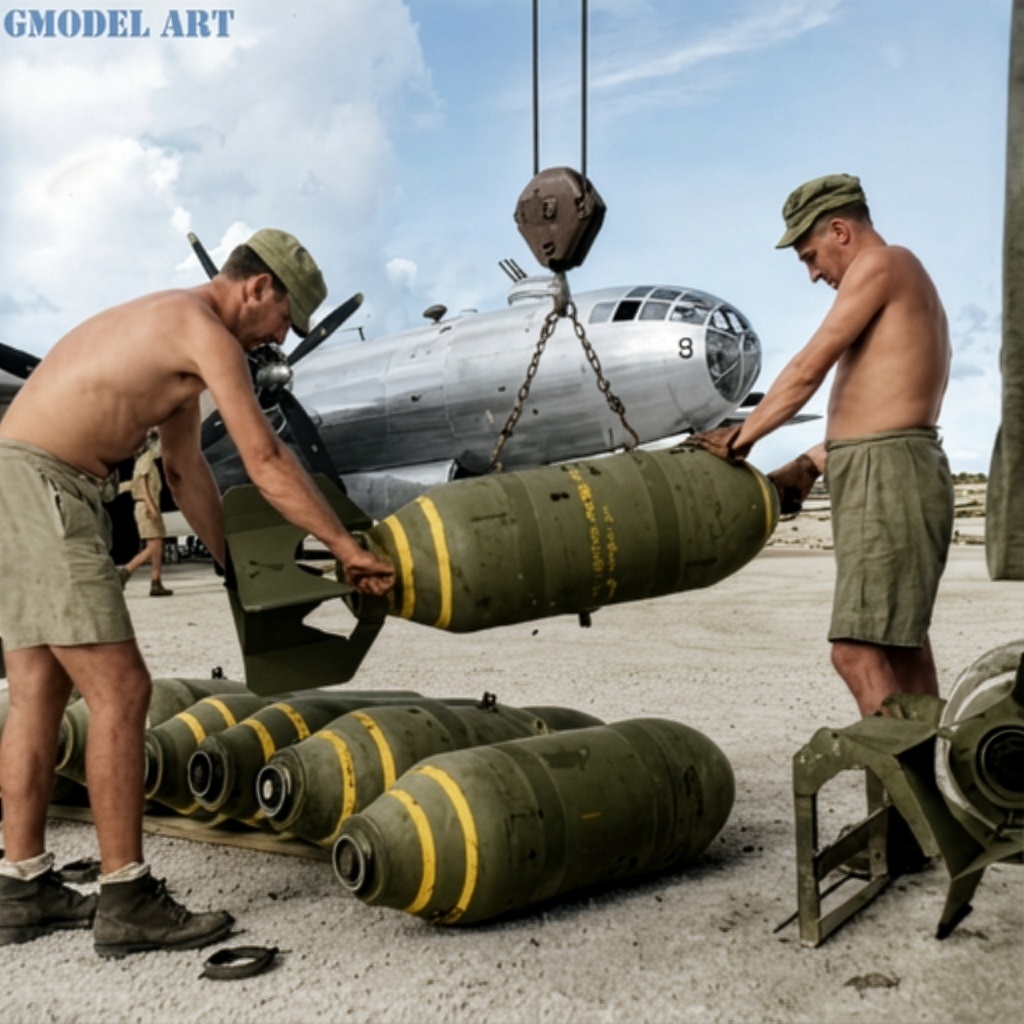
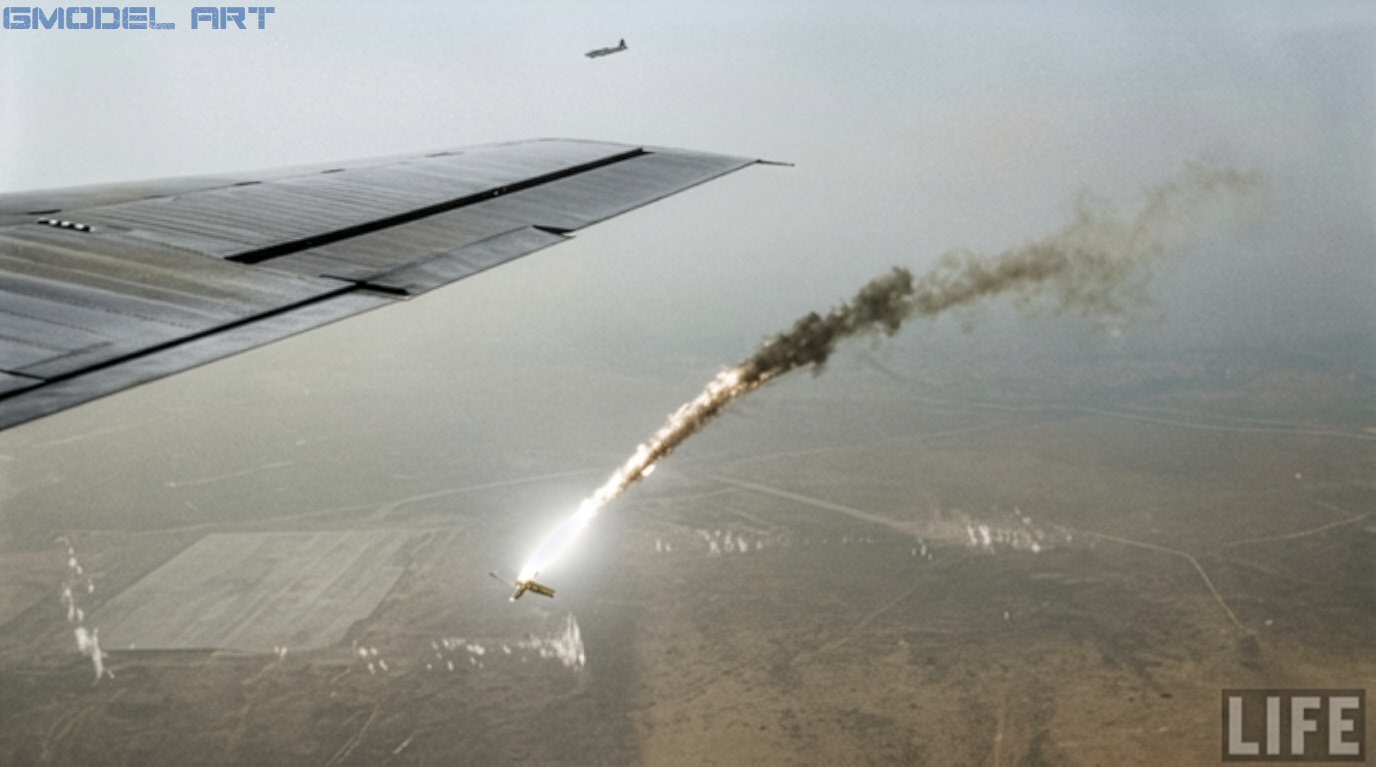
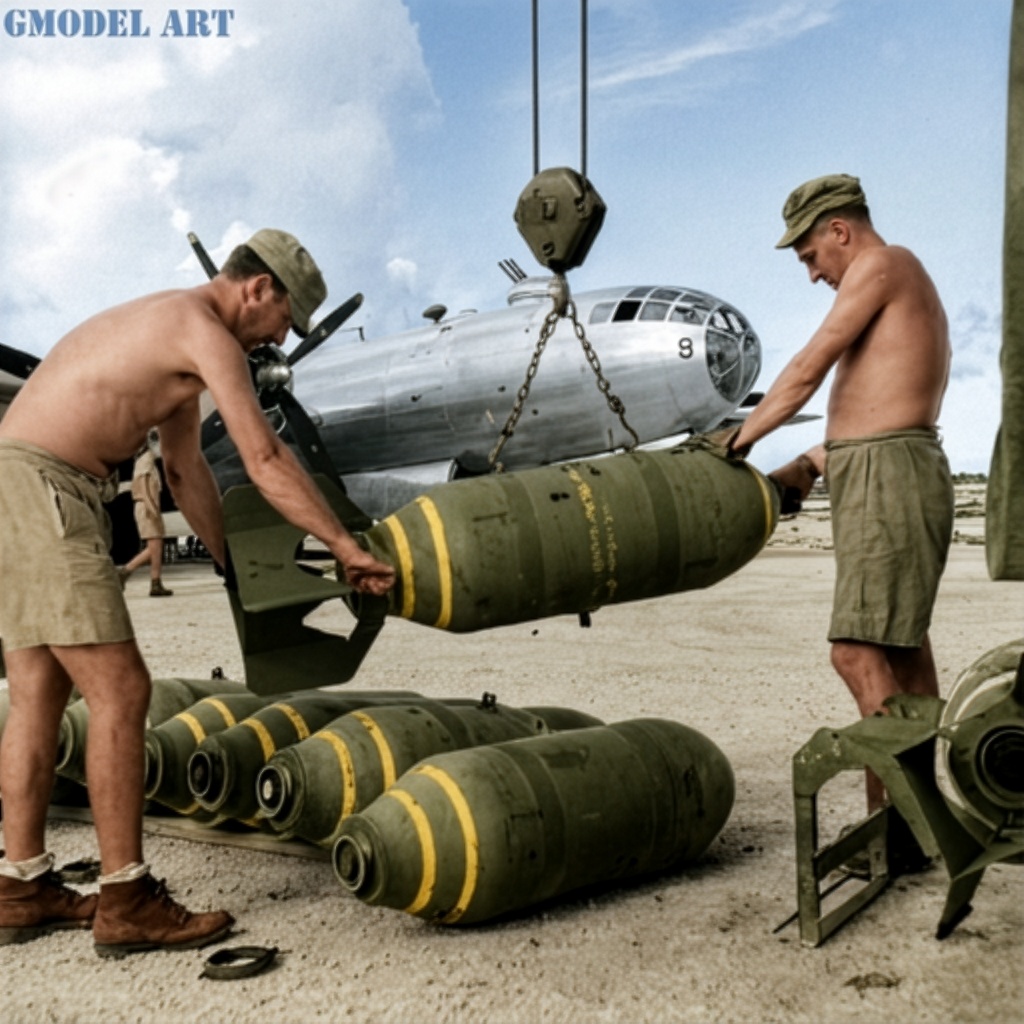
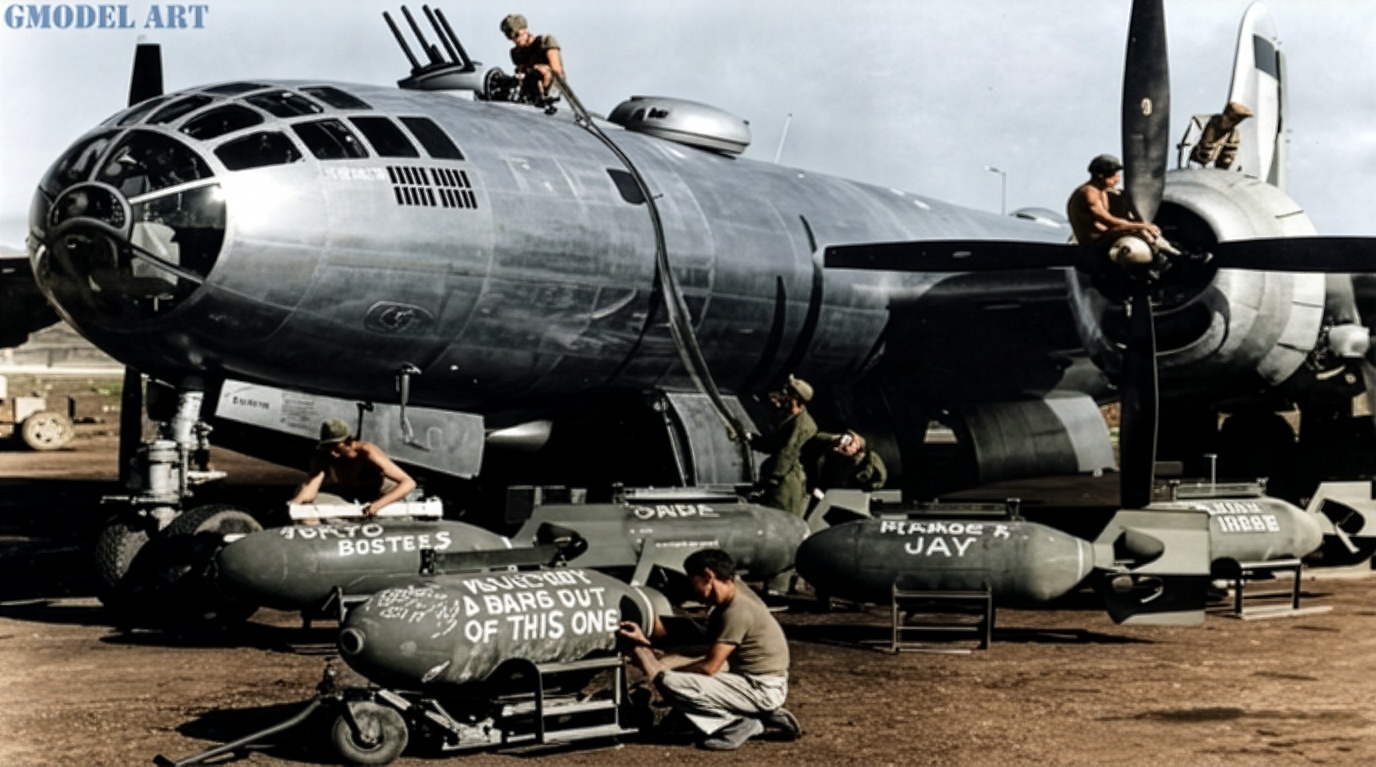
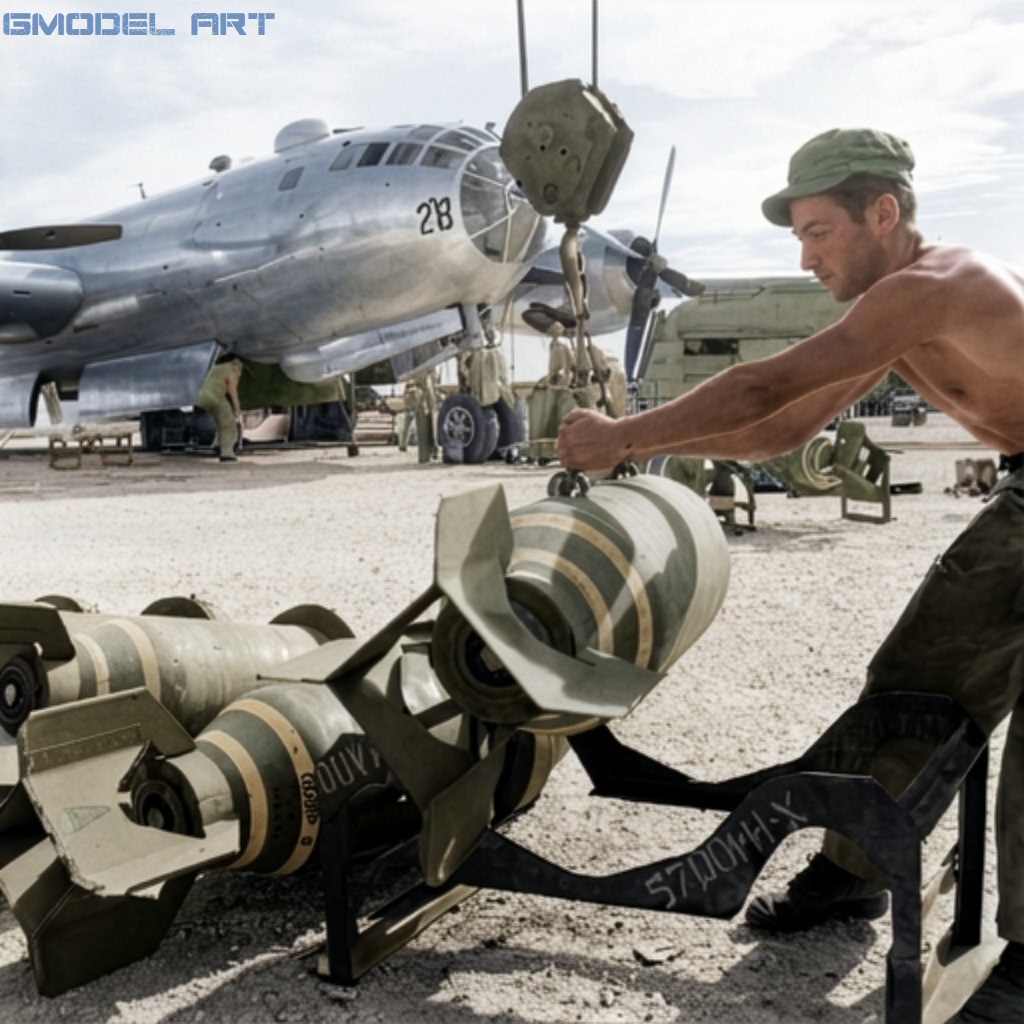
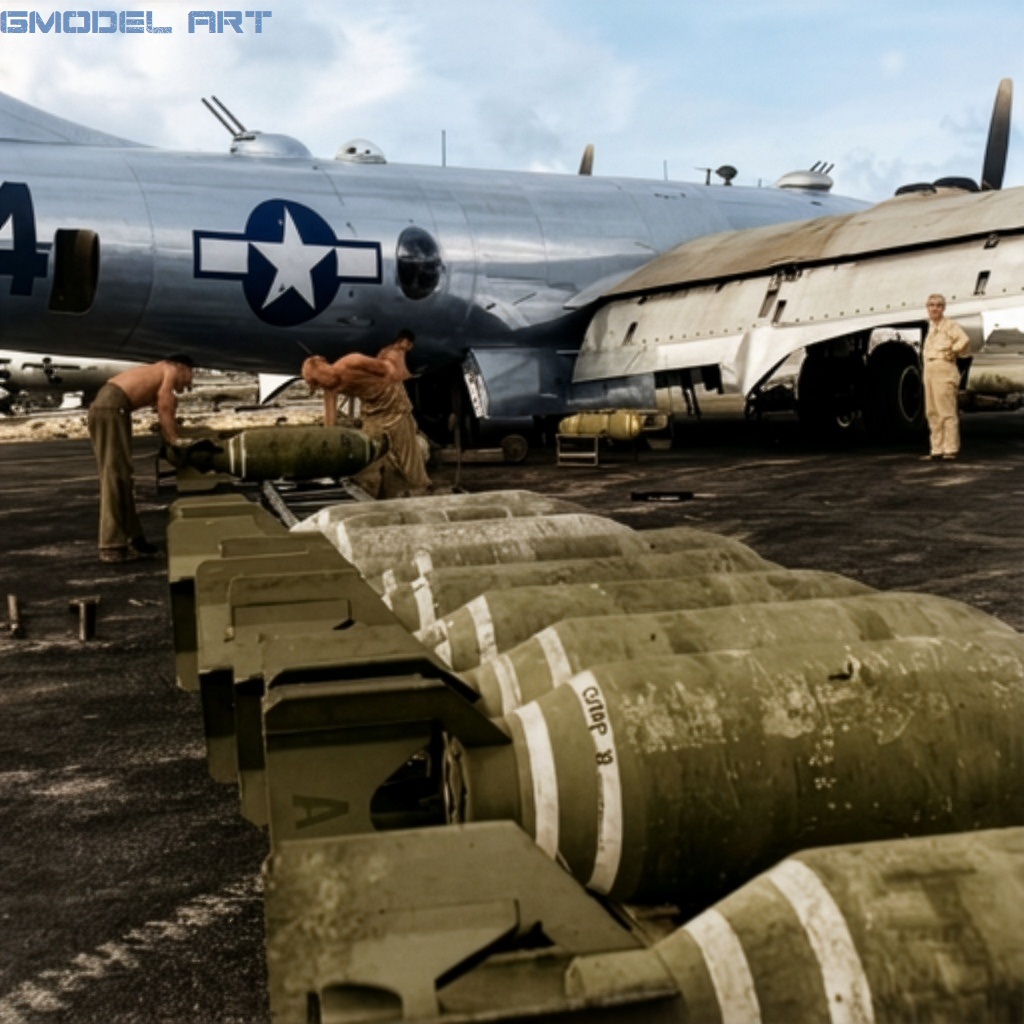
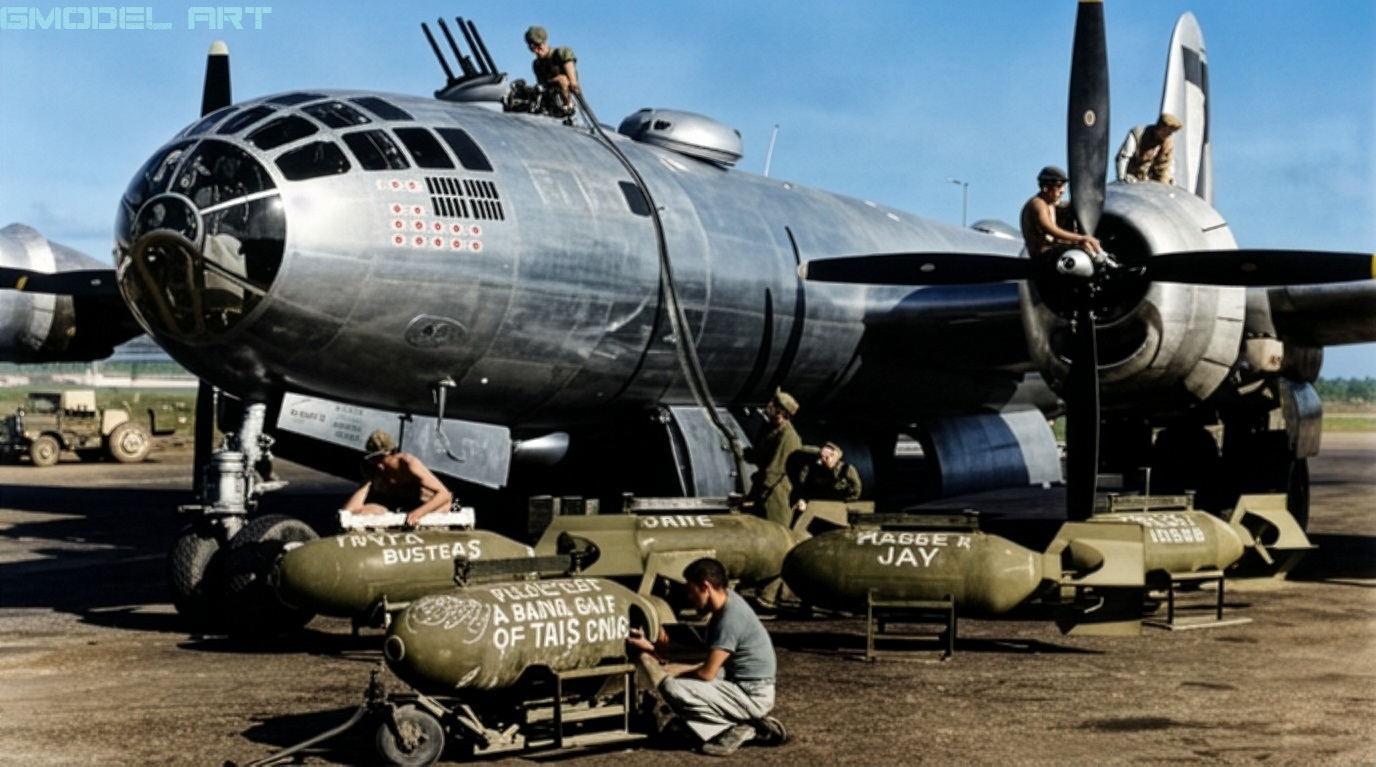
The B-29 could carry a bomb load of approximately 20,000 lb, depending on mission, range, and configuration.
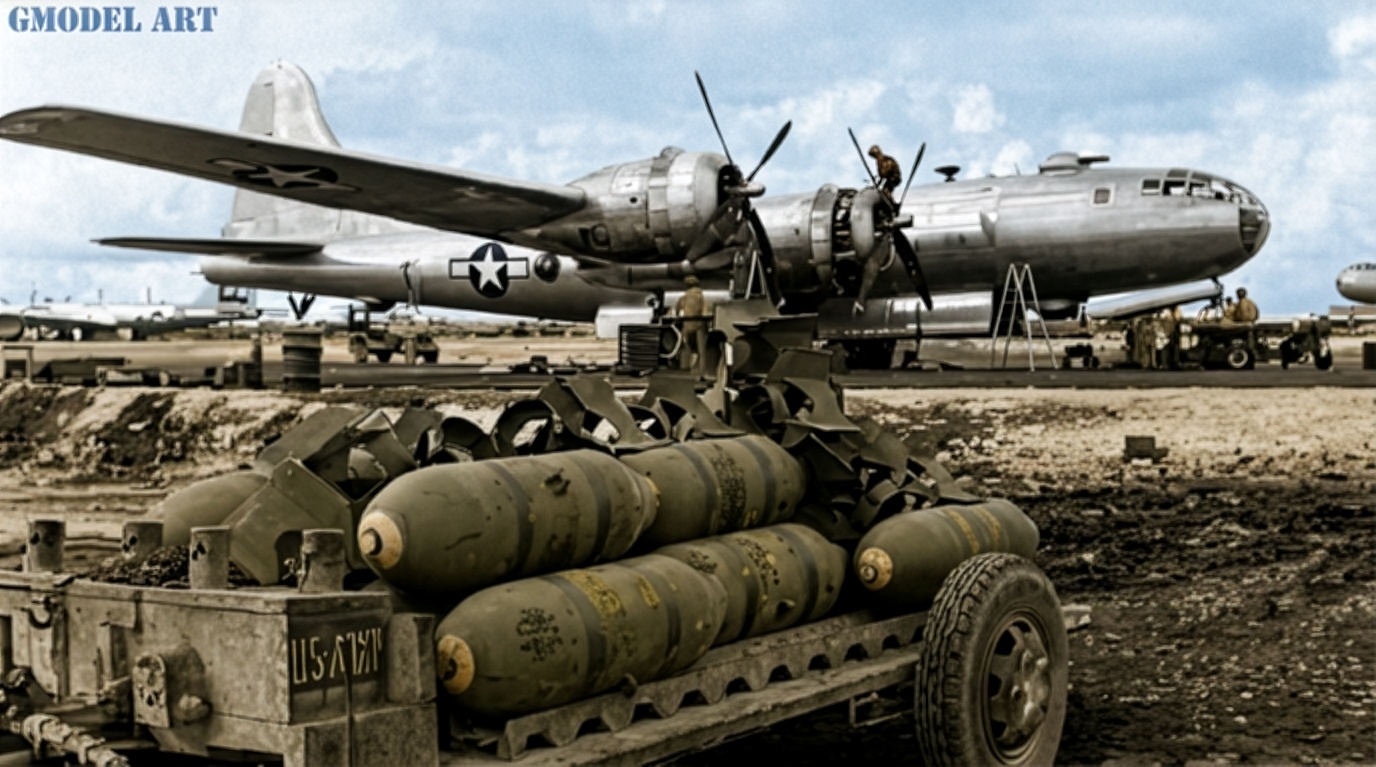
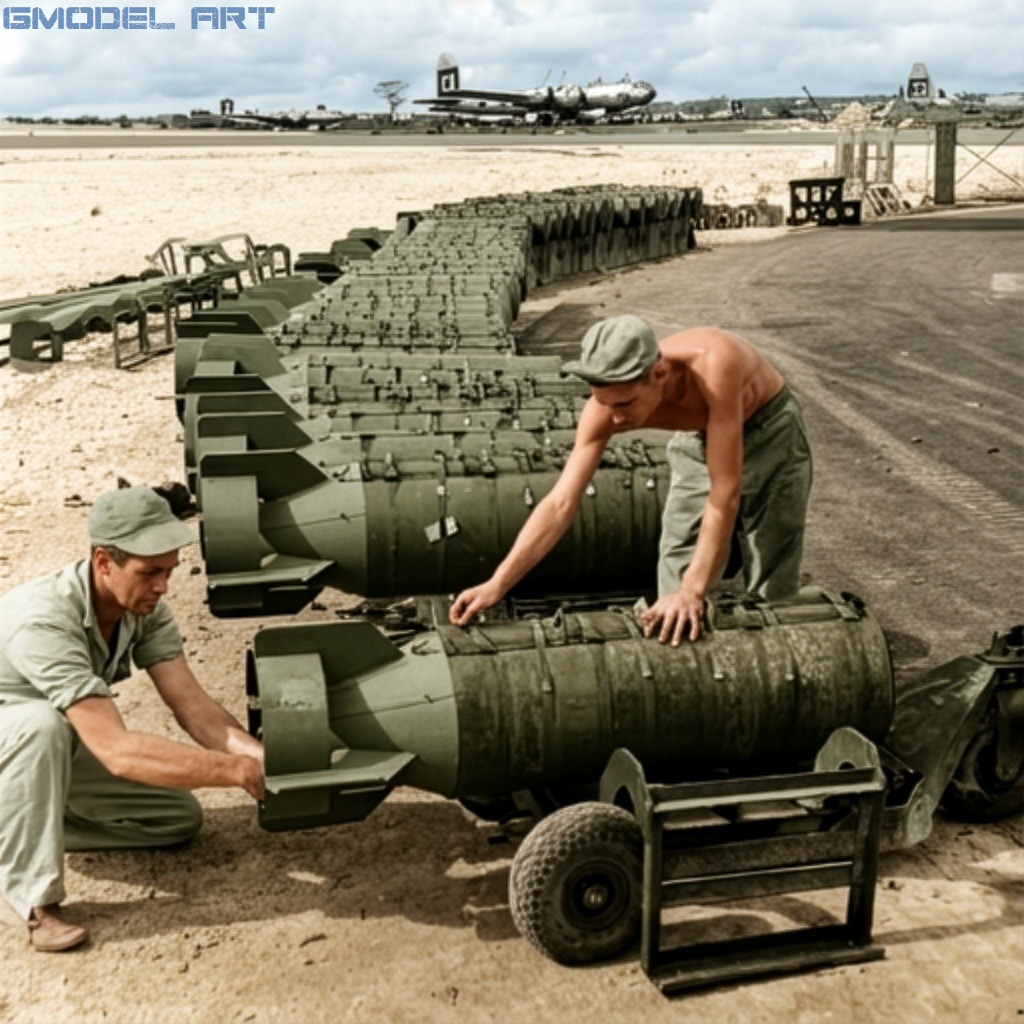
For modelers, the important point is that not every B-29 carried the same internal or external load. The bomb configuration should match the specific mission being represented.
Common options for a Pacific B-29 diorama
General-purpose bombs
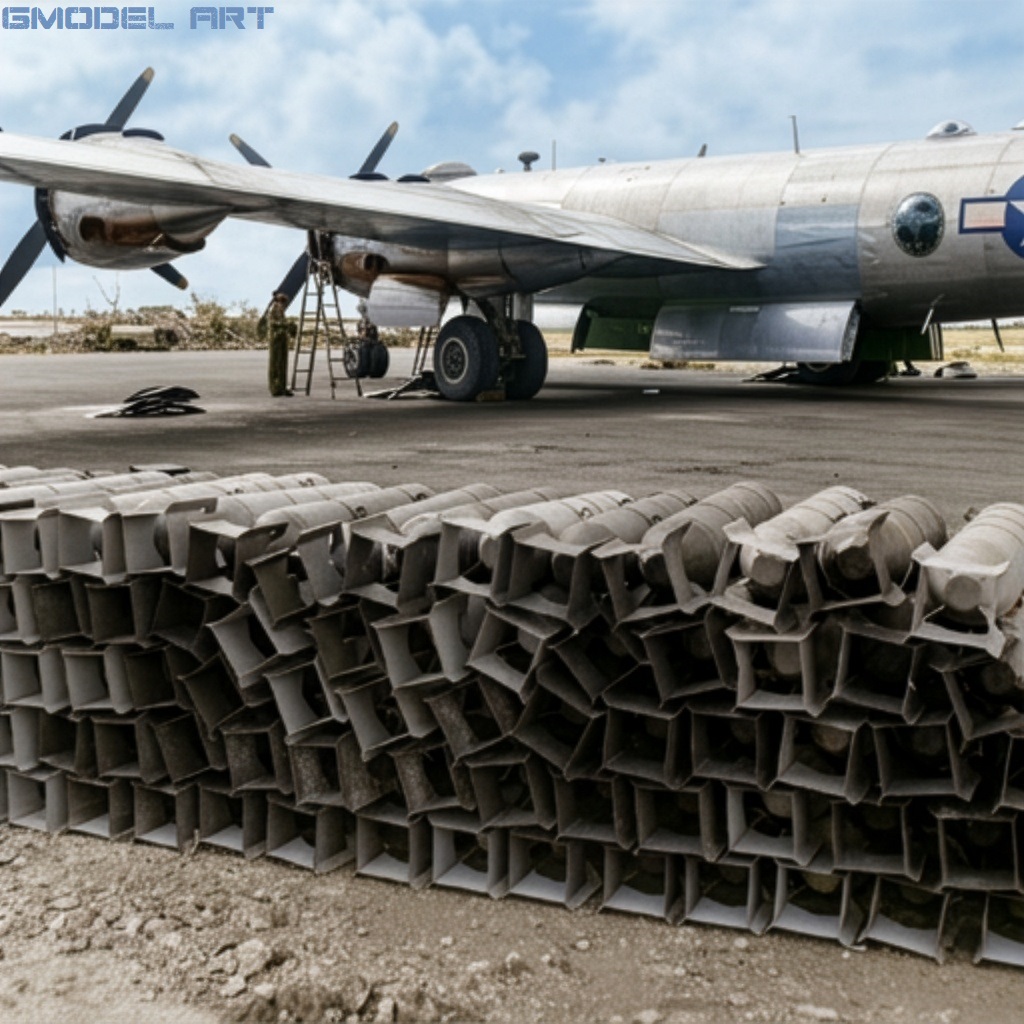
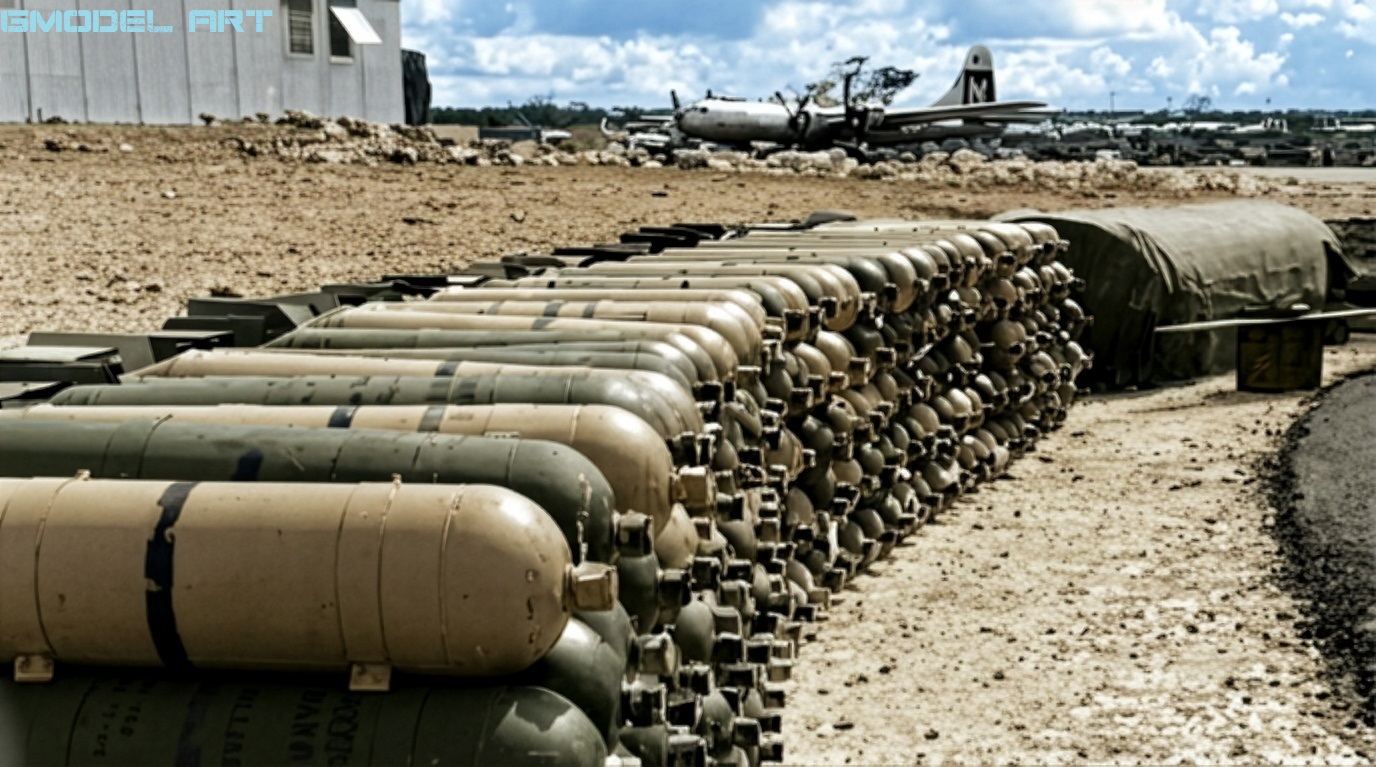
Incendiary bomb clusters
M69 incendiary bombs
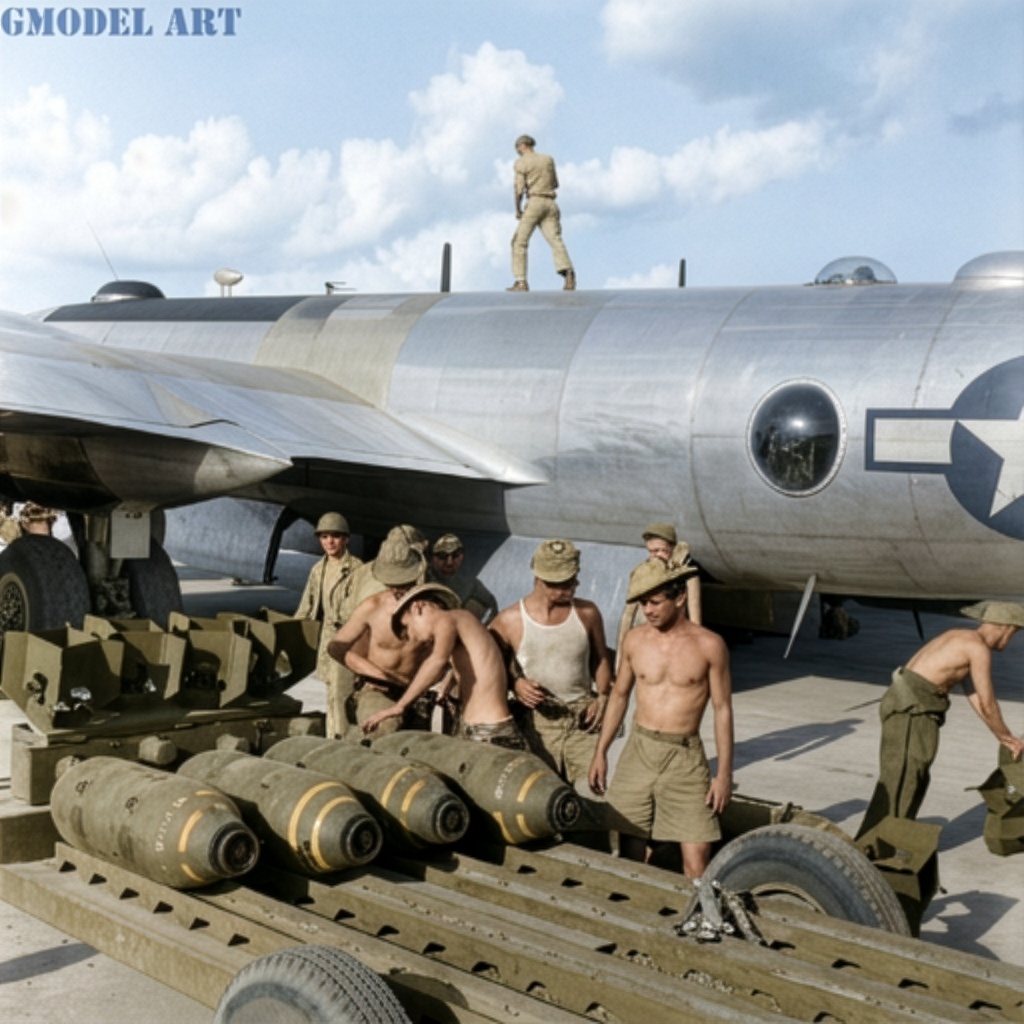
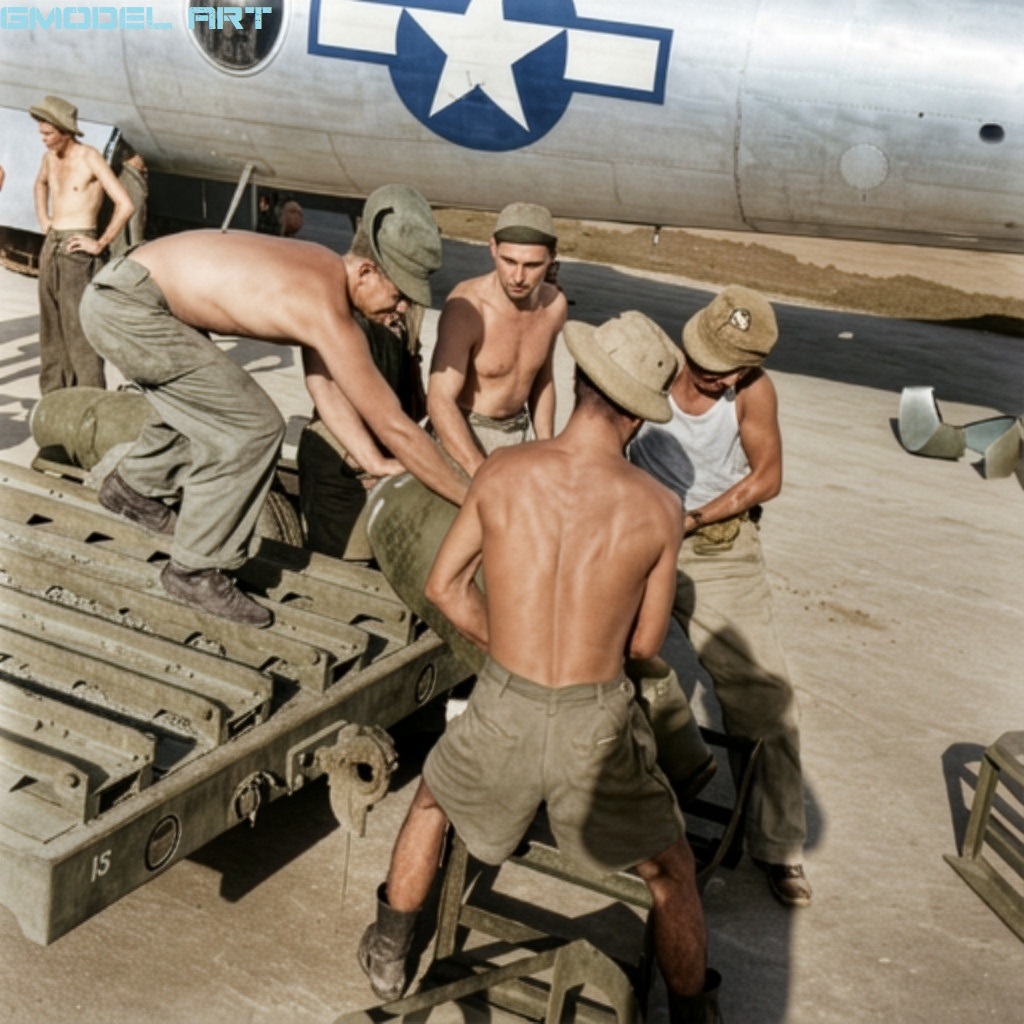
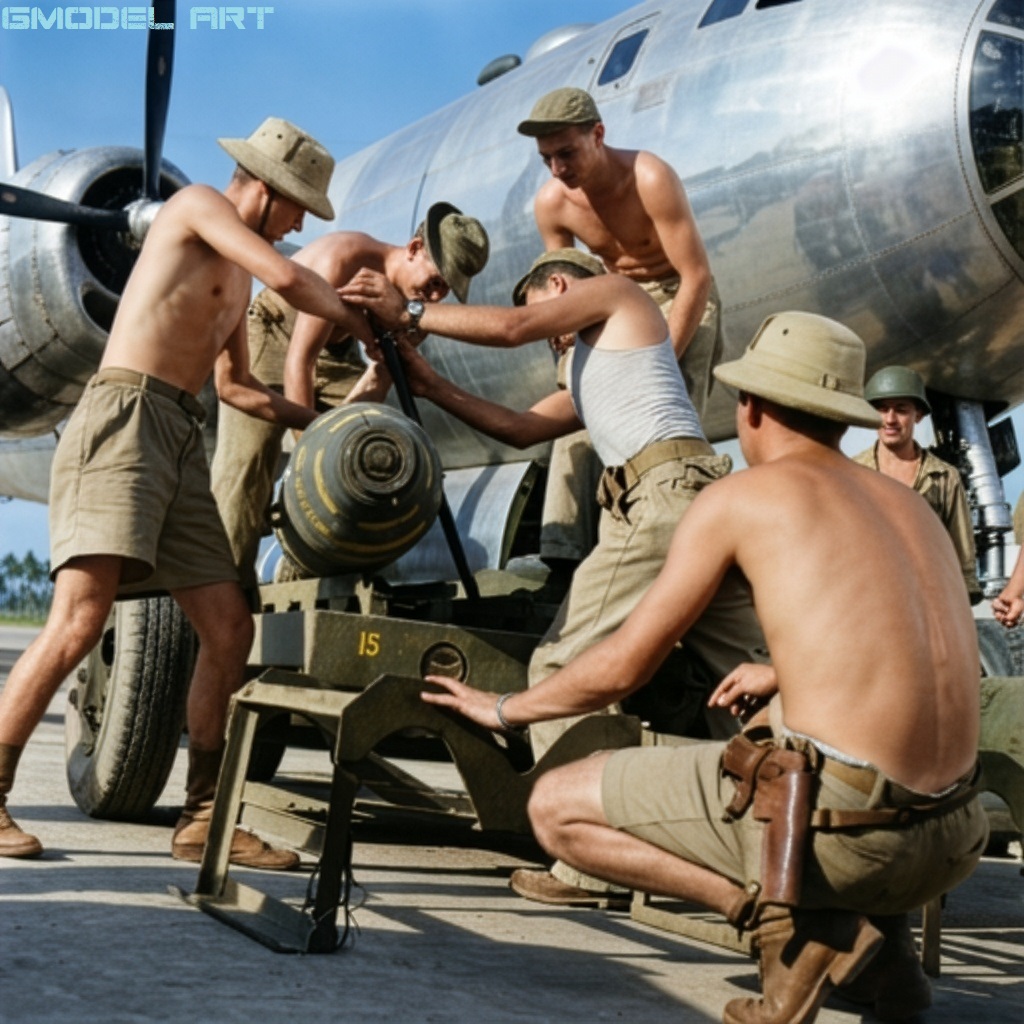
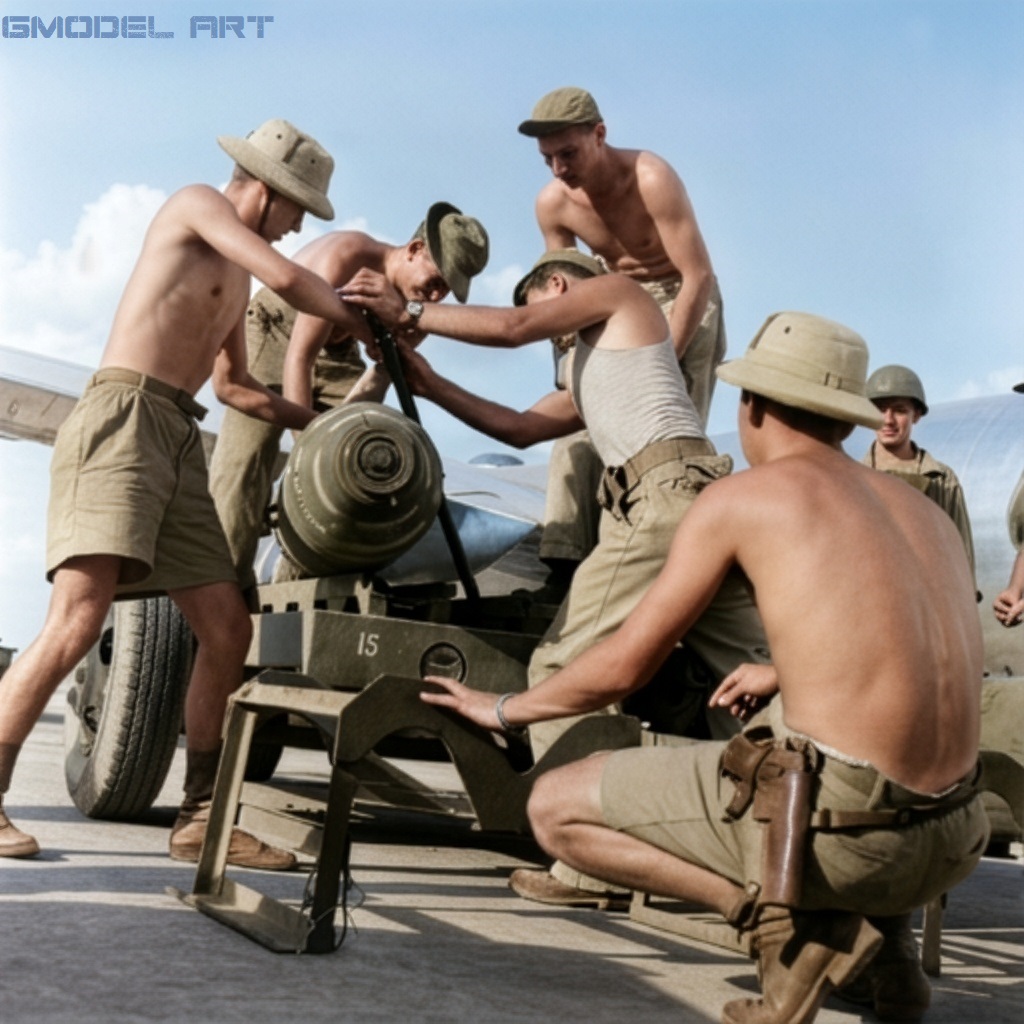
Bomb racks and loading equipment
Mission-specific bomb loads
Special configurations used by the 509th Composite Group
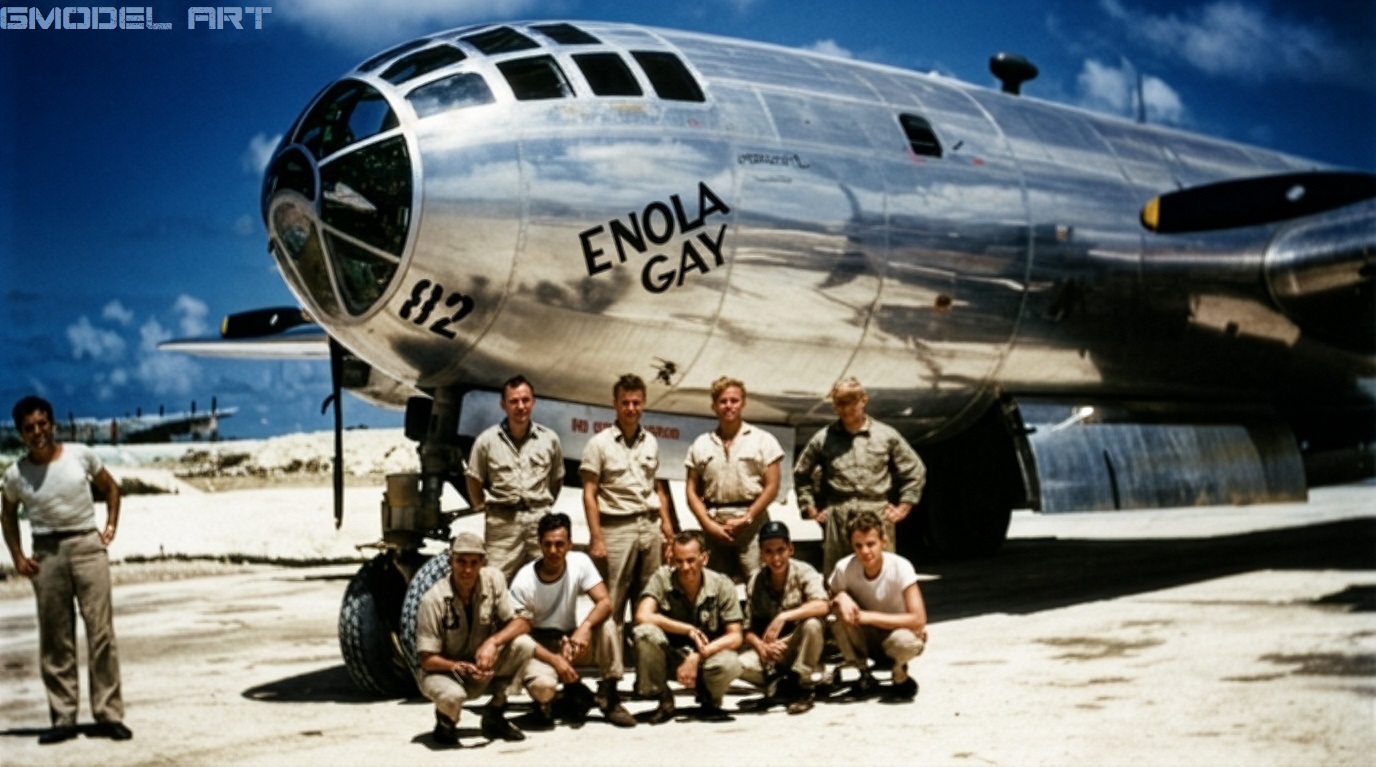
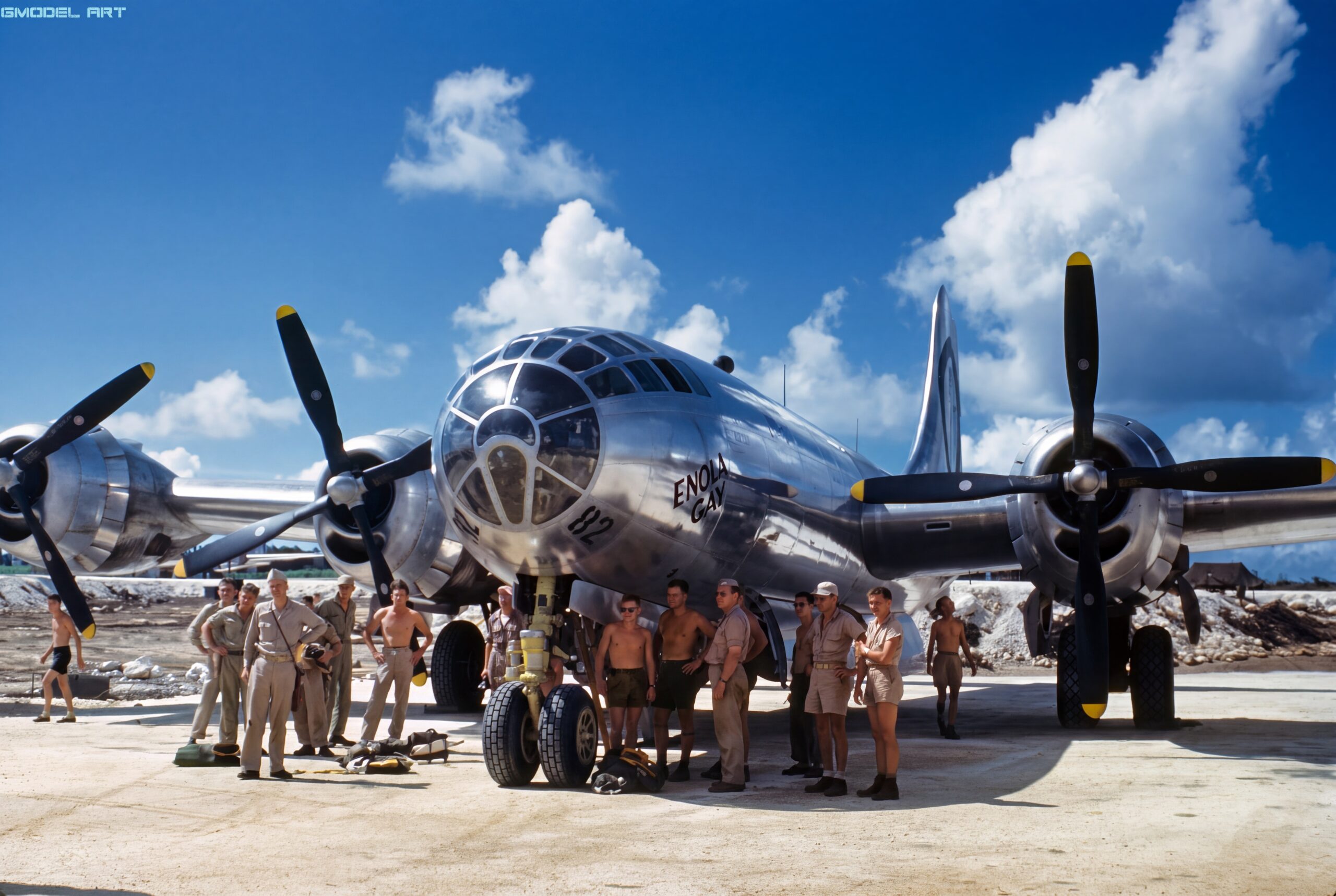
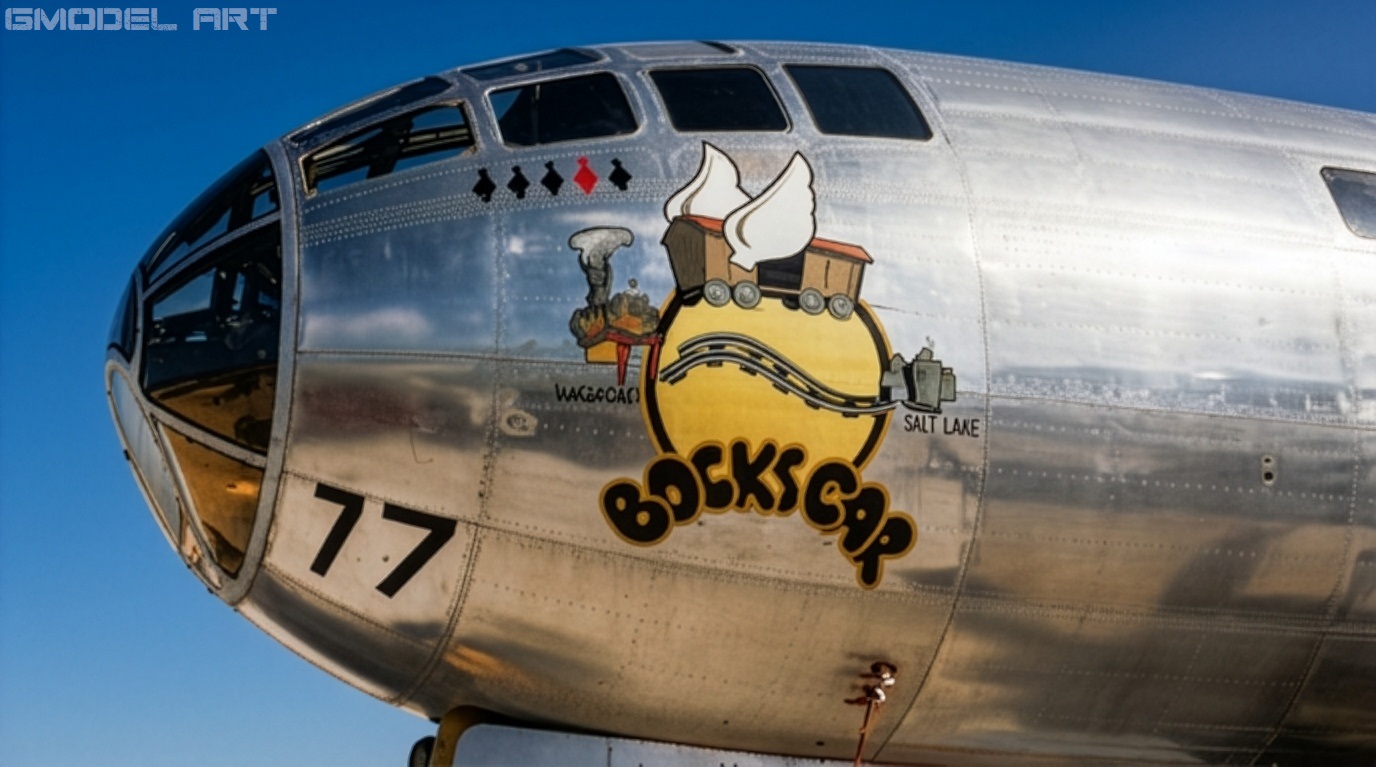
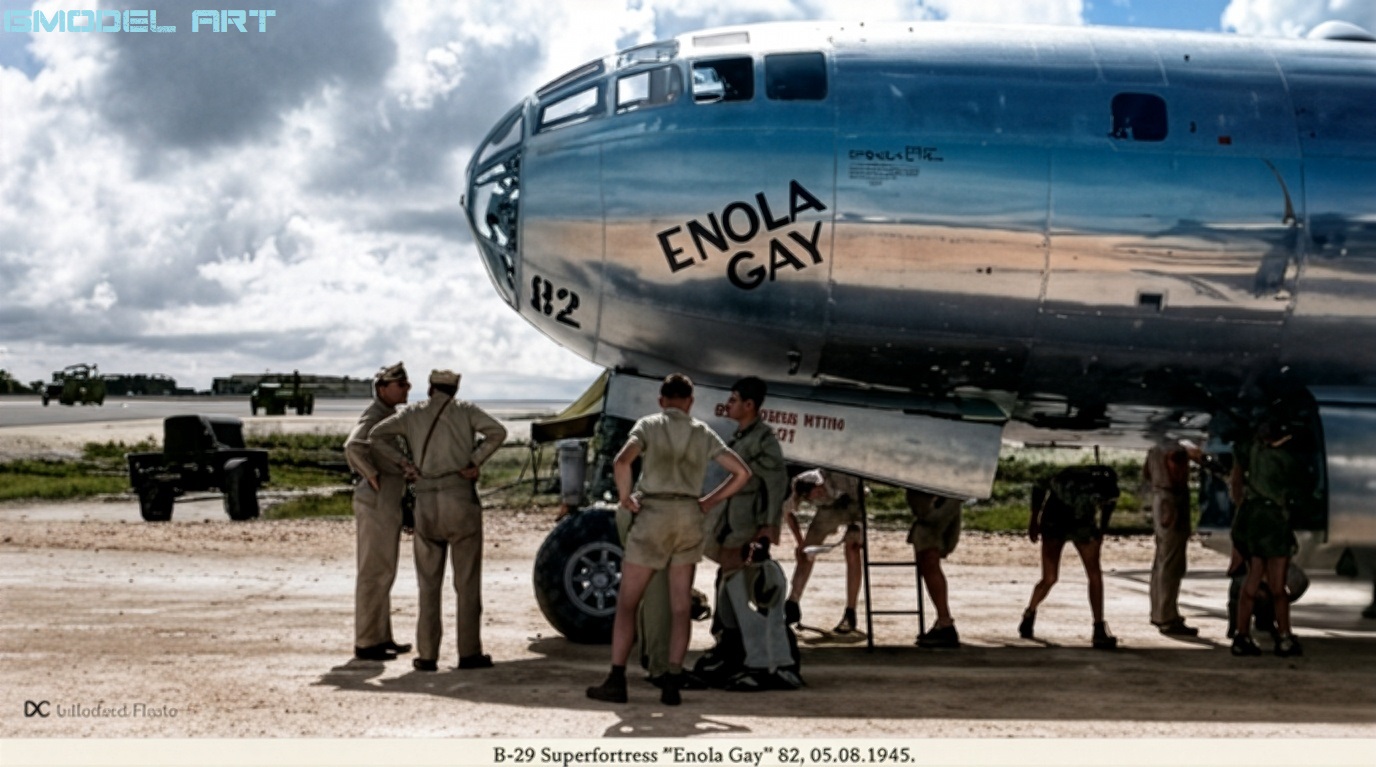
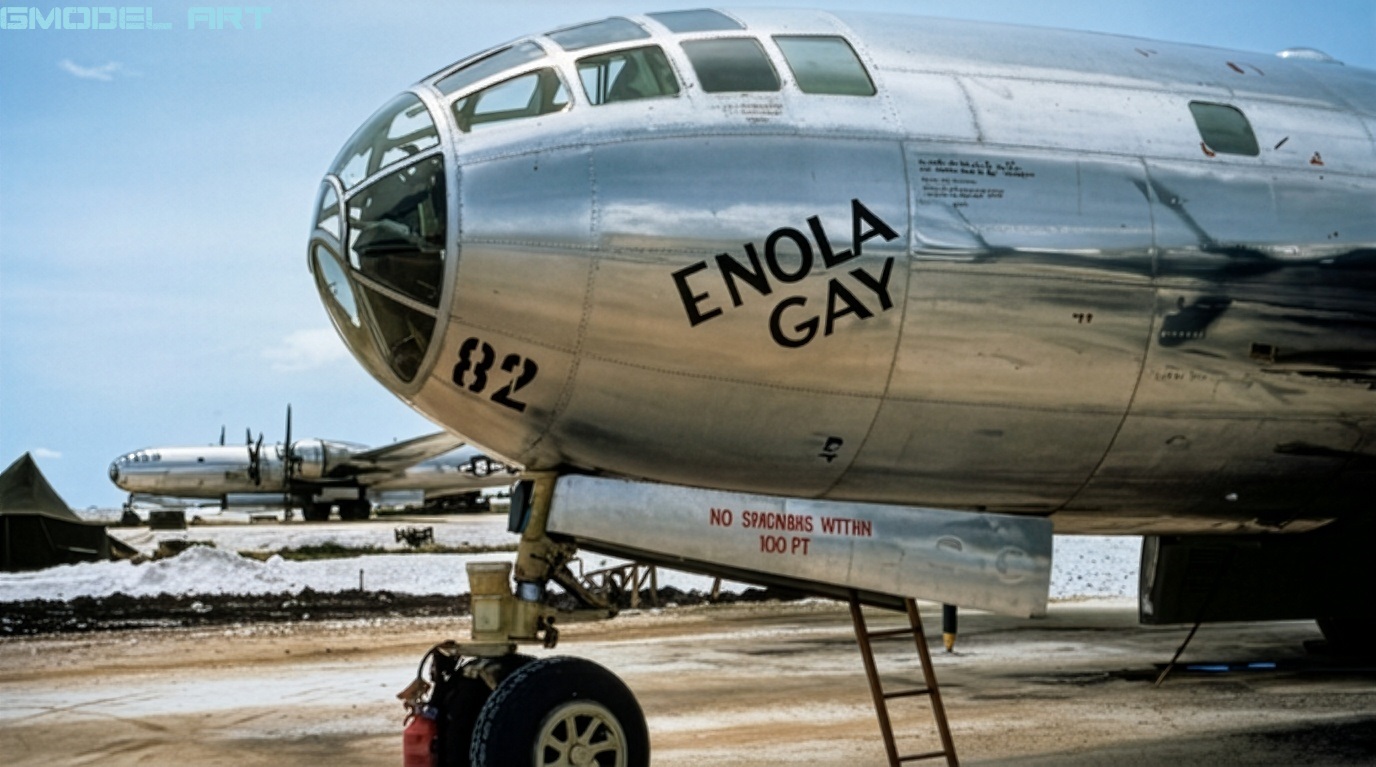
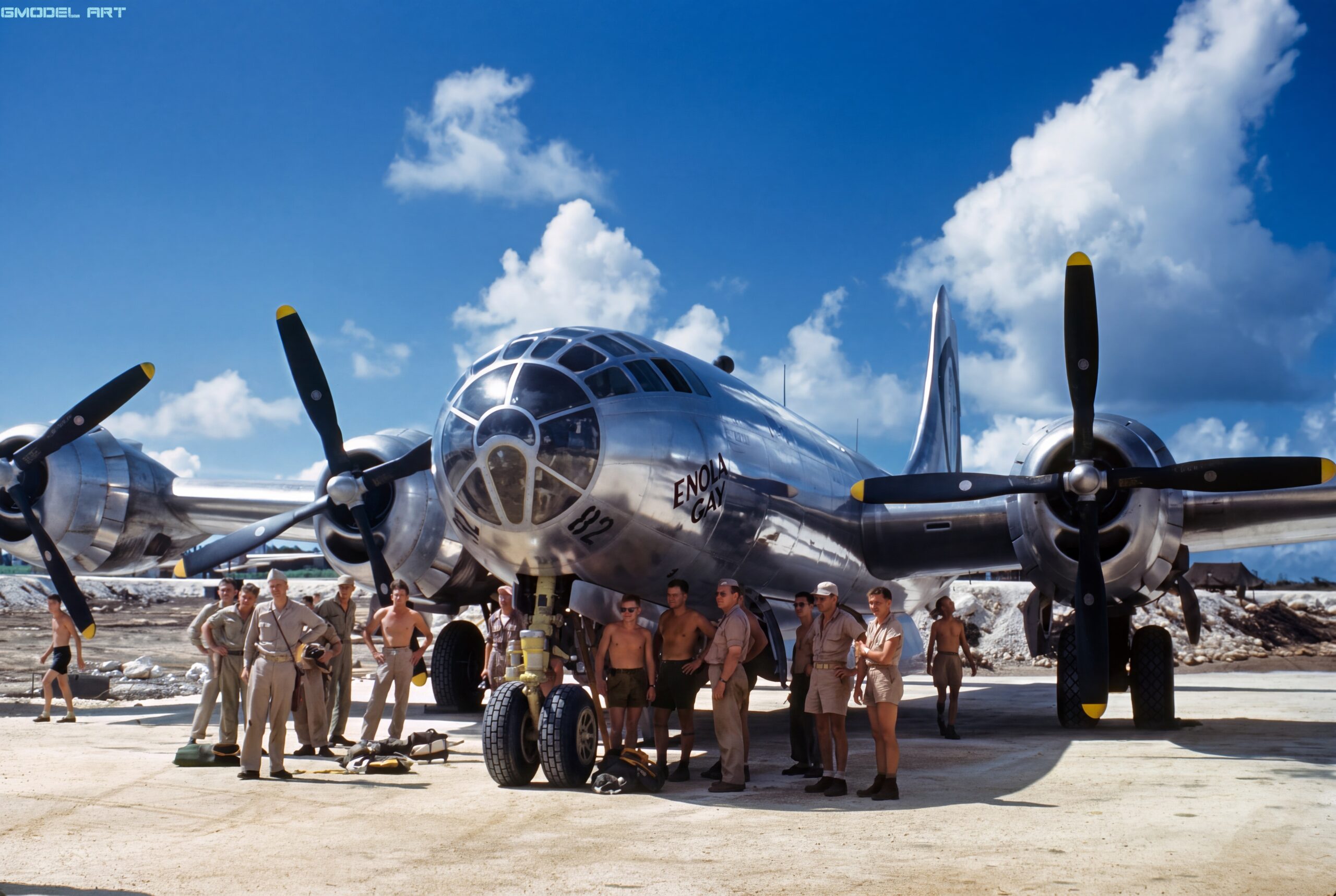
The Silverplate aircraft deserve separate treatment. The B-29s of the 509th Composite Group were specially modified to reduce weight and carry the atomic weapon. The Enola Gay and Bockscar operated from Tinian in this specialized configuration. (National Park Service)
What to Detail on a B-29 Model
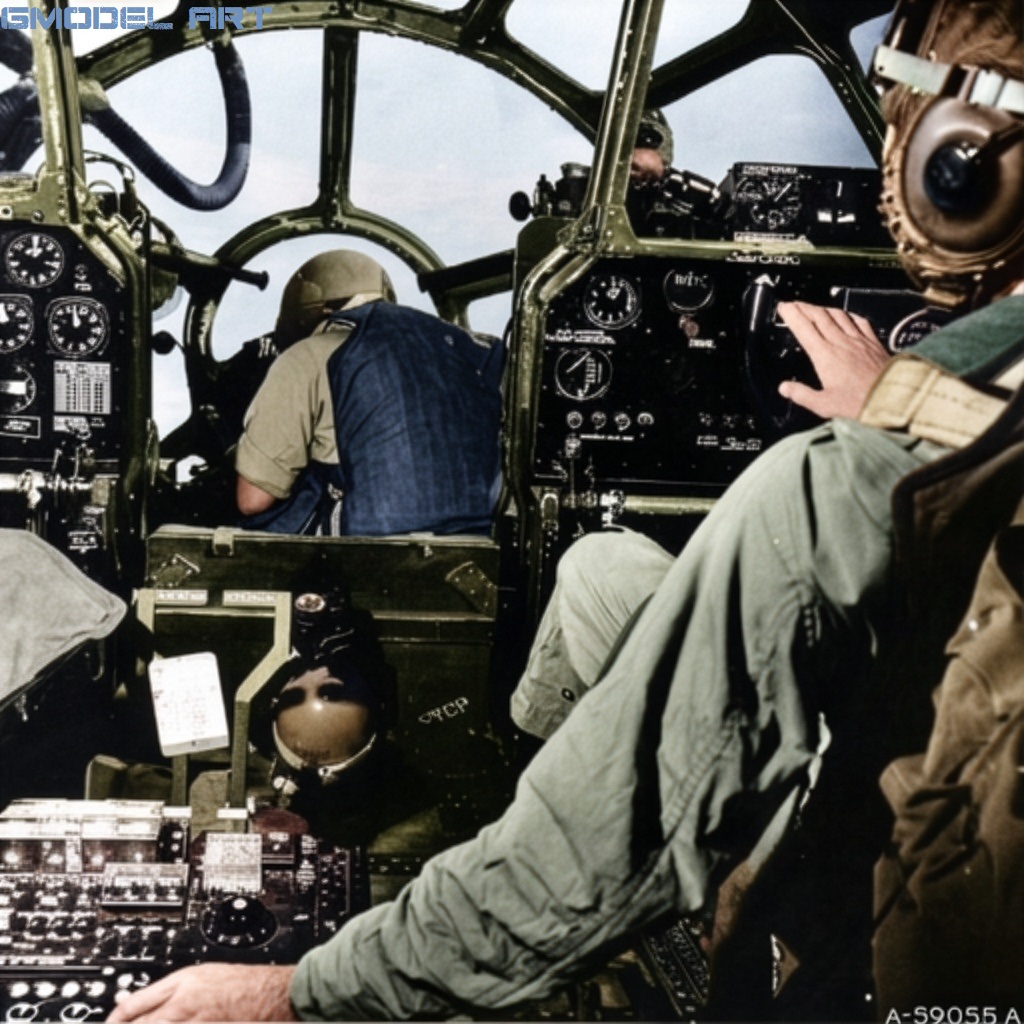
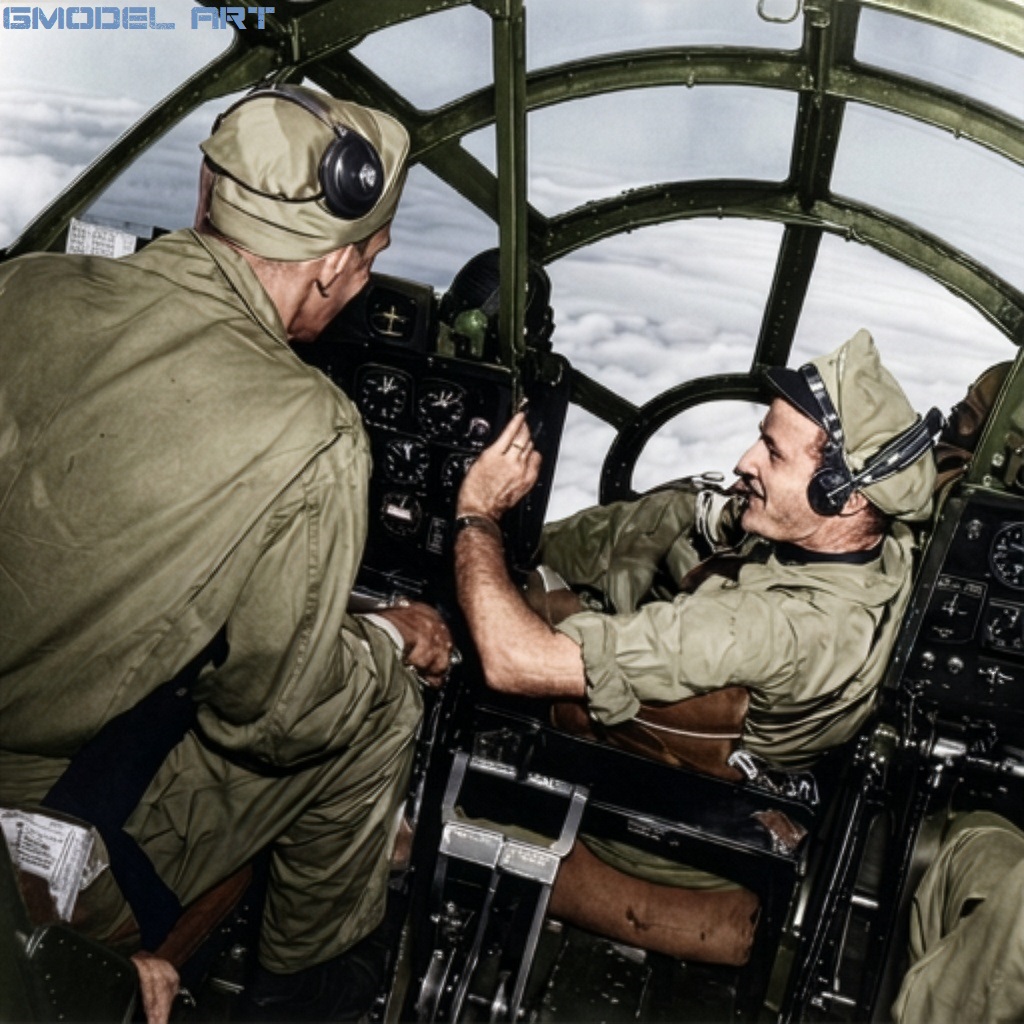
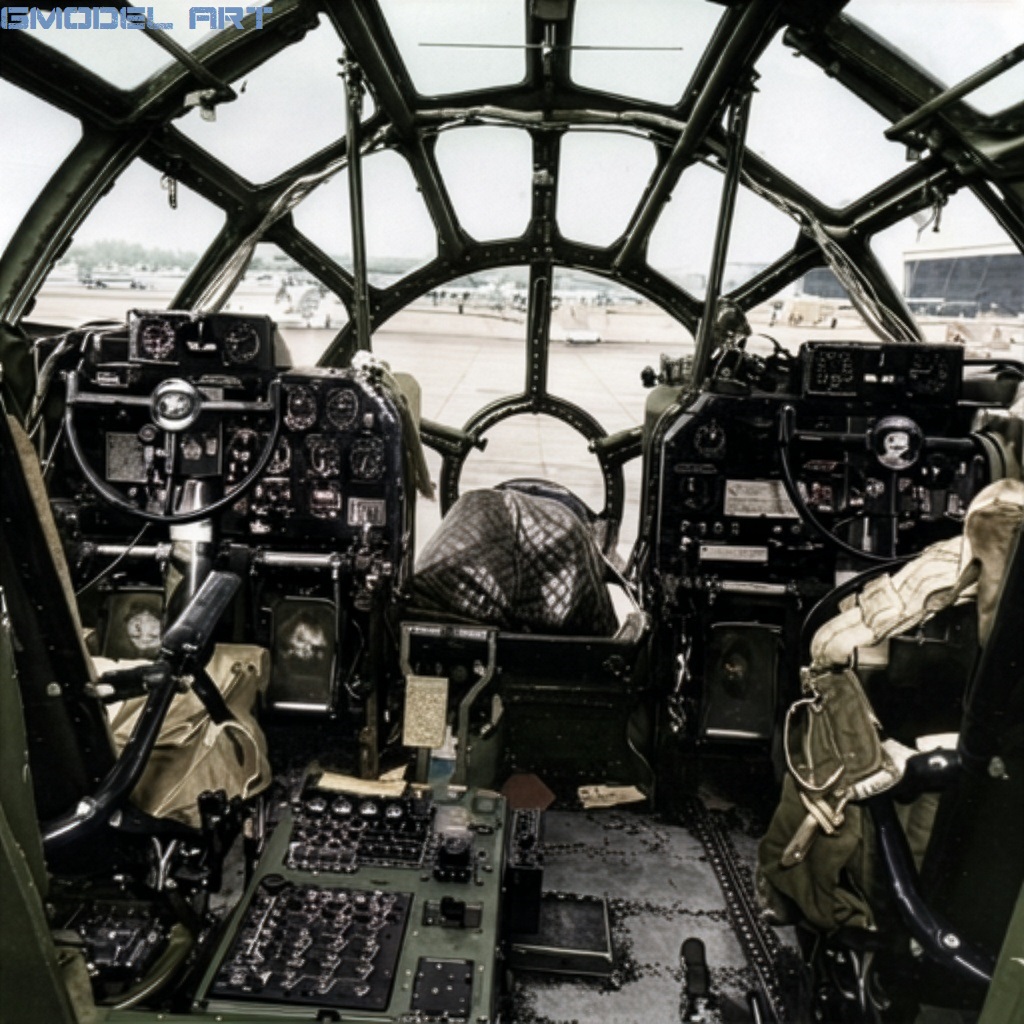
The B-29 is an excellent subject for super-detailing because so many areas can be left open and visible.
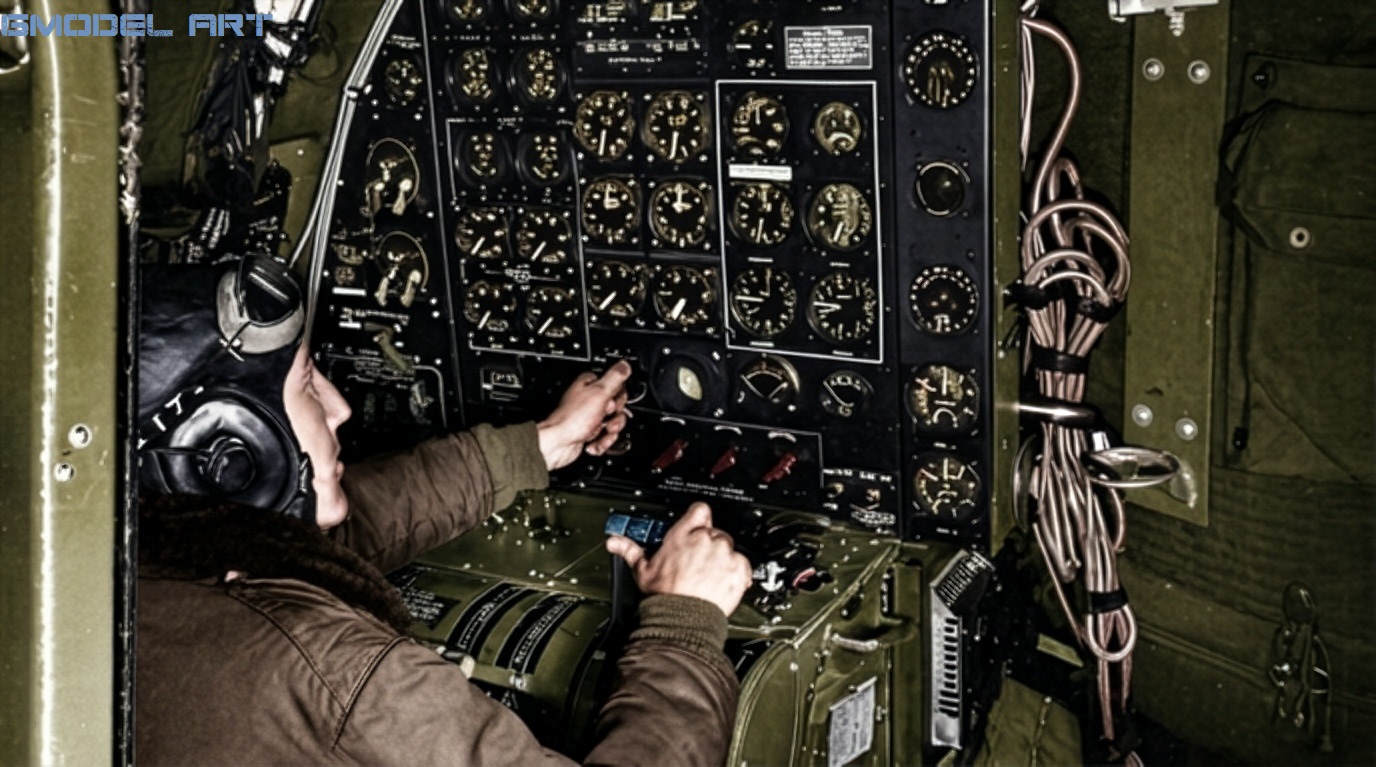
Cockpit:
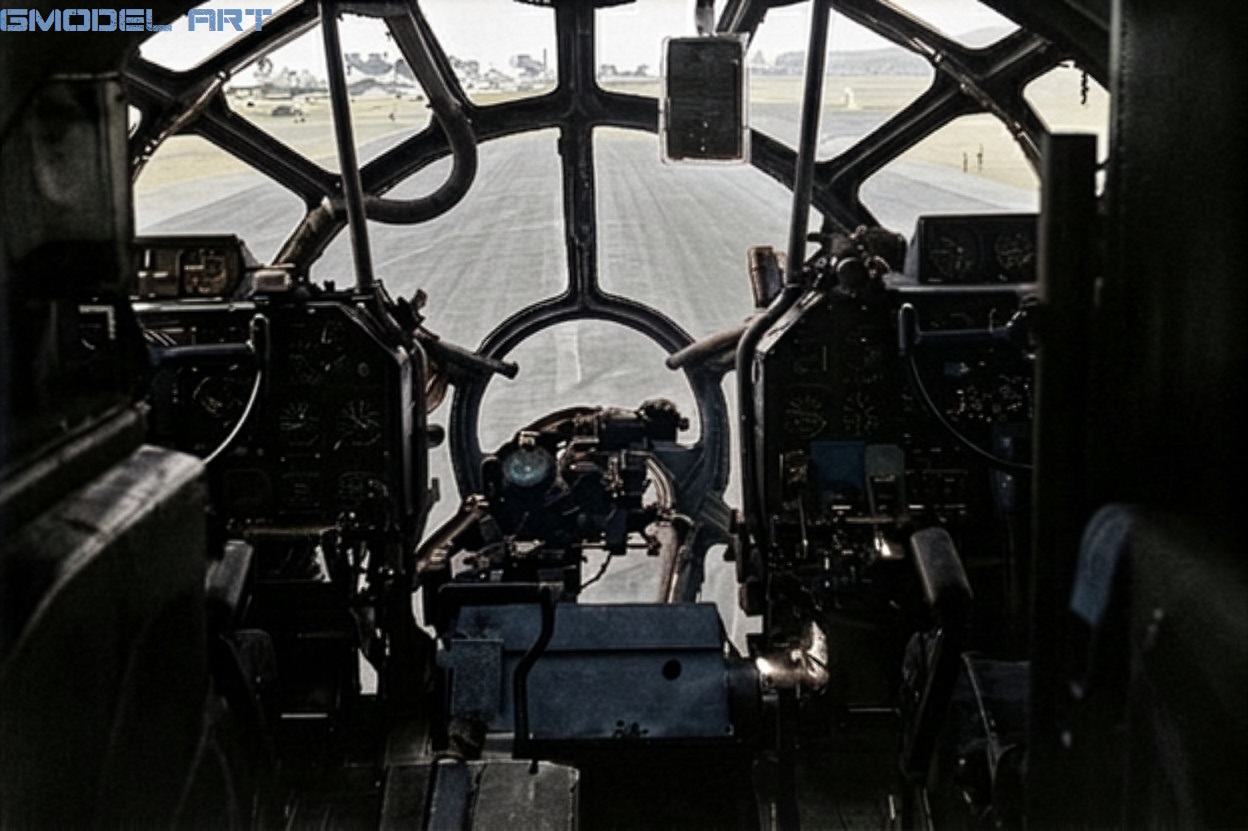
Instrument panels, seats, controls, framing, wiring, and crew equipment.
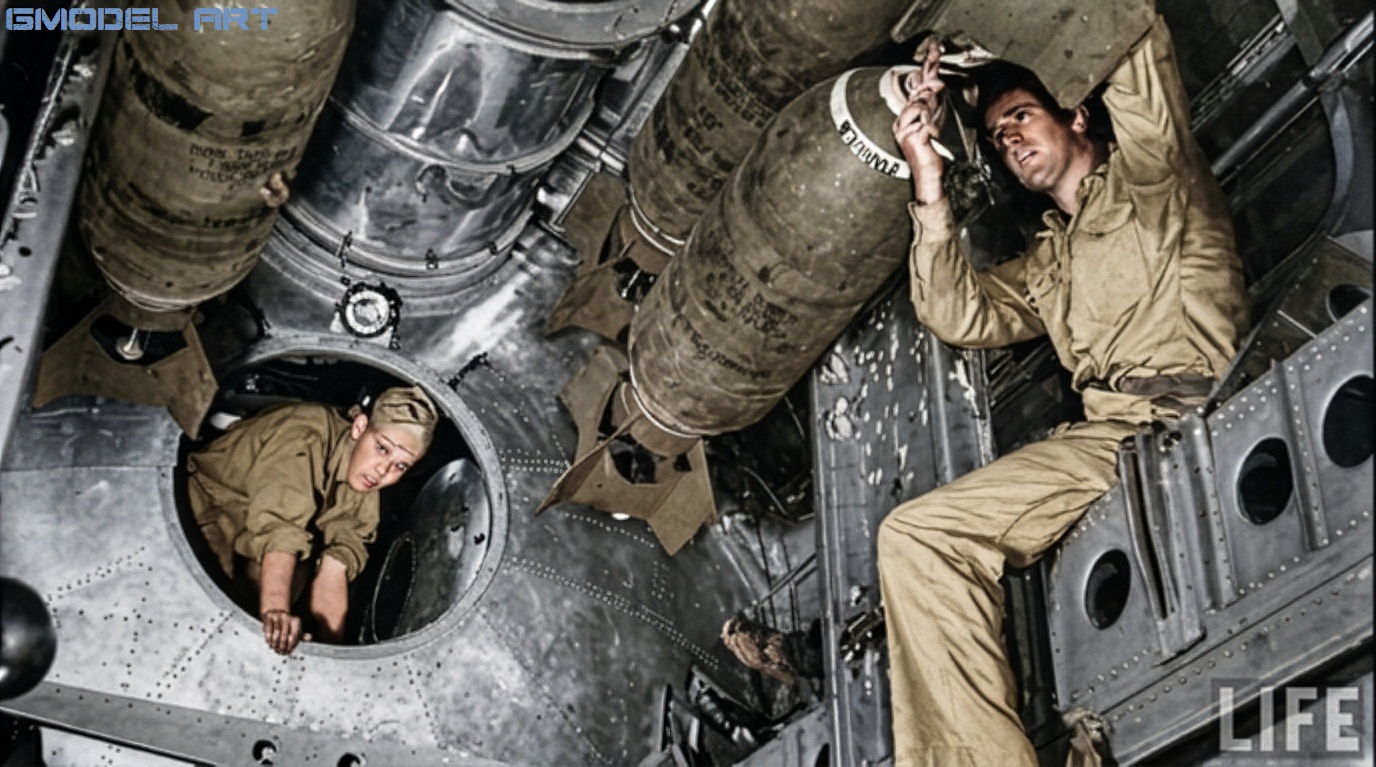
Bomb Bays:
Bomb racks, structural members, doors, hydraulic components, and bomb loads.
Engines:
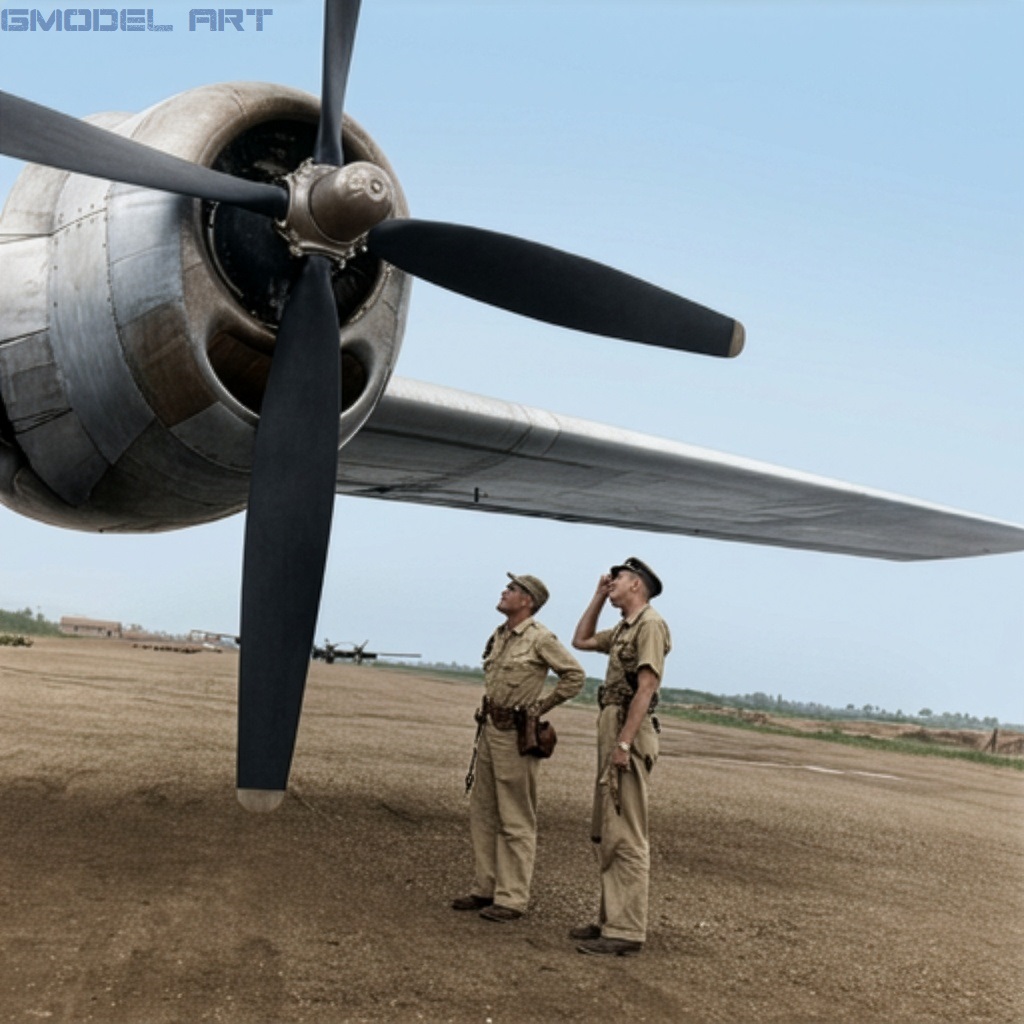
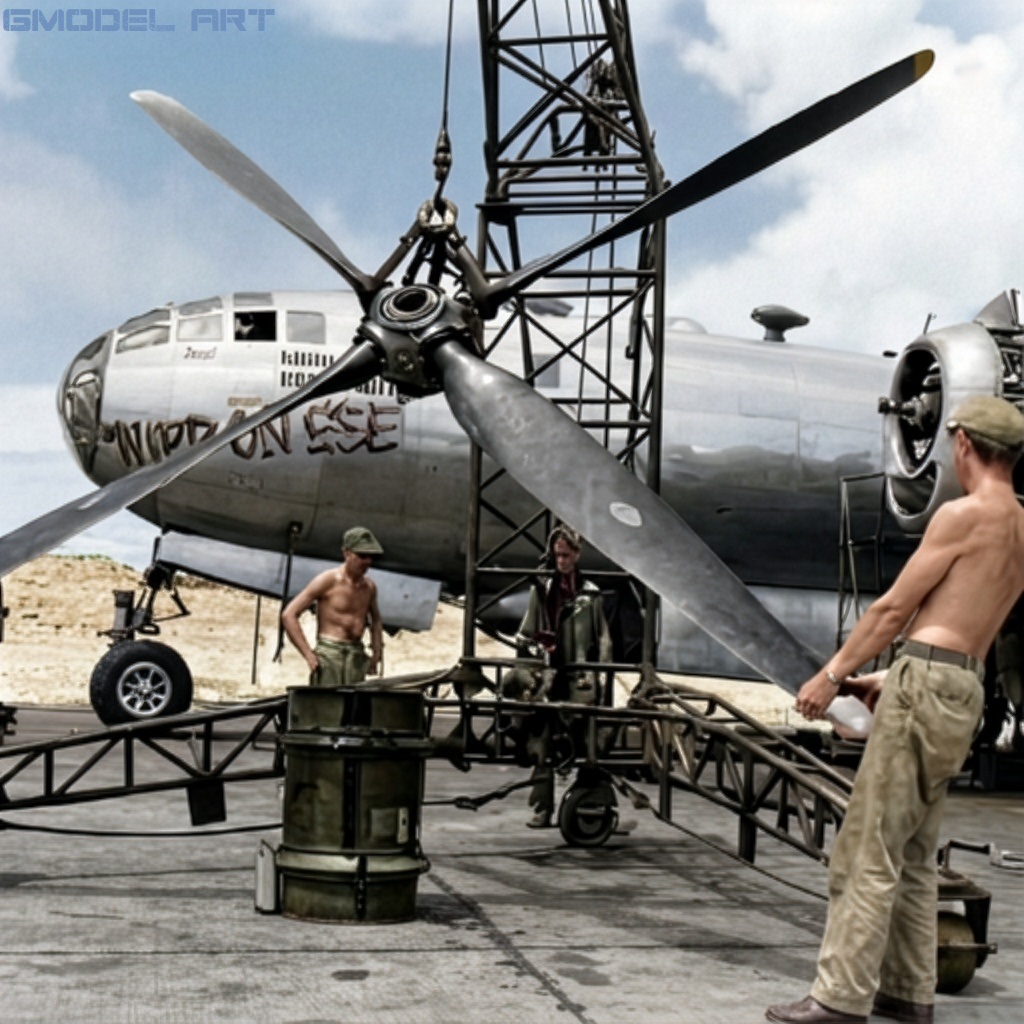
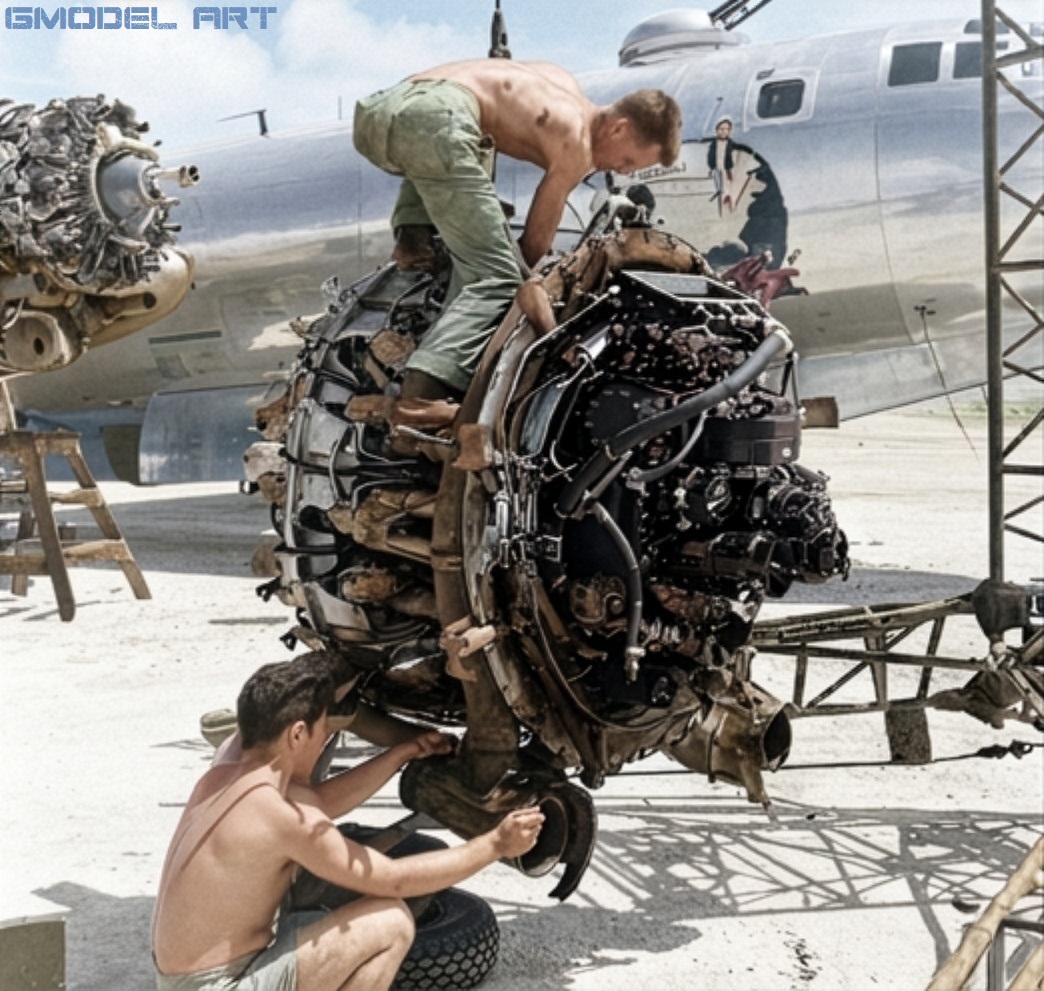
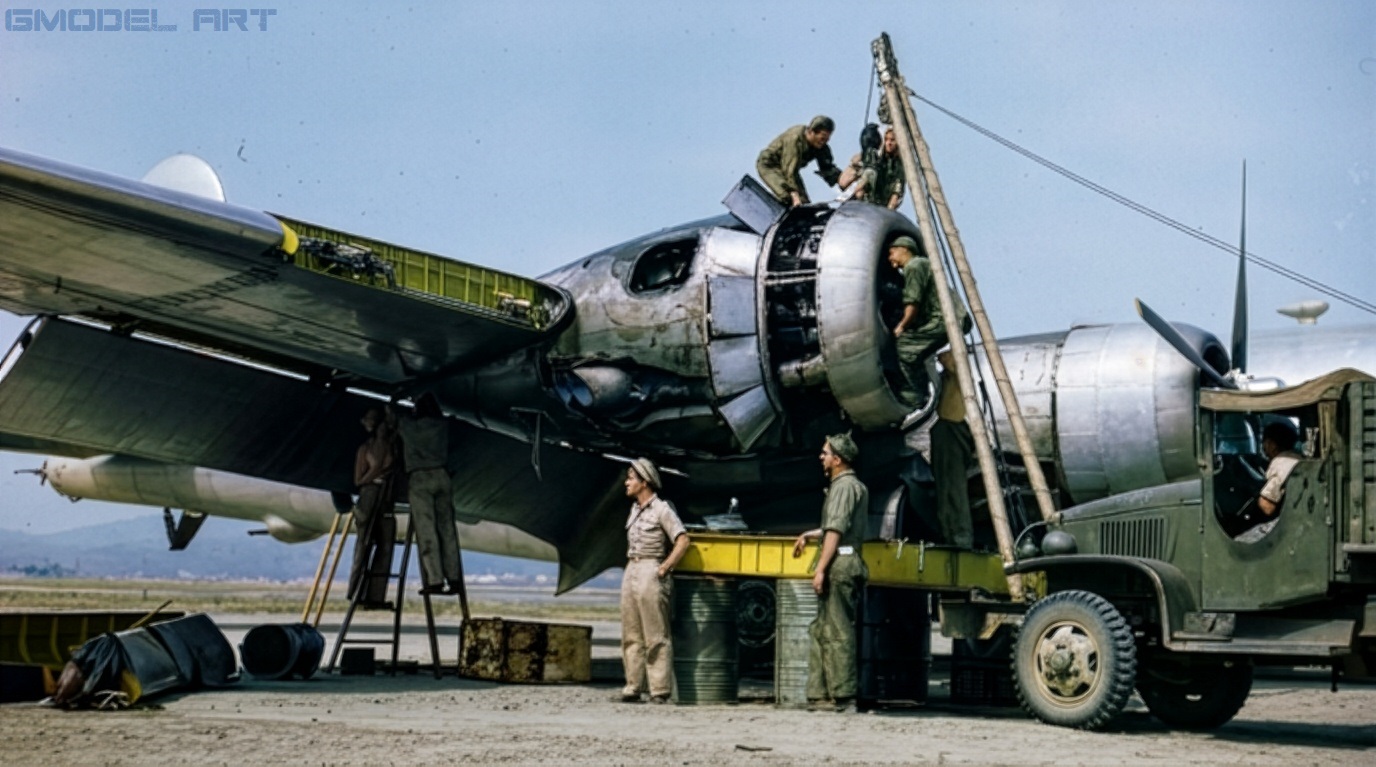
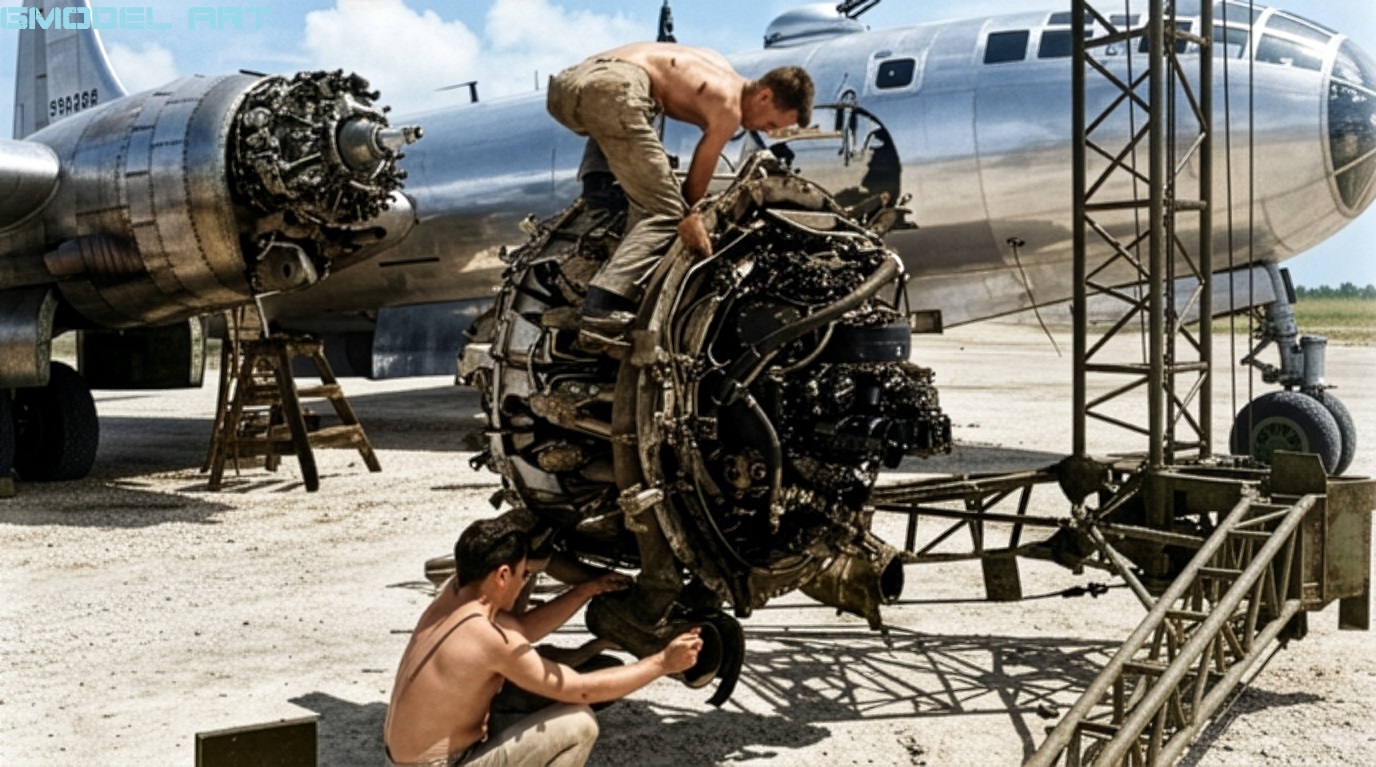
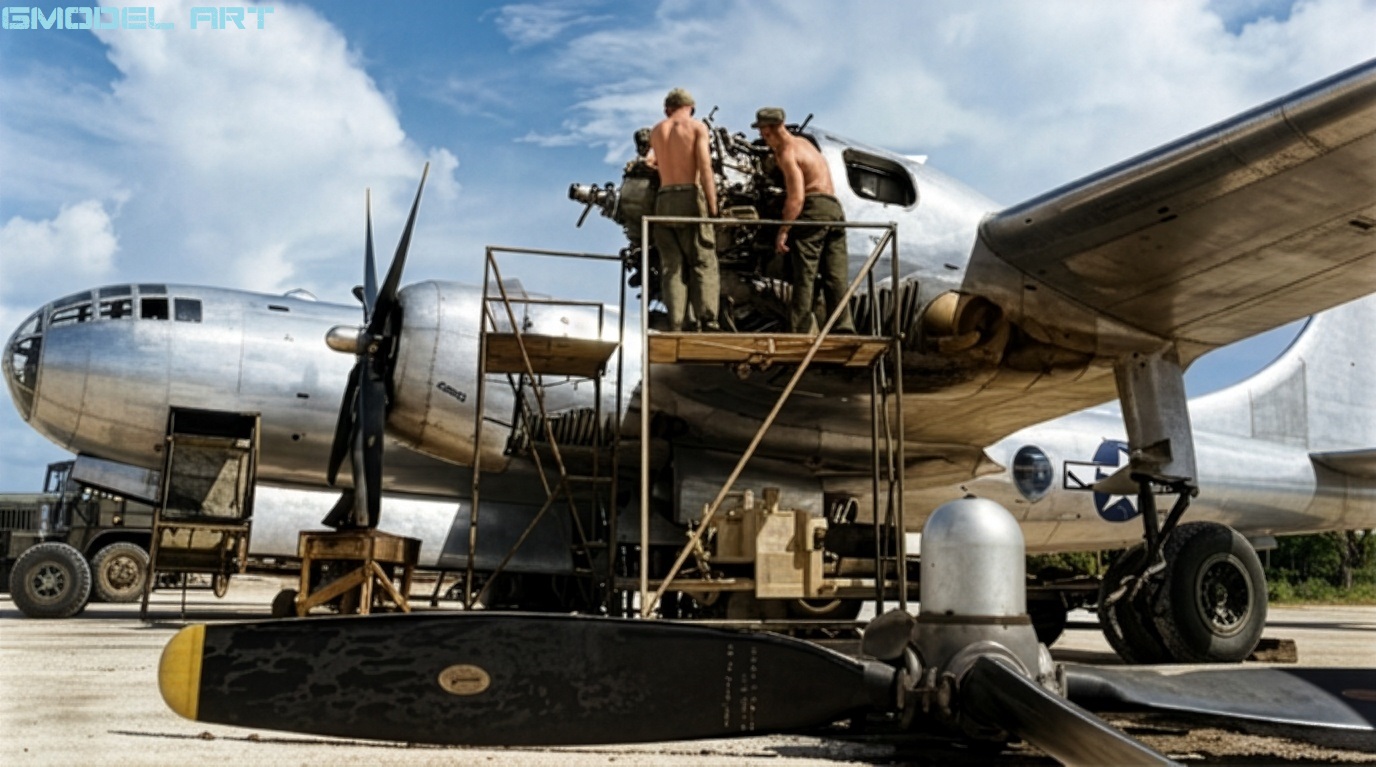
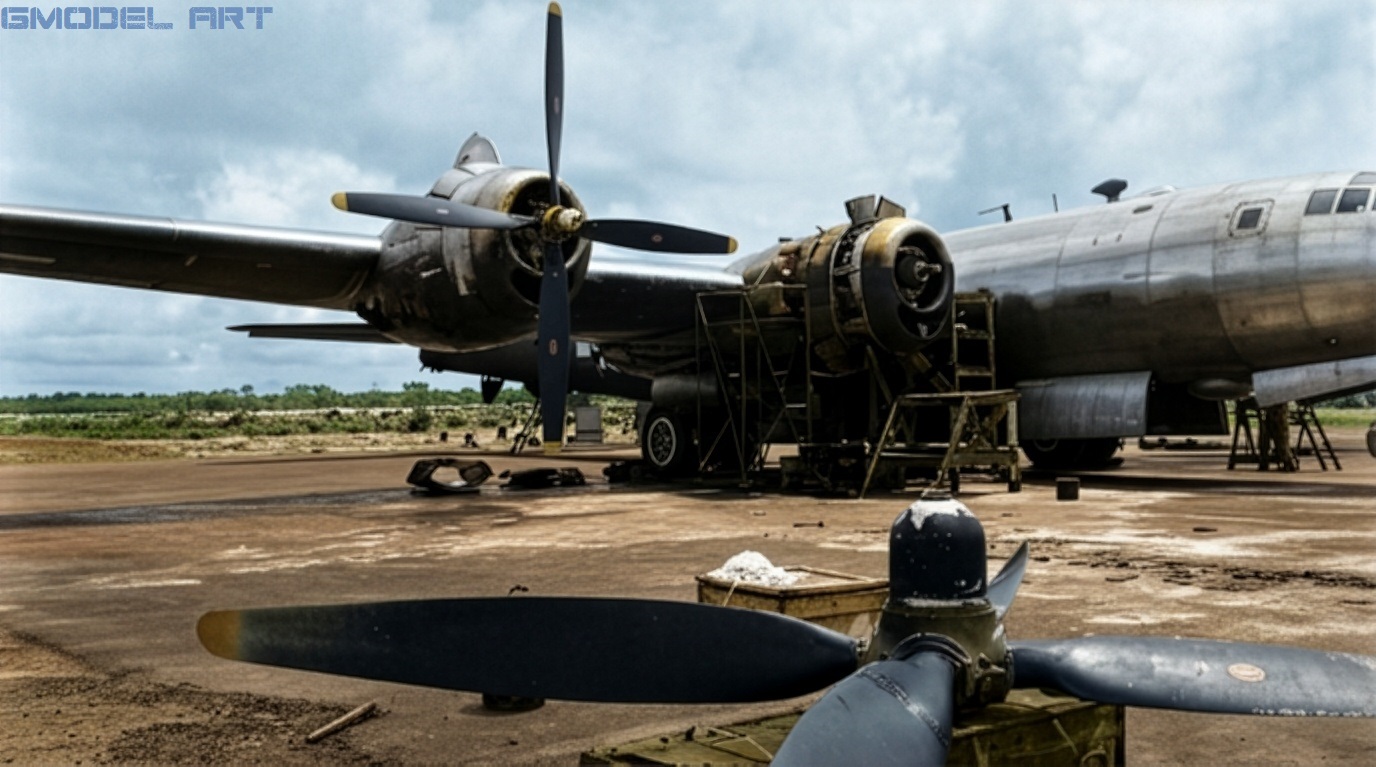
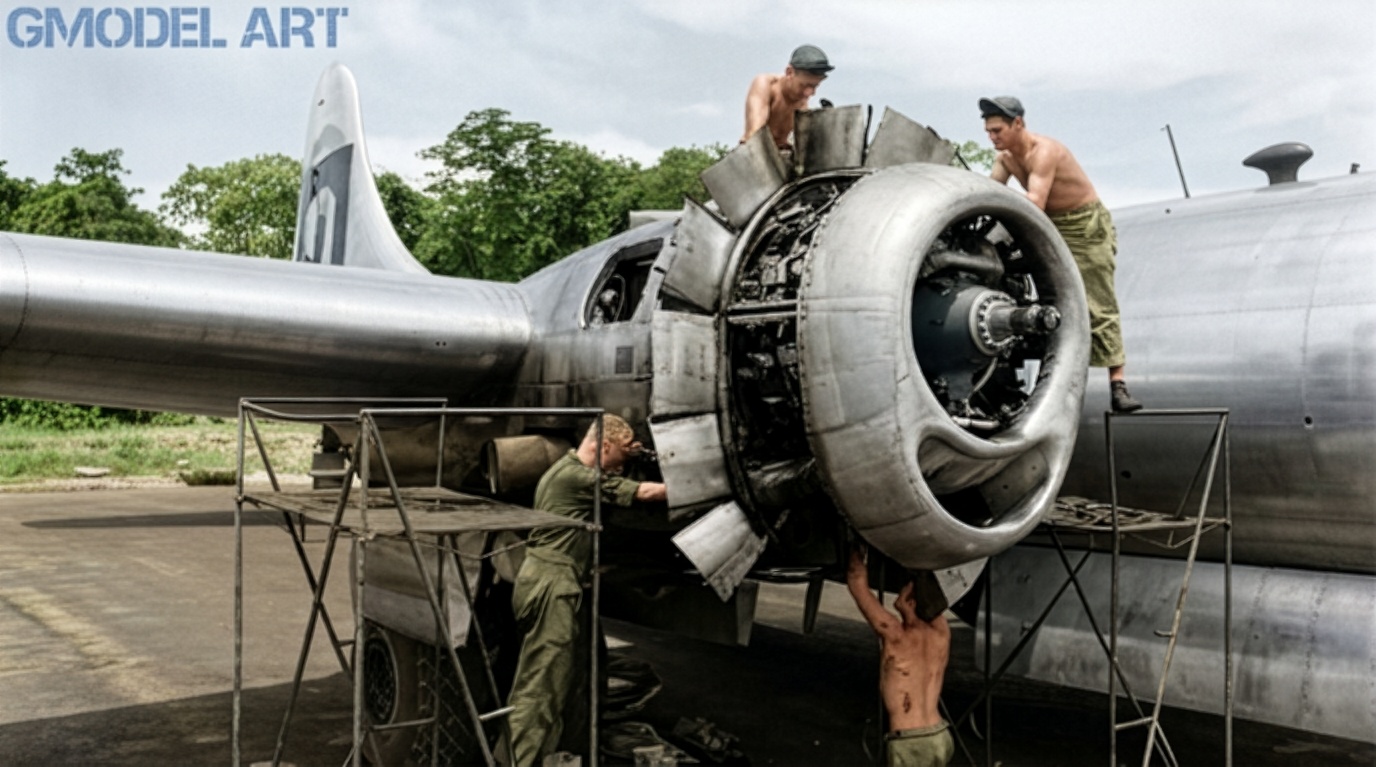
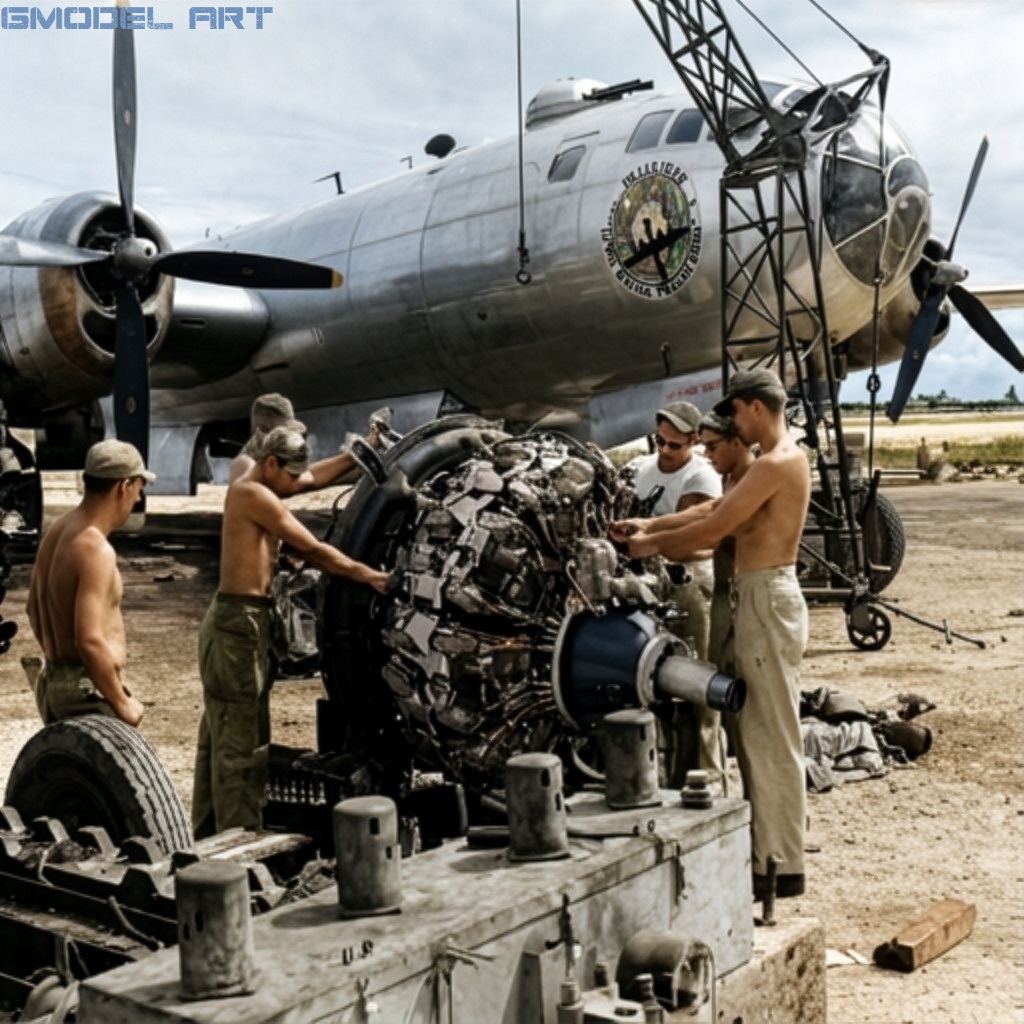
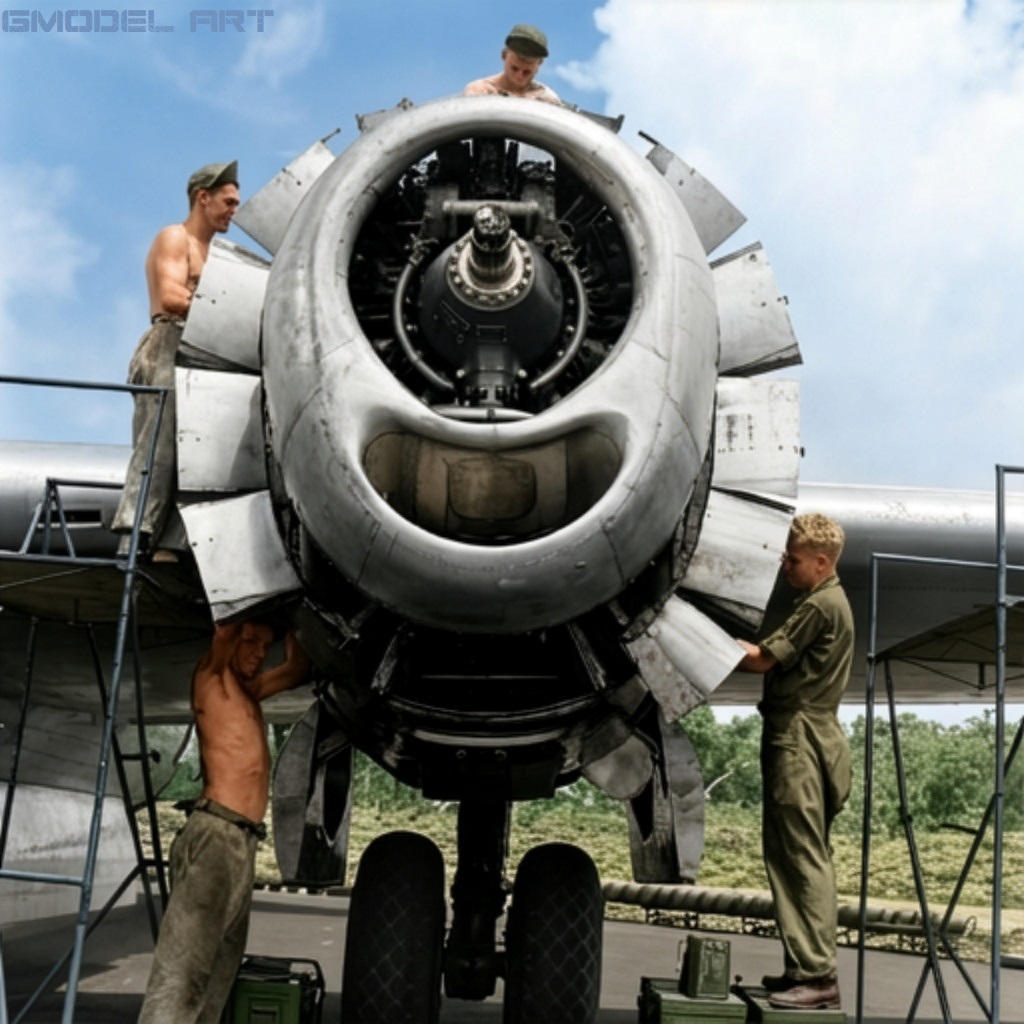
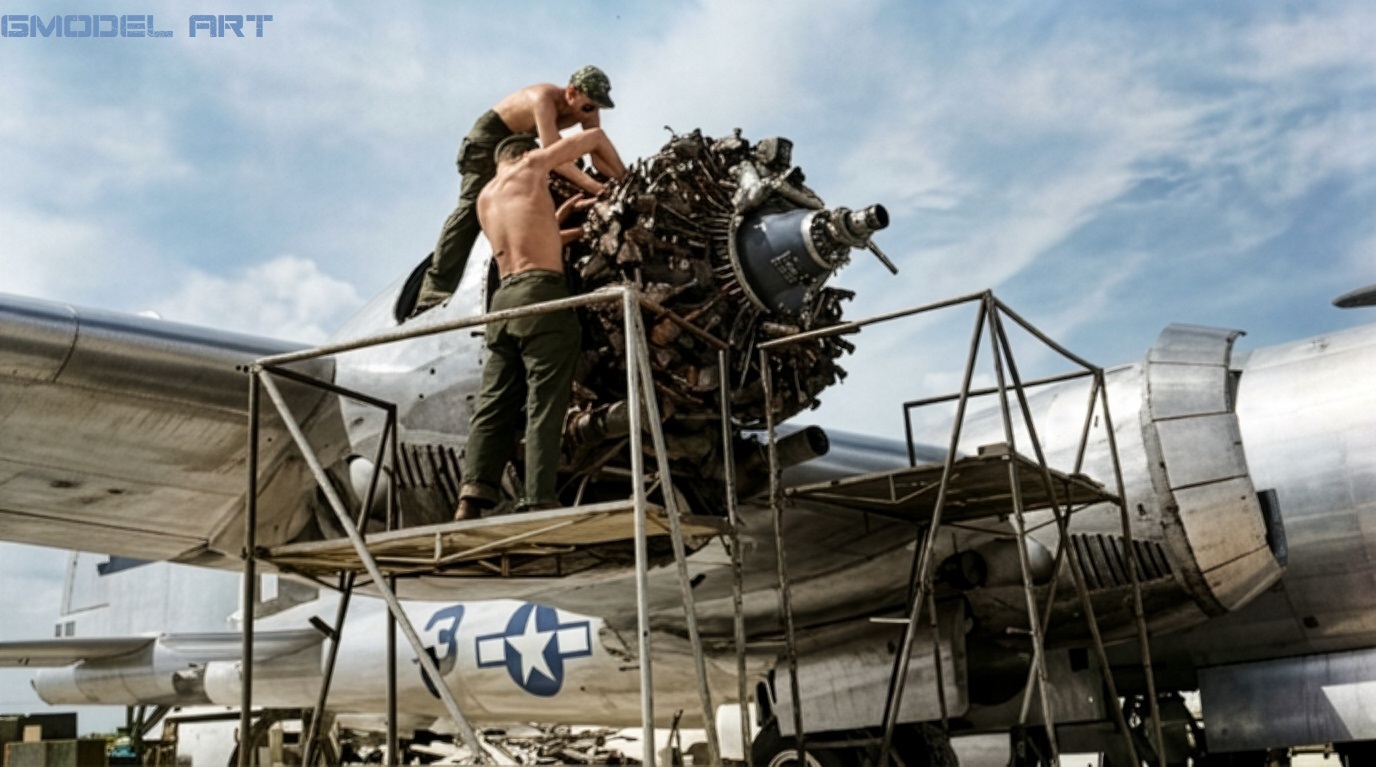
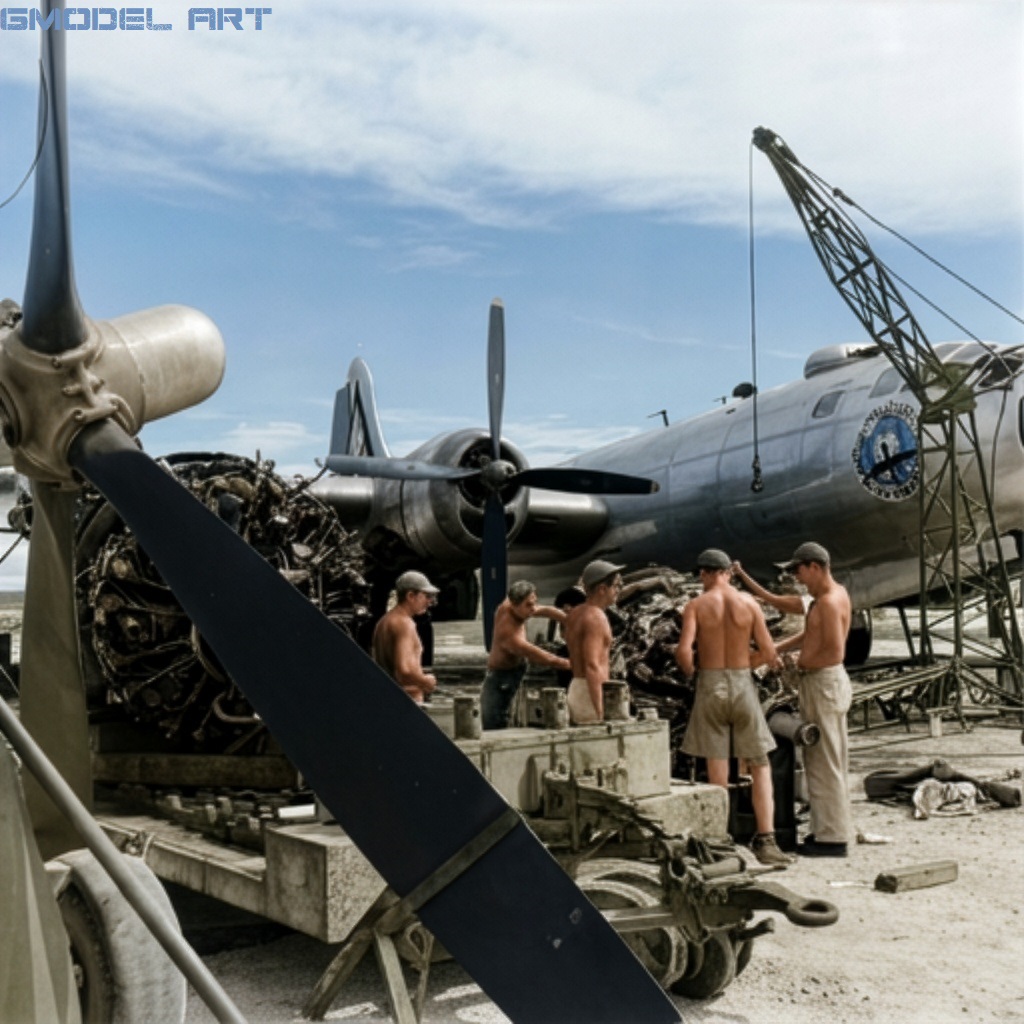
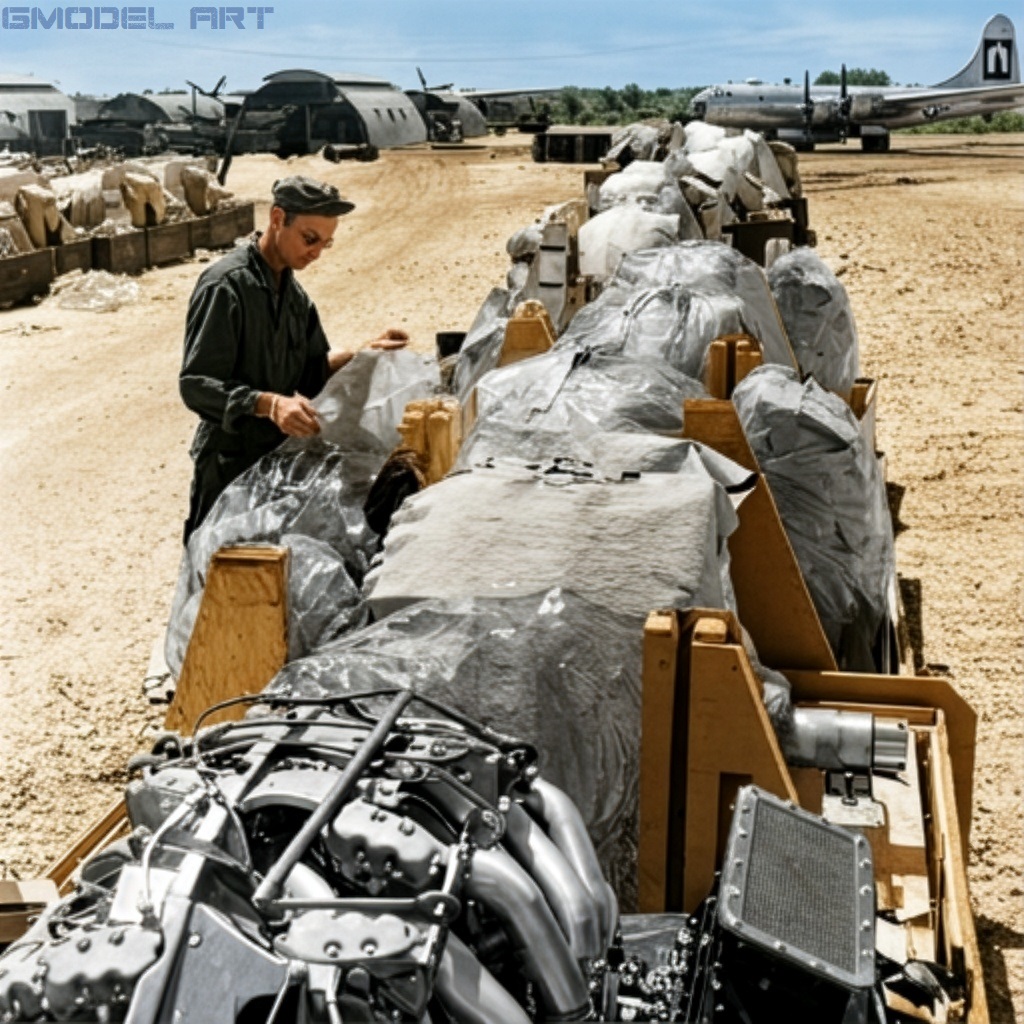
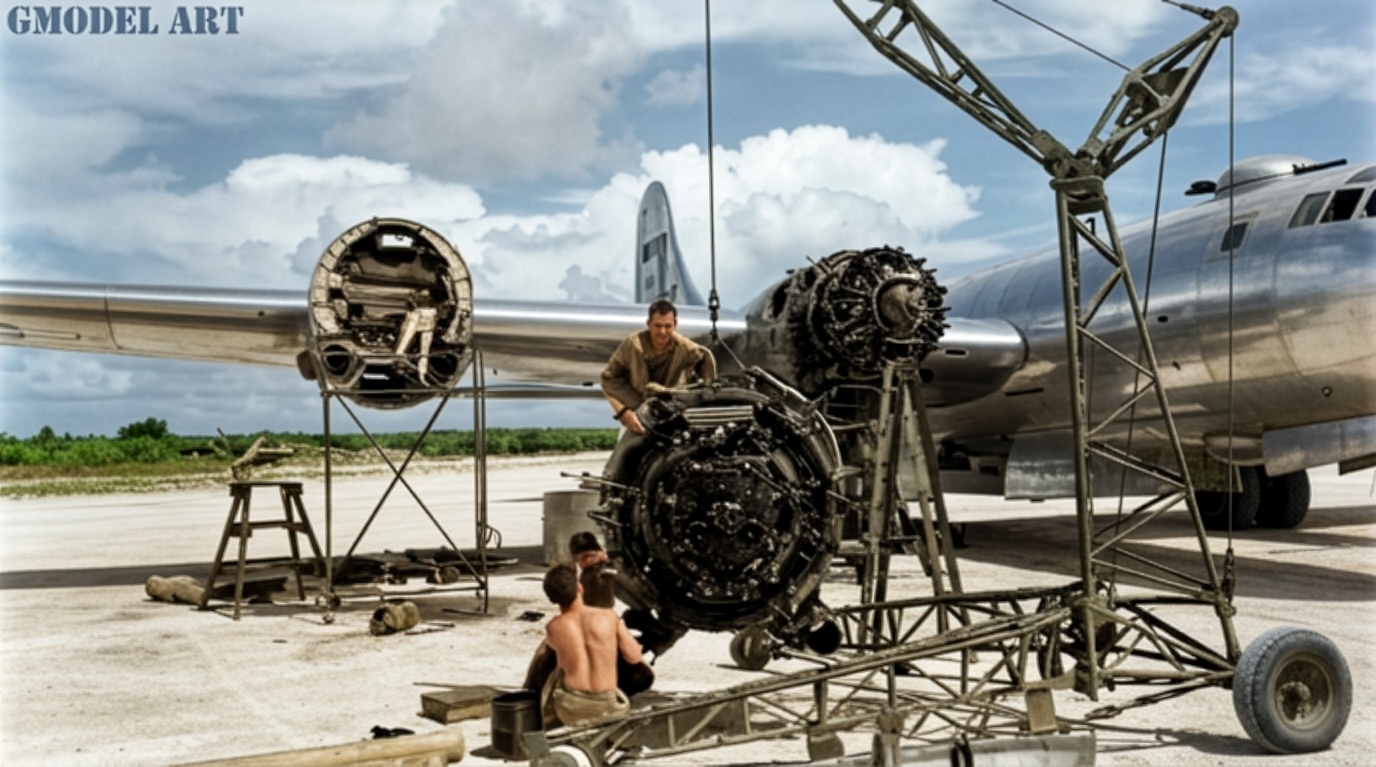
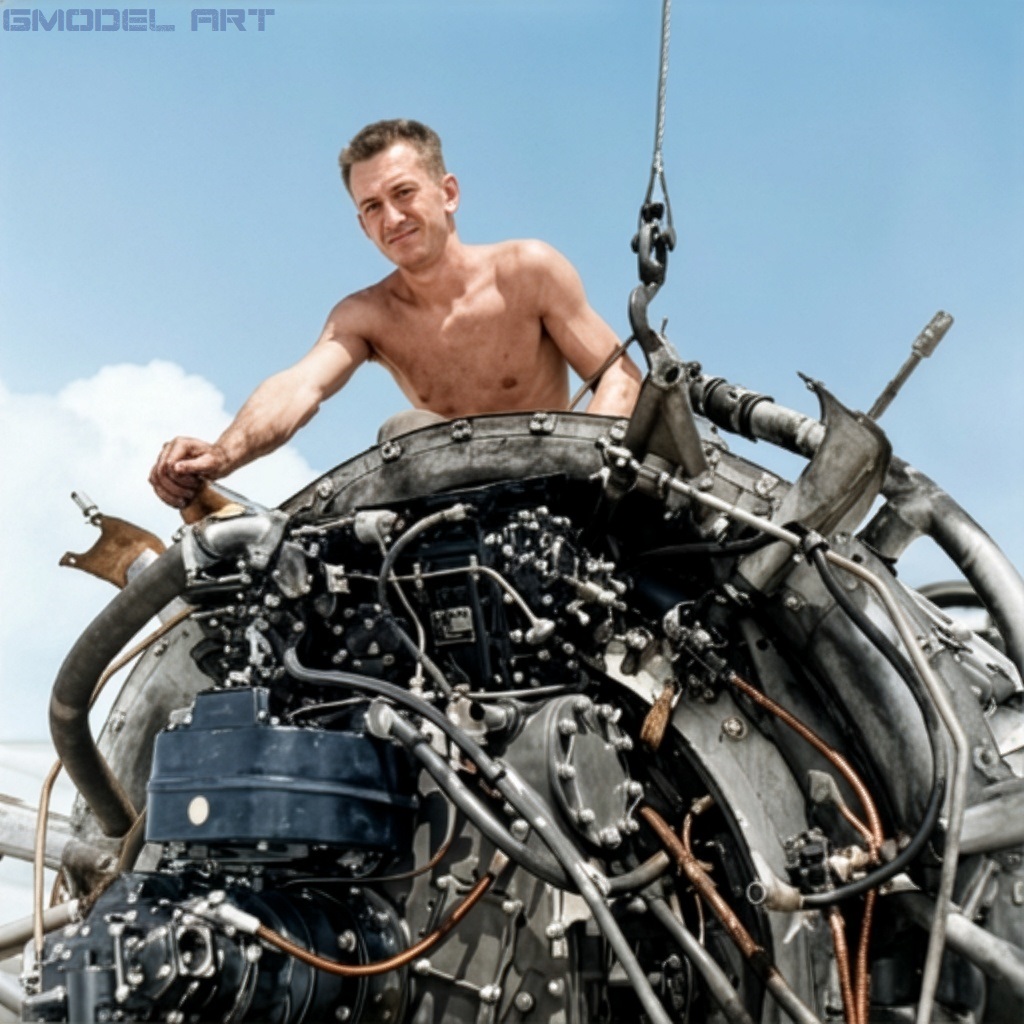
The four Wright R-3350 Duplex-Cyclone engines offer enormous detailing potential, particularly around the cylinder banks, ignition wiring, exhausts, and cowl flaps.
Gun Turrets:
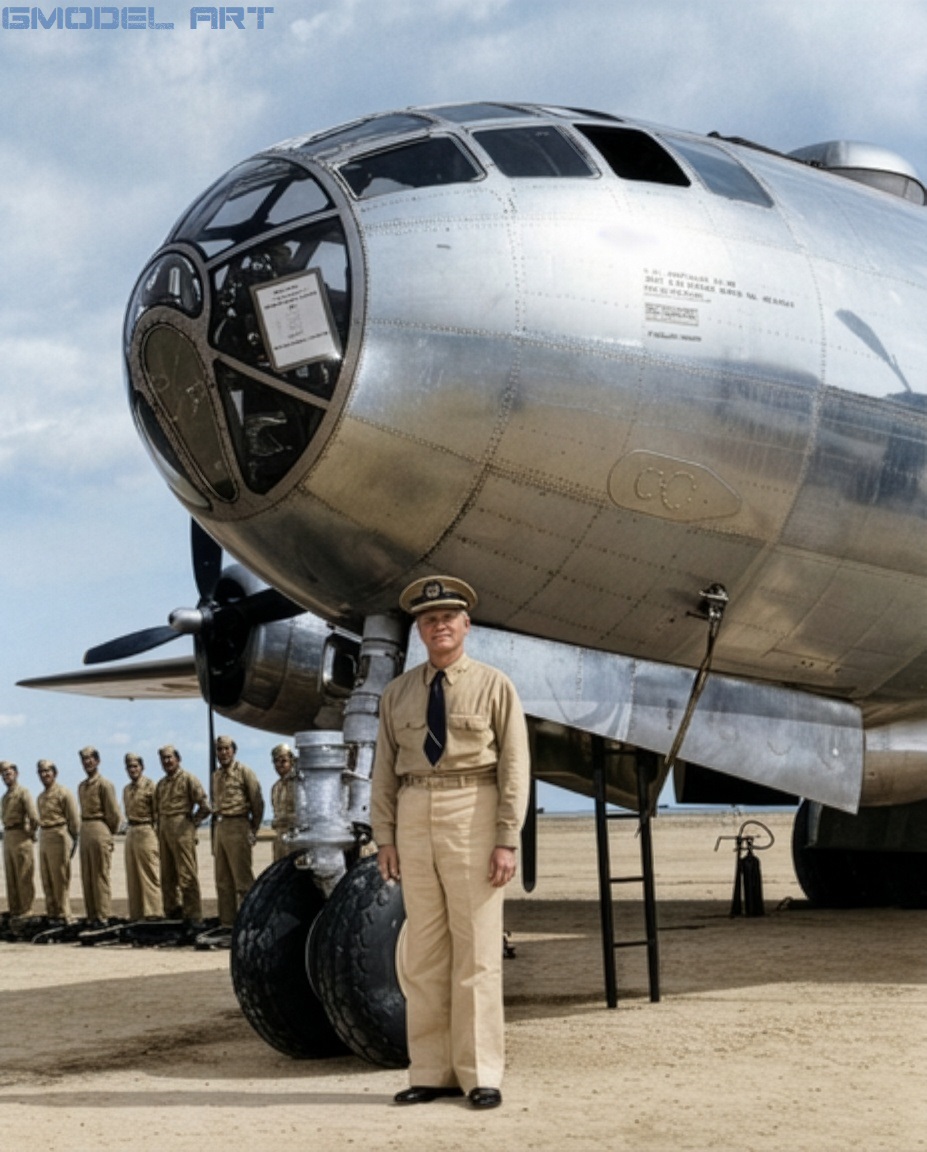
The transparent domes and mechanisms of the remotely controlled turrets are among the most recognizable features of the B-29.
Landing Gear:
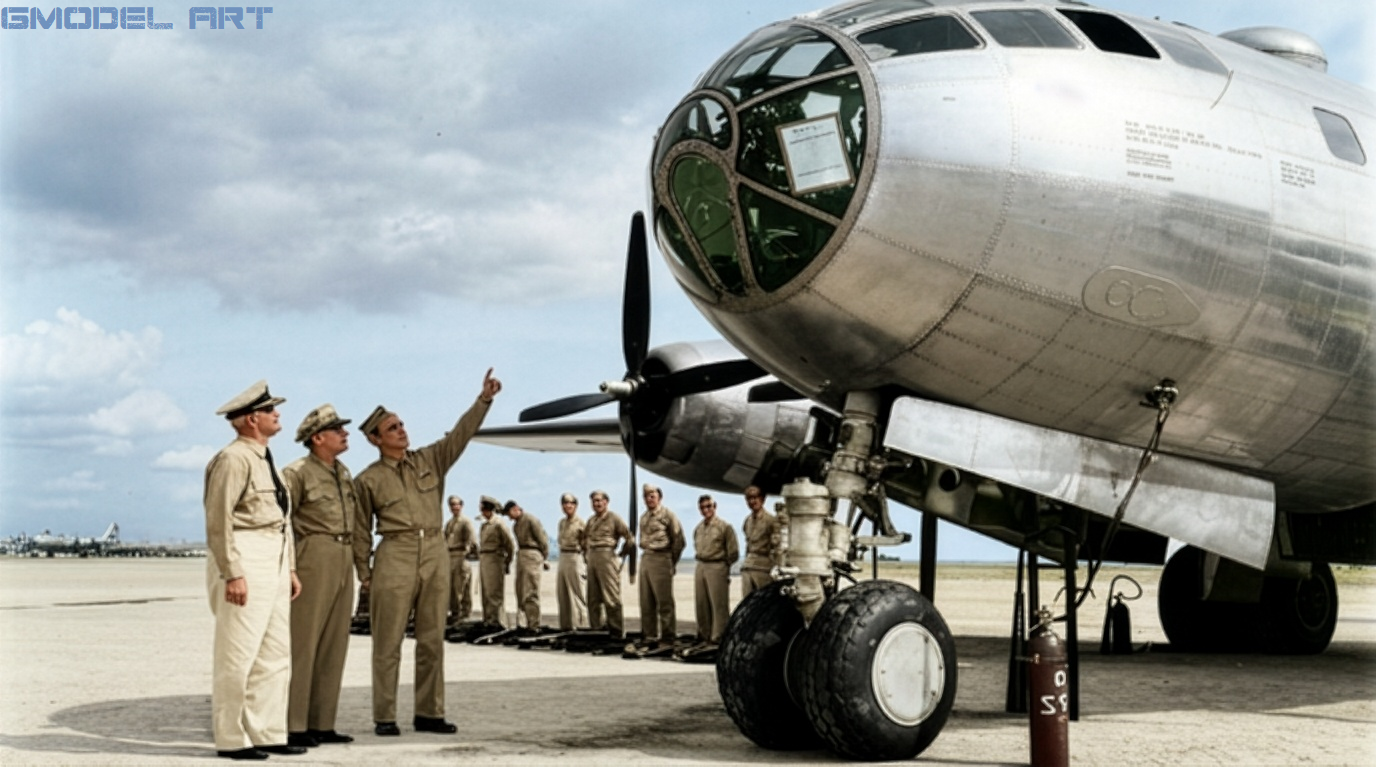
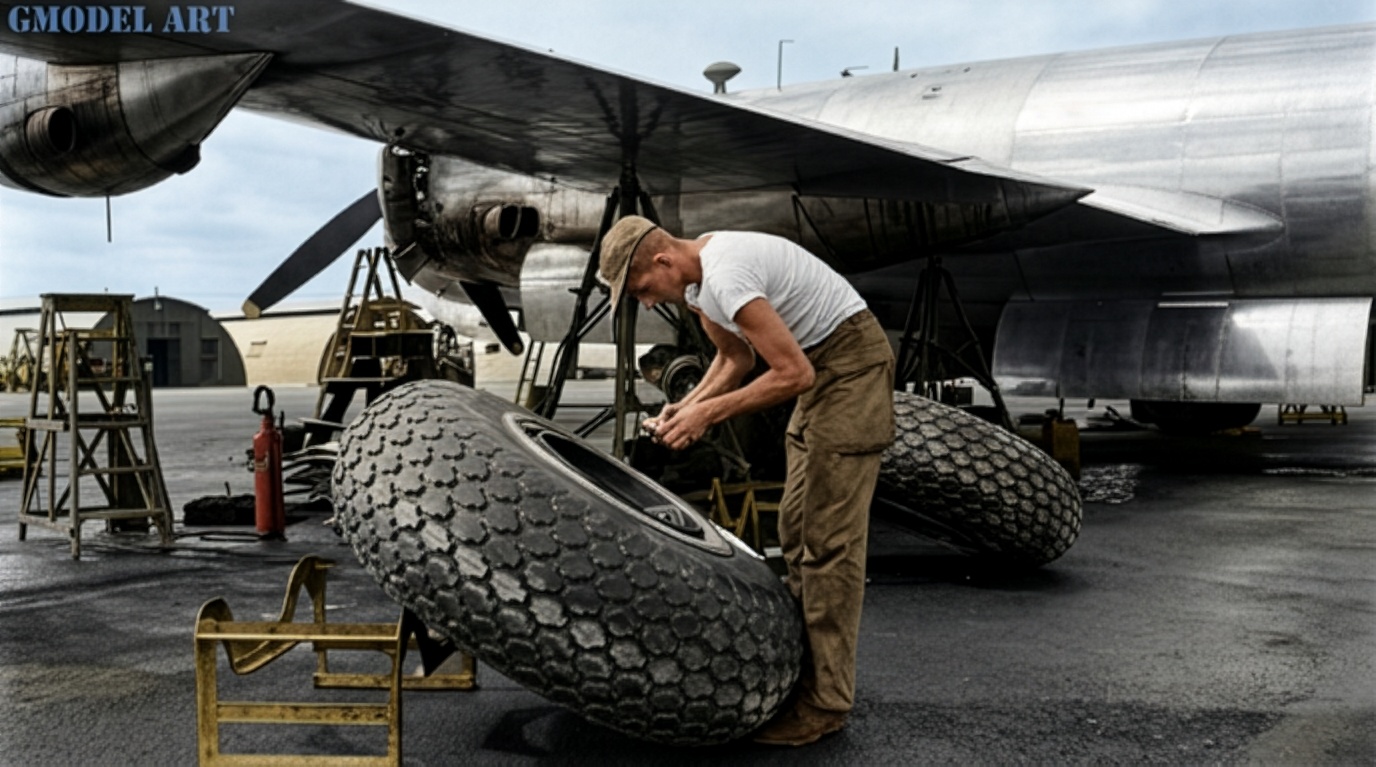
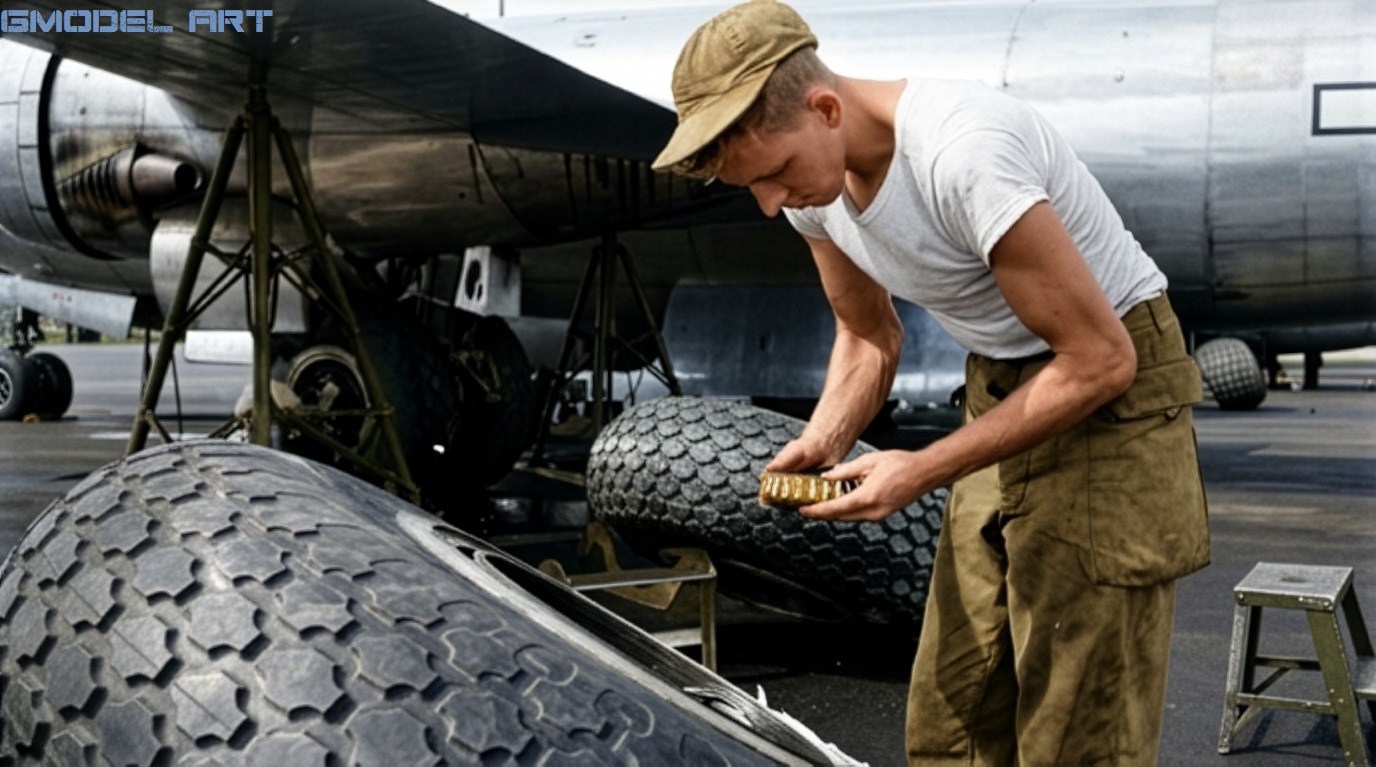
The complex landing gear assemblies deserve particular attention on a large-scale model.
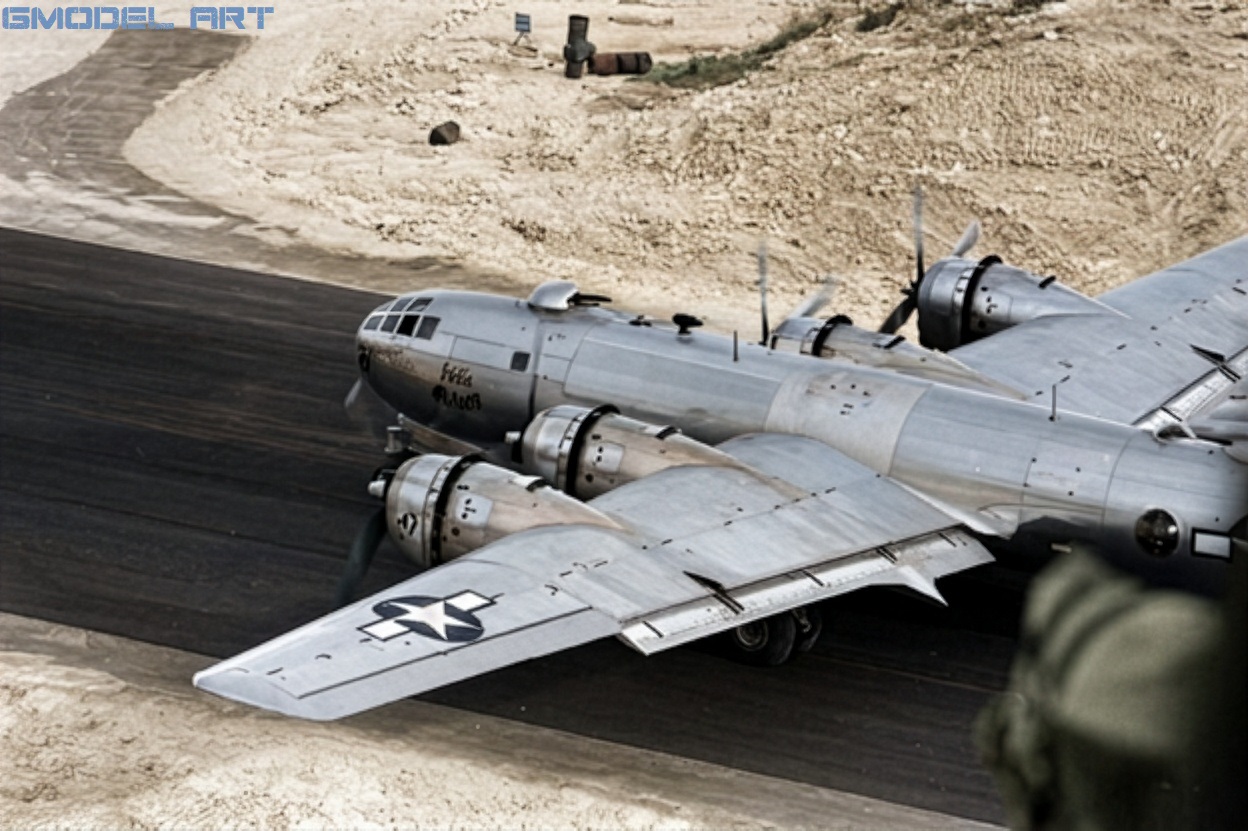
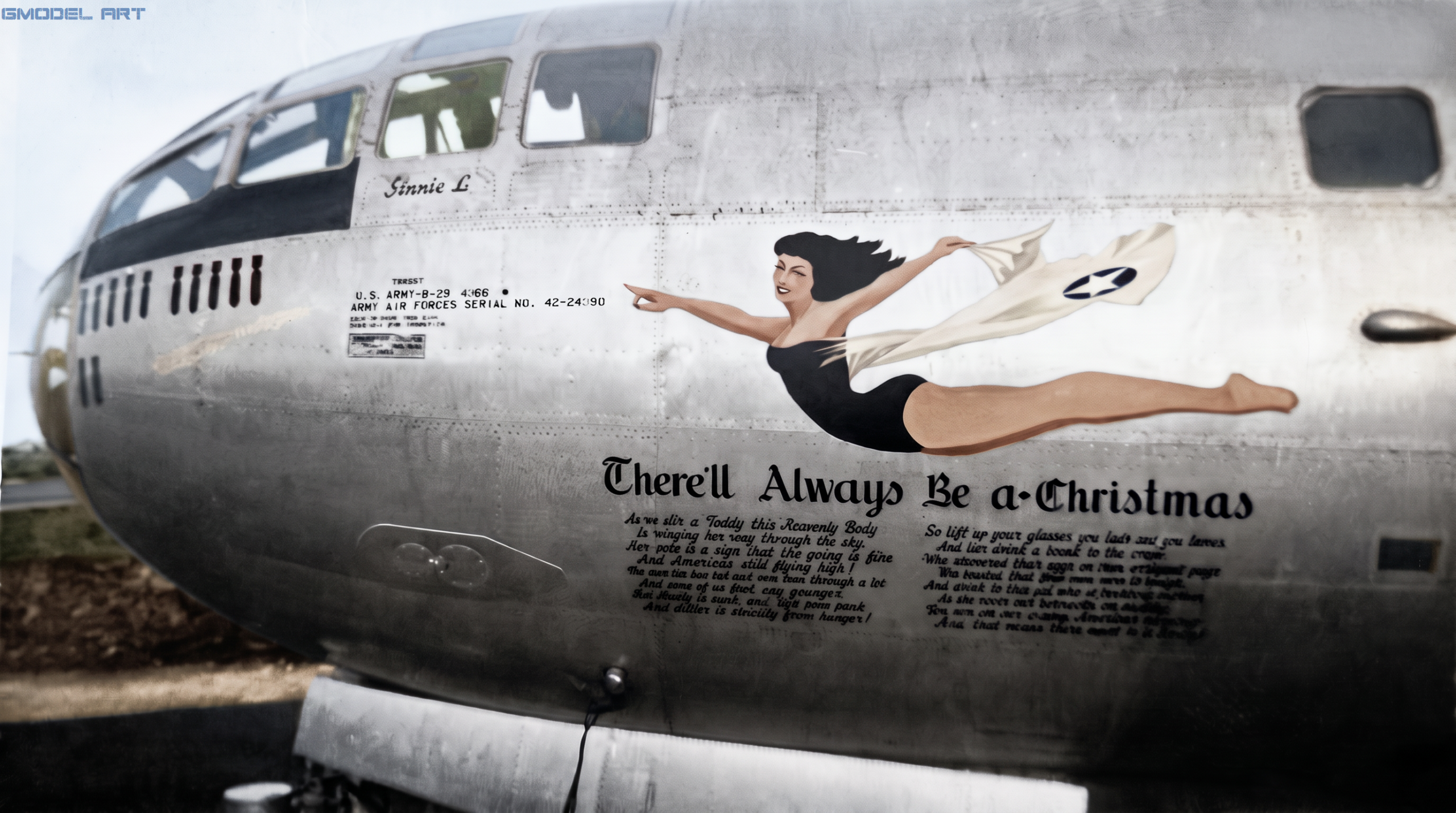
Natural Metal Finish – The B-29 Is Not Simply “Silver”
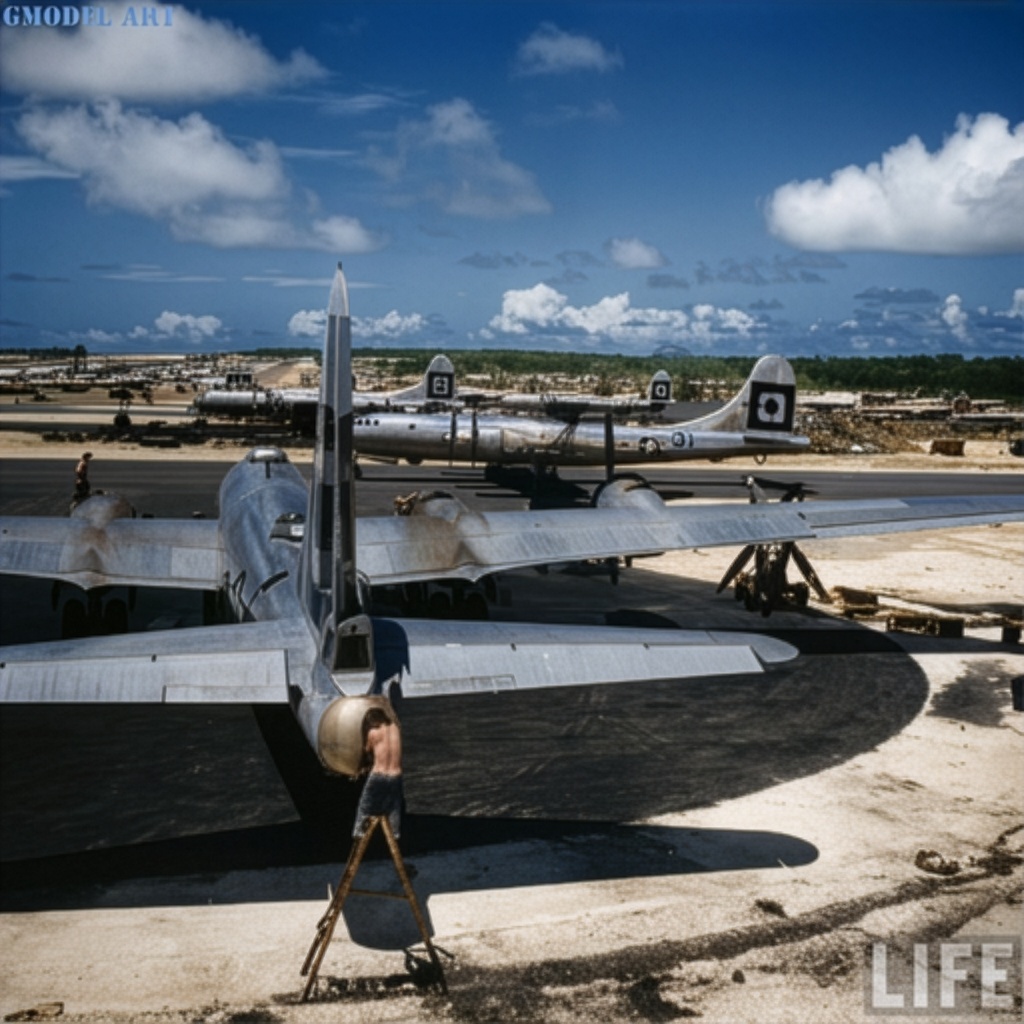
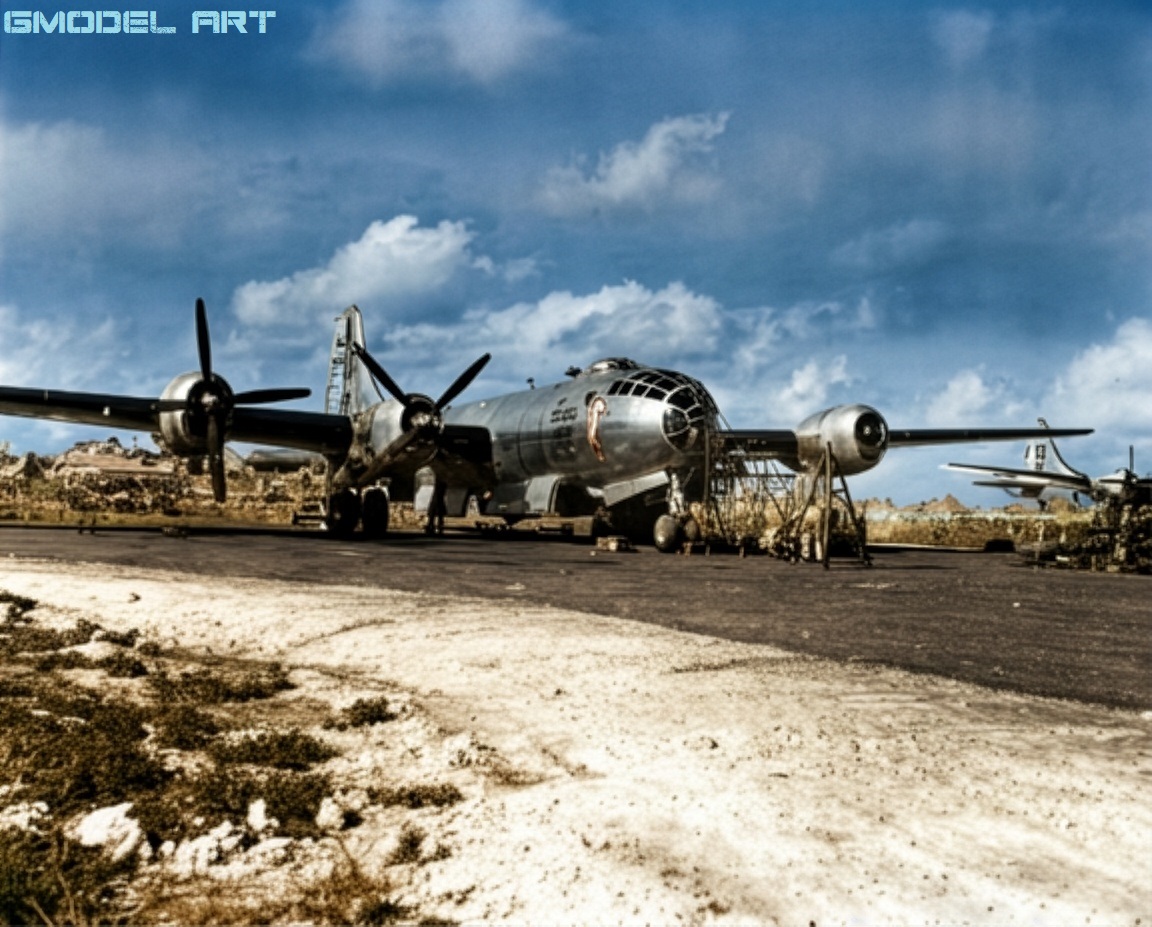
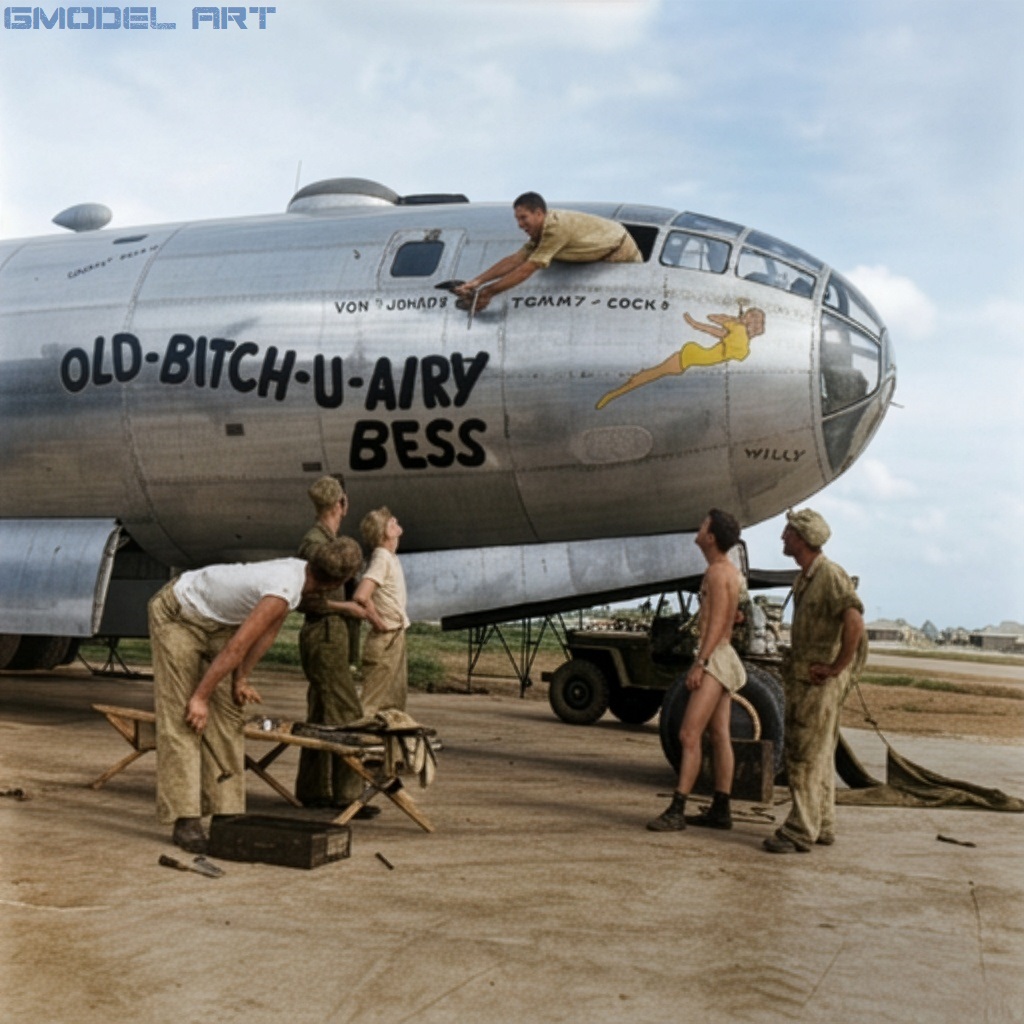
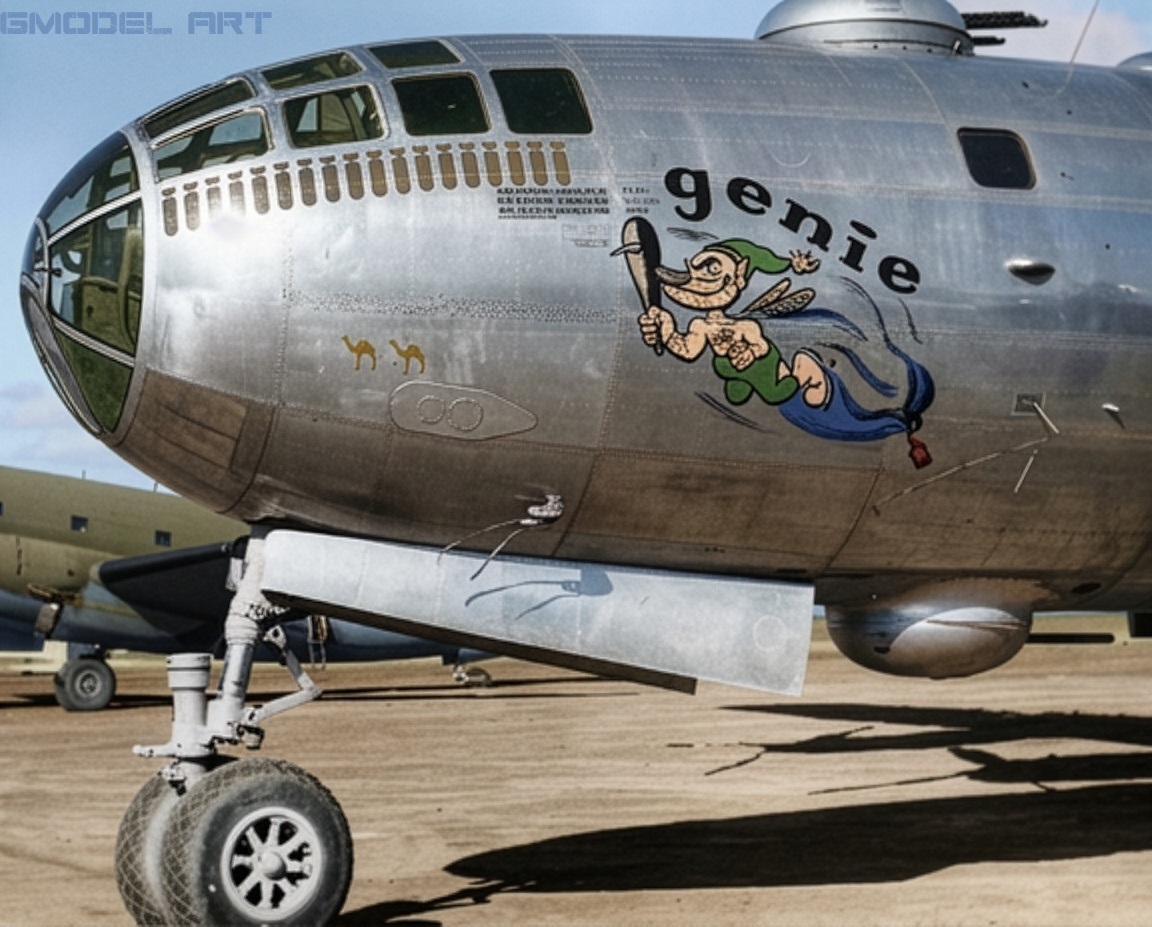
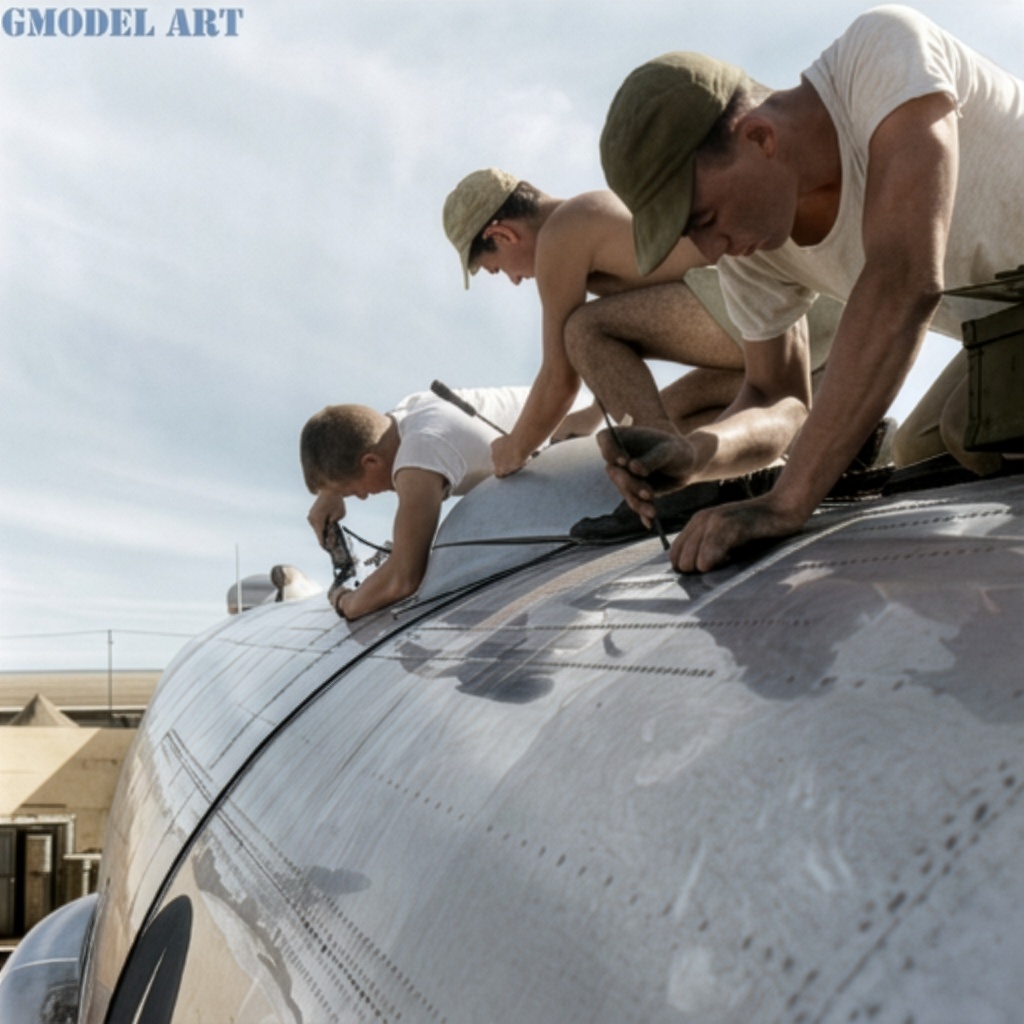
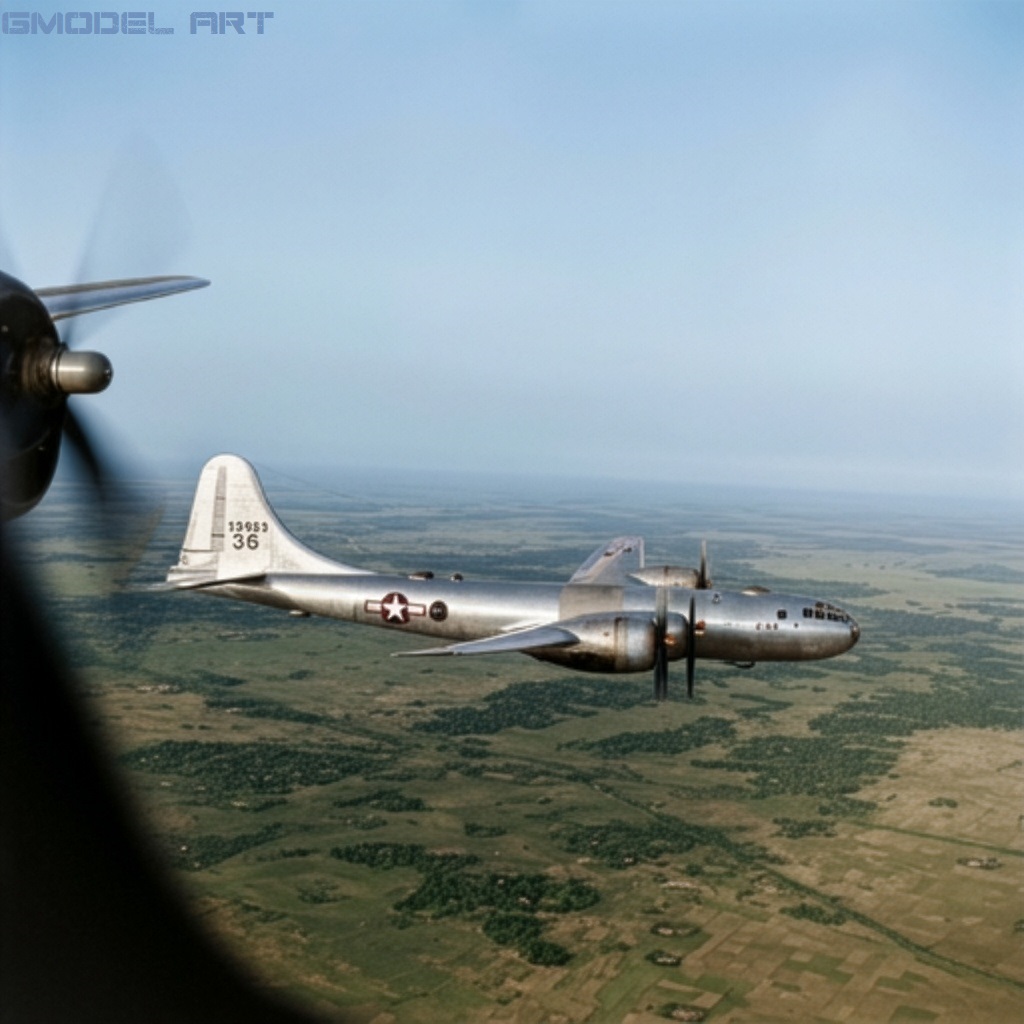
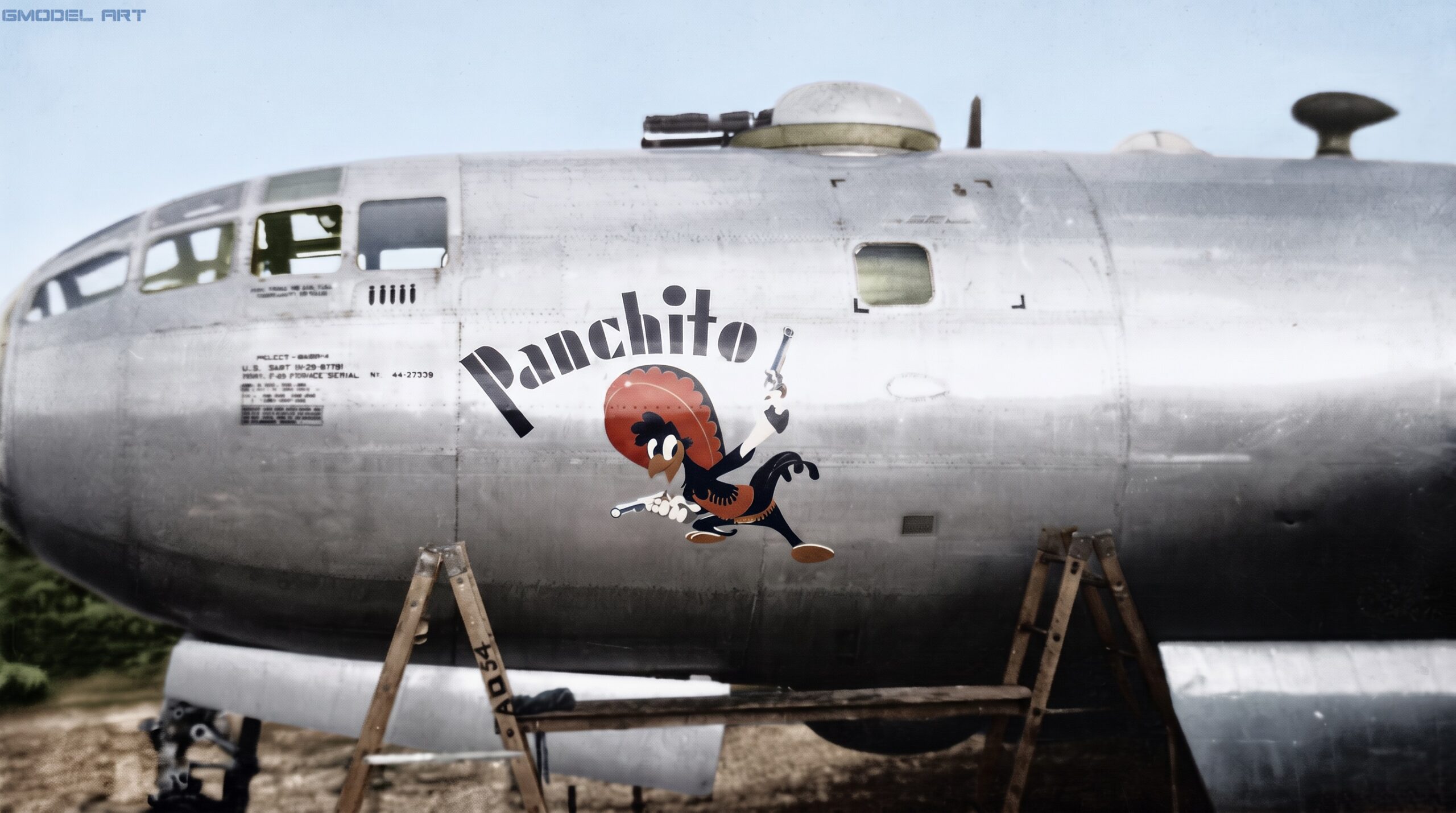
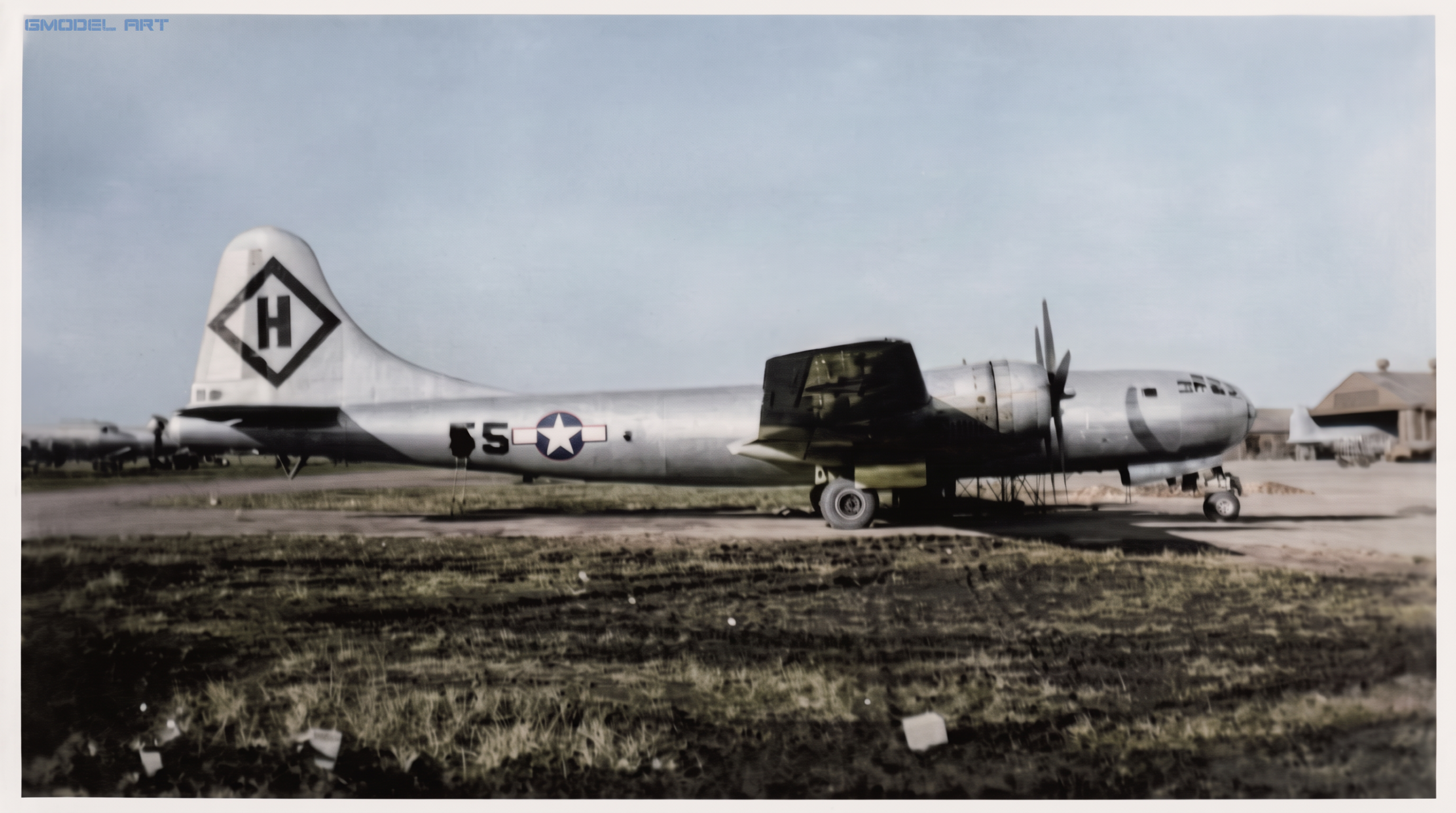
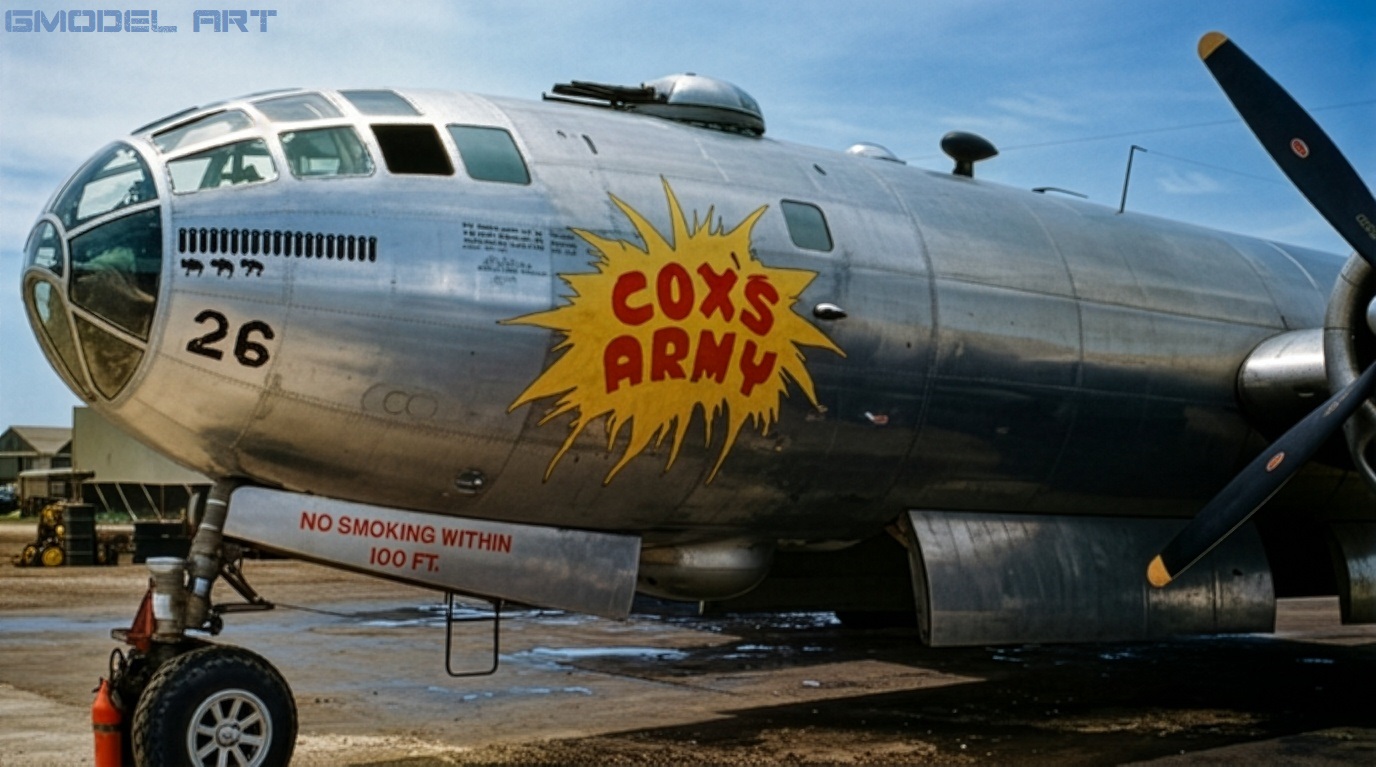
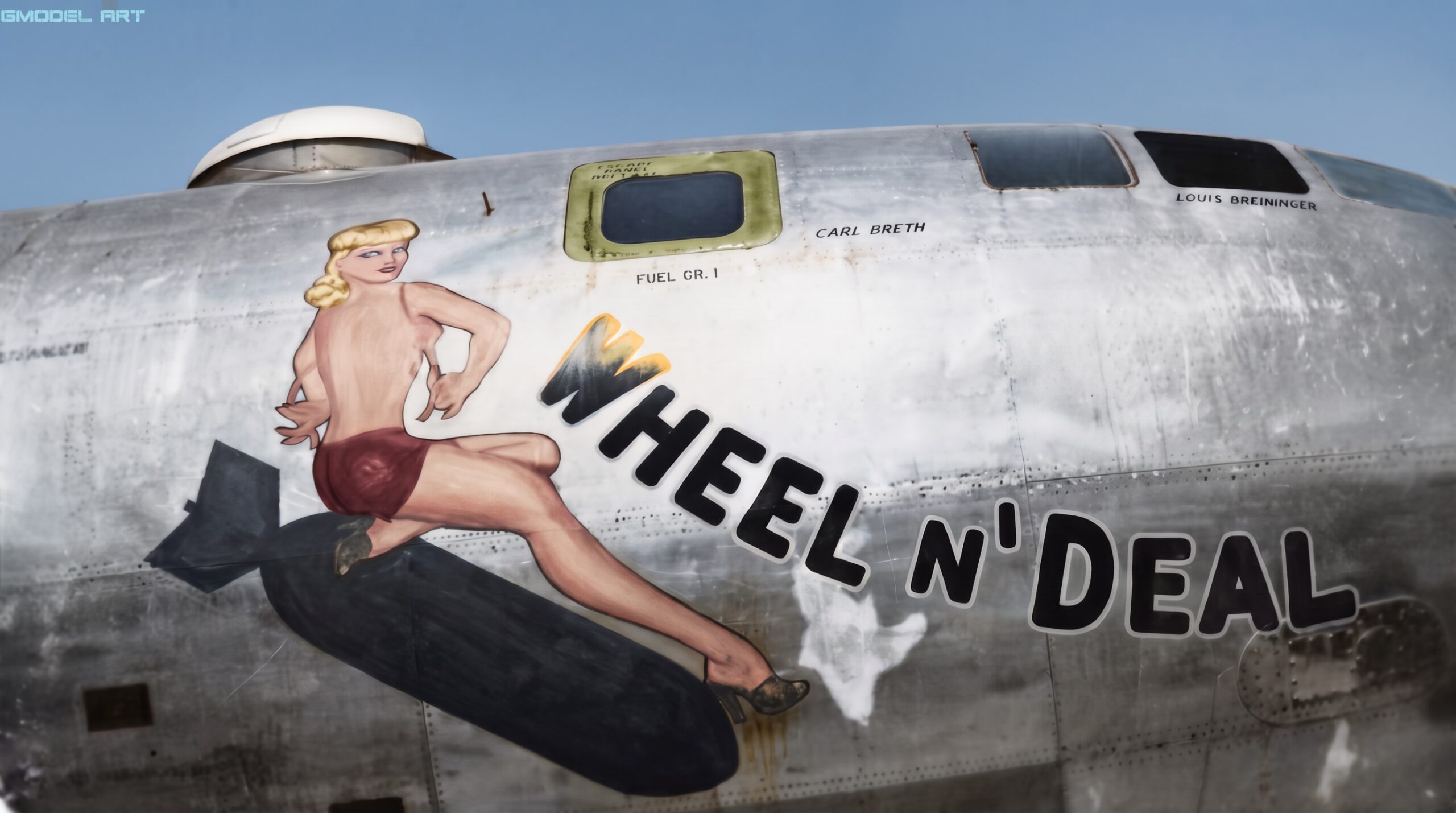
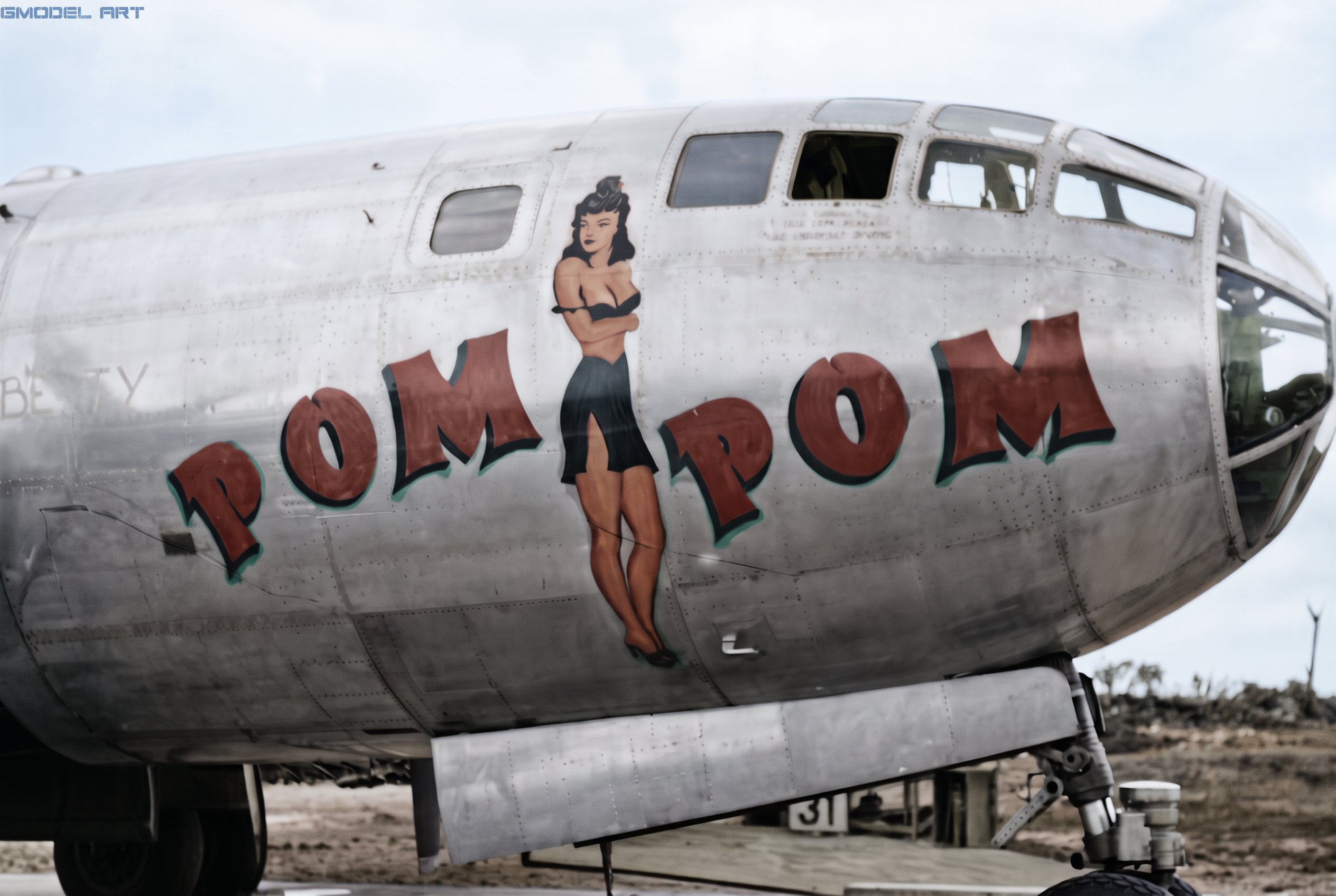
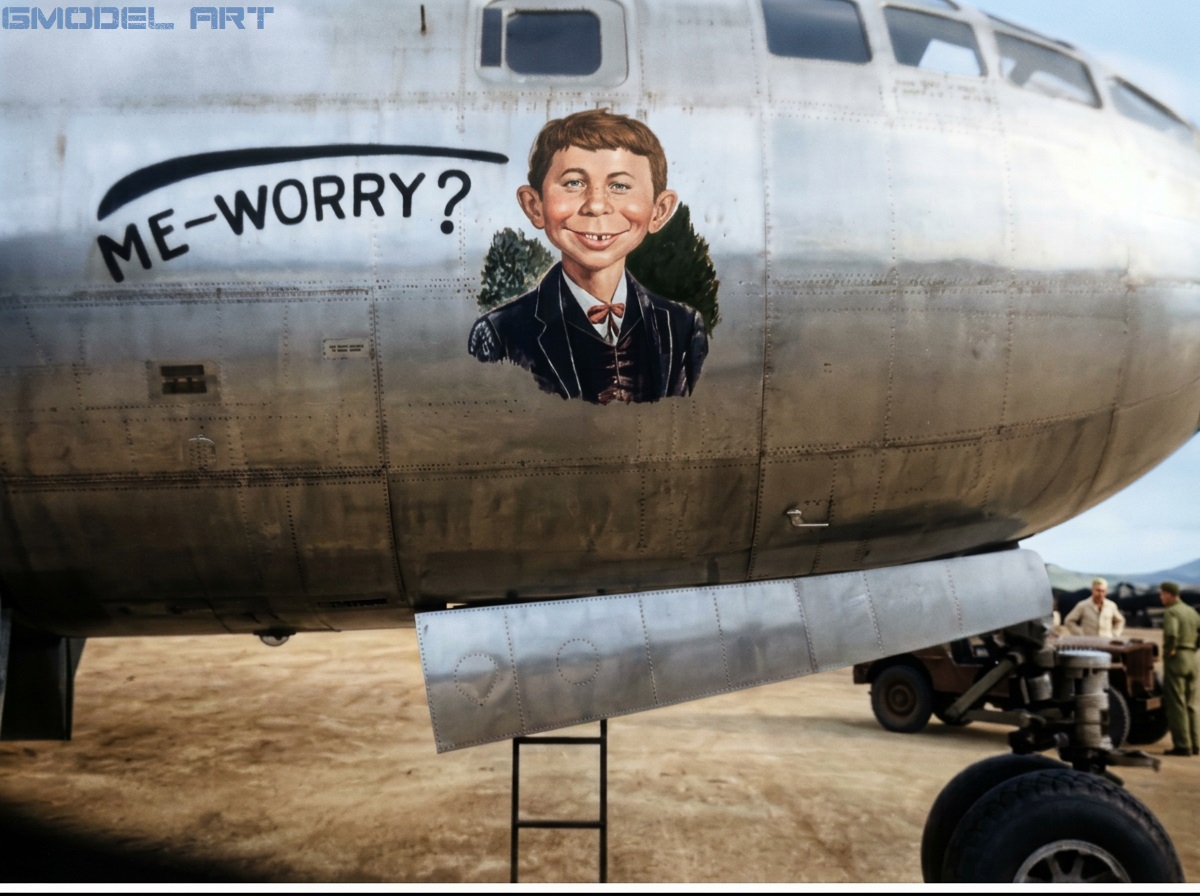
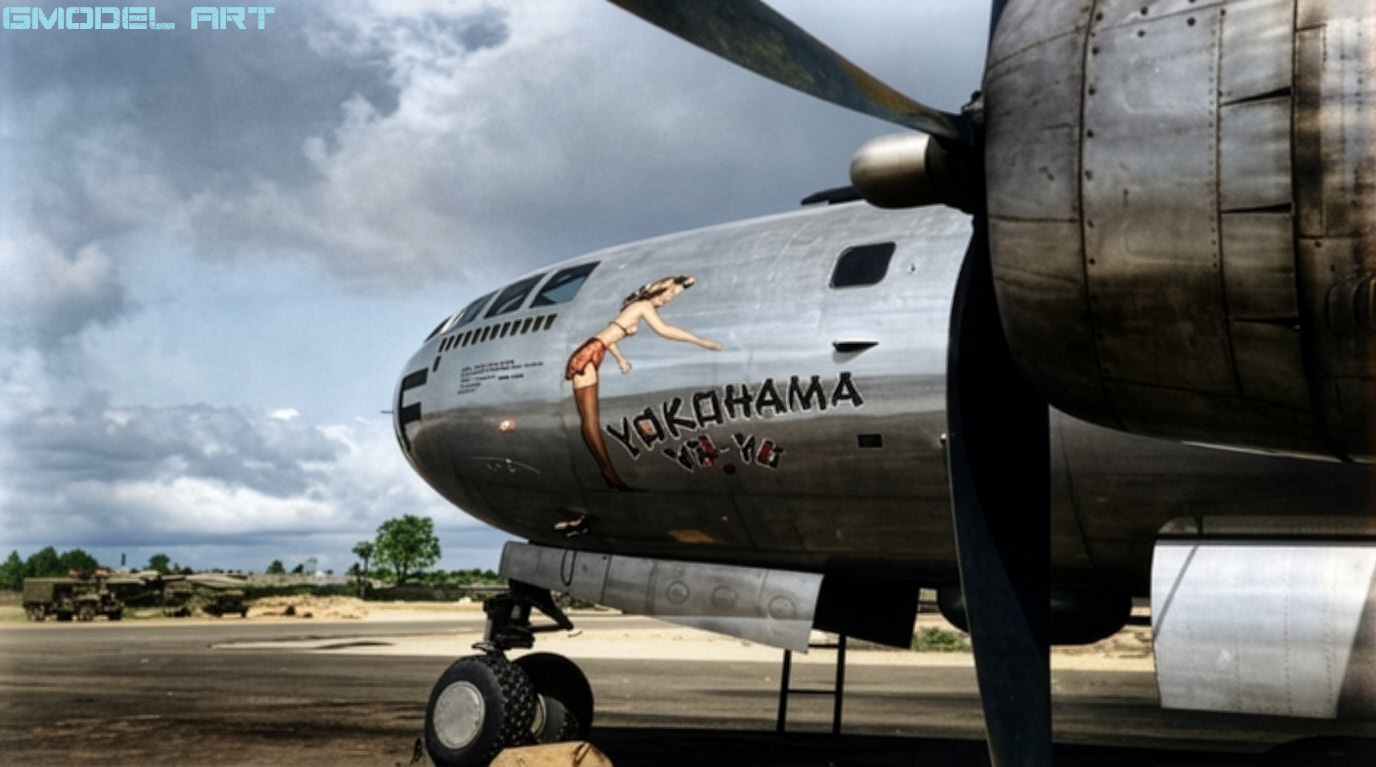
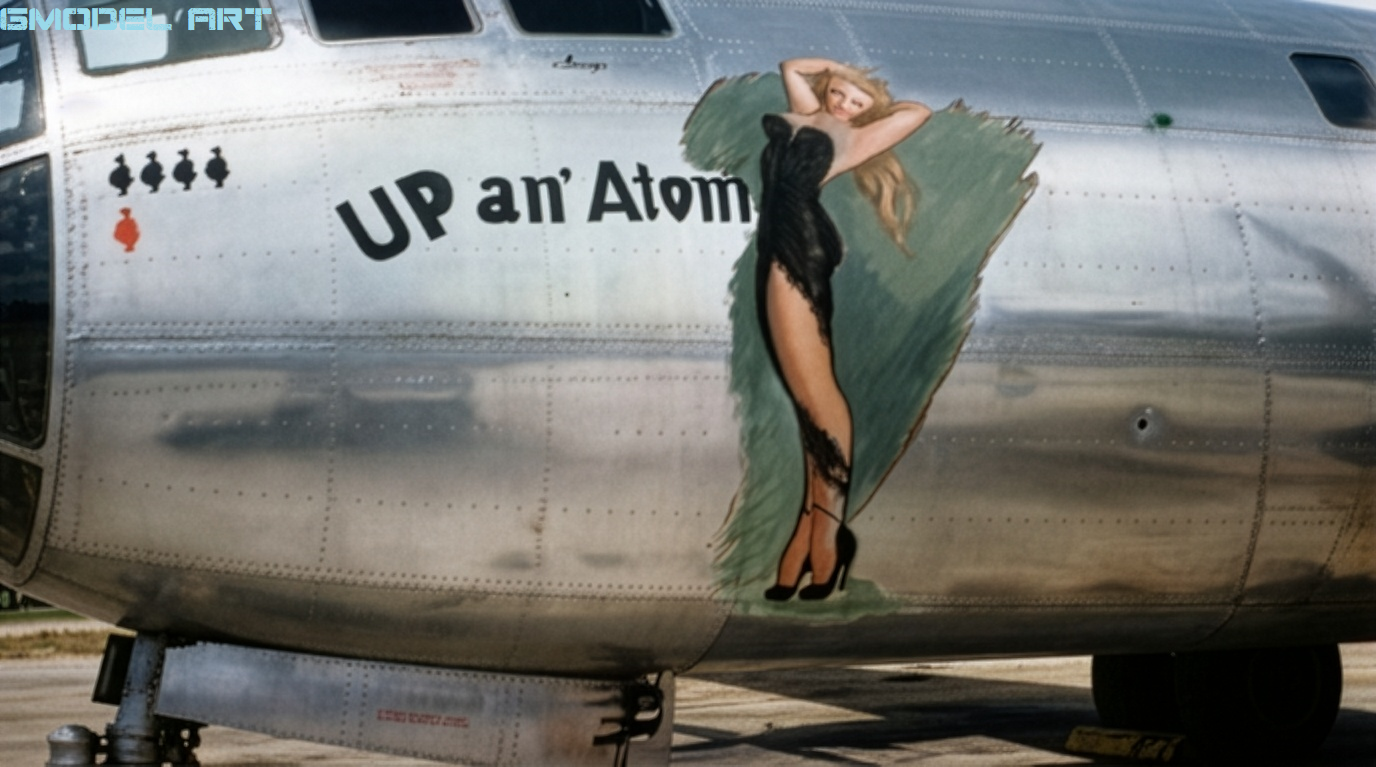
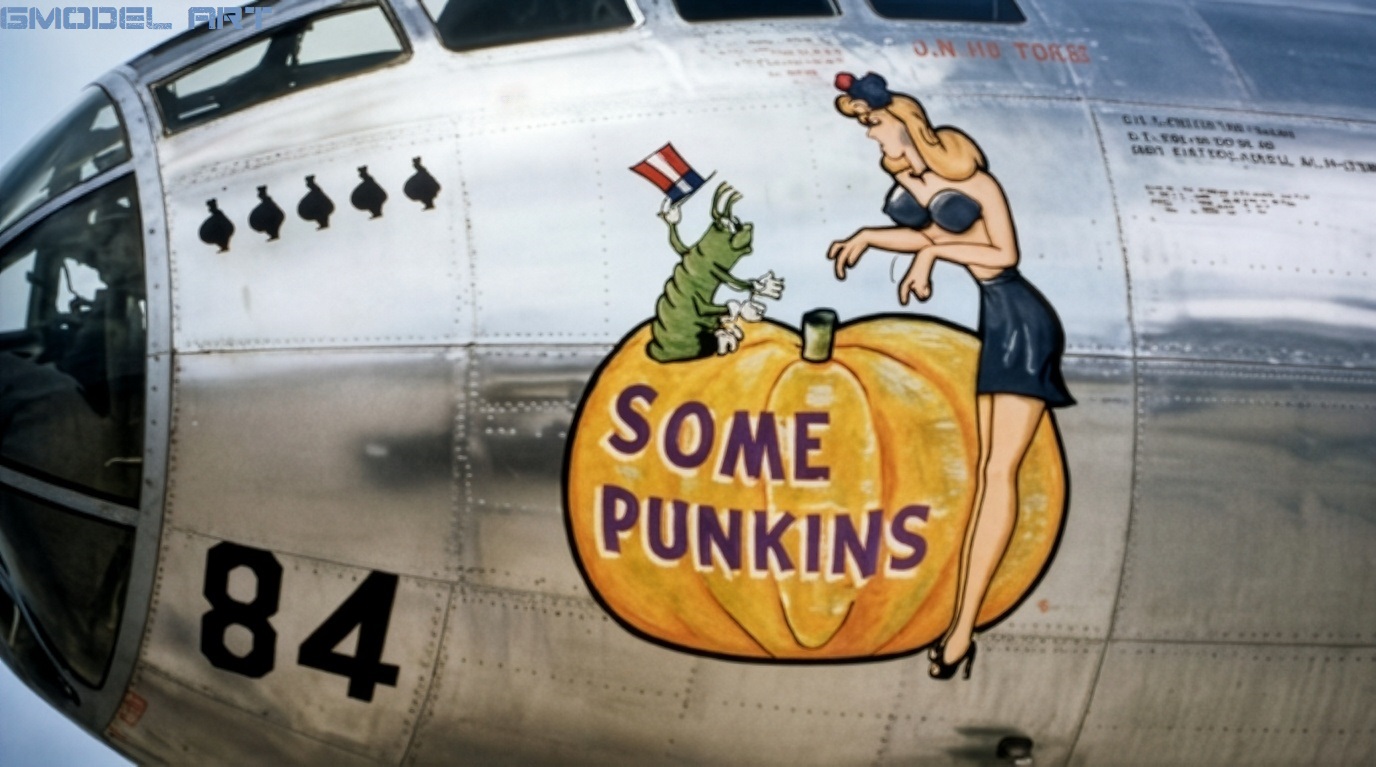
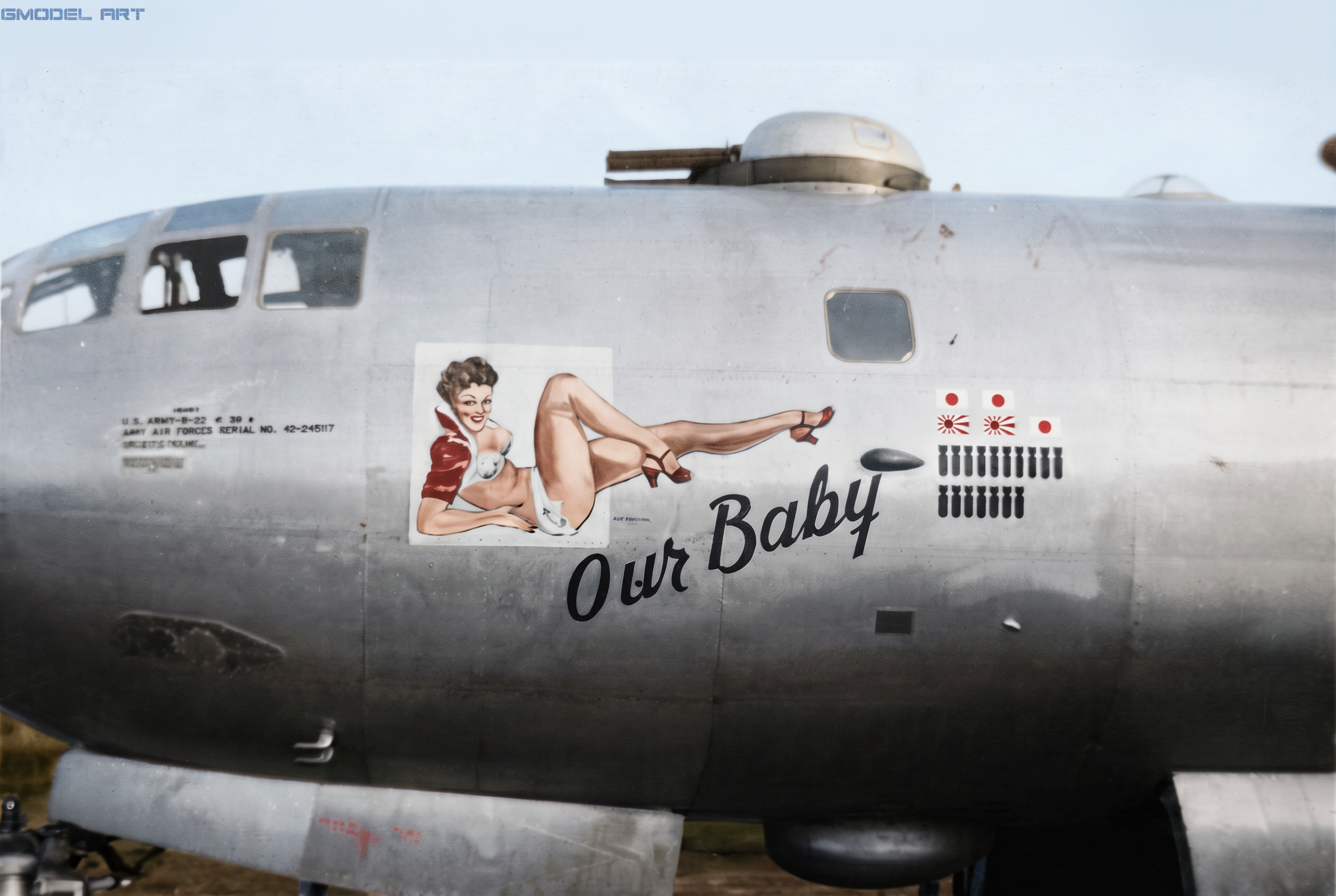
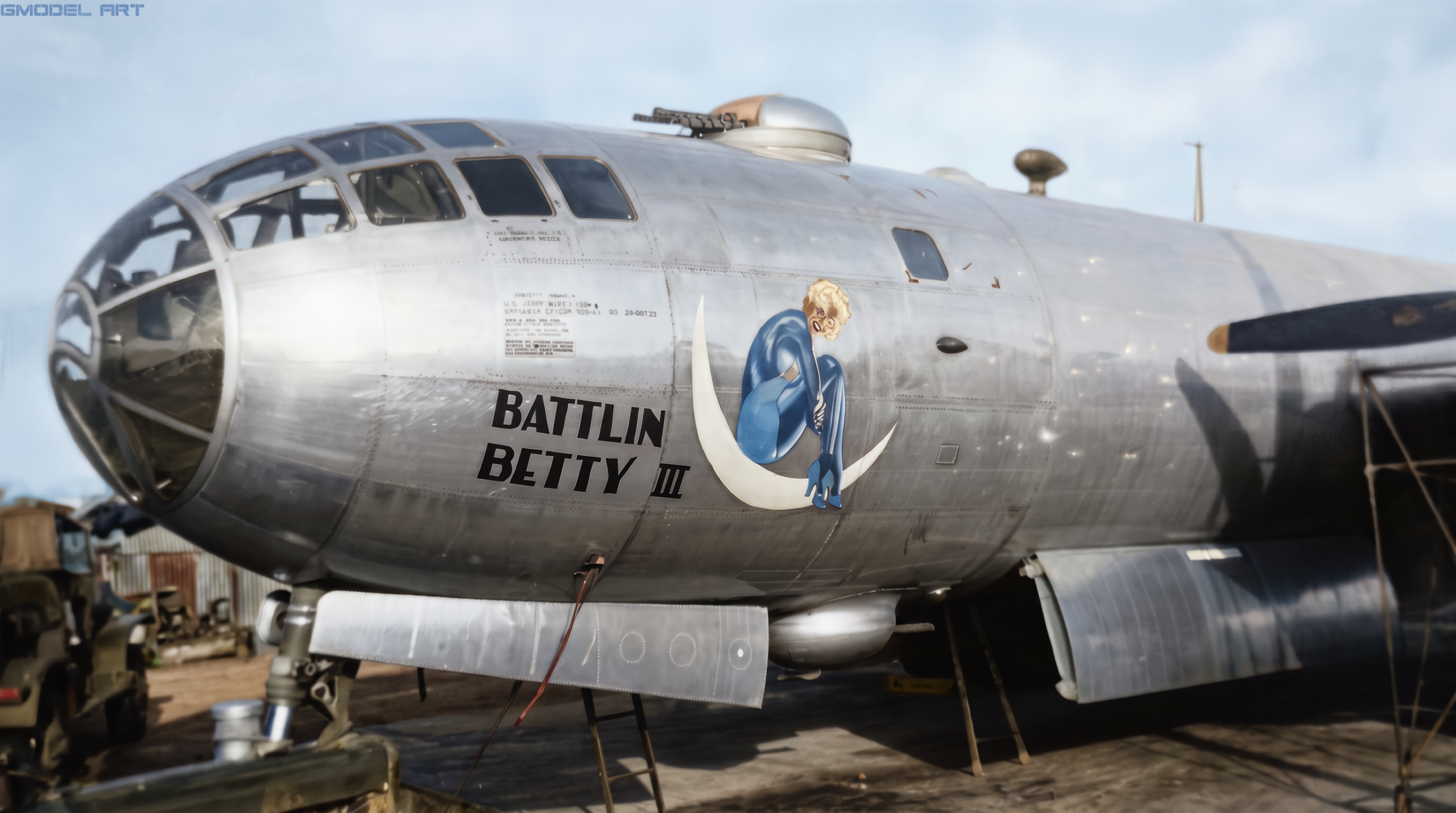
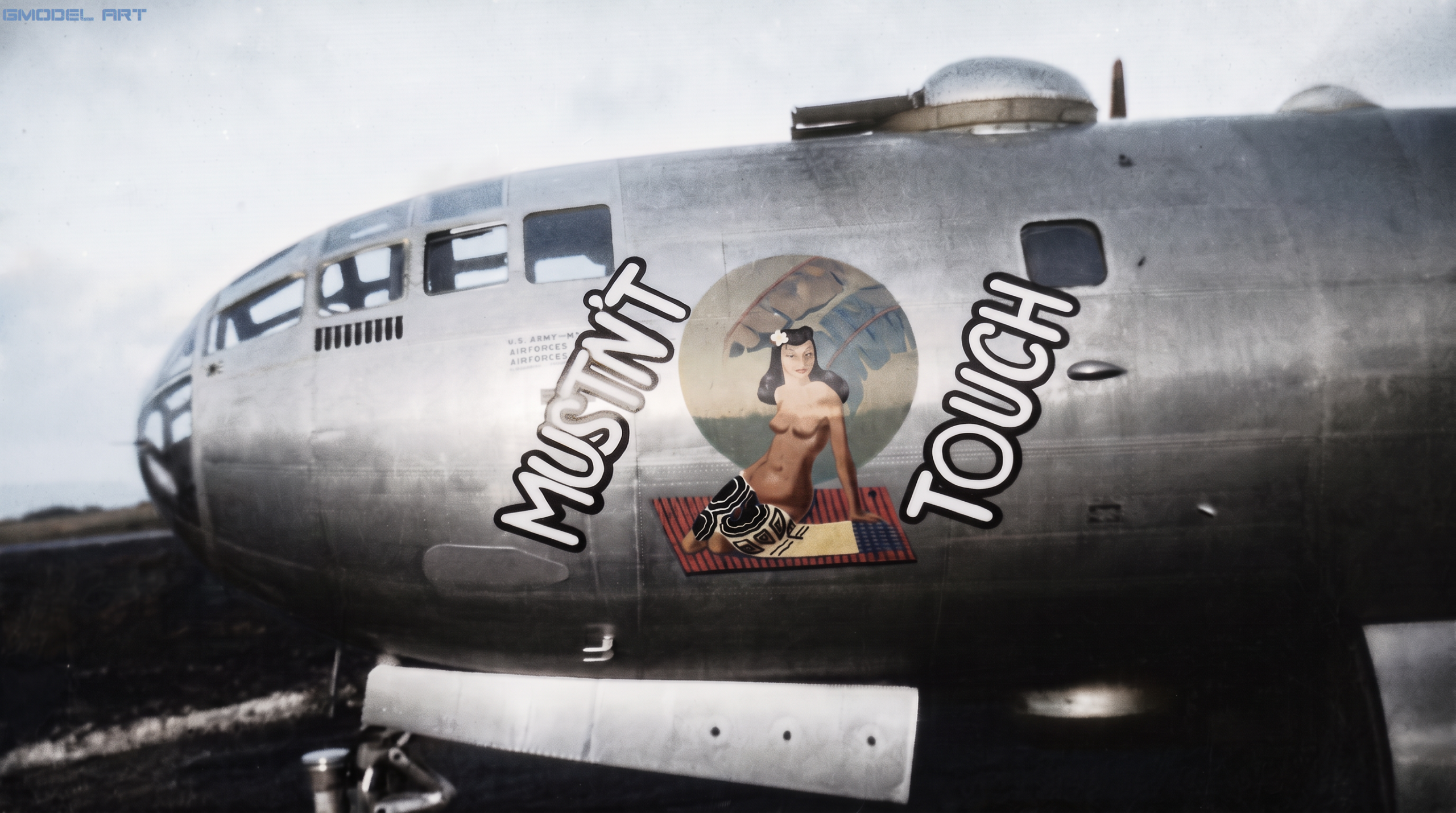
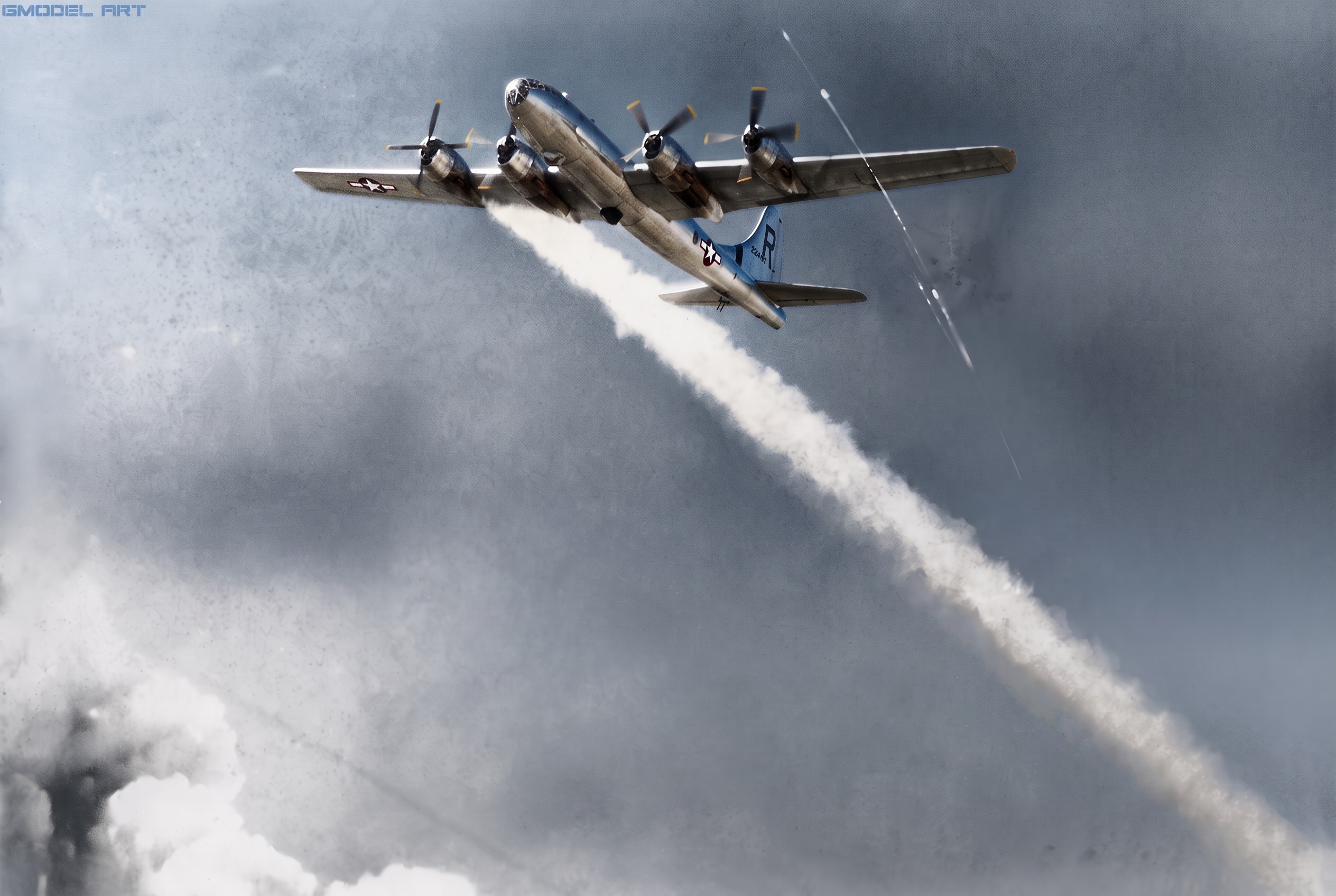
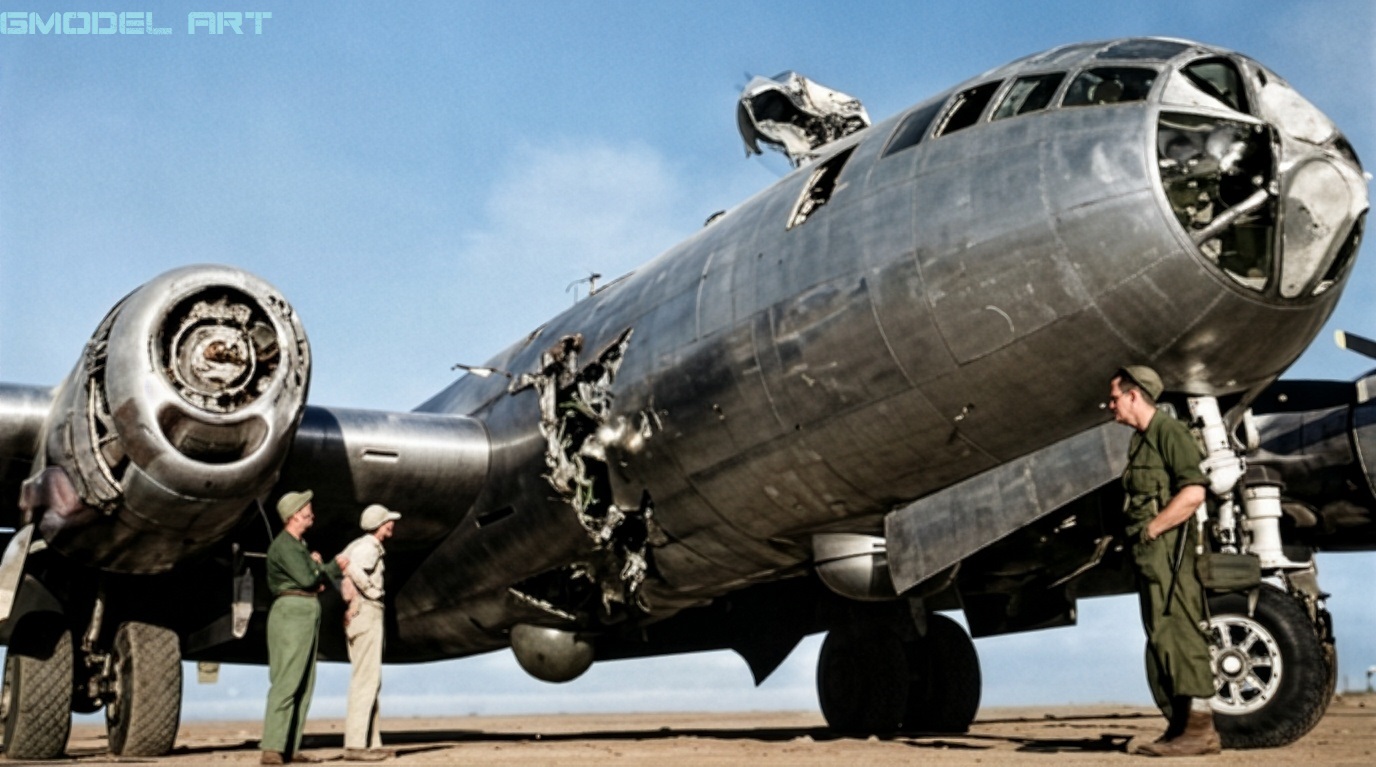
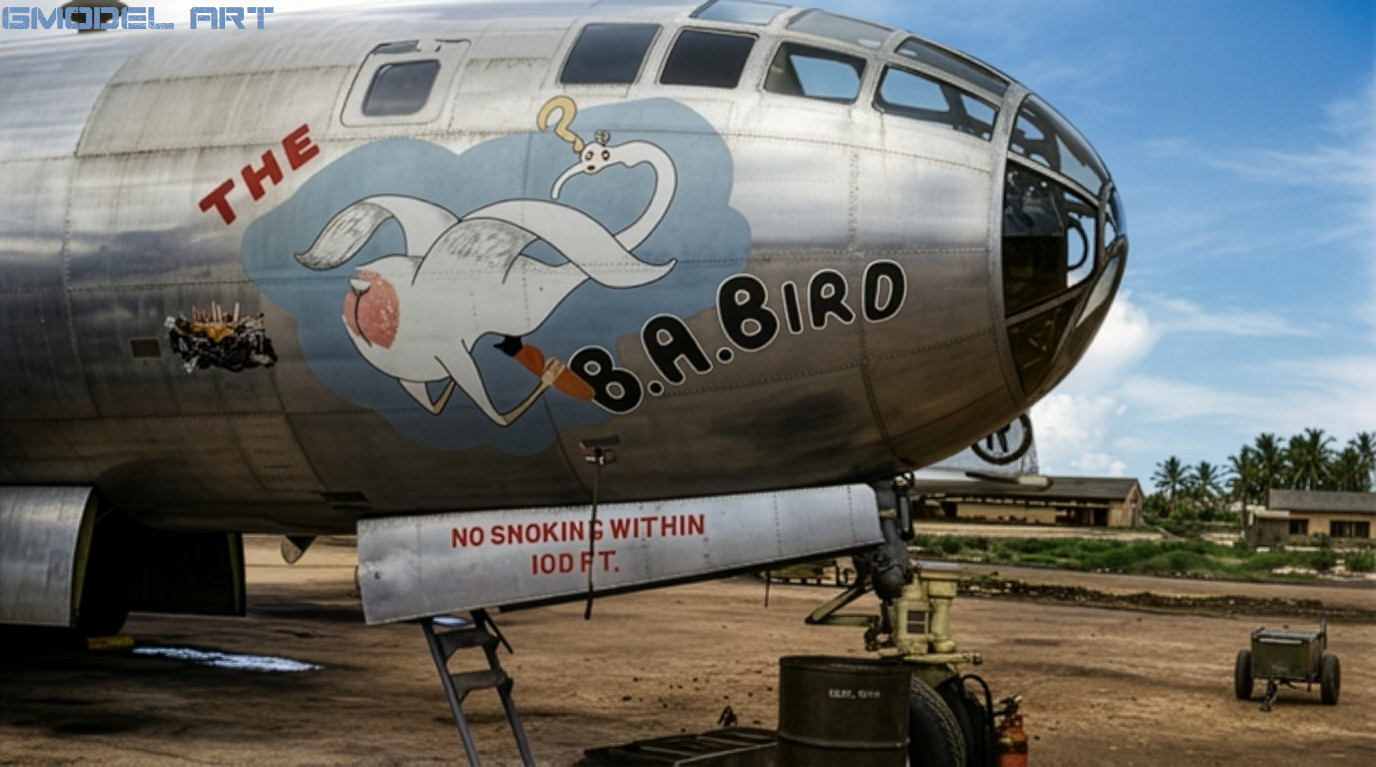
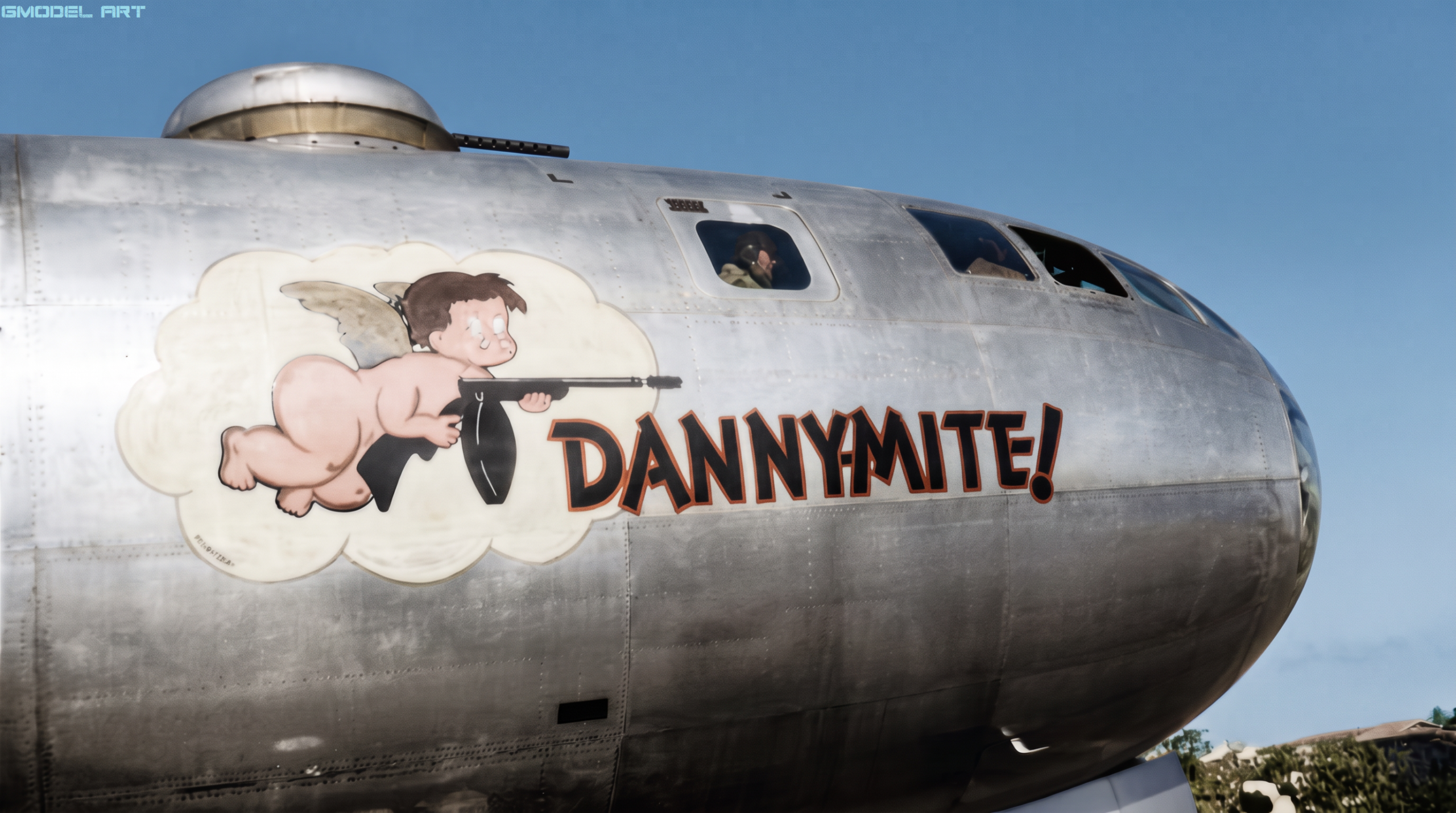
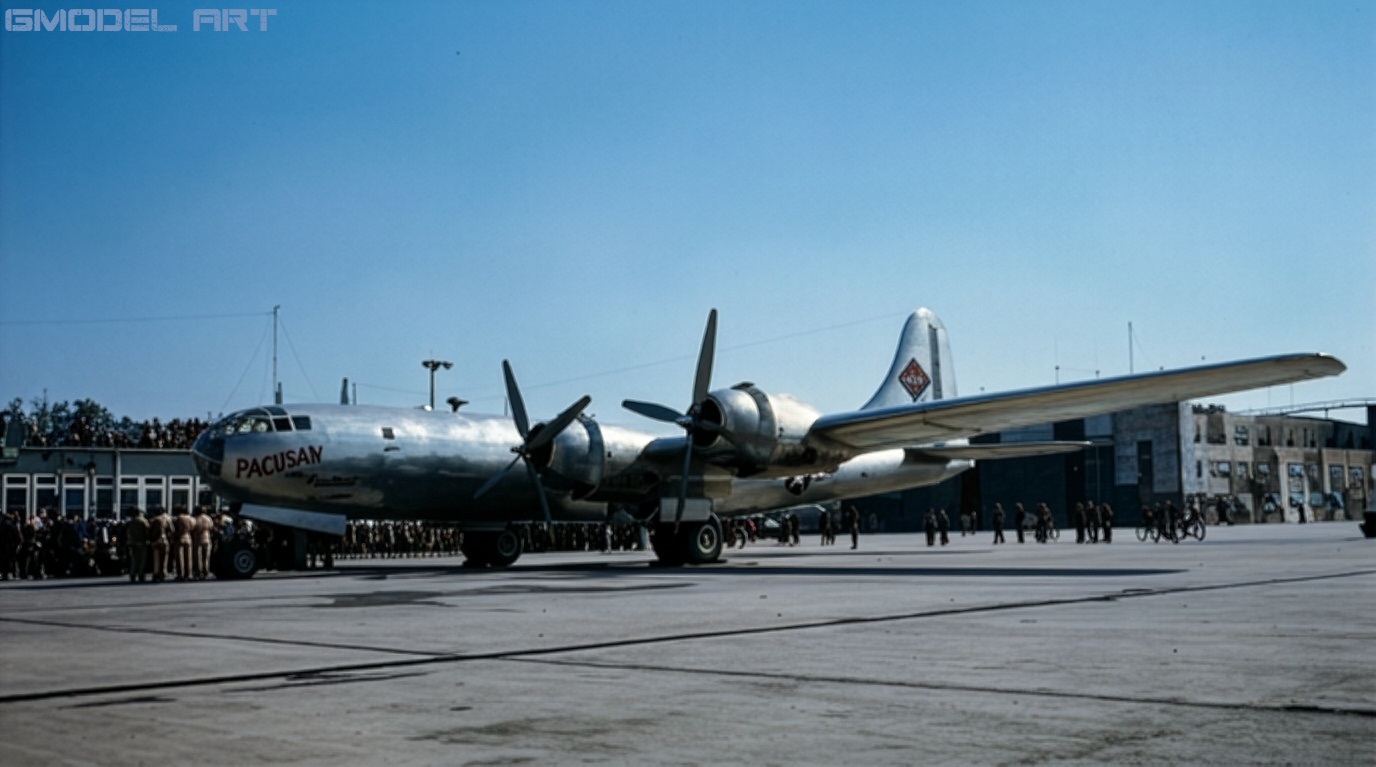
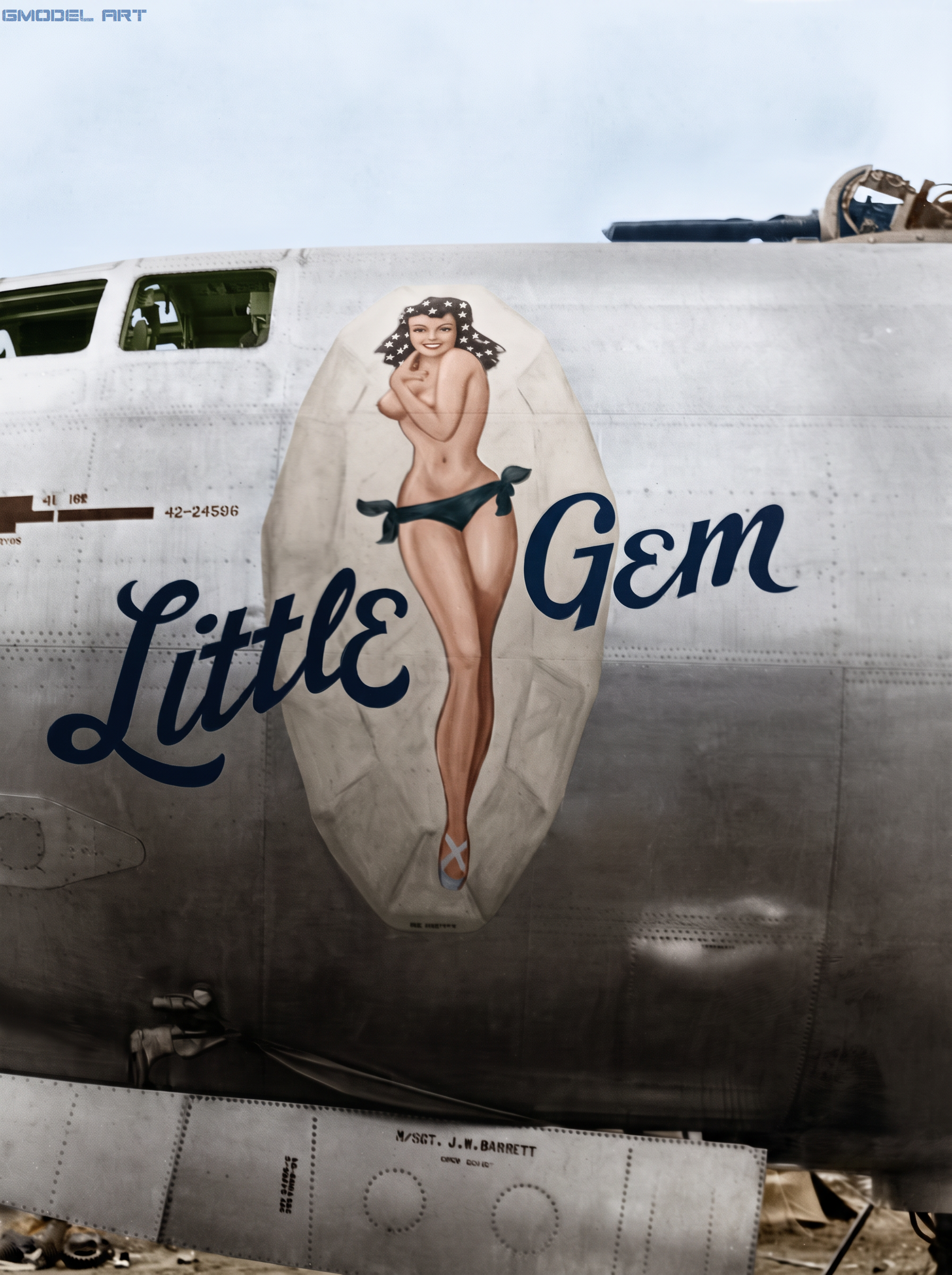
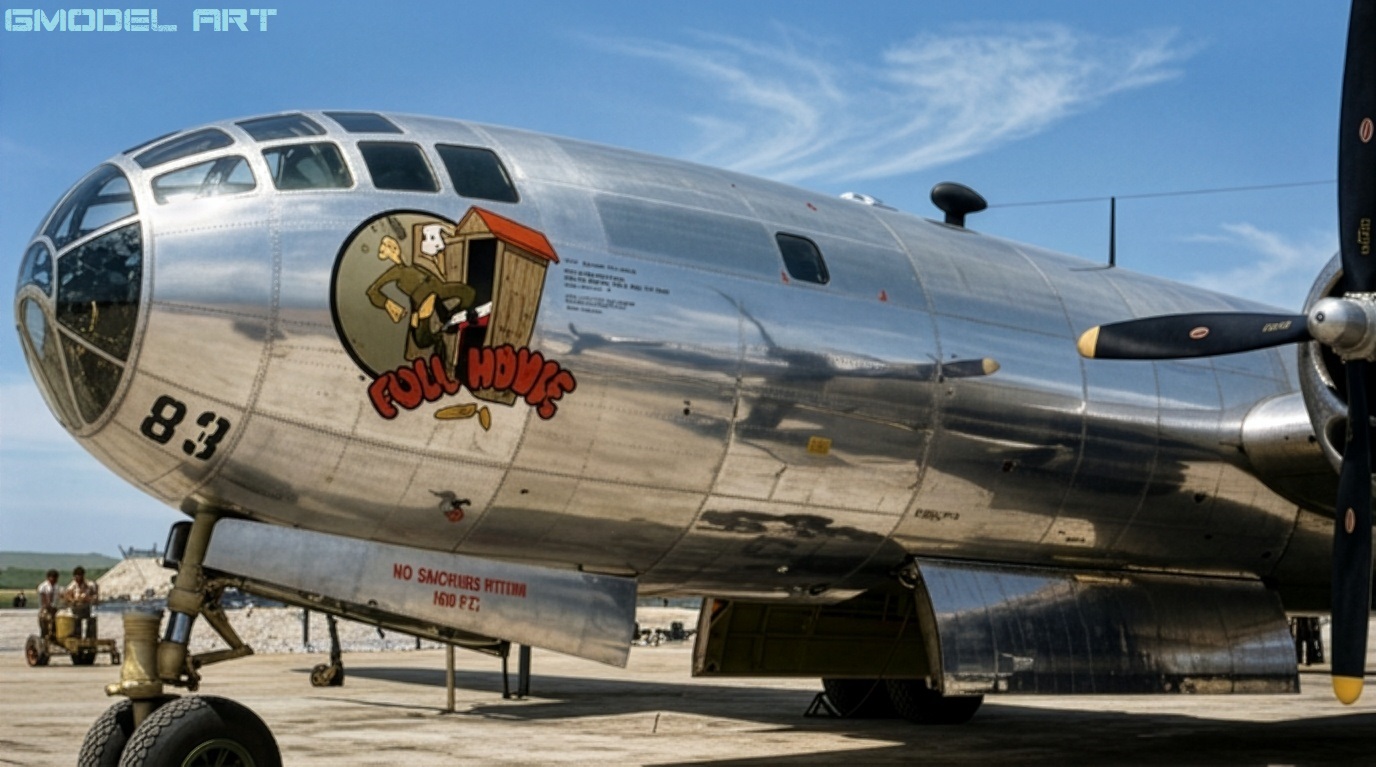
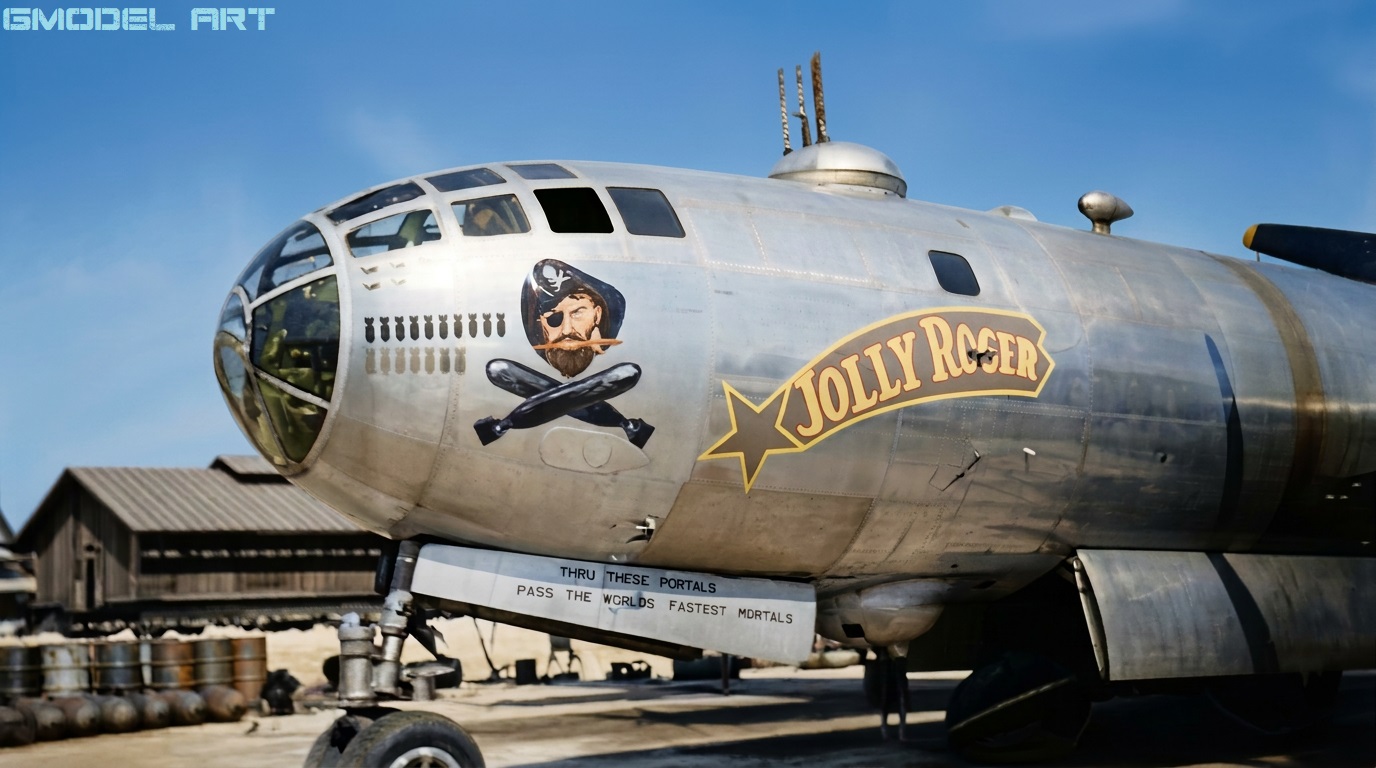
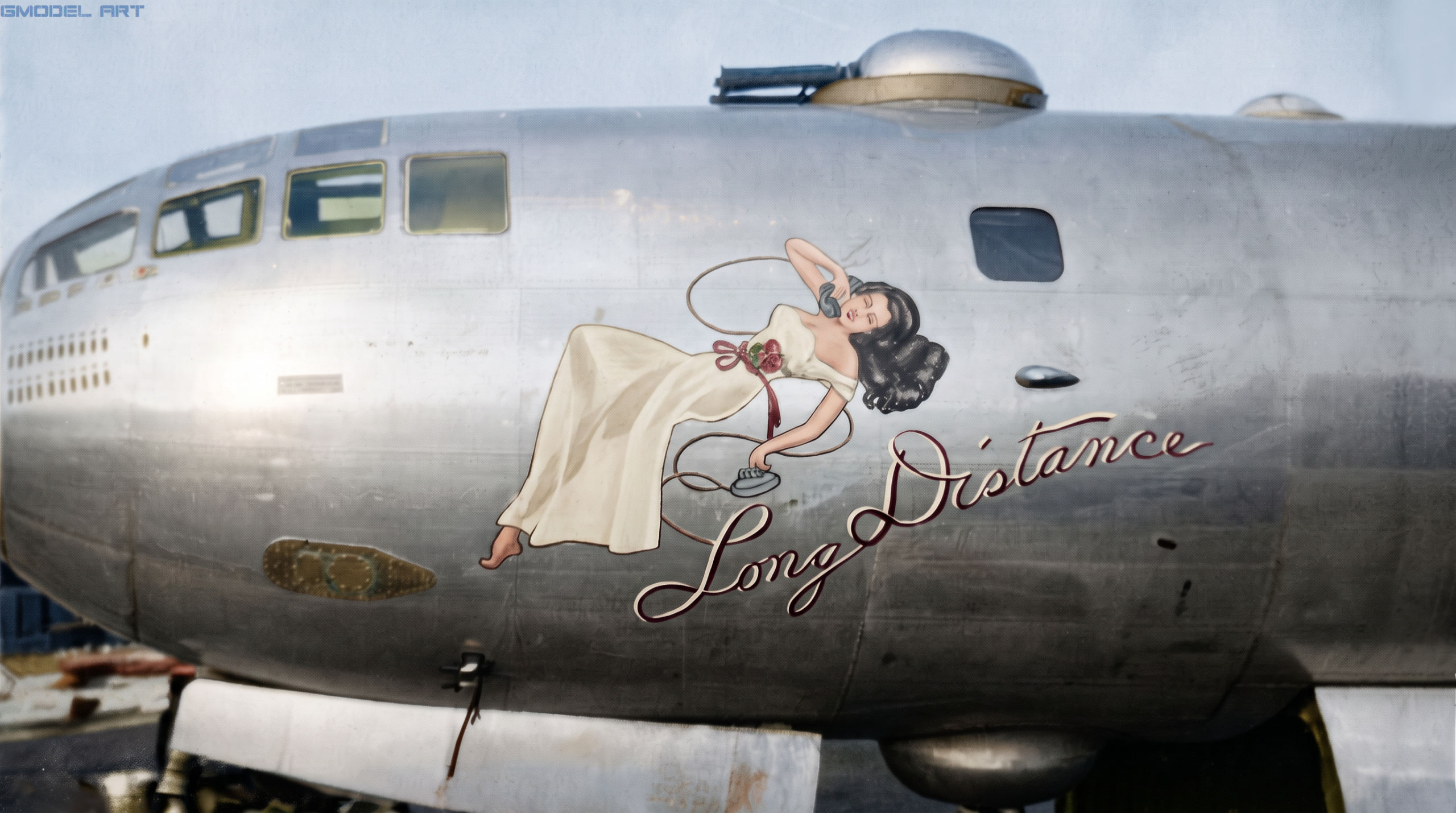
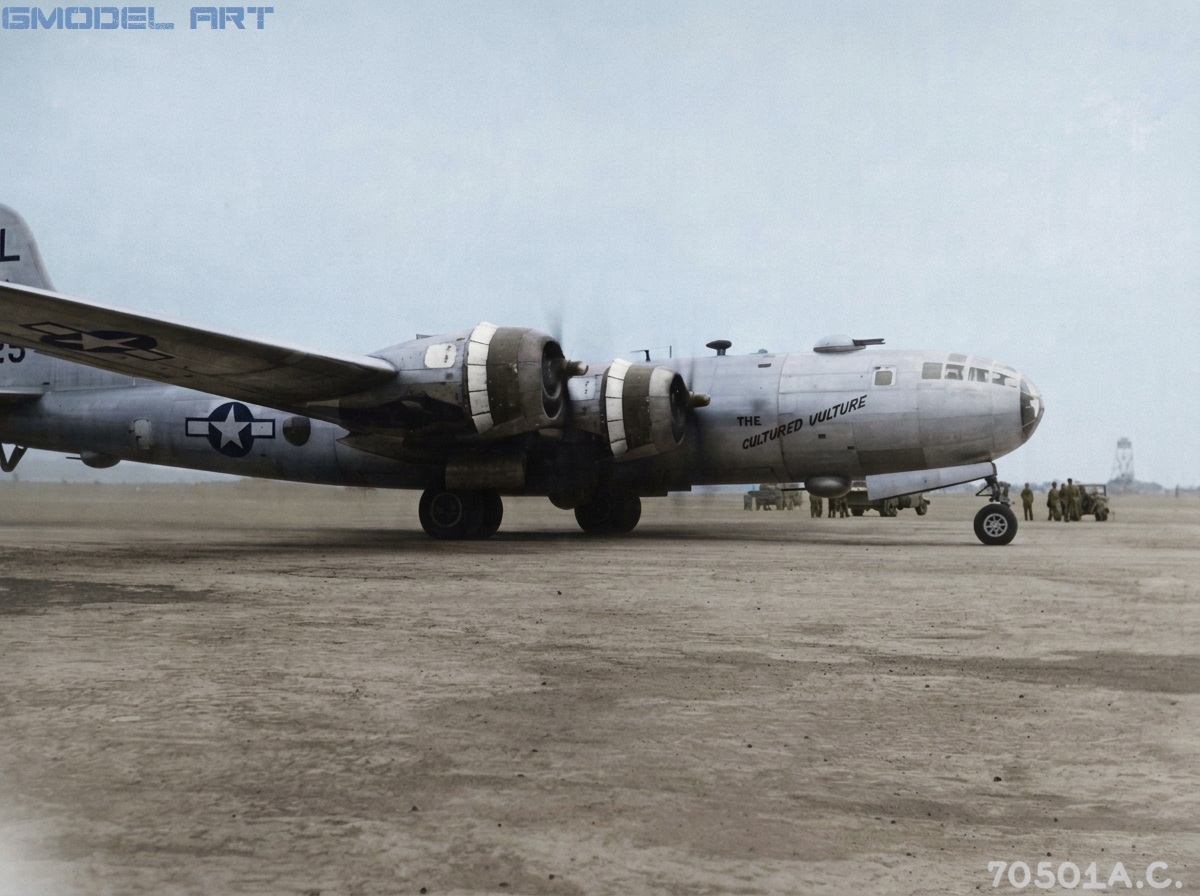
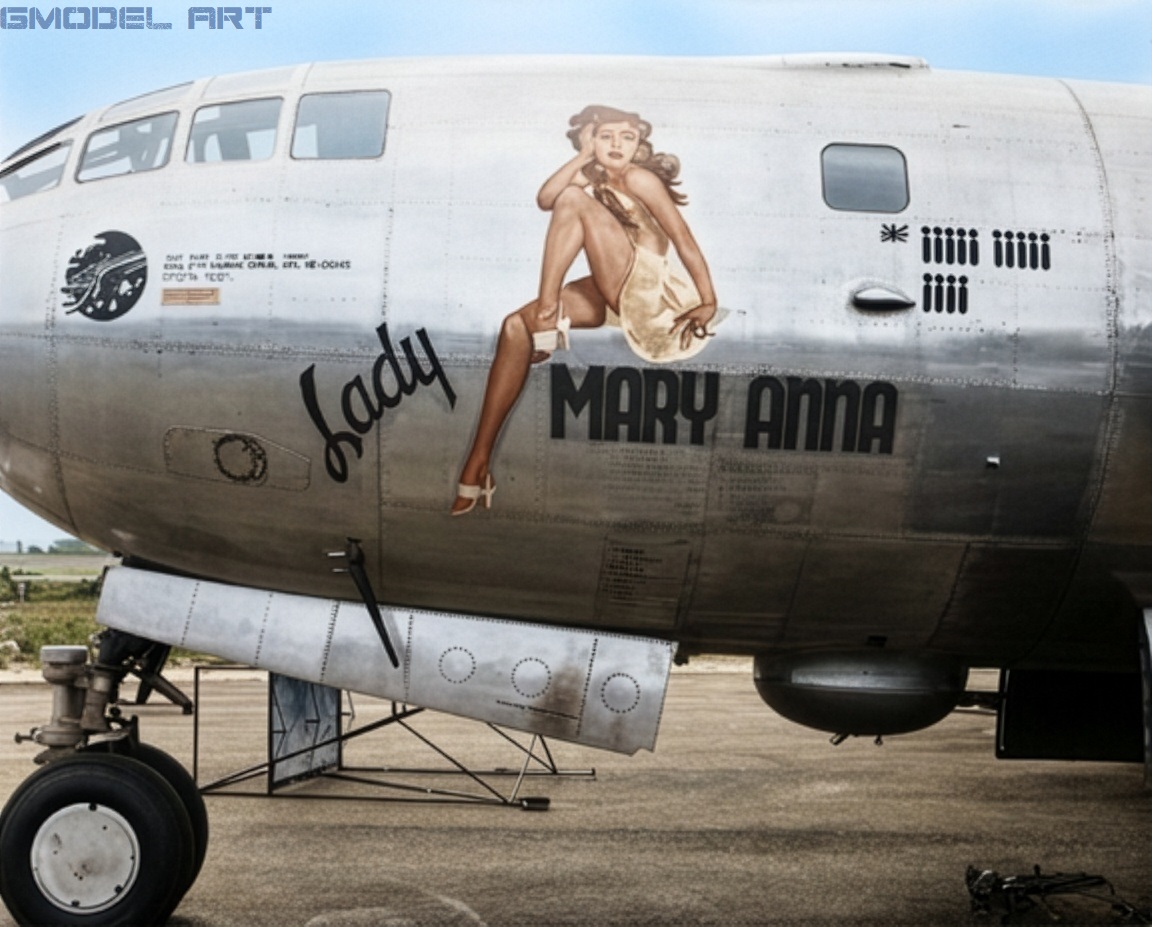
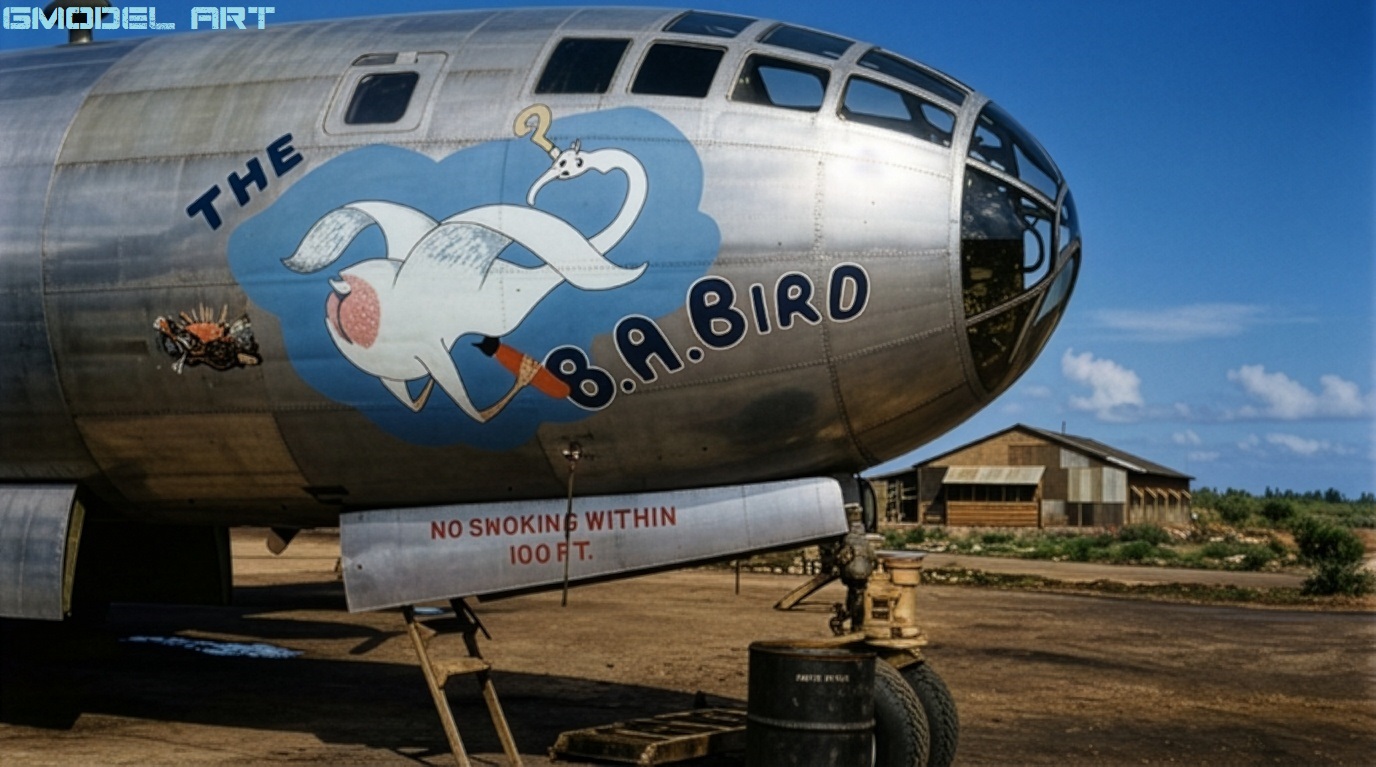
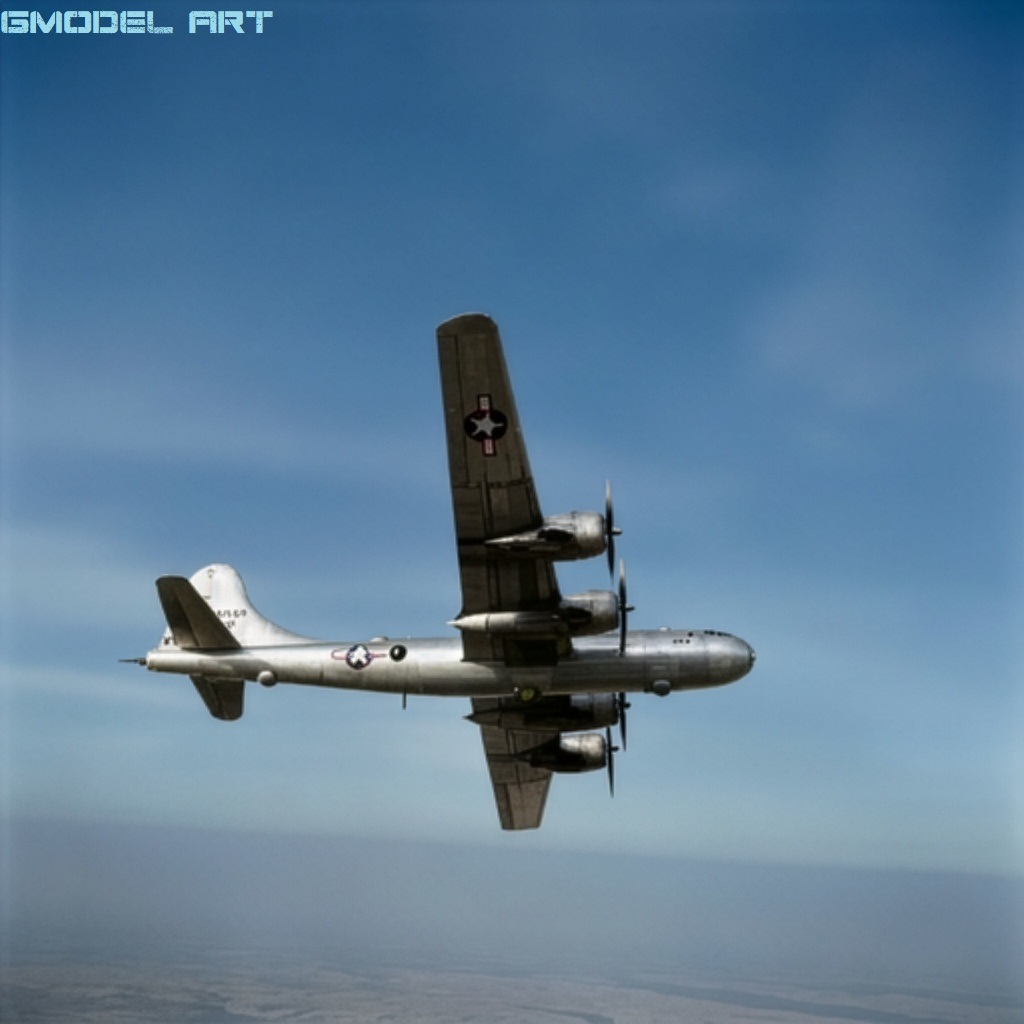
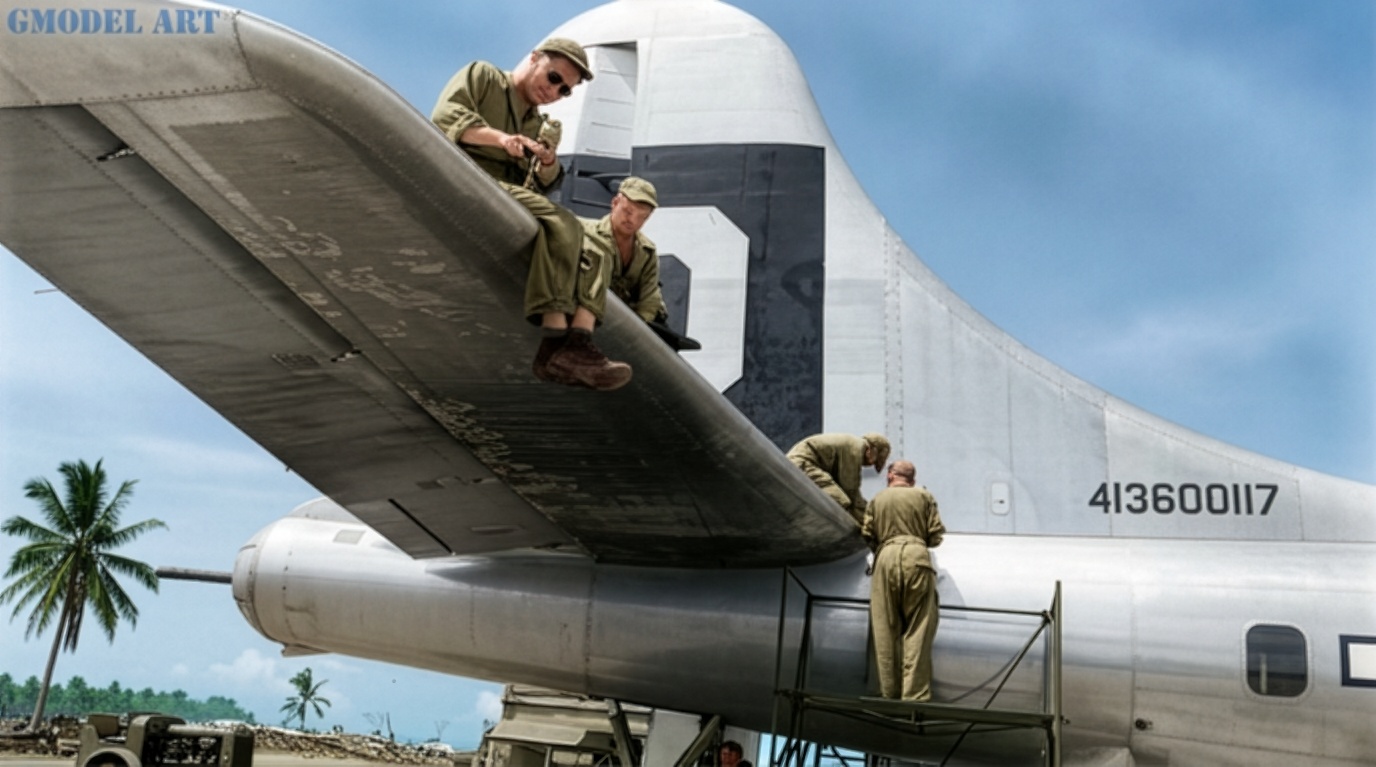
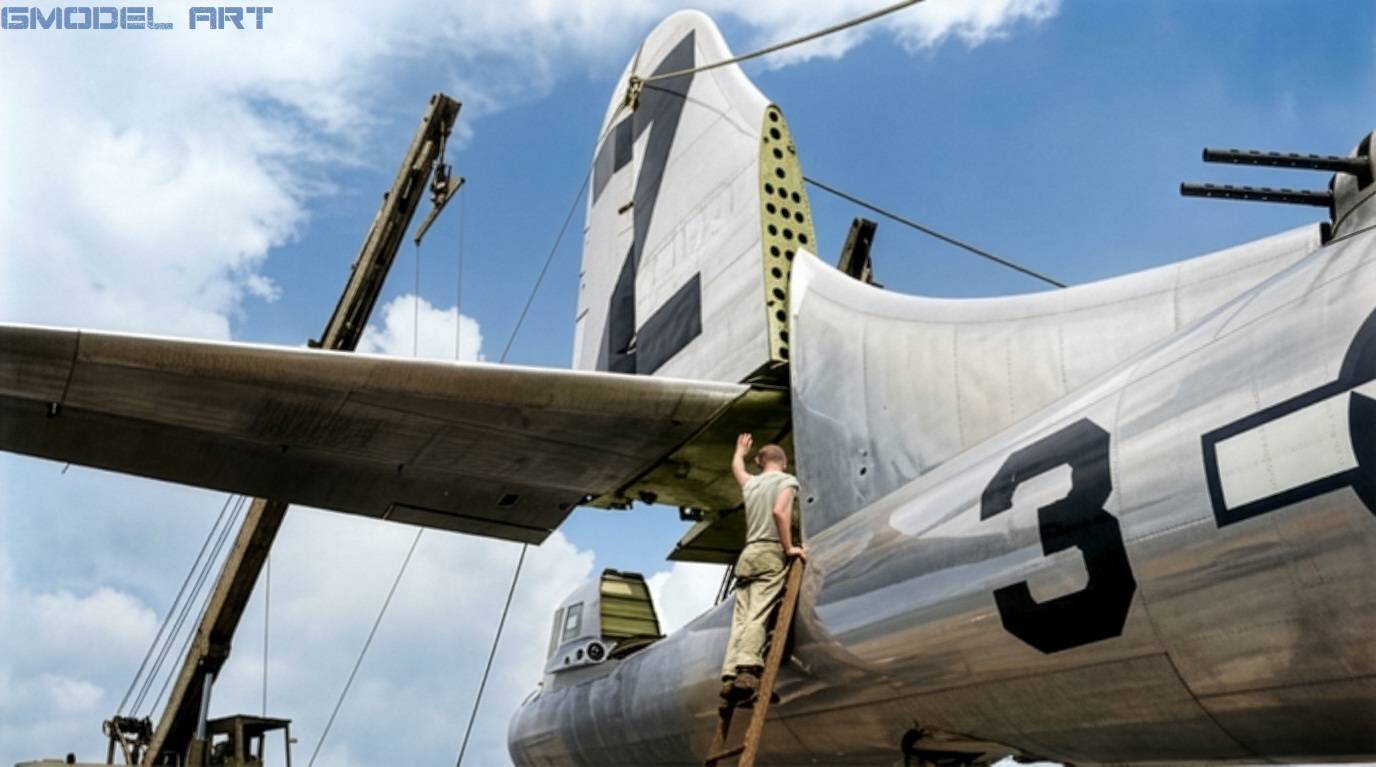
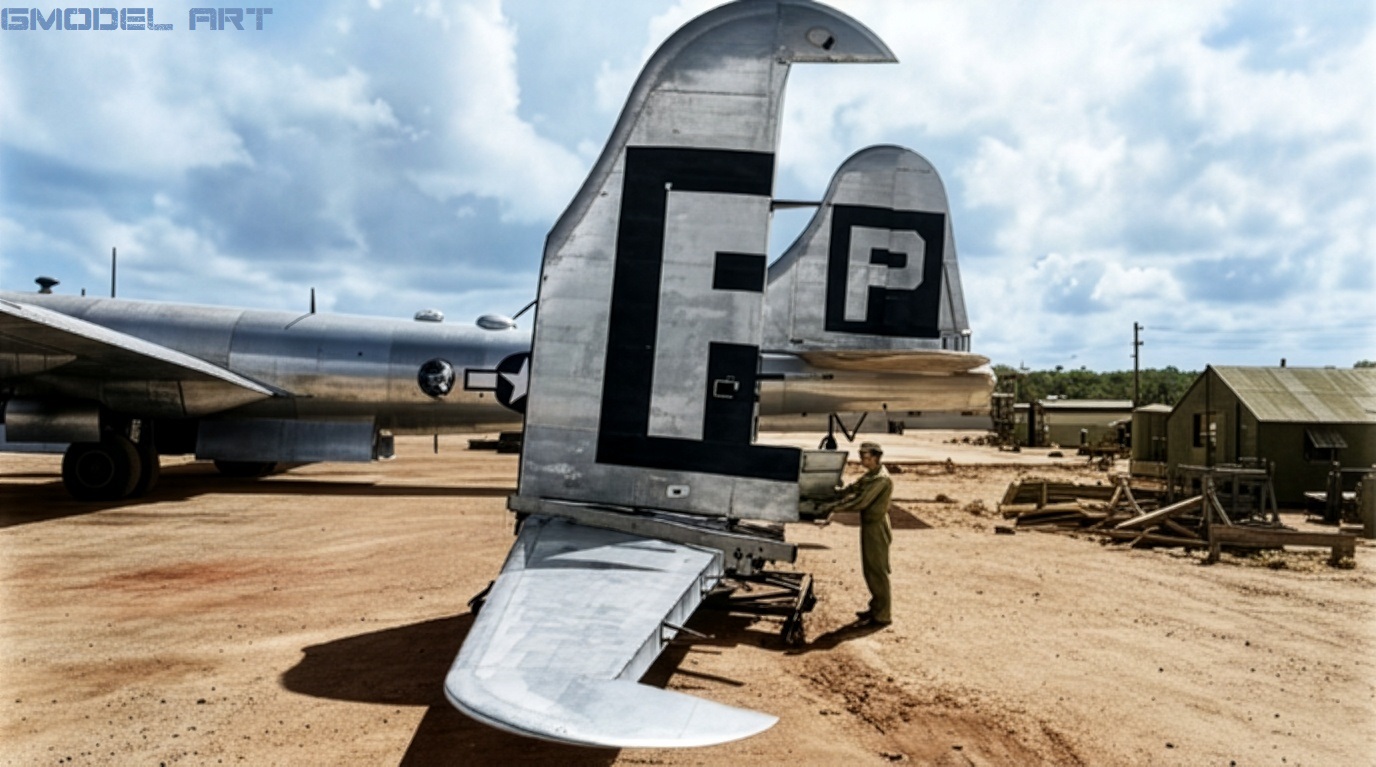
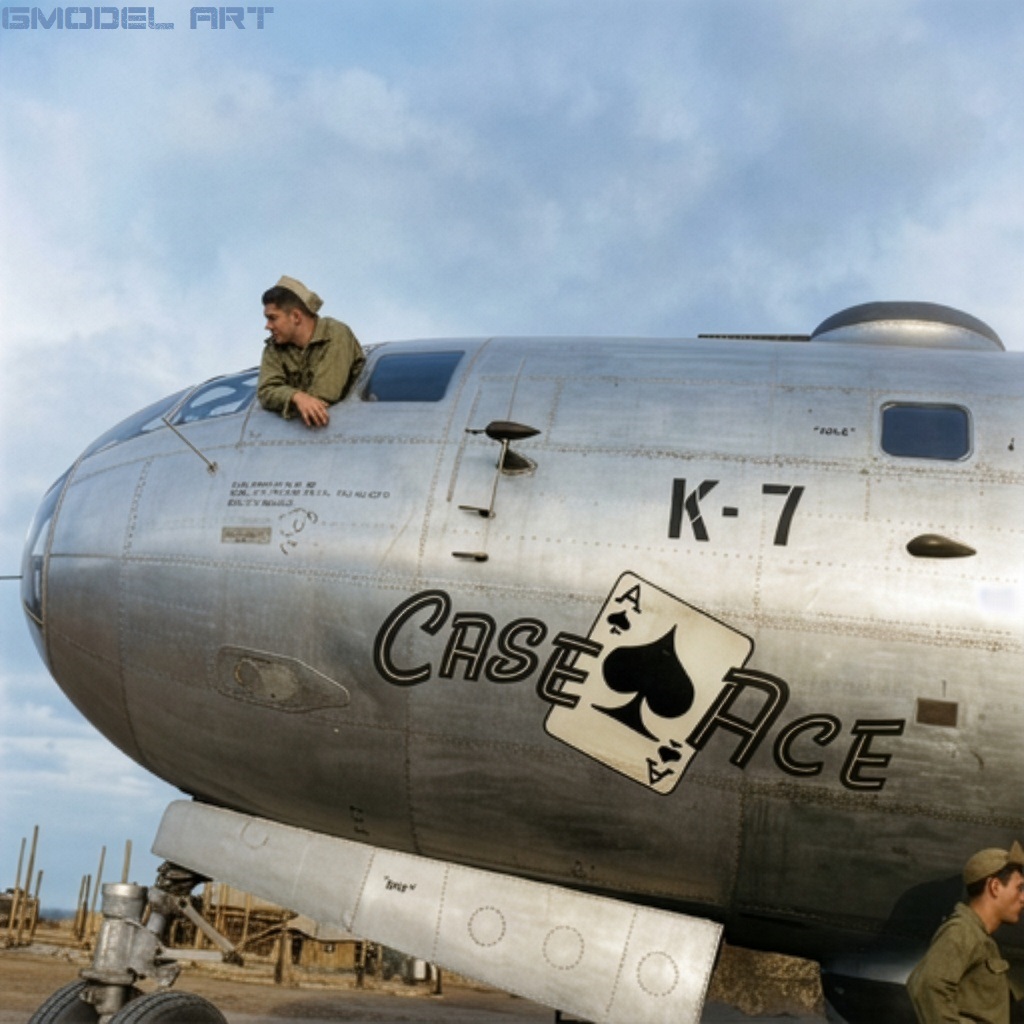
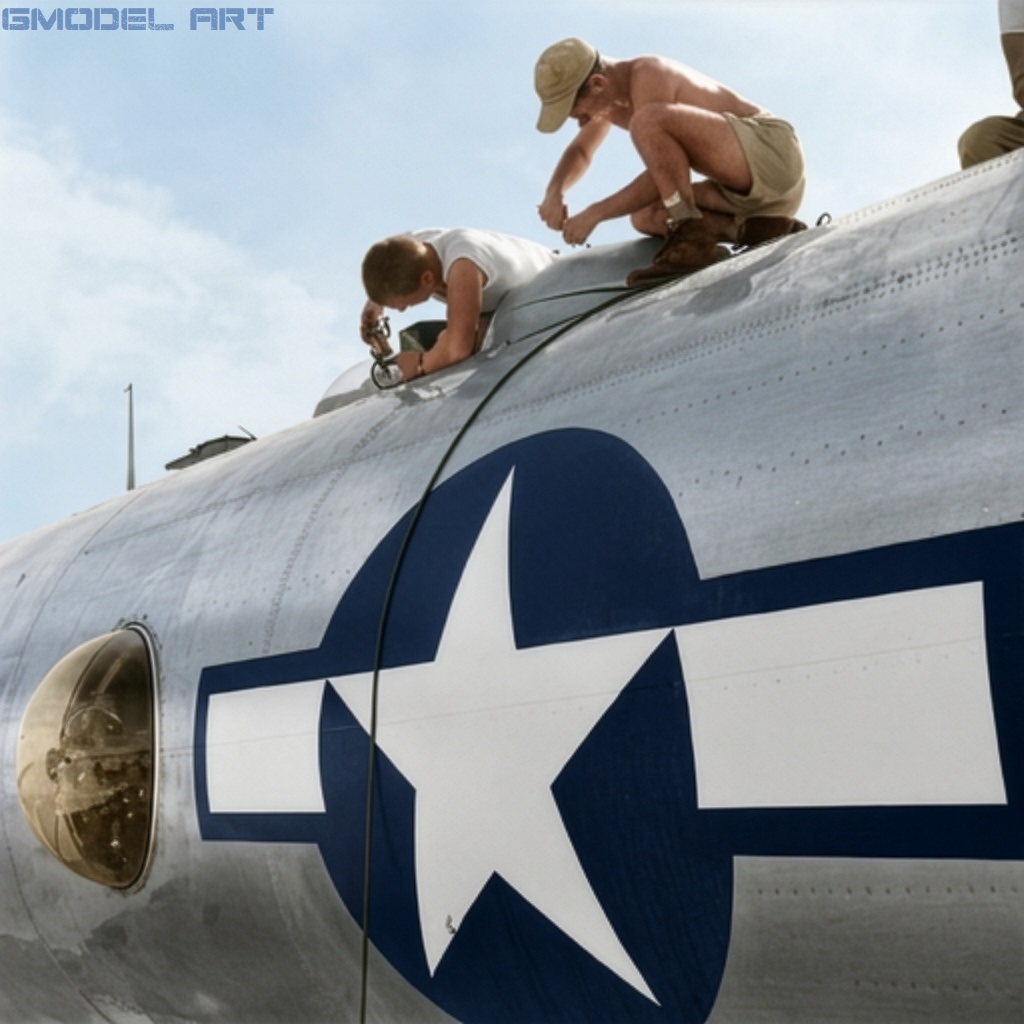
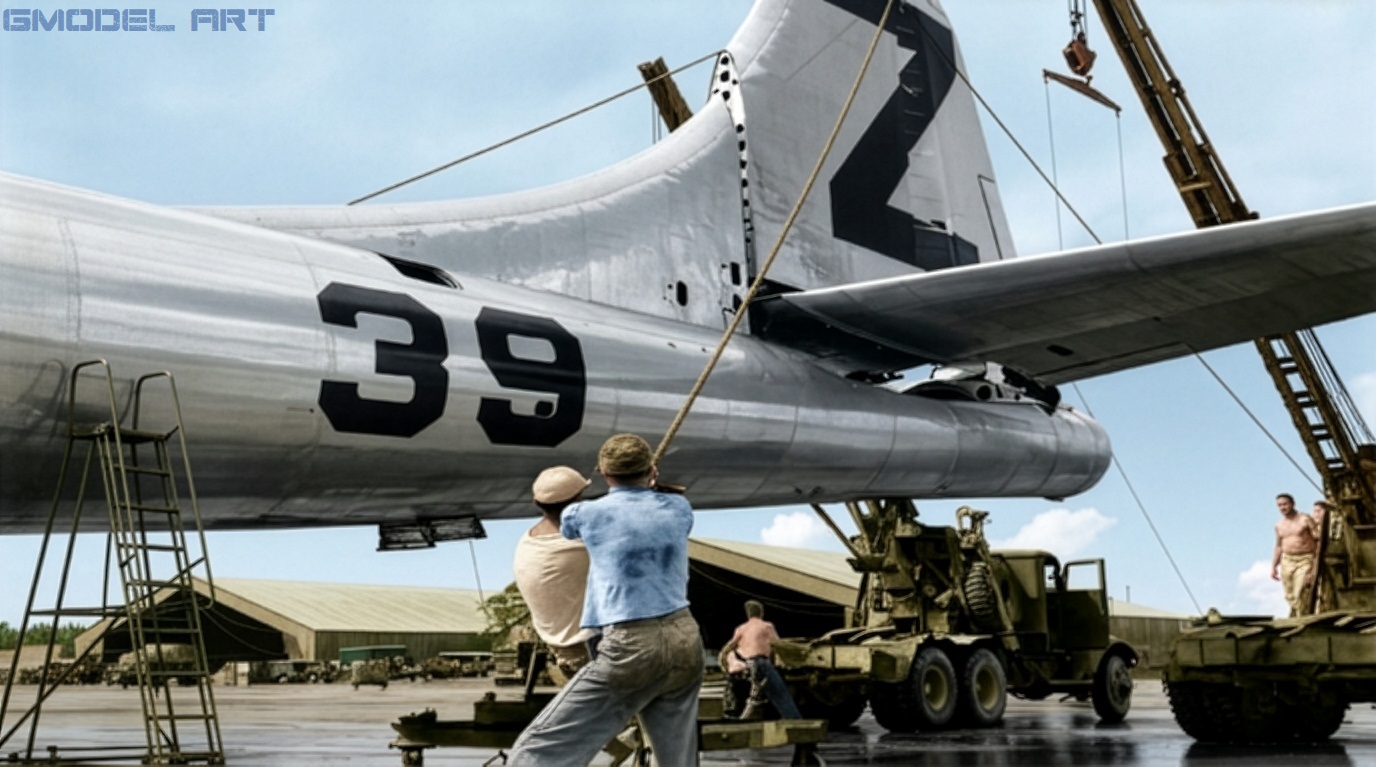
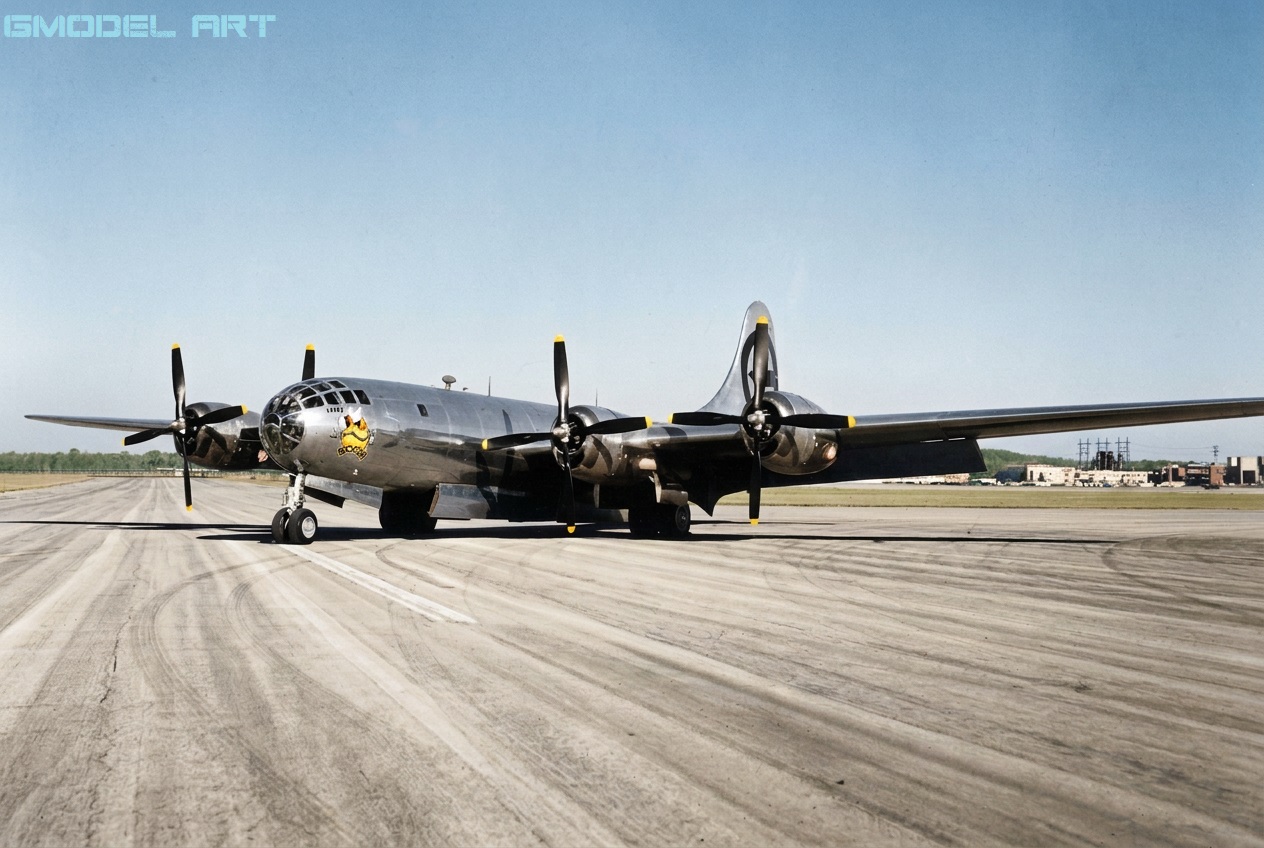
Period photographs of Pacific B-29s show that the natural-metal finish could be much more complex than a uniform silver surface.
Different panels could display variations in tone and gloss. Replacement panels and differences in the alloys used could also produce subtle changes in appearance.
The goal is not to create a chrome B-29.
The aim is to reproduce a large metal aircraft made up visually of many individual panels.
Using Aluminum Foil for a Natural-Metal Skin
For an impressive B-29, aluminum foil is one of the most effective techniques for reproducing a natural-metal finish.
The process begins with a perfectly smooth model surface. Foil is then applied in small, controlled panels rather than covering the entire fuselage with one large sheet.
The foil must be carefully burnished over panel lines and rivets using a soft tool. This allows the underlying surface detail to remain visible through the metal.
Panel direction and variation are extremely important. Even the same sheet of foil can produce different effects depending on which side is used and how it is polished. Panel-by-panel foil application is also used on large B-29 builds to create a more realistic metal finish. (ARC Forums)
How to avoid the “mirror” effect
Do not use the brightest possible foil everywhere.
A realistic finish can combine:
Bright aluminum
Dull aluminum
Different sides of the same foil
Light polishing
Controlled satin finishes
Subtle panel variation
The differences should often become visible only when light strikes the surface.
That is far more convincing than a B-29 that looks like a chrome model.
Weathering Based on Period Photographs
Weathering should follow the aircraft’s actual use.
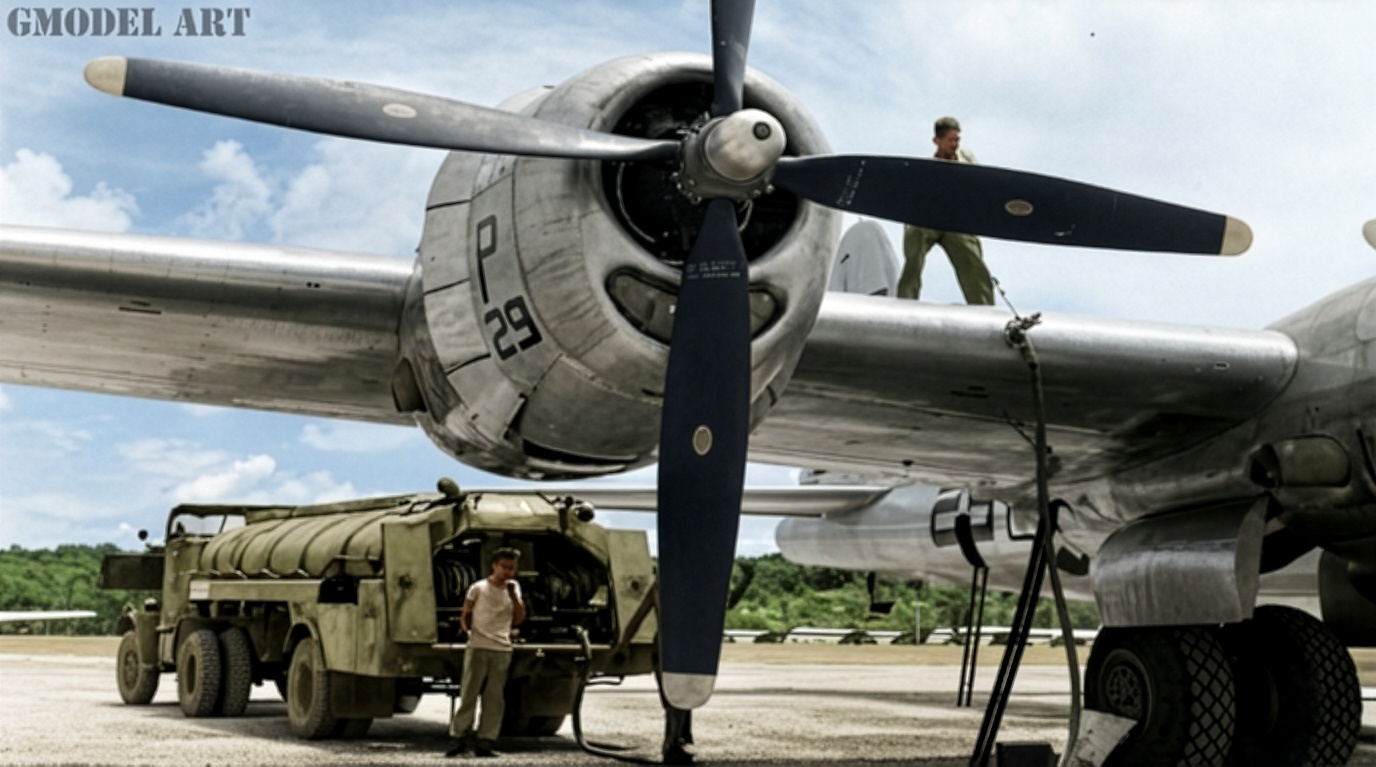
Areas around the engines can show:
Exhaust staining
Oil deposits
Darkened surfaces
Grime
Heat effects
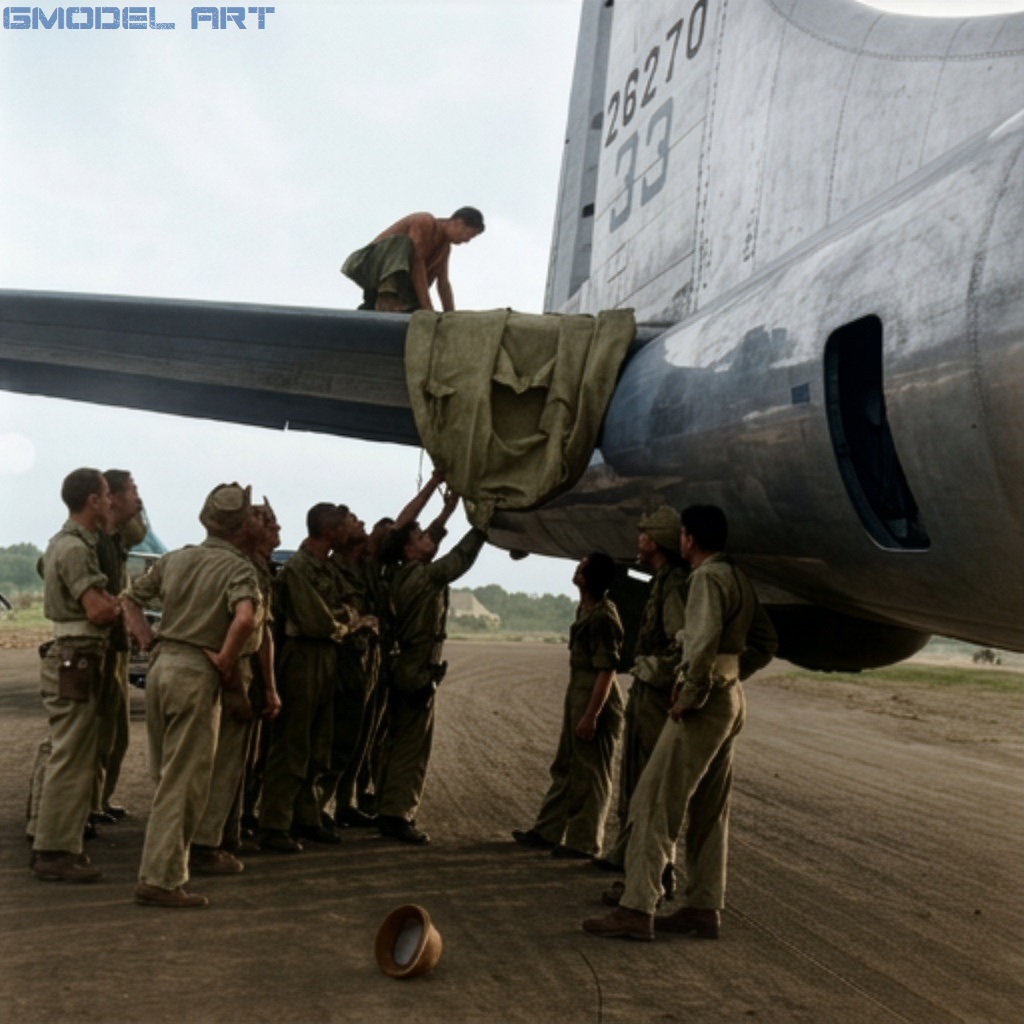
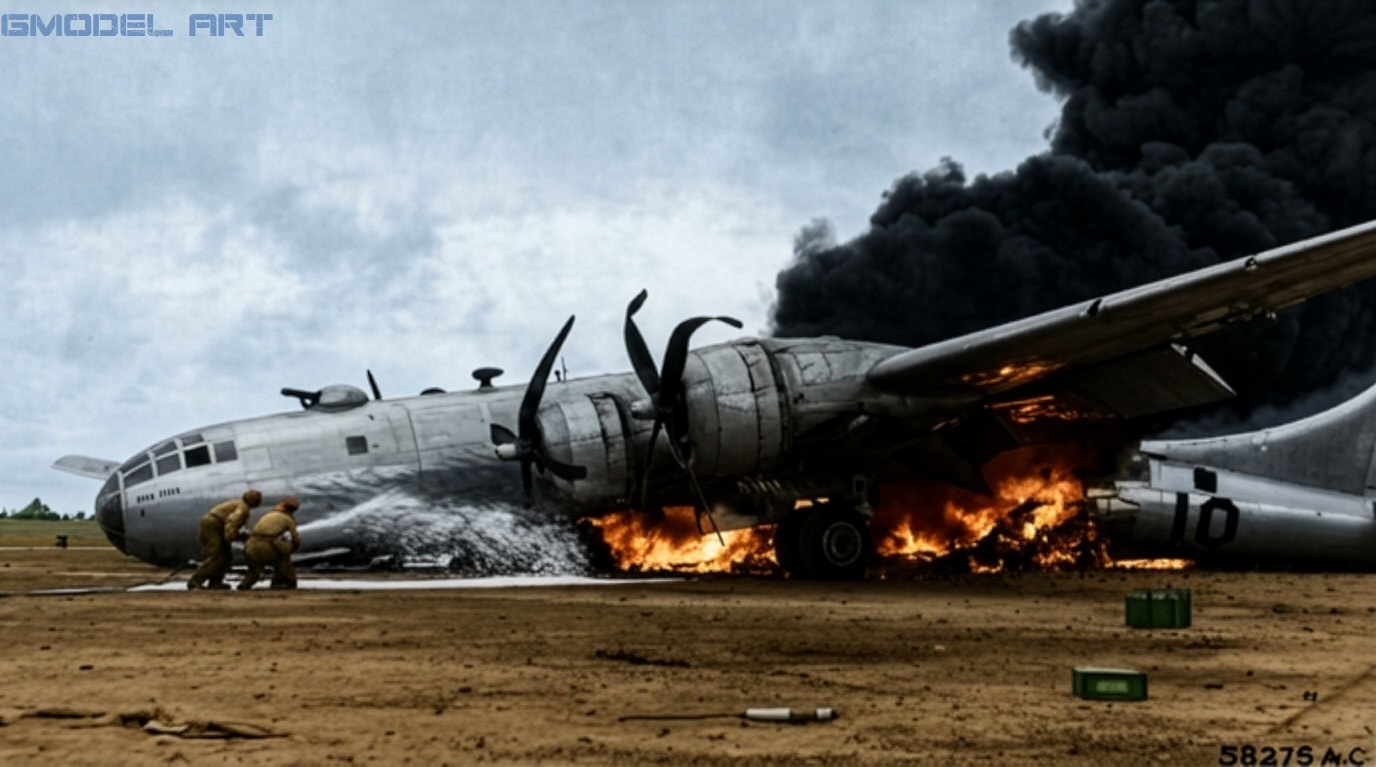
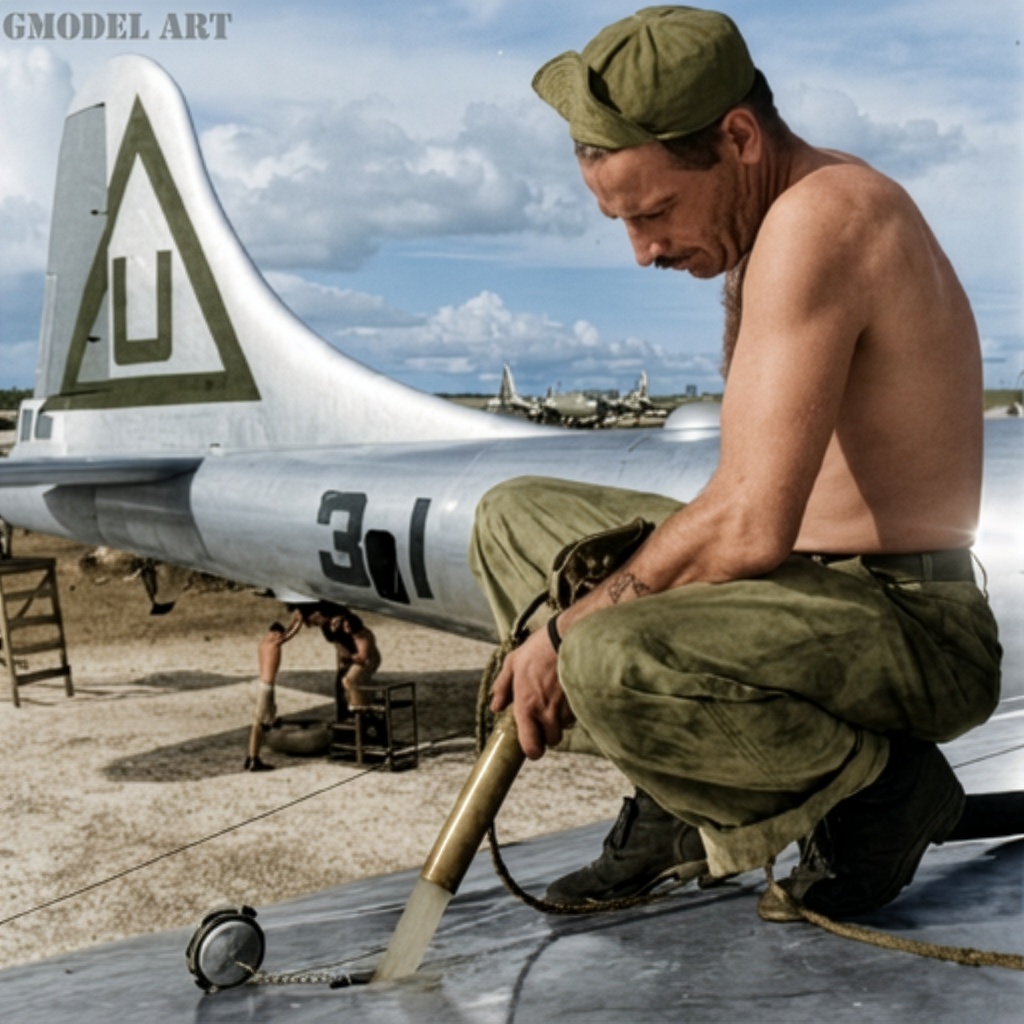
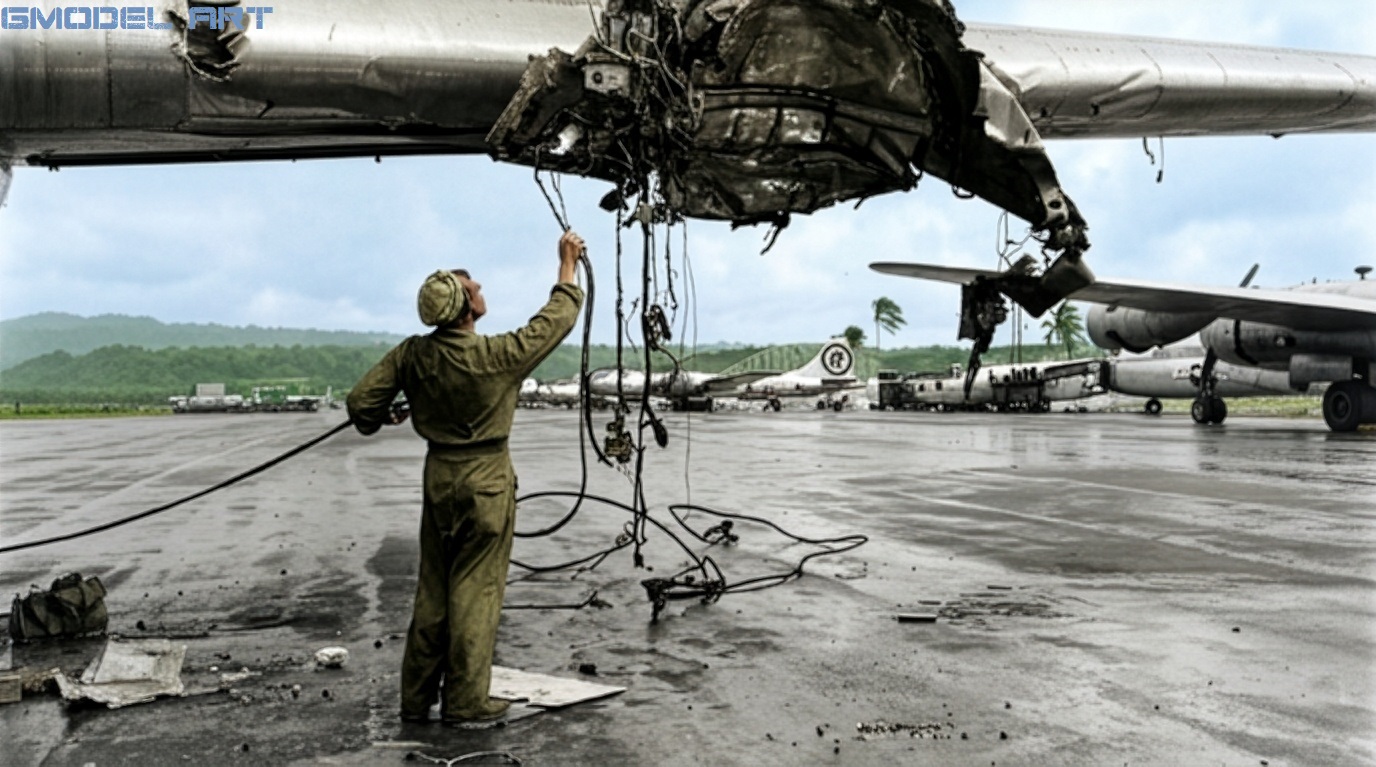
Landing gear and crew access areas usually accumulated more dirt and wear.
Large fuselage areas, however, could remain comparatively clean.
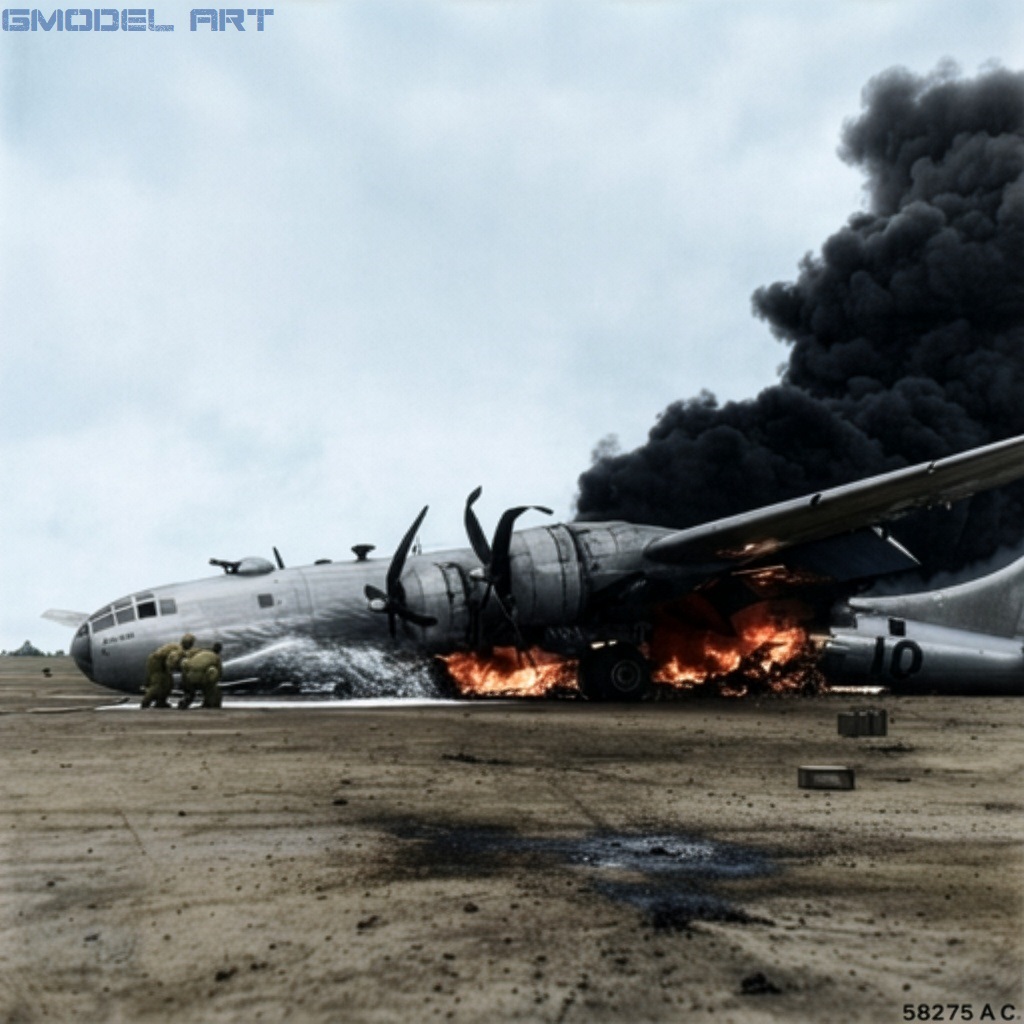
The key is restraint. Period photographs should determine where weathering belongs rather than simply being used as an excuse to add more weathering.
Choosing a B-29 Kit in 1:72 and 1:48
1:72 – The Practical Choice
The Academy 1:72 B-29A remains a useful option for modelers who want an impressive B-29 without allowing the aircraft to completely take over the workbench.
The completed model has an approximately 60 cm wingspan, making it substantial even in 1:72. The Academy kit provides engraved surface detail and a good basis for super-detailing. (Cybermodeler)
For a large diorama, 1:72 has a major advantage: it becomes possible to include one or even several B-29s, together with vehicles, ground crew, equipment, and a substantial airfield setting.
Eduard offers dedicated 1:72 detail sets for the Academy/Hobby 2000 kit, including interior, exterior, bomb bay, steel seatbelts, and masks, while the Big Ed package combines the main upgrades. (Eduard)
1:48 – The Large-Scale Project
In 1:48, the B-29 becomes a true centerpiece.
The larger scale allows considerably more detail in:
Cockpit
Engines
Bomb bays
Gun turrets
Landing gear
Wiring
Natural-metal foil work
The classic Monogram/Revell 1:48 B-29 remains the well-known starting point for such a project, and a substantial aftermarket ecosystem has been developed for it. Eduard produced separate sets covering areas such as the interior, exterior, undercarriage, rear interior, bombs, and masks. Some of these older 1:48 sets are now discontinued, so availability should be checked before planning a build around them. (Eduard)
Aftermarket – Where Is It Worth Spending Money?
You do not need every available aftermarket set.
For a 1:72 B-29, the most useful improvements are usually:
Cockpit/interior
Bomb bay
Seatbelts
Exterior details
Masks
Eduard currently groups these types of upgrades into its Big Ed package for the Academy/Hobby 2000 kit. (Eduard)
For a 1:48 super-detailed B-29, the most valuable areas are:
Cockpit
Rear interior
Landing gear
Bomb bay
Gun positions
Engine details
Masks
The large 1:48 Eduard Big Ed package was designed around the Monogram/Revell kit and included eight individual sets, although the complete package is now listed as discontinued. (Eduard)
The best approach is simple:
Choose the scene first. Buy the aftermarket second.
Not the other way around.
Building a Tinian-Style B-29 Diorama
Tinian provides perhaps the ideal environment for a large B-29 diorama.
North Field contained huge parking areas and extensive infrastructure designed specifically for the mass operation of Superfortresses. (National Park Service)
A 1:72 diorama could include:
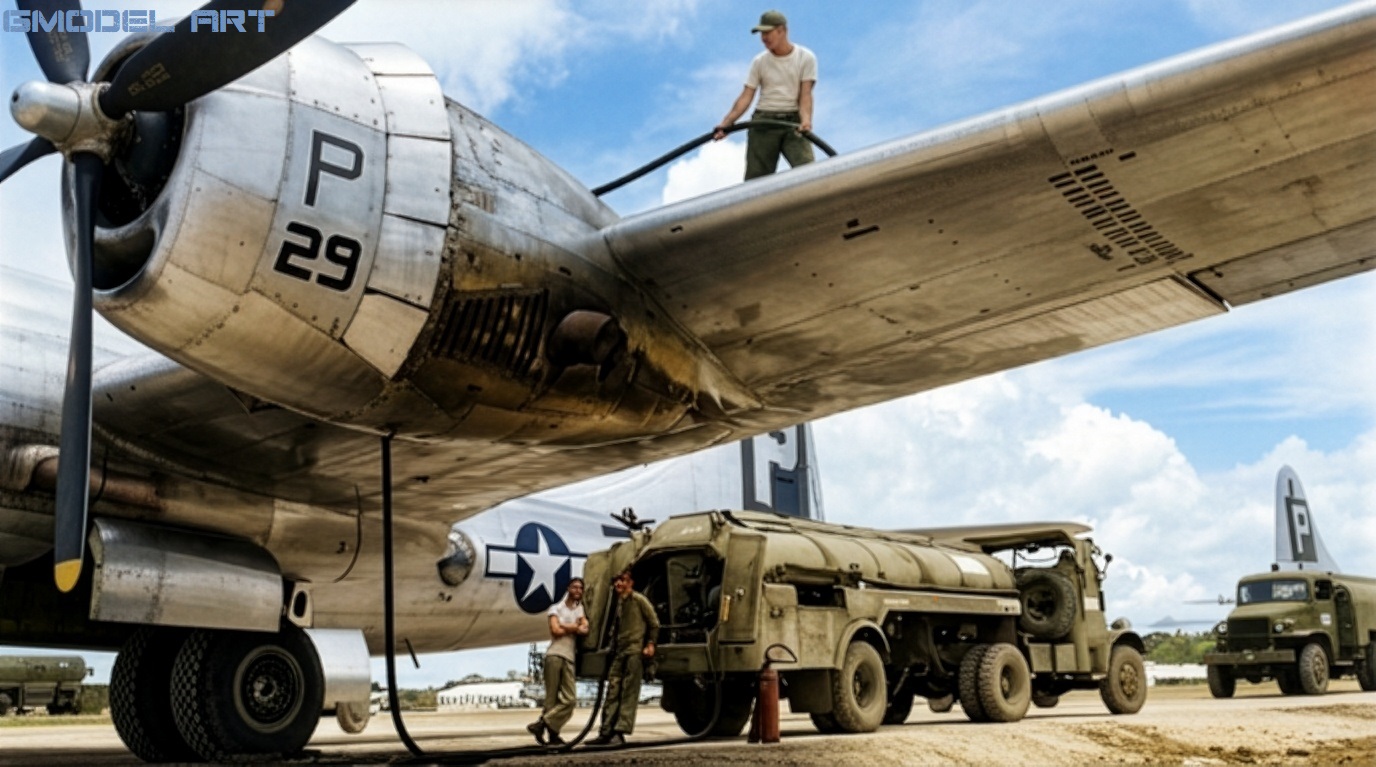
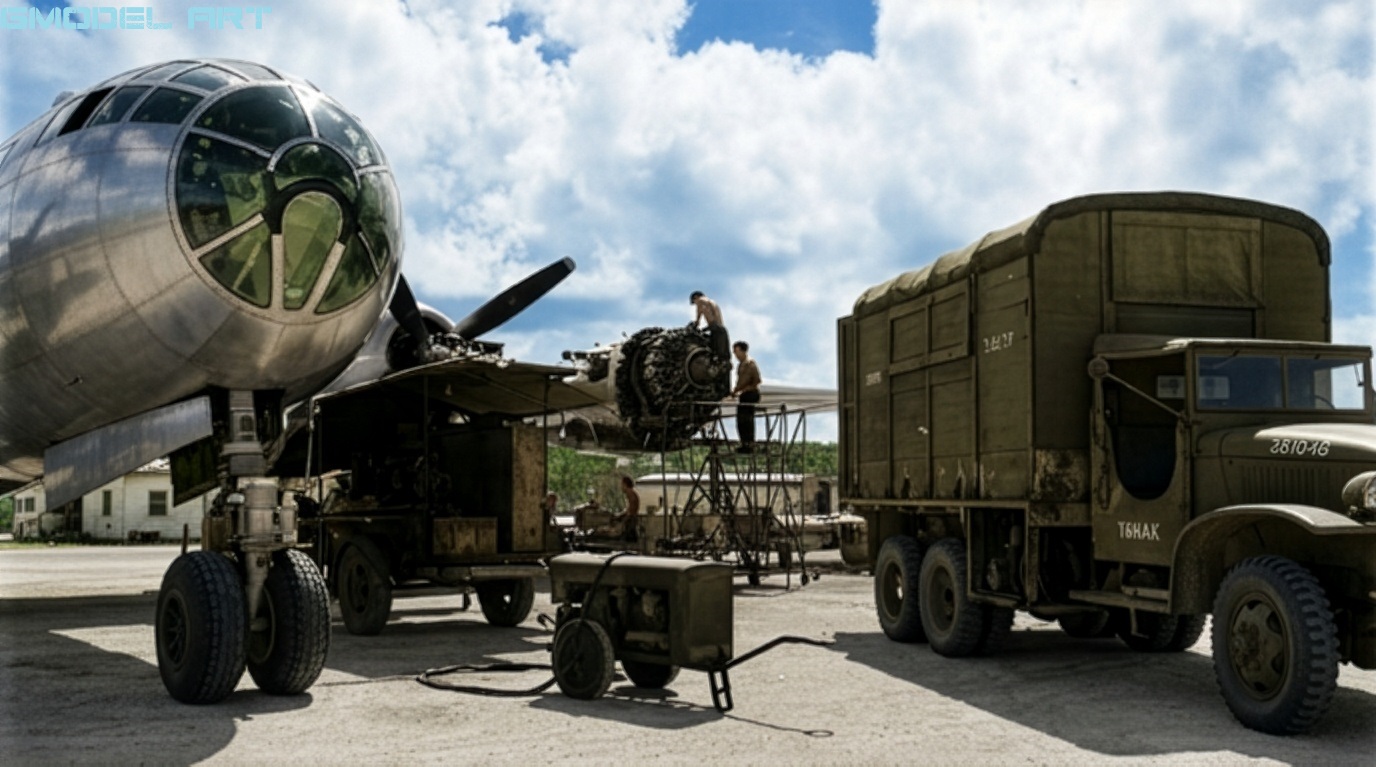
B-29 + hardstand + bomb cart + fuel truck + jeep + ground crew + maintenance equipment.
At 1:48, it is usually better to concentrate on one specific scene:
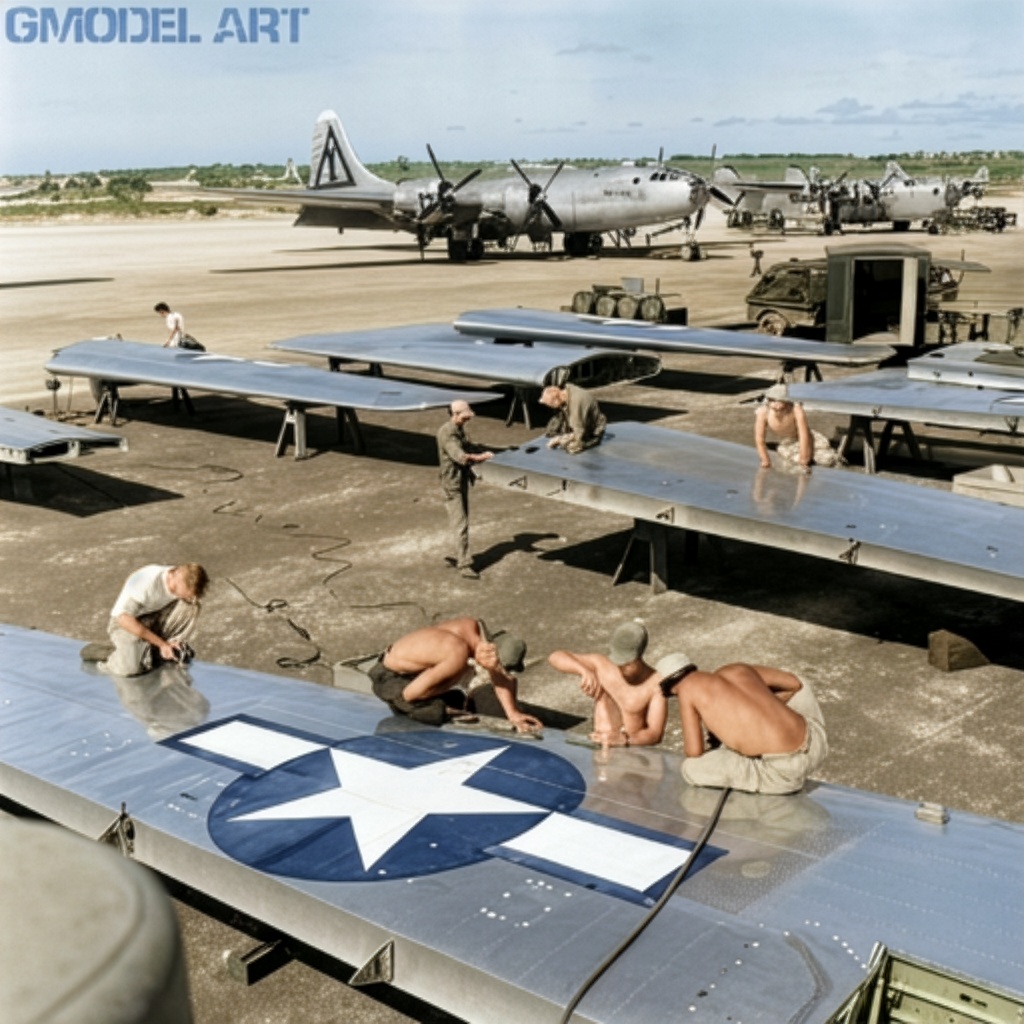
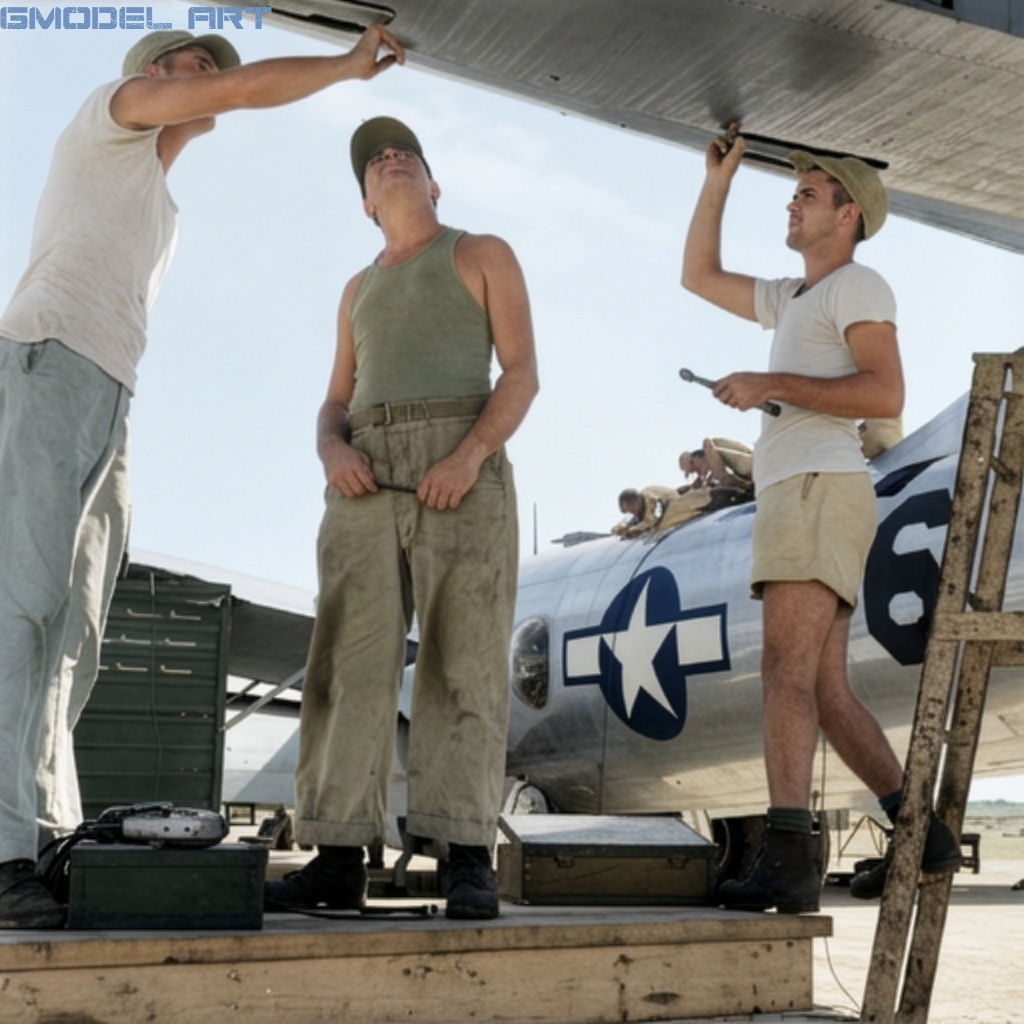
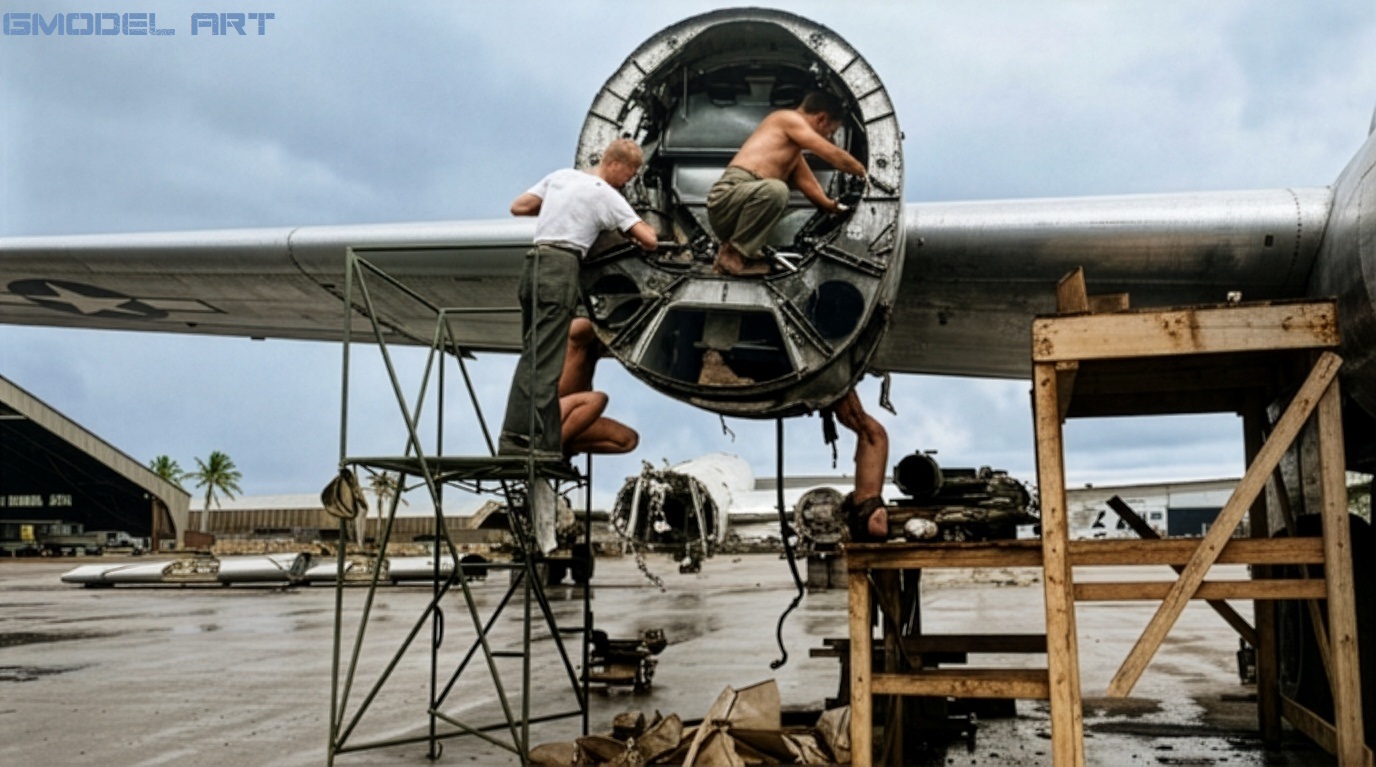
A B-29 on a hardstand, bomb bay doors open, with ground crew preparing the aircraft for its mission.
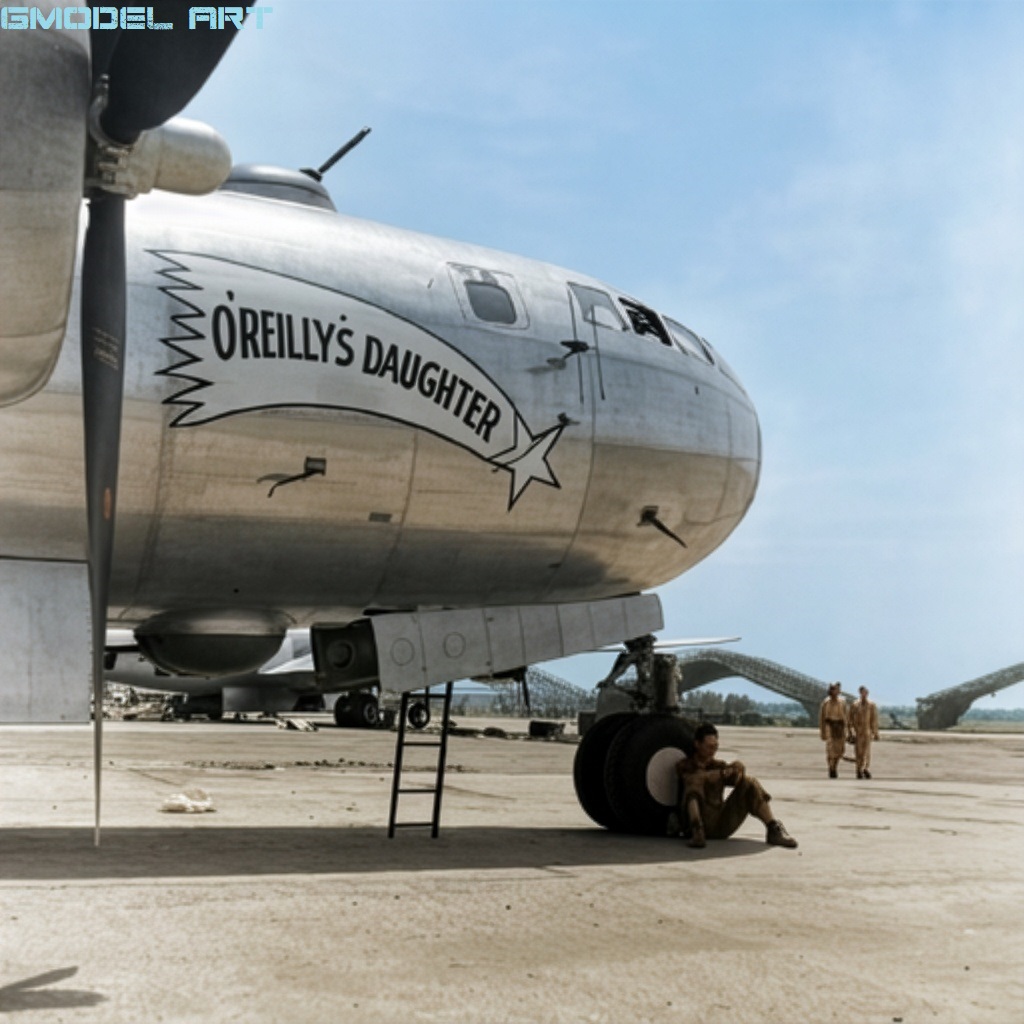
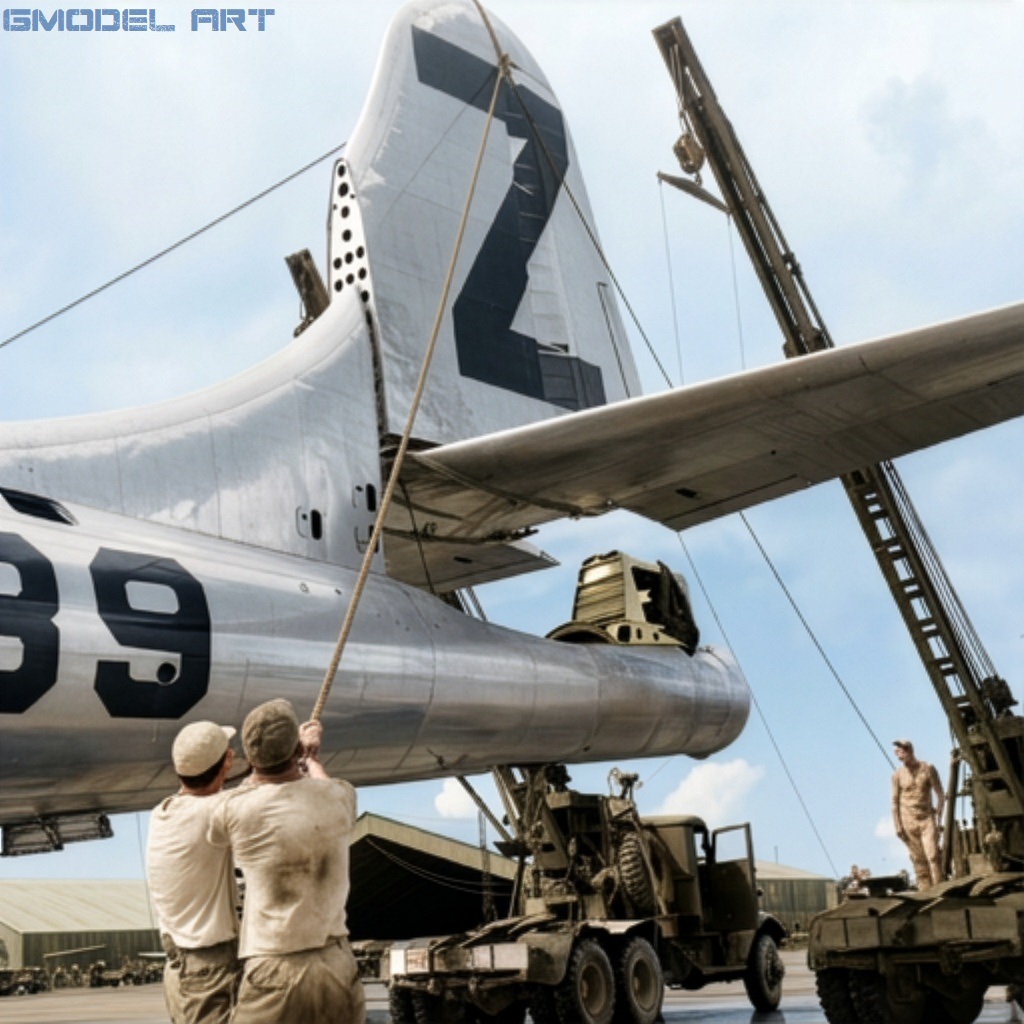
Period photographs should determine:
Ground and concrete texture
Wheel positions
Aircraft shadow
Equipment placement
Vehicles
Cables and hoses
Vegetation
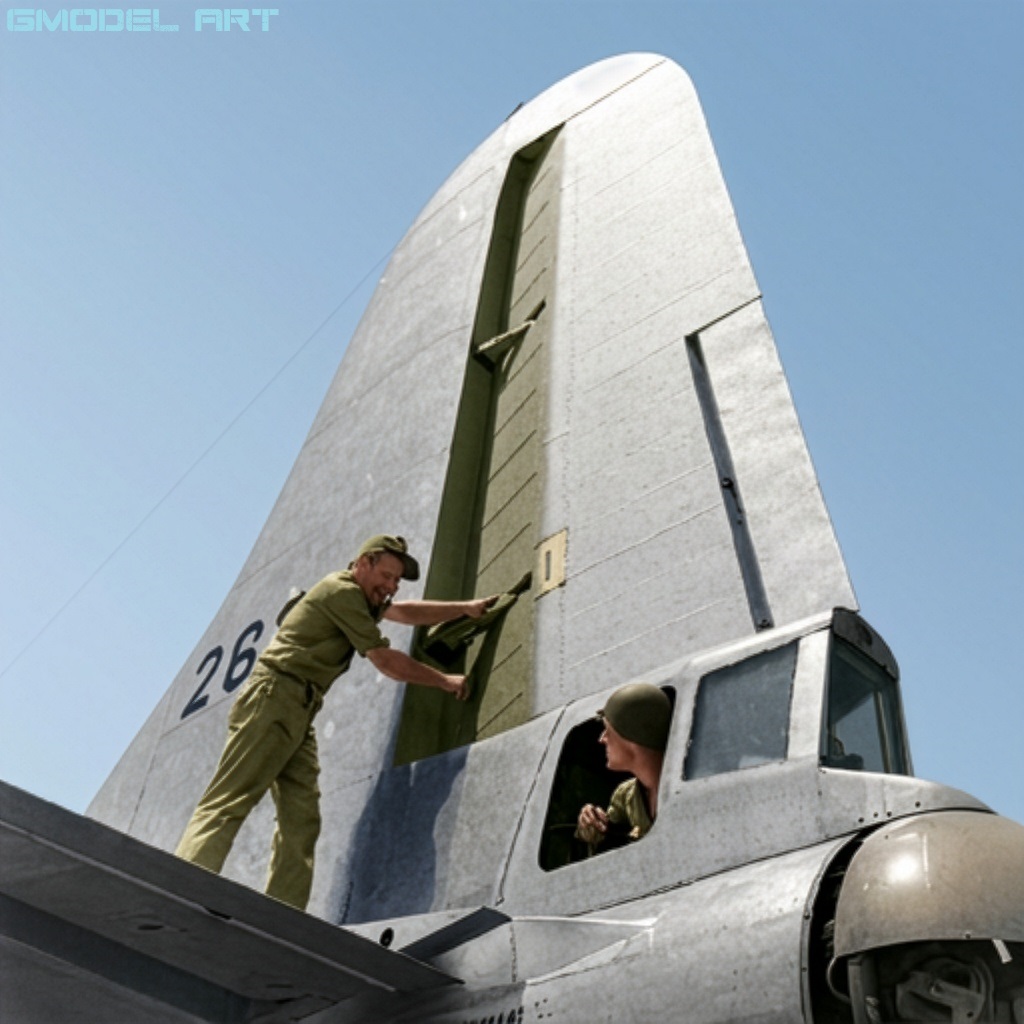
Personnel positions
Distances between aircraft and ground equipment.
The result should look like a moment captured on a real wartime airfield, not a collection of models placed on a base.
B-29 Modeling Color Reference
| Area | Historical / Modeling Representation | Suggested Options |
|---|---|---|
| Natural Metal | Aluminum with subtle panel variation | Tamiya LP-70 / Mr. Color Super Metallic / AK Xtreme Metal |
| Dull Aluminum | Less reflective panels | Aluminum / Duraluminum |
| Engine Area | Darker aluminum + heat staining | Dark Aluminum / Burnt Metal |
| Exhaust Area | Heat-stained metal | Burnt Metal / Exhaust tones |
| Anti-Glare Panel | Black or very dark finish depending on aircraft | Tamiya / Mr. Color |
| Interior | Depends on the specific compartment and aircraft | Interior Green / Yellow Zinc Chromate where documented |
| Bomb Bay | Metal and structural surfaces | Aluminum / Dull Metal |
| Tires | Rubber black rather than pure black | Tamiya Rubber Black |
| Weathering | Controlled and photograph-based | Oils / Pigments / Washes |
Exact colors should always be connected to the specific aircraft and time period. There was no single universal “B-29 color scheme” covering every aircraft and every mission.
Final Modeling Approach
The Boeing B-29 Superfortress is an exceptional subject for modelers who want to combine history, technical detail, and large-scale diorama work.
In 1:72, it offers enough space for an impressive operational scene with aircraft, vehicles, ground crew, and airfield equipment.
In 1:48, it becomes a true centerpiece, allowing the modeler to explore natural-metal foil work, the cockpit, engines, bomb bays, gun turrets, and landing gear at a much deeper level.
The most important step, however, is to begin with the history.
Choose the unit, aircraft, time period, and mission. Then study the photographs. Only after that should you decide on the colors, weathering, aftermarket, and diorama setting.
That approach turns the model from simply another B-29 into a specific Superfortress at a specific moment of the Pacific War.
https://airandspace.si.edu/collection-objects/boeing-b-29-superfortress-enola-gay/nasm_A19500100000