article
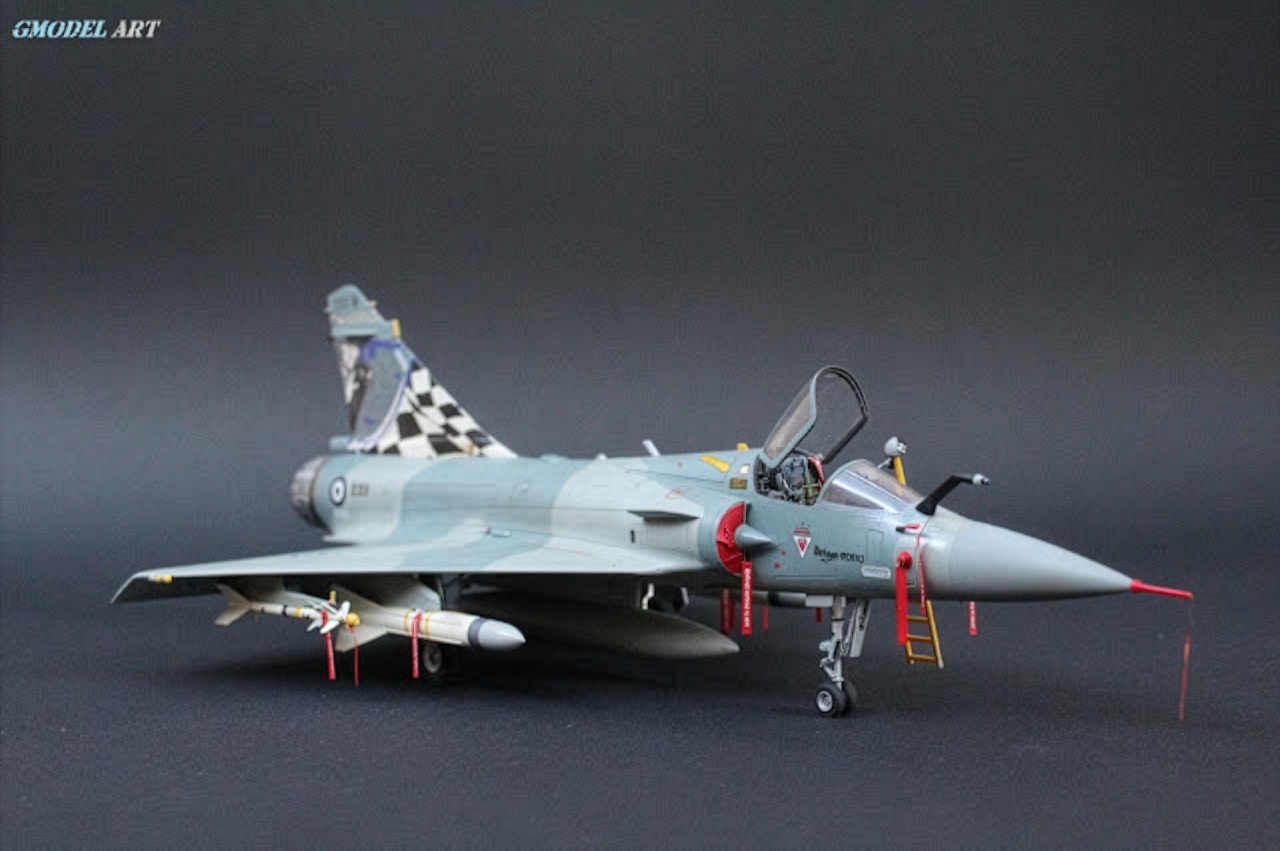
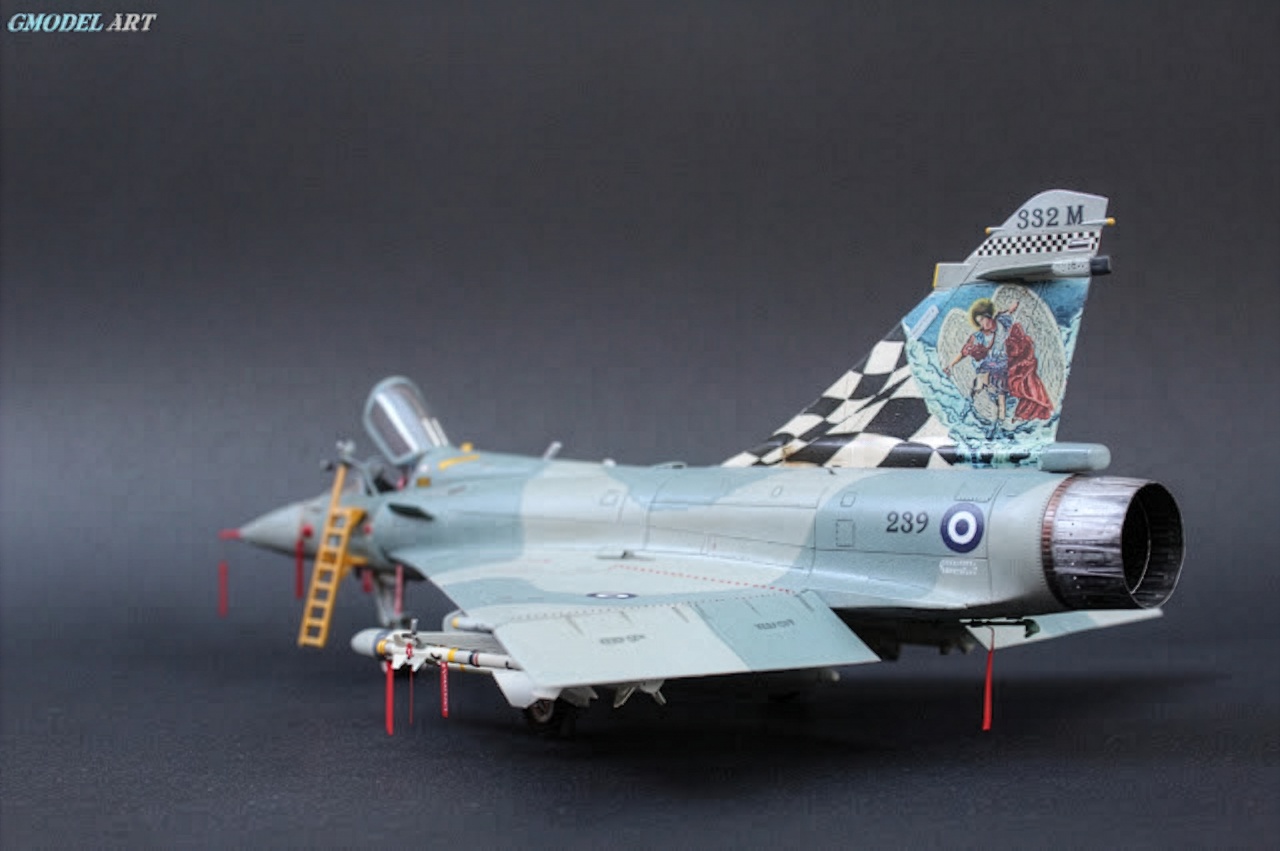
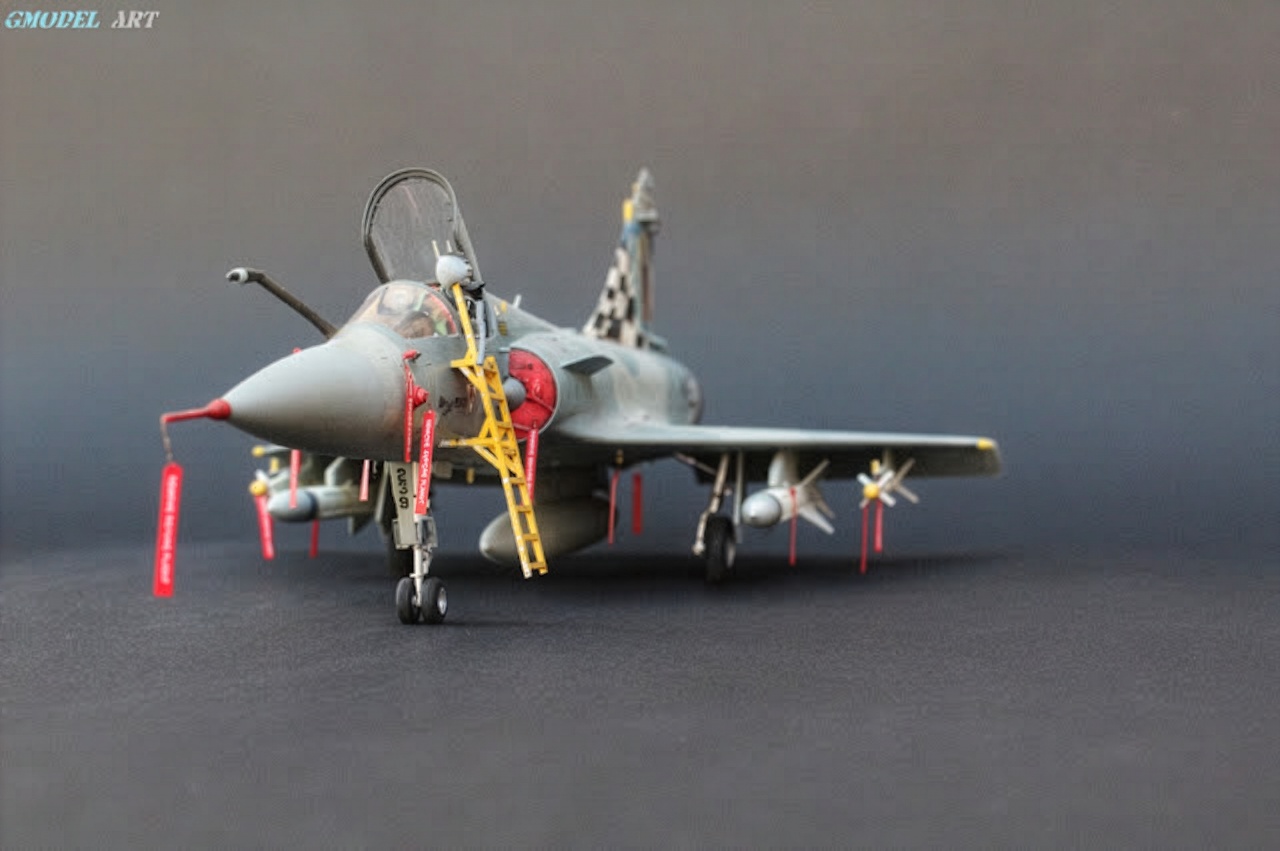
Mirage 2000EGM/BGM HAF – 332 Squadron “Geraki” | 1/48 Scale Model
The Dassault Mirage 2000EGM/BGM occupies a special place in the history of the Hellenic Air Force. Introduced into Greek service in 1988, the Mirage 2000 represented a major technological step for the country’s fighter force and became one of the most recognizable aircraft associated with the 114 Combat Wing at Tanagra.
Greece originally ordered 40 aircraft: 36 single-seat Mirage 2000EGM fighters and four two-seat Mirage 2000BGM trainers. The first aircraft entered Greek service in 1988, with the fleet subsequently operated by the 331 and 332 All Weather Squadrons at Tanagra.
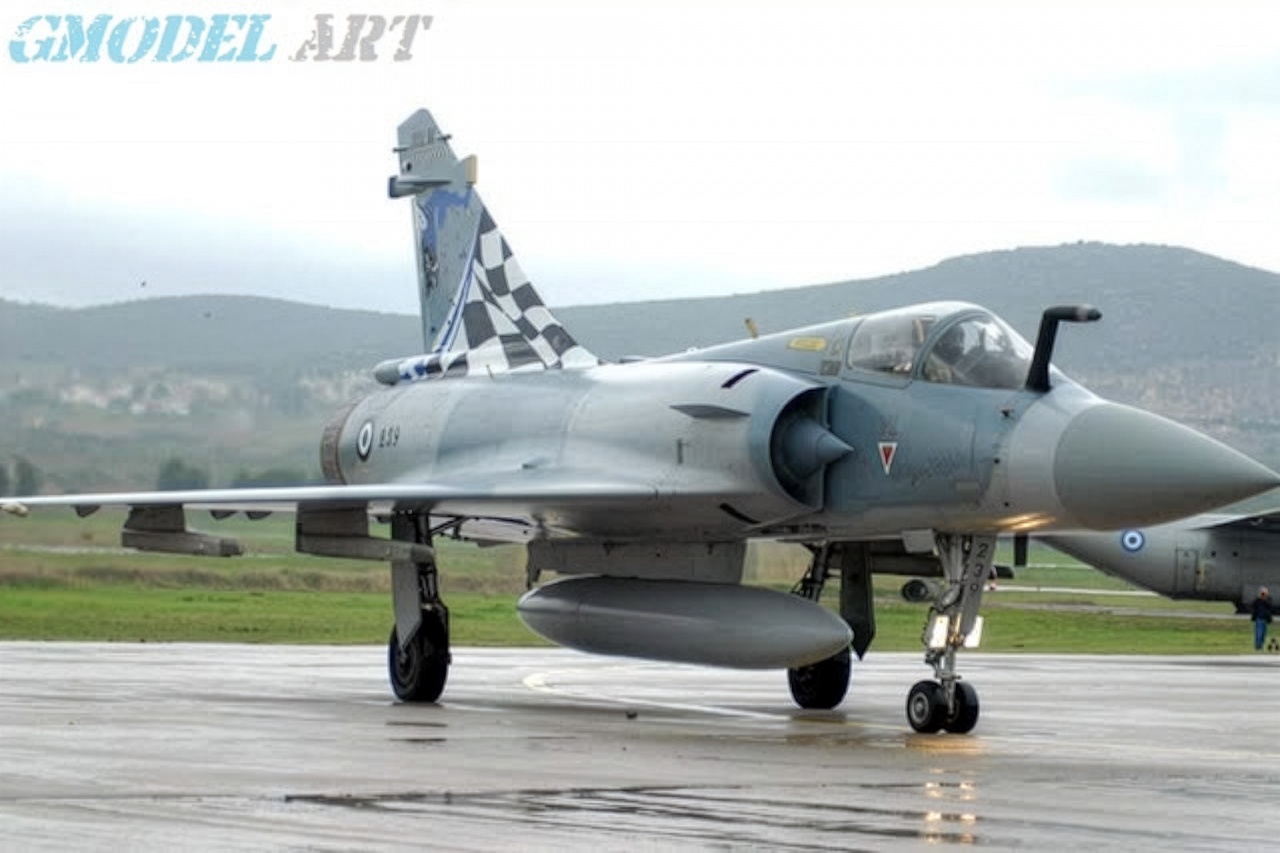
For Greek modellers, the Mirage 2000EGM is particularly interesting because it combines the unmistakable delta-wing design of the French fighter with the distinctive Hellenic Air Force blue-grey camouflage and a weapons fit that included the AM-39 Exocet anti-ship missile.
The aircraft became closely associated with the Aegean and with the operational identity of the 332 Squadron “Geraki” — “Hawk”.
The Mirage 2000 in Hellenic Air Force service
The Mirage 2000 was designed as a single-engine, delta-wing, all-weather fighter capable of performing interception and multi-role missions. Its aerodynamic configuration, electronic flight-control system and powerful SNECMA M53-P2 afterburning turbofan gave it the performance expected from a third-generation European fighter.
The Greek Mirage 2000 fleet was introduced during a period when the Hellenic Air Force was modernizing its combat capability. The aircraft became the successor to the Mirage F-1CG in the French fighter lineage of the HAF and brought a new generation of digital systems and flight-control technology into Greek service.
The original Greek aircraft were equipped for air-defence and interception missions and could employ weapons including the Super 530 and Matra Magic air-to-air missiles. Their ability to employ the AM-39 Exocet gave the Greek Mirage 2000 fleet an additional maritime-strike capability that became one of its most distinctive characteristics.
The combination of Mirage 2000 and Exocet was particularly relevant to the geography of Greek operations, where long stretches of the Aegean Sea formed part of the operational environment.
332 Squadron “Geraki”
The 332 All Weather Squadron was formed at the 114 Combat Wing on 11 August 1989. Its first 14 Mirage 2000 aircraft were delivered on 1 November 1989, and its first pilots came from experienced Mirage F-1CG and F-4E Phantom II backgrounds. By November 1990, the squadron had completed its operational evaluation and entered alert and interception duties over the Aegean.
The squadron’s callsign, “Hawk”, became inseparable from the Greek Mirage 2000.
The 332 operated from Tanagra and became one of the principal Greek Mirage 2000 units. When the newer Mirage 2000-5 entered Hellenic Air Force service, the remaining original Mirage 2000EGM/BGM aircraft became increasingly associated with the 332 Squadron.
For the scale modeller, this history is important because a Greek Mirage 2000 cannot be treated simply as another French Mirage 2000. The exact configuration, markings, weapons and weathering can change significantly depending on the period being represented.
A characteristic HAF appearance
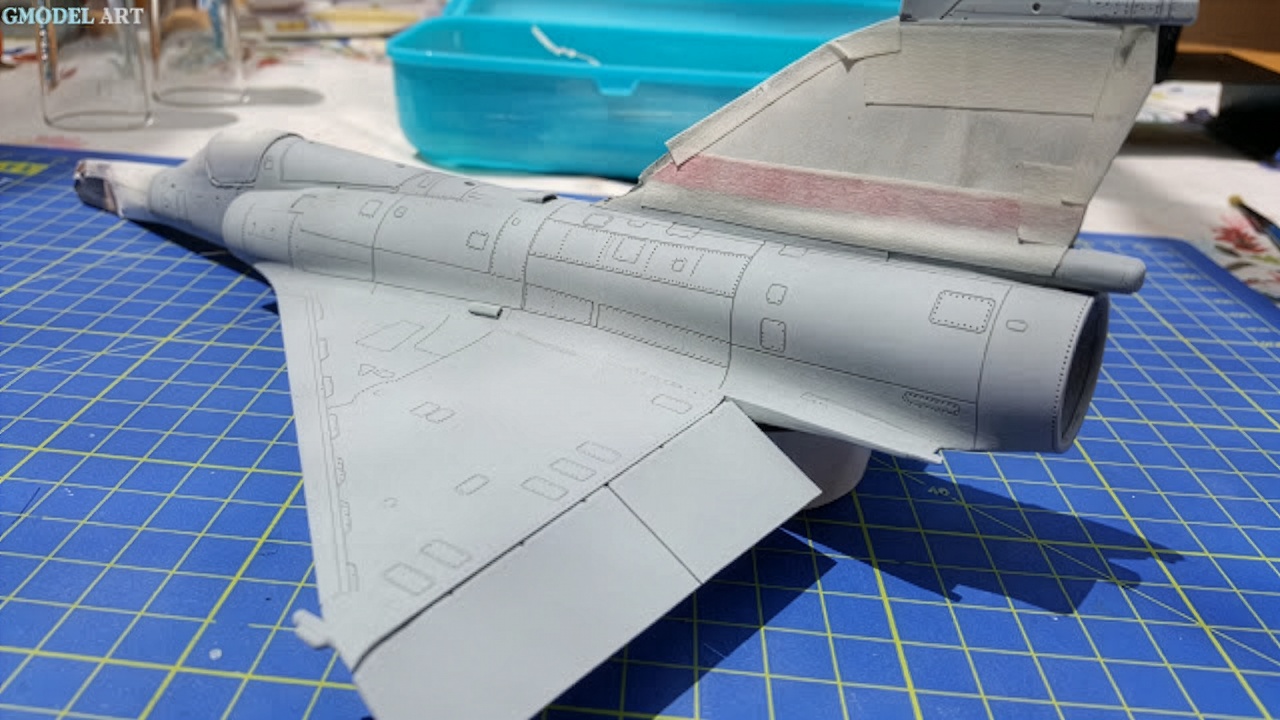
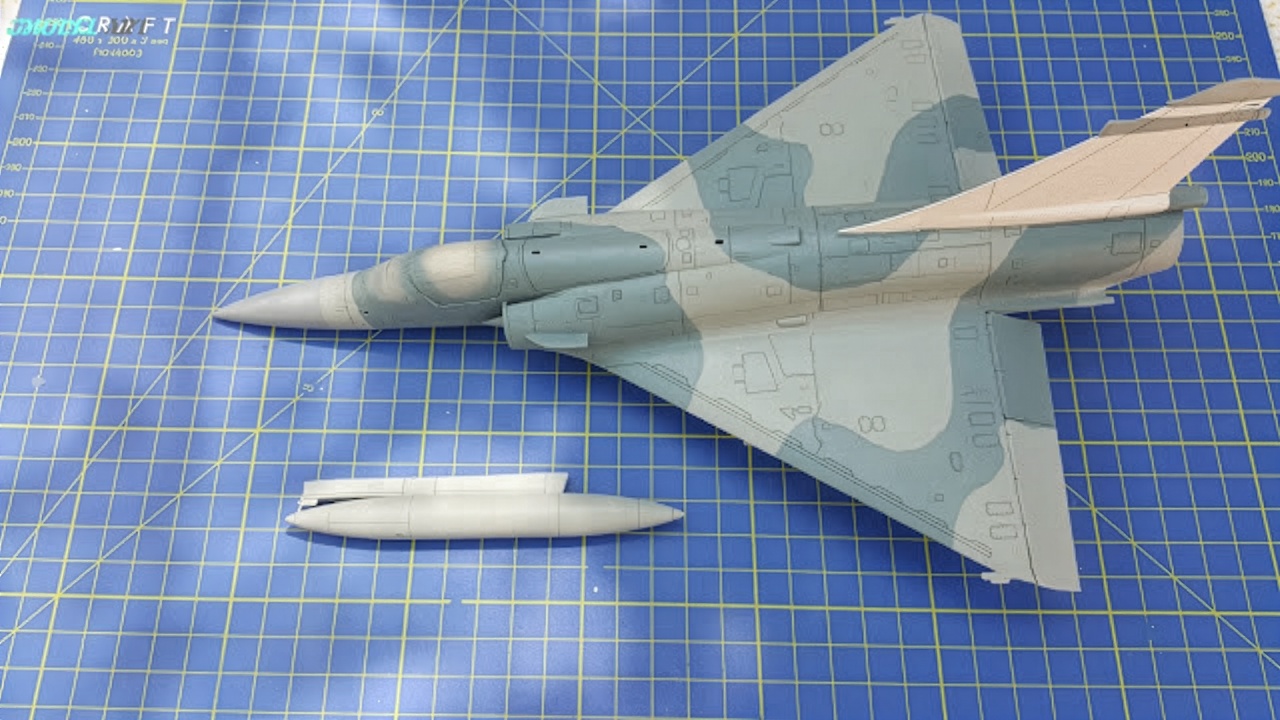
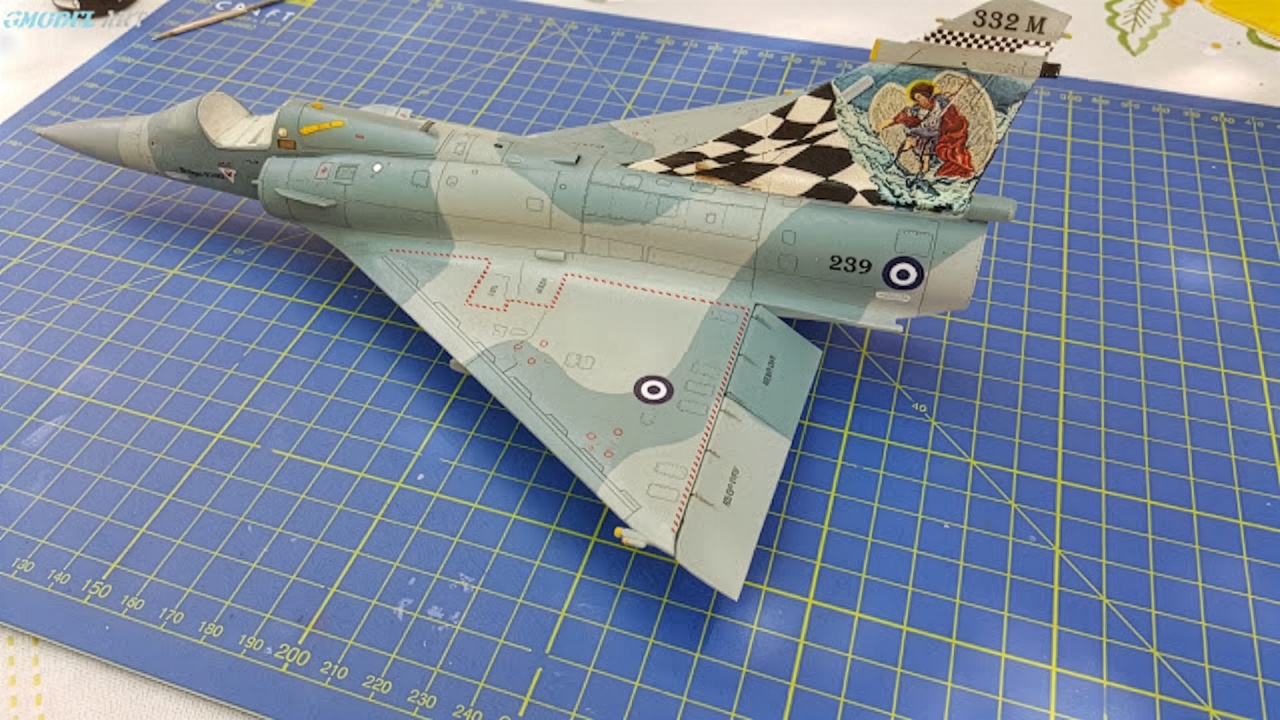
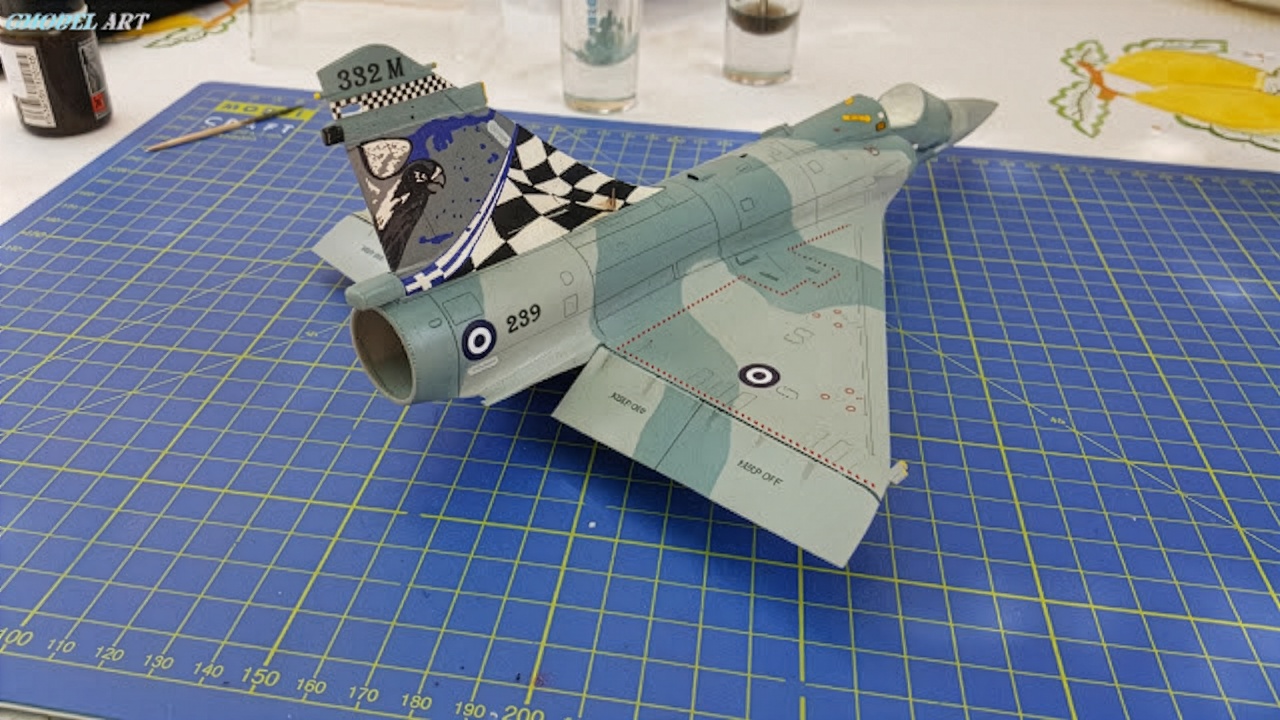
One of the most attractive aspects of the Greek Mirage 2000 is its two-tone blue-grey camouflage.
Unlike a highly weathered combat aircraft with extensive paint degradation, many HAF Mirage 2000s retained a relatively clean overall appearance. This makes subtle finishing particularly important in scale.
The objective is not to cover the aircraft with heavy washes and exaggerated stains. Instead, the modeller can use restrained tonal variation, panel shading, fuel staining and selective dirt accumulation to reproduce an operational aircraft without destroying the clean lines of the Mirage 2000.
For this particular build, the grey was painted with Humbrol 127 enamel, while Colourcoats Royal Navy RN16 enamel was used for the blue.
The choice was made specifically for the model represented here and should not automatically be treated as an official HAF paint specification. Photographic references remain the best guide when reproducing a particular Greek aircraft.
The 1/48 Kinetic kit
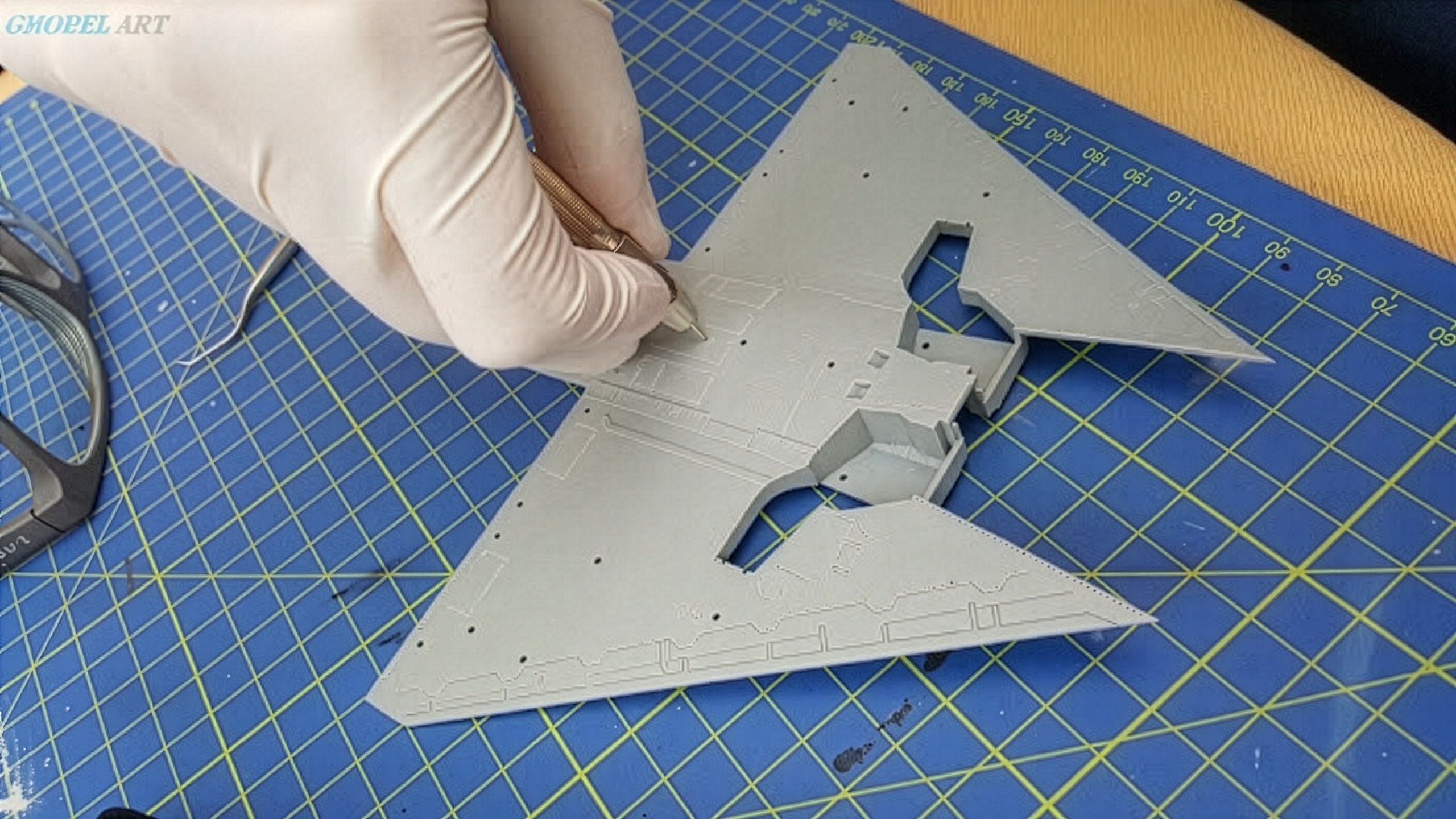
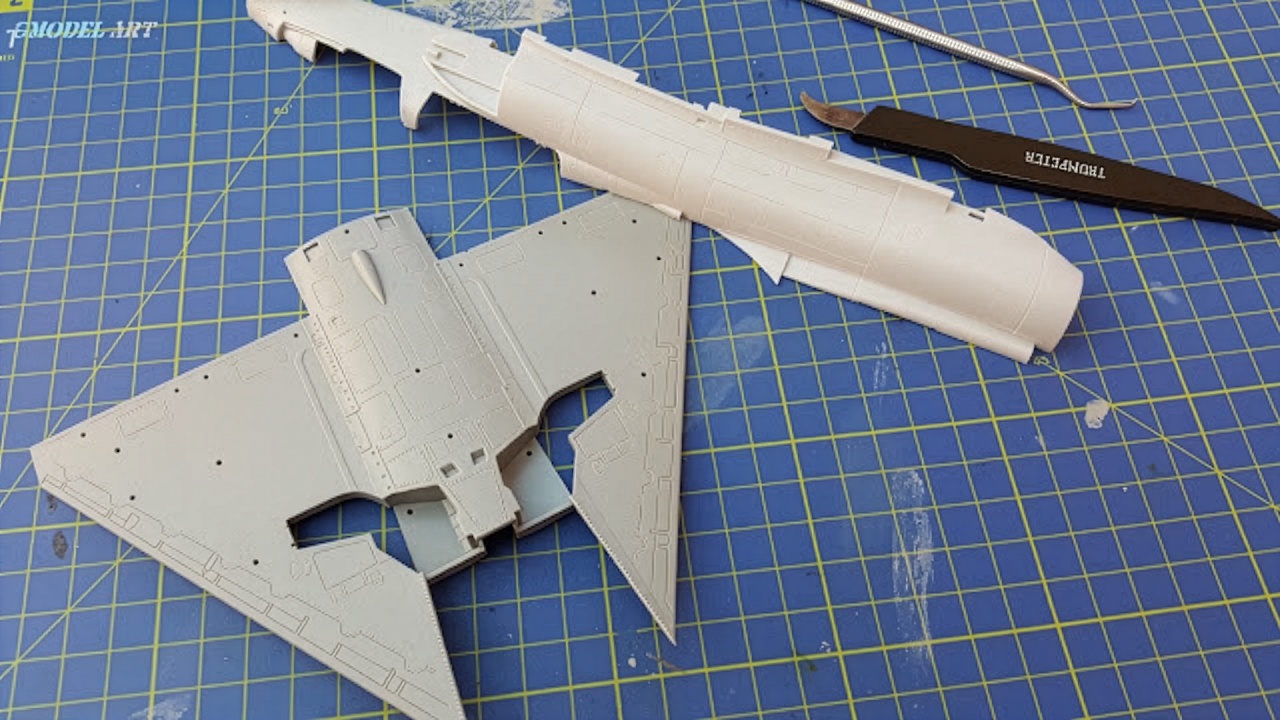
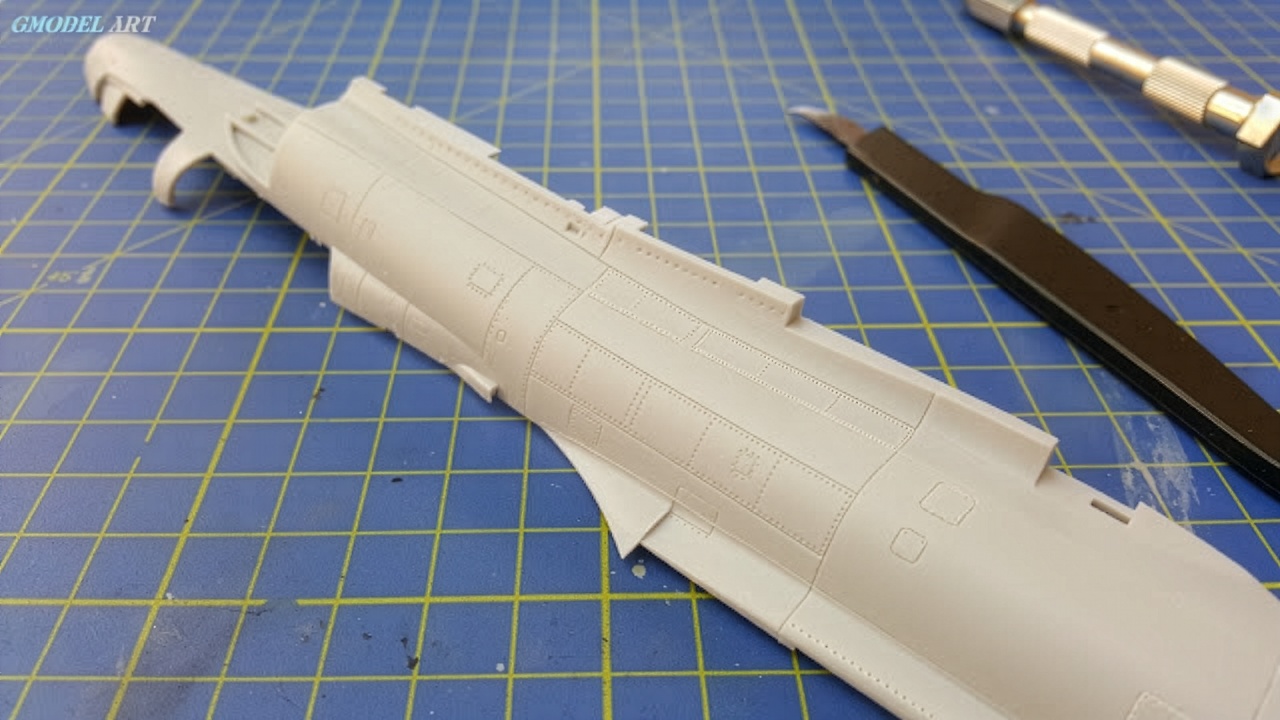
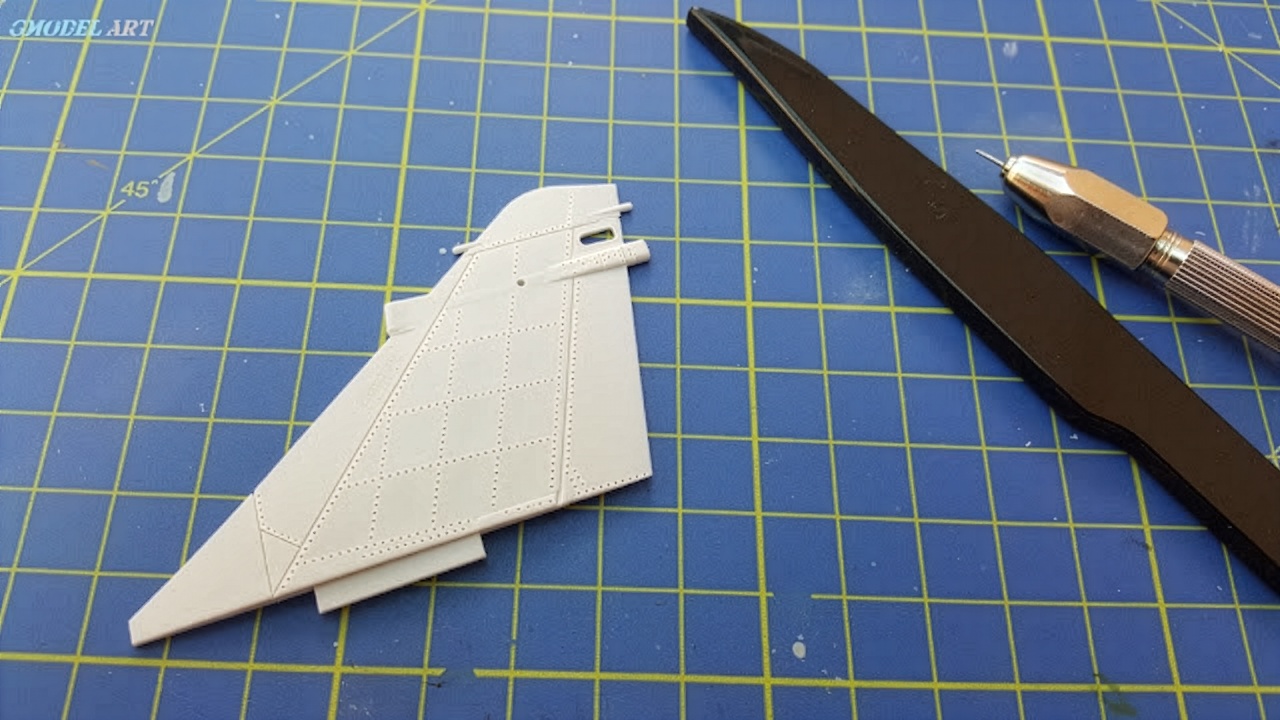
The model was built in 1/48 scale using the Kinetic Mirage 2000 kit.
The kit provides a good basis for a detailed Greek Mirage 2000 and, according to the modeller, did not present major problems during construction. Its surface detail and overall shape provide a solid starting point for a HAF subject.
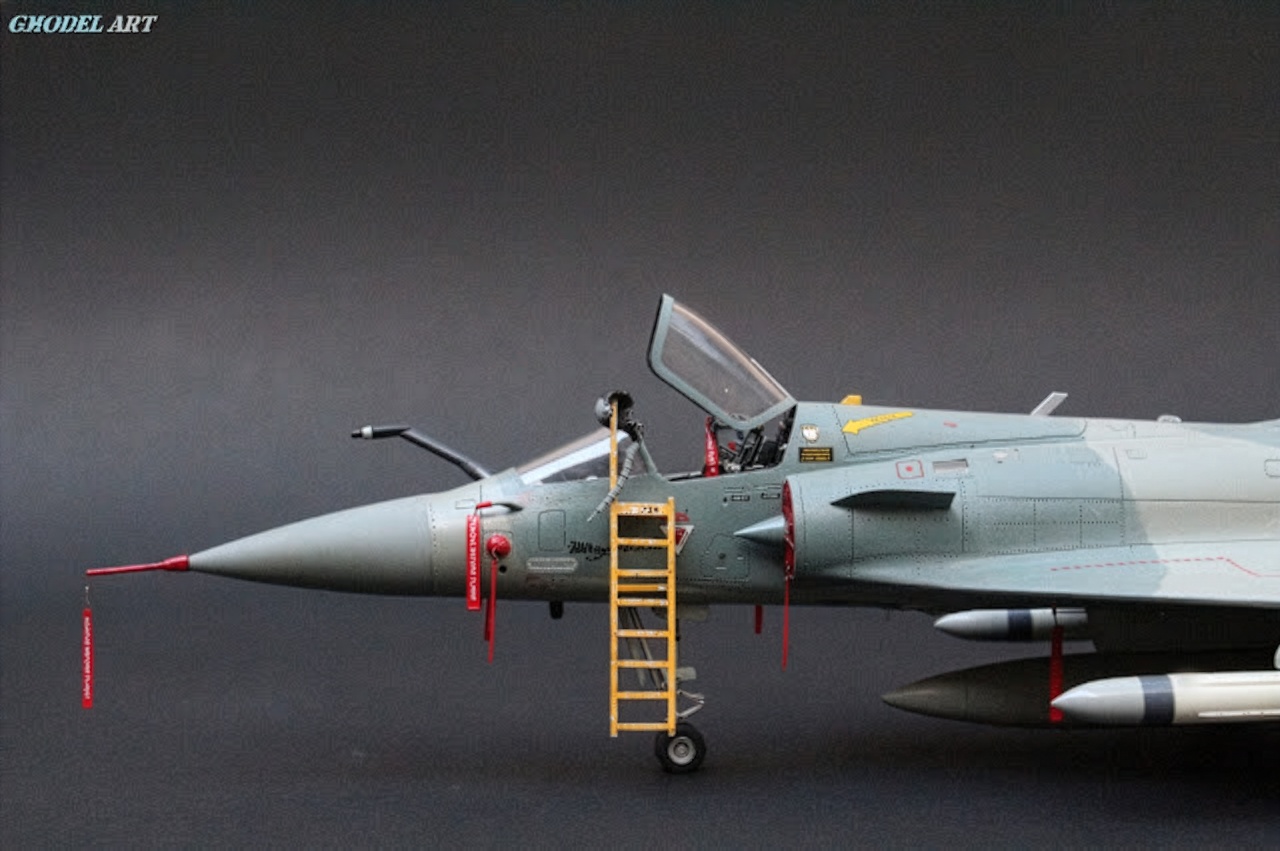
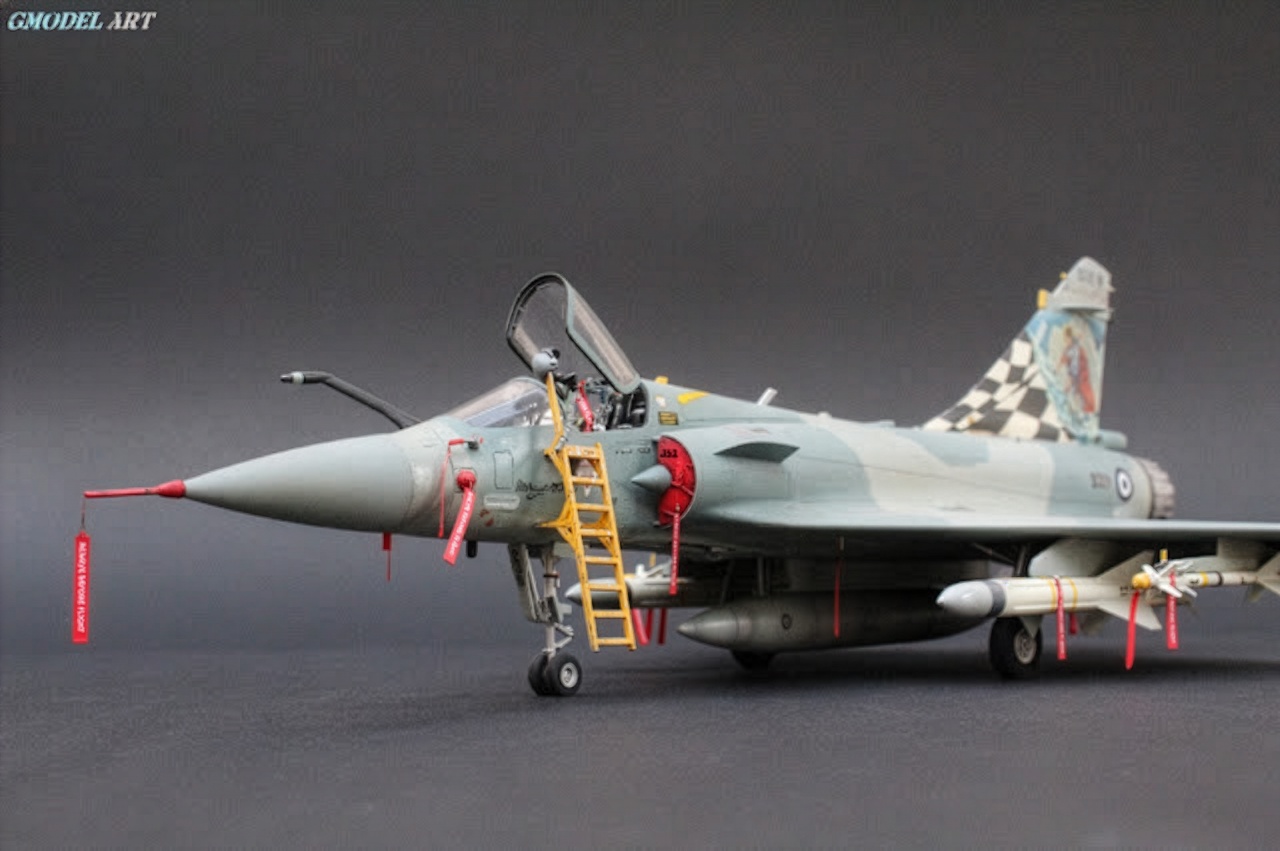
The aim of the project was not to create an excessively weathered aircraft. Instead, the model was approached as an operational but relatively clean Greek Mirage 2000, with additional attention given to the cockpit, exhaust area, landing gear bays and weapons.
Aires upgrades and cockpit detailing
Several aftermarket improvements were incorporated into the model.
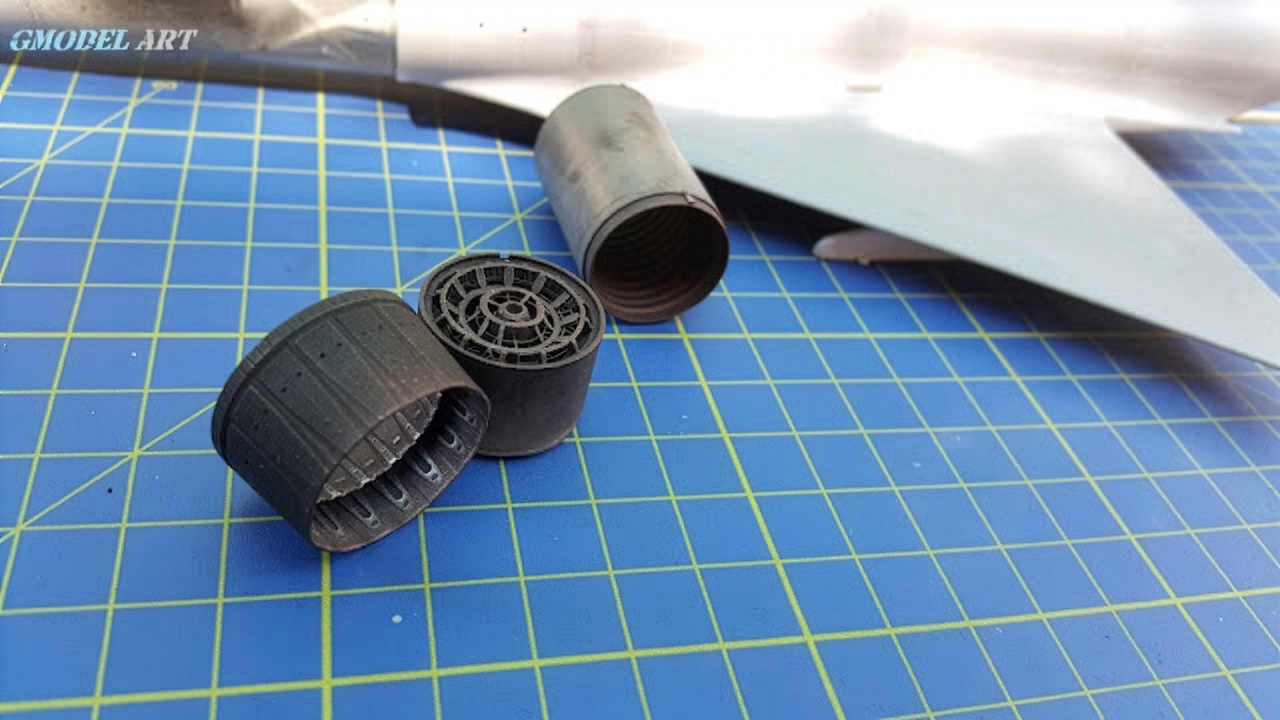
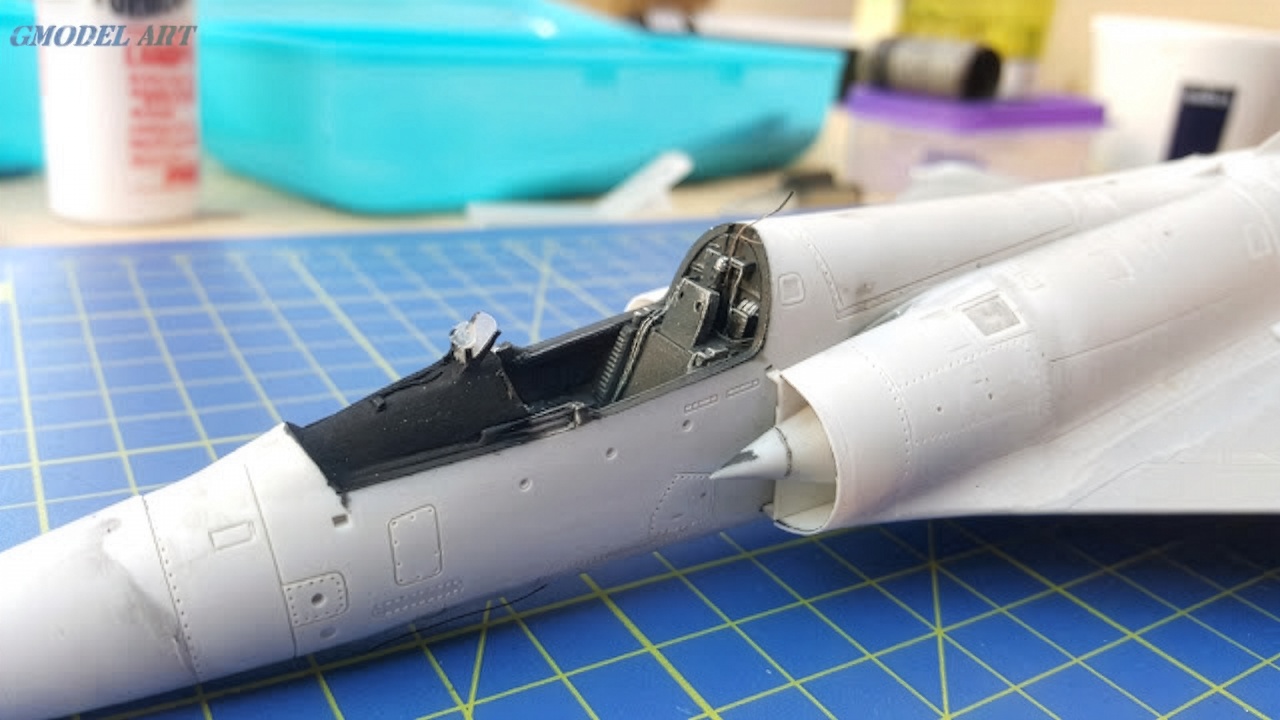
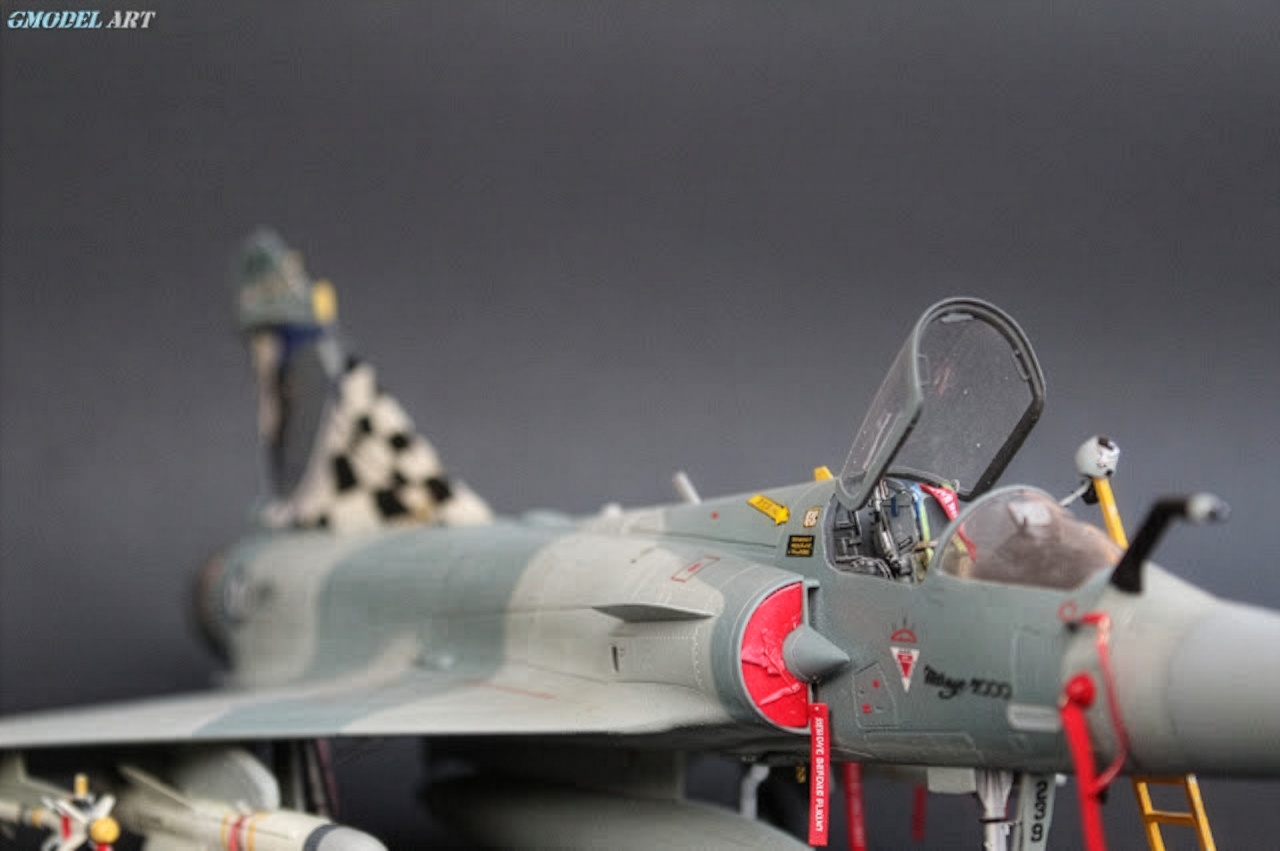
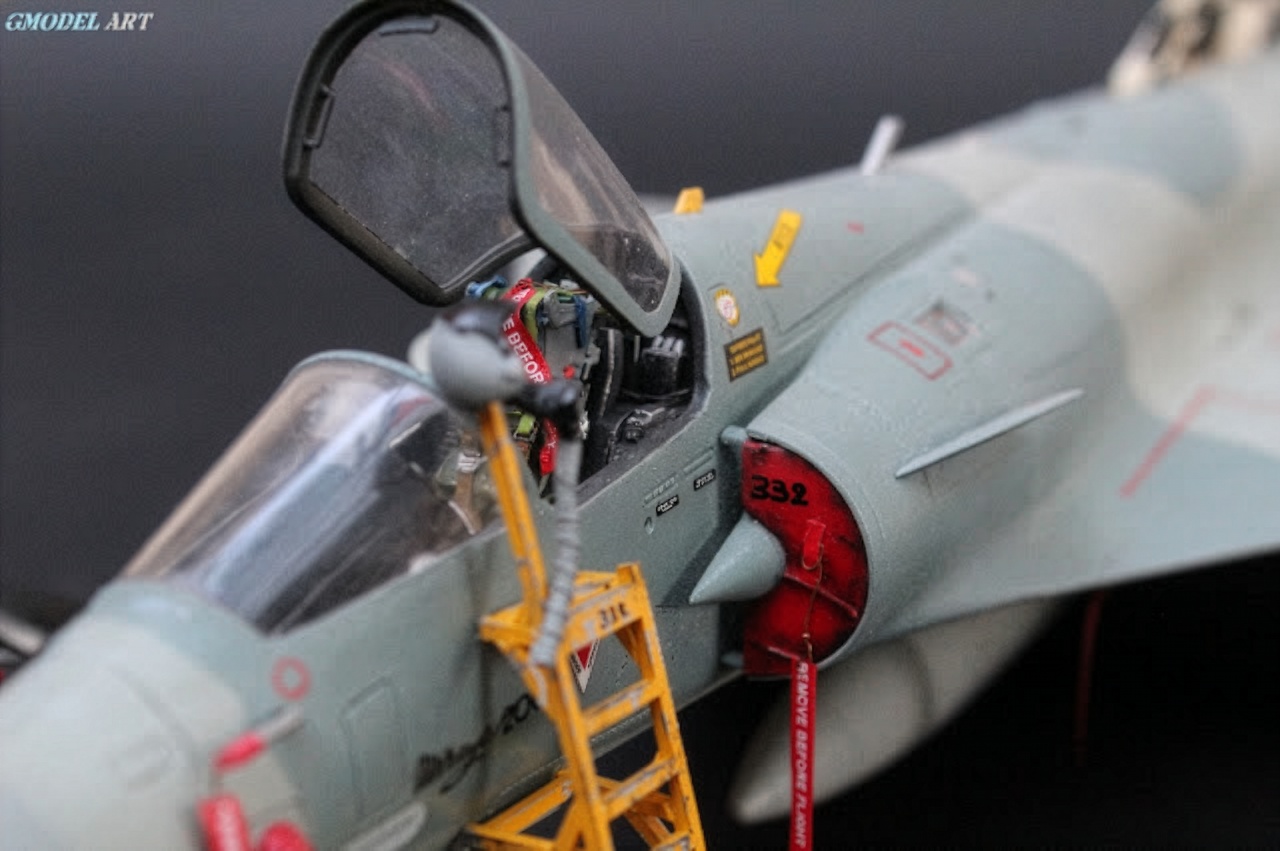
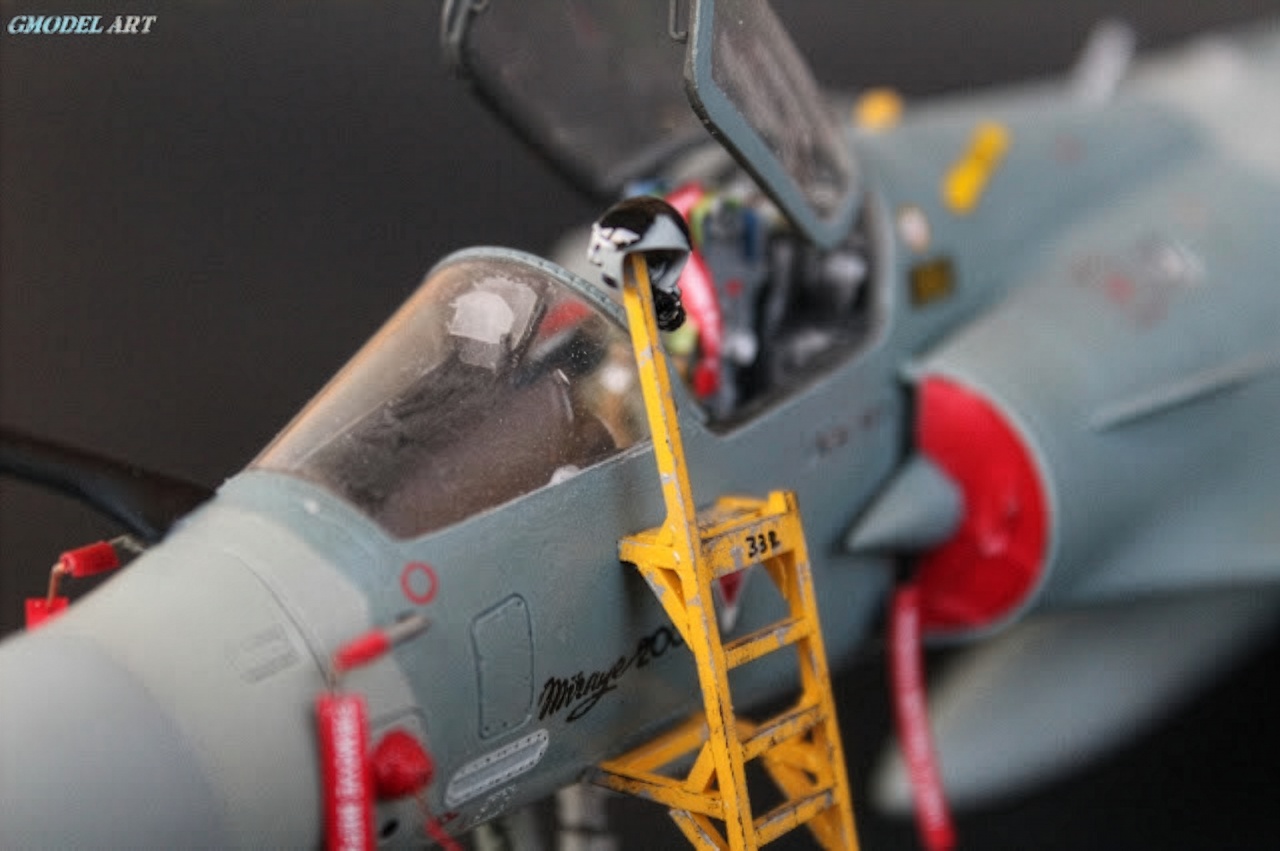
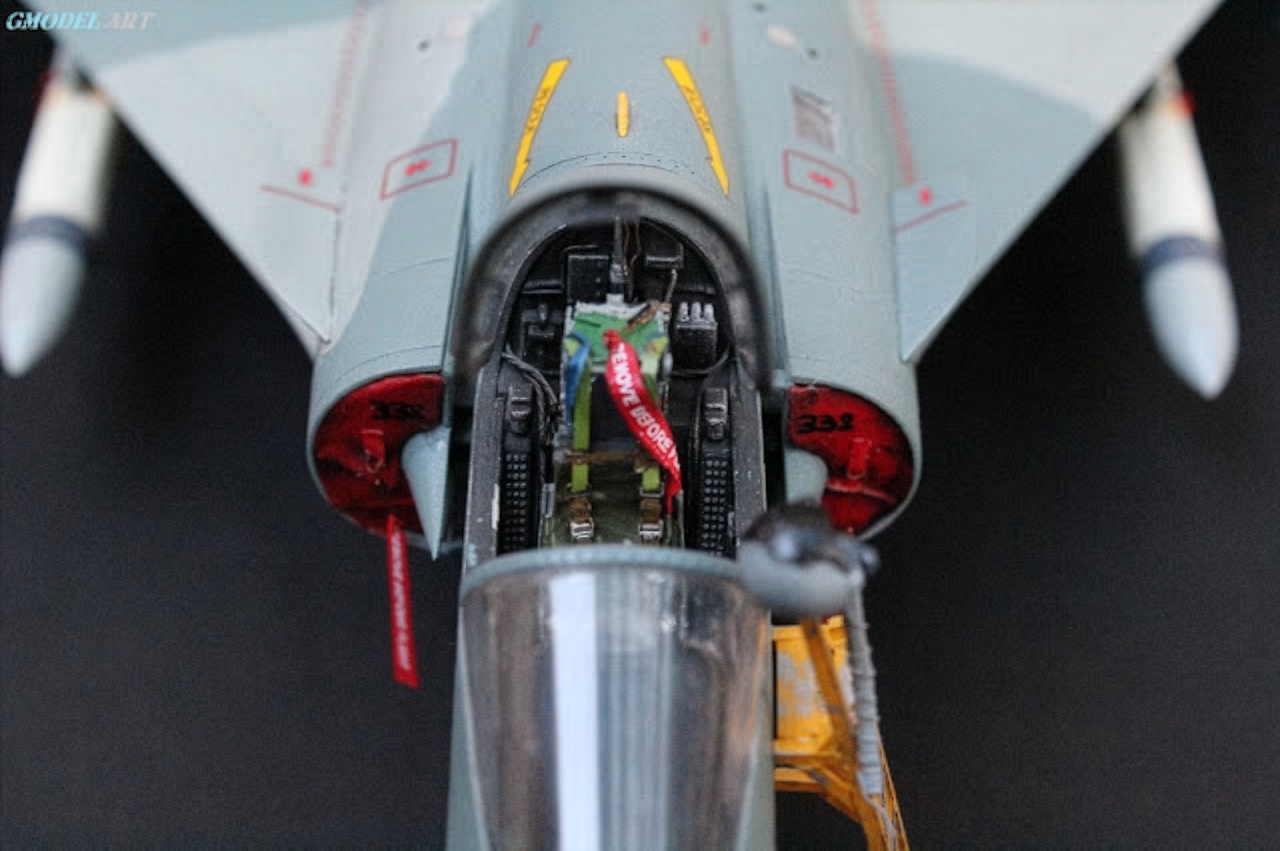
An Aires exhaust system was added together with an Aires cockpit and ejection-seat components. Additional wiring was also introduced inside the cockpit to increase the visual complexity of the finished model.
Particular attention was given to the instrument panel and the HAD display, with elements scratch-built by the modeller.
The cockpit is one of the areas where a 1/48 Mirage 2000 benefits considerably from additional detailing. The delta-wing aircraft has a relatively compact fuselage, which means that cockpit detail remains visible even after the fuselage is closed.
Additional wiring was also added inside the wheel wells. These areas were treated as modelling opportunities rather than simply being painted a single uniform colour.
Painting the Mirage 2000
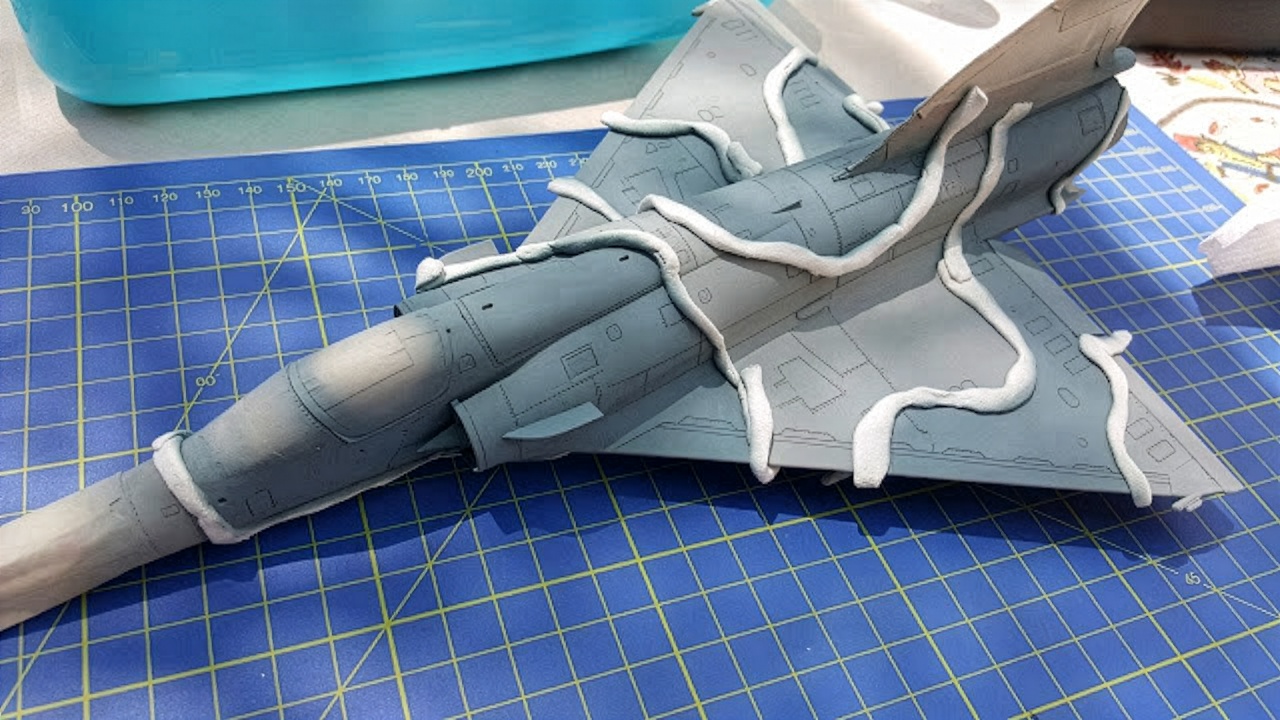
After construction and the necessary surface preparation, the entire aircraft received a light repaint.
The intention was to retain the relatively clean appearance of the real aircraft while introducing enough tonal variation to avoid a completely flat finish.
The main colours used for this build were:
| Area | Product used on the model | Finish / approach |
|---|---|---|
| Grey camouflage | Humbrol 127 | Light operational grey |
| Blue camouflage | Colourcoats RN16 | Dark blue-grey |
| Metallic areas | Alclad metallic paints | Exhaust and metal details |
| Exhaust interior | Black + heavily diluted powders | Heat and soot effect |
| Engine area | Mr. Hobby RW01 | Brown tonal dusting |
| Weathering | AK 2039 oils | Fuel and dirt streaking |
| Oil weathering | Raw Umber + Lamp Black | Controlled staining |
| Clear finish | Gunze gloss / satin | Decals and final finish |
The camouflage should remain the dominant visual element. Heavy contrast can easily make a 1/48 Mirage 2000 look toy-like, particularly on a relatively clean HAF aircraft.
Weathering the underside
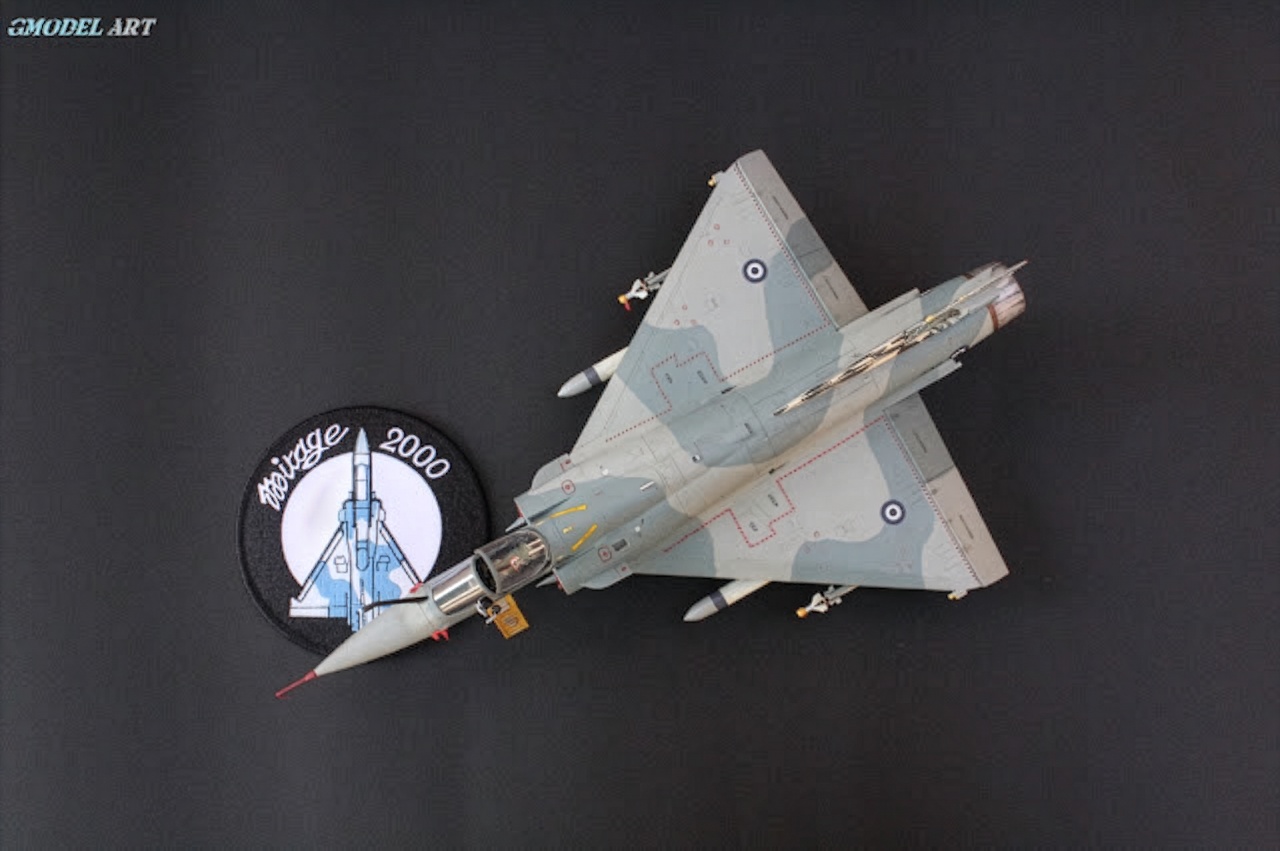
The underside received additional attention because this is where an operational Mirage 2000 naturally accumulates traces of fuel, oil and dirt.
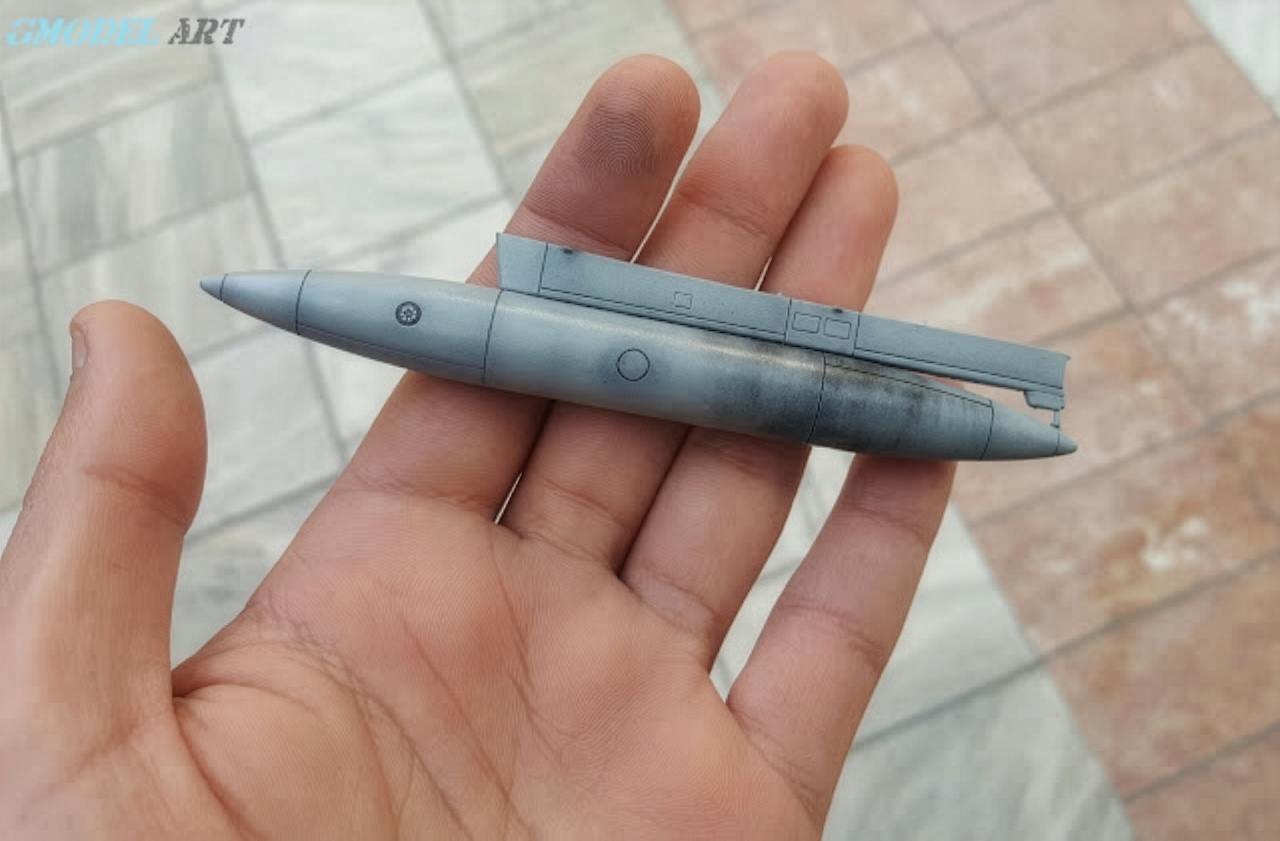
A belly tank was treated with fuel staining using AK 2039 oils. Additional streaks and dirt were created using Raw Umber, Lamp Black and the same AK oil product.
The important point was to keep the weathering directional.
Instead of random brown or black patches, the stains were pulled backwards from areas where fluid, dirt and airflow would naturally interact with the surface.
This produces a much more convincing result in scale.
The weathering should remain subtle enough that the original blue-grey camouflage is still clearly visible underneath.
The exhaust system
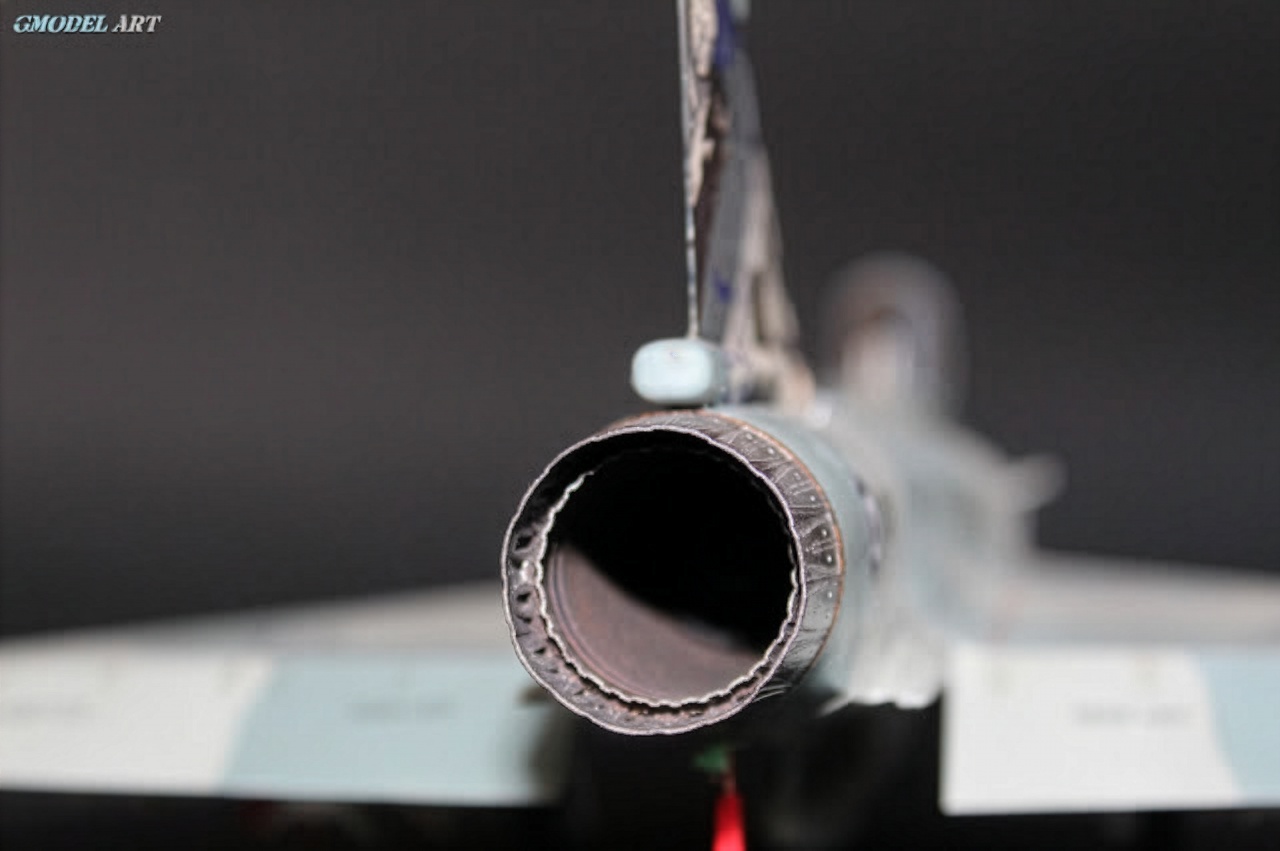
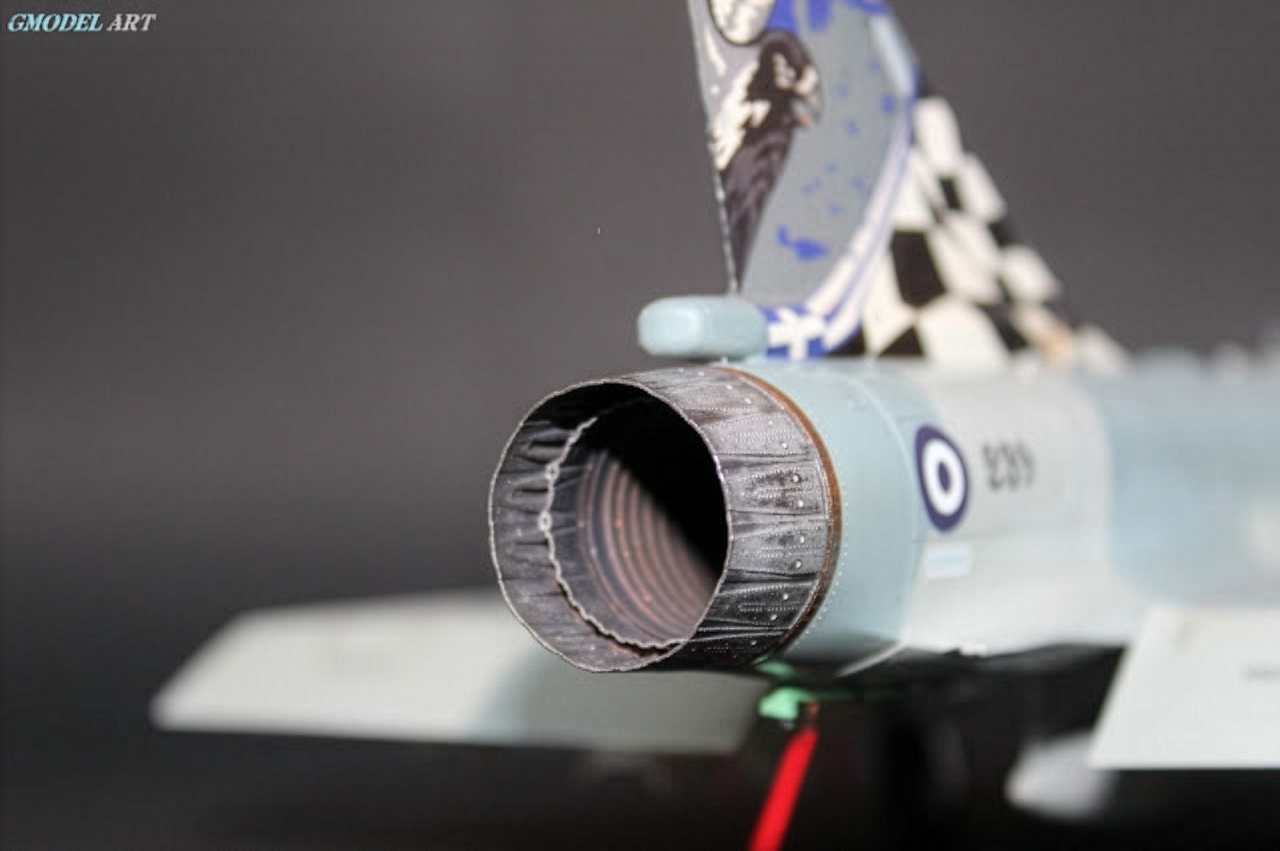
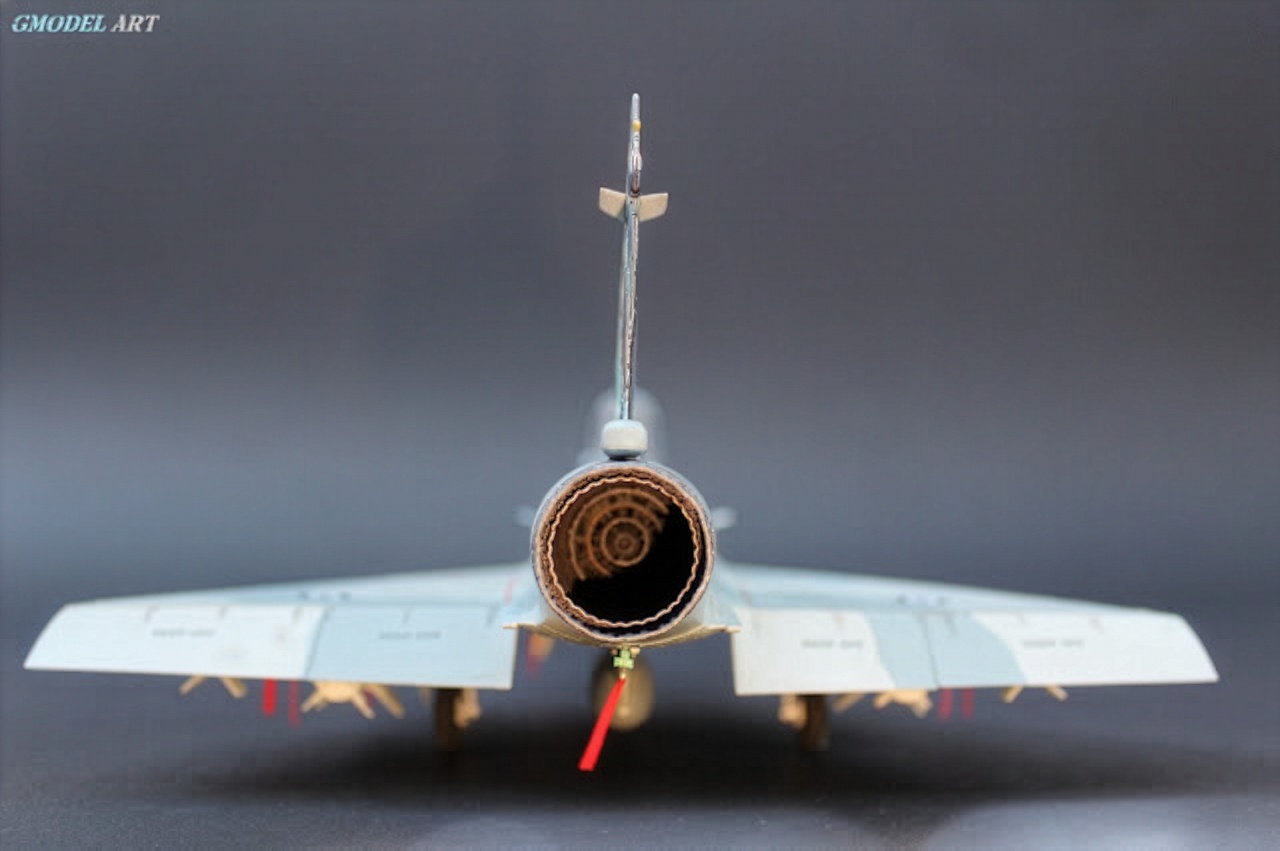
The Mirage 2000’s exhaust is one of the most visually important areas of the model.
For this build, the exhaust components were painted using Alclad metallic colours. The interior received a dark base followed by very diluted powder applications to reproduce the darker, heat-affected appearance of an operational afterburner nozzle.
A small amount of silver drybrushing was then applied to selected areas, with additional tonal variation around the metallic surfaces.
The objective was not to create a brightly polished metallic exhaust. A fighter exhaust is exposed to intense heat, combustion residues and repeated thermal cycling, so variation is far more convincing than a single metallic colour.
Armament
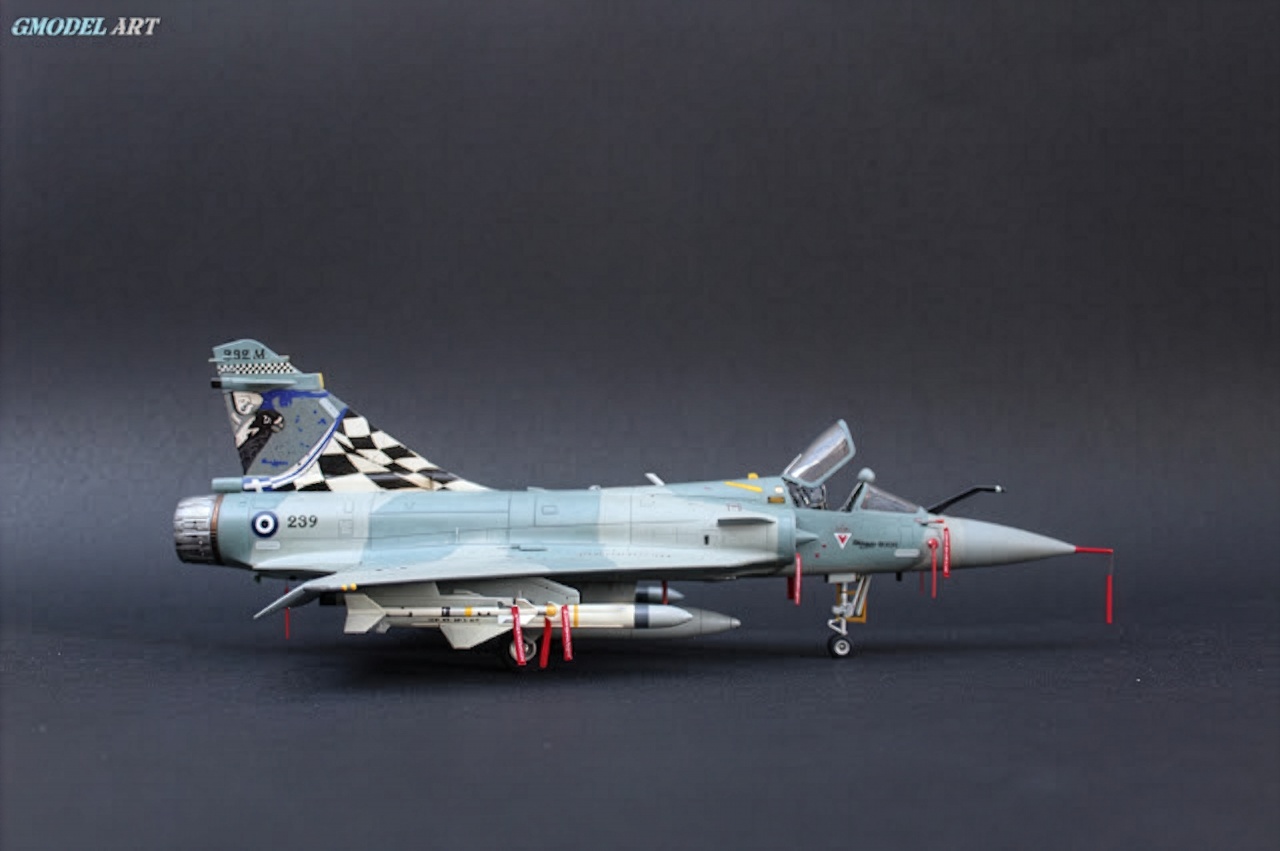
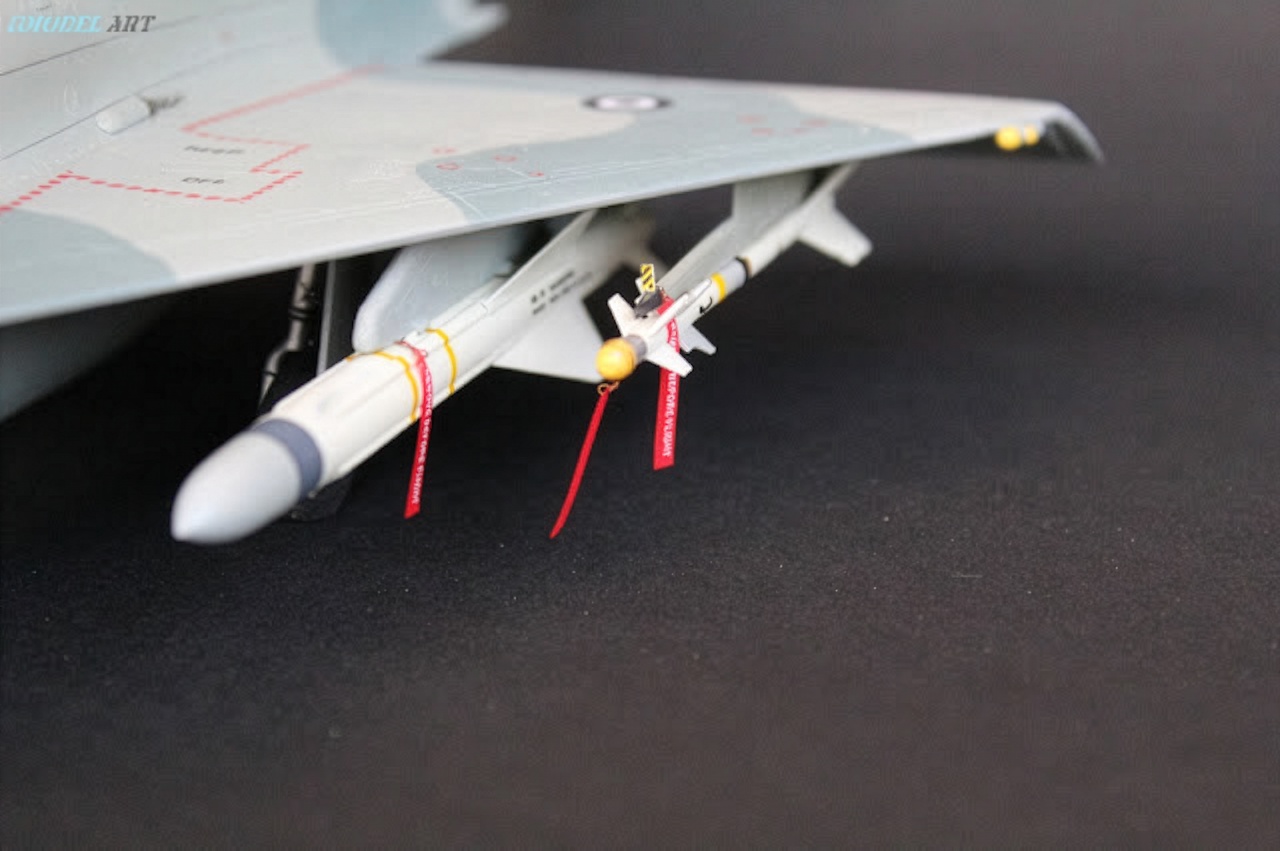
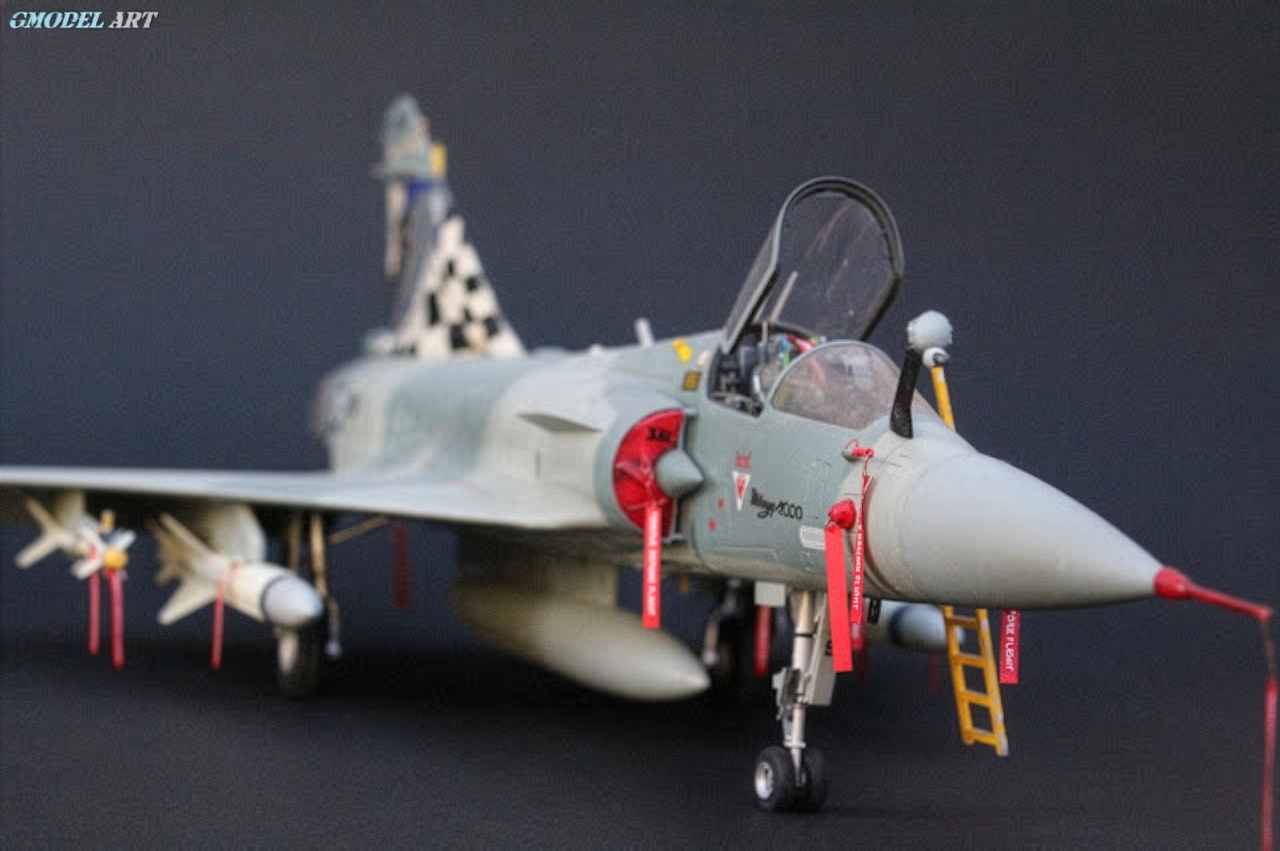
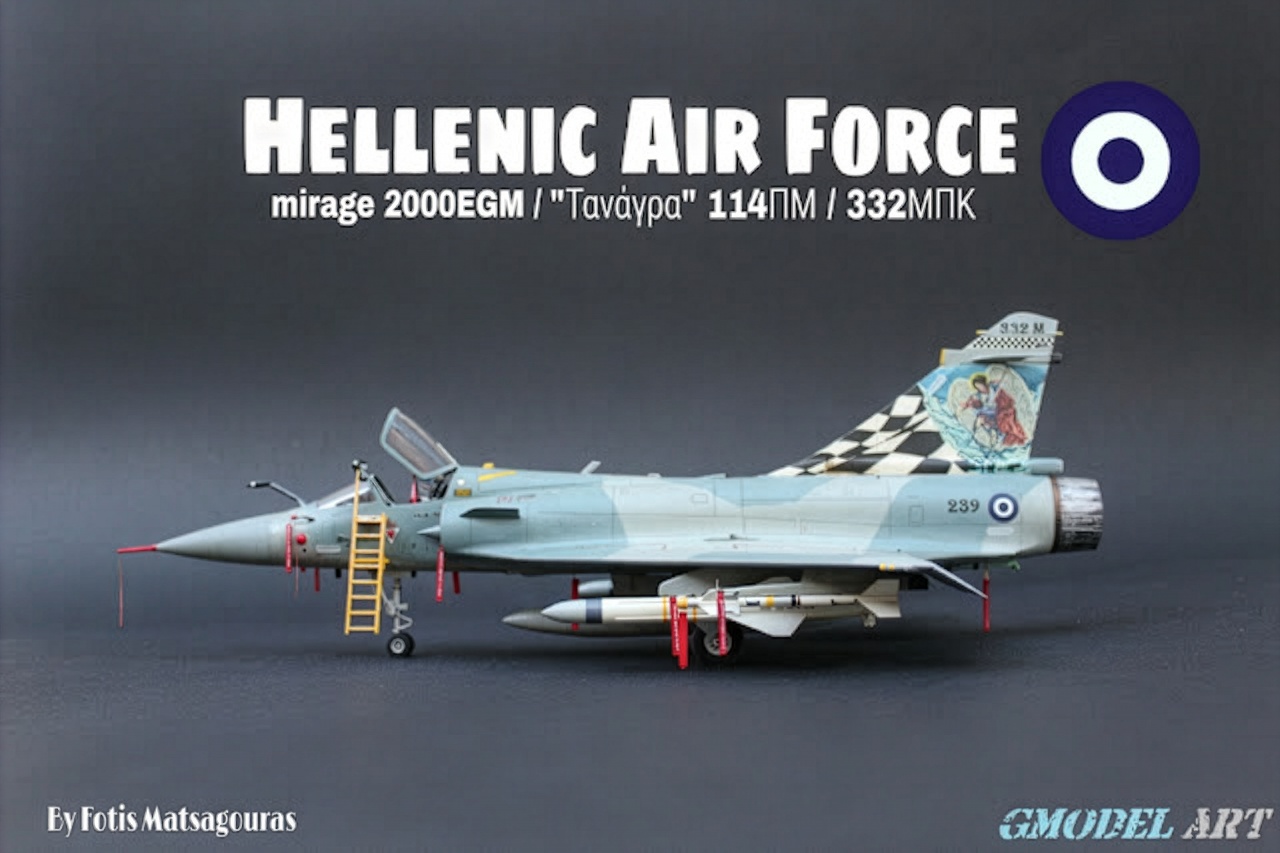
The model was equipped with two Aires AM-39 Exocet missiles, one under each wing, together with two Matra Magic air-to-air missiles.
This weapons configuration belongs to the specific modelling interpretation of this build. The important historical point is that Greek Mirage 2000 aircraft were among the Mirage 2000 operators associated with the AM-39 Exocet, giving the HAF aircraft an important anti-ship role.
For a Greek Mirage 2000 model, the Exocet immediately changes the character of the aircraft. It transforms what otherwise looks like a conventional air-defence interceptor into a very distinctive Hellenic maritime-strike subject.
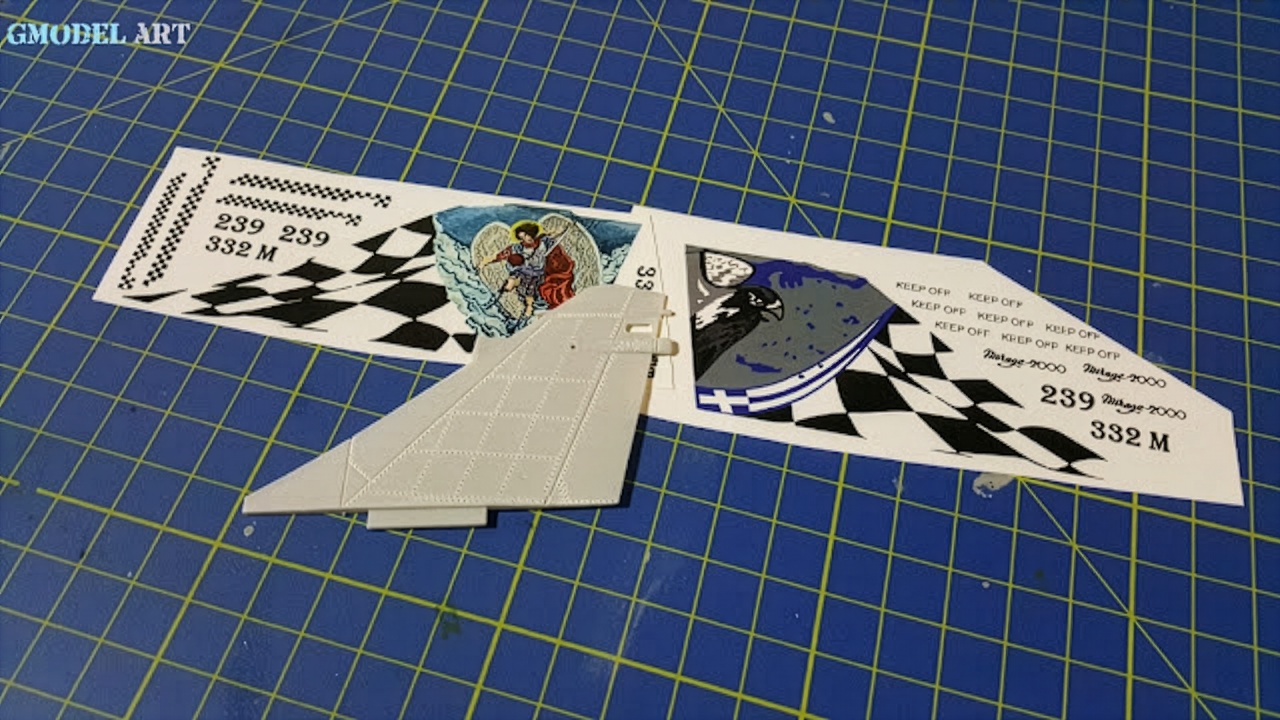
The 25th Anniversary of 332 Squadron
The anniversary markings deserve a clarification because the dates associated with the subject are sometimes reproduced incorrectly.
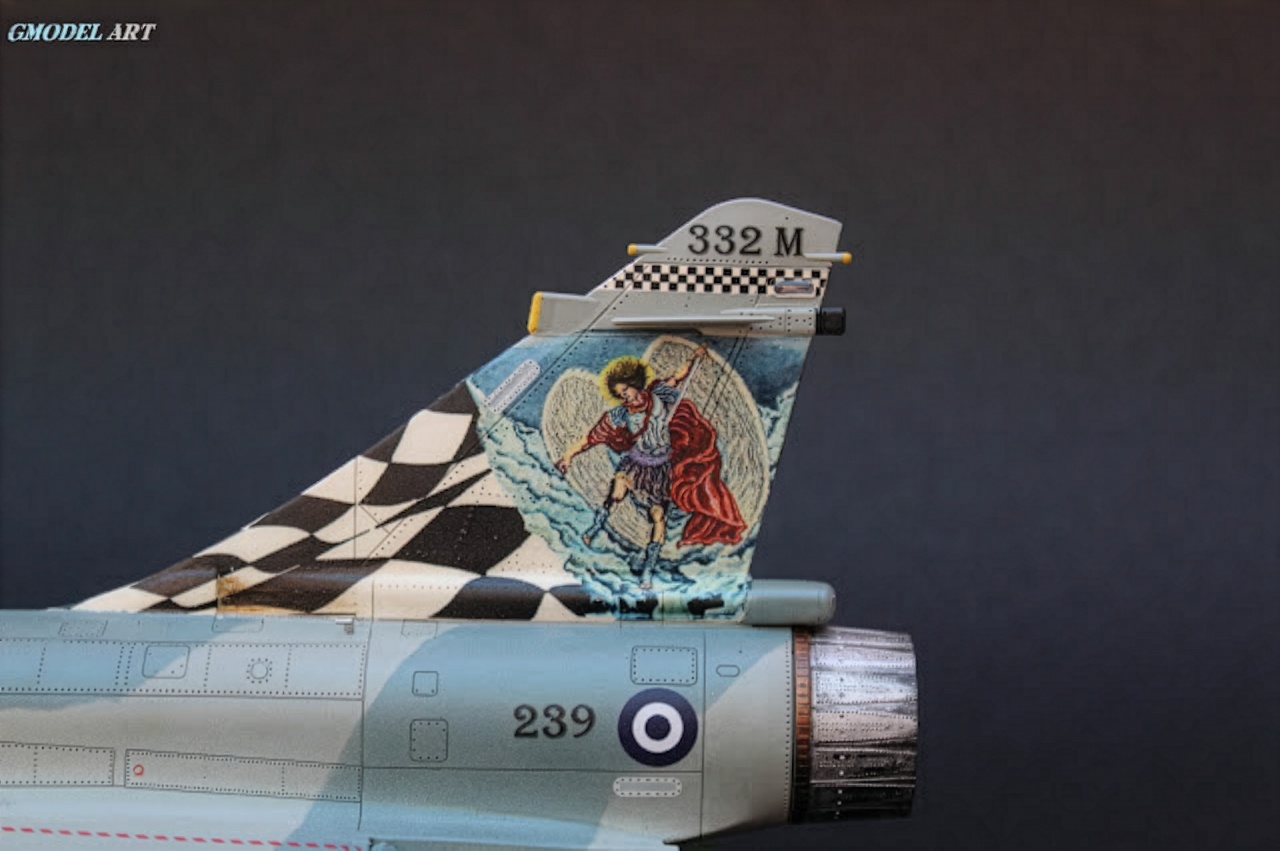
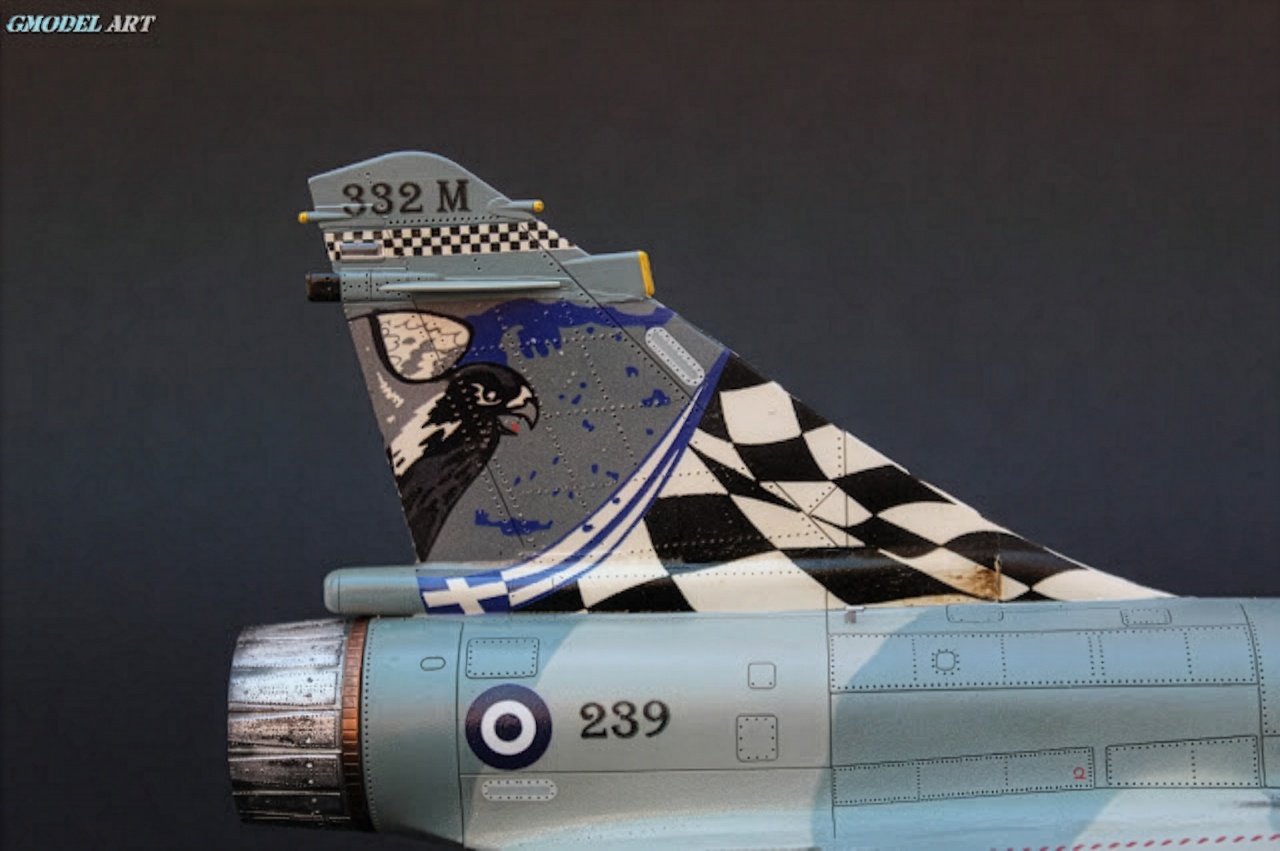
The 332 Squadron was established in 1989, not 1985. The official 25th anniversary was celebrated on 14 November 2014 at the 114 Combat Wing in Tanagra. The event marked 25 years of the squadron’s existence and its long association with the Mirage 2000.
Therefore, when reproducing a Mirage 2000 carrying 332 Squadron 25th Anniversary markings, the appropriate historical period is 2014, rather than 1985–2010.
This distinction matters for scale modelling because aircraft markings, squadron insignia, camouflage condition and configuration can all change over time.
Mirage 2000EG 239 – 29 May 2017
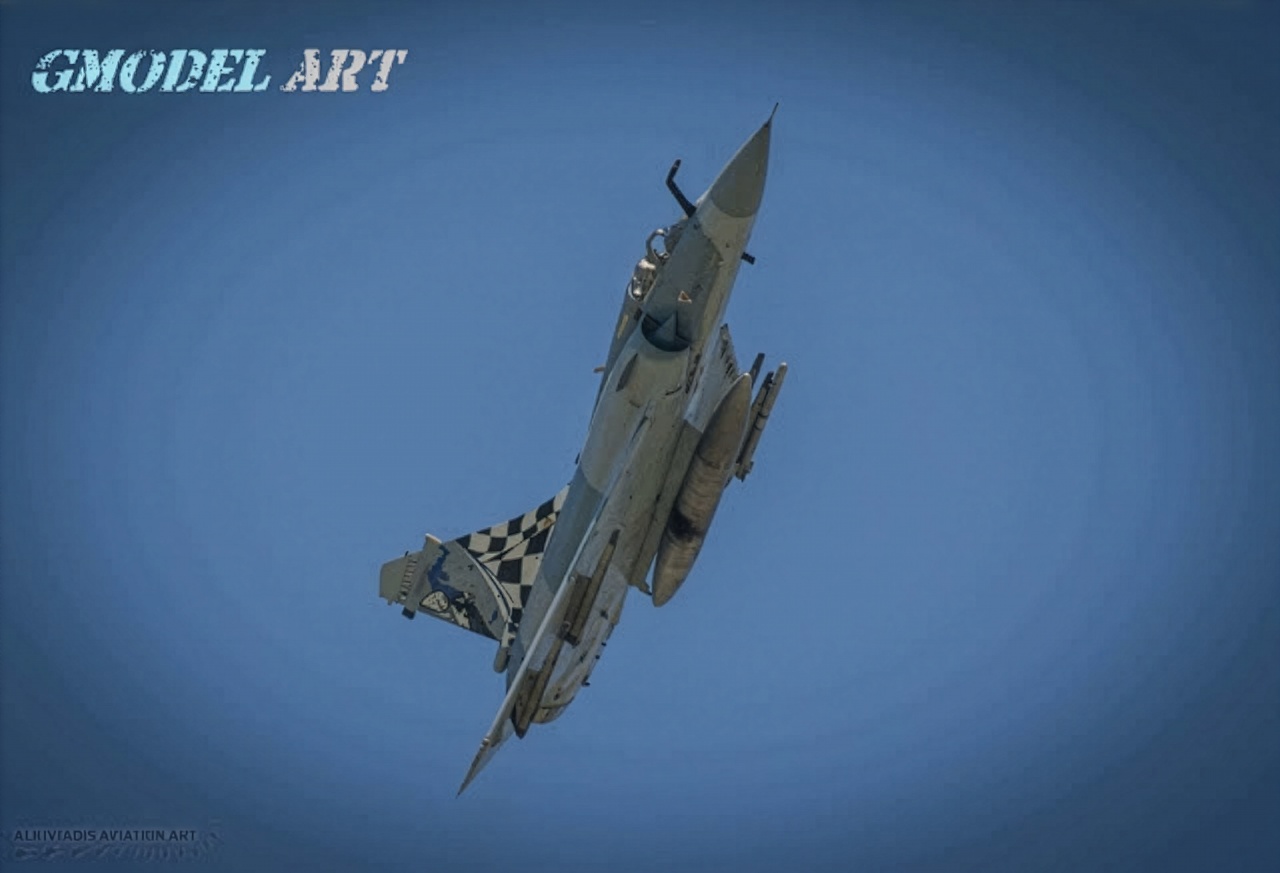
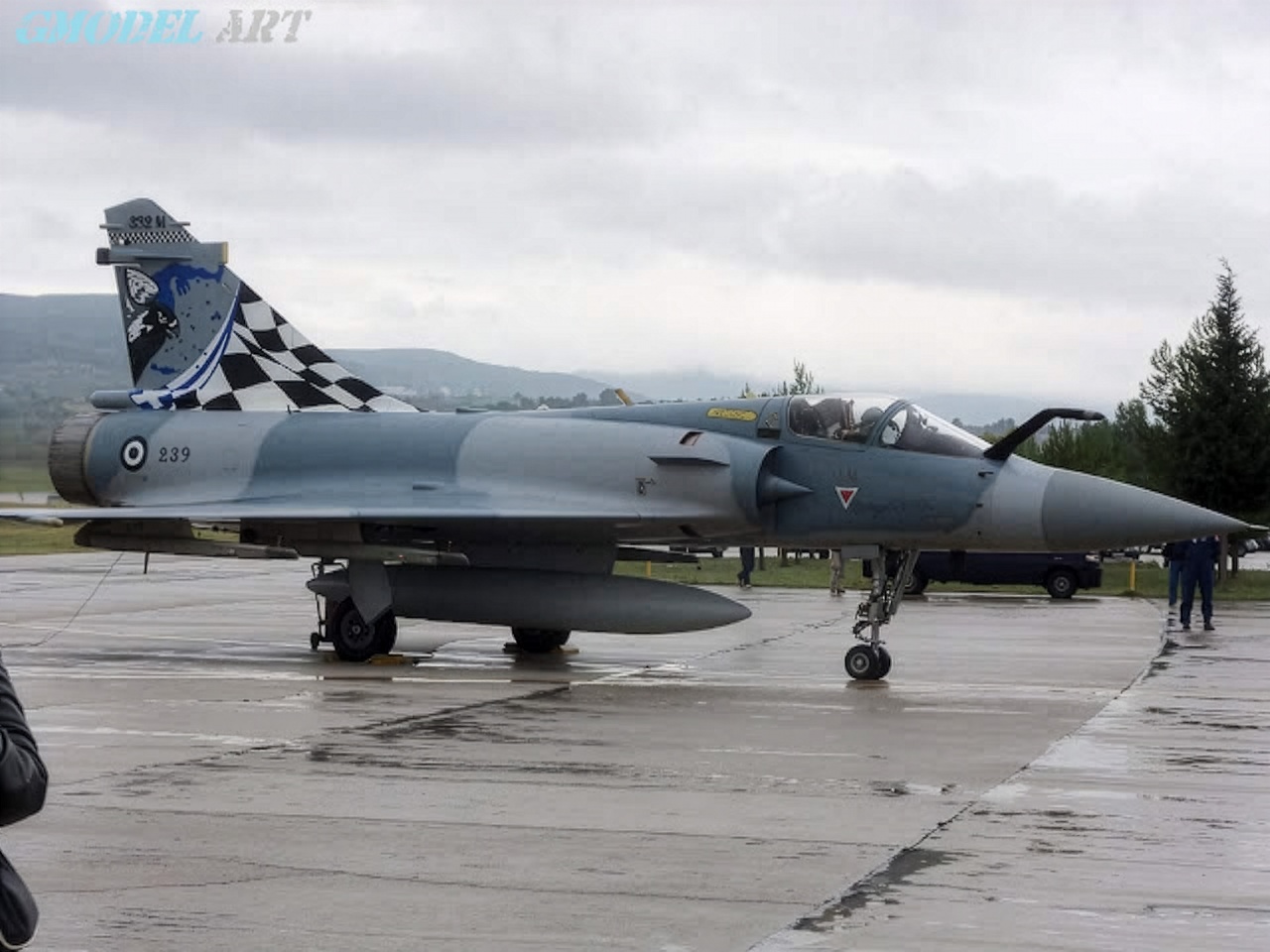
The Mirage 2000 story of the 332 Squadron also includes the loss of aircraft 239.
On 29 May 2017, two Mirage 2000 aircraft from the 332 Squadron were conducting a one-versus-one training exercise in the area south of the Sporades. At approximately 12:18, the aircraft that was number two in the formation developed a problem and the pilot successfully ejected.
The aircraft was Mirage 2000EG 239, a machine associated with the 332 Squadron. Contemporary aircraft records identify 239 as a Greek Air Force Mirage 2000EG operated by the 332 Squadron.
The aircraft came down in the sea. Recovery teams later retrieved important components from a depth of approximately 580 metres, including parts required for the investigation.
The incident became another chapter in the long operational history of the Greek Mirage 2000 fleet and of the 332 Squadron.
It is worth treating this part of the story with respect. The Mirage 2000 was not simply an attractive modelling subject; it was an operational combat aircraft flown and maintained under demanding conditions.
The Mirage 2000 legacy in Greece
The Greek Mirage 2000 fleet served for more than three decades and became one of the most recognizable fighter types of the Hellenic Air Force.
The original Mirage 2000EGM/BGM fleet was eventually retired from active service, with the type’s Greek operational career ending in January 2022.
Its legacy, however, remains visible in the history of the 114 Combat Wing, the 331 and 332 Squadrons and in the large number of Greek Mirage 2000 scale models built by enthusiasts.
For modellers, the aircraft offers almost everything that makes a modern military subject interesting: distinctive shape, unique national camouflage, detailed cockpit, powerful engine, complex weathering possibilities and an unmistakable weapons configuration.
Building a Greek Mirage 2000 in 1/48 scale
This build demonstrates how a relatively clean HAF Mirage 2000 can be transformed into a convincing operational model without relying on excessive weathering.
The Kinetic kit provides the basic structure, while the Aires aftermarket components significantly improve the cockpit, ejection seat and exhaust area.
The additional wiring, scratch-built cockpit details and careful treatment of the exhaust add another level of realism.
The combination of Humbrol 127, Colourcoats RN16, Alclad, Gunze, AK oils and Mr. Hobby weathering products produces a finish that emphasizes the characteristic HAF appearance while retaining the clean, purposeful lines of the Mirage 2000.
For a modeller choosing to reproduce a Greek Mirage 2000, photographic references should always determine the final configuration. The aircraft changed during its long service life, and small details such as markings, weapons, external stores and weathering can make a significant difference.
The Mirage 2000EGM is therefore much more than a French delta-wing fighter in Greek colours. It is a distinct chapter of Hellenic Air Force aviation history — one strongly connected with Tanagra, the Aegean and the 332 Squadron “Geraki”.
The model presented here is dedicated to the 114 Combat Wing at Tanagra and to the long service history of the Greek Mirage 2000.
Frequently Asked Questions
What Mirage 2000 version was operated by the Hellenic Air Force?
Greece operated the single-seat Mirage 2000EGM and two-seat Mirage 2000BGM, alongside the later Mirage 2000-5EG/BG variants. The original Greek order consisted of 36 EGM and four BGM aircraft.
Which Greek squadron operated the Mirage 2000EGM?
The original Greek Mirage 2000 fleet was operated by the 331 and 332 All Weather Squadrons at Tanagra. The 332 Squadron “Geraki” became particularly associated with the remaining original Mirage 2000EGM/BGM aircraft.
Where was the Greek Mirage 2000 based?
The aircraft were based at 114 Combat Wing, Tanagra Air Base, where both the 331 and 332 Mirage 2000 squadrons operated.
Could the Greek Mirage 2000 carry the AM-39 Exocet?
Yes. The Greek Mirage 2000 was equipped with the AM-39 Exocet anti-ship missile, giving the aircraft an important maritime-strike capability.
What scale is the model presented in this article?
The model is built in 1/48 scale using the Kinetic Mirage 2000 kit.
Which aftermarket products were used?
The build incorporates Aires cockpit, ejection seat and exhaust components, together with scratch-built wiring and additional cockpit detailing.
When was the 332 Squadron 25th Anniversary?
The 332 Squadron was formed in 1989, making its 25th anniversary 2014. The anniversary ceremony took place at the 114 Combat Wing in Tanagra on 14 November 2014.
What happened to Mirage 2000EG 239?
Mirage 2000EG 239 of the 332 Squadron was lost on 29 May 2017 during a training exercise south of the Sporades. The pilot successfully ejected, and important aircraft components were later recovered from the sea.
Mirage 2000EGM / BGM and Mirage 2000-5EG / 5BG HAF
Gallery
προιoντα στο eshop
The Mirage 2000EGM/BGM of the Hellenic Air Force’s 332 Squadron Geraki is a remarkable representation of aerial prowess, showcasing the iconic blue-grey camouflage that embodies the essence of the Tanagra-based fleet. This meticulously crafted 1/48 scale model by Kinetic incorporates Aires aftermarket detailing, enhancing the intricate features of the aircraft. Complementing its striking appearance, the model is equipped with AM-39 Exocet armament, a testament to its operational capabilities. This piece is not only a collector’s item but also a tribute to the legacy of modern air combat.