article
Northrop P-61 Black Widow: Full History, Variants, Combat Units, Camouflage & Advanced Modeling Guide
Introduction
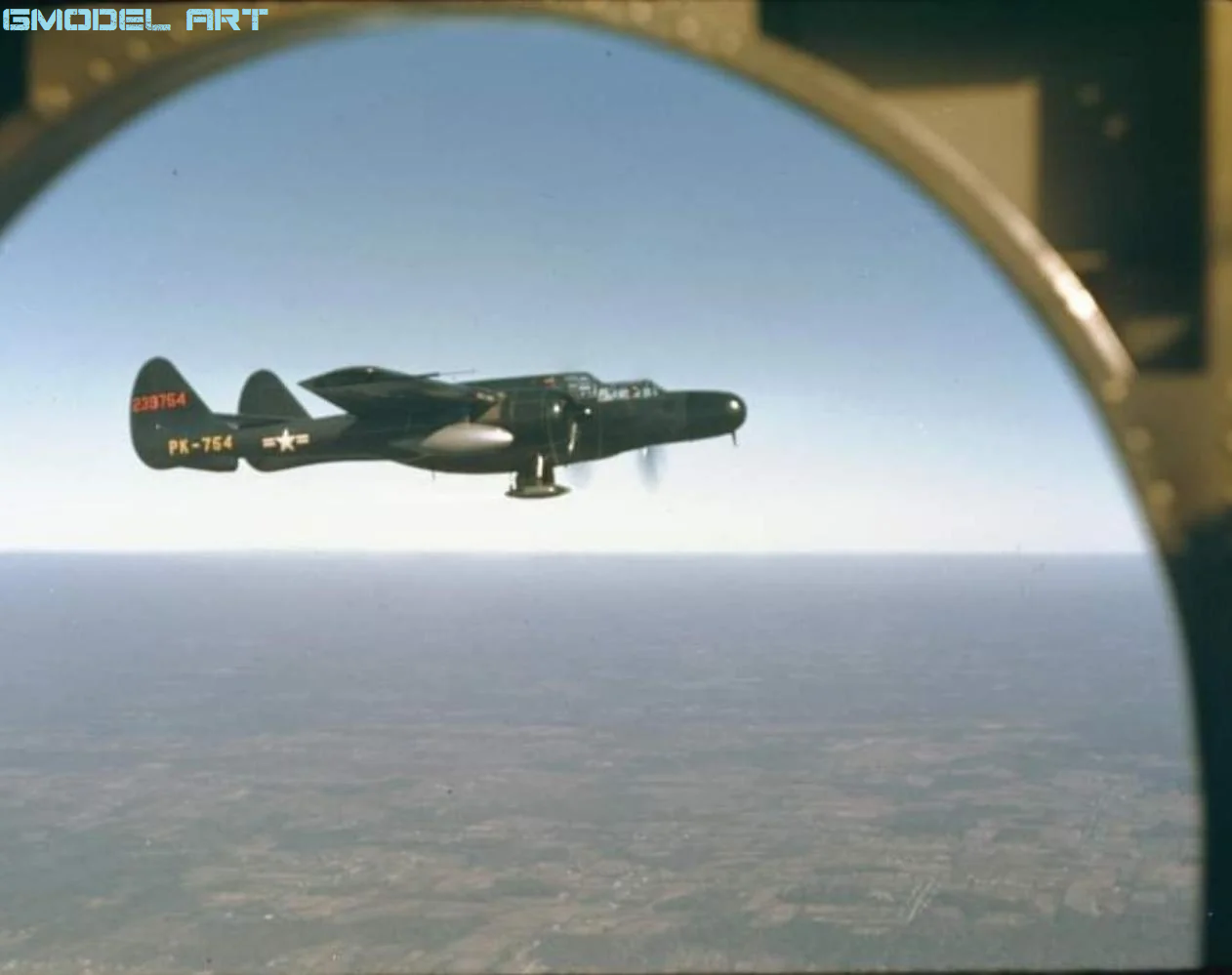
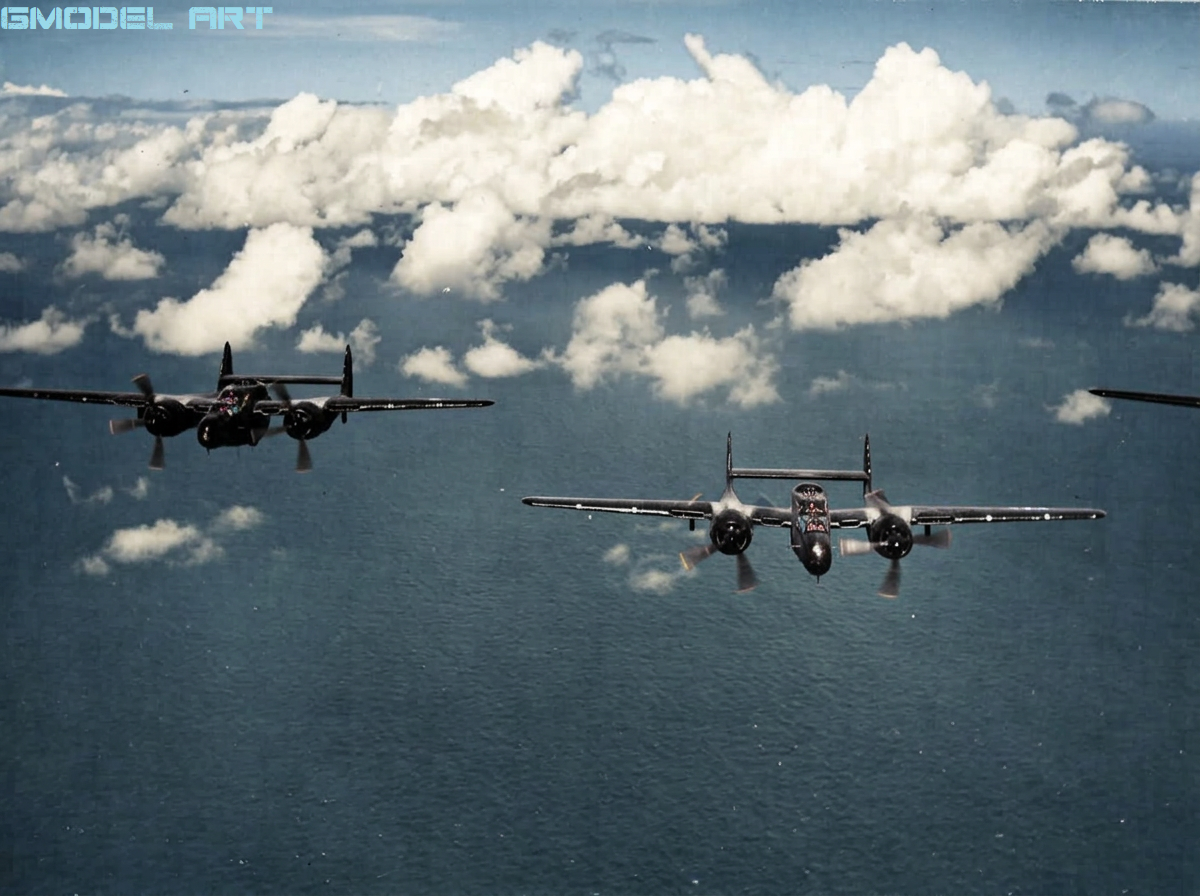
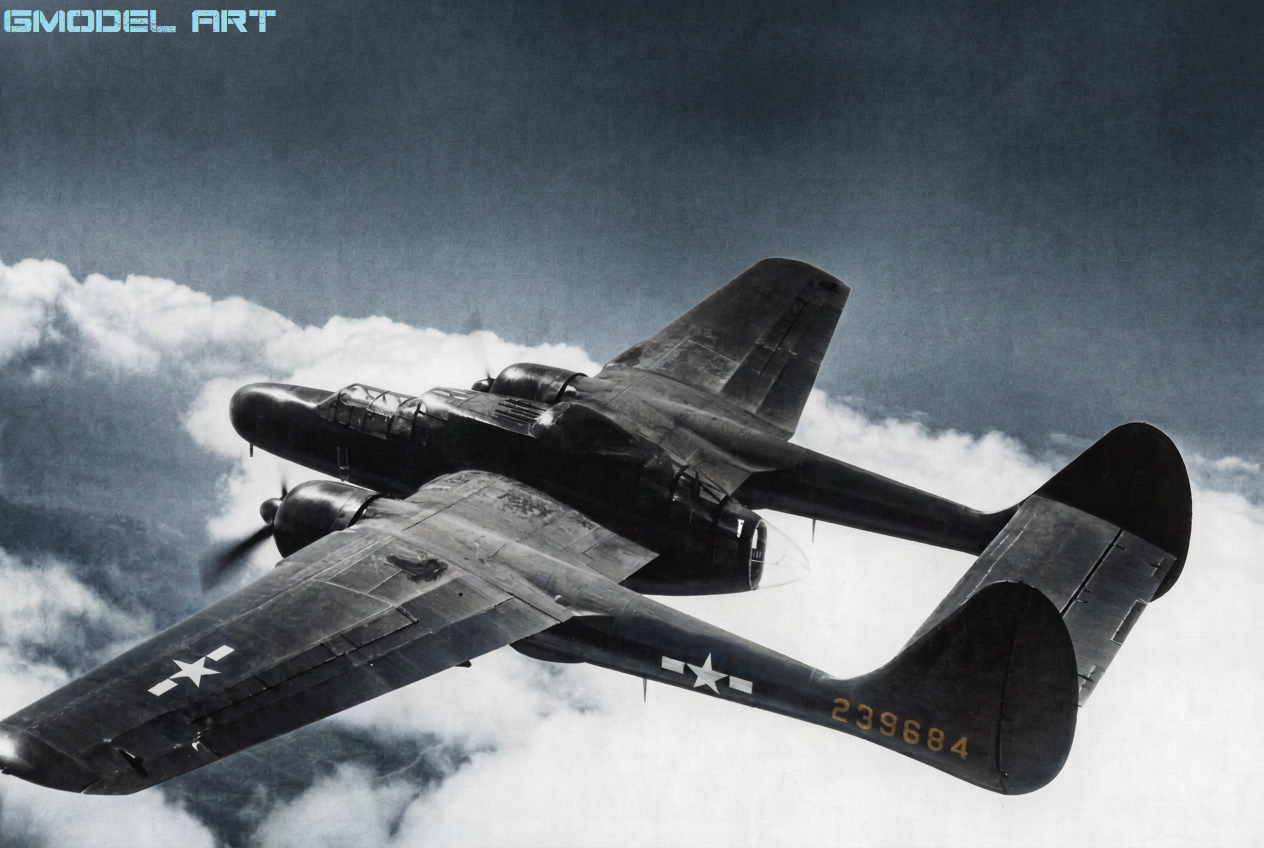
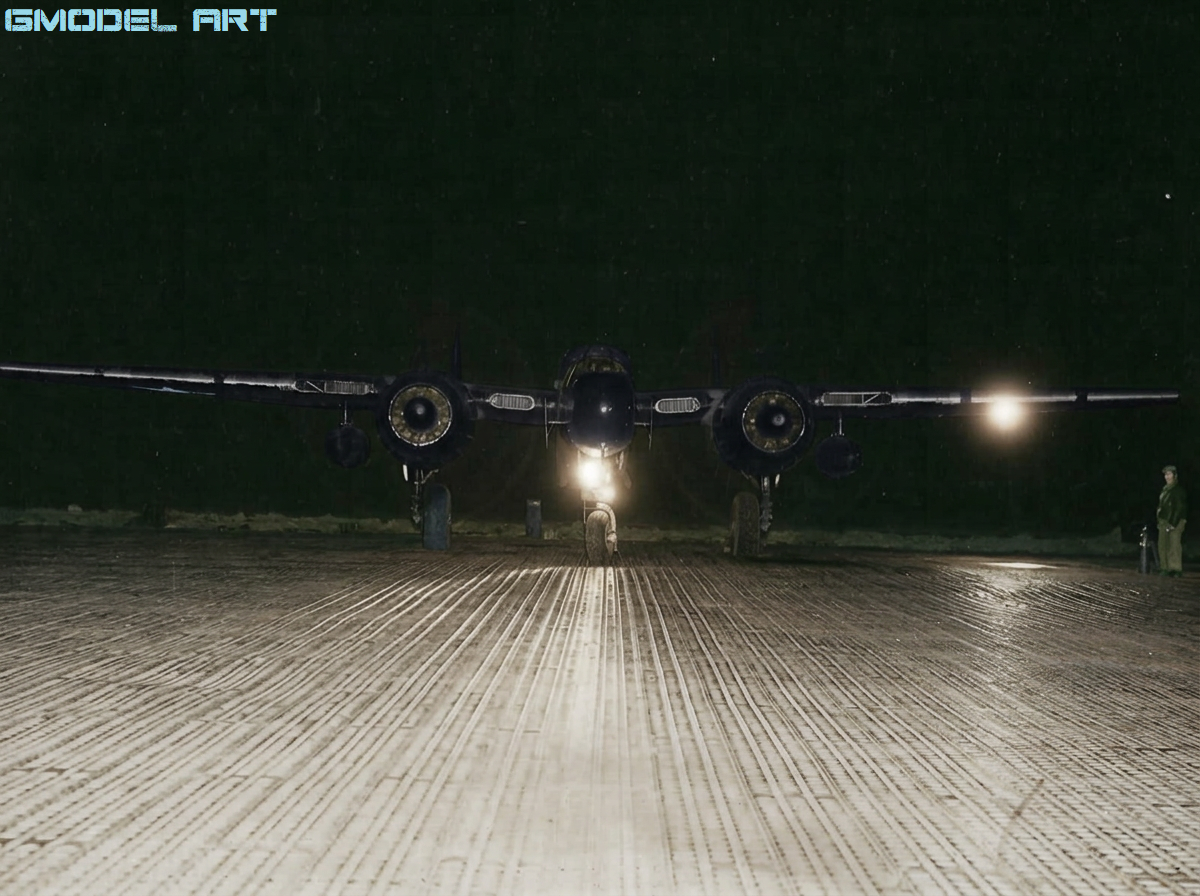
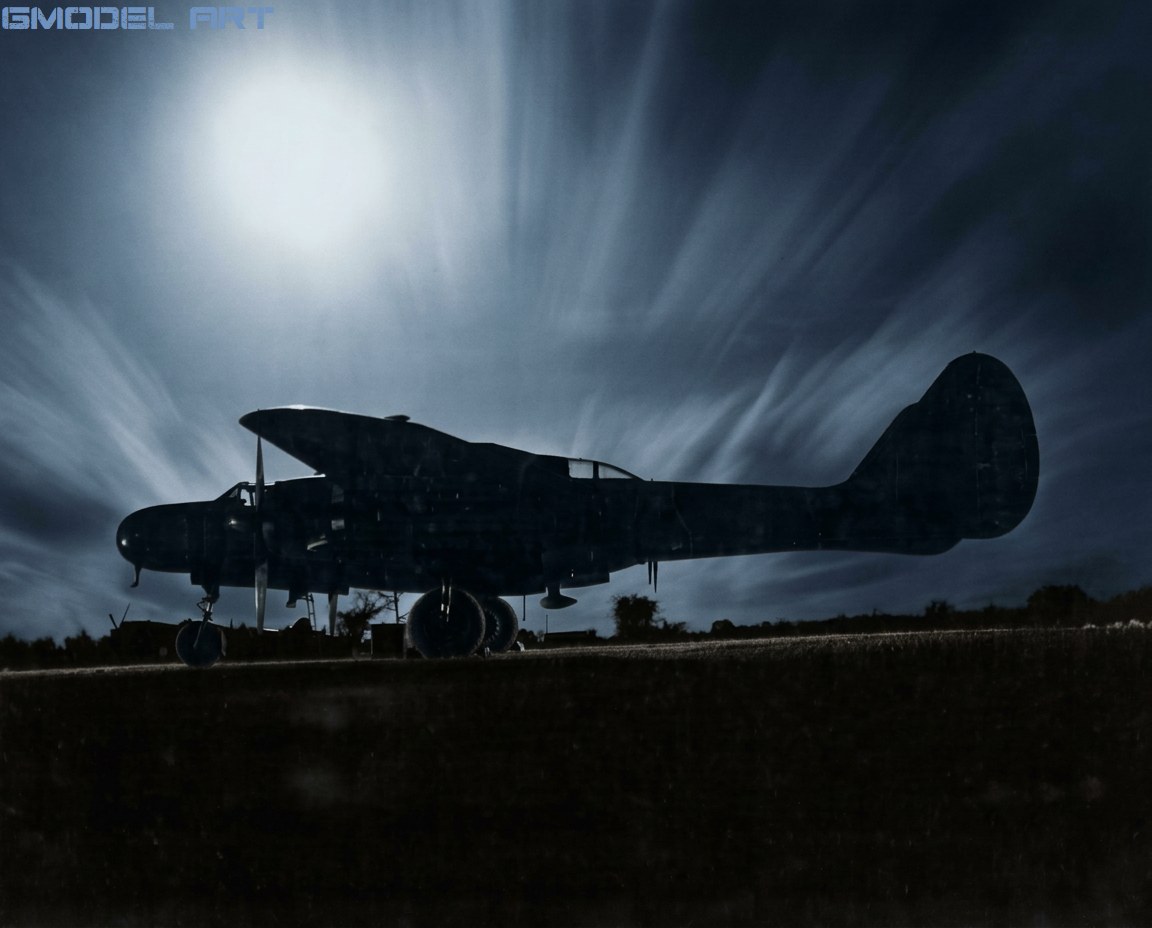
The Northrop P-61 Black Widow was one of the most unusual aircraft of the Second World War. Unlike conventional fighters that were later adapted for night operations, the P-61 was designed from the beginning around a single mission: to detect, intercept and destroy enemy aircraft in darkness.
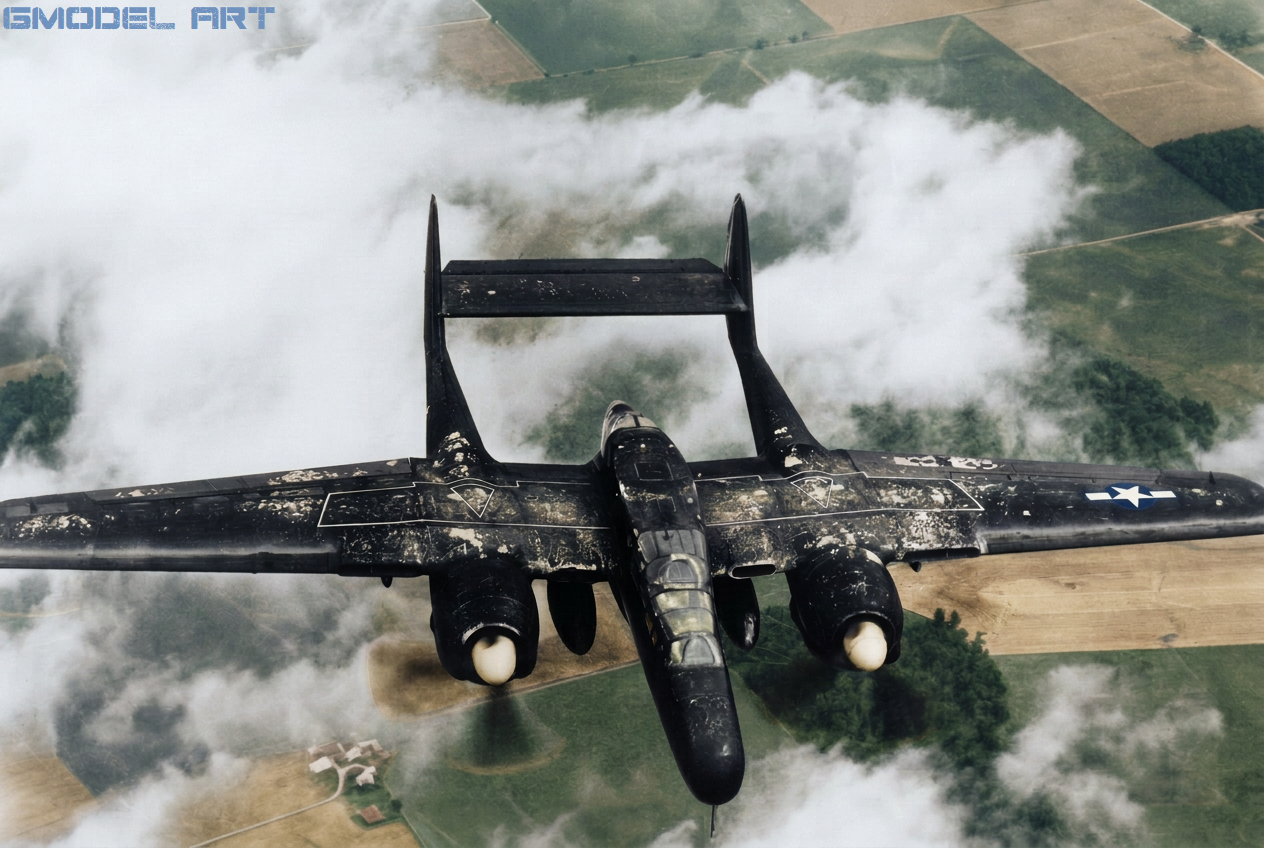
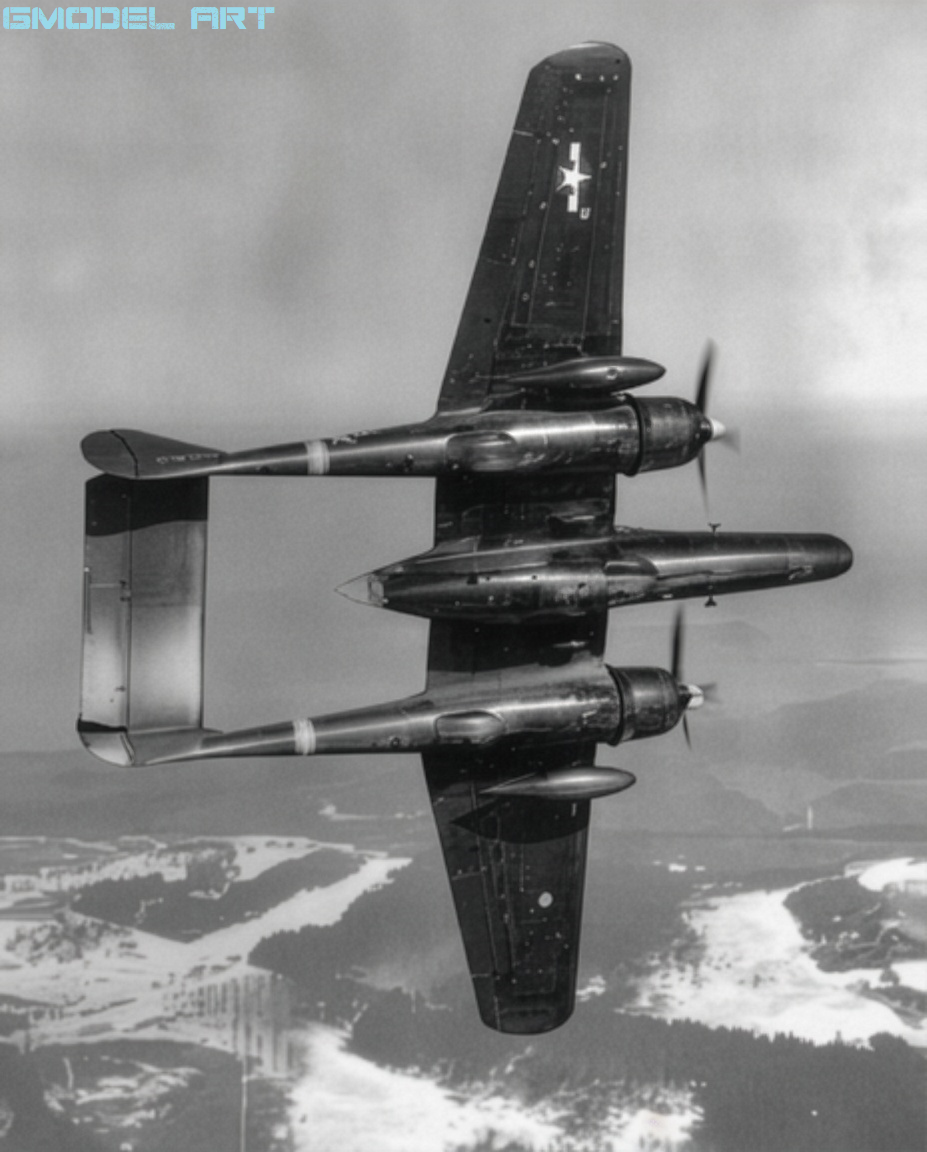
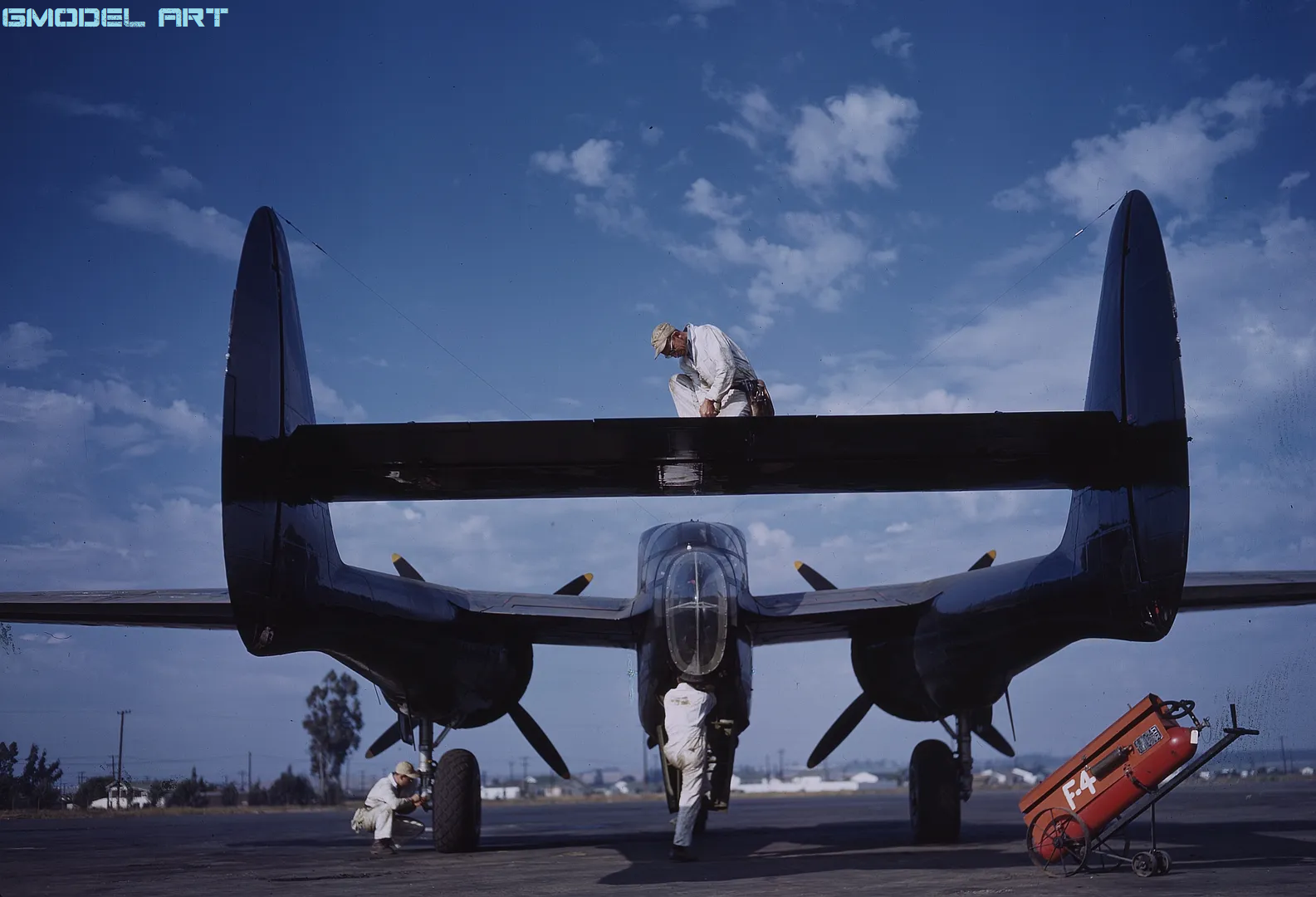
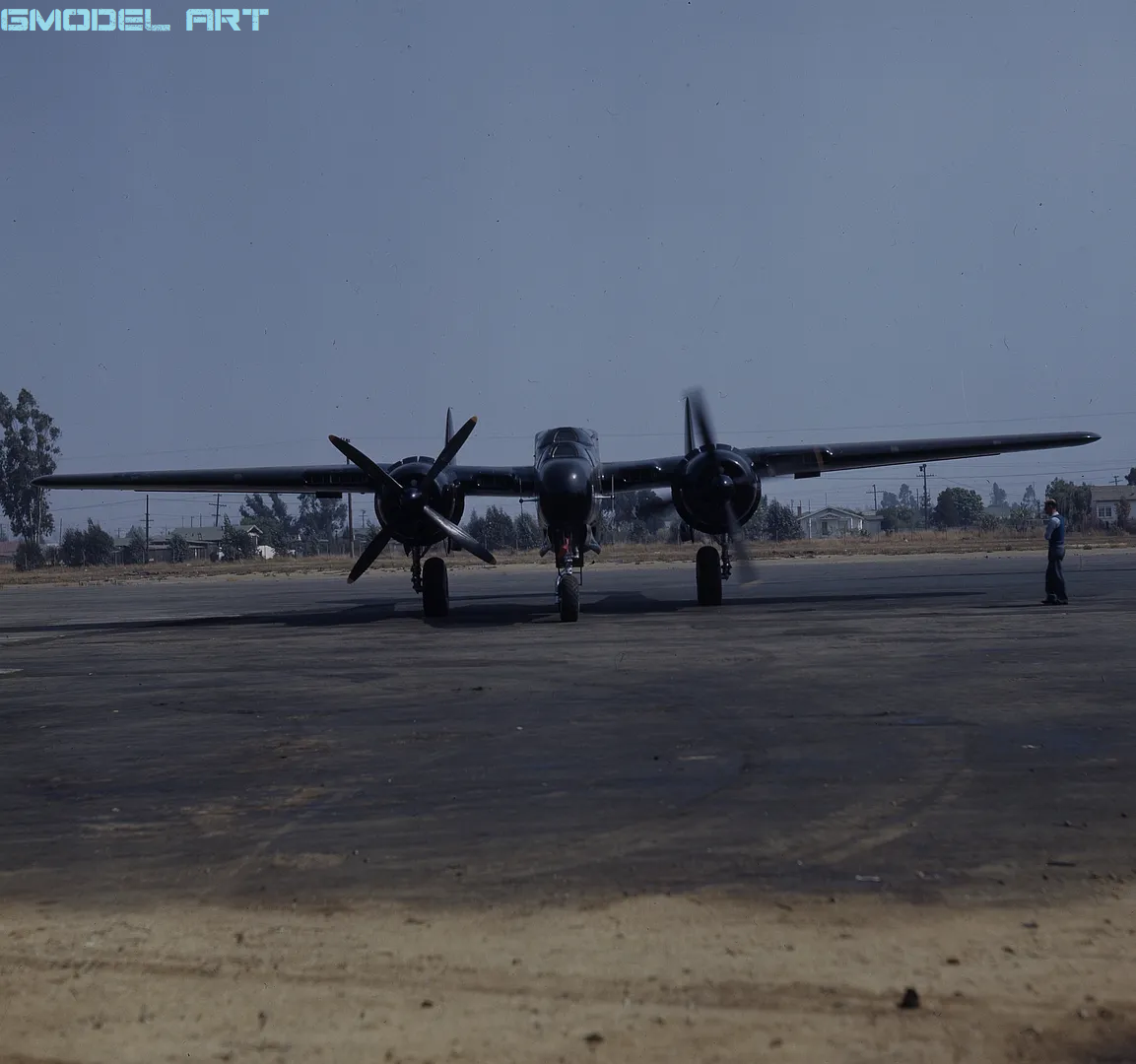
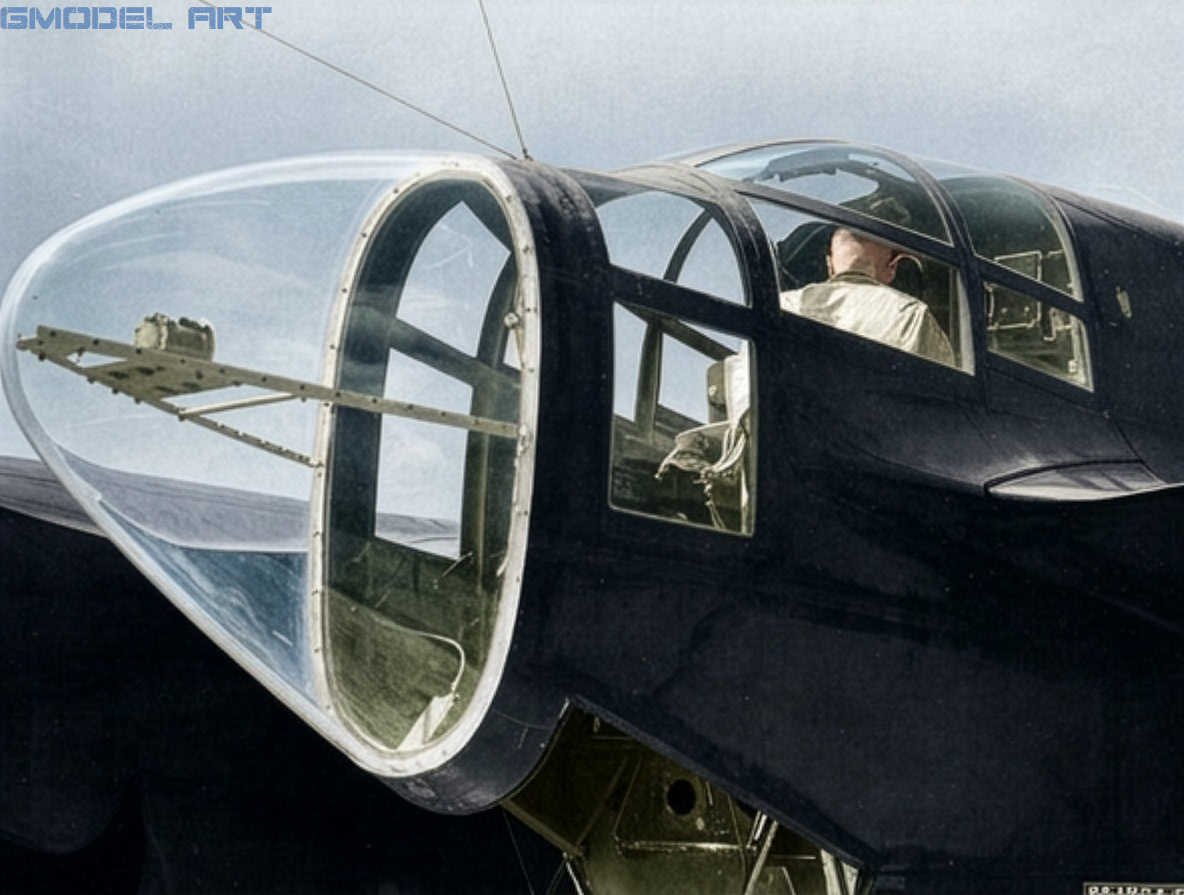
Its large twin-boom configuration, central nacelle, airborne interception radar, heavy armament and three-man crew made it fundamentally different from the majority of wartime fighters.
For the scale modeler, the P-61 offers an unusually rich subject. It combines advanced technology, several major production variants, different operational configurations, two major wartime camouflage families, extensive weathering possibilities and service across Europe, the Mediterranean, China-Burma-India and the Pacific.
The key to an accurate P-61 model is therefore not simply painting it black.
It is identifying the correct aircraft, variant, production block, unit, theater, date and finish before construction begins.
The Birth of a Dedicated Night Fighter
The development of the P-61 was closely connected with the rapid development of airborne radar.
During the early years of the war, night interception was extremely difficult. Ground-based radar could provide warning, but a fighter still had to locate the enemy visually in darkness. Searchlights, ground controllers and conventional fighters could help, but the system remained limited.
The development of compact airborne interception radar changed the situation.
The United States began developing its own airborne radar systems using technology derived from the rapidly advancing Allied radar program. Northrop responded by designing an aircraft around the radar rather than simply installing radar into an existing fighter.
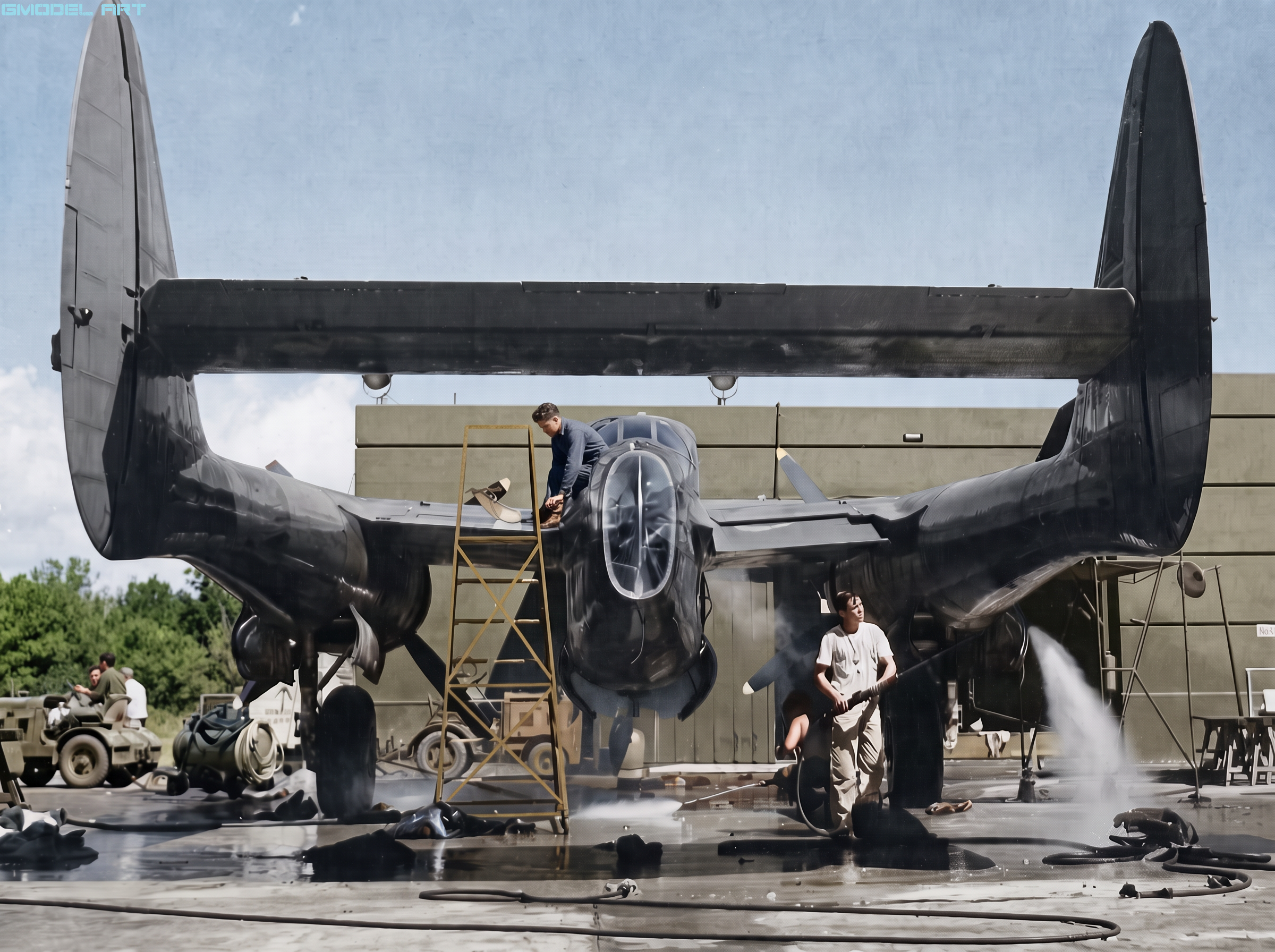
The result was a large twin-engine aircraft with a central fuselage nacelle and twin tail booms.
The first prototype, the XP-61, flew in May 1942. Production aircraft followed, and the first operational P-61 units began receiving aircraft in 1944.
The P-61 therefore represented something more important than simply another American fighter design.
It represented the transition from visual night fighting to radar-directed interception.
The P-61 and Its Radar
The heart of the Black Widow was its airborne interception radar.
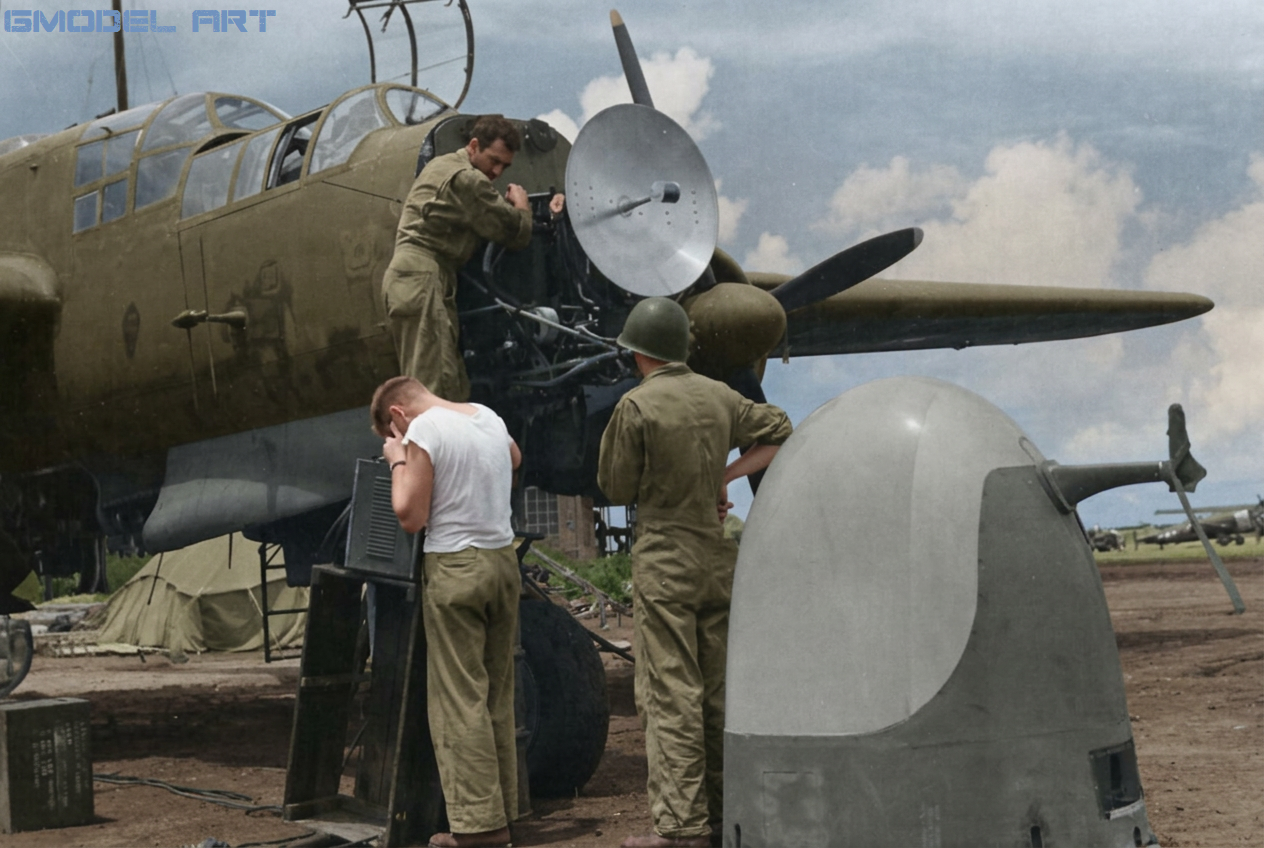
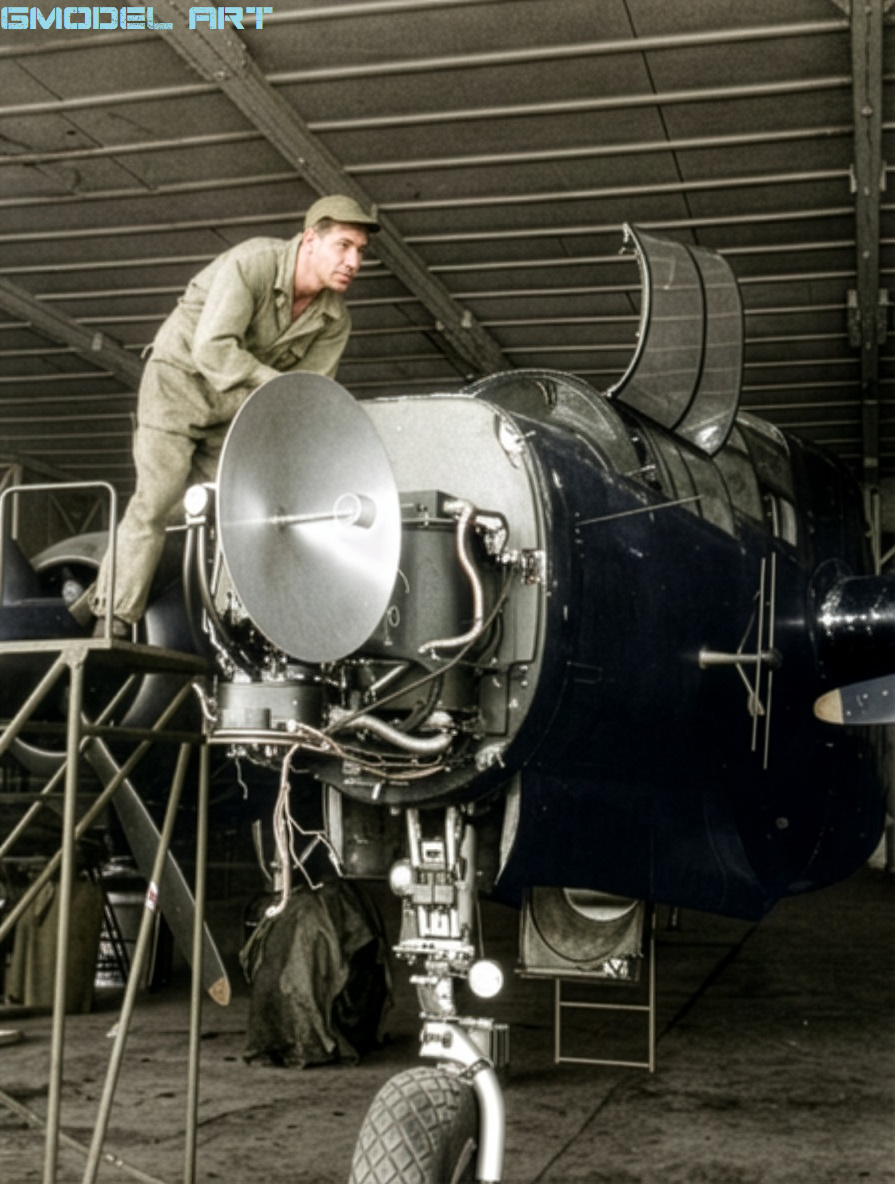
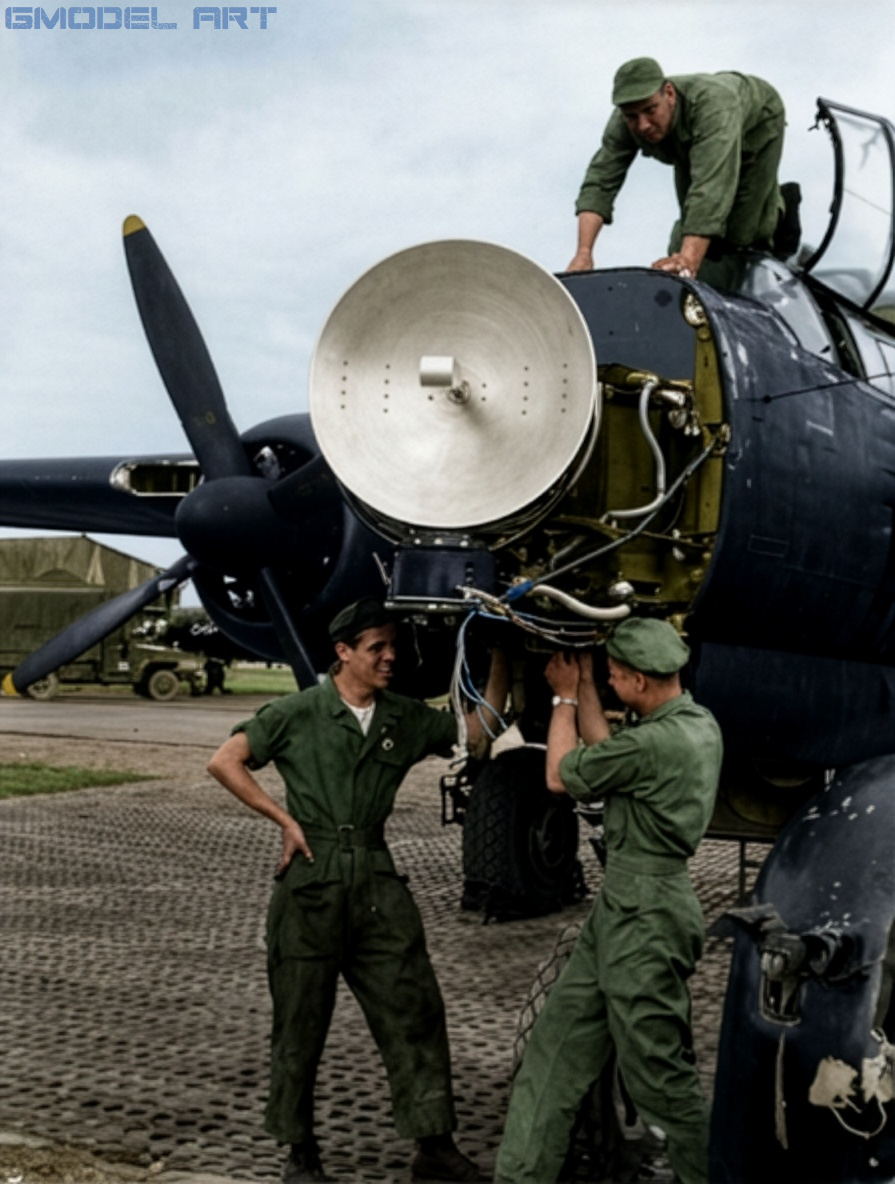
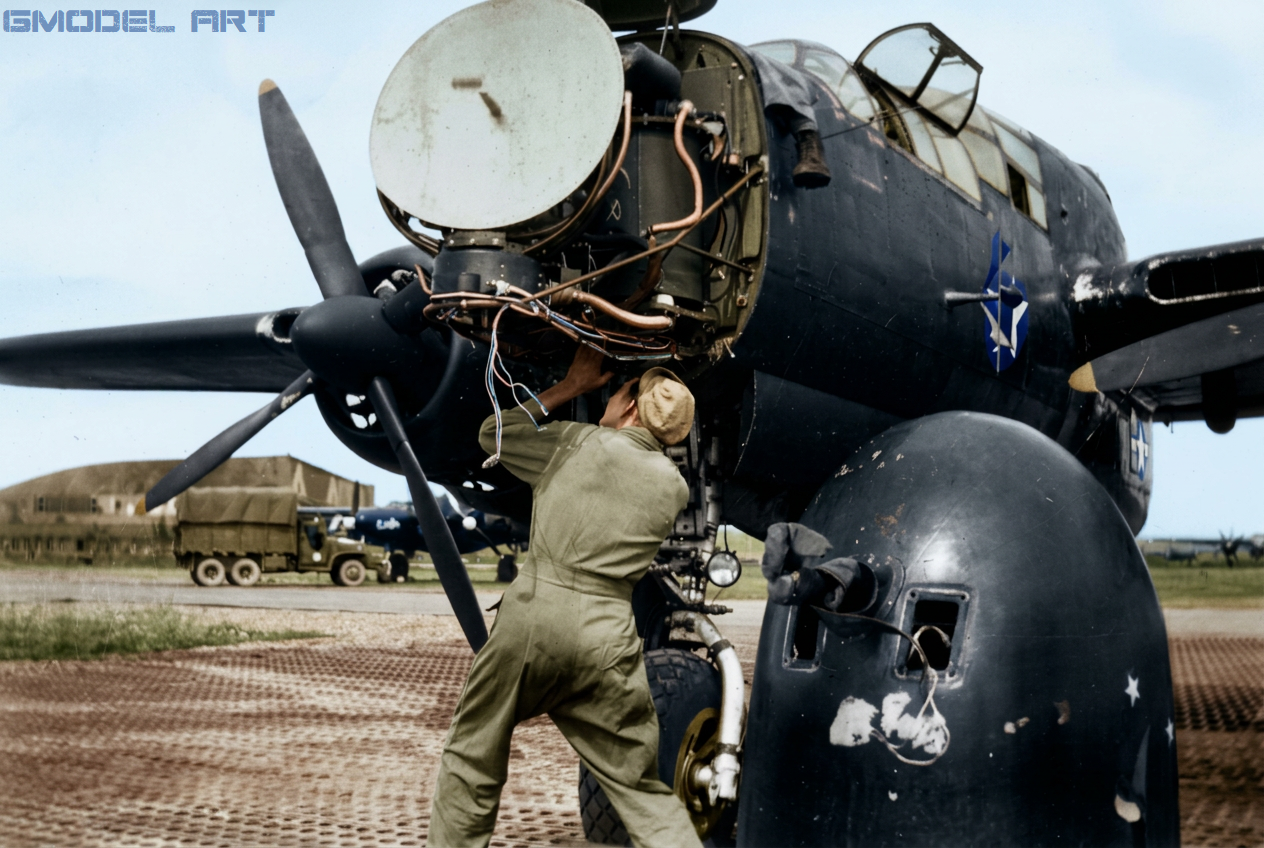
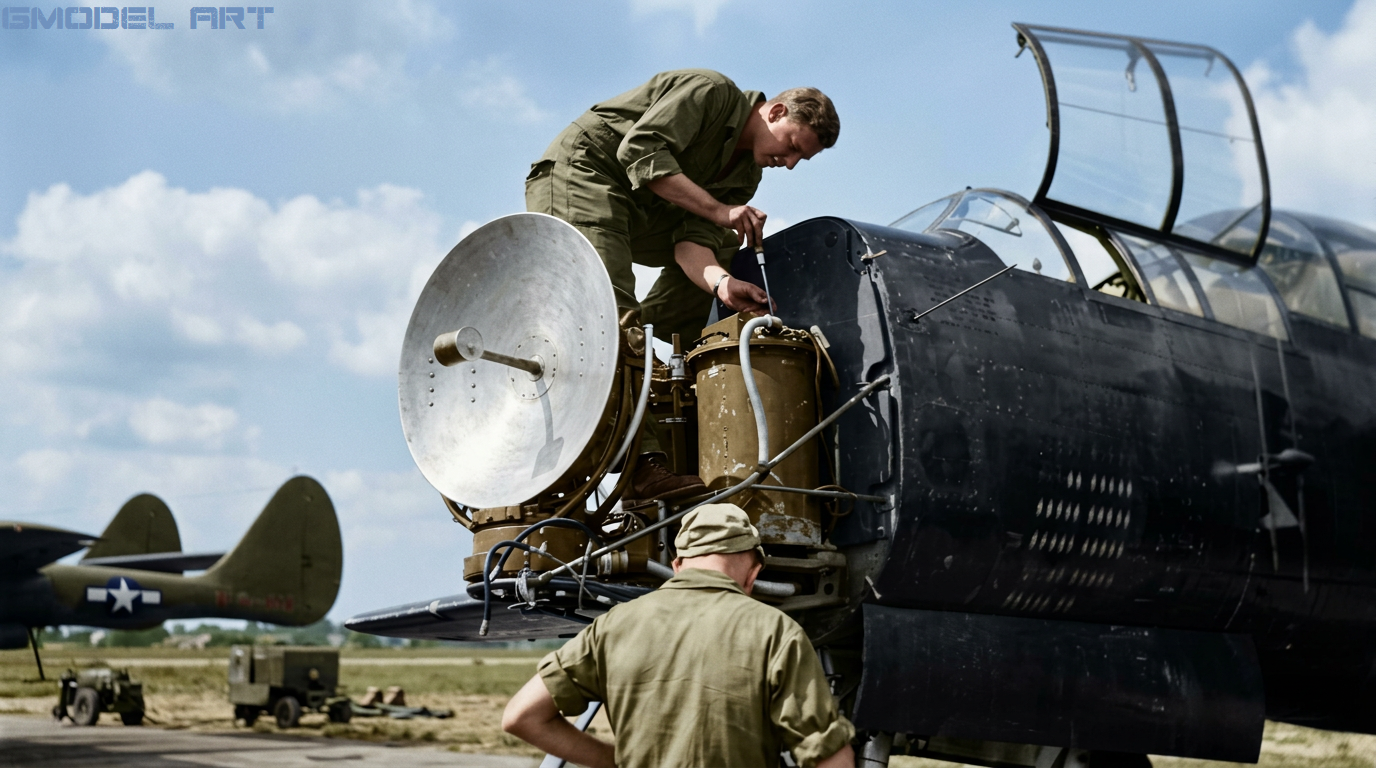
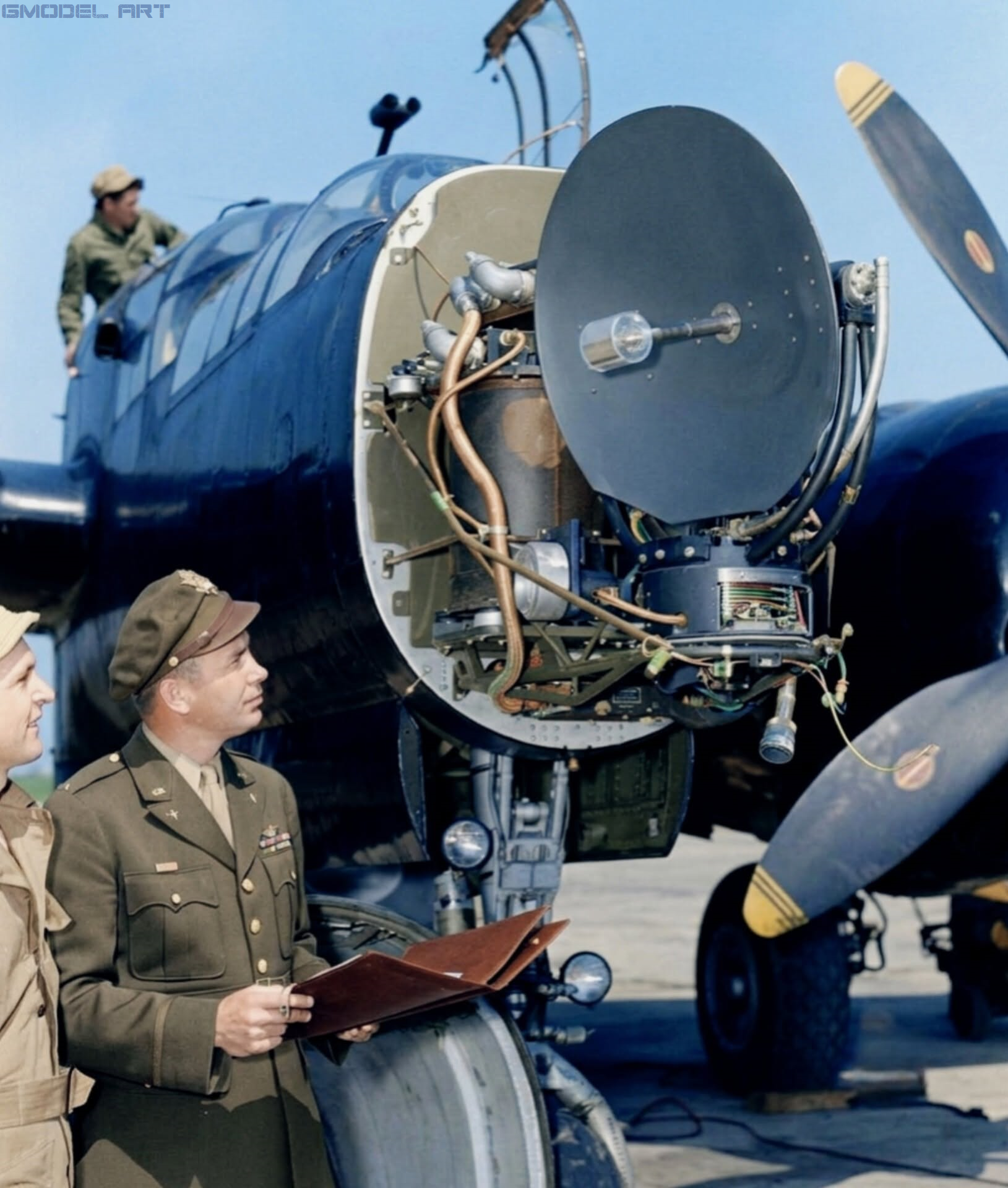
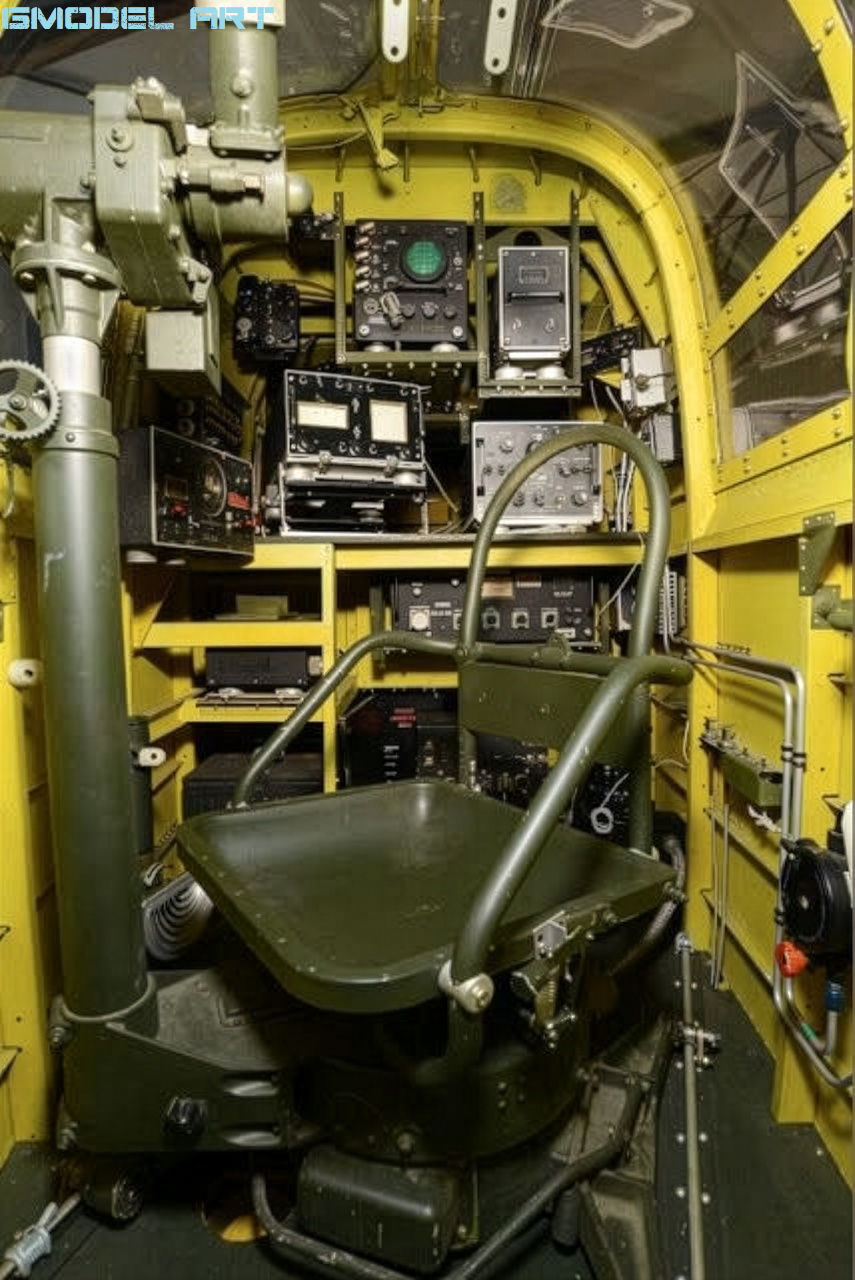
The main operational system was the SCR-720, mounted in the forward section of the aircraft behind the radar housing. The radar operator used the system to detect and track enemy aircraft while guiding the pilot toward the target.
The aircraft could therefore approach an enemy without requiring the pilot to see the target during the initial stages of the interception.
This changed the tactical sequence completely:
Detection by radar
Identification and tracking
Controlled interception
Final visual or radar-directed approach
Gun attack at close range
The radar operator was therefore not simply another crew member.
He was an integral part of the aircraft’s weapons system.
The P-61 was effectively an airborne radar platform combined with a heavily armed fighter.
Crew and Aircraft Configuration
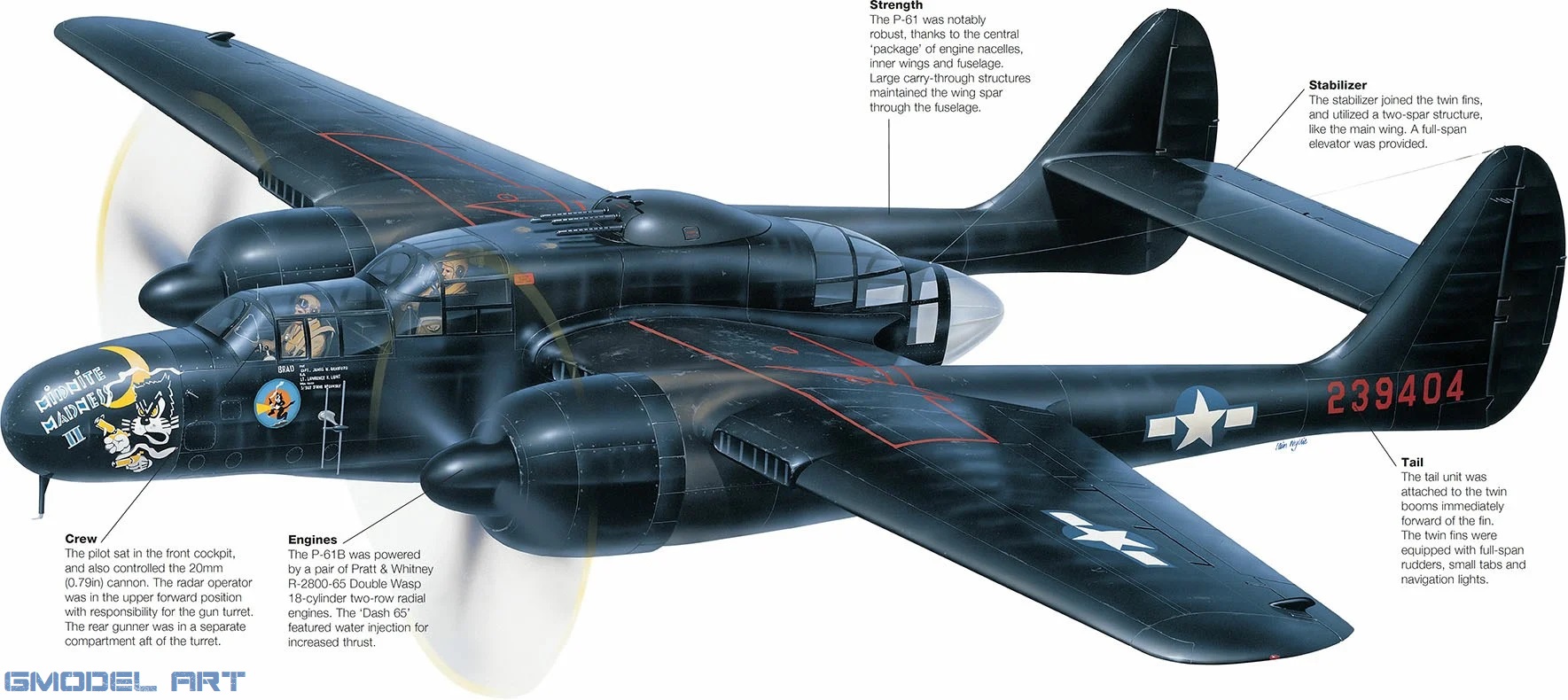
Depending on the production configuration, the P-61 normally carried a crew consisting of:
Pilot
Radar Operator
Gunner
However, many operational aircraft were delivered without the dorsal turret and consequently operated without a dedicated gunner.
This is an important point for modelers.
A P-61 without a turret is not automatically an incomplete aircraft.
Different production blocks and operational units used different configurations, and the turret itself underwent several changes during production.
The position of the radar operator could also vary operationally. European P-61 units developed different arrangements to improve crew communication and aircraft handling.
Therefore, the interior arrangement should be checked against the specific aircraft being modeled.
P-61 Armament
The standard offensive armament of the Black Widow was exceptionally heavy for a night fighter.
The aircraft could carry:
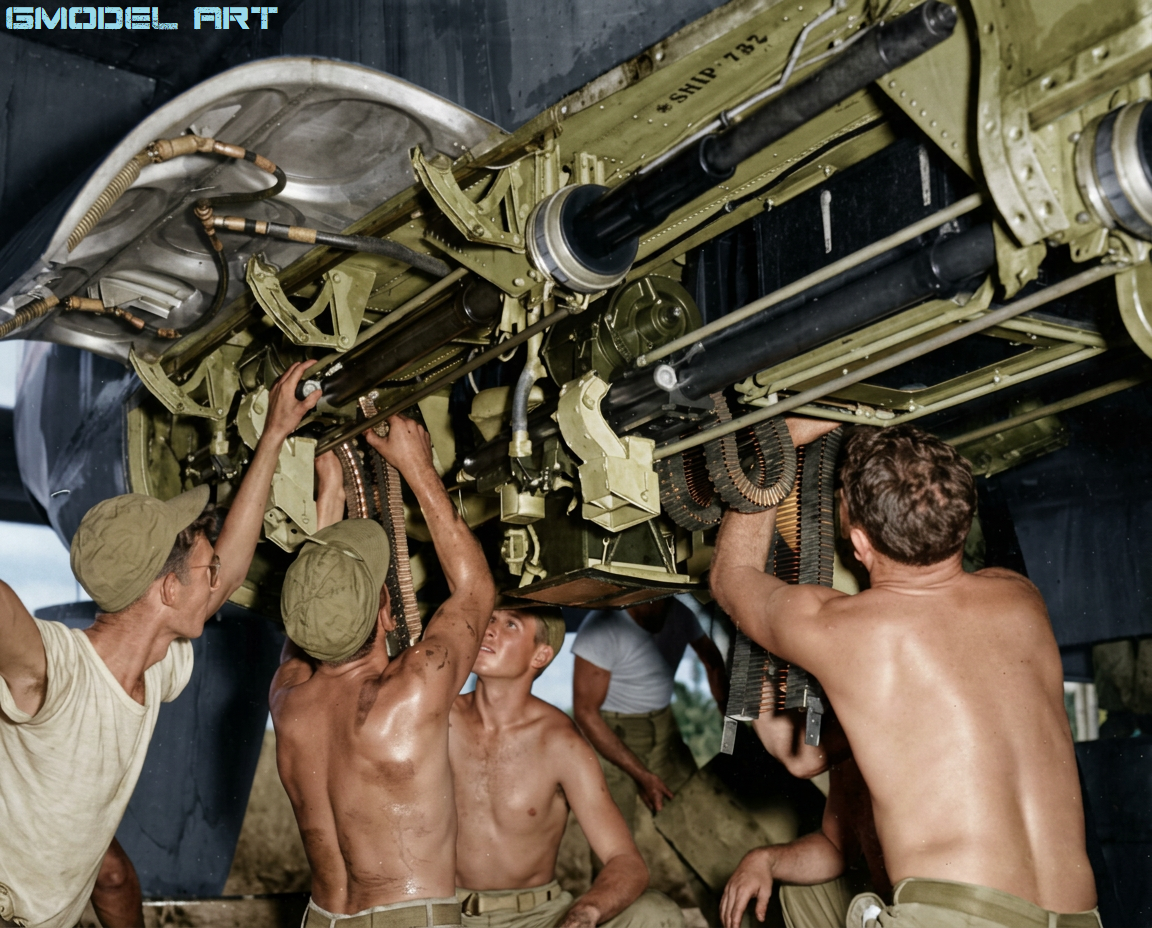
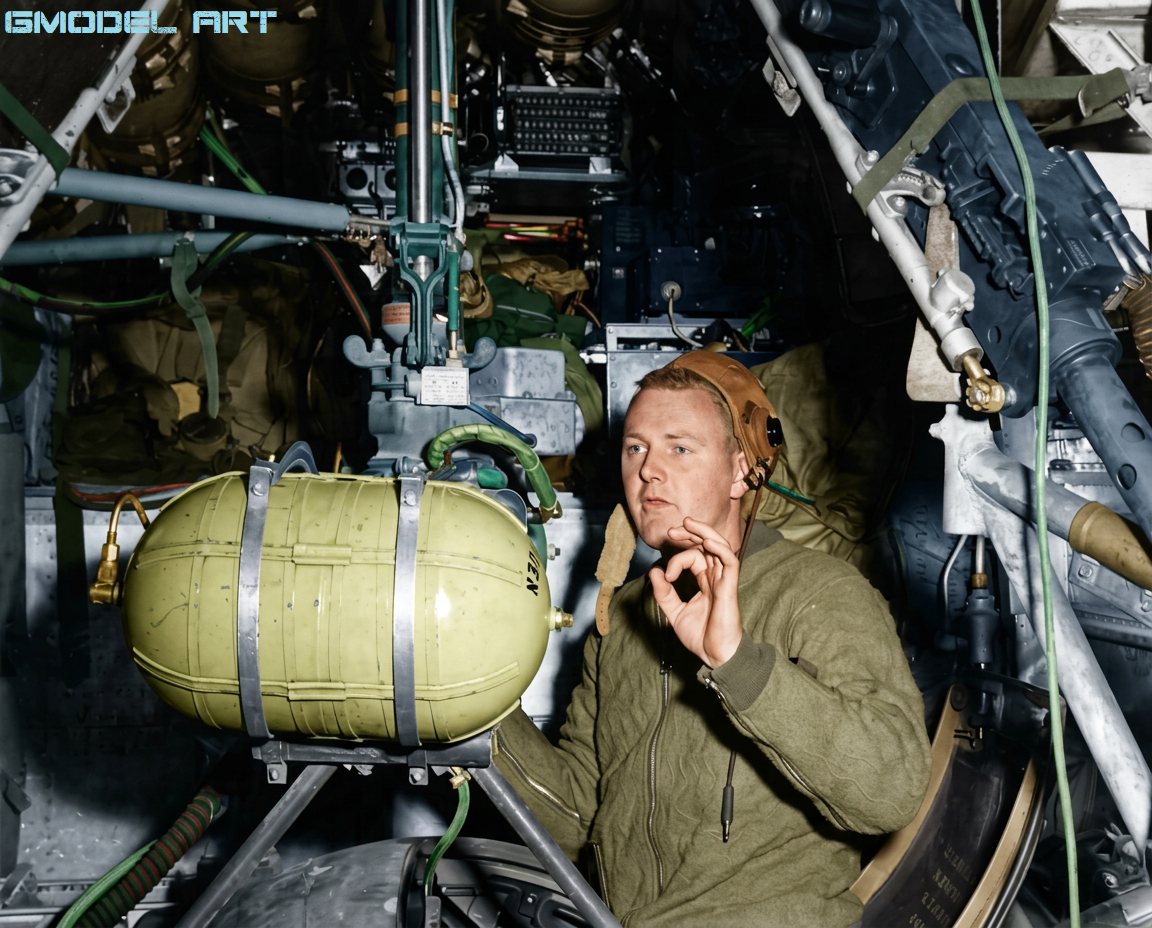
Four 20 mm cannons mounted in the lower forward fuselage
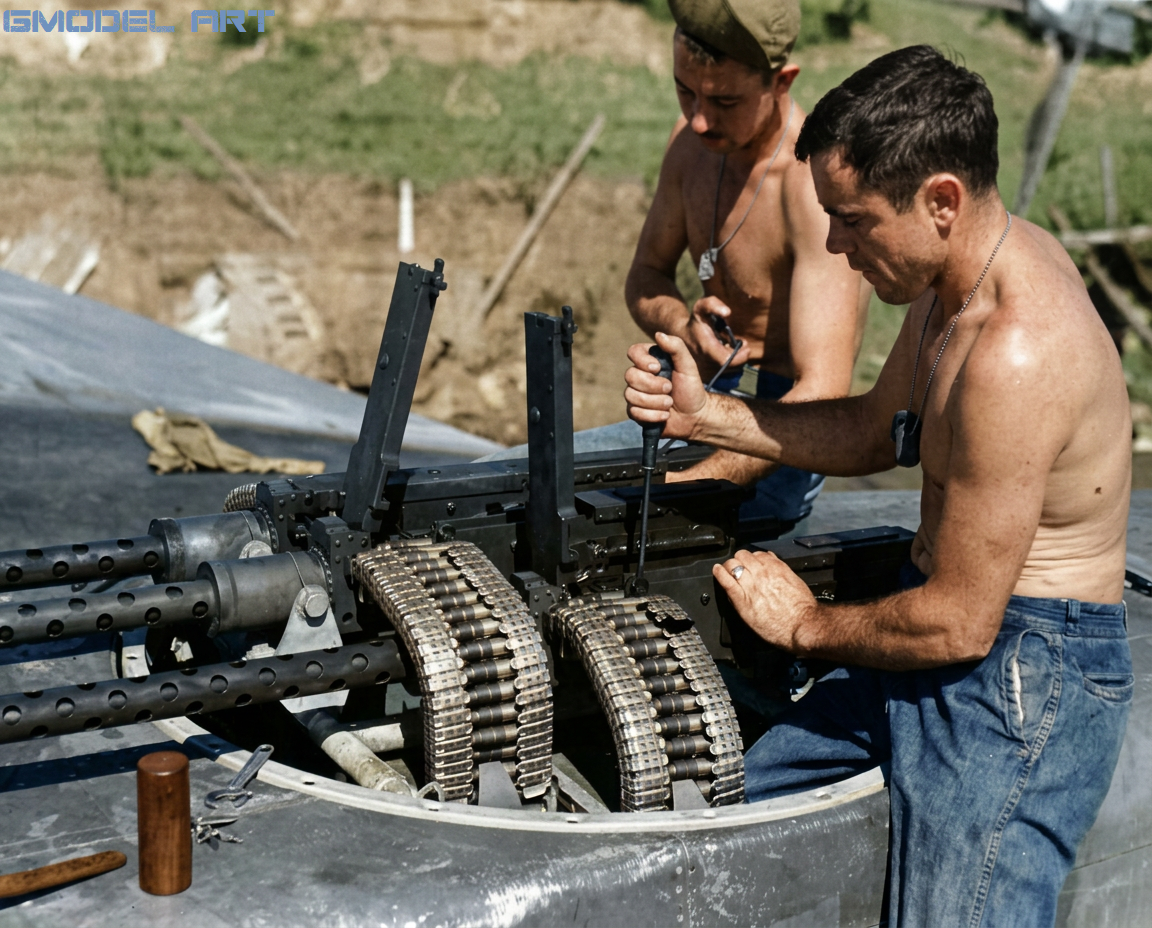
Four .50-caliber machine guns in the dorsal turret on applicable aircraft
Bombs
External fuel tanks
Rockets on aircraft and units equipped for ground-attack missions
The exact configuration depended on the production block and operational modifications.
This is another reason why the modeler should identify the aircraft before selecting the configuration.
A P-61B-15, for example, should not automatically be assumed to have exactly the same turret arrangement as an earlier P-61A.
The Major P-61 Variants
The Black Widow developed considerably during production.
XP-61
The XP-61 was the prototype configuration used to develop the aircraft.
Two prototypes were built.
These aircraft were primarily development and test machines and should not be confused with standard operational P-61s.
YP-61
The YP-61 was the pre-production evaluation aircraft.
Thirteen were built.
The YP-61 incorporated changes required before full production and was used for operational and engineering evaluation.
P-61A
The P-61A was the first major production version.
It introduced the aircraft into operational service and appeared in several production blocks.
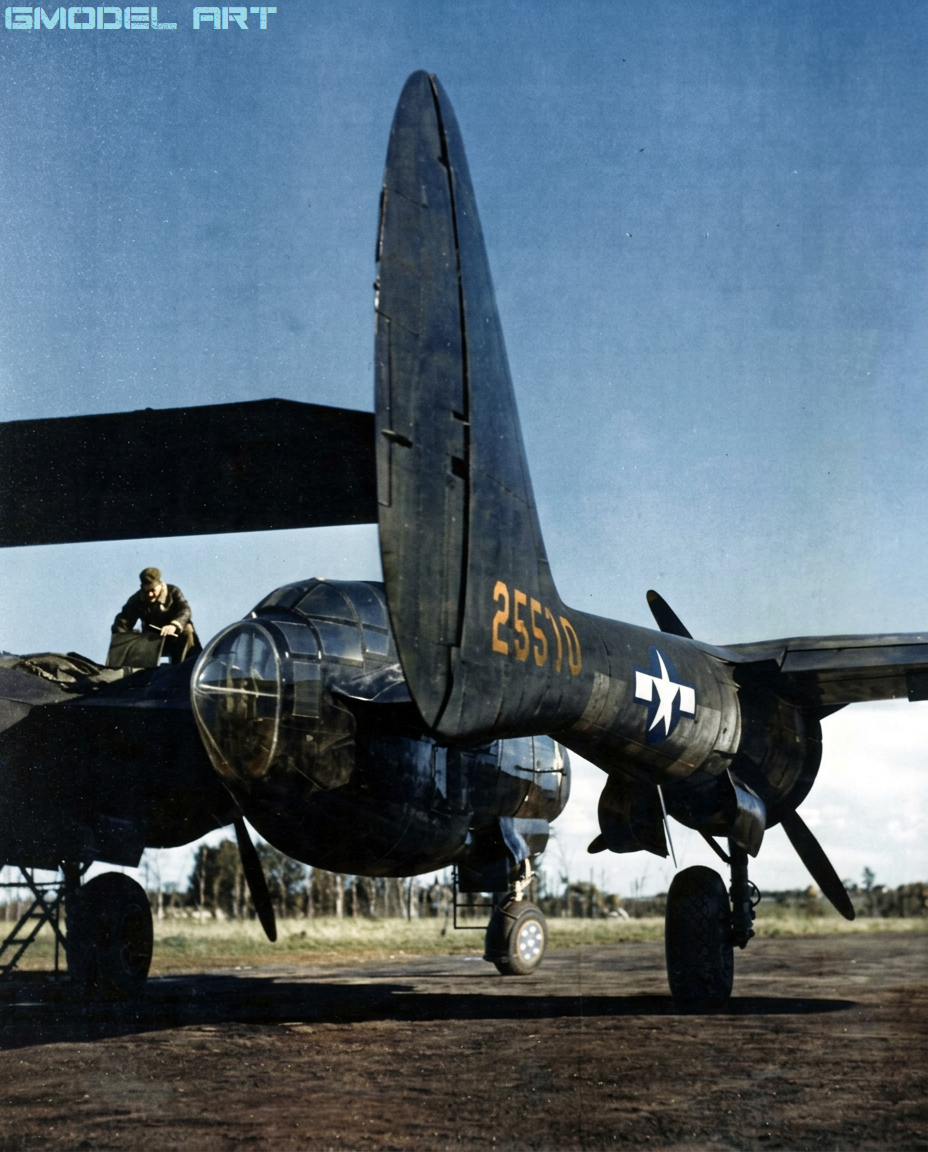
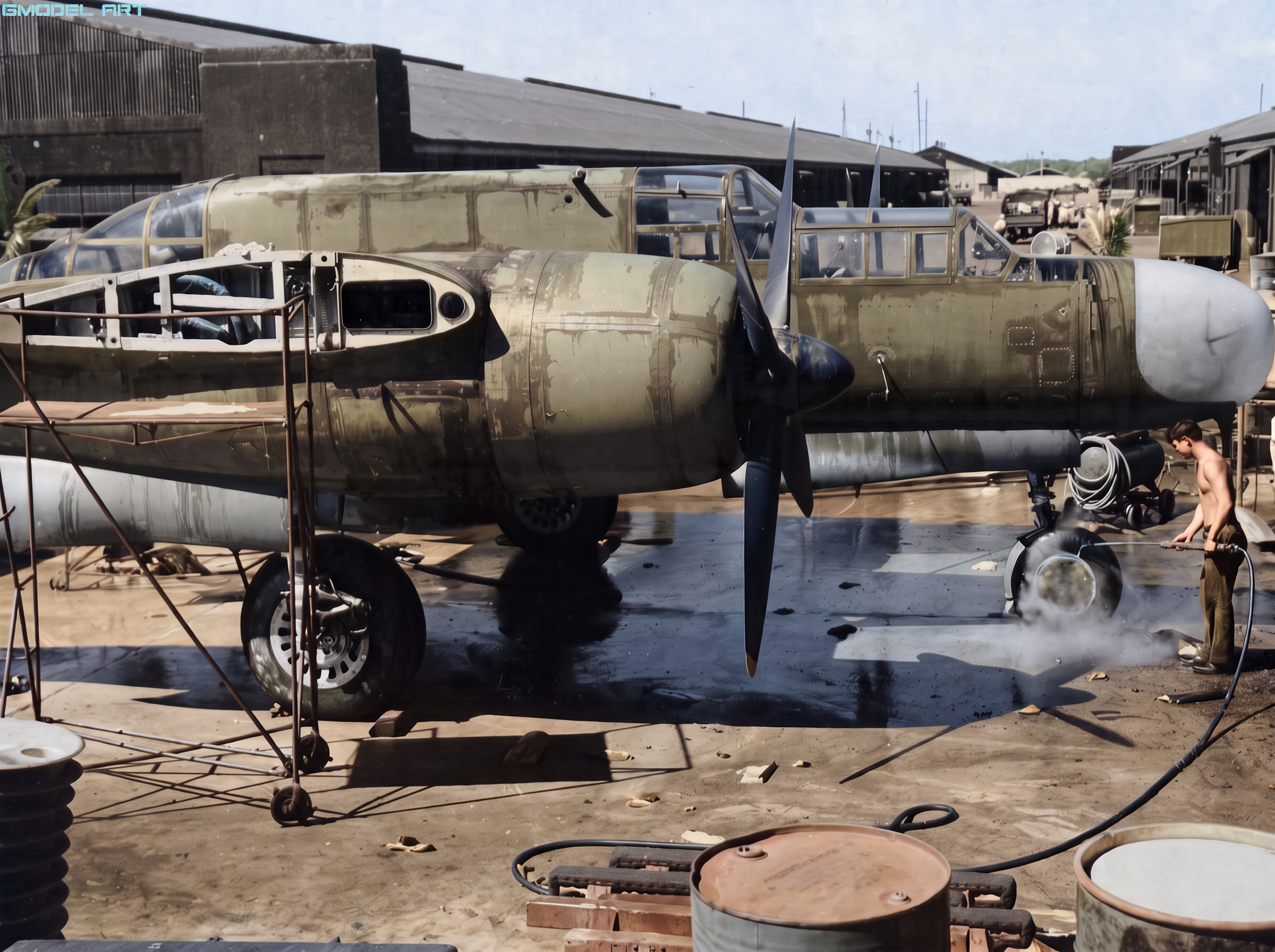
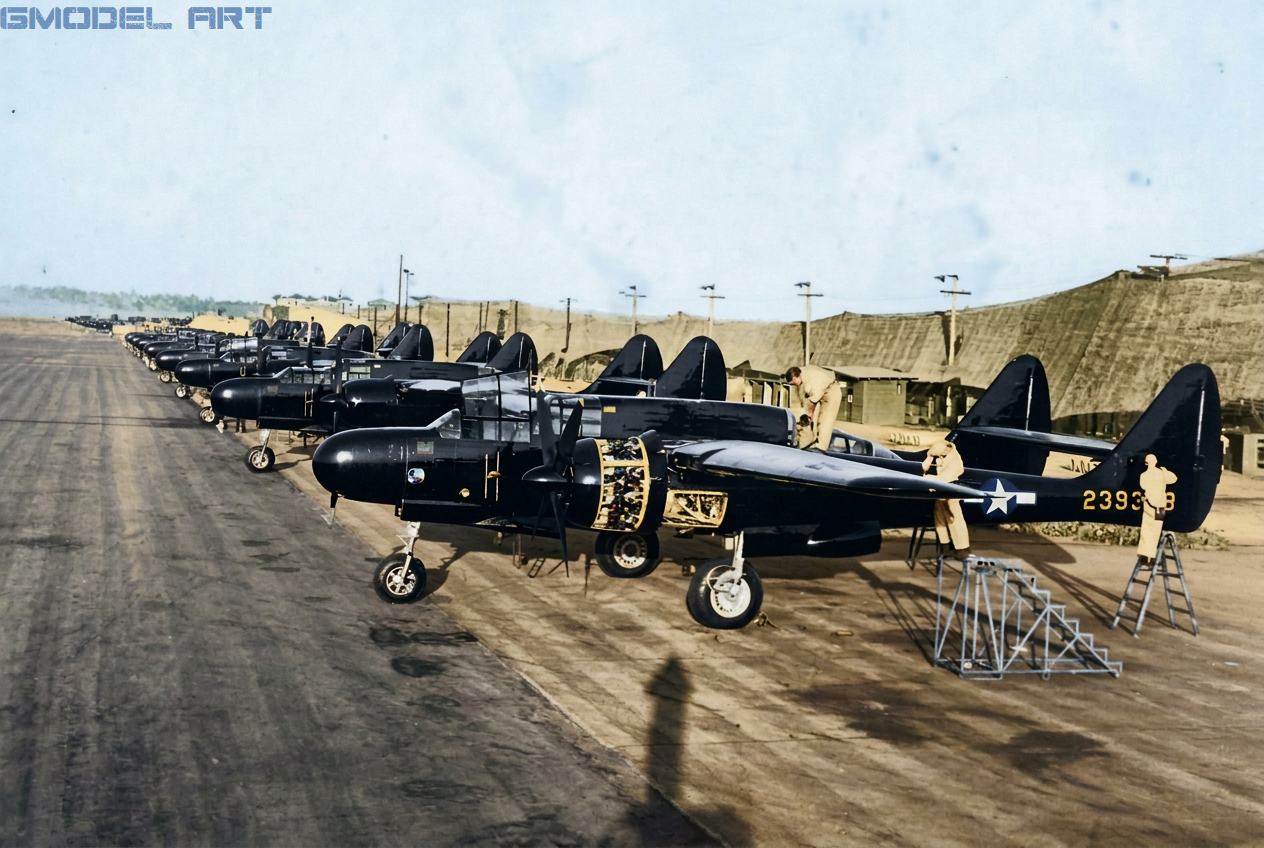
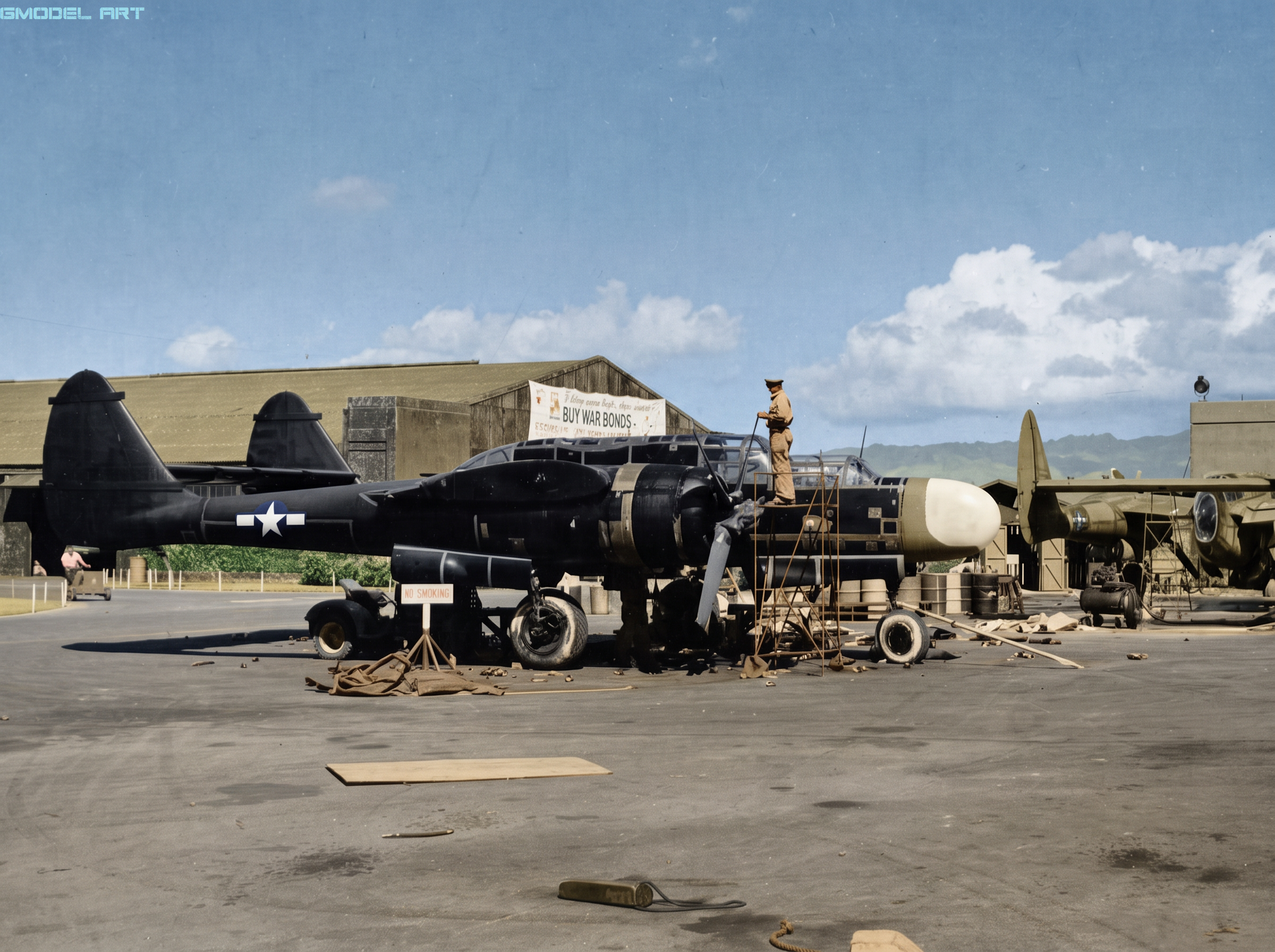
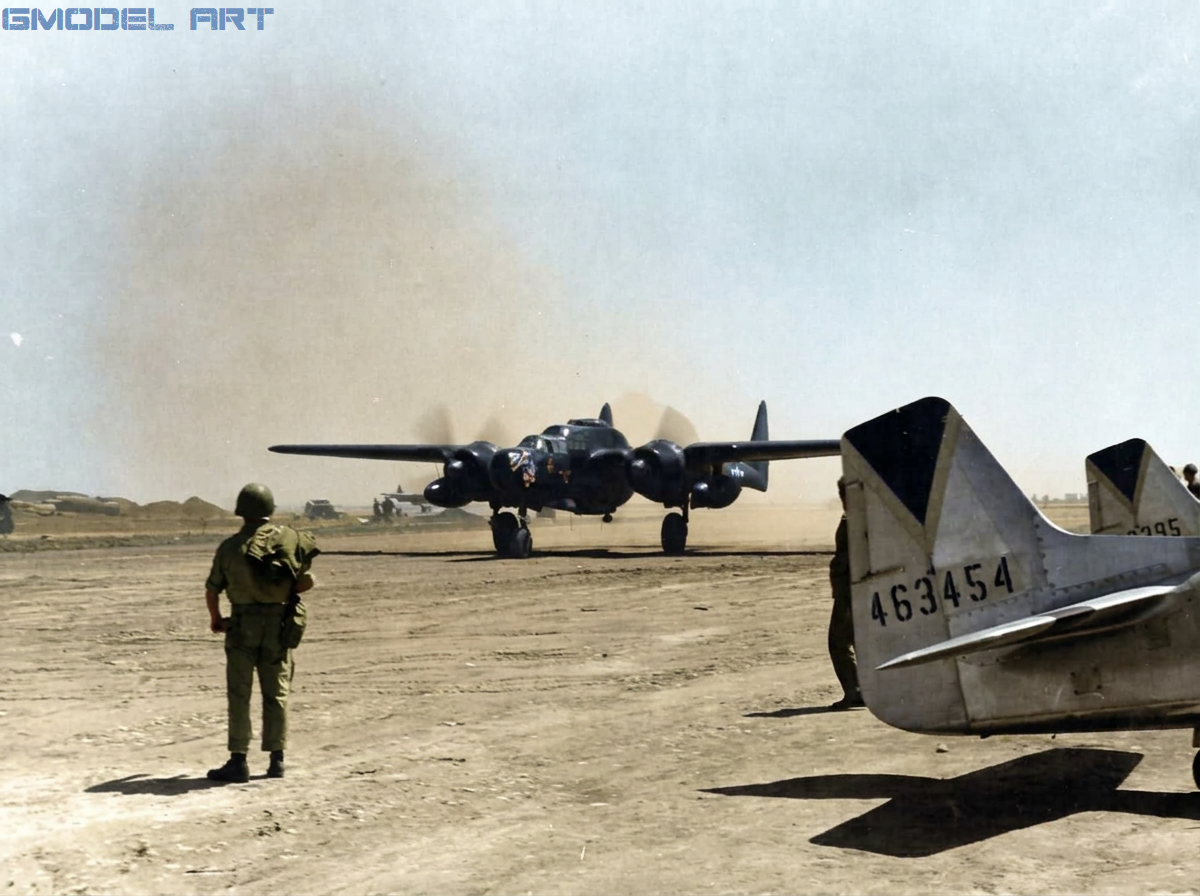
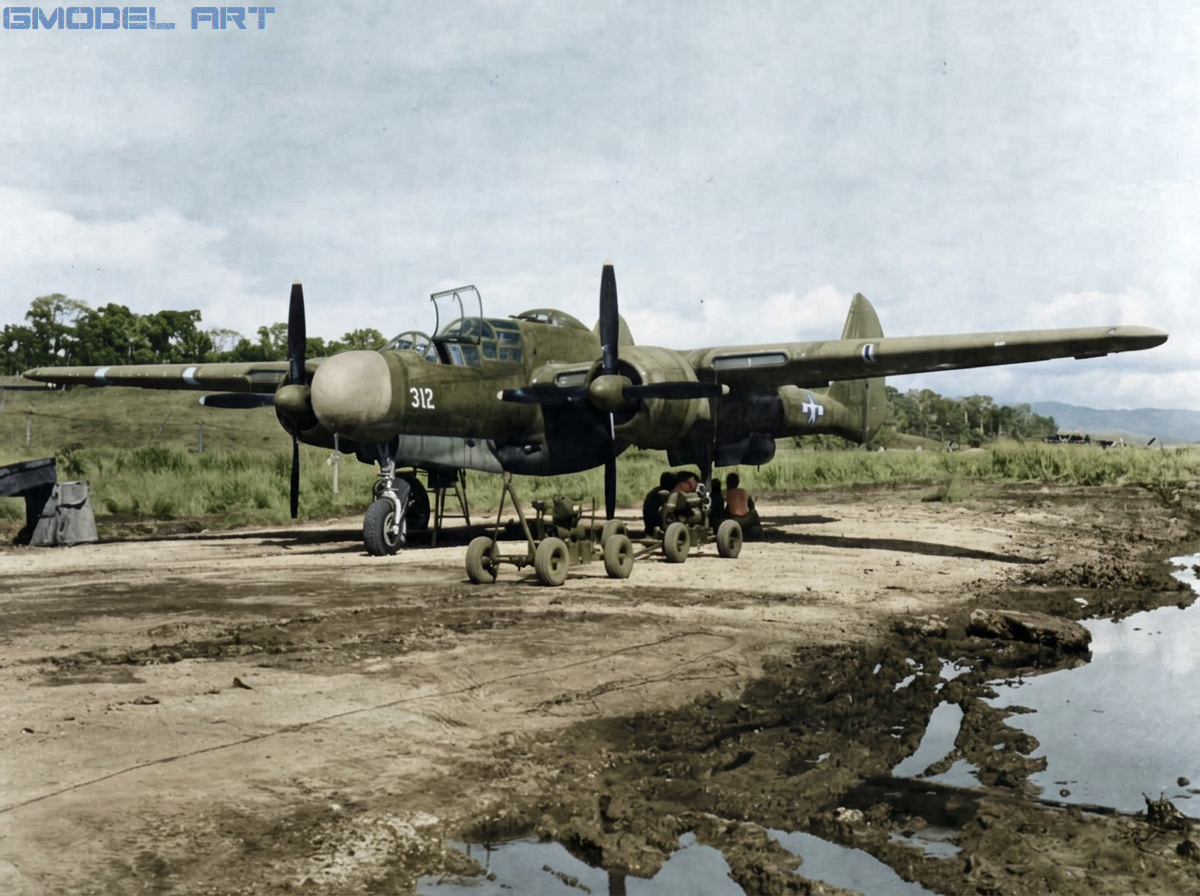
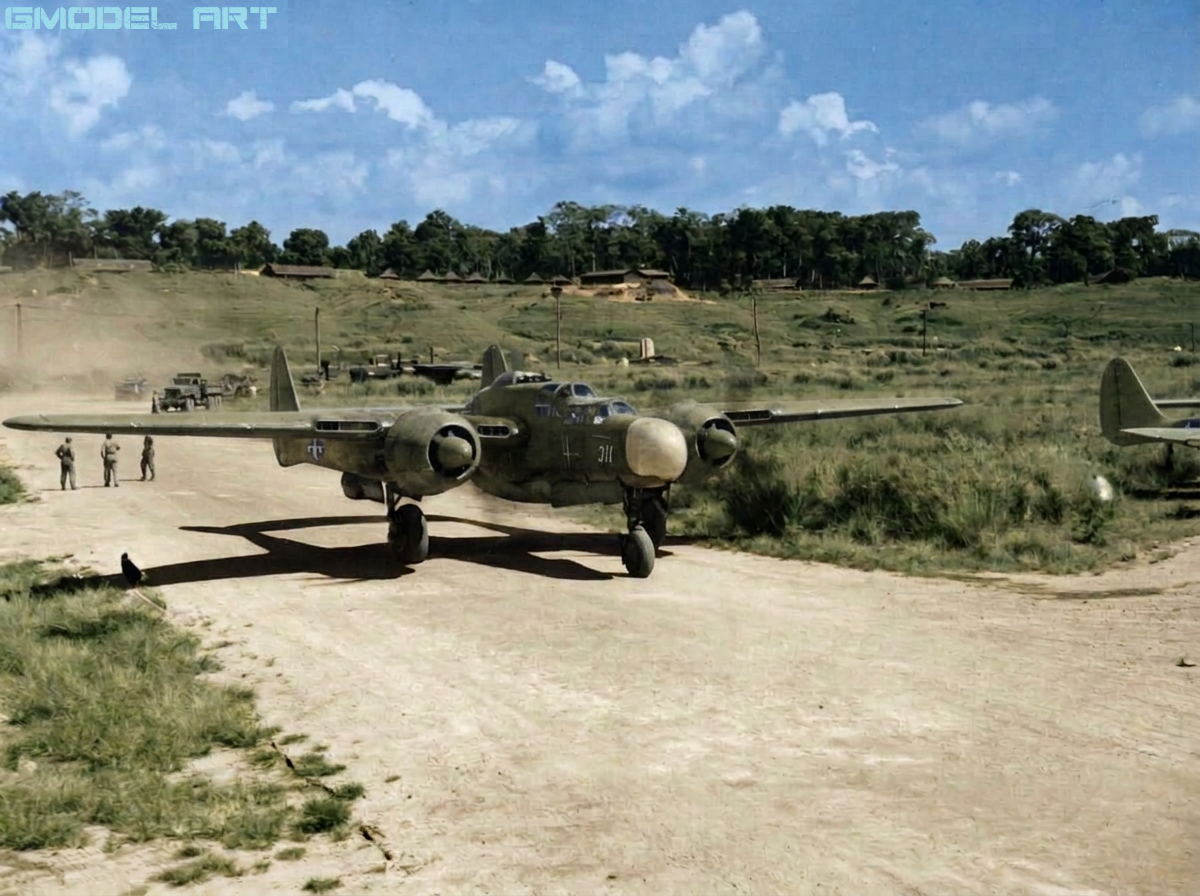
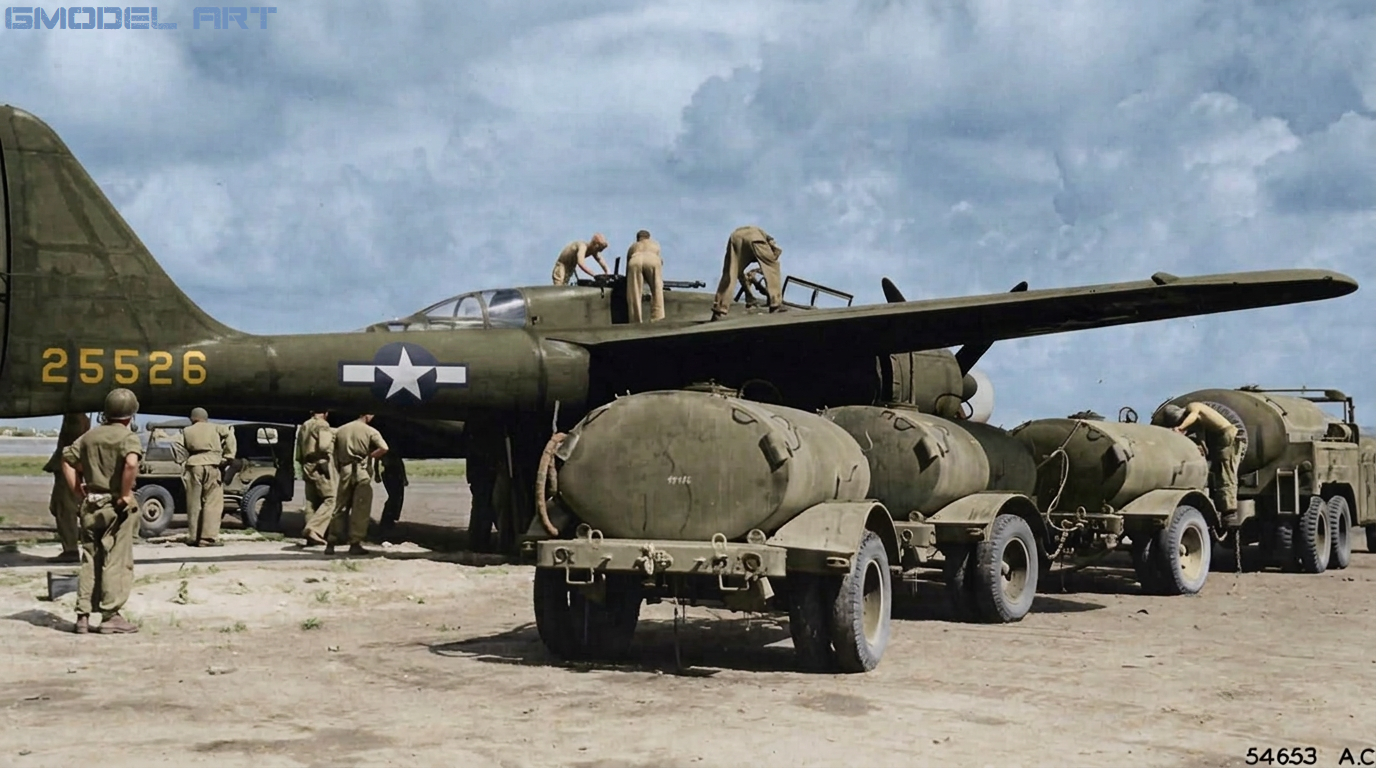
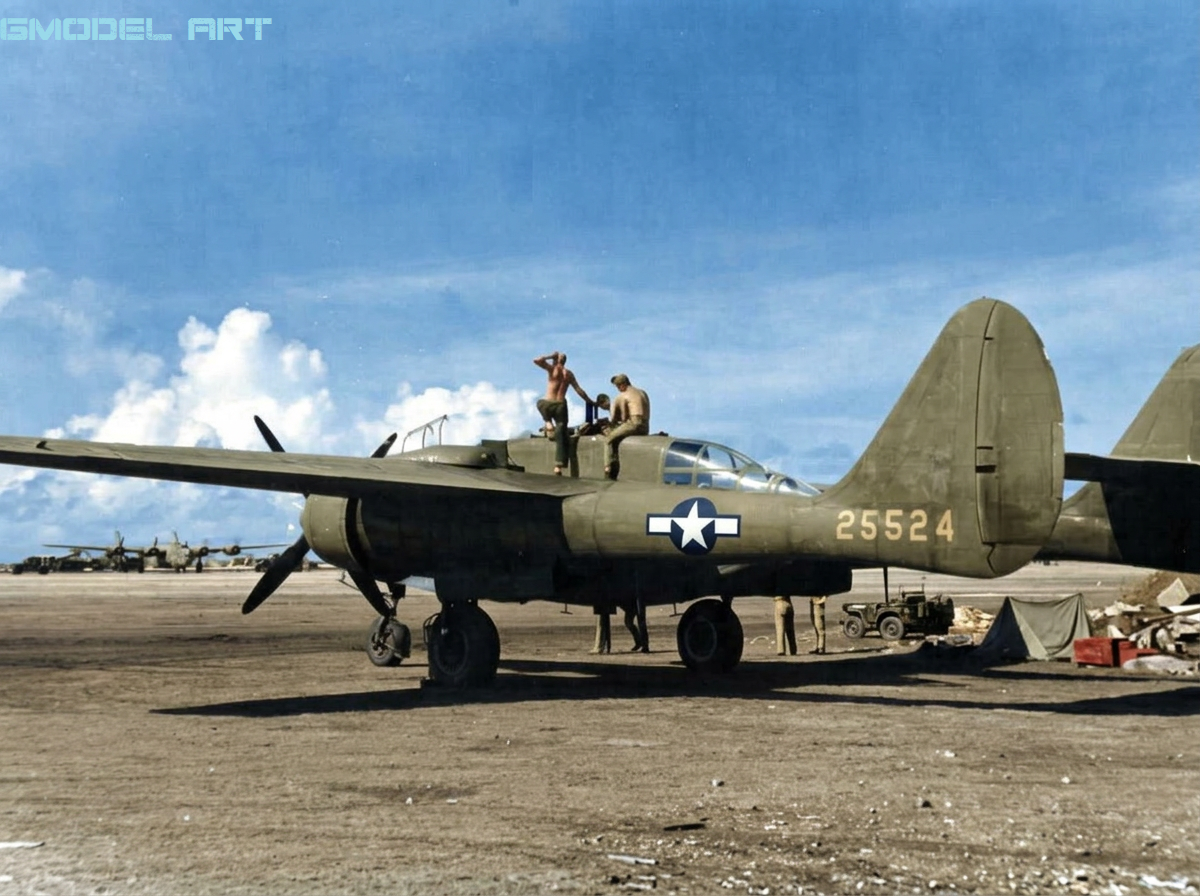
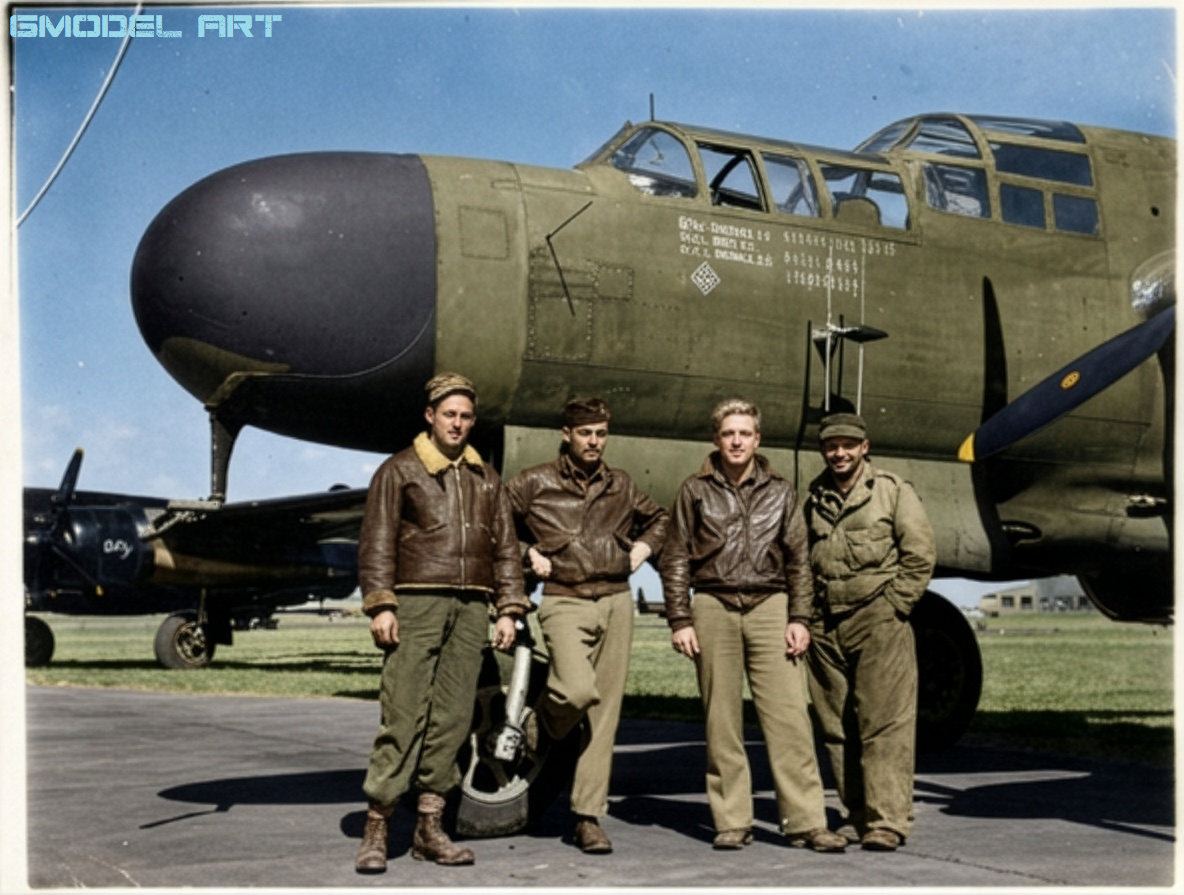
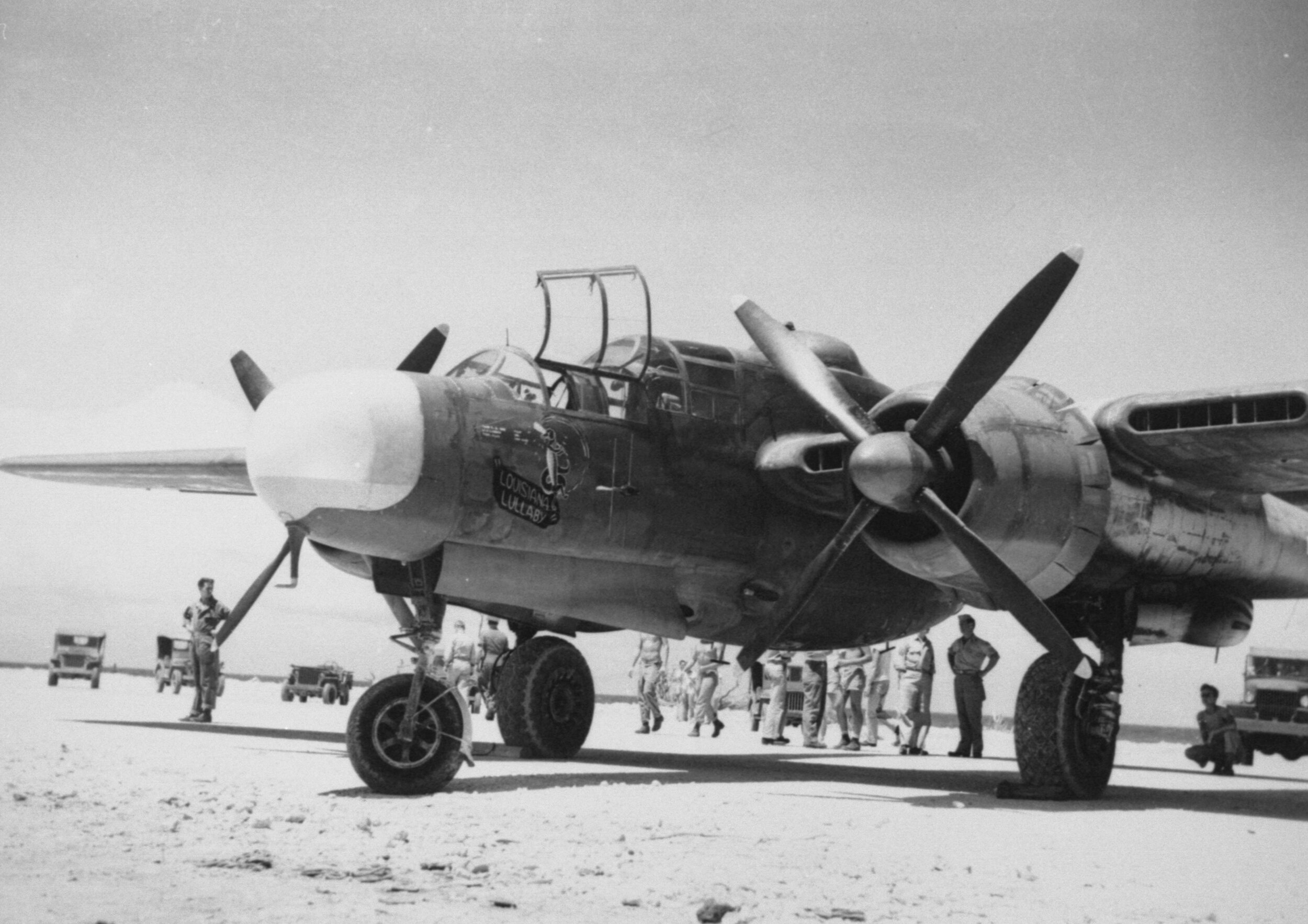
Early P-61As were commonly finished in Olive Drab over Neutral Gray, while later aircraft appeared in the characteristic overall black finish.
The turret arrangement also changed during production.
P-61B
The P-61B was the most numerous major production variant.
It incorporated a number of improvements, including changes to the forward fuselage, radar equipment and external stores capability.
Different production blocks included different turret configurations.
The P-61B therefore represents the most important version for many modelers because of the large number of surviving photographs and operational aircraft.
P-61C
The P-61C was the ultimate production development.
It used turbo-supercharged engines and incorporated aerodynamic improvements intended to increase high-altitude performance.
The P-61C could reach substantially higher altitudes and had improved performance compared with earlier aircraft.
However, the timing of the development meant that the P-61C arrived too late to make a significant combat contribution during World War II. The U.S. National Air and Space Museum notes that the C-model improvements included exhaust-driven turbo-superchargers, additional pylon capability, wing-mounted air brakes and revised propellers, but the improvements arrived too late for the C-model to see combat.
Complete P-61 Variant Reference
| Variant | Main Characteristics | Notes |
|---|---|---|
| XP-61 | Prototype | 2 aircraft |
| YP-61 | Pre-production aircraft | 13 aircraft |
| P-61A-1 | First production block | Early production |
| P-61A-5 | Revised production aircraft | Turret configuration changed |
| P-61A-10 | Improved engine installation | Water-injection capability |
| P-61A-11 | External stores capability | Bombs / fuel tanks |
| P-61B-1 | Revised forward fuselage and radar-related changes | Major production development |
| P-61B-2 | Improved external stores capability | Operational P-61B |
| P-61B-10 | Four underwing attachment points | Important external-store configuration |
| P-61B-11 | Revised dorsal turret | Limited production |
| P-61B-15 | Four-gun turret configuration | One of the major B-model blocks |
| P-61B-16 | Revised turret arrangement | Small production block |
| P-61B-20 | General Electric turret | Major later B-model block |
| P-61B-25 | Advanced turret/fire-control arrangement | Very limited production |
| P-61C | Turbo-supercharged engines and improved aerodynamics | 41 completed |
| XP-61D | Experimental high-altitude development | Experimental |
| XP-61E | Experimental two-seat fighter configuration | Experimental |
| XP-61F | Proposed development | Experimental |
| P-61G | Weather reconnaissance conversion | Postwar |
| F-15A Reporter | Photographic reconnaissance development | Derived from P-61 |
The P-61C was the final major production variant, while several experimental and postwar derivatives extended the Black Widow family beyond the wartime A and B series.
P-61 Combat Operations: Europe, Mediterranean, CBI and Pacific
The Black Widow was not concentrated in one theater.
P-61 units operated across several major commands, including:
European Theater of Operations
Mediterranean Theater of Operations
China-Burma-India Theater
Southwest Pacific
Central Pacific
The distribution of units is particularly important for modelers because the theater strongly influenced markings, weathering and operational appearance.
P-61 Combat Squadrons and Theaters
| Theater | Squadron | Main Area / Deployment | P-61 Operational Context |
|---|---|---|---|
| European Theater | 422nd Night Fighter Squadron | England, France, Belgium | Main P-61 combat unit in Europe |
| European Theater | 425th Night Fighter Squadron | England, France | P-61 operations in Western Europe |
| European Theater | 414th Night Fighter Squadron | Italy / Mediterranean transition and later Europe | Transitioned from earlier night-fighter equipment |
| European Theater | 415th Night Fighter Squadron | European Theater | Received P-61 during the later European campaign |
| European Theater | 416th Night Fighter Squadron | Europe / Austria | Received P-61 during the late-war/postwar period |
| European Theater | 417th Night Fighter Squadron | Europe / occupation duties | P-61 service primarily after the main European campaign |
| Mediterranean Theater | 414th Night Fighter Squadron | Italy / Mediterranean | Transition from Beaufighter to P-61 |
| China-Burma-India | 426th Night Fighter Squadron | India / China / CBI | Night defense and later offensive operations |
| China-Burma-India | 427th Night Fighter Squadron | China / CBI | Night fighter and ground-attack missions |
| Southwest Pacific | 418th Night Fighter Squadron | New Guinea, Netherlands East Indies, Philippines, Okinawa | Major Pacific P-61 unit |
| Southwest Pacific | 421st Night Fighter Squadron | New Guinea, Netherlands East Indies, Philippines, Okinawa | Major Pacific P-61 unit |
| Southwest Pacific | 547th Night Fighter Squadron | Netherlands East Indies, Philippines, Okinawa | P-61 night operations |
| Central Pacific | 6th Night Fighter Squadron | Hawaii, Marianas, Saipan, later Japan | One of the first P-61 units |
| Central Pacific | 548th Night Fighter Squadron | Saipan, Iwo Jima, Okinawa | Pacific night-fighter operations |
| Central Pacific | 549th Night Fighter Squadron | Saipan, Iwo Jima, Okinawa | Pacific night-fighter operations |
| Pacific | 550th Night Fighter Squadron | Pacific / Philippines | Night interception and ground-support operations |
The Smithsonian’s National Air and Space Museum records P-61 combat results across several theaters: 53 victories in the European Theater, 64 in the Pacific, five in the China-Burma-India Theater and five in the Mediterranean Theater, for 127 piloted aircraft destroyed, plus nine unpiloted V-1 flying bombs.
The Pacific units included the 418th, 421st, 547th, 6th, 548th and 549th Night Fighter Squadrons, while the 426th and 427th operated in the China-Burma-India Theater.
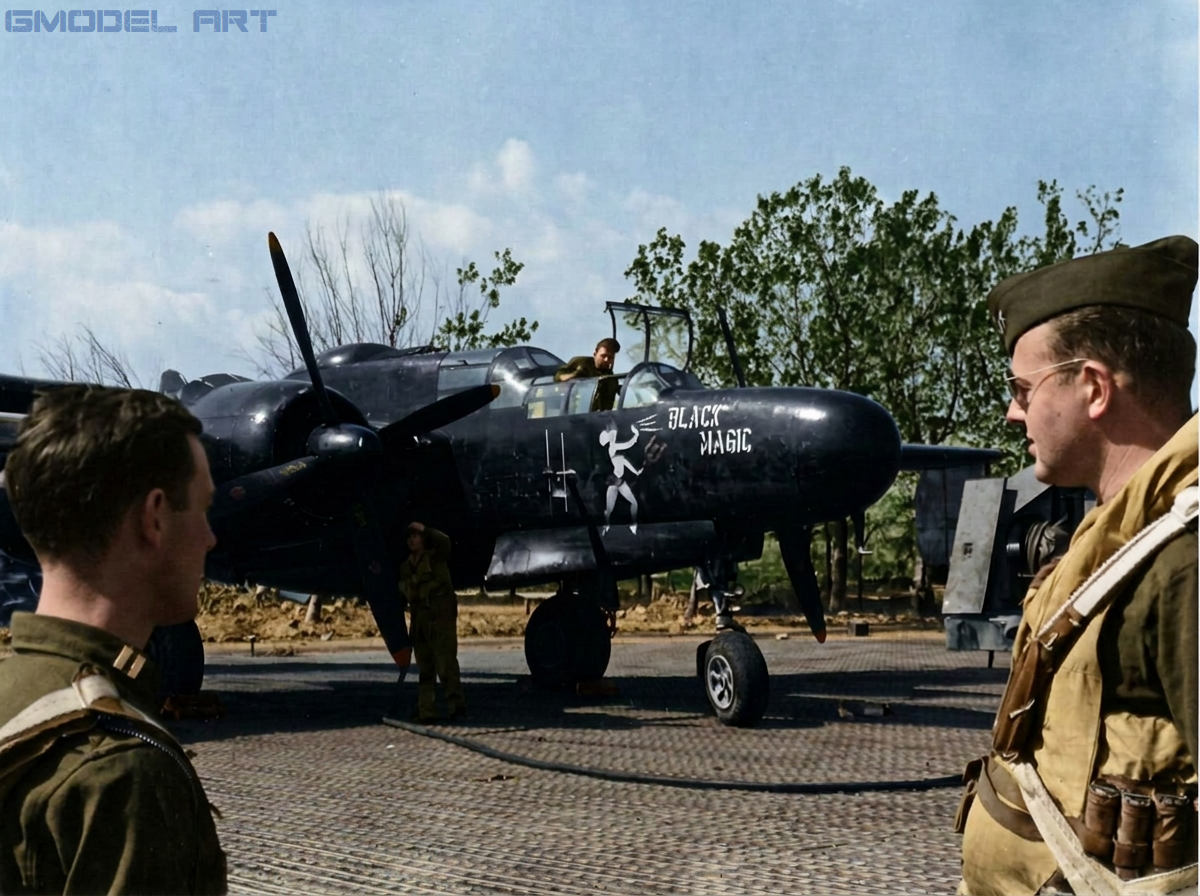
Europe: The 422nd and 425th Night Fighter Squadrons
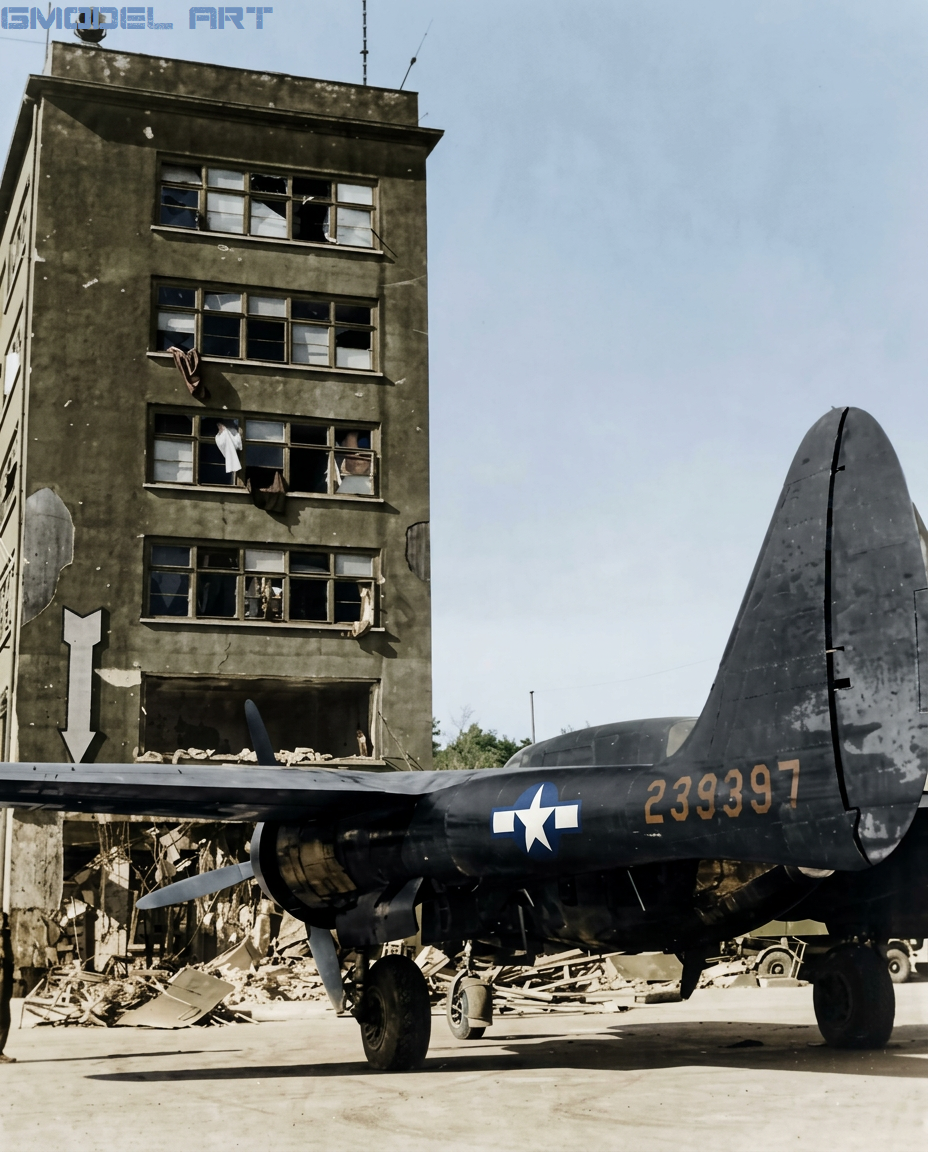
The European story of the Black Widow is particularly important.
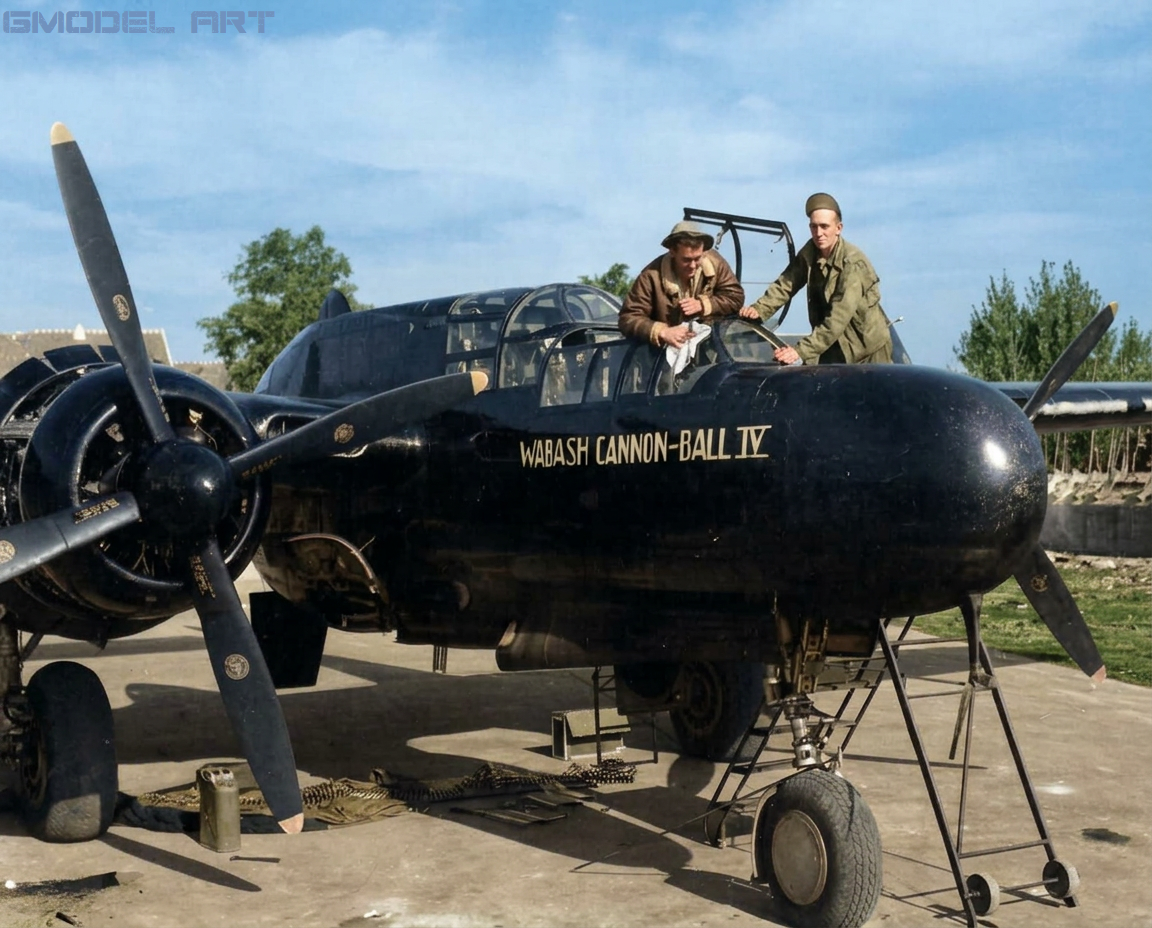
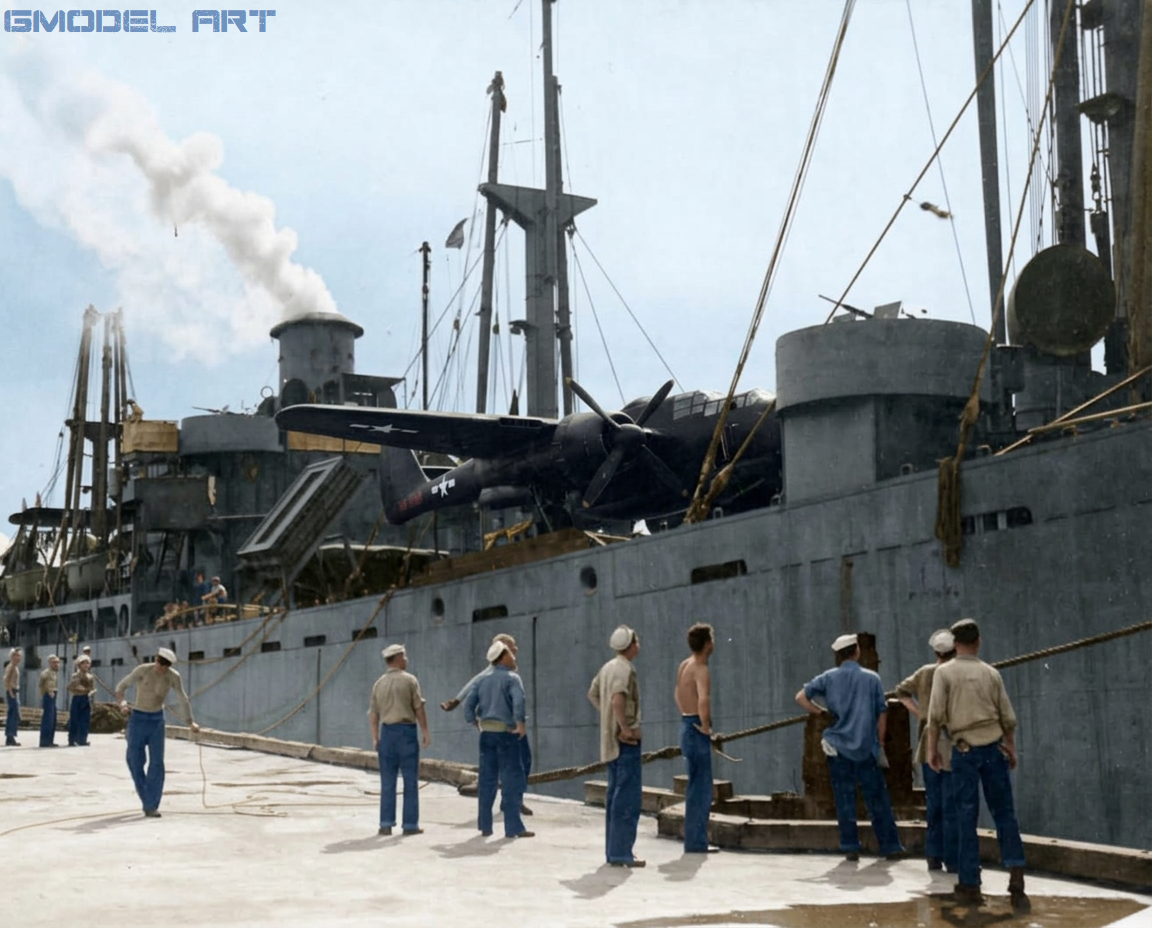
The 422nd Night Fighter Squadron was the first P-61 squadron to arrive in the European Theater after completing its operational training in Florida. The squadron reached England in February 1944 aboard the RMS Mauretania.
The 425th Night Fighter Squadron followed.
The P-61’s European combat debut was delayed, and concerns were raised about whether the aircraft was fast enough to engage German aircraft effectively.
These concerns did not prevent the P-61 from becoming an important night-fighting platform.
The 422nd NFS became operational in July 1944 and subsequently moved into France as Allied forces advanced. The 425th NFS followed into France in August.
During the Battle of the Bulge, both squadrons conducted night-fighter and increasingly aggressive ground-attack missions.
The P-61 was therefore not restricted to pure air interception.
When suitable aerial targets became scarce, Black Widow crews could attack locomotives, vehicles, supply routes and other ground targets.
The 422nd became particularly successful and produced more P-61 aces than any other Black Widow unit during the war.
The Mediterranean Theater
The 414th Night Fighter Squadron represents an important part of the Black Widow story that is sometimes overlooked.
The squadron had previously operated other night-fighter equipment before transitioning toward the P-61.
This makes Mediterranean P-61s particularly interesting for modelers because the aircraft may show operational characteristics associated with an established night-fighter unit rather than a newly formed P-61 organization.
China-Burma-India Theater
The 426th and 427th Night Fighter Squadrons operated in the China-Burma-India Theater.
Their original mission included the defense of American bomber bases, including B-29 operations.
As Japanese night-air activity became less significant, the P-61s increasingly shifted toward offensive night missions.
Aircraft were used to search for:
Trains
Trucks
Supply convoys
Roads
Railways
Other Japanese ground targets
Some P-61s were also adapted for rocket attack.
This made the Black Widow an increasingly versatile night intruder rather than simply a defensive interceptor.
The Pacific War
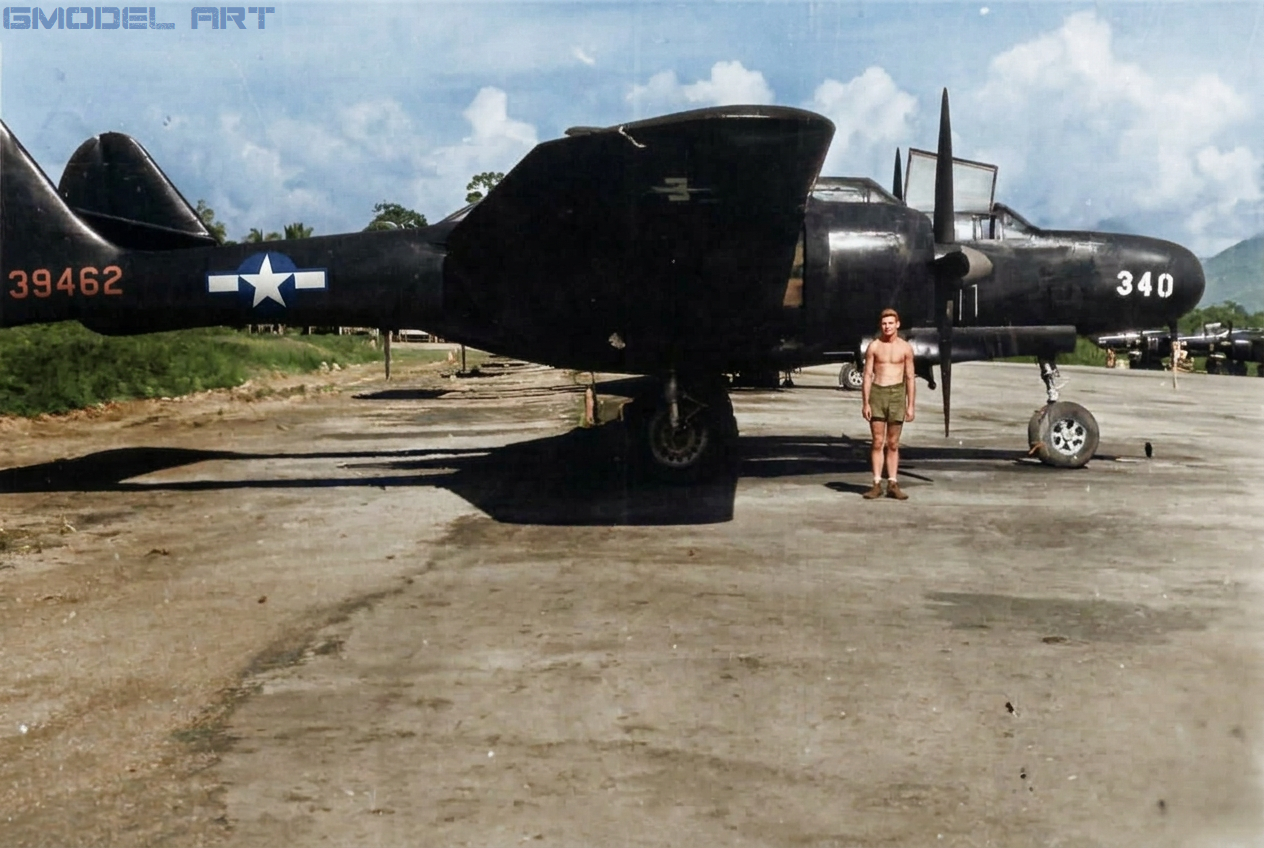
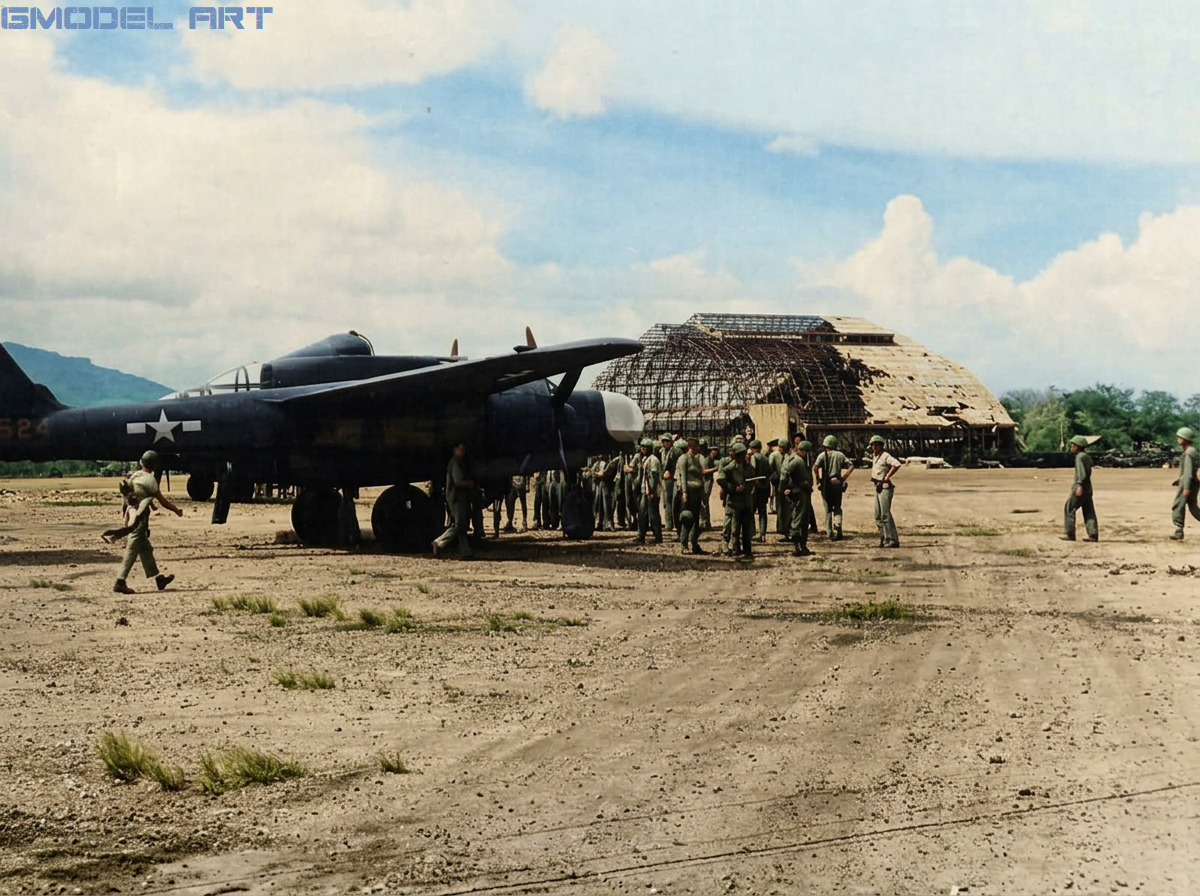
The Pacific was where the P-61 became particularly important numerically.
Among the most significant units were the:
6th NFS
418th NFS
421st NFS
547th NFS
548th NFS
549th NFS
550th NFS
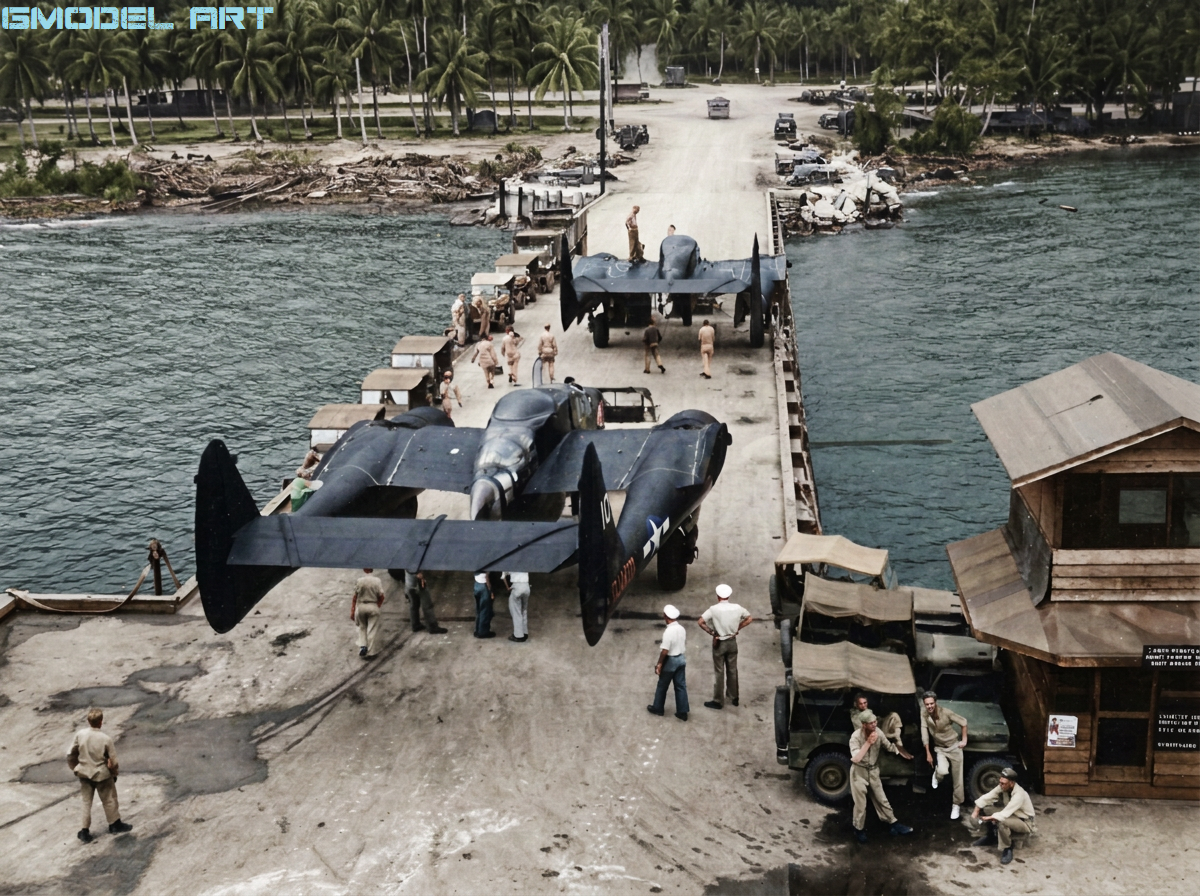
These aircraft operated from widely separated bases and island airfields.
The operational environment was radically different from Europe.
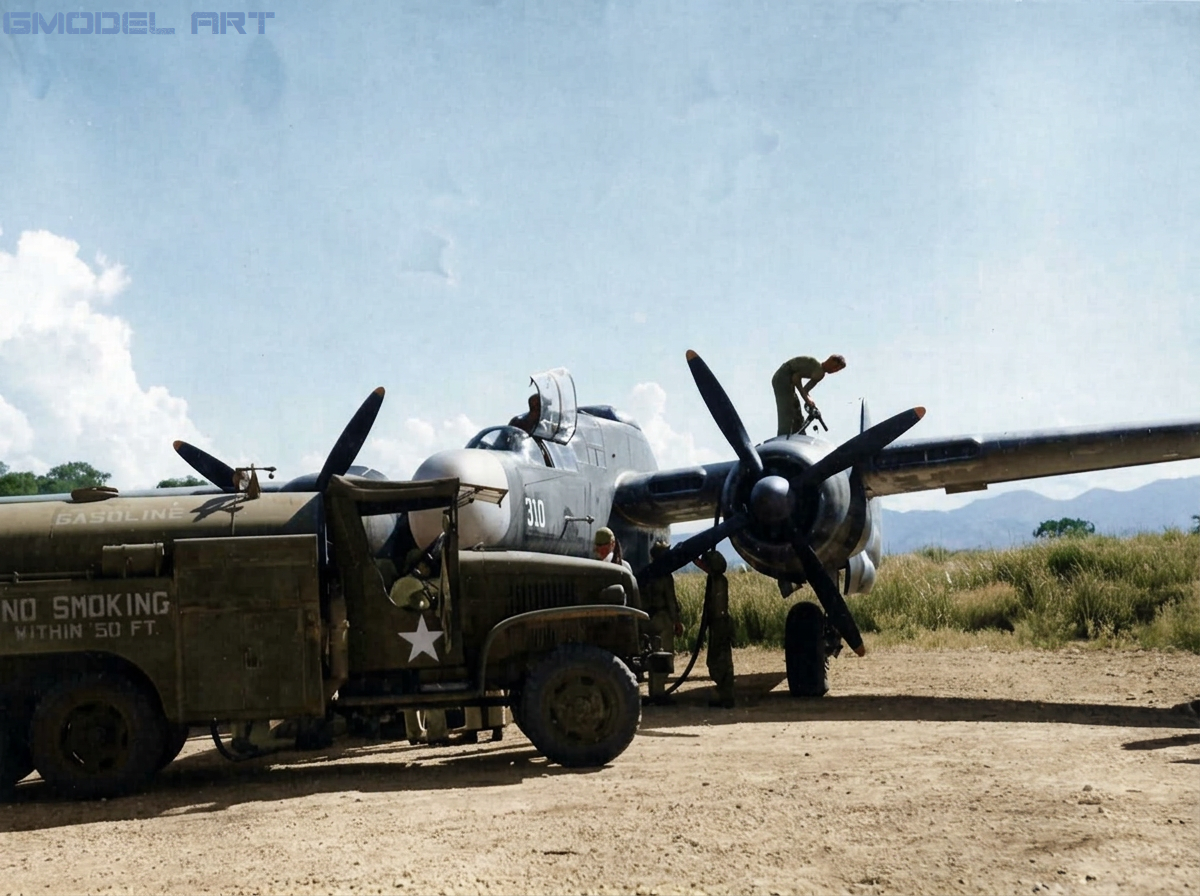
Instead of cold European airfields and temperate weather, many Pacific Black Widows operated in:
intense heat,
tropical humidity,
salt-laden air,
mud,
dust,
rough airstrips,
intense sunlight,
rapidly changing weather.
This environment had a direct effect on the appearance of the aircraft.
The Three Main P-61 Appearance Families
For the scale modeler, the P-61 should not be reduced to a single black finish.
There are three important appearance families to consider:
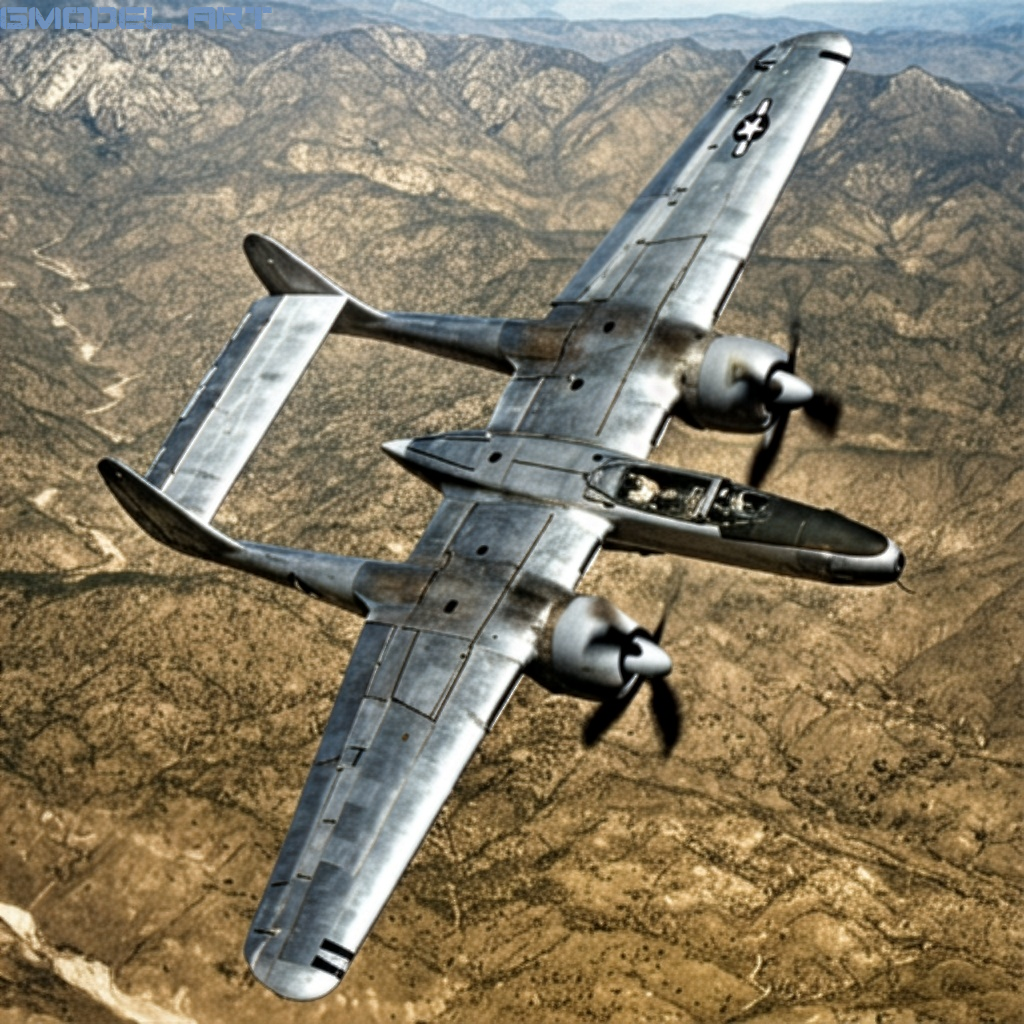
1. Natural Metal
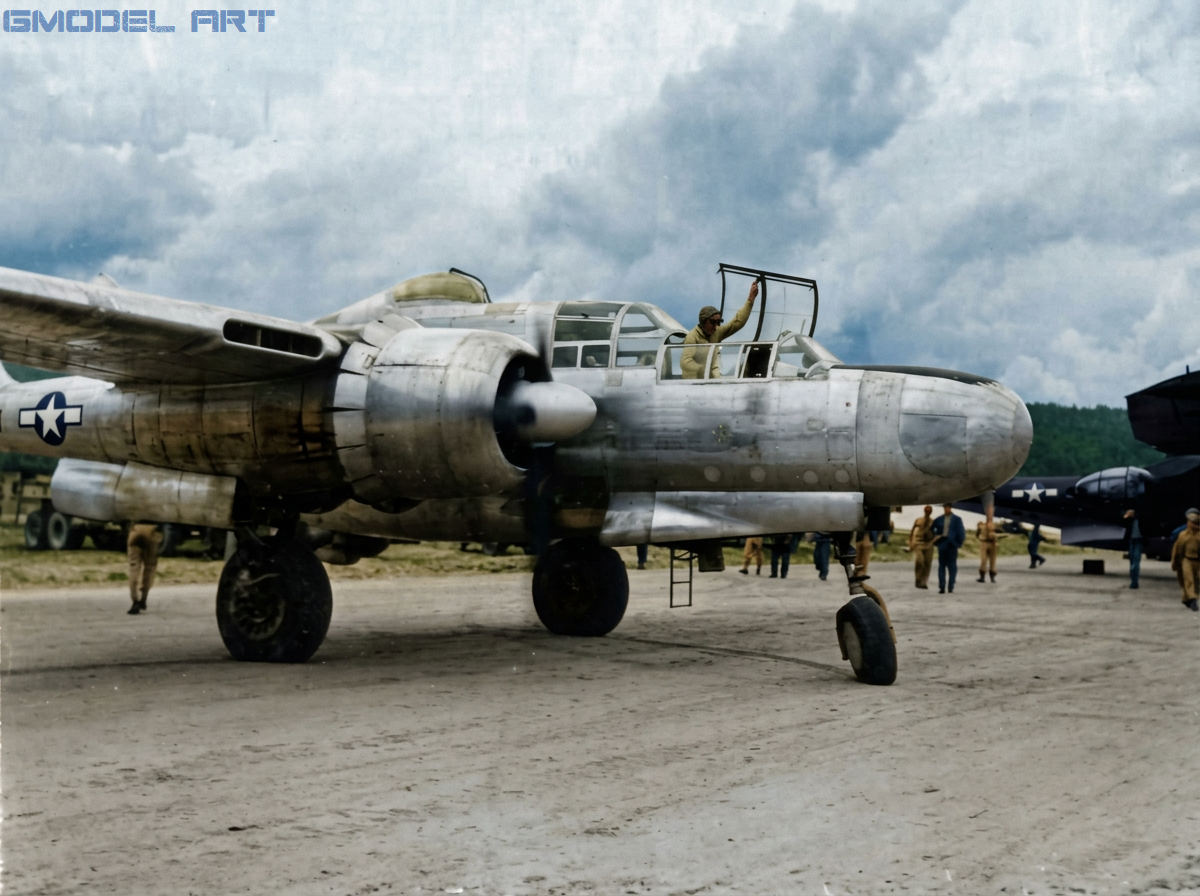
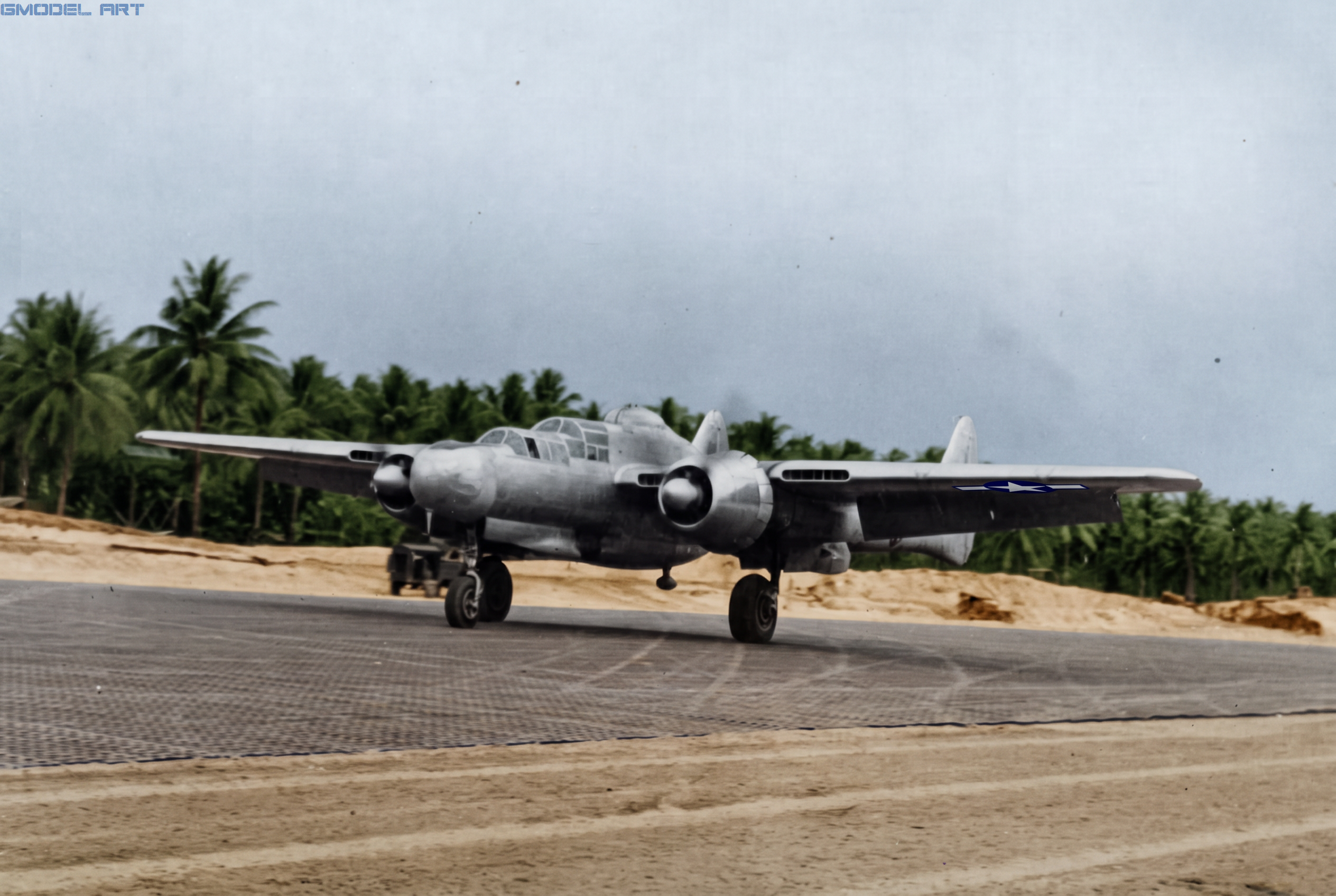
Natural metal is primarily associated with prototypes, development aircraft, test aircraft and selected non-standard configurations.
It should not be treated as the normal wartime operational camouflage of the P-61.
Natural-metal P-61s are nevertheless extremely interesting modeling subjects because they provide a completely different appearance from the famous Black Widow finish.
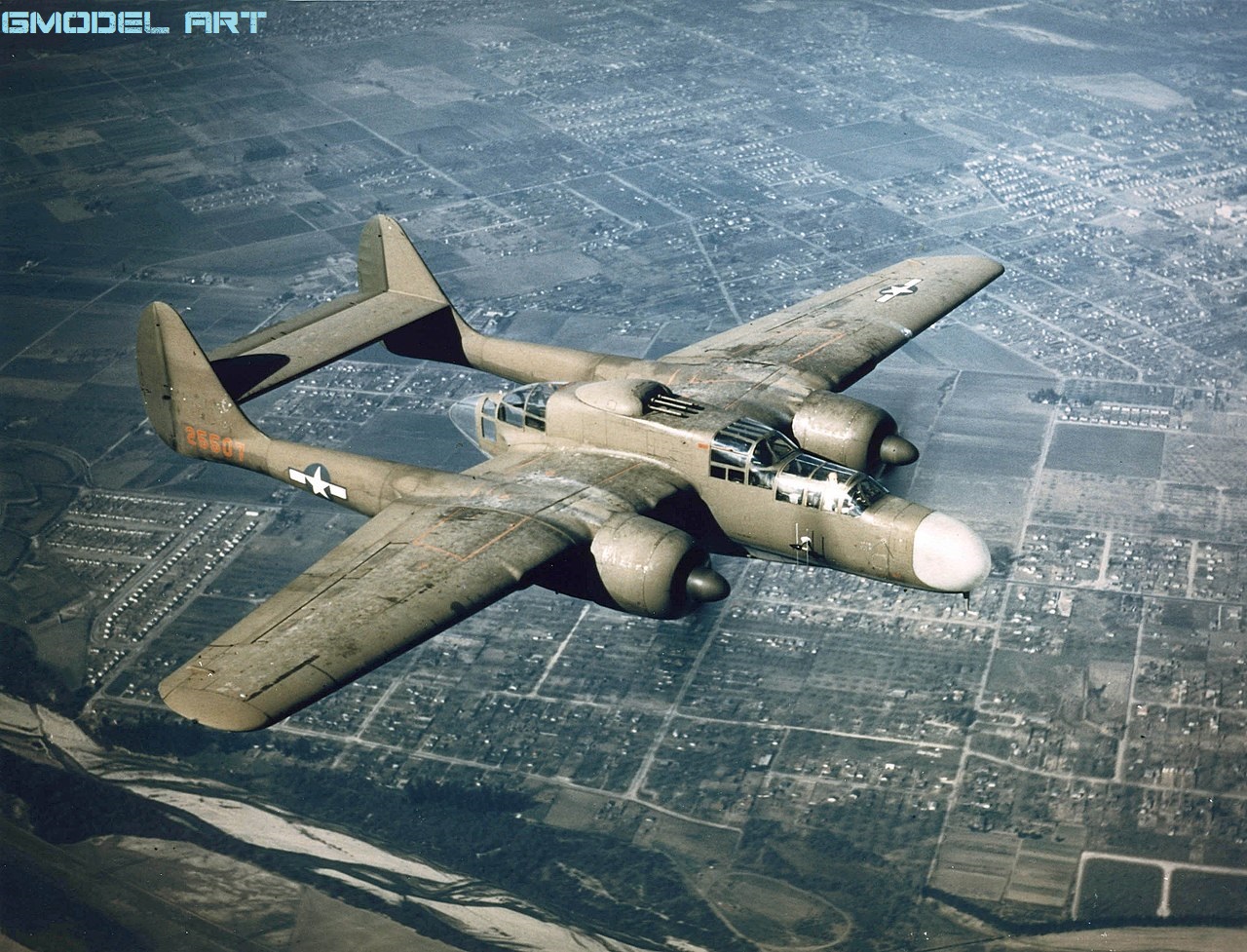
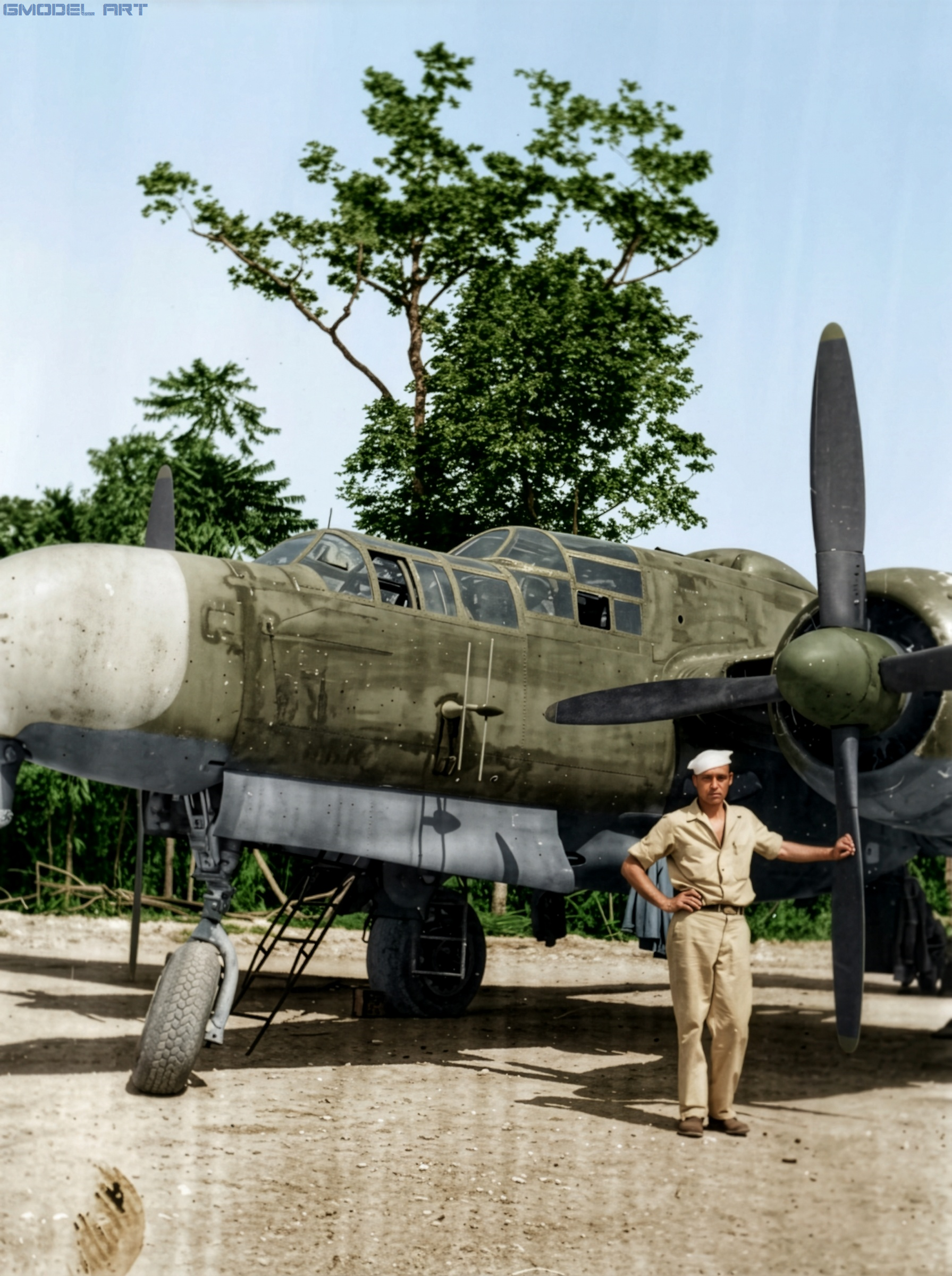
2. Olive Drab / Neutral Gray
Early operational P-61s were finished in the standard USAAF camouflage of:
Olive Drab No. 41 / ANA 613 on the upper surfaces
over
Neutral Gray No. 43 / ANA 603 on the lower surfaces.
This is one of the most important P-61 schemes for modelers because it is frequently overlooked in favor of the aircraft’s famous black finish.
Photographic and technical references confirm early P-61s in the Olive Drab/Neutral Gray scheme. Model references also document P-61A aircraft in this configuration.
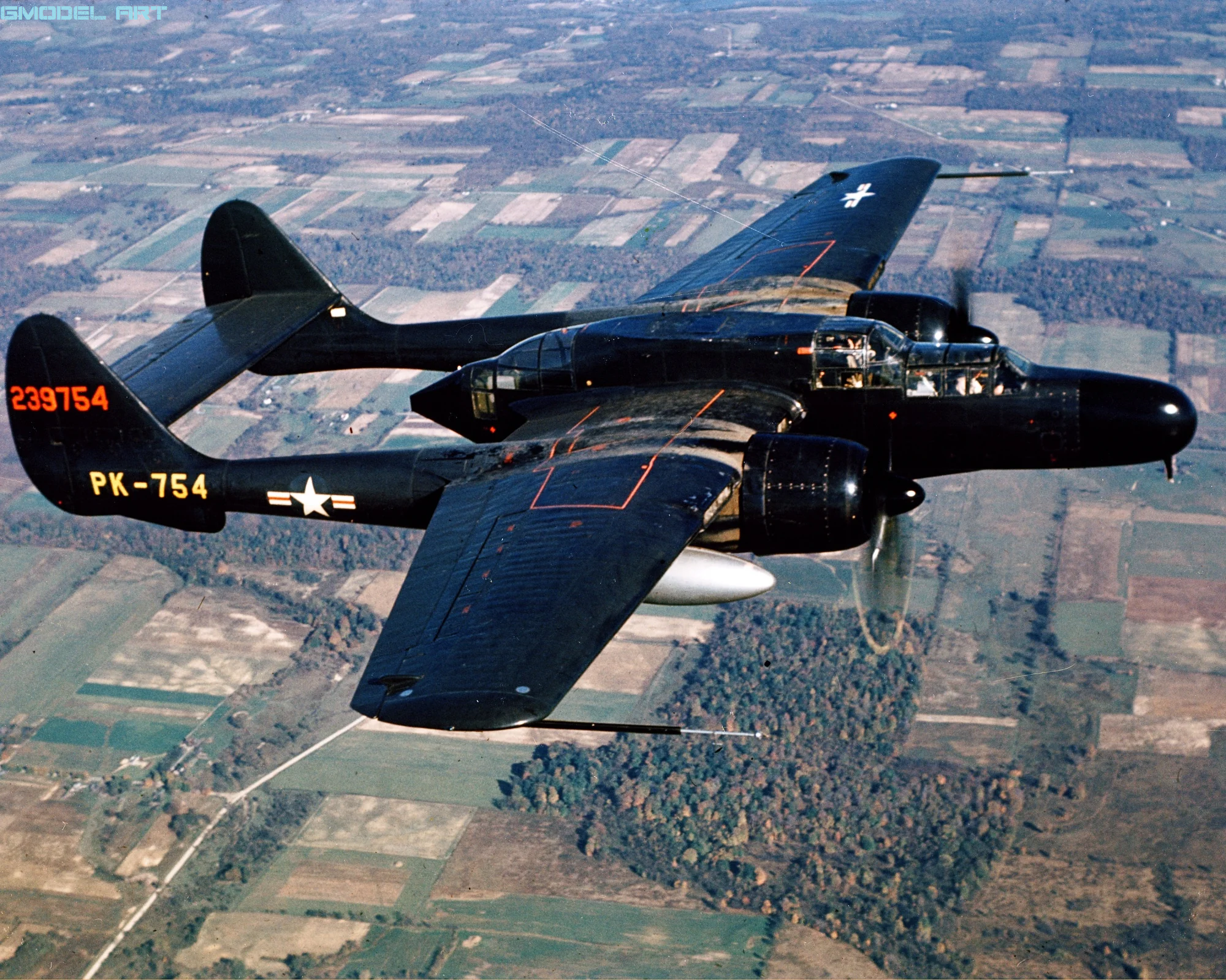
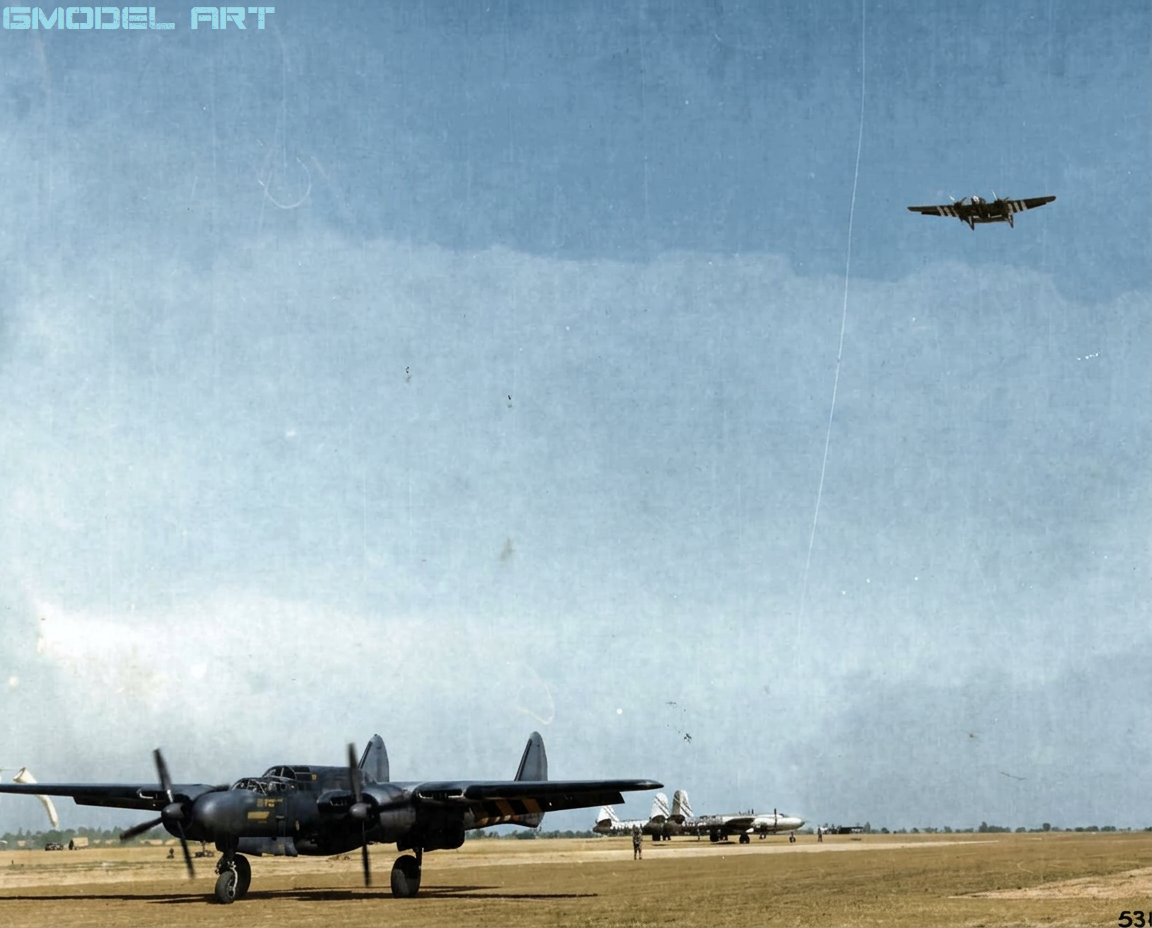
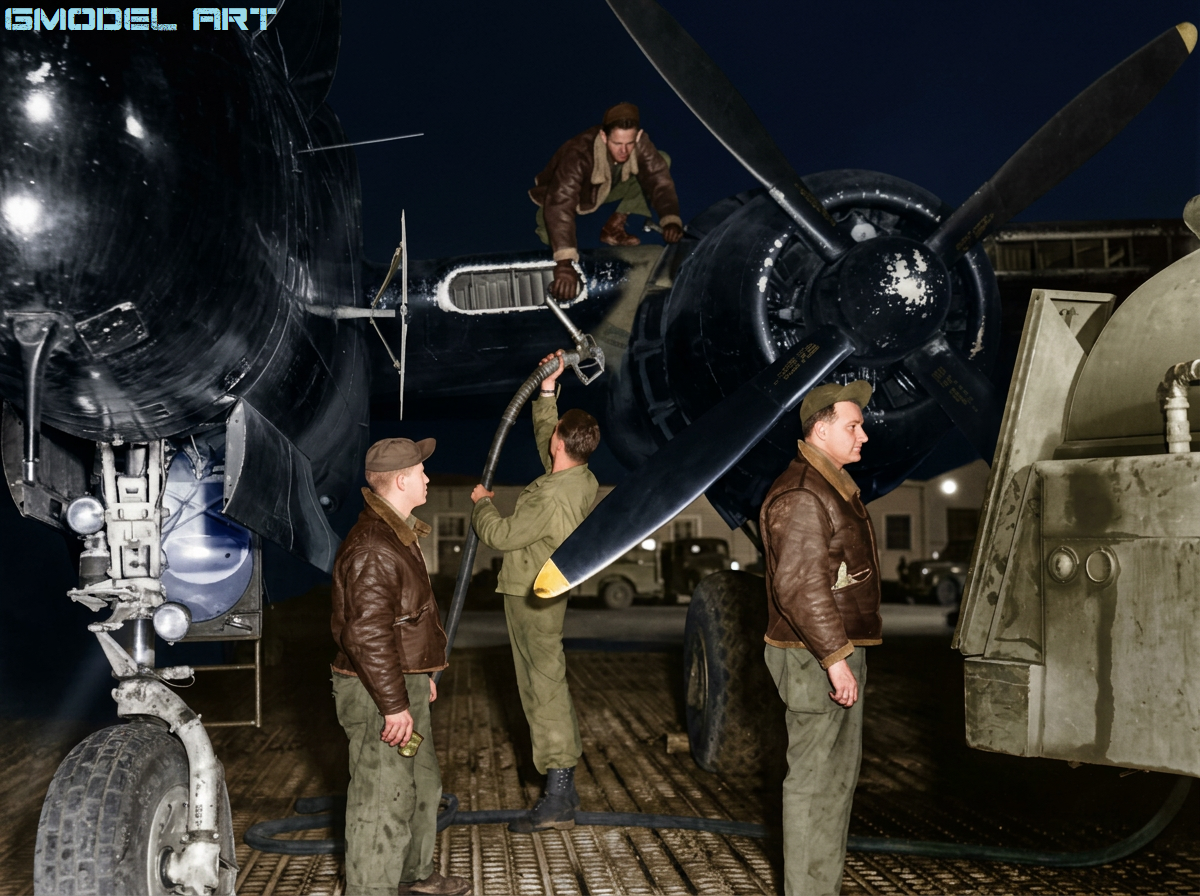
3. Jet / Gloss Black
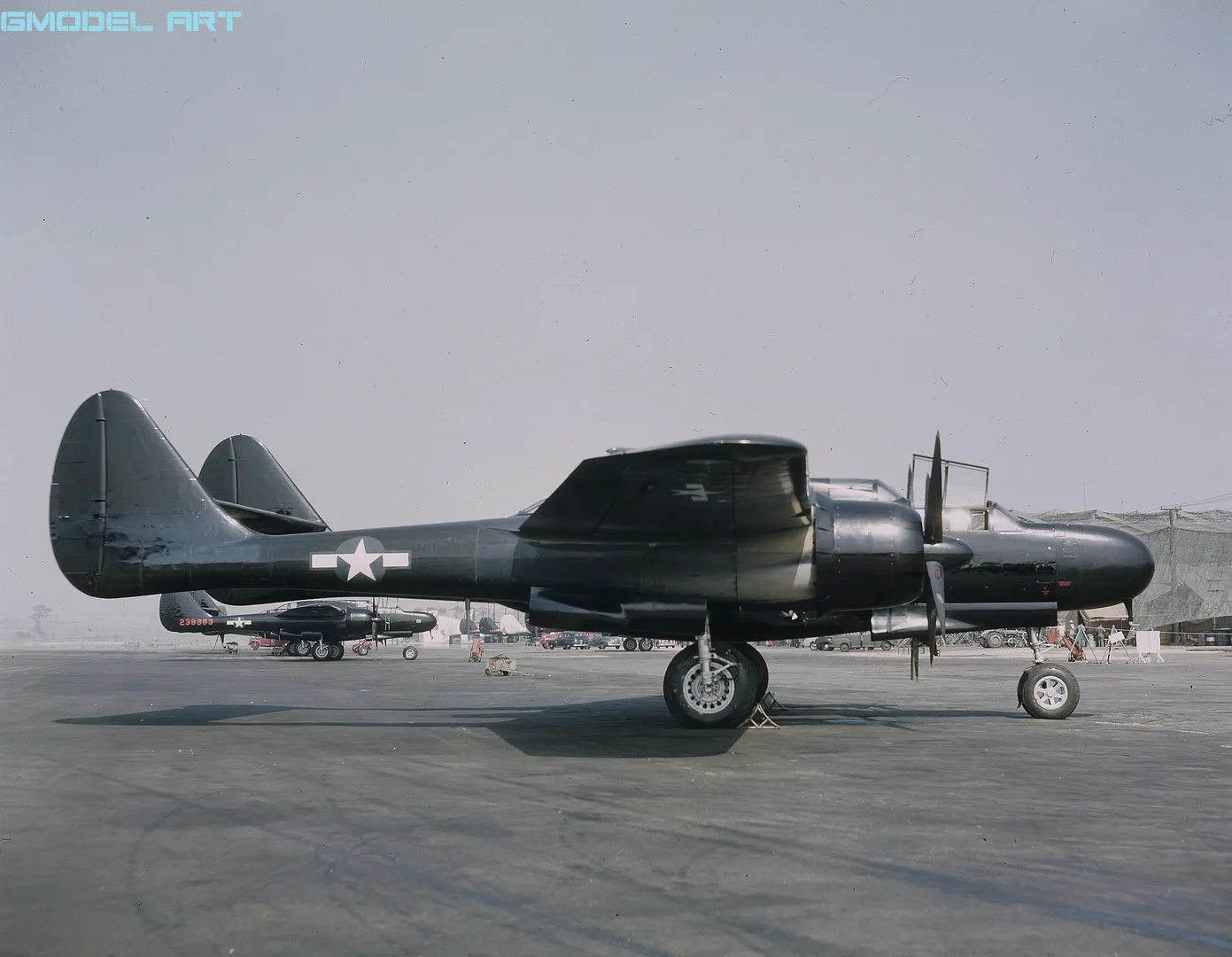
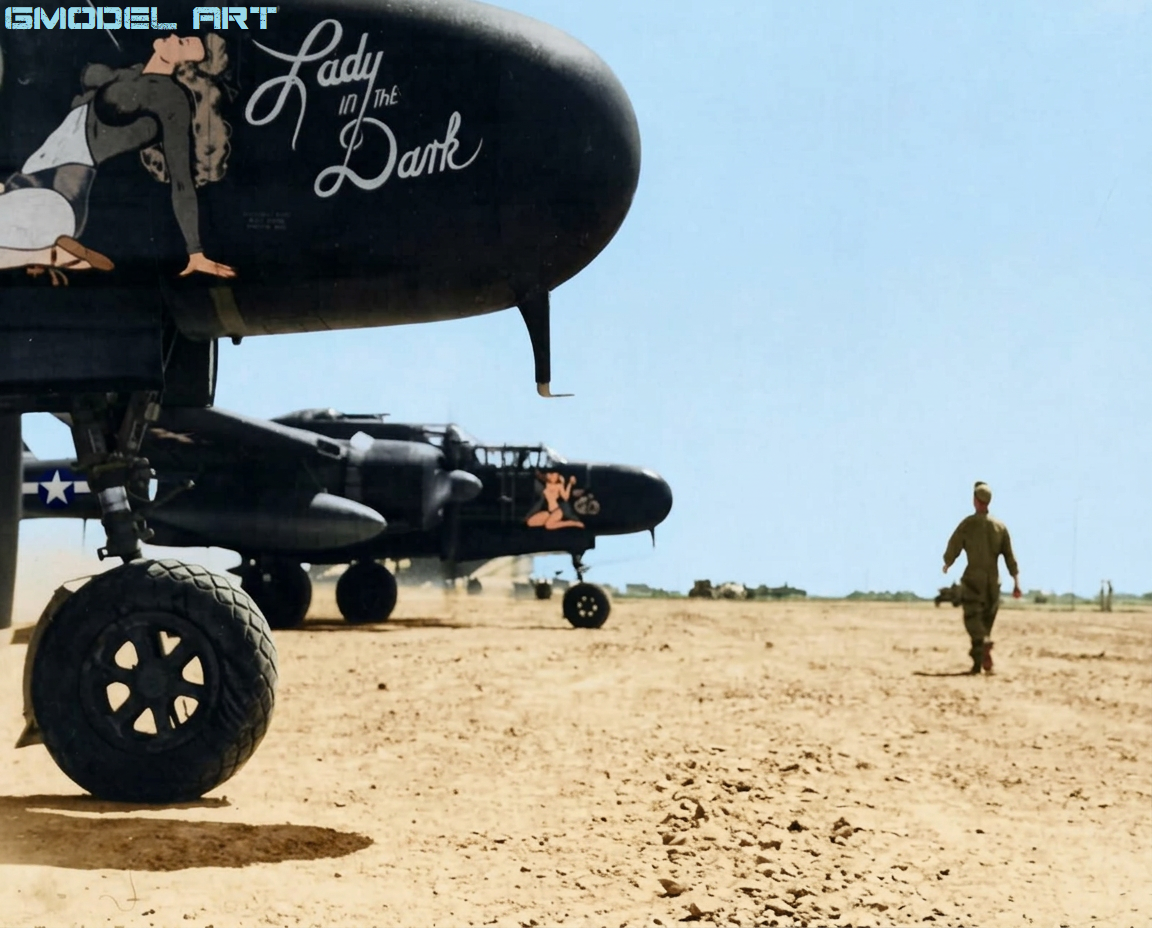
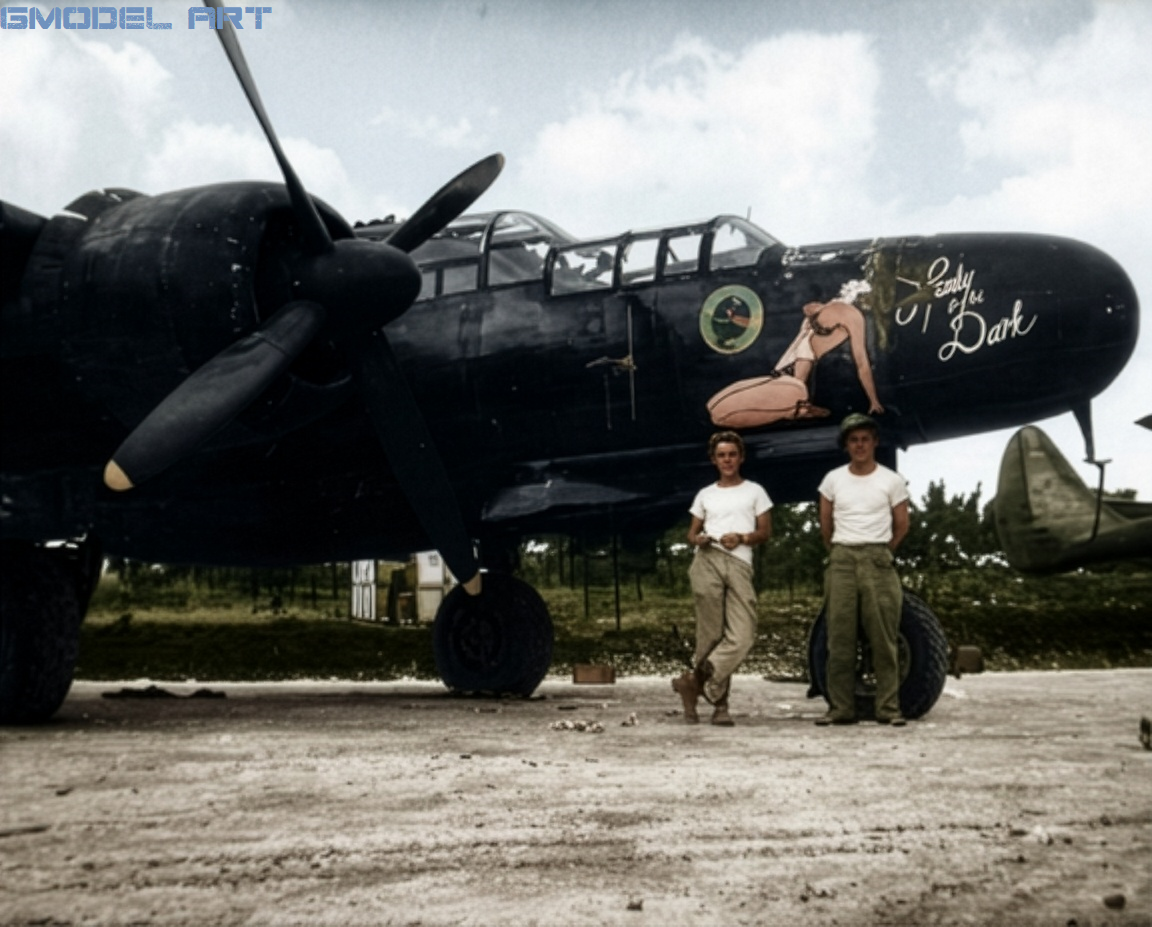
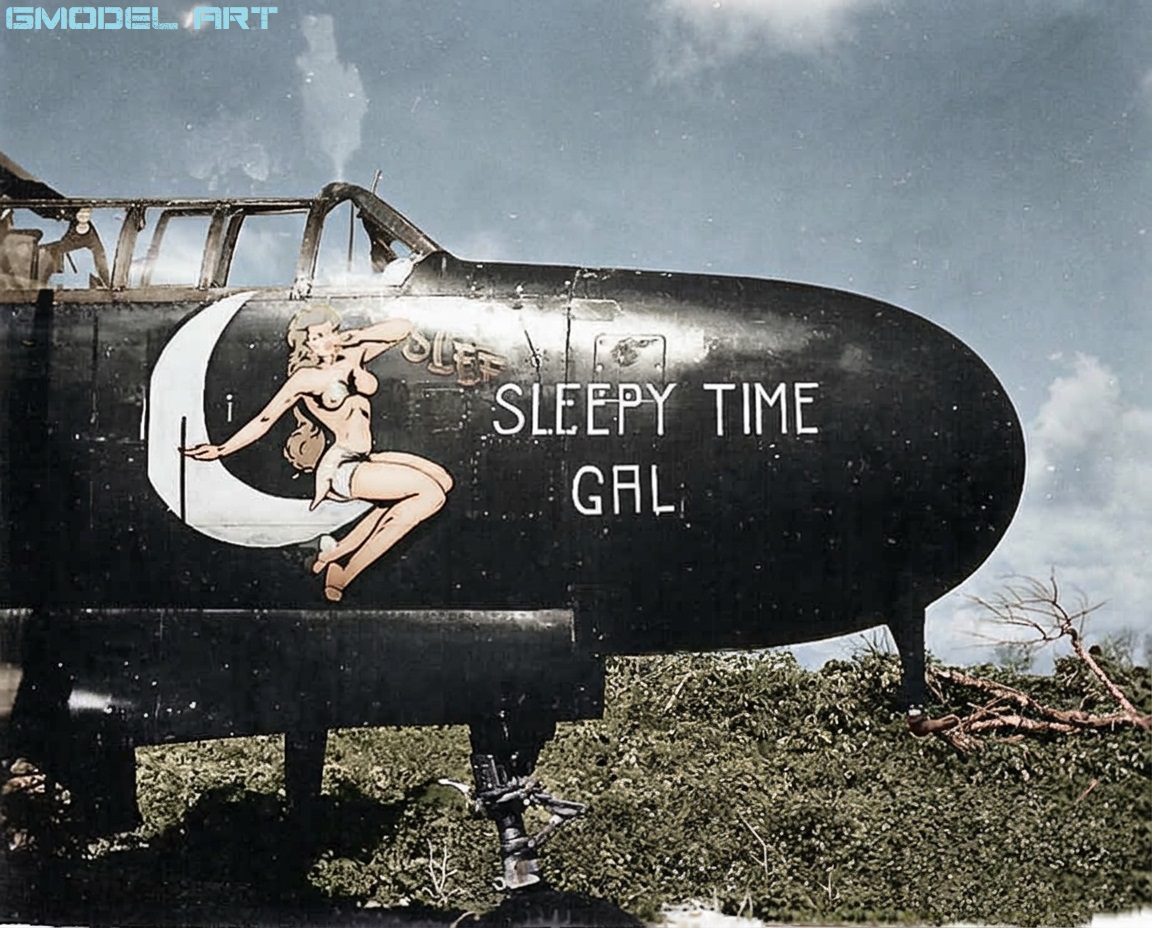
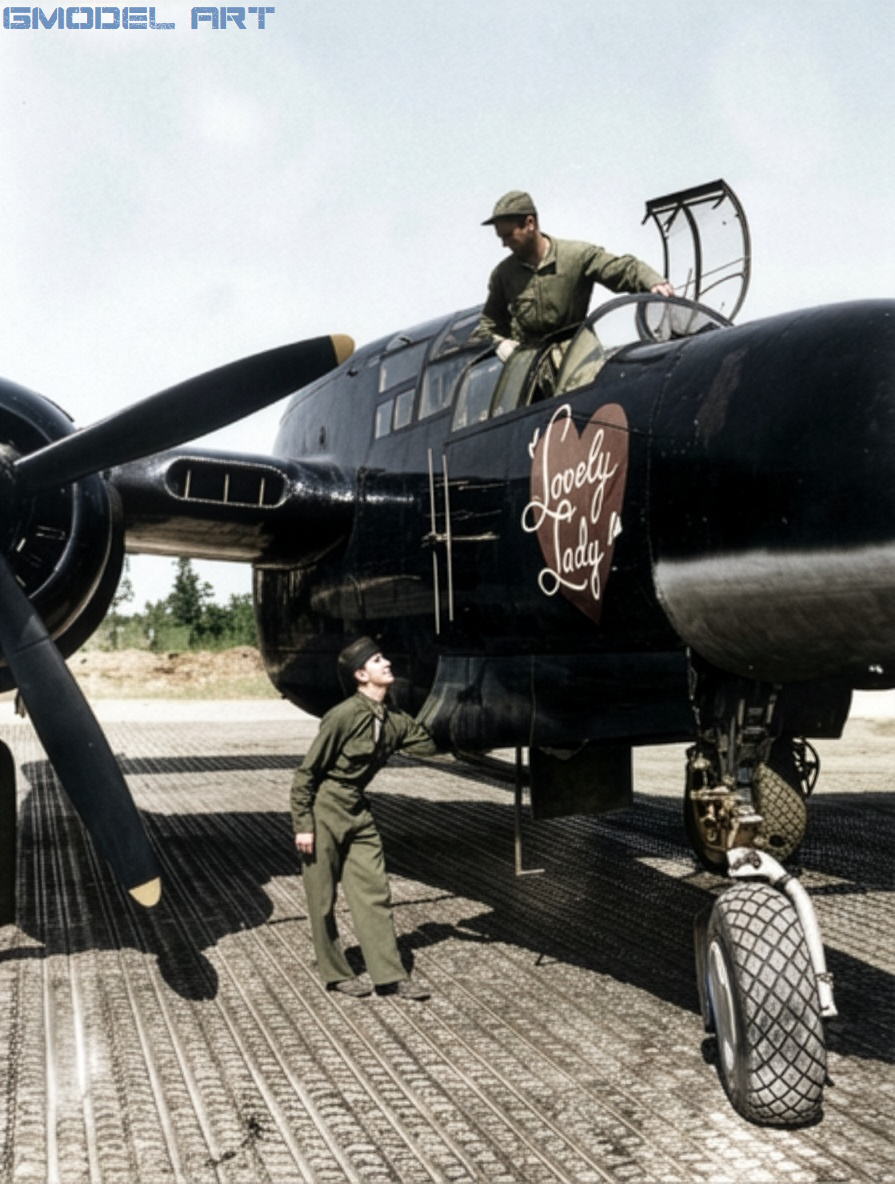
The famous black finish was not simply ordinary flat black paint.
The historical color reference is Jet ANA 622, developed specifically for night-fighter operations.
Tests showed that conventional flat-black finishes could actually make aircraft more visible when illuminated by searchlights.
The development of a smooth, high-gloss black finish produced a different visual effect, allowing the searchlight beam to reflect away from the observer rather than creating the diffuse illuminated appearance associated with a matte surface.
The resulting finish became one of the defining characteristics of the P-61.
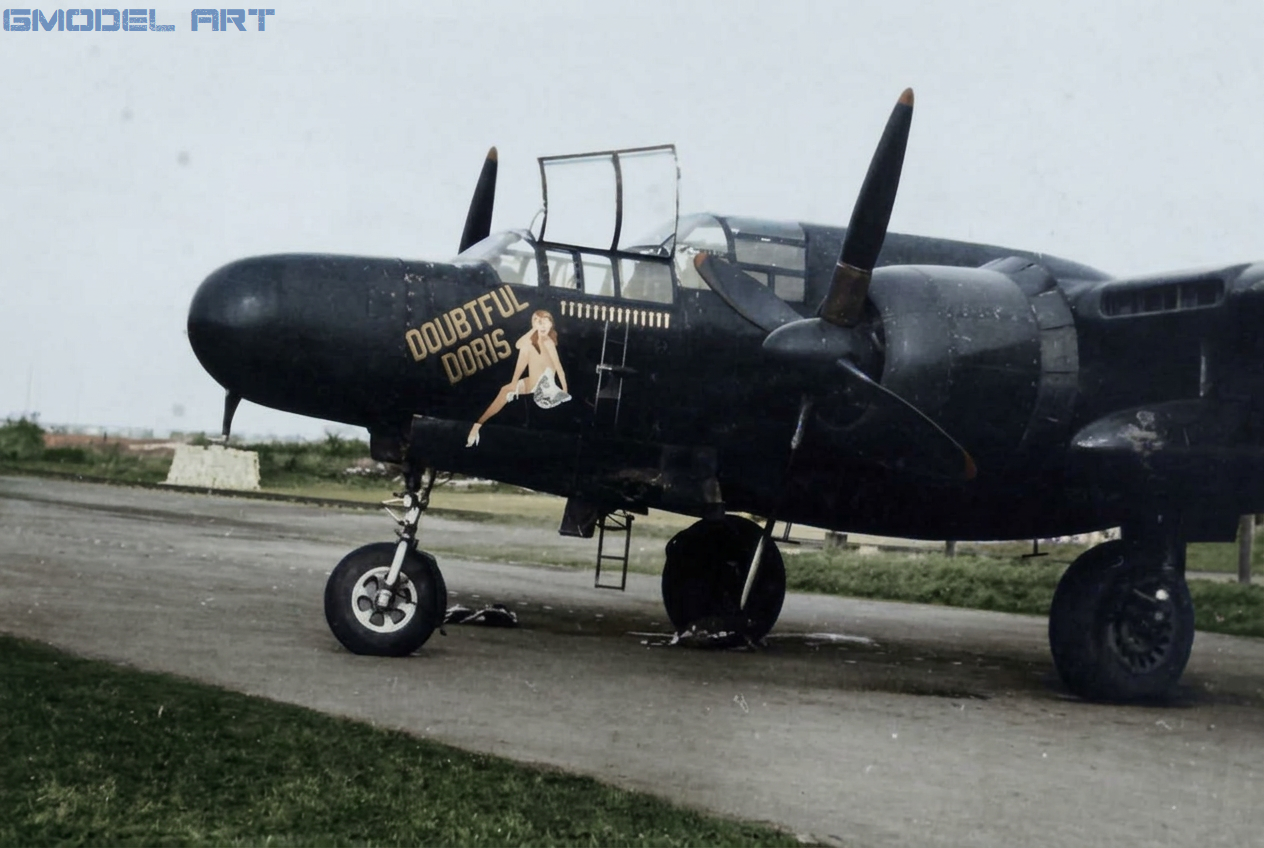
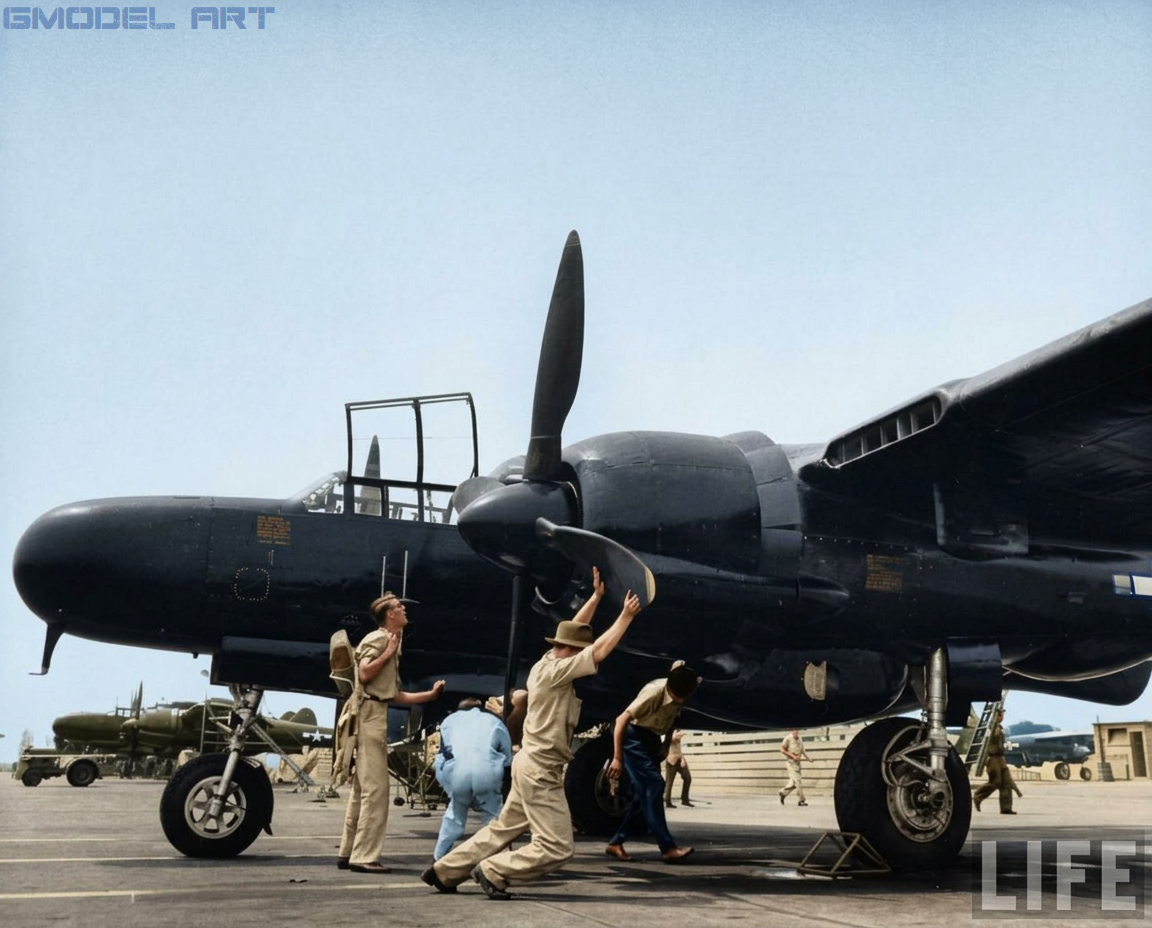
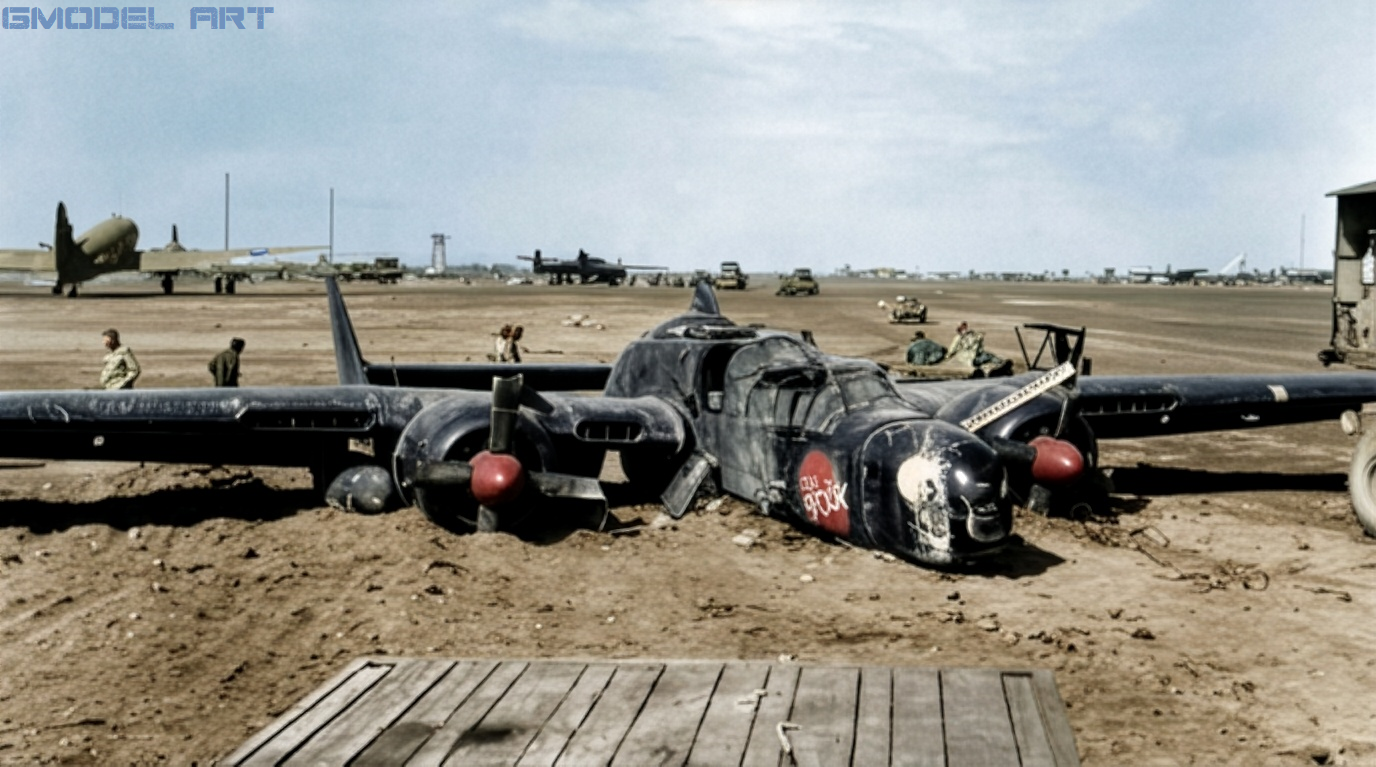
However, an operational P-61 should not automatically be modeled as a perfectly glossy black aircraft.
The finish could fade, become weathered and lose much of its original gloss during service.
P-61 Historical Paint Reference
| Area / Scheme | Historical Color | ANA / FS Reference | Tamiya | Mr. Color | AK Real Colors | AMMO by Mig |
|---|---|---|---|---|---|---|
| Natural Metal | Natural aluminum | No single FS code | XF-16 Flat Aluminum | C8 Silver | RC020 Aluminum | A.MIG-194 Silver |
| OD/NG Upper Surfaces | Olive Drab No. 41 | ANA 613 | XF-62 Olive Drab | C12 Olive Drab | RC259 Dark Olive Drab 41 | A.MIG-237 US Olive Drab |
| OD/NG Lower Surfaces | Neutral Gray No. 43 | ANA 603 / later FS approximation FS 36270 | XF-53 Neutral Grey | C13 Neutral Gray | RC261 Neutral Grey 43 | A.MIG-239 Neutral Grey |
| Overall Night Finish | Jet | ANA 622 | X-1 Gloss Black / XF-1 for weathered black | C2 Black / C33 Flat Black for faded finish | RC001 Black | A.MIG-032 Black |
| Radome / selected areas | Insignia White | ANA 601 | X-2 White | C316 | RC222 | A.MIG-047 Insignia White |
| Interior / Crew Areas | Northrop / Interior Green | No single exact FS equivalent | XF-4 Yellow Green, adjusted as required | C58 Interior Green | RC262 US Interior Yellow Green | A.MIG-204 Interior Green |
| Wheel / Gear Areas | Zinc Chromate | Primer color; no exact FS standard | XF-4 | C351 | RC263 Zinc Chromate Yellow | A.MIG-205 Zinc Chromate Yellow |
The color equivalents above should be treated as modeling matches rather than claims that the modern paint manufacturers reproduce the wartime paint with absolute chemical identity. The historical standards are more important than the modern paint number. The World Wars USAAF color reference identifies ANA 603, ANA 613 and ANA 622 and provides manufacturer cross-references including Tamiya, Mr. Color, AK Real Colors and AMMO.
Tamiya itself identifies XF-62 as Olive Drab and XF-53 specifically as a suitable Neutral Grey for the undersides of U.S. Army aircraft.
AK Real Colors identifies RC259 as Dark Olive Drab 41 and RC261 as Neutral Grey 43.
A Critical Modeling Point About ANA 622
The most common mistake with a black P-61 is using a perfectly glossy modern black and stopping there.
The historical paint was Jet ANA 622.
When fresh, it could have a noticeable gloss.
After operational use, however, the surface could become considerably less reflective.
Therefore:
Fresh aircraft
→ strong gloss
Operational aircraft
→ reduced gloss
Heavily used aircraft
→ satin / semi-matt appearance with localized variation
This is much more convincing than simply applying a uniform coat of gloss black.
Historical color references specifically note that operational ANA 622 could lose much of its original gloss and appear considerably more matt with service use.
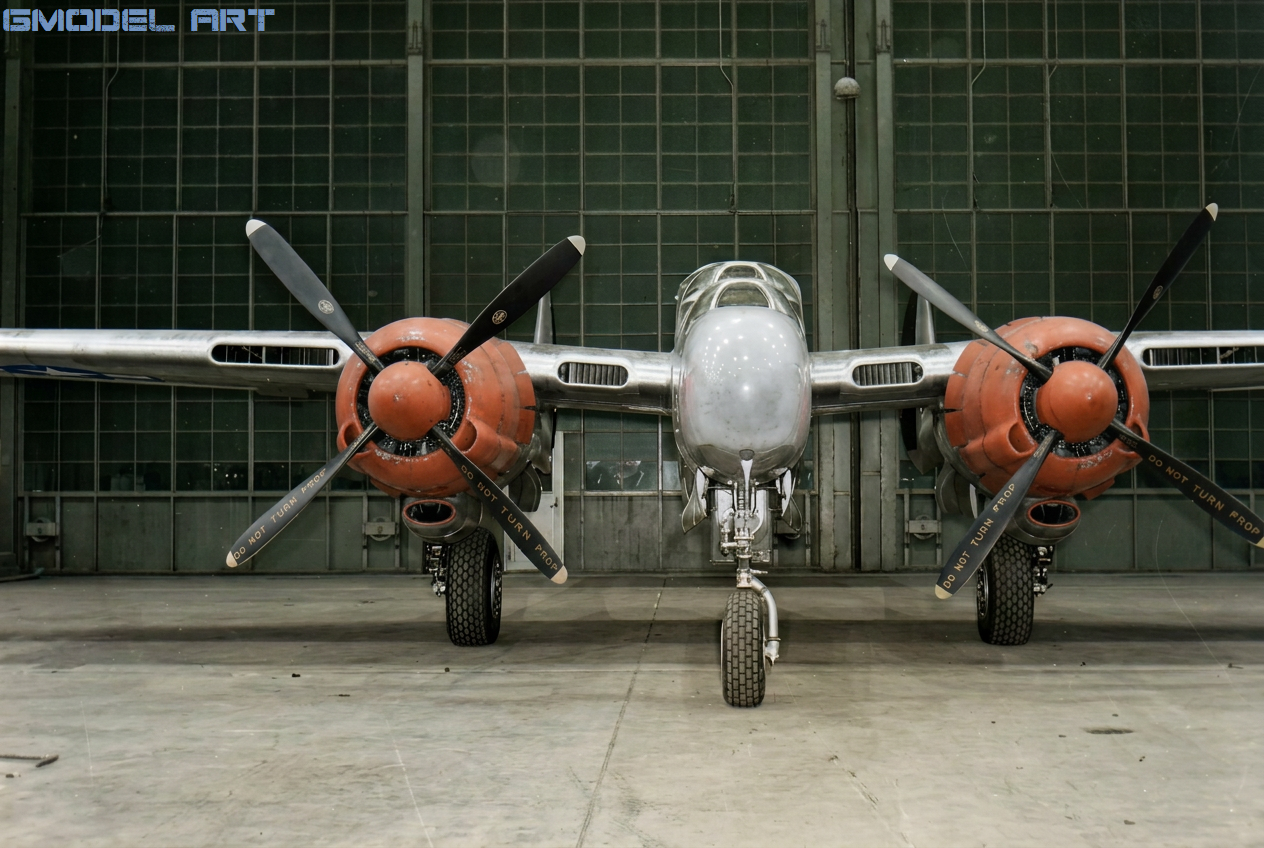
Modeling Natural Metal P-61s
A natural-metal P-61 should not be painted with one metallic color over the entire aircraft.
The real aircraft was constructed from different materials and assemblies, and scale modeling benefits from controlled tonal variation.
Use:
aluminum,
dull aluminum,
slightly darker aluminum,
selected polished areas,
restrained panel variation.
Avoid the modern “chrome aircraft” appearance.
Natural metal should look like an operational or test aircraft, not like a polished car body.
Modeling Olive Drab / Neutral Gray P-61s
For an Olive Drab/Neutral Gray P-61, the basic sequence can be:
Primer
→ Neutral Gray underside
→ Olive Drab upper surfaces
→ decals
→ controlled fading
→ panel variation
→ exhaust and operational weathering
The Olive Drab should not be perfectly uniform.
Operational P-61s could develop considerable variation due to sunlight, maintenance and repainting.
The important point is to create variation without destroying the camouflage pattern.
Modeling the Black Widow
The black version requires a completely different approach.
Start with a suitable primer.
Then create subtle tonal variation underneath the black.
Instead of painting the entire aircraft with a single black tone, use variations such as:
black,
slightly lightened black,
very dark gray,
blue-black,
neutral dark gray.
The objective is not to make the aircraft visibly multicolored.
The objective is to prevent the model from becoming a featureless black object.
Black Surface Modulation
Panel modulation should remain subtle.
Large aircraft such as the P-61 have extensive surface area, and excessive contrast can quickly become unrealistic.
A useful approach is:
Base Jet Black
→ slightly lightened panels
→ darker structural areas
→ localized fading
→ selective oil filtering
→ restrained exhaust staining
→ final variation in sheen
The aircraft should still read as black from across the room.
The tonal variation should become apparent when the model is viewed closer.
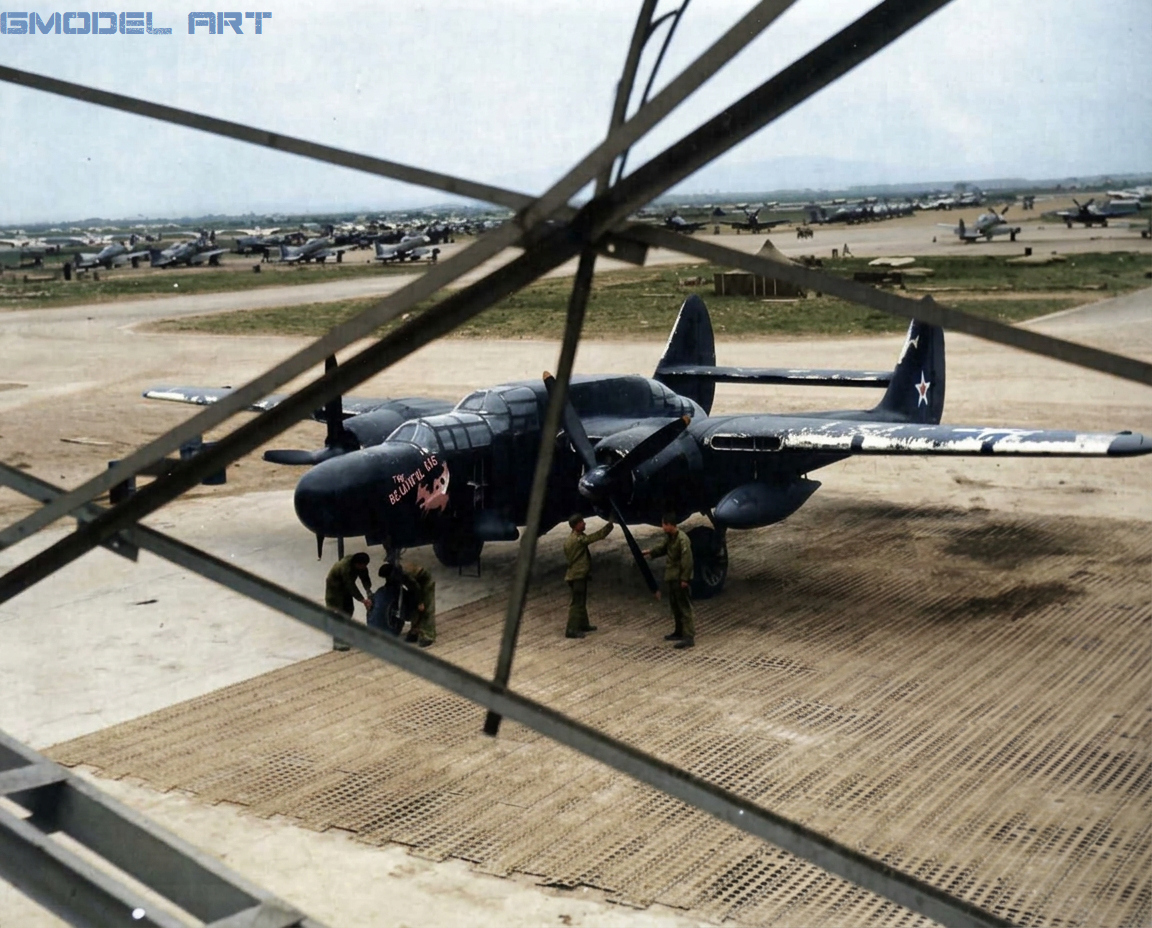
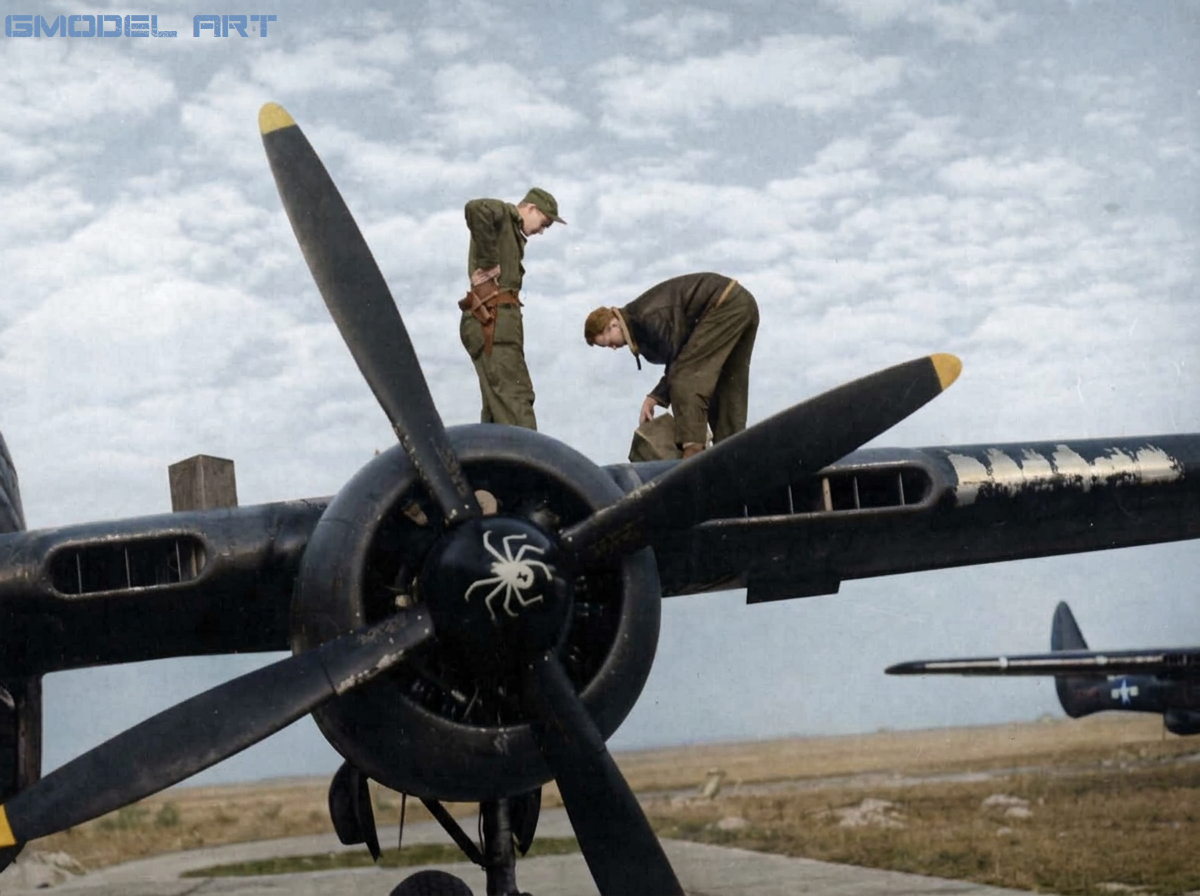
Paint Chipping and Peeling
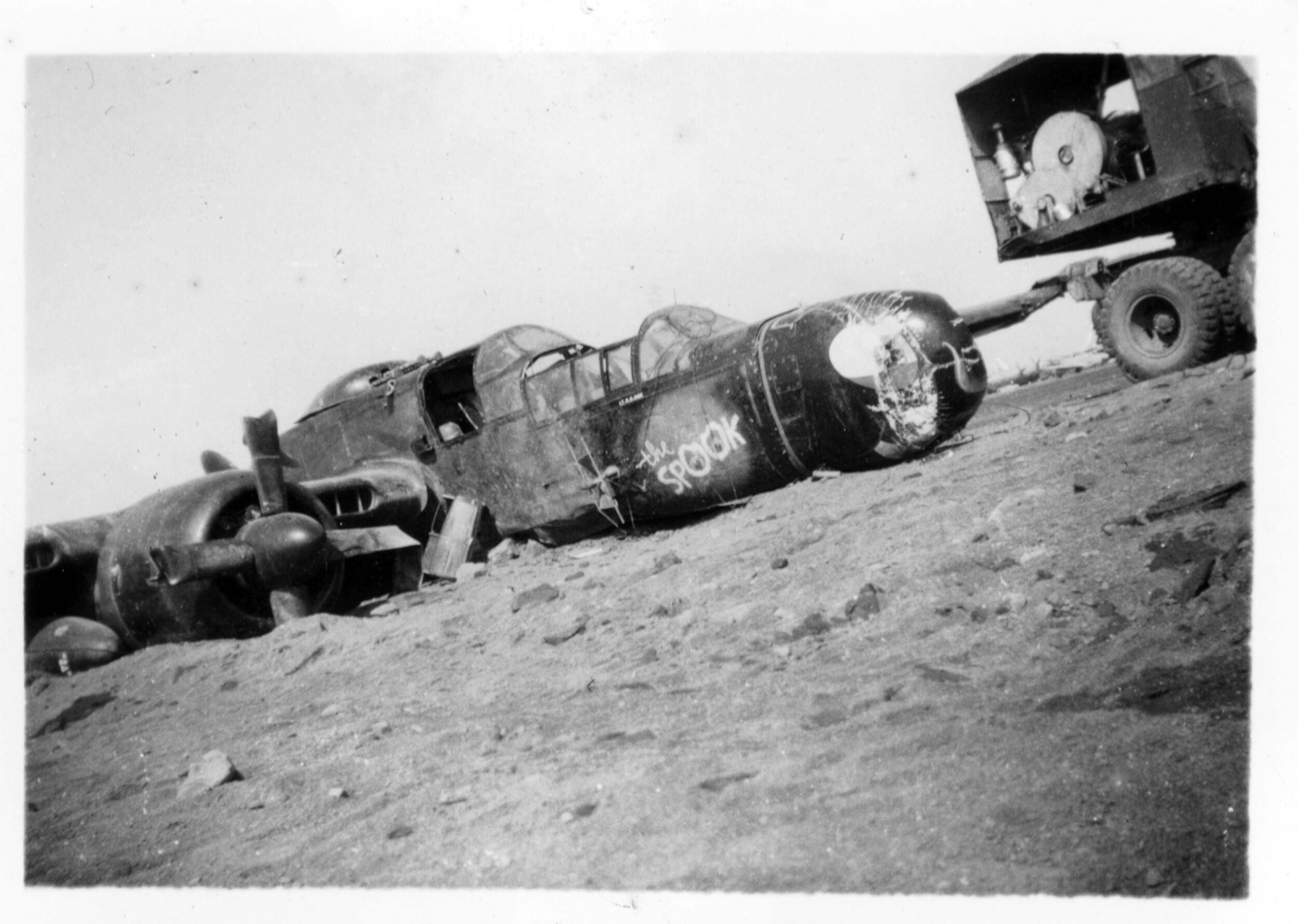
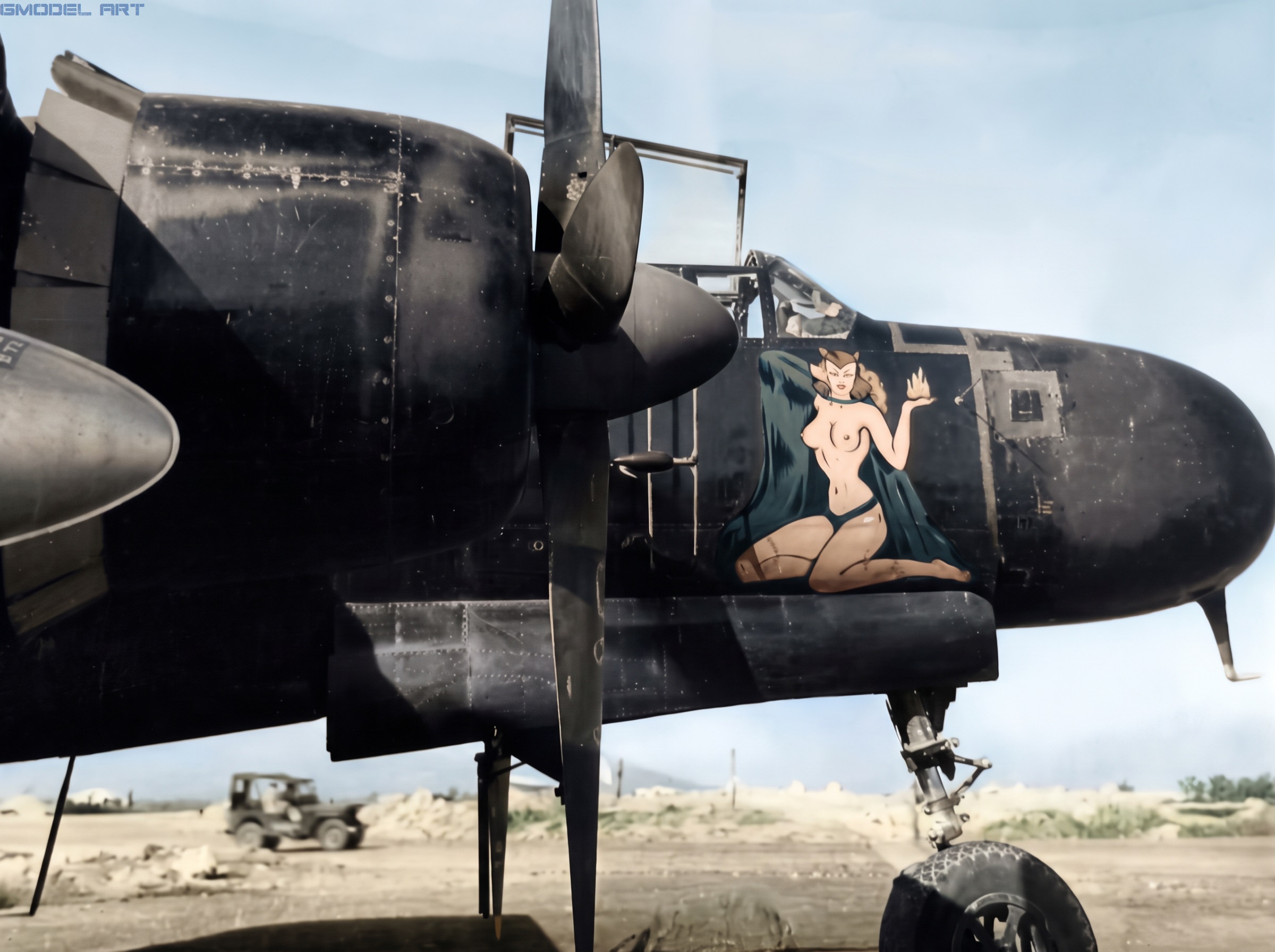
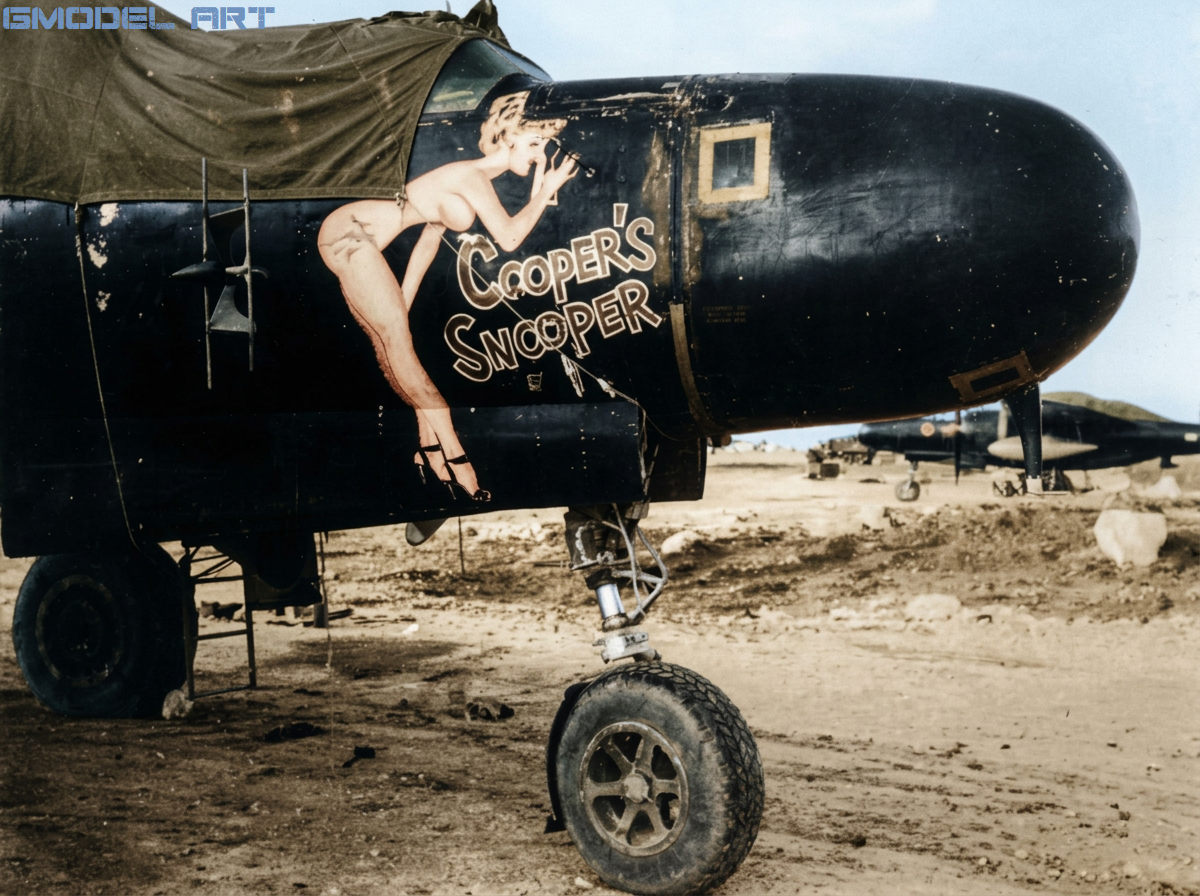
The P-61 provides an excellent subject for paint-wear techniques, but this is where restraint becomes important.
Do not cover the aircraft with random silver scratches.
Real aircraft wear is connected to:
maintenance,
crew access,
panel removal,
refueling,
ammunition handling,
engine servicing,
walking surfaces,
repeated opening and closing of access panels.
Therefore, heavier wear should be concentrated around these areas.
Large areas of paint degradation can be appropriate on heavily used aircraft, particularly where photographic evidence supports it.
But the model should always follow the reference photograph rather than a generic weathering recipe.
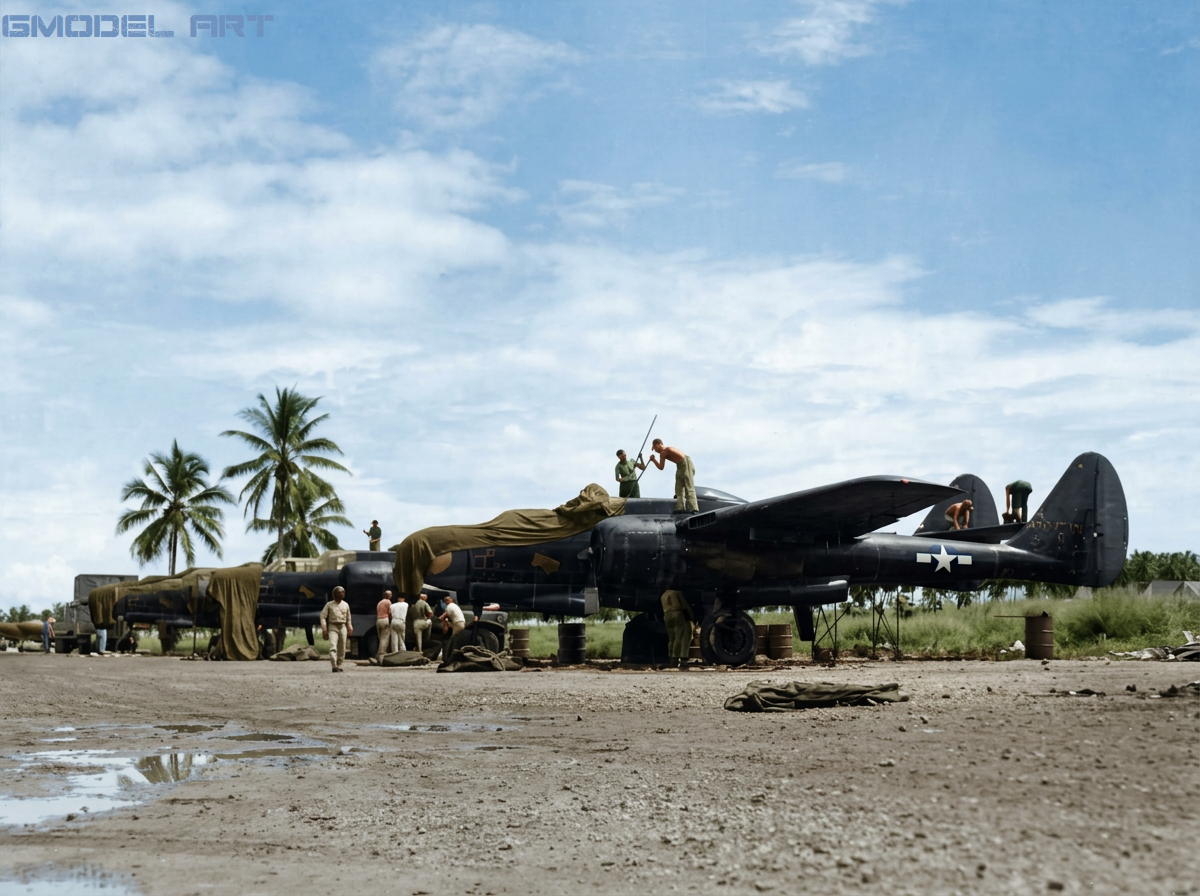
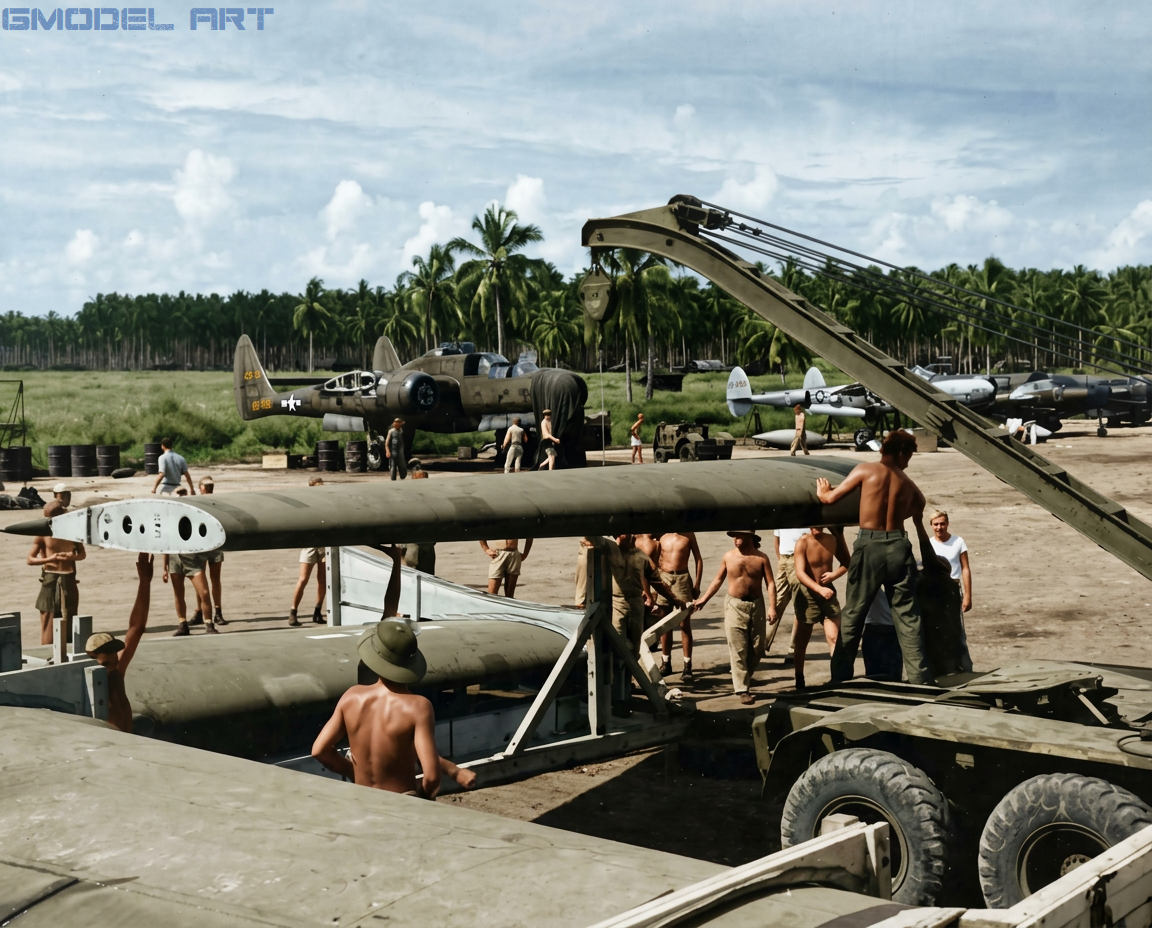
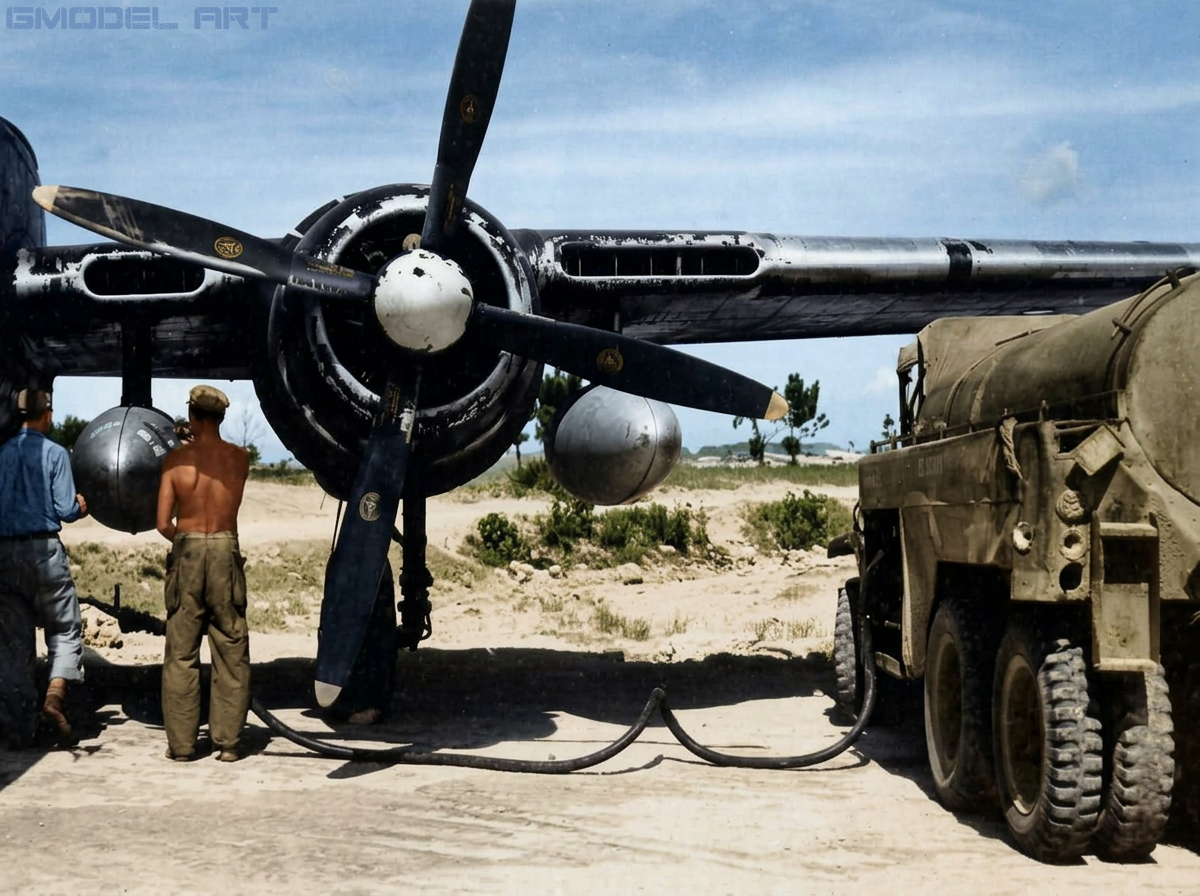
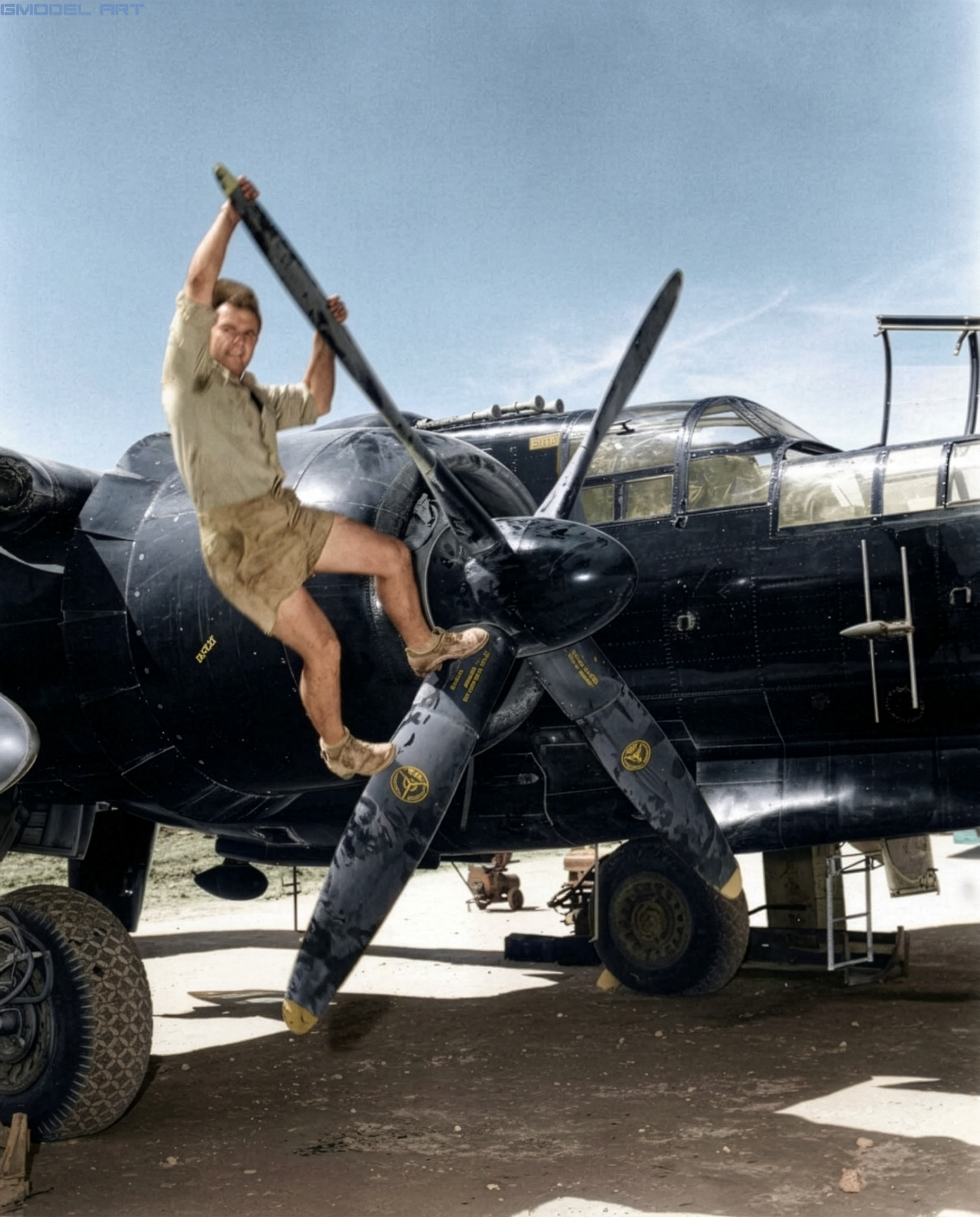
Pacific Weathering
A Pacific-based P-61 should not automatically receive extreme weathering.
The tropical environment could produce:
fading,
dust,
mud,
salt contamination,
staining,
exhaust deposits,
loss of gloss,
localized repainting.
The degree of weathering depends on:
aircraft + base + date + operational tempo + maintenance condition.
A P-61 operating from a heavily used island airfield could look dramatically different from a recently serviced aircraft.
Photographs should therefore determine the final appearance.
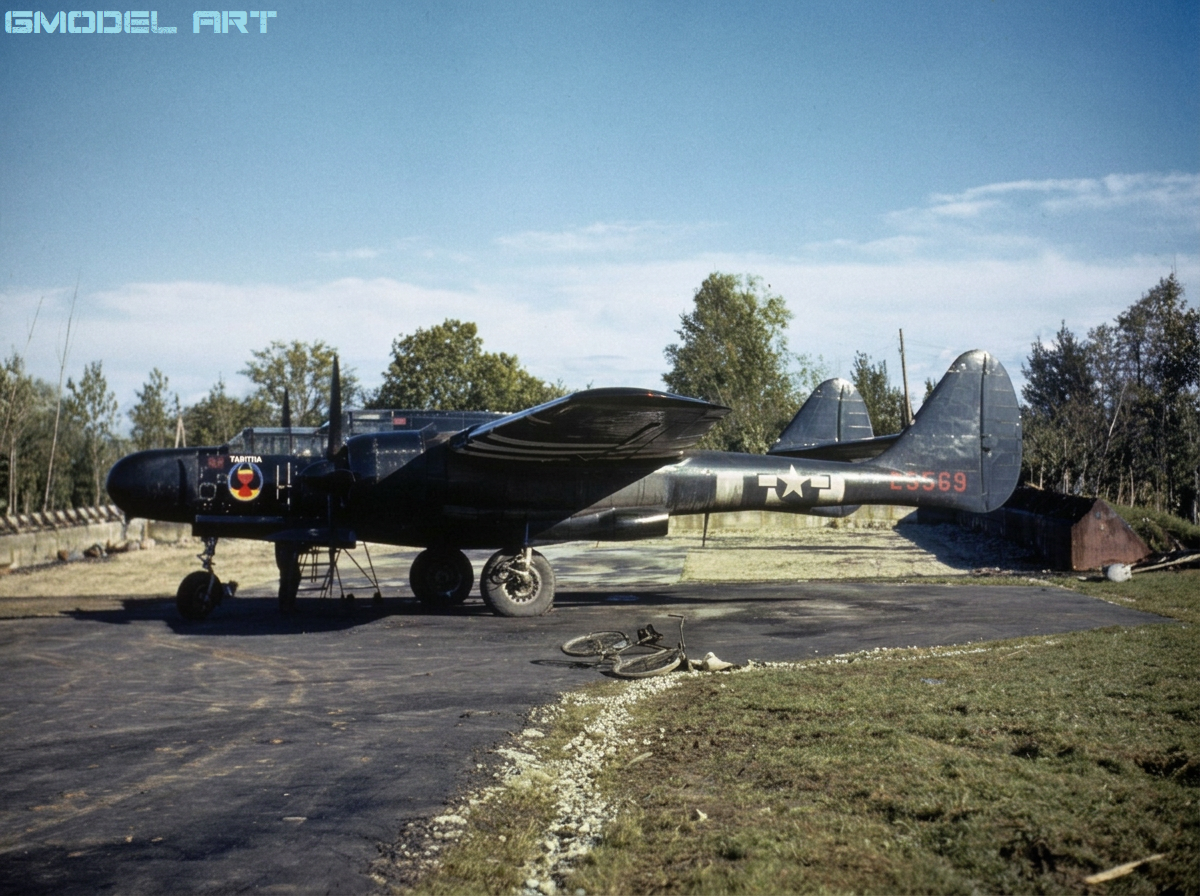
European Weathering
European aircraft experienced a different environment.
Typical effects could include:
mud,
moisture,
oil,
exhaust staining,
hydraulic-fluid stains,
dust,
rain streaking,
localized paint wear.
The black finish should not automatically be heavily faded simply because the aircraft was operational.
Again, photographic evidence is the final authority.
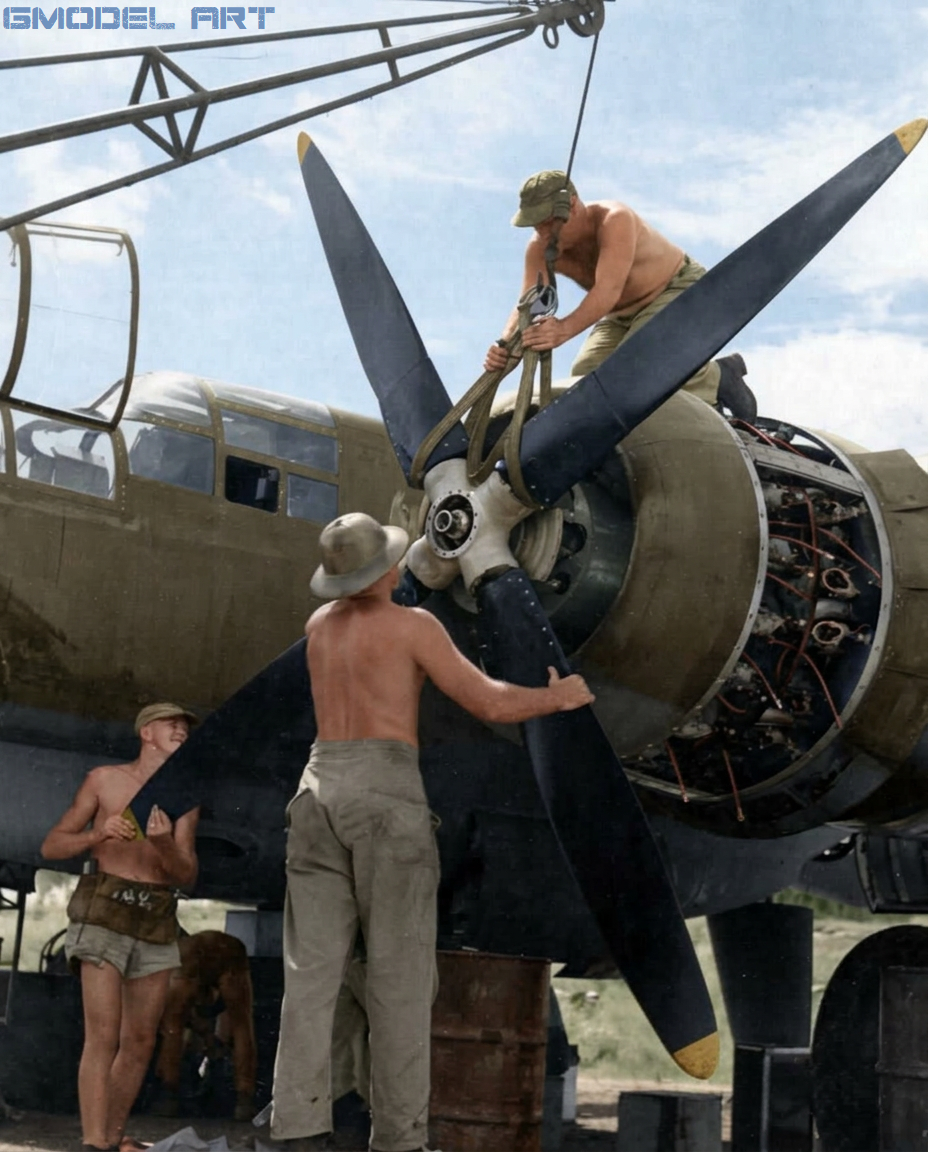
The Engines
The P-61 was powered by two Pratt & Whitney R-2800 radial engines.
These engines were among the most successful American aircraft engines of the war and powered numerous major aircraft types.
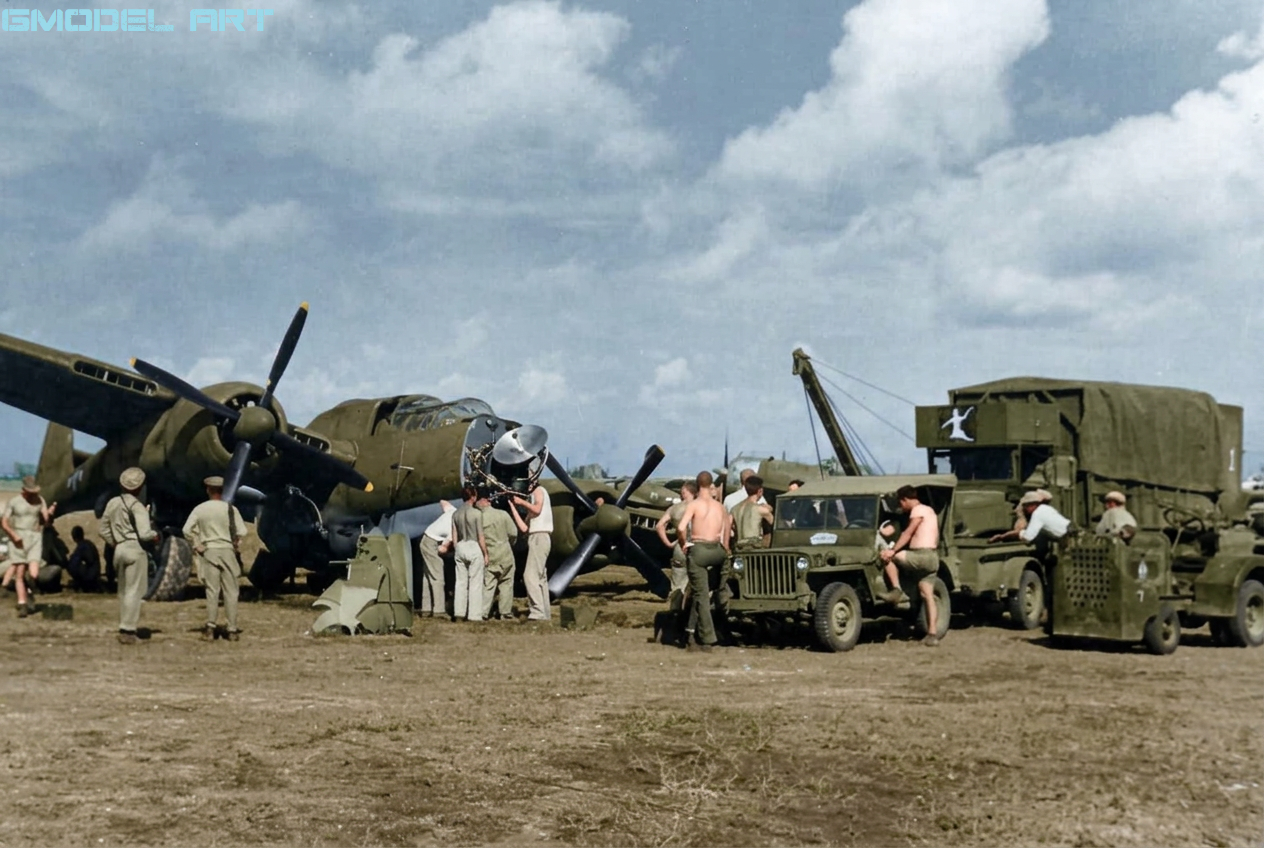
On a P-61 model, the engine nacelles provide an excellent opportunity for detailing.
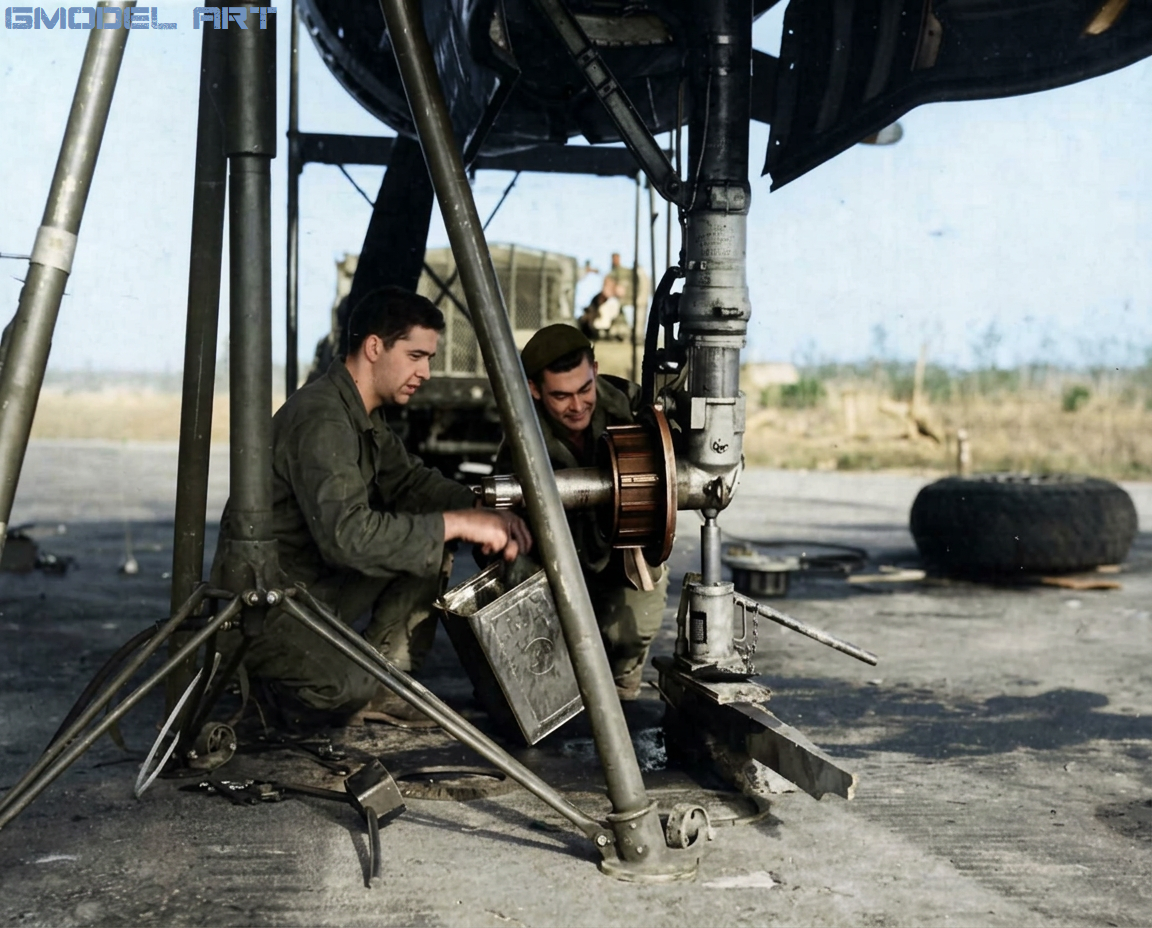
Pay attention to:
cylinder heads,
ignition wiring,
exhaust collectors,
oil staining,
accessory components,
firewall areas,
cowling interiors.
The engine compartment should not look uniformly black.
Operational aircraft quickly developed oil and exhaust staining around the engine nacelles.
Gun Bays
The four 20 mm cannons are located in the lower forward fuselage.
Opening the gun bays can dramatically increase the visual interest of the model.
However, an open gun bay should look like an operational aircraft rather than a museum restoration.
Add:
ammunition feeds,
hydraulic lines,
structural framing,
weapon components,
maintenance staining.
Avoid excessive color.
The interior of the P-61 was predominantly functional rather than decorative.
Radar Compartment
The radar compartment is arguably the most important interior detail on the entire aircraft.
This is where the P-61 becomes different from a conventional fighter.
The radar equipment should therefore receive careful attention:
radar housing,
operator’s station,
cabling,
instrument panels,
structural framework.
A model with an open radar compartment tells the story of what made the aircraft unique.
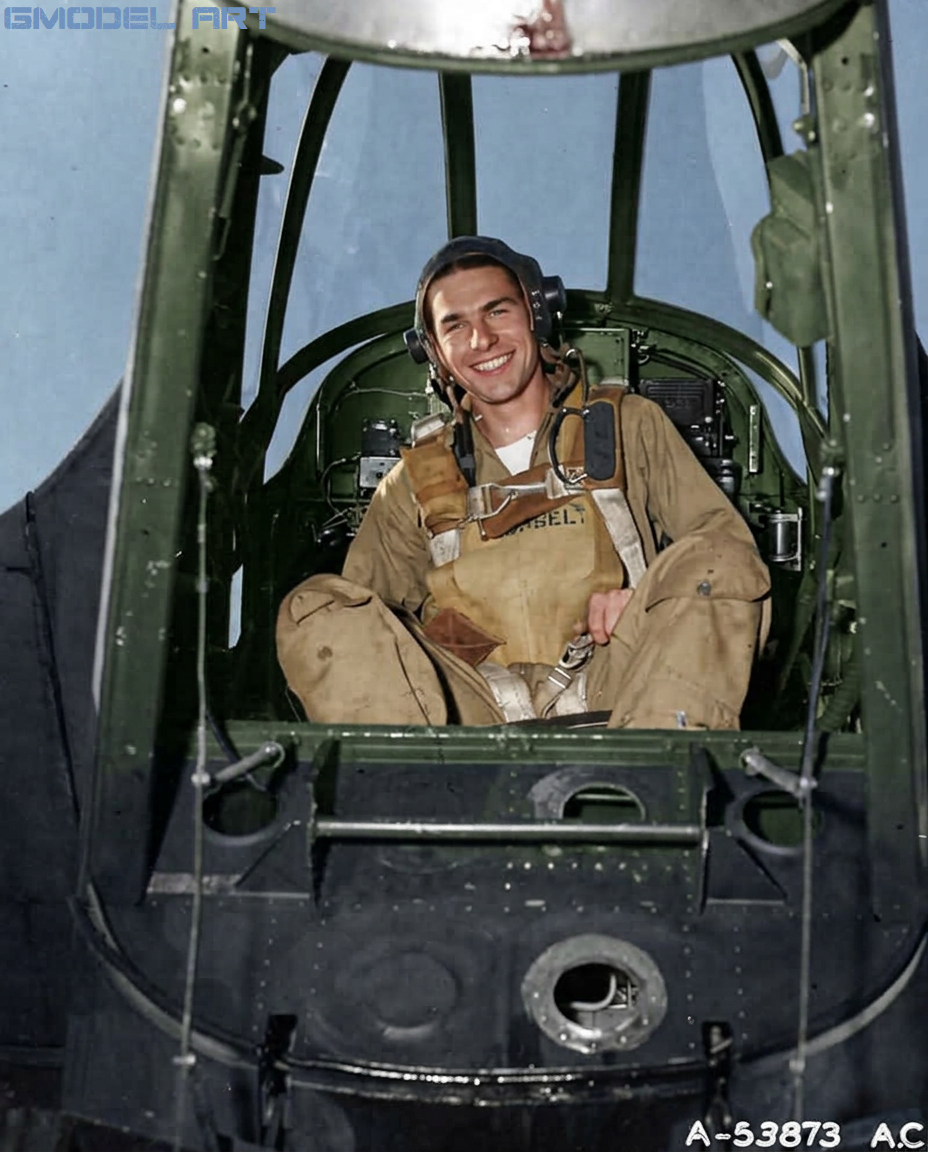
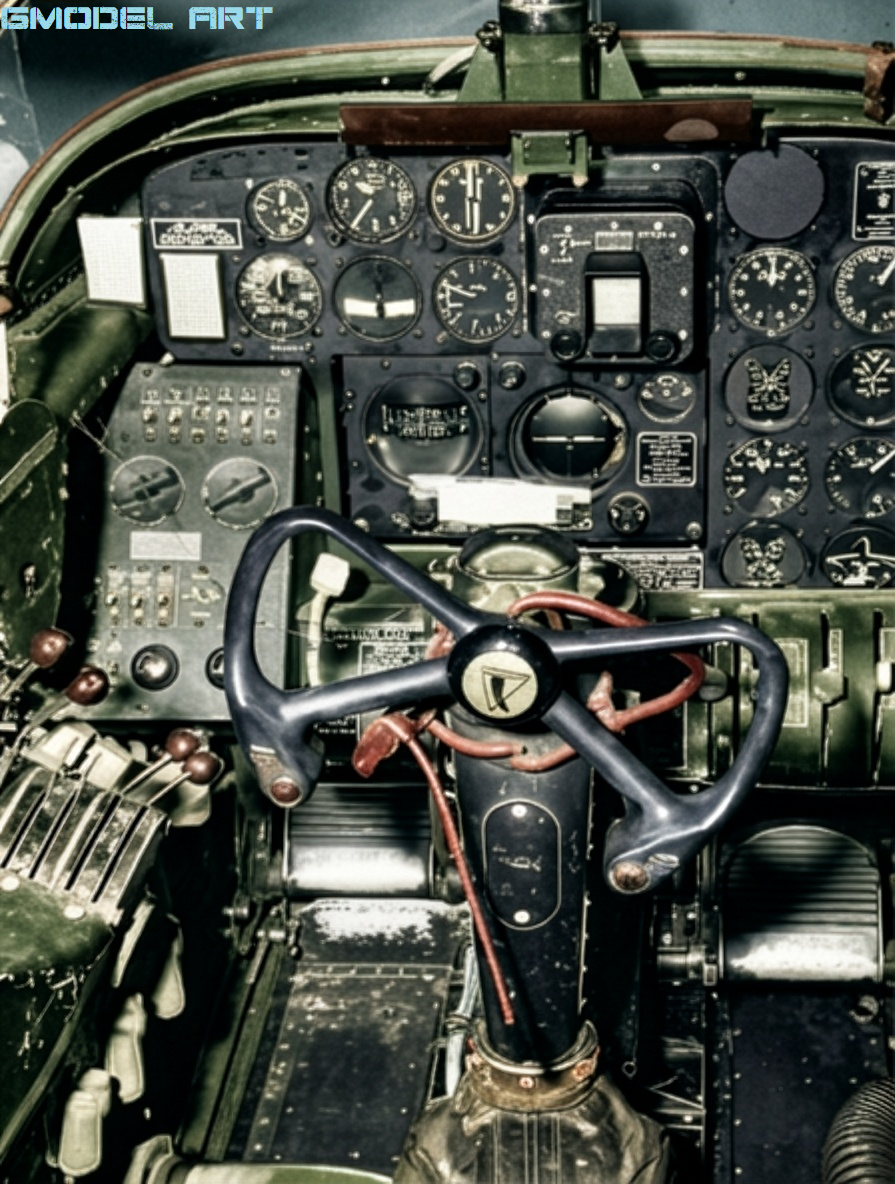
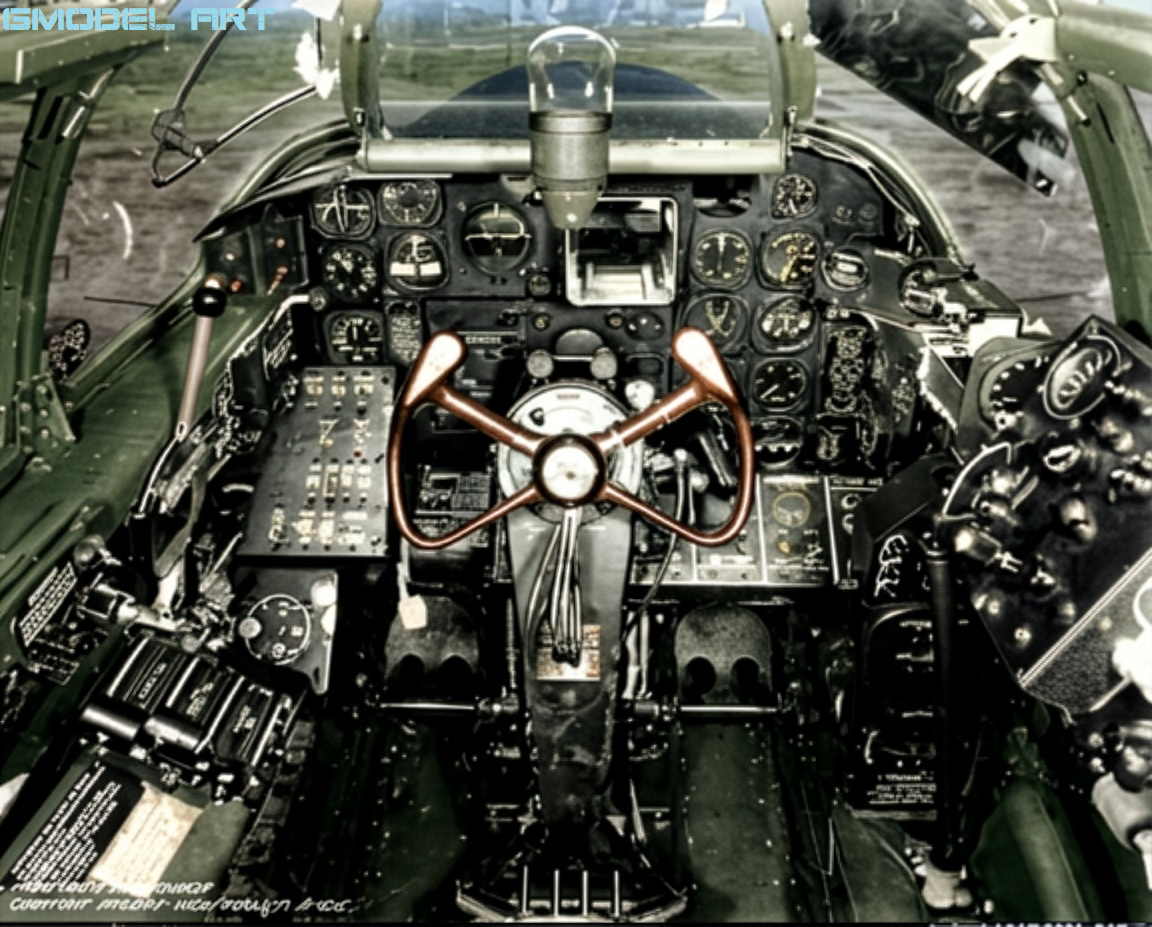
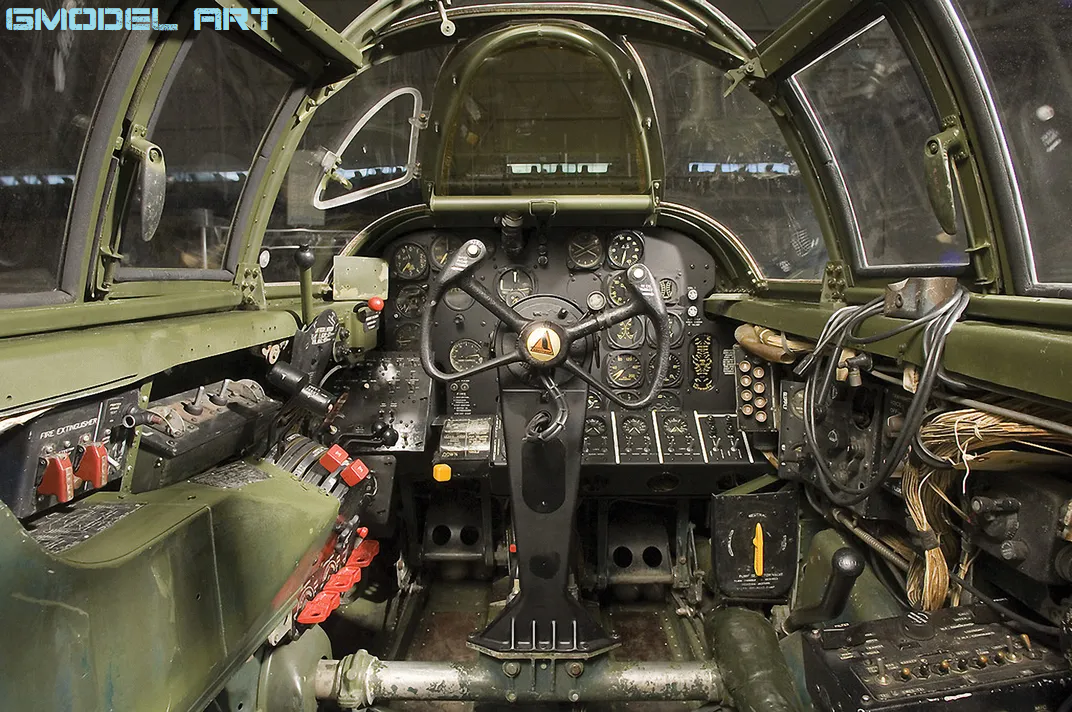
Cockpit and Crew Compartment
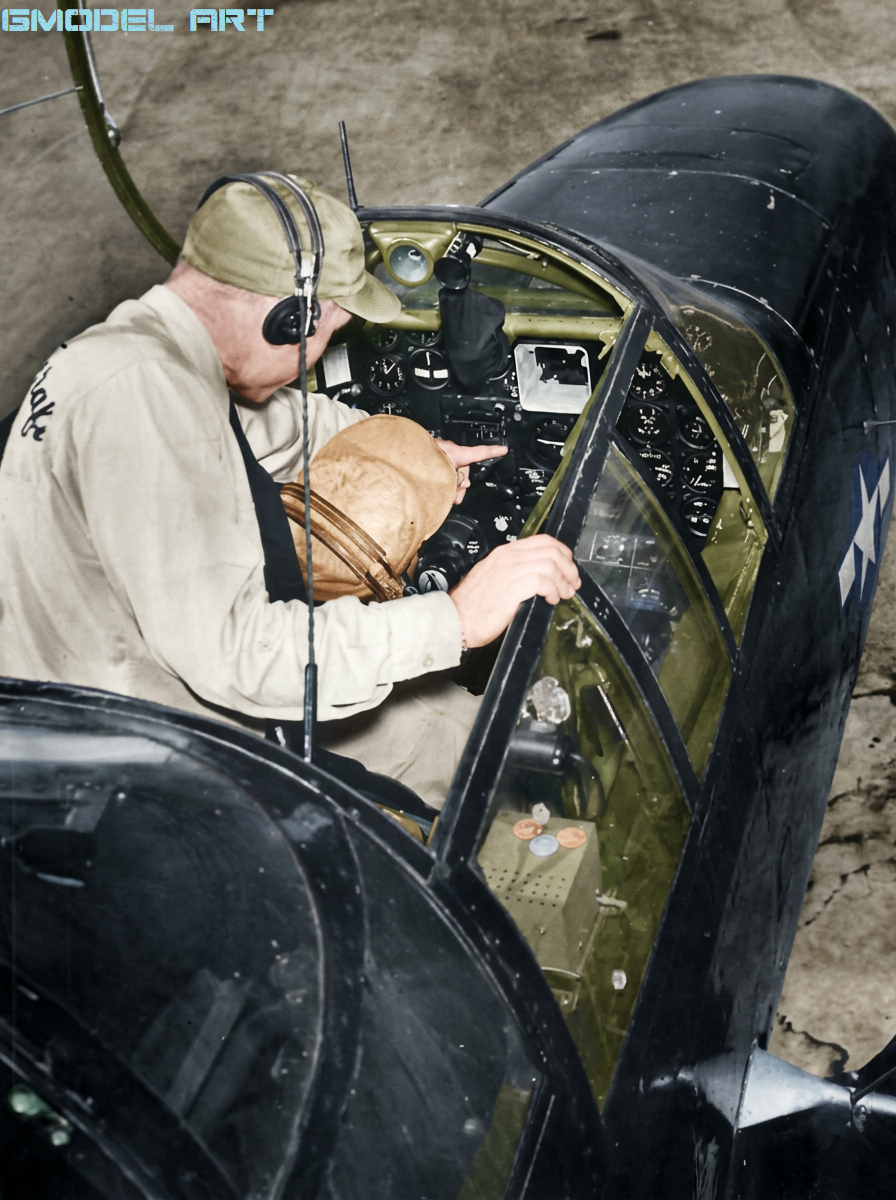
The cockpit should show the functional nature of the aircraft.
Depending on the specific aircraft and production configuration, interior colors could vary, and historical documentation does not always support one universal interior color for every P-61.
Interior Green is a useful general modeling reference for crew compartments, while zinc chromate finishes are documented in certain structural and equipment areas. Modelers should check the specific production block wherever possible.
The important principle is:
Do not treat every internal surface as the same color.
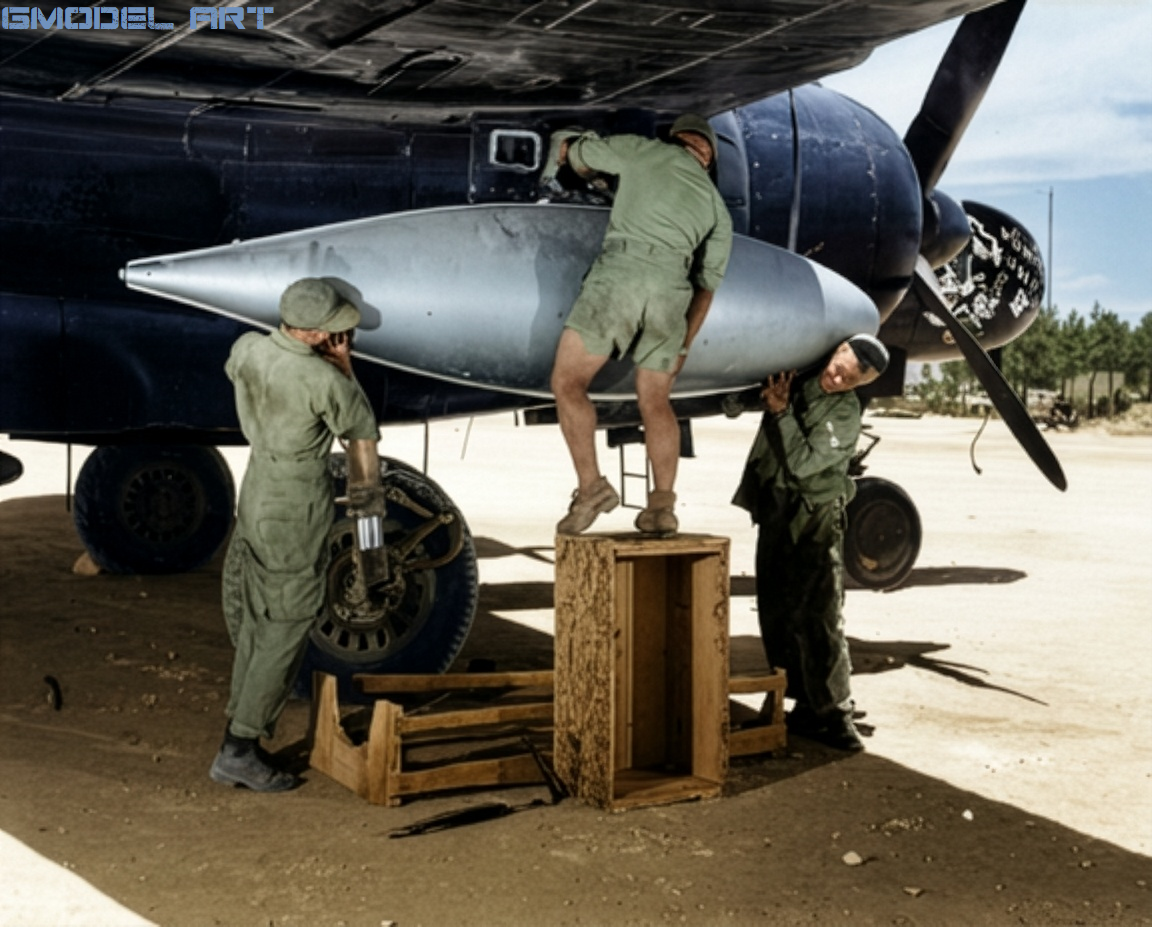
Drop Tanks and External Stores
External fuel tanks are another area where photographic evidence is important.
Depending on the aircraft and operational period, tanks could appear in different finishes, including camouflage-related colors and natural-metal appearances.
Therefore, the tank should not automatically be painted black simply because the aircraft is black.
The specific photograph of the aircraft being modeled should determine the finish whenever possible.
Markings and Insignia
The national insignia of the period also deserves attention.
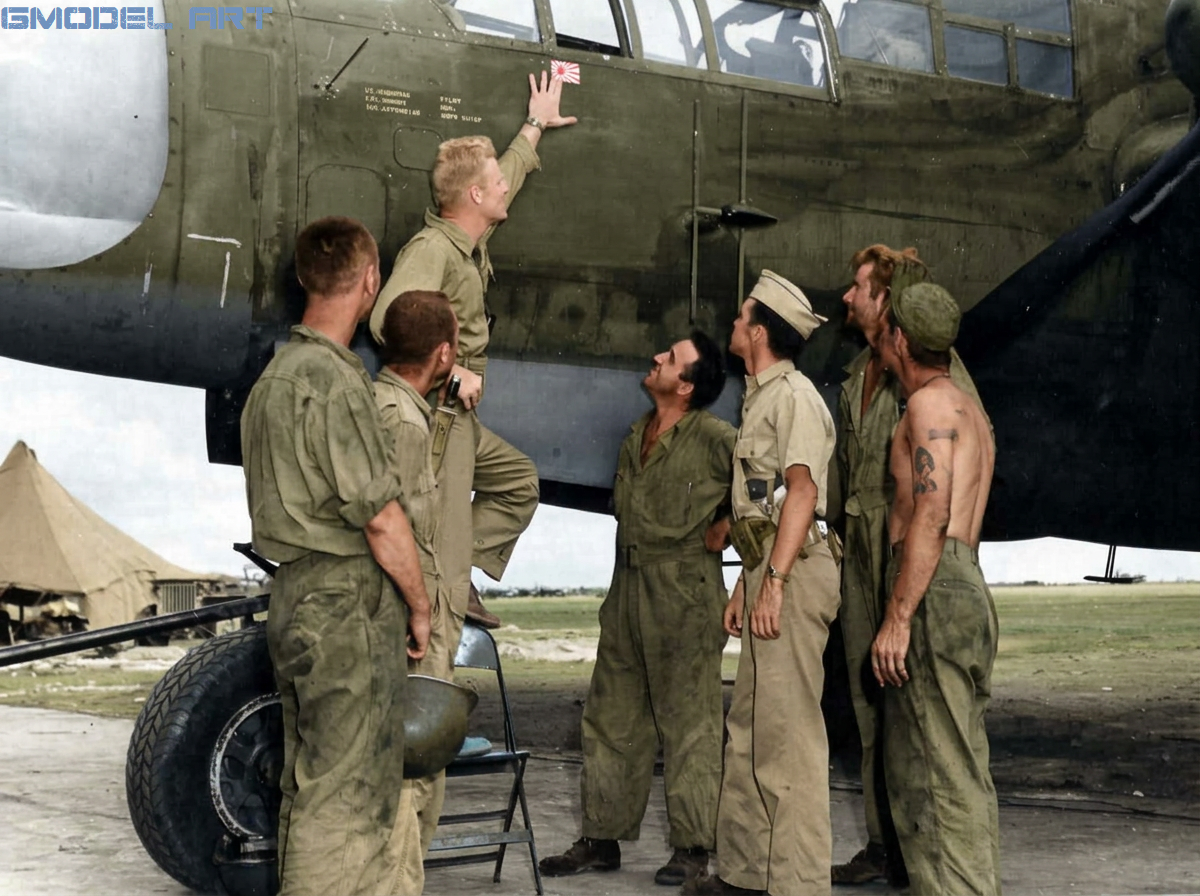
P-61s built during different periods could display different insignia treatments, including changes associated with the wartime evolution of U.S. national markings.
This is particularly important when modeling an early Olive Drab/Neutral Gray P-61.
The exact marking should therefore be checked against:
production date + aircraft serial + unit + photograph.
Modeling the P-61 by Theater
European Theater
A European P-61 model can emphasize:
restrained weathering,
mud,
moisture,
operational grime,
exhaust staining,
relatively controlled surface fading.
Aircraft from the 422nd and 425th NFS are particularly interesting because of the extensive photographic documentation.
Mediterranean Theater
A Mediterranean P-61 can show:
dust,
dry-weather staining,
operational grime,
fading,
aircraft maintained under field conditions.
The exact aircraft should determine the weathering level.
China-Burma-India
CBI P-61s can provide some of the most interesting weathering possibilities:
tropical fading,
dust,
mud,
strong sunlight,
exhaust staining,
rough-field contamination.
The 426th and 427th NFS also provide interesting subjects because of their transition from interception toward offensive night operations.
Pacific
Pacific P-61s are perhaps the most dramatic modeling subjects.
They can combine:
intense fading,
tropical contamination,
dust,
mud,
salt,
heavy exhaust staining,
localized paint repairs,
loss of gloss.
But heavy weathering should never be applied simply because the aircraft operated in the Pacific.
The photograph remains the final reference.
The Great Wall Hobby P-61
For a highly detailed build, the Great Wall Hobby P-61 Black Widow is an excellent starting point.
The kit provides the modeler with the possibility of emphasizing the aircraft’s complex structure and internal equipment.
For a simpler project, the HobbyBoss P-61 offers another route into the subject.
The most important consideration, however, is not simply which kit is “best.”
It is whether the kit can accurately reproduce the specific variant and configuration you intend to build.
Before starting, determine:
Variant
Production block
Turret configuration
Radar configuration
Crew arrangement
External stores
Camouflage
Unit markings
Common P-61 Modeling Mistakes
Painting every P-61 black
Incorrect.
Early operational aircraft existed in Olive Drab/Neutral Gray.
Using modern FS 17038 as the historical P-61 black
FS 17038 can be used as a practical modeling reference, but the historical color reference is Jet ANA 622.
Making the entire aircraft glossy
Incorrect for an operational aircraft.
A freshly painted P-61 and a heavily used P-61 could have dramatically different surface sheen.
Applying random silver chipping
Weathering must follow the aircraft’s operational use and photographic evidence.
Making every Pacific P-61 extremely dirty
The Pacific environment encouraged heavy weathering, but not every aircraft reached the same condition.
Ignoring the production block
The turret, radar, pylons and other details changed during production.
Treating the P-61 as a simple black aircraft
This misses one of the most interesting aspects of the subject.
The P-61 was an evolving technological system, and its appearance changed with production, theater and service life.
A Practical P-61 Modeling Workflow
For the most accurate result, follow this sequence:
1. Select the aircraft
Find a specific serial number whenever possible.
2. Identify the variant
Determine whether it is an A, B or C and identify the production block.
3. Identify the unit
Determine the Night Fighter Squadron.
4. Identify the theater
ETO, MTO, CBI, Southwest Pacific or Central Pacific.
5. Determine the date
The same aircraft may have looked different at different stages of its career.
6. Determine the camouflage
Natural Metal, Olive Drab/Neutral Gray or Jet Black.
7. Check the photograph
Use the photograph to establish the actual condition.
8. Build the correct configuration
Turret, radar, weapons, tanks and other external details.
9. Paint in layers
Avoid a single-color finish.
10. Weather according to evidence
Do not weather first and justify it later.
Final Thoughts
The Northrop P-61 Black Widow was much more than a large black night fighter.
It was one of the most technologically ambitious aircraft developed by the United States during World War II.
Its evolution from the XP-61 through the P-61A, P-61B and finally the P-61C reflects the rapid development of radar, night-fighter tactics, engines, weapons and aircraft systems during the war.
Its operational history is equally diverse.
Black Widows fought and operated across the European Theater, Mediterranean Theater, China-Burma-India Theater, Southwest Pacific and Central Pacific, serving with numerous Night Fighter Squadrons and performing missions ranging from radar interception to night intruder and ground-attack operations.
For the modeler, perhaps the most important lesson is that there was never simply one “P-61 Black Widow.”
There were early Olive Drab/Neutral Gray aircraft.
There were later Jet Black aircraft.
There were prototypes and experimental natural-metal machines.
There were aircraft with and without dorsal turrets.
There were different radar and weapons configurations.
There were aircraft operating from European airfields, tropical Pacific islands, CBI bases and Mediterranean locations.
And each aircraft could develop a different appearance during its operational life.
That is what makes the P-61 Black Widow such a rewarding modeling subject.
Do not begin with the question:
“What black paint should I use?”
Begin with:
Which P-61 am I building?
Once the aircraft, variant, unit, theater and date have been established, the correct camouflage, markings, configuration and weathering become much easier to determine.
That is the difference between building a P-61 model and recreating a specific Black Widow.
B-26 Marauder Model Kit Guide: Widowmaker Myth, Paint & Weathering Techniques