article
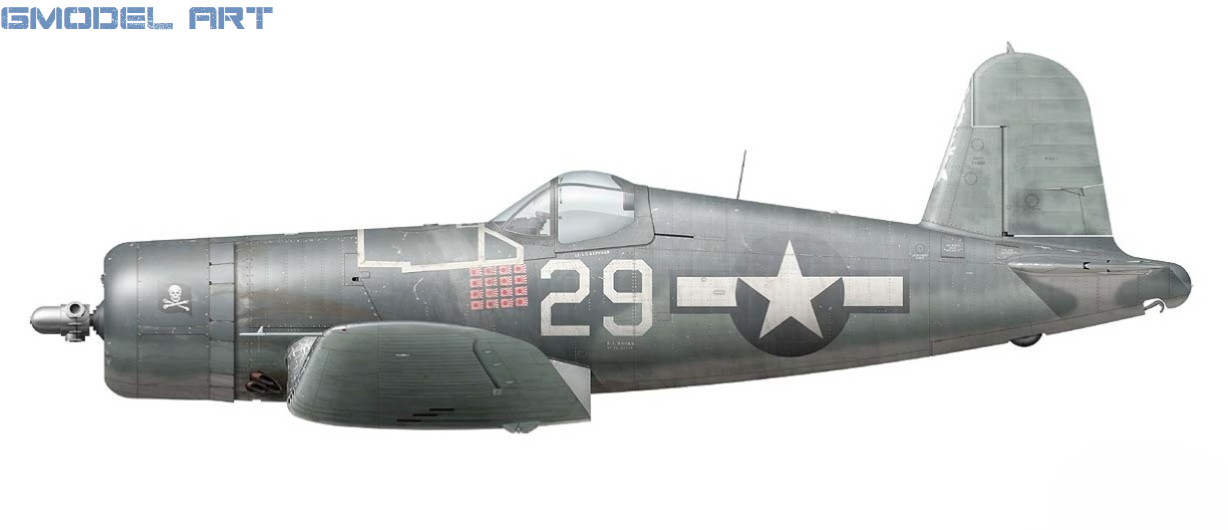
F4U-1A Corsair White 29 VF-17 “Jolly Rogers” του Ira C. Kepford
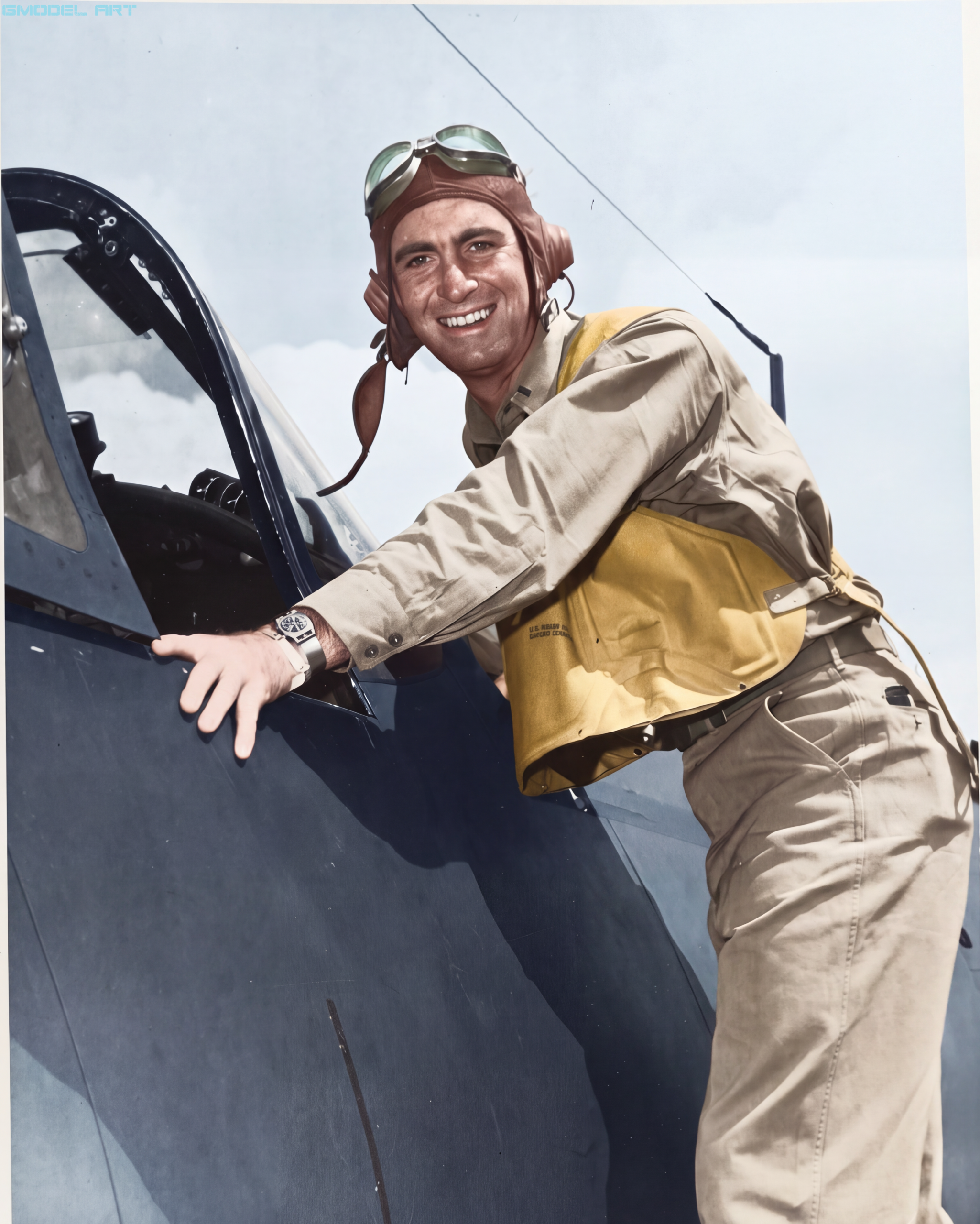
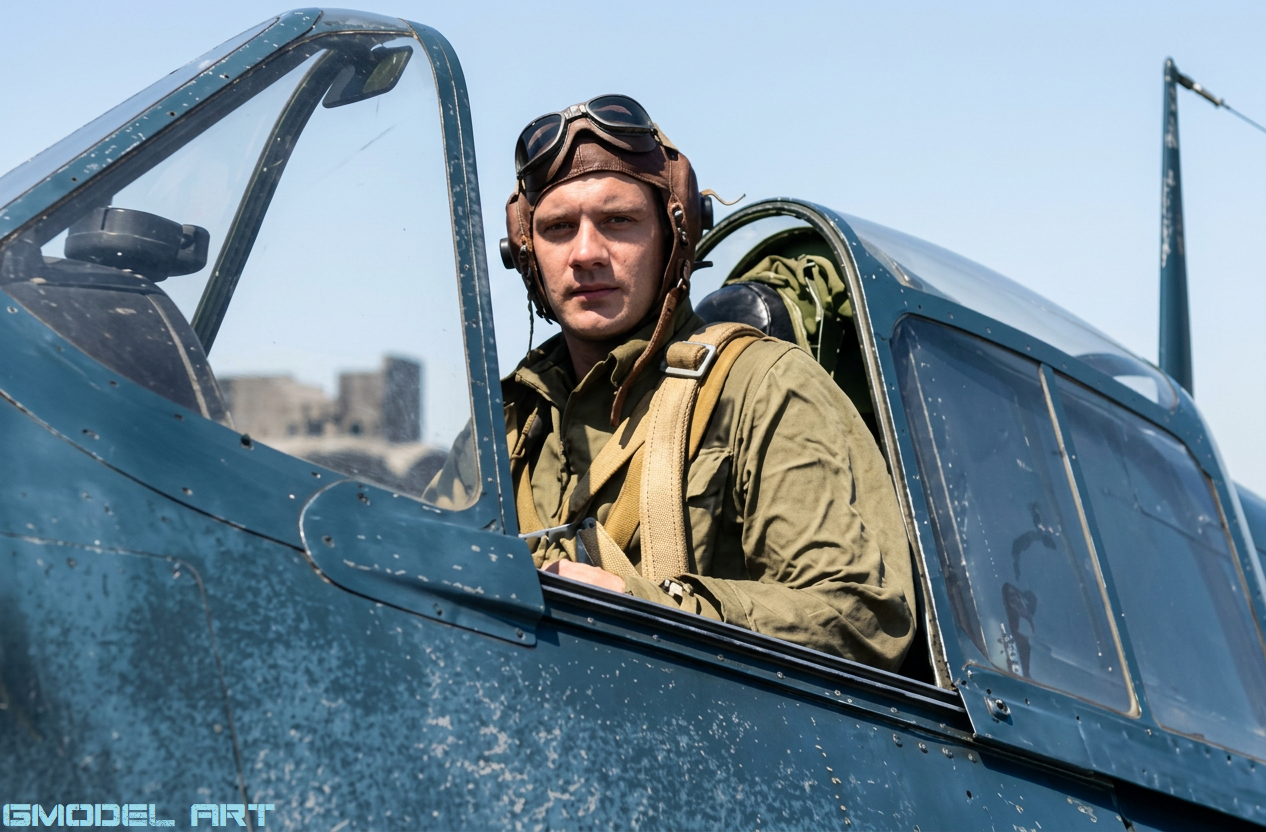
There are aircraft that become so closely associated with a pilot that their markings become almost as recognizable as the pilot’s own name. For Ira C. Kepford, that aircraft was the White 29 of VF-17 “Jolly Rogers.”
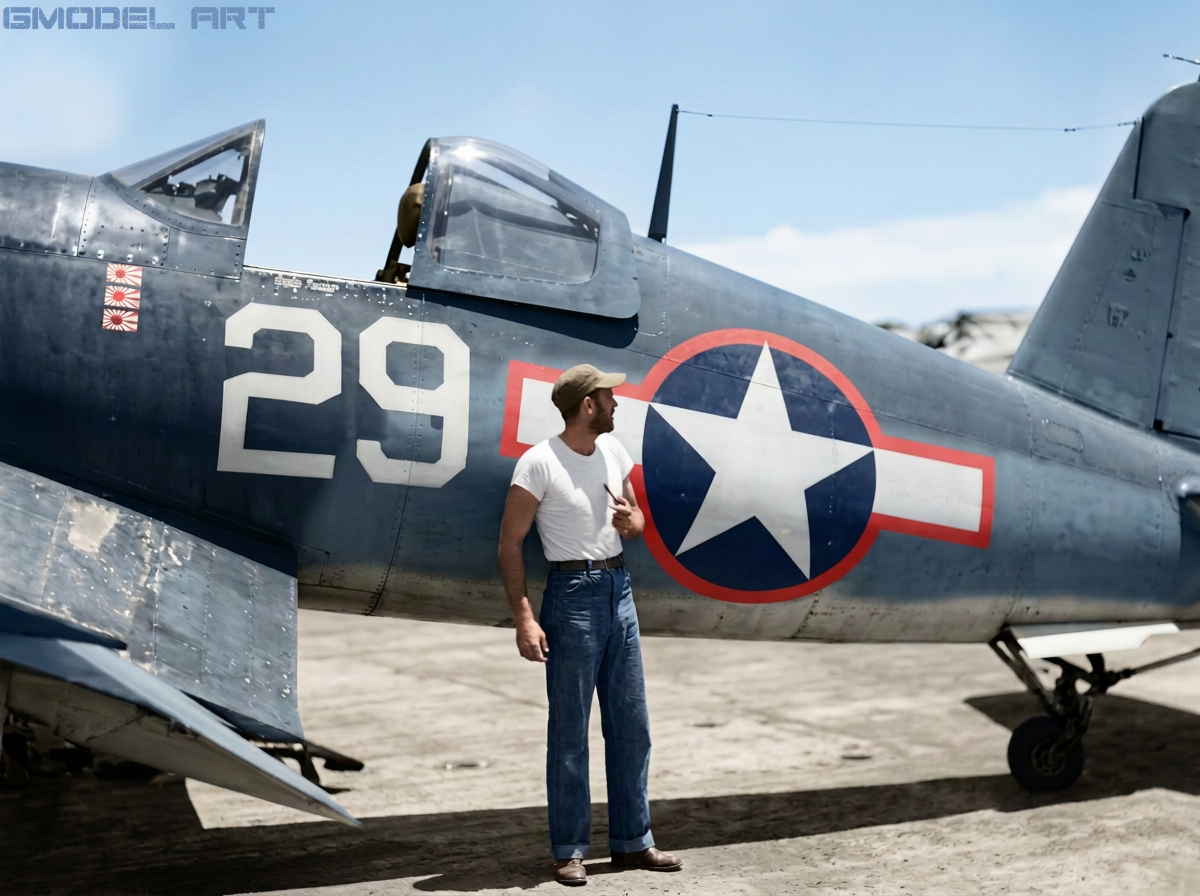
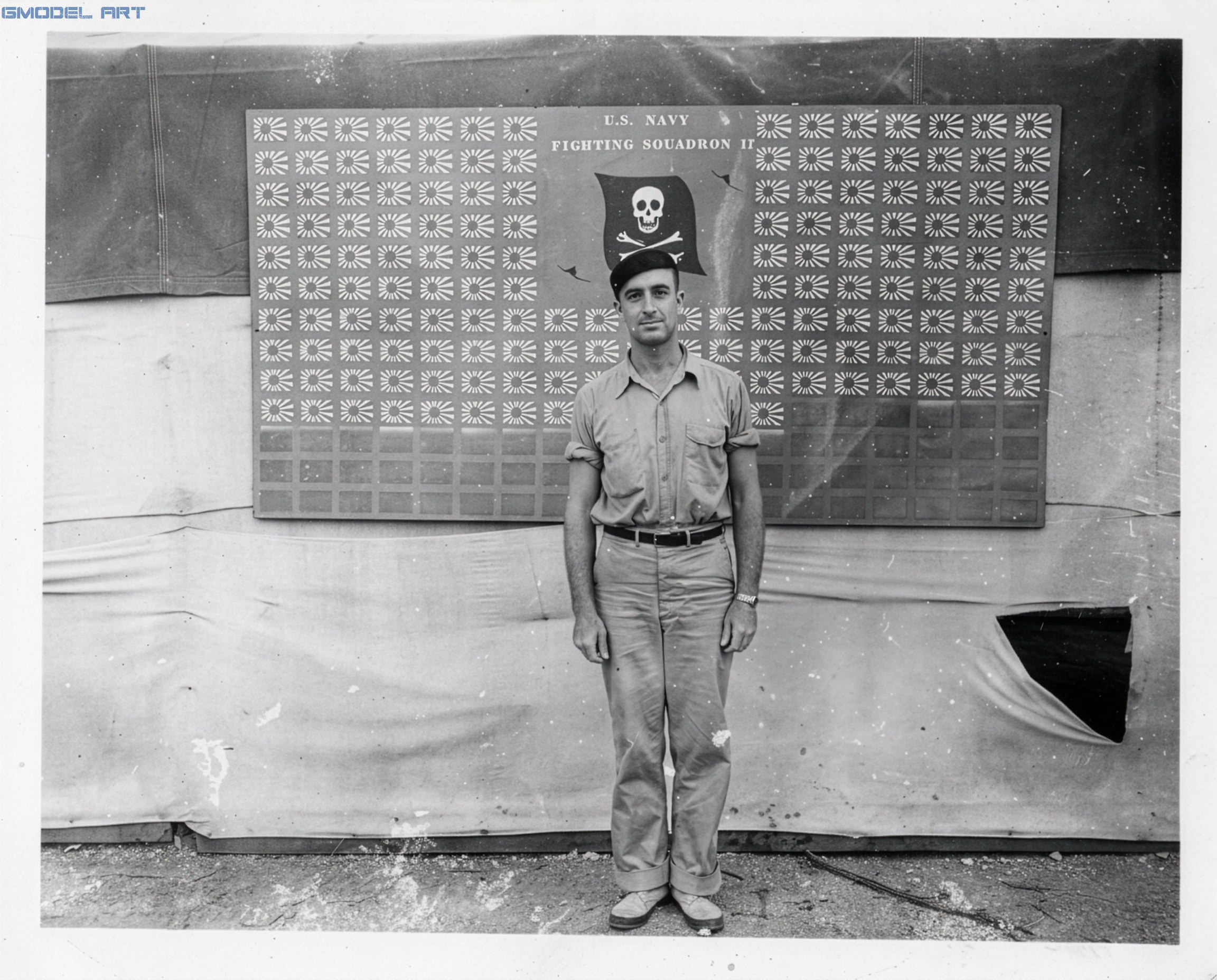
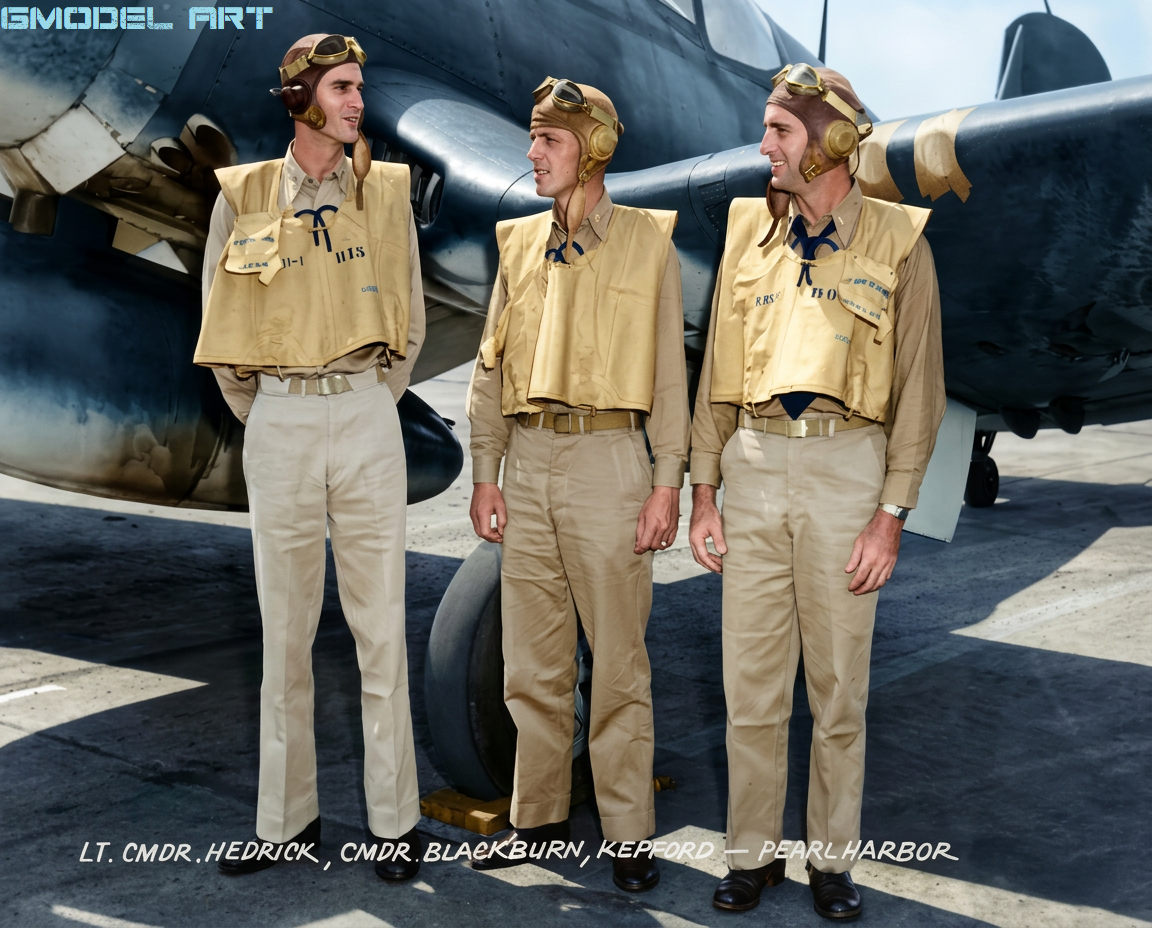
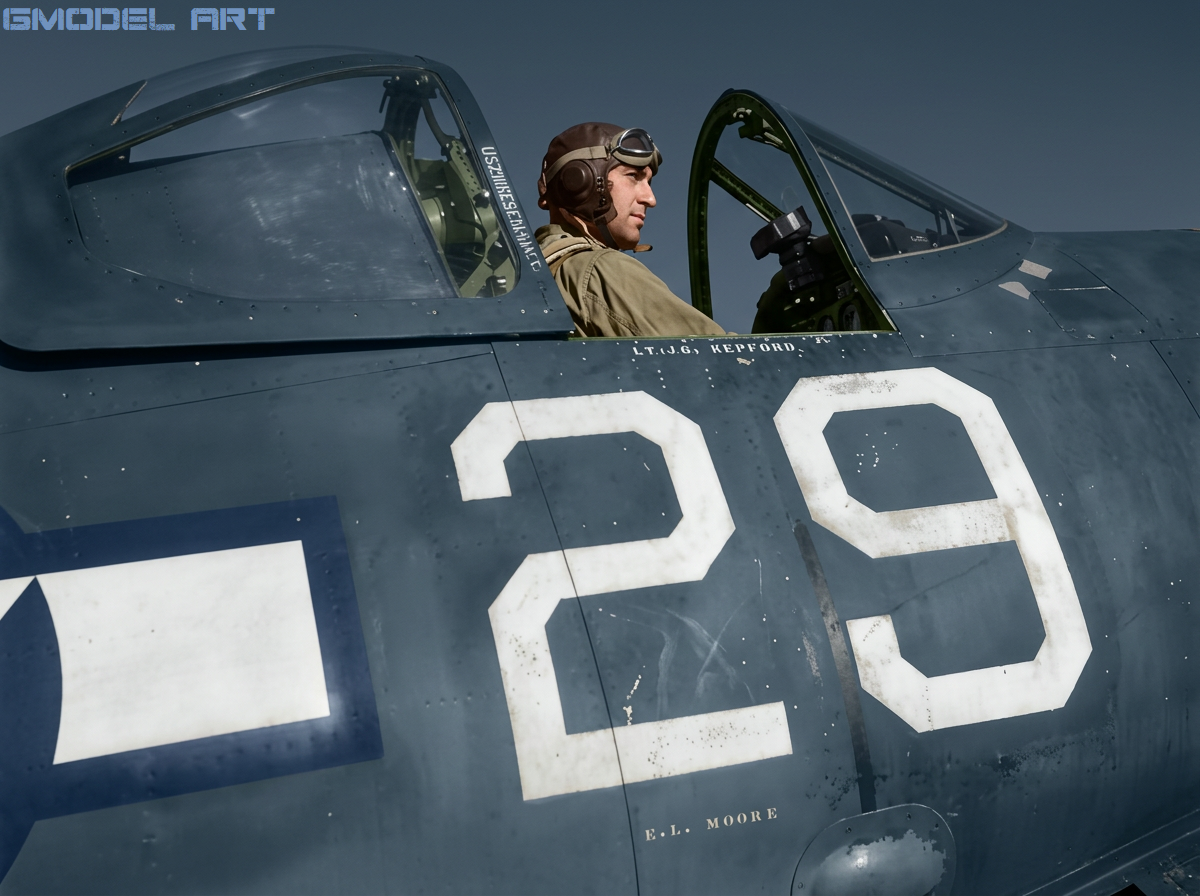
Kepford became one of the U.S. Navy’s leading fighter aces during the Pacific War, credited with 16 confirmed aerial victories, one probable, and one damaged. His wartime photographs show him repeatedly with the famous number 29 on his Corsair.
But there is an important detail that is often overlooked.
Kepford did not fly just one White 29.
The first was Vought F4U-1A Corsair BuNo 17684. The second was Vought BuNo 55995.
Both carried the same White 29, but they were different aircraft and belonged to different moments in the operational history of VF-17.
For the historian and the scale modeller, that distinction is essential.
The First White 29 – BuNo 17684
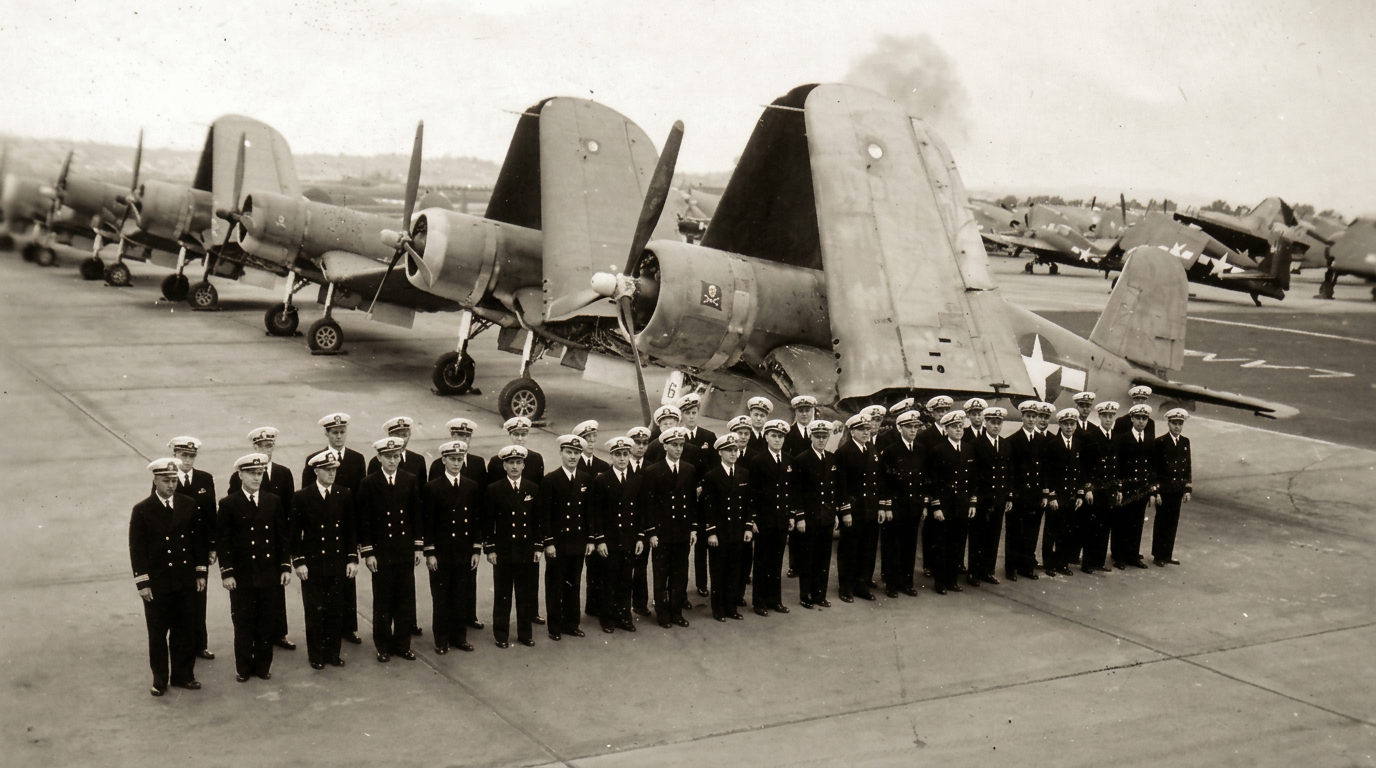
The first aircraft associated with Kepford’s White 29 was Vought F4U-1A Corsair BuNo 17684, one of the early Corsairs operated by VF-17.
The squadron received some of the earliest F4U-1A production aircraft, and these machines had several characteristics that distinguish them from the later replacement Corsairs that joined the unit.
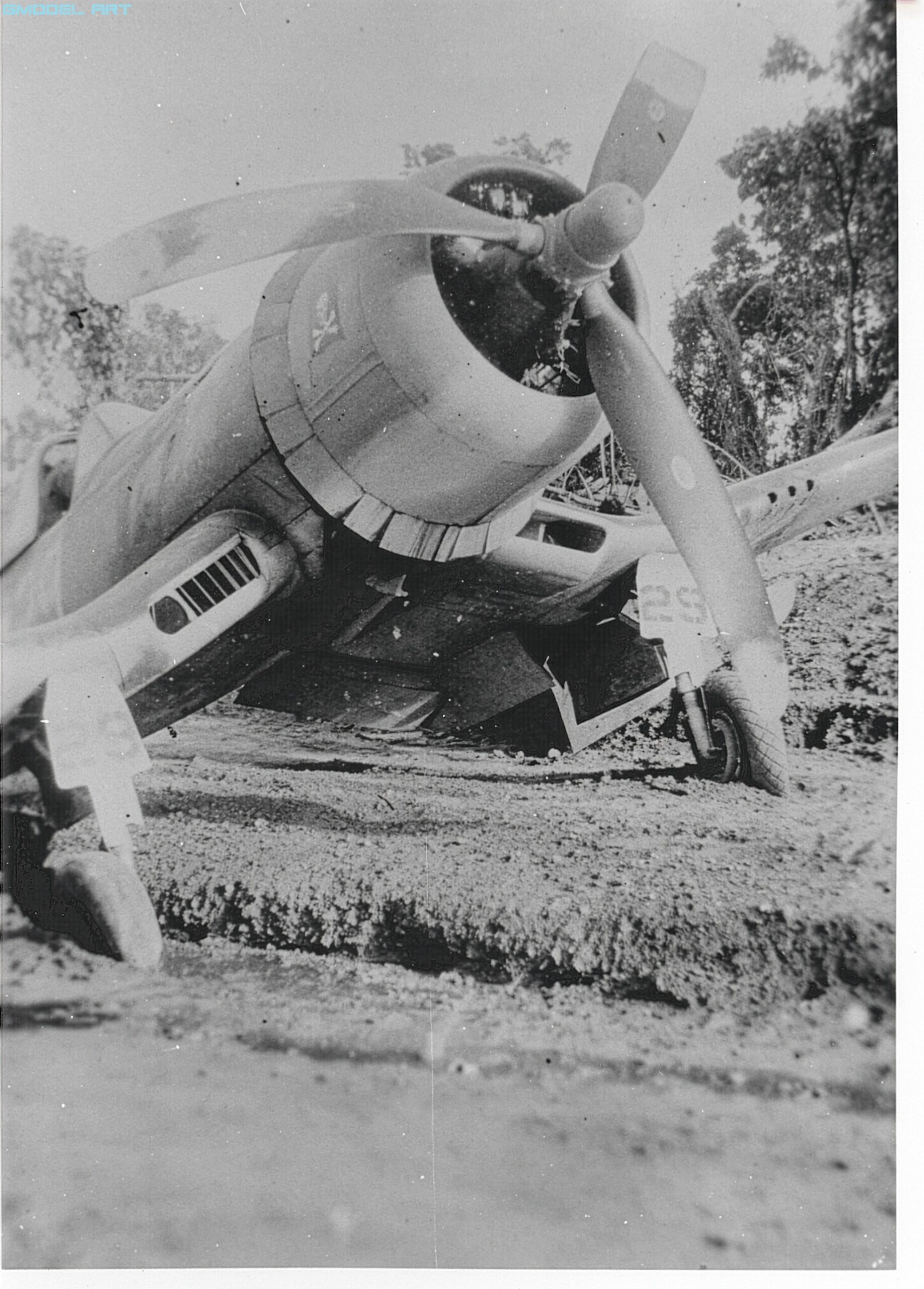
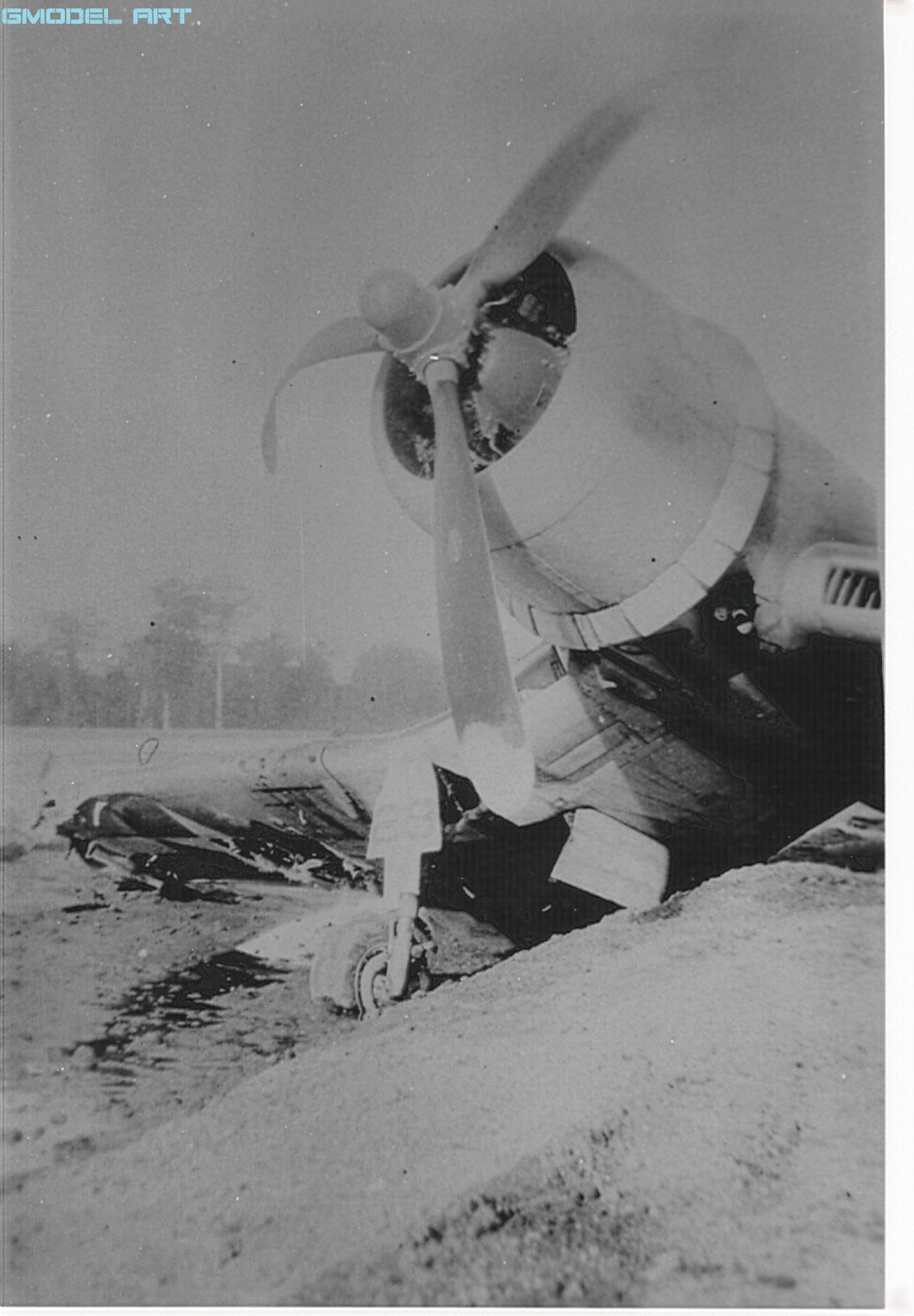
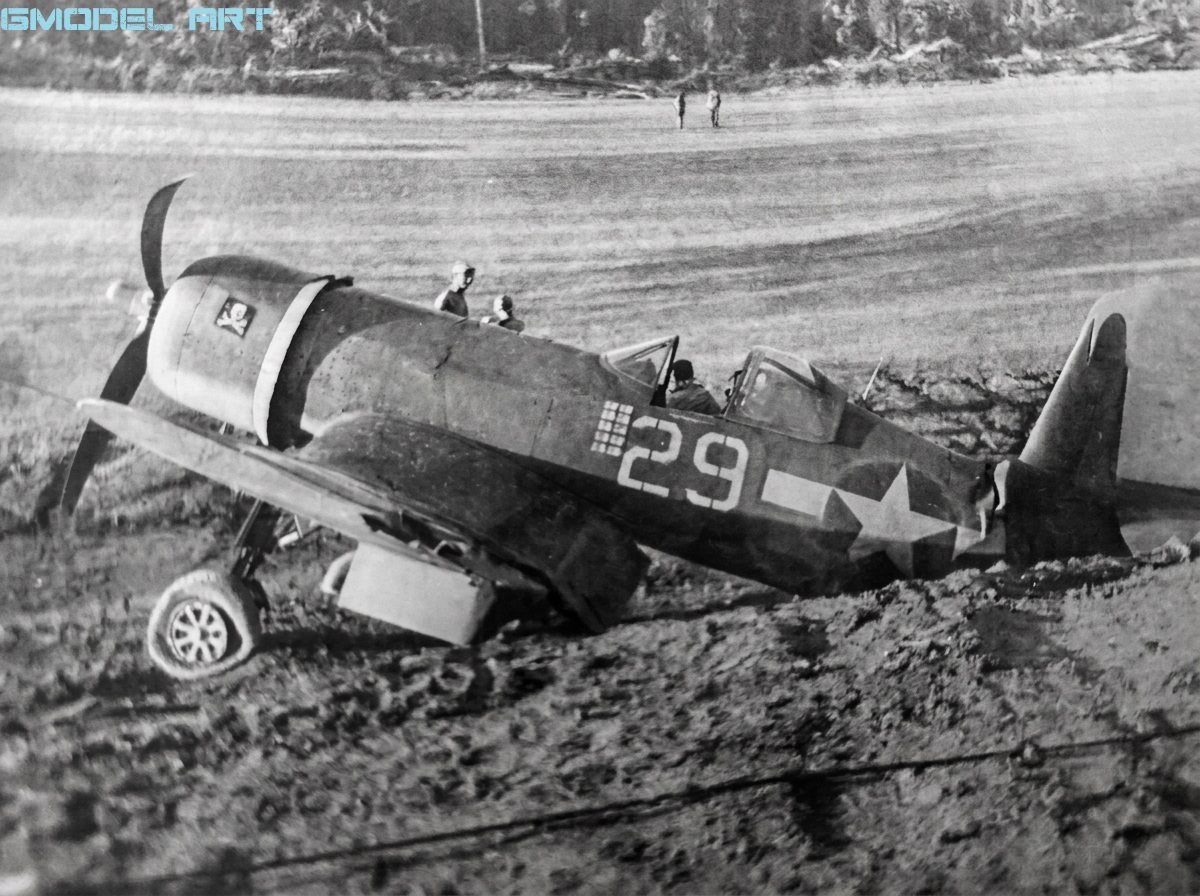
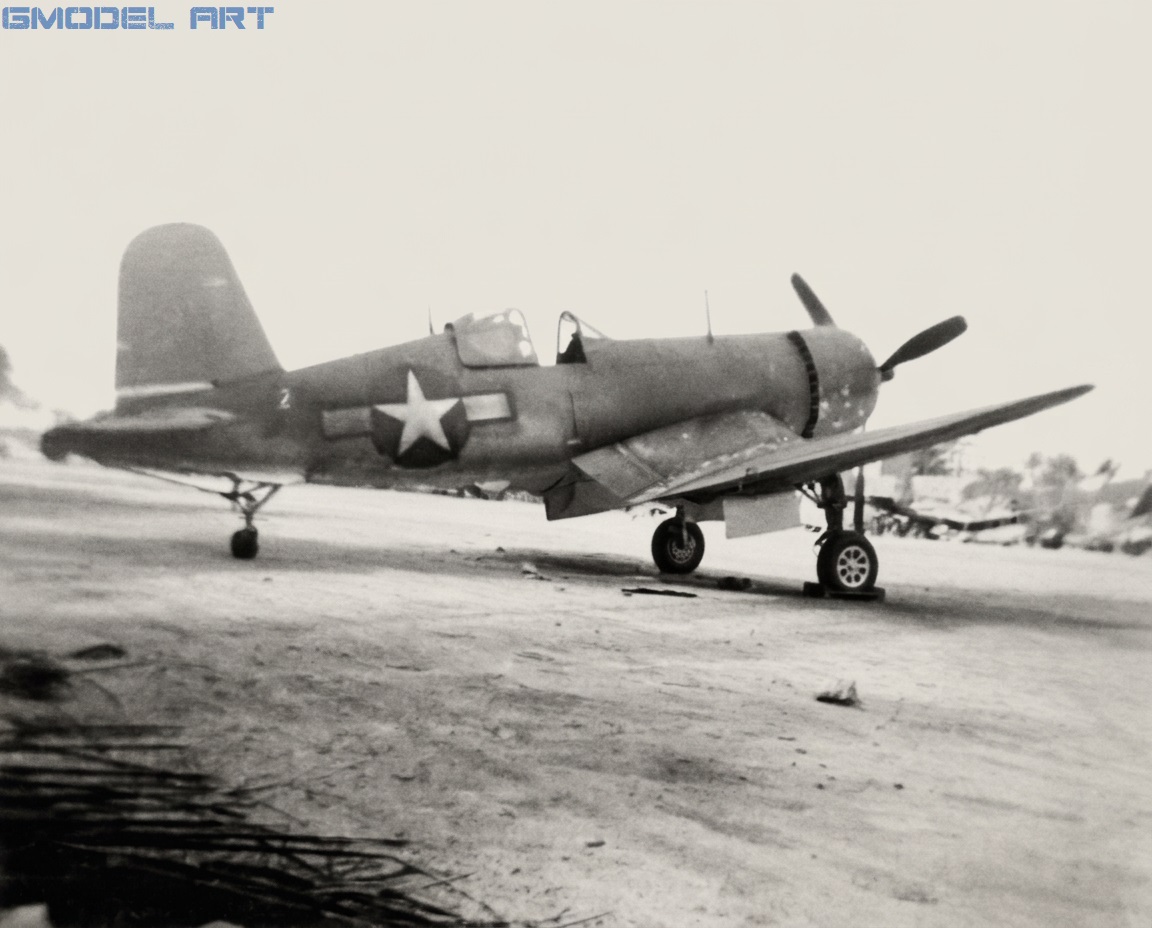
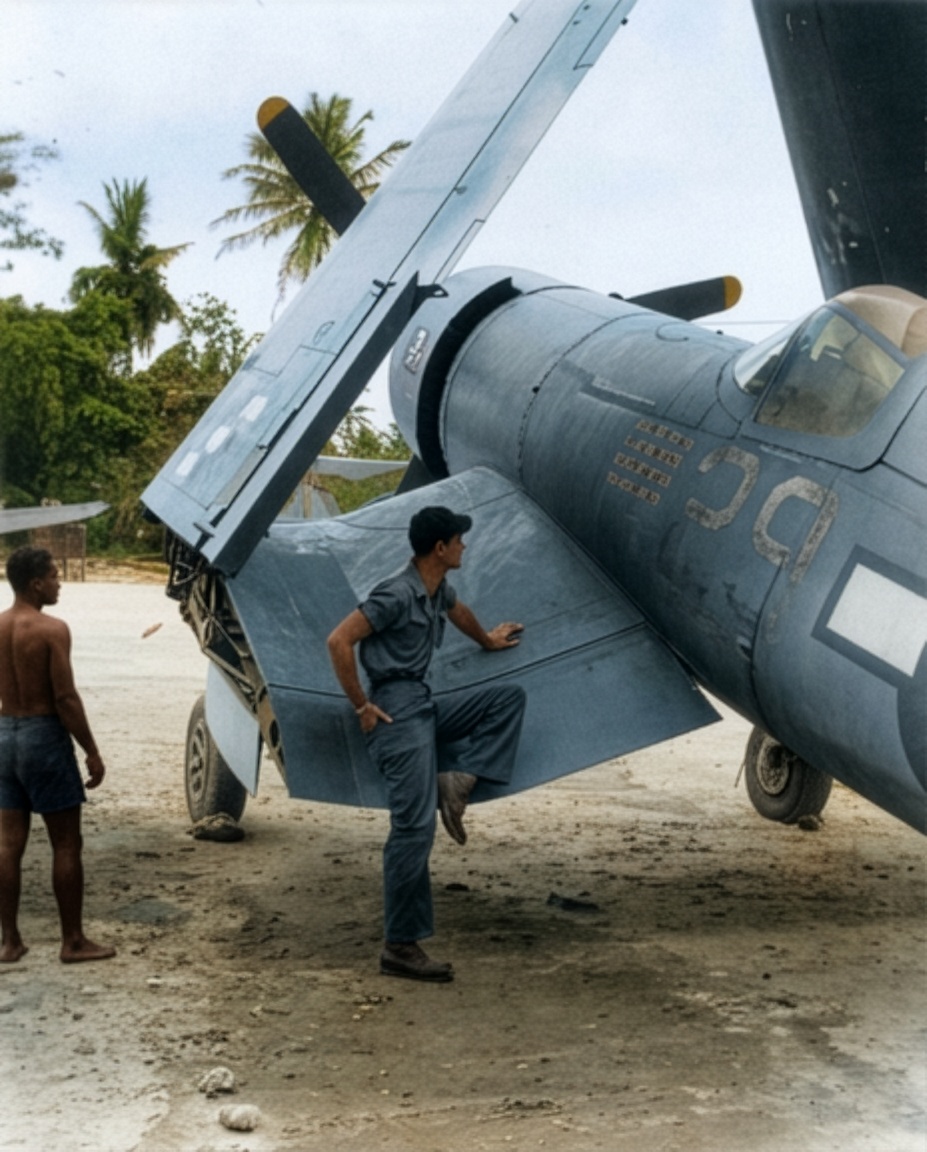
Photographs of BuNo 17684 show an aircraft that had already experienced considerable operational use. The finish was no longer that of a factory-fresh Corsair, and the markings on the fuselage had evolved as Kepford’s combat record increased.
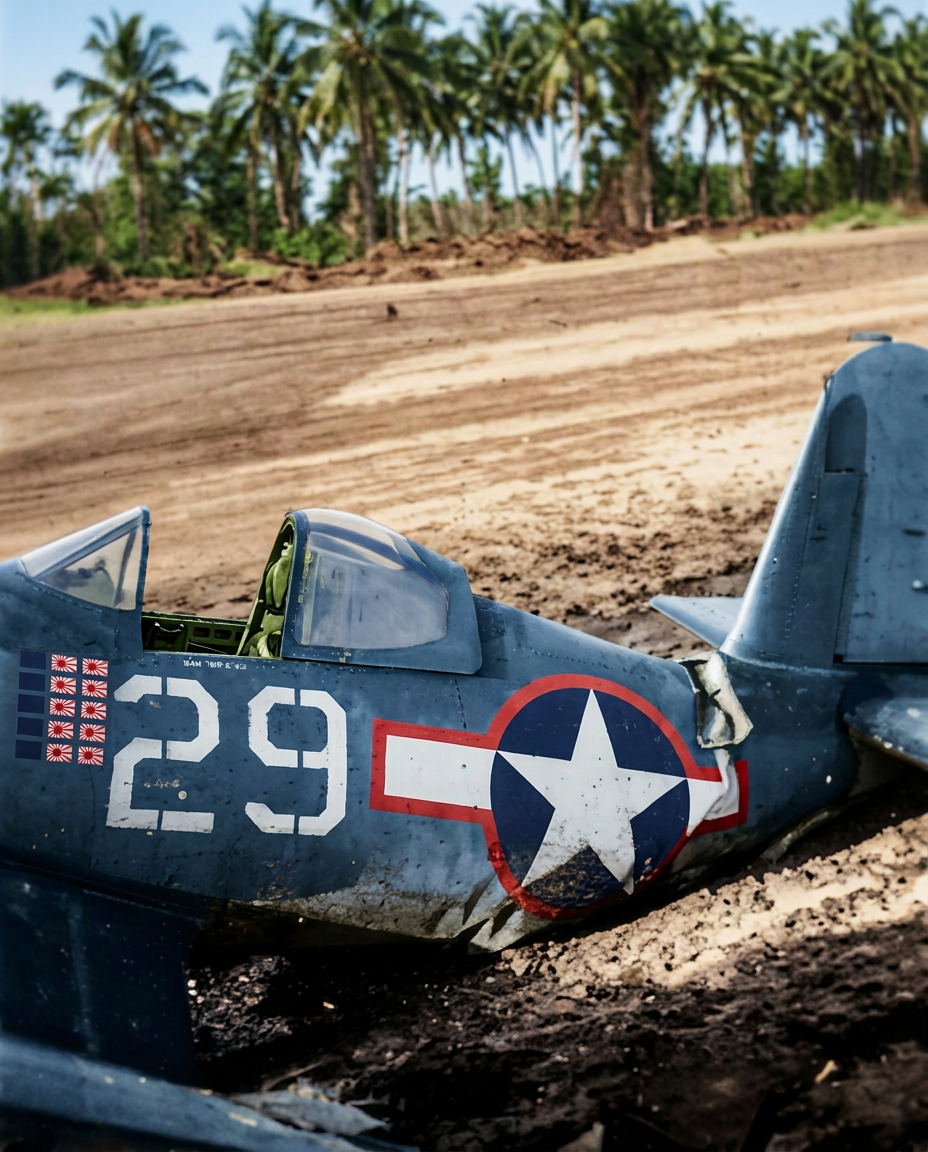
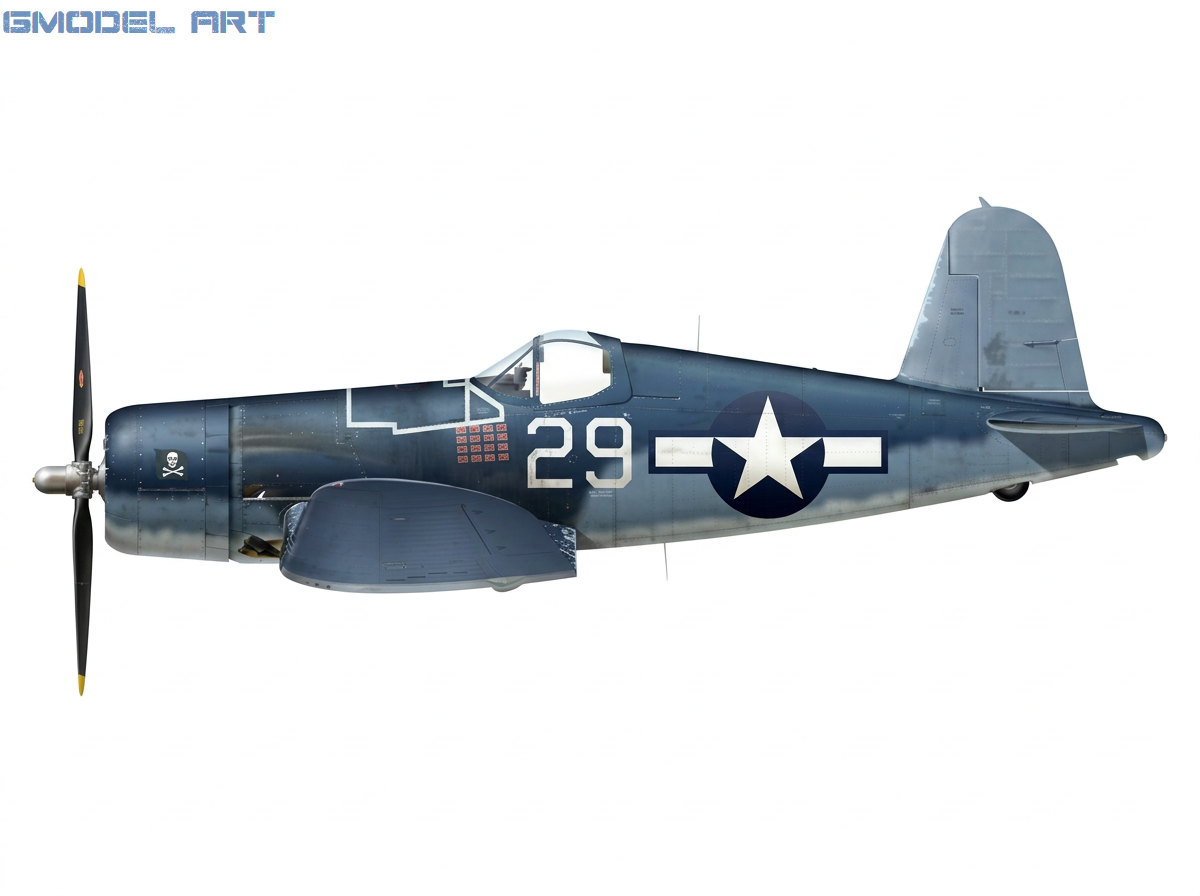
One particularly interesting detail is the group of victory markings on the fuselage. In some photographs, six Japanese flags are clearly visible, while other areas appear to have been painted over.
That observation should be treated carefully.
A photograph tells us what was visible on the aircraft at that particular moment. It does not, by itself, establish the complete sequence of when individual victory markings were added, removed, or overpainted.
BuNo 17684 remained Kepford’s White 29 until its final combat mission.
On 30 January 1944, the Corsair suffered severe combat damage and Kepford was forced to return toward the Torokina area. The aircraft was subsequently lost and did not return to operational service.
The exact Japanese aircraft responsible for the damage has been described differently in secondary sources, and it is therefore safer not to assign a single Japanese type as an absolute identification without stronger primary documentation.
For the modeller, BuNo 17684 represents a very specific moment in the story of Kepford and VF-17: the early White 29, before the appearance of the second aircraft.
And that is where the story becomes even more interesting.
A New White 29 Appears
After the loss of BuNo 17684, Kepford appeared again with the same White 29, but this time on a completely different Corsair.
The new aircraft was Vought F4U-1A Corsair BuNo 55995.
Its identity is not based simply on a decal sheet or a later color profile. It is directly supported by wartime photography preserved by the U.S. National Archives and Naval History and Heritage Command.
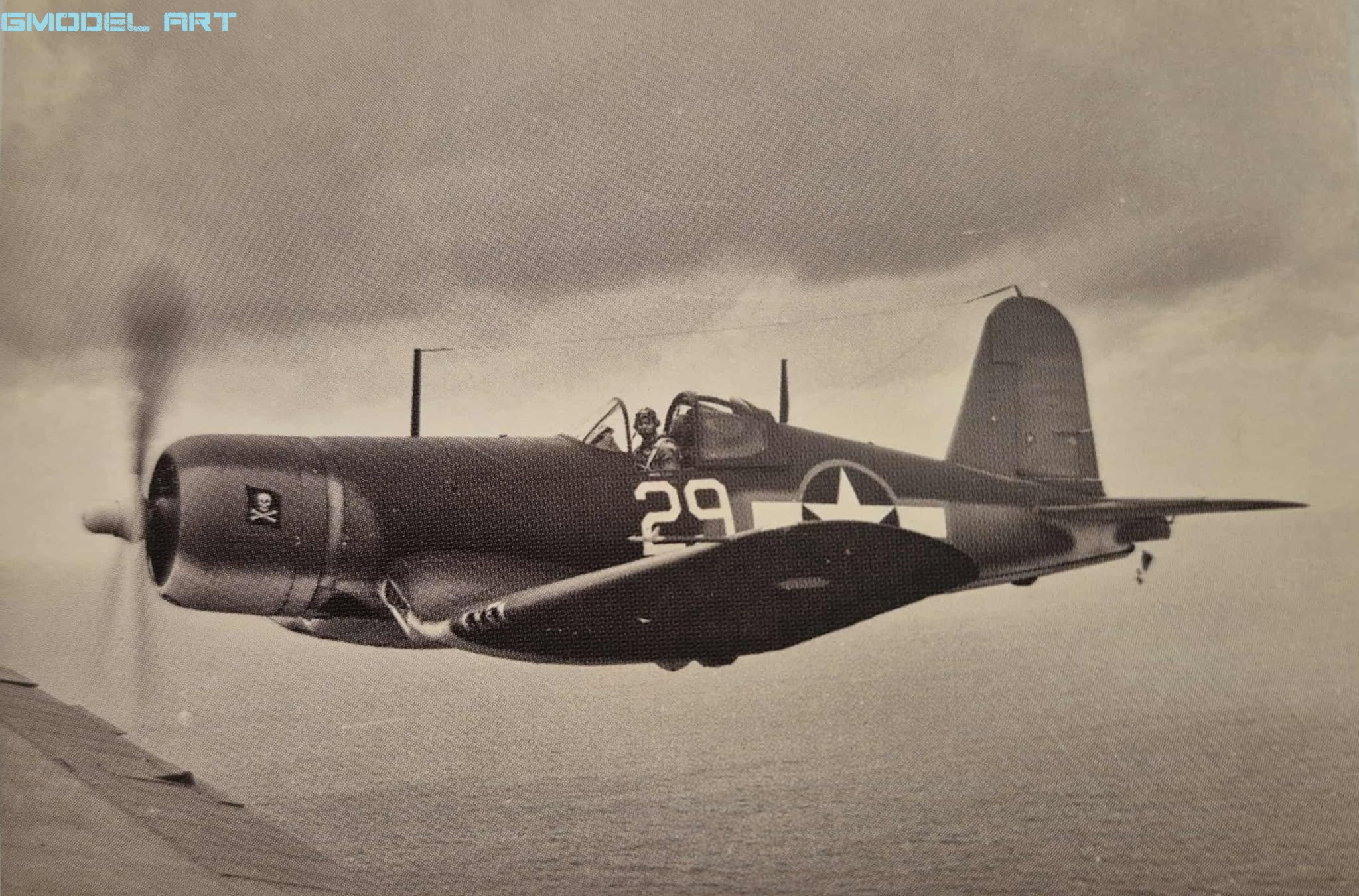
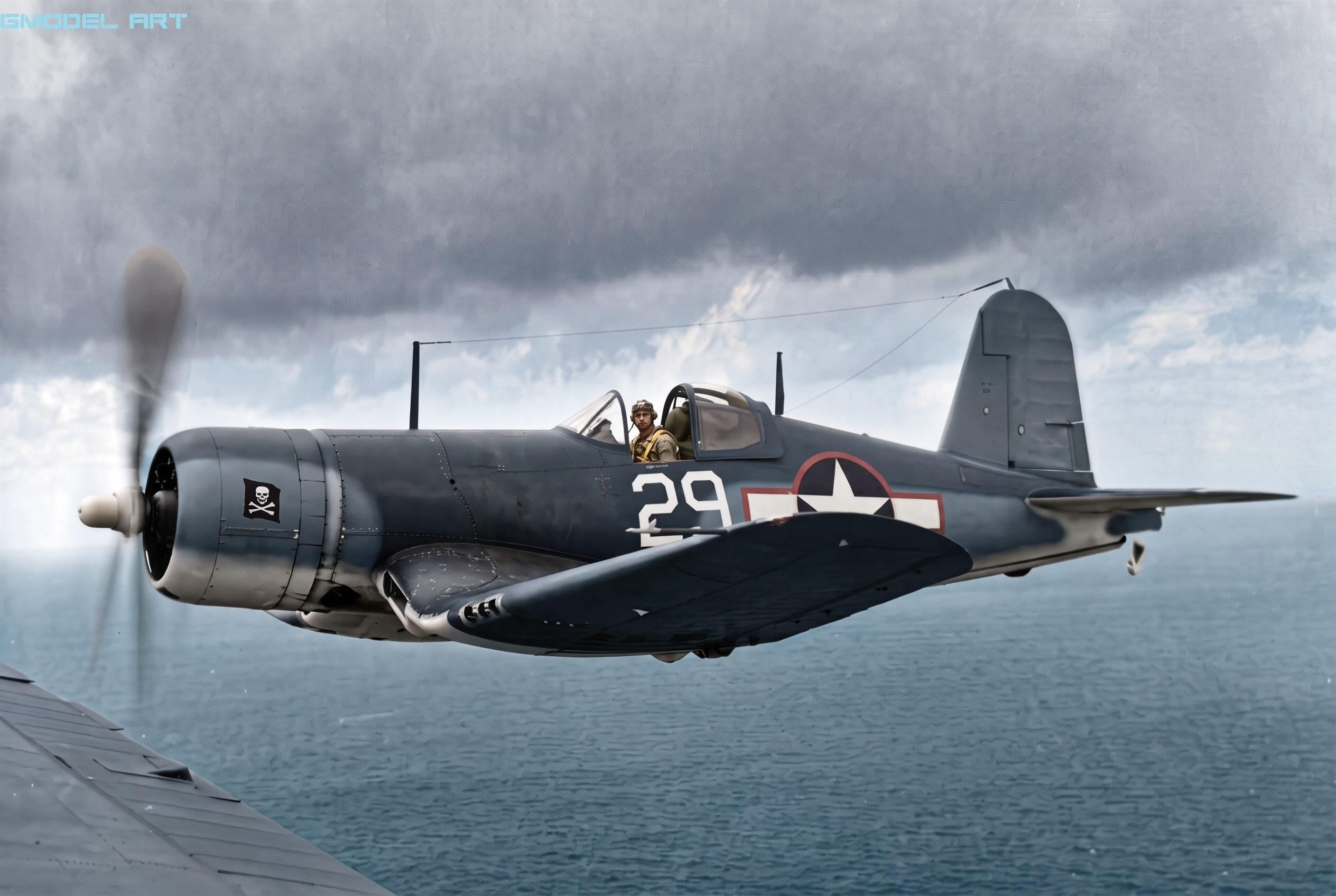
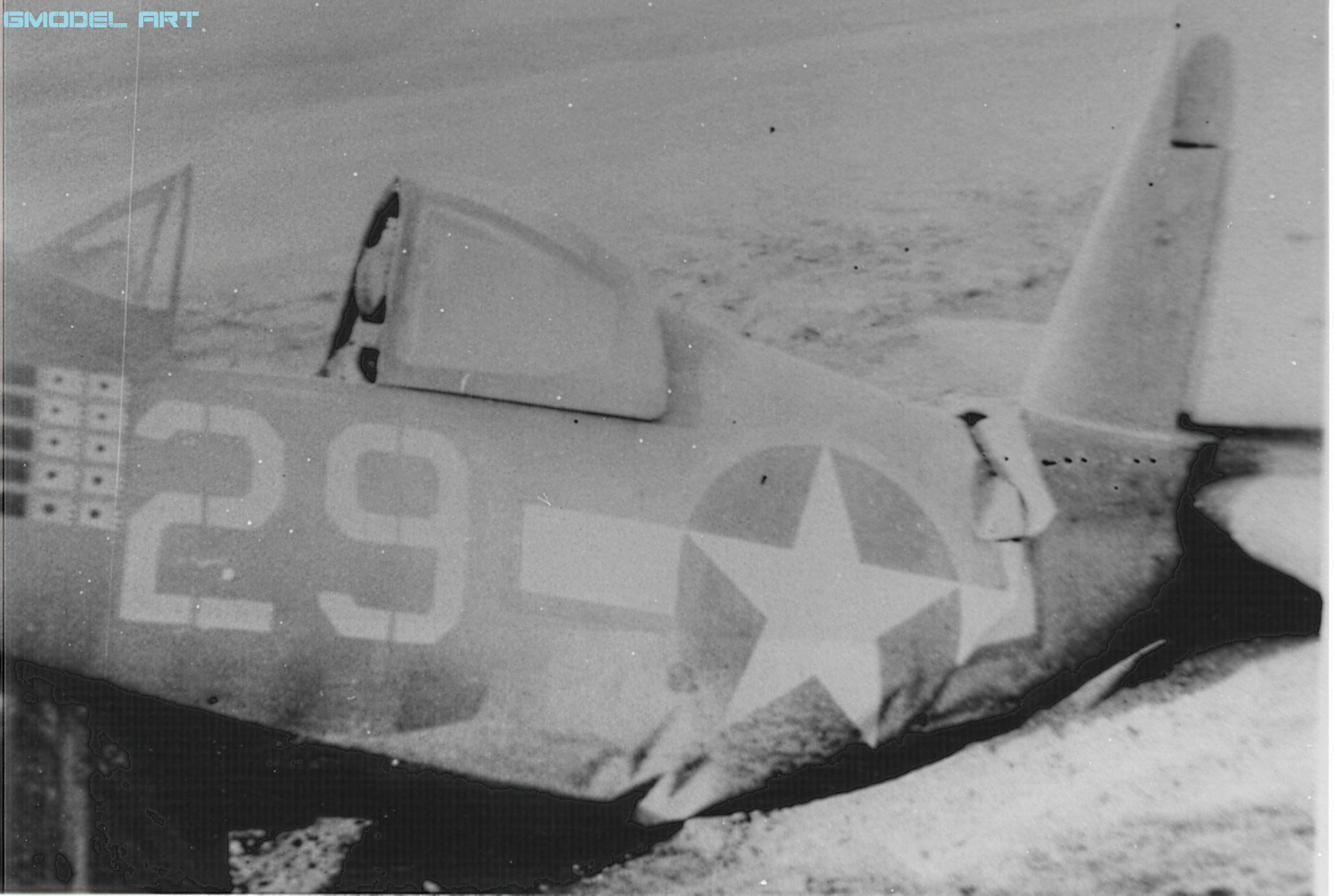
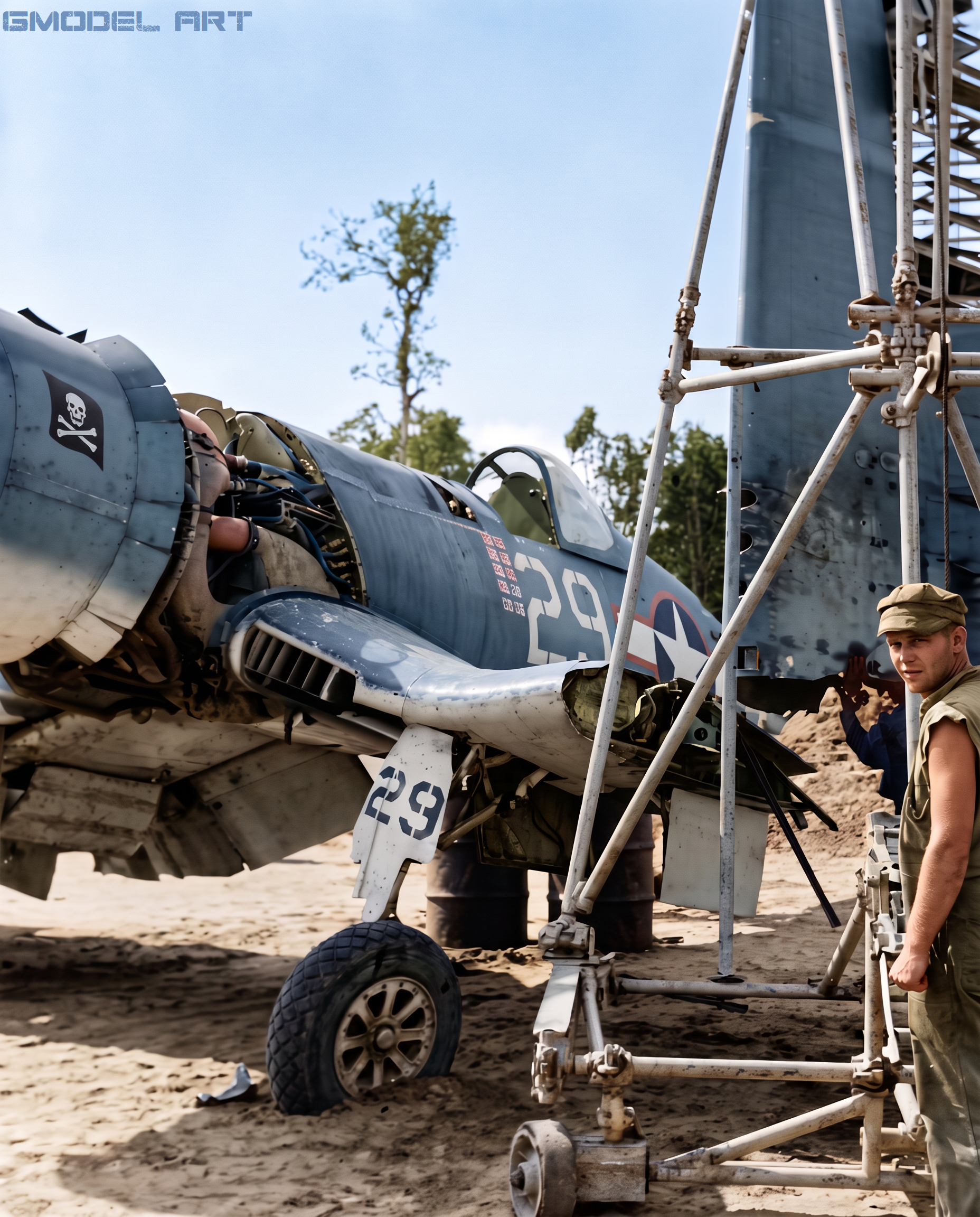
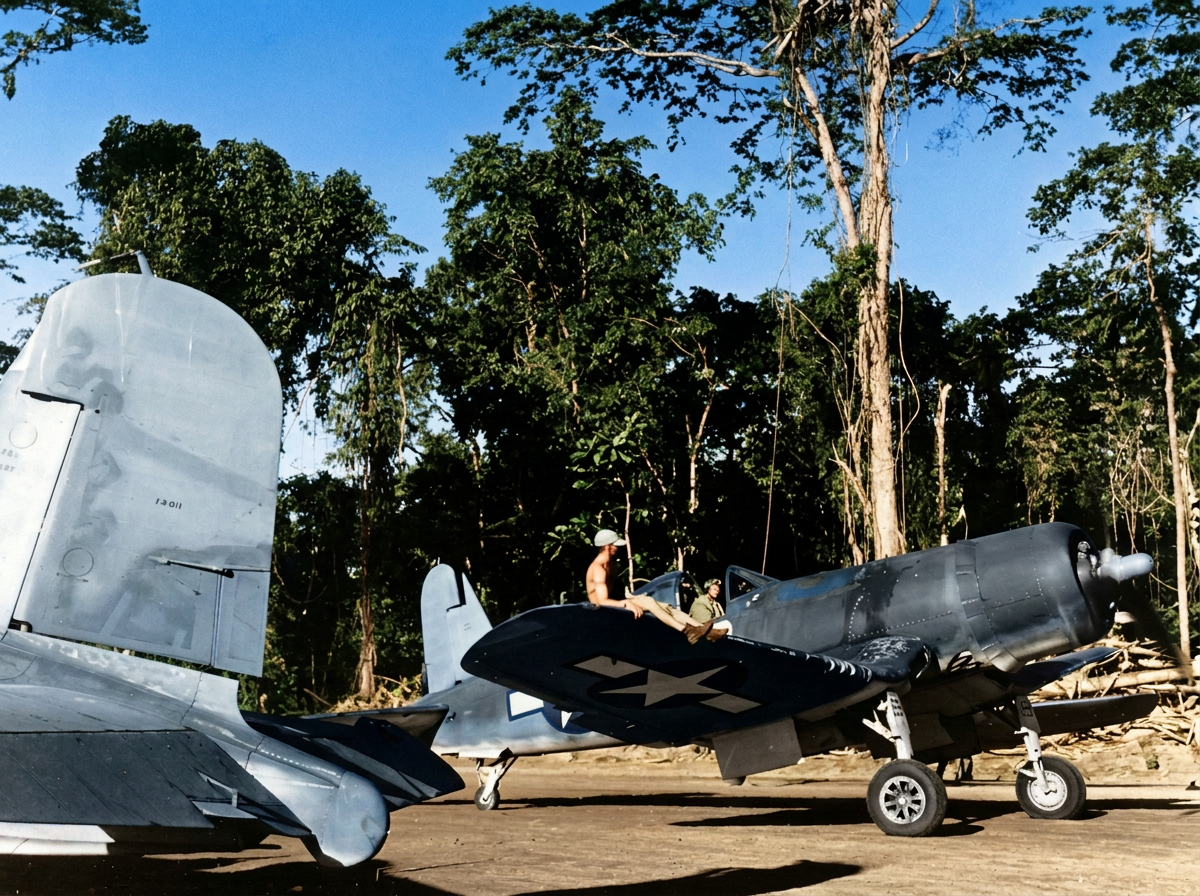
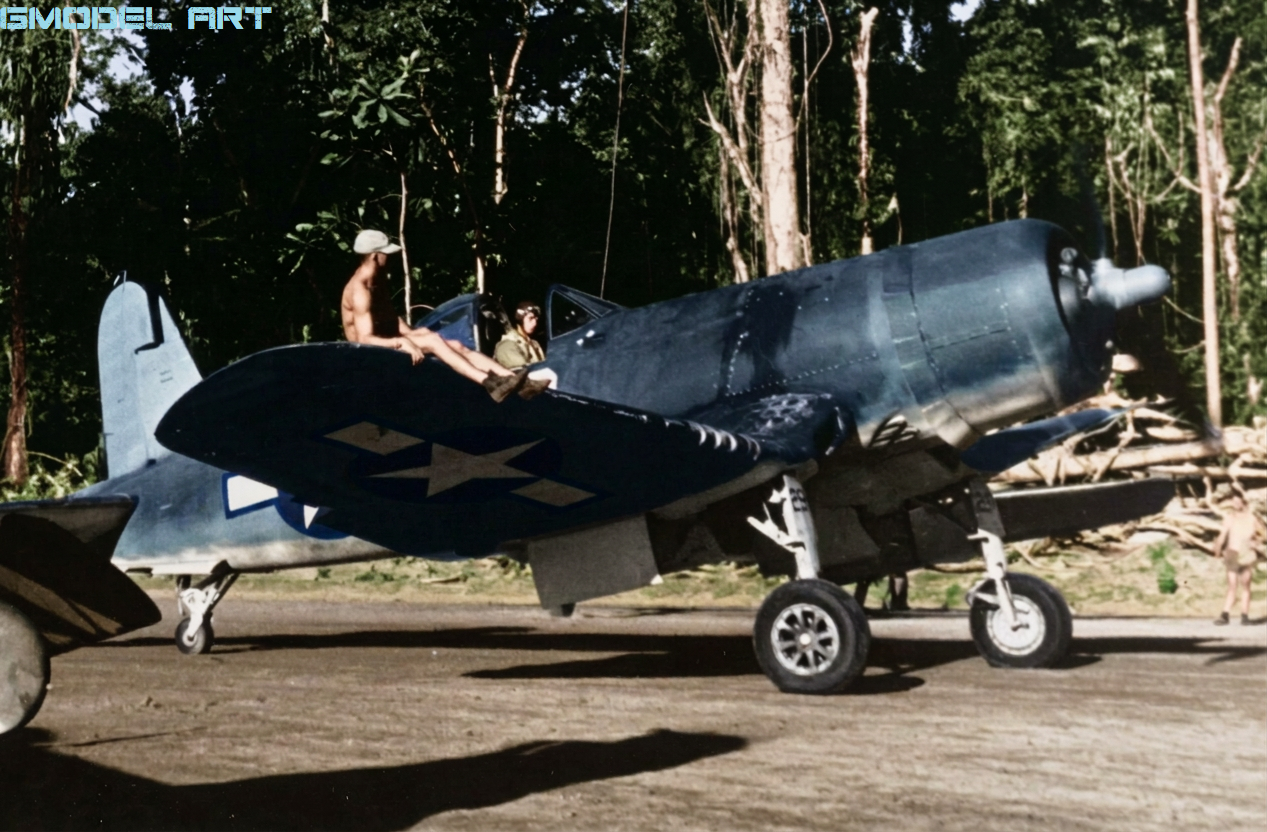
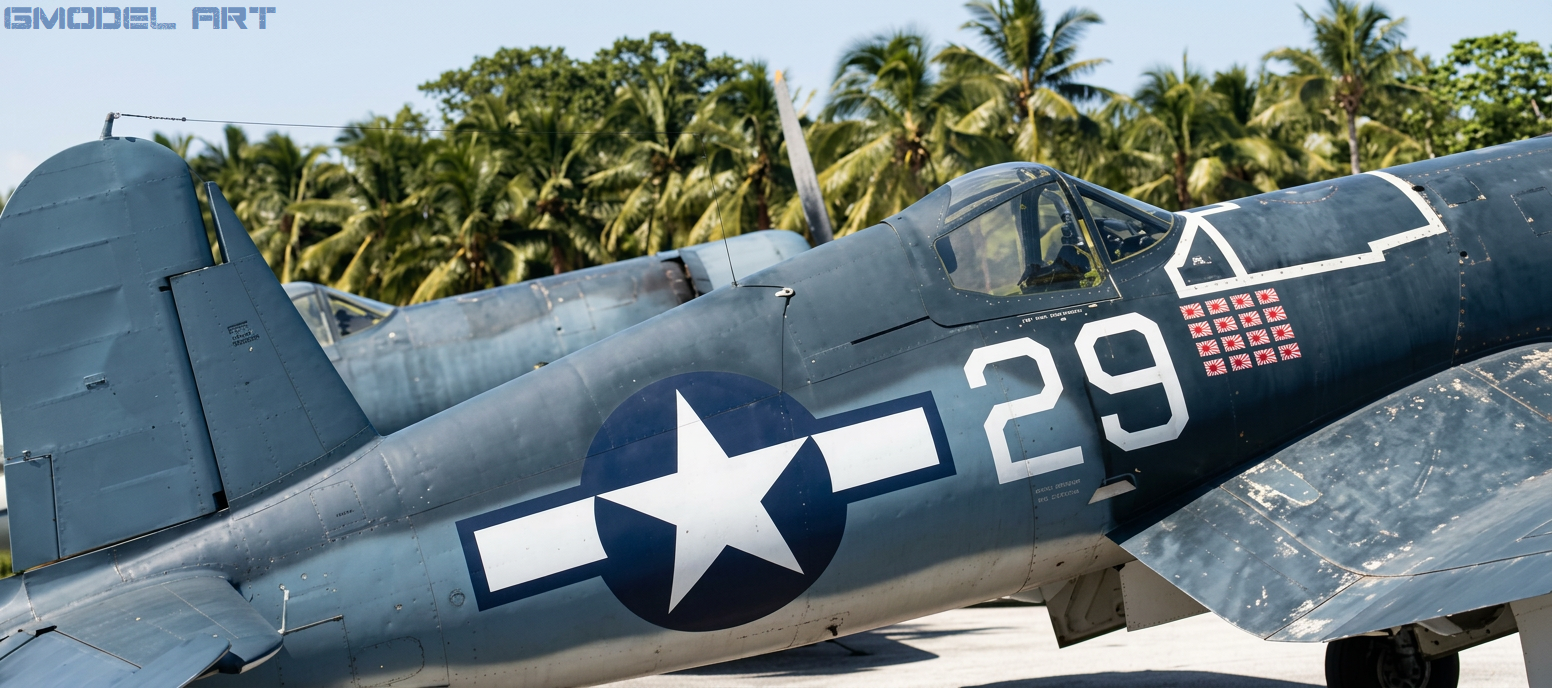
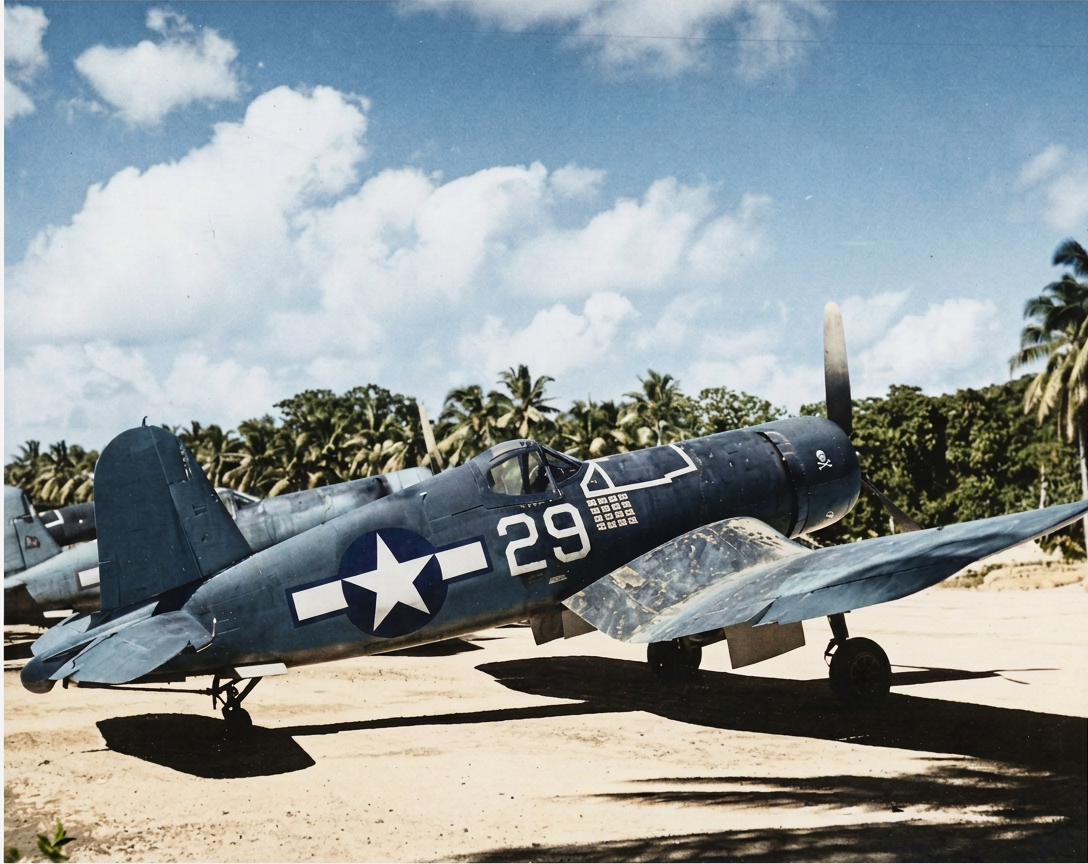
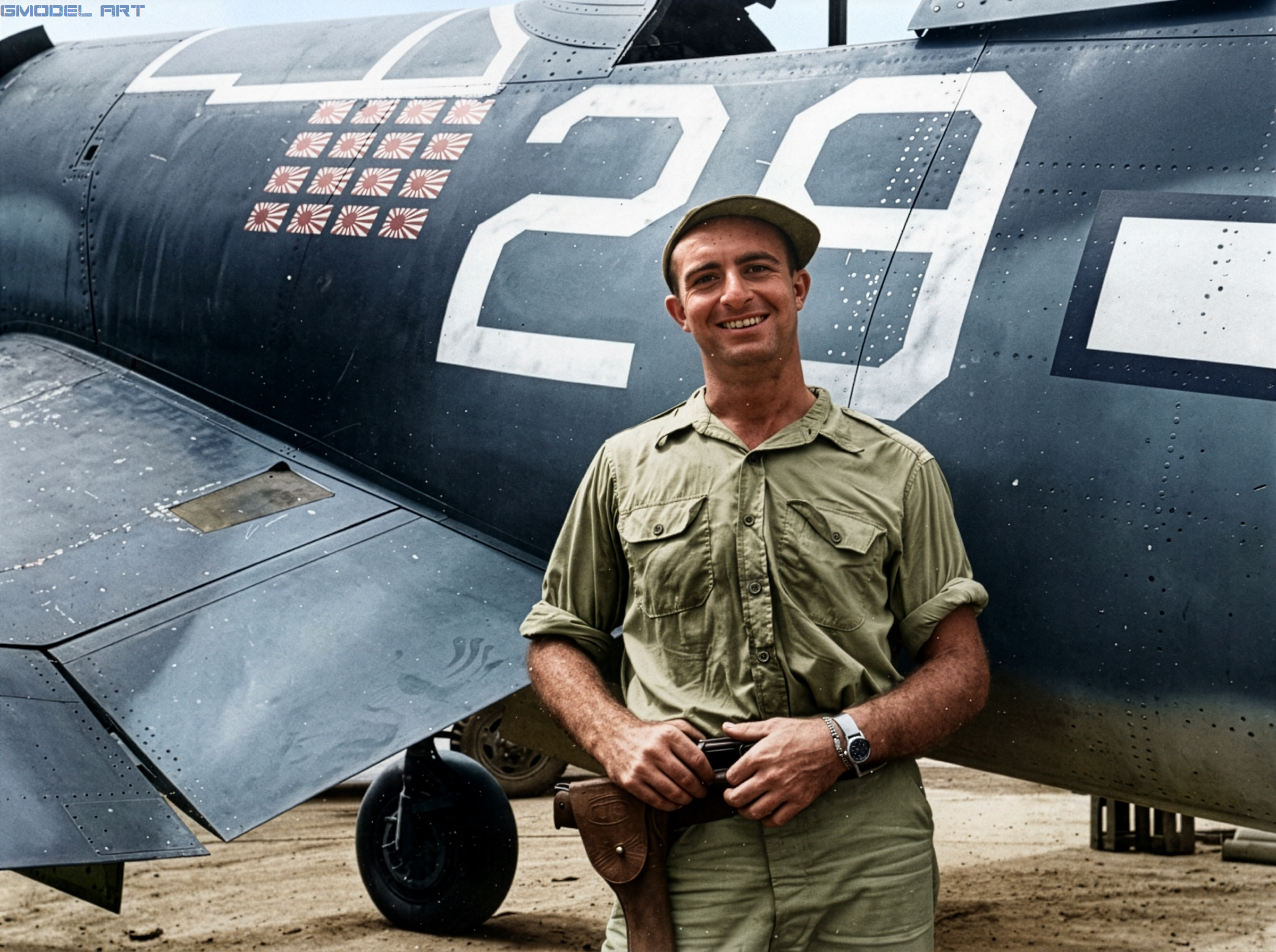
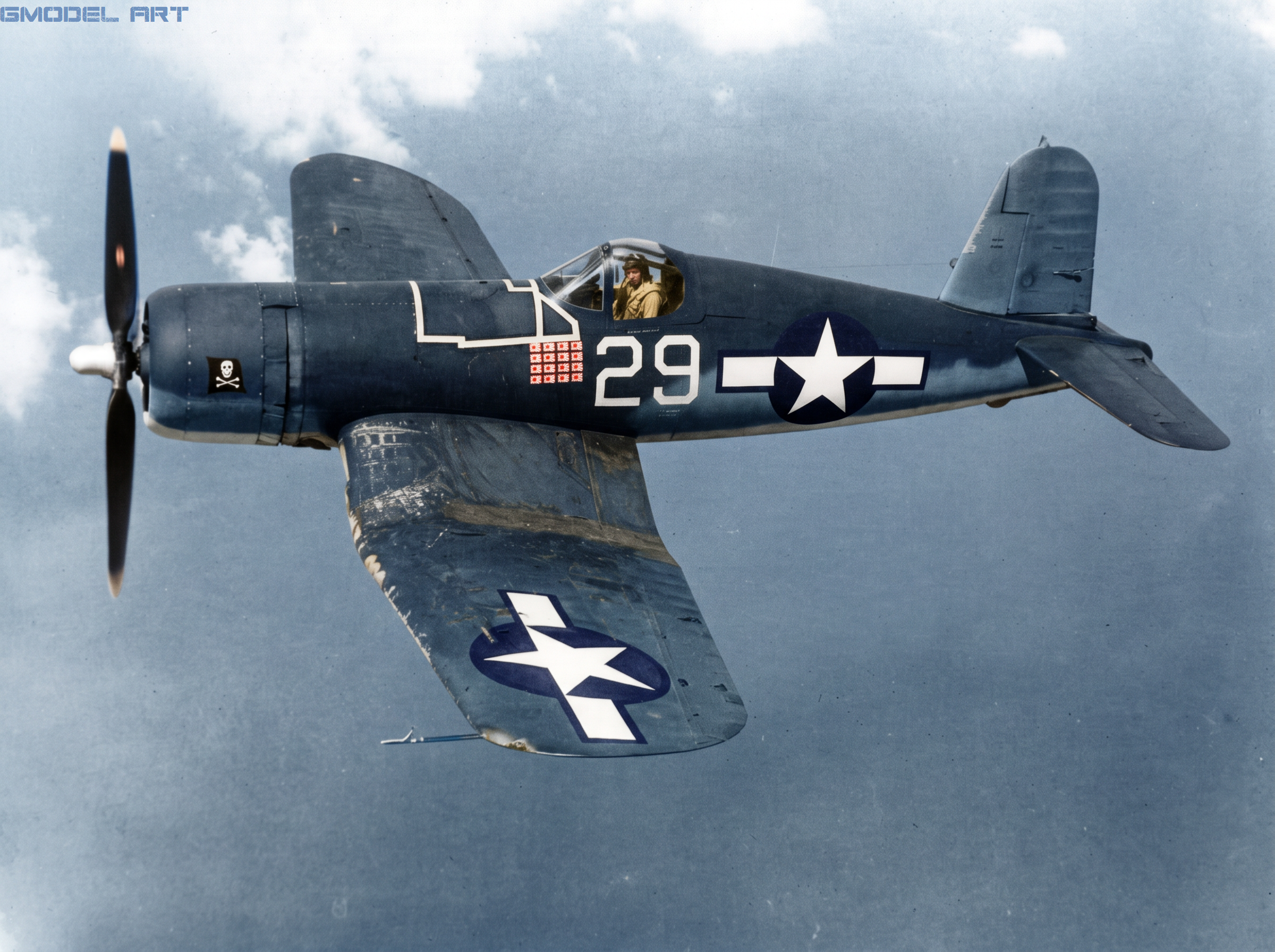
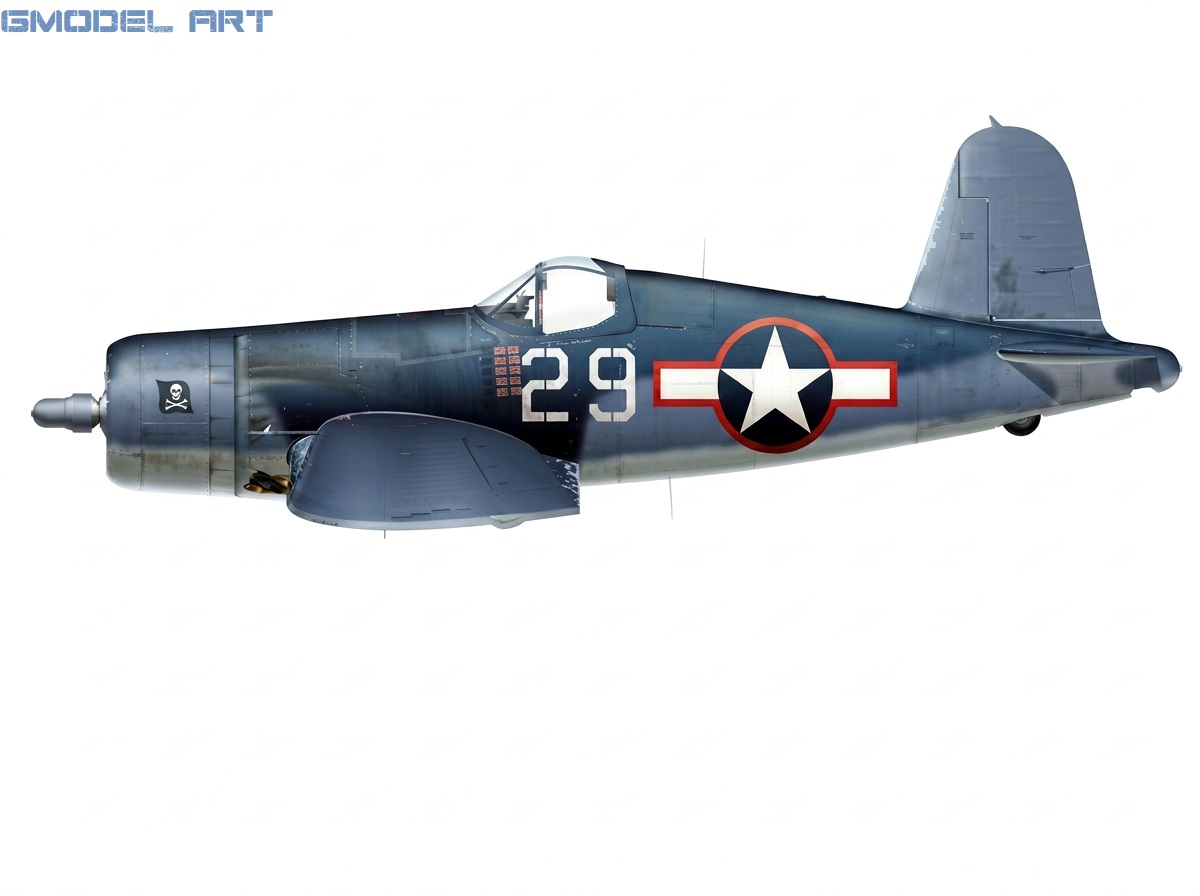
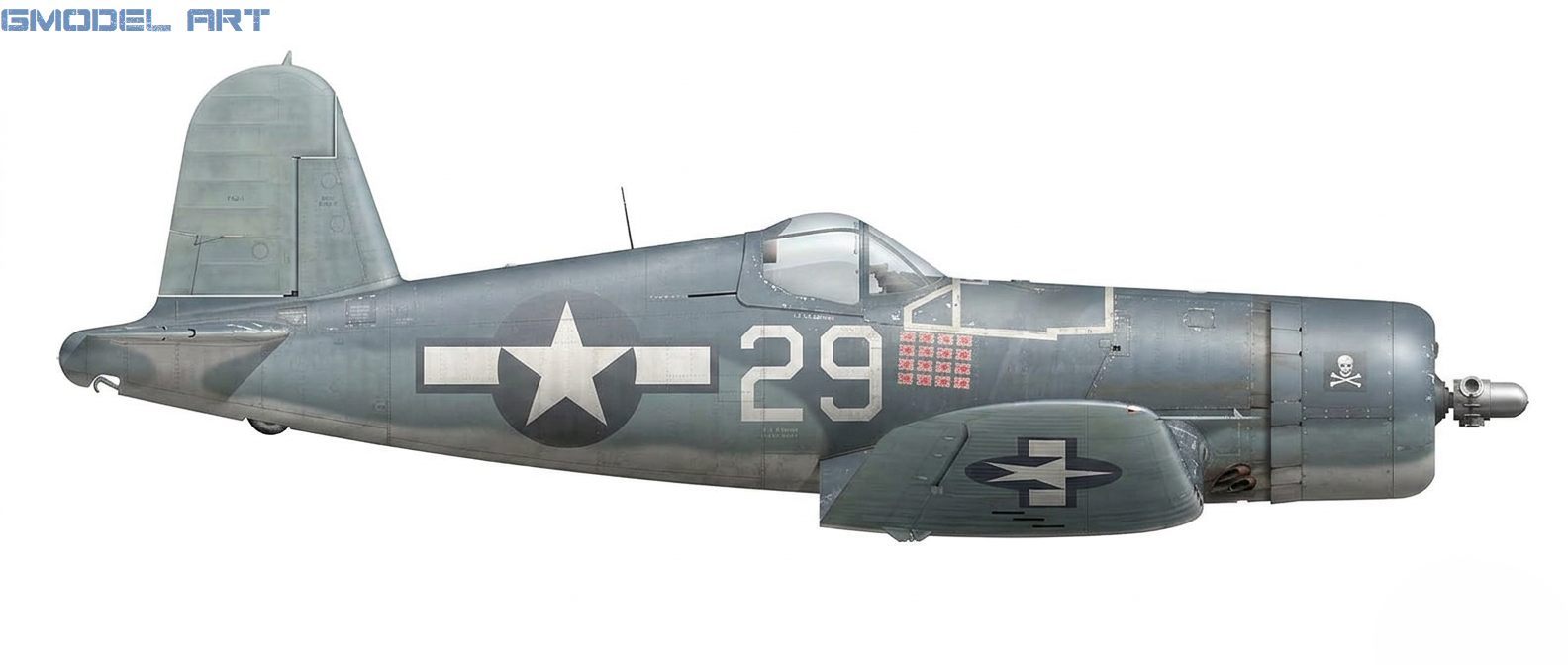
Photograph 80-G-425500 identifies the aircraft as BuNo 55995, assigned to VF-17 at Bougainville in February 1944, and flown by Lieutenant Junior Grade Ira C. Kepford. The aircraft carries the 16 Japanese victory flags associated with Kepford’s combat record at that time.
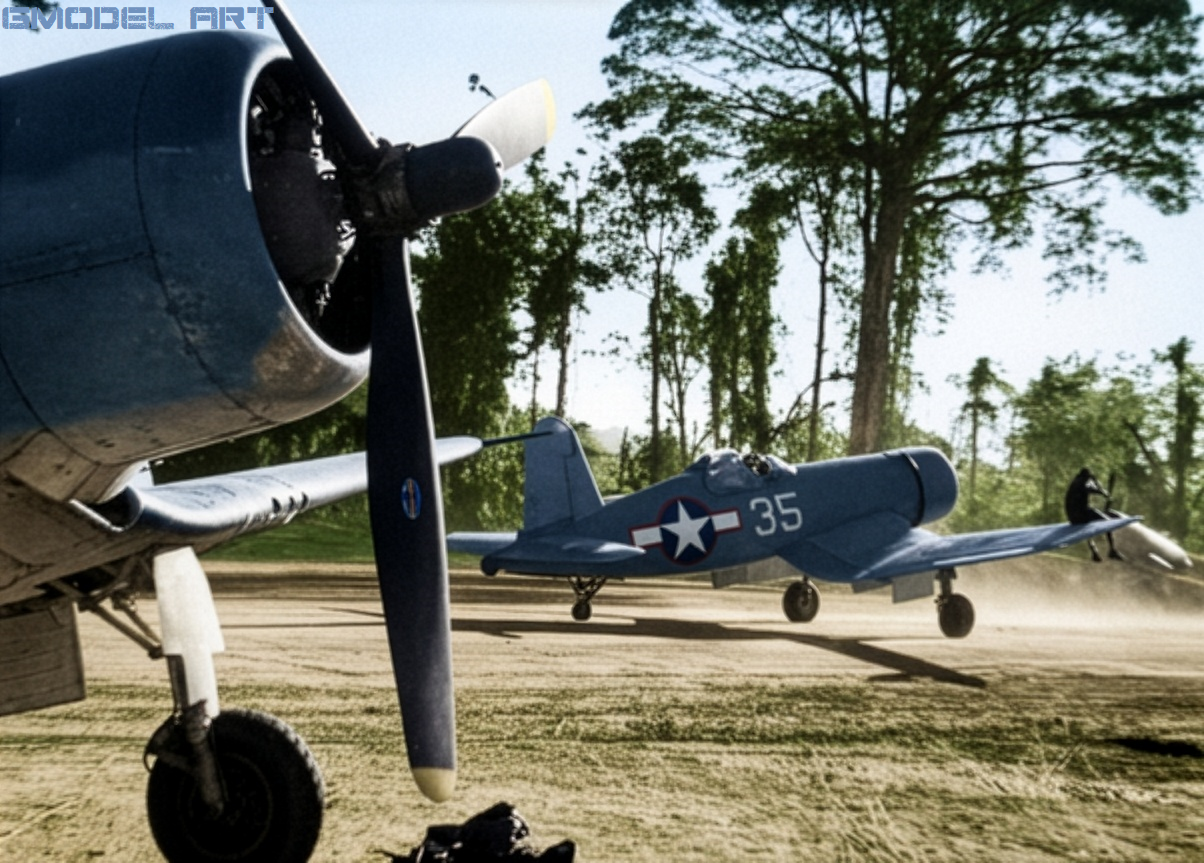
Another important photograph, 80-G-419957, shows Kepford taxiing the same Corsair from its revetment at Bougainville for a strike against Rabaul. The official caption identifies the aircraft as BuNo 55995.
This gives us a very important conclusion:
White 29 does not identify a single Corsair.
In Kepford’s case, it identifies two different aircraft.
Was BuNo 55995 Brand-New From the Factory?
This is one of the questions that deserves a careful answer.
BuNo 55995 was clearly a much newer aircraft than the original Corsairs operated by VF-17. Research into the squadron’s aircraft has shown that the original VF-17 F4U-1As came from the very early production batches, while BuNo 55995 belonged to a considerably later production sequence.
Its camouflage demarcations are also noticeably different from those of the earliest VF-17 Corsairs.
However, there is an important difference between saying:
“It was a newer replacement aircraft.”
and saying:
“It came directly from the Vought factory to VF-17.”
The first statement is well supported.
The second has not yet been proven by a primary document.
At present, there is no verified aircraft record establishing a complete chain such as:
Vought → U.S. Navy → VF-17
and there is also no reliable evidence currently identified that proves BuNo 55995 had previously served with another operational squadron.
The safest historical description is therefore that BuNo 55995 was a newer replacement Corsair that joined VF-17 after the loss of BuNo 17684.
Whether it was delivered directly from the factory, passed through a Navy aircraft pool, or had another administrative history before reaching VF-17 remains an open research question.
That distinction matters because a Bureau Number alone does not tell us the complete operational history of an aircraft.
The Second White 29 Over Bougainville
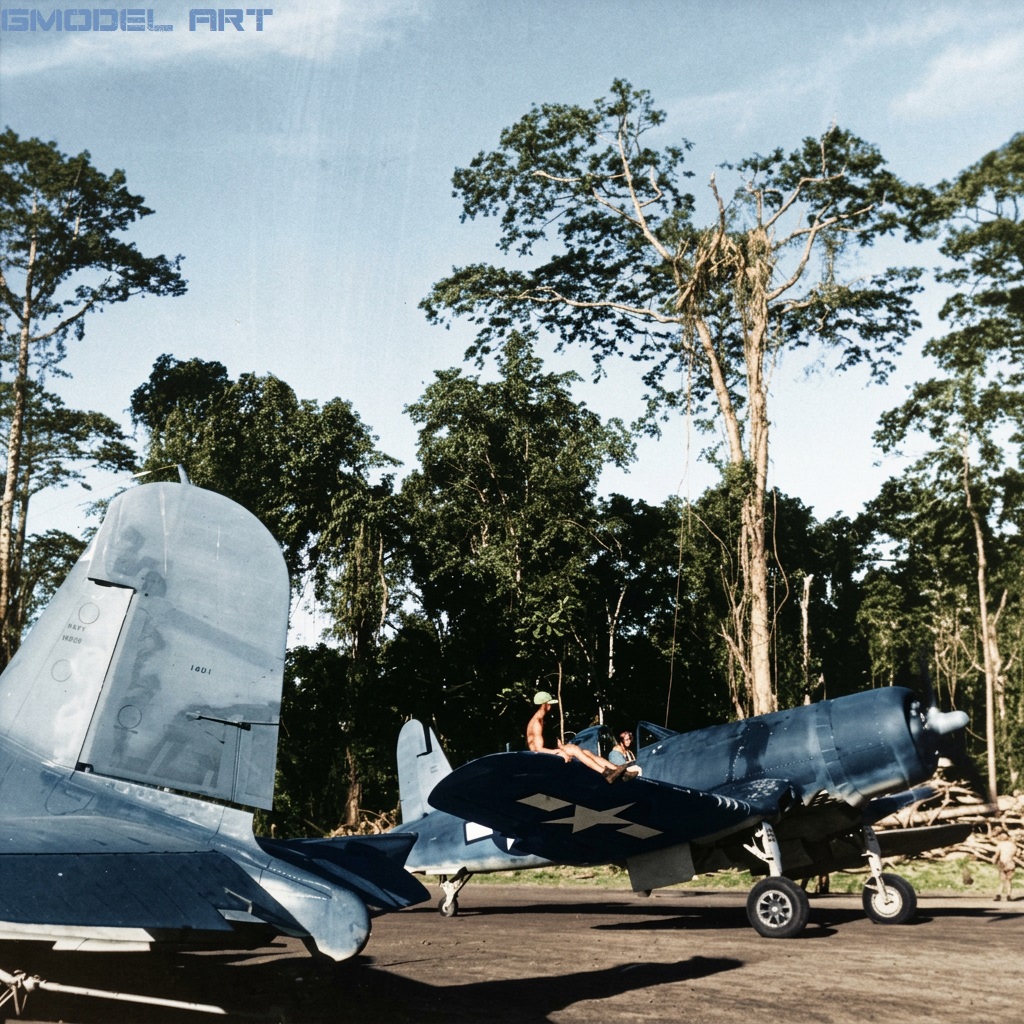
BuNo 55995 is one of the better-documented individual Corsairs associated with VF-17.
Photograph 80-G-425500 clearly shows the White 29, the VF-17 insignia on the forward fuselage, and the 16 victory flags associated with Kepford.
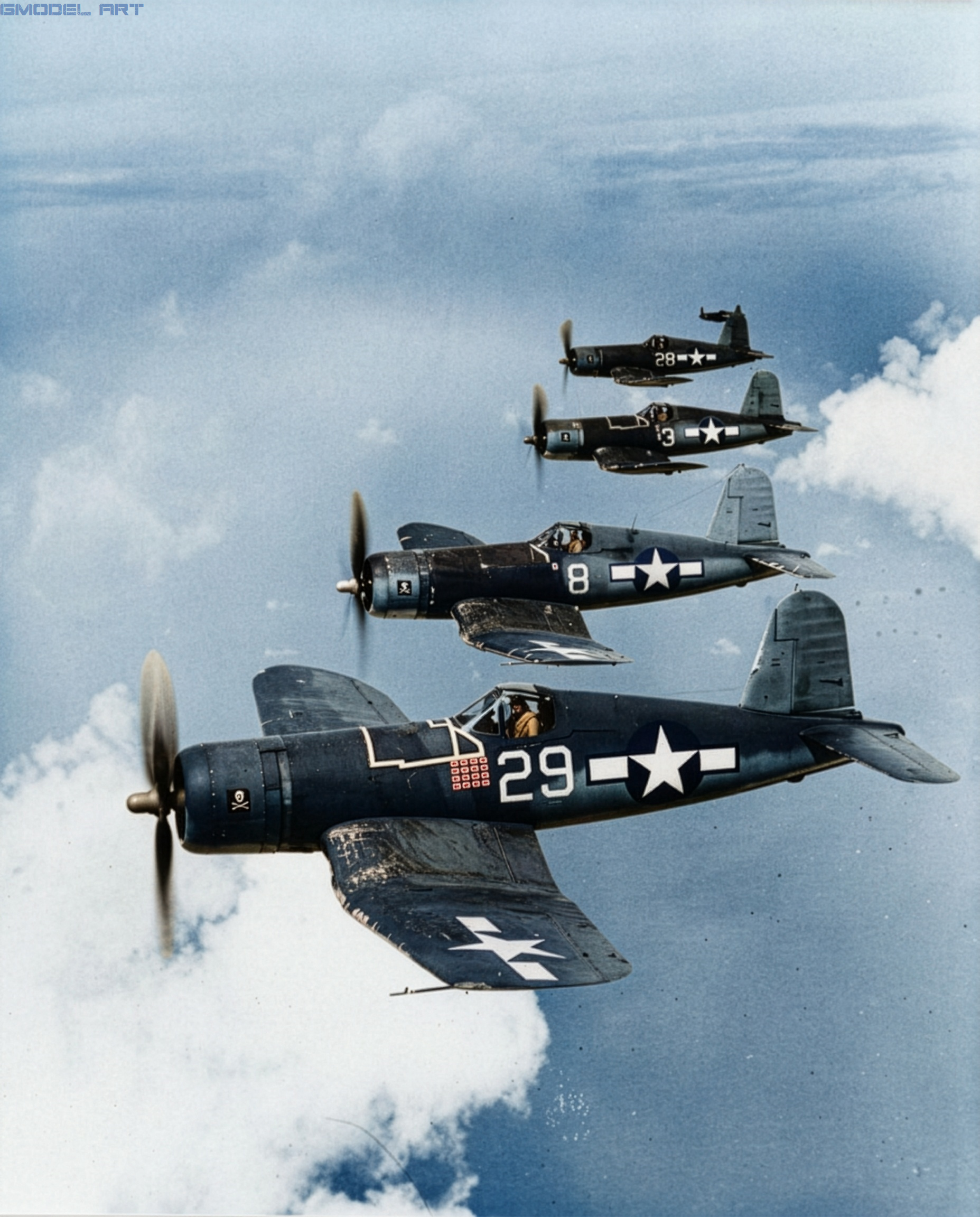
The aircraft appears again in formation photographs.
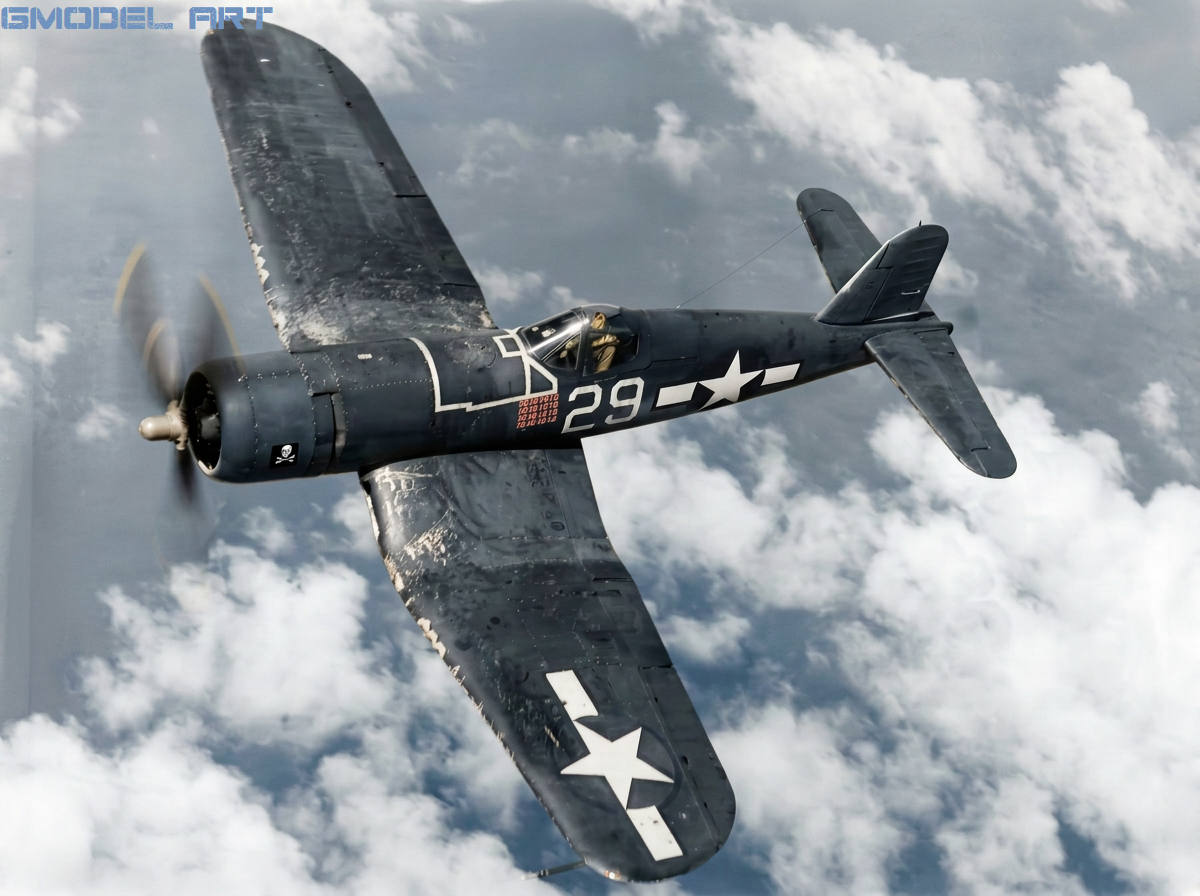
In 80-G-217817, the aircraft carrying the number 29 is specifically identified as BuNo 55995, flown by Kepford. The photograph is catalogued under 15 April 1944, although the National Archives notes that it was probably taken earlier, during the squadron’s operations around Bougainville.
Photograph 80-G-217819 provides another view of the same aircraft and again identifies BuNo 55995 as Kepford’s Corsair, probably photographed over Bougainville in early March 1944.
Together, these photographs allow us to follow the second White 29 through the final phase of VF-17’s combat operations.
By this point, Kepford had become one of the Navy’s best-known fighter aces.
The White 29 was no longer simply another Corsair in the squadron.
It had become associated with one of the most successful pilots of the VF-17.
What Happened to BuNo 55995 After VF-17?
This is where the documentary trail becomes much less clear.
We have strong photographic evidence for BuNo 55995 while it was being flown by Kepford with VF-17. We can identify it at Bougainville, identify the pilot, and establish its appearance.
What we cannot currently establish with the same confidence is what happened to the aircraft after its service with VF-17.
There is no reliable primary record presently identified that allows us to state which unit received it next, whether it remained in the Pacific, or when and how it was eventually removed from U.S. Navy service.
It is also important not to confuse BuNo 55995 with BuNo 55955, a different Corsair associated with the British Fleet Air Arm.
Therefore, until a Navy aircraft history card, assignment record, or another primary source establishes the later history of 55995, the most accurate conclusion is:
BuNo 55995 → Vought F4U-1A → VF-17 → Ira C. Kepford → Bougainville, 1944 → later fate not yet documented.
For historical modelling, that is actually a useful conclusion.
We do not need to fill an empty space in the record with speculation.
Red or Blue Insignia Borders?
The two White 29 aircraft become even more interesting when their national insignia are compared.
The early BuNo 17684 is strongly associated with the red surround used on the early VF-17 Corsairs.
This is consistent with photographic evidence and research into the squadron’s early F4U-1A aircraft.
BuNo 55995 is different.
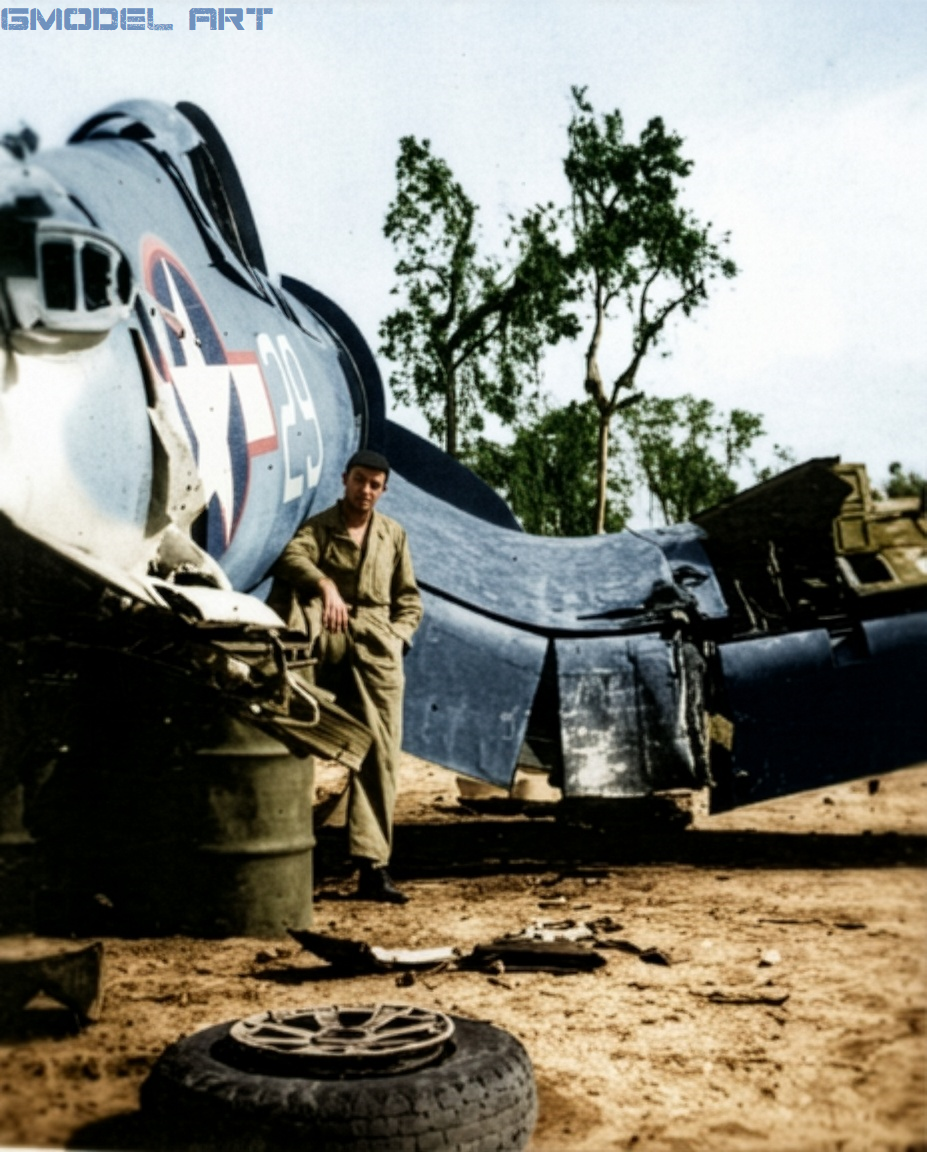
Its insignia borders appear much darker in the wartime photographs and have been identified as Insignia Blue. Research into the aircraft suggests that the earlier red border may have been overpainted with blue.
This is another reason why the two White 29 aircraft should not be treated as identical simply because they carried the same tactical number.
The aircraft changed.
The period changed.
And some of the markings changed with it.
The Camouflage of BuNo 55995
For a scale modeller, one of the biggest traps is to use a generic F4U-1A Corsair camouflage pattern for BuNo 55995.
The photographs show that the later aircraft had a noticeably different camouflage demarcation from the earliest VF-17 Corsairs.
The best approach is therefore to work from the photograph of the actual aircraft.
The photograph should determine the camouflage geometry. Historical references should determine the colors.
This distinction is particularly important when digitally colorizing an original wartime photograph.
The image should not be treated as a generic “Corsair to be colored.”
Instead, the original photograph should remain locked as the structural reference. The colorization process should preserve the exact position of panels, camouflage boundaries, markings, shadows and surface details.
The historical research should be used only to determine the most appropriate colors.
| Aircraft type / variant |
|---|
| Vought F4U-1 Birdcage Corsair |
| Vought F4U-1A Corsair |
| Vought F4U-1D Corsair |
| Grumman F6F Hellcat |
| Grumman F8F Bearcat |
| Enemy aircraft | Confirmed victories |
|---|---|
| Mitsubishi A6M Zero | 10 |
| Aichi D3A “Val” | 3 |
| Kawasaki Ki-61 “Tony” | 1 |
| Nakajima B5N “Kate” | 1 |
| Nakajima A6M2-N “Rufe” | 1 |
| Total | 16 |
Colors for a Scale Model
For a model of the VF-17 Corsair, the following references provide a practical starting point:
| Area | Historical Color | Approximate FS Reference |
|---|---|---|
| Upper surfaces | Non-Specular Sea Blue | FS 35042 |
| Intermediate surfaces | Intermediate Blue | FS 35164 |
| Lower surfaces | Non-Specular Insignia White | FS 37875 |
| Cockpit | Interior Green | FS 34151 |
| Instrument panel | Black | Black |
| BuNo 17684 insignia surround | Insignia Red | Insignia Red |
| BuNo 55995 insignia surround | Insignia Blue | Insignia Blue |
These FS references should be treated as modelling approximations, rather than proof that the original wartime paint matched a modern FS color chip exactly.
Period photographs are affected by film type, exposure, lighting, fading, weathering and chemical changes in the original paint.
For that reason, a good historical model should not necessarily look like a modern paint chart.
| ANA 601 | ANA 608 | ANA 607 | ANA 606 | |
| Insignia White | Intermediate Blue | NS Sea Blue | SG Sea Blue | |
| Schemes | ||||
| Basic | Lower | Sides | Upper | Wings |
| Color matches | ||||
| Gunze Aqueous | H316* | H56 | H54 | (H54) |
| Gunze Mr Color | C316* | C72 / C366* | C14 | (C14) |
| Humbrol | – | (144) | (181) | (181) |
| Model Master | 1745* | (1720) | 1718* | (1718) |
| Revell | – | – | – | – |
| Tamiya | – | XF-18 (!) | XF-17 (!) | (XF-17) (!) |
| Vallejo Model Air | 71.279* | 71.299* | 71.295* | (71.295) |
| Vallejo Model Color | (70.820) | (70.903) | 70.898* | (70.898) |
| AKAN | (73146) | (72050) | 72042* | (72.042) |
| AK Interactive | AK 2052* | (AK 2054) | AK 2233 | (AK 2233) |
| AK Real Colors | RC222* | (RC235) | RC257 | (RC257) |
| AMMO by Mig | – | (A.MIG-228) | (A.MIG-227) | (A.MIG-227) |
| Colourcoats | ACUS10 | ACUS08 | ACUS33 | ACUS07 |
| Hataka | HTK-_043* | HTK-_027* | HTK-_006 | (HTK-_006) |
| Lifecolor | – | UA 045* | UA 044* | (UA 044) |
| Mission Models | MMP-104* | (MMP-071) | MMP-062* | (MMP-062) |
| Mr Paint | MRP-135 | MRP-136 | MRP-237* | (MRP-237) |
| Xtracolor | X141* | (X125) | (X121) | (X121) |
| Xtracrylix | XA1141* | (XA1125) | (XA1121) | (XA1121) |
Weathering the White 29
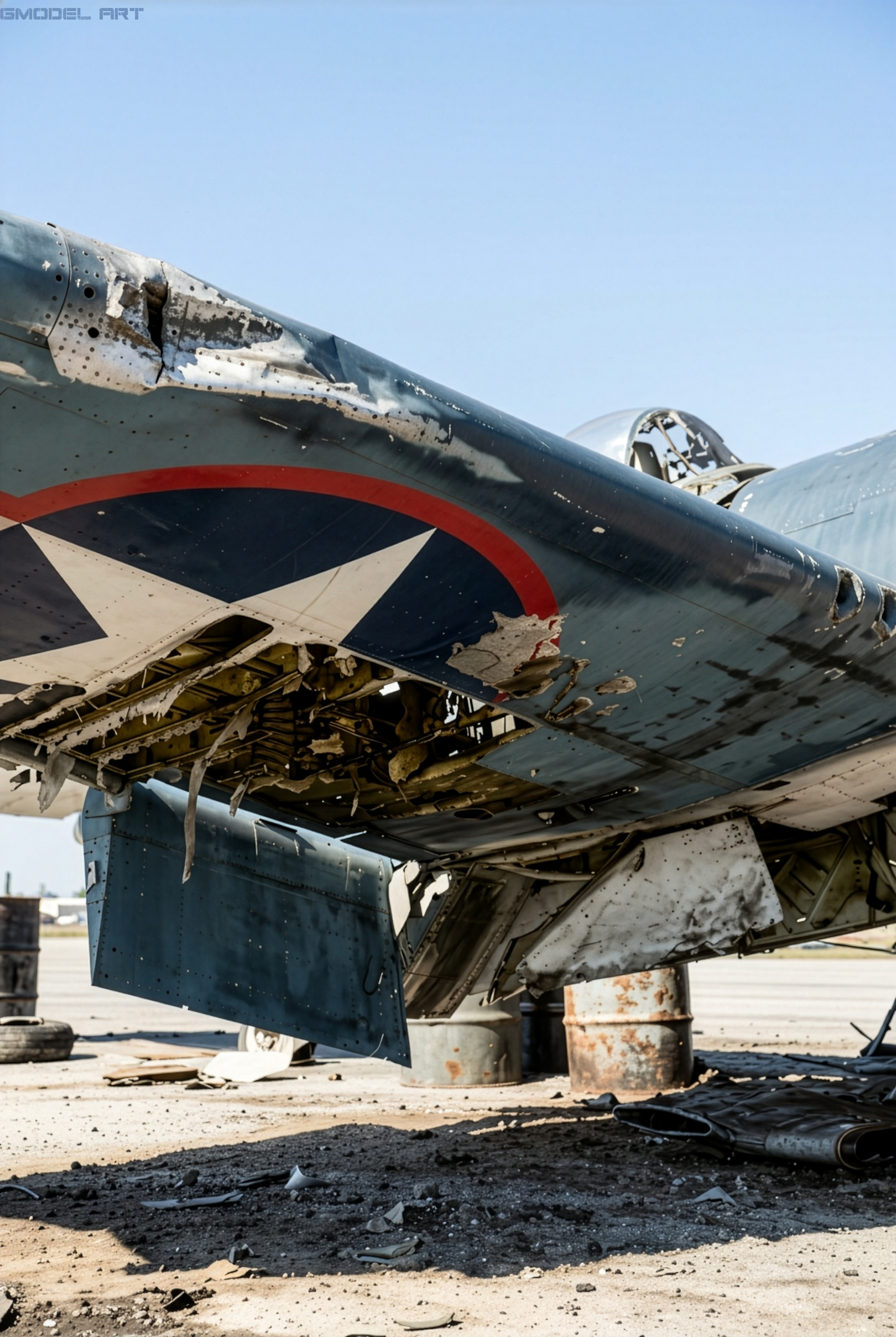
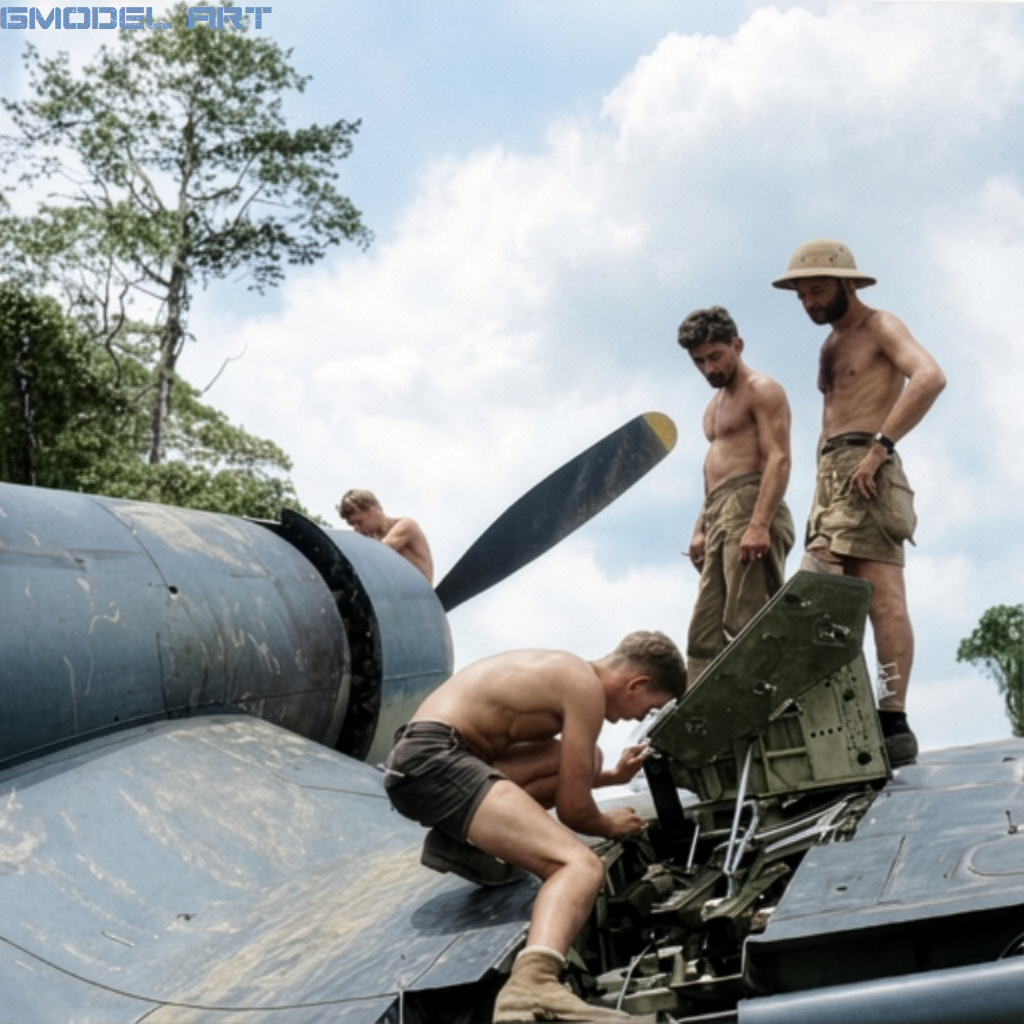
The photographs of VF-17 Corsairs show aircraft that were being used hard in a demanding Pacific environment.
Sunlight, humidity, salt air, dust, fuel, oil and constant maintenance all affected their appearance.
For BuNo 55995, subtle weathering can therefore be concentrated around areas such as:
wing roots,
access panels,
engine cowling panels,
maintenance areas,
exhaust outlets,
fuel and oil service points,
areas frequently touched by ground crews.
But there is a fine line between realistic weathering and excessive weathering.
The best model is not necessarily the most heavily worn model.
It is the one that most closely resembles the evidence.
The Cockpit and Interior Details
For the Vought F4U-1A Corsair, Interior Green is a reasonable modelling reference for the cockpit, with a black instrument panel and appropriate black instrument and control details.
However, the available photographs of Kepford’s aircraft do not allow us to reconstruct every unseen interior surface with certainty.
That is an important principle when building a model of a specific aircraft.
There is a difference between:
“This was typical for the aircraft.”
and:
“This is documented on this particular aircraft.”
Where photographic evidence exists, it should take priority.
Where it does not, the model should use documented F4U-1A production practice rather than invented details.
Two White 29s, Two Different Models
The story of Ira C. Kepford’s Corsairs is a perfect example of how a model can contain many correct details and still represent an aircraft that never actually existed.
The White 29 is correct.
The VF-17 markings are correct.
The 16 victory flags are correct for the second aircraft.
The pilot, Ira C. Kepford, is correct.
But if we combine the camouflage pattern of BuNo 17684 with the markings of BuNo 55995, we create a hybrid aircraft that was never photographed and probably never existed.
That is why the two Corsairs need to be treated separately.
BuNo 17684 represents the earlier White 29 and an earlier stage of Kepford’s combat career.
BuNo 55995 represents the later White 29, the newer replacement Corsair photographed repeatedly at Bougainville with Kepford and his 16 victory markings.
The official Navy photographs make the identification unusually strong. BuNo 55995 is not simply an aircraft attributed to Kepford decades later. It is identified in wartime photographic records.
And perhaps that is what makes the story of White 29 so fascinating.
The number 29 remained the same.
The aircraft did not.
For Kepford, it was the same personal identity.
For the historian and the modeller, they are two different Corsairs.
Two different Bureau Numbers.
Two different moments.
Two aircraft with their own appearance and their own story.
And that is why recreating Ira C. Kepford’s F4U-1A Corsair White 29 is much more than simply putting a white “29” on the side of a Corsair.
It is about identifying the right aircraft first — and then building the model around the evidence.
https://www.history.navy.mil/
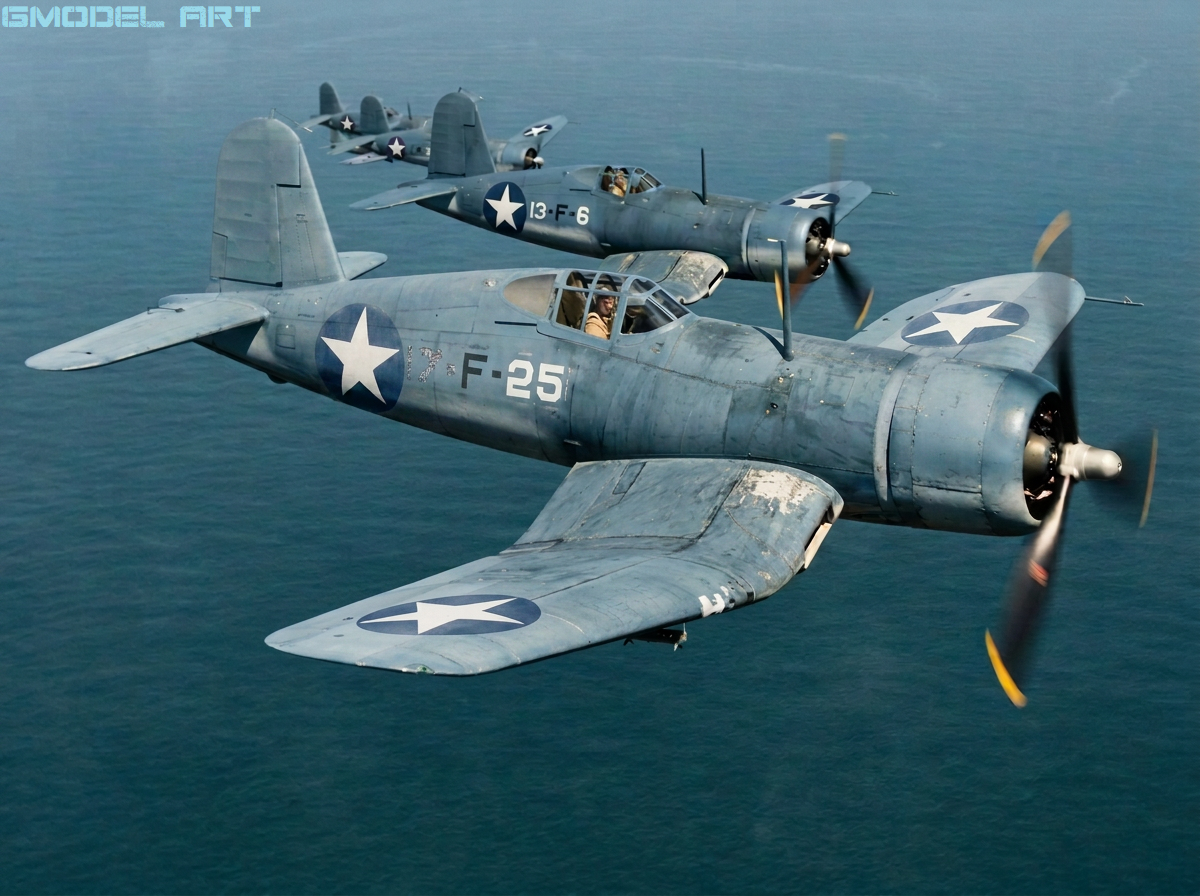
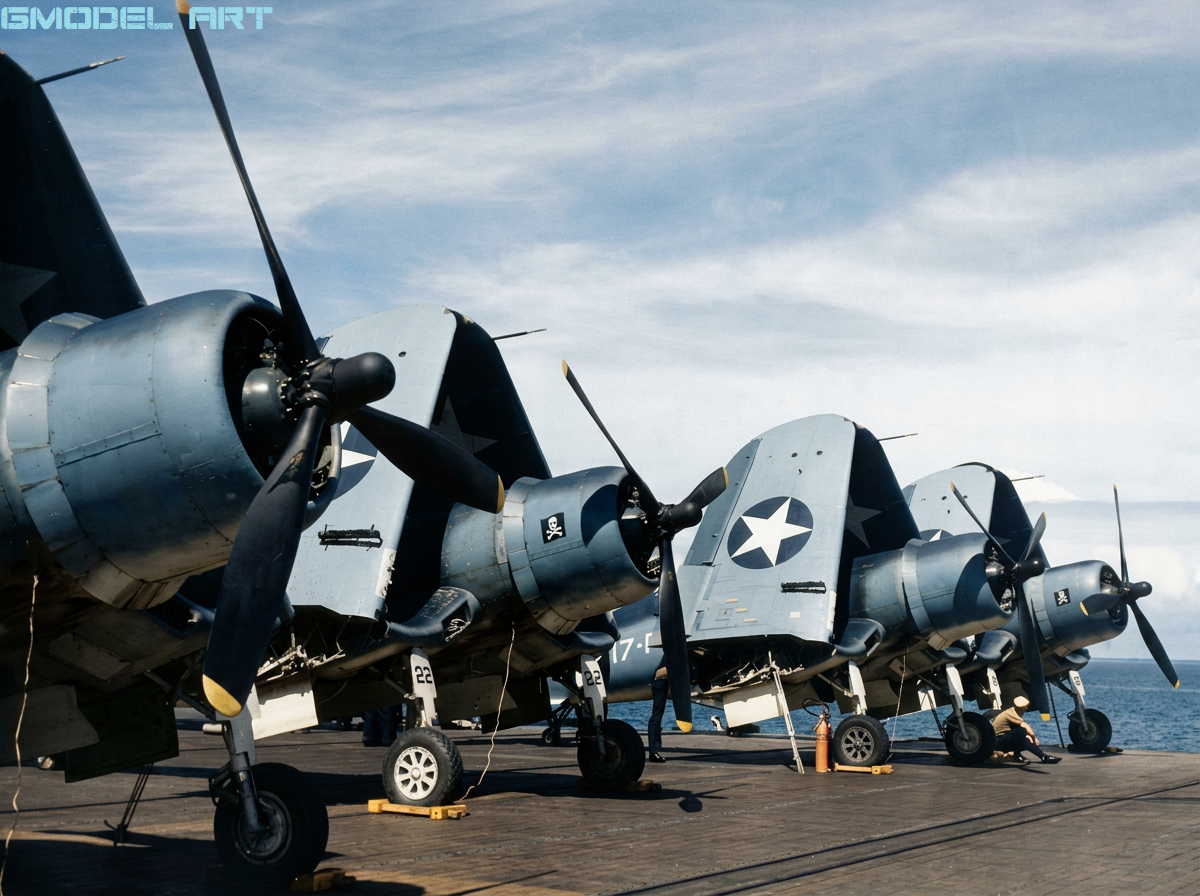
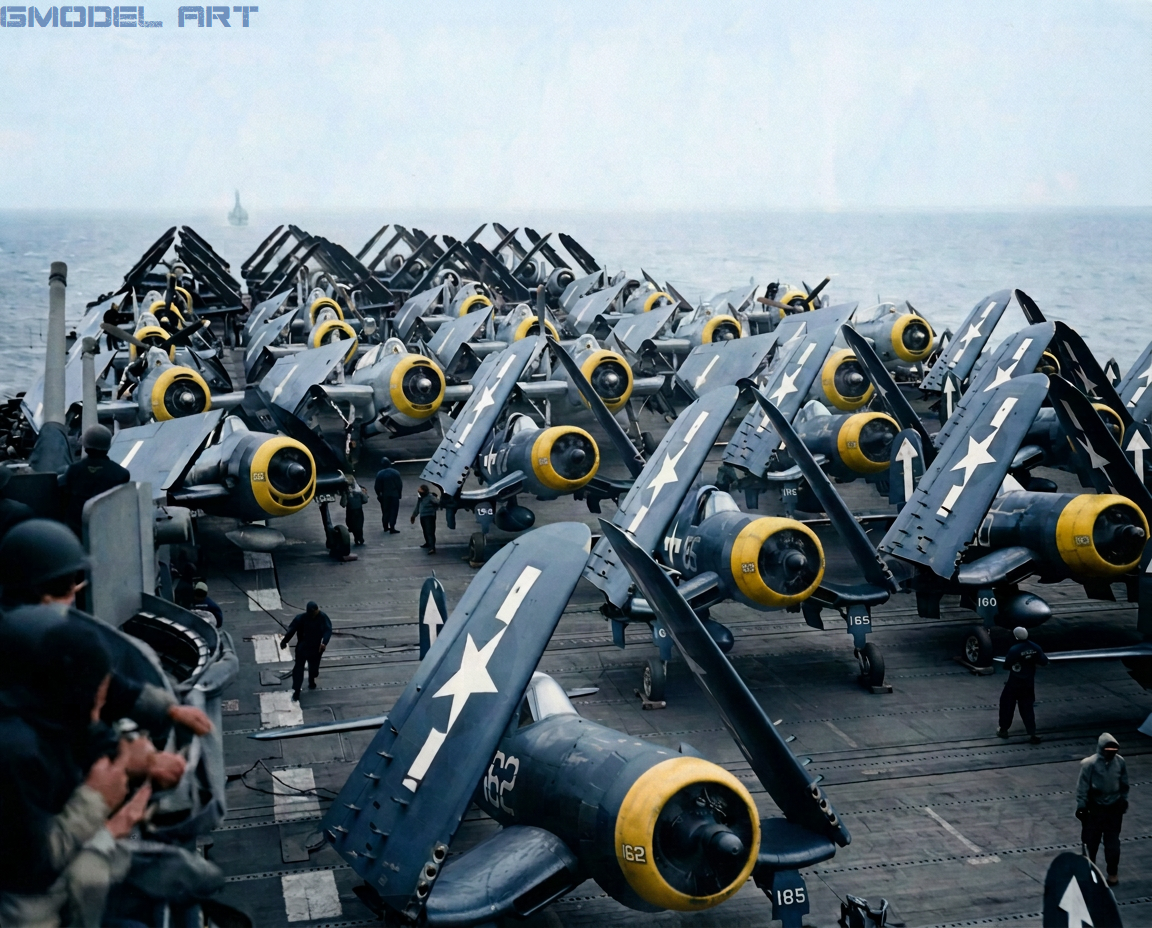
USS Bunker Hill (CV-17), 1944–1945
Gallery

προιoντα στο eshop
The F4U-1A Corsair White 29, famously flown by Ira C. Kepford of VF-17 “Jolly Rogers,” stands as a testament to aviation excellence during World War II. Its distinctive design and formidable performance made it a fearsome presence in the skies, earning the admiration of both allies and adversaries alike. The legacy of this iconic aircraft continues to inspire generations of aviation enthusiasts and historians. As we reflect on the valiant efforts of pilots like Kepford, the F4U-1A Corsair White 29 remains an enduring symbol of courage and skill in aerial combat.