article
VF-84 & USS Bunker Hill CV-17, 1944–1945: Corsairs, Hellcats, Helldivers & Avengers
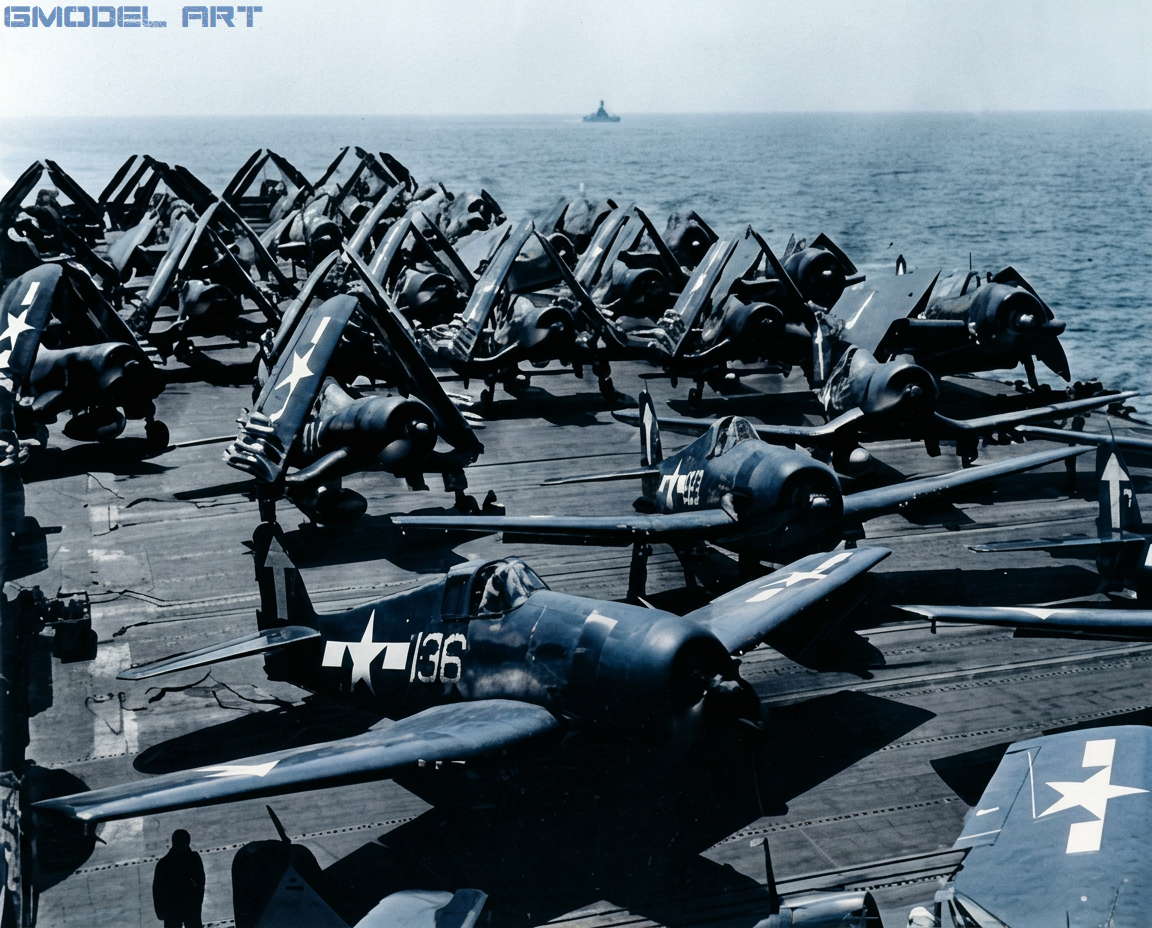
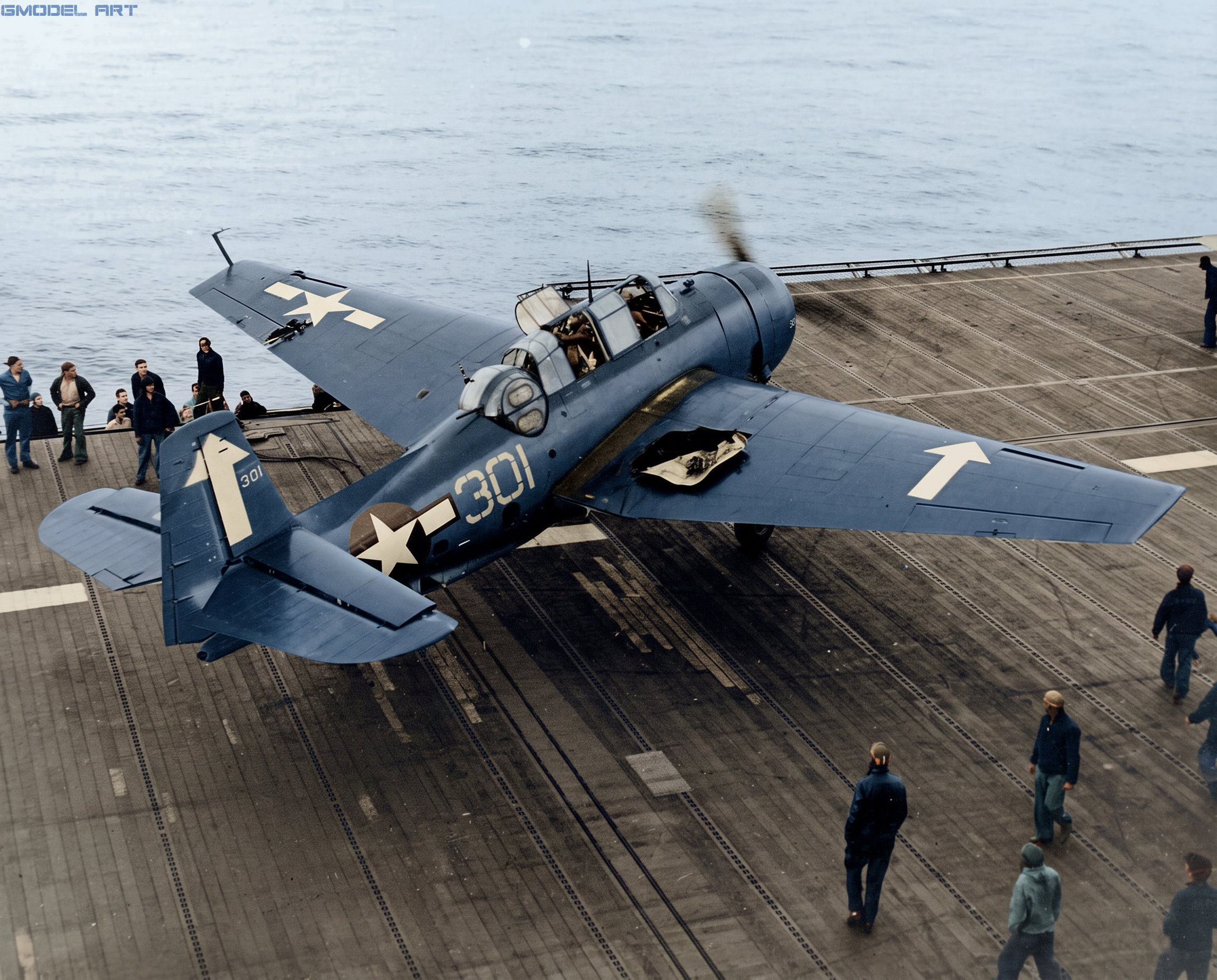
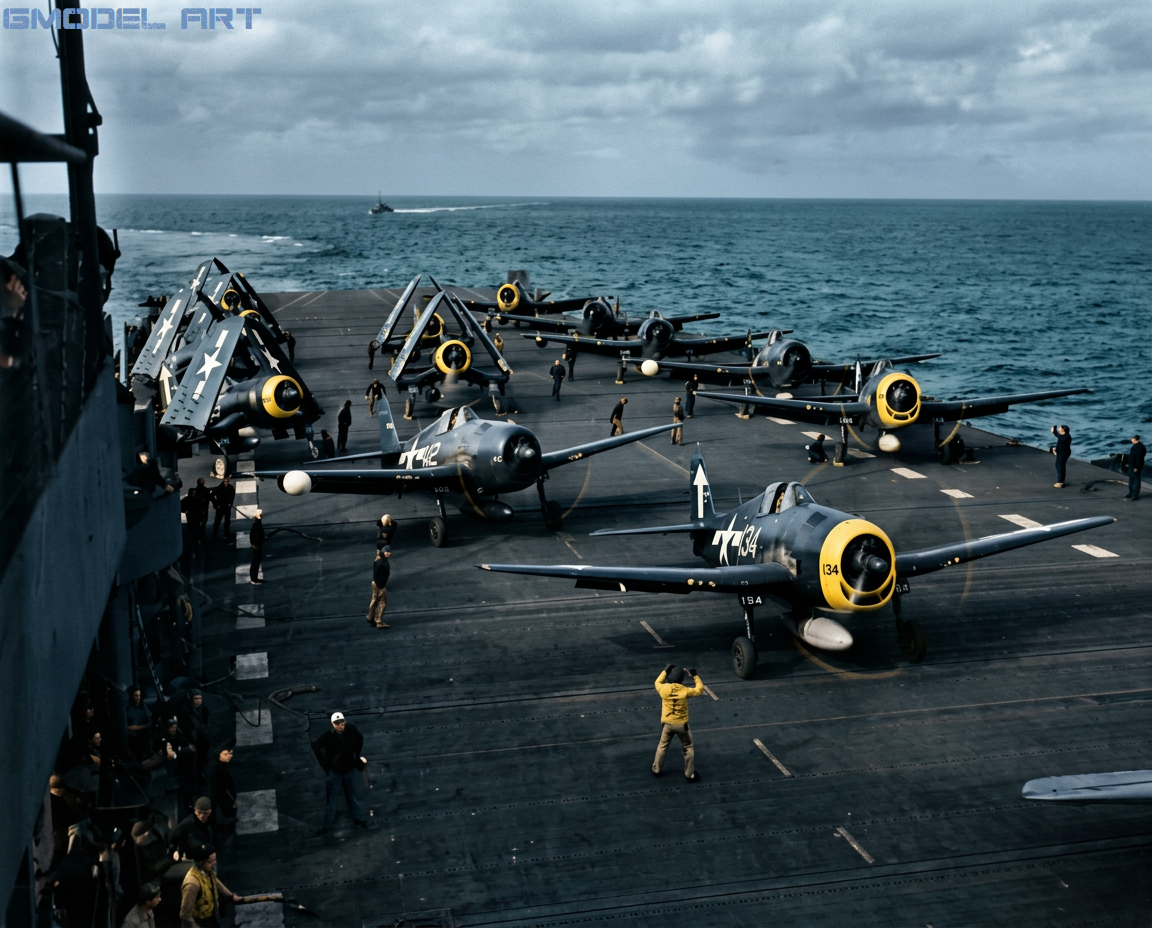
USS Bunker Hill CV-17 became one of the most famous American aircraft carriers of the Pacific War. During 1944 and 1945, its flight deck was home to several different Carrier Air Groups and a remarkable variety of aircraft, including the F6F Hellcat, F4U-1D Corsair, SB2C Helldiver and TBF/TBM Avenger.
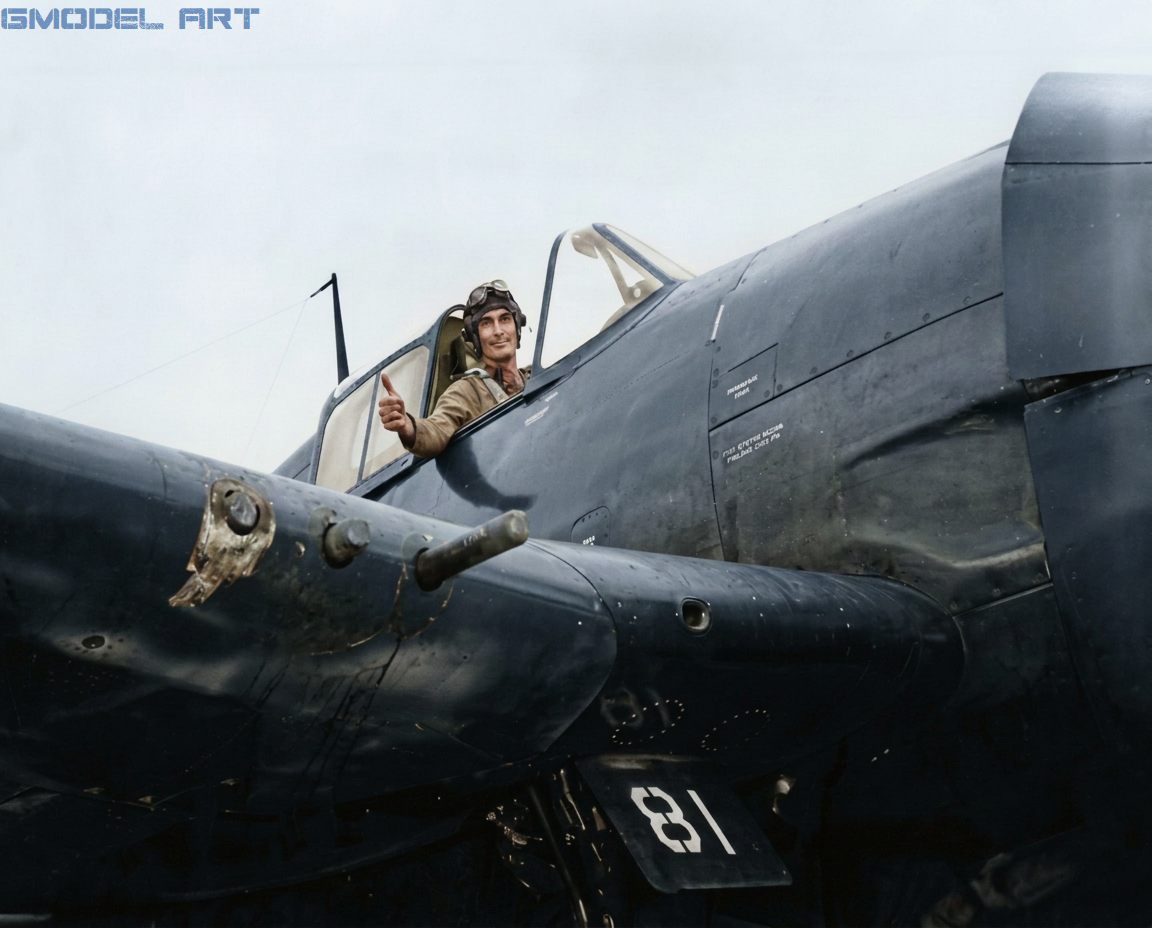
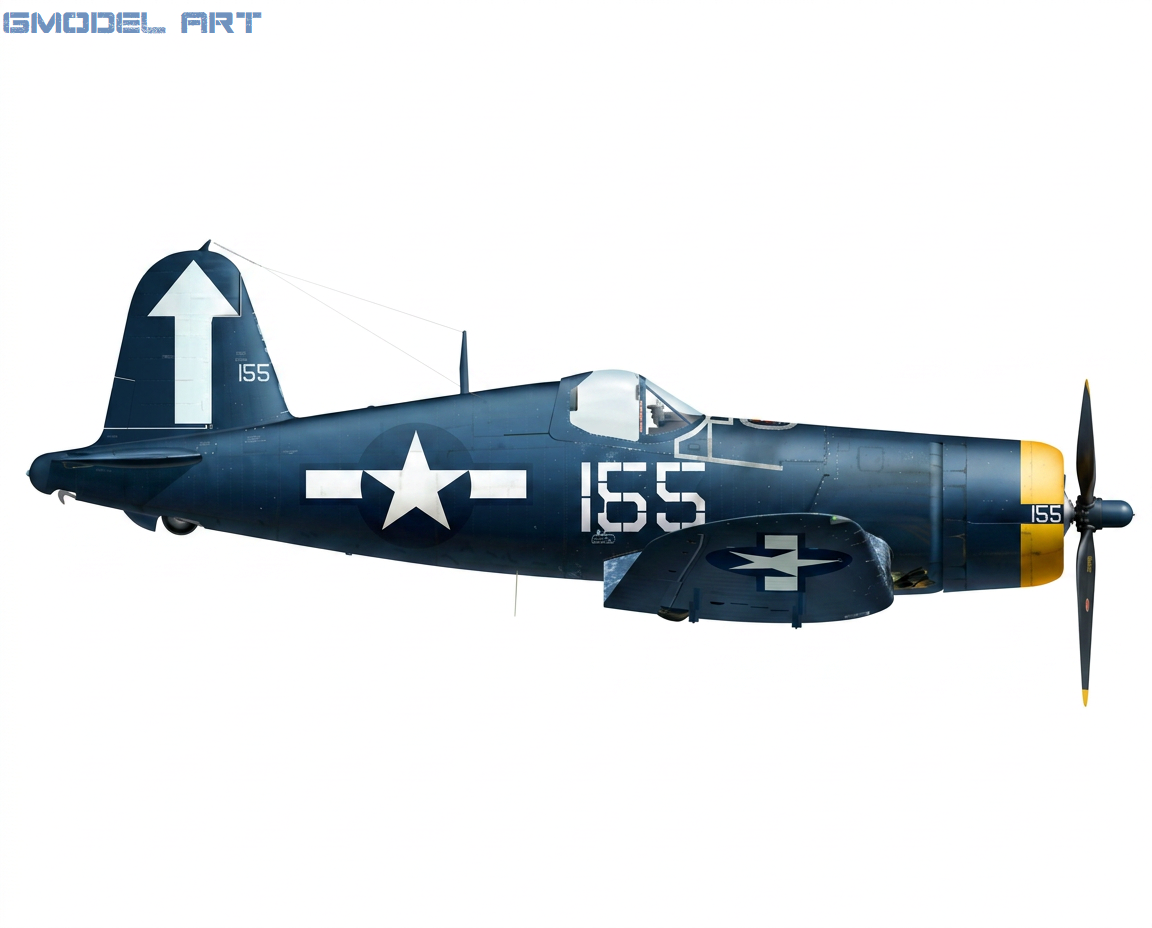
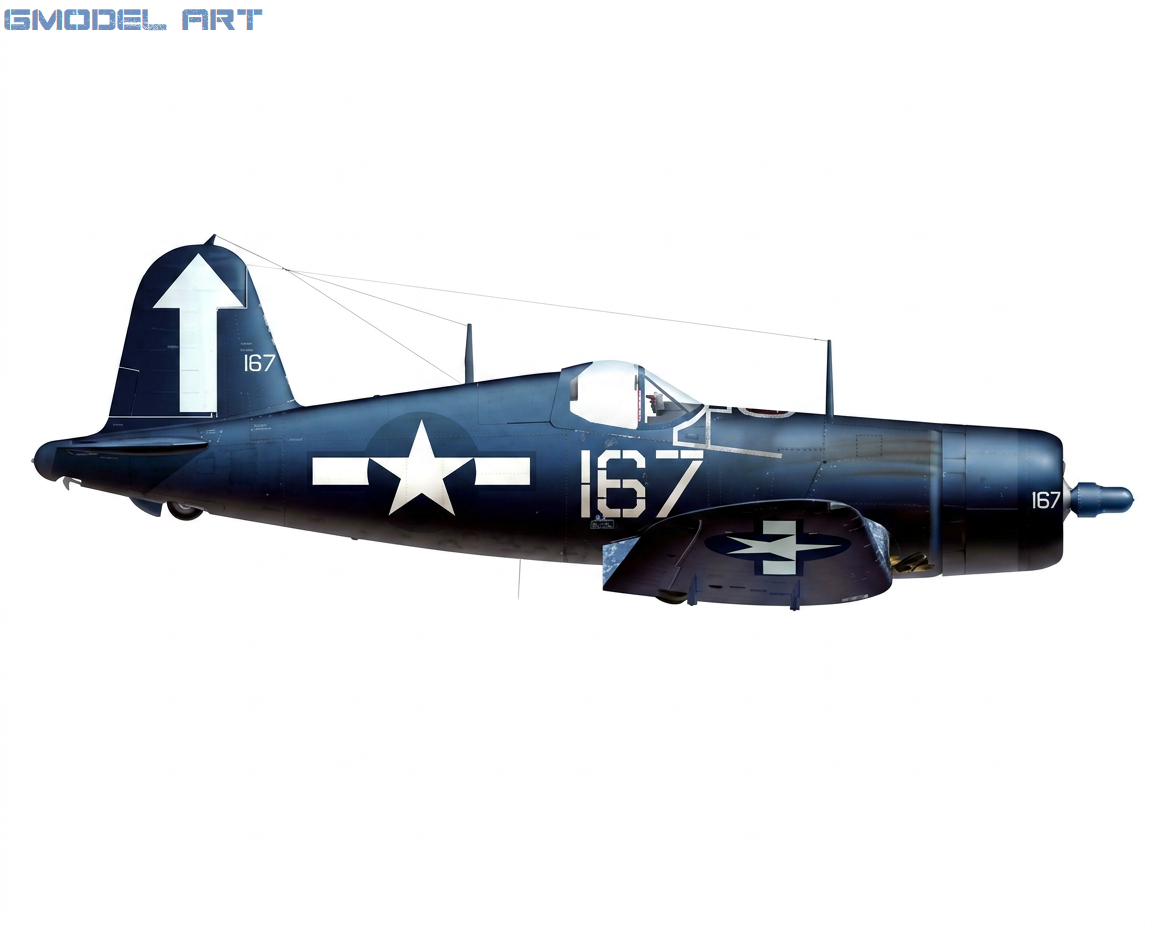
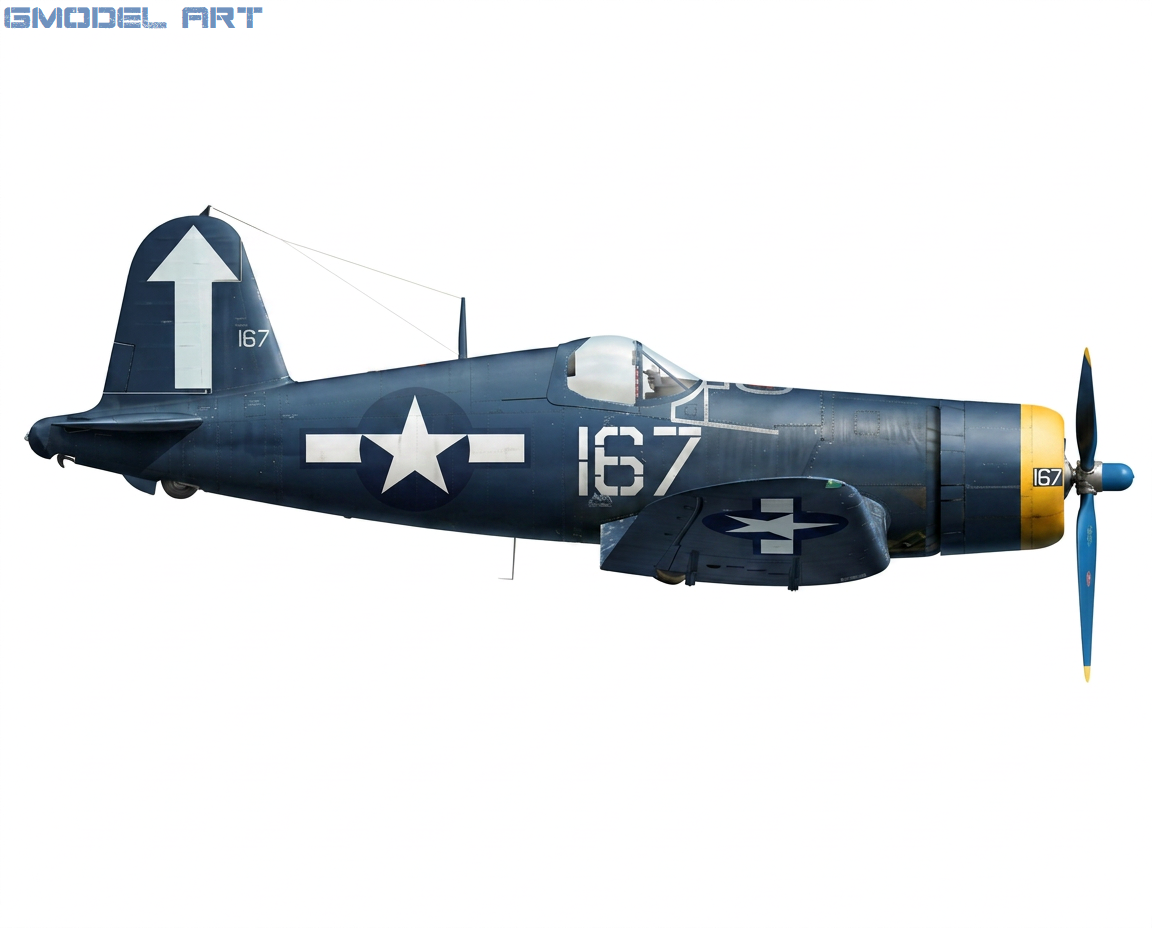
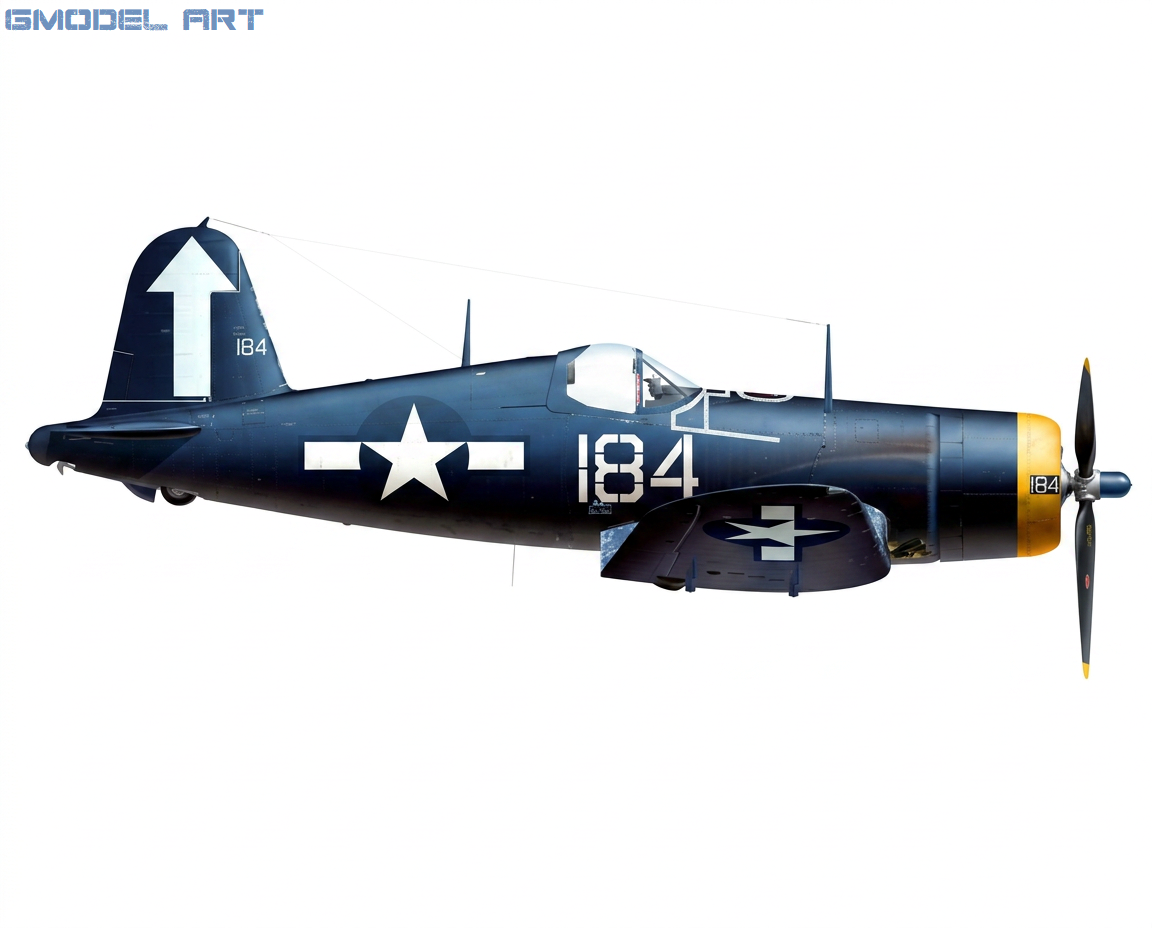
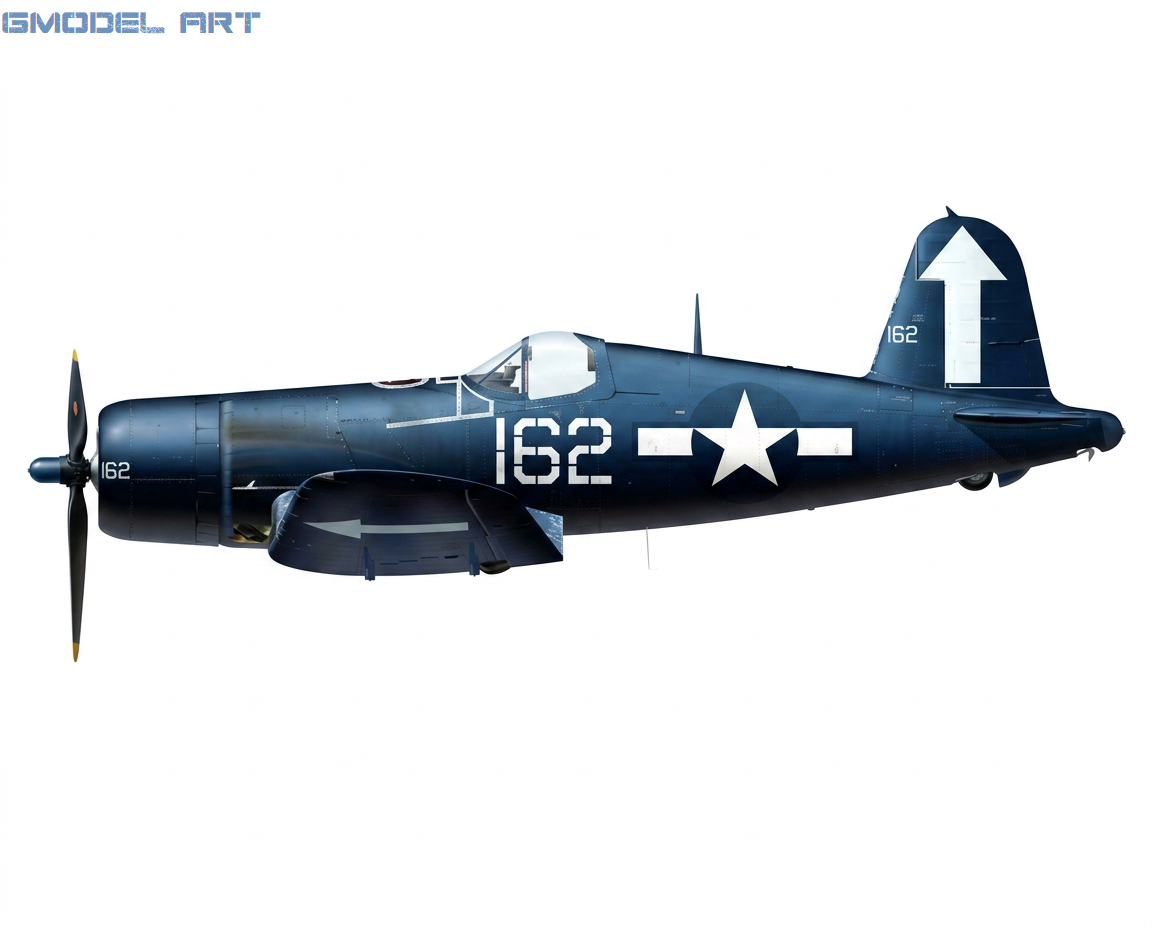
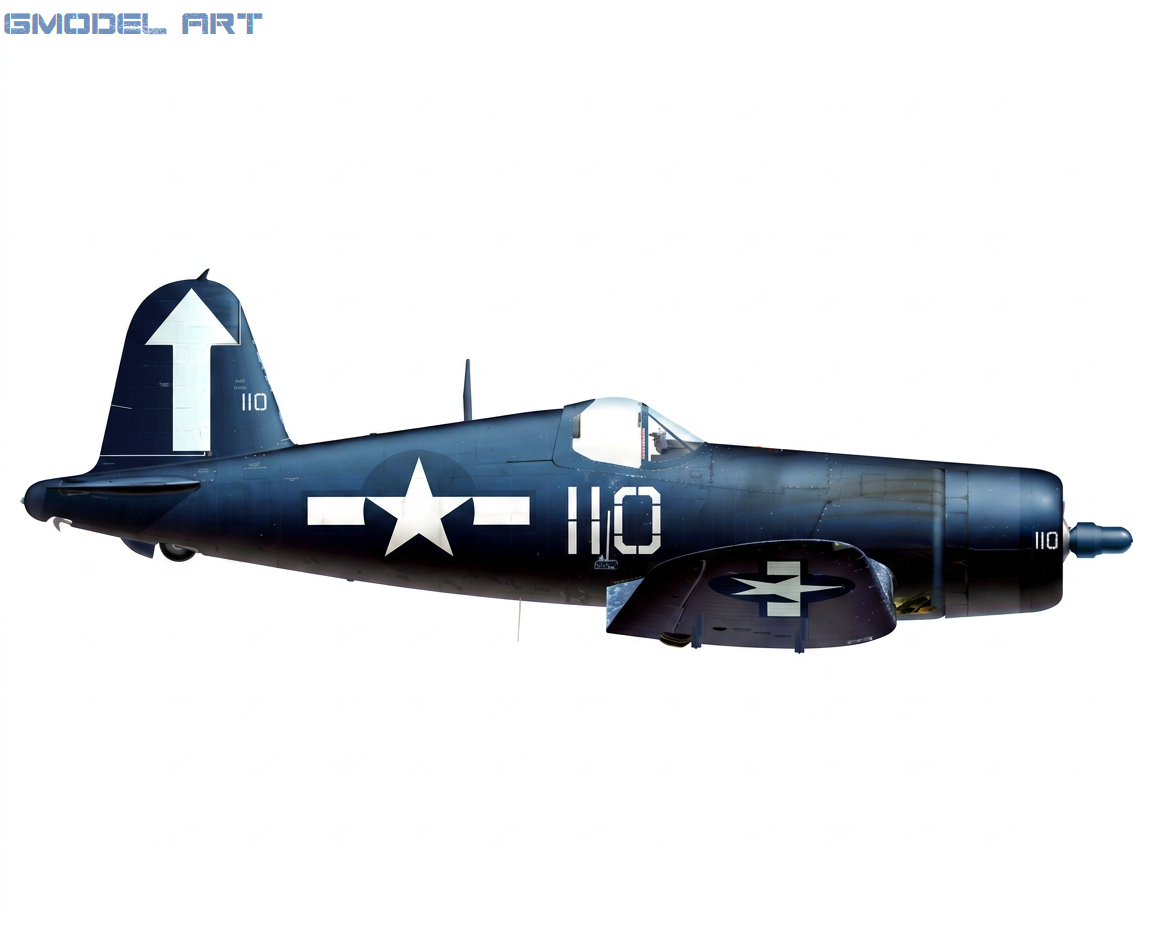
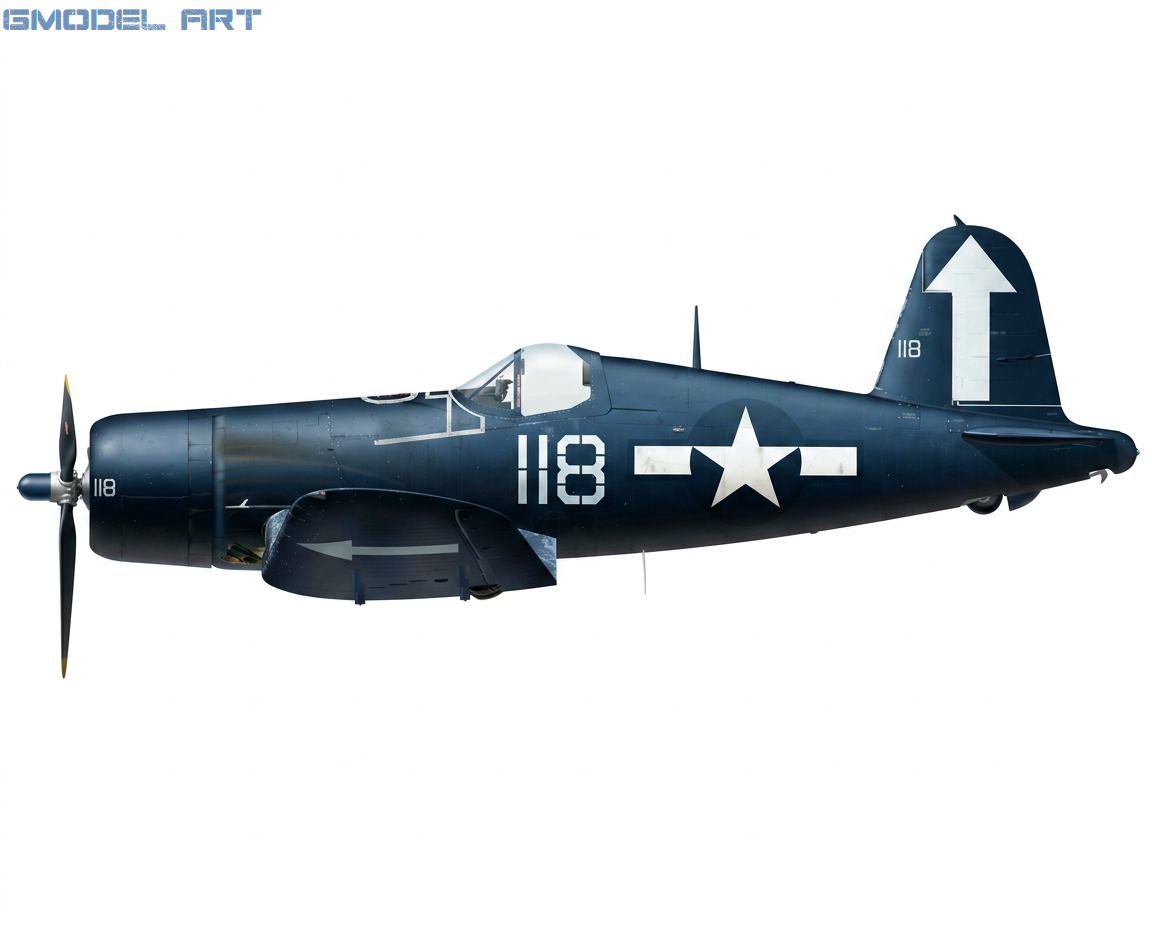
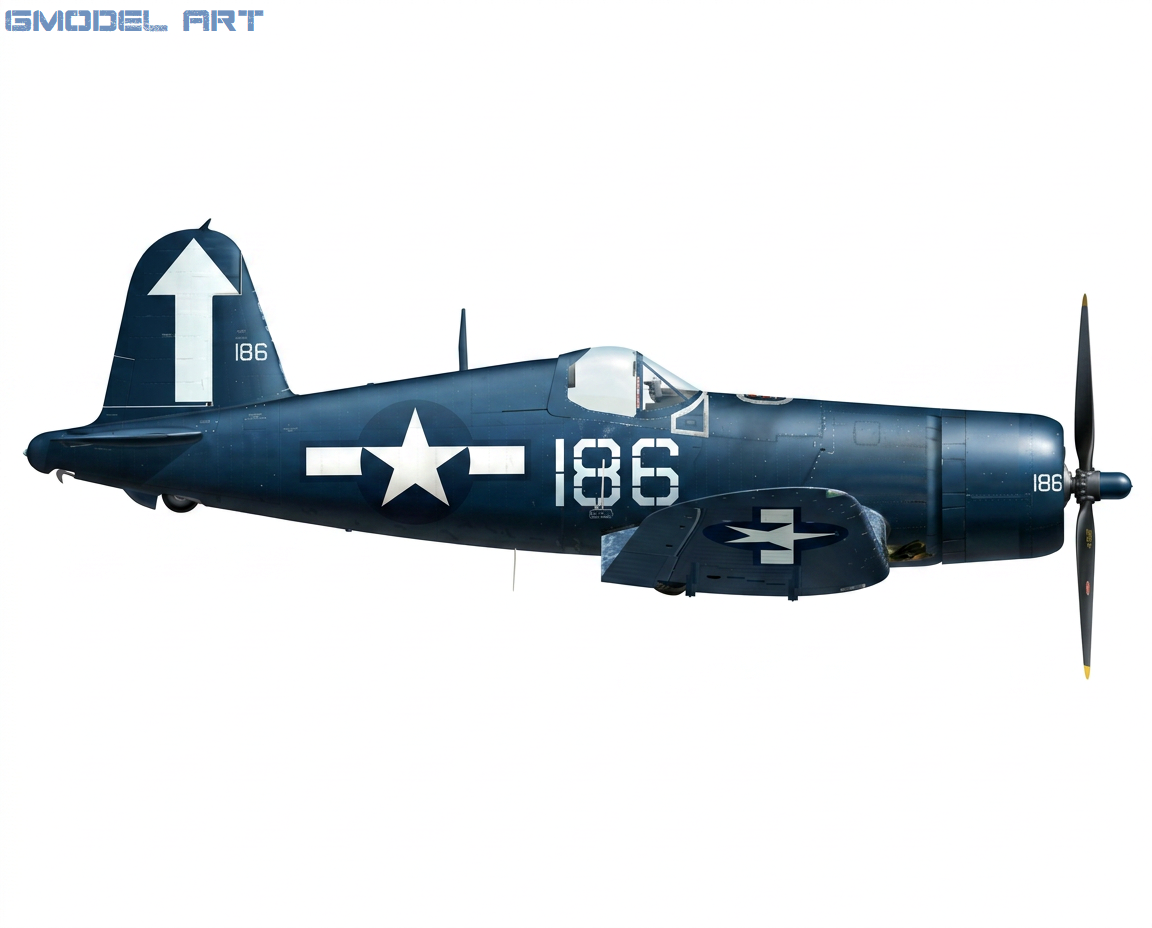
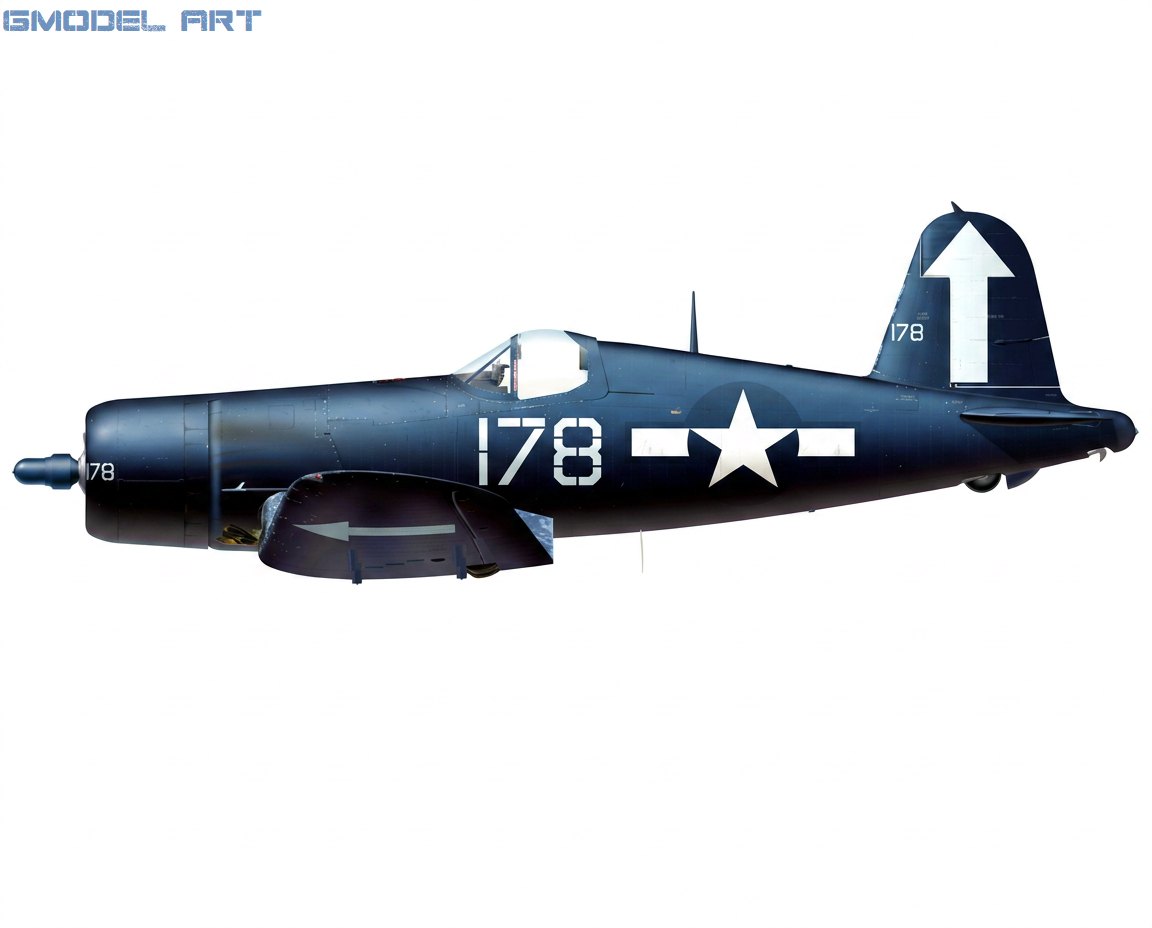
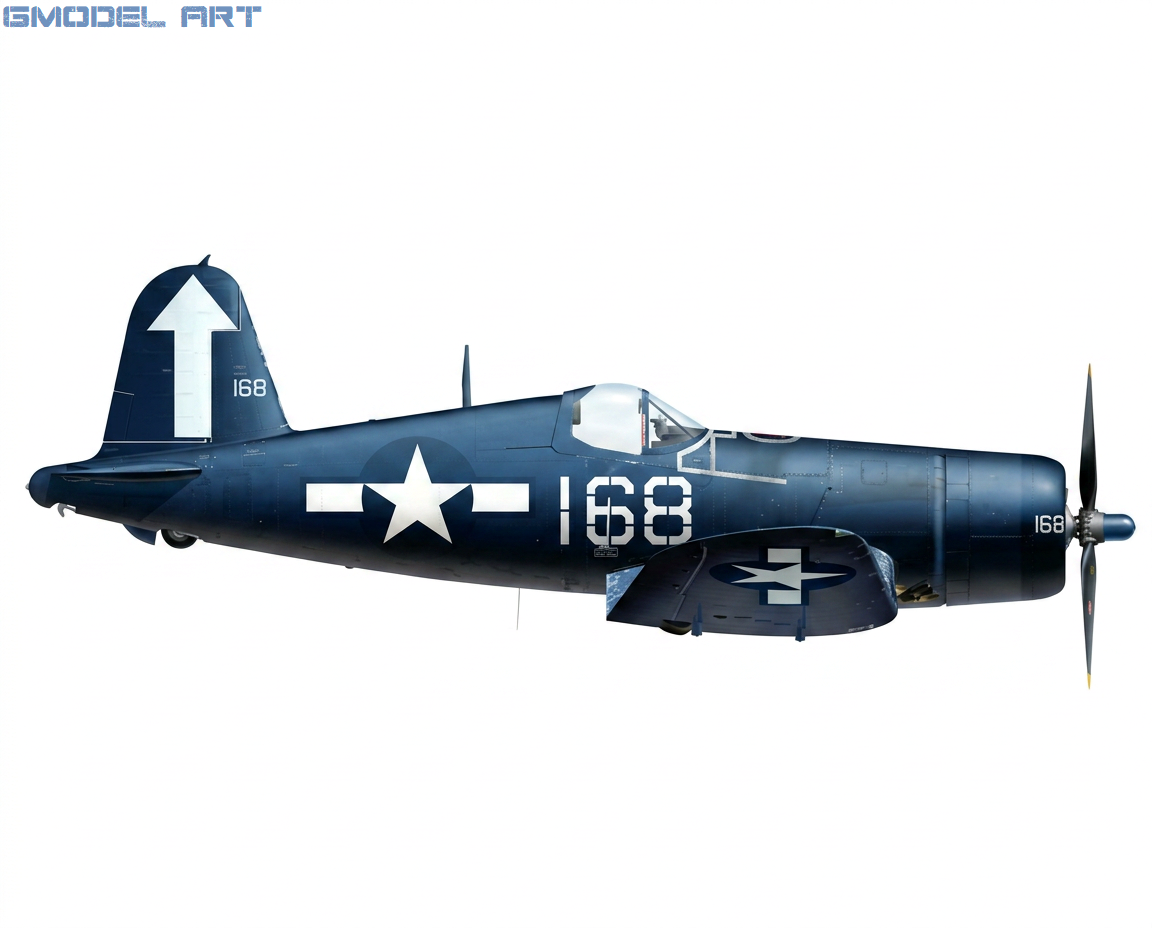
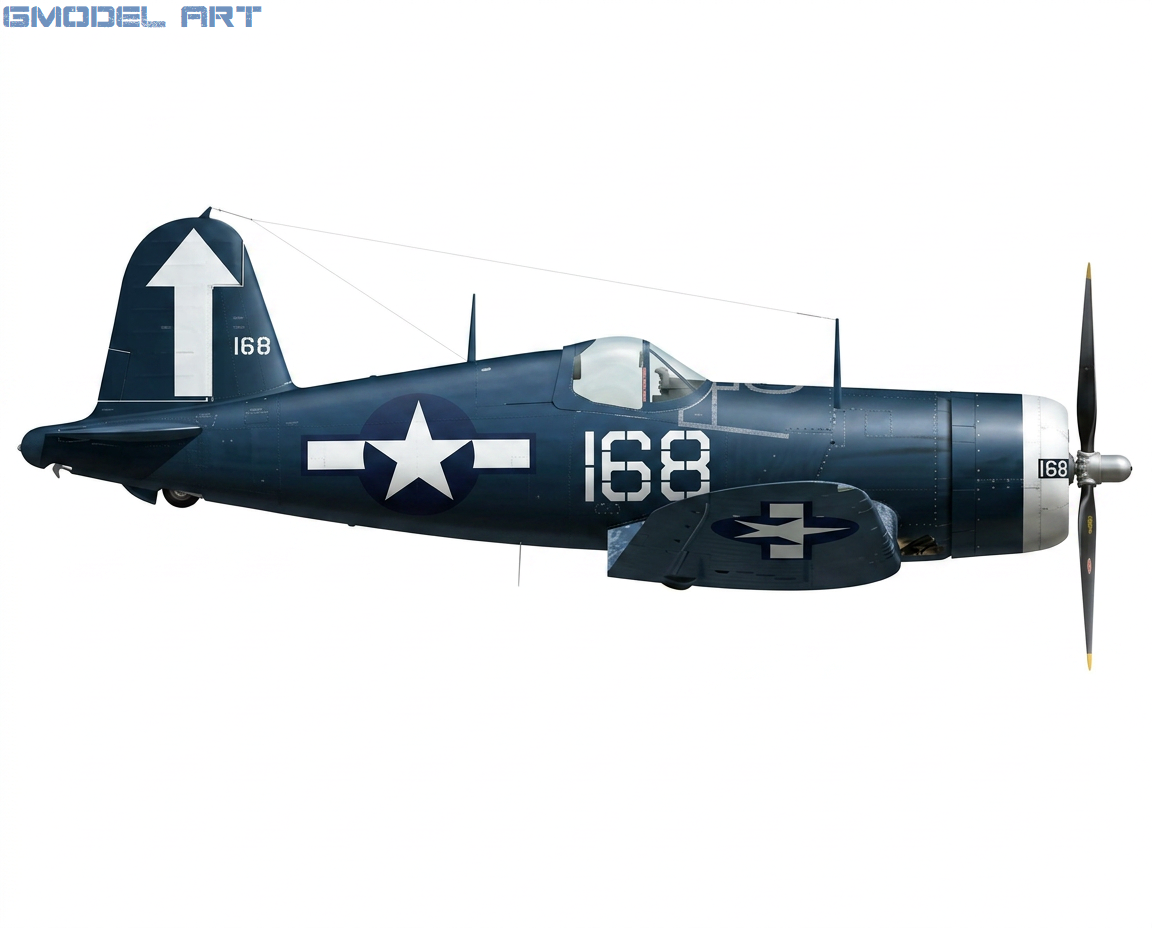
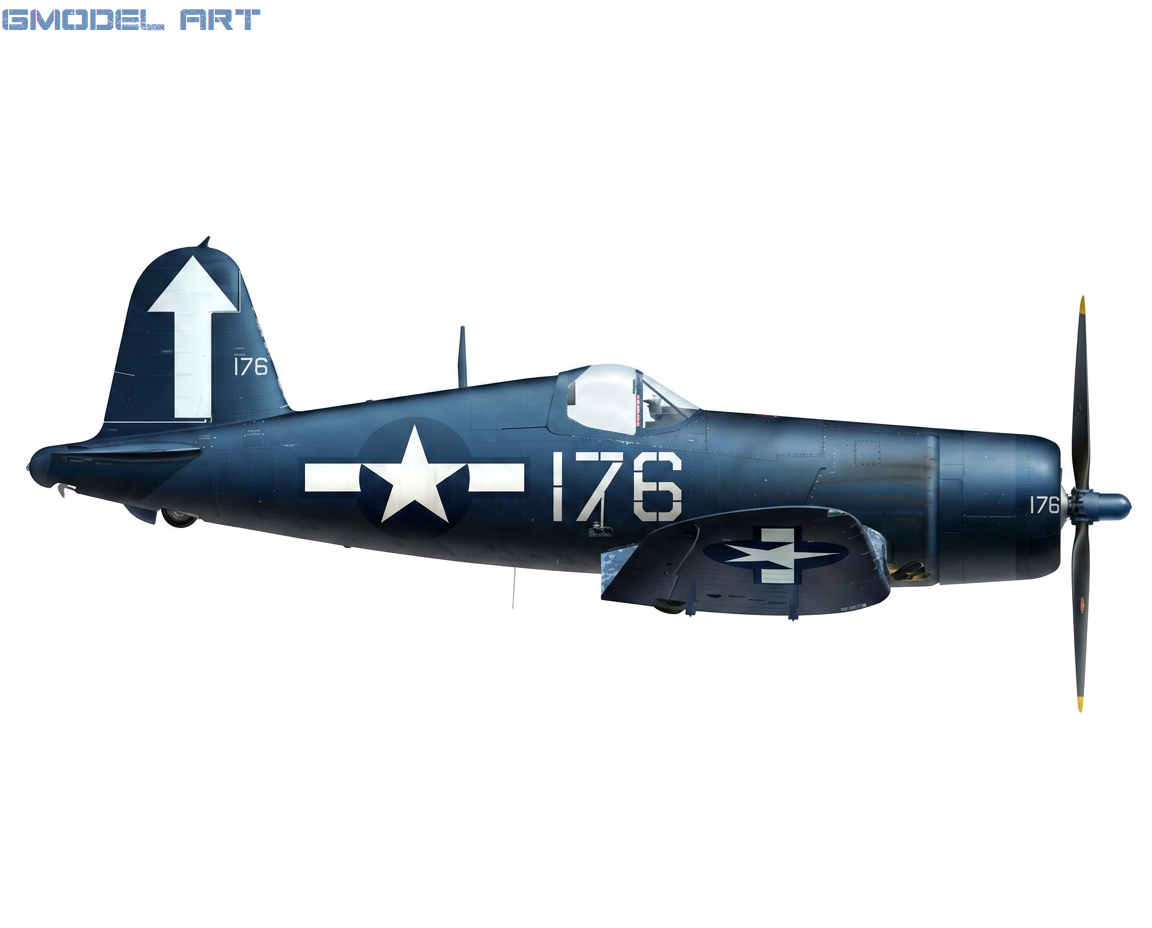
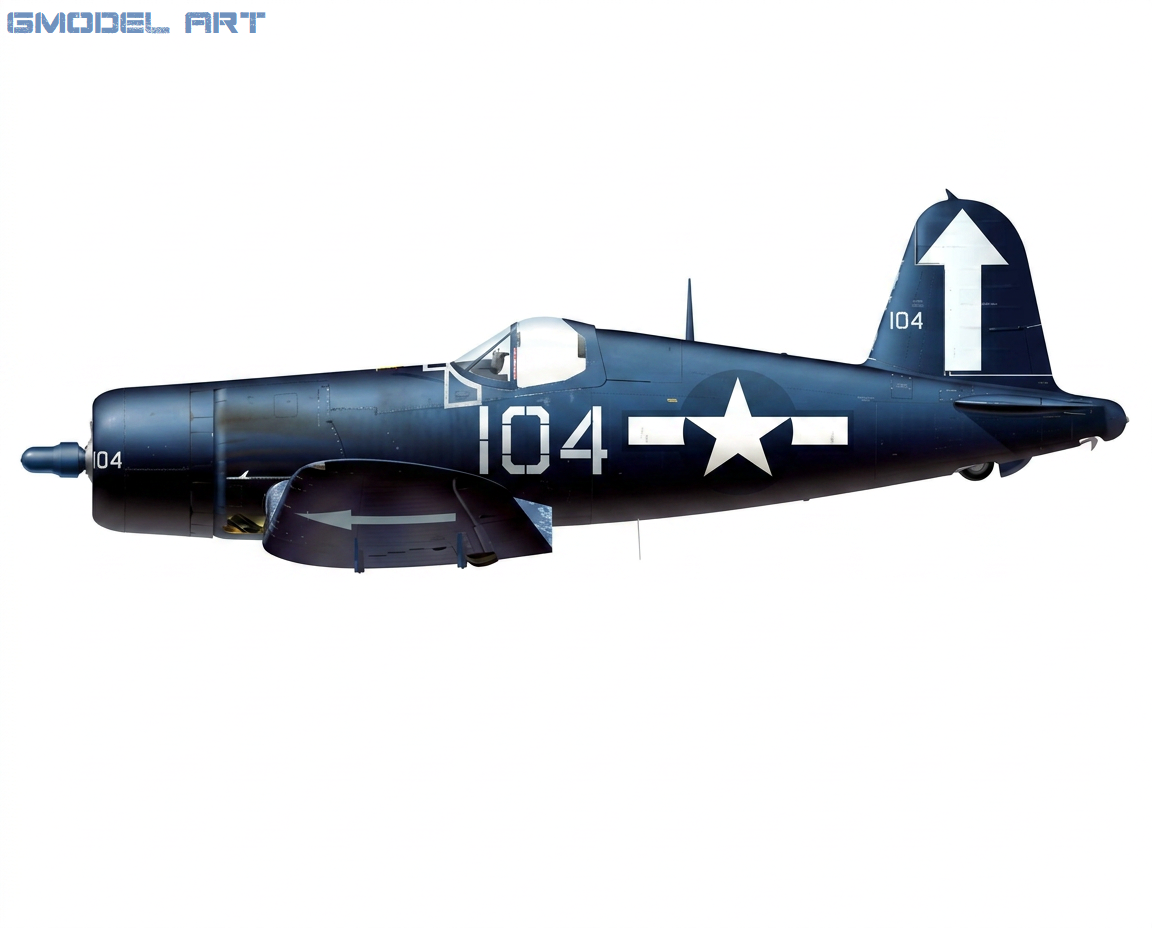
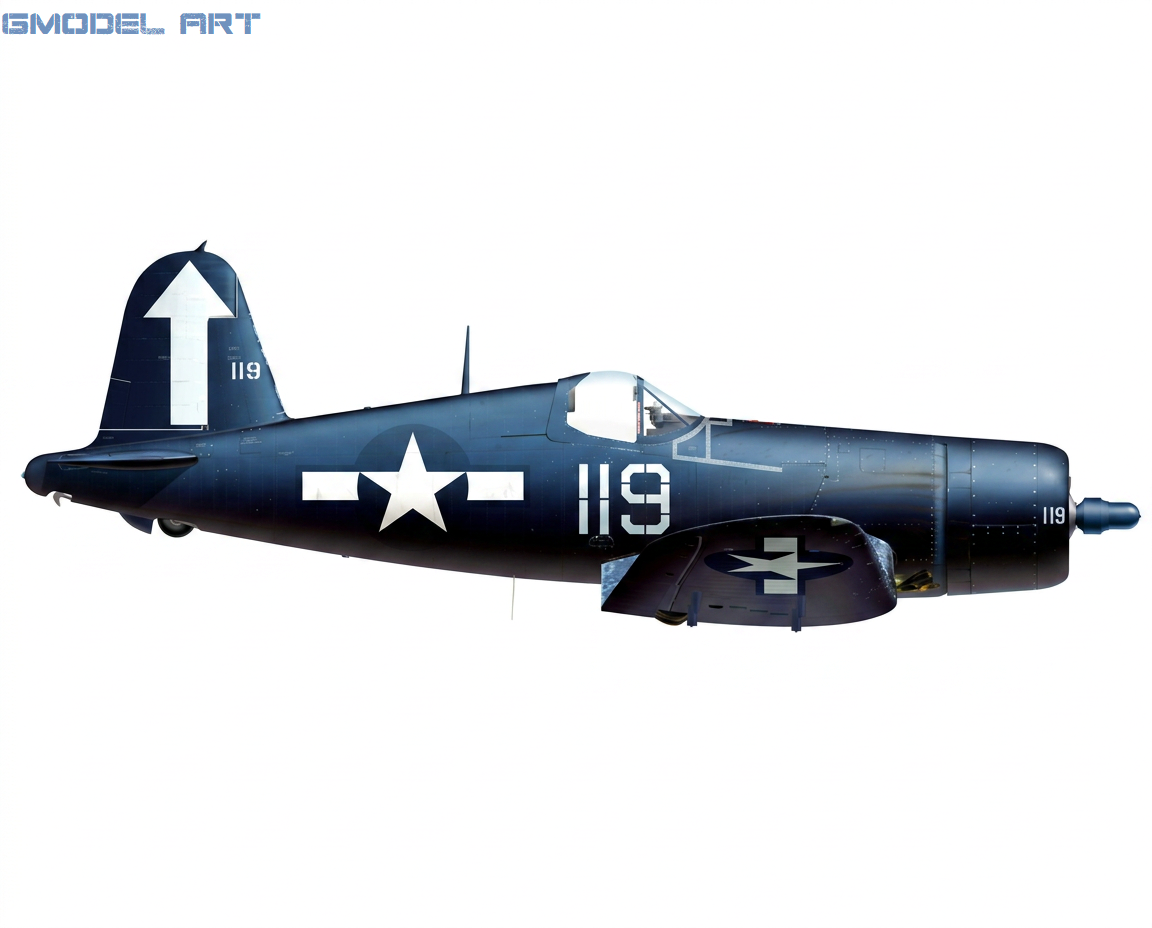
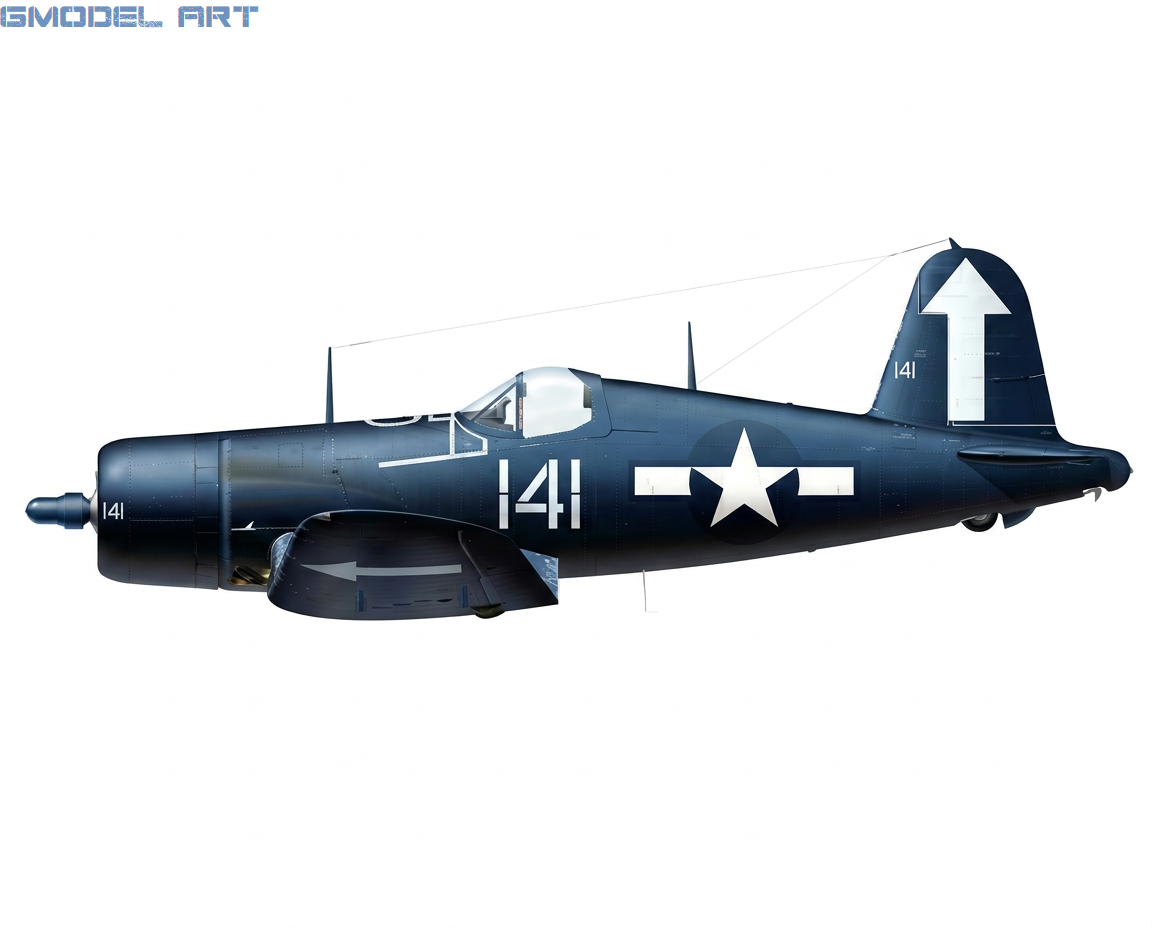
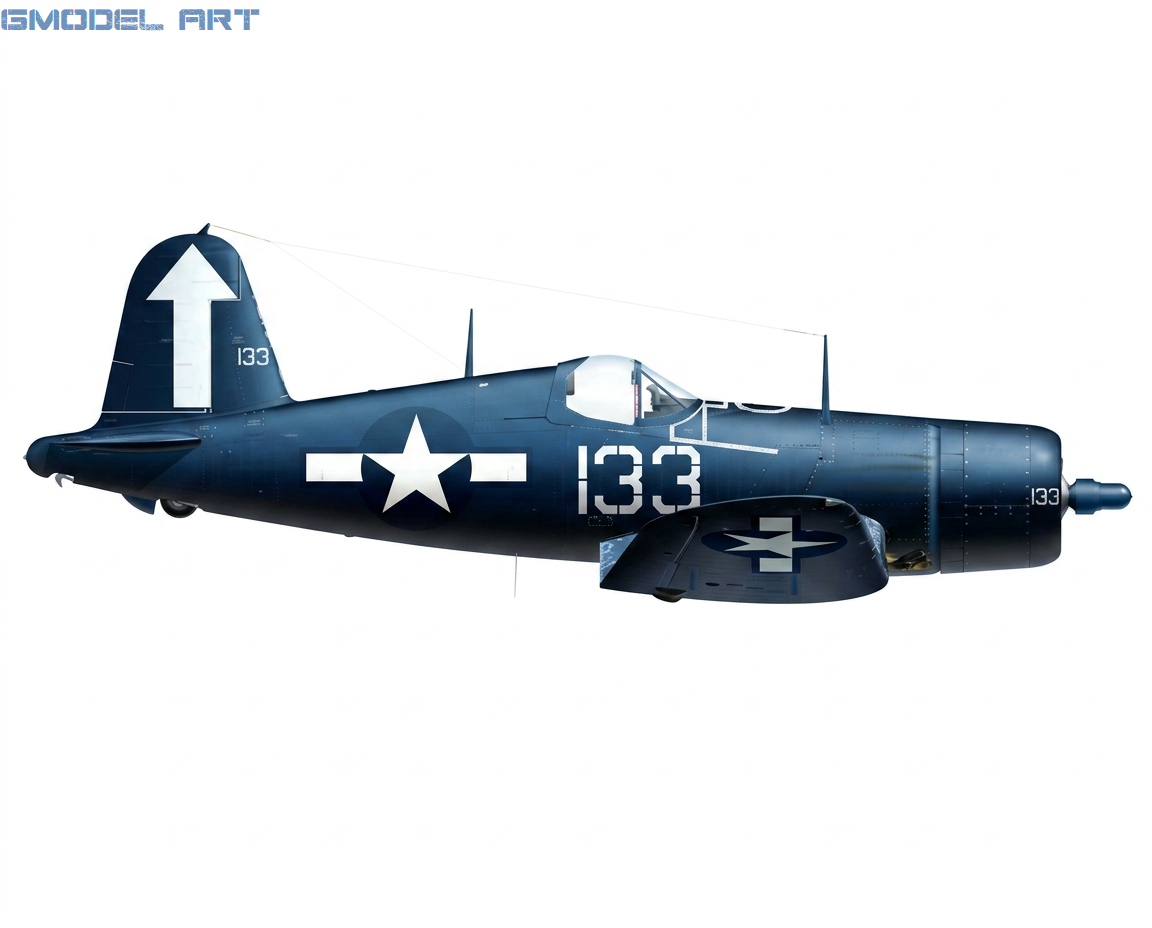
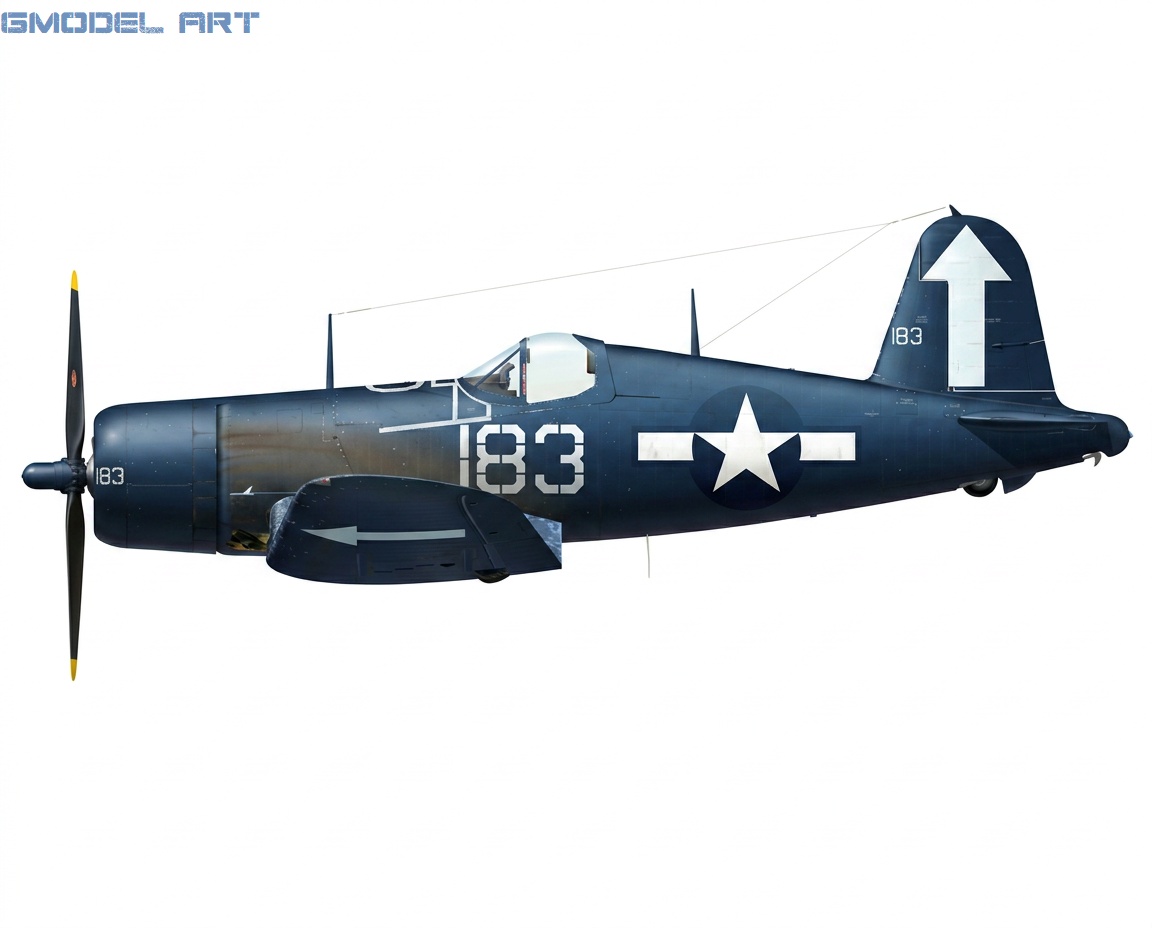
Among them, the VF-84 Fighter Squadron is particularly interesting to scale modelers. Formed around veterans of the famous VF-17 “Jolly Rogers,” VF-84 operated the F4U-1D Corsair from USS Bunker Hill during the final months of the Pacific War.
This article focuses on the 1944–1945 period, combining a concise historical overview with a practical guide to building and painting the aircraft that operated from USS Bunker Hill.
USS Bunker Hill CV-17 in World War II
USS Bunker Hill was an Essex-class aircraft carrier built for the United States Navy during World War II.
After entering Pacific operations, the carrier participated in major campaigns across the Central and Western Pacific. Its aircraft attacked Japanese airfields, naval bases, shipping and ground targets while also providing fighter protection for the carrier force.
For scale modelers, Bunker Hill is especially interesting because its aircraft complement changed during the war.
There was no single “Bunker Hill aircraft scheme” covering the entire 1944–1945 period.
Instead, the aircraft on the flight deck changed according to the Carrier Air Group assigned to the ship.
Bunker Hill and Carrier Air Group 8 – 1944
During 1944, USS Bunker Hill operated with Carrier Air Group 8 (CVG-8).
The group included several different types of aircraft:
| Squadron | Role | Aircraft |
|---|---|---|
| VF-8 | Fighter | Grumman F6F-3 Hellcat |
| VF(N)-76 Detachment | Night Fighter | F6F-3N Hellcat |
| VB-8 | Bombing | Curtiss SB2C-1C Helldiver |
| VT-8 | Torpedo | Grumman TBF Avenger |
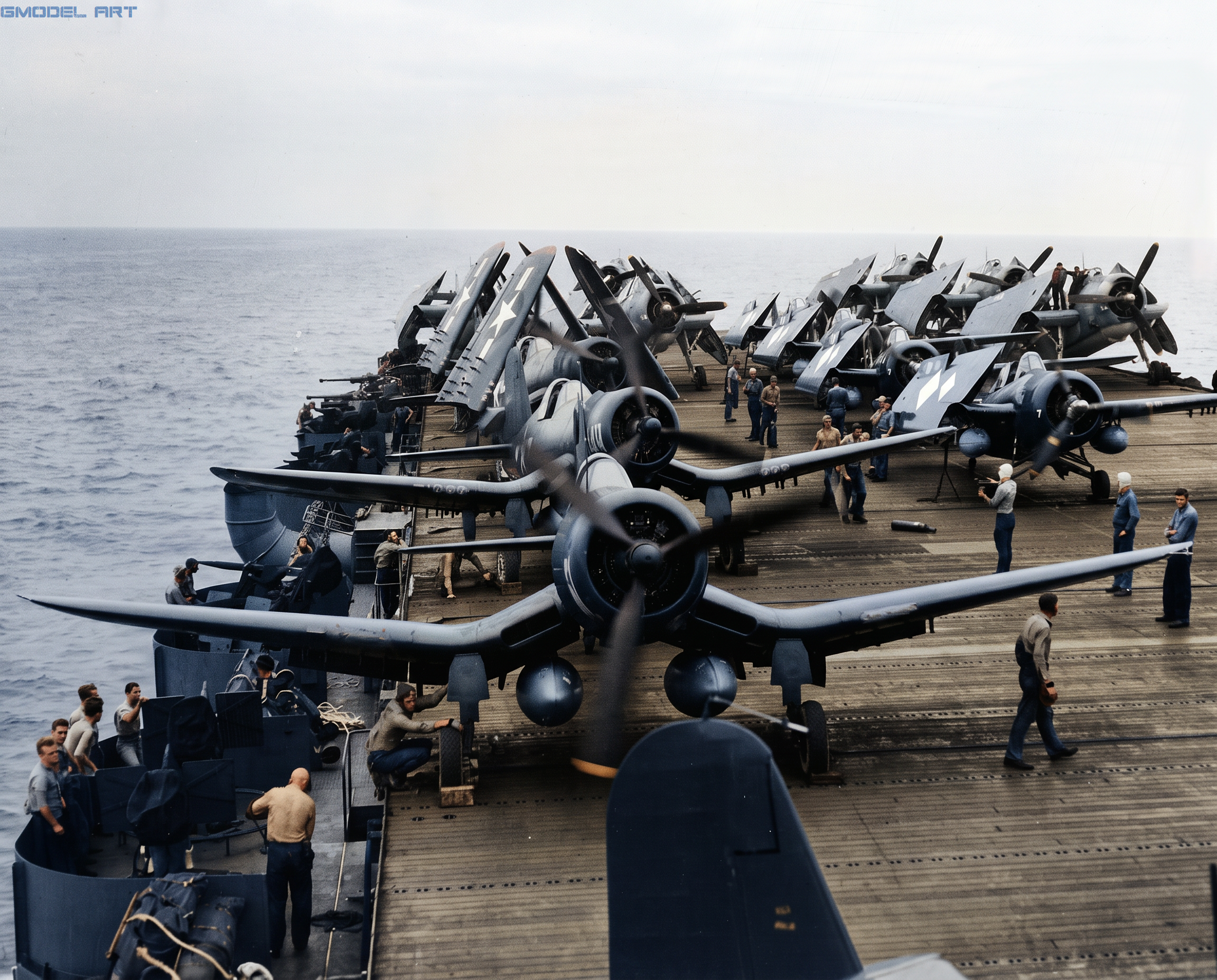
This makes a 1944 Bunker Hill carrier deck an excellent subject for a diorama.
A modeler can combine F6F Hellcats, SB2C Helldivers and TBF Avengers to recreate the appearance of the carrier during this phase of the war.
The aircraft were already showing the effects of intensive Pacific operations, making weathering an important part of an accurate model.
Bunker Hill and Carrier Air Group 4
Later in 1944, Bunker Hill operated temporarily with Carrier Air Group 4 (CVG-4).
The group included:
This period is particularly useful for modelers interested in the Philippines campaign and late-1944 US Navy carrier operations.
Again, the important point is to select a specific date before starting the model.
A photograph from November 1944 should not automatically be used as reference for a Bunker Hill aircraft from February 1945.
Carrier Air Group 84 – The Bunker Hill of 1945
The story becomes even more interesting in early 1945.
After returning to the Pacific, USS Bunker Hill operated with Carrier Air Group 84 (CVG-84).
Its aircraft included:
This combination makes the 1945 Bunker Hill particularly attractive for scale modeling.
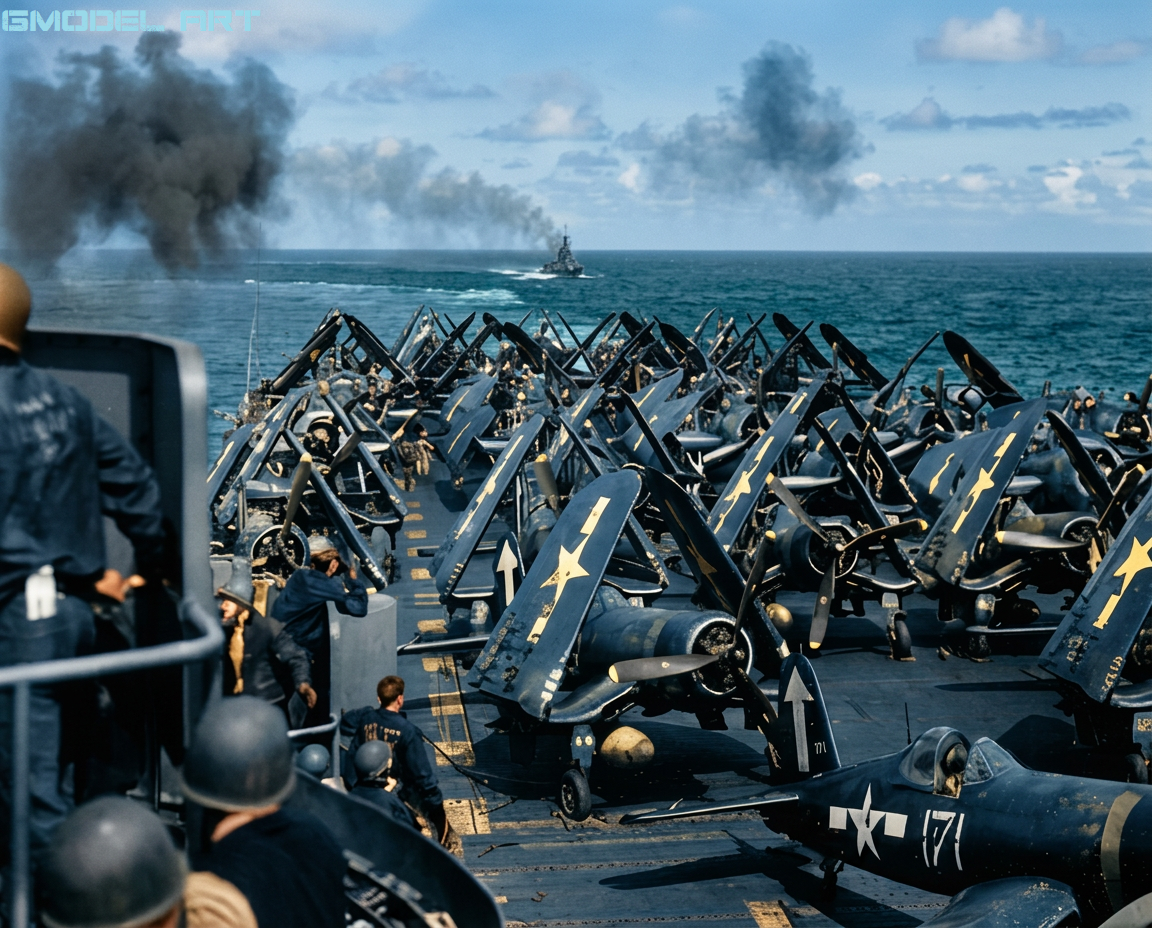
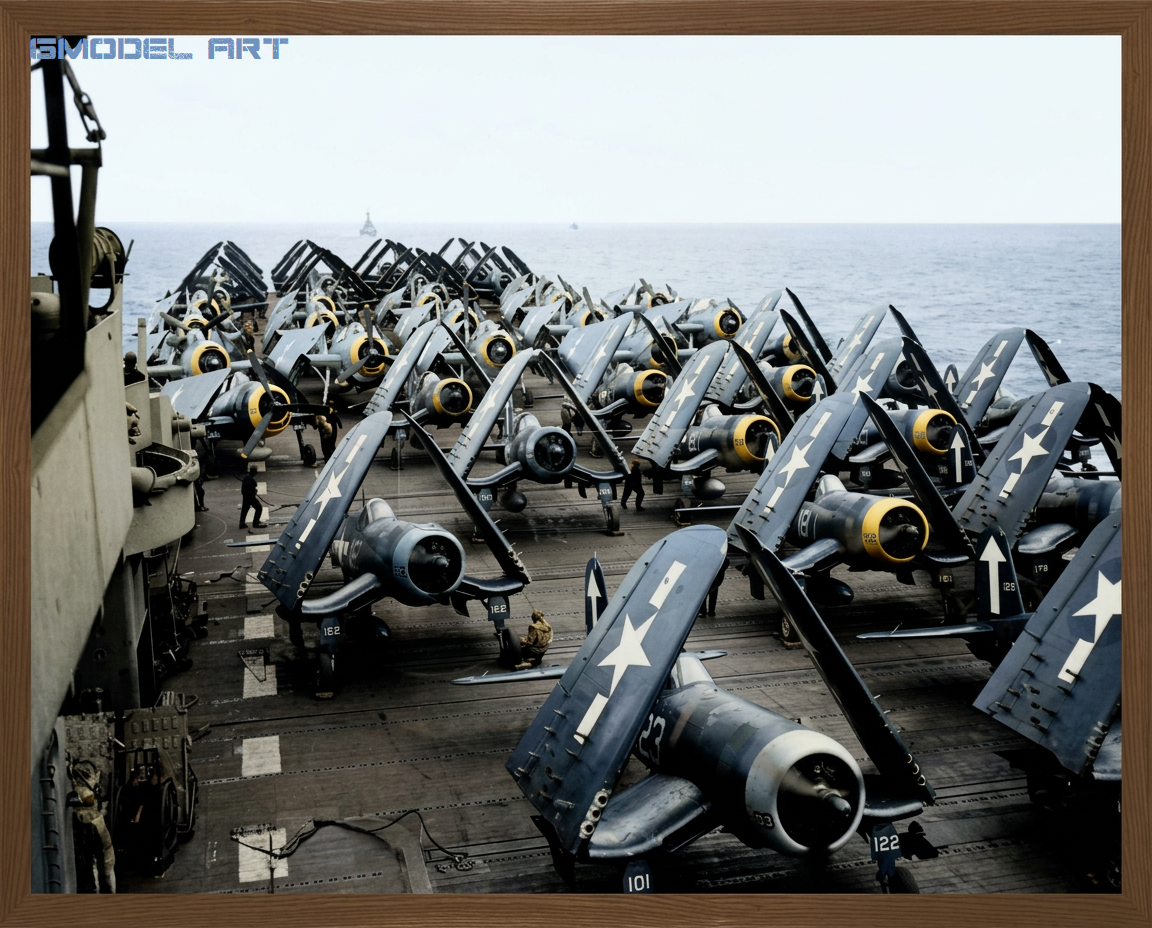
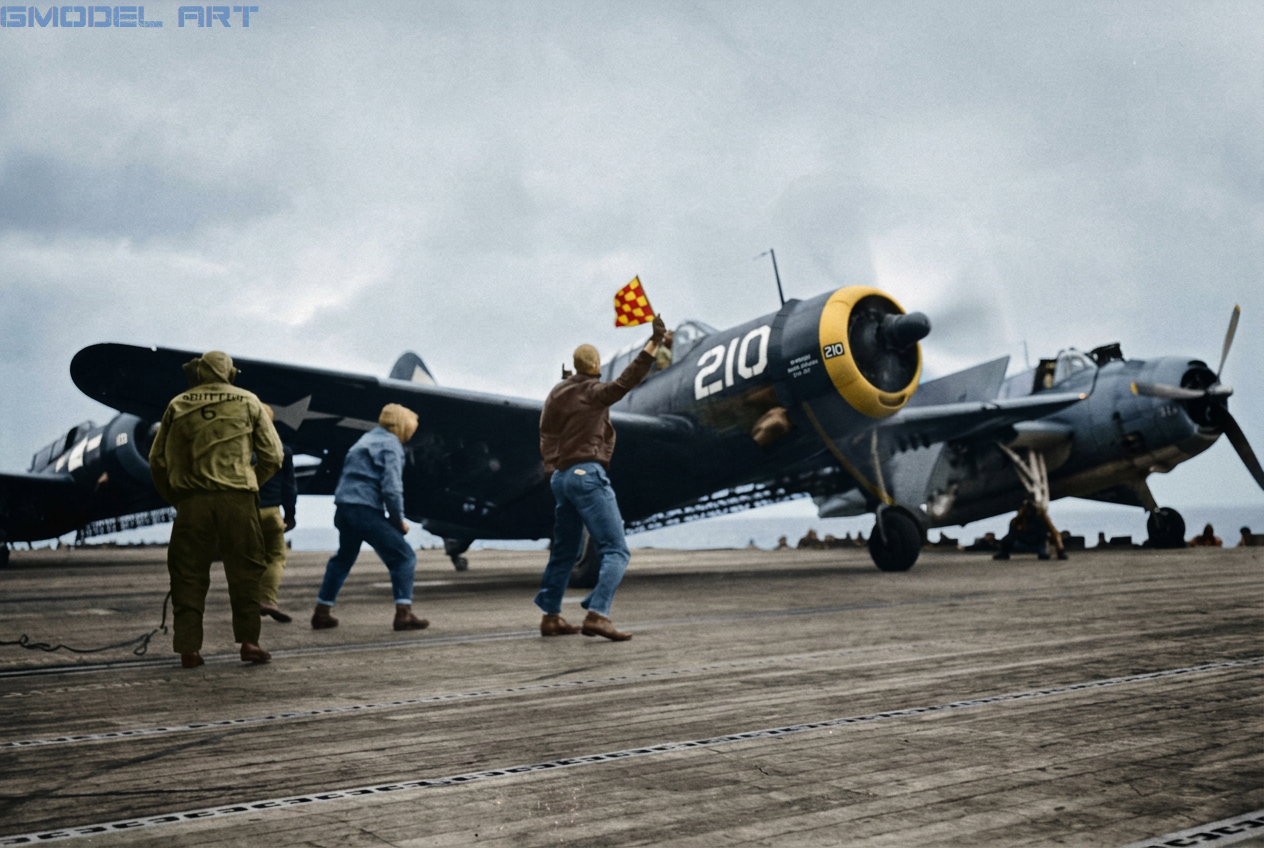
The flight deck could contain Corsairs, Hellcats, Helldivers and Avengers, often showing different levels of operational wear.
VF-84 “Wolf Gang” and the F4U Corsair
VF-84 was established on May 1, 1944.
The new squadron was formed around experienced personnel from VF-17, the famous Corsair squadron known as the “Jolly Rogers.”
The first commanding officer was Lieutenant Commander Roger R. Hedrick, who had previously served with VF-17.
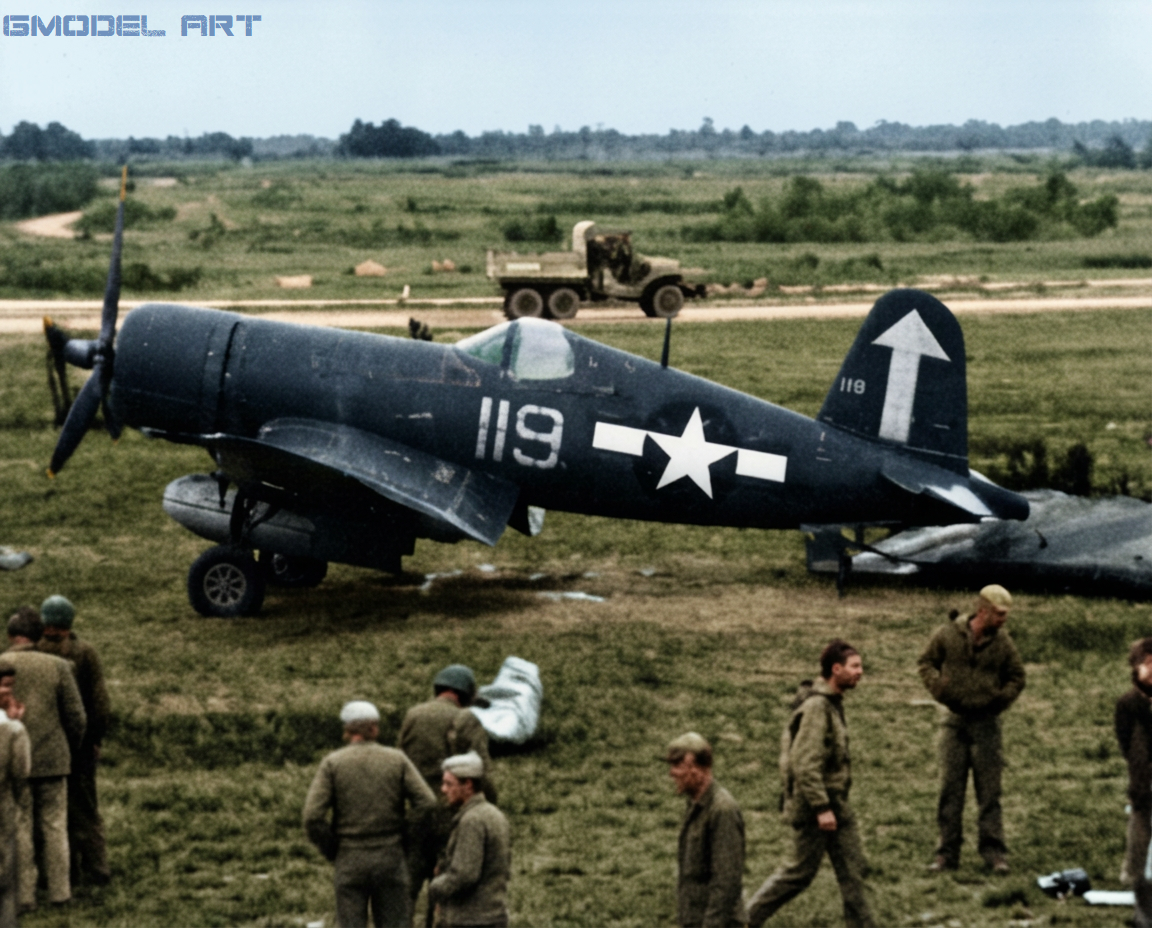
When VF-84 joined Carrier Air Group 84, it brought the F4U-1D Corsair to the Bunker Hill.
For modelers, this is the period that offers some of the most interesting Corsair subjects of the entire Pacific War.
VF-84 in Combat – 1945
VF-84 participated in major operations during the final months of the war.
Its Corsairs flew missions during:
- the Iwo Jima campaign,
- attacks against the Japanese home islands,
- Okinawa operations,
- combat air patrol missions,
- ground-attack missions,
- fleet protection missions.
The squadron was credited with 92 aerial victories, while nine of its pilots achieved ace status.
But the story of VF-84 aboard Bunker Hill also ended tragically.
February 1945 – Corsairs Over Japan
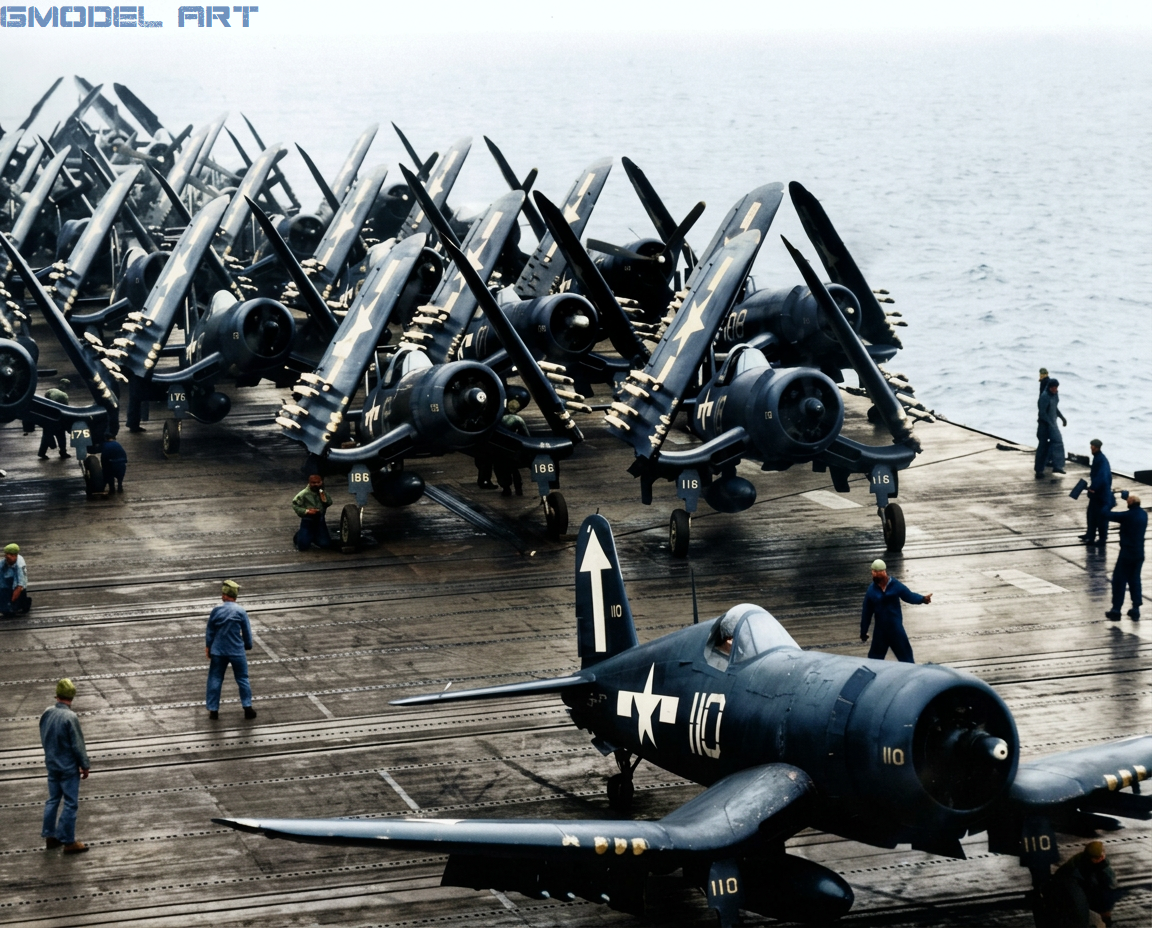
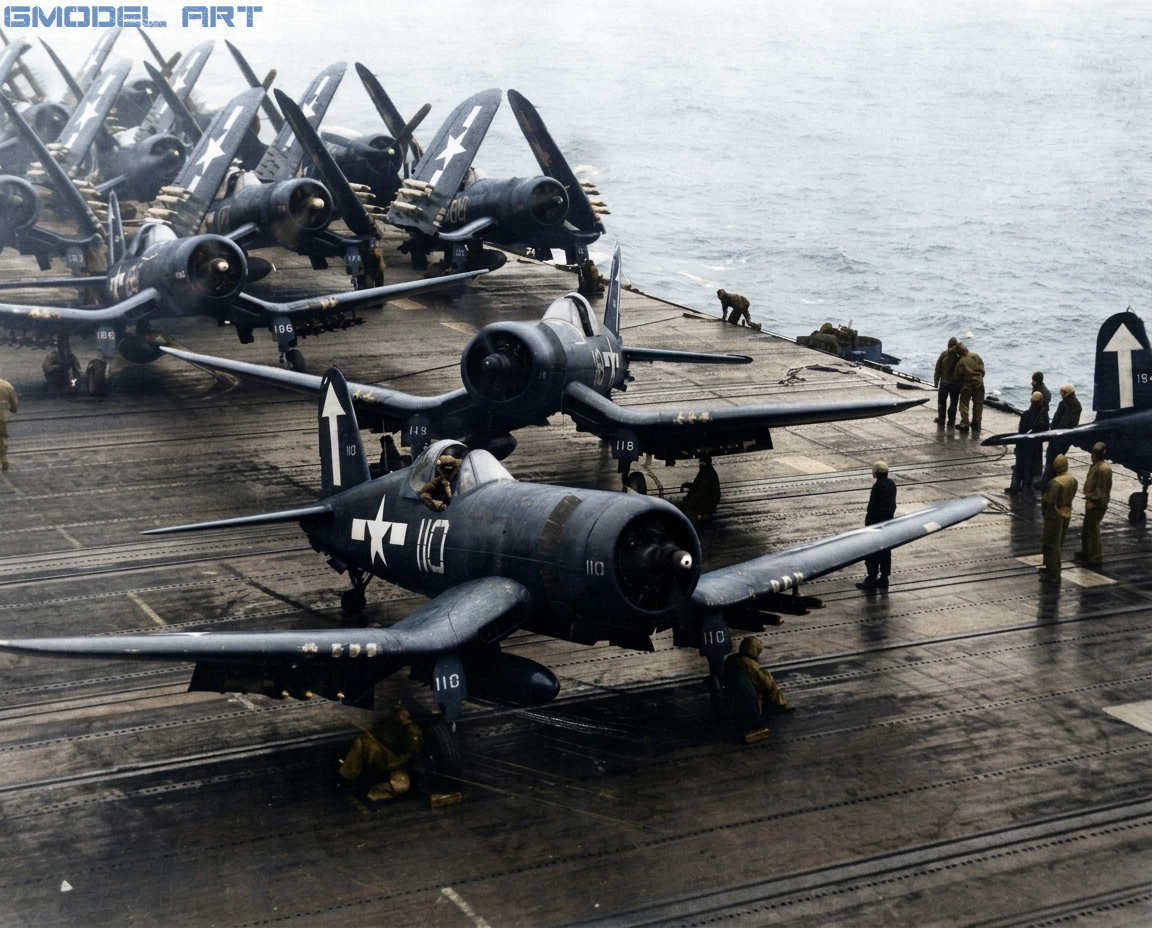
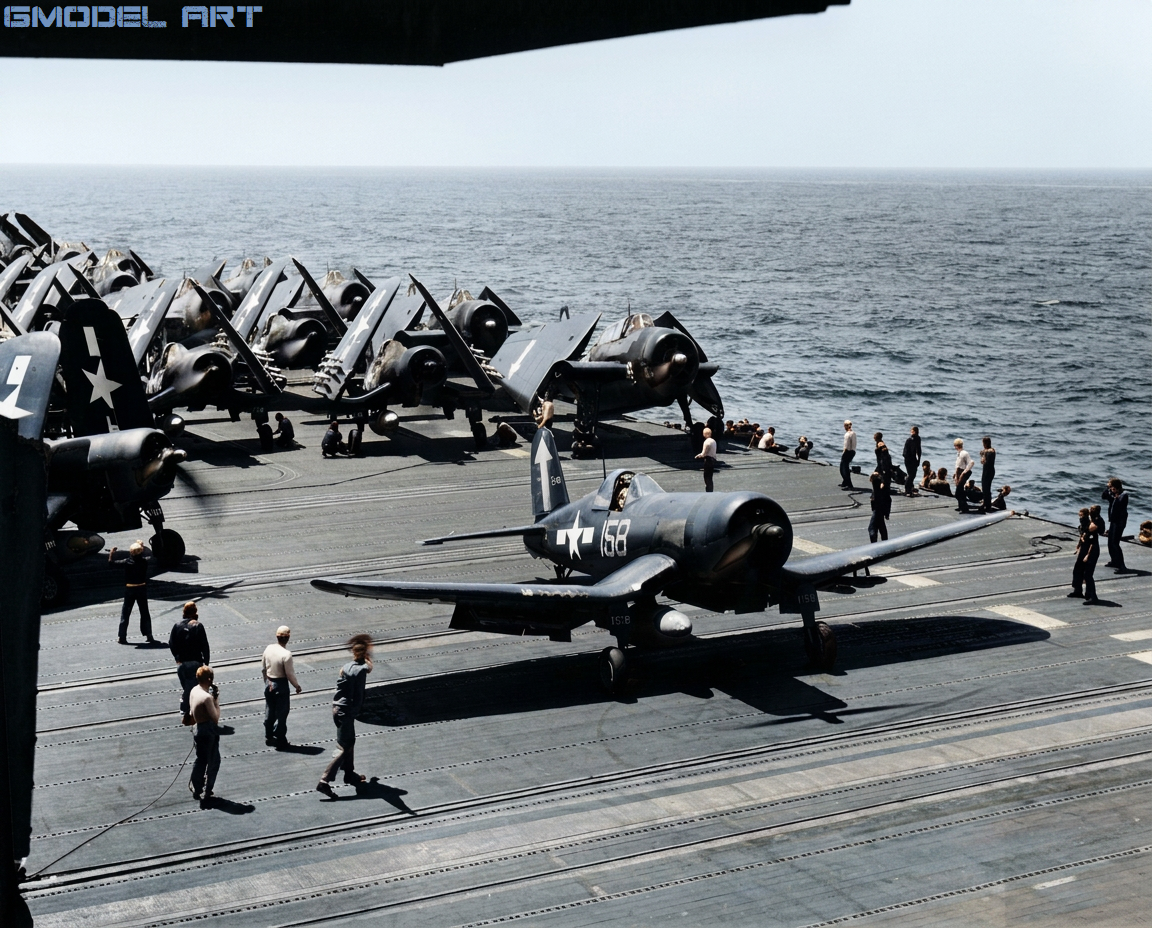
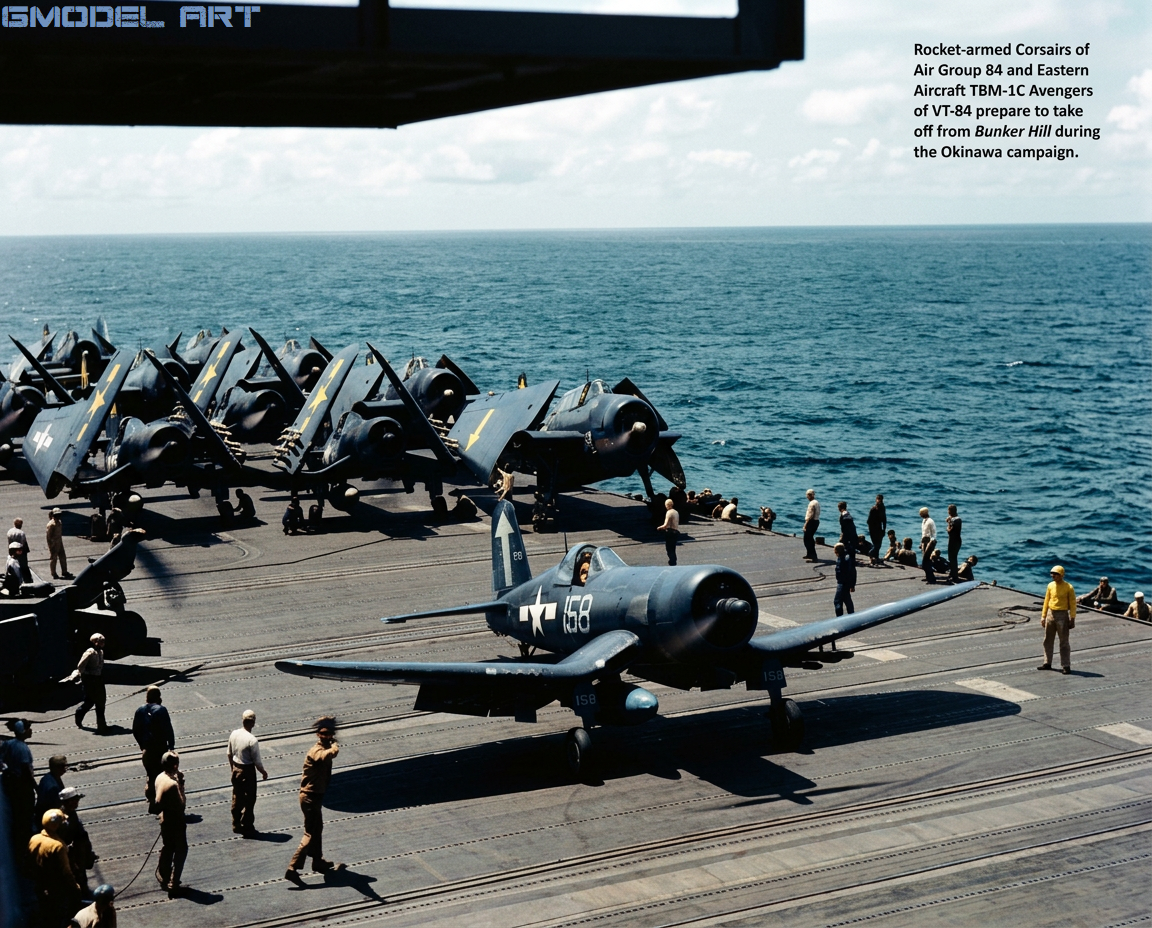
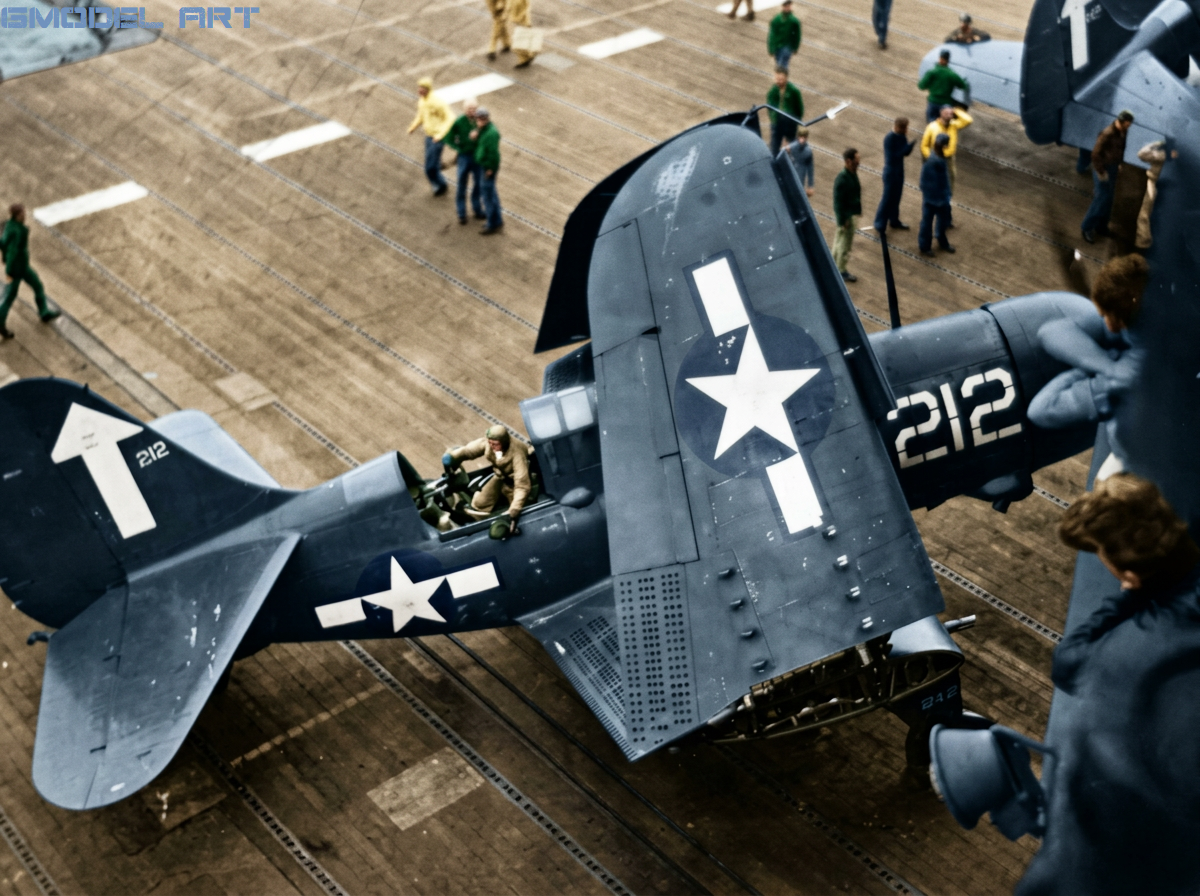
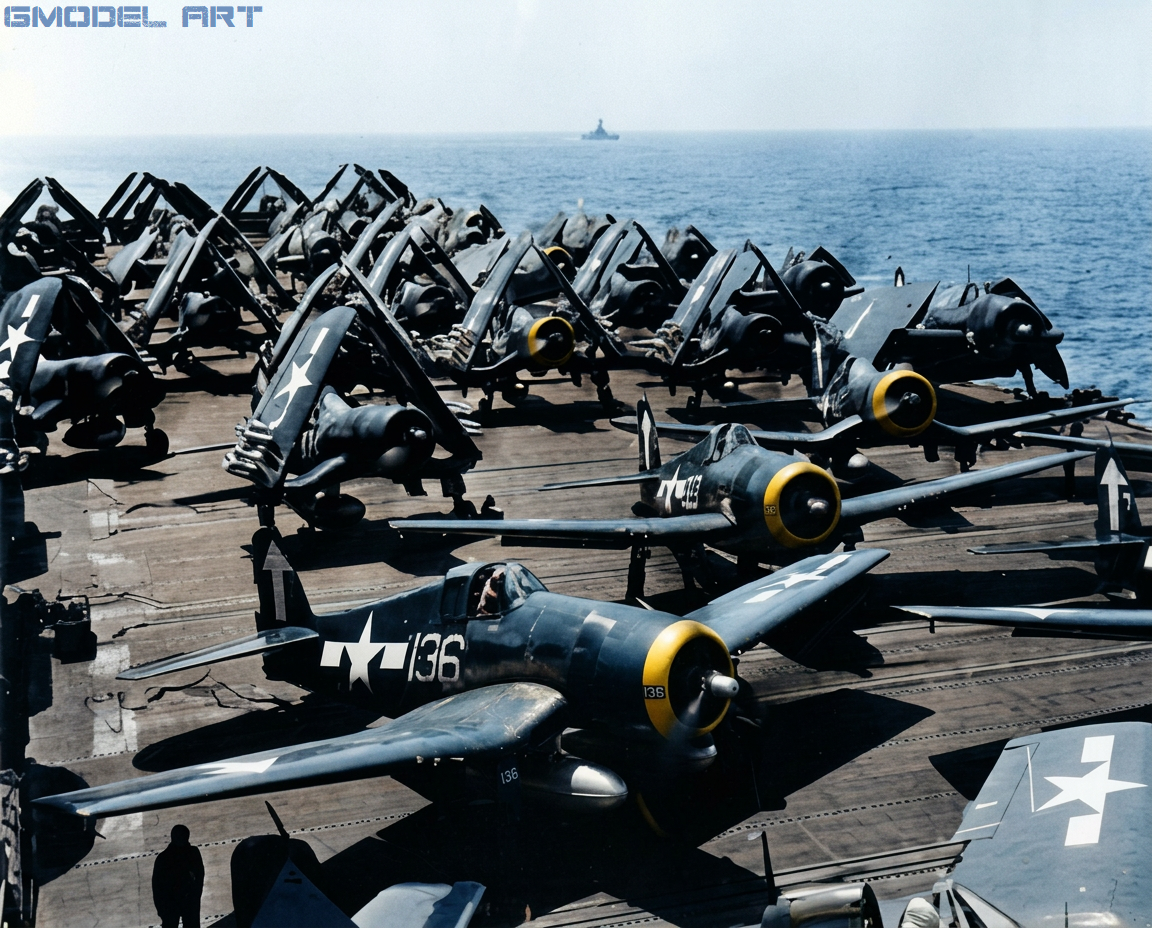
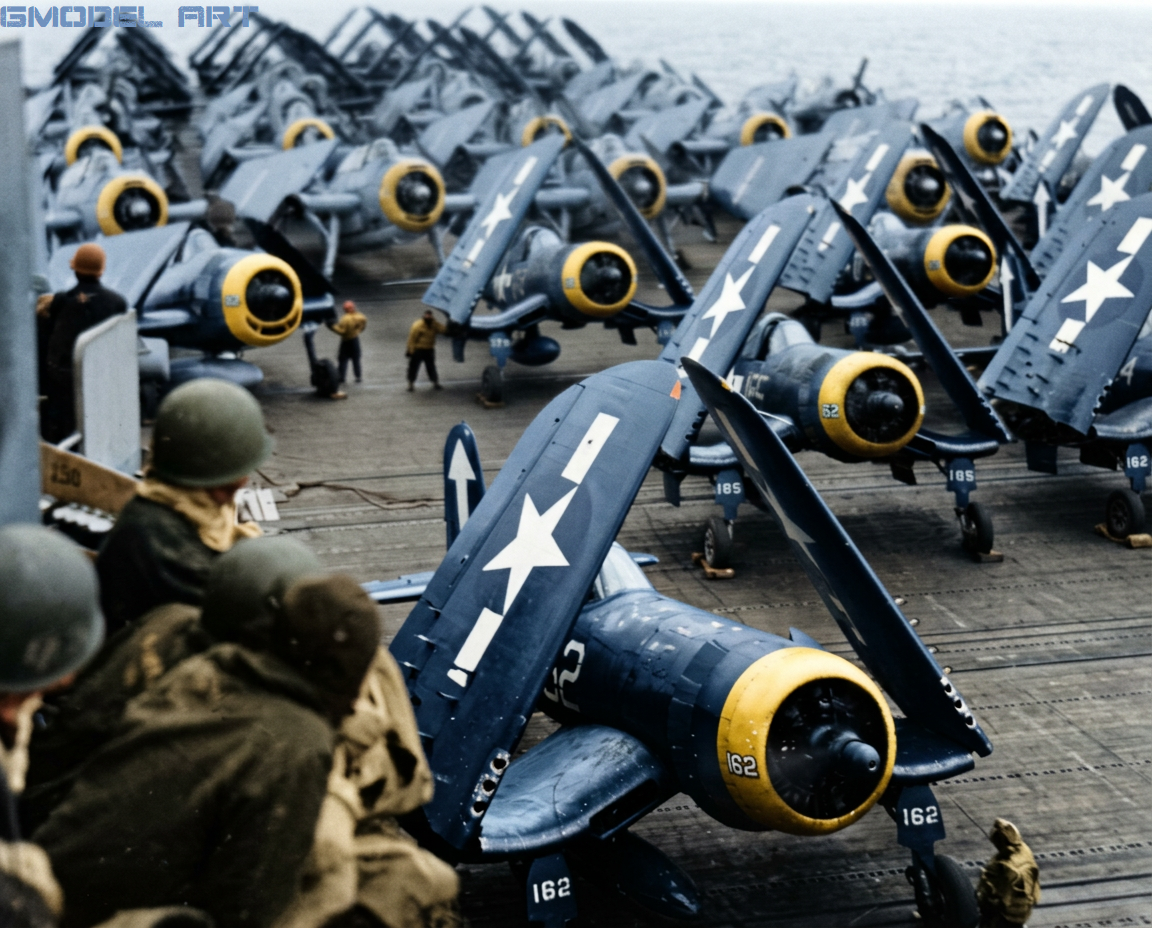
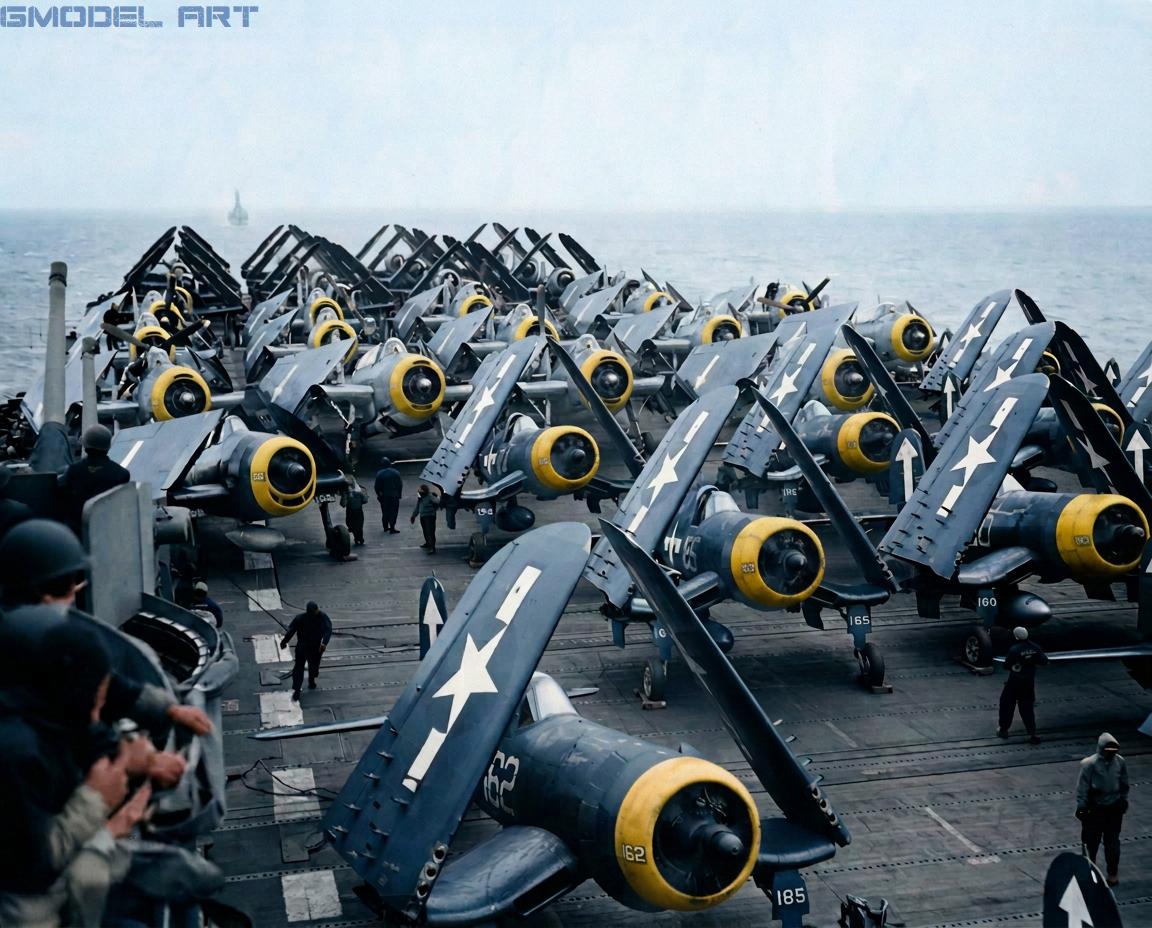
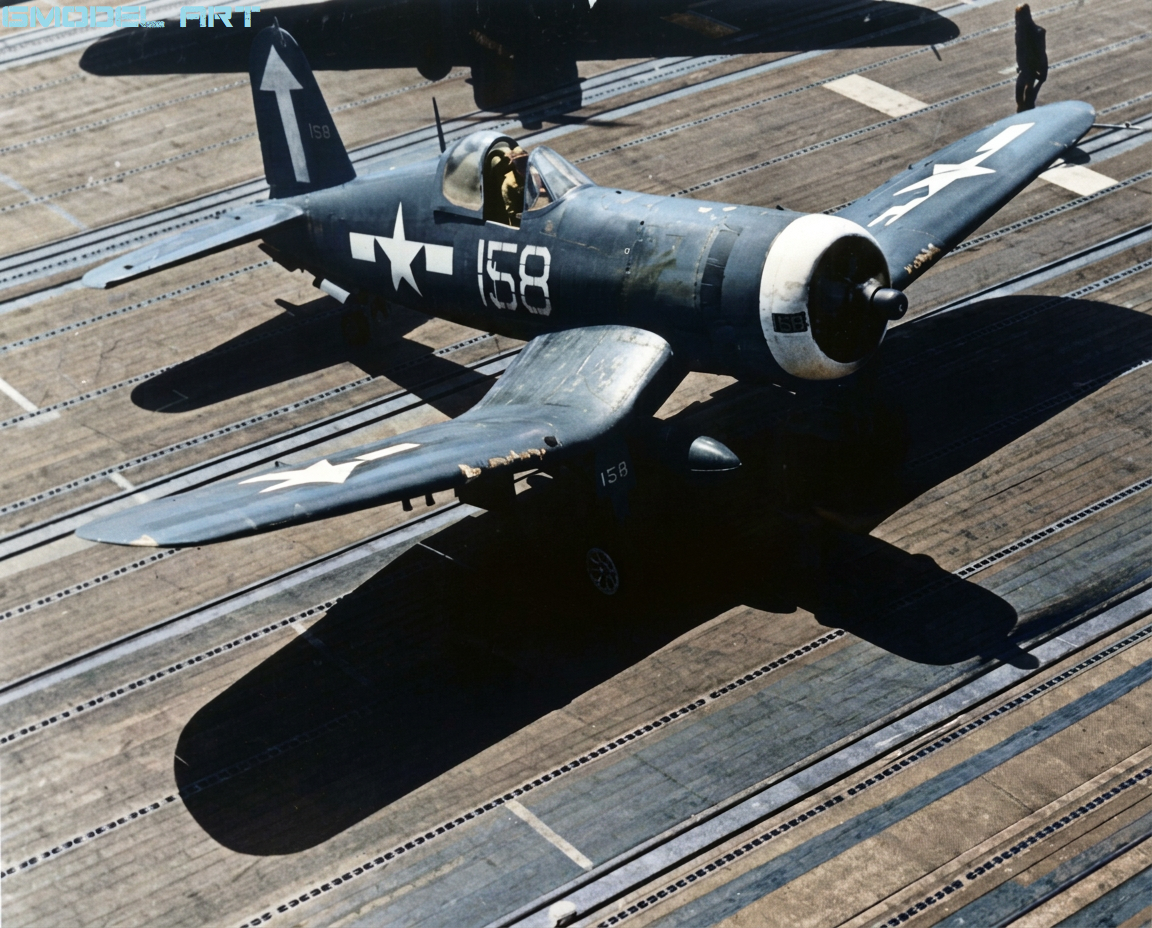
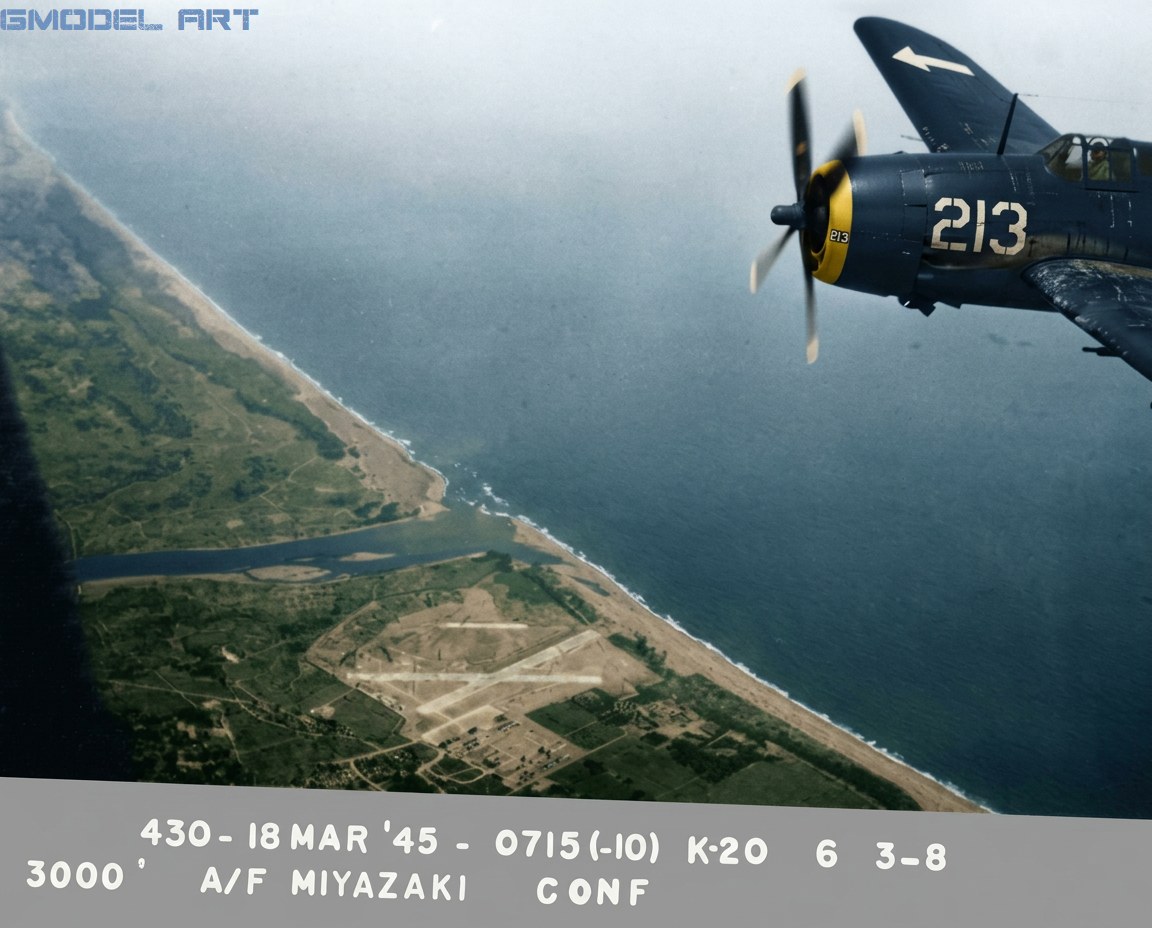
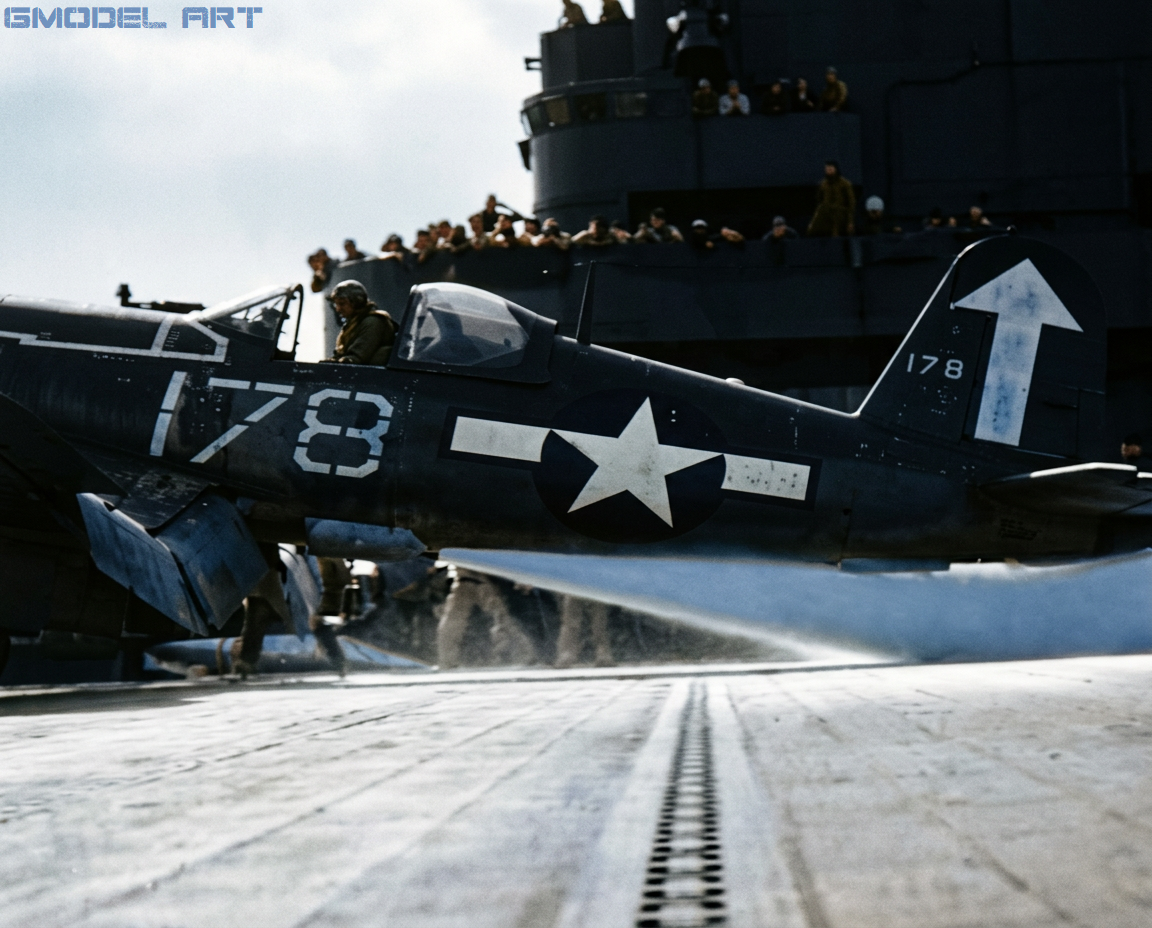
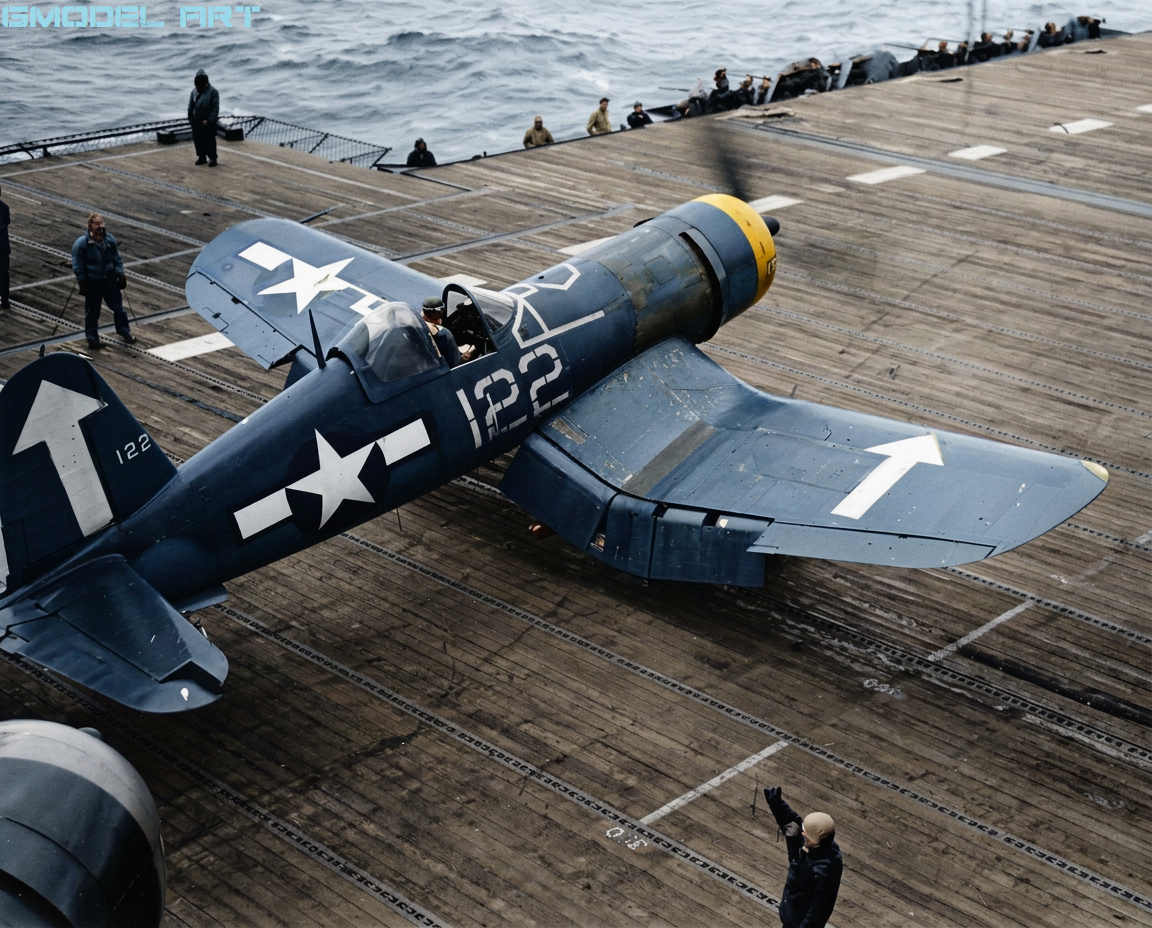
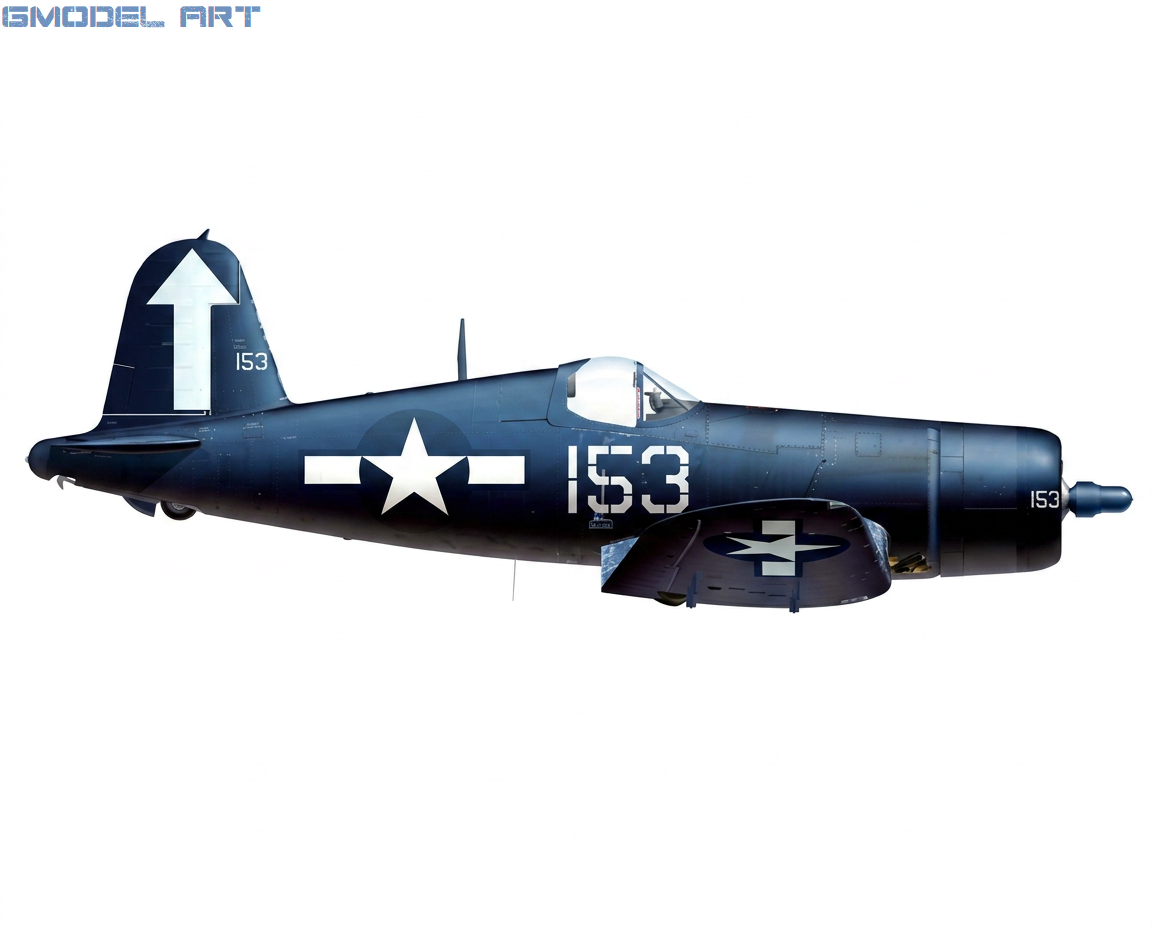
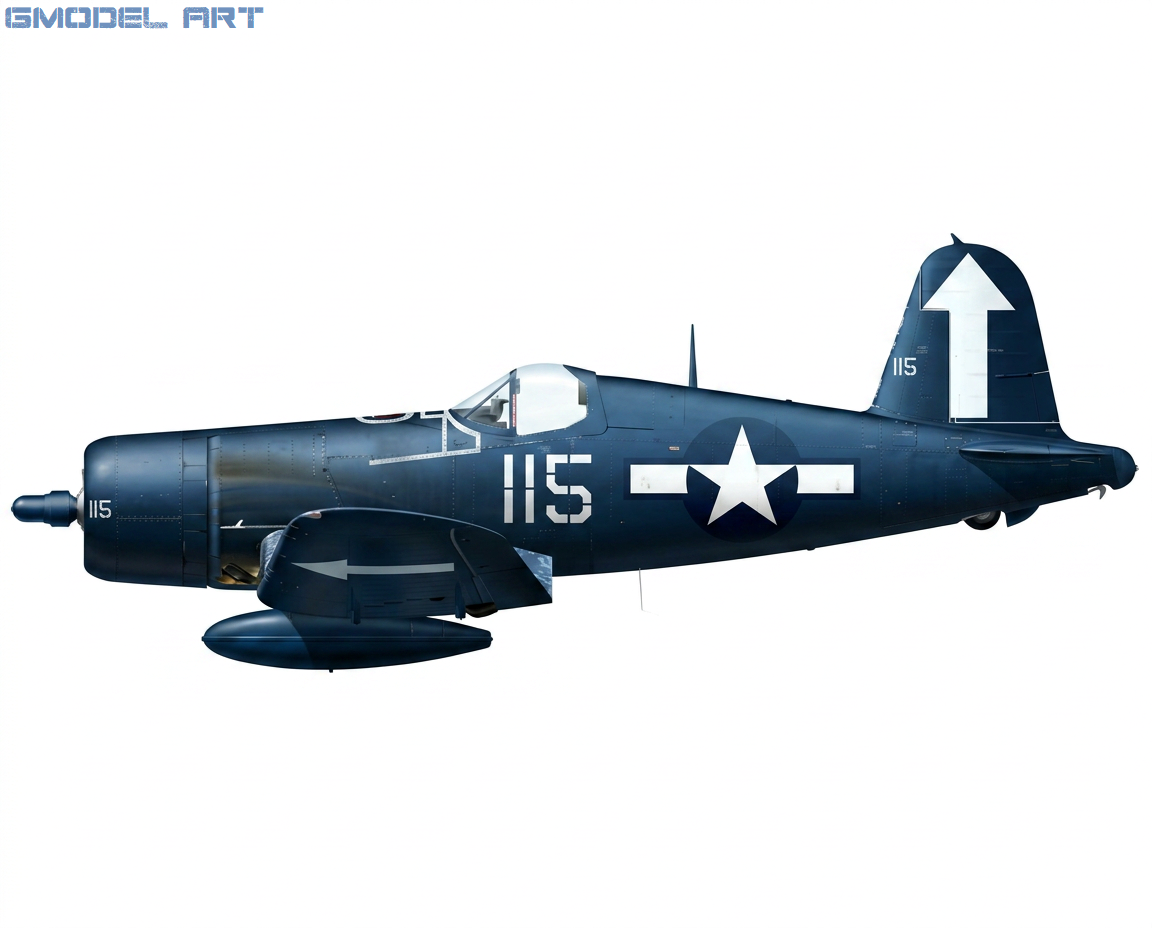
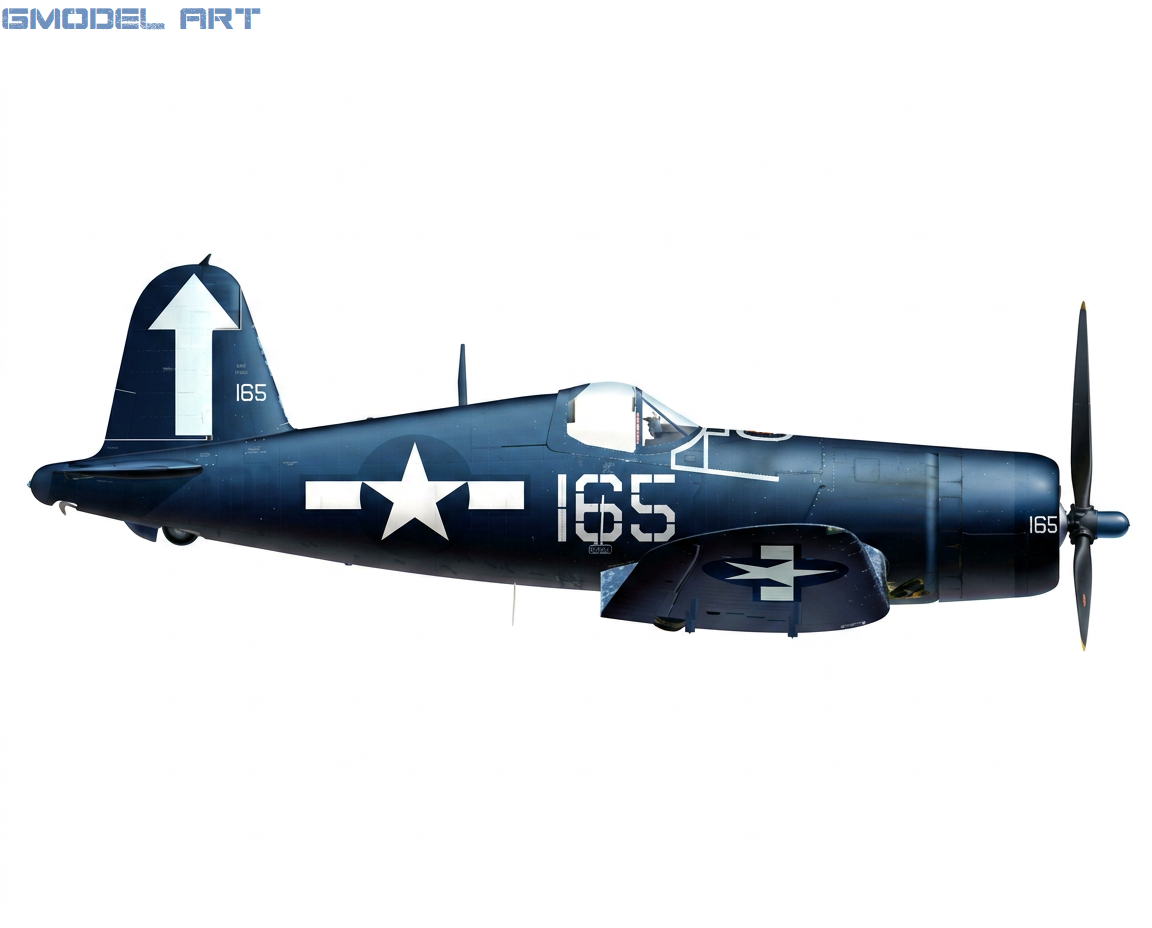
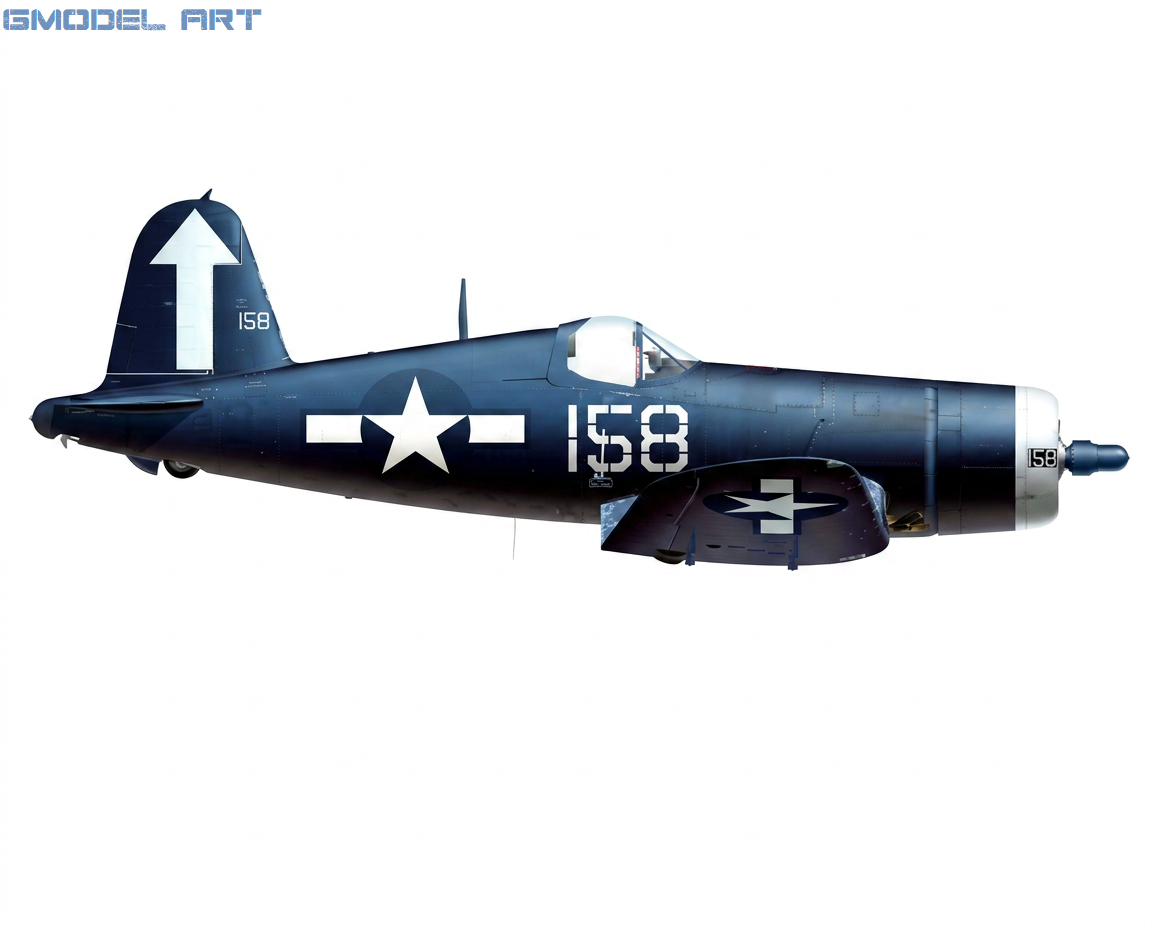
February 1945 provides one of the best subjects for a VF-84 F4U-1D Corsair model.
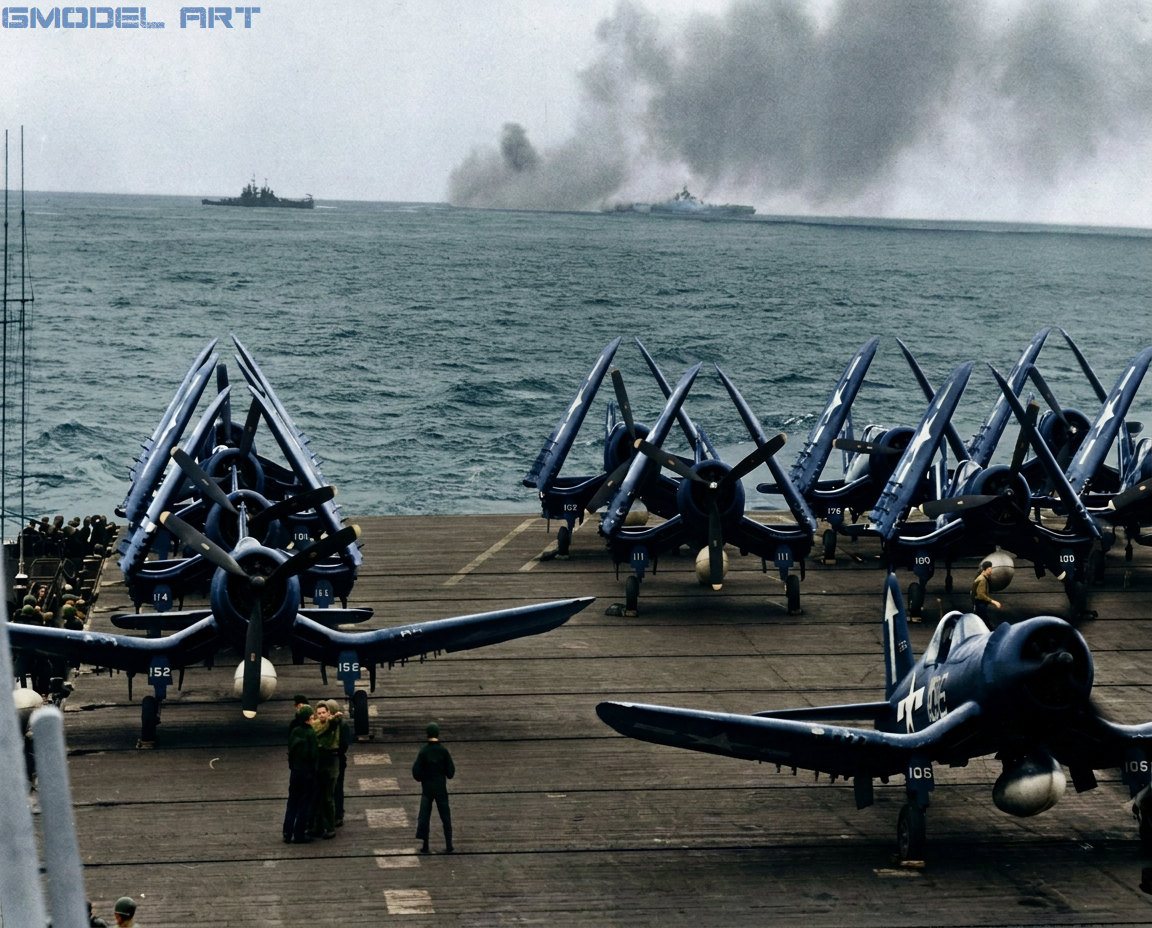
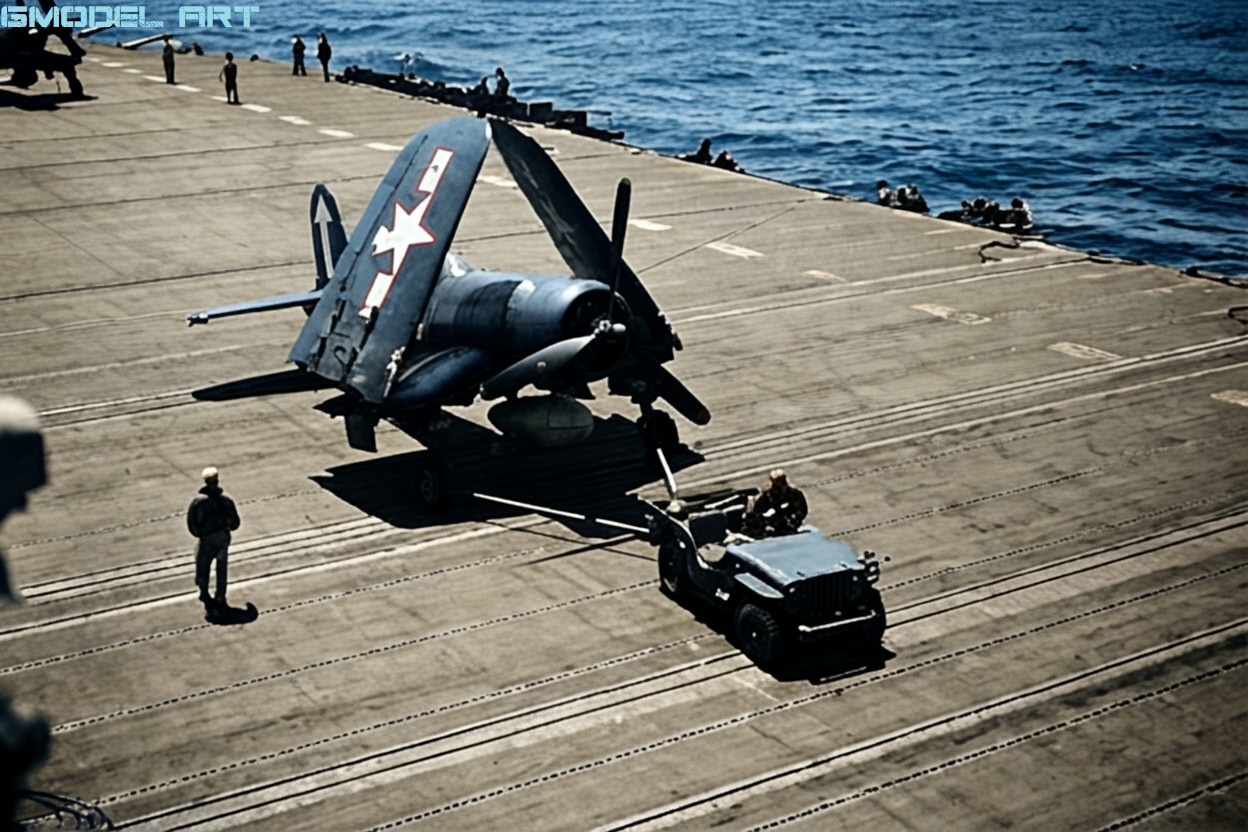
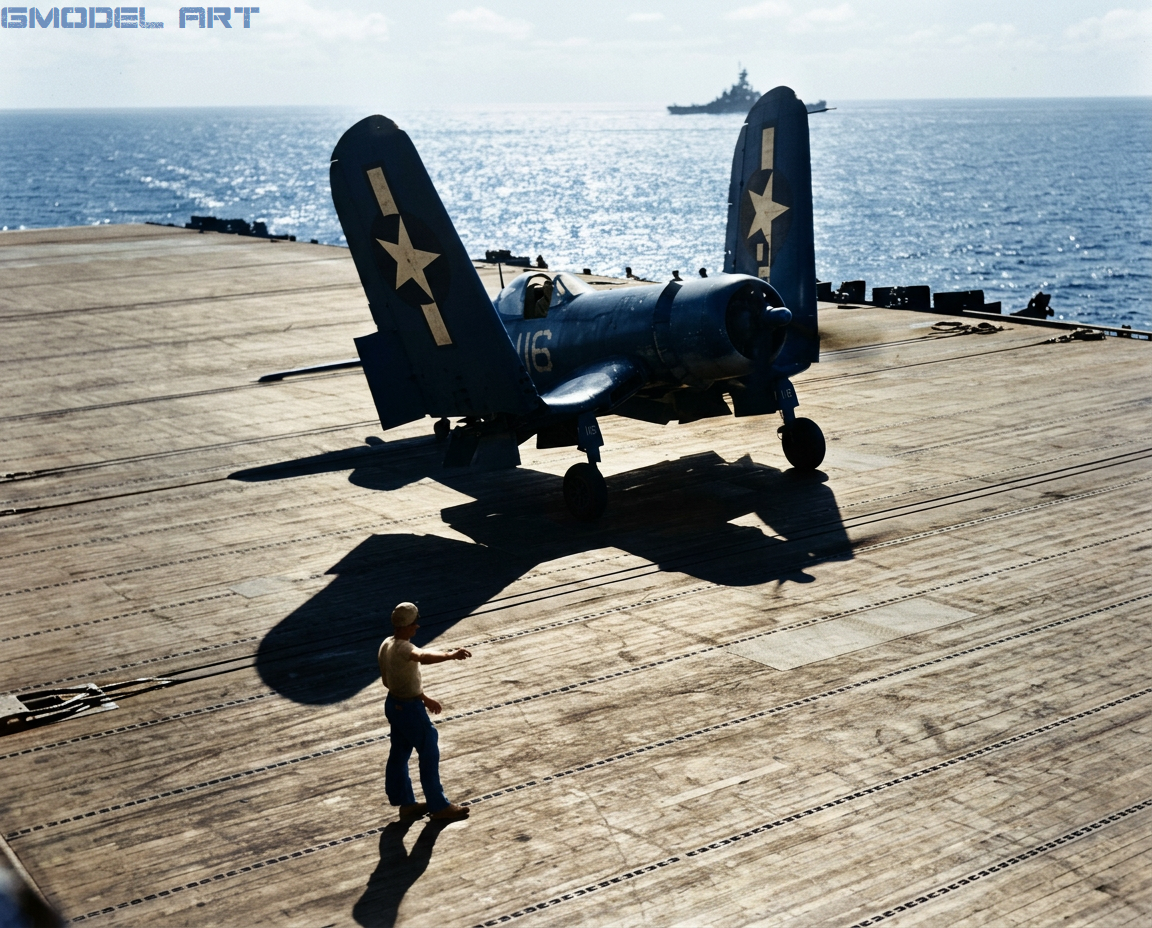
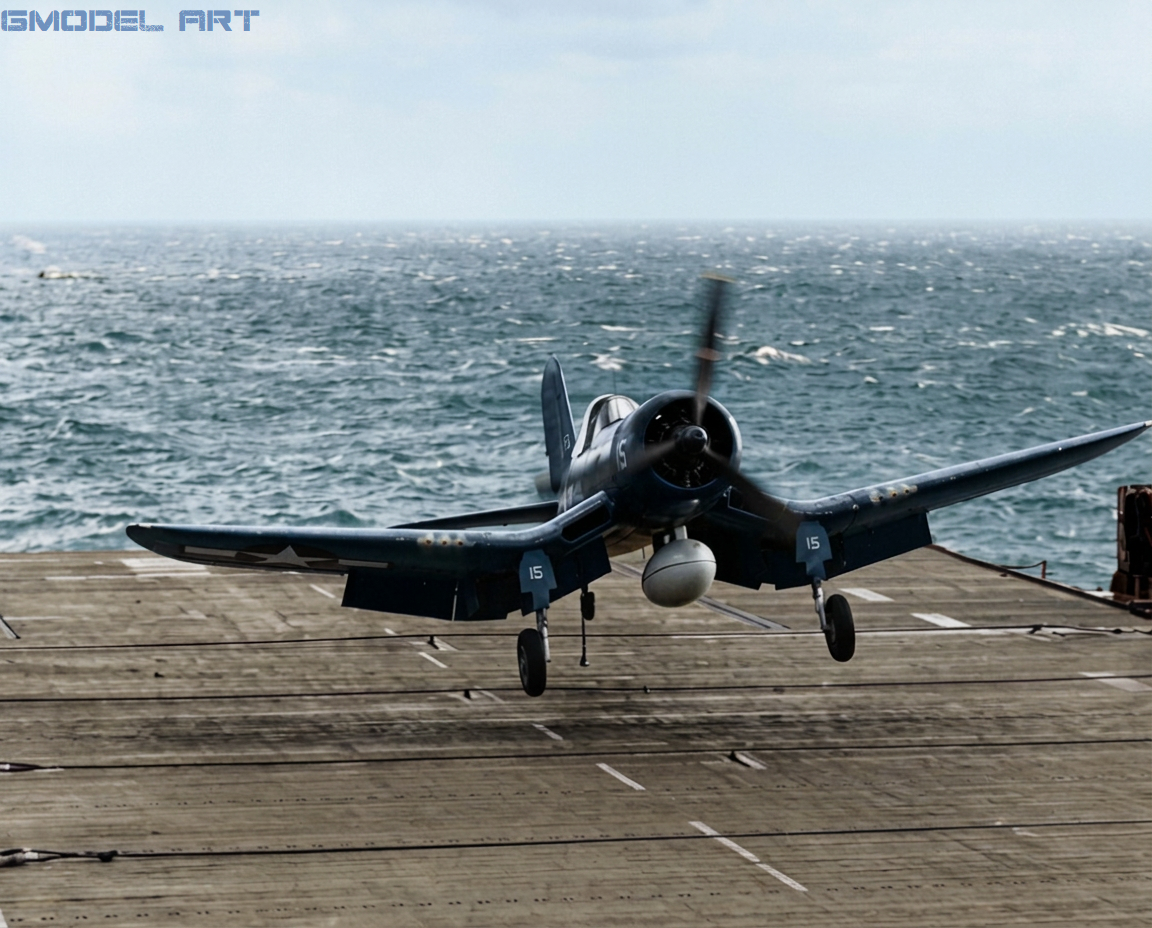
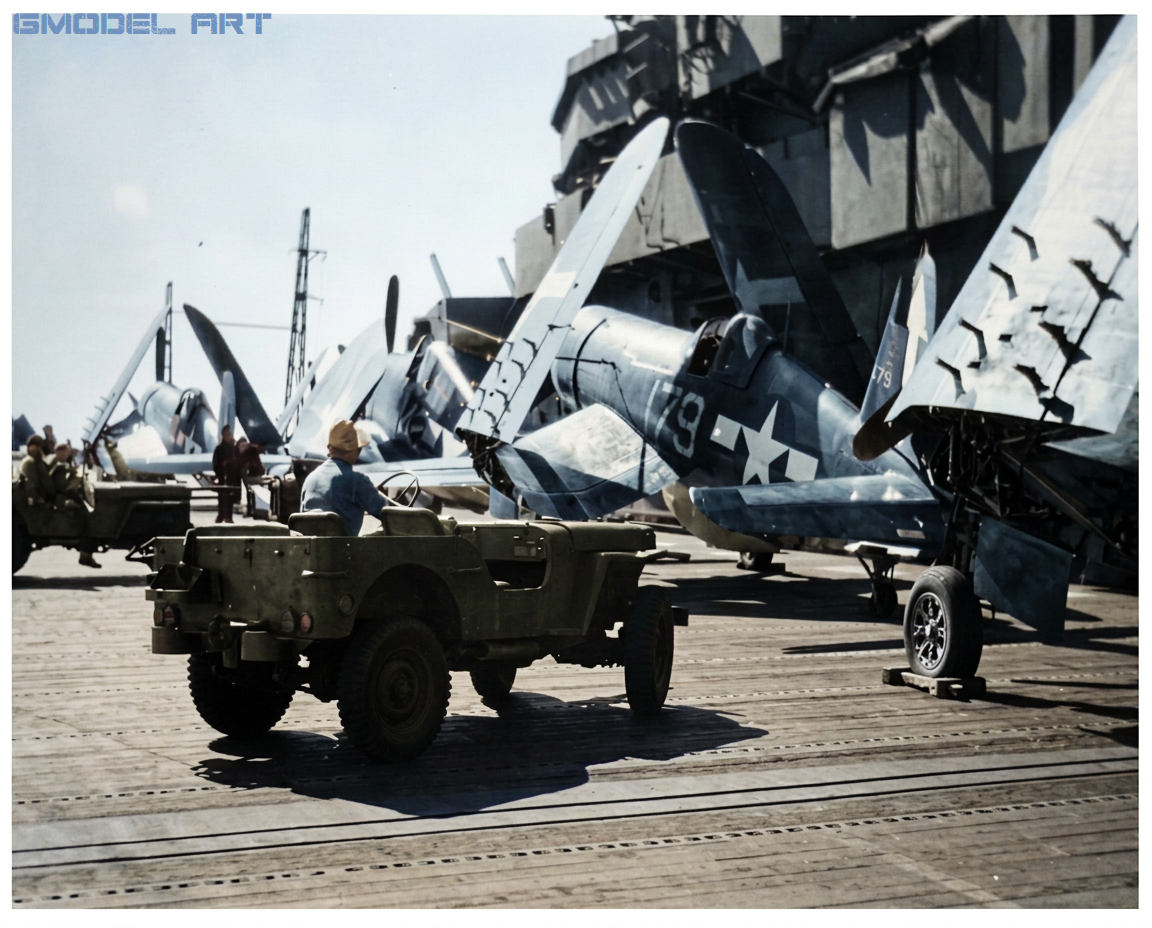
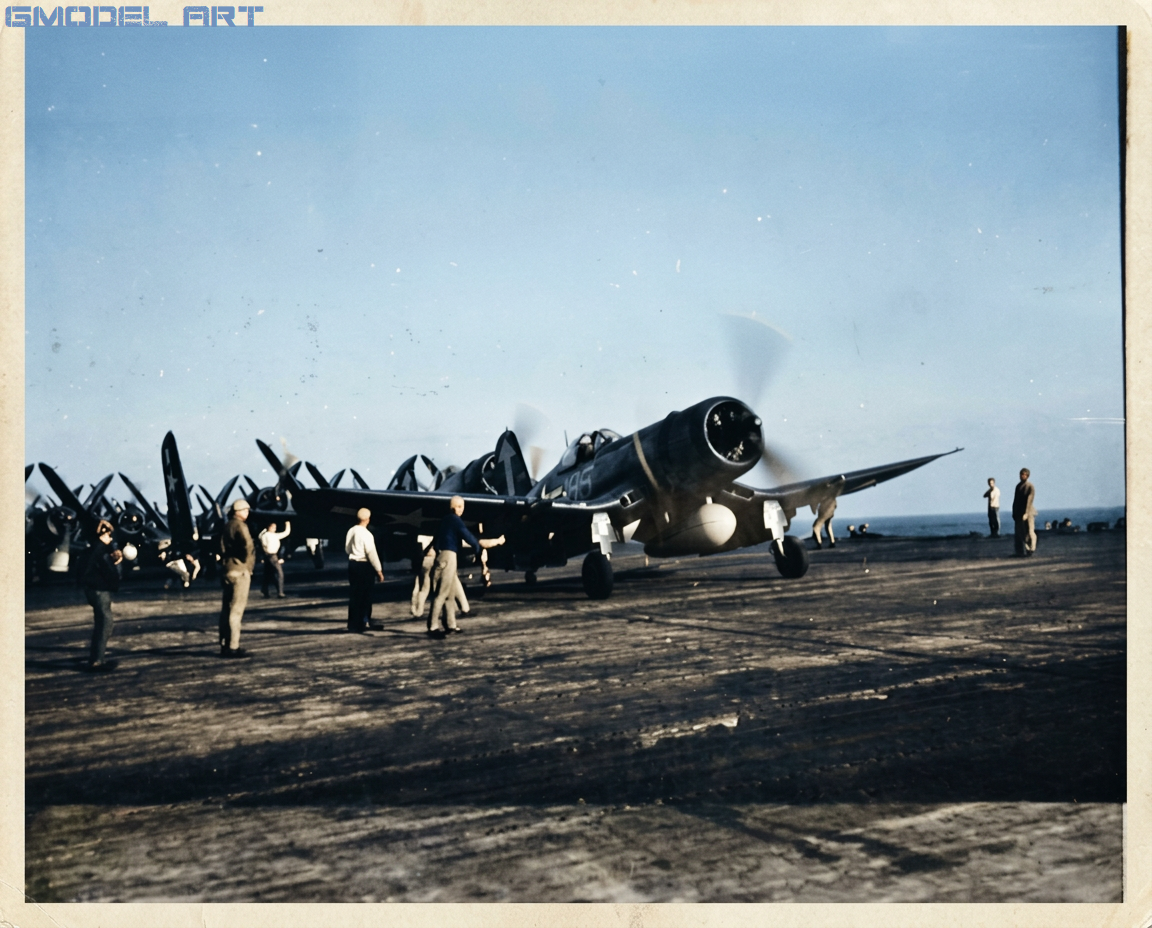
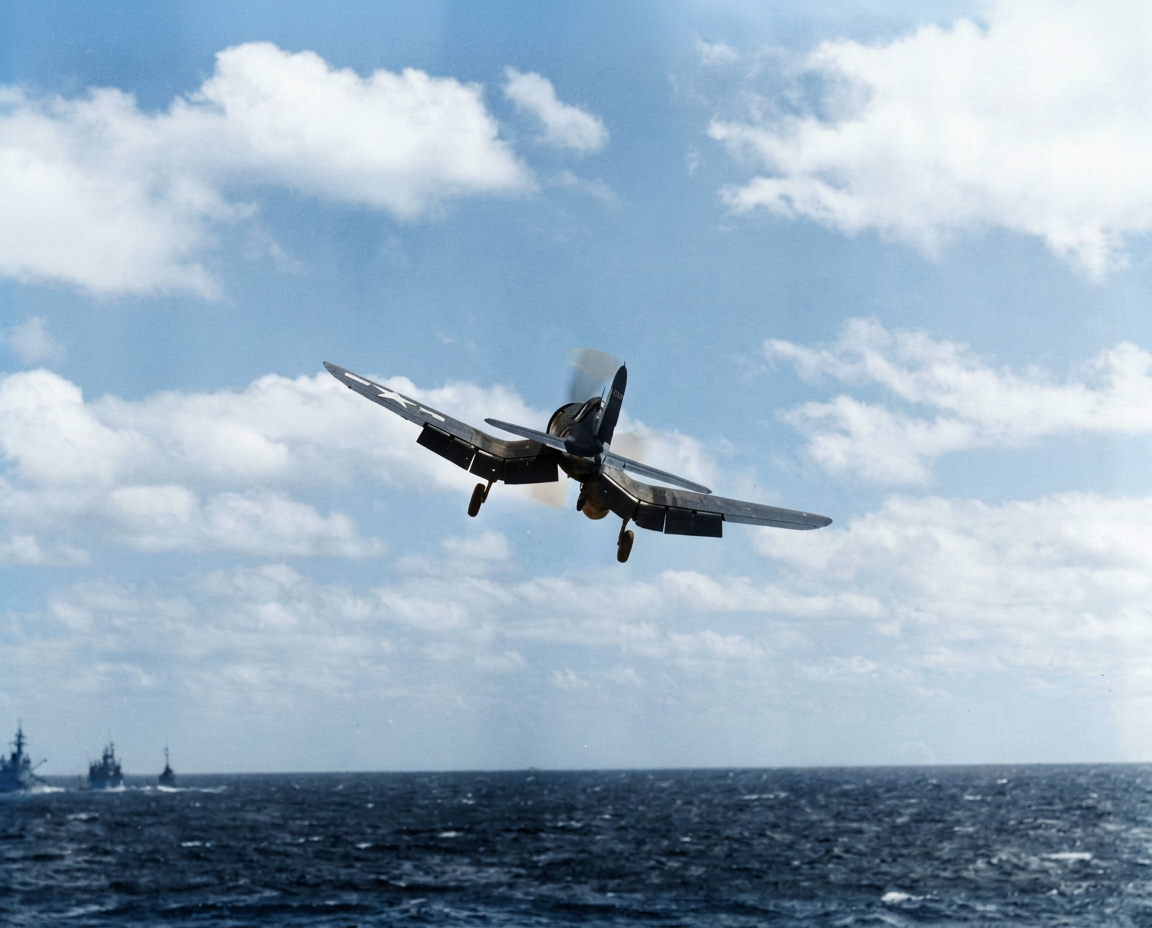
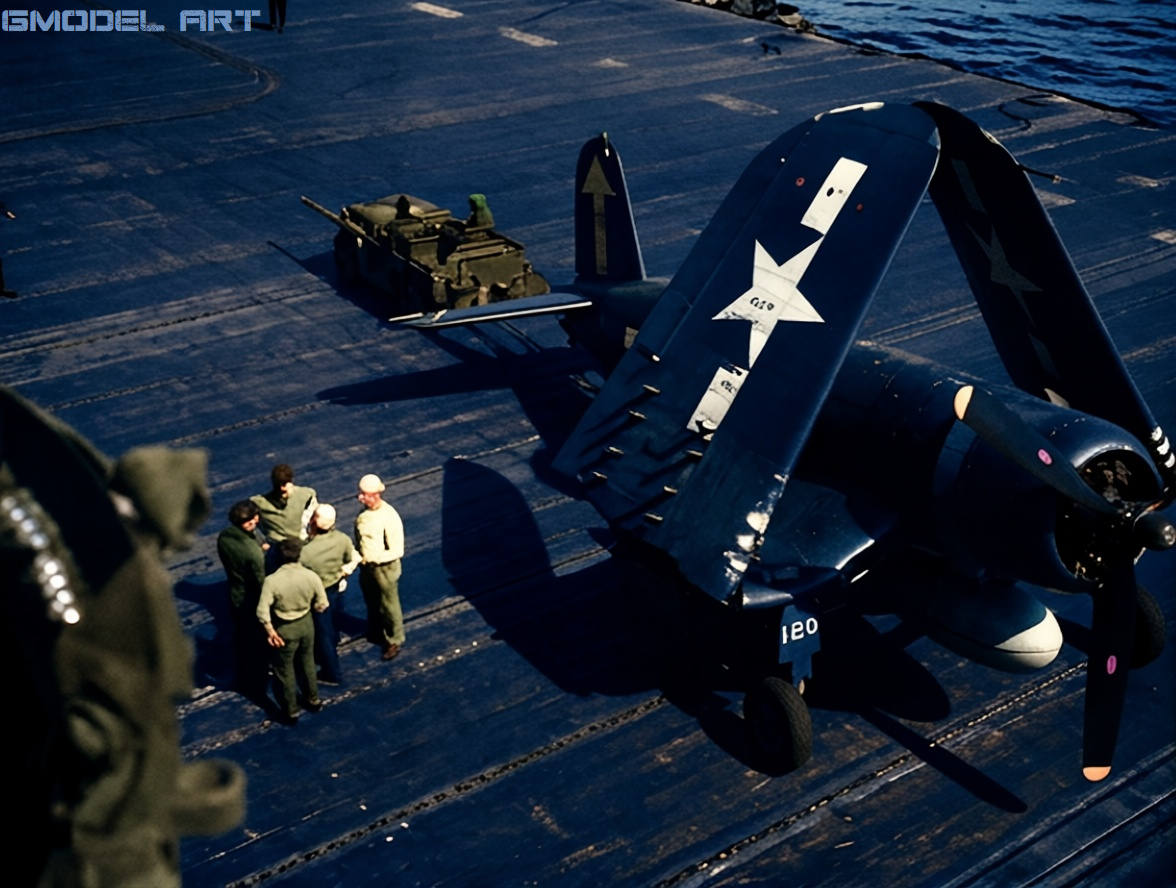
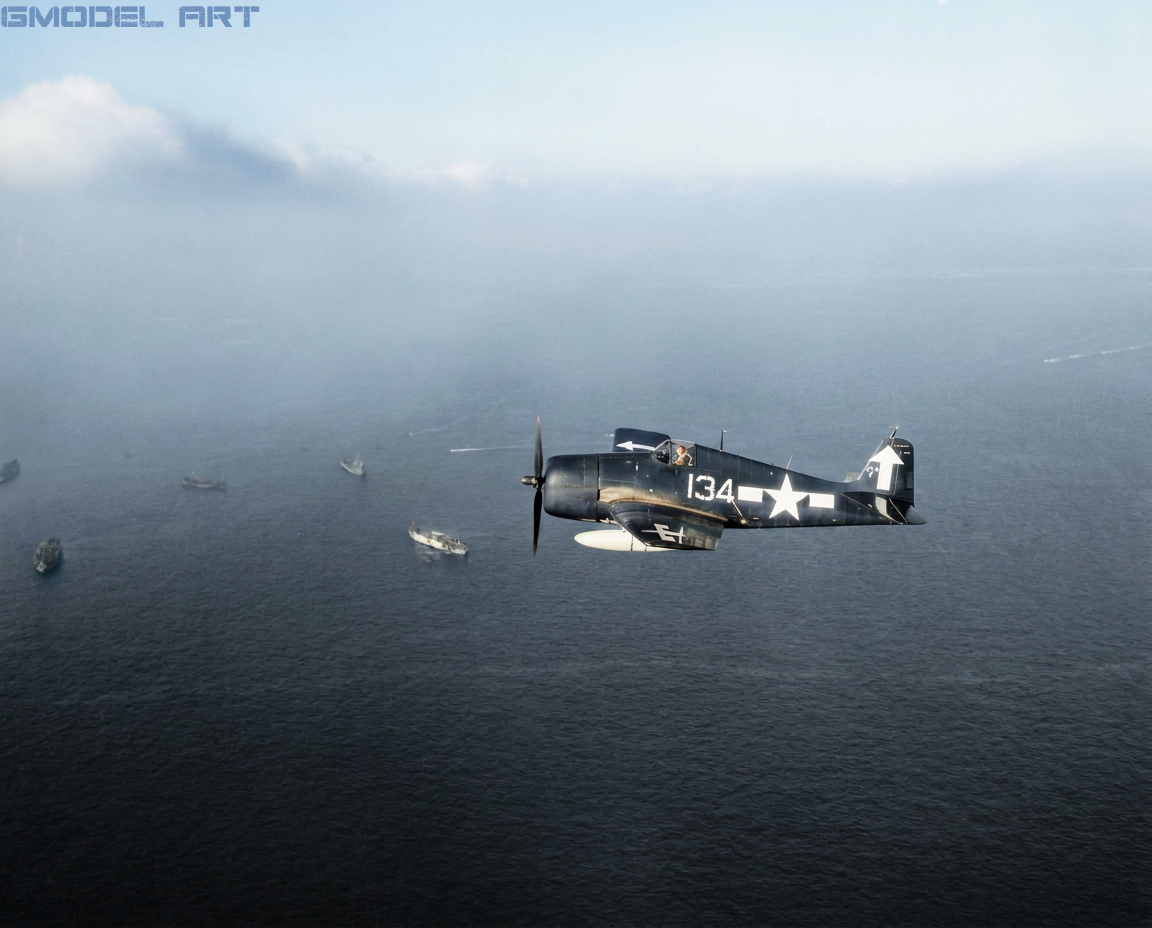
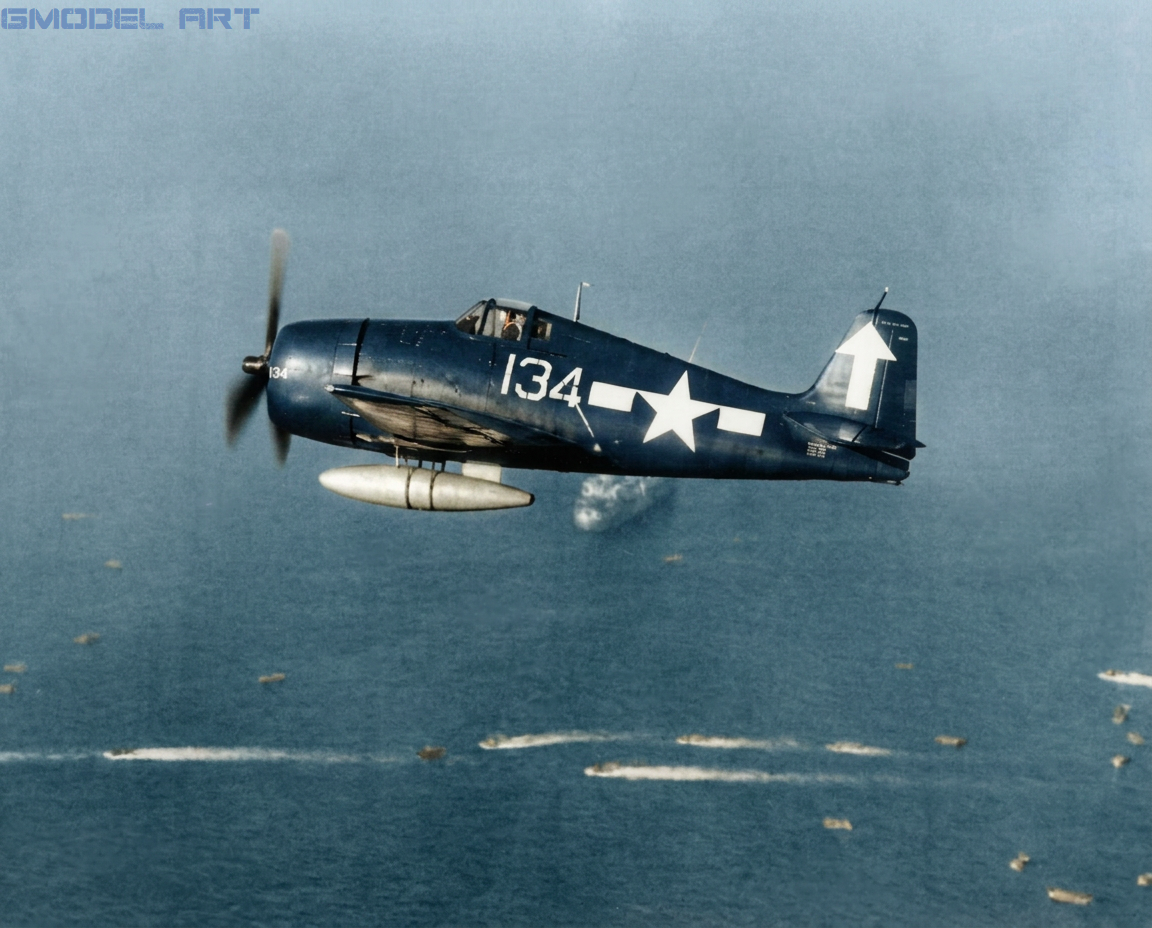
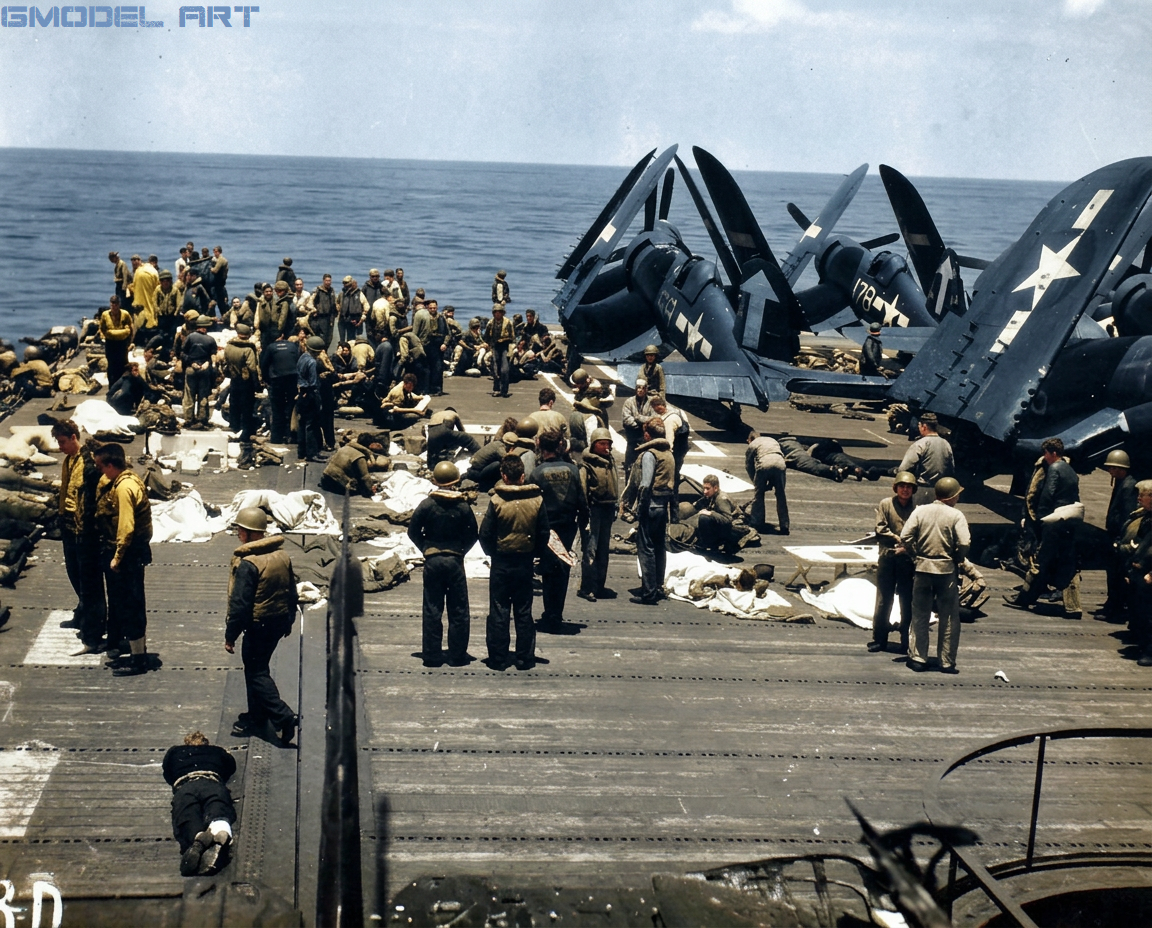
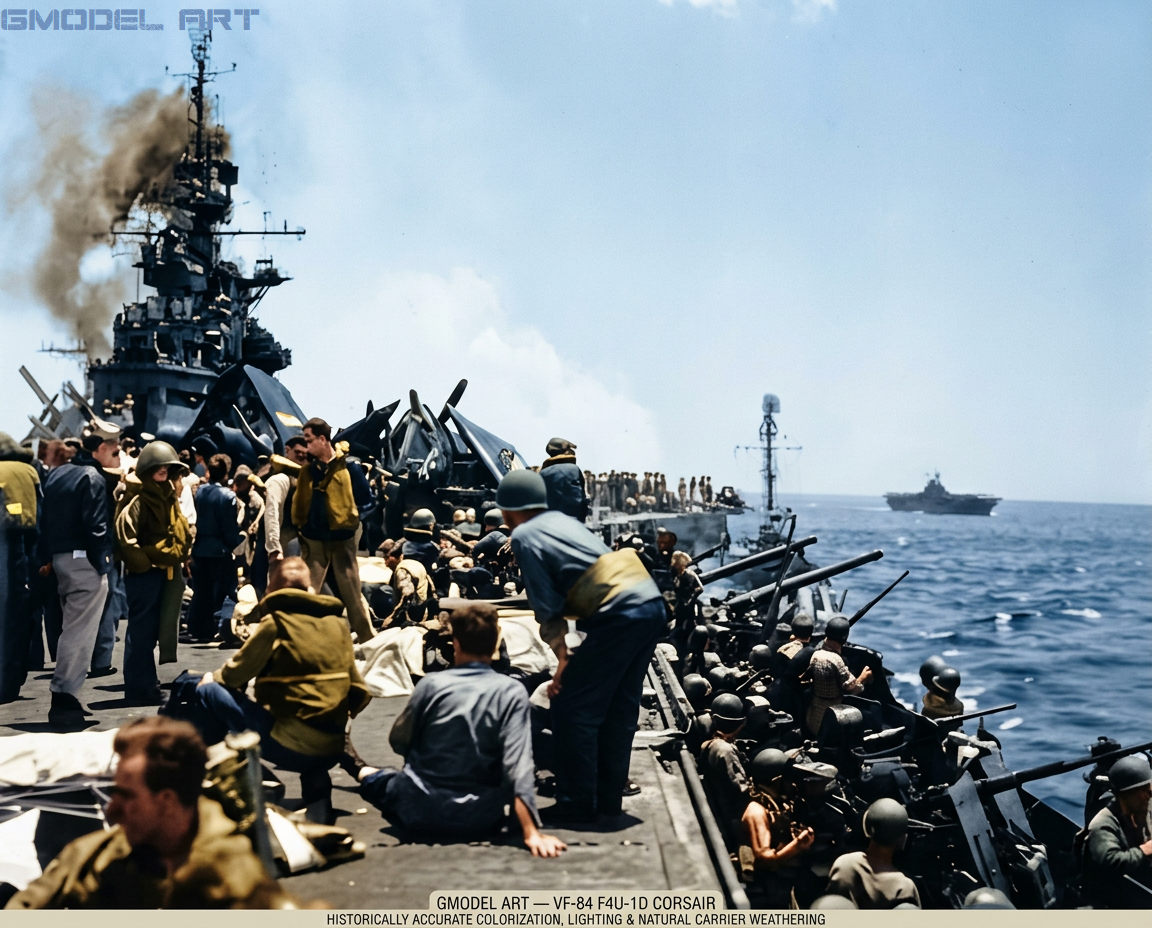
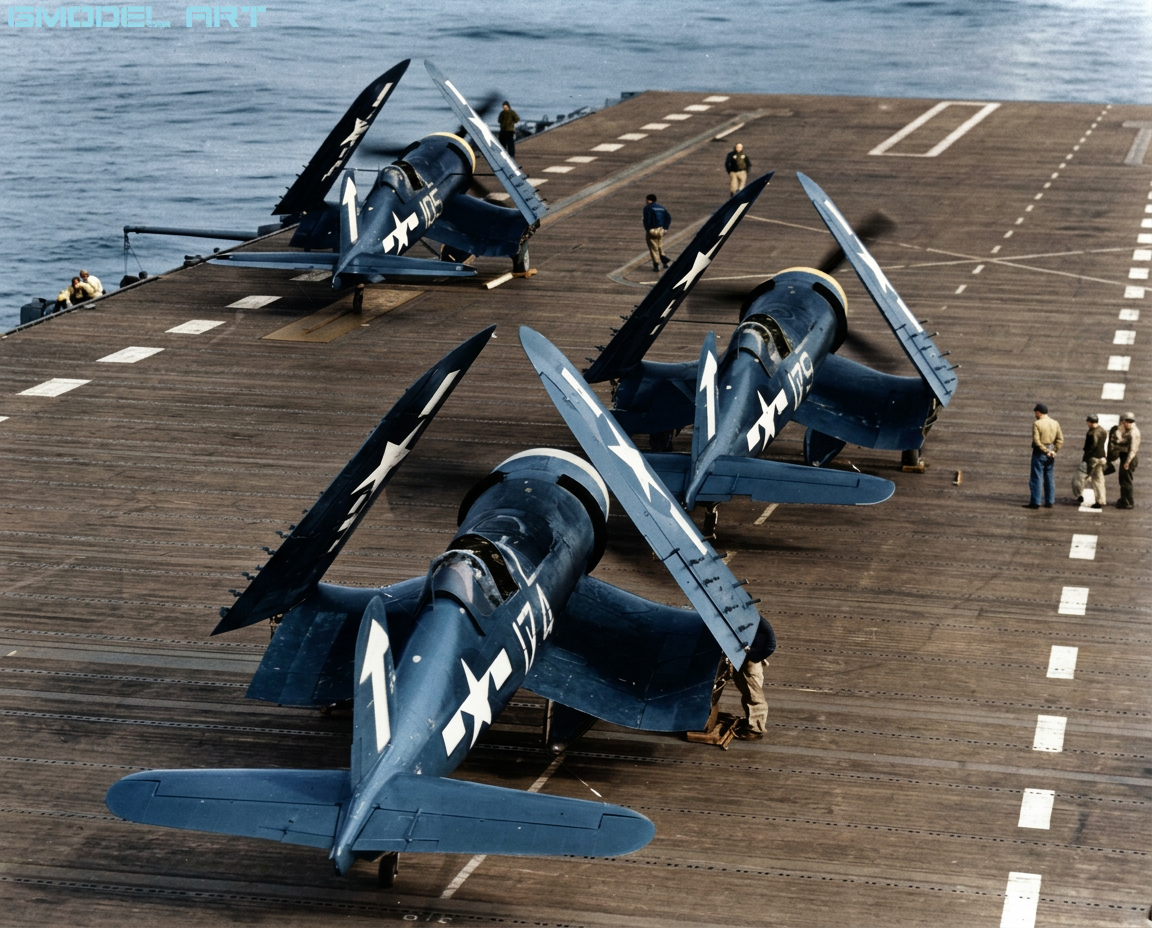
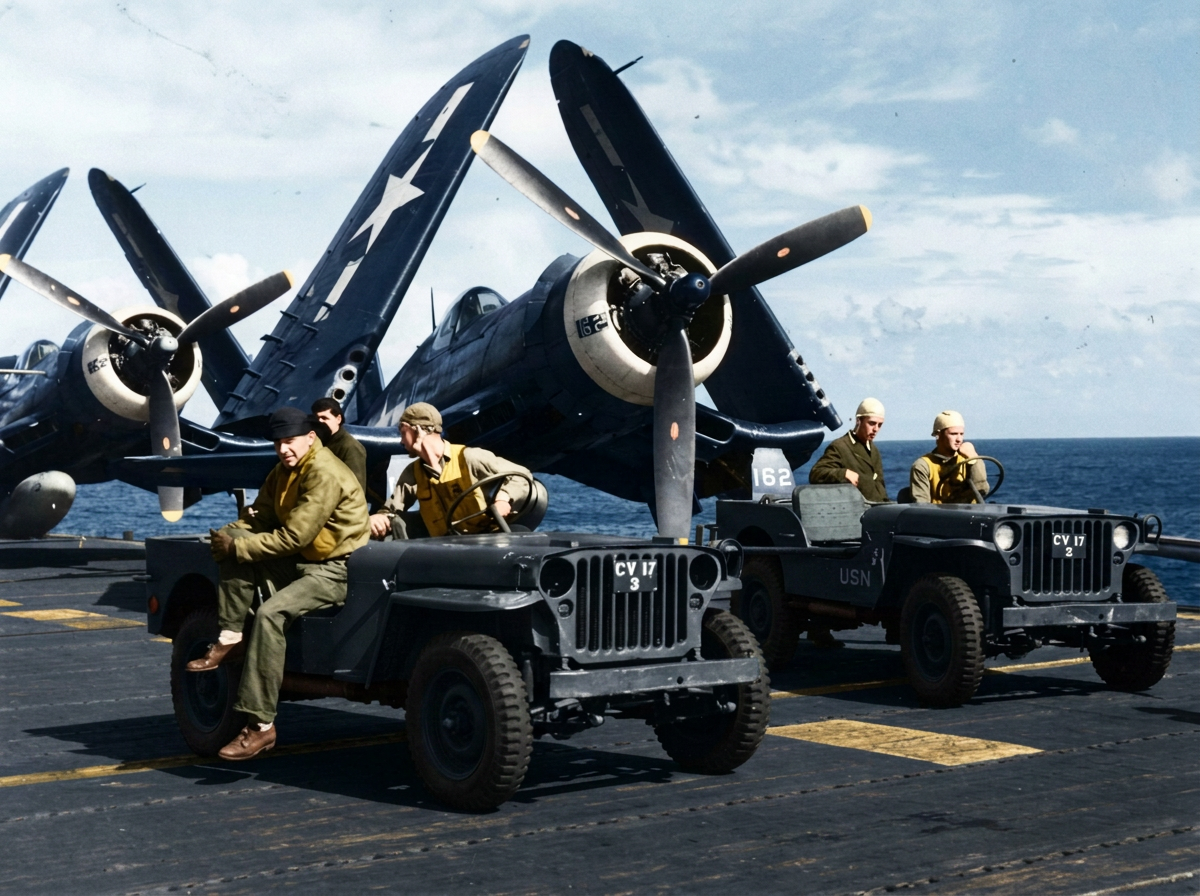
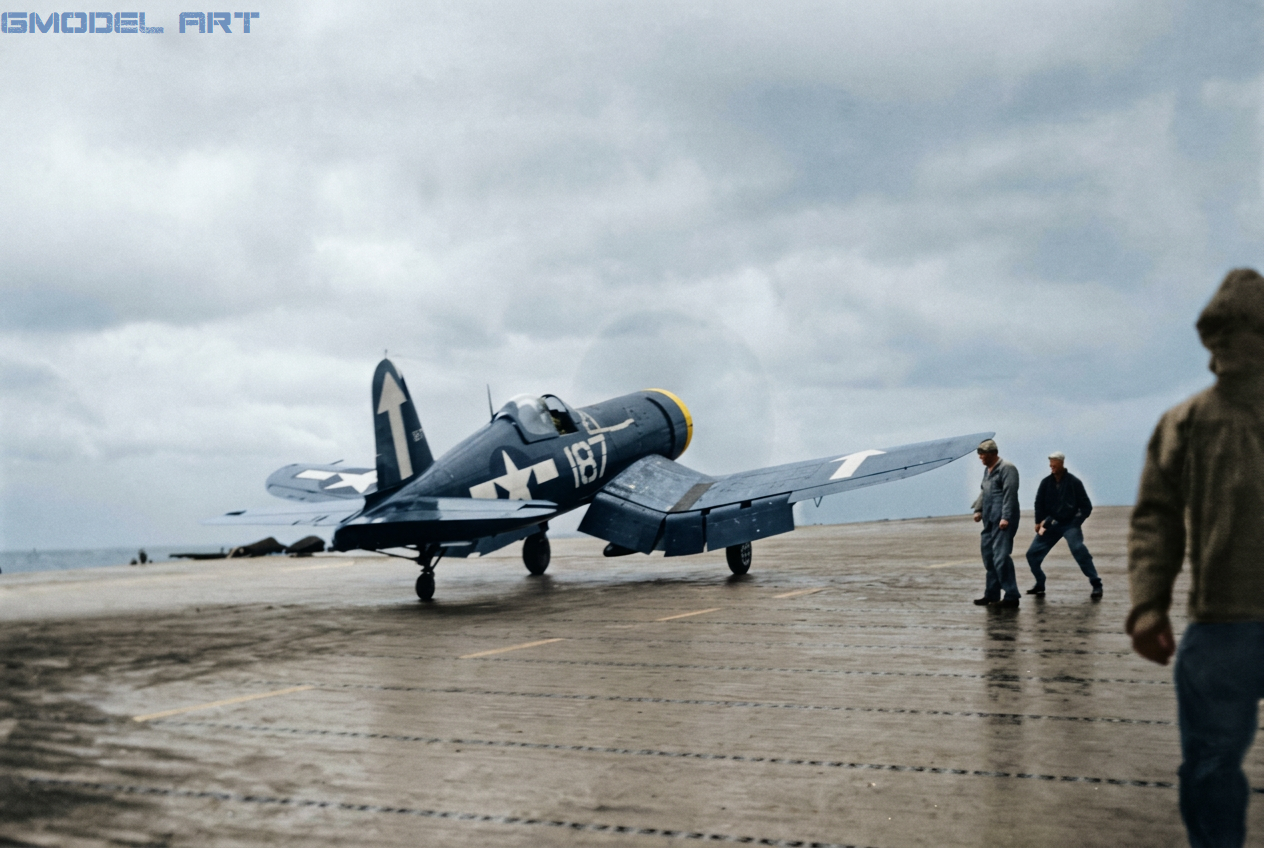
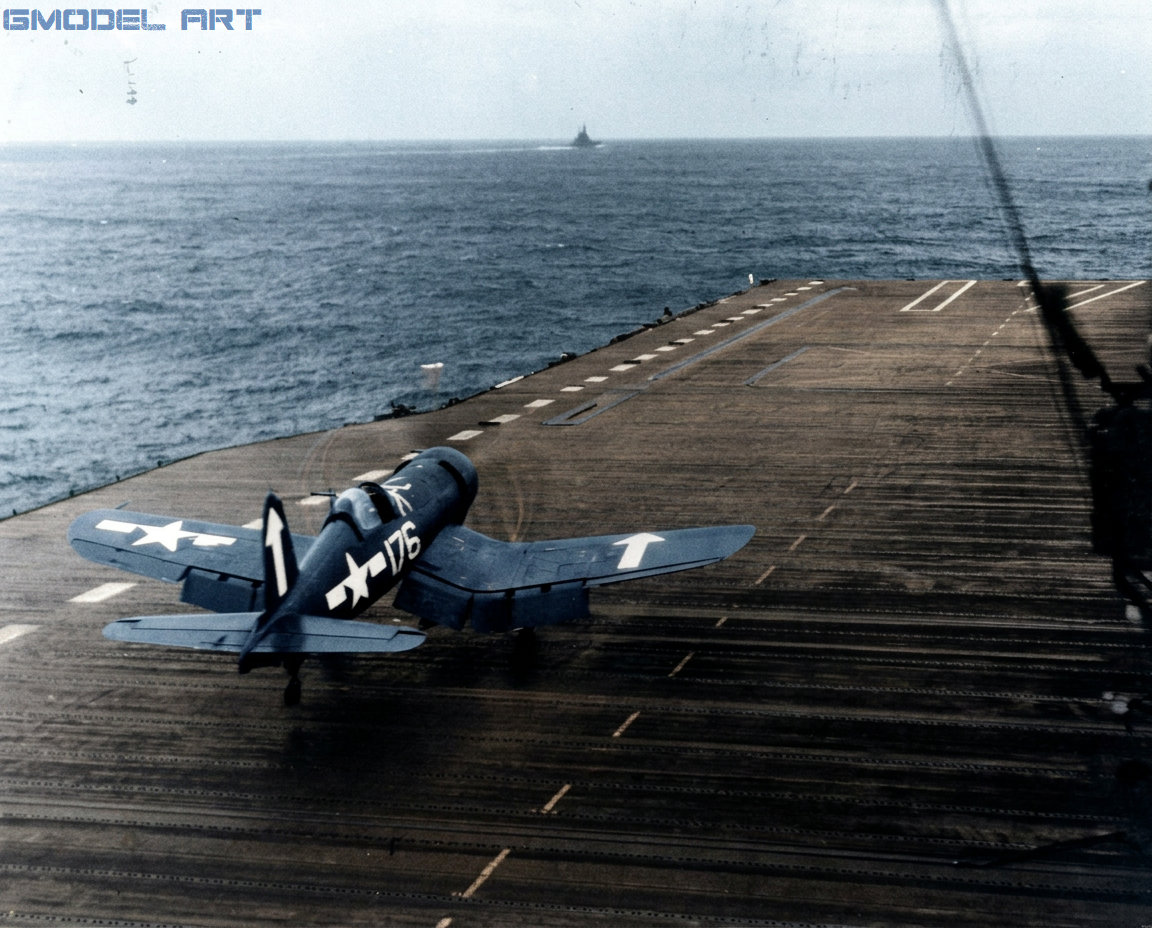
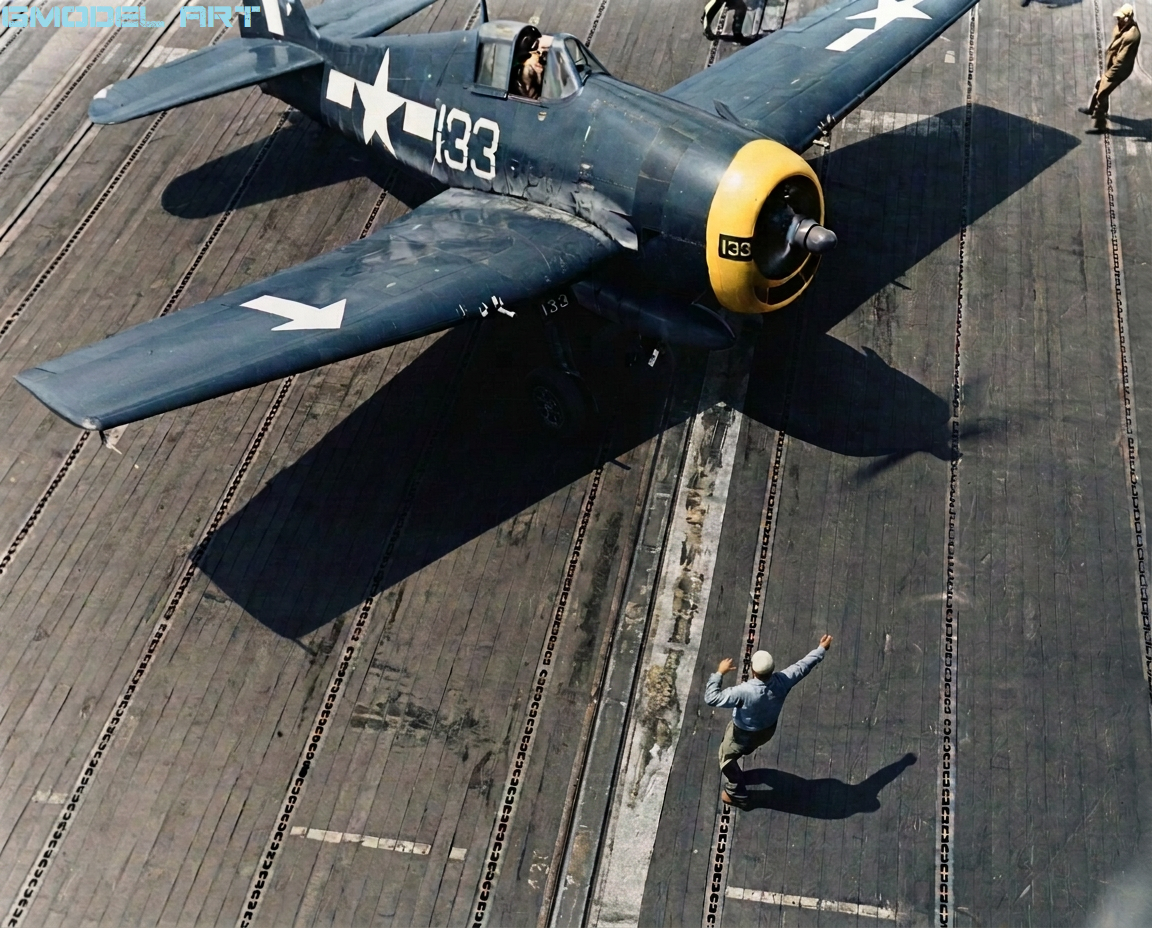
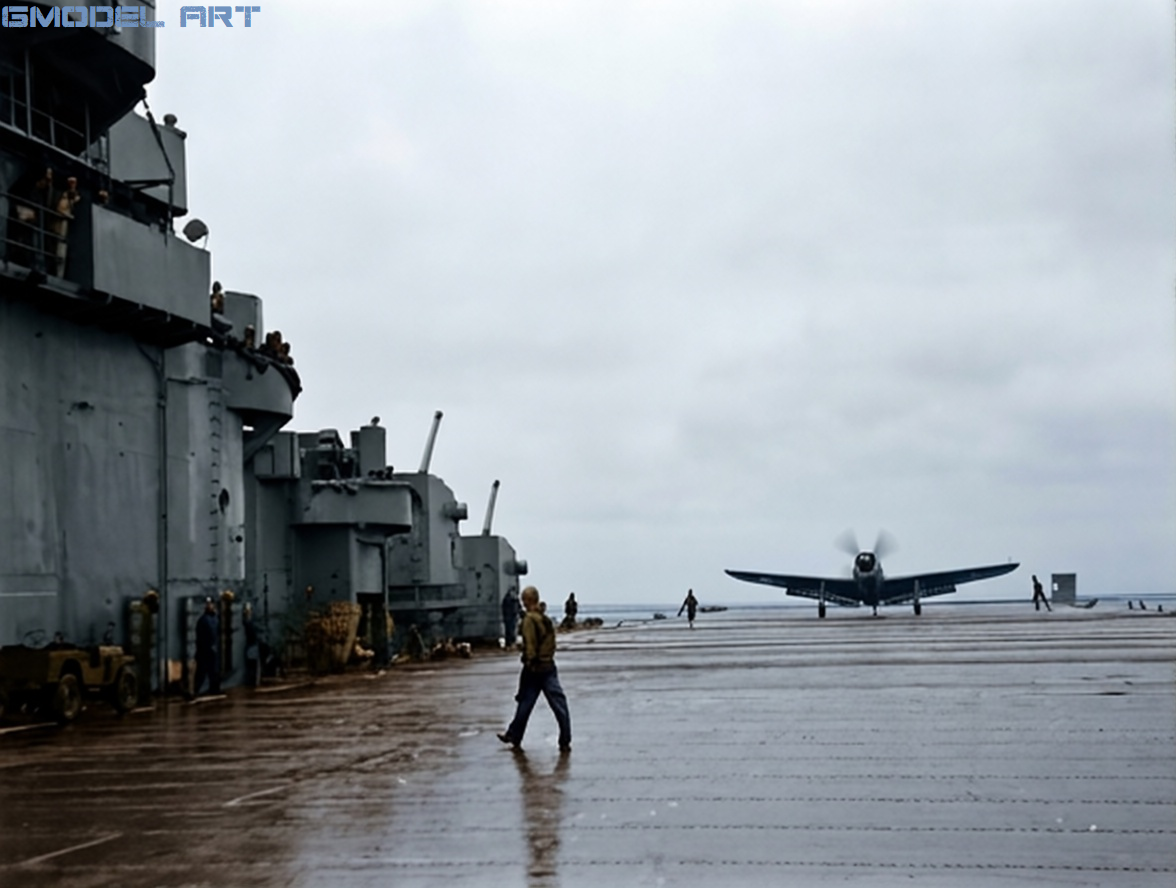
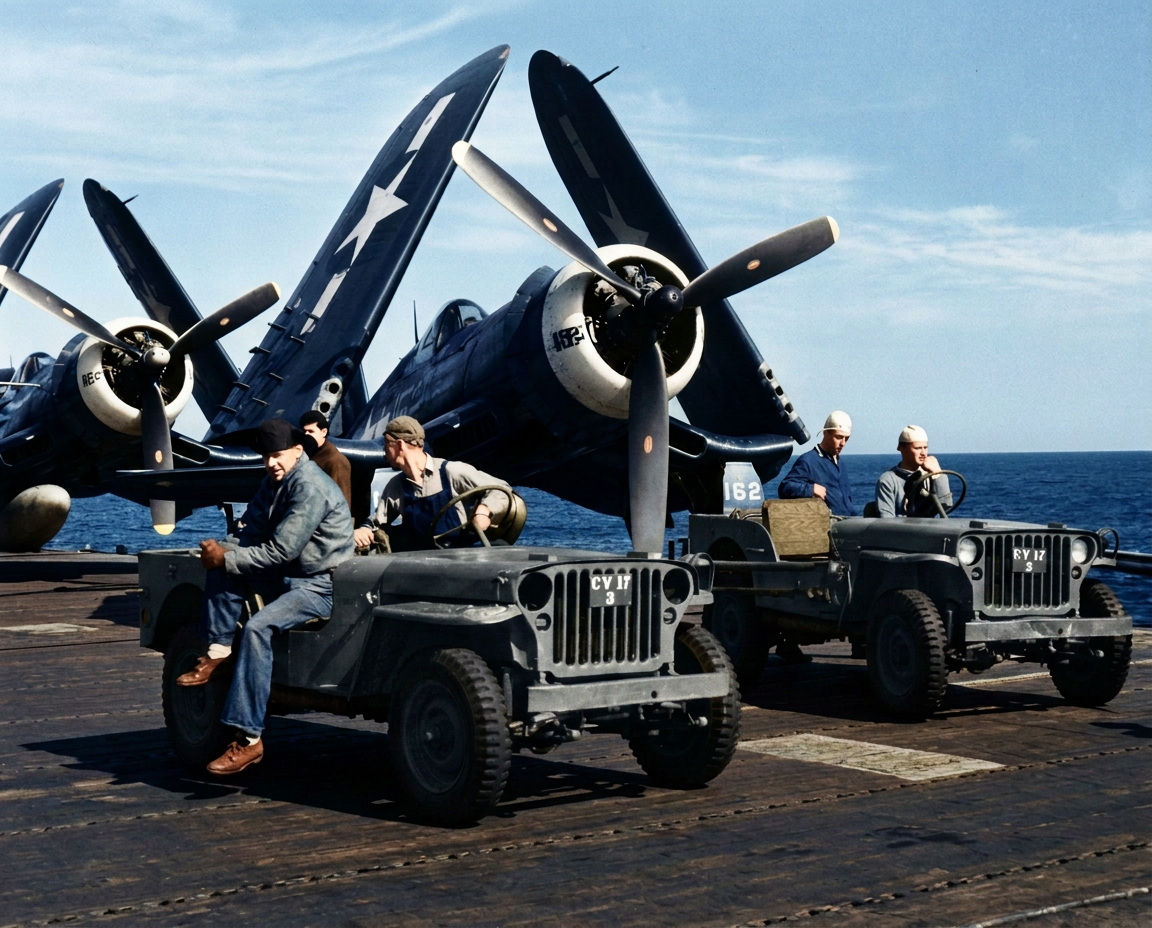
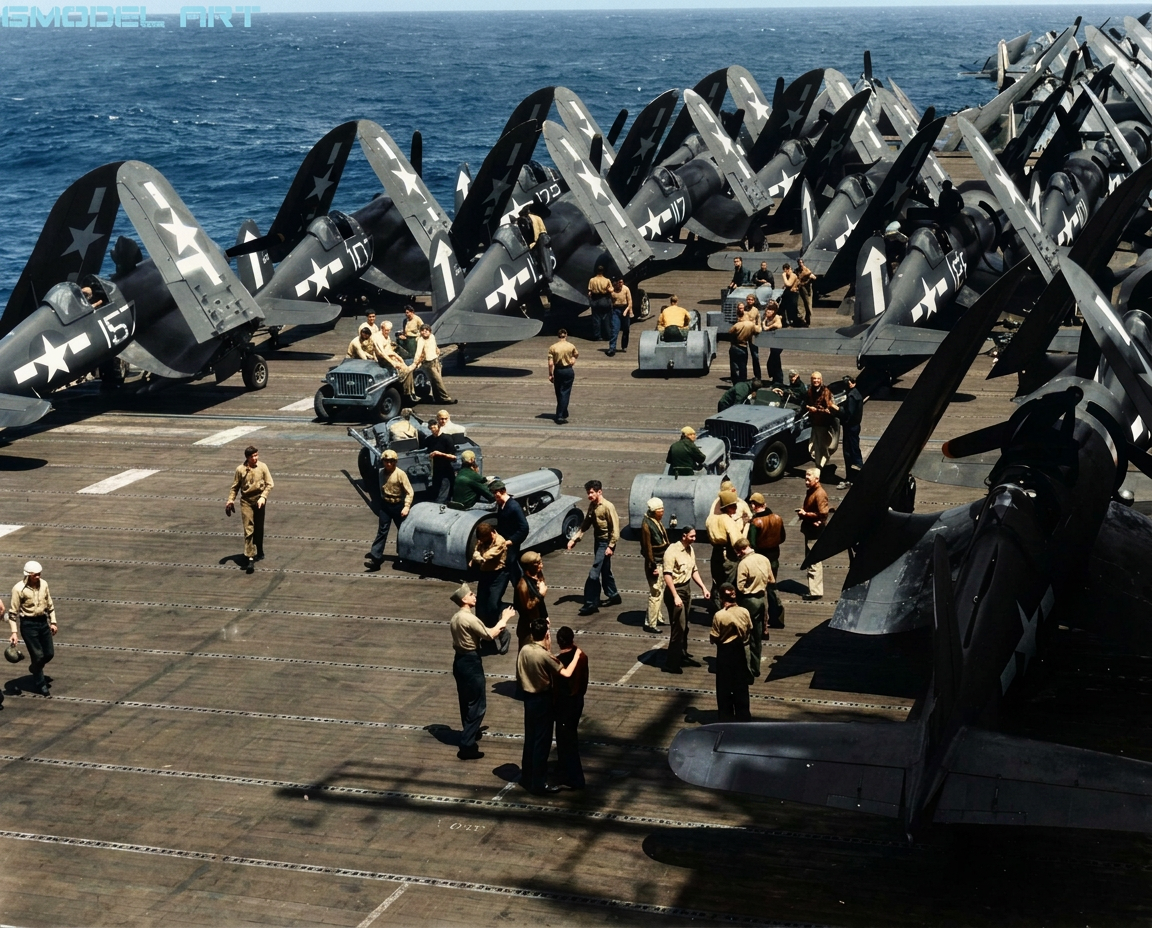
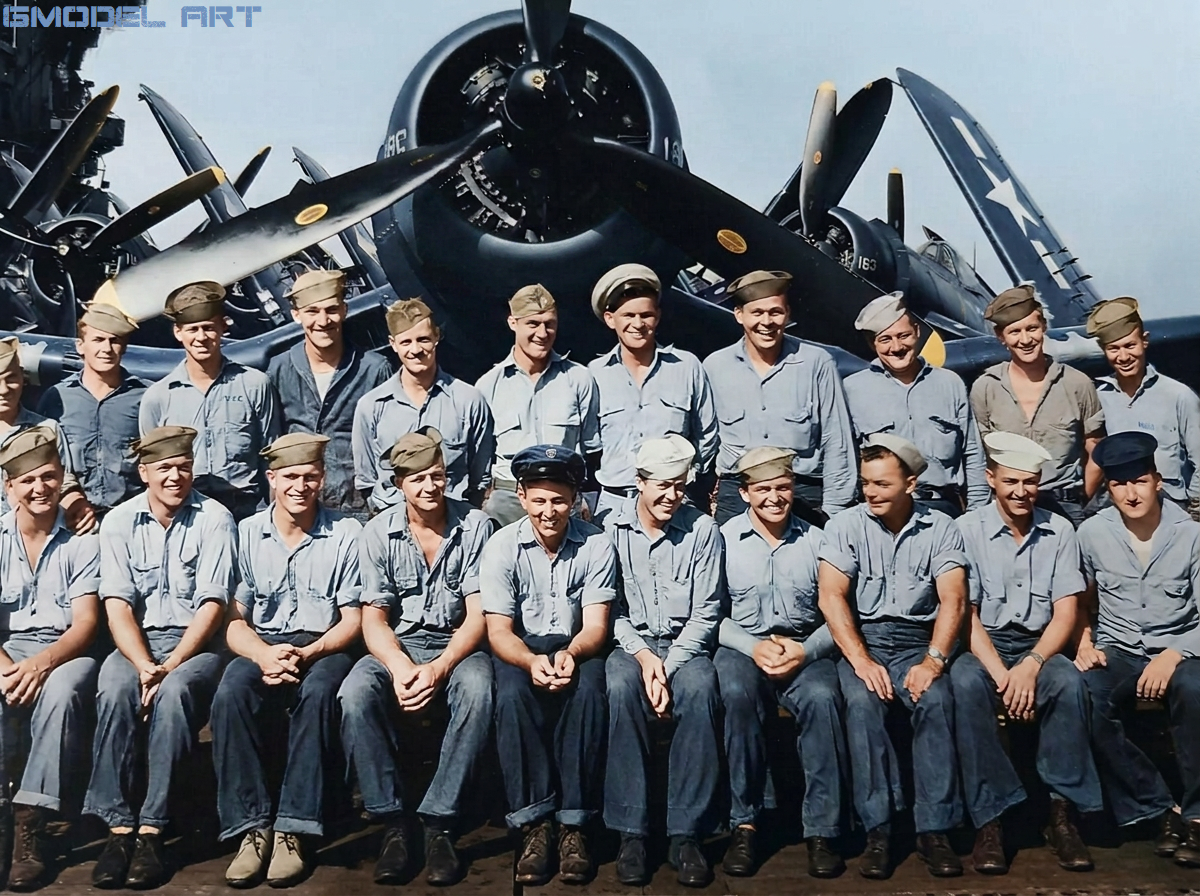
During this period, photographs show numerous Corsairs operating from Bunker Hill.
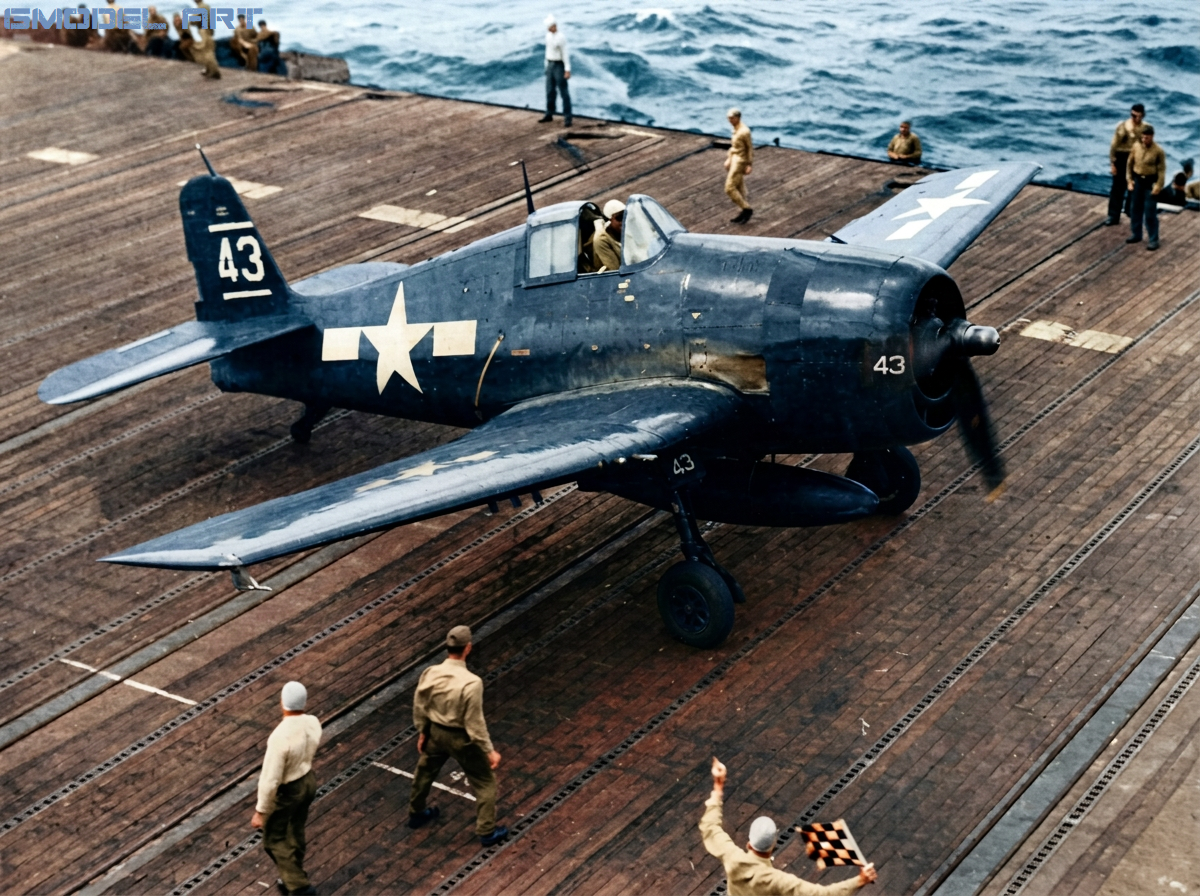
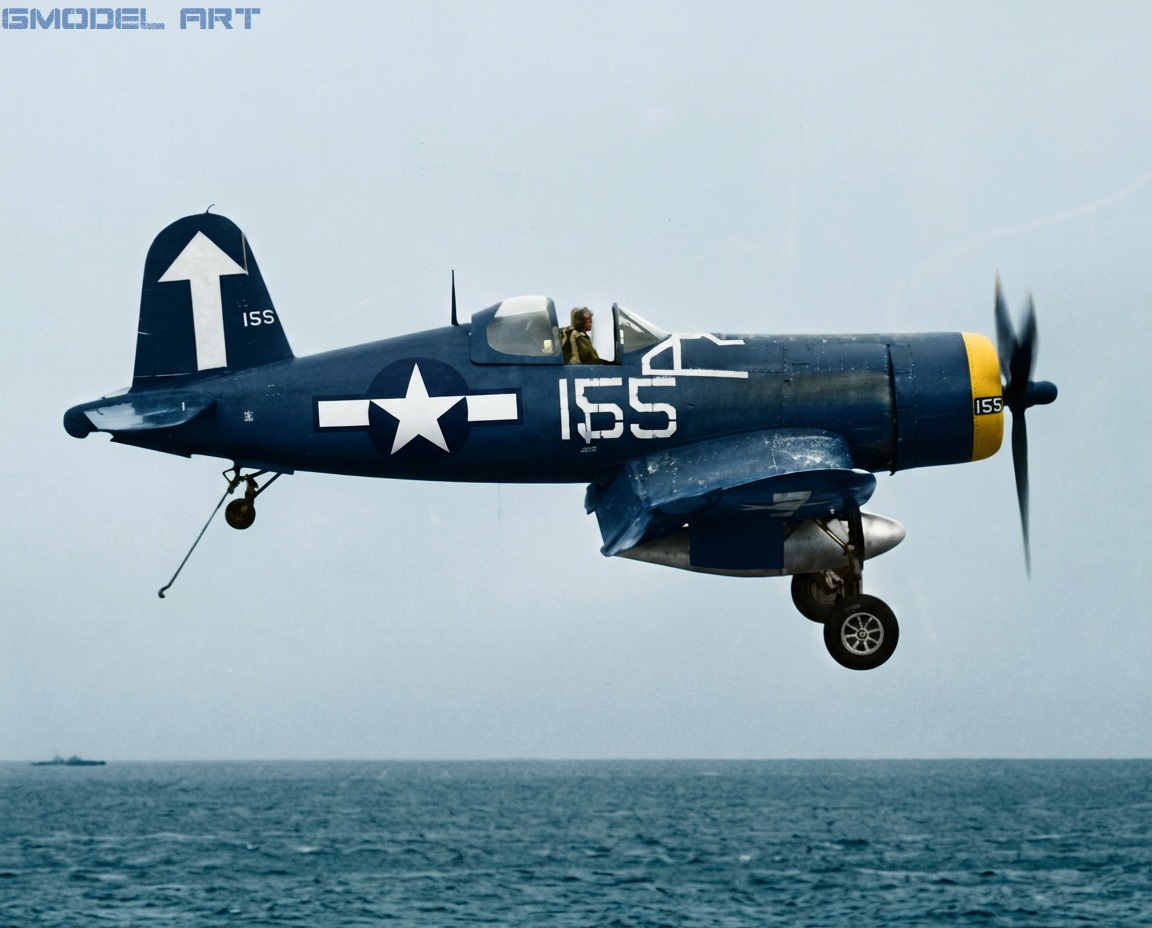
The aircraft carried white tactical numbers and the characteristic markings associated with the squadron.
Some aircraft also carried identification markings around the engine cowling.
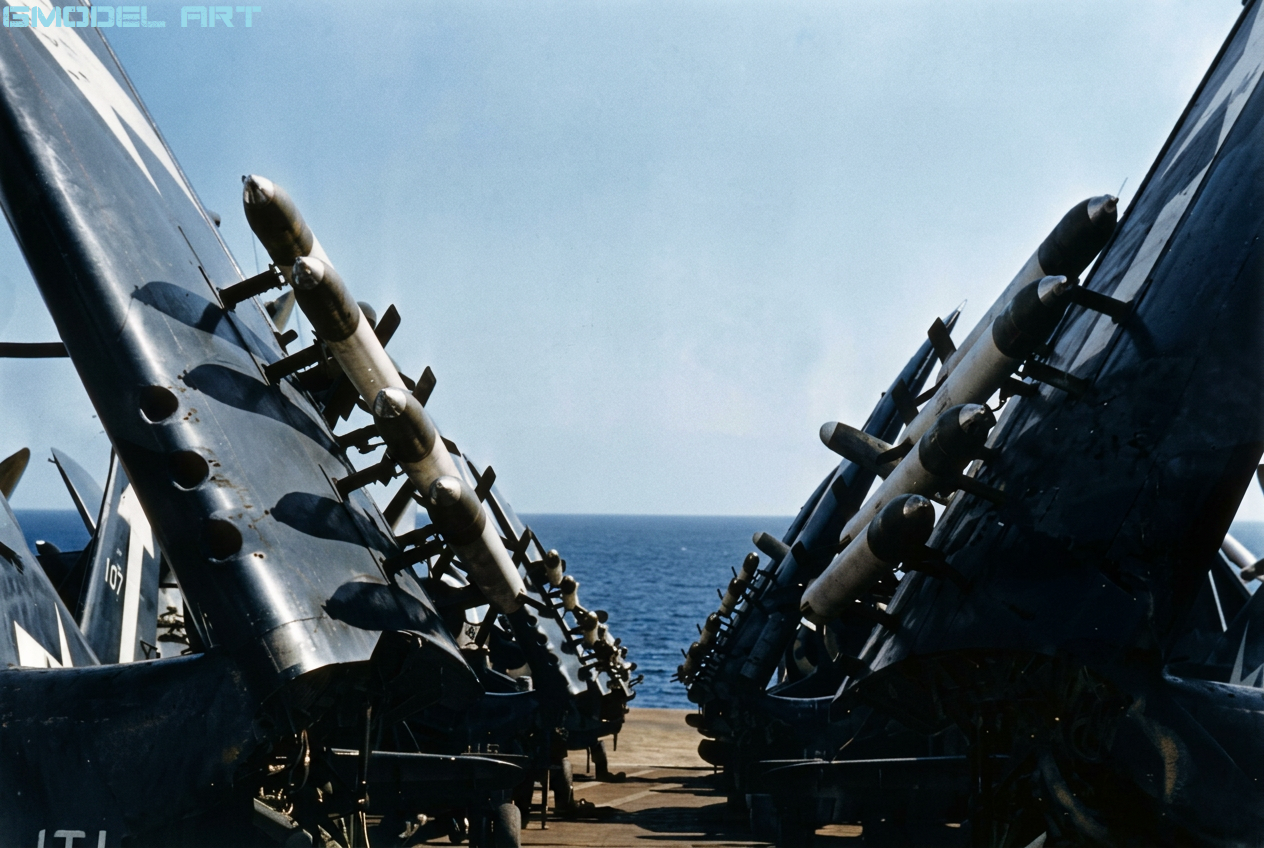
For a modeler, this is an ideal period because there is extensive photographic evidence showing:
- aircraft numbers,
- carrier deck operations,
- weapons,
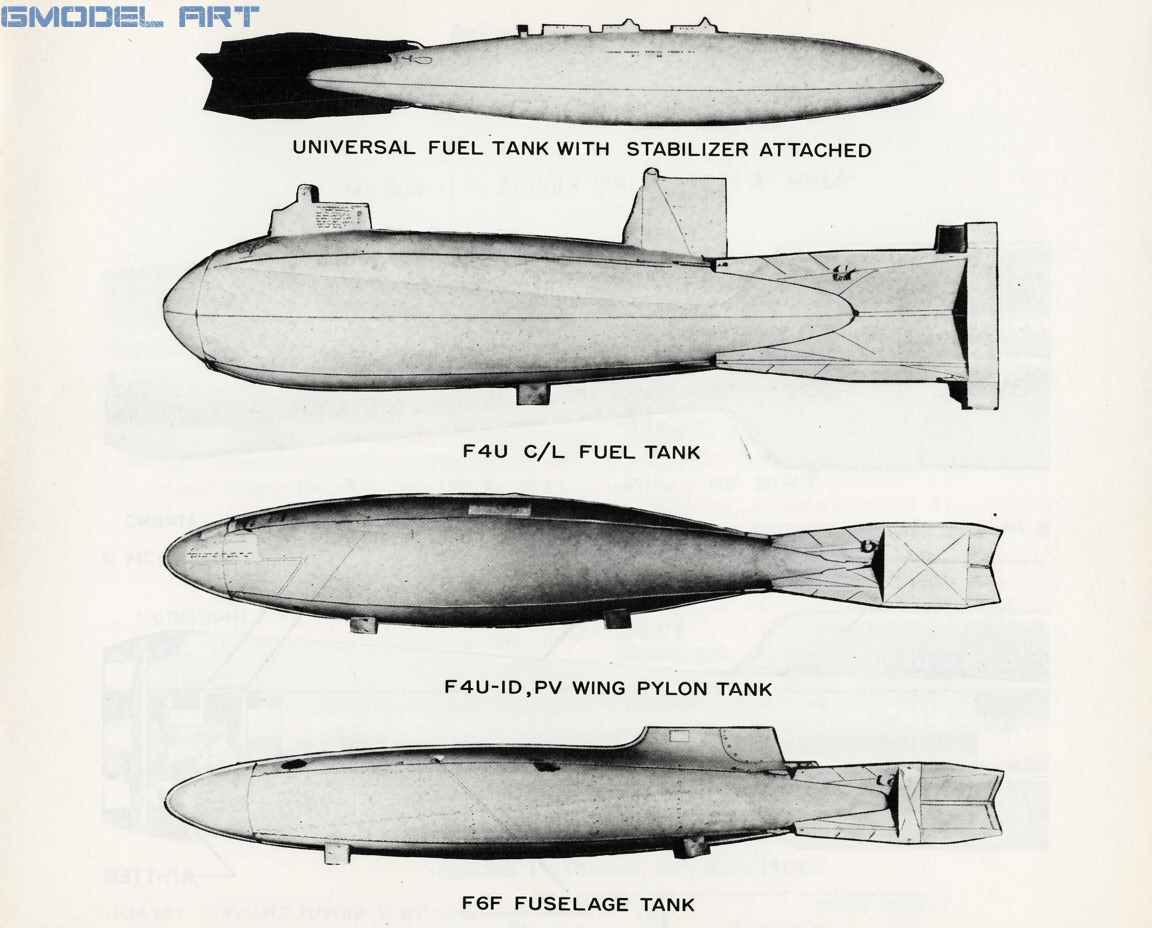
- fuel tanks,
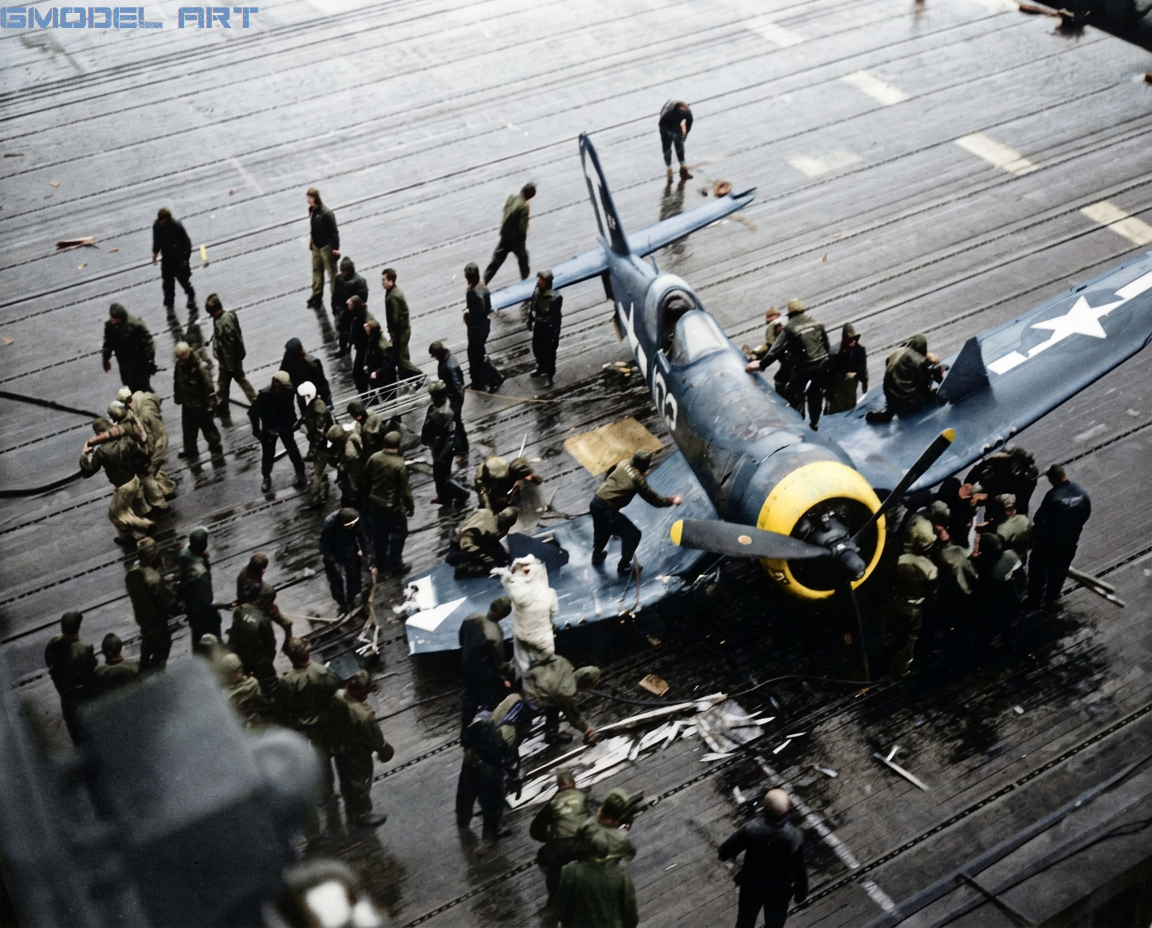
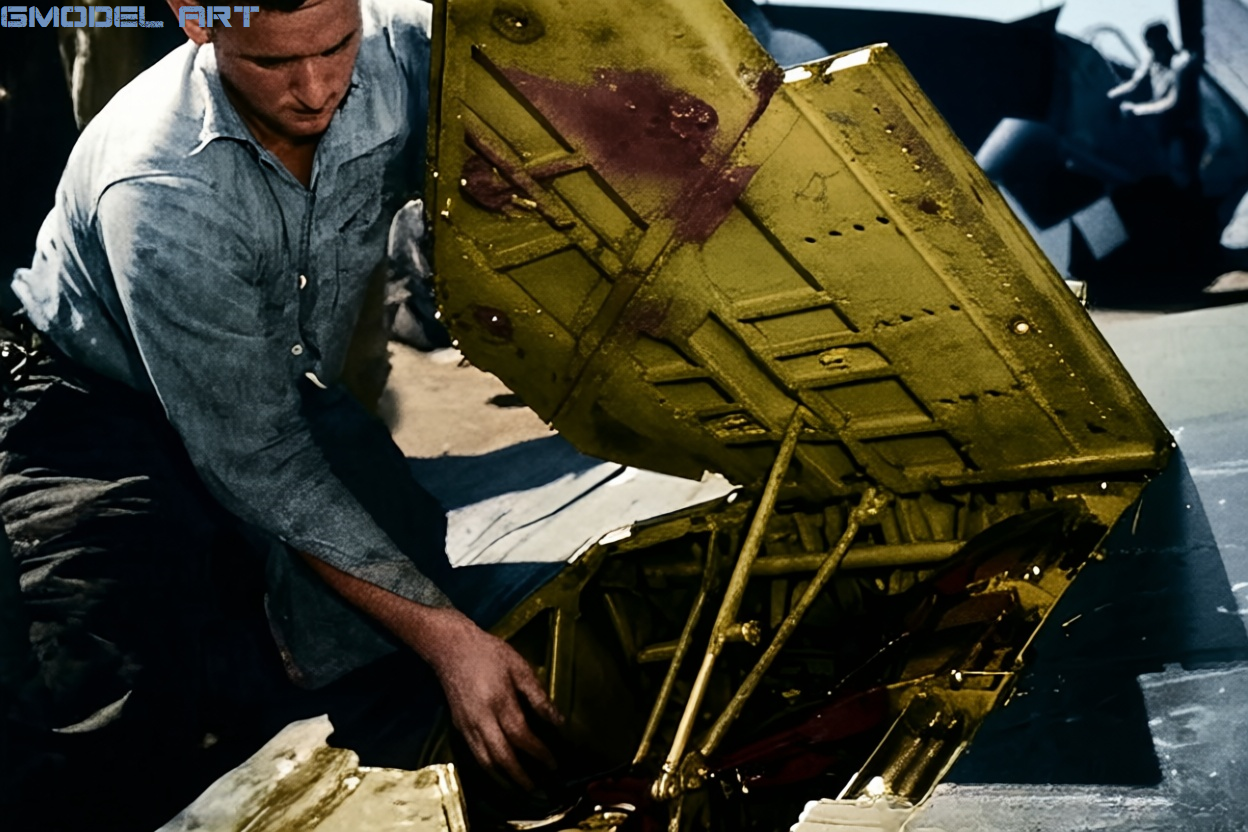
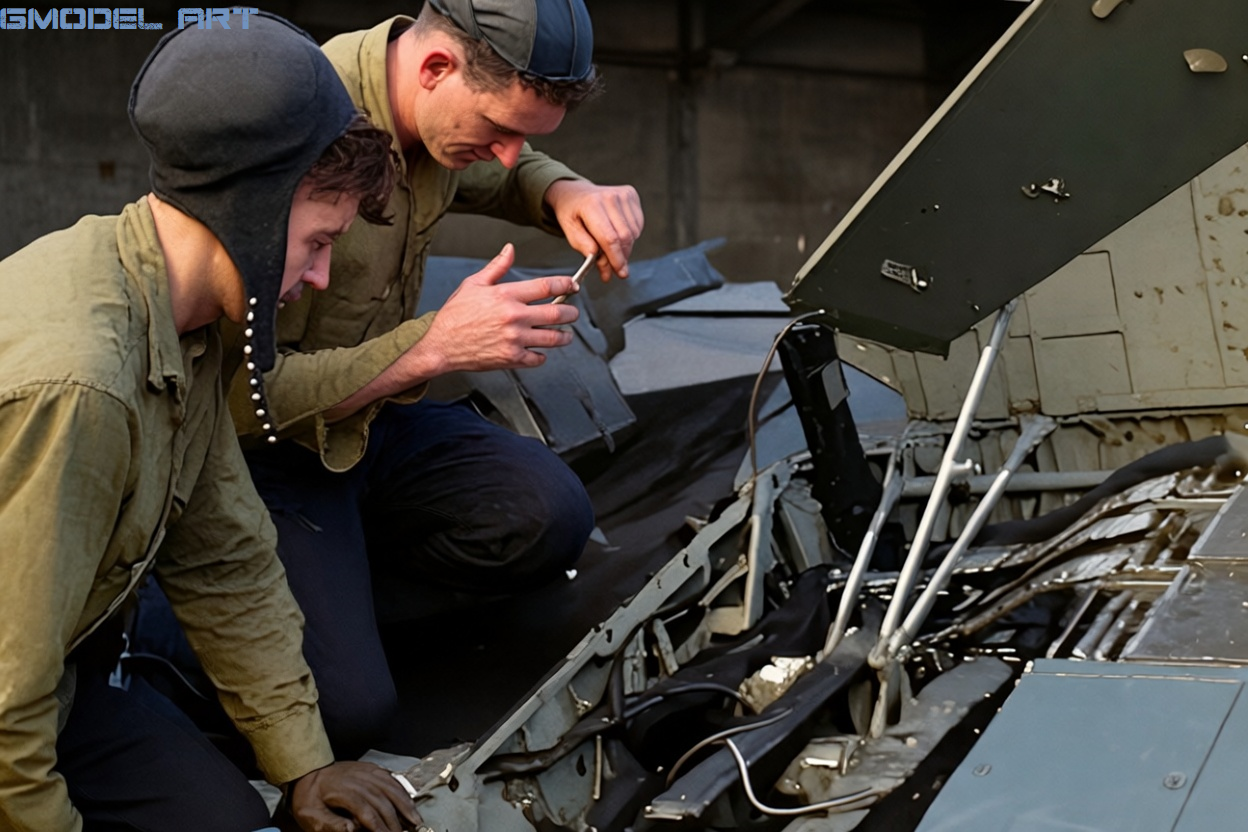
- maintenance activity,
- weathering,
- crew handling,
- launch preparations.
Whenever possible, choose the exact aircraft and date before painting the model.
The F4U-1D Corsair Color Scheme
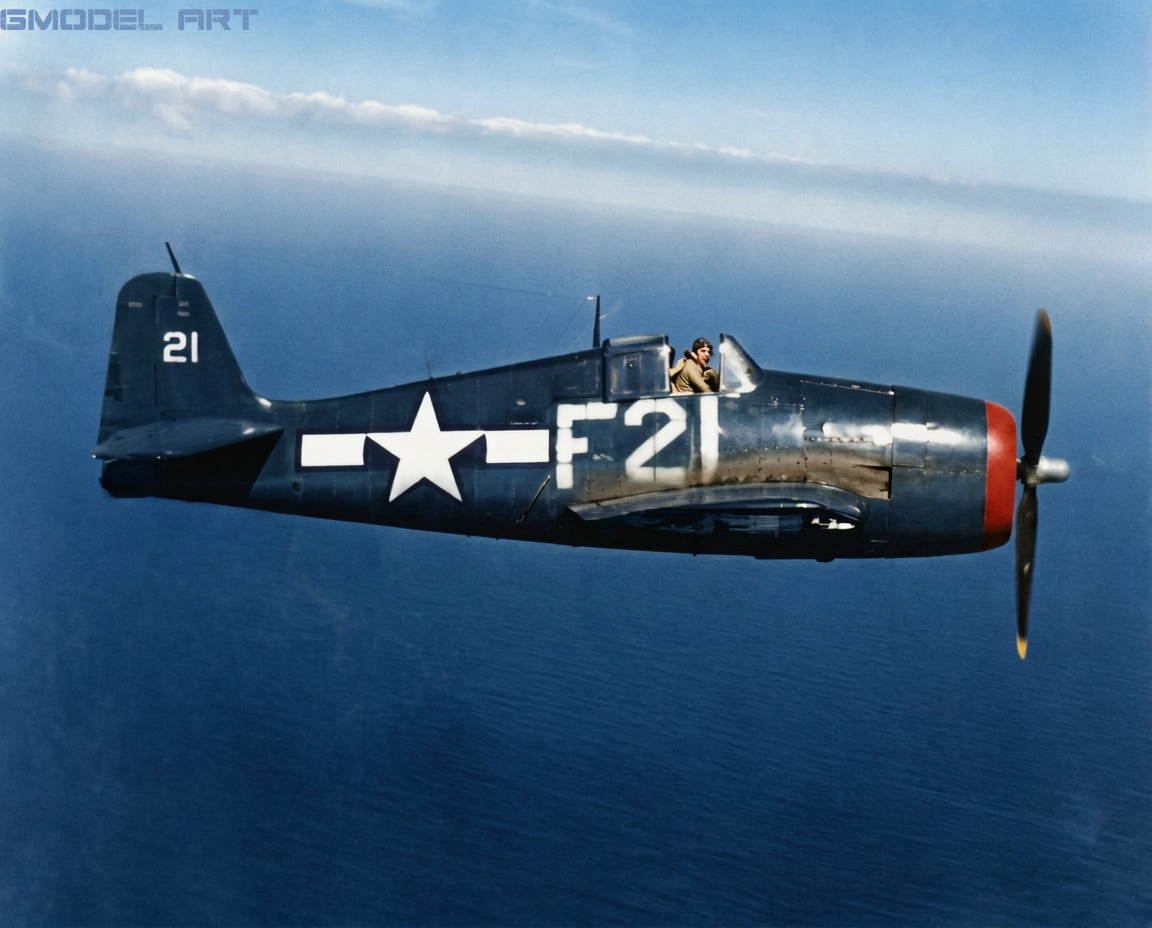
By 1945, the standard US Navy finish for these aircraft was the overall Glossy Sea Blue scheme.
A useful modeling reference is:
ANA 623 Glossy Sea Blue
FS 15042 Glossy Sea Blue
However, an operational Corsair should not be painted as a perfectly uniform blue model.
The Pacific environment quickly affected the appearance of the paint.
Sunlight, salt water, fuel, oil, exhaust gases and constant maintenance created subtle differences between aircraft and even between individual panels.
For a realistic model:
Start with a uniform Glossy Sea Blue base.
Then introduce very subtle variations:
- lighter tones on exposed upper surfaces,
- darker tones around panel joints,
- faded areas around access panels,
- slightly different shades between replacement panels,
- darker areas around the engine cowling.
The result should remain predominantly Glossy Sea Blue.
Do not turn the Corsair into a heavily faded blue-grey aircraft unless photographic evidence supports it.
VF-84 Corsair Weathering
Weathering is where a good Corsair model can become an exceptional one.
But restraint is important.
A combat Corsair operating from an aircraft carrier would show wear, but it would not necessarily be covered in random silver scratches.
Focus on localized operational wear.
Wing Roots
The wing roots received considerable foot traffic from pilots and deck crews.
Use subtle:
- scuffing,
- dirt,
- faded paint,
- fuel stains.
Engine Cowling
This is one of the busiest areas of the aircraft.
Add:
- oil staining,
- exhaust residue,
- fuel marks,
- dust,
- localized paint wear.
Underside
The lower surfaces can receive more grime from the carrier deck and the Pacific environment.
Use:
- dark grey dirt,
- oil streaks,
- hydraulic fluid stains,
- salt residue.
Exhaust
Corsair exhaust staining should be built gradually.
Start with:
dark grey → grey-brown → very subtle black
Avoid a hard black stripe.
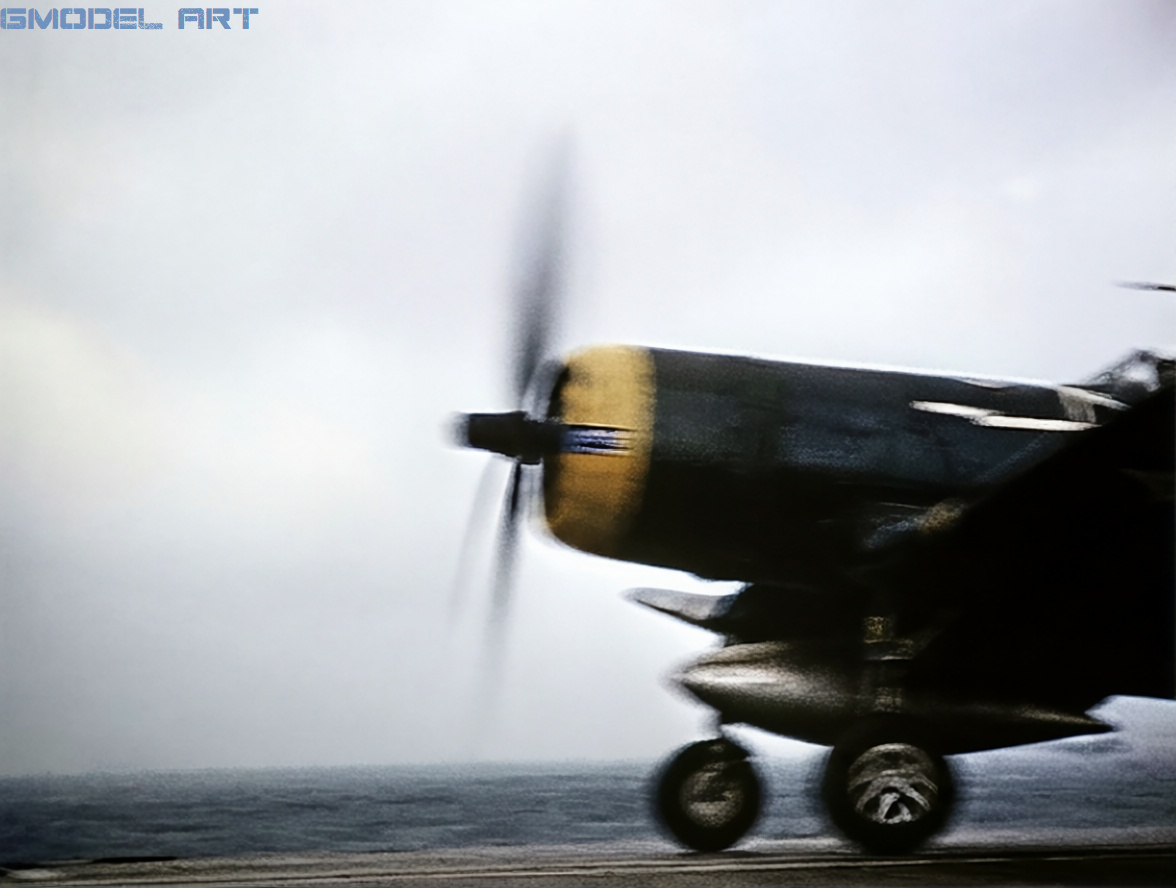
F4U-1D Propeller
The Hamilton Standard propeller blades were generally black with yellow tips.
For the yellow:
The propeller tips should not look fluorescent.
A small amount of operational wear and staining can be added, especially toward the blade roots and leading edges.
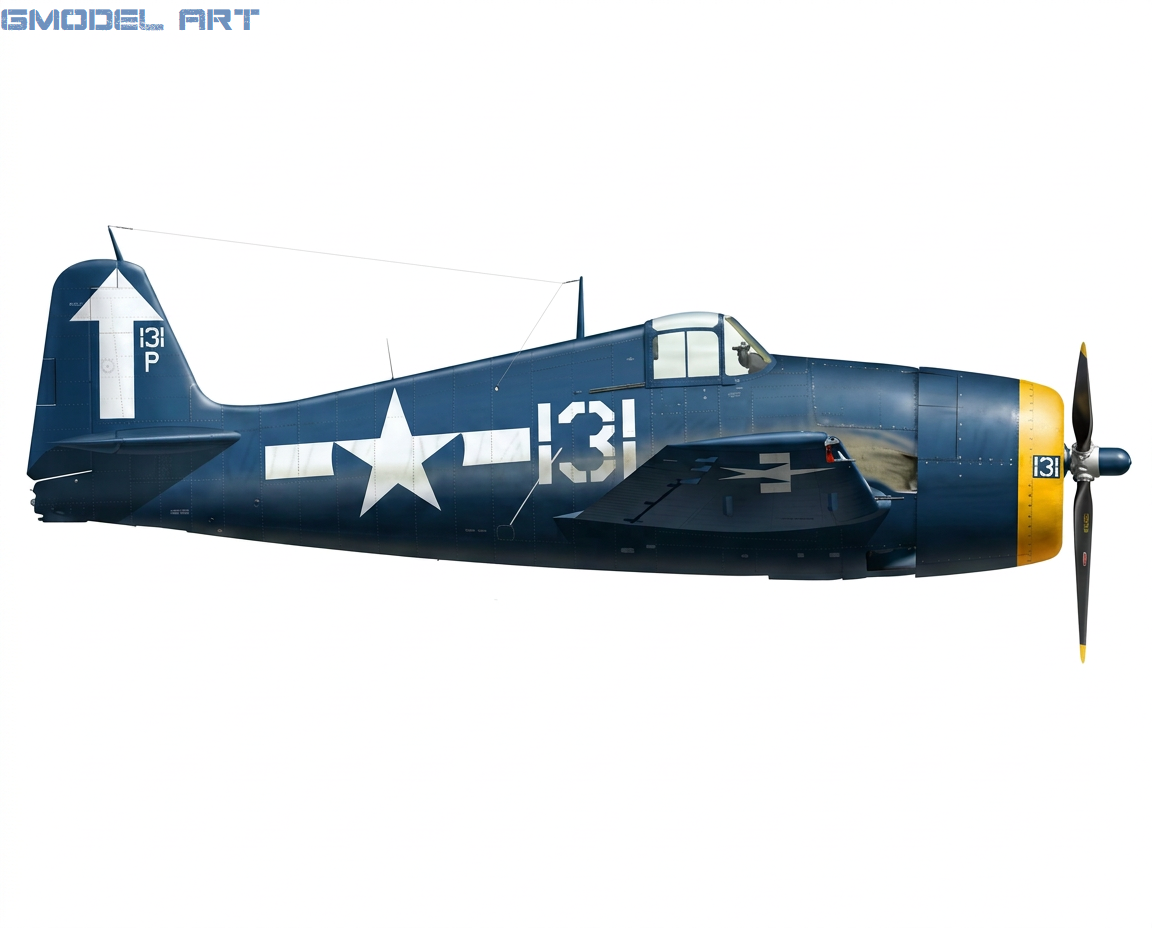
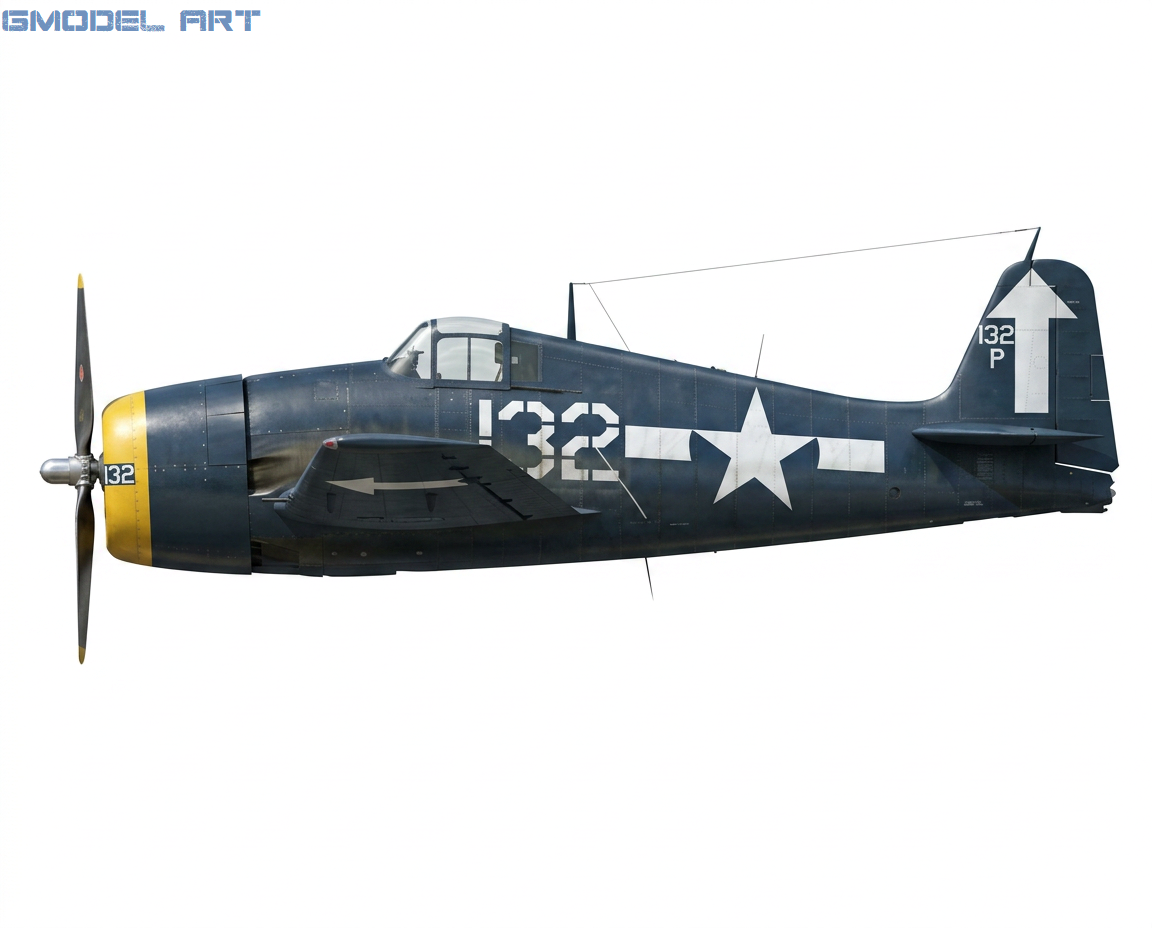
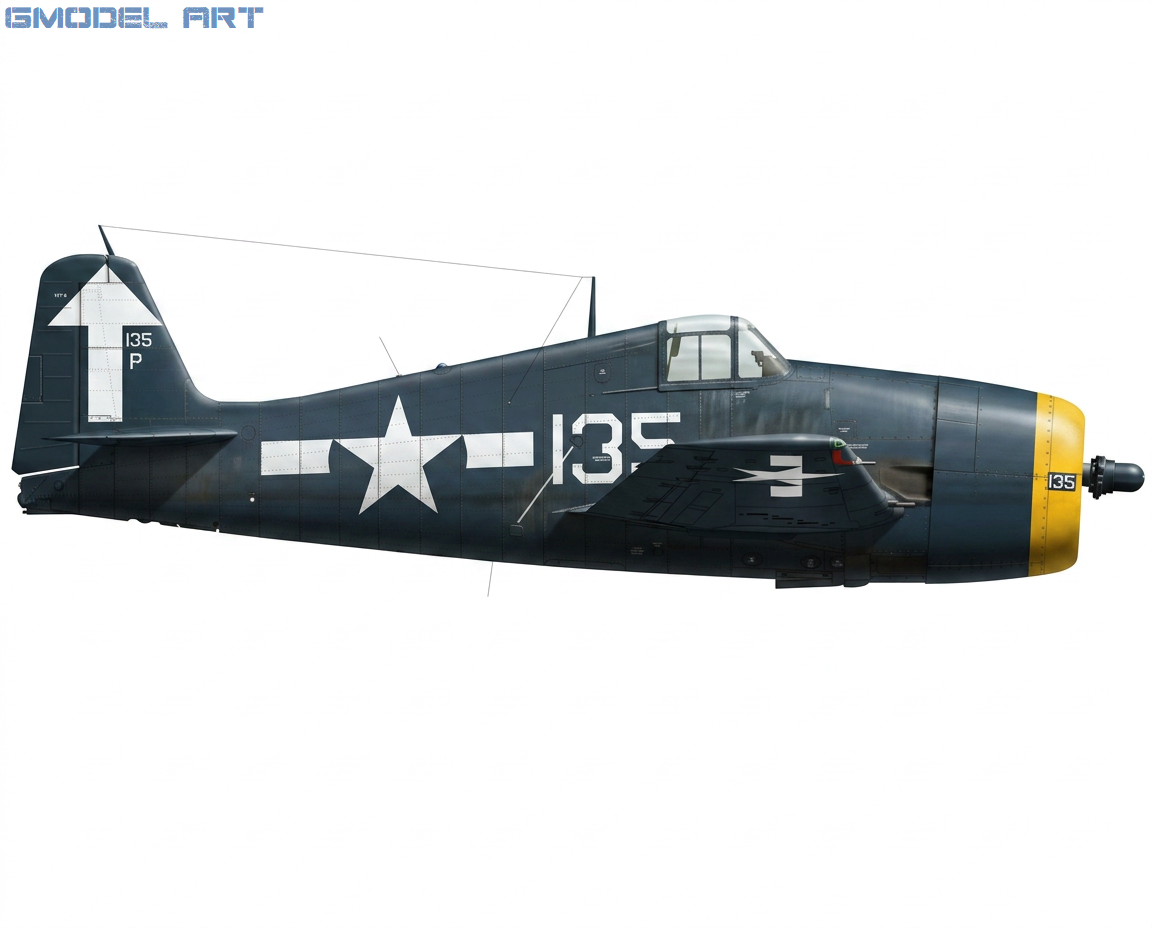
F6F-5P Hellcat
The F6F-5P Hellcat is another fascinating subject from VF-84.
The “P” designation identifies the photographic reconnaissance version.
The aircraft retained the overall Glossy Sea Blue appearance but incorporated photographic equipment and modifications appropriate to its reconnaissance role.
For a model:
Base color: ANA 623 / FS 15042 Glossy Sea Blue
Then add subtle:
- panel variation,
- exhaust staining,
- oil residue,
- wing-root wear,
- operational dirt.
Photographs of the actual aircraft should always take priority over generic paint instructions.
F6F-5N Night Fighter
The F6F-5N Hellcat adds another interesting variation to a Bunker Hill collection.
The aircraft was equipped with radar for night-fighter operations.
The most important modeling details are:
- radar installation,
- antennas,
- correct cockpit configuration,
- overall Glossy Sea Blue finish,
- restrained weathering.
Because small configuration differences existed between aircraft, photographic references are particularly valuable.
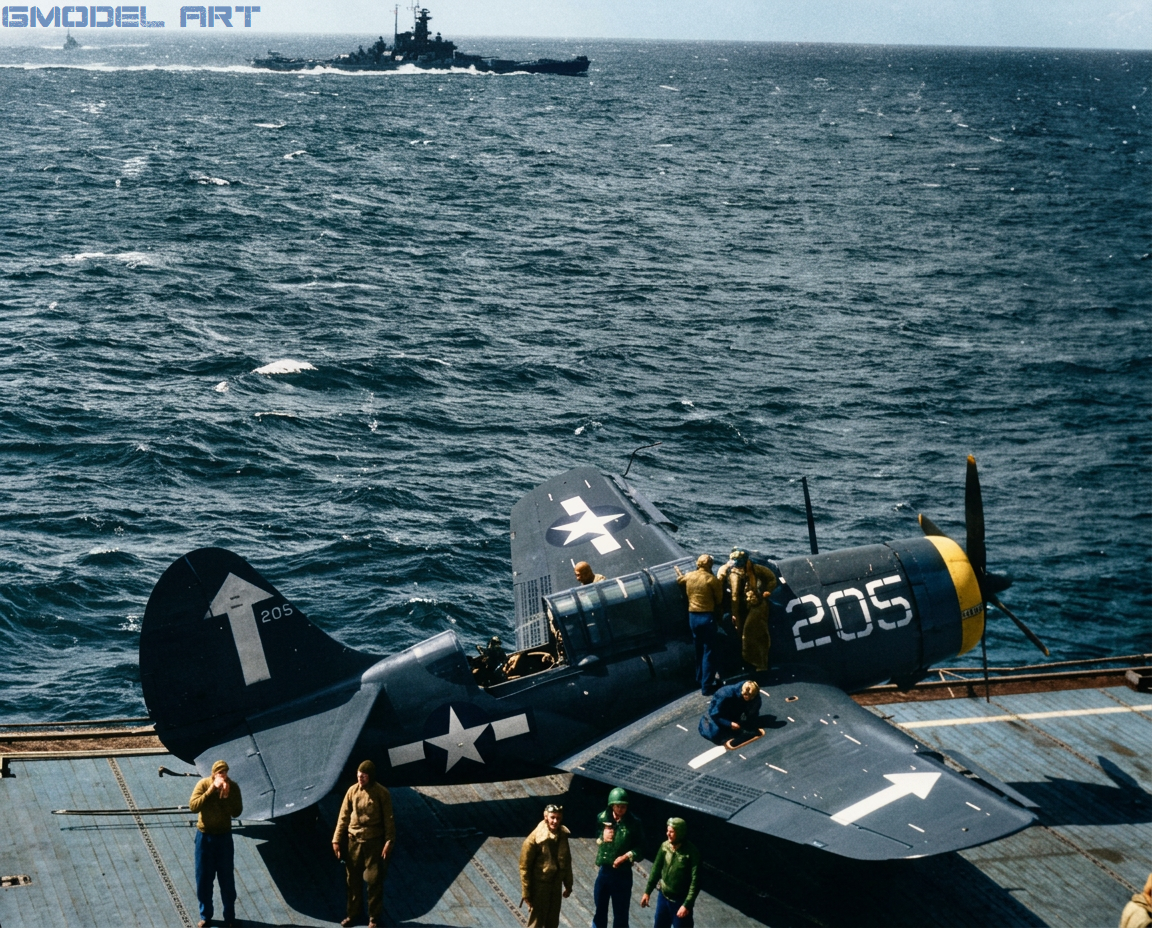
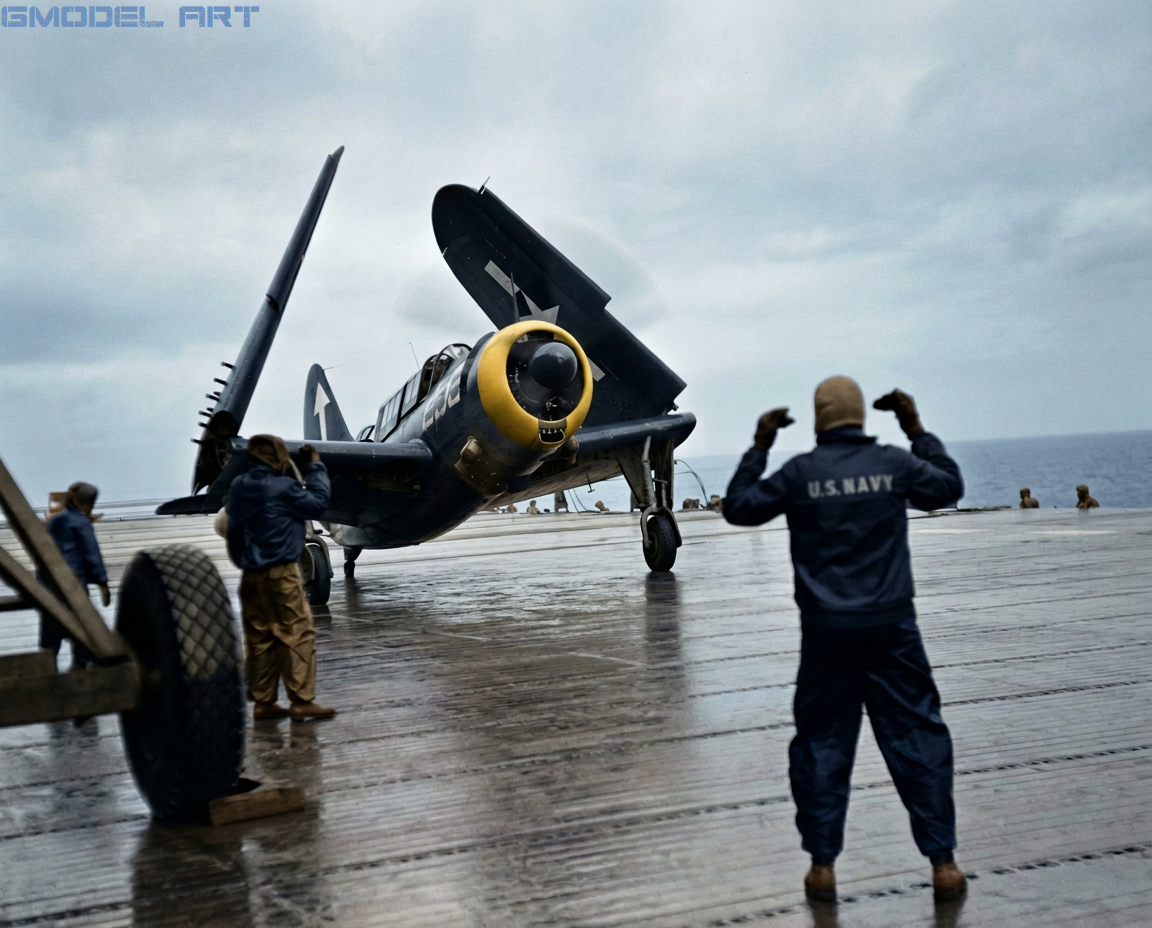
SB2C-4 Helldiver – VB-84
The VB-84 Curtiss SB2C-4 Helldiver was the dive bomber component of Carrier Air Group 84.
The Helldiver is an excellent subject for a 1945 Bunker Hill deck scene.
Its large wings and distinctive dive brakes make it particularly attractive in 1/48 scale.
Weathering areas
Pay special attention to:
- wing roots,
- dive brakes,
- engine cowling,
- landing gear,
- wheel wells,
- crew access areas,
- underside.
Again, the goal is not excessive chipping.
The aircraft should look used, maintained and operational.
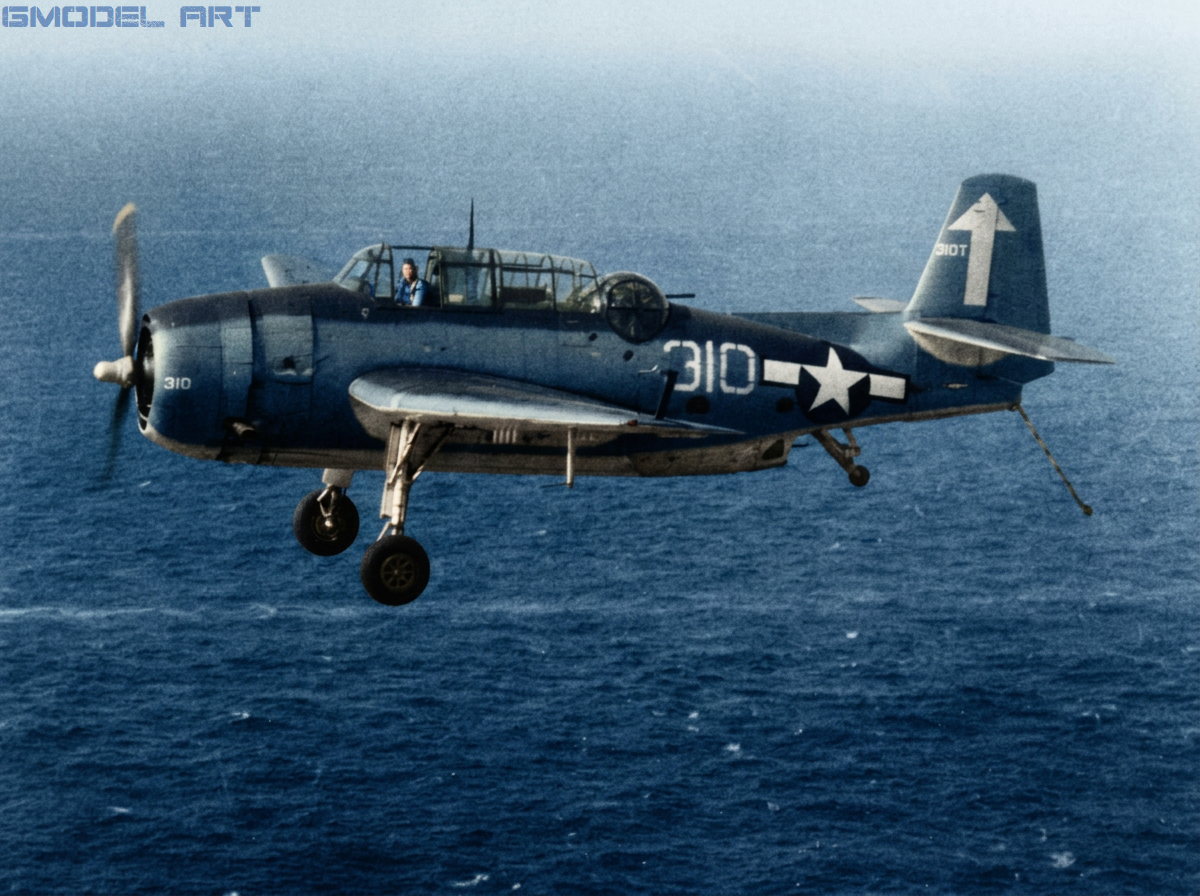
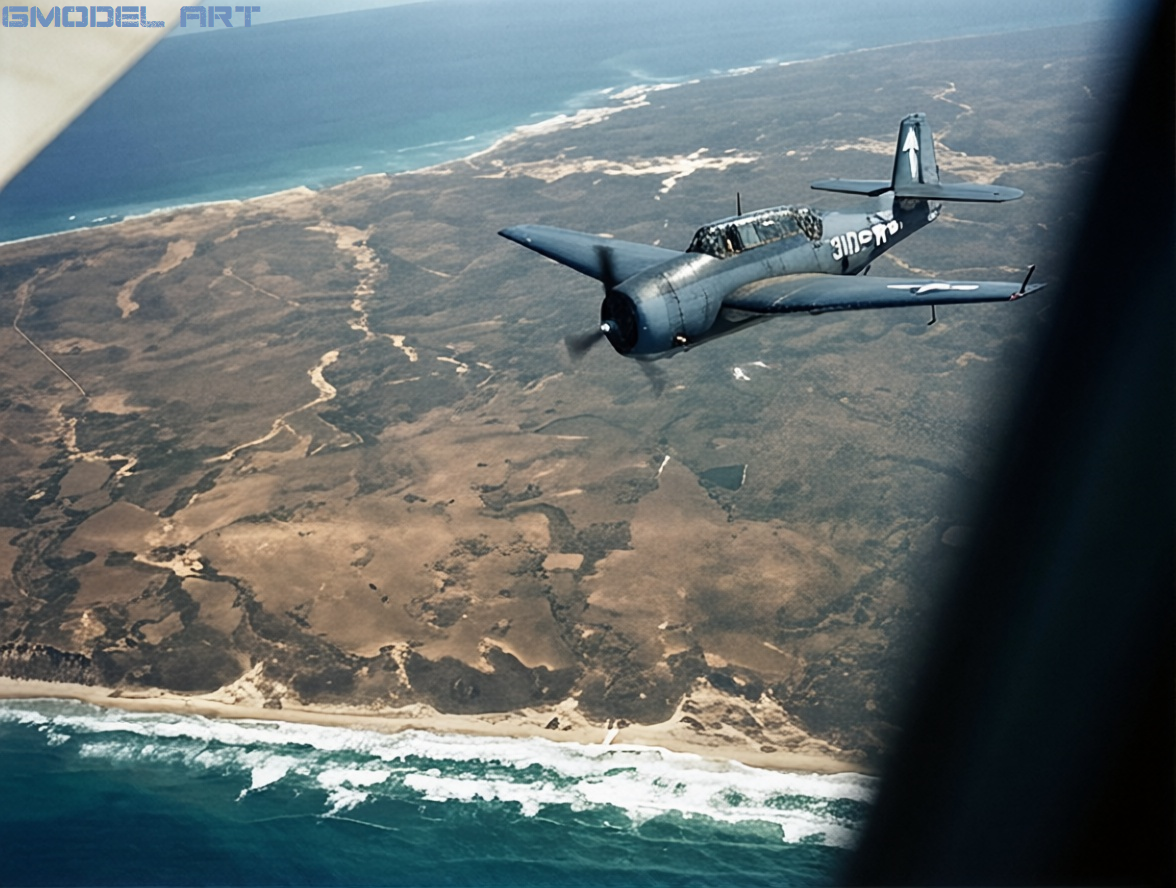
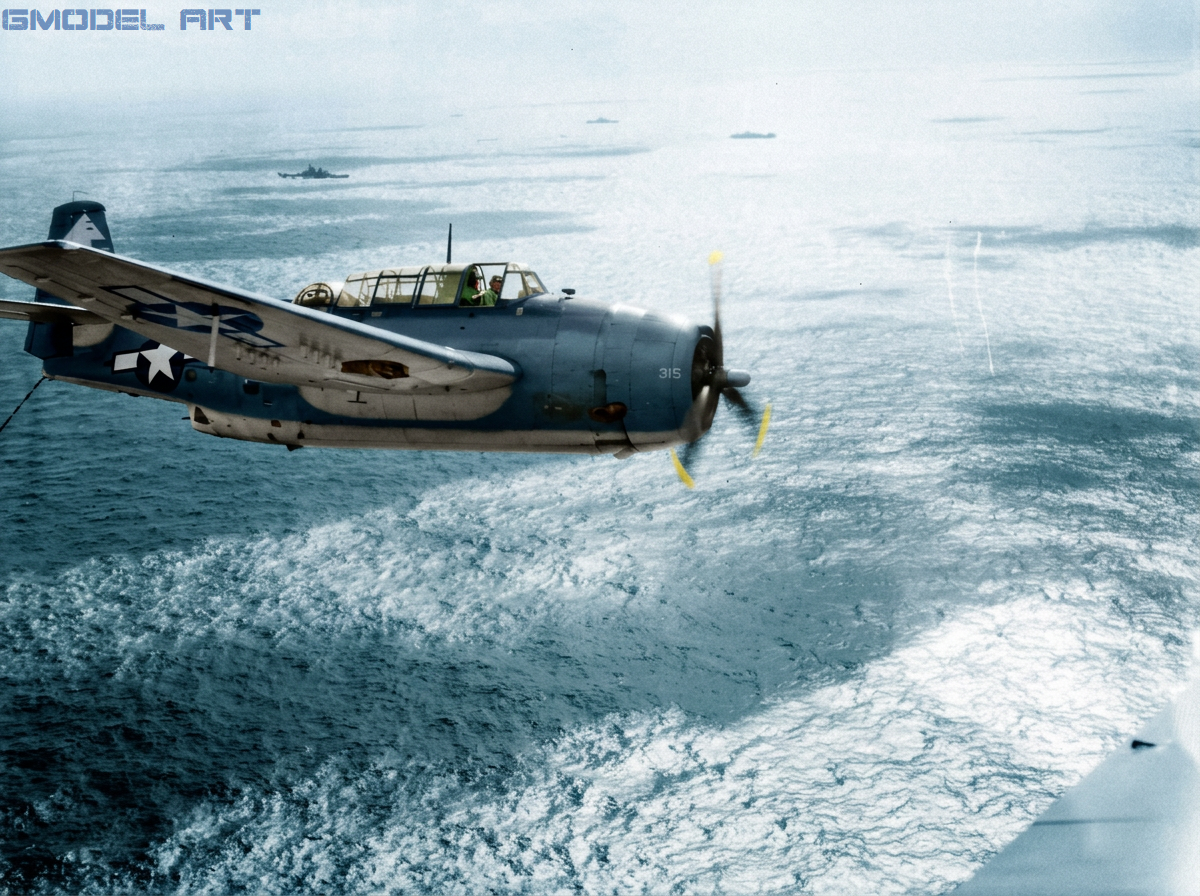
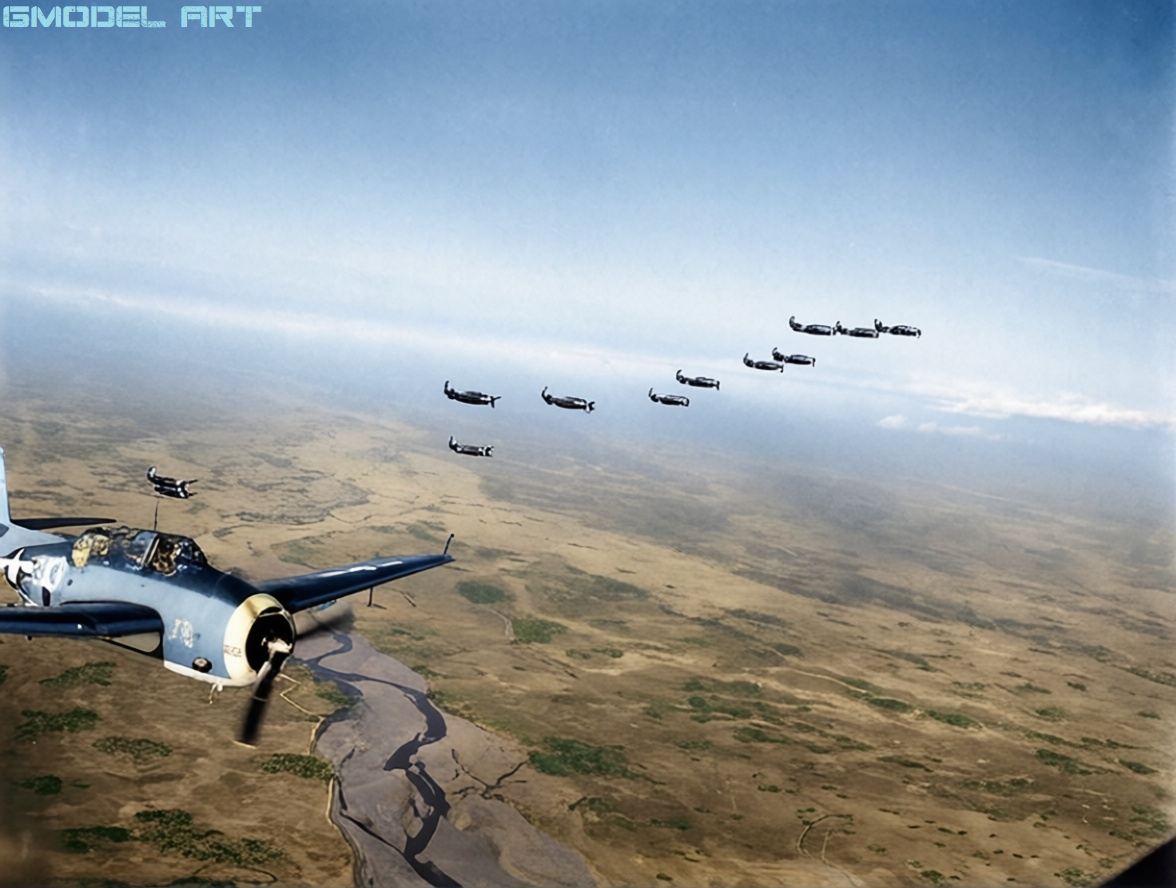
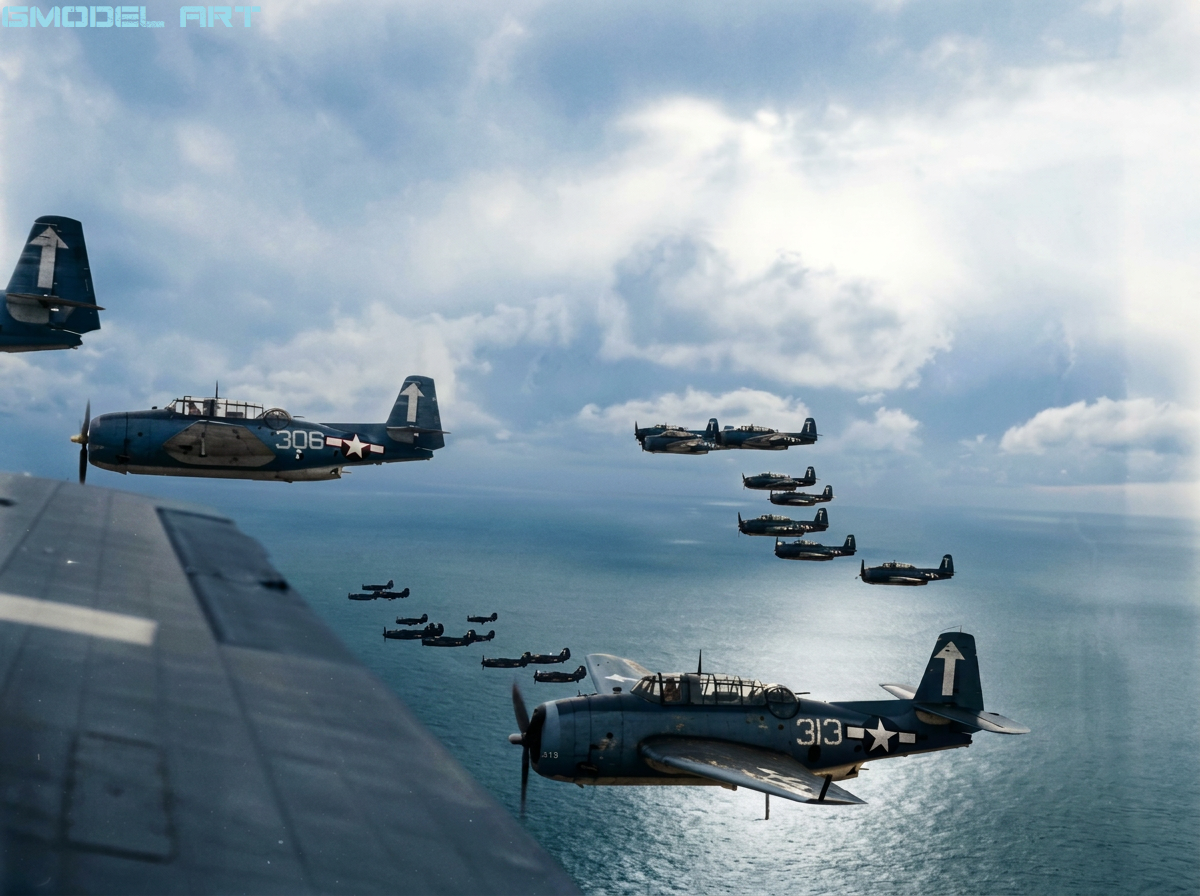
TBM-3 Avenger – VT-84
The VT-84 TBM-3 Avenger was another major aircraft type operating from Bunker Hill.
The Avenger could carry different weapons depending on the mission, including bombs and torpedoes.
For a model, the large fuselage and open bomb bay provide excellent opportunities for adding realistic detail.
Weathering
Concentrate on:
- engine exhaust,
- oil stains,
- bomb-bay area,
- wing roots,
- landing gear,
- crew access points.
The overall finish should remain consistent with the 1945 Glossy Sea Blue scheme.
Marine Corsairs – VMF-221 and VMF-451
One of the most interesting features of Carrier Air Group 84 was the presence of Marine Corsair squadrons.
VMF-221
F4U-1D Corsair
VMF-451
F4U-1D Corsair
This means that a large Bunker Hill carrier deck scene can legitimately contain multiple Corsairs belonging to different units.
For a diorama, this creates an excellent opportunity to show variations in:
- side numbers,
- markings,
- weathering,
- aircraft condition,
- weapons configuration.
The key is to identify each aircraft individually.
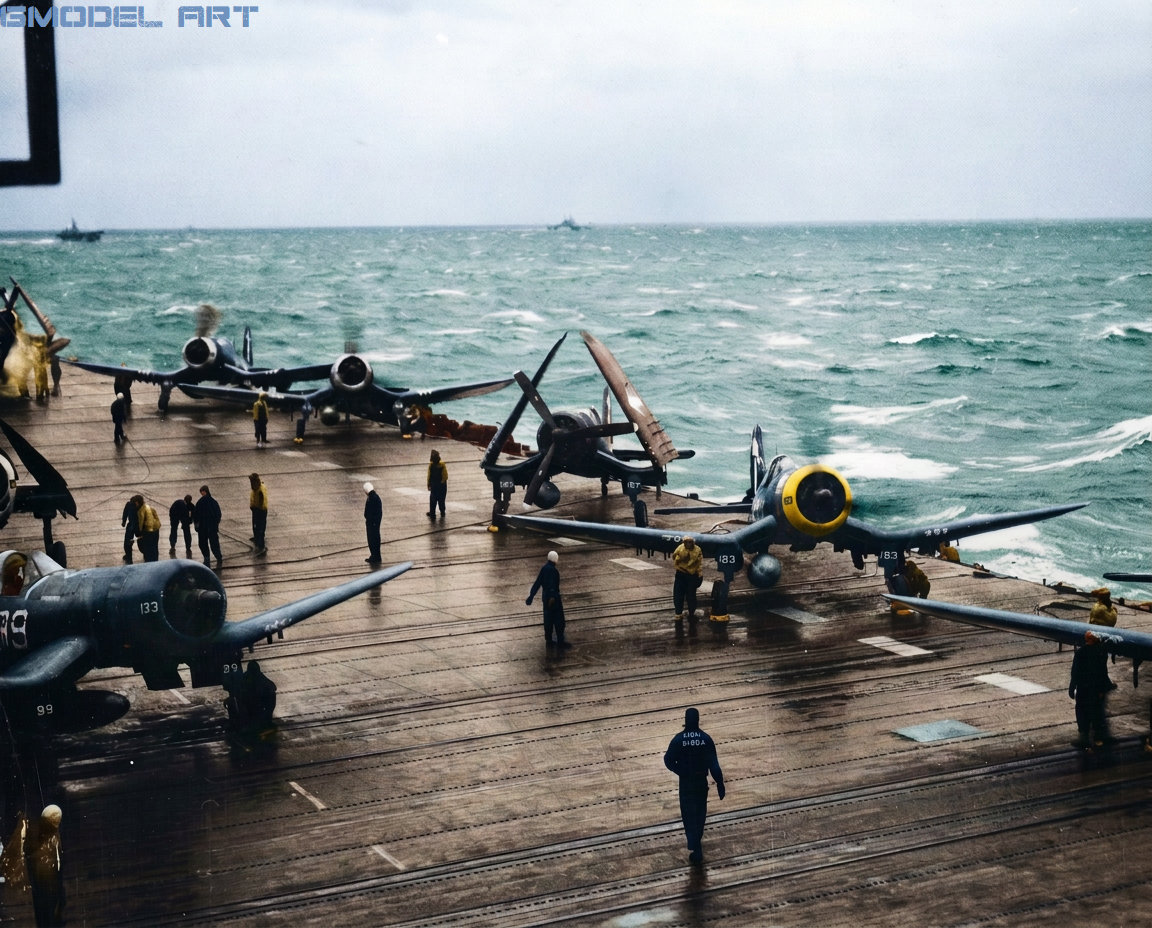
Carrier Deck Operations
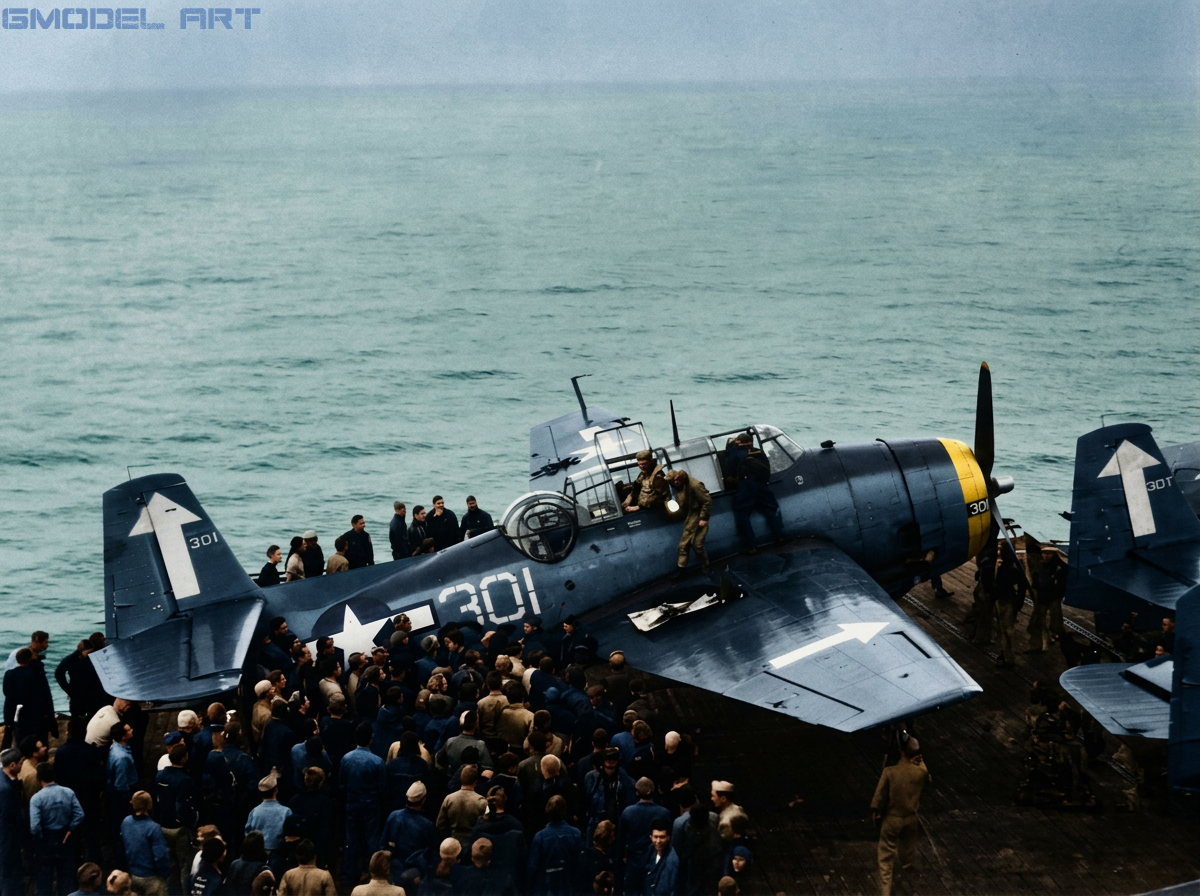
A Bunker Hill diorama should not be treated simply as a collection of aircraft.
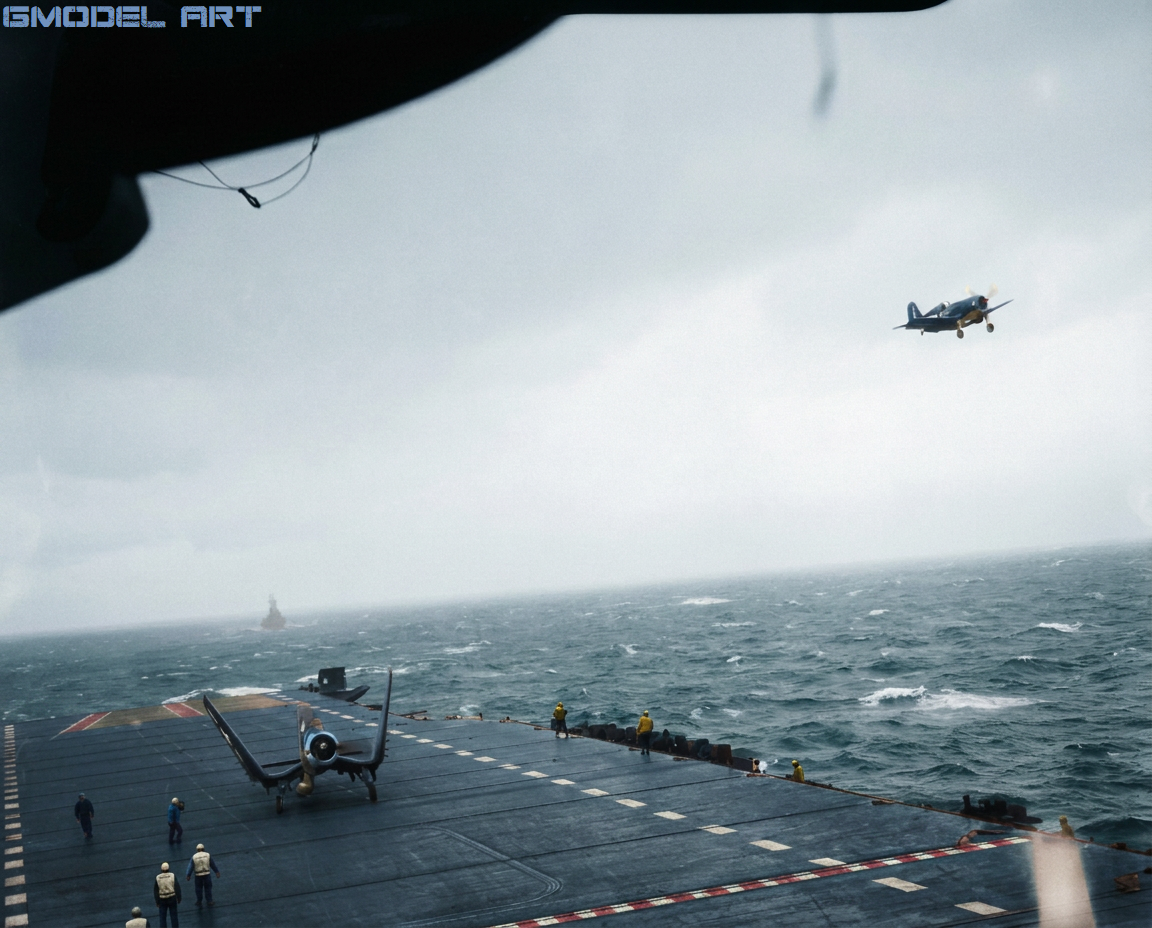
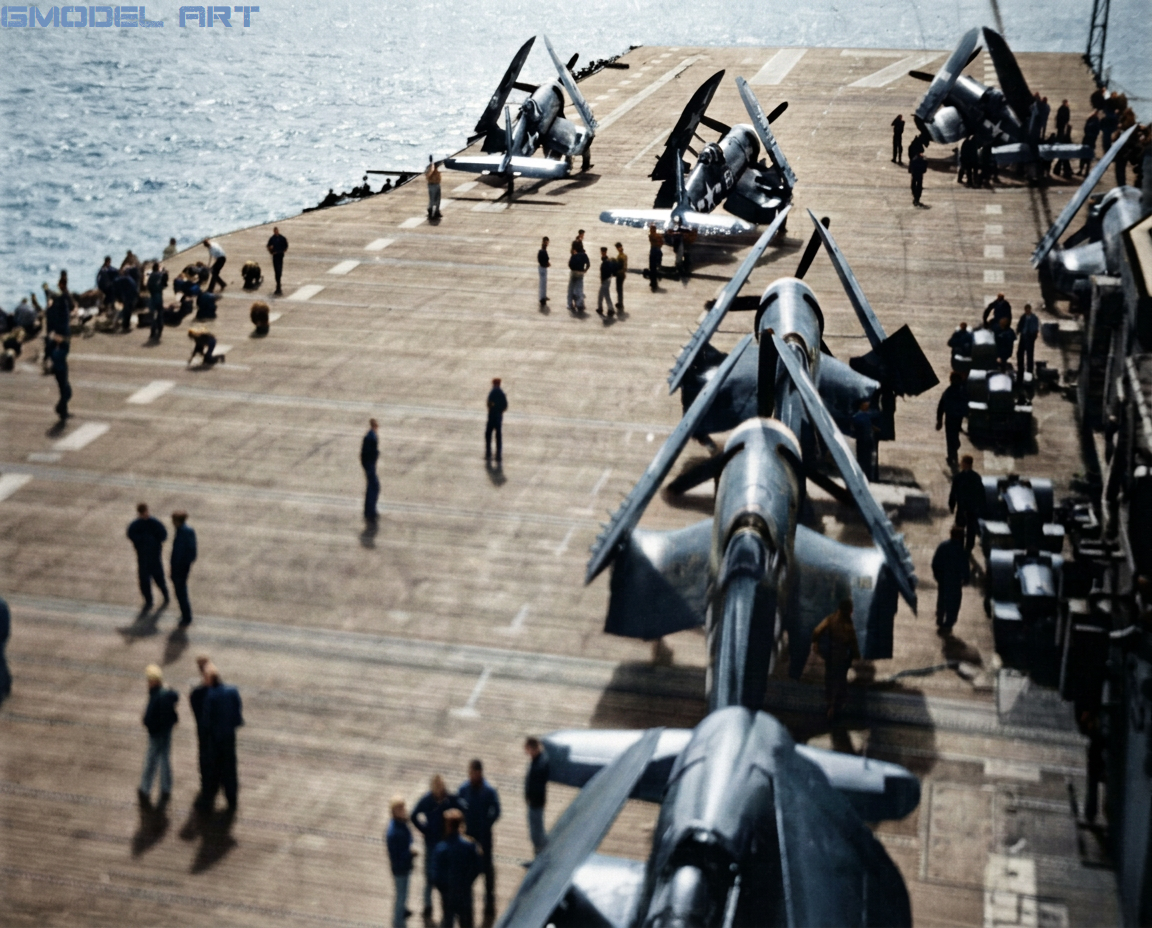
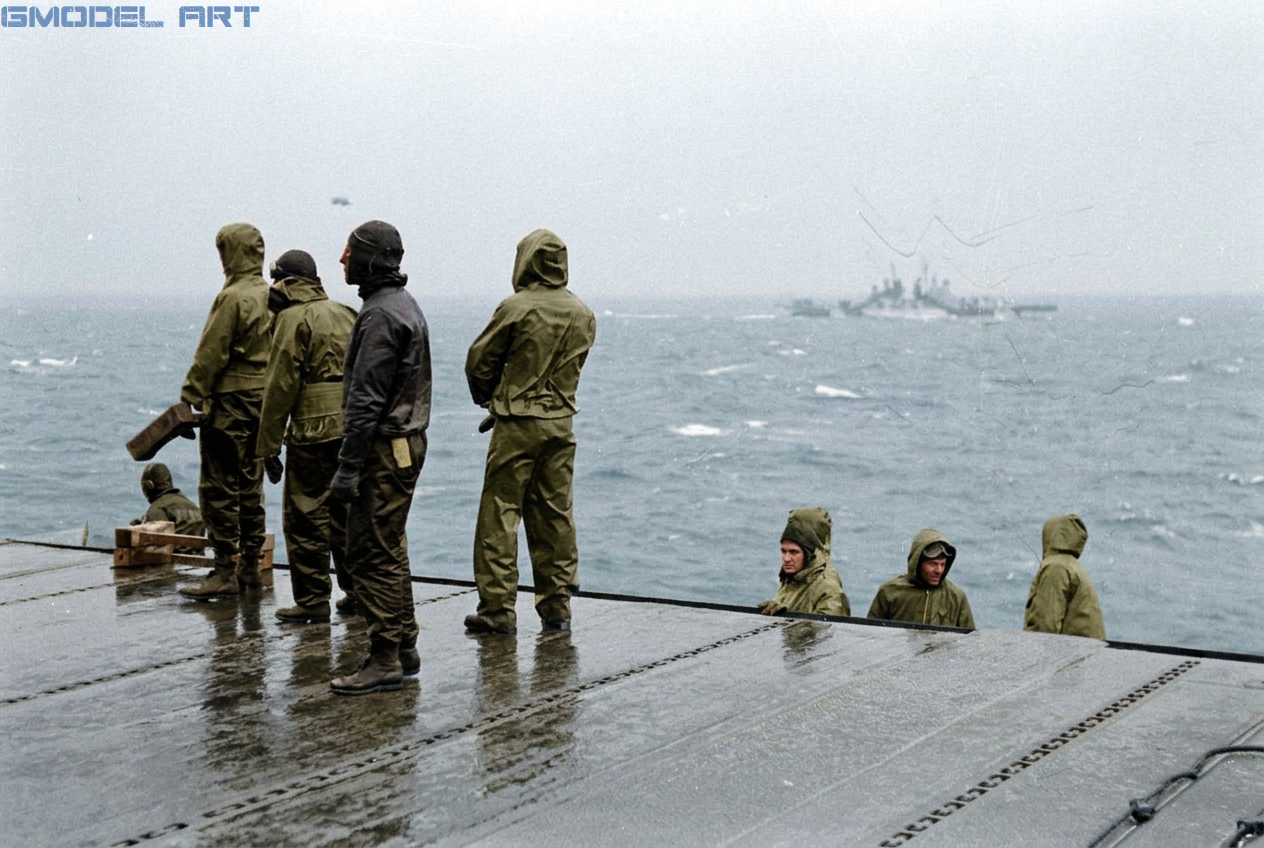
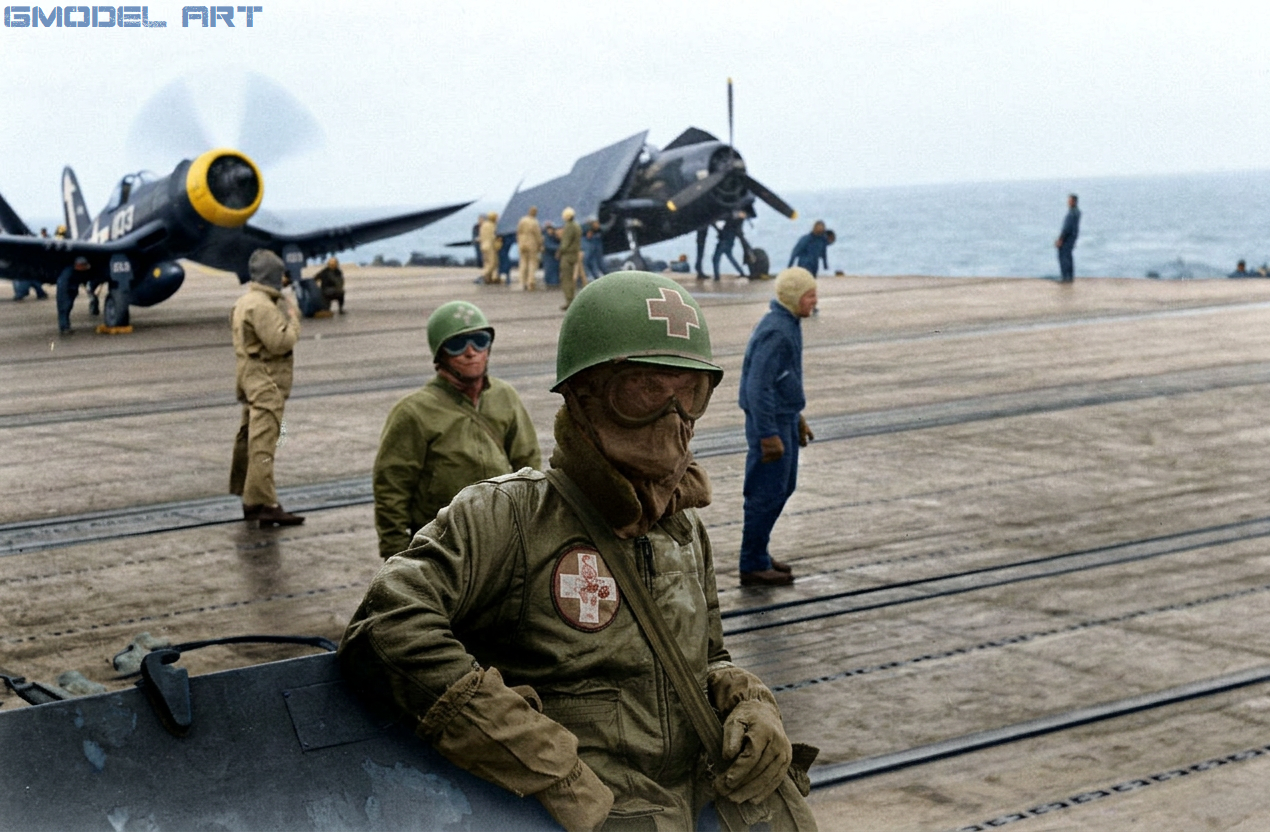
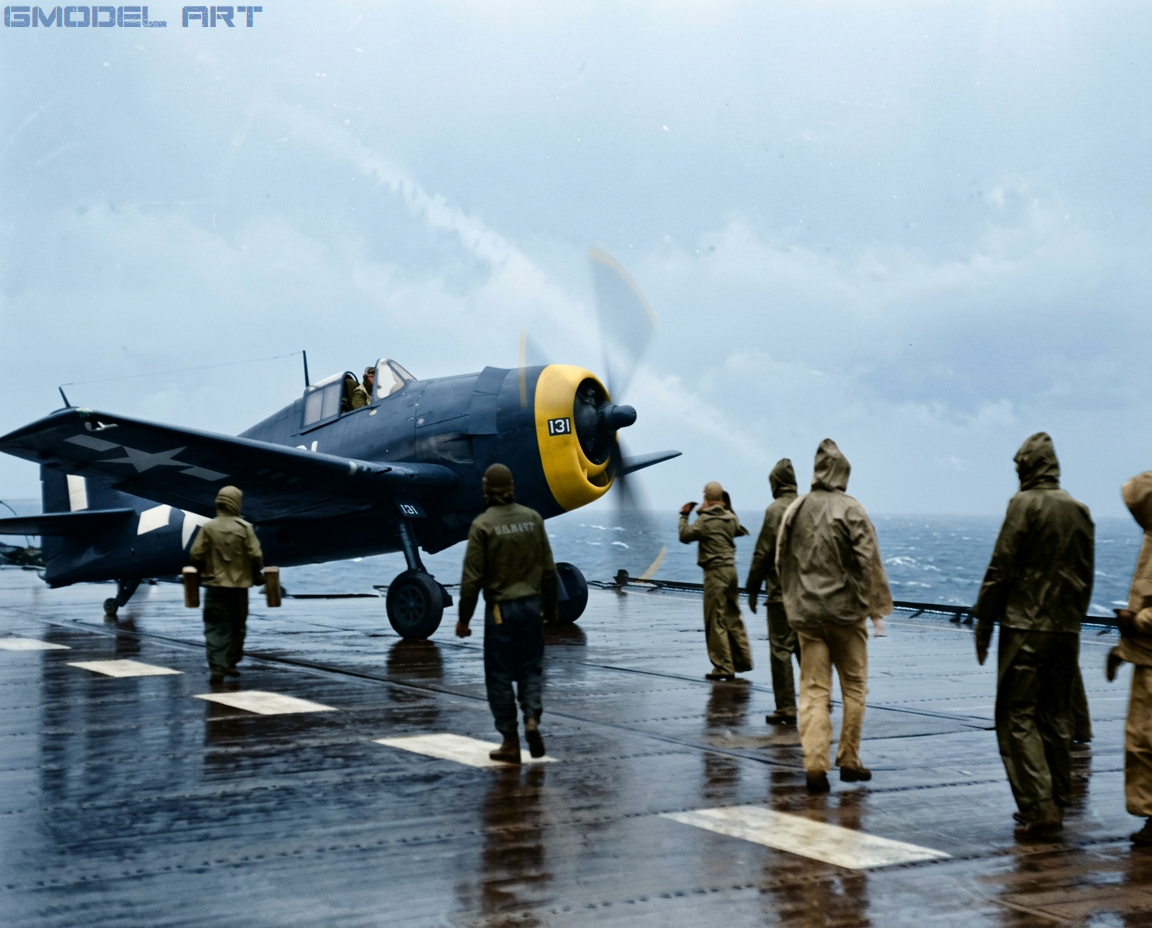
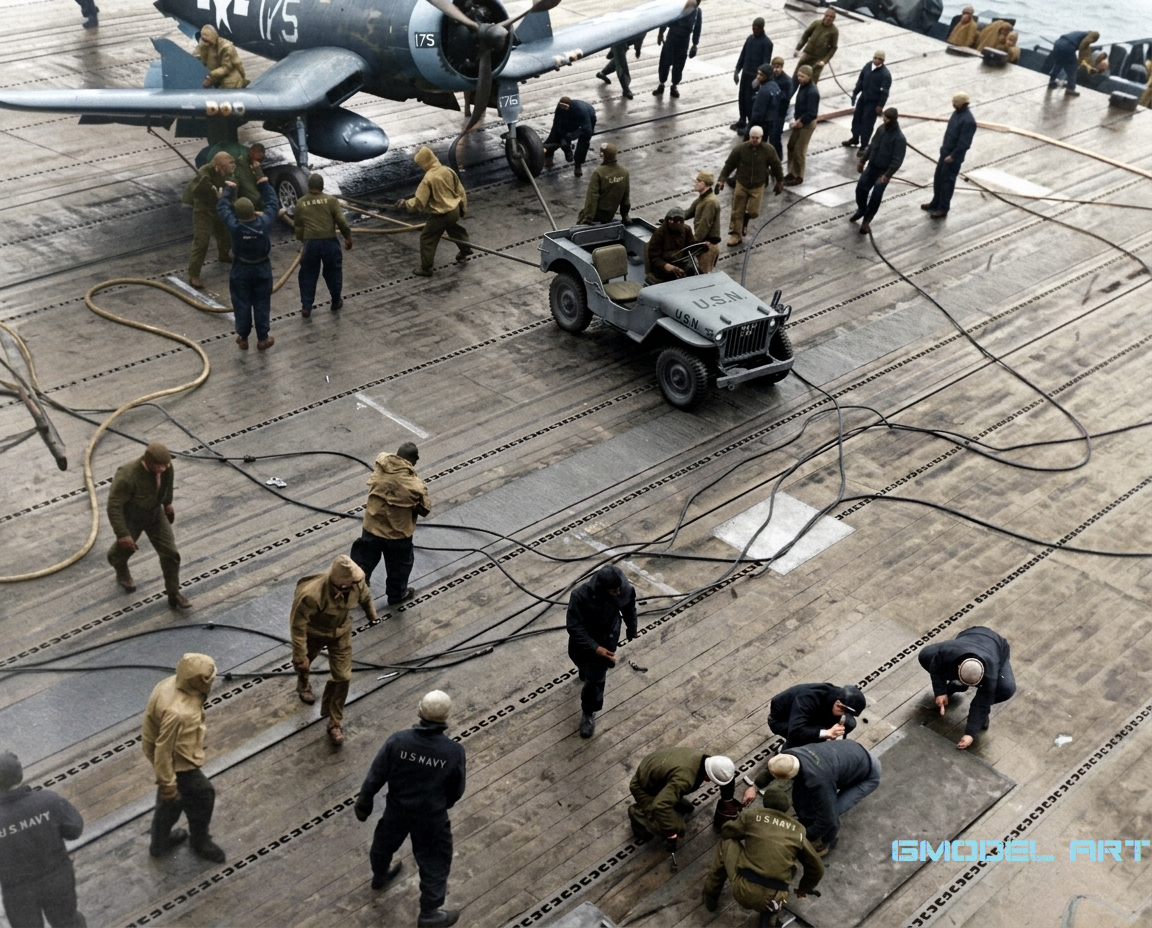
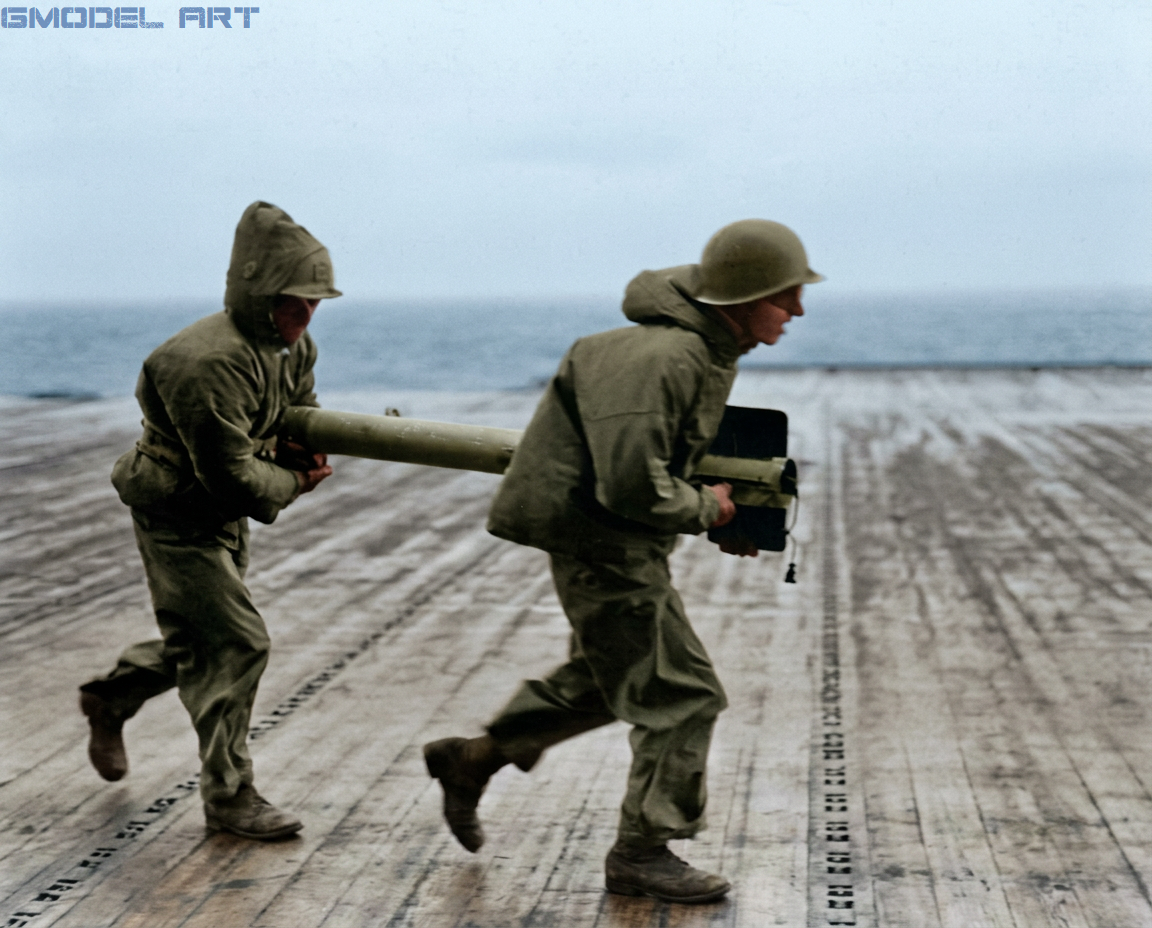
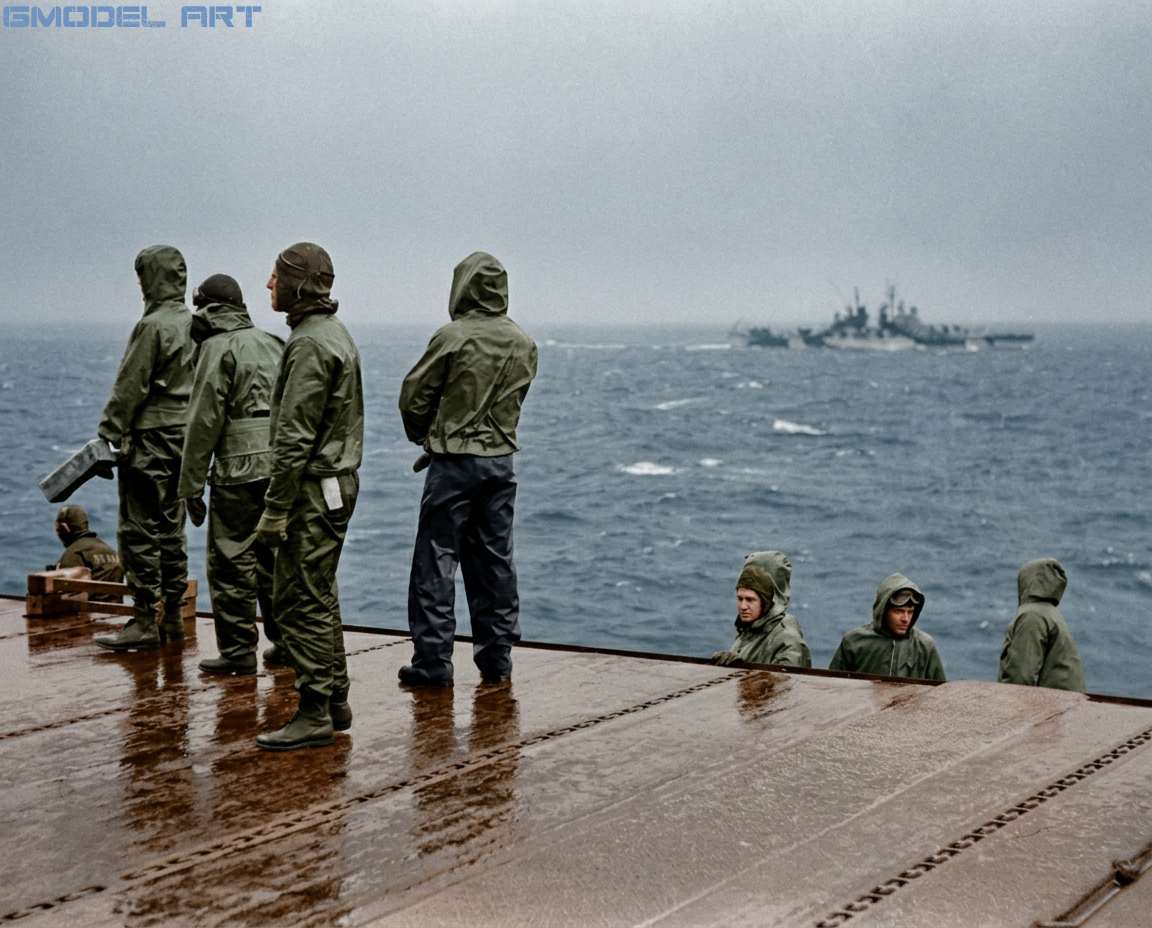
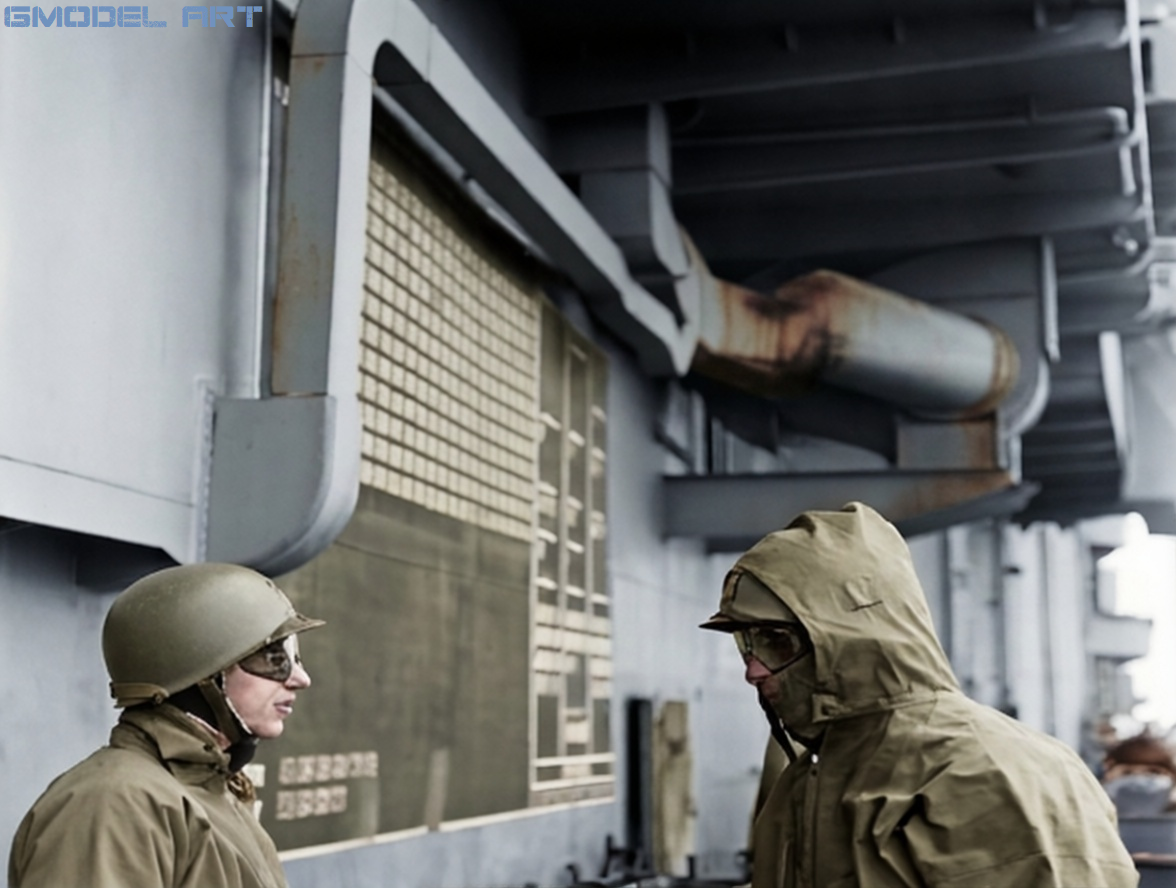
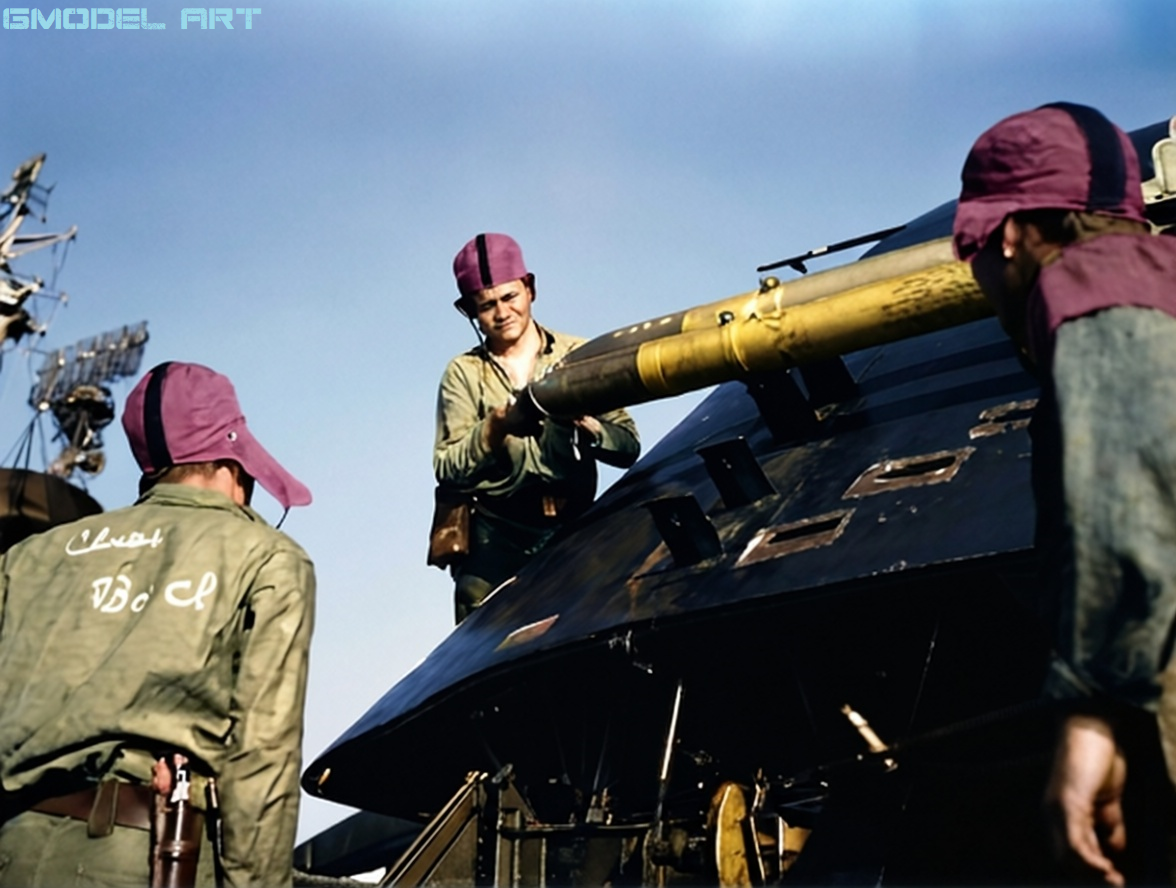
The flight deck was a working environment.
Aircraft were:
- armed,
- refueled,
- inspected,
- pushed into position,
- prepared for launch,
- recovered,
- serviced and repaired.
This gives the modeler an opportunity to add realistic details such as:
- deck crew,
- wheel chocks,
- maintenance equipment,
- bomb carts,
- fuel hoses,
- weapons,
- folded wings,
- open canopies,
- aircraft preparing for launch.
The result becomes a representation of life aboard a wartime aircraft carrier, rather than simply a display of individual models.
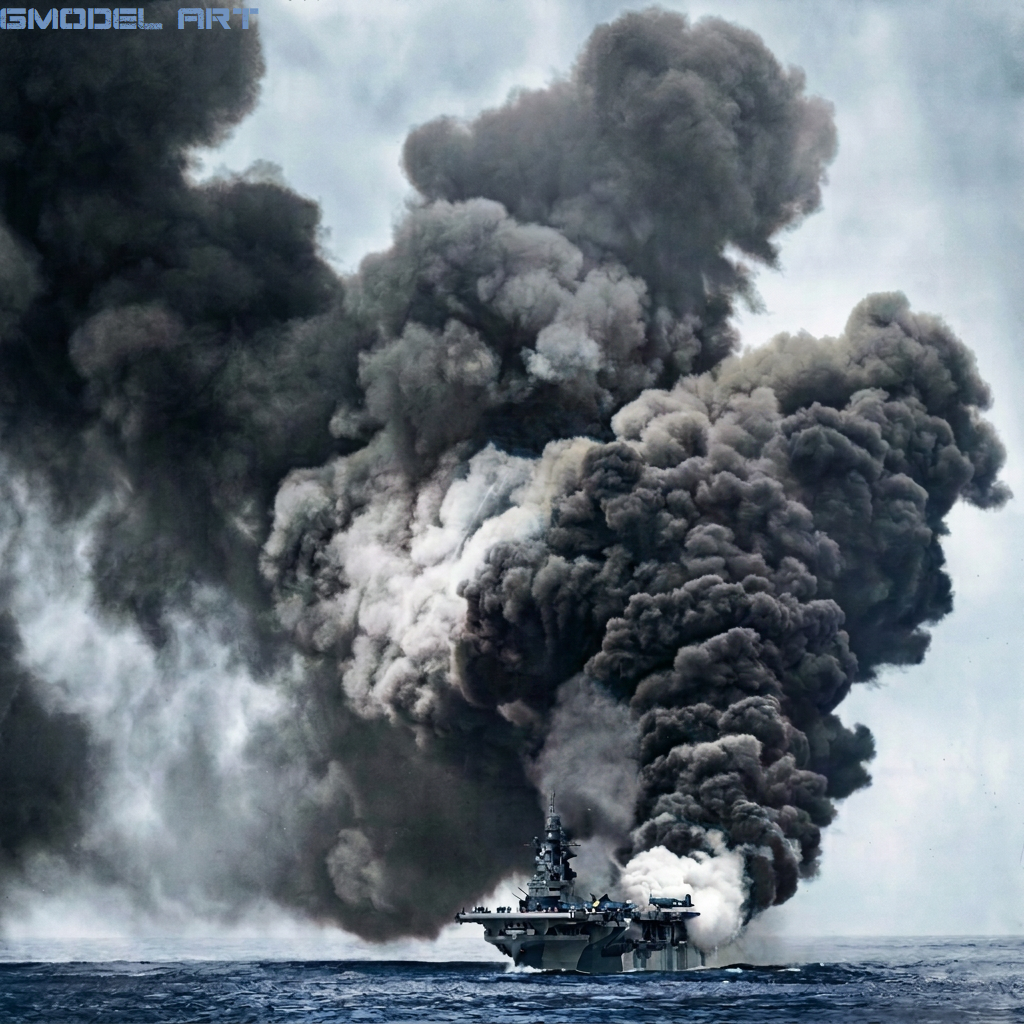
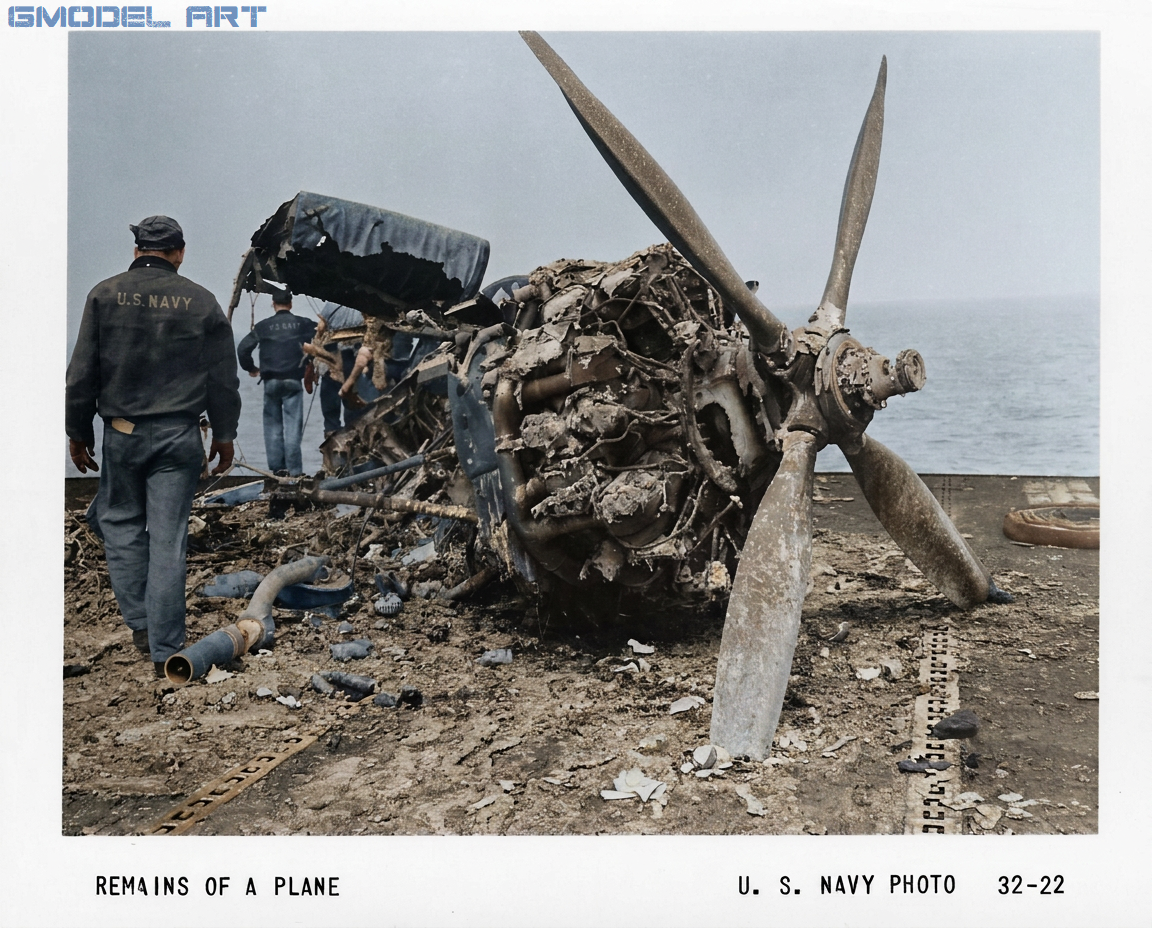
May 11, 1945 – The Attack on Bunker Hill
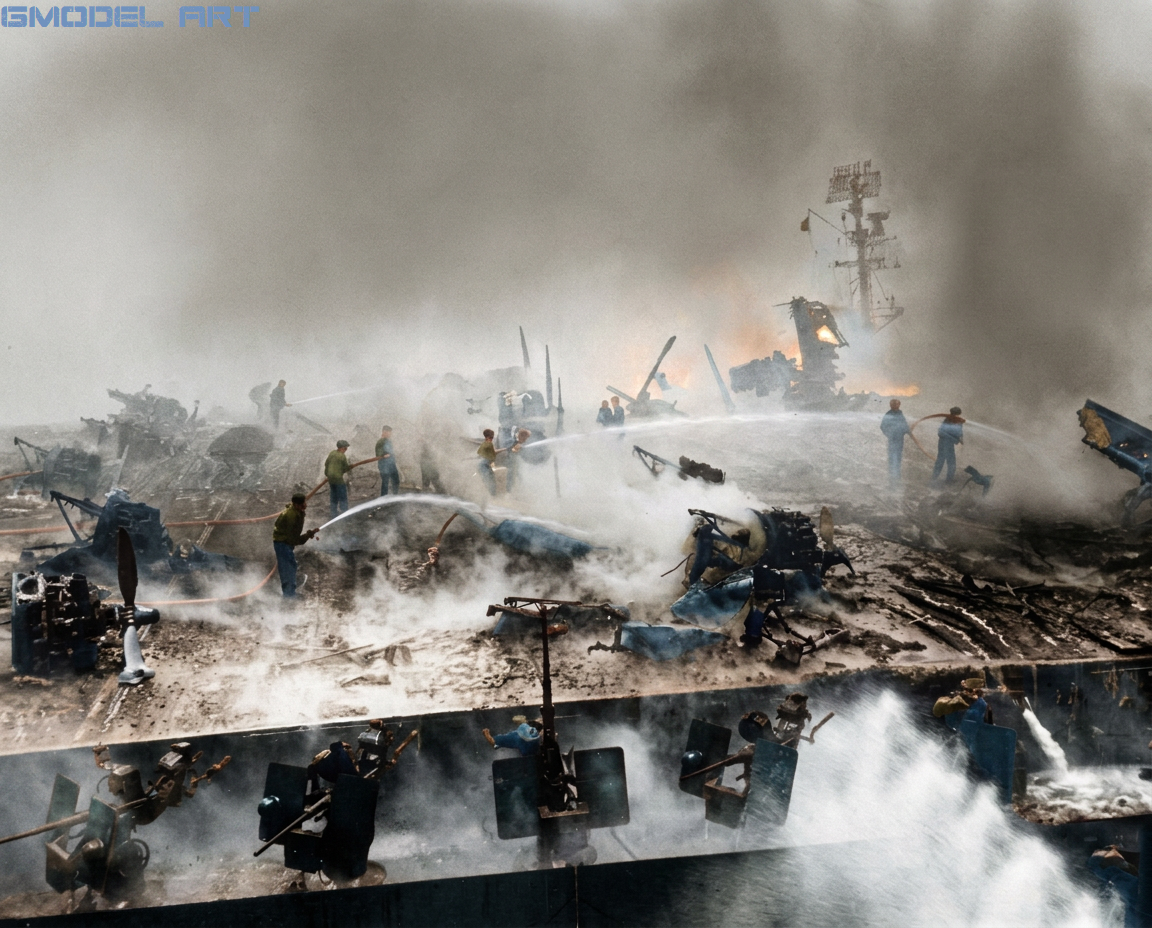
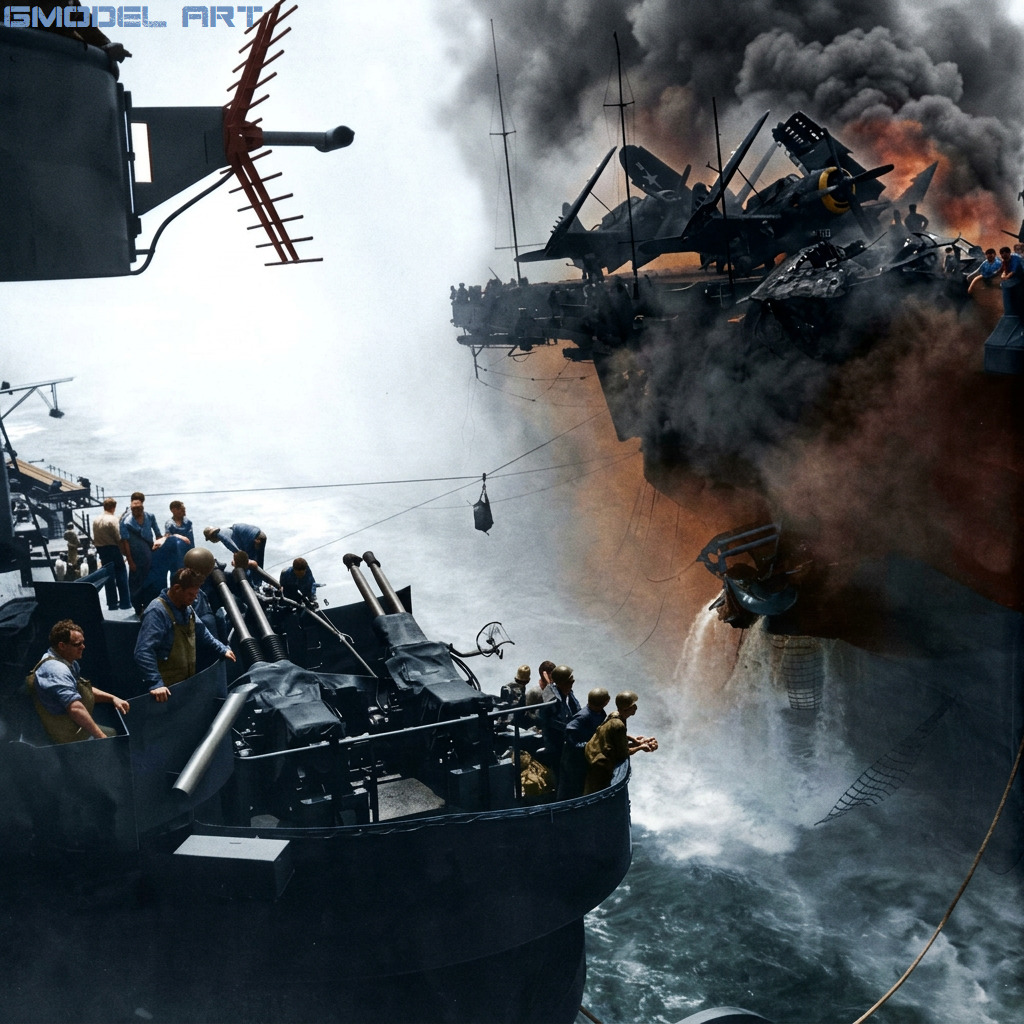
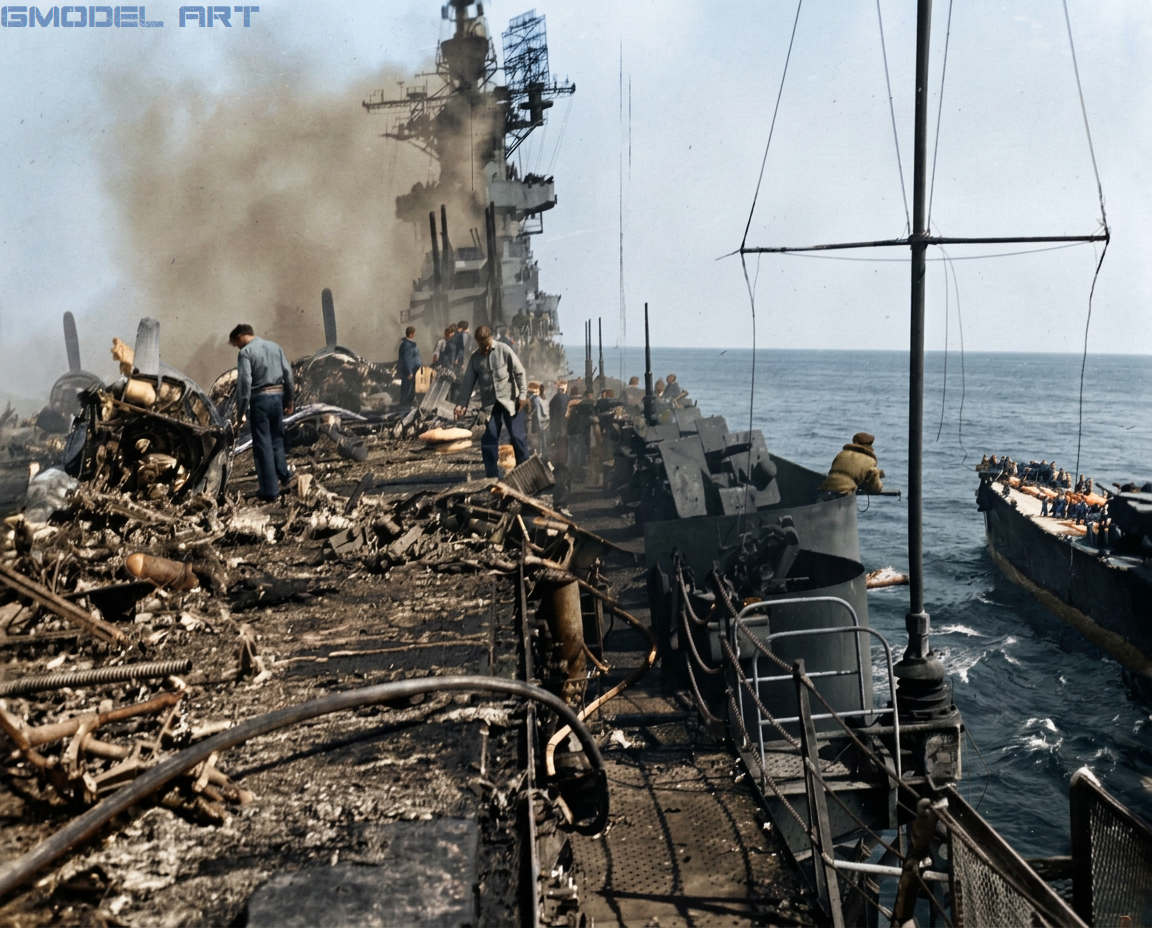
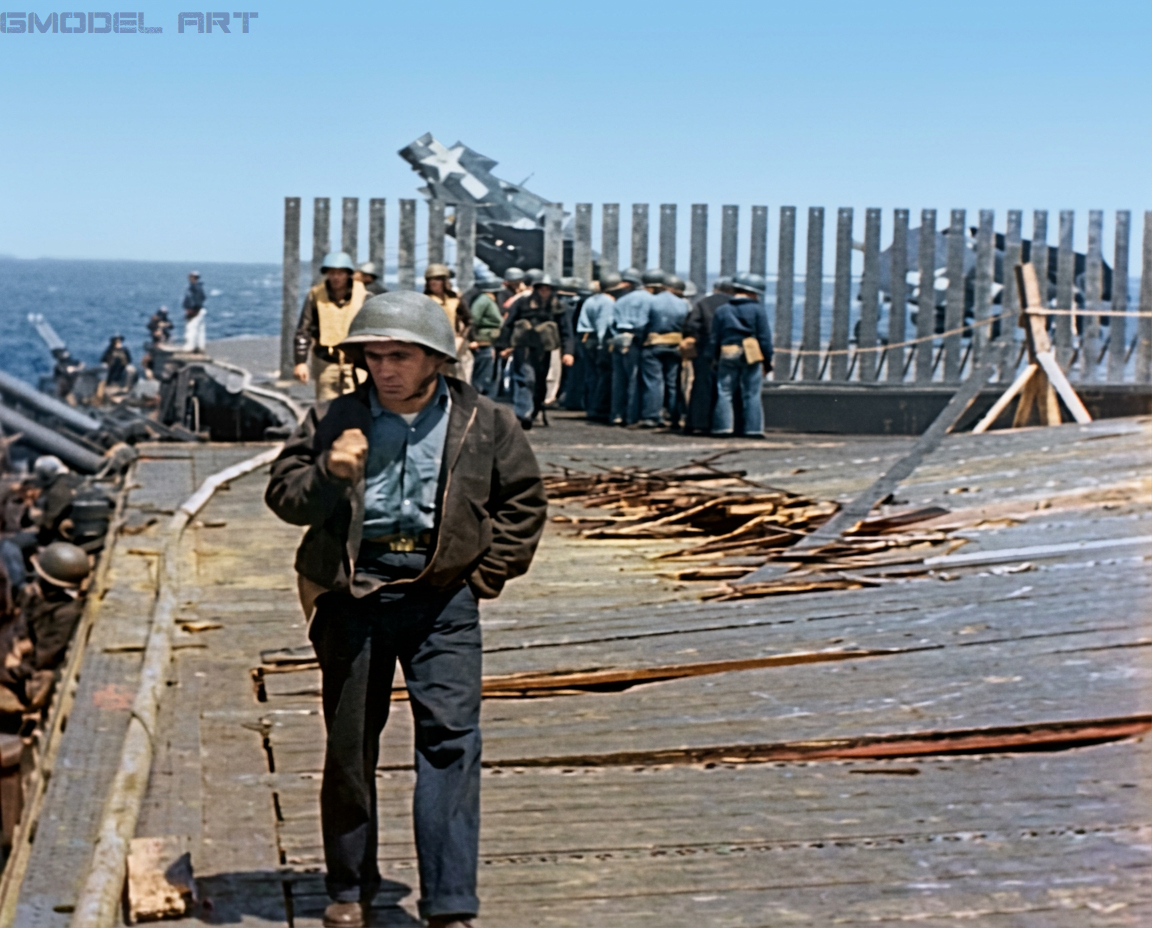
On May 11, 1945, while operating off Okinawa, USS Bunker Hill was struck by two Japanese kamikaze aircraft in rapid succession.
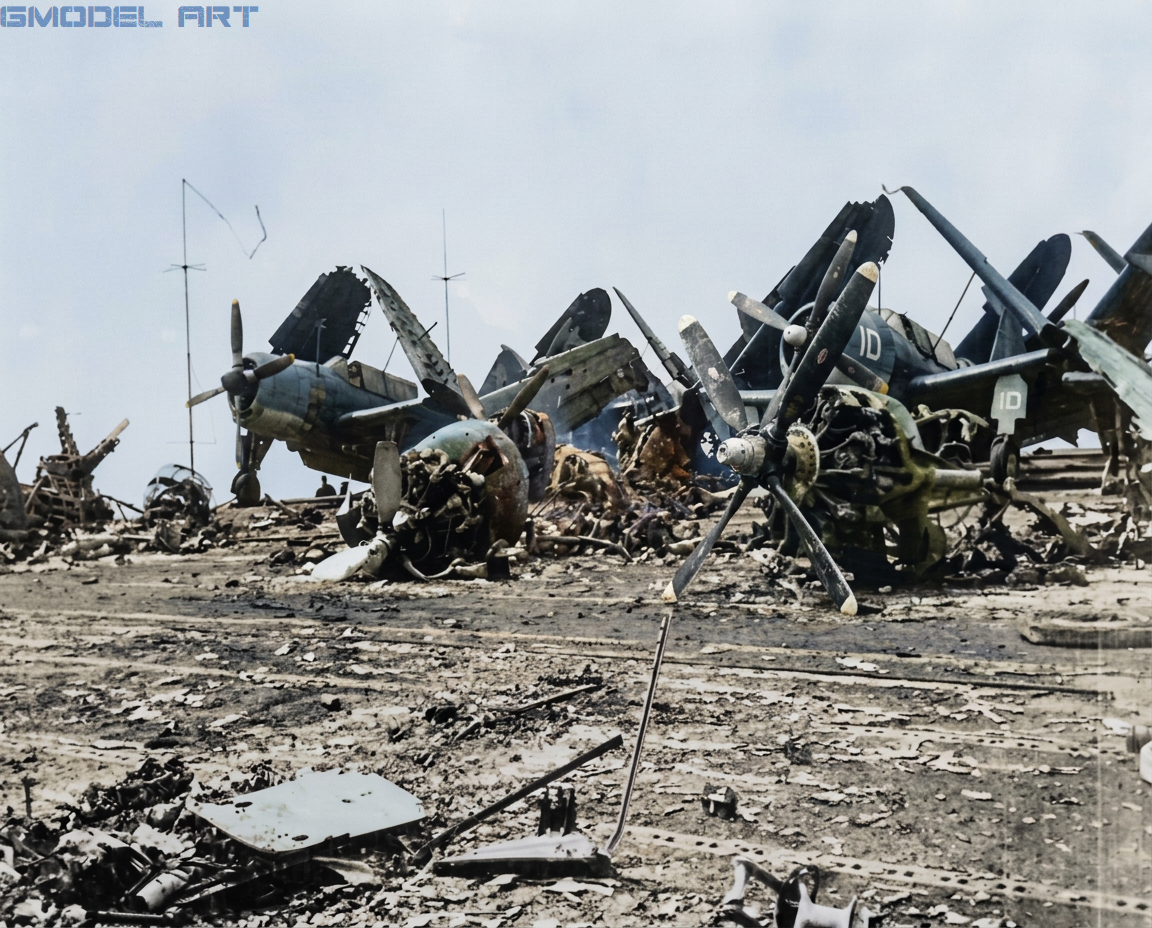
The attack caused catastrophic damage and enormous casualties.
Among those killed were 22 members of VF-84.
The carrier suffered 396 personnel killed or missing and 264 wounded.
Bunker Hill survived the war, but it never returned to combat operations.
For VF-84, the attack marked the end of its operational combat service aboard the carrier.
The End of VF-84’s Corsair Operations
In July 1945, VF-84 was reorganized as an F6F Hellcat squadron.
The war ended before the newly equipped unit could return to combat.
Therefore, when building a VF-84 F4U-1D Corsair, the most historically relevant period is:
February – May 1945
This is the period to concentrate on when selecting photographs, decals, aircraft numbers and weathering references.
Modeling the USS Bunker Hill Air Group
For a complete Bunker Hill project, the following aircraft provide an excellent historical combination:
1944
F6F-3 Hellcat
F6F-3N Hellcat
SB2C-1C Helldiver
TBF-1/TBF-1C Avenger
Early 1945
F4U-1D Corsair
F6F-5P Hellcat
F6F-5N Hellcat
SB2C-4/4E Helldiver
TBM-3 Avenger
along with the Marine Corsairs of:
VMF-221
VMF-451
Recommended Colors for a 1945 Bunker Hill Aircraft
| Color | Reference | Typical Use |
|---|---|---|
| Glossy Sea Blue | ANA 623 / FS 15042 | Overall aircraft finish |
| Insignia White | FS 17875 | National markings |
| Insignia Yellow | FS 13538 | Propeller tips / identification markings |
| Interior Green | ANA 611 / FS 34151 | Applicable interiors |
| Black | — | Propellers and details |
| FS 13538 | Insignia Yellow | ID marks | ANA 508 |
| FS 17875 | Insignia White | Camo (Cold War), Interiors | ANA 511 |
| ANA 623 (1) | |
| Glossy Sea Blue | |
| Schemes | |
| Basic | Overall |
| Color matches | |
| Gunze Aqueous | H55 |
| Gunze Mr Color | C71 / C365* |
| Humbrol | 181* |
| Model Master | 1717* |
| Revell | – |
| Tamiya | XF-17 (!) |
| Vallejo Model Air | 71.300* |
| Vallejo Model Color | (70.898) |
| AKAN | (72042) |
| AK Interactive | AK 2234 |
| AK Real Colors | RC258 |
| AMMO by Mig | (A.MIG-227) |
| Colourcoats | ANA623 |
| Hataka | HTK-_001* |
| Lifecolor | UA 047* |
| Mission Models | MMP-065* |
| Mr Paint | MRP-14 |
| Xtracolor | X121* |
| Xtracrylix | XA1121* |
These references should be treated as modeling color references, not as proof that every surviving photograph represents exactly the same paint shade.
Building a VF-84 F4U-1D Corsair
For the most convincing result, work in stages.
1. Construction
Pay attention to:
- panel lines,
- rivets,
- flaps,
- landing gear,
- canopy,
- engine cowling.
2. Primer
Create a smooth surface before painting.
3. Glossy Sea Blue
Apply the main color in several subtle tonal variations.
4. Markings
Apply the decals over a suitable gloss surface.
5. Wash
Keep panel-line washes subtle.
6. Fading
Lightly fade selected upper surfaces.
7. Exhaust
Build the exhaust gradually using transparent layers.
8. Oil and Fuel
Add localized stains around the engine and servicing areas.
9. Final Finish
A lightly satin operational finish is generally more convincing than a perfectly glossy model.
The Golden Rule of Historical Scale Modeling
The most important question is not:
“What color was the Corsair?”
The better question is:
“Which Corsair, from which squadron, on which date, aboard which carrier?”
Two F4U-1D Corsairs from VF-84 could look noticeably different.
One aircraft may have fresh paint.
Another may show fading, exhaust staining and replacement panels.
A third may have different markings or a different weapons configuration.
That is why wartime photographs are the most valuable reference available to the modeler.
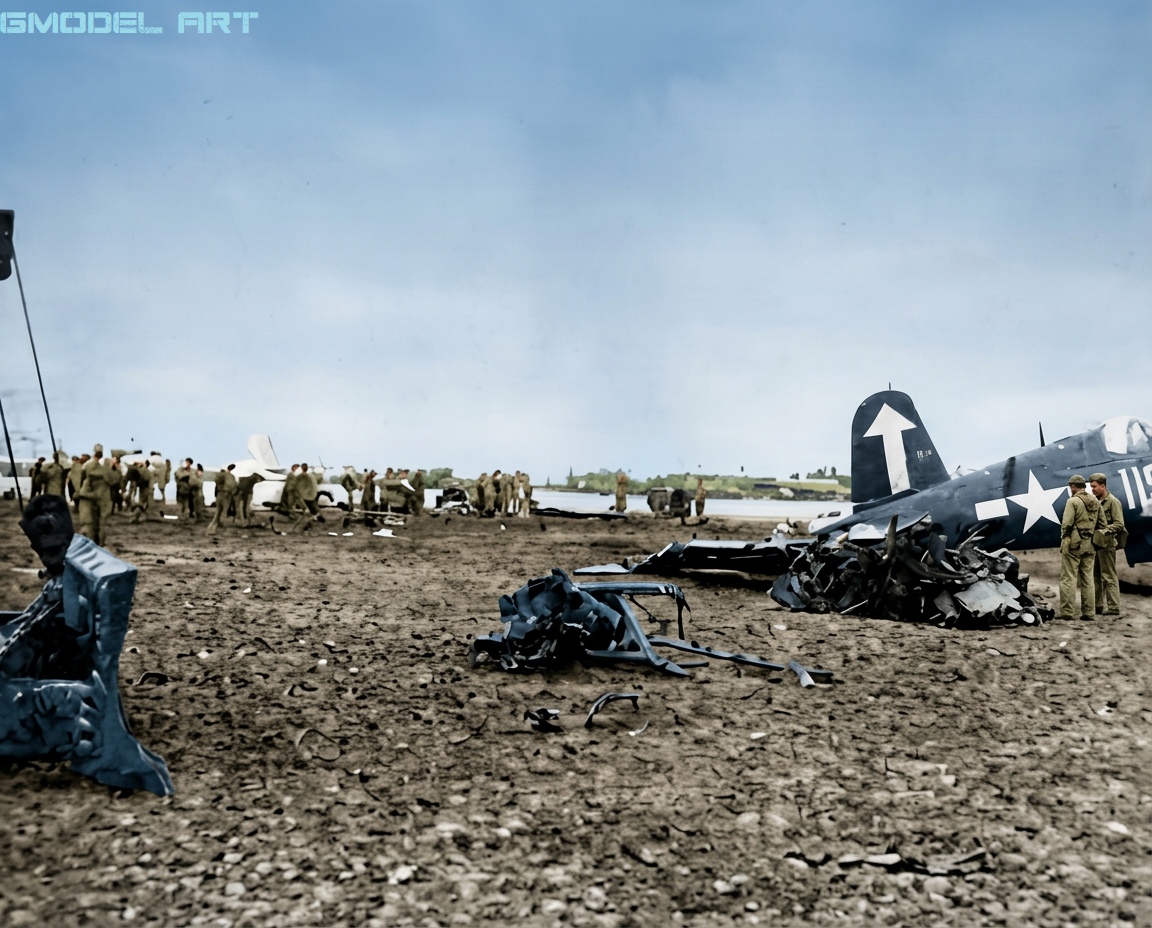
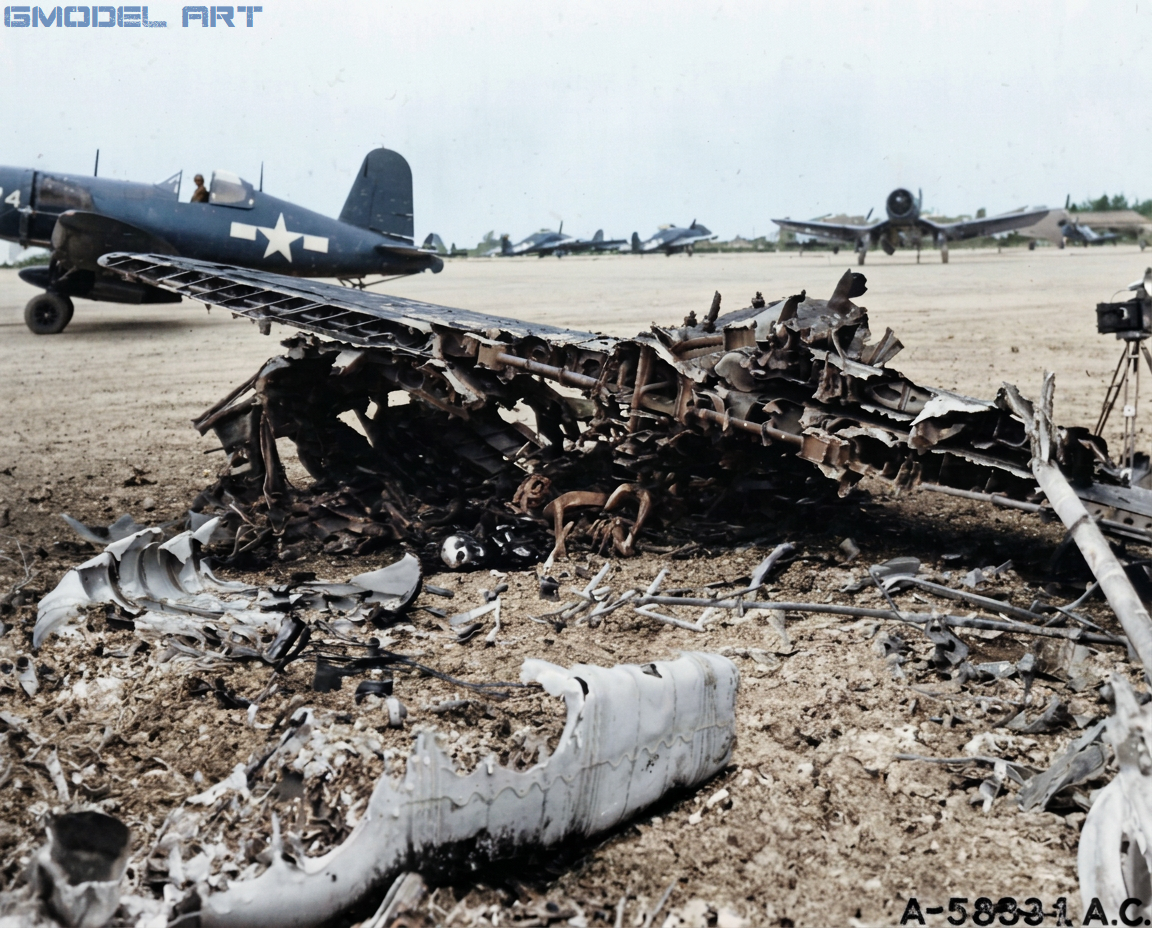
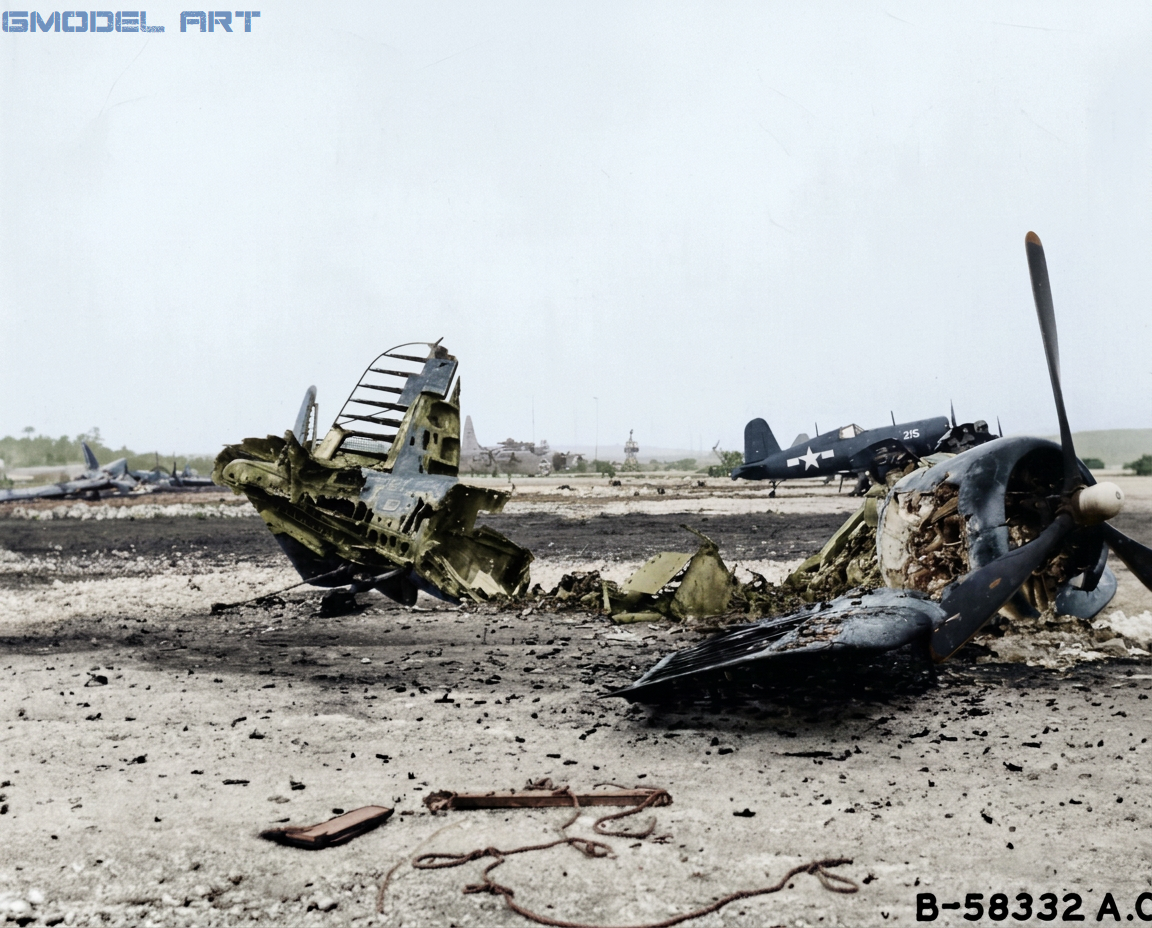
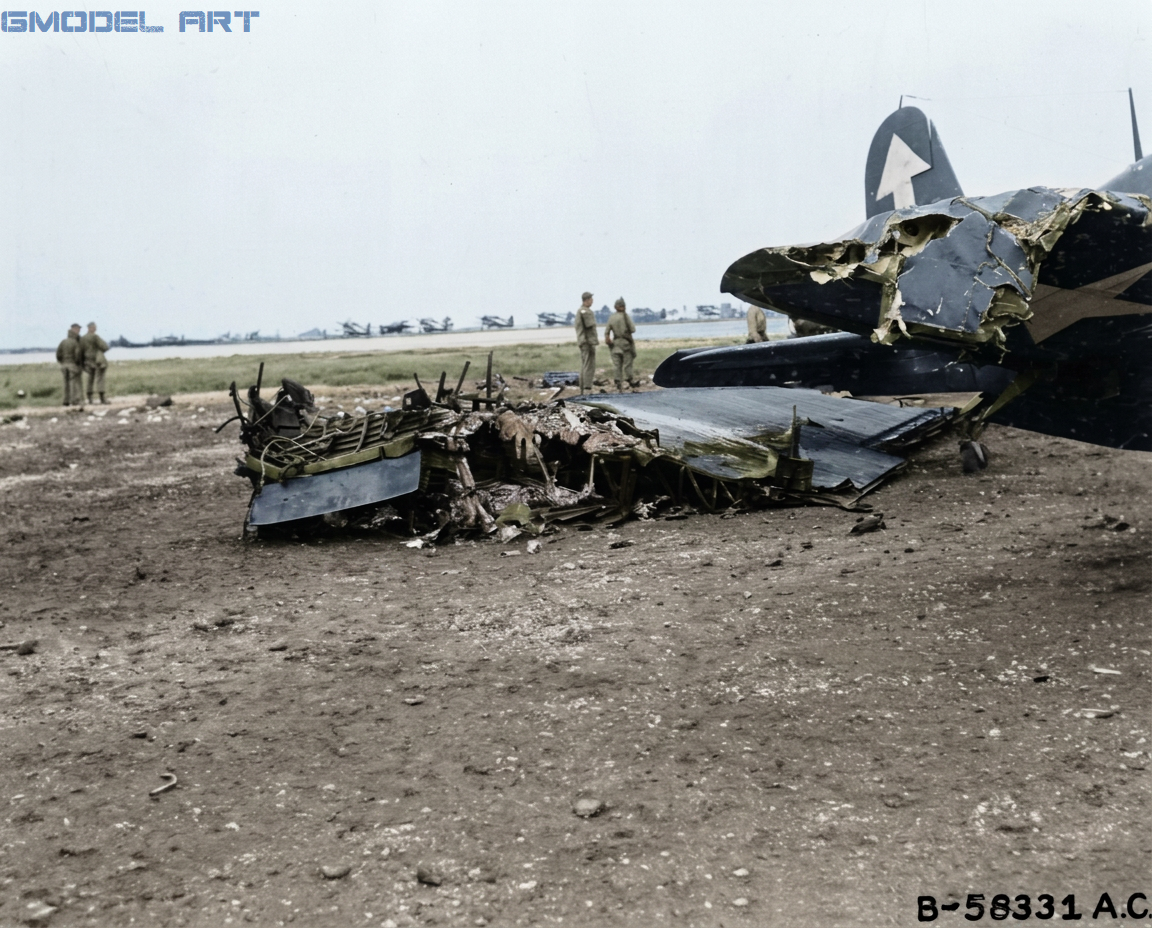
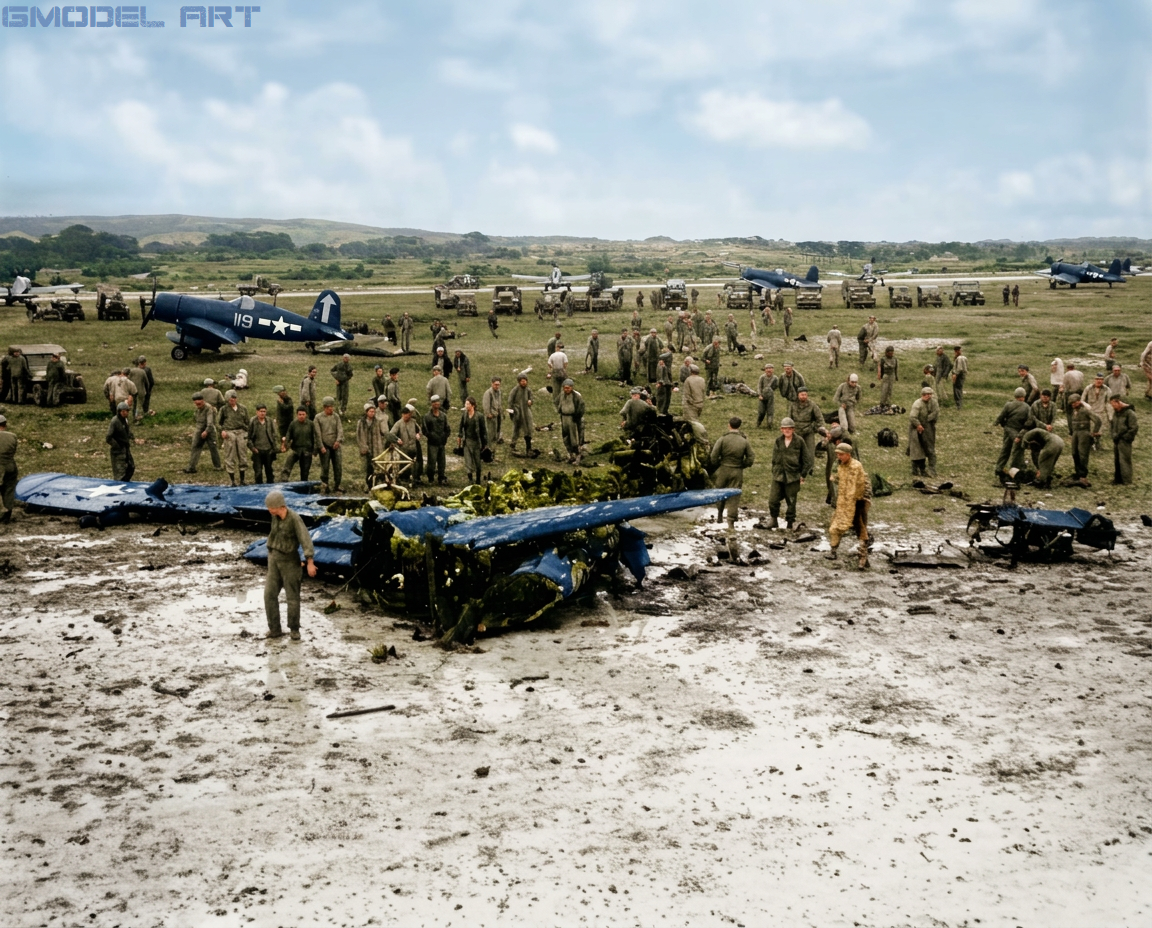
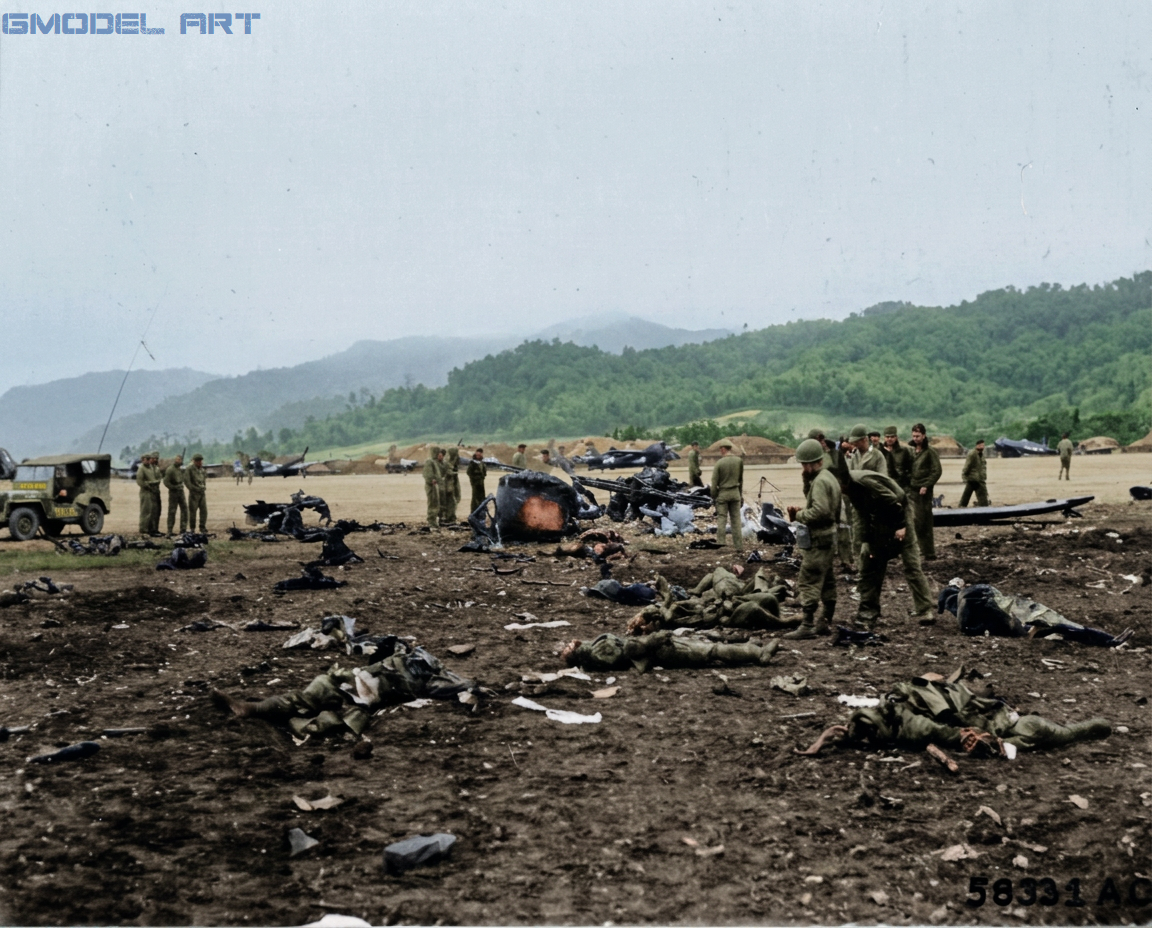
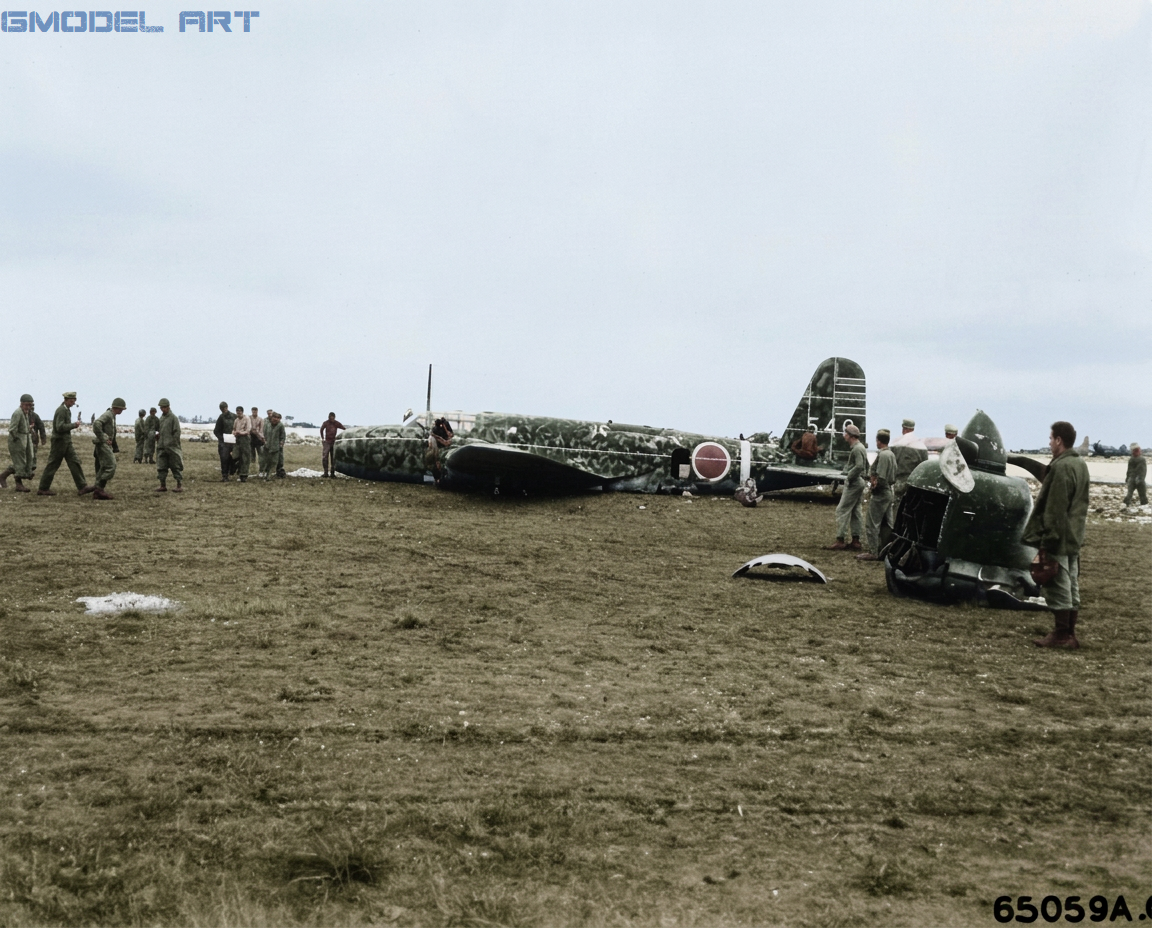
Pacific Aircraft Graveyards: 28 Incredible WWII Aircraft Every Modeler Should See
Conclusion
The story of VF-84 and USS Bunker Hill CV-17 is much more than the story of one Corsair squadron.
It is the story of a changing carrier air group operating at the height of the Pacific War.
From the F6F Hellcats, SB2C Helldivers and TBF Avengers of 1944, to the F4U-1D Corsairs, F6F-5P, F6F-5N, SB2C-4/4E and TBM-3 aircraft of 1945, Bunker Hill provides an extraordinary range of subjects for scale modelers.
For anyone building a VF-84 F4U-1D Corsair, the most interesting period is the final operational phase from February to May 1945.
The goal should not simply be to build a beautiful Corsair.
The goal is to recreate a real aircraft, belonging to a real squadron, at a specific moment in history.
That is where historical research becomes scale modeling.