article
Aegean Ghost Camouflage: From U.S. Navy Aggressors to the Hellenic Air Force
The Aegean Ghost Camouflage, widely known as the Greek Ghost scheme, is one of the most recognizable camouflage patterns associated with modern Greek military aviation. Its distinctive combination of blue and grey tones gives aircraft a subdued appearance, designed to reduce visual contrast against the changing colours of the sky and sea.
Although the scheme became particularly well known through the Hellenic Air Force, its origins are closely connected to the United States Navy’s experimental camouflage and Aggressor aircraft programmes.
For scale modellers, understanding the relationship between the original U.S. Navy schemes and the Greek interpretation is essential. Similar-looking aircraft did not necessarily carry identical colours or patterns, and the correct identification of each version is important when selecting paints and reproducing individual aircraft.
U.S. Navy Origins: The Aggressor Connection
The development of modern blue-grey camouflage schemes was closely associated with the U.S. Navy’s efforts to improve visual training conditions and simulate potential adversary aircraft.
During the 1980s, the Navy operated dedicated Aggressor units whose aircraft were painted in a variety of camouflage patterns. These schemes were intended to represent different aircraft and visual characteristics encountered during air combat training.
The F-16N Aggressor aircraft are particularly relevant to the origins of the Ghost-style appearance later associated with Greek F-16s. Their blue-grey camouflage provided an important visual reference for the development of the Greek scheme.
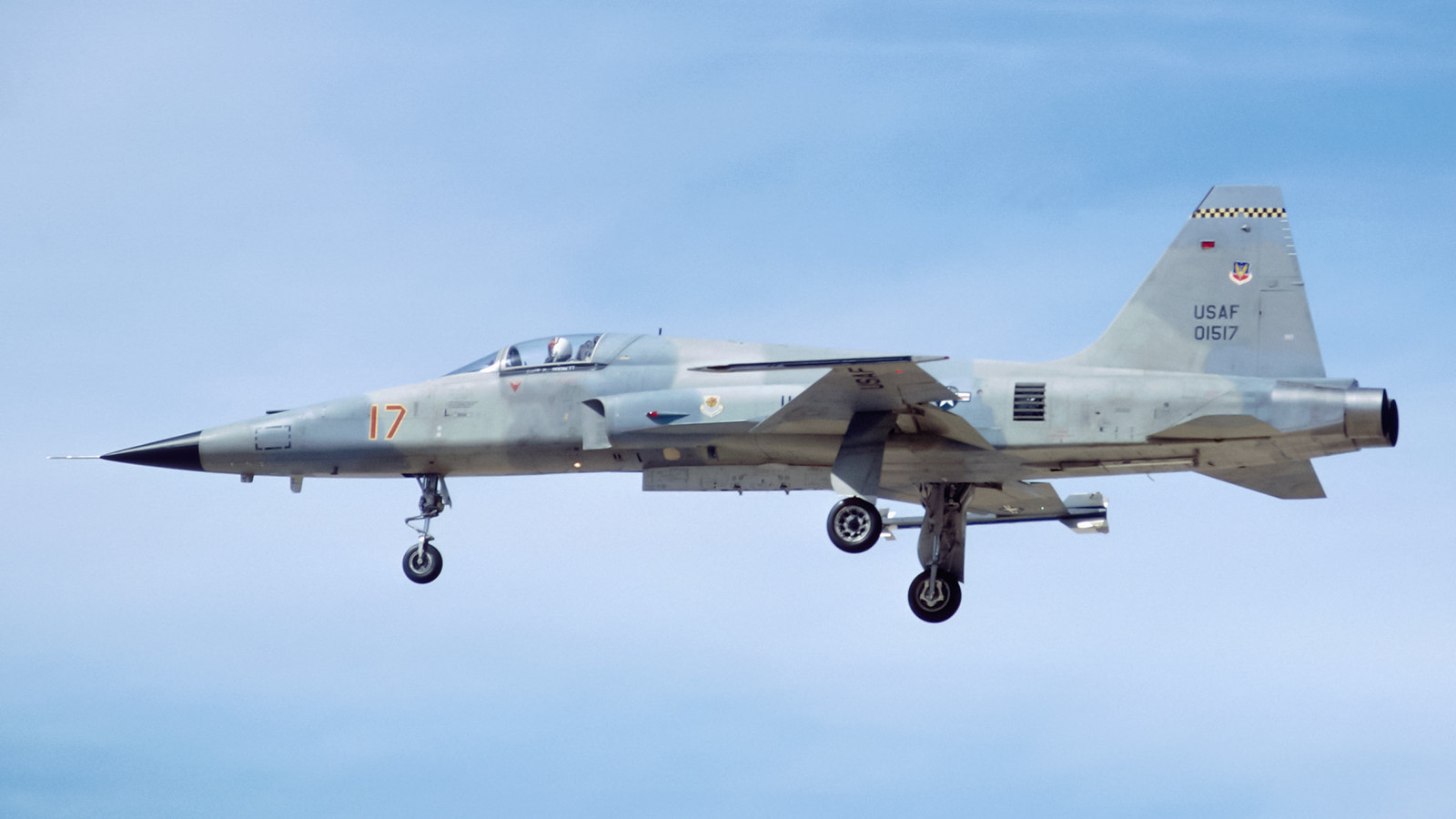
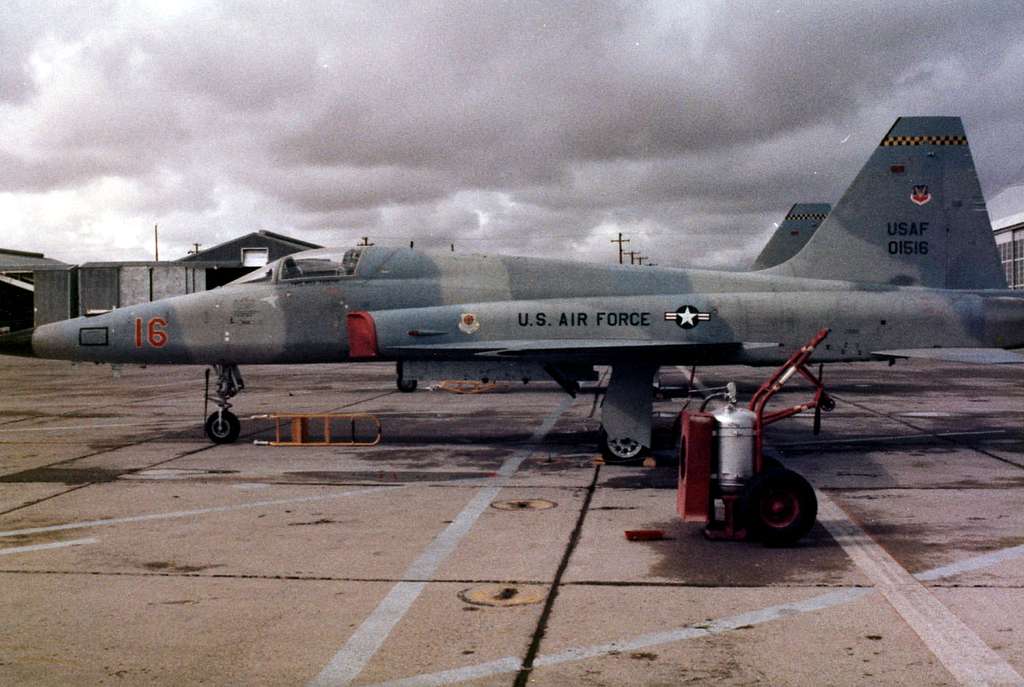
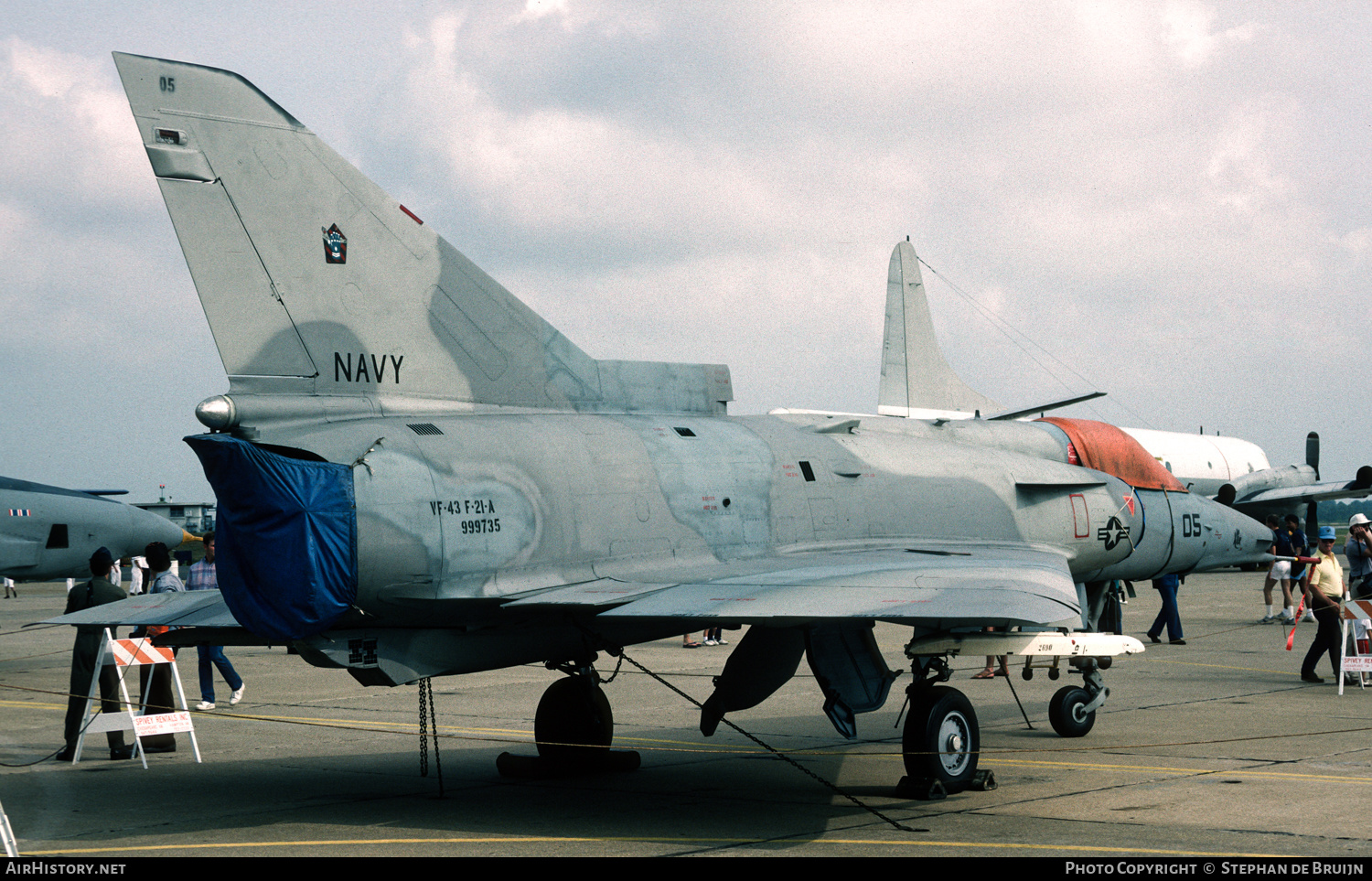
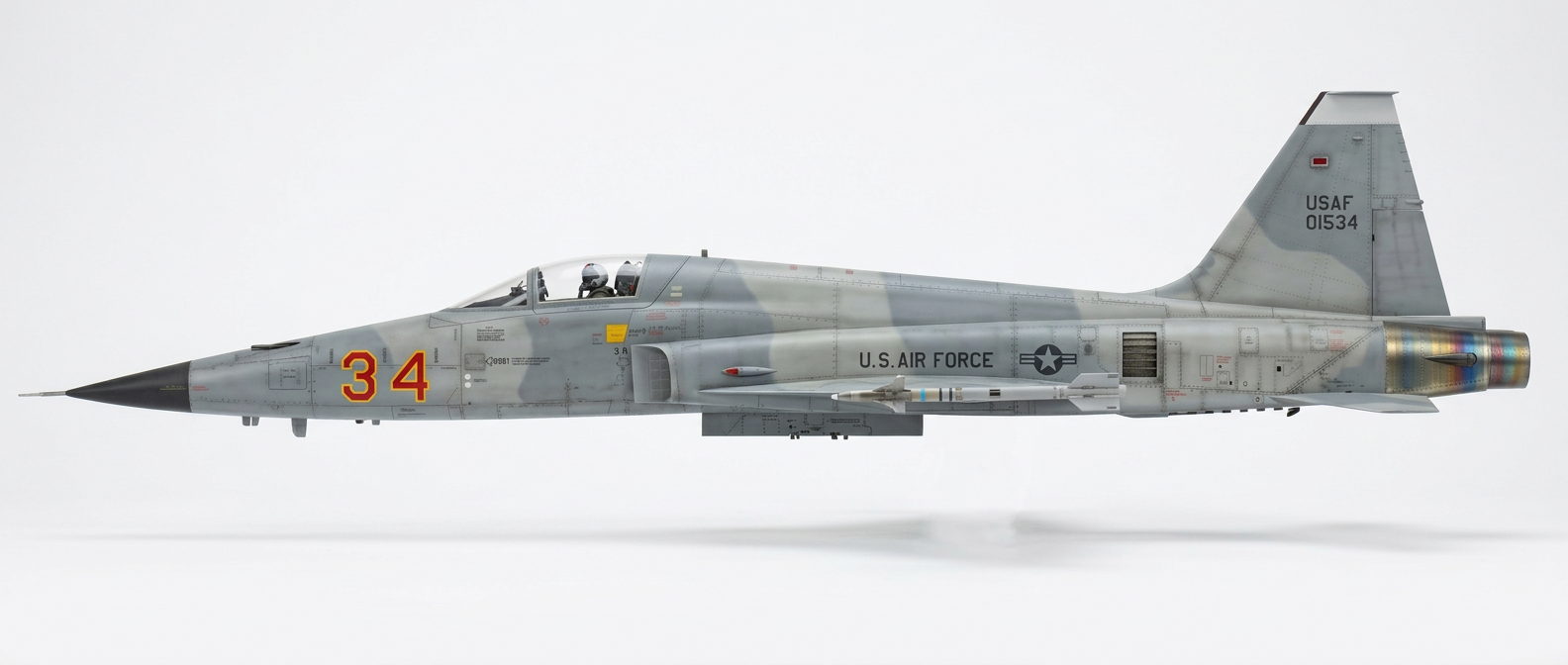
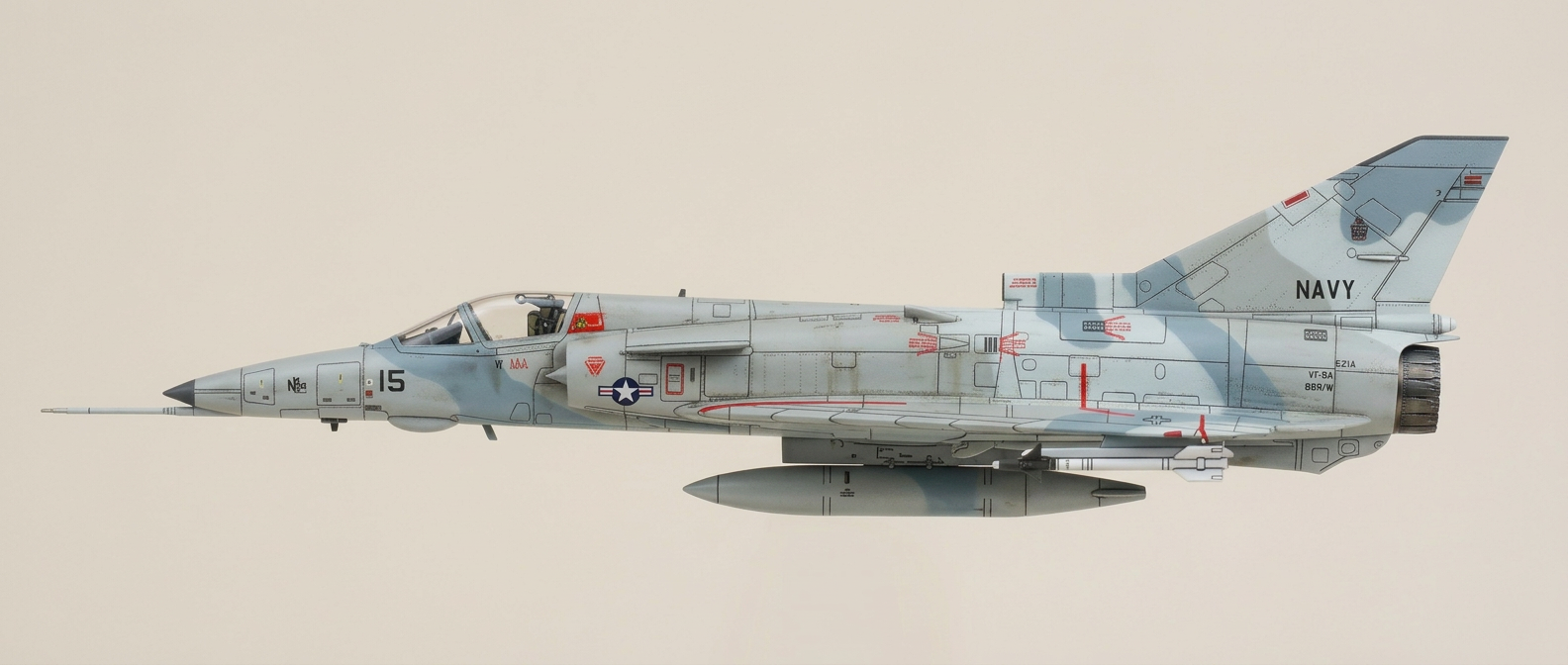
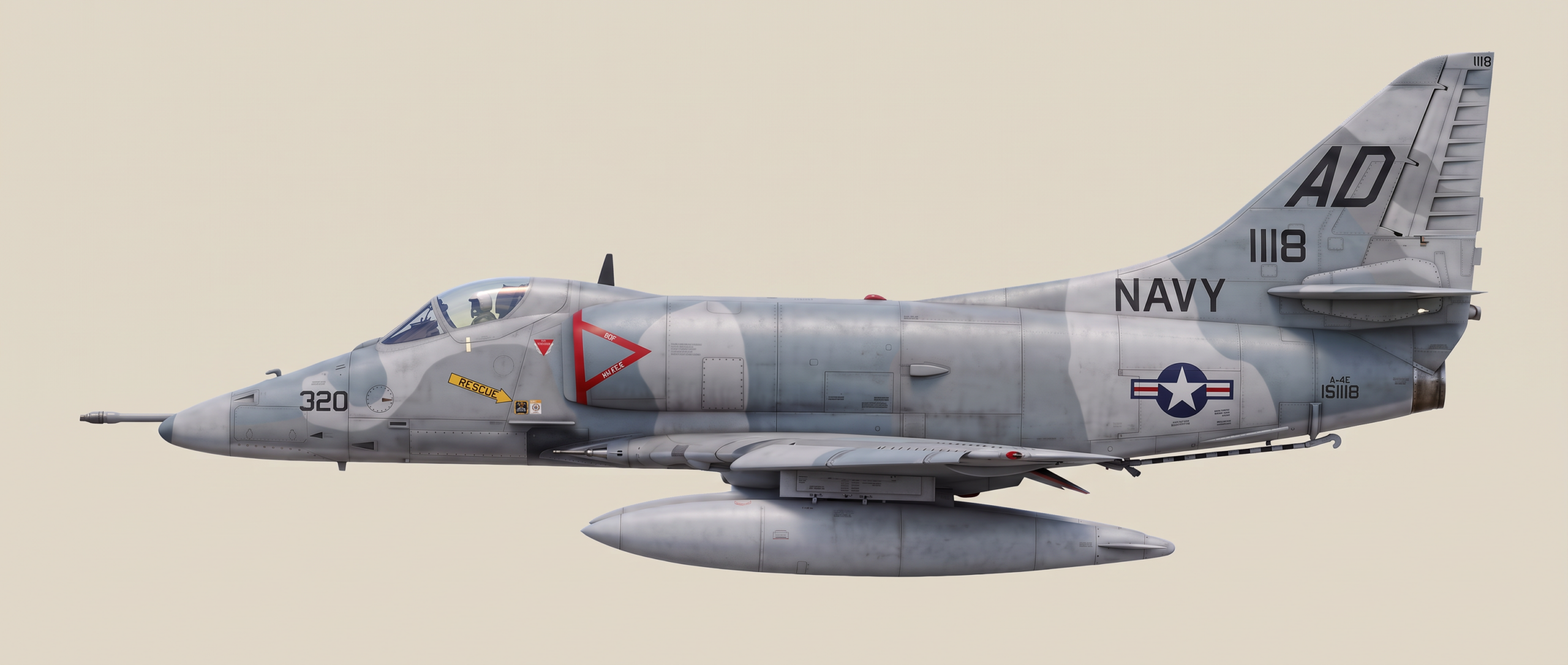
Other aircraft operated in the U.S. Navy Aggressor environment also appeared in blue-grey camouflage variations, including the A-4 Skyhawk, F-5E Tiger II and F-21A Kfir.
These aircraft should be considered within the wider Aggressor camouflage context. Their individual paint schemes and markings could differ according to the unit, aircraft and period. The presence of similar colours does not automatically mean that every aircraft carried an identical three-colour Aegean Ghost pattern.
The Greek Aegean Ghost Scheme
The Hellenic Air Force adopted its distinctive Ghost camouflage during the late 1980s, with the first Greek F-16 aircraft receiving the scheme in 1988.
The Greek interpretation is based on a three-colour combination of blue and grey tones. It was selected to provide an effective visual appearance in the operational environment of the Aegean, where the aircraft frequently operate against backgrounds of sea, sky and coastal terrain.
Over the following years, the scheme became strongly associated with several types of Greek military aircraft.
Its application was not limited to one fighter type. Different aircraft received the camouflage according to their operational role, modernization status and individual service history.
Aircraft Associated with the Greek Ghost Scheme
F-16 Fighting Falcon
The F-16 Fighting Falcon is the aircraft most closely associated with the Aegean Ghost scheme. The camouflage became a defining visual feature of Greek F-16 operations and remains an important part of the aircraft’s identity.
The scheme has appeared on different Greek F-16 versions, although the external appearance of individual aircraft has changed over time due to repainting, maintenance and modernization.
F-4E AUP Phantom II
The F-4E AUP Phantom II also received the Ghost camouflage. The large airframe of the Phantom provides an interesting interpretation of the three-tone pattern, with broad colour areas across the fuselage, wings and tail.
Photographic references should be used when reproducing a particular aircraft, especially when identifying changes caused by repainting and operational wear.
F-4E Phantom II AUP HAF Aegean Ghost — Technical Details & Modeling Guide
F-5A Freedom Fighter
Selected Greek F-5A Freedom Fighter aircraft also appeared in Ghost-style camouflage. These examples represent a more limited application compared with the extensive use of the scheme on Greek F-16s.
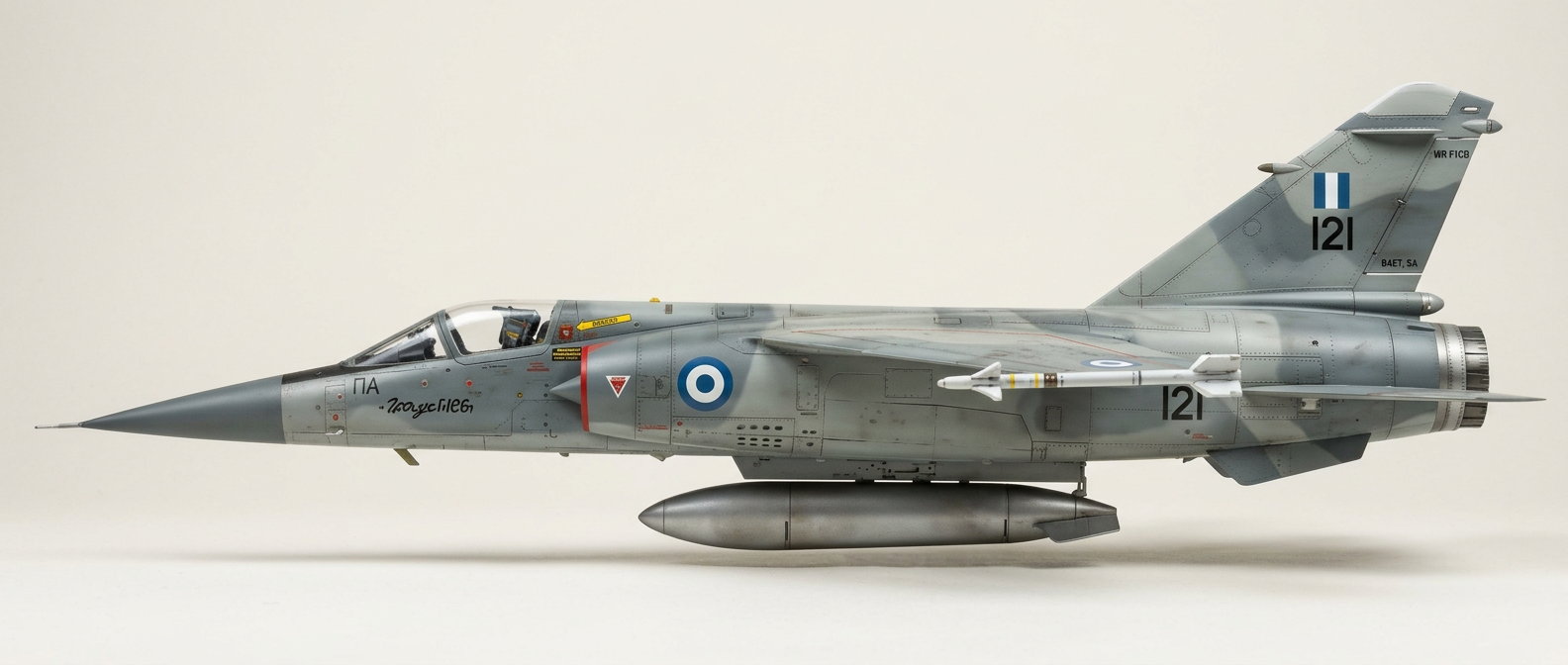
Mirage F1CG
A small number of Greek Mirage F1CG aircraft also received a Ghost-style finish. These aircraft should be treated as individual examples rather than evidence that the camouflage became a standard finish across the entire Mirage F1CG fleet.
The exact aircraft, markings and camouflage arrangement should always be checked against photographic evidence.
The Three Main Colours of Aegean Ghost
The standard Greek Ghost scheme is based on three principal colours:
FS 35237 – Medium Blue Grey
FS 36251 – Aggressor Gray
FS 36307 – Light Sea Grey
These colours form the basic camouflage combination. The exact boundaries and distribution of the colours should be checked against photographs of the specific aircraft being modelled.
FS 36320 – Dark Ghost Gray is also relevant to certain aircraft details and applications, particularly radomes. However, it should not be treated as a fourth standard colour in the basic three-colour Greek Ghost camouflage pattern.
For accurate scale modelling, the distinction between the main camouflage colours and individual aircraft details is important.
Have Glass: The Evolution of the F-16’s Surface Appearance
The appearance of Greek F-16s has evolved further with the introduction of Have Glass surface treatments.
Have Glass is not a separate camouflage scheme. It is associated with specialised surface technology intended to reduce radar observability through the use of radar-related materials and coatings.
The term RAM, or Radar Absorbing Material, describes materials designed to absorb radar energy. Have Glass refers to a wider coating and surface-treatment approach. The two terms are related, but they are not interchangeable.
On an aircraft, these treatments can produce a distinctive visual appearance. Depending on the coating, lighting conditions and aircraft maintenance history, the surface may show a subtle metallic sheen, a slightly rough texture or variations in the apparent grey tone.
For the modeller, this creates an important distinction:
The traditional Aegean Ghost camouflage provides the underlying colour pattern, while the Have Glass treatment influences the surface appearance.
A metallic-looking finish should therefore not be interpreted as a completely different camouflage pattern.
Greek F-16 Modernisation and the Viper Configuration
The Hellenic Air Force’s F-16 modernisation programme includes the upgrade of 83 Block 52+ and Block 52+ Advanced aircraft to the F-16V Viper configuration.
The programme began in 2020. According to the Hellenic Aerospace Industry, the 60th upgraded F-16 Viper was delivered on 16 September 2026, with further deliveries planned through 2027.
This distinction is important when studying the aircraft’s appearance. Block 52+ and Block 52+ Advanced identify the aircraft’s original configurations, while Viper identifies the modernised configuration.
The upgrade changes the aircraft’s avionics and operational capabilities, but it should not automatically be interpreted as a change to the external camouflage pattern.
Have Glass finishes and their visible characteristics should be identified from photographs of the individual aircraft. It is not safe to assume that every Greek F-16 has exactly the same surface treatment or appearance.
Modelling Guide: Accurate Paint References
The following references provide a practical starting point for reproducing the principal colours of the Greek Aegean Ghost scheme.
| Federal Standard | Colour | MRP reference | Hataka reference |
|---|---|---|---|
| FS 35237 | Medium Blue Grey | MRP-105 | HTK-A046 |
| FS 36251 | Aggressor Gray | MRP-94 | HTK-A157 |
| FS 36307 | Light Sea Grey | MRP-245 | HTK-A266 |
| FS 36320 | Dark Ghost Gray – detail/radome reference | MRP-97 | HTK-A035 |
The three primary camouflage colours are FS 35237, FS 36251 and FS 36307. FS 36320 is included as a useful reference for specific aircraft details and should not be applied as a standard fourth camouflage colour without photographic confirmation.
Paint manufacturers may produce slight differences in tone between their interpretations of the same Federal Standard reference. For the most convincing result, compare the selected paints with reliable photographs of the exact aircraft and consider the effects of scale, lighting and surface finish.
Reproducing the Have Glass Appearance
Have Glass requires a different modelling approach from ordinary camouflage painting.
A conventional flat or satin grey finish will not necessarily reproduce the subtle surface characteristics visible on operational aircraft.
The modeller should consider:
A carefully controlled metallic or reflective effect.
Subtle surface variation rather than an exaggerated metallic finish.
The influence of lighting and photography on the perceived colour.
Restrained weathering and tonal differences.
The use of a suitable specialised coating or finish, tested on a separate sample before application to the model.
MRP-278 is a specialised product marketed for a Have Glass-style surface effect. It may be useful as part of an experimental modelling approach, but it should be tested against photographic references rather than treated as a guaranteed exact match for every Greek F-16 finish.
MRP-280, FS 36170 Camouflage Grey, is a separate colour reference associated with modern F-16 and F-35 applications. It is not a substitute for the three standard Greek Ghost camouflage colours.
Photographic References and Aircraft-Specific Accuracy
One of the most important aspects of reproducing the Aegean Ghost scheme is identifying the exact aircraft and period.
The same aircraft may have undergone repainting, maintenance or surface-treatment changes during its service life. Photographs taken under different lighting conditions can also make identical colours appear noticeably different.
For this reason, the modeller should prioritise:
Photographs of the actual aircraft.
The correct squadron and serial number.
The date of the photograph.
The aircraft’s original and modernised configuration.
Visible differences between conventional paint and Have Glass surface treatments.
A general colour chart is useful, but it cannot replace photographic evidence of an individual aircraft.
A Distinctive Camouflage Scheme in Modern Military Aviation
The Aegean Ghost Camouflage represents an interesting connection between U.S. Navy Aggressor training schemes and the development of Greek military aviation.
Its blue-grey colours became a defining feature of the Hellenic Air Force, particularly through the long service of the F-16 Fighting Falcon. Its application to other aircraft, including the F-4E AUP Phantom II, selected F-5A Freedom Fighter aircraft and individual Mirage F1CG examples, further demonstrates the variety of its use.
For scale modellers, the key to an accurate result is understanding the difference between the original camouflage colours, aircraft-specific variations and the later visual effects associated with Have Glass technology.
The Aegean Ghost is more than a recognisable colour combination. It is a distinctive part of modern Greek aviation history.
Heater Ferris U.S. NAVY Camouflage
Reference note: The separate Heater-Ferris camouflage pattern is not examined in detail here. It is a different subject and deserves its own dedicated historical and modelling study.
Airplanes
| FS 36320 | FS 36307 | FS 35237 | FS 36251 | |
| Dark Ghost Gray | Light Sea Gray | Medium Blue Grey | Aggressor Gray | |
| Scheme | ||||
| Heater-Ferris | Splinter | Splinter | Splinter | Splinter |
| Color matches | ||||
| Gunze Aqueous | H307 | – | H337 | – |
| Gunze Mr Color | C307 | – | C337 | C395 |
| Humbrol | 128 | – | 145 | – |
| Model Master | 1741 | 1726 | 1721 | 1794 |
| Revell | – | – | – | – |
| Tamiya | – | – | – | – |
| Vallejo Model Air | 71.120 | – | 71.114 | 71.274 |
| Vallejo Model Color | 70.615 | – | 70.905 | – |
| AKAN | 72030 | 77101 | 72043 | 6/72007 |
| AK Interactive | AK 2058 | AK 2055 | AK 2056 | AK11885 |
| AK Real Colors | RC251 | RC250 | RC237 | RC917 |
| AMMO by Mig | A.MIG-208 | – | A.MIG-210** | A.MIG-228 |
| Colourcoats | ACUS40 | – | ACUS38 | (ACUS08) |
| Hataka | HTK-_035 | HTK-_266 | HTK-_046 | HTK-_157 |
| Lifecolor | UA 027 | UA 113 | UA 145** | UA 034 |
| Mission Models | MMP-074 | MMP-075 | MMP-072 | MMP-071 |
| Mr Paint | MRP-97 | MRP-245 | MRP-105 | MRP-94 |
| Xtracolor | X135 | X134 | X126 | X132 |
| Xtracrylix | XA1135 | – | XA1126 | XA1132 |